SB 450: Housing development: approvals.
- Session Year: 2023-2024
- House: Senate
- Latest Version Date: 2024-09-19
Current Status:
Passed
(2024-09-19: Chaptered by Secretary of State. Chapter 286, Statutes of 2024.)
Introduced
In Committee
First Chamber
In Committee
Second Chamber
Enacted
(1)The Planning and Zoning law requires a proposed housing development containing no more than 2 residential units within a single-family residential zone to be considered ministerially, without discretionary review or hearing, if the proposed housing development meets certain requirements, including that the proposed housing development does not allow for the demolition of more than 25% of the existing exterior structural walls, except as provided. Existing law authorizes a local agency to impose objective zoning standards, objective subdivision standards, and objective design standards, as defined, except as specified, on the proposed housing development. Existing law authorizes a local agency to deny a proposed housing development if specified conditions are met, including that the building official makes a written finding that the proposed housing development project would have a specific, adverse impact upon public health and safety or the physical environment, as provided.
This bill would remove the requirement that a proposed housing development does not allow for the demolition of more than 25% of the existing exterior structural walls to be considered ministerially. The bill would prohibit a local agency from imposing objective zoning standards, objective subdivision standards, and objective design standards that do not apply uniformly to development within the underlying zone, but would specify that these provisions do not prohibit a local agency from adopting or imposing objective zoning standards, objective subdivision standards, and objective design standards on the development if the standards are more permissive than applicable standards within the underlying zone. The bill would remove the authorization for a local agency to deny a proposed housing development if the building official makes a written finding that the proposed housing development project would have a specific, adverse impact upon the physical environment. The bill would require the local agency to consider and approve or deny the proposed housing development application within 60 days from the date the local agency receives the completed application, and would deem the application approved after that time. The bill would require a permitting agency, if it denies an application, to provide a full set of comments to the applicant with a list of items that are defective or deficient and a description of how the application can be remedied by the applicant.
(2)The Subdivision Map Act vests the authority to regulate and control the design and improvement of subdivisions in the legislative body of a local agency and sets forth procedures governing the local agencys processing, approval, conditional approval or disapproval, and filing of tentative, final, and parcel maps, and the modification of those maps.
Existing law requires a local agency to ministerially approve a parcel map for an urban lot split that meets certain requirements. Existing law authorizes a local agency to impose objective zoning standards, objective subdivision standards, and objective design standards, as defined, except as specified. Existing law authorizes a local agency to deny an urban lot split if specified conditions are met, including that the building official makes a written finding that the proposed housing development project would have a specific, adverse impact upon public health and safety or the physical environment, as provided.
This bill would specify that objective zoning standards, objective subdivision standards, and objective design standards imposed by a local agency must be related to the design or improvements of a parcel. This bill would remove the authorization for a local agency to deny a proposed housing development if the building official makes a written finding that the proposed housing development project would have a specific, adverse impact upon the physical environment. The bill would require the local agency to consider and approve or deny the proposed housing development application within 60 days from the date the local agency receives the completed application, and would deem the application approved after that time. The bill would require a permitting agency, if it denies an application, to provide a full set of comments to the applicant with a list of items that are defective or deficient and a description of how the application can be remedied by the applicant.
(3)This bill would make additional nonsubstantive and conforming changes to these provisions.
(4)The bill would include findings related to changes proposed by this bill and would amend certain findings in existing law to state that the provisions address a matter of statewide concern rather than a municipal affair and, therefore, apply to all cities, including charter cities.
(5)By increasing the duties of local agencies with respect to land use regulations, the bill would impose a state-mandated local program.
The California Constitution requires the state to reimburse local agencies and school districts for certain costs mandated by the state. Statutory provisions establish procedures for making that reimbursement.
This bill would provide that no reimbursement is required by this act for a specified reason.
(1)The Planning and Zoning law requires a proposed housing development containing no more than 2 residential units within a single-family residential zone to be considered ministerially, without discretionary review or hearing, if the proposed housing development meets certain requirements, including that the proposed housing development does not allow for the demolition of more than 25% of the existing exterior structural walls, except as provided. Existing law authorizes a local agency to impose objective zoning standards, objective subdivision standards, and objective design standards, as defined, except as specified, on the proposed housing development. Existing law authorizes a local agency to deny a proposed housing development if specified conditions are met, including that the building official makes a written finding that the proposed housing development project would have a specific, adverse impact upon public health and safety or the physical environment, as provided.
This bill would remove the requirement that a proposed housing development does not allow for the demolition of more than 25% of the existing exterior structural walls to be considered ministerially. The bill would prohibit a local agency from imposing objective zoning standards, objective subdivision standards, and objective design standards that do not apply uniformly to development within the underlying zone, but would specify that these provisions do not prohibit a local agency from adopting or imposing objective zoning standards, objective subdivision standards, and objective design standards on the development if the standards are more permissive than applicable standards within the underlying zone. The bill would remove the authorization for a local agency to deny a proposed housing development if the building official makes a written finding that the proposed housing development project would have a specific, adverse impact upon the physical environment. The bill would require the local agency to consider and approve or deny the proposed housing development application within 60 days from the date the local agency receives the completed application, and would deem the application approved after that time. The bill would require a permitting agency, if it denies an application, to provide a full set of comments to the applicant with a list of items that are defective or deficient and a description of how the application can be remedied by the applicant.
(2)The Subdivision Map Act vests the authority to regulate and control the design and improvement of subdivisions in the legislative body of a local agency and sets forth procedures governing the local agencys processing, approval, conditional approval or disapproval, and filing of tentative, final, and parcel maps, and the modification of those maps.
Existing law requires a local agency to ministerially approve a parcel map for an urban lot split that meets certain requirements. Existing law authorizes a local agency to impose objective zoning standards, objective subdivision standards, and objective design standards, as defined, except as specified. Existing law authorizes a local agency to deny an urban lot split if specified conditions are met, including that the building official makes a written finding that the proposed housing development project would have a specific, adverse impact upon public health and safety or the physical environment, as provided.
This bill would specify that objective zoning standards, objective subdivision standards, and objective design standards imposed by a local agency must be related to the design or improvements of a parcel. This bill would remove the authorization for a local agency to deny a proposed housing development if the building official makes a written finding that the proposed housing development project would have a specific, adverse impact upon the physical environment. The bill would require the local agency to consider and approve or deny the proposed housing development application within 60 days from the date the local agency receives the completed application, and would deem the application approved after that time. The bill would require a permitting agency, if it denies an application, to provide a full set of comments to the applicant with a list of items that are defective or deficient and a description of how the application can be remedied by the applicant.
(3)The Planning and Zoning Law requires each county and city to adopt a comprehensive, long-term general plan for the physical development of the county or city and requires that general plan to include, among other mandatory elements, a housing element. Existing law requires a planning agency to submit a copy of its draft housing element or amendments to its housing element to the department for review, and requires the department to notify the city, county, or city and county if the department finds that the housing element or the amendment does not substantially comply with or is in violation of specified statutes. This bill would add the proposed housing development and urban lot split provisions described above to the list of statutes the department is required to notify a city, county, or city and county of when reviewing a housing element or amendment. (4)(3)This bill would make additional nonsubstantive and conforming changes to these provisions.
(5)(4)The bill would include findings that related to changes proposed by this bill and would amend certain findings in existing law to state that the provisions address a matter of statewide concern rather than a municipal affair and, therefore, apply to all cities, including charter cities.
(6)(5)By increasing the duties of local agencies with respect to land use regulations, the bill would impose a state-mandated local program.
The California Constitution requires the state to reimburse local agencies and school districts for certain costs mandated by the state. Statutory provisions establish procedures for making that reimbursement.
This bill would provide that no reimbursement is required by this act for a specified reason.
(1)The Planning and Zoning Law provides for the creation of accessory dwelling units by local ordinance, or, if a local agency has not adopted an ordinance, by ministerial approval, in accordance with specified standards and conditions.
Existing law requires a proposed housing development containing no more than 2 residential units within a single-family residential zone to be considered ministerially, without discretionary review or hearing, if the proposed housing development meets certain requirements, including that the proposed housing development does not allow for the demolition of more than 25% of the existing exterior structural walls, except as provided. Existing law authorizes a local agency to impose objective zoning standards, objective subdivision standards, and objective design standards, as defined, except as specified, on the proposed housing development. Existing law authorizes a local agency to deny a proposed housing development if specified conditions are met, including that the building official makes a written finding that the proposed housing development project would have a specific, adverse impact upon public health and safety or the physical environment, as provided.
This bill would remove the requirement that a proposed housing development does not allow for the demolition of more than 25% of the existing exterior structural walls to be considered ministerially. The bill would prohibit a local agency from imposing objective zoning standards, objective subdivision standards, and objective design standards that do not apply uniformly to development within the underlying zone. This zone, but would specify that these provisions do not prohibit a local agency from adopting or imposing objective zoning standards, objective subdivision standards, and objective design standards on the development if the standards are more permissive than applicable standards within the underlying zone. The bill would remove the authorization for a local agency to deny a proposed housing development if the building official makes a written finding that the proposed housing development project would have a specific, adverse impact upon the physical environment. The bill would require the local agency to consider and approve or deny the proposed housing development application within 60 days from the date the local agency receives the completed application, and would deem the application approved after that time. The bill would require a permitting agency, if it denies an application, to provide a full set of comments to the applicant with a list of items that are defective or deficient and a description of how the application can be remedied by the applicant.
(2)The Subdivision Map Act vests the authority to regulate and control the design and improvement of subdivisions in the legislative body of a local agency and sets forth procedures governing the local agencys processing, approval, conditional approval or disapproval, and filing of tentative, final, and parcel maps, and the modification of those maps.
Existing law requires a local agency to ministerially approve a parcel map for an urban lot split that meets certain requirements. Existing law authorizes a local agency to impose objective zoning standards, objective subdivision standards, and objective design standards, as defined, except as specified. Existing law authorizes a local agency to deny an urban lot split if specified conditions are met, including that the building official makes a written finding that the proposed housing development project would have a specific, adverse impact upon public health and safety or the physical environment, as provided.
This bill would specify that objective zoning standards, objective subdivision standards, and objective design standards imposed by a local agency must be related to the design or improvements of a parcel. This bill would remove the authorization for a local agency to deny a proposed housing development if the building official makes a written finding that the proposed housing development project would have a specific, adverse impact upon the physical environment. The bill would require the local agency to consider and approve or deny the proposed housing development application within 60 days from the date the local agency receives the completed application, and would deem the application approved after that time. The bill would require a permitting agency, if it denies an application, to provide a full set of comments to the applicant with a list of items that are defective or deficient and a description of how the application can be remedied by the applicant.
(3)The Planning and Zoning Law requires each county and city to adopt a comprehensive, long-term general plan for the physical development of the county or city and requires that general plan to include, among other mandatory elements, a housing element. Existing law requires a planning agency to submit a copy of its draft housing element or amendments to its housing element to the department for review, and requires the department to notify the city, city, county, or city and county if the department finds that the housing element or the amendment does not substantially comply with or is in violation of specified statutes.
This bill would add the proposed housing development and urban lot split provisions described above to the list of statutes the department is required to notify a city, county, or city and county of when reviewing a housing element or amendment.
(4)By increasing the duties of local agencies with respect to land use regulations, the bill would impose a state-mandated local program.(4)This bill would make additional nonsubstantive and conforming changes to these provisions.
(5) The bill would include findings that changes proposed by this bill address a matter of statewide concern rather than a municipal affair and, therefore, apply to all cities, including charter cities.
(6)By increasing the duties of local agencies with respect to land use regulations, the bill would impose a state-mandated local program.
(6)TheThe California Constitution requires the state to reimburse local agencies and school districts for certain costs mandated by the state. Statutory provisions establish procedures for making that reimbursement.
This bill would provide that no reimbursement is required by this act for a specified reason.
(1)The Planning and Zoning Law provides for the creation of accessory dwelling units by local ordinance, or, if a local agency has not adopted an ordinance, by ministerial approval, in accordance with specified standards and conditions.
Existing law requires a proposed housing development containing no more than 2 residential units within a single-family residential zone to be considered ministerially, without discretionary review or hearing, if the proposed housing development meets certain requirements, including that the proposed housing development does not allow for the demolition of more than 25% of the existing exterior structural walls, except as provided. Existing law authorizes a local agency to impose objective zoning standards, objective subdivision standards, and objective design standards, as defined, except as specified, on the proposed housing development. Existing law authorizes a local agency to deny a proposed housing development if specified conditions are met, including that the building official makes a written finding that the proposed housing development project would have a specific, adverse impact upon public health and safety or the physical environment, as provided.
This bill would remove the requirement that a proposed housing development does not allow for the demolition of more than 25% of the existing exterior structural walls to be considered ministerially. The bill would prohibit a local agency from imposing objective zoning standards, objective subdivision standards, and objective design standards that do not apply uniformly to development within the underlying zone. This bill would remove the authorization for a local agency to deny a proposed housing development if the building official makes a written finding that the proposed housing development project would have a specific, adverse impact upon the physical environment. The bill would require the local agency to consider and approve or deny the proposed housing development application within 60 days from the date the local agency receives the completed application, and would deem the application approved after that time. The bill would require a permitting agency, if it denies an application, to provide a full set of comments to the applicant with a list of items that are defective or deficient and a description of how the application can be remedied by the applicant.
(2)The Subdivision Map Act vests the authority to regulate and control the design and improvement of subdivisions in the legislative body of a local agency and sets forth procedures governing the local agencys processing, approval, conditional approval or disapproval, and filing of tentative, final, and parcel maps, and the modification of those maps.
Existing law requires a local agency to ministerially approve a parcel map for an urban lot split that meets certain requirements. Existing law authorizes a local agency to impose objective zoning standards, objective subdivision standards, and objective design standards, as defined, except as specified. Existing law authorizes a local agency to deny an urban lot split if specified conditions are met, including that the building official makes a written finding that the proposed housing development project would have a specific, adverse impact upon public health and safety or the physical environment, as provided.
This bill would specify that objective zoning standards, objective subdivision standards, and objective design standards imposed by a local agency must be related to the design or improvements of a parcel. This bill would remove the authorization for a local agency to deny a proposed housing development if the building official makes a written finding that the proposed housing development project would have a specific, adverse impact upon the physical environment. The bill would require the local agency to consider and approve or deny the proposed housing development application within 60 days from the date the local agency receives the completed application, and would deem the application approved after that time. The bill would require a permitting agency, if it denies an application, to provide a full set of comments to the applicant with a list of items that are defective or deficient and a description of how the application can be remedied by the applicant.
(3)The Planning and Zoning Law requires each county and city to adopt a comprehensive, long-term general plan for the physical development of the county or city and requires that general plan to include, among other mandatory elements, a housing element. Existing law requires a planning agency to submit a copy of its draft housing element or amendments to its housing element to the department for review, and requires the department to notify the city, city, county, or city and county if the department finds that the housing element or the amendment does not substantially comply with or is in violation of specified statutes.
This bill would add the proposed housing development and urban lot split provisions described above to the list of statutes the department is required to notify a city, county, or city and county of when reviewing a housing element or amendment.
(4)By increasing the duties of local agencies with respect to land use regulations, the bill would impose a state-mandated local program.
(5)The bill would include findings that changes proposed by this bill address a matter of statewide concern rather than a municipal affair and, therefore, apply to all cities, including charter cities.
(6)The California Constitution requires the state to reimburse local agencies and school districts for certain costs mandated by the state. Statutory provisions establish procedures for making that reimbursement.
This bill would provide that no reimbursement is required by this act for a specified reason.
Existing law, the Housing Accountability Act, which is part of the Planning and Zoning Law, prohibits, among other things, a local agency from disapproving a housing development project that complies with applicable, objective general plan, zoning, and subdivision standards and criteria, or from imposing a condition that it be developed at a lower density, unless the local agency bases its decision on written findings supported by the preponderance of the evidence on the record that specified conditions exist, as provided.Existing law, the Administrative Procedure Act, in part, sets forth procedural requirements for the adoption, publication, review, and implementation of regulations by state agencies, and for review of those regulatory actions by the Office of Administrative Law.This bill would authorize the Department of Housing and Community Development to review, adopt, amend, and repeal the standards, forms, or definitions to implement the Housing Accountability Act without compliance with those procedural requirements, as provided.Existing law, the Housing Accountability Act, which is part of the Planning and Zoning Law, prohibits, among other things, a local agency from disapproving a housing development project that complies with applicable, objective general plan, zoning, and subdivision standards and criteria, or from imposing a condition that it be developed at a lower density, unless the local agency bases its decision on written findings supported by the preponderance of the evidence on the record that specified conditions exist, as provided.
Existing law, the Administrative Procedure Act, in part, sets forth procedural requirements for the adoption, publication, review, and implementation of regulations by state agencies, and for review of those regulatory actions by the Office of Administrative Law.
This bill would authorize the Department of Housing and Community Development to review, adopt, amend, and repeal the standards, forms, or definitions to implement the Housing Accountability Act without compliance with those procedural requirements, as provided.
(a)A proposed housing development containing no more than two residential units within a single-family residential zone shall be considered ministerially, without discretionary review or a hearing, if the proposed housing development meets all of the following requirements:
(1)The parcel subject to the proposed housing development is located within a city, the boundaries of which include some portion of either an urbanized area or urban cluster, as designated by the United States Census Bureau, or, for unincorporated areas, a legal parcel wholly within the boundaries of an urbanized area or urban cluster, as designated by the United States Census Bureau.
(2)The parcel satisfies the requirements specified in subparagraphs (B) to (K), inclusive, of paragraph (6) of subdivision (a) of Section 65913.4, as that section read on September 16, 2021.
(3)Notwithstanding any provision of this section or any local law, the proposed housing development would not require demolition or alteration of any of the following types of housing:
(A)Housing that is subject to a recorded covenant, ordinance, or law that restricts rents to levels affordable to persons and families of moderate, low, or very low income.
(B)Housing that is subject to any form of rent or price control through a public entitys valid exercise of its police power.
(C)Housing that has been occupied by a tenant in the last three years.
(4)The parcel subject to the proposed housing development is not a parcel on which an owner of residential real property has exercised the owners rights under Chapter 12.75 (commencing with Section 7060) of Division 7 of Title 1 to withdraw accommodations from rent or lease within 15 years before the date that the development proponent submits an application.
(5)The development is not located within a historic district or property included on the State Historic Resources Inventory, as defined in Section 5020.1 of the Public Resources Code, or within a site that is designated or listed as a city or county landmark or historic property or district pursuant to a city or county ordinance.
(b)(1)Notwithstanding any local law and except as provided in paragraphs (2) and (3), a local agency may impose objective zoning standards, objective subdivision standards, and objective design review standards that do not conflict with this section.
(2)(A)The local agency shall not impose objective zoning standards, objective subdivision standards, and objective design standards that would have the effect of physically precluding the construction of up to two units or that would physically preclude either of the two units from being at least 800 square feet in floor area.
(B)(i)Notwithstanding subparagraph (A), no setback shall be required for an existing structure or a structure constructed in the same location and to the same dimensions as an existing structure.
(ii)Notwithstanding subparagraph (A), in all other circumstances not described in clause (i), a local agency may require a setback of up to four feet from the side and rear lot lines.
(3)A local agency shall not impose objective zoning standards, objective subdivision standards, and objective design standards that do not apply uniformly to development within the underlying zone. This subdivision shall not prevent a local agency from adopting or imposing objective zoning standards, objective subdivision standards, and objective design standards on development authorized by this section if those standards are more permissive than applicable standards within the underlying zone.
(c)In addition to any conditions established in accordance with subdivision (b), a local agency may require any of the following conditions when considering an application for two residential units as provided for in this section:
(1)Offstreet parking of up to one space per unit, except that a local agency shall not impose parking requirements in either of the following instances:
(A)The parcel is located within one-half mile walking distance of either a high-quality transit corridor, as defined in subdivision (b) of Section 21155 of the Public Resources Code, or a major transit stop, as defined in Section 21064.3 of the Public Resources Code.
(B)There is a car share vehicle located within one block of the parcel.
(2)For residential units connected to an onsite wastewater treatment system, a percolation test completed within the last 5 years, or, if the percolation test has been recertified, within the last 10 years.
(d)Notwithstanding subdivision (a), a local agency may deny a proposed housing development project if the building official makes a written finding, based upon a preponderance of the evidence, that the proposed housing development project would have a specific, adverse impact, as defined and determined in paragraph (2) of subdivision (d) of Section 65589.5, upon public health and safety for which there is no feasible method to satisfactorily mitigate or avoid the specific, adverse impact.
(e)A local agency shall require that a rental of any unit created pursuant to this section be for a term longer than 30 days.
(f)Notwithstanding Article 2 (commencing with Section 66314) or Article 3 (commencing with Section 66333) of Chapter 13, a local agency shall not be required to permit an accessory dwelling unit or a junior accessory dwelling unit on parcels that use both the authority contained within this section and the authority contained in Section 66411.7.
(g)Notwithstanding subparagraph (B) of paragraph (2) of subdivision (b), an application shall not be rejected solely because it proposes adjacent or connected structures provided that the structures meet building code safety standards and are sufficient to allow separate conveyance.
(h)(1)An application for a proposed housing development pursuant to this section shall be considered and approved or denied within 60 days from the date the local agency receives a completed application. If the local agency has not approved or denied the completed application within 60 days, the application shall be deemed approved.
(2)If a permitting agency denies an application for a proposed housing development pursuant to paragraph (1), the permitting agency shall, within the time period described in paragraph (1), return in writing a full set of comments to the applicant with a list of items that are defective or deficient and a description of how the application can be remedied by the applicant.
(i)Local agencies shall include units constructed pursuant to this section in the annual housing element report as required by subparagraph (I) of paragraph (2) of subdivision (a) of Section 65400.
(j)For purposes of this section, all of the following apply:
(1)A housing development contains two residential units if the development proposes no more than two new units or if it proposes to add one new unit to one existing unit.
(2)The terms objective zoning standards, objective subdivision standards, and objective design review standards mean standards that involve no personal or subjective judgment by a public official and are uniformly verifiable by reference to an external and uniform benchmark or criterion available and knowable by both the development applicant or proponent and the public official prior to submittal. These standards may be embodied in alternative objective land use specifications adopted by a local agency, and may include, but are not limited to, housing overlay zones, specific plans, inclusionary zoning ordinances, and density bonus ordinances.
(3)Local agency means a city, county, or city and county, whether general law or chartered.
(k)A local agency may adopt an ordinance to implement the provisions of this section. An ordinance adopted to implement this section shall not be considered a project under Division 13 (commencing with Section 21000) of the Public Resources Code.
(l)Nothing in this section shall be construed to supersede or in any way alter or lessen the effect or application of the California Coastal Act of 1976 (Division 20 (commencing with Section 30000) of the Public Resources Code), except that the local agency shall not be required to hold public hearings for coastal development permit applications for a housing development pursuant to this section.
SEC. 2.Section 66411.7 of the Government Code is amended to read:66411.7.(a)Notwithstanding any other provision of this division and any local law, a local agency shall ministerially approve, as set forth in this section, a parcel map for an urban lot split only if the local agency determines that the parcel map for the urban lot split meets all the following requirements:
(1)The parcel map subdivides an existing parcel to create no more than two new parcels of approximately equal lot area provided that one parcel shall not be smaller than 40 percent of the lot area of the original parcel proposed for subdivision.
(2)(A)Except as provided in subparagraph (B), both newly created parcels are no smaller than 1,200 square feet.
(B)A local agency may by ordinance adopt a smaller minimum lot size subject to ministerial approval under this subdivision.
(3)The parcel being subdivided meets all the following requirements:
(A)The parcel is located within a single-family residential zone.
(B)The parcel subject to the proposed urban lot split is located within a city, the boundaries of which include some portion of either an urbanized area or urban cluster, as designated by the United States Census Bureau, or, for unincorporated areas, a legal parcel wholly within the boundaries of an urbanized area or urban cluster, as designated by the United States Census Bureau.
(C)The parcel satisfies the requirements specified in subparagraphs (B) to (K), inclusive, of paragraph (6) of subdivision (a) of Section 65913.4, as that section read on September 16, 2021.
(D)The proposed urban lot split would not require demolition or alteration of any of the following types of housing:
(i)Housing that is subject to a recorded covenant, ordinance, or law that restricts rents to levels affordable to persons and families of moderate, low, or very low income.
(ii)Housing that is subject to any form of rent or price control through a public entitys valid exercise of its police power.
(iii)A parcel or parcels on which an owner of residential real property has exercised the owners rights under Chapter 12.75 (commencing with Section 7060) of Division 7 of Title 1 to withdraw accommodations from rent or lease within 15 years before the date that the development proponent submits an application.
(iv)Housing that has been occupied by a tenant in the last three years.
(E)The parcel is not located within a historic district or property included on the State Historic Resources Inventory, as defined in Section 5020.1 of the Public Resources Code, or within a site that is designated or listed as a city or county landmark or historic property or district pursuant to a city or county ordinance.
(F)The parcel has not been established through prior exercise of an urban lot split as provided for in this section.
(G)Neither the owner of the parcel being subdivided nor any person acting in concert with the owner has previously subdivided an adjacent parcel using an urban lot split as provided for in this section.
(b)An application for a parcel map for an urban lot split shall be approved in accordance with the following requirements:
(1)(A)A local agency shall approve or deny an application for a parcel map for an urban lot split ministerially without discretionary review.
(B)An application for an urban lot split shall be considered and approved or denied within 60 days from the date the local agency receives a completed application. If the local agency has not approved or denied the completed application within 60 days, the application shall be deemed approved.
(C)If a permitting agency denies an application for an urban lot split pursuant to subparagraph (B), the permitting agency shall, within the time period described in subparagraph (B), return in writing a full set of comments to the applicant with a list of items that are defective or deficient and a description of how the application can be remedied by the applicant.
(2)A local agency shall approve an urban lot split only if it conforms to all applicable objective requirements of the Subdivision Map Act (Division 2 (commencing with Section 66410)), except as otherwise expressly provided in this section.
(3)Notwithstanding Section 66411.1, a local agency shall not impose regulations that require dedications of rights-of-way or the construction of offsite improvements for the parcels being created as a condition of issuing a parcel map for an urban lot split pursuant to this section.
(c)(1)Except as provided in paragraph (2), notwithstanding any local law, a local agency may impose objective zoning standards, objective subdivision standards, and objective design review standards that are related to the design or to improvements of a parcel, consistent with paragraph (3) of subdivision (b) and with subdivision (e), and are applicable to a parcel created by an urban lot split that do not conflict with this section.
(2)A local agency shall not impose objective zoning standards, objective subdivision standards, and objective design review standards that would have the effect of physically precluding the construction of two units on either of the resulting parcels or that would result in a unit size of less than 800 square feet.
(3)(A)Notwithstanding paragraph (2), no setback shall be required for an existing structure or a structure constructed in the same location and to the same dimensions as an existing structure.
(B)Notwithstanding paragraph (2), in all other circumstances not described in subparagraph (A), a local agency may require a setback of up to four feet from the side and rear lot lines.
(d)Notwithstanding subdivision (a), a local agency may deny an urban lot split if the building official makes a written finding, based upon a preponderance of the evidence, that the proposed housing development project would have a specific, adverse impact, as defined and determined in paragraph (2) of subdivision (d) of Section 65589.5, upon public health and safety for which there is no feasible method to satisfactorily mitigate or avoid the specific, adverse impact.
(e)In addition to any conditions established in accordance with this section, a local agency may require any of the following conditions when considering an application for a parcel map for an urban lot split:
(1)Easements required for the provision of public services and facilities.
(2)A requirement that the parcels have access to, provide access to, or adjoin the public right-of-way.
(3)Offstreet parking of up to one space per unit, except that a local agency shall not impose parking requirements in either of the following instances:
(A)The parcel is located within one-half mile walking distance of either a high-quality transit corridor as defined in subdivision (b) of Section 21155 of the Public Resources Code, or a major transit stop as defined in Section 21064.3 of the Public Resources Code.
(B)There is a car share vehicle located within one block of the parcel.
(f)A local agency shall require that the uses allowed on a lot created by this section be limited to residential uses.
(g)(1)A local agency shall require an applicant for an urban lot split to sign an affidavit stating that the applicant intends to occupy one of the housing units as their principal residence for a minimum of three years from the date of the approval of the urban lot split.
(2)This subdivision shall not apply to an applicant that is a community land trust, as defined in clause (ii) of subparagraph (C) of paragraph (11) of subdivision (a) of Section 402.1 of the Revenue and Taxation Code, or is a qualified nonprofit corporation as described in Section 214.15 of the Revenue and Taxation Code.
(3)A local agency shall not impose additional owner occupancy standards, other than provided for in this subdivision, on an urban lot split pursuant to this section.
(h)A local agency shall require that a rental of any unit created pursuant to this section be for a term longer than 30 days.
(i)A local agency shall not require, as a condition for ministerial approval of a parcel map application for the creation of an urban lot split, the correction of nonconforming zoning conditions.
(j)(1)Notwithstanding any provision of Section 65852.21, 65915, Article 2 (commencing with Section 66314) or Article 3 (commencing with Section 66333) of Chapter 13 of Division 1, or this section, a local agency shall not be required to permit more than two units on a parcel created through the exercise of the authority contained within this section.
(2)For the purposes of this section, unit means any dwelling unit, including, but not limited to, a unit or units created pursuant to Section 65852.21, a primary dwelling, an accessory dwelling unit as defined in subdivision (a) of Section 66313, or a junior accessory dwelling unit as defined in subdivision (d) of Section 66313.
(k)Notwithstanding paragraph (3) of subdivision (c), an application shall not be rejected solely because it proposes adjacent or connected structures provided that the structures meet building code safety standards and are sufficient to allow separate conveyance.
(l)Local agencies shall include the number of applications for parcel maps for urban lot splits pursuant to this section in the annual housing element report as required by subparagraph (I) of paragraph (2) of subdivision (a) of Section 65400.
(m)For purposes of this section, both of the following shall apply:
(1)Objective zoning standards, objective subdivision standards, and objective design review standards mean standards that involve no personal or subjective judgment by a public official and are uniformly verifiable by reference to an external and uniform benchmark or criterion available and knowable by both the development applicant or proponent and the public official prior to submittal. These standards may be embodied in alternative objective land use specifications adopted by a local agency, and may include, but are not limited to, housing overlay zones, specific plans, inclusionary zoning ordinances, and density bonus ordinances.
(2)Local agency means a city, county, or city and county, whether general law or chartered.
(n)A local agency may adopt an ordinance to implement the provisions of this section. An ordinance adopted to implement this section shall not be considered a project under Division 13 (commencing with Section 21000) of the Public Resources Code.
(o)Nothing in this section shall be construed to supersede or in any way alter or lessen the effect or application of the California Coastal Act of 1976 (Division 20 (commencing with Section 30000) of the Public Resources Code), except that the local agency shall not be required to hold public hearings for coastal development permit applications for urban lot splits pursuant to this section.
SEC. 3.Section 4 of Chapter 162 of the Statutes of 2021 is amended to read:SEC. 4.(a)The Legislature finds and declares all of the following:
(1)The state faces a housing crisis of availability and affordability, in large part due to a severe shortage of housing.
(2)Solving the housing crisis therefore requires a multifaceted, statewide approach which will include, but is not limited to, any or some of the following:
(A)Encouraging an increase in the overall supply of housing.
(B)Encouraging the development of housing that is affordable to households at all income levels.
(C)Removing barriers to housing production.
(D)Expanding homeownership opportunities.
(E)Expanding the availability of rental housing.
(b)Therefore, addressing the housing crisis and the severe shortage of housing is a matter of statewide concern and not a municipal affair as that term is used in Section 5 of Article XI of the California Constitution. Therefore, Sections 1 and 2 of this act adding Sections 65852.21 and 66411.7 to the Government Code and Section 3 of this act amending Section 66452.6 of the Government Code apply to all cities, including charter cities.
SEC. 4.(a)The Legislature finds and declares all of the following:
(1)The state faces a housing crisis of availability and affordability, in large part due to a severe shortage of housing.
(2)Solving the housing crisis therefore requires a multifaceted, statewide approach which will include, but is not limited to, any or some of the following:
(A)Encouraging an increase in the overall supply of housing.
(B)Encouraging the development of housing that is affordable to households at all income levels.
(C)Removing barriers to housing production.
(D)Expanding homeownership opportunities.
(E)Expanding the availability of rental housing.
(b)Therefore, addressing the housing crisis and the severe shortage of housing is a matter of statewide concern and is not a municipal affair as that term is used in Section 5 of Article XI of the California Constitution. Therefore, Sections 1 and 2 of this act amending Sections 65852.21 and 66411.7 of the Government Code apply to all cities, including charter cities.
SEC. 5.No reimbursement is required by this act pursuant to Section 6 of Article XIIIB of the California Constitution because a local agency or school district has the authority to levy service charges, fees, or assessments sufficient to pay for the program or level of service mandated by this act, within the meaning of Section 17556 of the Government Code.
(a)A proposed housing development containing no more than two residential units within a single-family residential zone shall be considered ministerially, without discretionary review or a hearing, if the proposed housing development meets all of the following requirements:
(1)The parcel subject to the proposed housing development is located within a city, the boundaries of which include some portion of either an urbanized area or urban cluster, as designated by the United States Census Bureau, or, for unincorporated areas, a legal parcel wholly within the boundaries of an urbanized area or urban cluster, as designated by the United States Census Bureau.
(2)The parcel satisfies the requirements specified in subparagraphs (B) to (K), inclusive, of paragraph (6) of subdivision (a) of Section 65913.4. 65913.4, as that section read on September 16, 2021.
(3)Notwithstanding any provision of this section or any local law, the proposed housing development would not require demolition or alteration of any of the following types of housing:
(A)Housing that is subject to a recorded covenant, ordinance, or law that restricts rents to levels affordable to persons and families of moderate, low, or very low income.
(B)Housing that is subject to any form of rent or price control through a public entitys valid exercise of its police power.
(C)Housing that has been occupied by a tenant in the last three years.
(4)The parcel subject to the proposed housing development is not a parcel on which an owner of residential real property has exercised the owners rights under Chapter 12.75 (commencing with Section 7060) of Division 7 of Title 1 to withdraw accommodations from rent or lease within 15 years before the date that the development proponent submits an application.
(5)The proposed housing development does not allow the demolition of more than 25 percent of the existing exterior structural walls, unless the housing development meets at least one of the following conditions:(A)If a local ordinance so allows.(B)The site has not been occupied by a tenant in the last three years.(6)(5)The development is not located within a historic district or property included on the State Historic Resources Inventory, as defined in Section 5020.1 of the Public Resources Code, or within a site that is designated or listed as a city or county landmark or historic property or district pursuant to a city or county ordinance.
(b)(1)Notwithstanding any local law and except as provided in paragraph (2), paragraphs (2) and (3), a local agency may impose objective zoning standards, objective subdivision standards, and objective design review standards that do not conflict with this section.
(2)(A)The local agency shall not impose objective zoning standards, objective subdivision standards, and objective design standards that would have the effect of physically precluding the construction of up to two units or that would physically preclude either of the two units from being at least 800 square feet in floor area.
(B)(i)Notwithstanding subparagraph (A), no setback shall be required for an existing structure or a structure constructed in the same location and to the same dimensions as an existing structure.
(ii)Notwithstanding subparagraph (A), in all other circumstances not described in clause (i), a local agency may require a setback of up to four feet from the side and rear lot lines.
(3)A local agency shall not impose objective zoning standards, objective subdivision standards, and objective design standards that do not apply uniformly to development within the underlying zone. This subdivision shall not prevent a local agency from adopting or imposing objective zoning standards, objective subdivision standards, and objective design standards on development authorized by this section if those standards are more permissive than applicable standards within the underlying zone.
(c)In addition to any conditions established in accordance with subdivision (b), a local agency may require any of the following conditions when considering an application for two residential units as provided for in this section:
(1)Off-street Offstreet parking of up to one space per unit, except that a local agency shall not impose parking requirements in either of the following instances:
(A)The parcel is located within one-half mile walking distance of either a high-quality transit corridor, as defined in subdivision (b) of Section 21155 of the Public Resources Code, or a major transit stop, as defined in Section 21064.3 of the Public Resources Code.
(B)There is a car share vehicle located within one block of the parcel.
(2)For residential units connected to an onsite wastewater treatment system, a percolation test completed within the last 5 years, or, if the percolation test has been recertified, within the last 10 years.
(d)Notwithstanding subdivision (a), a local agency may deny a proposed housing development project if the building official makes a written finding, based upon a preponderance of the evidence, that the proposed housing development project would have a specific, adverse impact, as defined and determined in paragraph (2) of subdivision (d) of Section 65589.5, upon public health and safety or the physical environment and for which there is no feasible method to satisfactorily mitigate or avoid the specific, adverse impact.
(e)A local agency shall require that a rental of any unit created pursuant to this section be for a term longer than 30 days.
(f)Notwithstanding Article 2 (commencing with Section 66314) or Article 3 (commencing with Section 6633) 66333) of Chapter 13. 13, a local agency shall not be required to permit an accessory dwelling unit or a junior accessory dwelling unit on parcels that use both the authority contained within this section and the authority contained in Section 66411.7.
(g)Notwithstanding subparagraph (B) of paragraph (2) of subdivision (b), an application shall not be rejected solely because it proposes adjacent or connected structures provided that the structures meet building code safety standards and are sufficient to allow separate conveyance.
(h)(1)An application for a proposed housing development pursuant to this section shall be considered and approved or denied within 60 days from the date the local agency receives a completed application. If the local agency has not approved or denied the completed application within 60 days, the application shall be deemed approved.
(2)If a permitting agency denies an application for a proposed housing development pursuant to paragraph (1), the permitting agency shall, within the time period described in paragraph (1), return in writing a full set of comments to the applicant with a list of items that are defective or deficient and a description of how the application can be remedied by the applicant.
(h)(i)Local agencies shall include units constructed pursuant to this section in the annual housing element report as required by subparagraph (I) of paragraph (2) of subdivision (a) of Section 65400.
(i)(j)For purposes of this section, all of the following apply:
(1)A housing development contains two residential units if the development proposes no more than two new units or if it proposes to add one new unit to one existing unit.
(2)The terms objective zoning standards, objective subdivision standards, and objective design review standards mean standards that involve no personal or subjective judgment by a public official and are uniformly verifiable by reference to an external and uniform benchmark or criterion available and knowable by both the development applicant or proponent and the public official prior to submittal. These standards may be embodied in alternative objective land use specifications adopted by a local agency, and may include, but are not limited to, housing overlay zones, specific plans, inclusionary zoning ordinances, and density bonus ordinances.
(3)Local agency means a city, county, or city and county, whether general law or chartered.
(j)(k)A local agency may adopt an ordinance to implement the provisions of this section. An ordinance adopted to implement this section shall not be considered a project under Division 13 (commencing with Section 21000) of the Public Resources Code.
(k)(l)Nothing in this section shall be construed to supersede or in any way alter or lessen the effect or application of the California Coastal Act of 1976 (Division 20 (commencing with Section 30000) of the Public Resources Code), except that the local agency shall not be required to hold public hearings for coastal development permit applications for a housing development pursuant to this section.
SEC. 3.Section 66411.7 of the Government Code is amended to read:66411.7.(a)Notwithstanding any other provision of this division and any local law, a local agency shall ministerially approve, as set forth in this section, a parcel map for an urban lot split only if the local agency determines that the parcel map for the urban lot split meets all the following requirements:(1)The parcel map subdivides an existing parcel to create no more than two new parcels of approximately equal lot area provided that one parcel shall not be smaller than 40 percent of the lot area of the original parcel proposed for subdivision.(2)(A)Except as provided in subparagraph (B), both newly created parcels are no smaller than 1,200 square feet.(B)A local agency may by ordinance adopt a smaller minimum lot size subject to ministerial approval under this subdivision.(3)The parcel being subdivided meets all the following requirements:(A)The parcel is located within a single-family residential zone.(B)The parcel subject to the proposed urban lot split is located within a city, the boundaries of which include some portion of either an urbanized area or urban cluster, as designated by the United States Census Bureau, or, for unincorporated areas, a legal parcel wholly within the boundaries of an urbanized area or urban cluster, as designated by the United States Census Bureau.(C)The parcel satisfies the requirements specified in subparagraphs (B) to (K), inclusive, of paragraph (6) of subdivision (a) of Section 65913.4, as that section read on September 16, 2021.(D)The proposed urban lot split would not require demolition or alteration of any of the following types of housing:(i)Housing that is subject to a recorded covenant, ordinance, or law that restricts rents to levels affordable to persons and families of moderate, low, or very low income.(ii)Housing that is subject to any form of rent or price control through a public entitys valid exercise of its police power.(iii)A parcel or parcels on which an owner of residential real property has exercised the owners rights under Chapter 12.75 (commencing with Section 7060) of Division 7 of Title 1 to withdraw accommodations from rent or lease within 15 years before the date that the development proponent submits an application.(iv)Housing that has been occupied by a tenant in the last three years.(E)The parcel is not located within a historic district or property included on the State Historic Resources Inventory, as defined in Section 5020.1 of the Public Resources Code, or within a site that is designated or listed as a city or county landmark or historic property or district pursuant to a city or county ordinance.(F)The parcel has not been established through prior exercise of an urban lot split as provided for in this section.(G)Neither the owner of the parcel being subdivided nor any person acting in concert with the owner has previously subdivided an adjacent parcel using an urban lot split as provided for in this section.(b)An application for a parcel map for an urban lot split shall be approved in accordance with the following requirements:(1)(A)A local agency shall approve or deny an application for a parcel map for an urban lot split ministerially without discretionary review.(B)An application for an urban lot split shall be considered and approved or denied within 60 days from the date the local agency receives a completed application. If the local agency has not approved or denied the completed application within 60 days, the application shall be deemed approved.(C)If a permitting agency denies an application for an urban lot split pursuant to subparagraph (B), the permitting agency shall, within the time period described in paragraph (1), return in writing a full set of comments to the applicant with a list of items that are defective or deficient and a description of how the application can be remedied by the applicant.(2)A local agency shall approve an urban lot split only if it conforms to all applicable objective requirements of the Subdivision Map Act (Division 2 (commencing with Section 66410)), except as otherwise expressly provided in this section.(3)Notwithstanding Section 66411.1, a local agency shall not impose regulations that require dedications of rights-of-way or the construction of offsite improvements for the parcels being created as a condition of issuing a parcel map for an urban lot split pursuant to this section.(c)(1)Except as provided in paragraph (2), notwithstanding any local law, a local agency may impose objective zoning standards, objective subdivision standards, and objective design review standards that are related to the design or to improvements of a parcel, consistent with paragraph (3) of subdivision (b) and with subdivision (e), and are applicable to a parcel created by an urban lot split that do not conflict with this section.(2)A local agency shall not impose objective zoning standards, objective subdivision standards, and objective design review standards that would have the effect of physically precluding the construction of two units on either of the resulting parcels or that would result in a unit size of less than 800 square feet.(3)(A)Notwithstanding paragraph (2), no setback shall be required for an existing structure or a structure constructed in the same location and to the same dimensions as an existing structure.(B)Notwithstanding paragraph (2), in all other circumstances not described in subparagraph (A), a local agency may require a setback of up to four feet from the side and rear lot lines.(d)Notwithstanding subdivision (a), a local agency may deny an urban lot split if the building official makes a written finding, based upon a preponderance of the evidence, that the proposed housing development project would have a specific, adverse impact, as defined and determined in paragraph (2) of subdivision (d) of Section 65589.5, upon public health and safety and for which there is no feasible method to satisfactorily mitigate or avoid the specific, adverse impact.(e)In addition to any conditions established in accordance with this section, a local agency may require any of the following conditions when considering an application for a parcel map for an urban lot split:(1)Easements required for the provision of public services and facilities.(2)A requirement that the parcels have access to, provide access to, or adjoin the public right-of-way.(3)Offstreet parking of up to one space per unit, except that a local agency shall not impose parking requirements in either of the following instances:(A)The parcel is located within one-half mile walking distance of either a high-quality transit corridor as defined in subdivision (b) of Section 21155 of the Public Resources Code, or a major transit stop as defined in Section 21064.3 of the Public Resources Code.(B)There is a car share vehicle located within one block of the parcel.(f)A local agency shall require that the uses allowed on a lot created by this section be limited to residential uses.(g)(1)A local agency shall require an applicant for an urban lot split to sign an affidavit stating that the applicant intends to occupy one of the housing units as their principal residence for a minimum of three years from the date of the approval of the urban lot split.(2)This subdivision shall not apply to an applicant that is a community land trust, as defined in clause (ii) of subparagraph (C) of paragraph (11) of subdivision (a) of Section 402.1 of the Revenue and Taxation Code, or is a qualified nonprofit corporation as described in Section 214.15 of the Revenue and Taxation Code.(3)A local agency shall not impose additional owner occupancy standards, other than provided for in this subdivision, on an urban lot split pursuant to this section.(h)A local agency shall require that a rental of any unit created pursuant to this section be for a term longer than 30 days.(i)A local agency shall not require, as a condition for ministerial approval of a parcel map application for the creation of an urban lot split, the correction of nonconforming zoning conditions.(j)(1)Notwithstanding any provision of Section 65852.2, 65852.21, 65852.22, 65915, or this section, a local agency shall not be required to permit more than two units on a parcel created through the exercise of the authority contained within this section.(2)For the purposes of this section, unit means any dwelling unit, including, but not limited to, a unit or units created pursuant to Section 65852.21, a primary dwelling, an accessory dwelling unit as defined in Section 65852.2, or a junior accessory dwelling unit as defined in Section 65852.22.(k)Notwithstanding paragraph (3) of subdivision (c), an application shall not be rejected solely because it proposes adjacent or connected structures provided that the structures meet building code safety standards and are sufficient to allow separate conveyance.(l)Local agencies shall include the number of applications for parcel maps for urban lot splits pursuant to this section in the annual housing element report as required by subparagraph (I) of paragraph (2) of subdivision (a) of Section 65400.(m)For purposes of this section, both of the following shall apply:(1)Objective zoning standards, objective subdivision standards, and objective design review standards mean standards that involve no personal or subjective judgment by a public official and are uniformly verifiable by reference to an external and uniform benchmark or criterion available and knowable by both the development applicant or proponent and the public official prior to submittal. These standards may be embodied in alternative objective land use specifications adopted by a local agency, and may include, but are not limited to, housing overlay zones, specific plans, inclusionary zoning ordinances, and density bonus ordinances.(2)Local agency means a city, county, or city and county, whether general law or chartered.(n)A local agency may adopt an ordinance to implement the provisions of this section. An ordinance adopted to implement this section shall not be considered a project under Division 13 (commencing with Section 21000) of the Public Resources Code.(o)Nothing in this section shall be construed to supersede or in any way alter or lessen the effect or application of the California Coastal Act of 1976 (Division 20 (commencing with Section 30000) of the Public Resources Code), except that the local agency shall not be required to hold public hearings for coastal development permit applications for urban lot splits pursuant to this section.SEC. 2.Section 66411.7 of the Government Code is amended to read:66411.7.(a)Notwithstanding any other provision of this division and any local law, a local agency shall ministerially approve, as set forth in this section, a parcel map for an urban lot split only if the local agency determines that the parcel map for the urban lot split meets all the following requirements:
(1)The parcel map subdivides an existing parcel to create no more than two new parcels of approximately equal lot area provided that one parcel shall not be smaller than 40 percent of the lot area of the original parcel proposed for subdivision.
(2)(A)Except as provided in subparagraph (B), both newly created parcels are no smaller than 1,200 square feet.
(B)A local agency may by ordinance adopt a smaller minimum lot size subject to ministerial approval under this subdivision.
(3)The parcel being subdivided meets all the following requirements:
(A)The parcel is located within a single-family residential zone.
(B)The parcel subject to the proposed urban lot split is located within a city, the boundaries of which include some portion of either an urbanized area or urban cluster, as designated by the United States Census Bureau, or, for unincorporated areas, a legal parcel wholly within the boundaries of an urbanized area or urban cluster, as designated by the United States Census Bureau.
(C)The parcel satisfies the requirements specified in subparagraphs (B) to (K), inclusive, of paragraph (6) of subdivision (a) of Section 65913.4. 65913.4, as that section read on September 16, 2021.
(D)The proposed urban lot split would not require demolition or alteration of any of the following types of housing:
(i)Housing that is subject to a recorded covenant, ordinance, or law that restricts rents to levels affordable to persons and families of moderate, low, or very low income.
(ii)Housing that is subject to any form of rent or price control through a public entitys valid exercise of its police power.
(iii)A parcel or parcels on which an owner of residential real property has exercised the owners rights under Chapter 12.75 (commencing with Section 7060) of Division 7 of Title 1 to withdraw accommodations from rent or lease within 15 years before the date that the development proponent submits an application.
(iv)Housing that has been occupied by a tenant in the last three years.
(E)The parcel is not located within a historic district or property included on the State Historic Resources Inventory, as defined in Section 5020.1 of the Public Resources Code, or within a site that is designated or listed as a city or county landmark or historic property or district pursuant to a city or county ordinance.
(F)The parcel has not been established through prior exercise of an urban lot split as provided for in this section.
(G)Neither the owner of the parcel being subdivided nor any person acting in concert with the owner has previously subdivided an adjacent parcel using an urban lot split as provided for in this section.
(b)An application for a parcel map for an urban lot split shall be approved in accordance with the following requirements:
(1)(A)A local agency shall approve or deny an application for a parcel map for an urban lot split ministerially without discretionary review.
(B)An application for an urban lot split shall be considered and approved or denied within 60 days from the date the local agency receives a completed application. If the local agency has not approved or denied the completed application within 60 days, the application shall be deemed approved.
(C)If a permitting agency denies an application for an urban lot split pursuant to subparagraph (B), the permitting agency shall, within the time period described in subparagraph (B), return in writing a full set of comments to the applicant with a list of items that are defective or deficient and a description of how the application can be remedied by the applicant.
(2)A local agency shall approve an urban lot split only if it conforms to all applicable objective requirements of the Subdivision Map Act (Division 2 (commencing with Section 66410)), except as otherwise expressly provided in this section.
(3)Notwithstanding Section 66411.1, a local agency shall not impose regulations that require dedications of rights-of-way or the construction of offsite improvements for the parcels being created as a condition of issuing a parcel map for an urban lot split pursuant to this section.
(c)(1)Except as provided in paragraph (2), notwithstanding any local law, a local agency may impose objective zoning standards, objective subdivision standards, and objective design review standards that are related to the design or to improvements of a parcel, consistent with paragraph (3) of subdivision (b) and with subdivision (e), and are applicable to a parcel created by an urban lot split that do not conflict with this section.
(2)A local agency shall not impose objective zoning standards, objective subdivision standards, and objective design review standards that would have the effect of physically precluding the construction of two units on either of the resulting parcels or that would result in a unit size of less than 800 square feet.
(3)(A)Notwithstanding paragraph (2), no setback shall be required for an existing structure or a structure constructed in the same location and to the same dimensions as an existing structure.
(B)Notwithstanding paragraph (2), in all other circumstances not described in subparagraph (A), a local agency may require a setback of up to four feet from the side and rear lot lines.
(d)Notwithstanding subdivision (a), a local agency may deny an urban lot split if the building official makes a written finding, based upon a preponderance of the evidence, that the proposed housing development project would have a specific, adverse impact, as defined and determined in paragraph (2) of subdivision (d) of Section 65589.5, upon public health and safety or the physical environment and for which there is no feasible method to satisfactorily mitigate or avoid the specific, adverse impact.
(e)In addition to any conditions established in accordance with this section, a local agency may require any of the following conditions when considering an application for a parcel map for an urban lot split:
(1)Easements required for the provision of public services and facilities.
(2)A requirement that the parcels have access to, provide access to, or adjoin the public right-of-way.
(3)Off-street Offstreet parking of up to one space per unit, except that a local agency shall not impose parking requirements in either of the following instances:
(A)The parcel is located within one-half mile walking distance of either a high-quality transit corridor as defined in subdivision (b) of Section 21155 of the Public Resources Code, or a major transit stop as defined in Section 21064.3 of the Public Resources Code.
(B)There is a car share vehicle located within one block of the parcel.
(f)A local agency shall require that the uses allowed on a lot created by this section be limited to residential uses.
(g)(1)A local agency shall require an applicant for an urban lot split to sign an affidavit stating that the applicant intends to occupy one of the housing units as their principal residence for a minimum of three years from the date of the approval of the urban lot split.
(2)This subdivision shall not apply to an applicant that is a community land trust, as defined in clause (ii) of subparagraph (C) of paragraph (11) of subdivision (a) of Section 402.1 of the Revenue and Taxation Code, or is a qualified nonprofit corporation as described in Section 214.15 of the Revenue and Taxation Code.
(3)A local agency shall not impose additional owner occupancy standards, other than provided for in this subdivision, on an urban lot split pursuant to this section.
(h)A local agency shall require that a rental of any unit created pursuant to this section be for a term longer than 30 days.
(i)A local agency shall not require, as a condition for ministerial approval of a parcel map application for the creation of an urban lot split, the correction of nonconforming zoning conditions.
(j)(1)Notwithstanding any provision of Section 65852.21, 65915, Article 2 (commencing with Section 66314) or Article 3 (commencing with Section 66333) of Chapter 13 of Division 1, or this section, a local agency shall not be required to permit more than two units on a parcel created through the exercise of the authority contained within this section.
(2)For the purposes of this section, unit means any dwelling unit, including, but not limited to, a unit or units created pursuant to Section 65852.21, a primary dwelling, an accessory dwelling unit as defined in subdivision (a) of Section 66313, or a junior accessory dwelling unit as defined in subdivision (d) of Section 66313.
(k)Notwithstanding paragraph (3) of subdivision (c), an application shall not be rejected solely because it proposes adjacent or connected structures provided that the structures meet building code safety standards and are sufficient to allow separate conveyance.
(l)Local agencies shall include the number of applications for parcel maps for urban lot splits pursuant to this section in the annual housing element report as required by subparagraph (I) of paragraph (2) of subdivision (a) of Section 65400.
(m)For purposes of this section, both of the following shall apply:
(1)Objective zoning standards, objective subdivision standards, and objective design review standards mean standards that involve no personal or subjective judgment by a public official and are uniformly verifiable by reference to an external and uniform benchmark or criterion available and knowable by both the development applicant or proponent and the public official prior to submittal. These standards may be embodied in alternative objective land use specifications adopted by a local agency, and may include, but are not limited to, housing overlay zones, specific plans, inclusionary zoning ordinances, and density bonus ordinances.
(2)Local agency means a city, county, or city and county, whether general law or chartered.
(n)A local agency may adopt an ordinance to implement the provisions of this section. An ordinance adopted to implement this section shall not be considered a project under Division 13 (commencing with Section 21000) of the Public Resources Code.
(o)Nothing in this section shall be construed to supersede or in any way alter or lessen the effect or application of the California Coastal Act of 1976 (Division 20 (commencing with Section 30000) of the Public Resources Code), except that the local agency shall not be required to hold public hearings for coastal development permit applications for urban lot splits pursuant to this section.
SEC. 3.Section 4 of Chapter 162 of the Statutes of 2021 is amended to read:SEC. 4.(a)The Legislature finds and declares that ensuring access to affordable housing all of the following:
(1)The state faces a housing crisis of availability and affordability, in large part due to a severe shortage of housing.
(2)Solving the housing crisis therefore requires a multifaceted, statewide approach which will include, but is not limited to, any or some of the following:
(A)Encouraging an increase in the overall supply of housing.
(B)Encouraging the development of housing that is affordable to households at all income levels.
(C)Removing barriers to housing production.
(D)Expanding homeownership opportunities.
(E)Expanding the availability of rental housing.
(b)Therefore, addressing the housing crisis and the severe shortage of housing is a matter of statewide concern and not a municipal affair as that term is used in Section 5 of Article XI of the California Constitution. Therefore, Sections 1 and 2 of this act adding Sections 65852.21 and 66411.7 to the Government Code and Section 3 of this act amending Section 66452.6 of the Government Code apply to all cities, including charter cities.
SEC. 4.(a)The Legislature finds and declares that the state faces a severe housing crisis, largely due to the lack of available housing affordable to lower income and moderate-income families. Ensuring access to affordable housing, particularly on infill sites that promote fair housing in high-resource areas, all of the following:
(1)The state faces a housing crisis of availability and affordability, in large part due to a severe shortage of housing.
(2)Solving the housing crisis therefore requires a multifaceted, statewide approach which will include, but is not limited to, any or some of the following:
(A)Encouraging an increase in the overall supply of housing.
(B)Encouraging the development of housing that is affordable to households at all income levels.
(C)Removing barriers to housing production.
(D)Expanding homeownership opportunities.
(E)Expanding the availability of rental housing.
(b)Therefore, addressing the housing crisis and the severe shortage of housing is a matter of statewide concern and is not a municipal affair as that term is used in Section 5 of Article XI of the California Constitution. Therefore, Sections 2 1 and 3 2 of this act amending Sections 65852.21 and 66411.7 of the Government Code apply to all cities, including charter cities.
SEC. 5.No reimbursement is required by this act pursuant to Section 6 of Article XIIIB of the California Constitution because a local agency or school district has the authority to levy service charges, fees, or assessments sufficient to pay for the program or level of service mandated by this act, within the meaning of Section 17556 of the Government Code.
(a)In the preparation of its housing element, each city and county shall consider the guidelines adopted by the department pursuant to Section 50459 of the Health and Safety Code. Those guidelines shall be advisory to each city or county in the preparation of its housing element.
(b)(1)At least 90 days prior to adoption of a revision of its housing element pursuant to subdivision (e) of Section 65588, or at least 60 days prior to the adoption of a subsequent amendment to this element, the planning agency shall submit a draft element revision or draft amendment to the department. The local government of the planning agency shall make the first draft revision of a housing element available for public comment for at least 30 days and, if any comments are received, the local government shall take at least 10 business days after the 30-day public comment period to consider and incorporate public comments into the draft revision prior to submitting it to the department. For any subsequent draft revision, the local government shall post the draft revision on its internet website and shall email a link to the draft revision to all individuals and organizations that have previously requested notices relating to the local governments housing element at least seven days before submitting the draft revision to the department.
(2)The planning agency staff shall collect and compile the public comments regarding the housing element received by the city, county, or city and county, and provide these comments to each member of the legislative body before it adopts the housing element.
(3)The department shall review the draft and report its written findings to the planning agency within 90 days of its receipt of the first draft submittal for each housing element revision pursuant to subdivision (e) of Section 65588 or within 60 days of its receipt of a subsequent draft amendment or an adopted revision or adopted amendment to an element. The department shall not review the first draft submitted for each housing element revision pursuant to subdivision (e) of Section 65588 until the local government has made the draft available for public comment for at least 30 days and, if comments were received, has taken at least 10 business days to consider and incorporate public comments pursuant to paragraph (1).
(c)In the preparation of its findings, the department may consult with any public agency, group, or person. The department shall receive and consider any written comments from any public agency, group, or person regarding the draft or adopted element or amendment under review.
(d)In its written findings, the department shall determine whether the draft element or draft amendment substantially complies with this article.
(e)Prior to the adoption of its draft element or draft amendment, the legislative body shall consider the findings made by the department. If the departments findings are not available within the time limits set by this section, the legislative body may act without them.
(f)If the department finds that the draft element or draft amendment does not substantially comply with this article, the legislative body shall take one of the following actions:
(1)Change the draft element or draft amendment to substantially comply with this article.
(2)Adopt the draft element or draft amendment without changes. The legislative body shall include in its resolution of adoption written findings which explain the reasons the legislative body believes that the draft element or draft amendment substantially complies with this article despite the findings of the department.
(g)Promptly following the adoption of its element or amendment, the planning agency shall submit a copy to the department.
(h)The department shall, within 90 days, review adopted housing elements or amendments and report its findings to the planning agency.
(i)(1)(A)The department shall review any action or failure to act by the city, county, or city and county that it determines is inconsistent with an adopted housing element or Section 65583, including any failure to implement any program actions included in the housing element pursuant to Section 65583. The department shall issue written findings to the city, county, or city and county as to whether the action or failure to act substantially complies with this article, and provide a reasonable time no longer than 30 days for the city, county, or city and county to respond to the findings before taking any other action authorized by this section, including the action authorized by subparagraph (B).
(B)If the department finds that the action or failure to act by the city, county, or city and county does not substantially comply with this article, and if it has issued findings pursuant to this section that an amendment to the housing element substantially complies with this article, the department may revoke its findings until it determines that the city, county, or city and county has come into compliance with this article.
(2)The department may consult with any local government, public agency, group, or person, and shall receive and consider any written comments from any public agency, group, or person, regarding the action or failure to act by the city, county, or city and county described in paragraph (1), in determining whether the housing element substantially complies with this article.
(j)The department shall notify the city, county, or city and county and may notify the office of the Attorney General that the city, county, or city and county is in violation of state law if the department finds that the housing element or an amendment to this element, or any action or failure to act described in subdivision (i), does not substantially comply with this article or that any local government has taken an action in violation of the following:
(1)Housing Accountability Act (Section 65589.5).
(2)Section 65863.
(3)Chapter 4.3 (commencing with Section 65915).
(4)Section 65008.
(5)Housing Crisis Act of 2019 (Chapter 654, Statutes of 2019, Sections 65941.1, 65943, and 66300).
(6)Section 8899.50.
(7)Section 65913.4.
(8)Article 11 (commencing with Section 65650).
(9)Article 12 (commencing with Section 65660).
(10)Section 65913.11.
(11)Section 65400.
(12)Section 65863.2.
(13)Chapter 4.1 (commencing with Section 65912.100).
(14)Section 65852.21.
(15)Section 66411.7.
(k)Commencing July 1, 2019, prior to the Attorney General bringing any suit for a violation of the provisions identified in subdivision (j) related to housing element compliance and seeking remedies available pursuant to this subdivision, the department shall offer the jurisdiction the opportunity for two meetings in person or via telephone to discuss the violation, and shall provide the jurisdiction written findings regarding the violation. This paragraph does not affect any action filed prior to the effective date of this section. The requirements set forth in this subdivision do not apply to any suits brought for a violation or violations of paragraphs (1) and (3) to (9), inclusive, of subdivision (j).
(l)In any action or special proceeding brought by the Attorney General relating to housing element compliance pursuant to a notice or referral under subdivision (j), the Attorney General may request, upon a finding of the court that the housing element does not substantially comply with the requirements of this article pursuant to this section, that the court issue an order or judgment directing the jurisdiction to bring its housing element into substantial compliance with the requirements of this article. The court shall retain jurisdiction to ensure that its order or judgment is carried out. If a court determines that the housing element of the jurisdiction substantially complies with this article, it shall have the same force and effect, for purposes of eligibility for any financial assistance that requires a housing element in substantial compliance and for purposes of any incentives provided under Section 65589.9, as a determination by the department that the housing element substantially complies with this article.
(1)If the jurisdiction has not complied with the order or judgment after 12 months, the court shall conduct a status conference. Following the status conference, upon a determination that the jurisdiction failed to comply with the order or judgment compelling substantial compliance with the requirements of this article, the court shall impose fines on the jurisdiction, which shall be deposited into the Building Homes and Jobs Trust Fund. Any fine levied pursuant to this paragraph shall be in a minimum amount of ten thousand dollars ($10,000) per month, but shall not exceed one hundred thousand dollars ($100,000) per month, except as provided in paragraphs (2) and (3). In the event that the jurisdiction fails to pay fines imposed by the court in full and on time, the court may require the Controller to intercept any available state and local funds and direct such those funds to the Building Homes and Jobs Trust Fund to correct the jurisdictions failure to pay. The intercept of the funds by the Controller for this purpose shall not violate any provision of the California Constitution.
(2)If the jurisdiction has not complied with the order or judgment after three months following the imposition of fees described in paragraph (1), the court shall conduct a status conference. Following the status conference, if the court finds that the fees imposed pursuant to paragraph (1) are insufficient to bring the jurisdiction into compliance with the order or judgment, the court may multiply the fine determined pursuant to paragraph (1) by a factor of three. In the event that the jurisdiction fails to pay fines imposed by the court in full and on time, the court may require the Controller to intercept any available state and local funds and direct such those funds to the Building Homes and Jobs Trust Fund to correct the jurisdictions failure to pay. The intercept of the funds by the Controller for this purpose shall not violate any provision of the California Constitution.
(3)If the jurisdiction has not complied with the order or judgment six months following the imposition of fees described in paragraph (1), the court shall conduct a status conference. Upon a determination that the jurisdiction failed to comply with the order or judgment, the court may impose the following:
(A)If the court finds that the fees imposed pursuant to paragraphs (1) and (2) are insufficient to bring the jurisdiction into compliance with the order or judgment, the court may multiply the fine determined pursuant to paragraph (1) by a factor of six. In the event that the jurisdiction fails to pay fines imposed by the court in full and on time, the court may require the Controller to intercept any available state and local funds and direct such those funds to the Building Homes and Jobs Trust Fund to correct the jurisdictions failure to pay. The intercept of the funds by the Controller for this purpose shall not violate any provision of the California Constitution.
(B)The court may order remedies available pursuant to Section 564 of the Code of Civil Procedure, under which the agent of the court may take all governmental actions necessary to bring the jurisdictions housing element into substantial compliance pursuant to this article in order to remedy identified deficiencies. The court shall determine whether the housing element of the jurisdiction substantially complies with this article and, once the court makes that determination, it shall have the same force and effect, for all purposes, as the departments determination that the housing element substantially complies with this article. An agent appointed pursuant to this paragraph shall have expertise in planning in California.
(4)This subdivision does not limit a courts discretion to apply any and all remedies in an action or special proceeding for a violation of any law identified in subdivision (j).
(m)In determining the application of the remedies available under subdivision (l), the court shall consider whether there are any mitigating circumstances delaying the jurisdiction from coming into compliance with state housing law. The court may consider whether a city, county, or city and county is making a good faith effort to come into substantial compliance or is facing substantial undue hardships.
(n)Nothing in this section shall limit the authority of the office of the Attorney General to bring a suit to enforce state law in an independent capacity. The office of the Attorney General may seek all remedies available under law including those set forth in this section.
(o)Notwithstanding Sections 11040 and 11042, if the Attorney General declines to represent the department in any action or special proceeding brought pursuant to a notice or referral under subdivision (j) the department may appoint or contract with other counsel for purposes of representing the department in the action or special proceeding.
(p)Notwithstanding any other provision of law, the statute of limitations set forth in subdivision (a) of Section 338 of the Code of Civil Procedure shall apply to any action or special proceeding brought by the Office office of the Attorney General or pursuant to a notice or referral under subdivision (j), or by the department pursuant to subdivision (o).
SEC. 2.Section 65852.21 of the Government Code is amended to read:65852.21.(a)A proposed housing development containing no more than two residential units within a single-family residential zone shall be considered ministerially, without discretionary review or a hearing, if the proposed housing development meets all of the following requirements:
(1)The parcel subject to the proposed housing development is located within a city, the boundaries of which include some portion of either an urbanized area or urban cluster, as designated by the United States Census Bureau, or, for unincorporated areas, a legal parcel wholly within the boundaries of an urbanized area or urban cluster, as designated by the United States Census Bureau.
(2)The parcel satisfies the requirements specified in subparagraphs (B) to (K), inclusive, of paragraph (6) of subdivision (a) of Section 65913.4. 65913.4, as that section read on September 16, 2021.
(3)Notwithstanding any provision of this section or any local law, the proposed housing development would not require demolition or alteration of any of the following types of housing:
(A)Housing that is subject to a recorded covenant, ordinance, or law that restricts rents to levels affordable to persons and families of moderate, low, or very low income.
(B)Housing that is subject to any form of rent or price control through a public entitys valid exercise of its police power.
(C)Housing that has been occupied by a tenant in the last three years.
(4)The parcel subject to the proposed housing development is not a parcel on which an owner of residential real property has exercised the owners rights under Chapter 12.75 (commencing with Section 7060) of Division 7 of Title 1 to withdraw accommodations from rent or lease within 15 years before the date that the development proponent submits an application.
(5)The development is not located within a historic district or property included on the State Historic Resources Inventory, as defined in Section 5020.1 of the Public Resources Code, or within a site that is designated or listed as a city or county landmark or historic property or district pursuant to a city or county ordinance.
(b)(1)Notwithstanding any local law and except as provided in paragraphs (2) and (3), a local agency may impose objective zoning standards, objective subdivision standards, and objective design review standards that do not conflict with this section.
(2)(A)The local agency shall not impose objective zoning standards, objective subdivision standards, and objective design standards that would have the effect of physically precluding the construction of up to two units or that would physically preclude either of the two units from being at least 800 square feet in floor area.
(B)(i)Notwithstanding subparagraph (A), no setback shall be required for an existing structure or a structure constructed in the same location and to the same dimensions as an existing structure.
(ii)Notwithstanding subparagraph (A), in all other circumstances not described in clause (i), a local agency may require a setback of up to four feet from the side and rear lot lines.
(3)A local agency shall not impose objective zoning standards, objective subdivision standards, and objective design standards that do not apply uniformly to development within the underlying zone. This subdivision shall not prevent a local agency from adopting or imposing objective zoning standards, objective subdivision standards, and objective design standards on development authorized by this section if those standards are more permissive than applicable standards within the underlying zone.
(c)In addition to any conditions established in accordance with subdivision (b), a local agency may require any of the following conditions when considering an application for two residential units as provided for in this section:
(1)Off-street Offstreet parking of up to one space per unit, except that a local agency shall not impose parking requirements in either of the following instances:
(A)The parcel is located within one-half mile walking distance of either a high-quality transit corridor, as defined in subdivision (b) of Section 21155 of the Public Resources Code, or a major transit stop, as defined in Section 21064.3 of the Public Resources Code.
(B)There is a car share vehicle located within one block of the parcel.
(2)For residential units connected to an onsite wastewater treatment system, a percolation test completed within the last 5 years, or, if the percolation test has been recertified, within the last 10 years.
(d)Notwithstanding subdivision (a), a local agency may deny a proposed housing development project if the building official makes a written finding, based upon a preponderance of the evidence, that the proposed housing development project would have a specific, adverse impact, as defined and determined in paragraph (2) of subdivision (d) of Section 65589.5, upon public health and safety for which there is no feasible method to satisfactorily mitigate or avoid the specific, adverse impact.
(e)A local agency shall require that a rental of any unit created pursuant to this section be for a term longer than 30 days.
(f)Notwithstanding Section 65852.2 or 65852.22, a local agency shall not be required to permit an accessory dwelling unit or a junior accessory dwelling unit on parcels that use both the authority contained within this section and the authority contained in Section 66411.7.
(g)Notwithstanding subparagraph (B) of paragraph (2) of subdivision (b), an application shall not be rejected solely because it proposes adjacent or connected structures provided that the structures meet building code safety standards and are sufficient to allow separate conveyance.
(h)(1)An application for a proposed housing development pursuant to this section shall be considered and approved or denied within 60 days from the date the local agency receives a completed application. If the local agency has not approved or denied the completed application within 60 days, the application shall be deemed approved.
(2)If a permitting agency denies an application for a proposed housing development pursuant to paragraph (1), the permitting agency shall, within the time period described in paragraph (1), return in writing a full set of comments to the applicant with a list of items that are defective or deficient and a description of how the application can be remedied by the applicant.
(i)Local agencies shall include units constructed pursuant to this section in the annual housing element report as required by subparagraph (I) of paragraph (2) of subdivision (a) of Section 65400.
(j)For purposes of this section, all of the following apply:
(1)A housing development contains two residential units if the development proposes no more than two new units or if it proposes to add one new unit to one existing unit.
(2)The terms objective zoning standards, objective subdivision standards, and objective design review standards mean standards that involve no personal or subjective judgment by a public official and are uniformly verifiable by reference to an external and uniform benchmark or criterion available and knowable by both the development applicant or proponent and the public official prior to submittal. These standards may be embodied in alternative objective land use specifications adopted by a local agency, and may include, but are not limited to, housing overlay zones, specific plans, inclusionary zoning ordinances, and density bonus ordinances.
(3)Local agency means a city, county, or city and county, whether general law or chartered.
(k)A local agency may adopt an ordinance to implement the provisions of this section. An ordinance adopted to implement this section shall not be considered a project under Division 13 (commencing with Section 21000) of the Public Resources Code.
(l)Nothing in this section shall be construed to supersede or in any way alter or lessen the effect or application of the California Coastal Act of 1976 (Division 20 (commencing with Section 30000) of the Public Resources Code), except that the local agency shall not be required to hold public hearings for coastal development permit applications for a housing development pursuant to this section.
SEC. 3.Section 66411.7 of the Government Code is amended to read:66411.7.(a)Notwithstanding any other provision of this division and any local law, a local agency shall ministerially approve, as set forth in this section, a parcel map for an urban lot split only if the local agency determines that the parcel map for the urban lot split meets all the following requirements:
(1)The parcel map subdivides an existing parcel to create no more than two new parcels of approximately equal lot area provided that one parcel shall not be smaller than 40 percent of the lot area of the original parcel proposed for subdivision.
(2)(A)Except as provided in subparagraph (B), both newly created parcels are no smaller than 1,200 square feet.
(B)A local agency may by ordinance adopt a smaller minimum lot size subject to ministerial approval under this subdivision.
(3)The parcel being subdivided meets all the following requirements:
(A)The parcel is located within a single-family residential zone.
(B)The parcel subject to the proposed urban lot split is located within a city, the boundaries of which include some portion of either an urbanized area or urban cluster, as designated by the United States Census Bureau, or, for unincorporated areas, a legal parcel wholly within the boundaries of an urbanized area or urban cluster, as designated by the United States Census Bureau.
(C)The parcel satisfies the requirements specified in subparagraphs (B) to (K), inclusive, of paragraph (6) of subdivision (a) of Section 65913.4. 65913.4, as that section read on September 16, 2021.
(D)The proposed urban lot split would not require demolition or alteration of any of the following types of housing:
(i)Housing that is subject to a recorded covenant, ordinance, or law that restricts rents to levels affordable to persons and families of moderate, low, or very low income.
(ii)Housing that is subject to any form of rent or price control through a public entitys valid exercise of its police power.
(iii)A parcel or parcels on which an owner of residential real property has exercised the owners rights under Chapter 12.75 (commencing with Section 7060) of Division 7 of Title 1 to withdraw accommodations from rent or lease within 15 years before the date that the development proponent submits an application.
(iv)Housing that has been occupied by a tenant in the last three years.
(E)The parcel is not located within a historic district or property included on the State Historic Resources Inventory, as defined in Section 5020.1 of the Public Resources Code, or within a site that is designated or listed as a city or county landmark or historic property or district pursuant to a city or county ordinance.
(F)The parcel has not been established through prior exercise of an urban lot split as provided for in this section.
(G)Neither the owner of the parcel being subdivided nor any person acting in concert with the owner has previously subdivided an adjacent parcel using an urban lot split as provided for in this section.
(b)An application for a parcel map for an urban lot split shall be approved in accordance with the following requirements:
(1)(A)A local agency shall approve or deny an application for a parcel map for an urban lot split ministerially without discretionary review.
(B)An application for an urban lot split shall be considered and approved or denied within 60 days from the date the local agency receives a completed application. If the local agency has not approved or denied the completed application within 60 days, the application shall be deemed approved.
(C)If a permitting agency denies an application for an urban lot split pursuant to subparagraph (B), the permitting agency shall, within the time period described in paragraph (1), return in writing a full set of comments to the applicant with a list of items that are defective or deficient and a description of how the application can be remedied by the applicant.
(2)A local agency shall approve an urban lot split only if it conforms to all applicable objective requirements of the Subdivision Map Act (Division 2 (commencing with Section 66410)), except as otherwise expressly provided in this section.
(3)Notwithstanding Section 66411.1, a local agency shall not impose regulations that require dedications of rights-of-way or the construction of offsite improvements for the parcels being created as a condition of issuing a parcel map for an urban lot split pursuant to this section.
(c)(1)Except as provided in paragraph (2), notwithstanding any local law, a local agency may impose objective zoning standards, objective subdivision standards, and objective design review standards that are related to the design or to improvements of a parcel, consistent with paragraph (3) of subdivision (b) and with subdivision (e), and are applicable to a parcel created by an urban lot split that do not conflict with this section.
(2)A local agency shall not impose objective zoning standards, objective subdivision standards, and objective design review standards that would have the effect of physically precluding the construction of two units on either of the resulting parcels or that would result in a unit size of less than 800 square feet.
(3)(A)Notwithstanding paragraph (2), no setback shall be required for an existing structure or a structure constructed in the same location and to the same dimensions as an existing structure.
(B)Notwithstanding paragraph (2), in all other circumstances not described in subparagraph (A), a local agency may require a setback of up to four feet from the side and rear lot lines.
(d)Notwithstanding subdivision (a), a local agency may deny an urban lot split if the building official makes a written finding, based upon a preponderance of the evidence, that the proposed housing development project would have a specific, adverse impact, as defined and determined in paragraph (2) of subdivision (d) of Section 65589.5, upon public health and safety and for which there is no feasible method to satisfactorily mitigate or avoid the specific, adverse impact.
(e)In addition to any conditions established in accordance with this section, a local agency may require any of the following conditions when considering an application for a parcel map for an urban lot split:
(1)Easements required for the provision of public services and facilities.
(2)A requirement that the parcels have access to, provide access to, or adjoin the public right-of-way.
(3)Off-street Offstreet parking of up to one space per unit, except that a local agency shall not impose parking requirements in either of the following instances:
(A)The parcel is located within one-half mile walking distance of either a high-quality transit corridor as defined in subdivision (b) of Section 21155 of the Public Resources Code, or a major transit stop as defined in Section 21064.3 of the Public Resources Code.
(B)There is a car share vehicle located within one block of the parcel.
(f)A local agency shall require that the uses allowed on a lot created by this section be limited to residential uses.
(g)(1)A local agency shall require an applicant for an urban lot split to sign an affidavit stating that the applicant intends to occupy one of the housing units as their principal residence for a minimum of three years from the date of the approval of the urban lot split.
(2)This subdivision shall not apply to an applicant that is a community land trust, as defined in clause (ii) of subparagraph (C) of paragraph (11) of subdivision (a) of Section 402.1 of the Revenue and Taxation Code, or is a qualified nonprofit corporation as described in Section 214.15 of the Revenue and Taxation Code.
(3)A local agency shall not impose additional owner occupancy standards, other than provided for in this subdivision, on an urban lot split pursuant to this section.
(h)A local agency shall require that a rental of any unit created pursuant to this section be for a term longer than 30 days.
(i)A local agency shall not require, as a condition for ministerial approval of a parcel map application for the creation of an urban lot split, the correction of nonconforming zoning conditions.
(j)(1)Notwithstanding any provision of Section 65852.2, 65852.21, 65852.22, 65915, or this section, a local agency shall not be required to permit more than two units on a parcel created through the exercise of the authority contained within this section.
(2)For the purposes of this section, unit means any dwelling unit, including, but not limited to, a unit or units created pursuant to Section 65852.21, a primary dwelling, an accessory dwelling unit as defined in Section 65852.2, or a junior accessory dwelling unit as defined in Section 65852.22.
(k)Notwithstanding paragraph (3) of subdivision (c), an application shall not be rejected solely because it proposes adjacent or connected structures provided that the structures meet building code safety standards and are sufficient to allow separate conveyance.
(l)Local agencies shall include the number of applications for parcel maps for urban lot splits pursuant to this section in the annual housing element report as required by subparagraph (I) of paragraph (2) of subdivision (a) of Section 65400.
(m)For purposes of this section, both of the following shall apply:
(1)Objective zoning standards, objective subdivision standards, and objective design review standards mean standards that involve no personal or subjective judgment by a public official and are uniformly verifiable by reference to an external and uniform benchmark or criterion available and knowable by both the development applicant or proponent and the public official prior to submittal. These standards may be embodied in alternative objective land use specifications adopted by a local agency, and may include, but are not limited to, housing overlay zones, specific plans, inclusionary zoning ordinances, and density bonus ordinances.
(2)Local agency means a city, county, or city and county, whether general law or chartered.
(n)A local agency may adopt an ordinance to implement the provisions of this section. An ordinance adopted to implement this section shall not be considered a project under Division 13 (commencing with Section 21000) of the Public Resources Code.
(o)Nothing in this section shall be construed to supersede or in any way alter or lessen the effect or application of the California Coastal Act of 1976 (Division 20 (commencing with Section 30000) of the Public Resources Code), except that the local agency shall not be required to hold public hearings for coastal development permit applications for urban lot splits pursuant to this section.
SEC. 4.The Legislature finds and declares that ensuring the state faces a severe housing crisis, largely due to the lack of available housing affordable to lower income and moderate-income families. Ensuring access to affordable housing housing, particularly on infill sites that promote fair housing in high-resource areas, is a matter of statewide concern and is not a municipal affair as that term is used in Section 5 of Article XI of the California Constitution. Therefore, Sections 2 and 3 of this act amending Sections 65852.21 and 66411.7 of the Government Code apply to all cities, including charter cities.
SEC. 5.No reimbursement is required by this act pursuant to Section 6 of Article XIIIB of the California Constitution because a local agency or school district has the authority to levy service charges, fees, or assessments sufficient to pay for the program or level of service mandated by this act, within the meaning of Section 17556 of the Government Code.
(a)In the preparation of its housing element, each city and county shall consider the guidelines adopted by the department pursuant to Section 50459 of the Health and Safety Code. Those guidelines shall be advisory to each city or county in the preparation of its housing element.
(b)(1)At least 90 days prior to adoption of a revision of its housing element pursuant to subdivision (e) of Section 65588, or at least 60 days prior to the adoption of a subsequent amendment to this element, the planning agency shall submit a draft element revision or draft amendment to the department. The local government of the planning agency shall make the first draft revision of a housing element available for public comment for at least 30 days and, if any comments are received, the local government shall take at least 10 business days after the 30-day public comment period to consider and incorporate public comments into the draft revision prior to submitting it to the department. For any subsequent draft revision, the local government shall post the draft revision on its internet website and shall email a link to the draft revision to all individuals and organizations that have previously requested notices relating to the local governments housing element at least seven days before submitting the draft revision to the department.
(2)The planning agency staff shall collect and compile the public comments regarding the housing element received by the city, county, or city and county, and provide these comments to each member of the legislative body before it adopts the housing element.
(3)The department shall review the draft and report its written findings to the planning agency within 90 days of its receipt of the first draft submittal for each housing element revision pursuant to subdivision (e) of Section 65588 or within 60 days of its receipt of a subsequent draft amendment or an adopted revision or adopted amendment to an element. The department shall not review the first draft submitted for each housing element revision pursuant to subdivision (e) of Section 65588 until the local government has made the draft available for public comment for at least 30 days and, if comments were received, has taken at least 10 business days to consider and incorporate public comments pursuant to paragraph (1).
(c)In the preparation of its findings, the department may consult with any public agency, group, or person. The department shall receive and consider any written comments from any public agency, group, or person regarding the draft or adopted element or amendment under review.
(d)In its written findings, the department shall determine whether the draft element or draft amendment substantially complies with this article.
(e)Prior to the adoption of its draft element or draft amendment, the legislative body shall consider the findings made by the department. If the departments findings are not available within the time limits set by this section, the legislative body may act without them.
(f)If the department finds that the draft element or draft amendment does not substantially comply with this article, the legislative body shall take one of the following actions:
(1)Change the draft element or draft amendment to substantially comply with this article.
(2)Adopt the draft element or draft amendment without changes. The legislative body shall include in its resolution of adoption written findings which explain the reasons the legislative body believes that the draft element or draft amendment substantially complies with this article despite the findings of the department.
(g)Promptly following the adoption of its element or amendment, the planning agency shall submit a copy to the department.
(h)The department shall, within 90 days, review adopted housing elements or amendments and report its findings to the planning agency.
(i)(1)(A)The department shall review any action or failure to act by the city, county, or city and county that it determines is inconsistent with an adopted housing element or Section 65583, including any failure to implement any program actions included in the housing element pursuant to Section 65583. The department shall issue written findings to the city, county, or city and county as to whether the action or failure to act substantially complies with this article, and provide a reasonable time no longer than 30 days for the city, county, or city and county to respond to the findings before taking any other action authorized by this section, including the action authorized by subparagraph (B).
(B)If the department finds that the action or failure to act by the city, county, or city and county does not substantially comply with this article, and if it has issued findings pursuant to this section that an amendment to the housing element substantially complies with this article, the department may revoke its findings until it determines that the city, county, or city and county has come into compliance with this article.
(2)The department may consult with any local government, public agency, group, or person, and shall receive and consider any written comments from any public agency, group, or person, regarding the action or failure to act by the city, county, or city and county described in paragraph (1), in determining whether the housing element substantially complies with this article.
(j)The department shall notify the city, county, or city and county and may notify the office of the Attorney General that the city, county, or city and county is in violation of state law if the department finds that the housing element or an amendment to this element, or any action or failure to act described in subdivision (i), does not substantially comply with this article or that any local government has taken an action in violation of the following:
(1)Housing Accountability Act (Section 65589.5).
(2)Section 65863.
(3)Chapter 4.3 (commencing with Section 65915).
(4)Section 65008.
(5)Housing Crisis Act of 2019 (Chapter 654, Statutes of 2019, Sections 65941.1, 65943, and 66300).
(6)Section 8899.50.
(7)Section 65913.4.
(8)Article 11 (commencing with Section 65650).
(9)Article 12 (commencing with Section 65660).
(10)Section 65913.11.
(11)Section 65400.
(12)Section 65863.2.
(13)Chapter 4.1 (commencing with Section 65912.100).
(14)Section 65852.21.
(15)Section 66411.7.
(k)Commencing July 1, 2019, prior to the Attorney General bringing any suit for a violation of the provisions identified in subdivision (j) related to housing element compliance and seeking remedies available pursuant to this subdivision, the department shall offer the jurisdiction the opportunity for two meetings in person or via telephone to discuss the violation, and shall provide the jurisdiction written findings regarding the violation. This paragraph does not affect any action filed prior to the effective date of this section. The requirements set forth in this subdivision do not apply to any suits brought for a violation or violations of paragraphs (1) and (3) to (9), inclusive, of subdivision (j).
(l)In any action or special proceeding brought by the Attorney General relating to housing element compliance pursuant to a notice or referral under subdivision (j), the Attorney General may request, upon a finding of the court that the housing element does not substantially comply with the requirements of this article pursuant to this section, that the court issue an order or judgment directing the jurisdiction to bring its housing element into substantial compliance with the requirements of this article. The court shall retain jurisdiction to ensure that its order or judgment is carried out. If a court determines that the housing element of the jurisdiction substantially complies with this article, it shall have the same force and effect, for purposes of eligibility for any financial assistance that requires a housing element in substantial compliance and for purposes of any incentives provided under Section 65589.9, as a determination by the department that the housing element substantially complies with this article.
(1)If the jurisdiction has not complied with the order or judgment after 12 months, the court shall conduct a status conference. Following the status conference, upon a determination that the jurisdiction failed to comply with the order or judgment compelling substantial compliance with the requirements of this article, the court shall impose fines on the jurisdiction, which shall be deposited into the Building Homes and Jobs Trust Fund. Any fine levied pursuant to this paragraph shall be in a minimum amount of ten thousand dollars ($10,000) per month, but shall not exceed one hundred thousand dollars ($100,000) per month, except as provided in paragraphs (2) and (3). In the event that the jurisdiction fails to pay fines imposed by the court in full and on time, the court may require the Controller to intercept any available state and local funds and direct such funds to the Building Homes and Jobs Trust Fund to correct the jurisdictions failure to pay. The intercept of the funds by the Controller for this purpose shall not violate any provision of the California Constitution.
(2)If the jurisdiction has not complied with the order or judgment after three months following the imposition of fees described in paragraph (1), the court shall conduct a status conference. Following the status conference, if the court finds that the fees imposed pursuant to paragraph (1) are insufficient to bring the jurisdiction into compliance with the order or judgment, the court may multiply the fine determined pursuant to paragraph (1) by a factor of three. In the event that the jurisdiction fails to pay fines imposed by the court in full and on time, the court may require the Controller to intercept any available state and local funds and direct such funds to the Building Homes and Jobs Trust Fund to correct the jurisdictions failure to pay. The intercept of the funds by the Controller for this purpose shall not violate any provision of the California Constitution.
(3)If the jurisdiction has not complied with the order or judgment six months following the imposition of fees described in paragraph (1), the court shall conduct a status conference. Upon a determination that the jurisdiction failed to comply with the order or judgment, the court may impose the following:
(A)If the court finds that the fees imposed pursuant to paragraphs (1) and (2) are insufficient to bring the jurisdiction into compliance with the order or judgment, the court may multiply the fine determined pursuant to paragraph (1) by a factor of six. In the event that the jurisdiction fails to pay fines imposed by the court in full and on time, the court may require the Controller to intercept any available state and local funds and direct such funds to the Building Homes and Jobs Trust Fund to correct the jurisdictions failure to pay. The intercept of the funds by the Controller for this purpose shall not violate any provision of the California Constitution.
(B)The court may order remedies available pursuant to Section 564 of the Code of Civil Procedure, under which the agent of the court may take all governmental actions necessary to bring the jurisdictions housing element into substantial compliance pursuant to this article in order to remedy identified deficiencies. The court shall determine whether the housing element of the jurisdiction substantially complies with this article and, once the court makes that determination, it shall have the same force and effect, for all purposes, as the departments determination that the housing element substantially complies with this article. An agent appointed pursuant to this paragraph shall have expertise in planning in California.
(4)This subdivision does not limit a courts discretion to apply any and all remedies in an action or special proceeding for a violation of any law identified in subdivision (j).
(m)In determining the application of the remedies available under subdivision (l), the court shall consider whether there are any mitigating circumstances delaying the jurisdiction from coming into compliance with state housing law. The court may consider whether a city, county, or city and county is making a good faith effort to come into substantial compliance or is facing substantial undue hardships.
(n)Nothing in this section shall limit the authority of the office of the Attorney General to bring a suit to enforce state law in an independent capacity. The office of the Attorney General may seek all remedies available under law including those set forth in this section.
(o)Notwithstanding Sections 11040 and 11042, if the Attorney General declines to represent the department in any action or special proceeding brought pursuant to a notice or referral under subdivision (j) the department may appoint or contract with other counsel for purposes of representing the department in the action or special proceeding.
(p)Notwithstanding any other provision of law, the statute of limitations set forth in subdivision (a) of Section 338 of the Code of Civil Procedure shall apply to any action or special proceeding brought by the Office of the Attorney General or pursuant to a notice or referral under subdivision (j), or by the department pursuant to subdivision (o).
SEC. 2.Section 65852.21 of the Government Code is amended to read:65852.21.(a)A proposed housing development containing no more than two residential units within a single-family residential zone shall be considered ministerially, without discretionary review or a hearing, if the proposed housing development meets all of the following requirements:
(1)The parcel subject to the proposed housing development is located within a city, the boundaries of which include some portion of either an urbanized area or urban cluster, as designated by the United States Census Bureau, or, for unincorporated areas, a legal parcel wholly within the boundaries of an urbanized area or urban cluster, as designated by the United States Census Bureau.
(2)The parcel satisfies the requirements specified in subparagraphs (B) to (K), inclusive, of paragraph (6) of subdivision (a) of Section 65913.4.
(3)Notwithstanding any provision of this section or any local law, the proposed housing development would not require demolition or alteration of any of the following types of housing:
(A)Housing that is subject to a recorded covenant, ordinance, or law that restricts rents to levels affordable to persons and families of moderate, low, or very low income.
(B)Housing that is subject to any form of rent or price control through a public entitys valid exercise of its police power.
(C)Housing that has been occupied by a tenant in the last three years.
(4)The parcel subject to the proposed housing development is not a parcel on which an owner of residential real property has exercised the owners rights under Chapter 12.75 (commencing with Section 7060) of Division 7 of Title 1 to withdraw accommodations from rent or lease within 15 years before the date that the development proponent submits an application.
(5)The proposed housing development does not allow the demolition of more than 25 percent of the existing exterior structural walls, unless the housing development meets at least one of the following conditions:(A)If a local ordinance so allows.(B)The site has not been occupied by a tenant in the last three years.(6)(5)The development is not located within a historic district or property included on the State Historic Resources Inventory, as defined in Section 5020.1 of the Public Resources Code, or within a site that is designated or listed as a city or county landmark or historic property or district pursuant to a city or county ordinance.
(b)(1)Notwithstanding any local law and except as provided in paragraph (2), paragraphs (2) and (3), a local agency may impose objective zoning standards, objective subdivision standards, and objective design review standards that do not conflict with this section.
(2)(A)The local agency shall not impose objective zoning standards, objective subdivision standards, and objective design standards that would have the effect of physically precluding the construction of up to two units or that would physically preclude either of the two units from being at least 800 square feet in floor area.
(B)(i)Notwithstanding subparagraph (A), no setback shall be required for an existing structure or a structure constructed in the same location and to the same dimensions as an existing structure.
(ii)Notwithstanding subparagraph (A), in all other circumstances not described in clause (i), a local agency may require a setback of up to four feet from the side and rear lot lines.
(3)A local agency shall not impose objective zoning standards, objective subdivision standards, and objective design standards that do not apply uniformly to development within the underlying zone.
(c)In addition to any conditions established in accordance with subdivision (b), a local agency may require any of the following conditions when considering an application for two residential units as provided for in this section:
(1)Off-street parking of up to one space per unit, except that a local agency shall not impose parking requirements in either of the following instances:
(A)The parcel is located within one-half mile walking distance of either a high-quality transit corridor, as defined in subdivision (b) of Section 21155 of the Public Resources Code, or a major transit stop, as defined in Section 21064.3 of the Public Resources Code.
(B)There is a car share vehicle located within one block of the parcel.
(2)For residential units connected to an onsite wastewater treatment system, a percolation test completed within the last 5 years, or, if the percolation test has been recertified, within the last 10 years.
(d)Notwithstanding subdivision (a), a local agency may deny a proposed housing development project if the building official makes a written finding, based upon a preponderance of the evidence, that the proposed housing development project would have a specific, adverse impact, as defined and determined in paragraph (2) of subdivision (d) of Section 65589.5, upon public health and safety or the physical environment and for which there is no feasible method to satisfactorily mitigate or avoid the specific, adverse impact.
(e)A local agency shall require that a rental of any unit created pursuant to this section be for a term longer than 30 days.
(f)Notwithstanding Section 65852.2 or 65852.22, a local agency shall not be required to permit an accessory dwelling unit or a junior accessory dwelling unit on parcels that use both the authority contained within this section and the authority contained in Section 66411.7.
(g)Notwithstanding subparagraph (B) of paragraph (2) of subdivision (b), an application shall not be rejected solely because it proposes adjacent or connected structures provided that the structures meet building code safety standards and are sufficient to allow separate conveyance.
(h)(1)An application for a proposed housing development pursuant to this section shall be considered and approved or denied within 60 days from the date the local agency receives a completed application. If the local agency has not approved or denied the completed application within 60 days, the application shall be deemed approved.
(2)If a permitting agency denies an application for a proposed housing development pursuant to paragraph (1), the permitting agency shall, within the time period described in paragraph (1), return in writing a full set of comments to the applicant with a list of items that are defective or deficient and a description of how the application can be remedied by the applicant.
(h)(i)Local agencies shall include units constructed pursuant to this section in the annual housing element report as required by subparagraph (I) of paragraph (2) of subdivision (a) of Section 65400.
(i)(j)For purposes of this section, all of the following apply:
(1)A housing development contains two residential units if the development proposes no more than two new units or if it proposes to add one new unit to one existing unit.
(2)The terms objective zoning standards, objective subdivision standards, and objective design review standards mean standards that involve no personal or subjective judgment by a public official and are uniformly verifiable by reference to an external and uniform benchmark or criterion available and knowable by both the development applicant or proponent and the public official prior to submittal. These standards may be embodied in alternative objective land use specifications adopted by a local agency, and may include, but are not limited to, housing overlay zones, specific plans, inclusionary zoning ordinances, and density bonus ordinances.
(3)Local agency means a city, county, or city and county, whether general law or chartered.
(j)(k)A local agency may adopt an ordinance to implement the provisions of this section. An ordinance adopted to implement this section shall not be considered a project under Division 13 (commencing with Section 21000) of the Public Resources Code.
(k)(l)Nothing in this section shall be construed to supersede or in any way alter or lessen the effect or application of the California Coastal Act of 1976 (Division 20 (commencing with Section 30000) of the Public Resources Code), except that the local agency shall not be required to hold public hearings for coastal development permit applications for a housing development pursuant to this section.
SEC. 3.Section 66411.7 of the Government Code is amended to read:66411.7.(a)Notwithstanding any other provision of this division and any local law, a local agency shall ministerially approve, as set forth in this section, a parcel map for an urban lot split only if the local agency determines that the parcel map for the urban lot split meets all the following requirements:
(1)The parcel map subdivides an existing parcel to create no more than two new parcels of approximately equal lot area provided that one parcel shall not be smaller than 40 percent of the lot area of the original parcel proposed for subdivision.
(2)(A)Except as provided in subparagraph (B), both newly created parcels are no smaller than 1,200 square feet.
(B)A local agency may by ordinance adopt a smaller minimum lot size subject to ministerial approval under this subdivision.
(3)The parcel being subdivided meets all the following requirements:
(A)The parcel is located within a single-family residential zone.
(B)The parcel subject to the proposed urban lot split is located within a city, the boundaries of which include some portion of either an urbanized area or urban cluster, as designated by the United States Census Bureau, or, for unincorporated areas, a legal parcel wholly within the boundaries of an urbanized area or urban cluster, as designated by the United States Census Bureau.
(C)The parcel satisfies the requirements specified in subparagraphs (B) to (K), inclusive, of paragraph (6) of subdivision (a) of Section 65913.4.
(D)The proposed urban lot split would not require demolition or alteration of any of the following types of housing:
(i)Housing that is subject to a recorded covenant, ordinance, or law that restricts rents to levels affordable to persons and families of moderate, low, or very low income.
(ii)Housing that is subject to any form of rent or price control through a public entitys valid exercise of its police power.
(iii)A parcel or parcels on which an owner of residential real property has exercised the owners rights under Chapter 12.75 (commencing with Section 7060) of Division 7 of Title 1 to withdraw accommodations from rent or lease within 15 years before the date that the development proponent submits an application.
(iv)Housing that has been occupied by a tenant in the last three years.
(E)The parcel is not located within a historic district or property included on the State Historic Resources Inventory, as defined in Section 5020.1 of the Public Resources Code, or within a site that is designated or listed as a city or county landmark or historic property or district pursuant to a city or county ordinance.
(F)The parcel has not been established through prior exercise of an urban lot split as provided for in this section.
(G)Neither the owner of the parcel being subdivided nor any person acting in concert with the owner has previously subdivided an adjacent parcel using an urban lot split as provided for in this section.
(b)An application for a parcel map for an urban lot split shall be approved in accordance with the following requirements:
(1)(A)A local agency shall approve or deny an application for a parcel map for an urban lot split ministerially without discretionary review.
(B)An application for an urban lot split shall be considered and approved or denied within 60 days from the date the local agency receives a completed application. If the local agency has not approved or denied the completed application within 60 days, the application shall be deemed approved.
(C)If a permitting agency denies an application for an urban lot split pursuant to subparagraph (B), the permitting agency shall, within the time period described in paragraph (1), return in writing a full set of comments to the applicant with a list of items that are defective or deficient and a description of how the application can be remedied by the applicant.
(2)A local agency shall approve an urban lot split only if it conforms to all applicable objective requirements of the Subdivision Map Act (Division 2 (commencing with Section 66410)), except as otherwise expressly provided in this section.
(3)Notwithstanding Section 66411.1, a local agency shall not impose regulations that require dedications of rights-of-way or the construction of offsite improvements for the parcels being created as a condition of issuing a parcel map for an urban lot split pursuant to this section.
(c)(1)Except as provided in paragraph (2), notwithstanding any local law, a local agency may impose objective zoning standards, objective subdivision standards, and objective design review standards that are related to the design or to improvements of a parcel, consistent with paragraph (3) of subdivision (b) and with subdivision (e), and are applicable to a parcel created by an urban lot split that do not conflict with this section.
(2)A local agency shall not impose objective zoning standards, objective subdivision standards, and objective design review standards that would have the effect of physically precluding the construction of two units on either of the resulting parcels or that would result in a unit size of less than 800 square feet.
(3)(A)Notwithstanding paragraph (2), no setback shall be required for an existing structure or a structure constructed in the same location and to the same dimensions as an existing structure.
(B)Notwithstanding paragraph (2), in all other circumstances not described in subparagraph (A), a local agency may require a setback of up to four feet from the side and rear lot lines.
(d)Notwithstanding subdivision (a), a local agency may deny an urban lot split if the building official makes a written finding, based upon a preponderance of the evidence, that the proposed housing development project would have a specific, adverse impact, as defined and determined in paragraph (2) of subdivision (d) of Section 65589.5, upon public health and safety or the physical environment and for which there is no feasible method to satisfactorily mitigate or avoid the specific, adverse impact.
(e)In addition to any conditions established in accordance with this section, a local agency may require any of the following conditions when considering an application for a parcel map for an urban lot split:
(1)Easements required for the provision of public services and facilities.
(2)A requirement that the parcels have access to, provide access to, or adjoin the public right-of-way.
(3)Off-street parking of up to one space per unit, except that a local agency shall not impose parking requirements in either of the following instances:
(A)The parcel is located within one-half mile walking distance of either a high-quality transit corridor as defined in subdivision (b) of Section 21155 of the Public Resources Code, or a major transit stop as defined in Section 21064.3 of the Public Resources Code.
(B)There is a car share vehicle located within one block of the parcel.
(f)A local agency shall require that the uses allowed on a lot created by this section be limited to residential uses.
(g)(1)A local agency shall require an applicant for an urban lot split to sign an affidavit stating that the applicant intends to occupy one of the housing units as their principal residence for a minimum of three years from the date of the approval of the urban lot split.
(2)This subdivision shall not apply to an applicant that is a community land trust, as defined in clause (ii) of subparagraph (C) of paragraph (11) of subdivision (a) of Section 402.1 of the Revenue and Taxation Code, or is a qualified nonprofit corporation as described in Section 214.15 of the Revenue and Taxation Code.
(3)A local agency shall not impose additional owner occupancy standards, other than provided for in this subdivision, on an urban lot split pursuant to this section.
(h)A local agency shall require that a rental of any unit created pursuant to this section be for a term longer than 30 days.
(i)A local agency shall not require, as a condition for ministerial approval of a parcel map application for the creation of an urban lot split, the correction of nonconforming zoning conditions.
(j)(1)Notwithstanding any provision of Section 65852.2, 65852.21, 65852.22, 65915, or this section, a local agency shall not be required to permit more than two units on a parcel created through the exercise of the authority contained within this section.
(2)For the purposes of this section, unit means any dwelling unit, including, but not limited to, a unit or units created pursuant to Section 65852.21, a primary dwelling, an accessory dwelling unit as defined in Section 65852.2, or a junior accessory dwelling unit as defined in Section 65852.22.
(k)Notwithstanding paragraph (3) of subdivision (c), an application shall not be rejected solely because it proposes adjacent or connected structures provided that the structures meet building code safety standards and are sufficient to allow separate conveyance.
(l)Local agencies shall include the number of applications for parcel maps for urban lot splits pursuant to this section in the annual housing element report as required by subparagraph (I) of paragraph (2) of subdivision (a) of Section 65400.
(m)For purposes of this section, both of the following shall apply:
(1)Objective zoning standards, objective subdivision standards, and objective design review standards mean standards that involve no personal or subjective judgment by a public official and are uniformly verifiable by reference to an external and uniform benchmark or criterion available and knowable by both the development applicant or proponent and the public official prior to submittal. These standards may be embodied in alternative objective land use specifications adopted by a local agency, and may include, but are not limited to, housing overlay zones, specific plans, inclusionary zoning ordinances, and density bonus ordinances.
(2)Local agency means a city, county, or city and county, whether general law or chartered.
(n)A local agency may adopt an ordinance to implement the provisions of this section. An ordinance adopted to implement this section shall not be considered a project under Division 13 (commencing with Section 21000) of the Public Resources Code.
(o)Nothing in this section shall be construed to supersede or in any way alter or lessen the effect or application of the California Coastal Act of 1976 (Division 20 (commencing with Section 30000) of the Public Resources Code), except that the local agency shall not be required to hold public hearings for coastal development permit applications for urban lot splits pursuant to this section.
SEC. 4.The Legislature finds and declares that ensuring access to affordable housing is a matter of statewide concern and is not a municipal affair as that term is used in Section 5 of Article XI of the California Constitution. Therefore, Sections 2 and 3 of this act amending Sections 65852.21 and 66411.7 of the Government Code apply to all cities, including charter cities.
SEC. 5.No reimbursement is required by this act pursuant to Section 6 of Article XIIIB of the California Constitution because a local agency or school district has the authority to levy service charges, fees, or assessments sufficient to pay for the program or level of service mandated by this act, within the meaning of Section 17556 of the Government Code.
All matter omitted in this version of the bill appears in the bill as introduced in the Senate, February 13, 2023. (JR11)(a)(1)The Legislature finds and declares all of the following:
(A)The lack of housing, including emergency shelters, is a critical problem that threatens the economic, environmental, and social quality of life in California.
(B)California housing has become the most expensive in the nation. The excessive cost of the states housing supply is partially caused by activities and policies of many local governments that limit the approval of housing, increase the cost of land for housing, and require that high fees and exactions be paid by producers of housing.
(C)Among the consequences of those actions are discrimination against low-income and minority households, lack of housing to support employment growth, imbalance in jobs and housing, reduced mobility, urban sprawl, excessive commuting, and air quality deterioration.
(D)Many local governments do not give adequate attention to the economic, environmental, and social costs of decisions that result in disapproval of housing development projects, reduction in density of housing projects, and excessive standards for housing development projects.
(2)In enacting the amendments made to this section by the act adding this paragraph, the Legislature further finds and declares the following:
(A)California has a housing supply and affordability crisis of historic proportions. The consequences of failing to effectively and aggressively confront this crisis are hurting millions of Californians, robbing future generations of the chance to call California home, stifling economic opportunities for workers and businesses, worsening poverty and homelessness, and undermining the states environmental and climate objectives.
(B)While the causes of this crisis are multiple and complex, the absence of meaningful and effective policy reforms to significantly enhance the approval and supply of housing affordable to Californians of all income levels is a key factor.
(C)The crisis has grown so acute in California that supply, demand, and affordability fundamentals are characterized in the negative: underserved demands, constrained supply, and protracted unaffordability.
(D)According to reports and data, California has accumulated an unmet housing backlog of nearly 2,000,000 units and must provide for at least 180,000 new units annually to keep pace with growth through 2025.
(E)Californias overall homeownership rate is at its lowest level since the 1940s. The state ranks 49th out of the 50 states in homeownership rates as well as in the supply of housing per capita. Only one-half of Californias households are able to afford the cost of housing in their local regions.
(F)Lack of supply and rising costs are compounding inequality and limiting advancement opportunities for many Californians.
(G)The majority of California renters, more than 3,000,000 households, pay more than 30 percent of their income toward rent and nearly one-third, more than 1,500,000 households, pay more than 50 percent of their income toward rent.
(H)When Californians have access to safe and affordable housing, they have more money for food and health care; they are less likely to become homeless and in need of government-subsidized services; their children do better in school; and businesses have an easier time recruiting and retaining employees.
(I)An additional consequence of the states cumulative housing shortage is a significant increase in greenhouse gas emissions caused by the displacement and redirection of populations to states with greater housing opportunities, particularly working- and middle-class households. Californias cumulative housing shortfall therefore has not only national but international environmental consequences.
(J)Californias housing picture has reached a crisis of historic proportions despite the fact that, for decades, the Legislature has enacted numerous statutes intended to significantly increase the approval, development, and affordability of housing for all income levels, including this section.
(K)The Legislatures intent in enacting this section in 1982 and in expanding its provisions since then was to significantly increase the approval and construction of new housing for all economic segments of Californias communities by meaningfully and effectively curbing the capability of local governments to deny, reduce the density for, or render infeasible housing development projects and emergency shelters. That intent has not been fulfilled.
(L)It is the policy of the state that this section be interpreted and implemented in a manner to afford the fullest possible weight to the interest of, and the approval and provision of, housing.
(3)It is the intent of the Legislature that the conditions that would have a specific, adverse impact upon the public health and safety, as described in paragraph (2) of subdivision (d) and paragraph (1) of subdivision (j), arise infrequently.
(b)It is the policy of the state that a local government not reject or make infeasible housing development projects, including emergency shelters, that contribute to meeting the need determined pursuant to this article without a thorough analysis of the economic, social, and environmental effects of the action and without complying with subdivision (d).
(c)The Legislature also recognizes that premature and unnecessary development of agricultural lands for urban uses continues to have adverse effects on the availability of those lands for food and fiber production and on the economy of the state. Furthermore, it is the policy of the state that development should be guided away from prime agricultural lands; therefore, in implementing this section, local jurisdictions should encourage, to the maximum extent practicable, in filling existing urban areas.
(d)A local agency shall not disapprove a housing development project, including farmworker housing as defined in subdivision (h) of Section 50199.7 of the Health and Safety Code, for very low, low-, or moderate-income households, or an emergency shelter, or condition approval in a manner that renders the housing development project infeasible for development for the use of very low, low-, or moderate-income households, or an emergency shelter, including through the use of design review standards, unless it makes written findings, based upon a preponderance of the evidence in the record, as to one of the following:
(1)The jurisdiction has adopted a housing element pursuant to this article that has been revised in accordance with Section 65588, is in substantial compliance with this article, and the jurisdiction has met or exceeded its share of the regional housing need allocation pursuant to Section 65584 for the planning period for the income category proposed for the housing development project, provided that any disapproval or conditional approval shall not be based on any of the reasons prohibited by Section 65008. If the housing development project includes a mix of income categories, and the jurisdiction has not met or exceeded its share of the regional housing need for one or more of those categories, then this paragraph shall not be used to disapprove or conditionally approve the housing development project. The share of the regional housing need met by the jurisdiction shall be calculated consistently with the forms and definitions that may be adopted by the Department of Housing and Community Development pursuant to Section 65400. In the case of an emergency shelter, the jurisdiction shall have met or exceeded the need for emergency shelter, as identified pursuant to paragraph (7) of subdivision (a) of Section 65583. Any disapproval or conditional approval pursuant to this paragraph shall be in accordance with applicable law, rule, or standards.
(2)The housing development project or emergency shelter as proposed would have a specific, adverse impact upon the public health or safety, and there is no feasible method to satisfactorily mitigate or avoid the specific adverse impact without rendering the development unaffordable to low- and moderate-income households or rendering the development of the emergency shelter financially infeasible. As used in this paragraph, a specific, adverse impact means a significant, quantifiable, direct, and unavoidable impact, based on objective, identified written public health or safety standards, policies, or conditions as they existed on the date the application was deemed complete. The following shall not constitute a specific, adverse impact upon the public health or safety:
(A)Inconsistency with the zoning ordinance or general plan land use designation.
(B)The eligibility to claim a welfare exemption under subdivision (g) of Section 214 of the Revenue and Taxation Code.
(3)The denial of the housing development project or imposition of conditions is required in order to comply with specific state or federal law, and there is no feasible method to comply without rendering the development unaffordable to low- and moderate-income households or rendering the development of the emergency shelter financially infeasible.
(4)The housing development project or emergency shelter is proposed on land zoned for agriculture or resource preservation that is surrounded on at least two sides by land being used for agricultural or resource preservation purposes, or which does not have adequate water or wastewater facilities to serve the project.
(5)The housing development project or emergency shelter is inconsistent with both the jurisdictions zoning ordinance and general plan land use designation as specified in any element of the general plan as it existed on the date the application was deemed complete, and the jurisdiction has adopted a revised housing element in accordance with Section 65588 that is in substantial compliance with this article. For purposes of this section, a change to the zoning ordinance or general plan land use designation subsequent to the date the application was deemed complete shall not constitute a valid basis to disapprove or condition approval of the housing development project or emergency shelter.
(A)This paragraph cannot be utilized to disapprove or conditionally approve a housing development project if the housing development project is proposed on a site that is identified as suitable or available for very low, low-, or moderate-income households in the jurisdictions housing element, and consistent with the density specified in the housing element, even though it is inconsistent with both the jurisdictions zoning ordinance and general plan land use designation.
(B)If the local agency has failed to identify in the inventory of land in its housing element sites that can be developed for housing within the planning period and are sufficient to provide for the jurisdictions share of the regional housing need for all income levels pursuant to Section 65584, then this paragraph shall not be utilized to disapprove or conditionally approve a housing development project proposed for a site designated in any element of the general plan for residential uses or designated in any element of the general plan for commercial uses if residential uses are permitted or conditionally permitted within commercial designations. In any action in court, the burden of proof shall be on the local agency to show that its housing element does identify adequate sites with appropriate zoning and development standards and with services and facilities to accommodate the local agencys share of the regional housing need for the very low, low-, and moderate-income categories.
(C)If the local agency has failed to identify a zone or zones where emergency shelters are allowed as a permitted use without a conditional use or other discretionary permit, has failed to demonstrate that the identified zone or zones include sufficient capacity to accommodate the need for emergency shelter identified in paragraph (7) of subdivision (a) of Section 65583, or has failed to demonstrate that the identified zone or zones can accommodate at least one emergency shelter, as required by paragraph (4) of subdivision (a) of Section 65583, then this paragraph shall not be utilized to disapprove or conditionally approve an emergency shelter proposed for a site designated in any element of the general plan for industrial, commercial, or multifamily residential uses. In any action in court, the burden of proof shall be on the local agency to show that its housing element does satisfy the requirements of paragraph (4) of subdivision (a) of Section 65583.
(e)Nothing in this section shall be construed to relieve the local agency from complying with the congestion management program required by Chapter 2.6 (commencing with Section 65088) of Division 1 of Title 7 or the California Coastal Act of 1976 (Division 20 (commencing with Section 30000) of the Public Resources Code). Neither shall anything in this section be construed to relieve the local agency from making one or more of the findings required pursuant to Section 21081 of the Public Resources Code or otherwise complying with the California Environmental Quality Act (Division 13 (commencing with Section 21000) of the Public Resources Code).
(f)(1)Except as provided in subdivision (o), nothing in this section shall be construed to prohibit a local agency from requiring the housing development project to comply with objective, quantifiable, written development standards, conditions, and policies appropriate to, and consistent with, meeting the jurisdictions share of the regional housing need pursuant to Section 65584. However, the development standards, conditions, and policies shall be applied to facilitate and accommodate development at the density permitted on the site and proposed by the development.
(2)Except as provided in subdivision (o), nothing in this section shall be construed to prohibit a local agency from requiring an emergency shelter project to comply with objective, quantifiable, written development standards, conditions, and policies that are consistent with paragraph (4) of subdivision (a) of Section 65583 and appropriate to, and consistent with, meeting the jurisdictions need for emergency shelter, as identified pursuant to paragraph (7) of subdivision (a) of Section 65583. However, the development standards, conditions, and policies shall be applied by the local agency to facilitate and accommodate the development of the emergency shelter project.
(3)Except as provided in subdivision (o), nothing in this section shall be construed to prohibit a local agency from imposing fees and other exactions otherwise authorized by law that are essential to provide necessary public services and facilities to the housing development project or emergency shelter.
(4)For purposes of this section, a housing development project or emergency shelter shall be deemed consistent, compliant, and in conformity with an applicable plan, program, policy, ordinance, standard, requirement, or other similar provision if there is substantial evidence that would allow a reasonable person to conclude that the housing development project or emergency shelter is consistent, compliant, or in conformity.
(g)This section shall be applicable to charter cities because the Legislature finds that the lack of housing, including emergency shelter, is a critical statewide problem.
(h)The following definitions apply for the purposes of this section:
(1)Feasible means capable of being accomplished in a successful manner within a reasonable period of time, taking into account economic, environmental, social, and technological factors.
(2)Housing development project means a use consisting of any of the following:
(A)Residential units only.
(B)Mixed-use developments consisting of residential and nonresidential uses with at least two-thirds of the square footage designated for residential use.
(C)Transitional housing or supportive housing.
(3)Housing for very low, low-, or moderate-income households means that either (A) at least 20 percent of the total units shall be sold or rented to lower income households, as defined in Section 50079.5 of the Health and Safety Code, or (B) 100 percent of the units shall be sold or rented to persons and families of moderate income as defined in Section 50093 of the Health and Safety Code, or persons and families of middle income, as defined in Section 65008 of this code. Housing units targeted for lower income households shall be made available at a monthly housing cost that does not exceed 30 percent of 60 percent of area median income with adjustments for household size made in accordance with the adjustment factors on which the lower income eligibility limits are based. Housing units targeted for persons and families of moderate income shall be made available at a monthly housing cost that does not exceed 30 percent of 100 percent of area median income with adjustments for household size made in accordance with the adjustment factors on which the moderate-income eligibility limits are based.
(4)Area median income means area median income as periodically established by the Department of Housing and Community Development pursuant to Section 50093 of the Health and Safety Code. The developer shall provide sufficient legal commitments to ensure continued availability of units for very low or low-income households in accordance with the provisions of this subdivision for 30 years.
(5)Notwithstanding any other law, until January 1, 2030, deemed complete means that the applicant has submitted a preliminary application pursuant to Section 65941.1 or, if the applicant has not submitted a preliminary application, has submitted a complete application pursuant to Section 65943.
(6)Disapprove the housing development project includes any instance in which a local agency does any of the following:
(A)Votes on a proposed housing development project application and the application is disapproved, including any required land use approvals or entitlements necessary for the issuance of a building permit.
(B)Fails to comply with the time periods specified in subdivision (a) of Section 65950. An extension of time pursuant to Article 5 (commencing with Section 65950) shall be deemed to be an extension of time pursuant to this paragraph.
(C)Fails to meet the time limits specified in Section 65913.3.
(7)Lower density includes any conditions that have the same effect or impact on the ability of the project to provide housing.
(8)Until January 1, 2030, objective means involving no personal or subjective judgment by a public official and being uniformly verifiable by reference to an external and uniform benchmark or criterion available and knowable by both the development applicant or proponent and the public official.
(9)Notwithstanding any other law, until January 1, 2030, determined to be complete means that the applicant has submitted a complete application pursuant to Section 65943.
(i)If any city, county, or city and county denies approval or imposes conditions, including design changes, lower density, or a reduction of the percentage of a lot that may be occupied by a building or structure under the applicable planning and zoning in force at the time the housing development projects application is complete, that have a substantial adverse effect on the viability or affordability of a housing development for very low, low-, or moderate-income households, and the denial of the development or the imposition of conditions on the development is the subject of a court action which challenges the denial or the imposition of conditions, then the burden of proof shall be on the local legislative body to show that its decision is consistent with the findings as described in subdivision (d), and that the findings are supported by a preponderance of the evidence in the record, and with the requirements of subdivision (o).
(j)(1)When a proposed housing development project complies with applicable, objective general plan, zoning, and subdivision standards and criteria, including design review standards, in effect at the time that the application was deemed complete, but the local agency proposes to disapprove the project or to impose a condition that the project be developed at a lower density, the local agency shall base its decision regarding the proposed housing development project upon written findings supported by a preponderance of the evidence on the record that both of the following conditions exist:
(A)The housing development project would have a specific, adverse impact upon the public health or safety unless the project is disapproved or approved upon the condition that the project be developed at a lower density. As used in this paragraph, a specific, adverse impact means a significant, quantifiable, direct, and unavoidable impact, based on objective, identified written public health or safety standards, policies, or conditions as they existed on the date the application was deemed complete.
(B)There is no feasible method to satisfactorily mitigate or avoid the adverse impact identified pursuant to paragraph (1), other than the disapproval of the housing development project or the approval of the project upon the condition that it be developed at a lower density.
(2)(A)If the local agency considers a proposed housing development project to be inconsistent, not in compliance, or not in conformity with an applicable plan, program, policy, ordinance, standard, requirement, or other similar provision as specified in this subdivision, it shall provide the applicant with written documentation identifying the provision or provisions, and an explanation of the reason or reasons it considers the housing development to be inconsistent, not in compliance, or not in conformity as follows:
(i)Within 30 days of the date that the application for the housing development project is determined to be complete, if the housing development project contains 150 or fewer housing units.
(ii)Within 60 days of the date that the application for the housing development project is determined to be complete, if the housing development project contains more than 150 units.
(B)If the local agency fails to provide the required documentation pursuant to subparagraph (A), the housing development project shall be deemed consistent, compliant, and in conformity with the applicable plan, program, policy, ordinance, standard, requirement, or other similar provision.
(3)For purposes of this section, the receipt of a density bonus, incentive, concession, waiver, or reduction of development standards pursuant to Section 65915 shall not constitute a valid basis on which to find a proposed housing development project is inconsistent, not in compliance, or not in conformity, with an applicable plan, program, policy, ordinance, standard, requirement, or other similar provision specified in this subdivision.
(4)For purposes of this section, a proposed housing development project is not inconsistent with the applicable zoning standards and criteria, and shall not require a rezoning, if the housing development project is consistent with the objective general plan standards and criteria but the zoning for the project site is inconsistent with the general plan. If the local agency has complied with paragraph (2), the local agency may require the proposed housing development project to comply with the objective standards and criteria of the zoning which is consistent with the general plan, however, the standards and criteria shall be applied to facilitate and accommodate development at the density allowed on the site by the general plan and proposed by the proposed housing development project.
(k)(1)(A)(i)The applicant, a person who would be eligible to apply for residency in the housing development project or emergency shelter, or a housing organization may bring an action to enforce this section. If, in any action brought to enforce this section, a court finds that any of the following are met, the court shall issue an order pursuant to clause (ii):
(I)The local agency, in violation of subdivision (d), disapproved a housing development project or conditioned its approval in a manner rendering it infeasible for the development of an emergency shelter, or housing for very low, low-, or moderate-income households, including farmworker housing, without making the findings required by this section or without making findings supported by a preponderance of the evidence.
(II)The local agency, in violation of subdivision (j), disapproved a housing development project complying with applicable, objective general plan and zoning standards and criteria, or imposed a condition that the project be developed at a lower density, without making the findings required by this section or without making findings supported by a preponderance of the evidence.
(III)(ia)Subject to sub-subclause (ib), the local agency, in violation of subdivision (o), required or attempted to require a housing development project to comply with an ordinance, policy, or standard not adopted and in effect when a preliminary application was submitted.
(ib)This subclause shall become inoperative on January 1, 2030.
(ii)If the court finds that one of the conditions in clause (i) is met, the court shall issue an order or judgment compelling compliance with this section within 60 days, including, but not limited to, an order that the local agency take action on the housing development project or emergency shelter. The court may issue an order or judgment directing the local agency to approve the housing development project or emergency shelter if the court finds that the local agency acted in bad faith when it disapproved or conditionally approved the housing development or emergency shelter in violation of this section. The court shall retain jurisdiction to ensure that its order or judgment is carried out and shall award reasonable attorneys fees and costs of suit to the plaintiff or petitioner, except under extraordinary circumstances in which the court finds that awarding fees would not further the purposes of this section.
(B)Upon a determination that the local agency has failed to comply with the order or judgment compelling compliance with this section within 60 days issued pursuant to subparagraph (A), the court shall impose fines on a local agency that has violated this section and require the local agency to deposit any fine levied pursuant to this subdivision into a local housing trust fund. The local agency may elect to instead deposit the fine into the Building Homes and Jobs Trust Fund. The fine shall be in a minimum amount of ten thousand dollars ($10,000) per housing unit in the housing development project on the date the application was deemed complete pursuant to Section 65943. In determining the amount of fine to impose, the court shall consider the local agencys progress in attaining its target allocation of the regional housing need pursuant to Section 65584 and any prior violations of this section. Fines shall not be paid out of funds already dedicated to affordable housing, including, but not limited to, Low and Moderate Income Housing Asset Funds, funds dedicated to housing for very low, low-, and moderate-income households, and federal HOME Investment Partnerships Program and Community Development Block Grant Program funds. The local agency shall commit and expend the money in the local housing trust fund within five years for the sole purpose of financing newly constructed housing units affordable to extremely low, very low, or low-income households. After five years, if the funds have not been expended, the money shall revert to the state and be deposited in the Building Homes and Jobs Trust Fund for the sole purpose of financing newly constructed housing units affordable to extremely low, very low, or low-income households.
(C)If the court determines that its order or judgment has not been carried out within 60 days, the court may issue further orders as provided by law to ensure that the purposes and policies of this section are fulfilled, including, but not limited to, an order to vacate the decision of the local agency and to approve the housing development project, in which case the application for the housing development project, as proposed by the applicant at the time the local agency took the initial action determined to be in violation of this section, along with any standard conditions determined by the court to be generally imposed by the local agency on similar projects, shall be deemed to be approved unless the applicant consents to a different decision or action by the local agency.
(2)For purposes of this subdivision, housing organization means a trade or industry group whose local members are primarily engaged in the construction or management of housing units or a nonprofit organization whose mission includes providing or advocating for increased access to housing for low-income households and have filed written or oral comments with the local agency prior to action on the housing development project. A housing organization may only file an action pursuant to this section to challenge the disapproval of a housing development by a local agency. A housing organization shall be entitled to reasonable attorneys fees and costs if it is the prevailing party in an action to enforce this section.
(l)If the court finds that the local agency (1) acted in bad faith when it disapproved or conditionally approved the housing development or emergency shelter in violation of this section and (2) failed to carry out the courts order or judgment within 60 days as described in subdivision (k), the court, in addition to any other remedies provided by this section, shall multiply the fine determined pursuant to subparagraph (B) of paragraph (1) of subdivision (k) by a factor of five. For purposes of this section, bad faith includes, but is not limited to, an action that is frivolous or otherwise entirely without merit.
(m)Any action brought to enforce the provisions of this section shall be brought pursuant to Section 1094.5 of the Code of Civil Procedure, and the local agency shall prepare and certify the record of proceedings in accordance with subdivision (c) of Section 1094.6 of the Code of Civil Procedure no later than 30 days after the petition is served, provided that the cost of preparation of the record shall be borne by the local agency, unless the petitioner elects to prepare the record as provided in subdivision (n) of this section. A petition to enforce the provisions of this section shall be filed and served no later than 90 days from the later of (1) the effective date of a decision of the local agency imposing conditions on, disapproving, or any other final action on a housing development project or (2) the expiration of the time periods specified in subparagraph (B) of paragraph (5) of subdivision (h). Upon entry of the trial courts order, a party may, in order to obtain appellate review of the order, file a petition within 20 days after service upon it of a written notice of the entry of the order, or within such further time not exceeding an additional 20 days as the trial court may for good cause allow, or may appeal the judgment or order of the trial court under Section 904.1 of the Code of Civil Procedure. If the local agency appeals the judgment of the trial court, the local agency shall post a bond, in an amount to be determined by the court, to the benefit of the plaintiff if the plaintiff is the project applicant.
(n)In any action, the record of the proceedings before the local agency shall be filed as expeditiously as possible and, notwithstanding Section 1094.6 of the Code of Civil Procedure or subdivision (m) of this section, all or part of the record may be prepared (1) by the petitioner with the petition or petitioners points and authorities, (2) by the respondent with respondents points and authorities, (3) after payment of costs by the petitioner, or (4) as otherwise directed by the court. If the expense of preparing the record has been borne by the petitioner and the petitioner is the prevailing party, the expense shall be taxable as costs.
(o)(1)Subject to paragraphs (2), (6), and (7), and subdivision (d) of Section 65941.1, a housing development project shall be subject only to the ordinances, policies, and standards adopted and in effect when a preliminary application including all of the information required by subdivision (a) of Section 65941.1 was submitted.
(2)Paragraph (1) shall not prohibit a housing development project from being subject to ordinances, policies, and standards adopted after the preliminary application was submitted pursuant to Section 65941.1 in the following circumstances:
(A)In the case of a fee, charge, or other monetary exaction, to an increase resulting from an automatic annual adjustment based on an independently published cost index that is referenced in the ordinance or resolution establishing the fee or other monetary exaction.
(B)A preponderance of the evidence in the record establishes that subjecting the housing development project to an ordinance, policy, or standard beyond those in effect when a preliminary application was submitted is necessary to mitigate or avoid a specific, adverse impact upon the public health or safety, as defined in subparagraph (A) of paragraph (1) of subdivision (j), and there is no feasible alternative method to satisfactorily mitigate or avoid the adverse impact.
(C)Subjecting the housing development project to an ordinance, policy, standard, or any other measure, beyond those in effect when a preliminary application was submitted is necessary to avoid or substantially lessen an impact of the project under the California Environmental Quality Act (Division 13 (commencing with Section 21000) of the Public Resources Code).
(D)The housing development project has not commenced construction within two and one-half years, or three and one-half years for an affordable housing project, following the date that the project received final approval. For purposes of this subparagraph:
(i)Affordable housing project means a housing development that satisfies both of the following requirements:
(I)Units within the development are subject to a recorded affordability restriction for at least 55 years for rental housing and 45 years for owner-occupied housing, or the first purchaser of each unit participates in an equity sharing agreement as described in subparagraph (C) of paragraph (2) of subdivision (c) of Section 65915.
(II)All of the units within the development, excluding managers units, are dedicated to lower income households, as defined by Section 50079.5 of the Health and Safety Code.
(ii)Final approval means that the housing development project has received all necessary approvals to be eligible to apply for, and obtain, a building permit or permits and either of the following is met:
(I)The expiration of all applicable appeal periods, petition periods, reconsideration periods, or statute of limitations for challenging that final approval without an appeal, petition, request for reconsideration, or legal challenge having been filed.
(II)If a challenge is filed, that challenge is fully resolved or settled in favor of the housing development project.
(E)The housing development project is revised following submittal of a preliminary application pursuant to Section 65941.1 such that the number of residential units or square footage of construction changes by 20 percent or more, exclusive of any increase resulting from the receipt of a density bonus, incentive, concession, waiver, or similar provision, including any other locally authorized program that offers additional density or other development bonuses when affordable housing is provided. For purposes of this subdivision, square footage of construction means the building area, as defined by the California Building Standards Code (Title 24 of the California Code of Regulations).
(3)This subdivision does not prevent a local agency from subjecting the additional units or square footage of construction that result from project revisions occurring after a preliminary application is submitted pursuant to Section 65941.1 to the ordinances, policies, and standards adopted and in effect when the preliminary application was submitted.
(4)For purposes of this subdivision, ordinances, policies, and standards includes general plan, community plan, specific plan, zoning, design review standards and criteria, subdivision standards and criteria, and any other rules, regulations, requirements, and policies of a local agency, as defined in Section 66000, including those relating to development impact fees, capacity or connection fees or charges, permit or processing fees, and other exactions.
(5)This subdivision shall not be construed in a manner that would lessen the restrictions imposed on a local agency, or lessen the protections afforded to a housing development project, that are established by any other law, including any other part of this section.
(6)This subdivision shall not restrict the authority of a public agency or local agency to require mitigation measures to lessen the impacts of a housing development project under the California Environmental Quality Act (Division 13 (commencing with Section 21000) of the Public Resources Code).
(7)With respect to completed residential units for which the project approval process is complete and a certificate of occupancy has been issued, nothing in this subdivision shall limit the application of later enacted ordinances, policies, and standards that regulate the use and occupancy of those residential units, such as ordinances relating to rental housing inspection, rent stabilization, restrictions on short-term renting, and business licensing requirements for owners of rental housing.
(8)(A)This subdivision shall apply to a housing development project that submits a preliminary application pursuant to Section 65941.1 before January 1, 2030.
(B)This subdivision shall become inoperative on January 1, 2034.
(p)The department may review, adopt, amend, and repeal the standards, forms, or definitions to implement this section. Any standards, forms, or definitions adopted to implement this section shall not be subject to Chapter 3.5 (commencing with Section 11340) of Part 1 of Division 3 of Title 2.
(p)(q)This section shall be known, and may be cited, as the Housing Accountability Act.
|
Date
|
Status
|
|---|---|
| Sep 19, 2024 | Chaptered by Secretary of State. Chapter 286, Statutes of 2024. |
| Sep 19, 2024 | Approved by the Governor. |
| Sep 9, 2024 | Enrolled and presented to the Governor at 3 p.m. |
| Aug 29, 2024 | Assembly amendments concurred in. (Ayes 29. Noes 9. Page 5634.) Ordered to engrossing and enrolling. |
| Aug 28, 2024 | In Senate. Concurrence in Assembly amendments pending. |
| Aug 28, 2024 | Read third time. Passed. (Ayes 54. Noes 8. Page 6706.) Ordered to the Senate. |
| Aug 22, 2024 | Read third time and amended. |
| Aug 22, 2024 | Ordered to third reading. |
| Aug 21, 2024 | Ordered to third reading. |
| Aug 21, 2024 | From inactive file. |
| Aug 20, 2024 | Notice of intention to remove from inactive file given by Assembly Member Wicks. |
| Sep 14, 2023 | Ordered to inactive file on request of Assembly Member Bryan. |
| Sep 5, 2023 | Read second time. Ordered to third reading. |
| Sep 1, 2023 | Read second time and amended. Ordered to second reading. |
| Sep 1, 2023 | From committee: Do pass as amended. (Ayes 12. Noes 2.) (September 1). |
| Jul 12, 2023 | July 12 set for first hearing. Placed on APPR. suspense file. |
| Jun 28, 2023 | From committee: Do pass and re-refer to Com. on APPR. (Ayes 5. Noes 2.) (June 28). Re-referred to Com. on APPR. |
| Jun 21, 2023 | From committee: Do pass and re-refer to Com. on L. GOV. (Ayes 7. Noes 1.) (June 21). Re-referred to Com. on L. GOV. |
| Jun 1, 2023 | Referred to Coms. on H. & C.D. and L. GOV. |
| May 25, 2023 | In Assembly. Read first time. Held at Desk. |
| May 24, 2023 | Read third time. Passed. (Ayes 30. Noes 7. Page 1261.) Ordered to the Assembly. |
| May 18, 2023 | Read second time. Ordered to third reading. |
| May 18, 2023 | From committee: Do pass. (Ayes 5. Noes 2. Page 1171.) (May 18). |
| May 16, 2023 | Set for hearing May 18. |
| May 15, 2023 | May 15 hearing: Placed on APPR suspense file. |
| May 5, 2023 | Set for hearing May 15. |
| Apr 27, 2023 | From committee: Do pass and re-refer to Com. on APPR. (Ayes 5. Noes 2. Page 938.) (April 26). Re-referred to Com. on APPR. |
| Apr 19, 2023 | Re-referred to Com. on GOV. & F. |
| Apr 19, 2023 | From committee: Do pass and re-refer to Com. on RLS. (Ayes 9. Noes 1. Page 797.) (April 18). Re-referred to Com. on RLS. |
| Apr 13, 2023 | Set for hearing April 26 in GOV. & F. pending receipt. |
| Apr 11, 2023 | Set for hearing April 18. |
| Mar 16, 2023 | From committee with author's amendments. Read second time and amended. Re-referred to Com. on HOUSING. |
| Feb 22, 2023 | Referred to Coms. on HOUSING and G.O. |
| Feb 14, 2023 | From printer. May be acted upon on or after March 16. |
| Feb 13, 2023 | Introduced. Read first time. To Com. on RLS. for assignment. To print. |
|
Date
|
Description
|
Location
|
Votes
|
|
|---|---|---|---|---|
| Aug 29, 2024 | Unfinished Business SB450 Atkins Concurrence | Senate Floor |
Passed |
|
| Aug 28, 2024 | SB 450 Atkins Senate Third Reading By Wicks | Assembly Floor |
Passed |
|
| Sep 1, 2023 | Do pass as amended. | Assembly Standing Committee on Appropriations |
Passed |
|
| Jun 28, 2023 | Do pass and be re-referred to the Committee on [Appropriations] | Assembly Standing Committee on Local Government |
Passed |
|
| Jun 21, 2023 | Do pass and be re-referred to the Committee on [Local Government] | Assembly Standing Committee on Housing and Community Development |
Passed |
|
| May 24, 2023 | Senate 3rd Reading SB450 Atkins | Senate Floor |
Passed |
|
| May 18, 2023 | Do pass | Senate Standing Committee on Appropriations |
Passed |
|
| May 15, 2023 | Placed on suspense file | Senate Standing Committee on Appropriations |
Passed |
|
| Apr 26, 2023 | Do pass, but first be re-referred to the Committee on [Appropriations] | Senate Standing Committee on Governance and Finance |
Passed |
|
| Apr 18, 2023 | Do pass, but first be re-referred to the Committee on [Rules] | Senate Standing Committee on Housing |
Passed |
This list shows positions taken on this bill by organizations on the date displayed, which is linked to the original source.
Positions by individuals are not included.
|
Organization
|
Position
|
Date
|
|---|---|---|
| AARP | ** Support | |
| Abundant Housing LA | ** Support | |
| American Planning Association, California Chapter | ** Support | |
| Buildcasa | ** Support | |
| California Apartment Association | ** Support | |
| California Association Of Realtors | ** Support | |
| California State Association Of Counties | ** Support | |
| California YIMBY | ** Support | |
| Catalyst Housing Group | ** Support | |
| City of Simi Valley | ** Against | |
| city of yorba linda | ** Against | |
| CivicWell | ** Support | |
| Cupertino for All | ** Support | |
| East Bay for Everyone | ** Support | |
| East Bay YIMBY | ** Support | |
| Eastside Housing for All | ** Support | |
| Fieldstead And Company, Inc. | ** Support | |
| Grow the Richmond | ** Support | |
| Habitat For Humanity California | ** Support | |
| Housing Trust Silicon Valley | ** Support | |
| How to ADU | ** Support | |
| League Of California Cities | ** Against | |
| League Of Women Voters Of California | ** Support | |
| Mountain View YIMBY | ** Support | |
| Napa-Solano for Everyone | ** Support | |
| North Bay Leadership Council | ** Support | |
| Northern Neighbors | ** Support | |
| Peninsula for Everyone | ** Support | |
| People For Housing Orange County | ** Support | |
| Progress Noe Valley | ** Support | |
| San Francisco Bay Area Planning and Urban Research Association | ** Support | |
| San Francisco Yimby | ** Support | |
| San Luis Obispo Yimby | ** Support | |
| San Mateo County-City/County Association Of Governments | ** Against | |
| Santa Cruz Yimby | ** Support | |
| Santa Rosa Yimby | ** Support | |
| South Bay Yimby | ** Support | |
| Southside Forward | ** Support | |
| Urban Environmentalists | ** Support | |
| Ventura County YIMBY | ** Support | |
| Walnut Creek Association of Homeowners Associations | ** Support | |
| Westside for Everyone | ** Support | |
| Yimby Action | ** Support | |
| YIMBY Law | ** Support |
SENATE RULES COMMITTEE Office of Senate Floor Analyses (916) 651-1520 Fax: (916) 327-4478 | SB 450 |
UNFINISHED BUSINESS
Bill No: SB 450
Author: Atkins (D)
Amended: 8/22/24
SENATE HOUSING COMMITTEE: 9-1, 4/18/23
AYES: Wiener, Ochoa Bogh, Blakespear, Caballero, Cortese, McGuire, Skinner, Umberg, Wahab
NOES: Seyarto
NO VOTE RECORDED: Padilla
SENATE GOVERNANCE & FIN. COMMITTEE: 5-2, 4/26/23
AYES: Caballero, Blakespear, Durazo, Skinner, Wiener
NOES: Seyarto, Dahle
NO VOTE RECORDED: Glazer
SENATE APPROPRIATIONS COMMITTEE: 5-2, 5/18/23
AYES: Portantino, Ashby, Bradford, Wahab, Wiener
NOES: Jones, Seyarto
ASSEMBLY FLOOR: 54-0, 8/28/24 – See roll call at the end
SUBJECT: Housing development: approvals
SOURCE: Author
DIGEST:
This bill amends the process established by SB 9 (Atkins), Chapter 162, Statutes of 2021 for the ministerial approval by a local agency of a duplex in a single-family zone and the lot split of a parcel zoned for residential use into two parcels.
Assembly Amendments
make changes to align with recent statutory changes and make changes to the findings and declarations.
ANALYSIS:
Existing law:
- Requires a city or county to ministerially approve either or both of the following, as specified:
- A housing development of no more than two units (duplex) in a single-family zone.
- The subdivision of a parcel zoned for residential use, into two approximately equal parcels (lot split), as specified.
- Authorizes a city or county to impose objective zoning, subdivision, and design review standards that do not conflict with this bill, except:
- A city or county shall not impose objective standards that would physically preclude the construction of up to two units or that would physically preclude either of the two units from being at least 800 square feet in floor area. A city or county may, however, require a setback of up to four feet from the side and rear lot lines.
- A city or county shall not require a setback for an existing structure or a structure constructed in the same location and to the same dimensions as the existing structure.
- Prohibits a city or county from requiring more than one parking space per unit for either a proposed duplex or a proposed lot split. Prohibits a city or county from imposing any parking requirements if the parcel is located within one-half mile walking distance of either a high-quality transit corridor or a major transit stop, or if there is a car share vehicle located within one block of the parcel.
- Authorizes a local agency to deny a housing project otherwise authorized by this bill if the building official makes a written finding based upon the preponderance of the evidence that the housing development project would have a specific, adverse impact upon health and safety or the physical environment and there is no feasible method to satisfactorily mitigate or avoid the specific adverse impact
- Requires a city or county to include the number of units constructed and the number of applications for lot splits under this bill, in its APR.
- Requires a city or county to ministerially approve a parcel map for a lot split only if the local agency determines that the parcel map for the urban lot split meets specified requirements.
- Authorizes a city or county to impose objective zoning standards, objective subdivision standards, and objective design review standards that do not conflict with this bill. A city or county may, however, require easements or that the parcel have access to, provide access to, or adjoin the public right-of-way.
- Provides that a local government shall not be required to permit more than two units on a parcel.
- Requires the Department of Housing and Community Development (HCD) to notify a local government if it has taken an action in violation of SB 9, and authorizes HCD to notify the Attorney General (AG) if the local government is in violation of SB 9.
This bill:
- Provides that an application for a duplex or a lot split must be considered and approved or denied by the local agency within 60 days from the date the local agency receives a completed application. Further provides that:
- If a local agency denies an application for a duplex or lot split, the permitting agency must provide, in writing, a full set of comments to the application, with a list of items that are defective or deficient, and a description of how the application can be remedied by the applicant; and
- If the local agency has not approved or denied the application within 60 days, the application is deemed approved.
- Removes the ability of a local agency to deny a proposed duplex or lot split because the local agency has found that it would have a specific, adverse impact on the physical environment.
- Prohibits a local agency from imposing objective standards on a proposed duplex that do not apply uniformly to developments within the underlying zone.
- Clarifies that a local agency may impose objective standards for a proposed lot split so long as they are related to the design or to the improvements of a parcel.
- Requires the Department of Housing and Community Development (HCD) to notify a local government if it has taken an action in violation of SB 9, and authorizes HCD to notify the Attorney General (AG) if the local government is in violation of SB 9.
- Amend the Legislature's findings and declarations to SB 9 (Atkins), Chapter 162, Statutes of 2021 and to this bill to convey all of the following:
- The state faces a housing crisis of availability and affordability, in large part due to a severe shortage of housing;
- Solving the housing crisis requires a multifaceted, statewide approach including: encouraging an increase in housing supply, encouraging the development of housing affordable to households at all income levels, removing barriers to housing production, expanding homeownership and rental housing opportunities; and
- Addressing the housing crisis and supply shortage is a matter of statewide concern and not a municipal affair, and as such the provisions apply to all cities, including charter cities.
Background
SB 9 (Atkins, 2021). In 2021, the Governor signed SB 9 (Atkins, Chapter 162, Statutes of 2021), which allowed up to four homes on lots where currently only one exists. It did so by allowing existing single-family homes to be converted into duplexes; it also allowed single-family parcels to be subdivided into two lots, while allowing for a new two-unit building to be constructed on the newly formed lot. According to the Terner Center, that bill had the potential to allow for the development of nearly 6 million new housing units. Assuming only five percent of the parcels impacted by this bill created new two-unit structures; this bill could result in nearly 600,000 new homes.[1] The Terner Center evaluated the use of SB 9 through the end of 2022 (one year from its enacted date of January 1, 2022). Researchers collected data from 13 jurisdictions and, so far, SB 9 activity has been relatively limited. For example, Los Angeles had the most activity, with 211 applications for new units under SB 9 in 2022. The state’s other large cities all reported very few applications for lot splits or new units. For example, the City of San Diego reported receiving just seven applications for new SB 9 units in 2022.
Despite these initial reports, it is too early to draw any conclusions about SB 9’s overall impact, as homeowners and local governments are still learning about the provisions in the bill. Similarly, it took a couple years for accessory dwelling unit application and construction to increase after reforms took effect on January 1, 2017.
Comments
- Author’s statement. "To address decades of under-producing housing, the state Department of Housing and Community Development estimates that California must plan for more than 2.5 million new homes over the next eight years. Over the past seven years, the Legislature has taken a number of actions to encourage housing development. Those efforts include SB 9, which was an integral part of the Senate's 2021 housing package to address California's ongoing housing crisis. Following decades of historical patterns of housing segregation and exclusion embedded in land use and finance policies, SB 9 encourages the creation of new housing – making positive changes in our communities that strengthen the fabric of our neighborhoods with equity and inclusivity. This bill maintains the goals of SB 9 by addressing explicit attempts by some local governments to either ignore the law in its entirety or impose local standards that seek to discourage the creation of new units and lot splits. SB 450 makes a number of changes to SB 9 to improve access and certainty for homeowners and enhance oversight to ensure that the law can be used."
- Clarifying changes to SB 9. SB 9 struck a balance between respecting local control and creating the opportunity for more housing options. Several local governments, however, have utilized the authority granted to them in SB 9 to impose unworkable requirements on SB 9 units and lot splits which are clearly intended to stall or stop projects. This bill would make several clarifying changes to SB 9. First, it provides that a locality shall consider and approve or deny an application for a duplex or lot split within 60 days from the date the locality receives the application, and if it has not approved or denied it by then, the application shall be deemed approved. If the locality denies the project, the locality shall return a set of comments of all the deficiencies and how the application can be remedied. Second, it provides that a locality shall not impose objective standards that do not apply uniformly to developments within the underlying zone. Further, objective standards applied to lot splits shall be related to the design or to the improvements of the parcel. Similar to other housing laws, this bill requires HCD to notify a local government if it is violating any provision of SB 9 and authorizes HCD to notify the AG of the violations. This change is in consistent with similar authority for a variety of other state land use policies. Lastly, this bill updates findings and declarations.
FISCAL EFFECT: Appropriation: No Fiscal Com.: Yes Local: Yes
According to the Assembly Committee on Appropriations:
- HCD estimates General Fund costs of approximately $212,000 annually for one staff position to review local ordinances and objective standards, respond to inquiries, provide technical assistance, complete investigations of alleged violations of specified housing laws, and refer cases to the AG.
- Costs to cities and counties of an unknown amount to revise streamlined project review processes for proposed duplex housing developments and tentative maps for urban lot splits, and to conduct expedited design reviews of these proposals. These costs are not reimbursable by the state because local agencies have general authority to charge and adjust planning and permitting fees to cover their administrative expenses associated with new planning mandates.
SUPPORT: (Verified 8/28/24)
AARP
Abundant Housing LA
American Planning Association, California Chapter
BuildCasa
California Apartment Association
California Association of Realtors
California YIMBY
Catalyst Housing Group
Civicwell
Cupertino for All
East Bay for Everyone
East Bay YIMBY
Eastside Housing for All
Grow the Richmond
Habitat for Humanity California
Housing Trust Silicon Valley
How to ADU
Mountain View YIMBY
Napa-Solano for Everyone
North Bay Leadership Council
Northern Neighbors
Peninsula for Everyone
People for Housing - Orange County
Progress Noe Valley
San Francisco Bay Area Planning and Urban Research Association
San Francisco YIMBY
San Luis Obispo YIMBY
Santa Cruz YIMBY
Santa Rosa YIMBY
South Bay YIMBY
Southside Forward
Urban Environmentalists
Ventura County YIMBY
Westside for Everyone
YIMBY Action
YIMBY Law
OPPOSITION: (Verified 8/28/24)
City of Simi Valley
City of Yorba Linda
League of California Cities
ARGUMENTS IN OPPOSITION: According to the League of California Cities, “The California Legislature continues to pass, and the Governor sign dozens of complex housing laws requiring ministerial approval of various projects without funding local governments to hire the necessary staff to implement these laws. SB 450 would compound this problem by requiring cities to approve or deny projects within 60 days, thus forcing cities to set aside other housing development applications to prioritize SB 9 projects. Failure to act within 60 days would result in automatic project approval.” The opposition is also concerned about provisions that remove local control.
ASSEMBLY FLOOR: 54-8
Ayes: Aguiar-Curry, Alanis, Alvarez, Arambula, Bains, Bennett, Berman, Bonta, Bryan, Juan Carrillo, Wendy Carrillo, Flora, Mike Fong, Friedman, Gabriel, Garcia, Gipson, Grayson, Haney, Holden, Hoover, Jackson, Jones-Sawyer, Kalra, Lee, Low, Lowenthal, Mathis, McCarty, McKinnor, Stephanie Nguyen, Pacheco, Joe Patterson, Pellerin, Quirk-Silva, Ramos, Rendon, Reyes, Luz Rivas, Rodriguez, Blanca Rubio, Santiago, Soria, Ting, Valencia, Villapudua, Wallis, Ward, Weber, Wicks, Wilson, Wood, Zbur, Robert Rivas
Noes: Megan Dahle, Davies, Dixon, Essayli, Muratsuchi, Jim Patterson, Sanchez, Waldron
No Vote Recorded: Addis, Bauer-Kahan, Boerner, Calderon, Cervantes, Chen, Connolly, Gallagher, Hart, Irwin, Lackey, Maienschein, Ortega, Papan, Petrie-Norris, Schiavo, Ta
Prepared by: Alison Hughes / HOUSING / (916) 651-4124
8/29/24 11:00:12
**** END ****
David Garcia, Single-Family Zoning Reform: An Analysis of SB 1120. (Terner Center for Housing Innovation, University of California, Berkeley, July 30, 2020) https://ternercenter.berkeley.edu/blog/sb-1120/ ↑
SENATE RULES COMMITTEE Office of Senate Floor Analyses (916) 651-1520 Fax: (916) 327-4478 | SB 450 |
UNFINISHED BUSINESS
Bill No: SB 450
Author: Atkins (D)
Amended: 8/22/24
SENATE HOUSING COMMITTEE: 9-1, 4/18/23
AYES: Wiener, Ochoa Bogh, Blakespear, Caballero, Cortese, McGuire, Skinner, Umberg, Wahab
NOES: Seyarto
NO VOTE RECORDED: Padilla
SENATE GOVERNANCE & FIN. COMMITTEE: 5-2, 4/26/23
AYES: Caballero, Blakespear, Durazo, Skinner, Wiener
NOES: Seyarto, Dahle
NO VOTE RECORDED: Glazer
SENATE APPROPRIATIONS COMMITTEE: 5-2, 5/18/23
AYES: Portantino, Ashby, Bradford, Wahab, Wiener
NOES: Jones, Seyarto
SENATE FLOOR: 30-7, 5/24/23
AYES: Allen, Alvarado-Gil, Archuleta, Ashby, Atkins, Blakespear, Bradford, Caballero, Cortese, Dodd, Durazo, Eggman, Gonzalez, Hurtado, Laird, McGuire, Menjivar, Min, Newman, Ochoa Bogh, Padilla, Portantino, Roth, Rubio, Skinner, Smallwood-Cuevas, Stern, Umberg, Wahab, Wiener
NOES: Dahle, Grove, Jones, Nguyen, Niello, Seyarto, Wilk
NO VOTE RECORDED: Becker, Glazer, Limón
ASSEMBLY FLOOR: 52-6, 8/28/24 – Roll call vote not available
SUBJECT: Housing development: approvals
SOURCE: Author
DIGEST:
This bill amends the process established by SB 9 (Atkins), Chapter 162, Statutes of 2021 for the ministerial approval by a local agency of a duplex in a single-family zone and the lot split of a parcel zoned for residential use into two parcels.
Assembly Amendments
make changes to align with recent statutory changes and make changes to the findings and declarations.
ANALYSIS:
Existing law:
- Requires a city or county to ministerially approve either or both of the following, as specified:
- A housing development of no more than two units (duplex) in a single-family zone.
- The subdivision of a parcel zoned for residential use, into two approximately equal parcels (lot split), as specified.
- Authorizes a city or county to impose objective zoning, subdivision, and design review standards that do not conflict with this bill, except:
- A city or county shall not impose objective standards that would physically preclude the construction of up to two units or that would physically preclude either of the two units from being at least 800 square feet in floor area. A city or county may, however, require a setback of up to four feet from the side and rear lot lines.
- A city or county shall not require a setback for an existing structure or a structure constructed in the same location and to the same dimensions as the existing structure.
- Prohibits a city or county from requiring more than one parking space per unit for either a proposed duplex or a proposed lot split. Prohibits a city or county from imposing any parking requirements if the parcel is located within one-half mile walking distance of either a high-quality transit corridor or a major transit stop, or if there is a car share vehicle located within one block of the parcel.
- Authorizes a local agency to deny a housing project otherwise authorized by this bill if the building official makes a written finding based upon the preponderance of the evidence that the housing development project would have a specific, adverse impact upon health and safety or the physical environment and there is no feasible method to satisfactorily mitigate or avoid the specific adverse impact
- Requires a city or county to include the number of units constructed and the number of applications for lot splits under this bill, in its APR.
- Requires a city or county to ministerially approve a parcel map for a lot split only if the local agency determines that the parcel map for the urban lot split meets specified requirements.
- Authorizes a city or county to impose objective zoning standards, objective subdivision standards, and objective design review standards that do not conflict with this bill. A city or county may, however, require easements or that the parcel have access to, provide access to, or adjoin the public right-of-way.
- Provides that a local government shall not be required to permit more than two units on a parcel.
- Requires the Department of Housing and Community Development (HCD) to notify a local government if it has taken an action in violation of SB 9, and authorizes HCD to notify the Attorney General (AG) if the local government is in violation of SB 9.
This bill:
- Provides that an application for a duplex or a lot split must be considered and approved or denied by the local agency within 60 days from the date the local agency receives a completed application. Further provides that:
- If a local agency denies an application for a duplex or lot split, the permitting agency must provide, in writing, a full set of comments to the application, with a list of items that are defective or deficient, and a description of how the application can be remedied by the applicant; and
- If the local agency has not approved or denied the application within 60 days, the application is deemed approved.
- Removes the ability of a local agency to deny a proposed duplex or lot split because the local agency has found that it would have a specific, adverse impact on the physical environment.
- Prohibits a local agency from imposing objective standards on a proposed duplex that do not apply uniformly to developments within the underlying zone.
- Clarifies that a local agency may impose objective standards for a proposed lot split so long as they are related to the design or to the improvements of a parcel.
- Requires the Department of Housing and Community Development (HCD) to notify a local government if it has taken an action in violation of SB 9, and authorizes HCD to notify the Attorney General (AG) if the local government is in violation of SB 9.
- Amend the Legislature's findings and declarations to SB 9 (Atkins), Chapter 162, Statutes of 2021 and to this bill to convey all of the following:
- The state faces a housing crisis of availability and affordability, in large part due to a severe shortage of housing;
- Solving the housing crisis requires a multifaceted, statewide approach including: encouraging an increase in housing supply, encouraging the development of housing affordable to households at all income levels, removing barriers to housing production, expanding homeownership and rental housing opportunities; and
- Addressing the housing crisis and supply shortage is a matter of statewide concern and not a municipal affair, and as such the provisions apply to all cities, including charter cities.
Background
SB 9 (Atkins, 2021). In 2021, the Governor signed SB 9 (Atkins, Chapter 162, Statutes of 2021), which allowed up to four homes on lots where currently only one exists. It did so by allowing existing single-family homes to be converted into duplexes; it also allowed single-family parcels to be subdivided into two lots, while allowing for a new two-unit building to be constructed on the newly formed lot. According to the Terner Center, that bill had the potential to allow for the development of nearly 6 million new housing units. Assuming only five percent of the parcels impacted by this bill created new two-unit structures; this bill could result in nearly 600,000 new homes.[1] The Terner Center evaluated the use of SB 9 through the end of 2022 (one year from its enacted date of January 1, 2022). Researchers collected data from 13 jurisdictions and, so far, SB 9 activity has been relatively limited. For example, Los Angeles had the most activity, with 211 applications for new units under SB 9 in 2022. The state’s other large cities all reported very few applications for lot splits or new units. For example, the City of San Diego reported receiving just seven applications for new SB 9 units in 2022.
Despite these initial reports, it is too early to draw any conclusions about SB 9’s overall impact, as homeowners and local governments are still learning about the provisions in the bill. Similarly, it took a couple years for accessory dwelling unit application and construction to increase after reforms took effect on January 1, 2017.
Comments
- Author’s statement. "To address decades of under-producing housing, the state Department of Housing and Community Development estimates that California must plan for more than 2.5 million new homes over the next eight years. Over the past seven years, the Legislature has taken a number of actions to encourage housing development. Those efforts include SB 9, which was an integral part of the Senate's 2021 housing package to address California's ongoing housing crisis. Following decades of historical patterns of housing segregation and exclusion embedded in land use and finance policies, SB 9 encourages the creation of new housing – making positive changes in our communities that strengthen the fabric of our neighborhoods with equity and inclusivity. This bill maintains the goals of SB 9 by addressing explicit attempts by some local governments to either ignore the law in its entirety or impose local standards that seek to discourage the creation of new units and lot splits. SB 450 makes a number of changes to SB 9 to improve access and certainty for homeowners and enhance oversight to ensure that the law can be used."
- Clarifying changes to SB 9. SB 9 struck a balance between respecting local control and creating the opportunity for more housing options. Several local governments, however, have utilized the authority granted to them in SB 9 to impose unworkable requirements on SB 9 units and lot splits which are clearly intended to stall or stop projects. This bill would make several clarifying changes to SB 9. First, it provides that a locality shall consider and approve or deny an application for a duplex or lot split within 60 days from the date the locality receives the application, and if it has not approved or denied it by then, the application shall be deemed approved. If the locality denies the project, the locality shall return a set of comments of all the deficiencies and how the application can be remedied. Second, it provides that a locality shall not impose objective standards that do not apply uniformly to developments within the underlying zone. Further, objective standards applied to lot splits shall be related to the design or to the improvements of the parcel. Similar to other housing laws, this bill requires HCD to notify a local government if it is violating any provision of SB 9 and authorizes HCD to notify the AG of the violations. This change is in consistent with similar authority for a variety of other state land use policies. Lastly, this bill updates findings and declarations.
FISCAL EFFECT: Appropriation: No Fiscal Com.: Yes Local: Yes
According to the Assembly Committee on Appropriations:
- HCD estimates General Fund costs of approximately $212,000 annually for one staff position to review local ordinances and objective standards, respond to inquiries, provide technical assistance, complete investigations of alleged violations of specified housing laws, and refer cases to the AG.
- Costs to cities and counties of an unknown amount to revise streamlined project review processes for proposed duplex housing developments and tentative maps for urban lot splits, and to conduct expedited design reviews of these proposals. These costs are not reimbursable by the state because local agencies have general authority to charge and adjust planning and permitting fees to cover their administrative expenses associated with new planning mandates.
SUPPORT: (Verified 8/28/24)
AARP
Abundant Housing LA
American Planning Association, California Chapter
BuildCasa
California Apartment Association
California Association of Realtors
California YIMBY
Catalyst Housing Group
Civicwell
Cupertino for All
East Bay for Everyone
East Bay YIMBY
Eastside Housing for All
Grow the Richmond
Habitat for Humanity California
Housing Trust Silicon Valley
How to ADU
Mountain View YIMBY
Napa-Solano for Everyone
North Bay Leadership Council
Northern Neighbors
Peninsula for Everyone
People for Housing - Orange County
Progress Noe Valley
San Francisco Bay Area Planning and Urban Research Association
San Francisco YIMBY
San Luis Obispo YIMBY
Santa Cruz YIMBY
Santa Rosa YIMBY
South Bay YIMBY
Southside Forward
Urban Environmentalists
Ventura County YIMBY
Westside for Everyone
YIMBY Action
YIMBY Law
OPPOSITION: (Verified 8/28/24)
City of Simi Valley
City of Yorba Linda
League of California Cities
ARGUMENTS IN OPPOSITION: According to the League of California Cities, “The California Legislature continues to pass, and the Governor sign dozens of complex housing laws requiring ministerial approval of various projects without funding local governments to hire the necessary staff to implement these laws. SB 450 would compound this problem by requiring cities to approve or deny projects within 60 days, thus forcing cities to set aside other housing development applications to prioritize SB 9 projects. Failure to act within 60 days would result in automatic project approval.” The opposition is also concerned about provisions that remove local control.
Click here to enter text.
Prepared by: Alison Hughes / HOUSING / (916) 651-4124
8/28/24 22:09:17
**** END ****
David Garcia, Single-Family Zoning Reform: An Analysis of SB 1120. (Terner Center for Housing Innovation, University of California, Berkeley, July 30, 2020) https://ternercenter.berkeley.edu/blog/sb-1120/ ↑
SENATE THIRD READING
STR Bill Id:SB 450
Author:(Atkins)
As Amended Ver:August 22, 2024
Majority vote
SUMMARY
Amends the process established by SB 9 (Atkins), Chapter 162, Statutes of 2021 for the ministerial approval by a local agency of a duplex in a single-family zone and the lot split of a parcel zoned for residential use into two parcels.
Major Provisions
- Provides that an application for a duplex or a lot split must be considered and approved or denied by the local agency within 60 days from the date the local agency receives a completed application. Further provides that:
- If a local agency denies an application for a duplex or lot split, the permitting agency must provide, in writing, a full set of comments to the application, with a list of items that are defective or deficient, and a description of how the application can be remedied by the applicant; and
- If the local agency has not approved or denied the application within 60 days, the application is deemed approved.
- Removes the ability of a local agency to deny a proposed duplex or lot split because the local agency has found that it would have a specific, adverse impact on the physical environment.
- Prohibits a local agency from imposing objective standards on a proposed duplex that do not apply uniformly to developments within the underlying zone.
- Clarifies that a local agency may impose objective standards for a proposed lot split so long as they are related to the design or to the improvements of a parcel.
- Requires the Department of Housing and Community Development (HCD) to notify a local government if it has taken an action in violation of SB 9, and authorizes HCD to notify the Attorney General (AG) if the local government is in violation of SB 9.
- Amend the Legislature's findings and declarations to SB 9 (Atkins), Chapter 162, Statutes of 2021 and to this bill to convey all of the following:
- The state faces a housing crisis of availability and affordability, in large part due to a severe shortage of housing;
- Solving the housing crisis requires a multifaceted, statewide approach including: encouraging an increase in housing supply, encouraging the development of housing affordable to households at all income levels, removing barriers to housing production, expanding homeownership and rental housing opportunities; and
- Addressing the housing crisis and supply shortage is a matter of statewide concern and not a municipal affair, and as such the provisions apply to all cities, including charter cities.
COMMENTS
SB 9 (Atkins): In 2021, the Governor signed SB 9 (Atkins), Chapter 162, Statutes of 2021, which allowed up to four homes on lots where currently only one exists. It did so by allowing existing single-family homes to be converted into duplexes. It also allowed single-family parcels to be subdivided into two lots, while allowing for a new two-unit building to be constructed on the newly formed lot.
The changes to land use law created by SB 9's passage have the potential to help address the state's multi-million unit housing deficit. According to a 2021 study from the UC Berkeley Terner Center for Housing Innovation, the passage of SB 9 increased the amount of market-feasible homes statewide by 700,000.[1] However, a 2023 analysis from the Terner Center determined that, in its first year, the effect of the law has been relatively limited.[2] Los Angeles had the most activity, with 211 applications for new units under SB 9 in 2022. The state's other large cities all reported very few applications for lot splits or new units. For example, the City of San Diego reported receiving just seven applications for new SB 9 units in 2022.
There are multiple reasons for this slow uptake. It often takes a few years for the construction process to catch up with changes to land use policy. Also, higher interest rates greatly increased the cost to finance a second unit, adding a chilling effect to the housing market. Finally, some of the provisions in SB 9 have been identified as impediments to the use of the bill. This bill attempts to address some of those potential impediments, by doing the following:
- Establishing timeframes for review and approval or denial of an application for a duplex or a lot split. These timeframes match those already established by law for accessory dwelling units.
- Removing the ability of a local agency to deny a proposed duplex or lot split because the local agency has found that it would have a specific, adverse impact on the physical environment. This language differed from many other state laws, which limited deniability to impacts on health and safety.
- Prohibiting a local agency from imposing objective standards on a proposed duplex that do not apply uniformly to developments within the underlying zone. Additionally, clarifying that a local agency may impose objective standards for a proposed lot split so long as they are related to the design or to the improvements of a parcel. This will preclude requirements that are specific to, and potentially punitive towards, proposed duplexes.
- Adding SB 9 to the list of laws that requires HCD to notify a local government if it has taken an action in violation of those laws, and authorizes HCD to notify the AG if the local government is in violation of SB 9.
- Amending the findings and declarations of SB 9 that apply the provisions of SB 9 to all cities, including charter cities.
According to the Author
"To address decades of under-producing housing, the state Department of Housing and Community Development estimates that California must plan for more than 2.5 million new homes over the next eight years. Over the past seven years, the Legislature has taken a number of actions to encourage housing development. Those efforts include SB 9, which was an integral part of the Senate's 2021 housing package to address California's ongoing housing crisis. Following decades of historical patterns of housing segregation and exclusion embedded in land use and finance policies, SB 9 encourages the creation of new housing – making positive changes in our communities that strengthen the fabric of our neighborhoods with equity and inclusivity. This bill maintains the goals of SB 9 by addressing explicit attempts by some local governments to either ignore the law in its entirety or impose local standards that seek to discourage the creation of new units and lot splits. SB 450 makes a number of changes to SB 9 to improve access and certainty for homeowners and enhance oversight to ensure that the law can be used."
Arguments in Support
Supporters of the bill include a range of groups that generally support the construction of housing as a way to address the housing crisis, or are directly involved in its construction. They argue that the bill will help improve the implementation and efficacy of SB 9. According to Abundant Housing LA, "SB 450 strengthens SB 9 by imposing an application approval 'shot clock', similar to ADU law, limits the design and zoning standards cities can impose on SB 9 projects, and gives the Department of Housing and Community Development (HCD) oversight and enforcement authority to ensure critical housing gets built where we need it most."
Arguments in Opposition
The opponents of the bill, the City/County Association of Governments of San Mateo County and the City of Santa Clarita, argue that the bill exacerbates the problem with SB 9, which reduced their local control on the planning and entitlement process. The City of Santa Clarita further expresses concerned that the requirement to approve or deny a project within 60 days, as it "places substantial burdens on local planners and building officials to thoroughly review project documents and ensure that a proposed project meets basic safety rules and design standards."
FISCAL COMMENTS
According to the Assembly Committee on Appropriations:
- HCD estimates General Fund costs of approximately $212,000 annually for one staff position to review local ordinances and objective standards, respond to inquiries, provide technical assistance, complete investigations of alleged violations of specified housing laws, and refer cases to the AG.
- Costs to cities and counties of an unknown amount to revise streamlined project review processes for proposed duplex housing developments and tentative maps for urban lot splits, and to conduct expedited design reviews of these proposals. These costs are not reimbursable by the state because local agencies have general authority to charge and adjust planning and permitting fees to cover their administrative expenses associated with new planning mandates.
VOTES
SENATE FLOOR: 30-7-3
YES: Allen, Alvarado-Gil, Archuleta, Ashby, Atkins, Blakespear, Bradford, Caballero, Cortese, Dodd, Durazo, Eggman, Gonzalez, Hurtado, Laird, McGuire, Menjivar, Min, Newman, Ochoa Bogh, Padilla, Portantino, Roth, Rubio, Skinner, Smallwood-Cuevas, Stern, Umberg, Wahab, Wiener
NO: Dahle, Grove, Jones, Nguyen, Niello, Seyarto, Wilk
ABS, ABST OR NV: Becker, Glazer, Limón
ASM HOUSING AND COMMUNITY DEVELOPMENT: 7-1-0
YES: Wicks, Joe Patterson, Wendy Carrillo, Gabriel, Kalra, Quirk-Silva, Ward
NO: Sanchez
ASM LOCAL GOVERNMENT: 5-2-1
YES: Aguiar-Curry, Grayson, Pacheco, Ramos, Wilson
NO: Dixon, Waldron
ABS, ABST OR NV: Boerner
ASM APPROPRIATIONS: 12-2-2
YES: Holden, Bryan, Calderon, Wendy Carrillo, Mike Fong, Hart, Lowenthal, Mathis, Papan, Pellerin, Weber, Wilson
NO: Dixon, Sanchez
ABS, ABST OR NV: Megan Dahle, Soria
UPDATED
VERSION: August 22, 2024
CONSULTANT: Dori Ganetsos / H. & C.D. / (916) 319-2085 FN: 0004482
SENATE THIRD READING
STR Bill Id:SB 450
Author:(Atkins)
As Amended Ver:September 1, 2023
Majority vote
SUMMARY
Amends the process established by SB 9 (Atkins), Chapter 162, Statutes of 2021, for the ministerial approval by a local agency of a duplex in a single-family zone and the lot split of a parcel zoned for residential use into two parcels.
Major Provisions
- Provides that an application for a duplex or a lot split must be considered and approved or denied by the local agency within 60 days from the date the local agency receives a completed application. Further provides that:
- If a local agency denies an application for a duplex or lot split, the permitting agency must provide, in writing, a full set of comments to the application, with a list of items that are defective or deficient, and a description of how the application can be remedied by the applicant; and
- If the local agency has not approved or denied the application within 60 days, the application is deemed approved.
- Removes the ability of a local agency to deny a proposed duplex or lot split because the local agency has found that it would have a specific, adverse impact on the physical environment.
- Prohibits a local agency from imposing objective standards on a proposed duplex that do not apply uniformly to developments within the underlying zone.
- Clarifies that a local agency may impose objective standards for a proposed lot split so long as they are related to the design or to the improvements of a parcel.
- Requires the Department of Housing and Community Development (HCD) to notify a local government if it has taken an action in violation of SB 9, and authorizes HCD to notify the Attorney General (AG) if the local government is in violation of SB 9.
- Amends the Legislature's findings and declarations to convey that SB 9 is a matter of statewide concern because of the severe housing crisis due to a lack of available housing that is affordable to lower and moderate-income households.
COMMENTS
SB 9 (Atkins): In 2021, the Governor signed SB 9 (Atkins), Chapter 162, Statutes of 2021, which allowed up to four homes on lots where currently only one exists. It did so by allowing existing single-family homes to be converted into duplexes. It also allowed single-family parcels to be subdivided into two lots, while allowing for a new two-unit building to be constructed on the newly formed lot.
The changes to land use law created by SB 9's passage have the potential to help address the state's multi-million unit housing deficit. According to a 2021 study from the UC Berkeley Terner Center for Housing Innovation, the passage of SB 9 increased the amount of market-feasible homes statewide by 700,000.[1] However, a 2023 analysis from the Terner Center determined that, in its first year, the effect of the law has been relatively limited.[2] Los Angeles had the most activity, with 211 applications for new units under SB 9 in 2022. The state's other large cities all reported very few applications for lot splits or new units. For example, the City of San Diego reported receiving just seven applications for new SB 9 units in 2022.
There are multiple reasons for this slow uptake. It often takes a few years for the construction process to catch up with changes to land use policy. Also, higher interest rates greatly increased the cost to finance a second unit, adding a chilling effect to the housing market. Finally, some of the provisions in SB 9 have been identified as impediments to the use of the bill. This bill attempts to address some of those potential impediments, by doing the following:
- Establishing timeframes for review and approval or denial of an application for a duplex or a lot split. These timeframes match those already established by law for accessory dwelling units.
- Removing the ability of a local agency to deny a proposed duplex or lot split because the local agency has found that it would have a specific, adverse impact on the physical environment. This language differed from many other state laws, which limited deniability to impacts on health and safety.
- Prohibiting a local agency from imposing objective standards on a proposed duplex that do not apply uniformly to developments within the underlying zone. Additionally, clarifying that a local agency may impose objective standards for a proposed lot split so long as they are related to the design or to the improvements of a parcel. This will preclude requirements that are specific to, and potentially punitive towards, proposed duplexes.
- Adding SB 9 to the list of laws that requires HCD to notify a local government if it has taken an action in violation of those laws, and authorizes HCD to notify the AG if the local government is in violation of SB 9.
According to the Author
"To address decades of under-producing housing, the state Department of Housing and Community Development estimates that California must plan for more than 2.5 million new homes over the next eight years. Over the past seven years, the Legislature has taken a number of actions to encourage housing development. Those efforts include SB 9, which was an integral part of the Senate's 2021 housing package to address California's ongoing housing crisis. Following decades of historical patterns of housing segregation and exclusion embedded in land use and finance policies, SB 9 encourages the creation of new housing – making positive changes in our communities that strengthen the fabric of our neighborhoods with equity and inclusivity. This bill maintains the goals of SB 9 by addressing explicit attempts by some local governments to either ignore the law in its entirety or impose local standards that seek to discourage the creation of new units and lot splits. SB 450 makes a number of changes to SB 9 to improve access and certainty for homeowners and enhance oversight to ensure that the law can be used."
Arguments in Support
Supporters of the bill include a range of groups that generally support the construction of housing as a way to address the housing crisis, or are directly involved in its construction. They argue that the bill will help improve the implementation and efficacy of SB 9. According to Abundant Housing LA, "SB 450 strengthens SB 9 by imposing an application approval 'shot clock', similar to ADU law, limits the design and zoning standards cities can impose on SB 9 projects, and gives the Department of Housing and Community Development (HCD) oversight and enforcement authority to ensure critical housing gets built where we need it most."
Arguments in Opposition
The opponents of the bill, the City/County Association of Governments of San Mateo County and the City of Santa Clarita, argue that the bill exacerbates the problem with SB 9, which reduced their local control on the planning and entitlement process. The City of Santa Clarita further expresses concerned that the requirement to approve or deny a project within 60 days, as it "places substantial burdens on local planners and building officials to thoroughly review project documents and ensure that a proposed project meets basic safety rules and design standards."
FISCAL COMMENTS
According to the Assembly Appropriations Committee:
- HCD estimates General Fund costs of approximately $212,000 annually for one staff position to review local ordinances and objective standards, respond to inquiries, provide technical assistance, complete investigations of alleged violations of specified housing laws, and refer cases to the AG.
- Costs to cities and counties of an unknown amount to revise streamlined project review processes for proposed duplex housing developments and tentative maps for urban lot splits, and to conduct expedited design reviews of these proposals. These costs are not reimbursable by the state because local agencies have general authority to charge and adjust planning and permitting fees to cover their administrative expenses associated with new planning mandates.
VOTES
SENATE FLOOR: 30-7-3
YES: Allen, Alvarado-Gil, Archuleta, Ashby, Atkins, Blakespear, Bradford, Caballero, Cortese, Dodd, Durazo, Eggman, Gonzalez, Hurtado, Laird, McGuire, Menjivar, Min, Newman, Ochoa Bogh, Padilla, Portantino, Roth, Rubio, Skinner, Smallwood-Cuevas, Stern, Umberg, Wahab, Wiener
NO: Dahle, Grove, Jones, Nguyen, Niello, Seyarto, Wilk
ABS, ABST OR NV: Becker, Glazer, Limón
ASM HOUSING AND COMMUNITY DEVELOPMENT: 7-1-0
YES: Wicks, Joe Patterson, Wendy Carrillo, Gabriel, Kalra, Quirk-Silva, Ward
NO: Sanchez
ASM LOCAL GOVERNMENT: 5-2-1
YES: Aguiar-Curry, Grayson, Pacheco, Ramos, Wilson
NO: Dixon, Waldron
ABS, ABST OR NV: Boerner
ASM APPROPRIATIONS: 12-2-2
YES: Holden, Bryan, Calderon, Wendy Carrillo, Mike Fong, Hart, Lowenthal, Mathis, Papan, Pellerin, Weber, Wilson
NO: Dixon, Sanchez
ABS, ABST OR NV: Megan Dahle, Soria
UPDATED
VERSION: September 1, 2023
CONSULTANT: Steve Wertheim / H. & C.D. / (916) 319-2085 FN: 0001483
Date of Hearing: July 12, 2023
ASSEMBLY COMMITTEE ON APPROPRIATIONS
Chris Holden, Chair
SBPCA Bill Id:SB 450
Author:(Atkins) – As Amended Ver:March 16, 2023
Policy Committee: | Housing and Community Development | Vote: | 7 - 1 |
Local Government | 5 - 2 | ||
|
|
Urgency: No State Mandated Local Program: Yes Reimbursable: No
SUMMARY:
This bill amends the process established by SB 9 (Atkins, Chapter 162, Statutes of 2021) requiring cities and counties to provide for the ministerial approval of a duplex in a single-family zone and the ministerial approval of a lot split dividing a parcel zoned for residential use into two parcels. This bill also authorizes the Department of Housing and Community Development (HCD) to notify a local agency of violations of these provisions and refer violations to the Attorney General (AG).
Specifically, this bill:
- Requires HCD to notify a city or county of any violations of the SB 9 statutes, and authorizes HCD to refer those violations to the AG.
- Deletes from the conditions required for ministerial consideration of a duplex development a prohibition against demolition of more than 25% of the existing exterior structural walls unless the local ordinance allows it or if the site has not been occupied by a tenant in the last three years.
- Prohibits a local agency from imposing objective zoning, subdivision, and design standards on a duplex development that do not apply uniformly to developments within the underlying zone.
- Clarifies that a local agency may impose objective standards on a proposed lot split related to the design or improvements of a parcel.
- Requires applications for proposed duplex developments and lot splits to be considered and approved or denied within 60 days from the date the local agency receives an application, and deems an application to be approved if the local agency has not approved or denied the completed application within 60 days.
- Requires a permitting agency that denies an application to return in writing within the time frame in 5) above a full set of comments to the applicant with a list of items that are defective or deficient and a description of how the application can be remedied.
- Deletes the authorization for a local agency to deny a proposed duplex or lot split if a building official makes a written finding the project would have a specific adverse impact to the physical environment.
FISCAL EFFECT:
- HCD estimates General Fund costs of approximately $212,000 annually for one staff position to review local ordinances and objective standards, respond to inquiries, provide technical assistance, complete investigations of alleged violations of specified housing laws, and refer cases to the AG.
- Costs to cities and counties of an unknown amount to revise streamlined project review processes for proposed duplex housing developments and tentative maps for urban lot splits, and to conduct expedited design reviews of these proposals. These costs are not reimbursable by the state because local agencies have general authority to charge and adjust planning and permitting fees to cover their administrative expenses associated with new planning mandates.
COMMENTS:
- Purpose. According to the author:
To address decades of under-producing housing, the [HCD] estimates that California must plan for more than 2.5 million new homes over the next eight years. Over the past seven years, the Legislature has taken a number of actions to encourage housing development. Those efforts include SB 9, which was an integral part of the Senate’s 2021 housing package to address California’s ongoing housing crisis. This bill maintains the goals of SB 9 by addressing explicit attempts by some local governments to either ignore the law in its entirety or impose local standards that seek to discourage the creation of new units and lot splits. [This bill] makes a number of changes to SB 9 to improve access and certainty for homeowners and enhance oversight to ensure that the law can be used.
- Background. Existing law, as enacted by SB 9, requires cities and counties to provide for the ministerial consideration of a proposed housing development containing no more than two residential units (duplex) in a single-family residential zone, and ministerial approval of a parcel map dividing a parcel into two approximately equal parts for residential use (urban lot split), under specified conditions. To be eligible, a proposed duplex or parcel proposed for subdivision must be located within an urbanized area or urban cluster, and cannot be located in specified environmentally sensitive areas or hazard zones. Existing law authorizes a local agency to impose objective zoning, subdivision, and design review standards that do not conflict with SB 9 provisions, but a local agency may deny a housing project if a building official makes a written finding that the housing development project would have a specific, adverse impact upon the health and safety or the physical environment, and there is no way to mitigate or avoid that impact. A city or county can only approve an urban lot split if it conforms to all applicable objective requirements of the Subdivision Map Act.
This bill makes numerous changes to existing law provisions of SB 9 intended to improve implementation.
Analysis Prepared by: Jennifer Swenson / APPR. / (916) 319-2081
Date of Hearing: June 28, 2023
ASSEMBLY COMMITTEE ON LOCAL GOVERNMENT
Cecilia Aguiar-Curry, Chair
SBPCA Bill Id:SB 450
Author:(Atkins) – As Amended Ver:March 16, 2023
SENATE VOTE: 30-7
SUBJECT: Housing development: approvals.
SUMMARY: Amends the process established by SB 9 (Atkins), Chapter 162, Statutes of 2021, for the ministerial approval by a local agency of a duplex in a single-family zone and the lot split of a parcel zoned for residential use into two parcels. Specifically, this bill:
- Provides that an application for a duplex or a lot split must be considered and approved or denied by the local agency within 60 days from the date the local agency receives a completed application. Further provides that:
- If a local agency denies an application for a duplex or lot split, the permitting agency must provide, in writing, a full set of comments to the applicant, with a list of items that are defective or deficient, and a description of how the application can be remedied by the applicant.
- If the local agency has not approved or denied the application within 60 days, the application is deemed approved.
- Removes the ability of a local agency to deny a proposed duplex or lot split because the local agency has found that it would have a specific, adverse impact on the physical environment.
- Prohibits a local agency from imposing objective standards on a proposed duplex that do not apply uniformly to developments within the underlying zone.
- Clarifies that a local agency may impose objective standards for a proposed lot split so long as they are related to the design or to the improvements of a parcel.
- Removes certain demolition provisions that were not applicable to SB 9 developments due to tenant occupancy provisions.
- Requires the Department of Housing and Community Development (HCD) to notify a local government if it has taken an action in violation of SB 9, and authorizes HCD to notify the Attorney General (AG) if the local government is in violation of SB 9.
- States that the provisions of the bill address a matter of statewide concern rather than a municipal affair and therefore its provisions are applicable to all cities, including charter cities.
- Provides that no reimbursement is required by this bill, pursuant to Section 6 of Article XIII B of the California Constitution, because a local agency or school district has the authority to levy service charges, fees, or assessments sufficient to pay for the program or level of service mandated by this bill.
EXISTING LAW:
- Requires a city or county to ministerially approve either or both of the following, as specified:
- A housing development of no more than two units (duplex) in a single-family zone, as specified.
- The subdivision of a parcel zoned for residential use into two approximately equal parcels (lot split), as specified.
- Authorizes a city or county to impose objective zoning standards, objective subdivision standards, and objective design review standards that do not conflict with the provisions of SB 9 (Atkins), Chapter 162, Statutes of 2021. A city or county may, however, require easements or that the parcel have access to, provide access to, or adjoin the public right-of-way (Government Code (GC) Section 65852.21 &GC 66411.7).
FISCAL EFFECT: According to the Senate Appropriations Committee:
HCD estimates annual costs of approximately $212,000 for 1.0 PY of staff time to review local ordinances and objective standards, respond to inquiries, provide technical assistance, and complete investigations of alleged violations of specified housing laws that provide for ministerial consideration and approval of duplexes and urban lot splits, and refer cases to the AG (General Fund).
Unknown local costs to revise streamlined project review processes for proposed duplex housing developments and tentative maps for urban lot splits, and to conduct expedited design reviews of these proposals. These costs are not state-reimbursable because local agencies have general authority to charge and adjust planning and permitting fees to cover their administrative expenses associated with new planning mandates (local funds).
COMMENTS:
- Author’s Statement. According to the author, “To address decades of under-producing housing, [HCD] estimates that California must plan for more than 2.5 million new homes over the next eight years. Over the past seven years, the Legislature has taken a number of actions to encourage housing development. Those efforts include SB 9, which was an integral part of the Senate’s 2021 housing package to address California’s ongoing housing crisis. Following decades of historical patterns of housing segregation and exclusion embedded in land use and finance policies, SB 9 encourages the creation of new housing – making positive changes in our communities that strengthen the fabric of our neighborhoods with equity and inclusivity. This bill maintains the goals of SB 9 by addressing explicit attempts by some local governments to either ignore the law in its entirety or impose local standards that seek to discourage the creation of new units and lot splits. SB 450 makes a number of changes to SB 9 to improve access and certainty for homeowners and enhance oversight to ensure that the law can be used.”
- Duplexes and Subdivisions. In 2021, the Governor signed SB 9, which allowed up to four homes on lots where currently only one exists. It did so by allowing existing single-family homes to be converted into duplexes. It also allowed single-family parcels to be subdivided into two lots, while allowing for a new two-unit building to be constructed on the newly formed lot.
The changes to land use law created by SB 9’s passage have the potential to help address the state’s multi-million unit housing deficit. According to a 2021 study from the UC Berkeley Terner Center for Housing Innovation, the passage of SB 9 increased the amount of market-feasible homes statewide by 700,000. However, a 2023 analysis from the Terner Center determined that, in its first year, the effect of the law has been relatively limited. Los Angeles had the most activity, with 211 applications for new units under SB 9 in 2022. The state’s other large cities all reported very few applications for lot splits or new units. For example, the City of San Diego reported receiving just seven applications for new SB 9 units in 2022.
- Bill Summary. This bill will amend existing law codified by SB 9 in the following ways:
- Establishing timeframes of 60 days for review and approval or denial of an application for a duplex or a lot split.
- Removing the ability of a local agency to deny a proposed duplex or lot split because the local agency has found that it would have a specific, adverse impact on the physical environment.
- Prohibiting a local agency from imposing objective standards on a proposed duplex that do not apply uniformly to developments within the underlying zone. Additionally, clarifying that a local agency may impose objective standards for a proposed lot split so long as they are related to the design or to the improvements of a parcel. This will preclude requirements that are specific to, and potentially punitive towards, proposed duplexes.
- Adding the provisions of law codified by SB 9 to the list of laws that requires HCD to notify a local government if it has taken an action in violation of those laws, and authorizes HCD to notify the AG if the local government is in violation of SB 9.
- Removing certain demolition provisions that were not applicable to SB 9 developments due to tenant occupancy provisions.
This bill is sponsored by the author.
- Arguments in Support. The California State Association of Counties writes in support, “To make meaningful progress in helping those who are unhoused, CSAC developed the 'AT HOME' Plan. The six-pillar plan (Accountability, Transparency, Housing, Outreach, Mitigation, and Economic Opportunity) is designed to effectively address homelessness at every level – state, local, and federal. Through the AT HOME Plan, CSAC is working to identify the policy changes necessary to build a comprehensive homelessness system that is effective and accountable, including specific recommendations related to prevention, housing, the unsheltered response system, and sustainable funding. SB 450 aligns with our AT HOME efforts, specifically as it relates to the Housing pillar.”
- Arguments in Opposition. The City/County Association of Governments of San Mateo County writes in opposition, “[SB 450] will further reduce local flexibility, decision making, and community input. State-driven ministerial or by-right housing approval processes fail to recognize the extensive public engagement associated with developing and adopting zoning ordinances and housing elements that are certified by [HCD] and the consideration given to housing approvals.”
- Related Legislation. SB 684 (Caballero) would require local governments to ministerially approve the subdivision of parcels for a housing development project of 10 or fewer units, as specified. SB 684 is pending in this Committee.
- Previous Legislation. SB 9 (Atkins), Chapter 162, Statutes of 2021, required the ministerial approval by a local agency of a duplex in a single-family zone and the lot split of a parcel zoned for residential use into two parcels.
- Double-Referral. This bill was double-referred to the Housing and Community Development Committee, where it passed on a 7-1 vote on June 21, 2023.
REGISTERED SUPPORT / OPPOSITION:
Support
AARP
Abundant Housing LA
American Planning Association, California Chapter
Buildcasa
California Apartment Association
California Association of Realtors
California State Association of Counties
California Yimby
Catalyst Housing Group
Civicwell
Cupertino for All
East Bay for Everyone
East Bay Yimby
Eastside Housing for All
Fieldstead and Company, INC.
Grow the Richmond
Habitat for Humanity California
Housing Trust Silicon Valley
How to Adu
League of Women Voters of California
Mountain View Yimby
Napa-solano for Everyone
North Bay Leadership Council
Northern Neighbors
Peninsula for Everyone
People for Housing - Orange County
People for Housing Orange County
Progress Noe Valley
San Francisco Yimby
San Luis Obispo Yimby
Santa Cruz Yimby
Santa Rosa Yimby
Slo County Yimby
South Bay Yimby
Southside Forward
Spur
Urban Environmentalists
Ventura County Yimby
Walnut Creek Association of Homeowners Associations
Westside for Everyone
Yimby Action
Yimby Law
Opposition
San Mateo County-city/county Association of Governments
Analysis Prepared by: Hank Brady / L. GOV. / (916) 319-3958
Date of Hearing: June 21, 2023
ASSEMBLY COMMITTEE ON HOUSING AND COMMUNITY DEVELOPMENT
Buffy Wicks, Chair
SBPCA Bill Id:SB 450
Author:(Atkins) – As Amended Ver:March 16, 2023
SENATE VOTE: 30-7
SUBJECT: Housing development: approvals
SUMMARY: Amends the process established by SB 9 (Atkins, Chapter 162, Statutes of 2021) for the ministerial approval by a local agency of a duplex in a single-family zone and the lot split of a parcel zoned for residential use into two parcels. Specifically, this bill:
- Provides that an application for a duplex or a lot split must be considered and approved or denied by the local agency within 60 days from the date the local agency receives a completed application. Further provides that:
- If a local agency denies an application for a duplex or lot split, the permitting agency must provide, in writing, a full set of comments to the application, with a list of items that are defective or deficient, and a description of how the application can be remedied by the applicant; and
- If the local agency has not approved or denied the application within 60 days, the application is deemed approved.
- Removes the ability of a local agency to deny a proposed duplex or lot split because the local agency has found that it would have a specific, adverse impact on the physical environment.
- Prohibits a local agency from imposing objective standards on a proposed duplex that do not apply uniformly to developments within the underlying zone.
- Clarifies that a local agency may impose objective standards for a proposed lot split so long as they are related to the design or to the improvements of a parcel.
- Requires the Department of Housing and Community Development (HCD) to notify a local government if it has taken an action in violation of SB 9, and authorizes HCD to notify the Attorney General (AG) if the local government is in violation of SB 9.
EXISTING LAW: Established SB 9 (Atkins, Chapter 162, Statutes of 2021), which requires the ministerial approval by a local agency of a duplex in a single-family zone (Government Code (GC) Section 65852.21) and the lot split of a parcel zoned for residential use into two parcels (GC 66411.7). Specifically, SB 9 (Atkins, Chapter 162, Statutes of 2021):
- Requires a city or county to ministerially approve either or both of the following, as specified:
- A housing development of no more than two units (duplex) in a single-family zone; and
- The subdivision of a parcel zoned for residential use into two approximately equal parcels (lot split), as specified.
- Authorizes a city or county to impose objective zoning, subdivision, and design review standards that do not conflict with this bill, except:
- A city or county must not impose objective standards that would physically preclude the construction of up to two units or that would physically preclude either of the two units from being at least 800 square feet in floor area. A city or county may, however, require a setback of up to four feet from the side and rear lot lines; and
- A city or county must not require a setback for an existing structure or a structure constructed in the same location and to the same dimensions as the existing structure.
- Authorizes a local agency to deny a housing project otherwise authorized by this bill if the building official makes a written finding based upon the preponderance of the evidence that the housing development project would have a specific, adverse impact upon health and safety or the physical environment and there is no feasible method to satisfactorily mitigate or avoid the specific adverse impact.
- Authorizes a city or county to impose objective zoning standards, objective subdivision standards, and objective design review standards that do not conflict with this bill. A city or county may, however, require easements or that the parcel have access to, provide access to, or adjoin the public right-of-way.
FISCAL EFFECT: Unknown.
COMMENTS:
Author’s Statement: According to the author, “To address decades of under-producing housing, the state Department of Housing and Community Development estimates that California must plan for more than 2.5 million new homes over the next eight years. Over the past seven years, the Legislature has taken a number of actions to encourage housing development. Those efforts include SB 9, which was an integral part of the Senate’s 2021 housing package to address California’s ongoing housing crisis. Following decades of historical patterns of housing segregation and exclusion embedded in land use and finance policies, SB 9 encourages the creation of new housing – making positive changes in our communities that strengthen the fabric of our neighborhoods with equity and inclusivity. This bill maintains the goals of SB 9 by addressing explicit attempts by some local governments to either ignore the law in its entirety or impose local standards that seek to discourage the creation of new units and lot splits. SB 450 makes a number of changes to SB 9 to improve access and certainty for homeowners and enhance oversight to ensure that the law can be used.”
SB 9 (Atkins): In 2021, the Governor signed SB 9 (Atkins, Chapter 162, Statutes of 2021), which allowed up to four homes on lots where currently only one exists. It did so by allowing existing single-family homes to be converted into duplexes. It also allowed single-family parcels to be subdivided into two lots, while allowing for a new two-unit building to be constructed on the newly formed lot.
The changes to land use law created by SB 9’s passage have the potential to help address the state’s multi-million unit housing deficit. According to a 2021 study from the UC Berkeley Terner Center for Housing Innovation, the passage of SB 9 increased the amount of market-feasible homes statewide by 700,000.[1] However, a 2023 analysis from the Terner Center determined that, in its first year, the effect of the law has been relatively limited.[2] Los Angeles had the most activity, with 211 applications for new units under SB 9 in 2022. The state’s other large cities all reported very few applications for lot splits or new units. For example, the City of San Diego reported receiving just seven applications for new SB 9 units in 2022.
There are multiple reasons for this slow uptake. It often takes a few years for the construction process to catch up with changes to land use policy. Also, higher interest rates greatly increased the cost to finance a second unit, adding a chilling effect to the housing market. Finally, some of the provisions in SB 9 have been identified as impediments to the use of the bill. This bill attempts to address some of those potential impediments, by doing the following:
- Establishing timeframes for review and approval or denial of an application for a duplex or a lot split. These timeframes match those already established by law for accessory dwelling units.
- Removing the ability of a local agency to deny a proposed duplex or lot split because the local agency has found that it would have a specific, adverse impact on the physical environment. This language differed from many other state laws, which limited deniability to impacts on health and safety.
- Prohibiting a local agency from imposing objective standards on a proposed duplex that do not apply uniformly to developments within the underlying zone. Additionally, clarifying that a local agency may impose objective standards for a proposed lot split so long as they are related to the design or to the improvements of a parcel. This will preclude requirements that are specific to, and potentially punitive towards, proposed duplexes.
- Adding SB 9 to the list of laws that requires HCD to notify a local government if it has taken an action in violation of those laws, and authorizes HCD to notify the AG if the local government is in violation of SB 9.
Arguments in Support: Supporters of the bill argue that it will help improve the implementation and efficacy of SB 9. According to Abundant Housing LA, “SB 450 strengthens SB 9 by imposing an application approval ‘shot clock’, similar to ADU law, limits the design and zoning standards cities can impose on SB 9 projects, and gives the Department of Housing and Community Development (HCD) oversight and enforcement authority to ensure critical housing gets built where we need it most.”
Arguments in Opposition: None on file.
Related Legislation:
SB 9 (Atkins), Chapter 162, Statutes of 2021: Required the ministerial approval by a local agency of a duplex in a single-family zone and the lot split of a parcel zoned for residential use into two parcels.
Double Referred: This bill was also referred to the Assembly Committee on Local Government, where it will be heard should it pass out of this committee.
REGISTERED SUPPORT / OPPOSITION:
Support
AARP
Abundant Housing LA
Build Casa
California Apartment Association
California Association of Realtors
California State Association of Counties
California YIMBY
CivicWell
East Bay Yimby
Fieldstead and Company
Grow the Richmond
Habitat for Humanity California
Housing Trust Silicon Valley
How to ADU
Mountain View Yimby
Napa-Solano for Everyone
Northern Neighbors
Peninsula for Everyone
People for Housing Orange County
Progress Noe Valley
San Francisco YIMBY
Santa Cruz YIMBY
Santa Rosa YIMBY
SLO County YIMBY
South Bay YIMBY
Southside YIMBY Forward
SPUR
Urban Environmentalists
Ventura County Yimby
YIMBY Action
YIMBY Law
Opposition
None on file.
Analysis Prepared by: Steve Wertheim / H. & C.D. / (916) 319-2085
SENATE RULES COMMITTEE Office of Senate Floor Analyses (916) 651-1520 Fax: (916) 327-4478 | SB 450 |
THIRD READING
Bill No: SB 450
Author: Atkins (D)
Amended: 3/16/23
Vote: 21
SENATE HOUSING COMMITTEE: 9-1, 4/18/23
AYES: Wiener, Ochoa Bogh, Blakespear, Caballero, Cortese, McGuire, Skinner, Umberg, Wahab
NOES: Seyarto
NO VOTE RECORDED: Padilla
SENATE GOVERNANCE & FIN. COMMITTEE: 5-2, 4/26/23
AYES: Caballero, Blakespear, Durazo, Skinner, Wiener
NOES: Seyarto, Dahle
NO VOTE RECORDED: Glazer
SENATE APPROPRIATIONS COMMITTEE: 5-2, 5/18/23
AYES: Portantino, Ashby, Bradford, Wahab, Wiener
NOES: Jones, Seyarto
SUBJECT: Housing development: approvals
SOURCE: Author
DIGEST:
This bill makes several changes to the ministerial approval of a housing development of no more than two units in a single-family zone (duplex), the subdivision of a parcel zoned for residential use into two parcels (lot split), or both.
ANALYSIS:
Existing law, pursuant to SB 9 (Atkins, 2021):
- Requires a city or county to ministerially approve either or both of the following, as specified:
- A housing development of no more than two units (duplex) in a single-family zone.
- The subdivision of a parcel zoned for residential use, into two approximately equal parcels (lot split), as specified.
- Authorizes a city or county to impose objective zoning, subdivision, and design review standards that do not conflict with this bill, except:
- A city or county shall not impose objective standards that would physically preclude the construction of up to two units or that would physically preclude either of the two units from being at least 800 square feet in floor area. A city or county may, however, require a setback of up to four feet from the side and rear lot lines.
- A city or county shall not require a setback for an existing structure or a structure constructed in the same location and to the same dimensions as the existing structure.
- Prohibits a city or county from requiring more than one parking space per unit for either a proposed duplex or a proposed lot split. Prohibits a city or county from imposing any parking requirements if the parcel is located within one-half mile walking distance of either a high-quality transit corridor or a major transit stop, or if there is a car share vehicle located within one block of the parcel.
- Authorizes a local agency to deny a housing project otherwise authorized by this bill if the building official makes a written finding based upon the preponderance of the evidence that the housing development project would have a specific, adverse impact upon health and safety or the physical environment and there is no feasible method to satisfactorily mitigate or avoid the specific adverse impact
- Requires a city or county to include the number of units constructed and the number of applications for lot splits under this bill, in its APR.
- Requires a city or county to ministerially approve a parcel map for a lot split only if the local agency determines that the parcel map for the urban lot split meets specified requirements.
- Authorizes a city or county to impose objective zoning standards, objective subdivision standards, and objective design review standards that do not conflict with this bill. A city or county may, however, require easements or that the parcel have access to, provide access to, or adjoin the public right-of-way.
- Provides that a local government shall not be required to permit more than two units on a parcel.
- Requires the Department of Housing and Community Development (HCD) to notify a local government if it has taken an action in violation of SB 9, and authorizes HCD to notify the Attorney General (AG) if the local government is in violation of SB 9.
This bill:
- Provides that an application for a duplex or a lot split shall be considered and approved or denied within 60 days from the date the local agency receives a completed application. If the local agency has not approved or denied the application, the application shall be deemed approved.
- Provides that if a local agency denies an application for a duplex or lot split, the permitting agency shall return in writing a full set of comments to the application with a list of items that are defective or deficient and a description of how the application can be remedied by the applicant.
- Prohibits a local agency from imposing objective zoning standards, objective subdivision standards, and objective design standards that do not apply uniformly to developments within the underlying zone.
- Clarifies that a local agency may impose objective standards so long as they are related to the design or to the improvements of a parcel.
- Requires HCD to notify a local government if it has taken an action in violation of SB 9, and authorizes HCD to notify the AG if the local government is in violation of SB 9.
- Makes other technical, clarifying changes.
Background
Denser Housing in Single-Family Zoning. California’s high — and rising — land costs necessitate dense housing construction for a project to be financially viable and for the housing to ultimately be affordable to lower-income households. Yet, recent trends in California show that new housing has not commensurately increased in density. A 2016 analysis by BuildZoom found that new development has shifted from moderate but widespread density to pockets of high-density housing near downtown cores surrounded by vast swaths of low-density single-family housing. Specifically, construction of moderately-dense housing (2 to 49 units) in California peaked in the 1960s and 1970s and has slowed in recent decades.
The University of California, Berkeley Terner Center (Terner Center) for Housing Innovation conducted a residential land use survey in California from August 2017 to October 2018.[1] The survey found that most jurisdictions devote the majority of their land to single-family zoning and in two-thirds of jurisdictions, multifamily housing is allowed on less than 25% of land. Some jurisdictions in the US have taken steps to increase density in single-family zones. Minneapolis recently became the first major U.S. city to end single-family home zoning when its City Council passed a comprehensive plan to permit three-family homes in the city’s residential neighborhoods, abolish parking minimums for all new construction, and allow high-density buildings along transit corridors. The City of Sacramento may be the first city in California to end single-family zoning; in January 2021, its City Council gave preliminary approval to a proposal to allow up to four homes per lot in single-family zones.
A 2019 Zillow report found that even modest densification, such as duplexes and fourplexes could result in millions more homes.[2] Across 17 metro areas analyzed nationwide, allowing 10% of single-family lots to house two units instead of one could yield almost 3.3 million additional housing units to the existing housing stock. In the L.A. region, if one in five single-family lots were re-zoned to hold two homes, the local housing stock could be boosted by 775,000 homes.
SB 9 (Atkins, 2021). In 2021, the Governor signed SB 9 (Atkins, Chapter 162, Statutes of 2021), which allowed up to four homes on lots where currently only one exists. It did so by allowing existing single-family homes to be converted into duplexes; it also allowed single-family parcels to be subdivided into two lots, while allowing for a new two-unit building to be constructed on the newly formed lot. According to the Terner Center, that bill had the potential to allow for the development of nearly 6 million new housing units. Assuming only five percent of the parcels impacted by this bill created new two-unit structures; this bill could result in nearly 600,000 new homes.[3]
The Terner Center evaluated the use of SB 9 through the end of 2022 (one year from its enacted date of January 1, 2022). Researchers collected data from 13 jurisdictions and, so far, SB 9 activity has been relatively limited. For example, Los Angeles had the most activity, with 211 applications for new units under SB 9 in 2022. The state’s other large cities all reported very few applications for lot splits or new units. For example, the City of San Diego reported receiving just seven applications for new SB 9 units in 2022.
Despite these initial reports, it is too early to draw any conclusions about SB 9’s overall impact, as homeowners and local governments are still learning about the provisions in the bill. Similarly, it took a couple years for accessory dwelling unit application and construction to increase after reforms took effect on January 1, 2017.
Comments
- Author’s Statement. “To address decades of under-producing housing, the state Department of Housing and Community Development estimates that California must plan for more than 2.5 million new homes over the next eight years. Over the past seven years, the Legislature has taken a number of actions to encourage housing development. Those efforts include SB 9, which was an integral part of the Senate’s 2021 housing package to address California’s ongoing housing crisis. Following decades of historical patterns of housing segregation and exclusion embedded in land use and finance policies, SB 9 encourages the creation of new housing – making positive changes in our communities that strengthen the fabric of our neighborhoods with equity and inclusivity. This bill maintains the goals of SB 9 by addressing explicit attempts by some local governments to either ignore the law in its entirety or impose local standards that seek to discourage the creation of new units and lot splits. SB 450 makes a number of changes to SB 9 to improve access and certainty for homeowners and enhance oversight to ensure that the law can be used.”
- Clarifying changes to SB 9. SB 9 struck a balance between respecting local control and creating the opportunity for more housing options. Several local governments , however, have utilized the authority granted to them in SB 9 to impose unworkable requirements on SB 9 units and lot splits which are clearly intended to stall or stop projects. This bill would make several clarifying changes to SB 9. First, it provides that a locality shall consider and approve or deny an application for a duplex or lot split within 60 days from the date the locality receives the application, and if it has not approved or denied it by then, the application shall be deemed approved. If the locality denies the project, the locality shall return a set of comments of all the deficiencies and how the application can be remedied. Second, it provides that a locality shall not impose objective standards that do not apply uniformly to developments within the underlying zone.
Further, objective standards applied to lot splits shall be related to the design or to the improvements of the parcel. Lastly, similar to other housing laws, this bill requires HCD to notify a local government if it is violating any provision of SB 9 and authorizes HCD to notify the AG of the violations. This change is in consistent with similar authority for a variety of other state land use policies
FISCAL EFFECT: Appropriation: No Fiscal Com.: Yes Local: Yes
According to the Senate Appropriations Committee:
- The Department of Housing and Community Development (HCD) estimates annual costs of approximately $212,000 for 1.0 PY of staff time review local ordinances and objective standards, respond to inquiries, provide technical assistance, and complete investigations of alleged violations of specified housing laws that provide for ministerial consideration and approval of duplexes and urban lot splits, and refer cases to the AG. (General Fund)
- Unknown local costs to revise streamlined project review processes for proposed duplex housing developments and tentative maps for urban lot splits, and to conduct expedited design reviews of these proposals. These costs are not state-reimbursable because local agencies have general authority to charge and adjust planning and permitting fees to cover their administrative expenses associated with new planning mandates. (local funds)
SUPPORT: (Verified 5/18/23)
AARP
American Planning Association, California Chapter
BuildCasa
California Apartment Association
California Association of Realtors
California YIMBY
Catalyst Housing Group
Civicwell
Cupertino for All
East Bay for Everyone
East Bay YIMBY
Eastside Housing for All
Grow the Richmond
Habitat for Humanity California
Housing Trust Silicon Valley
How to ADU
Mountain View YIMBY
Napa-Solano for Everyone
North Bay Leadership Council
Northern Neighbors
Peninsula for Everyone
People for Housing - Orange County
Progress Noe Valley
San Francisco Bay Area Planning and Urban Research Association
San Francisco YIMBY
San Luis Obispo YIMBY
Santa Cruz YIMBY
Santa Rosa YIMBY
South Bay YIMBY
Southside Forward
Urban Environmentalists
Ventura County YIMBY
Westside for Everyone
YIMBY Action
YIMBY Law
OPPOSITION: (Verified 5/18/23)
None received
Prepared by: Alison Hughes / HOUSING / (916) 651-4124
5/20/23 12:51:34
**** END ****
Sarah Mawhorter and Carolina Reid. Local Housing Policies Across California: Presenting the Results of a New Statewide Survey. (Terner Center for Housing Innovation, University of California, Berkeley, December 2018) https://californialanduse.org/download/Terner_California_Residential_Land_Use_Survey_Report.pdf ↑
Zillow. A Modest Proposal: How Even Minimal Densification Could Yield Millions of New Homes. (December 6, 2019) https://www.zillow.com/research/modest-densification-new-homes-25881/ ↑
David Garcia, Single-Family Zoning Reform: An Analysis of SB 1120. (Terner Center for Housing Innovation, University of California, Berkeley, July 30, 2020) https://ternercenter.berkeley.edu/blog/sb-1120/ ↑
SENATE COMMITTEE ON
Senator Anthony Portantino, Chair
2023 - 2024 Regular Session
SB 450 (Atkins) - Housing development: approvals
Version: | Policy Vote: |
Urgency: | Mandate: |
Hearing Date: | Consultant: |
Bill Summary:
SB 450 would make several changes to specified provisions that require cities and counties to provide for the ministerial consideration of a housing development of no more than two units in a single-family zone (duplex), and ministerial approval of a parcel map dividing a lot into two parts for residential use (an urban lot split). The bill would also authorize the Department of Housing and Community Development (HCD) to notify a local agency of violations of these provisions and refer violations to the Attorney General (AG).
Fiscal Impact:
- The Department of Housing and Community Development (HCD) estimates annual costs of approximately $212,000 for 1.0 PY of staff time review local ordinances and objective standards, respond to inquiries, provide technical assistance, and complete investigations of alleged violations of specified housing laws that provide for ministerial consideration and approval of duplexes and urban lot splits, and refer cases to the AG. (General Fund)
- Unknown local costs to revise streamlined project review processes for proposed duplex housing developments and tentative maps for urban lot splits, and to conduct expedited design reviews of these proposals. These costs are not state-reimbursable because local agencies have general authority to charge and adjust planning and permitting fees to cover their administrative expenses associated with new planning mandates. (local funds)
Background:
Existing law, as enacted by SB 9 (Atkins), Chap. 162/2021, requires cities and counties to provide for the ministerial consideration of a proposed housing development containing no more than two residential units (a duplex) in a single-family residential zone, and ministerial approval of a parcel map dividing a parcel into two approximately equal parts for residential use (an urban lot split), under specified conditions. To be eligible, a proposed duplex or parcel proposed for subdivision must be located within an urbanized area or urban cluster, and cannot be located in specified environmentally sensitive areas or hazard zones. Existing law authorizes a local agency to impose objective zoning, subdivision, and design review standards that do not conflict with SB 9 provisions, but a local agency may deny a housing project if a building official makes a written finding that the housing development project would have a specific, adverse impact upon the health and safety or the physical environment, and there is no way to mitigate or avoid that impact. A city or county can only approve an urban lot split if it conforms to all applicable objective requirements of the Subdivision Map Act.
Proposed Law:
SB 450 would make specified changes to the SB 9 (Atkins, 2021) statutes that provide for the ministerial consideration of a duplex development and ministerial approval of an urban lot split parcel map. Specifically, this bill would:
- Require HCD to notify a city or county of any violations of the SB 9 statutes, and authorize HCD to refer those violations to the AG.
- Delete from the conditions required for ministerial consideration of a duplex development a prohibition against demolition of more than 25% of the existing exterior structural walls unless the local ordinance allows it or if the site has not been occupied by a tenant in the last three years.
- Prohibit a local agency from imposing objective zoning, subdivision, and design standards on a duplex development that do not apply uniformly to development within the underlying zone.
- Clarify that a local agency may impose objective standards that are related to the design or improvements of a parcel, as specified.
- Require applications for proposed duplex developments and urban lot splits to be considered and approved or denied within 60 days from the date the local agency receives an application, and deems an application to be approved if the local agency has not approved or denied the completed application within 60 days.
- Require a permitting agency that denies an application to return in writing within that time frame a full set of comments to the applicant with a list of items that are defective or deficient and a description of how the application can be remedied.
- Delete the authorization for a local agency to deny a proposed housing development if a building official makes a written finding that the project would have a specific adverse impact to the physical environment, as specified.
Related Legislation:
SB 9 (Atkins), Chap. 162/2021, required cities and counties to provide for the ministerial consideration of a proposed housing development containing no more than two residential units (a duplex), and ministerial approval of a parcel map dividing a lot into two approximately equal parts for residential use (an urban lot split), as specified.
Staff Comments:
The bill’s mandated local costs would not be subject to state reimbursement because local agencies have the authority to charge and adjust planning and permitting fees as necessary to cover administrative costs. Existing law authorizes planning and zoning fees to “include the costs reasonably necessary to prepare and revise the plans and policies that a local agency is required to adopt before it can make any necessary findings and determinations.” Case law and previous decisions by the Commission on State Mandates support the position that local governments’ planning costs are not reimbursable when the state imposes new planning mandates.
-- END --
SENATE COMMITTEE ON GOVERNANCE AND FINANCE
Senator Anna M. Caballero, Chair
2023 - 2024 Regular
Bill No: | SB 450 | Hearing Date: | 4/26/23 |
Author: | Atkins | Tax Levy: | No |
Version: | 3/16/23 | Fiscal: | Yes |
Consultant: | Peterson | ||
Housing development: approvals
Makes various changes to provisions from Senate Bill 9 (Atkins, 2021) regarding housing development and subdivision map reviews.
Background
Planning and approving new housing is mainly a local responsibility. The California Constitution allows cities and counties to “make and enforce within its limits, all local, police, sanitary and other ordinances and regulations not in conflict with general laws.” It is from this fundamental power (commonly called the police power) that cities and counties derive their authority to regulate behavior to preserve the health, safety, and welfare of the public—including land use authority.
Planning and Zoning Law. State law provides additional powers and duties for cities and counties regarding land use. The Planning and Zoning Law requires every county and city to adopt a general plan that sets out planned uses for all of the area covered by the plan. A general plan must include specified mandatory “elements,” including a housing element that establishes the locations and densities of housing, among other requirements. Cities’ and counties’ major land use decisions—including most zoning ordinances and other aspects of development permitting—must be consistent with their general plans. The Planning and Zoning Law also establishes a planning agency in each city and county, which may be a separate planning commission, administrative body, or the legislative body of the city or county itself. Cities and counties must provide a path to appeal a decision to the planning commission and/or the city council or county board of supervisors.
Zoning and approval processes. Local governments use their police power to enact zoning ordinances that shape development, such as setting maximum heights and densities for housing units, minimum numbers of required parking spaces, setbacks to preserve privacy, lot coverage ratios to increase open space, and others. These ordinances can also include conditions on development to address aesthetics, community impacts, or other particular site-specific considerations.
Local governments have broad authority to define the specific approval processes needed to satisfy these considerations. Typically, most large housing projects require “discretionary” approvals from local governments, such as a conditional use permit or a change in zoning laws. This process requires hearings by the local planning commission, public notice, and may require additional approvals. City or county planning staff can permit some housing projects “ministerially” or “by right”: without discretionary approval from elected officials.
Accessory dwelling units. In recent years, the Legislature has taken large strides to facilitate the development of accessory dwelling units (ADUs), also known as granny flats or second units. Chief among these steps was to require local agencies to ministerially permit the creation of certain types of ADUs within the space of a single family home or in a new or converted structure in the rear of the property, regardless of what local zoning provides. Under this provision of law, a property owner may construct both a junior ADU (JADU) within the single-family home and a new construction ADU on the same property. ADU law places numerous limitations on the ability of local governments to impose requirements on ADUs, such as requirements for minimum ADU sizes, impact fees, and owner-occupancy. ADU law also limits the parking that local agencies may require for ADUs to one space per unit, and provides that no parking can be required if the ADU is located within one-half mile walking distance of public transit, the ADU is located within an architecturally and historically significant historic district, or there is a car share vehicle located within one block of the ADU.
Subdivision Map Act. The Subdivision Map Act (or Map Act) governs how local officials regulate the division of real property into smaller parcels for sale, lease, or financing. Cities and counties adopt local subdivision ordinances to carry out the Map Act and local requirements. City councils and county boards of supervisors use the Map Act to control a subdivision's design and improvements. Local subdivision approvals must be consistent with city and county general plans.
Under the Subdivision Map Act, cities and counties can attach scores of conditions. The Map Act allows local officials to require, as a condition of approving a proposed subdivision, the dedication of property within a subdivision for streets, alleys, drainage, utility easements, and other public easements and improvements. Once subdividers comply with those conditions, local officials must issue final maps. For smaller subdivisions that create four or fewer parcels, local officials usually use parcel maps, but they can require tentative parcel maps followed by final parcel maps. The Map Act also constrains the dedications and improvements that local cities and counties can require as a condition of a subdivision of four or fewer lots to only the dedication of rights-of-way, easements, and the construction of reasonable offsite and onsite improvements for the parcels being created.
In good economic times, an experienced subdivider can comply with a tentative map’s conditions in a few years. Scarce financing, complex settings, and inexperience can drag out the time between a tentative map’s approval and the filing of a final map. If a tentative map expires, the subdivider must start over, complying with any new required conditions.
Senate Bill 9 (Atkins, 2021). SB 9 requires cities and counties to permit ministerially either or both of the following, as long as they meet specified conditions:
- A housing development of no more than two units (a duplex).
- The subdivision of a parcel into two approximately equal parcels (urban lot split).
To be eligible, a development or parcel to be subdivided must be located within an urbanized area or urban cluster, as defined by the United States Census and cannot be located on any of the following:
- Prime farmland or farmland of statewide importance;
- Wetlands;
- Land within the very high fire hazard severity zone, unless the development complies with state mitigation requirements;
- A hazardous waste site;
- An earthquake fault zone;
- Land within the 100-year floodplain or a floodway;
- Land identified for conservation under a natural community conservation plan, or lands under conservation easement;
- Habitat for protected species; or
- A historic district or property included on the State Historic Resources Inventory, or a site that is designated or listed as a city or county landmark or historic property or district pursuant to a city or county ordinance.
SB 9 requires a city or county to permit a housing development containing no more than two units ministerially in single family zones if the development meets certain conditions, including the requirements on eligible parcels above. A development can include adding one unit to an existing unit, or constructing two new units. However, the project cannot include demolition of more than 25 percent of the exterior walls of an existing structure, unless a local ordinance is more permissive or the site has not been occupied by a tenant in the past three years. A local agency may require a percolation test for units connected to an onsite wastewater treatment system.
SB 9 requires a city or county to ministerially approve or deny a parcel map or a tentative and final map for an urban lot split that meets specified requirements, in addition to the requirements for eligible parcels that apply to both duplexes and urban lot splits. Specifically, the urban lot split must meet the following requirements:
- The parcel map subdivides an existing parcel to create two new parcels of approximately equal size, such that one parcel cannot be smaller than 40 percent of the size of the original lot;
- Both newly created parcels are no smaller than 1,200 square feet, unless the local agency adopts a smaller minimum lot size;
- The parcel being subdivided is located within a residential zone;
- The proposed lot split would not require demolition or alteration of rent-restricted housing, housing where an owner has exercised their rights under the Ellis Act within the past 15 years, or housing that has been occupied by tenants in the past three years; and
- The parcel being subdivided was not previously created through an urban lot split, and none of the adjoining parcels were created by an urban lot split and owned by the same owner or anyone working in concert with the owner.
SB 9 allows a local agency to approve the lot split only if it conforms to all applicable objective requirements of the Map Act, unless otherwise specified. It also prohibits a local agency from imposing regulations that require dedications of rights-of-way or the construction of offsite improvements for parcels created through an urban lot split. However, a local agency may require easements needed for the provision of public services and facilities and require that the parcel have access to, provide access to, or adjoin the public right-of-way, as well as any other conditions allowed under the Map Act that do not conflict with the bill. Local agencies must require that the uses allowed on a lot created by an urban lot split are limited to residential uses.
SB 9 allows, until January 1, 2027, a local agency to impose conditions that an applicant be either:
- An owner-occupant for one year from the date of approval of the urban lot split; or
- A qualified nonprofit corporation that receives a welfare exemption from the property tax pursuant to specified sections of law.
Except for the above, the measure prohibits a local agency from imposing other owner occupancy standards, and cannot require the correction of nonconforming zoning conditions.
SB 9 prohibits developing more than two units on each of the resulting parcels from a lot split, including ADUs and JADUs, and prohibits projects that would demolish or alter an existing housing unit of specified types of housing. It also prohibits the development of ADUs on parcels that use both the urban lot split and duplex provisions of the bill.
SB 9 allows a local agency to impose objective zoning, subdivision, and design standards that do not conflict with the provisions of the bill. However, a city or county cannot require a project or lot split to comply with any standard that would physically preclude two units of at least 800 square feet from being built. It also prohibits a local agency from requiring a setback for an existing structure or a structure constructed in the same location and to the same dimensions as an existing structure. Otherwise, local agencies may not require greater than a four-foot setback. SB 9 also applies the limitations on parking requirements from ADU law to both duplexes and urban lot splits under the bill.
Under the measure, a local agency can adopt an ordinance to implement the duplex and urban lot split requirements and provides that such an ordinance is not a project under the California Environmental Quality Act. It also provides that nothing in the bill supersedes the Coastal Act of 1976, except that a local government is not required to hold public hearings for coastal development permit applications. Local agencies also cannot deny a project or lot split because it proposed adjacent or connected structures, so long as they comply with the building code. A local agency must also require that a rental of any unit permitted by the bill is for a term of longer than 30 days.
SB 9 requires local agencies to report the number of units produced and applications for urban lot splits in their annual report to the Department of Housing and Community Development (HCD) on the implementation of their general plan.
Recent reports on SB 9’s effectiveness. After one year of SB 9 implementation, the Terner Center for Housing Innovation at UC Berkeley evaluated its effectiveness. The report found that SB 9’s impact has been limited, and some larger cities have only seen a few, if any, applications for lot splits or new units. According to the report:
We found that SB 9 activity is limited or non-existent in these thirteen cities (Table 1). Los Angeles had the most overall activity, with 211 applications for new units under SB 9 in 2022. The state’s other large cities all reported very few applications for lot splits or new units. For example, the city of San Diego reported receiving just seven applications for new SB 9 units in 2022. To put these numbers into context, the city of San Diego permitted over 5,000 new homes in all of 2021 and Los Angeles permitted just under 20,000 new homes in 2021.
The author wants to make various changes to SB 9 to encourage more projects to take advantage of the streamlining the measure offers.
Proposed Law
Senate Bill 450 makes various changes to SB 9’s provisions regarding housing development reviews, subdivision map reviews, and other changes.
Changes to housing development review. The measure removes the requirement that a housing development proposed for SB 9 streamlining not allow the demolition of more than 25 percent of existing exterior structural walls, unless a local ordinance allows it, or a tenant has not occupied the site in the last three years.
The measure prohibits a local agency from imposing objective zoning standards, objective subdivision standards, and objective design standards that do not apply uniformly to development within the underlying zone.
The measure removes the ability for a local agency to deny a proposed project if the building official makes a written finding that the proposed development would have a specific, adverse impact upon the physical environment.
The measure provides that applications for proposed housing developments must be considered and approved or denied within 60 days from the date the local agency receives a completed application, or is deemed approved. If a permitting agency denies an application, it must return written comments to the applicant, including a list of the defective or deficient items and a description of how the applicant can remedy the application.
Changes to subdivision map review. The measure requires that the local agency consider and approve or deny an urban lot split within 60 days from the date it receives a completed application, or is deemed approved. If the permitting agency denies an application, it must return written comments to the applicant, including a list of the defective or deficient items and a description of how the applicant can remedy the application.
The measure limits the objective zoning, subdivision, and objective design review standards that a local agency may impose on a parcel created by an urban lot split to those related to the design or improvements of a parcel. These standards cannot impose regulations that require dedication of rights-of-way or the construction of offsite improvements as a condition of issuing a parcel map for the urban lot split. They can include easements for public services and facilities, a requirement that parcels provide access to the public right-of-way, and require off-street parking up to one space per unit so long as the parcel is not within one-half mile walking distance of certain transit stops or corridors, or there is a car share vehicle within one block of the parcel.
The measure removes the ability for a local agency to deny a proposed urban lot split if the building official makes a written finding that the proposed development would have a specific, adverse impact upon the physical environment.
Other changes. SB 450 also expands the requirement that HCD must notify the local agency, and may also notify the Attorney General, about violations of state law that it finds in the housing element process to include actions in violation of SB 9.
State Revenue Impact
No estimate.
Comments
1. Purpose of the bill. According to the author, “To address decades of under-producing housing, the state Department of Housing and Community Development estimates that California must plan for more than 2.5 million new homes over the next eight years. Over the past seven years, the Legislature has taken a number of actions to encourage housing development. Those efforts include SB 9, which was an integral part of the Senate’s 2021 housing package to address California’s ongoing housing crisis. Following decades of historical patterns of housing segregation and exclusion embedded in land use and finance policies, SB 9 encourages the creation of new housing – making positive changes in our communities that strengthen the fabric of our neighborhoods with equity and inclusivity. This bill maintains the goals of SB 9 by addressing explicit attempts by some local governments to either ignore the law in its entirety or impose local standards that seek to discourage the creation of new units and lot splits. SB 450 makes a number of changes to SB 9 to improve access and certainty for homeowners and enhance oversight to ensure that the law can be used.”
2. The right time? SB 9 went into effect on January 1, 2022. After modest results in its first year, SB 450 makes numerous changes to its provisions. However, it is unclear whether the limited number of applications for SB 9 projects in its first year of implementation was the result of any specific limitations that SB 450 attempts to correct, or if residents and local agencies are still adjusting to its provisions. Since SB 9 has only been in effect for a little over a year, the Committee may wish to consider whether more time is necessary to evaluate SB 9’s effectiveness before making further changes.
3. Charter city. The California Constitution allows cities that adopt charters to control their own “municipal affairs.” In all other matters, charter cities must follow the general, statewide laws. Because the Constitution does not define “municipal affairs,” the courts determine whether a topic is a municipal affair or an issue of statewide concern. SB 450 says that its statutory provisions apply to charter cities. To support this assertion, the bill includes a legislative finding that ensuring access to affordable housing is a matter of statewide concern.
4. Mandate. The California Constitution requires the state to reimburse local governments for the costs of new or expanded state mandated local programs. Because SB 450 adds to the duties of local planning officials, Legislative Counsel says that the bill imposes a new state mandate. SB 9 disclaims the state's responsibility for providing reimbursement by citing local governments’ authority to charge for the costs of implementing the bill's provisions.
5. Incoming! The Committee on Housing approved SB 450 by a vote of 9 to 1 on April 18th. The Committee on Governance and Finance is hearing the measure as the committee of second reference.
Support and Opposition
(4/21/23)
Support: AARP
American Planning Association, California Chapter
Buildcasa
California Apartment Association
California Association of Realtors
California Yimby
Civicwell
Cupertino for All
East Bay for Everyone
East Bay Yimby
Eastside Housing for All
Grow the Richmond
Habitat for Humanity California
Housing Trust Silicon Valley
How to Adu
Mountain View Yimby
Napa-solano for Everyone
North Bay Leadership Council
Northern Neighbors
Peninsula for Everyone
People for Housing - Orange County
People for Housing Orange County
Progress Noe Valley
San Francisco Yimby
San Luis Obispo Yimby
Santa Cruz Yimby
Santa Rosa Yimby
South Bay Yimby
Southside Forward
Spur
Urban Environmentalists
Ventura County Yimby
Westside for Everyone
Yimby Action
Yimby Law
Opposition: None submitted.
-- END --
SENATE COMMITTEE ON HOUSING
Senator Scott Wiener, Chair
2023 - 2024 Regular
Bill No: SB 450 Hearing Date: 4/18/2023
Author: | Atkins | ||
Version: | 3/16/2023 | ||
Urgency: | No | Fiscal: | Yes |
Consultant: | Alison Hughes | ||
SUBJECT: Housing development: approvals
DIGEST: This bill makes several changes to the ministerial approval of a housing development of no more than two units in a single-family zone (duplex), the subdivision of a parcel zoned for residential use into two parcels (lot split), or both.
ANALYSIS:
Existing law, pursuant to SB 9 (Atkins, 2021):
- Requires a city or county to ministerially approve either or both of the following, as specified:
- A housing development of no more than two units (duplex) in a single-family zone.
- The subdivision of a parcel zoned for residential use, into two approximately equal parcels (lot split), as specified.
- Authorizes a city or county to impose objective zoning, subdivision, and design review standards that do not conflict with this bill, except:
- A city or county shall not impose objective standards that would physically preclude the construction of up to two units or that would physically preclude either of the two units from being at least 800 square feet in floor area. A city or county may, however, require a setback of up to four feet from the side and rear lot lines.
- A city or county shall not require a setback for an existing structure or a structure constructed in the same location and to the same dimensions as the existing structure.
- Prohibits a city or county from requiring more than one parking space per unit for either a proposed duplex or a proposed lot split. Prohibits a city or county from imposing any parking requirements if the parcel is located within one-half mile walking distance of either a high-quality transit corridor or a major transit stop, or if there is a car share vehicle located within one block of the parcel.
- Authorizes a local agency to deny a housing project otherwise authorized by this bill if the building official makes a written finding based upon the preponderance of the evidence that the housing development project would have a specific, adverse impact upon health and safety or the physical environment and there is no feasible method to satisfactorily mitigate or avoid the specific adverse impact
- Requires a city or county to include the number of units constructed and the number of applications for lot splits under this bill, in its APR.
- Requires a city or county to ministerially approve a parcel map for a lot split only if the local agency determines that the parcel map for the urban lot split meets specified requirements.
- Authorizes a city or county to impose objective zoning standards, objective subdivision standards, and objective design review standards that do not conflict with this bill. A city or county may, however, require easements or that the parcel have access to, provide access to, or adjoin the public right-of-way.
- Provides that a local government shall not be required to permit more than two units on a parcel.
- Requires the Department of Housing and Community Development (HCD) to notify a local government if it has taken an action in violation of SB 9, and authorizes HCD to notify the Attorney General (AG) if the local government is in violation of SB 9.
This bill:
- Provides that an application for a duplex or a lot split shall be considered and approved or denied within 60 days from the date the local agency receives a completed application. If the local agency has not approved or denied the application, the application shall be deemed approved.
- Provides that if a local agency denies an application for a duplex or lot split, the permitting agency shall return in writing a full set of comments to the application with a list of items that are defective or deficient and a description of how the application can be remedied by the applicant.
- Prohibits a local agency from imposing objective zoning standards, objective subdivision standards, and objective design standards that do not apply uniformly to developments within the underlying zone.
- Clarifies that a local agency may impose objective standards so long as they are related to the design or to the improvements of a parcel.
- Requires HCD to notify a local government if it has taken an action in violation of SB 9, and authorizes HCD to notify the AG if the local government is in violation of SB 9.
- Makes other technical, clarifying changes.
COMMENTS:
- Author’s Statement. “To address decades of under-producing housing, the state Department of Housing and Community Development estimates that California must plan for more than 2.5 million new homes over the next eight years. Over the past seven years, the Legislature has taken a number of actions to encourage housing development. Those efforts include SB 9, which was an integral part of the Senate’s 2021 housing package to address California’s ongoing housing crisis. Following decades of historical patterns of housing segregation and exclusion embedded in land use and finance policies, SB 9 encourages the creation of new housing – making positive changes in our communities that strengthen the fabric of our neighborhoods with equity and inclusivity. This bill maintains the goals of SB 9 by addressing explicit attempts by some local governments to either ignore the law in its entirety or impose local standards that seek to discourage the creation of new units and lot splits. SB 450 makes a number of changes to SB 9 to improve access and certainty for homeowners and enhance oversight to ensure that the law can be used.”
- Zoning generally. Cities and counties enact zoning ordinances to implement their general plans. Zoning determines the type of housing that can be built. In addition, before building new housing, housing developers must obtain one or more permits from local planning departments and must also obtain approval from local planning commissions, city councils, or county board of supervisors. Some housing projects can be permitted by city or county planning staff ministerially, or without further approval from elected officials. Projects reviewed ministerially require only an administrative review designed to ensure they are consistent with existing general plan and zoning rules, as well as meeting standards for building quality, health, and safety. Most large housing projects are not allowed ministerial review; instead, these projects are vetted through both public hearings and administrative review. Most housing projects that require discretionary review and approval are subject to review under CEQA, while projects permitted ministerially generally are not.
- Denser Housing in Single-Family Zoning. California’s high — and rising — land costs necessitate dense housing construction for a project to be financially viable and for the housing to ultimately be affordable to lower-income households. Yet, recent trends in California show that new housing has not commensurately increased in density. In a 2016 analysis, the Legislative Analyst’s Office (LAO) found that the housing density of a typical neighborhood in California’s coastal metropolitan areas increased only by four percent during the 2000s. In addition, the pattern of development in California has changed in ways that limit new housing opportunities. A 2016 analysis by BuildZoom found that new development has shifted from moderate but widespread density to pockets of high-density housing near downtown cores surrounded by vast swaths of low-density single-family housing. Specifically, construction of moderately-dense housing (2 to 49 units) in California peaked in the 1960s and 1970s and has slowed in recent decades.
The University of California, Berkeley Terner Center (Terner Center) for Housing Innovation conducted a residential land use survey in California from August 2017 to October 2018.[1] The survey found that most jurisdictions devote the majority of their land to single-family zoning and in two-thirds of jurisdictions, multifamily housing is allowed on less than 25% of land. Some jurisdictions in the US have taken steps to increase density in single-family zones. Minneapolis recently became the first major U.S. city to end single-family home zoning when its City Council passed a comprehensive plan to permit three-family homes in the city’s residential neighborhoods, abolish parking minimums for all new construction, and allow high-density buildings along transit corridors. The City of Sacramento may be the first city in California to end single-family zoning; in January 2021, its City Council gave preliminary approval to a proposal to allow up to four homes per lot in single-family zones.
According to a 2016 McKinsey Report, California has the capacity to build between 341,000 and 793,000 new units by adding units to existing single-family homes.[2]
A 2019 Zillow report found that even modest densification, such as duplexes and fourplexes could result in millions more homes.[3] Across 17 metro areas analyzed nationwide, allowing 10% of single-family lots to house two units instead of one could yield almost 3.3 million additional housing units to the existing housing stock. In the L.A. region, if one in five single-family lots were re-zoned to hold two homes, the local housing stock could be boosted by 775,000 homes.
- SB 9 (Atkins, 2021). In 2021, the Governor signed SB 9 (Atkins, Chapter 162, Statutes of 2021), which allowed up to four homes on lots where currently only one exists. It did so by allowing existing single-family homes to be converted into duplexes; it also allowed single-family parcels to be subdivided into two lots, while allowing for a new two-unit building to be constructed on the newly formed lot. According to the Terner Center, that bill had the potential to allow for the development of nearly 6 million new housing units. Assuming only five percent of the parcels impacted by this bill created new two-unit structures; this bill could result in nearly 600,000 new homes.[4]
The Terner Center evaluated the use of SB 9 through the end of 2022 (one year from its enacted date of January 1, 2022). Researchers collected data from 13 jurisdictions and, so far, SB 9 activity has been relatively limited. For example, Los Angeles had the most activity, with 211 applications for new units under SB 9 in 2022. The state’s other large cities all reported very few applications for lot splits or new units. For example, the City of San Diego reported receiving just seven applications for new SB 9 units in 2022.
Despite these initial reports, it is too early to draw any conclusions about SB 9’s overall impact, as homeowners and local governments are still learning about the provisions in the bill. Similarly, it took a couple years for accessory dwelling unit application and construction to increase after reforms took effect on January 1, 2017.
- Clarifying changes to SB 9. SB 9 struck a balance between respecting local control and creating the opportunity for more housing options. Several local governments , however, have utilized the authority granted to them in SB 9 to impose unworkable requirements on SB 9 units and lot splits which are clearly intended to stall or stop projects. This bill would make several clarifying changes to SB 9. First, it provides that a locality shall consider and approve or deny an application for a duplex or lot split within 60 days from the date the locality receives the application, and if it has not approved or denied it by then, the application shall be deemed approved. If the locality denies the project, the locality shall return a set of comments of all the deficiencies and how the application can be remedied. Second, it provides that a locality shall not impose objective standards that do not apply uniformly to developments within the underlying zone.
Further, objective standards applied to lot splits shall be related to the design or to the improvements of the parcel. Lastly, similar to other housing laws, this bill requires HCD to notify a local government if it is violating any provision of SB 9 and authorizes HCD to notify the AG of the violations. This change is in consistent with similar authority for a variety of other state land use policies.
- Referral. This bill was gut-and-amended on March 16th to deal with a different subject from the introduced version. Should the bill pass from this committee, it will be referred to the Senate Rules Committee for a possible re-referral.
Related Legislation:
SB 9 (Atkins, Chapter 162, Statutes of 2021) — required ministerial approval of a housing development of no more than two units in a single-family zone (duplex), the subdivision of a parcel zoned for residential use into two parcels (lot split), or both.
FISCAL EFFECT: Appropriation: Fiscal Com.: Local:
POSITIONS: (Communicated to the committee before noon on Wednesday,
April 12, 2023.)
SUPPORT:
American Planning Association, California Chapter
California YIMBY
East Bay for Everyone
East Bay YIMBY
Grow the Richmond
How to ADU
Mountain View YIMBY
Napa-Solano for Everyone
North Bay Leadership Council
Northern Neighbors
Peninsula for Everyone
People for Housing - Orange County
Progress Noe Valley
San Francisco YIMBY
San Luis Obispo YIMBY
Santa Cruz YIMBY
Santa Rosa YIMBY
South Bay YIMBY
Southside Forward
Urban Environmentalists
Ventura County YIMBY
YIMBY Action
YIMBY Law
OPPOSITION:
None received.
-- END --
Sarah Mawhorter and Carolina Reid. Local Housing Policies Across California: Presenting the Results of a New Statewide Survey. (Terner Center for Housing Innovation, University of California, Berkeley, December 2018) https://californialanduse.org/download/Terner_California_Residential_Land_Use_Survey_Report.pdf ↑
Jonathan Woetzel, Jan Mischke, and Shannon Peloqiun. Closing California’s Housing Gap. (McKinsey & Company, October 24, 2016) https://www.mckinsey.com/featured-insights/urbanization/closing-californias-housing-gap ↑
Zillow. A Modest Proposal: How Even Minimal Densification Could Yield Millions of New Homes. (December 6, 2019) https://www.zillow.com/research/modest-densification-new-homes-25881/ ↑
David Garcia, Single-Family Zoning Reform: An Analysis of SB 1120. (Terner Center for Housing Innovation, University of California, Berkeley, July 30, 2020) https://ternercenter.berkeley.edu/blog/sb-1120/ ↑
Discussed in Hearing
 2MIN
Senate Floor
 4MIN
Assembly Floor
 9MIN
Assembly Standing Committee on Local Government
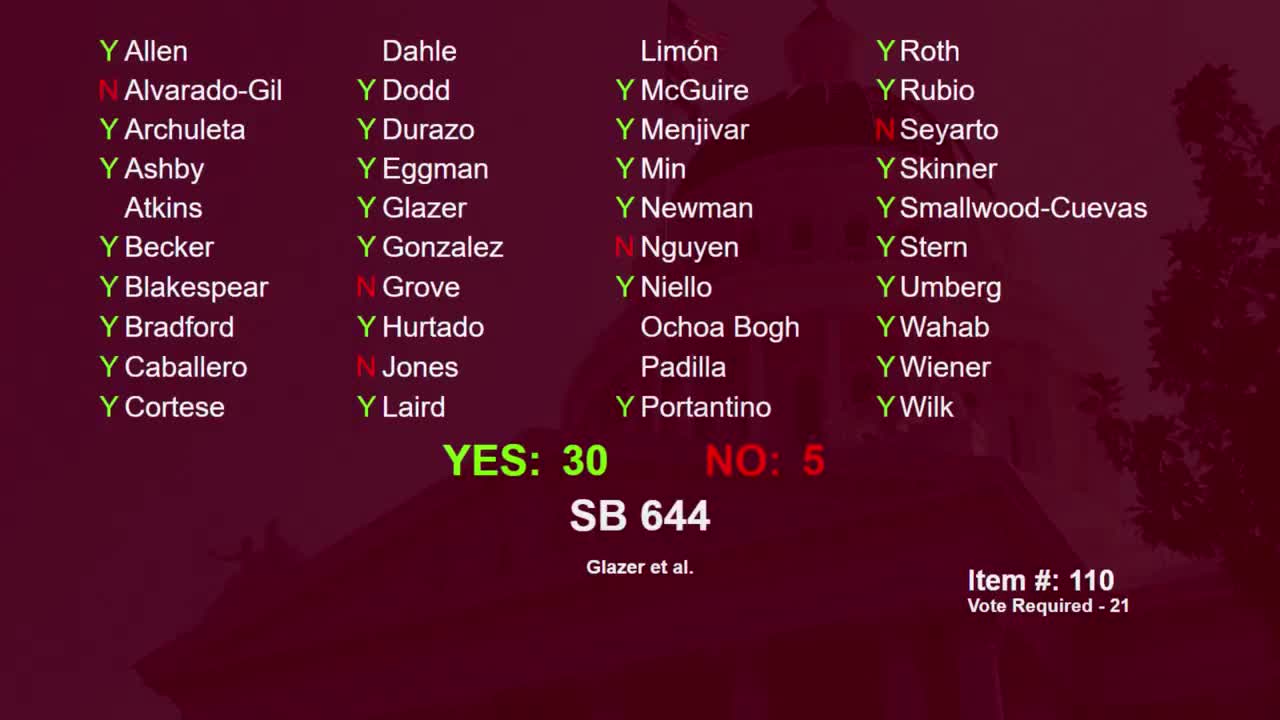 2MIN
Senate Floor
 6MIN
Senate Standing Committee on Governance and Finance
 9MIN
Senate Standing Committee on Housing
Bill Author

Bill Co-Author(s):