SB 457: Vision care: consent by a minor.
- Session Year: 2023-2024
- House: Senate
- Latest Version Date: 2023-09-01
Current Status:
Passed
(2023-09-01: Chaptered by Secretary of State. Chapter 152, Statutes of 2023.)
Introduced
In Committee
First Chamber
In Committee
Second Chamber
Enacted
Existing law authorizes a minor 15 years of age or older to consent to the minors medical care or dental care, if the minor is living separate and apart from the minors parents or guardian and the minor is managing their own financial affairs, as specified. Existing law authorizes a physician and surgeon or dentist, with or without the minors consent, to advise the minors parent or guardian of the treatment given or needed if the physician and surgeon has reason to know the parents or guardians whereabouts, based on information given by the minor. Under existing law, a parent or guardian is not liable for care provided according to these provisions.
This bill additionally would authorize minors to consent to their own vision care, and would authorize an optometrist to advise a minors parent or guardian of the care given or needed, under the same conditions applicable to the provision of medical care and dental care. The bill would define vision care as the diagnosis, prevention, treatment, and management of disorders, diseases, and dysfunctions of the visual system and the provision of habilitative or rehabilitative optometric services by a licensed optometrist, as specified.
Existing law authorizes a minor 15 years of age or older to consent to the minors medical care or dental care, if the minor is living separate and apart from the minors parents or guardian and the minor is managing their own financial affairs, as specified. Existing law authorizes a physician and surgeon or dentist, with or without the minors consent, to advise the minors parent or guardian of the treatment given or needed if the physician and surgeon has reason to know the parents or guardians whereabouts, based on information given by the minor. Under existing law, a parent or guardian is not liable for care provided according to these provisions.
This bill additionally would authorize minors to consent to their own vision care, and would authorize an optometrist to advise a minors parent or guardian of the care given or needed, under the same conditions applicable to the provision of medical care and dental care.
Vision care means the diagnosis, prevention, treatment, and management of disorders, diseases, and dysfunctions of the visual system and the provision of habilitative or rehabilitative optometric services by an optometrist licensed pursuant to Article 1 (commencing with Section 3000) of Chapter 7 of Division 2 of the Business and Professions Code.
SEC. 2.Section 6922 of the Family Code is amended to read:6922.(a)A minor may consent to the minors medical care, vision care, or dental care if all of the following conditions are satisfied:
(1)The minor is 15 years of age or older.
(2)The minor is living separate and apart from the minors parents or guardian, whether with or without the parents or guardians consent and regardless of the duration of the separate residence.
(3)The minor is managing the minors own financial affairs, regardless of the source of the minors income.
(b)The parents or guardian are not liable for medical care, vision care, or dental care provided pursuant to this section.
(c)A physician and surgeon, optometrist, or dentist may, with or without the consent of the minor patient, advise the minors parent or guardian of the treatment given or needed if the physician and surgeon, optometrist, or dentist has reason to know, on the basis of the information given by the minor, the whereabouts of the parent or guardian.
Vision care means the diagnosis, prevention, treatment, and management of disorders, diseases, and dysfunctions of the visual system and the provision of habilitative or rehabilitative optometric services by an optometrist licensed pursuant to Article 1 (commencing with Section 3000) of Chapter 7 of Division 2 of the Business and Professions Code.
SECTION 1.SEC. 2.Section 6922 of the Family Code is amended to read:6922.(a)A minor may consent to the minors medical care, vision care, or dental care if all of the following conditions are satisfied:
(1)The minor is 15 years of age or older.
(2)The minor is living separate and apart from the minors parents or guardian, whether with or without the parents or guardians consent and regardless of the duration of the separate residence.
(3)The minor is managing the minors own financial affairs, regardless of the source of the minors income.
(b)The parents or guardian are not liable for medical care, vision care, or dental care provided pursuant to this section.
(c)A physician and surgeon, optometrist, or dentist may, with or without the consent of the minor patient, advise the minors parent or guardian of the treatment given or needed if the physician and surgeon, optometrist, or dentist has reason to know, on the basis of the information given by the minor, the whereabouts of the parent or guardian.
(a)A minor may consent to the minors medical care care, vision care, or dental care if all of the following conditions are satisfied:
(1)The minor is 15 years of age or older.
(2)The minor is living separate and apart from the minors parents or guardian, whether with or without the consent of a parent or guardian parents or guardians consent and regardless of the duration of the separate residence.
(3)The minor is managing the minors own financial affairs, regardless of the source of the minors income.
(b)The parents or guardian are not liable for medical care care, vision care, or dental care provided pursuant to this section.
(c)A physician and surgeon surgeon, optometrist, or dentist may, with or without the consent of the minor patient, advise the minors parent or guardian of the treatment given or needed if the physician and surgeon surgeon, optometrist, or dentist has reason to know, on the basis of the information given by the minor, the whereabouts of the parent or guardian.
|
Date
|
Status
|
|---|---|
| Sep 1, 2023 | Chaptered by Secretary of State. Chapter 152, Statutes of 2023. |
| Sep 1, 2023 | Approved by the Governor. |
| Aug 22, 2023 | Enrolled and presented to the Governor at 2 p.m. |
| Aug 17, 2023 | In Senate. Ordered to engrossing and enrolling. |
| Aug 17, 2023 | Read third time. Passed. (Ayes 73. Noes 0. Page 2737.) Ordered to the Senate. |
| Jun 7, 2023 | Read second time. Ordered to third reading. |
| Jun 6, 2023 | From committee: Do pass. (Ayes 9. Noes 0.) (June 6). |
| May 4, 2023 | Referred to Com. on JUD. |
| Apr 24, 2023 | In Assembly. Read first time. Held at Desk. |
| Apr 24, 2023 | Read third time. Passed. (Ayes 39. Noes 0. Page 849.) Ordered to the Assembly. |
| Mar 30, 2023 | Read second time. Ordered to third reading. |
| Mar 29, 2023 | From committee: Do pass. (Ayes 10. Noes 0. Page 577.) (March 28). |
| Mar 20, 2023 | From committee with author's amendments. Read second time and amended. Re-referred to Com. on JUD. |
| Mar 6, 2023 | Set for hearing March 28. |
| Feb 22, 2023 | Referred to Com. on JUD. |
| Feb 14, 2023 | From printer. May be acted upon on or after March 16. |
| Feb 13, 2023 | Introduced. Read first time. To Com. on RLS. for assignment. To print. |
|
Date
|
Description
|
Location
|
Votes
|
|
|---|---|---|---|---|
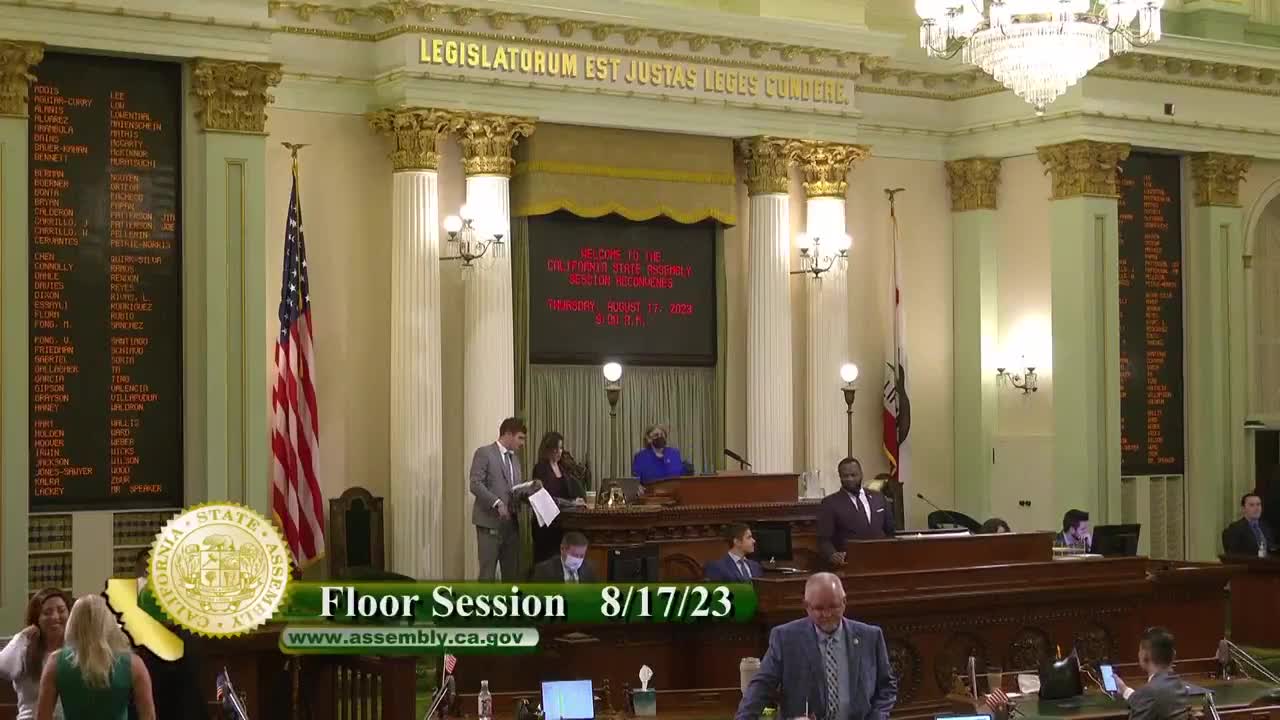
| Aug 17, 2023 | SB 457 Menjivar Senate Third Reading By Papan | Assembly Floor |
Passed |
|
| Jun 6, 2023 | Do pass. | Assembly Standing Committee on Judiciary |
Passed |
|
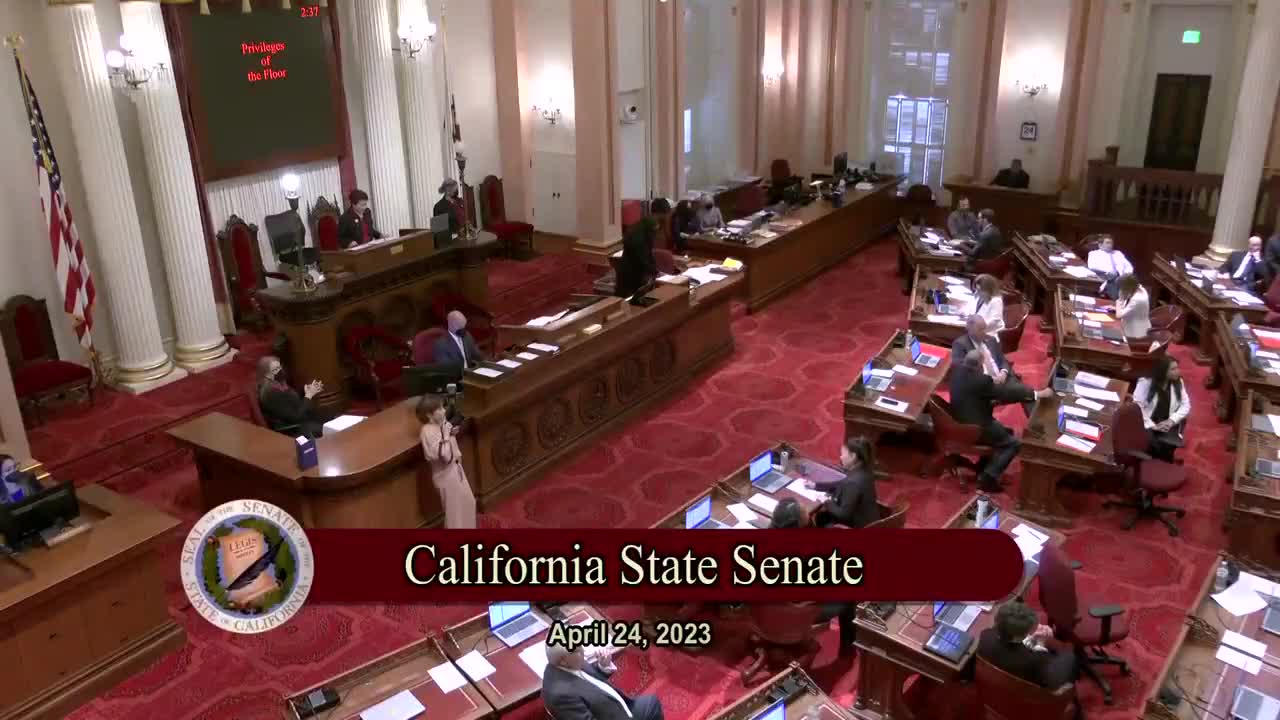
| Apr 24, 2023 | Senate 3rd Reading SB457 Menjivar et al. | Senate Floor |
Passed |
|
| Mar 28, 2023 | Do pass | Senate Standing Committee on Judiciary |
Passed |
This list shows positions taken on this bill by organizations on the date displayed, which is linked to the original source.
Positions by individuals are not included.
|
Organization
|
Position
|
Date
|
|---|---|---|
| Alliance for Childrens Rights | ** Support | |
| California Coalition For Youth | ** Support | |
| California Optometric Association | ** Support |
SENATE THIRD READING
STR Bill Id:SB 457
Author:(Menjivar and Ashby)
As Amended Ver:March 20, 2023
Majority vote
SUMMARY
Permits certain minors to consent to vision care, as specified.
Major Provisions
- Authorizes a minor 15 years of age or older to consent to vision care, as defined, if the minor is living separate and apart from the minor's parents or guardian and the minor is managing their own financial affairs, as specified.
- Permits an optometrist, with or without the consent of the minor patient, to advise the minor's parent or guardian of the treatment given or needed if the optometrist has reason to know, on the basis of the information given by the minor, the whereabouts of the parent or guardian.
- Defines "vision care" to mean the diagnosis, prevention, treatment, and management of disorders, diseases, and dysfunctions of the visual system and the provision of habilitative or rehabilitative optometric services by a licensed optometrist.
COMMENTS
As a general rule, under existing law, a person cannot consent to medical procedures until they reach the "age of majority," which in California and most other states is set at 18 years of age. However, the Legislature has made several common sense exemptions to this general rule, especially in those relatively rare circumstances where the parent's consent to, and knowledge of, the procedure poses a substantial risk of harm to the minor. For example, under appropriate circumstances, the law permits a minor to obtain treatment for abortion or sexually transmitted diseases if there is a substantial risk that parental knowledge could endanger the minor. For similar reasons, existing law permits minors to obtain mental health or drug counseling if the professional providing treatment determines that the minor is mature enough to consent and obtaining parental consent would endanger the minor. Most of these laws contain provisions requiring the treating professional to notify parents if it can be done without endangering the minor. Finally, and most relevant to this bill, existing law recognizes that some youth are homeless or otherwise estranged from parents or guardians, such that obtaining parental consent is nearly impossible. For example, existing law permits a minor who is 15 years of age or older to consent to medical and dental care, if the minor is living separate and apart from the minor's parents or guardian and the minor is managing their own financial affairs.
Unfortunately, despite the apparent need, the existing law that permits homeless or estranged youth who are at least 15 years of age to obtain medical or dental care without parental consent does not expressly allow such minors to consent to vision care, even though vision care is generally less intrusive and permanent than medical or dental care. This bill would correct that omission by simply adding "vision care" to the existing statute, thereby authorizing licensed optometrists to provide care in the same manner as physicians, surgeons, and dentists do. Consistent with existing law, this bill would permit the optometrist, with or without the minor's consent, to notify the minor's parents or guardian if the optometrist knows their whereabouts. In other words, this bill, like existing law, presumes that whenever possible parents and guardians should be notified of, and grant consent for, any medical, dental, or vision treatments provided to their minor children. But also like existing law, the bill recognizes that there are situations where obtaining consent is not always possible or advisable.
While this bill makes a modest addition to existing law, it is nonetheless an important change. According to the American Optometric Association, and other studies cited by the author and supporters, vision care is essential for minors and young adults, as poor vision not only affects quality of life, but also adversely impacts reading, learning, and overall educational achievement. (See e.g. American Optometric Association, Executive Summary Pediatric Eye Exam Guidelines, 2018, available at optometryweb.com.) Another study estimated that vision problems are prevalent in 25% of all schoolchildren in the United States and are among the most handicapping conditions that minors face. (Joel Zoba, "Children's Vision Care in the 21st Century: It's Impact on Education, Literacy, Social Issues, and the Workplace," Journal of Behavioral Optometry 22 (2011).)
According to the Author
According to the author, for "minors affected by homelessness, accessing vision care can be a challenge. Existing law clearly states when an unaccompanied minor can consent to certain medical, dental, reproductive, and sexual health treatments, but it is ambiguous on an unaccompanied minor's ability to consent to vision care. A child's ability to see and access to regular eye exams are foundational needs that are vital to a child's learning and reading comprehension. This bill will allow unaccompanied minors who are on their own to be able to get their basic vision care needs met."
Arguments in Support
According to the California Coalition for Youth (CCY), existing law "allows minors to consent to medical and dental care but is silent on whether they can consent to their vision care. SB 457 will make it clear that an unaccompanied minor is able to consent to these services." CCY contends that proper vision development "is vital for a minor's growth, and if left untreated, can lead to vision challenges that impact their educational and social development." CCY adds that while schools and some other agencies provide vision screening, "current law does not allow an unaccompanied minor to correct the eye problem" that might be detected by this screening because of the inability to obtain parental consent. While in most cases it is reasonable to require such consent, CCY points out that not all youth have "the advantages of supportive and engaged families. Homeless youth are not homeless by choice; their family environments have been unhealthy and either they have been kicked out or feel forced out." This bill, CCY concludes, will "allow youth who are on their own to be able to receive an eye examination and receive corrective lenses as needed so they can safely see the world around them."
Arguments in Opposition
No opposition on file.
FISCAL COMMENTS
None
VOTES
SENATE FLOOR: 39-0-1
YES: Allen, Alvarado-Gil, Archuleta, Ashby, Atkins, Becker, Blakespear, Bradford, Caballero, Cortese, Dodd, Durazo, Eggman, Glazer, Gonzalez, Grove, Hurtado, Jones, Laird, Limón, McGuire, Menjivar, Min, Newman, Nguyen, Niello, Ochoa Bogh, Padilla, Portantino, Roth, Rubio, Seyarto, Skinner, Smallwood-Cuevas, Stern, Umberg, Wahab, Wiener, Wilk
ABS, ABST OR NV: Dahle
ASM JUDICIARY: 9-0-2
YES: Maienschein, Connolly, Dixon, Haney, Kalra, Pacheco, Papan, Reyes, Robert Rivas
ABS, ABST OR NV: Essayli, Sanchez
UPDATED
VERSION: March 20, 2023
CONSULTANT: Tom Clark / JUD. / (916) 319-2334 FN: 0001059
Date of Hearing: June 6, 2023
ASSEMBLY COMMITTEE ON JUDICIARY
Brian Maienschein, Chair
SBPCA Bill Id:SB 457
Author:(Menjivar) – As Amended Ver:March 20, 2023
SENATE VOTE: 39-0
SUBJECT: Vision care: consent by a minor
KEY ISSUE: should a minor 15 years of age or older be permitted to consent to vision care if the minor is living separate and apart from their parents or guardians and managing their own financial affairs, just as the minor would be able to consent to medical and dental care?
SYNOPSIS
As a general rule, a person does not reach the age of majority until they are 18 years old and, as such, cannot consent to most medical procedures or treatments without parental consent. However, in the past few decades, the Legislature has made a number of reasonable exceptions to this rule. Most notably for purposes of this bill, existing law permits a minor who is 15 years of age or older to consent to medical and dental care, if the minor is living separate and apart from the minor’s parents or guardian and the minor is managing their own financial affairs. However, while existing law permits such minors to consent to medical and dental care, it does not permit them to consent to vision care, even when such care is readily available and clearly needed. This bill aims to correct that omission.
Schools and other agencies often provide free vision tests or other forms of basic health screening. However, when these screenings reveal problems, corrective action cannot be taken without parental consent. While one could argue that vision care is a form of medical care, and thus already covered, the ambiguity in existing law makes optometrists, who might otherwise provide services free of charge, understandably reluctant to treat minors who are homeless, or otherwise living apart from parents, without parental consent. At the same time, studies suggest that healthy vision is critical to development in children and young adults, and leaving vision problems untreated may contribute to learning, reading, and other developmental problems.
This seemingly non-controversial bill makes a modest change to existing law by allowing a minor who is living separate from their parents and managing their own financial affairs to consent to “vision care,” which the bill defines to include the diagnoses, prevention, treatment, and management of visual health and optometry services provided by a licensed optometrist. Consistent with existing law, the bill would permit the optometrist to notify the minor’s parents or guardian if the optometrist knows their whereabouts. The bill is sponsored by the California Coalition for Youth and is supported by the Alliance for Children’s Rights and the California Optometric Association. There is no opposition to this modest, common sense measure.
SUMMARY: Permits certain minors to consent to vision care, as specified. Specifically, this bill:
- Authorizes a minor 15 years of age or older to consent to vision care, as defined, if the minor is living separate and apart from the minor’s parents or guardian and the minor is managing their own financial affairs, as specified.
- Permits an optometrist, with or without the consent of the minor patient, to advise the minor’s parent or guardian of the treatment given or needed if the optometrist has reason to know, on the basis of the information given by the minor, the whereabouts of the parent or guardian.
- Defines “vision care” to mean the diagnosis, prevention, treatment, and management of disorders, diseases, and dysfunctions of the visual system and the provision of habilitative or rehabilitative optometric services by a licensed optometrist.
EXISTING LAW:
- Authorizes a minor 15 years of age or older to consent to medical care or dental care, if the minor is living separate and apart from the minor’s parents or guardian and the minor is managing their own financial affairs, as specified. (Family Code Section 6922. Subsequent references refer to the Family Code.)
- Permits a physician, surgeon, or dentist, with or without the consent of the minor patient, to advise the minor’s parent or guardian of the treatment given or needed if the physician, surgeon, or dentist has reason to know, on the basis of the information given by the minor, the whereabouts of the parent or guardian. (Section 6922 (c).)
- Specifies that a parent or guardian is not liable for care provided according to these provisions. (Section 6922 (b).)
FISCAL EFFECT: As currently in print this bill is keyed non-fiscal.
COMMENTS: According to the author, for “minors affected by homelessness, accessing vision care can be a challenge. Existing law clearly states when an unaccompanied minor can consent to certain medical, dental, reproductive, and sexual health treatments, but it is ambiguous on an unaccompanied minor’s ability to consent to vision care. A child’s ability to see and access to regular eye exams are foundational needs that are vital to a child’s learning and reading comprehension. This bill will allow unaccompanied minors who are on their own to be able to get their basic vision care needs met.”
Minors and medical consent. As a general rule, under existing law, a person cannot consent to medical procedures until they reach the “age of majority,” which in California and most other states is set at 18 years of age. However, the Legislature has made several common sense exemptions to this general rule, especially in those relatively rare circumstances where the parent’s consent to, and knowledge of, the procedure poses a substantial risk of harm to the minor. For example, under appropriate circumstances, the law permits a minor to obtain treatment for abortion or sexually transmitted diseases if there is a substantial risk that parental knowledge could endanger the minor. For similar reasons, existing law permits minors to obtain mental health or drug counseling if the professional providing treatment determines that the minor is mature enough to consent and obtaining parental consent would endanger the minor. Most of these laws contain provisions requiring the treating professional to notify parents if it can be done without endangering the minor. Finally, and most relevant to this bill, existing law recognizes that some youth are homeless or otherwise estranged from parents or guardians, such that obtaining parental consent is nearly impossible. For example, existing law permits a minor who is 15 years of age or older to consent to medical and dental care, if the minor is living separate and apart from the minor’s parents or guardian and the minor is managing their own financial affairs.
Unfortunately, despite the apparent need, the existing law that permits homeless or estranged youth who are at least 15 years of age to obtain medical or dental care without parental consent does not expressly allow such minors to consent to vision care, even though vision care is generally less intrusive and permanent than medical or dental care. This bill would correct that omission by simply adding “vision care” to the existing statute, thereby authorizing licensed optometrists to provide care in the same manner as physicians, surgeons, and dentists do. Consistent with existing law, this bill would permit the optometrist, with or without the minor’s consent, to notify the minor’s parents or guardian if the optometrist knows their whereabouts. In other words, this bill, like existing law, presumes that whenever possible parents and guardians should be notified of, and grant consent for, any medical, dental, or vision treatments provided to their minor children. But also like existing law, the bill recognizes that there are situations where obtaining consent is not always possible or advisable.
While this bill makes a modest addition to existing law, it is nonetheless is an important change. According to the American Optometric Association, and other studies cited by the author and supporters, vision care is essential for minors and young adults, as poor vision not only affects quality of life, but also adversely impacts reading, learning, and overall educational achievement. (See e.g. American Optometric Association, Executive Summary Pediatric Eye Exam Guidelines, 2018, available at optometryweb.com.) Another study estimated that vision problems are prevalent in 25% of all schoolchildren in the United States and are among the most handicapping conditions that minors face. (Joel Zoba, “Children’s Vision Care in the 21st Century: It’s Impact on Education, Literacy, Social Issues, and the Workplace,” Journal of Behavioral Optometry 22 (2011).)
ARGUMENTS IN SUPPORT: According to the California Coalition for Youth (CCY), existing law “allows minors to consent to medical and dental care but is silent on whether they can consent to their vision care. SB 457 will make it clear that an unaccompanied minor is able to consent to these services.” CCY contends that proper vision development “is vital for a minor’s growth, and if left untreated, can lead to vision challenges that impact their educational and social development.” CCY adds that while schools and some other agencies provide vision screening, “current law does not allow an unaccompanied minor to correct the eye problem” that might be detected by this screening because of the inability to obtain parental consent. While in most cases it is reasonable to require such consent, CCY points out that not all youth have “the advantages of supportive and engaged families. Homeless youth are not homeless by choice; their family environments have been unhealthy and either they have been kicked out or feel forced out.” This bill, CCY concludes, will “allow youth who are on their own to be able to receive an eye examination and receive corrective lenses as needed so they can safely see the world around them.”
REGISTERED SUPPORT / OPPOSITION:
Support
California Coalition for Youth (sponsor)
Alliance for Children’s Rights
California Optometric Association
Opposition
None on file
Analysis Prepared by: Tom Clark / JUD. / (916) 319-2334
SENATE RULES COMMITTEE Office of Senate Floor Analyses (916) 651-1520 Fax: (916) 327-4478 | SB 457 |
THIRD READING
Bill No: SB 457
Author: Menjivar (D) and Ashby (D)
Amended: 3/20/23
Vote: 21
SENATE JUDICIARY COMMITTEE: 10-0, 3/28/23
AYES: Umberg, Wilk, Allen, Ashby, Caballero, Durazo, Laird, Min, Niello, Wiener
NO VOTE RECORDED: Stern
SUBJECT: Vision care: consent by a minor
SOURCE: California Coalition for Youth
DIGEST:
This bill allows minors aged 15 and older and living separate and apart from their parents or guardians to consent to vision care without obtaining the consent of their parent or guardian.
ANALYSIS:
Existing law:
- Defines “minor” as an individual under 18 years of age. (Fam. Code, § 6500.)
- Provides a minor who is 15 years of age or older may consent to medical and dental care without the consent of a parent or guardian[1] provided that both conditions are met:
- The minor living separate and apart from their parents, with or without the parents’ consent and regardless of the duration of the separate residence.
- The minor manages their own financial affairs, regardless of the source of the minor’s income. (Fam. Code, § 6922(a).)
- Provides that the parent of a minor who receives medical or dental care pursuant to 2) is not liable for the cost of the care.
- Provides that a physician, surgeon, or dentist providing care pursuant to 2) may, with or without consent of the minor patient, inform the minor’s parent of the care provided or the care needed if the physician, surgeon, or dentist has reason to know the parent’s whereabouts on the basis of information provided by the minor.
This bill:
- Defines “vision care” as the diagnosis, prevention, treatment, and management of disorders, diseases, and dysfunctions of the visual system and the provision of habilitative or rehabilitative optometric services by a licensed optometrist licensed pursuant to Article 1 of Chapter 7 of Division 2 of the Business and Professions Code.
- Authorizes a minor aged 15 or older, who lives separate and apart from their parent(s), to obtain vision care without parental consent.
- Provides that a parent is not liable for vision care provided to the minor pursuant to 2).
- Provides that an optometrist may, with or without the consent of the minor, inform the minor’s parent of the treatment provided if the optometrist has reason to know the whereabouts of the parent on the basis of information provided by the minor.
Comments
Author’s comment. According to the author, for minors affected by homelessness, accessing vision care can be a challenge. Existing law clearly states when an unaccompanied minor can consent to certain medical, dental, reproductive, and sexual health treatments, but it is ambiguous on an unaccompanied minor’s ability to consent to vision care. A child’s ability to see and access to regular eye exams are foundational needs that are vital to a child’s learning and reading comprehension. This bill will allow unaccompanied minors who are on their own to be able get their basic vision care needs met.
FISCAL EFFECT: Appropriation: No Fiscal Com.: No Local: No
SUPPORT: (Verified 3/30/23)
California Coalition for Youth (source)
Alliance for Children’s Rights
California Optometric Association
OPPOSITION: (Verified 3/30/23)
One individual
ARGUMENTS IN SUPPORT: According to this bill’s sponsor, the California Coalition for Youth:
While schools provide the ideal place to receive vision screening, current law does not allow an unaccompanied minor to correct the eye problem should one be detected. The American Optometric Association states that regular comprehensive eye examinations conducted by a doctor of optometry both annually and at key developmental milestones in a child’s life can improve detection, diagnosis, and early prevention or treatment of eye problems. They found that school screenings provide less than 4 percent of the eye tests needed and miss up to 75 percent of children with vision problems. Further research shows that about a quarter of all school-aged children have a significant vision problem.
Our agency members have indicated that a major barrier to providing services to youth is the need for parental consent. While we recognize that this is important to obtain, we know that some youth do not have the advantages of supportive and engaged families. Homeless youth are not homeless by choice; their family environments have ben unhealthy and either they have been kicked out or feel forced out. This bill allows youth who are on their own to be able to receive an eye examination and receive corrective lenses as needed so they can safely see the world around them.
Prepared by: Allison Whitt Meredith / JUD. / (916) 651-4113
4/6/23 10:59:33
**** END ****
Going forward, this analysis uses the term “parent” to include “guardian.” ↑
Senator Thomas Umberg, Chair
2023-2024 Regular Session
Bill No: SB 457 (Author:Menjivar)
Version: March 20, 2023
Hearing Date: March 28, 2023
Fiscal: No
Urgency: No
Consultant: AWM
SUBJECT
Vision care: consent by a minor
DIGEST
This bill allows minors aged 15 and older and living separate and apart from their parents or guardians to consent to vision care without obtaining the consent of their parent or guardian.
EXECUTIVE SUMMARY
While the age of majority in California is 18 years old, the State has enacted several statutes allowing minors to consent to various services without the authorization of their parents and without disaffirmance upon reaching the majority age. These statutes reflect a policy determination that, in some situations, the minor’s interest in obtaining medical care outweighs their parent’s interest in preventing them from obtaining that care.
This bill expands one of the less-controversial statutes allowing minors to independently consent to medical treatment: the provision allowing minors 15 years of age or older, who live separate and apart from their parents or guardians and manage their own financial affairs, to consent to medical and dental care. According to the author and sponsor, because this statute does not specifically refer to “vision care,” these independent youth—many of whom are homeless—have been unable to obtain vision care without the consent of a parent or guardian. To ensure that minors living on their own can obtain the vision care they need, this bill expands that provision to allow such a minor to consent to vision care without the consent of the parent or guardian.
This bill is sponsored by the California Coalition for Youth and is supported by the Alliance for Children’s Rights and the California Optometric Association. The bill is opposed by one individual.
PROPOSED CHANGES TO THE LAW
Existing law:
- Defines “minor” as an individual under 18 years of age. (Fam. Code, § 6500.)
- Provides a minor who is 15 years of age or older may consent to medical and dental care without the consent of a parent or guardian[1] provided that both conditions are met:
- The minor living separate and apart from their parents, with or without the parents’ consent and regardless of the duration of the separate residence.
- The minor manages their own financial affairs, regardless of the source of the minor’s income. (Fam. Code, § 6922(a).)
- Provides that the parent of a minor who receives medical or dental care pursuant to 2) is not liable for the cost of the care.
- Provides that a physician, surgeon, or dentist providing care pursuant to 2) may, with or without consent of the minor patient, inform the minor’s parent of the care provided or the care needed if the physician, surgeon, or dentist has reason to know the parent’s whereabouts on the basis of information provided by the minor.
This bill:
- Defines “vision care” as the diagnosis, prevention, treatment, and management of disorders, diseases, and dysfunctions of the visual system and the provision of habilitative or rehabilitative optometric services by a licensed optometrist licensed pursuant to Article 1 of Chapter 7 of Division 2 of the Business and Professions Code.
- Authorizes a minor aged 15 or older, who lives separate and apart from their parent(s), to obtain vision care without parental consent.
- Provides that a parent is not liable for vision care provided to the minor pursuant to 2).
- Provides that an optometrist may, with or without the consent of the minor, inform the minor’s parent of the treatment provided if the optometrist has reason to know the whereabouts of the parent on the basis of information provided by the minor.
COMMENTS
- Author’s comment
According to the author:
For minors affected by homelessness, accessing vision care can be a challenge. Existing law clearly states when an unaccompanied minor can consent to certain medical, dental, reproductive, and sexual health treatments, but it is ambiguous on an unaccompanied minor’s ability to consent to vision care. A child’s ability to see and access to regular eye exams are foundational needs that are vital to a child’s learning and reading comprehension. This bill will allow unaccompanied minors who are on their own to be able get their basic vision care needs met.
2. California law allows minors to make certain health care decisions without parental consent
“At common law, minors generally were considered to lack the legal capacity to give valid consent to medical treatment or services, and consequently a parent, guardian, or other legally authorized person generally was required to provide the requisite consent.”[2] This general rule was intended to “protect the health and welfare of minors, safeguarding them from the potential overreaching of third parties or the improvidence of their own immature decisionmaking, and leaving decisions concerning the minor's medical care in the hands of his or her parents, who were presumed to be in the best position to protect the health of their child.”[3]
But parental control over a child is not absolute. “Under the doctrine of Parens patriae, the state has a right, indeed, a duty, to protect children. [Citation] State officials may interfere in family matters to safeguard the child’s health, educational development and emotional well-being.”[4]
One of the oldest grants of medical autonomy to minors is the grant of “medical emancipation” for minors aged 15 years and older who are functionally, albeit not legally, living separately from their parents.[5] Specifically, this provision allows a minor who is 15 years of age or older, does not live with their parent, and manages their own financial affairs to consent to medical and dental care without also needing parental consent.[6] A minor can qualify for this exception even if they are not fully financially independent from their parents—i.e., if they still receive financial support from their parents—so long as the minor makes their own day-to-day spending decisions.[7] For youth who are homeless or otherwise lack stable family structures, this exception allows them to obtain the medical and dental care they need.
3. This bill allows minors aged 15 and older who live independently from their parents to receive vision care without parental consent
This bill makes a modest change to the statute authorizing minors aged 15 and older living separately from their parents to consent to medical care, by extending to those minors the right to consent to vision care without needing parental consent. The bill also adds a definition of “vision care” that is broadly tailored to ensure that this provision covers any and all necessary care for their eyesight and vision. Given the longstanding law authorizing minors in the same circumstances to consent to medical and dental care, it does not appear that this bill presents an undue interference into the parent-child relationship. Instead, as the bill’s sponsors and supporters note, this appears to be a commonsense extension that closes a gap in independent minors’ ability to take care of their own health needs.
4. Arguments in support
According to the bill’s sponsor, the California Coalition for Youth:
While schools provide the ideal place to receive vision screening, current law does not allow an unaccompanied minor to correct the eye problem should one be detected. The American Optometric Association states that regular comprehensive eye examinations conducted by a doctor of optometry both annually and at key developmental milestones in a child’s life can improve detection, diagnosis, and early prevention or treatment of eye problems. They found that school screenings provide less than 4 percent of the eye tests needed and miss up to 75 percent of children with vision problems. Further research shows that about a quarter of all school-aged children have a significant vision problem.
Our agency members have indicated that a major barrier to providing services to youth is the need for parental consent. While we recognize that this is important to obtain, we know that some youth do not have the advantages of supportive and engaged families. Homeless youth are not homeless by choice; their family environments have ben unhealthy and either they have been kicked out or feel forced out. This bill allows youth who are on their own to be able to receive an eye examination and receive corrective lenses as needed so they can safely see the world around them.
SUPPORT
California Coalition for Youth (sponsor)
Alliance for Children’s Rights
California Optometric Association
OPPOSITION
One individual
RELATED LEGISLATION
Pending Legislation:
AB 816 (Haney, 2023) authorizes a minor 16 years of age or older to consent to replacement narcotic abuse treatment that uses buprenorphine without parental consent. AB 816 is pending before the Assembly Judiciary Committee.
AB 665 (Carrillo, 2023) eliminates the requirement that a minor 12 years of age and older either present a danger of serious physical or mental harm or be the alleged victim of incest or child abuse in order to receive specified mental health treatment without parental consent. AB 665 is pending before the Assembly Judiciary Committee.
Prior Legislation:
SB 866 (Wiener, 2022) would have allowed minors aged 15 and older to consent to a vaccination that has been approved by the Food and Drug Administration and meets the recommendations of the Advisory Committee on Immunization Practices without the consent of their parent or guardian. SB 866 died on the Assembly Floor.
AB 3189 (Cooper, Ch. 1003, Stats. 2018) authorized a minor aged 12 or older to consent to diagnosis and treatment of conditions arising from intimate partner violence without parental consent.
AB 599 (Donnelly, 2013) would have prohibited a minor from obtaining a vaccine related to the prevention of a sexually transmitted disease without parental consent. AB 599 died in the Assembly Health Committee.
AB 499 (Atkins, Ch. 652, Stats. 2011) authorized minors aged 12 or older to consent to medical care related to the prevention of a sexually transmitted disease.
**************
Going forward, this analysis uses the term “parent” to include “guardian.” ↑
American Academy of Pediatrics v. Lungren (1997) 16 Cal.4th 307, 314-315. ↑
Id. at p. 315. ↑
In re Phillip B. (1979) 92 Cal.App.3d 769, 801. ↑
American Academy of Pediatrics, supra, 16 Cal.4th at p. 315. The exception dates back to 1968. (Id. at p. 316.) ↑
Fam. Code, § 6922. ↑
Ibid.; Carter v. Cangello (1980) 105 Cal.App.3d 348, 350. ↑



Bill Co-Author(s):