SB 466: Costa-Hawkins Rental Housing Act: rental rates.
- Session Year: 2023-2024
- House: Senate
- Latest Version Date: 2023-05-15
Current Status:
Failed
(2024-02-01: Died on file pursuant to Joint Rule 56.)
Introduced
In Committee
First Chamber
In Committee
Second Chamber
Enacted
Existing law, the Costa-Hawkins Rental Housing Act, prescribes statewide limits on the application of local rent control with regard to certain properties. The act generally authorizes an owner of residential real property to establish the initial rental rate for a dwelling or unit, except in specified circumstances, including, (1) when the residential real property has a certificate of occupancy issued after February 1, 1995, (2) when the residential real property has already been exempt from the residential rent control ordinance of a public entity on or before February 1, 1995, pursuant to a local exemption for newly constructed units, and (3) when the residential real property is alienable and separate from title to any other dwelling units, except as specified.
This bill would instead authorize an owner of residential real property to establish the initial rental rate for a dwelling or unit when the residential real property has been issued a certificate of occupancy issued within the 15 28 years preceding the date on which the owner seeks to establish a rental rate under these provisions. provisions, except as specified for dwellings or units exempt from the residential rent control ordinance of a public entity on or before February 1, 1995, pursuant to a local exemption for newly constructed units. The bill would also remove the above-described authorizations for an owner of residential real property to establish the initial rental rate if the residential real property has already been exempt from the residential rent control pursuant to an ordinance of a public entity on or before February 1, 1995.
Existing law, the Costa-Hawkins Rental Housing Act, prescribes statewide limits on the application of local rent control with regard to certain properties. The act generally authorizes an owner of residential real property to establish the initial rental rate for a dwelling or unit, except in specified circumstances, including, (1) when the residential real property has a certificate of occupancy issued after February 1, 1995, (2) when the residential real property has already been exempt from the residential rent control ordinance of a public entity on or before February 1, 1995, pursuant to a local exemption for newly constructed units, and (3) when the residential real property is alienable and separate from title to any other dwelling units, except as specified.
This bill would instead authorize an owner of residential real property to establish the initial rental rate for a dwelling or unit when the residential real property has been issued a certificate of occupancy issued within the 15 years preceding the date on which the owner seeks to establish a rental rate under these provisions. The bill would also remove the above-described authorizations for an owner of residential real property to establish the initial rental rate if the residential real property (1) has already been exempt from the residential rent control pursuant to an ordinance of a public entity on or before February 1, 1995, and (2) when the residential real property is alienable and separate from title to any other dwelling units. 1995.
Existing law, the Costa-Hawkins Rental Housing Act, prescribes statewide limits on the application of local rent control with regard to certain properties. The act generally authorizes an owner of residential real property to establish the initial rental rate for a dwelling or unit, except in specified circumstances, including, (1) when the residential real property has a certificate of occupancy issued after February 1, 1995, (2) when the residential real property has already been exempt from the residential rent control ordinance of a public entity on or before February 1, 1995, pursuant to a local exemption for newly constructed units, and (3) when the residential real property is alienable and separate from title to any other dwelling units, except as specified.
This bill would instead authorize an owner of residential real property to establish the initial rental rate for a dwelling or unit when the residential real property has been issued a certificate of occupancy issued within the 15 years preceding the date on which the owner seeks to establish a rental rate under these provisions. The bill would also remove the above-described authorizations for an owner of residential real property to establish the initial rental rate if the residential real property (1) has already been exempt from the residential rent control pursuant to an ordinance of a public entity on or before February 1, 1995, and (2) when the residential real property is alienable and separate from title to any other dwelling units.
(a)Notwithstanding any other provision of law, an owner of residential real property may establish the initial and all subsequent rental rates for a dwelling or a unit about which either of the following is true:
(1)It has been issued a certificate of occupancy issued within the 15 years preceding the date on which the owner seeks to establish a rental rate in accordance with this section.(1)It is newly constructed housing.
(2)(A)It is alienable separate from the title of any other dwelling unit or is a subdivided interest in a subdivision, as specified in subdivision (b), (d), or (e) of Section 11004.5 of the Business and Professions Code.
(B)This paragraph does not apply to either of the following:
(i)A dwelling or unit where the preceding tenancy has been terminated by the owner by notice pursuant to Section 1946.1 or has been terminated upon a change in the terms of the tenancy noticed pursuant to Section 827.
(ii)A condominium dwelling or unit that has not been sold separately by the subdivider to a bona fide purchaser for value. The initial rent amount of the unit for purposes of this chapter shall be the lawful rent in effect on May 7, 2001, unless the rent amount is governed by a different provision of this chapter. However, if a condominium dwelling or unit meets the criteria of paragraph (1) or (2) of subdivision (a), or if all the dwellings or units except one have been sold separately by the subdivider to bona fide purchasers for value, and the subdivider has occupied that remaining unsold condominium dwelling or unit as the subdividers principal residence for at least one year after the subdivision occurred, then subparagraph (A) of paragraph (2) shall apply to that unsold condominium dwelling or unit.
(b)Subdivision (a) does not apply where the owner has otherwise agreed by contract with a public entity in consideration for a direct financial contribution or any other forms of assistance specified in Chapter 4.3 (commencing with Section 65915) of Division 1 of Title 7 of the Government Code.
(c)Nothing in this section shall be construed to affect the authority of a public entity that may otherwise exist to regulate or monitor the basis for eviction.
(d)This section does not apply to any dwelling or unit that contains serious health, safety, fire, or building code violations, excluding those caused by disasters for which a citation has been issued by the appropriate governmental agency and which has remained unabated for six months or longer preceding the vacancy.
(e)(1)For purposes of this section, newly constructed housing means a dwelling or unit for which a certificate of occupancy was issued within the 28 years preceding the date on which the owner seeks to establish a rental rate in accordance with this section.
(2)Notwithstanding paragraph (1), if the dwelling or unit was exempt from the residential rent control ordinance of a public entity on or before February 1, 1995, pursuant to a local exemption for newly constructed units, then the dwelling or unit shall be newly constructed housing for purposes of this section only if a certificate of occupancy was issued for the dwelling or unit on or after January 1 of the following calculated year:
(A)Begin with the year in which the dwelling or unit was first exempt pursuant to the local exemption for newly constructed units.
(B)Add two years to the start year in subparagraph (A) for each calendar year that has elapsed beginning on January 1, 2023, until the calculated year is equal to 1995 or 1996, as applicable, and then add one year to the calculated year for the remaining calendar years that have elapsed until the present year.
(a)Notwithstanding any other provision of law, an owner of residential real property may establish the initial and all subsequent rental rates for a dwelling or a unit about which either of the following is true:
(1)It has been issued a certificate of occupancy issued within the 15 years preceding the date on which the owner seeks to establish a rental rate in accordance with this section.
(2)(A)It is alienable separate from the title of any other dwelling unit or is a subdivided interest in a subdivision, as specified in subdivision (b), (d), or (e) of Section 11004.5 of the Business and Professions Code.
(B)This paragraph does not apply to a either of the following:
(i)A dwelling or unit where the preceding tenancy has been terminated by the owner by notice pursuant to Section 1946.1 or has been terminated upon a change in the terms of the tenancy noticed pursuant to Section 827.
(ii)A condominium dwelling or unit that has not been sold separately by the subdivider to a bona fide purchaser for value. The initial rent amount of the unit for purposes of this chapter shall be the lawful rent in effect on May 7, 2001, unless the rent amount is governed by a different provision of this chapter. However, if a condominium dwelling or unit meets the criteria of paragraph (1) or (2) of subdivision (a), or if all the dwellings or units except one have been sold separately by the subdivider to bona fide purchasers for value, and the subdivider has occupied that remaining unsold condominium dwelling or unit as the subdividers principal residence for at least one year after the subdivision occurred, then subparagraph (A) of paragraph (2) shall apply to that unsold condominium dwelling or unit.
(b)Subdivision (a) does not apply where the owner has otherwise agreed by contract with a public entity in consideration for a direct financial contribution or any other forms of assistance specified in Chapter 4.3 (commencing with Section 65915) of Division 1 of Title 7 of the Government Code.
(c)Nothing in this section shall be construed to affect the authority of a public entity that may otherwise exist to regulate or monitor the basis for eviction.
(d)This section does not apply to any dwelling or unit that contains serious health, safety, fire, or building code violations, excluding those caused by disasters for which a citation has been issued by the appropriate governmental agency and which has remained unabated for six months or longer preceding the vacancy.
(a)Notwithstanding any other provision of law, an owner of residential real property may establish the initial and all subsequent rental rates for a dwelling or a unit about which any either of the following is true:
(1)It has been issued a certificate of occupancy issued after February 1, 1995. within the 15 years preceding the date on which the owner seeks to establish a rental rate in accordance with this section.
(2)It has already been exempt from the residential rent control ordinance of a public entity on or before February 1, 1995, pursuant to a local exemption for newly constructed units. (3)(2)(A)It is alienable separate from the title to any other dwelling unit or is a subdivided interest in a subdivision, as specified in subdivision (b), (d), or (f) (e) of Section 11004.5 of the Business and Professions Code.
(B)This paragraph does not apply to either of the following: a dwelling or unit where the preceding tenancy has been terminated by the owner by notice pursuant to Section 1946.1 or has been terminated upon a change in the terms of the tenancy noticed pursuant to Section 827.
(i)A dwelling or unit where the preceding tenancy has been terminated by the owner by notice pursuant to Section 1946.1 or has been terminated upon a change in the terms of the tenancy noticed pursuant to Section 827.(ii)A condominium dwelling or unit that has not been sold separately by the subdivider to a bona fide purchaser for value. The initial rent amount of the unit for purposes of this chapter shall be the lawful rent in effect on May 7, 2001, unless the rent amount is governed by a different provision of this chapter. However, if a condominium dwelling or unit meets the criteria of paragraph (1) or (2) of subdivision (a), or if all the dwellings or units except one have been sold separately by the subdivider to bona fide purchasers for value, and the subdivider has occupied that remaining unsold condominium dwelling or unit as his or her principal residence for at least one year after the subdivision occurred, then subparagraph (A) of paragraph (3) shall apply to that unsold condominium dwelling or unit.(C)Where a dwelling or unit in which the initial or subsequent rental rates are controlled by an ordinance or charter provision in effect on January 1, 1995, the following shall apply:(i)An owner of real property as described in this paragraph may establish the initial and all subsequent rental rates for all existing and new tenancies in effect on or after January 1, 1999, if the tenancy in effect on or after January 1, 1999, was created between January 1, 1996, and December 31, 1998.(ii)Commencing on January 1, 1999, an owner of real property as described in this paragraph may establish the initial and all subsequent rental rates for all new tenancies if the previous tenancy was in effect on December 31, 1995.(iii)The initial rental rate for a dwelling or unit as described in this paragraph in which the initial rental rate is controlled by an ordinance or charter provision in effect on January 1, 1995, may not, until January 1, 1999, exceed the amount calculated pursuant to subdivision (c) of Section 1954.53. An owner of residential real property as described in this paragraph may, until January 1, 1999, establish the initial rental rate for a dwelling or unit only where the tenant has voluntarily vacated, abandoned, or been evicted pursuant to paragraph (2) of Section 1161 of the Code of Civil Procedure.(b)Subdivision (a) does not apply where the owner has otherwise agreed by contract with a public entity in consideration for a direct financial contribution or any other forms of assistance specified in Chapter 4.3 (commencing with Section 65915) of Division 1 of Title 7 of the Government Code.
(c)Nothing in this section shall be construed to affect the authority of a public entity that may otherwise exist to regulate or monitor the basis for eviction.
(d)This section does not apply to any dwelling or unit that contains serious health, safety, fire, or building code violations, excluding those caused by disasters for which a citation has been issued by the appropriate governmental agency and which has remained unabated for six months or longer preceding the vacancy.
|
Date
|
Status
|
|---|---|
| Feb 1, 2024 | Died on file pursuant to Joint Rule 56. |
| May 31, 2023 | Ordered to inactive file on request of Senator Wahab. |
| May 30, 2023 | Reconsideration granted. (Ayes 40. Noes 0. Page 1362.) |
| May 30, 2023 | Motion to reconsider made by Senator Wahab. |
| May 30, 2023 | Read third time. Refused passage. (Ayes 15. Noes 16. Page 1362.) |
| May 16, 2023 | Read second time. Ordered to third reading. |
| May 15, 2023 | Ordered to second reading. |
| May 15, 2023 | Read third time and amended. |
| Apr 20, 2023 | Read second time. Ordered to third reading. |
| Apr 19, 2023 | From committee: Do pass. (Ayes 7. Noes 1. Page 799.) (April 18). |
| Apr 12, 2023 | From committee with author's amendments. Read second time and amended. Re-referred to Com. on JUD. |
| Apr 10, 2023 | Set for hearing April 18. |
| Mar 30, 2023 | April 11 hearing postponed by committee. |
| Mar 23, 2023 | Set for hearing April 11. |
| Mar 22, 2023 | March 28 set for first hearing canceled at the request of author. |
| Mar 7, 2023 | Set for hearing March 28. |
| Feb 22, 2023 | Referred to Com. on JUD. |
| Feb 14, 2023 | From printer. May be acted upon on or after March 16. |
| Feb 13, 2023 | Introduced. Read first time. To Com. on RLS. for assignment. To print. |
|
Date
|
Description
|
Location
|
Votes
|
|
|---|---|---|---|---|
| May 30, 2023 | Senate 3rd Reading SB466 Wahab Reconsider | Senate Floor |
Passed |
|
| May 30, 2023 | Senate 3rd Reading SB466 Wahab | Senate Floor |
Failed |
|
| Apr 18, 2023 | Do pass | Senate Standing Committee on Judiciary |
Passed |
This list shows positions taken on this bill by organizations on the date displayed, which is linked to the original source.
Positions by individuals are not included.
|
Organization
|
Position
|
Date
|
|---|---|---|
| Affordable Housing Management Association-Pacific Southwest | ** Against | |
| Aids Healthcare Foundation | ** Against | |
| American Federation of State, County, and Municipal Employees | ** Support | |
| Apartment Association of Greater Los Angeles | ** Against | |
| Apartment Association Of Orange County | ** Against | |
| Building Owners and Managers Association of California | ** Against | |
| California Apartment Association | ** Against | |
| California Association Of Realtors | ** Against | |
| California Building Industry Association | ** Against | |
| California Business Properties Association | ** Against | |
| California Business Roundtable | ** Against | |
| California Chamber Of Commerce | ** Against | |
| California Council For Affordable Housing | ** Against | |
| California Federation of Teachers, AFL-CIO | ** Support | |
| California Housing Partnership Corporation | ** Support | |
| California Labor Federation | ** Support | |
| California Mortgage Bankers Association | ** Against | |
| California Rental Housing Association | ** Against | |
| California School Employees Association | ** Support | |
| City of Berkeley | ** Support | |
| City of San Jose | ** Support | |
| City of Santa Monica | ** Support | |
| City of West Hollywood | ** Support | |
| Culver City Democratic Club | ** Support | |
| East Bay for Everyone | ** Support | |
| East Bay Rental Housing Association | ** Against | |
| East Bay YIMBY | ** Support | |
| Grow the Richmond | ** Support | |
| How to ADU | ** Support | |
| Indivisible California State Strong | ** Support | |
| Indivisible Yolo | ** Support | |
| Institute of Real Estate Management | ** Against | |
| Livable California | ** Support | |
| Mountain View YIMBY | ** Support | |
| Napa-Solano for Everyone | ** Support | |
| National Association Of Social Workers, California Chapter | ** Support | |
| National Rental Home Council | ** Against | |
| Northern Neighbors San Francisco | ** Support | |
| Northridge Indivisible | ** Support | |
| Oakland City Council | ** Support | |
| orange county realtors | ** Against | |
| Peace and Freedom Party of California | ** Support | |
| Peninsula for Everyone | ** Support | |
| Progress Noe Valley | ** Support | |
| San Francisco Yimby | ** Support | |
| San Gabriel Valley Economic Partnership | ** Against | |
| San Luis Obispo Yimby | ** Support | |
| Santa Cruz Yimby | ** Support | |
| Santa Monicans for Renters Rights | ** Support | |
| Santa Monica Rent Control Board | ** Support | |
| Santa Rosa Yimby | ** Support | |
| South Bay Yimby | ** Support | |
| Southern California Rental Housing Association | ** Against | |
| South Pasadena Residents for Responsible Growth | ** Support | |
| Southside Forward | ** Support | |
| Tenants Together | ** Support | |
| The Resistance Northridge-indivisible | ** Support | |
| The Santa Monica Democratic Club | ** Support | |
| Ventura County YIMBY | ** Support | |
| Yimby Action | ** Support |
SENATE RULES COMMITTEE Office of Senate Floor Analyses (916) 651-1520 Fax: (916) 327-4478 | SB 466 |
THIRD READING
Bill No: SB 466
Author: Wahab (D)
Amended: 5/15/23
Vote: 21
SENATE JUDICIARY COMMITTEE: 7-1, 4/18/23
AYES: Umberg, Allen, Caballero, Durazo, Laird, McGuire, Wiener
NOES: Niello
NO VOTE RECORDED: Wilk, Ashby, Min
SUBJECT: Costa-Hawkins Rental Housing Act: rental rates
SOURCE: Tenants Together
DIGEST:
This bill gives local jurisdictions the option to limit the amount that residential landlords can raise the rent each year for housing that is more than 28 years old.
Senate Floor Amendments of 5/15/23 follow through with the author’s commitment to narrow the bill.
ANALYSIS:
Existing law:
- Holds that rent control laws are a constitutional use of local government powers, provided that those laws do not prevent landlords from achieving a reasonable return on their investment. (Birkenfeld v. City of Berkeley (1976) 17 Cal. 3d 129.)
- Provides that, notwithstanding any other provision of law, an owner of residential real property may establish the initial rental rate for a dwelling or unit, with specified exceptions. (Civ. Code 1954.53.)
- Provides that, notwithstanding any other law, an owner of residential real property may establish the initial and all subsequent rental rates for:
- Any unit that was issued a certificate of occupancy after February 1, 1995;
- Any unit that was already exempt from the residential rent control ordinance of a public entity on or before February 1, 1995, pursuant to a local exemption for newly constructed units. (Civ. Code § 1954.2(a).)
- Provides that, notwithstanding any other law, an owner of residential real property may establish the initial and all subsequent rental rates for a dwelling or a unit if it is alienable separate from the title to any other dwelling unit or is a subdivided interest in a subdivision, as defined and with specified exceptions. (Civ. Code § 1954.2(a)(3).)
- Exempts newly constructed residential rental housing from statewide rent control laws for a period of 15 years from the issuance of the certificate of occupancy. (Civ. Code § 1946.2(e)(7).)
- Exempts newly constructed mobilehome spaces from local rent control laws for a period of 15 years after the space is initially held out for rent. (Civ. Code § 798.45(a).)
- Exempts newly constructed mobilehome parks from local rent control laws for a period of 15 years from the date upon which 50 percent of the spaces in the new mobilehome park are initially held out for rent, as defined. (Civ. Code § 798.45(b).)
This bill:
- Amends Costa Hawkins by providing that notwithstanding any other provision of law, an owner of residential real property may establish the initial and all subsequent rental rates for newly constructed housing, as defined.
- Defines “newly constructed housing” for purposes of this bill as a dwelling or unit for which a certificate of occupancy was issued within the 28 years preceding the date on which the owner seeks to establish a rental rate.
- Provides that notwithstanding the 2) above, if the dwelling or unit was exempt from the residential rent control ordinance of a public entity on or before February 1, 1995, pursuant to a local exemption for newly constructed units, then the dwelling or unit shall be “newly constructed housing” for purposes of this bill only if a certificate of occupancy was issued for the dwelling or unit on or after January 1 of the following calculated year:
- Begin with the year in which the dwelling or unit was first exempt pursuant to the local exemption for newly constructed units. Add two years to the start the year in for each calendar year that has elapsed beginning on January 1, 2023, until the calculated year is equal to 1995 or 1996, as applicable, and then add one year to the calculated year for the remaining calendar years that have elapsed.
- Fixes an outdated cross-reference.
- Deletes provisions of Costa-Hawkins that were only relevant during the period 1996 to 1999.
Comments
Background on Costa-Hawkins
Enacted in 1995, the Costa-Hawkins Rental Housing Act restricted local jurisdictions from enacting local rent control measures in three particular ways. First, Costa-Hawkins preempted local governments from applying rent control to rental units that are alienable separately from other units. In practice, that legalistic jargon boils down to single-family homes and condominiums. Second, Costa-Hawkins preempted locals from enacting vacancy control. Instead, local rent control ordinances have to include vacancy decontrol, meaning that landlords are free to re-set the rent to whatever the market will bear after each vacancy. Finally, Costa-Hawkins prohibited local governments from applying rent control to housing built after February 1, 1995, as well as any units that were already exempted from local rent control laws based on being “new construction.”
How this bill would and would not revise Costa-Hawkins
This bill makes no changes to Costa-Hawkins’ mandatory vacancy decontrol and it makes no changes to Costa-Hawkins’ prohibition on applying local rent control to single-family homes and condominiums. This bill only revises how newly constructed rental housing is treated under Costa Hawkins.
Through its preemptive effect, Costa-Hawkins guaranteed that all local rent control ordinances would have such an exemption for newly constructed housing, but Costa-Hawkins accomplished that guarantee in a strange and increasingly illogical way. Specifically, Costa-Hawkins went about exempting newly constructed housing from local rent control by prohibiting locals from imposing rent control on any units built after February 1, 1995, or, in a few jurisdictions – sometimes referred to as “legacy” jurisdictions – even further back.
In these legacy jurisdictions, Costa-Hawkins exempted from rent control any units that a local ordinance already exempted on the basis of being “new construction.” In the City of Los Angeles, for example, Costa-Hawkins acts as a bar to the imposition of rent control on any rental unit constructed as far back as October 1, 1978. Thus, all properties in the City of Los Angeles for which a certificate of occupancy was issued after October 1, 1978, cannot be subject to local rent control. In Hayward, that date is July 1, 1979. In San Francisco, the date is June 13, 1979. Similar dates apply for a handful of other legacy jurisdictions across the state.
From a policy perspective, these dates are arbitrary. More importantly, because they are fixed dates, they have less and less relevance to the policy of protecting “new housing” with each passing year. As a result, Costa-Hawkins’ provisions meant to shield “new housing” from local rent control now operate to protect some housing that is, in fact, nearly fifty years old.
This bill proposes to replace the 1995 fixed date with a 28 year rolling window and replace the legacy jurisdiction fixed dates with a different rolling window that each year captures units that would not otherwise be captured. New housing would still be shielded from the imposition of local rent control, but what qualifies as new housing would automatically update with the passage of time.
The length of this rolling window is as follows:
Defines “newly constructed housing” for purposes of this bill as a dwelling or unit for which a certificate of occupancy was issued within the 28 years preceding the date on which the owner seeks to establish a rental rate.
Provides that for legacy jurisdictions, if the dwelling or unit was exempt from the residential rent control ordinance of a public entity on or before February 1, 1995, pursuant to a local exemption for newly constructed units, then the dwelling or unit shall be “newly constructed housing” for purposes of this bill only if a certificate of occupancy was issued for the dwelling or unit on or after January 1 of the following calculated year:
- Begin with the year in which the dwelling or unit was first exempt pursuant to the local exemption for newly constructed units. Add two years to the start the year in for each calendar year that has elapsed beginning on January 1, 2023, until the calculated year is equal to 1995 or 1996, as applicable, and then add one year to the calculated year for the remaining calendar years that have elapsed.
This bill does not impose rent control or require expansion of rent control
It is important to note that the bill is entirely neutral on the question of whether local jurisdictions should or should not enact rent control in the first place. This bill does not impose rent control on any local jurisdiction. This bill does not encourage or incentivize local jurisdictions to impose rent control. This bill does not require or encourage any local jurisdiction to expand the scope of its existing rent control laws. This bill only authorizes local jurisdictions to enact or extend rent control to housing built more than 28 years ago (or according to the new statutory formula for legacy jurisdictions) – if those local jurisdictions want to do so.
Under this bill, a local jurisdiction that dislikes rent control remains free to leave rental rates exclusively in the hands of market forces. A local jurisdiction that believes rent control can be helpful in stabilizing communities and keeping housing costs down may choose to expand its local rent control ordinance to cover housing constructed up to 28 years ago (or according to the new statutory formula for legacy jurisdictions) but each local jurisdiction is also perfectly at liberty not to expand its local rent control in this way. Local jurisdictions could decide that a rolling exemption for new construction of 30, 40, 50 or any other number of years is what is best for their community. Or, they could set a fixed date, so long as it exempts new construction for at least 28 years (and longer for legacy jurisdictions).
In this sense, this bill can accurately be described as partially restoring the local control over residential rental housing policy that state government took away when it enacted Costa Hawkins.
FISCAL EFFECT: Appropriation: No Fiscal Com.: No Local: No
SUPPORT: (Verified 5/17/23)
Tenants Together (source)
American Federation of State, County, and Municipal Employees
California Federation of Teachers AFL-CIO
California Housing Partnership Corporation
California Labor Federation
California School Employees Association
City of Berkeley
City of San Jose
City of Santa Monica
City of West Hollywood
Culver City Democratic Club
East Bay for Everyone
East Bay YIMBY
Grow the Richmond
How to ADU
Indivisible California State Strong
Indivisible Yolo
Livable California
Mountain View YIMBY
Napa-Solano for Everyone
National Association of Social Workers, California Chapter
Northern Neighbors San Francisco
Northridge Indivisible
Oakland City Council
Peace and Freedom Party of California
Peninsula for Everyone
Progress Noe Valley
San Francisco YIMBY
San Luis Obispo YIMBY
Santa Cruz YIMBY
Santa Monica Rent Control Board
Santa Monicans for Renters’ Rights
Santa Rosa YIMBY
South Bay YIMBY
South Pasadena Residents for Responsible Growth
Southside Forward
Tenants Together
The Resistance Northridge-Indivisible
The Santa Monica Democratic Club
Ventura County YIMBY
YIMBY Action
One individual
OPPOSITION: (Verified 5/17/23)
Affordable Housing Management Association-Pacific Southwest
AIDS Healthcare Foundation
Apartment Association of Greater Los Angeles
Apartment Association of Orange County
Building Owners and Managers Association of California
California Apartment Association
California Association of Realtors
California Building Industry Association
California Business Properties Association
California Business Roundtable
California Chamber of Commerce
California Council for Affordable Housing
California Mortgage Bankers Association
California Rental Housing Association
East Bay Rental Housing Association
Institute of Real Estate Management
National Rental Home Council
Orange County Realtors
San Gabriel Valley Economic Partnership
Southern California Rental Housing Association
Five individuals
ARGUMENTS IN SUPPORT: According to the author:
Costa-Hawkins Rental Housing Act undermines local efforts to address rent gouging and displacement of millions of California renters across the state. Thus, where local governments want to address the impact of displacement, especially as it disproportionately impacts low-income communities and communities of color, Costa-Hawkins currently limits the effective tools jurisdictions have at their disposal.
SB 466 amends the Costa-Hawkins Rental Housing Act to allow local jurisdictions to establish new rent regulation policies that exempt new construction for the first 28 years. For local jurisdictions with existing rent regulation policies, previously exempt units will be gradually phased.
ARGUMENTS IN OPPOSITION: In opposition to the bill, the California Apartment Association writes:
[…] These studies and dozens more demonstrate the disastrous effect that strict rent control has on new construction. Strict rent control adds to the challenges California already faces with cities that violate the state’s housing development laws. SB 466 is bad public policy. […] At a time when California desperately needs new housing, SB 466 will only serve to harm the
rental housing market as well as tenants by instituting yet another harmful change to the rental housing market.
Prepared by: Margie Estrada / JUD. / (916) 651-4113
5/22/23 11:34:03
**** END ****
Senator Thomas Umberg, Chair
2023-2024 Regular Session
Bill No: SB 466 (Author:Wahab)
Version: April 12, 2023
Hearing Date: April 18, 2023
Fiscal: No
Urgency: No
Consultant: TSG/ME
SUBJECT
Costa-Hawkins Rental Housing Act: rental rates
DIGEST
This bill gives local jurisdictions the option to limit the amount that residential landlords can raise the rent each year for housing that is more than 15 years old.
EXECUTIVE SUMMARY
Rent control refers to government limits on how much landlords can raise their tenants’ rent each year. The California Supreme Court ruled that rent control is a constitutionally valid exercise of local police powers in 1976. By 1995, a growing number of local California jurisdictions had enacted some form of residential rent control. In response, opponents of rent control sought help from state government and received it in the form of the Costa-Hawkins Rental Housing Act.
While Costa-Hawkins did not prohibit local jurisdictions from enacting rent control measures altogether, the Act preempted locals from applying rent control in specified ways. Of particular relevance to this bill, Costa-Hawkins stopped local jurisdictions from imposing rent control on units constructed after February 1, 1995, or in some cases, even earlier dates. The idea was to prevent local rent control from discouraging the development of new rental housing.
With the passage of time, these fixed dates bear less and less relevance to the policy rationale of shielding new rental housing development from rent control. Some “new” construction protected by Costa-Hawkins is now nearly half a century old.
This bill would replace the fixed dates in Costa-Hawkins with a 15-year rolling window, thus giving local jurisdictions the option, should they wish to exercise it, of applying rent control to buildings that are more than 15 years old, while still preserving a buffer period in which newly constructed housing is shielded from local rent control laws.
A different part of Costa-Hawkins preempts locals from imposing rent control on single-family homes and condominiums. That part of Costa-Hawkins is untouched by the bill after recent amendments, so local jurisdictions would remain unable to apply rent control to such rentals, regardless of age.
The bill is sponsored by the Aids Healthcare Foundation. Support comes from tenant and anti-poverty organizations, who want locals to have the option of protecting more tenants against rapidly rising rents. Opposition comes from landlord and realtor associations, who assert that if locals exercise this authority, it will diminish the quantity and quality of the state’s rental housing stock. If the bill passes out of this Committee, it will next be heard on the Senate Floor.
PROPOSED CHANGES TO THE LAW
Existing law:
- Holds that rent control laws are a constitutional use of local government powers, provided that those laws do not prevent landlords from achieving a reasonable return on their investment. (Birkenfeld v. City of Berkeley (1976) 17 Cal. 3d 129.)
- Provides that, notwithstanding any other provision of law, an owner of residential real property may establish the initial rental rate for a dwelling or unit, with specified exceptions. (Civ. Code 1954.53.)
- Provides that, notwithstanding any other law, an owner of residential real property may establish the initial and all subsequent rental rates for:
a) any unit that was issued a certificate of occupancy after February 1, 1995;
b) any unit that was already exempt from the residential rent control ordinance of a public entity on or before February 1, 1995, pursuant to a local exemption for newly constructed units. (Civ. Code § 1954.2(a).)
- Provides that, notwithstanding any other law, an owner of residential real property may establish the initial and all subsequent rental rates for a dwelling or a unit if it is alienable separate from the title to any other dwelling unit or is a subdivided interest in a subdivision, as defined and with specified exceptions. (Civ. Code § 1954.2(a)(3).)
5) Exempts newly constructed residential rental housing from statewide rent control laws for a period of 15 years from the issuance of the certificate of occupancy. (Civ. Code § 1946.2(e)(7).)
6) Exempts newly constructed mobilehome spaces from local rent control laws for a period of 15 years after the space is initially held out for rent. (Civ. Code § 798.45(a).)
7) Exempts newly constructed mobilehome parks from local rent control laws for a period of 15 years from the date upon which 50 percent of the spaces in the new mobilehome park are initially held out for rent, as defined. (Civ. Code § 798.45(b).)
This bill:
- Replaces the Costa-Hawkins Rental Housing Act’s preemption of local rent control applicable to units constructed after February 1, 1995, or then covered by an exemption for new construction, with a provision preempting application of local rent control for a 15 year period starting from the issuance of a certificate of occupancy.
- Deletes provisions of Costa-Hawkins that were only relevant during the period 1996 to 1999.
- Fixes an outdated cross-reference.
COMMENTS
- Background on the Costa-Hawkins Rental Housing Act
The phrase “rent control” refers to government limitations on how much landlords can raise their tenants’ rent. Rent control first appeared in California in connection with World Wars I and II, as part of broader price controls associated with the war effort. Later, during the second half of the 20th century, a second generation of rent control measures began to appear in a few local jurisdictions scattered throughout California, but mostly found in the Bay Area and Los Angeles. Rather than setting rents, these second generation measures typically capped annual rent increases at a certain percentage.[1]
As these second generation rent control measures began to proliferate, opposition grew among some landlords and proponents of free markets. A pitched legal battle over the constitutionality of rent control raged in the courts until, in 1976, the California Supreme Court handed down its ruling in Birkenfeld v. City of Berkeley, 17 Cal. 3d 129. In Birkenfeld, the state high court held that rent control is a proper exercise of local government police powers and constitutional, provided that the mechanism does not make it impossible for landlords to achieve a reasonable return on their investment.
By the 1990s, approximately 20 California jurisdictions had some form of local rent control on their books. These local rent control ordinances varied greatly. Almost all made some exception for new construction so as to avoid dis-incentivizing rental housing production. Some applied to single-family homes as well as apartments. The strictest local rent control measures included provisions tying the rental rate for a new tenant to the amount that the former tenant paid; so-called “vacancy control.”
Apparently spurred by the threat that San Francisco might adopt vacancy control, in 1995 rent control opponents successfully lobbied the Legislature to restrict what kinds of rent control local governments could enact. The result was the Costa-Hawkins Rental Housing Act.
Costa-Hawkins, as it is generally known in housing circles, did not prohibit locals from imposing rent control altogether, but it effectively stripped locals of the authority to apply rent control in three particular ways. First, Costa-Hawkins preempted local governments from applying rent control to rental units that are alienable separately from other units. In practice, that legalistic jargon boils down to single-family homes and condominiums. Second, Costa-Hawkins preempted locals from enacting vacancy control. Instead, local rent control ordinances have to include vacancy decontrol, meaning that landlords are free to re-set the rent to whatever the market will bear after each vacancy. Finally, Costa Hawkins prohibited local governments from applying rent control to housing built after February 1, 1995, as well as any units that were already exempted from local rent control laws based on being “new construction.”
2. How this bill would and would not revise Costa-Hawkins
As described in Comment One, above, Costa-Hawkins consists of three main components: (1) mandatory vacancy decontrol; (2) a prohibition on applying local rent control to single-family homes and condominiums; and (3) a prohibition on applying local rent control to new construction. This bill makes no changes to mandatory vacancy decontrol and, after recent amendments, it makes no changes to the prohibition on applying local rent control to single-family homes and condominiums. The bill only revises how newly constructed rental housing is treated under Costa Hawkins.
3. Making newly constructed housing new again
A common argument against limiting rent increases is that developers and property owners will be less willing to spend on constructing or upgrading housing if their potential return on investment is diminished. There is some variation, but most studies of the effects of rent control seem to bear this theory out. As a result, most rent control policies exempt newly constructed housing, at least for some period of time.
Through its preemptive effect, Costa-Hawkins guaranteed that all local rent control ordinances would have such an exemption for newly constructed housing, but Costa-Hawkins accomplished that guarantee in a strange and increasingly illogical way. Specifically, Costa-Hawkins went about exempting newly constructed housing from local rent control by prohibiting locals from imposing rent control on any units built after February 1, 1995 or, in a few jurisdictions – sometimes referred to as “legacy” jurisdictions – even further back. In these legacy jurisdictions, Costa-Hawkins exempted from rent control any units that a local ordinance already exempted on the basis of being “new construction.” In the City of Los Angeles, for example, Costa-Hawkins acts as a bar to the imposition of rent control on any rental unit constructed as far back as October 1, 1978. Thus, all properties in the City of Los Angeles for which a certificate of occupancy was issued after October 1, 1978 cannot be subject to local rent control. In Hayward, that date is July 1, 1979. In San Francisco, the date is June 13, 1979. Similar dates apply for a handful of other legacy jurisdictions across the state.
From a policy perspective, these dates are arbitrary. More importantly, because they are fixed dates, they have less and less relevance to the policy of protecting “new housing” with each passing year. As a result, Costa-Hawkins’ provisions meant to shield “new housing” from local rent control now operate to protect some housing that is, in fact, nearly fifty years old.
This bill proposes to replace these fixed dates with a rolling window. New housing would still be shielded from the imposition of local rent control, but what qualifies as new housing would automatically update with the passage of time.
4. What is the correct rolling window length?
A rolling window, like the one proposed by this bill, has the policy advantage of keeping newly constructed housing shielded from rent control without becoming stale over time. This still leaves the question of how long the rolling window should be.
How long newly constructed housing should be shielded from local rent control has been the subject of many academic papers and ongoing policy debates. The proponents and opponents of this bill have submitted studies and information to the Committee on both sides. An exhaustive summary of these reports is beyond the scope of this analysis, but, in general, groups representing rental property owners tend emphasize reports concluding that much longer exemption periods are necessary while tenant advocacy organizations tend to highlight studies and evidence that come to the opposite conclusion.
The Legislature has already studied and debated this question at considerable length. AB 1482 (Chiu, Ch. 597, Stats. 2019) proposed to enact modest caps on rent increases statewide to prevent dramatic rent spikes or “rent gouging.” At introduced, AB 1482 had no exemption for newly constructed housing, but was amended relatively early on to include a 10 year exemption. Late in the process, the California Apartment Association announced that it would remove its opposition to the bill if the exemption for newly constructed housing were set at 20 years. Ultimately, the bill was amended and enacted with a rolling window set at the same length proposed by this bill: 15 years. (Civ. Code § 1947.12(d)(4).)
When confronted by essentially the same issue in the context of mobilehome rent control last year, the Legislature once again adopted that same compromise: a 15 year rolling window. (SB 940, Laird, Ch. 666, Stats. 2022; Civ. Code § 798.45.)
5. The bill does not impose rent control or require expansion of rent control
It is important to note that the bill is entirely neutral on the question of whether local jurisdictions should or should not enact rent control in the first place. The bill does not impose rent control on any local jurisdiction. The bill does not encourage or incentivize local jurisdictions to impose rent control. The bill does not require or encourage any local jurisdiction to expand the scope of its existing rent control laws. The bill only authorizes local jurisdictions to enact or extend rent control to single-family residences and to housing built more than 15 years ago – if those local jurisdictions want to do so.
Under the bill, a local jurisdiction that dislikes rent control remains free to leave rental rates exclusively in the hands of market forces. A local jurisdiction that believes rent control can be helpful in stabilizing communities and keeping housing costs down may choose to expand its local rent control ordinance to cover housing constructed up to 15 years ago, but each local jurisdiction is also perfectly at liberty not to expand its local rent control in this way. Local jurisdictions could decide that a rolling exemption for new construction of 20, 30, 50 or any other number of years is what is best for their community. Or, they could set a fixed date, so long as it exempts new construction for at least 15 years.
In this sense, the bill can accurately be described as partially restoring the local control over residential rental housing policy that state government took away when it enacted Costa Hawkins.
That said, some local jurisdictions will choose to exercise the authority devolved to them to extend the reach of their local rent control ordinances to include rental units built more than 15 years ago. Such extensions are particularly likely in local jurisdictions that have already shown a predisposition toward relatively expansive rent control regimes, such as Santa Monica, San Francisco, Berkeley, and Oakland, among others. Indeed, some local rent control ordinances are written in ways that would trigger the automatic extension of local rent control to units that are more than 15 years old the moment this bill takes effect. At the same time, this bill is unlikely to spur the less rent control-friendly jurisdictions to make any changes at all. In sum, it is probably accurate to say that the practical impact of the bill will be an expansion of rent control, but that effect is also likely to be limited to places where relatively strong rent control is already in effect.
6. Comparison to Proposition 10 of 2018 and Proposition 21 of 2020
Some of the opponents of this bill stress that voters overwhelmingly affirmed their support for Costa Hawkins when they defeated Proposition 10 in November of 2018 by roughly a 60% to 40% margin. In considering the relevance of that vote, however, it should be born in mind that Proposition 10 proposed to repeal Costa Hawkins in its entirety. This bill does not repeal Costa Hawkins. Rather, it revises how Costa Hawkins treats newly constructed housing and leaves all other aspects of Costa Hawkins untouched.
Proposition 21 of 2020 was defeated by a similar margin. Proposition 21 represents a closer comparison to this bill than Proposition 10 because, like this bill, Proposition 21 included a provision revising the new housing exemption in Costa Hawkins to a rolling window of 15 years. However, Proposition 21 included other modifications to Costa Hawkins, including once again permitting a modified version of vacancy control and expanding the permissible scope of local rent control to include single-family residences and condominiums, except where the owner is a natural person with only one other rental property. In other words, Proposition 21’s proposed changes to Costa Hawkins were significantly broader than the present version of this bill.
7. Arguments in support of the bill
According to the author:
[…] Costa-Hawkins Rental Housing Act undermines local efforts to address rent gouging and displacement of millions of California renters across the state. Thus, where local governments want to address the impact of displacement, especially as it disproportionately impacts low-income communities and communities of color, Costa-Hawkins currently limits the effective tools jurisdictions have at their disposal.
SB 466 amends the Costa-Hawkins Rental Housing Act to allow all property owners to establish rental rates during the first 15 years after a residential real property has been issued a certificate of occupancy. In other words, SB 466 would allow local governments to apply rent control to units that have been in use for 15 years or more. As such, local governments could choose to apply rent control to units built up to 2008, and thereafter the date could “roll” to include properties newly-eligible for rent control as they reach the 15 year mark. […]
As sponsor of the bill, the AIDS Healthcare Foundation writes:
[…] The Costa Hawkins Rental Housing Act is a substantial obstacle to addressing the housing crisis. […] It is absurd that the law established a static date for the exemption of “new construction.” As a result, no building constructed after 1995 can ever be subject to any form of rent regulation. Even worse, the law locked in a new construction exemption in 1978 for Los Angeles and 1979 for San Francisco. SB 466 reforms Costa Hawkins, so that the obstacles outlined above are removed and local governments can regain some of their authority to drive rental housing policy that their constituents want. […]
8. Arguments in opposition to the bill
In opposition to the bill, the California Apartment Association writes:
[…] These studies and dozens more demonstrate the disastrous effect that strict rent control has on new construction. Strict rent control adds to the challenges California already faces with cities that violate the state’s housing development laws. SB 466 is bad public policy. […] At a time when California desperately needs new housing, SB 644 will only serve to harm the rental housing market as well as tenants by instituting yet another harmful change to the rental housing market.
SUPPORT
AIDS Healthcare Foundation (sponsor)
American Federation of State, County, and Municipal Employees
California Housing Partnership Corporation
California Labor Federation
California School Employees Association
City of Berkeley
City of West Hollywood
East Bay for Everyone
East Bay YIMBY
Grow the Richmond
How to ADU
Indivisible California State Strong
Mountain View YIMBY
Napa-Solano for Everyone
National Association of Social Workers, California Chapter
New Liveable California
Northern Neighbors San Francisco
Peninsula for Everyone
Progress Noe Valley
The Resistance Northridge-Indivisible
San Francisco YIMBY
San Luis Obispo YIMBY
Santa Cruz YIMBY
The Santa Monica Democratic Club
Santa Monicans for Renters’ Rights
Santa Rosa YIMBY
South Bay YIMBY
South Pasadena Residents for Responsible Growth
Southside Forward
Tenants Together
Ventura County YIMBY
YIMBY Action
OPPOSITION
Affordable Housing Management Association-Pacific Southwest
Apartment Association of Greater Los Angeles
California Apartment Association
California Association of Realtors
California Building Industry Association
California Business Properties Association
California Business Roundtable
California Chamber of Commerce
California Council for Affordable Housing
California Mortgage Bankers Association
California Rental Housing Association
Building Owners and Managers Association of California (BOMA)
Institute of Real Estate Management
National Rental Home Council
Orange County Realtors
Southern California Rental Housing Association
RELATED LEGISLATION
Pending Legislation: SB 567 (Durazo) reduces the statewide cap on permissible rent increases; expands the types of housing to which those rent caps apply; makes it more difficult for landlords to evade statewide protections against no-fault eviction; and establishes a mechanism for redress of violations. SB 567 is currently pending consideration before this Committee.
Prior Legislation:
SB 940 (Laird, Ch. 666, Stats. 2022) modified the state preemption on local mobilehome rent control ordinances with respect to “new construction” by changing the definition of new construction from spaces constructed after January 1, 1990 to a 15 year rolling window.
AB 1791 (Nazarian, 2021) would have lifted state preemption of local rent control measures in relation to properties owned by an applicable large business, defined as a business entity that owns 10 or more single-family residential properties and has annual gross receipts of $1 billion or more. AB 1791 died in the Assembly Housing and Community Development Committee.
SB 999 (Umberg, 2020) would have repealed a provision in state law that exempted mobilehome leases from any otherwise applicable local rent control ordinance if, among other specified conditions, the lease term is greater than one year. SB 999 failed passage in the Assembly Housing and Community Development Committee.
AB 2782 (Stone, Ch. 35, Stats. 2020) among other things, repealed a provision in state law that exempted mobilehome leases from any otherwise applicable local rent control ordinance if, among other specified conditions, the lease term is greater than one year.
AB 36 (Bloom, 2019) would have revised the Costa Hawkins Rental Housing Act to allow local jurisdictions to apply rent control to: (1) units that are more than 20 years old; or (2) units that are separately alienable, unless the landlord is a natural person who owns 10 or fewer units in the same jurisdiction.
AB 1482 (Chiu, Ch. 597, Stats. 2019) established the Tenant Protection Act of 2019 which, among other things, limited residential rent increases to no more than five percent plus inflation over a 12-month period, with specified exceptions, including an exception for new housing constructed within the last 15 years.
AB 1506 (Bloom, 2017) would have repealed the Costa Hawkins Rental Housing Act. AB 1506 failed passage in the Assembly Committee on Housing and Community Development.
AB 1256 (Koretz, 2003) would have revised Costa Hawkins to preempt rent control on all units for the first 25 years after construction, while allowing any rent control, including vacancy control, from 26 years after construction on. AB 1256 died in the Assembly Housing and Economic Development Committee.
AB 1164 (Hawkins, Ch. 331, Stats. 1995) established the Costa-Hawkins Rental Housing Act. That Act prohibits local jurisdictions from enacting rent control measures that: (1) apply to single-family residences or condos; (2) apply to units constructed on or after February 1, 1995, or that were covered by a new construction exemption as of that date; or (3) apply after a vacancy.
SB 1241 (Leonard, Ch. 412, Stats. 1989) preempted the application of local mobilehome rent control laws to “new construction,” defined as any newly constructed spaces initially held out for rent after January 1, 1990.
**************
See, generally, History of the Rent Control Debate in California. No Place Like Home, University of California, Santa Cruz. https://noplacelikehome.ucsc.edu/history-of-the-rent-control-debate-in-california/ (as of Apr. 14, 2023). ↑
Discussed in Hearing
View Older Hearings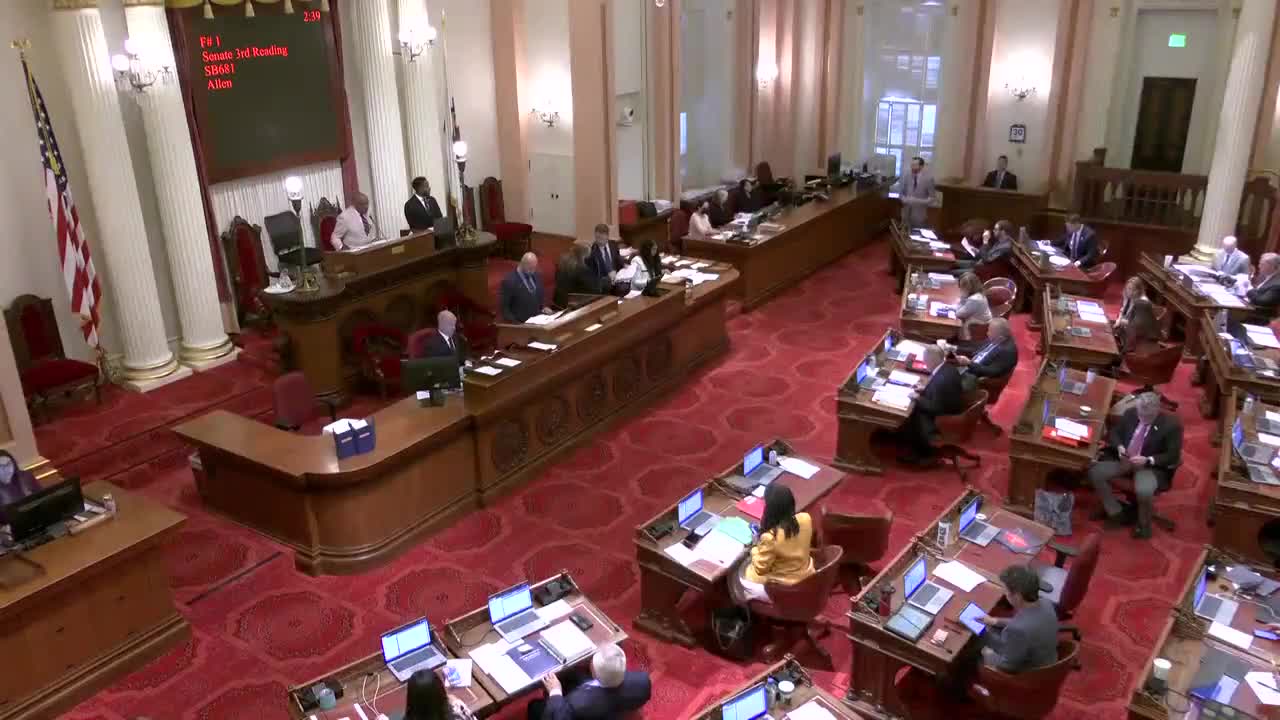
Bill Author

Bill Co-Author(s):