SB 479: Termination of tenancy: no-fault just cause: natural person.
- Session Year: 2023-2024
- House: Senate
- Latest Version Date: 2024-03-25
Current Status:
Passed
(2024-03-25: Chaptered by Secretary of State. Chapter 8, Statutes of 2024.)
Introduced
In Committee
First Chamber
In Committee
Second Chamber
Enacted
Existing law, after a tenant has continuously and lawfully occupied a residential real property for 12 months, prohibits the owner of the residential real property from terminating the tenancy without just cause and requires that just cause to be stated in the written notice to terminate tenancy. Existing law distinguishes between at-fault just cause and no-fault just cause and defines no-fault just cause to mean intent to occupy the residential real property by the owner or the owners spouse, domestic partner, children, grandchildren, parents, or grandparents, withdrawal of the residential real property from the rental market, the owner complying with specified government orders that necessitate vacating the real property, and intent to demolish or to substantially remodel the residential real property. Existing law defines owner for these purposes to mean either a natural person who has at least a 25% recorded ownership interest in the property or a natural person who has any recorded ownership interest in the property if 100% of the recorded ownership is divided among owners who are related to each other as sibling, spouse, domestic partner, child, parent, grandparent, or grandchild. Existing law defines natural person for these purposes to include a natural person who is a settlor or beneficiary of a family trust or, if the property is owned by a limited liability company or partnership, a natural person with a 25% ownership interest in the property, as specified.
This bill would revise the definition of natural person to instead include, if the property is owned by a limited liability company or partnership, a natural person who is a beneficial owner, as defined, with least a 25% ownership interest in the property. The bill would also make a nonsubstantive change to these provisions.
This bill would declare that it is to take effect immediately as an urgency statute.
Existing law requires the Employment Development Department to pay unemployment compensation benefits, payable from the Unemployment Fund, to unemployed individuals meeting specified requirements.Existing law provides that an unemployed individual who is otherwise eligible for unemployment compensation benefits shall not be deemed ineligible for unemployment compensation benefits for any week in which, among other things, the individual is either unlawfully detained or lawfully detained or arrested, but the charge is subsequently dismissed, except as specified, or the individual has unexpired leave time for which they have been compensated upon their discharge from any branch of the United States Armed Forces.This bill would clarify that an unemployed individual who is otherwise eligible for unemployment compensation benefits shall not be disqualified for eligibility for unemployment benefits for the purposes of the above-described provisions. The bill would state that its provisions are declaratory of existing law.Existing law requires the Employment Development Department to pay unemployment compensation benefits, payable from the Unemployment Fund, to unemployed individuals meeting specified requirements.
Existing law provides that an unemployed individual who is otherwise eligible for unemployment compensation benefits shall not be deemed ineligible for unemployment compensation benefits for any week in which, among other things, the individual is either unlawfully detained or lawfully detained or arrested, but the charge is subsequently dismissed, except as specified, or the individual has unexpired leave time for which they have been compensated upon their discharge from any branch of the United States Armed Forces.
This bill would clarify that an unemployed individual who is otherwise eligible for unemployment compensation benefits shall not be disqualified for eligibility for unemployment benefits for the purposes of the above-described provisions. The bill would state that its provisions are declaratory of existing law.
(a)Notwithstanding any other law, after a tenant has continuously and lawfully occupied a residential real property for 12 months, the owner of the residential real property shall not terminate a tenancy without just cause, which shall be stated in the written notice to terminate tenancy. If any additional adult tenants are added to the lease before an existing tenant has continuously and lawfully occupied the residential real property for 24 months, then this subdivision shall only apply if either of the following are satisfied:
(1)All of the tenants have continuously and lawfully occupied the residential real property for 12 months or more.
(2)One or more tenants have continuously and lawfully occupied the residential real property for 24 months or more.
(b)For purposes of this section, just cause means either of the following:
(1)At-fault just cause, which means any of the following:
(A)Default in the payment of rent.
(B)A breach of a material term of the lease, as described in paragraph (3) of Section 1161 of the Code of Civil Procedure, including, but not limited to, violation of a provision of the lease after being issued a written notice to correct the violation.
(C)Maintaining, committing, or permitting the maintenance or commission of a nuisance as described in paragraph (4) of Section 1161 of the Code of Civil Procedure.
(D)Committing waste as described in paragraph (4) of Section 1161 of the Code of Civil Procedure.
(E)The tenant had a written lease that terminated on or after January 1, 2020, or January 1, 2022, if the lease is for a tenancy in a mobilehome, and after a written request or demand from the owner, the tenant has refused to execute a written extension or renewal of the lease for an additional term of similar duration with similar provisions, provided that those terms do not violate this section or any other provision of law.
(F)Criminal activity by the tenant on the residential real property, including any common areas, or any criminal activity or criminal threat, as defined in subdivision (a) of Section 422 of the Penal Code, on or off the residential real property, that is directed at any owner or agent of the owner of the residential real property.
(G)Assigning or subletting the premises in violation of the tenants lease, as described in paragraph (4) of Section 1161 of the Code of Civil Procedure.
(H)The tenants refusal to allow the owner to enter the residential real property as authorized by Sections 1101.5 and 1954 of this code, and Sections 13113.7 and 17926.1 of the Health and Safety Code.
(I)Using the premises for an unlawful purpose as described in paragraph (4) of Section 1161 of the Code of Civil Procedure.
(J)The employee, agent, or licensees failure to vacate after their termination as an employee, agent, or a licensee as described in paragraph (1) of Section 1161 of the Code of Civil Procedure.
(K)When the tenant fails to deliver possession of the residential real property after providing the owner written notice as provided in Section 1946 of the tenants intention to terminate the hiring of the real property, or makes a written offer to surrender that is accepted in writing by the owner, but fails to deliver possession at the time specified in that written notice as described in paragraph (5) of Section 1161 of the Code of Civil Procedure.
(2)No-fault just cause, which means any of the following:
(A)(i)Intent to occupy the residential real property by the owner or the owners spouse, domestic partner, children, grandchildren, parents, or grandparents for a minimum of 12 continuous months as that persons primary residence.
(ii)For leases entered into on or after July 1, 2020, or July 1, 2022, if the lease is for a tenancy in a mobilehome, clause (i) shall apply only if the tenant agrees, in writing, to the termination, or if a provision of the lease allows the owner to terminate the lease if the owner, or the owners spouse, domestic partner, children, grandchildren, parents, or grandparents, unilaterally decides to occupy the residential real property. Addition of a provision allowing the owner to terminate the lease as described in this clause to a new or renewed rental agreement or fixed-term lease constitutes a similar provision for the purposes of subparagraph (E) of paragraph (1).
(iii)This subparagraph does not apply if the intended occupant occupies a rental unit on the property or if a vacancy of a similar unit already exists at the property.
(iv)The written notice terminating a tenancy for a just cause pursuant to this subparagraph shall contain the name or names and relationship to the owner of the intended occupant. The written notice shall additionally include notification that the tenant may request proof that the intended occupant is an owner or related to the owner as defined in subclause (II) of clause (viii). The proof shall be provided upon request and may include an operating agreement and other non-public documents.
(v)Clause (i) applies only if the intended occupant moves into the rental unit within 90 days after the tenant vacates and occupies the rental unit as a primary residence for at least 12 consecutive months.
(vi)(I)If the intended occupant fails to occupy the rental unit within 90 days after the tenant vacates or fails to occupy the rental unit as their primary residence for at least 12 consecutive months, the owner shall offer the unit to the tenant who vacated it at the same rent and lease terms in effect at the time the tenant vacated and shall reimburse the tenant for reasonable moving expenses incurred in excess of any relocation assistance that was paid to the tenant in connection with the written notice.
(II)If the intended occupant moves into the rental unit within 90 days after the tenant vacates, but dies before having occupied the rental unit as a primary residence for 12 months, as required by clause (vi), this will not be considered a failure to comply with this section or a material violation of this section by the owner as provided in subdivision (h).
(vii)For a new tenancy commenced during the time periods described in clause (v), the accommodations shall be offered and rented or leased at the lawful rent in effect at the time any notice of termination of tenancy is served.
(viii)As used in this subparagraph:
(I)Intended occupant means the owner of the residential real property or the owners spouse, domestic partner, child, grandchild, parent, or grandparent, as described in clause (i).
(II)Owner means any of the following:
(ia)An owner who is a natural person that has at least a 25-percent recorded ownership interest in the property.
(ib)An owner who is a natural person who has any recorded ownership interest in the property if 100 percent of the recorded ownership is divided among owners who are related to each other as sibling, spouse, domestic partner, child, parent, grandparent, or grandchild.
(ic)An owner who is a natural person whose recorded interest in the property is owned through a limited liability company or partnership.
(III)For purposes of subclause (II), natural person includes any of the following:
(ia)A natural person who is a settlor or beneficiary of a family trust.
(ib)If the property is owned by a limited liability company or partnership, a natural person who is a beneficial owner with at least a 25-percent ownership interest in the property.
(IV)Family trust means a revocable living trust or irrevocable trust in which the settlors and beneficiaries of the trust are persons who are related to each other as sibling, spouse, domestic partner, child, parent, grandparent, or grandchild.
(V)Beneficial owner means a natural person or family trust for whom, directly or indirectly and through any contract arrangement, understanding, relationship, or otherwise, and any of the following applies:
(ia)The natural person exercises substantial control over a partnership or limited liability company.
(ib)The natural person owns 25 percent or more of the equity interest of a partnership or limited liability company.
(ic)The natural person receives substantial economic benefits from the assets of a partnership.
(B)Withdrawal of the residential real property from the rental market.
(C)(i)The owner complying with any of the following:
(I)An order issued by a government agency or court relating to habitability that necessitates vacating the residential real property.
(II)An order issued by a government agency or court to vacate the residential real property.
(III)A local ordinance that necessitates vacating the residential real property.
(ii)If it is determined by any government agency or court that the tenant is at fault for the condition or conditions triggering the order or need to vacate under clause (i), the tenant shall not be entitled to relocation assistance as outlined in paragraph (3) of subdivision (d).
(D)(i)Intent to demolish or to substantially remodel the residential real property.
(ii)For purposes of this subparagraph, substantially remodel means either of the following that cannot be reasonably accomplished in a safe manner that allows the tenant to remain living in the place and that requires the tenant to vacate the residential real property for at least 30 consecutive days:
(I)The replacement or substantial modification of any structural, electrical, plumbing, or mechanical system that requires a permit from a governmental agency.
(II)The abatement of hazardous materials, including lead-based paint, mold, or asbestos, in accordance with applicable federal, state, and local laws.
(iii)For purposes of this subparagraph, a tenant is not required to vacate the residential real property on any days where a tenant could continue living in the residential real property without violating health, safety, and habitability codes and laws. Cosmetic improvements alone, including painting, decorating, and minor repairs, or other work that can be performed safely without having the residential real property vacated, do not qualify as substantial remodel.
(iv)A written notice terminating a tenancy for a just cause pursuant to this subparagraph shall include all of the following information:
(I)A statement informing the tenant of the owners intent to demolish the property or substantially remodel the rental unit property.
(II)The following statement:
If the substantial remodel of your unit or demolition of the property as described in this notice of termination is not commenced or completed, the owner must offer you the opportunity to re-rent your unit with a rental agreement containing the same terms as your most recent rental agreement with the owner at the rental rate that was in effect at the time you vacated. You must notify the owner within thirty (30) days of receipt of the offer to re-rent of your acceptance or rejection of the offer, and, if accepted, you must reoccupy the unit within thirty (30) days of notifying the owner of your acceptance of the offer.
(III)A description of the substantial remodel to be completed, the approximate expected duration of the substantial remodel, or if the property is to be demolished, the expected date by which the property will be demolished, together with one of the following:
(ia)A copy of the permit or permits required to undertake the substantial remodel or demolition.
(ib)Only if a notice is issued pursuant to subclause (II) of clause (ii) and the remodel does not require any permit, a copy of the signed contract with the contractor hired by the owner to complete the substantial remodel, that reasonably details the work that will be undertaken to abate the hazardous materials as described in subclause (II) of clause (ii).
(IV)A notification that if the tenant is interested in reoccupying the rental unit following the substantial remodel, the tenant shall inform the owner of the tenants interest in reoccupying the rental unit following the substantial remodel and provide to the owner the tenants address, telephone number, and email address.
(c)Before an owner of residential real property issues a notice to terminate a tenancy for just cause that is a curable lease violation, the owner shall first give notice of the violation to the tenant with an opportunity to cure the violation pursuant to paragraph (3) of Section 1161 of the Code of Civil Procedure. If the violation is not cured within the time period set forth in the notice, a three-day notice to quit without an opportunity to cure may thereafter be served to terminate the tenancy.
(d)(1)For a tenancy for which just cause is required to terminate the tenancy under subdivision (a), if an owner of residential real property issues a termination notice based on a no-fault just cause described in paragraph (2) of subdivision (b), the owner shall, regardless of the tenants income, at the owners option, do one of the following:
(A)Assist the tenant to relocate by providing a direct payment to the tenant as described in paragraph (3).
(B)Waive in writing the payment of rent for the final month of the tenancy, prior to the rent becoming due.
(2)If an owner issues a notice to terminate a tenancy for no-fault just cause, the owner shall notify the tenant in the written termination notice of the tenants right to relocation assistance or rent waiver pursuant to this section. If the owner elects to waive the rent for the final month of the tenancy as provided in subparagraph (B) of paragraph (1), the notice shall state the amount of rent waived and that no rent is due for the final month of the tenancy.
(3)(A)The amount of relocation assistance or rent waiver shall be equal to one month of the tenants rent that was in effect when the owner issued the notice to terminate the tenancy. Any relocation assistance shall be provided within 15 calendar days of service of the notice.
(B)If a tenant fails to vacate after the expiration of the notice to terminate the tenancy, the actual amount of any relocation assistance or rent waiver provided pursuant to this subdivision shall be recoverable as damages in an action to recover possession.
(C)The relocation assistance or rent waiver required by this subdivision shall be credited against any other relocation assistance required by any other law.
(4)An owners failure to strictly comply with this subdivision shall render the notice of termination void.
(e)This section shall not apply to the following types of residential real properties or residential circumstances:
(1)Transient and tourist hotel occupancy as defined in subdivision (b) of Section 1940.
(2)Housing accommodations in a nonprofit hospital, religious facility, extended care facility, licensed residential care facility for the elderly, as defined in Section 1569.2 of the Health and Safety Code, or an adult residential facility, as defined in Chapter 6 of Division 6 of Title 22 of the Manual of Policies and Procedures published by the State Department of Social Services.
(3)Dormitories owned and operated by an institution of higher education or a kindergarten and grades 1 to 12, inclusive, school.
(4)Housing accommodations in which the tenant shares bathroom or kitchen facilities with the owner who maintains their principal residence at the residential real property.
(5)Single-family owner-occupied residences, including both of the following:
(A)A residence in which the owner-occupant rents or leases no more than two units or bedrooms, including, but not limited to, an accessory dwelling unit or a junior accessory dwelling unit.
(B)A mobilehome.
(6)A property containing two separate dwelling units within a single structure in which the owner occupied one of the units as the owners principal place of residence at the beginning of the tenancy, so long as the owner continues in occupancy, and neither unit is an accessory dwelling unit or a junior accessory dwelling unit.
(7)Housing that has been issued a certificate of occupancy within the previous 15 years, unless the housing is a mobilehome.
(8)Residential real property, including a mobilehome, that is alienable separate from the title to any other dwelling unit, provided that both of the following apply:
(A)The owner is not any of the following:
(i)A real estate investment trust, as defined in Section 856 of the Internal Revenue Code.
(ii)A corporation.
(iii)A limited liability company in which at least one member is a corporation.
(iv)Management of a mobilehome park, as defined in Section 798.2.
(B)(i)The tenants have been provided written notice that the residential property is exempt from this section using the following statement:
This property is not subject to the rent limits imposed by Section 1947.12 of the Civil Code and is not subject to the just cause requirements of Section 1946.2 of the Civil Code. This property meets the requirements of Sections 1947.12 (d)(5) and 1946.2 (e)(8) of the Civil Code and the owner is not any of the following: (1) a real estate investment trust, as defined by Section 856 of the Internal Revenue Code; (2) a corporation; or (3) a limited liability company in which at least one member is a corporation.
(ii)(I)Except as provided in subclause (II), for a tenancy existing before July 1, 2020, the notice required under clause (i) may, but is not required to, be provided in the rental agreement.
(II)For a tenancy in a mobilehome existing before July 1, 2022, the notice required under clause (i) may, but is not required to, be provided in the rental agreement.
(iii)(I)Except as provided in subclause (II), for any tenancy commenced or renewed on or after July 1, 2020, the notice required under clause (i) must be provided in the rental agreement.
(II)For any tenancy in a mobilehome commenced or renewed on or after July 1, 2022, the notice required under clause (i) shall be provided in the rental agreement.
(iv)Addition of a provision containing the notice required under clause (i) to any new or renewed rental agreement or fixed-term lease constitutes a similar provision for the purposes of subparagraph (E) of paragraph (1) of subdivision (b).
(9)Housing restricted by deed, regulatory restriction contained in an agreement with a government agency, or other recorded document as affordable housing for persons and families of very low, low, or moderate income, as defined in Section 50093 of the Health and Safety Code, or subject to an agreement that provides housing subsidies for affordable housing for persons and families of very low, low, or moderate income, as defined in Section 50093 of the Health and Safety Code or comparable federal statutes.
(f)An owner of residential real property subject to this section shall provide notice to the tenant as follows:
(1)(A)Except as provided in subparagraph (B), for any tenancy commenced or renewed on or after July 1, 2020, as an addendum to the lease or rental agreement, or as a written notice signed by the tenant, with a copy provided to the tenant.
(B)For a tenancy in a mobilehome commenced or renewed on or after July 1, 2022, as an addendum to the lease or rental agreement, or as a written notice signed by the tenant, with a copy provided to the tenant.
(2)(A)Except as provided in subparagraph (B), for a tenancy existing prior to July 1, 2020, by written notice to the tenant no later than August 1, 2020, or as an addendum to the lease or rental agreement.
(B)For a tenancy in a mobilehome existing prior to July 1, 2022, by written notice to the tenant no later than August 1, 2022, or as an addendum to the lease or rental agreement.
(3)The notification or lease provision shall be in no less than 12-point type, and shall include the following:
California law limits the amount your rent can be increased. See Section 1947.12 of the Civil Code for more information. California law also provides that after all of the tenants have continuously and lawfully occupied the property for 12 months or more or at least one of the tenants has continuously and lawfully occupied the property for 24 months or more, a landlord must provide a statement of cause in any notice to terminate a tenancy. See Section 1946.2 of the Civil Code for more information.
The notification or lease provision shall be subject to Section 1632.
(g)An owners failure to comply with any provision of this section shall render the written termination notice void.
(h)(1)An owner who attempts to recover possession of a rental unit in material violation of this section shall be liable to the tenant in a civil action for all of the following:
(A)Actual damages.
(B)In the courts discretion, reasonable attorneys fees and costs.
(C)Upon a showing that the owner has acted willfully or with oppression, fraud, or malice, up to three times the actual damages. An award may also be entered for punitive damages for the benefit of the tenant against the owner.
(2)The Attorney General, in the name of the people of the State of California, and the city attorney or county counsel in the jurisdiction in which the rental unit is located, in the name of the city or county, may seek injunctive relief based on violations of this section.
(i)(1)This section does not apply to the following residential real property:
(A)Residential real property subject to a local ordinance requiring just cause for termination of a residential tenancy adopted on or before September 1, 2019, in which case the local ordinance shall apply.
(B)Residential real property subject to a local ordinance requiring just cause for termination of a residential tenancy adopted or amended after September 1, 2019, that is more protective than this section, in which case the local ordinance shall apply. For purposes of this subparagraph, an ordinance is more protective if it meets all of the following criteria:
(i)The just cause for termination of a residential tenancy under the local ordinance is consistent with this section.
(ii)The ordinance further limits the reasons for termination of a residential tenancy, provides for higher relocation assistance amounts, or provides additional tenant protections that are not prohibited by any other provision of law.
(iii)The local government has made a binding finding within their local ordinance that the ordinance is more protective than the provisions of this section.
(2)A residential real property shall not be subject to both a local ordinance requiring just cause for termination of a residential tenancy and this section.
(3)A local ordinance adopted after September 1, 2019, that is less protective than this section shall not be enforced unless this section is repealed.
(j)Any waiver of the rights under this section shall be void as contrary to public policy.
(k)For the purposes of this section, the following definitions shall apply:
(1)Owner includes any person, acting as principal or through an agent, having the right to offer residential real property for rent, and includes a predecessor in interest to the owner.
(2)Residential real property means any dwelling or unit that is intended for human habitation, including any dwelling or unit in a mobilehome park.
(3)Tenancy means the lawful occupation of residential real property and includes a lease or sublease.
(l)This section shall not apply to a homeowner of a mobilehome, as defined in Section 798.9.
(m)This section shall become operative on April 1, 2024.
(n)This section shall remain in effect only until January 1, 2030, and as of that date is repealed.
SEC. 2.This act is an urgency statute necessary for the immediate preservation of the public peace, health, or safety within the meaning of Article IV of the California Constitution and shall go into immediate effect. The facts constituting the necessity are:
The amendments made to Section 1946.2 of the Civil Code by Chapter 290 of the Statutes of 2023 (Senate Bill 567) become operative on April 1, 2024, and therefore important amendments to those provisions proposed by this act must take effect immediately to ensure the success of Senate Bill 567.
(a)Notwithstanding any other law, after a tenant has continuously and lawfully occupied a residential real property for 12 months, the owner of the residential real property shall not terminate a tenancy without just cause, which shall be stated in the written notice to terminate tenancy. If any additional adult tenants are added to the lease before an existing tenant has continuously and lawfully occupied the residential real property for 24 months, then this subdivision shall only apply if either of the following are satisfied:
(1)All of the tenants have continuously and lawfully occupied the residential real property for 12 months or more.
(2)One or more tenants have continuously and lawfully occupied the residential real property for 24 months or more.
(b)For purposes of this section, just cause means either of the following:
(1)At-fault just cause, which means any of the following:
(A)Default in the payment of rent.
(B)A breach of a material term of the lease, as described in paragraph (3) of Section 1161 of the Code of Civil Procedure, including, but not limited to, violation of a provision of the lease after being issued a written notice to correct the violation.
(C)Maintaining, committing, or permitting the maintenance or commission of a nuisance as described in paragraph (4) of Section 1161 of the Code of Civil Procedure.
(D)Committing waste as described in paragraph (4) of Section 1161 of the Code of Civil Procedure.
(E)The tenant had a written lease that terminated on or after January 1, 2020, or January 1, 2022, if the lease is for a tenancy in a mobilehome, and after a written request or demand from the owner, the tenant has refused to execute a written extension or renewal of the lease for an additional term of similar duration with similar provisions, provided that those terms do not violate this section or any other provision of law.
(F)Criminal activity by the tenant on the residential real property, including any common areas, or any criminal activity or criminal threat, as defined in subdivision (a) of Section 422 of the Penal Code, on or off the residential real property, that is directed at any owner or agent of the owner of the residential real property.
(G)Assigning or subletting the premises in violation of the tenants lease, as described in paragraph (4) of Section 1161 of the Code of Civil Procedure.
(H)The tenants refusal to allow the owner to enter the residential real property as authorized by Sections 1101.5 and 1954 of this code, and Sections 13113.7 and 17926.1 of the Health and Safety Code.
(I)Using the premises for an unlawful purpose as described in paragraph (4) of Section 1161 of the Code of Civil Procedure.
(J)The employee, agent, or licensees failure to vacate after their termination as an employee, agent, or a licensee as described in paragraph (1) of Section 1161 of the Code of Civil Procedure.
(K)When the tenant fails to deliver possession of the residential real property after providing the owner written notice as provided in Section 1946 of the tenants intention to terminate the hiring of the real property, or makes a written offer to surrender that is accepted in writing by the owner, but fails to deliver possession at the time specified in that written notice as described in paragraph (5) of Section 1161 of the Code of Civil Procedure.
(2)No-fault just cause, which means any of the following:
(A)(i)Intent to occupy the residential real property by the owner or the owners spouse, domestic partner, children, grandchildren, parents, or grandparents for a minimum of 12 continuous months as that persons primary residence.
(ii)For leases entered into on or after July 1, 2020, or July 1, 2022, if the lease is for a tenancy in a mobilehome, clause (i) shall apply only if the tenant agrees, in writing, to the termination, or if a provision of the lease allows the owner to terminate the lease if the owner, or the owners spouse, domestic partner, children, grandchildren, parents, or grandparents, unilaterally decides to occupy the residential real property. Addition of a provision allowing the owner to terminate the lease as described in this clause to a new or renewed rental agreement or fixed-term lease constitutes a similar provision for the purposes of subparagraph (E) of paragraph (1).
(iii)This subparagraph does not apply if the intended occupant occupies a rental unit on the property or if a vacancy of a similar unit already exists at the property.
(iv)The written notice terminating a tenancy for a just cause pursuant to this subparagraph shall contain the name or names and relationship to the owner of the intended occupant. The written notice shall additionally include notification that the tenant may request proof that the intended occupant is an owner or related to the owner as defined in subclause (II) of clause (viii). The proof shall be provided upon request and may include an operating agreement and other non-public documents.
(v)Clause (i) applies only if the intended occupant moves into the rental unit within 90 days after the tenant vacates and occupies the rental unit as a primary residence for at least 12 consecutive months.
(vi)(I)If the intended occupant fails to occupy the rental unit within 90 days after the tenant vacates or fails to occupy the rental unit as their primary residence for at least 12 consecutive months, the owner shall offer the unit to the tenant who vacated it at the same rent and lease terms in effect at the time the tenant vacated and shall reimburse the tenant for reasonable moving expenses incurred in excess of any relocation assistance that was paid to the tenant in connection with the written notice.
(II)If the intended occupant moves into the rental unit within 90 days after the tenant vacates, but dies before having occupied the rental unit as a primary residence for 12 months, as required by clause (vi), this will not be considered a failure to comply with this section or a material violation of this section by the owner as provided in subdivision (h).
(vii)For a new tenancy commenced during the time periods described in clause (v), the accommodations shall be offered and rented or leased at the lawful rent in effect at the time any notice of termination of tenancy is served.
(viii)As used in this subparagraph:
(I)Intended occupant means the owner of the residential real property or the owners spouse, domestic partner, child, grandchild, parent, or grandparent, as described in clause (i).
(II)Owner means any of the following:
(ia)An owner who is a natural person that has at least a 25-percent recorded ownership interest in the property.
(ib)An owner who is a natural person who has any recorded ownership interest in the property if 100 percent of the recorded ownership is divided among owners who are related to each other as sibling, spouse, domestic partner, child, parent, grandparent, or grandchild.
(ic)An owner who is a natural person whose recorded interest in the property is owned through a limited liability company or partnership.
(III)For purposes of subclause (II), natural person includes any of the following:
(ia)A natural person who is a settlor or beneficiary of a family trust.
(ib)If the property is owned by a limited liability company or partnership, a natural person who is a beneficial owner with at least a 25-percent ownership interest in the property.
(IV)Family trust means a revocable living trust or irrevocable trust in which the settlors and beneficiaries of the trust are persons who are related to each other as sibling, spouse, domestic partner, child, parent, grandparent, or grandchild.
(V)Beneficial owner means a natural person or family trust for whom, directly or indirectly and through any contract arrangement, understanding, relationship, or otherwise, and any of the following applies:
(ia)The natural person exercises substantial control over a partnership or limited liability company.
(ib)The natural person owns 25 percent or more of the equity interest of a partnership or limited liability company.
(ic)The natural person receives substantial economic benefits from the assets of a partnership partnership.
(B)Withdrawal of the residential real property from the rental market.
(C)(i)The owner complying with any of the following:
(I)An order issued by a government agency or court relating to habitability that necessitates vacating the residential real property.
(II)An order issued by a government agency or court to vacate the residential real property.
(III)A local ordinance that necessitates vacating the residential real property.
(ii)If it is determined by any government agency or court that the tenant is at fault for the condition or conditions triggering the order or need to vacate under clause (i), the tenant shall not be entitled to relocation assistance as outlined in paragraph (3) of subdivision (d).
(D)(i)Intent to demolish or to substantially remodel the residential real property.
(ii)For purposes of this subparagraph, substantially remodel means either of the following that cannot be reasonably accomplished in a safe manner that allows the tenant to remain living in the place and that requires the tenant to vacate the residential real property for at least 30 consecutive days:
(I)The replacement or substantial modification of any structural, electrical, plumbing, or mechanical system that requires a permit from a governmental agency.
(II)The abatement of hazardous materials, including lead-based paint, mold, or asbestos, in accordance with applicable federal, state, and local laws.
(iii)For purposes of this subparagraph, a tenant is not required to vacate the residential real property on any days where a tenant could continue living in the residential real property without violating health, safety, and habitability codes and laws. Cosmetic improvements alone, including painting, decorating, and minor repairs, or other work that can be performed safely without having the residential real property vacated, do not qualify as substantial remodel.
(iv)A written notice terminating a tenancy for a just cause pursuant to this subparagraph shall include all of the following information:
(I)A statement informing the tenant of the owners intent to demolish the property or substantially remodel the rental unit property.
(II)The following statement:
If the substantial remodel of your unit or demolition of the property as described in this notice of termination is not commenced or completed, the owner must offer you the opportunity to re-rent your unit with a rental agreement containing the same terms as your most recent rental agreement with the owner at the rental rate that was in effect at the time you vacated. You must notify the owner within thirty (30) days of receipt of the offer to re-rent of your acceptance or rejection of the offer, and, if accepted, you must reoccupy the unit within thirty (30) days of notifying the owner of your acceptance of the offer.
(III)A description of the substantial remodel to be completed, the approximate expected duration of the substantial remodel, or if the property is to be demolished, the expected date by which the property will be demolished, together with one of the following:
(ia)A copy of the permit or permits required to undertake the substantial remodel or demolition.
(ib)Only if a notice is issued pursuant to subclause (II) of clause (ii) and the remodel does not require any permit, a copy of the signed contract with the contractor hired by the owner to complete the substantial remodel, that reasonably details the work that will be undertaken to abate the hazardous materials as described in subclause (II) of clause (ii).
(IV)A notification that if the tenant is interested in reoccupying the rental unit following the substantial remodel, the tenant shall inform the owner of the tenants interest in reoccupying the rental unit following the substantial remodel and provide to the owner the tenants address, telephone number, and email address.
(c)Before an owner of residential real property issues a notice to terminate a tenancy for just cause that is a curable lease violation, the owner shall first give notice of the violation to the tenant with an opportunity to cure the violation pursuant to paragraph (3) of Section 1161 of the Code of Civil Procedure. If the violation is not cured within the time period set forth in the notice, a three-day notice to quit without an opportunity to cure may thereafter be served to terminate the tenancy.
(d)(1)For a tenancy for which just cause is required to terminate the tenancy under subdivision (a), if an owner of residential real property issues a termination notice based on a no-fault just cause described in paragraph (2) of subdivision (b), the owner shall, regardless of the tenants income, at the owners option, do one of the following:
(A)Assist the tenant to relocate by providing a direct payment to the tenant as described in paragraph (3).
(B)Waive in writing the payment of rent for the final month of the tenancy, prior to the rent becoming due.
(2)If an owner issues a notice to terminate a tenancy for no-fault just cause, the owner shall notify the tenant in the written termination notice of the tenants right to relocation assistance or rent waiver pursuant to this section. If the owner elects to waive the rent for the final month of the tenancy as provided in subparagraph (B) of paragraph (1), the notice shall state the amount of rent waived and that no rent is due for the final month of the tenancy.
(3)(A)The amount of relocation assistance or rent waiver shall be equal to one month of the tenants rent that was in effect when the owner issued the notice to terminate the tenancy. Any relocation assistance shall be provided within 15 calendar days of service of the notice.
(B)If a tenant fails to vacate after the expiration of the notice to terminate the tenancy, the actual amount of any relocation assistance or rent waiver provided pursuant to this subdivision shall be recoverable as damages in an action to recover possession.
(C)The relocation assistance or rent waiver required by this subdivision shall be credited against any other relocation assistance required by any other law.
(4)An owners failure to strictly comply with this subdivision shall render the notice of termination void.
(e)This section shall not apply to the following types of residential real properties or residential circumstances:
(1)Transient and tourist hotel occupancy as defined in subdivision (b) of Section 1940.
(2)Housing accommodations in a nonprofit hospital, religious facility, extended care facility, licensed residential care facility for the elderly, as defined in Section 1569.2 of the Health and Safety Code, or an adult residential facility, as defined in Chapter 6 of Division 6 of Title 22 of the Manual of Policies and Procedures published by the State Department of Social Services.
(3)Dormitories owned and operated by an institution of higher education or a kindergarten and grades 1 to 12, inclusive, school.
(4)Housing accommodations in which the tenant shares bathroom or kitchen facilities with the owner who maintains their principal residence at the residential real property.
(5)Single-family owner-occupied residences, including both of the following:
(A)A residence in which the owner-occupant rents or leases no more than two units or bedrooms, including, but not limited to, an accessory dwelling unit or a junior accessory dwelling unit.
(B)A mobilehome.
(6)A property containing two separate dwelling units within a single structure in which the owner occupied one of the units as the owners principal place of residence at the beginning of the tenancy, so long as the owner continues in occupancy, and neither unit is an accessory dwelling unit or a junior accessory dwelling unit.
(7)Housing that has been issued a certificate of occupancy within the previous 15 years, unless the housing is a mobilehome.
(8)Residential real property, including a mobilehome, that is alienable separate from the title to any other dwelling unit, provided that both of the following apply:
(A)The owner is not any of the following:
(i)A real estate investment trust, as defined in Section 856 of the Internal Revenue Code.
(ii)A corporation.
(iii)A limited liability company in which at least one member is a corporation.
(iv)Management of a mobilehome park, as defined in Section 798.2.
(B)(i)The tenants have been provided written notice that the residential property is exempt from this section using the following statement:
This property is not subject to the rent limits imposed by Section 1947.12 of the Civil Code and is not subject to the just cause requirements of Section 1946.2 of the Civil Code. This property meets the requirements of Sections 1947.12 (d)(5) and 1946.2 (e)(8) of the Civil Code and the owner is not any of the following: (1) a real estate investment trust, as defined by Section 856 of the Internal Revenue Code; (2) a corporation; or (3) a limited liability company in which at least one member is a corporation.
(ii)(I)Except as provided in subclause (II), for a tenancy existing before July 1, 2020, the notice required under clause (i) may, but is not required to, be provided in the rental agreement.
(II)For a tenancy in a mobilehome existing before July 1, 2022, the notice required under clause (i) may, but is not required to, be provided in the rental agreement.
(iii)(I)Except as provided in subclause (II), for any tenancy commenced or renewed on or after July 1, 2020, the notice required under clause (i) must be provided in the rental agreement.
(II)For any tenancy in a mobilehome commenced or renewed on or after July 1, 2022, the notice required under clause (i) shall be provided in the rental agreement.
(iv)Addition of a provision containing the notice required under clause (i) to any new or renewed rental agreement or fixed-term lease constitutes a similar provision for the purposes of subparagraph (E) of paragraph (1) of subdivision (b).
(9)Housing restricted by deed, regulatory restriction contained in an agreement with a government agency, or other recorded document as affordable housing for persons and families of very low, low, or moderate income, as defined in Section 50093 of the Health and Safety Code, or subject to an agreement that provides housing subsidies for affordable housing for persons and families of very low, low, or moderate income, as defined in Section 50093 of the Health and Safety Code or comparable federal statutes.
(f)An owner of residential real property subject to this section shall provide notice to the tenant as follows:
(1)(A)Except as provided in subparagraph (B), for any tenancy commenced or renewed on or after July 1, 2020, as an addendum to the lease or rental agreement, or as a written notice signed by the tenant, with a copy provided to the tenant.
(B)For a tenancy in a mobilehome commenced or renewed on or after July 1, 2022, as an addendum to the lease or rental agreement, or as a written notice signed by the tenant, with a copy provided to the tenant.
(2)(A)Except as provided in subparagraph (B), for a tenancy existing prior to July 1, 2020, by written notice to the tenant no later than August 1, 2020, or as an addendum to the lease or rental agreement.
(B)For a tenancy in a mobilehome existing prior to July 1, 2022, by written notice to the tenant no later than August 1, 2022, or as an addendum to the lease or rental agreement.
(3)The notification or lease provision shall be in no less than 12-point type, and shall include the following:
California law limits the amount your rent can be increased. See Section 1947.12 of the Civil Code for more information. California law also provides that after all of the tenants have continuously and lawfully occupied the property for 12 months or more or at least one of the tenants has continuously and lawfully occupied the property for 24 months or more, a landlord must provide a statement of cause in any notice to terminate a tenancy. See Section 1946.2 of the Civil Code for more information.
The notification or lease provision shall be subject to Section 1632.
(g)An owners failure to comply with any provision of this section shall render the written termination notice void.
(h)(1)An owner who attempts to recover possession of a rental unit in material violation of this section shall be liable to the tenant in a civil action for all of the following:
(A)Actual damages.
(B)In the courts discretion, reasonable attorneys fees and costs.
(C)Upon a showing that the owner has acted willfully or with oppression, fraud, or malice, up to three times the actual damages. An award may also be entered for punitive damages for the benefit of the tenant against the owner.
(2)The Attorney General, in the name of the people of the State of California, and the city attorney or county counsel in the jurisdiction in which the rental unit is located, in the name of the city or county, may seek injunctive relief based on violations of this section.
(i)(1)This section does not apply to the following residential real property:
(A)Residential real property subject to a local ordinance requiring just cause for termination of a residential tenancy adopted on or before September 1, 2019, in which case the local ordinance shall apply.
(B)Residential real property subject to a local ordinance requiring just cause for termination of a residential tenancy adopted or amended after September 1, 2019, that is more protective than this section, in which case the local ordinance shall apply. For purposes of this subparagraph, an ordinance is more protective if it meets all of the following criteria:
(i)The just cause for termination of a residential tenancy under the local ordinance is consistent with this section.
(ii)The ordinance further limits the reasons for termination of a residential tenancy, provides for higher relocation assistance amounts, or provides additional tenant protections that are not prohibited by any other provision of law.
(iii)The local government has made a binding finding within their local ordinance that the ordinance is more protective than the provisions of this section.
(2)A residential real property shall not be subject to both a local ordinance requiring just cause for termination of a residential tenancy and this section.
(3)A local ordinance adopted after September 1, 2019, that is less protective than this section shall not be enforced unless this section is repealed.
(j)Any waiver of the rights under this section shall be void as contrary to public policy.
(k)For the purposes of this section, the following definitions shall apply:
(1)Owner includes any person, acting as principal or through an agent, having the right to offer residential real property for rent, and includes a predecessor in interest to the owner.
(2)Residential real property means any dwelling or unit that is intended for human habitation, including any dwelling or unit in a mobilehome park.
(3)Tenancy means the lawful occupation of residential real property and includes a lease or sublease.
(l)This section shall not apply to a homeowner of a mobilehome, as defined in Section 798.9.
(m)This section shall become operative on April 1, 2024.
(n)This section shall remain in effect only until January 1, 2030, and as of that date is repealed.
SEC. 2.This act is an urgency statute necessary for the immediate preservation of the public peace, health, or safety within the meaning of Article IV of the California Constitution and shall go into immediate effect. The facts constituting the necessity are:
The amendments made to Section 1946.2 of the Civil Code by Chapter 290 of the Statutes of 2023 (Senate Bill 567) become operative on April 1, 2024, and therefore important amendments to those provisions proposed by this act must take effect immediately to ensure the success of Senate Bill 567.
SECTION 1.Section 1253.1 of the Unemployment Insurance Code is amended to read:1253.1.An unemployed individual who is in all respects otherwise eligible for unemployment compensation benefits shall not be disqualified for eligibility for unemployment benefits for any week in which, for not exceeding two working days, the unemployed individual cannot reasonably be expected to work because:(a)The unemployed individual is unlawfully detained.(b)The unemployed individual is lawfully detained or arrested, but the charge against such individual is subsequently dismissed.(c)Notwithstanding any other provision of this division, any determination made pursuant to subdivision (b) of this section may, if no appeal has been filed therefrom, be reconsidered by the department within 15 days from the date that the charge is dismissed. Notice of any reconsidered determination shall be given to the claimant and any employer or employing unit which received notice under Section 1328 or 1331, and the claimant or employer may appeal therefrom in the manner prescribed in Section 1328.SEC. 2.Section 1253.12 of the Unemployment Insurance Code is amended to read:1253.12.An unemployed individual who is in all respects otherwise eligible for unemployment compensation benefits, shall not be disqualified for eligibility for unemployment benefits for any week in which:(a)For not exceeding two working days, the unemployed individual cannot reasonably be expected to work because there has been a death in the unemployed individuals immediate family in the state in which they reside.(b)For not exceeding four working days, the unemployed individual cannot reasonably be expected to work because there has been a death in the unemployed individuals immediate family outside of the state in which they reside.SEC. 3.Section 1253.15 of the Unemployment Insurance Code is amended to read:1253.15.An unemployed individual who has been discharged from any branch of the United States Armed Forces and who is in all respects otherwise eligible for unemployment compensation benefits shall not be disqualified for eligibility for unemployment benefits in any week for whichthe unemployed individual has unexpired leave time for which the unemployed individual has been compensated upon their discharge.SEC. 4.Section 1253.2 of the Unemployment Insurance Code is amended to read:1253.2.An unemployed individual who is in all respects otherwise eligible for unemployment compensation benefits shall not be disqualified for eligibility for unemployment benefits for any week in which pursuant to the provisions of a collective bargaining agreement the unemployed individual is allowed not more than one uncompensated day off in that week or is allowed not more than one uncompensated holiday on one day in that week if:(a)The unemployed individual is employed in longshoring operations;(b)The unemployed individuals employer regularly offers employment to individuals employed in such operations seven days a week;(c)The unemployed individual is able to work and available for work for six days of the week except as provided in Section 1253.1 or 1253.12.SEC. 5.The amendment of Sections 1253.1, 1253.12, 1253.15, and 1253.2 of the Unemployment Insurance Code made by this act does not constitute a change in, but is declaratory of, existing law.An unemployed individual who is in all respects otherwise eligible for unemployment compensation benefits shall not be deemed ineligible disqualified for eligibility for unemployment benefits for any week in which, for not exceeding two working days, he the unemployed individual cannot reasonably be expected to work because:
(a)He The unemployed individual is unlawfully detained.
(b)He The unemployed individual is lawfully detained or arrested, but the charge against such individual is subsequently dismissed.
(c)Notwithstanding any other provision of this division, any determination made pursuant to subdivision (b) of this section may, if no appeal has been filed therefrom, be reconsidered by the department within 15 days from the date that the charge is dismissed. Notice of any reconsidered determination shall be given to the claimant and any employer or employing unit which received notice under Section 1328 or 1331, and the claimant or employer may appeal therefrom in the manner prescribed in Section 1328.
SEC. 2.Section 1253.12 of the Unemployment Insurance Code is amended to read:1253.12.An unemployed individual who is in all respects otherwise eligible for unemployment compensation benefits, shall not be deemed ineligible disqualified for eligibility for unemployment benefits for any week in which:
(a)For not exceeding two working days, he or she the unemployed individual cannot reasonably be expected to work because there has been a death in his or her the unemployed individuals immediate family in the state in which he or she resides. they reside.
(b)For not exceeding four working days, he or she the unemployed individual cannot reasonably be expected to work because there has been a death in his or her the unemployed individuals immediate family outside of the state in which he or she resides. they reside.
SEC. 3.Section 1253.15 of the Unemployment Insurance Code is amended to read:1253.15.An unemployed individual who has been discharged from any branch of the United States armed services Armed Forces and who is in all respects otherwise eligible for unemployment compensation benefits shall not be deemed ineligible disqualified for eligibility for unemployment benefits in any week for which hethe unemployed individual has unexpired leave time for which he the unemployed individual has been compensated upon his their discharge.
SEC. 4.Section 1253.2 of the Unemployment Insurance Code is amended to read:1253.2.An unemployed individual who is in all respects otherwise eligible for unemployment compensation benefits shall not be deemed ineligible disqualified for eligibility for unemployment benefits for any week in which pursuant to the provisions of a collective bargaining agreement he the unemployed individual is allowed not more than one uncompensated day off in that week or is allowed not more than one uncompensated holiday on one day in that week if:
(a)He The unemployed individual is employed in longshoring operations;
(b)His The unemployed individuals employer regularly offers employment to individuals employed in such operations seven days a week;
(c)He The unemployed individual is able to work and available for work for six days of the week except as provided in Section 1253.1 or 1253.12.
SEC. 5.The amendment of Sections 1253.1, 1253.12, 1253.15, and 1253.2 of the Unemployment Insurance Code made by this act does not constitute a change in, but is declaratory of, existing law.
|
Date
|
Status
|
|---|---|
| Mar 25, 2024 | Chaptered by Secretary of State. Chapter 8, Statutes of 2024. |
| Mar 25, 2024 | Approved by the Governor. |
| Mar 20, 2024 | Enrolled and presented to the Governor at 2 p.m. |
| Mar 14, 2024 | Assembly amendments concurred in. (Ayes 40. Noes 0. Page 3296.) Ordered to engrossing and enrolling. |
| Mar 14, 2024 | Urgency clause adopted. |
| Mar 12, 2024 | From committee: That the Assembly amendments be concurred in. (Ayes 10. Noes 0. Page 3275.) |
| Mar 11, 2024 | From committee: Be re-referred to Com. on JUD. pursuant to Senate Rule 29.10(d). (Ayes 5. Noes 0. Page 3274.) Re-referred to Com. on JUD. |
| Mar 11, 2024 | Re-referred to Com. on RLS pursuant to Senate Rule 29.10(d). |
| Mar 8, 2024 | Set for hearing March 11 in JUD. pending receipt. |
| Mar 7, 2024 | In Senate. Concurrence in Assembly amendments pending. |
| Mar 7, 2024 | Read third time. Urgency clause adopted. Passed. (Ayes 66. Noes 0. Page 4295.) Ordered to the Senate. |
| Feb 29, 2024 | Ordered to third reading. |
| Feb 29, 2024 | Read third time and amended. |
| Feb 27, 2024 | Ordered to third reading. |
| Feb 27, 2024 | From inactive file. |
| Feb 26, 2024 | Notice of intention to remove from inactive file given by Assembly Member McKinnor. |
| Sep 13, 2023 | Ordered to inactive file on request of Assembly Member Alvarez. |
| Jul 3, 2023 | Ordered to third reading. |
| Jul 3, 2023 | From consent calendar on motion of Assembly Member Reyes. |
| Jun 29, 2023 | Read second time. Ordered to consent calendar. |
| Jun 28, 2023 | From committee: Do pass. Ordered to consent calendar. (Ayes 13. Noes 0.) (June 28). |
| May 11, 2023 | Referred to Com. on INS. |
| May 1, 2023 | In Assembly. Read first time. Held at Desk. |
| May 1, 2023 | Read third time. Passed. (Ayes 37. Noes 0. Page 960.) Ordered to the Assembly. |
| Apr 24, 2023 | Read second time. Ordered to consent calendar. |
| Apr 20, 2023 | From committee: Do pass. Ordered to consent calendar. (Ayes 5. Noes 0. Page 832.) (April 19). |
| Apr 11, 2023 | Set for hearing April 19. |
| Feb 22, 2023 | Referred to Com. on L., P.E. & R. |
| Feb 15, 2023 | From printer. May be acted upon on or after March 17. |
| Feb 14, 2023 | Introduced. Read first time. To Com. on RLS. for assignment. To print. |
|
Date
|
Description
|
Location
|
Votes
|
|
|---|---|---|---|---|
| Mar 14, 2024 | Unfinished Business SB479 Durazo Urgency Clause Concurrence | Senate Floor |
Passed |
|
| Mar 11, 2024 | That the Assembly amendments be concurred in | Senate Standing Committee on Judiciary |
Passed |
|
| Mar 7, 2024 | SB 479 Durazo Third Reading Urgency By McKinnor | Assembly Floor |
Passed |
|
| Jun 28, 2023 | Do pass. To Consent Calendar. | Assembly Standing Committee on Insurance |
Passed |
|
| May 1, 2023 | Consent Calendar SB479 Padilla | Senate Floor |
Passed |
|
| Apr 19, 2023 | Do pass and be ordered to the Consent Calendar | Senate Standing Committee on Labor, Public Employment and Retirement |
Passed |
This list shows positions taken on this bill by organizations on the date displayed, which is linked to the original source.
Positions by individuals are not included.
|
Organization
|
Position
|
Date
|
|---|---|---|
| Alliance Of Californians For Community Empowerment | ** Support | |
| California Apartment Association | ** Support | |
| California Rural Legal Assistance Foundation | ** Support | |
| Leadership Counsel for Justice and Accountability | ** Support | |
| PICO California | ** Support | |
| Public Advocates | ** Support | |
| western center on law and poverty | ** Support |
SENATE RULES COMMITTEE Office of Senate Floor Analyses (916) 651-1520 Fax: (916) 327-4478 | SB 479 |
unfinished business
Bill No: SB 479
Author: Durazo (D)
Amended: 2/29/24
Vote: 27 - Urgency
PRIOR VOTES ARE NOT RELEVANT
SENATE JUDICIARY COMMITTEE: 10-0, 3/11/24 (Pursuant to Senate Rule 29.10)
AYES: Umberg, Wilk, Allen, Ashby, Caballero, Durazo, Laird, Min, Niello, Wahab
NO VOTE RECORDED: Stern
ASSEMBLY FLOOR: 66-0, 3/7/24 - See last page for vote
SUBJECT: Termination of tenancy: no-fault just cause: natural person
SOURCE: Author
DIGEST:
This bill corrects an unintended drafting error in SB 567 (Durazo, Chapter 290, Statutes of 2023) regarding the definition of “natural person” in the owner move-in provisions of the no-fault just cause eviction portion of the Tenant Protection Act of 2019 (Act).
ANALYSIS:
Existing law:
- Distinguishes between at-fault just cause evictions and no-fault just cause evictions and defines no-fault just cause to mean: intent to occupy the residential real property by the owner or the owner’s spouse, domestic partner, children, grandchildren, parents, or grandparents, as specified; withdrawal of the residential real property from the rental market, as specified; the owner complying with specified government orders that necessitate vacating the real property; and intent to demolish or to substantially remodel the residential real property, as specified. (Civil Code § 1946.2.)
- Defines, with regard to no-fault just cause evictions due to the residential real property being occupied by the owner or the owner’s spouse, domestic partner, children, grandchildren, parents, or grandparents, “owner” to mean: a natural person who has at least a 25% recorded ownership interest in the property; a natural person who has any recorded ownership interest in the property if 100% of the recorded ownership is divided among owners who are related to each other as sibling, spouse, domestic partner, child, parent, grandparent, or grandchild; or a natural person whose recorded interest in the property is owned through a limited liability company or partnership, as specified. (Civil Code § 1946.2 (b)(2)(A).)
This bill:
- Clarifies that a natural person who is a beneficial owner of a limited liability company or partnership may utilize the owner move-in no-fault eviction process if they have at least a 25% ownership interest in the property.
- Contains an urgency clause.
Background
According to the author:
Among other changes to the no-fault just cause eviction provisions of the Tenant Protection Act of 2019, last year’s SB 567 defined which owners are authorized to evict a tenant in order to move themselves or qualifying family members into a unit pursuant to Civil Code Section 1946.2.
Among the authorized owners defined in SB 567 is “an owner who is a natural person that has at least a 25-percent recorded ownership interest in the property.”
It was my intent, after careful negotiation to address the concerns of the California Apartment Association, for a natural person who is the beneficial owner of a limited liability company or partnership to also qualify for this provision, if they have at least a 25 percent ownership interest in the property.
However, the last set of amendments to SB 567 inadvertently left out the words “beneficial” and “at least”.
The most recent set of amendments to SB 479 delete the prior contents of that bill, correct this oversite and add an urgency so that this correction can be made prior to the provisions of SB 567 going into effect in April of this year.
Comments
Last year, SB 567 (Durazo, Chapter 290, Statutes of 2023) was signed into law. The bill made a series of revisions to existing statewide eviction protections and provided enforcement mechanisms for the violation of statewide restrictions on residential rent increases and statewide protections against no-fault evictions. The provisions of SB 567 take effect on April 1, 2024. Unfortunately, a drafting error occurred in the final version of SB 567 and could not be remedied ahead of the Interim Study Recess. The author agreed to fix the drafting error and filed a letter to the Senate Daily Journal on September 14, 2023, to express her intent to fix the error. The September 14, 2023 letter to the Senate Daily Journal explains:
Among other changes to the existing Tenant Protection Act, SB 567 defines which owners are authorized to evict a tenant in order to move themselves or qualifying family members into a unit pursuant to Section 1946.2 of the Civil Code. Among the authorized owners defined in SB 567 is “an owner who is a natural person that has at least a 25-percent recorded ownership interest in the property.” It was the intent of SB 567 for a natural person who is the beneficial owner of a limited liability company or partnership to also qualify for this provision, if they have at least a 25 percent ownership interest in the property. It is my intent to pursue statutory clarification of this point next session.
The bill currently before the Senate effectuates the change promised by the author in the letter to the Senate Daily Journal. This bill is supported by the sponsors of SB 567 and the California Apartment Association. The Senate Judiciary Committee received no opposition to this bill.
The Act was enacted through AB 1482 (Chiu, Chapter 597, Statutes of 2019). The Act established limitations on the amount that specified residential landlords can raise the rent each year and aimed to stop landlords from evicting tenants unless they have a specified legal justification. The bill sought to shield California tenants against sudden, large rent increases and to provide responsible tenants with assurance that they will not be uprooted from their homes. SB 567 was passed to strengthen the protections under the Act and ensure that the Act’s no-fault grounds for eviction cannot be easily ignored or abused. Specifically, SB 567 was intended to close loopholes in the provisions for evictions based on owner and owner family move-ins, and evictions based on demolishing or substantially remodeling a unit. SB 567 also provided mechanisms for redress of violations of these eviction provisions and violations of the Act’s rent increase limitation provisions.
This bill corrects the inadvertent drafting error by clarifying that a natural person who is a beneficial owner of a limited liability company or partnership may utilize the owner move-in no-fault eviction provisions if they have at least a 25% ownership interest in the property.
In support of this bill, the California Apartment Association writes:
As you know, we worked in good faith last year to add tenant protections to existing law as it relates to just cause eviction. We appreciate your commitment to clarify with SB 479 that a natural person who is a beneficial owner of a limited liability company (LLC) or partnership may utilize the owner move-in no-fault eviction process if they have at least a 25% ownership interest in the property. By adding an urgency clause, SB 479 will ensure that this language is added to the law that will take effect April 1 of this year.
A coalition of organizations which includes the Alliance of Californians for Community Empowerment, California Rural Legal Assistance Foundation, Leadership Counsel for Justice and Accountability, PICO California, Public Advocates, and Western Center on Law and Poverty, write the following in support of this bill:
On behalf of the low-income communities we serve, we are pleased to support SB 479, which address several drafting errors in last year’s SB 567 (Durazo) that inadvertently change the terms under which a tenant in a unit covered by the state’s Tenant Protection Act (TPA) may be evicted to allow the owner or an owner’s relative to move in. Because the changes to the TPA made by SB 567 take effect on April 1 of this year, SB 479 is an urgency measure so that the necessary corrections can be made ahead of that date.
FISCAL EFFECT: Appropriation: No Fiscal Com.: Yes Local: No
SUPPORT: (Verified 3/8/24)
Alliance of Californians for Community Empowerment
California Apartment Association
California Rural Legal Assistance Foundation
Leadership Counsel for Justice and Accountability
PICO California
Public Advocates
Western Center on Law and Poverty
OPPOSITION: (Verified 3/8/24)
None received
ASSEMBLY FLOOR: 66-0, 3/7/24
AYES: Addis, Aguiar-Curry, Alanis, Alvarez, Arambula, Bains, Bauer-Kahan, Bennett, Berman, Boerner, Bonta, Calderon, Juan Carrillo, Wendy Carrillo, Cervantes, Chen, Connolly, Davies, Dixon, Flora, Mike Fong, Friedman, Gallagher, Garcia, Gipson, Grayson, Haney, Hart, Holden, Hoover, Jackson, Jones-Sawyer, Kalra, Lackey, Lee, Low, Lowenthal, Mathis, McKinnor, Muratsuchi, Stephanie Nguyen, Ortega, Pacheco, Papan, Jim Patterson, Quirk-Silva, Ramos, Rendon, Reyes, Rodriguez, Blanca Rubio, Sanchez, Santiago, Schiavo, Soria, Ta, Ting, Valencia, Villapudua, Wallis, Ward, Weber, Wicks, Wood, Zbur, Robert Rivas
NO VOTE RECORDED: Bryan, Megan Dahle, Essayli, Vince Fong, Gabriel, Irwin, Maienschein, McCarty, Joe Patterson, Pellerin, Petrie-Norris, Luz Rivas, Waldron, Wilson
Prepared by: Margie Estrada / JUD. / (916) 651-4113
3/13/24 11:03:16
**** END ****
SENATE RULES COMMITTEE Office of Senate Floor Analyses (916) 651-1520 Fax: (916) 327-4478 | SB 479 |
THIRD READING
Bill No: SB 479
Author: Durazo (D)
Amended: 2/29/24
Vote: 27 - Urgency
PRIOR VOTES ARE NOT RELEVANT
ASSEMBLY FLOOR: 66-0, 3/7/24 - See last page for vote
SENATE JUDICIARY COMMITTEE: 10-0, 3/11/24
AYES: Umberg, Wilk, Allen, Ashby, Caballero, Durazo, Laird, Min, Niello, Wahab
NO VOTE RECORDED: Stern
SUBJECT: Termination of tenancy: no-fault just cause: natural person
SOURCE: Author
DIGEST:
This bill corrects an unintended drafting error in SB 567 (Durazo, Chapter 290, Statutes of 2023) regarding the definition of “natural person” in the owner move-in provisions of the no-fault just cause eviction portion of the Tenant Protection Act of 2019 (Act).
ANALYSIS:
Existing law:
- Distinguishes between at-fault just cause evictions and no-fault just cause evictions and defines no-fault just cause to mean: intent to occupy the residential real property by the owner or the owner’s spouse, domestic partner, children, grandchildren, parents, or grandparents, as specified; withdrawal of the residential real property from the rental market, as specified; the owner complying with specified government orders that necessitate vacating the real property; and intent to demolish or to substantially remodel the residential real property, as specified. (Civil Code § 1946.2.)
- Defines, with regard to no-fault just cause evictions due to the residential real property being occupied by the owner or the owner’s spouse, domestic partner, children, grandchildren, parents, or grandparents, “owner” to mean: a natural person who has at least a 25% recorded ownership interest in the property; a natural person who has any recorded ownership interest in the property if 100% of the recorded ownership is divided among owners who are related to each other as sibling, spouse, domestic partner, child, parent, grandparent, or grandchild; or a natural person whose recorded interest in the property is owned through a limited liability company or partnership, as specified. (Civil Code § 1946.2 (b)(2)(A).)
This bill:
- Clarifies that a natural person who is a beneficial owner of a limited liability company or partnership may utilize the owner move-in no-fault eviction process if they have at least a 25% ownership interest in the property.
- Contains an urgency clause.
Background
According to the author:
Among other changes to the no-fault just cause eviction provisions of the Tenant Protection Act of 2019, last year’s SB 567 defined which owners are authorized to evict a tenant in order to move themselves or qualifying family members into a unit pursuant to Civil Code Section 1946.2.
Among the authorized owners defined in SB 567 is “an owner who is a natural person that has at least a 25-percent recorded ownership interest in the property.”
It was my intent, after careful negotiation to address the concerns of the California Apartment Association, for a natural person who is the beneficial owner of a limited liability company or partnership to also qualify for this provision, if they have at least a 25 percent ownership interest in the property.
However, the last set of amendments to SB 567 inadvertently left out the words “beneficial” and “at least”.
The most recent set of amendments to SB 479 delete the prior contents of that bill, correct this oversite and add an urgency so that this correction can be made prior to the provisions of SB 567 going into effect in April of this year.
Comments
Last year, SB 567 (Durazo, Chapter 290, Statutes of 2023) was signed into law. The bill made a series of revisions to existing statewide eviction protections and provided enforcement mechanisms for the violation of statewide restrictions on residential rent increases and statewide protections against no-fault evictions. The provisions of SB 567 take effect on April 1, 2024. Unfortunately, a drafting error occurred in the final version of SB 567 and could not be remedied ahead of the Interim Study Recess. The author agreed to fix the drafting error and filed a letter to the Senate Daily Journal on September 14, 2023, to express her intent to fix the error. The September 14, 2023 letter to the Senate Daily Journal explains:
Among other changes to the existing Tenant Protection Act, SB 567 defines which owners are authorized to evict a tenant in order to move themselves or qualifying family members into a unit pursuant to Section 1946.2 of the Civil Code. Among the authorized owners defined in SB 567 is “an owner who is a natural person that has at least a 25-percent recorded ownership interest in the property.” It was the intent of SB 567 for a natural person who is the beneficial owner of a limited liability company or partnership to also qualify for this provision, if they have at least a 25 percent ownership interest in the property. It is my intent to pursue statutory clarification of this point next session.
The bill currently before the Senate effectuates the change promised by the author in the letter to the Senate Daily Journal. This bill is supported by the sponsors of SB 567 and the California Apartment Association. The Senate Judiciary Committee received no opposition to this bill.
The Act was enacted through AB 1482 (Chiu, Chapter 597, Statutes of 2019). The Act established limitations on the amount that specified residential landlords can raise the rent each year and aimed to stop landlords from evicting tenants unless they have a specified legal justification. The bill sought to shield California tenants against sudden, large rent increases and to provide responsible tenants with assurance that they will not be uprooted from their homes. SB 567 was passed to strengthen the protections under the Act and ensure that the Act’s no-fault grounds for eviction cannot be easily ignored or abused. Specifically, SB 567 was intended to close loopholes in the provisions for evictions based on owner and owner family move-ins, and evictions based on demolishing or substantially remodeling a unit. SB 567 also provided mechanisms for redress of violations of these eviction provisions and violations of the Act’s rent increase limitation provisions.
This bill corrects the inadvertent drafting error by clarifying that a natural person who is a beneficial owner of a limited liability company or partnership may utilize the owner move-in no-fault eviction provisions if they have at least a 25% ownership interest in the property.
In support of this bill, the California Apartment Association writes:
As you know, we worked in good faith last year to add tenant protections to existing law as it relates to just cause eviction. We appreciate your commitment to clarify with SB 479 that a natural person who is a beneficial owner of a limited liability company (LLC) or partnership may utilize the owner move-in no-fault eviction process if they have at least a 25% ownership interest in the property. By adding an urgency clause, SB 479 will ensure that this language is added to the law that will take effect April 1 of this year.
A coalition of organizations which includes the Alliance of Californians for Community Empowerment, California Rural Legal Assistance Foundation, Leadership Counsel for Justice and Accountability, PICO California, Public Advocates, and Western Center on Law and Poverty, write the following in support of this bill:
On behalf of the low-income communities we serve, we are pleased to support SB 479, which address several drafting errors in last year’s SB 567 (Durazo) that inadvertently change the terms under which a tenant in a unit covered by the state’s Tenant Protection Act (TPA) may be evicted to allow the owner or an owner’s relative to move in. Because the changes to the TPA made by SB 567 take effect on April 1 of this year, SB 479 is an urgency measure so that the necessary corrections can be made ahead of that date.
FISCAL EFFECT: Appropriation: No Fiscal Com.: Yes Local: No
SUPPORT: (Verified 3/8/24)
Alliance of Californians for Community Empowerment
California Apartment Association
California Rural Legal Assistance Foundation
Leadership Counsel for Justice and Accountability
PICO California
Public Advocates
Western Center on Law and Poverty
OPPOSITION: (Verified 3/8/24)
None received
ASSEMBLY FLOOR: 66-0, 3/7/24
AYES: Addis, Aguiar-Curry, Alanis, Alvarez, Arambula, Bains, Bauer-Kahan, Bennett, Berman, Boerner, Bonta, Calderon, Juan Carrillo, Wendy Carrillo, Cervantes, Chen, Connolly, Davies, Dixon, Flora, Mike Fong, Friedman, Gallagher, Garcia, Gipson, Grayson, Haney, Hart, Holden, Hoover, Jackson, Jones-Sawyer, Kalra, Lackey, Lee, Low, Lowenthal, Mathis, McKinnor, Muratsuchi, Stephanie Nguyen, Ortega, Pacheco, Papan, Jim Patterson, Quirk-Silva, Ramos, Rendon, Reyes, Rodriguez, Blanca Rubio, Sanchez, Santiago, Schiavo, Soria, Ta, Ting, Valencia, Villapudua, Wallis, Ward, Weber, Wicks, Wood, Zbur, Robert Rivas
NO VOTE RECORDED: Bryan, Megan Dahle, Essayli, Vince Fong, Gabriel, Irwin, Maienschein, McCarty, Joe Patterson, Pellerin, Petrie-Norris, Luz Rivas, Waldron, Wilson
Prepared by: Margie Estrada / JUD. / (916) 651-4113
3/12/24 15:09:28
**** END ****
Senator Thomas Umberg, Chair
2023-2024 Regular Session
Bill No: SB 479 (Author:Durazo)
Version: February 29, 2024
Hearing Date: March 11, 2024
Fiscal: Yes
Urgency: Yes
Consultant: ME
PURSUANT TO SENATE RULE 29.10(d)
SUBJECT
Termination of tenancy: no-fault just cause: natural person
DIGEST
This urgency bill will correct an unintended drafting error in SB 567 (Durazo, Ch. 290, Stats. 2023) regarding the definition of “natural person” in the owner move-in provisions of the no-fault just cause eviction portion of the Tenant Protection Act.
EXECUTIVE SUMMARY
Last year SB 567 (Durazo, Ch. 290, Stats. 2023) was signed into law. The bill made a series of revisions to existing statewide eviction protections and provided enforcement mechanisms for the violation of statewide restrictions on residential rent increases and statewide protections against no-fault evictions. The provisions of SB 567 take effect on April 1, 2024. Unfortunately, a drafting error occurred in the final version of SB 567 and could not be remedied ahead of the Interim Study Recess. The author agreed to fix the drafting error and filed a letter to the Senate Daily Journal on September 14, 2023 to express her intent to fix the error. The September 14, 2023 letter to the Senate Daily Journal explains:
Among other changes to the existing Tenant Protection Act, SB 567 defines which owners are authorized to evict a tenant in order to move themselves or qualifying family members into a unit pursuant to Section 1946.2 of the Civil Code. Among the authorized owners defined in SB 567 is “an owner who is a natural person that has at least a 25-percent recorded ownership interest in the property.” It was the intent of SB 567 for a natural person who is the beneficial owner of a limited liability company or partnership to also qualify for this provision, if they have at least a 25 percent ownership interest in the property. It is my intent to pursue statutory clarification of this point next session.
The bill currently before this Committee effectuates the change promised by the author in the letter to the Senate Daily Journal. This bill is supported by the sponsors of SB 567 and the California Apartment Association. The Committee received no opposition to the bill.
PROPOSED CHANGES TO THE LAW
Existing law:
- Distinguishes between at-fault just cause evictions and no-fault just cause evictions and defines no-fault just cause to mean: intent to occupy the residential real property by the owner or the owner’s spouse, domestic partner, children, grandchildren, parents, or grandparents, as specified; withdrawal of the residential real property from the rental market, as specified; the owner complying with specified government orders that necessitate vacating the real property; and intent to demolish or to substantially remodel the residential real property, as specified. (Civil Code § 1946.2.)
- With regard to no-fault just cause evictions due to the residential real property being occupied by the owner or the owner’s spouse, domestic partner, children, grandchildren, parents, or grandparents, defines “owner” to mean: a natural person who has at least a 25% recorded ownership interest in the property; a natural person who has any recorded ownership interest in the property if 100% of the recorded ownership is divided among owners who are related to each other as sibling, spouse, domestic partner, child, parent, grandparent, or grandchild; or a natural person whose recorded interest in the property is owned through a limited liability company or partnership, as specified. (Civil Code § 1946.2 (b)(2)(A).)
This bill:
- Clarifies that a natural person who is a beneficial owner of a limited liability company or partnership may utilize the owner move-in no-fault eviction process if they have at least a 25% ownership interest in the property.
- Contains an urgency clause.
COMMENTS
- Author is following through with their commitment to amend a provision in SB 567 (Durazo, Ch. 290, Stats. 2023)
The Tenant Protection Act of 2019 was enacted through AB 1482 (Chiu, Ch. 597, Stats. 2019). The Tenant Protection Act (Act) established limitations on the amount that specified residential landlords can raise the rent each year and aimed to stop landlords from evicting tenants unless they have a specified legal justification. The bill sought to shield California tenants against sudden, large rent increases and to provide responsible tenants with assurance that they will not be uprooted from their homes. SB 567 was passed to strengthen the protections under the Act and ensure that the Act’s no-fault grounds for eviction cannot be easily ignored or abused. Specifically, SB 567 was intended to close loopholes in the provisions for evictions based on owner and owner family move-ins, and evictions based on demolishing or substantially remodeling a unit. SB 567 also provided mechanisms for redress of violations of these eviction provisions and violations of the Act’s rent increase limitation provisions.
According to the author:
Among other changes to the no-fault just cause eviction provisions of the Tenant Protection Act of 2019, last year’s SB 567 defined which owners are authorized to evict a tenant in order to move themselves or qualifying family members into a unit pursuant to Civil Code Section 1946.2.
Among the authorized owners defined in SB 567 is “an owner who is a natural person that has at least a 25-percent recorded ownership interest in the property.”
It was my intent, after careful negotiation to address the concerns of the California Apartment Association, for a natural person who is the beneficial owner of a limited liability company or partnership to also qualify for this provision, if they have at least a 25 percent ownership interest in the property.
However, the last set of amendments to SB 567 inadvertently left out the words “beneficial” and “at least”.
The most recent set of amendments to SB 479 delete the prior contents of that bill, correct this oversite and add an urgency so that this correction can be made prior to the provisions of SB 567 going into effect in April of this year.
This bill corrects the inadvertent drafting error by clarifying that a natural person who is a beneficial owner of a limited liability company or partnership may utilize the owner move-in no-fault eviction provisions if they have at least a 25% ownership interest in the property.
2. Support for the bill
In support of the bill, the California Apartment Association writes:
As you know, we worked in good faith last year to add tenant protections to existing law as it relates to just cause eviction. We appreciate your commitment to clarify with SB 479 that a natural person who is a beneficial owner of a limited liability company (LLC) or partnership may utilize the owner move-in no-fault eviction process if they have at least a 25% ownership interest in the property. By adding an urgency clause, SB 479 will ensure that this language is added to the law that will take effect April 1 of this year.
A coalition of organizations which includes the Alliance of Californians for Community Empowerment, California Rural Legal Assistance Foundation, Leadership Counsel for Justice and Accountability, PICO, Public Advocates, and Western Center on Law and Poverty, write the following in support of SB 479:
On behalf of the low-income communities we serve, we are pleased to support SB 479, which address several drafting errors in last year’s SB 567 (Durazo) that inadvertently change the terms under which a tenant in a unit covered by the state’s Tenant Protection Act (TPA) may be evicted to allow the owner or an owner’s relative to move in. Because the changes to the TPA made by SB 567 take effect on April 1 of this year, SB 479 is an urgency measure so that the necessary corrections can be made ahead of that date.
SUPPORT
Alliance of Californians for Community Empowerment
California Apartment Association
California Rural Legal Assistance Foundation
Leadership Counsel for Justice and Accountability
PICO
Public Advocates
Western Center on Law and Poverty
OPPOSITION
None received
RELATED LEGISLATION
Pending Legislation: None known.
Prior Legislation:
SB 567 (Durazo, Ch. 290, Stats. 2023) makes a series of revisions, that take effect on April 1, 2024, to existing statewide protections against eviction without just cause and provides enforcement mechanisms for the violation of statewide restrictions on residential rent increases and statewide protections against no-fault evictions.
AB 2713 (Wicks, 2022) sought to close loopholes in the Tenant Protection Act that made it possible for landlords to terminate tenancies based on owner move-ins, substantial repairs or remodels, or removal from the rental market without actually carrying those things out. The bill died on the Assembly Floor.
AB 978 (Quirk-Silva, Ch. 125, Stats. 2021), among other things, extended the coverage of the Tenant Protection Act of 2019 to mobilehome residents who rent park-owned mobilehomes.
AB 3088 (Chiu, Ch. 37, Stats. 2020), among other things, made minor clarifying and technical revisions to the Tenant Protection Act of 2019.
AB 1482 (Chiu, Ch. 597, Stats. 2019) limited rent-gouging in California by placing an upper limit on annual rent increases: five percent plus inflation up to a maximum of 10 percent. To prevent landlords from engaging in rent-gouging by evicting tenants, AB 1482 also required landlords have and state a just cause, as specified, in order to evict tenants who have occupied the premises for at least a year. Both the rent cap and the just cause provisions are subject to exemptions including, among others: housing built in the past 15 years and single family residences unless owned by a real estate trust or a corporation.
PRIOR VOTES:
The bill was gut and amended on the Assembly Floor. Prior Committee votes are irrelevant to the current version of the bill.
**************
SENATE THIRD READING
STR Bill Id:SB 479
Author:(Durazo)
As Amended Ver:February 29, 2024
Majority vote. Urgency
SUMMARY
Clarifies the no-fault eviction provisions of the Tenant Protection Act (TPA) of 2019 to specify that a natural person who is a beneficial owner of a limited liability company (LLC) or partnership may utilize the owner move-in no-fault eviction process if they have at least a 25% ownership interest in the property, to take effect immediately as an urgency measure.
Major Provisions
COMMENTS
Tenant Protection Act of 2019: The TPA (AB 1482 (Chiu), Chapter 597, Statutes of 2019) established, for approximately eight million renters in rental housing accommodations, substantial protections against rent gouging and unjustified termination of their lease. AB 1482 protected against rent gouging by placing an annual cap on rent increases at 5% plus the change in the consumer price index, not to exceed 10%. AB 1482 protected against unjustified evictions by requiring a justifiable cause for the termination of tenancy. This included specifying a list of "at-fault" causes, where the termination is justified by the action of the tenant, such as failure to pay rent or criminal activity on the premises, and a list of "no-fault" causes, where the termination is justified by the property owner's decision to use their property differently.
Last year, SB 567 (Durazo) enacted a series of revisions to the TPA, including modifications to the no-fault just cause eviction process for an owner or family member who intends to occupy the rental property. One such modification was defining who constitutes an "owner" in situations where an LLC or partnership holds the property. Late amendments inadvertently left out a reference to a beneficial owner of such entities and the words "at least" in relation to a 25% ownership interest floor in the definition of "owner" in Civil Code Section 1946.2(b)(2)(A)(viii)(II)(ia). This bill corrects those errors by specifying that, for property owned by an LLC or a partnership, an owner seeking to utilize the no-fault owner move-in eviction process must be a natural person who is a beneficial owner of that LLC or partnership with at least a 25% ownership interest in the property.
According to the Author
"Among other changes to the no-fault just cause eviction provisions of the Tenant Protection Act of 2019, last year's SB 567 defined which owners are authorized to evict a tenant in order to move themselves or qualifying family members into a unit pursuant to Civil Code Section 1946.2. Among the authorized owners defined in SB 567 is 'an owner who is a natural person that has at least a 25% recorded ownership interest in the property.' It was the author's intent, after careful negotiation to address the concerns of the California Apartment Association, for a natural person who is the beneficial owner of a limited liability company or partnership to also qualify for this provision, if they have at least a 25% ownership interest in the property. However, the last set of amendments to SB 567 inadvertently left out the words 'beneficial' and 'at least.' These amendments delete the prior contents of SB 479 and fix this oversite. Public Counsel, sponsor of SB 567, and the California Apartment Association both support SB 479, as proposed to be amended."
Arguments in Support
According to the bill's supporters, including the Alliance of Californians for Community Empowerment, Public Advocates, and the Western Center on Law and Poverty, "On behalf of the low-income communities we serve, we are pleased to support SB 479, which will address several drafting errors in last year's SB 567 (Durazo) that inadvertently change the terms under which a tenant in a unit covered by the state's Tenant Protection Act (TPA) may be evicted to allow the owner or an owner's relative to move in. Because the changes to the TPA made by SB 567 take effect on April 1 of this year, SB 479 is an urgency measure so that the necessary corrections can be made ahead of that date."
Arguments in Opposition
None on file.
FISCAL COMMENTS
Unknown.
VOTES
SENATE FLOOR: Vote not relevant.
YES:
ABS, ABST OR NV:
ASM INSURANCE: Vote not relevant.
YES:
ABS, ABST OR NV:
UPDATED
VERSION: February 29, 2024
CONSULTANT: Nicole Restmeyer / H. & C.D. / (916) 319-2085 FN: 0002644
SENATE THIRD READING
STR Bill Id:SB 479
Author:(Durazo)
As Amended Ver:February 29, 2024
Majority vote. Urgency
SUMMARY
Clarifies the no-fault eviction provisions of the Tenant Protection Act (TPA) of 2019 to specify that a natural person who is a beneficial owner of a limited liability company (LLC) or partnership may utilize the owner move-in no-fault eviction process if they have at least a 25% ownership interest in the property, to take effect immediately as an urgency measure.
Major Provisions
COMMENTS
Tenant Protection Act of 2019: The TPA (AB 1482 (Chiu), Chapter 597, Statutes of 2019) established, for approximately eight million renters in rental housing accommodations, substantial protections against rent gouging and unjustified termination of their lease. AB 1482 protected against rent gouging by placing an annual cap on rent increases at 5% plus the change in the consumer price index, not to exceed 10%. AB 1482 protected against unjustified evictions by requiring a justifiable cause for the termination of tenancy. This included specifying a list of "at-fault" causes, where the termination is justified by the action of the tenant, such as failure to pay rent or criminal activity on the premises, and a list of "no-fault" causes, where the termination is justified by the property owner's decision to use their property differently.
Last year, SB 567 (Durazo) enacted a series of revisions to the TPA, including modifications to the no-fault just cause eviction process for an owner or family member who intends to occupy the rental property. One such modification was defining who constitutes an "owner" in situations where an LLC or partnership holds the property. Late amendments inadvertently left out a reference to a beneficial owner of such entities and the words "at least" in relation to a 25% ownership interest floor in the definition of "owner" in Civil Code Section 1946.2(b)(2)(A)(viii)(II)(ia). This bill corrects those errors by specifying that, for property owned by an LLC or a partnership, an owner seeking to utilize the no-fault owner move-in eviction process must be a natural person who is a beneficial owner of that LLC or partnership with at least a 25% ownership interest in the property.
According to the Author
"Among other changes to the no-fault just cause eviction provisions of the Tenant Protection Act of 2019, last year's SB 567 defined which owners are authorized to evict a tenant in order to move themselves or qualifying family members into a unit pursuant to Civil Code Section 1946.2. Among the authorized owners defined in SB 567 is 'an owner who is a natural person that has at least a 25% recorded ownership interest in the property.' It was the author's intent, after careful negotiation to address the concerns of the California Apartment Association, for a natural person who is the beneficial owner of a limited liability company or partnership to also qualify for this provision, if they have at least a 25% ownership interest in the property. However, the last set of amendments to SB 567 inadvertently left out the words 'beneficial' and 'at least.' These amendments delete the prior contents of SB 479 and fix this oversite. Public Counsel, sponsor of SB 567, and the California Apartment Association both support SB 479, as proposed to be amended."
Arguments in Support
None on file.
Arguments in Opposition
None on file.
FISCAL COMMENTS
Unknown.
VOTES
SENATE FLOOR: Vote not relevant.
YES:
ABS, ABST OR NV:
ASM INSURANCE: Vote not relevant.
YES:
ABS, ABST OR NV:
UPDATED
VERSION: February 29, 2024
CONSULTANT: Nicole Restmeyer / H. & C.D. / (916) 319-2085 FN: 0002644
SENATE THIRD READING
STR Bill Id:SB 479
Author:(Padilla)
As Introduced Ver:February 14, 2023
Majority vote
SUMMARY
Makes clarifying and technical changes to the Unemployment Insurance (UI) Code.
Major Provisions
Removes double negative language on documents sent to unemployed individuals.
COMMENTS
This measure changes the term "deemed ineligible" to "disqualified for eligibility." The intent of this change is to reduce confusion to unemployed individuals seeking unemployment compensation benefits. Additionally, the measure updates outdated language.
According to the Author
Unemployment Insurance Code contains confusing terminology that causes unnecessary appeals, consuming the time of the EDD [Employment Development Department] and CA Unemployment Insurance Appeals Board (CUIAB). Currently, Unemployment Insurance Code states that people "shall not be deemed ineligible (for unemployment benefits)," due to a variety of specified circumstances that constrained their ability work. As a result of the awkward phrasing, both the EDD and CUIAB use the double negative term "not ineligible" in the concluding paragraph of their benefit decisions. The term confuses individuals eligible for unemployment benefits, who mistakenly believe they are ineligible for benefits, during a stressful period in their lives and causes unnecessary appeals. These appeals cost time and resources, and fundamentally hinder the efficiency of the unemployment benefits process. Both the EDD and CUIAB cite Unemployment Insurance Code as the basis for continuing the use of the confusing double negative terminology. SB 479 would update the Unemployment Insurance Code to eliminate the use of double negative language in consumer documents. The change would help avoid unnecessary appeals that take up valuable time, frustrate constituents, and increase inefficiencies. The bill would also update gender terms and improve overall readability.
Arguments in Support
None on file.
Arguments in Opposition
None on file.
FISCAL COMMENTS
None
VOTES
SENATE FLOOR: 37-0-3
YES: Allen, Alvarado-Gil, Archuleta, Ashby, Atkins, Becker, Bradford, Caballero, Cortese, Dahle, Dodd, Durazo, Eggman, Gonzalez, Grove, Hurtado, Jones, Laird, Limón, McGuire, Menjivar, Min, Newman, Nguyen, Niello, Ochoa Bogh, Padilla, Portantino, Roth, Rubio, Seyarto, Skinner, Smallwood-Cuevas, Stern, Umberg, Wahab, Wiener
ABS, ABST OR NV: Blakespear, Glazer, Wilk
ASM INSURANCE: 13-0-1
YES: Calderon, Essayli, Berman, Cervantes, Chen, Vince Fong, Gipson, Grayson, Jones‑Sawyer, Ortega, Soria, Valencia, Wood
ABS, ABST OR NV: Rodriguez
UPDATED
VERSION: February 14, 2023
CONSULTANT: Kathleen O'Malley / INS. / (916) 319-2086 FN: 0001200
Date of Hearing: June 28, 2023
ASSEMBLY COMMITTEE ON INSURANCE
Lisa Calderon, Chair
SBPCA Bill Id:SB 479
Author:(Padilla) – As Introduced Ver:February 14, 2023
SENATE VOTE: 37-0
SUBJECT: Unemployment compensation benefits: eligibility
SUMMARY: Makes clarifying and technical changes to the Unemployment Insurance (UI) Code. Specifically, this bill:
- Removes double negative language on documents sent to unemployed individuals.
EXISTING LAW:
- Provides that the California Employment Development Department (EDD) is responsible for administering the State’s UI program, including the payment of unemployment compensation benefits to eligible persons. (UI Code, Section 201 et seq.)
- Establishes the UI program as a joint state/federal effort to provide partial wage replacement to employees who are out of work through no fault of their own.
FISCAL EFFECT: None
COMMENTS:
Purpose: According to the Author,
Unemployment Insurance Code contains confusing terminology that causes unnecessary appeals, consuming the time of the EDD and CA Unemployment Insurance Appeals Board (CUIAB). Currently, Unemployment Insurance Code states that people “shall not be deemed ineligible (for unemployment benefits),” due to a variety of specified circumstances that constrained their ability work. As a result of the awkward phrasing, both the EDD and CUIAB use the double negative term “not ineligible” in the concluding paragraph of their benefit decisions. The term confuses individuals eligible for unemployment benefits, who mistakenly believe they are ineligible for benefits, during a stressful period in their lives and causes unnecessary appeals. These appeals cost time and resources, and fundamentally hinder the efficiency of the unemployment benefits process. Both the EDD and CUIAB cite Unemployment Insurance Code as the basis for continuing the use of the confusing double negative terminology. SB 479 would update the Unemployment Insurance Code to eliminate the use of double negative language in consumer documents. The change would help avoid unnecessary appeals that take up valuable time, frustrate constituents, and increase inefficiencies. The bill would also update gender terms and improve overall readability.
This measure changes the term “deemed ineligible” to “disqualified for eligibility.” The intent of this change is to reduce confusion to unemployed individuals seeking unemployment compensation benefits. Additionally, the measure updates outdated language.
REGISTERED SUPPORT / OPPOSITION:
Support
None on file.
Opposition
None on file.
Analysis Prepared by: Kathleen O'Malley / INS. / (916) 319-2086
SENATE RULES COMMITTEE Office of Senate Floor Analyses (916) 651-1520 Fax: (916) 327-4478 | SB 479 |
CONSENT
Bill No: SB 479
Author: Padilla (D)
Introduced: 2/14/23
Vote: 21
SENATE LABOR, PUB. EMP. & RET. COMMITTEE: 5-0, 4/19/23
AYES: Cortese, Wilk, Durazo, Laird, Smallwood-Cuevas
SUBJECT: Unemployment compensation benefits: eligibility
SOURCE: Author
DIGEST:
This bill updates the Unemployment Insurance Code to remove double negative language in order to make documents sent to individuals applying for unemployment benefits more understandable.
ANALYSIS:
Existing law:
- Requires the Employment Development Department to pay unemployment compensation benefits to unemployed individuals meeting specified criteria.
- Provides that an unemployed individual eligible for compensation benefits shall not be deemed ineligible, as specified.
This bill clarifies existing law by replacing the term “deemed ineligible” with “disqualified for eligibility for unemployment benefits” for purposes of determining and notifying an individual of unemployment eligibility.
FISCAL EFFECT: Appropriation: No Fiscal Com.: No Local: No
SUPPORT: (Verified 4/25/23)
None received
OPPOSITION: (Verified 4/25/23)
None received
ARGUMENTS IN SUPPORT: According the author, “Unemployment Insurance Code contains confusing terminology that causes unnecessary appeals, consuming the time of the Employment Development Department (EDD) and CA Unemployment Insurance Appeals Board (CUIAB). Currently, Unemployment Insurance Code states that people “shall not be deemed ineligible (for unemployment benefits),” due to a variety of specified circumstances that constrained their ability [to] work. As a result of the awkward phrasing, both the EDD and CUIAB use the double negative term “not ineligible” in the concluding paragraph of their benefit decisions. The term confuses individuals eligible for unemployment benefits, who mistakenly believe they are ineligible for benefits, during a stressful period in their lives and causes unnecessary appeals. These appeals cost time and resources, and fundamentally hinder the efficiency of the unemployment benefits process. Both the EDD and CUIAB cite Unemployment Insurance Code as the basis for continuing the use of the confusing double negative terminology. SB 479 would update the Unemployment Insurance Code to eliminate the use of double negative language in consumer documents. The change would help avoid unnecessary appeals that take up valuable time, frustrate constituents, and increase inefficiencies. The bill would also update gender terms and improve overall readability.”
Prepared by: Dawn Clover / L., P.E. & R. / (916) 651-1556
4/26/23 15:11:47
**** END ****
SENATE COMMITTEE ON LABOR, PUBLIC EMPLOYMENT AND RETIREMENT
Senator Dave Cortese, Chair
2023 - 2024 Regular
Bill No: SB 479 Hearing Date: April 19, 2023
Author: | Padilla | ||
Version: | February 14, 2023 | ||
Urgency: | No | Fiscal: | No |
Consultant: | Dawn Clover | ||
SUBJECT: Unemployment compensation benefits: eligibility
KEY ISSUE
Should the Legislature update the unemployment insurance Code to remove double negative language in order to make documents sent to individuals applying for unemployment benefits more understandable?
ANALYSIS
Existing law:
- Requires the Employment Development Department to pay unemployment compensation benefits to unemployed individuals meeting specified criteria. (Unemployment Insurance Code §1251 et seq.)
- Provides that an unemployed individual eligible for compensation benefits shall not be deemed ineligible, as specified. (Unemployment Insurance Code §1253.1)
This bill: clarifies existing law by replacing the term “deemed ineligible” with “disqualified for
eligibility for unemployment benefits” for purposes of determining and notifying an
individual of unemployment eligibility.
COMMENTS
1. Need for this bill?
According the author, “Unemployment Insurance Code contains confusing terminology that causes unnecessary appeals, consuming the time of the Employment Development Department (EDD) and CA Unemployment Insurance Appeals Board (CUIAB). Currently, Unemployment Insurance Code states that people “shall not be deemed ineligible (for unemployment benefits),” due to a variety of specified circumstances that constrained their ability [to] work. As a result of the awkward phrasing, both the EDD and CUIAB use the double negative term “not ineligible” in the concluding paragraph of their benefit decisions. The term confuses individuals eligible for unemployment benefits, who mistakenly believe they are ineligible for benefits, during a stressful period in their lives and causes unnecessary appeals. These appeals cost time and resources, and fundamentally hinder the efficiency of the unemployment benefits process. Both the EDD and CUIAB cite Unemployment Insurance Code as the basis for continuing the use of the confusing double negative terminology. SB 479 would update the Unemployment Insurance Code to eliminate the use of double negative language in consumer documents. The change would help avoid unnecessary appeals that take up valuable time, frustrate constituents, and increase inefficiencies. The bill would also update gender terms and improve overall readability.”
2. Proponent Arguments:
None received
3. Opponent Arguments:
None received
4. Prior Legislation:
AB 731 (Gallagher – Chapter 303, Statutes of 2015) made numerous technical changes to
statute pursuant to recommendations of Legislative Counsel.
SUPPORT
None received
OPPOSITION
None received
-- END --
Discussed in Hearing
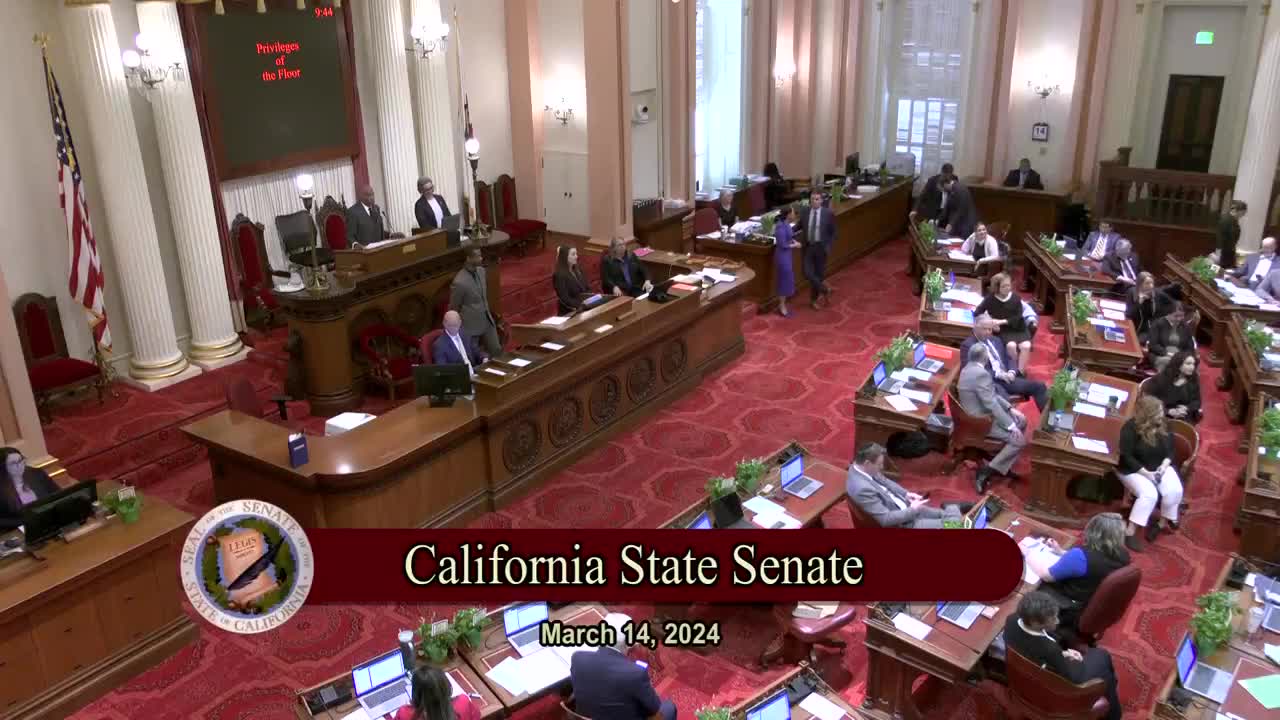 1MIN
Senate Floor
 10MIN
Senate Standing Committee on Judiciary
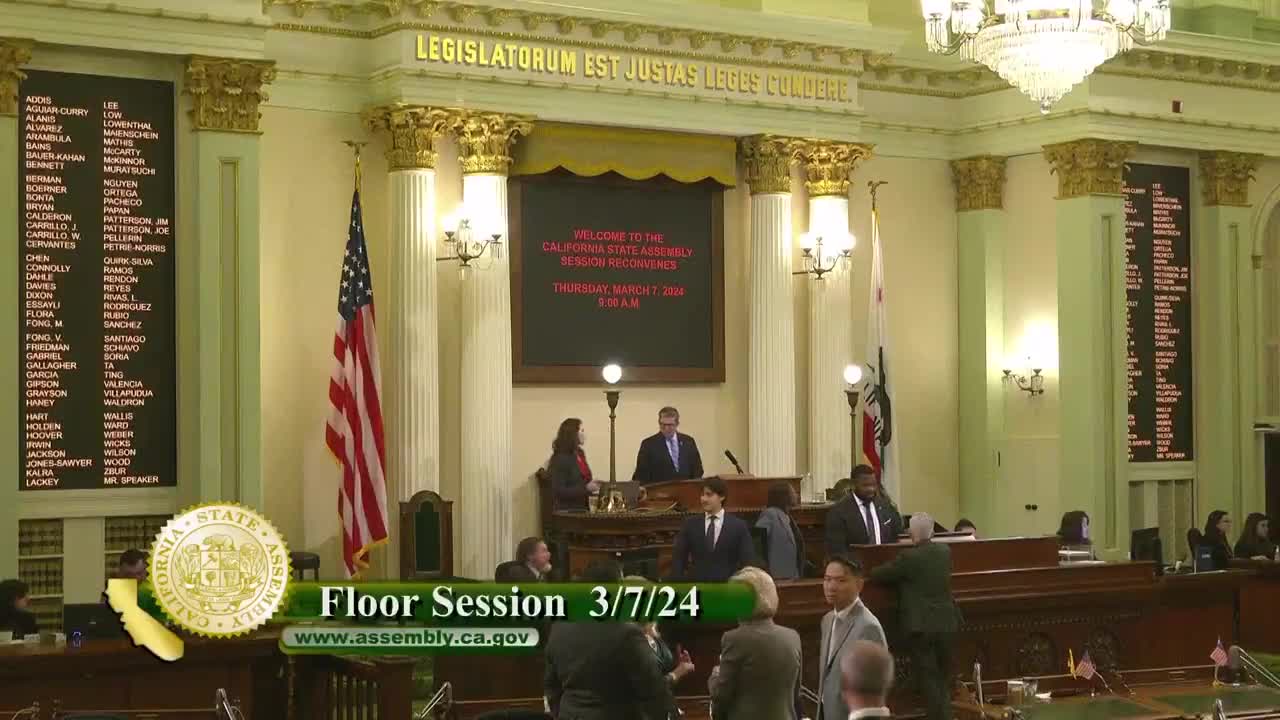 2MIN
Assembly Floor
 1MIN
Assembly Floor


Bill Co-Author(s):