SB 488: California Renewables Portfolio Standard Program: bioenergy projects: community choice aggregators.
- Session Year: 2023-2024
- House: Senate
- Latest Version Date: 2023-04-10
Current Status:
Failed
(2024-02-01: Returned to Secretary of Senate pursuant to Joint Rule 56.)
Introduced
In Committee
First Chamber
In Committee
Second Chamber
Enacted
Existing law vests the Public Utilities Commission with regulatory authority over public utilities, including electrical corporations, while local publicly owned electric utilities are under the direction of their governing boards. Existing law requires electrical corporations, by December 1, 2023, to collectively procure, through financial commitments of 5 to 15 years, inclusive, their proportionate share of 125 megawatts of cumulative rated generating capacity from existing bioenergy projects that commenced operations before June 1, 2013, and requires a local publicly owned electric utility serving more than 100,000 customers to procure its proportionate share of 125 megawatts of cumulative rated generating capacity from bioenergy projects subject to terms of at least 5 years, but exempts from these requirements a local publicly owned electric utility that previously entered into 5-year financial commitments for its proportionate share under certain conditions.
This bill would authorize the cumulative rated generating capacity to be procured from bioenergy projects regardless of when the projects commence operations. The bill also would authorize a community choice aggregator to procure, subject to terms of at least 5 years, any portion of a local publicly owned electric utilitys required proportionate share of 125 megawatts of cumulative rated generating capacity from bioenergy projects that was not procured because of the exemption described above. The bill would require the commission to ensure that the costs of any contract procured by a community choice aggregator are recoverable, as specified.
Existing law vests the Public Utilities Commission with regulatory authority over public utilities, including electrical corporations, while local publicly owned electric utilities are under the direction of their governing boards. Existing law requires electrical corporations, by December 1, 2023, to collectively procure, through financial commitments of 5 to 15 years, inclusive, their proportionate share of 125 megawatts of cumulative rated generating capacity from existing bioenergy projects that commenced operations before June 1, 2013, and requires a local publicly owned electric utility serving more than 100,000 customers to procure its proportionate share of 125 megawatts of cumulative rated generating capacity from bioenergy projects subject to terms of at least 5 years, but exempts from these requirements a local publicly owned electric utility that previously entered into 5-year financial commitments for its proportionate share under certain conditions.
This bill would authorize the cumulative rated generating capacity to be procured from bioenergy projects regardless of when the projects commence operations. The bill also would authorize a community choice aggregator to procure, subject to terms of at least 5 years, any portion of a local publicly owned electric utilitys required proportionate share of 125 megawatts of cumulative rated generating capacity from bioenergy projects that was not procured because of the exemption described above.
(a)For purposes of this section, the following definitions apply:
(1)Bioenergy has the same meaning as set forth in paragraph (6) of subdivision (f) of Section 399.20.
(2)Tier 1 high hazard zone includes areas where wildlife and falling trees threaten electrical transmission and distribution lines, roads, and other evacuation corridors, critical community infrastructure, or other existing structures, as designated by the Department of Forestry and Fire Protection pursuant to the Proclamation of a State of Emergency on Tree Mortality declared by the Governor on October 30, 2015.
(3)Tier 2 high hazard zone includes watersheds that have significant tree mortality combined with community and natural resource assets, as designated by the Department of Forestry and Fire Protection pursuant to the Proclamation of a State of Emergency on Tree Mortality declared by the Governor on October 30, 2015.
(b)(1)In addition to the requirements of subdivision (f) of Section 399.20, by December 1, 2023, electrical corporations shall collectively procure, through financial commitments of 5 to 15 years, inclusive, their proportionate share of 125 megawatts of cumulative rated generating capacity from bioenergy projects. At least 80 percent of the feedstock of an eligible facility, on an annual basis, shall be a byproduct of sustainable forestry management, which includes removal of dead and dying trees from Tier 1 and Tier 2 high hazard zones and is not that from lands that have been clear cut. At least 60 percent of this feedstock shall be from Tier 1 and Tier 2 high hazard zones.
(2)Paragraph (1) shall not apply to a utility subject to subdivision (g) if both of the following apply:
(A)The utility, either directly or through a joint powers authority, entered into five-year financial commitments for its proportionate share of 125 megawatts of cumulative rated generating capacity from existing bioenergy projects pursuant to this section as it was enacted by Chapter 368 of the Statutes of 2016.
(B)The utilitys financial commitments referenced in subparagraph (A) include, (1) a contract with a facility operator that was, on June 1, 2022, in a bankruptcy or other insolvency proceeding, or (2) a contract for a project that does not deliver energy to the utility.
(c)For the purpose of contracts entered into pursuant to subdivision (b), commission Resolution E-4770 (March 17, 2016), and commission Resolution E-4805 (October 13, 2016), Tier 1 and Tier 2 high hazard zone fuel or feedstock shall also include biomass fuels removed from fuel reduction operations exempt from timber harvesting plan requirements pursuant to subdivisions (a), (f), (j), and (k) of Section 4584 of the Public Resources Code.
(d)The commission shall require an electrical corporation that has entered into a contract pursuant to subdivision (b), commission Resolution E-4770 (March 17, 2016), or commission Resolution E-4805 (October 13, 2016) to allow fuel or feedstock reporting requirements to be based on a monthly or annual basis, and a bioenergy facility providing generation pursuant to that contract shall have the right to opt out of the mandated fuel or feedstock usage levels in any particular month upon providing written notice to the electrical corporation in the month of operation. For months in which a bioenergy facility opts out of the mandated fuel or feedstock usage levels or misses the mandated fuel or feedstock targets, that facility shall be paid the alternate price adopted by the commission in commission Resolution E-4770 for all megawatthours generated during that month. Contracts shall continue in force through the end of the contracted term without creating an event of default for missing mandated fuel or feedstock usage levels and without giving rise to a termination right in favor of the electrical corporation.
(e)(1)For each electrical corporation, the commission shall allocate its proportionate share of the 125 megawatts based on the ratio of the electrical corporations peak demand to the total statewide peak demand.
(2)Procurement by an electrical corporation of generation capacity pursuant to a contract under the commissions Resolution E-4770 (March 17, 2016) that is in excess of the requirement of that electrical corporation under that resolution shall count towards meeting the electrical corporations proportionate share allocated pursuant to paragraph (1).
(f)The commission may direct each electrical corporation to develop standard contract terms and conditions that reflect the operational characteristics of the bioenergy projects and to provide a streamlined contracting process or may require the electrical corporations to use the mechanism established pursuant to the commissions Resolution E-4770 (March 17, 2016) to meet the requirements of subdivision (e). The procurement pursuant to the developed standard contract shall occur on an expedited basis due to the Proclamation of a State of Emergency on Tree Mortality declared by the Governor on October 30, 2015.
(g)(1)A local publicly owned electric utility serving more than 100,000 customers shall procure its proportionate share, based on the ratio of the utilitys peak demand to the total statewide peak demand, of 125 megawatts of cumulative rated capacity from existing bioenergy projects described in subdivision (b) subject to terms of at least five years.
(2)Any portion of a local publicly owned electric utilitys proportionate share required to be procured pursuant to paragraph (1) that was not procured because of the exemption in paragraph (2) of subdivision (b) may be procured by a community choice aggregator from bioenergy projects described in subdivision (b) subject to terms of at least five years. The commission shall ensure that the costs of any contract procured by a community choice aggregator are recoverable from all customers on a nonbypassable basis, consistent with subdivision (h).
(h)The commission shall ensure that the costs of any contract procured by an electrical corporation to satisfy the requirements of this section are recoverable from all customers on a nonbypassable basis.
(i)The Procurement Review Group within the commission shall advise the commission on the cost of the generation procured pursuant to this section and its impact on ratepayers.
(j)For purposes of this section, any incremental procurement of electricity products from bioenergy resources by a new contract or contract extension of five years or longer in duration shall be from a resource that meets emission limits equivalent to, or more stringent than, the applicable best available retrofit control technology, as determined by the local air pollution control district or air quality management district. The determination shall be made before the start of the operating period under the new contract or contract extension.
(a)For purposes of this section, the following definitions apply:
(1)Bioenergy has the same meaning as set forth in paragraph (6) of subdivision (f) of Section 399.20.
(2)Tier 1 high hazard zone includes areas where wildlife and falling trees threaten electrical transmission and distribution lines, roads, and other evacuation corridors, critical community infrastructure, or other existing structures, as designated by the Department of Forestry and Fire Protection pursuant to the Proclamation of a State of Emergency on Tree Mortality declared by the Governor on October 30, 2015.
(3)Tier 2 high hazard zone includes watersheds that have significant tree mortality combined with community and natural resource assets, as designated by the Department of Forestry and Fire Protection pursuant to the Proclamation of a State of Emergency on Tree Mortality declared by the Governor on October 30, 2015.
(b)(1)In addition to the requirements of subdivision (f) of Section 399.20, by December 1, 2023, electrical corporations shall collectively procure, through financial commitments of 5 to 15 years, inclusive, their proportionate share of 125 megawatts of cumulative rated generating capacity from existing bioenergy projects that commenced operations before June 1, 2013. projects. At least 80 percent of the feedstock of an eligible facility, on an annual basis, shall be a byproduct of sustainable forestry management, which includes removal of dead and dying trees from Tier 1 and Tier 2 high hazard zones and is not that from lands that have been clear cut. At least 60 percent of this feedstock shall be from Tier 1 and Tier 2 high hazard zones.
(2)Paragraph (1) shall not apply to a utility subject to subdivision (g) if both of the following apply:
(A)The utility, either directly or through a joint powers authority, entered into five-year financial commitments for its proportionate share of 125 megawatts of cumulative rated generating capacity from existing bioenergy projects pursuant to this section as it was enacted by Chapter 368 of the Statutes of 2016.
(B)The utilitys financial commitments referenced in subparagraph (A) include, (1) a contract with a facility operator that was, on June 1, 2022, in a bankruptcy or other insolvency proceeding, or (2) a contract for a project that does not deliver energy to the utility.
(c)For the purpose of contracts entered into pursuant to subdivision (b), commission Resolution E-4770 (March 17, 2016), and commission Resolution E-4805 (October 13, 2016), Tier 1 and Tier 2 high hazard zone fuel or feedstock shall also include biomass fuels removed from fuel reduction operations exempt from timber harvesting plan requirements pursuant to subdivisions (a), (f), (j), and (k) of Section 4584 of the Public Resources Code.
(d)The commission shall require an electrical corporation that has entered into a contract pursuant to subdivision (b), commission Resolution E-4770 (March 17, 2016), or commission Resolution E-4805 (October 13, 2016) to allow fuel or feedstock reporting requirements to be based on a monthly or annual basis, and a bioenergy facility providing generation pursuant to that contract shall have the right to opt out of the mandated fuel or feedstock usage levels in any particular month upon providing written notice to the electrical corporation in the month of operation. For months in which a bioenergy facility opts out of the mandated fuel or feedstock usage levels or misses the mandated fuel or feedstock targets, that facility shall be paid the alternate price adopted by the commission in commission Resolution E-4770 for all megawatthours generated during that month. Contracts shall continue in force through the end of the contracted term without creating an event of default for missing mandated fuel or feedstock usage levels and without giving rise to a termination right in favor of the electrical corporation.
(e)(1)For each electrical corporation, the commission shall allocate its proportionate share of the 125 megawatts based on the ratio of the electrical corporations peak demand to the total statewide peak demand.
(2)Procurement by an electrical corporation of generation capacity pursuant to a contract under the commissions Resolution E-4770 (March 17, 2016) that is in excess of the requirement of that electrical corporation under that resolution shall count towards meeting the electrical corporations proportionate share allocated pursuant to paragraph (1).
(f)The commission may direct each electrical corporation to develop standard contract terms and conditions that reflect the operational characteristics of the bioenergy projects and to provide a streamlined contracting process or may require the electrical corporations to use the mechanism established pursuant to the commissions Resolution E-4770 (March 17, 2016) to meet the requirements of subdivision (e). The procurement pursuant to the developed standard contract shall occur on an expedited basis due to the Proclamation of a State of Emergency on Tree Mortality declared by the Governor on October 30, 2015.
(g)(1)A local publicly owned electric utility serving more than 100,000 customers shall procure its proportionate share, based on the ratio of the utilitys peak demand to the total statewide peak demand, of 125 megawatts of cumulative rated capacity from existing bioenergy projects described in subdivision (b) subject to terms of at least five years.
(2)Any portion of a local publicly owned electric utilitys proportionate share required to be procured pursuant to paragraph (1) that was not procured because of the exemption in paragraph (2) of subdivision (b) may be procured by a community choice aggregator from bioenergy projects described in subdivision (b) subject to terms of at least five years.
(h)The commission shall ensure that the costs of any contract procured by an electrical corporation to satisfy the requirements of this section are recoverable from all customers on a nonbypassable basis.
(i)The Procurement Review Group within the commission shall advise the commission on the cost of the generation procured pursuant to this section and its impact on ratepayers.
(j)For purposes of this section, any incremental procurement of electricity products from bioenergy resources by a new contract or contract extension of five years or longer in duration shall be from a resource that meets emission limits equivalent to, or more stringent than, the applicable best available retrofit control technology, as determined by the local air pollution control district or air quality management district. The determination shall be made before the start of the operating period under the new contract or contract extension.
|
Date
|
Status
|
|---|---|
| Feb 1, 2024 | Returned to Secretary of Senate pursuant to Joint Rule 56. |
| Apr 25, 2023 | April 24 set for first hearing. Failed passage in committee. (Ayes 7. Noes 2. Page 870.) Reconsideration granted. |
| Apr 12, 2023 | Set for hearing April 24. |
| Apr 10, 2023 | From committee with author's amendments. Read second time and amended. Re-referred to Com. on E., U. & C. |
| Feb 22, 2023 | Referred to Com. on E., U. & C. |
| Feb 15, 2023 | From printer. May be acted upon on or after March 17. |
| Feb 14, 2023 | Introduced. Read first time. To Com. on RLS. for assignment. To print. |
|
Date
|
Description
|
Location
|
Votes
|
|
|---|---|---|---|---|
| Apr 24, 2023 | [First] hearing set for [04-25-2023]: Failed passage in Committee. Reconsideration granted | Senate Standing Committee on Energy, Utilities and Communications |
Passed |
|
| Apr 24, 2023 | Do pass, but first be re-referred to the Committee on [Appropriations] | Senate Standing Committee on Energy, Utilities and Communications |
Failed |
This list shows positions taken on this bill by organizations on the date displayed, which is linked to the original source.
Positions by individuals are not included.
|
Organization
|
Position
|
Date
|
|---|---|---|
| Association Of California Water Agencies | ** Support | |
| California Biomass Energy Alliance | ** Support | |
| California Community Choice Association | ** Support | |
| California Farm Bureau | ** Support | |
| California Forestry Association | ** Support | |
| City of Colfax | ** Support | |
| City Of Lincoln | ** Support | |
| City Of Nevada City | ** Support | |
| City of Rocklin | ** Support | |
| County of El Dorado | ** Support | |
| County Of Placer | ** Support | |
| El Dorado County Chamber of Commerce | ** Support | |
| El Dorado Hills Chamber of Commerce | ** Support | |
| Folsom Chamber Of Commerce | ** Support | |
| Greenleaf Power | ** Support | |
| Humboldt and Mendocino Redwood Companies | ** Support | |
| lincoln area chamber of commerce | ** Support | |
| Marin Clean Energy | ** Support | |
| Pacific Gas And Electric Company | ** Against | |
| Pioneer Community Energy | ** Support | |
| Rancho Cordova Chamber of Commerce | ** Support | |
| Redwood Coast Energy Authority | ** Support | |
| Rocklin Area Chamber of Commerce | ** Support | |
| Roseville Area Chamber Of Commerce | ** Support | |
| Shingle Springs/cameron Park Chamber of Commerce | ** Support | |
| Sierra Business Council | ** Support | |
| Silicon Valley Clean Energy | ** Support | |
| Southern California Edison | ** Against | |
| Wisewood Energy | ** Support | |
| Yuba Sutter Chamber of Commerce | ** Support |
SENATE COMMITTEE ON ENERGY, UTILITIES AND COMMUNICATIONS
Senator Steven Bradford, Chair
2023 - 2024 Regular
Bill No: Hearing Date: 4/24/2023
Author: | |||
Version: | Amended | ||
Urgency: | Fiscal: | ||
Consultant: | |||
SUBJECT:
DIGEST: This bill authorizes a community choice aggregator (CCA) to procure the proportionate share of the exempted portion of the existing bioenergy procurement requirement, and requires the California Public Utilities Commission (CPUC) to recover the costs from all electric investor-owned utility distribution customers.
ANALYSIS:
Existing law:
- Establishes and vests the California Public Utilities Commission (CPUC) has regulatory authority over public utilities, including electrical corporations. Authorizes the CPUC to fix the rates and charges for every public utility and requires that those rates and charges be just and reasonable. (Article XII of the California Constitution and Public Utilities Code §451)
- Requires electrical corporations, by December 1, 2023, to collectively procure, through financial commitments of five to 15 years, their proportionate share of 125 megawatts (MW) of cumulative rated generating capacity from bioenergy projects commencing operation before June 1, 2013. Requires local publicly owned electric utility serving more than 100,000 customers to procure their proportionate shares of 125 MW of cumulative rated generating capacity from those kinds of bioenergy projects subject to terms of at least five years. Exempts from the requirements a local publicly owned electrical utility that previously entered into five-year financial commitments for its proportionate share under specified conditions. (Public Utilities Code §399.20.3)
- Requires an electrical corporation, local publicly owned electric utility, or community choice aggregator (CCA) with a contract to procure electricity generated from biomass that is operative at any time in 2018, and expires or expired on or before December 31, 2023, to seek to amend the contract to include, or seek approval for a new contract that includes, an expiration date five years later than the expiration date in the contract that was operative in 2018, so long as the contract extension follows the feedstock requirement described above. Prohibits this requirement from applying to facilities located in federal severe or extreme nonattainment areas for particulate matter or ozone. (Public Utilities Code §8388)
This bill:
- Authorizes the cumulative rated generating capacity to be procured from bioenergy projects regardless of when the projects commence operations.
- Authorizes a CCA to procure, subject to terms of at least five years, any portion of a local publicly owned electric utility’s required proportionate share of 125 megawatts of cumulative rated generating capacity from bioenergy projects that was not procured due to exemptions as provided in the statute.
- Requires the CPUC to ensure that the costs of any contract procured by a community choice aggregator are recoverable from all electric IOU distribution customers (IOU, CCA, and direct access customers).
Background
Biomass. Biomass power plant is the general term for waste-to-energy power plants that burn organic material, including wood waste. According to the California Energy Commission (CEC) website, in 2021, biomass electric facilities produced 5,381 gigawatt-hours or roughly three percent of the state’s in-state electricity generation portfolio. The CEC notes there are just under 90 operating biomass power plants in California, with installed capacity of about 1,259 MW.
A number of state policies have required and encouraged the procurement of biomass, in many cases to address other policy issues, such as tree mortality and wildfires.
2015 Executive Order. In 2015, then-Governor Brown issued an Emergency Proclamation to protect public safety and property from falling dead and dying trees and wildfire. The proclamation directed the California Department of Forestry and Fire (CalFire), the Natural Resources Agency, the Department of Transportation, and the CEC to identify the state’s High Fire Hazard Severity Zones (HHZ) as a high priority for tree removal to prevent wildfire and falling trees. The proclamation also directed the CPUC to use its authority to extend contracts for bioenergy facilities receiving feedstock from HHZs.
BioRAM 1 Contracts. On March 17, 2016, the CPUC issued Resolution E-4770 requiring each of the electric investor-owned utilities (IOUs) to enter into contracts to purchase their share of at least 50 MW of collective generating capacity from biomass generation facilities that use progressively higher annual minimum prescribed levels of HHZ material as feedstock. Specifically, the biomass facilities were required to use a minimum of 40 percent feedstock from the HHZ in 2016 and grow to 80 percent in 2018 and all subsequent years. The electric IOUs were required to provide five-year contracts to facilities, with the right to extend the five-year contract term for one year at a time, up to a cumulative total of 10 years so long as HHZ fuel is available at the minimum fuel requirement (80 percent).
SB 859 (Committee on Budget, Chapter 368, Statutes of 2016). SB 859 included a new requirement for electric IOUs and publicly owned utilities (POUs) to procure their respective share of 125 MW from existing biomass facilities using prescribed amounts of dead and dying trees located in HHZs as feedstock. The electric IOUs were assigned the proportionate share of the 96MW. SB 859 requires that at least 60 percent of the feedstock must come from HHZs. SB 859 requires that the procurement costs would be recovered from all customers on a non-bypassable basis.
CPUC Resolution E-4805. In October 2016, the CPUC issued Resolution E-4805 to implement the electric IOU procurement requirements of SB 859. Resolution E-4805 provided that the IOUs could meet their proportionate shares of the 125 MW goal using any combination of: (a) the BioRAM ordered by Resolution E-4770; (b) a subsequent RAM (BioRAM 2) authorized in the Resolution; and (c) bilateral procurement. However, in order to allow procurement under option (b), Resolution E-4805 required the IOUs to create an updated BioRAM 2 standard contract rider. Specifically, BioRAM2 contracts must contain the feedstock requirements established in SB 859, specify that the contract length is five years, requires that the contracted facility is an existing bioenergy project that commenced operation prior to June 1, 2013, and update administrative details such as dates, deadlines, and process requirements.
SB 901 (Dodd, Chapter 626, Statutes of 2018). SB 901 required a number of actions to reduce and prevent the risk of wildfires and to address issues associated with electric IOU cost recovery of wildfire damages. SB 901 also included provisions provisions to loosen the requirements on biomass facilities, such as: revising the HHZ fuel definitions, require BioRAM contracts to include a monthly compliance option with updated reporting and payment. SB 901 also prohibits biomass facilities for the BioRAM to operate in areas of the state with severe or extreme federal air quality designations, and revise default terms.
CPUC Resolution E-4977. In its efforts to implement the changes noted in SB 901, the CPUC adopted resolution E-4977 in January 2019. The resolution notes, collectively, the BioRAM program requires the IOUs to procure 146 MW of qualifying biomass electricity and that 153 MW is currently under contract – 119 MW under BioRAM 1 contracts and 34 MW under BioRAM2.
SB 1109 (Caballero, Chapter 364, Statutes of 2022). SB 1109 extends to December 31, 2023, the electrical IOUs’ obligation to collectively procure their proportionate share of 125 MW of cumulative rated generating capacity from existing bioenergy projects, commencing operation before June 1, 2013, through financial commitments of 5 to 15 years, inclusive. The bill also exempted the electric POUs for (1) contracts with a facility operator who was in a bankruptcy or other insolvency proceeding, or (2) a contract for a project that does not deliver energy to the utility. POUs reported that the BioRAM procurement requirements have resulted in procuring resources strictly for the capacity, because the electricity could not get to the procuring electric POUs given the interconnections are out of state and wheeling charges to transmit these resources to their utility service territories are not cost-effective. As a result, POU electric ratepayers under these contracts are strictly paying for the capacity on the system to satisfy BioRAM requirements without a direct benefit to serving their load. In another case, POUs argue that the biomass contract was priced 20-30 percent more than other renewable baseload energy contracts for geothermal and landfill gas.
IOU BioRAM Procurement Orders (Source: CPUC website) | |||
PG&E | SCE | SDG&E | |
Emergency Order/Res. E-4770 | 20 | 20 | 10 |
SB 859 (Res. E-4805) | 43 | 44 | 9 |
TOTAL | 63 | 64 | 19 |
Electric IOU BioRAM Contracts (Source: CPUC website) | |||
IOU | Facility Name | Location | Capacity (MW) |
PG&E | Burney | Shasta County | 29 |
PG&E | Wheelabrator Shasta | Shasta County | 34 |
PG&E | Woodland Biomass | Yolo County | 58 |
SCE | Rio Bravo Fresno | Fresno County, CA | 24 |
SCE | Rio Bravo Rockliin | Placer County | 24 |
SCE | Pacific Ultrapower Chinese Station | Tuolumne County | 18 |
SDG&E | Honey Lake Power Company/Greenleaf | Lassen County | 24 |
Total | 178 | ||
Comments
Cost of biomass energy. According to the CPUC’s 2021 Padilla Report, Costs and Cost Savings for the RPS Program, the average price of contracts executed in 2019 that were greater than three MW was 2.8 ¢/kWh compared to 3.5 ¢/kWh in 2020, compared to average contract price of existing BioRAM contracts of 12.0 ¢/kWh. In the November 2021 CPUC RPS report, the CPUC notes a number of challenges with accessing fuel for biomass facilities, including insufficient supply chain capacity, long hauling distances, and high transportation costs, as well as, the need for retrofits of existing facilities. The analysis notes: “Overcoming these barriers would require further, possibly substantial, investment and subsidies.”
Need for the bill. The sponsors of the bill argue that the procurement of biomass electricity is beneficial to the state in helping to reduce wildfire risks, while providing reliable and renewable energy resources. They contend that CCA ratepayers are already paying for the BioRAM program, as the costs of any contract procured to satisfy the requirements under SB 859 are recoverable from all customers on a nonbypassable basis. They argue that this bill will simply allow the CCAs to participate in the same way AB 843 (Aguiar-Curry, Chapter 234, Statutes of 2021) authorized CCAs to participate in the Bioenergy Market Adjusting Tariff (BioMAT) program.
Costs to ratepayers. Electric utility bill affordability has been a growing concern. The required procurement requirements of the BioRAM program are recovered from electric IOU distribution service ratepayers via nonbypassable charges on their utility bills. Opponents of this bill note that electric IOU customers have already procured their proportionate share as required in existing law. They oppose socializing the costs of authorizing CCAs to procure the residual of the exempted POU contracts (roughly 30MWs) stating it would unfairly add costs to electric IOU customers who have already shouldered the costs of the program. Additionally, they argue that the CCAs already have authority to procure any resource, including biomass, so a bill is not needed. Unlike the BioMAT program, the allocated procurement has been fully satisfied by electric IOU customers. It is the POU customer contracts that were exempted due to a bankruptcy of a facility and the energy costs not benefiting the POUs’ load.
Amendments needed. This bill would add to the public purpose program charge on all electric IOU distribution customers, including those not served by the CCA, given that procurement authorized by the bill would be additional to the 96MW these customers are already paying for their proportionate share. While the CCAs supporting this bill may feel it is unfair that their entities did not enter the contracts directly, the benefits of the intended policy to support biomass seems to have been fulfilled by these customers (including with contracts with biomass plants in CCA service territory). CCAs have the authority to enter into their contracts without socializing the costs to non-CCA customers. The author and committee may wish to amend the bill to maintain the existing contracts, and prohibit CCAs from socializing costs of additional BioRAM procurement authorized by the bill.
Prior/Related Legislation
SB 1109 (Caballero, Chapter 364, Statutes of 2022) extended requirements on electric IOUs to procure energy from biomass generating electric facilities by five years and requires extension of existing contracts by five years.
SB 843 (Aguiar-Curry, Chapter 234, Statutes of 2021) authorized CCAs to submit eligible bioenergy projects for cost recovery from electric utility ratepayers, pursuant to the Bioenergy Market Adjusting Tariff (BioMAT) program, if open capacity exists within the 250 megawatts (MW) program limit.
SB 515 (Caballero, 2019) would have expanded the fuels and feedstocks that are eligible to satisfy requirements related to specified contracts for mandated electricity generation from biomass facilities. The bill was further amended to require a report on available fuel feedstocks. The bill died in the Assembly Committee on Appropriations.
SB 901 (Dodd, Chapter 626, Statutes of 2018) addressed numerous issues concerning wildfire prevention, response and recovery, including provisions related to biomass operations and electricity procurement.
SB 859 (Senate Budget and Fiscal Review, Chapter 368, Statutes of 2016) required retail sellers of electricity to purchase a total of 125 MW of power from biomass facilities that generate electricity from forest materials removed from specific high fire hazard zones, as designated by Cal Fire in the Governor's Proclamation of a State of Emergency issued October 30, 2015.
FISCAL EFFECT: Appropriation: Fiscal Com.: Local:
SUPPORT:
Pioneer Community Energy, Sponsor
Association of California Water Agencies
California Biomass Energy Alliance
California Community Choice Association
California Farm Bureau
California Forestry Association
City of Colfax
City of Lincoln
City of Nevada City
City of Rocklin
County of El Dorado
County of Placer
El Dorado County Chamber of Commerce
El Dorado Hills Chamber of Commerce
Greenleaf Power
Folsom Chamber of Commerce
Humboldt and Mendocino Redwood Companies
Lincoln Area Chamber of Commerce
Marin Clean Energy (MCE)
Rancho Cordova Chamber of Commerce
Redwood Coast Energy Authority
Rocklin Area Chamber of Commerce
Roseville Area Chamber of Commerce
Sierra Business Council
Shingle Springs/Cameron Park Chamber of Commerce
Silicon Valley Clean Energy
Wisewood Energy
Yuba Sutter Chamber of Commerce
OPPOSITION:
Pacific Gas and Electric Company
Southern California Edison
ARGUMENTS IN SUPPORT: According to the author:
As California pushes for strong renewable energy goals by 2045, the Legislature must consider a balanced portfolio of options to achieve these goals. In addition to the energy benefits of biomass, it also has numerous ancillary benefits, such as providing a necessary outlet for forest waste that would otherwise provide for dangerous forest floor fuels as that contribute to the increase in devastating wildfires. Biomass has other benefits such as fossil fuel avoidance, contributing to air pollution reduction efforts, reducing landfilling or in-field decay/decomposition, preventing open burning of 1.5 million tons of agricultural and forest waste each year, and reducing criteria pollutant emissions by up to 98% (when compared to open burning).
Allowing CCAs to participate in the BioRAM program will ensure that the Legislative mandate to procure 125 MW of biomass energy will indeed be met. It would also allow CCAs to participate in an existing state program without any structural changes. In addition, this bill would provide necessary support to biomass facilities resulting in a BioRAM contract for up to two facilities.
ARGUMENTS IN OPPOSITION: Pacific Gas & Electric (PG&E) and Southern California Edison (SCE) oppose the bill contending:
“[SB 488]…is incompatible with the State’s affordability objectives. The IOU procurement process is rigorous and thorough and involves steps that ensure fair decision-making, including: (1) neutral third-party review,
(2) confidential multi-party review, (3) CPUC authorized protest periods, and (4) pre-approval processes to ensure that the buyer adheres to pre-reviewed contracts and processes. To be clear, CCA’s already have the ability today to choose to procure from these bioenergy facilities, so long as their customers bear the costs. This bill would simply allow the CCAs to make procurement decisions while spreading the costs to other retail sellers, including PG&E and SCE. This s not the best and equitable solution for California.”
-- END --
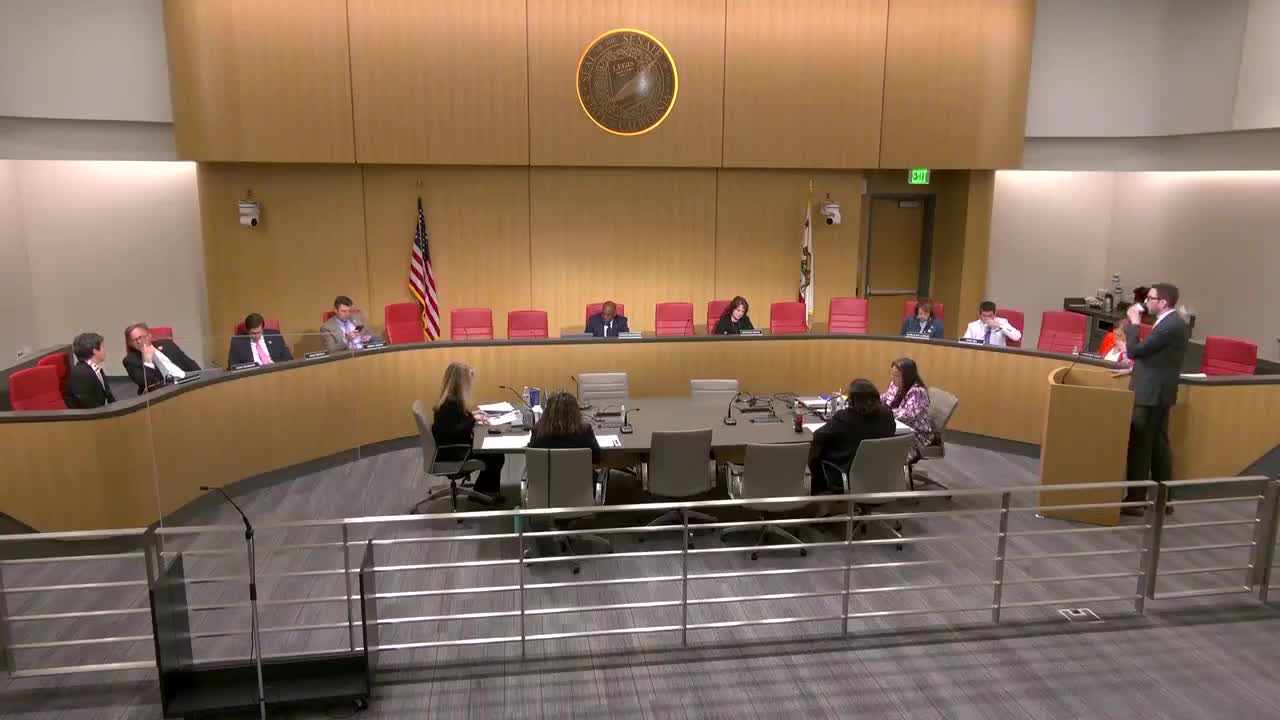
Discussed in Hearing
 17MIN
Senate Standing Committee on Energy, Utilities and Communications
Bill Author

Bill Co-Author(s):
