SB 491: Public social services: county departments: mail programs.
- Session Year: 2023-2024
- House: Senate
- Latest Version Date: 2023-07-03
Current Status:
Failed
(2023-09-01: September 1 hearing: Held in committee and under submission.)
Introduced
In Committee
First Chamber
In Committee
Second Chamber
Enacted
Existing law establishes the State Department of Social Services to administer public social services and authorizes the department to adopt regulations to implement the law enforced by the department.
Existing law requires a county board of supervisors to establish a county department, run by a director appointed by the board, for the administration of public social services and promotion of public understanding of the public social services provided by the county. Existing law authorizes the board to contract with other counties, the State Department of Public Health, or the State Department of Health Care Services for the operation, maintenance, and establishment of services a county board of supervisors deems desirable to provide to eligible individuals.
This bill would require a county human services agency local county entity that administers public benefits to develop and implement a program to ensure that, at a minimum, homeless residents of a county can pick up and receive government-related mail addressed to them at a place designated by the agency. local county entity. The bill would make the program participation optional for homeless residents. The bill would also require the agency local county entity to provide program participants with specified information regarding the program, including hours of operation. The bill would clarify that program participation would not establish residency for the purposes of elections or school districts. residency. The bill would define what qualifies as government-related mail. The bill would also require require, on or before January 1, 2025, the State Department of Social Services to develop adopt specified regulations regarding the mail program, with input from stakeholders. The bill would require the department to implement and administer these provisions through all-county letters or similar instructions until regulations are adopted. By imposing new duties on counties, the bill would impose a state-mandated local program.
This bill would state that it is the intent of the Legislature that these provisions are meant to provide minimum standards for county mail programs, and that counties are encouraged to expand upon these standards by holding all types of mail for homeless residents, providing various mail pickup points, and informing homeless residents when they have mail.
The California Constitution requires the state to reimburse local agencies and school districts for certain costs mandated by the state. Statutory provisions establish procedures for making that reimbursement.
This bill would provide that, if the Commission on State Mandates determines that the bill contains costs mandated by the state, reimbursement for those costs shall be made pursuant to the statutory provisions noted above.
Existing law establishes the State Department of Social Services to administer public social services and authorizes the department to adopt regulations to implement the law enforced by the department.
Existing law requires a county board of supervisors to establish a county department, run by a director appointed by the board, for the administration of public social services and promotion of public understanding of the public social services provided by the county. Existing law authorizes the board to contract with other counties, the State Department of Public Health, or the State Department of Health Care Services for the operation, maintenance, and establishment of services a county board of supervisors deems desirable to provide to eligible individuals.
This bill would require a county human services agency to develop and implement a program to ensure residents without a permanent mailing address have a place to receive and pick-up all government-related mail addressed to them. homeless residents of a county can pick up and receive government-related mail addressed to them at a place designated by the agency. The bill would make the program participation optional for homeless residents. The bill would also require the agency to provide program participants with specified information regarding the program, including hours of operation. The bill would clarify that program participation would not establish residency for the purposes of elections or school districts. The bill would define what qualifies as government-related mail. The bill would also require the State Department of Social Services to develop specified regulations regarding the mail program, with input from stakeholders. By imposing new duties on counties, the bill would impose a state-mandated local program.
The California Constitution requires the state to reimburse local agencies and school districts for certain costs mandated by the state. Statutory provisions establish procedures for making that reimbursement.
This bill would provide that, if the Commission on State Mandates determines that the bill contains costs mandated by the state, reimbursement for those costs shall be made pursuant to the statutory provisions noted above.
Existing law requires a county board of supervisors to establish a county department, run by a director appointed by the board, for the administration of public social services and promotion of public understanding of the public social services provided by the county. Existing law authorizes the board to contract with other counties, the State Department of Public Health, or the State Department of Health Care Services for the operation, maintenance, and establishment of services a county board of supervisors deems desirable to provide to eligible individuals.
This bill would require a county to develop and implement a program to ensure residents without a permanent mailing address have a place to receive and pick-up all government-related mail addressed to them. The bill would define what qualifies as government-related mail. By imposing new duties on counties, the bill would impose a state-mandated local program.
The California Constitution requires the state to reimburse local agencies and school districts for certain costs mandated by the state. Statutory provisions establish procedures for making that reimbursement.
This bill would provide that, if the Commission on State Mandates determines that the bill contains costs mandated by the state, reimbursement for those costs shall be made pursuant to the statutory provisions noted above.
The Legislature finds and declares all of the following:
(a)Mail delivery is an integral part of daily life.
(b)In addition to personal correspondence, people receive mail from all levels of government about vital social services programs.
(c)Beginning in January 2022, every person in California will also be mailed a ballot to vote in elections.
(d)To fully participate in the political process and access government services, every person needs a reliable mailing address.
(e)For instance, research indicates that not receiving mail is a key reason why people lose Supplemental Nutrition Assistance Program benefits.
(f)According to the United States Interagency Council on Homelessness, California had an estimated 161,548 unhoused people on any given day as of January 2020.
(g)People without a permanent mailing address may struggle to find a dependable and convenient place to hold and access their mail.
(h)The government is required to send certain communications via mail and, as such, people must be able to receive these notices.
(i)In recognition of the problems associated with not having reliable mail access, this act establishes that each county will develop and implement a program to ensure people without permanent mailing addresses can access their government-related mail through the county.
SEC. 2.Section 10814 is added to the Welfare and Institutions Code, to read:10814.(a)Each county human services agency local county entity that administers public benefits shall develop and implement a program to ensure that, at a minimum, homeless residents of the county without a permanent mailing address can receive and pick up all government-related mail addressed to them, at county office locations designated by the agency. local county entity.
(b)The program shall be optional for homeless residents of the county to participate in. The agency local county entity shall provide participants with information regarding the hours of operation during which they can pick up mail and program requirements.
(c)Participation in the program does not establish residency for the purposes of elections or school districts. residency.
(d)As used in this section, government-related mail means all mail sent by any of the following:
(1)A city.
(2)A county.
(3)The state.
(4)A tribal government.
(4)(5)The federal government.
(5)(6)Entities contracted to provide services on behalf of a city, county, state, tribal government, or federal government, including, but not limited to, mail from low-income housing authorities.
(e)It is the intent of the Legislature that this section is meant to provide minimum standards for county mail programs. It is further the intent of the Legislature that counties are encouraged to expand upon these standards by holding all types of mail for homeless residents, providing various mail pickup points, and informing homeless residents when they have mail.
(e)The
(f)On or before January 1, 2025, the State Department of Social Services shall develop adopt regulations about the mail program. The department shall receive stakeholder input when developing the regulations. The regulations may include, but are not limited by, all of the following:
(1)How a program participant is to be notified about mail. notified, if at all, about having mail at a location, including, but not limited to, receiving text notifications.
(2)The responsibility responsibilities of the program participant to participate in the program.
(3)The availability of mail to program participants. Informing eligible individuals about the availability of the mail program.
(g)Notwithstanding the rulemaking provisions of the Administrative Procedure Act (Chapter 3.5 (commencing with Section 11340) of Part 1 of Division 3 of Title 2 of the Government Code), the department shall implement and administer this section by means of all-county letters or similar instructions from the department that shall have the same force and effect as regulations until regulations are adopted.
(h)For purposes of this section, homeless has the same meaning as defined in Section 578.3 of Title 24 of the Code of Federal Regulations.
SEC. 3.If the Commission on State Mandates determines that this act contains costs mandated by the state, reimbursement to local agencies and school districts for those costs shall be made pursuant to Part 7 (commencing with Section 17500) of Division 4 of Title 2 of the Government Code.
The Legislature finds and declares all of the following:
(a)Mail delivery is an integral part of daily life.
(b)In addition to personal correspondence, people receive mail from all levels of government about vital social services programs.
(c)Beginning in January 2022, every person in California will also be mailed a ballot to vote in elections.
(d)To fully participate in the political process and access government services, every person needs a reliable mailing address.
(e)For instance, research indicates that not receiving mail is a key reason why people lose Supplemental Nutrition Assistance Program benefits.
(f)According to the United States Interagency Council on Homelessness, California had an estimated 161,548 unhoused people on any given day as of January 2020.
(g)People without a permanent mailing address may struggle to find a dependable and convenient place to hold and access their mail.
(h)The government is required to send certain communications via mail and, as such, people must be able to receive these notices.
(i)In recognition of the problems associated with not having reliable mail access, this act establishes that each county will develop and implement a program to ensure people without permanent mailing addresses can access their government-related mail through the county.
SEC. 2.Section 10814 is added to the Welfare and Institutions Code, to read:10814.(a)Each county human services agency shall develop and implement a program to ensure residents homeless residents of the county without a permanent mailing address have a place to can receive and pick-up pick up all government-related mail addressed to them. them, at county office locations designated by the agency.
(b)The program shall be optional for homeless residents of the county to participate in. The agency shall provide participants with information regarding the hours of operation during which they can pick up mail and program requirements.
(c)Participation in the program does not establish residency for the purposes of elections or school districts.
(b)(d)As used in this section, government-related mail means all mail sent by any of the following:
(1)A city.
(2)A county.
(3)The state.
(4)The federal government.
(5)Entities contracted to provide services on behalf of a city, county, state, or federal government, including, but not limited to, mail from low-income housing authorities.
(e)The State Department of Social Services shall develop regulations about the mail program. The department shall receive stakeholder input when developing the regulations. The regulations may include, but are not limited by, all of the following:
(1)How a program participant is to be notified about mail.
(2)The responsibility of the program participant to participate in the program.
(3)The availability of mail to program participants.
SEC. 3.If the Commission on State Mandates determines that this act contains costs mandated by the state, reimbursement to local agencies and school districts for those costs shall be made pursuant to Part 7 (commencing with Section 17500) of Division 4 of Title 2 of the Government Code.
The Legislature finds and declares all of the following:
(a)Mail delivery is an integral part of daily life.
(b)In addition to personal correspondence, people receive mail from all levels of government about vital social services programs.
(c)Beginning in January 2022, every person in California will also be mailed a ballot to vote in elections.
(d)To fully participate in the political process and access government services, every person needs a reliable mailing address.
(e)For instance, research indicates that not receiving mail is a key reason why people lose Supplemental Nutrition Assistance Program benefits.
(f)According to the United States Interagency Council on Homelessness, California had an estimated 161,548 unhoused people on any given day as of January 2020.
(g)People without a permanent mailing address may struggle to find a dependable and convenient place to hold and access their mail.
(h)The government is required to send certain communications via mail and, as such, people must be able to receive these notices.
(i)In recognition of the problems associated with not having reliable mail access, this act establishes that each county will develop and implement a program to ensure people without permanent mailing addresses can access their government-related mail through the county.
SEC. 2.Section 10814 is added to the Welfare and Institutions Code, to read:10814.(a)Each county shall develop and implement a program to ensure residents without a permanent mailing address have a place to receive and pick-up all government-related mail addressed to them.
(b)As used in this section, government-related mail means all mail sent by any of the following:
(1)A city.
(2)A county.
(3)The state.
(4)The federal government.
(5)Entities contracted to provide services on behalf of a city, county, state, or federal government, including, but not limited to, mail from low-income housing authorities.
SEC. 3.If the Commission on State Mandates determines that this act contains costs mandated by the state, reimbursement to local agencies and school districts for those costs shall be made pursuant to Part 7 (commencing with Section 17500) of Division 4 of Title 2 of the Government Code.
|
Date
|
Status
|
|---|---|
| Sep 1, 2023 | September 1 hearing: Held in committee and under submission. |
| Aug 16, 2023 | August 16 set for first hearing. Placed on suspense file. |
| Jul 12, 2023 | From committee: Do pass and re-refer to Com. on APPR. (Ayes 7. Noes 0.) (July 11). Re-referred to Com. on APPR. |
| Jul 3, 2023 | From committee with author's amendments. Read second time and amended. Re-referred to Com. on HUM. S. |
| Jun 20, 2023 | June 20 set for first hearing canceled at the request of author. |
| Jun 8, 2023 | Referred to Com. on HUM. S. |
| May 25, 2023 | In Assembly. Read first time. Held at Desk. |
| May 25, 2023 | Read third time. Passed. (Ayes 40. Noes 0. Page 1300.) Ordered to the Assembly. |
| May 23, 2023 | Ordered to special consent calendar. |
| May 18, 2023 | Read second time. Ordered to third reading. |
| May 18, 2023 | From committee: Do pass. (Ayes 7. Noes 0. Page 1172.) (May 18). |
| May 12, 2023 | Set for hearing May 18. |
| May 8, 2023 | May 8 hearing: Placed on APPR suspense file. |
| May 1, 2023 | Set for hearing May 8. |
| Apr 25, 2023 | From committee: Do pass and re-refer to Com. on APPR. (Ayes 5. Noes 0. Page 876.) (April 24). Re-referred to Com. on APPR. |
| Apr 18, 2023 | From committee with author's amendments. Read second time and amended. Re-referred to Com. on HUMAN S. |
| Mar 13, 2023 | Set for hearing April 24. |
| Feb 22, 2023 | Referred to Com. on HUMAN S. |
| Feb 15, 2023 | From printer. May be acted upon on or after March 17. |
| Feb 14, 2023 | Introduced. Read first time. To Com. on RLS. for assignment. To print. |
|
Date
|
Description
|
Location
|
Votes
|
|
|---|---|---|---|---|
| Jul 11, 2023 | Do pass and be re-referred to the Committee on [Appropriations] | Assembly Standing Committee on Human Services |
Passed |
|
| May 25, 2023 | Special Consent SB491 Durazo et al. | Senate Floor |
Passed |
|
| May 18, 2023 | Do pass | Senate Standing Committee on Appropriations |
Passed |
|
| May 8, 2023 | Placed on suspense file | Senate Standing Committee on Appropriations |
Passed |
|
| Apr 24, 2023 | Do pass, but first be re-referred to the Committee on [Appropriations] | Senate Standing Committee on Human Services |
Passed |
This list shows positions taken on this bill by organizations on the date displayed, which is linked to the original source.
Positions by individuals are not included.
|
Organization
|
Position
|
Date
|
|---|---|---|
| California Health+advocates, Subsidiary of The California Primary Care Association | ** Support | |
| Coalition of California Welfare Rights Organizations | ** Support | |
| Community Clinic Association of Los Angeles County | ** Support | |
| Jewish Family Service of Los Angeles | ** Support | |
| National Association Of Social Workers, California Chapter | ** Support | |
| western center on law & poverty | ** Support |
Date of Hearing: August 16, 2023
ASSEMBLY COMMITTEE ON APPROPRIATIONS
Chris Holden, Chair
SBPCA Bill Id:SB 491
Author:(Durazo) – As Amended Ver:July 3, 2023
Policy Committee: | Human Services | Vote: | 7 - 0 |
|
| ||
|
|
Urgency: No State Mandated Local Program: Yes Reimbursable: Yes
SUMMARY:
This bill requires each local county entity that administers public benefits to implement a program to ensure homeless residents of the county without a permanent mailing address can receive government-related mail, addressed to them, at county office locations. The bill also requires the California Department of Social Services (CDSS), by January 1, 2025, to establish regulations regarding the program, with input from stakeholders.
Specifically, this bill:
- Requires each local county entity that administers public benefits to develop and implement a program to ensure that, at a minimum, homeless residents of a county without a permanent mailing address can receive and pick up all government-related mail addressed to them, at county office locations designated by the local county entity.
- Requires participation in the program by homeless residents to be optional.
- Requires the local county entity to provide participants with information regarding the hours of operation during which they can pick up mail and program requirements.
- Specifies that participation in the program does not establish residency.
- Defines “government-related mail” to mean mail sent by a city, a county, the state, a tribal government, the federal government, or entities contracted to provide services on behalf of these governments, including, but not limited to, mail from low-income housing authorities.
- Requires CDSS, with input from stakeholders, to adopt regulations by January 1, 2025, about the mail program including, at a minimum, notification methods, participant responsibilities, and program outreach parameters.
- States Legislative intent that this bill provides minimum standards for county mail programs and that counties are encouraged to expand upon these standards.
FISCAL EFFECT:
- Ongoing costs of an unknown amount, but potentially in the high-hundreds of thousands to low-millions of dollars statewide, to affected local county entities to develop and implement a program to ensure homeless residents without a permanent mailing address can receive government-related mail. The specifics of the program are undefined in the bill making exact costs difficult to estimate. Costs to county entities are potentially reimbursable by the state General Fund, subject to a determination by the Commission on State Mandates.
- CDSS anticipates one-time GF costs, likely in the low- to mid-hundreds of thousands of dollars, for one or two additional staff to develop likely complex regulations regarding the mail program by January 1, 2025.
COMMENTS:
- Purpose. The author seeks to provide a reliable way for Californian’s without stable addresses to receive government-related mail. According to the author:
[This bill] provides assurance for unhoused Californians to receive all government-related mail by requiring that counties develop programs to ensure such residents have a designated place to receive and pick up this correspondence. This will assure that unhoused Californians have reliable and consistent access to critical safety net services, programs, and other important government related mail.
- Background. According to the Department of Housing and Urban Development (HUD) 2022 point-in-time report, 30% of all people in the U.S. experiencing homelessness resided in California. Specifically, 145,983 individuals experiencing homelessness lived in California, and of those, 111,206 were unsheltered.
California provides various public assistance programs to assist individuals in poverty, including the California Work Opportunity and Responsibility to Kids (CalWORKs), CalFresh, and Medi-Cal. These public social services programs, overseen by CDSS or the Department of Health Care Services (DHCS), and administered at the local level by county departments, rely on U.S. mail service to communicate important eligibility information with prospective and current program recipients. When applying for public social services, homeless families and individuals may use the designated mailing address of other locations to pick up mail, including shelters, non-profits, and friends or family members’ mailing address.
The U.S. Postal Service offers General Delivery, at no cost, to allow people to receive mail anywhere there is a post office. General Delivery is intended for locations without city carrier delivery service, non-city delivery offices for those who prefer not to use Post Office Box (PO Box) Services, participating post offices who serve those without a permanent address, and those who want a PO Box when a PO Box is unavailable. While subject to general standards, each post office operates its General Delivery services differently, including deciding whether to accept General Delivery mail. In more populated areas, General Delivery is often routed to a more central location – typically the downtown of that city. Allowable hours for pickup also vary and some locations apply fees or require individuals to meet additional requirements.
In some cases, a resident without a reliable address can receive their mail at county offices that administer public social services. For example, Los Angeles County (LAC) allows people to pick up mail at their local social services district offices, which is only available for those who are unhoused and receive public benefits. LAC primarily holds mail from the Department of Public Social Services, but will also accept mail from other government entities, such as the IRS, school districts, and the district attorney’s offices, for 90 days and by appointment only.
According to the author, if a person does not have reliable access to their mail they are more likely to temporarily lose their government assistance benefits because recipients of social services receive notices through the mail, including notices of recertification, overpayments, housing programs and others notices, which often require people to respond in a timely manner. A 2023 report by the Western Center on Law and Poverty indicates General Delivery has become unpredictable and is severely limited, and PO Boxes can be costly for those who are unhoused. The report suggests, “California should strengthen statutory and regulatory requirements to ensure that counties provide reliable and accessible methods for individuals without mailing addresses to receive government-related mail.”
This bill requires local county entities that administer public benefits to develop and implement a mail program to ensure, at a minimum, homeless residents can pick up and receive government-related mail addressed to them at a place designated by the local county entity. This bill requires CDSS to adopt regulations regarding the mail program.
Analysis Prepared by: Jennifer Swenson / APPR. / (916) 319-2081
Date of Hearing: July 11, 2023
ASSEMBLY COMMITTEE ON HUMAN SERVICES
Corey A. Jackson, Chair
SBPCA Bill Id:SB 491
Author:(Durazo) – As Amended Ver:July 3, 2023
SENATE VOTE: 40-0
SUBJECT: Public social services: county departments: mail programs
SUMMARY: Requires local county entities administering public benefits to develop and implement a program for homeless residents to receive and pick up government-related mail; and requires each county to provide participants with information on program requirements and hours of operation. Specifically, this bill:
- Requires each local county entity that administers public benefits to develop and implement a program to ensure that, at a minimum, homeless residents of a county without a permanent mailing address can receive and pick up all government-related mail addressed to them, at county office locations designated by the local county entity.
- Requires the program to be optional for homeless residents of the county to participate in, and requires the local county entity to provide participants with information regarding the hours of operation during which they can pick up mail and program requirements.
- Provides that participation of the program does not establish residency.
- Defines “government-related mail” to mean mail sent by any of the following:
- A city;
- A county;
- The state;
- A tribal government;
- The federal government; and,
- Entities contracted to provide services on behalf of a city, county, state, tribal government, or federal government, including, but not limited to, mail from low-income housing authorities.
- Requires the California Department of Social Services (CDSS), on or before January 1, 2025, to adopt regulations about the mail program, and to receive stakeholder input when developing the regulations. The regulations may include, but are not limited by, all of the following:
- How a program participant is to be notified, if at all, about having mail at a location, including, but not limited to, receiving text notifications;
- The responsibilities of the program participant to participate in the program; and,
- Informing eligible individuals about the availability of the mail program.
- Requires CDSS to implement and administer the program by means of all-county letters or similar instructions that requires the same force and effect as regulations until regulations are adopted, notwithstanding the rulemaking provisions of the Administrative Procedure Act.
- Defines “homeless” in accordance with federal law described in 1) below.
- Provides legislative intent to provide minimum standards for county mail programs, and encourage counties to expand upon these standards by holding all types of mail for homeless residents, providing various mail pickup points, and informing homeless residents when they have mail.
- Makes legislative findings and declarations related to the need of having a reliable mailing address to receive correspondence from the government on social services programs and ballots to vote in elections, and that research indicates people lose Supplemental Nutritional Assistance Program (SNAP) benefits because they cannot receive mail.
EXISTING LAW:
- Defines “homeless” as:
- An individual or family who lacks a fixed, regular, and adequate nighttime residence;
- An individual or family who will imminently lose their primary nighttime residence;
- An unaccompanied youth under the age of 25, or families with children and youth, who do not otherwise qualify as homeless under this definition, but who:
- Are homeless under the Runaway and Homeless Youth Act, the Head Start Act, the Violence Against Women Act of 1994, the Public Health Service Act, the Food and Nutrition Act of 2008, the Child Nutrition Act of 1966 or the McKinney-Vento Homeless Assistance Act;
- Have not had a lease, ownership interest, or occupancy agreement in permanent housing at any time during the 60 days immediately preceding the date of application for homeless assistance;
- Have experienced persistent instability as measured by two moves or more during the 60-day period immediately preceding the date of applying for homeless assistance; and,
- Can be expected to continue in such status for an extended period of time because of chronic disabilities; chronic physical health or mental health conditions; substance use disorders; histories of domestic violence or childhood abuse (including neglect); the presence of a child or youth with a disability; or two or more barriers to employment, which include the lack of a high school degree or General Education Development (GED), illiteracy, low English proficiency, a history of incarceration or detention for criminal activity, and a history of unstable employment. (24 Code of Federal Regulations 578.3)
- Defines “public social services” as activities and functions of state and local government administered or supervised by CDSS or the California Department of Health Care Services (DHCS) and involved in providing aid or services or both, including health care services and medical assistance, to those people of the state who, because of their economic circumstances or social condition, are in need thereof and may benefit thereby. (Welfare and Institutions Code Section [WIC] 10051)
- Declares that the administration of public social services is a county function and responsibility; requires each county to establish a department or agency to administer and promote public understanding of the public services. (WIC 10800)
- Defines “services” as those activities and functions performed by social work staff and related personnel of CDSS and county departments with or in behalf of individuals or families, which are directed toward the improvement of the capabilities of the individuals or families maintaining or achieving a sound family life, rehabilitation, self-care, and economic independence. (WIC 10053(a))
- Requires every county and every city and county to relieve and support all incompetent, poor, indigent persons, and those incapacitated by age, disease, or accident, lawfully resident therein, when such persons are not supported and relieved by their relatives or friends, by their own means, or by state hospitals or other state or private institutions. (WIC 17000)
- Requires each parent or guardian, upon their appearance before the court, to designate for the court their permanent mailing address. Requires the court to advise each parent or guardian that the designated mailing address will be used by the court and the social services agency for notice purposes unless and until the parent or guardian notifies the court or the social services agency of a new mailing address in writing. (WIC 316.1(a))
FISCAL EFFECT: According to the Senate Appropriations Committee analysis on May 8, 2023, for a prior version of the bill:
- CDSS anticipates minimal impact on workload.
- Unknown costs to counties for implementing the program. Cost to counties for administration would be potentially reimbursable by the state, subject to a determination by the Commission on State Mandates.
COMMENTS:
Background: Homelessness in California. The United States (U.S) Department of Housing and Urban Development (HUD) conducts an Annual Homelessness Assessment Report (Report) using data from local Continuums of Care (CoCs), known as the point-in-time count. CoCs provide data to HUD regarding the number of individuals experiencing homeless on any given night, including individuals experiencing homelessness who are "sheltered" and living in temporary shelters and those who are "unsheltered" or living out in the open.
The 2022 Report found that 30% of all people in the U.S. experiencing homelessness resided in California. Specifically, 145,983 individuals experiencing homelessness lived in California, and of those, 111,206 were also unsheltered. For at least a decade, California continues to top the list for the state with the largest homeless population. Not only is California the state with the largest absolute increase in homelessness between 2020 and 2022 (10,212 more people), but homelessness impacts a majority of marginalized communities, including Black, LGBTQ+, foster youth, justice-involved, people with disabilities, and other vulnerable populations. People of color represent a disproportionate percentage of those experiencing homelessness. The U.S. Census shows that while about 6.5% of Californians (more than 2.5 million) identify as Black or African American, about 40% of the state’s homeless population is Black or African American. Families with children experiencing homelessness accounted for 16% (25,538) of people in California, which is less than for people experiencing homelessness as individuals at 35%. Veterans accounted for 32% (10,395) of those experiencing homelessness and more than half (7,392) are unsheltered. On a single night in 2022, there were 57,760 individuals with chronic patterns of homelessness, accounting for nearly 56% of the all unsheltered individuals experiencing chronic homelessness in the U.S.
The impacts of homelessness are substantial and lasting. Housing insecurity is correlated with adverse health effects, including high rates of chronic disease, illness, and a broad range of mental health and substance use issues. The health, personal, and economic challenges that homeless individual’s face and the lack of coordinated services to address these problems often lead to a cycle of housing instability and health deterioration. These compounded factors only make it more difficult to exit homelessness and create barriers to the resources necessary for self-sufficiency.
Public Social Services Programs. California provides various public assistance programs aimed at uplifting individuals in poverty. These programs include child welfare and foster care services, senior and adult support programs, child care, healthcare, food and nutrition benefits, housing, cash assistance, and others. Many safety net programs are housed within CDSS or DHCS, and then administered at the local level by each county. These public social services programs rely on U.S. mail service to communicate important eligibility information with prospective and current program recipients, including, but not limited to:
- The California Work Opportunity and Responsibility to Kids (CalWORKs) program (federally known as the Temporary Assistance for Needy Families or TANF), which provides cash assistance and other benefits to qualified low-income families and individuals. Specific eligibility requirements take into account an applicant’s citizenship, age, income, resources, assets, and other factors. Services are available to single parent families that have a child(ren) in the home, two-parent families with a child(ren) in the home, caretaker relatives caring for a child, which includes a child who is receiving other financial assistance such as Supplemental Security Income/State Supplementary Payment (SSI/SSP), foster care payments like Aid to Families with Dependent Children-Foster Care, Approved Relative Caregiver, or Kin-GAP, a pregnant teen age 18 or younger who is in her first trimester, and a pregnant woman age 19 or over who is in her second trimester.
- The CalFresh program (federally known as SNAP) provides supplemental nutrition assistance benefits to eligible low-income individuals, including immigrants. The amount of benefits depends on the household size, income, and expenses. Eligible individuals in the state receive benefits through electronic cards, known as electronic benefit transfer (EBT) cards, to purchase food items and seeds and plants that can be grown as food at home; and,
- The Medi-Cal program (federally known as Medicaid) offers free and low-cost healthcare, vision, dental, and long-term care benefits to low-income individuals in California, including families with children, seniors, persons with disabilities, foster care, pregnant women, and undocumented individuals.
There are also county-level programs that assist persons who are not eligible for public social services through the state or federal government, including:
- General Assistance/General Relief (GA/GR) programs are state-mandated and county-funded programs that provide cash-grants (a gift with no strings attached) or in-kind benefits to disadvantaged adults who are not supported by their own means, other public funds, or other assistance programs. As the state is not involved, each county has flexibility in how they choose to administer the program, including determining eligibility requirements, time limits, its own benefits, and payment levels. The populations GA/GR programs serve vary by locality.
United States Postal Service (USPS). The mission of USPS is to “provide the American public with trusted, affordable, universal service” and “bind the nation together” through mail delivery. To accomplish this, USPS is governed by a series of statutes outlined as the universal service obligation (USO) that encompasses the following dimensions: geographic scope, range of products, access to services and facilities, delivery frequency, affordable and uniform pricing, service quality, and security of all mail. Congress established the Private Express Statutes, which placed restrictions on the carriage and delivery of letters by all other carriers other than USPS, and the Mailbox Access Rule, which allows USPS exclusive access to private mailboxes. Together with the USO, USPS has become a postal monopoly. In 2022, USPS processed and delivered hundreds of millions of pieces of mail and generated, on average, $260.3 million in revenue each day.
USPS originally started because many people did not have a fixed addressed, and instead would pick up their mail from their local post office. Currently, mail is delivered to people’s home, but for individuals who do not have a permanent address, USPS offers General Delivery, which allows people to receive their mail anywhere there is a post office at no cost. However, while there are General Delivery standards found in the Domestic Mail Manual, each post office operates their services significantly different from one another, including whether they will accept General Delivery mail. For example, in order to locate a post office that accepts General Delivery, a person may need to search the USPS website, which is especially difficult for homeless residents who lack access to the internet.
To further add to complexity, even when a location states it offers General Delivery services on their website, the information may be outdated, prompting individuals to call the post office’s local number to confirm whether the information is accurate. In more populated areas, General Delivery is often routed to a more central location – typically the downtown of that city. This means that when a location is secured for General Delivery services, it may not be geographically accessible. Again, this is particularly challenging for unhoused individuals who may lack a cell phone or any means of transportation to travel to a particular post office. In Currier v. Potter, three unhoused individuals sued USPS because it only provided General Delivery at the main downtown Seattle post office and were denied no-fee postal boxes. Furthermore, each post office can also decide the timeframe to pick up mail, even when post offices are open during normal business hours due to being short-staffed. Some locations may apply fees or require individuals to meet additional requirements, including handling or storage fees, additional postage, and registering in advance to receive mail. While the Domestic Mail Manual states that General Delivery is intended as “temporary” delivery for “transients and customers not permanently located,” USPS has made statements that indicate unhoused people may receive indefinite General Delivery services, so long as they present identification or unless the post office cannot accommodate their mail volume. Yet, according to a 2023 report by the Western Center on Law and Poverty (WCLP) titled, “Return to Sender: How an Unreliable Mail System Harms Californians Living in Poverty, there are counties, like Contra Costa County that will not let people use the service indefinitely. Overall, given the variability of each county’s services and only have one post office in a postal jurisdiction being required to provide this service, General Delivery has become unpredictable and is severely limited in the way it is supposed to provide reliable, ongoing mail to Californians without a mailing address.
As an alternative, Californians without a permanent address may rent a Post Office (P.O) box. However, there are many online retailers that will not deliver to P.O. boxes, and this option can be costly for those who are unhoused. The WCLP report shares that the smallest P.O. box in Sacramento is $48 for three months, and in more rural counties like Kern County, the cost for a P.O. box is $52 for three months. Apart from General Delivery services and P.O. boxes, residents without a reliable address have also relied on receiving their mail at county offices that administer public social services. For example, Los Angeles County (LAC) allows people to pick up mail at their local social services district office, which is only available for those who are unhoused and receive public benefits. LAC primarily holds mail from the Department of Public Social Services, but will also accept mail from other government entities, such as the IRS, school districts, and the District Attorney’s offices, for 90 days and by appointment only – another barrier for unhoused people who do not have access to a phone. When applying for public social services, homeless families and individuals may use the designated mailing address of other locations to pick up mail, including shelters, non-profits, and friends or family members’ mailing address. However, some organizations may have to discontinue service if they lack staff or resources to manage what can be a very difficult project.
Government-Related Mail. As discussed earlier, mail delivery is necessary, especially for those on public social service programs. If a person does not have reliable access to their mail, they are more likely to temporarily lose their government assistance benefits, including CalWORKs, CalFresh, Medi-Cal, and GA/GR. This is because Californians who are recipients of social services receive notices through the mail, including notices of recertification, overpayments, housing programs and others notices, which often require people to respond in a timely manner. If they do not, their benefits or services can be disrupted or cut off, also known as “churn”. A report by the U.S. Department of Agriculture cited that a key reason why participants lose benefits was due to not receiving their mail. The report further indicated that churning persists more consistently among people who are housing insecure, migrant workers who move often, and people living in apartment complexes where mail may become mixed up with others. In addition to churning, not having a permanent address also leads to people having no access to benefits that have been granted. For example, recipients of CalFresh and CalWORKs who use EBT cards must be mailed their physical EBT card in order to utilize funding that is provided on the card. Additionally, not having a reliable address has led unhoused patients to not receive critical Medi-Cal documents related to enrollment, primary care provider assignment, renewals, appointments, and more.
Apart from having an inconsistent mail system that causes people to miss their social services related-mail or not receive it in a timely manner, some individuals who are unhoused may also miss notices of being summoned for jury duty, election ballots, student report cards, tax returns, acceptance letters into public universities, drivers licenses and identification cards and so much more mail that is critical to supporting recipients of social safety net programs. Other types of mail that go missing include medication, banking information, paystubs, child support, personal communications from friends and family or notices when their child’s school closes. When a person does not have reliable mail access, it can touch every aspect of their life and create ripple effects.
The “potential solutions” section of the WCLP report states people should have multiple options for receiving mail, including at a county office. It suggests “California should strengthen statutory and regulatory requirements to ensure that counties provide reliable and accessible methods for individuals without mailing addresses to receive government-related mail.” Specifically, it suggests that the county welfare office holding of mail system could be improved by: requiring counties to hold more than just county mail; requiring counties to hold mail for a longer period of time; increasing locations where people can pick up mail; requiring county workers to contact clients when they have mail at the county; requiring dated receipt listing what mail the consumer picked up; and state oversight and compliance enforcement of county policies to serve special populations. As currently written, this bill does not achieve all of these objectives.
This bill requires local county entities that administer public benefits to develop and implement a mail program to ensure that, at a minimum, homeless residents can pick up and receive government-related mail addressed to them at a place designated by the local county entity. This bill further makes legislative intent that encourages counties to expand upon these standards by holding all types of mail for homeless residents, providing mail pickup points, and informing homeless residents when they receive mail.
Author’s Statement: “This bill is about providing a clear and consistent way for Californians without a stable address to be able to receive critical mail from their government. Currently, government agencies utilize the United States Postal Service to send critical pieces of mail including: government forms of I.D.s, ballots, prescriptions, and public benefits. These notices often require people to respond in a timely manner if not, their benefits or services can be interrupted or cut off. According to a report by the U.S. Dep. of Ag. (USDA), participants not receiving mail was a key reason they lost food benefits, especially impacting people facing housing insecurity who need access to critical social safety net programs and want to participate in our democracy.”
The author continues, “[This bill] provides assurance for unhoused Californians to receive all government-related mail by requiring that counties develop programs to ensure such residents have a designated place to receive and pick up this correspondence. This will assure that unhoused Californians have reliable and consistent access to critical safety net services, programs, and other important government related mail.”
Need for this bill: This bill aims to ensure homeless individuals have access to social services by requiring counties that administer public benefits to develop and implement a program for government mail to be delivered for those persons without a permanent mailing address. Increasing mail access for the unhoused population could result in lower churn rates of public benefits, as well as a greater likelihood that recipients can utilize their granted benefits, and receive critical social service documents and other types of mail.
Equity Implications: The provisions of this bill seek to make it easier to access mail for California’s unhoused population and recipients of the state’s social services programs, a population that is overwhelmingly Black, Latinx, low-income, senior, disabled, lacks a high school diploma and overburdened by the daily costs of living, including housing, transportation, food, and health care. USPS General Delivery service is designed to make it easier for those who do not have a reliable mailing address to receive mail; however, this service is not available at all post offices, some are centrally located in a downtown area, and others require additional verification, such as a letter confirming they are unhoused or submitting an application. These inconsistencies disproportionally impact homeless residents who lack the resources to pinpoint and travel to an accessible location.
According to USPS, each day USPS processes and delivers an average of 421.4 million pieces of mail and processes 50,227 address changes. Increasing the number of mailing addresses a homeless person may use to apply to social services and receive mail will help ensure recipients do not lose access to their benefits. Given that many counties do not keep track of when or whether people check their mail, how long they hold their mail, and having only a single location in the county for mail pick-up, implementing statewide standards and structures may expand access to receiving mail, which can potentially impact an estimated 145,983 Californians who are unhoused.
Policy Considerations: The provisions of this bill seeks to require a local county entity that administers public benefits provide reliable and accessible methods for individuals without mailing addresses to receive government-related mail, which includes important public benefit information.
Considering that mailing addresses of other locations, like shelters and nonprofits, may be used when applying to public social services, adding a designated county office to the list of options a homeless person may utilize to receive mail may increase mail accessibility. At the same time, while this bill intends to create a standardized statewide program that ensures homeless residents have reliable access to their mail, each county would nonetheless have different programs to meet the needs of their communities. Some counties are larger than others, while others have fewer residents. For example, LAC is 4,753 square miles and has a population of over 9.83 million people as of 2021, whereas Sacramento County is about 994 square miles and has a population of over 1.5 million people. Another example is Alpine County which is approximately 743 square miles and has a population of 1,235. The designated location of the mail program by the county may result in similar barriers to the General Delivery service offered by USPS, wherein it may be inaccessible for those who lack transportation and live in large counties, compared to an unhoused resident living in a smaller county. This translates to certain people in one county who might take advantage of the program while others might not.
To accommodate for the size and population density of each county, the author may want add language that considers parity based on square miles and population size of a county to specify how many locations with such a program should have within a county.
On page 3, line 11, the use of “public benefits” is currently not defined in statute, and may be interpreted as encompassing any public benefits outside CDSS’ jurisdiction of providing social services, which is defined in existing law.
The author may want to consider amending the bill to replace “public benefits” with “public social services.”
This bill lacks logistical specificity that may result in unintended consequences. It is not clear how long counties should hold the mail – a week or a month? This bill does not include requirements for county mail locations. The “Return to Sender” study could be enhanced.
The author may wish to include further recommendations in the “Return to Sender” study such as specifying a time limit for how long mail should be held, hour and day availability for individuals to pick up mail, and locations in each county.
RELATED AND PRIOR LEGISLATION:
AB 5 (Ammiano) of 2013, would have made legislative findings and declarations related to people being denied housing and employment as a result of not having a fixed or residential mailing address or having a post office box as a mailing address. AB 5 was held on the Assembly Appropriations Committee suspense file.
SB 1741 (Killea), Chapter 288, Statutes of 1992, among other things, required each parent or guardian, upon their appearance before the court, to designate for the court their permanent mailing address. Required the court to advise each parent or guardian that the designated mailing address will be used by the court and the social services agency for notice purposes unless and until the parent or guardian notifies the court or the social services agency of a new mailing address in writing.
REGISTERED SUPPORT / OPPOSITION:
Support
Coalition of California Welfare Rights Organizations (Co-Sponsor)
Western Center on Law & Poverty (Co-Sponsor)
California Health+Advocates, Subsidiary of The California Primary Care Association
Jewish Family Service of Los Angeles (UNREG)
National Association of Social Workers, California Chapter
Opposition
None on file
Analysis Prepared by: Bri-Ann Hernandez / HUM. S. / (916) 319-2089
SENATE RULES COMMITTEE Office of Senate Floor Analyses (916) 651-1520 Fax: (916) 327-4478 | SB 491 |
THIRD READING
Bill No: SB 491
Author: Durazo (D), et al.
Amended: 4/18/23
Vote: 21
SENATE HUMAN SERVICES COMMITTEE: 5-0, 4/24/23
AYES: Alvarado-Gil, Ochoa Bogh, Hurtado, Menjivar, Wahab
SENATE APPROPRIATIONS COMMITTEE: 7-0, 5/18/23
AYES: Portantino, Jones, Ashby, Bradford, Seyarto, Wahab, Wiener
SUBJECT: Public social services: county departments
SOURCE: Western Center on Law & Poverty
DIGEST:
This bill requires each county to develop and implement a program and location for government mailed to be delivered for those persons without a permanent mailing address
ANALYSIS:
Existing law:
- Provides that the purposes of public social services for which state grants-in-aid are made to counties are to provide reasonable support and maintenance for needy and dependent families and persons. (Welfare and Institution Code 10001)
- Requires every county and every city and county to relieve and support all incompetent, poor, indigent persons, and those incapacitated by age, disease, or accident, lawfully resident therein, when such persons are not supported and relieved by their relatives or friends, by their own means, or by state hospitals or other state or private institutions. (WIC 17000)
This bill:
- Makes legislative findings that mail delivery is an integral part of daily life and that people receive mail from all levels of government about vital social services programs.
- Makes legislative findings that those without a permanent mailing address may struggle to find a dependable and convenient place to hold and access their mail.
- Makes legislative findings that research indicates that not receiving mail is a key reason why people lose Supplemental Nutritional Assistance Program benefits.
- Requires each county human services agency to develop and implement a program to ensure homeless residents without a permanent mailing address can receive and pick-up all government-related mail addressed to them, at a county office location(s) designated by the agency.
- Provides that the program is optional for homeless residents of the county.
- Requires the county human services agency to provide participants with information regarding the hours of operation to pick up mail and program requirements.
- Provides that participation in this program does not establish residency for purposes of elections or school districts.
- Defines “government-related mail” as all mail sent by any of the following: a city; a count; the state; the federal government; and entities contracted to provide services on behalf of a city, county, state, or federal government, including but not limited to, mail from low-income housing authorities.
- Requires the California Department of Social Services (CDSS) to develop regulations about this mail program and to receive input from stakeholders when developing regulations.
Comments
According to the author, “This bill is about providing a clear and consistent way for Californians without a stable address to be able to receive critical mail from their government. Currently, government agencies utilize the United States Postal Service’s (USPS) service to send critical pieces of mail including: government forms of I.D.s, ballots, prescriptions, and public benefits. These notices often require people to respond in a timely manner, [and] if not, their benefits or services can be interrupted or cut off. SB 491 provides assurance for unhoused Californians to receive all government-related mail by requiring that counties develop programs to ensure such residents have a designated place to receive and pick up this correspondence.”
General Delivery Mail at USPS. USPS provides General Delivery as a way for those without a permanent address to access mail services. General Delivery is intended to be used for locations without city carrier delivery service, non-city delivery offices for those who prefer not to use Post Office Box (PO Box) Services, participating post offices who serve those without a permanent address and those who want a PO Box when PO boxes are unavailable. The author and sponsors say that General Delivery service has become unreliable, and as a result, people have had to implement a patchwork approach to receiving their mail – including using the address of family, friends, shelters, or non-profits.
Return to Sender: How an Unreliable Mail System Harms Californians Living in Poverty. In March 2023, the Western Center on Law and Poverty released a report entitled “Return to Sender: How an Unreliable Mail System Harms Californians Living in Poverty.” This report looks at the consequences of people who cannot access their mail and concludes that there is no one-size-fits-all solution to the problem.
The report details issues with all current methods of people without a permanent address receiving mail. For General Delivery, the policies are done on a location by location basis and only one post office in a postal jurisdiction is required to provide this service. PO boxes, according to the report, can be expensive and difficult to access frequently. Shelters and nonprofits may offer mail service, but may have to discontinue service if they lack staff or resources to manage what can be a very difficult project.
In the report’s discussion of county offices being a resource for mail pick-up, it states that there are no statewide standards, county policies for logging what mail is picked up and when vary, many counties do not keep track of when or whether people check their mail, how long they hold their mail, and may only have a single location in the county for mail pick-up. An overarching theme of the report is that USPS mail delivery is slowing down, government mail often has short timelines for response to continue to receive benefits or take advantage of new benefits, and often the existing solutions do not make checking mail regularly feasible.
The “potential solutions” section of the report states people should have multiple options for receiving mail, including at a county office. It suggests “California should strengthen statutory and regulatory requirements to ensure that counties provide reliable and accessible methods for individuals without mailing addresses to receive government-related mail.” Specifically, it suggests that the county welfare office holding of mail system could be improved by: requiring counties to hold more than just county mail; requiring counties to hold mail for a longer period of time; increasing locations where people can pick up mail; requiring county workers to contact clients when they have mail at the county; requiring dated receipt listing what mail the consumer picked up; and state oversight and compliance enforcement of county policies to serve special populations. As currently written, this bill does not achieve all of these objectives.
Related/Prior Legislation
SB 107 (Wiener, Chapter 810, Statutes of 2022) as introduced and heard by the Senate Human Services Committee, the bill would have required CDSS to develop a CalFresh user-centered application for seniors 60 years of age or older and for people with disabilities who are eligible to be enrolled in the Elderly Simplified Application Project. The bill also would have given an individual the option to apply, report, and recertify for CalFresh in person, by mail, online, or by telephone, and permitted an individual to complete the interview requirement and client signature by telephone, as specified. Provisions of the bill were enacted in the 2021-22 Budget Act (AB 135, Committee on Budget, Chapter 85, Statutes of 2021), and the bill was later amended to address an unrelated topic.
FISCAL EFFECT: Appropriation: No Fiscal Com.: Yes Local: Yes
According to the Senate Appropriations Committee, CDSS anticipates minimal impact on workload. Unknown costs to counties for implementing the program. Cost to counties for administration would be potentially reimbursable by the state, subject to a determination by the Commission on State Mandates.
SUPPORT: (Verified 5/19/23)
Western Center on Law & Poverty (source)
CaliforniaHealth+ Advocates
Community Clinic Association of Los Angeles County
Jewish Family Service of Los Angeles
OPPOSITION: (Verified 5/19/23)
None received
Prepared by: Heather Hopkins / HUMAN S. / (916) 651-1524
5/20/23 12:51:40
**** END ****
491SENATE COMMITTEE ON APPROPRIATIONS
Senator Anthony Portantino, Chair
2023 - 2024 Regular Session
SB 491 (Durazo) - Public social services: county departments
Version: April 18, 2023 | Policy Vote: HUMAN S. 5 - 0 |
Urgency: No | Mandate: Yes |
Hearing Date: May 8, 2023 | Consultant: Agnes Lee |
Bill Summary:
SB 491 would require each county human services agency to develop and implement a program to ensure homeless residents without a permanent mailing address can receive and pick-up all government-related mail addressed to them, at county office locations designated by the agency.
Fiscal Impact:
- The California Department of Social Services (CDSS) anticipates minimal impact on workload.
- Unknown costs to counties for implementing the program. Cost to counties for administration would be potentially reimbursable by the state, subject to a determination by the Commission on State Mandates.
Background:
The U.S. Postal Service provides General Delivery as a way for those without a permanent address to access mail services. General Delivery is intended to be used for locations without city carrier delivery service, non-city delivery offices for those who prefer not to use Post Office Box (PO Box) Services, participating post offices who serve those without a permanent address and those who want a PO Box when PO boxes are unavailable.
The CDSS oversees a number of social services programs, including programs that provide cash assistance, nutrition benefits, child welfare and foster care services, senior and adult support programs, immigration services, child care, and others. Many social services programs in the state are administered at the local level by county departments and rely on the U.S. mail service to communicate important eligibility information with prospective and current program clients.
Proposed Law:
Specific provisions of the bill would:
- Require each county human services agency to develop and implement a program to ensure homeless residents without a permanent mailing address can receive and pick-up all government-related mail addressed to them, at county office locations designated by the agency.
- Provide that the program is optional for homeless residents of the county.
- Provide that participation in this program does not establish residency for purposes of elections or school districts.
- Require CDSS to develop regulations about this mail program and to receive input from stakeholders when developing regulations.
-- END --
SENATE COMMITTEE ON HUMAN SERVICES
Senator Alvarado-Gil, Chair
2023 - 2024 Regular
Bill No: | SB 491 | ||
Author: | Durazo | ||
Version: | April 18, 2023 | Hearing Date: | April 24, 2023 |
Urgency: | No | Fiscal: | Yes |
Consultant: | Heather Hopkins | ||
Subject: Public social services: county departments
SUMMARY
This bill requires each county to develop and implement a program and location for government mailed to be delivered for those persons without a permanent mailing address.
Existing Law:
- Provides that the purposes of public social services for which state grants-in-aid are made to counties are to provide reasonable support and maintenance for needy and dependent families and persons. (WIC 10001)
- Requires every county and every city and county to relieve and support all incompetent, poor, indigent persons, and those incapacitated by age, disease, or accident, lawfully resident therein, when such persons are not supported and relieved by their relatives or friends, by their own means, or by state hospitals or other state or private institutions. (WIC 17000)
This Bill:
- Makes legislative findings that mail delivery is an integral part of daily life and that people receive mail from all levels of government about vital social services programs.
- Makes legislative findings that those without a permanent mailing address may struggle to find a dependable and convenient place to hold and access their mail.
- Makes legislative findings that research indicates that not receiving mail is a key reason why people lose Supplemental Nutritional Assistance Program benefits.
- Requires each county human services agency to develop and implement a program to ensure homeless residents without a permanent mailing address can receive and pick-up all government-related mail addressed to them, at a county office location(s) designated by the agency.
- Provides that the program is optional for homeless residents of the county.
- Requires the county human services agency to provide participants with information regarding the hours of operation to pick up mail and program requirements.
- Provides that participation in this program does not establish residency for purposes of elections or school districts.
- Defines “government-related mail” as all mail sent by any of the following:
- A city
- A county
- The state
- The federal government
- Entities contracted to provide services on behalf of a city, county, state, or federal government, including but not limited to, mail from low-income housing authorities.
- A city
- Requires CDSS to develop regulations about this mail program and to receive input from stakeholders when developing regulations.
- Provides that the regulations may include:
- How a program participant is to be notified about mail.
- The responsibility of the program participant to participate in the program.
- The availability of mail to program participants.
- How a program participant is to be notified about mail.
FISCAL IMPACT
This bill has not yet analyzed by a fiscal committee.
BACKGROUND AND DISCUSSION
Purpose of the Bill:
According to the author, “This bill is about providing a clear and consistent way for Californians without a stable address to be able to receive critical mail from their government. Currently, government agencies utilize the United States Postal Service’s (USPS) service to send critical pieces of mail including: government forms of I.D.s, ballots, prescriptions, and public benefits. These notices often require people to respond in a timely manner, [and] if not, their benefits or services can be interrupted or cut off. SB 491 provides assurance for unhoused Californians to receive all government-related mail by requiring that counties develop programs to ensure such residents have a designated place to receive and pick up this correspondence.”
General Delivery Mail at USPS
USPS provides General Delivery as a way for those without a permanent address to access mail services. General Delivery is intended to be used for locations without city carrier delivery service, non-city delivery offices for those who prefer not to use Post Office Box (PO Box) Services, participating post offices who serve those without a permanent address and those who want a PO Box when PO boxes are unavailable. The author and sponsors say that General Delivery service has become unreliable, and as a result, people have had to implement a patchwork approach to receiving their mail – including using the address of family, friends, shelters, or non-profits.
Return to Sender: How an Unreliable Mail System Harms Californians Living in Poverty
In March 2023, the Western Center on Law and Poverty released a report entitled “Return to Sender: How an Unreliable Mail System Harms Californians Living in Poverty.” This report looks at the consequences of people who cannot access their mail and concludes that there is no one-size-fits-all solution to the problem.
The report details issues with all current methods of people without a permanent address receiving mail. For General Delivery, the policies are done on a location by location basis and only one post office in a postal jurisdiction is required to provide this service. PO boxes, according to the report, can be expensive and difficult to access frequently. Shelters and nonprofits may offer mail service, but may have to discontinue service if they lack staff or resources to manage what can be a very difficult project.
In the report’s discussion of county offices being a resource for mail pick-up, it states that there are no statewide standards, county policies for logging what mail is picked up and when vary, many counties do not keep track of when or whether people check their mail, how long they hold their mail, and may only have a single location in the county for mail pick-up. An overarching theme of the report is that USPS mail delivery is slowing down, government mail often has short timelines for response to continue to receive benefits or take advantage of new benefits, and often the existing solutions do not make checking mail regularly feasible.
The “potential solutions” section of the report states people should have multiple options for receiving mail, including at a county office. It suggests “California should strengthen statutory and regulatory requirements to ensure that counties provide reliable and accessible methods for individuals without mailing addresses to receive government-related mail.” Specifically, it suggests that the county welfare office holding of mail system could be improved by: requiring counties to hold more than just county mail; requiring counties to hold mail for a longer period of time; increasing locations where people can pick up mail; requiring county workers to contact clients when they have mail at the county; requiring dated receipt listing what mail the consumer picked up; and state oversight and compliance enforcement of county policies to serve special populations. As currently written, this bill does not achieve all of these objectives.
Related/Prior Legislation:
SB107 (Wiener, Chapter 810, Statutes of 2022) As introduced and heard by this Committee, this bill would have required the California Department of Social Services to develop a CalFresh user-centered application for seniors 60 years of age or older and for people with disabilities who are eligible to be enrolled in the Elderly Simplified Application Project It also would have given an individual the option to apply, report, and recertify for CalFresh in person, by mail, online, or by telephone, and permitted an individual to complete the interview requirement and client signature by telephone, as specified. Provisions of the bill were enacted in the 2021-22 Budget Act, see AB135 (Committee on Budget, Chapter 85, Statutes of 2021), and this bill was later amended to address an unrelated topic.
COMMENTS
The goal of the bill is to provide persons experiencing homelessness a reliable and easily accessible location to receive their government mail – which includes important public benefit information. As written, the bill does not fully achieve that goal. If the bill moves forward, the author should work with stakeholders to craft language to provide sufficient guidelines to counties and participants.
Specifically, the Committee suggests working to draft language that would:
Reconcile language in the findings and declarations regarding every person being mailed a ballot to vote and language in Section 2 about participation in a county program for mail access does not establish residency for purposes of elections.
On page 3, lines 36-39, the language regarding what regulations for the county mail program should include is unclear and the author may wish to clarify.
Further, the author may wish to include in the recommendations of the “Return to Sender” study, including by not limited to: specifying a time limit for how long mail should be held; how many locations within a county should have such a program; and the hours this program would be available.
POSITIONS
Support:
Western Center on Law & Poverty (Sponsor)
Community Clinic Association of Los Angeles County
Jewish Family Service of Los Angeles
Oppose:
None received
-- END --
Discussed in Hearing
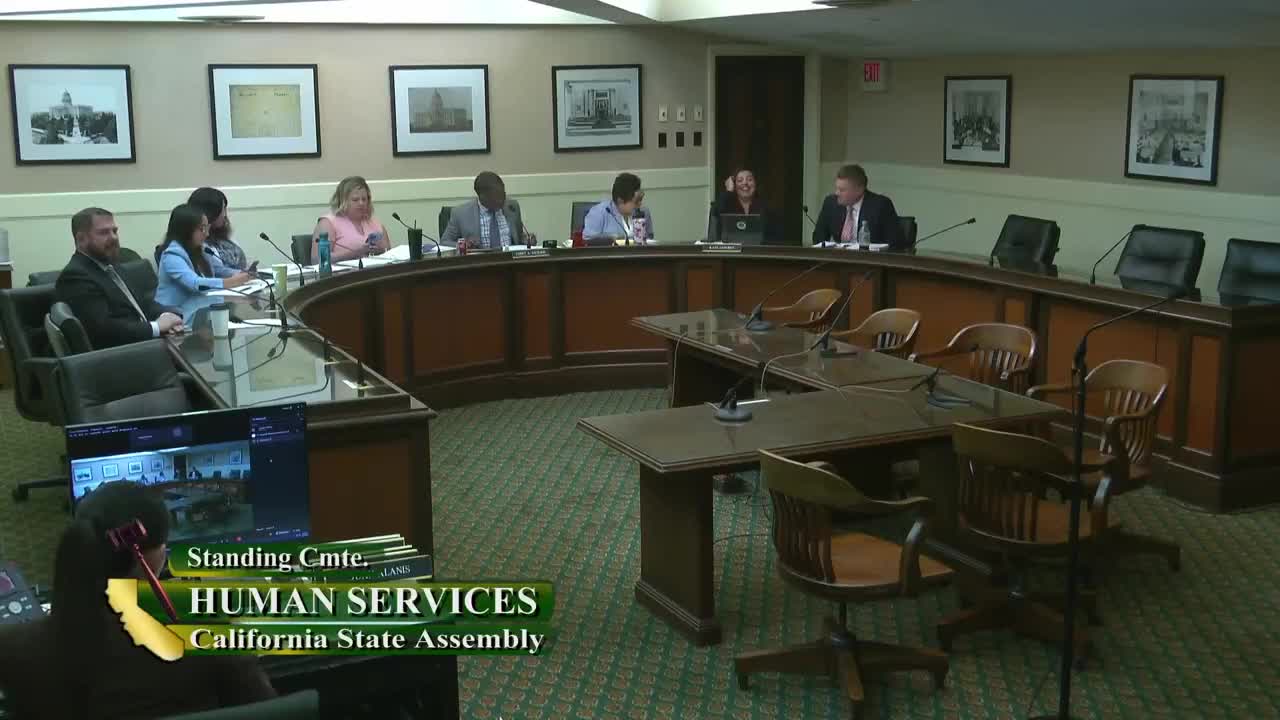 12MIN
Assembly Standing Committee on Human Services
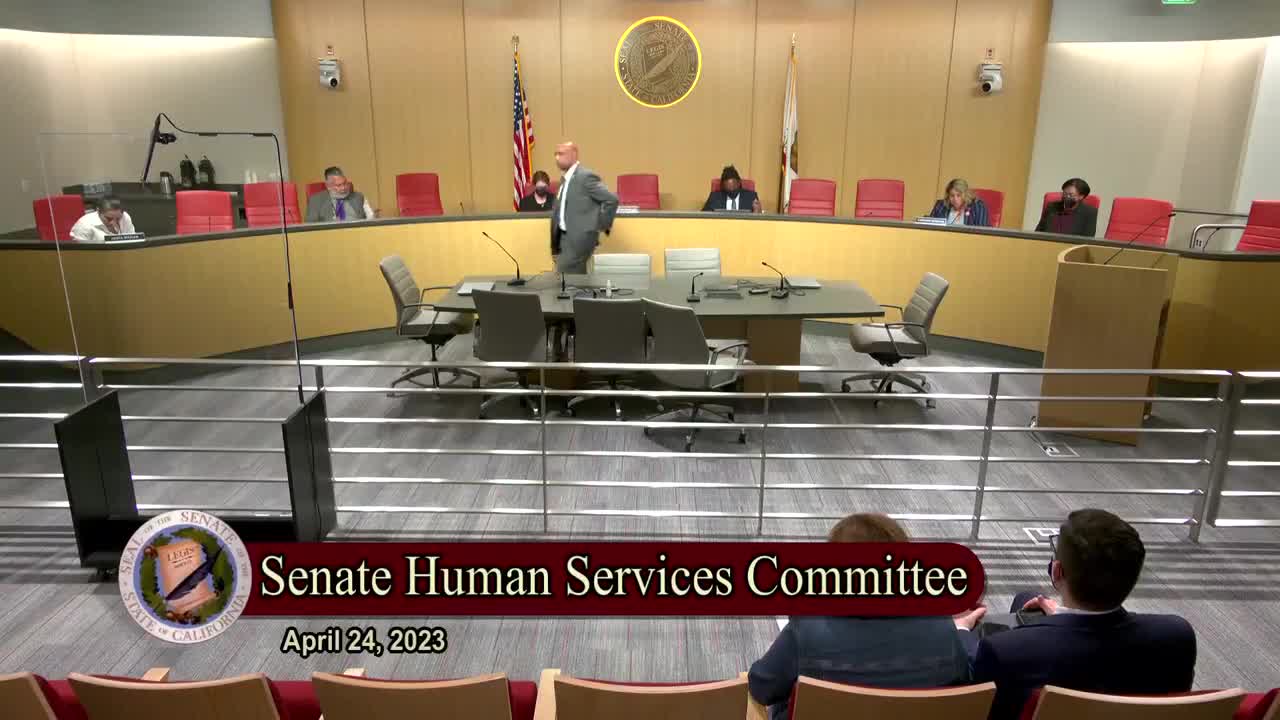 11MIN
Senate Standing Committee on Human Services
Bill Author