SB 531: Pupil safety: local educational agency contractors: background checks.
- Session Year: 2023-2024
- House: Senate
- Latest Version Date: 2023-10-08
Current Status:
Passed
(2023-10-08: Chaptered by Secretary of State. Chapter 616, Statutes of 2023.)
Introduced
In Committee
First Chamber
In Committee
Second Chamber
Enacted
Existing law requires any entity that has a contract with a local educational agency, as defined, to ensure that any employee who interacts with pupils, outside of the immediate supervision and control of the pupils parent or guardian or a school employee, has a valid criminal records summary, as provided.
This bill would exempt an employee of any entity that has a contract with a local educational agency, and that offers work experience opportunities for pupils or workplace placements as part of a pupils individualized education program, from the requirement to have a valid criminal records summary if certain requirements are met, including that at least one adult employee in the workplace during the pupils work hours, who has direct contact with the pupil and has been designated by the employer as the employee of record who is responsible for the safety of the pupil, has a valid criminal records summary and that the pupils parent or guardian has signed a consent form regarding the pupils work placement. If a pupil participates in services provided by a contractor as part of an independent study program and the pupil is under the immediate supervision and control of a parent or guardian during the provision of those services, the bill would require a local educational agency to either verify completion of a valid criminal records summary for all employees of the contractor who interact with the pupil or ensure that the parent or guardian of the pupil has signed a consent form before the pupils interaction with an employee of the contractor. To the extent the bill imposes additional requirements on local educational agencies, the bill would impose a state-mandated local program.
The California Constitution requires the state to reimburse local agencies and school districts for certain costs mandated by the state. Statutory provisions establish procedures for making that reimbursement.
This bill would provide that, if the Commission on State Mandates determines that the bill contains costs mandated by the state, reimbursement for those costs shall be made pursuant to the statutory provisions noted above.
This bill would declare that it is to take effect immediately as an urgency statute.
Existing law requires any entity that has a contract with a local educational agency, as defined, to ensure that any employee who interacts with pupils, outside of the immediate supervision and control of the pupils parent or guardian or a school employee, has a valid criminal records summary, as provided.
This bill would exempt an employee of any entity that has a contract with a local educational agency, and that offers work experience opportunities for pupils or workplace placements as part of transition services identified in a pupils individualized education plan, program, from the requirement to have a valid criminal records summary if certain requirements are met, including that at least one supervisor adult employee in the workplace during the pupils work hours, who has direct contact with the pupil and has been designated by the employer as the employee of record who is responsible for the safety of the pupil, has a valid criminal records summary and that the pupils parent or guardian has signed a consent form regarding the pupils work placement. If a pupil participates in services provided by a contractor as part of an independent study program and the pupil is under the immediate supervision and control of a parent or guardian during the provision of those services, the bill would require a local educational agency to either verify completion of a valid criminal records summary for all employees of the contractor who interact with the pupil or ensure that the parent or guardian of the pupil has signed a consent form before the pupils interaction with an employee of the contractor. To the extent the bill imposes additional requirements on local educational agencies, the bill would impose a state-mandated local program.
The California Constitution requires the state to reimburse local agencies and school districts for certain costs mandated by the state. Statutory provisions establish procedures for making that reimbursement.
This bill would provide that, if the Commission on State Mandates determines that the bill contains costs mandated by the state, reimbursement for those costs shall be made pursuant to the statutory provisions noted above.
This bill would declare that it is to take effect immediately as an urgency statute.
Existing law requires any entity that has a contract with a local educational agency, as defined, to ensure that any employee who interacts with pupils, outside of the immediate supervision and control of the pupils parent or guardian or a school employee, has a valid criminal records summary, as provided.
This bill would exempt an employee of any entity that has a contract with a local educational agency, and that offers work experience opportunities for pupils or workplace placements as part of transition services identified in a pupils individualized education plan, from the requirement to have a valid criminal records summary if certain requirements are met, including that at least one supervisor in the workplace who has direct contact with the pupil has a valid criminal records summary and that the pupils parent or guardian has signed a consent form regarding the pupils work placement.
Existing law establishes the Student Aid Commission as the primary state agency for the administration of state-authorized student financial aid programs available to students attending all segments of postsecondary education.Existing law establishes the Department of Financial Protection and Innovation, under the direction of the Commissioner of Financial Protection and Innovation, and sets forth its powers and duties regarding administration of various laws relating to financial institutions, including banks and credit unions.This bill would require the Student Aid Commission and the Department of Financial Protection and Innovation to prominently display a link to a specified financial literacy document created by the Federal Student Aid Information Center on the home page or on a page dedicated to providing resources related to student loans of their respective internet websites.Existing law establishes the Student Aid Commission as the primary state agency for the administration of state-authorized student financial aid programs available to students attending all segments of postsecondary education.
Existing law establishes the Department of Financial Protection and Innovation, under the direction of the Commissioner of Financial Protection and Innovation, and sets forth its powers and duties regarding administration of various laws relating to financial institutions, including banks and credit unions.
This bill would require the Student Aid Commission and the Department of Financial Protection and Innovation to prominently display a link to a specified financial literacy document created by the Federal Student Aid Information Center on the home page or on a page dedicated to providing resources related to student loans of their respective internet websites.
Existing law establishes the Student Aid Commission as the primary state agency for the administration of state-authorized student financial aid programs available to students attending all segments of postsecondary education.
Existing law establishes the Department of Financial Protection and Innovation, under the direction of the Commissioner of Financial Protection and Innovation, and sets forth its powers and duties regarding administration of various laws relating to financial institutions, including banks and credit unions.
This bill would require the Student Aid Commission and the Department of Financial Protection and Innovation to prominently display a link to a specified financial literacy document created by the Federal Student Aid Information Center on the home page of their respective internet websites.
(a)Any entity that has a contract with a local educational agency shall ensure that any employee who interacts with pupils, outside of the immediate supervision and control of the pupils parent or guardian or a school employee, has a valid criminal records summary as described in Section 44237. When the contracting entity performs the criminal background check, it shall immediately provide any subsequent arrest and conviction information it receives to any local educational agency that it is contracting with pursuant to the subsequent arrest service.
(b)(1)This section does not apply to an entity providing services to a local educational agency, as described in subdivision (a), in an emergency or exceptional situation, such as when pupil health or safety is endangered or when repairs are needed to make school facilities safe and habitable.
(2)Notwithstanding subdivision (a), an employee of any entity that has a contract with a local educational agency, and that offers work experience opportunities for pupils, including, but not limited to, opportunities pursuant to Section 51760, 52336, 52372, 52410, or 52460, Article 1 (commencing with Section 52300), Article 5 (commencing with Section 52381), or Article 7 (commencing with Section 52450) of Chapter 9 of Part 28 of Division 4, Chapter 16.5 (commencing with Section 53070) of Part 28 of Division 4, Article 5 (commencing with Section 54690) of Chapter 9 of Part 29 of Division 4, or Part 54.5 (commencing with Section 88820) of Division 7 of Title 3, or workplace placements as part of a pupils individualized education program, including, but not limited to, the services described in Article 3 (commencing with Section 56470) of Chapter 4.5 of Part 30 of Division 4, is not required to have a valid criminal records summary pursuant to subdivision (a) if all of the following requirements are met:
(A)At least one adult employee in the workplace during the pupils work hours, who has direct contact with the pupil and has been designated by the employer as the employee of record who is responsible for the safety of the pupil, has a valid criminal records summary as described in Section 44237.
(B)A staff representative of the local educational agency makes at least one visitation every three weeks to consult with the pupils workplace liaison, observe the pupil at the workplace, and check in with the pupil to ensure the pupils health, safety, and welfare, including by addressing any concerns the pupil has raised.
(C)The parent or guardian of the pupil has signed a consent form regarding the pupils work placement, attesting that the parent or guardian understands the duties assigned to the pupil and the nature of the workplace environment.
(3)If a pupil participates in services provided by a contractor as part of an independent study program and the pupil is under the immediate supervision and control of the pupils parent or guardian during the provision of those services, the local educational agency shall do either of the following:
(A)Verify completion of a valid criminal records summary for all employees of the contractor who interact with the pupil.
(B)Ensure that the parent or guardian of the pupil has signed a consent form before the pupils interaction with a person employed by the contractor, attesting that the parent or guardian understands that the person employed by the contractor has not completed a valid criminal records summary as described in Section 44237.
(c)On a case-by-case basis, a local educational agency may require an entity with whom it has a contract to comply with the requirements of this section for employees in addition to those described in subdivision (a). The entity shall prepare and submit those employees fingerprints to the Department of Justice, as described in subdivision (a).
(d)(1)The Department of Justice shall ascertain whether the individual whose fingerprints were submitted to it pursuant to subdivision (a), (c), or (h) has been arrested or convicted of any crime insofar as that fact can be ascertained from information available to the Department of Justice. Upon implementation of an electronic fingerprinting system with terminals located statewide and managed by the Department of Justice, the Department of Justice shall ascertain the information required pursuant to this section within three working days. When the Department of Justice ascertains that an individual whose fingerprints were submitted to it pursuant to subdivision (a), (c), or (h) has a pending criminal proceeding for a felony as defined in Section 45122.1 or has been convicted of a felony as defined in Section 45122.1, the Department of Justice shall notify the employer designated by the individual of that fact. The notification shall be delivered by telephone or email to the employer.
(2)The Department of Justice, at its discretion, may notify the local educational agencies in instances when the employee is defined as having a pending criminal proceeding described in Section 45122.1 or has been convicted of a felony as defined in Section 45122.1.
(3)The Department of Justice shall forward one copy of the fingerprints to the Federal Bureau of Investigation to verify any record of previous arrests or convictions of the applicant. The Department of Justice shall review the criminal record summary it obtains from the Federal Bureau of Investigation and shall notify the employer only as to whether or not an applicant has any convictions or arrests pending adjudication for offenses that, if committed in California, would have been punishable as a violent or serious felony. The Department of Justice shall not provide any specific offense information received from the Federal Bureau of Investigation. The Department of Justice shall provide written notification to the contract employer only concerning whether an applicant for employment has any conviction or arrest pending final adjudication for any of those crimes, as specified in Section 45122.1, but shall not provide any information identifying any offense for which an existing employee was convicted or has an arrest pending final adjudication.
(e)(1)An entity having a contract as described in subdivision (a) or that is required to comply with this section for other employees pursuant to subdivision (c) shall not permit an employee to interact with pupils until the Department of Justice has ascertained that the employee has not been convicted of a felony as defined in Section 45122.1.
(2)The prohibition in paragraph (1) does not apply to an employee solely on the basis that the employee has been convicted of a felony if the employee has obtained a certificate of rehabilitation and pardon pursuant to Chapter 3.5 (commencing with Section 4852.01) of Title 6 of Part 3 of the Penal Code.
(3)The prohibition in paragraph (1) does not apply to an employee solely on the basis that the employee has been convicted of a serious felony that is not also a violent felony if that employee can prove to the sentencing court of the offense in question, by clear and convincing evidence, that the employee has been rehabilitated for the purposes of schoolsite employment for at least one year. If the offense in question occurred outside this state, then the person may seek a finding of rehabilitation from the court in the local educational agency in which the employee is a resident.
(f)An entity having a contract as described in subdivision (a) or that is required to comply with this section for other employees pursuant to subdivision (c) shall certify in writing to the local educational agency that neither the employer nor any of its employees who are required by this section to submit or have their fingerprints submitted to the Department of Justice and who may interact with pupils have been convicted of a felony as defined in Section 45122.1.
(g)Where reasonable access to the statewide electronic fingerprinting network is available, the Department of Justice may mandate electronic submission of the fingerprint cards and other information required by this section.
(h)(1)For purposes of this section, an individual operating as a sole proprietor of an entity that has a contract with a local educational agency, as described in subdivision (a), shall be considered an employee of that entity.
(2)To protect the safety of any pupil that may interact with an employee of an entity that is a sole proprietorship and has a contract as described in subdivision (a) or that is required to comply with this section for other employees pursuant to subdivision (c), a local educational agency shall prepare and submit the employees fingerprints to the Department of Justice, as described in subdivision (a).
(i)For purposes of this section, local educational agency means a school district, county office of education, or charter school.
SEC. 2.If the Commission on State Mandates determines that this act contains costs mandated by the state, reimbursement to local agencies and school districts for those costs shall be made pursuant to Part 7 (commencing with Section 17500) of Division 4 of Title 2 of the Government Code.
SEC. 3.This act is an urgency statute necessary for the immediate preservation of the public peace, health, or safety within the meaning of Article IV of the California Constitution and shall go into immediate effect. The facts constituting the necessity are:
To ensure pupils have access to work experience opportunities in various career fields during the 202324 school year and beyond, while also ensuring there are necessary safeguards in place to protect those pupils from potential harm in the workplace, it is necessary for this act to take effect immediately.
(a)Any entity that has a contract with a local educational agency shall ensure that any employee who interacts with pupils, outside of the immediate supervision and control of the pupils parent or guardian or a school employee, has a valid criminal records summary as described in Section 44237. When the contracting entity performs the criminal background check, it shall immediately provide any subsequent arrest and conviction information it receives to any local educational agency that it is contracting with pursuant to the subsequent arrest service.
(b)(1)This section does not apply to an entity providing services to a local educational agency, as described in subdivision (a), in an emergency or exceptional situation, such as when pupil health or safety is endangered or when repairs are needed to make school facilities safe and habitable.
(2)Notwithstanding subdivision (a), an employee of any entity that has a contract with a local educational agency, and that offers work experience opportunities for pupils pupils, including, but not limited to, opportunities pursuant to Section 51760, 52336, 52372, 52410, or 52460, Article 1 (commencing with Section 52300), Article 5 (commencing with Section 52381), or Article 7 (commencing with Section 52450) of Chapter 9 of Part 28 of Division 4, Chapter 16.5 (commencing with Section 53070) of Part 28 of Division 4, Article 5 (commencing with Section 54690) of Chapter 9 of Part 29 of Division 4, or Part 54.5 (commencing with Section 88820) of Division 7 of Title 3, or workplace placements as part of transition services identified in a pupils individualized education program, including, but not limited to, the services described in Article 3 (commencing with Section 56470) of Chapter 4.5 of Part 30 of Division 4, is not required to have a valid criminal records summary pursuant to subdivision (a) if all of the following requirements are met:
(A)At least one supervisor adult employee in the workplace during the pupils work hours, who has direct contact with the pupil and has been designated by the employer as the employee of record who is responsible for the safety of the pupil, has a valid criminal records summary as described in Section 44237.
(B)A staff representative of the local educational agency makes at least one visitation every three weeks to consult with the pupils workplace liaison, observe the pupil at the workplace, and check in with the pupil to ensure the pupils health, safety, and welfare, including by addressing any concerns the pupil has raised.
(C)The parent or guardian of the pupil has signed a consent form regarding the pupils work placement, attesting that the parent or guardian understands the duties assigned to the pupil and the nature of the workplace environment.
(3)If a pupil participates in services provided by a contractor as part of an independent study program and the pupil is under the immediate supervision and control of the pupils parent or guardian during the provision of those services, the local educational agency shall do either of the following:
(A)Verify completion of a valid criminal records summary for all employees of the contractor who interact with the pupil.
(B)Ensure that the parent or guardian of the pupil has signed a consent form before the pupils interaction with a person employed by the contractor, attesting that the parent or guardian understands that the person employed by the contractor has not completed a valid criminal records summary as described in Section 44237.
(c)On a case-by-case basis, a local educational agency may require an entity with whom it has a contract to comply with the requirements of this section for employees in addition to those described in subdivision (a). The entity shall prepare and submit those employees fingerprints to the Department of Justice, as described in subdivision (a).
(d)(1)The Department of Justice shall ascertain whether the individual whose fingerprints were submitted to it pursuant to subdivision (a), (c), or (h) has been arrested or convicted of any crime insofar as that fact can be ascertained from information available to the Department of Justice. Upon implementation of an electronic fingerprinting system with terminals located statewide and managed by the Department of Justice, the Department of Justice shall ascertain the information required pursuant to this section within three working days. When the Department of Justice ascertains that an individual whose fingerprints were submitted to it pursuant to subdivision (a), (c), or (h) has a pending criminal proceeding for a felony as defined in Section 45122.1 or has been convicted of a felony as defined in Section 45122.1, the Department of Justice shall notify the employer designated by the individual of that fact. The notification shall be delivered by telephone or email to the employer.
(2)The Department of Justice, at its discretion, may notify the local educational agencies in instances when the employee is defined as having a pending criminal proceeding described in Section 45122.1 or has been convicted of a felony as defined in Section 45122.1.
(3)The Department of Justice shall forward one copy of the fingerprints to the Federal Bureau of Investigation to verify any record of previous arrests or convictions of the applicant. The Department of Justice shall review the criminal record summary it obtains from the Federal Bureau of Investigation and shall notify the employer only as to whether or not an applicant has any convictions or arrests pending adjudication for offenses that, if committed in California, would have been punishable as a violent or serious felony. The Department of Justice shall not provide any specific offense information received from the Federal Bureau of Investigation. The Department of Justice shall provide written notification to the contract employer only concerning whether an applicant for employment has any conviction or arrest pending final adjudication for any of those crimes, as specified in Section 45122.1, but shall not provide any information identifying any offense for which an existing employee was convicted or has an arrest pending final adjudication.
(e)(1)An entity having a contract as described in subdivision (a) or that is required to comply with this section for other employees pursuant to subdivision (c) shall not permit an employee to interact with pupils until the Department of Justice has ascertained that the employee has not been convicted of a felony as defined in Section 45122.1.
(2)The prohibition in paragraph (1) does not apply to an employee solely on the basis that the employee has been convicted of a felony if the employee has obtained a certificate of rehabilitation and pardon pursuant to Chapter 3.5 (commencing with Section 4852.01) of Title 6 of Part 3 of the Penal Code.
(3)The prohibition in paragraph (1) does not apply to an employee solely on the basis that the employee has been convicted of a serious felony that is not also a violent felony if that employee can prove to the sentencing court of the offense in question, by clear and convincing evidence, that the employee has been rehabilitated for the purposes of schoolsite employment for at least one year. If the offense in question occurred outside this state, then the person may seek a finding of rehabilitation from the court in the local educational agency in which the employee is a resident.
(f)An entity having a contract as described in subdivision (a) or that is required to comply with this section for other employees pursuant to subdivision (c) shall certify in writing to the local educational agency that neither the employer nor any of its employees who are required by this section to submit or have their fingerprints submitted to the Department of Justice and who may interact with pupils have been convicted of a felony as defined in Section 45122.1.
(g)Where reasonable access to the statewide electronic fingerprinting network is available, the Department of Justice may mandate electronic submission of the fingerprint cards and other information required by this section.
(h)(1)For purposes of this section, an individual operating as a sole proprietor of an entity that has a contract with a local educational agency, as described in subdivision (a), shall be considered an employee of that entity.
(2)To protect the safety of any pupil that may interact with an employee of an entity that is a sole proprietorship and has a contract as described in subdivision (a) or that is required to comply with this section for other employees pursuant to subdivision (c), a local educational agency shall prepare and submit the employees fingerprints to the Department of Justice, as described in subdivision (a).
(i)For purposes of this section, local educational agency means a school district, county office of education, or charter school.
SEC. 2.If the Commission on State Mandates determines that this act contains costs mandated by the state, reimbursement to local agencies and school districts for those costs shall be made pursuant to Part 7 (commencing with Section 17500) of Division 4 of Title 2 of the Government Code.
SEC. 3.This act is an urgency statute necessary for the immediate preservation of the public peace, health, or safety within the meaning of Article IV of the California Constitution and shall go into immediate effect. The facts constituting the necessity are:
To ensure pupils have access to work experience opportunities in various career fields during the 202324 school year and beyond, while also ensuring there are necessary safeguards in place to protect those pupils from potential harm in the workplace, it is necessary for this act to take effect immediately.
(a)Any entity that has a contract with a local educational agency shall ensure that any employee who interacts with pupils, outside of the immediate supervision and control of the pupils parent or guardian or a school employee, has a valid criminal records summary as described in Section 44237. When the contracting entity performs the criminal background check, it shall immediately provide any subsequent arrest and conviction information it receives to any local educational agency that it is contracting with pursuant to the subsequent arrest service.
(b)(1)This section does not apply to an entity providing services to a local educational agency, as described in subdivision (a), in an emergency or exceptional situation, such as when pupil health or safety is endangered or when repairs are needed to make school facilities safe and habitable.
(2)Notwithstanding subdivision (a), an employee of any entity that has a contract with a local educational agency, and that offers work experience opportunities for pupils or workplace placements as part of transition services identified in a pupils individualized education program, including, but not limited to, the services described in Article 3 (commencing with Section 56470) of Chapter 4.5 of Part 30 of Division 4, is not required to have a valid criminal records summary pursuant to subdivision (a) if all of the following requirements are met:
(A)At least one supervisor in the workplace who has direct contact with the pupil has a valid criminal records summary as described in Section 44237.
(B)A staff representative of the local educational agency makes at least one visitation every three weeks to consult with the pupils workplace liaison, observe the pupil at the workplace, and check in with the pupil to ensure the pupils health, safety, and welfare, including by addressing any concerns the pupil has raised.
(C)The parent or guardian of the pupil has signed a consent form regarding the pupils work placement, attesting that the parent or guardian understands the duties assigned to the pupil and the nature of the workplace environment.
(c)On a case-by-case basis, a local educational agency may require an entity with whom it has a contract to comply with the requirements of this section for employees in addition to those described in subdivision (a). The entity shall prepare and submit those employees fingerprints to the Department of Justice, as described in subdivision (a).
(d)(1)The Department of Justice shall ascertain whether the individual whose fingerprints were submitted to it pursuant to subdivision (a), (c), or (h) has been arrested or convicted of any crime insofar as that fact can be ascertained from information available to the Department of Justice. Upon implementation of an electronic fingerprinting system with terminals located statewide and managed by the Department of Justice, the Department of Justice shall ascertain the information required pursuant to this section within three working days. When the Department of Justice ascertains that an individual whose fingerprints were submitted to it pursuant to subdivision (a), (c), or (h) has a pending criminal proceeding for a felony as defined in Section 45122.1 or has been convicted of a felony as defined in Section 45122.1, the Department of Justice shall notify the employer designated by the individual of that fact. The notification shall be delivered by telephone or email to the employer.
(2)The Department of Justice, at its discretion, may notify the local educational agencies in instances when the employee is defined as having a pending criminal proceeding described in Section 45122.1 or has been convicted of a felony as defined in Section 45122.1.
(3)The Department of Justice shall forward one copy of the fingerprints to the Federal Bureau of Investigation to verify any record of previous arrests or convictions of the applicant. The Department of Justice shall review the criminal record summary it obtains from the Federal Bureau of Investigation and shall notify the employer only as to whether or not an applicant has any convictions or arrests pending adjudication for offenses that, if committed in California, would have been punishable as a violent or serious felony. The Department of Justice shall not provide any specific offense information received from the Federal Bureau of Investigation. The Department of Justice shall provide written notification to the contract employer only concerning whether an applicant for employment has any conviction or arrest pending final adjudication for any of those crimes, as specified in Section 45122.1, but shall not provide any information identifying any offense for which an existing employee was convicted or has an arrest pending final adjudication.
(e)(1)An entity having a contract as described in subdivision (a) or that is required to comply with this section for other employees pursuant to subdivision (c) shall not permit an employee to interact with pupils until the Department of Justice has ascertained that the employee has not been convicted of a felony as defined in Section 45122.1.
(2)The prohibition in paragraph (1) does not apply to an employee solely on the basis that the employee has been convicted of a felony if the employee has obtained a certificate of rehabilitation and pardon pursuant to Chapter 3.5 (commencing with Section 4852.01) of Title 6 of Part 3 of the Penal Code.
(3)The prohibition in paragraph (1) does not apply to an employee solely on the basis that the employee has been convicted of a serious felony that is not also a violent felony if that employee can prove to the sentencing court of the offense in question, by clear and convincing evidence, that the employee has been rehabilitated for the purposes of schoolsite employment for at least one year. If the offense in question occurred outside this state, then the person may seek a finding of rehabilitation from the court in the local educational agency in which the employee is a resident.
(f)An entity having a contract as described in subdivision (a) or that is required to comply with this section for other employees pursuant to subdivision (c) shall certify in writing to the local educational agency that neither the employer nor any of its employees who are required by this section to submit or have their fingerprints submitted to the Department of Justice and who may interact with pupils have been convicted of a felony as defined in Section 45122.1.
(g)Where reasonable access to the statewide electronic fingerprinting network is available, the Department of Justice may mandate electronic submission of the fingerprint cards and other information required by this section.
(h)(1)For purposes of this section, an individual operating as a sole proprietor of an entity that has a contract with a local educational agency, as described in subdivision (a), shall be considered an employee of that entity.
(2)To protect the safety of any pupil that may interact with an employee of an entity that is a sole proprietorship and has a contract as described in subdivision (a) or that is required to comply with this section for other employees pursuant to subdivision (c), a local educational agency shall prepare and submit the employees fingerprints to the Department of Justice, as described in subdivision (a).
(i)For purposes of this section, local educational agency means a school district, county office of education, or charter school.
(j)This section shall become operative on January 1, 2022.SECTION 1.Section 69516.5 is added to the Education Code, to read:69516.5.The commission and the Department of Financial Protection and Innovation shall prominently display a link to the Financial Literacy Guidance from Federal Student Aid document created by the Federal Student Aid Information Center on the home page or on a page dedicated to providing resources related to student loans of their respective internet websites.The commission and the Department of Financial Protection and Innovation shall prominently display a link to the Financial Literacy Guidance from Federal Student Aid document created by the Federal Student Aid Information Center on the home page or on a page dedicated to providing resources related to student loans of their respective internet websites.
The commission and the Department of Financial Protection and Innovation shall prominently display a link to the Financial Literacy Guidance from Federal Student Aid document created by the Federal Student Aid Information Center on the home page of their respective internet websites.
|
Date
|
Status
|
|---|---|
| Oct 8, 2023 | Chaptered by Secretary of State. Chapter 616, Statutes of 2023. |
| Oct 8, 2023 | Approved by the Governor. |
| Sep 21, 2023 | Enrolled and presented to the Governor at 4 p.m. |
| Sep 14, 2023 | Urgency clause adopted. |
| Sep 14, 2023 | Assembly amendments concurred in. (Ayes 40. Noes 0. Page 2838.) Ordered to engrossing and enrolling. |
| Sep 13, 2023 | From committee: That the Assembly amendments be concurred in. (Ayes 4. Noes 0. Page 2769.) |
| Sep 12, 2023 | From committee: Be re-referred to Com. on ED. pursuant to Senate Rule 29.10(d). (Ayes 4. Noes 0. Page 2611.) Re-referred to Com. on ED. |
| Sep 12, 2023 | Re-referred to Com. on RLS pursuant to Senate Rule 29.10(d). |
| Sep 11, 2023 | In Senate. Concurrence in Assembly amendments pending. |
| Sep 11, 2023 | Read third time. Urgency clause adopted. Passed. (Ayes 78. Noes 0. Page 3161.) Ordered to the Senate. |
| Sep 5, 2023 | Read second time. Ordered to third reading. |
| Sep 1, 2023 | From committee: Do pass. (Ayes 16. Noes 0.) (September 1). |
| Aug 23, 2023 | August 23 set for first hearing. Placed on suspense file. |
| Aug 14, 2023 | Read second time and amended. Re-referred to Com. on APPR. |
| Jul 13, 2023 | From committee: Do pass as amended and re-refer to Com. on APPR. with recommendation: To consent calendar. (Ayes 7. Noes 0.) (July 12). |
| Jun 20, 2023 | June 28 set for first hearing canceled at the request of author. |
| Jun 1, 2023 | From committee with author's amendments. Read second time and amended. Re-referred to Com. on ED. |
| Jun 1, 2023 | Referred to Com. on ED. |
| May 23, 2023 | In Assembly. Read first time. Held at Desk. |
| May 22, 2023 | Read third time. Passed. (Ayes 40. Noes 0. Page 1208.) Ordered to the Assembly. |
| May 2, 2023 | Read second time. Ordered to third reading. |
| May 1, 2023 | From committee: Be ordered to second reading pursuant to Senate Rule 28.8. |
| Apr 24, 2023 | From committee with author's amendments. Read second time and amended. Re-referred to Com. on APPR. |
| Apr 21, 2023 | Set for hearing May 1. |
| Apr 20, 2023 | From committee: Do pass and re-refer to Com. on APPR. (Ayes 7. Noes 0. Page 830.) (April 19). Re-referred to Com. on APPR. |
| Apr 3, 2023 | Set for hearing April 19. |
| Mar 22, 2023 | From committee: Do pass and re-refer to Com. on B. & F.I. with recommendation: To consent calendar. (Ayes 7. Noes 0. Page 451.) (March 22). Re-referred to Com. on B. & F.I. |
| Mar 2, 2023 | Set for hearing March 22. |
| Feb 22, 2023 | Referred to Coms. on ED. and B. & F.I. |
| Feb 15, 2023 | From printer. May be acted upon on or after March 17. |
| Feb 14, 2023 | Introduced. Read first time. To Com. on RLS. for assignment. To print. |
|
Date
|
Description
|
Location
|
Votes
|
|
|---|---|---|---|---|
| Sep 14, 2023 | Unfinished Business SB531 Ochoa Bogh Urgency Clause Concurrence | Senate Floor |
Passed |
|
| Sep 13, 2023 | That the Assembly amendments be concurred in | Senate Standing Committee on Education |
Passed |
|
| Sep 11, 2023 | SB 531 Ochoa Bogh Third Reading Urgency By Megan Dahle | Assembly Floor |
Passed |
|
| Sep 1, 2023 | Do pass. | Assembly Standing Committee on Appropriations |
Passed |
|
| Jul 12, 2023 | Do pass as amended, and be re-referred to the Committee on [Appropriations] with recommendation: To Consent Calendar | Assembly Standing Committee on Education |
Passed |
|
| May 22, 2023 | Senate 3rd Reading SB531 Ochoa Bogh | Senate Floor |
Passed |
|
| Apr 19, 2023 | Do pass, but first be re-referred to the Committee on [Appropriations] | Senate Standing Committee on Banking and Financial Institutions |
Passed |
|
| Mar 22, 2023 | Do pass, but first be re-referred to the Committee on [Banking and Financial Institutions] with the recommendation: To Consent Calendar | Senate Standing Committee on Education |
Passed |
This list shows positions taken on this bill by organizations on the date displayed, which is linked to the original source.
Positions by individuals are not included.
|
Organization
|
Position
|
Date
|
|---|---|---|
| An individual | ** Against | |
| Association Of California School Administrators | ** Support | |
| California County Superintendents | ** Support | |
| California Credit Union League | ** Support | |
| California Society Of Certified Public Accountants | ** Support | |
| CAROCP - the Association of Career and College Readiness Organizations | ** Support | |
| College and Career Advantage | ** Support | |
| Eden Area Regional Occupational Program | ** Support | |
| First Place for Youth | ** Support | |
| Inner City Industry | ** Support | |
| Mountain Desert Career Pathways Joint Powers Authority | ** Support | |
| North Orange County ROP | ** Support | |
| Riverside County Office Of Education | ** Support | |
| San Bernardino County District Advocates for Better Schools | ** Support | |
| San Diego Unified School District | ** Support | |
| Tri-Valley Regional Occupational Program | ** Support | |
| Valley ROP | ** Support |
SENATE RULES COMMITTEE Office of Senate Floor Analyses (916) 651-1520 Fax: (916) 327-4478 | SB 531 |
UNFINISHED BUSINESS
Bill No: SB 531
Author: Ochoa Bogh (R)
Amended: 8/14/23
Vote: 27 - Urgency
PRIOR SENATE VOTES NOT RELEVANT
SENATE EDUCATION COMMITTEE: 4-0, 9/13/23 (Pursuant to Senate Rule 29.10)
AYES: Newman, Ochoa Bogh, Cortese, Smallwood-Cuevas
NO VOTE RECORDED: Glazer, McGuire, Wilk
ASSEMBLY FLOOR: 78-0, 9/11/23 - See last page for vote
SUBJECT: Pupil safety: local educational agency contractors: background checks
SOURCE: Author
DIGEST:
This bill exempts an entity that partners with a local educational agency (LEA) to provide student work experience from the requirement to have a valid criminal background check for all employees, as specified. This bill is an urgency measure.
Assembly Amendments
exempt an entity that partners with an LEA to provide student work experience from the requirement to have a valid criminal background check for all employees, as specified.
ANALYSIS:
Existing law:
- Requires any entity that has a contract with an LEA to ensure that any employee who interacts with students, outside of the immediate supervision and control of the student’s parent, guardian, or school employee, have a valid criminal records summary. Requires that the contracting entity immediately provide any subsequent arrest and conviction information it receives regarding those employees to any LEA that it is contracting with. (Education Code (EC) § 45125.1)
- Prohibits a school district from employing any person who has been convicted of a violent or serious felony, and prohibits a school district from retaining a current classified employee who is a temporary, substitute, or a probationary employee who has not attained permanent status, if they have been convicted of a violent or serious felony. (EC § 45122.1)
- Finds and declares that Project WorkAbility is a true partnership established at the state level through nonfinancial interagency agreements between the California Department of Education (CDE), the Department of Employment Development (EED), and the Department of Rehabilitation (DOR), and has elevated awareness in the private sector of the employment potential of individuals with exceptional needs, and focuses its efforts in developing careers for these youth, and preventing needless economic and social dependency on state and community agencies and resources. (EC § 56470)
- Authorizes the population served by WorkAbility projects to include secondary students with disabilities, adults with disabilities and other individuals who experience barriers to successful completion of school. (EC § 56472)
- Specifies that all laws or rules applicable to minors in employment relationships are applicable to students enrolled in work experience education courses, including the employment of students in part-time jobs selected or approved as having educational value and coordinated by school employees. (EC § 51763 and 51764)
- Authorizes the governing board of a school district that establishes and supervises a work experience education program in which students with intellectual disabilities are employed in part-time jobs to use funds derived from any source to pay the wages of the students employed, to the extent permissible by law or regulation. (EC § 51765)
- Authorizes LEAs to provide students with work-based learning opportunities through partnership academies, regional occupational programs, work experience education, community classrooms, cooperative career technical education (CTE) programs, and job shadowing experiences. Defines “work-based learning” as an educational approach or instructional methodology that uses the workplace or real work to provide pupils with the knowledge and skills that will help them connect school experiences to real-life work activities and future career opportunities. States that when feasible, work-based learning should be an integral part of a more comprehensive program that integrates academic courses and career technical education. (EC § 51760.1)
- Defines a “community classroom” as an instructional methodology which utilizes unpaid on-the-job training experiences at business, industry, and public agency sites to assist students in acquiring those competencies necessary to acquire entry-level employment, and so concurrent, formalized classroom instruction can be extended. Requires the community classroom teacher to make at least one visitation every 3 weeks to consult with the management of the community classroom, observe students at the training station, provide instruction, ensure that student acquisition of competencies identified in the individualized training plan is occurring, and observe the student engaged in the job training experiences. (California Code of Regulations (CCR), Title 5, Sections 10080 – 10088)
- Requires that all laws or rules applicable to minors in employment relationships be applicable to students enrolled in work experience education courses. (EC § 51763)
- Prohibits any minor under the age of 16 from being employed or permitted to work with specified machinery in a workshop or factory or in other hazardous occupations as defined. (Labor Code (LAB) 1292, 1293, 1294)
- Specifies that Sections 1292, 1293, and 1294 of the Labor Code do not apply to specified work experience programs if all of the following occur:
- The work experience coordinator determines that the students have been sufficiently trained in the employment or work otherwise prohibited;
- Parental approval is obtained; and
- The principal or counselor of the student has determined that the progress of the student toward graduation will not be impaired. (EC 51769.5)
This bill:
- Requires that an employee of an entity having a contract with an LEA to offer work experience opportunities for students, including as part a pupil's individualized education program (IEP), meet the following conditions in order to be exempt from the requirement to have a valid criminal records summary for all of their employees:
- At least one supervisor in the workplace who has direct contact with the student and has been designated by the employer as the employee of record who is responsible for the safety of the pupil, has a valid criminal records summary, as specified;
- A staff representative of the LEA makes at least one visitation every three weeks to consult with the student's workplace liaison, observe the student at the workplace, and check in with the student to ensure their health, safety, and welfare, by addressing any concerns the student has raised; and
- The parent or guardian of the student has signed a consent form regarding the student's work placement, attesting that they understand the duties assigned to the student and the nature of the workplace environment.
- Requires an LEA contracting with a contractor for services as part of a student's independent study program, where the student is under the immediate supervision of their parent or guardian during the provision of those services, to verify completion of a valid criminal background check for all employees of the contractor who interact with the student, or to ensure that the parent or guardian signs a consent form attesting that they understand that the person employed by the contractor has not completed a valid criminal background check.
Comments
- Need for the bill. According to the author, “Student safety remains a top priority, and SB 531 ensures there are necessary safeguards in place to protect students from potential harm at the workplace, while also ensuring access to professional development and vocational training in various career fields.
“Updating the requirements will encourage community business partners to continue contracting with LEAs in order to provide work training opportunities for high school students. Without this change, on-the-job work experience will only be available through traditional employment or internships that do not offer the same level of protection for students as contracted LEA work-based programs."
- Background check requirement expanded to contractors. The Budget Act of 2021 requires that any entity contracting with an LEA ensure that any employee who interacts with students, outside of the immediate supervision of a school employee or the student’s parent or guardian, have a valid criminal records summary, and that any subsequent arrest and conviction information be provided to the LEA it is contracting with.
Prior to the enactment of this provision, criminal background checks were required for entities contracting with LEAs only for janitorial services, schoolsite administrative services, grounds and landscape maintenance, student transportation, and schoolsite food services. The 2021 Budget Act expanded this requirement to any contract involving individuals interacting with students, whether in-person or online.
- Unintended consequences of background check requirement. As the requirement for all employees of an entity holding a contract with an LEA to have a valid criminal background check went into effect, student work experience opportunities have been negatively impacted. Many employers who previously had hosted students for work experience and WorkAbility were unable or unwilling to comply with the requirement that all of their employees who might have contact with the student(s) be fingerprinted.
In addition, LEAs contracting with entities for the provision of educational services as part of an independent study program for pupils may not be in compliance with the fingerprinting requirement as they are presuming that the pupil is under the immediate control and supervision of the parent or guardian. As this may not be the case in every circumstance, there is a need to ensure parents or guardians are made aware that the employees of the entity that their pupils are interacting with may not have a valid criminal records summary, by signing an informed consent.
- Barriers to complying with the fingerprinting requirement. LEAs and the CDE have identified some of the challenges identified by outside entities in complying with the fingerprinting requirement for all of their staff who may have contact with students. These include the following:
- Workplaces cannot bear the burden of the cost associated with staff fingerprinting of any staff who interact with students, including the fingerprinting service cost, travel cost, and extra staff time;
- Workplaces cannot comfortably ensure that students will only interact with those staff who have been cleared;
- Complications of staff turnover and ensuring any changes in staff comply with this requirement;
- Lack of infrastructure or capacity to maintain records of those cleared and communicate subsequent arrest and conviction information;
- Large employers (e.g. retail, hospitals, hotels) may employ thousands of workers and experience high turnover of staff; and
- Some employers (e.g. agriculture) may have workers who are undocumented.
FISCAL EFFECT: Appropriation: No Fiscal Com.: Yes Local: Yes
According to the Assembly Appropriations Committee:
Ongoing Proposition 98 General Fund costs, of an unknown but potentially significant amount, to LEAs to dispatch a staff person to each student's workplace every three weeks to consult with the student's workplace liaison, observe the student at the workplace and check-in with the student to ensure the student's health, safety and welfare. Students participating in workplace experience opportunities typically are in high school, but the total number of students participating in these opportunities statewide is unknown.
If the Commission on State Mandates determines the bill’s requirements to be a reimbursable state mandate, the state must to reimburse these costs to LEAs or provide funding through the K-12 Mandate Block Grant.
SUPPORT: (Verified 9/13/23)
Association of California School Administrators
California County Superintendents
CAROCP: the Association of Career and College Readiness Organizations
College and Career Advantage
Eden Area Regional Occupational Program
First Place for Youth
Inner City Industry
Mountain Desert Career Pathways Joint Powers Authority
North Orange County ROP
Riverside County Office of Education
San Bernardino County District Advocates for Better Schools
San Diego Unified School District
Tri-valley Regional Occupational Program
Valley ROP
OPPOSITION: (Verified 9/13/23)
An individual
ARGUMENTS IN SUPPORT: CAROCP: the Association of Career and College Readiness Organizations, among others writes, "One of the many ways that public education supports California's students is through critical work based learning incorporated into CTE pathways and WorkAbility programs. It offers skills training and career exploration in addition to personal development and enrichment, all of which are integral components of our successful programs.”
“Recent trailer bill language changed fingerprinting and associated criminal history reporting requirements for entities that contract with LEAs, including employers that have partnered with schools for years to provide workplace-driven learning. This change was well-intended and commendable in concept, but the stricter requirements on contracted CTE and WorkAbility employers made a significant impact on the availability of work experience opportunities for students. In sum, current law can be interpreted to require employers to provide criminal history information for all of their employees to the LEA, regardless of their interaction or even workplace presence in relation to a student.
“Because of the burden and cost associated with the increased fingerprinting requirement, many employers are choosing to forego partnering with schools rather than navigating the new obstacles, including submitting their employees' criminal history information to an LEA. The work opportunities are closing for our CTE students and students with disabilities. Our students with disabilities that have relied on WorkAbility programs to help with the transition from school to work and independent living and thrived in job placements such as grocery stores, fast food restaurants, and warehouses will have fewer possibilities.
“SB 531 is a reasonable solution that maintains student safety as a priority. The well-being of our students will be upheld through safeguards such as regular job site visits by school staff and applying the fingerprinting requirement to supervisors who work directly with students. We also believe that this would complement legislative efforts in recent years that ensures criminal history is not a barrier to employment prospects, and respects current employee data privacy.
“CTE pathways and WorkAbility programs have enriched students' experiences for decades. SB 531 is sorely needed to preserve the work experience component that is integral to these programs' value so that students may graduate with the skills needed to pursue a career and find success in their livelihood."
ASSEMBLY FLOOR: 78-0, 9/11/23
AYES: Addis, Aguiar-Curry, Alanis, Alvarez, Arambula, Bains, Bauer-Kahan, Bennett, Berman, Boerner, Bonta, Bryan, Calderon, Juan Carrillo, Wendy Carrillo, Cervantes, Chen, Connolly, Megan Dahle, Davies, Dixon, Essayli, Flora, Mike Fong, Vince Fong, Friedman, Gabriel, Gallagher, Garcia, Gipson, Grayson, Haney, Hart, Holden, Hoover, Irwin, Jackson, Jones-Sawyer, Kalra, Lackey, Lee, Low, Lowenthal, Maienschein, Mathis, McCarty, McKinnor, Muratsuchi, Stephanie Nguyen, Ortega, Pacheco, Papan, Jim Patterson, Joe Patterson, Pellerin, Petrie-Norris, Quirk-Silva, Rendon, Luz Rivas, Rodriguez, Blanca Rubio, Sanchez, Santiago, Schiavo, Soria, Ta, Ting, Valencia, Villapudua, Waldron, Wallis, Ward, Weber, Wicks, Wilson, Wood, Zbur, Robert Rivas
NO VOTE RECORDED: Ramos, Reyes
Prepared by: Ian Johnson / ED. / (916) 651-4105
9/13/23 19:36:09
**** END ****
SENATE COMMITTEE ON EDUCATION
Senator Josh Newman, Chair
2023 - 2024 Regular
Bill No: SB 531 Hearing Date: September 13, 2023
Author: | |||
Version: | August 14, 2023 | ||
Urgency: | Yes | Fiscal: | Yes |
Consultant: | Ian Johnson | ||
Subject: Pupil safety: local educational agency contractors: background checks.
NOTE: This bill has been amended to replace its contents and this is the first time the bill is being heard in its current form.
SUMMARY
This bill, an urgency measure, exempts an entity that partners with a local educational agency (LEA) to provide student work experience from the requirement to have a valid criminal background check for all employees, as specified.
BACKGROUND
Existing law:
- Requires any entity that has a contract with an LEA to ensure that any employee who interacts with students, outside of the immediate supervision and control of the student’s parent, guardian, or school employee, have a valid criminal records summary. Requires that the contracting entity immediately provide any subsequent arrest and conviction information it receives regarding those employees to any LEA that it is contracting with. (Education Code (EC) 45125.1)
- Prohibits a school district from employing any person who has been convicted of a violent or serious felony, and prohibits a school district from retaining a current classified employee who is a temporary, substitute, or a probationary employee who has not attained permanent status, if they have been convicted of a violent or serious felony. (EC 45122.1)
- Finds and declares that Project WorkAbility is a true partnership established at the state level through nonfinancial interagency agreements between the California Department of Education (CDE), the Department of Employment Development (EED), and the Department of Rehabilitation (DOR), and has elevated awareness in the private sector of the employment potential of individuals with exceptional needs, and focuses its efforts in developing careers for these youth, and preventing needless economic and social dependency on state and community agencies and resources. (EC 56470)
- Authorizes the population served by WorkAbility projects to include secondary students with disabilities, adults with disabilities and other individuals who experience barriers to successful completion of school. (EC 56472)
- Specifies that all laws or rules applicable to minors in employment relationships are applicable to students enrolled in work experience education courses, including the employment of students in part-time jobs selected or approved as having educational value and coordinated by school employees. (EC 51763 and 51764)
- Authorizes the governing board of a school district that establishes and supervises a work experience education program in which students with intellectual disabilities are employed in part-time jobs to use funds derived from any source to pay the wages of the students employed, to the extent permissible by law or regulation. (EC 51765)
- Authorizes LEAs to provide students with work-based learning opportunities through partnership academies, regional occupational programs, work experience education, community classrooms, cooperative career technical education (CTE) programs, and job shadowing experiences. Defines “work-based learning” as an educational approach or instructional methodology that uses the workplace or real work to provide pupils with the knowledge and skills that will help them connect school experiences to real-life work activities and future career opportunities. States that when feasible, work-based learning should be an integral part of a more comprehensive program that integrates academic courses and career technical education. (EC 51760.1)
- Defines a “community classroom” as an instructional methodology which utilizes unpaid on-the-job training experiences at business, industry, and public agency sites to assist students in acquiring those competencies necessary to acquire entry-level employment, and so concurrent, formalized classroom instruction can be extended. Requires the community classroom teacher to make at least one visitation every 3 weeks to consult with the management of the community classroom, observe students at the training station, provide instruction, ensure that student acquisition of competencies identified in the individualized training plan is occurring, and observe the student engaged in the job training experiences. (California Code of Regulations (CCR), Title 5, Sections 10080 – 10088)
- Requires that all laws or rules applicable to minors in employment relationships be applicable to students enrolled in work experience education courses. (EC 51763)
- Prohibits any minor under the age of 16 from being employed or permitted to work with specified machinery in a workshop or factory or in other hazardous occupations as defined. (Labor Code (LAB) 1292, 1293, 1294)
- Specifies that Sections 1292, 1293, and 1294 of the Labor Code do not apply to specified work experience programs if all of the following occur:
- The work experience coordinator determines that the students have been sufficiently trained in the employment or work otherwise prohibited;
- Parental approval is obtained; and
- The principal or counselor of the student has determined that the progress of the student toward graduation will not be impaired. (EC 51769.5)
ANALYSIS
This bill:
- Requires that an employee of an entity having a contract with an LEA to offer work experience opportunities for students, including as part a pupil's individualized education program (IEP), meet the following conditions in order to be exempt from the requirement to have a valid criminal records summary for all of their employees:
- At least one supervisor in the workplace who has direct contact with the student and has been designated by the employer as the employee of record who is responsible for the safety of the pupil, has a valid criminal records summary, as specified;
- A staff representative of the LEA makes at least one visitation every three weeks to consult with the student's workplace liaison, observe the student at the workplace, and check in with the student to ensure their health, safety, and welfare, by addressing any concerns the student has raised; and
- The parent or guardian of the student has signed a consent form regarding the student's work placement, attesting that they understand the duties assigned to the student and the nature of the workplace environment.
- Requires an LEA contracting with a contractor for services as part of a student's independent study program, where the student is under the immediate supervision of their parent or guardian during the provision of those services, to verify completion of a valid criminal background check for all employees of the contractor who interact with the student, or to ensure that the parent or guardian signs a consent form attesting that they understand that the person employed by the contractor has not completed a valid criminal background check.
STAFF COMMENTS
- Need for the bill. According to the author, “Student safety remains a top priority, and SB 531 ensures there are necessary safeguards in place to protect students from potential harm at the workplace, while also ensuring access to professional development and vocational training in various career fields.”
“Updating the requirements will encourage community business partners to continue contracting with LEAs in order to provide work training opportunities for high school students. Without this change, on-the-job work experience will only be available through traditional employment or internships that do not offer the same level of protection for students as contracted LEA work-based programs."
- Background check requirement expanded to contractors. The Budget Act of 2021 requires that any entity contracting with an LEA ensure that any employee who interacts with students, outside of the immediate supervision of a school employee or the student’s parent or guardian, have a valid criminal records summary, and that any subsequent arrest and conviction information be provided to the LEA it is contracting with.
Prior to the enactment of this provision, criminal background checks were required for entities contracting with LEAs only for janitorial services, schoolsite administrative services, grounds and landscape maintenance, student transportation, and schoolsite food services. The 2021 Budget Act expanded this requirement to any contract involving individuals interacting with students, whether in-person or online.
- Unintended consequences of background check requirement. As the requirement for all employees of an entity holding a contract with an LEA to have a valid criminal background check went into effect, student work experience opportunities have been negatively impacted. Many employers who previously had hosted students for work experience and WorkAbility were unable or unwilling to comply with the requirement that all of their employees who might have contact with the student(s) be fingerprinted.
In addition, LEAs contracting with entities for the provision of educational services as part of an independent study program for pupils may not be in compliance with the fingerprinting requirement as they are presuming that the pupil is under the immediate control and supervision of the parent or guardian. As this may not be the case in every circumstance, there is a need to ensure parents or guardians are made aware that the employees of the entity that their pupils are interacting with may not have a valid criminal records summary, by signing an informed consent.
- Barriers to complying with the fingerprinting requirement. LEAs and the CDE have identified some of the challenges identified by outside entities in complying with the fingerprinting requirement for all of their staff who may have contact with students. These include the following:
- Workplaces cannot bear the burden of the cost associated with staff fingerprinting of any staff who interact with students, including the fingerprinting service cost, travel cost, and extra staff time;
- Workplaces cannot comfortably ensure that students will only interact with those staff who have been cleared;
- Complications of staff turnover and ensuring any changes in staff comply with this requirement;
- Lack of infrastructure or capacity to maintain records of those cleared and communicate subsequent arrest and conviction information;
- Large employers (e.g. retail, hospitals, hotels) may employ thousands of workers and experience high turnover of staff; and
- Some employers (e.g. agriculture) may have workers who are undocumented.
- Arguments in support. CAROCP, the Association of Career and College Readiness Organizations, among others writes, "One of the many ways that public education supports California's students is through critical work based learning incorporated into CTE pathways and WorkAbility programs. It offers skills training and career exploration in addition to personal development and enrichment, all of which are integral components of our successful programs.”
“Recent trailer bill language changed fingerprinting and associated criminal history reporting requirements for entities that contract with LEAs, including employers that have partnered with schools for years to provide workplace-driven learning. This change was well-intended and commendable in concept, but the stricter requirements on contracted CTE and WorkAbility employers made a significant impact on the availability of work experience opportunities for students. In sum, current law can be interpreted to require employers to provide criminal history information for all of their employees to the LEA, regardless of their interaction or even workplace presence in relation to a student.”
“Because of the burden and cost associated with the increased fingerprinting requirement, many employers are choosing to forego partnering with schools rather than navigating the new obstacles, including submitting their employees' criminal history information to an LEA. The work opportunities are closing for our CTE students and students with disabilities. Our students with disabilities that have relied on WorkAbility programs to help with the transition from school to work and independent living and thrived in job placements such as grocery stores, fast food restaurants, and warehouses will have fewer possibilities.”
“SB 531 is a reasonable solution that maintains student safety as a priority. The well-being of our students will be upheld through safeguards such as regular job site visits by school staff and applying the fingerprinting requirement to supervisors who work directly with students. We also believe that this would complement legislative efforts in recent years that ensures criminal history is not a barrier to employment prospects, and respects current employee data privacy.”
“CTE pathways and WorkAbility programs have enriched students' experiences for decades. SB 531 is sorely needed to preserve the work experience component that is integral to these programs' value so that students may graduate with the skills needed to pursue a career and find success in their livelihood."
SUPPORT
Association of California School Administrators
California County Superintendents
CAROCP - the Association of Career and College Readiness Organizations
College and Career Advantage
Eden Area Regional Occupational Program
First Place for Youth
Inner City Industry
Mountain Desert Career Pathways Joint Powers Authority
North Orange County ROP
Riverside County Office of Education
San Bernardino County District Advocates for Better Schools
San Diego Unified School District
Tri-valley Regional Occupational Program
Valley ROP
OPPOSITION
An individual
-- END --
SENATE THIRD READING
STR Bill Id:SB 531
Author:(Ochoa Bogh)
As Amended Ver:August 14, 2023
2/3 vote. Urgency
SUMMARY
Exempts an entity having a contract with a local educational agency (LEA) for the purposes of student work experience programs from the requirement to have a valid criminal background check for all employees, provided that at least one supervisor in the workplace has a valid criminal records summary, that a representative of the LEA visits the workplace regularly, and the parent or guardian of the student signs an informed consent. Requires LEAs employing contractors as part of an independent study program to verify completion of a valid criminal background check for all employees or ensure that the parent or guardian sign a consent form.
Major Provisions
- Requires that an employee of an entity having a contract with an LEA to offer work experience opportunities for students, including as part a pupil's individualized education program (IEP), meet the following conditions in order to be exempt from the requirement to have a valid criminal records summary for all of their employees:
- At least one supervisor in the workplace who has direct contact with the student and has been designated by the employer as the employee of record who is responsible for the safety of the pupil, has a valid criminal records summary, as specified;
- A staff representative of the LEA makes at least one visitation every three weeks to consult with the student's workplace liaison, observe the student at the workplace, and check in with the student to ensure their health, safety, and welfare, by addressing any concerns the student has raised; and
- The parent or guardian of the student has signed a consent form regarding the student's work placement, attesting that they understand the duties assigned to the student and the nature of the workplace environment.
- Requires an LEA contracting with a contractor for services as part of a student's independent study program, where the student is under the immediate supervision of their parent or guardian during the provision of those services, to verify completion of a valid criminal background check for all employees of the contractor who interact with the student, or to ensure that the parent or guardian signs a consent form attesting that they understand that the person employed by the contractor has not completed a valid criminal background check.
COMMENTS
Background check requirement expanded to contractors. The Budget Act of 2021 requires that any entity contracting with an LEA ensure that any employee who interacts with students, outside of the immediate supervision of a school employee or the student's parent or guardian, have a valid criminal records summary, and that any subsequent arrest and conviction information be provided to the LEA it is contracting with.
Prior to the enactment of this provision, criminal background checks were required for entities contracting with LEAs only for janitorial services, schoolsite administrative services, grounds and landscape maintenance, student transportation, and schoolsite food services. The 2021 Budget Act expanded this requirement to any contract involving individuals interacting with students, whether in-person or online.
Unintended consequences of background check requirement. As the requirement for all employees of an entity holding a contract with an LEA to have a valid criminal background check went into effect, student work experience opportunities have been negatively impacted. Many employers who previously had hosted students for work experience and WorkAbility were unable or unwilling to comply with the requirement that all of their employees who might have contact with the student(s) be fingerprinted.
In addition, LEAs contracting with entities for the provision of educational services as part of an independent study program for pupils may not be in compliance with the fingerprinting requirement as they are presuming that the pupil is under the immediate control and supervision of the parent or guardian. As this may not be the case in every circumstance, there is a need to ensure parents or guardians are made aware that the employees of the entity that their pupils are interacting with may not have a valid criminal records summary, by signing an informed consent.
According to the Author
"Student safety remains a top priority, and SB 531 ensures there are necessary safeguards in place to protect students from potential harm at the workplace, while also ensuring access to professional development and vocational training in various career fields.
Updating the requirements will encourage community business partners to continue contracting with LEAs in order to provide work training opportunities for high school students. Without this change, on-the-job work experience will only be available through traditional employment or internships that do not offer the same level of protection for students as contracted LEA work-based programs."
Arguments in Support
CAROCP, the Association of Career and College Readiness Organizations, among others writes, "One of the many ways that public education supports California's students is through critical work based learning incorporated into CTE pathways and WorkAbility programs. It offers skills training and career exploration in addition to personal development and enrichment, all of which are integral components of our successful programs.
Recent trailer bill language changed fingerprinting and associated criminal history reporting requirements for entities that contract with LEAs, including employers that have partnered with schools for years to provide workplace-driven learning. This change was well-intended and commendable in concept, but the stricter requirements on contracted CTE and WorkAbility employers made a significant impact on the availability of work experience opportunities for students. In sum, current law can be interpreted to require employers to provide criminal history information for all of their employees to the LEA, regardless of their interaction or even workplace presence in relation to a student.
Because of the burden and cost associated with the increased fingerprinting requirement, many employers are choosing to forego partnering with schools rather than navigating the new obstacles, including submitting their employees' criminal history information to an LEA. The work opportunities are closing for our CTE students and students with disabilities. Our students with disabilities that have relied on WorkAbility programs to help with the transition from school to work and independent living and thrived in job placements such as grocery stores, fast food restaurants, and warehouses will have fewer possibilities.
SB 531 is a reasonable solution that maintains student safety as a priority. The well-being of our students will be upheld through safeguards such as regular job site visits by school staff and applying the fingerprinting requirement to supervisors who work directly with students. We also believe that this would complement legislative efforts in recent years that ensures criminal history is not a barrier to employment prospects, and respects current employee data privacy.
CTE pathways and WorkAbility programs have enriched students' experiences for decades. SB 531 is sorely needed to preserve the work experience component that is integral to these programs' value so that students may graduate with the skills needed to pursue a career and find success in their livelihood."
Arguments in Opposition
None on file
FISCAL COMMENTS
According to the Assembly Appropriations Committee:
Ongoing Proposition 98 General Fund costs, of an unknown but potentially significant amount, to LEAs to dispatch a staff person to each student's workplace every three weeks to consult with the student's workplace liaison, observe the student at the workplace and check-in with the student to ensure the student's health, safety and welfare. Students participating in workplace experience opportunities typically are in high school, but the total number of students participating in these opportunities statewide is unknown.
VOTES
SENATE FLOOR: 40-0-0
YES: Allen, Alvarado-Gil, Archuleta, Ashby, Atkins, Becker, Blakespear, Bradford, Caballero, Cortese, Dahle, Dodd, Durazo, Eggman, Glazer, Gonzalez, Grove, Hurtado, Jones, Laird, Limón, McGuire, Menjivar, Min, Newman, Nguyen, Niello, Ochoa Bogh, Padilla, Portantino, Roth, Rubio, Seyarto, Skinner, Smallwood-Cuevas, Stern, Umberg, Wahab, Wiener, Wilk
ASM EDUCATION: 7-0-0
YES: Muratsuchi, Megan Dahle, Juan Carrillo, Hoover, Lee, McCarty, Quirk-Silva
ASM APPROPRIATIONS: 16-0-0
YES: Holden, Megan Dahle, Bryan, Calderon, Wendy Carrillo, Dixon, Mike Fong, Hart, Lowenthal, Mathis, Papan, Pellerin, Sanchez, Soria, Weber, Wilson
UPDATED
VERSION: August 14, 2023
CONSULTANT: Debbie Look / ED. / (916) 319-2087 FN: 0001554
Date of Hearing: August 23, 2023
ASSEMBLY COMMITTEE ON APPROPRIATIONS
Chris Holden, Chair
SBPCA Bill Id:SB 531
Author:(Ochoa Bogh) – As Amended Ver:August 14, 2023
Policy Committee: | Education | Vote: | 7 - 0 |
|
| ||
|
|
Urgency: Yes State Mandated Local Program: Yes Reimbursable: Yes
SUMMARY:
This bill exempts employees of entities that contract with local educational agencies (LEAs) to offer work experience opportunities to students from criminal background check requirements, if certain conditions are met. The bill also makes changes to background check requirements for any independent study program contractor.
Specifically, under this bill, employees of contracted entities offering work experience opportunities to students do not need to undergo criminal background checks if (a) the entity designates at least one adult employee “liaison” in the workplace to be responsible for a participating student’s work experience to have a criminal background check; (b) a staff representative of a participating student’s LEA makes at least one visitation every three weeks to consult with the student’s workplace liaison, observe the student at the workplace, and check in with the student to ensure the student’s health, safety, and welfare; and (c) the parent of a participating student signs a consent form stating they understand that persons employed by the contractor have not had background checks.
In addition, for students who participate in services provided by a contractor as part of an independent study program which is under the immediate supervision and control of a parent, this bill requires the LEA offering the independent study program option to families to either verify background checks have been done for all employees of the contractor who interact with an independent study student or ensure the parent of the student has signed a consent form stating they understand that persons employed by the contractor have not had background checks.
This bill has an urgency clause.
FISCAL EFFECT:
Ongoing Proposition 98 General Fund costs, of an unknown but potentially significant amount, to LEAs to dispatch a staff person to each student's workplace every three weeks to consult with the student's workplace liaison, observe the student at the workplace and check-in with the student to ensure the student's health, safety and welfare. Students participating in workplace experience opportunities typically are in high school, but the total number of students participating in these opportunities statewide is unknown.
If the Commission on State Mandates determines the bill’s requirements to be a reimbursable state mandate, the state must to reimburse these costs to LEAs or provide funding through the K-12 Mandate Block Grant.
COMMENTS:
- Purpose. According to the author:
Student safety remains a top priority, and SB 531 ensures there are necessary safeguards in place to protect students from potential harm at the workplace, while also ensuring access to professional development and vocational training in various career fields.
Updating the requirements will encourage community business partners to continue contracting with LEAs in order to provide work training opportunities for high school students. Without this change, on-the-job work experience will only be available through traditional employment or internships that do not offer the same level of protection for students as contracted LEA work-based programs.
- Background. Prior to the 2022-23 school year, criminal background checks were required for entities contracting with LEAs only for janitorial services, school site administrative services, grounds and landscape maintenance, student transportation, and school site food services. AB 130 (Committee on Budget), Chapter 44, Statutes of 2021, expanded requirements around criminal background checks to entities contracting with LEAs to provide services to students, whether in person or online. Specifically, AB 130 ensures that any employee of a contractor who interacts with students outside of the immediate supervision and control of the student’s parent have a valid criminal background check. AB 130 also requires that the contracting entity immediately provide any subsequent arrest and conviction information it receives to any LEA it is contracting with.
According to the proponents of this bill, student work experience opportunities have been negatively impacted by this recent change. Namely, some employers who previously had hosted students for work experience opportunities were unable or unwilling to comply with the requirement that all of their employees who might have contact with students undergo criminal background checks. This bill no longer requires all employees of a contractor offering a work experience opportunity to receive criminal background checks if other conditions are met.
In addition, some LEAs contracting with entities as part of their independent study programs have interpreted AB 130 to not require criminal background checks for employees of those contractors because the independent study student may be under the immediate supervision and control of a parent. This bill requires LEAs to either ensure those contractors either undergo criminal background checks or ensure the parent of the student has signed a consent form stating they understand that persons employed by the contractor have not had background checks.
- Gut and Amend. This bill was gutted and amended in the Assembly. The bill’s prior contents were to do with student financial aid programs.
Analysis Prepared by: Natasha Collins / APPR. / (916) 319-2081
Date of Hearing: July 12, 2023
ASSEMBLY COMMITTEE ON EDUCATION
Al Muratsuchi, Chair
SBPCA Bill Id:SB 531
Author:(Ochoa Bogh) – As Amended Ver:June 1, 2023
SENATE VOTE: Not relevant
SUBJECT: Pupil safety: local educational agency contractors: background checks
SUMMARY: Exempts an entity having a contract with a local educational agency (LEA) for the purposes of student work experience programs from the requirement to have a valid criminal background check for all employees, provided that at least one supervisor in the workplace has a valid criminal records summary, that a representative of the LEA visits the workplace regularly, and the parent or guardian of the student signs an informed consent. Specifically, this bill:
- Requires that an employee of an entity having a contract with an LEA to offer work experience opportunities for students, including as part of transition services identified in a pupil’s individualized education program (IEP), meet the following conditions in order to be exempt from the requirement to have a valid criminal records summary for all of their employees:
- At least one supervisor in the workplace who has direct contact with the student has a valid criminal records summary, as specified;
- A staff representative of the LEA makes at least one visitation every three weeks to consult with the student’s workplace liaison, observe the student at the workplace, and check in with the student to ensure their health, safety, and welfare, by addressing any concerns the student has raised; and
- The parent or guardian of the student has signed a consent form regarding the student’s work placement, attesting that they understand the duties assigned to the student and the nature of the workplace environment.
EXISTING LAW:
- Requires any entity that has a contract with an LEA to ensure that any employee who interacts with students, outside of the immediate supervision and control of the student’s parent, guardian, or school employee, have a valid criminal records summary. Requires that the contracting entity immediately provide any subsequent arrest and conviction information it receives regarding those employees to any LEA that it is contracting with. (Education Code (EC) 45125.1)
- Prohibits a school district from employing any person who has been convicted of a violent or serious felony, and prohibits a school district from retaining a current classified employee who is a temporary, substitute, or a probationary employee who has not attained permanent status, if they have been convicted of a violent or serious felony. (EC 45122.1)
- Finds and declares that Project WorkAbility is a true partnership established at the state level through nonfinancial interagency agreements between the California Department of Education (CDE), the Department of Employment Development (EED), and the Department of Rehabilitation (DOR), and has elevated awareness in the private sector of the employment potential of individuals with exceptional needs, and focuses its efforts in developing careers for these youth, and preventing needless economic and social dependency on state and community agencies and resources. (EC 56470)
- Authorizes the population served by WorkAbility projects to include secondary students with disabilities, adults with disabilities and other individuals who experience barriers to successful completion of school. (EC 56472)
- Specifies that all laws or rules applicable to minors in employment relationships are applicable to students enrolled in work experience education courses, including the employment of students in part-time jobs selected or approved as having educational value and coordinated by school employees. (EC 51763 and 51764)
- Authorizes the governing board of a school district that establishes and supervises a work experience education program in which students with intellectual disabilities are employed in part-time jobs to use funds derived from any source to pay the wages of the students employed, to the extent permissible by law or regulation. (EC 51765)
- Authorizes LEAs to provide students with work-based learning opportunities through partnership academies, regional occupational programs, work experience education, community classrooms, cooperative career technical education (CTE) programs, and job shadowing experiences. Defines “work-based learning” as an educational approach or instructional methodology that uses the workplace or real work to provide pupils with the knowledge and skills that will help them connect school experiences to real-life work activities and future career opportunities. States that when feasible, work-based learning should be an integral part of a more comprehensive program that integrates academic courses and career technical education. (EC 51760.1)
- Defines a “community classroom” as an instructional methodology which utilizes unpaid on-the-job training experiences at business, industry, and public agency sites to assist students in acquiring those competencies necessary to acquire entry-level employment, and so concurrent, formalized classroom instruction can be extended. Requires the community classroom teacher to make at least one visitation every 3 weeks to consult with the management of the community classroom, observe students at the training station, provide instruction, ensure that student acquisition of competencies identified in the individualized training plan is occurring, and observe the student engaged in the job training experiences. (California Code of Regulations (CCR), Title 5, Sections 10080 – 10088)
- Requires that all laws or rules applicable to minors in employment relationships be applicable to students enrolled in work experience education courses. (EC 51763)
- Prohibits any minor under the age of 16 from being employed or permitted to work with specified machinery in a workshop or factory or in other hazardous occupations as defined. (Labor Code (LAB) 1292, 1293, 1294)
- Specifies that Sections 1292, 1293, and 1294 of the Labor Code do not apply to specified work experience programs if all of the following occur:
- The work experience coordinator determines that the students have been sufficiently trained in the employment or work otherwise prohibited;
- Parental approval is obtained; and
- The principal or counselor of the student has determined that the progress of the student toward graduation will not be impaired. (EC 51769.5)
FISCAL EFFECT: Unknown
COMMENTS:
Need for the bill. According to the author, “Student safety remains a top priority, and SB 531 ensures there are necessary safeguards in place to protect students from potential harm at the workplace, while also ensuring access to professional development and vocational training in various career fields.
Updating the requirements will encourage community business partners to continue contracting with LEAs in order to provide work training opportunities for high school students. Without this change, on-the-job work experience will only be available through traditional employment or internships that do not offer the same level of protection for students as contracted LEA work-based programs.”
Background check requirement expanded to contractors. The Budget Act of 2021 requires that any entity contracting with an LEA ensure that any employee who interacts with students, outside of the immediate supervision of a school employee or the student’s parent or guardian, have a valid criminal records summary, and that any subsequent arrest and conviction information be provided to the LEA it is contracting with.
Prior to the enactment of this provision, criminal background checks were required for entities contracting with LEAs only for janitorial services, schoolsite administrative services, grounds and landscape maintenance, student transportation, and schoolsite food services. The 2021 Budget Act expanded this requirement to any contract involving individuals interacting with students, whether in-person or online.
Unintended consequences of background check requirement. As the requirement for all employees of an entity holding a contract with an LEA to have a valid criminal background check went into effect, student work experience opportunities have been negatively impacted. Many employers who previously had hosted students for work experience and WorkAbility were unable or unwilling to comply with the requirement that all of their employees who might have contact with the student(s) be fingerprinted.
In addition, LEAs contracting with entities for the provision of educational services as part of an independent study program for pupils may not be in compliance with the fingerprinting requirement as they are presuming that the pupil is under the immediate control and supervision of the parent or guardian. As this may not be the case in every circumstance, there is a need to ensure parents or guardians are made aware that the employees of the entity that their pupils are interacting with may not have a valid criminal records summary, by signing an informed consent.
Career Technical Education (CTE). CTE is a program of study that involves a multiyear sequence of courses that integrates core academic knowledge with technical and occupational knowledge to provide students with a pathway to postsecondary education and careers. California’s CTE standards for grades 7 to 12 specify learning goals in 58 career pathways organized around 15 industry sectors.
Project WorkAbility provides work experience opportunities for students with exceptional needs. According to the CDE, WorkAbility was initiated in November 1981 as a pilot project to test the concept of work experience for youth with disabilities. The WorkAbility program is administered by the CDE. The program provides comprehensive pre-employment skills training, employment placement and follow-up for high school students in special education who are making the transition from school to work, independent living, and postsecondary education or training. Program services are appropriate to individual student needs, abilities, and interests.
The program offers students with an individualized education program (IEP) the opportunity to complete their secondary education while also obtaining marketable job skills. WorkAbility provides secondary students with an understanding of job-seeking and job-keeping skills. The employability of students improves through occupational class training and on-the-job subsidized or unsubsidized work experience.
The WorkAbility program seeks employers in the business community who will give students with disabilities a chance to prove themselves in a competitive integrated employment setting. Local program sites successfully coordinate state and local service providers to offer comprehensive services tailored to local economic, social, and geographic needs and abilities.
Impacts of fingerprinting requirement for contractors. As discussed previously, the requirement for all entities contracting with LEAs to ensure that all employees who could have contact with students be fingerprinted has had a dampening effect on options for work-based learning and transition programs for pupils with special needs, including WorkAbility.
The Career and College Transition Division of the CDE conducted a survey of LEAs regarding their experiences with the fingerprinting requirement for contractors and its impact on work-based learning opportunities for students during the fall of 2022. They received 309 responses from LEAs who had students engaged in some form of work-based learning. Responses included the following:
- 48 LEAs were requiring staff to accompany students on all work-based learning placements;
- 78 LEAs were no longer using outside entities for work-based learning (impacting over 13,000 students); and
- Across all LEAs responding, a total of 9,970 business partners declined to accept work-based learning student placements due to the fingerprinting requirement.
The Special Education Division of the CDE also surveyed LEAs regarding work-based learning placements for students with exceptional needs during the fall of 2022. They received 249 responses, representing 95% of all WorkAbility grantees. Findings included the following:
- 57% are still placing students in subsidized work experience placements;
- 22% have seen the number of employers willing to allow placements to be somewhat impacted, and 18% have seen this significantly impacted; and
- 2% are not able to place students in subsidized work experience placements.
In some cases, school staff accompany students with IEPs to the work placement and, in that case, the background check requirement does not apply. However, respondents noted that they do not have sufficient staffing resources to have staff present 100% of the time at subsidized placements, and that many employers are not willing to complete background checks of their employees to allow for subsidized placements without school staff supervision.
In addition, the Los Angeles Unified School District (LAUSD) provided information in November 2022 on the impact of the fingerprinting requirement on special education and other workplace placements:
- LAUSD typically partners with 850 outside entities for work-based learning placements – 450 for special education students and 400 for general education work-based learning;
- LAUSD is only placing students at outside entities which meet the new fingerprinting requirement. This had reduced the number of worksite options by approximately 90%;
- Of the retail businesses surveyed by LAUSD, 800 have declined to participate due to the costs and burden of the fingerprinting requirement;
- LAUSD reported that they had approximately100 students with disabilities participating in work placements, down from approximately 1,500 prior to the fingerprinting requirement; and
- They also reported having 94 students participating in general education work-based learning, down from a high of 1,500 in 2021-22.
The Mountain Desert Career Pathways, representing 9 high school districts, community colleges, and businesses in San Bernardino County, in a letter dated December 5, 2022, notes:
The result of the changes to EC 45125.1 is the near complete cessation of internship, mentorships, job shadowing, and other work-based learning opportunities for hundreds of students in our communities. The effects of this loss is detrimental to the career development of students and the economic development of our region.
Barriers to complying with the fingerprinting requirement. LEAs and the CDE have identified some of the challenges identified by outside entities in complying with the fingerprinting requirement for all of their staff who may have contact with students. These include the following:
- Workplaces cannot bear the burden of the cost associated with staff fingerprinting of any staff who interact with students, including the fingerprinting service cost, travel cost, and extra staff time;
- Workplaces cannot comfortably ensure that students will only interact with those staff who have been cleared;
- Complications of staff turnover and ensuring any changes in staff comply with this requirement;
- Lack of infrastructure or capacity to maintain records of those cleared and communicate subsequent arrest and conviction information;
- Large employers (e.g. retail, hospitals, hotels) may employ thousands of workers and experience high turnover of staff; and
- Some employers (e.g. agriculture) may have workers who are undocumented.
Work experience is an essential component of CTE courses and programs. According to the CDE, work-based learning is defined as an educational approach or instructional methodology that uses the workplace or real work to provide pupils with the knowledge and skills that will help them connect school experiences to real-life work activities and future career opportunities. When feasible, work-based learning should be an integral part of a more comprehensive program that integrates academic courses and career technical education. High-quality work-based learning may include, but is not limited to, the following:
- Emphasis on learning in the workplace;
- Exposure to a wide range of career areas and worksites in order to help youth make informed choices about education, training options, and career pursuits;
- Thoughtful placement of pupils into opportunities that are evaluated for their safety, qualified supervision, and learning opportunities;
- Appropriate sequencing of experiences based upon the pupil’s age and maturity, ranging from site visits and tours, job shadowing, unpaid and paid internships, and paid work experience;
- Explicit aim to supplement, or systematically reinforce, classroom instruction in technical courses, academic courses, or both;
- Systematic attention to the development of 21st century skills, such as communication, problem solving, teamwork, project planning, and critical thinking;
- A trained mentor who structures the learning at the worksite;
- Coordination between the classroom teacher and the workplace mentor or supervisor;
- Built-in regular assessment and feedback;
- Involvement of youth in choosing and structuring the experience; and
- Clear and measurable learning outcomes.
Arguments in support. CAROCP, the Association of Career and College Readiness Organizations, among others writes, “One of the many ways that public education supports California’s students is through critical work based learning incorporated into CTE pathways and WorkAbility programs. It offers skills training and career exploration in addition to personal development and enrichment, all of which are integral components of our successful programs.
Recent trailer bill language changed fingerprinting and associated criminal history reporting requirements for entities that contract with LEAs, including employers that have partnered with schools for years to provide workplace-driven learning. This change was well-intended and commendable in concept, but the stricter requirements on contracted CTE and WorkAbility employers made a significant impact on the availability of work experience opportunities for students. In sum, current law can be interpreted to require employers to provide criminal history information for all of their employees to the LEA, regardless of their interaction or even workplace presence in relation to a student.
Because of the burden and cost associated with the increased fingerprinting requirement, many employers are choosing to forego partnering with schools rather than navigating the new obstacles, including submitting their employees’ criminal history information to an LEA. The work opportunities are closing for our CTE students and students with disabilities. Our students with disabilities that have relied on WorkAbility programs to help with the transition from school to work and independent living and thrived in job placements such as grocery stores, fast food restaurants, and warehouses will have fewer possibilities.
SB 531 is a reasonable solution that maintains student safety as a priority. The well-being of our students will be upheld through safeguards such as regular job site visits by school staff and applying the fingerprinting requirement to supervisors who work directly with students. We also believe that this would complement legislative efforts in recent years that ensures criminal history is not a barrier to employment prospects, and respects current employee data privacy.
CTE pathways and WorkAbility programs have enriched students’ experiences for decades. SB 531 is sorely needed to preserve the work experience component that is integral to these programs’ value so that students may graduate with the skills needed to pursue a career and find success in their livelihood.”
Recommended Committee Amendments. Staff recommends that the bill be amended as follows:
- Clarify that at least one person employed by the contractor deemed by the contractor to have responsibility for the safety of the pupil in the workplace be required to have a valid criminal background check.
- Add cross references to relevant CTE work experience programs.
- Remove the requirement that the work placement be part of transition services identified in the student’s IEP.
- Require parental consent when a parent is presumed to have immediate supervision of a pupil during educational services provided by a contractor as part of an independent study program where the local educational agency has not verified the completion of a valid criminal records summary for all of the employees of the contractor.
- Add an urgency clause at the author’s request so that the requirements will be in place for the 2023-24 school year.
Related legislation. AB 130 (Committee on Budget) Chapter 44, Statutes of 2021, requires any entity that has a contract with an LEA to ensure that any employee who interacts with students, outside of the immediate supervision and control of the student’s parent, guardian, or school employee, have a valid criminal records summary. Requires that the contracting entity immediately provide any subsequent arrest and conviction information it receives to any LEA that it is contracting with.
REGISTERED SUPPORT / OPPOSITION:
Support
Association of California School Administrators
California County Superintendents
CAROCP - the Association of Career and College Readiness Organizations
College and Career Advantage
Eden Area Regional Occupational Program
First Place for Youth
Inner City Industry
Mountain Desert Career Pathways Joint Powers Authority
North Orange County ROP
Riverside County Office of Education
San Bernardino County District Advocates for Better Schools
San Diego Unified School District
Tri-valley Regional Occupational Program
Valley ROP
Opposition
None on file
Analysis Prepared by: Debbie Look / ED. / (916) 319-2087
SENATE RULES COMMITTEE Office of Senate Floor Analyses (916) 651-1520 Fax: (916) 327-4478 | SB 531 |
THIRD READING
Bill No: SB 531
Author: Ochoa Bogh (R)
Amended: 4/24/23
Vote: 21
SENATE EDUCATION COMMITTEE: 7-0, 3/22/23
AYES: Newman, Ochoa Bogh, Cortese, Glazer, McGuire, Smallwood-Cuevas, Wilk
SENATE BANKING & F.I. COMMITTEE: 7-0, 4/19/23
AYES: Limón, Niello, Bradford, Caballero, Min, Nguyen, Portantino
SENATE APPROPRIATIONS COMMITTEE: Senate Rule 28.8
SUBJECT: Financial literacy: student financial aid
SOURCE: Author
DIGEST:
This bill requires that the California Student Aid Commission (Commission) and the Department of Financial Protection and Innovation (DFPI) to display a link to the specified financial literacy document on their respective internet websites.
ANALYSIS:
Existing Law:
- Establishes the Commission as the primary state agency for the administration of state authorized student financial aid programs available to students attending California higher education institutions. (Education Code Section 69510 – 69519.3)
- Establishes the DFPI, under the direction of the Commission of Financial Protection and Innovation, and sets forth its powers and duties regarding administration of various laws relating to financial institutions and consumer protections. (Financial Code Section 9000 et. seq.)
This bill requires that the Commission and the DFPI prominently display a link to the “Financial Literacy Guidance from Federal Student Aid” document created by the Federal Student Aids Information Center on the home page or on a page dedicated to providing resources related to student loans of their respective internet websites.
Comments
- Need for the bill. According to information provided by the author’s office, “College students are experiencing for the first time how to manage personal finances, establish financial goals, and form a plan to reach them. Financial literacy for college students is especially important because young adults are beginning to adopt financial skills and make financial decisions that could significantly impact their futures, especially if they are taking on debt. According to a national study by FINRA Foundation, higher financial literacy is associated with greater financial capability, underscoring the importance of promoting high-quality financial education.”
The author asserts that, “At a time when financial literacy is decreasing, it is important for young adults to find ways to increase their knowledge of financial skills and strategies. Placing the Financial Literacy Guide on the Student Aid Commission and Department of Financial Protection and Innovation websites is an easy way for college students to access high quality financial education.”
- Student Loan Debt. According to The Institute for College Access and Success (TICAS) and its Project on Student Debt, state averages for debt at graduation from public and nonprofit colleges in 2020 ranged from $18,350 (Utah) to $39,950 (New Hampshire). Within this range, TICAS reports that the average debt level in California is $21,125 and that about 46 percent of students graduate with debt, ranking California third lowest nationally. TICAS notes in its report that, despite recommendations to exhaust federal loan eligibility before pursuing other types of loans, the private student loan market has grown rapidly in recent years from $92.6 billion in 2014, to $135.3 billion in 2021, and now accounts for approximately eight percent of all undergraduate and graduate debt in the United States. Because few for-profit colleges report relevant debt data, they are not included in the state averages. However, the report asserts that students who attended for-profit colleges were more likely to default on their loans.
- Information Included in the Federal Guide. This bill seeks to make educational information about student loan budgeting, borrowing, and repayment more accessible. The document specified in the bill is publicly available on the federal student aid website and is intended to assist counselors in assisting postsecondary students in developing the skills required to make informed financial decisions, specifically about the student loan process. It provides information on key concepts that student loan borrowers should understand, good financial habits that students should practice, and tools and resources available to help students communicate these concepts. The bill would require that a direct link to this document be included on webpages of two state agencies in charge of financial aid administration and consumer protection education, respectively.
FISCAL EFFECT: Appropriation: No Fiscal Com.: Yes Local: No
SUPPORT: (Verified 5/2/23)
California Credit Union League
California Society of Certified Public Accountants
OPPOSITION: (Verified 5/2/23)
None received
Prepared by: Olgalilia Ramirez / ED. / (916) 651-4105
5/3/23 15:16:10
**** END ****
SENATE COMMITTEE ON
BANKING AND FINANCIAL INSTITUTIONS
Senator Monique Limón, Chair
2023 - 2024 Regular
Bill No: SB 531 Hearing Date: April 19, 2023
Author: | Ochoa Bogh | ||
Version: | February 14, 2023 Introduced | ||
Urgency: | No | Fiscal: | Yes |
Consultant: | Michael Burdick | ||
Subject: Financial literacy: student financial aid
SUMMARY
This bill requires the Student Aid Commission and the Department of Financial Protection and Innovation to prominently display a link to a specified financial literacy document created by the Federal Student Aid Information Center on the home page of their respective internet websites.
EXISTING LAW
- Establishes in state government a Department of Financial Protection and Innovation (DFPI), charged with executing laws related to financial services. (Financial Code Section 300)
- Provides the Student Loan Servicing Act, administered by DFPI, which requires student loan servicers to obtain a license, unless the entity meets specified exemptions. (Financial Code Section 28100 et seq.)
THIS BILL
- Requires the Student Aid Commission and the Department of Financial Protection and Innovation (DFPI) to prominently display a link to a specified financial literacy document created by the Federal Student Aid Information Center on the home page of their respective internet websites.
COMMENTS
- PURPOSE
According to the author:
Adding a link to the Financial Literacy Guide on the homepages of both the Student Aid Commission and the Department of Financial Protection and Innovation will help students as well as counselors and mentors assisting postsecondary students in developing the skills necessary to make informed financial decisions, especially with respect to the student loan process. Access to resources can help students learn how to manage their personal finances and reach their financial goals.
- BACKGROUND
DFPI
The Department of Financial Protection and Innovation (DFPI) is the entity within state government charged with regulating financial service providers and protecting consumers from fraud and abuse. DFPI has broad oversight authority related to consumer financial products and services, including the servicing of student loans. In addition to regulating student loan servicers, DFPI is authorized to develop and implement outreach and education programs to underserved consumers and communities.
One of the ways in which DFPI educates consumers is by providing information on the department’s website. When viewed on April 1, 2023, the home page featured prominently a ribbon at the top of the page that cycled through three images with embedded links to the following: the department’s newly launched crypto scam tracker, a landing page related to general consumer resources, and a landing page related to student loans and borrower resources. The topics featured at the top of the home page are likely selected based on the department’s understanding of the public’s interest and emerging trends or issues in financial markets that the department oversees. A majority of the remainder of the home page is organized into categories that reflect areas of interest for the public, such as Industries We Regulate, Consumer Information, and Laws and Regulations.
Financial Literacy Guidance from Federal Student Aid
The document that this bill proposed to be posted on DFPI’s home page is published by Federal Student Aid, an office of the U.S. Department of Education. The document is “designed to help counselors and mentors assist postsecondary students in developing the skills necessary to make informed financial decisions, in particular with regard to the student loan process.”[1] The document provides general information on budgeting and borrowing, along with information specific to student loans. The document is a PDF, which is less accessible and convenient for people searching for information on their mobile phones, compared to content displayed using standard programming languages for web pages.
- DFPI WEBSITE AND INFORMATION ON STUDENT LOANS
People who are interested in learning more about student loans and increasing their knowledge of financial products and services may enter DFPI’s website through pages other than the home page. Committee staff entered the following search terms into a popular internet search engine: “student loan problem California,” “help with my student loans California,” and “learn about student loans California.” None of these searches yielded a link to the DFPI home page in the first ten pages of results, but the search results did return links to other DFPI web pages focused on student loan issues. These results indicate that people who are interested in learning about student loans are more likely to enter the DFPI web site through pages devoted to student loans, rather than through the home page.
The existing DFPI website already contains a page with a resource library related to student loans.[2] The web page includes a glossary of common terms, links to webinars aimed at helping people manage their student loans, links to flyers that explain certain information about student loans, and links to tools created by the U.S. Department of Education, American Federation of Teachers, Consumer Financial Protection Bureau, and Veterans Education Success that are designed to help student loan borrowers. The link required by this bill to be posted to DFPI’s home page may be better suited for placement on the landing page dedicated to student loan information.
- ARGUMENTS IN SUPPORT
The California Credit Union League writes in support:
Choosing how to pay for college is a huge financial decision that young adults make, so having a better understanding of the options and various resources available is extremely important. SB 531 will provide students with greater access to key information and resources in financial planning as they transition into college.
- ARGUMENTS IN OPPOSITION
None received
- AMENDMENTS
The author has agreed to accept the following amendment that allows DFPI to place a link to the specified document on a page dedicated to student loan resources, rather than on the home page:
The commission and the Department of Financial Protection and Innovation shall prominently display a link to the “Financial Literacy Guidance from Federal Student Aid” document created by the Federal Student Aid Information Center on the home page of their respective internet websites or on a page dedicated to providing resources related to student loans.
LIST OF REGISTERED SUPPORT/OPPOSITION
Support
California Credit Union League
California Society of Certified Public Accountants
Opposition
None received
-- END --
SENATE COMMITTEE ON EDUCATION
Senator Josh Newman, Chair
2023 - 2024 Regular
Bill No: Hearing Date: March 22, 2023
Author: | Ochoa Bogh | ||
Version: |
| ||
Urgency: | Fiscal: | ||
Consultant: | |||
Subject: .
NOTE: This bill has been referred to the Committees on Education and Banking and Finance. A “do pass” motion should include referral to the Committee on Banking and Finance.
SUMMARY
This bill requires that the California Student Aid Commission (Commission) and the Department of Financial Protection and Innovation (DFPI) to display a link to the Federal Student Aid Information Center’s financial literacy document on their respective internet websites.
BACKGROUND
Existing law:
- Establishes the Commission as the primary state agency for the administration of state authorized student financial aid programs available to students attending California higher education institutions. (Education Code Section 69510 – 69519.3)
- Establishes the DFPI, under the direction of the Commission of Financial Protection and Innovation, and sets forth its powers and duties regarding administration of various laws relating to financial institutions and consumer protections. (Financial Code Section 9000 et. seq.)
ANALYSIS
This bill requires that the Commission and the DFPI prominently display a link to the “Financial Literacy Guidance from Federal Student Aid” document created by the Federal Student Aids Information Center on the home page of their respective internet websites.
STAFF COMMENTS
- Need for the bill. According to information provided by the author’s office, “College students are experiencing for the first time how to manage personal finances, establish financial goals, and form a plan to reach them. Financial literacy for college students is especially important because young adults are beginning to adopt financial skills and make financial decisions that could significantly impact their futures, especially if they are taking on debt. According to a national study by FINRA Foundation, higher financial literacy is associated with greater financial capability, underscoring the importance of promoting high-quality financial education.”
The author asserts that, “At a time when financial literacy is decreasing, it is important for young adults to find ways to increase their knowledge of financial skills and strategies. Placing the Financial Literacy Guide on the Student Aid Commission and Department of Financial Protection and Innovation websites is an easy way for college students to access high quality financial education.”
- Student Loan Debt. According to The Institute for College Access and Success (TICAS) and its Project on Student Debt, state averages for debt at graduation from public and nonprofit colleges in 2020 ranged from $18,350 (Utah) to $39,950 (New Hampshire). Within this range, TICAS reports that the average debt level in California is $21,125 and that about 46 percent of students graduate with debt, ranking California third lowest nationally. TICAS notes in its report that, despite recommendations to exhaust federal loan eligibility before pursuing other types of loans, the private student loan market has grown rapidly in recent years from $92.6 billion in 2014, to $135.3 billion in 2021, and now accounts for approximately eight percent of all undergraduate and graduate debt in the United States. Because few for-profit colleges report relevant debt data, they are not included in the state averages. However, the report asserts that students who attended for-profit colleges were more likely to default on their loans.
- Information Included in the Federal Guide. This bill seeks to make educational information about student loan budgeting, borrowing, and repayment more accessible. The document specified in the bill is publicly available on the federal student aid website and is intended to assist counselors in assisting postsecondary students in developing the skills required to make informed financial decisions, specifically about the student loan process. It provides information on key concepts that student loan borrowers should understand, good financial habits that students should practice, and tools and resources available to help students communicate these concepts. The bill would require that a direct link to this document be included on the home pages of two state agencies in charge of financial aid administration and consumer protection education, respectively.
SUPPORT
California Credit Union League
OPPOSITION
None received
-- END --
Discussed in Hearing
 27MIN
Assembly Standing Committee on Housing and Community Development
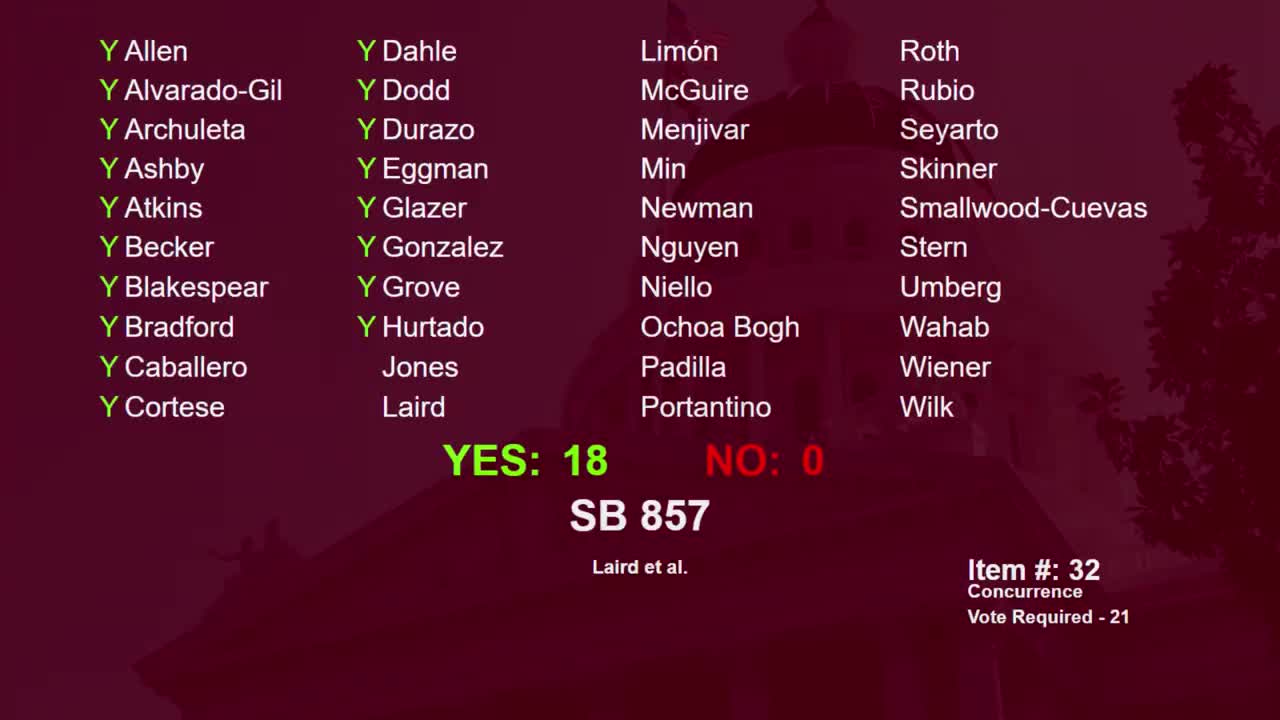 2MIN
Senate Floor
 5MIN
Senate Standing Committee on Education
 1MIN
Assembly Floor
 57SEC
Assembly Floor
 1MIN
Senate Floor
Bill Author

Bill Co-Author(s):