SB 539: Sepulveda Basin: planning process: nature-based climate solutions.
- Session Year: 2023-2024
- House: Senate
- Latest Version Date: 2023-10-08
Current Status:
Passed
(2023-10-08: Chaptered by Secretary of State. Chapter 490, Statutes of 2023.)
Introduced
In Committee
First Chamber
In Committee
Second Chamber
Enacted
The Regional Planning Law provides that the people of California have a fundamental interest in the orderly development of the urban regions of the state in which large segments of the states population are concentrated. Existing law requires, in order to facilitate effective and harmonious planning and development of an area included in a regional planning district, all county and city legislative bodies, and all county, city, or other planning agencies within the regional planning district to file with the regional planning board, for its information, among other things, all published development plans.
Existing law establishes in the Natural Resources Agency the Department of Water Resources and the Santa Monica Mountains Conservancy. Existing law authorizes the department, either independently or in cooperation with any person or any county, state, federal, or other agency, to collect hydrologic data necessary for river forecasting, to make forecasts of stream flow, to provide for flood warning, and to provide for communication necessary for the collection and dissemination of that information. Existing law authorizes the conservancy to award grants or make interest-free loans to cities, counties, resource conservation districts, and recreation and park districts for the purpose of restoring areas which, because of scattered ownerships, poor lot layout, inadequate lot size, inadequate park and open space, incompatible land uses, or other conditions, are adversely affecting the Santa Monica Mountains environment or are impeding orderly development.
This bill would require the department and the conservancy to provide assistance to the City of Los Angeles and the United States Army Corps of Engineers, to the extent requested, in order to integrate nature-based climate solutions, as defined, into the planning process for the Sepulveda Basin, as defined.
This bill would make legislative findings and declarations as to the necessity of a special statute for the Sepulveda Basin.
The Regional Planning Law provides that the people of California have a fundamental interest in the orderly development of the urban regions of the State state in which large segments of the States states population are concentrated. Existing law requires, in order to facilitate effective and harmonious planning and development of an area included in a regional planning district, all county and city legislative bodies, and all county, city, or other planning agencies within the regional planning district to file with the regional planning board, for its information, among other thing, things, all published development plans.
Existing law establishes in the Natural Resources Agency the Department of Water Resources and the Santa Monica Mountains Conservancy. Existing law authorizes the department, either independently or in cooperation with any person or any county, state, federal, or other agency, to collect hydrologic data necessary for river forecasting, to make forecasts of stream flow, to provide for flood warning, and to provide for communication necessary for the collection and dissemination of that information. Existing law authorizes the conservancy to award grants or make interest-free loans to cities, counties, resource conservation districts, and recreation and park districts for the purpose of restoring areas which, because of scattered ownerships, poor lot layout, inadequate lot size, inadequate park and open space, incompatible land uses, or other conditions, are adversely affecting the Santa Monica Mountains environment or are impeding orderly development.
This bill would require the department and the conservancy to provide assistance to the City of Los Angeles and the United States Army Corps of Engineers, to the extent requested, in order to integrate nature-based climate solutions, as defined, into the planning process for the Sepulveda Basin, as defined.
This bill would make legislative findings and declarations as to the necessity of a special statute for the Sepulveda Basin.
The Regional Planning Law provides that the people of California have a fundamental interest in the orderly development of the urban regions of the State in which large segments of the States population are concentrated. Existing law requires, in order to facilitate effective and harmonious planning and development of an area included in a regional planning district, all county and city legislative bodies, and all county, city, or other planning agencies within the regional planning district to file with the regional planning board, for its information, among other thing, all published development plans.
Existing law establishes in the Natural Resources Agency the Department of Water Resources and the Santa Monica Mountains Conservancy. Existing law authorizes the department, either independently or in cooperation with any person or any county, state, federal, or other agency, to collect hydrologic data necessary for river forecasting, to make forecasts of stream flow, to provide for flood warning, and to provide for communication necessary for the collection and dissemination of that information. Existing law authorizes the conservancy to award grants or make interest-free loans to cities, counties, resource conservation districts, and recreation and park districts for the purpose of restoring areas which, because of scattered ownerships, poor lot layout, inadequate lot size, inadequate park and open space, incompatible land uses, or other conditions, are adversely affecting the Santa Monica Mountains environment or are impeding orderly development.
This bill would require the department and the conservancy to provide assistance to the City of Los Angeles and the United States Army Corps of Engineers, to the extent requested, in order to integrate nature-based solutions, as defined, into the planning process for the Sepulveda Basin, as defined.
This bill would make legislative findings and declarations as to the necessity of a special statute for the Sepulveda Basin.
The Legislature finds and declares all of the following:
(a)Encompassing over 2,000 acres and nearly eight miles of the Los Angeles River and its tributaries, the Sepulveda Basin serves as an asset for the entire City of Los Angeles.
(b)The Sepulveda Basin is a federally owned flood management facility managed by the United States Army Corps of Engineers, and is home to a protected wildlife area, multiple recreational facilities, and a water reclamation facility.
(c)It is also a biodiversity hotspot. Historically, the Los Angeles River and its watershed have provided critical wildlife habitat for many native plants and animals. The Sepulveda Basin provides refuge for several threatened and endangered species, and species of special concern, and supports over 200 species of birds.
(d)The worsening effects of climate change pose new land management challenges that require the preservation and protection of existing open space, and the rehabilitation of lands that have been developed, through policies that promote natural geomorphic processes and ecosystem functions. Nature-based climate solutions and rewilding can build climate resilience and reduce overall climate change impacts.
(e)A November 2022 study by the University of California, Irvine shows that the Sepulveda Basin no longer has capacity to fully protect surrounding and downstream communities in a 100-year storm event.
(f)Floodplain reclamation, watershed restoration, and groundwater recharge would create new and much-needed safeguards against drought and floods.
(g)On April 29, 2019, Governor Gavin Newsom signed Executive Order No. N-10-19 that created Californias Water Resilience Portfolio, declaring state leadership essential to restore the environmental health of our river systems, prioritizing multibenefit projects and the use of natural infrastructure, such as floodplains, and enabling the state to facilitate projects of statewide importance through collaboration.
(h)On October 7, 2020, Governor Gavin Newsom signed Executive Order No. N-82-20 making it the state goal to conserve at least 30 percent of Californias land and coastal waters by 2030 and calling for accelerated use of nature-based climate solutions that deliver on Californias climate change goals.
(i)The 2021 California Climate Adaptation Strategy, required by Assembly Bill 1482 (Chapter 603 of the Statutes of 2015), links together the states sector-specific plans and is organized around outcome-based priorities, goals, and actions. The priorities include, but are not limited to, partnering and collaborating to leverage resources; accelerating nature-based climate solutions and strengthening climate resilience of natural systems; and bolstering public health and safety to protect against increasing climate risks.
(j)On May 18, 2021, the Department of Water Resources signed a memorandum of understanding with the United States Army Corps of Engineers to collaborate on engineering with nature, and to facilitate planning and implementation of natural and nature-based infrastructure projects in California in accordance with the states Water Resilience Portfolio and the departments environmental stewardship policy.
(k)On March 28, 2022, Governor Gavin Newsom signed Executive Order No. N-7-22 directing state agencies to collaborate with tribes and federal, regional, and local agencies on actions related to promoting groundwater recharge and increasing storage.
(l)The Budget Act of 2022 included $750 million in new funding to advance the states 30x30 land conservation program. This funding will enable local and regional groups to expand environmental conservation across the state and expand practices that meet our climate, biodiversity, and equitable access goals.
(m)It is therefore in the states interest to ensure that actions and resources support restoration of the Sepulveda Basin in a manner consistent with state policies and priorities described in this section.
SEC. 2.(a)For purposes of this section, the following terms apply:
(1)Nature-based climate solutions means activities, such as restoration, conservation, and land management actions, that provide protection from climate impacts and increase net carbon sequestration or reduce greenhouse gas emissions in natural and working lands.
(2)Sepulveda Basin means the approximately 2,000 acres of land owned and operated by the federal government as a flood management facility, north of Highway 101, west of Route 405, south of Victory Boulevard, and east of White Oak Avenue.
(b)The Department of Water Resources and the Santa Monica Mountains Conservancy shall provide assistance to the City of Los Angeles and the United States Army Corps of Engineers, to the extent requested, in order to integrate nature-based climate solutions into the planning process for the Sepulveda Basin.
SEC. 3.The Legislature finds and declares that a special statute is necessary and that a general statute cannot be made applicable within the meaning of Section 16 of Article IV of the California Constitution because of the unique circumstances of the location of the Sepulveda Basin near the City of Los Angeles and its critical wildlife habitat for many native plants and animals.
The Legislature finds and declares all of the following:
(a)Encompassing over 2,000 acres and nearly eight miles of the Los Angeles River and its tributaries, the Sepulveda Basin serves as an asset for the entire City of Los Angeles.
(b)The Sepulveda Basin is a federally owned flood management facility managed by the United States Army Corps of Engineers, and is home to a protected wildlife area, multiple recreational facilities, and a water reclamation facility.
(c)It is also a biodiversity hotspot. Historically, the Los Angeles River and its watershed have provided critical wildlife habitat for many native plants and animals. The Sepulveda Basin provides refuge for several threatened and endangered species, and species of special concern, and supports over 200 species of birds.
(d)The worsening effects of climate change pose new land management challenges that require the preservation and protection of existing open space, and the rehabilitation of lands that have been developed, through policies that promote natural geomorphic processes and ecosystem functions. Nature-based climate solutions and rewilding can build climate resilience and reduce overall climate change impacts.
(e)A November 2022 study by the University of California, Irvine shows that the Sepulveda Basin no longer has capacity to fully protect surrounding and downstream communities in a 100-year storm event.
(e)(f)Floodplain reclamation, watershed restoration, and groundwater recharge would create new and much-needed safeguards against drought and floods.
(f)(g)On April 29, 2019, Governor Gavin Newsom signed Executive Order No. N-10-19 that created Californias Water Resilience Portfolio, declaring state leadership essential to restore the environmental health of our river systems, prioritizing multibenefit projects and the use of natural infrastructure, such as floodplains, and enabling the state to facilitate projects of statewide importance through collaboration.
(g)(h)On October 7, 2020, Governor Gavin Newsom signed Executive Order No. N-82-20 making it the state goal to conserve at least 30 percent of Californias land and coastal waters by 2030. 2030 and calling for accelerated use of nature-based climate solutions that deliver on Californias climate change goals.
(i)The 2021 California Climate Adaptation Strategy, required by Assembly Bill 1482 (Chapter 603 of the Statutes of 2015), links together the states sector-specific plans and is organized around outcome-based priorities, goals, and actions. The priorities include, but are not limited to, partnering and collaborating to leverage resources; accelerating nature-based climate solutions and strengthening climate resilience of natural systems; and bolstering public health and safety to protect against increasing climate risks.
(h)(j)On May 18, 2021, the Department of Water Resources signed a memorandum of understanding with the United States Army Corps of Engineers to collaborate on engineering with nature, and to facilitate planning and implementation of natural and nature-based infrastructure projects in California in accordance with the states Water Resilience Portfolio and the departments environmental stewardship policy.
(i)(k)On March 28, 2022, Governor Gavin Newsom signed Executive Order No. N-7-22 directing state agencies to collaborate with tribes and federal, regional, and local agencies on actions related to promoting groundwater recharge and increasing storage.
(j)(l)The Budget Act of 2022 included $750 million in new funding to advance the states 30x30 land conservation program. This funding will enable local and regional groups to expand environmental conservation across the state and expand practices that meet our climate, biodiversity, and equitable access goals.
(k)(m)It is therefore in the states interest to ensure that actions and resources support restoration of the Sepulveda Basin in a manner consistent with state policies and priorities described in this section.
SEC. 2.(a)For purposes of this section, the following terms apply:
(1)Nature-based climate solutions means sustainable planning, design, environmental management, and engineering practices that weave natural features or processes into the built environment to promote adaptation and resilience. Nature-based solutions recognize that healthy ecosystems provide benefits on which human well-being depends. activities, such as restoration, conservation, and land management actions, that provide protection from climate impacts and increase net carbon sequestration or reduce greenhouse gas emissions in natural and working lands.
(2)Sepulveda Basin means the approximately 2,000 acres of land owned and operated by the federal government as a flood management facility, north of Highway 101, west of Route 405, south of Victory Boulevard, and east of White Oak Avenue.
(b)The Department of Water Resources and the Santa Monica Mountains Conservancy shall provide assistance to the City of Los Angeles and the United States Army Corps of Engineers, to the extent requested, in order to integrate nature-based climate solutions into the planning process for the Sepulveda Basin.
SEC. 3.The Legislature finds and declares that a special statute is necessary and that a general statute cannot be made applicable within the meaning of Section 16 of Article IV of the California Constitution because of the unique circumstances of the location of the Sepulveda Basin near the City of Los Angeles and its critical wildlife habitat for many native plants and animals.
The Legislature finds and declares all of the following:
(a)Encompassing over 2,000 acres and nearly eight miles of the Los Angeles River and its tributaries, the Sepulveda Basin serves as an asset for the entire City of Los Angeles.
(b)The Sepulveda Basin is a federally-owned federally owned flood management facility managed by the United States Army Corps of Engineers, and is home to a protected wildlife area, multiple recreational facilities, and a water reclamation facility.
(c)It is also a biodiversity hotspot. Historically, the Los Angeles River and its watershed have provided critical wildlife habitat for many native plants and animals. The Sepulveda Basin provides refuge for several threatened and endangered species, and species of special concern, and supports over 200 species of birds.
(d)The worsening effects of climate change pose new land management challenges that require the preservation and protection of existing open space, and the rehabilitation of lands that have been developed, through policies that promote natural geomorphic processes and ecosystem functions. Nature-based solutions and rewilding can build climate resilience and reduce overall climate change impacts.
(e)Floodplain reclamation, watershed restoration, and groundwater recharge would create new and much-needed safeguards against drought and floods.
(f)On April 29, 2019, Governor Gavin Newsom signed Executive Order No. N-10-19 that created Californias Water Resilience Portfolio, declaring state leadership essential to restore the environmental health of our river systems, prioritizing multibenefit projects and the use of natural infrastructure, such as floodplains, and enabling the state to facilitate projects of statewide importance through collaboration.
(g)On October 7, 2020, Governor Gavin Newsom signed Executive Order No. N-82-20 making it the state goal to conserve at least 30 percent of Californias land and coastal waters by 2030.
(h)On May 18, 2021, the Department of Water Resources signed a memorandum of understanding with the United States Army Corps of Engineers to collaborate on engineering with nature, and to facilitate planning and implementation of natural and nature-based infrastructure projects in California in accordance with the states Water Resilience Portfolio and the departments environmental stewardship policy.
(i)On March 28, 2022, Governor Gavin Newsom signed Executive Order No. N-7-22 directing state agencies to collaborate with tribes and federal, regional, and local agencies on actions related to promoting groundwater recharge and increasing storage.
(j)The Budget Act of 2022 included $750 million in new funding to advance the states 30x30 land conservation program. This funding will enable local and regional groups to expand environmental conservation across the state and expand practices that meet our climate, biodiversity, and equitable access goals.
(k)It is therefore in the states interest to ensure that actions and resources support restoration of the Sepulveda Basin in a manner consistent with state policies and priorities described in this section.
SEC. 2.(a)For purposes of this section, the following terms apply:
(1)Nature-based solutions means sustainable planning, design, environmental management, and engineering practices that weave natural features or processes into the built environment to promote adaptation and resilience. Nature-based solutions recognize that healthy ecosystems provide benefits on which human well-being depends.
(2)Sepulveda Basin means the approximately 2,000 acres of land owned and operated by the federal government as a flood management facility, north of Highway 101, west of Route 405, south of Victory Boulevard, and east of White Oak Avenue.
(b)The Department of Water Resources and the Santa Monica Mountains Conservancy shall provide assistance to the City of Los Angeles and the United States Army Corps of Engineers, to the extent requested, in order to integrate nature-based solutions into the planning process for the Sepulveda Basin.
SEC. 3.The Legislature finds and declares that a special statute is necessary and that a general statute cannot be made applicable within the meaning of Section 16 of Article IV of the California Constitution because of the unique circumstances of the location of the Sepulveda Basin near the City of Los Angeles and its critical wildlife habitat for many native plants and animals.
The Legislature finds and declares all of the following:
(a)Encompassing over 2,000 acres and nearly eight miles of the Los Angeles River and its tributaries, the Sepulveda Basin serves as an asset for the entire City of Los Angeles.
(b)The Sepulveda Basin is a federally-owned flood management facility managed by the United States Army Corps of Engineers, and is home to a protected wildlife area, multiple recreational facilities, and a water reclamation facility.
(c)It is also a biodiversity hotspot. Historically, the Los Angeles River and its watershed have provided critical wildlife habitat for many native plants and animals. The Sepulveda Basin provides refuge for several threatened and endangered species, and species of special concern, and supports over 200 species of birds.
(d)The worsening effects of climate change pose new land management challenges that require the preservation and protection of existing open space, and the rehabilitation of lands that have been developed, through policies that promote natural geomorphic processes and ecosystem functions. Nature-based solutions and rewilding can build climate resilience and reduce overall climate change impacts.
(e)Floodplain reclamation, watershed restoration, and groundwater recharge would create new and much-needed safeguards against drought and floods.
(f)On April 29, 2019, Governor Gavin Newsom signed Executive Order No. N-10-19 that created Californias Water Resilience Portfolio, declaring state leadership essential to restore the environmental health of our river systems, prioritizing multibenefit projects and the use of natural infrastructure, such as floodplains, and enabling the state to facilitate projects of statewide importance through collaboration.
(g)On October 7, 2020, Governor Gavin Newsom signed Executive Order No. N-82-20 making it the state goal to conserve at least 30 percent of Californias land and coastal waters by 2030.
(h)On May 18, 2021, the Department of Water Resources signed a memorandum of understanding with the United States Army Corps of Engineers to collaborate on engineering with nature, and to facilitate planning and implementation of natural and nature-based infrastructure projects in California in accordance with the states Water Resilience Portfolio and the departments environmental stewardship policy.
(i)On March 28, 2022, Governor Gavin Newsom signed Executive Order No. N-7-22 directing state agencies to collaborate with tribes and federal, regional, and local agencies on actions related to promoting groundwater recharge and increasing storage.
(j)The Budget Act of 2022 included $750 million in new funding to advance the states 30x30 land conservation program. This funding will enable local and regional groups to expand environmental conservation across the state and expand practices that meet our climate, biodiversity, and equitable access goals.
(k)It is therefore in the states interest to ensure that actions and resources support restoration of the Sepulveda Basin in a manner consistent with state policies and priorities described in this section.
SEC. 2.(a)For purposes of this section, the following terms apply:
(1)Nature-based solutions means sustainable planning, design, environmental management, and engineering practices that weave natural features or processes into the built environment to promote adaptation and resilience. Nature-based solutions recognize that healthy ecosystems provide benefits on which human well-being depends.
(2)Sepulveda Basin means the 2,000 acres of land owned and operated by the federal government as a flood management facility, north of Highway 101, west of Route 405, south of Victory Boulevard, and east of White Oak Avenue.
(b)The Department of Water Resources and the Santa Monica Mountains Conservancy shall provide assistance to the City of Los Angeles and the United States Army Corps of Engineers, to the extent requested, in order to integrate nature-based solutions into the planning process for the Sepulveda Basin.
SEC. 3.The Legislature finds and declares that a special statute is necessary and that a general statute cannot be made applicable within the meaning of Section 16 of Article IV of the California Constitution because of the unique circumstances of the location of the Sepulveda Basin near the City of Los Angeles and its critical wildlife habitat for many native plants and animals.
|
Date
|
Status
|
|---|---|
| Oct 8, 2023 | Chaptered by Secretary of State. Chapter 490, Statutes of 2023. |
| Oct 8, 2023 | Approved by the Governor. |
| Sep 21, 2023 | Enrolled and presented to the Governor at 4 p.m. |
| Sep 14, 2023 | Assembly amendments concurred in. (Ayes 40. Noes 0. Page 2784.) Ordered to engrossing and enrolling. |
| Sep 13, 2023 | In Senate. Concurrence in Assembly amendments pending. |
| Sep 13, 2023 | Read third time. Passed. (Ayes 79. Noes 0. Page 3353.) Ordered to the Senate. |
| Sep 5, 2023 | Read second time. Ordered to third reading. |
| Sep 1, 2023 | From committee: Do pass. (Ayes 16. Noes 0.) (September 1). |
| Aug 16, 2023 | August 16 set for first hearing. Placed on suspense file. |
| Jun 27, 2023 | From committee: Do pass and re-refer to Com. on APPR. with recommendation: To consent calendar. (Ayes 11. Noes 0.) (June 26). Re-referred to Com. on APPR. |
| Jun 14, 2023 | From committee with author's amendments. Read second time and amended. Re-referred to Com. on NAT. RES. |
| Jun 8, 2023 | Referred to Com. on NAT. RES. |
| May 25, 2023 | In Assembly. Read first time. Held at Desk. |
| May 25, 2023 | Read third time. Passed. (Ayes 40. Noes 0. Page 1301.) Ordered to the Assembly. |
| May 23, 2023 | Ordered to special consent calendar. |
| May 18, 2023 | Read second time. Ordered to third reading. |
| May 18, 2023 | From committee: Do pass. (Ayes 7. Noes 0. Page 1174.) (May 18). |
| May 12, 2023 | Set for hearing May 18. |
| Apr 17, 2023 | April 17 hearing: Placed on APPR suspense file. |
| Apr 10, 2023 | Set for hearing April 17. |
| Mar 29, 2023 | Read second time and amended. Re-referred to Com. on APPR. |
| Mar 28, 2023 | From committee: Do pass as amended and re-refer to Com. on APPR with recommendation: To consent calendar. (Ayes 10. Noes 0. Page 547.) (March 28). |
| Mar 7, 2023 | Set for hearing March 28. |
| Feb 22, 2023 | Referred to Com. on N.R. & W. |
| Feb 15, 2023 | From printer. May be acted upon on or after March 17. |
| Feb 14, 2023 | Introduced. Read first time. To Com. on RLS. for assignment. To print. |
|
Date
|
Description
|
Location
|
Votes
|
|
|---|---|---|---|---|
| Sep 14, 2023 | Unfinished Business SB539 Stern Concurrence | Senate Floor |
Passed |
|
| Sep 13, 2023 | SB 539 Stern Senate Third Reading By Friedman | Assembly Floor |
Passed |
|
| Sep 1, 2023 | Do pass. | Assembly Standing Committee on Appropriations |
Passed |
|
| Jun 26, 2023 | Do pass and be re-referred to the Committee on [Appropriations] with recommendation: To Consent Calendar | Assembly Standing Committee on Natural Resources |
Passed |
|
| May 25, 2023 | Special Consent SB539 Stern | Senate Floor |
Passed |
|
| May 18, 2023 | Do pass | Senate Standing Committee on Appropriations |
Passed |
|
| Apr 17, 2023 | Placed on suspense file | Senate Standing Committee on Appropriations |
Passed |
|
| Mar 28, 2023 | Do pass as amended, but first amend, and re-refer to the Committee on [Appropriations] with the recommendation: To Consent Calendar | Senate Standing Committee on Natural Resources and Water |
Passed |
This list shows positions taken on this bill by organizations on the date displayed, which is linked to the original source.
Positions by individuals are not included.
|
Organization
|
Position
|
Date
|
|---|---|---|
| 11:11 Projects | ** Support | |
| 350 Conejo/San Fernando Valley | ** Support | |
| Arroyo Seco Foundation | ** Support | |
| Associated Students, California State University, Northridge | ** Support | |
| Brown Girl Green | ** Support | |
| California Coalition | ** Support | |
| California Garden & Landscape History Society | ** Support | |
| California Urban Streams Partnership | ** Support | |
| Center For Biological Diversity | ** Support | |
| Central Avenue Church | ** Support | |
| Citizens Climate Lobby San Fernando Valley | ** Support | |
| Citizens Climate Lobby, Santa Clarita Chapter | ** Support | |
| Citizens for Los Angeles Wildlife | ** Support | |
| Climate Action California | ** Support | |
| Climate Reality Project, California State Coalition | ** Support | |
| Climate Reality Project: San Fernando Valley Chapter | ** Support | |
| Dayenu: A Jewish Call to Climate Action | ** Support | |
| East Valley Indivisibles | ** Support | |
| Eco Chicos | ** Support | |
| Emerson Unitarian Universalist Church, Environmental Justice Ministry | ** Support | |
| Endangered Habitats League | ** Support | |
| Everyday Eco-Habits for Everyday People | ** Support | |
| Extinction Rebellion Los Angeles | ** Support | |
| Extinction Rebellion Youth Los Angeles | ** Support | |
| Food & Water Watch | ** Support | |
| Friends of the Los Angeles River | ** Support | |
| Glendale Environmental Coalition | ** Support | |
| Granada Hills High School, Blooming Buddies Garden Club | ** Support | |
| GreenHacks | ** Support | |
| Heal The Bay | ** Support | |
| Indivisible West Side Los Angeles | ** Support | |
| Interfaith Solidarity Network | ** Support | |
| It’s Overdue | ** Support | |
| Livable Communities Initiative | ** Support | |
| Los Angeles Audubon Society | ** Support | |
| Los Angeles Community Forestry Advisory Committee | ** Support | |
| Los Angeles Regional Climate Collaborative | ** Support | |
| Los Angeles River Public Art Project | ** Support | |
| Los Angeles Walks | ** Support | |
| Los Angeles Waterkeeper | ** Support | |
| Mission Hills Christian Church | ** Support | |
| North East Trees, Inc. | ** Support | |
| One Up Action | ** Support | |
| Reseda Neighborhood Council | ** Support | |
| Resource Conservation District of the Santa Monica Mountains | ** Support | |
| Sanchez Horticulture | ** Support | |
| San Fernando Valley Indivisible | ** Support | |
| Sepulveda Basin Weeders Group | ** Support | |
| Sierra Club California | ** Support | |
| SoCal 350 Climate Action | ** Support | |
| Solar Hawk Renewable Solutions | ** Support | |
| Southern California Watershed Alliance | ** Support | |
| Streets for All | ** Support | |
| Sunrise Movement Los Angeles | ** Support | |
| Swing Left West Valley | ** Support | |
| Tarzana Community & Cultural Center | ** Support | |
| The Nature Conservancy | ** Support | |
| the River Project | ** Support | |
| University of California Los Angeles Sustainability | ** Support | |
| Urban Wildlands Center for Biological Diversity | ** Support | |
| Valley Art Workshop | ** Support | |
| Valley Justice Coalition | ** Support | |
| West Valley Nursery | ** Support | |
| West Valley People’s Alliance | ** Support | |
| Youth Climate Strike Los Angeles | ** Support |
SENATE RULES COMMITTEE Office of Senate Floor Analyses (916) 651-1520 Fax: (916) 327-4478 | SB 539 |
UNFINISHED BUSINESS
Bill No: SB 539
Author: Stern (D)
Amended: 6/14/23
Vote: 21
SENATE NATURAL RES. & WATER COMMITTEE: 10-0, 3/28/23
AYES: Min, Seyarto, Allen, Becker, Eggman, Grove, Hurtado, Laird, Limón, Padilla
NO VOTE RECORDED: Dahle
SENATE APPROPRIATIONS COMMITTEE: 7-0, 5/18/23
AYES: Portantino, Jones, Ashby, Bradford, Seyarto, Wahab, Wiener
SENATE FLOOR: 40-0, 5/25/23
AYES: Allen, Alvarado-Gil, Archuleta, Ashby, Atkins, Becker, Blakespear, Bradford, Caballero, Cortese, Dahle, Dodd, Durazo, Eggman, Glazer, Gonzalez, Grove, Hurtado, Jones, Laird, Limón, McGuire, Menjivar, Min, Newman, Nguyen, Niello, Ochoa Bogh, Padilla, Portantino, Roth, Rubio, Seyarto, Skinner, Smallwood-Cuevas, Stern, Umberg, Wahab, Wiener, Wilk
ASSEMBLY FLOOR: 79-0, 9/13/23 - See last page for vote
SUBJECT: Sepulveda Basin: planning process: nature-based solutions
SOURCE: Author
DIGEST:
This bill directs the Department of Water Resources and the Santa Monica Mountains Conservancy to provide assistance the City of Los Angeles and the U.S. Army Corps of Engineers, to the extent requested, in order to integrate nature-based climate solutions into the planning process for the Sepulveda Basin.
Assembly Amendments
recast “nature-based solutions” as “nature-based climate solutions,” revise the definition of this term, revise and add new findings and declarations, and make other conforming changes.
ANALYSIS:
Existing law:
- Establishes the Department of Water Resources (DWR) in the California Natural Resources Agency (CNRA) under the control of a director who is appointed by the Governor, and confirmed by the Senate. Water Code section (§) 120.
- Establishes, under the Santa Monica Mountains Conservancy Act, the Santa Monica Mountains Conservancy (SMMC) in CNRA, composed of nine voting members and three ex officio members. Public Resources Code (PRC) §33200.
- Establishes the Upper Los Angeles River and Tributaries Working Group within SMMC to develop, through watershed-based planning methods and community engagement, a revitalization plan for the Upper Los Angeles River and its specified tributaries. PRC §33220.
This bill directs DWR and SMMC to provide assistance the City of Los Angeles and the U.S. Army Corps of Engineers, to the extent requested, in order to integrate nature-based climate solutions into the planning process for the Sepulveda Basin. Further, this bill:
- Defines terms as follows:
- “Nature-based climate solutions” means activities, such as restoration, conservation, and land management actions, that provide protection from climate impacts and increase net carbon sequestration or reduce greenhouse gas emissions in natural and working lands.
- “Sepulveda Basin” means the approximately 2,000 acres of land owned and operated by the federal government as a flood management facility, north of Highway 101, west of Route 405, south of Victory Boulevard, and east of White Oak Avenue.
- Makes a series of findings and declarations, including:
- It is in the state’s interest to ensure that actions and resources support restoration of the Sepulveda Basin in a manner consistent with state policies and priorities, as specified.
- The necessity of a special statute because of the unique circumstances of the location of the Sepulveda Basin near LA and its critical wildlife habitat for many native plants and animals.
Background
The Sepulveda Basin. Occupying a broad low place in the southern San Fernando Valley, the Sepulveda Basin (or “basin”) comprises over 2,000 acres of open space at the confluence of the Los Angeles River (LA River) and its tributaries, including Bull Creek, Encino Creek, Woodley Creek, Haskell Creek, and some nearby springs. Nearly eight miles of the LA River passes through the basin, with three distinct segments, including a concrete channel, a natural channel bottom with concrete upper banks, and a natural channel bottom with riprap banks.
The basin is a biodiversity hotspot, providing refuge for several threatened and endangered species, as well as species of special concern. The basin hosts around 100 native plants and five main plant communities, including riparian forests, riparian shrublands, oak and walnut woodlands, coastal sage scrub, and aquatic plants. The basin also provides habit for over 200 species of birds, and some mammals, amphibians, reptiles, fish, and invertebrates, including snails, insects, and spiders. It is worth noting that although many species are known to inhabit the basin, the area’s biodiversity is largely under-documented and understudied. No comprehensive study has been completed to fully document all species potentially within this landscape.
The basin is a remnant of a historically vast network of wetlands and riparian corridors once common across the Los Angeles Basin in southern California. This network included an abundance of springs, creeks, rivers, sloughs, vernal pools, and other wetlands. Historically, one of the basin’s most important services was its reliable supply of potable water used by the Tongva and early European and American settlers. Further, this area provided critical wildlife habitats for a variety of native plants and animals.
Today, the U.S. Army Corps of Engineers, Los Angeles District (the Corps) owns 2,131.9 acres within the basin in fee for construction, operations, and maintenance of the Sepulveda Dam. While the primary purpose of the dam and reservoir is flood risk management – detaining and infiltrating storm water that would otherwise flood downstream communities – the project is also authorized for recreation. The Corps reserves 313 acres exclusively for operation of the dam, and leases 1,526.8 acres to the City of Los Angeles (LA) for recreational purposes, although LA and the Corps are renegotiating this lease since it has expired. Other areas are leased for agriculture.
Nature-based solutions (NBS). These solutions encompass actions to protect, sustainably manage, and restore natural or modified ecosystems to provide multiple benefits, including to reduce greenhouse gas (GHG) emissions, sequester carbon, improve community and ecosystem resilience to climate change and natural disasters, improve air and water quality and water supply, provide habitat and recreational opportunities, and support ecosystem health. These solutions seek to work with ecosystems to tackle societal challenges, rather than relying solely on conventional engineered, or “grey” solutions, such as seawalls, levees, and irrigation infrastructure. By working with rather than against nature, communities can address the drivers and impacts of climate change, while protecting biodiversity and securing the flow of ecosystem services that support human well-being. Further, these solutions often come at a lower cost than traditional infrastructure.
The Yolo Bypass is an example of an NBS, one of the Corps’ oldest, which uses wetlands to store floodwater and provide wildlife habitat. A system of weirs directs flood flows off the river onto the land, 59,000 acres of which can be inundated to relieve pressure in the system. Further, 16,000 acres in the Yolo Bypass Wildlife Area provide a haven for fish, waterfowl, shorebirds and wading birds, neotropical migratory birds, raptors, invertebrates, snakes, turtles, toads, and bats. The Corps chose this solution in part because a levees-only approach would have been insufficient.
Given the many benefits of NBS, the state has taken action repeatedly to promote these solutions. Many of these actions are documented in the bill’s findings and declarations.
MOU between DWR and the Corps. In May 2021, DWR and the Corps agreed to collaborate on engineering with nature and integrated watershed management in California in an MOU. The MOU acknowledges that both parties have an interest in collaborating on nature-based engineering solutions to manage water, reduce flood risk, and restore ecosystems. The MOU identifies intended areas of collaboration, including working on common goals drawn from each agency’s strategic planning documents. In addition, committee staff understands that DWR and the Corps recently signed another, similar MOU targeting southern California, but has not yet seen the document.
SMMC Upper LA River and Tributaries Revitalization Plan. AB 466 (Bocanegra, Chapter 341, Statutes of 2017) established an Upper LA River and Tributaries Working Group within SMMC and directed this group to develop a revitalization plan for the Upper LA River and its tributaries. SMMC released this plan in April 2020, which identified site-specific revitalization projects for over 250 locations throughout the river and tributary study area. The plan sought opportunities that provide nature-based watershed management, multiple benefits, open space, safe access, and reduced and managed flood risks, among others. The plan identified four opportunity areas within the Sepulveda Basin, including opportunities to expand habitat, greening, public access, and recreation.
Comments
While the Sepulveda Basin is the largest public open space in the San Fernando Valley, it can be difficult for the public to access on certain sides. In fact, for some neighboring communities like Van Nuys and Sherman Oaks, there are only 0.2 acres of park per 1,000 people, significantly below the Los Angeles County goal of four acres per 1,000 people. Also, the basin is located in an area that, on average, ranks in the 78th percentile in the state for environmental pollution burdens, according to CalEnviroScreen, with some areas in the 90th percentile. Further, certain areas within the basin are underutilized and could be enhanced to improve habitat, increase recreational opportunities, provide cultural spaces, and support the region’s resilience to climate change and natural disasters.
The Corps manages the Sepulveda Basin via a Master Plan adopted in 2011 and may be in the process of updating this plan, although staff has not been able to confirm the latter. Further, LA is preparing a “vision plan” to provide a comprehensive design for the basin, including up to 12 selected public projects. This plan will help to determine the future of this area. Three projects are already under development, including constructing a new aquatic facility, a new athletic field, and a bike path.
According to the author, LA’s proposals for the plan have come up against strong resistance from environmental and community advocates who argue that they are not effective in revitalizing or transforming the Sepulveda Basin into a resource for either the community or the region’s climate adaptation and resilience. The author believes that involving DWR and SMMC could help to promote more community engagement and incorporate nature-based climate solutions that provide multiple benefits for people and the environment. The author hopes that with the state’s help, the basin could become a “true Central Park for the San Fernando Valley.”
It is worth noting that in its current form, this bill leaves it up to the Corps and LA to request assistance from DWR and SMMC. If neither requests assistance, nothing will happen. Further, it is unclear what the scope of assistance would be or the expected outcomes of that assistance. It could be as minimal as a phone call or a much more extensive process formalized via an interagency agreement among the agencies.
FISCAL EFFECT: Appropriation: No Fiscal Com.: Yes Local: No
According to the Assembly Appropriations Committee:
Costs of up to $160,000 (General Fund, special funds, or bond funds) for DWR and SMMC to assist with the design of nature-based climate solutions. It is possible that neither LA nor USACE requests assistance, in which case this bill would have no associated state costs. If assistance were requested, actual costs would depend upon the scope and expected outcomes of such assistance, among other things.
SUPPORT: (Verified 9/13/23)
11:11 Projects
350 Conejo/ San Fernando Valley
Arroyo Seco Foundation
Associated Students, California State University, Northridge
Brown Girl Green
California Garden & Landscape History Society
California Urban Streams Partnership
Center for Biological Diversity
Central Avenue Church
Citizens Climate Lobby, San Fernando Valley
Citizens Climate Lobby, Santa Clarita Chapter
Citizens for Los Angeles Wildlife
Climate Action California
Climate Reality Project, California State Coalition
Climate Reality Project, San Fernando Valley Chapter
Dayenu: A Jewish Call to Climate Action
East Valley Indivisibles
Eco Chicos
Emerson Unitarian Universalist Church, Environmental Justice Ministry
Endangered Habitats League
Everyday Eco-Habits for Everyday People
Extinction Rebellion, Los Angeles
Extinction Rebellion, Youth Los Angeles
Food & Water Watch
Friends of the Los Angeles River
Glendale Environmental Coalition
Granada Hills High School, Blooming Buddies Garden Club
GreenHacks
Heal the Bay
Indivisible West Side Los Angeles
Interfaith Solidarity Network
It’s Overdue
Liveable Communities Initiative
Los Angeles Audubon Society
Los Angeles Community Forestry Advisory Committee
Los Angeles Regional Climate Collaborative
Los Angeles River Public Art Project
Los Angeles Walks
Los Angeles Waterkeeper
Mission Hills Christian Church
North East Trees, Inc.
One Up Action
Reseda Neighborhood Council
Resource Conservation District of the Santa Monica Mountains
San Fernando Valley Indivisible
Sanchez Horticulture
Sepulveda Basin Weeders Group
Sierra Club California
SoCal 350 Climate Action
Solar Hawk Renewable Solutions
Southern California Watershed Alliance
Streets for All
Sunrise Movement, Los Angeles
Swing Left West Valley
Tarzana Community & Cultural Center
The Nature Conservancy
The River Project
University of California, Los Angeles, Sustainability
Urban Wildlands Center for Biological Diversity
Valley Art Workshop
Valley Justice Coalition
West Valley Nursery
West Valley People’s Alliance
Youth Climate Strike Los Angeles
OPPOSITION: (Verified 9/13/23)
None received
ARGUMENTS IN SUPPORT: According to the author, “The Sepulveda Basin represents an untapped resource at the center of one of the most heavily urban areas in the region. This 2,000-acre open space area has the potential to provide huge benefits to the community, from access to green space and community development to a wide array of cultural resources. At a time when the critical nature of outdoor space is at the forefront for its benefits not only to physical and mental health but also cognitive wellbeing and social benefits, the Sepulveda Basin can provide open space in a largely urban area. It can be the Central Park of the San Fernando Valley, and a jewel of the greater Los Angeles area and the State as a whole. It can also promote climate resilience and reduce overall climate change impacts through nature-based solutions, prioritizing sustainable planning, design, and engineering practices. As one example, floodplain reclamation, watershed restoration, and groundwater recharge can create new and much-needed safeguards against drought and floods. With the worsening effects of climate change arise new land management challenges that require the preservation and protection of existing open space. The Sepulveda Basin can serve all these purposes, ameliorating some of the harmful effects of climate change and empowering local communities.”
ASSEMBLY FLOOR: 79-0, 9/13/23
AYES: Addis, Aguiar-Curry, Alanis, Alvarez, Arambula, Bains, Bauer-Kahan, Bennett, Berman, Boerner, Bonta, Bryan, Calderon, Juan Carrillo, Wendy Carrillo, Cervantes, Chen, Connolly, Megan Dahle, Davies, Dixon, Essayli, Flora, Mike Fong, Vince Fong, Friedman, Gabriel, Garcia, Gipson, Grayson, Haney, Hart, Holden, Hoover, Irwin, Jackson, Jones-Sawyer, Kalra, Lackey, Lee, Low, Lowenthal, Maienschein, Mathis, McCarty, McKinnor, Muratsuchi, Stephanie Nguyen, Ortega, Pacheco, Papan, Jim Patterson, Joe Patterson, Pellerin, Petrie-Norris, Quirk-Silva, Ramos, Rendon, Reyes, Luz Rivas, Rodriguez, Blanca Rubio, Sanchez, Santiago, Schiavo, Soria, Ta, Ting, Valencia, Villapudua, Waldron, Wallis, Ward, Weber, Wicks, Wilson, Wood, Zbur, Robert Rivas
NO VOTE RECORDED: Gallagher
Prepared by: Catherine Baxter / N.R. & W. / (916) 651-4116
9/14/23 10:02:37
**** END ****
SENATE THIRD READING
STR Bill Id:SB 539
Author:(Stern)
As Amended Ver:June 14, 2023
Majority vote
SUMMARY
Requires the Department of Water Resources (DWR) and the Santa Monica Mountains Conservancy (SMMC) to provide assistance to the City of Los Angeles (LA) and the United States Army Corps of Engineers, to the extent requested, in order to integrate nature-based solutions into the planning process for the Sepulveda Basin.
Major Provisions
- Requires DWR and SMMC to provide assistance to the City of LA and the United States Army Corps of Engineers (Corps), to the extent requested, in order to integrate nature-based solutions into the planning process for the Sepulveda Basin.
- Finds and declares that a special statute is necessary and that a general statute cannot be made applicable within the meaning of Section 16 of Article IV of the California Constitution because of the unique circumstances of the location of the Sepulveda Basin near the City of LA and its critical wildlife habitat for many native plants and animals.
COMMENTS
Nature-based solutions are defined as those that describe actions that work with and enhance nature to help address societal challenges. This term is an umbrella concept being used across the world to describe a range of approaches that protect, sustainably manage, and restore nature to deliver multiple outcomes, including addressing climate change, improving public health, increasing equity, and protecting biodiversity.
Investing in nature-based solutions is not new to the state; increasing statutory climate emission reduction mandates and the Governor's 30x30 initiative have pushed all agencies to consider their policies through the lens of environmental sustainability, which includes using, protecting, and enhancing our natural resources across every sector to build climate resilience.
The Sepulveda Basin is the largest public open space in the San Fernando Valley, but surrounding neighborhoods are significantly lacking green open spaces with only 0.2 acres of park per 1000 people in Van Nuys and Sherman Oaks – significantly below the LA County goal of four acres/1000 people. While the Sepulveda Basin does provide recreational opportunities for the San Fernando Valley, it can be difficult to access and navigate, areas are underutilized and could be enhanced to provide better natural habitat, recreation, and cultural spaces.
The Sepulveda Basin Restoration Feasibility Report, produced by the River Project, recommends an approach "led by the State of California, most likely DWR, for the river restoration efforts. DWR's affiliation with the Corps' program Engineering With Nature initiative provide a basis for leadership on the project."
The Los Angeles River transverses the Sepulveda Basin. SMMC has been the main state planning agency working towards the revitalization of the Upper Los Angeles River and its tributaries and the Upper Los Angeles River Watershed since the 1990's. The 2021-22 state budget included $10 million for SMMC for projects that improve the climate resiliency or the protection of the LA River watershed or are a part of the revitalization plan developed by the Upper LA River and Tributaries Working Group and $20 million split evenly across three Southern California conservancies in 2022-23 for the same purposes.
The author believes it is in the state's interest to ensure that actions and resources support restoration of the Sepulveda Basin in a manner consistent with state policies and priorities. SB 539 would require DWR and SMMC to provide assistance to the City of LA and the Corps, to the extent requested, in order to integrate nature-based solutions into the planning process for the Sepulveda Basin.
According to the Author
The Sepulveda Basin represents an untapped resource at the center of one of the most heavily urban areas in the region. At a time when the critical nature of outdoor space is at the forefront for its benefits not only to physical and mental health but also cognitive wellbeing and social benefits, the Sepulveda Basin can provide open space in a largely urban area … With the worsening effects of climate change arise new land management challenges that require the preservation and protection of existing open space. The Sepulveda Basin can serve all these purposes, ameliorating some of the harmful effects of climate change and empowering local communities.
Arguments in Support
The Center for Biological Diversity writes, "Nature-based solutions for the Sepulveda Basin for its restoration should include geomorphic considerations to promote groundwater recharge, while at the same time offering flood protection. Additionally, native plants and other natural features should promote biodiversity, protect endangered species, and combat extreme heat."
Arguments in Opposition
None on file
FISCAL COMMENTS
According to the Assembly Appropriations Committee, this bill will result in costs of up to $160,000 (General Fund, special funds, or bond funds) for DWR and SMMC to assist with the design of nature-based climate solutions.
VOTES
SENATE FLOOR: 40-0-0
YES: Allen, Alvarado-Gil, Archuleta, Ashby, Atkins, Becker, Blakespear, Bradford, Caballero, Cortese, Dahle, Dodd, Durazo, Eggman, Glazer, Gonzalez, Grove, Hurtado, Jones, Laird, Limón, McGuire, Menjivar, Min, Newman, Nguyen, Niello, Ochoa Bogh, Padilla, Portantino, Roth, Rubio, Seyarto, Skinner, Smallwood-Cuevas, Stern, Umberg, Wahab, Wiener, Wilk
ASM NATURAL RESOURCES: 11-0-0
YES: Luz Rivas, Flora, Addis, Friedman, Hoover, Mathis, Muratsuchi, Pellerin, Ward, Wood, Zbur
ASM APPROPRIATIONS: 16-0-0
YES: Holden, Megan Dahle, Bryan, Calderon, Wendy Carrillo, Dixon, Mike Fong, Hart, Lowenthal, Mathis, Papan, Pellerin, Sanchez, Soria, Weber, Wilson
UPDATED
VERSION: June 14, 2023
CONSULTANT: Paige Brokaw / NAT. RES. / (916) 319-2092 FN: 0001459
Date of Hearing: August 16, 2023
ASSEMBLY COMMITTEE ON APPROPRIATIONS
Chris Holden, Chair
SBPCA Bill Id:SB 539
Author:(Stern) – As Amended Ver:June 14, 2023
Policy Committee: | Natural Resources | Vote: | 11 - 0 |
|
| ||
|
|
Urgency: No State Mandated Local Program: No Reimbursable: No
SUMMARY:
This bill requires the Department of Water Resources (DWR) and the Santa Monica Mountains Conservancy (SMMC) to provide assistance to the City of Los Angeles (LA) and the United States Army Corps of Engineers (USACE), to the extent requested, in order to integrate nature-based climate solutions into the planning process for the Sepulveda Basin.
FISCAL EFFECT:
Costs of up to $160,000 (General Fund, special funds, or bond funds) for DWR and SMMC to assist with the design of nature-based climate solutions. It is possible that neither LA nor USACE requests assistance, in which case this bill would have no associated state costs. If assistance were requested, actual costs would depend upon the scope and expected outcomes of such assistance, among other things.
COMMENTS:
1) Purpose. According to the author:
The Sepulveda Basin represents an untapped resource at the center of one of the most heavily urban areas in the region. At a time when the critical nature of outdoor space is at the forefront for its benefits not only to physical and mental health but also cognitive wellbeing and social benefits, the Sepulveda Basin can provide open space in a largely urban area…With the worsening effects of climate change arise new land management challenges that require the preservation and protection of existing open space. The Sepulveda Basin can serve all these purposes, ameliorating some of the harmful effects of climate change and empowering local communities.
2) Background. The Sepulveda Basin is an area that encompasses 2,000 acres of open space at the confluence of the Los Angeles River and its tributaries. This basin is a biodiversity hotpot and provides refuge to threatened and endangered species, as well as species of special concern. The Sepulveda Basin is home to a variety of native plants, mammals, amphibians, reptiles, fish, and over 200 species of birds. Furthermore, the basin has the potential to provide a variety of benefits such as increased access to open space for local communities.
Today, the U.S. Army Corps of Engineers, Los Angeles District (the Corps) owns the land within the basin in fee for construction, operations, and maintenance of the Sepulveda Dam. While the primary purpose of the dam and reservoir is flood risk management, the project is also authorized for recreation. The Corps reserves 313 acres exclusively for operation of the dam, and leases a little over 1,500 acres to LA for recreational purposes, although LA and the Corps are renegotiating this lease since it has expired. Other areas are leased for agriculture.
The Corps manages the Sepulveda Basin via a Master Plan adopted in 2011. Further, LA is preparing a “vision plan” to provide a comprehensive design for the basin. The purpose of the plan is to increase the resilience of the basin and surrounding neighborhoods, increase ecosystem function within the basin using nature-based solutions, and support the natural functioning of the LA River and its tributaries, among other goals. According to the author, LA’s proposals for the plan have come up against strong resistance from environmental and community advocates who argue the proposals are not effective in revitalizing or transforming the Sepulveda Basin into a resource for either the community or the region’s climate adaptation and resilience. This bill directs DWR and SMMC to provide assistance, to the extent requested, to the Corps and LA to integrate nature-based climate solutions into the planning process for the Sepulveda Basin. The author believes that involving DWR and SMMC could help to promote more community engagement and incorporate nature-based climate solutions that provide multiple benefits for people and the environment.
SMMC has a history of engagement with LA and in the basin, and much of its work as a conservancy centers on nature-based solutions. For example, SMMC provided funding to LA for its visioning plan for the basin. In addition, a working group within SMMC led the process to develop a revitalization plan for the Upper LA River and its tributaries, which identified opportunities to expand habitat, greening, public access, and recreation in the basin. SMMC is also a component of the Mountains Recreation and Conservancy Authority, which manages the river recreation zone within the basin.
Aside from DWR’s general statewide interests in flood protection and water resource management, it is unclear if DWR has any existing, direct connections to the basin, although it does have an MOU with the Corps to collaborate on nature-based engineering solutions to manage water, reduce flood risk, and restore ecosystems. The basin could provide one area to explore opportunities for this type of collaboration, although DWR does not have any nature-based projects, or any other types of projects, implemented or planned in the Sepulveda Basin, nor does DWR, under its MOU with the Corps, have any projects underway or planned for the basin.
It is worth noting that the bill leaves it up to the Corps and LA to request assistance from DWR and SMMC. If neither requests assistance, neither DWR nor SMMC will be compelled to do anything. Further, it is unclear what the scope of assistance would be or the expected outcomes of that assistance. It could be as minimal as a phone call or a much more extensive process formalized via an interagency agreement among the agencies.
Analysis Prepared by: Nikita Koraddi / APPR. / (916) 319-2081
Date of Hearing: June 26, 2023
ASSEMBLY COMMITTEE ON NATURAL RESOURCES
Luz Rivas, Chair
SBPCA Bill Id:SB 539
Author:(Stern) – As Amended Ver:June 14, 2023
SENATE VOTE: 40-0
SUBJECT: Sepulveda Basin: planning process: nature-based climate solutions.
SUMMARY: Requires the Department of Water Resources (DWR) and the Santa Monica Mountains Conservancy (SMMC) to provide assistance to the City of Los Angeles (LA) and the United States Army Corps of Engineers, to the extent requested, in order to integrate nature-based solutions into the planning process for the Sepulveda Basin.
EXISTING LAW:
- Establishes DWR as the state entity vested with all of the powers, duties, purposes, responsibilities, and jurisdiction in matters pertaining to water or dams. (Water Code 120)
- Establishes SMMC to be responsible for carrying out projects identified in certified local coastal programs for jurisdictions within the coastal zone portion of the Santa Monica Mountains Zone, and to undertake projects within the coastal zone portion of the Santa Monica Mountains Zone that implement the park, recreation, conservation, and open-space provisions. (Public Resources Code (PRC) 33201)
- Authorizes SMMC to award grants or make interest-free loans to cities, counties, resource conservation districts, and recreation and park districts for the purpose of restoring areas which, because of scattered ownerships, poor lot layout, inadequate lot size, inadequate park and open space, incompatible land uses, or other conditions, are adversely affecting the Santa Monica Mountains environment or are impeding orderly development. (PRC 33204 (a))
- Requires, on or before January 1, 2024, the Natural Resources Agency (NRA), the Department of Food and Agriculture (CDFA), the expert advisory committee, and other relevant state agencies, to determine an ambitious range of targets for natural carbon sequestration and for nature-based climate solutions that reduce greenhouse gas (GHG) emissions for 2030, 2038, and 2045 to support state goals to achieve carbon neutrality and foster climate adaptation and resilience. Requires these targets to be integrated into the Scoping Plan. (Health and Safety Code 38561.5 (b)(1))
THIS BILL:
- Requires DWR and SMMC to provide assistance to the City of LA and the United States Army Corps of Engineers (Corps), to the extent requested, in order to integrate nature-based solutions into the planning process for the Sepulveda Basin.
- Defines the following terms:
- “Nature-based solutions” as activities, such as restoration, conservation, and land management actions, that provide protection from climate impacts and increase net carbon sequestration or reduce greenhouse gas emissions in natural and working lands.
- “Sepulveda Basin” means the approximately 2,000 acres of land owned and operated by the federal government as a flood management facility, north of Highway 101, west of Route 405, south of Victory Boulevard, and east of White Oak Avenue.
- Finds and declares that a special statute is necessary and that a general statute cannot be made applicable within the meaning of Section 16 of Article IV of the California Constitution because of the unique circumstances of the location of the Sepulveda Basin near the City of LA and its critical wildlife habitat for many native plants and animals.
FISCAL EFFECT: According to the Senate Appropriations Committee, enactment of this bill would result costs up to of up $160,000 (General Fund, special funds, or bond funds) for DWR and SMMC to assist with the design of nature-based solutions. It is possible that neither LA nor the US ACE would request assistance, in which case this bill would have no associated state costs. If assistance were to be requested, actual costs would depend upon the scope and expected outcomes of such assistance, among other things.
COMMENTS:
- Author’s statement:
The Sepulveda Basin represents an untapped resource at the center of one of the most heavily urban areas in the region. At a time when the critical nature of outdoor space is at the forefront for its benefits not only to physical and mental health but also cognitive wellbeing and social benefits, the Sepulveda Basin can provide open space in a largely urban area … With the worsening effects of climate change arise new land management challenges that require the preservation and protection of existing open space. The Sepulveda Basin can serve all these purposes, ameliorating some of the harmful effects of climate change and empowering local communities.
- Natural and working lands. Current law defines natural lands as lands consisting of forests, grasslands, deserts, freshwater and riparian systems, wetlands, coastal and estuarine areas, watersheds, wildlands, or wildlife habitat, or lands used for recreational purposes such as parks, urban and community forests, trails, greenbelts, and other similar open-space land. Working lands include lands used for farming, grazing, or the production of forest products. Natural and working lands cover approximately 90% of the state’s 105 million acres, including California Native American tribes’ ancestral and cultural lands and waters.
Although natural and working lands can remove carbon dioxide from the atmosphere and sequester it in soil and vegetation, disturbances such as severe wildfire, land degradation, and conversion can cause these landscapes to emit more carbon dioxide than they store.
California’s natural and working lands and the critical ecosystem services they provide, including their ability to sequester carbon from the atmosphere, are at risk. Actions to protect, restore, and sustainably manage the health and resiliency of these lands can greatly accelerate our progress to mitigate climate change and our ability to reduce worsening climate change impacts. Recent research has shown that California's working lands have the ability to sequester up to 100 million metric tons of carbon dioxide per year.
AB 1757 (C. Garcia), R. Rivas, Chapter 341, Statutes of 2022, requires the Air Resources Board, by January 1, 2024, to determine an ambitious range of targets for natural carbon sequestration that reduce GHGs for 2030, 2038, and 2045 to support state goals to achieve carbon neutrality and foster climate adaptation and resilience. Investments in nature-based solutions are critical to meeting the goals established by AB 1757.
- Nature-based solutions. NRA defines nature-based solutions as those that describe actions that work with and enhance nature to help address societal challenges. This term is an umbrella concept being used across the world to describe a range of approaches that protect, sustainably manage, and restore nature to deliver multiple outcomes, including addressing climate change, improving public health, increasing equity, and protecting biodiversity.
Investing in nature-based solutions is not new to the state; increasing statutory climate emission reduction mandates and the Governor’s 30x30 initiative have pushed all agencies to consider their policies through the lens of environmental sustainability, which includes using, protecting, and enhancing our natural resources across every sector to build climate resilience.
- The Corps’ Engineering with Nature initiative and DWR. The Corps formally started this initiative in 2010, which seeks to align natural and engineering processes to efficiently and sustainably deliver economic, environmental, and social benefits. In the 2020 Water Resources Development Act, Congress provided funding for a special program to accelerate the work and directed the Corps to consider nature-based systems on equal footing with traditional infrastructure. The initiative seeks to use natural processes to maximum benefit to reduce demands on limited resources, minimize the environmental footprint of projects, and enhance the quality of project benefits.
The Corps recently published International Guidelines on Natural and Nature-Based Features for Flood Risk Management, a 1,000-page guide on how to use nature-based features, such as islands, reefs, forests, beaches, and dunes, alone or in combination with conventional infrastructure, to provide flood risk management.
On May 18, 2021, DWR signed a memorandum of understanding (MOU) with the Corps to collaborate on engineering with nature, and to facilitate planning and implementation of natural and nature-based infrastructure projects in California in accordance with the state’s Water Resilience Portfolio and DWR’s environmental stewardship policy.
The Sepulveda Basin Restoration Feasibility Report, produced by the River Project, recommends an approach “led by the State of California, most likely DWR, for the river restoration efforts. DWR’s affiliation with the Corps’ program Engineering With Nature initiative provide a basis for leadership on the project.”
DWR does not have any nature-based projects, or any other types of projects, ever implemented or planned in the Sepulveda Basin, nor does DWR, under its MOU with the Corps, have any projects going or planned for the Basin. (The MOU initially intended for the Central Valley, but does reference applicability “statewide.”)
It appears the reason DWR is included in the bill to advise the City of LA is the nexus to the Corps through the MOU.
- Santa Monica Mountains Conservancy. The Los Angeles River transverses the Sepulveda Basin. SMMC has been the main state planning agency working towards the revitalization of the Upper Los Angeles River and its tributaries and the Upper Los Angeles River Watershed since the 1990’s. The Water Security, clean Drinking Water, Coastal and Beach Protection Act of 2002 gave the SMMC authority to expend funds “for the protection of the Los Angeles River Watershed upstream of the northernmost boundary of the City of Vernon.”
Since 2011, SMMC, with its Joint Powers Partner, the Mountains Recreation and Conservation Authority (MRCA) has operated the Los Angeles River Recreation Zone in the Sepulveda Basin on the portion of the LA River that has not been channelized. It is an important community connection to the extensive natural area in the Sepulveda Basin, which is chock full of wildlife.
More recently, in September 2017, the Legislature enacted AB 466 (Bocanegra), Chapter 341, Statutes of 2017, establishing within the Santa Monica Mountains Conservancy Working Group to develop the Upper Los Angeles River and Tributaries (ULART) Revitalization Plan to be administered by SMMC. The Sepulveda Basin was one of the main LA River restoration areas discussed in the resultant 2020 ULART Plan.
As it relates to SMMCs broader nature-based solution experience, it has been working with NRA to implement the state’s 30x30 goal at the local level and has helped protect more than 75,000 acres of public open space in Southern California, and with its Joint Powers partners, participates in land acquisition projects in an area of approximately 7,000 square miles, spanning five major watersheds within four counties.
Further, the 2021-22 state budget included $10 million for SMMC for projects that improve the climate resiliency or the protection of the LA River watershed or are a part of the revitalization plan developed by the Upper LA River and Tributaries Working Group and $20 million split evenly across three Southern California conservancies in 2022-23 for the same purposes.
- Sepulveda Basin. The Sepulveda Basin is a federally-owned flood management facility encompassing more than 2,000 acres managed by the Corps, and is home to a protected wildlife area, water reclamation facility, and includes parks and recreational facilities managed primarily by the LA City Department of Recreation and Parks.
Historically, the LA River and its watershed have provided critical wildlife habitat for many native plants and animals in the basin. The Sepulveda Basin provides refuge for several threatened and endangered species, and species of special concern, and supports more than 200 species of birds.
The exponentially worsening effects of climate change pose new land management challenges that require the preservation and protection of existing open space, and the rehabilitation of lands that have been developed, through policies that promote natural geomorphic processes and ecosystem functions. Nature-based solutions and rewilding can build climate resilience and reduce overall climate change impacts.
The Sepulveda Basin is the largest public open space in the San Fernando Valley, but surrounding neighborhoods are significantly lacking green open spaces with only 0.2 acres of park per 1000 people in Van Nuys and Sherman Oaks – significantly below the LA County goal of 4 acres/1000 people. While the Sepulveda Basin does provide recreational opportunities for the San Fernando Valley, it can be difficult to access and navigate, areas are underutilized and could be enhanced to provide better natural habitat, recreation, and cultural spaces.
The City of LA’s Sepulveda Basin Vision Plan that sets out to establish a long-term strategic plan for the future of the Basin, which will include, among other things, increasing ecosystem function within the Basin using nature based solutions.
The Vision Plan will study existing land uses, landscape features, habitats, patterns of use, and user groups within the Sepulveda Basin and identify areas that can be enhanced and outline a decision-making framework between the different government agencies with purview over the Basin, including the Army Corps, the County, and City of LA.
The author believes it is in the state’s interest to ensure that actions and resources support restoration of the Sepulveda Basin in a manner consistent with state policies and priorities. SB 539 would require DWR and SMMC to provide assistance to the City of LA and the Corps, to the extent requested, in order to integrate nature-based solutions into the planning process for the Sepulveda Basin.
It is worth noting that in its current form, the bill leaves it up to the Corps and LA to request assistance from DWR and SMMC. If neither requests assistance, nothing will happen. Further, it is unclear what the scope of assistance would be or the expected outcomes of that assistance. It could be as minimal as a phone call or a much more extensive process formalized via an interagency agreement among the agencies. Should the bill move forward, the author may wish to consider a stronger mandate for the technical assistance and to clarify what exactly is desired from this assistance.
REGISTERED SUPPORT / OPPOSITION:
Support
Center for Biological Diversity
Climate Action California
Climate Reality Project, California Coalition
Sierra Club California
Opposition
None on file
Analysis Prepared by: Paige Brokaw / NAT. RES. /
SENATE RULES COMMITTEE Office of Senate Floor Analyses (916) 651-1520 Fax: (916) 327-4478 | SB 539 |
THIRD READING
Bill No: SB 539
Author: Stern (D)
Amended: 3/29/23
Vote: 21
SENATE NATURAL RES. & WATER COMMITTEE: 10-0, 3/28/23
AYES: Min, Seyarto, Allen, Becker, Eggman, Grove, Hurtado, Laird, Limón, Padilla
NO VOTE RECORDED: Dahle
SENATE APPROPRIATIONS COMMITTEE: 7-0, 5/18/23
AYES: Portantino, Jones, Ashby, Bradford, Seyarto, Wahab, Wiener
SUBJECT: Sepulveda Basin: planning process: nature-based solutions
SOURCE: Author
DIGEST:
This bill directs the Department of Water Resources and the Santa Monica Mountains Conservancy to provide assistance the City of Los Angeles and the U.S. Army Corps of Engineers, to the extent requested, in order to integrate nature-based solutions into the planning process for the Sepulveda Basin.
ANALYSIS:
Existing law:
- Establishes the Department of Water Resources (DWR) in the California Natural Resources Agency (CNRA) under the control of a director who is appointed by the Governor, and confirmed by the Senate. Water Code section (§) 120.
- Establishes, under the Santa Monica Mountains Conservancy Act, the Santa Monica Mountains Conservancy (SMMC) in CNRA, composed of nine voting members and three ex officio members. Public Resources Code (PRC) §33200.
- Establishes the Upper Los Angeles River and Tributaries Working Group within SMMC to develop, through watershed-based planning methods and community engagement, a revitalization plan for the Upper Los Angeles River and its specified tributaries. PRC §33220.
This bill directs DWR and SMMC to provide assistance the City of Los Angeles and the U.S. Army Corps of Engineers, to the extent requested, in order to integrate nature-based solutions into the planning process for the Sepulveda Basin. Further, this bill:
- Defines terms as follows:
- “Nature-based solutions” means sustainable planning, design, environmental management, and engineering practices that weave natural features or processes into the built environment to promote adaptation and resilience. NBS recognize that healthy ecosystems provide benefits on which human well-being depends.
- “Sepulveda Basin” means the approximately 2,000 acres of land owned and operated by the federal government as a flood management facility, north of Highway 101, west of Route 405, south of Victory Boulevard, and east of White Oak Avenue.
- Makes a series of findings and declarations, including:
- It is in the state’s interest to ensure that actions and resources support restoration of the Sepulveda Basin in a manner consistent with state policies and priorities, as specified.
- The necessity of a special statute because of the unique circumstances of the location of the Sepulveda Basin near LA and its critical wildlife habitat for many native plants and animals.
Background
The Sepulveda Basin. Occupying a broad low place in the southern San Fernando Valley, the Sepulveda Basin (or “basin”) comprises over 2,000 acres of open space at the confluence of the Los Angeles River (LA River) and its tributaries, including Bull Creek, Encino Creek, Woodley Creek, Haskell Creek, and some nearby springs. Nearly eight miles of the LA River passes through the basin, with three distinct segments, including a concrete channel, a natural channel bottom with concrete upper banks, and a natural channel bottom with riprap banks.
The basin is a biodiversity hotspot, providing refuge for several threatened and endangered species, as well as species of special concern. The basin hosts around 100 native plants and five main plant communities, including riparian forests, riparian shrublands, oak and walnut woodlands, coastal sage scrub, and aquatic plants. The basin also provides habit for over 200 species of birds, and some mammals, amphibians, reptiles, fish, and invertebrates, including snails, insects, and spiders. It is worth noting that although many species are known to inhabit the basin, the area’s biodiversity is largely under-documented and understudied. No comprehensive study has been completed to fully document all species potentially within this landscape.
The basin is a remnant of a historically vast network of wetlands and riparian corridors once common across the Los Angeles Basin in southern California. This network included an abundance of springs, creeks, rivers, sloughs, vernal pools, and other wetlands. Historically, one of the basin’s most important services was its reliable supply of potable water used by the Tongva and early European and American settlers. Further, this area provided critical wildlife habitats for a variety of native plants and animals.
Today, the U.S. Army Corps of Engineers, Los Angeles District (the Corps) owns 2,131.9 acres within the basin in fee for construction, operations, and maintenance of the Sepulveda Dam. While the primary purpose of the dam and reservoir is flood risk management – detaining and infiltrating storm water that would otherwise flood downstream communities – the project is also authorized for recreation. The Corps reserves 313 acres exclusively for operation of the dam, and leases 1,526.8 acres to the City of Los Angeles (LA) for recreational purposes, although LA and the Corps are renegotiating this lease since it has expired. Other areas are leased for agriculture.
Nature-based solutions (NBS). These solutions encompass actions to protect, sustainably manage, and restore natural or modified ecosystems to provide multiple benefits, including to reduce greenhouse gas (GHG) emissions, sequester carbon, improve community and ecosystem resilience to climate change and natural disasters, improve air and water quality and water supply, provide habitat and recreational opportunities, and support ecosystem health. These solutions seek to work with ecosystems to tackle societal challenges, rather than relying solely on conventional engineered, or “grey” solutions, such as seawalls, levees, and irrigation infrastructure. By working with rather than against nature, communities can address the drivers and impacts of climate change, while protecting biodiversity and securing the flow of ecosystem services that support human well-being. Further, these solutions often come at a lower cost than traditional infrastructure.
The Yolo Bypass is an example of an NBS, one of the Corps’ oldest, which uses wetlands to store floodwater and provide wildlife habitat. A system of weirs directs flood flows off the river onto the land, 59,000 acres of which can be inundated to relieve pressure in the system. Further, 16,000 acres in the Yolo Bypass Wildlife Area provide a haven for fish, waterfowl, shorebirds and wading birds, neotropical migratory birds, raptors, invertebrates, snakes, turtles, toads, and bats. The Corps chose this solution in part because a levees-only approach would have been insufficient.
Given the many benefits of NBS, the state has taken action repeatedly to promote these solutions. Many of these actions are documented in the bill’s findings and declarations.
MOU between DWR and the Corps. In May 2021, DWR and the Corps agreed to collaborate on engineering with nature and integrated watershed management in California in an MOU. The MOU acknowledges that both parties have an interest in collaborating on nature-based engineering solutions to manage water, reduce flood risk, and restore ecosystems. The MOU identifies intended areas of collaboration, including working on common goals drawn from each agency’s strategic planning documents. In addition, committee staff understands that DWR and the Corps recently signed another, similar MOU targeting southern California, but has not yet seen the document.
SMMC Upper LA River and Tributaries Revitalization Plan. AB 466 (Bocanegra, Chapter 341, Statutes of 2017) established an Upper LA River and Tributaries Working Group within SMMC and directed this group to develop a revitalization plan for the Upper LA River and its tributaries. SMMC released this plan in April 2020, which identified site-specific revitalization projects for over 250 locations throughout the river and tributary study area. The plan sought opportunities that provide nature-based watershed management, multiple benefits, open space, safe access, and reduced and managed flood risks, among others. The plan identified four opportunity areas within the Sepulveda Basin, including opportunities to expand habitat, greening, public access, and recreation.
Comments
While the Sepulveda Basin is the largest public open space in the San Fernando Valley, it can be difficult for the public to access on certain sides. In fact, for some neighboring communities like Van Nuys and Sherman Oaks, there are only 0.2 acres of park per 1,000 people, significantly below the Los Angeles County goal of four acres per 1,000 people. Also, the basin is located in an area that, on average, ranks in the 78th percentile in the state for environmental pollution burdens, according to CalEnviroScreen, with some areas in the 90th percentile. Further, certain areas within the basin are underutilized and could be enhanced to improve habitat, increase recreational opportunities, provide cultural spaces, and support the region’s resilience to climate change and natural disasters.
The Corps manages the Sepulveda Basin via a Master Plan adopted in 2011 and may be in the process of updating this plan, although staff has not been able to confirm the latter. Further, LA is preparing a “vision plan” to provide a comprehensive design for the basin, including up to 12 selected public projects. This plan will help to determine the future of this area. Three projects are already under development, including constructing a new aquatic facility, a new athletic field, and a bike path.
According to the author, LA’s proposals for the plan have come up against strong resistance from environmental and community advocates who argue that they are not effective in revitalizing or transforming the Sepulveda Basin into a resource for either the community or the region’s climate adaptation and resilience. The author believes that involving DWR and SMMC could help to promote more community engagement and incorporate NBS that provide multiple benefits for people and the environment. The author hopes that with the state’s help, the basin could become a “true Central Park for the San Fernando Valley.”
It is worth noting that in its current form, this bill leaves it up to the Corps and LA to request assistance from DWR and SMMC. If neither requests assistance, nothing will happen. Further, it is unclear what the scope of assistance would be or the expected outcomes of that assistance. It could be as minimal as a phone call or a much more extensive process formalized via an interagency agreement among the agencies. Should the bill move forward, the author may wish to consider a stronger mandate for the technical assistance and to clarify what exactly is desired from this assistance.
FISCAL EFFECT: Appropriation: No Fiscal Com.: Yes Local: No
According to the Senate Appropriations Committee:
- Costs of up to $160,000 (General Fund, special funds, or bond funds) for DWR and SMMC to assist with the design of nature-based solutions. It is possible that neither LA nor the Corps would request assistance, in which case this bill would have no associated state costs. If assistance were to be requested, actual costs would depend upon the scope and expected outcomes of such assistance, among other things.
SUPPORT: (Verified 5/18/23)
11:11 Projects
350 Conejo/ San Fernando Valley
Arroyo Seco Foundation
Associated Students, California State University, Northridge
Brown Girl Green
California Garden & Landscape History Society
California Urban Streams Partnership
Center for Biological Diversity
Central Avenue Church
Citizens Climate Lobby, San Fernando Valley
Citizens Climate Lobby, Santa Clarita Chapter
Citizens for Los Angeles Wildlife
Climate Reality Project, California Coalition
Climate Reality Project, San Fernando Valley Chapter
Dayenu: A Jewish Call to Climate Action
East Valley Indivisibles
Eco Chicos
Emerson Unitarian Universalist Church, Environmental Justice Ministry
Endangered Habitats League
Everyday Eco-Habits for Everyday People
Extinction Rebellion Los Angeles
Extinction Rebellion Youth Los Angeles
Food & Water Watch
Friends of the Los Angeles River
Glendale Environmental Coalition
Granada Hills High School, Blooming Buddies Garden Club
GreenHacks
Heal the Bay
Indivisible West Side Los Angeles
Interfaith Solidarity Network
It’s Overdue
Livable Communities Initiative
Los Angeles Audubon Society
Los Angeles Community Forestry Advisory Committee
Los Angeles Regional Climate Collaborative
Los Angeles River Public Art Project
Los Angeles Walks
Los Angeles Waterkeeper
Mission Hills Christian Church
North East Trees, Inc.
One Up Action
Reseda Neighborhood Council
Resource Conservation District of the Santa Monica Mountains
San Fernando Valley Indivisible
Sanchez Horticulture
Sepulveda Basin Weeders Group
Sierra Club California
SoCal 350 Climate Action
Solar Hawk Renewable Solutions
Southern California Watershed Alliance
Streets for All
Sunrise Movement Los Angeles
Swing Left West Valley
Tarzana Community & Cultural Center
The River Project
University of California Los Angeles Sustainability
Urban Wildlands Center for Biological Diversity
Valley Art Workshop
Valley Justice Coalition
West Valley Nursery
West Valley People’s Alliance
Youth Climate Strike Los Angeles
OPPOSITION: (Verified 5/18/23)
None received
ARGUMENTS IN SUPPORT: According to the author, “The Sepulveda Basin represents an untapped resource at the center of one of the most heavily urban areas in the region. This 2,000-acre open space area has the potential to provide huge benefits to the community, from access to green space and community development to a wide array of cultural resources. At a time when the critical nature of outdoor space is at the forefront for its benefits not only to physical and mental health but also cognitive wellbeing and social benefits, the Sepulveda Basin can provide open space in a largely urban area. It can be the Central Park of the San Fernando Valley, and a jewel of the greater Los Angeles area and the State as a whole. It can also promote climate resilience and reduce overall climate change impacts through nature-based solutions, prioritizing sustainable planning, design, and engineering practices. As one example, floodplain reclamation, watershed restoration, and groundwater recharge can create new and much-needed safeguards against drought and floods. With the worsening effects of climate change arise new land management challenges that require the preservation and protection of existing open space. The Sepulveda Basin can serve all these purposes, ameliorating some of the harmful effects of climate change and empowering local communities.”
Prepared by: Catherine Baxter / N.R. & W. / (916) 651-4116
5/20/23 13:00:20
**** END ****
SENATE COMMITTEE ON
Senator Anthony Portantino, Chair
2023 - 2024 Regular Session
SB 539 (Stern) - Sepulveda Basin: planning process: nature-based solutions
Version: | Policy Vote: |
Urgency: | Mandate: |
Hearing Date: | Consultant: |
Bill Summary:
This bill would direct the Department of Water Resources (DWR) and the Santa Monica Mountains Conservancy (SMMC) to assist the City of Los Angeles and the U.S. Army Corps of Engineers, to the extent requested, in order to integrate nature-based solutions into the planning process for the Sepulveda Basin.
Fiscal Impact:
- Costs of up to $160,000 (General Fund, special funds, or bond funds) for DWR and SMMC to assist with the design of nature-based solutions. It is possible that neither LA nor the Corps would request assistance, in which case this bill would have no associated state costs. If assistance were to be requested, actual costs would depend upon the scope and expected outcomes of such assistance, among other things.
Background:
The Sepulveda Basin. Occupying a broad low place in the southern San Fernando Valley, the Sepulveda Basin (or “basin”) comprises over 2,000 acres of open space at the confluence of the Los Angeles River (LA River) and its tributaries, including Bull Creek, Encino Creek, Woodley Creek, Haskell Creek, and some nearby springs. Nearly eight miles of the LA River passes through the basin, with three distinct segments, including a concrete channel, a natural channel bottom with concrete upper banks, and a natural channel bottom with riprap banks.
The basin is a biodiversity hotspot, providing refuge for several threatened and endangered species, as well as species of special concern. The basin hosts around 100 native plants and five main plant communities, including riparian forests, riparian shrublands, oak and walnut woodlands, coastal sage scrub, and aquatic plants. The basin also provides habit for over 200 species of birds, and some mammals, amphibians, reptiles, fish, and invertebrates, including snails, insects, and spiders. It is worth noting that although many species are known to inhabit the basin, the area’s biodiversity is largely under-documented and understudied. No comprehensive study has been completed to fully document all species potentially within this landscape.
The basin is a remnant of a historically vast network of wetlands and riparian corridors once common across the Los Angeles Basin in southern California. This network included an abundance of springs, creeks, rivers, sloughs, vernal pools, and other wetlands. Historically, one of the basin’s most important services was its reliable supply of potable water used by the Tongva and early European and American settlers. Further, this area provided critical wildlife habitats for a variety of native plants and animals.
Today, the U.S. Army Corps of Engineers, Los Angeles District (the Corps) owns 2,131.9 acres within the basin in fee for construction, operations, and maintenance of the Sepulveda Dam. While the primary purpose of the dam and reservoir is flood risk management – detaining and infiltrating storm water that would otherwise flood downstream communities – the project is also authorized for recreation. The Corps reserves 313 acres exclusively for operation of the dam, and leases 1,526.8 acres to the City of Los Angeles (LA) for recreational purposes, although LA and the Corps are renegotiating this lease since it has expired. Other areas are leased for agriculture.
Nature-based solutions. These solutions encompass actions to protect, sustainably manage, and restore natural or modified ecosystems to provide multiple benefits, including to reduce greenhouse gas (GHG) emissions, sequester carbon, improve community and ecosystem resilience to climate change and natural disasters, improve air and water quality and water supply, provide habitat and recreational opportunities, and support ecosystem health. These solutions seek to work with ecosystems to tackle societal challenges, rather than relying solely on conventional engineered, or ‘grey’ solutions, such as seawalls, levees, and irrigation infrastructure. By working with rather than against nature, communities can address the drivers and impacts of climate change, while protecting biodiversity and securing the flow of ecosystem services that support human well-being. Further, these solutions often come at a lower cost than traditional infrastructure.
The Yolo Bypass is an example of nature-based solutions, one of the Corps’ oldest, which uses wetlands to store floodwater and provide wildlife habitat. A system of weirs directs flood flows off the river onto the land, 59,000 acres of which can be inundated to relieve pressure in the system. Further, 16,000 acres in the Yolo Bypass Wildlife Area provide a haven for fish, waterfowl, shorebirds and wading birds, neotropical migratory birds, raptors, invertebrates, snakes, turtles, toads, and bats. The Corps chose this solution in part because a levees-only approach would have been insufficient.
Given the many benefits of nature-based solutions, the state has taken action repeatedly to promote these solutions. Many of these actions are documented in the bill’s findings and declarations.
The Corps’ Engineering with Nature initiative. The Corps formally started this initiative in 2010, which seeks to align natural and engineering processes to efficiently and sustainably deliver economic, environmental, and social benefits. In the 2020 Water Resources Development Act, Congress provided funding for a special program to accelerate the work and directed the Corps to consider nature-based systems on equal footing with traditional infrastructure. The initiative seeks to use natural processes to maximum benefit to reduce demands on limited resources, minimize the environmental footprint of projects, and enhance the quality of project benefits.
The Corps recently published International Guidelines on Natural and Nature‑Based Features for Flood Risk Management, a 1,000-page guide on how to use nature-based features, such as islands, reefs, forests, beaches, and dunes, alone or in combination with conventional infrastructure, to provide flood risk management.
MOU between DWR and the Corps. In May 2021, DWR and the Corps agreed to collaborate on engineering with nature and integrated watershed management in California in an MOU. The MOU acknowledges that both parties have an interest in collaborating on nature-based engineering solutions to manage water, reduce flood risk, and restore ecosystems. The MOU identifies intended areas of collaboration, including working on common goals drawn from each agency’s strategic planning documents. In addition, committee staff understands that DWR and the Corps recently signed another, similar MOU targeting southern California, but has not yet seen the document.
SMMC Upper LA River and Tributaries Revitalization Plan. AB 466 (Bocanegra, Chapter 341, Statutes of 2017) established an Upper LA River and Tributaries Working Group within SMMC and directed this group to develop a revitalization plan for the Upper LA River and its tributaries by March 1, 2019. Later, SB 1126 (Portantino, Chapter 895, Statutes of 2018) extended the deadline to June 30, 2020. SMMC released this plan in April 2020, which identified site-specific revitalization projects for over 250 locations throughout the river and tributary study area. The plan sought opportunities that provide nature-based watershed management, multiple benefits, open space, safe access, and reduced and managed flood risks, among others. The plan identified four opportunity areas within the Sepulveda Basin, including opportunities to expand habitat, greening, public access, and recreation.
Mountains Recreation and Conservation Authority (MRCA) and the River Recreation Zone (RRZ). Following the designation of the LA River as a traditional navigable waterway in 2010 by the federal government, an RRZ was established in 2011 along two miles of the LA River in the Sepulveda Basin where there is a soft river bottom and natural habitat. MRCA, which is a joint powers authority between SMMC and local park agencies, manages the RRZ to increase safe public access to the LA River and to further river revitalization efforts. In 2013 and 2014, MRCA opened the RRZ to the public for passive uses, including walking, fishing, bird watching, and non-motorized, steerable boating.
Proposed Law:
This bill would direct DWR and SMMC to assist LA and the Corps, to the extent requested, in order to integrate nature-based solutions into the planning process for the Sepulveda Basin.
Related Legislation:
SB 1126 (Portantino, Chapter 895, Statutes of 2018) extended the deadline for the Upper LA River and Tributaries Working group to develop a revitalization plan for the Upper LA River and its tributaries to June 30, 2020.
AB 466 (Bocanegra, Chapter 341, Statutes of 2017) established the Upper LA River and Tributaries Working group within SMMC with direction to develop a revitalization plan for the Upper LA River and its tributaries by March 1, 2019.
Staff Comments:
Staff note that the bill leaves it up to the Corps and LA to request assistance from DWR and SMMC. If neither the Corps nor LA request assistance, nothing would happen. Further, it is unclear what the scope of assistance would be or the expected outcomes of that assistance. It could be as minimal as a phone call or a much more extensive process formalized via an interagency agreement among the agencies.
An initial feasibility study of revitalizing the Los Angeles River within the Sepulveda Basin toward a healthier and more functional ecosystem was completed in 2022 at a cost of $161,750. Similarly, the Upper Los Angeles River and Tributaries Working Group was established within SMMC by AB 466 (Bocanegra 2017) in order to develop a revitalization plan for the Upper LA River and its tributaries. The Senate Appropriations analysis of AB 466 identified unknown costs likely around $150,000. Staff estimate that any assistance provided under this bill would probably be less costly than either of these efforts.
-- END --
SENATE COMMITTEE ON NATURAL RESOURCES AND WATER
Senator Dave Min, Chair
2023 - 2024 Regular
Bill No: SB Hearing Date: March 28, 2023
Author: | |||
Version: | Introduced | ||
Urgency: | Fiscal: | ||
Consultant: | |||
Subject: Sepulveda Basin: planning process: nature-based solutions
BACKGROUND AND EXISTING LAW
Existing law
- Establishes the Department of Water Resources (DWR) in the California Natural Resources Agency (CNRA) under the control of a director who is appointed by the Governor, and confirmed by the Senate. Water Code section (§) 120.
- DWR was created in 1957 out of the Department of Public Works to design, build, and operate the State Water Project (SWP).
- DWR’s current responsibilities, in addition to those of the SWP, include dam safety, flood planning and management, drought planning, statewide water resources planning, overseeing sustainable groundwater management, and water use efficiency.
- The Santa Monica Mountains Conservancy Act establishes the Santa Monica Mountains Conservancy (SMMC) in CNRA, composed of nine voting members and three ex officio members. Public Resources Code (PRC) section (§) 33200.
- SMMC’s mission is to strategically buy back, preserve, protect, restore, and enhance treasured pieces of Southern California to form an interlinking system of urban, rural, and river parks, open space, trails, and wildlife habitats that are easily accessible to the general public. SMMC does this through direct action, alliances, partnerships, and joint powers authorities.
- SMMC was established in 1980. Since that time, it has helped to preserve and open to the public over 75,000 acres of parkland in both urban and wilderness settings.
- Establishes the Upper Los Angeles River and Tributaries Working Group within SMMC to develop, through watershed-based planning methods and community engagement, a revitalization plan for the Upper Los Angeles River and its specified tributaries. PRC §33220.
- Proposition 40, the California Clean Water, Clean Air, Safe Neighborhood Parks, and Coastal Protection Act of 2002, made $5 million available for allocation to the City of Los Angeles for the Sepulveda Basin recreational parkland. PRC §5096.625.
- Chapter 1126 of the Statutes of 2002 allocated $4.667 million to the City of Los Angeles to construct the Sepulveda Basin Sports Complex in the Sepulveda Basin Recreational Area. This included a requirement to include adult softball and youth baseball and softball diamonds and regulation soccer fields. Section 4(b)(5).
Background
The Sepulveda Basin. Occupying a broad low place in the southern San Fernando Valley, the Sepulveda Basin (or “basin”) comprises over 2,000 acres of open space at the confluence of the Los Angeles River (LA River) and its tributaries, including Bull Creek, Encino Creek, Woodley Creek, Haskell Creek, and some nearby springs. Nearly eight miles of the LA River passes through the basin, with three distinct segments, including a concrete channel, a natural channel bottom with concrete upper banks, and a natural channel bottom with riprap banks.
The basin is a biodiversity hotspot, providing refuge for several threatened and endangered species, as well as species of special concern. The basin hosts around 100 native plants and five main plant communities, including riparian forests, riparian shrublands, oak and walnut woodlands, coastal sage scrub, and aquatic plants. The basin also provides habit for over 200 species of birds, and some mammals, amphibians, reptiles, fish, and invertebrates, including snails, insects, and spiders. It is worth noting that although many species are known to inhabit the basin, the area’s biodiversity is largely under-documented and understudied. No comprehensive study has been completed to fully document all species potentially within this landscape.
The basin is a remnant of a historically vast network of wetlands and riparian corridors once common across the Los Angeles Basin in southern California. This network included an abundance of springs, creeks, rivers, sloughs, vernal pools, and other wetlands. Historically, one of the basin’s most important services was its reliable supply of potable water used by the Tongva and early European and American settlers. Further, this area provided critical wildlife habitats for a variety of native plants and animals.
Today, the U.S. Army Corps of Engineers, Los Angeles District (the Corps) owns 2,131.9 acres within the basin in fee for construction, operations, and maintenance of the Sepulveda Dam. While the primary purpose of the dam and reservoir is flood risk management – detaining and infiltrating storm water that would otherwise flood downstream communities – the project is also authorized for recreation. The Corps reserves 313 acres exclusively for operation of the dam, and leases 1,526.8 acres to the City of Los Angeles (LA) for recreational purposes, although LA and the Corps are renegotiating this lease since it has expired. Other areas are leased for agriculture.
Features within the basin include:
- The Sepulveda Dam, which is a dry-land reservoir to control runoff from nearby San Gabriel, Santa Monica, and Santa Susana Mountains. It was constructed to provide flood protection after the Los Angeles Flood of 1938. This dam is vital for flood risk management of portions of the San Fernando Valley and areas contiguous to the LA River.
- The Donald Tillman Water Reclamation Plant, which is operated by LA and can treat 80 million gallons of wastewater per day. The plant provides recycled water to many users in the San Fernando Valley. It includes a landscaped Japanese garden that is irrigated with recycled water from the plant and open to the public.
- A seven-acre berm around the reclamation plant to protect it from flooding. This berm is planted with native plants and is the largest native landscaping project developed by LA.
- The Sepulveda Basin Wildlife Reserve, which is a 225-acre park that was created by LA with funding from the Corps. The reserve includes trails, a manmade 11-acre lake (filled with water from the reclamation plant) that serves as a refuge for migrating bird and water fowl, a three-mile natural bottom portion of the LA River, and Haskell Creek that runs from the reclamation plant to the LA River.
- Multiple recreational facilities, including golf courses, mini golf, an archery range, a universally accessible playground, a model airplane field, a garden center, various sports complexes and centers, a dog park, bike and hiking trails, and various parks.
Nature-based solutions (NBS). These solutions encompass actions to protect, sustainably manage, and restore natural or modified ecosystems to provide multiple benefits, including to reduce greenhouse gas (GHG) emissions, sequester carbon, improve community and ecosystem resilience to climate change and natural disasters, improve air and water quality and water supply, provide habitat and recreational opportunities, and support ecosystem health. These solutions seek to work with ecosystems to tackle societal challenges, rather than relying solely on conventional engineered, or ‘grey’ solutions, such as seawalls, levees, and irrigation infrastructure. By working with rather than against nature, communities can address the drivers and impacts of climate change, while protecting biodiversity and securing the flow of ecosystem services that support human well-being. Further, these solutions often come at a lower cost than traditional infrastructure.
The Yolo Bypass is an example of an NBS, one of the Corps’ oldest, which uses wetlands to store floodwater and provide wildlife habitat. A system of weirs directs flood flows off the river onto the land, 59,000 acres of which can be inundated to relieve pressure in the system. Further, 16,000 acres in the Yolo Bypass Wildlife Area provide a haven for fish, waterfowl, shorebirds and wading birds, neotropical migratory birds, raptors, invertebrates, snakes, turtles, toads, and bats. The Corps chose this solution in part because a levees-only approach would have been insufficient.
Given the many benefits of NBS, the state has taken action repeatedly to promote these solutions. Many of these actions are documented in the bill’s findings and declarations.
The Corps’ Engineering with Nature initiative. The Corps formally started this initiative in 2010, which seeks to align natural and engineering processes to efficiently and sustainably deliver economic, environmental, and social benefits. In the 2020 Water Resources Development Act, Congress provided funding for a special program to accelerate the work and directed the Corps to consider nature-based systems on equal footing with traditional infrastructure. The initiative seeks to use natural processes to maximum benefit to reduce demands on limited resources, minimize the environmental footprint of projects, and enhance the quality of project benefits.
The Corps recently published International Guidelines on Natural and Nature‑Based Features for Flood Risk Management, a 1,000-page guide on how to use nature-based features, such as islands, reefs, forests, beaches, and dunes, alone or in combination with conventional infrastructure, to provide flood risk management.
MOU between DWR and the Corps. In May 2021, DWR and the Corps agreed to collaborate on engineering with nature and integrated watershed management in California in an MOU. The MOU acknowledges that both parties have an interest in collaborating on nature-based engineering solutions to manage water, reduce flood risk, and restore ecosystems. The MOU identifies intended areas of collaboration, including working on common goals drawn from each agency’s strategic planning documents. In addition, committee staff understands that DWR and the Corps recently signed another, similar MOU targeting southern California, but has not yet seen the document.
SMMC Upper LA River and Tributaries Revitalization Plan. AB 466 (Bocanegra, Chapter 341, Statutes of 2017) established an Upper LA River and Tributaries Working Group within SMMC and directed this group to develop a revitalization plan for the Upper LA River and its tributaries by March 1, 2019. Later, SB 1126 (Portantino, Chapter 895, Statutes of 2018) extended the deadline to June 30, 2020. SMMC released this plan in April 2020, which identified site-specific revitalization projects for over 250 locations throughout the river and tributary study area. The plan sought opportunities that provide nature-based watershed management, multiple benefits, open space, safe access, and reduced and managed flood risks, among others. The plan identified four opportunity areas within the Sepulveda Basin, including opportunities to expand habitat, greening, public access, and recreation.
Mountains Recreation and Conservation Authority (MRCA) and the River Recreation Zone (RRZ). Following the designation of the LA River as a traditional navigable waterway in 2010 by the federal government, an RRZ was established in 2011 along two miles of the LA River in the Sepulveda Basin where there is a soft river bottom and natural habitat. MRCA, which is a joint powers authority between SMMC and local park agencies, manages the RRZ to increase safe public access to the LA River and to further river revitalization efforts. In 2013 and 2014, MRCA opened the RRZ to the public for passive uses, including walking, fishing, bird watching, and non-motorized, steerable boating.
PROPOSED LAW
This bill would direct DWR and SMMC to assist LA and the Corps, to the extent requested, in order to integrate NBS into the planning process for the Sepulveda Basin. Further, this bill would:
- Define terms as follows:
- “Nature-based solutions” means sustainable planning, design, environmental management, and engineering practices that weave natural features or processes into the built environment to promote adaptation and resilience. NBS recognize that healthy ecosystems provide benefits on which human well-being depends.
- “Sepulveda Basin” means the 2,000 acres of land owned and operated by the federal government as a flood management facility, north of Highway 101, west of Route 405, south of Victory Boulevard, and east of White Oak Avenue.
- Make a series of findings and declarations, including:
- It is in the state’s interest to ensure that actions and resources support restoration of the Sepulveda Basin in a manner consistent with state policies and priorities, as specified.
- The necessity of a special statute because of the unique circumstances of the location of the Sepulveda Basin near LA and its critical wildlife habitat for many native plants and animals.
ARGUMENTS IN SUPPORT
According to the author, “The Sepulveda Basin represents an untapped resource at the center of one of the most heavily urban areas in the region. This 2,000-acre open space area has the potential to provide huge benefits to the community, from access to green space and community development to a wide array of cultural resources. At a time when the critical nature of outdoor space is at the forefront for its benefits not only to physical and mental health but also cognitive wellbeing and social benefits, the Sepulveda Basin can provide open space in a largely urban area. It can be the Central Park of the San Fernando Valley, and a jewel of the greater Los Angeles area and the State as a whole. It can also promote climate resilience and reduce overall climate change impacts through nature-based solutions, prioritizing sustainable planning, design, and engineering practices. As one example, floodplain reclamation, watershed restoration, and groundwater recharge can create new and much-needed safeguards against drought and floods. With the worsening effects of climate change arise new land management challenges that require the preservation and protection of existing open space. The Sepulveda Basin can serve all these purposes, ameliorating some of the harmful effects of climate change and empowering local communities.”
ARGUMENTS IN OPPOSITION: None received.
COMMENTS
Planning processes under way for the Sepulveda Basin. While the Sepulveda Basin is the largest public open space in the San Fernando Valley, it can be difficult for the public to access on certain sides. In fact, for some neighboring communities like Van Nuys and Sherman Oaks, there are only 0.2 acres of park per 1,000 people, significantly below the Los Angeles County goal of four acres per 1,000 people. Also, the basin is located in an area that, on average, ranks in the 78th percentile in the state for environmental pollution burdens, according to CalEnviroScreen, with some areas in the 90th percentile. Further, certain areas within the basin are underutilized and could be enhanced to improve habitat, increase recreational opportunities, provide cultural spaces, and support the region’s resilience to climate change and natural disasters.
The Corps manages the Sepulveda Basin via a Master Plan adopted in 2011 and may be in the process of updating this plan, although staff has not been able to confirm the latter. Further, LA is preparing a “vision plan” to provide a comprehensive design for the basin, including up to 12 selected public projects. The purpose of the plan is to increase the resilience of the basin and surrounding neighborhoods, increase ecosystem function within the basin using NBS, and support the natural functioning of the LA River and its tributaries, among other goals. This plan will help to determine the future of this area. Three projects are already under development, including constructing a new aquatic facility, a new athletic field, and a bike path.
According to the author, LA’s proposals for the plan have come up against strong resistance from environmental and community advocates who argue that they are not effective in revitalizing or transforming the Sepulveda Basin into a resource for either the community or the region’s climate adaptation and resilience. The author believes that involving DWR and SMMC could help to promote more community engagement and incorporate NBS that provide multiple benefits for people and the environment. The author hopes that with the state’s help, the basin could become a “true Central Park for the San Fernando Valley.”
It is worth noting that in its current form, the bill leaves it up to the Corps and LA to request assistance from DWR and SMMC. If neither requests assistance, nothing will happen. Further, it is unclear what the scope of assistance would be or the expected outcomes of that assistance. It could be as minimal as a phone call or a much more extensive process formalized via an interagency agreement among the agencies. Should the bill move forward, the author may wish to consider a stronger mandate for the technical assistance and to clarify what exactly is desired from this assistance.
Roles of SMMC and DWR. The bill directs both agencies to provide assistance, to the extent requested, to the Corps and LA to integrate NBS into the planning process for the Sepulveda Basin. SMMC has a history of engagement with LA and in the basin, and much of its work as a conservancy centers on NBS. For example, SMMC provided funding to LA for its visioning plan for the basin. In addition, as noted in the Background, a working group within SMMC led the process to develop a revitalization plan for the Upper LA River and its tributaries, which identified opportunities to expand habitat, greening, public access, and recreation in the basin. SMMC is also a component of MRCA, which manages the RRZ within the basin. Clearly, SMMC has significant value to add to any planning processes for the basin, especially as it relates to incorporating NBS and engaging with neighboring communities.
Aside from DWR’s general statewide interests in flood protection and water resource management, it is unclear if DWR has any existing, direct connections to the basin, although it does have an MOU with the Corps to collaborate on nature-based engineering solutions to manage water, reduce flood risk, and restore ecosystems. The basin could provide one area to explore opportunities for this type of collaboration.
NBS definition. There is no one, universally understood definition of this term. The International Union for Conservation of Nature defines the term as actions to protect, sustainably manage, and restore natural or modified ecosystems that address societal challenges (e.g. climate change, food and water security, or natural disasters) effectively and adaptively, simultaneously providing human well-being and biodiversity benefits. Further, California has adopted various definitions for this term, including:
- CNRA’s Natural and Working Lands Climate Smart Strategy, which defines NBS as actions that work with and enhance nature to help address societal challenges.
- Health and Safety Code §38561.5, which defines “nature-based climate solutions” to mean activities, such as restoration, conservation, and land management actions, that increase net carbon sequestration or reduce GHG emissions in natural and working lands.
- PRC §71154, which defines a similar term – “natural infrastructure” – to mean using natural ecological systems or processes to reduce vulnerability to climate change related hazards, or other related climate change effects, while increasing the long-term adaptive capacity of coastal and inland areas by perpetuating or restoring ecosystem services.
This bill uses a definition for NBS identified by the Federal Emergency Management Agency. Staff could not find a definition used by the Corps.
Uncodified section. The bill does not place the direction to DWR and SMMC into any code. Should the bill move forward, the author may wish to do so for transparency and posterity.
Technical amendment. The bill defines the Sepulveda Basin as 2,000 acres of land owned by the federal government for specified purposes. The Committee may wish to consider amending the bill to say, “approximately 2,000 acres” given that the Corps owns around 2,132 acres of land.” See amendments.
Previous legislation.
SB 1126 (Portantino, Chapter 895, Statutes of 2018) extended the deadline for the Upper LA River and Tributaries Working group to develop a revitalization plan for the Upper LA River and its tributaries to June 30, 2020.
AB 466 (Bocanegra, Chapter 341, Statutes of 2017) established the Upper LA River and Tributaries Working group within SMMC with direction to develop a revitalization plan for the Upper LA River and its tributaries by March 1, 2019.
SUGGESTED AMENDMENTS
Amend paragraph (2) of subdivision (a) of Section 2 as follows:
(2) “Sepulveda Basin” means the approximately 2,000 acres of land owned and operated by the federal government as a flood management facility, north of Highway 101, west of Route 405, south of Victory Boulevard, and east of White Oak Avenue.
SUPPORT
Climate Reality Project
California Coalition
San Fernando Valley Chapter
Los Angeles Waterkeeper
Resource Conservation District of the Santa Monica Mountains
Sierra Club California
The River Project
OPPOSITION
None Received
-- END --
Discussed in Hearing
View Older Hearings
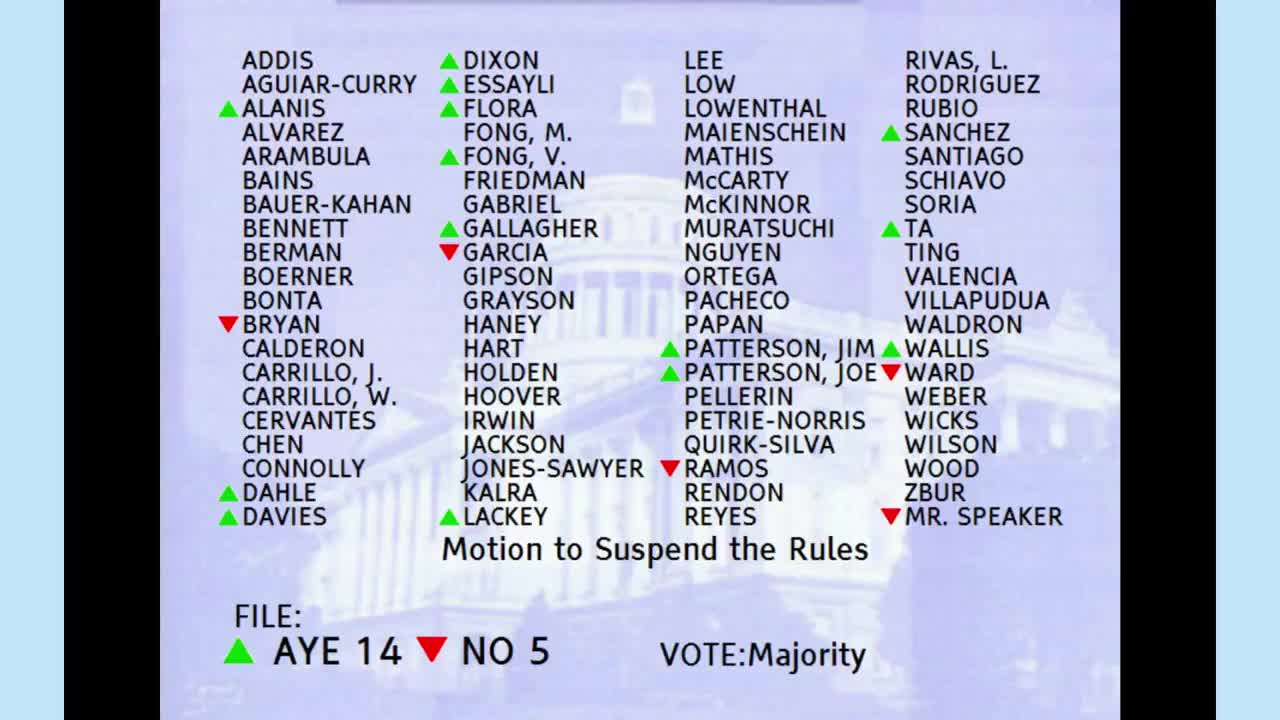
Bill Author

Bill Co-Author(s):