SB 544: Bagley-Keene Open Meeting Act: teleconferencing.
- Session Year: 2023-2024
- House: Senate
- Latest Version Date: 2023-09-22
Current Status:
Passed
(2023-09-22: Chaptered by Secretary of State. Chapter 216, Statutes of 2023.)
Introduced
In Committee
First Chamber
In Committee
Second Chamber
Enacted
Existing law, the Bagley-Keene Open Meeting Act, requires, with specified exceptions, that all meetings of a state body be open and public and all persons be permitted to attend any meeting of a state body. The act authorizes meetings through teleconference subject to specified requirements, including, among others, that the state body post agendas at all teleconference locations, that each teleconference location be identified in the notice and agenda of the meeting or proceeding, that each teleconference location be accessible to the public, that the agenda provide an opportunity for members of the public to address the state body directly at each teleconference location, and that at least one member of the state body be physically present at the location specified in the notice of the meeting.
This bill would enact an additional, alternative set of provisions under which a state body may hold a meeting by teleconference. The bill would require at least one member of the state body to be physically present at each teleconference location, defined for these purposes as a physical location that is accessible to the public and from which members of the public may participate in the meeting. The bill would, under specified circumstances, authorize a member of the state body to participate from a remote location, which would not be required to be accessible to the public and which the bill would prohibit the notice and agenda from disclosing. Specifically, the bill would authorize a members remote participation if the other members who are physically present at the same teleconference location constitute a majority of the state body. The bill would also authorize a members remote participation if the member has a need related to a disability and notifies the state body, as specified. Under the bill, that member would be counted toward the majority of members required to be physically present at the same teleconference location. The bill would require a member who participates from a remote location to disclose whether any other individuals 18 years of age or older are present in the room at the remote location with the member and the general nature of the members relationship with those individuals.
This bill would require the members of the state body to visibly appear on camera during the open portion of a meeting that is publicly accessible via the internet or other online platform unless the appearance would be technologically impracticable, as specified. The bill would require a member who does not appear on camera due to challenges with internet connectivity to announce the reason for their nonappearance when they turn off their camera.
This bill would also require the state body to provide a means by which the public may remotely hear audio of the meeting, remotely observe the meeting, remotely address the body, or attend the meeting by providing on the posted agenda a teleconference telephone number, an internet website or other online platform, and a physical address for each teleconference location. The bill would require the telephonic or online means provided to the public to access the meeting to be equivalent to the telephonic or online means provided to a member of the state body participating remotely. The bill would require any notice required by the act to specify the applicable teleconference telephone number, internet website or other online platform, and physical address of each teleconference location, as well as any other information indicating how the public can access the meeting remotely and in person. If the state body allows members of the public to observe and address the meeting telephonically or otherwise electronically, the bill would require the state body to implement and advertise, as prescribed, a procedure for receiving and swiftly resolving requests for reasonable modification or accommodation from individuals with disabilities, as specified. The bill would impose requirements consistent with the above-described existing law provisions, including a requirement that the agenda provide an opportunity for members of the public to address the state body directly, as specified. The bill would entitle members of the public to exercise their right to directly address the state body during the teleconferenced meeting without being required to submit public comments before the meeting or in writing.
This bill would provide that it does not affect prescribed existing notice and agenda requirements and would require the state body to post an agenda on its internet website and, on the day of the meeting, at each teleconference location designated in the notice of the meeting.
This bill would require the state body, upon discovering that a means of remote participation required by the bill has failed during the meeting and cannot be restored, to end or adjourn the meeting in accordance with prescribed adjournment and notice provisions, including information about reconvening.
Existing law authorizes a multimember state advisory body to hold an open meeting by teleconference pursuant to an alternative set of provisions that are in addition to the above-described provisions generally applicable to state bodies. Under those alternative provisions, a quorum of the members of the state advisory body must be in attendance at the primary physical meeting location, as specified, and all decisions taken during the meeting must be by rollcall vote.
This bill would remove the rollcall vote requirement and the requirement for a quorum in attendance at the primary physical meeting location. The bill, instead, would require at least one staff member of the state body to be present at the primary physical meeting location. The bill would require the members of the state body to visibly appear on camera during the open portion of a meeting that is publicly accessible via the internet or other online platform unless the appearance would be technologically impracticable, as specified. The bill would require a member who does not appear on camera due to challenges with internet connectivity to announce the reason for their nonappearance when they turn off their camera.
This bill would repeal the above-described provisions on January 1, 2026.
Existing law prohibits requiring a person, as a condition of attendance at a meeting of a state body, to register their name, to provide other information, to complete a questionnaire, or otherwise to fulfill any condition precedent to their attendance. Existing law requires an attendance list, register, questionnaire, or other similar document posted at or near the entrance to the room where the meeting is to be held, or circulated to persons present during the meeting, to state clearly that the signing, registering, or completion of the document is voluntary, and that all persons may attend the meeting regardless of whether a person signs, registers, or completes the document.
This bill would exempt from those provisions an internet website or other online platform that may require the submission of information to log into a teleconferenced meeting. The bill would permit a person to submit a pseudonym or other anonymous information when using the internet website or other online platform to attend the meeting.
Existing constitutional provisions require that a statute that limits the right of access to the meetings of public bodies or the writings of public officials and agencies be adopted with findings demonstrating the interest protected by the limitation and the need for protecting that interest.
This bill would make legislative findings to that effect.
Existing law, the Bagley-Keene Open Meeting Act, requires, with specified exceptions, that all meetings of a state body be open and public and all persons be permitted to attend any meeting of a state body. The act authorizes meetings through teleconference subject to specified requirements, including, among others, that the state body post agendas at all teleconference locations, that each teleconference location be identified in the notice and agenda of the meeting or proceeding, that each teleconference location be accessible to the public, that the agenda provide an opportunity for members of the public to address the state body directly at each teleconference location, and that at least one member of the state body be physically present at the location specified in the notice of the meeting.
Existing law, until July 1, 2023, authorized, subject to specified notice and accessibility requirements, a state body to hold public meetings through teleconferencing and suspended certain requirements of the act, including the above-described teleconference requirements.This bill would enact an additional, alternative set of provisions under which a state body may hold a meeting by teleconference. The bill would require at least one member of the state body to be physically present at each teleconference location, defined for these purposes as a physical location that is accessible to the public and from which members of the public may participate in the meeting. The bill would, under specified circumstances, authorize a member of the state body to participate from a remote location, which would not be required to be accessible to the public and which the bill would prohibit the notice and agenda from disclosing. Specifically, the bill would authorize a members remote participation if the other members who are physically present at the same teleconference location constitute a majority of the state body. The bill would also authorize a members remote participation if the member has a need related to a disability and notifies the state body, as specified. Under the bill, that member would be counted toward the majority of members required to be physically present at the same teleconference location. The bill would require a member who participates from a remote location to disclose whether any other individuals 18 years of age or older are present in the room at the remote location with the member and the general nature of the members relationship with those individuals.
This bill would require the members of the state body to visibly appear on camera during the open portion of a meeting that is publicly accessible via the internet or other online platform unless the appearance would be technologically impracticable, as specified. The bill would require a member who does not appear on camera due to challenges with internet connectivity to announce the reason for their nonappearance when they turn off their camera.
This bill would remove the teleconference requirements that a state body post agendas at all teleconference locations, that each teleconference location be identified in the notice and agenda of the meeting or proceeding, and that each teleconference location be accessible to the public. The bill would require a also require the state body to provide a means by which the public may remotely hear audio of the meeting, remotely observe the meeting, remotely address the body, or attend the meeting by providing on the posted agenda a teleconference telephone number, an internet website or other online platform, and a physical address for at least one site, including, if available, access each teleconference location. The bill would require the telephonic or online means provided to the public to access the meeting to be equivalent to the access for telephonic or online means provided to a member of the state body participating remotely. The bill would require any notice required by the act to specify the applicable teleconference telephone number, internet website or other online platform, and physical address of each teleconference location, as well as any other information indicating how the public can access the meeting remotely and in person. If the state body allows members of the public to observe and address the meeting telephonically or otherwise electronically, the bill would require the state body to implement and advertise, as prescribed, a procedure for receiving and swiftly resolving requests for reasonable modification or accommodation from individuals with disabilities, as specified. The bill would revise existing law to no longer require that impose requirements consistent with the above-described existing law provisions, including a requirement that the agenda provide an opportunity for members of the public have the opportunity to address the state body directly at each teleconference location, but would continue to require that the agenda provide an opportunity for members of the public to address the state body directly. The bill would require a member or staff to be physically present at the location specified in the notice of the meeting. The bill would require a majority of the members of the state body to be physically present at the same location for at least 1/2 of the meetings of that state body. directly, as specified. The bill would entitle members of the public to exercise their right to directly address the state body during the teleconferenced meeting without being required to submit public comments before the meeting or in writing.
This bill would provide that it does not affect prescribed existing notice and agenda requirements and would require the state body to post an agenda on its internet website and, on the day of the meeting, at any physical meeting each teleconference location designated in the notice of the meeting. The bill would prohibit the notice and agenda from disclosing information regarding any remote location from which a member is participating and define remote location for this purpose. The bill would provide that members of the public shall be entitled to exercise their right to directly address the state body during the teleconferenced meeting without being required to submit public comments prior to the meeting or in writing.
This bill would require a the state body, upon discovering that a means of remote participation required by the bill has failed during a the meeting and cannot be restored, to end or adjourn the meeting in accordance with prescribed adjournment and notice provisions, including information about reconvening.
This bill would require a state body that holds a meeting through teleconferencing pursuant to the bill and allows members of the public to observe and address the meeting telephonically or otherwise electronically to implement and advertise, as prescribed, a procedure for receiving and swiftly resolving requests for reasonable modification or accommodation from individuals with disabilities, consistent with the federal Americans with Disabilities Act of 1990.This bill would require a member of a state body who attends a meeting by teleconference from a remote location to disclose whether any other individuals 18 years of age or older are present in the room at the remote location with the member and the general nature of the members relationship with any such individuals.Existing law authorizes a multimember state advisory body to hold an open meeting by teleconference pursuant to an alternative set of provisions that are in addition to the above-described provisions generally applicable to state bodies. Under those alternative provisions, a quorum of the members of the state advisory body must be in attendance at the primary physical meeting location, as specified, and all decisions taken during the meeting must be by rollcall vote.
This bill would remove the rollcall vote requirement and the requirement for a quorum in attendance at the primary physical meeting location. The bill, instead, would require at least one staff member of the state body to be present at the primary physical meeting location. The bill would require the members of the state body to visibly appear on camera during the open portion of a meeting that is publicly accessible via the internet or other online platform unless the appearance would be technologically impracticable, as specified. The bill would require a member who does not appear on camera due to challenges with internet connectivity to announce the reason for their nonappearance when they turn off their camera.
This bill would repeal its the above-described provisions on January 1, 2026.
Existing law prohibits requiring a person, as a condition of attendance at a meeting of a state body, to register their name, to provide other information, to complete a questionnaire, or otherwise to fulfill any condition precedent to their attendance. Existing law requires an attendance list, register, questionnaire, or other similar document posted at or near the entrance to the room where the meeting is to be held, or circulated to persons present during the meeting, to state clearly that the signing, registering, or completion of the document is voluntary, and that all persons may attend the meeting regardless of whether a person signs, registers, or completes the document.
This bill would exempt from those provisions an internet website or other online platform that may require the submission of information to log into a teleconferenced meeting. The bill would permit a person to submit a pseudonym or other anonymous information when using the internet website or other online platform to attend the meeting.
Existing constitutional provisions require that a statute that limits the right of access to the meetings of public bodies or the writings of public officials and agencies be adopted with findings demonstrating the interest protected by the limitation and the need for protecting that interest.
This bill would make legislative findings to that effect.
Existing law, the Bagley-Keene Open Meeting Act, requires, with specified exceptions, that all meetings of a state body be open and public and all persons be permitted to attend any meeting of a state body. The act authorizes meetings through teleconference subject to specified requirements, including, among others, that the state body post agendas at all teleconference locations, that each teleconference location be identified in the notice and agenda of the meeting or proceeding, that each teleconference location be accessible to the public, that the agenda provide an opportunity for members of the public to address the state body directly at each teleconference location, and that at least one member of the state body be physically present at the location specified in the notice of the meeting.
Existing law, until July 1, 2023, authorizes, authorized, subject to specified notice and accessibility requirements, a state body to hold public meetings through teleconferencing and suspends suspended certain requirements of the act, including the above-described teleconference requirements.
This bill would amend existing law that will remain operative after July 1, 2023, to remove indefinitely the teleconference requirements that a state body post agendas at all teleconference locations, that each teleconference location be identified in the notice and agenda of the meeting or proceeding, and that each teleconference location be accessible to the public. The bill would require a state body to provide a means by which the public may remotely hear audio of the meeting, remotely observe the meeting, or attend the meeting by providing on the posted agenda a teleconference telephone number, an internet website or other online platform, and a physical address for at least one site, including, if available, access equivalent to the access for a member of the state body participating remotely. The bill would require any notice required by the act to specify the applicable teleconference telephone number, internet website or other online platform, and physical address indicating how the public can access the meeting remotely and in person. The bill would revise existing law to no longer require that members of the public have the opportunity to address the state body directly at each teleconference location, but would continue to require that the agenda provide an opportunity for members of the public to address the state body directly. The bill would require a member or staff to be physically present at the location specified in the notice of the meeting. The bill would require a majority of the members of the state body to be physically present at the same location for at least 1/2 of the meetings of that state body.
This bill would provide that it does not affect prescribed existing notice and agenda requirements and would require the state body to post an agenda on its internet website and, on the day of the meeting, at any physical meeting location designated in the notice of the meeting. The bill would prohibit the notice and agenda from disclosing information regarding any remote location from which a member is participating and define remote location for this purpose. The bill would provide that members of the public shall be entitled to exercise their right to directly address the state body during the teleconferenced meeting without being required to submit public comments prior to the meeting or in writing.
This bill would require a state body, upon discovering that a means of remote participation required by the bill has failed during a meeting and cannot be restored, to end or adjourn the meeting in accordance with prescribed adjournment and notice provisions, including information about reconvening.
This bill would require a state body that holds a meeting through teleconferencing pursuant to the bill and allows members of the public to observe and address the meeting telephonically or otherwise electronically to implement and advertise, as prescribed, a procedure for receiving and swiftly resolving requests for reasonable modification or accommodation from individuals with disabilities, consistent with the federal Americans with Disabilities Act of 1990.
This bill would require a member of a state body who attends a meeting by teleconference from a remote location to disclose whether any other individuals 18 years of age or older are present in the room at the remote location with the member and the general nature of the members relationship with any such individuals.
This bill would repeal its provisions on January 1, 2026.
Existing constitutional provisions require that a statute that limits the right of access to the meetings of public bodies or the writings of public officials and agencies be adopted with findings demonstrating the interest protected by the limitation and the need for protecting that interest.
This bill would make legislative findings to that effect.
Existing law, the Bagley-Keene Open Meeting Act, requires, with specified exceptions, that all meetings of a state body be open and public and all persons be permitted to attend any meeting of a state body. The act authorizes meetings through teleconference subject to specified requirements, including, among others, that the state body post agendas at all teleconference locations, that each teleconference location be identified in the notice and agenda of the meeting or proceeding, that each teleconference location be accessible to the public, that the agenda provide an opportunity for members of the public to address the state body directly at each teleconference location, and that at least one member of the state body be physically present at the location specified in the notice of the meeting.
Existing law, until July 1, 2023, authorizes, subject to specified notice and accessibility requirements, a state body to hold public meetings through teleconferencing and suspends certain requirements of the act, including the above-described teleconference requirements.
This bill would amend existing law that will remain operative after July 1, 2023, to remove indefinitely the teleconference requirements that a state body post agendas at all teleconference locations, that each teleconference location be identified in the notice and agenda of the meeting or proceeding, and that each teleconference location be accessible to the public. The bill would require a state body to provide a means by which the public may remotely hear audio of the meeting, remotely observe the meeting, or attend the meeting by providing on the posted agenda a teleconference telephone number, an internet website or other online platform, and a physical address for at least one site, including, if available, access equivalent to the access for a member of the state body participating remotely. The bill would require any notice required by the act to specify the applicable teleconference telephone number, internet website or other online platform, and physical address indicating how the public can access the meeting remotely and in person. The bill would revise existing law to no longer require that members of the public have the opportunity to address the state body directly at each teleconference location, but would continue to require that the agenda provide an opportunity for members of the public to address the state body directly. The bill would require a member or staff to be physically present at the location specified in the notice of the meeting.
This bill would provide that it does not affect prescribed existing notice and agenda requirements and would require the state body to post an agenda on its internet website and, on the day of the meeting, at any physical meeting location designated in the notice of the meeting. The bill would prohibit the notice and agenda from disclosing information regarding any remote location from which a member is participating and define remote location for this purpose. The bill would provide that members of the public shall be entitled to exercise their right to directly address the state body during the teleconferenced meeting without being required to submit public comments prior to the meeting or in writing.
This bill would require a state body, upon discovering that a means of remote participation required by the bill has failed during a meeting and cannot be restored, to end or adjourn the meeting in accordance with prescribed adjournment and notice provisions, including information about reconvening.
This bill would require a state body that holds a meeting through teleconferencing pursuant to the bill and allows members of the public to observe and address the meeting telephonically or otherwise electronically to implement and advertise, as prescribed, a procedure for receiving and swiftly resolving requests for reasonable modification or accommodation from individuals with disabilities, consistent with the federal Americans with Disabilities Act of 1990.
This bill would require a member of a state body who attends a meeting by teleconference from a remote location to disclose whether any other individuals 18 years of age or older are present in the room at the remote location with the member and the general nature of the members relationship with any such individuals.
Existing constitutional provisions require that a statute that limits the right of access to the meetings of public bodies or the writings of public officials and agencies be adopted with findings demonstrating the interest protected by the limitation and the need for protecting that interest.
This bill would make legislative findings to that effect.
Existing law, the Bagley-Keene Open Meeting Act, requires, with specified exceptions, that all meetings of a state body be open and public and all persons be permitted to attend any meeting of a state body. The act authorizes meetings through teleconference subject to specified requirements, including, among others, that the state body post agendas at all teleconference locations, that each teleconference location be identified in the notice and agenda of the meeting or proceeding, that each teleconference location be accessible to the public, that the agenda provide an opportunity for members of the public to address the state body directly at each teleconference location, and that at least one member of the state body be physically present at the location specified in the notice of the meeting.
Existing law, until July 1, 2023, authorizes, subject to specified notice and accessibility requirements, a state body to hold public meetings through teleconferencing and suspends certain requirements of the act, including the above-described teleconference requirements.
This bill would amend existing law that will remain operative after July 1, 2023, to remove indefinitely the teleconference requirements that a state body post agendas at all teleconference locations, that each teleconference location be identified in the notice and agenda of the meeting or proceeding, and that each teleconference location be accessible to the public. The bill would require a state body to provide a means by which the public may remotely hear audio of the meeting, remotely observe the meeting, or attend the meeting by providing on the posted agenda a teleconference telephone number, an internet website or other online platform, and a physical address for at least one site, including, if available, access equivalent to the access for a member of the state body participating remotely. The bill would require any notice required by the act to specify the applicable teleconference telephone number, internet website or other online platform, and physical address indicating how the public can access the meeting remotely and in person. The bill would revise existing law to no longer require that members of the public have the opportunity to address the state body directly at each teleconference location, but would continue to require that the agenda provide an opportunity for members of the public to address the state body directly. The bill would require a member or staff to be physically present at the location specified in the notice of the meeting.
This bill would require a state body that holds a meeting through teleconferencing pursuant to the bill and allows members of the public to observe and address the meeting telephonically or otherwise electronically to implement and advertise, as prescribed, a procedure for receiving and swiftly resolving requests for reasonable modification or accommodation from individuals with disabilities, consistent with the federal Americans with Disabilities Act of 1990.
Existing constitutional provisions require that a statute that limits the right of access to the meetings of public bodies or the writings of public officials and agencies be adopted with findings demonstrating the interest protected by the limitation and the need for protecting that interest.
This bill would make legislative findings to that effect.
Existing law authorizes an owner of any qualified historical property, as defined, to contract with the legislative body of a city, county, or city and county, to restrict the use of the property, as specified, in exchange for lowered assessment values.This bill would make nonsubstantive changes to the provisions that define a qualified historical property.Existing law authorizes an owner of any qualified historical property, as defined, to contract with the legislative body of a city, county, or city and county, to restrict the use of the property, as specified, in exchange for lowered assessment values.
This bill would make nonsubstantive changes to the provisions that define a qualified historical property.
(a)For purposes of this section, the following definitions apply:
(1)Teleconference means a meeting of a state body, the members of which are at different locations, connected by electronic means, through either audio or both audio and video.
(2)Teleconference location means a physical location that is accessible to the public and from which members of the public may participate in the meeting.
(3)Remote location means a location from which a member of a state body participates in a meeting other than a teleconference location.
(4)Participate remotely means participation by a member of the body in a meeting at a remote location other than a teleconference location designated in the notice of the meeting.
(b)(1)In addition to the authorization to hold a meeting by teleconference pursuant to subdivision (b) of Section 11123 and Section 11123.5, a state body may hold an open or closed meeting by teleconference as described in this section, provided the meeting complies with all of this sections requirements and, except as set forth in this section, it also complies with all other applicable requirements of this article relating to the specific type of meeting.
(2)This section does not limit or affect the ability of a state body to hold a teleconference meeting under another provision of this article, including Sections 11123 and 11123.5.
(c)The portion of the teleconferenced meeting that is required to be open to the public shall be visible and audible to the public at each teleconference location.
(d)(1)The state body shall provide a means by which the public may remotely hear audio of the meeting, remotely observe the meeting, remotely address the body, or attend the meeting by providing on the posted agenda a teleconference telephone number, an internet website or other online platform, and a physical address for each teleconference location. The telephonic or online means provided to the public to access the meeting shall be equivalent to the telephonic or online means provided to a member of the state body participating remotely.
(2)The applicable teleconference telephone number, internet website or other online platform, and physical address of each teleconference location, as well as any other information indicating how the public can access the meeting remotely and in person, shall be specified in any notice required by this article.
(3)If the state body allows members of the public to observe and address the meeting telephonically or otherwise electronically, the state body shall do both of the following:
(A)Implement a procedure for receiving and swiftly resolving requests for reasonable modification or accommodation from individuals with disabilities, consistent with the federal Americans with Disabilities Act of 1990 (42 U.S.C. Sec. 12101 et seq.), and resolving any doubt whatsoever in favor of accessibility.
(B)Advertise that procedure each time notice is given of the means by which members of the public may observe the meeting and offer public comment.
(e)This section does not prohibit a state body from providing members of the public with additional locations from which the public may observe or address the state body by electronic means, through either audio or both audio and video.
(f)(1)The agenda shall provide an opportunity for members of the public to address the state body directly pursuant to Section 11125.7.
(2)Members of the public shall be entitled to exercise their right to directly address the state body during the teleconferenced meeting without being required to submit public comments before the meeting or in writing.
(g)The state body shall post the agenda on its internet website and, on the day of the meeting, at each teleconference location.
(h)This section does not affect the requirement prescribed by this article that the state body post an agenda of a meeting in accordance with the applicable notice requirements of this article, including Section 11125, requiring the state body to post an agenda of a meeting at least 10 days in advance of the meeting, Section 11125.4, applicable to special meetings, and Sections 11125.5 and 11125.6, applicable to emergency meetings.
(i)At least one member of the state body shall be physically present at each teleconference location.
(j)(1)Except as provided in paragraph (2), a majority of the members of the state body shall be physically present at the same teleconference location. Additional members of the state body in excess of a majority of the members may attend and participate in the meeting from a remote location. A remote location is not required to be accessible to the public. The notice and agenda shall not disclose information regarding a remote location.
(2)A member attending and participating from a remote location may count toward the majority required to hold a teleconference if both of the following conditions are met:
(A)The member has a need related to a physical or mental disability, as those terms are defined in Sections 12926 and 12926.1, that is not otherwise reasonably accommodated pursuant to the federal Americans with Disability Act of 1990 (42 U.S.C. Sec. 12101 et seq.).
(B)The member notifies the state body at the earliest opportunity possible, including at the start of a meeting, of their need to participate remotely, including providing a general description of the circumstances relating to their need to participate remotely at the given meeting.
(3)If a member notifies the body of the members need to attend and participate remotely pursuant to paragraph (2), the body shall take action to approve the exception and shall request a general description of the circumstances relating to the members need to participate remotely at the meeting, for each meeting in which the member seeks to participate remotely. The body shall not require the member to provide a general description that exceeds 20 words or to disclose any medical diagnosis or disability, or any personal medical information that is already exempt under existing law, such as the Confidentiality of Medical Information Act (Part 2.6 (commencing with Section 56) of Division 1 of the Civil Code).
(4)If a member of the state body attends the meeting by teleconference from a remote location, the member shall disclose whether any other individuals 18 years of age or older are present in the room at the remote location with the member, and the general nature of the members relationship with any such individuals.
(k)(1)Except as provided in paragraph (2), the members of the state body shall visibly appear on camera during the open portion of a meeting that is publicly accessible via the internet or other online platform.
(2)The visual appearance of a member of the state body on camera may cease only when the appearance would be technologically impracticable, including, but not limited to, when the member experiences a lack of reliable broadband or internet connectivity that would be remedied by joining without video, or when the visual display of meeting materials, information, or speakers on the internet or other online platform requires the visual appearance of a member of a state body on camera to cease.
(3)If a member of the state body does not appear on camera due to challenges with internet connectivity, the member shall announce the reason for their nonappearance when they turn off their camera.
(l)All votes taken during the teleconferenced meeting shall be by rollcall.
(m)The state body shall publicly report any action taken and the vote or abstention on that action of each member present for the action.
(n)The portion of the teleconferenced meeting that is closed to the public shall not include the consideration of any agenda item being heard pursuant to Section 11125.5.
(o)Upon discovering that a means of remote public access and participation required by subdivision (d) has failed during a meeting and cannot be restored, the state body shall end or adjourn the meeting in accordance with Section 11128.5. In addition to any other requirements that may apply, the state body shall provide notice of the meetings end or adjournment on the state bodys internet website and by email to any person who has requested notice of meetings of the state body by email under this article. If the meeting will be adjourned and reconvened on the same day, further notice shall be provided by an automated message on a telephone line posted on the state bodys agenda, internet website, or by a similar means, that will communicate when the state body intends to reconvene the meeting and how a member of the public may hear audio of the meeting or observe the meeting.
(p)This section shall remain in effect only until January 1, 2026, and as of that date is repealed.
SEC. 2.Section 11123.5 of the Government Code is amended to read:11123.5.(a)For purposes of this section, the following definitions apply:
(1)Participate remotely means participation in a meeting at a location other than the physical location designated in the agenda of the meeting.
(2)Remote location means a location other than the primary physical location designated in the agenda of a meeting.
(3)Teleconference has the same meaning as in Section 11123.
(b)In addition to the authorization to hold a meeting by teleconference pursuant to subdivision (b) of Section 11123 or Section 11123.2, any state body that is an advisory board, advisory commission, advisory committee, advisory subcommittee, or similar multimember advisory body may hold an open meeting by teleconference as described in this section, provided the meeting complies with all of the sections requirements and, except as set forth in this section, it also complies with all other applicable requirements of this article.
(c)A member of a state body as described in subdivision (b) who participates in a teleconference meeting from a remote location subject to this sections requirements shall be listed in the minutes of the meeting.
(d)The state body shall provide notice to the public at least 24 hours before the meeting that identifies any member who will participate remotely by posting the notice on its internet website and by emailing notice to any person who has requested notice of meetings of the state body under this article. The location of a member of a state body who will participate remotely is not required to be disclosed in the public notice or email and need not be accessible to the public. The notice of the meeting shall also identify the primary physical meeting location designated pursuant to subdivision (f).
(e)This section does not affect the requirement prescribed by this article that the state body post an agenda of a meeting at least 10 days in advance of the meeting. The agenda shall include information regarding the physical meeting location designated pursuant to subdivision (f), but is not required to disclose information regarding any remote location.
(f)A state body described in subdivision (b) shall designate the primary physical meeting location in the notice of the meeting where members of the public may physically attend the meeting, observe and hear the meeting, and participate. At least one staff member of the state body shall be present at the primary physical meeting location during the meeting. The state body shall post the agenda at the primary physical meeting location, but need not post the agenda at a remote location.
(g)When a member of a state body described in subdivision (b) participates remotely in a meeting subject to this sections requirements, the state body shall provide a means by which the public may remotely hear audio of the meeting or remotely observe the meeting, including, if available, equal access equivalent to members of the state body participating remotely. The applicable teleconference phone number or internet website, or other information indicating how the public can access the meeting remotely, shall be in the 24-hour notice described in subdivision (b) that is available to the public.
(h)(1)Except as provided in paragraph (2), the members of the state body shall visibly appear on camera during the open portion of a meeting that is publicly accessible via the internet or other online platform.
(2)The visual appearance of a member of a state body on camera may cease only when the appearance would be technologically impracticable, including, but not limited to, when the member experiences a lack of reliable broadband or internet connectivity that would be remedied by joining without video, or when the visual display of meeting materials, information, or speakers on the internet or other online platform requires the visual appearance of a member of a state body on camera to cease.
(3)If a member of the body does not appear on camera due to challenges with internet connectivity, the member shall announce the reason for their nonappearance when they turn off their camera.
(i)Upon discovering that a means of remote access required by subdivision (g) has failed during a meeting, the state body described in subdivision (b) shall end or adjourn the meeting in accordance with Section 11128.5. In addition to any other requirements that may apply, the state body shall provide notice of the meetings end or adjournment on its internet website and by email to any person who has requested notice of meetings of the state body under this article. If the meeting will be adjourned and reconvened on the same day, further notice shall be provided by an automated message on a telephone line posted on the state bodys agenda, or by a similar means, that will communicate when the state body intends to reconvene the meeting and how a member of the public may hear audio of the meeting or observe the meeting.
(j)This section does not limit or affect the ability of a state body to hold a teleconference meeting under another provision of this article.
(k)This section shall remain in effect only until January 1, 2026, and as of that date is repealed.
SEC. 3.Section 11123.5 is added to the Government Code, to read:11123.5.(a)In addition to the authorization to hold a meeting by teleconference pursuant to subdivision (b) of Section 11123, any state body that is an advisory board, advisory commission, advisory committee, advisory subcommittee, or similar multimember advisory body may hold an open meeting by teleconference as described in this section, provided the meeting complies with all of the sections requirements and, except as set forth in this section, it also complies with all other applicable requirements of this article.
(b)A member of a state body as described in subdivision (a) who participates in a teleconference meeting from a remote location subject to this sections requirements shall be listed in the minutes of the meeting.
(c)The state body shall provide notice to the public at least 24 hours before the meeting that identifies any member who will participate remotely by posting the notice on its internet website and by emailing notice to any person who has requested notice of meetings of the state body under this article. The location of a member of a state body who will participate remotely is not required to be disclosed in the public notice or email and need not be accessible to the public. The notice of the meeting shall also identify the primary physical meeting location designated pursuant to subdivision (e).
(d)This section does not affect the requirement prescribed by this article that the state body post an agenda of a meeting at least 10 days in advance of the meeting. The agenda shall include information regarding the physical meeting location designated pursuant to subdivision (e), but is not required to disclose information regarding any remote location.
(e)A state body described in subdivision (a) shall designate the primary physical meeting location in the notice of the meeting where members of the public may physically attend the meeting and participate. A quorum of the members of the state body shall be in attendance at the primary physical meeting location, and members of the state body participating remotely shall not count towards establishing a quorum. All decisions taken during a meeting by teleconference shall be by rollcall vote. The state body shall post the agenda at the primary physical meeting location, but need not post the agenda at a remote location.
(f)When a member of a state body described in subdivision (a) participates remotely in a meeting subject to this sections requirements, the state body shall provide a means by which the public may remotely hear audio of the meeting or remotely observe the meeting, including, if available, equal access equivalent to members of the state body participating remotely. The applicable teleconference phone number or internet website, or other information indicating how the public can access the meeting remotely, shall be in the 24-hour notice described in subdivision (a) that is available to the public.
(g)Upon discovering that a means of remote access required by subdivision (f) has failed during a meeting, the state body described in subdivision (a) shall end or adjourn the meeting in accordance with Section 11128.5. In addition to any other requirements that may apply, the state body shall provide notice of the meetings end or adjournment on its internet website and by email to any person who has requested notice of meetings of the state body under this article. If the meeting will be adjourned and reconvened on the same day, further notice shall be provided by an automated message on a telephone line posted on the state bodys agenda, or by a similar means, that will communicate when the state body intends to reconvene the meeting and how a member of the public may hear audio of the meeting or observe the meeting.
(h)For purposes of this section:
(1)Participate remotely means participation in a meeting at a location other than the physical location designated in the agenda of the meeting.
(2)Remote location means a location other than the primary physical location designated in the agenda of a meeting.
(3)Teleconference has the same meaning as in Section 11123.
(i)This section does not limit or affect the ability of a state body to hold a teleconference meeting under another provision of this article.
(j)This section shall become operative on January 1, 2026.
SEC. 4.Section 11124 of the Government Code is amended to read:11124.(a)No person shall be required, as a condition to attendance at a meeting of a state body, to register their name, to provide other information, to complete a questionnaire, or otherwise to fulfill any condition precedent to their attendance.
(b)If an attendance list, register, questionnaire, or other similar document is posted at or near the entrance to the room where the meeting is to be held, or is circulated to persons present during the meeting, it shall state clearly that the signing, registering, or completion of the document is voluntary, and that all persons may attend the meeting regardless of whether a person signs, registers, or completes the document.
(c)This section does not apply to an internet website or other online platform that may require the submission of information to log into a teleconferenced meeting, provided, however, that a person required to submit such information shall be permitted to submit a pseudonym or other anonymous information when using the internet website or other online platform to attend the meeting.
SEC. 5.The Legislature finds and declares that Sections 1, 2, 3, and 4 of this act, which add and repeal Section 11123.2 of, amend, repeal, and add Section 11123.5 of, and amend Section 11124 of, the Government Code, impose a limitation on the publics right of access to the meetings of public bodies or the writings of public officials and agencies within the meaning of Section 3 of Article I of the California Constitution. Pursuant to that constitutional provision, the Legislature makes the following findings to demonstrate the interest protected by this limitation and the need for protecting that interest:
(a)By removing the requirement for agendas to be placed at the location of each public official participating in a public meeting remotely, including from the members private home or hotel room, this act protects the personal, private information of public officials and their families while preserving the publics right to access information concerning the conduct of the peoples business.
(b)During the COVID-19 public health emergency, audio and video teleconference were widely used to conduct public meetings in lieu of physical location meetings, and those public meetings have been productive, increased public participation by all members of the public regardless of their location and ability to travel to physical meeting locations, increased the pool of people who are able to serve on these bodies, protected the health and safety of civil servants and the public, and have reduced travel costs incurred by members of state bodies and reduced work hours spent traveling to and from meetings.
(c)Conducting audio and video teleconference meetings enhances public participation and the publics right of access to meetings of the public bodies by improving access for individuals who often face barriers to physical attendance.
(a)For purposes of this section, the following definitions apply:
(1)Teleconference means a meeting of a state body, the members of which are at different locations, connected by electronic means, through either audio or both audio and video.
(2)Teleconference location means a physical location that is accessible to the public and from which members of the public may participate in the meeting.
(3)Remote location means a location from which a member of a state body participates in a meeting other than a teleconference location.
(4)Participate remotely means participation by a member of the body in a meeting at a remote location other than a teleconference location designated in the notice of the meeting.
(b)(1)In addition to the authorization to hold a meeting by teleconference pursuant to subdivision (b) of Section 11123 and Section 11123.5, a state body may hold an open or closed meeting by teleconference as described in this section, provided the meeting complies with all of this sections requirements and, except as set forth in this section, it also complies with all other applicable requirements of this article relating to the specific type of meeting.
(2)This section does not limit or affect the ability of a state body to hold a teleconference meeting under another provision of this article, including Sections 11123 and 11123.5.
(c)The portion of the teleconferenced meeting that is required to be open to the public shall be visible and audible to the public at each teleconference location.
(d)(1)The state body shall provide a means by which the public may remotely hear audio of the meeting, remotely observe the meeting, remotely address the body, or attend the meeting by providing on the posted agenda a teleconference telephone number, an internet website or other online platform, and a physical address for each teleconference location. The telephonic or online means provided to the public to access the meeting shall be equivalent to the telephonic or online means provided to a member of the state body participating remotely.
(2)The applicable teleconference telephone number, internet website or other online platform, and physical address of each teleconference location, as well as any other information indicating how the public can access the meeting remotely and in person, shall be specified in any notice required by this article.
(3)If the state body allows members of the public to observe and address the meeting telephonically or otherwise electronically, the state body shall do both of the following:
(A)Implement a procedure for receiving and swiftly resolving requests for reasonable modification or accommodation from individuals with disabilities, consistent with the federal Americans with Disabilities Act of 1990 (42 U.S.C. Sec. 12101 et seq.), and resolving any doubt whatsoever in favor of accessibility.
(B)Advertise that procedure each time notice is given of the means by which members of the public may observe the meeting and offer public comment.
(e)This section does not prohibit a state body from providing members of the public with additional locations from which the public may observe or address the state body by electronic means, through either audio or both audio and video.
(f)(1)The agenda shall provide an opportunity for members of the public to address the state body directly pursuant to Section 11125.7.
(2)Members of the public shall be entitled to exercise their right to directly address the state body during the teleconferenced meeting without being required to submit public comments before the meeting or in writing.
(g)The state body shall post the agenda on its internet website and, on the day of the meeting, at each teleconference location.
(h)This section does not affect the requirement prescribed by this article that the state body post an agenda of a meeting in accordance with the applicable notice requirements of this article, including Section 11125, requiring the state body to post an agenda of a meeting at least 10 days in advance of the meeting, Section 11125.4, applicable to special meetings, and Sections 11125.5 and 11125.6, applicable to emergency meetings.
(i)At least one member of the state body shall be physically present at each teleconference location.
(j)(1)Except as provided in paragraph (2), a majority of the members of the state body shall be physically present at the same teleconference location. Additional members of the state body in excess of a majority of the members may attend and participate in the meeting from a remote location. A remote location is not required to be accessible to the public. The notice and agenda shall not disclose information regarding a remote location.
(2)A member attending and participating from a remote location may count toward the majority required to hold a teleconference if both of the following conditions are met:
(A)The member has a need related to a physical or mental disability, as those terms are defined in Sections 12926 and 12926.1, that is not otherwise reasonably accommodated pursuant to the federal Americans with Disability Act of 1990 (42 U.S.C. Sec. 12101 et seq.).
(B)The member notifies the state body at the earliest opportunity possible, including at the start of a meeting, of their need to participate remotely, including providing a general description of the circumstances relating to their need to participate remotely at the given meeting.
(3)If a member notifies the body of the members need to attend and participate remotely pursuant to paragraph (2), the body shall take action to approve the exception and shall request a general description of the circumstances relating to the members need to participate remotely at the meeting, for each meeting in which the member seeks to participate remotely. The body shall not require the member to provide a general description that exceeds 20 words or to disclose any medical diagnosis or disability, or any personal medical information that is already exempt under existing law, such as the Confidentiality of Medical Information Act (Part 2.6 (commencing with Section 56) of Division 1 of the Civil Code).
(4)If a member of the state body attends the meeting by teleconference from a remote location, the member shall disclose whether any other individuals 18 years of age or older are present in the room at the remote location with the member, and the general nature of the members relationship with any such individuals.
(k)(1)Except as provided in paragraph (2), the members of the state body shall visibly appear on camera during the open portion of a meeting that is publicly accessible via the internet or other online platform.
(2)The visual appearance of a member of the state body on camera may cease only when the appearance would be technologically impracticable, including, but not limited to, when the member experiences a lack of reliable broadband or internet connectivity that would be remedied by joining without video, or when the visual display of meeting materials, information, or speakers on the internet or other online platform requires the visual appearance of a member of a state body on camera to cease.
(3)If a member of the state body does not appear on camera due to challenges with internet connectivity, the member shall announce the reason for their nonappearance when they turn off their camera.
(l)All votes taken during the teleconferenced meeting shall be by rollcall.
(m)The state body shall publicly report any action taken and the vote or abstention on that action of each member present for the action.
(n)The portion of the teleconferenced meeting that is closed to the public shall not include the consideration of any agenda item being heard pursuant to Section 11125.5.
(o)Upon discovering that a means of remote public access and participation required by subdivision (d) has failed during a meeting and cannot be restored, the state body shall end or adjourn the meeting in accordance with Section 11128.5. In addition to any other requirements that may apply, the state body shall provide notice of the meetings end or adjournment on the state bodys internet website and by email to any person who has requested notice of meetings of the state body by email under this article. If the meeting will be adjourned and reconvened on the same day, further notice shall be provided by an automated message on a telephone line posted on the state bodys agenda, internet website, or by a similar means, that will communicate when the state body intends to reconvene the meeting and how a member of the public may hear audio of the meeting or observe the meeting.
(p)This section shall remain in effect only until January 1, 2026, and as of that date is repealed.
SEC. 2.Section 11123.5 of the Government Code is amended to read:11123.5.(a)In For purposes of this section, the following definitions apply:
(1)Participate remotely means participation in a meeting at a location other than the physical location designated in the agenda of the meeting.
(2)Remote location means a location other than the primary physical location designated in the agenda of a meeting.
(3)Teleconference has the same meaning as in Section 11123.
(b)In addition to the authorization to hold a meeting by teleconference pursuant to subdivision (b) of Section 11123, 11123 or Section 11123.2, any state body that is an advisory board, advisory commission, advisory committee, advisory subcommittee, or similar multimember advisory body may hold an open meeting by teleconference as described in this section, provided the meeting complies with all of the sections requirements and, except as set forth in this section, it also complies with all other applicable requirements of this article.
(b)(c)A member of a state body as described in subdivision (a) (b) who participates in a teleconference meeting from a remote location subject to this sections requirements shall be listed in the minutes of the meeting.
(c)(d)The state body shall provide notice to the public at least 24 hours before the meeting that identifies any member who will participate remotely by posting the notice on its Internet Web site internet website and by emailing notice to any person who has requested notice of meetings of the state body under this article. The location of a member of a state body who will participate remotely is not required to be disclosed in the public notice or email and need not be accessible to the public. The notice of the meeting shall also identify the primary physical meeting location designated pursuant to subdivision (e). (f).
(d)(e)This section does not affect the requirement prescribed by this article that the state body post an agenda of a meeting at least 10 days in advance of the meeting. The agenda shall include information regarding the physical meeting location designated pursuant to subdivision (e), (f), but is not required to disclose information regarding any remote location.
(e)(f)A state body described in subdivision (a) (b) shall designate the primary physical meeting location in the notice of the meeting where members of the public may physically attend the meeting meeting, observe and hear the meeting, and participate. A quorum of the members of the state body shall be in attendance at the primary physical meeting location, and members of the state body participating remotely shall not count towards establishing a quorum. All decisions taken during a meeting by teleconference shall be by rollcall vote. At least one staff member of the state body shall be present at the primary physical meeting location during the meeting. The state body shall post the agenda at the primary physical meeting location, but need not post the agenda at a remote location.
(f)(g)When a member of a state body described in subdivision (a) (b) participates remotely in a meeting subject to this sections requirements, the state body shall provide a means by which the public may remotely hear audio of the meeting or remotely observe the meeting, including, if available, equal access equivalent to members of the state body participating remotely. The applicable teleconference phone number or Internet Web site, internet website, or other information indicating how the public can access the meeting remotely, shall be in the 24-hour notice described in subdivision (a) (b) that is available to the public.
(h)(1)Except as provided in paragraph (2), the members of the state body shall visibly appear on camera during the open portion of a meeting that is publicly accessible via the internet or other online platform.
(2)The visual appearance of a member of a state body on camera may cease only when the appearance would be technologically impracticable, including, but not limited to, when the member experiences a lack of reliable broadband or internet connectivity that would be remedied by joining without video, or when the visual display of meeting materials, information, or speakers on the internet or other online platform requires the visual appearance of a member of a state body on camera to cease.
(3)If a member of the body does not appear on camera due to challenges with internet connectivity, the member shall announce the reason for their nonappearance when they turn off their camera.
(g)(i)Upon discovering that a means of remote access required by subdivision (f) (g) has failed during a meeting, the state body described in subdivision (a) (b) shall end or adjourn the meeting in accordance with Section 11128.5. In addition to any other requirements that may apply, the state body shall provide notice of the meetings end or adjournment on its Internet Web site internet website and by email to any person who has requested notice of meetings of the state body under this article. If the meeting will be adjourned and reconvened on the same day, further notice shall be provided by an automated message on a telephone line posted on the state bodys agenda, or by a similar means, that will communicate when the state body intends to reconvene the meeting and how a member of the public may hear audio of the meeting or observe the meeting.
(h)For purposes of this section:(1)Participate remotely means participation in a meeting at a location other than the physical location designated in the agenda of the meeting.(2)Remote location means a location other than the primary physical location designated in the agenda of a meeting.(3)Teleconference has the same meaning as in Section 11123.(i)(j)This section does not limit or affect the ability of a state body to hold a teleconference meeting under another provision of this article.
(k)This section shall remain in effect only until January 1, 2026, and as of that date is repealed.
SEC. 3.Section 11123.5 is added to the Government Code, to read:11123.5.(a)In addition to the authorization to hold a meeting by teleconference pursuant to subdivision (b) of Section 11123, any state body that is an advisory board, advisory commission, advisory committee, advisory subcommittee, or similar multimember advisory body may hold an open meeting by teleconference as described in this section, provided the meeting complies with all of the sections requirements and, except as set forth in this section, it also complies with all other applicable requirements of this article.
(b)A member of a state body as described in subdivision (a) who participates in a teleconference meeting from a remote location subject to this sections requirements shall be listed in the minutes of the meeting.
(c)The state body shall provide notice to the public at least 24 hours before the meeting that identifies any member who will participate remotely by posting the notice on its internet website and by emailing notice to any person who has requested notice of meetings of the state body under this article. The location of a member of a state body who will participate remotely is not required to be disclosed in the public notice or email and need not be accessible to the public. The notice of the meeting shall also identify the primary physical meeting location designated pursuant to subdivision (e).
(d)This section does not affect the requirement prescribed by this article that the state body post an agenda of a meeting at least 10 days in advance of the meeting. The agenda shall include information regarding the physical meeting location designated pursuant to subdivision (e), but is not required to disclose information regarding any remote location.
(e)A state body described in subdivision (a) shall designate the primary physical meeting location in the notice of the meeting where members of the public may physically attend the meeting and participate. A quorum of the members of the state body shall be in attendance at the primary physical meeting location, and members of the state body participating remotely shall not count towards establishing a quorum. All decisions taken during a meeting by teleconference shall be by rollcall vote. The state body shall post the agenda at the primary physical meeting location, but need not post the agenda at a remote location.
(f)When a member of a state body described in subdivision (a) participates remotely in a meeting subject to this sections requirements, the state body shall provide a means by which the public may remotely hear audio of the meeting or remotely observe the meeting, including, if available, equal access equivalent to members of the state body participating remotely. The applicable teleconference phone number or internet website, or other information indicating how the public can access the meeting remotely, shall be in the 24-hour notice described in subdivision (a) that is available to the public.
(g)Upon discovering that a means of remote access required by subdivision (f) has failed during a meeting, the state body described in subdivision (a) shall end or adjourn the meeting in accordance with Section 11128.5. In addition to any other requirements that may apply, the state body shall provide notice of the meetings end or adjournment on its internet website and by email to any person who has requested notice of meetings of the state body under this article. If the meeting will be adjourned and reconvened on the same day, further notice shall be provided by an automated message on a telephone line posted on the state bodys agenda, or by a similar means, that will communicate when the state body intends to reconvene the meeting and how a member of the public may hear audio of the meeting or observe the meeting.
(h)For purposes of this section:
(1)Participate remotely means participation in a meeting at a location other than the physical location designated in the agenda of the meeting.
(2)Remote location means a location other than the primary physical location designated in the agenda of a meeting.
(3)Teleconference has the same meaning as in Section 11123.
(i)This section does not limit or affect the ability of a state body to hold a teleconference meeting under another provision of this article.
(j)This section shall become operative on January 1, 2026.
SEC. 4.Section 11124 of the Government Code is amended to read:11124.(a)No person shall be required, as a condition to attendance at a meeting of a state body, to register his or her their name, to provide other information, to complete a questionnaire, or otherwise to fulfill any condition precedent to his or her their attendance.
If(b)If an attendance list, register, questionnaire, or other similar document is posted at or near the entrance to the room where the meeting is to be held, or is circulated to persons present during the meeting, it shall state clearly that the signing, registering, or completion of the document is voluntary, and that all persons may attend the meeting regardless of whether a person signs, registers, or completes the document.
(c)This section does not apply to an internet website or other online platform that may require the submission of information to log into a teleconferenced meeting, provided, however, that a person required to submit such information shall be permitted to submit a pseudonym or other anonymous information when using the internet website or other online platform to attend the meeting.
SEC. 5.The Legislature finds and declares that Sections 1, 2, 3, and 4 of this act, which add and repeal Section 11123.2 of, amend, repeal, and add Section 11123.5 of, and amend Section 11124 of, the Government Code, impose a limitation on the publics right of access to the meetings of public bodies or the writings of public officials and agencies within the meaning of Section 3 of Article I of the California Constitution. Pursuant to that constitutional provision, the Legislature makes the following findings to demonstrate the interest protected by this limitation and the need for protecting that interest:
(a)By removing the requirement for agendas to be placed at the location of each public official participating in a public meeting remotely, including from the members private home or hotel room, this act protects the personal, private information of public officials and their families while preserving the publics right to access information concerning the conduct of the peoples business.
(b)During the COVID-19 public health emergency, audio and video teleconference were widely used to conduct public meetings in lieu of physical location meetings, and those public meetings have been productive, increased public participation by all members of the public regardless of their location and ability to travel to physical meeting locations, increased the pool of people who are able to serve on these bodies, protected the health and safety of civil servants and the public, and have reduced travel costs incurred by members of state bodies and reduced work hours spent traveling to and from meetings.
(c)Conducting audio and video teleconference meetings enhances public participation and the publics right of access to meetings of the public bodies by improving access for individuals who often face barriers to physical attendance.
SECTION 1.Section 11123 of the Government Code is amended to read:11123.(a)All meetings of a state body shall be open and public and all persons shall be permitted to attend any meeting of a state body except as otherwise provided in this article.(b)(1)This article does not prohibit a state body from holding an open or closed meeting by teleconference for the benefit of the public and state body. The meeting or proceeding held by teleconference shall otherwise comply with all applicable requirements or laws relating to a specific type of meeting or proceeding, including the following:(A)The teleconferencing meeting shall comply with all requirements of this article applicable to other meetings.(B)The portion of the teleconferenced meeting that is required to be open to the public shall be audible to the public at the location specified in the notice of the meeting.(C)If the state body elects to conduct a meeting or proceeding by teleconference, it shall conduct teleconference meetings in a manner that protects the rights of any party or member of the public appearing before the state body. The state body shall provide a means by which the public may remotely hear audio of the meeting, remotely observe the meeting, or attend the meeting by providing on the posted agenda a teleconference telephone number, an internet website or other online platform, and a physical address for at least one site, including, if available, access equivalent to the access for a member of the state body participating remotely. The applicable teleconference telephone number, internet website or other online platform, and physical address indicating how the public can access the meeting remotely and in person shall be specified in any notice required by this article.(D)The agenda shall provide an opportunity for members of the public to address the state body directly pursuant to Section 11125.7.(E)All votes taken during a teleconferenced meeting shall be by rollcall.(F)The portion of the teleconferenced meeting that is closed to the public may not include the consideration of any agenda item being heard pursuant to Section 11125.5.(G)At least one member or staff of the state body shall be physically present at the location specified in the notice of the meeting.(H)A majority of the members of the state body shall be present at the same physical location for at least one-half of the meetings of the state body each year.(I)This section does not affect the requirement prescribed by this article that the state body post an agenda of a meeting in accordance with the applicable notice requirements of this article, including Section 11125, requiring the state body to post an agenda of a meeting at least 10 days in advance of the meeting, Section 11125.4, applicable to special meetings, and Sections 11125.5 and 11125.6, applicable to emergency meetings. The state body shall post the agenda on its internet website and, on the day of the meeting, at any physical meeting location designated in the notice of the meeting. The notice and agenda shall not disclose information regarding any remote location from which a member is participating.(J)Members of the public shall be entitled to exercise their right to directly address the state body during the teleconferenced meeting without being required to submit public comments prior to the meeting or in writing.(K)Upon discovering that a means of remote participation required by this section has failed during a meeting and cannot be restored, the state body shall end or adjourn the meeting in accordance with Section 11128.5. In addition to any other requirements that may apply, the state body shall provide notice of the meetings end or adjournment on the state bodys internet website and by email to any person who has requested notice of meetings of the state body by email under this article. If the meeting will be adjourned and reconvened on the same day, further notice shall be provided by an automated message on a telephone line posted on the state bodys agenda, internet website, or by a similar means, that will communicate when the state body intends to reconvene the meeting and how a member of the public may hear audio of the meeting or observe the meeting.(2)For the purposes of this subdivision, both of the following definitions shall apply:(A)Teleconference means a meeting of a state body, the members of which are at different locations, connected by electronic means, through either audio or both audio and video. This section does not prohibit a state body from providing members of the public with additional locations in which the public may observe or address the state body by electronic means, through either audio or both audio and video.(B)Remote location means a location from which a member of a state body participates in a meeting other than any physical meeting location designated in the notice of the meeting. Remote locations need not be accessible to the public.(c)If a state body holds a meeting through teleconferencing pursuant to this section and allows members of the public to observe and address the meeting telephonically or otherwise electronically, the state body shall also do both of the following:(1)Implement a procedure for receiving and swiftly resolving requests for reasonable modification or accommodation from individuals with disabilities, consistent with the federal Americans with Disabilities Act of 1990 (42 U.S.C. Sec. 12101 et seq.), and resolving any doubt whatsoever in favor of accessibility.(2)Advertise that procedure each time notice is given of the means by which members of the public may observe the meeting and offer public comment. (d)The state body shall publicly report any action taken and the vote or abstention on that action of each member present for the action.(e)If a member of a state body attends a meeting by teleconference from a remote location, the member shall disclose whether any other individuals 18 years of age or older are present in the room at the remote location with the member, and the general nature of the members relationship with any such individuals. (f)For purposes of this section, participate remotely means participation in a meeting at a location other than the physical location designated in the agenda of the meeting.(g)This section shall remain in effect only until January 1, 2026, and as of that date is repealed.SEC. 2.Section 11123 is added to the Government Code, to read:11123.(a)All meetings of a state body shall be open and public and all persons shall be permitted to attend any meeting of a state body except as otherwise provided in this article.(b)(1)This article does not prohibit a state body from holding an open or closed meeting by teleconference for the benefit of the public and state body. The meeting or proceeding held by teleconference shall otherwise comply with all applicable requirements or laws relating to a specific type of meeting or proceeding, including the following:(A)The teleconferencing meeting shall comply with all requirements of this article applicable to other meetings.(B)The portion of the teleconferenced meeting that is required to be open to the public shall be audible to the public at the location specified in the notice of the meeting.(C)If the state body elects to conduct a meeting or proceeding by teleconference, it shall post agendas at all teleconference locations and conduct teleconference meetings in a manner that protects the rights of any party or member of the public appearing before the state body. Each teleconference location shall be identified in the notice and agenda of the meeting or proceeding, and each teleconference location shall be accessible to the public. The agenda shall provide an opportunity for members of the public to address the state body directly pursuant to Section 11125.7 at each teleconference location.(D)All votes taken during a teleconferenced meeting shall be by rollcall.(E)The portion of the teleconferenced meeting that is closed to the public may not include the consideration of any agenda item being heard pursuant to Section 11125.5.(F)At least one member of the state body shall be physically present at the location specified in the notice of the meeting.(2)For the purposes of this subdivision, teleconference means a meeting of a state body, the members of which are at different locations, connected by electronic means, through either audio or both audio and video. This section does not prohibit a state body from providing members of the public with additional locations in which the public may observe or address the state body by electronic means, through either audio or both audio and video.(c)The state body shall publicly report any action taken and the vote or abstention on that action of each member present for the action.(d)This section shall become operative on January 1, 2026.SEC. 3.The Legislature finds and declares that Section 1 of this act, which amends Section 11123 of the Government Code, imposes a limitation on the publics right of access to the meetings of public bodies or the writings of public officials and agencies within the meaning of Section 3 of Article I of the California Constitution. Pursuant to that constitutional provision, the Legislature makes the following findings to demonstrate the interest protected by this limitation and the need for protecting that interest:(a)By removing the requirement for agendas to be placed at the location of each public official participating in a public meeting remotely, including from the members private home or hotel room, this act protects the personal, private information of public officials and their families while preserving the publics right to access information concerning the conduct of the peoples business.(b)During the COVID-19 public health emergency, audio and video teleconference were widely used to conduct public meetings in lieu of physical location meetings, and those public meetings have been productive, increased public participation by all members of the public regardless of their location and ability to travel to physical meeting locations, increased the pool of people who are able to serve on these bodies, protected the health and safety of civil servants and the public, and have reduced travel costs incurred by members of state bodies and reduced work hours spent traveling to and from meetings.(c)Conducting audio and video teleconference meetings enhances public participation and the publics right of access to meetings of the public bodies by improving access for individuals that often face barriers to physical attendance.(a)All meetings of a state body shall be open and public and all persons shall be permitted to attend any meeting of a state body except as otherwise provided in this article.
(b)(1)This article does not prohibit a state body from holding an open or closed meeting by teleconference for the benefit of the public and state body. The meeting or proceeding held by teleconference shall otherwise comply with all applicable requirements or laws relating to a specific type of meeting or proceeding, including the following:
(A)The teleconferencing meeting shall comply with all requirements of this article applicable to other meetings.
(B)The portion of the teleconferenced meeting that is required to be open to the public shall be audible to the public at the location specified in the notice of the meeting.
(C)If the state body elects to conduct a meeting or proceeding by teleconference, it shall conduct teleconference meetings in a manner that protects the rights of any party or member of the public appearing before the state body. The state body shall provide a means by which the public may remotely hear audio of the meeting, remotely observe the meeting, or attend the meeting by providing on the posted agenda a teleconference telephone number, an internet website or other online platform, and a physical address for at least one site, including, if available, access equivalent to the access for a member of the state body participating remotely. The applicable teleconference telephone number, internet website or other online platform, and physical address indicating how the public can access the meeting remotely and in person shall be specified in any notice required by this article.
(D)The agenda shall provide an opportunity for members of the public to address the state body directly pursuant to Section 11125.7.
(E)All votes taken during a teleconferenced meeting shall be by rollcall.
(F)The portion of the teleconferenced meeting that is closed to the public may not include the consideration of any agenda item being heard pursuant to Section 11125.5.
(G)At least one member or staff of the state body shall be physically present at the location specified in the notice of the meeting.
(H)A majority of the members of the state body shall be present at the same physical location for at least one-half of the meetings of the state body each year.
(H)(I)This section does not affect the requirement prescribed by this article that the state body post an agenda of a meeting in accordance with the applicable notice requirements of this article, including Section 11125, requiring the state body to post an agenda of a meeting at least 10 days in advance of the meeting, Section 11125.4, applicable to special meetings, and Sections 11125.5 and 11125.6, applicable to emergency meetings. The state body shall post the agenda on its internet website and, on the day of the meeting, at any physical meeting location designated in the notice of the meeting. The notice and agenda shall not disclose information regarding any remote location from which a member is participating.
(I)(J)Members of the public shall be entitled to exercise their right to directly address the state body during the teleconferenced meeting without being required to submit public comments prior to the meeting or in writing.
(J)(K)Upon discovering that a means of remote participation required by this section has failed during a meeting and cannot be restored, the state body shall end or adjourn the meeting in accordance with Section 11128.5. In addition to any other requirements that may apply, the state body shall provide notice of the meetings end or adjournment on the state bodys internet website and by email to any person who has requested notice of meetings of the state body by email under this article. If the meeting will be adjourned and reconvened on the same day, further notice shall be provided by an automated message on a telephone line posted on the state bodys agenda, internet website, or by a similar means, that will communicate when the state body intends to reconvene the meeting and how a member of the public may hear audio of the meeting or observe the meeting.
(2)For the purposes of this subdivision, both of the following definitions shall apply:
(A)Teleconference means a meeting of a state body, the members of which are at different locations, connected by electronic means, through either audio or both audio and video. This section does not prohibit a state body from providing members of the public with additional locations in which the public may observe or address the state body by electronic means, through either audio or both audio and video.
(B)Remote location means a location from which a member of a state body participates in a meeting other than any physical meeting location designated in the notice of the meeting. Remote locations need not be accessible to the public.
(c)If a state body holds a meeting through teleconferencing pursuant to this section and allows members of the public to observe and address the meeting telephonically or otherwise electronically, the state body shall also do both of the following:
(1)Implement a procedure for receiving and swiftly resolving requests for reasonable modification or accommodation from individuals with disabilities, consistent with the federal Americans with Disabilities Act of 1990 (42 U.S.C. Sec. 12101 et seq.), and resolving any doubt whatsoever in favor of accessibility.
(2)Advertise that procedure each time notice is given of the means by which members of the public may observe the meeting and offer public comment.
(d)The state body shall publicly report any action taken and the vote or abstention on that action of each member present for the action.
(e)If a member of a state body attends a meeting by teleconference from a remote location, the member shall disclose whether any other individuals 18 years of age or older are present in the room at the remote location with the member, and the general nature of the members relationship with any such individuals.
(f)For purposes of this section, participate remotely means participation in a meeting at a location other than the physical location designated in the agenda of the meeting.
(g)This section shall remain in effect only until January 1, 2026, and as of that date is repealed.
SEC. 2.Section 11123 is added to the Government Code, to read:11123.(a)All meetings of a state body shall be open and public and all persons shall be permitted to attend any meeting of a state body except as otherwise provided in this article.
(b)(1)This article does not prohibit a state body from holding an open or closed meeting by teleconference for the benefit of the public and state body. The meeting or proceeding held by teleconference shall otherwise comply with all applicable requirements or laws relating to a specific type of meeting or proceeding, including the following:
(A)The teleconferencing meeting shall comply with all requirements of this article applicable to other meetings.
(B)The portion of the teleconferenced meeting that is required to be open to the public shall be audible to the public at the location specified in the notice of the meeting.
(C)If the state body elects to conduct a meeting or proceeding by teleconference, it shall post agendas at all teleconference locations and conduct teleconference meetings in a manner that protects the rights of any party or member of the public appearing before the state body. Each teleconference location shall be identified in the notice and agenda of the meeting or proceeding, and each teleconference location shall be accessible to the public. The agenda shall provide an opportunity for members of the public to address the state body directly pursuant to Section 11125.7 at each teleconference location.
(D)All votes taken during a teleconferenced meeting shall be by rollcall.
(E)The portion of the teleconferenced meeting that is closed to the public may not include the consideration of any agenda item being heard pursuant to Section 11125.5.
(F)At least one member of the state body shall be physically present at the location specified in the notice of the meeting.
(2)For the purposes of this subdivision, teleconference means a meeting of a state body, the members of which are at different locations, connected by electronic means, through either audio or both audio and video. This section does not prohibit a state body from providing members of the public with additional locations in which the public may observe or address the state body by electronic means, through either audio or both audio and video.
(c)The state body shall publicly report any action taken and the vote or abstention on that action of each member present for the action.
(d)This section shall become operative on January 1, 2026.
SEC. 2.SEC. 3.The Legislature finds and declares that Section 1 of this act, which amends Section 11123 of the Government Code, imposes a limitation on the publics right of access to the meetings of public bodies or the writings of public officials and agencies within the meaning of Section 3 of Article I of the California Constitution. Pursuant to that constitutional provision, the Legislature makes the following findings to demonstrate the interest protected by this limitation and the need for protecting that interest:
(a)By removing the requirement for agendas to be placed at the location of each public official participating in a public meeting remotely, including from the members private home or hotel room, this act protects the personal, private information of public officials and their families while preserving the publics right to access information concerning the conduct of the peoples business.
(b)During the COVID-19 public health emergency, audio and video teleconference were widely used to conduct public meetings in lieu of physical location meetings, and those public meetings have been productive, increased public participation by all members of the public regardless of their location and ability to travel to physical meeting locations, increased the pool of people who are able to serve on these bodies, protected the health and safety of civil servants and the public, and have reduced travel costs incurred by members of state bodies and reduced work hours spent traveling to and from meetings.
(c)Conducting audio and video teleconference meetings enhances public participation and the publics right of access to meetings of the public bodies by improving access for individuals that often face barriers to physical attendance.
(a)All meetings of a state body shall be open and public and all persons shall be permitted to attend any meeting of a state body except as otherwise provided in this article.
(b)(1)This article does not prohibit a state body from holding an open or closed meeting by teleconference for the benefit of the public and state body. The meeting or proceeding held by teleconference shall otherwise comply with all applicable requirements or laws relating to a specific type of meeting or proceeding, including the following:
(A)The teleconferencing meeting shall comply with all requirements of this article applicable to other meetings.
(B)The portion of the teleconferenced meeting that is required to be open to the public shall be audible to the public at the location specified in the notice of the meeting.
(C)If the state body elects to conduct a meeting or proceeding by teleconference, it shall conduct teleconference meetings in a manner that protects the rights of any party or member of the public appearing before the state body. The state body shall provide a means by which the public may remotely hear audio of the meeting, remotely observe the meeting, or attend the meeting by providing on the posted agenda a teleconference telephone number, an internet website or other online platform, and a physical address for at least one site, including, if available, access equivalent to the access for a member of the state body participating remotely. The applicable teleconference telephone number, internet website or other online platform, and physical address indicating how the public can access the meeting remotely and in person shall be specified in any notice required by this article.
(D)The agenda shall provide an opportunity for members of the public to address the state body directly pursuant to Section 11125.7.
(E)All votes taken during a teleconferenced meeting shall be by rollcall.
(F)The portion of the teleconferenced meeting that is closed to the public may not include the consideration of any agenda item being heard pursuant to Section 11125.5.
(G)At least one member or staff of the state body shall be physically present at the location specified in the notice of the meeting.
(H)This section does not affect the requirement prescribed by this article that the state body post an agenda of a meeting in accordance with the applicable notice requirements of this article, including Section 11125, requiring the state body to post an agenda of a meeting at least 10 days in advance of the meeting, Section 11125.4, applicable to special meetings, and Sections 11125.5 and 11125.6, applicable to emergency meetings. The state body shall post the agenda on its internet website and, on the day of the meeting, at any physical meeting location designated in the notice of the meeting. The notice and agenda shall not disclose information regarding any remote location from which a member is participating.
(I)Members of the public shall be entitled to exercise their right to directly address the state body during the teleconferenced meeting without being required to submit public comments prior to the meeting or in writing.
(J)Upon discovering that a means of remote participation required by this section has failed during a meeting and cannot be restored, the state body shall end or adjourn the meeting in accordance with Section 11128.5. In addition to any other requirements that may apply, the state body shall provide notice of the meetings end or adjournment on the state bodys internet website and by email to any person who has requested notice of meetings of the state body by email under this article. If the meeting will be adjourned and reconvened on the same day, further notice shall be provided by an automated message on a telephone line posted on the state bodys agenda, internet website, or by a similar means, that will communicate when the state body intends to reconvene the meeting and how a member of the public may hear audio of the meeting or observe the meeting.
(2)For the purposes of this subdivision, teleconference both of the following definitions shall apply:
(A)Teleconference means a meeting of a state body, the members of which are at different locations, connected by electronic means, through either audio or both audio and video. This section does not prohibit a state body from providing members of the public with additional locations in which the public may observe or address the state body by electronic means, through either audio or both audio and video.
(B)Remote location means a location from which a member of a state body participates in a meeting other than any physical meeting location designated in the notice of the meeting. Remote locations need not be accessible to the public.
(c)If a state body holds a meeting through teleconferencing pursuant to this section and allows members of the public to observe and address the meeting telephonically or otherwise electronically, the state body shall also do both of the following:
(1)Implement a procedure for receiving and swiftly resolving requests for reasonable modification or accommodation from individuals with disabilities, consistent with the federal Americans with Disabilities Act of 1990 (42 U.S.C. Sec. 12101 et seq.), and resolving any doubt whatsoever in favor of accessibility.
(2)Advertise that procedure each time notice is given of the means by which members of the public may observe the meeting and offer public comment.
(d)The state body shall publicly report any action taken and the vote or abstention on that action of each member present for the action.
(e)If a member of a state body attends a meeting by teleconference from a remote location, the member shall disclose whether any other individuals 18 years of age or older are present in the room at the remote location with the member, and the general nature of the members relationship with any such individuals.
(e)(f)For purposes of this section, participate remotely means participation in a meeting at a location other than the physical location designated in the agenda of the meeting.
SEC. 2.The Legislature finds and declares that Section 1 of this act, which amends Section 11123 of the Government Code, imposes a limitation on the publics right of access to the meetings of public bodies or the writings of public officials and agencies within the meaning of Section 3 of Article I of the California Constitution. Pursuant to that constitutional provision, the Legislature makes the following findings to demonstrate the interest protected by this limitation and the need for protecting that interest:
(a)By removing the requirement for agendas to be placed at the location of each public official participating in a public meeting remotely, including from the members private home or hotel room, this act protects the personal, private information of public officials and their families while preserving the publics right to access information concerning the conduct of the peoples business.
(b)During the COVID-19 public health emergency, audio and video teleconference were widely used to conduct public meetings in lieu of physical location meetings, and those public meetings have been productive, increased public participation by all members of the public regardless of their location and ability to travel to physical meeting locations, increased the pool of people who are able to serve on these bodies, protected the health and safety of civil servants and the public, and have reduced travel costs incurred by members of state bodies and reduced work hours spent traveling to and from meetings.
(c)Conducting audio and video teleconference meetings enhances public participation and the publics right of access to meetings of the public bodies by improving access for individuals that often face barriers to physical attendance.
(a)All meetings of a state body shall be open and public and all persons shall be permitted to attend any meeting of a state body except as otherwise provided in this article.
(b)(1)This article does not prohibit a state body from holding an open or closed meeting by teleconference for the benefit of the public and state body. The meeting or proceeding held by teleconference shall otherwise comply with all applicable requirements or laws relating to a specific type of meeting or proceeding, including the following:
(A)The teleconferencing meeting shall comply with all requirements of this article applicable to other meetings.
(B)The portion of the teleconferenced meeting that is required to be open to the public shall be audible to the public at the location specified in the notice of the meeting.
(C)If the state body elects to conduct a meeting or proceeding by teleconference, it shall post agendas at all teleconference locations and conduct teleconference meetings in a manner that protects the rights of any party or member of the public appearing before the state body. Each teleconference location shall be identified in the notice and agenda of the meeting or proceeding, and each teleconference location shall be accessible to the public. The state body shall provide a means by which the public may remotely hear audio of the meeting, remotely observe the meeting, or attend the meeting by providing on the posted agenda a teleconference telephone number, an internet website or other online platform, and a physical address for at least one site, including, if available, access equivalent to the access for a member of the state body participating remotely. The applicable teleconference telephone number, internet website or other online platform, and physical address indicating how the public can access the meeting remotely and in person shall be specified in any notice required by this article.
(D)The agenda shall provide an opportunity for members of the public to address the state body directly pursuant to Section 11125.7 at each teleconference location. 11125.7.
(D)(E)All votes taken during a teleconferenced meeting shall be by rollcall.
(E)(F)The portion of the teleconferenced meeting that is closed to the public may not include the consideration of any agenda item being heard pursuant to Section 11125.5.
(F)(G)At least one member or staff of the state body shall be physically present at the location specified in the notice of the meeting.
(2)For the purposes of this subdivision, teleconference means a meeting of a state body, the members of which are at different locations, connected by electronic means, through either audio or both audio and video. This section does not prohibit a state body from providing members of the public with additional locations in which the public may observe or address the state body by electronic means, through either audio or both audio and video.
(c)If a state body holds a meeting through teleconferencing pursuant to this section and allows members of the public to observe and address the meeting telephonically or otherwise electronically, the state body shall also do both of the following:
(1)Implement a procedure for receiving and swiftly resolving requests for reasonable modification or accommodation from individuals with disabilities, consistent with the federal Americans with Disabilities Act of 1990 (42 U.S.C. Sec. 12101 et seq.), and resolving any doubt whatsoever in favor of accessibility.
(2)Advertise that procedure each time notice is given of the means by which members of the public may observe the meeting and offer public comment.
(c)(d)The state body shall publicly report any action taken and the vote or abstention on that action of each member present for the action.
(e)For purposes of this section, participate remotely means participation in a meeting at a location other than the physical location designated in the agenda of the meeting.
SEC. 2.The Legislature finds and declares that Section 1 of this act, which amends Section 11123 of the Government Code, imposes a limitation on the publics right of access to the meetings of public bodies or the writings of public officials and agencies within the meaning of Section 3 of Article I of the California Constitution. Pursuant to that constitutional provision, the Legislature makes the following findings to demonstrate the interest protected by this limitation and the need for protecting that interest:
(a)By removing the requirement for agendas to be placed at the location of each public official participating in a public meeting remotely, including from the members private home or hotel room, this act protects the personal, private information of public officials and their families while preserving the publics right to access information concerning the conduct of the peoples business.
(b)During the COVID-19 public health emergency, audio and video teleconference were widely used to conduct public meetings in lieu of physical location meetings, and those public meetings have been productive, increased public participation by all members of the public regardless of their location and ability to travel to physical meeting locations, increased the pool of people who are able to serve on these bodies, protected the health and safety of civil servants and the public, and have reduced travel costs incurred by members of state bodies and reduced work hours spent traveling to and from meetings.
(c)Conducting audio and video teleconference meetings enhances public participation and the publics right of access to meetings of the public bodies by improving access for individuals that often face barriers to physical attendance.
SECTION 1.Section 50280.1 of the Government Code is amended to read:50280.1.Qualified historical property for purposes of this article, means privately owned property that is not exempt from property taxation and that meets either of the following criteria:(a)The property is listed in the National Register of Historic Places or is located in a registered historic district, as defined in Section 1.191-2(b) of Title 26 of the Code of Federal Regulations.(b)The property is listed in any state, city, county, or city and county official register of historical or architecturally significant sites, places, or landmarks.Qualified historical property for purposes of this article, means privately owned property which that is not exempt from property taxation and which that meets either of the following: following criteria:
(a)Listed The property is listed in the National Register of Historic Places or is located in a registered historic district, as defined in Section 1.191-2(b) of Title 26 of the Code of Federal Regulations.
(b)Listed The property is listed in any state, city, county, or city and county official register of historical or architecturally significant sites, places, or landmarks.
|
Date
|
Status
|
|---|---|
| Sep 22, 2023 | Chaptered by Secretary of State. Chapter 216, Statutes of 2023. |
| Sep 22, 2023 | Approved by the Governor. |
| Sep 15, 2023 | Enrolled and presented to the Governor at 3 p.m. |
| Sep 14, 2023 | Assembly amendments concurred in. (Ayes 30. Noes 5. Page 2793.) Ordered to engrossing and enrolling. |
| Sep 13, 2023 | In Senate. Concurrence in Assembly amendments pending. |
| Sep 13, 2023 | Read third time. Passed. (Ayes 50. Noes 15. Page 3354.) Ordered to the Senate. |
| Sep 8, 2023 | Ordered to third reading. |
| Sep 8, 2023 | Read third time and amended. |
| Sep 5, 2023 | Read second time. Ordered to third reading. |
| Sep 1, 2023 | From committee: Do pass. (Ayes 11. Noes 3.) (September 1). |
| Aug 23, 2023 | August 23 hearing postponed by committee. |
| Aug 14, 2023 | Read second time and amended. Re-referred to Com. on APPR. |
| Jul 18, 2023 | From committee: Do pass as amended and re-refer to Com. on APPR. (Ayes 12. Noes 2.) (July 12). |
| May 26, 2023 | Referred to Com. on G.O. |
| May 15, 2023 | In Assembly. Read first time. Held at Desk. |
| May 15, 2023 | Read third time. Passed. (Ayes 26. Noes 3. Page 1079.) Ordered to the Assembly. |
| May 9, 2023 | Read second time. Ordered to third reading. |
| May 8, 2023 | From committee: Be ordered to second reading pursuant to Senate Rule 28.8. |
| May 2, 2023 | Set for hearing May 8. |
| Apr 27, 2023 | Read second time and amended. Re-referred to Com. on APPR. |
| Apr 26, 2023 | From committee: Do pass as amended and re-refer to Com. on APPR. (Ayes 9. Noes 0. Page 894.) (April 25). |
| Apr 13, 2023 | Set for hearing April 25. |
| Apr 11, 2023 | From committee: Do pass and re-refer to Com. on JUD. (Ayes 13. Noes 1. Page 656.) (April 11). Re-referred to Com. on JUD. |
| Apr 6, 2023 | Set for hearing April 11. |
| Mar 29, 2023 | Re-referred to Coms. on G.O. and JUD. |
| Mar 20, 2023 | From committee with author's amendments. Read second time and amended. Re-referred to Com. on RLS. |
| Feb 22, 2023 | Referred to Com. on RLS. |
| Feb 16, 2023 | From printer. May be acted upon on or after March 18. |
| Feb 15, 2023 | Introduced. Read first time. To Com. on RLS. for assignment. To print. |
|
Date
|
Description
|
Location
|
Votes
|
|
|---|---|---|---|---|
| Sep 14, 2023 | Unfinished Business SB544 Laird Concurrence | Senate Floor |
Passed |
|
| Sep 13, 2023 | SB 544 Laird Senate Third Reading By Berman | Assembly Floor |
Passed |
|
| Sep 1, 2023 | Do pass. | Assembly Standing Committee on Appropriations |
Passed |
|
| Jul 12, 2023 | Do pass as amended and be re-referred to the Committee on [Appropriations] | Assembly Standing Committee on Governmental Organization |
Passed |
|
| May 15, 2023 | Senate 3rd Reading SB544 Laird | Senate Floor |
Passed |
|
| Apr 25, 2023 | Do pass as amended, but first amend, and re-refer to the Committee on [Appropriations] | Senate Standing Committee on Judiciary |
Passed |
|
| Apr 11, 2023 | Do pass, but first be re-referred to the Committee on [Judiciary] | Senate Standing Committee on Governmental Organization |
Passed |
This list shows positions taken on this bill by organizations on the date displayed, which is linked to the original source.
Positions by individuals are not included.
|
Organization
|
Position
|
Date
|
|---|---|---|
| AARP | ** Support | |
| Aclu California Action | ** Against | |
| Advisory Council for Sourcewise | ** Support | |
| Agency on Aging – Area 4 | ** Support | |
| Alcoholic Beverage Control Appeals Board | ** Support | |
| Alzheimer'S Association, State Policy Office | ** Support | |
| American Chemistry Council | ** Against | |
| American Composites Manufacturers Association | ** Against | |
| Association of California State Employees with Disabilities | ** Support | |
| Board of Barbering and Cosmetology | ** Support | |
| Board of Behavioral Sciences | ** Support | |
| Board of Registered Nursing | ** Support | |
| California Acupuncture Board | ** Support | |
| California Architects Board | ** Support | |
| California Association Of Area Agencies On Aging | ** Support | |
| California Association Of Winegrape Growers | ** Against | |
| California Board of Accountancy | ** Support | |
| California Broadcasters Association | ** Against | |
| California Commission on Aging | ** Support | |
| California Common Cause | ** Against | |
| California Foundation For Independent Living Centers | ** Support | |
| California Manufacturers & Technology Association | ** Against | |
| California News Publishers Association | ** Against | |
| Californians Aware | ** Against | |
| Californians Aware: the Center for Public Forum Rights | ** Against | |
| California Senior Legislature | ** Support | |
| California State Board of Optometry | ** Support | |
| California State Board of Pharmacy | ** Support | |
| California Structural Pest Control Board | ** Support | |
| CCNMA Latino Journalists of California | ** Against | |
| Dental Board of California | ** Support | |
| Dental Hygiene Board of California | ** Support | |
| Disability Rights California | ** Support | |
| Disability Rights Education & Defense Fund | ** Support | |
| First Amendment Coalition | ** Against | |
| Glass Packaging Institute | ** Against | |
| Greater Los Angeles Pro Chapter of the Society of Professional Journalists | ** Against | |
| Health Officers Association Of California | ** Support | |
| Howard Jarvis Taxpayers Association | ** Against | |
| Information Committee | ** Against | |
| Institute Of Governmental Advocates | ** Against | |
| Little Hoover Commission | ** Support | |
| Local 39521 | ** Against | |
| Media Alliance | ** Against | |
| Medical Board of California | ** Support | |
| National Press Photographers Association | ** Against | |
| Nlgja: Association of Lgbtq+ Journalists | ** Against | |
| NLGJA: the Association of LGBTQ+ Journalists, Los Angeles Chapter | ** Against | |
| Orange County Press Club | ** Against | |
| Osteopathic Medical Board of California | ** Support | |
| Pacific Media Workers Guild, News Guild-Communications Workers of America | ** Against | |
| Physical Therapy Board Of California | ** Support | |
| Physician Assistant Board | ** Support | |
| Radio Television Digital News Association | ** Against | |
| San Diego Pro Chapter of The Society of Professional Journalists | ** Against | |
| San Franciscans for Sunshine | ** Against | |
| Scdd | ** Support | |
| Seamless Bay Area | ** Support | |
| Society of Professional Journalists, Northern California Chapter, Freedom of | ** Against | |
| Speech-Language Pathology and Audiology and Hearing Aid Dispensers Board | ** Support | |
| State Bar Of California | ** Support | |
| The Veterinary Medical Board | ** Support |
SENATE RULES COMMITTEE Office of Senate Floor Analyses (916) 651-1520 Fax: (916) 327-4478 | SB 544 |
UNFINISHED BUSINESS
Bill No: SB 544
Author: Laird (D)
Amended: 9/8/23
Vote: 21
SENATE GOVERNMENTAL ORG. COMMITTEE: 13-1, 4/11/23
AYES: Dodd, Wilk, Alvarado-Gil, Archuleta, Ashby, Bradford, Glazer, Nguyen, Ochoa Bogh, Padilla, Portantino, Roth, Rubio
NOES: Jones
NO VOTE RECORDED: Seyarto
SENATE JUDICIARY COMMITTEE: 9-0, 4/25/23
AYES: Umberg, Wilk, Allen, Ashby, Durazo, Laird, Min, Niello, Wiener
NO VOTE RECORDED: Caballero, Stern
SENATE APPROPRIATIONS COMMITTEE: Senate Rule 28.8
SENATE FLOOR: 26-3, 5/15/23
AYES: Allen, Archuleta, Ashby, Atkins, Becker, Blakespear, Bradford, Cortese, Dodd, Durazo, Glazer, Gonzalez, Hurtado, Laird, Limón, McGuire, Min, Newman, Padilla, Portantino, Roth, Skinner, Stern, Umberg, Wahab, Wilk
NOES: Caballero, Jones, Wiener
NO VOTE RECORDED: Alvarado-Gil, Dahle, Eggman, Grove, Menjivar, Nguyen, Niello, Ochoa Bogh, Rubio, Seyarto, Smallwood-Cuevas
ASSEMBLY FLOOR: 50-15, 9/13/23 - See last page for vote
SUBJECT: Bagley-Keene Open Meeting Act: teleconferencing
SOURCE: California Commission on Aging
DIGEST:
This bill revises and repeals, until January 1, 2026, certain teleconference requirements under the Bagley-Keene Open Meeting Act (Bagley-Keene), which requires all meetings of a state body be open and public.
Assembly Amendments
add a sunset date, require members of the state body to visibly appear on camera during the open portion of the meeting, require at least one member of the state body to be physically present at each teleconference location, and authorize a member’s remote participation if the member has a need related to a disability and notifies the state body, as specified.
ANALYSIS:
Existing law:
- Requires, pursuant to Bagley-Keene, with specified exceptions, that all meetings of a state body be open and public and all person be permitted to attend any meeting of a state body.
- Authorizes a state body to elect to conduct a meeting or proceeding by teleconference, and requires that state agency to post agendas at all teleconference locations and conduct teleconference meetings in a manner that protects the rights of any party or member of the public appearing before the state body.
- Requires each teleconference location to be identified in the notice and agenda of the meeting or proceeding, and each teleconference location to be accessible to the public.
- Requires the agenda to provide an opportunity for members of the public to address the state body directly at each teleconference location, and requires at least one member of the state body to be physically present at the location specified in the notice of the meeting.
This bill:
- Provides, in addition to the authorization to hold a meeting by teleconference pursuant to current Bagley-Keene provisions, a state body may hold an open or closed meeting by teleconference, as described, provided the meeting complies with specified requirements:
- A majority of the members of the state body shall be physically present at the same teleconference location. Additional members of the state body in excess of a majority of the members may attend and participate in the meeting from a remote location. A remote location is not required to be accessible to the public. The notice and agenda shall not disclose information regarding a remote location.
- Authorize a member's remote participation, if the member has a need related to a disability and notifies the state body, as specified. Under the bill, that member would be counted toward the majority of members required to be physically present at the same teleconference location.
- If a member of the state body attends the meeting by teleconference from a remote location, the member shall disclose whether any other individuals 18 years of age or older are present in the room at the remote location with the member, and the general nature of the member's relationship with any such individuals.
- The members of the state body shall visibly appear on camera during the open portion of a meeting that is publicly accessible via the internet or other online platform, as provided.
- All votes taken during the teleconferenced meeting shall be by rollcall. The state body shall publicly report any action taken and the vote or abstention on that action of each member present for the action.
- Upon discovering that a means of remote public access and participation required has failed during a meeting and cannot be restored, the state body shall end or adjourn the meeting, as defined.
- Defines "Teleconference" to mean a meeting of a state body, the members of which are at different locations, connected by electronic means, through either audio or both audio and video.
- Defines "Teleconference location" to mean a physical location that is accessible to the public and from which members of the public may participate in the meeting.
- Defines "Remote location" to mean a location from which a member of a state body participates in a meeting other than a teleconference location.
- Defines "Participate remotely" to mean participation by a member of the body in a meeting at a remote location other than a teleconference location designated in the notice of the meeting.
- These specified requirements, as described, shall remain in effect until January 1, 2026, and as of that date is repealed.
- Authorizes an additional means of holding a meeting by teleconference by an advisory board, advisory commission, advisory committee, advisory subcommittee, or similar multimember advisory body, as prescribed, under specified requirements:
- The location of a member of a state body who will participate remotely is not required to be disclosed in the public notice or email and need not be accessible to the public.
- Provides the state body shall designate the primary physical meeting location in the notice of the meeting where members of the public may physically attend the meeting, observe and hear the meeting, and participate.
- Provides, at least one staff member of the state body shall be present at the primary physical meeting location during the meeting. The state body shall post the agenda at the primary physical meeting location, but need not post the agenda at a remote location.
- States when a member of a state body participates remotely in a meeting, as defined, the state body shall provide a means by which the public may remotely hear audio of the meeting or remotely observe the meeting, including, if available, equal access equivalent to members of the state body participating remotely.
- Provides that the applicable teleconference phone number or internet website, or other information indicating how the public can access the meeting remotely, shall be in the 24-hour notice, as described.
- Provides, the members of the state body shall visibly appear on camera during the open portion of a meeting that is publicly accessible via the internet or other online platform.
- Defines "Participate remotely" to mean participation in a meeting at a location other than the physical location designated in the agenda of the meeting.
- Defines "Remote location" to means a location other than the primary physical location designated in the agenda of a meeting.
- Defines "Teleconference" to mean a meeting of a state body, the members of which are at different locations, connected by electronic means, through either audio or both audio and video.
- The state body shall provide notice to the public at least 24 hours before the meeting that identifies any member who will participate remotely by posting the notice on its internet website, as specified. A member of a state body who participates in a teleconference meeting from a remote location subject to this section's requirements shall be listed in the minutes of the meeting.
- This bill does not limit or affect the ability of a state body to hold a teleconference meeting under another provision of the Act.
- These specified requirements, as described, shall remain in effect until January 1, 2026, and as of that date is repealed.
- Exempts from current law an internet website or other online platform that may require the submission of information to log into a teleconferenced meeting. The bill would permit a person to submit a pseudonym or other anonymous information when using the internet website or other online platform to attend the meeting.
- Restates current provisions of the Bagley-Keene when the above-described requirements sunset on January 1, 2026.
- Makes technical and clarifying changes.
Background
Purpose of the Bill. According to the author’s office, “in response to the COVID-19 pandemic and the widespread shutdown, the Governor signed an executive order to provide flexibility so state boards and commissions could continue to serve Californians remotely and safely. Although meant to be temporary, we saw significant benefits of remote meetings, such as increased participation and reduced operating costs to the state. This bill will promote equity and public participation by removing barriers to Californians that experience challenges attending physical meetings, such as people with disabilities, caretakers, seniors, low-income individuals, and those living in rural or different areas of the state. The bill will protect the personal, private information of public officials and their families while preserving the public's right to access information concerning the conduct of the people's business."
The Bagley-Keene Opening Meeting Act of 1967. Bagley-Keene originated as a response to growing concerns about transparency and public involvement in the decision-making process of state agencies. Bagley-Keene aims to ensure that state boards, commissions, and agencies conduct their business openly and transparently, allowing the public to be informed and participate in the decision-making process.
Bagley-Keene generally requires state bodies to conduct their meetings openly and make them accessible to the public. The law also requires state bodies to provide advance notice of their meetings and agendas and to allow public comments on matters under consideration. The act includes certain exceptions, such as closed sessions for discussing personnel issues or pending litigation, to protect the privacy and legal interests of individuals and the state.
The act applies to state bodies, which include boards, commissions, committees, councils, and any other public agencies created by state statute or executive order, with some exceptions. The law does not apply to individual officials, advisory committees with no decision-making authority, or the California State Legislature.
The Americans with Disabilities Act of 1990. The ADA is a federal civil rights law that prohibits discrimination against people with disabilities in everyday activities. The ADA prohibits discrimination on the basis of disability just as other civil rights laws prohibit discrimination on the basis of race, color, sex, national origin, age, and religion. The ADA guarantees that people with disabilities have the same opportunities as everyone else to enjoy employment opportunities, purchase goods and services, and participate in state and local government programs. The ADA contains specific requirements for state and local governments to ensure equal access for people with disabilities.
COVID-19 and Executive Order N-29-20. On March 4, 2020, Governor Newsom proclaimed a State of Emergency in California as a result of what at the time was a novel and rapidly growing COVID-19 pandemic. Despite early efforts, the virus continued to spread. On March 17, 2020, Governor Newsom issued Executive Order (EO) N-29-20 citing the fact that strict compliance with various statutes and regulations on open meetings of state bodies would have prevented, hindered, or delayed appropriate actions to prevent and mitigate the effects of the COVID-19 pandemic.
In order to practice social distancing, facilitate remote work, and protect the population against the COVID-19 pandemic, EO N-29-20 authorized a state body to hold public meetings via teleconferencing. The executive order required public meetings be accessible telephonically or otherwise electronically to all members of the public seeking to observe and to address the local legislative body or state body. All requirements in both the Bagley-Keene Open Meeting Act and the Brown Act expressly or impliedly requiring the physical presence of members, the clerk or other personnel of the body, or of the public as a condition of participation in or quorum for a public meeting were temporarily waived.
Temporary Teleconferencing Extension in 2022. SB 189 (Committee on Budget and Fiscal Review, Chapter 48, Statutes of 2022), among other things, provided a temporary statutory extension for state bodies in California to hold public meetings through teleconferencing, such as phone or video calls, instead of in-person gatherings. The law suspends certain requirements that would typically apply to in-person meetings, such as having a physical location for the public to attend and providing access to all remote teleconference locations until July 1, 2023.
In order to maintain accessibility and public participation in these remote meetings, state bodies must follow certain guidelines. They must provide advance notice of the meetings and include information on how the public can observe and participate in them, such as by offering public comment. Additionally, state bodies must establish procedures to accommodate people with disabilities, in accordance with the ADA.
State bodies are encouraged to use their best judgment when holding teleconferenced meetings, and to make an effort to follow the other provisions of Bagley-Keene as closely as possible. This helps ensure that these remote meetings remain transparent and accessible to the public. This section of the law is temporary, set to expire on July 1, 2023. After that date, the suspended requirements will come back into effect, and state bodies will need to return to following the standard provisions of Bagley-Keene.
Assembly Amendments. This bill was amended upon passage from the Assembly Governmental Organization Committee to address concerns raised in that committee’s analysis and by opponents. Amendments include imposition of the January 1, 2026, sunset date to “allow further analysis of the implementation and overall impact of this and previous Bagley-Keene waivers.”
FISCAL EFFECT: Appropriation: No Fiscal Com.: Yes Local: No
According to the Assembly Appropriations Committee, likely cost savings across state bodies to be able to continue a modified version of the now-expired teleconference meeting requirements authorized by executive order during the COVID-19 pandemic and under SB 189 (Committee on Budget and Fiscal Review), Chapter 48, Statutes of 2022. Some state bodies note that this bill’s physical presence requirements would result in less cost savings than what was realized under the expired policy. For example, the physical location must have sufficient technology to connect to the teleconference system and there may be other rental, equipment, or travel costs to meet in-person requirements. However, state bodies are not required to hold meetings by teleconference and incur such hybrid meeting costs.
SUPPORT: (Verified 9/12/23)
California Commission on Aging (source)
AARP
Advisory Council for Sourcewise
Agency on Aging – Area 4
Alcoholic Beverage Control Appeals Board
Alzheimer's Association State Policy Office
Association of California State Employees With Disabilities
Board of Barbering and Cosmetology
Board of Behavioral Sciences
Board of Registered Nursing
California Acupuncture Board
California Architects Board
California Association of Area Agencies on Aging
California Board of Accountancy
California Foundation for Independent Living Centers
California Senior Legislature
California State Board of Optometry
California State Board of Pharmacy
California Structural Pest Control Board
Dental Board of California
Dental Hygiene Board of California
Disability Rights California
Disability Rights Education & Defense Fund
Health Officers Association of California
Little Hoover Commission
Medical Board of California
Osteopathic Medical Board of California
Physical Therapy Board of California
Physician Assistant Board
SCDD
Seamless Bay Area
Speech-Language Pathology and Audiology and Hearing Aid Dispensers Board
State Bar of California
The Veterinary Medical Board
OPPOSITION: (Verified 9/12/23)
ACLU California Action
American Chemistry Council
American Composites Manufacturers Association
California Association of Winegrape Growers
Californians Aware
California Broadcasters Association
California Common Cause
California Manufacturers & Technology Association
California News Publishers Association
Californians Aware: the Center for Public Forum Rights
CCNMA Latino Journalists of California
First Amendment Coalition
Glass Packaging Institute
Greater Los Angeles Pro Chapter of the Society of Professional Journalists
Howard Jarvis Taxpayers Association
Institute of Governmental Advocates
Media Alliance
National Press Photographers Association
NLGJA: Association of LGBTQ+ Journalists, Los Angeles Chapter
Orange County Press Club
Pacific Media Workers Guild, News Guild-Communications Workers of America
Local 39521
Radio Television Digital News Association
San Diego Pro Chapter of The Society of Professional Journalists
San Franciscans for Sunshine
Society of Professional Journalists, Northern California Chapter, Freedom of
Information Committee
ARGUMENTS IN SUPPORT: In support of the bill, the California Commission on Aging writes that, “Bagley-Keene currently allows for remote teleconference participation by members of a board or commission. However, the Act requires that all teleconference locations be posted to the agenda. As a result, members who must attend the meeting by teleconference must post the address of their private residence or office in order to participate. Additionally, Bagley-Keene requires that the locations are accessible to the public. This means that state body members who are required to teleconference from their home must allow public access to their private residence and must ensure that their home is in compliance with the Americans with Disabilities Act.”
Further, “SB 544 seeks to extend the provisions in the Executive Order by eliminating the requirement to post addresses of all teleconference locations in Bagley-Keene. Teleconference meetings will be required to post a teleconference telephone number, an internet website or other online platform, which the public can access and participate remotely. State bodies will be required to post at least one physical location where the public can participate in the meeting if they are unable to access the meeting through teleconference, and one staff member will be required to be present at the physical location.”
Finally, “[t]his bill will increase transparency and promote public participation in State government by expanding the pool of candidates interested in serving. Older adults and individuals with disabilities will no longer be barred from attending meetings or participating in State government simply because they are limited from attending physically. The bill will also remove impediments for low-income, rural California residents, and caregivers who find it challenging or impossible to travel to one physical location.”
ARGUMENTS IN OPPOSITION: In opposition to the bill, a coalition of business groups led by the Glass Packaging Institute writes that, “SB 544 continues a slow diminution of California’s landmark open meeting and government accountability laws. Government decision making, debates, and voting should be done in person and at a single location so the public can petition and address the government body in one place. With the end of the pandemic, there is no adequate public policy reason to continue to allow remote meeting participation and voting by state boards and commissions are making consequential decisions that quite literally affect the life, liberty, and property of business and individuals. Those decisions should be made face-to-face, in full view of the public, media, and affected parties. It simply is not enough to sit in front of a computer screen at home or other undisclosed remote location while making such important decisions.”
Further, “[w]hile the pandemic taught us that remote work and work from home is technologically feasible, it also showed that it is not an ideal situation for government decision-making and advocacy. Remote participation eliminates eye-to-contact, discourages back and forth dialogue during debates, and stifles pre and post meeting discussions. The stated need for this bill is that the convenience of remote participation and voting by board members will lead to more participation in government decision-making by those who will be making decisions on behalf of government. This is not a path forward to ensure a transparent and accountable democracy.”
ASSEMBLY FLOOR: 50-15, 9/13/23
AYES: Addis, Alvarez, Arambula, Bains, Bauer-Kahan, Bennett, Berman, Boerner, Bryan, Calderon, Juan Carrillo, Wendy Carrillo, Cervantes, Mike Fong, Friedman, Garcia, Gipson, Grayson, Haney, Hart, Irwin, Jones-Sawyer, Kalra, Lee, Low, Lowenthal, McCarty, McKinnor, Muratsuchi, Stephanie Nguyen, Ortega, Pacheco, Papan, Pellerin, Ramos, Rendon, Reyes, Luz Rivas, Rodriguez, Santiago, Schiavo, Soria, Ting, Valencia, Waldron, Ward, Weber, Wilson, Wood, Robert Rivas
NOES: Alanis, Chen, Megan Dahle, Dixon, Essayli, Vince Fong, Gallagher, Hoover, Mathis, Joe Patterson, Petrie-Norris, Quirk-Silva, Sanchez, Ta, Wallis
NO VOTE RECORDED: Aguiar-Curry, Bonta, Connolly, Davies, Flora, Gabriel, Holden, Jackson, Lackey, Maienschein, Jim Patterson, Blanca Rubio, Villapudua, Wicks, Zbur
Prepared by: Brian Duke / G.O. / (916) 651-1530
9/14/23 12:01:04
**** END ****
SENATE THIRD READING
STR Bill Id:SB 544
Author:(Laird)
As Amended Ver:September 8, 2023
Majority vote
SUMMARY
This bill revises, until January 1, 2026, certain teleconference requirements under the Bagley-Keene Open Meeting Act (Bagley-Keene or Act), which requires all meetings of a state body be open and public. Additionally, would allow a multimember state advisory body to hold an open meeting by teleconference, where members can participate from a location without posting physical addresses, as described.
Major Provisions
- Provides, in addition to the authorization to hold a meeting by teleconference pursuant to current Bagley-Keene provisions, a state body may hold an open or closed meeting by teleconference, as described, provided the meeting complies with specified requirements:
- A majority of the members of the state body shall be physically present at the same teleconference location. Additional members of the state body in excess of a majority of the members may attend and participate in the meeting from a remote location. A remote location is not required to be accessible to the public. The notice and agenda shall not disclose information regarding a remote location.
- Authorize a member's remote participation, if the member has a need related to a disability and notifies the state body, as specified. Under the bill, that member would be counted toward the majority of members required to be physically present at the same teleconference location.
- If a member of the state body attends the meeting by teleconference from a remote location, the member shall disclose whether any other individuals 18 years of age or older are present in the room at the remote location with the member, and the general nature of the member's relationship with any such individuals.
- The members of the state body shall visibly appear on camera during the open portion of a meeting that is publicly accessible via the internet or other online platform, as provided.
- All votes taken during the teleconferenced meeting shall be by rollcall. The state body shall publicly report any action taken and the vote or abstention on that action of each member present for the action.
- Upon discovering that a means of remote public access and participation required has failed during a meeting and cannot be restored, the state body shall end or adjourn the meeting, as defined.
- Defines "Teleconference" to mean a meeting of a state body, the members of which are at different locations, connected by electronic means, through either audio or both audio and video.
- Defines "Teleconference location" to mean a physical location that is accessible to the public and from which members of the public may participate in the meeting.
- Defines "Remote location" to mean a location from which a member of a state body participates in a meeting other than a teleconference location.
- Defines "Participate remotely" to mean participation by a member of the body in a meeting at a remote location other than a teleconference location designated in the notice of the meeting.
- These specified requirements, as described, shall remain in effect until January 1, 2026, and as of that date is repealed.
- Authorize an additional means of holding a meeting by teleconference by an advisory board, advisory commission, advisory committee, advisory subcommittee, or similar multimember advisory body, as prescribed, under specified requirements:
- The location of a member of a state body who will participate remotely is not required to be disclosed in the public notice or email and need not be accessible to the public.
- Provides the state body shall designate the primary physical meeting location in the notice of the meeting where members of the public may physically attend the meeting, observe and hear the meeting, and participate.
- Provides, at least one staff member of the state body shall be present at the primary physical meeting location during the meeting. The state body shall post the agenda at the primary physical meeting location, but need not post the agenda at a remote location.
- States when a member of a state body participates remotely in a meeting, as defined, the state body shall provide a means by which the public may remotely hear audio of the meeting or remotely observe the meeting, including, if available, equal access equivalent to members of the state body participating remotely.
- Provides that the applicable teleconference phone number or internet website, or other information indicating how the public can access the meeting remotely, shall be in the 24-hour notice, as described.
- Provides, the members of the state body shall visibly appear on camera during the open portion of a meeting that is publicly accessible via the internet or other online platform.
- Defines "Participate remotely" to mean participation in a meeting at a location other than the physical location designated in the agenda of the meeting.
- Defines "Remote location" to means a location other than the primary physical location designated in the agenda of a meeting.
- Defines "Teleconference" to mean a meeting of a state body, the members of which are at different locations, connected by electronic means, through either audio or both audio and video.
- The state body shall provide notice to the public at least 24 hours before the meeting that identifies any member who will participate remotely by posting the notice on its internet website, as specified. A member of a state body who participates in a teleconference meeting from a remote location subject to this section's requirements shall be listed in the minutes of the meeting.
- This bill does not limit or affect the ability of a state body to hold a teleconference meeting under another provision of the Act.
- These specified requirements, as described, shall remain in effect until January 1, 2026, and as of that date is repealed.
- Exempts from current law an internet website or other online platform that may require the submission of information to log into a teleconferenced meeting. The bill would permit a person to submit a pseudonym or other anonymous information when using the internet website or other online platform to attend the meeting.
- Restate current provisions of the Bagley-Keene when the above-described requirements sunset on January 1, 2026.
- Make technical and clarifying changes.
EXISTING LAW:
- Affirms that the people have the right of access to information concerning the conduct of the people's business, and, therefore, the meetings of public bodies and the writings of public officials and agencies shall be open to public scrutiny. (California Constitution Article I, Section 3(b)(1).)
- Establishes the Bagley-Keene Act, which requires state bodies to conduct their business in open public meetings, except as provided by the Act, and establishes requirements and procedures for such meetings. (California Government Code, Title 2, Division 3, Article 9, Sections 11120 et seq.)
- "State bodies" covered by the Act include every state board, commission or body created by statute or required by law to conduct official meetings, every commission created by executive order, a board, commission, committee, or similar multimember body that exercises any authority of a state body delegated to it by that state body, any advisory body created by formal action of a state body, anybody supported by public funds and which a member of a state body serves in their official capacity, and the State Bar of California. (California Government Code Section 11121.)
- "State bodies" do not include specified legislative agencies (except the State Bar of California), agencies subject to the Brown Act, and certain educational and health-related agencies. (California Government Code Section 11121.1.)
- Authorizes state bodies subject to the Bagley-Keene to provide a teleconferencing option—which may be via audio or audiovisual means—for its meetings for the benefit of the public, subject to the following relevant requirements:
- The meeting must be audible to the public at the location specified in the notice of the meeting.
- The legislative body must post agendas at all teleconference locations.
- Each teleconference location must be identified in the notice and agenda of the meeting or proceeding.
- Each teleconference location must be accessible to the public.
- The agenda must provide an opportunity for members of the public to address the legislative body at each teleconference location.
- All votes must be taken via roll call.
- At least one member of the state body must be physically present at the location specified in the notice of the meeting. (California Government Code Section 11123.)
- Authorizes state advisory boards and similar advisory bodies to hold a meeting via teleconference when it complies with the following:
- A member participating remotely must be listed in the minutes of the meeting.
- The state body must provide public notice at least 24 hours before the meeting that identifies the member(s) participating remotely and the primary physical meeting location; the body need not disclose the remote locations.
- The state body must designate a primary physical location and a quorum of the members must be in attendance at the primary physical meeting location; the remote members do not count towards establishing a quorum.
- The state body must provide a means by which the public may remotely hear audio of, or observe, the meeting, with access equal to the members of the state body participating remotely. Instructions for remote access must be included in the 24-hour meeting notice.
- Upon discovering that a provided means of remote access has failed, the body must end or adjourn the meeting and provide notice regarding when the state body will reconvene. (California Government Code Section 11123.5.)
COMMENTS
Background.
Bagley-Keene Act. The Act requires a state body to publish, at least 10 days in advance of the meeting, an agenda with the time, place, and all items to be discussed or acted upon during the meeting. The state body must provide an opportunity for the public to directly address the body before or during the discussion on each agenda item. Existing law allows a meeting to take place by teleconference (either audio only or both audio and video), but the meeting must 1) comply with all the other requirements of the open meetings laws (e.g., notice requirements); 2) be audible to the public at the location specified in the notice of the open meeting; 3) have at least one member of the government body physically present at the location specified in the notice of the meeting.
Teleconferencing Executive Orders and Legislative Action in response to COVID-19. When the inception of the COVID-19 pandemic began, state agencies struggled to conduct their meetings in compliance with the public accessibility and transparency requirements of the Bagley-Keene while still abiding by stay-at-home orders. As a result, Governor Newsom issued several Executive Orders (Order N-25-20 (March 12, 2020); Order N-29-20 (March 17, 2020); Order N-08-21 (June 11, 2021) to grant state and local agencies the flexibility to meet remotely due to the COVID-19 pandemic.
In between EO's, the Legislature passed and the Governor Newsom signed AB 361 (R. Rivas), Chapter 165, Statutes of 2021, which extended and waived specific Bagley-Keene requirements related to a previous EO through January 31, 2022. In January 2022, Governor Newsom signed a new executive order (Order N-1-22) allowing state bodies to continue holding public meetings by teleconference instead of in-person through March 31, 2022. SB 189 (Senate Committee on Budget, Ch. 48, Stats. 2022) extended the Act waiver to hold public meetings entirely remotely via teleconferencing, with no members of the body required to meet in person, through July 1, 2023.
Without an exception, the Act requires at least one member of the state body to be physically present at the location noticed on the posted agenda and that all teleconferencing members must permit public access at their locations and post the agenda at the meeting locations. The author and sponsor of the bill argue that these existing requirements potentially put members of state bodies at risk by exposing their private addresses to the public and requiring public access the member's private residence or hotel. To the extent a state body consistently sets controversial agenda items for a non-physical quorum meeting or other unintended consequences arise, SB 544 includes a two-year sunset date, after which the Act's original provisions prevail.
Report by Little Hoover Commission. In June 2021, The Little Hoover Commission issued a report #261 titled, "The Government of Tomorrow: Online Meetings." In its report, the Commission found that California can make its public meetings more accessible and inclusive by requiring that boards and commissions give the public remote access to every meeting. This change would especially benefit those who traditionally face obstacles in interacting with state government, such as low-income people, rural Californians, or people with physical disabilities.
The report stated that, "Our survey of Bagley-Keene agencies affirms that such meetings offer substantial benefits to the public, including reduced travel costs, a broadening of potential board members and commissioners who are able to serve, and the ability to meet more often and in a timely way. The year of the pandemic has proven that state government can take advantage of modern technology to hold meetings that are more accessible, more affordable, and more efficient. Remote access to all public meetings unquestionably increases the public's ability to monitor state government. The practical ability of board and commission members to participate remotely from their homes or private offices allows for this important segment of state government to increase efficiency, inclusion and flexibility."
According to the Author
According to the author, "In response to the COVID-19 pandemic and the widespread shutdown, the Governor signed an executive order to provide flexibility so state boards and commissions could continue to serve Californians remotely and safely. Although meant to be temporary, we saw significant benefits of remote meetings, such as increased participation and reduced operating costs to the state. This bill will promote equity and public participation by removing barriers to Californians that experience challenges attending physical meetings, such as people with disabilities, caretakers, seniors, low-income individuals, and those living in rural or different areas of the state. The bill will protect the personal, private information of public officials and their families while preserving the public's right to access information concerning the conduct of the people's business."
Arguments in Support
This bill is sponsored by the California Commission on Aging that states, "SB 544 will increase transparency and promote public participation in State governments by expanding the pool of candidates interested in serving. Older adults and individuals with disabilities are no longer barred from attending meetings or participating in State government simply because they are limited from attending physically. SB 544 will also remove impediments for low-income, rural Californian residents, and caregivers who cannot or find it challenging to travel to one physical location."
Arguments in Opposition
This bill is also opposed by a coalition of business groups led by the Glass Packaging Institute, which argues "While the pandemic taught us that remote work and work from home is technologically feasible, it also showed that it is not an ideal situation for government decision making and advocacy."
The opposition had been seeking an amendment to require a physical quorum of members in one location, which would be open to the public, with other members of the body being able to join remotely. They point to the provisions in AB 2449 (Rubio, Ch. 285, Stats. 2022) as an example of this being done in the context of open meetings requirements for legislative bodies of local governments.
FISCAL COMMENTS
According to the Assembly Appropriations Committee, likely cost savings across state bodies to be able to continue a modified version of the now-expired teleconference meeting requirements authorized by executive order during the COVID-19 pandemic and under SB 189 (Budget and Fiscal Review Committee), Chapter 48, Statutes of 2022. Some state bodies note that this bill's physical presence requirements would result in less cost savings than what was realized under the expired policy. For example, the physical location must have sufficient technology to connect to the teleconference system and there may be other rental, equipment, or travel costs to meet in-person requirements. However, state bodies are not required to hold meetings by teleconference and incur such hybrid meeting costs.
VOTES
SENATE FLOOR: 26-3-11
YES: Allen, Archuleta, Ashby, Atkins, Becker, Blakespear, Bradford, Cortese, Dodd, Durazo, Glazer, Gonzalez, Hurtado, Laird, Limón, McGuire, Min, Newman, Padilla, Portantino, Roth, Skinner, Stern, Umberg, Wahab, Wilk
NO: Caballero, Jones, Wiener
ABS, ABST OR NV: Alvarado-Gil, Dahle, Eggman, Grove, Menjivar, Nguyen, Niello, Ochoa Bogh, Rubio, Seyarto, Smallwood-Cuevas
ASM GOVERNMENTAL ORGANIZATION: 12-2-8
YES: Santiago, Aguiar-Curry, Berman, Bryan, Cervantes, Garcia, Gipson, Jones-Sawyer, McCarty, McKinnor, Ramos, Valencia
NO: Davies, Ta
ABS, ABST OR NV: Lackey, Megan Dahle, Low, Mathis, Jim Patterson, Quirk-Silva, Blanca Rubio, Villapudua
ASM APPROPRIATIONS: 11-3-2
YES: Holden, Bryan, Wendy Carrillo, Mike Fong, Hart, Lowenthal, Papan, Pellerin, Soria, Weber, Wilson
NO: Megan Dahle, Dixon, Sanchez
ABS, ABST OR NV: Calderon, Mathis
UPDATED
VERSION: September 8, 2023
CONSULTANT: Eric Johnson / G.O. / (916) 319-2531 FN: 0002198
SENATE THIRD READING
STR Bill Id:SB 544
Author:(Laird)
As Amended Ver:August 14, 2023
Majority vote
SUMMARY
This bill revises and repeals, until January 1, 2026, certain teleconference requirements under the Bagley-Keene Open Meeting Act (Bagley-Keene or Act), which requires all meetings of a state body be open and public.
Major Provisions
- Removes the requirement that each teleconference location of a state body's public meeting be identified in the notice agenda and that members of the public have the opportunity to address the state body directly at each teleconference location. Instead, requires a state body to provide a means by which the public can remotely hear audio of the meeting, remotely observe the meeting, or attend the meeting via a teleconference telephone number, an internet website or other online platform, and a physical address for at least one meeting site.
- Revises the requirement that at least one member of a state body be physically present at the meeting location required to be open to the public to allow a staff person to be physically present in lieu of the member.
- Requires a majority (quorum) of the members of a state body to be physically present at the same location for at least half of the state body's meetings each year.
- Prohibits the meeting notice and agenda from disclosing information regarding any remote location from which a member of a state body is participating in the meeting. Remote locations need not be accessible to the public, but a member participating remotely must disclose the presence of any other adult individuals in the room with the member.
- Entitles the public to exercise their right to directly address a state body during a teleconferenced meeting beyond submitting comments prior to the meeting or in writing.
- Requires a state body holding a meeting through teleconference to implement and advertise a procedure for receiving and swiftly resolving requests for reasonable modification or accommodation from individuals with disabilities.
- Requires a state body, upon discovering that a means of remote participation has failed during a meeting and cannot be restored, to end or adjourn the meeting, as specified.
- Defines "Remote location" to mean a location from which a member of a state body participates in a meeting other than any physical meeting location designated in the notice of the meeting. Remote locations need not be accessible to the public.
- Defines "participate remotely" to mean participation in a meeting at a location other than the physical location designated in the agenda of the meeting.
- Provides for a sunset date of January 1, 2026, for the provisions described above.
COMMENTS
Background.
Bagley-Keene Act. The Act requires a state body to publish, at least 10 days in advance of the meeting, an agenda with the time, place, and all items to be discussed or acted upon during the meeting. The state body must provide an opportunity for the public to directly address the body before or during the discussion on each agenda item. Existing law allows a meeting to take place by teleconference (either audio only or both audio and video), but the meeting must 1) comply with all the other requirements of the open meetings laws (e.g., notice requirements); 2) be audible to the public at the location specified in the notice of the open meeting; 3) have at least one member of the government body physically present at the location specified in the notice of the meeting.
Teleconferencing Executive Orders and Legislative Action in response to COVID-19. When the inception of the COVID-19 pandemic began, state agencies struggled to conduct their meetings in compliance with the public accessibility and transparency requirements of the Bagley-Keene while still abiding by stay-at-home orders. As a result, Governor Newsom issued several Executive Orders (Order N-25-20 (March 12, 2020); Order N-29-20 (March 17, 2020); Order N-08-21 (June 11, 2021) to grant state and local agencies the flexibility to meet remotely due to the COVID-19 pandemic.
In between EO's, the Legislature passed and the Governor Newsom signed AB 361 (R. Rivas), Chapter 165, Statutes of 2021, which extended and waived specific Bagley-Keene requirements related to a previous EO through January 31, 2022. In January 2022, Governor Newsom signed a new executive order (Order N-1-22) allowing state bodies to continue holding public meetings by teleconference instead of in-person through March 31, 2022. SB 189 (Senate Committee on Budget, Ch. 48, Stats. 2022) extended the Act waiver to hold public meetings entirely remotely via teleconferencing, with no members of the body required to meet in person, through July 1, 2023.
Without an exception, the Act requires at least one member of the state body to be physically present at the location noticed on the posted agenda and that all teleconferencing members must permit public access at their locations and post the agenda at the meeting locations. The author and sponsor of the bill argue that these existing requirements potentially put members of state bodies at risk by exposing their private addresses to the public and requiring public access the member's private residence or hotel. To the extent a state body consistently sets controversial agenda items for a non-physical quorum meeting or other unintended consequences arise, SB 544 includes a two-year sunset date, after which the Act's original provisions prevail.
Report by Little Hoover Commission. In June 2021, The Little Hoover Commission issued a report #261 titled, "The Government of Tomorrow: Online Meetings." In its report, the Commission found that California can make its public meetings more accessible and inclusive by requiring that boards and commissions give the public remote access to every meeting. This change would especially benefit those who traditionally face obstacles in interacting with state government, such as low-income people, rural Californians, or people with physical disabilities.
The report stated that, "Our survey of Bagley-Keene agencies affirms that such meetings offer substantial benefits to the public, including reduced travel costs, a broadening of potential board members and commissioners who are able to serve, and the ability to meet more often and in a timely way. The year of the pandemic has proven that state government can take advantage of modern technology to hold meetings that are more accessible, more affordable, and more efficient. Remote access to all public meetings unquestionably increases the public's ability to monitor state government. The practical ability of board and commission members to participate remotely from their homes or private offices allows for this important segment of state government to increase efficiency, inclusion and flexibility."
According to the Author
Although meant to be temporary, we saw significant benefits of remote meetings, such as increased participation and reduced operating costs to the state. SB 544 codifies the Governor's Executive Order allowing state boards and commissions the opportunity to continue holding virtual meetings without being required to list the private addresses of each remote member or provide public access to private locations. This bill will promote equity and public participation by removing barriers to Californians that experience challenges attending physical meetings, such as people with disabilities, caretakers, seniors, low-income individuals, and those living in rural or different areas of the state.
Arguments in Support
This bill is sponsored by the California Commission on Aging, writes that, "[i]n March 2020, the Governor issued an Executive Order, EO-N-29-20, authorizing the use of virtual meetings, thus ensuring state business continued during the COVID-19 pandemic. What started as a public safety stopgap has revealed that virtual meetings promote meeting attendance by the appointed members and increase public participation. SB 544 will increase transparency and promote public participation in State governments by expanding the pool of candidates interested in serving. Older adults and individuals with disabilities are no longer barred from attending meetings or participating in State government simply because they are limited from attending physically. SB 544 will also remove impediments for low-income, rural Californian residents, and caregivers who cannot or find it challenging to travel to one physical location."
Arguments in Opposition
This bill is opposed by a coalition of First Amendment advocates, led by the California Newspaper Publishers Association, unless amended to not "erode fundamental democratic protections and allow officials to simply phone it in."
This bill is also opposed by a coalition of business groups led by the Glass Packaging Institute, which argues "While the pandemic taught us that remote work and work from home is technologically feasible, it also showed that it is not an ideal situation for government decision-making and advocacy."
FISCAL COMMENTS
According to the Assembly Appropriations Committee, likely cost savings across state bodies to be able to continue a modified version of the now-expired teleconference meeting requirements authorized by executive order during the COVID-19 pandemic and under SB 189 (Committee on Budget and Fiscal Review), Chapter 48, Statutes of 2022. Some state bodies note that this bill's physical presence requirements would result in less cost savings than what was realized under the expired policy. For example, the physical location must have sufficient technology to connect to the teleconference system and there may be other rental, equipment, or travel costs to meet in-person requirements. However, state bodies are not required to hold meetings by teleconference and incur such hybrid meeting costs.
VOTES
SENATE FLOOR: 26-3-11
YES: Allen, Archuleta, Ashby, Atkins, Becker, Blakespear, Bradford, Cortese, Dodd, Durazo, Glazer, Gonzalez, Hurtado, Laird, Limón, McGuire, Min, Newman, Padilla, Portantino, Roth, Skinner, Stern, Umberg, Wahab, Wilk
NO: Caballero, Jones, Wiener
ABS, ABST OR NV: Alvarado-Gil, Dahle, Eggman, Grove, Menjivar, Nguyen, Niello, Ochoa Bogh, Rubio, Seyarto, Smallwood-Cuevas
ASM GOVERNMENTAL ORGANIZATION: 12-2-8
YES: Santiago, Aguiar-Curry, Berman, Bryan, Cervantes, Garcia, Gipson, Jones-Sawyer, McCarty, McKinnor, Ramos, Valencia
NO: Davies, Ta
ABS, ABST OR NV: Lackey, Megan Dahle, Low, Mathis, Jim Patterson, Quirk-Silva, Blanca Rubio, Villapudua
ASM APPROPRIATIONS: 14-0-2
YES: Holden, Megan Dahle, Bryan, Wendy Carrillo, Dixon, Mike Fong, Hart, Lowenthal, Papan, Pellerin, Sanchez, Soria, Weber, Wilson
ABS, ABST OR NV: Calderon, Mathis
UPDATED
VERSION: August 14, 2023
CONSULTANT: Eric Johnson / G.O. / (916) 319-2531 FN: 0001500
Date of Hearing: September 1, 2023
ASSEMBLY COMMITTEE ON APPROPRIATIONS
Chris Holden, Chair
SBPCA Bill Id:SB 544
Author:(Laird) – As Amended Ver:August 14, 2023
Policy Committee: | Governmental Organization | Vote: | 12 - 2 |
|
| ||
|
|
Urgency: No State Mandated Local Program: No Reimbursable: No
SUMMARY:
This bill revises and repeals, until January 1, 2026, certain teleconference requirements under the Bagley-Keene Open Meeting Act (Act), which requires all meetings of a state body be open and public.
Specifically, this bill:
- Removes the requirement that each teleconference location of a state body’s public meeting be identified in the notice agenda and that members of the public have the opportunity to address the state body directly at each teleconference location. Instead, requires a state body to provide a means by which the public can remotely hear audio of the meeting, remotely observe the meeting, or attend the meeting via a teleconference telephone number, an internet website or other online platform, and a physical address for at least one meeting site.
- Revises the requirement that at least one member of a state body be physically present at the meeting location required to be open to the public to allow a staff person to be physically present in lieu of the member.
- Requires a majority (quorum) of the members of a state body to be physically present at the same location for at least half of the state body’s meetings each year.
- Prohibits the meeting notice and agenda from disclosing information regarding any remote location from which a member of a state body is participating in the meeting. Remote locations need not be accessible to the public, but a member participating remotely must disclose the presence of any other adult individuals in the room with the member.
- Entitles the public to exercise their right to directly address a state body during a teleconferenced meeting beyond submitting comments prior to the meeting or in writing.
- Requires a state body holding a meeting through teleconference to implement and advertise a procedure for receiving and swiftly resolving requests for reasonable modification or accommodation from individuals with disabilities.
FISCAL EFFECT:
Likely cost savings across state bodies to be able to continue a modified version of the now-expired teleconference meeting requirements authorized by executive order during the COVID-19 pandemic and under SB 189 (Committee on Budget and Fiscal Review), Chapter 48, Statutes of 2022. Some state bodies note that this bill’s physical presence requirements would result in less cost savings than what was realized under the expired policy. For example, the physical location must have sufficient technology to connect to the teleconference system and there may be other rental, equipment, or travel costs to meet in-person requirements. However, state bodies are not required to hold meetings by teleconference and incur such hybrid meeting costs.
COMMENTS:
- Purpose. According to the author:
Although meant to be temporary, we saw significant benefits of remote meetings, such as increased participation and reduced operating costs to the state. SB 544 codifies the Governor’s Executive Order allowing state boards and commissions the opportunity to continue holding virtual meetings without being required to list the private addresses of each remote member or provide public access to private locations. This bill will promote equity and public participation by removing barriers to Californians that experience challenges attending physical meetings, such as people with disabilities, caretakers, seniors, low-income individuals, and those living in rural or different areas of the state.
- Recent Amendments. This bill was recently amended upon passage from the Assembly Governmental Organization Committee to address concerns raised in that committee’s analysis and by opponents. Amendments include imposition of the January 1, 2026, sunset date to “allow further analysis of the implementation and overall impact of this and previous Bagley-Keene waivers.” Amendments also provide that a quorum of members must be present at one physical location for a minimum of 50% of the state body’s meetings each year, thus providing “state bodies with the flexibility they need to continue conducting business in a teleconferencing environment, while providing the public with the opportunity to participate in person and interact directly with members at designated meetings.”
- Support and Opposition. This bill is sponsored by the California Commission on Aging, which argues “Older adults and individuals with disabilities will no longer be barred from attending meetings or participating in State government simply because they are limited from attending physically.” This bill is also supported by other groups representing seniors and individuals with disabilities, as well as other state boards and commissions.
This bill is opposed by a coalition of business groups led by the Glass Packaging Institute, which argues “While the pandemic taught us that remote work and work from home is technologically feasible, it also showed that it is not an ideal situation for government decision-making and advocacy.” This bill is also opposed by a coalition of First Amendment advocates, led by the California Newspaper Publishers Association, unless amended to not “erode fundamental democratic protections and allow officials to simply phone it in.”
- Background.
Bagley-Keene Act. The Act requires a state body to publish, at least 10 days in advance of the meeting, an agenda with the time, place, and all items to be discussed or acted upon during the meeting. The state body must provide an opportunity for the public to directly address the body before or during the discussion on each agenda item. Existing law allows a meeting to take place by teleconference, which can include audio only or both audio and video. However, the teleconference must be audible at the location specified in the meeting notice, where at least one member of the body must be physically present, and all teleconferencing members must permit public access at their individual locations.
COVID-19 Pandemic Teleconference Meetings. During the COVID-19 pandemic, Governor Newsom issued several executive orders to grant state and local bodies the flexibility to meet remotely. For example, Executive Order N-29-20 ordered that requirements “expressly or impliedly requiring the physical presence of members, the clerk or other personnel of the body, or of the public as a condition of participation in or quorum for a public meeting are hereby waived.” The last such executive order was in effect through March 31, 2022, after which SB 189 extended the waiver to hold meetings under the Act entirely remotely via teleconferencing, with no members of the body required to meet in-person, through July 1, 2023.
This bill modifies the currently applicable pre-pandemic telephonic requirements under the Act to provide more flexibility for state body members to participate remotely, such as not requiring public access at each remote participant’s location, while attempting to balance the right of the public to directly address decision makers, such as by ensuring a physical quorum for at least half of the state body’s meetings each year. To the extent a state body consistently sets controversial agenda items for a non-physical quorum meeting or other unintended consequences arise, this bill includes a two-year sunset date, after which the Act’s original provisions prevail.
- Prior Legislation. AB 1733 (Quirk), of the 2021-22 Legislative Session, would have similarly revised teleconference provisions of the Act. AB 1733 was not set for hearing in the Assembly Governmental Organization Committee.
Analysis Prepared by: Irene Ho / APPR. / (916) 319-2081
Date of Hearing: July 12, 2023
ASSEMBLY COMMITTEE ON GOVERNMENTAL ORGANIZATION
Miguel Santiago, Chair
SBPCA Bill Id:SB 544
Author:(Laird) – As Amended Ver:April 27, 2023
SENATE VOTE: 26-3
SUBJECT: Bagley-Keene Open Meeting Act: teleconferencing
SUMMARY: This bill removes from the Bagley-Keene Open Meeting Act (Bagley-Keene or Act), indefinitely, requirements that a state body post agendas at all teleconference locations, that each teleconference location be identified in the notice and agenda of the meeting or proceeding, and that each teleconference location be accessible to the public. The state body shall provide a means by which the public may remotely hear audio of the meeting, remotely observe the meeting, or attend the meeting by providing on the posted agenda a teleconference telephone number, an internet website or other online platform, and a physical address for at least one site, including, if available, access equivalent to the access for a member of the state body participating remotely, as specified, and requires the agenda to provide an opportunity for the public to address the state body directly, as specified. The bill provides that one staff or member needs to be physically present at the physical location specified in the meeting, as opposed to existing law which requires a member to be present. Specifically, this bill:
1) Requires state bodies to offer remote audio access, remote observation, and in-person attendance for teleconferenced meetings by listing teleconference numbers, online platforms, and physical addresses on the agenda, ensuring equivalent access for remote members, as specified.
2) Requires the applicable teleconference telephone number, internet website or other online platform, and physical address indicating how the public can access the meeting remotely and in person to be specified in any notice required by Bagley-Keene.
3) Deletes the requirement in Bagley-Keene that the agenda provide an opportunity for members of the public to address the state body directly at each teleconference location.
4) Provides that the requirement that at least one member of the state body be physically present at the location specified in the notice of the meeting may be satisfied by at least one staff of the state body.
5) Requires state bodies conducting teleconferenced meetings to establish and advertise a procedure for handling accessibility requests from individuals with disabilities, in compliance with the Americans with Disabilities Act of 1990.
6) Defines “participate remotely” to mean participation in a meeting at a location other than the physical location designated in the agenda of the meeting.
7) Defines “Remote location” means a location from which a member of a state body participates in a meeting other than any physical meeting location designated in the notice of the meeting. Remote locations need not be accessible to the public.
8) Provides that this bill does not affect the existing notice and agenda requirements and would require the state body to post an agenda on its internet website and, on the day of the meeting, at any physical meeting location designated in the notice of the meeting.
9) Specifies that members of the public are entitled to exercise their right to directly address the state body during the teleconference meeting without being required to submit public comments prior to the meeting or in writing.
10) Requires a state body, upon discovering that a means of remote participation has failed during a meeting and cannot be restored, to end or adjourn the meeting, as specified.
11) Requires a member of a state body that is participating remotely to disclose whether any other individuals 18 years of age or older are present in the room at the remote location with the member, as specified.
12) States findings and declarations of the Legislature regarding the imposition of a limitation on the public’s right of access to the meetings of public bodies or the writings of public officials.
13) Makes technical and confirming changes.
EXISTING LAW:
1) Affirms that the people have the right of access to information concerning the conduct of the people’s business, and, therefore, the meetings of public bodies and the writings of public officials and agencies shall be open to public scrutiny. (California Constitution Article I, § 3(b)(1).)
2) Establishes the Bagley-Keene Act, which requires state bodies to conduct their business in open public meetings, except as provided by the Act, and establishes requirements and procedures for such meetings. (California Government Code, tit. 2, div. 3, art. 9, §§ 11120 et seq.)
a) “State bodies” covered by the Act include every state board, commission or body created by statute or required by law to conduct official meetings, every commission created by executive order, a board, commission, committee, or similar multimember body that exercises any authority of a state body delegated to it by that state body, any advisory body created by formal action of a state body, anybody supported by public funds and which a member of a state body serves in their official capacity, and the State Bar of California. (California Government Code, § 11121.)
b) “State bodies” do not include specified legislative agencies (except the State Bar of California), agencies subject to the Brown Act, and certain educational and health-related agencies. (California Government Code, § 11121.1.)
3) Authorizes state bodies subject to the Bagley-Keene to provide a teleconferencing option—which may be via audio or audiovisual means—for its meetings for the benefit of the public, subject to the following relevant requirements:
a) The meeting must be audible to the public at the location specified in the notice of the meeting.
b) The legislative body must post agendas at all teleconference locations.
c) Each teleconference location must be identified in the notice and agenda of the meeting or proceeding.
d) Each teleconference location must be accessible to the public.
e) The agenda must provide an opportunity for members of the public to address the legislative body at each teleconference location.
f) All votes must be taken via roll call.
g) At least one member of the state body must be physically present at the location specified in the notice of the meeting. (California Government Code, § 11123.)
4) Authorizes state advisory boards and similar advisory bodies to hold a meeting via teleconference when it complies with the following:
a) A member participating remotely must be listed in the minutes of the meeting.
b) The state body must provide public notice at least 24 hours before the meeting that identifies the member(s) participating remotely and the primary physical meeting location; the body need not disclose the remote locations.
c) The state body must designate a primary physical location and a quorum of the members must be in attendance at the primary physical meeting location; the remote members do not count towards establishing a quorum.
d) The state body must provide a means by which the public may remotely hear audio of, or observe, the meeting, with access equal to the members of the state body participating remotely. Instructions for remote access must be included in the 24-hour meeting notice.
e) Upon discovering that a provided means of remote access has failed, the body must end or adjourn the meeting and provide notice regarding when the state body will reconvene. (California Government Code, § 11123.5.)
5) Authorizes the Governor to proclaim a state of emergency in an area affected or likely to be affected thereby when conditions of disaster or extreme peril to the safety of persons and property within the state, as specified, exist, and which, by reason of their magnitude, are or are likely to be beyond the control of the services, personnel, equipment, and facilities of any single local body. (California Government Code, §§ 8558, 8625.)
6) Authorizes the Governor, during a state of emergency, to suspend any regulatory statute, or statute prescribing the procedure for the conduct of state business, or the orders, rules, or regulations of any state agency, where the Governor determines and declares that strict compliance with any statute, order, rule, or regulation would in any way prevent, hinder, or delay the mitigation of the effects of the emergency. (California Government Code, § 8571)
FISCAL EFFECT: This bill is keyed fiscal by Legislative Counsel.
COMMENTS:
Purpose of the bill. According to the author, “In response to the COVID-19 pandemic and the widespread shutdown, the Governor signed an executive order to provide flexibility so state boards and commissions could continue to serve Californians remotely and safely. Although meant to be temporary, we saw significant benefits of remote meetings, such as increased participation and reduced operating costs to the state. SB 544 codifies the Governor’s Executive Order allowing state boards and commissions the opportunity to continue holding virtual meetings without being required to list the private addresses of each remote member or provide public access to private locations. This bill will promote equity and public participation by removing barriers to Californians that experience challenges attending physical meetings, such as people with disabilities, caretakers, seniors, low-income individuals, and those living in rural or different areas of the state.”
Background.
Bagley-Keene Act. The Bagley-Keene and the Brown Act are two laws that ensure the public can attend and participate in the meetings of state and local government bodies in California. These laws protect the public's right of access to the decision-making process of their government, subject to specific exceptions. Both permit a teleconferencing option for public meetings, subject to certain requirements for establishing a quorum, providing notice, posting agendas, and permitting members of the public to attend at any teleconferencing location.
The Bagley-Keene Act of 1967, which was passed by the Legislature, essentially stated that the public must have a seat at the table whenever a body gathers to reach a consensus. By doing this, the Legislature has provided the general public with the ability to monitor and be part of the decision-making process. The Bagley-Keene facilitates transparency of government activities and protects the rights of citizens to participate in state government deliberations. Therefore, absent a specific reason to keep the public out of meetings, the public should be allowed to monitor and participate in the decision-making process.
Under Bagley-Keene a “state body” refers to state boards, state commissions, and similar multi-member bodies of state government that are required to hold official meetings. The term “state body” also applies to committees, boards, and commissions who exercise authority delegated to it by a “state body,” and to advisory committees or groups if they are created by formal action of a state body and have more than three members. The term may also apply to a board, commission, or agency that appears to be private or non-governmental in nature, if it receives funds provided by a “state body” and includes a member of a state body serving in their official capacity. The law does not apply to individual officials, advisory committees with no decision-making authority, or the California State Legislature.
The Act sets forth specific notice and agenda requirements. Bodies subject to the Bagley-Keene must prepare and publish, at least 10 days in advance of the meeting, an agenda of all items to be discussed or acted upon at the meeting, with the time and place of the meeting. This applies to both open-and-closed meetings scheduled for the body. The physical location of the meeting must be identified. Except as otherwise provided, State bodies shall provide an opportunity for members of the public to directly address the body on each agenda item before or during the state body’s discussion or consideration of an item. State bodies must conduct their meetings openly, ensuring that members of the public can attend and participate without any restrictions based on race, gender, disability, or other discriminatory factors. The Act also requires state bodies to provide reasonable accommodations for individuals with disabilities, ensuring accessibility to meetings and materials. The public has the right to address state bodies on any agenda item before or during the meeting. State bodies must provide opportunities for public comment and cannot prohibit criticism of their policies, procedures, or actions. They may, however, impose reasonable time limits on public comments to maintain order and facilitate the conduct of business. The Bagley-Keene includes certain exceptions, such as closed sessions for discussing personnel issues or pending litigation, to protect the privacy and legal interests of individuals and the state. (§ 11126.)
The description of what constitutes a meeting under the Bagley-Keene is found in Cal. Gov. Code § 11122.5 (a). In essence, it is as a congregation of a majority of the members of the state body. This can even apply to informal gatherings, as well as meetings that are done via videoconference, or conducted over the telephone by conference call. Serial meetings also count towards the definition. In other words, state agency officials cannot get around the Act via a series of individual calls or meetings. Any written materials provided to a majority of the board are deemed a public record.
A meeting may take place by teleconference (either audio only or both audio and video), but the meeting must (1) comply with all the other requirements of the open meetings laws (e.g., notice requirements); (2) be audible to the public at the location specified in the notice of the open meeting; (3) have at least one member of the government body physically present at the location specified in the notice of the meeting.
Teleconferencing Executive Orders and Legislative Action in response to COVID-19. When the inception of the COVID-19 pandemic began, state agencies struggled to conduct their meetings in compliance with the public accessibility and transparency requirements of the Bagley-Keene while still abiding by stay-at-home orders. As a result, Governor Newsom issued several Executive Orders (Order N-25-20 (Mar. 12, 2020); Order N-29-20 (Mar. 17, 2020); Order N-08-21 (Jun. 11, 2021) to grant state and local agencies the flexibility to meet remotely due to the COVID-19 pandemic.
Executive Order N-29-20, stated that, “Notwithstanding any other provision of state or local law (including, but not limited to, the Bagley-Keene Act or the Brown Act), and subject to the notice and accessibility requirements set forth below, a local legislative body or state body is authorized to hold public meetings via teleconferencing and to make public meetings accessible telephonically or otherwise electronically to all members of the public seeking to observe and to address the local legislative body or state body. All requirements in both the Bagley-Keene and the Brown Act expressly or impliedly requiring the physical presence of members, the clerk or other personnel of the body, or of the public as a condition of participation in or quorum for a public meeting are hereby waived. “All of the foregoing provisions concerning the conduct of public meetings shall apply only during the period in which state or local public health officials have imposed or recommended social distancing measures.”
In between EO’s, the Legislature passed and the Governor Newsom signed AB 361 (R. Rivas), Chapter 165, Statutes of 2021, which extended and waived specific Bagley-Keene requirements related to a previous EO through January 31, 2022. In January 2022, Governor Newsom signed a new executive order (Order N-1-22) allowing state bodies to continue holding public meetings by teleconference instead of in-person through March 31, 2022. The EO stated, “In light of the present surge in cases due to the Omicron variant, and to protect the public health and safety, it is necessary to temporarily extend the flexibilities for state bodies to conduct teleconferences under AB 361 (R. Rivas of 2021) beyond January 31, 2022, to provide state bodies the option of conducting public meetings remotely to reduce the risk of in-person exposure to members of the staff body, staff, and members of the public.
SB 189 (Senate Committee on Budget, Ch. 48, Stats. 2022) extended the Bagley-Keene waiver to hold public meetings entirely remotely via teleconferencing, with no members of the body required to meet in person, through July 1, 2023. Without an exception, the Bagley-Keene requires at least one member of the state body to be physically present at the location noticed on the posted agenda and that all teleconferencing members must permit public access at their locations and post the agenda at the meeting locations. The author and sponsor of the bill argue that these existing requirements potentially put members of state bodies at risk by exposing their private addresses to the public and requiring public access the member’s private residence or hotel.
Report by Little Hoover Commission. In June 2021, The Little Hoover Commission issued a report #261 titled, “The Government of Tomorrow: Online Meetings.” In its report, the Commission found that California can make its public meetings more accessible and inclusive by requiring that boards and commissions give the public remote access to every meeting. This change would especially benefit those who traditionally face obstacles in interacting with state government, such as low-income people, rural Californians, or people with physical disabilities.
The report stated that, “Our survey of Bagley-Keene agencies affirms that such meetings offer substantial benefits to the public, including reduced travel costs, a broadening of potential board members and commissioners who are able to serve, and the ability to meet more often and in a timely way. The year of the pandemic has proven that state government can take advantage of modern technology to hold meetings that are more accessible, more affordable, and more efficient. Remote access to all public meetings unquestionably increases the public’s ability to monitor state government. The practical ability of board and commission members to participate remotely from their homes or private offices allows for this important segment of state government to increase efficiency, inclusion and flexibility.”
In support. In support of the bill, the California Commission on Aging writes that, “[i]n March 2020, the Governor issued an Executive Order, EO-N-29-20, authorizing the use of virtual meetings, thus ensuring state business continued during the COVID-19 pandemic. What started as a public safety stopgap has revealed that virtual meetings promote meeting attendance by the appointed members and increase public participation. SB 544 will increase transparency and promote public participation in State governments by expanding the pool of candidates interested in serving. Older adults and individuals with disabilities are no longer barred from attending meetings or participating in State government simply because they are limited from attending physically. SB 544 will also remove impediments for low-income, rural Californian residents, and caregivers who cannot or find it challenging to travel to one physical location.”
In opposition. The coalition of opposition writes that, “SB 544 would permit government officials doing consequential work on state boards and commissions to conduct public business virtually, without ever again being present at a physical location where the public and press can directly engage them. While we understand that virtual meetings and temporary measures amid emergencies may be necessary to protect health and safety, public officials serving on public bodies without ever having to convene in person results in a reduction of public access. And while we enthusiastically support increased options for remote participation for members of the public, we oppose this bill because it would forever remove the longstanding requirement that public meetings be held in public places where the public can petition their leaders and other government officials face to face.”
The opposition is seeking an amendment to require a physical quorum of members in one location, which would be open to the public, with other members of the body being able to join remotely. They point to the provisions in AB 2449 (Rubio, Ch. 285, Stats. 2022) as an example of this being done in the context of open meetings requirements for legislative bodies of local governments. This is also the requirement under Bagley-Keene as it relates to advisory boards and similar advisory bodies under Section 11123.5. They also seek several other guardrails around transparency, public participation, and a requirement that the state body provide the public with both call-in and video access.
Policy considerations. When the COVID-19 pandemic required the public, including elected officials, to stay at home to avoid spreading the virus, state bodies recognized that the Bagley-Keene Act teleconferencing provisions did not provide the flexibility they felt necessary to continue conducting their business without risking further spread of the virus. The Governor’s executive order and legislative measures provided state bodies the flexibility they needed to continue their business, while still providing opportunities for the public to participate via teleconference providers. State bodies found the flexibility teleconferencing provides useful to offset the effects of the long-lasting pandemic.
However, to date, limited data and information has been collected to determine if, and how, the Bagley-Keene should be modified to provide more flexibility and effectiveness for state bodies and the general public.
Committee amendments. In order to address some of the concerns raised in the analysis, as well as other considerations, the Committee may wish to adopt the following amendments:
1) Amend the bill to include a sunset date of January 1, 2026. This will allow for further analysis of the implementation and overall impact of this and previous Bagley Keane waivers. This sunset date would also dovetail with the January 1, 2026 sunset date as provided for in AB 2449 (Blanca Rubio), Chapter 285, Statutes of 2022 that granted a Ralph M. Brown Act exemption to allow members of local legislative bodies to use teleconferencing, under specified conditions.
2) Amend the bill to provide that a majority of the members (quorum) of the state body would need to present at one physical location for a minimum of a fifty percent of the meetings of the state body each year. This will provide state bodies with the flexibility they need to continue conducting business in a teleconferencing environment, while providing the public with the opportunity to participate in person and interact directly with members at designated meetings.
Related legislation. SB 411 (Portantino) of 2023. Among other things, would authorize a legislative body of a local agency to use alternate teleconferencing provisions similar to the emergency provisions indefinitely and without regard to a state of emergency, as specified. (Assembly Local Government Committee)
SB 537 (Becker) of 2023. Would authorize an eligible legislative body, which is a board, commission, or advisory body of a multijurisdictional, cross county, local agency with appointed members that is subject to the Brown Act, to teleconference their meetings without having to make publicly accessible each teleconference location under certain conditions and limitations. (Assembly Local Government Committee)
AB 817 (Pacheco) of 2023. Among other things, would authorize a subsidiary state bodies to use alternative teleconferencing provisions similar to the emergency provisions indefinitely and without regard to a state of emergency, as specified. (Assembly Local Government Committee - Hearing postponed by committee)
AB 1275 (Arambula) of 2023. Would authorize the recognized statewide community college student organization and other student-run community college organizations, if specific conditions are met, to use teleconferencing for their meetings without having to post agendas at all teleconferencing locations, identify each teleconference location in the notice and agenda, and make each teleconference location accessible to the public. (Senate Committee on Governance and Finance)
Prior legislation. SB 189 (Committee on Budget and Fiscal Review), Chapter 48, Statutes of 2022. Among other things, provided a temporary statutory extension (July 1, 2023) for state bodies in California to hold public meetings through teleconferencing, such as phone or video calls, instead of in-person gatherings, as specified.
AB 2449 (Rubio), Chapter 285, Statutes of 2022. The bill allowed, until January 1, 2026, members of a legislative body of a local agency to use teleconferencing without noticing their teleconference locations and making them publicly accessible under certain conditions. Clarify the process for members of legislative bodies to participate via teleconference in cases of emergency circumstances, and refine provisions regarding compliance with applicable civil rights and nondiscrimination laws.
AB 1733 (Quirk) of 2022. This bill would have provided specified exemptions from the Bagley-Keene for state bodies that conduct meetings via teleconference. Revises the requirements of the Bagley-Keene to provide the public remote access to every meeting and allow members of state bodies to participate 100 percent remotely, while removing existing provisions of the Act that require each teleconference location to be identified in the notice and agenda and accessible to the public. (Never heard in Assembly Committee on Governmental Organization)
AB 1795 (Fong) of 2022. This bill would have required state bodies, subject to existing exceptions, to provide all persons the ability to participate both in-person and remotely, as defined, in any meeting and to address the body remotely. (Never heard in Assembly Committee on Governmental Organization)
AB 885 (Quirk) of 2021. This bill would have required a state body that elects to conduct a meeting or proceeding by teleconference to make the portion that is required to be open to the public both audibly and visually observable. The bill would require a state body that elects to conduct a meeting or proceeding by teleconference to post an agenda at the designated primary physical meeting location in the notice of the meeting where members of the public may physically attend the meeting and participate. The bill would extend the above requirements of meetings of multimember advisory bodies that are held by teleconference to meetings of all multimember state bodies. (Never heard in Assembly Committee on Governmental Organization)
AB 361 (R. Rivas), Chapter 165, Statutes of 2021. Allowed, until January 1, 2024, local agencies to use teleconferencing without complying with specified Ralph. M Brown Act restrictions in certain state emergencies, and provides similar authorizations, until January 31, 2022, for state agencies subject to the Bagley-Keene and legislative bodies subject to the Gloria Romero Open Meetings Act of 2000.
AB 339 (Lee and Cristina Garcia) of 2021. The bill would have required, until December 31, 2023, that city councils and boards of supervisors in jurisdictions over 250,000 residents provide both in-person and teleconference options for the public to attend their meetings. Vetoed by Governor Newsom.
AB 1291 (Frazier), Chapter 63, Statutes of 2021. This bill requires a state body, when it limits time for public comment, to provide at least twice the allotted time to a member of the public who utilizes translating technology.
AB 2028 (Aguiar-Curry) of 2020. This bill requires state bodies to post all writings or materials provided to a member of the state body on the state agency’s internet website the first business day after they are provided to the state agency or at least 48 hours in advance of the meeting, as specified. The bill also removes an exemption in existing law by requiring that a state body make an agenda item that had already been discussed by a committee of the state body open to public comment. Died on Senate Inactive File.
SB 53 (Wilk) of 2019-20 Legislative Session. Would have modified the definition of "state body" to clarify that standing committees, even if composed of less than three members, are a "state body" for the purposes of the Bagley-Keene. Held on Assembly Appropriations Suspense File.
AB 2958 (Quirk), Chapter 881, Statutes of 2018. Provided specified exemptions from Bagley- Keene for advisory state bodies that conduct meetings via teleconference.
AB 1976 (Irwin), Chapter 451, Statutes of 2016. Created an exemption from the teleconference meeting requirements in Bagley-Keene for agricultural state bodies.
AB 2058 (Wilk) of the 2013- 2014 Legislative Session. Would have modified the definition of “state body,” under Bagley-Keene, to exclude an advisory body with less than three individuals, except for certain standing committees. (Vetoed by Governor Brown)
AB 2720 (Ting), Chapter 510, Statutes of 2014. Required a state body to publicly report any action taken and the vote or abstention on that action of each member present for the action.
REGISTERED SUPPORT / OPPOSITION:
Support
AARP
Advisory Council for Sourcewise
Agency on Aging \ Area 4
Alcoholic Beverage Control Appeals Board
Board of Behavioral Sciences
California Acupuncture Board
California Architects Board
California Board of Accountancy
California Commission on Aging
California State Board of Optometry
California State Board of Pharmacy
California State Council on Developmental Disabilities (SCDD)
California Structural Pest Control Board
Dental Board of California
Dental Hygiene Board of California
Department of Consumer Affairs, Board of Barbering and Cosmetology
Department of Consumer Affairs, Speech-language Pathology and Audiology and Hearing Aid Dispensers Board
Disability Rights California
Health Officers Association of California
Medical Board of California
Osteopathic Medical Board of California
Physical Therapy Board of California
The Veterinary Medical Board
Oppose
American Chemistry Council
American Composites Manufacturers Association
California Association of Winegrape Growers
California Manufacturers & Technology Association
Glass Packaging Institute
Oppose Unless Amended
ACLU California Action
California Broadcasters Association
California Common CAUSE
California News Publishers Association
Californians Aware: the Center for Public Forum Rights
Ccnma: Latino Journalists of California
First Amendment Coalition
Howard Jarvis Taxpayers Association (HJTA)
Institute of Governmental Advocates
Media Alliance
National Press Photographers Association
Nlgja: Association of Lgbtq+ Journalists
Northern California Society of Professional Journalists
Orange County Press Club
Pacific Media Workers Guild (the Newsguild-communications Workers of America Local 39521)
Radio Television Digital News Association
San Diego Pro Chapter of The Society of Professional Journalists
Society of Professional Journalists, Greater Los Angeles Chapter
Analysis Prepared by: Eric Johnson / G.O. / (916) 319-2531
SENATE RULES COMMITTEE Office of Senate Floor Analyses (916) 651-1520 Fax: (916) 327-4478 | SB 544 |
THIRD READING
Bill No: SB 544
Author: Laird (D)
Amended: 4/27/23
Vote: 21
SENATE GOVERNMENTAL ORG. COMMITTEE: 13-1, 4/11/23
AYES: Dodd, Wilk, Alvarado-Gil, Archuleta, Ashby, Bradford, Glazer, Nguyen, Ochoa Bogh, Padilla, Portantino, Roth, Rubio
NOES: Jones
NO VOTE RECORDED: Seyarto
SENATE JUDICIARY COMMITTEE: 9-0, 4/25/23
AYES: Umberg, Wilk, Allen, Ashby, Durazo, Laird, Min, Niello, Wiener
NO VOTE RECORDED: Caballero, Stern
SENATE APPROPRIATIONS COMMITTEE: Senate Rule 28.8
SUBJECT: Bagley-Keene Open Meeting Act: teleconferencing
SOURCE: California Commission on Aging
DIGEST:
This bill amends the Bagley-Keene Open Meeting Act (Bagley-Keene) to remove certain teleconference requirements, while ensuring remote public access to state body meetings via audio, online platforms, or physical attendance. This bill also requires procedures for accommodating individuals with disabilities and mandates disclosure of other individuals present with a member at a remote location, as specified.
ANALYSIS:
Existing law:
- Requires, pursuant to Bagley-Keene, with specified exceptions, that all meetings of a state body be open and public and all person be permitted to attend any meeting of a state body.
- Authorizes a state body to elect to conduct a meeting or proceeding by teleconference, and requires that state agency to post agendas at all teleconference locations and conduct teleconference meetings in a manner that protects the rights of any party or member of the public appearing before the state body.
- Requires each teleconference location to be identified in the notice and agenda of the meeting or proceeding, and each teleconference location to be accessible to the public.
- Requires the agenda to provide an opportunity for members of the public to address the state body directly at each teleconference location, and requires at least one member of the state body to be physically present at the location specified in the notice of the meeting.
This bill:
- Requires state bodies to offer remote audio access, remote observation, and in-person attendance for teleconferenced meetings by listing teleconference numbers, online platforms, and physical addresses on the agenda, ensuring equivalent access for remote members, as specified.
- Requires the applicable teleconference telephone number, internet website or other online platform, and physical address indicating how the public can access the meeting remotely and in person to be specified in any notice required by Bagley-Keene.
- Deletes the requirement in Bagley-Keene that the agenda provide an opportunity for members of the public to address the state body directly at each teleconference location.
- Provides that the requirement that at least one member of the state body be physically present at the location specified in the notice of the meeting may be satisfied by at least one staff of the state body.
- Requires state bodies conducting teleconferenced meetings to establish and advertise a procedure for handling accessibility requests from individuals with disabilities, in compliance with the Americans with Disabilities Act of 1990.
- Defines “participate remotely” to mean participation in a meeting at a location other than the physical location designated in the agenda of the meeting.
- Provides that this bill does not affect the existing notice and agenda requirements and would require the state body to post an agenda on its internet website and, on the day of the meeting, at any physical meeting location designated in the notice of the meeting.
- Specifies that members of the public are entitled to exercise their right to directly address the state body during the teleconference meeting without being required to submit public comments prior to the meeting or in writing.
- Requires a state body, upon discovering that a means of remote participation has failed during a meeting and cannot be restored, to end or adjourn the meeting, as specified.
- Requires a member of a state body that is participating remotely to disclose whether any other individuals 18 years of age or older are present in the room at the remote location with the member, as specified.
- Defines “remote location” to mean a location from which a member of a state body participates in a meeting other than any physical meeting location designated in the notice of the meeting. Remote locations need not be accessible to the public.
- Includes Legislative findings and declarations relating to imposing a limitation on the public’s right of access to the meetings of public bodies or the writings of public officials and agencies to demonstrate the interest protected by this limitation and the need for protecting that interest, as specified.
Background
Purpose of the Bill. According to the author’s office, “in response to the COVID-19 pandemic and the widespread shutdown, the Governor signed an executive order to provide flexibility so state boards and commissions could continue to serve Californians remotely and safely. Although meant to be temporary, we saw significant benefits of remote meetings such as increased participation and reduced operating costs to the state.”
Further, the author’s office notes that, “Senate Bill 544 codifies the Governor’s Executive Order allowing state boards and commissions the opportunity to continue holding virtual meetings without being required to list the private addresses of each remote member, or providing public access to private locations. The additional flexibility and safeguards may also help attract and retain appointees, who provide invaluable perspective. This bill will promote equity and public participation by removing barriers to Californians that experience challenges attending physical meetings, such as people with disabilities, caretakers, seniors, low-income individuals, and those living in rural or different areas of the state. SB 544 will empower the California voices all across the state.”
The Bagley-Keene Opening Meeting Act of 1967. Bagley-Keene originated as a response to growing concerns about transparency and public involvement in the decision-making process of state agencies. Bagley-Keene aims to ensure that state boards, commissions, and agencies conduct their business openly and transparently, allowing the public to be informed and participate in the decision-making process.
One of the critical events that led to the creation of the Bagley-Keene Act was the 1958 case of Times-Mirror Co. v. Superior Court, in which the Los Angeles Times sued the California Board of Education for holding secret meetings. The court ruled in favor of the newspaper emphasizing the importance of transparency in government affairs. This case highlighted the need for legislation that explicitly mandated open meetings for state agencies.
Bagley-Keene generally requires state bodies to conduct their meetings openly and make them accessible to the public. The law also requires state bodies to provide advance notice of their meetings and agendas and to allow public comments on matters under consideration. The act includes certain exceptions, such as closed sessions for discussing personnel issues or pending litigation, to protect the privacy and legal interests of individuals and the state.
The act applies to state bodies, which include boards, commissions, committees, councils, and any other public agencies created by state statute or executive order, with some exceptions. The law does not apply to individual officials, advisory committees with no decision-making authority, or the California State Legislature.
The Americans with Disabilities Act of 1990. The ADA is a federal civil rights law that prohibits discrimination against people with disabilities in everyday activities. The ADA prohibits discrimination on the basis of disability just as other civil rights laws prohibit discrimination on the basis of race, color, sex, national origin, age, and religion. The ADA guarantees that people with disabilities have the same opportunities as everyone else to enjoy employment opportunities, purchase goods and services, and participate in state and local government programs. The ADA contains specific requirements for state and local governments to ensure equal access for people with disabilities.
COVID-19 and Executive Order N-29-20. On March 4, 2020, Governor Newsom proclaimed a State of Emergency in California as a result of what at the time was a novel and rapidly growing COVID-19 pandemic. Despite early efforts, the virus continued to spread. On March 17, 2020, Governor Newsom issued Executive Order (EO) N-29-20 citing the fact that strict compliance with various statutes and regulations on open meetings of state bodies would have prevented, hindered, or delayed appropriate actions to prevent and mitigate the effects of the COVID-19 pandemic.
In order to practice social distancing, facilitate remote work, and protect the population against the COVID-19 pandemic, EO N-29-20 authorized a state body to hold public meetings via teleconferencing. The executive order required public meetings be accessible telephonically or otherwise electronically to all members of the public seeking to observe and to address the local legislative body or state body. All requirements in both the Bagley-Keene Open Meeting Act and the Brown Act expressly or impliedly requiring the physical presence of members, the clerk or other personnel of the body, or of the public as a condition of participation in or quorum for a public meeting were temporarily waived.
Temporary Teleconferencing Extension in 2022. SB 189 (Committee on Budget and Fiscal Review, Chapter 48, Statutes of 2022), among other things, provided a temporary statutory extension for state bodies in California to hold public meetings through teleconferencing, such as phone or video calls, instead of in-person gatherings. The law suspends certain requirements that would typically apply to in-person meetings, such as having a physical location for the public to attend and providing access to all remote teleconference locations until July 1, 2023.
In order to maintain accessibility and public participation in these remote meetings, state bodies must follow certain guidelines. They must provide advance notice of the meetings and include information on how the public can observe and participate in them, such as by offering public comment. Additionally, state bodies must establish procedures to accommodate people with disabilities, in accordance with the ADA.
State bodies are encouraged to use their best judgment when holding teleconferenced meetings, and to make an effort to follow the other provisions of Bagley-Keene as closely as possible. This helps ensure that these remote meetings remain transparent and accessible to the public. This section of the law is temporary, set to expire on July 1, 2023. After that date, the suspended requirements will come back into effect, and state bodies will need to return to following the standard provisions of Bagley-Keene.
This Bill. This bill expands the accessibility of teleconferenced meetings by requiring the state body to provide means for the public to remotely listen to audio, observe the meeting, or attend in person. The state body must specify a teleconference telephone number, an internet website or other online platform, and a physical address for at least one site, including access equivalent to that of a remotely participating member of the state body.
Additionally, this bill clarifies that a staff member of the state body is physically present at the location specified in the meeting notice and agenda satisfies the Bagley-Keene requirement that a member of the state body be physically present, providing more flexibility for state bodies.
This bill requires state bodies to implement and advertise procedures for receiving and swiftly resolving requests for reasonable modifications or accommodations from individuals with disabilities if they hold teleconferenced meetings that allow public observation and participation through electronic means.
This bill deletes the requirement that a state body post each teleconference location in the notice and agenda and that each teleconference location be accessible to the public. Often members of a state body participating remotely do so from the convenience of their home. Under existing law, if a member of a state body is participating in a meeting remotely, the address that the member is participating from must be published and the location made accessible to the public. This is impractical if the member is participating from their home, as technically any member of the public would be legally allowed to access that person’s private residence and have access to their exact location at a certain time.
Supporters argue that this is necessary to protect the privacy and safety of state body members, particularly those belonging to vulnerable groups who may be targeted for harm or harassment. Under the current Bagley-Keene Act, disclosing the exact location of remote participants and allowing public access to their private residences put these individuals at a higher risk of unwarranted intrusion and potentially dangerous situations. By eliminating the requirement to publish remote participants' addresses and making public access to their homes unnecessary, the bill significantly enhances their personal safety, privacy, and mental well-being.
This bill recognizes the evolving nature of our digital age, where state body members can effectively participate in meetings without jeopardizing their safety. It fosters a more secure environment where officials can engage in critical discussions and make informed decisions without the fear of being targeted or harassed. In turn, this promotes a diverse and inclusive representation in state bodies, fostering a more balanced and equitable decision-making process.
State bodies must continue to post meeting agendas on their internet websites and at any physical meeting location designated in the notice of the meeting, in accordance with the applicable notice requirements. However, the notice and agenda should not disclose information about any remote location from which a member is participating.
To further ensure public participation, SB 544 clarifies that members of the public have the right to directly address the state body during teleconferenced meetings without being required to submit public comments prior to the meeting or in writing. If a means of remote participation fails during a meeting and cannot be restored, the state body must end or adjourn the meeting following the procedures outlined in existing law and provide the necessary notice of the meeting's end or adjournment.
FISCAL EFFECT: Appropriation: No Fiscal Com.: Yes Local: No
SUPPORT: (Verified 5/8/23)
California Commission on Aging (source)
AARP
Board of Registered Nursing
California Acupuncture Board
California Association of Area Agencies on Aging
California Senior Legislature
California State Board of Barbering and Cosmetology
California State Board of Pharmacy
Health Officers Association of California
Little Hoover Commission
State Bar of California
OPPOSITION: (Verified 5/8/23)
ACLU California Action
California Broadcasters Association
California News Publishers Association
Californians Aware
First Amendment Coalition
Howard Jarvis Taxpayers Association
ARGUMENTS IN SUPPORT: In support of the bill, the California Commission on Aging writes that, “[i]n March 2020, the Governor issued an Executive Order, EO-N-29-20, authorizing the use of virtual meetings, thus ensuring state business continued during the COVID-19 pandemic. What started as a public safety stopgap has revealed that virtual meetings promote meeting attendance by the appointed members and increase public participation. SB 544 will increase transparency and promote public participation in State governments by expanding the pool of candidates interested in serving. Older adults and individuals with disabilities are no longer barred from attending meetings or participating in State government simply because they are limited from attending physically. SB 544 will also remove impediments for low-income, rural Californian residents, and caregivers who cannot or find it challenging to travel to one physical location.”
ARGUMENTS IN OPPOSITION: The coalition of opposition writes that, “SB 544 would permit government officials doing consequential work on state boards and commissions to conduct public business virtually, without ever again being present at a physical location where the public and press can directly engage them. While we understand that virtual meetings and temporary measures amid emergencies may be necessary to protect health and safety, public officials serving on public bodies without ever having to convene in person results in a reduction of public access. And while we enthusiastically support increased options for remote participation for members of the public, we oppose this bill because it would forever remove the longstanding requirement that public meetings be held in public places where the public can petition their leaders and other government officials face to face.”
Prepared by: Brian Duke / G.O. / (916) 651-1530
5/10/23 15:29:15
Senator Thomas Umberg, Chair
2023-2024 Regular Session
Bill No: SB 544 (Author:Laird)
Version: March 20, 2023
Hearing Date: April 25, 2023
Fiscal: Yes
Urgency: No
Consultant: AM
SUBJECT
Bagley-Keene Open Meeting Act: teleconferencing
DIGEST
This bill removes, indefinitely, requirements that a state body post agendas at all teleconference locations, that each teleconference location be identified in the notice and agenda of the meeting or proceeding, and that each teleconference location be accessible to the public. The bill requires state bodies to provide a means by which the public may remotely hear audio of the meeting, remotely observe the meeting, or attend the meeting, as specified, and requires the agenda to provide an opportunity for the public to address the state body directly. The bill provides that one staff or member needs to be physically present at the physical location specified in the meeting, as opposed to existing law which requires a member to be present.
EXECUTIVE SUMMARY
The Bagley-Keene Open Meeting Act (Bagley-Keene) protects public access to meetings of state bodies. During the COVID-19 pandemic, the need for social distancing made the usual practices for public meetings under Bagley-Keene—in particular, having people group together in indoor spaces—impossible to continue. Governor Gavin Newsom, as part of a slew of emergency orders issued in response to the pandemic, suspended many of the requirements under Bagley-Keene for teleconferenced meetings. This bill seeks to indefinitely remove certain requirements under Bagley-Keene related to teleconference meetings that were waived under the Governor’s Executive Order.
The bill is sponsored by the California Commission on Aging. It is supported by various state entities. It is opposed by a coalition comprised of civil rights and community organizations and the California News Publishers Association. The bill passed the Senate Governmental Organization Committee on a vote of 13 to 1.
PROPOSED CHANGES TO THE LAW
Existing law:
- Provides, pursuant to the California Constitution, that the people have the right of access to information concerning the conduct of the people’s business, and, therefore, the meetings of public bodies and the writings of public officials and agencies are required to be open to public scrutiny. (Cal. const. art. I, § 3(b)(1).)
- Requires a statute to be broadly construed if it furthers the people’s right of access, and narrowly construed if it limits the right of access. (Cal. const. art. I, § 3(b)(1).)
- Requires a statute that limits the public’s right of access to be adopted with findings demonstrating the interest protected by the limitation and the need for protecting that interest. (Cal. const. art. I, § 3(b)(1).)
- Establishes the Bagley-Keene Act, which requires state bodies to conduct their business in open public meetings, except as provided by the Act, and establishes requirements and procedures for such meetings. (Gov. Code § 11120 et seq.)[1]
- “State bodies” covered by the Bagley-Keene Act include every state board, commission or body created by statute or required by law to conduct official meetings, every commission created by executive order, any board or body exercising the authority of a state body by delegation, any advisory body created by formal action of a state body, any state body that is supported by public funds and which a member of a state body serves in their official capacity, and the State Bar of California. (§ 11121.)
- “State bodies” do not include specified legislative agencies, agencies subject to the Brown Act, and certain educational and health-related agencies. (§ 11121.1.)
- Authorizes state bodies subject to the Bagley-Keene Act to provide a teleconferencing option—which may be via audio or audiovisual means—for its meetings for the benefit of the public, subject to certain requirements including that:
- The meeting must be audible to the public at the location specified in the notice of the meeting.
- The agenda must provide an opportunity for members of the public to address the legislative body at each teleconference location.
- All votes must be taken via rollcall.
- At least one member of the state body must be physically present at the location specified in the notice of the meeting. (§ 11123.)
- Requires, on and after July 1, 2030, in addition to the above requirements in 3) that:
- The legislative body must post agendas at all teleconference locations.
- Each teleconference location must be identified in the notice and agenda of the meeting or proceeding.
- Each teleconference location must be accessible to the public.
- Authorizes state advisory boards and similar advisory bodies to hold a meeting via teleconference, without posting a member’s remote location on the agenda or having the location that the member is participating from accessible by the public, if it complies with the following requirements:
- A member participating remotely must be listed in the minutes of the meeting.
- The state body must provide public notice at least 24 hours before the meeting that identifies the member(s) participating remotely and the primary physical meeting location; the body need not disclose the remote locations.
- The state body must designate a primary physical location and a quorum of the members must be in attendance at the primary physical meeting location; the remote members do not count towards establishing a quorum.
- The state body must provide a means by which the public may remotely hear audio of, or observe, the meeting, with access equal to the members of the state body participating remotely. Instructions for remote access must be included in the 24-hour meeting notice.
- Upon discovering that a provided means of remote access has failed, the body must end or adjourn the meeting and provide notice regarding when the state body will reconvene. (§ 11123.5.)
This bill:
- Removes, indefinitely, the following existing requirements of a state body when they choose to hold a meeting via teleconference:
- that that a state body post agendas at all teleconference locations;
- that each teleconference location be identified in the notice and agenda of the meeting or proceeding; and
- that each teleconference location be accessible to the public.
- Requires a state body, if conducting a meeting via teleconference, to:
- Provide a means by which the public may remotely hear audio of the meeting, remotely observe the meeting, or attend the meeting by providing on the posted agenda a teleconference telephone number, an internet website or other online platform, and a physical address for at least one site, including, if available, access equivalent to the access for a member of the state body participating remotely.
- Implement a procedure for receiving and swiftly resolving requests for reasonable modification or accommodation from individuals with disabilities, consistent with the federal Americans with Disabilities Act of 1990 (42 U.S.C. Sec. 12101 et seq.), and resolving any doubt whatsoever in favor of accessibility.
- Defines “participate remotely” as participation in a meeting at a location other than the physical location designated in the agenda of the meeting.
- States findings and declarations of the Legislature regarding the imposition of a limitation on the public’s right of access to the meetings of public bodies or the writings of public officials.
COMMENTS
- Stated need for the bill
The author writes:
In response to the COVID-19 pandemic and the widespread shutdown, the Governor signed an executive order to provide flexibility so state boards and commissions so they could continue to serve Californians remotely and safely.
Although meant to be temporary, we saw significant benefits of remote meetings, such as increased participation and reduced operating costs to the state.
Senate Bill 544 codifies the Governor’s Executive Order allowing state boards and commissions the opportunity to continue holding virtual meetings without being required to list the private addresses of each remote member or provide public access to private locations. The additional flexibility and safeguards may also help attract and retain appointees, who provide invaluable perspective. This bill will promote equity and public participation by removing barriers to Californians that experience challenges attending physical meetings, such as people with disabilities, caretakers, seniors, low-income individuals, and those living in rural or different areas of the state. SB 544 will empower California voices across the state.
- Bagley-Keene guarantees public access to the open and public meetings of state bodies
Bagley-Keene generally requires state bodies to conduct their meetings openly and make them accessible to the public. A state body includes boards, commissions, committees, councils, and any other public agency created by state statute or executive order, with some exceptions, and the State Bar. (§ 11121.) The law does not apply to individual officials, advisory committees with no decision-making authority, or the California State Legislature.
The law also requires state bodies to provide advance notice of their meetings and agendas and to allow public comments on matters under consideration. (Gov. Code § 11125.) The act includes certain exceptions, such as closed sessions for discussing personnel issues or pending litigation, to protect the privacy and legal interests of individuals and the state. (§ 11126.)
State bodies must provide at least ten days' notice before a meeting, specifying the time and location, and post an agenda containing a brief description of each item to be discussed or acted upon. (§ 11125.) The agenda must be made available to the public, and state bodies cannot discuss or take action on items not listed on the agenda, with limited exceptions for emergency situations. (§ 11125.) State bodies must conduct their meetings openly, ensuring that members of the public can attend and participate without any restrictions based on race, gender, disability, or other discriminatory factors. (§ 11123.) The act also requires state bodies to provide reasonable accommodations for individuals with disabilities, ensuring accessibility to meetings and materials. (§ 11123.1.) The public has the right to address state bodies on any agenda item before or during the meeting. (§ 11125.7.) State bodies must provide opportunities for public comment and cannot prohibit criticism of their policies, procedures, or actions. (Id.) They may, however, impose reasonable time limits on public comments to maintain order and facilitate the conduct of business. (Id. at subd. (b).)
- Changes to how a state body can conduct meetings via teleconference
In response to the COVID-19 pandemic, Governor Newsom issued an executive order in March 2020 permitting state bodies to hold meetings virtually without requiring a physical location or the posting of the addresses of the teleconference location of all those attending – as is generally required under Bagley-Keene. The waiver of these requirements was extended through July 1, 2023 in SB 189 (Senate Committee on Budget, Ch. 48, Stats. 2022). At the expiration of this waiver, state bodies desiring to utilize virtual meetings will again be required to post the physical location of all members attending via teleconference and provide public access to that location. The author and sponsor of the bill argue that these existing requirements potentially put members of state bodies at risk by exposing their private addresses to the public and requiring public access the member’s private residence or hotel.
To address this concern the bill would indefinitely remove the following requirements under Bagley-Keene when a state body elects to hold a meeting via teleconference:
- that each teleconference location be identified in the notice and agenda of the meeting or proceeding;
- that that a state body post agendas at all teleconference locations; and
- that each teleconference location be accessible to the public.
The bill would require a state body to provide a means by which the public may remotely hear audio of the meeting, remotely observe the meeting, or attend the meeting by providing on the posted agenda a teleconference telephone number, an internet website or other online platform, and a physical address for at least one site. The access should be equivalent to the access for a member of the state body participating remotely, if available. The applicable teleconference telephone number, internet website or other online platform, and physical address indicating how the public can access the meeting remotely and in person must be specified in any notice required under Bagley-Keene. The bill defines “participate remotely” as participation in a meeting at a location other than the physical location designated in the agenda of the meeting. The bill also changes the existing requirement that at least one member of the state body be physically present at a location specified in the agenda where the public can attend to allow for only a staff person of the state body to be present at the physical location.
The bill would require that if a state body holds a meeting through teleconferencing and allows members of the public to observe and address the meeting telephonically or otherwise electronically, the state body must implement a procedure for receiving and swiftly resolving requests for reasonable modification or accommodation from individuals with disabilities, consistent with the federal Americans with Disabilities Act of 1990 (42 U.S.C. Sec. 12101 et seq.). The state body must resolve any doubt whatsoever in favor of accessibility, and advertise these procedures each time notice is given of the means by which members of the public may observe the meeting and offer public comment.
- Limitation on access to public meetings
The bill’s provisions would limit the public’s access to public meetings of state bodies by allowing a state body to hold a teleconference meeting without allowing the public to access the locations of where members are participating from, providing notice of where they are participating from, and also not requiring any member of the state body to be present at the one physical location required to be provided to the public. The author and sponsor argue that the Governor’s Executive order, which waived certain requirements related to teleconference meetings, was productive, increased public participation by all members of the public regardless of their location and ability to travel to physical meeting locations, increased the pool of people who are able to serve on these bodies, protected the health and safety of civil servants and the public, and reduced travel costs incurred by members of state bodies and reduced work hours spent traveling to and from meetings. They also argue that conducting audio and video teleconference meetings enhances public participation and the public’s right of access to meetings of the public bodies by improving access for individuals that often face barriers to physical attendance.
The bill is opposed unless amended by a coalition comprised of civil rights organizations, community organizations, and the California News Publishers Association. They are deeply concerned with the fact that a state body would be able to hold a meeting and there would be no way for the public to physically address any member of the body. They write:
Officials who are in the same room as their constituents can’t just turn off their cameras or turn down the volume on criticism. SB 544 jeopardizes this public access by permitting public officials to “phone it in” and meet entirely telephonically if they so choose. This forces the public to try to follow along with zero visual cues, guessing at speakers’ voices and addressing public officials by audio only.
For journalists who do the important work of informing their communities, SB 544 makes newsgathering even more challenging. A primary newsgathering tool is being able to approach officials, see how decision-makers engage with the public, and observe how officials interact with one another on the dais. By allowing bodies to meet remotely indefinitely, SB 544 significantly hampers the ability of reporters and photographers to provide valuable information to their readers, leaving Californians less informed.
The opposition coalition is seeking an amendment to require a physical quorum of members in one location, which would be open to the public, with other members of the body being able to join remotely. They point to the provisions in AB 2449 (Rubio, Ch. 285, Stats. 2022) as an example of this being done in the context of open meetings requirements for legislative bodies of local governments. This is also the requirement under Bagley-Keene as it relates to advisory boards and similar advisory bodies under Section 11123.5. They also seek several other guardrails around technology disruptions, public comment, and a requirement that the state body provide the public with both call-in and video access. Many of the guardrails they are requesting were included in SB 1733 (Quirk, 2022), which was never set for a hearing in the Assembly Committee on Governmental Organization, and AB 2449.
- Potential Amendments
To address some, but not all, of the concerns raised by the opposition the author may wish to amend the bill to:
- Make it clear that members of the public are entitled to exercise their right to directly address the state body during the teleconferenced meeting without being required to submit public comments prior to the meeting or in writing.
- That upon discovering that a means of remote participation required by the bill has failed during a meeting and cannot be restored, the state body must end or adjourn the meeting.
- Define “remote location” to mean a location from which a member of a state body participates in a meeting other than any physical meeting location designated in the notice of the meeting. Remote locations need not be accessible to the public.
- Requiring a member participating remotely to disclose whether any other individuals 18 years of age or older are present in the room at the remote location with the member, and the general nature of the member’s relationship with any such individuals.
- Clarifying that an agenda is to be posted pursuant to other requirements under Bagley-Keene.
The specific amendments are:[2]
Amendment 1
Members of the public shall be entitled to exercise their right to directly address the state body during the teleconferenced meeting without being required to submit public comments prior to the meeting or in writing.
Amendment 2
Upon discovering that a means of remote participation required by this section has failed during a meeting and cannot be restored, the state body shall end or adjourn the meeting in accordance with Section 11128.5. In addition to any other requirements that may apply, the state body shall provide notice of the meeting’s end or adjournment on the state body’s internet website and by email to any person who has requested notice of meetings of the state body by email under this article. If the meeting will be adjourned and reconvened on the same day, further notice shall be provided by an automated message on a telephone line posted on the state body’s agenda, internet website, or by a similar means, that will communicate when the state body intends to reconvene the meeting and how a member of the public may hear audio of the meeting or observe the meeting.
Amendment 3
This section does not affect the requirement prescribed by this article that the state body post an agenda of a meeting in accordance with the applicable notice requirements of this article, including Section 11125, requiring the state body post an agenda of a meeting at least 10 days in advance of the meeting, Section 11125.4, applicable to special meetings, and Sections 11125.5 and 11125.6, applicable to emergency meetings. The state body shall post the agenda on its internet website and, on the day of the meeting, at any physical meeting location designated in the notice of the meeting. The notice and agenda shall not disclose information regarding any remote location from which a member is participating.
Amendment 4
“Remote location” means a location from which a member of a state body participates in a meeting other than any physical meeting location designated in the notice of the meeting. Remote locations need not be accessible to the public.
Amendment 5
If a member of a state body attends a meeting by teleconference from a remote location, the member shall disclose whether any other individuals 18 years of age or older are present in the room at the remote location with the member, and the general nature of the member’s relationship with any such individuals.
- Statements in support
The sponsor of the bill, the California Commission on Aging, writes:
SB 544 will increase transparency and promote public participation in State government by expanding the pool of candidates interested in serving. Older adults and individuals with disabilities are no longer barred from attending meetings or participating in State government simply because they are limited from attending physically. SB 544 will also remove impediments for low-income, rural California residents, and caregivers who cannot or find it challenging to travel to one physical location. […]
With the flexibilities allowed under the Governor's Executive Order, the California Commission on Aging has realized increased member participation, more public comments, more stakeholder attendance, a decrease in travel costs, and improved organizational efficiency. Other State boards and commissions have also reported similar benefits and better outcomes. […]
Senate Bill 544 modernizes the teleconferencing stipulations in the Bagley-Keene Open Meeting Act, promoting equity and participation of the public through virtual meetings while safeguarding the private residences of participating members of state bodies.
- Statements in opposition
The opposition coalition writes they are opposed unless amended stating:
SB 544, unless it is amended, as it would make drastic and permanent changes to California’s landmark Bagley-Keene Open Meeting Act, significantly reducing the transparency, accountability, and democratic nature of California’s state bodies. SB 544 would permit government officials doing consequential work on state boards and commissions to conduct public business virtually, without ever again being present at a physical location where the public and press can directly engage them.
While we understand that virtual meetings and temporary measures amid emergencies may be necessary to protect health and safety, public officials serving on public bodies without ever having to convene in person results in a reduction of public access. And while we enthusiastically support increased options for remote participation for members of the public, we oppose this bill because it would forever remove the longstanding requirement that public meetings be held in public places where the public can petition their leaders and other government officials face to face.
SUPPORT
California Acupuncture Board
California Association of Area Agencies on Aging
California Senior Legislature
Health Officers Association of California
Little Hoover Commission
OPPOSITION
ACLU California Action
Cal Aware
California Broadcasters Association
California News Publishers Association
First Amendment Coalition
Howard Jarvis Taxpayers Association
RELATED LEGISLATION
Pending Legislation:
SB 411 (Portantino, 2023) among other things, authorizes a legislative body of a local agency to use alternate teleconferencing provisions similar to the emergency provisions indefinitely and without regard to a state of emergency, as specified. This bill is currently pending in this Committee.
SB 537 (Becker, 2023) among other things, authorizes certain legislative bodies of local agencies to use alternate teleconferencing provisions similar to the emergency provisions indefinitely and without regard to a state of emergency, as specified. This bill is currently pending in this Committee.
AB 817 (Pacheco, 2023) among other things, authorizes a subsidiary state bodies to use alternative teleconferencing provisions similar to the emergency provisions indefinitely and without regard to a state of emergency, as specified. This bill is pending in the Assembly Local Government Committee.
AB 1275 (Arambula, 2023) authorizes the recognized statewide community college student organization and other student-run community college organizations to use teleconferencing for their meetings without having to post agendas at all locations, identify each location in the agenda, make each location accessible to the public, and require that a quorum of the student organization’s members participate from a singular physical location. This bill is pending in the Assembly Local Government Committee.
Prior Legislation:
SB 189 (Committee on Budget and Fiscal Review, Ch. 48, Stats. 2022) among other things, provided a temporary statutory extension for state bodies in California to hold public meetings through teleconferencing, such as phone or video calls, instead of in-person gatherings, as specified.
AB 1733 (Quirk, 2022) would have updated Bagley-Keene to accommodate teleconferenced meetings as a standard practice, as provided. This bill was never set for a hearing in the Assembly Governmental Organization Committee.
AB 2449 (Rubio, Ch. 285, Stats. 2022) allows, until January 1, 2026, members of a legislative body of a local agency to use teleconferencing without noticing their teleconference locations and making them publicly accessible under certain conditions.
PRIOR VOTES:
Senate Governmental Organization Committee (Ayes 13, Noes 1)
**************
SENATE COMMITTEE ON GOVERNMENTAL ORGANIZATION
Senator Bill Dodd
Chair
2023 - 2024 Regular
Bill No: 544 Hearing Date: 4/11/2023
Author: | |||
Version: | 3/20/2023 Amended | ||
Urgency: | No | Fiscal: | Yes |
Consultant: | Brian Duke | ||
SUBJECT: Bagley-Keene Open Meeting Act: teleconferencing
DIGEST: This bill removes certain teleconference requirements of the Bagley-Keene Open Meeting Act (Bagely-Keene) including that each teleconference location be identified in a meeting notice and agenda and that each teleconference location be accessible to the public, as specified. Additionally, this bill requires state bodies to provide a means by which the public may remotely hear audio of the meeting, remotely observe the meeting, or attend the meeting, as specified.
ANALYSIS:
Existing law:
- Bagley-Keene requires, with specified exceptions, that all meetings of a state body be open and public and all person be permitted to attend any meeting of a state body.
- Authorizes a state body to elect to conduct a meeting or proceeding by teleconference, and requires that state agency to post agendas at all teleconference locations and conduct teleconference meetings in a manner that protects the rights of any party or member of the public appearing before the state body.
- Requires each teleconference location to be identified in the notice and agenda of the meeting or proceeding, and each teleconference location to be accessible to the public.
- Requires the agenda to provide an opportunity for members of the public to address the state body directly at each teleconference location.
- Requires at least one member of the state body to be physically present at the location specified in the notice of the meeting.
This bill:
- Requires a state body to provide a means by which the public may remotely hear audio of a teleconferenced meeting, remotely observe the meeting, or attend the meeting by providing on the posted agenda a teleconference telephone number, an internet website or other online platform, and a physical address for at least one site, including, if available, access equivalent to the access for a member of the state body participating remotely.
- Requires the applicable teleconference telephone number, internet website or other online platform, and physical address indicating how the public can access the meeting remotely and in person to be specified in any notice required by Bagley-Keene.
- Deletes the requirement in Bagley-Keene that the agenda provide an opportunity for members of the public to address the state body directly at each teleconference location.
- Provides that the requirement that at least one member of the state body be physically present at the location specified in the notice of the meeting may be satisfied by at least one staff of the state body.
- Requires a state body holding a meeting through teleconferencing and allowing members of the public to observe and address the meeting telephonically or otherwise electronically, to also do both of the following:
- Implement a procedure for receiving and swiftly resolving requests for reasonable modification or accommodation from individuals with disabilities, consistent with the federal Americans with Disabilities Act of 1990, and resolving any doubt whatsoever in favor of accessibility.
- Advertise that procedure each time notice is given of the means by which members of the public may observe the meeting and offer public comment.
- Defines “participate remotely” to mean participation in a meeting at a location other than the physical location designated in the agenda of the meeting.
- Includes Legislative findings and declarations relating to imposing a limitation on the public’s right of access to the meetings of public bodies or the writings of public officials and agencies to demonstrate the interest protected by this limitation and the need for protecting that interest:
- By removing the requirement for agendas to be placed at the location of each public official participating in a public meeting remotely, including from the member’s private home or hotel room, this bill protects the personal, private information of public officials and their families while preserving the public’s right to access information concerning the conduct of the people’s business.
- During the COVID-19 public health emergency, audio and video teleconference were widely used to conduct public meetings in lieu of physical location meetings, and those public meetings have been productive, increased public participation by all members of the public regardless of their location and ability to travel to physical meeting locations, increased the pool of people who are able to serve on these bodies, protected the health and safety of civil servants and the public, and have reduced travel costs incurred by members of state bodies and reduced work hours spent traveling to and from meetings.
- Conducting audio and video teleconference meetings enhanced public participation and the public’s right of access to meetings of the public bodies by improving access for individuals that often face barriers to physical attendance.
Background
Purpose of the Bill. According to the author’s office, “in response to the COVID-19 pandemic and the widespread shutdown, the Governor signed an executive order to provide flexibility so state boards and commissions could continue to serve Californians remotely and safely. Although meant to be temporary, we saw significant benefits of remote meetings such as increased participation and reduced operating costs to the state.”
Further, the author’s office notes that, “Senate Bill 544 codifies the Governor’s Executive Order allowing state boards and commissions the opportunity to continue holding virtual meetings without being required to list the private addresses of each remote member, or providing public access to private locations. The additional flexibility and safeguards may also help attract and retain appointees, who provide invaluable perspective. This bill will promote equity and public participation by removing barriers to Californians that experience challenges attending physical meetings, such as people with disabilities, caretakers, seniors, low-income individuals, and those living in rural or different areas of the state. SB 544 will empower the California voices all across the state.”
The Bagley-Keene Opening Meeting Act of 1967. The Bagley-Keene originated as a response to growing concerns about transparency and public involvement in the decision-making process of state agencies. It was authored by Assemblymember Robert T. Bagley and Senator Robert B. Keene, after whom the act is named. Bagley-Keene aimed to ensure that state boards, commissions, and agencies conduct their business openly and transparently, allowing the public to be informed and participate in the decision-making process.
One of the critical events that led to the creation of the Bagley-Keene Act was the 1958 case of Times-Mirror Co. v. Superior Court, in which the Los Angeles Times sued the California Board of Education for holding secret meetings. The court ruled in favor of the newspaper emphasizing the importance of transparency in government affairs. This case highlighted the need for legislation that explicitly mandated open meetings for state agencies.
At the time the Bagley-Keene Act was being considered, there was a growing sentiment in the United States that government should be more transparent and accountable to the public. This sentiment was reflected in other open government laws that were enacted around the same time, such as the federal Freedom of Information Act (1966) and the California Public Records Act (1968).
Bagley-Keene generally requires state bodies to conduct their meetings openly and make them accessible to the public. The law also requires state bodies to provide advance notice of their meetings and agendas and to allow public comments on matters under consideration. The act includes certain exceptions, such as closed sessions for discussing personnel issues or pending litigation, to protect the privacy and legal interests of individuals and the state.
The act applies to state bodies, which include boards, commissions, committees, councils, and any other public agencies created by state statute or executive order, with some exceptions. The law does not apply to individual officials, advisory committees with no decision-making authority, or the California State Legislature.
State bodies must provide at least ten days' notice before a meeting, specifying the time and location, and post an agenda containing a brief description of each item to be discussed or acted upon. The agenda must be made available to the public, and state bodies cannot discuss or take action on items not listed on the agenda, with limited exceptions for emergency situations. State bodies must conduct their meetings openly, ensuring that members of the public can attend and participate without any restrictions based on race, gender, disability, or other discriminatory factors. The act also requires state bodies to provide reasonable accommodations for individuals with disabilities, ensuring accessibility to meetings and materials.
The public has the right to address state bodies on any agenda item before or during the meeting. State bodies must provide opportunities for public comment and cannot prohibit criticism of their policies, procedures, or actions. They may, however, impose reasonable time limits on public comments to maintain order and facilitate the conduct of business.
Bagley-Keene allows state bodies to hold meetings through teleconferencing, provided they meet notice and accessibility requirements. This provision, however, is in effect only until July 1, 2023.
The Americans with Disabilities Act of 1990. The ADA is a federal civil rights law that prohibits discrimination against people with disabilities in everyday activities. The ADA prohibits discrimination on the basis of disability just as other civil rights laws prohibit discrimination on the basis of race, color, sex, national origin, age, and religion. The ADA guarantees that people with disabilities have the same opportunities as everyone else to enjoy employment opportunities, purchase goods and services, and participate in state and local government programs. The ADA contains specific requirements for state and local governments to ensure equal access for people with disabilities.
COVID-19 and Executive Order N-29-20. On March 4, 2020, Governor Newsom proclaimed a State of Emergency in California as a result of what at the time was a novel and rapidly growing COVID-19 pandemic. Despite those early efforts, the virus continued to spread. On March 17, 2020, Governor Newsom issued Executive Order (EO) N-29-20 citing the fact that strict compliance with various statutes and regulations on open meetings of state bodies would have prevented, hindered, or delayed appropriate actions to prevent and mitigate the effects of the COVID-19 pandemic.
In order to practice social distancing, facilitate remote work, and protect the population against the COVID-19 pandemic, EO N-29-20 authorized a state body to hold public meetings via teleconferencing. The executive order required public meetings be accessible telephonically or otherwise electronically to all members of the public seeking to observe and to address the local legislative body or state body. All requirements in both the Bagley-Keene Open Meeting Act and the Brown Act expressly or impliedly requiring the physical presence of members, the clerk or other personnel of the body, or of the public as a condition of participation in or quorum for a public meeting were temporarily waived.
In particular, the following otherwise applicable requirements were waived:
- State and local bodies notice each teleconference location from which a member will be participating in a public meeting.
- Each teleconference location be accessible to the public.
- Members of the public may address the body at each teleconference conference location.
- State and local bodies post agendas at all teleconference locations.
- At least one member of the state body be physically present at the location specified in the notice of the meeting.
- During teleconference meetings, at least a quorum of the members of the local body participate from locations within the boundaries of the territory over which the local body exercises jurisdiction.
The executive order provided that state bodies holding a meeting via teleconferencing and allowing members of the public to observe and address the meeting telephonically or otherwise electronically, consistent with specified notice and accessibilities requirements, would have satisfied any Bagley-Keene requirement that the body allow members of the public to attend the meeting and offer public comment.
Temporary Teleconferencing Extension in 2022. SB 189 (Committee on Budget and Fiscal Review, Chapter 48, Statutes of 2022), among other things, provided a temporary statutory extension for state bodies in California to hold public meetings through teleconferencing, such as phone or video calls, instead of in-person gatherings. The law suspends certain requirements that would typically apply to in-person meetings, such as having a physical location for the public to attend and providing access to all remote teleconference locations until July 1, 2023.
In order to maintain accessibility and public participation in these remote meetings, state bodies must follow certain guidelines. They must provide advance notice of the meetings and include information on how the public can observe and participate in them, such as by offering public comment. Additionally, state bodies must establish procedures to accommodate people with disabilities, in accordance with the ADA.
State bodies are encouraged to use their best judgment when holding teleconferenced meetings, and to make an effort to follow the other provisions of Bagley-Keene as closely as possible. This helps ensure that these remote meetings remain transparent and accessible to the public. This section of the law is temporary and is set to expire on July 1, 2023. After that date, the suspended requirements will come back into effect, and state bodies will need to return to following the standard provisions of Bagley-Keene.
This Bill. This bill expands the accessibility of teleconferenced meetings by requiring the state body to provide means for the public to remotely hear audio, observe the meeting, or attend in person. The state body must specify a teleconference telephone number, an internet website or other online platform, and a physical address for at least one site, including access equivalent to that of a remotely participating member of the state body.
Additionally, this bill clarifies that a staff member of the state body being physically present at the location specified in the meeting notice and agenda satisfies the Bagley-Keene requirement that a member of the state body be physically present, providing more flexibility for state bodies.
This bill requires state bodies to implement and advertise procedures for receiving and swiftly resolving requests for reasonable modifications or accommodations from individuals with disabilities if they hold teleconferenced meetings that allow public observation and participation through electronic means.
This bill deletes the requirement that a state body post each teleconference location in the notice and agenda and that each teleconference location be accessible to the public. Often members of a state body participating remotely do so from the convenience of their home. Under existing law, if a member of a state body is participating in a meeting remotely, the address that the member is participating from must be published and the location made accessible to the public. This is impractical if the member is participating from their home, as technically any member of the public would be legally allowed to access that person’s private residence and have access to their exact location at a certain time.
Supporters argue that this is necessary to protect the privacy and safety of state body members, particularly those belonging to vulnerable groups who may be targeted for harm or harassment. Under the current Bagley-Keene Act, disclosing the exact location of remote participants and allowing public access to their private residence puts these individuals at a higher risk of unwarranted intrusion and potentially dangerous situations. By eliminating the requirement to publish remote participants' addresses and making public access to their homes unnecessary, the bill significantly enhances their personal safety, privacy, and mental well-being.
This bill recognizes the evolving nature of our digital age, where state body members can effectively participate in meetings without jeopardizing their safety. It encourages a more secure environment where officials can engage in critical discussions and make informed decisions without the fear of being targeted or harassed. In turn, this promotes a diverse and inclusive representation in state bodies, fostering a more balanced and equitable decision-making process.
Looking Familiar? Last year, a coalition of organizations jointly opposed AB 1733 (Quirk, 2022) which similarly amended Bagley-Keene to allow for greater flexibility and accessibility in conducting state body meetings. By specifying that meetings can be held entirely by teleconference, it removed certain requirements related to teleconference locations and instead mandated that the public be provided means to remotely access and participate in meetings. AB 1733 would have also removed the requirement that a quorum of the state body be physically present at a single location.
In opposing the bill, the California News Publisher’s Association, American Civil Liberties Union, First Amendment Coalition, Howard Jarvis Taxpayers Association, CalAware, and Leadership Counsel for Justice and Accountability stated that rewriting “the Bagley-Keene Act in this manner would ensure that a state body would never again have to meet in person. This would fundamentally undermine one of the law’s key protections for public participation – the guarantee that the public can be physically present in the same room as those sitting on the dais and making decisions. Such physical presence has been a constant hallmark of democratic institutions because among other things it allows the public to directly address the body in real time and in person, to read body language, to approach and engage decisionmakers, to see how the public official interact with one another, and who else they may be speaking to.”
That bill never received a hearing in the Assembly Governmental Organization Committee.
Prior/Related Legislation
SB 411 (Portantino, 2023) among other things, authorizes a legislative body to use alternate teleconferencing provisions similar to the emergency provisions indefinitely and without regard to a state of emergency, as specified. (Pending in the Senate Governance and Finance Committee)
SB 537 (Becker, 2023) among other things, authorizes certain legislative bodies to use alternate teleconferencing provisions similar to the emergency provisions indefinitely and without regard to a state of emergency, as specified. (Pending in the Senate Governance and Finance Committee)
AB 817 (Pacheco, 2023) among other things, authorizes a subsidiary body to use alternative teleconferencing provisions similar to the emergency provisions indefinitely and without regard to a state of emergency, as specified. (Pending in the Assembly Local Government Committee)
AB 1275 (Arambula, 2023) authorizes the recognized statewide community college student organization and other student-run community college organizations to use teleconferencing for their meetings without having to post agendas at all locations, identify each location in the agenda, make each location accessible to the public, and require that a quorum of the student organization’s members participate from a singular physical location. (Pending in the Assembly Higher Education Committee)
SB 189 (Committee on Budget and Fiscal Review, Chapter 48, Statutes of 2022) among other things, provided a temporary statutory extension for state bodies in California to hold public meetings through teleconferencing, such as phone or video calls, instead of in-person gatherings, as specified.
SB 1100 (Cortese, Chapter 171, Statutes of 2022) authorized the presiding member of a legislative body conducting a meeting, or their designee, to remove an individual for disrupting the meeting, and defines “disrupting” for these purposes.
AB 1733 (Quirk, 2022) would have updated Bagley-Keene to accommodate teleconferenced meetings as a standard practice, allowing broader access to state and local agency meetings. It outlined provisions for remote participation, notice requirements, and aimed to enhance public access during emergencies like the COVID-19 pandemic. (Never heard in the Assembly Governmental Organization Committee)
FISCAL EFFECT: Appropriation: Fiscal Com.: Local:
SUPPORT:
California Commission on Aging
Little Hoover Commission
OPPOSITION:
None received
ARGUMENTS IN SUPPORT: In support of the bill, the California Commission on Aging writes in support of the bill that in “March 2020, the Governor issued an Executive Order, EO-N-29-20, authorizing the use of virtual meetings, thus ensuring state business continued during the COVID-19 pandemic. What started as a public safety stopgap has revealed that virtual meetings promote meeting attendance by the appointed members and increase public participation. SB 544 will increase transparency and promote public participation in State government by expanding the pool of candidates interested in serving. Older adults and individuals with disabilities are no longer barred from attending meetings or participating in State government simply because they are limited from attending physically. SB 544 will also remove impediments for low-income, rural California residents, and caregivers who cannot or find it challenging to travel to one physical location.”
Further, the California Commission on Aging writes that, “SB 544 eliminates the requirement that a member of the state body be physically present at the location identified as the primary physical meeting location and instead allows for commission staff to be physically present in the meeting room open to the public. SB 544 removes the requirement that addresses of every teleconference location be made public and that a quorum can only be established in one physical location. With the flexibilities allowed under the Governor’s Executive Order, the California Commission on Aging has realized increased member participation, more public comments, more stakeholder attendance, a decrease in travel costs, and improved organizational efficiency. Other State boards and commissions have also reported similar benefits and better outcomes.”
DUAL REFERRAL: Senate Governmental Organization Committee & Senate Judiciary Committee
Discussed in Hearing
 4MIN
Senate Floor
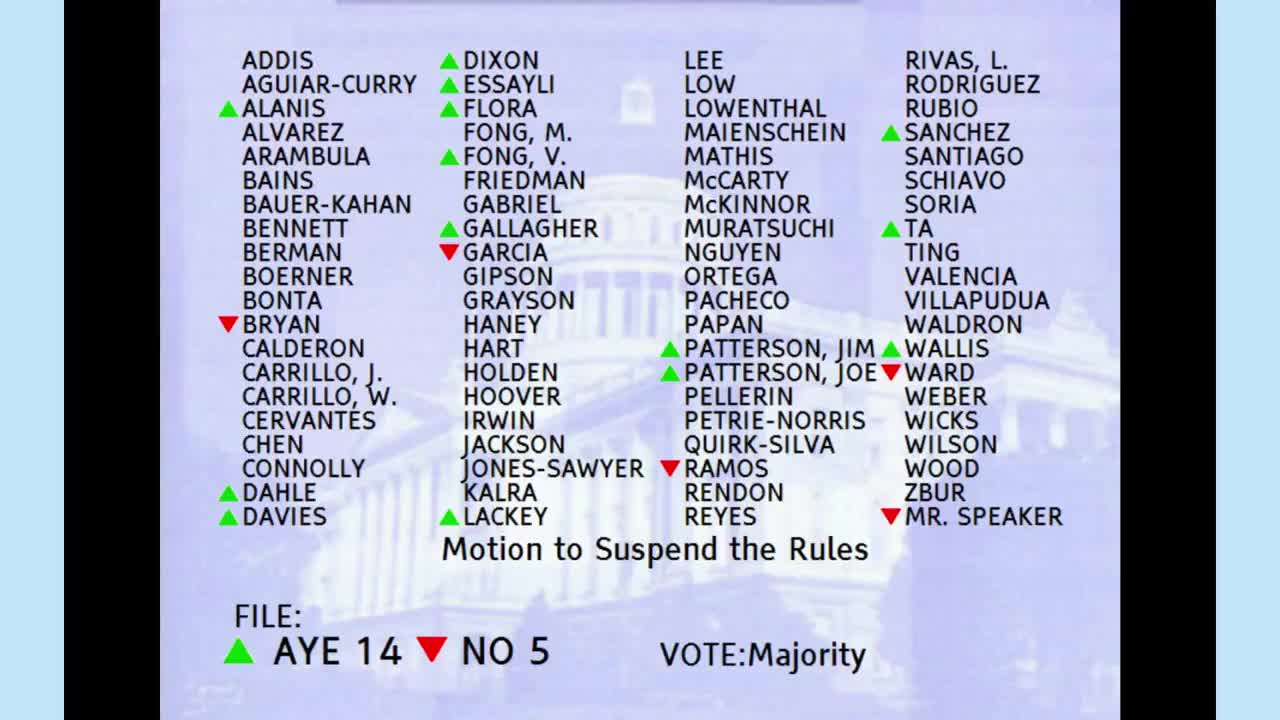 2MIN
Assembly Floor
 32SEC
Assembly Floor
 38MIN
Assembly Standing Committee on Governmental Organization
 8MIN
Senate Floor
 12MIN
Senate Standing Committee on Judiciary
 10MIN
Senate Standing Committee on Governmental Organization
Bill Author
Bill Co-Author(s):