SB 547: District agricultural associations: real property: affordable housing.
- Session Year: 2023-2024
- House: Senate
- Latest Version Date: 2023-06-05
Current Status:
Failed
(2023-06-21: June 21 set for first hearing.Testimony taken.)
Introduced
In Committee
First Chamber
In Committee
Second Chamber
Enacted
Existing law provides for the establishment of district agricultural associations and authorizes a district agricultural association to engage in various activities, including to purchase, acquire, hold, sell, exchange, or convey any interest in real property with the approval of the Department of General Services. Existing law establishes District 22 as the County of San Diego.
This bill would specify that the construction and maintenance of affordable housing, as defined, is included in that provision.This bill, by April 30, 2024, would require the 22nd District Agricultural Association to execute a legally binding lease of specified parcels of real property to the City of Del Mar for the purposes of constructing a residential development that provides at least 61 units that are affordable to lower income households. The bill would provide that the rent for a lease executed pursuant to these provisions be $1 per year and would authorize the City of Del Mar to sublease the real property to a private entity for the purpose of developing and constructing the affordable housing units. The bill would authorize the lease to include a requirement that a minimum percentage of the units constructed be reserved for employees of the 22nd District Agricultural Association, provided that no more than 10% are reserved for those employees. The bill would provide that the lease not be subject to the approval of the Department of General Services. By requiring the City of Del Mar to execute a lease with the 22nd District Agricultural Association, the bill would impose a state-mandated local program.
The California Constitution requires the state to reimburse local agencies and school districts for certain costs mandated by the state. Statutory provisions establish procedures for making that reimbursement.
This bill would provide that, if the Commission on State Mandates determines that the bill contains costs mandated by the state, reimbursement for those costs shall be made pursuant to the statutory provisions noted above.
Existing law provides for the establishment of district agricultural associations and authorizes a district agricultural association to engage in various activities, including to purchase, acquire, hold, sell, exchange, or convey any interest in real property with the approval of the Department of General Services.
This bill would specify that the construction and maintenance of affordable housing, as defined, is included in that provision.
Existing law requires the Governor to establish the Interagency Council on Homelessness, and requires the council to, among other things, identify mainstream resources, benefits, and services that can be accessed to prevent and end homelessness in California and promote systems integration to increase efficiency and effectiveness to address the needs of people experiencing homelessness. This bill would state the intent of the Legislature to enact legislation to study the viability of constructing housing for the homeless on state-owned property.Existing law requires the Governor to establish the Interagency Council on Homelessness, and requires the council to, among other things, identify mainstream resources, benefits, and services that can be accessed to prevent and end homelessness in California and promote systems integration to increase efficiency and effectiveness to address the needs of people experiencing homelessness.
This bill would state the intent of the Legislature to enact legislation to study the viability of constructing housing for the homeless on state-owned property.
(a)The 22nd District Agricultural Association shall, by April 30, 2024, execute a legally binding lease of a qualifying real property or properties to the City of Del Mar for the purposes of constructing a residential development that provides at least 61 units that are affordable to lower income households.
(b)The lease entered pursuant to subdivision (a) shall be subject to all of the following:
(1)The rent of the lease shall be one dollar ($1) per year.
(2)The lease shall provide that the City of Del Mar may sublease the real property to a private entity for the purpose of developing and constructing the affordable housing units. The rent charged for a sublease shall not exceed the amount charged pursuant to paragraph (1).
(3)The lease may include a requirement that a minimum percentage of the units constructed be reserved for employees of the 22nd District Agricultural Association, provided that no more than 10 percent are reserved for those employees.
(c)Notwithstanding paragraph (12) of subdivision (a) of Section 4051 or any other law, the lease shall not be subject to the approval of the Department of General Services.
(d)For purposes of this section:
(1)Lower income household means the same as defined in Section 50079.5 of the Health and Safety Code.
(2)(A)Qualifying real property means at least two acres of property located at either of the following sites:
(i)2586 Jimmy Durante Boulevard, Del Mar, CA 92014.
(ii)2260 Jimmy Durante Boulevard, Del Mar, CA 92014.
(B)If the 22nd District Agricultural Association and the City of Del Mar agree that neither parecl described in subparagraph (A) is suitable for a residential development described in subdivision (a), the parties may agree to site the development on a different parcel or parcels owned by the association, provided that the association leases a parcel or parcels that are at least cumulatively two acres and suitable for the residential development described in subdivision (a).
SEC. 2.The Legislature finds and declares that the leasing and subleasing of real property pursuant to Section 4154 of the Food and Agricultural Code, as added by this act, promotes the public purpose of developing housing for lower income household and does not constitute a gift of public funds within the meaning of Section 6 of Article XVI of the California Constitution.
SEC. 3.If the Commission on State Mandates determines that this act contains costs mandated by the state, reimbursement to local agencies and school districts for those costs shall be made pursuant to Part 7 (commencing with Section 17500) of Division 4 of Title 2 of the Government Code.
SECTION 1.Section 4051 of the Food and Agricultural Code is amended to read:4051.(a)An association may do any of the following:(1)Contract, in accordance with all of the following:(A)The written policies and procedures for contracting that are developed and maintained by the board of directors of the association in accordance with this section.(B)All applicable state laws governing contracts, except as follows:(i)A grant or contract entered into by an association for goods is not subject to Chapter 2 (commencing with Section 10290) of Part 2 of Division 2 of the Public Contract Code.(ii)A grant or contract entered into by an association is not subject to Chapter 3 (commencing with Section 12100) of Part 2 of Division 2 of the Public Contract Code.(C)If the estimated total cost of any construction project or similar work carried out under this section exceeds twenty-five thousand dollars ($25,000), the association shall solicit bids in writing and shall award the work to the lowest responsible bidder or reject all bids. The association is subject to all applicable provisions of the Public Contract Code.(D)An association may elect to become subject to the provisions of the Uniform Public Construction Cost Accounting Act (Chapter 2 (commencing with Section 22000) of Part 3 of Division 2 of the Public Contract Code) and the Small Business Procurement and Contract Act (Chapter 6.5 (commencing with Section 14835) of Part 5.5 of Division 3 of Title 2 of the Government Code), but exempt from the reporting requirements noted in subdivision (i) of Section 14838.1 of the Government Code.(2)Accept funds or gifts of value from the United States or any person to aid in carrying out the purposes of this part.(3)Conduct or contract for programs, and contract for the purchase or lease of goods that are necessary to effectuate the purposes of this chapter, either independently or in cooperation with any individual, public or private organization, or federal, state, or local governmental agency.(4)Establish and maintain a bank checking account or other financial institution account, approved by the Director of Finance in accordance with Sections 16506 and 16605 of the Government Code, for depositing funds received by the association. All funds maintained in an account authorized by this paragraph shall be used in accordance with Section 4001.(5)Approve the annual budget of the association and establish a program for paying vendors who contract with the association.(6)Contract with any county or county fair association for holding a fair jointly with the county or county fair association. The joint fair is a district fair of the association.(7)Make or adopt all necessary orders, rules, or regulations for governing the activities of the association. Notwithstanding paragraph (14), any orders, rules, or regulations adopted by the board are exempt from Chapter 3.5 (commencing with Section 11340) of Part 1 of Division 3 of Title 2 of the Government Code. For informational purposes only, however, any order, rule, or regulation adopted by the board may be transmitted to the Office of Administrative Law for filing with the Secretary of State pursuant to Section 11343 of the Government Code.(8)Operate a payroll system for paying employees, and a system for accounting for vacation and sick leave credits of employees.(9)Delegate to the officers and employees of the association the exercise of powers vested in the board, as the board may deem desirable, for the orderly management and operation of the association.(10)With the approval of the Department of General Services, purchase, acquire, hold, sell, or exchange, or convey any interest in real property. Any acquisition of land or other real property is subject to the Property Acquisition Law (Part 11 (commencing with Section 15850) of Division 3 of Title 2 of the Government Code). This may include, but is not limited to, the construction and maintenance of affordable housing, as defined in Section 62250 of the Government Code.(11)With the approval of the Department of General Services, make permanent improvements upon publicly owned real property adjacent to, or near the vicinity of, the real property of the association when the improvements materially benefit the property of the association pursuant to Section 11011 of the Government Code.(12)With the approval of the Department of General Services, lease for the use of its real property, or any portion of that property, to any person or public body for whatever purpose as may be approved by the board. This purpose may include, but not be limited to, the construction and maintenance of housing affordable to persons and families of low or moderate income, as defined by Section 50093 of the Health and Safety Code, pursuant to a lease of not more than 55 years.(13)Use, manage, or operate any of its property jointly or in connection with any lessee or sublessee, for any purpose approved by the board.(14)With the approval of the Department of General Services, pledge any revenues, moneys, accounts, accounts receivable, contract rights, and other rights to payment of whatever kind, pursuant to terms and conditions approved by the board. The revenues, moneys, accounts, accounts receivable, contract rights, and other rights to payment of whatever kind pledged by the association or its assignees constitute a lien or security interest that immediately attaches to the property pledged, and is effective, binding, and enforceable against the association, its successors, purchasers of the property pledged, creditors, and all others asserting rights therein, to the extent set forth, and in accordance with, the terms and conditions of the pledge, irrespective of whether those persons have notice of the pledge and without the need for physical delivery, recordation, filing, or further action.(15)With the approval of the secretary, enter into a joint powers agreement pursuant to the Joint Exercise of Powers Act (Chapter 5 (commencing with Section 6500) of Division 7 of Title 1 of the Government Code).(b)In developing the written policies and procedures for contracting, the board shall incorporate the following to apply to contracts or procurement by the association:(1)To ensure the fullest competition, the board shall adopt and publish competitive bidding procedures for the award of a procurement or contract involving an expenditure of more than one hundred thousand dollars ($100,000). The competitive bidding procedures shall include, but not be limited to, requirements for submission of bids and accompanying documentation, guidelines for the use of requests for proposals, invitations to bid, or other methods of bidding, and a bid protest procedure. The general manager shall determine whether the goods or services subject to this paragraph are available through existing contracts or price schedules of the Department of General Services. The Legislature finds and declares that fairs are a valuable community resource and recognizes that local businesses and local communities make valuable contributions to fairs that include direct and indirect support of fair programs. The Legislature further finds and declares that local businesses often provide opportunity purchases to local fairs that, for similar things available through the state purchasing program, may be purchased locally at a price equivalent to or less than that available through the state purchasing program. As used in this subdivision, opportunity purchases means purchases made locally, either individually or cooperatively, at a price equal to or less than the price available through the state purchasing program on or off state contract.(2)The contracting standards, procedures, and rules contained in this subdivision shall also apply with respect to any subcontract involving an expenditure of more than one hundred thousand dollars ($100,000). The board shall establish, as part of the bidding procedures for general contracts, subcontracting guidelines that implement this requirement.(3)With the approval of the Department of General Services, pledge any and all revenues, moneys, accounts, accounts receivable, contract rights, and other rights to payment of whatever kind, pursuant to terms and conditions approved by the board. Any issuance of bonds, contracts entered into, debts incurred, settlements, judgments, or liens under this section or pursuant to Chapter 5 (commencing with Section 6500) of Division 7 of Title 1 of the Government Code, shall not directly, indirectly, or contingently obligate the state or any political subdivision of the state to levy or to pledge any form of taxation therefor or to make any appropriation for their payment. The bond shall contain on its face a statement to the following effect: Neither the full faith and credit nor the taxing power of the State of California is pledged to the payment of the principal of, or interest on, this bond.(4)This section does not apply to Article 1 (commencing with Section 4101) of Chapter 6 of Part 3.(c)Notwithstanding any other law, an association shall adopt a fiscal review policy as follows:(1)An association with an annual budget exceeding five million dollars ($5,000,000) shall conduct an annual audit by an independent certified public accountant or certified public accountancy firm selected by the board.(2)(A)An association with an annual budget of less than five million dollars ($5,000,000) shall have its books and accounts examined and reviewed annually and audited once every three years by an independent certified public accountant or certified public accountancy firm selected by the board.(B)Solely for the 50th District Agricultural Association, which has entered into a joint powers agreement pursuant to the Joint Exercise of Powers Act (Chapter 5 (commencing with Section 6500) of Division 7 of Title 1 of the Government Code) to manage the responsibilities of the association, the joint powers agency shall be the entity responsible for ensuring that the annual examinations and reviews and the audits required by this paragraph are conducted. If the joint powers agency performs separate audits of the association and the joint powers agency, the joint powers agency shall submit both audits to the department in the manner prescribed in this chapter.(d)Notwithstanding subdivision (c), the department may require an audit to be conducted before the times specified in paragraphs (1) and (2) of subdivision (c) if the department or the state deems the audit is necessary.(a)An association may do any of the following:
(1)Contract, in accordance with all of the following:
(A)The written policies and procedures for contracting that are developed and maintained by the board of directors of the association in accordance with this section.
(B)All applicable state laws governing contracts, except as follows:
(i)A grant or contract entered into by an association for goods is not subject to Chapter 2 (commencing with Section 10290) of Part 2 of Division 2 of the Public Contract Code.
(ii)A grant or contract entered into by an association is not subject to Chapter 3 (commencing with Section 12100) of Part 2 of Division 2 of the Public Contract Code.
(C)If the estimated total cost of any construction project or similar work carried out under this section exceeds twenty-five thousand dollars ($25,000), the association shall solicit bids in writing and shall award the work to the lowest responsible bidder or reject all bids. The association is subject to all applicable provisions of the Public Contract Code.
(D)An association may elect to become subject to the provisions of the Uniform Public Construction Cost Accounting Act (Chapter 2 (commencing with Section 22000) of Part 3 of Division 2 of the Public Contract Code) and the Small Business Procurement and Contract Act (Chapter 6.5 (commencing with Section 14835) of Part 5.5 of Division 3 of Title 2 of the Government Code), but exempt from the reporting requirements noted in subdivision (f) (i) of Section 14838.1 of the Government Code.
(2)Accept funds or gifts of value from the United States or any person to aid in carrying out the purposes of this part.
(3)Conduct or contract for programs, and contract for the purchase or lease of goods that are necessary to effectuate the purposes of this chapter, either independently or in cooperation with any individual, public or private organization, or federal, state, or local governmental agency.
(4)Establish and maintain a bank checking account or other financial institution account, approved by the Director of Finance in accordance with Sections 16506 and 16605 of the Government Code, for depositing funds received by the association. All funds maintained in an account authorized by this paragraph shall be used in accordance with Section 4001.
(5)Approve the annual budget of the association and establish a program for paying vendors who contract with the association.
(6)Contract with any county or county fair association for holding a fair jointly with the county or county fair association. The joint fair is a district fair of the association.
(7)Make or adopt all necessary orders, rules, or regulations for governing the activities of the association. Notwithstanding paragraph (14), any orders, rules, or regulations adopted by the board are exempt from Chapter 3.5 (commencing with Section 11340) of Part 1 of Division 3 of Title 2 of the Government Code. For informational purposes only, however, any order, rule, or regulation adopted by the board may be transmitted to the Office of Administrative Law for filing with the Secretary of State pursuant to Section 11343 of the Government Code.
(8)Operate a payroll system for paying employees, and a system for accounting for vacation and sick leave credits of employees.
(9)Delegate to the officers and employees of the association the exercise of powers vested in the board, as the board may deem desirable, for the orderly management and operation of the association.
(10)With the approval of the Department of General Services, purchase, acquire, hold, sell, or exchange, or convey any interest in real property. Any acquisition of land or other real property is subject to the Property Acquisition Law (Part 11 (commencing with Section 15850) of Division 3 of Title 2 of the Government Code). This may include, but is not limited to, the construction and maintenance of affordable housing, as defined in Section 62250 of the Government Code.
(11)With the approval of the Department of General Services, make permanent improvements upon publicly owned real property adjacent to, or near the vicinity of, the real property of the association when the improvements materially benefit the property of the association pursuant to Section 11011 of the Government Code.
(12)With the approval of the Department of General Services, lease for the use of its real property, or any portion of that property, to any person or public body for whatever purpose as may be approved by the board. This purpose may include, but not be limited to, the construction and maintenance of housing affordable to persons and families of low or moderate income, as defined by Section 50093 of the Health and Safety Code, pursuant to a lease of not more than 55 years.
(13)Use, manage, or operate any of its property jointly or in connection with any lessee or sublessee, for any purpose approved by the board.
(14)With the approval of the Department of General Services, pledge any revenues, moneys, accounts, accounts receivable, contract rights, and other rights to payment of whatever kind, pursuant to terms and conditions approved by the board. The revenues, moneys, accounts, accounts receivable, contract rights, and other rights to payment of whatever kind pledged by the association or its assignees constitute a lien or security interest that immediately attaches to the property pledged, and is effective, binding, and enforceable against the association, its successors, purchasers of the property pledged, creditors, and all others asserting rights therein, to the extent set forth, and in accordance with, the terms and conditions of the pledge, irrespective of whether those persons have notice of the pledge and without the need for physical delivery, recordation, filing, or further action.
(15)With the approval of the secretary, enter into a joint powers agreement pursuant to the Joint Exercise of Powers Act (Chapter 5 (commencing with Section 6500) of Division 7 of Title 1 of the Government Code).
(b)In developing the written policies and procedures for contracting, the board shall incorporate the following to apply to contracts or procurement by the association:
(1)To ensure the fullest competition, the board shall adopt and publish competitive bidding procedures for the award of a procurement or contract involving an expenditure of more than one hundred thousand dollars ($100,000). The competitive bidding procedures shall include, but not be limited to, requirements for submission of bids and accompanying documentation, guidelines for the use of requests for proposals, invitations to bid, or other methods of bidding, and a bid protest procedure. The general manager shall determine whether the goods or services subject to this paragraph are available through existing contracts or price schedules of the Department of General Services. The Legislature finds and declares that fairs are a valuable community resource and recognizes that local businesses and local communities make valuable contributions to fairs that include direct and indirect support of fair programs. The Legislature further finds and declares that local businesses often provide opportunity purchases to local fairs that, for similar things available through the state purchasing program, may be purchased locally at a price equivalent to or less than that available through the state purchasing program. As used in this subdivision, opportunity purchases means purchases made locally, either individually or cooperatively, at a price equal to or less than the price available through the state purchasing program on or off state contract.
(2)The contracting standards, procedures, and rules contained in this subdivision shall also apply with respect to any subcontract involving an expenditure of more than one hundred thousand dollars ($100,000). The board shall establish, as part of the bidding procedures for general contracts, subcontracting guidelines that implement this requirement.
(3)With the approval of the Department of General Services, pledge any and all revenues, moneys, accounts, accounts receivable, contract rights, and other rights to payment of whatever kind, pursuant to terms and conditions approved by the board. Any issuance of bonds, contracts entered into, debts incurred, settlements, judgments, or liens under this section or pursuant to Chapter 5 (commencing with Section 6500) of Division 7 of Title 1 of the Government Code, shall not directly, indirectly, or contingently obligate the state or any political subdivision of the state to levy or to pledge any form of taxation therefor or to make any appropriation for their payment. The bond shall contain on its face a statement to the following effect: Neither the full faith and credit nor the taxing power of the State of California is pledged to the payment of the principal of, or interest on, this bond.
(4)This section does not apply to Article 1 (commencing with Section 4101) of Chapter 6 of Part 3.
(c)Notwithstanding any other law, an association shall adopt a fiscal review policy as follows:
(1)An association with an annual budget exceeding five million dollars ($5,000,000) shall conduct an annual audit by an independent certified public accountant or certified public accountancy firm selected by the board.
(2)(A)An association with an annual budget of less than five million dollars ($5,000,000) shall have its books and accounts examined and reviewed annually and audited once every three years by an independent certified public accountant or certified public accountancy firm selected by the board.
(B)Solely for the 50th District Agricultural Association, which has entered into a joint powers agreement pursuant to the Joint Exercise of Powers Act (Chapter 5 (commencing with Section 6500) of Division 7 of Title 1 of the Government Code) to manage the responsibilities of the association, the joint powers agency shall be the entity responsible for ensuring that the annual examinations and reviews and the audits required by this paragraph are conducted. If the joint powers agency performs separate audits of the association and the joint powers agency, the joint powers agency shall submit both audits to the department in the manner prescribed in this chapter.
(d)Notwithstanding subdivision (c), the department may require an audit to be conducted before the times specified in paragraphs (1) and (2) of subdivision (c) if the department or the state deems the audit is necessary.
SECTION 1.It is the intent of the Legislature to enact legislation to study the viability of constructing housing for the homeless on state-owned property.It is the intent of the Legislature to enact legislation to study the viability of constructing housing for the homeless on state-owned property.
|
Date
|
Status
|
|---|---|
| Jun 21, 2023 | June 21 set for first hearing.Testimony taken. |
| Jun 15, 2023 | Re-referred to Coms. on AGRI. and H. & C.D. pursuant to Assembly Rule 96. |
| Jun 7, 2023 | June 7 hearing postponed by committee. |
| Jun 5, 2023 | From committee with author's amendments. Read second time and amended. Re-referred to Com. on H. & C.D. |
| May 25, 2023 | Re-referred to Coms. on H. & C.D. and AGRI. pursuant to Assembly Rule 96. |
| May 18, 2023 | Referred to Coms. on AGRI. and H. & C.D. |
| May 11, 2023 | In Assembly. Read first time. Held at Desk. |
| May 11, 2023 | Read third time. Passed. (Ayes 39. Noes 0. Page 1054.) Ordered to the Assembly. |
| May 9, 2023 | Read second time. Ordered to consent calendar. |
| May 8, 2023 | From committee: Be ordered to second reading pursuant to Senate Rule 28.8 and ordered to consent calendar. |
| May 1, 2023 | Set for hearing May 8. |
| Apr 25, 2023 | From committee: Do pass and re-refer to Com. on APPR with recommendation: To consent calendar. (Ayes 11. Noes 0. Page 875.) (April 24). Re-referred to Com. on APPR. |
| Apr 19, 2023 | Set for hearing April 24. |
| Apr 18, 2023 | From committee: Do pass and re-refer to Com. on HOUSING. (Ayes 3. Noes 0. Page 768.) (April 18). Re-referred to Com. on HOUSING. |
| Apr 3, 2023 | Set for hearing April 18. |
| Mar 29, 2023 | Re-referred to Coms. on AGRI and HOUSING. |
| Mar 20, 2023 | From committee with author's amendments. Read second time and amended. Re-referred to Com. on RLS. |
| Feb 22, 2023 | Referred to Com. on RLS. |
| Feb 16, 2023 | From printer. May be acted upon on or after March 18. |
| Feb 15, 2023 | Introduced. Read first time. To Com. on RLS. for assignment. To print. |
|
Date
|
Description
|
Location
|
Votes
|
|
|---|---|---|---|---|
| May 11, 2023 | Consent Calendar SB547 Blakespear | Senate Floor |
Passed |
|
| Apr 24, 2023 | Do pass, but first be re-referred to the Committee on [Appropriations] with the recommendation: To Consent Calendar | Senate Standing Committee on Housing |
Passed |
|
| Apr 18, 2023 | Do pass, but first be re-referred to the Committee on [Housing] | Senate Standing Committee on Agriculture |
Passed |
This list shows positions taken on this bill by organizations on the date displayed, which is linked to the original source.
Positions by individuals are not included.
|
Organization
|
Position
|
Date
|
|---|---|---|
| The City of Del Mar | ** Support | |
| Western Fairs Association | ** Against |
Date of Hearing: June 21, 2023
ASSEMBLY COMMITTEE ON AGRICULTURE
Robert Rivas, Chair
SBPCA Bill Id:SB 547
Author:(Blakespear) – As Amended Ver:June 5, 2023
SENATE VOTE: 39-0
SUBJECT: District agricultural associations: real property: affordable housing
SUMMARY: This bill requires the 22nd District Agricultural Association (DAA) to lease 22nd DAA land to the City of Del Mar for the purposes of constructing a residential development that provides at least 61 units that are affordable to lower income households. Specifically, this bill:
- Requires the 22nd DAA to lease 22nd DAA land to the City of Del Mar for the purposes of constructing a residential development that provides at least 61 units that are affordable to lower income households.
- Requires the lease to do the following:
- The rent of the lease shall be one dollar ($1) per year.
- The lease shall allow that the City of Del Mar may sublease the real property to a private entity for the purpose of developing and constructing the affordable housing units. The rent charged for a sublease shall not exceed the amount charged pursuant to paragraph (1).
- The lease may include a requirement that a minimum percentage of the units constructed be reserved for employees of the 22nd DAA, as specified.
- Requires the lease to not be subject to the approval of the Department of General Services.
- Defines the following:
- “Lower income household” means the same as defined in Section 50079.5 of the Health and Safety Code.
- “Qualifying real property” means at least two acres of property located at either of the following sites:
- 2586 Jimmy Durante Boulevard, Del Mar, CA 92014.
- 2260 Jimmy Durante Boulevard, Del Mar, CA 92014.
- Allows 22nd DAA and the City of Del Mar, if neither parcel described is suitable for a residential development, may agree to site the development on a different parcel or parcels owned by the 22nd DAA, provided that the 22nd DAA leases a parcel or parcels that are at least cumulatively two acres and suitable for the residential development.
- Makes findings and declarations that the leasing and subleasing of real property promotes the public purpose of developing housing for lower income households and does not constitute a gift of public funds, as specified.
EXISTING LAW:
- Establishes the Division of Fairs and Expositions within the California Department of Food and Agriculture (CDFA), which is responsible for the fiscal and policy oversight for the network of California Fairs. Food and Agricultural Code (FAC) 3001
- States 50 or more persons, who are residents of a district, may form an association to be known as and designated as a District Agricultural Association (DAA), for the following purposes:
- Holding fairs, expositions and exhibitions for the purpose of exhibiting all of the industries and industrial enterprises, resources and products of every kind or nature of the state with a view toward improving, exploiting, encouraging, and stimulating them.
- Constructing, maintaining, and operating recreational and cultural facilities of general public interest. FAC 3951
- Allows a DAA, with approval of the Department of General Services (DGS), to purchase, acquire, hold, sell, or exchange, or convey any interest in real property. (FAC 4051 (D)(10)
- Allows a DAA, with the approval of DGS, to lease for the use of its real property, or any portion of that property, to any person or public body for whatever purpose as may be approved by the board. This purpose may include, but not be limited to, the construction and maintenance of housing affordable to persons and families of low or moderate income, as defined by Section 50093 of the Health and Safety Code, pursuant to a lease of not more than 55 years. FAC 4051(a)D(12)
- Defines “affordable housing” to mean housing with an affordable housing cost, as defined in Section 50052.5 of the Health and Safety Code, or affordable rent, as defined in Section 50053 of the Health and Safety Code, for households whose gross income does not exceed 120 percent of the area median income. (Government Code Section 62250
FISCAL EFFECT: Unknown
COMMENTS: There are 54 statutory DAAs, of which 52 are active, and 41 operate on state owned lands. They hold various activities on their sites, such as fairs, day care operations, fund raising and commercial events. DAAs in some areas provide the only event space for the local community. DAA budgets run from several hundred thousand dollars to over ten million dollars.
Only a few DAAs are self-sustaining, most are not. Additionally, almost all have deferred maintenance of buildings or grounds, or both.
DAAs were historically subsidized by the state through a portion of horse racing revenues until
2009, when it was switched to the state general fund (GF) in the amount of $32 million. In 2011, the GF dollars were deleted and DAAs have been operating on their reserves and revenues. As a result of the withdrawal of state funds, DAAs have been given some flexibility on purchasing and contracting rules. DAAs are still required to get permission from DGS for contract related to state property. Current law allows, under a DAA’s leasing authority and with the DGS’s approval, the lease, construction and maintenance of affordable housing, as specified, on DAA property.
Governor Gavin Newsom’s Executive Order N-06-19, which among other things, directed the DGS, in consultation with the Department of Housing and Community Development (HCD), to accept proposals to enter into low-cost, long-term ground leases of priority parcels for the purpose of affordable housing development. Priority parcels are excess state-owned properties identified by DGS and HCD. Since this executive order, DGS has issued approximately 20 Request for Qualifications from developers to initiate the process of affordable housing development on state owned land, including one for a master planned affordable housing development on approximately 100+ acres of the San Joaquin County Fairgrounds.
In September of 2020, HCD sent a formal enforcement letter to the City of Del Mar, finding that the City’s 5th Cycle Housing Element was substantially noncompliant with Government Code Sections 65583 and 65584.09. Specifically, HCD found that the City had failed to implement the zoning standards necessary to provide developable sites to accommodate the City’s allocations of regional housing needs from the 4th and 5th Housing Element cycles. In addition to its 6th Cycle Housing Element regional housing needs allocation, the City must zone for 113 affordable housing units. In 2021, the City and 22nd DAA began collaboratively exploring the opportunity to fulfill a portion of the City’s obligation by siting an affordable housing development on a parcel of the Del Mar Fairgrounds. While the collaboration has been productive, HCD has set a deadline for the City to obtain site control of a developable parcel by April 2024.
According to the author, this bill will require the 22nd DAA to execute a legally binding, low-cost land lease for the purpose of developing no less than 61 affordable housing units by April 2024.
Supporter State, this will build on the demonstrated interest from the 22nd DAA and the City and establish a timeline for the two parties to enter into a legally binding lease of 2 acres of land (approximately 0.5% of the fairgrounds) for the purpose of constructing a minimum of 61 affordable housing units. Additionally, this bill specifies that the rent will be $1 per year to increase the financial viability of the 100% affordable housing project. It is important to note that while this bill does expedite a stage of the process and reduces a component of the costs, the project will still need to overcome other regulatory and financial hurdles before it can be developed. Nevertheless, this bill will enable this project to take a vital step forward with expedience. The City has also submitted some potential modifications to the bill for consideration that would reduce regulatory hurdles by including a "use by right" designation and an exemption from the Surplus Lands Act. This will get the City one step closer to providing the housing residents sorely need.
Opponents state, DAAs are state agencies governed by nine gubernatorial appointees vested with power and authority to, among other things, with the approval of DGS, to purchase, acquire, hold, sell, or exchange, or convey any interest in real property. DAAs governance structures strike an important balance between self-determination as state agencies and proper administrative oversight by sister agencies. Unlike almost any other state agency, DAAs are revenue generating entities that receive very little financial support from the State, making their autonomy to make thoughtful and self-interested business decisions a necessity. This bill dismantles this important balance and sets the dangerous precedent of the State Legislature overriding the independent authority of a DAA, in this case the 22nd DAA, on how to best utilize the property the DAA is statutorily authorized to manage. Moreover, this bill prohibits the DAA from generating any revenue from the proposed lease.
Conversation with the Author and Staff have developed some potential amendments. As such the Committee may wish to consider the following amendments:
- Delete section removing DGS oversight.
- On page 3, strike lines 1-3,
Notwithstanding paragraph (12) of subdivision (a) of Section 4051 or any other law, the lease shall not be subject to the approval of the Department of General Services.
- On page 3, strike lines 1-3,
- Remove specific addresses where housing will be built.
- On page 3, strike lines 9-18, “Qualifying real property” means at least two acres of property and suitable for the residential development described in subdivision (a), located at the 22nd District Agriculture Association
either of the following sites:
- On page 3, strike lines 9-18, “Qualifying real property” means at least two acres of property and suitable for the residential development described in subdivision (a), located at the 22nd District Agriculture Association
(i) 2586 Jimmy Durante Boulevard, Del Mar, CA 92014.
(ii) 2260 Jimmy Durante Boulevard, Del Mar, CA 92014.
(B) If the 22nd District Agricultural Association and the City of Del Mar agree that neither parecl described in subparagraph (A) is suitable for a residential development described in subdivision (a), the parties may agree to site the development on a different parcel or parcels owned by the association, provided that the association leases a parcel or parcels that are at least cumulatively two acres and suitable for the residential development described in subdivision (a).
- Changes an April 2024 date to have a contract to a January 2024 date to execute an exclusive negotiating agreement by and a January 2025 deadline for a legally binding ground lease.
On page 1, amend lines 3-7 as follows: 4154. (a) The 22nd District Agricultural Association shall, by April 30, 2024, execute a legally binding lease of a qualifying real property or properties execute an exclusive negotiating agreement by January 2024 and the legally binding ground lease by January 2025.to the City of Del Mar for the purposes of constructing a residential development that provides at least 61 units that are affordable to lower income households.
Even with these amendments there are still concerns with legislation this specific when there is an ongoing negotiation between the City of Del Mar and the 22nd DAA. This bill could set a precedent that will negate good faith negotiations when dealing with state lands and affordable housing issues.
REGISTERED SUPPORT / OPPOSITION:
Support
The City of Del Mar
Opposition
Western Fairs Association
Analysis Prepared by: Victor Francovich / AGRI. / (916) 319-2084
SENATE RULES COMMITTEE Office of Senate Floor Analyses (916) 651-1520 Fax: (916) 327-4478 | SB 547 |
CONSENT
Bill No: SB 547
Author: Blakespear (D)
Amended: 3/20/23
Vote: 21
SENATE AGRICULTURE COMMITTEE: 3-0, 4/18/23
AYES: McGuire, Grove, Alvarado-Gil
NO VOTE RECORDED: Padilla
SENATE HOUSING COMMITTEE: 11-0, 4/24/23
AYES: Wiener, Ochoa Bogh, Blakespear, Caballero, Cortese, McGuire, Padilla, Seyarto, Skinner, Umberg, Wahab
SENATE APPROPRIATIONS COMMITTEE: Senate Rule 28.8
SUBJECT: District agricultural associations: real property: affordable housing
SOURCE: Author
DIGEST:
This bill clarifies a district agricultural association may engage in the construction and maintenance of affordable housing on state-owned property, as defined.
ANALYSIS:
Existing law:
- Establishes district agricultural associations (DAA) which are used to hold fairs, expositions, and exhibitions.
- Allows a DAA, with the approval of the Department of General Services (DGS), to purchase, acquire, hold, sell, or exchange, or convey any interest in real property.
- Allows a DAA, with the Approval of DGS, to lease to any person or public body its real property, or any portion of that property.
This bill clarifies a DAA, with the approval of DGS, may purchase, acquire, hold, sell, or exchange, or convey any interest in real property including, but not limited to, the construction and maintenance of affordable housing.
FISCAL EFFECT: Appropriation: No Fiscal Com.: Yes Local: No
SUPPORT: (Verified 5/9/23)
None received
OPPOSITION: (Verified 5/9/23)
None received
ARGUMENTS IN SUPPORT: According to the author’s office, “A core priority of Senator Blakespear is to address California’s housing crisis through increasing affordable housing development. By providing, without question, the authority that District Agricultural Associations throughout the state can construct and maintain affordable housing on state-owned property paves a path forward to more meaningfully address the housing crisis.”
Prepared by: Reichel Everhart / AGRI. / (916) 651-1508
5/10/23 15:29:16
**** END ****
SENATE COMMITTEE ON HOUSING
Senator Scott Wiener, Chair
2023 - 2024 Regular
Bill No: SB 547 Hearing Date: 4/24/2023
Author: | Blakespear | ||
Version: | 3/20/2023 | ||
Urgency: | No | Fiscal: | Yes |
Consultant: | Mehgie Tabar | ||
SUBJECT: District agricultural associations: real property: affordable housing
DIGEST: This bill clarifies that a District Agricultural Association (DAA) may engage in the construction and maintenance of affordable housing on state-owned property, as defined.
ANALYSIS:
Existing law:
- Establishes the Division of Fairs and Expositions within the California Department of Food and Agriculture (CDFA), which is responsible for the fiscal and policy oversight for the network of California Fairs.
- States 50 or more persons, who are residents of a district, may form an association to be known as and designated as a DAA, for the following purposes:
- Holding fairs, expositions and exhibitions for the purpose of exhibiting all of the industries and industrial enterprises, resources and products of every kind or nature of the state with a view toward improving, exploiting, encouraging, and stimulating them.
- Constructing, maintaining, and operating recreational and cultural facilities of general public interest.
- Allows a DAA, with approval of the California Department of General Services (DGS), to purchase, acquire, hold, sell, or exchange, or convey any interest in real property.
- Allows a DAA, with the approval of DGS, to lease for the use of its real property, or any portion of that property, to any person or public body for whatever purpose as may be approved by the board. This purpose may include, but not be limited to, the construction and maintenance of housing affordable to persons and families of low or moderate income, as defined, pursuant to a lease of not more than 55 years.
This bill:
- Clarifies a DAA, with the approval of DGS, may purchase, acquire, hold, sell, or exchange, or convey any interest in real property including, but not limited to, the construction and maintenance of affordable housing, as defined.
COMMENTS:
- Author’s statement. “A core priority of Senator Blakespear is to address California’s housing crisis through increasing affordable housing development. By providing, without question, the authority that District Agricultural Associations throughout the state can construct and maintain affordable housing on state-owned property paves a path forward to more meaningfully address the housing crisis.”
- California’s housing crisis. California’s housing crisis is a half century in the making. Decades of underproduction underscored by exclusionary policies have left housing supply far behind need and costs soaring. California currently has 13 of the 14 least affordable metropolitan areas for homeownership in the nation; it also has the second highest rate of renter households paying more than 30% of their income for housing at 52%. According to the 2022 Statewide Housing Plan, published by HCD, California must plan for more than 2.5 million homes over the next eight-year cycle, and no less than one million of those homes must meet the needs of lower-income households.[1] This represents more than double the housing planned for in the last eight-year cycle. The lack of housing supply is the primary factor underlying California’s housing crisis.
During the 1990’s, California averaged only 110,000 new housing units per year. During the early 2000’s, production increased significantly, reaching a peak of 212,000 units in 2004 before plummeting to historic lows during the recession. Unfortunately, the downward trend continues; the fact is that California has under-produced housing every single year since 1989.
As a result, millions of Californians, who are disproportionately lower income and people of color, must make hard decisions about paying for housing at the expense of food, health care, child care, and transportation—one in three households in the state doesn't earn enough money to meet their basic needs.
- Public state lands for affordable housing development. One of the limiting factors in building new affordable homes is land—the high cost and acquisition of land suitable for housing. State agencies own a significant amount of lands located in or near urban areas, some of which exceed those agencies’ foreseeable needs, which could be used for housing.
Currently, the State of California owns over 3,100 properties and over 44,000 parcels totaling nearly seven million acres in size. Most of these are actively in use by the state's departments and agencies, or are non-developable land. Each year, state agencies review their lands, identify real properties which are excess to their needs, and report them to DGS. Until recently, DGS' prioritization for this disposal was to transfer to other state agencies, sell to local governments, sell to affordable housing developers, or sell on the open market, in that order. During the period between 2010 and 2020, DGS disposed of 64 properties, of which seven were utilized for affordable housing.
In January 2019, Governor Newsom issued Executive Order (EO) N-06-19, which ordered DGS and HCD to identify and inventory excess state-owned property for affordable housing projects. In doing so, this EO reoriented DGS' priorities to focus on facilitating the conversion of excess property to affordable housing. Within the required three months, DGS reviewed over 44,000 parcels, and identified 92 properties potentially suitable for housing. Since the beginning of implementation in 2019, DGS has awarded 16 of these state properties, totally 24 projects, for affordable housing development, each of which is proceeding through the planning, development, or construction phase. These properties will provide approximately 5,000 units of affordable housing through a low-cost ($1/year), long-term (99+ years) ground lease with the state. In 2023, DGS will select and award at least 5 more sites for the development of affordable housing.
- Synergistic partnerships. Existing law allows DAAs, with the approval of DGS, to lease its real property for whatever purpose is approved by the board.
Although not a new concept for the state, this bill will specify that the purpose of leasing these properties may include, but not be limited to, the construction and maintenance of housing affordable to persons and families of low or moderate income.
For example, the 2nd DAA, which operates the San Joaquin County Fairgrounds, is currently pursuing an affordable housing project through EO N-06-19. These fairgrounds encompass nearly 280 acres, of which approximately 100 acres have been identified as excess to need and suitable for a master planned residential development. The proposed development is also intended to provide financial support for the on-going operations of the 2nd DAA.
- Double-referral. This bill was first referred to the Committee on Agriculture, where it passed on a 3-0 vote on April 18, 2023.
Related Legislation:
SB 561 (Dodd, Chapter 446, Statutes of 2022) — required DGS, in consultation with HCD, to develop criteria to evaluate the suitability of excess state-owned parcels for affordable housing, codifying a portion of Executive Order N-06-19.
AB 2233 (Quirk-Silva, Chapter 438, Statutes of 2022) — required DGS to develop a plan (i.e., establish an ongoing system for identifying and disposing of state land) to facilitate development of affordable housing on state-owned excess land, codifying a portion of Executive Order N-06-19.
SB 6 (Beall, Chapter 667, Statutes of 2019) — required DGS to create a public, searchable database of sites in local government’s housing element inventory of land suitable for residential development and state surplus properties.
FISCAL EFFECT: Appropriation: No Fiscal Com.: Yes Local: No
POSITIONS: (Communicated to the committee before noon on Wednesday,
April 19, 2023)
SUPPORT:
None received.
OPPOSITION:
None received.
-- END --
2022 Statewide Housing Plan: A Home for Every Californian (arcgis.com) ↑
SENATE COMMITTEE ON AGRICULTURE
Senator Melissa Hurtado, Chair
2023 - 2024 Regular
Bill No: SB 547 Hearing Date: 4/18/23
Author: | Blakespear | ||
Version: | 3/20/23 | ||
Urgency: | No | Fiscal: | Yes |
Consultant: | Reichel Everhart | ||
Subject: District agricultural associations: real property: affordable housing
SUMMARY
:
This bill would clarify a district agricultural association may engage in the construction and maintenance of affordable housing on state-owned property, as defined.
BACKGROUND AND EXISTING LAW
:
Existing state law:
- Establishes the Division of Fairs and Expositions within the California Department of Food and Agriculture (CDFA), which is responsible for the fiscal and policy oversight for the network of California Fairs (Food and Agricultural Code Section 3001).
- States 50 or more persons, who are residents of a district, may form an association to be known as and designated as a District Agricultural Association (DAA), for the following purposes:
- Holding fairs, expositions and exhibitions for the purpose of exhibiting all of the industries and industrial enterprises, resources and products of every kind or nature of the state with a view toward improving, exploiting, encouraging, and stimulating them.
- Constructing, maintaining, and operating recreational and cultural facilities of general public interest (Food and Agricultural Code Section 3951).
- Allows a DAA, with approval of DGS, to purchase, acquire, hold, sell, or exchange, or convey any interest in real property (Food and Agricultural Code Section 4051 (D)(10)).
- Allows a DAA, with the approval of DGS, to lease for the use of its real property, or any portion of that property, to any person or public body for whatever purpose as may be approved by the board. This purpose may include, but not be limited to, the construction and maintenance of housing affordable to persons and families of low or moderate income, as defined by Section 50093 of the Health and Safety Code, pursuant to a lease of not more than 55 years (Food and Agricultural Code, Section 4051(a)D(12)).
- Defines “affordable housing” to mean housing with an affordable housing cost, as defined in Section 50052.5 of the Health and Safety Code, or affordable rent, as defined in Section 50053 of the Health and Safety Code, for households whose gross income does not exceed 120 percent of the area median income (Government Code Section 62250).
- Section 50053 of the Health and Safety Code reads:
“50053. (a) For any rental housing development that receives assistance prior to January 1, 1991, and a condition of that assistance is compliance with this section, “affordable rent” with respect to lower income households shall not exceed the percentage of the gross income of the occupant person or household established by regulation of the department that shall not be less than 15 percent of gross income nor exceed 25 percent of gross income.
(b) For any rental housing development that receives assistance on or after January 1, 1991, and a condition of that assistance is compliance with this section, “affordable rent,” including a reasonable utility allowance, shall not exceed:
(1) (A) For acutely low income households, as defined in Section 50063.5, the product of 30 percent times 15 percent of the area median income adjusted for family size appropriate for the unit.
(B) This paragraph shall apply to a lease entered into on or after January 1, 2022.
(2) For extremely low income households, the product of 30 percent times 30 percent of the area median income adjusted for family size appropriate for the unit.
(3) For very low income households, the product of 30 percent times 50 percent of the area median income adjusted for family size appropriate for the unit.
(4) For lower income households whose gross incomes exceed the maximum income for very low income households, the product of 30 percent times 60 percent of the area median income adjusted for family size appropriate for the unit. In addition, for those lower income households with gross incomes that exceed 60 percent of the area median income adjusted for family size, it shall be optional for any state or local funding agency to require that affordable rent be established at a level not to exceed 30 percent of gross income of the household.
(5) For moderate-income households, the product of 30 percent times 110 percent of the area median income adjusted for family size appropriate for the unit. In addition, for those moderate-income households whose gross incomes exceed 110 percent of the area median income adjusted for family size, it shall be optional for any state or local funding agency to require that affordable rent be established at a level not to exceed 30 percent of gross income of the household.
(c) The department’s regulation shall permit alternative percentages of income for agency-assisted rental and cooperative housing developments pursuant to regulations adopted under subdivision (f) of Section 50462. The department shall, by regulation, adopt criteria defining and providing for determination of gross income, adjustments for family size appropriate to the unit, and rent for purposes of this section. These regulations may provide alternative criteria, where necessary, to be consistent with pertinent federal statutes and regulations governing federally assisted rental and cooperative housing. The agency may, by regulation, adopt alternative criteria, and pursuant to subdivision (f) of Section 50462, alternative percentages of income may be adopted for agency-assisted housing developments.
(d) For purposes of this section, “area median income,” “adjustments for family size appropriate to the unit,” and “moderate-income household” shall have the same meaning as provided in Section 50052.5.
PROPOSED LAW
:
This bill:
- Clarifies a DAA, with the approval of DGS, may purchase, acquire, hold, sell, or exchange, or convey any interest in real property including, but not limited to, the construction and maintenance of affordable housing, as defined in Section 62250 of the Government Code.
ARGUMENTS IN SUPPORT:
According to the author’s office:
“A core priority of Senator Blakespear is to address California’s housing crisis through increasing affordable housing development. By providing, without question, the authority that District Agricultural Associations throughout the state can construct and maintain affordable housing on state-owned property paves a path forward to more meaningfully address the housing crisis.”
ARGUMENTS IN OPPOSITION:
None received
COMMENTS
:
In 2019, Governor Newsom signed Executive Order N-06-19 - Affordable Housing Development (which was codified in state law by SB 561, Chapter 446, Statutes of 2022). The Order directed DGS and the Department of Housing and Community Development to identify and inventory excess state-owned property for affordable housing projects.
Food and Agricultural Code section 4051(12) states DAAs, with the approval of DGS, may lease for the use of its real property to any person or public body for whatever purpose is approved by the board. This purpose, “may include, but not be limited to, the construction and maintenance of housing affordable to persons and families of low or moderate income, as defined by Section 50093 of the Health and Safety Code, pursuant to a lease of not more than 55 years.”
For example, the 2nd DAA, which operates the San Joaquin County Fairgrounds, currently has an affordable housing project. According to the DGS website:
“The 2nd District Agricultural Association (DAA) operates the San Joaquin County Fairgrounds. The fairgrounds include approximately 280 acres of which approximately 100+ acres have been identified as excess and suitable for a master planned residential development. The Site is located at the corner of Martin Luther King Junior Boulevard (a.k.a. East Charter Way and State Route 4) and Airport Way and falls within the South Stockton neighborhood of the City of Stockton.
In addition to the development of affordable housing the proposed development is also intended to provide financial support for the on-going operations of the 2nd DAA.”
RELATED LEGISLATION
:
- SB 6 (Chapter 629, Statutes of 2022): Enacted, until January 1, 2033, the Middle Class Housing Act of 2022, which establishes housing as an allowable use on any parcel zoned for office or retail uses.
- SB 561 (Chapter 446, Statutes of 2022): Requires the Department of General Services, in consultation with the California Department of Housing and Community Development, to develop criteria to evaluate the suitability of excess state-owned parcels for affordable housing.
SUPPORT
: (As of 4/14/23)
None received
OPPOSITION
: (As of 4/14/23)
None received
-- END --
Discussed in Hearing
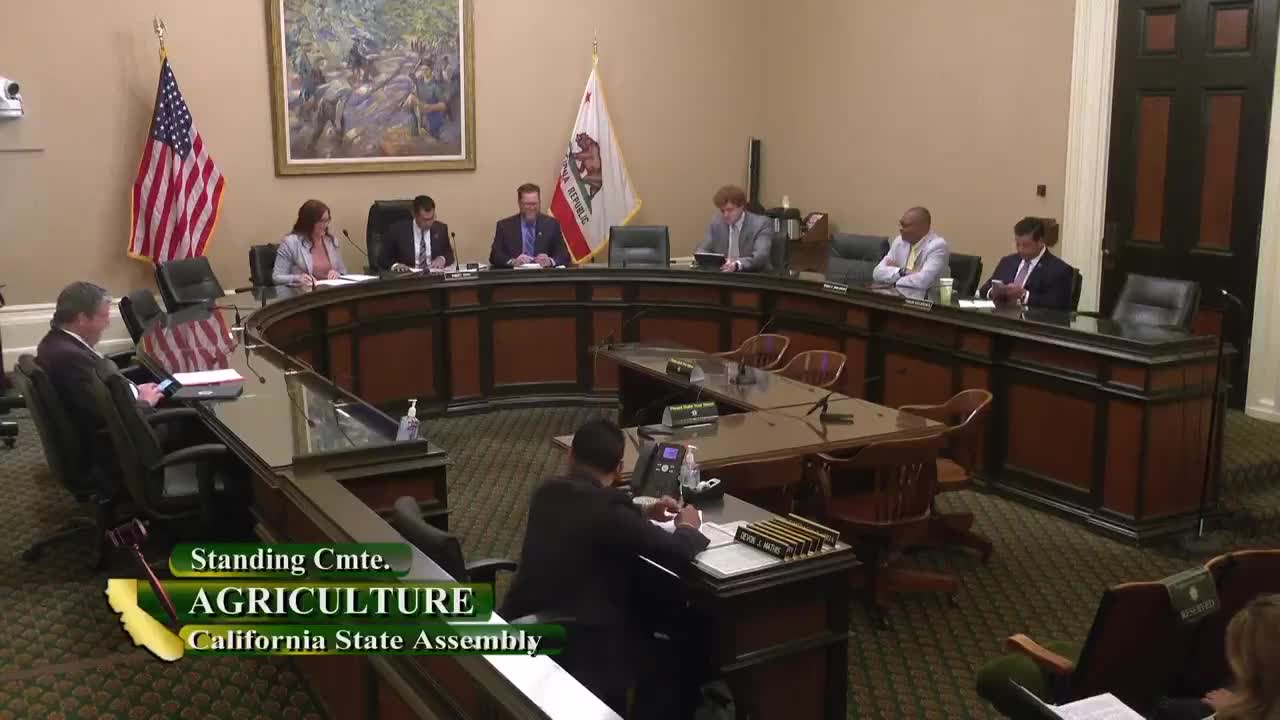 20MIN
Assembly Standing Committee on Agriculture
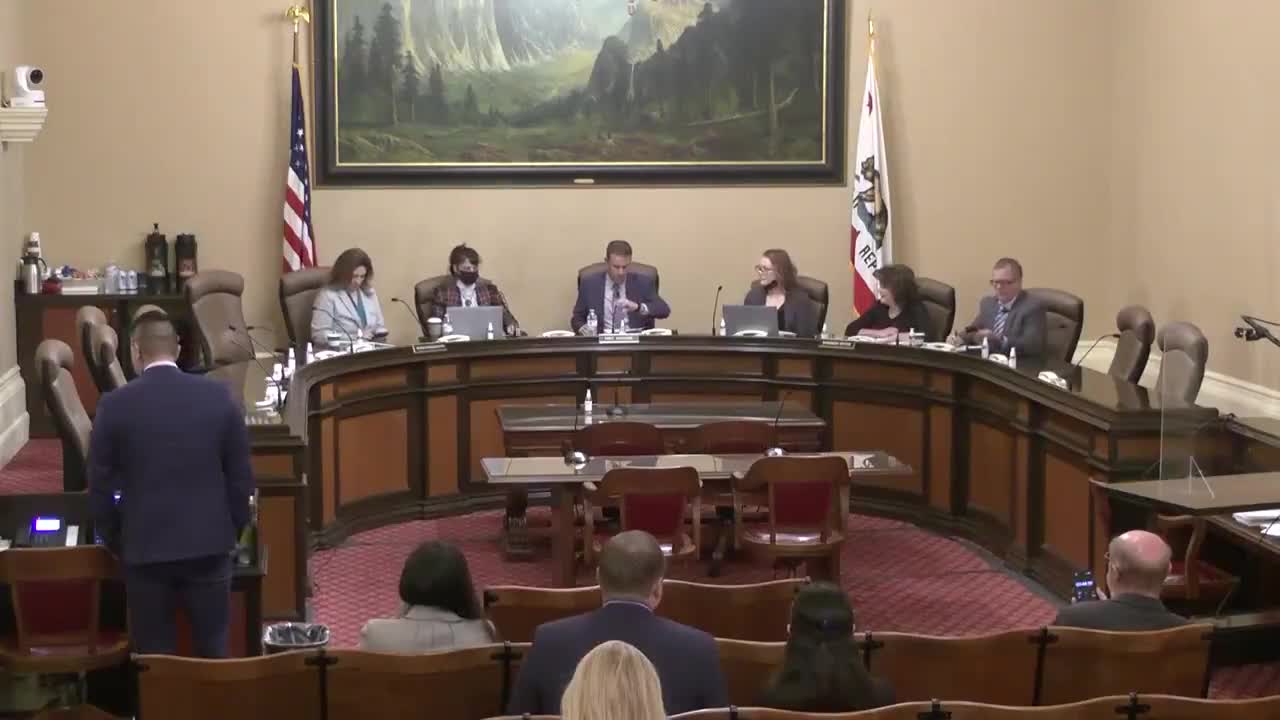 6MIN
Senate Standing Committee on Agriculture
Bill Author

Bill Co-Author(s):