SB 549: Gaming: Tribal Nations Access to Justice Act.
- Session Year: 2023-2024
- House: Senate
- Latest Version Date: 2024-09-28
Current Status:
Passed
(2024-09-28: Chaptered by Secretary of State. Chapter 860, Statutes of 2024.)
Introduced
In Committee
First Chamber
In Committee
Second Chamber
Enacted
The existing federal Indian Gaming Regulatory Act of 1988 provides for the negotiation and execution of tribal-state gaming compacts for the purpose of authorizing certain types of gaming on Indian lands within a state. The California Constitution prohibits the Legislature from authorizing casinos of the type operating in Nevada and New Jersey and authorizes the Governor to negotiate and conclude tribal-state gaming compacts, subject to ratification by the Legislature. Existing law expressly ratifies a number of tribal-state gaming compacts between the State of California and specified Indian tribes.
Existing law, the Gambling Control Act, provides for the regulation, oversight, and licensure of gambling establishments by the California Gambling Control Commission. Existing law prohibits a list of specified gambling games or any banking or percentage game played with cards, dice, or any device, for money, checks, credit, or any representative of value, and provides that any person who offers for play or participates in these games is guilty of a misdemeanor and is punishable as specified. Existing law authorizes gambling establishments to operate controlled games utilizing a player-dealer position, as defined, and to contract with a third party for the provision of proposition player services subject to specified conditions and regulatory requirements.
Existing law generally specifies the persons or entities that may bring a civil action as prescribed for relief. Existing law authorizes a court to grant a preliminary injunction or temporary restraining order at any time prior to judgment, if the verified complaint or affidavits provide sufficient grounds to do so and the opposing party has been given notice.
This bill would authorize a California Indian tribe, under certain conditions, to bring an action solely against licensed California card clubs and third-party proposition player services providers to seek a declaration as to whether a controlled game operated by a licensed California card club and banked by a third-party proposition player services provider constitutes a banking card game that violates state law, including tribal gaming rights under the constitutional provisions described above, and to request injunctive relief. The bill would require that any review of such a challenge be conducted de novo. The bill would prohibit a claim for money damages, penalties, or attorneys fees and would require that actions be filed no later than April 1, 2025, as specified. The bill would clarify that it does not intend to authorize an action, or otherwise impose any liability, against the state and would prohibit a court from issuing a preliminary injunction or temporary restraining order under certain circumstances.
This bill would provide that its provisions are severable.
The existing federal Indian Gaming Regulatory Act of 1988 provides for the negotiation and execution of tribal-state gaming compacts for the purpose of authorizing certain types of gaming on Indian lands within a state. The California Constitution prohibits the Legislature from authorizing casinos of the type operating in Nevada and New Jersey and authorizes the Governor to negotiate and conclude tribal-state gaming compacts, subject to ratification by the Legislature. Existing law expressly ratifies a number of tribal-state gaming compacts between the State of California and specified Indian tribes.
Existing law, the Gambling Control Act, provides for the regulation, oversight, and licensure of gambling establishments by the California Gambling Control Commission. Existing law prohibits a list of specified gambling games or any banking or percentage game played with cards, dice, or any device, for money, checks, credit, or any representative of value, and provides that any person who offers for play or participates in these games is guilty of a misdemeanor and is punishable as specified. Existing law authorizes gambling establishments to operate controlled games utilizing a player-dealer position, as defined, and to contract with a third party for the provision of proposition player services subject to specified conditions and regulatory requirements.
Existing law generally specifies the persons or entities that may bring a civil action as prescribed for relief. Existing law authorizes a court to grant a preliminary injunction or temporary restraining order at any time prior to judgment, if the verified complaint or affidavits provide sufficient grounds to do so and the opposing party has been given notice.
This bill would authorize a California Indian tribe, under certain conditions, to bring an action solely against licensed California card clubs and third-party proposition player services providers to seek a declaration as to whether a controlled game operated by a licensed California card club and banked by a third-party proposition player services provider constitutes a banking card game that violates state law and tribal gaming exclusivity under Section 19 of Article IV of the California Constitution and a tribal-state gaming compact or secretarial procedures. law, including tribal gaming rights under the constitutional provisions described above, and to request injunctive relief. The bill would require that any review of such a challenge be conducted de novo. The bill would prohibit a claim for money damages, penalties, or attorneys fees and would require that actions be filed no later than April 1, 2025, as specified. The bill would clarify that it does not intend to authorize an action action, or otherwise impose any liability, against the state and would prohibit a court from issuing a preliminary injunction or temporary restraining order under certain circumstances.
This bill would provide that its provisions are severable.
The existing federal Indian Gaming Regulatory Act of 1988 provides for the negotiation and execution of tribal-state gaming compacts for the purpose of authorizing certain types of gaming on Indian lands within a state. The California Constitution prohibits the Legislature from authorizing casinos of the type operating in Nevada and New Jersey and authorizes the Governor to negotiate and conclude tribal-state gaming compacts, subject to ratification by the Legislature. Existing law expressly ratifies a number of tribal-state gaming compacts between the State of California and specified Indian tribes.
Existing law, the Gambling Control Act, provides for the regulation, oversight, and licensure of gambling establishments by the California Gambling Control Commission. Existing law prohibits a list of specified gambling games or any banking or percentage game played with cards, dice, or any device, for money, checks, credit, or any representative of value, and provides that any person who offers for play or participates in these games is guilty of a misdemeanor and is punishable as specified. Existing law authorizes gambling establishments to operate controlled games utilizing a player-dealer position, as defined, and to contract with a third party for the provision of proposition player services subject to specified conditions and regulatory requirements.
Existing law generally specifies the persons or entities that may bring a civil action as prescribed for relief. Existing law authorizes a court to grant a preliminary injunction or temporary restraining order at any time prior to judgment, if the verified complaint or affidavits provide sufficient grounds to do so and the opposing party has been given notice.
This bill would authorize a California Indian tribe, under certain conditions, to bring an action solely against licensed California card clubs and third-party proposition player services providers to seek a declaration as to whether a controlled game operated by a licensed California card club and banked by a third-party proposition player services provider constitutes a banking card game that violates state law and tribal gaming exclusivity under Section 19 of Article IV of the California Constitution and a tribal-state gaming compact or secretarial procedures. The bill would require that any review of such a challenge be conducted de novo. The bill would prohibit a claim for money damages, penalties, or attorneys fees and would require that actions be filed no later than April 1, 2024, 2025, as specified. The bill would clarify that it does not intend to authorize an action against the state. state and would prohibit a court from issuing a preliminary injunction or temporary restraining order under certain circumstances.
The existing federal Indian Gaming Regulatory Act of 1988 provides for the negotiation and execution of tribal-state gaming compacts for the purpose of authorizing certain types of gaming on Indian lands within a state. The California Constitution prohibits the Legislature from authorizing casinos of the type operating in Nevada and New Jersey and authorizes the Governor to negotiate and conclude tribal-state gaming compacts, subject to ratification by the Legislature. Existing law expressly ratifies a number of tribal-state gaming compacts between the State of California and specified Indian tribes.
Existing law, the Gambling Control Act, provides for the regulation, oversight, and licensure of gambling establishments by the California Gambling Control Commission. Existing law prohibits a list of specified gambling games or any banking or percentage game played with cards, dice, or any device, for money, checks, credit, or any representative of value, and provides that any person who offers for play or participates in these games is guilty of a misdemeanor and is punishable as specified. Existing law authorizes gambling establishments to operate controlled games utilizing a player-dealer position, as defined, and to contract with a third party for the provision of proposition player services subject to specified conditions and regulatory requirements.
Existing law generally specifies the persons or entities that may bring a civil action as prescribed for relief.
This bill would authorize a California Indian tribe, under certain conditions, to bring an action solely against licensed California card clubs and third-party proposition player services providers to seek a declaration as to whether a controlled game operated by a licensed California card club and banked by a third party third-party proposition player services provider constitutes a banking card game that violates state law and tribal gaming exclusivity under Section 19 of Article IV of the California Constitution and a tribal-state gaming compact or secretarial procedures. The bill would require that any review of such a challenge be conducted de novo. The bill would prohibit a claim for money damages, penalties, or attorneys fees and would require that actions be filed no later than April 1, 2024, as specified. The bill would clarify that it does not intend to authorize an action against the state.
The existing federal Indian Gaming Regulatory Act of 1988 provides for the negotiation and execution of tribal-state gaming compacts for the purpose of authorizing certain types of gaming on Indian lands within a state. The California Constitution prohibits the Legislature from authorizing casinos of the type operating in Nevada and New Jersey and authorizes the Governor to negotiate and conclude tribal-state gaming compacts, subject to ratification by the Legislature. Existing law expressly ratifies a number of tribal-state gaming compacts between the State of California and specified Indian tribes.
Existing law, the Gambling Control Act, provides for the regulation, oversight, and licensure of gambling establishments by the California Gambling Control Commission. Existing law prohibits a list of specified gambling games or any banking or percentage game played with cards, dice, or any device, for money, checks, credit, or any representative of value, and provides that any person who offers for play or participates in these games is guilty of a misdemeanor and is punishable as specified. Existing law authorizes gambling establishments to operate controlled games utilizing a player-dealer position, as defined, and to contract with a third party for the provision of proposition player services subject to specified conditions and regulatory requirements.
Existing law generally specifies the persons or entities that may bring a civil action as prescribed for relief.
This bill would authorize a California Indian tribe, under certain conditions, to bring an action to seek a declaration as to whether a controlled game operated by a licensed California card club and banked by a third party proposition player services provider constitutes a banking card game that violates state law and tribal gaming exclusivity under Section 19 of Article IV of the California Constitution and a tribal-state gaming compact or secretarial procedures. The bill would prohibit a claim for money damages, penalties, or attorneys fees and would require that actions be filed no later than April 1, 2024, as specified.
Existing law requires the Commission on Teacher Credentialing, notwithstanding any other law, to issue 5-year preliminary multiple subject teaching credentials, 5-year preliminary single subject teaching credentials, and 5-year preliminary education specialist credentials to out-of-state prepared teachers who meet specified requirements, including, among others, possession of a baccalaureate degree from a regionally accredited institution of higher education.Existing law requires the commission to issue clear multiple subject, single subject, or education specialist teaching credentials to applicants who satisfy all of the requirements referenced above, provide verification of 2 or more years of teaching experience, as specified, and documents, in a manner prescribed by the commission, that an applicant has met the state requirements for teaching English learners, as provided.This bill would require the commission, in an effort to expedite the teaching credential application process for teachers prepared in other states or territories outside of California, to assess the credential standards of other states and territories to identify (1) states and territories and credentials that require a bachelors degree from a regionally accredited 4-year institution of higher education and (2) states and territories with teacher induction program standards that are comparable to the teacher induction program standards in California. The bill would require the commission to then recognize those items from those states or territories for purposes of Californias out-of-state prepared teacher requirements, as specified.Existing law requires the Commission on Teacher Credentialing, notwithstanding any other law, to issue 5-year preliminary multiple subject teaching credentials, 5-year preliminary single subject teaching credentials, and 5-year preliminary education specialist credentials to out-of-state prepared teachers who meet specified requirements, including, among others, possession of a baccalaureate degree from a regionally accredited institution of higher education.
Existing law requires the commission to issue clear multiple subject, single subject, or education specialist teaching credentials to applicants who satisfy all of the requirements referenced above, provide verification of 2 or more years of teaching experience, as specified, and documents, in a manner prescribed by the commission, that an applicant has met the state requirements for teaching English learners, as provided.
This bill would require the commission, in an effort to expedite the teaching credential application process for teachers prepared in other states or territories outside of California, to assess the credential standards of other states and territories to identify (1) states and territories and credentials that require a bachelors degree from a regionally accredited 4-year institution of higher education and (2) states and territories with teacher induction program standards that are comparable to the teacher induction program standards in California. The bill would require the commission to then recognize those items from those states or territories for purposes of Californias out-of-state prepared teacher requirements, as specified.
Existing law establishes the State Department of Education under the administration of the Superintendent of Public Instruction, and assigns to the department numerous responsibilities relating to the governance of the public elementary and secondary schools in the state.This bill would make nonsubstantive changes to provisions relating to certain duties of the department.Existing law establishes the State Department of Education under the administration of the Superintendent of Public Instruction, and assigns to the department numerous responsibilities relating to the governance of the public elementary and secondary schools in the state.
This bill would make nonsubstantive changes to provisions relating to certain duties of the department.
This act shall be known and may be cited as the Tribal Nations Access to Justice Act.
SEC. 2.The purpose and intent of the Tribal Nations Access to Justice Act is to authorize a limited declaratory and injunctive relief action before the California courts, filed solely against licensed California card clubs and third-party proposition player services providers, to determine whether certain controlled games operated by California card clubs are illegal banking card games or legal controlled games, thereby resolving a decade-long dispute between California tribes and California card clubs concerning the legality of those controlled games and whether they violate state law, including tribal gaming rights under Section 19 of Article IV of the California Constitution.
SEC. 3.Section 19804 of the Business and Professions Code is amended to read:19804.(a)In any action for declaratory or injunctive relief, or for relief by way of any extraordinary writ, other than an action initiated pursuant to Section 19932, wherein the construction, application, or enforcement of this chapter, or any regulation adopted pursuant thereto, or any order of the department or the commission issued pursuant thereto, is called into question, a court shall not grant any preliminary or permanent injunction, or any peremptory writ of mandate, certiorari, or prohibition, in connection therewith, except as follows:
(1)Upon proof by clear and convincing evidence that the department or the commission is abusing or threatens to abuse its discretion.
(2)Upon proof by clear and convincing evidence that the department or the commission is exceeding or threatens to exceed its jurisdiction.
(b)No temporary injunction or other provisional order shall issue to restrain, stay, or otherwise interfere with any action by the department or the commission, except upon a finding by the court, based on clear and convincing evidence, that the public interest will not be prejudiced thereby, and, except for preliminary injunctions, no order may be effective for more than 15 calendar days, except by stipulation of the department or commission. No preliminary order may be effective for more than 45 days, except by stipulation of the department or commission.
(c)This section does not relieve a petitioners obligation to exhaust administrative remedies.
(d)In an action for relief of any nature wherein the construction, application, or enforcement of this chapter, or any regulation adopted pursuant thereto, or any order of the department or commission issued pursuant thereto, is called into question, the party filing the pleading shall furnish a copy thereof to the department and to the commission. The copy shall be furnished by the party filing the pleading within 10 business days after filing.
(e)This section does not apply to an action for declaratory or injunctive relief authorized by Section 98020 of the Government Code.
SEC. 4.Chapter 2 (commencing with Section 98020) is added to Title 16 of the Government Code, to read:2.Tribal Nations Access to Justice Act98020.(a)A California Indian tribe that is party to a current ratified tribal-state gaming compact, or that is party to current secretarial procedures pursuant to Chapter 29 of Title 25 of the United States Code, may bring an action in superior court, filed solely against licensed gambling enterprises and third-party providers of proposition player services seeking a declaration as to whether a controlled game operated by a licensed gambling establishment and banked by a third-party provider of proposition player services constitutes a banking card game that violates state law, including tribal gaming rights under Section 19 of Article IV of the California Constitution, and may also request injunctive relief.
(b)The court may make a binding declaration in either affirmative or negative form and effect, which shall have the force of a final judgment, and may issue injunctive relief enjoining further operation of the controlled game or grant any other relief the court deems appropriate. No claim for money damages, penalties, or attorneys fees shall be permitted under this section.
(c)Any review as to whether a controlled game operated by a licensed gambling establishment and banked by a third-party provider of proposition player services constitutes a banking card game that violates state law, including tribal gaming rights under Section 19 of Article IV of the California Constitution, shall be conducted de novo.
(d)An action under this section shall be filed no later than April 1, 2025, in the Superior Court of California, County of Sacramento.
(e)If multiple actions are commenced under this section, they shall be consolidated for all purposes, including trial to avoid the risk of inconsistent declarations.
(f)Notwithstanding Section 387 of the Code of Civil Procedure, the state, any California Indian tribe that is party to a current ratified tribal-state gaming compact or that is party to current secretarial procedures, any licensed gambling enterprise, and any third-party provider of proposition player services shall be entitled to intervene as a matter of right in an action commenced under this section.
(g)Nothing herein is intended to authorize an action for declaratory or injunctive relief against the state, or otherwise impose any liability against the state or its officers.
(h)Notwithstanding Section 527 of the Code of Civil Procedure, in an action filed pursuant to this section, a court shall not issue a preliminary injunction or a temporary restraining order to stop an increase in the number of gambling tables authorized at an establishment pursuant to Section 19961.07 or 19962 of the Business and Professions Code.
(i)As used in this section, the terms gambling enterprise, gambling establishment, and third-party provider of proposition player services have the same meanings as in the Gambling Control Act (Chapter 5 (commencing with Section 19800) of Division 8 of the Business and Professions Code).
(j)A court order issued pursuant to this section that declares a controlled game to be in violation of state law or enjoins further operation of a controlled game found to be in violation of state law shall not take effect until 60 days following entry of the order.
SEC. 5.If any provision of this act, or part thereof, is for any reason held to be invalid or unconstitutional, the remaining provisions shall not be affected, but shall remain in full force and effect, and to this end the provisions of this act are severable. The Legislature declares that this act, and each section, subdivision, sentence, clause, phrase, part, or portion thereof, would have been passed irrespective of the fact that any one or more sections, subdivisions, sentences, clauses, phrases, parts, or portions are found to be invalid. If any provision of this act is held invalid as applied to any person or circumstance, that invalidity does not affect any application of this act that can be given effect without the invalid application.
This act shall be known and may be cited as the Tribal Nations Access to Justice Act.
SEC. 2.The purpose and intent of the Tribal Nations Access to Justice Act is to authorize a limited declaratory and injunctive relief action before the California courts, filed solely against licensed California card clubs and third-party proposition player services providers, to determine whether certain controlled games operated by California card clubs are illegal banking card games or legal controlled games, thereby resolving a decade-long dispute between California tribes and California card clubs concerning the legality of those controlled games and whether they infringe upon exclusive tribal gaming rights. violate state law, including tribal gaming rights under Section 19 of Article IV of the California Constitution.
SEC. 3.Section 19804 of the Business and Professions Code is amended to read:19804.(a)In any action for declaratory or injunctive relief, or for relief by way of any extraordinary writ, other than an action initiated pursuant to Section 19932, wherein the construction, application, or enforcement of this chapter, or any regulation adopted pursuant thereto, or any order of the department or the commission issued pursuant thereto, is called into question, a court shall not grant any preliminary or permanent injunction, or any peremptory writ of mandate, certiorari, or prohibition, in connection therewith, except as follows:
(1)Upon proof by clear and convincing evidence that the department or the commission is abusing or threatens to abuse its discretion.
(2)Upon proof by clear and convincing evidence that the department or the commission is exceeding or threatens to exceed its jurisdiction.
(b)No temporary injunction or other provisional order shall issue to restrain, stay, or otherwise interfere with any action by the department or the commission, except upon a finding by the court, based on clear and convincing evidence, that the public interest will not be prejudiced thereby, and, except for preliminary injunctions, no order may be effective for more than 15 calendar days, except by stipulation of the department or commission. No preliminary order may be effective for more than 45 days, except by stipulation of the department or commission.
(c)This section does not relieve a petitioners obligation to exhaust administrative remedies.
(d)In an action for relief of any nature wherein the construction, application, or enforcement of this chapter, or any regulation adopted pursuant thereto, or any order of the department or commission issued pursuant thereto, is called into question, the party filing the pleading shall furnish a copy thereof to the department and to the commission. The copy shall be furnished by the party filing the pleading within 10 business days after filing.
(e)This section does not apply to an action for declaratory or injunctive relief authorized by Section 98020 of the Government Code.
SEC. 4.Chapter 2 (commencing with Section 98020) is added to Title 16 of the Government Code, to read:2.Tribal Nations Access to Justice Act98020.(a)A California Indian tribe that is party to a current ratified tribal-state gaming compact, or that is party to current secretarial procedures pursuant to Chapter 29 of Title 25 of the United States Code, may bring an action in superior court, filed solely against licensed gambling enterprises and third-party providers of proposition player services seeking a declaration as to whether a controlled game operated by a licensed gambling establishment and banked by a third-party provider of proposition player services constitutes a banking card game that violates state law and tribal gaming exclusivity law, including tribal gaming rights under Section 19 of Article IV of the California Constitution and a tribal-state gaming compact or secretarial procedures, Constitution, and may also request injunctive relief.
(b)The court may make a binding declaration in either affirmative or negative form and effect, which shall have the force of a final judgment, and may issue injunctive relief enjoining further operation of the controlled game or grant any other relief the court deems appropriate. No claim for money damages, penalties, or attorneys fees shall be permitted under this section.
(c)Any review as to whether a controlled game operated by a licensed gambling establishment and banked by a third-party provider of proposition player services constitutes a banking card game that violates state law and tribal gaming exclusivity law, including tribal gaming rights under Section 19 of Article IV of the California Constitution and a tribal-state gaming compact or secretarial procedures Constitution, shall be conducted de novo.
(d)An action under this section shall be filed no later than April 1, 2025, in the Superior Court of California, County of Sacramento.
(e)If multiple actions are commenced under this section, they shall be consolidated for all purposes, including trial to avoid the risk of inconsistent declarations.
(f)Notwithstanding Section 387 of the Code of Civil Procedure, the state, any California Indian tribe that is party to a current ratified tribal-state gaming compact or that is party to current secretarial procedures, any licensed gambling enterprise, and any third-party provider of proposition player services shall be entitled to intervene as a matter of right in an action commenced under this section.
(g)Nothing herein is intended to authorize an action for declaratory or injunctive relief against the state. state, or otherwise impose any liability against the state or its officers.
(h)Notwithstanding Section 527 of the Code of Civil Procedure, in an action filed pursuant to this section, a court shall not issue a preliminary injunction or a temporary restraining order to stop an increase in the number of gambling tables authorized at an establishment pursuant to Section 19961.07 or 19962 of the Business and Professions Code.
(i)As used in this section, the terms gambling enterprise, gambling establishment, and third-party provider of proposition player services have the same meaning meanings as in the Gambling Control Act (Chapter 5 (commencing with Section 19800) of Division 8 of the Business and Professions Code).
(j)A court order issued pursuant to this section that declares a controlled game to be in violation of state law or enjoins further operation of a controlled game found to be in violation of state law shall not take effect until 60 days following entry of the order.
SEC. 5.If any provision of this act, or part thereof, is for any reason held to be invalid or unconstitutional, the remaining provisions shall not be affected, but shall remain in full force and effect, and to this end the provisions of this act are severable. The Legislature declares that this act, and each section, subdivision, sentence, clause, phrase, part, or portion thereof, would have been passed irrespective of the fact that any one or more sections, subdivisions, sentences, clauses, phrases, parts, or portions are found to be invalid. If any provision of this act is held invalid as applied to any person or circumstance, that invalidity does not affect any application of this act that can be given effect without the invalid application.
This act shall be known and may be cited as the Tribal Declaratory Relief Act of 2023. Tribal Nations Access to Justice Act.
SEC. 2.The purpose and intent of the Tribal Declaratory Relief Act of 2023 Tribal Nations Access to Justice Act is to authorize a limited declaratory and injunctive relief action before the California courts, filed solely against licensed California card clubs and third-party proposition player services providers, to determine whether certain controlled games operated by California card clubs are illegal banking card games or legal controlled games, thereby resolving a decade-long dispute between California tribes and California card clubs concerning the legality of those controlled games and whether they infringe upon exclusive tribal gaming rights.
SEC. 3.Section 19804 of the Business and Professions Code is amended to read:19804.(a)In any action for declaratory or injunctive relief, or for relief by way of any extraordinary writ, other than an action initiated pursuant to Section 19932, wherein the construction, application, or enforcement of this chapter, or any regulation adopted pursuant thereto, or any order of the department or the commission issued pursuant thereto, is called into question, a court shall not grant any preliminary or permanent injunction, or any peremptory writ of mandate, certiorari, or prohibition, in connection therewith, except as follows:
(1)Upon proof by clear and convincing evidence that the department or the commission is abusing or threatens to abuse its discretion.
(2)Upon proof by clear and convincing evidence that the department or the commission is exceeding or threatens to exceed its jurisdiction.
(b)No temporary injunction or other provisional order shall issue to restrain, stay, or otherwise interfere with any action by the department or the commission, except upon a finding by the court, based on clear and convincing evidence, that the public interest will not be prejudiced thereby, and, except for preliminary injunctions, no order may be effective for more than 15 calendar days, except by stipulation of the department or commission. No preliminary order may be effective for more than 45 days, except by stipulation of the department or commission.
(c)This section does not relieve a petitioners obligation to exhaust administrative remedies.
(d)In an action for relief of any nature wherein the construction, application, or enforcement of this chapter, or any regulation adopted pursuant thereto, or any order of the department or commission issued pursuant thereto, is called into question, the party filing the pleading shall furnish a copy thereof to the department and to the commission. The copy shall be furnished by the party filing the pleading within 10 business days after filing.
(e)This section does not apply to an action for declaratory or injunctive relief authorized by Section 98020 of the Government Code.
SEC. 4.Chapter 2 (commencing with Section 98020) is added to Title 16 of the Government Code, to read:2.Tribal Declaratory Relief Act of 2023 Nations Access to Justice Act98020.(a)A California Indian tribe that is party to a current ratified tribal-state gaming compact, or that is party to current secretarial procedures pursuant to Chapter 29 of Title 25 of the United States Code, may bring an action in superior court, filed solely against licensed California card clubs and third-party proposition player services providers, gambling enterprises and third-party providers of proposition player services seeking a declaration as to whether a controlled game operated by a licensed California card club gambling establishment and banked by a third-party proposition player services provider third-party provider of proposition player services constitutes a banking card game that violates state law and tribal gaming exclusivity under Section 19 of Article IV of the California Constitution and a tribal-state gaming compact or secretarial procedures, and may also request injunctive relief.
(b)The court may make a binding declaration in either affirmative or negative form and effect, which shall have the force of a final judgment, and may issue injunctive relief enjoining further operation of the controlled game or grant any other relief the court deems appropriate. No claim for money damages, penalties, or attorneys fees shall be permitted under this section.
(c)Any review as to whether a controlled game operated by a licensed California card club gambling establishment and banked by a third-party proposition player services provider third-party provider of proposition player services constitutes a banking card game that violates state law and tribal gaming exclusivity under Section 19 of Article IV of the California Constitution and a tribal-state gaming compact or secretarial procedures shall be conducted de novo.
(d)An action under this section shall be filed no later than April 1, 2024, 2025, in the Superior Court of California, County of Sacramento.
(e)If multiple actions are commenced under this section, they shall be consolidated for all purposes, including trial to avoid the risk of inconsistent declarations.
(f)Notwithstanding Section 387 of the Code of Civil Procedure, the state, any California Indian tribe that is party to a current ratified tribal-state gaming compact or that is party to current secretarial procedures, any licensed California card club, gambling enterprise, and any third-party proposition player services provider third-party provider of proposition player services shall be entitled to intervene as a matter of right in an action commenced under this section.
(g)Nothing herein is intended to authorize an action for declaratory or injunctive relief against the state.
(h)Notwithstanding Section 527 of the Code of Civil Procedure, in an action filed pursuant to this section, a court shall not issue a preliminary injunction or a temporary restraining order to stop an increase in the number of gambling tables authorized at an establishment pursuant to Section 19961.07 or 19962 of the Business and Professions Code.
(i)As used in this section, the terms gambling enterprise, gambling establishment, and third-party provider of proposition player services have the same meaning as in the Gambling Control Act (Chapter 5 (commencing with Section 19800) of Division 8 of the Business and Professions Code).
This act shall be known and may be cited as the Tribal Declaratory Relief Act of 2023.
SEC. 2.The purpose and intent of the Tribal Declaratory Relief Act of 2023 is to authorize a limited declaratory and injunctive relief action before the California courts courts, filed solely against licensed California card clubs and third-party proposition player services providers, to determine whether certain controlled games operated by California card clubs are illegal banking card games or legal controlled games, thereby resolving a decade-long dispute between California tribes and California card clubs concerning the legality of those controlled games and whether they infringe upon exclusive tribal gaming rights.
SEC. 3.Section 19804 of the Business and Professions Code is amended to read:19804.(a)In any action for declaratory or injunctive relief, or for relief by way of any extraordinary writ, other than an action initiated pursuant to Section 19932, wherein the construction, application, or enforcement of this chapter, or any regulation adopted pursuant thereto, or any order of the department or the commission issued pursuant thereto, is called into question, a court shall not grant any preliminary or permanent injunction, or any peremptory writ of mandate, certiorari, or prohibition, in connection therewith, except as follows:
(1)Upon proof by clear and convincing evidence that the department or the commission is abusing or threatens to abuse its discretion.
(2)Upon proof by clear and convincing evidence that the department or the commission is exceeding or threatens to exceed its jurisdiction.
(b)No temporary injunction or other provisional order shall issue to restrain, stay, or otherwise interfere with any action by the department or the commission, except upon a finding by the court, based on clear and convincing evidence, that the public interest will not be prejudiced thereby, and, except for preliminary injunctions, no order may be effective for more than 15 calendar days, except by stipulation of the department or commission. No preliminary order may be effective for more than 45 days, except by stipulation of the department or commission.
(c)This section does not relieve a petitioners obligation to exhaust administrative remedies.
(d)In an action for relief of any nature wherein the construction, application, or enforcement of this chapter, or any regulation adopted pursuant thereto, or any order of the department or commission issued pursuant thereto, is called into question, the party filing the pleading shall furnish a copy thereof to the department and to the commission. The copy shall be furnished by the party filing the pleading within 10 business days after filing.
(e)This section does not apply to an action for declaratory or injunctive relief authorized by Section 98020 of the Government Code.
SEC. 4.Chapter 2 (commencing with Section 98020) is added to Title 16 of the Government Code, to read:2.Tribal Declaratory Relief Act of 202398020.(a)A California Indian tribe that is party to a current ratified tribal-state gaming compact, or that is party to current secretarial procedures pursuant to Chapter 29 of Title 25 of the United States Code, may bring an action in superior court court, filed solely against licensed California card clubs and third-party proposition player services providers, seeking a declaration as to whether a controlled game operated by a licensed California card club and banked by a third-party proposition player services provider constitutes a banking card game that violates state law and tribal gaming exclusivity under Section 19 of Article IV of the California Constitution and a tribal-state gaming compact or secretarial procedures, and may also request injunctive relief.
(b)The court may make a binding declaration in either affirmative or negative form and effect, which shall have the force of a final judgment, and may issue injunctive relief enjoining further operation of the controlled game or grant any other relief the court deems appropriate. No claim for money damages, penalties, or attorneys fees shall be permitted under this section.
(c)Any review as to whether a controlled game operated by a licensed California card club and banked by a third-party proposition player services provider constitutes a banking card game that violates state law and tribal gaming exclusivity under Section 19 of Article IV of the California Constitution and a tribal-state gaming compact or secretarial procedures shall be conducted de novo.
(c)(d)An action under this section shall be filed no later than April 1, 2024, in the Superior Court of California, County of Sacramento.
(d)(e)If multiple actions are commenced under this section, they shall be consolidated for all purposes, including trial to avoid the risk of inconsistent declarations.
(e)(f)Notwithstanding Section 387 of the Code of Civil Procedure, the state, any California Indian tribe that is party to a current ratified tribal-state gaming compact or that is party to current secretarial procedures, any licensed California card club, and any third-party proposition player services provider shall be entitled to intervene as a matter of right in an action commenced under this section.
(g)Nothing herein is intended to authorize an action for declaratory or injunctive relief against the state.
This act shall be known and may be cited as the Tribal Declaratory Relief Act of 2023.
SEC. 2.The purpose and intent of the Tribal Declaratory Relief Act of 2023 is to authorize a limited declaratory and injunctive relief action before the California courts to determine whether certain controlled games operated by California card clubs are illegal banking card games or legal controlled games, thereby resolving a decade-long dispute between California tribes and California card clubs concerning the legality of those controlled games and whether they infringe upon exclusive tribal gaming rights.
SEC. 3.Section 19804 of the Business and Professions Code is amended to read:19804.(a)In any action for declaratory or injunctive relief, or for relief by way of any extraordinary writ, other than an action initiated pursuant to Section 19932, wherein the construction, application, or enforcement of this chapter, or any regulation adopted pursuant thereto, or any order of the department or the commission issued pursuant thereto, is called into question, a court shall not grant any preliminary or permanent injunction, or any peremptory writ of mandate, certiorari, or prohibition, in connection therewith, except as follows:
(1)Upon proof by clear and convincing evidence that the department or the commission is abusing or threatens to abuse its discretion.
(2)Upon proof by clear and convincing evidence that the department or the commission is exceeding or threatens to exceed its jurisdiction.
(b)No temporary injunction or other provisional order shall issue to restrain, stay, or otherwise interfere with any action by the department or the commission, except upon a finding by the court, based on clear and convincing evidence, that the public interest will not be prejudiced thereby, and, except for preliminary injunctions, no order may be effective for more than 15 calendar days, except by stipulation of the department or commission. No preliminary order may be effective for more than 45 days, except by stipulation of the department or commission.
(c)This section does not relieve a petitioners obligation to exhaust administrative remedies.
(d)In an action for relief of any nature wherein the construction, application, or enforcement of this chapter, or any regulation adopted pursuant thereto, or any order of the department or commission issued pursuant thereto, is called into question, the party filing the pleading shall furnish a copy thereof to the department and to the commission. The copy shall be furnished by the party filing the pleading within 10 business days after filing.
(e)This section does not apply to an action for declaratory or injunctive relief authorized by Section 98020 of the Government Code.
SEC. 4.Chapter 2 (commencing with Section 98020) is added to Title 16 of the Government Code, to read:2.Tribal Declaratory Relief Act of 202398020.(a)A California Indian tribe that is party to a current ratified tribal-state gaming compact, or that is party to current secretarial procedures pursuant to Chapter 29 of Title 25 of the United States Code, may bring an action in superior court seeking a declaration as to whether a controlled game operated by a licensed California card club and banked by a third-party proposition player services provider constitutes a banking card game that violates state law and tribal gaming exclusivity under Section 19 of Article IV of the California Constitution and a tribal-state gaming compact or secretarial procedures, and may also request injunctive relief.
(b)The court may make a binding declaration in either affirmative or negative form and effect, which shall have the force of a final judgment, and may issue injunctive relief enjoining further operation of the controlled game or grant any other relief the court deems appropriate. No claim for money damages, penalties, or attorneys fees shall be permitted under this section.
(c)An action under this section shall be filed no later than April 1, 2024, in the Superior Court of California, County of Sacramento.
(d)If multiple actions are commenced under this section, they shall be consolidated for all purposes, including trial to avoid the risk of inconsistent declarations.
(e)Notwithstanding Section 387 of the Code of Civil Procedure, the state, any California Indian tribe that is party to a current ratified tribal-state gaming compact or that is party to current secretarial procedures, any licensed California card club, and any third-party proposition player services provider shall be entitled to intervene as a matter of right in an action commenced under this section.
SECTION 1.Section 44274.1 is added to the Education Code, to read:44274.1.(a)In an effort to expedite the teaching credential application process for teachers prepared in other states or territories outside of California, the commission shall assess the credential standards of other states and territories to do both of the following:(1)Identify states and territories and credentials that require a bachelors degree from a regionally accredited four-year institution of higher education.(2)Identify states and territories with teacher induction program standards that are comparable to the teacher induction program standards in California, as specified in Section 44279.2.(b)Upon completing the assessments described in subdivision (a), the commission shall do both of the following:(1)Recognize the states and territories and credentials identified pursuant to paragraph (1) of subdivision (a) of this section as an option for applicants to satisfy the bachelors degree requirement specified in paragraph (1) of subdivision (a) of Section 44274.2 for out-of-state prepared teachers.(2)Recognize the teacher induction programs identified pursuant to paragraph (2) of subdivision (a) as an option for applicants to satisfy the teaching experience requirement specified in subdivision (c) of Section 44274.2 for out-of-state prepared teachers.(a)In an effort to expedite the teaching credential application process for teachers prepared in other states or territories outside of California, the commission shall assess the credential standards of other states and territories to do both of the following:
(1)Identify states and territories and credentials that require a bachelors degree from a regionally accredited four-year institution of higher education.
(2)Identify states and territories with teacher induction program standards that are comparable to the teacher induction program standards in California, as specified in Section 44279.2.
(b)Upon completing the assessments described in subdivision (a), the commission shall do both of the following:
(1)Recognize the states and territories and credentials identified pursuant to paragraph (1) of subdivision (a) of this section as an option for applicants to satisfy the bachelors degree requirement specified in paragraph (1) of subdivision (a) of Section 44274.2 for out-of-state prepared teachers.
(2)Recognize the teacher induction programs identified pursuant to paragraph (2) of subdivision (a) as an option for applicants to satisfy the teaching experience requirement specified in subdivision (c) of Section 44274.2 for out-of-state prepared teachers.
SECTION 1.Section 33316 of the Education Code is amended to read:33316.The department shall do all of the following:(a)Revise and update budget manuals, forms, and guidelines.(b)Cooperate with federal and state agencies in prescribing rules and regulations, and instructions required by those agencies.(c)Assess the needs and methods of collecting and disseminating financial information.(d)Conduct workshops and conferences for the purpose of training school district and county personnel.(e)Provide consultant services to colleges and universities on courses of instruction relative to school budgets and accounting practices.(f)For purposes of Section 44421.5, report to the Commission on Teacher Credentialing the identity of any certificated person who knowingly and willfully reports false fiscal expenditure data relative to the conduct of any educational program. This requirement applies only if, in the course of their normal duties, a representative of the department discovers information that gives them reasonable cause to believe that false fiscal expenditure data relative to the conduct of any educational program has been reported.The State Department of Education department shall do all of the following:
(a)Revise and update budget manuals, forms forms, and guidelines.
(b)Cooperate with federal and state agencies in prescribing rules and regulations, and instructions required by those agencies.
(c)Assess the needs and methods of collecting and disseminating financial information.
(d)Conduct workshops and conferences for the purpose of training school district and county personnel.
(e)Provide consultant services to colleges and universities on courses of instruction relative to school budgets and accounting practices.
(f)For purposes of Section 44421.5, report to the Commission on Teacher Credentialing the identity of any certificated person who knowingly and willfully reports false fiscal expenditure data relative to the conduct of any educational program. This requirement applies only if, in the course of his or her their normal duties, a representative of the State Department of Education department discovers information that gives him or her them reasonable cause to believe that false fiscal expenditure data relative to the conduct of any educational program has been reported.
|
Date
|
Status
|
|---|---|
| Sep 28, 2024 | Chaptered by Secretary of State. Chapter 860, Statutes of 2024. |
| Sep 28, 2024 | Approved by the Governor. |
| Sep 11, 2024 | Enrolled and presented to the Governor at 3 p.m. |
| Aug 31, 2024 | Assembly amendments concurred in. (Ayes 32. Noes 2. Page 5791.) Ordered to engrossing and enrolling. |
| Aug 30, 2024 | In Senate. Concurrence in Assembly amendments pending. |
| Aug 29, 2024 | Read third time. Passed. (Ayes 62. Noes 0. Page 6898.) Ordered to the Senate. |
| Aug 20, 2024 | Read second time. Ordered to third reading. |
| Aug 19, 2024 | Read second time and amended. Ordered to second reading. |
| Aug 15, 2024 | From committee: Do pass as amended. (Ayes 14. Noes 0.) (August 15). |
| Aug 7, 2024 | August 7 set for first hearing. Placed on suspense file. |
| Jul 2, 2024 | From committee: Do pass and re-refer to Com. on APPR. (Ayes 15. Noes 1.) (July 2). Re-referred to Com. on APPR. |
| Jun 12, 2024 | From committee with author's amendments. Read second time and amended. Re-referred to Com. on G.O. |
| Jan 4, 2024 | Re-referred to Com. on G.O. pursuant to Assembly Rule 96. |
| Jul 10, 2023 | Read second time and amended. Re-referred to Com. on RLS. |
| Jul 6, 2023 | From committee: Do pass as amended and re-refer to Com. on RLS. (Ayes 6. Noes 0.) (July 5). |
| Jun 27, 2023 | Re-referred to Coms. on JUD. and G.O. pursuant to Assembly Rule 96. |
| Jun 22, 2023 | June 28 hearing postponed by committee. |
| Jun 19, 2023 | From committee with author's amendments. Read second time and amended. Re-referred to Com. on ED. |
| May 11, 2023 | Referred to Com. on ED. |
| May 4, 2023 | In Assembly. Read first time. Held at Desk. |
| May 4, 2023 | Read third time. Passed. (Ayes 37. Noes 0. Page 1004.) Ordered to the Assembly. |
| May 2, 2023 | Read second time. Ordered to consent calendar. |
| May 1, 2023 | From committee: Be ordered to second reading pursuant to Senate Rule 28.8 and ordered to consent calendar. |
| Apr 21, 2023 | Set for hearing May 1. |
| Apr 19, 2023 | From committee: Do pass and re-refer to Com. on APPR with recommendation: To consent calendar. (Ayes 7. Noes 0. Page 790.) (April 19). Re-referred to Com. on APPR. |
| Apr 10, 2023 | Set for hearing April 19. |
| Mar 29, 2023 | Re-referred to Com. on ED. |
| Mar 20, 2023 | From committee with author's amendments. Read second time and amended. Re-referred to Com. on RLS. |
| Feb 22, 2023 | Referred to Com. on RLS. |
| Feb 16, 2023 | From printer. May be acted upon on or after March 18. |
| Feb 15, 2023 | Introduced. Read first time. To Com. on RLS. for assignment. To print. |
|
Date
|
Description
|
Location
|
Votes
|
|
|---|---|---|---|---|
| Aug 31, 2024 | Unfinished Business SB549 Newman et al. Concurrence | Senate Floor |
Passed |
|
| Aug 29, 2024 | SB 549 Newman Senate Third Reading By Aguiar-Curry | Assembly Floor |
Passed |
|
| Aug 15, 2024 | Do pass as amended. | Assembly Standing Committee on Appropriations |
Passed |
|
| Jul 2, 2024 | Do pass and be re-referred to the Committee on [Appropriations] | Assembly Standing Committee on Governmental Organization |
Passed |
|
| Jul 5, 2023 | Do pass as amended and be re-referred to the Committee on [Rules] | Assembly Standing Committee on Judiciary |
Passed |
|
| May 4, 2023 | Consent Calendar SB549 Newman | Senate Floor |
Passed |
|
| Apr 19, 2023 | Do pass, but first be re-referred to the Committee on [Appropriations] with the recommendation: To Consent Calendar | Senate Standing Committee on Education |
Passed |
This list shows positions taken on this bill by organizations on the date displayed, which is linked to the original source.
Positions by individuals are not included.
|
Organization
|
Position
|
Date
|
|---|---|---|
| 2 Kings Gaming INC. | ** Against | |
| 500 Club Casino | ** Against | |
| Ace & Vine | ** Against | |
| AFSCME Council 36 | ** Against | |
| AFSCME Council 57 | ** Against | |
| Afscme Local 101 | ** Against | |
| AFSCME Local 773 | ** Against | |
| Agua Caliente Band Of Cahuilla Indians | ** Support | |
| Alturas Indian Rancheria | ** Support | |
| American Federation of State, County and Municipal Employees , CA | ** Against | |
| Aquatics Booster Club - City of Commerce | ** Against | |
| Artichoke Joe's Casino | ** Against | |
| Asociacion De Migrantes Guatemaltecos | ** Against | |
| Auld Lang Syne Club | ** Against | |
| Barona Band Of Mission Indians | ** Support | |
| Bay 101 Casino | ** Against | |
| Berry Creek Rancheria of Maidu Indians of California | ** Support | |
| BIG SANDY RANCHERIA | ** Support | |
| Big Valley Band of Pomo Indians | ** Support | |
| Bishop Paiute Tribe | ** Support | |
| Blackstone Gaming, LLC | ** Against | |
| Blue Lake Rancheria | ** Support | |
| Blue Lake Rancheria of California | ** Support | |
| Blue Lake Rancheria Tribe of California | ** Support | |
| BUENA VISTA RANCHERIA | ** Support | |
| Cachil Dehe Band Of Wintun Indians Of Colusa | ** Support | |
| Cahto Tribe of The Laytonville Rancheria | ** Support | |
| cahuilla band of indians | ** Support | |
| California Cardroom Alliance | ** Against | |
| California Cities for Self-Reliance Joint Powers Authority | ** Against | |
| California Cities Gaming Authority | ** Against | |
| California Commerce Club Inc | ** Against | |
| California Contract Cities Association | ** Against | |
| California Grand Casino | ** Against | |
| California Human Development | ** Against | |
| California Nations Indian Gaming Association | ** Support | |
| California-Nevada Conference Of Operating Engineers | ** Support | |
| California Professional Firefighters | ** Against | |
| California State Building And Construction Trades Council | ** Support | |
| California State Council Of Laborers | ** Support | |
| California Tribal Business Alliance | ** Support | |
| Capitol Casino | ** Against | |
| Casa Del Diabetico Gualan | ** Against | |
| Casino Chico | ** Against | |
| Casino M8trix | ** Against | |
| Casino Madera | ** Against | |
| Central Valley Opportunity Center | ** Against | |
| Cerritos Regional Chamber of Commerce | ** Against | |
| Chemehuevi Indian Tribe | ** Support | |
| chicken ranch rancheria of me-wuk indians of california | ** Support | |
| Chukchansi Economic Development Authority | ** Support | |
| Citrus Heights Police Department | ** Against | |
| City of Bell Gardens | ** Against | |
| City Of Chula Vista | ** Against | |
| City of Citrus Heights | ** Against | |
| City Of Commerce | ** Against | |
| City of Commerce Youth Advisory Commission | ** Against | |
| City of Compton | ** Against | |
| City of Compton, Councilmember Lillie P. Darden | ** Against | |
| city of cudahy | ** Against | |
| City of Emeryville | ** Against | |
| City of Fresno, Mayor Jerry P. Dyer | ** Against | |
| City of Gardena | ** Against | |
| City of Hawaiian Gardens | ** Against | |
| City Of Inglewood | ** Against | |
| City Of Livermore | ** Against | |
| City of Maywood | ** Against | |
| City of Oceanside | ** Against | |
| City of San Jose | ** Against | |
| City of San Jose, Councilmember Bien Doan | ** Against | |
| City of San Jose, Councilmember David Cohen, | ** Against | |
| City of San Jose, Councilmember Dev Davis | ** Against | |
| City of San Jose, Councilmember Omar Torres | ** Against | |
| City of San Jose, Councilmember Pam Foley | ** Against | |
| City of San Jose, Councilmember Sergio Jimenez | ** Against | |
| City of San Jose, Mayor, Matt Mahan, | ** Against | |
| City of San Jose, Sarah Zárate, Director of Administration, Policy, and Intergovernmental Relations | ** Against | |
| City of Santa Fe Springs | ** Against | |
| City Of Tracy | ** Against | |
| Club One Casino, Inc. | ** Against | |
| Colusa Indian Community Council | ** Support | |
| Commerce Business Council Chamber of Commerce | ** Against | |
| Communities For California Cardrooms | ** Against | |
| County of Los Angeles Board of Supervisors | ** Against | |
| Create CA | ** Support | |
| Delta C LP and Affiliated Entities | ** Against | |
| Diligencias | ** Against | |
| District Council 16 International Union Of Painters And Allied Trades | ** Against | |
| District Council Of Iron Workers Of The State Of California And Vicinity | ** Support | |
| El Concilio Family Services | ** Against | |
| Elevation Entertainment Group | ** Against | |
| Elk Valley Rancheria, California | ** Support | |
| Enterprise Rancheria | ** Support | |
| Federated Indians Of Graton Rancheria | ** Support | |
| First Day Foundation | ** Against | |
| Gardena Police Department | ** Against | |
| Garlic City Club and Restaurant | ** Against | |
| Girl Scouts of Greater Los Angeles | ** Against | |
| Govern for California | ** Support | |
| Greenville Rancheria | ** Support | |
| Habematolel Pomo Of Upper Lake | ** Support | |
| Hawaiian Gardens Casino | ** Against | |
| Hawaiian Gardens Eagles Soccer | ** Against | |
| Hawaiian Gardens Golden Age Club | ** Against | |
| Hawaiian Gardens Little League | ** Against | |
| Hollywood Park Casino | ** Against | |
| Human Services Association | ** Against | |
| Hustler Casino | ** Against | |
| International Union United Automobile Aerospace And Agricultural Implement Workers Of America | ** Against | |
| Jamul Indian Village | ** Support | |
| Janice Hahn, Board Supervisor, Los Angeles | ** Against | |
| Karuk Tribe | ** Support | |
| KB Ventures | ** Against | |
| Kings Card Club | ** Against | |
| Kings Casino | ** Against | |
| King'S Casino, LLC | ** Against | |
| Knighted Ventures | ** Against | |
| la Cooperativa Campesina de California | ** Against | |
| Lake Elsinore Casino | ** Against | |
| larry flynt's lucky lady casino | ** Against | |
| Le Gaming | ** Against | |
| Limelight | ** Against | |
| Livermore Casino | ** Against | |
| Los Amigos De LA Comunidad, INC. | ** Against | |
| Los Angeles County Business Federation | ** Against | |
| Los Angeles County Federation of Labor | ** Against | |
| Los Angeles County Firefighters Local 1014 | ** Against | |
| Los Angeles County Professional Peace Officers Association | ** Against | |
| Lucky Chances Casino | ** Against | |
| Mooretown Rancheria | ** Support | |
| Morongo Band Of Mission Indians | ** Support | |
| Napa Valley Casino | ** Against | |
| North Fork Rancheria Of Mono Indians | ** Support | |
| Oaks Card Club | ** Against | |
| Ocean'S Eleven Casino | ** Against | |
| Painters and Trades District Council Local 36 | ** Against | |
| Parkwest Casinos | ** Against | |
| Paskenta Band Of Nomlaki Indians | ** Support | |
| Pechanga Band of Indians | ** Support | |
| Picayune Rancheria of the Chukchansi Indians | ** Support | |
| Pit River Tribe | ** Support | |
| Players Edge | ** Against | |
| Player'S Poker Club Inc. | ** Against | |
| racxx cardroom | ** Against | |
| Redding Rancheria | ** Support | |
| Rincon Band Of Luiseno Indians | ** Support | |
| Riverside County Office Of Education | ** Support | |
| San Manuel Band Of Mission Indians | ** Support | |
| San Pasqual Band of Mission Indians | ** Support | |
| Santa Barbara Mariachi Festival | ** Against | |
| Santa Rosa band of Cahuilla Indians | ** Support | |
| Santa Rosa Rancheria Tachi Yokut Tribe | ** Support | |
| Santa Ynez Band Of Chumash Indians | ** Support | |
| Scotts Valley Band of Pomo Indians | ** Support | |
| SEIU California | ** Against | |
| Senior Citizen Club, City of Commerce | ** Against | |
| Seven Mile Casino | ** Against | |
| Shingle Springs Band Of Miwok Indians | ** Support | |
| Soboba Band Of Luiseno Indians | ** Support | |
| Social Equity | ** Against | |
| Stars Casino | ** Against | |
| Stones Gambling Hall | ** Against | |
| Sycuan Band Of The Kumeyaay Nation | ** Support | |
| Table Mountain Rancheria | ** Support | |
| Tachi Yokut Tribe | ** Support | |
| Teamsters Local 630 | ** Against | |
| Tejon Indian Tribe | ** Support | |
| The Gardens Casino | ** Against | |
| Tolowa Dee-ni' Nation | ** Support | |
| Town Of Colma | ** Against | |
| Tribal Alliance of Sovereign Indian Nations | ** Support | |
| Tule River Indian Tribe of California | ** Support | |
| Tuolumne Band of Me-wuk Indians of The Tuolumne Rancheria | ** Support | |
| Union De Guatemaltecos Emigrantes | ** Against | |
| United Food And Commercial Workers Western States Council | ** Support | |
| Viejas Band of Kumeyaay Indians | ** Support | |
| Westlane Card Room | ** Against | |
| West Los Angeles Chamber of Commerce | ** Against | |
| Womens Club of Rosewood Park | ** Against | |
| Yocha Dehe Wintun Nation | ** Support |
SENATE RULES COMMITTEE Office of Senate Floor Analyses (916) 651-1520 Fax: (916) 327-4478 | SB 549 |
UNFINISHED BUSINESS
Bill No: SB 549
Author: Newman (D), et al.
Amended: 8/19/24
Vote: 21
PRIOR SENATE VOTE NOT RELEVANT
ASSEMBLY FLOOR: 62-0, 8/29/24 - See last page for vote
SUBJECT: Gaming: Tribal Nations Access to Justice Act
SOURCE: Author
DIGEST:
This bill authorizes a California Indian tribe to bring an action in superior court against a cardroom and third party providers seeking a declaration as to whether a controlled game operated by a cardroom and banked by a third-party provider constitutes a banking card game that violates state law, as specified.
Assembly Amendments
delete the previous version of the bill and instead authorizes California Indian tribes, as specified, to bring an action in superior court, filed against a licensed cardroom and third-party provider seeking declaration as to whether a controlled game operated by a licensed cardroom and banked by a third-party provider constitutes a banking card game that violates state law.
ANALYSIS:
Existing law:
- The State Constitution and various other state laws limit the types of legal gambling that can occur in California. Specifically to the provisions of this bill, under the California Constitution Article IV – Legislative Section 19, law states:
- The Legislature has no power to authorize, and shall prohibit, casinos of the type currently operating in Nevada and New Jersey. (Proposition 37, the California State Lottery Act of 1984)
- Notwithstanding subdivision (a) and (e) and any other provision of state law, the Governor is authorized to negotiate and conclude compacts subject to ratification by the Legislature for the operation of slot machines and for the conduct of lottery games and banking and percentage card games by federally recognized Indian tribes on Indian lands in California in accordance with federal law. Accordingly, slot machines, lottery games and banking and percentage card games are hereby permitted to be conducted and operated on tribal lands subject to those compacts. (Proposition 1A, Gambling on Tribal Lands Amendments of 2000)
- Provides, under the Indian Gaming Regulatory Act (25 U.S.C. Sec. 2701 et seq.), a statutory basis for conducting licensed and regulated tribal government gaming on Indian lands, as a means of strengthening tribal self-sufficiency through the creation of jobs and tribal economic development, and provides that certain forms of gaming, known as “Class III gaming,” will be subject to an agreement between a tribe and the state (Tribal-state gaming compacts).
- Establishes, under the Gambling Control Act (Act), the California Gambling Control Commission (Commission), which is responsible for licensing and regulating various gambling activities and establishments. Under the Act, the Bureau of Gambling Control (Bureau), under the Department of Justice (DOJ), is responsible for investigating any violations of, and enforcing controlled gaming activities under the Act. (Business and Professions Code section 19800 et seq.)
- Provides, under California Penal Code section 330.11, that “banking game” or “banked game” does not include a controlled game if the published rules of the game feature a player-dealer position and provide that this position must be continuously and systematically rotated amongst each of the participants during the play of game, ensure that the player-dealer is able to win or lose only a fixed and limited wager during the play of the game, and preclude the house, another entity, a player, or an observer from maintaining or operating as a bank during the course of the game. Existing law provides that for purpose of this section, “it is not the intent of the Legislature to mandate acceptance of the deal by every player if the division finds that the rules of the game render the maintenance of or operation of a bank impossible by other means. The house shall not occupy the player-dealer position.”
- Provides, under Business and Professions Code section 19805, that a “player-dealer” and “controlled game featuring a player-dealer position” refers to a position in a controlled game, as defined by the approved rules for that game, in which players are afforded the temporary opportunity to wager against multiple players at the same table provided that this position is rotated amongst the other seated players in the game.
- Authorizes, under Business and Professions Code section 19984, a licensed cardroom to contract with a third-party provider for the purpose of providing proposition players services at a gambling establishment, subject to specified conditions. Existing law requires any agreement, contract, or arrangement between a gambling enterprise and a third party provider of proposition player services shall be approved in advance by the Bureau, and in no event shall a gambling enterprise have any interest, whether direct or indirect, in funds wagered, lost, or won.
This bill:
- Authorizes a California Indian tribe that is party to a current ratified tribal-state gaming compact, or that is party to current secretarial procedures pursuant to federal law, to bring an action in superior court, filed solely against a licensed gambling enterprise and third party proposition player services providers, seeking a declaration as to whether a controlled game operated by a licensed gambling establishment and banked by a third-party proposition player services provider constitutes a banking card game that violates state law including tribal gaming rights under Section 19 of Article IV of the California Constitution, and may also request injunctive relief.
- Authorizes a court to make a binding declaration in either affirmative or negative form and effect, which is to have the force of a final judgement, and may issue injunctive relief enjoining further operation of the controlled game or grant any other relief the court deems appropriate. No claim for money damages, penalties, or attorney’s fees shall be permitted under this section.
- Requires any review, pursuant to the provisions of this bill, to be conducted de novo.
- Requires any action, pursuant to the provisions of this bill, to be filed no later than April 1, 2025, in the Superior Court of California, County of Sacramento.
- Provides that if multiple causes of action are commenced, that the cases are to be consolidated for all purposes, including trial to avoid the risk of inconsistent declarations.
- Provides that, notwithstanding existing law, any California Indian tribe that is party to a current ratified tribal-state compact or that is party to current secretarial procedures, any licensed gambling enterprise, and any third-party proposition player services provider is entitled to intervene in any case brought pursuant to this bill as a matter of right.
- Provides that nothing in this bill is intended to authorize an action for declaratory or injunctive relief against the State of California or otherwise impose liability against the state or its officers.
- Includes a severability clause.
Background
House Banked Games. Like in Las Vegas, persons placing wagers at California's tribal casinos place their wagers against "the house.” These casinos can generally utilize "house" money whereby gamblers play against the house, typically in the form of a dealer. In this scenario, the casino makes money when the "house" prevails in a game. These casinos, given that they are operated by sovereign governments, are generally governed by tribal-state gaming compacts between the State of California and each individual gaming tribe.
Conversely, California cardrooms are prohibited from utilizing “house” money. The state’s licensed cardroom utilize a provision of the Act that allows patrons to wager against multiple players at the table or against a third-party provider acting as a player. In these games, called player-dealer games, no “house” money is involved, and the rules of the games must be strictly played in a manner approved by the Bureau. Cardrooms do not make money through “house” winnings but instead charge small fees on each hand played.
Tribal interests maintain that controlled games with a player-dealer feature at California’s cardrooms run afoul of the California’s Constitution and state laws. The tribes maintain that minor changes in the rules do not alter the basic legal analysis. A game is a banking game if under the rules of that game, it is possible that the house, another entity, a player, or an observer can maintain a bank or operate as a bank during the play of the game. The tribes maintain that if an entity is taking all that is won, and paying out all that is lost, then it is a banked game in violation of the California Constitution unless played on Indian lands subject to a federally-approved gaming compact or Secretarial Procedures.
The tribes contend that cardrooms use third-party proposition players to offer versions of blackjack, baccarat and other “California games” that replicate house-banked table games in tribal casinos. They argue that this illegal activity takes revenue away from the state’s tribal casinos. According to the tribes, SB 549 will finally address the legality of games being played in cardrooms in California, which has led to widespread and ongoing illegal gaming.
California cardrooms argue they are operating in compliance with the law and regulations and game rules established by California’s bifurcated regulatory system. The cardroom industry maintains that the Attorney General, through the Bureau, has approved the allowed games and the manner in which they are played and is better suited than the courts to make any legal decision. Allowing a lawsuit encroaches upon the right of the state to interpret, apply, and enforce the law. Furthermore, since many card clubs have been playing the disputed games for decades, they cite historical precedent on this matter. Moreover, when faced with legal challenges, cardrooms have been successful in court. Cardrooms also argue that SB 549 is unfair in that it gives the tribes legal standing to sue the cardrooms, but it does not give card clubs the ability to sue tribes due to their sovereign immunity.
A Long Historical Feud. Going back to 2007, opinion letters or other actions on the matter by regulators have been issued, reversed, and further issued with no definitive clarity or action. In some cases, California’s Cardrooms claimed the action went too far while the tribes said they did not go far enough.
For instance, in 2016, then-Attorney General (AG) and now Democratic candidate for United States President, Kamala Harris instituted a review of the Bureau’s inspection and game approval process. With the initiation of that review and subsequent guidelines and with AG Harris leaving office to become a United States Senator, uncertainty or discontent remained among the interested parties on the matter.
In 2019, the Bureau, under AG Xavier Becerra, once again proposed changes to the regulations governing cardrooms relating to the rotation of the player-dealer position in controlled games that feature such a position. The proposed regulations sought to clarify and enforce the rules regarding the operation of house-banked games. The Bureau held workshops throughout the state to receive input from stakeholders and the public on the issue prior to the initiation of the formal rulemaking process on the proposed regulations. However, the regulatory process was disrupted by the pandemic and AG Becerra taking a position in the Biden administration. The proposed regulations were never implemented.
Seeking to gain legal clarity, in 2018, the Rincon Band of Luiseño Mission Indians and the Santa Ynez Band of Chumash Mission Indians), business entities affiliated with the tribes, and individual tribal members sued 11 cardrooms from various parts of southern California and three third-party providers alleging that they were offering banked card games on non-tribal land, in violation of the exclusive right of Indian tribes to offer such games (Rincon Band of Luiseño Mission Indians v. Flynt (2021) 70 Cal. App. 5th 1059). Based on those allegations, the plaintiffs asserted claims for public nuisance, unfair competition, declaratory and injunctive relief, and tortious interference with a contractual relationship and prospective economic advantage.
However, both a trial court and the California Court of Appeal, Fourth Appellate District, Division One (San Diego) denied the tribes standing. The court ruled that, “as governmental entities, Indian tribes and their affiliated business entities are not ‘persons’ with standing to sue under the unfair competition law (UCL), and are not ‘private person[s]’ with standing under the public nuisance statutes (Civ. Code, §§ 3480, 3493). The court further ruled the business entities and the individual tribe members failed to plead sufficient injury to themselves to establish standing to sue under the UCL or the public nuisance statutes.”
Additionally, in December 2020, the United States Court of Appeals for the Ninth Circuit upheld a lower court’s dismissal of a 2019 lawsuit filed by three California Tribes (Yocha Dehe Wintun Nation, the Viejas Band of Kumeyaay Indians and the Sycuan Band of the Kumeyaay Nation) against the State of California and Governor Gavin Newsom. The lawsuit alleged breaches of gaming compacts that purportedly grant the Tribes exclusive rights to operate banked card games. The Tribes alleged the State had violated the compacts, its duty of good faith and fair dealing, and article IV, section 19 of the California Constitution ("Proposition 1A"), by failing to prevent non-Indian cardrooms from also conducting banked card games.
The Ninth Circuit concluded: “We need not today decide whether exclusivity is a compact term. Even assuming that it is, the remedy the Tribes seek, an injunction requiring the State to enforce its laws against non-Indian cardrooms that allegedly operate illegal banked card games, cannot be granted. Nothing in the compacts purports to impose on the State the obligation to enforce its laws against non-Indian cardrooms, and nothing in the contracts suggests the Tribes may seek that remedy based on an alleged breach of any exclusivity guarantee. … Nothing in the compacts suggests we can order the State to turn its law enforcement priorities towards certain lawbreakers, as individual law enforcement decisions are particularly ill-suited to judicial review.”
Following those judicial decisions, several tribes added a provision to Proposition 26 in 20022, which was primarily related to sports betting to add a new way to enforce certain state gambling laws, such as laws banning certain types of card games. Proposition 26 would have allowed people or entities that believe someone is breaking related gaming laws to file a civil lawsuit in state trial courts. Although that provision was largely lost in the costly debate over sports betting, it failed along with the broader Proposition.
Last year, the Legislature adopted AB 341 (Ramos, Chapter 8 Statutes 2023), which featured many of the same stakeholders involved in this bill. The bill reinstated a gambling moratorium until January 1, 2043, related to the expansion of cardroom gaming and the issuance of new gambling licenses in the state, and included limited table expansion for smaller cardrooms in the state. The bill avoided any discussion of the issue of legality of the games played in card clubs.
Finally, last year, Attorney General Rob Bonta announced a review of games being played at California’s cardrooms. According to reports, he would be looking at prior approvals of games being played and determine if any of those games violated state law. That review has not been finalized.
Tribal Gaming in California. The Indian Gaming Regulatory Act (IGRA) was enacted by the United States Congress on October 17, 1988, to regulate the conduct of gaming on tribal lands. The stated purposes of the IGRA include providing a legislative basis for the operation/regulation of Indian gaming, protecting gaming as a means of generating revenue for the tribes, encouraging economic development of these tribes, and protecting the enterprises from negative influences.
In California, Proposition 1A (2000) amended the California State Constitution to allow federally recognized tribes to operate slot machines, lottery games, and banking and percentage card games on tribal lands in California. A tribe can operate a casino if (1) the Governor and the tribe reach an agreement on a tribal-state compact, (2) the Legislature approves the compact, and (3) the federal government approves the compact. If the tribe and the state cannot agree, the federal government may issue a compact instead. Negotiated compacts allow for Class III gambling, which is the subject of this measure, generally includes banked card games, virtually all video or electronic games, and slot machines. California’s Constitution bans roulette, and games with dice, such as craps. In response, many tribal casinos have developed creative ways to offer games similar to craps and roulette.
The State of California has signed and ratified tribal-state gaming compacts with approximately 76 tribes and there are Secretarial Procedures in effect with four tribes. There are approximately 66 casinos operated by 63 tribes in 28 counties across the state. The compacts and procedures specify the regulatory standards and obligations for the tribes and the state. Tribal casinos generally only have to abide by federal gaming laws and the guidelines of the gaming compact because they are operated by sovereign governments.
The Commission and the Bureau share responsibility for ensuring that tribes comply with the terms of their tribal-state compacts. Last year, tribes paid approximately $67 million to support state regulation and gambling addiction programs. Tribes also pay tens of millions of dollars to local governments each year. Additionally, limited and nongaming tribes have benefitted from more than $1 billion in vital revenues over the last 20 years, due to revenue sharing by gaming tribes.
California’s Cardrooms. California’s cardrooms have operated in some capacity since the Gold rush era. Currently, there are approximately 83 cardrooms that operate in 32 counties in California. There are 2,203 tables licensed for play statewide, many of which are located in Los Angeles, the Central Coast, the Bay Area, and the Central Valley. A small percentage are large in scale, the rest are smaller operations, sometimes as small as one table, scattered throughout the State. The industry generates roughly $850 million in revenue after winnings. Cardrooms and their owners are subject to state business and income taxes. Additionally, about $24 million in fees are projected to be collected annually from the industry to support state regulatory and problem gaming costs.
The Act provides the Commission with jurisdiction over the operation of gambling establishments in California. The Act requires every owner, lessee, or employee of a gambling establishment to obtain and maintain a valid state gambling license and assigns the Commission with responsibility of assuring that gambling licenses are not issued to, or held by, unqualified or disqualified persons, or by persons whose operations are conducted in a manner that is harmful to the public health, safety, or welfare. The Act directs the Commission to issue licenses only to those persons of good character, honesty and integrity; whose prior activities, criminal record, if any, reputation, habits, and associations do not pose a threat to the public interest of this state.
The DOJ, through the Bureau, monitors the conduct of gaming operations to ensure compliance with state gambling laws and conducts extensive background investigations of applicants seeking a state gambling license. The Bureau also conducts background checks for all key employees and state gambling licensees and vendor applications. The Bureau also inspects premises where gambling is conducted, examines gambling equipment, audits papers, books, and records of the gambling establishment, investigates suspected violations of gambling laws, and is ultimately responsible for enforcing compliance with all state laws pertaining to gambling. Specific to this bill, the Bureau is also responsible for the approval of games that cardrooms are allowed to offer.
All gaming rules and games for each California cardroom that have been approved for play by the Bureau can be found on the regulatory agencies website for public viewing.
Third-Party Providers of Proposition Player Services. In 2000, AB 1416 (Wesson, Chapter 1023, Statutes of 2000) authorized cardrooms to contract with a third party for the purpose of providing proposition player services.
The Bureau’s website states that third-party providers are businesses that provide services in and to a gambling establishment under any written, oral, or implied agreement with the gambling establishment, which services include play as a participant in any controlled game that has a rotating player-dealer position as permitted by CA Penal Code section 330.11. State regulations require these companies to be financially independent from cardrooms.
Prior to providing proposition player services in a California gambling establishment, third-party providers and its owners and employees must obtain a registration. In addition, they must submit the agreement, in the form of a written contract, and a playing book form to the Bureau for prior approval. Background investigations are conducted by Bureau staff on applicants to determine whether they are suitable to hold a license. Currently there are 23 active third-party providers licensed to operate in California.
According to these companies, cardrooms operate under some of the strictest regulations of any industry in California, including internal control standards on cage/count operations, security and surveillance, operations, financial reporting, and responsible gambling.
In relation to this bill, tribal casinos assert cardrooms are violating and circumventing the law by utilizing third-party providers to act as the bank in designated controlled games that have been approved by the Bureau.
FISCAL EFFECT: Appropriation: No Fiscal Com.: Yes Local: No
According to the Assembly Appropriations Committee, annual costs of approximately $6.7 million to $8.1 million, ongoing for a minimum of three and a half years, to the Judicial Council to accommodate the significant number of anticipated filings (Trial Court Trust Fund [TCTF] or General Fund [GF]). Given the number of tribal casinos, cardrooms, and individual tables that could be party to each individual action, the Judicial Council would establish a dedicated judicial department at the Sacramento County Superior Court to handle the increased workload. Associated department costs include appointing a dedicated judge, hiring additional attorneys and clerks, and funding operations. The Judicial Council notes there may be delays and prioritization of court cases, impacting access to justice, if funding is not provided for the new workload created by this bill, and that the three-month window to bring an action should be delayed to July 1, 2025, to ensure resources are provided in the state budget to implement this bill. Although courts are not generally funded on the basis of workload, increased pressure on staff and the TCTF may create a need for increased court funding from the GF to perform existing duties. The Budget Act of 2024 includes $37.3 million ongoing GF to backfill declining TCTF revenue.
Additionally, annual costs of approximately $74,000, ongoing for four years, to the Department of Justice (DOJ) for increased workload to its Native American and Tribal Affairs Section to represent the state in potential litigation (Gambling Control Fund). Although it is unlikely an action would be brought against the state, the state may be involved in litigation as a result of third-party discovery requests or through the filing of an amicus brief. Since complaints must be filed within three months, DOJ anticipates any discovery involving the state to begin close in time to this bill’s operative date, necessitating immediate resources on January 1, 2025.
Finally, costs of an unknown, but likely similar, amount to the California Gambling Control Commission (CGCC) in connection with legal proceedings (Gambling Control Fund). CGCC notes any action filed will likely require CGCC to respond to subpoenas by providing documents or making employees available for depositions. To the extent the outcome of litigation results in significant changes to the size of the cardroom industry, this bill may reduce future CGCC workload and associated fees deposited into the Gambling Control Fund.
SUPPORT: (Verified 8/30/24)
Agua Caliente Band of Cahuilla Indians
Alturas Indian Rancheria
Augustine Band of Cahuilla Indians
Barona Band of Mission Indians
Berry Creek Rancheria of Maidu Indians of California
Big Sandy Rancheria
Big Valley Band of Pomo Indians
Bishop Paiute Tribe
Blue Lake Rancheria
Blue Lake Rancheria of California
Blue Lake Rancheria Tribe of California
Buena Vista Rancheria
Cachil Dehe Band of Wintun Indians of Colusa
Cahto Tribe of The Laytonville Rancheria
Cahuilla Band of Indians
California-Nevada Conference of Operating Engineers
California Nations Indian Gaming Association
California State Building and Construction Trades Council
California State Council of Laborers
California Tribal Business Alliance
Chemehuevi Indian Tribe
Chicken Ranch Rancheria of Me Wuk Indians of California
Chukchansi Economic Development Authority
California Nations Indian Gaming Association
Colusa Indian Community Council
District Council of Iron Workers of The State of California and Vicinity
Elk Valley Rancheria, California
Enterprise Rancheria
Federated Indians of Graton Rancheria
Greenville Rancheria
Habematolel Pomo of Upper Lake
Jamul Indian Village
Karuk Tribe
Mooretown Rancheria
Morongo Band of Mission Indians
North Fork Rancheria of Mono Indians
Paskenta Band of Nomlaki Indians
Pechanga Band of Indians
Picayune Rancheria of The Chukchansi Indians
Pit River Tribe
Redding Rancheria
Rincon Band of Luiseno Indians
San Manuel Band of Mission Indians
San Pasqual Band of Mission Indians
Santa Rosa Band of Cahuilla Indians
Santa Rosa Rancheria Tachi Yokut Tribe
Santa Ynez Band of Chumash Indians
Scotts Valley Band of Pomo Indians
Shingle Springs Band of Miwok Indians
Soboba Band of Luiseno Indians
Sycuan Band of The Kumeyaay Nation
Table Mountain Rancheria
Tachi Yokut Tribe
Tejon Indian Tribe
The United Food and Commercial Workers Western States Council
Tolowa Dee-ni' Nation
Tribal Alliance of Sovereign Indian Nations
Tule River Indian Tribe of California
Tuolumne Band of Me-wuk Indians of The Tuolumne Rancheria
Viejas Band of Kumeyaay Indians
Yocha Dehe Wintun Nation
OPPOSITION: (Verified 8/30/24)
Ace & Vine
AFSCME Council 36
AFSCME Council 57
AFSCME Local 101
AFSCME Local 773
American Federation of State, County and Municipal Employees (AFSCME), CA
Aquatics Booster Club - City of Commerce
Artichoke Joe's Casino
Asociacion De Migrantes Guatemaltecos
Auld Lang Syne Club
Bay 101 Casino
Blackstone Gaming, LLC
California Cardroom Alliance
California Cities for Self-reliance Joint Powers Authority
California Cities Gaming Authority
California Commerce Club, INC.
California Contract Cities Association
California Grand Casino
California Human Development
California Professional Firefighters
Capitol Casino
Casa Del Diabetico Gualan
Casino Chico
Casino M8trix
Casino Madera
Central Valley Opportunity Center
Cerritos Regional Chamber of Commerce
Citrus Heights Police Department
City of Bell Gardens
City of Chula Vista
City of Citrus Heights
City of Commerce
City of Commerce Youth Advisory Commission
City of Compton
City of Compton, Councilmember Lillie P. Darden
City of Cudahy
City of Emeryville
City of Fresno, Mayor Jerry P. Dyer
City of Gardena
City of Hawaiian Gardens
City of Inglewood
City of Livermore
City of Maywood
City of Oceanside
City of San Jose
City of San Jose, Councilmember Bien Doan
City of San Jose, Councilmember David Cohen,
City of San Jose, Councilmember Dev Davis
City of San Jose, Councilmember Omar Torres
City of San Jose, Councilmember Pam Foley
City of San Jose, Councilmember Sergio Jimenez
City of San Jose, Mayor Matt Mahan
City of Santa Fe Springs
City of Tracy
Club One Casino, INC
Commerce Business Council Chamber of Commerce
Communities for California Cardrooms
County of Los Angeles Board of Supervisors
Delta C Lp and Affiliated Entities
Diligencias
District Council 36, International Union of Painters and Allied Trades
East Los Angeles Chamber of Commerce
El Concilio Family Services
Elevation Entertainment Group
First Day Foundation
Gardena Police Department
Garlic City Club and Restaurant
Girl Scouts of Greater Los Angeles
Hawaiian Gardens Casino
Hawaiian Gardens Eagles Soccer
Hawaiian Gardens Golden Age Club
Hawaiian Gardens Little League
Hollywood Park Casino
Human Services Association
Hustler Casino
International Union, United Automobile, Aerospace, and Agricultural Implement Workers of America
Janice Hahn, Board Supervisor, Los Angeles
KB Ventures
King's Casino, LLC
Kings Card Club
Kings Casino
Knighted Ventures
LA Cooperativa Campesina De California
Lake Elsinore Casino
Larry Flynt's Lucky Lady Casino
Le Gaming
Limelight
Livermore Casino
Los Amigos De LA Comunidad, INC.
Los Angeles County Business Federation
Los Angeles County Federation of Labor
Los Angeles County Firefighters Local 1014
Los Angeles County Professional Peace Officers Association
Lucky Chances Casino
Napa Valley Casino
Oaks Card Club
Ocean's Eleven Casino
Painters and Trades District Council Local 36
Parkwest Casinos
Player's Poker Club, INC.
Players Edge
Racxx Cardroom
Santa Barbara Mariachi Festival
SEIU California
Senior Citizen Club, City of Commerce
Seven Mile Casino
Social Equity
Stars Casino
Stones Gambling Hall
Teamsters Local 630
The Gardens Casino
Town of Colma
Union De Guatemaltecos Emigrantes
Westlane Card Room
Womens Club of Rosewood Park
2 Kings Gaming INC.
500 Club Casino
ASSEMBLY FLOOR: 62-0, 8/29/24
AYES: Addis, Aguiar-Curry, Alanis, Alvarez, Arambula, Bains, Bauer-Kahan, Bennett, Berman, Boerner, Bonta, Bryan, Calderon, Juan Carrillo, Wendy Carrillo, Chen, Connolly, Davies, Dixon, Essayli, Flora, Mike Fong, Friedman, Gabriel, Gallagher, Garcia, Grayson, Haney, Hart, Holden, Irwin, Jackson, Kalra, Lee, Low, Lowenthal, Maienschein, Mathis, Muratsuchi, Stephanie Nguyen, Petrie-Norris, Ramos, Rendon, Reyes, Luz Rivas, Rodriguez, Blanca Rubio, Sanchez, Santiago, Schiavo, Soria, Ta, Ting, Valencia, Villapudua, Waldron, Wallis, Ward, Weber, Wicks, Wilson, Robert Rivas
NO VOTE RECORDED: Cervantes, Megan Dahle, Gipson, Hoover, Jones-Sawyer, Lackey, McCarty, McKinnor, Ortega, Pacheco, Papan, Jim Patterson, Joe Patterson, Pellerin, Quirk-Silva, Wood, Zbur
Click here to enter text.
Prepared by: Felipe Lopez / G.O. / (916) 651-1530
8/30/24 16:41:30
**** END ****
SENATE THIRD READING
STR Bill Id:SB 549
Author:(Newman)
As Amended Ver:August 19, 2024
Majority vote
SUMMARY
Offers a California Indian tribe that is party to a ratified tribal-state gaming compact a limited period of time to file a lawsuit to seek a declaratory judgment regarding the legality of certain gaming activities offered by card clubs.
Major Provisions
- Provides that a California Indian tribe that is party to a current ratified tribal-state gaming compact, or that is party to current secretarial procedures pursuant to federal law, may bring an action in superior court, filed solely against licensed gambling enterprises and third party proposition player services providers, seeking a declaration as to whether a controlled game operated by a licensed gambling establishment and banked by a third-party proposition player services provider constitutes a banking card game that violates state law including tribal gaming rights under Section 19 of Article IV of the California Constitution, and may also request injunctive relief.
- Permits a court rendering a decision in a case brought pursuant to 1) to make a binding declaration in either affirmative or negative form and effect, which is to have the force of a final judgment, and may issue injunctive relief enjoining further operation of the controlled game or grant any other relief the court deems appropriate.
- Prohibits any action filed pursuant to 1) from seeking money damages, penalties, or attorney's fees.
- Requires any review as to whether a controlled game operated by a licensed gambling establishment and banked by a third-party proposition player services provider constitutes a banking card game that violates state law and tribal gaming exclusivity under Section 19 of Article IV of the California Constitution and a tribal-state gaming compact or secretarial procedures to be conducted de novo.
- Provides that if multiple causes of action are commenced pursuant to 1) that the cases are to be consolidated for all purposes, including trial to avoid the risk of inconsistent declarations.
- Provides that, notwithstanding existing law, any California Indian tribe that is party to a current ratified tribal-state gaming compact or that is party to current secretarial procedures, any licensed gambling enterprise, and any third-party proposition player services provider is entitled to intervene in any case brought pursuant to 1) as a matter of right.
- Requires any action pursuant to 1) to be filed before April 1, 2025 and to be filed in the Superior Court of California, County of Sacramento.
- Provides that nothing in this bill is intended to authorize an action for declaratory or injunctive relief against the State of California or otherwise impose liability against the state or its officers.
- Clarifies that existing procedures action for declaratory or injunctive relief related to existing gambling laws applies to the provisions of this bill.
- Prohibits, in an action filed pursuant to 1), a court from issuing a preliminary injunction or a temporary restraining order to stop an increase in the number of gambling tables authorized at an establishment, as specified.
- Provides that a court order issued pursuant to 2) that declares a controlled game to be in violation of state law or enjoins further operation of a controlled game takes effect 60 days after the entry of the order.
- Finds and declares that the purpose and intent of the Access to Justice Act is to authorize a limited declaratory and injunctive relief action before the California courts, filed solely against licensed California card clubs and third party proposition player services providers, to determine whether certain controlled games operated by California card clubs are illegal banking card games or legal controlled games, thereby resolving a decade-long dispute between California tribes and California card clubs concerning the legality of those controlled games and whether they violate state law, including tribal gaming rights under Section 19 of Article IV of the California Constitution.
- Adopts a severability clause.
COMMENTS
For nearly two decades a dispute has been simmering between California's tribally operated casinos and privately operated card clubs (hereinafter described as cardrooms) over the permissibility of various card games being operated by cardrooms in which a third-party essentially functions as the "bank" or "house" for the game. Under existing law only tribal casinos are allowed to use “house” money through a dealer in card games, however, cardrooms are using a third-party service to mimic this function. This bill would authorize, for a very limited period of time, various parties to seek a court determination regarding the legality of the above discussed arrangement.
To the average player, gaming in California is operated under two separate and yet quite similar models of play. The first model involves gaming operated by California's tribes in a manner prescribed by federal law and gaming compacts signed between the tribe and the Governor. These casinos can generally utilize "house" money whereby gamblers play against the house, typically in the form of a dealer. In this scenario, the casino makes money when the "house" prevails in a game. Tribal casinos are also granted the exclusive right to operate slot machines within the state. These casinos, given that they are operated by sovereign governments, generally are only subject to conforming to the guidance of the gaming compact and federal gaming laws.
Conversely, California cardrooms are prohibited from utilizing "house" money. These vestiges of California's gold rush past were originally created as places where average people could come together and play card games with the "dealer" role alternating between players. This alternating dealer style of game play generally avoided running afoul of California's prohibition on Vegas-style gambling outside of the tribal casinos. However, third party service providers, known as a "third-party proposition player" can now come in and play in cardrooms in a "dealer" like role, thus placing large sums of money into these venues. Notably, cardrooms do not make money through "house" winnings but instead the cardrooms supply tables, cards and chips and then generate their earnings through small fees charged on each hand played. Because Vegas-style gambling is prohibited in California, cardrooms must seek approval for every individual card game played at an establishment from the Bureau of Gambling Control within the Department of Justice. Although the Bureau of Gambling Control has a significant body of regulations providing for the licensure and operation of cardrooms, there is no comprehensive body of law providing a one-size-fits-all set of gaming rules for individual game types (i.e. poker, blackjack, etc.). To the average Californian seeking to gamble on card games, the actual experience at a tribal-owned casino and private cardroom is virtually the same. To that end, most gamblers are likely to visit the casino closest to them or the venue offering the best amenities and player perks. In this sense, despite the legal differences between the two entities, they essentially are direct competitors.
As with any business competitors, the cardrooms and tribal casinos seek competitive advantages over others. Of note to this bill, the two groups have been in dispute over the legality of the "player-dealer" position in cardroom, the role essentially played by the third-party proposition player. Beginning in 2016, then-Attorney General Kamala Harris instituted a review of the Bureau of Gambling Control's licensing of these games. Despite the initiation of that review, seven years later no clear decision has been made. Seeking to gain greater legal clarity on the topic, in 2018, several tribes that operate casinos sued several rival cardrooms claiming that the "player-dealer" model violated state law utilizing an action under the Unfair Competition Law. However, both a trial and appellate denied the tribes standing. (Rincon Band of Luiseño Mission Indians v. Flynt (2021) 70 Cal. App. 5th 1059.) Following that defeat, several tribes added a provision to the ill-fated Proposition 26 (2022) that was primarily related to sports betting which would have conferred such standing. Although that provision was largely lost in the costly debate over sports betting, it failed along with the broader Proposition. Additionally, the Legislature recently adopted AB 341 (Ramos) Chapter 8, Statutes of 2023, which featured many of the same stakeholders and touched on the size of cardrooms, but avoided any discussion of the issue of legality of the games they play.
This bill. For all of the underlying controversy surrounding the legality of the games played at cardrooms, this bill is relatively straightforward. First, this bill creates a three-month window, commencing January 1, 2025, whereby tribes are permitted to file suit against cardrooms and other gambling enterprises to litigate the legality of the games they play. This bill specifies that the lawsuit may only seek declaratory relief and permits the awarding of injunctive relief if the court deems it appropriate. The bill specifically precludes seeking any money damages, penalties, or attorney's fees.
Second, the bill clarifies that the cause of action can only be filed against gambling enterprises and third party proposition player services providers, thus ensuring that the State of California's sovereign immunity remains intact. Next, given that the bill does not directly implicate agency decision making, the bill specifies that the legality of games played at cardrooms are to be reviewed by the court de novo, and not utilizing an abuse of discretion standard.
Additionally, the bill specifies that all actions arising under this measure must be filed in the Sacramento County Superior Court and that all actions are to be consolidated in order to avoid inconsistent rulings. The measure grants the right to intervene in the litigation to all tribes, cardrooms, other gambling establishments, and third-party proposition player services providers as a matter of law. Finally, this bill makes various technical and conforming changes to existing law, and adopts findings and declarations regarding the need to litigate these issues.
Nothing in this measure makes a policy determination or preordains a judicial determination in favor of cardrooms or tribal casinos. This measure is vociferously opposed by dozens of cardroom operators, who argue that this bill unfairly targets their gaming operations. They contend that this measure is a ploy by large tribal casinos to drive them out of business. However, the proponents of this measure note that nothing in the bill predetermines the outcome of potential litigation. Indeed, the bill is completely silent in terms of direction as to how a court should rule beyond the above-discussed de novo review.
To the extent that litigation may arise from this measure, one section of existing law likely to face scrutiny is Penal Code Section 330.11, which outlines the rules for the player-dealer model games. While this bill suggests that there remains ongoing debate surrounding the legality of this gaming model, California courts have repeatedly upheld its legality dating back to the 1980s. (See, e.g., Kelly v. First Astri Corp. (1999) 72 Cal.App.4th 462.) While there is no guarantee that prior precedent will hold, there is also no guarantee that the tribal casinos will be successful in obtaining a judgment that these games are unlawful. In fact, the bill offers no opinion as to the legality of these games. Thus given the proposed de novo standard to be adopted by this bill, the court will have full authority to order a robust discovery process and thoroughly examine all evidence offered by all parties in order to determine the legality of existing cardroom practices.
According to the Author
Most are familiar with the maxim from civics class: "The Legislative branch passes laws. The Executive branch effectuates them. The Judiciary interprets them." This bill allows California's Native American gaming tribes to ask the judiciary to resolve the longstanding dispute over whether certain controlled games operated by California card clubs are illegal banking card games and whether they infringe upon tribal gaming rights. Even opponents acknowledge this dispute exists. Allowing the judicial branch to resolve it is milder than asking the Legislature to resolve it by introducing controversial legislation, or asking the people to resolve it, by way of an expensive and divisive ballot initiative.
Arguments in Support
This bill is supported by a coalition of tribal governments. In support of this bill, a coalition letter submitted by nearly two-dozen tribes states:
The California constitution - as amended by Proposition 1A in 2000 - granted California federally-recognized Indian tribes the exclusive rights to operate slot machines and banking and percentage card games on Indian lands under compacts negotiated and concluded by the Governor and ratified by the Legislature. Subsequently ratified compacts recognized and relied upon those exclusive gaming rights to enable California tribal governments to operate gaming "in an economic environment free of competition from the operation of slot machines and banked card games on non-Indian lands in California" and further acknowledged that “this unique economic environment is of great value" to the tribes.
These exclusive gaming rights have been vital to tribal governments, providing critical resources to help address the effects of the historic brutality endured by California Native Americans. Gaming has allowed California tribes the means to provide essential government services such as housing, education, public works, healthcare, environmental protections, food programs, cultural preservation, elder care, emergency services, law enforcement, security and more. In addition, limited and non-gaming tribes have benefitted from more than $1 billion in vital revenues over the last 20 years, thanks to revenue sharing by gaming tribes.
Indian gaming has also served as an important economic engine for California. A 2016 economic impact study found that California gaming tribes directly and indirectly generated the following total economic and fiscal impacts on the California economy: 124,300 jobs; $20 billion in output; $9 billion in wages to employees; and $3.4 billion in taxes and revenue sharing payments to federal, state, and local governments, including nearly $1 billion to the State of California and $378 million to local governments.
Seeking to protect the exclusive rights granted by California voters in 2000 that are so vital to survival of many tribal communities, California tribes have attempted to secure enforcement of their exclusive right to operate banking card games for over a decade, including through the initiation of federal and state lawsuits. Those lawsuits, however, were dismissed on procedural grounds, without addressing the merits of whether controlled games operated by California card clubs constitute banked card games in violation of California law and tribal gaming exclusivity. The need for clarity on this question has even further intensified by the recent cardroom moratorium and expansion legislation passed earlier this year. SB 549 will provide Indian tribes clear standing to bring a legal action and finally secure a judicial decision on the merits on this important legal question concerning the interpretation of California law.
Importantly, SB 549 does not pick winners, losers or predetermine any outcome. It simply provides a reasonable solution to a decade old dispute. SB 549 will greatly benefit California tribes, California card clubs, third-party proposition player services providers, and the state by conferring legal standing to secure a clear judicial declaration interpreting California law concerning whether certain controlled games operated by California card clubs using third-party proposition player services providers as banks constitute banking card games that violate California law and tribal gaming exclusivity.
Arguments in Opposition
This bill is stridently opposed by nearly every cardroom in the state, as well as several of the local governments, and their employees, that rely on tax revenue generated by cardrooms. In opposition to this bill Lucky Chances Casino writes:
SB549 interferes with the separation of powers doctrine by removing the police power of the executive branch and investing that power in the judicial branch. The separation of powers doctrine, a cornerstone of the U.S. and California constitutions, ensures a system of checks and balances among the legislative, executive, and judicial branches. The authority to administer laws and control gaming in California is vested in the police power of the executive branch. The sovereign tribes have repeatedly challenged the approval of the Bureau of Gambling Control of approved games for California cardrooms. The tribes have lost these lawsuits repeatedly as they do not have standing to bring these challenges. SB549 seeks to provide that standing. But in doing so, it divests the State of California's ability to control and administer the law regarding what is a lawful card game in California. The executive branch, through the Bureau of Gambling Control, has approved all games for play currently authorized within the state. SB549 seeks to remove the question of the appropriateness of that approval from the executive branch to the judicial branch and thus undermines the police power of the executive branch.
SB549 grants a sovereign tribal entity the power to sue a state and force citizens to subject themselves to the court’s authority to protect their legal business. It encroaches upon the right of the State to interpret, apply, and enforce the law. This legislature would be impermissibly delegating its authority and that of the executive branch to a tribal entity, undermining the constitutional balance. Again, the role of the legislature is to solve problems, not punt them to the courts. If the Legislature believes that the current law is unclear and not being administered properly, change the law.
Additionally, the California Cities for Self-Reliance Joint Powers Authority, a coalition of local governments relying on revenues from cardrooms note:
SB 549 will undermine the JPA member cities' financial stability that rely upon revenue from licensed gambling. Cardrooms based in our member cities are vital local economic engines that serve as the largest single source of total tax revenue that fund vital residents' services such as public safety, emergency services, fire, health care, homelessness programs, transportation, and other essential programs. In addition, our cardrooms serve as regional economic engines via their direct employment of not only local residents, but of residents from throughout our region that number well over 10,000 in Los Angeles County alone. Our low-income communities are often facing many challenges, including food shortage, homelessness, unemployment, violence, mental illnesses and health disparities.
We believe that this legislation unfairly favors tribal casino gambling over cardroom play, despite the fact that gaming tribes primarily generate their profits from slot machines. It is important to note that California voters recently rejected Proposition 26 in 2022, which sought to grant similar powers to sovereign tribal governments. SB 549 essentially resurrects this rejected proposal.
FISCAL COMMENTS
According to the Assembly Appropriations Committee:
- Annual costs of approximately $6.7 million to $8.1 million, ongoing for a minimum of three and a half years, to the Judicial Council to accommodate the significant number of anticipated filings (Trial Court Trust Fund (TCTF) or General Fund (GF)). Given the number of tribal casinos, cardrooms, and individual tables that could be party to each individual action, the Judicial Council would establish a dedicated judicial department at the Sacramento County Superior Court to handle the increased workload. Associated department costs include appointing a dedicated judge, hiring additional attorneys and clerks, and funding operations. The Judicial Council notes there may be delays and prioritization of court cases, impacting access to justice, if funding is not provided for the new workload created by this bill, and that the three-month window to bring an action should be delayed to July 1, 2025, to ensure resources are provided in the state budget to implement this bill. Although courts are not generally funded on the basis of workload, increased pressure on staff and the TCTF may create a need for increased court funding from the GF to perform existing duties. The Budget Act of 2024 includes $37.3 million ongoing GF to backfill declining TCTF revenue.
- Annual costs of approximately $74,000, ongoing for four years, to the Department of Justice (DOJ) for increased workload to its Native American and Tribal Affairs Section to represent the state in potential litigation (Gambling Control Fund). Although it is unlikely an action would be brought against the state, the state may be involved in litigation as a result of third-party discovery requests or through the filing of an amicus brief. Since complaints must be filed within three months, DOJ anticipates any discovery involving the state to begin close in time to this bill’s operative date, necessitating immediate resources on January 1, 2025.
Additionally, costs of an unknown, but likely similar, amount to the California Gambling Control Commission (CGCC) in connection with legal proceedings (Gambling Control Fund). CGCC notes any action filed will likely require CGCC to respond to subpoenas by providing documents or making employees available for depositions. To the extent the outcome of litigation results in significant changes to the size of the cardroom industry, this bill may reduce future CGCC workload and associated fees deposited into the Gambling Control Fund.
According to the Legislative Analyst's Office, the GF faces a structural deficit in the tens of billions of dollars over the next several fiscal years.
VOTES
SENATE FLOOR: 37-0-3
YES: Allen, Alvarado-Gil, Archuleta, Ashby, Atkins, Becker, Bradford, Caballero, Cortese, Dahle, Dodd, Durazo, Eggman, Glazer, Grove, Hurtado, Jones, Laird, McGuire, Menjivar, Min, Newman, Nguyen, Niello, Ochoa Bogh, Padilla, Portantino, Roth, Rubio, Seyarto, Skinner, Smallwood-Cuevas, Stern, Umberg, Wahab, Wiener, Wilk
ABS, ABST OR NV: Blakespear, Gonzalez, Limón
ASM JUDICIARY: 6-0-5
YES: Maienschein, Connolly, Haney, Kalra, Reyes, Sanchez
ABS, ABST OR NV: Essayli, Dixon, Pacheco, Papan, McKinnor
ASM GOVERNMENTAL ORGANIZATION: 15-1-6
YES: Addis, Bains, Bryan, Cervantes, Davies, Dixon, Gabriel, Haney, Hart, Low, Ramos, Soria, Ta, Valencia, Wallis
NO: McKinnor
ABS, ABST OR NV: Blanca Rubio, Lackey, Gipson, Pacheco, Papan, Jim Patterson
ASM APPROPRIATIONS: 14-0-1
YES: Wicks, Sanchez, Arambula, Bryan, Calderon, Wendy Carrillo, Dixon, Mike Fong, Grayson, Haney, Hart, Pellerin, Ta, Villapudua
ABS, ABST OR NV: Jim Patterson
UPDATED
VERSION: August 19, 2024
CONSULTANT: Nicholas Liedtke / JUD. / (916) 319-2334 FN: 0004006
Date of Hearing: August 7, 2024
ASSEMBLY COMMITTEE ON APPROPRIATIONS
Buffy Wicks, Chair
SBPCA Bill Id:SB 549
Author:(Newman) – As Amended Ver:June 12, 2024
Policy Committee: | Judiciary | Vote: | 6 - 0 |
Governmental Organization | 15 - 1 | ||
|
|
Urgency: No State Mandated Local Program: No Reimbursable: No
SUMMARY:
This bill authorizes, for three months, a California Indian tribe to bring an action against a California cardroom and third-party proposition player service (TPPPS) provider alleging certain cardroom games violate the law and seeking declaratory and injunctive relief.
Specifically, this bill:
- Authorizes a California Indian tribe to bring an action against a licensed California cardroom and TPPPS provider to seek a declaration of whether a controlled game operated by the cardroom and banked by the TPPPS constitutes a banking card game in violation of state law, as well as injunctive relief.
- Requires the court conduct a de novo review of a case, authorizes the court to make a binding declaration with the force of a final judgement, and prohibits a claim for money damages, penalties, or attorney’s fees.
- Requires an action be filed by April 1, 2025, in the Sacramento County Superior Court.
FISCAL EFFECT:
- Annual costs of approximately $6.7 million to $8.1 million, ongoing for a minimum of three and a half years, to the Judicial Council to accommodate the significant number of anticipated filings (Trial Court Trust Fund (TCTF) or General Fund (GF)). Given the number of tribal casinos, cardrooms, and individual tables that could be party to each individual action, the Judicial Council would establish a dedicated judicial department at the Sacramento County Superior Court to handle the increased workload. Associated department costs include appointing a dedicated judge, hiring additional attorneys and clerks, and funding operations. The Judicial Council notes there may be delays and prioritization of court cases, impacting access to justice, if funding is not provided for the new workload created by this bill, and that the three-month window to bring an action should be delayed to July 1, 2025, to ensure resources are provided in the state budget to implement this bill. Although courts are not generally funded on the basis of workload, increased pressure on staff and the TCTF may create a need for increased court funding from the GF to perform existing duties. The Budget Act of 2024 includes $37.3 million ongoing GF to backfill declining TCTF revenue.
- Annual costs of approximately $74,000, ongoing for four years, to the Department of Justice (DOJ) for increased workload to its Native American and Tribal Affairs Section to represent the state in potential litigation (Gambling Control Fund). Although it is unlikely an action would be brought against the state, the state may be involved in litigation as a result of third-party discovery requests or through the filing of an amicus brief. Since complaints must be filed within three months, DOJ anticipates any discovery involving the state to begin close in time to this bill’s operative date, necessitating immediate resources on January 1, 2025.
Additionally, costs of an unknown, but likely similar, amount to the California Gambling Control Commission (CGCC) in connection with legal proceedings (Gambling Control Fund). CGCC notes any action filed will likely require CGCC to respond to subpoenas by providing documents or making employees available for depositions. To the extent the outcome of litigation results in significant changes to the size of the cardroom industry, this bill may reduce future CGCC workload and associated fees deposited into the Gambling Control Fund.
According to the Legislative Analyst’s Office, the GF faces a structural deficit in the tens of billions of dollars over the next several fiscal years.
COMMENTS:
- Purpose. According to the author:
This bill allows California’s Native American gaming tribes to ask the judiciary to resolve the longstanding dispute over whether certain controlled games operated by California card clubs are illegal banking card games and whether they infringe upon tribal gaming rights. Even opponents acknowledge this dispute exists. Allowing the judicial branch to resolve it is milder than asking the Legislature to resolve it by introducing controversial legislation, or asking the people to resolve it, by way of an expensive and divisive ballot initiative.
- Support and Opposition. This bill is supported by a large coalition of tribal gaming associations and individual tribes, which argues “exclusive gaming rights have been vital to tribal governments, providing critical resources to help address the effects of the historic brutality endured by California Native Americans.”
This bill is opposed by cardrooms, various cities, and community organizations, with the California Cardroom Alliance arguing this bill “would give sovereign tribal governments a new ‘private right of action’ to harass and sue cardrooms” and “wreak havoc on local governments dependent on card club tax revenues.”
- Background.
Exclusive Gaming Rights. For years, a simmering dispute has lingered between tribal casinos and cardrooms regarding the legality of various games offered by cardrooms. Existing law grants tribal casinos the exclusive right to operate card games using “house” money, but allows cardrooms to offer games in which the dealer rotates and no individual entity puts up the house’s money. Accordingly, a TPPPS provider, which must be financially independent from a cardroom, may play as a participant in a controlled game that has a rotating player-dealer position. Tribes contend the practice of utilizing a TPPPS provider to act as the bank in designated games subverts the intent of tribes’ exclusive gaming rights. The author intends this bill to resolve this dispute by creating a limited avenue for California tribes to bring a civil action seeking a declaratory judgement and injunctive relief regarding the legality of certain cardroom games.
Ongoing DOJ Review. On September 11, 2023, DOJ announced its intention to promulgate regulations governing the approval of blackjack-style games and the rotation of the player-dealer position in California cardrooms. DOJ has circulated draft concept language expressly prohibiting the play of traditional blackjack, while establishing rules for a cardroom to create a permissible blackjack variation. Additionally, the draft language requires a game featuring a player-dealer position to offer the position to other seated players at the table before every hand and rotate the position to at least two players other than the TPPPS provider every 40 minutes, otherwise the game must end. Interested parties were asked to provide input and suggest changes on the draft language by October 26, 2023. DOJ is currently undergoing the Standardized Regulatory Impact Assessment process required if a proposed regulation will have an estimated economic impact exceeding $50 million, after which DOJ may initiate the formal rulemaking process.
- Related Legislation. AB 341 (Ramos), Chapter 8, Statutes of 2023, reinstated, until January 1, 2043, the moratorium on the expansion of cardroom gaming and issuance of new gambling licenses, with an exception for a smaller cardroom operating fewer than 20 tables to add up to 10 new tables over a five-year period.
Analysis Prepared by: Irene Ho / APPR. / (916) 319-2081
Date of Hearing: July 2, 2024
ASSEMBLY COMMITTEE ON GOVERNMENTAL ORGANIZATION
Blanca Rubio, Chair
SBPCA Bill Id:SB 549
Author:(Newman) – As Amended Ver:June 12, 2024
SENATE VOTE: Not Relevant
SUBJECT: Gaming: Tribal Nations Access to Justice Act
KEY ISSUE: Should a California Indian tribe that is party to a ratified tribal-state gaming compact be provided with a three-month window, commencing January 1, 2025, to file a lawsuit in the Superior Court of California, County of Sacramento against gambling enterprises (card clubs) and third-party providers of proposition player services (TPPPS), seeking declaratory and injunctive relief that certain games offered by California card clubs and the manner in which they are played are in violation of state law, the California Constitution, and tribal-state compacts?
SUMMARY: Provides the contents of this bill shall be known and may be cited as the Tribal Nations Access to Justice Act. The bill would authorize a California Indian tribe that is party to a current tribal-state gaming compact or that is party to current secretarial procedures, to bring an action in superior court filed solely against licensed gambling enterprises (card clubs) and third-party providers of proposition player services to seek a declaration and may also request injunctive relief as to whether a controlled game operated by a licensed California card club and banked by a licensed third-party providers of proposition player services constitutes a banking card game that violates state law and tribal gaming exclusivity under Section 19 of Article IV of the California Constitution and a tribal-state gaming compact or secretarial procedures. The bill would require that any review of such a challenge be conducted de novo.
The bill would prohibit a claim for money damages, penalties, or attorney’s fees and would require that actions be filed no later than April 1, 2025, in the Superior Court of California, County of Sacramento. The bill would clarify that it does not intend to authorize an action against the State of California. Specifically, this bill:
1) Provides the contents of this bill shall be known and may be cited as the Tribal Nations Access to Justice Act.
2) Provides the purpose and intent of the Tribal Nations Access to Justice Act is to authorize a limited declaratory and injunctive relief action before the California courts, filed solely against licensed California card clubs and third-party proposition player services providers, to determine whether certain controlled games operated by California card clubs are illegal banking card games or legal controlled games, thereby resolving a decade-long dispute between California tribes and California card clubs concerning the legality of those controlled games and whether they infringe upon exclusive tribal gaming rights.
3) Provides that a California Indian tribe that is party to a current ratified tribal-state gaming compact, or that is party to current secretarial procedures, as defined, may bring an action in superior court, filed solely against licensed gambling enterprises (card clubs) and third-party providers of proposition player services, seeking a declaration as to whether a controlled game operated by a licensed gambling establishment and banked by a third-party provider of proposition player services constitutes a banking card game that violates state law and tribal gaming exclusivity under Section 19 of Article IV of the California Constitution and a tribal-state gaming compact or secretarial procedures, and may also request injunctive relief.
4) States that the court may make a binding declaration in either affirmative or negative form and effect, which shall have the force of a final judgment, and may issue injunctive relief enjoining further operation of the controlled game or grant any other relief the court deems appropriate. No claim for money damages, penalties, or attorney’s fees shall be permitted under the bill.
5) Provides that any review as to whether a controlled game operated by a licensed gambling establishment (card club) and banked by a third-party provider of proposition player services constitutes a banking card game that violates state law and tribal gaming exclusivity under Section 19 of Article IV of the California Constitution and a tribal-state gaming compact or secretarial procedures shall be conducted de novo.
6) Provides that under this bill be filed no later than April 1, 2025, in the Superior Court of California, County of Sacramento.
7) Provides if multiple actions are commenced under this section, they shall be consolidated for all purposes, including trial to avoid the risk of inconsistent declarations.
8) Provides that the state, any California Indian tribe that is party to a current ratified tribal-state gaming compact or that is party to current secretarial procedures, any licensed gambling enterprise (card club), and any third-party provider of proposition player services shall be entitled to intervene as a matter of right in an action, as specified.
9) States that nothing herein is intended to authorize an action for declaratory or injunctive relief against the state.
10) Provides, the terms “gambling enterprise,” “gambling establishment,” and “third-party provider of proposition player services” have the same meaning as in the Gambling Control Act.
11) Provides that notwithstanding Section 527 of the Code of Civil Procedure, in an action filed pursuant to this bill, a court shall not issue a preliminary injunction or a temporary restraining order to stop an increase in the number of gambling tables authorized at an establishment pursuant to Section 19961.07 or 19962 of the Business and Professions Code.
12) Clarifies that existing procedures action for declaratory or injunctive relief related to existing gambling laws applies to the provisions of this bill.
EXISTING LAW:
1) The State Constitution and various other state laws limit the types of legal gambling that can occur in California. Under the California Constitution Article IV – Legislative Section 19 in relation to this bill:
(e) The Legislature has no power to authorize, and shall prohibit, casinos of the type currently operating in Nevada and New Jersey. (Proposition 37, the California State Lottery Act of 1984)
(f) Notwithstanding subdivisions (a) and (e), and any other provision of state law, the Governor is authorized to negotiate and conclude compacts, subject to ratification by the Legislature, for the operation of slot machines and for the conduct of lottery games and banking and percentage card games by federally recognized Indian tribes on Indian lands in California in accordance with federal law. Accordingly, slot machines, lottery games, and banking and percentage card games are hereby permitted to be conducted and operated on tribal lands subject to those compacts. (Proposition 1A, Gambling on Tribal Lands Amendment of 2000)
2) Finds that federal law (The Indian Gaming Regulatory Act (25 U.S.C. Sec. 2701 et seq.) was enacted by the United States Congress on October 17, 1988) provides a statutory basis for conducting licensed and regulated tribal government gaming on, and limited to, qualified Indian lands, as a means of strengthening tribal self-sufficiency through the creation of jobs and tribal economic development, and provides that certain forms of gaming, known as “class III gaming,” will be the subject of an agreement between a tribe and the state, a “tribal-state compact,” pursuant to which that gaming will be governed. Upon receiving such a request, the State shall negotiate with the Indian tribe in good faith to enter into such a compact. The National Indian Gaming Commission (NIGC) was established by Congress to develop regulations for Indian gaming.
3) Provides that the State of California hereby offers to any federally recognized Indian tribe that is recognized by the Secretary of the Interior as having jurisdiction over Indian lands in California that are eligible for gaming under IGRA, and any such tribe may request, and enter into with the state, a gaming compact under defined terms and conditions. (Government Code Section 98004.)
4) The Gambling Control Act (Business and Professions Code section 19800 et seq.), establishes the California Gambling Control Commission (CGCC), which is responsible for licensing and regulating various gambling activities and establishments. Under the Act, the Department of Justice (DOJ) is responsible for investigating any violations of, and enforcing, controlled gaming activities in the state under the Act. Existing law requires a person who deals, operates, carries on, conducts, maintains, or exposes for play any controlled game in this state, or who receives any compensation or reward, or any percentage or share of the money or property played, for keeping, running, or carrying on any controlled game in this state, to apply for and obtain a valid state gambling license, key employee license, or work permit.
5) Provides, under the California Penal Code § 330, “Every person who deals, plays, or carries on, opens, or causes to be opened, or who conducts, either as owner or employee, whether for hire or not, any game of faro, monte, roulette, lansquenet, rouge et noire, rondo, tan, fan-tan, seven-and-a-half, twenty-one, hokey-pokey, or any banking or percentage game played with cards, dice, or any device, for money, checks, credit, or other representative of value, and every person who plays or bets at or against any of those prohibited games, is guilty of a misdemeanor, and shall be punishable by a fine not less than $100 nor more than $1,000, or by imprisonment in the county jail not exceeding six months, or by both the fine and imprisonment.”
6) Provides, under the California Penal Code § 330.11 that “Banking game” or “banked game” does not include a controlled game if the published rules of the game feature a player-dealer position and provide that this position must be continuously and systematically rotated amongst each of the participants during the play of the game, ensure that the player-dealer is able to win or lose only a fixed and limited wager during the play of the game, and preclude the house, another entity, a player, or an observer from maintaining or operating as a bank during the course of the game. For purposes of this section it is not the intent of the Legislature to mandate acceptance of the deal by every player if the division finds that the rules of the game render the maintenance of or operation of a bank impossible by other means. The house shall not occupy the player-dealer position.”
7) Provides nothing in the Act shall be construed to preclude any city, county, or city and county from prohibiting any gambling activity, from imposing more stringent local controls or conditions upon gambling than are imposed by this chapter or by the commission, from inspecting gambling premises to enforce applicable state and local laws, or from imposing any local tax or license fee, if the prohibition, control, condition, inspection, tax, or fee is not inconsistent with this chapter. Nothing shall be construed to affect the responsibility of local law enforcement agencies to enforce the laws of this state, including the Act.
8) Defines “Gambling enterprise” to mean a natural person or an entity, whether individual, corporate, or otherwise, that conducts a gambling operation and that by virtue is required to hold a state gambling license under the Act. (Business and Professions Code § 19805)
9) Defines “Gambling establishment,” “establishment,” or “licensed premises,” except as otherwise defined, one or more rooms where a controlled gambling or activity directly related to controlled gambling occurs. (Business and Professions Code § 19805)
10) Defines “Controlled gambling” to mean to deal, operate, carry on, conduct, maintain, or expose for play any controlled game. (Business and Professions Code § 19805)
11) Defines “Controlled game” to mean any controlled game, as defined by subdivision (e) of Section 337j of the Penal Code. (Business and Professions Code § 19805)
12) States the “Player-dealer” and “controlled game featuring a player-dealer position” refer to a position in a controlled game, as defined by the approved rules for that game, in which seated player participants are afforded the temporary opportunity to wager against multiple players at the same table, provided that this position is rotated amongst the other seated players in the game. (Business and Professions Code § 19805)
13) Provides, a licensed gambling enterprise may contract with a third party for the purpose of providing proposition player services at a gambling establishment, subject to specified conditions. Any agreement, contract, or arrangement between a gambling enterprise and a third party provider of proposition player services shall be approved in advance by the DOJ, and in no event shall a gambling enterprise or the house have any interest, whether direct or indirect, in funds wagered, lost, or won. (Business and Professions Code § 19984)
14) Provides, except as provided by statute, the following:
a) A public entity is not liable for an injury, whether such injury arises out of an act or omission of the public entity or a public employee or any other person; and
b) The liability of a public entity established by law is subject to any immunity of the public entity provided by statute, and is subject to any defenses that would be available to the public entity if it were a private person. (Government Code Section 815.)
15) Specifies the manner in which monetary claims for damages against the government may be brought. (Government Code Section 900 et seq.)
16) Requires a court, upon timely application, to permit a nonparty to intervene in the action or proceeding if either of the following conditions is satisfied:
a) A provision of law confers an unconditional right to intervene; or
b) The person seeking intervention claims an interest relating to the property or transaction that is the subject of the action and that person is so situated that the disposition of the action may impair or impede that person’s ability to protect that interest, unless that person’s interest is adequately represented by one or more of the existing parties. (Code of Civil Procedure Section 387 (d).)
FISCAL EFFECT: This bill is keyed fiscal by Legislative Counsel.
COMMENTS:
The purpose and intent of SB 549, known as the Tribal Nations Access to Justice Act is to authorize a limited declaratory and injunctive relief action before the California courts, filed solely against licensed California card clubs and third-party proposition player services providers, to determine whether certain controlled games operated by California card clubs are illegal banking card games or legal controlled games, thereby resolving a decade-long dispute between California tribes and California card clubs concerning the legality of those controlled games and whether they infringe upon exclusive tribal gaming rights.
This measure contains specific elements that deal with how California courts would adjudicate the legal status of certain controlled games offered in California cardrooms. The bill specifically precludes seeking any money damages, penalties, or attorney’s fees and would require that actions be filed no later than April 1, 2025.
For a variety of reasons, prior attempts to further clarify the matter through the regulatory, legislative, initiative, and legal channels were unsuccessful.
Purpose of the bill. According to the author, “Most are familiar with the maxim from civics class: “The Legislative branch passes laws. The Executive branch effectuates them. The Judiciary interprets them.” This bill allows California’s Native American gaming tribes to ask the judiciary to resolve the longstanding dispute over whether certain controlled games operated by California card clubs are illegal banking card games and whether they infringe upon tribal gaming rights. Even opponents acknowledge this dispute exists. Allowing the judicial branch to resolve it is milder than asking the Legislature to resolve it by introducing controversial legislation, or asking the people to resolve it, by way of an expensive and divisive ballot initiative.”
Background.
Like in Las Vegas, gamblers at California's tribal casinos place their wagers against "the house," or the casino itself. The tribal casinos directly profit when patrons lose. In California, this specific type of gambling is illegal on non-tribal lands. The state’s card clubs utilize a provision of the Act that allows patrons to play (place wagers) against multiple players at the table or against a third-party acting as a player. In these games, called player-dealer games, no “house” money is involved, and the rules of the games must be strictly played in a manner approved by the Bureau; many variations of traditional poker and California games are played. Each game is different, and each one is approved separately. The tribes contend that many of these approved games, particularly blackjack and baccarat, violate their exclusivity on house-banked games.
Tribal interests maintain that controlled games with a player-dealer feature at California’s state-licensed cardrooms run afoul of the California’s Constitution (Cal. Const. § 19(e) - Proposition 1A of 2000, state statutes (Cal. Penal Code § 330), and judicial decisions (Hotel Employees and Restaurant Employees International Union v. Davis (1999), etc. The tribes maintain that minor changes in the rules do not alter the basic legal analysis. A game is a banking game if under the rules of that game, it is possible that the house, another entity, a player, or an observer can maintain a bank or operate as a bank during the play of the game. The tribes maintain that if an entity is taking all that is won, and paying out all that is lost, then it is a banked game in violation of the California Constitution unless played on Indian lands subject to a federally-approved gaming compact or Secretarial Procedures.
The tribes contend that cardrooms use third-party proposition players to offer versions of blackjack, baccarat and other “California games” that replicate house-banked table games in the state’s Indian casinos. This illegal activity takes revenue away from the state’s tribal casinos. Tribal interests generally do not contest the cardrooms' ability to offer poker. According to the tribes, SB 549 will finally address the legality of games being played in cardrooms in California, which has led to widespread and ongoing illegal gaming.
The cardrooms state they are operating in compliance with the law and regulations and game rules established by California’s politically bifurcated regulatory system. The cardroom industry maintains that the attorney general, through the Bureau, has approved the allowed games and the manner in which they are played and is better suited than the courts to make any legal decision. Allowing the lawsuit encroaches upon the right of the state to interpret, apply, and enforce the law. Furthermore, since many card clubs have been playing the disputed games for decades, they cite historical precedent on this matter. Moreover, when faced with legal challenges, cardrooms have been successful in court.
Cardrooms also argue that SB 549 is unfair in that it gives the tribes legal standing to sue the cardrooms, but it does not give card clubs the ability to sue tribes due to their sovereign immunity.
In summary, these positions and defenses are part of a long-standing debate over gambling rights in California, with both sides presenting their arguments to protect their financial interests and operations.
Regulation and enforcement. Before 1998, California's gambling industry was essentially unregulated. In 1984, the Legislature enacted the Gaming Registration Act that required the Attorney General's office to provide uniform, minimum regulation of California cardrooms. However, the scope of the Attorney General's authority was extremely limited and funding was inadequate. Recognizing the need for broader oversight of California's gambling industry, the Legislature enacted the Act in 1997. The Act created a comprehensive scheme for statewide regulation of legal gambling under a bifurcated system of administration involving the Bureau and the five-member CGCC that is appointed by the Governor.
The Act provides the CGCC with jurisdiction over the operation of gambling establishments in California. The Act requires every owner, lessee, or employee of a gambling establishment to obtain and maintain a valid state gambling license and assigns CGCC the responsibility of assuring that gambling licenses are not issued to, or held by, unqualified or disqualified persons, or by persons whose operations are conducted in a manner that is harmful to the public health, safety, or welfare. The Act directs CGCC to issue licenses only to those persons of good character, honesty and integrity; whose prior activities, criminal record, if any, reputation, habits, and associations do not pose a threat to the public interest of this state.
The DOJ, through the Bureau, monitors the conduct of gaming operations to ensure compliance with state gambling laws and conducts extensive background investigations of applicants seeking a state gambling license. The Bureau also conducts background checks for all key employees and state gambling licensees and vendor applications. The Bureau also inspects premises where gambling is conducted, examines gambling equipment, audits papers, books, and records of the gambling establishment, investigates suspected violations of gambling laws, and is ultimately responsible for enforcing compliance with all state laws pertaining to gambling. The Bureau is also responsible for the approval of games that cardrooms are allowed to offer.
Tribal gaming in California. In the landmark decision in California v. Cabazon Band of Mission Indians, 480 U.S. 202 (1987), the U. S. Supreme Court ruled that the state of California had no authority to apply its regulatory statutes to gambling activities conducted on Indian reservations. This decision stemmed from the actions of the Cabazon and Morongo Bands of Mission Indians, who, in an effort to generate revenue and create jobs on their reservations, had established bingo and card game operations. This ruling not only affirmed the sovereignty of the Indian tribes in conducting gaming operations on their reservations but also set the stage for the development of tribal gaming across the United States.
Subsequently, the Indian Gaming Regulatory Act (IGRA) was enacted by the United States Congress on October 17, 1988, to regulate the conduct of gaming on tribal lands. IGRA established the National Indian Gaming (NIGC) and the regulatory structure for Indian gaming in the United States. The stated purposes of the IGRA include providing a legislative basis for the operation/regulation of Indian gaming, protecting gaming as a means of generating revenue for the tribes, encouraging economic development of these tribes, and protecting the enterprises from negative influences (such as organized crime). Today, nearly 240 tribes in 28 states are involved in some kind of gaming.
In California, Proposition 1A (2000) amended the California State Constitution to allow federally recognized tribes to operate slot machines, lottery games, and banking and percentage card games on tribal lands in California. A tribe can operate a casino if (1) the Governor and the tribe reach an agreement on a tribal-state compact, (2) the Legislature approves the compact, and (3) the federal government approves the compact. If the tribe and the state cannot agree, the federal government may issue a compact instead. Negotiated compacts allow for Class III gambling, which is the subject of this measure, generally includes banked card games, virtually all video or electronic games, and slot machines. California’s Constitution bans roulette, and games with dice (such as craps). In response, many tribal casinos have developed creative ways to offer games similar to craps and roulette.
The State of California has signed and ratified tribal-state gaming compacts with 76 tribes and there are Secretarial Procedures in effect with four tribes. There are 66 casinos operated by 63 tribes in 28 counties across the state. The compacts and procedures specify the regulatory standards and obligations for the tribes and the state. They also include provisions for payments to various entities, such as the state, local governments, and tribal revenue sharing. The compacts are subject to amendment upon request by the tribes, for instance when new types of gambling are legalized in the state. Tribal casinos generally only have to abide by federal gaming laws and the guidelines of the gaming compact because they are operated by sovereign governments.
Tribal casinos have had a major impact on the communities surrounding Indian reservations. They have generated millions of dollars annually in federal taxes, contributed to tourism and related industries, and provided jobs (often in depressed areas) for thousands of non-Indians. The tribal gaming industry generates about $8 billion in revenue after winnings. Each tribe with a casino maintains a gaming agency to provide on-site regulation of gaming operations. The CGCC and the Bureau share responsibility for ensuring that tribes comply with the terms of their tribal-state compacts. Last year, tribes paid approximately $67 million to support state regulation and gambling addiction programs. Tribes also pay tens of millions of dollars to local governments each year. Additionally, limited and nongaming tribes have benefitted from more than $1 billion in vital revenues over the last 20 years, due to revenue sharing by gaming tribes.
Indian gaming has also served as an important economic engine for California. A 2016 economic impact study found that California gaming tribes directly and indirectly generated the following total economic and fiscal impacts on the California economy: 124,300 jobs; $20 billion in output; $9 billion in wages to employees; and $3.4 billion in taxes and revenue sharing payments to federal, state, and local governments, including nearly $1 billion to the State of California and $378 million to local governments.
Tribal Sovereignty and Immunity. Native American Indian tribes have special status under federal law. Specifically, tribes have certain rights to govern themselves without interference by federal or state governments (i.e., tribal sovereignty). Tribal sovereignty includes the right to establish their own form of government, determine membership requirements, enact legislation and establish law enforcement and court systems.
Federal law precludes state governments from waiving tribal sovereign immunity. An essential aspect of tribal sovereignty is tribal sovereign immunity: immunity from lawsuits in federal, state, and tribal courts. Accordingly, under tribal sovereign immunity principles, an Indian tribe is subject to suit only where (1) Congress has authorized such a suit or (2) the tribe itself has waived its immunity by consenting to suit. Absent such authorization or consent, courts do not have subject matter jurisdiction over suits against a tribe.
As a result, state regulation of tribal casinos and other activities is generally limited to what is authorized under (1) federal law and (2) federally approved agreements negotiated between a tribe and state (tribal-state compacts).
California’s cardrooms. The state’s commercial cardrooms have operated in some capacity since the Gold Rush era. Cardrooms were originally created as places where average people could come together and play card games with the “dealer” role alternating between players. Currently, there are 83 cardrooms that operate in 32 counties in California. There are 2,203 tables licensed for play statewide, many of which are located in Los Angeles, the Central Coast, the Bay Area, and the Central Valley. A small percentage are large in scale, the rest are smaller operations (one to two tables) scattered throughout the State.
The CGCC and the Bureau are responsible for the development of policy, regulatory oversight, and enforcement of the state’s gaming laws at California card clubs. State law permits cardrooms to operate in those cities or counties that have adopted ordinances that authorize them. In addition, cardrooms must also comply with additional state regulatory requirements, such as licensing. Currently, there is a moratorium on new cardrooms through January 1, 2043. Moratoriums on new cardrooms have generally been in place since 1995.
Cardrooms in California are privately owned. That is, no public corporations can invest in the clubs. Unlike tribal or commercial casinos, cardrooms do not offer slot machines or video poker. In addition to poker and Texas Hold’Em type games, they offer cardroom versions of card games like Blackjack, Baccarat, Three Card Poker, and Pai Gow Poker that must to be approved by the Bureau of Gambling Control within the DOJ and are subject to local ordinance requirements.
Cardrooms do not make money through “house” winnings, but, instead, the cardrooms supply tables, cards, and chips and then generate their earnings through small fees charged on each hand played. Because Vegas-style gambling is prohibited in California, cardrooms must seek approval for every individual card game played at an establishment from the Bureau. Although the Bureau has a significant body of regulations providing for the licensure and operation of cardrooms, there is no comprehensive body of law providing a one-size-fits-all set of gaming rules for individual game types.
California’s state and local gambling laws are enforced in various ways. For example, regulatory agencies can take back licenses, issue fines, or seek penalties through civil lawsuits filed in state trial courts. The DOJ, county district attorneys, and city attorneys can file criminal cases in state trial courts against those breaking gambling laws.
The industry generates roughly $850 million in revenue after winnings. Cardrooms and their owners are subject to state business and income taxes. Additionally, about $24 million in fees are projected to be collected annually from the industry to support state regulatory and problem gaming costs.
In 2019, an economic impact analysis report found the total annual economic impact of California's cardroom industry to be $5.6 billion dollars, providing over 32,000 in total local jobs. In total, the California cardroom industry directly and indirectly creates about 32,425 living wage jobs with wages and benefits estimated at $1.64 billion. Tax revenue generated by California cardrooms totals roughly $500 million, with $398.8 in state taxes and $100.9 million in local jurisdiction gaming taxes. Cardroom tax revenues help communities fund important local services such as park maintenance, police and fire services, and local road repairs. Some California card clubs generate more than half of the total tax revenue for the municipal general funds in their home cities. For example, one city estimates that casino payments make up about 70 percent of its general fund revenue.
KEY REGIONS IN CALIFORNIA
Region | Total Jobs* | Total Economic Impact* |
L.A. County | 13,463 | $2.3 billion |
San Diego County | 1,963 | $318.6 million |
Bay Area | 6,196 | $1.1 billion |
Sacramento Region | 1,831 | $313.3 million |
Fresno County | 764 | $128.5 million |
* includes direct, indirect and induced
This economic impact analysis was developed by JDA based on data collected from the California Gaming Association, Infogroup, the California Gambling Control Commission, and survey information provided by cardrooms and related third parties.
Recent history of banked and controlled games. Since the mid-to-late 1800's, California has prohibited gambling on specified games, including games such as twenty-one and roulette. Historically, the California Legislature has banned all banked games through Chapter 10 of Title 9 of Part 1 of the California Penal Code.
Rather than continue to amend the law to include games that were later deemed prohibited, the Legislature subsequently prohibited "banking" or "percentage" games played with cards, dice, or any device. Neither of these terms is defined in statute, however, and the public, law enforcement agencies, and the card club industry had to generally rely on case law to determine the type of games legally allowed in this state. Banking games have come to be defined as games whereby the house or bank is a participant in the game, taking all comers, paying all winners, and collecting from all losers. A percentage game generally describes any game of chance from which the house collects money calculated as a portion of wagers made or sums won in play, exclusive of charges or fees for use of space and facilities. Consequently, various forms of poker had been permitted, subject to regulation by the state and local governments.
In 1984, California voters elevated the Legislative prohibition on banked games to a constitutional level with the adoption of the Lottery Act in 1984. Specifically, the Lottery Act amended the California Constitution (art IV § 19) to state that, “the Legislature has no power to authorize, and shall prohibit, casinos of the type currently operating in Nevada and New Jersey.”
In 1998, several Indian Tribes placed Proposition 5 on the ballot, which sought to statutorily authorize a form of bank games called “player's pool prize system.” The California Supreme Court in HERE v. Davis (1999) invalidated Proposition 5 reasoning that, “[because] Proposition 5, a purely statutory measure, did not amend section 19(e) or any other part of the Constitution, and because in a conflict between statutory and Constitutional law the Constitution must prevail, we conclude Proposition 5’s authorization of casino gambling is invalid and inoperative.”
In response to the California Supreme Court decision, the California State Legislature placed Proposition 1A on the March 2000 ballot to amend the state constitution to allow banked games on Tribal lands. The voters overwhelmingly approved Proposition 1A and authorized the Governor to negotiate compacts with federally recognized Indian Tribes to operate slot machines, lotteries, and banking and percentage card games on tribal lands.
Meanwhile, a player-dealer position had been used in California cardrooms since the early 1980s and a line of California court cases considered whether this method of play was a prohibited banking game. (Huntington Park Club v. Los Angeles County (1988) 206 Cal. App.3d 241 and Oliver v. Los Angeles County (1998) 66 Cal. App.4th 1397.
Following the HERE and Oliver court cases and after the passage of Proposition of 1A, efforts began in the Legislature to amend the CA Penal Code to add a provision addressing the player-dealer position. Ultimately, CA Penal Code section 330.11 was added. The final version of the new CA Penal Code provision was added by AB 54 (Wesson, Chapter 941, Statutes of 2001) that stated “a “banking game” or “banked” game does not include a controlled game if the published rules of the game feature a player-dealer position and provide that this position must be continuously and systematically rotated amongst each of the participants during the play of the game, ensure that the player-dealer is able to win or lose only a fixed and limited wager during the play of the game, and preclude the house, another entity, a player, or an observer from maintaining or operating as a bank during the course of the game. For purposes of this section it is not the intent of the Legislature to mandate acceptance of the deal by every player if the division finds that the rules of the game render the maintenance of or operation of a bank impossible by other means. The house shall not occupy the player-dealer position.”
AB 54 also included legislative findings that stated: “In 1983 and 1984 California card clubs played games with cards involving a player-dealer position in which players were afforded the temporary opportunity to wager against multiple players at the table where the player-dealer position continuously and systematically rotated among the players, prior to the amendment of Section 19 of Article IV of the California Constitution by the California State Lottery Act in 1984.”
In addition, AB 54 also included legislative findings that stated: “Casinos operating in 1983 and 1984 in the States of Nevada and New Jersey did not include card games featuring a player-dealer position which continuously and systematically rotates among the players. In Nevada and New Jersey, comparable games are banked only by the house, which is a participant in the game, with an interest in its outcome, and which covers all bets in the game, paying all winners and collecting from all losers.”
Over time, the DOJ, through the Bureau has issued game approvals to the cardroom industry to play games that feature a player-dealer position and require that each player be offered the opportunity to accept the player-dealer position so long as it is continuously and systematically offered. It should be noted that Cal. Pen. Code § 331 has not been amended since 2001.
Although the Bureau has a significant body of regulations providing for the licensure and operation of cardrooms, there is no comprehensive body of law providing a one-size-fits-all set of gaming rules for individual game types (i.e. poker, blackjack, etc.).
Games played in cardrooms. The Gambling Control Act, Business & Professions Code section 19800 et seq., charges the Bureau of Gambling Control (DOJ) with the responsibility to review and approve the rules of any game/gaming activity in a cardroom prior to them being offered for play. It is Bureau policy that all requests to review a game and/or gaming activity require an application, a check in the amount of $1050, which consists of a non-refundable $500 application fee and $550 background investigation deposit for the review and approval process, and the fee collection schedule for each wagering limit. The Bureau will only begin the review/approval process upon receipt of a complete application and the appropriate application fees. Any amendments to a game or gaming activity must be approved prior to it being offered for play in the gambling establishment. Therefore, games that are currently being played in California’s cardrooms have been through a specified approval process by the Bureau.
All of gaming rules and games for each California cardroom that have been approved for play by the Bureau can be found on the regulatory agencies website for public viewing. https://oag.ca.gov/gambling/cardroomlist. For instance, the Commerce Casino in Commerce, California has its approved game rules for all of its games played at the casino on the Bureau’s web-site for public viewing.
The Bureau also maintains a streamlined approach to simplify and expedite the approval process for certain controlled games. This process is intended to reduce the application processing time as well as reduce the amount of fees expended for the background investigation. Each game offered for play under this process must be played in strict accordance with the game rules and other specified elements of play. A list of games rules, pre-approved by the Bureau, is available on its web-page.
In the state’s cardrooms many of the games played utilize a player-dealer position. The position must be offered systematically and continuously in a clockwise manner around the table after every two hands. The player dealer shall collect all losing wagers, pay all winning wagers, and may not win or lose more than the original amount wagered. Once the player-dealer’s wager has been exhausted, the wagers not covered by the player-dealer shall be returned to the players. The gambling establishment does not participate in the actual play of the game and has no interest in the outcome of the play.
Many of the game rules as approved by the Bureau state that the player-dealer position must rotate in a continuous and systematic fashion, and cannot be occupied by one person for more than two consecutive hands. There must be an intervening player-dealer so that no single player can continually occupy the player-dealer position within the meaning of Oliver v. County of Los Angeles (1998) 66 Cal. App. 4th 1397, 1408-1409.
Third-Party Providers of Proposition Player Services (TPPPS). In 2000, AB 1416 (Wesson, Chapter 1023, Statutes of 2000) authorized a licensed card club to contract with a third party for the purpose of providing proposition player services. TPPPS regulations have been adopted by the CGCC in relation to the legalization.
The Bureau’s website states that a TPPPS is a business that provides services in and to a gambling establishment under any written, oral, or implied agreement with the gambling establishment, which services include play as a participant in any controlled game that has a rotating player-dealer position as permitted by CA Penal Code section 330.11. State rules require TPPPS to be financially independent from cardrooms.
Prior to providing proposition player services in a California gambling establishment, the TPPPS and its owners and employees must obtain a registration. In addition, they must submit the agreement, in the form of a written contract, and a playing book form to the Bureau for prior approval. Background investigations are conducted by Bureau staff on applicants to determine whether they are suitable to hold a license.
Currently there are 23 active TPPPS licensed to operate in California.
According to TPPPS, cardrooms operate under some of the strictest regulations of any industry in California, including internal control standards on cage/count operations, security and surveillance, operations, financial reporting, and responsible gambling.
In relation to this bill, tribal casinos assert cardrooms are violating and circumventing the law by utilizing TPPPS to act as the bank in designated controlled games that have been approved by the Bureau.
California’s tribal casinos and cardrooms have long feuded on the scope of cardrooms gaming authority. As with any business competitors, the cardrooms and tribal casinos seek competitive advantages over others. Of note to this bill, the two groups have been in dispute over the legality of the “player-dealer” position in cardrooms, the role essentially played by the Third-Party Providers of Proposition Player Services, the games played, and the general rotation. Going back to 2007, opinion letters or other actions on the matter by regulators have been issued, reversed, and further issued with no definitive clarity or action. In some cases, the card clubs claimed the action went too far while the tribes said they did not go far enough.
For instance, in 2016, then-Attorney General Kamala Harris instituted a review of the Bureau of Gambling Control’s inspection and game approval process. With the initiation of that review and subsequent guidelines and AG Harris leaving to become a United States Senator, uncertainty or discontent remained among the interested parties on the matter.
In 2019, the Bureau, under Attorney General Xavier Becerra, once again proposed changes to the regulations governing cardrooms relating to the rotation of the player-dealer position in controlled games that feature such a position. The proposed/draft regulations sought to clarify and enforce the rules regarding the operation of house-banked games. The DOJ held workshops throughout the state to receive input from stakeholders and the public on the issue prior to the initiation of the formal rulemaking process on the proposed regulations. However, the regulatory process was disrupted by the pandemic and AG Becerra taking a position in the Biden administration. The proposed regulations were never implemented.
Seeking to gain legal clarity, in 2018, the Rincon Band of Luiseño Mission Indians and the Santa Ynez Band of Chumash Mission Indians), business entities affiliated with the tribes, and individual tribal members sued 11 cardrooms from various parts of southern California and 3 TPPPS alleging that they were offering banked card games on non-tribal land, in violation of the exclusive right of Indian tribes to offer such games (Rincon Band of Luiseño Mission Indians v. Flynt (2021) 70 Cal. App. 5th 1059.). Based on those allegations, the plaintiffs asserted claims for public nuisance, unfair competition, declaratory and injunctive relief, and tortious interference with a contractual relationship and prospective economic advantage.
However, both a trial court and the California Court of Appeal, Fourth Appellate District, Division One (San Diego) denied the tribes standing. The court ruled that, “as governmental entities, the Indian tribes and their affiliated business entities are not “persons” with standing to sue under the unfair competition law (UCL), and are not ‘private person[s]’ with standing under the public nuisance statutes (Civ. Code, §§ 3480, 3493.) The court further ruled the business entities and the individual tribe members failed to plead sufficient injury to themselves to establish standing to sue under the UCL or the public nuisance statutes.”
Additionally, in December 2020, the United States Court of Appeals for the Ninth Circuit upheld a lower court’s dismissal of a 2019 lawsuit filed by three California Tribes (Yocha Dehe Wintun Nation, the Viejas Band of Kumeyaay Indians and the Sycuan Band of the Kumeyaay Nation) against the State of California and Governor Gavin Newsom. The lawsuit alleged breaches of gaming compacts that purportedly grant the Tribes exclusive rights to operate banked card games. The Tribes alleged the State had violated the compacts, its duty of good faith and fair dealing, and article IV, section 19(f) of the California Constitution ("Proposition 1A"), by failing to prevent non-Indian cardrooms from also conducting banked card games.
The Ninth Circuit affirmed: “We need not today decide whether exclusivity is a compact term. Even assuming that it is, the remedy the Tribes seek, an injunction requiring the State to enforce its laws against non-Indian cardrooms that allegedly operate illegal banked card games, cannot be granted. Nothing in the compacts purports to impose on the State the obligation to enforce its laws against non-Indian cardrooms, and nothing in the contracts suggests the Tribes may seek that remedy based on an alleged breach of any exclusivity guarantee. … Nothing in the compacts suggests we can order the State to turn its law enforcement priorities towards certain lawbreakers, as individual law enforcement decisions are particularly ill-suited to judicial review.” (Citations and quotations omitted.)
Following those judicial decisions, several tribes added a provision to Proposition 26 (2022) that was primarily related to sports betting to add a new way to enforce certain state gambling laws, such as laws banning certain types of card games. Proposition 26 would have allowed people or entities that believe someone is breaking related gaming laws to file a civil lawsuit in state trial courts. This lawsuit can ask for penalties of up to $10,000 per violation. It can also ask for the court to stop the behavior. These civil lawsuits would be allowed only if the person or entity filing it first asks DOJ to act and either (1) DOJ does not file a court case within 90 days or (2) a court rejects the case filed by DOJ and does not prohibit it from being filed again. Although that provision was largely lost in the costly debate over sports betting, it failed along with the broader Proposition.
Lastly, the Legislature recently adopted AB 341 (Ramos), Statutes 2023, which featured many of the same stakeholders involved in this bill. The bill reinstated a gambling moratorium until January 1, 2043, related to the expansion of cardroom gaming and the issuance of new gambling licenses in the state, and included limited table expansion for smaller cardrooms in the state. The bill avoided any discussion of the issue of legality of the games played in card clubs.
The California Attorney General weighs in on this matter. On September 11, 2023, the Department of Justice, Division of Law Enforcement, Bureau of Gambling Control (Bureau) announced its intention to promulgate regulations governing the approval of blackjack-style games that are offered for play in California cardrooms and the rotation of the player-dealer position at California cardrooms.
As previously mentioned, the tribes and cardrooms in California have been engaged in a legal dispute over the legality for certain controlled games that have been approved for play by the Bureau and the manner in which they are played in the gaming establishment. In principle, the draft concept language would expressly prohibit the play of the traditional game of blackjack while establishing restrictions for cardrooms to create a permissible blackjack variation. Additionally, a game that feature a player-dealer position shall be offered to the other seated players at the table before every hand and shall rotate to at least two players other than the TPPPS every 40 minutes or the game shall end.
The Bureau provided this notification and draft concept language in order to obtain input on the proposed regulations prior to the initiation of the formal rulemaking process. The Bureau stated that the concept language was presented for the benefit of stakeholders and other interested persons so that they may provide proposed amendments of, or alternatives to, the concept language. Interested parties and stakeholders were asked and they submitted suggested changes and input to the concept language in writing last fall (October 26, 2023). It should be noted that the Bureau has not yet initiated the formal rulemaking process, as existing law requires them to prepare an economic analysis (Standardized Regulatory Impact Assessment - SIRA) if any proposed adoption, amendment, or repeal of a regulation subject to review by the Office of Administrative Law will have an economic impact on California business enterprises and individuals in an amount exceeding $50 million, as estimated by the agency. The economic analysis is in the process of being completed.
What Is Trial de Novo? Amendments taken in the Assembly Committee on Judiciary, state that the bill would require that any such legal review by the court shall be conducted de novo. The words "de novo" mean "anew". In a legal context, de novo is used to refer to starting with a clean slate, without previous court decisions or assumptions affecting the outcome. However, this does not prevent previous evidence from being used. The Committee analysis stated that under a de novo review, “the court will have full authority to order a robust discovery process and thoroughly examine all evidence offered by all parties in order to determine the legality of existing cardroom practices.”
In support. SB 549 is supported by a coalition of tribal governments. In support of the bill, nearly 70 tribes submitted a joint letter that states:
“SB 549 authorizes a limited one-time declaratory and injunctive relief action before the Superior Court of California, County of Sacramento to determine a single issue – whether certain controlled games operated by California card clubs are banking card games that violate California law and infringe upon tribal exclusive gaming rights.
The California constitution - as amended by Proposition 1A in 2000 - granted California federally-recognized Indian tribes the exclusive rights to operate slot machines and banking and percentage card games on Indian lands under compacts negotiated and concluded by the Governor and ratified by the Legislature. Subsequently ratified compacts recognized and relied upon those exclusive gaming rights to enable California tribal governments to operate gaming “in an economic environment free of competition from the operation of slot machines and banked card games on non-Indian lands in California” and further acknowledged that “this unique economic environment is of great value” to the tribes.
These exclusive gaming rights have been vital to tribal governments, providing critical resources to help address the effects of the historic brutality endured by California Native Americans. Gaming has allowed California tribes the means to provide essential government services such as housing, education, public works, healthcare, environmental protections, food programs, cultural preservation, elder care, emergency services, law enforcement, security and more. In addition, limited and non-gaming tribes have benefitted from more than $1 billion in vital revenues over the last 20 years, thanks to revenue sharing by gaming tribes.
Indian gaming has also served as an important economic engine for California. A 2016 economic impact study found that California gaming tribes directly and indirectly generated the following total economic and fiscal impacts on the California economy: 124,300 jobs; $20 billion in output; $9 billion in wages to employees; and $3.4 billion in taxes and revenue sharing payments to federal, state, and local governments, including nearly $1 billion to the State of California and $378 million to local governments.
Seeking to protect the exclusive rights granted by California voters in 2000 that are so vital to survival of many tribal communities, California tribes have attempted to secure enforcement of their exclusive right to operate banking card games for over a decade, including through the initiation of federal and state lawsuits. Those lawsuits, however, were dismissed on procedural grounds, without addressing the merits of whether controlled games operated by California card clubs constitute banked card games in violation of California law and tribal gaming exclusivity. The need for clarity on this question has even further intensified by the recent cardroom moratorium and expansion legislation passed earlier this year. SB 549 will provide Indian tribes clear standing to bring a legal action and finally secure a judicial decision on the merits of this important legal question concerning the interpretation of California law.
SB 549 will greatly benefit California tribes, California card clubs, third-party proposition player services providers, and the state by conferring legal standing to secure a clear judicial declaration interpreting California law concerning whether certain controlled games operated by California card clubs using third-party proposition player services providers as banks constitute banking card games that violate California law and tribal gaming exclusivity. Importantly, SB 549 does not pick winners, losers or predetermine any outcome. It simply provides California’s indigenous communities the basic civil right to defend their economic sovereignty. It is shameful that in 2024 our Tribes must ask permission from the Legislature to defend our sovereignty – but here we are.”
In opposition. This bill is opposed by numerous cardrooms in the state, as well as several of the local governments and their employees that rely on tax revenue and economic activity generated by cardrooms.
According to the state’s leading cardrooms and TPPPS represented by the California Cardroom Alliance, “this bill raises serious legal questions about the separation of powers and role of the courts vis a vis determinations made by the AG. Amendments in the Assembly Judiciary Committee made the bill worse and set a terrible precedent. The bill now allows a court to decide using a de novo standard of review. That means the court will not show any deference to decades of work by attorney generals and the administrative record will not be before the court. Years of precedent and review by various AG’s should be afforded deference by the courts. Unless the AG has abused their discretion, the court should not upend these determinations.
This bill will place a huge burden on the Sacramento courts. The declaratory relief action envisioned will be a multi-year proceeding potentially lasting a decade or more if the court were to retain jurisdiction. There will likely be over 100 parties to the action, including card clubs, third-party providers, gaming tribes, the AG, local governments, and others. The AG has an entire unit that is dedicated to the task of overseeing gaming and licensing games that the court system will need to replicate. This will be a costly, confusing, and unnecessary undertaking.
SB 549 is intended as an end-run around past judicial and regulatory decisions and would establish a dangerous precedent that allows tribes, who cannot be sued in state courts because they are protected by sovereign immunity, to use our courts to sue their competition anytime the tribes disagree with a regulatory or rulemaking decision that allows that business to operate.”
The California Cities for Self-Reliance Joint Powers Authority, a coalition of local governments states, “SB 549 will undermine the JPA member cities' financial stability that rely upon revenue from licensed gambling. Cardrooms based in our member cities are vital local economic engines that serve as the largest single source of total tax revenue that fund vital residents’ services such as public safety, emergency services, fire, health care, homelessness programs, transportation, and other essential programs. In addition, our cardrooms serve as regional economic engines via their direct employment of not only local residents, but of residents from throughout our region that number well over 10,000 in Los Angeles County alone. Low-income communities are often facing many challenges, including food shortage, homelessness, unemployment, violence, mental illnesses and health disparities. Approximately 78% of the City of Hawaiian Gardens’ general fund comes from cardroom taxes. Similarly, 50% of the City of Commerce’s general fund comes from cardroom taxes. This bill undermines funding reliability and will destabilize those essential services. The JPA believes that this bill unfairly favors tribal casino gambling over cardroom play, despite the fact that gaming tribes primarily generate their profits from slot machines.”
According to the Hawaiian Gardens Casino, “our cardroom has been operating for more than 25 years and currently employs over 1,000 California residents. We generate tax revenues that account for more than 70% of our city’s general fund as well as donate and contribute to many community organizations. We are highly regulated and every game that we play has been approved by the DOJ for the past 40 years. In addition, the CGCC and the AG oversee every aspect of our business and actively enforce applicable laws and regulations. Further, the Legislature has already declared player-dealer games and third-party companies to be legal (PC 330.11) and (BPC 19984). SB 549 would remove these regulators’ authority as well as it would remove the State Legislature’s authority. Worse yet, it also gives tribes the ability to sue but no one can sue the tribal casinos – this is simply not right.
Unfortunately, SB 549 is yet again the same as many past attempts by the same few wealthy gaming tribes to harm cardrooms that have that have been rejected again and again. In November 2022, voters resoundingly rejected these few wealthy tribes’ attempt to be allowed to endlessly file lawsuits against cardrooms with the overwhelming failure of Prop 26. Furthermore, four different court decisions have rejected these same tribes’ attempt to eliminate cardrooms. And finally, six of the past state attorney generals, including the current Vice President of the United States and a former governor, have rejected these tribes’ efforts to stop cardrooms from offering legal and DOJ-approved games. SB 549 will open the floodgate for lawsuits and is aimed at cardrooms that have been operating legal games for decades.”
Lucky Chances Casino writes, “People that do business with tribal casinos and casino visitors can't use state courts when there is a dispute with a tribe. Fundamental fairness requires that if the State permits tribes to sue citizens and businesses in California courts, then the tribes need to agree to give everyone else their day in state courts. Due to federal rules and bank practices, cardrooms may find difficulty getting banking services and operating loans while litigation is pending contending that our games are not legal. The very filing of the lawsuits will impact large and small business owners, and disrupt business financing, hiring and spending. The jobs of 30,000 cardroom employees are being threatened, and there will be ripple effects on our suppliers, vendors and service companies, all of whom will experience financial losses.”
Double-referred. In addition to this Committee, this bill was referred to the Assembly Committee on Judiciary, which passed this bill on July 5, 2023 on a vote of 6-to-0 with 5 members not voting.
Related legislation. AB 2886 (Aguiar-Curry) of 2024. This bill would extend the effective time of a temporary injunction or other provisional order to restrain, stay, or otherwise interfere with an action by the DOJ or the Commission. (Pending in the Senate Appropriations Committee)
Prior legislation. AB 341 (Ramos), Chapter 8, Statutes of 2023. Reinstated a gambling moratorium until January 1, 2043, related to the expansion of cardroom gaming and the issuance of new gambling licenses in the state, except as provided. Additionally, this bill authorizes a local jurisdiction to amend its local ordinance to increase the number of gambling tables that may be operated in a gambling establishment that operates fewer than 20 tables, by up to two additional tables the first year and up to two additional tables every four years thereafter, not to exceed 10 additional tables, as specified. Of the 82 cardrooms in California that are currently in operation, 63 of them are covered by the expansion provision for additional tables.
SB 637 (Ochoa Bogh) of 2022. Would have extended the gambling moratorium related to the expansion of card room gaming and the issuance of new gambling licenses from January 1, 2023, to January 1, 2024. (Failed passage in Senate Committee on Governmental Organization)
SB 576 (Archuleta) of 2021. Would have extended the gambling moratorium related to the expansion of gaming and the issuance of new gambling licenses from January 1, 2023, to January 1, 2028. Additionally, this bill authorizes a city, county, or city and county, to amend its ordinance to increase the number of gambling tables that may be operated in a gambling establishment by up to two tables each calendar year, up to a maximum of 10 additional tables, as specified. (Never heard by the Assembly Committee on Governmental Organization)
AB 1039 (Hall), Chapter 745, Statutes of 2013. Allowed a city, county, or city and county to amend its local ordinance to increase the number of tables by two, above the number of tables authorized by local ordinance in effect on January 1, 2013.
AB 163 (Mendoza) Chapter 647, Statutes of 2008. Authorized a city or county, without voter approval, to amend an ordinance to increase the number of gambling tables that may be operated in a gambling establishment by 3 tables if the ordinance in effect on July 1, 2007, provided for five to eight tables, and by four tables if the ordinance in effect on July 1, 2007, provided for nine to 12 tables.
AB 635 (Bermudez) Chapter 694, Statutes of 2005. Permitted local governments to revise their ordinances limiting the number of tables in card rooms by 24.99 percent or two tables, whichever is greater, as compared with the level or number operated or authorized on January 1, 1996, without voter approval.
AB 864 (Firebaugh) Chapter 872, Statutes of 2004. Permitted cities and counties to adopt ordinances permitting the expansion of gambling that result in less than a 25 percent increase, without voter approval.
SB 814 (Vincent) Chapter 799, Statutes of 2003. Authorized CGCC to renew gambling licenses for a period of up to 2 years. Specified that for any license issued for more than one year the licensee shall continue to pay the annual gambling license fee. Also, extended the moratorium on the expansion of gambling from January 1, 2007 to January 1, 2010.
AB 1416 (Wesson), Chapter 1023, Statutes of 2000. Defines what constitutes a prohibited “banking or banked game,” and exempts from this definition those games played in licensed card clubs in which the rules of the game utilize a player-dealer position, provided the opportunity to occupy this position continuously and systematically rotates among all seated players and preclude a person or entity form maintaining or operating as a bank during the course of the game.
SB 8 (Lockyer), Chapter 867, Statutes of 1997. Repealed the Gaming Regulation Act, and instead enacted the Gambling Control Act, which provided for DOJ to investigate and enforce controlled gambling in the state. It also establishes CGCC to regulate gambling in this state to issue, suspend, or revoke gambling licenses and extended the moratorium to January 1, 2001.
SB 100 (Maddy) Chapter 387, Statutes of 1995. Established the original moratorium on cardroom expansion, prohibiting the creation of new card clubs until January 1, 1999.
REGISTERED SUPPORT / OPPOSITION:
Support
Agua Caliente Band of Cahuilla Indians
Alturas Indian Rancheria
Augustine Band of Cahuilla Indians
Barona Band of Mission Indians
Berry Creek Rancheria of Maidu Indians of California
Big Sandy Rancheria
Big Valley Band of Pomo Indians
Bishop Paiute Tribe
Blue Lake Rancheria
Blue Lake Rancheria Tribe of California
Buena Vista Rancheria
Cachil Dehe Band of Wintun Indians of Colusa
Cahto Tribe
Cahuilla Band of Indians
Chemehuevi Indian Tribe
Chicken Ranch Rancheria of Me Wuk Indians of California
Chukchansi Economic Development Authority
CNIGA - California Nations Indian Gaming Association
Colusa Indian Community Council
Elk Valley Rancheria, California
Enterprise Rancheria
Federated Indians of Graton Rancheria
Greenville Rancheria
Habematolel Pomo of Upper Lake
Jamul Indian Village
Karuk Tribe
Mooretown Rancheria
Morongo Band of Mission Indians
North Fork Rancheria
Paskenta Band of Nomlaki Indians
Pechanga Band of Luiseno Mission Indians
Picayune Rancheria of The Chukchansi Indians
Pit River Tribe
Redding Rancheria
Rincon Band of Luiseno Indians
San Manuel Band of Mission Indians
San Pasqual Band of Mission Indians
Santa Rosa Band of Cahuilla Indians
Santa Rosa Rancheria Tachi Yokut Tribe
Santa Ynez Band of Chumash Indians
Scotts Valley Band of Pomo Indians
Shingle Springs Band of Miwok Indians
Soboba Band of Luiseno Indians
Sycuan Band of The Kumeyaay Nation
Table Mountain Rancheria
Tejon Indian Tribe
Tolowa Dee-ni' Nation
Tribal Alliance of Sovereign Indian Nations
Tule River Tribe
Tuolumne Band of Me-wuk Indians of The Tuolumne Rancheria
Viejas Band of Kumeyaay Indians
Yocha Dehe Wintun Nation
Oppose
2 Kings Gaming INC.
500 Club Casino
Ace & Vine
AFSCME CA
American Federation of State, County and Municipal Employees, AFL-CIO
Aquatics Booster Club - City of Commerce
Asociacion De Migrantes Guatemaltecos
Asociacion De Migrantes Guatemaltecos, LA
Auld Lang Syne Club
Blackstone Gaming, LLC
California Cardroom Alliance
California Cities for Self-reliance Joint Powers Authority
California Cities Gaming Authority
California Commerce Club, INC.
California Contract Cities Association
California Grand Casino
California Human Development
Capitol Casino
Casa Del Diabetico Gualan
Casino M8trix
Casino Madera
Central Valley Opportunity Center (CVOC)
City of Bell Gardens
City of Commerce
City of Commerce Youth Advisory Commission
City of Compton
City of Emeryville
City of Gardena
City of Hawaiian Gardens
City of Inglewood
City of Oceanside
City of San Jose
City of San Jose, Councilmember Bien Doan
City of San Jose, Councilmember David Cohen,
City of San Jose, Councilmember Dev Davis
City of San Jose, Councilmember Omar Torres
City of San Jose, Councilmember Pam Foley
City of San Jose, Councilmember Sergio Jimenez
City of San Jose, Mayor Matt Mahan
City of San Jose, Sarah Zárate, Director of Administration, Policy, and Intergovernmental Relations
City of Tracy
Communities for California Cardrooms
Diligencias
El Concilio Family Services
First Day Foundation
Girl Scouts of Greater Los Angeles
Hawaiian Gardens Casino
Hawaiian Gardens Eagles Soccer
Hawaiian Gardens Golden Age Club
Hawaiian Gardens Little League
Human Services Association
Hustler Casino
City of Inglewood
King's Casino, LLC
Kings Card Club
LA Cooperativa Campesina De California
Lake Elsinore Casino
Larry Flynt's Lucky Lady Casino
Le Gaming
Livermore Casino
Los Amigos De LA Comunidad, INC.
Lucky Chances Casino
Mayor Matt Mahan, City of San Jose
Napa Valley Casino
Oaks Card Club
Ocean's Eleven Casino
Oceanside; City of
Player's Poker Club, INC.
Players Edge
Santa Barbara Mariachi Festival
Senior Citizen Club, City of Commerce
Social Equity
The Gardens Casino
Town of Colma
Union De Guatemaltecos Emigrantes
Womens Club of Rosewood Park
Analysis Prepared by: Eric Johnson / G.O. / (916) 319-2531
Date of Hearing: July 5, 2023
ASSEMBLY COMMITTEE ON JUDICIARY
Brian Maienschein, Chair
SBPCA Bill Id:SB 549
Author:(Newman) – As Amended Ver:June 19, 2023
As Proposed to be Amended
SENATE VOTE: Not Relevant
SUBJECT: Gaming: Tribal Declaratory Relief Act of 2023
KEY ISSUE: should A California Indian tribe that is party to a ratified tribal-state gaming compact be provided with a three-month window to file a lawsuit against California card clubs and third party player service providers, seeking declaratory and injunctive relief that specified games offered at card clubs are in violation of existing law?
SYNOPSIS
For years, a simmering dispute has lingered between California’s Native American tribes that operate casinos and the cardroom industry, regarding the legality of various games offered by the cardrooms. Under the existing law, casinos operated by Native American tribes have the exclusive right to operate card games using “house” money. The existing law, however, does permit cardrooms to offer games in which the dealer rotates and there is no individual entity putting up the “house’s” money. The tribes contend that this practice is subverting the intent of the law that offers them the exclusive right to operate card games using “house” money. Attempts to resolve this dispute have played out in the regulatory, legislative, initiative, and legal processes to no avail.
This bill seeks to resolve this dispute by creating a limited avenue for California tribes to utilize state courts to seek a declaratory judgment regarding the legality of specific games operated by cardrooms. As proposed to be amended, this bill allows tribes to sue cardrooms seeking this declaratory relief for a three-month period at the beginning of 2024. The bill provides that all litigation is to be consolidated in the Sacramento County Superior Court, where all cardrooms would have a legal right to intervene in the litigation. Proposed amendments also clarify that nothing in this bill waives the State of California’s sovereign immunity and no entity of the state can be sued. Additionally, this bill provides that no monetary damages or attorney’s fees can be recovered by any party. It should be noted that this bill does not directly opine on the legality of the games played by cardrooms and defers the ultimate determination on this matter to the courts.
This measure is supported by a coalition of tribal governments who, as noted, contend that existing cardroom operations violate their exclusive rights under the law. This bill is vehemently opposed by numerous cardrooms, as well as several local governments that rely on the tax revenue they generate. The opposition contends that this issue is settled law, and that this bill represents an unfair attempt to drive them out of business. It should be noted that the proposed amendments clarify many of the court-process related issues in the bill, including what legal standards govern the courts review of any potential litigation and what parties are to be subject to the litigation. The underlying issue of what entity can conduct what types of games is outside the jurisdiction and expertise of this Committee. Those issues will be evaluated by the Committee on Governmental Organization where this bill will be referred should it be approved by this Committee.
SUMMARY: Offers a California Indian tribe that is party to a ratified tribal-state gaming compact a limited period of time to file a lawsuit to seek a declaratory judgment regarding the legality of certain gaming activities offered by card clubs. Specifically, this bill:
- Provides that a California Indian tribe that is party to a current ratified tribal-state gaming compact, or that is party to current secretarial procedures pursuant to federal law, may bring an action in superior court, filed solely against licensed California card clubs and third party proposition player services providers, seeking a declaration as to whether a controlled game operated by a licensed California card club and banked by a third-party proposition player services provider constitutes a banking card game that violates state law and tribal gaming exclusivity provisions of the California Constitution and a tribal-state gaming compact or secretarial procedures, and may also request injunctive relief.
- Permits a court rendering a decision in a case brought pursuant to 1) to make a binding declaration in either affirmative or negative form and effect, which is to have the force of a final judgment, and may issue injunctive relief enjoining further operation of the controlled game or grant any other relief the court deems appropriate.
- Prohibits any action filed pursuant to 1) from seeking money damages, penalties, or attorney’s fees.
- Requires any review as to whether a controlled game operated by a licensed California card club and banked by a third-party proposition player services provider constitutes a banking card game that violates state law and tribal gaming exclusivity under Section 19 of Article IV of the California Constitution and a tribal-state gaming compact or secretarial procedures to be conducted de novo.
- Provides that if multiple causes of action are commenced pursuant to 1) that the cases are to be consolidated for all purposes, including trial to avoid the risk of inconsistent declarations.
- Provides that, notwithstanding existing law, any California Indian tribe that is party to a current ratified tribal-state gaming compact or that is party to current secretarial procedures, any licensed California card club, and any third-party proposition player services provider is entitled to intervene in any case brought pursuant to 1) as a matter of right.
- Requires any action pursuant to 1) to be filed before April 1, 2024 and to be filed in the Superior Court of California, County of Sacramento.
- Provides that nothing in this bill is intended to authorize an action for declaratory or injunctive relief against the State of California.
- Clarifies that existing procedures action for declaratory or injunctive relief related to existing gambling laws applies to the provisions of this bill.
- Finds and declares that the purpose and intent of the Tribal Declaratory Relief Act of 2023 is to authorize a limited declaratory and injunctive relief action before the California courts, filed solely against licensed California card clubs and third party proposition player services providers, to determine whether certain controlled games operated by California card clubs are illegal banking card games or legal controlled games, thereby resolving a decade-long dispute between California tribes and California card clubs concerning the legality of those controlled games and whether they infringe upon exclusive tribal gaming rights.
EXISTING LAW:
- Finds that federal law provides a statutory basis for conducting licensed and regulated tribal government gaming on, and limited to, qualified Indian lands, as a means of strengthening tribal self-sufficiency through the creation of jobs and tribal economic development, and provides that certain forms of gaming, known as “class III gaming,” will be the subject of an agreement between a tribe and the state, a “Tribal-State compact,” pursuant to which that gaming will be governed. (Government Code Section 98001 (a) & 25 U.S.C Section 21701 et seq.)
- Authorizes slot machines, lottery games, and banking and percentage card games to be conducted and operated on tribal lands subject to a Tribal-State Compact. (Cal. Const. art. IV, Section 19.)
- Authorizes the Governor, on behalf of the state, to execute a Gaming Compact, as a ministerial act and without preconditions, within 30 days after receiving a request from a tribe, accompanied by or in the form of a duly enacted resolution of the tribe’s governing body, to enter into such a compact. (Government Code Section 98002 (a).)
- Specifies the content of a Tribal-State Compact. (Government Code Section 98004.)
- Establishes the Gambling Control Act to regulate gaming and lotteries in the state. (Business and Professions Code Section 19800 et seq.)
- Establishes the California Gambling Control Commission, consisting of five members appointed by the Governor, subject to confirmation by the Senate. (Business and Professions Code Section 19811.)
- Provides that regulations adopted by the Gambling Control Commission are to include the following:
- With respect to applications, registrations, investigations, and fees, the regulations must address the method and manner of registration, the information required for applicants, information related to licensee’s employees, fingerprint requirements, and fee collection;
- Provide for the approval of game rules and equipment to ensure fairness to the public and compliance with state laws;
- Require owner licensees to report and keep records of transactions, including transactions as determined by the department, involving cash or credit, as specified;
- Provide for the receipt of protests and written comments on an application by public agencies, public officials, local governing bodies, or residents of the location of the gambling establishment or future gambling establishment;
- Provide for the disapproval of advertising by licensed gambling establishments that is determined by the Department of Justice to be deceptive to the public and in a manner consistent with the regulation of advertising by the California Horse Racing Board and the Lottery Commission;
- Prescribe minimum procedures for adoption by owner licensees to exercise effective control over their internal fiscal and gambling affairs;
- Provide for the adoption and use of internal audits, whether by qualified internal auditors or by certified public accountants;
- Require periodic financial reports from each owner licensee;
- Specify standard forms for reporting financial conditions, results of operations, and other relevant financial information;
- Formulate a uniform code of accounts and accounting classifications to ensure consistency, comparability, and effective disclosure of financial information;
- Require audits to be conducted, in accordance with generally accepted auditing standards, of the financial statements of all owner licensees whose annual gross revenues equal or exceed a specified sum;
- Restrict, limit, or otherwise regulate any activity that is related to the conduct of controlled gambling, as specified;
- Define and limit the area, games, hours of operation, number of tables, wagering limits, and equipment permitted, or the method of operation of games and equipment, if the commission, upon the recommendation of, or in consultation with, the Department of Justice, determines that local regulation of these subjects is insufficient to protect the health, safety, or welfare of residents in geographical areas proximate to a gambling establishment;
- Prohibit gambling enterprises from cashing checks drawn against any federal, state, or county fund, including, but not limited to, social security, unemployment insurance, disability payments, or public assistance payments, as specified;
- Provide for standards, specifications, and procedures governing the manufacture, distribution, including the sale and leasing, inspection, testing, location, operation, repair, and storage of gambling equipment, and for the licensing of persons engaged in the business of manufacturing, distributing, including the sale and leasing, inspection, testing, repair, and storage of gambling equipment; and
- Provide procedures, criteria, and timelines for the processing and approval of applications for the licensing, temporary or interim licensing, or findings of suitability for receivers, trustees, beneficiaries, executors, administrators, conservators, successors in interest, or security interest holders for a gambling enterprise so that gambling enterprises may operate continuously in cases including, but not limited to, the death, insolvency, foreclosure, receivership, or incapacity of a licensee. (Business and Professions Code Section 19841.)
- Provides that every person who deals, plays, or carries on, opens, or causes to be opened, or who conducts, either as owner or employee, whether for hire or not, any game of faro, monte, roulette, lansquenet, rouge et noire, rondo, tan, fan-tan, seven-and-a-half, twenty-one, hokey-pokey, or any banking or percentage game played with cards, dice, or any device, for money, checks, credit, or other representative of value, and every person who plays or bets at or against any of those prohibited games, is guilty of a misdemeanor. (Penal Code Section 330.)
- Provides that for the purpose of the prohibition in 7) “banking game” or “banked game” does not include a controlled game if the published rules of the game feature a player-dealer position and provide that this position must be continuously and systematically rotated amongst each of the participants during the play of the game, ensure that the player-dealer is able to win or lose only a fixed and limited wager during the play of the game, and preclude the house, another entity, a player, or an observer from maintaining or operating as a bank during the course of the game. (Penal Code Section 330.11.)
- Provides, except as provided by statute, the following:
- A public entity is not liable for an injury, whether such injury arises out of an act or omission of the public entity or a public employee or any other person; and
- The liability of a public entity established by law is subject to any immunity of the public entity provided by statute, and is subject to any defenses that would be available to the public entity if it were a private person. (Government Code Section 815.)
- Specifies the manner in which monetary claims for damages against the government may be brought. (Government Code Section 900 et seq.)
- Requires a court, upon timely application, to permit a nonparty to intervene in the action or proceeding if either of the following conditions is satisfied:
- A provision of law confers an unconditional right to intervene; or
- The person seeking intervention claims an interest relating to the property or transaction that is the subject of the action and that person is so situated that the disposition of the action may impair or impede that person’s ability to protect that interest, unless that person’s interest is adequately represented by one or more of the existing parties. (Code of Civil Procedure Section 387 (d).)
FISCAL EFFECT: As currently in print this bill is keyed fiscal.
COMMENTS: For nearly two decades a dispute has been simmering between California’s tribally operated casinos and privately operated card clubs (hereinafter described as cardrooms) over the permissibility of various card games being operated by cardrooms in which a third-party essentially functions as the “bank” or “house” for the game. Under existing law only tribal casinos are allowed to use “house” money through a dealer in card games, however, cardrooms are using a third-party service to mimic this function. This bill would authorize, for a very limited period of time, various parties to seek a court determination regarding the legality of the above discussed arrangement. In support of this bill the author states:
Most are familiar with the maxim from civics class: “The Legislative branch passes laws. The Executive branch effectuates them. The Judiciary interprets them.” This bill allows California’s Native American gaming tribes to ask the judiciary to resolve the longstanding dispute over whether certain controlled games operated by California card clubs are illegal banking card games and whether they infringe upon tribal gaming rights. Even opponents acknowledge this dispute exists. Allowing the judicial branch to resolve it is milder than asking the Legislature to resolve it by introducing controversial legislation, or asking the people to resolve it, by way of an expensive and divisive ballot initiative.
Background on California gaming and the Bureau of Gambling Control. To the average player, gaming in California is operated under two separate and yet quite similar models of play. The first model involves gaming operated by California’s tribes in a manner prescribed by federal law and gaming compacts signed between the tribe and the Governor. These casinos can generally utilize “house” money whereby gamblers play against the house, typically in the form of a dealer. In this scenario, the casino makes money when the “house” prevails in a game. Tribal casinos are also granted the exclusive right to operate slot machines within the state. These casinos, given that they are operated by sovereign governments, generally are only subject to conforming to the guidance of the gaming compact and federal gaming laws.
Conversely, California cardrooms are prohibited from utilizing “house” money. These vestiges of California’s gold rush past were originally created as places where average people could come together and play card games with the “dealer” role alternating between players. This alternating dealer style of game play generally avoided running afoul of California’s prohibition on Vegas-style gambling outside of the tribal casinos. However, third party service providers, known as a “third-party proposition player” can now come in and play in cardrooms in a “dealer” like role, thus placing large sums of money into these venues. Notably, cardrooms do not make money through “house” winnings but instead the cardrooms supply tables, cards and chips and then generate their earnings through small fees charged on each hand played. Because Vegas-style gambling is prohibited in California, cardrooms must seek approval for every individual card game played at an establishment from the Bureau of Gambling Control within the Department of Justice. Although the Bureau of Gambling Control has a significant body of regulations providing for the licensure and operation of cardrooms, there is no comprehensive body of law providing a one-size-fits-all set of gaming rules for individual game types (i.e. poker, blackjack, etc.).
To the average Californian seeking to gamble on card games, the actual experience at a tribal-owned casino and private cardroom is virtually the same. To that end, most gamblers are likely to visit the casino closest to them or the venue offering the best amenities and player perks. In this sense, despite the legal differences between the two entities, they essentially are direct competitors.
California’s tribal casinos and cardrooms have long feuded on the scope of cardrooms gaming authority. As with any business competitors, the cardrooms and tribal casinos seek competitive advantages over others. Of note to this bill, the two groups have been in dispute over the legality of the “player-dealer” position in cardroom, the role essentially played by the third-party proposition player. Beginning in 2016, then-Attorney General Kamala Harris instituted a review of the Bureau of Gambling Control’s licensing of these games. Despite the initiation of that review, seven years later no clear decision has been made. Seeking to gain greater legal clarity on the topic, in 2018, several tribes that operate casinos sued several rival cardrooms claiming that the “player-dealer” model violated state law utilizing an action under the Unfair Competition Law. However, both a trial and appellate denied the tribes standing. (Rincon Band of Luiseño Mission Indians v. Flynt (2021) 70 Cal. App. 5th 1059.) Following that defeat, several tribes added a provision to the ill-fated Proposition 26 (2022) that was primarily related to sports betting which would have conferred such standing. Although that provision was largely lost in the costly debate over sports betting, it failed along with the broader Proposition. Additionally, the Legislature recently adopted AB 341 (Ramos) Chap. 8, Stats. 2023, which featured many of the same stakeholders and touched on the size of cardrooms, but avoided any discussion of the issue of legality of the games they play.
This bill. For all of the underlying controversy surrounding the legality of the games played at cardrooms, as it relates to this Committee’s jurisdiction. this bill is relatively straightforward. First, this bill creates a three-month window, commencing January 1, 2024, whereby tribes are permitted to file suit against cardrooms to litigate the legality of the games they play. This bill specifies that the lawsuit may only seek declaratory relief and permits the awarding of injunctive relief if the court deems it appropriate. The bill specifically precludes seeking any money damages, penalties, or attorney’s fees.
Second, the bill clarifies that the cause of action can only be filed against card rooms and clubs and third party proposition player services providers, thus ensuring that the State of California’s sovereign immunity remains intact. Next, given that the bill does not directly implicate agency decision making, the bill specifies that the legality of games played at cardrooms are to be reviewed by the court de novo, and not utilizing an abuse of discretion standard.
Additionally, the bill specifies that all actions arising under this measure must be filed in the Sacramento County Superior Court and that all actions are to be consolidated in order to avoid inconsistent rulings. The measure grants the right to intervene in the litigation to all tribes, cardrooms, and third-party proposition player services providers as a matter of law. Finally, this bill makes various technical and conforming changes to existing law, and adopts findings and declarations regarding the need to litigate these issues.
As proposed to be amended, this bill clarifies that it does not waive state sovereign immunity and does not authorize any action to be taken against the State of California by a tribal government. As currently in print, this bill authorizes a tribe that is subject to a gaming compact to file suit to seek a declaratory determination on the legality of cardroom games. The language in print is not clear, however, in terms of who a tribe is authorized to sue in an effort to seek that relief. Given that the Attorney General, through the Bureau of Gambling Control, approves each individual game for each individual cardroom, significant concern was raised to this Committee that this provision would, essentially, waive the State of California’s sovereign immunity and enable one government entity to sue another. Given the host of policy disagreements the state and tribal governments have, this would have set an extremely dangerous precedent for the state.
The proponents of this measure note that the intent of the bill was never to drag the Attorney General into litigation of the Bureau’s approval of cardroom games. Accordingly, to clarify that nothing in this bill waives the State of California’s sovereign immunity, the author is prudently proposing several amendments. First, the author is proposing to modify the part of the bill authorizing the cause of action to clarify that it is to be directed at cardrooms and third party proposition player services providers only. Thus subdivision (a) of the proposed section 98020 of the Government Code will now read:
(a) A California Indian tribe that is party to a current ratified tribal-state gaming compact, or that is party to current secretarial procedures pursuant to Chapter 29 of Title 25 of the United States Code, may bring an action in superior court, filed solely against licensed California card clubs and third party proposition player services providers, seeking a declaration as to whether a controlled game operated by a licensed California card club and banked by a third-party proposition player services provider constitutes a banking card game that violates state law and tribal gaming exclusivity under Section 19 of Article IV of the California Constitution and a tribal-state gaming compact or secretarial procedures, and may also request injunctive relief.
The amendments will add identical language to the findings and declarations portion of the bill as well. Secondly, the author is proposing to add a subdivision (g) to the bill to state:
(g) Nothing herein is intended to authorize an action for declaratory or injunctive relief against the state.
Together these two amendments clarify that the bill is not intended to pierce the State of California’s sovereign immunity. As discussed in greater detail below, these amendments also add significant clarity to the standard of review by which a court would evaluate the legality of the games now that the bill no longer permits a direct reevaluation of the Bureau’s decision making.
Proposed amendments adopt a clear standard for legal review of card club games. In addition to not specifying which entities could be sued, the bill in print does not provide a clear standard by which a court should determine if a cardroom game is violating the law. Had the court been tasked with reviewing the Bureau of Gambling Control’s decision-making, the traditional abuse of discretion standard for agency decision making would likely have been the applicable standard of review. Notably this standard would have been the hardest for tribes to overcome should they seek to challenge the legality of cardroom games. However, now that the above discussed amendments eliminate the ability to sue the state, the bill should default to a standard of de novo review. Nonetheless, to ensure proper clarity for all parties potentially litigating the issue, the author is prudently proposing the following amendment to clarify that legality of cardroom games should be reviewed de novo. Accordingly a new subdivision (c) will be added to the proposed Government Code Section 98020 to read as follows:
(c) Any review as to whether a controlled game operated by a licensed California card club and banked by a third-party proposition player services provider constitutes a banking card game that violates state law and tribal gaming exclusivity under Section 19 of Article IV of the California Constitution and a tribal-state gaming compact or secretarial procedures shall be conducted de novo.
Additional amendments are technical reordering of the remainder of Section 98020 to accommodate the addition of the new subdivision (c).
Nothing in this measure makes a policy determination or preordains a judicial determination in favor of cardrooms of tribal casinos. This measure is vociferously opposed by dozens of cardroom operators, who argue that this bill unfairly targets their gaming operations. They contend that this measure is a ploy by large tribal casinos to drive them out of business. However, the proponents of this measure note that nothing in the bill predetermines the outcome of potential litigation. Indeed, the bill is completely silent in terms of direction as to how a court should rule beyond the above-discussed proposed amendments specifying the courts standard of review.
To the extent that litigation may arise from this measure, one section of existing law likely to face scrutiny is Penal Code Section 330.11, which outlines the rules for the player-dealer model games. While this bill suggests that there remains ongoing debate surrounding the legality of this gaming model, California courts have repeatedly upheld its legality dating back to the 1980s. (See, e.g., Kelly v. First Astri Corp. (1999) 72 Cal.App.4th 462.) While there is no guarantee that prior precedent will hold, there is also no guarantee that the tribal casinos will be successful in obtaining a judgment that these games are unlawful. In fact, the bill offers no opinion as to the legality of these games. Thus given the proposed de novo standard to be adopted by this bill, the court will have full authority to order a robust discovery process and thoroughly examine all evidence offered by all parties in order to determine the legality of existing cardroom practices.
Critics argue that this bill unfairly tilts the litigation playing field in favor of one party. As independent governmental entities, California’s tribes are entitled to sovereign immunity and thus, generally, cannot sue or be sued in state courts. The cardrooms opposing the measure contend that by providing the tribes a limited opportunity to sue in state court to seek declaratory relief related to cardroom games this measure unfairly provides the tribes a legal advantage. Some cardrooms have gone so far as to suggest to this Committee that these provisions violate their due process. The cardrooms argue this bill would be more equitable if they could file counter suits to challenge conduct by tribal casinos they find objectionable. While this claim is not wholly without merit, the reality is that long-standing federal law precludes state governments from waiving tribal sovereign immunity. Furthermore, while the right to sue may be one-sided, it should be noted that nothing in this bill waives, alters, or limits any parties’ right to the full procedural protections contained with the Code of Civil Procedure offered to all civil litigants in California.
It should also be noted that this bill is not wholly outside of the scope of prior bills approved by the Legislature to provide specialized rights for parties to file lawsuit. Indeed, in recent years this Committee has approved bills providing special access to the courts for victims of sexual assaults with lapsed claims as well as bills granting special litigation procedures for state agencies. Nonetheless, the cardrooms also contend that the Legislature should, rather than move these issues into the court, direct them back to the Bureau of Gambling Control and order the Bureau to draft regulations within a specified period of time. Indeed, the Legislature could take such action. However, the Bureau has been considering such regulations for over half a decade and has not yet made meaningful progress to solve this dispute. Accordingly, while not ideal, the courts are a valid location to settle this dispute over statutory interpretation. Given that the Committee on Governmental Oversight oversees gaming and the Bureau, the decision to potentially redirect the issue to administrative decision making is better evaluated by that Committee.
This bill may result in a significant impact to the Sacramento County Superior Court. As noted above each individual game at each individual cardroom is independently authorized by the Bureau of Gambling Control. Across California’s nearly six dozen cardrooms, this represents hundreds of individually approved games. While this bill only provides a three-month window to challenge these games’ legality, the provisions of this bill requiring all causes of action to be consolidated poses a significant logistical challenge for the courts. An individual judicial department may be required to evaluate hundreds of separate claims. To that end, this bill may require significant judicial staff resources to be dedicated to handling any litigation that may arise under this measure. To the extent that this bill diverts court resources away from other meritorious judicial proceedings, the Legislature should strongly consider the merits of diverting resources from handling the needs of everyday Californians to focus on resolving a decades long disputes between millionaires and billionaires.
Beyond the day-to-day impact to the Sacramento County Superior Court’s operations, opponents to this bill worry that the bill requires the court to step into the shoes of California’s existing gaming regulator. While their contention is somewhat reasonable, it should be noted that this bill provides an appropriately large degree of discretion to the courts as to how to resolve any litigation arising under this measure. The bill only requires the rendering of declaratory relief, thus the court could simply opt to render a cardroom’s operations consistent or inconsistent with existing law. It should be noted that the injunctive relief the opposition seems most fearful of is wholly optional and may be imposed only if the court deems it necessary. Given the limits of judicial resources, it is unlikely that the court will actually allow itself to become the new, de facto, regulator of California’s gaming industry. Nonetheless, should this bill advance, the author may wish to consider adding provisions to the measure to further limit the scope of the court’s long term involvement in disputes regarding games played at California cardrooms.
The core issue of whether or not “player-dealer” games are legal under the law is not a topic within the jurisdiction of this Committee. While significant portions of this measure implicate how California courts are to handle litigation regarding the legality of games played at California cardrooms, as noted above, the decades long dispute between California’s tribal casinos and cardrooms underpins this entire measure. Issues related to gaming in this state are within the purview of the Committee on Governmental Organization. In order to minimize many of the litigation impacts discussed above, the author and proponents of this measure may wish to limit the litigation to specific types of highly contentious “player-dealer” games. However, those issues are outside the expertise of this Committee and thus are more appropriately handled by the Committee on Governmental Organization, to which this bill will be referred should it be approved by this Committee.
ARGUMENTS IN SUPPORT: This bill is supported by a coalition of tribal governments. In support of this bill, a coalition letter submitted by nearly two-dozen tribes states:
The California constitution - as amended by Proposition 1A in 2000 - granted California federally-recognized Indian tribes the exclusive rights to operate slot machines and banking and percentage card games on Indian lands under compacts negotiated and concluded by the Governor and ratified by the Legislature. Subsequently ratified compacts recognized and relied upon those exclusive gaming rights to enable California tribal governments to operate gaming “in an economic environment free of competition from the operation of slot machines and banked card games on non-Indian lands in California” and further acknowledged that “this unique economic environment is of great value” to the tribes.
These exclusive gaming rights have been vital to tribal governments, providing critical resources to help address the effects of the historic brutality endured by California Native Americans. Gaming has allowed California tribes the means to provide essential government services such as housing, education, public works, healthcare, environmental protections, food programs, cultural preservation, elder care, emergency services, law enforcement, security and more. In addition, limited and non-gaming tribes have benefitted from more than $1 billion in vital revenues over the last 20 years, thanks to revenue sharing by gaming tribes.
Indian gaming has also served as an important economic engine for California. A 2016 economic impact study found that California gaming tribes directly and indirectly generated the following total economic and fiscal impacts on the California economy: 124,300 jobs; $20 billion in output; $9 billion in wages to employees; and $3.4 billion in taxes and revenue sharing payments to federal, state, and local governments, including nearly $1 billion to the State of California and $378 million to local governments.
Seeking to protect the exclusive rights granted by California voters in 2000 that are so vital to survival of many tribal communities, California tribes have attempted to secure enforcement of their exclusive right to operate banking card games for over a decade, including through the initiation of federal and state lawsuits. Those lawsuits, however, were dismissed on procedural grounds, without addressing the merits of whether controlled games operated by California card clubs constitute banked card games in violation of California law and tribal gaming exclusivity. The need for clarity on this question has even further intensified by the recent cardroom moratorium and expansion legislation passed earlier this year. SB 549 will provide Indian tribes clear standing to bring a legal action and finally secure a judicial decision on the merits on this important legal question concerning the interpretation of California law.
Importantly, SB 549 does not pick winners, losers or predetermine any outcome. It simply provides a reasonable solution to a decade old dispute. SB 549 will greatly benefit California tribes, California card clubs, third-party proposition player services providers, and the state by conferring legal standing to secure a clear judicial declaration interpreting California law concerning whether certain controlled games operated by California card clubs using third-party proposition player services providers as banks constitute banking card games that violate California law and tribal gaming exclusivity.
ARGUMENTS IN OPPOSITION: This bill is stridently opposed by nearly every cardroom in the state, as well as several of the local governments, and their employees, that rely on tax revenue generated by cardrooms. In opposition to this bill Lucky Chances Casino writes:
SB549 interferes with the separation of powers doctrine by removing the police power of the executive branch and investing that power in the judicial branch. The separation of powers doctrine, a cornerstone of the U.S. and California constitutions, ensures a system of checks and balances among the legislative, executive, and judicial branches. The authority to administer laws and control gaming in California is vested in the police power of the executive branch. The sovereign tribes have repeatedly challenged the approval of the Bureau of Gambling Control of approved games for California cardrooms. The tribes have lost these lawsuits repeatedly as they do not have standing to bring these challenges. SB549 seeks to provide that standing. But in doing so, it divests the State of California's ability to control and administer the law regarding what is a lawful card game in California. The executive branch, through the Bureau of Gambling Control, has approved all games for play currently authorized within the state. SB549 seeks to remove the question of the appropriateness of that approval from the executive branch to the judicial branch and thus undermines the police power of the executive branch.
SB549 grants a sovereign tribal entity the power to sue a state and force citizens to subject themselves to the court’s authority to protect their legal business. It encroaches upon the right of the State to interpret, apply, and enforce the law. This legislature would be impermissibly delegating its authority and that of the executive branch to a tribal entity, undermining the constitutional balance. Again, the role of the legislature is to solve problems, not punt them to the courts. If the Legislature believes that the current law is unclear and not being administered properly, change the law.
Additionally, the California Cities for Self-Reliance Joint Powers Authority, a coalition of local governments relying on revenues from cardrooms note:
SB 549 will undermine the JPA member cities' financial stability that rely upon revenue from licensed gambling. Cardrooms based in our member cities are vital local economic engines that serve as the largest single source of total tax revenue that fund vital residents’ services such as public safety, emergency services, fire, health care, homelessness programs, transportation, and other essential programs. In addition, our cardrooms serve as regional economic engines via their direct employment of not only local residents, but of residents from throughout our region that number well over 10,000 in Los Angeles County alone. Our low-income communities are often facing many challenges, including food shortage, homelessness, unemployment, violence, mental illnesses and health disparities.
We believe that this legislation unfairly favors tribal casino gambling over cardroom play, despite the fact that gaming tribes primarily generate their profits from slot machines. It is important to note that California voters recently rejected Proposition 26 in 2022, which sought to grant similar powers to sovereign tribal governments. SB 549 essentially resurrects this rejected proposal.
REGISTERED SUPPORT / OPPOSITION:
Support
Agua Caliente Band of Cahuilla Indians
Barona Band of Mission Indians
Blue Lake Rancheria
Blue Lake Rancheria of California
California Nations Indian Gaming Association
Chemehuevi Indian Tribe
Chicken Ranch Rancheria of Me-Wuk Indians of California
Enterprise Rancheria
Federated Indians of Graton Rancheria
Habematolel Pomo of Upper Lake
Jamul Indian Village
Mooretown Rancheria
North Fork Rancheria
Pechanga Band of Indians
Pit River Tribe
Redding Rancheria
Rincon Band of Luiseño Indians
Santa Rosa Rancheria Tachi Yokut Tribe
Santa Ynez Band of Chumash Indians
Shingle Springs Band of Miwok Indians
Soboba Band of Luiseno Indians
Sycuan Band of The Kumeyaay Nation
Tachi Yokut Tribe
Tejon Indian Tribe
The San Pasqual Band of Mission Indians
Tule River Reservation
Tule River Tribe
Viejas Band of Kumeyaay Indians
Yocha Dehe Wintun Nation
Opposition
2 Kings Gaming Inc.
500 Club Casino
Ace & Vine
American Federation of State, County and Municipal Employees
Artichoke Joe's Casino
Bay 101 Casino
California Cardroom Alliance
California Cities for Self-reliance Joint Powers Authority
California Cities Gaming Authority
California Commerce Club, Inc.
California Grand Casino
Capitol Casino
Casino Chico
Casino M8trix
Casino Madera
City of Bell Gardens
City of Commerce
City of Hawaiian Gardens
City of San Jose
Club One Casino, Inc.
Communities for California Cardrooms
Delta C LP and Affiliated Entities
Elevation Entertainment Group
Garlic City Club and Restaurant
Hawaiian Gardens Casino
Hollywood Park Casino
Hustler Casino
KB Ventures
King's Casino, LLC
Kings Casino
Knighted Ventures
Larry Flynt's Lucky Lady Casino
LE Gaming
Limelight
Livermore Casino
Lucky Chances Casino
Napa Valley Casino
Oaks Card Club
Player’s Edge Services
Player's Poker Club, Inc.
Racxx Cardroom
Seven Mile Casino
Stars Casino
Stones Gambling Hall
Westlane Card Room
Analysis Prepared by: Nicholas Liedtke / JUD. / (916) 319-2334
SENATE RULES COMMITTEE Office of Senate Floor Analyses (916) 651-1520 Fax: (916) 327-4478 | SB 549 |
CONSENT
Bill No: SB 549
Author: Newman (D)
Amended: 3/20/23
Vote: 21
SENATE EDUCATION COMMITTEE: 7-0, 4/19/23
AYES: Newman, Ochoa Bogh, Cortese, Glazer, McGuire, Smallwood-Cuevas, Wilk
SENATE APPROPRIATIONS COMMITTEE: Senate Rule 28.8
SUBJECT: Teacher credentialing: out-of-state teachers: assessment of other states and territories
SOURCE: Author
DIGEST:
This bill requires the Commission on Teacher Credentialing (CTC) to assess the credential standards of other states and territories to expedite the teaching credential application process for out-of-state prepared teachers.
ANALYSIS:
Existing law:
- Requires the CTC to issue a preliminary teaching credential to out-of-state prepared teachers who meet the following requirements:
- Possession of a baccalaureate degree from a regionally accredited institution of higher education.
- Completion of a teacher preparation program at a regionally accredited institution of higher education or a state-approved teacher preparation program offered by a local educational agency (LEA).
- Meeting the subject matter knowledge requirements for the credential. If the subject area listed on the out-of-state credential does not correspond to a California subject area, the CTC may require the applicant to meet California subject matter requirements before issuing a clear credential.
- Has earned a valid corresponding elementary, secondary, or special education teaching credential based upon the out-of-state teacher preparation program. For the education specialist credential, the CTC shall determine the area of concentration based on the special education program completed out of state, or shall allow the candidate to demonstrate the area of concentration based on two years of experience in California, while the candidate holds the preliminary credential.
- Successful completion of a criminal background check.
- Requires the CTC to issue a clear teaching credential to an applicant who satisfies the requirements above, provides verification of two or more years of teaching experience, including two satisfactory performance evaluations, and documents that the applicant has met the state requirements for teaching English learners.
This bill:
- Requires the CTC, in an effort to expedite the teaching credential application process for teachers prepared in other states or territories outside of California, to assess the credential standards of other states and territories to do both of the following:
- Identify states and territories and credentials that require a bachelor’s degree from a regionally accredited four-year institution of higher education.
- Identify states and territories with teacher induction program standards that are comparable to the teacher induction program standards in California.
- Requires the CTC to do the following upon completing the assessment:
- Recognize the states and territories and credentials identified as an option for applicants to satisfy the bachelor’s degree requirement for out-of-state prepared teachers.
- Recognize the teacher induction programs identified as an option for applicants to satisfy the teaching experience requirement for out-of-state prepared teachers.
Comments
- Need for the bill. According to the author, “The persistent teacher shortage in the United States and California has been further compounded by the COVID-19 pandemic. Nearly two-thirds of California schools have encountered difficulties filling vacant teaching positions, and the state's eight largest school districts have reported an average vacancy rate of 10% for the 2022-23 academic year. Additionally, research conducted during the 2020-21 school year found that 17% of K-12 classes were being taught by teachers who lacked the proper credentials to teach that subject.
“Given the seriousness of California's teacher shortage, the state should look for ways to expedite the process of credentialing teachers without compromising workforce standards. One solution is to allow qualified teachers, who have obtained education and credentials from other states that comply with California's standards, a quicker path to obtaining their preliminary teaching credentials. Although California has made significant investments in improving educator recruitment and retention rates statewide in the previous four years, ongoing delays and backlogs in the credentialing process pose a burden on teacher training and exacerbate the state's teacher shortage.”
- Credentialing process for out-of-state prepared teachers. California has a two-tier credential structure. A preliminary credential is the first document issued after an individual meets basic credential requirements. The preliminary credential is issued for a maximum of five years. A clear credential is issued when all credential requirements have been completed. If the requirements for the clear credential are not completed before the expiration of the preliminary, the holder is deemed ineligible to teach in California's public schools.
Further, current law requires that every teacher who provides instructional services to an English-learner be authorized to provide specialized instruction for those learners. This instruction would either (a) help the learners understand instruction that is taught only in English, (b) help the learners develop their ability to listen, speak, read, and write in English, (c) be provided in the learners' primary language as English is acquired, or (d) be taught in a language other than English for those learners in a dual immersion program.
For out-of-state prepared teachers, a preliminary credential is given to individuals that possess a baccalaureate degree, completed a teacher preparation program, meet subject matter knowledge requirements, and pass a criminal background check. For these teachers to clear their credential, current law requires satisfaction of the requirements above, verification of two or more years of teaching experience, including two satisfactory performance evaluations, and documents that the applicant has met the state requirements for teaching English learners.
- How would this bill ease the application process for out-of-state prepared teachers? According to the CTC, this bill addresses the following “pinch points” within their certification process that cause delays and potentially avoidable work for out-of-state prepared teachers seeking a California preliminary or clear teaching credential:
- CTC verification of a candidate’s four-year degree. Existing law specifies that out-of-state prepared teachers must, among other things, possesses a baccalaureate degree from a regionally accredited institution of higher education to earn a preliminary teaching credential. Currently the CTC requires applicants to send their official college transcripts verifying a four-year degree (and any additional higher degrees). The transcripts must be the original college issued documents. The process of requesting and submitting college transcripts, particularly from colleges in other states, can be arduous. By pre-identifying states and territories and credentials that have the same four-year degree requirement as California, the CTC will be able to skip this verification step for credentialed applicants from the identified states and territories.
- CTC verification of two or more years of teaching experience. Existing law specifies that out-of-state prepared teachers must, among other things, provide verification of two or more years of teaching experience to earn a clear teaching credential. Currently, the CTC requires applicants to submit an original letter from the out-of-state employer and two years of satisfactory performance evaluations. By pre-identifying states and territories with teacher induction program standards that are comparable to California’s, the CTC can streamline the teaching experience verification process and only require a letter from the teacher’s prior employer.
- Learning Policy Institute (LPI) report. The LPI’s 2016 report, “Addressing California’s Emerging Teacher Shortage: An Analysis of Sources and Solutions” included the following summary: “After many years of teacher layoffs in California, school districts around the state are hiring again. With the influx of new K-12 funding, districts are looking to lower student-teacher ratios and reinstate classes and programs that were reduced or eliminated during the Great Recession. However, mounting evidence indicates that teacher supply has not kept pace with the increased demand.” The report included the following findings:
- Enrollment in educator preparation programs has dropped by more than 70 percent over the last decade.
- In 2014-15, provisional and short-term permits nearly tripled from the number issued two years earlier, growing from about 850 to more than 2,400.
- The number of teachers hired on substandard permits and credentials nearly doubled in the last two years, to more than 7,700 comprising a third of all the new credentials issued in 2014-15.
- Estimated teacher hires for the 2015-16 school year increased by 25 percent from the previous year while enrollment in the University of California and the California State University teacher education programs increased by only about 3.8 percent.
The LPI report offered several policy recommendations for consideration, including the creation of more innovative pipelines into teaching.
- Legislative Analyst Office (LAO) assessment. As part of the Proposition 98 Education Analysis for the 2016-17 Governor’s Budget released in February 2016, the LAO included a section on teacher workforce trends in which it examined evidence for teacher shortages in specific areas, identified and assessed past policy responses to these shortages, and raised issues for the Legislature to consider going forward in terms of new policy responses. In the report, the LAO indicated that the statewide teacher market will help alleviate existing shortages over time and that the shortages may decrease without direct state action. However, the LAO noted there are perennial staffing difficulties in specific areas, such as special education, math, and science, for which they encouraged the Legislature to address with narrowly tailored policies rather than with broad statewide policies.
- Already weak teaching pipeline further damaged by COVID-19 education disruptions. A March 2021 report by the LPI raised concerns about the effects of the COVID-19 pandemic on the teacher shortage in California:
- Teacher shortages remain a critical problem. Most districts have found teachers to be in short supply, especially for math, science, special education, and bilingual education. Shortages are especially concerning as a return to in-person instruction will require even more teachers to accommodate physical distancing requirements. Most districts are filling hiring needs with teachers on substandard credentials and permits, reflecting a statewide trend of increasing reliance on underprepared teachers.
- Teacher pipeline problems are exacerbated by teacher testing policies and inadequate financial aid for completing preparation. Many districts attributed shortages to having a limited pool of fully credentialed applicants, with more than half reporting that testing requirements and lack of financial support for teacher education pose barriers to entry into teaching.
- Teacher workload and burnout are major concerns. The transition to online and hybrid learning models has had a steep learning curve and poses ongoing challenges that have been a primary contributor to some teachers’ decisions to retire earlier than previously planned. With district leaders estimating that teacher workloads have at least doubled, many were concerned that the stressors of managing the challenges of the pandemic on top of the challenges of an increased workload could lead to teacher burnout and increased turnover rates.
- Growing retirements and resignations further reduce supply. In some districts, retirements and resignations are contributing to shortages, while in others, these retirements and resignations offset the need for anticipated layoffs due to expected budget cuts this school year. District leaders anticipate higher retirement rates next year, which could exacerbate teacher shortages.
FISCAL EFFECT: Appropriation: No Fiscal Com.: Yes Local: No
SUPPORT: (Verified 5/2/23)
Create CA
Govern for California
Riverside County Office of Education
OPPOSITION: (Verified 5/2/23)
None received
Prepared by: Ian Johnson / ED. / (916) 651-4105
5/3/23 15:01:48
**** END ****
SENATE COMMITTEE ON EDUCATION
Senator Josh Newman, Chair
2023 - 2024 Regular
Bill No: SB 549 Hearing Date: April 19, 2023
Author: | |||
Version: | March 20, 2023 | ||
Urgency: | No | Fiscal: | Yes |
Consultant: | Ian Johnson | ||
Subject: Teacher credentialing: out-of-state teachers: assessment of other states and territories.
SUMMARY
This bill requires the Commission on Teacher Credentialing (CTC) to assess the credential standards of other states and territories to expedite the teaching credential application process for out-of-state prepared teachers.
BACKGROUND
Existing law:
- Requires the CTC to issue a preliminary teaching credential to out-of-state prepared teachers who meet the following requirements:
- Possession of a baccalaureate degree from a regionally accredited institution of higher education.
- Completion of a teacher preparation program at a regionally accredited institution of higher education or a state-approved teacher preparation program offered by a local educational agency (LEA).
- Meeting the subject matter knowledge requirements for the credential. If the subject area listed on the out-of-state credential does not correspond to a California subject area, the CTC may require the applicant to meet California subject matter requirements before issuing a clear credential.
- Has earned a valid corresponding elementary, secondary, or special education teaching credential based upon the out-of-state teacher preparation program. For the education specialist credential, the CTC shall determine the area of concentration based on the special education program completed out of state, or shall allow the candidate to demonstrate the area of concentration based on two years of experience in California, while the candidate holds the preliminary credential.
- Successful completion of a criminal background check.
- Requires the CTC to issue a clear teaching credential to an applicant who satisfies the requirements above, provides verification of two or more years of teaching experience, including two satisfactory performance evaluations, and documents that the applicant has met the state requirements for teaching English learners.
ANALYSIS
This bill:
- Requires the CTC, in an effort to expedite the teaching credential application process for teachers prepared in other states or territories outside of California, to assess the credential standards of other states and territories to do both of the following:
- Identify states and territories and credentials that require a bachelor’s degree from a regionally accredited four-year institution of higher education.
- Identify states and territories with teacher induction program standards that are comparable to the teacher induction program standards in California.
- Requires the CTC to do the following upon completing the assessment:
- Recognize the states and territories and credentials identified as an option for applicants to satisfy the bachelor’s degree requirement for out-of-state prepared teachers.
- Recognize the teacher induction programs identified as an option for applicants to satisfy the teaching experience requirement for out-of-state prepared teachers.
STAFF COMMENTS
- Need for the bill. According to the author, “The persistent teacher shortage in the United States and California has been further compounded by the COVID-19 pandemic. Nearly two-thirds of California schools have encountered difficulties filling vacant teaching positions, and the state's eight largest school districts have reported an average vacancy rate of 10% for the 2022-23 academic year. Additionally, research conducted during the 2020-21 school year found that 17% of K-12 classes were being taught by teachers who lacked the proper credentials to teach that subject.
Given the seriousness of California's teacher shortage, the state should look for ways to expedite the process of credentialing teachers without compromising workforce standards. One solution is to allow qualified teachers, who have obtained education and credentials from other states that comply with California's standards, a quicker path to obtaining their preliminary teaching credentials. Although California has made significant investments in improving educator recruitment and retention rates statewide in the previous four years, ongoing delays and backlogs in the credentialing process pose a burden on teacher training and exacerbate the state's teacher shortage.
- Credentialing process for out-of-state prepared teachers. California has a two-tier credential structure. A preliminary credential is the first document issued after an individual meets basic credential requirements. The preliminary credential is issued for a maximum of five years. A clear credential is issued when all credential requirements have been completed. If the requirements for the clear credential are not completed before the expiration of the preliminary, the holder is deemed ineligible to teach in California's public schools.
Further, current law requires that every teacher who provides instructional services to an English-learner be authorized to provide specialized instruction for those learners. This instruction would either (1) help the learners understand instruction that is taught only in English, (2) help the learners develop their ability to listen, speak, read, and write in English, (3) be provided in the learners' primary language as English is acquired, or (4) be taught in a language other than English for those learners in a dual immersion program.
For out-of-state prepared teachers, a preliminary credential is given to individuals that possess a baccalaureate degree, completed a teacher preparation program, meet subject matter knowledge requirements, and pass a criminal background check. For these teachers to clear their credential, current law requires satisfaction of the requirements above, verification of two or more years of teaching experience, including two satisfactory performance evaluations, and documents that the applicant has met the state requirements for teaching English learners.
- How would this bill ease the application process for out-of-state prepared teachers? According to the CTC, this bill addresses the following “pinch points” within their certification process that cause delays and potentially avoidable work for out-of-state prepared teachers seeking a California preliminary or clear teaching credential. :
- CTC verification of a candidate’s four-year degree. Existing law specifies that out-of-state prepared teachers must, among other things, possesses a baccalaureate degree from a regionally accredited institution of higher education to earn a preliminary teaching credential. Currently the CTC requires applicants to send their official college transcripts verifying a four-year degree (and any additional higher degrees). The transcripts must be the original college issued documents. The process of requesting and submitting college transcripts, particularly from colleges in other states, can be arduous. By pre-identifying states and territories and credentials that have the same four-year degree requirement as California, the CTC will be able to skip this verification step for credentialed applicants from the identified states and territories.
- CTC verification of two or more years of teaching experience. Existing law specifies that out-of-state prepared teachers must, among other things, provide verification of two or more years of teaching experience to earn a clear teaching credential. Currently, the CTC requires applicants to submit an original letter from the out-of-state employer and two years of satisfactory performance evaluations. By pre-identifying states and territories with teacher induction program standards that are comparable to California’s, the CTC can streamline the teaching experience verification process and only require a letter from the teacher’s prior employer.
- Learning Policy Institute (LPI) report. The LPI’s 2016 report, “Addressing California’s Emerging Teacher Shortage: An Analysis of Sources and Solutions” included the following summary: “After many years of teacher layoffs in California, school districts around the state are hiring again. With the influx of new K-12 funding, districts are looking to lower student-teacher ratios and reinstate classes and programs that were reduced or eliminated during the Great Recession. However, mounting evidence indicates that teacher supply has not kept pace with the increased demand.” The report included the following findings:
- Enrollment in educator preparation programs has dropped by more than 70 percent over the last decade.
- In 2014-15, provisional and short-term permits nearly tripled from the number issued two years earlier, growing from about 850 to more than 2,400.
- The number of teachers hired on substandard permits and credentials nearly doubled in the last two years, to more than 7,700 comprising a third of all the new credentials issued in 2014-15.
- Estimated teacher hires for the 2015-16 school year increased by 25 percent from the previous year while enrollment in the University of California and the California State University teacher education programs increased by only about 3.8 percent.
The LPI report offered several policy recommendations for consideration, including the creation of more innovative pipelines into teaching.
- Legislative Analyst Office (LAO) assessment. As part of the Proposition 98 Education Analysis for the 2016-17 Governor’s Budget released in February 2016, the LAO included a section on teacher workforce trends in which it examined evidence for teacher shortages in specific areas, identified and assessed past policy responses to these shortages, and raised issues for the Legislature to consider going forward in terms of new policy responses. In the report, the LAO indicated that the statewide teacher market will help alleviate existing shortages over time and that the shortages may decrease without direct state action. However, the LAO noted there are perennial staffing difficulties in specific areas, such as special education, math, and science, for which they encouraged the Legislature to address with narrowly tailored policies rather than with broad statewide policies.
- Already weak teaching pipeline further damaged by COVID-19 education disruptions. A March 2021 report by the LPI raised concerns about the effects of the COVID-19 pandemic on the teacher shortage in California:
- Teacher shortages remain a critical problem. Most districts have found teachers to be in short supply, especially for math, science, special education, and bilingual education. Shortages are especially concerning as a return to in-person instruction will require even more teachers to accommodate physical distancing requirements. Most districts are filling hiring needs with teachers on substandard credentials and permits, reflecting a statewide trend of increasing reliance on underprepared teachers.
- Teacher pipeline problems are exacerbated by teacher testing policies and inadequate financial aid for completing preparation. Many districts attributed shortages to having a limited pool of fully credentialed applicants, with more than half reporting that testing requirements and lack of financial support for teacher education pose barriers to entry into teaching.
- Teacher workload and burnout are major concerns. The transition to online and hybrid learning models has had a steep learning curve and poses ongoing challenges that have been a primary contributor to some teachers’ decisions to retire earlier than previously planned. With district leaders estimating that teacher workloads have at least doubled, many were concerned that the stressors of managing the challenges of the pandemic on top of the challenges of an increased workload could lead to teacher burnout and increased turnover rates.
- Growing retirements and resignations further reduce supply. In some districts, retirements and resignations are contributing to shortages, while in others, these retirements and resignations offset the need for anticipated layoffs due to expected budget cuts this school year. District leaders anticipate higher retirement rates next year, which could exacerbate teacher shortages.
SUPPORT
Create CA
OPPOSITION
None received
-- END --
Discussed in Hearing
 29MIN
Senate Floor
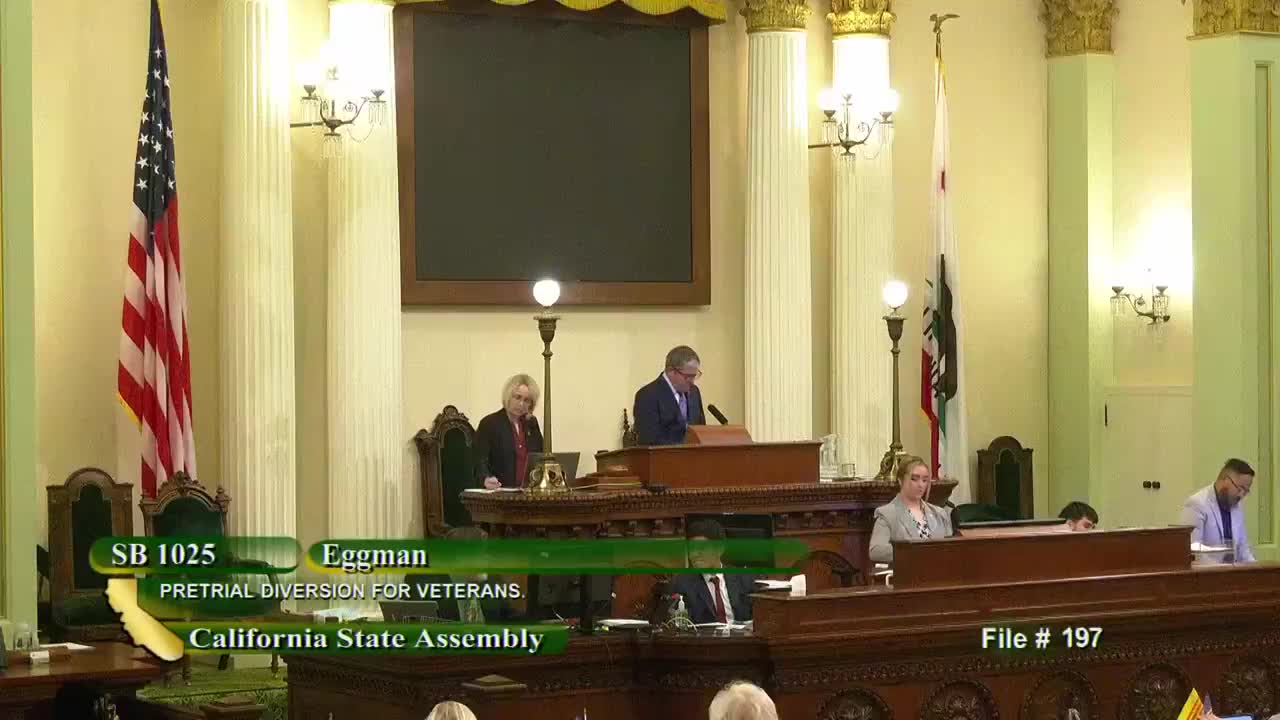 24MIN
Assembly Floor
 17SEC
Assembly Standing Committee on Appropriations
10SEC
Assembly Standing Committee on Appropriations
41SEC
Assembly Standing Committee on Appropriations
1MIN
Assembly Standing Committee on Appropriations
20SEC
Assembly Standing Committee on Appropriations
8SEC
Assembly Standing Committee on Appropriations
Bill Author