SB 555: Stable Affordable Housing Act of 2023.
- Session Year: 2023-2024
- House: Senate
- Latest Version Date: 2023-10-07
Current Status:
Passed
(2023-10-07: Chaptered by Secretary of State. Chapter 402, Statutes of 2023.)
Introduced
In Committee
First Chamber
In Committee
Second Chamber
Enacted
Existing law establishes the Department of Housing and Community Development and sets forth its powers and duties. Existing law establishes various programs providing assistance for, among other things, emergency housing, multifamily housing, farmworker housing, homeownership for very low and low-income households, and downpayment assistance for first-time homebuyers. Existing law requires the department to, on or before December 31 of each year, submit an annual report to the Governor and both houses of the Legislature on the operations and accomplishments during the previous fiscal year of the housing programs administered by the department, as prescribed.
This bill, the Stable Affordable Housing Act of 2023, would require the department, no later than December 31, 2026, to complete a California Social Housing Study consisting of a comprehensive analysis of the opportunities, resources, obstacles, and recommendations for the creation of housing that is affordable, as defined, and social housing, as defined, at scale, to assist in meeting the need identified in the statewide projections for below market rate housing affordable to households with extremely low, very low, low, and moderate incomes in the 6th Regional Housing Needs Assessment cycle. The bill would require the study to include, among other things, an analysis of the funding, public lands, and other resources and opportunities that are, or can be made, available to achieve certain goals of the state related to housing supply. The bill would require the department to include the study in the annual report to the Governor and the Legislature described above.
Existing law establishes the Department of Housing and Community Development and sets forth its powers and duties. Existing law establishes various programs providing assistance for, among other things, emergency housing, multifamily housing, farmworker housing, homeownership for very low and low-income households, and downpayment assistance for first-time homebuyers. Existing law requires the department to, on or before December 31 of each year, submit an annual report to the Governor and both houses of the Legislature on the operations and accomplishments during the previous fiscal year of the housing programs administered by the department, as prescribed.
This bill, the Stable Affordable Housing Act of 2023, would declare a 10-year goal of creating 1.2 million units of social housing through a mix of acquisition and new production and a 5-year goal of creating 600,000 units of social housing through a mix of acquisition and new production, of which no less than 200,000 units are affordable to extremely low and very low income households, as defined. This bill would require the department, no later than January 1, 2025, December 31, 2026, to develop, adopt, and submit to the Legislature complete a California Social Housing Plan for achieving the aforementioned goals, as specified. The bill would make related findings and declarations. Study consisting of a comprehensive analysis of the opportunities, resources, obstacles, and recommendations for the creation of housing that is affordable, as defined, and social housing, as defined, at scale, to assist in meeting the need identified in the statewide projections for below market rate housing affordable to households with extremely low, very low, low, and moderate incomes in the 6th Regional Housing Needs Assessment cycle. The bill would require the study to include, among other things, an analysis of the funding, public lands, and other resources and opportunities that are, or can be made, available to achieve certain goals of the state related to housing supply. The bill would require the department to include the study in the annual report to the Governor and the Legislature described above.
Existing law establishes the Department of Housing and Community Development and sets forth its powers and duties. Existing law establishes various programs providing assistance for, among other things, emergency housing, multifamily housing, farmworker housing, homeownership for very low and low-income households, and downpayment assistance for first-time homebuyers.
This bill, the Stable Affordable Housing Act of 2023, would declare a 10-year goal of creating 1.2 million units of social housing through a mix of acquisition and new production and a 5-year goal of creating 600,000 units of social housing through a mix of acquisition and new production, of which no less than 200,000 units are affordable to extremely low and very low income households, as defined. This bill would require the department, no later than January 1, 2025, to develop, adopt, and submit to the Legislature a California Social Housing Plan for achieving the aforementioned goals, as specified. The bill would make related findings and declarations.
Existing law establishes the Department of Housing and Community Development and sets forth its powers and duties. Existing law establishes various programs providing assistance for, among other things, emergency housing, multifamily housing, farmworker housing, homeownership for very low and low-income households, and downpayment assistance for first-time homebuyers.
This bill, the Social Stable Affordable Housing Act of 2023, would declare a 10-year goal of creating 1.2 million units of social housing through a mix of acquisition and new production and a 5-year goal of creating 600,000 units of social housing through a mix of acquisition and new production, of which no less than 200,000 units of social housing that are affordable to extremely low and very low income households, as defined. This bill would establish the California Social Housing Fund, upon appropriation by the Legislature, to be made available to the Department of Housing and Community Development for the purposes of this act, including promoting the achievement of the aforementioned goals. This bill would require the department, no later than January 1, 2025, to develop, adopt, and submit to the Legislature a California Social Housing Plan for achieving the aforementioned goals, as specified. The bill would make related findings and declarations.
Existing law establishes the Department of Housing and Community Development and sets forth its powers and duties. Existing law establishes various programs providing assistance for, among other things, emergency housing, multifamily housing, farmworker housing, homeownership for very low and low-income households, and downpayment assistance for first-time homebuyers.
This bill, the Social Housing Act of 2023, would declare a 10-year goal of creating 1.2 million units of social housing through a mix of acquisition and new production and a 5-year goal of creating 200,000 units of social housing that are affordable to extremely low and very low income households, as defined. This bill would establish the California Social Housing Fund, upon appropriation by the Legislature, to be made available to the Department of Housing and Community Development for the purposes of this act, including promoting the achievement of the aforementioned goals. This bill would require the department, no later than January 1, 2025, to develop, adopt, and submit to the Legislature a California Social Housing Plan for achieving the aforementioned goals, as specified. The bill would make related findings and declarations.
This chapter shall be known, and may be cited, as the Stable Affordable Housing Act of 2023.
50611.(a)The Legislature finds and declares all of the following:
(1)The private housing market has failed to meet the needs of the vast majority of California residents, who are unable to afford market rents. Increasingly, housing speculation and financialization in the rental market is driving rents higher, even as new market-rate housing is produced. Today, more than one-quarter of California renters are severely rent burdened, meaning they spend over one-half of their income on rent alone, and the unaffordability of rents is a major driver of homelessness.
(2)It is the goal of the state, as reflected in its Regional Housing Need Determination for the sixth Regional Housing Needs Assessment (RHNA) cycle, to create 2,500,000 new housing units, of which at least 1,000,000 must be affordable to households with low, very low, and extremely low incomes and of which an additional 400,000 must be affordable to households of moderate incomes. Together, housing affordable to lower and moderate households accounts for 58 percent of the overall projected housing need.
(3)Affordable housing produced through the federal Low-Income Housing Tax Credit program is an essential part of Californias housing stock, but is not sufficient to meet the need for housing affordable to those who cannot afford market rents. Moreover, the expiration of affordability covenants each year threatens to revert affordable units to market rents.
(4)The solution to the intertwined crises of rental unaffordability and homelessness must include a robust sector of social housing that offers below-market rents affordable to households of all income levels who are unable to afford market rents and that is permanently shielded from the speculative market. This work can be accomplished only through a robust partnership between the state and the federal government, including a significant infusion of federal funding resources and policy reforms at both the state and federal levels.
(5)California has a growing social housing sector, comprised of housing acquired, produced, and managed by public entities, public housing authorities, community land trusts, community development corporations, and nonprofit affordable housing developers. This bill will set California on a course to scale up its nascent social housing sector to meet the scale of the need, now and for future generations.
(b)It is the intent of the Legislature in enacting this chapter to define social housing, to identify tools to help achieve the states goals for lower and moderate-income housing by creating social housing through both new production and preservation of existing units and to evaluate potential future legislation based on a comprehensive study of resources, constraints, and opportunities for creating below market rate housing that includes both affordable and social housing options.
50612.For purposes of this chapter:
(a)Afford and affordable mean that a household pays no more than 30 percent of its household income on rent.
(b)Affordable rent has the same meaning as defined in Section 50675.2.
(c)Department means the Department of Housing and Community Development.
(d)Extremely low income has the same meaning as the term extremely low income households is defined in Section 50106.
(e)Limited-equity housing cooperative has the same meaning as the term is defined in Section 817 of the Civil Code.
(f)Low-income has the same meaning as the term lower income households is defined in Section 50079.5.
(g)Mission-driven nonprofit entity includes both of the following:
(1)Eligible nonprofit corporation as defined in subparagraph (D) of paragraph (3) of subdivision (a) of Section 2924m of the Civil Code.
(2)Community land trust as defined in Section 402.1 of the Revenue and Taxation Code.
(h)Moderate income has the same meaning as the term persons and families of moderate income is defined in Section 50093.
(i)Public agency means the state, any county, city, city and county, district, redevelopment agency, housing authority, or any other political subdivision of the state.
(j)Social housing means housing that meets all of the following requirements:
(1)The housing units are owned and managed by a public agency, a local authority, a limited-equity housing cooperative, or a mission-driven nonprofit entity solely for the benefit of residents and households unable to afford market rent.
(2)Each social housing development contains housing units that accommodate a mix of household income ranges, including extremely low, very low, low-, and moderate-income households unable to afford market rent.
(3)Residents of the housing units enjoy full protection against termination without just cause or for any discriminatory, retaliatory, or other arbitrary reason, and shall be afforded due process prior to being subject to eviction procedures.
(4)The housing units are protected for the duration of their useful life, and the land associated with the housing units is protected permanently, from being sold or transferred to any private person or for-profit entity or a public-private partnership.
(5)Residents have the right to participate directly and meaningfully in decisionmaking affecting the operation and management of the housing units in which they reside.
(k)Social housing development includes both newly constructed units of social housing and market units or other housing units preserved or rehabilitated as social housing.
(l)Study means the California Social Housing Study required by Section 50613.
(m)Very low income has the same meaning as the term very low income households is defined in Section 50105.
50613.(a)No later than December 31, 2026, the department shall complete a California Social Housing Study. The study shall consist of a comprehensive analysis of the opportunities, resources, obstacles, and recommendations for the creation of affordable and social housing at scale, to assist in meeting the need identified in the statewide projections for below market rate housing affordable to households with extremely low, very low, low, and moderate incomes in the sixth Regional Housing Needs Assessment cycle. The department shall enlist in the development of the study broad participation of residents unable to afford market rents and public agencies and mission-driven nonprofit entities. The study shall include both of the following:
(1)An analysis of all of the following:
(A)Funding, public lands, and other resources and opportunities that are, or can be made, available to achieve the goals.
(B)The capacity and capacity building needs of public agencies and mission-driven nonprofit entities to achieve the goals.
(C)Constraints and obstacles to achieving the goals, including capital financing and long-term operations and maintenance needs.
(D)The range of models for creating social housing that are currently in practice, or that public agencies or mission-driven nonprofit entities plan to implement both inside and outside California, including the opportunities, needs, and potential for creating social housing at various income levels specific to each model.
(E)Tenant protections consistent with each model analyzed pursuant to subparagraph (D) that provide long-term stability, including the most protective provisions feasible.
(F)The impacts on job creation and local economies that could be achieved by using locally based, union-represented workforces for construction and maintenance of social housing.
(G)Federal funding, resources, and policy initiatives required to meet the housing needs projected by the sixth Regional Housing Needs Assessment cycle.
(H)Any other subjects the department identifies through the course of preparing this study that would contribute to meeting the housing needs projected by the sixth Regional Housing Needs Assessment cycle.
(2)Recommendations to the state based on the study for all of the following:
(A)Utilizing the funding, public lands, and other resources and opportunities to meet the housing needs projected by the sixth Regional Housing Needs Assessment cycle, to create housing affordable to households with moderate, low, very low, and extremely low incomes, including social housing, in collaboration between public agencies and mission-driven nonprofit entities, with a portion of the goal allocated to each model for creating social housing analyzed pursuant to subparagraph (D) of paragraph (1).
(B)Removing constraints and obstacles to achieving the goals, including constraints on the use of public land and public funding that do not require legislative action.
(C)Making additional resources available, including potential revenue sources for a social housing fund, including federal funding sources that are necessary.
(D)Removing constraints and obstacles to the goals.
(E)Creating new housing development and property management capacity at the state level, including a state Social Housing Authority.
(b)The department shall include the study completed pursuant to this section in the annual report for the 2027 calendar year required by Section 50408.
This chapter shall be known, and may be cited, as the Stable Affordable Housing Act of 2023.
50611.(a)The Legislature finds and declares all of the following:
(1)The private housing market has failed to meet the needs of the vast majority of California residents, who are unable to afford market rents. Increasingly, housing speculation and financialization in the rental market is driving rents higher, even as new market-rate housing is produced. Today, more than one-quarter of California renters are severely rent burdened, meaning they spend over one-half of their income on rent alone, and the unaffordability of rents is a major driver of homelessness.
(2)It is the goal of the state, as reflected in its Regional Housing Need Determination for the sixth Regional Housing Needs Assessment (RHNA) cycle, to create 2,500,000 new housing units, of which at least 1,000,000 must be affordable to households with low, very low, and extremely low incomes and of which an additional 400,000 must be affordable to households of moderate incomes. Together, housing affordable to lower and moderate households accounts for 58 percent of the overall projected housing need.
(2)(3)Affordable housing produced through the federal Low-Income Housing Tax Credit program is an essential part of Californias housing stock, but is not sufficient to meet the need for housing affordable to those who cannot afford market rents. Moreover, the expiration of affordability covenants each year threatens to revert affordable units to market rents.
(3)(4)The solution to the intertwined crises of rental unaffordability and homelessness must include a robust sector of social housing, housing that offers below-market rents affordable to households of all income levels who are unable to afford market rents and that is permanently shielded from the speculative market. This work can be accomplished only through a robust partnership between the state and the federal government, including a significant infusion of federal funding resources and policy reforms at both the state and federal levels.
(4)(5)California has a growing social housing sector, comprised of housing acquired, produced, and managed by public entities, public housing authorities, community land trusts, community development corporations, and nonprofit affordable housing developers. This bill will set California on a course to scale up its nascent social housing sector to meet the scale of the need, now and for future generations.
(b)It is the intent of the Legislature in enacting this chapter to define social housing, to set an ambitious goal for identify tools to help achieve the states goals for lower and moderate-income housing by creating social housing through both new production and preservation of existing units, units and to establish the means for achieving that goal. evaluate potential future legislation based on a comprehensive study of resources, constraints, and opportunities for creating below market rate housing that includes both affordable and social housing options.
50612.(a)The state hereby declares a 10-year goal of creating 1.2 million units of social housing through a mix of acquisition and new production.(b)The state declares a five-year goal of creating 600,000 units of social housing through a mix of acquisition and new production, of which no less than 200,000 units are affordable to extremely low and very low income households.50613.50612.For purposes of this chapter, the following definitions apply: chapter:
(a)Afford and affordable mean that a household pays no more than 30 percent of its household income on rent. A household is unable to afford market rent if median rents in the area exceed 30 percent of its income.
(b)Affordable rent has the same meaning as defined in Section 50675.2.
(c)Department means the Department of Housing and Community Development.
(b)(d)Extremely low income has the same meaning as the term extremely low income households is defined in Section 50106.
(c)(e)Limited-equity housing cooperative has the same meaning as the term is defined in Section 817 of the Civil Code.
(d)(f)Low-income has the same meaning as the term lower income households is defined in Section 50079.5.
(e)(g)Mission-driven nonprofit entity includes both of the following:
(1)Eligible nonprofit corporation as defined in subparagraph (D) of paragraph (3) of subdivision (a) of Section 2924m of the Civil Code.
(2)Community land trust as defined in Section 402.1 of the Revenue and Taxation Code.
(f)(h)Moderate income has the same meaning as the term persons and families of moderate income is defined in Section 50093.
(g)(i)Public agency means the state, any county, city, city and county, district, redevelopment agency, housing authority, or any other political subdivision of the state.
(h)(j)Social housing means housing that meets all of the following requirements:
(1)The housing units are owned and managed by a public agency, a local authority, a limited-equity housing cooperative, or a mission-driven nonprofit entity solely for the benefit of residents and households unable to afford market rent.
(2)Each social housing development contains housing units that accommodate a mix of household income ranges, including extremely low, very low, low-, and moderate-income households unable to afford market rent, and all housing units are permanently deed-restricted affordable to households at each of those income levels. rent.
(3)Residents of the housing units enjoy full protection against termination without just cause or for any discriminatory, retaliatory, or other arbitrary reason, and shall be afforded due process prior to being subject to eviction procedures.
(4)The housing units are protected for the duration of their useful life, and the land associated with the housing units is protected permanently, from being sold or transferred to any private person or for-profit entity or a public-private partnership.
(5)Residents have the right to participate directly and meaningfully in decisionmaking affecting the operation and management of the housing units in which they reside.
(i)(k)Social housing development includes both newly constructed units of social housing and market units or other housing units preserved or rehabilitated as social housing.
(l)Study means the California Social Housing Study required by Section 50613.
(j)(m)Very low income has the same meaning as the term very low income households is defined in Section 50105.
50614.50613.(a)No later than January 1, 2025, December 31, 2026, the department shall develop, adopt, and submit to the Legislature complete a California Social Housing Plan for achieving the goals set forth in Section 50612. Study. The study shall consist of a comprehensive analysis of the opportunities, resources, obstacles, and recommendations for the creation of affordable and social housing at scale, to assist in meeting the need identified in the statewide projections for below market rate housing affordable to households with extremely low, very low, low, and moderate incomes in the sixth Regional Housing Needs Assessment cycle. The department shall enlist in the development of the study broad participation of residents unable to afford market rents and public agencies and mission-driven nonprofit entities with the capacity to provide social housing in the development of the plan. entities. The plan study shall include all both of the following:
(1)An analysis of all of the following:
(A)Funding, public lands, and other resources and opportunities that are, or can be made, available to achieve the goals.
(B)The capacity and capacity building needs of public agencies and mission-driven nonprofit entities to achieve the goals.
(C)Constraints and obstacles to achieving the goals, including capital financing and long-term operations and maintenance needs.
(D)The range of models for creating social housing that are currently in practice, or that public agencies or mission-driven nonprofit entities plan to put into practice, in implement both inside and outside California, including the opportunities, needs, and potential for creating social housing at various income levels specific to each model.
(E)Tenant protections consistent with each model analyzed pursuant to subparagraph (D) that provide long-term stability, including the most protective provisions feasible.
(E)(F)The benefits to impacts on job creation and local economies that could be achieved by using locally based, union-represented workforces for construction and maintenance of social housing.
(G)Federal funding, resources, and policy initiatives required to meet the housing needs projected by the sixth Regional Housing Needs Assessment cycle.
(H)Any other subjects the department identifies through the course of preparing this study that would contribute to meeting the housing needs projected by the sixth Regional Housing Needs Assessment cycle.
(2)A plan Recommendations to the state based on the study for all of the following:
(A)Utilizing the funding, public lands, and other resources and opportunities to achieve the goals, meet the housing needs projected by the sixth Regional Housing Needs Assessment cycle, to create housing affordable to households with moderate, low, very low, and extremely low incomes, including social housing, in collaboration between public agencies and mission-driven nonprofit entities, with a portion of the goal allocated to each model for creating social housing analyzed pursuant to subparagraph (D) of paragraph (1).
(B)Removing constraints and obstacles to achieving the goals, including constraints on the use of public land and public funding that do not require legislative action.
(3)Recommendations to the Legislature for all of the following:(A)(C)Making additional resources available, including potential revenue sources for a social housing fund. fund, including federal funding sources that are necessary.
(B)(D)Removing constraints and obstacles to the goals.
(C)(E)Creating new housing development and property management capacity at the state level, including a state Social Housing Authority.
(4)A schedule of specific implementing actions and programs to achieve the goals, including actions needed to prevent the expiration of affordability covenants attached to existing affordable housing.(b)(1)Notwithstanding Section 10231.5 of the Government Code, the department shall submit an annual report to the Governor and the Legislature, beginning January 1, 2026, on the states progress toward achieving the goals of this chapter, the implementation status and outcomes of all programs and actions, and recommendations for executive and legislative action.(2)A report to be submitted pursuant to this subdivision shall be submitted in compliance with Section 9795 of the Government Code.(b)The department shall include the study completed pursuant to this section in the annual report for the 2027 calendar year required by Section 50408.
This chapter shall be known, and may be cited, as the Stable Affordable Housing Act of 2023.
50611.(a)The Legislature finds and declares all of the following:
(1)The private housing market has failed to meet the needs of the vast majority of California residents, who are unable to afford market rents. Increasingly, housing speculation and financialization in the rental market is driving rents higher, even as new market-rate housing is produced. Today, more than one-quarter of California renters are severely rent burdened, meaning they spend over one-half of their income on rent alone, and the unaffordability of rents is a major driver of homelessness.
(2)Affordable housing produced through the federal Low-Income Housing Tax Credit program is an essential part of Californias housing stock, but is not sufficient to meet the need for housing affordable to those who cannot afford market rents. Moreover, the expiration of affordability covenants each year threatens to revert affordable units to market rents.
(3)The solution to the intertwined crises of rental unaffordability and homelessness must include a robust sector of social housing, that offers below-market rents affordable to households of all income levels who are unable to afford market rents and that is permanently shielded from the speculative market.
(4)California has a growing social housing sector, comprised of housing acquired, produced, and managed by public entities, public housing authorities, community land trusts, community development corporations, and nonprofit affordable housing developers. This bill will set California on a course to scale up its nascent social housing sector to meet the scale of the need, now and for future generations.
(b)It is the intent of the Legislature in enacting this chapter to define social housing, to set an ambitious goal for creating social housing through both new production and preservation of existing units, and to establish the means for achieving that goal.
50612.(a)The state hereby declares a 10-year goal of creating 1.2 million units of social housing through a mix of acquisition and new production.
(b)The state declares a five-year goal of creating 600,000 units of social housing through a mix of acquisition and new production, of which no less than 200,000 units are affordable to extremely low and very low income households.
50613.For purposes of this chapter, the following definitions apply:
(a)Afford and affordable mean that a household pays no more than 30 percent of its household income on rent. A household is unable to afford market rent if median rents in the area exceed 30 percent of its income.
(b)Extremely low income has the same meaning as the term extremely low income households is defined in Section 50106 of the Health and Safety Code. 50106.
(c)Limited-equity housing cooperative has the same meaning as the term is defined in Section 817 of the Civil Code.
(d)Low-income has the same meaning as the term lower income households is defined in Section 50079.5 of the Health and Safety Code. 50079.5.
(e)Mission-driven nonprofit entity includes both of the following:
(1)Eligible nonprofit corporation as defined in subparagraph (D) of paragraph (3) of subdivision (a) of Section 2924m of the Civil Code.
(2)Community land trust as defined in Section 402.1 of the Revenue and Taxation Code.
(f)Moderate income has the same meaning as the term persons and families of moderate income is defined in Section 50093 of the Health and Safety Code. 50093.
(g)Public agency means the state, any county, city, city and county, district, redevelopment agency, housing authority, or any other political subdivision of the state.
(h)Social housing means housing that meets all of the following requirements:
(1)The housing units are owned and managed by a public agency, a local authority, a limited-equity housing cooperative, or a mission-driven nonprofit entity solely for the benefit of residents and households unable to afford market rent.
(2)Each social housing development contains housing units that accommodate a mix of household income ranges, including extremely low, very low, low-, and moderate-income households unable to afford market rent, and all housing units are permanently deed-restricted affordable to households at each of those income levels.
(3)Residents of the housing units enjoy full protection against termination without just cause or for any discriminatory, retaliatory, or other arbitrary reason, and shall be afforded due process prior to being subject to eviction procedures.
(4)The housing units are protected for the duration of their useful life, and the land associated with the housing units is protected permanently, from being sold or transferred to any private person or for-profit entity or a public-private partnership.
(5)Residents have the right to participate directly and meaningfully in decisionmaking affecting the operation and management of the housing units in which they reside.
(i)Social housing development includes both newly constructed units of social housing and market units or other housing units preserved or rehabilitated as social housing.
(j)Very low income has the same meaning as the term very low income households is defined in Section 50105 of the Health and Safety Code. 50105.
50614.(a)No later than January 1, 2025, the department shall develop, adopt, and submit to the Legislature a California Social Housing Plan for achieving the goals set forth in Section 50612. The department shall enlist broad participation of residents unable to afford market rents and public agencies and mission-driven nonprofit entities with the capacity to provide social housing in the development of the plan. The plan shall include all of the following:
(1)An analysis of all of the following:
(A)Funding, public lands, and other resources and opportunities that are, or can be made, available to achieve the goals.
(B)The capacity and capacity building needs of public agencies and mission-driven nonprofit entities to achieve the goals.
(C)Constraints and obstacles to achieving the goals, including capital financing and long-term operations and maintenance needs.
(D)The range of models for creating social housing that are currently in practice, or that public agencies or mission-driven nonprofit entities plan to put into practice, in California, including the opportunities, needs, and potential for creating social housing at various income levels specific to each model.
(E)The benefits to job creation and local economies that could be achieved by using locally based, union-represented workforces for construction and maintenance of social housing.
(2)A plan for all of the following:
(A)Utilizing the funding, public lands, and other resources and opportunities to achieve the goals, in collaboration between public agencies and mission-driven nonprofit entities, with a portion of the goal allocated to each model for creating social housing analyzed pursuant to subparagraph (D) of paragraph (1).
(B)Removing constraints and obstacles to achieving the goals, including constraints on the use of public land and public funding that do not require legislative action.
(3)Recommendations to the Legislature for all of the following:
(A)Making additional resources available, including potential revenue sources for a social housing fund.
(B)Removing constraints and obstacles to the goals.
(C)Creating new housing development and property management capacity at the state level, including a state Social Housing Authority.
(4)A schedule of specific implementing actions and programs to achieve the goals, including actions needed to prevent the expiration of affordability covenants attached to existing affordable housing.
(b)(1)Notwithstanding Section 10231.5 of the Government Code, the department shall submit an annual report to the Governor and the Legislature, beginning January 1, 2026, on the states progress toward achieving the goals of this chapter, the implementation status and outcomes of all programs and actions, and recommendations for executive and legislative action.
(2)A report to be submitted pursuant to this subdivision shall be submitted in compliance with Section 9795 of the Government Code.
This chapter shall be known, and may be cited, as the Social Stable Affordable Housing Act of 2023.
50611.(a)The Legislature finds and declares all of the following:
(1)The private housing market has failed to meet the needs of the vast majority of California residents, who are unable to afford market rents. Increasingly, housing speculation and financialization in the rental market is driving rents higher, even as new market-rate housing is produced. Today, more than one-quarter of California renters are severely rent burdened, meaning they spend over one-half of their income on rent alone, and the unaffordability of rents is a major driver of homelessness.
(2)Affordable housing produced through the federal Low-Income Housing Tax Credit program is an essential part of Californias housing stock, but the program does not cap rents at one-third of household income, allows annual rent increases in excess of 10 percent, and leads every year to is not sufficient to meet the need for housing affordable to those who cannot afford market rents. Moreover, the expiration of affordability covenants that threaten each year threatens to revert affordable units to market rents. It is insufficient to meet Californias needs.
(3)The solution to the intertwined crises of rental unaffordability and homelessness must include a robust sector of social housing, that offers below-market rents affordable to households of all income levels who are unable to afford market rents and that is permanently shielded from the speculative market.
(4)California has a growing social housing sector, comprised of housing acquired, produced, and managed by public entities, public housing authorities, community land trusts, community development corporations, and nonprofit affordable housing developers. This bill will set California on a course to scale up its nascent social housing sector to meet the scale of the need, now and for future generations.
(b)It is the intent of the Legislature in enacting this chapter to define social housing, to set an ambitious goal for creating social housing through both new production and preservation of existing units, and to establish the means for achieving that goal.
50612.(a)The state hereby declares a 10-year goal of creating 1.2 million units of social housing through a mix of acquisition and new production.
(b)The state declares a five-year goal of creating 600,000 units of social housing through a mix of acquisition and new production, of which no less than 200,000 units of social housing that are affordable to extremely low and very low income households.
50613.For purposes of this chapter, the following definitions apply:
(a)Afford and affordable mean that a household pays no more than 30 percent of its household income on rent. A household is unable to afford market rent if median rents in the area exceed 30 percent of its income.
(b)Extremely low income has the same meaning as the term extremely low income households is defined in Section 50106 of the Health and Safety Code.
(c)Limited-equity housing cooperative has the same meaning as the term is defined in Section 817 of the Civil Code.
(c)(d)Low-income has the same meaning as the term lower income households is defined in Section 50079.5 of the Health and Safety Code.
(d)(e)Mission-driven nonprofit entity has the same meaning as the term eligible includes both of the following:
(1)Eligible nonprofit corporation is as defined in subparagraph (D) of paragraph (3) of subdivision (a) of Section 2924m of the Civil Code.
(2)Community land trust as defined in Section 402.1 of the Revenue and Taxation Code.
(e)(f)Moderate income has the same meaning as the term persons and families of moderate income is defined in Section 50093 of the Health and Safety Code.
(g)Public agency means the state, any county, city, city and county, district, redevelopment agency, housing authority, or any other political subdivision of the state.
(f)(h)Social housing means housing that meets all of the following requirements:
(1)The housing units are owned and managed by a public entity, agency, a local authority, a limited-equity housing cooperative, or a mission-driven nonprofit entity solely for the benefit of residents and households unable to afford market rent.
(2)Each social housing development contains housing units that accommodate a mix of household income ranges, including extremely low, very low, low-, and moderate-income households unable to afford market rent, and all housing units are permanently deed-restricted affordable to households at each of those income levels.
(3)Residents of the housing units enjoy full protection against termination without just cause or for any discriminatory, retaliatory, or other arbitrary reason, and shall be afforded due process prior to being subject to eviction procedures.
(4)The housing units are protected for the duration of their useful life, and the land associated with the housing units is protected permanently, from being sold or transferred to any private person or for-profit entity or a public-private partnership.
(5)Residents have the right to participate directly and meaningfully in decisionmaking affecting the operation and management of the housing units in which they reside.
(g)(i)Social housing development includes both newly constructed units of social housing and market units or other housing units preserved or rehabilitated as social housing.
(h)(j)Very low income has the same meaning as the term very low income households is defined in Section 50105 of the Health and Safety Code.
50614.The California Social Housing Fund is hereby created as a fund in the State Treasury. All money in the fund shall be available, upon appropriation by the Legislature, to the department for purposes of this chapter, including promoting the achievement of the goals set forth in Section 50612.50615.50614.(a)No later than January 1, 2025, the department shall develop, adopt, and submit to the Legislature a California Social Housing Plan for achieving the goals set forth in Section 50612. The department shall enlist broad participation of residents unable to afford market rents and public agencies and mission-driven nonprofit entities with the capacity to provide social housing in the development of the plan. The plan shall include all of the following:
(1)An analysis of all of the following:
(A)Funding, public lands, and other resources and opportunities that are, or can be made, available to achieve the goals.
(B)Contributions that can be made available by state and local The capacity and capacity building needs of public agencies, including public housing authorities, agencies and mission-driven nonprofit entities to achieve the goals.
(C)Constraints and obstacles to achieving the goals. goals, including capital financing and long-term operations and maintenance needs.
(D)The range of models for creating social housing that are currently in practice, or that public agencies or mission-driven nonprofit entities plan to put into practice, in California, including the opportunities, needs, and potential for creating social housing at various income levels specific to each model.
(E)The benefits to job creation and local economies that could be achieved by using locally based, union-represented workforces for construction and maintenance of social housing.
(2)A plan for all of the following:
(A)Utilizing the funding, public lands, and other resources and opportunities to achieve the goals, in collaboration between state and local public agencies and mission-driven nonprofit entities. entities, with a portion of the goal allocated to each model for creating social housing analyzed pursuant to subparagraph (D) of paragraph (1).
(B)Removing constraints and obstacles to achieving the goals, including constraints on the use of public land and public funding that do not require legislative action.
(3)Recommendations to the Legislature for all of the following:
(A)Making additional resources available, including potential revenue sources for the fund created in Section 50614. a social housing fund.
(B)Removing constraints and obstacles to the goals.
(C)Creating new housing development and property management capacity at the state level, including a state Social Housing Authority.
(4)A schedule of specific implementing actions and programs to achieve the goals, including actions needed to prevent the expiration of affordability covenants attached to existing affordable housing.
(b)(1)Notwithstanding Section 10231.5 of the Government Code, the department shall submit an annual report to the Governor and the Legislature, beginning January 1, 2026, on the states progress toward achieving the goals of this chapter, the implementation status and outcomes of all programs and actions, and recommendations for executive and legislative action.
(2)A report to be submitted pursuant to this subdivision shall be submitted in compliance with Section 9795 of the Government Code.
This chapter shall be known, and may be cited, as the Social Housing Act of 2023.
50611.(a)The Legislature finds and declares all of the following:
(1)The private housing market has failed to meet the needs of the vast majority of California residents, who are unable to afford market rents. Increasingly, housing speculation and financialization in the rental market is driving rents higher, even as new housing is produced. Today, more than one-quarter of California renters are severely rent burdened, meaning they spend over one-half of their income on rent alone, and the unaffordability of rents is a major driver of homelessness.
(2)Affordable housing produced through the federal Low-Income Housing Tax Credit program is an essential part of Californias housing stock, but the program does not cap rents at one-third of household income, allows annual rent increases in excess of 10 percent, and leads every year to the expiration of affordability covenants that threaten to revert affordable units to market rents. It is insufficient to meet Californias needs.
(3)The solution to the intertwined crises of rental unaffordability and homelessness must include a robust sector of social housing, that offers below-market rents affordable to households of all income levels who are unable to afford market rents and that is permanently shielded from the speculative market.
(4)California has a growing social housing sector, comprised of housing acquired, produced, and managed by public entities, public housing authorities, community land trusts, community development corporations, and nonprofit affordable housing developers. This bill will set California on a course to scale up its nascent social housing sector to meet the scale of the need, now and for future generations.
(b)It is the intent of the Legislature in enacting this chapter to define social housing, to set an ambitious goal for creating social housing through both new production and preservation of existing units, and to establish the means for achieving that goal.
50612.(a)The state hereby declares a 10-year goal of creating 1.2 million units of social housing through a mix of acquisition and new production.
(b)The state declares a five-year goal of creating 200,000 units of social housing that are affordable to extremely low and very low income households.
50613.For purposes of this chapter, the following definitions apply:
(a)Afford and affordable mean that a household pays no more than 30 percent of its household income on rent. A household is unable to afford market rent if median rents in the area exceed 30 percent of its income.
(b)Extremely low income has the same meaning as the term extremely low income households is defined in Section 50106 of the Health and Safety Code.
(c)Low-income has the same meaning as the term lower income households is defined in Section 50079.5 of the Health and Safety Code.
(d)Mission-driven nonprofit entity has the same meaning as the term eligible nonprofit corporation is defined in subparagraph (D) of paragraph (3) of subdivision (a) of Section 2924m of the Civil Code.
(e)Moderate income has the same meaning as the term persons and families of moderate income is defined in Section 50093 of the Health and Safety Code.
(f)Social housing means housing that meets all of the following requirements:
(1)The housing units are owned and managed by a public entity, a local authority, or a mission-driven nonprofit entity solely for the benefit of residents and households unable to afford market rent.
(2)Each social housing development contains housing units that accommodate a mix of household income ranges, including extremely low, very low, low-, and moderate-income households unable to afford market rent, and all housing units are permanently deed-restricted affordable to households at each of those income levels.
(3)Residents of the housing units enjoy full protection against termination without just cause or for any discriminatory, retaliatory, or other arbitrary reason, and shall be afforded due process prior to being subject to eviction procedures.
(4)The housing units are protected for the duration of their useful life, and the land associated with the housing units is protected permanently, from being sold or transferred to any private person or for-profit entity or a public-private partnership.
(5)Residents have the right to participate directly and meaningfully in decisionmaking affecting the operation and management of the housing units in which they reside.
(g)Social housing development includes both newly constructed units of social housing and market units or other housing units preserved or rehabilitated as social housing.
(h)Very low income has the same meaning as the term very low income households is defined in Section 50105 of the Health and Safety Code.
50614.The California Social Housing Fund is hereby created as a fund in the State Treasury. All money in the fund shall be available, upon appropriation by the Legislature, to the department for purposes of this chapter, including promoting the achievement of the goals set forth in Section 50612.
50615.(a)No later than January 1, 2025, the department shall develop, adopt, and submit to the Legislature a California Social Housing Plan for achieving the goals set forth in Section 50612. The department shall enlist broad participation of residents unable to afford market rents in the development of the plan. The plan shall include all of the following:
(1)An analysis of all of the following:
(A)Funding, public lands, and other resources and opportunities that are, or can be made, available to achieve the goals.
(B)Contributions that can be made available by state and local public agencies, including public housing authorities, and mission-driven nonprofit entities to achieve the goals.
(C)Constraints and obstacles to achieving the goals.
(2)A plan for all of the following:
(A)Utilizing the funding, public lands, and other resources and opportunities to achieve the goals, in collaboration between state and local agencies and mission-driven nonprofit entities.
(B)Removing constraints and obstacles to achieving the goals, including constraints on the use of public land and public funding that do not require legislative action.
(3)Recommendations to the Legislature for all of the following:
(A)Making additional resources available, including potential revenue sources for the fund created in Section 50614.
(B)Removing constraints and obstacles to the goals.
(C)Creating a state Social Housing Authority.
(4)A schedule of specific implementing actions and programs to achieve the goals, including actions needed to prevent the expiration of affordability covenants attached to existing affordable housing.
(b)(1)Notwithstanding Section 10231.5 of the Government Code, the department shall submit an annual report to the Governor and the Legislature, beginning January 1, 2026, on the states progress toward achieving the goals of this chapter, the implementation status and outcomes of all programs and actions, and recommendations for executive and legislative action.
(2)A report to be submitted pursuant to this subdivision shall be submitted in compliance with Section 9795 of the Government Code.
|
Date
|
Status
|
|---|---|
| Oct 7, 2023 | Chaptered by Secretary of State. Chapter 402, Statutes of 2023. |
| Oct 7, 2023 | Approved by the Governor. |
| Sep 21, 2023 | Enrolled and presented to the Governor at 4 p.m. |
| Sep 14, 2023 | Assembly amendments concurred in. (Ayes 30. Noes 9. Page 2824.) Ordered to engrossing and enrolling. |
| Sep 14, 2023 | In Senate. Concurrence in Assembly amendments pending. |
| Sep 14, 2023 | Read third time. Passed. (Ayes 54. Noes 16. Page 3580.) Ordered to the Senate. |
| Sep 11, 2023 | Ordered to third reading. |
| Sep 11, 2023 | Read third time and amended. |
| Sep 11, 2023 | Joint Rule 61(a)(13) suspended. (Ayes 61. Noes 18. Page 3136.) |
| Sep 11, 2023 | Read second time. Ordered to third reading. |
| Sep 8, 2023 | Ordered to second reading. |
| Sep 8, 2023 | Withdrawn from committee. |
| Sep 8, 2023 | Assembly Rule 96 suspended. |
| Sep 1, 2023 | September 1 hearing: Held in committee and under submission. |
| Aug 16, 2023 | August 16 set for first hearing. Placed on suspense file. |
| Jun 29, 2023 | From committee: Do pass and re-refer to Com. on APPR. (Ayes 6. Noes 2.) (June 28). Re-referred to Com. on APPR. |
| Jun 15, 2023 | Referred to Com. on H. & C.D. |
| Jun 1, 2023 | In Assembly. Read first time. Held at Desk. |
| May 31, 2023 | Read third time. Passed. (Ayes 31. Noes 8. Page 1402.) Ordered to the Assembly. |
| May 23, 2023 | Read second time. Ordered to third reading. |
| May 22, 2023 | Ordered to second reading. |
| May 22, 2023 | Read third time and amended. |
| May 18, 2023 | Read second time. Ordered to third reading. |
| May 18, 2023 | From committee: Do pass. (Ayes 5. Noes 2. Page 1175.) (May 18). |
| May 12, 2023 | Set for hearing May 18. |
| May 8, 2023 | May 8 hearing: Placed on APPR suspense file. |
| May 1, 2023 | Set for hearing May 8. |
| Apr 25, 2023 | From committee: Do pass and re-refer to Com. on APPR. (Ayes 9. Noes 1. Page 875.) (April 24). Re-referred to Com. on APPR. |
| Apr 17, 2023 | From committee with author's amendments. Read second time and amended. Re-referred to Com. on HOUSING. |
| Apr 12, 2023 | Set for hearing April 24. |
| Feb 22, 2023 | Referred to Com. on HOUSING. |
| Feb 16, 2023 | From printer. May be acted upon on or after March 18. |
| Feb 15, 2023 | Introduced. Read first time. To Com. on RLS. for assignment. To print. |
|
Date
|
Description
|
Location
|
Votes
|
|
|---|---|---|---|---|
| Sep 14, 2023 | Unfinished Business SB555 Wahab Concurrence | Senate Floor |
Passed |
|
| Sep 14, 2023 | SB 555 Wahab Senate Third Reading By Haney | Assembly Floor |
Passed |
|
| Jun 28, 2023 | Do pass and be re-referred to the Committee on [Appropriations] | Assembly Standing Committee on Housing and Community Development |
Passed |
|
| May 31, 2023 | Senate 3rd Reading SB555 Wahab | Senate Floor |
Passed |
|
| May 18, 2023 | Do pass | Senate Standing Committee on Appropriations |
Passed |
|
| May 8, 2023 | Placed on suspense file | Senate Standing Committee on Appropriations |
Passed |
|
| Apr 24, 2023 | Do pass, but first be re-referred to the Committee on [Appropriations] | Senate Standing Committee on Housing |
Passed |
This list shows positions taken on this bill by organizations on the date displayed, which is linked to the original source.
Positions by individuals are not included.
|
Organization
|
Position
|
Date
|
|---|---|---|
| Affordable Housing Network of Santa Clara County | ** Support | |
| AFSCME California | ** Support | |
| Aids Healthcare Foundation | ** Support | |
| Alliance for Community Transit - Los Angeles | ** Support | |
| Alliance of Californians for Community Empowerment Institute | ** Support | |
| American Federation Of State, County And Municipal Employees, Afl-Cio | ** Support | |
| Asian Pacific Environmental Network | ** Support | |
| Bend the Arc: Jewish Action, Southern California | ** Support | |
| Berkeley Tenants Union | ** Support | |
| Beverly-Vermont Community Land Trust | ** Support | |
| California Association Of Realtors | ** Against | |
| California Community Land Trust Network | ** Support | |
| California Democratic Party Renters Council | ** Support | |
| California Federation Of Teachers | ** Support | |
| California Green New Deal Coalition | ** Support | |
| California Labor Federation, Afl-Cio | ** Support | |
| Canal Alliance | ** Support | |
| CAUSE | ** Support | |
| Ceja Action | ** Support | |
| Central Valley Empowerment Alliance | ** Support | |
| CHISPA | ** Support | |
| City Of Huntington Beach | ** Against | |
| City of Santa Monica | ** Support | |
| Community Coalition | ** Support | |
| Community Power Collective | ** Support | |
| Congregations Organized for Prophetic Engagement | ** Support | |
| Council of California | ** Support | |
| East Bay Alliance for a Sustainable Economy | ** Support | |
| East Bay Housing Organizations | ** Support | |
| evolve california | ** Support | |
| Faith in the Valley | ** Support | |
| Filipino Advocates for Justice | ** Support | |
| Glad Tidings Community Development | ** Support | |
| Healing and Justice Center | ** Support | |
| Healing Justice | ** Support | |
| Housing California | ** Support | |
| Housing Land Trust of the North Bay | ** Support | |
| Housing Now! CA | ** Support | |
| Housing Rights Initiative | ** Support | |
| Human Impact Partners | ** Support | |
| Inland Equity Community Land Trust | ** Support | |
| InnerCity Struggle | ** Support | |
| la forward | ** Support | |
| Latino Health Access | ** Support | |
| Legal Aid of Sonoma County | ** Support | |
| Long Beach Residents Empowered | ** Support | |
| Los Angeles Neighborhood Land Trust | ** Support | |
| Mi Familia Vota | ** Support | |
| National Association Of Social Workers, California Chapter | ** Support | |
| National Housing Law Project | ** Support | |
| Natural Resources Defense Council | ** Support | |
| NRDC | ** Support | |
| Oakland Tenants Union | ** Support | |
| Pasadena Tenants Union | ** Support | |
| PolicyLink | ** Support | |
| Powerca Action | ** Support | |
| Public Advocates | ** Support | |
| Public Counsel | ** Support | |
| Resilience Orange County | ** Support | |
| Sacramento regional coalition to end homelessness | ** Support | |
| San Luis Obispo County Democratic Party | ** Support | |
| Santa Clara Valley Water District | ** Support | |
| SEIU California | ** Support | |
| SF Council of Community Housing Organizations | ** Support | |
| Sonoma Valley Housing Group | ** Support | |
| Starting Over Inc. | ** Support | |
| State Building & Construction Trades Council Of California | ** Support | |
| Strategic Actions for a Just Economy | ** Support | |
| Tenants Together | ** Support | |
| Thai Community Development Center | ** Support | |
| The Children's Partnership | ** Support | |
| Trust South LA | ** Support | |
| United Auto Workers Local 2865 | ** Support | |
| western center on law and poverty | ** Support |
SENATE RULES COMMITTEE Office of Senate Floor Analyses (916) 651-1520 Fax: (916) 327-4478 | SB 555 |
UNFINISHED BUSINESS
Bill No: SB 555
Author: Wahab (D)
Amended: 9/11/23
Vote: 21
SENATE HOUSING COMMITTEE: 9-1, 4/24/23
AYES: Wiener, Blakespear, Caballero, Cortese, McGuire, Padilla, Skinner, Umberg, Wahab
NOES: Seyarto
NO VOTE RECORDED: Ochoa Bogh
SENATE APPROPRIATIONS COMMITTEE: 5-2, 5/18/23
AYES: Portantino, Ashby, Bradford, Wahab, Wiener
NOES: Jones, Seyarto
SENATE FLOOR: 31-8, 5/31/23
AYES: Allen, Archuleta, Ashby, Atkins, Becker, Blakespear, Bradford, Caballero, Cortese, Dodd, Durazo, Eggman, Glazer, Gonzalez, Hurtado, Laird, Limón, McGuire, Menjivar, Min, Newman, Padilla, Portantino, Roth, Rubio, Skinner, Smallwood-Cuevas, Stern, Umberg, Wahab, Wiener
NOES: Alvarado-Gil, Dahle, Grove, Jones, Nguyen, Niello, Seyarto, Wilk
NO VOTE RECORDED: Ochoa Bogh
ASSEMBLY FLOOR: 42-15, 9/14/23
(ROLL CALL NOT AVAILABLE)
SUBJECT: Stable Affordable Housing Act of 2023
SOURCE: Alliance of Californians for Community Empowerment
Housing Now! CA
Public Advocates
Tenants Together
DIGEST:
This bill creates the Stable Affordable Housing Act of 2023 (Act) for the purposes of studying the development of social housing through a mix of acquisition and new production.
Assembly Amendments
clarify the intent of the bill—to identify tools to help achieve the state’s housing goals through social housing—and provide the Department of Housing and Community Development (HCD) additional time to produce the study, which will be included in HCD’s annual report.
ANALYSIS:
Existing law:
- Specifies that a housing authority may engage in a number of activities in order to provide housing to low income individuals, including:
- Preparing, carrying out, acquiring, leasing and operating housing projects and developments for persons of low-income;
- Providing for the construction, reconstruction, improvement, alteration, or repair of all or part of any housing project;
- Providing leased housing to persons of low-income; and
- Offering counseling, referral, and advisory services to persons and families of low or moderate income in connection with the purchase, rental, occupancy, maintenance, or repair of housing.
- Requires each city and county to prepare, adopt, and administer a general plan for their jurisdiction, which must include a housing element, to shape the future growth of its community.
- Specifies that each community’s fair share of housing be determined through the regional housing needs allocation (RHNA) process, which involves three main stages: (a) the Department of Finance (DOF) and HCD develop regional housing needs estimates at four income levels: very low-income (VLI), low-income (LI), moderate-income (Mod), and above moderate-income; (b) councils of government (COGs) use these estimates to allocate housing within each region (HCD is to make the determinations where a COG does not exist); and (c) cities and counties plan for accommodating these allocations in their housing elements.
- Establishes HCD oversight of the housing element process, including the following:
- Local governments must submit a draft of their housing element to HCD for review;
- HCD must review the draft housing element, and determine whether it substantially complies with housing element law, in addition to making other findings;
- Local governments must incorporate HCD feedback into their housing element; and
- HCD must review any action or failure to act by local governments that it deems to be inconsistent with an adopted housing element. HCD must notify any local government, and at its discretion the office of the Attorney General, if it finds that the jurisdiction has violated state law.
- Requires each city and county to submit an Annual Progress Report (APR) to the Governor’s Office of Planning and Research (OPR) and HCD by April 1 of each year, including the following:
- The report must evaluate the general plan’s implementation, including the implementation of their housing element, and provide specified quantitative outcomes, such as number of applications for housing projects received and housing units approved;
- Authorizes a court to issue a judgement to compel compliance should a city or county fail to submit their APR within 60 days of the statutory deadline; and
- Requires HCD to post all city and county APRs on their website within a reasonable time after receipt.
This bill:
- Defines "social housing."
- Requires the Department of Housing and Community Development (HCD), no later than December 31, 2026, to develop, adopt, and submit to the Legislature a Social Housing Study for achieving the social housing unit goals set forth in the Act, to include all of the following:
- An analysis of:
- Available funding, public lands, and other resources and opportunities;
- Capacity and capacity building needs of public agencies and mission-driven nonprofits;
- Constraints and obstacles;
- Range of existing social housing models;
- Tenant protections to provide long-term stability;
- Federal funding, resources, and policy initiatives required to meet the housing needs projected by the sixth Regional Housing Needs Assessment cycle; and
- Job creation and local economic benefits of using a locally based, union-represented workforce for construction and maintenance of social housing.
- Recommendations based on the study:
- Utilize funding, public lands, and other resources and opportunities to achieve the goals, in collaboration with public agencies and mission-driven nonprofits; and
- Remove constraints and obstacles to achieving the goals, including constraints on the use of public land and public funding that do not require legislative action.
- Make additional resources available, including potential revenue sources for a social housing fund;
- Remove constraints and obstacles to the goals; and
- Create new housing development and property management capacity at the state level, including a Social Housing Authority.
- A schedule of specific implementing actions and programs to achieve the goals, as defined.
- An analysis of:
Background
Social housing is simply publicly-subsidized housing, but within a specific framework, most commonly used outside of the United States. All definitions of social housing distinguish it in various ways from privately-owned, for-profit housing provided through market mechanisms. The Assembly Select Committee on Social Housing held an informational hearing on October 20, 2021 and Rob Weiner from the California Coalition for Rural Housing shared the Organization for Economic Cooperation and Development (OECD) definition of social housing as: “the stock of residential rental accommodations provided at sub-market prices and allocated according to specific rules rather than according to market mechanisms.”[1]
Comments
- Planning for housing and the RHNA process. California, along with the rest of the country, generally relies on the private sector to develop its affordable housing stock. However, cities and counties are required to plan for a certain amount of housing development across various income categories. This happens through “general plans” for future land use development that each city and county’s legislative body adopts. Every general plan must include a “housing element” that details existing housing conditions within the jurisdiction, the need for new housing at various household income levels, and the strategy that the jurisdiction will use to address that need. The need for new housing is determined through the RHNA process, which involves three main stages:
- DOF and HCD develop regional housing needs estimates at four income levels: VLI, LI, Mod, and above moderate-income;
- COGs use these estimates to allocate housing needs within each region to cities and counties (HCD makes the determinations where a COG does not exist); and
- Cities and counties plan for accommodating these allocations in their housing elements
Local governments must adopt a new housing element every eight years (though some rural jurisdictions must do so every five). These adopted housing elements must be approved by HCD, which must find them in “substantial compliance” with the law. Every eight years a new RHNA cycle begins and the process restarts. Currently the state is in the 6th RHNA cycle and housing element updates in this cycle will also need to include information on steps the local government is taking to affirmatively further fair housing objectives.
Each year, the local government’s planning agency must submit an APR to HCD and OPR that documents implementation of its housing element and progress towards meetings its RHNA target. The APR must include information about all proposed and approved development projects, a list of rezoned sites to accommodate housing for each income level, and information on density bonus applications and approvals, among other provisions. The APRs provide statewide and local data across California’s 539 cities and counties which allow for tracking the amount, type, location, and affordability of new housing development. In addition to providing completed residential construction data in the jurisdiction, APRs also include data on the number residential developments which are still in the initial permitting and entitlement phases. It should be noted, HCD and OPR are unable validate the accuracy of data submitted to them, as there is no comprehensive statewide parcel map for comparison; therefore the quality of data submitted through APRs are an important aspect to understanding how cities and counties are meeting RHNA.
- Planning vs. building affordable housing. While the RHNA process requires local governments to plan to address housing need in their jurisdiction, it does not mean housing will actually get built. A number of factors affect housing development and, in order to build affordable units for low-income and very low-income households, government subsidies are generally needed to make the project economically viable. According to the California Housing Partnership Corporation (CHPC), while California has more than doubled its production of deed-restricted affordable units in the prior three years, in 2021 the available public funding for affordable housing provided just 16% of the units that would be needed to meet the state’s targets for low-income homes.[2]
The lack of affordable housing disproportionately impacts California’s most economically-vulnerable households. According to data from the 2019 American Communities Survey, over half of the state’s renter households are considered rent-burdened, which is defined as paying more than 30% of their income towards housing costs. For low-income renter households in the state the share of cost-burdened families is even higher at 80%. To address the shortage of affordable housing options, California must plan for more than 2.5 million homes over the next eight years, and no less than one million of those homes must meet the needs of lower-income households.[3]
FISCAL EFFECT: Appropriation: No Fiscal Com.: Yes Local: No
According to the Assembly Appropriations Committee:
- HCD estimates annual General Fund (GF) costs of approximately $1.3 million for six staff positions through fiscal year 2024-25 to develop, adopt, and submit the Social Housing Plan. Additional unknown annual staffing costs, likely in the hundreds of thousands (GF) annually, to monitor progress towards achieving the specified goals, assess implementation status and outcomes of all programs and actions, and develop recommendations in the annual report.
- Ongoing cost pressures (General Fund, bond funds, local, and regional funds) to provide additional capital resources to achieve the five- and 10-year social housing acquisition and production goals specified in the bill.
- Ongoing GF administrative cost pressures to implement the recommendations specified in the California Social Housing Plan. The magnitude of future state staffing needs would depend upon the scope and scale of the plan and ongoing recommendations specified in the annual reports. Future staffing needs would be evaluated as part of the budget process.
SUPPORT: (Verified 9/14/23)
Alliance of Californians for Community Empowerment Institute (co- source)
Housing Now! CA (co- source)
Public Advocates (co- source)
Tenants Together (co- source)
Affordable Housing Network of Santa Clara County
AFSCME California
Aids Healthcare Foundation
Alliance for Community Transit - Los Angeles
American Federation of State, County and Municipal Employees, AFL-CIO
Bend the Arc: Jewish Action, Southern California
Berkeley Tenants Union
Beverly-Vermont Community Land Trust
California Community Land Trust Network
California Democratic Party Renters Council
California Democratic Socialists of America
California Federation of Teachers
California Green New Deal Coalition
California Labor Federation, AFL-CIO
Canal Alliance
CAUSE
CEJA Action
Central Valley Empowerment Alliance
Chispa
City of Santa Monica
Community Coalition
Community Power Collective
Congregations Organized for Prophetic Engagement
Council of California
East Bay Alliance for A Sustainable Economy
Evolve California
Faith in The Valley
Glad Tidings Community Development
Healing Justice
Housing Land Trust of The North Bay
Human Impact Partners
LA Forward
Latino Health Access
Legal Aid of Sonoma County
Long Beach Residents Empowered
Los Angeles Neighborhood Land Trust
Mi Familia Vota
National Association of Social Workers, California Chapter
National Housing Law Project
Natural Resources Defense Council
Oakland Tenants Union
Pasadena Tenant Union
PolicyLink
PowerCA Action
Public Counsel
Sacramento Regional Coalition to End Homelessness
San Luis Obispo County Democratic Party
Santa Clara Valley Water District
SEIU California
SF Council of Community Housing Organizations
Sonoma Valley Housing Group
Starting Over INC.
State Building & Construction Trades Council of California
Strategic Actions for A Just Economy
Thai Community Development Center
The Children's Partnership
Trust South LA
OPPOSITION: (Verified 9/14/23)
California Association of Realtors
City of Huntington Beach
ARGUMENTS IN SUPPORT: According to the author, “Stable affordable housing takes the profit motive out of a basic human need. It provides publicly-, community- or resident-owned housing that is permanently affordable to residents who cannot afford market rents. Stable affordable housing is sustainable in the long-term, prevents homelessness, allows families to grow their savings, and stabilizes communities. Today, more than one-quarter of California renters are severely rent burdened, spending over one-half of their income on rent. Rent burden hits lower-income residents hardest of all, and the unaffordability of rents is a major driver of homelessness. And middle-income residents are now the fastest-growing group of cost-burdened renters. SB 555 creates a ten-year plan to grow its nascent stable affordable housing sector to the scale needed. This bill would set 5- and 10-year goals for the creation of housing for the lowest income residents. SB 555 charges the Department of Housing and Community Development with developing a plan to achieve the state’s stable affordable housing goals, both through acquisition and preservation of existing housing and production of new stable affordable housing. California can ensure that residents have secure housing they can afford, by creating a thoughtful plan to achieve permanently- affordable housing at scale.”
ARGUMENTS IN OPPOSITION: The California Association of Realtors is opposed, stating that the bill would put home ownership opportunities further out of reach for lower income communities by reducing naturally occurring affordable housing stock.
Prepared by: Mehgie Tabar / HOUSING / (916) 651-4124
9/14/23 17:35:18
**** END ****
California Assembly Select Committee on Social Housing. October 20, 2021. https://www.assembly.ca.gov/media/assembly-select-committee-social-housing-20211020/video ↑
California Housing Partnership. “California Affordable Housing Needs Report”. (March 2022) https://1p08d91kd0c03rlxhmhtydpr-wpengine.netdna-ssl.com/wp-content/uploads/2022/03/California-Affordable-Housing-Needs-Report-2022.pdf ↑
California Statewide Housing Plan. https://statewide-housing-plan-cahcd.hub.arcgis.com/ ↑
SENATE THIRD READING
STR Bill Id:SB 555
Author:(Wahab)
As Amended Ver: September 11, 2023
Majority vote
SUMMARY
Creates the Stable Affordable Housing Act of 2023 (Act) for the purposes of studying the development of social housing through a mix of acquisition and new production.
Major Provisions
- Defines "social housing."
- Requires the Department of Housing and Community Development (HCD), no later than December 31, 2026, to develop, adopt, and submit to the Legislature a Social Housing Study for achieving the social housing unit goals set forth in the Act, to include all of the following:
- An analysis of:
- Available funding, public lands, and other resources and opportunities;
- Capacity and capacity building needs of public agencies and mission-driven nonprofits;
- Constraints and obstacles;
- Range of existing social housing models;
- Tenant protections to provide long-term stability;
- Federal funding, resources, and policy initiatives required to meet the housing needs projected by the sixth Regional Housing Needs Assessment cycle; and
- Job creation and local economic benefits of using a locally based, union-represented workforce for construction and maintenance of social housing.
- Recommendations based on the study:
- Utilize funding, public lands, and other resources and opportunities to achieve the goals, in collaboration with public agencies and mission-driven nonprofits; and
- Remove constraints and obstacles to achieving the goals, including constraints on the use of public land and public funding that do not require legislative action.
- Make additional resources available, including potential revenue sources for a social housing fund;
- Remove constraints and obstacles to the goals; and
- Create new housing development and property management capacity at the state level, including a Social Housing Authority.
- A schedule of specific implementing actions and programs to achieve the goals, as defined.
- An analysis of:
COMMENTS
Background on Social Housing: There is no widely shared consensus on how to define social housing. However, all definitions of social housing distinguish it in various ways from privately-owned, for-profit housing provided through market mechanisms. The Assembly Select Committee on Social Housing held an informational hearing on October 20, 2021 and Rob Weiner from the California Coalition for Rural Housing shared the Organization for Economic Cooperation and Development (OECD) definition of social housing as "the stock of residential rental accommodations provided at sub-market prices and allocated according to specific rules rather than according to market mechanisms."
Under this definition, there are an estimated 480,000 subsidized housing units available for rent in California, or about 3.5% of the state's housing stock. These deed-restricted affordable rental units are generally built using a mix of public and private financing and residency is restricted to low-income households that make no more than 80% of county area median income (AMI). Other versions of social housing specify permanent affordability requirements and ownership by the government or a non-profit entity. Most of California's deed-restricted affordable housing is not publicly owned and the length of affordability requirements varies, though permanent affordability is not required in most cases.
Another variation of social housing involves making accommodations available to all individuals regardless of their household income. In particular, Vienna, Austria is often held up as an example of a large city with widespread mixed-income social housing – an estimated 40% of the city's housing stock is social housing. In the Viennese model higher income households pay market rate rents which then subsidize the below-market rents for lower-income households. This mechanism is referred to as "cross-subsidization" and it is the same logic that underlies California's density bonus law, a policy that allows residential developers to receive added density and other concessions and incentives from a local government in exchange for building a certain percentage of affordable units.
This bill would require HCD to develop and submit a study to the Legislature, by December 31, 2026, of the opportunities, resources, obstacles, and recommendations to creating enough affordable and social housing to meet local Regional Housing Needs Assessment (RHNA).
According to the Author
"Today, more than one-quarter of California renters are severely rent burdened, spending over one-half of their income on rent. Rent burden hits lower-income residents hardest of all, and the unaffordability of rents is a major driver of homelessness. And middle-income residents are now the fastest-growing group of cost-burdened renters. We’ve studied the problem thoroughly, but we require more study of the possible solutions.
SB 555 charges the Department of Housing and Community Development with developing a study of pathways to meeting the State's stable affordable housing needs as set by the Regional Housing Needs Allocation assessment. The study will review opportunities and resources available for acquisition and preservation of existing housing and production of new stable affordable housing. California can ensure that residents have secure housing they can afford by first studying how to achieve permanently – affordable housing at scale."
Arguments in Support
According to various sponsors of this bill, "SB 555 would meet the needs of lower-and-middle-income residents, including unhoused residents, for high-quality homes that do not burden them with unaffordable rents. It would do so by defining social housing, setting ambitious 5- and 1-year goals for its creation (both through new production and by acquiring existing housing), and tasking the California Department of Housing and Community Development (HCD) with developing a plan to achieve those goals, and making legislative recommendations."
Arguments in Opposition
The California Association of Realtors is opposed to SB 555 "unless it is amended to facilitate the construction of new housing unit development and to prohibit the Social Housing Act of 2023 from focusing on strategies to purchase existing housing units, which only serves to push homeownership further out of reach for our states working families."
FISCAL COMMENTS
According to the Assembly Appropriations Committee:
- HCD estimates annual General Fund (GF) costs of approximately $1.3 million for six staff positions through fiscal year 2024-25 to develop, adopt, and submit the Social Housing Plan. Additional unknown annual staffing costs, likely in the hundreds of thousands (GF) annually, to monitor progress towards achieving the specified goals, assess implementation status and outcomes of all programs and actions, and develop recommendations in the annual report.
- Ongoing cost pressures (General Fund, bond funds, local, and regional funds) to provide additional capital resources to achieve the five- and 10-year social housing acquisition and production goals specified in this bill.
- Ongoing GF administrative cost pressures to implement the recommendations specified in the California Social Housing Plan. The magnitude of future state staffing needs would depend upon the scope and scale of the plan and ongoing recommendations specified in the annual reports. Future staffing needs would be evaluated as part of the budget process.
VOTES
SENATE FLOOR: 31-8-1
YES: Allen, Archuleta, Ashby, Atkins, Becker, Blakespear, Bradford, Caballero, Cortese, Dodd, Durazo, Eggman, Glazer, Gonzalez, Hurtado, Laird, Limón, McGuire, Menjivar, Min, Newman, Padilla, Portantino, Roth, Rubio, Skinner, Smallwood-Cuevas, Stern, Umberg, Wahab, Wiener
NO: Alvarado-Gil, Dahle, Grove, Jones, Nguyen, Niello, Seyarto, Wilk
ABS, ABST OR NV: Ochoa Bogh
ASM HOUSING AND COMMUNITY DEVELOPMENT: 6-2-0
YES: Wicks, Wendy Carrillo, Gabriel, Kalra, Quirk-Silva, Ward
NO: Joe Patterson, Sanchez
UPDATED
VERSION: September 11, 2023
CONSULTANT: Lisa Engel / H. & C.D. / (916) 319-2085 FN: 0002283
Date of Hearing: August 16, 2023
ASSEMBLY COMMITTEE ON APPROPRIATIONS
Chris Holden, Chair
SBPCA Bill Id:SB 555
Author:(Wahab) – As Amended Ver:May 22, 2023
Policy Committee: | Housing and Community Development | Vote: | 6 - 2 |
|
| ||
|
|
Urgency: No State Mandated Local Program: No Reimbursable: No
SUMMARY:
This bill establishes the Stable Affordable Housing Act of 2023 and declares a five-year goal of creating 600,000 units of social housing, and a 10-year goal of creating 1.2 million units of social housing, through a mix of acquisition and new production. The bill also requires the Department of Housing and Community Development (HCD), by January 1, 2025, to develop, adopt, and submit to the Legislature a California Social Housing Plan for achieving those goals.
In addition, this bill:
- Defines “social housing” as housing that meets all of the following requirements:
- Housing units are owned and managed by a public agency, a limited-equity housing cooperative, a local authority, or a mission-driven nonprofit entity.
- Housing units are permanently deed-restricted affordable to extremely low-income, very low-income, low-income, and moderate-income households.
- Residents are fully protected against termination without just cause or for any discriminatory, retaliatory, or other arbitrary reason, and due process prior to being subject to eviction procedures.
- Housing units are protected for the duration of their useful life, and the land associated with the housing units is protected permanently from being sold or transferred to any private person or for-profit entity or a public-private partnership.
- Residents have the right to participate directly and meaningfully in decision making affecting the operation and management of the housing units in which they reside.
- Defines “social housing development” to include newly constructed units of social housing and market units or other housing units preserved or rehabilitated as social housing.
FISCAL EFFECT:
- HCD estimates annual General Fund (GF) costs of approximately $1.3 million for six staff positions through fiscal year 2024-25 to develop, adopt, and submit the Social Housing Plan. Additional unknown annual staffing costs, likely in the hundreds of thousands (GF) annually, to monitor progress towards achieving the specified goals, assess implementation status and outcomes of all programs and actions, and develop recommendations in the annual report.
- Ongoing cost pressures (General Fund, bond funds, local, and regional funds) to provide additional capital resources to achieve the five- and 10-year social housing acquisition and production goals specified in the bill.
- Ongoing GF administrative cost pressures to implement the recommendations specified in the California Social Housing Plan. The magnitude of future state staffing needs would depend upon the scope and scale of the plan and ongoing recommendations specified in the annual reports. Future staffing needs would be evaluated as part of the budget process.
COMMENTS:
- Purpose. The author seeks to address the state’s lack of affordable housing through the use of the social housing model. According to the author:
Stable affordable housing provides publicly-, community- or resident-owned housing that is permanently affordable to residents who cannot afford market rents. Stable affordable housing is sustainable in the long-term, prevents homelessness, allows families to grow their savings, and stabilizes communities. Today, more than one-quarter of California renters are severely rent burdened, spending over one-half of their income on rent. Rent burden hits lower-income residents hardest of all, and the unaffordability of rents is a major driver of homelessness. And middle-income residents are now the fastest-growing group of cost-burdened renters. California can ensure that residents have secure housing they can afford by creating a thoughtful plan to achieve permanently-affordable housing at scale.
- Background. There are a variety of definitions of social housing, but generally it is distinguished from privately-owned, for-profit housing provided through market mechanisms. The Organization for Economic Cooperation and Development (OECD) defines social housing as “the stock of residential rental accommodations provided at sub-market prices and allocated according to specific rules rather than according to market mechanisms.”
Under this definition, there are an estimated 480,000 socially-rented (subsidized) housing units available for rent in California, or about 3.5% of the state’s housing stock. These deed-restricted affordable rental units are generally built using a mix of public and private financing and residency is restricted to households that make no more than 80% of county area median income. Other versions of social housing specify permanent affordability requirements and ownership by the government or a non-profit entity. Most of California’s deed-restricted affordable housing is not publicly owned and the length of affordability requirements varies, though permanent affordability is not required in most cases.
According to data from the 2019 American Communities Survey, over half of the state’s renter households are considered rent-burdened, which is defined as paying more than 30% of their income towards rent. For low-income renter households, the share of cost-burdened families is 80%. To address the shortage of affordable housing options, HCD’s most recent update of the Statewide Housing Plan calls for the production of over a million units of affordable housing units for lower-income households in the coming years.
This bill requires HCD to develop, adopt, and submit to the Legislature by January 1, 2025, a Social Housing Plan to create 1.2 million units of social housing through a mix of acquisition and new production over 10 years, and to subsequently submit annual reports on the state’s progress towards achieving the specified goals.
- Related Legislation. AB 309 (Lee), enacts the Social Housing Act and creates, in the Department of General Services, the Social Housing Program to ensure that social housing developments are produced on leased state property. AB 309 authorizes the development of up to three social housing projects, with the intent to use the results to inform public policy regarding developing an independent public entity to develop statewide social housing. AB 309 is pending in the Senate Appropriations Committee.
SB 584 (Limon) imposes a tax on the occupancy of a short term rental and requires the proceeds to be used for the development of “laborforce housing,” which is nearly identical to the definition of “social housing” specified in this bill. SB 584 is pending in the Assembly Housing and Community Development Committee where it has not yet been heard.
- Prior Legislation. AB 2053 (Lee), of the 2021-22 Legislative Session, would have created the California Housing Authority as an independent entity in state government for the purpose of developing mixed-income social housing for all California residents. AB 2053 failed passage in the Senate Governance and Finance Committee.
Analysis Prepared by: Jennifer Swenson / APPR. / (916) 319-2081
Date of Hearing: June 28, 2023
ASSEMBLY COMMITTEE ON HOUSING AND COMMUNITY DEVELOPMENT
Buffy Wicks, Chair
SBPCA Bill Id:SB 555
Author:(Wahab) – As Amended Ver:May 22, 2023
SENATE VOTE: 31-8
SUBJECT: Stable Affordable Housing Act of 2023
SUMMARY: Creates the Stable Affordable Housing Act of 2023 (Act) for the purposes of planning for the development of social housing through a mix of acquisition and new production. Specifically, this bill:
- Includes the following definition of “social housing”:
- Housing units owned by a public agency, a limited-equity housing cooperative, a local authority, or a mission-driven nonprofit entity;
- Permanently deed-restricted units affordable to extremely low-income, very low-income, low-income, and moderate-income households;
- Full protection for residents against termination without just cause or for any discriminatory, retaliatory, or other arbitrary reason, and due process prior to being subject to eviction procedures;
- Units protected for the duration of their useful life, and the land associated with the housing units protected permanently, from being sold or transferred to any private person or for-profit entity or a public-private partnership;
- The right for residents to participate directly and meaningfully in decision making affecting the operation and management of the housing units in which they reside; and
- Newly constructed units of social housing and market units or other housing units preserved or rehabilitated as social housing.
- Sets a 10-year goal for the state to create 1.2 million units of social housing through a mix of acquisition and new production.
- Sets a five-year goal for the state to create 600,000 units of social housing through a mix of acquisition and new production, of which no less than 200,000 units are affordable to extremely low-income and very low-income households.
- Requires the Department of Housing and Community Development (HCD), no later than January 1, 2025, to develop, adopt, and submit to the Legislature a Social Housing Plan for achieving the social housing unit goals set forth in the Act, to include all of the following:
- An analysis of:
- Available funding, public lands, and other resources and opportunities;
- Capacity and capacity building needs of public agencies and mission-driven nonprofits;
- Constraints and obstacles;
- Range of existing social housing models; and
- Job creation and local economic benefits of using a locally based, union-represented workforce for construction and maintenance of social housing.
- A plan for how to:
- Utilize funding, public lands, and other resources and opportunities to achieve the goals, in collaboration with public agencies and mission-driven nonprofits; and
- Remove constraints and obstacles to achieving the goals, including constraints on the use of public land and public funding that do not require legislative action.
- Recommendations for how to:
- Make additional resources available, including potential revenue sources for a social housing fund;
- Remove constraints and obstacles to the goals; and
- Create new housing development and property management capacity at the state level, including a Social Housing Authority.
- A schedule of specific implementing actions and programs to achieve the goals, as defined.
- An analysis of:
- Requires HCD to submit an annual report to the Governor and the Legislature, beginning January 1, 2026, on the state’s progress toward achieving the goals of the Act, the implementation status and outcomes of all programs and actions, and recommendations for executive and legislative action.
EXISTING LAW:
- Specifies that a housing authority may engage in a number of activities in order to provide housing to low income individuals, including:
- Preparing, carrying out, acquiring, leasing and operating housing projects and developments for persons of low income;
- Providing for the construction, reconstruction, improvement, alteration, or repair of all or part of any housing project;
- Providing leased housing to persons of low income; and
- Offering counseling, referral, and advisory services to persons and families of low or moderate income in connection with the purchase, rental, occupancy, maintenance, or repair of housing. (Health and Safety Code Section 34312)
- Requires each city and county to prepare, adopt, and administer a general plan for their jurisdiction, which must include a housing element, to shape the future growth of its community. (Government Code (GC) Sections 65300 - 65404)
- Specifies that each community’s fair share of housing be determined through the regional housing needs allocation (RHNA) process, which involves three main stages: (a) the Department of Finance and HCD develop regional housing needs estimates at four income levels: very low-income, low-income, moderate-income, and above moderate-income; (b) councils of government (COGs) use these estimates to allocate housing within each region (HCD is to make the determinations where a COG does not exist); and (c) cities and counties plan for accommodating these allocations in their housing elements. (GC 65580 - 65589.11)
- Establishes HCD oversight of the housing element process, including the following:
- Local governments must submit a draft of their housing element to HCD for review;
- HCD must review the draft housing element and determine whether it substantially complies with housing element law, in addition to making other findings;
- Local governments must incorporate HCD feedback into their housing element; and
- HCD must review any action or failure to act by local governments that it deems to be inconsistent with an adopted housing element. HCD must notify any local government, and at its discretion the office of the Attorney General, if it finds that the jurisdiction has violated state law. (GC 65585)
- Requires each city and county to submit an Annual Progress Report (APR) to the Governor’s Office of Planning and Research (OPR) and HCD by April 1 of each year, including the following:
- The report must evaluate the general plan’s implementation, including the implementation of their housing element, and provide specified quantitative outcomes, such as number of applications for housing projects received and housing units approved;
- Authorizes a court to issue a judgement to compel compliance should a city or county fail to submit their APR within 60 days of the statutory deadline; and
- Requires HCD to post all city and county APRs on their website within a reasonable time after receipt. (GC 65400)
FISCAL EFFECT: Unknown.
COMMENTS:
Author’s Statement: According to the author, “Stable affordable housing takes the profit motive out of a basic human need. It provides publicly-, community- or resident-owned housing that is permanently affordable to residents who cannot afford market rents. Stable affordable housing is sustainable in the long-term, prevents homelessness, allows families to grow their savings, and stabilizes communities. Today, more than one-quarter of California renters are severely rent burdened, spending over one-half of their income on rent. Rent burden hits lower-income residents hardest of all, and the unaffordability of rents is a major driver of homelessness. And middle-income residents are now the fastest-growing group of cost-burdened renters.
SB 555 creates a ten-year plan to grow its nascent stable affordable housing sector to the scale needed. This bill would set 5- and 10-year goals for the creation of housing for the lowest income residents. SB 555 charges the Department of Housing and Community Development with developing a plan to achieve the state’s stable affordable housing goals, both through acquisition and preservation of existing housing and production of new stable affordable housing. California can ensure that residents have secure housing they can afford, by creating a thoughtful plan to achieve permanently- affordable housing at scale.”
Affordable Housing Finance: Prior to 1974, the federal government invested heavily in affordable housing construction. When those units began to deteriorate, the Housing and Community Development Act ended most new construction of public housing and the Housing Choice Voucher Program (Section 8) was created in its place. This new program allowed eligible tenants to pay only a portion of their rent (based on their income) and shifted funds from public housing authorities to the private sector. The goal was to eliminate concentrations of low-income people in housing developments. In 1981, the Reagan administration dismantled federal affordable housing funding. From 1978 to 1983, the funding for low- to moderate-income housing decreased by 77 percent. In 1970, there were 300,000 more low-cost rental units (6.5 million) than low-income renter households (6.2 million). By 1985, however, the number of low-cost units had fallen to 5.6 million, and the number of low-income renter households had grown to 8.9 million, a disparity of 3.3 million units. Federal investments have not been restored to pre-1978 levels.
At the state level, California has invested significantly in affordable housing construction and rehabilitation in recent years through the passage of one-time discretionary actions in the budget and the passage of voter approved bonds. It should be noted that of these investments, only funds from the Affordable Housing and Sustainable Communities program (AHSC), federal and state low-income housing tax credits, and funds from SB 2 (Atkins, Chapter 364, Statutes of 2017) are ongoing sources of funding. Additionally, investments provided by voter-approved general obligation bonds have been fully allocated. These investments, while critical, have not made up for decades of disinvestment from the federal government. Significant ongoing investments are necessary to meet the current undersupply of housing affordable to lower-income families.
Background on Social Housing: There is no widely shared consensus on how to define social housing. However, all definitions of social housing distinguish it in various ways from privately-owned, for-profit housing provided through market mechanisms. The Assembly Select Committee on Social Housing held an informational hearing on October 20, 2021 and Rob Weiner from the California Coalition for Rural Housing shared the Organization for Economic Cooperation and Development (OECD) definition of social housing as “the stock of residential rental accommodations provided at sub-market prices and allocated according to specific rules rather than according to market mechanisms.”[1]
Under this definition, there are an estimated 480,000 subsidized housing units available for rent in California, or about 3.5 percent of the state’s housing stock. These deed-restricted affordable rental units are generally built using a mix of public and private financing and residency is restricted to low-income households that make no more than 80 percent of county area median income (AMI). Other versions of social housing specify permanent affordability requirements and ownership by the government or a non-profit entity. Most of California’s deed-restricted affordable housing is not publicly owned and the length of affordability requirements varies, though permanent affordability is not required in most cases.
Another variation of social housing involves making accommodations available to all individuals regardless of their household income. In particular, Vienna, Austria is often held up as an example of a large city with widespread mixed-income social housing—an estimated 40 percent of the city’s housing stock is social housing. In the Viennese model higher income households pay market rate rents which then subsidize the below-market rents for lower-income households. This mechanism is referred to as “cross-subsidization” and it is the same logic that underlies California’s density bonus law, a policy that allows residential developers to receive added density and other concessions and incentives from a local government in exchange for building a certain percentage of affordable units.
This bill would require HCD to develop, adopt, and submit to the Legislature a Social Housing Plan to create 1.2 million units of social housing through a mix of acquisition and new production over 10 years. The plan would need to include available funding and land to achieve the goals of the plan. The plan would also need to include specific implementing actions and programs to achieve the goals, including actions needed to prevent the expiration of affordability covenants attached to existing affordable housing.
Arguments in Support: According to various sponsors of this bill, “SB 555 would meet the needs of lower-and-middle-income residents, including unhoused residents, for high-quality homes that do not burden them with unaffordable rents. It would do so by defining social housing, setting ambitious 5- and 1-year goals for its creation (both through new production and by acquiring existing housing), and tasking the California Department of Housing and Community Development (HCD) with developing a plan to achieve those goals, and making legislative recommendations.”
Arguments in Opposition: The California Association of Realtors is opposed to SB 555 “unless it is amended to facilitate the construction of new housing unit development and to prohibit the Social Housing Act of 2023 from focusing on strategies to purchase existing housing units, which only serves to push homeownership further out of reach for our states working families.”
Related Legislation:
SB 584 (Limon) of the current legislative session would require HCD to collect a labor force housing assessment from owners and transient occupancy businesses in residential property that are rented for specified transient occupancy and allocate the funds for the construction, acquisition and rehabilitation of affordable housing and renter protection programs, as specified. This bill is currently pending a hearing in this committee.
AB 309 (Lee) of the current legislative session would enact the Social Housing Act, which creates the California Housing Authority for the purpose of developing mixed-income social housing, under the direction of the California Housing Authority. This bill is currently pending a hearing in the Senate Governance and Finance Committee.
AB 2053 (Lee) of 2022 would have enacted the Social Housing Act, creating the California Housing Authority for the purpose of developing mixed-income social housing, under the direction of the California Housing Authority. This bill died in the Senate Committee on Appropriations.
AB 387 (Lee) of 2021 would have established, in the Business, Consumer Services, and Housing Agency, the California Social Housing Council to develop policy proposals that would promote the development of social housing. This bill died pending a hearing in this committee.
REGISTERED SUPPORT / OPPOSITION:
Support
Housing Now! (Sponsor)
Public Advocates (Sponsor)
Tenants Together (Sponsor)
Affordable Housing Network of Santa Clara County
AIDS Healthcare Foundation
Alliance for Community Transit-Los Angeles (ACT-LA)
American Federation of State, County and Municipal Employees AFL-CIO California
Asian Pacific Environmental Network
Bend the Arc: Jewish Action, Southern California
Berkeley Tenants Union
Beverly-Vermont Community Land Trust
California Community Land Trust Network
California Federation of Teachers
California Green New Deal Coalition
California Labor Federation, AFL-CIO
California State Building and Construction Trades Council
Canal Alliance
CAUSE
Ceja Action
Central Valley Empowerment Alliance
Chispa
Community Coalition
Community Power Collective
Congregations Organized for Prophetic Engagement
East Bay Alliance for a Sustainable Economy
East Bay Housing Organizations
Evolve California
Faith in the Valley
Filipino Advocates for Justice
Glad Tidings Community Development
Healing and Justice Center
Housing California
Housing Land Trust of the North Bay
Housing Rights Initiative
Human Impact Partners
Inland Equity Community Land Trusts
InnerCity Struggle
LA Forward
Latino Health Access
Legal Aid of Sonoma County
Long Beach Residents Empowered
Los Angeles Neighborhood Land Trust
Mi Familia Vota
National Association of Social Workers, California Chapter
National Housing Law Project
NRDC
Oakland Tenants Union
Pasadena Tenant Union
PolicyLink
PowerCA Action
Public Counsel
Resilience Orange County
Sacramento Regional Coalition to End Homelessness
San Luis Obispo County Democratic Party
SEIU California
SF Council of Community Housing Organizations
Sonoma Valley Housing Group
Starting Over
Strategic Actions for a Just Economy
Thai Community Development Center
The Children's Partnership
Trust South LA
United Auto Workers Local 2865
Western Center on Law and Poverty
Opposition
Oppose Unless Amended
California Association of Realtors
Analysis Prepared by: Lisa Engel / H. & C.D. / (916) 319-2085
https://www.assembly.ca.gov/media/assembly-select-committee-social-housing-20211020/video ↑
SENATE RULES COMMITTEE Office of Senate Floor Analyses (916) 651-1520 Fax: (916) 327-4478 | SB 555 |
THIRD READING
Bill No: SB 555
Author: Wahab (D)
Amended: 5/22/23
Vote: 21
SENATE HOUSING COMMITTEE: 9-1, 4/24/23
AYES: Wiener, Blakespear, Caballero, Cortese, McGuire, Padilla, Skinner, Umberg, Wahab
NOES: Seyarto
NO VOTE RECORDED: Ochoa Bogh
SENATE APPROPRIATIONS COMMITTEE: 5-2, 5/18/23
AYES: Portantino, Ashby, Bradford, Wahab, Wiener
NOES: Jones, Seyarto
SUBJECT: Stable Affordable Housing Act of 2023
SOURCE: Alliance of Californians for Community Empowerment
Housing Now! CA
Public Advocates
Tenants Together
DIGEST:
This bill creates the Stable Affordable Housing Act of 2023 (Act) for the purposes of planning for the development of social housing through a mix of acquisition and new production.
Senate Floor Amendments of 5/22/23 change the title of the bill in alignment with the rest of the text.
ANALYSIS:
Existing law:
- Specifies that a housing authority may engage in a number of activities in order to provide housing to low income individuals, including:
- Preparing, carrying out, acquiring, leasing and operating housing projects and developments for persons of low-income;
- Providing for the construction, reconstruction, improvement, alteration, or repair of all or part of any housing project;
- Providing leased housing to persons of low-income; and
- Offering counseling, referral, and advisory services to persons and families of low or moderate income in connection with the purchase, rental, occupancy, maintenance, or repair of housing.
- Requires each city and county to prepare, adopt, and administer a general plan for their jurisdiction, which must include a housing element, to shape the future growth of its community.
- Specifies that each community’s fair share of housing be determined through the regional housing needs allocation (RHNA) process, which involves three main stages: (a) the Department of Finance (DOF) and the Department of Housing and Community Development (HCD) develop regional housing needs estimates at four income levels: very low-income (VLI), low-income (LI), moderate-income (Mod), and above moderate-income; (b) councils of government (COGs) use these estimates to allocate housing within each region (HCD is to make the determinations where a COG does not exist); and (c) cities and counties plan for accommodating these allocations in their housing elements.
- Establishes HCD oversight of the housing element process, including the following:
- Local governments must submit a draft of their housing element to HCD for review;
- HCD must review the draft housing element, and determine whether it substantially complies with housing element law, in addition to making other findings;
- Local governments must incorporate HCD feedback into their housing element; and
- HCD must review any action or failure to act by local governments that it deems to be inconsistent with an adopted housing element. HCD must notify any local government, and at its discretion the office of the Attorney General, if it finds that the jurisdiction has violated state law.
- Requires each city and county to submit an Annual Progress Report (APR) to the Governor’s Office of Planning and Research (OPR) and HCD by April 1 of each year, including the following:
- The report must evaluate the general plan’s implementation, including the implementation of their housing element, and provide specified quantitative outcomes, such as number of applications for housing projects received and housing units approved;
- Authorizes a court to issue a judgement to compel compliance should a city or county fail to submit their APR within 60 days of the statutory deadline; and
- Requires HCD to post all city and county APRs on their website within a reasonable time after receipt.
This bill:
- Defines “social housing” as:
- Housing units owned by a public agency, a limited-equity housing cooperative, a local authority, or a mission-driven nonprofit entity.
- Permanently deed-restricted units affordable to ELI, VLI, LI, and Mod-income households.
- Full protection for residents against termination without just cause or for any discriminatory, retaliatory, or other arbitrary reason, and due process prior to being subject to eviction procedures.
- Units protected for the duration of their useful life, and the land associated with the housing units is protected permanently, from being sold or transferred to any private person or for-profit entity or a public-private partnership.
- The right for residents to participate directly and meaningfully in decision making affecting the operation and management of the housing units in which they reside.
- Newly constructed units of social housing and market units or other housing units preserved or rehabilitated as social housing.
- Sets a 10-year goal of creating 1.2 million units of social housing through a mix of acquisition and new production.
- Sets a five-year goal of creating 600,000 units of social housing through a mix of acquisition and new production, of which no less than 200,000 units that are affordable to ELI and VLI households.
- Requires HCD, no later than January 1, 2025, to develop, adopt, and submit to the legislature a Social Housing Plan for achieving the social housing unit goals set forth in the Act, and shall include all of the following:
- An analysis of:
- Available funding, public lands, and other resources and opportunities;
- Capacity and capacity building needs of public agencies and mission-driven nonprofits;
- Constraints and obstacles;
- Range of existing social housing models; and
- Job creation and local economic benefits of usually a locally based, union-represented workforce for construction and maintenance of social housing.
- A plan for how to:
- Utilize funding, public lands, and other resources and opportunities to achieve the goals, in collaboration with public agencies and mission-driven nonprofits; and
- Remove constraints and obstacles to achieving the goals, including constraints on the use of public land and public funding that do not require legislative action.
- Recommendations for how to:
- Make additional resources available, including potential revenue sources for a social housing fund.
- Remove constraints and obstacles to the goals.
- Create new housing development and property management capacity at the state level, including a Social Housing Authority.
- A schedule of specific implementing actions and programs to achieve the goals, as defined.
- An analysis of:
- Requires HCD to submit an annual report to the Governor and the Legislature, beginning January 1, 2026, on the state’s progress toward achieving the goals of the Act, the implementation status and outcomes of all programs and actions, and recommendations for executive and legislative action.
Background
Social housing is simply publicly-subsidized housing, but within a specific framework, most commonly used outside of the United States. All definitions of social housing distinguish it in various ways from privately-owned, for-profit housing provided through market mechanisms. The Assembly Select Committee on Social Housing held an informational hearing on October 20, 2021 and Rob Weiner from the California Coalition for Rural Housing shared the Organization for Economic Cooperation and Development (OECD) definition of social housing as: “the stock of residential rental accommodations provided at sub-market prices and allocated according to specific rules rather than according to market mechanisms.”[1]
Comments
- Planning for housing and the RHNA process. California, along with the rest of the country, generally relies on the private sector to develop its affordable housing stock. However, cities and counties are required to plan for a certain amount of housing development across various income categories. This happens through “general plans” for future land use development that each city and county’s legislative body adopts. Every general plan must include a “housing element” that details existing housing conditions within the jurisdiction, the need for new housing at various household income levels, and the strategy that the jurisdiction will use to address that need. The need for new housing is determined through the RHNA process, which involves three main stages:
- DOF and HCD develop regional housing needs estimates at four income levels: VLI, LI, Mod, and above moderate-income;
- COGs use these estimates to allocate housing needs within each region to cities and counties (HCD makes the determinations where a COG does not exist); and
- Cities and counties plan for accommodating these allocations in their housing elements
Local governments must adopt a new housing element every eight years (though some rural jurisdictions must do so every five). These adopted housing elements must be approved by HCD, which must find them in “substantial compliance” with the law. Every eight years a new RHNA cycle begins and the process restarts. Currently the state is in the 6th RHNA cycle and housing element updates in this cycle will also need to include information on steps the local government is taking to affirmatively further fair housing objectives.
Each year, the local government’s planning agency must submit an APR to HCD and OPR that documents implementation of its housing element and progress towards meetings its RHNA target. The APR must include information about all proposed and approved development projects, a list of rezoned sites to accommodate housing for each income level, and information on density bonus applications and approvals, among other provisions. The APRs provide statewide and local data across California’s 539 cities and counties which allow for tracking the amount, type, location, and affordability of new housing development. In addition to providing completed residential construction data in the jurisdiction, APRs also include data on the number residential developments which are still in the initial permitting and entitlement phases. It should be noted, HCD and OPR are unable validate the accuracy of data submitted to them, as there is no comprehensive statewide parcel map for comparison; therefore the quality of data submitted through APRs are an important aspect to understanding how cities and counties are meeting RHNA.
- Planning vs. building affordable housing. While the RHNA process requires local governments to plan to address housing need in their jurisdiction, it does not mean housing will actually get built. A number of factors affect housing development and, in order to build affordable units for low-income and very low-income households, government subsidies are generally needed to make the project economically viable. According to the California Housing Partnership Corporation (CHPC), while California has more than doubled its production of deed-restricted affordable units in the prior three years, in 2021 the available public funding for affordable housing provided just 16% of the units that would be needed to meet the state’s targets for low-income homes.[2]
The lack of affordable housing disproportionately impacts California’s most economically-vulnerable households. According to data from the 2019 American Communities Survey, over half of the state’s renter households are considered rent-burdened, which is defined as paying more than 30% of their income towards housing costs. For low-income renter households in the state the share of cost-burdened families is even higher at 80%. To address the shortage of affordable housing options, California must plan for more than 2.5 million homes over the next eight years, and no less than one million of those homes must meet the needs of lower-income households.[3]
- Sorting out the Differences. There are discrepancies between this bill and other housing bills in the legislature this year.
There is a strong argument that social housing should be mixed income and serve a wide range of income levels. In Vienna, Austria—one of the best examples of a long-standing social housing system—social housing provides affordable homes to a large percentage of the population, a fundamental difference from means-tested assistance in the US (see comment 2).
Related/Prior Legislation
SB 584 (Limon, 2023) requires HCD to collect an unspecified laborforce housing assessment from owners and transient occupancy businesses in residential property that are rented for specified transient occupancy and allocate the funds for the construction, acquisition and rehabilitation of affordable housing and renter protection programs, as specified. The bill is currently in the Senate Committee on Appropriations.
AB 309 (Lee, 2023) enacts the Social Housing Act, which creates the California Housing Authority for the purpose of developing mixed-income social housing, under the direction of the California Housing Authority. The bill is currently in the Assembly Committee on Appropriations.
FISCAL EFFECT: Appropriation: No Fiscal Com.: Yes Local: No
According to the Senate Appropriations Committee:
- HCD estimates annual costs of approximately $1.3 million and 6.0 PY of staff through FY 2024-25 to develop, adopt, and submit the Social Housing Plan. Specific duties include: significant outreach and coordination with specified stakeholders; conducting research and analysis on sites, funding, and feasibility efforts; drafting recommendations; and developing and preparing the initial plan. Additional unknown annual staffing costs, likely in the hundreds of thousands annually, would be required to monitor progress towards achieving the specified goals, assess implementation status and outcomes of all programs and actions, and develop recommendations in the annual report. (General Fund)
- Unknown significant ongoing State Operations cost pressures to implement the recommendations specified in the Social Housing Plan. The magnitude of future state staffing needs would depend upon the scope and scale of the plan and ongoing recommendations. Any future staffing needs would be evaluated as part of the budget process. (General Fund)
- Unknown major cost pressures to provide additional capital resources to achieve the five- and 10-year social housing acquisition and production goals specified in the bill. (potentially General Fund, bond funds, local, and/or regional funds)
SUPPORT: (Verified 5/18/23)
Alliance of Californians for Community Empowerment (co-source)
Housing Now! CA (co-source)
Public Advocates (co-source)
Tenants Together (co-source)
Affordable Housing Network of Santa Clara County
AFSCME California
Aids Healthcare Foundation
Alliance for Community Transit - Los Angeles
American Federation of State, County and Municipal Employees, AFL-CIO
Bend the Arc: Jewish Action, Southern California
Berkeley Tenants Union
Beverly-Vermont Community Land Trust
California Community Land Trust Network
California Democratic Party Renters Council
California Federation of Teachers
California Green New Deal Coalition
California Labor Federation, AFL-CIO
Canal Alliance
CAUSE
CEJA Action
Central Valley Empowerment Alliance
Chispa, a Project of Tides Advocacy
City of Santa Monica
Community Coalition
Community Power Collective
Congregations Organized for Prophetic Engagement
Council of California
East Bay Alliance for a Sustainable Economy
Evolve California
Faith in The Valley
Glad Tidings Community Development
Healing Justice
Housing Land Trust of the North Bay
Human Impact Partners
LA Forward
Latino Health Access
Legal Aid of Sonoma County
Long Beach Residents Empowered
Los Angeles Neighborhood Land Trust
Mi Familia Vota
National Association of Social Workers, California Chapter
National Housing Law Project
Natural Resources Defense Council
Oakland Tenants Union
Pasadena Tenant Union
PolicyLink
Power California
PowerCA Action
Public Counsel
Sacramento Regional Coalition to End Homelessness
San Luis Obispo County Democratic Party
Santa Clara Valley Water District
SEIU California
SF Council of Community Housing Organizations
Sonoma Valley Housing Group
Starting Over Inc.
State Building & Construction Trades Council of California
Strategic Actions for A Just Economy
Thai Community Development Center
The Children's Partnership
Trust South LA
OPPOSITION: (Verified 5/18/23)
California Association of Realtors
ARGUMENTS IN SUPPORT: According to the author, “Stable affordable housing takes the profit motive out of a basic human need. It provides publicly-, community- or resident-owned housing that is permanently affordable to residents who cannot afford market rents. Stable affordable housing is sustainable in the long-term, prevents homelessness, allows families to grow their savings, and stabilizes communities. Today, more than one-quarter of California renters are severely rent burdened, spending over one-half of their income on rent. Rent burden hits lower-income residents hardest of all, and the unaffordability of rents is a major driver of homelessness. And middle-income residents are now the fastest-growing group of cost-burdened renters. SB 555 creates a ten-year plan to grow its nascent stable affordable housing sector to the scale needed. This bill would set 5- and 10-year goals for the creation of housing for the lowest income residents. SB 555 charges the Department of Housing and Community Development with developing a plan to achieve the state’s stable affordable housing goals, both through acquisition and preservation of existing housing and production of new stable affordable housing. California can ensure that residents have secure housing they can afford, by creating a thoughtful plan to achieve permanently- affordable housing at scale.”
ARGUMENTS IN OPPOSITION: The California Association of Realtors is opposed, stating that the bill would put home ownership opportunities further out of reach for lower income communities by reducing naturally occurring affordable housing stock.
Prepared by: Mehgie Tabar / HOUSING / (916) 651-4124
5/23/23 13:28:23
**** END ****
California Assembly Select Committee on Social Housing. October 20, 2021. https://www.assembly.ca.gov/media/assembly-select-committee-social-housing-20211020/video ↑
California Housing Partnership. “California Affordable Housing Needs Report”. (March 2022) https://1p08d91kd0c03rlxhmhtydpr-wpengine.netdna-ssl.com/wp-content/uploads/2022/03/California-Affordable-Housing-Needs-Report-2022.pdf ↑
California Statewide Housing Plan. https://statewide-housing-plan-cahcd.hub.arcgis.com/ ↑
SENATE RULES COMMITTEE Office of Senate Floor Analyses (916) 651-1520 Fax: (916) 327-4478 | SB 555 |
THIRD READING
Bill No: SB 555
Author: Wahab (D)
Amended: 4/17/23
Vote: 21
SENATE HOUSING COMMITTEE: 9-1, 4/24/23
AYES: Wiener, Blakespear, Caballero, Cortese, McGuire, Padilla, Skinner, Umberg, Wahab
NOES: Seyarto
NO VOTE RECORDED: Ochoa Bogh
SENATE APPROPRIATIONS COMMITTEE: 5-2, 5/18/23
AYES: Portantino, Ashby, Bradford, Wahab, Wiener
NOES: Jones, Seyarto
SUBJECT: Social Housing Act of 2023
SOURCE: Alliance of Californians for Community Empowerment
Housing Now! CA
Public Advocates
Tenants Together
DIGEST:
This bill creates the Stable Affordable Housing Act of 2023 (Act) for the purposes of planning for the development of social housing through a mix of acquisition and new production.
ANALYSIS:
Existing law:
- Specifies that a housing authority may engage in a number of activities in order to provide housing to low income individuals, including:
- Preparing, carrying out, acquiring, leasing and operating housing projects and developments for persons of low-income;
- Providing for the construction, reconstruction, improvement, alteration, or repair of all or part of any housing project;
- Providing leased housing to persons of low-income; and
- Offering counseling, referral, and advisory services to persons and families of low or moderate income in connection with the purchase, rental, occupancy, maintenance, or repair of housing.
- Requires each city and county to prepare, adopt, and administer a general plan for their jurisdiction, which must include a housing element, to shape the future growth of its community.
- Specifies that each community’s fair share of housing be determined through the regional housing needs allocation (RHNA) process, which involves three main stages: (a) the Department of Finance (DOF) and the Department of Housing and Community Development (HCD) develop regional housing needs estimates at four income levels: very low-income (VLI), low-income (LI), moderate-income (Mod), and above moderate-income; (b) councils of government (COGs) use these estimates to allocate housing within each region (HCD is to make the determinations where a COG does not exist); and (c) cities and counties plan for accommodating these allocations in their housing elements.
- Establishes HCD oversight of the housing element process, including the following:
- Local governments must submit a draft of their housing element to HCD for review;
- HCD must review the draft housing element, and determine whether it substantially complies with housing element law, in addition to making other findings;
- Local governments must incorporate HCD feedback into their housing element; and
- HCD must review any action or failure to act by local governments that it deems to be inconsistent with an adopted housing element. HCD must notify any local government, and at its discretion the office of the Attorney General, if it finds that the jurisdiction has violated state law.
- Requires each city and county to submit an Annual Progress Report (APR) to the Governor’s Office of Planning and Research (OPR) and HCD by April 1 of each year, including the following:
- The report must evaluate the general plan’s implementation, including the implementation of their housing element, and provide specified quantitative outcomes, such as number of applications for housing projects received and housing units approved;
- Authorizes a court to issue a judgement to compel compliance should a city or county fail to submit their APR within 60 days of the statutory deadline; and
- Requires HCD to post all city and county APRs on their website within a reasonable time after receipt.
This bill:
- Defines “social housing” as:
- Housing units owned by a public agency, a limited-equity housing cooperative, a local authority, or a mission-driven nonprofit entity.
- Permanently deed-restricted units affordable to ELI, VLI, LI, and Mod-income households
- Full protection for residents against termination without just cause or for any discriminatory, retaliatory, or other arbitrary reason, and due process prior to being subject to eviction procedures.
- Units protected for the duration of their useful life, and the land associated with the housing units is protected permanently, from being sold or transferred to any private person or for-profit entity or a public-private partnership.
- The right for residents to participate directly and meaningfully in decision making affecting the operation and management of the housing units in which they reside.
- Newly constructed units of social housing and market units or other housing units preserved or rehabilitated as social housing.
- Sets a 10-year goal of creating 1.2 million units of social housing through a mix of acquisition and new production.
- Sets a five-year goal of creating 600,000 units of social housing through a mix of acquisition and new production, of which no less than 200,000 units that are affordable to ELI and VLI households.
- Requires HCD, no later than January 1, 2025, to develop, adopt, and submit to the legislature a Social Housing Plan for achieving the social housing unit goals set forth in the Act, and shall include all of the following:
- An analysis of:
- Available funding, public lands, and other resources and opportunities;
- Capacity and capacity building needs of public agencies and mission-driven nonprofits;
- Constraints and obstacles;
- Range of existing social housing models; and
- Job creation and local economic benefits of usually a locally based, union-represented workforce for construction and maintenance of social housing.
- A plan for how to:
- Utilize funding, public lands, and other resources and opportunities to achieve the goals, in collaboration with public agencies and mission-driven nonprofits; and
- Remove constraints and obstacles to achieving the goals, including constraints on the use of public land and public funding that do not require legislative action.
- Recommendations for how to:
- Make additional resources available, including potential revenue sources for a social housing fund.
- Remove constraints and obstacles to the goals.
- Create new housing development and property management capacity at the state level, including a Social Housing Authority.
- A schedule of specific implementing actions and programs to achieve the goals, as defined.
- An analysis of:
- Requires HCD to submit an annual report to the Governor and the Legislature, beginning January 1, 2026, on the state’s progress toward achieving the goals of the Act, the implementation status and outcomes of all programs and actions, and recommendations for executive and legislative action.
Background
Social housing is simply publicly-subsidized housing, but within a specific framework, most commonly used outside of the United States. All definitions of social housing distinguish it in various ways from privately-owned, for-profit housing provided through market mechanisms. The Assembly Select Committee on Social Housing held an informational hearing on October 20, 2021 and Rob Weiner from the California Coalition for Rural Housing shared the Organization for Economic Cooperation and Development (OECD) definition of social housing as: “the stock of residential rental accommodations provided at sub-market prices and allocated according to specific rules rather than according to market mechanisms.”[1]
Comments
- Planning for housing and the RHNA process. California, along with the rest of the country, generally relies on the private sector to develop its affordable housing stock. However, cities and counties are required to plan for a certain amount of housing development across various income categories. This happens through “general plans” for future land use development that each city and county’s legislative body adopts. Every general plan must include a “housing element” that details existing housing conditions within the jurisdiction, the need for new housing at various household income levels, and the strategy that the jurisdiction will use to address that need. The need for new housing is determined through the RHNA process, which involves three main stages:
- DOF and HCD develop regional housing needs estimates at four income levels: VLI, LI, Mod, and above moderate-income;
- COGs use these estimates to allocate housing needs within each region to cities and counties (HCD makes the determinations where a COG does not exist); and
- Cities and counties plan for accommodating these allocations in their housing elements
Local governments must adopt a new housing element every eight years (though some rural jurisdictions must do so every five). These adopted housing elements must be approved by HCD, which must find them in “substantial compliance” with the law. Every eight years a new RHNA cycle begins and the process restarts. Currently the state is in the 6th RHNA cycle and housing element updates in this cycle will also need to include information on steps the local government is taking to affirmatively further fair housing objectives.
Each year, the local government’s planning agency must submit an APR to HCD and OPR that documents implementation of its housing element and progress towards meetings its RHNA target. The APR must include information about all proposed and approved development projects, a list of rezoned sites to accommodate housing for each income level, and information on density bonus applications and approvals, among other provisions. The APRs provide statewide and local data across California’s 539 cities and counties which allow for tracking the amount, type, location, and affordability of new housing development. In addition to providing completed residential construction data in the jurisdiction, APRs also include data on the number residential developments which are still in the initial permitting and entitlement phases. It should be noted, HCD and OPR are unable validate the accuracy of data submitted to them, as there is no comprehensive statewide parcel map for comparison; therefore the quality of data submitted through APRs are an important aspect to understanding how cities and counties are meeting RHNA.
- Planning vs. building affordable housing. While the RHNA process requires local governments to plan to address housing need in their jurisdiction, it does not mean housing will actually get built. A number of factors affect housing development and, in order to build affordable units for low-income and very low-income households, government subsidies are generally needed to make the project economically viable. According to the California Housing Partnership Corporation (CHPC), while California has more than doubled its production of deed-restricted affordable units in the prior three years, in 2021 the available public funding for affordable housing provided just 16% of the units that would be needed to meet the state’s targets for low-income homes.[2]
The lack of affordable housing disproportionately impacts California’s most economically-vulnerable households. According to data from the 2019 American Communities Survey, over half of the state’s renter households are considered rent-burdened, which is defined as paying more than 30% of their income towards housing costs. For low-income renter households in the state the share of cost-burdened families is even higher at 80%. To address the shortage of affordable housing options, California must plan for more than 2.5 million homes over the next eight years, and no less than one million of those homes must meet the needs of lower-income households.[3]
- Sorting out the Differences. There are discrepancies between this bill and other housing bills in the legislature this year.
There is a strong argument that social housing should be mixed income and serve a wide range of income levels. In Vienna, Austria—one of the best examples of a long-standing social housing system—social housing provides affordable homes to a large percentage of the population, a fundamental difference from means-tested assistance in the US (see comment 2).
Related/Prior Legislation
SB 584 (Limon, 2023) requires HCD to collect an unspecified laborforce housing assessment from owners and transient occupancy businesses in residential property that are rented for specified transient occupancy and allocate the funds for the construction, acquisition and rehabilitation of affordable housing and renter protection programs, as specified. The bill is currently in the Senate Committee on Appropriations.
AB 309 (Lee, 2023) enacts the Social Housing Act, which creates the California Housing Authority for the purpose of developing mixed-income social housing, under the direction of the California Housing Authority. The bill is currently in the Assembly Committee on Appropriations.
FISCAL EFFECT: Appropriation: No Fiscal Com.: Yes Local: No
According to the Senate Appropriations Committee:
- HCD estimates annual costs of approximately $1.3 million and 6.0 PY of staff through FY 2024-25 to develop, adopt, and submit the Social Housing Plan. Specific duties include: significant outreach and coordination with specified stakeholders; conducting research and analysis on sites, funding, and feasibility efforts; drafting recommendations; and developing and preparing the initial plan. Additional unknown annual staffing costs, likely in the hundreds of thousands annually, would be required to monitor progress towards achieving the specified goals, assess implementation status and outcomes of all programs and actions, and develop recommendations in the annual report. (General Fund)
- Unknown significant ongoing State Operations cost pressures to implement the recommendations specified in the Social Housing Plan. The magnitude of future state staffing needs would depend upon the scope and scale of the plan and ongoing recommendations. Any future staffing needs would be evaluated as part of the budget process. (General Fund)
- Unknown major cost pressures to provide additional capital resources to achieve the five- and 10-year social housing acquisition and production goals specified in the bill. (potentially General Fund, bond funds, local, and/or regional funds)
SUPPORT: (Verified 5/18/23)
Alliance of Californians for Community Empowerment (co-source)
Housing Now! CA (co-source)
Public Advocates (co-source)
Tenants Together (co-source)
Affordable Housing Network of Santa Clara County
AFSCME California
Aids Healthcare Foundation
Alliance for Community Transit - Los Angeles
American Federation of State, County and Municipal Employees, AFL-CIO
Bend the Arc: Jewish Action, Southern California
Berkeley Tenants Union
Beverly-Vermont Community Land Trust
California Community Land Trust Network
California Democratic Party Renters Council
California Federation of Teachers
California Green New Deal Coalition
California Labor Federation, AFL-CIO
Canal Alliance
CAUSE
CEJA Action
Central Valley Empowerment Alliance
Chispa, a Project of Tides Advocacy
City of Santa Monica
Community Coalition
Community Power Collective
Congregations Organized for Prophetic Engagement
Council of California
East Bay Alliance for a Sustainable Economy
Evolve California
Faith in The Valley
Glad Tidings Community Development
Healing Justice
Housing Land Trust of the North Bay
Human Impact Partners
LA Forward
Latino Health Access
Legal Aid of Sonoma County
Long Beach Residents Empowered
Los Angeles Neighborhood Land Trust
Mi Familia Vota
National Association of Social Workers, California Chapter
National Housing Law Project
Natural Resources Defense Council
Oakland Tenants Union
Pasadena Tenant Union
PolicyLink
Power California
PowerCa Action
Public Counsel
Sacramento Regional Coalition to End Homelessness
San Luis Obispo County Democratic Party
Santa Clara Valley Water District
SEIU California
SF Council of Community Housing Organizations
Sonoma Valley Housing Group
Starting Over INC.
State Building & Construction Trades Council of California
Strategic Actions for A Just Economy
Thai Community Development Center
The Children's Partnership
Trust South LA
OPPOSITION: (Verified 5/18/23)
California Association of Realtors
ARGUMENTS IN SUPPORT: According to the author, “Stable affordable housing takes the profit motive out of a basic human need. It provides publicly-, community- or resident-owned housing that is permanently affordable to residents who cannot afford market rents. Stable affordable housing is sustainable in the long-term, prevents homelessness, allows families to grow their savings, and stabilizes communities. Today, more than one-quarter of California renters are severely rent burdened, spending over one-half of their income on rent. Rent burden hits lower-income residents hardest of all, and the unaffordability of rents is a major driver of homelessness. And middle-income residents are now the fastest-growing group of cost-burdened renters. SB 555 creates a ten-year plan to grow its nascent stable affordable housing sector to the scale needed. This bill would set 5- and 10-year goals for the creation of housing for the lowest income residents. SB 555 charges the Department of Housing and Community Development with developing a plan to achieve the state’s stable affordable housing goals, both through acquisition and preservation of existing housing and production of new stable affordable housing. California can ensure that residents have secure housing they can afford, by creating a thoughtful plan to achieve permanently- affordable housing at scale.”
ARGUMENTS IN OPPOSITION: The California Association of Realtors is opposed, stating that the bill would put home ownership opportunities further out of reach for lower income communities by reducing naturally occurring affordable housing stock.
Prepared by: Mehgie Tabar / HOUSING / (916) 651-4124
5/20/23 13:00:24
**** END ****
California Assembly Select Committee on Social Housing. October 20, 2021. https://www.assembly.ca.gov/media/assembly-select-committee-social-housing-20211020/video ↑
California Housing Partnership. “California Affordable Housing Needs Report”. (March 2022) https://1p08d91kd0c03rlxhmhtydpr-wpengine.netdna-ssl.com/wp-content/uploads/2022/03/California-Affordable-Housing-Needs-Report-2022.pdf ↑
California Statewide Housing Plan. https://statewide-housing-plan-cahcd.hub.arcgis.com/ ↑
SENATE COMMITTEE ON APPROPRIATIONS
Senator Anthony Portantino, Chair
2023 - 2024 Regular Session
SB 555 (Wahab) - Social Housing Act of 2023
Version: April 17, 2023 | Policy Vote: HOUSING 9 - 1 |
Urgency: No | Mandate: No |
Hearing Date: May 8, 2023 | Consultant: Mark McKenzie |
Bill Summary:
SB 555 would enact the Stable Affordable Housing Act of 2023, and declare a five-year goal of creating 600,000 units of social housing, and a 10-year goal of creating 1.2 million units of social housing, through a mix of acquisition and new production. The bill would also require the Department of Housing and Community Development (HCD) to develop, adopt, and submit to the Legislature a California Social Housing Plan for achieving those goals by January 1, 2025.
Fiscal Impact:
- HCD estimates annual costs of approximately $1.3 million and 6.0 PY of staff through FY 2024-25 to develop, adopt, and submit the Social Housing Plan. Specific duties include: significant outreach and coordination with specified stakeholders; conducting research and analysis on sites, funding, and feasibility efforts; drafting recommendations; and developing and preparing the initial plan. Additional unknown annual staffing costs, likely in the hundreds of thousands annually, would be required to monitor progress towards achieving the specified goals, assess implementation status and outcomes of all programs and actions, and develop recommendations in the annual report. (General Fund)
- Unknown significant ongoing State Operations cost pressures to implement the recommendations specified in the California Social Housing Plan. The magnitude of future state staffing needs would depend upon the scope and scale of the plan and ongoing recommendations specified in the annual reports. Any future staffing needs would be evaluated as part of the budget process. (General Fund)
- Unknown major cost pressures to provide additional capital resources to achieve the five- and 10-year social housing acquisition and production goals specified in the bill. (potentially General Fund, bond funds, local, and/or regional funds)
Background:
State law establishes HCD, the California Housing Finance Agency, and the California Tax Credit Allocation Committee in the Office of the State Treasurer, and charges each with specified powers and responsibilities to implement the state’s housing policies and programs.
There are a variety of definitions of social housing, but generally it is distinguished from privately-owned, for-profit housing provided through market mechanisms. The Organization for Economic Cooperation and Development (OECD) defines social housing as “the stock of residential rental accommodations provided at sub-market prices and allocated according to specific rules rather than according to market mechanisms.”
Under this definition, there are an estimated 480,000 subsidized housing units available for rent in California, or about 3.5% of the state’s housing stock. These deed-restricted affordable rental units are generally built using a mix of public and private financing and residency is restricted to low-income households that make no more than 80% of county area median income. Other versions of social housing specify permanent affordability requirements and ownership by the government or a non-profit entity. Most of California’s deed-restricted affordable housing is not publicly owned and the length of affordability requirements varies, though permanent affordability is not required in most cases. The affordable housing programs administered by HCD typically require a 55-year deed-restricted affordability requirement. Yet another variation of social housing involves making accommodations available to all individuals regardless of their household income. In particular, Vienna, Austria is often held up as an example of a large city with widespread mixed-income social housing and an estimated 40% of the city’s housing stock is social housing. In the Viennese model, higher income households pay market rate rents which then subsidize the below market rents for lower-income households, referred to as “cross-subsidization.”
According to data from the 2019 American Communities Survey, over half of the state’s renter households are considered rent-burdened, which is defined as paying more than 30% of their income towards rent. For low-income renter households the share of cost-burdened families is 80%. To address the shortage of affordable housing options, HCD’s most recent update of the Statewide Housing Plan calls for the production of over a million units of affordable housing units for lower-income households in the next eight years.
Proposed Law:
SB 555 would enact the Stable Affordable Housing Act of 2023, which would do the following:
- Define “social housing” as housing that meets all of the following requirements:
- Housing units owned and managed by a public agency, a local authority, a limited-equity housing cooperative, or a mission-driven nonprofit entity solely for the benefit of residents and household unable to afford market rent.
- Housing developments that contain units that accommodate a mix of household income ranges, including extremely low, very low, low, and moderate income households unable to afford market rent, and all units are permanently deed-restricted as affordable to those income levels.
- Residents enjoy full protection against termination without just cause or for any discriminatory, retaliatory, or other arbitrary reason, and are afforded due process prior to being subject to eviction procedures.
- Housing units are protected for the duration of their useful life, and the land associated with housing units is protected permanently, from being sold or transferred to any private person or for-profit entity or a public-private partnership.
- Residents have the right to participate directly and meaningfully in decision making affecting the operation and management of their housing units.
- Declare a five-year goal of creating 600,000 units of social housing through a mix of acquisition and new production, of which no less than 200,000 units are affordable to extremely low and very low income households.
- Declare a 10-year goal of creating 1.2 million units of social housing through a mix of acquisition and new production.
- Require HCD to develop, adopt, and submit to the Legislature a California Social Housing Plan by January 1, 2025 for achieving the production and acquisition goals specified in the bill. HCD must enlist the participation of specified stakeholders in the development of the plan.
- Require the plan to include an analysis of all of the following:
- Funding, public lands, and other resources and opportunities that are, or can be made, available to achieve the goals.
- Capacity and capacity-building needs of public agencies and mission-driven nonprofit entities to achieve the goals.
- Constraints and obstacles to achieving the goals, as specified.
- The range of models for creating social housing that are currently in practice, or that public agencies or mission-driven nonprofits plan to implement.
- The benefits to job creation and local economies that could be achieved by using locally based, union-represented workforces for the construction and maintenance of social housing.
- Require the plan to include strategies for removing constraints and obstacles, and utilizing the funding, public lands, and other resources and opportunities to achieve the goals, and for collaborating with public agencies and nonprofits to allocate a portion of the production and acquisition goals to each model proposed to create social housing.
- Require the plan to include recommendations to the Legislature for:
- Making additional resources available, including potential revenue sources for a social housing fund.
- Removing constraints and obstacles to the five- and 10-year goals.
- Creating new housing development and property management capacity at the state level, including a state Social Housing Authority.
- Require the plan to include a schedule of specific implementing actions and programs to achieve the goals, including actions to prevent the expiration of affordability covenants attached to existing affordable housing.
- Require HCD to submit an annual report to the Governor and Legislature, beginning January 1, 2026, on the state’s progress toward achieving the five- and 10-year goals, the implementation status and outcomes of all programs and actions, and recommendations for executive and legislative action.
Related Legislation:
SB 584, which is currently pending in this Committee, would impose a tax on the occupancy of a short term rental at a rate of 15% of the rental price, and require the proceeds to be used for the development of “laborforce housing,” which is nearly identical to the definition of “social housing” specified in SB 555.
AB 309 (Lee), which is currently pending in the Assembly Appropriations Committee, would create the California Housing Authority as an independent entity in state government for the purpose of developing mixed-income social housing for all California residents.
AB 2053 (Lee), which failed passage in the Senate Governance and Finance Committee last year, would have created the California Housing Authority as an independent entity in state government for the purpose of developing mixed-income social housing for all California residents.
-- END --
SENATE COMMITTEE ON HOUSING
Senator Scott Wiener, Chair
2023 - 2024 Regular
Bill No: SB 555 Hearing Date: 4/24/2023
Author: | Wahab | ||
Version: | 4/17/2023 Amended | ||
Urgency: | No | Fiscal: | Yes |
Consultant: | Mehgie Tabar | ||
SUBJECT: Social Housing Act of 2023
DIGEST: This bill creates the Stable Affordable Housing Act of 2023 (Act) for the purposes of planning for the development of social housing through a mix of acquisition and new production.
ANALYSIS:
Existing law:
- Specifies that a housing authority may engage in a number of activities in order to provide housing to low income individuals, including:
- Preparing, carrying out, acquiring, leasing and operating housing projects and developments for persons of low-income;
- Providing for the construction, reconstruction, improvement, alteration, or repair of all or part of any housing project;
- Providing leased housing to persons of low-income; and
- Offering counseling, referral, and advisory services to persons and families of low or moderate income in connection with the purchase, rental, occupancy, maintenance, or repair of housing.
- Requires each city and county to prepare, adopt, and administer a general plan for their jurisdiction, which must include a housing element, to shape the future growth of its community.
- Specifies that each community’s fair share of housing be determined through the regional housing needs allocation (RHNA) process, which involves three main stages: (a) the Department of Finance (DOF) and the Department of Housing and Community Development (HCD) develop regional housing needs estimates at four income levels: very low-income (VLI), low-income (LI), moderate-income (Mod), and above moderate-income; (b) councils of government (COGs) use these estimates to allocate housing within each region (HCD is to make the determinations where a COG does not exist); and (c) cities and counties plan for accommodating these allocations in their housing elements.
- Establishes HCD oversight of the housing element process, including the following:
- Local governments must submit a draft of their housing element to HCD for review;
- HCD must review the draft housing element, and determine whether it substantially complies with housing element law, in addition to making other findings;
- Local governments must incorporate HCD feedback into their housing element; and
- HCD must review any action or failure to act by local governments that it deems to be inconsistent with an adopted housing element. HCD must notify any local government, and at its discretion the office of the Attorney General, if it finds that the jurisdiction has violated state law.
- Requires each city and county to submit an Annual Progress Report (APR) to the Governor’s Office of Planning and Research (OPR) and HCD by April 1 of each year, including the following:
- The report must evaluate the general plan’s implementation, including the implementation of their housing element, and provide specified quantitative outcomes, such as number of applications for housing projects received and housing units approved;
- Authorizes a court to issue a judgement to compel compliance should a city or county fail to submit their APR within 60 days of the statutory deadline; and
- Requires HCD to post all city and county APRs on their website within a reasonable time after receipt.
This bill:
- Defines “social housing” as:
- Housing units owned by a public agency, a limited-equity housing cooperative, a local authority, or a mission-driven nonprofit entity.
- Permanently deed-restricted units affordable to ELI, VLI, LI, and Mod-income households
- Full protection for residents against termination without just cause or for any discriminatory, retaliatory, or other arbitrary reason, and due process prior to being subject to eviction procedures.
- Units protected for the duration of their useful life, and the land associated with the housing units is protected permanently, from being sold or transferred to any private person or for-profit entity or a public-private partnership.
- The right for residents to participate directly and meaningfully in decision making affecting the operation and management of the housing units in which they reside.
- Newly constructed units of social housing and market units or other housing units preserved or rehabilitated as social housing.
- Sets a 10-year goal of creating 1.2 million units of social housing through a mix of acquisition and new production.
- Sets a five-year goal of creating 600,000 units of social housing through a mix of acquisition and new production, of which no less than 200,000 units that are affordable to ELI and VLI households.
- Requires HCD, no later than January 1, 2025, to develop, adopt, and submit to the legislature a Social Housing Plan for achieving the social housing unit goals set forth in the Act, and shall include all of the following:
- An analysis of:
- Available funding, public lands, and other resources and opportunities;
- Capacity and capacity building needs of public agencies and mission-driven nonprofits;
- Constraints and obstacles;
- Range of existing social housing models; and
- Job creation and local economic benefits of usually a locally based, union-represented workforce for construction and maintenance of social housing.
- A plan for how to:
- Utilize funding, public lands, and other resources and opportunities to achieve the goals, in collaboration with public agencies and mission-driven nonprofits; and
- Remove constraints and obstacles to achieving the goals, including constraints on the use of public land and public funding that do not require legislative action.
- Recommendations for how to:
- Make additional resources available, including potential revenue sources for a social housing fund.
- Remove constraints and obstacles to the goals.
- Create new housing development and property management capacity at the state level, including a Social Housing Authority.
- A schedule of specific implementing actions and programs to achieve the goals, as defined.
- An analysis of:
- Requires HCD to submit an annual report to the Governor and the Legislature, beginning January 1, 2026, on the state’s progress toward achieving the goals of the Act, the implementation status and outcomes of all programs and actions, and recommendations for executive and legislative action.
COMMENTS:
- Author’s statement. “Stable affordable housing takes the profit motive out of a basic human need. It provides publicly-, community- or resident-owned housing that is permanently affordable to residents who cannot afford market rents. Stable affordable housing is sustainable in the long-term, prevents homelessness, allows families to grow their savings, and stabilizes communities. Today, more than one-quarter of California renters are severely rent burdened, spending over one-half of their income on rent. Rent burden hits lower-income residents hardest of all, and the unaffordability of rents is a major driver of homelessness. And middle-income residents are now the fastest-growing group of cost-burdened renters. SB 555 creates a ten-year plan to grow its nascent stable affordable housing sector to the scale needed. This bill would set 5- and 10-year goals for the creation of housing for the lowest income residents. SB 555 charges the Department of Housing and Community Development with developing a plan to achieve the state’s stable affordable housing goals, both through acquisition and preservation of existing housing and production of new stable affordable housing. California can ensure that residents have secure housing they can afford, by creating a thoughtful plan to achieve permanently- affordable housing at scale.”
- What is “Social Housing”? Social housing is simply publicly-subsidized housing, but within a specific framework, most commonly used outside of the United States. All definitions of social housing distinguish it in various ways from privately-owned, for-profit housing provided through market mechanisms. The Assembly Select Committee on Social Housing held an informational hearing on October 20, 2021 and Rob Weiner from the California Coalition for Rural Housing shared the Organization for Economic Cooperation and Development (OECD) definition of social housing as: “the stock of residential rental accommodations provided at sub-market prices and allocated according to specific rules rather than according to market mechanisms.”[1]
Under this definition, there are an estimated 480,000 subsidized housing units available for rent in California, or about 3.5% of the state’s housing stock. These deed-restricted affordable rental units are generally built using a mix of public and private financing and residency is restricted to low-income households that make no more than 80% of county area median income (AMI). Other versions of social housing specify permanent affordability requirements and ownership by the government or a non-profit entity. Most of California’s deed-restricted affordable housing is not publicly owned and the length of affordability requirements varies, though permanent affordability is not required in most cases.
Another variation of social housing involves making accommodations available to all individuals regardless of their household income. In particular, Vienna, Austria is often held up as an example of a large city with widespread mixed-income social housing. The Viennese model relies on two key components: government owned, funded, and maintained social housing blocks and public-private partnerships for mixed-income, cross-subsidized housing. Cross-subsidization occurs when higher income households pay market rate rents which then subsidize the below market rents for lower-income households. This mechanism is the same logic that underlies California’s density bonus law—a policy that allows residential developers to receive added density and other concessions and incentives from a local government in exchange for building a certain percentage of affordable units—and inclusionary housing ordinances—which mandate housing developers build a certain percentage of affordable units or pay in-lieu fees that are used to pay for future affordable housing.
Although Vienna provides access to affordable housing for a considerable portion of the population, private developers still play a role in the housing market. The large number of cross-subsidized mixed income housing units create competition in the private rental market, and private developers are forced to maintain low rents to remain competitive.
- Planning for housing and the RHNA process. California, along with the rest of the country, generally relies on the private sector to develop its affordable housing stock. However, cities and counties are required to plan for a certain amount of housing development across various income categories. This happens through “general plans” for future land use development that each city and county’s legislative body adopts. Every general plan must include a “housing element” that details existing housing conditions within the jurisdiction, the need for new housing at various household income levels, and the strategy that the jurisdiction will use to address that need. The need for new housing is determined through the RHNA process, which involves three main stages:
- DOF and HCD develop regional housing needs estimates at four income levels: VLI, LI, Mod, and above moderate-income;
- COGs use these estimates to allocate housing needs within each region to cities and counties (HCD makes the determinations where a COG does not exist); and
- Cities and counties plan for accommodating these allocations in their housing elements
Local governments must adopt a new housing element every eight years (though some rural jurisdictions must do so every five). These adopted housing elements must be approved by HCD, which must find them in “substantial compliance” with the law. Every eight years a new RHNA cycle begins and the process restarts. Currently the state is in the 6th RHNA cycle and housing element updates in this cycle will also need to include information on steps the local government is taking to affirmatively further fair housing objectives.
Each year, the local government’s planning agency must submit an APR to HCD and OPR that documents implementation of its housing element and progress towards meetings its RHNA target. The APR must include information about all proposed and approved development projects, a list of rezoned sites to accommodate housing for each income level, and information on density bonus applications and approvals, among other provisions. The APRs provide statewide and local data across California’s 539 cities and counties which allow for tracking the amount, type, location, and affordability of new housing development. In addition to providing completed residential construction data in the jurisdiction, APRs also include data on the number residential developments which are still in the initial permitting and entitlement phases. It should be noted, HCD and OPR are unable validate the accuracy of data submitted to them, as there is no comprehensive statewide parcel map for comparison; therefore the quality of data submitted through APRs are an important aspect to understanding how cities and counties are meeting RHNA.
- Planning vs. building affordable housing. While the RHNA process requires local governments to plan to address housing need in their jurisdiction, it does not mean housing will actually get built. A number of factors affect housing development and, in order to build affordable units for low-income and very low-income households, government subsidies are generally needed to make the project economically viable. According to the California Housing Partnership Corporation (CHPC), while California has more than doubled its production of deed-restricted affordable units in the prior three years, in 2021 the available public funding for affordable housing provided just 16% of the units that would be needed to meet the state’s targets for low-income homes.[2]
The lack of affordable housing disproportionately impacts California’s most economically-vulnerable households. According to data from the 2019 American Communities Survey, over half of the state’s renter households are considered rent-burdened, which is defined as paying more than 30% of their income towards housing costs. For low-income renter households in the state the share of cost-burdened families is even higher at 80%. To address the shortage of affordable housing options, California must plan for more than 2.5 million homes over the next eight years, and no less than one million of those homes must meet the needs of lower-income households.[3]
- Sorting out the Differences. There are discrepancies between this bill and other housing bills in the legislature this year.
- SB 555 (Wahab): Aims to serve a mix of housing serving ELI, VLI, LI and Mod Income; units permanently deed-restricted affordable; focus on 10- & 5-year unit goals and HCD-required Social Housing Plan and annual reporting.
- SB 584 (Limon): Aims to serve a mix of housing serving ELI, VLI, LI and Mod Income; focus on new construction workforce housing and acquisition/rehab; If projects not subject to a PLA, S&T workforce required; HCD to collect a tax on short term rentals and distribute to managing entities; HCD given guideline authority to implement bill.
- AB 309 (Lee): Aims to serve a mix of housing affordable to all income levels; creates the California Housing Authority to focus on acquisition of property to own, hold, clear, improve, rehabilitate, sell, assign, exchange, transfer, convey, lease, or dispose of; S&T workforce required; creates a revolving loan fund to provide zero-interest loans for housing construction, provides authority to issue GO bonds, and seeks to achieve revenue neutrality over the long term through rent cross-subsidization or cost rent.
There is a strong argument that social housing should be mixed income and serve a wide range of income levels. In Vienna, Austria—one of the best examples of a long-standing social housing system—social housing provides affordable homes to a large percentage of the population, a fundamental difference from means-tested assistance in the US (see comment 2).
Moving forward, the authors will need to work together to align these bills and address discrepancies, and the author will commit to work with the committee through this process.
- Opposition. The California Association of Realtors is opposed, stating that the bill would put home ownership opportunities further out of reach for lower income communities by reducing naturally occurring affordable housing stock.
Related Legislation:
SB 584 (Limon, 2023) — requires HCD to collect an unspecified laborforce housing assessment from owners and transient occupancy businesses in residential property that are rented for specified transient occupancy and allocate the funds for the construction, acquisition and rehabilitation of affordable housing and renter protection programs, as specified. This bill is currently in the Senate Committee on Governance and Finance.
AB 309 (Lee, 2023) — enacts the Social Housing Act, which creates the California Housing Authority for the purpose of developing mixed-income social housing, under the direction of the California Housing Authority. This bill is set to be heard in the Assembly Committee on Housing and Community Development on April 26, 2023.
AB 2053 (Lee, 2022) — would have enacted the Social Housing Act, creating the California Housing Authority for the purpose of developing mixed-income social housing, under the direction of the California Housing Authority. This bill died in the Senate Committee on Appropriations.
AB 387 (Lee, 2021) — would have established, in the Business, Consumer Services, and Housing Agency, the California Social Housing Council to develop policy proposals that would promote the development of social housing. This bill died in the Assembly Committee on Rules.
FISCAL EFFECT: Appropriation: Fiscal Com.: Local:
POSITIONS: (Communicated to the committee before noon on Wednesday,
April 19, 2023.)
SUPPORT:
Alliance of Californians for Community Empowerment (ACCE) (Co-Sponsor)
Housing Now! CA (Co-Sponsor)
Public Advocates (Co-Sponsor)
Tenants Together (Co-Sponsor)
Affordable Housing Network of Santa Clara County
AFSCME California
Aids Healthcare Foundation
Alliance for Community Transit - Los Angeles (ACT- LA)
Bend the Arc: Jewish Action, Southern California
Berkeley Tenants Union
Beverly-Vermont Community Land Trust
California Community Land Trust Network
California Democratic Party Renters Council
California Federation of Teachers
California Green New Deal Coalition
California Labor Federation, AFL-CIO
Canal Alliance
CAUSE
CEJA Action
Central Valley Empowerment Alliance
Chispa
City of Santa Monica
Community Coalition
Community Power Collective
Congregations Organized for Prophetic Engagement
Council of California
East Bay Alliance for A Sustainable Economy (EBASE)
Evolve California
Faith in The Valley
Glad Tidings Community Development
Healing Justice
Housing Land Trust of The North Bay
Human Impact Partners
LA Forward
Latino Health Access
Legal Aid of Sonoma County
Long Beach Residents Empowered
Los Angeles Neighborhood Land Trust
Mi Familia Vota
National Association of Social Workers, California Chapter
National Housing Law Project
Natural Resources Defense Council (NRDC)
Oakland Tenants Union
Pasadena Tenant Union
PolicyLink
Power California
PowerCa Action
Public Counsel
Sacramento Regional Coalition to End Homelessness
San Luis Obispo County Democratic Party
Santa Clara Valley Water District
SEIU California
SF Council of Community Housing Organizations
Sonoma Valley Housing Group
Starting Over INC.
State Building & Construction Trades Council of California
Strategic Actions for A Just Economy (SAJE)
Thai Community Development Center
The Children's Partnership
Trust South LA
OPPOSITION:
California Association of Realtors
-- END --
California Assembly Select Committee on Social Housing. October 20, 2021. https://www.assembly.ca.gov/media/assembly-select-committee-social-housing-20211020/video ↑
California Housing Partnership. “California Affordable Housing Needs Report”. (March 2022) https://1p08d91kd0c03rlxhmhtydpr-wpengine.netdna-ssl.com/wp-content/uploads/2022/03/California-Affordable-Housing-Needs-Report-2022.pdf ↑
California Statewide Housing Plan. https://statewide-housing-plan-cahcd.hub.arcgis.com/ ↑
Discussed in Hearing
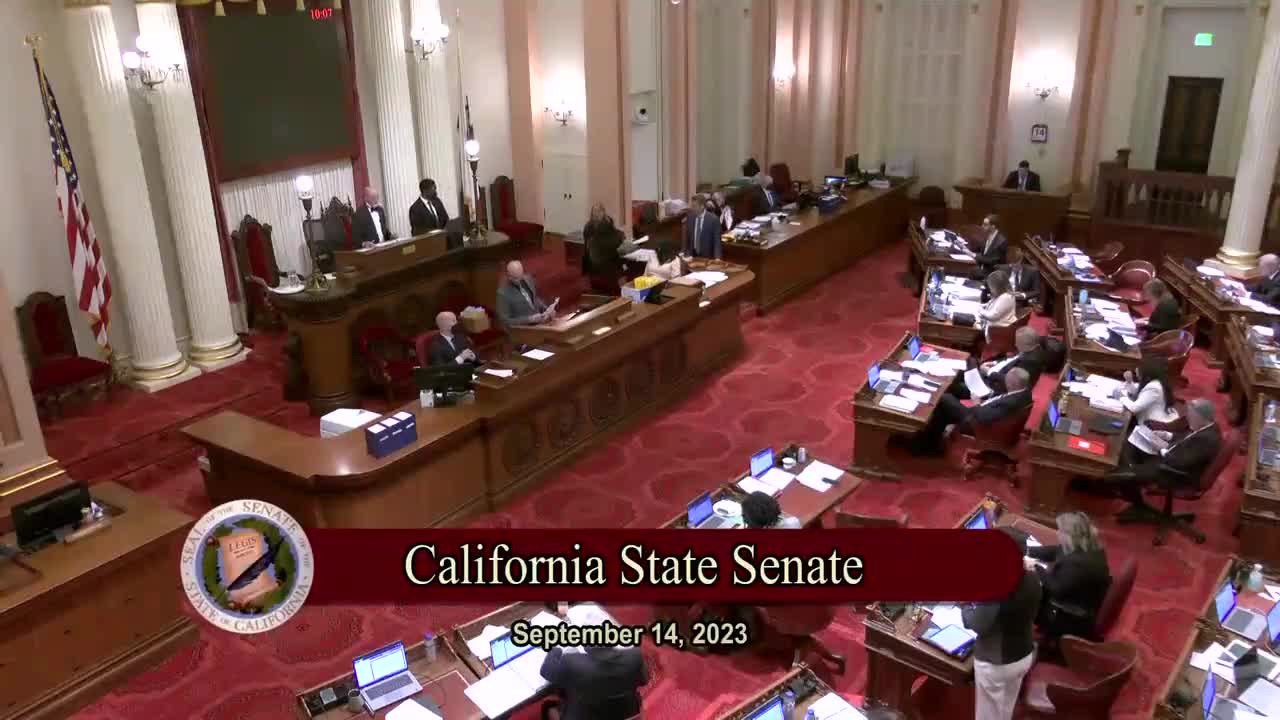 16SEC
Senate Floor
2MIN
Senate Floor
 1MIN
Assembly Floor
 15MIN
Assembly Standing Committee on Housing and Community Development
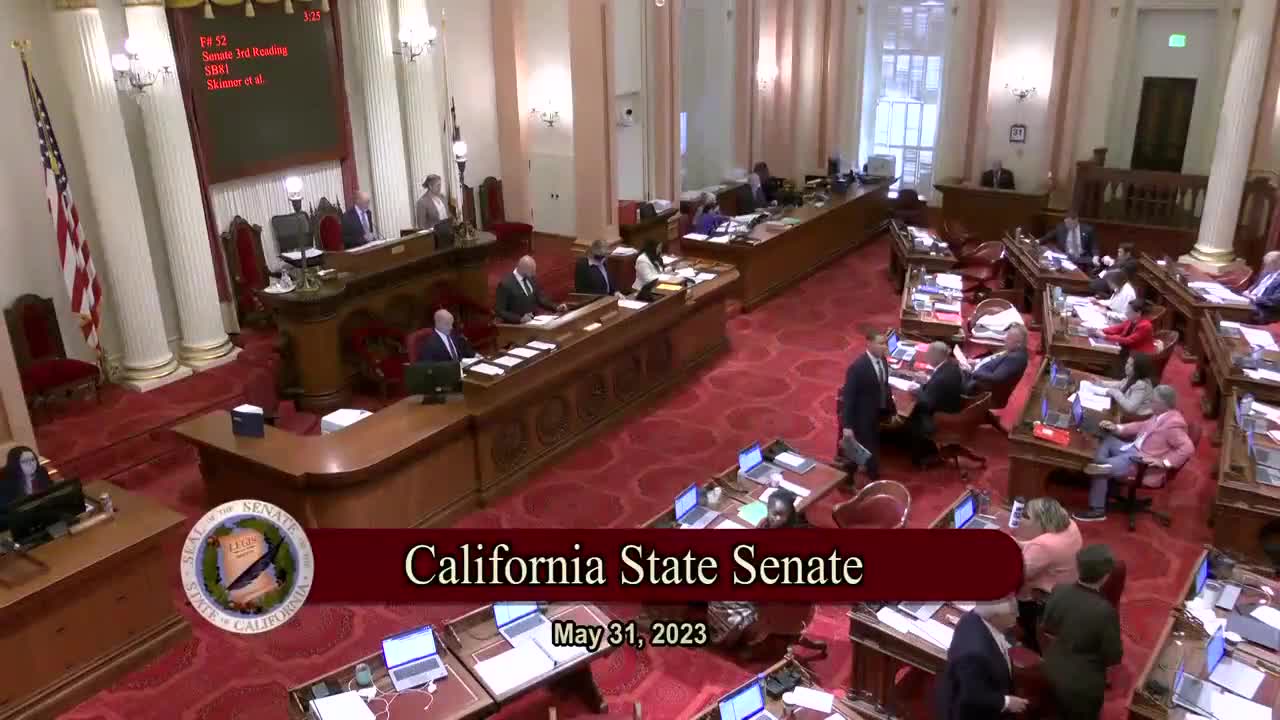 3MIN
Senate Floor
 30MIN
Senate Standing Committee on Housing
Bill Author

Bill Co-Author(s):