SB 572: Surplus state real property: community land trusts.
- Session Year: 2023-2024
- House: Senate
- Latest Version Date: 2024-09-27
Current Status:
Passed
(2024-09-27: Chaptered by Secretary of State. Chapter 770, Statutes of 2024.)
Introduced
In Committee
First Chamber
In Committee
Second Chamber
Enacted
Existing law requires a state agency to review all proprietary state lands under its jurisdiction, as specified, to determine what land is in excess of its needs, and to report on these lands to the Department of General Services. Existing law prescribes a process for the disposition of surplus state property.
Existing law creates the Special Fund for Economic Uncertainties in the State Treasury and continuously appropriates moneys in the fund for specified purposes.
This bill would authorize the Director of General Services to sell 59,200 square feet of property located at 5401 Crenshaw Boulevard, Los Angeles, 90043-2407, at fair market value, upon terms and conditions the director determines are in the best interests of the state by January 1, 2030, notwithstanding specified procedures and priorities otherwise applicable to the disposal of surplus property by the department. The bill would require any sale pursuant to these provisions to be for the purposes of redeveloping the property as an affordable housing or mixed-used housing project, as defined. The bill would require the director, in a solicitation for the sale of the property, to solicit proposals from community land trusts, as specified, and to sell the property to a community land trust that responded to the solicitation, unless the director makes specified determinations. The bill would require the director, in evaluating proposals, to consider findings and recommendations from the Los Angeles Black Workers Center, as specified. The bill would require that the proceeds of the sale be expended on bond payments, as specified, and other costs, including costs for the review of the sale of the property and bond counsel. The bill would authorize the director to sell the property below fair market value for purposes of providing an affordable housing or mixed-use housing project, subject to reporting specified information to the Legislature, as prescribed. The bill would require the net proceeds of the sale to be deposited into the Special Fund for Economic Uncertainties, and would specify that moneys in the fund attributable to the sale are not continuously appropriated and are available for expenditure only upon appropriation by the Legislature. The bill would exempt the sale of the property from the California Environmental Quality Act. The bill, after January 1, 2030, would authorize the director to dispose of the property in accordance with specified procedures and priorities otherwise applicable to the disposal of surplus property by the department.
This bill would make legislative findings and declarations as to the necessity of a special statute for the Los Angeles Black Workers Center.
Existing law requires a state agency to review all proprietary state lands under its jurisdiction, as specified, to determine what land is in excess of its needs, and to report on these lands to the Department of General Services. Existing law prescribes a process for the disposition of surplus state property.
Existing law creates the Special Fund for Economic Uncertainties in the State Treasury and continuously appropriates moneys in the fund for specified purposes.
This bill would authorize the Director of General Services to sell 59,200 square feet of property located at 5401 Crenshaw Boulevard, Los Angeles, 90043-2407, at fair market value, upon terms and conditions the director determines are in the best interests of the state by January 1, 2030. The bill would require any sale pursuant to these provisions to be for the purposes of redeveloping the property as an affordable housing or mixed-used housing project, as defined. The bill would require the director, in a solicitation for the sale of the property, to solicit proposals from community land trusts, as specified, and to sell the property to a community land trust that responded to the solicitation, unless the director makes specified determinations. The bill would require the director, in evaluating proposals, to consider findings and recommendations from the Los Angeles Black Workers Center, as specified. The bill would require that the proceeds of the sale be expended on bond payments, as specified, and other costs, including costs for the review of the sale of the property and bond counsel. The bill would authorize the director to sell the property below fair market value for purposes of providing an affordable housing or mixed-use housing project, subject to reporting specified information to the Legislature, as prescribed. The bill would require the net proceeds of the sale to be deposited into the Special Fund for Economic Uncertainties, and would specify that moneys in the fund attributable to the sale are not continuously appropriated and are available for expenditure only upon appropriation by the Legislature. The bill would exempt the sale of the property from the California Environmental Quality Act. The bill, after January 1, 2030, would authorize the director to dispose of the property in accordance with specified procedures and priorities otherwise applicable to the disposal of surplus property by the department.
This bill would make legislative findings and declarations as to the necessity of a special statute for the Los Angeles Black Workers Center.
Existing law vests the Public Utilities Commission with regulatory authority over public utilities, including gas corporations. An existing commission order requires the commission to investigate the causes and impacts of the winter 20222023 natural gas price spikes and the potential for recurrence, the impact of the price spikes on natural gas and electric prices and customer bills, the potential threats to gas and electric reliability and price volatility in summer 2023 and beyond, potential mitigations, and utility communications to customers to determine whether they were sufficient or require modifications.This bill would require the commission, on or before August 1, 2024, and in consultation with the State Energy Resources Conservation and Development Commission to the extent necessary to analyze the natural gas wholesale market and trends, to submit a report to the relevant legislative policy committees on the status, outcomes, and recommendations, if any, of the commission order described above and the status and any findings of any related investigations by the Federal Energy Regulatory Commission.Existing law vests the Public Utilities Commission with regulatory authority over public utilities, including gas corporations. An existing commission order requires the commission to investigate the causes and impacts of the winter 20222023 natural gas price spikes and the potential for recurrence, the impact of the price spikes on natural gas and electric prices and customer bills, the potential threats to gas and electric reliability and price volatility in summer 2023 and beyond, potential mitigations, and utility communications to customers to determine whether they were sufficient or require modifications.
This bill would require the commission, on or before February August 1, 2024, and in consultation with the State Energy Resources Conservation and Development Commission to the extent necessary to analyze the natural gas wholesale market and trends, to submit a report to the relevant legislative policy committees on the status, outcomes, and recommendations, if any, of the commission order described above and the status and any findings of any related investigations by the Federal Energy Regulatory Commission.
Existing law vests the Public Utilities Commission with regulatory authority over public utilities, including gas corporations. An existing commission order requires the commission to investigate the causes and impacts of the winter 20222023 natural gas price spikes and the potential for recurrence, the impact of the price spikes on natural gas and electric prices and customer bills, the potential threats to gas and electric reliability and price volatility in summer 2023 and beyond, potential mitigations, and utility communications to customers to determine whether they were sufficient or require modifications modifications.
This bill would require the commission, on or before February 1, 2024, and in consultation with the State Energy Resources Conservation and Development Commission to the extent necessary to analyze the natural gas wholesale market and trends, to submit a report to the relevant legislative policy committees on the status, outcomes, and recommendations, if any, of the commission order described above and the status and any findings of any related investigations by the Federal Energy Regulatory Commission.
Existing law vests the Public Utilities Commission with regulatory authority over public utilities, including gas corporations. An existing commission order requires the commission to investigate the causes and impacts of the winter 20222023 natural gas price spikes and the potential for recurrence, the impact of the price spikes on natural gas and electric prices and customer bills, the potential threats to gas and electric reliability and price volatility in summer 2023 and beyond, potential mitigations, and utility communications to customers to determine whether they were sufficient or require modifications
This bill would require the commission, on or before February 1, 2024, to submit a report to the relevant legislative policy committees on the status, outcomes, and recommendations, if any, of the commission order described above and the status and any findings of any related investigations by the Federal Energy Regulatory Commission.
Existing law vests the Public Utilities Commission (PUC) with regulatory authority over public utilities, including electrical corporations and gas corporations, while local publicly owned electric utilities are under the direction of their governing boards. Existing law authorizes the commission to fix the rates and charges for every public utility and requires that those rates and charges be just and reasonable.Existing law requires the State Energy Resources Conservation and Development Commission (Energy Commission) to undertake various actions in furtherance of meeting the states clean energy and pollution reduction objectives, including actions related to energy infrastructure. Existing law vests the Energy Commission with certain authority over local publicly owned electric utilities, as specified.This bill would require the PUC and Energy Commission, in coordination with each other and in consultation with the Federal Energy Regulatory Commission (FERC) and the Public Advocates Office of the Public Utilities Commission, in undertaking their respective gas and electrical system planning, and in order to ensure that gas corporations, electrical corporations, local publicly owned electric utilities, and local publicly owned gas utilities, as applicable, maintain safe and reliable energy at just and reasonable rates consistent with, and in furtherance of, the states climate and energy goals, to each consider imposing additional requirements to protect ratepayers from price spikes, stranded assets, duplication of services, and the risk of windfall profiteering and market manipulation in wholesale and retail markets.Under existing law, a violation of any order, decision, rule, direction, demand, or requirement of the PUC is a crime.Because a violation of a PUC action implementing this bills requirements would be a crime, the bill would impose a state-mandated local program.The California Constitution requires the state to reimburse local agencies and school districts for certain costs mandated by the state. Statutory provisions establish procedures for making that reimbursement.This bill would provide that no reimbursement is required by this act for a specified reason.Existing law vests the Public Utilities Commission (PUC) with regulatory authority over public utilities, including electrical corporations and gas corporations, while local publicly owned electric utilities are under the direction of their governing boards. Existing law authorizes the commission to fix the rates and charges for every public utility and requires that those rates and charges be just and reasonable.
Existing law requires the State Energy Resources Conservation and Development Commission (Energy Commission) to undertake various actions in furtherance of meeting the states clean energy and pollution reduction objectives, including actions related to energy infrastructure. Existing law vests the Energy Commission with certain authority over local publicly owned electric utilities, as specified.
This bill would require the PUC and Energy Commission, in coordination with each other and in consultation with the Federal Energy Regulatory Commission (FERC) and the Public Advocates Office of the Public Utilities Commission, in undertaking their respective gas and electrical system planning, and in order to ensure that gas corporations, electrical corporations, local publicly owned electric utilities, and local publicly owned gas utilities, as applicable, maintain safe and reliable energy at just and reasonable rates consistent with, and in furtherance of, the states climate and energy goals, to each consider imposing additional requirements to protect ratepayers from price spikes, stranded assets, duplication of services, and the risk of windfall profiteering and market manipulation in wholesale and retail markets.
Under existing law, a violation of any order, decision, rule, direction, demand, or requirement of the PUC is a crime.
Because a violation of a PUC action implementing this bills requirements would be a crime, the bill would impose a state-mandated local program.
The California Constitution requires the state to reimburse local agencies and school districts for certain costs mandated by the state. Statutory provisions establish procedures for making that reimbursement.
This bill would provide that no reimbursement is required by this act for a specified reason.
(a)Notwithstanding Section 11011.1, the Director of General Services may sell, at fair market value, upon those terms and conditions the director determines are in the best interests of the state, all or any part of the following real property by January 1, 2030:
Approximately 59,200 square feet of property, located at 5401 Crenshaw Boulevard, Los Angeles, 90043-2407, in the County of Los Angeles.
(b)Any sale of the property pursuant to this section shall be for the purposes of redeveloping the property as an affordable housing or a mixed-use housing project.
(c)(1)In a solicitation for the sale of the property pursuant to this section, the director shall solicit proposals from community land trusts.
(2)A solicitation issued by the director pursuant to this section may prescribe or otherwise limit the types of entities permitted to respond to the solicitation in order to further specific redevelopment scenarios.
(d)(1)Except as provided in paragraph (2), the director shall sell the property pursuant to this section to a community land trust that responded to the solicitation.
(2)Notwithstanding paragraph (1), if the director determines that redevelopment of that property by any community land trust that responded to the solicitation is financially infeasible or would otherwise result in a failure to successfully redevelop the property in accordance with required performance standards, the director may sell that property to other entities.
(e)In evaluating proposals, the director shall consider the findings and recommendations made by the Los Angeles Black Workers Center arising from the work performed under Item 2240-108-0001 of Section 2.00 of the Budget Act of 2024.
(f)To the extent bonds issued by the State Public Works Board involve the property to be sold pursuant to this section, all issuer- and trustee-related costs associated with the review of any proposed sale or lease, together with the costs related to the defeasance or retirement of any bonds, which may include the cost of nationally recognized bond counsel, shall be paid from the proceeds of any sale or lease authorized by this section.
(g)In setting the purchase price for the property to be sold pursuant to this section, the director may permit a sales price at less than fair market value if the director determines that the discount will enable the provision of an affordable housing or a mixed-use housing project.
(h)Thirty days prior to executing a transaction for a sale of the surplus state real property for less than fair market value for affordable housing or a mixed-use housing project, the director shall report to the chairpersons of the fiscal committees of the Legislature, in compliance with Section 9795, all of the following:
(1)The financial terms of the transaction.
(2)A comparison of fair market value for the surplus state real property and the terms listed in paragraph (1).
(3)The basis for agreeing to terms and conditions other than fair market value.
(i)Net proceeds of the sale shall be deposited pursuant to subdivision (g) of Section 11011.
(j)A sale of the property pursuant to this section is exempt from Division 13 (commencing with Section 21000) of the Public Resources Code.
(k)If the property has not been sold pursuant to this section by January 1, 2030, the director may pursue the disposition of the property pursuant to Section 11011.1.
(l)For the purposes of this section, fair market value is established by an appraisal or economic evaluation conducted by the Department of General Services and approved by the department.
(m)For the purposes of this section, the following terms apply:
(1)Affordable housing means a residential dwelling unit that is restricted by deed or other recorded document as affordable housing for persons and families of low or moderate income, as that term is defined in Section 50093 of the Health and Safety Code.
(2)Community land trust has the same meaning as defined in clause (ii) of subparagraph (C) of paragraph (11) of subdivision (a) of Section 402.1 of the Revenue and Taxation Code.
(3)Market-rate housing means a residential dwelling unit that is not affordable housing.
(4)Mixed-use housing project means a project consisting of a mix of residential and nonresidential uses with at least two-thirds of the square footage of the development designated for residential uses, including, but not limited to, mixed-income housing.
(5)Mixed-income housing means a residential project that includes both affordable housing and market-rate housing units.
SEC. 2.Section 16418 of the Government Code is amended to read:16418.(a)The Special Fund for Economic Uncertainties is hereby created in the State Treasury and is continuously appropriated for the purposes of this section. The contingency reserve for economic uncertainties established within the General Fund by Section 12.3 of the Budget Act of 1980 is hereby discontinued, and any balance in that reserve shall be transferred to the Special Fund for Economic Uncertainties. This special fund represents a reserve fund within the meaning of Section 5 of Article XIIIB of the California Constitution. Notwithstanding Sections 16310 and 16314, the Controller may transfer as necessary from the Special Fund for Economic Uncertainties or from the special accounts in the General Fund to the General Fund amounts that are needed to meet cash needs of the General Fund. The Controller shall return all of the moneys so transferred without payment of interest as soon as there are sufficient moneys in the General Fund.
(b)The Controller shall transfer from the Special Fund for Economic Uncertainties to the unappropriated balance of the General Fund an amount necessary to eliminate any General Fund deficit as of the end of each fiscal year, commencing as of June 30, 1985. The amount of transfer for each fiscal year shall be determined on the basis of the State of California Preliminary Annual ReportAccrual Basis, for that fiscal year. Any subsequent adjustments shall be determined jointly by the Controller and the Director of Finance.
(c)Notwithstanding Section 13340, moneys in the Special Fund for Economic Uncertainties are hereby continuously appropriated without regard to fiscal years to the Director of Finance for the purpose of allocating funds for disaster relief pursuant to Chapter 5 (commencing with Section 194) and Chapter 6 (commencing with Section 197) of Part 1 of Division 1 of the Revenue and Taxation Code. However, any allocation made by the director pursuant to this subdivision shall not be made sooner than 30 days after notification in writing of the necessity therefor is provided to the Joint Legislative Budget Committee.
(d)For budgeting and accounting purposes, any appropriations heretofore or hereafter made specifically from the Special Fund for Economic Uncertainties, other than appropriations contained in this section, shall be deemed an appropriation from the General Fund. For year-end reporting purposes, the Controller shall add the balance in the Special Fund for Economic Uncertainties to the balance in the General Fund so as to show the total moneys then available for General Fund purposes.
(e)(1)Notwithstanding Section 13340, there is hereby appropriated from the General Fund, without regard to fiscal years, for transfer by the Controller to the Special Fund for Economic Uncertainties as of the end of each fiscal year the unencumbered balance in the General Fund.
(2)If, at the end of any fiscal year in which it has been determined that there are revenues in excess of the amount that may be appropriated, as defined in subdivision (a) of Section 2 of Article XIIIB of the California Constitution, the transfer pursuant to paragraph (1) shall be reduced by the amount of these excess revenues. The estimates of the transfer shall be made jointly by the Department of Finance and the Legislative Analysts Office.
(f)Notwithstanding the provisions of this section, moneys in the Special Fund for Economic Uncertainties that is attributable to the sale of the property pursuant to Section 11011.30 shall not be continuously appropriated and shall be available for expenditure only upon appropriation by the Legislature.
SEC. 3.The Legislature finds and declares that a special statute is necessary and that a general statute cannot be made applicable within the meaning of Section 16 of Article IV of the California Constitution because of the unique need for a recommendation from the Los Angeles Black Workers Center.
SECTION 1.Section 913.18 is added to the Public Utilities Code, to read:913.18.(a)On or before August 1, 2024, the commission, in consultation with the Energy Commission to the extent necessary to analyze the natural gas wholesale market and trends, shall submit a report to the relevant policy committees of the Legislature on the status, outcomes, and recommendations, if any, of the commissions Order Instituting Investigation on the Commissions Own Motion into Natural Gas Prices During Winter 20222023 and Resulting Impacts to Energy Markets.(b)The commission shall include, in the report, the status and any findings of any related investigations by the Federal Energy Regulatory Commission.(c)Pursuant to Section 10231.5 of the Government Code, this section is repealed on January 1, 2028.(a)On or before February August 1, 2024, the commission, in consultation with the Energy Commission to the extent necessary to analyze the natural gas wholesale market and trends, shall submit a report to the relevant policy committees of the Legislature on the status, outcomes, and recommendations, if any, of the commissions Order Instituting Investigation on the Commissions Own Motion into Natural Gas Prices During Winter 20222023 and Resulting Impacts to Energy Markets.
(b)The commission shall include, in the report, the status and any findings of any related investigations by the Federal Energy Regulatory Commission.
(c)Pursuant to Section 10231.5 of the Government Code, this section is repealed on January 1, 2028.
(a)On or before February 1, 2024, the commission commission, in consultation with the Energy Commission to the extent necessary to analyze the natural gas wholesale market and trends, shall submit a report to the relevant policy committees of the Legislature on the status, outcomes, and recommendations, if any, of the commissions Order Instituting Investigation on the Commissions Own Motion into Natural Gas Prices During Winter 20222023 and Resulting Impacts to Energy Markets.
(b)The commission shall include, in the report, the status and any findings of any related investigations by the Federal Energy Regulatory Commission.
(c)Pursuant to Section 10231.5 of the Government Code, this section is repealed on January 1, 2028.
(a)On or before February 1, 2024, the commission shall submit a report to the relevant policy committees of the Legislature on the status, outcomes, and recommendations, if any, of the commissions Order Instituting Investigation on the Commissions Own Motion into Natural Gas Prices During Winter 20222023 and Resulting Impacts to Energy Markets.
(b)The commission shall include, in the report, the status and any findings of any related investigations by the Federal Energy Regulatory Commission.
(c)Pursuant to Section 10231.5 of the Government Code, this section is repealed on January 1, 2028.
SECTION 1.Section 451.4 is added to the Public Utilities Code, to read:451.4.In consultation with the Federal Energy Regulatory Commission and the Public Advocates Office of the Public Utilities Commission, the commission, in coordination with the Energy Commission, in undertaking its gas and electrical system planning and in order to ensure that gas corporations and electrical corporations maintain safe and reliable energy at just and reasonable rates consistent with, and in furtherance of, the states climate and energy goals, shall consider imposing additional requirements to protect ratepayers from price spikes, stranded assets, duplication of services, and the risk of windfall profiteering and market manipulation in wholesale and retail markets.SEC. 2.Part 3 (commencing with Section 9530) is added to Division 4.8 of the Public Utilities Code, to read:3.Ratepayer Protections9530.In consultation with the Federal Energy Regulatory Commission and the Public Advocates Office of the Public Utilities Commission, the Energy Commission, in coordination with the commission, in undertaking its gas and electrical system planning and in order to ensure that local publicly owned electric utilities and local publicly owned gas utilities maintain safe and reliable energy at just and reasonable rates consistent with, and in furtherance of, the states climate and energy goals, shall consider imposing additional requirements to protect ratepayers from price spikes, stranded assets, duplication of services, and the risk of windfall profiteering and market manipulation in wholesale and retail markets.SEC. 3.No reimbursement is required by this act pursuant to Section 6 of Article XIIIB of the California Constitution because the only costs that may be incurred by a local agency or school district will be incurred because this act creates a new crime or infraction, eliminates a crime or infraction, or changes the penalty for a crime or infraction, within the meaning of Section 17556 of the Government Code, or changes the definition of a crime within the meaning of Section 6 of Article XIIIB of the California Constitution.In consultation with the Federal Energy Regulatory Commission and the Public Advocates Office of the Public Utilities Commission, the commission, in coordination with the Energy Commission, in undertaking its gas and electrical system planning and in order to ensure that gas corporations and electrical corporations maintain safe and reliable energy at just and reasonable rates consistent with, and in furtherance of, the states climate and energy goals, shall consider imposing additional requirements to protect ratepayers from price spikes, stranded assets, duplication of services, and the risk of windfall profiteering and market manipulation in wholesale and retail markets.
SEC. 2.Part 3 (commencing with Section 9530) is added to Division 4.8 of the Public Utilities Code, to read:3.Ratepayer Protections9530.In consultation with the Federal Energy Regulatory Commission and the Public Advocates Office of the Public Utilities Commission, the Energy Commission, in coordination with the commission, in undertaking its gas and electrical system planning and in order to ensure that local publicly owned electric utilities and local publicly owned gas utilities maintain safe and reliable energy at just and reasonable rates consistent with, and in furtherance of, the states climate and energy goals, shall consider imposing additional requirements to protect ratepayers from price spikes, stranded assets, duplication of services, and the risk of windfall profiteering and market manipulation in wholesale and retail markets.
SEC. 3.No reimbursement is required by this act pursuant to Section 6 of Article XIIIB of the California Constitution because the only costs that may be incurred by a local agency or school district will be incurred because this act creates a new crime or infraction, eliminates a crime or infraction, or changes the penalty for a crime or infraction, within the meaning of Section 17556 of the Government Code, or changes the definition of a crime within the meaning of Section 6 of Article XIIIB of the California Constitution.
|
Date
|
Status
|
|---|---|
| Sep 27, 2024 | Chaptered by Secretary of State. Chapter 770, Statutes of 2024. |
| Sep 27, 2024 | Approved by the Governor. |
| Sep 11, 2024 | Enrolled and presented to the Governor at 3 p.m. |
| Aug 31, 2024 | Assembly amendments concurred in. (Ayes 35. Noes 0. Page 5797.) Ordered to engrossing and enrolling. |
| Aug 31, 2024 | In Senate. Concurrence in Assembly amendments pending. |
| Aug 31, 2024 | Read third time. Passed. (Ayes 76. Noes 0. Page 7111.) Ordered to the Senate. |
| Aug 29, 2024 | Read second time. Ordered to third reading. |
| Aug 28, 2024 | From committee: Do pass. (Ayes 21. Noes 0.) (August 28). |
| Aug 26, 2024 | Joint Rule 62(a) suspended. |
| Aug 22, 2024 | Re-referred to Com. on G.O. pursuant to Assembly Rule 77.2. |
| Aug 22, 2024 | Read third time and amended. |
| Aug 22, 2024 | Ordered to third reading. |
| Aug 22, 2024 | From inactive file. |
| Aug 21, 2024 | Notice of intention to remove from inactive file given by Assembly Member Bryan. |
| Sep 14, 2023 | Ordered to inactive file on request of Assembly Member Schiavo. |
| Sep 5, 2023 | Read second time. Ordered to third reading. |
| Sep 1, 2023 | Read second time and amended. Ordered to second reading. |
| Sep 1, 2023 | From committee: Do pass as amended. (Ayes 11. Noes 0.) (September 1). |
| Aug 16, 2023 | August 16 set for first hearing. Placed on suspense file. |
| Jul 13, 2023 | From committee: Do pass and re-refer to Com. on APPR. with recommendation: To consent calendar. (Ayes 14. Noes 0.) (July 12). Re-referred to Com. on APPR. |
| Jul 3, 2023 | From committee with author's amendments. Read second time and amended. Re-referred to Com. on U. & E. |
| Jun 7, 2023 | June 14 set for first hearing canceled at the request of author. |
| May 26, 2023 | Referred to Com. on U. & E. |
| May 23, 2023 | In Assembly. Read first time. Held at Desk. |
| May 22, 2023 | Read third time. Passed. (Ayes 40. Noes 0. Page 1212.) Ordered to the Assembly. |
| May 9, 2023 | Read second time. Ordered to third reading. |
| May 8, 2023 | From committee: Be ordered to second reading pursuant to Senate Rule 28.8. |
| May 1, 2023 | Set for hearing May 8. |
| Apr 27, 2023 | May 1 hearing postponed by committee. |
| Apr 25, 2023 | Set for hearing May 1. |
| Apr 24, 2023 | Read second time and amended. Re-referred to Com. on APPR. |
| Apr 20, 2023 | From committee: Do pass as amended and re-refer to Com. on APPR. (Ayes 17. Noes 0. Page 769.) (April 18). |
| Apr 3, 2023 | Set for hearing April 18. |
| Feb 22, 2023 | Referred to Com. on E., U. & C. |
| Feb 16, 2023 | From printer. May be acted upon on or after March 18. |
| Feb 15, 2023 | Introduced. Read first time. To Com. on RLS. for assignment. To print. |
|
Date
|
Description
|
Location
|
Votes
|
|
|---|---|---|---|---|
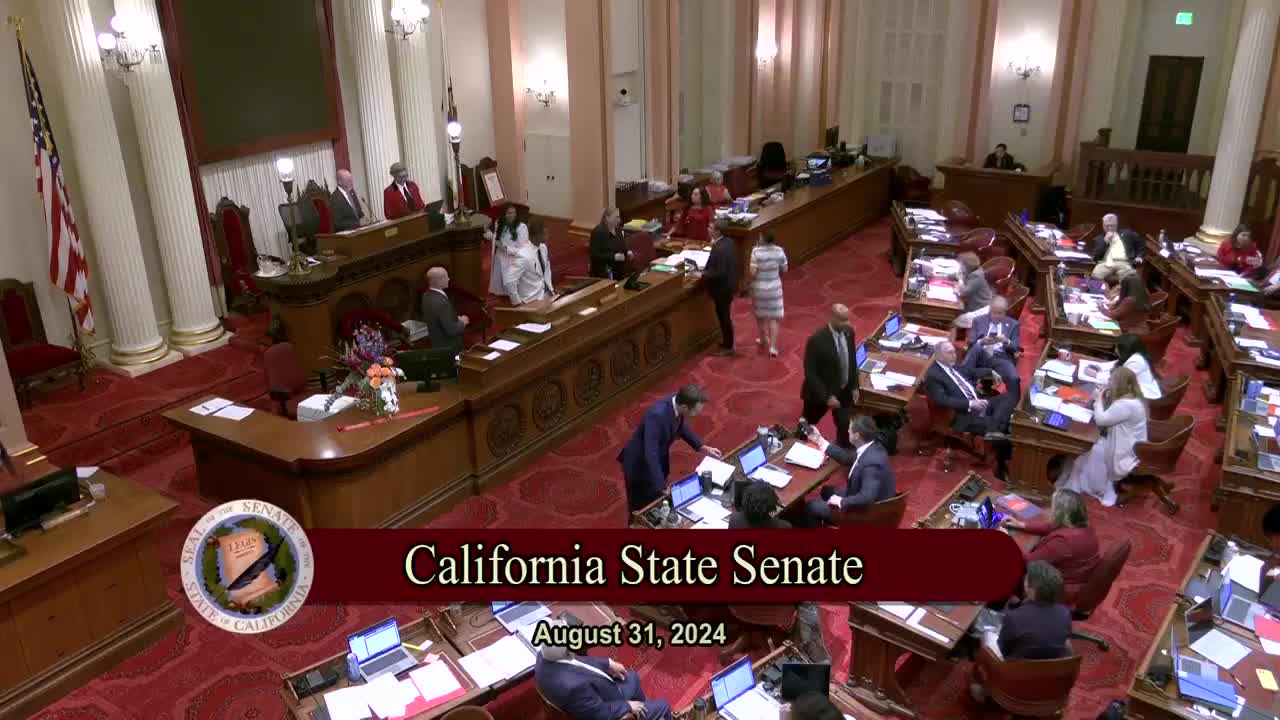
| Aug 31, 2024 | Unfinished Business SB572 Smallwood-Cuevas et al. Concurrence | Senate Floor |
Passed |
|
| Aug 31, 2024 | SB 572 Smallwood-Cuevas Senate Third Reading By Bryan | Assembly Floor |
Passed |
|
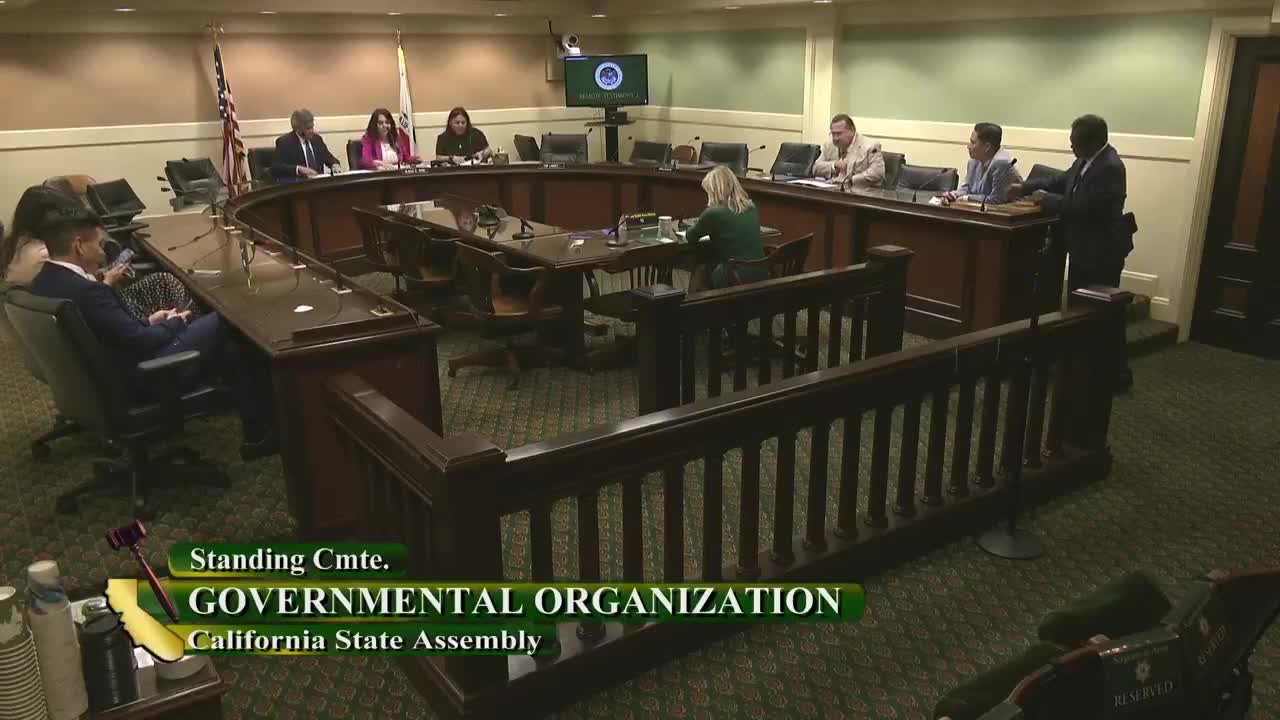
| Aug 28, 2024 | Do pass. | Assembly Standing Committee on Governmental Organization |
Passed |
|
| Sep 1, 2023 | Do pass as amended. | Assembly Standing Committee on Appropriations |
Passed |
|
| Jul 12, 2023 | Do pass and be re-referred to the Committee on [Appropriations] with recommendation: To Consent Calendar | Assembly Standing Committee on Utilities and Energy |
Passed |
|
| May 22, 2023 | Senate 3rd Reading SB572 Stern et al. | Senate Floor |
Passed |
|
| Apr 18, 2023 | Do pass as amended, but first amend, and re-refer to the Committee on [Appropriations] | Senate Standing Committee on Energy, Utilities and Communications |
Passed |
This list shows positions taken on this bill by organizations on the date displayed, which is linked to the original source.
Positions by individuals are not included.
|
Organization
|
Position
|
Date
|
|---|---|---|
| California Municipal Utilities Association | ** Support | |
| City Of Palo Alto | ** Support | |
| Climate Action California | ** Support | |
| Consumer Watchdog | ** Support | |
| Los Angeles Unified School District | ** Support | |
| School Energy Coalition | ** Support | |
| Sierra Club | ** Support | |
| State Building and Construction Trades Council | ** Support |
SENATE RULES COMMITTEE Office of Senate Floor Analyses (916) 651-1520 Fax: (916) 327-4478 | SB 572 |
UNFINISHED BUSINESS
Bill No: SB 572
Author: Smallwood-Cuevas (D), et al.
Amended: 8/22/24
Vote: 21
PRIOR SENATE VOTES NOT RELEVANT
ASSEMBLY FLOOR: 55-0, 8/31/24 – Roll call not available
SUBJECT: Surplus state real property: community land trusts
SOURCE: Author
DIGEST:
This bill authorizes the Director of the Department of General Services (DGS) to sell, upon those terms and conditions the director determines are in the best interest of the state, all or any part of approximately 59,200 square feet of property, located at 5401 Crenshaw Boulevard, Los Angeles for purposes of redeveloping the property as an affordable housing or mixed-used housing project.
Assembly Amendments
delete the previous language in the bill and instead authorize DGS to sell all or any part of a specified property in the City of Los Angeles, as specified.
ANALYSIS:
Existing law:
- Establishes DGS, which is under the control of the Director of DGS, within the Government Operations Agency, and requires the director to perform various functions and duties with respect to property within the state, including entering into lease agreements.
- Authorizes DGS, subject to legislative approval, to sell, lease, exchange, or transfer various specified properties for current market value, upon such other terms and conditions DGS determines are in the best interest of the state.
- Authorizes DGS, with the consent of the state agency concerned, to, among other things, let for a period not to exceed five years, any real personal property that belongs to the state, unless otherwise prohibited or excepted.
- Authorizes DGS, with the consent of the state agency concerned, to let for any period of time any real property or interest in real property that belongs to the state, when DGS deems the letting serves a beneficial public purpose limited to the development of housing, including permanent supportive or traditional housing and emergency shelters or park and recreation facilities. Under this section, DGS is authorized to enter into leases at less than market value provided that the cost of administering the lease is recovered. (Government Code 14671.2)
- Authorizes DGS to sell or lease the Southern Youth Correctional Reception Center and Clinic, to the County of Los Angeles by January 1, 2015, at market value upon terms and conditions and subject to reservations and exceptions DGS determines are in the best interests of the state, and after January 1, 2015, authorizes DGS to sell the property to any other party at market value through a competitive bid process.
- Requires DGS to create a digitized inventory of all excess state land, create screening tools for prioritizing affordable housing development on excess state land, and issue requests for proposals and select affordable housing developments on excess state land, as described.
- Establishes criteria for state agencies to use in determining and reporting excess lands. A state agency must report land as surplus that is:
- Not currently utilized, or is underutilized, for any existing or ongoing programs;
- Land for which the agency cannot identify a specific utilization relative to future needs; and,
- Land not identified by the state agency within its master plan for facility development.
This bill:
- Authorizes DGS to sell, by January 1, 2030, at fair market value, upon those terms and conditions the director determines are in the best interest of the state, all or any part of approximately 59,200 square feet of property, located at 5401 Crenshaw Boulevard, Los Angeles.
- Requires that any sale of the property to be for the purposes of redeveloping the property as an affordable housing or mixed-used housing project.
- Authorizes DGS to permit a sales price at less than fair market value if DGS determines that the discount will enable the provision of an affordable housing or a mixed-use housing project.
- Requires, in solicitation for the sale of the property, DGS to solicit proposals from community land trusts.
- Authorizes DGS to prescribe or otherwise limit the types of entities permitted to respond to the solicitation in order to further specific redevelopment scenarios.
- Requires DGS, in evaluating proposals, to consider the findings and recommendations made by the Los Angeles Black Workers Center, as specified.
- Exempts the sale of the property from the California Environmental Quality Act.
- Requires, 30 days prior to executing a transaction for a sale of property for less than fair market value, DGS to report to the chairpersons of the fiscal committees of the Legislature specified information regarding the terms of the sale.
- Authorizes DGS, if the property has not been sold by January 1, 2030, to dispose of the property pursuant to the current process for the disposal of surplus property.
- Requires the net proceeds of the sale to be deposited into the Special Fund for Economic Uncertainties, and specifies that moneys in the fund attributable to the sale are not continuously appropriated and are available for expenditure only upon appropriation by the Legislature.
Background
Author Statement. According to the author’s office, “California has a housing crisis that needs to be addressed, it’s important to have community input to best address the crisis. SB 572 requires DGS to consider community input when considering developers in the bid process.”
The Property. The former Employment Development Department (EDD) office located at 5401 Crenshaw Blvd, in the city of Los Angeles closed on November 1, 2017, as a result of a legal dispute with the landlord, who refused to comply with a lease term that authorized the state to buy the building for $1. This was at the end of a 20-year lease in which the lease payments were structured to compensate the owner for the $1 purchase option at the end. The landlord sued the state for unlawful detainer, EDD moved out, and the state countersued. The landlord lost at trial, lost at appeal, and was denied review by the California Supreme Court. After some delay, the landlord finally transferred the title to the state.
During the long period in which it was vacant, the building suffered extensive damage from break-ins, theft, and unauthorized use by homeless individuals. Since assuming ownership, the state has replaced locks and installed fencing to prevent further damage, but the building would require extensive work to restore it to habitability. EDD does not plan to reopen the facility as a workforce services office.
Community Land Trust. A Community Land Trust (CLT) is a nonprofit organization whose primary purpose is to create and maintain affordable single- and multi-family homes, community facilities, and community-controlled land through a land lease model. CLTs balance the needs of individuals who want security of tenure in occupying and using land and housing, with the needs of the surrounding community, striving to secure a variety of social purposes such as maintaining the affordability of local housing, preventing the displacement of vulnerable residents, and promoting economic and racial inclusion. Across the world, there is enormous diversity among CLTs in the ways that real property is owned, used, and operated and the ways that the CLT itself is guided and governed by people living on and around a CLT’s land.
Process for Surplus Property. The DGS is currently responsible for the disposition of state-owned property that has been declared surplus to future state needs. The Legislature must declare the property to be surplus and must authorize the Director of DGS to sell, exchange, lease, or transfer the surplus property according to specified procedures set forth in law.
Generally, current law requires surplus property to be transferred or sold at market value, or upon such other terms and conditions that DGS determines are in the best interest of the state. Current law gives right of first refusal on any surplus property to a local agency and then to a nonprofit affordable housing sponsor, prior to being offered for sale to private entities or individuals in the open market. In addition, DGS is authorized to sell surplus property to a local agency or to a nonprofit affordable housing sponsor at a sales price less than fair market value if DGS determines that such a discount will enable housing for individuals or families of low or moderate income.
In 2019, Governor Newsom, issued Executive Order N-06-19 (EO) which reoriented DGS’s priorities to focus on facilitating conversion of excess property to affordable housing. Within the required three months, DGS reviewed over 44,000 parcels, and identified 92 properties potentially suitable for housing. As of March 2022, DGS had offered 19 of these properties for affordable housing development, each of which is proceeding through the planning, development, or construction phase. These properties are expected to provide approximately 1,700 units of affordable housing. The contents of the EO were later codified by SB 561 (Dodd, Chapter 446, Statutes of 2022) and AB 2233 (Quirk-Silva, Chapter 438, Statutes of 2022).
Additionally, current law, under Government Code section 14671.2, authorizes DGS, with the consent of the state agency concerned, to let for any period of time any real property or interest in real property that belongs to the state, when DGS deems the letting serves a beneficial public purpose limited to the development of housing, including permanent supportive or traditional housing and emergency shelters or park and recreation facilities.
This bill, until January 1, 2030, authorizes to sell a specified property in the City of Los Angeles for the purpose of redeveloping the property as an affordable housing or mixed-used housing project. However, the bill does allow DGS to sell the property for less than fair market value if DGS determines that the discount will enable the provision of an affordable housing or a mixed-use housing project. After January 1, 2030, the bill would authorize DGS to sell the property according to the above-described process for the disposal of surplus property.
FISCAL EFFECT: Appropriation: No Fiscal Com.: Yes Local: No
SUPPORT: (Verified 8/27/24)
State Building and Construction Trades Council
OPPOSITION: (Verified 8/27/24)
None received
ARGUMENTS IN SUPPORT: According to the State Building and Construction Trades Council, “SB 572 is intended to restore a neglected and blighted state-owned lot into a community asset. Despite its dilapidated condition, the lot is central to several community institutions, including the LA Black Worker Center, and is located adjacent to the Metro K-Line. While the Crenshaw corridor remains a hot spot for market-rate housing development, there remains a lack of affordable housing options and job training locations for its historic residents.
Prepared by: Felipe Lopez / G.O. / (916) 651-1530
8/31/24 23:10:13
**** END ****
SENATE THIRD READING
STR Bill Id:SB 572
Author:(Smallwood-Cuevas)
As Amended Ver:August 22, 2024
Majority vote
SUMMARY
This bill would authorize the Director of the Department of General Services (DGS or director) to sell property located at 5401 Crenshaw Boulevard, Los Angeles, 90043, at fair market value, upon terms and conditions the director determines are in the best interests of the state by January 1, 2030.
The bill require that any sale be for the purposes of redeveloping the property as an affordable housing or mixed-use housing project, as defined. The bill would require the director, in a solicitation for the sale of the property, to solicit proposals from community land trusts, as specified, and to sell the property to a community land trust that responded to the solicitation, unless the director makes specified determinations. The director would be authorized to sell the property below fair market value for purposes of providing an affordable housing or mixed-use housing project, subject to reporting specified information to the Legislature, as prescribed.
Major Provisions
1) Provides the DGS may sell, at fair market value, upon those terms and conditions the director determines are in the best interests of the state, all or any part of the following real property by January 1, 2030: Approximately 59,200 square feet of property, located at 5401 Crenshaw Boulevard, Los Angeles, 90043-2407, in the County of Los Angeles.
2) Provides any sale of the property pursuant to this measure shall be for the purposes of redeveloping the property as an affordable housing or a mixed-use housing project.
3) Provides in a solicitation for the sale of the property pursuant to this measure, the director shall solicit proposals from community land trusts.
4) Provides a solicitation issued by the director may prescribe or otherwise limit the types of entities permitted to respond to the solicitation in order to further specific redevelopment scenarios.
5) Provides, the director shall sell the property pursuant to this bill to a community land trust that responded to the solicitation. However, if the director determines that redevelopment of that property by any community land trust that responded to the solicitation is financially infeasible or would otherwise result in a failure to successfully redevelop the property in accordance with required performance standards, the director may sell that property to other entities.
6) States in evaluating proposals, the director shall consider the findings and recommendations made by the Los Angeles Black Workers Center arising from the work performed under Item 2240-108-0001 of Section 2.00 of the Budget Act of 2024.
7) Provides that in setting the purchase price for the property to be sold pursuant to this measure, the director may permit a sales price at less than fair market value if the director determines that the discount will enable the provision of an affordable housing or a mixed-use housing project, subject to reporting specified information to the Legislature, as prescribed.
8) Requires that the proceeds of the sale be expended on bond payments, as specified, and other costs, including costs for the review of the sale of the property and bond counsel.
9) Exempt the sale of the property from the California Environmental Quality Act.
10) Provides, after January 1, 2030, would authorize the director to dispose of the property in accordance with specified procedures and priorities otherwise applicable to the disposal of surplus property by the department.
11) Provides, fair market value is established by an appraisal or economic evaluation conducted by the DGS and approved by the department.
12) Provides for the purposes of this bill, the following terms apply:
- "Affordable housing" means a residential dwelling unit that is restricted by deed or other recorded document as affordable housing for persons and families of low or moderate income, as defined in the Health and Safety Code.
- "Community land trust" has the same meaning as defined in the Revenue and Taxation Code.
- "Market-rate housing" means a residential dwelling unit that is not affordable housing.
- "Mixed-use housing project" means a project consisting of a mix of residential and nonresidential uses with at least two-thirds of the square footage of the development designated for residential uses, including, but not limited to, mixed-income housing.
- "Mixed-income housing" means a residential project that includes both affordable housing and market-rate housing units.
13) Requires the net proceeds of the sale to be deposited into the Special Fund for Economic Uncertainties, and would specify that moneys in the fund attributable to the sale are not continuously appropriated and are available for expenditure only upon appropriation by the Legislature.
14) Makes legislative findings and declarations as to the necessity of a special statute for the Los Angeles Black Workers Center.
COMMENTS
Background.
Surplus state-owned property sales process. Current law requires all state agencies to annually review and report to DGS if any lands under their jurisdiction are in excess to the programmatic needs of the controlling department. DGS may then determine if any of these properties can be used by another state agency. If not, the property is included in the annual omnibus surplus bill, which authorizes DGS to dispose of the property by sale, lease, or exchange.
DGS must first offer each surplus property to the relevant local governmental agencies and next to nonprofit affordable housing sponsors prior to offering the property to private entities through a bidding process. Local agencies may acquire surplus property for open space, public parks, development of local government-owned facilities, or affordable housing. Local agencies pay fair market value as determined by DGS, however property being acquired for parks or open space may be sold at less than fair market value at DGS's discretion.
All net proceeds from the sale of surplus properties are deposited into the Special Fund for Economic Uncertainties (SFEU). The SFEU ensures the ability of the State to meet General Fund obligations in the event of declining revenues or unanticipated expenditures. However, changes made by AB 127 (Committee on Budget, Chapter 45, Statutes of 2023) now authorize DGS to deposit some or all of the net proceeds from the sale of surplus properties into the Property Acquisition Law Money Account (PALMA) to maintain an operating reserve sufficient to continue developing excess state lands into affordable housing. If not all net proceeds from a surplus property sale are deposited into the PALMA, then the excess is deposited into the SFEU.
Executive Order N-06-19. In January 2019, Governor Newsom issued Executive Order (EO) N-06-19, which directed DGS and the Department of Housing and Community Development to identify and inventory excess state-owned property for affordable housing projects. Within the required three months, DGS reviewed over 44,000 parcels, and identified 92 properties that were potentially suitable for housing. As of March 2022, DGS had offered 19 of these properties for affordable housing development, each of which is proceeding through the planning, development, or construction phase. The properties will provide approximately 1,700 affordable housing units.
Community Land Trust (CLT). A CLT is a nonprofit organization (Internal Revenue Code Section 501(c)(3) whose primary purpose is to create and maintain affordable single- and multi-family homes, community facilities, and community-controlled land through a land lease model. CLTs balance the needs of individuals who want security of tenure in occupying and using land and housing, with the needs of the surrounding community, striving to secure a variety of social purposes such as maintaining the affordability of local housing, preventing the displacement of vulnerable residents, and promoting economic and racial inclusion. Across the world, there is enormous diversity among CLTs in the ways that real property is owned, used, and operated and the ways that the CLT itself is guided and governed by people living on and around a CLT's land.
Prior legislation. AB 2233 (Quirk-Silva), Chapter 438, Statutes of 2022. Required the DGS to develop a plan to facilitate development of affordable housing on state-owned excess land, as specified.
According to the Author
According to the author's office, "this bill would help facilitate the transfer of state property from the State Employment Development Department (EDD) located at 5401 Crenshaw Boulevard, Los Angeles, to a non-profit and/or local land trust community group. When state properties are internally identified as no longer meeting agency/department needs, the decision is made to add them to the state "surplus property list" where determinations are made regarding best use strategies. One such property now exists in Senate District 28 – the Crenshaw Blvd., EDD Building."
This bill would allow a non-profit and/or local land trust entity to purchase the property for the purpose of developing a site that would provide affordable housing, employment/training services and mixed use/retail development opportunities in conjunction with local community guidance and input.
The author's points out that the intent of this bill is "to ensure that the community and local representatives can discuss and take into account development proposals that best suit the needs of all parties. Our hope is to not only ensure the construction of much needed affordable housing, but also the provisioning of key services (state worker training, community and/or retail) that will better position the community for long lasting success."
Arguments in Support
The State Building and Construction Trades Council of California writes, "California is facing a housing affordability crisis, with many being unable to afford living in California from the high cost of living. We need to proactively seek the creation of community-friendly housing. In addition to hosting affordable housing, the site will also host workforce development and training services that can help local residents and neighbors gain access to well-paying jobs. Several state and community organizations and labor unions have expressed interest in anchoring workforce development services onsite. The new project designs will incorporate these service delivery models."
Arguments in Opposition
None on file.
FISCAL COMMENTS
Unknown.
VOTES
SENATE FLOOR: 40-0-0
YES: Allen, Alvarado-Gil, Archuleta, Ashby, Atkins, Becker, Blakespear, Bradford, Caballero, Cortese, Dahle, Dodd, Durazo, Eggman, Glazer, Gonzalez, Grove, Hurtado, Jones, Laird, Limón, McGuire, Menjivar, Min, Newman, Nguyen, Niello, Ochoa Bogh, Padilla, Portantino, Roth, Rubio, Seyarto, Skinner, Smallwood-Cuevas, Stern, Umberg, Wahab, Wiener, Wilk
ASM UTILITIES AND ENERGY: 14-0-1
YES: Jim Patterson, Bauer-Kahan, Wendy Carrillo, Chen, Connolly, Hart, Mathis, Muratsuchi, Reyes, Santiago, Schiavo, Ting, Wallis, Wood
ABS, ABST OR NV: Garcia
ASM APPROPRIATIONS: 11-0-5
YES: Holden, Bryan, Calderon, Wendy Carrillo, Mike Fong, Hart, Lowenthal, Papan, Pellerin, Weber, Wilson
ABS, ABST OR NV: Megan Dahle, Dixon, Mathis, Sanchez, Soria
ASM GOVERNMENTAL ORGANIZATION: 21-0-1
YES: Blanca Rubio, Lackey, Addis, Bains, Bryan, Davies, Dixon, Gabriel, Gipson, Haney, Jones-Sawyer, Low, McKinnor, Pacheco, Papan, Jim Patterson, Ramos, Soria, Ta, Valencia, Wallis
ABS, ABST OR NV: Cervantes
UPDATED
VERSION: August 22, 2024
CONSULTANT: Eric Johnson / G.O. / (916) 319-2531 FN: 0004957
Date of Hearing: August 28, 2024
ASSEMBLY COMMITTEE ON GOVERNMENTAL ORGANIZATION
Blanca Rubio, Chair
SBPCA Bill Id:SB 572
Author:(Smallwood-Cuevas) – As Amended Ver:August 22, 2024
SENATE VOTE: Not relevant
SUBJECT: Surplus state real property: community land trusts
SUMMARY: This bill would authorize the Director of the Department of General Services (DGS or director) to sell 59,200 square feet of property located at 5401 Crenshaw Boulevard, Los Angeles, 90043-2407, at fair market value, upon terms and conditions the director determines are in the best interests of the state by January 1, 2030.
The bill would require any sale pursuant to this bill be for the purposes of redeveloping the property as an affordable housing or mixed-used housing project, as defined. The bill would require the director, in a solicitation for the sale of the property, to solicit proposals from community land trusts, as specified, and to sell the property to a community land trust that responded to the solicitation, unless the director makes specified determinations. The bill would authorize the director to sell the property below fair market value for purposes of providing an affordable housing or mixed-use housing project, subject to reporting specified information to the Legislature, as prescribed. Specifically, this bill:
1) Provides the DGS may sell, at fair market value, upon those terms and conditions the director determines are in the best interests of the state, all or any part of the following real property by January 1, 2030: Approximately 59,200 square feet of property, located at 5401 Crenshaw Boulevard, Los Angeles, 90043-2407, in the County of Los Angeles.
2) Provides any sale of the property pursuant to this measure shall be for the purposes of redeveloping the property as an affordable housing or a mixed-use housing project.
3) Provides in a solicitation for the sale of the property pursuant to this measure, the director shall solicit proposals from community land trusts.
4) Provides a solicitation issued by the director may prescribe or otherwise limit the types of entities permitted to respond to the solicitation in order to further specific redevelopment scenarios.
5) Provides, the director shall sell the property pursuant to this bill to a community land trust that responded to the solicitation. However, if the director determines that redevelopment of that property by any community land trust that responded to the solicitation is financially infeasible or would otherwise result in a failure to successfully redevelop the property in accordance with required performance standards, the director may sell that property to other entities.
6) States in evaluating proposals, the director shall consider the findings and recommendations made by the Los Angeles Black Workers Center arising from the work performed under Item 2240-108-0001 of Section 2.00 of the Budget Act of 2024.
7) Provides that in setting the purchase price for the property to be sold pursuant to this measure, the director may permit a sales price at less than fair market value if the director determines that the discount will enable the provision of an affordable housing or a mixed-use housing project, subject to reporting specified information to the Legislature, as prescribed.
8) Requires that the proceeds of the sale be expended on bond payments, as specified, and other costs, including costs for the review of the sale of the property and bond counsel.
9) Exempt the sale of the property from the California Environmental Quality Act.
10) Provides, after January 1, 2030, would authorize the director to dispose of the property in accordance with specified procedures and priorities otherwise applicable to the disposal of surplus property by the department.
11) Provides, fair market value is established by an appraisal or economic evaluation conducted by the DGS and approved by the department.
12) Provides for the purposes of this bill, the following terms apply:
a) “Affordable housing” means a residential dwelling unit that is restricted by deed or other recorded document as affordable housing for persons and families of low or moderate income, as defined in the Health and Safety Code.
b) “Community land trust” has the same meaning as defined in the Revenue and Taxation Code.
c) “Market-rate housing” means a residential dwelling unit that is not affordable housing.
d) “Mixed-use housing project” means a project consisting of a mix of residential and nonresidential uses with at least two-thirds of the square footage of the development designated for residential uses, including, but not limited to, mixed-income housing.
e) “Mixed-income housing” means a residential project that includes both affordable housing and market-rate housing units.
13) Requires the net proceeds of the sale to be deposited into the Special Fund for Economic Uncertainties, and would specify that moneys in the fund attributable to the sale are not continuously appropriated and are available for expenditure only upon appropriation by the Legislature.
14) Makes legislative findings and declarations as to the necessity of a special statute for the Los Angeles Black Workers Center.
EXISTING LAW:
1) Establishes DGS, which is under the control of the Director of DGS, within the Government Operations Agency, and requires the director to perform various functions and duties with respect to property within the state, including entering into lease agreements.
2) Requires DGS to follow a series of specified steps in the disposal of state properties identified by controlling departments and agencies as being in excess of their programmatic needs.
3) Authorizes DGS, subject to legislative approval, to sell, lease, exchange, or transfer various specified properties for current market value, upon such other terms and conditions DGS determines are in the best interest of the state.
4) Requires DGS to create a digitized inventory of all excess state land, create screening tools for prioritizing affordable housing development on excess state land, and issue requests for proposals and select affordable housing developments on excess state land, as described.
5) Establishes criteria for state agencies to use in determining and reporting excess lands. A state agency must report land as surplus that is:
a) Not currently utilized, or is underutilized, for any existing or ongoing programs;
b) Land for which the agency cannot identify a specific utilization relative to future needs; and
c) Land not identified by the state agency within its master plan for facility development.
6) Requires the Department of General Services (DGS) to develop a plan to facilitate development of affordable housing on state-owned excess land, as specified.
7) Creates the Special Fund for Economic Uncertainties in the State Treasury and continuously appropriates moneys in the fund for specified purposes.
FISCAL EFFECT: Unknown.
COMMENTS:
Purpose of the bill. According to the author’s office, “this bill would help facilitate the transfer of state property from the State Employment Development Department (EDD) located at 5401 Crenshaw Boulevard, Los Angeles, to a non-profit and/or local land trust community group.
When state properties are internally identified as no longer meeting agency/department needs, the decision is made to add them to the state “surplus property list” where determinations are made regarding best use strategies. One such property now exists in Senate District 28 – the Crenshaw Blvd., EDD Building.”
This bill would allow a non-profit and/or local land trust entity to purchase the property for the purpose of developing a site that would provide affordable housing, employment/training services and mixed use/retail development opportunities in conjunction with local community guidance and input.
The author’s points out that the intent of this bill is “to ensure that the community and local representatives can discuss and take into account development proposals that best suit the needs of all parties. Our hope is to not only ensure the construction of much needed affordable housing, but also the provisioning of key services (state worker training, community and/or retail) that will better position the community for long lasting success.”
Background.
Surplus state-owned property sales process. Current law requires all state agencies to annually review and report to DGS if any lands under their jurisdiction are in excess to the programmatic needs of the controlling department. DGS may then determine if any of these properties can be used by another state agency. If not, the property is included in the annual omnibus surplus bill, which authorizes DGS to dispose of the property by sale, lease, or exchange.
DGS must first offer each surplus property to the relevant local governmental agencies and next to nonprofit affordable housing sponsors prior to offering the property to private entities through a bidding process. Local agencies may acquire surplus property for open space, public parks, development of local government-owned facilities, or affordable housing. Local agencies pay fair market value as determined by DGS, however property being acquired for parks or open space may be sold at less than fair market value at DGS’s discretion.
All net proceeds from the sale of surplus properties are deposited into the Special Fund for Economic Uncertainties (SFEU). The SFEU ensures the ability of the State to meet General Fund obligations in the event of declining revenues or unanticipated expenditures. However, changes made by AB 127 (Committee on Budget, Chapter 45, Statutes of 2023) now authorize DGS to deposit some or all of the net proceeds from the sale of surplus properties into the Property Acquisition Law Money Account (PALMA) to maintain an operating reserve sufficient to continue developing excess state lands into affordable housing. If not all net proceeds from a surplus property sale are deposited into the PALMA, then the excess is deposited into the SFEU.
Executive Order N-06-19. In January 2019, Governor Newsom issued Executive Order (EO) N-06-19, which directed DGS and the Department of Housing and Community Development to identify and inventory excess state-owned property for affordable housing projects. Within the required three months, DGS reviewed over 44,000 parcels, and identified 92 properties that were potentially suitable for housing. As of March 2022, DGS had offered 19 of these properties for affordable housing development, each of which is proceeding through the planning, development, or construction phase. The properties will provide approximately 1,700 affordable housing units.
Community Land Trust (CLT). A CLT is a nonprofit organization (Internal Revenue Code Section 501(c)(3) whose primary purpose is to create and maintain affordable single- and multi-family homes, community facilities, and community-controlled land through a land lease model.
CLTs balance the needs of individuals who want security of tenure in occupying and using land and housing, with the needs of the surrounding community, striving to secure a variety of social purposes such as maintaining the affordability of local housing, preventing the displacement of vulnerable residents, and promoting economic and racial inclusion. Across the world, there is enormous diversity among CLTs in the ways that real property is owned, used, and operated and the ways that the CLT itself is guided and governed by people living on and around a CLT’s land.
In support. The State Building and Construction Trades Council of California writes, “California is facing a housing affordability crisis, with many being unable to afford living in California from the high cost of living. We need to proactively seek the creation of community-friendly housing. In addition to hosting affordable housing, the site will also host workforce development and training services that can help local residents and neighbors gain access to well-paying jobs. Several state and community organizations and labor unions have expressed interest in anchoring workforce development services onsite. The new project designs will incorporate these service delivery models.”
The Koreatown Immigrant Workers Alliance (KIWA) writes, “We are no stranger to the rampant cost of living leaving historic communities of color highly vulnerable to homelessness. Koreatown’s dense immigrant community of predominantly Korean and Latinx tenants are among the highest risk of displacement. This bill is intended to restore a neglected and blighted state-owned lot into a community asset. Despite its dilapidated condition, the lot is central to several community institutions including the LA Black Worker Center, and is located adjacent to the Metro K-Line. While the Crenshaw corridor remains a hot spot for market-rate housing development, there is a lack of affordable housing options and job training locations for its historic residents—many of whom work as service, homecare and construction workers.”
Prior legislation. AB 2233 (Quirk-Silva), Chapter 438, Statutes of 2022. Required the DGS to develop a plan to facilitate development of affordable housing on state-owned excess land, as specified.
SB 20 (Dodd), Chapter 240, Statutes of 2019. Extended a previously expired sunset date to allow DGS to sell or exchange most of the Skyline Wilderness Park, at fair market value, to either the County of Napa or the Napa County Regional Park and Open Space District. SB 20 specifically excluded from, any sale or lease, a parcel adjacent to the park known as Camp Coombs. Since 1984, the smaller 80-acre parcel has been utilized by Napa State Hospital as an outdoor recreation area for its patients and thus was never considered surplus property.
REGISTERED SUPPORT / OPPOSITION:
Support
State Building and Construction Trades Council
Analysis Prepared by: Eric Johnson / G.O. / (916) 319-2531
SENATE THIRD READING
STR Bill Id:SB 572
Author:(Stern)
As Amended Ver:September 1, 2023
Majority vote
SUMMARY
Requires the California Public Utilities Commission (CPUC), in consultation with the California Energy Commission (CEC), to submit a report to the Legislature, on or before August 1, 2024, on the status, outcomes and recommendations, if any, of the commission's "Order Instituting Investigation on the Commission's Own Motion into Natural Gas Prices During Winter 2022–2023 and Resulting Impacts to Energy Markets (OII)."
Major Provisions
COMMENTS
Following extraordinarily high and unusually prolonged natural gas price increases in the winter of 2022-23, the CPUC held an "en banc" hearing on February 7, 2023, to gather facts on the extent of and reasons for high gas prices this winter. Subsequently, in March 2023, the CPUC issued OII 23-03-008, in which the CPUC intends to investigate:
- The causes and impacts of the winter 2022-23 gas price spikes and the potential for recurrence.
- The impact of the 2022-23 gas price spikes on gas and electric prices and gas and electric customer bills.
- Potential threats to gas and electric reliability and price volatility in summer 2023 and beyond.
- Potential mitigations.
The CPUC's investigation is ongoing. Given the magnitude of the customer impacts felt during the winter natural gas price spikes, it seems prudent to require the CPUC to be in close communication with the Legislature and federal and state agencies, as proposed by this bill, regarding any causes behind or recommendations to prevent future natural gas price volatility.
According to the Author
According to the author, "The costs of the recent natural gas price spikes were borne not by Sempra's top executives, who made over $100 million in 2021 alone, but by a lot of hard working individuals just trying to get by. While our top state energy agencies will investigate the causes of the most recent spike in natural gas prices, we need these same agencies analyzing market data, wholesale markets, and the relationships within those systems to assess, analyze, and determine whether new planning and regulations are needed to ensure California is able to meet its state energy goals, while also protecting the rate-payers from sudden price shocks that may be made worse or extended simply because of poor planning due to a lack of understanding. As a state that currently imports 90% of its natural gas supply, our state energy agencies simply have to have more comprehension and expertise on how these markets work in relation to meeting our broader zero carbon energy goals in a way that our rate-payer are not annually subject to energy price spikes or unnecessary costs."
Arguments in Support
A coalition of environmental and consumer advocates, as well as some local government representatives, support this bill in its emphasis in seeking ratepayer protections and greater transparency in the natural gas market.
Arguments in Opposition
None on file.
FISCAL COMMENTS
According to the Assembly Appropriations Committee, the CPUC indicates it would not seek new resources to implement the requirements of this bill because it could not hire staff or enter into contracts, nor complete the work required by this bill by the bill's deadline of August 1, 2024. Nonetheless, CPUC reports it would shift "significant resources" from its Energy Division and Legal Division, at the expense of the CPUC's existing investigatory work to undertake the work required by this bill.
VOTES
SENATE FLOOR: 40-0-0
YES: Allen, Alvarado-Gil, Archuleta, Ashby, Atkins, Becker, Blakespear, Bradford, Caballero, Cortese, Dahle, Dodd, Durazo, Eggman, Glazer, Gonzalez, Grove, Hurtado, Jones, Laird, Limón, McGuire, Menjivar, Min, Newman, Nguyen, Niello, Ochoa Bogh, Padilla, Portantino, Roth, Rubio, Seyarto, Skinner, Smallwood-Cuevas, Stern, Umberg, Wahab, Wiener, Wilk
ASM UTILITIES AND ENERGY: 14-0-1
YES: Jim Patterson, Bauer-Kahan, Wendy Carrillo, Chen, Connolly, Hart, Mathis, Muratsuchi, Reyes, Santiago, Schiavo, Ting, Wallis, Wood
ABS, ABST OR NV: Garcia
ASM APPROPRIATIONS: 11-0-5
YES: Holden, Bryan, Calderon, Wendy Carrillo, Mike Fong, Hart, Lowenthal, Papan, Pellerin, Weber, Wilson
ABS, ABST OR NV: Megan Dahle, Dixon, Mathis, Sanchez, Soria
UPDATED
VERSION: September 1, 2023
CONSULTANT: Laura Shybut / U. & E. / (916) 319-2083 FN: 0001626
Date of Hearing: August 16, 2023
ASSEMBLY COMMITTEE ON APPROPRIATIONS
Chris Holden, Chair
SBPCA Bill Id:SB 572
Author:(Stern) – As Amended Ver:July 3, 2023
Policy Committee: | Utilities and Energy | Vote: | 14 - 0 |
|
| ||
|
|
Urgency: No State Mandated Local Program: No Reimbursable: No
SUMMARY:
This bill requires the California Public Utilities Commission (CPUC), in consultation with the California Energy Commission (CEC) to the extent necessary to analyze the natural gas wholesale market and trends, on or before February 1, 2024, to submit a report to the Legislature on the status, outcomes and recommendations, if any, of the commission’s “Order Instituting Investigation on the Commission’s Own Motion into Natural Gas Prices During Winter 2022–2023 and Resulting Impacts to Energy Markets (OII).”
FISCAL EFFECT:
The CPUC indicates it would not seek new resources to implement the requirements of this bill because it could not hire staff or enter into contracts, nor complete the work required by this bill by the bill’s deadline of February 1, 2024. Nonetheless, CPUC reports it would shift “significant resources” from its Energy Division and Legal Division, at the expense of the CPUC’s existing investigatory work pursuant to the OII to undertake the work required by this bill.
COMMENTS:
Following extraordinarily high and unusually prolonged natural gas price increases in the winter of 2022-23, the CPUC held an “en banc” hearing on February 7, 2023, to gather facts on the extent of and reasons for high gas prices this winter. Subsequently, in March 2023, the CPUC issued OII 23-03-008, in which the CPUC intends to investigate:
- The causes and impacts of the winter 2022-23 gas price spikes and the potential for recurrence.
- The impact of the 2022-23 gas price spikes on gas and electric prices and gas and electric customer bills.
- Potential threats to gas and electric reliability and price volatility in summer 2023 and beyond.
- Potential mitigations.
The CPUC’s investigation is ongoing.
This investigation notwithstanding, the author contends the state’s energy agencies need statutory direction to analyze:
market data, wholesale markets, and the relationships within those systems to assess, analyze, and determine whether new planning and regulations are needed to ensure California is able to meet its state energy goals, while also protecting the rate-payers from sudden price shocks that may be made worse or extended simply because of poor planning due to a lack of understanding.
Analysis Prepared by: Jay Dickenson / APPR. / (916) 319-2081
Date of Hearing: July 12, 2023
ASSEMBLY COMMITTEE ON UTILITIES AND ENERGY
Eduardo Garcia, Chair
SBPCA Bill Id:SB 572
Author:(Stern) – As Amended Ver:July 3, 2023
SENATE VOTE: 40-0
SUBJECT: Natural gas: prices: report
SUMMARY: Requires the California Public Utilities Commission (CPUC), in consultation with the California Energy Commission (CEC), to submit a report to the Legislature, by February 1, 2024, on the status, outcomes, and recommendations of the agency’s investigation into natural gas prices during winter 2022-23.
EXISTING LAW:
- Establishes and vests the CPUC with regulatory authority over public utilities, including electrical corporations and gas corporations. (California Constitution Article XII)
- Authorizes the CPUC to fix the rates and charges for every public utility and requires that those rates and charges be just and reasonable. (Public Utilities Code § 451)
- Requires the State Energy Resources Conservation and Development Commission (also known as the CEC) to undertake various actions in furtherance of meeting the state’s clean energy and pollution reduction objectives, including actions related to energy infrastructure. (Public Resources Code § 25307)
- Establishes the U.S. Federal Energy Regulatory Commission (FERC) with the responsibility to review applications for construction and operation of interstate natural gas pipelines. (Natural Gas Act § 7)
FISCAL EFFECT: Unknown. Pursuant to Senate Rule 28.8, this bill did not receive a hearing in the Senate Committee on Appropriations due to a determination that any state costs of the bill are not significant.
BACKGROUND:
Winter Natural Gas Price Spikes. Nearly 90% of California’s natural gas usage is imported from out of state.[1] This dependence on imports can make us vulnerable to events occurring elsewhere, and reliant on efficient pipeline operations to bring us needed supply. Moreover, this dependence on imports emphasizes the importance of California’s regulators to closely monitor the natural gas market.
Beginning in late November 2022 and continuing through the end of January 2023, natural gas prices in California remained at higher than normal seasonal levels. As noted in a recent market analysis prepared by the California Independent System Operator (CAISO), natural gas prices tend to spike during the winter in California due to colder weather.[2] For instance, in February 2021 a cold snap across the United States pushed prices at the southern California gas hub[3] to a record $144 per Million British Thermal Units (MMBtu). (For context, the past few years have seen gas prices hovering between $5-$10/MMBtu at that hub.) However, those 2021 high prices were quickly alleviated once the cold weather subsided. This past winter, gas prices rose quickly after the Thanksgiving 2022 holiday, reaching up to $50/MMBtu, but then remained at an elevated level throughout December and January. This was true not only at the two main California hubs but also in many of the gas hubs across the west.[4]
According to the CPUC’s fact sheets regarding utility rates, the January 2023 natural gas procurement rate was over 300% more than the procurement rate in January 2022. These costs are passed through directly to utility customers – as utilities are prohibited from marking up the price of the commodity. As such, these higher prices greatly impacted customers’ utility bills this winter.
A number of factors seem to have contributed to the price increases, including the rise in global demand for natural gas due to the impacts of Russia’s invasion of Ukraine, colder-than-normal temperatures, flow orders, and limited pipeline and storage capacity. However, California and much of the West experienced disparate prices compared to the rest of the country. In response, there have been multiple calls for customer relief and investigations into the causes, as well as, multitude of concerns about utility bills expressed by constituents and media.
Following calls to investigate the causes of the price spikes, the CPUC initiated an investigation[5] to look into the causes of the price increases and potential for recurrence, as well as the impact on electric prices and customer electric and gas utility bills. Additionally, Governor Newsom wrote to the FERC asking the federal agency to investigate whether market manipulation, anticompetitive behavior or other anomalies have contributed or are contributing to the high prices seen throughout the West this winter. The CPUC investigation remains an active and open proceeding. The opening filing by the CPUC noted their intent to resolve the proceeding “within 36 months.”[6]
COMMENTS:
- Author’s Statement. According to the author, “The costs of the recent natural gas price spikes were borne not by Sempra’s top executives, who made over $100 million in 2021 alone, but by a lot of hard working individuals just trying to get by. While our top state energy agencies will investigate the causes of the most recent spike in natural gas prices, we need these same agencies analyzing market data, wholesale markets, and the relationships within those systems to assess, analyze, and determine whether new planning and regulations are needed to ensure California is able to meet its state energy goals, while also protecting the rate-payers from sudden price shocks that may be made worse or extended simply because of poor planning due to a lack of understanding. As a state that currently imports 90 percent of its natural gas supply, our state energy agencies simply have to have more comprehension and expertise on how these markets work in relation to meeting our broader zero carbon energy goals in a way that our rate-payer are not annually subject to energy price spikes or unnecessary costs.”
- Appropriate Legislative Notice. This bill requires the CPUC to report to the relevant policy committees of the Legislature the status, findings, and outcomes of the investigation into the winter 2022-2023 natural gas prices. This bill also requires the CPUC to include the status and any findings from FERC’s investigation and to consult with the CEC to the extent necessary to analyze natural gas wholesale markets. Given the magnitude of the customer impacts felt during the winter natural gas price spikes, it seems prudent to require the CPUC to be in close communication with the Legislature, and federal and state agencies, regarding any causes behind or recommendations to prevent future natural gas price volatility. However timing the delivery of the report for February 2024, when both the CPUC and FERC investigations are still underway and unlikely to be concluded soon, may lead to a CPUC report lacking complete or useful information.
- Related Legislation.
SB 429 (Bradford, 2023) a previous version of this bill required investor-owned natural gas utilities to provide customers with an annual credit (known as the California Climate Credit) to coincide with the highest usage month, on or as close to the February utility billing cycle, as feasible. Status: amended outside this committee’s jurisdiction; pending hearing in the Assembly Committee on Appropriations.
- Prior Legislation.
SB 1486 (Stern, 2022) required the CPUC to continue to consider minimizing or closing the Aliso Canyon natural gas storage facility while maintaining reliability and affordability for customers, and to annually submit a report on related findings to the Legislature. Also required the Los Angeles Department of Water and Power (LADWP) to establish a local reliability plan, taking into consideration two- to three-day extreme weather events. Status: Failed passage in the Senate.
SB 1477 (Stern) the CPUC, from July 1, 2019 through June 30, 2023, to allocate $50 million annually from gas corporations' GHG emissions allowance revenues for the BUILD Program and the TECH Initiative established by this bill. Status: Chapter 378, Statutes of 2017.
REGISTERED SUPPORT / OPPOSITION:
Support
City of Palo Alto
Climate Action California
Consumer Watchdog
Los Angeles Unified School District
School Energy Coalition
Sierra Club
Other
California Municipal Utilities Association
Opposition
None on file.
Analysis Prepared by: Laura Shybut / U. & E. / (916) 319-2083
CEC, “Supply and Demand of Natural Gas in California,” accessed on February 2, 2023; https://www.energy.ca.gov/data-reports/energy-almanac/californias-natural-gas-market/supply-and-demand-natural-gas-california ↑
Pg. 9, California ISO, “Gas Conditions and CAISO Markets,” February 6, 2023. ↑
SoCal Citygate ↑
Pg. 9, California ISO, “Gas Conditions and CAISO Markets,” February 6, 2023. ↑
OII. 23-03-008 Order Instituting Investigation (OII) on the Commission’s Own Motion into Natural Gas Prices During Winter 2022-2023 and Resulting Impacts to Energy Markets; issued March 20, 2023; https://docs.cpuc.ca.gov/PublishedDocs/Published/G000/M503/K823/503823381.PDF ↑
Pg. 12, OII. 23-03-008 ↑
SENATE RULES COMMITTEE Office of Senate Floor Analyses (916) 651-1520 Fax: (916) 327-4478 | SB 572 |
THIRD READING
Bill No: SB 572
Author: Stern (D), et al.
Amended: 4/24/23
Vote: 21
SENATE ENERGY, U. & C. COMMITTEE: 17-0, 4/18/23
AYES: Bradford, Dahle, Ashby, Becker, Caballero, Dodd, Durazo, Eggman, Gonzalez, Grove, McGuire, Min, Newman, Rubio, Seyarto, Skinner, Wilk
NO VOTE RECORDED: Stern
SENATE APPROPRIATIONS COMMITTEE: Senate Rule 28.8
SUBJECT: Natural gas: prices: report
SOURCE: Author
DIGEST:
This bill requires the California Public Utilities Commission (CPUC) to submit a report to the Legislature, by February 1, 2024, on the status, outcomes, and recommendations of the agency’s investigation into natural gas prices during winter 2022-23.
ANALYSIS:
Existing law:
- Establishes and vests the CPUC with regulatory authority over public utilities, including electrical corporations and gas corporations. (California Constitution Article XII)
- Authorizes the CPUC to fix the rates and charges for every public utility and requires that those rates and charges be just and reasonable. (Public Utilities Code §451)
- Requires the State Energy Resources Conservation and Development Commission (also known as the California Energy Commission (CEC)) to undertake various actions in furtherance of meeting the state’s clean energy and pollution reduction objectives, including actions related to energy infrastructure. (Public Resources Code §25307)
- Establishes the U.S. Federal Energy Regulatory Commission (FERC) with the responsibility to review applications for construction and operation of interstate natural gas pipelines. (Natural Gas Act §7)
This bill requires the CPUC on or before February 1, 2024, to submit a report to the relevant legislative policy committees on the status, outcomes, and recommendations, if any, of the CPUC’s Order Instituting Investigation on the Commission’s Own Motion into Natural Gas Prices During Winter 2022–2023 and Resulting Impacts to Energy Markets, including the status and any findings of any related investigations by the FERC.
Background
Winter 2022-23 wholesale natural gas prices skyrocket. Beginning in late November 2022 and continuing through January 2023, natural gas prices in the wholesale market skyrocketed. According to the Energy Information Administration’s (EIA’s) December 22, 2022 Natural Gas Weekly Update, the daily spot market prices reached their highest levels in over two decades at major trading hubs that deliver natural gas into California. According to the CPUC’s fact sheets regarding utility rates, January 2023 natural gas procurement rate is over 300 percent more than the procurement rate in January 2022. These costs are passed through directly to utility customers – as utilities are prohibited from marking up the price of the commodity. As such, these higher prices have affected customers’ utility bills this winter.
A number of factors seem to have contributed to the price increases, including the rise in global demand for natural gas due to the impacts of Russia’s invasion of Ukraine, colder-than-normal temperatures, flow orders, and limited pipeline and storage capacity. However, California and much of the West experienced disparate prices compared to the rest of the country. In response, there have been multiple calls for customer relief and investigations into the causes, including the Chair of this committee, as well as, concerns about utility bills expressed by constituents and in several news stories.
Following calls to investigate the causes of the price spikes, first by the Public Advocates Office, but followed by Senator Bradford and others, on February 7th, the CPUC held an en banc hearing to gather facts on the extent of and reasons for high gas prices this winter. On March 16th, the CPUC initiated an investigation (I. 23-03-008) Order Instituting Investigation (OII) on the Commission’s Own Motion into Natural Gas Prices During Winter 2022-2023 and Resulting Impacts to Energy Markets to look into the causes of the price increases and potential for recurrence, as well as the impact on electric prices and customer electric and gas utility bills. Additionally, Governor Newsom wrote to the FERC asking the federal agency to investigate whether market manipulation, anticompetitive behavior or other anomalies have contributed or are contributing to the high prices seen throughout the West this winter. As of the writing of this analysis, the CPUC investigation remains an active and open proceeding.
Comments
This bill requires the CPUC to report to the relevant policy committees of the Legislature the status, findings, and outcomes of the investigation into the winter natural gas prices. This bill also requires the CPUC to include the status and any findings from FERC’s investigation.
Related/Prior Legislation
SB 429 (Bradford, 2023) requires investor-owned natural gas utilities to provide customers with an annual credit (known as the California Climate Credit) to coincide with the highest usage month, on or as close to the February utility billing cycle, as feasible. The bill is pending on the Senate Floor.
FISCAL EFFECT: Appropriation: No Fiscal Com.: Yes Local: No
SUPPORT: (Verified 5/8/23)
Climate Action California
Consumer Watchdog
Los Angeles Unified School District
School Energy Coalition
Sierra Club California
OPPOSITION: (Verified 5/8/23)
None received
ARGUMENTS IN SUPPORT: According to the author:
The costs of the recent natural gas price spikes were borne not by Sempra’s top executives, who made over $100 million in 2021 alone, but by a lot of hard working individuals just trying to get by. While our top state energy agencies will investigate the causes of the most recent spike in natural gas prices, we need these same agencies analyzing market data, wholesale markets, and the relationships within those systems to assess, analyze, and determine whether new planning and regulations are needed to ensure California is able to meet its state energy goals, while also protecting the rate-payers from sudden price shocks that may be made worse or extended simply because of poor planning due to a lack of understanding. As a state the currently imports 90 percent of its natural gas supply, our state energy agencies simply have to have more comprehension and expertise on how these markets work in relationship to meeting our broader zero carbon energy goals in a way that our rate-payer are not annually subject to energy price spikes or unnecessary costs.
Prepared by: Nidia Bautista / E., U. & C. / (916) 651-4107
5/10/23 15:29:18
**** END ****
SENATE COMMITTEE ON ENERGY, UTILITIES AND COMMUNICATIONS
Senator Steven Bradford, Chair
2023 - 2024 Regular
Bill No: SB 572 Hearing Date: 4/18/2023
Author: | Stern | ||
Version: | 2/15/2023 Introduced | ||
Urgency: | No | Fiscal: | Yes |
Consultant: | Nidia Bautista | ||
SUBJECT: Energy: ratepayer protections
DIGEST: This bill requires the California Public Utilities Commission (CPUC) and California Energy Commission (CEC) to consider imposing additional, unidentified, requirements to protect ratepayers.
ANALYSIS:
Existing law:
- Establishes and vests the CPUC with regulatory authority over public utilities, including electrical corporations and gas corporations. (California Constitution Article XII)
- Authorizes the CPUC to fix the rates and charges for every public utility and requires that those rates and charges be just and reasonable. (Public Utilities Code §451)
- Requires the State Energy Resources Conservation and Development Commission (also known as the California Energy Commission (CEC)) to undertake various actions in furtherance of meeting the state’s clean energy and pollution reduction objectives, including actions related to energy infrastructure. (Public Resources Code §25307)
- Establishes the U.S. Federal Energy Regulatory Commission (FERC) with the responsibility to review applications for construction and operation of interstate natural gas pipelines. (Natural Gas Act §7)
- Establishes the Public Advocates Office as an independent office within the CPUC to represent and advocate on behalf of the interests of public utility customers and subscribers within the jurisdiction of the CPUC. The goal of the office shall be to obtain the lowest possible rate for service consistent with reliable and safe service levels. (Public Utilities Code §309.5)
This bill requires the CPUC and CEC, in coordination with each other and in consultation with the FERC and the Public Advocate’s Office of the CPUC, in undertaking their respective gas and electrical system planning, and in order to ensure that gas corporations, electrical corporations, local publicly owned electric utilities, and local publicly owned gas utilities, as applicable, maintain safe and reliable energy at just and reasonable rates consistent with, and in furtherance of, the state’s climate and energy goals, to each consider imposing additional requirements to protect ratepayers from price spikes, stranded assets, duplication of services, and the risk of windfall profiteering and market manipulation in wholesale and retail markets.
Background
Winter 2022-23 wholesale natural gas prices skyrocket. Beginning in late November 2022 and continuing through January 2023, natural gas prices in the wholesale market skyrocketed. According to the Energy Information Administration’s (EIA’s) December 22, 2022 Natural Gas Weekly Update, the daily spot market prices reached their highest levels in over two decades at major trading hubs that deliver natural gas into California. According to the CPUC’s fact sheets regarding utility rates, January 2023 natural gas procurement rate is over 300 percent more than the procurement rate in January 2022. These costs are passed through directly to utility customers – as utilities are prohibited from marking up the price of the commodity. As such, these higher prices have affected customers’ utility bills this winter.
A number of factors seem to have contributed to the price increases, including the rise in global demand for natural gas due to the impacts of Russia’s invasion of Ukraine, colder-than-normal temperatures, flow orders, and limited pipeline and storage capacity. However, California and much of the West experienced disparate prices compared to the rest of the country. In response, there have been multiple calls for customer relief and investigations into the causes, including the Chair of this committee, as well as, concerns about utility bills expressed by constituents and in several news stories.
On February 7th, the CPUC held an en banc hearing to gather facts on the extent of and reasons for high gas prices this winter. On March 16th, the CPUC initiated an investigation (I. 23-03-008) Order Instituting Investigation (OII) on the Commission’s Own Motion into Natural Gas Prices During Winter 2022-2023 and Resulting Impacts to Energy Markets to look into the causes of the price increases and potential for recurrence, as well as the impact on electric prices and customer electric and gas utility bills. Governor Newsom wrote to the FERC asking it to investigate whether market manipulation, anticompetitive behavior or other anomalies have contributed or are contributing to the high prices seen throughout the West this winter.
Comments
This bill would requires the CEC to take unidentified actions, in coordination with the FERC, Public Advocates Office, CPUC, to impose additional requirements to protect ratepayers from price spikes, stranded assets, and other potential harms. However, as noted above, the investigations into the causes of the prices spikes are underway and their findings have not been shared. As such, it seems premature to require state agencies and local public utilities to take actions that have yet to be identified and solutions. In this regard, those actions could result in additional storage, including at Aliso Canyon, or other strategies that may not be the intended outcome. Therefore, the author and committee may wish to amend this bill to delete the current language in this bill and instead require the CPUC to provide a report to the Legislature by February 1, 2024 regarding any outcomes and recommendations from the CPUC investigation, including any identified by FERC.
Prior/Related Legislation
SB 429 (Bradford, 2023) requires investor-owned natural gas utilities to provide customers with an annual credit (known as the California Climate Credit) to coincide with the highest usage month, on or as close to the February utility billing cycle, as feasible. The bill is pending in the Committee on Appropriations.
FISCAL EFFECT: Appropriation: No Fiscal Com.: Yes Local: Yes
SUPPORT:
Consumer Watchdog
School Energy Coalition
Sierra Club
OPPOSITION:
California Municipal Utilities Association
ARGUMENTS IN SUPPORT: According to the author:
The costs of the recent natural gas price spikes were borne not by Sempra’s top executives, who made over $100 million in 2021 alone, but by a lot of hard working individuals just trying to get by. While our top state energy agencies will investigate the causes of the most recent spike in natural gas prices, we need these same agencies analyzing market data, wholesale markets, and the relationships within those systems to assess, analyze, and determine whether new planning and regulations are needed to ensure California is able to meet its state energy goals, while also protecting the rate-payers from sudden price shocks that may be made worse or extended simply because of poor planning due to a lack of understanding. As a state the currently imports 90 percent of its natural gas supply, our state energy agencies simply have to have more comprehension and expertise on how these markets work in relationship to meeting our broader zero carbon energy goals in a way that our rate-payer are not annually subject to energy price spikes or unnecessary costs.
ARGUMENTS IN OPPOSITION: In opposition to the bill, the California Municipal Utility Association (CMUA) states:
While the FERC investigation and CPUC OII may identify causes that warrant legislative consideration, it is premature to direct the California Energy Commission (CEC) to consult with FERC, the CPUC, and the CPUC Public Advocates Office to consider imposing additional requirements on POUs. Imposing new requirements could very well have the opposite effect of your intention, which is to protect ratepayers. We are concerned that the authority given to the CEC relies on many undefined terms, including stranded assets, duplication of services, and the risk of windfall profiteering. Some of these references do not align with the not-for-profit utility model and their ambiguity would give wide implementation discretion and may not be in the best interest of ratepayers.
-- END --