SB 589: Foster youth: disaster aid assistance.
- Session Year: 2023-2024
- House: Senate
- Latest Version Date: 2023-05-18
Current Status:
Failed
(2023-09-01: September 1 hearing: Held in committee and under submission.)
Introduced
In Committee
First Chamber
In Committee
Second Chamber
Enacted
Existing law generally provides for the placement of foster youth in various placement settings and governs the provision of child welfare services, which is defined to mean public social services that are directed toward the accomplishment of specified purposes, including protecting and promoting the welfare of all children, preventing the unnecessary separation of children from their families, and restoring to their families children who have been removed.
Existing law requires the State Department of Social Services to ensure that, among other things, emergency response services are coordinated with the implementation of specified program models. Existing law also requires each county to provide the department with a disaster response plan describing how county programs that receive federal assistance for child and family services would respond to a disaster. Existing law also requires the department to review its disaster plan, revise the plan to clarify the role and responsibilities of the state in the event of a disaster, and consult with counties to identify opportunities for collaboration in the event of a disaster.
This bill would establish the Child Welfare Disaster Response Program, to be administered by the department. The bill would establish the Child Welfare Disaster Response Account to fund the program. The bill would require, upon appropriation by the Legislature, $2,000,000 to be allocated from the General Fund to the Child Welfare Disaster Response Account for purposes of the program and to support the needs of foster children and youth and their caregivers during a disaster. The bill would require the department to determine eligibility criteria for applicants and would authorize county child welfare departments to apply for funds. The bill would require funds awarded pursuant those provisions to be available to meet the housing, clothing, transportation transportation, and other tangible needs of foster children and youth and their caregivers that occur within 180 days of a local emergency proclamation by a local government or a state of emergency proclamation by the Governor.
Existing law generally provides for the placement of foster youth in various placement settings and governs the provision of child welfare services, which is defined to mean public social services that are directed toward the accomplishment of specified purposes, including protecting and promoting the welfare of all children, preventing the unnecessary separation of children from their families, and restoring to their families children who have been removed.
Existing law requires the State Department of Social Services to ensure that, among other things, emergency response services are coordinated with the implementation of specified program models. Existing law also requires each county to provide the department with a disaster response plan describing how county programs that receive federal assistance for child and family services would respond to a disaster. Existing law also requires the department to review its disaster plan, revise the plan to clarify the role and responsibilities of the state in the event of a disaster, and consult with counties to identify opportunities for collaboration in the event of a disaster.
This bill would establish the Child Welfare Disaster Response Program, to be administered by the department. The bill would establish the Child Welfare Disaster Response Account to fund the program. The bill would require, upon appropriation by the Legislature, $2,000,000 to be allocated from the General Fund to Child Welfare Disaster Response Account for purposes of the program and to support the needs of foster children and youth and their caregivers during a disaster. The bill would require the department to determine eligibility criteria for applicants and would authorize county child welfare departments to apply for funds. The bill would require funds awarded pursuant those provisions to be available to meet the housing, clothing, transportation and other tangible needs of foster children and youth and their caregivers that occur within 180 days of a local emergency proclamation by a local government or a state of emergency proclamation by the Governor.
Existing law authorizes the State Department of Health Care Services to maintain a statewide mental health prevention program directed toward a reduction in the need for utilization of the treatment system and the development and strengthening of community support and self-help networks. Existing law also authorizes the State Department of State Hospitals to support the establishment of self-help groups, as specified.This bill would make technical, nonsubstantive changes to those provisions.Existing law authorizes the State Department of Health Care Services to maintain a statewide mental health prevention program directed toward a reduction in the need for utilization of the treatment system and the development and strengthening of community support and self-help networks. Existing law also authorizes the State Department of State Hospitals to support the establishment of self-help groups, as specified.
This bill would make technical, nonsubstantive changes to those provisions.
(a)The Child Welfare Disaster Response Program is hereby created, and is to be administered by the department.
(b)The Child Welfare Disaster Response Account is hereby created to fund the program.
(c)Upon appropriation by the Legislature, two million dollars ($2,000,000) shall be allocated from the General Fund to the Child Welfare Disaster Response Account for purposes of the program and to support the needs of foster children and youth and their caregivers during a disaster.
16590.1.(a)The department shall determine eligibility criteria for the allocation of funds to applicants.
(b)County child welfare departments may apply for funds.
(c)Funds awarded pursuant to this chapter shall be available to meet the housing, clothing, transportation, and other tangible needs of foster children and youth and their caregivers that occur within 180 days of a local emergency proclamation by a local government or a state of emergency proclamation by the Governor.
16590.2.It is the intent of the Legislature that the Child Welfare Disaster Response Account may be replenished at the start of every fiscal year.
16590.3.Gifts, donations, and bequests may be made to the Child Welfare Disaster Response Account, subject to any conditions or restrictions from the department.
REVISIONS: HeadingLine 2.(a)The Child Welfare Disaster Response Program is hereby created, to be administered by the department.
(b)The Child Welfare Disaster Response Account is hereby created to fund the program.
(c)Upon appropriation by the Legislature, two million dollars ($2,000,000) shall be allocated from the General Fund to the Child Welfare Disaster Response Account for purposes of the program and to support the needs of foster children and youth and their caregivers during a disaster.
16590.1.(a)The department shall determine eligibility criteria for the allocation of funds to applicants.
(b)County child welfare departments may apply for funds.
(c)Funds awarded pursuant to this chapter shall be available to meet the housing, clothing, transportation, and other tangible needs of foster children and youth and their caregivers that occur within 180 days of a local emergency proclamation by a local government or a state of emergency proclamation by the Governor.
16590.2.It is the intent of the Legislature that the Child Welfare Disaster Response Account may be replenished at the start of every fiscal year.
16590.3.Gifts, donations, and bequests may be made to the Child Welfare Disaster Response Account, subject to any conditions or restrictions from the department.
SECTION 1.Section 4340 of the Welfare and Institutions Code is amended to read:4340.The State Department of Health Care Services may maintain a statewide mental health prevention program directed toward a reduction in the need for utilization of the treatment system and the development and strengthening of community support and self-help networks. The State Department of State Hospitals may support the establishment at state hospitals of self-help groups, which may be facilitated by an outside entity, subject to the approval of the hospital administrator.The State Department of Health Care Services may maintain a statewide mental health prevention program directed toward a reduction in the need for utilization of the treatment system and the development and strengthening of community support and self-help networks. The State Department of State Hospitals may support the establishment at state hospitals of self-help groups, which may be facilitated by an outside entity, subject to the approval of the hospital administrator, at state hospitals. administrator.
|
Date
|
Status
|
|---|---|
| Sep 1, 2023 | September 1 hearing: Held in committee and under submission. |
| Aug 16, 2023 | August 16 set for first hearing. Placed on suspense file. |
| Jul 12, 2023 | From committee: Do pass and re-refer to Com. on APPR. (Ayes 7. Noes 0.) (July 11). Re-referred to Com. on APPR. |
| Jul 12, 2023 | Coauthors revised. |
| Jun 8, 2023 | Referred to Com. on HUM. S. |
| May 31, 2023 | In Assembly. Read first time. Held at Desk. |
| May 30, 2023 | Read third time. Passed. (Ayes 40. Noes 0. Page 1364.) Ordered to the Assembly. |
| May 26, 2023 | Ordered to special consent calendar. |
| May 22, 2023 | Read second time. Ordered to third reading. |
| May 18, 2023 | Read second time and amended. Ordered to second reading. |
| May 18, 2023 | From committee: Do pass as amended. (Ayes 7. Noes 0. Page 1176.) (May 18). |
| May 12, 2023 | Set for hearing May 18. |
| May 8, 2023 | May 8 hearing: Placed on APPR suspense file. |
| May 1, 2023 | Set for hearing May 8. |
| Apr 25, 2023 | From committee: Do pass and re-refer to Com. on APPR with recommendation: To consent calendar. (Ayes 5. Noes 0. Page 877.) (April 24). Re-referred to Com. on APPR. |
| Apr 11, 2023 | Set for hearing April 24. |
| Mar 29, 2023 | Re-referred to Com. on HUMAN S. |
| Mar 21, 2023 | From committee with author's amendments. Read second time and amended. Re-referred to Com. on RLS. |
| Feb 22, 2023 | Referred to Com. on RLS. |
| Feb 16, 2023 | From printer. May be acted upon on or after March 18. |
| Feb 15, 2023 | Introduced. Read first time. To Com. on RLS. for assignment. To print. |
|
Date
|
Description
|
Location
|
Votes
|
|
|---|---|---|---|---|
| Jul 11, 2023 | Do pass and be re-referred to the Committee on [Appropriations] | Assembly Standing Committee on Human Services |
Passed |
|
| May 30, 2023 | Special Consent SB589 Alvarado-Gil et al. | Senate Floor |
Passed |
|
| May 18, 2023 | Do pass as amended | Senate Standing Committee on Appropriations |
Passed |
|
| May 8, 2023 | Placed on suspense file | Senate Standing Committee on Appropriations |
Passed |
|
| Apr 24, 2023 | Do pass, but first be re-referred to the Committee on [Appropriations] with the recommendation: To Consent Calendar | Senate Standing Committee on Human Services |
Passed |
This list shows positions taken on this bill by organizations on the date displayed, which is linked to the original source.
Positions by individuals are not included.
|
Organization
|
Position
|
Date
|
|---|---|---|
| AdvoKids | ** Support | |
| Alliance for Children's Rights | ** Support | |
| Alliance of Child and Family Services | ** Support | |
| ASPIRANET | ** Support | |
| California Alliance of Caregivers | ** Support | |
| California Legislative Women's Caucus | ** Support | |
| Center For Public Interest LawChildrenS Advocacy InstituteUniversity Of San Diego | ** Support | |
| Children Now | ** Support | |
| Children'S Law Center Of California | ** Support | |
| Everychild Foundation | ** Support | |
| First Place for Youth | ** Support | |
| John Burton Advocates for Youth | ** Support | |
| VOICES Youth Programs | ** Support |
Date of Hearing: August 16, 2023
ASSEMBLY COMMITTEE ON APPROPRIATIONS
Chris Holden, Chair
SBPCA Bill Id:SB 589
Author:(Alvarado-Gil) – As Amended Ver:May 18, 2023
Policy Committee: | Human Services | Vote: | 7 - 0 |
|
| ||
|
|
Urgency: No State Mandated Local Program: No Reimbursable: No
SUMMARY:
This bill establishes the Child Welfare Disaster Response Program to support the needs of foster youth and their caregivers during a disaster. The bill requires, upon appropriation, $2 million be allocated from the General Fund for the program.
Specifically, this bill:
- Establishes the Child Welfare Disaster Response Program to be administered by CDSS, and creates the Child Welfare Disaster Response Account (account) to fund the program.
- Requires, upon appropriation by the Legislature, $2 million be allocated from the General Fund to the account for purposes of the program.
- Requires CDSS to determine eligibility criteria for the allocation of funds to applicants.
- Authorizes county child welfare departments to apply for funds.
- Requires funds awarded be available for housing, clothing, transportation, and other tangible needs of foster children and youth and their caregivers that occur within 180 days of a local emergency proclamation or a state of emergency proclamation by the Governor.
- Allows gifts, donations, and bequests to be made to the account, subject to conditions or restrictions from CDSS.
- States legislative intent that the account may be replenished at the start of every fiscal year.
FISCAL EFFECT:
- Ongoing General Fund cost pressures of up to $2 million annually to fund the account and replenish it each fiscal year. Actual costs will vary and will depend on the number and extent of local and state emergency proclamations each year.
- CDSS estimates minor and absorbable costs to establish eligibility criteria and administer the program. CDSS indicates it would use existing disaster-response infrastructure to implement the program.
COMMENTS:
- Purpose. The author seeks to ensure foster youth and their caregivers have necessary resources should they experience a natural disaster. According to the author:
While the state is legally responsible for meeting the needs of children and youth in foster care, they rarely receive the funding needed to cover extra, unexpected costs that occur in the wake of a natural disaster, including the replacement of lost clothing, food and essential belongings, securing temporary housing, or travel to and from a temporary home to appointments and school. While everyone struggles in the face of natural disasters, children and youth in foster care and their caregivers deal with a unique set of challenges after a fire or flood and the state should ensure resources are immediately available post-disaster to reduce additional trauma and minimize further disruptions.
- Background. CDSS oversees a system of child welfare services, including foster care, for children who have been adjudged by the court to be at risk of abuse and neglect or who have been abused or neglected. California's Child Welfare Services (CWS) programs are administered at the local level by each of the state’s 58 counties. As of April 1, 2023, there are 51,339 youth between birth and 20 years of age in foster care.
CDSS’s CWS Disaster Planning and Response Unit (DPRU) was created in 2021 to provide additional support during disasters to child welfare and probation agencies across the state. The DPRU collaborates with all 58 counties to establish processes for making, activating, and operating emergency and disaster preparedness plans relating to children in placements under state care, from probation to foster care, to out-of-county placements. The DPRU has outlined four emergency management phases: preparedness, response, recovery and mitigation. Activities in the response phase include “communicating and coordinating services and information with local government agencies and child welfare personnel in areas adversely affected by a disaster.” The DPRU provides only non-monetary support for help accessing resources.
This bill creates the Child Welfare Disaster Response Program and provides funding to meet the immediate housing, clothing, transportation, and other tangible needs of foster youth and their caregivers that occur within 180 days of a declared local or state disaster.
According to Youth for Change and Youth and Family Programs, the 2018 Camp Fire, which burned over 150,000 acres and destroyed more than 18,000 structures in Butte County, displaced about 30 of the county’s 500 foster youth. Regulations require a resource family (foster family) to seek approval from the family’s social worker should the family live more than two hours from its agency or cohabitate with other people, even in an emergency. This restriction can limit a resource family’s ability to immediately move from a disaster-impacted area to a location where services and resources may be available.
- Prior Legislation. AB 1034 (Friedman), of the 2019-20 Legislative Session, would have required specified licensed care homes and facilities, including resource families, certified or licensed foster family homes, and child care centers, among others, to have an emergency and disaster plan. AB 1034 was held on this committee’s suspense file.
Analysis Prepared by: Jennifer Swenson / APPR. / (916) 319-2081
Date of Hearing: July 11, 2023
ASSEMBLY COMMITTEE ON HUMAN SERVICES
Corey A. Jackson, Chair
SBPCA Bill Id:SB 589
Author:(Alvarado-Gil) – As Amended Ver:May 18, 2023
SENATE VOTE: 40-0
SUBJECT: Foster youth: disaster aid assistance
SUMMARY: Establishes the “Child Welfare Disaster Response Program”, administered by the California Department of Social Services (CDSS), to support the needs of foster youth and their caregivers during a disaster. Specifically, this bill:
- Establishes the “Child Welfare Disaster Response Program”, to be administered by CDSS.
- Creates the “Child Welfare Disaster Response Account” to fund the program and allocates, upon an appropriation, $2 million from the General Fund to the Account for purposes of the Child Welfare Disaster Response Program, and to support the needs of foster children and youth and their caregivers during a disaster.
- Requires CDSS to determine eligibility criteria for the allocation of funds to applicants and, subject to any conditions or restrictions from CDSS, permits gifts, donations, and bequests to be made to the Child Welfare Disaster Response Account.
- Authorizes county child welfare departments to apply for funds.
- Requires funds awarded pursuant to these provisions to be available to meet the housing, clothing, transportation, and other tangible needs of foster children and youth and their caregivers that occur within 180 days of a local emergency proclamation by a local government or a state of emergency proclamation by the Governor.
- States legislative intent that the Child Welfare Disaster Response Account may be replenished at the start of every fiscal year.
EXISTING LAW:
- Establishes a state and local system of child welfare services, including foster care, for children who have been adjudged by the court to be at risk of abuse and neglect or who have been abused or neglected. (Welfare and Institutions Code Section [WIC] 202)
- Establishes a system of juvenile dependency for children for specified reasons, and designates that a child who meets certain criteria is within the jurisdiction of the juvenile court and may be adjudged as a dependent child of the court. (WIC 300 et seq.)
- Requires, if a child is adjudged a dependent child of the court, and the court orders that a parent shall retain custody of the child subject to the supervision of the social worker, the parents to participate in child welfare services or services provided by an appropriate agency designated by the court. (WIC 362(c))
- Requires every hearing in which an order is made placing a child under the supervision of the juvenile court pursuant to WIC 300, and in which the child is not removed from the physical custody of their parent, to be continued to a specific future date not to exceed six months after the date of the original dispositional hearing. (WIC 364(a))
- Empowers the Governor to proclaim a state of emergency in an area affected or likely to be affected thereby when requested to do so by local government officials, or if he finds that local authority is inadequate to cope with the emergency. Requires the Governor to proclaim the termination of the state of emergency at the earliest possible date that conditions warrant. (Government Code Sections 8625 and 8629)
FISCAL EFFECT: According to the Senate Appropriations Committee analysis on May 18, 2023:
- Ongoing costs of $2 million (General Fund) for disaster response funding.
- CDSS anticipates no costs to administer the provisions.
COMMENTS:
Background: Child welfare services (CWS). California’s CWS system was established with the goal of protecting youth from abuse and neglect and is designed to provide safety, health, and overall well-being of children. When a child is identified as being at risk of abuse or neglect, reports can be made to either law enforcement or a county child welfare agency. Often, these reports are submitted by mandated reporters who are legally required to report suspicion of child abuse or neglect due to their profession, such as a teacher or healthcare provider.
When a mandated reporter submits a report to either law enforcement or the county child welfare agency, a social worker determines whether the allegation is of suspected abuse, neglect, or exploitation, and creates a case plan which includes the provision of relevant services. The child's social worker and the court collaborate to evaluate and review the circumstances of each case, seeking either reunification or placement outside of the home as a way for the child to achieve permanency.
California's CWS programs are administered by the 58 individual counties with each county organizing and operating its own program of child protection based on local needs while adhering to state and federal regulations. When a child welfare case is open, counties are the primary governmental entity interacting with children and families when addressing issues of child abuse and neglect and are responsible, either directly or through providers, for obtaining or providing the interventions and relevant services to protect children and assist families with issues related to child abuse and neglect.
CDSS secures federal funding to support CWS programs, provides statewide best practices training for social workers, and conducts program regulatory oversight and administration, and is responsible for the development of policy while also providing direct services such as adoption placements.
As of April 1, 2023, there are 51,339 youth between birth and 20 years old in foster care.
Disaster Services. CDSS currently supports counties’ mass care and shelter programs, as well as state and federal grant recovery programs. CDSS also supports local agencies to provide temporary shelter for those experiencing a disaster or emergency. The shelters are typically opened and operated by the American Red Cross and have assistance from local or county employees. CDSS staff is permitted to deploy to one or all of the three Regional Emergency Operations Centers through the state at the request of the California Governor's Office of Emergency Services (CalOES).
CalOES serves as California’s overall coordinator and agent to secure federal government resources through the Federal Emergency Management Agency (FEMA) and responds, directs, and coordinates state and federal resources across the state during all major emergencies and disasters. CalOES also supports local jurisdictions and communities through planning and preparedness activities, training, and facilitating the immediate response to an emergency through the longer‐term recovery phase.
Once activated by CalOES, CDSS staff assist in the mass care and shelter function by: tracking shelter status and feeding services; coordinating state resources; and supporting the American Red Cross in sheltering operations. CDSS is also authorized to provide grant assistance through the Individuals and Households Program (IHP) and the State Supplemental Grant Program (SSGP).
The IHP is a joint federal and state program that can provide assistance following a disaster declared by the President. Under IHP, FEMA is authorized to provide awards in the form of rent, home repair or replacement, transportation repair or replacement, funeral expenses, personal property, medical, dental or other miscellaneous expenses. According to CDSS, FEMA disaster assistance covers basic needs, but does not normally compensate disaster victims for their entire loss.
The SSGP is 100% state-funded and is authorized to provide grant funds to assist people who have suffered damage in a disaster area declared by the President when the federal assistance to IHP is implemented. The grants are designed to assist with any eligible items not already addressed by the IHP and in order to be eligible for SSGP, recipients are required to have first applied to FEMA and maximized the IHP award
This bill would create the Child Welfare Disaster Response Program to be administered by CDSS and would allow counties to access funds to meet the housing, clothing, transportation, and other tangible needs of foster youth and their caregivers that occur within 180 days of a local emergency proclamation by a local government or a state of emergency proclamation by the Governor.
Recent Disasters. The list of recent Governor-proclaimed disasters in California include severe winter storms, drought, floods, earthquakes, and fires. The Camp Fire, which in 2018 burned over 150,000 acres and destroyed more than 18,000 structures in Butte County, forced thousands of families to evacuate their homes. As a result, displaced people were forced to stay in shelters, hotels or tents, and parking lots, with many having no access to clothing or food beyond what they brought with them.
According to Youth for Change and Youth and Family Programs, the Camp Fire displaced about 30 of the county’s 500 foster youth. Due to the limitations that resource families who are housing foster youth face, having access to immediate assistance during a disaster becomes an acute necessity. Regulations require resource families to seek approval from their social worker should they live more than two hours from their agency or cohabitate with other people, even in an emergency, which limits many families’ ability to immediately move out of the area where there may be more resources.
Author’s Statement: According to the author, “[This bill] would establish a statewide Child Welfare Disaster Response Fund to ensure resources are immediately available to meet the urgent needs of children and youth in foster care and their caregivers in the aftermath of a natural disaster such as a fire or flood. While the state is legally responsible for meeting the needs of children and youth in foster care, they rarely receive the funding needed to cover extra, unexpected costs that occur in the wake of a natural disaster, including the replacement of lost clothing, food and essential belongings, securing temporary housing, or travel to and from a temporary home to appointments and school. While everyone struggles in the face of natural disasters, children and youth in foster care and their caregivers deal with a unique set of challenges after a fire or flood and the state should ensure resources are immediately available post-disaster to reduce additional trauma and minimize further disruptions.”
Need for this bill: The provisions of this bill seek to ensure that foster youth and their caregivers will be provided with necessary resources should they experience a natural disaster. Because there is no way to predict when or where the next natural disaster will hit or how many foster children or youth will be impacted and to what degree, having immediate access to dedicated resources to assist these families in the aftermath of a disaster will limit the obstacles these families will be required to navigate on top of enduring a natural disaster.
Equity Implications: Foster youth in California are disproportionally Black and Native American and often come from low-income families. Youth in foster care have not only experienced the trauma of abuse or neglect but trauma related to removal from their homes and communities. Early trauma as well as the trauma of system-involvement often lead to inequities and poor outcomes in a variety of areas. Natural disasters can compound their trauma and loss and further de-stabilize families who may have lost their housing as result. The state is legally responsible for meeting the needs of youth in foster care, which is particularly critical in the wake of a natural disaster before long-term assistance from FEMA is provided. Despite the state’s legal responsibility to these children and youth, they rarely receive the funding needed to cover extra, unexpected costs that occur in the wake of a natural disaster, including replacing lost belongings, securing temporary housing, or traveling to and from a temporary home to appointments and school. Without critical support when stressors are heightened and resources are stretched thin, previously stable homes and living situations can sometimes disrupt, causing further trauma and instability for children in foster care. When foster families are evacuated or displaced, it becomes extremely challenging to enforce rights aimed at creating stability, nurturing important relationships, and minimizing further disruptions for children in foster care, all of which can compound the trauma children and youth experienced prior to the disaster.
This bill attempts to mitigate these challenges, by ensuring foster families will have access to dedicated resources to help them survive and rebuild in the event they are impacted by a natural disaster.
RELATED AND PRIOR LEGISLATION:
AB 1034 (Friedman) of 2019, would have required every facility of each of the following to have an emergency and disaster plans: community care facilities that serve children or nonminor dependents, resource families, certified or licensed foster family homes, small family homes, community care facilities that serve adults, residential care facilities for persons with chronic life-threatening illness, and child care centers. AB 1034 would have also required the Community Care Licensing Division within CDSS to confirm during annual licensing visits that a plan is on file at the facility and includes the required content. AB 1034 was held on the Assembly Appropriations Committee suspense file.
AB 3098 (Friedman), Chapter 348, Statutes of 2018, required residential care facilities for the elderly (RCFEs) to have detailed emergency and disaster plans and to provide training on the plan to staff.
AB 749 (Wolk), Chapter 477, Statutes of 2008, required RCFEs licensed by CDSS to have a specified emergency plan available to residents and local emergency responders and, further, required CDSS to confirm during licensing visits that the plan is on file at the facility.
AB 2101 (Wolk) of 2008, would have required RCFEs to develop emergency plans and makes specific requirements for providing notices to residents and potential residents in the event of rate increases. AB 2101 was held on the Assembly Appropriations Committee’s suspense file.
REGISTERED SUPPORT / OPPOSITION:
Support
California Alliance of Caregivers (Co-Sponsor)
Children Now (Co-Sponsor)
Voices Youth Programs (Co-Sponsor)
Advokids
Alliance for Children's Rights
Alliance of Child and Family Services
Aspiranet
California Legislative Women's Caucus
Children's Law Center of California
First Place for Youth
John Burton Advocates for Youth
Opposition
None on file
Analysis Prepared by: Jessica Langtry / HUM. S. / (916) 319-2089
SENATE RULES COMMITTEE Office of Senate Floor Analyses (916) 651-1520 Fax: (916) 327-4478 | SB 589 |
THIRD READING
Bill No: SB 589
Author: Alvarado-Gil (D), et al.
Amended: 5/18/23
Vote: 21
SENATE HUMAN SERVICES COMMITTEE: 5-0, 4/24/23
AYES: Alvarado-Gil, Ochoa Bogh, Hurtado, Menjivar, Wahab
SENATE APPROPRIATIONS COMMITTEE: 7-0, 5/18/23
AYES: Portantino, Jones, Ashby, Bradford, Seyarto, Wahab, Wiener
SUBJECT: Foster youth: disaster aid assistance
SOURCE: California Alliance of Caregivers
Children Now
VOICES Youth Programs
DIGEST:
This bill establishes a statewide Child Welfare Disaster Response Fund and a Child Welfare Disaster Response Program to support the needs of foster children and youth and their caregivers during a disaster. Requires that funds awarded be made available to meet the housing, clothing, transportation, and other tangible needs of foster children and youth and their caregivers that occur within 180 days of a local emergency proclamation or a state of emergency proclamation.
ANALYSIS:
Existing law:
- Establishes a state and local system of child welfare services, including foster care, for children who have been adjudged by the court to be at risk of abuse and neglect or who have been abused or neglected, as specified. (WIC 202)
- Establishes a system of juvenile dependency for children for specified reasons, and designates that a child who meets certain criteria is within the jurisdiction of the juvenile court and may be adjudged as a dependent child of the court, as specified. (WIC 300 et seq.)
- Empowers the Governor to proclaim a state of emergency in an area affected or likely to be affected thereby when requested to do so by local government officials, or if he finds that local authority is inadequate to cope with the emergency. Requires the Governor to proclaim the termination of the state of emergency at the earliest possible date that conditions warrant. (GOV 8625 and 8629)
This bill:
- Establishes the Child Welfare Disaster Response Program to be administered by the California Department of Social Services (CDSS).
- Creates the Child Welfare Disaster Response Account to fund the Program.
- Requires that, upon appropriation, two million dollars be allocated from the General Fund to the Account for purposes of the program and to support the needs of foster children and youth and their caregivers during a disaster.
- Requires CDSS to determine eligibility criterial for the allocation of funds to applications and county child welfare departments may apply for funds.
- Requires that funds awarded be made available to meet the housing, clothing, transportation, and other tangible needs of foster children and youth and their caregivers that occur within 180 days of a local emergency proclamation or a state of emergency proclamation.
- States it is the intent of the Legislature that the Account may be replenished at the start of every fiscal year.
- Provides that gifts, donations, and bequests may be made to the Account, subject to any conditions or restrictions from CDSS.
Background
According to the author, “SB 589 would establish a statewide Child Welfare Disaster Response Fund to ensure resources are immediately available to meet the urgent needs of children and youth in foster care and their caregivers in the aftermath of a natural disaster such as a fire or flood. While the state is legally responsible for meeting the needs of children and youth in foster care, they rarely receive the funding needed to cover extra, unexpected costs that occur in the wake of a natural disaster, including the replacement of lost clothing, food and essential belongings, securing temporary housing, or travel to and from a temporary home to appointments and school. While everyone struggles in the face of natural disasters, children and youth in foster care and their caregivers deal with a unique set of challenges after a fire or flood and the state should ensure resources are immediately available post-disaster to reduce additional trauma and minimize further disruptions.”
Child Welfare Services (CWS) and Reunification The CWS system is an essential component of the state’s safety net. Social workers in each county receive reports of abuse or neglect, and work to investigate and resolve those reports. When a case is substantiated, a family is either provided with services to ensure a child’s wellbeing and avoid court involvement, or a child is removed from the family and placed into foster care. This system seeks to ensure the safety and protection of these children, and where possible, preserve and strengthen families through visitation and family reunification. It is the state’s goal to reunify a foster child or youth with their biological family whenever possible. In 2022, the state’s child welfare agencies received 440,212 reports of abuse or neglect. Of these, 51,806 reports contained allegations that were substantiated and 19,953 children were removed from their homes and placed into foster care via the CWS system.
Disasters in California According to Federal Emergency Management Agency (FEMA) data, California had five declared disasters in 2022, eleven in 2021, and twenty-three in 2020 – all but two were fire related. As rains increased in 2023, FEMA indicates there have been five declared disasters in California this year, four flood related and one earthquake. The California Office of Emergency Services data shows as of April 3, 2023 there were over forty open States of Emergency proclaimed by the Governor. The California Legislative Analyst’s Office reported that between 1950 and 2017 there were 95 Federal Major Disasters or Emergencies declared, and 189 Federal Fire Management Disaster Declarations. California has a long history of droughts and wildfires, but these are increasing in severity in frequency due to global warming. The majority of the largest and most destructive wildfires in California have happened in the last 20 years.
Foster Care Children in Natural Disasters A 2020 paper published in the University of Cincinnati’s Children, Youth and Environments Journal looking at policies in the United States, New Zealand and Japan found that “while all children are vulnerable in a natural disaster, children in foster care because of maltreatment are particularly vulnerable. In the immediate aftermath of a disaster, governments that do not specifically plan for these children may be unable to account for their welfare or location, and foster parents may not have access to government resources.”
CDSS’s Child Welfare Services Disaster Planning and Response Unit (DPRU) was created in 2021 to provide additional support during disasters to Child Welfare and Probation agencies across the state. The DPRU collaborates with all 58 counties to establish effective processes for making, activating, and operating emergency and disaster preparedness plans relating to children in placements under state care, from probation to foster care, to out-of-county placements. The DPRU has outlined four emergency management phases: preparedness, response, recovery and mitigation. According to the DPRU website, activities in the response phase includes “communicating and coordinating services and information with local government agencies and child welfare personnel in areas adversely affected by a disaster.”
This bill seeks to build on the response phase activities by providing the important aspect of funding to support the immediate needs of foster youth and their families during disasters.
Related/Prior Legislation
AB 1034 (Friedman, 2019) would have required every facility of each of the following types to have an emergency and disaster plans: community care facilities that serve children or nonminor dependents, resource families, certified or licensed foster family homes, small family homes, community care facilities that serve adults, residential care facilities for persons with chronic life-threatening illness, and child care centers. This bill would have also required the Community Care Licensing Division within CDSS to confirm during annual licensing visits that a plan is on file at the facility and includes the required content. This bill was held on suspense in Assembly Appropriations Committee.
FISCAL EFFECT: Appropriation: No Fiscal Com.: Yes Local: No
According to the Senate Appropriations Committee, ongoing costs of $2 million (General Fund) for disaster response funding. The California Department of Social Services (CDSS) anticipates no costs to administer the provisions
SUPPORT: (Verified 5/19/23)
California Alliance of Caregivers (co-source)
Children Now (co-source)
VOICES Youth Programs (co-source)
Advokids
Alliance for Children's Rights
California Legislative Women's Caucus
Center for Public Interest Law/children's Advocacy Institute/University of San Diego
Children's Law Center of California
Everychild Foundation
First Place for Youth
John Burton Advocates for Youth
OPPOSITION: (Verified 5/19/23)
None received
Prepared by: Heather Hopkins / HUMAN S. / (916) 651-1524
5/23/23 13:10:25
**** END ****
SENATE COMMITTEE ON APPROPRIATIONS
Senator Anthony Portantino, Chair
2023 - 2024 Regular Session
SB 589 (Alvarado-Gil) - Foster youth: disaster aid assistance
Version: March 21, 2023 | Policy Vote: HUMAN S. 5 - 0 |
Urgency: No | Mandate: No |
Hearing Date: May 18, 2023 | Consultant: Agnes Lee |
Bill Summary:
SB 589 would establish a Child Welfare Disaster Response Program to support the needs of foster children and youth and their caregivers during a disaster.
*********** ANALYSIS ADDENDUM – SUSPENSE FILE ***********
The following information is revised to reflect amendments
adopted by the committee on May 18, 2023
Fiscal Impact:
- Ongoing costs of $2 million (General Fund) for disaster response funding.
- The California Department of Social Services (CDSS) anticipates no costs to administer the provisions.
Author Amendments:
Author amendments add co-authors.
-- END --
SENATE COMMITTEE ON APPROPRIATIONS
Senator Anthony Portantino, Chair
2023 - 2024 Regular Session
SB 589 (Alvarado-Gil) - Foster youth: disaster aid assistance
Version: March 21, 2023 | Policy Vote: HUMAN S. 5 - 0 |
Urgency: No | Mandate: No |
Hearing Date: May 8, 2023 | Consultant: Agnes Lee |
Bill Summary:
SB 589 would establish a Child Welfare Disaster Response Program to support the needs of foster children and youth and their caregivers during a disaster.
Fiscal Impact:
- Ongoing costs of $2 million (General Fund) for disaster response funding.
- The California Department of Social Services (CDSS) anticipates no costs to administer the provisions.
Background:
CDSS oversees a system of child welfare services, including foster care, for children who have been adjudged by the court to be at risk of abuse and neglect or who have been abused or neglected, as specified. CDSS’s Child Welfare Services Disaster Planning and Response Unit (DPRU) was created in 2021 to provide additional support during disasters to child welfare and probation agencies across the state. The DPRU collaborates with all 58 counties to establish processes for making, activating, and operating emergency and disaster preparedness plans relating to children in placements under state care, from probation to foster care, to out-of-county placements. The DPRU has outlined four emergency management phases: preparedness, response, recovery and mitigation. According to the DPRU website, activities in the response phase includes “communicating and coordinating services and information with local government agencies and child welfare personnel in areas adversely affected by a disaster.”
Proposed Law:
Specific provisions of the bill would:
- Establish the Child Welfare Disaster Response Program to be administered by the California Department of Social Services (CDSS).
- Create the Child Welfare Disaster Response Account to fund the program.
- Require that, upon appropriation, $2 million be allocated from the General Fund to the Account for purposes of the program.
- Require CDSS to determine eligibility criteria for the allocation of funds to applicants and permit county child welfare departments to apply for funds.
- Require that funds awarded be made available to meet the housing, clothing, transportation, and other tangible needs of foster children and youth and their caregivers that occur within 180 days of a local emergency proclamation or a state of emergency proclamation by the Governor.
- State the intent of the Legislature that the Account may be replenished at the start of every fiscal year.
- Provide that gifts, donations, and bequests may be made to the Account, subject to any conditions or restrictions from CDSS.
-- END --
SENATE COMMITTEE ON HUMAN SERVICES
Senator Alvarado-Gil, Chair
2023 - 2024 Regular
Bill No: | SB 589 | ||
Author: | Alvarado-Gil | ||
Version: | March 21, 2023 | Hearing Date: | April 24, 2023 |
Urgency: | No | Fiscal: | Yes |
Consultant: | Heather Hopkins | ||
Subject: Foster youth: disaster aid assistance
SUMMARY
This bill would establish a statewide Child Welfare Disaster Response Fund and a Child Welfare Disaster Response Program to support the needs of foster children and youth and their caregivers during a disaster. Requires that funds awarded be made available to meet the housing, clothing, transportation, and other tangible needs of foster children and youth and their caregivers that occur within 180 days of a local emergency proclamation or a state of emergency proclamation.
ABSTRACT
Existing Law:
- Establishes a state and local system of child welfare services, including foster care, for children who have been adjudged by the court to be at risk of abuse and neglect or who have been abused or neglected, as specified. (WIC 202)
- Establishes a system of juvenile dependency for children for specified reasons, and designates that a child who meets certain criteria is within the jurisdiction of the juvenile court and may be adjudged as a dependent child of the court, as specified. (WIC 300 et seq.)
- Empowers the Governor to proclaim a state of emergency in an area affected or likely to be affected thereby when requested to do so by local government officials, or if he finds that local authority is inadequate to cope with the emergency. Requires the Governor to proclaim the termination of the state of emergency at the earliest possible date that conditions warrant. (GOV 8625 and 8629)
This Bill:
- Establishes the Child Welfare Disaster Response Program to be administered by the California Department of Social Services (CDSS).
- Creates the Child Welfare Disaster Response Account to fund the Program.
- Requires that, upon appropriation, two million dollars be allocated from the General Fund to the Account for purposes of the program and to support the needs of foster children and youth and their caregivers during a disaster.
- Requires CDSS to determine eligibility criterial for the allocation of funds to applications and county child welfare departments may apply for funds.
- Requires that funds awarded be made available to meet the housing, clothing, transportation, and other tangible needs of foster children and youth and their caregivers that occur within 180 days of a local emergency proclamation or a state of emergency proclamation.
- States it is the intent of the Legislature that the Account may be replenished at the start of every fiscal year.
- Provides that gifts, donations, and bequests may be made to the Account, subject to any conditions or restrictions from CDSS.
FISCAL IMPACT
This bill has not yet been analyzed by a fiscal committee.
BACKGROUND AND DISCUSSION
Purpose of the Bill:
According to the author, “SB 589 would establish a statewide Child Welfare Disaster Response Fund to ensure resources are immediately available to meet the urgent needs of children and youth in foster care and their caregivers in the aftermath of a natural disaster such as a fire or flood. While the state is legally responsible for meeting the needs of children and youth in foster care, they rarely receive the funding needed to cover extra, unexpected costs that occur in the wake of a natural disaster, including the replacement of lost clothing, food and essential belongings, securing temporary housing, or travel to and from a temporary home to appointments and school. While everyone struggles in the face of natural disasters, children and youth in foster care and their caregivers deal with a unique set of challenges after a fire or flood and the state should ensure resources are immediately available post-disaster to reduce additional trauma and minimize further disruptions.”
Child Welfare Services (CWS) and Reunification
The CWS system is an essential component of the state’s safety net. Social workers in each county receive reports of abuse or neglect, and work to investigate and resolve those reports. When a case is substantiated, a family is either provided with services to ensure a child’s wellbeing and avoid court involvement, or a child is removed from the family and placed into foster care. This system seeks to ensure the safety and protection of these children, and where possible, preserve and strengthen families through visitation and family reunification. It is the state’s goal to reunify a foster child or youth with their biological family whenever possible. In 2022, the state’s child welfare agencies received 440,212 reports of abuse or neglect. Of these, 51,806 reports contained allegations that were substantiated and 19,953 children were removed from their homes and placed into foster care via the CWS system.
In instances where the county child welfare department becomes involved with a family and determines a child does not need to be removed, but rather may remain safely in their home through the provision of services, then approximately 12 months of services are provided to the family. This is considered family preservation services and the child does not come under the jurisdiction of the juvenile dependency court during this time.
If it is determined that a child cannot safely remain in the home, even with family preservation and support services, the child comes under the jurisdiction of the county’s juvenile dependency court while the family is served by a CWS system social worker. This system seeks to ensure the safety and protection of these children, and where possible, preserve and strengthen families through visitation and family reunification. It is the state’s goal to reunify a foster child or youth with their biological family whenever possible.
Generally, if a child cannot be safely returned home after the time allotted for reunification services ends, the court terminates the parental rights of the child’s parents. The child’s case plan then focuses on permanency services, in an effort to connect the child to a permanent placement through adoption or guardianship. If an adoption or guardianship is not established, a child may remain in long-term foster care. The child is always supposed to be placed in the most family like setting, with short-term residential treatment programs used only as necessary to provide intensive services. A child remains eligible for services for the length of their time in the child welfare system; time limits relate to the provision of services to the child’s parents.
Disasters in California
According to Federal Emergency Management Agency (FEMA) data, California had five declared disasters in 2022, eleven in 2021, and twenty-three in 2020 – all but two were fire related. As rains increased in 2023, FEMA indicates there have been five declared disasters in California this year, four flood related and one earthquake. The California Office of Emergency Services data shows as of April 3, 2023 there were over forty open States of Emergency proclaimed by the Governor. The California Legislative Analyst’s Office reported that between 1950 and 2017 there were 95 Federal Major Disasters or Emergencies declared, and 189 Federal Fire Management Disaster Declarations. California has a long history of droughts and wildfires, but these are increasing in severity in frequency due to global warming. The majority of the largest and most destructive wildfires in California have happened in the last 20 years.
Foster Care Children in Natural Disasters
A 2020 paper published in the University of Cincinnati’s Children, Youth and Environments Journal looking at policies in the United States, New Zealand and Japan found that “while all children are vulnerable in a natural disaster, children in foster care because of maltreatment are particularly vulnerable. In the immediate aftermath of a disaster, governments that do not specifically plan for these children may be unable to account for their welfare or location, and foster parents may not have access to government resources.”
CDSS’s Child Welfare Services Disaster Planning and Response Unit (DPRU) was created in 2021 to provide additional support during disasters to Child Welfare and Probation agencies across the state. The DPRU collaborates with all 58 counties to establish effective processes for making, activating, and operating emergency and disaster preparedness plans relating to children in placements under state care, from probation to foster care, to out-of-county placements. The DPRU has outlined four emergency management phases: preparedness, response, recovery and mitigation. According to the DPRU website, activities in the response phase includes “communicating and coordinating services and information with local government agencies and child welfare personnel in areas adversely affected by a disaster.”
This bill seeks to build on the response phase activities by providing the important aspect of funding to support the immediate needs of foster youth and their families during disasters.
According to information provided by the author, “The state is legally responsible for meeting the needs of children and youth in foster care, which is particularly critical in the wake of a natural disaster before long-term assistance from FEMA, comes through. Despite the state’s legal responsibility to these children and youth, they rarely receive the funding needed to cover extra, unexpected costs that occur in the wake of a natural disaster, including replacing lost belongings, securing temporary housing, or traveling to and from a temporary home to appointments and school. Without critical support when stressors are heightened and resources are stretched thin, previously stable homes and living situations can sometimes disrupt, causing further trauma and instability for children in foster care. When foster families are evacuated or displaced, it becomes extremely challenging to enforce rights aimed at creating stability, nurturing important relationships, and minimizing further disruptions for children in foster care, all of which can compound the trauma children and youth experienced prior to the disaster. To mitigate these challenges, foster families and transition age youth in foster care must have access to dedicated resources to help them survive and rebuild.”
Related/Prior Legislation:
AB 1034 (Friedman, 2019) would have required every facility of each of the following types to have an emergency and disaster plans: community care facilities that serve children or nonminor dependents, resource families, certified or licensed foster family homes, small family homes, community care facilities that serve adults, residential care facilities for persons with chronic life-threatening illness, and child care centers. This bill would have also required the Community Care Licensing Division within CDSS to confirm during annual licensing visits that a plan is on file at the facility and includes the required content. This bill was held on suspense in Assembly Appropriations Committee.
COMMENTS
While CDSS currently has the DPRU, they do not have dedicated funding to provide resources through that program. The author may wish to engage in conversations with CDSS to ensure the bill provides enough direction for CDSS and to determine which specific department within CDSS should implement the goals of this bill.
POSITIONS
Support:
California Alliance of Caregivers (Co-Sponsor)
Children Now (Co-Sponsor)
VOICES Youth Programs (Co-Sponsor)
Advokids
Alliance for Children's Rights
California Legislative Women's Caucus
Center for Public Interest Law/children's Advocacy Institute/university of San Diego
First Place for Youth
John Burton Advocates for Youth
Oppose:
None received
-- END --
Discussed in Hearing
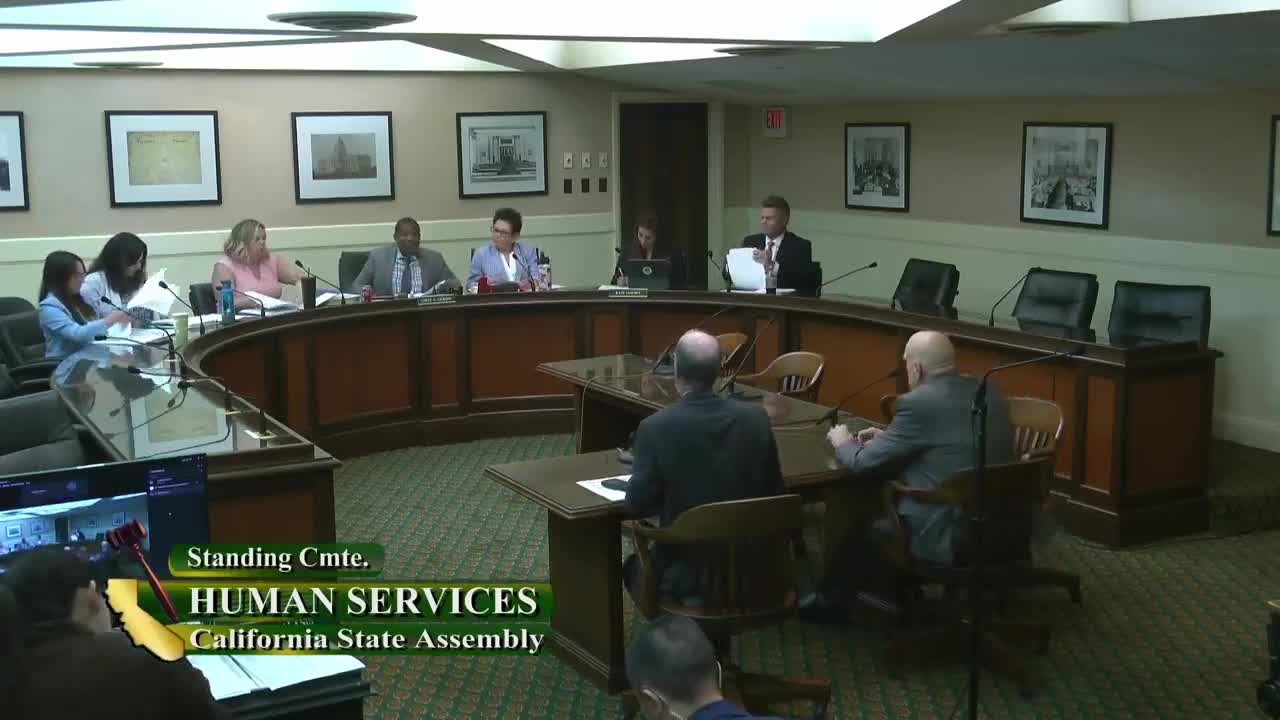 7MIN
Assembly Standing Committee on Human Services
Bill Author