SB 59: Battery electric vehicles: bidirectional capability.
- Session Year: 2023-2024
- House: Senate
- Latest Version Date: 2024-09-27
Current Status:
Passed
(2024-09-27: Chaptered by Secretary of State. Chapter 765, Statutes of 2024.)
Introduced
In Committee
First Chamber
In Committee
Second Chamber
Enacted
Existing law requires the State Air Resources Board to adopt and implement motor vehicle emission standards, in-use performance standards, and motor vehicle fuel specifications for the control of air contaminants and sources of air pollution that the state board has found necessary, cost effective, and technologically feasible. The California Global Warming Solutions Act of 2006 establishes the state board as the state agency responsible for monitoring and regulating sources emitting greenhouse gases and requires the state board to adopt rules and regulations to achieve the maximum technologically feasible and cost-effective greenhouse gas emission reductions from those sources.
This bill would authorize the State Energy Resources Conservation and Development Commission (Energy Commission), in consultation with the state board and the Public Utilities Commission, to require any weight class of battery electric vehicle to be bidirectional capable, as defined, if it determines there is a sufficiently compelling beneficial bidirectional-capable use case to the battery electric vehicle operator and electrical grid. The bill would require the Energy Commission, in its analysis, to consider vehicle readiness and duty cycles required of vehicles operated by essential service providers. The bill would define various terms for this purpose and authorize the state board and Energy Commission to each periodically update the definitions of specified terms to ensure that the definitions align with current technologies in bidirectional charging and account for ongoing innovation.
Existing law requires the State Air Resources Board to adopt and implement motor vehicle emission standards, in-use performance standards, and motor vehicle fuel specifications for the control of air contaminants and sources of air pollution that the state board has found necessary, cost effective, and technologically feasible. The California Global Warming Solutions Act of 2006 establishes the state board as the state agency responsible for monitoring and regulating sources emitting greenhouse gases and requires the state board to adopt rules and regulations to achieve the maximum technologically feasible and cost-effective greenhouse gas emission reductions from those sources.
This bill would authorize the state board, the State Energy Resources Conservation and Development Commission (Energy Commission), in consultation with the State Energy Resources Conservation and Development Commission (Energy Commission) the state board and the Public Utilities Commission, to require any weight class of battery electric vehicle to be bidirectional capable, as defined, if it determines there is a sufficiently compelling beneficial bidirectional-capable use case to the battery electric vehicle operator and electrical grid. The bill would require the board, Energy Commission, in its analysis, to consider vehicle readiness and duty cycles required of vehicles operated by essential service providers. The bill would define various terms for this purpose and authorize the state board and Energy Commission to each periodically update the definitions to of specified terms to ensure that the definitions align with current technologies in bidirectional charging and account for ongoing innovation.
Existing law requires the State Air Resources Board to adopt and implement motor vehicle emission standards, in-use performance standards, and motor vehicle fuel specifications for the control of air contaminants and sources of air pollution that the state board has found necessary, cost effective, and technologically feasible. The California Global Warming Solutions Act of 2006 establishes the state board as the state agency responsible for monitoring and regulating sources emitting greenhouse gases and requires the state board to adopt rules and regulations to achieve the maximum technologically feasible and cost-effective greenhouse gas emission reductions from those sources.
This bill would authorize the state board, in consultation with the State Energy Resources Conservation and Development Commission (Energy Commission) and the Public Utilities Commission, to require any weight class of battery electric vehicle to be bidirectional capable, as defined, if it determines there is a sufficiently compelling beneficial bidirectional-capable use case to the battery electric vehicle operator and electrical grid. The bill would require the board, in its analysis, to consider vehicle readiness and duty cycles required of vehicles operated by essential service providers. The bill would define various terms for this purpose and authorize the state board and Energy Commission to each periodically update the definitions to these specified terms to ensure that the definitions align with current technologies in bidirectional charging and account for ongoing innovation.
Existing law requires the State Air Resources Board to adopt and implement motor vehicle emission standards, in-use performance standards, and motor vehicle fuel specifications for the control of air contaminants and sources of air pollution that the state board has found necessary, cost effective, and technologically feasible. The California Global Warming Solutions Act of 2006 establishes the state board as the state agency responsible for monitoring and regulating sources emitting greenhouse gases and requires the state board to adopt rules and regulations to achieve the maximum technologically feasible and cost-effective greenhouse gas emission reductions from those sources.
This bill would authorize the state board, in consultation with the State Energy Resources Conservation and Development Commission and the Public Utilities Commission, to require any weight class of battery electric vehicle to be bidirectional capable, as defined, if it determines there is a sufficiently compelling beneficial bidirectional-capable use case to the battery electric vehicle operator and electrical grid. The bill would define various terms for this purpose and authorize the state board to periodically update the definitions to these terms to ensure that the definitions align with current technologies in bidirectional charging and account for ongoing innovation.
Existing law requires certain public schools, as specified, to stock the schools restrooms with an adequate supply of free menstrual products, as defined, available and accessible, free of cost, in all womens restrooms and all-gender restrooms, and in at least one mens restroom, at all times. Existing law also requires the California State University and each community college district to stock an adequate supply of menstrual products, available and accessible, free of cost, at no fewer than one designated and accessible central location on each campus. This bill would enact the Menstrual Product Accessibility Act, which would require all womens restrooms, all all-gender restrooms, and at least one mens restroom in a building owned and used by the state to be stocked with menstrual products, as defined, available and accessible to employees and the public, free of cost, at all times.Existing law requires certain public schools, as specified, to stock the schools restrooms with an adequate supply of free menstrual products, as defined, available and accessible, free of cost, in all womens restrooms and all-gender restrooms, and in at least one mens restroom, at all times. Existing law also requires the California State University and each community college district to stock an adequate supply of menstrual products, available and accessible, free of cost, at no fewer than one designated and accessible central location on each campus.
This bill would enact the Menstrual Product Accessibility Act, which would require all womens restrooms, all all-gender restrooms, and at least one mens restroom in a building owned and used by the state or in the portion of a building where the state rents or leases office space, a building owned by a local government where a specified state-funded safety net program is administered, or in a hospital that receives state funds, as specified, to be stocked with menstrual products, as defined, available and accessible to employees and the public, free of cost, at all times.
By imposing additional requirements on local agencies, this bill would create a state-mandated local program. The California Constitution requires the state to reimburse local agencies and school districts for certain costs mandated by the state. Statutory provisions establish procedures for making that reimbursement.This bill would provide that, if the Commission on State Mandates determines that the bill contains costs mandated by the state, reimbursement for those costs shall be made pursuant to the statutory provisions noted above.Existing law requires certain public schools, as specified, to stock the schools restrooms with an adequate supply of free menstrual products, as defined, available and accessible, free of cost, in all womens restrooms and all-gender restrooms, and in at least one mens restroom, at all times. Existing law also requires the California State University and each community college district to stock an adequate supply of menstrual products, available and accessible, free of cost, at no fewer than one designated and accessible central location on each campus.
This bill would enact the Menstrual Product Accessibility Act, which would require all womens restrooms, all all-gender restrooms, and at least one mens restroom in a building owned by the state or in the portion of a building where the state rents or leases office space, a building owned by a local government where a specified state-funded safety net program is administered, or in a hospital that receives state funds, as specified, to be stocked with menstrual products, as defined, available and accessible to employees and the public, free of cost, at all times.
By imposing additional requirements on local agencies, this bill would create a state-mandated local program.
The California Constitution requires the state to reimburse local agencies and school districts for certain costs mandated by the state. Statutory provisions establish procedures for making that reimbursement.
This bill would provide that, if the Commission on State Mandates determines that the bill contains costs mandated by the state, reimbursement for those costs shall be made pursuant to the statutory provisions noted above.
Existing law requires certain public schools, as specified, to stock the schools restrooms with an adequate supply of free menstrual products, as defined, available and accessible, free of cost, in all womens restrooms and all-gender restrooms, and in at least one mens restroom, at all times. Existing law also requires the California State University and each community college district to stock an adequate supply of menstrual products, available and accessible, free of cost, at no fewer than one designated and accessible central location on each campus.
This bill would enact the Menstrual Product Accessibility Act, which would require all womens restrooms, all all-gender restrooms, and at least one mens restroom in a building owned by the state or in the portion of a building where the state rents or leases office space, a building owned by a local government where a specified state-funded safety net program is administered, or in a hospital that receives state funds, as specified, to be stocked with menstrual products, as defined, available and accessible to employees and the public, free of cost, at all times.
By imposing additional requirements on local agencies, this bill would create a state-mandated local program.
The California Constitution requires the state to reimburse local agencies and school districts for certain costs mandated by the state. Statutory provisions establish procedures for making that reimbursement.
This bill would provide that, if the Commission on State Mandates determines that the bill contains costs mandated by the state, reimbursement for those costs shall be made pursuant to the statutory provisions noted above.
The Legislature finds and declares all of the following:
(a)The State Energy Resources Conservation and Development Commission estimates that California will have 7,200,000 electric vehicles by 2030 and 14,100,000 by 2035.
(b)To achieve the policy of the state to use 100 percent clean electricity by 2045, the commission estimates the state will require an eightfold increase in energy storage.
(c)Electric vehicle batteries are an untapped and inexpensive source of energy storage that can provide flexible grid support.
(d)Integrating battery electric vehicles into the grid may provide benefits to ratepayers, including by increasing electrical grid asset utilization, avoiding otherwise necessary distribution infrastructure upgrades, promoting renewable energy resources, and reducing the cost of supplying electricity.
(e)Bidirectional-capable battery electric vehicles can provide individual or fleet owners with benefits, including backup energy during emergencies and relief from peak-use charges.
(f)The Electric Power Research Institute has estimated that vehicle grid integration could save California $1 billion annually.
SEC. 2.Chapter 8.8 (commencing with Section 44269) is added to Part 5 of Division 26 of the Health and Safety Code, to read:8.8.Electric Vehicles44269.For purposes of this chapter, the following definitions apply, unless updated pursuant to Section 44269.1:
(a)Battery electric vehicle means a vehicle that operates solely by use of an electric battery or battery pack, or that is powered primarily through the use of an electric battery or battery pack but uses a flywheel or capacitor that stores energy produced by the electric motor or through regenerative braking to assist in vehicle operation.
(b)Beneficial bidirectional-capable use case means the usage of bidirectional-capable battery electric vehicles and bidirectional electric vehicle service equipment in a manner that results in electrical reliability and resiliency benefits and cost savings to the battery electric vehicle operator and is compatible with battery electric vehicle operator needs.
(c)Bidirectional-capable vehicle means a battery electric vehicle capable of both charging and discharging electricity.
(d)Bidirectional charging means a charging capability that enables a battery electric vehicle to be charged by either the electrical grid or an onsite clean energy resource, and to discharge stored energy capacity through electric vehicle service equipment to either serve load or export it to the electrical grid.
(e)Bidirectional electric vehicle service equipment means electric vehicle service equipment capable of both charging and discharging electricity from a battery electric vehicle.
(f)Board means the State Air Resources Board.
(g)Commission means the State Energy Resources Conservation and Development Commission.
(h)Electric vehicle service equipment has the same meaning as defined in Section 44268.
44269.1.(a)The board may periodically update the definitions for both of the following terms provided in Section 44269 to ensure that the definitions align with current technologies in bidirectional charging and account for ongoing innovation:
(1)Battery electric vehicle.
(2)Bidirectional-capable vehicle.
(b)The commission may periodically update the definitions for the following terms provided in Section 44269 to ensure that the definitions align with current technologies in bidirectional charging and account for ongoing innovation:
(1)Beneficial bidirectional-capable use case.
(2)Bidirectional charging.
(3)Bidirectional electric vehicle service equipment.
(4)Electric vehicle service equipment.
44269.2.(a)(1)The commission, in consultation with the board and the Public Utilities Commission, may require any weight class of battery electric vehicle to be bidirectional-capable if it determines there is a sufficiently compelling beneficial bidirectional-capable use case to the battery electric vehicle operator and electrical grid.
(2)In its analysis, the commission shall consider vehicle readiness and duty cycles required of vehicles operated by essential service providers.
(b)This section does not prohibit the board from crediting a manufacturer of a battery electric vehicle that voluntarily includes bidirectional capability for that battery electric vehicle weight class.
The Legislature finds and declares all of the following:
(a)The State Energy Resources Conservation and Development Commission estimates that California will have 7,200,000 electric vehicles by 2030 and 14,100,000 by 2035.
(b)To achieve the policy of the state to use 100 percent clean electricity by 2045, the commission estimates the state will require an eightfold increase in energy storage.
(c)Electric vehicle batteries are an untapped and inexpensive source of energy storage that can provide flexible grid support.
(d)Integrating battery electric vehicles into the grid may provide benefits to ratepayers, including by increasing electrical grid asset utilization, avoiding otherwise necessary distribution infrastructure upgrades, promoting renewable energy resources, and reducing the cost of supplying electricity.
(e)Bidirectional-capable battery electric vehicles can provide individual or fleet owners with benefits, including backup energy during emergencies and relief from peak-use charges.
(f)The Electric Power Research Institute has estimated that vehicle grid integration could save California $1 billion annually.
SEC. 2.Chapter 8.8 (commencing with Section 44269) is added to Part 5 of Division 26 of the Health and Safety Code, to read:8.8.Electric Vehicles44269.For purposes of this chapter, the following definitions apply, unless updated pursuant to Section 44269.1:
(a)Battery electric vehicle means a vehicle that operates solely by use of an electric battery or battery pack, or that is powered primarily through the use of an electric battery or battery pack but uses a flywheel or capacitor that stores energy produced by the electric motor or through regenerative braking to assist in vehicle operation.
(b)Beneficial bidirectional-capable use case means the usage of bidirectional-capable battery electric vehicles and bidirectional electric vehicle service equipment in a manner that results in electrical reliability and resiliency benefits and cost savings to the battery electric vehicle operator and is compatible with battery electric vehicle operator needs.
(c)Bidirectional-capable vehicle means a battery electric vehicle capable of both charging and discharging electricity.
(d)Bidirectional charging means a charging capability that enables a battery electric vehicle to be charged by either the electrical grid or an onsite clean energy resource, and to discharge stored energy capacity through electric vehicle service equipment to either serve load or export it to the electrical grid.
(e)Bidirectional electric vehicle service equipment means electric vehicle service equipment capable of both charging and discharging electricity from a battery electric vehicle.
(f)Board means the State Air Resources Board.
(g)Commission means the State Energy Resources Conservation and Development Commission.
(h)Electric vehicle service equipment has the same meaning as defined in Section 44268.
44269.1.(a)The board may periodically update the definitions for both of the following terms provided in Section 44269 to ensure that the definitions align with current technologies in bidirectional charging and account for ongoing innovation:
(1)Battery electric vehicle.
(2)Bidirectional-capable vehicle.
(b)The commission may periodically update the definitions for the following terms provided in Section 44269 to ensure that the definitions align with current technologies in bidirectional charging and account for ongoing innovation:
(1)Beneficial bidirectional-capable use case.
(2)Bidirectional charging.
(3)Bidirectional electric vehicle service equipment.
(4)Electric vehicle service equipment.
44269.2.(a)(1)The board, commission, in consultation with the commission board and the Public Utilities Commission, may require any weight class of battery electric vehicle to be bidirectional-capable if it determines there is a sufficiently compelling beneficial bidirectional-capable use case to the battery electric vehicle operator and electrical grid.
(2)In its analysis, the board commission shall consider vehicle readiness and duty cycles required of vehicles operated by essential service providers.
(b)This section does not prohibit the board from crediting a manufacturer of a battery electric vehicle that voluntarily includes bidirectional capability for that battery electric vehicle weight class.
The Legislature finds and declares all of the following:
(a)The State Energy Resources Conservation and Development Commission estimates that California will have 8,000,000 7,200,000 electric vehicles by 2030 and 15,000,000 14,100,000 by 2035.
(b)To achieve the policy of the state to use 100 percent clean electricity by 2045, the commission estimates the state will require an eightfold increase in energy storage.
(c)Electric vehicle batteries are an untapped and inexpensive source of energy storage that can provide flexible grid support.
(d)Integrating battery electric vehicles into the grid may provide benefits to ratepayers, including by increasing electrical grid asset utilization, avoiding otherwise necessary distribution infrastructure upgrades, promoting renewable energy resources, and reducing the cost of supplying electricity.
(e)Bidirectional-capable battery electric vehicles can provide individual or fleet owners with benefits, including backup energy during emergencies and relief from peak-use charges.
(f)The Electric Power Research Institute has estimated that vehicle grid integration could save California $1 billion annually.
SEC. 2.Chapter 8.8 (commencing with Section 44269) is added to Part 5 of Division 26 of the Health and Safety Code, to read:8.8.Electric Vehicles44269.For purposes of this chapter, the following definitions apply, unless updated pursuant to Section 44269.1:
(a)Battery electric vehicle means a vehicle that operates solely by use of an electric battery or battery pack, or that is powered primarily through the use of an electric battery or battery pack but uses a flywheel or capacitor that stores energy produced by the electric motor or through regenerative braking to assist in vehicle operation.
(b)Beneficial bidirectional-capable use case means the usage of bidirectional-capable battery electric vehicles and bidirectional electric vehicle service equipment in a manner that results in electrical reliability and resiliency benefits and cost savings to the battery electric vehicle operator and is compatible with battery electric vehicle operator needs.
(c)Bidirectional-capable means the ability of a battery electric vehicle or electric vehicle service equipment to both charge and discharge electricity.(c)Bidirectional-capable vehicle means a battery electric vehicle capable of both charging and discharging electricity.
(d)Bidirectional charging means a charging capability that enables a battery electric vehicle to be charged by either the electrical grid or an onsite clean energy resource, and to discharge stored energy capacity through electric vehicle service equipment to either serve load or export it to the electrical grid.
(e)Bidirectional electric vehicle service equipment means electric vehicle service equipment capable of both charging and discharging electricity from a battery electric vehicle.
(f)Board means the State Air Resources Board.
(g)Commission means the State Energy Resources Conservation and Development Commission.
(h)Electric vehicle service equipment has the same meaning as defined in Section 44268.
(i)Interoperability has the same meaning as described in Section 680.108 of Title 23 of the Code of Federal Regulations.44269.1.(a)The board may periodically update the definitions for both of the following terms provided in Section 44269 to ensure that the definitions align with current technologies in bidirectional charging and account for ongoing innovation. innovation:
(1)Battery electric vehicle.
(2)Bidirectional-capable vehicle.
(b)The commission may periodically update the definitions for the following terms provided in Section 44269 to ensure that the definitions align with current technologies in bidirectional charging and account for ongoing innovation:
(1)Beneficial bidirectional-capable use case.
(2)Bidirectional charging.
(3)Bidirectional electric vehicle service equipment.
(4)Electric vehicle service equipment.
44269.2.(a)(1)The board, in consultation with the commission and the Public Utilities Commission, may require any weight class of battery electric vehicle to be bidirectional-capable if it determines there is a sufficiently compelling beneficial bidirectional-capable use case to the battery electric vehicle operator and electrical grid.
(2)In its analysis, the board shall consider vehicle readiness and duty cycles required of vehicles operated by essential service providers.
(b)This section does not prohibit the board from crediting a manufacturer of a battery electric vehicle that voluntarily includes bidirectional capability for that battery electric vehicle weight class.
The Legislature finds and declares all of the following:
(a)The State Energy Resources Conservation and Development Commission estimates that California will have 8,000,000 electric vehicles by 2030 and 15,000,000 by 2035.
(b)To achieve the policy of the state to use 100 percent clean electricity by 2045, the commission estimates the state will require an eightfold increase in energy storage.
(c)Electric vehicle batteries are an untapped and inexpensive source of energy storage that can provide flexible grid support.
(d)Integrating battery electric vehicles into the grid may provide benefits to ratepayers, including by increasing electrical grid asset utilization, avoiding otherwise necessary distribution infrastructure upgrades, promoting renewable energy resources, and reducing the cost of supplying electricity.
(e)Bidirectional-capable battery electric vehicles can provide individual or fleet owners with benefits, including backup energy during emergencies and relief from peak-use charges.
(f)The Electric Power Research Institute has estimated that vehicle grid integration could save California $1 billion annually.
SEC. 2.Chapter 8.8 (commencing with Section 44269) is added to Part 5 of Division 26 of the Health and Safety Code, to read:8.8.Electric Vehicles44269.For purposes of this chapter, the following definitions apply, unless updated pursuant to Section 44269.1:
(a)Battery electric vehicle means a vehicle that operates solely by use of an electric battery or battery pack, or that is powered primarily through the use of an electric battery or battery pack but uses a flywheel or capacitor that stores energy produced by the electric motor or through regenerative braking to assist in vehicle operation.
(b)Beneficial bidirectional-capable use case means the usage of bidirectional-capable battery electric vehicles and bidirectional electric vehicle service equipment in a manner that results in electrical reliability and resiliency benefits and cost savings to the battery electric vehicle operator and is compatible with battery electric vehicle operator needs.
(c)Bidirectional-capable means the ability of a battery electric vehicle or electric vehicle service equipment to both charge and discharge electricity.
(d)Bidirectional charging means a charging capability that enables a battery electric vehicle to be charged by either the electrical grid or an onsite clean energy resource, and to discharge stored energy capacity through electric vehicle service equipment to either serve load or export it to the electrical grid.
(e)Bidirectional electric vehicle service equipment means electric vehicle service equipment capable of both charging and discharging electricity from a battery electric vehicle.
(f)Board means the State Air Resources Board.
(g)Commission means the State Energy Resources Conservation and Development Commission.
(h)Electric vehicle service equipment has the same meaning as defined in Section 44268.
(i)Interoperability has the same meaning as described in Section 680.108 of Title 23 of the Code of Federal Regulations.
44269.1.The board may periodically update the definitions provided in Section 44269 to ensure that the definitions align with current technologies in bidirectional charging and account for ongoing innovation.
44269.2.(a)The board, in consultation with the commission and the Public Utilities Commission, may require any weight class of battery electric vehicle to be bidirectional-capable if it determines there is a sufficiently compelling beneficial bidirectional-capable use case to the battery electric vehicle operator and electrical grid.
(b)This section does not prohibit the board from crediting a manufacturer of a battery electric vehicle that voluntarily includes bidirectional capability for that battery electric vehicle weight class.
SECTION 1.(a)This act shall be known, and may be cited, as the Menstrual Product Accessibility Act.(b)The Legislature finds and declares all of the following:(1)California recognizes that access to menstrual products is a basic human right and is vital for ensuring the health, dignity, and full participation of all Californians in public life.(2)California has an interest in promoting gender equity, not only for women and girls, but also for transgender men, nonbinary, and gender nonconforming people who may also menstruate and experience inequities resulting from lack of access to menstrual products. (3)Inadequate menstrual support is associated with both health and psychosocial issues, particularly among low-income people. A lack of access to menstrual products can cause emotional distress, physical infection, and disease.(4)California recognizes that period poverty is a public health issue, and addressing period poverty can lead to economic opportunity for the states people and communities and improved health for women, girls, and menstruators, thus ensuring all people have access to the basic necessities required to thrive and reach their full potential.(5)Approximately one-half of the population will have a period every month for decades of their lives whether they want to or not.(6)Access to menstrual products is critical to the dignity, empowerment, and upward mobility of employees, ensuring increased success at their place of employment.(7)National surveys report that one in five women, girls, and other people who menstruate miss work due to a lack of sufficient period supplies, and that 16.9 million Americans who menstruate live in poverty. (8)The Legislature passed several important measures to reduce period poverty, including legislation that required menstrual products to be available for free at one-half of all restrooms at all public schools serving grades 6 to 12, inclusive, and at least one bathroom on campus on all of Californias public colleges and universities. (9)Under the leadership of Senate President pro Tempore Atkins, California began providing free menstrual products in State Capitol Building bathrooms in 2019.(10)The Budget Act of 2021 funded the repeal of the period product tax, the pink tax, ensuring that people in California no longer have to pay sales tax on menstrual hygiene products.(11)The Budget Act of 2021 also funded a $2,000,000 appropriation to support free menstrual product distributions as a pilot in the County of Los Angeles and the County of San Diego, and a report of that pilot is forthcoming.(12)While California is proud to be home to some of the most impactful laws and policies to prevent period poverty, it is recognized that further action is needed to address this long-neglected problem.(13)California has an interest in creating safe, welcoming, and inclusive spaces for all menstruating individuals.(14)It is the intent of the Legislature that this act provide for the health, dignity, and safety of menstruating people at every socioeconomic level, normalize menstruation among all genders, and foster gender competency in California government buildings.SEC. 2.Chapter 3 (commencing with Section 24300) is added to Division 20 of the Health and Safety Code, to read:3.Menstrual Product Accessibility24300.(a)For purposes of this section:(1)Menstrual products means menstrual pads and tampons for use in connection with the menstrual cycle.(2)State includes any state agency or instrumentality.(b)The state shall ensure access to menstrual products in a building owned and used by the state, to all menstruating people, regardless of sex, by requiring all womens restrooms and all all-gender restrooms, and at least one mens restroom, to be stocked with menstrual products, available and accessible, to employees and the public, free of cost, at all times. REVISIONS: HeadingLines 2, 3, 4 and 5.(a)This act shall be known, and may be cited, as the Menstrual Product Accessibility Act.
(b)The Legislature finds and declares all of the following:
(1)California recognizes that access to menstrual products is a basic human right and is vital for ensuring the health, dignity, and full participation of all Californians in public life.
(2)California has an interest in promoting gender equity, not only for women and girls, but also for transgender men, nonbinary, and gender nonconforming people who may also menstruate and experience inequities resulting from lack of access to menstrual products.
(3)Inadequate menstrual support is associated with both health and psychosocial issues, particularly among low-income people. A lack of access to menstrual products can cause emotional distress, physical infection, and disease.
(4)California recognizes that period poverty is a public health issue, and addressing period poverty can lead to economic opportunity for the states people and communities and improved health for women, girls, and menstruators, thus ensuring all people have access to the basic necessities required to thrive and reach their full potential.
(5)Approximately one-half of the population will have a period every month for decades of their lives whether they want to or not.
(6)Access to menstrual products is critical to the dignity, empowerment, and upward mobility of employees, ensuring increased success at their place of employment.
(7)National surveys report that one in five women, girls, and other people who menstruate miss work due to a lack of sufficient period supplies, and that 16.9 million Americans who menstruate live in poverty.
(8)The Legislature passed several important measures to reduce period poverty, including legislation that required menstrual products to be available for free at one-half of all restrooms at all public schools serving grades 6 to 12, inclusive, and at least one bathroom on campus on all of Californias public colleges and universities.
(9)Under the leadership of Senate President pro Tempore Atkins, California began providing free menstrual products in State Capitol Building bathrooms in 2019.
(10)The Budget Act of 2021 funded the repeal of the period product tax, the pink tax, ensuring that people in California no longer have to pay sales tax on menstrual hygiene products.
(11)The Budget Act of 2021 also funded a $2,000,000 appropriation to support free menstrual product distributions as a pilot in the County of Los Angeles and the County of San Diego, and a report of that pilot is forthcoming.
(12)While California is proud to be home to some of the most impactful laws and policies to prevent period poverty, it is recognized that further action is needed to address this long-neglected problem.
(13)California has an interest in creating safe, welcoming, and inclusive spaces for all menstruating individuals.
(14)It is the intent of the Legislature that this act provide for the health, dignity, and safety of menstruating people at every socioeconomic level, normalize menstruation among all genders, and foster gender competency in California government buildings and hospitals. buildings.
SEC. 2.Chapter 3 (commencing with Section 24300) is added to Division 20 of the Health and Safety Code, to read:3.Menstrual Product Accessibility24300.(a)For purposes of this section:
(1)Menstrual products means menstrual pads and tampons for use in connection with the menstrual cycle.
(2)State includes any state agency or instrumentality.
(b)The state shall ensure access to menstrual products in a building owned and used by the state, or in the portion of a building where the state rents or leases office space, to all menstruating people, regardless of sex, by requiring all womens restrooms and all all-gender restrooms, and at least one mens restroom, to be stocked with menstrual products, available and accessible, to employees and the public, free of cost, at all times.
(c)A local government shall ensure access to menstrual products in a building owned by the local government to all menstruating people, regardless of sex, by requiring all womens restrooms and all all-gender restrooms, and at least one mens restroom, to be stocked with menstrual products, available and accessible, to employees and the public, free of cost, at all times, if any of the following state-funded safety net programs are administered in that building:(1)The California Special Supplemental Nutrition Program for Women, Infants, and Children (WIC).(2)The CalFresh program.(3)The CalWORKs program.(4)The Medi-Cal program.(d)A hospital that receives state funds for construction of, or to administer or develop services and programs offered by the hospital, shall ensure access to menstrual products to all menstruating people, regardless of sex, by requiring all womens restrooms and all all-gender restrooms, and at least one mens restroom, to be stocked with menstrual products, available and accessible, to employees and the public, free of cost, at all times.(e)This section does not prevent a building owned by the state or in the portion of a building where the state rents or leases office space, a building owned by a local government, or a hospital that receives state funding from providing more than the required amount of restrooms stocked with menstrual products free and accessible to all menstruating people entering or working the building.SEC. 3.If the Commission on State Mandates determines that this act contains costs mandated by the state, reimbursement to local agencies and school districts for those costs shall be made pursuant to Part 7 (commencing with Section 17500) of Division 4 of Title 2 of the Government Code.(a)This act shall be known, and may be cited, as the Menstrual Product Accessibility Act.
(b)The Legislature finds and declares all of the following:
(1)California recognizes that access to menstrual products is a basic human right and is vital for ensuring the health, dignity, and full participation of all Californians in public life.
(2)California has an interest in promoting gender equity, not only for women and girls, but also for transgender men, nonbinary, and gender nonconforming people who may also menstruate and experience inequities resulting from lack of access to menstrual products.
(3)Inadequate menstrual support is associated with both health and psychosocial issues, particularly among low-income people. A lack of access to menstrual products can cause emotional distress, physical infection, and disease.
(4)California recognizes that period poverty is a public health issue, and addressing period poverty can lead to economic opportunity for the states people and communities and improved health for women, girls, and mestruators, menstruators, thus ensuring all people have access to the basic necessities required to thrive and reach their full potential.
(5)Approximately one-half of the population will have a period every month for decades of their lives whether they want to or not.
(6)Access to menstrual products is critical to the dignity, empowerment, and upward mobility of employees, ensuring increased success at their place of employment.
(7)National surveys report that one in five women, girls, and other people who menstruate miss work due to a lack of sufficient period supplies, and that 16.9 million Americans who menstruate live in poverty.
(8)The Legislature passed several important measures to reduce period poverty, including legislation that required menstrual products to be available for free at one-half of all restrooms at all public schools serving grades 6 to 12, inclusive, and at least one bathroom on campus on all of Californias public colleges and universities.
(9)Under the leadership of Senate President pro Tempore Atkins, California began providing free menstrual products in State Capitol Building bathrooms in 2019.
(10)The Budget Act of 2021 funded the repeal of the period product tax, the pink tax, ensuring that people in California no longer have to pay sales tax on menstrual hygiene products.
(11)The Budget Act of 2021 also funded a $2,000,000 appropriation to support free menstrual product distributions as a pilot in the County of Los Angeles and the County of San Diego, and a report of that pilot is forthcoming.
(12)While California is proud to be home to some of the most impactful laws and policies to prevent period poverty, it is recognized that further action is needed to address this long-neglected problem.
(13)California has an interest in creating safe, welcoming, and inclusive spaces for all menstruating individuals.
(14)It is the intent of the Legislature that this act provide for the health, dignity, and safety of menstruating people at every socioeconomic level, normalize menstruation among all genders, and foster gender competency in California government buildings and hospitals.
SEC. 2.Chapter 3 (commencing with Section 24300) is added to Division 20 of the Health and Safety Code, to read:3.Menstrual Product Accessibility24300.(a)For purposes of this section:
(1)Menstrual products means menstrual pads and tampons for use in connection with the menstrual cycle.
(2)State includes any state agency or instrumentality.
(b)The state shall ensure access to menstrual products in a building owned by the state, or in the portion of a building where the state rents or leases office space, to all menstruating people, regardless of sex, by requiring all womens restrooms and all all-gender restrooms, and at least one mens restroom, to be stocked with menstrual products, available and accessible, to employees and the public, free of cost, at all times.
(c)A local government shall ensure access to menstrual products in a building owned by the local government to all menstruating people, regardless of sex, by requiring all womens restrooms and all all-gender restrooms, and at least one mens restroom, to be stocked with menstrual products, available and accessible, to employees and the public, free of cost, at all times, if any of the following state-funded safety net programs are administered in that building:
(1)The California Special Supplemental Nutrition Program for Women, Infants, and Children (WIC).
(2)The CalFresh program.
(3)The CalWORKs program.
(4)The Medi-Cal program.
(d)A hospital that receives state funds for construction of, or to administer or develop services and programs offered by the hospital, shall ensure access to menstrual products to all menstruating people, regardless of sex, by requiring all womens restrooms and all all-gender restrooms, and at least one mens restroom, to be stocked with menstrual products, available and accessible, to employees and the public, free of cost, at all times.
(e)This section does not prevent a building owned by the state or in the portion of a building where the state rents or leases office space, a building owned by a local government, or a hospital that receives state funding from providing more than the required amount of restrooms stocked with menstrual products free and accessible to all menstruating people entering or working the building.
SEC. 3.If the Commission on State Mandates determines that this act contains costs mandated by the state, reimbursement to local agencies and school districts for those costs shall be made pursuant to Part 7 (commencing with Section 17500) of Division 4 of Title 2 of the Government Code.
(a)This act shall be known, and may be cited, as the Menstrual Product Accessibility Act.
(b)The Legislature finds and declares all of the following:
(1)California recognizes that access to menstrual products is a basic human right and is vital for ensuring the health, dignity, and full participation of all Californians in public life.
(2)California has an interest in promoting gender equity, not only for women and girls, but also for transgender men, nonbinary, and gender nonconforming people who may also menstruate and experience inequities resulting from lack of access to menstrual products.
(3)Inadequate menstrual support is associated with both health and psychosocial issues, particularly among low-income people. A lack of access to menstrual products can cause emotional distress, physical infection, and disease.
(4)California recognizes that period poverty is a public health issue, and addressing period poverty can lead to economic opportunity for the states people and communities and improved health for women, girls, and mestruators, thus ensuring all people have access to the basic necessities required to thrive and reach their full potential.
(5)Approximately one-half of the population will have a period every month for decades of their lives whether they want to or not.
(6)Access to menstrual products is critical to the dignity, empowerment, and upward mobility of employees, ensuring increased success at their place of employment.
(7)National surveys report that one in five women, girls, and other people who menstruate miss work due to a lack of sufficient period supplies, and that 16.9 million Americans who menstruate live in poverty.
(8)The Legislature passed several important measures to reduce period poverty, including legislation that required menstrual products to be available for free at one-half of all restrooms at all public schools serving grades 6 to 12, inclusive, and at least one bathroom on campus on all of Californias public colleges and universities.
(9)Under the leadership of Senate President pro Tempore Atkins, California began providing free menstrual products in State Capitol Building bathrooms in 2019.
(10)The Budget Act of 2021 funded the repeal of the period product tax, the pink tax, ensuring that people in California no longer have to pay sales tax on menstrual hygiene products.
(11)The Budget Act of 2021 also funded a $2,000,000 appropriation to support free menstrual product distributions as a pilot in the County of Los Angeles and the County of San Diego, and a report of that pilot is forthcoming.
(12)While California is proud to be home to some of the most impactful laws and policies to prevent period poverty, it is recognized that further action is needed to address this long-neglected problem.
(13)California has an interest in creating safe, welcoming, and inclusive spaces for all menstruating individuals.
(14)It is the intent of the Legislature that this act provide for the health, dignity, and safety of menstruating people at every socioeconomic level, normalize menstruation among all genders, and foster gender competency in California government buildings and hospitals.
SEC. 2.Chapter 3 (commencing with Section 24300) is added to Division 20 of the Health and Safety Code, to read:3.Menstrual Product Accessibility24300.(a)For purposes of this section:
(1)Menstrual products means menstrual pads and tampons for use in connection with the menstrual cycle.
(2)State includes any state agency or instrumentality.
(b)The state shall ensure access to menstrual products in a building owned by the state, or in the portion of a building where the state rents or leases office space, to all menstruating people, regardless of sex, by requiring all womens restrooms and all all-gender restrooms, and at least one mens restroom, to be stocked with menstrual products, available and accessible, to employees and the public, free of cost, at all times.
(c)A local government shall ensure access to menstrual products in a building owned by the local government to all menstruating people, regardless of sex, by requiring all womens restrooms and all all-gender restrooms, and at least one mens restroom, to be stocked with menstrual products, available and accessible, to employees and the public, free of cost, at all times, if any of the following state-funded safety net programs are administered in that building:
(1)The California Special Supplemental Nutrition Program for Women, Infants, and Children (WIC).
(2)The CalFresh program.
(3)The CalWORKs program.
(4)The Medi-Cal program.
(d)A hospital that receives state funds for construction of, or to administer or develop services and programs offered by the hospital, shall ensure access to menstrual products to all menstruating people, regardless of sex, by requiring all womens restrooms and all all-gender restrooms, and at least one mens restroom, to be stocked with menstrual products, available and accessible, to employees and the public, free of cost, at all times.
(e)This section does not prevent a building owned by the state or in the portion of a building where the state rents or leases office space, a building owned by a local government, or a hospital that receives state funding from providing more than the required amount of restrooms stocked with menstrual products free and accessible to all menstruating people entering or working the building.
SEC. 3.If the Commission on State Mandates determines that this act contains costs mandated by the state, reimbursement to local agencies and school districts for those costs shall be made pursuant to Part 7 (commencing with Section 17500) of Division 4 of Title 2 of the Government Code.
|
Date
|
Status
|
|---|---|
| Sep 27, 2024 | Chaptered by Secretary of State. Chapter 765, Statutes of 2024. |
| Sep 27, 2024 | Approved by the Governor. |
| Sep 11, 2024 | Enrolled and presented to the Governor at 3 p.m. |
| Aug 31, 2024 | Assembly amendments concurred in. (Ayes 30. Noes 9. Page 5768.) Ordered to engrossing and enrolling. |
| Aug 30, 2024 | In Senate. Concurrence in Assembly amendments pending. |
| Aug 30, 2024 | Read third time. Passed. (Ayes 58. Noes 14. Page 6994.) Ordered to the Senate. |
| Aug 21, 2024 | Read second time. Ordered to third reading. |
| Aug 20, 2024 | Read second time and amended. Ordered to second reading. |
| Aug 19, 2024 | From committee: Do pass as amended. (Ayes 11. Noes 3.) (August 15). |
| Aug 7, 2024 | August 7 set for first hearing. Placed on suspense file. |
| Jul 3, 2024 | Read second time and amended. Re-referred to Com. on APPR. |
| Jul 2, 2024 | From committee: Do pass as amended and re-refer to Com. on APPR. (Ayes 12. Noes 3.) (July 1). |
| Jun 18, 2024 | From committee: Do pass and re-refer to Com. on U. & E. (Ayes 11. Noes 4.) (June 17). Re-referred to Com. on U. & E. |
| Jun 18, 2024 | Coauthors revised. |
| Jun 13, 2024 | Re-referred to Coms. on TRANS. and U. & E. pursuant to Assembly Rule 96. |
| Jun 10, 2024 | From committee with author's amendments. Read second time and amended. Re-referred to Com. on HEALTH. |
| Jun 3, 2024 | Referred to Com. on HEALTH. |
| Jan 29, 2024 | In Assembly. Read first time. Held at Desk. |
| Jan 29, 2024 | Read third time. Passed. (Ayes 32. Noes 0. Page 3054.) Ordered to the Assembly. |
| Jan 22, 2024 | Read second time and amended. Ordered to third reading. |
| Jan 18, 2024 | From committee: Do pass as amended. (Ayes 4. Noes 0. Page 3010.) (January 18). |
| Jan 12, 2024 | Set for hearing January 18. |
| May 18, 2023 | May 18 hearing: Held in committee and under submission. |
| May 12, 2023 | Set for hearing May 18. |
| Apr 17, 2023 | April 17 hearing: Placed on APPR suspense file. |
| Apr 10, 2023 | Set for hearing April 17. |
| Mar 30, 2023 | From committee: Do pass and re-refer to Com. on APPR. (Ayes 10. Noes 1. Page 574.) (March 29). Re-referred to Com. on APPR. |
| Mar 16, 2023 | From committee with author's amendments. Read second time and amended. Re-referred to Com. on HEALTH. |
| Mar 16, 2023 | Set for hearing March 29. |
| Mar 14, 2023 | From committee: Do pass and re-refer to Com. on HEALTH. (Ayes 9. Noes 0. Page 339.) (March 14). Re-referred to Com. on HEALTH. |
| Feb 22, 2023 | Set for hearing March 14. |
| Jan 18, 2023 | Referred to Coms. on G.O. and HEALTH. |
| Jan 4, 2023 | Read first time. |
| Dec 20, 2022 | From printer. May be acted upon on or after January 19. |
| Dec 19, 2022 | Introduced. To Com. on RLS. for assignment. To print. |
|
Date
|
Description
|
Location
|
Votes
|
|
|---|---|---|---|---|
| Aug 31, 2024 | Unfinished Business SB59 Skinner et al. Concurrence | Senate Floor |
Passed |
|
| Aug 30, 2024 | SB 59 Skinner Senate Third Reading By Irwin | Assembly Floor |
Passed |
|
| Aug 15, 2024 | Do pass as amended. | Assembly Standing Committee on Appropriations |
Passed |
|
| Jul 1, 2024 | Do pass as amended and be re-referred to the Committee on [Appropriations] | Assembly Standing Committee on Utilities and Energy |
Passed |
|
| Jun 17, 2024 | Do pass and be re-referred to the Committee on [Utilities and Energy] | Assembly Standing Committee on Transportation |
Passed |
|
| Jan 29, 2024 | Senate 3rd Reading SB59 Skinner et al. | Senate Floor |
Passed |
|
| Jan 18, 2024 | Do pass as amended | Senate Standing Committee on Appropriations |
Passed |
|
| Apr 17, 2023 | Placed on suspense file | Senate Standing Committee on Appropriations |
Passed |
|
| Mar 29, 2023 | Do pass, but first be re-referred to the Committee on [Appropriations] | Senate Standing Committee on Health |
Passed |
|
| Mar 14, 2023 | Do pass, but first be re-referred to the Committee on [Health] | Senate Standing Committee on Governmental Organization |
Passed |
This list shows positions taken on this bill by organizations on the date displayed, which is linked to the original source.
Positions by individuals are not included.
|
Organization
|
Position
|
Date
|
|---|---|---|
| 1000 Grandmothers for Future Generations | ** Support | |
| 350: Bay Area, Bay Area Action, Conejo/San Fernando Valley, Humboldt, San Diego, SoCal, South Bay Los | ** Support | |
| Access Reproductive Justice | ** Support | |
| Aclu California Action | ** Support | |
| Active San Gabriel Valley | ** Support | |
| Adopt a Charger | ** Support | |
| Alameda County Democratic Party | ** Support | |
| Alliance For Automotive Innovation | ** Against | |
| Alliance for Nurses for Healthy Environments | ** Support | |
| Alliance for Period Supplies | ** Support | |
| Alta Peak Chapter, California Native Plant Society | ** Support | |
| American College Of Obstetricians And Gynecologists District Ix | ** Support | |
| Better World Group | ** Support | |
| California Academy Of Family Physicians | ** Support | |
| California Alliance of Retired Americans | ** Support | |
| California Alternative Payment Program Association | ** Support | |
| California Association of Student Councils | ** Support | |
| California Business Alliance For A Clean Economy | ** Support | |
| California Climate Campaign, Greenpeace USA | ** Support | |
| California Climate Voters | ** Support | |
| California Environmental Voters | ** Support | |
| California Family Council | ** Against | |
| California Federation Of Teachers | ** Support | |
| California Interfaith Power & Light | ** Support | |
| California Nurse-Midwives Association | ** Support | |
| California Nurses for Environmental Health & Justice | ** Support | |
| California Pan - Ethnic Health Network | ** Support | |
| California Religious Action Center Of Reform Judaism | ** Support | |
| California State Council of Service Employees International Union | ** Support | |
| California Teachers Association | ** Support | |
| Catholic Charities of Stockton | ** Support | |
| Center For Biological Diversity | ** Support | |
| Center for Community Action & Environmental Justice | ** Support | |
| Center for Community Energy | ** Support | |
| Center for Energy Efficiency and Renewable Technologies | ** Support | |
| Center for Energy Efficiency & Renewable Energy | ** Support | |
| Central California Asthma Collaborative | ** Support | |
| CHAdeMO Association | ** Support | |
| Citizens for Choice | ** Support | |
| City of Port Hueneme | ** Support | |
| CivicWell | ** Support | |
| Clean Coalition | ** Support | |
| cleanearth4kids.org | ** Support | |
| Climate Action California | ** Support | |
| Climate Equity Policy Center | ** Support | |
| Climate Health Now | ** Support | |
| Climate Resolve | ** Support | |
| Climate Witness Project | ** Support | |
| Coalition For Clean Air | ** Support | |
| Community Environmental Council | ** Support | |
| Community Health Councils | ** Support | |
| Cool Davis | ** Support | |
| County Climate Hub | ** Support | |
| County of Santa Clara | ** Support | |
| Courage California | ** Support | |
| DCBEL | ** Support | |
| Democrats of Rossmoor | ** Support | |
| Electrify Now | ** Support | |
| Endangered Habitats League | ** Support | |
| Environmental Working Group | ** Support | |
| Environment California | ** Support | |
| Ev Loop | ** Support | |
| EV-SEg | ** Support | |
| Fierce Courage Consulting | ** Support | |
| First 5 Alameda County | ** Support | |
| Fossil Free California | ** Support | |
| Fridays for Future Fresno | ** Support | |
| Friends Committee On Legislation Of California | ** Support | |
| Friends of the Eel River | ** Support | |
| glendale city council | ** Support | |
| Glendale Environmental Coalition | ** Support | |
| GreenLatinos | ** Support | |
| Grid Alternatives | ** Support | |
| Health Access California | ** Support | |
| Hemophilia Council Of California | ** Support | |
| High Noon Advisors | ** Support | |
| Human Impact Partners | ** Support | |
| IGNITE National | ** Support | |
| Indivisible California | ** Support | |
| Indivisible Marin | ** Support | |
| Indivisible South Bay LA | ** Support | |
| ISSA | ** Support | |
| ISSA - the Worldwide Cleaning Industry Association | ** Support | |
| John Burton Advocates for Youth | ** Support | |
| Joint Venture Silicon Valley | ** Support | |
| Kaluza | ** Support | |
| KLM Consulting | ** Support | |
| LA Regional Collaborative for Climate Action & | ** Support | |
| LEAP | ** Support | |
| Legacy Solutions | ** Support | |
| Let’s Green CA! | ** Support | |
| Local Clean Energy Alliance | ** Support | |
| Long Beach Alliance for Clean Energy | ** Support | |
| Los Angeles Business Council | ** Support | |
| Los Angeles Regional Collaborative for Climate Action and Sustainability | ** Support | |
| Lucid | ** Support | |
| Lutheran Office of Public Policy California | ** Support | |
| morongo basin conservation association | ** Support | |
| Motorcycle Industry Council | ** Against | |
| Move LA | ** Support | |
| NARAL Pro-Choice California | ** Support | |
| National Association Of Social Workers, California Chapter | ** Support | |
| North Bay Electric Auto Association | ** Support | |
| NUVVE | ** Support | |
| Nuvve Holding Corp | ** Support | |
| Occidental Arts and Ecology Center | ** Support | |
| Parity For Pumps | ** Support | |
| Peach and Freedom Party | ** Support | |
| peninsula interfaith climate action | ** Support | |
| PERIOD | ** Support | |
| PERIOD. | ** Support | |
| Plan C | ** Support | |
| Plug In America | ** Support | |
| Queers 4 Climate | ** Support | |
| Récolte Energy | ** Support | |
| Recreational Off-Highway Vehicle Association | ** Against | |
| Redwood Coalition for Climate and Environmental Responsibility | ** Support | |
| Republic Services - Western Region | ** Against | |
| Restore the Delta | ** Support | |
| Rising Sun Center for Opportunity | ** Support | |
| Romero Institute | ** Support | |
| San Diego 350 | ** Support | |
| San Diego Community Power | ** Support | |
| San Francisco Bay Physicians for Social Responsibility | ** Support | |
| San Francisco Black, Jewish and Unity Group | ** Support | |
| San Jose Community Energy Advocates | ** Support | |
| Santa Barbara Standing Rock Coalition | ** Support | |
| Santa Barbara Women's Political Committee | ** Support | |
| Santa Cruz Climate Action Network | ** Support | |
| Sierra Club California | ** Support | |
| Silicon Valley Leadership Group | ** Against | |
| Sisters on The Streets | ** Support | |
| Specialty Vehicle Institute of America | ** Against | |
| Stand.earth | ** Support | |
| Sunflower Alliance | ** Support | |
| SunPower Corporation | ** Support | |
| Sunrun | ** Support | |
| Sustainability | ** Support | |
| Sustainable Claremont and Rossmoor | ** Support | |
| Sustainable Rossmoor | ** Support | |
| Synergistic Solutions | ** Support | |
| Technologies | ** Support | |
| Terraverde Energy | ** Support | |
| The Better World Group | ** Support | |
| The Climate Center | ** Support | |
| The Climate Reality Project, San Fernando Valley | ** Support | |
| The Climate Reality Project, Silicon Valley Chapters | ** Support | |
| The Phoenix Group | ** Support | |
| UCLA Chapter of UAEM | ** Support | |
| UCLA Chapter of Universities Allied for Essential Medicines | ** Support | |
| Union of Concerned Scientist | ** Support | |
| Uniting the Central Coast for Action | ** Support | |
| Valley Improvement Projects | ** Support | |
| Voices for Progress | ** Support | |
| Vote Solar | ** Support | |
| World Business Academy | ** Support | |
| Yolo Interfaith Alliance for Climate Justice | ** Support |
SENATE RULES COMMITTEE Office of Senate Floor Analyses (916) 651-1520 Fax: (916) 327-4478 | SB 59 |
UNFINISHED BUSINESS
Bill No: SB 59
Author: Skinner (D), et al.
Amended: 8/20/24
Vote: 21
SENATE GOVERNMENTAL ORG. COMMITTEE: 9-0, 3/14/23
AYES: Dodd, Alvarado-Gil, Archuleta, Ashby, Bradford, Glazer, Padilla, Portantino, Roth
NO VOTE RECORDED: Wilk, Jones, Nguyen, Ochoa Bogh, Rubio, Seyarto
SENATE HEALTH COMMITTEE: 10-1, 3/29/23
AYES: Eggman, Glazer, Gonzalez, Hurtado, Limón, Menjivar, Roth, Rubio, Wahab, Wiener
NOES: Grove
NO VOTE RECORDED: Nguyen
SENATE APPROPRIATIONS COMMITTEE: 4-0, 1/18/24
AYES: Portantino, Bradford, Wahab, Wiener
NO VOTE RECORDED: Jones, Ashby, Seyarto
SENATE FLOOR: 32-0, 1/29/24
AYES: Allen, Alvarado-Gil, Archuleta, Ashby, Atkins, Becker, Blakespear, Bradford, Caballero, Cortese, Dodd, Durazo, Eggman, Glazer, Hurtado, Laird, Limón, McGuire, Menjivar, Min, Newman, Padilla, Portantino, Roth, Rubio, Skinner, Smallwood-Cuevas, Stern, Umberg, Wahab, Wiener, Wilk
NO VOTE RECORDED: Dahle, Gonzalez, Grove, Jones, Nguyen, Niello, Ochoa Bogh, Seyarto
ASSEMBLY FLOOR: 58-14, 8/30/24 - See last page for vote
SUBJECT: Battery electric vehicles: bidirectional capability
SOURCE: Nuvve
The Climate Center
Union of Concerned Scientists
DIGEST:
This bill authorizes the California Energy Commission (CEC) to require any class of battery electric vehicle (EV) to be capable of bidirectional charging. This bill establishes various definitions regarding bidirectional charging and authorizes the California Air Resources Board (CARB) to modify those definitions as needed.
Assembly Amendments
delete the prior version of this bill and add language authorizing the CEC to establish bidirectional charging requirements for EVs.
ANALYSIS:
Existing law:
- Defines EV grid integration as any method of altering the time, charging level, or location at which grid-connected EVs charge or discharge, in a manner that optimizes plug-in EV interaction with the electrical grid and provides benefits to ratepayers by doing any of the following:
- Increasing electrical grid asset utilization.
- Avoiding otherwise necessary distribution infrastructure upgrades.
- Integrating renewable energy resources.
- Reducing the cost of electricity supply.
- Offering specified electric reliability services. (Public Utilities Code §740.16)
- Requires the California Public Utilities Commission (CPUC) to establish by December 31, 2020, strategies and metrics to maximize the use of vehicle grid integration (VGI) by January 1, 2030. Existing law specifies certain requirements for the strategies, including, but not limited to requiring ratepayer-funded EV integration activities to be in the best interests of ratepayers. (Public Utilities Code §740.16)
- Requires electrical corporations to quantify how ratepayer-funded vehicle electrification investments support VGI strategies. Existing law also requires local publicly-owned electric utilities (POUs) to consider EV-grid integration strategies in their integrated resource plans (IRPs) and requires community choice aggregators (CCAs) to report specified information to the CPUC regarding EV-grid integration activities. (Public Utilities Code §740.16)
- Requires the CEC to conduct a statewide assessment every two years of EV charging infrastructure needed to support the levels of EV adoption required for the state to meet its goals of putting at least five million zero-emission vehicles (ZEVs) on California roads by 2030, and of reducing emissions of greenhouse gases (GHG) to 40 percent below 1990 levels by 2030. (Public Resources Code §25229)
This bill:
- Establishes various definitions related to EVs and bidirectional charging, including, but not limited to, the following:
- “Bidirectional-capable vehicle” means a battery EV capable of both charging and discharging electricity.
- “Bidirectional charging” means a charging capability that enables a battery EV to be charged by either the electrical grid or an onsite clean energy resource, and to discharge stored energy capacity through EV service equipment to either serve load or export it to the electrical grid.
- “Bidirectional electric vehicle service equipment” means EV service equipment capable of both charging and discharging electricity from a battery EV.
- Authorizes CARB to modify this bill’s definitions regarding bidirectional charging to align definitions with changing technologies.
- Authorizes the CEC to require any weight class of battery EV to be bidirectional-capable if the CEC determines that there is a compelling benefit to the operator of the EV and the electrical grid.
- Requires the CEC to consider the needs and duty cycles of vehicles used by essential service providers when determining whether a class of EVs must be bidirectional.
- Specifies that this bill does not limit CARB’s authority to establish an incentive program to support EV manufacturers’ voluntary compliance with bidirectional requirements.
Background
- What is bidirectional charging? Bidirectional charging is a process by which a bidirectional capable EV works with a bidirectional charger to cycle the car’s battery and discharge the electrical current from the car to operate other devices that use electricity. Bidirectional charging can take many forms, including vehicle-to-vehicle charging, vehicle-to-building charging, and vehicle-to-grid charging. Federal and state agencies have recently launched projects to help better evaluate the costs and benefits associated with bidirectional charging; however, these projects have only recently started and outcomes are unclear at this time. In May 2022, Pacific Gas and Electric (PG&E) announced the creation of three pilot projects to test bidirectional charging in homes, businesses and with local microgrids in select high fire-threat areas. These pilots are intended to test EVs’ ability to respond to electrical grid needs and provide backup power during a power outage. California’s three largest investor-owned utilities (IOUs), the Sacramento Municipal Utility District (SMUD), the Los Angeles Department of Water (LADWP) and Power and Lancaster Energy have entered into a memorandum of understanding led by the federal Department of Energy to collaborate with other partners to identify barriers and opportunities for bidirectional charging. In March 2023, PG&E submitted an interim report with updates on the status of its bidirectional charging pilot. This interim report indicated that bidirectional charging was significantly more expensive than anticipated, with the cost for chargers and installation of those chargers substantially exceeding expected costs.
- Grid-level benefits of bidirectional charging in California are unclear. This bill would allow the CEC to set requirements for certain vehicles to be capable of bidirectional charging if the CEC determines there are compelling benefits to the car’s operator and the electrical grid. However, ongoing bidirectional charging pilot projects and studies have not provided clear indications that bidirectional charging will provide cost-effective grid benefits. Without sufficient alignment with utility pricing and grid conditions, bidirectional charging could increase consumers’ electrical load, resulting in higher electrical bills and higher emissions associated with fossil fuel generation needed to meet that load. The use of EV batteries as distributed energy resources may be an attractive selling point for some potential EV owners; however, researchers from the Rocky Mountain Institute have indicated that more demonstrations are needed and that most grid-level benefits from VGI can be obtained without bidirectional charging.
Both the CEC and the CPUC have authorized funding for multiple pilot projects aimed at deploying and examining the electricity system benefits associated with bidirectional charging; however, limited information about the performance and outcomes of those projects is available at this time. Without sufficient information about the interactions between grid conditions and bidirectional charging, it is unclear how the CEC will evaluate which weight classes and types of vehicles provide consumer and grid benefits sufficient to justify that all vehicles of a specific class or type must be capable of bidirectional charging.
- Is the juice worth the squeeze? While few vehicles on the current market offer vehicle-to-grid bidirectional charging, automakers continue to introduce models with bidirectional-capable charging. As a result, consumers wishing to purchase a bidirectional personal car or truck have an increasing number of models from which to choose. This bill would allow the CEC to require any type or weight class of vehicle to be bidirectional capable, regardless of whether most consumers purchasing those vehicles would choose to buy a bidirectional capable. Automaker associations have estimated that adding bidirectional technology to all vehicles in a certain class or type would add an additional $3,000 on average to the cost of an EV in the form of mechanical updates and warranty costs. Even without including the cost of installation and any electrical panel updates, the cost of certain bidirectional EV chargers exceeds $7,000. While some studies indicate that certain consumers may be able to use bidirectional charging to lower their electricity bills by using their car batteries as demand response assets, a consumer’s ability to benefit from bidirectional charging depends on several factors, including the ability to have a direct link between the consumers’ metered electricity use and the bidirectional charger. Consumers in multifamily housing may be individually metered; however, they frequently do not have access to EV charging that enables residents to use their vehicles as energy storage for their residential electricity use and observe on-bill benefits as a result. Additionally, many consumers lack access to residential charging. As a result, these consumers may experience higher costs to purchase an EV that meets bidirectional requirements while simultaneously lacking the ability to re-coup any economic advantages from those benefits.
- Is the CEC the appropriate agency to set vehicle manufacturing mandates? While the CEC administers multiple programs aimed at developing and deploying clean transportation technologies, including grants for EV charger deployment, the CEC does not currently regulate EV charging or set any requirements for vehicles. Under existing law, the California Department of Motor Vehicles (DMV) is responsible for establishing certain requirements for vehicles at the point-of-sale, and CARB is responsible for setting emissions standards for mobile sources.
This bill would substantially expand the CEC’s role in vehicle manufacturing by allowing the CEC to set standards for specific technology that must be included in vehicles in California. While this bill allows the CEC to establish which vehicles must be bidirectional-capable, this bill does not give the CEC the authority to determine which vehicles must be EVs. Pursuant to its existing authority, CARB has established regulations that will determine which vehicles must transition to EVs over the next 25 years. While this bill makes CEC responsible for setting rules regarding which vehicles must be bidirectional-capable, this bill makes CARB responsible for updating definitions for what constitutes bidirectional charging. This bill is also silent on enforcement mechanism for any requirements adopted by the CEC. As a result, it is unclear whether this bill will be enforced at the point-of-sale, prior to the point-of-sale, or after the vehicle is sold. It is also unclear what penalties or remedies could be ordered in the event of a violation. While this bill does not clarify the CEC’s enforcement powers over any bidirectional requirement, this bill specifies that it does not limit CARB’s ability to provide incentives to manufacturers that voluntarily comply with a bidirectional requirement. It is unclear why an incentive program would be needed to incentivize compliance with the CEC’s rules.
FISCAL EFFECT: Appropriation: No Fiscal Com.: Yes Local: No
According to the Assembly Committee on Appropriations:
This bill will create new work for ARB, CEC and CPUC, as follows:
- As the bill charges ARB with requiring BEVs be equipped with bidirectional charging, if it makes certain determinations, ARB will experience the greatest implementation costs. ARB estimates these costs to total approximately $1.6 million for seven positions in fiscal year (FYs) 2025-26 and 2026-27, “and beyond.”
ARB attributes the work created by this bill to (a) revising the Advanced Clean Cars (ACC) regulation to require all light-duty electric vehicles sold in California to be bi-directional capable (one air pollution specialist ($248,000) and two air resources engineers ($464,000)); (b) amending the Medium and Heavy Duty Zero-Emission Powertrain Certification Regulation to require all battery electric schoolbuses be bidirectional capable and harmonizing the Advanced Clean Truck regulation with the rule (two air resources engineers ($464,000)); (c) developing and maintaining a database for tracking vehicle makes and models subject to the new requirement (one information technology specialist ($196,000)); (d) and related legal work (one attorney ($263,000)). ARB contends funding for these costs will likely need to come from the General Fund, as, according to ARB, its other funding sources, such as the Air Resources Control Fund, do not have capacity to absorb the costs.
ARB attributes the resources for two of the positions above to its efforts to consider the beneficial use case of mandating bidirectional charging, or roughly $464,000 in fiscal year 2025-26, at least. Presumably, if ARB determines the use case for mandating bidirectional charging is not sufficiently compelling, it will not incur the remainder of the costs listed above.
It seems reasonable that ARB anticipates ongoing costs for activities such as outreach, enforcement, legal work and information technology updates and maintenance. It is not clear, however, why the full amount of ARB’s estimated implementation costs would continue indefinitely.
- The CPUC anticipates dedicating ongoing annual costs of $239,000 to support one regulatory analyst (Public Utilities Commission Utilities Recovery Account) to support ARB in its determining whether there is a sufficiently compelling use case for requiring BEVs to be bidirectional-capable. As noted with ARB’s cost estimate, it is not clear why the CPUC costs would extend indefinitely, as the work described relates wholly to ARB’s consideration of the use case.
- The CEC contends it will need no new resources to consult with ARB on consideration of the use case for BEV bidirectionality. This seems unlikely, however, or at least less than ideal, as the CEC is the state’s primary energy policy body and this bill mainly affects the electric system and load management, not air quality, which is ARB’s area of expertise.
According to the Legislative Analyst’s Office, the General Fund faces a structural deficit in the tens of billions of dollars over the next several fiscal years.
SUPPORT: (Verified 8/27/24)
NUVVE (co-source) The Climate Center (co-source) Union of Concerned Scientist (co-source) 350: Bay Area, Bay Area Action, Conejo/San Fernando Valley, Humboldt, San Diego, SoCal, South Bay Los Angeles, Southland Legislative Alliance, and Ventura County Climate Hub 1000 Grandmothers for Future Generations Adopt a Charger Alameda County Democratic Party Alliance for Nurses for Healthy Environments Alta Peak Chapter, California Native Plant Society Better World Group California Alliance of Retired Americans California Business Alliance for a Clean Economy California Climate Campaign, Greenpeace USA California Climate Voters California Environmental Voters California Interfaith Power & Light California Religious Action Center of Reform Judaism Catholic Charities of Stockton Center for Biological Diversity Center for Community Action & Environmental Justice Center for Community Energy Center for Energy Efficiency & Renewable Energy Technologies Central California Asthma Collaborative CHAdeMO Association City of Port Hueneme CivicWell Clean Coalition CleanEarth4Kids.org Climate Action California Climate Equity Policy Center Climate Health Now Climate Resolve Climate Witness Project Coalition for Clean Air Community Environmental Council Cool Davis Courage California DCBEL Democrats of Rossmoor Electrify Now Endangered Habitats League Environment California Environmental Working Group EV Loop EV-SEg Fridays for Future Fresno Friends Committee on Legislation of California Friends of the Eel River | Glendale City Council Glendale Environmental Coalition GreenLatinos GRID Alternatives High Noon Advisors Human Impact Partners Indivisible California Indivisible Marin Indivisible South Bay LA Kaluza KLM Consulting Legacy Solutions Let’s Green CA! Local Clean Energy Alliance Long Beach Alliance for Clean Energy Los Angeles Business Council LA Regional Collaborative for Climate Action & Sustainability Lutheran Office of Public Policy California Morongo Basin Conservation Association Move LA North Bay Electric Auto Association Occidental Arts and Ecology Center Peach and Freedom Party Peninsula Interfaith Climate Action Plug In America Queers 4 Climate Récolte Energy Redwood Coalition for Climate & Environmental Responsibility Restore the Delta Rising Sun Center for Opportunity Romero Institute San Francisco Bay Physicians for Social Responsibility San Jose Community Energy Advocates Santa Barbara Standing Rock Coalition Santa Cruz Climate Action Network Sierra Club California Sunflower Alliance SunPower Corporation Sunrun Sustainable Claremont and Rossmoor Synergistic Solutions TerraVerde Energy The Climate Reality Project, San Fernando Valley The Climate Reality Project, Silicon Valley Chapters The Phoenix Group Uniting the Central Coast for Action Voices for Progress Vote Solar World Business Academy Yolo Interfaith Alliance for Climate Justice |
OPPOSITION: (Verified 8/27/24)
Alliance for Automotive Innovation
Motorcycle Industry Council
Recreational Off-Highway Vehicle Association
Silicon Valley Leadership Group
Specialty Vehicle Institute of America
ARGUMENTS IN SUPPORT: According to the Author:
EV batteries are an asset that can power more than just transportation. Equipping EVs with the capability of bidirectional charging will allow those EVs to power homes or other facilities when electricity demand is at its peak and prices are high. With bidirectional charging, EVs have the potential to help power the grid and help slash energy bills for EV owners. EVs that can deploy their batteries to charge more than just the vehicle will give California the opportunity to harness EVs as mini-power plants on wheels. SB 59 furthers California as a leader in achieving grid stability with clean power sources.
ARGUMENTS IN OPPOSITION: A coalition of technology and automotive associations are opposed to this bill unless specified amendments are included. In opposition, the Silicon Valley Leadership Group states: “…SVLG must regretfully oppose SB 59 unless amended to remove the requirement that all EVs sold in the state have bidirectional-capability and instead emphasize state incentives for the creation or sale of bidirectional-capable EVs.” Other stakeholders, including the Motorcycle Industry Council, are opposed to the bill unless the bill is amended to clarify that electric motorcycles and off-highway recreational vehicles are excluded from the bill’s definition of a battery electric vehicle. The Alliance for Automotive Innovation is opposed to this bill unless it is amended to make CARB the agency responsible for setting bidirectional requirements for vehicle types, set deadlines for CARB to adopt bidirectional rules, and require CARB to convene stakeholders and make specified considerations when adopting bidirectional requirements. In opposition, the Alliance for Automotive Innovation states:
While SB 59 will affect the electric system, the crux of the bill is vehicle standards which the Board has had decades of experience in implementing. We feel that the expertise the Board has gained in creating vehicle standards and the Commission’s expertise in energy usage and sustainability is the proper combination to implement the goals of this legislation…In order to have effective implementation of this type of change, the entities involved must have all the necessary information regarding actual workability and cost pressures. This is true not only for industry, but for the public who may see benefits or disadvantages from this policy.
ASSEMBLY FLOOR: 58-14 8/30/24 Ayes: Addis, Aguiar-Curry, Alanis, Alvarez, Arambula, Bauer-Kahan, Bennett, Berman, Boerner, Bonta, Bryan, Calderon, Wendy Carrillo, Connolly, Mike Fong, Friedman, Gabriel, Garcia, Gipson, Grayson, Haney, Hart, Holden, Irwin, Jackson, Jones-Sawyer, Kalra, Lee, Low, Lowenthal, Maienschein, McCarty, McKinnor, Muratsuchi, Pacheco, Papan, Pellerin, Petrie-Norris, Quirk-Silva, Ramos, Rendon, Reyes, Luz Rivas, Rodriguez, Blanca Rubio, Santiago, Schiavo, Soria, Ting, Valencia, Villapudua, Ward, Weber, Wicks, Wilson, Wood, Zbur, Robert Rivas Noes: Chen, Megan Dahle, Davies, Dixon, Essayli, Gallagher, Hoover, Lackey, Mathis, Joe Patterson, Sanchez, Ta, Waldron, Wallis No Vote Recorded: Bains, Juan Carrillo, Cervantes, Flora, Stephanie Nguyen, Ortega, Jim Patterson
Prepared by: Sarah Smith / E., U. & C. / (916) 651-4107
8/31/24 14:41:02
**** END ****
SENATE RULES COMMITTEE Office of Senate Floor Analyses (916) 651-1520 Fax: (916) 327-4478 | SB 59 |
UNFINISHED BUSINESS
Bill No: SB 59
Author: Skinner (D), et al.
Amended: 8/20/24
Vote: 21
SENATE GOVERNMENTAL ORG. COMMITTEE: 9-0, 3/14/23
AYES: Dodd, Alvarado-Gil, Archuleta, Ashby, Bradford, Glazer, Padilla, Portantino, Roth
NO VOTE RECORDED: Wilk, Jones, Nguyen, Ochoa Bogh, Rubio, Seyarto
SENATE HEALTH COMMITTEE: 10-1, 3/29/23
AYES: Eggman, Glazer, Gonzalez, Hurtado, Limón, Menjivar, Roth, Rubio, Wahab, Wiener
NOES: Grove
NO VOTE RECORDED: Nguyen
SENATE APPROPRIATIONS COMMITTEE: 4-0, 1/18/24
AYES: Portantino, Bradford, Wahab, Wiener
NO VOTE RECORDED: Jones, Ashby, Seyarto
SENATE FLOOR: 32-0, 1/29/24
AYES: Allen, Alvarado-Gil, Archuleta, Ashby, Atkins, Becker, Blakespear, Bradford, Caballero, Cortese, Dodd, Durazo, Eggman, Glazer, Hurtado, Laird, Limón, McGuire, Menjivar, Min, Newman, Padilla, Portantino, Roth, Rubio, Skinner, Smallwood-Cuevas, Stern, Umberg, Wahab, Wiener, Wilk
NO VOTE RECORDED: Dahle, Gonzalez, Grove, Jones, Nguyen, Niello, Ochoa Bogh, Seyarto
ASSEMBLY FLOOR: 45-13, 8/30/24 – Roll call vote not available
SUBJECT: Battery electric vehicles: bidirectional capability
SOURCE: Nuvve
The Climate Center
Union of Concerned Scientists
DIGEST:
This bill authorizes the California Energy Commission (CEC) to require any class of battery electric vehicle (EV) to be capable of bidirectional charging. This bill establishes various definitions regarding bidirectional charging and authorizes the California Air Resources Board (CARB) to modify those definitions as needed.
Assembly Amendments
delete the prior version of this bill and add language authorizing the CEC to establish bidirectional charging requirements for EVs.
ANALYSIS:
Existing law:
- Defines EV grid integration as any method of altering the time, charging level, or location at which grid-connected EVs charge or discharge, in a manner that optimizes plug-in EV interaction with the electrical grid and provides benefits to ratepayers by doing any of the following:
- Increasing electrical grid asset utilization.
- Avoiding otherwise necessary distribution infrastructure upgrades.
- Integrating renewable energy resources.
- Reducing the cost of electricity supply.
- Offering specified electric reliability services. (Public Utilities Code §740.16)
- Requires the California Public Utilities Commission (CPUC) to establish by December 31, 2020, strategies and metrics to maximize the use of vehicle grid integration (VGI) by January 1, 2030. Existing law specifies certain requirements for the strategies, including, but not limited to requiring ratepayer-funded EV integration activities to be in the best interests of ratepayers. (Public Utilities Code §740.16)
- Requires electrical corporations to quantify how ratepayer-funded vehicle electrification investments support VGI strategies. Existing law also requires local publicly-owned electric utilities (POUs) to consider EV-grid integration strategies in their integrated resource plans (IRPs) and requires community choice aggregators (CCAs) to report specified information to the CPUC regarding EV-grid integration activities. (Public Utilities Code §740.16)
- Requires the CEC to conduct a statewide assessment every two years of EV charging infrastructure needed to support the levels of EV adoption required for the state to meet its goals of putting at least five million zero-emission vehicles (ZEVs) on California roads by 2030, and of reducing emissions of greenhouse gases (GHG) to 40 percent below 1990 levels by 2030. (Public Resources Code §25229)
This bill:
- Establishes various definitions related to EVs and bidirectional charging, including, but not limited to, the following:
- “Bidirectional-capable vehicle” means a battery EV capable of both charging and discharging electricity.
- “Bidirectional charging” means a charging capability that enables a battery EV to be charged by either the electrical grid or an onsite clean energy resource, and to discharge stored energy capacity through EV service equipment to either serve load or export it to the electrical grid.
- “Bidirectional electric vehicle service equipment” means EV service equipment capable of both charging and discharging electricity from a battery EV.
- Authorizes CARB to modify this bill’s definitions regarding bidirectional charging to align definitions with changing technologies.
- Authorizes the CEC to require any weight class of battery EV to be bidirectional-capable if the CEC determines that there is a compelling benefit to the operator of the EV and the electrical grid.
- Requires the CEC to consider the needs and duty cycles of vehicles used by essential service providers when determining whether a class of EVs must be bidirectional.
- Specifies that this bill does not limit CARB’s authority to establish an incentive program to support EV manufacturers’ voluntary compliance with bidirectional requirements.
Background
- What is bidirectional charging? Bidirectional charging is a process by which a bidirectional capable EV works with a bidirectional charger to cycle the car’s battery and discharge the electrical current from the car to operate other devices that use electricity. Bidirectional charging can take many forms, including vehicle-to-vehicle charging, vehicle-to-building charging, and vehicle-to-grid charging. Federal and state agencies have recently launched projects to help better evaluate the costs and benefits associated with bidirectional charging; however, these projects have only recently started and outcomes are unclear at this time. In May 2022, Pacific Gas and Electric (PG&E) announced the creation of three pilot projects to test bidirectional charging in homes, businesses and with local microgrids in select high fire-threat areas. These pilots are intended to test EVs’ ability to respond to electrical grid needs and provide backup power during a power outage. California’s three largest investor-owned utilities (IOUs), the Sacramento Municipal Utility District (SMUD), the Los Angeles Department of Water (LADWP) and Power and Lancaster Energy have entered into a memorandum of understanding led by the federal Department of Energy to collaborate with other partners to identify barriers and opportunities for bidirectional charging. In March 2023, PG&E submitted an interim report with updates on the status of its bidirectional charging pilot. This interim report indicated that bidirectional charging was significantly more expensive than anticipated, with the cost for chargers and installation of those chargers substantially exceeding expected costs.
- Grid-level benefits of bidirectional charging in California are unclear. This bill would allow the CEC to set requirements for certain vehicles to be capable of bidirectional charging if the CEC determines there are compelling benefits to the car’s operator and the electrical grid. However, ongoing bidirectional charging pilot projects and studies have not provided clear indications that bidirectional charging will provide cost-effective grid benefits. Without sufficient alignment with utility pricing and grid conditions, bidirectional charging could increase consumers’ electrical load, resulting in higher electrical bills and higher emissions associated with fossil fuel generation needed to meet that load. The use of EV batteries as distributed energy resources may be an attractive selling point for some potential EV owners; however, researchers from the Rocky Mountain Institute have indicated that more demonstrations are needed and that most grid-level benefits from VGI can be obtained without bidirectional charging.
Both the CEC and the CPUC have authorized funding for multiple pilot projects aimed at deploying and examining the electricity system benefits associated with bidirectional charging; however, limited information about the performance and outcomes of those projects is available at this time. Without sufficient information about the interactions between grid conditions and bidirectional charging, it is unclear how the CEC will evaluate which weight classes and types of vehicles provide consumer and grid benefits sufficient to justify that all vehicles of a specific class or type must be capable of bidirectional charging.
- Is the juice worth the squeeze? While few vehicles on the current market offer vehicle-to-grid bidirectional charging, automakers continue to introduce models with bidirectional-capable charging. As a result, consumers wishing to purchase a bidirectional personal car or truck have an increasing number of models from which to choose. This bill would allow the CEC to require any type or weight class of vehicle to be bidirectional capable, regardless of whether most consumers purchasing those vehicles would choose to buy a bidirectional capable. Automaker associations have estimated that adding bidirectional technology to all vehicles in a certain class or type would add an additional $3,000 on average to the cost of an EV in the form of mechanical updates and warranty costs. Even without including the cost of installation and any electrical panel updates, the cost of certain bidirectional EV chargers exceeds $7,000. While some studies indicate that certain consumers may be able to use bidirectional charging to lower their electricity bills by using their car batteries as demand response assets, a consumer’s ability to benefit from bidirectional charging depends on several factors, including the ability to have a direct link between the consumers’ metered electricity use and the bidirectional charger. Consumers in multifamily housing may be individually metered; however, they frequently do not have access to EV charging that enables residents to use their vehicles as energy storage for their residential electricity use and observe on-bill benefits as a result. Additionally, many consumers lack access to residential charging. As a result, these consumers may experience higher costs to purchase an EV that meets bidirectional requirements while simultaneously lacking the ability to re-coup any economic advantages from those benefits.
- Is the CEC the appropriate agency to set vehicle manufacturing mandates? While the CEC administers multiple programs aimed at developing and deploying clean transportation technologies, including grants for EV charger deployment, the CEC does not currently regulate EV charging or set any requirements for vehicles. Under existing law, the California Department of Motor Vehicles (DMV) is responsible for establishing certain requirements for vehicles at the point-of-sale, and CARB is responsible for setting emissions standards for mobile sources.
This bill would substantially expand the CEC’s role in vehicle manufacturing by allowing the CEC to set standards for specific technology that must be included in vehicles in California. While this bill allows the CEC to establish which vehicles must be bidirectional-capable, this bill does not give the CEC the authority to determine which vehicles must be EVs. Pursuant to its existing authority, CARB has established regulations that will determine which vehicles must transition to EVs over the next 25 years. While this bill makes CEC responsible for setting rules regarding which vehicles must be bidirectional-capable, this bill makes CARB responsible for updating definitions for what constitutes bidirectional charging. This bill is also silent on enforcement mechanism for any requirements adopted by the CEC. As a result, it is unclear whether this bill will be enforced at the point-of-sale, prior to the point-of-sale, or after the vehicle is sold. It is also unclear what penalties or remedies could be ordered in the event of a violation. While this bill does not clarify the CEC’s enforcement powers over any bidirectional requirement, this bill specifies that it does not limit CARB’s ability to provide incentives to manufacturers that voluntarily comply with a bidirectional requirement. It is unclear why an incentive program would be needed to incentivize compliance with the CEC’s rules.
FISCAL EFFECT: Appropriation: No Fiscal Com.: Yes Local: No
According to the Assembly Committee on Appropriations:
This bill will create new work for ARB, CEC and CPUC, as follows:
- As the bill charges ARB with requiring BEVs be equipped with bidirectional charging, if it makes certain determinations, ARB will experience the greatest implementation costs. ARB estimates these costs to total approximately $1.6 million for seven positions in fiscal year (FYs) 2025-26 and 2026-27, “and beyond.”
ARB attributes the work created by this bill to (a) revising the Advanced Clean Cars (ACC) regulation to require all light-duty electric vehicles sold in California to be bi-directional capable (one air pollution specialist ($248,000) and two air resources engineers ($464,000)); (b) amending the Medium and Heavy Duty Zero-Emission Powertrain Certification Regulation to require all battery electric schoolbuses be bidirectional capable and harmonizing the Advanced Clean Truck regulation with the rule (two air resources engineers ($464,000)); (c) developing and maintaining a database for tracking vehicle makes and models subject to the new requirement (one information technology specialist ($196,000)); (d) and related legal work (one attorney ($263,000)). ARB contends funding for these costs will likely need to come from the General Fund, as, according to ARB, its other funding sources, such as the Air Resources Control Fund, do not have capacity to absorb the costs.
ARB attributes the resources for two of the positions above to its efforts to consider the beneficial use case of mandating bidirectional charging, or roughly $464,000 in fiscal year 2025-26, at least. Presumably, if ARB determines the use case for mandating bidirectional charging is not sufficiently compelling, it will not incur the remainder of the costs listed above.
It seems reasonable that ARB anticipates ongoing costs for activities such as outreach, enforcement, legal work and information technology updates and maintenance. It is not clear, however, why the full amount of ARB’s estimated implementation costs would continue indefinitely.
- The CPUC anticipates dedicating ongoing annual costs of $239,000 to support one regulatory analyst (Public Utilities Commission Utilities Recovery Account) to support ARB in its determining whether there is a sufficiently compelling use case for requiring BEVs to be bidirectional-capable. As noted with ARB’s cost estimate, it is not clear why the CPUC costs would extend indefinitely, as the work described relates wholly to ARB’s consideration of the use case.
- The CEC contends it will need no new resources to consult with ARB on consideration of the use case for BEV bidirectionality. This seems unlikely, however, or at least less than ideal, as the CEC is the state’s primary energy policy body and this bill mainly affects the electric system and load management, not air quality, which is ARB’s area of expertise.
According to the Legislative Analyst’s Office, the General Fund faces a structural deficit in the tens of billions of dollars over the next several fiscal years.
SUPPORT: (Verified 8/27/24)
NUVVE (co-source) The Climate Center (co-source) Union of Concerned Scientist (co-source) 350: Bay Area, Bay Area Action, Conejo/San Fernando Valley, Humboldt, San Diego, SoCal, South Bay Los Angeles, Southland Legislative Alliance, and Ventura County Climate Hub 1000 Grandmothers for Future Generations Adopt a Charger Alameda County Democratic Party Alliance for Nurses for Healthy Environments Alta Peak Chapter, California Native Plant Society Better World Group California Alliance of Retired Americans California Business Alliance for a Clean Economy California Climate Campaign, Greenpeace USA California Climate Voters California Environmental Voters California Interfaith Power & Light California Religious Action Center of Reform Judaism Catholic Charities of Stockton Center for Biological Diversity Center for Community Action & Environmental Justice Center for Community Energy Center for Energy Efficiency & Renewable Energy Technologies Central California Asthma Collaborative CHAdeMO Association City of Port Hueneme CivicWell Clean Coalition CleanEarth4Kids.org Climate Action California Climate Equity Policy Center Climate Health Now Climate Resolve Climate Witness Project Coalition for Clean Air Community Environmental Council Cool Davis Courage California DCBEL Democrats of Rossmoor Electrify Now Endangered Habitats League Environment California Environmental Working Group EV Loop EV-SEg Fridays for Future Fresno Friends Committee on Legislation of California Friends of the Eel River | Glendale City Council Glendale Environmental Coalition GreenLatinos GRID Alternatives High Noon Advisors Human Impact Partners Indivisible California Indivisible Marin Indivisible South Bay LA Kaluza KLM Consulting Legacy Solutions Let’s Green CA! Local Clean Energy Alliance Long Beach Alliance for Clean Energy Los Angeles Business Council LA Regional Collaborative for Climate Action & Sustainability Lutheran Office of Public Policy California Morongo Basin Conservation Association Move LA North Bay Electric Auto Association Occidental Arts and Ecology Center Peach and Freedom Party Peninsula Interfaith Climate Action Plug In America Queers 4 Climate Récolte Energy Redwood Coalition for Climate & Environmental Responsibility Restore the Delta Rising Sun Center for Opportunity Romero Institute San Francisco Bay Physicians for Social Responsibility San Jose Community Energy Advocates Santa Barbara Standing Rock Coalition Santa Cruz Climate Action Network Sierra Club California Sunflower Alliance SunPower Corporation Sunrun Sustainable Claremont and Rossmoor Synergistic Solutions TerraVerde Energy The Climate Reality Project, San Fernando Valley The Climate Reality Project, Silicon Valley Chapters The Phoenix Group Uniting the Central Coast for Action Voices for Progress Vote Solar World Business Academy Yolo Interfaith Alliance for Climate Justice |
OPPOSITION: (Verified 8/27/24)
Alliance for Automotive Innovation
Motorcycle Industry Council
Recreational Off-Highway Vehicle Association
Silicon Valley Leadership Group
Specialty Vehicle Institute of America
ARGUMENTS IN SUPPORT: According to the Author:
EV batteries are an asset that can power more than just transportation. Equipping EVs with the capability of bidirectional charging will allow those EVs to power homes or other facilities when electricity demand is at its peak and prices are high. With bidirectional charging, EVs have the potential to help power the grid and help slash energy bills for EV owners. EVs that can deploy their batteries to charge more than just the vehicle will give California the opportunity to harness EVs as mini-power plants on wheels. SB 59 furthers California as a leader in achieving grid stability with clean power sources.
ARGUMENTS IN OPPOSITION: A coalition of technology and automotive associations are opposed to this bill unless specified amendments are included. In opposition, the Silicon Valley Leadership Group states: “…SVLG must regretfully oppose SB 59 unless amended to remove the requirement that all EVs sold in the state have bidirectional-capability and instead emphasize state incentives for the creation or sale of bidirectional-capable EVs.” Other stakeholders, including the Motorcycle Industry Council, are opposed to the bill unless the bill is amended to clarify that electric motorcycles and off-highway recreational vehicles are excluded from the bill’s definition of a battery electric vehicle. The Alliance for Automotive Innovation is opposed to this bill unless it is amended to make CARB the agency responsible for setting bidirectional requirements for vehicle types, set deadlines for CARB to adopt bidirectional rules, and require CARB to convene stakeholders and make specified considerations when adopting bidirectional requirements. In opposition, the Alliance for Automotive Innovation states:
While SB 59 will affect the electric system, the crux of the bill is vehicle standards which the Board has had decades of experience in implementing. We feel that the expertise the Board has gained in creating vehicle standards and the Commission’s expertise in energy usage and sustainability is the proper combination to implement the goals of this legislation…In order to have effective implementation of this type of change, the entities involved must have all the necessary information regarding actual workability and cost pressures. This is true not only for industry, but for the public who may see benefits or disadvantages from this policy.
Click here to enter text.
Prepared by: Sarah Smith / E., U. & C. / (916) 651-4107
8/30/24 17:27:04
**** END ****
SENATE THIRD READING
STR Bill Id:SB 59
Author:(Skinner)
As Amended Ver:August 20, 2024
Majority vote
SUMMARY
Authorizes the State Energy Resources Conservation and Development Commission (CEC), in consultation with the California Air Resources Board (CARB) and the Public Utilities Commission (PUC) to require any weight class of battery electric vehicle to be bidirectional-capable if it determines there are compelling benefits to the vehicle operator and the electrical grid.
Major Provisions
- Requires CEC to consider vehicle readiness and duty cycles required of vehicles operated by essential service providers in its analysis.
- Authorizes CARB to periodically update specified definition in Health and Safety Code 44269 to ensure the definitions align with current technology.
- Authorizes CEC to periodically update specified definitions in Health and Safety Code 44269 to ensure the definitions align with current technology.
COMMENTS
Sales of electric vehicles in California have increased in recent years. In April 2023, the state surpassed 1.5 million zero-emission vehicles (ZEVs) sold, eclipsing the 2025 goal set in EO B-16-12. 21.1% of California new vehicle sales were zero-emission in the first quarter of 2023. The author has introduced this bill because the battery storage capability of electric vehicles offers an opportunity for California's increasing fleet of electric vehicles to "give back" to the grid or homeowners in times of need.
Zero-emission vehicles are a part of California's climate portfolio. California's climate goals require incremental Greenhouse Gases (GHG) emissions reductions, and carbon neutrality by no later than 2045. Transportation is the single largest source of GHG emissions, and one strategy for reducing emissions from the transportation sector includes an aggressive reduction in the use of fossil fuels. To this end, CARB adopted the Advanced Clean Cars (ACC 2) regulation, requiring an increasing percentage of new car sales to be zero-emission, culminating in 100% by 2035 as required by EO N-79-20. CARB's Advanced Clean Fleet (ACF) regulation addresses medium- and heavy-duty vehicles, requiring 100% of these vehicle classes to be zero-emission by 2045 for all operations where feasible and by 2035 for drayage trucks.
ACC 2 battery requirements. ACC 2 requires vehicle manufacturers to provide ZEV assurance measures, that include battery minimum warranty and durability requirements, increased serviceability, and facilitate charging and battery labeling. For example, by model year 2030, ACC 2 rules require vehicles to maintain at least 80% of electric range for 10 years or 150,000 miles. By model year 2031, individual vehicle battery packs are warranted to maintain 75% of their energy for eight years or 100,000 miles.
Bidirectional charging. A typical battery electric vehicle refuels by receiving electricity from a power source. Bidirectional capable electric vehicles can both receive energy (charge) from EVSE and provide energy to an external load (discharge). Bidirectional vehicles could provide backup power to specific loads, sometimes as part of a microgrid, though vehicle to building or vehicle to home (V2B or V2H) charging, or provide power to the grid through vehicle to grid (V2G) charging. An electric vehicle battery is typically 60 kilowatt-hours (kWh), compared to the average daily home energy usage of 30 kWh, which means a V2H situation could theoretically power a home for two days. Most of today's vehicle chargers, or EVSE, are not capable of bidirectional operations. A bidirectional EVSE must contain an internal converter to handle the electric conversion from direct current (DC) of the vehicle to alternating current (AC), which is what the grid runs on. In other words, bidirectional charging requires compatible vehicles and compatible chargers.
Battery storage could address grid uncertainty. Over the last few years, California has experienced events such as wildfires and extreme heat that highlight our energy system's vulnerabilities. These have resulted in public safety power shutoffs where California's utilities can shut off power to electric lines to prevent causing a fire to ignite. The state has called for flex alerts asking consumers to voluntarily conserve electricity when there is a predicted shortage of electricity. The increasing number of battery electric vehicles projected in the future has led to consideration of utilizing the storage capability of BEVs to feed power back to multiple sources during times of electricity uncertainty.
School buses have been cited as an optimal use case for bidirectional charging. They can be charged overnight when energy demand is low and feed energy back to the school or the grid when the bus is parked during the day. Working with San Diego Gas & Electric (SDG&E) and Nuvve, a technology company, California's Cajon Valley Union School District deployed a V2G project that allows eight electric school buses to send power back to the grid when needed on hot summer days.
V2G Integration. Recently, the California Independent System Operator (Cal ISO), CEC, CARB, and CPUC jointly created the Vehicle Grid Integration (VGI) Working Group tasked with addressing the following question: (a) What VGI use cases can provide value now, and how can that value be captured? (b) What policies need to be changed or adopted to allow additional use cases to be deployed in the future? (c) How does the value of VGI use cases compare to other storage or demand energy response? What emerged was 320 different VGI use cases across a wide range of sectors (residential, commercial, rideshare, and fleets), applications, and types of charging for both light-duty vehicles and medium- and heavy-duty vehicles. However, the value perceived by Working Group participants for these use cases varied widely. The final report also admitted to limitations in fully assessing barriers to VGI, including customer interest and acceptance.
The working group developed a set of 92 individual recommendations for policy actions that California state agencies, utilities, and community choice aggregators, and CAISO could undertake to advance VGI in the short-term (2020-22), medium-term (2023-2025), and long-term (2026-2030). None of the recommendations include mandating bidirectional-capability BEVs.
Adding bidirectional capability to a vehicle increases vehicle cost. CARB ACC 2 rules require electric vehicle manufacturers to warrant minimum battery performance requirements, and to satisfy these requirements they will need to install larger batteries. Batteries are the most expensive component of electric vehicles, therefore price increase could be substantial. Other hardware upgrades may also be required, such as additional circuit breakers and upgraded communications semiconductors.
Bidirectionality may not be for everyone. It is unlikely that all electric vehicle owners will want to take advantage of bidirectionality. In addition to owning an electric vehicle, electric vehicle owners would also need to make electrical upgrades to their home to take advantage of energy stored in their vehicle. Such upgrades may be costly. Moreover, using a vehicle to charge their home could also strand a family and leave them without a vehicle during a time where there are also electricity shortages. This option would most likely only benefit families with more than one electric vehicle or a second vehicle that is not electric.
Medium- and heavy-duty vehicles may be less ideal for energy storage and bidirectional capability. The bigger battery size of larger vehicles would seem to provide an appealing use case for bidirectional charging. However, medium and heavy duty trucks, unlike school buses and cars, may not spend long periods of time idle during any particular day, or part of the year. This could make battery electric trucks poor candidates for demand response, as they will either be charging or on the road with little expected downtime during peak electricity demand hours.
According to the Author
"EV batteries are an asset that can power more than just transportation. Equipping EVs with the capability of bidirectional charging will allow those EVs to power homes or other facilities when electricity demand is at its peak and prices are high. With bidirectional charging, EVs have the potential to help power the grid and help slash energy bills for EV owners. EVs that can deploy their batteries to charge more than just the vehicle will give California the opportunity to harness EVs as mini-power plants on wheels. SB 59 furthers California as a leader in achieving grid stability with clean power sources."
Arguments in Support
According to supporters of this bill, "Existing California policy already calls for all sales of new, light duty passenger vehicles and school buses to be zero-emission vehicles by 2035. SB 59 takes the next step in EV policy towards a future in which current, once-in-a generation investments in electric vehicles could also help build a more resilient and reliable electrical grid."
Arguments in Opposition
"The Motorcycle Industry Council (MIC), Specialty Vehicle Institute of America (SVIA), and Recreational Off-Highway Vehicle Association (ROHVA)3 oppose unless amended, SB 59, which requires battery electric vehicles to have bidirectional charging capabilities. As drafted, the legislation could apply to motorcycles, ATVs, and ROVs (often referred to as side-by-sides), which certainly should not be captured due to their smaller size and simpler design as compared to automobiles and trucks."
FISCAL COMMENTS
According to the Assembly Appropriations Committee, "This bill will create new work for ARB, CEC and CPUC, as follows:
- As the bill charges CEC with requiring BEVs be equipped with bidirectional charging, if it makes certain determinations, CEC will experience the greatest implementation costs, likely in the low millions of dollars one-time (special fund).
- Annual costs to the CPUC of $239,000 to support one regulatory analyst (Public Utilities Commission Utilities Recovery Account) to support CEC in its determining whether there is a sufficiently compelling use case for requiring BEVs to be bidirectional-capable. It is not clear why CPUC costs would extend indefinitely, as the work described relates wholly to CEC's consideration of the use case.
- One-time costs to ARB of an unknown, but significant amount, likely in the low hundreds of thousands of dollars, to consult with CEC on consideration of the use case for BEV bidirectionality (special fund)."
VOTES
SENATE FLOOR: 32-0-8
YES: Allen, Alvarado-Gil, Archuleta, Ashby, Atkins, Becker, Blakespear, Bradford, Caballero, Cortese, Dodd, Durazo, Eggman, Glazer, Hurtado, Laird, Limón, McGuire, Menjivar, Min, Newman, Padilla, Portantino, Roth, Rubio, Skinner, Smallwood-Cuevas, Stern, Umberg, Wahab, Wiener, Wilk
ABS, ABST OR NV: Dahle, Gonzalez, Grove, Jones, Nguyen, Niello, Ochoa Bogh, Seyarto
ASM TRANSPORTATION: 11-4-0
YES: Wilson, Aguiar-Curry, Berman, Juan Carrillo, Hart, Jackson, Lowenthal, Papan, Ting, Ward, Wicks
NO: Davies, Hoover, Sanchez, Wallis
ASM UTILITIES AND ENERGY: 12-3-1
YES: Petrie-Norris, Bauer-Kahan, Calderon, Friedman, Hart, Holden, Reyes, Santiago, Schiavo, Ting, Wood, Zbur
NO: Chen, Joe Patterson, Wallis
ABS, ABST OR NV: Jim Patterson
ASM APPROPRIATIONS: 11-3-1
YES: Wicks, Arambula, Bryan, Calderon, Wendy Carrillo, Mike Fong, Grayson, Haney, Hart, Pellerin, Villapudua
NO: Sanchez, Dixon, Ta
ABS, ABST OR NV: Jim Patterson
UPDATED
VERSION: August 20, 2024
CONSULTANT: Aaron Kurz / TRANS. / (916) 319-2093 FN: 0004186
Date of Hearing: August 7, 2024
ASSEMBLY COMMITTEE ON APPROPRIATIONS
Buffy Wicks, Chair
SBPCA Bill Id:SB 59
Author:(Skinner) – As Amended Ver:July 3, 2024
Policy Committee: | Transportation | Vote: | 11 - 4 |
Utilities and Energy | 12 - 3 | ||
|
|
Urgency: No State Mandated Local Program: No Reimbursable: No
SUMMARY:
This bill authorizes the Air Resources Board (ARB), in consultation with the California Energy Commission (CEC) and the California Public Utilities Commission (CPUC), to require any weight class of battery electric vehicle (BEV) be bidirectional capable if ARB determines there to be a sufficiently compelling beneficial bidirectional-capable use case to the BEV operator and the electrical grid.
FISCAL EFFECT:
This bill will create new work for ARB, CEC and CPUC, as follows:
- As the bill charges ARB with requiring BEVs be equipped with bidirectional charging, if it makes certain determinations, ARB will experience the greatest implementation costs. ARB estimates these costs to total approximately $1.6 million for seven positions in fiscal year (FYs) 2025-26 and 2026-27, “and beyond.”
ARB attributes the work created by this bill to (a) revising the Advanced Clean Cars (ACC) regulation to require all light-duty electric vehicles sold in California to be bi-directional capable (one air pollution specialist ($248,000) and two air resources engineers ($464,000)); (b) amending the Medium and Heavy Duty Zero-Emission Powertrain Certification Regulation to require all battery electric schoolbuses be bidirectional capable and harmonizing the Advanced Clean Truck regulation with the rule (two air resources engineers ($464,000)); (c) developing and maintaining a database for tracking vehicle makes and models subject to the new requirement (one information technology specialist ($196,000)); (d) and related legal work (one attorney ($263,000)). ARB contends funding for these costs will likely need to come from the General Fund, as, according to ARB, its other funding sources, such as the Air Resources Control Fund, do not have capacity to absorb the costs.
ARB attributes the resources for two of the positions above to its efforts to consider the beneficial use case of mandating bidirectional charging, or roughly $464,000 in fiscal year 2025-26, at least. Presumably, if ARB determines the use case for mandating bidirectional charging is not sufficiently compelling, it will not incur the remainder of the costs listed above.
It seems reasonable that ARB anticipates ongoing costs for activities such as outreach, enforcement, legal work and information technology updates and maintenance. It is not clear, however, why the full amount of ARB’s estimated implementation costs would continue indefinitely.
- The CPUC anticipates dedicating ongoing annual costs of $239,000 to support one regulatory analyst (Public Utilities Commission Utilities Recovery Account) to support ARB in its determining whether there is a sufficiently compelling use case for requiring BEVs to be bidirectional-capable. As noted with ARB’s cost estimate, it is not clear why the CPUC costs would extend indefinitely, as the work described relates wholly to ARB’s consideration of the use case.
- The CEC contends it will need no new resources to consult with ARB on consideration of the use case for BEV bidirectionality. This seems unlikely, however, or at least less than ideal, as the CEC is the state’s primary energy policy body and this bill mainly affects the electric system and load management, not air quality, which is ARB’s area of expertise.
According to the Legislative Analyst’s Office, the General Fund faces a structural deficit in the tens of billions of dollars over the next several fiscal years.
COMMENTS:
- Purpose. The author intends this bill to lead to equipping BEVs with bidirectional charging, which the author believes might financially benefit BEV owners and enhance the reliability of the electric grid. According to the author:
EV batteries are an asset that can power more than just transportation. Equipping EVs with the capability of bidirectional charging will allow those EVs to power homes or other facilities when electricity demand is at its peak and prices are high. With bidirectional charging, EVs have the potential to help power the grid and help slash energy bills for EV owners. EVs that can deploy their batteries to charge more than just the vehicle will give California the opportunity to harness EVs as mini-power plants on wheels. SB 59 furthers California as a leader in achieving grid stability with clean power sources.
- Background. California law requires the dramatic reduction in the state’s emissions of greenhouse gases (GHGs). One of the state’s principal strategies for achieving this reduction of GHGs is the widespread deployment of zero-emission vehicles (ZEVs) and, eventually, largely replacing internal combustion engines on California roadways with ZEVs. To further realization of this goal, Governor Newsom issued Executive Order (EO) N79-20 to require 100% of in-state sales of new passenger cars and trucks to be zero emission by 2035. ARB, consistent with the EO, and with its existing statutory authority, adopted the Advanced Clean Cars 2 regulation, which requires an increasing percentage of new car sales to be ZEVs, culminating in 100% by 2035. Similarly, ARB’s Advanced Clean Fleet regulation requires 100% of medium- and heavy-duty vehicles be ZEVs by 2045, where feasible, and by 2035 for drayage trucks.
EV are ZEVs powered by electricity. Generally, such a vehicle receives electricity from the electrical grid and stores it in an onboard battery. The battery discharges the electricity to power the vehicle—to make the vehicle move, for example. But EVs can be configured so their batteries may discharge to loads other than the vehicle itself. For example, to a home or even back to the electrical grid in what is often termed “vehicle-to-grid integration” of “V2G.” Several models of commercially available EVs come equipped with such bidirectional charging capabilities.
The state has considered benefits of bidirectional charging which, potentially, are many. And there are a number of V2G pilot programs underway in California and elsewhere.
Last year, the author of this bill introduced SB 233, which, when it arrived in this committee, required every new electric light-duty vehicle and every new electric schoolbus sold in California be bidirectional capable. The bill successfully passed this committee, but with significant amendments. Subsequently, the author amended SB 233 to an unrelated matter.
This bill largely incorporates the amendments made by this committee to SB 233. There is no opposition registered against this bill.
Analysis Prepared by: Jay Dickenson / APPR. / (916) 319-2081
Date of Hearing: July 1, 2024
ASSEMBLY COMMITTEE ON UTILITIES AND ENERGY
Cottie Petrie-Norris, Chair
SBPCA Bill Id:SB 59
Author:(Skinner) – As Amended Ver:June 10, 2024
SENATE VOTE: 32-0
SUBJECT: Battery electric vehicles: bidirectional capability
SUMMARY: Authorizes the California Air Resources Board (CARB), in consultation with the California Energy Commission (CEC) and the California Public Utilities Commission (CPUC), to require any weight class of battery electric vehicle (BEV) to be bidirectional-capable, as defined, if it determines that there is a sufficiently compelling benefit to the BEV operator and the electrical grid.
Specifically, this bill:
- Defines “beneficial bidirectional-capable use case” to mean the usage of bidirectional-capable BEVs and BEV service equipment in a manner that results in electrical reliability and resiliency benefits and cost savings to the BEV operator, and is compatible with BEV operator needs.
- Authorizes CARB to periodically update definitions provided in Health and Safety Code 44269 to ensure that the definitions align with current technologies.
- Authorizes CARB, in consultation with the CEC and the CPUC, to require any weight class of BEV to be bidirectional-capable if it determines that there is a sufficiently compelling beneficial bidirectional-capable use case.
- Specifies that CARB is not prohibited from crediting a manufacturer of a BEV that voluntarily includes bidirectional capability for that BEV weight class.
EXISTING LAW:
- Defines “electric vehicle grid integration” to mean any method of altering the time, charging level, or location at which grid-connected electric vehicles (EVs) charge or discharge, in a manner that optimizes plug-in EV interaction with the electrical grid and provides benefits to ratepayers by doing any of the following: increasing electrical grid asset utilization, avoiding otherwise necessary distribution infrastructure upgrades, integrating renewable energy resources, reducing the cost of electricity supply, or offering specified electric reliability services. (Public Utilities Code § 740.16)
- Requires the CPUC to establish by December 31, 2020 strategies and metrics to maximize the use of vehicle grid integration (VGI) by January 1, 2030. Existing law specifies certain requirements for the strategies, including, but not limited to, requiring ratepayer-funded EV integration activities to be in the best interests of ratepayers. ((Public Utilities Code § 740.16)
- Establishes the Clean Transportation Program (CTP) at the CEC to provide grants, loans, and other funding opportunities to develop and deploy innovative fuel and vehicle technologies to support California’s climate change policies. (Health and Safety Code § 44272)
- Requires the CEC, working with the CARB and the CPUC, to prepare a statewide assssment of EV charging infrastructure needed to support the levels of EV adoption required for the state to meet its goals of putting at least 5 million zero-emission vehicles (ZEVs) on California roads by 2030, and of reducing emission of greenhouse gases (GHGs) to 40% below 1990 levels by 2030. (Public Resources Code § 25229)
- Establishes a goal that 100% of in-state sales of new passenger cars and trucks will be zero-emission by 2035, and that 100% of medium- and heav-duty vehicles be zero-emission by 2045 for all operations where feasible and by 2035 for drayage trucks. (Executive Order N-79-20)
FISCAL EFFECT: Unknown. This bill was significantly changed with recently adopted amendments, such that its prior year fiscal analysis no longer applies. This bill is keyed fiscal and will be referred to the Committee on Appropriations for its review.
BACKGROUND:
Progress to ZEVerything ZEVerywhere – California’s transportation sector is currently the largest source of GHG emissions in the state. In the interest of meeting the state’s emissions reduction targets, California has set a goal that 100% of new passenger vehicle sales will be ZEVs by 2035.[1] ZEV is an umbrella term encompassing BEVs, plug-in hybrid EVs, and hydrogen fuel cell EVs. With these goals at work, California has seen increasing adoption of ZEVs in recent years. Cumulative sales of light-duty ZEVs in California reached 1.8 million in the fourth quarter of 2023, with ZEVs accounting for 25% of new car sales.[2] Meanwhile, one in six new medium- and heavy-duty vehicles bought in California in 2023 were ZEVs. Together, California has surpassed both its zero-emission light-duty vehicle sales goal and its medium- and heavy-duty vehicle sales goal two years ahead of schedule.[3]
It could be a two-way street – Bidirectional charging is a process by which a BEV works with a specified charger to cycle the BEV’s battery and use its current to power devices in a home, building, or elsewhere. In other words, bidirectional-capable EVs can both receive energy (charge) and provide energy to an external load (discharge). The most straightforward manifestation of bidirectional charging is known as vehicle to home (V2H), in that it requires only the vehicle and charger to be bidirectionally capable. The batteries powering BEVs have substantial energy storage capacity, typically 60 kilowatt-hours (kWh) or more. Since the average daily home usage is about 20 kWh, a fully charged BEV could therefore theoretically power a typical home for three days should the home’s electricity service be disrupted.[4]
Alternatively, bidirectional charging may be used for pricing arbitrage and grid reliability, either through V2H or through a more complicated process known as vehicle to grid (V2G). In V2H, electricity is drawn from the BEV’s battery for usage in the home during times of peak demand (such as 4 to 9 p.m.), when electricity rates are at their highest, to reduce the amount of electricity otherwise being drawn from the grid. The BEV battery may then be recharged at a time of lower demand and correspondingly lower electricity rates. Such BEV usage may be viewed as load reduction or demand response, and could correspond to lower energy bills for customers. In V2G, BEVs not only reduce local energy usage but actually send electricity back to the grid, netting the BEV owner a profit.[5] Widespread engagement in V2G is theorized to increase grid reliability by supplementing existing energy generation during periods of peak load as well as reduce the need for certain generation resources, particularly “peaker” natural gas plants.[6]
V2H and V2G fall under the umbrella of vehicle grid integration (VGI). As shown in Figure 1, VGI includes a range of strategies, rate designs, and technologies aimed at helping BEV owners optimize their charging behavior to increase the reliability of electricity supply, avoid certain costs to the electric system, and help owners charge when electricity rates provide the best value.[7]
Figure 1. The process and potential benefits of bidirectional charging6

In 2019, the CPUC, CEC, CARB, the California Independent System Operator (CAISO), and a variety of stakeholders jointly launched the VGI Working Group.[8] The group was tasked with assessing the potential benefits of VGI, weighing those benefits against alternative methods of meeting energy demand and identifying policies which could realize those benefits. The working group evaluated 320 different VGI use cases spanning multiple sectors (e.g. residential, commercial, rideshare, and fleets), applications, and types of charging across vehicle types, and found widely varying benefits across these use cases. The final report admitted to limitations in fully assessing barriers to VGI, including customer interest and adoption, and suggested that further study may be necessary.
The working group developed a set of 92 individual recommendations for policy actions that state agencies, investor-owned utilities (IOUs), community choice aggregators, and CAISO could undertake to advance VGI in the short term (2020-22), medium term (2023-25), and long term (2026-2030).[9] Given the broad potential of use cases for VGI, with highly variable levels of total benefit, the working group concluded that developing VGI markets will demand further study and persistent experimentation over the next several years, rather than immediate, broad, and sweeping strokes.
Test drives – Pursuant to SB 676 (Bradford, Chapter 484, Statutes of 2019), the CPUC issued a decision in 2020 adopting strategies and metrics to further the integration of EVs as electric grid resources. As part of that decision, the CPUC authorized electric utilities to propose and undertake VGI pilot projects that use EVs in a demand response capacity to shift or curtail load, explore managed charging, and test various possible use cases of V2G, with a focus on aspects of VGI that are technically feasible but not yet commercially available.[10] Numerous pilot projects, as a result, have been initiated throughout California, with others soon to launch and more pending CPUC approval.9 Enrollment in these projects, however, remains low due to shipping delays from BEV charging equipment manufacturers who are facing difficulties in getting their equipment certified for inverter safety,[11] which is required by Electric Rule 21.[12]
Limits abound – There are significant barriers to the effective, widespread implementation of bidirectional charging related to the capabilities of the vehicles, charging equipment, and the electric grid. On the vehicle side, there are a limited number of BEVs available today with bidirectional charging capability,[13] but manufacturers have announced plans to add bidirectional capability to a wider variety of models – even potentially adding this capability to existing cars[14] – in the coming years.[15],[16] A study conducted by the Hawai’i Natural Energy Institute on the impacts of consistent bidirectional cycling on BEV batteries suggests, however, that VGI may substantially diminish the lifespan of the battery.[17] This indicates a potential for increased costs to consumers from more frequent repairs or replacements.
In terms of charging equipment, only a small portion of those available to consumers are bidirectional.[18] Most of those bidirectional chargers cost substantially more than the price of non-bidirectional chargers today – the bidirectional level 2 (240V) Ford Charge Station Pro retails for $1,310, while the non-bidirectional level 2 Tesla Wall Connector retails for $450. Additionally, most of the commercially available bidirectional chargers today are only compatible with certain vehicle makes and models; for example, only the Fermata FE-15 bidirectional charger is approved for use with the Nissan Leaf.[19] Bidirectional BEV charging equipment will likely drop in price and standardize across vehicle models over time with further development and scaling.
For the electric grid, challenges persist with electricity from BEVs going onto the grid, similar to the complexities of converting a one-way street to accommodate two-way traffic. Homes will likely require upgrades to electric panels to safely accept and manage power supplied from the BEV to the wall outlet. The electric distribution grid must also be capable of transferring electricity, which may be greater than or from a different direction than that which the grid is capable of handling at any moment.[20] Safety concerns arise for electrical workers, who need to know in which direction electricity is flowing to effectively isolate circuits and ensure safety during maintenance.[21]
COMMENTS:
- Author’s statement. According to the author, “EV batteries are an asset that can power more than just transportation. Equipping EVs with the capability of bidirectional charging will allow those EVs to power homes or other facilities when electricity demand is at its peak and prices are high. With bidirectional charging, EVs have the potential to help power the grid and help slash energy bills for EV owners. EVs that can deploy their batteries to charge more than just the vehicle will give California the opportunity to harness EVs as mini-power plants on wheels. SB 59 furthers California as a leader in achieving grid stability with clean power sources.”
- One lane or two? This bill requires CARB to examine the effects of bidirectional charging on the electrical grid in order to determine bidirectional capability requirements for vehicles. Although CARB develops regulations related to vehicle performance and emissions, the CEC is traditionally the primary entity for assessing and forecasting the state’s energy systems and infrastructure. Moreover, bidirectional charging is not an unknown subject for the CEC’s review. Through its Clean Transportation Program, the CEC recently awarded more than $10.8 million in grants to support bidirectional infrastructure for electric school buses.[22] As part of the grants, the CEC is developing a “blueprint for bi-directional charging” that will collect data to analyze grid impacts and benefits from the VGI projects. This bill includes the CEC in a consulting capacity, but that role may be limited compared to what is required of CARB. As such, it may be prudent to consider having congruent efforts at the CEC to determine impacts on the electrical grid and at CARB to assess vehicle requirements. At the very least, the author and committee recommend dividing the authority to update vehicle-specific definitions and charger- or grid-relevant definitions to CARB and the CEC, respectively. Since VGI will require close involvement with electrical utilities to ensure the safe flow of power through the grid, this bill rightly also requires collaboration with the CPUC.
- Maybe not for everybody. The bigger battery size of larger vehicles compared to light-duty passenger vehicles would seem to provide an appealing use case for bidirectional charging. However, not all medium- and heavy-duty vehicles may be suitable for VGI. In order for a vehicle to be an asset for bidirectional charging, it needs to be idled for relatively long periods of time and have the charge flexibility to provide power while also ensuring sufficient time to charge enough to resume its primary tasks. School buses, as the CEC grant program indicates, seem to fit this best use case. Similarly sized public transit buses or emergency service vehicles may not prove as compatible. This bill begins to recognize these nuances by requiring CARB to consider if a bidirectional-capable requirement is compatible with BEV operator needs. However, it may be beneficial to provide more explicit legislative direction for CARB to take into account. The committee recommends requiring CARB to consider vehicle readiness and duty cycles required of vehicles operated by essential service providers.
This subtlety, however, may be lost when it comes to considering requirements for passenger vehicles. It is unlikely that all EV owners will want to take advantage of bidirectional charging. In addition to purchasing the vehicle, drivers will need to buy bidirectional charging equipment and might also need to make electrical upgrades to their home to take advantage of energy stored in their vehicle. Such upgrades will have high up-front costs, which can diminish the cost savings on utility bills potentially offered by bidirectional charging, or may even be inaccessible for Californians who rent or live in multifamily housing. Therefore, it may be prudent for the Legislature to consider incentive programs that enhance equitable adoption of bidirectional vehicles and that promote bidirectional charging should CARB find that it provides benefits to electrical reliability and resiliency, in concert with this bill.
- Are we ready for it? Despite the increasing availability of bidirectional-capable BEVs and chargers, questions about the readiness of the electrical grid and pricing arbitrage for bidirectional charging remain. Bidirectional vehicle requirements could burden owners and operators with high upfront vehicle costs – maybe without alternative options to purchase lower-priced non-bidirectional vehicles – without the promise of its purported benefits in powering their homes or lowering their utility bills yet, and providing reliability to the state’s grid. As such, this bill may be putting the cart before the horse.
- Need for further amendments. In their most recent Electric Vehicle Charging Infrastructure Assessment, the CEC estimated that California’s light-duty plug-in EV population will increase to 7.1 million vehicles in 2030 and 15.2 million in 2035.[23] The committee therefore recommends updating declaration (a) in this bill to reflect the CEC’s most recent projections, and to clarify that these are estimations for light-duty vehicles.
This bill includes a bevy of definitions related to VGI. Since VGI requires bidirectional capability in vehicles and chargers – and the electrical grid – the author and committee recommend distinguishing the definitions between such vehicles and service equipment by striking the definition of “bidirectional-capable” and adding a definition for “bidirectional electric vehicle” that means a battery electric vehicle capable of both charging and discharging electricity; and authorizing CARB to periodically update this definition.
Additionally, this bill includes a definition for “interoperability”. Since this bill does not put forth policy related to interoperability, the committee recommends striking this definition from the bill.
- Prior legislation.
SB 233 (Skinner, 2022) would have required the CEC to convene a stakeholder working group to make recommendations on the costs and benefits of bidirectional charging and submit a report to the Governor and Legislature by January 1, 2026; and would have required all EVs sold in California, with potential exemptions for certain vehicle types as determined by the CARB, to be capable of bidirectional charging beginning with the 2030 model year. Status: Amended out of this subject area, and chaptered. Chapter 11, Statutes of 2024.
SB 676 (Bradford) required the CPUC to establish EV-grid integration strategies for certain load-serving entities. Also, required local publicly owned utilities to consider EV-grid integration strategies in their Integrated Resource Plans and required CCAs to report specified information to the CPUC regarding EV-grid integration activities. Status: Chapter 484, Statutes of 2019.
SB 1000 (Lara) required the CEC to evaluate the extent to which charging infrastructure is proportionately deployed and use funds to more proportionately deploy chargers as needed. Additionally, required the CPUC to explore facilitating the development of technologies that prom1ote grid integration and adopting a tariff for heavy-duty EVs that encourages charging during periods of excess grid capacity. Status: Chapter 368, Statutes of 2018.
AB 2127 (Ting) required the CEC to conduct a statewide assessment of vehicle charging infrastructure needed to support the state’s ZEV deployment goals. Status: Chapter 365, Statutes of 2018.
- Double referral. This bill was previously heard in the Assembly Committee on Transportation on June 18th, 2024, where it passed with an 11-4-0 vote.
REGISTERED SUPPORT / OPPOSITION:
Support
1000 Grandmothers for Future Generations
350 Bay Area
350 Bay Area Action
350 Conejo / San Fernando Valley
350 Humboldt
350 South Bay Los Angeles
350 Southland Legislative Alliance
350 Ventura County Climate Hub
Active San Gabriel Valley
Adopt a Charger
Alameda County Democratic Party
Alliance of Nurses for Healthy Environments
The Better World Group
California Alliance for Retired Americans (CARA)
California Business Alliance for A Clean Economy
California Climate Voters
California Environmental Voters
California Interfaith Power & Light
California Native Plant Society, Alta Peak Chapter
California Nurses for Environmental Health & Justice
California Religious Action Center of Reform Judaism
California Teachers Association
Catholic Charities, Diocese of Stockton
Center for Biological Diversity
Center for Community Action & Environmental Justice
Center for Community Energy
Center for Energy Efficiency and Renewable Technologies
Central California Asthma Collaborative
Chademo Association
City of Port Hueneme
Civicwell
Clean Coaliton
Clean Earth 4 Kids
Cleanearth4kids.org
Climate Action California
Climate Equity Policy Center
Climate Health Now
Climate Reality Project, San Fernando Valley
Climate Resolve
Climate Witness Project
Coalition for Clean Air
Community Environmental Council
Cool Davis
Courage California
Dcbel
Democrats of Rossmoor
Electrify Now
Endangered Habitats League
Environment California
Environmental Working Group
Ev Loop
Ev-seg
Fierce Courage Consulting
Fossil Free California
Fridays for Future Fresno
Friends Committee on Legislation of California
Friends of The Eel River
Glendale City Council
Glendale Environmental Coalition
Greenlatinos
Greenpeace USA
Grid Alternatives
High Noon Advisors
Human Impact Partners
Indivisible California
Indivisible California Green Team
Indivisible Marin
Indivisible South Bay LA
Joint Venture Silicon Valley
Kaluza
Klm Consulting
Leap
Legacy Solutions
Let's Green Ca!
Local Clean Energy Alliance
Long Beach Alliance for Clean Energy
Los Angeles Business Council
Los Angeles Regional Collaborative for Climate Action and Sustainability
Lucid
Lutheran Office of Public Policy - California
Morongo Basin Conservation Association
Move LA
North Bay Electric Auto Association
Nuvve Holding Corp
Occidental Arts and Ecology Center
Peace and Freedom Party of California
Peninsula Interfaith Climate Action
Plug in America
Queers 4 Climate
Recolte Energy
Redwood Coalition for Climate and Environmental Responsibility
Restore the Delta
Rising Sun Center for Opportunity
Romero Institute
San Diego 350
San Diego Community Power
San Francisco Bay Physicians for Social Responsibility
San Jose Community Energy Advocates
Santa Barbara Standing Rock Coalition
Santa Cruz Climate Action Network
Sierra Club Buena Vista Chapter
Sierra Club California
Socal 350
Stand.earth
Sunflower Alliance
Sunpower Corporation
Sunrun
Sustainable Claremont
Sustainable Rossmoor
Synergistic Solutions
Terraverde Energy
The Climate Center
The Climate Reality Project: Silicon Valley
The Phoenix Group
Union of Concerned Scientists
Uniting the Central Coast for Action
Valley Improvement Projects
Voices for Progress
Vote Solar
World Business Academy
Yolo Interfaith Alliance for Climate Justice
Oppose Unless Amended
Motorcycle Industry Council
Republic Services - Western Region
Analysis Prepared by: Kathleen Chen / U. & E. / (916) 319-2083
Executive Order N-79-20 ↑
CEC; “New ZEV Sales in California”; https://www.energy.ca.gov/data-reports/energy-almanac/zero-emission-vehicle-and-infrastructure-statistics-collection/new-zev ↑
Executive Order B-16-2012 ↑
The Washington Post; “Electric vehicles can now power your home for three days”; February 2023; https://www.washingtonpost.com/climate-environment/2023/02/07/ev-battery-power-your-home/ ↑
U.S. Department of Energy; “Bidirectional Charging and Electric Vehicles for Mobile Storage”;
https://www.energy.gov/femp/bidirectional-charging-and-electric-vehicles-mobile-storage ↑
Fast Company; “How California is looking to use EVs as a solution for blackouts”; May 2023;
https://www.fastcompany.com/90892534/california-bill-evs-solution-blackouts-bidirectional-charging ↑
CEC; “Vehicle-Grid Integration Program”; https://www.energy.ca.gov/programs-and-topics/programs/vehicle-grid-integration-program ↑
CPUC; “VGI Policy, Pilots, and Technology Enablement”; https://www.cpuc.ca.gov/industries-and-topics/electrical-energy/infrastructure/transportation-electrification/vehicle-grid-integration-activities ↑
CPUC; Final Report of the California Joint Agencies Vehicle-Grid Integration Working Group; June 2020. ↑
D. 20-12-029, CPUC; Decision Concerning Implementation of Senate Bill 676 and Vehicle-Grid Integration Strategies; December 2020. ↑
Per data request from PG&E on June 20th, 2024. ↑
D. 20-09-035, R. E-5165, CPUC; November 2021. ↑
Dcbel; “New year, new bidirectional cars: 2024 edition”; January 2024; https://www.dcbel.energy/blog/2024/01/15/new-year-new-bidirectional-cars-2024-edition/ ↑
In 2022, Nissan approved all model year 2013 and newer Nissan Leafs for use with the Fermata FE-15 bidirectional charger. The Verge; “The Nissan Leaf can now officially power buildings using bidirectional charging”; September 2022; https://www.theverge.com/2022/9/12/23349971/nissan-leaf-bidirectional-charging-approved-v2h-v2g-fermata-energy ↑
Electrek; “Tesla says it could have bidirectional charging in two years, but will it?”; March 2023; https://electrek.co/2023/03/01/tesla-says-it-could-have-bidirectional-charging-in-two-years-but-will-it/ ↑
CNET; “GM Says Bidirectional Charging Will Come Standard Across Its EV Lineup”; August 2023; https://www.cnet.com/home/electric-vehicles/gm-says-bidirectional-charging-will-come-standard-across-its-ev-lineup/ ↑
Hawai’i Natural Energy Institute; “Durability and reliability of electric vehicle batteries under electric utility grid operations: Bidirectional charging impact analysis”; Journal of Power Sources; May 2017. ↑
Solar Power World; “Bidirectional EV chargers to finally materialize in 2024”; January 2024; https://www.solarpowerworldonline.com/2024/01/bidirectional-ev-chargers-to-finally-materialize-in-2024/ ↑
The Verge; “The Nissan Leaf can now officially power buildings using bidirectional charging”; September 2022; https://www.theverge.com/2022/9/12/23349971/nissan-leaf-bidirectional-charging-approved-v2h-v2g-fermata-energy ↑
Brattle; “Electric Power Sector Investments of $75-125 Billion Needed to Support Projected 20 Million EVs by 2030, According to Brattle Economists”; June 2020; https://www.brattle.com/insights-events/publications/electric-power-sector-investments-of-75-125-billion-needed-to-support-projected-20-million-evs-by-2030-according-to-brattle-economists/ ↑
Idaho National Laboratory; Vehicle-to-Grid (V2G) Power Flow Regulations and Building Codes Review by the AVTA; September 2012. ↑
CEC; “GFO-22-612 – Electric School Bus Bi-Directional Infrastructure”; https://www.energy.ca.gov/solicitations/2023-04/gfo-22-612-electric-school-bus-bi-directional-infrastructure ↑
CEC; Assembly Bill 2127 Second Electric Vehicle Charging Infrastructure Assessment Revised Staff Report; January 2024. ↑
Date of Hearing: June 17, 2024
ASSEMBLY COMMITTEE ON TRANSPORTATION
Lori D. Wilson, Chair
SBPCA Bill Id:SB 59
Author:(Skinner) – As Amended Ver:June 10, 2024
SENATE VOTE: 32-0
SUBJECT: Battery electric vehicles: bidirectional capability
SUMMARY: Authorizes the California Air Resources Board (CARB), in consultation with the State Energy Resources Conservation and Development Commission (CEC) and the Public Utilities Commission (PUC) to require any weight class of battery electric vehicle to be bidirectional-capable if there are compelling benefits to the vehicle operator and the electrical grid. Specifically, this bill:
- Authorizes CARB to periodically update definitions provided in Health and Safety Code 44269 to ensure the definitions align with current technology.
- Authorizes CARB, in consultation with CEC and PUC to require any weight class of battery electric vehicle (BEV) to be bidirectional-capable if they determine there is a sufficiently compelling beneficial use case to the BEV operator and electrical grid.
- Does not prohibit CARB from crediting a manufacturer of a BEV that voluntarily includes bidirectional capability for that BEV weight class.
EXISTING LAW:
- Provides, pursuant to the California Climate Crisis Act (AB 1279 (Muratsuchi), Chapter 337, Statutes of 2022) that it is the policy of the state to do both of the following:
- Achieve net zero Greenhouse Gas (GHG) emissions as soon as possible but no later than 2045; and,
- Ensure that by 2045, GHG emissions are reduced to at least 85% below 1990 levels. (Health and Safety Code (HSC) 38562.2)
- Defines electric vehicle supply equipment (EVSE) as an electric component assembly or cluster of component assemblies designed specifically to charge batteries within electric vehicles by permitting the transfer of electric energy to a battery or other storage device in an electric vehicle. (HSC 44268)
- Requires CPUC, December 31, 2020, to establish strategies and quantifiable metrics to maximize the use of feasible and cost-effective electric vehicle grid integration by January 1, 2030. (Public Utilities Code 740.16)
Executive Order (EO)
- EO N-79-20 orders that the following shall be goals of the state, and directs CARB to develop regulations meeting these goals:
- 100% of in-state sales of new passenger cars and trucks will be zero-emission by 2035;
- 100% of medium- and heavy-duty vehicles in the state be zero-emission by 2045 for all operations where feasible and by 2035 for drayage trucks; and,
- Transition to 100% zero-emission off-road vehicles and equipment by 2035 where feasible.
FISCAL EFFECT: Unknown.
COMMENTS:
California has seen increasing sales of electric vehicles in recent years. In April 2023, the state surpassed 1.5 million zero-emission vehicles (ZEVs) sold, eclipsing the 2025 goal set in EO B-16-12. 21.1% of California new vehicle sales were zero-emission in the first quarter of 2023. The author has introduced this bill because the battery storage capability of electric vehicles offers an opportunity for California’s increasing fleet of electric vehicles to “give back” to the grid or homeowners in times of need.
Zero-emission vehicles are a part of California’s climate portfolio. California’s climate goals require incremental GHG emissions reductions, and carbon neutrality by no later than 2045. Transportation is the single largest source of GHG emissions, and one strategy for reducing emissions from the transportation sector includes an aggressive reduction in the use of fossil fuels. To this end, CARB adopted the Advanced Clean Cars (ACC 2) regulation, requiring an increasing percentage of new car sales to be zero-emission, culminating in 100% by 2035 as required by EO N-79-20. CARB’s Advanced Clean Fleet (ACF) regulation addresses medium- and heavy-duty vehicles, requiring 100% of these vehicle classes to be zero-emission by 2045 for all operations where feasible and by 2035 for drayage trucks.
ACC 2 battery requirements. ACC 2 requires vehicle manufacturers to provide ZEV assurance measures, that include battery minimum warranty and durability requirements, increased serviceability, and facilitate charging and battery labeling. For example, by model year 2030, ACC 2 rules require vehicles to maintain at least 80% of electric range for 10 years or 150,000 miles. By model year 2031, individual vehicle battery packs are warranted to maintain 75% of their energy for eight years or 100,000 miles.
Bidirectional charging. A typical battery electric vehicle refuels by receiving electricity from a power source. Bidirectional capable electric vehicles can both receive energy (charge) from EVSE and provide energy to an external load (discharge). Bidirectional vehicles could provide backup power to specific loads, sometimes as part of a microgrid, though vehicle to building or vehicle to home (V2B or V2H) charging, or provide power to the grid through vehicle to grid (V2G) charging. An electric vehicle battery is typically 60 kilowatt-hours (kWh), compared to the average daily home energy usage of 30 kWh, which means a V2H situation could theoretically power a home for two days. Most of today’s vehicle chargers, or EVSE, are not capable of bidirectional operations. A bidirectional EVSE must contain an internal converter to handle the electric conversion from direct current (DC) of the vehicle to alternating current (AC), which is what the grid runs on. In other words, bidirectional charging requires compatible vehicles and compatible chargers.
Battery storage could address grid uncertainty. Over the last few years, California has experienced events such as wildfires and extreme heat that highlight our energy system’s vulnerabilities. These have resulted in public safety power shutoffs where California’s utilities can shut off power to electric lines to prevent causing a fire to ignite. The state has called for flex alerts asking consumers to voluntarily conserve electricity when there is a predicted shortage of electricity. The increasing number of battery electric vehicles projected in the future has led to consideration of utilizing the storage capability of BEVs to feed power back to multiple sources during times of electricity uncertainty.
School buses have been cited as an optimal use case for bidirectional charging. They can be charged overnight when energy demand is low and feed energy back to the school or the grid when the bus is parked during the day. Working with San Diego Gas & Electric (SDG&E) and Nuvve, a technology company, California’s Cajon Valley Union School District deployed a V2G project that allows eight electric school buses to send power back to the grid when needed on hot summer days.
V2G Integration. Recently, the California Independent System Operator (Cal ISO), CEC, CARB, and CPUC jointly created the Vehicle Grid Integration (VGI) Working Group tasked with addressing the following question: (a) What VGI use cases can provide value now, and how can that value be captured? (b) What policies need to be changed or adopted to allow additional use cases to be deployed in the future? (c) How does the value of VGI use cases compare to other storage or demand energy response? What emerged was 320 different VGI use cases across a wide range of sectors (residential, commercial, rideshare, and fleets), applications, and types of charging for both light-duty vehicles and medium- and heavy-duty vehicles. However, the value perceived by Working Group participants for these use cases varied widely. The final report also admitted to limitations in fully assessing barriers to VGI, including customer interest and acceptance.
The working group developed a set of 92 individual recommendations for policy actions that California state agencies, utilities, and community choice aggregators, and CAISO could undertake to advance VGI in the short-term (2020-22), medium-term (2023-2025), and long-term (2026-2030). None of the recommendations include mandating bidirectional-capability BEVs.
Adding bidirectional capability to a vehicle increases vehicle cost. CARB ACC 2 rules require electric vehicle manufacturers to warrant minimum battery performance requirements, and to satisfy these requirements they will need to install larger batteries. Batteries are the most expensive component of electric vehicles, therefore price increase could be substantial. Other hardware upgrades may also be required, such as additional circuit breakers and upgraded communications semiconductors.
Bidirectionality may not be for everyone. It is unlikely that all electric vehicle owners will want to take advantage of bidirectionality. In addition to owning an electric vehicle, electric vehicle owners would also need to make electrical upgrades to their home to take advantage of energy stored in their vehicle. Such upgrades may be costly. Moreover, using a vehicle to charge their home could also strand a family and leave them without a vehicle during a time where there are also electricity shortages. This option would most likely only benefit families with more than one electric vehicle or a second vehicle that is not electric.
Medium- and heavy-duty vehicles may be less ideal for energy storage and bidirectional capability. The bigger battery size of larger vehicles would seem to provide an appealing use case for bidirectional charging. However, medium and heavy duty trucks, unlike school buses and cars, may not spend long periods of time idle during any particular day, or part of the year. This could make battery electric trucks poor candidates for demand response, as they will either be charging or on the road with little expected downtime during peak electricity demand hours.
According to the author, “EV batteries are an asset that can power more than just transportation. Equipping EVs with the capability of bidirectional charging will allow those EVs to power homes or other facilities when electricity demand is at its peak and prices are high. With bidirectional charging, EVs have the potential to help power the grid and help slash energy bills for EV owners. EVs that can deploy their batteries to charge more than just the vehicle will give California the opportunity to harness EVs as mini-power plants on wheels. SB 59 furthers California as a leader in achieving grid stability with clean power sources.”
According to supporters of this bill, “Existing California policy already calls for all sales of new, light duty passenger vehicles and school buses to be zero-emission vehicles by 2035. SB 59 takes the next step in EV policy towards a future in which current, once-in-a generation investments in electric vehicles could also help build a more resilient and reliable electrical grid.”
Double referral: This bill is double referred to the Assembly Utilities and Energy.
Previous legislation: SB 233 (Skinner) had the same language as this bill in addition to requiring CEC, in consultation with CARB, CPUC and a stakeholder group and submit a report to the Governor and Legislature examining the challenges and opportunities of bidirectional charging. The bill was gutted and amended on the Assembly floor.
SB 676 (Bradford), Chapter 484, Statutes of 2019 requires CPUC to establish electric vehicle-grid integration strategies for certain load-serving entities. This bill also requires local publicly owned electric utilities to consider electric vehicle-grid integration strategies in their integrated resources plans and requires Community Choice Aggregators to report specified information to the CPUC regarding electric vehicle-grid integration activities.
REGISTERED SUPPORT / OPPOSITION:
Support
The Climate Center (co-sponsor)
Union of Concerned Scientists (co-sponsor)
Sustainable Rossmoor
The Democrats of Rossmoor
Opposition
None on file
Analysis Prepared by: Aaron Kurz / TRANS. / (916) 319-2093
SENATE RULES COMMITTEE Office of Senate Floor Analyses (916) 651-1520 Fax: (916) 327-4478 | SB 59 |
THIRD READING
Bill No: SB 59
Author: Skinner (D), et al.
Amended: 1/22/24
Vote: 21
SENATE GOVERNMENTAL ORG. COMMITTEE: 9-0, 3/14/23
AYES: Dodd, Alvarado-Gil, Archuleta, Ashby, Bradford, Glazer, Padilla, Portantino, Roth
NO VOTE RECORDED: Wilk, Jones, Nguyen, Ochoa Bogh, Rubio, Seyarto
SENATE HEALTH COMMITTEE: 10-1, 3/29/23
AYES: Eggman, Glazer, Gonzalez, Hurtado, Limón, Menjivar, Roth, Rubio, Wahab, Wiener
NOES: Grove
NO VOTE RECORDED: Nguyen
SENATE APPROPRIATIONS COMMITTEE: 4-0, 1/18/24
AYES: Portantino, Bradford, Wahab, Wiener
NO VOTE RECORDED: Jones, Ashby, Seyarto
SUBJECT: Menstrual Product Accessibility Act
SOURCE: Author
DIGEST:
This bill requires all women’s restrooms, all-gender restrooms, and at least one men’s restroom in a building owned and used by the state to be stocked with menstrual products, as specified, available and accessible to employees and the public, free of cost, at all times.
ANALYSIS:
Existing law:
- Requires every public agency that conducts an establishment serving the public or open to the public and that maintains therein restroom facilities for the public, to make every water closet for each sex maintained within the facilities available without cost or charge to the patrons, guests, or invitees of the establishment.
- Requires publicly and privately owned facilities where the public congregates to be equipped with sufficient temporary or permanent restrooms to meet the needs of the public at peak hours, as specified.
- Requires certain public schools to stock their restrooms with an adequate supply of free menstrual products, and the California State University (CSU) and each community college district to stock an adequate supply of free menstrual products at no fewer than one designated and accessible central location on each campus, as specified.
This bill:
- Requires the state to ensure access to menstrual products in a building owned and used by the state, to all menstruating people, regardless of sex, by requiring all women’s restrooms and all all-gender restrooms, and at least one men’s restroom, to be stocked with menstrual products, available and accessible, to employees and the public, free of cost, at all times.
- Defines “menstrual products” to mean menstrual pads and tampons for use in connection with the menstrual cycle.
- Defines “state” to mean any state agency or instrumentality.
- Includes legislative findings and declarations relating to the importance of access to menstrual products as a basic human right vital for ensuring the health, dignity, and full participation of all Californians in public life, as specified.
Background
Purpose of this bill. According to the author’s office, “We expect restrooms in public spaces to provide basic essentials for health and sanitation, but this expectation fails to recognize that more than half of our state’s population needs more than toilet paper and hand washing supplies. The simple act of ensuring access to menstrual products respects an essential bodily function that has been shrouded in shame. Toilet paper is expected to be free and accessible to everyone in our public restrooms. Menstrual products should be treated the same.”
Period Poverty. Period poverty refers to the inability to access sanitary products due to financial constraints. This can lead to individuals, particularly women and girls, missing school or work, and can impact their overall health and well-being. Period poverty is a global issue and affects individuals from all socio-economic backgrounds, although it disproportionately impacts those living in poverty. In addition to financial barriers, period poverty is often exacerbated by cultural taboos surrounding menstruation, lack of education and access to information, and the inadequate provision of menstrual products in public spaces.
The lack of access to menstrual products can have serious consequences, including increased risk of infections, limited mobility and participation in daily activities, and decreased self-esteem. Moreover, period poverty can perpetuate existing gender inequalities, as it can limit women and girls' opportunities for education and employment, and increase their vulnerability to health problems.
Addressing period poverty requires a multi-faceted approach that includes increasing access to affordable menstrual products, breaking down cultural taboos surrounding menstruation, and improving education and awareness around menstrual health. Governments and communities have a role to play in ensuring that all individuals have access to the resources they need to manage their menstrual health with dignity.
Toxic Shock Syndrome. While some pupils who menstruate may choose to reduce the cost of menstrual products by reducing the time between changing the product, this choice can have deathly health consequences caused by toxic shock syndrome (TSS). In 1980, the Center for Disease Control established a close association between incidents of TSS and tampon use. The potentially fatal disease causes fever, shock, low blood pressure, skin rashes and liver and kidney abnormalities. In 1982, the Federal Drug Administration required that menstrual tampon packages contain a brief statement alerting consumers to the dangers of TSS, including the risk to all women using tampons during their menstrual period, especially the reported higher risks to women under 30 years of age and teenage girls. The package warnings were also to include information on the incidence of TSS of six to 17 per 100,000 menstruating women and girls per year and the risk of death from contracting TSS.
For the last several years the Legislature has dedicated resources to securing access for students to basic needs – such as menstrual products – in California’s public middle and high schools and institutions of higher education. Throughout the years the definition of basic needs has evolved beyond food and housing to include other basic needs supports.
This bill, known as the Menstrual Product Accessibility Act, requires all women’s, all all-gender, and at least one men’s restroom in one of the approximately 24,000 buildings owned and used by the state to be stocked with menstrual products, available and accessible to employees and the public, free of cost, at all times.
Related/Prior Legislation
AB 1810 (Bryan and Bonta, 2024) requires any person who is incarcerated in state prison or otherwise confined as specified, to have ready access to menstrual products without having to request them, as specified. (Pending referral in the Assembly)
AB 230 (Reyes, Chapter 421, Statutes of 2023) expanded the requirement that schools serving students in grades 6 through 12 stock specified restrooms with menstrual products to include schools serving students in grades 3 to 5.
AB 150 (Committee on Budget, Chapter 82, Statutes of 2021) indefinitely extended the sales and use tax exemption for diapers and menstrual products and eliminated the requirement that the Legislative Analyst’s Office (LAO) report on the effectiveness of the tax exemption.
AB 367 (C. Garcia, Chapter 664, Statutes of 2021) required all public schools serving students in grades six to 12 to stock specified restrooms with an adequate supply of free menstrual products, commencing in the 2022-23 school year; and required the CSU and each community college district, and encourages the Regents of the University of California (UC), independent institutions of higher education, and private postsecondary educational institutions, to stock an adequate supply of free menstrual products at no fewer than one designated and accessible central location on each campus.
FISCAL EFFECT: Appropriation: No Fiscal Com.: Yes Local: No
According to the Senate Appropriations Committee, unknown, significant one-time and ongoing costs ranging in the millions of dollars for the Department of General Services (DGS) to purchase and install menstrual product dispensers and waste receptacles in state owned and used buildings, maintain adequate menstrual product inventory, and for additional workload required by DGS custodial staff (Service Revolving Fund).
One-time costs will depend on how many restrooms in state owned and used buildings would need to come into compliance with the requirements of this bill, as well as equipment costs. There are approximately 24,000 state-owned buildings and structures. Staff notes that not all of these buildings will need to comply with the bill’s requirements because they may not have restrooms in them. Additionally, there will be restrooms in those buildings that are required to comply that may already have the necessary infrastructure (i.e. dispensers and waste receptacles) to ensure menstrual product access as specified.
Ongoing costs to maintain menstrual product availability depends on usage. Ongoing costs for DGS custodial staff to maintain impacted restroom facilities depends on, among other things, the extent this workload is absorbable within existing maintenance resources.
SUPPORT: (Verified 1/18/24)
Access Reproductive Justice
ACLU California Action
Alliance for Period Supplies
American College of Obstetricians and Gynecologists District IX
California Academy of Family Physicians
California Alternative Payment Program Association
California Association of Student Councils
California Federation of Teachers
California Nurse-Midwives Association
California Pan - Ethnic Health Network
California State Council of Service Employees International Union
California Teachers Association
Citizens for Choice
Community Health Councils
County of Santa Clara
Courage California
First 5 Alameda County
Health Access California
Hemophilia Council of California
IGNITE National
ISSA - the Worldwide Cleaning Industry Association
John Burton Advocates for Youth
NARAL Pro-Choice California
National Association of Social Workers, California Chapter
Parity for Pumps
PERIOD.
Plan C
San Francisco Black, Jewish, and Unity Group
Santa Barbara Women's Political Committee
Sisters on The Streets
UCLA Chapter of Universities Allied for Essential Medicines
OPPOSITION: (Verified 1/18/24)
California Family Council
ARGUMENTS IN SUPPORT: In support of this bill, PERIOD. writes that “SB 59 would ensure equitable access to period products throughout California by requiring free period products in state-owned or leased-building restrooms, including where state-funded safety net programs are administered and state-funded hospitals. According to recent studies, nearly 1 in 4 students cannot access or afford period products. This bill will alleviate this undue burden which disproportionately affects those who are already economically disadvantaged. Beneficiaries of this bill will be over half of California’s population, who visit public facilities regularly in the course of their employment, business, recreation, and civic life.”
Further, “[p]eople who menstruate have stories, some of which they are too ashamed to tell, about their periods arriving unexpectedly or not having period products accessible while in public spaces. This natural bodily function, impacting over half our state’s population, needs to be recognized and acknowledged as a natural need, just as essential as toilet paper in public restrooms. Ensuring menstrual products are free and available in state government restrooms recognizes this fact and increases dignity for all people who menstruate.”
ARGUMENTS IN OPPOSITION: In opposition to the bill, the California Family Council writes that, “[m]ales do not have a menstrual cycle. Monthly, women endure emotional and physical symptoms from menstruating such as anxiety, depressed moods, crying spells, mood swings, irritability, appetite changes and food cravings, joint or muscle pain, headaches, fatigue, weight gain related to
fluid retention, abdominal bloating, breast tenderness, and acne flare-ups. To pretend that a man experiences this is truly absurd.”
Prepared by: Brian Duke / G.O. / (916) 651-1530
1/22/24 15:22:42
SENATE COMMITTEE ON
Senator Anthony Portantino, Chair
2023 - 2024 Regular Session
SB 59 (Skinner) - Menstrual Product Accessibility Act
Version: | Policy Vote: |
Urgency: | Mandate: |
Hearing Date: | Consultant: |
Bill Summary:
SB 59 requires all women’s restrooms, all all-gender restrooms, and at least one men’s restroom in all state, specified local government, and specified hospital buildings to be stocked with menstrual products, free of cost at all times.
*********** ANALYSIS ADDENDUM – SUSPENSE FILE ***********
The following information is revised to reflect amendments
adopted by the committee on January 18, 2024
Fiscal Impact:
Unknown, significant one-time and ongoing costs ranging in the millions of dollars for the Department of General Services (DGS) to purchase and install menstrual product dispensers and waste receptacles in state owned and used buildings, maintain adequate menstrual product inventory, and for additional workload required by DGS custodial staff (Service Revolving Fund).
One-time costs will depend on how many restrooms in state owned and used buildings would need to come into compliance with the requirements of this bill, as well as equipment costs. There are approximately 24,000 state-owned buildings and structures. Staff notes that not all of these buildings will need to comply with the bill’s requirements because they may not have restrooms in them. Additionally, there will be restrooms in those buildings that are required to comply that may already have the necessary infrastructure (i.e. dispensers and waste receptacles) to ensure menstrual product access as specified.
Ongoing costs to maintain menstrual product availability depends on usage. Ongoing costs for DGS custodial staff to maintain impacted restroom facilities depends on, among other things, the extent this workload is absorbable within existing maintenance resources.
Author Amendments:
Narrow menstrual product access requirements to only buildings owned and used by the state, strike provisions related to specified local government buildings and hospitals that receive state funds, and make conforming changes.
-- END --
SENATE COMMITTEE ON
Senator Anthony Portantino, Chair
2023 - 2024 Regular Session
SB 59 (Skinner) - Menstrual Product Accessibility Act
Version: | Policy Vote: |
Urgency: | Mandate: |
Hearing Date: | Consultant: |
Bill Summary:
SB 59 requires all women’s restrooms, all all-gender restrooms, and at least one men’s restroom in all state, specified local government, and specified hospital buildings to be stocked with menstrual products, free of cost at all times.
Fiscal Impact:
- Unknown, significant one-time costs for the Department of General Services (DGS) to purchase and install menstrual product and waste receptacles in all required restrooms statewide (Service Revolving Fund).
Unknown, ongoing significant costs to DGS to maintain adequate menstrual product inventory and additional workload required by DGS custodial staff (Service Revolving Fund).
DGS notes that state and local government agencies currently have access, through June 2024, to leveraged procurement agreements with contractors offering the sale of menstrual product dispensers, waste receptacles, and menstrual products. DGS anticipates any additional procurement work necessary after June 2024 related to contracts for menstrual products would likely be minor and absorbable.
- The California State University (CSU) system estimates a one-time cost of approximately $3 million to install product dispensers and ongoing annual costs of approximately $213,000 to resupply product dispensers in approximately 3,000 restrooms. Other additional, maintenance costs to the CSU system are unknown.
- Unknown, potentially significant state reimbursable mandated costs for local governments to ensure menstrual product access to all menstruating persons free of cost in buildings where specified state-funded safety net programs are administered.
- Unknown fiscal impact to hospitals to comply with the requirements of this bill, which will be borne by each impacted facility. For example, the 600-bed facility at UC Davis Medical Center estimates an annual impact of approximately $1.2 million, with the potential for cost overruns depending on usage.
Background:
Period poverty refers to the inability to access sanitary products due to financial constraints. This can lead to individuals, particularly women and girls, missing school or work, and can impact their overall health and well-being. Period poverty is a global issue and affects individuals from all socio-economic backgrounds, although it disproportionately impacts those living in poverty. In addition to financial barriers, period poverty is often exacerbated by cultural taboos surrounding menstruation, lack of education and access to information, and the inadequate provision of menstrual products in public spaces.
The lack of access to menstrual products can have serious consequences, including increased risk of infections, limited mobility and participation in daily activities, and decreased self-esteem. Moreover, period poverty can perpetuate existing gender inequalities, as it can limit women and girls' opportunities for education and employment, and increase their vulnerability to health problems.
Proposed Law:
- Requires all women’s restrooms, all all-gender restrooms, and at least one men’s restroom to be stocked with menstrual products free of cost at all times for the following:
- In a state owned building or in the portion of a building where the state rents or leases office space.
- In a local government owned building if any of the following state-funded safety net programs are administered in that building: the California Special Supplemental Nutrition Program for Women, Infants, and Children (WIC); the CalFresh program; the CalWORKs program; or the Medi-Cal program.
- In hospitals that receive state funds for construction of or to administer or develop services and programs by the hospital.
- Provides that the state, local governments, and hospitals may provide more than the required amount of restrooms stocked with menstrual products to all menstruating people entering or working in that building.
- Defines “menstrual products” to mean menstrual pads and tampons for use in connection with the menstrual cycle.
- Defines “state” to include any state agency or instrumentality.
- States legislative findings and declarations.
Related Legislation:
AB 367 (C. Garcia, Chapter 664, Statutes of 2021) requires all public schools serving students in grades six to 12 to stock specified restrooms with an adequate supply of free menstrual products, commencing in the 2022-23 school year; and requires the CSU and each community college district, and encourages the Regents of the University of California (UC), independent institutions of higher education, and private postsecondary educational institutions, to stock an adequate supply of free menstrual products at no fewer than one designated and accessible central location on each campus.
Staff Comments:
While a cost estimate by DGS was not available at the time of this analysis, the fiscal impact to comply with the bill for all impacted state-owned buildings is likely to be in the mid- to high-millions of dollars one-time and ongoing. There are approximately 24,000 state-owned buildings and structures. Staff notes that not all of these buildings will need to comply with the bill’s requirements because they may not have restrooms in them. Additionally, there will be restrooms in those buildings that are required to comply that may already have the necessary infrastructure (i.e. dispensers and waste receptacles) to ensure menstrual product access as specified.
For example, if 3,000 state-owned buildings would need to comply with this bill, and three restrooms in each of these buildings would need to install equipment, then total initial costs would total $9 million (based on an estimate of $1,000 to purchase new dispensers and waste receptacles as well as workload related to installation). Actual initial costs will depend on the number of restrooms statewide and equipment costs.
Ongoing state costs to maintain menstrual product stock is likely to be in the millions of dollars and depends on usage. Ongoing costs for DGS custodial staff to maintain impacted restroom facilities is unknown and depends on, among other things, the extent this workload is absorbable within existing maintenance resources.
-- END --
SENATE COMMITTEE ON HEALTH
Senator Dr. Susan Talamantes Eggman, Chair
BILL NO: SB 59
AUTHOR: | Skinner | ||
VERSION: | March 16, 2023 | ||
HEARING DATE: | March 29, 2023 | ||
CONSULTANT: | Vincent D. Marchand | ||
SUBJECT: Menstrual Product Accessibility Act
SUMMARY:
Requires all women’s restrooms, all all-gender restrooms, and at least one men’s restroom to be stocked with menstrual products, free of cost, at all hospitals that receive any state funding, at all buildings owned or leased by the state, and at all buildings owned by a local government if any state-funded safety net program is administered in that building.
Existing law:
- Requires public schools offering classes from grades 6 to 12 to stock an adequate supply of menstrual products, free of cost, in all women’s restrooms and all-gender restrooms, and in at least one men’s restroom. [EDC §35292.6]
- Requires the California State University and each community college district to stock an adequate supply of menstrual products, free of cost, at no fewer than one designated and accessible central location on each campus, as specified. Encourages the Regents of the University of California (UC), independent institutions of higher education, and private postsecondary education institutions, to do the same. [EDC §66027.7]
- Requires every public agency that conducts an establishment serving the public or open to the public and that maintains therein restroom facilities for the public, to make every water closet for each sex maintained within the facilities available without cost or charge to the patrons, guests, or invitees of the establishment. [HSC §118500]
- Requires a theater or movie house, grocery store, health facility, convention center, sports arena, auditorium, cultural complex, exhibition hall, library, passenger terminal, permanent amusement park structure, restaurant with an occupancy of at least 60 persons, shopping center of more than 25,000 square feet, tourist attraction, or retail store of more than 5,000 square feet to install and maintain at least one baby diaper changing station if the facility is open to the public. [HSC §118506]
- Exempts consumers from being charged a sales tax on the purchase of menstrual hygiene products. [RTC §6363.10]
This bill:
- Requires a hospital that receives state funds for construction of, or to administer or develop services and programs offered by the hospital, to ensure access to menstrual products to all menstruating people, regardless of sex, by requiring all women’s restrooms and all all-gender restrooms, and at least one men’s restroom, to be stocked with menstrual products, available and accessible, to employees and the public, free of cost, at all times.
- Requires the state of California to ensure access to menstrual products in a building owned by the state, or in the portion of a building where the state rents or leases office space, to all menstruating people, regardless of sex, by requiring all women’s restrooms and all all-gender restrooms, and at least one men’s restroom, to be stocked with menstrual products, available and accessible, to employees and the public, free of cost, at all times.
- Requires a local government to ensure access to menstrual products in a building owned by the local government, to all menstruating people, regardless of sex, by requiring all women’s restrooms and all all-gender restrooms, and at least one men’s restroom, to be stocked with menstrual products, available and accessible, to employees and the public, free of cost, at all times, if any of the following state-funded safety net programs are administered in that building:
- The California Special Supplemental Nutrition Program for Women, Infants, and Children;
- The CalFresh program;
- The CalWorks program; or,
- The Medi-Cal program.
- Prohibits this bill from preventing a building owned by the state or in a portion of a building where the state rents or leases office space, a building owned by a local government, or a hospital that receives state funding, from providing more than the required amount of restrooms stocked with menstrual products free and accessible to all menstruating people entering or working in the building.
- Requires reimbursement to local agencies and school districts, if the Commission on State Mandates determines that this bill contains costs mandated by the state.
- Makes a number of legislative findings and declarations, including that California recognizes that access to menstrual products is a basic human right and is vital for ensuring the health, dignity, and full participation of Californians in public life; that inadequate menstrual support is associated with both health and psychosocial issues, particularly among low-income people; and, that one in five people who menstruate miss work due to a lack of sufficient period supplies. States the intent of the Legislature that this bill provide for the health, dignity, and safety of menstruating people at every socioeconomic level, normalize menstruation among all genders, and foster gender competency in California government buildings and hospitals.
FISCAL EFFECT:
This bill has not been analyzed by a fiscal committee.
COMMENTS:
- Author’s statement. According to the author, we expect restrooms in public spaces to provide basic essentials for health and sanitation, but this expectation fails to recognize that more than half of our state’s population needs more than toilet paper and hand washing supplies. The simple act of ensuring access to menstrual products respects an essential bodily function that has been shrouded in shame. Toilet paper is expected to be free and accessible to everyone in our public restrooms. Menstrual products should be treated the same.
- Background on period poverty and toxic shock syndrome. According to the American Medical Women’s Association, period poverty refers to the inadequate access to menstrual hygiene tools and education, including but not limited to sanitary products, washing facilities, and waste management. Periods are often associated with shame and stigma, as well as poor menstruation education, and in other countries, two out of three girls may avoid school because they have not been educated about their periods. In the United States, women struggle to achieve adequate menstrual hygiene due to lack of access and lack of income.
According to the American Academy of Pediatrics, toxic shock syndrome is a potentially deadly illness that is caused by toxins made by 2 types of bacteria, Staphylococcus aureus (S aureus) and Streptococcus pyogenes. It was first recognized in 1978 in children and adults, and the vast majority of early cases were associated with S aureus in menstruating teenaged girls and young women who used highly absorbent tampons. Although the use of tampons (particularly extended use) can still increase the risk of getting toxic shock syndrome, there are now fewer cases associated with tampons. Other risk factors have been identified, including recent use of barrier birth control methods, surgical procedures, recently giving birth to a baby, and a current infection with bacteria such as S aureus. - Double referral. This bill was heard in the Senate Governmental Organization Committee on March 14, 2023, and passed with a 9-0 vote.
- Prior legislation. AB 150 (Committee on Budget, Chapter 82, Statutes of 2021) removed the sunset date, and therefore made permanent, the sales and use tax exemption for diapers and menstrual products and eliminates the requirement that the Legislative Analyst’s Office (LAO) report on the effectiveness of the tax exemption.
AB 367 (C. Garcia, Chapter 664, Statutes of 2021) required all public schools serving students in grades six to 12 to stock specified restrooms with an adequate supply of free menstrual products, commencing in the 2022-23 school year; and, required the CSU and each community college district, and encouraged the UC Regents, independent institutions of higher education, and private postsecondary educational institutions, to stock an adequate supply of free menstrual products at no fewer than one designated and accessible central location on each campus.
SB 92 (Committee on Budget and Fiscal Review, Chapter 34, Statutes of 2019) exempted, until January 1, 2022, from sales and use tax the gross receipts from the sale in this state of, and the storage, use, or other consumption in this state of, diapers for infants, toddlers, and children, and menstrual hygiene products.
AB 10 (C. Garcia, Chapter 687, Statutes of 2017) requires public middle and high schools to stock at least 50% of the school's restrooms with feminine hygiene products at all times and to provide those products at no charge. - Support. This bill is co-sponsored by IGNITE National, a national nonpartisan nonprofit that states it is building a movement of young women who are ready and eager to be the next generation of political leaders, and PERIOD., which is a global nonprofit organization that equips and trains young people to address period poverty and period stigma in their communities through education, advocacy, and service. IGNITE states that anyone who has ever had a period has stories, some of which they are too ashamed to tell, about their period arriving unexpectedly, or not having a tampon or pad accessible. IGNITE states that this basic bodily function of more than half our state’s population needs to be recognized and acknowledged, and that the simple act of ensuring access to period products will reduce the legacy of shame associated with menstruation and will also improve equity for our workforce and residents. According to PERIOD., nearly one in four students cannot access or afford period products. PERIOD. states that this bill will alleviate this undue burden which disproportionately affects those who are already economically disadvantaged. Numerous other organizations support this bill, making similar arguments.
- Oppose unless amended. The California Family Council (CFC) opposes this bill because it requires buildings to provide menstrual products in male restrooms, which they argue obscures obvious biological distinctions between males and females. CFC opposes this bill unless the requirement to put feminine products in male bathrooms is removed.
SUPPORT AND OPPOSITION:
Support: IGNITE National (co-sponsor)
PERIOD. (co-sponsor)
Access Reproductive Justice
Alliance for Period Supplies
American College of Obstetricians and Gynecologists District IX
California Alternative Payment Program Association
California Association of Student Councils
California Nurse Midwives Association
California Nurse-midwives Association
California Pan - Ethnic Health Network
California Teachers Association
Citizens for Choice
Community Health Councils
County of Santa Clara
Courage California
Health Access California
ISSA
John Burton Advocates for Youth
NARAL Pro-choice California
National Association of Social Workers, California Chapter
Parity for Pumps
San Francisco Black, Jewish and Unity Group
Sisters on The Streets
UCLA Chapter of Universities Allied for Essential Medicines
Oppose: California Family Council (unless amended)
-- END --
SENATE COMMITTEE ON GOVERNMENTAL ORGANIZATION
Senator Bill Dodd
Chair
2023 - 2024 Regular
Bill No: SB Hearing Date: 3/14/2023
Author: | Skinner, et al. | ||
Version: | Introduced | ||
Urgency: | Fiscal: | ||
Consultant: | |||
SUBJECT:
DIGEST: This bill, the Menstrual Product Accessibility Act, requires state agencies, local governments, and specified hospitals to stock at least half of their public restrooms with menstrual products available and accessible to employees and the public, free of cost, at all times, as specified.
ANALYSIS:
Existing law:
- Requires every public agency that conducts an establishment serving the public or open to the public and that maintains therein restroom facilities for the public, to make every water closet for each sex maintained within the facilities available without cost or charge to the patrons, guests, or invitees of the establishment.
- Requires publicly and privately owned facilities where the public congregates to be equipped with sufficient temporary or permanent restrooms to meet the needs of the public at peak hours, as specified.
- Requires certain public schools to stock their restrooms with an adequate supply of free menstrual products, and the California State University (CSU) and each community college district to stock an adequate supply of free menstrual products at no fewer than one designated and accessible central location on each campus, as specified.
- Exempts consumers from being charged a sales and use tax on the purchase of menstrual hygiene products, as specified.
This bill:
- Requires the state, local governments, and hospitals that receive state funds (in a building owned by the state, a local government, or a hospital receiving state funds) to ensure access to menstrual products to all menstruating people, regardless of sex, by requiring all women’s restrooms and all all-gender restrooms, and at least one men’s restroom, to be stocked with menstrual products, available and accessible, to employees and the public, free of cost, at all times – as specified.
- Provides that this bill does not prevent a building owned by the state or in the portion of a building where the state rents or leases office space, a building owned by a local government, or a hospital that receives state funding from providing more than the required amount of restrooms stocked with menstrual products free and accessible to all menstruating people entering or working in the building.
- Defines “menstrual products” to mean menstrual pads and tampons for use in connection with the menstrual cycle.
- Defines “state” to mean any state agency or instrumentality.
- Includes Legislative findings and declarations relating to the importance of access to menstrual products as a basic human right vital for ensuring the health, dignity, and full participation of all Californians in public life, as specified.
Background
Purpose of the Bill. According to the author’s office, “we expect restrooms in public spaces to provide basic essentials for health and sanitation, but this expectation fails to recognize that more than half of our state’s population needs more than toilet paper and hand washing supplies. The simple act of ensuring access to menstrual products respects an essential bodily function that has been shrouded in shame. Toilet paper is expected to be free and accessible to everyone in our public restrooms. Menstrual products should be treated the same.”
Period Poverty. Period poverty refers to the inability to access sanitary products due to financial constraints. This can lead to individuals, particularly women and girls, missing school or work, and can impact their overall health and well-being. Period poverty is a global issue and affects individuals from all socio-economic backgrounds, although it disproportionately impacts those living in poverty. In addition to financial barriers, period poverty is often exacerbated by cultural taboos surrounding menstruation, lack of education and access to information, and the inadequate provision of menstrual products in public spaces.
The lack of access to menstrual products can have serious consequences, including increased risk of infections, limited mobility and participation in daily activities, and decreased self-esteem. Moreover, period poverty can perpetuate existing gender inequalities, as it can limit women and girls' opportunities for education and employment, and increase their vulnerability to health problems.
Addressing period poverty requires a multi-faceted approach that includes increasing access to affordable menstrual products, breaking down cultural taboos surrounding menstruation, and improving education and awareness around menstrual health. Governments and communities have a role to play in ensuring that all individuals have access to the resources they need to manage their menstrual health with dignity.
Toxic Shock Syndrome. While some pupils who menstruate may choose to reduce the cost of menstrual products by reducing the time between changing the product, this choice can have deathly health consequences caused by toxic shock syndrome (TSS). In 1980, the Center for Disease Control established a close association between incidents of TSS and tampon use. The potentially fatal disease causes fever, shock, low blood pressure, skin rashes and liver and kidney abnormalities. In 1982 the Federal Drug Administration required that menstrual tampon packages contain a brief statement alerting consumers to the dangers of TSS, including the risk to all women using tampons during their menstrual period, especially the reported higher risks to women under 30 years of age and teenage girls. The package warnings were also to include information on the incidence of TSS of six to 17 per 100,000 menstruating women and girls per year and the risk of death from contracting TSS.
For the last several years the Legislature has dedicated resources to securing access for students to basic needs – such as menstrual products – in California’s public middle and high schools and institutions of higher education. Throughout the years the definition of basic needs has evolved beyond food and housing to include other basic needs supports.
This bill, the Menstrual Product Accessibility Act, requires all women’s, all-gender, and at least one men’s restroom in a building owned by the state or local government where a specified state-funded safety net program is administered, or in a hospital that receives state funds, to be stocked with menstrual products, available and accessible to employees and the public, free of cost, at all times.
Prior/Related Legislation
AB 150 (Committee on Budget, Chapter 82, Statutes of 2021) indefinitely extends the sales and use tax exemption for diapers and menstrual products and eliminates the requirement that the Legislative Analyst’s Office (LAO) report on the effectiveness of the tax exemption.
AB 367 (C. Garcia, Chapter 664, Statutes of 2021) requires all public schools serving students in grades six to 12 to stock specified restrooms with an adequate supply of free menstrual products, commencing in the 2022-23 school year; and requires the CSU and each community college district, and encourages the Regents of the University of California (UC), independent institutions of higher education, and private postsecondary educational institutions, to stock an adequate supply of free menstrual products at no fewer than one designated and accessible central location on each campus.
SB 92 (Committee on Budget and Fiscal Review, Chapter 34, Statutes of 2019) exempted, until January 1, 2022, from sales and use tax the gross receipts from the sale in this state of, and the storage, use, or other consumption in this state of, diapers for infants, toddlers, and children, and menstrual hygiene products.
SB 1397 (Hill, Chapter 1014, Statutes of 2018) requires automated external defibrillators (AEDs) to be installed in certain buildings that undergo significant modification, as specified.
AB 10 (C. Garcia, Chapter 687, Statutes of 2017) requires public middle and high schools to stock at least 50% of the school's restrooms with feminine hygiene products at all times and to provide those products at no charge.
AB 1561 (C. Garcia, 2016) would have established a sales and use tax exemption for tampons, sanitary napkins, menstrual sponges, and menstrual cups. (Vetoed by Governor Brown)
FISCAL EFFECT: Appropriation: No Fiscal Com.: Yes Local: Yes
SUPPORT:
Access Reproductive Justice
Alliance for Period Supplies
California Alternative Payment Program Association
California Nurse Midwives Association
California Pan-Ethnic Health Network
California Teachers Association
Citizens for Choice
Community Health Councils
County of Santa Clara
Courage California
IGNITE National
ISSA
John Burton Advocates for Youth
National Association of Social Workers – California Chapter
Parity for Pumps
PERIOD
Sisters on The Streets
UCLA Chapter of UAEM
OPPOSITION:
None received
ARGUMENTS IN SUPPORT: In support of the bill, the Alliance for Period Supplies writes that the “provision of menstrual products is vital for ensuring the health, dignity, and full participation of all Californians in public life. Nearly one in four students missed class due to a lack of access to menstrual products, and one in five reported not being able to afford the products they needed. Research also shows that 86% of people who menstruate have started their periods unexpectedly in public, and 34% have needed to leave what they were doing to retrieve period products. Such disruptions cost considerable time and resources, which can be particularly burdensome on youth, low-income people, unhoused people, and other vulnerable populations.”
Further, the Alliance states that, “[a]nyone who has ever had a period has stories, some of which they are too ashamed to tell, about their period arriving unexpectedly, or not having a tampon or pad accessible. This basic bodily function of over half our state’s population needs to be recognized and acknowledged.”
DUAL REFERRAL: Governmental Organization Committee & Health Committee
Discussed in Hearing
 2MIN
Senate Floor
 5MIN
Assembly Floor
 34SEC
Assembly Standing Committee on Appropriations
 6MIN
Assembly Standing Committee on Utilities and Energy
 19MIN
Assembly Standing Committee on Transportation
 3MIN
Senate Floor
 18MIN
Senate Standing Committee on Health
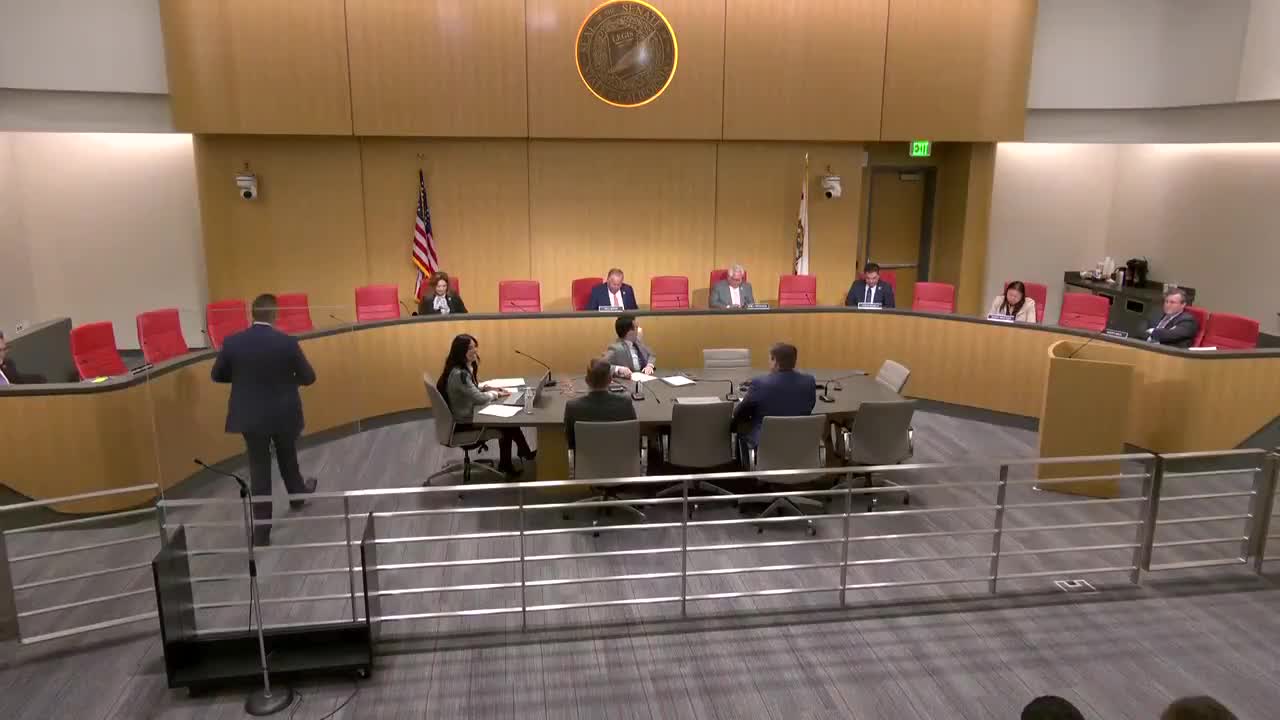 17MIN