SB 596: School employees: protection.
- Session Year: 2023-2024
- House: Senate
- Latest Version Date: 2023-09-14
Current Status:
Failed
(2024-01-25: Veto sustained.)
Introduced
In Committee
First Chamber
In Committee
Second Chamber
Enacted
Existing law provides that any parent, guardian, or other person whose conduct in a place where a school employee is required to be in the course of the employees duties materially disrupts classwork or extracurricular activities or involves substantial disorder is guilty of a misdemeanor punishable by a fine of not less than $500, nor more than $1,000, or by imprisonment in a county jail not exceeding one year, or by both imprisonment and the fine. Existing law provides for certain minimum periods of imprisonment in a county jail for 2nd and subsequent convictions for the above-described offenses, and prohibits release on any basis until those minimum periods are served, as specified.
This bill would apply these misdemeanors to any adult instead of a parent, guardian, or other person and would eliminate the prohibition on release prior to the minimum period of incarceration applicable to a 2nd conviction, as provided. This bill would specify, for purposes of the above-described offense, that substantial disorder includes substantial disorder at any meeting of the governing board of a school district, the governing body of a charter school, a county board of education, or the State Board of Education. To the extent the bill expands the scope of an existing crime, the bill would impose a state-mandated local program.
This bill would provide that any adult who subjects a school employee, as defined, to harassment or makes a credible threat against the employee or the employees family, while the employee is away from a schoolsite or after school hours, for reasons related to the employees course of duties is guilty of a misdemeanor. The bill would define harassment and credible threat for these purposes. By creating a new crime, this bill would impose a state-mandated local program.
This bill would provide that the misdemeanors discussed above do not apply to the conduct of a pupil who is an individual with exceptional needs if it is determined that the pupils conduct was caused by, or had a direct and substantial relationship to, the pupils disability.
The California Constitution requires the state to reimburse local agencies and school districts for certain costs mandated by the state. Statutory provisions establish procedures for making that reimbursement.
This bill would provide that no reimbursement is required by this act for a specified reason.
Existing law provides that any parent, guardian, or other person whose conduct in a place where a school employee is required to be in the course of the employees duties materially disrupts classwork or extracurricular activities or involves substantial disorder is guilty of a misdemeanor punishable by a fine of not less than $500, nor more than $1,000, or by imprisonment in a county jail not exceeding one year, or by both imprisonment and the fine. Existing law provides for certain minimum periods of imprisonment in a county jail for 2nd and subsequent convictions for the above-described offenses, and prohibits release on any basis until those minimum periods are served, as specified.
This bill would apply these misdemeanors to any adult instead of a parent, guardian, or other person and would eliminate the prohibition on release prior to the minimum period of incarceration applicable to a 2nd conviction, as provided. This bill would specify, for purposes of the above-described offense, that substantial disorder includes substantial disorder at any meeting of the governing board of a school district, the governing body of a charter school, a county board of education, or the State Board of Education. The bill would define a school employee as any employee or official of a school district, a charter school, a county office of education, a county board of education, the state board, or the State Department of Education. To the extent the bill expands the scope of an existing crime, the bill would impose a state-mandated local program.
This bill would provide that any adult who subjects a school employee, as defined above, defined, to harassment or makes a credible threat against the employee or the employees family, while the employee is away from a schoolsite or after school hours, for reasons related to the employees course of duties is guilty of a misdemeanor. The bill would define harassment and credible threat for these purposes. By defining a new crime, this bill would impose a state-mandated local program.
This bill would provide that the misdemeanors discussed above do not apply to the conduct of a pupil who is an individual with exceptional needs if it is determined that the pupils conduct was caused by, or had a direct and substantial relationship to, the pupils disability.
The California Constitution requires the state to reimburse local agencies and school districts for certain costs mandated by the state. Statutory provisions establish procedures for making that reimbursement.
This bill would provide that no reimbursement is required by this act for a specified reason.
Existing law provides that any parent, guardian, or other person whose conduct in a place where a school employee is required to be in the course of the employees duties materially disrupts classwork or extracurricular activities or involves substantial disorder is guilty of a misdemeanor punishable by a fine of not less than $500, nor more than $1,000, or by imprisonment in a county jail not exceeding one year, or by both imprisonment and the fine. Existing law provides for certain minimum periods of imprisonment in a county jail for subsequent convictions for the above-described offenses, as specified.
This bill would specify, for purposes of the above-described offense, that substantial disorder includes substantial disorder at any meeting of the governing board of a school district, the governing body of a charter school, a county board of education, or the State Board of Education. The bill would define a school employee as any employee or official of a school district, a charter school, a county office of education, a county board of education, the state board, or the State Department of Education. To the extent the bill expands the scope of an existing crime, the bill would impose a state-mandated local program.
This bill would provide that any person adult who subjects a school employee to threats or harassment, as defined, employee, as defined above, to harassment or makes a credible threat against the employee or the employees family, while the employee is away from a schoolsite or after school hours hours, for reasons related to the employees course of duties is guilty of a misdemeanor punishable as for the offense described above. misdemeanor. The bill would define harassment and credible threat for these purposes. By defining a new crime, this bill would impose a state-mandated local program.
The California Constitution requires the state to reimburse local agencies and school districts for certain costs mandated by the state. Statutory provisions establish procedures for making that reimbursement.
This bill would provide that no reimbursement is required by this act for a specified reason.
Existing law provides that any parent, guardian, or other person whose conduct in a place where a school employee is required to be in the course of the employees duties materially disrupts classwork or extracurricular activities or involves substantial disorder is guilty of a misdemeanor punishable by a fine of not less than $500, nor more than $1,000, or by imprisonment in a county jail not exceeding one year, or by both imprisonment and the fine. Existing law provides for certain minimum periods of imprisonment in a county jail for subsequent convictions for the above-described offenses, as specified.
This bill would provide that any parent, guardian, or other person who interferes, as specified, with a school employees daily life subjects a school employee to threats or harassment, as defined, while the employee is away from a schoolsite or after school hours for reasons related to the employees course of duties is guilty of a misdemeanor punishable as for the offense described above. By defining a new crime, this bill would impose a state-mandated local program.
The California Constitution requires the state to reimburse local agencies and school districts for certain costs mandated by the state. Statutory provisions establish procedures for making that reimbursement.
This bill would provide that no reimbursement is required by this act for a specified reason.
Existing law provides that any parent, guardian, or other person whose conduct in a place where a school employee is required to be in the course of the employees duties materially disrupts classwork or extracurricular activities or involves substantial disorder is guilty of a misdemeanor punishable by a fine of not less than $500, nor more than $1,000, or by imprisonment in a county jail not exceeding one year, or by both imprisonment and the fine. Existing law provides for certain minimum periods of imprisonment in a county jail for subsequent convictions for the above-described offenses, as specified.
This bill would provide that any parent, guardian, or other person who interferes, as specified, with a school employees daily life away from a schoolsite or after school hours for reasons related to the employees course of duties is guilty of a misdemeanor punishable as for the offense described above. By defining a new crime, this bill would impose a state-mandated local program.
The California Constitution requires the state to reimburse local agencies and school districts for certain costs mandated by the state. Statutory provisions establish procedures for making that reimbursement.
This bill would provide that no reimbursement is required by this act for a specified reason.
(a)Any adult whose conduct in a place where a school employee is required to be in the course of the school employees duties materially disrupts classwork or extracurricular activities or involves substantial disorder, including substantial disorder at any meeting of the governing board of a school district, the governing body of a charter school, a county board of education, or the state board, is guilty of a misdemeanor.
(b)Any adult who subjects a school employee to harassment or makes a credible threat against the school employee or member of the school employees family, while the school employee is away from a schoolsite or after school hours, for reasons related to the school employees course of duties, including, but not limited to, instruction pursuant to Sections 51204.5 and 51930, is guilty of a misdemeanor.
(c)For purposes of this section, the following definitions apply:
(1)Course of conduct means a pattern of conduct composed of two or more acts occurring over a period of time, however short, evidencing a continuity of purpose. Constitutionally protected activity is not included within the meaning of course of conduct.
(2)Harassment means a knowing and willful course of conduct directed at a specific person that seriously alarms, torments, or terrorizes the person, and that serves no legitimate purpose. The course of conduct must be that which would cause a reasonable person to suffer substantial emotional distress, and must actually cause substantial emotional distress to the person.
(3)Credible threat means a verbal, written, or electronic communication, a communication implied by a pattern of conduct, or a combination of a verbal, written, or electronic communication and conduct, made with the specific intent to place the person that is the target of the communication in reasonable fear for their safety or the safety of their family, that, on its face and under the circumstances in which it is made, expresses serious intent to commit an act of unlawful violence, and is made by an individual that possesses the apparent ability to carry out the act so as to cause the person who is the target of the communication to reasonably be in a sustained state of fear for their safety or the safety of their family. A credible threat does not require the individual making the communication to actually carry out the act. Constitutionally protected activity is not included within the meaning of credible threat.
(4)School employee means any employee or official of a school district, a charter school, a county office of education, a county board of education, the state board, or the department.
(d)A violation of subdivision (a) shall be punished as follows:
(1)Upon the first conviction, by a fine of not less than five hundred dollars ($500) and not more than one thousand dollars ($1,000), or by imprisonment in a county jail for not more than one year, or by both the fine and imprisonment.
(2)Upon a second conviction, by imprisonment in a county jail for a period of not less than 10 days, and not more than one year, or by both imprisonment and a fine not exceeding one thousand dollars ($1,000).
(3)Upon a third or subsequent conviction, by imprisonment in a county jail for a period of not less than 90 days, and not more than one year, or by both imprisonment and a fine not exceeding one thousand dollars ($1,000). The defendant shall not be released on probation, or for any other basis until the defendant has served not less than 90 days in a county jail.
(4)Upon a showing of good cause, the court may find that for any mandatory minimum imprisonment specified by paragraph (2) or (3) of this subdivision, the imprisonment shall not be imposed, and the court may grant probation, or the suspension of the execution or imposition of the sentence.
(e)This section shall not apply to any otherwise lawful employee concerted activity, including, but not limited to, picketing and the distribution of handbills.
(f)This section shall not apply to the conduct of a pupil who is an individual with exceptional needs pursuant to subdivision (a) of Section 56026 if it is determined that the pupils conduct was caused by, or had a direct and substantial relationship to, the pupils disability.
SEC. 2.No reimbursement is required by this act pursuant to Section 6 of Article XIIIB of the California Constitution because the only costs that may be incurred by a local agency or school district will be incurred because this act creates a new crime or infraction, eliminates a crime or infraction, or changes the penalty for a crime or infraction, within the meaning of Section 17556 of the Government Code, or changes the definition of a crime within the meaning of Section 6 of Article XIIIB of the California Constitution.
(a)Any parent, guardian, or other person adult whose conduct in a place where a school employee is required to be in the course of the school employees duties materially disrupts classwork or extracurricular activities or involves substantial disorder, including substantial disorder at any meeting of the governing board of a school district, the governing body of a charter school, a county board of education, or the state board, is guilty of a misdemeanor.
(b)Any adult who subjects a school employee to harassment or makes a credible threat against the school employee or member of the school employees family, while the school employee is away from a schoolsite or after school hours, for reasons related to the school employees course of duties, including, but not limited to, instruction pursuant to Sections 51204.5 and 51930, is guilty of a misdemeanor.
(c)For purposes of this section, the following definitions apply:
(1)Course of conduct means a pattern of conduct composed of two or more acts occurring over a period of time, however short, evidencing a continuity of purpose. Constitutionally protected activity is not included within the meaning of course of conduct.
(2)Harassment means a knowing and willful course of conduct directed at a specific person that seriously alarms, torments, or terrorizes the person, and that serves no legitimate purpose. The course of conduct must be that which would cause a reasonable person to suffer substantial emotional distress, and must actually cause substantial emotional distress to the person.
(3)Credible threat means a verbal, written, or electronic communication, a communication implied by a pattern of conduct, or a combination of a verbal, written, or electronic communication and conduct, made with the specific intent to place the person that is the target of the communication in reasonable fear for their safety or the safety of their family, that, on its face and under the circumstances in which it is made, expresses serious intent to commit an act of unlawful violence, and is made by an individual that possesses the apparent ability to carry out the act so as to cause the person who is the target of the communication to reasonably be in a sustained state of fear for their safety or the safety of their family. A credible threat does not require the individual making the communication to actually carry out the act. Constitutionally protected activity is not included within the meaning of credible threat.
(4)School employee means any employee or official of a school district, a charter school, a county office of education, a county board of education, the state board, or the department.
(d)A violation of subdivision (a) shall be punished as follows:
(1)Upon the first conviction, by a fine of not less than five hundred dollars ($500) and not more than one thousand dollars ($1,000), or by imprisonment in a county jail for not more than one year, or by both the fine and imprisonment.
(2)Upon a second conviction, by imprisonment in a county jail for a period of not less than 10 days, and not more than one year, or by both imprisonment and a fine not exceeding one thousand dollars ($1,000). The defendant shall not be released on probation, or for any other basis until the defendant has served not less than 10 days in a county jail.
(3)Upon a third or subsequent conviction, by imprisonment in a county jail for a period of not less than 90 days, and not more than one year, or by both imprisonment and a fine not exceeding one thousand dollars ($1,000). The defendant shall not be released on probation, or for any other basis until the defendant has served not less than 90 days in a county jail.
(4)Upon a showing of good cause, the court may find that for any mandatory minimum imprisonment specified by paragraph (2) or (3) of this subdivision, the imprisonment shall not be imposed, and the court may grant probation, or the suspension of the execution or imposition of the sentence.
(e)This section shall not apply to any otherwise lawful employee concerted activity, including, but not limited to, picketing and the distribution of handbills.
(f)This section shall not apply to the conduct of a pupil who is an individual with exceptional needs pursuant to subdivision (a) of Section 56026 if it is determined that the pupils conduct was caused by, or had a direct and substantial relationship to, the pupils disability.
SEC. 2.No reimbursement is required by this act pursuant to Section 6 of Article XIIIB of the California Constitution because the only costs that may be incurred by a local agency or school district will be incurred because this act creates a new crime or infraction, eliminates a crime or infraction, or changes the penalty for a crime or infraction, within the meaning of Section 17556 of the Government Code, or changes the definition of a crime within the meaning of Section 6 of Article XIIIB of the California Constitution.
(a)Any parent, guardian, or other person whose conduct in a place where a school employee is required to be in the course of the school employees duties materially disrupts classwork or extracurricular activities or involves substantial disorder disorder, including substantial disorder at any meeting of the governing board of a school district, the governing body of a charter school, a county board of education, or the state board, is guilty of a misdemeanor.
(b)Any person adult who subjects a school employee to threats or harassment or makes a credible threat against the school employee or member of the school employees family, while the school employee is away from a schoolsite or after school hours hours, for reasons related to the school employees course of duties, including, but not limited to, instruction pursuant to Sections 51204.5 and 51930, is guilty of a misdemeanor.
(c)For purposes of this section, the following definitions apply:
(1)Course of conduct means a pattern of conduct composed of a series of two or more acts occurring over a period of time, however short, evidencing a continuity of purpose, including following or stalking an individual, making harassing telephone calls to an individual, or sending harassing correspondence to an individual by any means, including, but not limited to, the use of public or private mails, interoffice mail, facsimile, or email. purpose. Constitutionally protected activity is not included within the meaning of course of conduct.
(2)Harassment means unlawful violence, a credible threat of violence, or a knowing and willful course of conduct directed at a specific person that seriously alarms, annoys, or harasses torments, or terrorizes the person, and that serves no legitimate purpose. The course of conduct must be that which would cause a reasonable person to suffer substantial emotional distress, and must actually cause substantial emotional distress to the person.
(3)Credible threat means a verbal, written, or electronic communication, a communication implied by a pattern of conduct, or a combination of a verbal, written, or electronic communication and conduct, made with the specific intent to place the person that is the target of the communication in reasonable fear for their safety or the safety of their family, that, on its face and under the circumstances in which it is made, expresses serious intent to commit an act of unlawful violence, and is made by an individual that possesses the apparent ability to carry out the act so as to cause the person who is the target of the communication to reasonably be in a sustained state of fear for their safety or the safety of their family. A credible threat does not require the individual making the communication to actually carry out the act. Constitutionally protected activity is not included within the meaning of credible threat.
(4)School employee means any employee or official of a school district, a charter school, a county office of education, a county board of education, the state board, or the department.
(d)A violation of subdivision (a) or (b) shall be punished as follows:
(1)Upon the first conviction, by a fine of not less than five hundred dollars ($500) and not more than one thousand dollars ($1,000), or by imprisonment in a county jail for not more than one year, or by both the fine and imprisonment.
(2)Upon a second conviction, by imprisonment in a county jail for a period of not less than 10 days, and not more than one year, or by both imprisonment and a fine not exceeding one thousand dollars ($1,000). The defendant shall not be released on probation, or for any other basis until the defendant has served not less than 10 days in a county jail.
(3)Upon a third or subsequent conviction, by imprisonment in a county jail for a period of not less than 90 days, and not more than one year, or by both imprisonment and a fine not exceeding one thousand dollars ($1,000). The defendant shall not be released on probation, or for any other basis until the defendant has served not less than 90 days in a county jail.
(4)Upon a showing of good cause, the court may find that for any mandatory minimum imprisonment specified by paragraph (2) or (3) of this subdivision, the imprisonment shall not be imposed, and the court may grant probation, or the suspension of the execution or imposition of the sentence.
(e)This section shall not apply to any otherwise lawful employee concerted activity, including, but not limited to, picketing and the distribution of handbills.
SEC. 2.No reimbursement is required by this act pursuant to Section 6 of Article XIIIB of the California Constitution because the only costs that may be incurred by a local agency or school district will be incurred because this act creates a new crime or infraction, eliminates a crime or infraction, or changes the penalty for a crime or infraction, within the meaning of Section 17556 of the Government Code, or changes the definition of a crime within the meaning of Section 6 of Article XIIIB of the California Constitution.
(a)Any parent, guardian, or other person whose conduct in a place where a school employee is required to be in the course of the employees duties materially disrupts classwork or extracurricular activities or involves substantial disorder is guilty of a misdemeanor.
(b)Any parent, guardian, or other person who interferes, such as through threats, harassment, or similar conduct, with a school employees daily life subjects a school employee to threats or harassment while the employee is away from a schoolsite or after school hours for reasons related to the employees course of duties, including, but not limited to, instruction pursuant to Sections 51204.5 and 51930, is guilty of a misdemeanor.
(c)For purposes of this section, the following definitions apply:
(1)Course of conduct means a pattern of conduct composed of a series of acts over a period of time, however short, evidencing a continuity of purpose, including following or stalking an individual, making harassing telephone calls to an individual, or sending harassing correspondence to an individual by any means, including, but not limited to, the use of public or private mails, interoffice mail, facsimile, or email. Constitutionally protected activity is not included within the meaning of course of conduct.
(2)Harassment means unlawful violence, a credible threat of violence, or a knowing and willful course of conduct directed at a specific person that seriously alarms, annoys, or harasses the person, and that serves no legitimate purpose. The course of conduct must be that which would cause a reasonable person to suffer substantial emotional distress, and must actually cause substantial emotional distress to the person.
(c)(d)A violation of subdivision (a) or (b) shall be punished as follows:
(1)Upon the first conviction, by a fine of not less than five hundred dollars ($500) and not more than one thousand dollars ($1,000), or by imprisonment in a county jail for not more than one year, or by both the fine and imprisonment.
(2)Upon a second conviction, by imprisonment in a county jail for a period of not less than 10 days, and not more than one year, or by both imprisonment and a fine not exceeding one thousand dollars ($1,000). The defendant shall not be released on probation, or for any other basis until the defendant has served not less than 10 days in a county jail.
(3)Upon a third or subsequent conviction, by imprisonment in a county jail for a period of not less than 90 days, and not more than one year, or by both imprisonment and a fine not exceeding one thousand dollars ($1,000). The defendant shall not be released on probation, or for any other basis until the defendant has served not less than 90 days in a county jail.
(4)Upon a showing of good cause, the court may find that for any mandatory minimum imprisonment specified by paragraph (2) or (3) of this subdivision, the imprisonment shall not be imposed, and the court may grant probation, or the suspension of the execution or imposition of the sentence.
(d)(e)This section shall not apply to any otherwise lawful employee concerted activity, including, but not limited to, picketing and the distribution of handbills.
SEC. 2.No reimbursement is required by this act pursuant to Section 6 of Article XIIIB of the California Constitution because the only costs that may be incurred by a local agency or school district will be incurred because this act creates a new crime or infraction, eliminates a crime or infraction, or changes the penalty for a crime or infraction, within the meaning of Section 17556 of the Government Code, or changes the definition of a crime within the meaning of Section 6 of Article XIIIB of the California Constitution.
(a)Any parent, guardian, or other person whose conduct in a place where a school employee is required to be in the course of his or her the employees duties materially disrupts classwork or extracurricular activities or involves substantial disorder is guilty of a misdemeanor.
(b)Any parent, guardian, or other person who interferes, such as through threats, harassment, or similar conduct, with a school employees daily life away from a schoolsite or after school hours for reasons related to the employees course of duties, including, but not limited to, instruction pursuant to Sections 51204.5 and 51930, is guilty of a misdemeanor.
(b)(c)A violation of subdivision (a) or (b) shall be punished as follows:
(1)Upon the first conviction, by a fine of not less than five hundred dollars ($500) and not more than one thousand dollars ($1,000), or by imprisonment in a county jail for not more than one year, or by both the fine and imprisonment.
(2)Upon a second conviction, by imprisonment in a county jail for a period of not less than 10 days, and not more than one year, or by both imprisonment and a fine not exceeding one thousand dollars ($1,000). The defendant shall not be released on probation, or for any other basis until he or she the defendant has served not less than 10 days in a county jail.
(3)Upon a third or subsequent conviction, by imprisonment in a county jail for a period of not less than 90 days, and not more than one year, or by both imprisonment and a fine not exceeding one thousand dollars ($1,000). The defendant shall not be released on probation, or for any other basis until he or she the defendant has served not less than 90 days in a county jail.
(4)Upon a showing of good cause, the court may find that for any mandatory minimum imprisonment specified by paragraph (2) or (3) of this subdivision, the imprisonment shall not be imposed, and the court may grant probation, or the suspension of the execution or imposition of the sentence.
(c)(d)This section shall not apply to any otherwise lawful employee concerted activity, including, but not limited to, picketing and the distribution of handbills.
SEC. 2.No reimbursement is required by this act pursuant to Section 6 of Article XIIIB of the California Constitution because the only costs that may be incurred by a local agency or school district will be incurred because this act creates a new crime or infraction, eliminates a crime or infraction, or changes the penalty for a crime or infraction, within the meaning of Section 17556 of the Government Code, or changes the definition of a crime within the meaning of Section 6 of Article XIIIB of the California Constitution.
|
Date
|
Status
|
|---|---|
| Jan 25, 2024 | Veto sustained. |
| Jan 25, 2024 | Stricken from file. |
| Oct 8, 2023 | In Senate. Consideration of Governor's veto pending. |
| Oct 8, 2023 | Vetoed by the Governor. |
| Sep 20, 2023 | Enrolled and presented to the Governor at 4:30 p.m. |
| Sep 12, 2023 | Assembly amendments concurred in. (Ayes 30. Noes 8. Page 2679.) Ordered to engrossing and enrolling. |
| Sep 11, 2023 | In Senate. Concurrence in Assembly amendments pending. |
| Sep 11, 2023 | Read third time. Passed. (Ayes 65. Noes 8. Page 3163.) Ordered to the Senate. |
| Sep 7, 2023 | Ordered to third reading. |
| Sep 7, 2023 | Read third time and amended. |
| Sep 7, 2023 | Assembly Rule 69 suspended. |
| Sep 5, 2023 | Read second time. Ordered to third reading. |
| Sep 1, 2023 | From committee: Do pass. (Ayes 12. Noes 3.) (September 1). |
| Aug 16, 2023 | August 16 set for first hearing. Placed on suspense file. |
| Jul 12, 2023 | From committee: Do pass and re-refer to Com. on APPR. (Ayes 6. Noes 0.) (July 11). Re-referred to Com. on APPR. |
| Jul 3, 2023 | From committee with author's amendments. Read second time and amended. Re-referred to Com. on PUB. S. |
| Jun 29, 2023 | From committee: Do pass and re-refer to Com. on PUB. S. (Ayes 6. Noes 0.) (June 28). Re-referred to Com. on PUB. S. |
| Jun 1, 2023 | Referred to Coms. on ED. and PUB. S. |
| May 25, 2023 | In Assembly. Read first time. Held at Desk. |
| May 24, 2023 | Read third time. Passed. (Ayes 30. Noes 8. Page 1255.) Ordered to the Assembly. |
| May 18, 2023 | Read second time. Ordered to third reading. |
| May 18, 2023 | From committee: Do pass. (Ayes 5. Noes 2. Page 1176.) (May 18). |
| May 12, 2023 | Set for hearing May 18. |
| May 8, 2023 | May 8 hearing: Placed on APPR suspense file. |
| May 1, 2023 | Set for hearing May 8. |
| Apr 26, 2023 | From committee: Do pass and re-refer to Com. on APPR. (Ayes 4. Noes 1. Page 901.) (April 25). Re-referred to Com. on APPR. |
| Apr 13, 2023 | Set for hearing April 25. |
| Apr 12, 2023 | From committee: Do pass and re-refer to Com. on PUB S. (Ayes 5. Noes 0. Page 682.) (April 12). Re-referred to Com. on PUB S. |
| Mar 30, 2023 | From committee with author's amendments. Read second time and amended. Re-referred to Com. on ED. |
| Mar 21, 2023 | Set for hearing April 12. |
| Feb 22, 2023 | Referred to Coms. on ED. and PUB S. |
| Feb 16, 2023 | From printer. May be acted upon on or after March 18. |
| Feb 15, 2023 | Introduced. Read first time. To Com. on RLS. for assignment. To print. |
|
Date
|
Description
|
Location
|
Votes
|
|
|---|---|---|---|---|
| Sep 12, 2023 | Unfinished Business SB596 Portantino Concurrence | Senate Floor |
Passed |
|
| Sep 11, 2023 | SB 596 Portantino Senate Third Reading By Zbur | Assembly Floor |
Passed |
|
| Sep 1, 2023 | Do pass. | Assembly Standing Committee on Appropriations |
Passed |
|
| Jul 11, 2023 | Do pass and be re-referred to the Committee on [Appropriations] | Assembly Standing Committee on Public Safety |
Passed |
|
| Jun 28, 2023 | Do pass and be re-referred to the Committee on [Public Safety] | Assembly Standing Committee on Education |
Passed |
|
| May 24, 2023 | Senate 3rd Reading SB596 Portantino | Senate Floor |
Passed |
|
| May 18, 2023 | Do pass | Senate Standing Committee on Appropriations |
Passed |
|
| May 8, 2023 | Placed on suspense file | Senate Standing Committee on Appropriations |
Passed |
|
| Apr 25, 2023 | Do pass, but first be re-referred to the Committee on [Appropriations] | Senate Standing Committee on Public Safety |
Passed |
|
| Apr 12, 2023 | Do pass, but first be re-referred to the Committee on [Public Safety] | Senate Standing Committee on Education |
Passed |
This list shows positions taken on this bill by organizations on the date displayed, which is linked to the original source.
Positions by individuals are not included.
|
Organization
|
Position
|
Date
|
|---|---|---|
| Aclu California Action | ** Against | |
| Association Of California School Administrators | ** Support | |
| California Association Of Joint Powers Authorities | ** Support | |
| California Family Council | ** Against | |
| California Federation of Teachers, AFL-CIO | ** Support | |
| California Parents Union | ** Against | |
| California School Employees Association | ** Support | |
| California Teachers Association | ** Support | |
| Chico First | ** Against | |
| Chico First; Chico Stewards for Parks and Waterways | ** Against | |
| Chico Stewards for Parks and Waterways | ** Against | |
| Defendingconstitutionalrights.com | ** Against | |
| Foundation Against Intolerance & Racism | ** Against | |
| Foundation Against Intolerance & Racism, Los Angeles Chapter | ** Against | |
| GlendaleOUT | ** Support | |
| Glendale Teachers Association | ** Support | |
| Glendale Unified School District | ** Support | |
| Los Angeles County Office Of Education | ** Support | |
| Our Duty | ** Against | |
| Perk Advocacy | ** Against | |
| Torrance Unified School District | ** Support | |
| YWCA Glendale and Pasadena | ** Support |
SENATE RULES COMMITTEE Office of Senate Floor Analyses (916) 651-1520 Fax: (916) 327-4478 | SB 596 |
VETO
Bill No: SB 596
Author: Portantino (D)
Amended: 9/7/23
Vote: 27
SENATE EDUCATION COMMITTEE: 5-0, 4/12/23
AYES: Newman, Cortese, Glazer, McGuire, Smallwood-Cuevas
NO VOTE RECORDED: Ochoa Bogh, Wilk
SENATE PUBLIC SAFETY COMMITTEE: 4-1, 4/25/23
AYES: Wahab, Bradford, Skinner, Wiener
NOES: Ochoa Bogh
SENATE APPROPRIATIONS COMMITTEE: 5-2, 5/18/23
AYES: Portantino, Ashby, Bradford, Wahab, Wiener
NOES: Jones, Seyarto
SENATE FLOOR: 30-8, 5/24/23
AYES: Allen, Alvarado-Gil, Archuleta, Ashby, Atkins, Becker, Blakespear, Bradford, Caballero, Cortese, Dodd, Durazo, Glazer, Gonzalez, Hurtado, Laird, McGuire, Menjivar, Min, Newman, Padilla, Portantino, Roth, Rubio, Skinner, Smallwood-Cuevas, Stern, Umberg, Wahab, Wiener
NOES: Dahle, Grove, Jones, Nguyen, Niello, Ochoa Bogh, Seyarto, Wilk
NO VOTE RECORDED: Eggman, Limón
SENATE FLOOR: 30-8, 9/12/23
AYES: Allen, Alvarado-Gil, Archuleta, Ashby, Atkins, Becker, Blakespear, Bradford, Cortese, Dodd, Durazo, Glazer, Gonzalez, Hurtado, Laird, Limón, McGuire, Menjivar, Min, Newman, Padilla, Portantino, Roth, Rubio, Skinner, Smallwood-Cuevas, Stern, Umberg, Wahab, Wiener
NOES: Dahle, Grove, Jones, Nguyen, Niello, Ochoa Bogh, Seyarto, Wilk
NO VOTE RECORDED: Caballero, Eggman
ASSEMBLY FLOOR: 65-8, 9/11/23 - See last page for vote
SUBJECT: School employees: protection
SOURCE: Author
DIGEST:
This bill specifies that a person who subjects a school employee to threats or harassment while the employee is away from a schoolsite or after school hours for reasons related to the employee’s course of duties is guilty of a misdemeanor.
ANALYSIS:
Existing law:
- Requires any parent, guardian, or other person whose conduct in a place where a school employee to be in the course of his or her duties materially disrupts classwork or extracurricular activities or involves substantial disorder is guilty of a misdemeanor.
- Provides the penalty for violating 1) above is as follows:
- Upon the first conviction, by a fine of not less than $500 and not more than $1,000, or by imprisonment in a county jail for not more than one year, or by both the fine and imprisonment.
- Upon a second conviction, by imprisonment in a county jail for a period of not less than 10 days, and not more than one year, or by both imprisonment and a fine not exceeding $1,000. The defendant shall not be released on probation, or for any other basis until he or she has served not less than 10 days in a county jail.
- Upon a third or subsequent conviction, by imprisonment in a county jail for a period of not less than 90 days, and not more than one year, or by both imprisonment and a fine not exceeding $1,000. The defendant shall not be released on probation, or for any other basis until he or she has served not less than 90 days in a county jail.
This bill:
- Expands the misdemeanor offense which makes it unlawful for an adult to materially disrupt or cause substantial disorder to classwork or extracurricular activities to include causing substantial disorder at any meeting of the governing board of a school district, the governing body of a charter school, a county board of education, or the State Board of Education (SBE).
- Makes it a misdemeanor for any adult to subject a school employee to harassment or to make a credible threat against that employee or a member of their family while the employee is away from a school site or after school hours for reasons related to the employee's course of duties, as specified, and eliminates the prohibition on release prior to the minimum period of incarceration applicable to a second conviction, as provided.
- Specifies that the provisions do not apply to the conduct of a student with exceptional needs if it is determined that the conduct was caused by the student's disability. Defines "credible threat" as a verbal, written, or electronic communication, a communication implied by a pattern of conduct, or a combination of a verbal, written, or electronic communication and conduct, made with the specific intent to place the person that is the target of the communication in reasonable fear for their safety or the safety of their family, that, on its face and under the circumstances in which it is made, expresses serious intent to commit an act of unlawful violence, and is made by an individual that possesses the apparent ability to carry out the act so as to cause the person who is the target of the communication to reasonably be in a sustained state of fear for their safety or the safety of their family. A credible threat does not require the individual making the communication to actually carry out the act. Constitutionally protected activity is not included within the meaning of credible threat.
- Defines "harassment" as a knowing and willful course of conduct directed at a specific person that seriously alarms, torments or terrorizes the person, and that serves no legitimate purpose. The course of conduct must be that which would cause a reasonable person to suffer substantial emotional distress, and must actually cause substantial emotional distress to the person.
Comments
- Need for the bill. According to the author, “Too many teachers are being intimidated and harassed for teaching in accordance with state standards. These incidents do not solely occur while teachers are at their respective school sites; some receive threats in off campus settings, including on social media platforms. Actions that incite fear amongst educators who are adhering to state standards are counterproductive to efforts to foster safe, inclusive and supportive classroom environments. SB 596 will ensure that educators can continue to help their students thrive unencumbered by fear and intimidation.”
- Violence against educators and school personnel is contributing to the educator workforce shortage. While much of the focus on education during the pandemic has involved the effects on children in schools, it is also having a negative impact on teachers, administrators, social workers, psychologists and school staff.
The American Psychological Association (APA) administered an online survey to teachers and other school personnel during the 2020-2021 school year. The sample of 14,966 participants includes 9,370 teachers, 860 administrators, 1,499 school psychologists and social workers and 3,237 other school staff members. Among the survey’s troubling findings were the following:
- Rates of interest in quitting their careers or transferring schools are troubling and high across the board, ranging from 29% to 34% for school staff, administrators, and mental health personnel. Almost half of all teachers reported they desire or plan to quit or transfer their jobs due to concerns about school climate and school safety.
- One-third of surveyed teachers reported they experienced at least one incident of verbal and/or threatening violence from students during COVID (e.g., verbal threats, cyber bullying, intimidation, sexual harassment). Over 40% of school administrators reported verbal or threatening violence from parents during COVID.
- Many teachers, administrators, and other school personnel described the violence they face as on-going and pervasive. One educator described their experiences, “I have been physically assaulted multiple times by students in the building and they know that not only is there no one to stop them, but there will be no consequences either. I ended up in the hospital the last time it happened.”
Further, a recently published report by the UCLA Center for the Transformation of Schools, “Voices from the Classroom: Developing a Strategy for Teacher Retention and Recruitment," states the following:
Burnout from stress is the top reason current teachers say they are considering leaving, with political attacks on teachers the next highest-ranking factor. Workload, low pay, student apathy and behavioral issues, and the lack of support from district administrators contribute to the stress felt by teachers.
FISCAL EFFECT: Appropriation: No Fiscal Com.: Yes Local: Yes
According to the Assembly Appropriations Committee, unknown costs to counties for increased incarceration. Actual costs would depend on the number of people violating the new and expanded crimes contained in this bill and jail time awarded to convicted individuals in those cases.
The average annual cost to incarcerate a defendant in county jail is approximately $29,000. California county jails are increasingly overcrowded – particularly since the enactment of the Realignment Act in 2011. Jail overcrowding since 2011 has resulted in court-mandated population caps and increased rates of inmate violence and death. Overcrowding has also resulted in significant state funding for additional jail construction. Although new crimes are not considered reimbursable state mandates pursuant to Proposition 30 (2012), overcrowding in county jails creates cost pressure on the General Fund because the state has historically granted new funding to counties to offset overcrowding after the 2011 Realignment Act.
SUPPORT: (Verified 10/17/23)
California Association of Joint Powers Authorities
California Federation of Teachers AFL-CIO
California School Employees Association
California Teachers Association
Glendale Teachers Association
Glendale Unified School District
GlendaleOUT
Los Angeles County Office of Education
Torrance Unified School District
OPPOSITION: (Verified 10/17/23)
ACLU California Action
Chico First
Chico Stewards for Parks and Waterways
Defendingconstitutionalrights.com
Our Duty
Perk Advocacy
ARGUMENTS IN SUPPORT: The California Teachers Association writes, “Our CTA members believe school employees should be safe from aggressive and violent behaviors as well as physical, verbal, and psychological abuse. There are documented increases in the number confrontational activities faced by school employees. We believe all efforts to establish practices and protocols guaranteeing the safety of school employees must be immediate and far-reaching. Such efforts benefit the school community by impacting teacher retention and recruitment and ensuring appropriate conduct within the community-at-large.”
ARGUMENTS IN OPPOSITION: The ACLU California Action writes, “This bill would create a new crime for threats or harassment against a school employee while away from a school site. While we believe teachers should be protected on and off campus, we see existing law as adequate to fulfill this goal without the need for a new crime.”
GOVERNOR'S VETO MESSAGE:
This bill would make it a misdemeanor to cause substantial disorder at any meeting of the governing board of a school district, the governing body of a charter school, a county board of education, or the State Board of Education.
This bill also specifies that a person who subjects a school employee to threats or harassment while the employee is away from a school site or after school hours for reasons related to the employee's course of duties would be guilty of a misdemeanor.
Credible threats of violence and acts of harassment - whether directed against school officials, elected officials, or members of the general public - can already be prosecuted as crimes. As such, creating a new crime is unnecessary.
The tenor of our country's political conversations is alarming, leading to caustic atmospheres at local school board meetings and politicization of our kids' education in an effort to score political points. Nevertheless, we need to be cautious about exacerbating tensions by implementing additional laws that can be perceived as stifling parents' voices in the decision-making process. We don't need more gas on this fire - we need more grace, more respectful conversations, and more protection of constitutional rights for all people, especially for those with whom we disagree.
No school official should be subject to threats or harassment for doing their job, period. I encourage school officials to work closely with local law enforcement to use the laws already on the books to ensure the safety and security of our community's educators and governing board members, both while carrying out their school duties on school premises and while away from school sites.
ASSEMBLY FLOOR: 65-8, 9/11/23
AYES: Addis, Aguiar-Curry, Alvarez, Arambula, Bains, Bauer-Kahan, Bennett, Berman, Boerner, Bonta, Bryan, Calderon, Juan Carrillo, Wendy Carrillo, Cervantes, Connolly, Dixon, Mike Fong, Friedman, Gabriel, Garcia, Gipson, Grayson, Haney, Hart, Holden, Hoover, Irwin, Jackson, Jones-Sawyer, Kalra, Lee, Low, Lowenthal, Maienschein, McCarty, McKinnor, Muratsuchi, Stephanie Nguyen, Ortega, Pacheco, Papan, Pellerin, Petrie-Norris, Quirk-Silva, Ramos, Rendon, Reyes, Luz Rivas, Rodriguez, Blanca Rubio, Santiago, Schiavo, Soria, Ting, Valencia, Villapudua, Wallis, Ward, Weber, Wicks, Wilson, Wood, Zbur, Robert Rivas
NOES: Megan Dahle, Essayli, Vince Fong, Gallagher, Mathis, Jim Patterson, Joe Patterson, Ta
NO VOTE RECORDED: Alanis, Chen, Davies, Flora, Lackey, Sanchez, Waldron
Prepared by: Ian Johnson / ED. / (916) 651-4105
10/25/23 13:59:31
**** END ****
SENATE RULES COMMITTEE Office of Senate Floor Analyses (916) 651-1520 Fax: (916) 327-4478 | SB 596 |
UNFINISHED BUSINESS
Bill No: SB 596
Author: Portantino (D)
Amended: 9/7/23
Vote: 21
SENATE EDUCATION COMMITTEE: 5-0, 4/12/23
AYES: Newman, Cortese, Glazer, McGuire, Smallwood-Cuevas
NO VOTE RECORDED: Ochoa Bogh, Wilk
SENATE PUBLIC SAFETY COMMITTEE: 4-1, 4/25/23
AYES: Wahab, Bradford, Skinner, Wiener
NOES: Ochoa Bogh
SENATE APPROPRIATIONS COMMITTEE: 5-2, 5/18/23
AYES: Portantino, Ashby, Bradford, Wahab, Wiener
NOES: Jones, Seyarto
SENATE FLOOR: 30-8, 5/24/23
AYES: Allen, Alvarado-Gil, Archuleta, Ashby, Atkins, Becker, Blakespear, Bradford, Caballero, Cortese, Dodd, Durazo, Glazer, Gonzalez, Hurtado, Laird, McGuire, Menjivar, Min, Newman, Padilla, Portantino, Roth, Rubio, Skinner, Smallwood-Cuevas, Stern, Umberg, Wahab, Wiener
NOES: Dahle, Grove, Jones, Nguyen, Niello, Ochoa Bogh, Seyarto, Wilk
NO VOTE RECORDED: Eggman, Limón
ASSEMBLY FLOOR: 65-8, 9/11/23 - See last page for vote
SUBJECT: School employees: protection
SOURCE: Author
DIGEST:
This bill specifies that a person who subjects a school employee to threats or harassment while the employee is away from a schoolsite or after school hours for reasons related to the employee’s course of duties is guilty of a misdemeanor.
Assembly Amendments (1)
clarify that substantial disorder includes substantial disorder at any meeting of the governing board of a local educational agency, and (2) clarify the definition of a “school employee”, and (3) add “credible threat”, as defined, to the actions that would be considered a misdemeanor.
ANALYSIS:
Existing law:
- Requires any parent, guardian, or other person whose conduct in a place where a school employee to be in the course of his or her duties materially disrupts classwork or extracurricular activities or involves substantial disorder is guilty of a misdemeanor.
- Provides the penalty for violating 1) above is as follows:
- Upon the first conviction, by a fine of not less than $500 and not more than $1,000, or by imprisonment in a county jail for not more than one year, or by both the fine and imprisonment.
- Upon a second conviction, by imprisonment in a county jail for a period of not less than 10 days, and not more than one year, or by both imprisonment and a fine not exceeding $1,000. The defendant shall not be released on probation, or for any other basis until he or she has served not less than 10 days in a county jail.
- Upon a third or subsequent conviction, by imprisonment in a county jail for a period of not less than 90 days, and not more than one year, or by both imprisonment and a fine not exceeding $1,000. The defendant shall not be released on probation, or for any other basis until he or she has served not less than 90 days in a county jail.
This bill:
- Expands the misdemeanor offense which makes it unlawful for an adult to materially disrupt or cause substantial disorder to classwork or extracurricular activities to include causing substantial disorder at any meeting of the governing board of a school district, the governing body of a charter school, a county board of education, or the State Board of Education (SBE).
- Makes it a misdemeanor for any adult to subject a school employee to harassment or to make a credible threat against that employee or a member of their family while the employee is away from a school site or after school hours for reasons related to the employee's course of duties, as specified, and eliminates the prohibition on release prior to the minimum period of incarceration applicable to a second conviction, as provided.
- Specifies that the provisions do not apply to the conduct of a student with exceptional needs if it is determined that the conduct was caused by the student's disability. Defines "credible threat" as a verbal, written, or electronic communication, a communication implied by a pattern of conduct, or a combination of a verbal, written, or electronic communication and conduct, made with the specific intent to place the person that is the target of the communication in reasonable fear for their safety or the safety of their family, that, on its face and under the circumstances in which it is made, expresses serious intent to commit an act of unlawful violence, and is made by an individual that possesses the apparent ability to carry out the act so as to cause the person who is the target of the communication to reasonably be in a sustained state of fear for their safety or the safety of their family. A credible threat does not require the individual making the communication to actually carry out the act. Constitutionally protected activity is not included within the meaning of credible threat.
- Defines "harassment" as a knowing and willful course of conduct directed at a specific person that seriously alarms, torments or terrorizes the person, and that serves no legitimate purpose. The course of conduct must be that which would cause a reasonable person to suffer substantial emotional distress, and must actually cause substantial emotional distress to the person.
Comments
- Need for the bill. According to the author, “Too many teachers are being intimidated and harassed for teaching in accordance with state standards. These incidents do not solely occur while teachers are at their respective school sites; some receive threats in off campus settings, including on social media platforms. Actions that incite fear amongst educators who are adhering to state standards are counterproductive to efforts to foster safe, inclusive and supportive classroom environments. SB 596 will ensure that educators can continue to help their students thrive unencumbered by fear and intimidation.”
- Violence against educators and school personnel is contributing to the educator workforce shortage. While much of the focus on education during the pandemic has involved the effects on children in schools, it is also having a negative impact on teachers, administrators, social workers, psychologists and school staff.
The American Psychological Association (APA) administered an online survey to teachers and other school personnel during the 2020-2021 school year. The sample of 14,966 participants includes 9,370 teachers, 860 administrators, 1,499 school psychologists and social workers and 3,237 other school staff members. Among the survey’s troubling findings were the following:
- Rates of interest in quitting their careers or transferring schools are troubling and high across the board, ranging from 29% to 34% for school staff, administrators, and mental health personnel. Almost half of all teachers reported they desire or plan to quit or transfer their jobs due to concerns about school climate and school safety.
- One-third of surveyed teachers reported they experienced at least one incident of verbal and/or threatening violence from students during COVID (e.g., verbal threats, cyber bullying, intimidation, sexual harassment). Over 40% of school administrators reported verbal or threatening violence from parents during COVID.
- Many teachers, administrators, and other school personnel described the violence they face as on-going and pervasive. One educator described their experiences, “I have been physically assaulted multiple times by students in the building and they know that not only is there no one to stop them, but there will be no consequences either. I ended up in the hospital the last time it happened.”
Further, a recently published report by the UCLA Center for the Transformation of Schools, “Voices from the Classroom: Developing a Strategy for Teacher Retention and Recruitment," states the following:
Burnout from stress is the top reason current teachers say they are considering leaving, with political attacks on teachers the next highest-ranking factor. Workload, low pay, student apathy and behavioral issues, and the lack of support from district administrators contribute to the stress felt by teachers.
FISCAL EFFECT: Appropriation: No Fiscal Com.: Yes Local: Yes
According to the Assembly Appropriations Committee, unknown costs to counties for increased incarceration. Actual costs would depend on the number of people violating the new and expanded crimes contained in this bill and jail time awarded to convicted individuals in those cases.
The average annual cost to incarcerate a defendant in county jail is approximately $29,000. California county jails are increasingly overcrowded – particularly since the enactment of the Realignment Act in 2011. Jail overcrowding since 2011 has resulted in court-mandated population caps and increased rates of inmate violence and death. Overcrowding has also resulted in significant state funding for additional jail construction. Although new crimes are not considered reimbursable state mandates pursuant to Proposition 30 (2012), overcrowding in county jails creates cost pressure on the General Fund because the state has historically granted new funding to counties to offset overcrowding after the 2011 Realignment Act.
SUPPORT: (Verified 9/11/23)
California Association of Joint Powers Authorities
California Federation of Teachers AFL-CIO
California School Employees Association
California Teachers Association
Glendale Teachers Association
Glendale Unified School District
GlendaleOUT
Los Angeles County Office of Education
Torrance Unified School District
OPPOSITION: (Verified 9/11/23)
ACLU California Action
Chico First
Chico Stewards for Parks and Waterways
Defendingconstitutionalrights.com
Our Duty
Perk Advocacy
ARGUMENTS IN SUPPORT: The California Teachers Association writes, “Our CTA members believe school employees should be safe from aggressive and violent behaviors as well as physical, verbal, and psychological abuse. There are documented increases in the number confrontational activities faced by school employees. We believe all efforts to establish practices and protocols guaranteeing the safety of school employees must be immediate and far-reaching. Such efforts benefit the school community by impacting teacher retention and recruitment and ensuring appropriate conduct within the community-at-large.”
ARGUMENTS IN OPPOSITION: The ACLU California Action writes, “This bill would create a new crime for threats or harassment against a school employee while away from a school site. While we believe teachers should be protected on and off campus, we see existing law as adequate to fulfill this goal without the need for a new crime.”
ASSEMBLY FLOOR: 65-8, 9/11/23
AYES: Addis, Aguiar-Curry, Alvarez, Arambula, Bains, Bauer-Kahan, Bennett, Berman, Boerner, Bonta, Bryan, Calderon, Juan Carrillo, Wendy Carrillo, Cervantes, Connolly, Dixon, Mike Fong, Friedman, Gabriel, Garcia, Gipson, Grayson, Haney, Hart, Holden, Hoover, Irwin, Jackson, Jones-Sawyer, Kalra, Lee, Low, Lowenthal, Maienschein, McCarty, McKinnor, Muratsuchi, Stephanie Nguyen, Ortega, Pacheco, Papan, Pellerin, Petrie-Norris, Quirk-Silva, Ramos, Rendon, Reyes, Luz Rivas, Rodriguez, Blanca Rubio, Santiago, Schiavo, Soria, Ting, Valencia, Villapudua, Wallis, Ward, Weber, Wicks, Wilson, Wood, Zbur, Robert Rivas
NOES: Megan Dahle, Essayli, Vince Fong, Gallagher, Mathis, Jim Patterson, Joe Patterson, Ta
NO VOTE RECORDED: Alanis, Chen, Davies, Flora, Lackey, Sanchez, Waldron
Prepared by: Ian Johnson / ED. / (916) 651-4105
9/11/23 19:49:42
**** END ****
SENATE THIRD READING
STR Bill Id:SB 596
Author:(Portantino)
As Amended Ver:September 7, 2023
Majority vote
SUMMARY
Creates a new crime of threatening or harassing a school employee off school premises or after school hours and expands the crime of materially disrupting classroom or school activities.
Major Provisions
- Expands the misdemeanor offense which makes it unlawful for an adult to materially disrupt or cause substantial disorder to classwork or extracurricular activities to include causing substantial disorder at any meeting of the governing board of a school district, the governing body of a charter school, a county board of education, or the State Board of Education (SBE).
- Makes it a misdemeanor for any adult to subject a school employee to harassment or to make a credible threat against that employee or a member of their family while the employee is away from a school site or after school hours for reasons related to the employee's course of duties, as specified, and eliminates the prohibition on release prior to the minimum period of incarceration applicable to a 2nd conviction, as provided.
- Specify that the provisions do not apply to the conduct of a student with exceptional needs if it is determined that the conduct was caused by the student's disability.Defines "credible threat" as a verbal, written, or electronic communication, a communication implied by a pattern of conduct, or a combination of a verbal, written, or electronic communication and conduct, made with the specific intent to place the person that is the target of the communication in reasonable fear for their safety or the safety of their family, that, on its face and under the circumstances in which it is made, expresses serious intent to commit an act of unlawful violence, and is made by an individual that possesses the apparent ability to carry out the act so as to cause the person who is the target of the communication to reasonably be in a sustained state of fear for their safety or the safety of their family. A credible threat does not require the individual making the communication to actually carry out the act. Constitutionally protected activity is not included within the meaning of credible threat.
- Defines "harassment" as a knowing and willful course of conduct directed at a specific person that seriously alarms, torments or terrorizes the person, and that serves no legitimate purpose. The course of conduct must be that which would cause a reasonable person to suffer substantial emotional distress, and must actually cause substantial emotional distress to the person.
COMMENTS
Growing violence against educators and schools is increasing employee turnover. According to a report from the American Psychological Association, "The US is experiencing trends of dramatic employee turnover in our nation's schools. Current and future decisions to leave
the field of education affect the quality of our schools and the next generations of learners, educators, and school leaders in the nation. Physical and verbal violence directed against educators may be exacerbating reports of high stress, transfers, and leaving the profession." (McMahon, 2022)
According to the Author
"No one should be threatened or harassed for providing academic instruction in accordance with California state law. Actions that incite fear amongst school employees who are teaching pursuant to state standards are counterproductive, unacceptable and potentially dangerous. Unfortunately, these incidents do not solely occur while educators are at their respective school sites; some also receive threats in off campus settings. SB 596 will ensure that educators can safely continue to help their students thrive in supportive and inclusive classroom environments, unencumbered by fear and intimidation."
Arguments in Support
The Association of California School Administrators writes, "Regrettably, schools continue to be a highly politicized environment and those dutifully serving in public schools are the target of hostility from both school community members and individuals without any direct connection to the local educational agency.
This bill would make threats or harassment towards a school employee directly related to the employee's course of duties, either away from the school site or after hours, subject to a misdemeanor penalty that can carry fines, jail time, or both. It includes acts that cause substantial emotional distress such as stalking, making harassing phone calls, sending harassing correspondence, and making credible threats, including through email or other online platforms. This builds upon existing statute that provides a misdemeanor penalty for disruptive acts by a parent, guardian or other persons while the school employee is carrying out their duties.
SB 596 creates an additional, meaningful consequence for those disrupting efforts to establish safe learning spaces. It also acknowledges the very challenging environment that educators face. At a time when recruitment and retention efforts struggle, this measure rightfully acknowledges the important responsibilities of those who serve in public education."
Arguments in Opposition
Our Duty writes, "California is consistently eroding both parents' rights and first amendment rights. SB596 is another expansion of law designed to stifle public discourse. This bill will not withstand judiciary scrutiny. First Amendments rights are the cornerstone of democracy and California is leading the charge to use its legislative power to threaten parents from voicing their dissent as California schools take over their parenting rights.
There are extant laws protecting all persons from harassment and violence. This bill contains overbroad and vague language that will serve to chill speech. The term harassment is absurdly defined. It includes any communications that seriously alarms or annoys a school employee. Neither of these terms are defined and will open a Pandora's Box of claims - all designed to shut those pesky parents up, and let the state decide what is best for our children. Anything dissention can be determined – or at least – alleged to be harassment. The overbroad language is not saved by the reasonable person standard because the entire bill will serve to scare parents into silence."
FISCAL COMMENTS
According to the Assembly Appropriations Committee:
Unknown costs to counties for increased incarceration. Actual costs would depend on the number of people violating the new and expanded crimes contained in this bill and jail time awarded to convicted individuals in those cases.
The average annual cost to incarcerate a defendant in county jail is approximately $29,000. California county jails are increasingly overcrowded – particularly since the enactment of the Realignment Act in 2011. Jail overcrowding since 2011 has resulted in court-mandated population caps and increased rates of inmate violence and death. Overcrowding has also resulted in significant state funding for additional jail construction. Although new crimes are not considered reimbursable state mandates pursuant to Proposition 30 (2012), overcrowding in county jails creates cost pressure on the General Fund because the state has historically granted new funding to counties to offset overcrowding after the 2011 Realignment Act.
VOTES
SENATE FLOOR: 30-8-2
YES: Allen, Alvarado-Gil, Archuleta, Ashby, Atkins, Becker, Blakespear, Bradford, Caballero, Cortese, Dodd, Durazo, Glazer, Gonzalez, Hurtado, Laird, McGuire, Menjivar, Min, Newman, Padilla, Portantino, Roth, Rubio, Skinner, Smallwood-Cuevas, Stern, Umberg, Wahab, Wiener
NO: Dahle, Grove, Jones, Nguyen, Niello, Ochoa Bogh, Seyarto, Wilk
ABS, ABST OR NV: Eggman, Limón
ASM EDUCATION: 6-0-1
YES: Muratsuchi, Juan Carrillo, Hoover, Lee, McCarty, Quirk-Silva
ABS, ABST OR NV: Megan Dahle
ASM PUBLIC SAFETY: 6-0-2
YES: Alanis, Bonta, Bryan, Ortega, Santiago, Zbur
ABS, ABST OR NV: Jones-Sawyer, Lackey
ASM APPROPRIATIONS: 12-3-1
YES: Holden, Bryan, Calderon, Wendy Carrillo, Mike Fong, Hart, Lowenthal, Papan, Pellerin, Soria, Weber, Wilson
NO: Megan Dahle, Dixon, Mathis
ABS, ABST OR NV: Sanchez
UPDATED
VERSION: September 7, 2023
CONSULTANT: Debbie Look / ED. / (916) 319-2087 FN: 0002075
SENATE THIRD READING
STR Bill Id:SB 596
Author:(Portantino)
As Amended Ver:July 3, 2023
Majority vote
SUMMARY
Creates a new crime of threatening or harassing a school employee off school premises or after school hours and expands the crime of materially disrupting classroom or school activities.
Major Provisions
- Expands the misdemeanor offense which makes it unlawful for a parent, guardian, or other person to materially disrupt or cause substantial disorder to classwork or extracurricular activities to include causing substantial disorder at any meeting of the governing board of a school district, the governing body of a charter school, a county board of education, or the state board.
- Makes it a misdemeanor for any adult to subject a school employee to harassment or to make a credible threat against that employee or a member of their family while the employee is away from a school site or after school hours for reasons related to the employee's course of duties, as specified.
- Defines "credible threat" as a verbal, written, or electronic communication, a communication implied by a pattern of conduct, or a combination of a verbal, written, or electronic communication and conduct, made with the specific intent to place the person that is the target of the communication in reasonable fear for their safety or the safety of their family, that, on its face and under the circumstances in which it is made, expresses serious intent to commit an act of unlawful violence, and is made by an individual that possesses the apparent ability to carry out the act so as to cause the person who is the target of the communication to reasonably be in a sustained state of fear for their safety or the safety of their family. A credible threat does not require the individual making the communication to actually carry out the act. Constitutionally protected activity is not included within the meaning of credible threat.
COMMENTS
Growing violence against educators and schools is increasing employee turnover. According to a report from the American Psychological Association, "The [Unite States] is experiencing trends of dramatic employee turnover in our nation's schools. Current and future decisions to leave the field of education affect the quality of our schools and the next generations of learners, educators, and school leaders in the nation. Physical and verbal violence directed against educators may be exacerbating reports of high stress, transfers, and leaving the profession." (McMahon, 2022)
Ensuring safety of school employees. In addition to protecting students, California schools have a responsibility to provide their employees with a safe working environment. According to Cal/OSHA, "Workplace safety and health hazards affecting California employees have traditionally been viewed as arising from unsafe work practices, hazardous industrial conditions, or exposures to harmful chemical, biologic or physical agents, not from violent acts committed by other human beings. Recently, though, employees, as well as supervisors and managers, have become all too frequent victims of assaults or other violent acts in the workplace which entail a substantial risk of physical or emotional harm. Many of these assaults result in fatal injury, but an even greater number result in nonfatal injury, or in the threat of injury, which can lead to medical treatment, missed work, lost wages and decreased productivity."
According to the Author
"No one should be threatened or harassed for providing academic instruction in accordance with California state law. Actions that incite fear amongst school employees who are teaching pursuant to state standards are counterproductive, unacceptable and potentially dangerous. Unfortunately, these incidents do not solely occur while educators are at their respective school sites; some also receive threats in off campus settings. SB 596 will ensure that educators can safely continue to help their students thrive in supportive and inclusive classroom environments, unencumbered by fear and intimidation."
Arguments in Support
The Association of California School Administrators writes, "Regrettably, schools continue to be a highly politicized environment and those dutifully serving in public schools are the target of hostility from both school community members and individuals without any direct connection to the local educational agency.
This bill would make threats or harassment towards a school employee directly related to the employee's course of duties, either away from the school site or after hours, subject to a misdemeanor penalty that can carry fines, jail time, or both. It includes acts that cause substantial emotional distress such as stalking, making harassing phone calls, sending harassing correspondence, and making credible threats, including through email or other online platforms. This builds upon existing statute that provides a misdemeanor penalty for disruptive acts by a parent, guardian or other persons while the school employee is carrying out their duties.
SB 596 creates an additional, meaningful consequence for those disrupting efforts to establish safe learning spaces. It also acknowledges the very challenging environment that educators face. At a time when recruitment and retention efforts struggle, this measure rightfully acknowledges the important responsibilities of those who serve in public education."
Arguments in Opposition
Our Duty writes, "California is consistently eroding both parents' rights and first amendment rights. SB596 is another expansion of law designed to stifle public discourse. This bill will not withstand judiciary scrutiny. First Amendments rights are the cornerstone of democracy and California is leading the charge to use its legislative power to threaten parents from voicing their dissent as California schools take over their parenting rights.
There are extant laws protecting all persons from harassment and violence. This bill contains overbroad and vague language that will serve to chill speech. The term harassment is absurdly defined. It includes any communications that seriously alarms or annoys a school employee. Neither of these terms are defined and will open a Pandora's Box of claims - all designed to shut those pesky parents up, and let the state decide what is best for our children. Anything dissention can be determined – or at least – alleged to be harassment. The overbroad language is not saved by the reasonable person standard because the entire bill will serve to scare parents into silence."
FISCAL COMMENTS
According to the Assembly Appropriations Committee:
Unknown costs to counties for increased incarceration. Actual costs would depend on the number of people violating the new and expanded crimes contained in this bill and jail time awarded to convicted individuals in those cases.
The average annual cost to incarcerate a defendant in county jail is approximately $29,000. California county jails are increasingly overcrowded – particularly since the enactment of the Realignment Act in 2011. Jail overcrowding since 2011 has resulted in court-mandated population caps and increased rates of inmate violence and death. Overcrowding has also resulted in significant state funding for additional jail construction. Although new crimes are not considered reimbursable state mandates pursuant to Proposition 30 (2012), overcrowding in county jails creates cost pressure on the General Fund because the state has historically granted new funding to counties to offset overcrowding after the 2011 Realignment Act.
VOTES
SENATE FLOOR: 30-8-2
YES: Allen, Alvarado-Gil, Archuleta, Ashby, Atkins, Becker, Blakespear, Bradford, Caballero, Cortese, Dodd, Durazo, Glazer, Gonzalez, Hurtado, Laird, McGuire, Menjivar, Min, Newman, Padilla, Portantino, Roth, Rubio, Skinner, Smallwood-Cuevas, Stern, Umberg, Wahab, Wiener
NO: Dahle, Grove, Jones, Nguyen, Niello, Ochoa Bogh, Seyarto, Wilk
ABS, ABST OR NV: Eggman, Limón
ASM EDUCATION: 6-0-1
YES: Muratsuchi, Juan Carrillo, Hoover, Lee, McCarty, Quirk-Silva
ABS, ABST OR NV: Megan Dahle
ASM PUBLIC SAFETY: 6-0-2
YES: Alanis, Bonta, Bryan, Ortega, Santiago, Zbur
ABS, ABST OR NV: Jones-Sawyer, Lackey
ASM APPROPRIATIONS: 12-3-1
YES: Holden, Bryan, Calderon, Wendy Carrillo, Mike Fong, Hart, Lowenthal, Papan, Pellerin, Soria, Weber, Wilson
NO: Megan Dahle, Dixon, Mathis
ABS, ABST OR NV: Sanchez
UPDATED
VERSION: July 3, 2023
CONSULTANT: Debbie Look / ED. / (916) 319-2087 FN: 0001555
Date of Hearing: August 16, 2023
ASSEMBLY COMMITTEE ON APPROPRIATIONS
Chris Holden, Chair
SBPCA Bill Id:SB 596
Author:(Portantino) – As Amended Ver:July 3, 2023
Policy Committee: | Education | Vote: | 6 - 0 |
Public Safety | 6 - 0 | ||
|
|
Urgency: No State Mandated Local Program: Yes Reimbursable: No
SUMMARY:
This bill creates a new crime for threats of harassment against a school employee while the employee is away from a school site and expands the scope of an existing crime involving parental disorder.
Specifically, this bill creates a new crime by providing that any adult who subjects a school employee to harassment, or makes a credible threat against the school employee or member of the school employee’s family while the employee is away from a school site or after school hours for reasons related to the employee’s course of duties, is guilty of a misdemeanor. The bill also expands the scope of an existing crime by specifying that “substantial disorder” of a parent, guardian, or other person at a governing board meeting of a local educational agency (LEA) is guilty of a misdemeanor.
FISCAL EFFECT:
Unknown costs to counties for increased incarceration. Actual costs would depend on the number of people violating the new and expanded crimes contained in this bill and jail time awarded to convicted individuals in those cases.
The average annual cost to incarcerate a defendant in county jail is approximately $29,000. California county jails are increasingly overcrowded – particularly since the enactment of the Realignment Act in 2011. Jail overcrowding since 2011 has resulted in court-mandated population caps and increased rates of inmate violence and death. Overcrowding has also resulted in significant state funding for additional jail construction. Although new crimes are not considered reimbursable state mandates pursuant to Proposition 30 (2012), overcrowding in county jails creates cost pressure on the General Fund because the state has historically granted new funding to counties to offset overcrowding after the 2011 Realignment Act.
COMMENTS:
- Purpose. According to the author:
No one should be threatened or harassed for providing academic instruction in accordance with California state law. Actions that incite fear amongst school employees who are teaching pursuant to state standards are counterproductive, unacceptable and potentially dangerous…SB 596 will ensure that educators can safely continue to help their students thrive in supportive and inclusive classroom environments, unencumbered by fear and intimidation.
- Background. Current law prohibits any individual from making credible threats, stalking, or harassing another individual, regardless of the threatened individual’s occupation or location. This bill creates a new misdemeanor specifically for harassing or threatening a school employee or their family when that employee or their family are away from a school site or after school hours.
Current law also provides that any parent, guardian, or other person whose conduct “materially disrupts” classwork or extracurricular activities or involves “substantial disorder” in a place where a school employee is required to be in the course of the school employee’s duties is guilty of a misdemeanor. This bill expands the scope of this crime by specifying that a parent, guardian, or other person involved with substantial disorder at a governing board meeting of a LEA is guilty of a misdemeanor. Neither the bill nor current law define “materially disrupts” or “substantial disorder.”
Upon a first conviction, a misdemeanor is punishable by a fine of not less than $500, or more than $1,000, or by imprisonment in a county jail not exceeding one year, or by both. Upon second conviction, a misdemeanor is punishable by imprisonment in a county jail for a period of not less than 10 days, and not more than one year, or by both imprisonment and a fine not exceeding $1,000. Upon third or subsequent conviction, misdemeanors are punishable by imprisonment in a county jail for a period of not less than 90 days, and not more than one year, or by both imprisonment and a fine not exceeding $1,000.
- Opposition. This bill is opposed unless amended by the ACLU and opposed by others. ACLU states that existing law adequately serves the goal of protecting school staff from rising attacks without the need for a new crime. ACLU also state concerns with the bill’s expansion of an existing crime to specify disorder in an LEA governing board meeting as ACLU believes this provision may have First Amendment implications. In both cases, ACLU states concerns about how this bill may affect parents and students of color, who ACLU believes may be targeted by the bill.
- Related Legislation. SB 796 (Alvarado-Gil) creates a new crime of threatening a school or place of worship, punishable as an alternate felony-misdemeanor. A hearing for the bill was canceled at the request of the author in the Assembly Public Safety Committee.
SB 89 (Ochoa Bogh) expands the crime of stalking to include making a credible threat with the intent to place a person in reasonable fear for the safety of their pet, service animal, emotional support animal, or horse. The bill failed passage in the Assembly Public Safety Committee.
- Prior Legislation. SB 110 (Fuller), of the 2015-2016 Legislative Session, would have made it an alternate felony-misdemeanor offense for any person to willfully threaten unlawful violence that will result in death or great bodily injury to occur on the grounds of a school where the threat creates a disruption at the school. The bill was vetoed by the Governor who assered the conduct described in the bill was already criminal.
Analysis Prepared by: Natasha Collins / APPR. / (916) 319-2081
Date of Hearing: July 11, 2023
Chief Counsel: Sandy Uribe
ASSEMBLY COMMITTEE ON PUBLIC SAFETY
Reginald Byron Jones-Sawyer, Sr., Chair
SBPCA Bill Id:SB 596
Author:(Portantino) – As Amended Ver:July 3, 2023
SUMMARY: Creates a new crime of threatening or harassing a school employee off school premises or after school hours and expands the crime of materially disrupting classroom or school activities. Specifically, this bill:
- Expands the misdemeanor offense which makes it unlawful for a parent, guardian, or other person to materially disrupt or cause substantial disorder to classwork or extracurricular activities to include causing substantial disorder at any meeting of the governing board of a school district, the governing body of a charter school, a county board of education, or the state board.
- Makes it a misdemeanor for any adult to subject a school employee to harassment or to make a credible threat against that employee or a member of their family while the employee is away from a school site or after school hours for reasons related to the employee’s course of duties, as specified.
- Defines the following terms for purposes of these offenses:
- “School employee” means “any employee or official of a school district, a charter school, a county office of education, a county board of education, the state board, or the department.”
- “Course of conduct” means “a pattern of conduct composed of two or more acts occurring over a period of time, however short, evidencing a continuity of purpose.” Constitutionally protected activity is not included within the meaning of “course of conduct.”
- “Harassment” means “a knowing and willful course of conduct directed at a specific person that seriously alarms, torments, or terrorizes the person, and that serves no legitimate purpose. The course of conduct must be that which would cause a reasonable person to suffer substantial emotional distress, and must actually cause substantial emotional distress to the person.”
- “Credible threat” means “a verbal, written, or electronic communication, a communication implied by a pattern of conduct, or a combination of a verbal, written, or electronic communication and conduct, made with the specific intent to place the person that is the target of the communication in reasonable fear for their safety or the safety of their family, that, on its face and under the circumstances in which it is made, expresses serious intent to commit an act of unlawful violence, and is made by an individual that possesses the apparent ability to carry out the act so as to cause the person who is the target of the communication to reasonably be in a sustained state of fear for their safety or the safety of their family. A credible threat does not require the individual making the communication to actually carry out the act.” Constitutionally protected activity is not included within the meaning of “credible threat.”
- “School employee” means “any employee or official of a school district, a charter school, a county office of education, a county board of education, the state board, or the department.”
EXISTING LAW:
- States that any parent, guardian, or other person whose conduct in a place where a school employee is required to be in the course of their duties materially disrupts classwork or extracurricular activities or involves substantial disorder is guilty of a misdemeanor, and provides graduated penalties for subsequent convictions with mandatory minimum time periods of incarceration. (Ed. Code, § 44811.)
- States that any person who willfully threatens to commit a crime which will result in death or great bodily injury to another person, with the specific intent that the statement made (either verbally, in writing, or by means of an electronic device) is to be taken as a threat, even if there is no intent of carrying it out, which, on its face and under the circumstances in which it is made, is so unequivocal, unconditional, immediate, and specific as to convey to the person threatened a gravity of purpose and an immediate prospect of execution, and which thereby causes the person reasonably to be in sustained fear for their own safety or that of their family, is guilty of a crime punishable either as a misdemeanor or felony, as specified. (Pen. Code, § 422.)
- States that any person who willfully, maliciously, and repeatedly follows or willfully and maliciously harasses another person and who makes a credible threat with the intent to place that person in reasonable fear for his or her safety, or the safety of their immediate family is guilty of stalking. A first offense is punishable by imprisonment in county jail for not more than one year, or by imprisonment in the state prison. (Pen. Code, § 646.9, subd. (a).)
- Defines the following terms as it relates to the elements of the crime of stalking:
- "Harass" means "engages in a knowing and willful course of conduct directed at a specific person that seriously alarms, annoys, torments, or terrorizes the person, and that serves no legitimate purpose." (Pen. Code, § 646.9, subd. (e).)
- "Course of conduct" means "two or more acts occurring over a period of time, however short, evidencing a continuity of purpose." Constitutionally protected activity is not included within the meaning of "course of conduct." (Pen. Code, § 646.9, subd. (f).)
- "Credible threat" means "a verbal or written threat, including that performed through the use of an electronic communication device, or a threat implied by a pattern of conduct or a combination of verbal, written, or electronically communicated statements and conduct, made with the intent to place the person that is the target of the threat in reasonable fear for his or her safety or the safety of his or her family, and made with the apparent ability to carry out the threat so as to cause the person who is the target of the threat to reasonably fear for his or her safety or the safety of his or her family. It is not necessary to prove that the defendant had the intent to actually carry out the threat. The present incarceration of a person making the threat shall not be a bar to prosecution under this section." Constitutionally protected activity is not included within the meaning of "credible threat." (Pen. Code, § 646.9, subd. (g).)
- "Harass" means "engages in a knowing and willful course of conduct directed at a specific person that seriously alarms, annoys, torments, or terrorizes the person, and that serves no legitimate purpose." (Pen. Code, § 646.9, subd. (e).)
- States that any person who with intent to cause, attempts to cause, or causes, any officer or employee of any public or private educational institution to do, or refrain from doing, any act in the performance of his or her duties, by means of a directly-communicated threat to the person, to inflict unlawful injury upon any person or property, and it reasonably appears to the recipient that such threat could be carried out, is guilty of a crime. (Pen. Code, § 71, subd, (a).)
- States that any person who with intent to annoy, telephones another or contacts him or her by means of an electronic device, and threatens to inflict injury on the person or the person’s family, or to the person’s property is guilty of a misdemeanor. (Pen. Code, § 653m, subd. (a).)
FISCAL EFFECT:
COMMENTS:
- Author's Statement: According to the author, “No one should be threatened or harassed for providing academic instruction in accordance with California state law. Actions that incite fear amongst school employees who are teaching pursuant to state standards are counterproductive, unacceptable and potentially dangerous. Unfortunately, these incidents do not solely occur while educators are at their respective school sites; some also receive threats in off campus settings. SB 596 will ensure that educators can safely continue to help their students thrive in supportive and inclusive classroom environments, unencumbered by fear and intimidation.”
- Politics in Education: Several hot button issues have strained parent-school relations in recent years. During the height of the COVID-19 pandemic, there were differing opinions related to the need for mask and vaccine mandates which at times resulted in verbal altercations, and even assaults, between parents and school officials. For example, a father of a student at Sutter Creek Elementary verbally accosted the principal and assaulted a teacher after school because of the mask requirement. (Parent Accused of Assaulting Amador County Teacher Banned from Campus, CBS News Sacramento, Aug. 16, 2021, https://www.cbsnews.com/sacramento/news/parent-sutter-creek-teacher-assault/ [as of July 2, 2023].) In addition to political tensions arising from COVID-19 protocols, there have been rising tensions over school curricula, ranging from instruction over subjects such as critical race theory, LGBTQ rights, and book bans. For example, last month a fight broke out at a Glendale school district meeting which was to discuss inclusion of LGBTQ curriculum. (Fights Break Out Amid Glendale School Board Meeting on Pride Curriculum, V. Chow, https://ktla.com/news/local-news/fights-break-out-amid-glendale-school-board-meeting-on-pride-curriculum/ [as of July 2, 2023].)
The intent of this bill is to protect school employees from this conduct. This bill would make it unlawful for an adult to harass or make a credible threat against a school employee when the threat takes place off the school premises or after school hours. This bill would define “school employee” as any employee or official of a school district, a charter school, a county office of education, a county board of education, the state board, or the Department of education.[1] But as discussed below, there are multiple existing criminal laws available to prosecute such conduct.
Additionally, there are other professions which have also faced increased harassment in recent years due to COVID-19 policies or other controversial or political issues. For example, the Los Angeles Times recently reported on a survey detailing the harassment of doctors and biomedical researchers during the COVID-19 pandemic. (I Have Over 30 Threats to Rape, Kill, or Assault Me’: Being a Doctor on Social Media, G. Errico, Los Angeles Times, June 28, 2023, https://www.latimes.com/science/story/2023-06-28/being-a-doctor-on-social-media-i-have-over-30-threats-to-rape-kill-or-assault-me [as of July 2, 2023].) No one should be subject to harassment because of duties related to their employment, but should the Legislature confer special benefits on school employees? Does this legislation create a slippery slope for creating even more crimes protecting against harassment and threats based on profession? - Elements Required for Criminal Threat Prosecutions: Existing law, Penal Code section 422, already prohibits making a credible threat against another person. In order to convict a person under the current criminal threat statute the prosecutor must prove the following:
- that the defendant willfully threatened to commit a crime which will result in death or great bodily injury to another person;
- that the defendant made the threat;
- that the defendant intended that the statement is to be taken as a threat, even if there is no intent of actually carrying it out;
- that the threat was so unequivocal, unconditional, immediate, and specific as to convey to the person threatened, a gravity of purpose and an immediate prospect of execution of the threat;
- that the threat actually caused the person threatened to be in sustained fear for his or her own safety or for his or her immediate family's safety; and,
- that the threatened person's fear was reasonable under the circumstances. (Pen. Code, §422; CALCRIM No. 1300; see also People v. Toledo (2001) 26 Cal.4th 221, 227-228.)
This bill seeks to create the more specific crime of criminal threats directed at school employees for reasons related to their employment when the threat takes place off the school premises or after school hours. But existing law applies to all criminal threats which will result in death or great bodily injury, regardless of the victim’s occupation, the location, the time, or the reason the threat is made.[2]
- Elements Required for Stalking Prosecutions: Stalking is generally understood as repeated threatening behavior that is intended to place the subject of the stalking in reasonable fear for their safety or the safety of their family. In order to convict a person under the current stalking statute, Penal Code section 646.9, the prosecutor must prove the following:
- The defendant willfully and maliciously harassed or willfully, maliciously, and repeatedly followed another person; and
- The defendant made a credible threat with the intent to place the other person in reasonable fear for their safety, or for the safety of their immediate family. (See CALCRIM No. 1301; see also People v. Falck (1997) 52 Cal.App.4th 287, 297-298.)
- The defendant willfully and maliciously harassed or willfully, maliciously, and repeatedly followed another person; and
The crime of stalking requires either repeated following or harassment which necessarily includes multiple acts. (People v. Jantz (2006) 137 Cal.App.4th 1283, 1292-1293; People v. Heilman (1994) 25 Cal.App.4th 391, 400) “Repeated . . . simply means the perpetrator must follow the victim more than one time. The word adds to the restraint police officers must exercise, since it is not until a perpetrator follows a victim more than once that the conduct rises to a criminal level.” (People v. Heilman, supra, 25 Cal.App.4th at 400.)
The stalking statute defines “harasses” as engaging in a knowing and willful course of conduct directed at a specific person that seriously alarms, annoys, torments, or terrorizes the person, and that serves no legitimate purpose. (Pen. Code, § 646.9, subd. (e).) The statute defines “course of conduct” as “two or more acts occurring over a period of time, however short, evidencing a continuity of purpose.” (Pen. Code, § 646.9, subd. (f).) The stalking statutes defines a “credible threat” as “a verbal or written threat, including that performed through the use of an electronic communication device, or a threat implied by a pattern of conduct or a combination of verbal, written, or electronically communicated statements and conduct, made with the intent to place the person that is the target of the threat in reasonable fear for his or her safety or the safety of his or her family, and made with the apparent ability to carry out the threat so as to cause the person who is the target of the threat to reasonably fear for his or her safety or the safety of his or her family. It is not necessary to prove that the defendant had the intent to actually carry out the threat.” (Pen. Code, § 646.9, subd. (g).)
This bill defines those words practically identically, showing once again that this conduct is already covered by existing law.
- Particularization of Crimes: As noted above, school employees, like all other California residents, are protected against criminal threats, regardless of the time of day they occur or where they occur. (Pen. Code, § 422.) Similarly, school employees are protected against harassment and stalking, as are as all other California residents. (Pen. Code, § 646.9.) In addition, the Penal Code makes it a misdemeanor for a person to contact another, via phone or by means of electronic communication, with the intent to annoy or harass, and address that person with obscene language or with language threatening to inflict injury. (See Pen. Code, § 653m.)
Further, school employees have additional protections based on their occupation that most California residents do not. Penal Code section 71 makes it a crime to threaten school officers and employees with the intent to deter them from doing an act by means of directly communicating a threat. And the Education code makes it a misdemeanor for a person to “materially disrupt” or “cause substantial disorder” classwork or extracurricular activities where a school employee is required to be in the course of the performance of their duties. (Ed. Code, § 44811, subd (a).)
Thus, there are at least five existing criminal statutes to cover harassment or threats directed at school employees. Since the offensive conduct this bill seeks to address can already be prosecuted in a number of different ways, creating this new crime is unnecessary.
Former Governor Brown cautioned against the particularization of crimes in several of his veto messages, stating:
“Each of these bills creates a new crime - usually by finding a novel way to characterize and criminalize conduct that is already proscribed. This multiplication and particularization of criminal behavior creates increasing complexity without commensurate benefit.
“Over the last several decades, California's criminal code has grown to more than 5,000 separate provisions, covering almost every conceivable form of human misbehavior. During the same period, our jail and prison populations have exploded.
“Before we keep going down this road, I think we should pause and reflect on how our system of criminal justice could be made more human, more just and more cost-effective.”
Of note, two bills that were vetoed because the conduct was already criminal were SB 110 (Fuller) and SB 456 (Block), of the 2015-2016 Legislative Session, both dealing with school threats. - Recent Relevant Supreme Court Case Law: On June 27, 2023, the United States Supreme Court decided Counterman v. Colorado (2023) 600 U.S. __ [2023 U.S. LEXIS 2788], a case deciding what constitutes a “true threat” and what test should be applied to determine if a statement or conduct rises to the level of a true threat.
In Counterman, supra, the defendant’s stalking conviction was based on hundreds of messages sent to the victim over Facebook. Counterman never met the victim and she never responded to any of his messages. While some of the messages were benign, others suggested Counterman might be surveilling the victim, and others expressed anger and threats of harm. The conviction was based solely on the repeated Facebook communications. (2023 U.S. LEXIS 2788, *6-7.) Counterman argued that the conviction should be overturned because the statements were not true threats and so were protected under the First Amendment. (Id. at *8.)
The Supreme Court noted that the Colorado courts had used an objective, reasonable person standard to determine if Counterman had made a threat. (2023 U.S. LEXIS 2788, *8.) The question before the Court was “whether the First Amendment still requires proof that the defendant had some subjective understanding of the threatening nature of his statements.” (Id. at *5.) The Court answered the question in the affirmative. (Id. at *9.) The Court reasoned that reliance on an objective standard would sometimes result in self-censorship because people would be worried about how their statements would be perceived. (Id. at *12-15.) To prove this subjective understanding, the Court further held that a mental state of recklessness is sufficient. In the threats context, recklessness means “that a speaker is aware ‘that others could regard his statements as’ threatening violence and ‘delivers them anyway.’” (Id. at *18.)
As in Colorado, California courts have applied an objective reasonable-person standard to determine if statements constitute a criminal threat or whether it is protected under the First Amendment. The California Supreme Court has stated, “’When a reasonable person would foresee that the context and import of the words will cause the listener to believe he or she will be subjected to physical violence, the threat falls outside First Amendment protection.’” (See People v. Toledo (2001) 26 Cal.4th 221, 233, quoting In re M.S. (1995) 10 Cal.4th 698, 710.) As noted above, under the new U.S. Supreme Court precedent, going forward prosecutors will have to show that the defendant knew that others could perceive a statement made threatened violence and yet the defendant uttered it anyway.
However, under California law, to establish a conviction for criminal threats under Penal Code section 422, prosecutors have already also had to prove subjective mens rea-- that defendant intended that the statement is to be taken as a threat, even if there is no intent of actually carrying it out. (See CALCRIM 1300.) Similarly, under California law, prosecutors also have had to prove subjective mens rea for stalking based on threats, namely that "the defendant made a credible threat with the intent to place the other person in reasonable fear for their safety, or for the safety of their immediate family." (See CALCRIM No. 1301; see also People v. McCray (1997) 58 Cal.App.4th 159, 172 ["The crimes with which appellant was charged required proof of his intent to place Michelle in fear for her safety or that of her family…. (§ 646.9, subd. (a))."].) - Expansion of Existing Crime of Causing Disruption or Disorder to Classwork or Extracurricular Activities: As noted above, Education Code section 44811 criminalizes a person whose conduct in a place where a school employee is required to be disrupts classwork or extracurricular activities or involves substantial disorder. This bill would expand application of this statute to also criminalize such conduct at a school board meeting, and a county board of education meeting, or state board of education meeting. This bill would also clarify that a “school employee” is defined as “any employee or official of a school district, a charter school, a county office of education, a county board of education, the state board, or the department.”
It should be noted, however, that neither this bill nor existing law define what it means to “materially disrupt” or “involve substantial disorder.” Lacking definitions, these terms raise potential due process concerns.
The Fifth Amendment to the U.S. Constitution prohibits the taking of a person's liberty under a criminal law that is so vague it fails to provide adequate notice of the conduct it proscribes or allows for arbitrary enforcement. A criminal statute must give fair warning of the conduct that it makes criminal. (Bouie v. Columbia (1964) 378 U.S. 347, 350-351.) “The constitutional requirement of definiteness is violated by a criminal statute that fails to give a person of ordinary intelligence fair notice that his contemplated conduct is forbidden by the statute. The underlying principle is that no man shall be held criminally responsible for conduct which he could not reasonably understand to be proscribed." (United States v. Harriss (1954) 347 U.S. 612, 617.)
The vagueness doctrine, which derives from the due process concept of fair notice, “bars the government from enforcing a provision that ‘forbids or requires the doing of an act in terms so vague’ that people of ‘common intelligence must necessarily guess at its meaning and differ as to its application.’” (People v. Hall (2017) 2 Cal.5th 494, 500.) A statute is unconstitutionally vague if it fails to provide adequate notice of the proscribed conduct or lacks "sufficiently definite guidelines . . . in order to prevent arbitrary and discriminatory enforcement." (Tobe v. City of Santa Ana (1995) 9 Cal.4th 1069, 1106-1107.)
There is an argument to be made that these terms fail to give adequate notice of the proscribed conduct and also lack sufficient guidelines of what qualifies as a material disruption or a substantial disorder. Would yelling loudly qualify? Would speaking out of turn? Would holding offensive posters? - Argument in Support: According to the California Teachers Association, “SB 596 provides any parent, guardian, or other person interfering with a school employee’s daily life away from a schoolsite or after school hours for reasons related to the employee’s course of duties is guilty of a misdemeanor punishable by a fine or not less than $500, nor more than $1,000, or by imprisonment in a county jail not exceeding one year, or by both imprisonment and the fine.
“Our CTA members believe school employees should be safe from aggressive and violent behaviors as well as physical, verbal, and psychological abuse. There are documented increases in the number of confrontational activities faced by school employees. We believe all efforts to establish practices and protocols guaranteeing the safety of school employees must be immediate and far-reaching. Such efforts benefit the school community by impacting teacher retention and recruitment and ensuring appropriate conduct within the community-at-large.” - Argument in Opposition: According to the Foundation Against Intolerance & Racism, “We advocate for the safety and security of all educators, and we also believe deeply that parents and legal guardians have a constitutionally-protected right to be engaged in constructive dialogue and raise concerns surrounding their children’s education. We have observed a trend in recent years of attempts to remove parents and caregivers from conversations about their children’s education, and we fear that SB 596 may be part of this concerning effort.
“If passed, SB 596 will inappropriately expand the scope of California Education Code Section 44811, which makes it a criminal misdemeanor to unlawfully harass or threaten school employees. Your committee should not refer SB 596 to a full Assembly vote because: (i) existing law already adequately protects school employees; (ii) if passed, it will have a chilling effect on the protected speech of concerned citizens; and (iii) it is unconstitutionally vague.
“Your committee should not refer SB 596 to a full Assembly vote because it is duplicative of existing law that is successfully used to protect school employees. Section 44811 of the California Education Code already makes it a criminal misdemeanor for individuals in certain settings to engage in conduct that materially disrupts classwork or extracurricular activities, or which involves substantial disorder. Additionally, other California laws exist to otherwise prohibit the unlawful harassment of individuals. The existing laws have the ability to appropriately criminalize threatening and harassing conduct, and can be relied upon to deter this type of unlawful behavior. The amendments to Section 44811 called for in SB 596 are unnecessary and risk giving the appearance of being part of an effort to chill constitutionally-protected speech.
“If passed, SB 596 is likely to curtail open discourse around important issues that impact the citizens of California. FAIR condemns violence, threats, and harassment of any kind. We believe deeply in the importance of a strong partnership between schools, parents, and families. Especially during times of significant cultural division, children look up to the adults in their lives to model for them how to properly engage in constructive dialogue. The importance of having honest and often difficult conversations is crucial to our society’s ability to work through disagreements, to address legitimate concerns, and to ultimately find the truth of any given matter. When measures like SB 596 are implemented that discourage open and honest conversations or attempt to criminalize protected speech, it becomes nearly impossible to engage in necessary dialogue.
“Finally, SB 596 should not be allowed to move out of committee because it is unconstitutionally vague, and therefore risks violating the substantive due process rights of all California citizens. The proposed law would make “harassment” of a school employee a criminal misdemeanor, but it utilizes overly-vague language in defining what that term means….
“The proposal before you is unworkable and carries with it substantial risk of violating the constitutional rights of Californians. That risk, paired with the duplicative and unnecessary nature of SB 596, calls into question the actual intentions behind it. We support the rights of all Californians to live in a state where they do not fear for their safety or security, and where they are confident their government will uphold their constitutional rights. SB 596 does nothing to meaningfully advance these interests.” - Related Legislation:
- SB 485 (Becker), makes it a felony to use, or threaten to use, force, violence, or coercion or intimidation to prevent, or attempt to prevent an elections official, their staff, or a member of a precinct board from performing any duty related to conducting an election. SB 485 will be heard in this Committee today.
- SB 796 (Alvarado-Gil), creates a new crime of threatening a school or place of worship, punishable as an alternate felony-misdemeanor. SB 796 is pending in this committee.
- SB 89 (Ochoa Bogh), expands the crime of stalking to include making a credible threat with the intent to place a person in reasonable fear for the safety of their pet, service animal, emotional support animal, or horse. SB 89 will be heard in this Committee today.
- SB 485 (Becker), makes it a felony to use, or threaten to use, force, violence, or coercion or intimidation to prevent, or attempt to prevent an elections official, their staff, or a member of a precinct board from performing any duty related to conducting an election. SB 485 will be heard in this Committee today.
- Prior Legislation:
- SB 1273 (Bradford), of the 2021-2022 Legislative Session, would have eliminated criminal penalties for causing a willful disturbance during school or at a school meeting if it was committed by a student. SB 1273 was not heard in the Assembly Education Committee.
- AB 907 (Grayson), of the 2019-2020 Legislative Session, was substantially similar to SB 796. AB 907 was held in the Senate Appropriations Committee.
- AB 2768 (Melendez), of the 2017-2018 Legislative Session, was similar to AB 907 (Grayson). AB 2768 was held in the Assembly Appropriations Committee.
- SB 110 (Fuller), of the 2015-2016 Legislative Session, would have made it an alternate felony-misdemeanor offense for any person to willfully threaten unlawful violence that will result in death or great bodily injury to occur on the grounds of a school, as defined, where the threat creates a disruption at the school. SB 110 was vetoed by the Governor.
- SB 456 (Block), of the 2015-2016 Legislative Session, would have specified that any person who threatens to discharge a firearm on the campus of a school, as defined, or location where a school-sponsored event is or will be taking place, is guilty of an alternate felony-misdemeanor. SB 456 was vetoed by the Governor.
- SB 1273 (Bradford), of the 2021-2022 Legislative Session, would have eliminated criminal penalties for causing a willful disturbance during school or at a school meeting if it was committed by a student. SB 1273 was not heard in the Assembly Education Committee.
REGISTERED SUPPORT / OPPOSITION:
Support
Association of California School Administrators
California Association of Joint Powers Authorities
California Federation of Teachers AFL-CIO
California School Employees Association
California Teachers Association
Glendale Teachers Association
Glendale Unified School District
Glendaleout
Los Angeles County Office of Education
Torrance Unified School District
YWCA Glendale and Pasadena
Opposition
ACLU California Action
California Family Council
California Parents Union
Chico First; Chico Stewards for Parks and Waterways
Defendingconstitutionalrights.com (DCR)
Foundation Against Intolerance & Racism
Foundation Against Intolerance & Racism, Los Angeles Chapter
Our Duty
Analysis Prepared by: Sandy Uribe / PUB. S. / (916) 319-3744
Date of Hearing: June 28, 2023
ASSEMBLY COMMITTEE ON EDUCATION
Al Muratsuchi, Chair
SBPCA Bill Id:SB 596
Author:(Portantino) – As Amended Ver:March 30, 2023
SENATE VOTE:
[Note: This bill is double referred to the Assembly Public Safety Committee and will be heard by that Committee as it relates to issues under its jurisdiction.]
SUBJECT: School employees: protection
SUMMARY: Makes a person who subjects a school employee to threats or harassment while the employee is away from a schoolsite or after school hours for reasons related to the employee’s course of duties guilty of a misdemeanor. Specifically, this bill:
- Makes a person who subjects a school employee to threats or harassment while the employee is away from a schoolsite or after school hours for reasons related to the employee’s course of duties guilty of a misdemeanor.
- Requires that violations as described in (1) be subject to the same level of fines and terms of imprisonment as apply to disruptions occurring in a place where a school employee is required to be in the course of their duties.
- Defines “harassment” to mean unlawful violence, a credible threat of violence, or a knowing and willful course of conduct directed at a specific person that seriously alarms, annoys, or harasses the person, and that serves no legitimate purpose. The course of conduct must be that which would cause a reasonable person to suffer substantial emotional distress, and must actually cause substantial emotional distress to the person.
- Defines “code of conduct” to mean a pattern of conduct composed of a series of acts over a period of time, however short, evidencing a continuity of purpose, including following or stalking an individual, making harassing telephone calls to an individual, or sending harassing correspondence to an individual by any means, including, but not limited to, the use of public or private mails, interoffice mail, facsimile, or email.
EXISTING LAW:
- Provides that any person who willfully disturbs any public school or any public school meeting is guilty of a misdemeanor, and punishable by a fine of not more than $500, and requires local educational agencies (LEAs) to notify law enforcement. (Education Code (EC) 32210)
- Requires an employee of an LEA or county office of education (COE) to promptly report the incident to local law enforcement if an employee is attacked, assaulted, or physically threatened by any pupil. Failure to make the report is an infraction punishable by a fine of not more than $1,000. A member of the governing school board, a county superintendent of schools, or an employee of an LEA or COE who directly or indirectly inhibits or impedes the making of the report is subject to a fine not less than $500 and not more than $1,000. Prohibits the governing school board, a county superintendent of schools, or an employee of an LEA or COE from imposing any sanctions against a person under a duty to make the report. (EC 44014)
- Makes any parent, guardian, or other person whose conduct, in a place where a school employee is required to be in the course of the employee’s duties, materially disrupts classwork or extra-curricular activities or involves substantial disorder guilty of a misdemeanor punishable by a fine of not less than $500, nor more than $1,000, or by imprisonment in a county jail not exceeding one year, or by both imprisonment and the fine, upon first conviction, and additional fines or imprisonment for subsequent convictions. (EC 44811)
- Exempts specific employers, including elementary and secondary schools, from the requirement to keep Cal/OSHA injury and illness records, but requires all employers to report to the Division of Occupational Safety and Health any workplace incident resulting in serious injury, illness, or death. (Labor Code (LAB) 14300.2)
FISCAL EFFECT: According to the Senate Appropriations Committee:
While this bill would create a new misdemeanor offense, it is unknown how many additional prosecutions will be brought under its provisions. Misdemeanor charges carry the potential for incarceration, therefore certain defendants’ rights are attached to the proceedings. These include the right to a jury trial and the right to counsel (at public expense if the defendants are unable to afford the costs of representation) which could lead to lengthier and more complex court proceedings. It generally costs about $1,000 to operate a courtroom for one hour. Although courts are not funded on the basis of workload, increased staff time and resources may create a need for increased funding for courts from the General Fund to perform existing duties. Numerous trial court operations are funded through the imposition and collection of criminal fines and fees. However, the Legislature has reduced and eliminated criminal fines and fees over the past decade. As a result, the 2023-24 Governor’s Budget anticipates an ongoing annual allocation of $109.3 million from the General Fund to backfill declining revenue to the Trial Court Trust Fund.
COMMENTS:
Need for the bill. According to the author, “No one should be threatened or harassed for providing academic instruction in accordance with California state law. Actions that incite fear amongst school employees who are teaching pursuant to state standards are counterproductive, unacceptable and potentially dangerous. Unfortunately, these incidents do not solely occur while educators are at their respective school sites; some also receive threats in off campus settings. SB 596 will ensure that educators can safely continue to help their students thrive in supportive and inclusive classroom environments, unencumbered by fear and intimidation.”
Growing political conflict is impacting schools. Schools employees and officials are increasingly being subject to criticism from parents and community members based on diverging public opinions on a wide range of topics. In Educating for a Diverse Democracy, authors note, “Public schools increasingly are targets of conservative political groups focusing on what they term Critical Race Theory, as well as issues of sexuality and gender identity. Schools also are impacted by political conflict tied to the growing partisan divides in our society. These political conflicts have created a broad chilling effect that has limited opportunities for students to practice respectful dialogue on controversial topics and made it harder to address rampant misinformation. The chilling effect also has led to marked declines in general support for teaching about race, racism, and racial and ethnic diversity. Principals also report sizable growth in harassment of LGBTQ+ youth.” (Rogers, 2022)
Growing violence against educators and schools is increasing employee turnover. According to a report from the American Psychological Association, “The US is experiencing trends of dramatic employee turnover in our nation’s schools. Current and future decisions to leave
the field of education affect the quality of our schools and the next generations of learners, educators, and school leaders in the nation. Physical and verbal violence directed against educators may be exacerbating reports of high stress, transfers, and leaving the profession.” (McMahon, 2022)
This report is based on a national survey of school personnel, including teachers, administrators, school psychologists, school social workers, and other school personnel, conducted during the 2020-21 school year. The survey found the rates of interest in quitting their careers or transferring schools are troubling and high across the board, ranging from 29% to 34% for school staff, administrators, and mental health personnel. Almost half of all teachers reported they desire or plan to quit or transfer their jobs due to concerns about school climate and school safety. One-third of surveyed teachers reported they experienced at least one incident of verbal and/or threatening violence from students during COVID (e.g., verbal threats, cyber bullying, intimidation, sexual harassment). Over 40% of school administrators reported verbal or threatening violence from parents during COVID. These rates of violence are extremely problematic and may contribute to teachers and school personnel wanting to quit or transfer.
Ensuring safety of school employees. In addition to protecting students, California schools have a responsibility to provide their employees with a safe working environment. According to Cal/OSHA, “Workplace safety and health hazards affecting California employees have traditionally been viewed as arising from unsafe work practices, hazardous industrial conditions, or exposures to harmful chemical, biologic or physical agents, not from violent acts committed by other human beings. Recently, though, employees, as well as supervisors and managers, have become all too frequent victims of assaults or other violent acts in the workplace which entail a substantial risk of physical or emotional harm. Many of these assaults result in fatal injury, but an even greater number result in nonfatal injury, or in the threat of injury, which can lead to medical treatment, missed work, lost wages and decreased productivity.”
Arguments in support. The Association of California School Administrators writes, “Regrettably, schools continue to be a highly politicized environment and those dutifully serving in public schools are the target of hostility from both school community members and individuals without any direct connection to the local educational agency.
This bill would make threats or harassment towards a school employee directly related to the employee’s course of duties, either away from the school site or after hours, subject to a misdemeanor penalty that can carry fines, jail time, or both. It includes acts that cause substantial emotional distress such as stalking, making harassing phone calls, sending harassing correspondence, and making credible threats, including through email or other online platforms. This builds upon existing statute that provides a misdemeanor penalty for disruptive acts by a parent, guardian or other persons while the school employee is carrying out their duties.
SB 596 creates an additional, meaningful consequence for those disrupting efforts to establish safe learning spaces. It also acknowledges the very challenging environment that educators face. At a time when recruitment and retention efforts struggle, this measure rightfully acknowledges the important responsibilities of those who serve in public education.”
Arguments in opposition. Our Duty writes, “California is consistently eroding both parents’ rights and first amendment rights. SB596 is another expansion of law designed to stifle public discourse. This bill will not withstand judiciary scrutiny. First Amendments rights are the cornerstone of democracy and California is leading the charge to use its legislative power to threaten parents from voicing their dissent as California schools take over their parenting rights.
There are extant laws protecting all persons from harassment and violence. This bill contains overbroad and vague language that will serve to chill speech. The term harassment is absurdly defined. It includes any communications that seriously alarms or annoys a school employee. Neither of these terms are defined and will open a Pandora’s Box of claims - all designed to shut those pesky parents up, and let the state decide what is best for our children. Anything dissention can be determined – or at least – alleged to be harassment. The overbroad language is not saved by the reasonable person standard because the entire bill will serve to scare parents into silence.”
Related legislation. AB 1323 (Kalra) of the 2023-24 Session would have eliminated criminal penalties for “willful disturbance” of a school or school meeting by students, and granted a school principal discretion to report an incident to law enforcement if it did not include a firearm or weapon, as specified. This bill was held in the Assembly Education Committee.
SB 1273 (Bradford) of the 2021-22 Session would have eliminated criminal penalties for “willful disturbance” of a school or school meeting by students and grant a school principal discretion to report an incident to law enforcement if it does not include a firearm or weapon, as specified. This bill was held in the Assembly Education Committee.
SB 570 (Alarcon) Chapter 1013, Statutes of 1999, increased penalties for disrupting or threatening school personnel on school grounds.
REGISTERED SUPPORT / OPPOSITION:
Support
Association of California School Administrators
California Association of Joint Powers Authorities
California Federation of Teachers
California School Employees Association
California Teachers Association
Glendale Teachers Association
Glendale Unified School District
Los Angeles County Office of Education
Torrance Unified School District
YWCA Glendale and Pasadena
Opposition
California Parents Union
Defendingconstitutionalrights.com
Foundation Against Intolerance & Racism
Our Duty
4 individuals
Analysis Prepared by: Debbie Look / ED. / (916) 319-2087
SENATE RULES COMMITTEE Office of Senate Floor Analyses (916) 651-1520 Fax: (916) 327-4478 | SB 596 |
THIRD READING
Bill No: SB 596
Author: Portantino (D)
Amended: 3/30/23
Vote: 21
SENATE EDUCATION COMMITTEE: 5-0, 4/12/23
AYES: Newman, Cortese, Glazer, McGuire, Smallwood-Cuevas
NO VOTE RECORDED: Ochoa Bogh, Wilk
SENATE PUBLIC SAFETY COMMITTEE: 4-1, 4/25/23
AYES: Wahab, Bradford, Skinner, Wiener
NOES: Ochoa Bogh
SENATE APPROPRIATIONS COMMITTEE: 5-2, 5/18/23
AYES: Portantino, Ashby, Bradford, Wahab, Wiener
NOES: Jones, Seyarto
SUBJECT: School employees: protection
SOURCE: Author
DIGEST:
This bill specifies that a person who subjects a school employee to threats or harassment while the employee is away from a schoolsite or after school hours for reasons related to the employee’s course of duties is guilty of a misdemeanor.
ANALYSIS:
Existing law:
- Requires any parent, guardian, or other person whose conduct in a place where a school employee to be in the course of his or her duties materially disrupts classwork or extracurricular activities or involves substantial disorder is guilty of a misdemeanor.
- Provides the penalty for violating #1 above is as follows:
- Upon the first conviction, by a fine of not less than $500 and not more than $1,000, or by imprisonment in a county jail for not more than one year, or by both the fine and imprisonment.
- Upon a second conviction, by imprisonment in a county jail for a period of not less than 10 days, and not more than one year, or by both imprisonment and a fine not exceeding $1,000. The defendant shall not be released on probation, or for any other basis until he or she has served not less than 10 days in a county jail.
- Upon a third or subsequent conviction, by imprisonment in a county jail for a period of not less than 90 days, and not more than one year, or by both imprisonment and a fine not exceeding $1,000. The defendant shall not be released on probation, or for any other basis until he or she has served not less than 90 days in a county jail.
This bill:
- Specifies that a person who subjects a school employee to threats or harassment while the employee is away from a schoolsite or after school hours for reasons related to the employee’s course of duties is guilty of a misdemeanor.
- Defines “harassment” to mean unlawful violence, a credible threat of violence, or a knowing and willful course of conduct directed at a specific person that seriously alarms, annoys, or harasses the person, and that serves no legitimate purpose. The course of conduct must be that which would cause a reasonable person to suffer substantial emotional distress, and must actually cause substantial emotional distress to the person.
- Defines “code of conduct” to mean a pattern of conduct composed of a series of acts over a period of time, however short, evidencing a continuity of purpose, including following or stalking an individual, making harassing telephone calls to an individual, or sending harassing correspondence to an individual by any means, including, but not limited to, the use of public or private mails, interoffice mail, facsimile, or email.
Comments
- Need for the bill. According to the author, “Too many teachers are being intimidated and harassed for teaching in accordance with state standards. These incidents do not solely occur while teachers are at their respective school sites; some receive threats in off campus settings, including on social media platforms. Actions that incite fear amongst educators who are adhering to state standards are counterproductive to efforts to foster safe, inclusive and supportive classroom environments. SB 596 will ensure that educators can continue to help their students thrive unencumbered by fear and intimidation.”
- Violence against educators and school personnel is contributing to the educator workforce shortage. While much of the focus on education during the pandemic has involved the effects on children in schools, it is also having a negative impact on teachers, administrators, social workers, psychologists and school staff.
The American Psychological Association (APA) administered an online survey to teachers and other school personnel during the 2020-2021 school year. The sample of 14,966 participants includes 9,370 teachers, 860 administrators, 1,499 school psychologists and social workers and 3,237 other school staff members. Among the survey’s troubling findings were the following:
- Rates of interest in quitting their careers or transferring schools are troubling and high across the board, ranging from 29% to 34% for school staff, administrators, and mental health personnel. Almost half of all teachers reported they desire or plan to quit or transfer their jobs due to concerns about school climate and school safety.
- One-third of surveyed teachers reported they experienced at least one incident of verbal and/or threatening violence from students during COVID (e.g., verbal threats, cyber bullying, intimidation, sexual harassment). Over 40% of school administrators reported verbal or threatening violence from parents during COVID.
- Many teachers, administrators, and other school personnel described the violence they face as on-going and pervasive. One educator described their experiences, “I have been physically assaulted multiple times by students in the building and they know that not only is there no one to stop them, but there will be no consequences either. I ended up in the hospital the last time it happened.”
Further, a recently published report by the UCLA Center for the Transformation of Schools, “Voices from the Classroom: Developing a Strategy for Teacher Retention and Recruitment," states the following:
“Burnout from stress is the top reason current teachers say they are considering leaving, with political attacks on teachers the next highest-ranking factor. Workload, low pay, student apathy and behavioral issues, and the lack of support from district administrators contribute to the stress felt by teachers.”
FISCAL EFFECT: Appropriation: No Fiscal Com.: Yes Local: Yes
According to the Senate Appropriations Committee:
While this bill would create a new misdemeanor offense, it is unknown how many additional prosecutions will be brought under its provisions. Misdemeanor charges carry the potential for incarceration, therefore certain defendants’ rights are attached to the proceedings. These include the right to a jury trial and the right to counsel (at public expense if the defendants are unable to afford the costs of representation) which could lead to lengthier and more complex court proceedings. It generally costs about $1,000 to operate a courtroom for one hour. Although courts are not funded on the basis of workload, increased staff time and resources may create a need for increased funding for courts from the General Fund to perform existing duties. Numerous trial court operations are funded through the imposition and collection of criminal fines and fees. However, the Legislature has reduced and eliminated criminal fines and fees over the past decade. As a result, the 2023-24 Governor’s Budget anticipates an ongoing annual allocation of $109.3 million from the General Fund to backfill declining revenue to the Trial Court Trust Fund.
SUPPORT: (Verified 5/18/23)
California Association of Joint Powers Authorities
California Federation of Teachers
California School Employees Association
California Teachers Association
Glendale Teachers Association
Glendale Unified School District
GlendaleOUT
Los Angeles County Office of Education
Torrance Unified School District
OPPOSITION: (Verified 5/18/23)
Our Duty
ARGUMENTS IN SUPPORT: The California Teachers Association writes, “Our CTA members believe school employees should be safe from aggressive and violent behaviors as well as physical, verbal, and psychological abuse. There are documented increases in the number confrontational activities faced by school employees. We believe all efforts to establish practices and protocols guaranteeing the safety of school employees must be immediate and far-reaching. Such efforts benefit the school community by impacting teacher retention and recruitment and ensuring appropriate conduct within the community-at-large.”
Prepared by: Ian Johnson / ED. / (916) 651-4105
5/20/23 13:00:29
**** END ****
SENATE COMMITTEE ON APPROPRIATIONS
Senator Anthony Portantino, Chair
2023 - 2024 Regular Session
SB 596 (Portantino) - School employees: protection
Version: March 30, 2023 | Policy Vote: ED. 5 - 0, PUB. S. 4 - 1 |
Urgency: No | Mandate: Yes |
Hearing Date: May 8, 2023 | Consultant: Lenin Del Castillo |
Bill Summary:
This bill provides that a person who subjects a school employee to threats or harassment while the employee is away from a schoolsite or after school hours for reasons related to the employee’s course of duties is guilty of a misdemeanor.
Fiscal Impact:
While this bill would create a new misdemeanor offense, it is unknown how many additional prosecutions will be brought under its provisions. Misdemeanor charges carry the potential for incarceration, therefore certain defendants’ rights are attached to the proceedings. These include the right to a jury trial and the right to counsel (at public expense if the defendants are unable to afford the costs of representation) which could lead to lengthier and more complex court proceedings. It generally costs about $1,000 to operate a courtroom for one hour. Although courts are not funded on the basis of workload, increased staff time and resources may create a need for increased funding for courts from the General Fund to perform existing duties. Numerous trial court operations are funded through the imposition and collection of criminal fines and fees. However, the Legislature has reduced and eliminated criminal fines and fees over the past decade. As a result, the 2023-24 Governor’s Budget anticipates an ongoing annual allocation of $109.3 million from the General Fund to backfill declining revenue to the Trial Court Trust Fund.
Background:
Existing law provides that any parent, guardian, or other person whose conduct in a place where a school employee is required to be in the course of his or her duties materially disrupts classwork or extracurricular activities or involves substantial disorder is guilty of a misdemeanor. The penalty for such a violation is:
- Upon the first conviction, by a fine of not less than $500 and not more than $1,000, or by imprisonment in a county jail for not more than one year, or by both the fine and imprisonment.
- Upon a second conviction, by imprisonment in a county jail for a period of not less than 10 days, and not more than one year, or by both imprisonment and a fine not exceeding $1,000. The defendant shall not be released on probation, or for any other basis until he or she has served not less than 10 days in a county jail.
- Upon a third or subsequent conviction, by imprisonment in a county jail for a period of not less than 90 days, and not more than one year, or by both imprisonment and a fine not exceeding $1,000. The defendant shall not be released on probation, or for any other basis until he or she has served not less than 90 days in a county jail.
Proposed Law:
This bill provides that a person who subjects a school employee to threats or harassment while the employee is away from a schoolsite or after school hours for reasons related to the employee’s course of duties is guilty of a misdemeanor.
This bill defines “harassment” to mean unlawful violence, a credible threat of violence, or a knowing and willful course of conduct directed at a specific person that seriously alarms, annoys, or harasses the person, and that serves no legitimate purpose. The course of conduct must be that which would cause a reasonable person to suffer substantial emotional distress, and must actually cause substantial emotional distress to the person.
This bill also defines “code of conduct” to mean a pattern of conduct composed of a series of acts over a period of time, however short, evidencing a continuity of purpose, including following or stalking an individual, making harassing telephone calls to an individual, or sending harassing correspondence to an individual by any means, including, but not limited to, the use of public or private mails, interoffice mail, facsimile, or email.
-- END --
SENATE COMMITTEE ON PUBLIC SAFETY
Senator Aisha Wahab, Chair
2023 - 2024 Regular
Bill No: SB 596 Hearing Date: April 25, 2023
Author: | Portantino | ||
Version: | March 30, 2023 | ||
Urgency: | No | Fiscal: | Yes |
Consultant: | AB | ||
Subject: School employees: protection
HISTORY
Source: Author
Prior Legislation: SB 570 (Alarcon), Ch. 1013, Stats. of 1999
Support: California Association of Joint Powers Authorities; California School Employees Association; California Teachers Association; Glendale Teachers Association; Los Angeles County Office of Education; Torrance Unified School District
Opposition: Our Duty; One Individual
PURPOSE
The purpose of this bill is to make it a misdemeanor for any person to subject a school employee to threats or harassment, as defined, while the employee is away from a school site or after school hours for reasons related to the employee’s course of duties.
Existing law provides that any person who willfully, maliciously, and repeatedly follows or willfully and maliciously harasses another person and who makes a credible threat with the intent to place that person in reasonable fear for his or her safety, or the safety of his or her immediate family is guilty of the crime of stalking, as specified. (Pen. Code §646.9(a).)
Existing law provides that for the purposes of the crime above, “harasses” means engages in a knowing and willful course of conduct directed at a specific person that seriously alarms, annoys, torments, or terrorizes the person, and that serves no legitimate purpose. (Pen. Code §646.9(e).)
Existing law provides that for the purposes of the crime of stalking, “course of conduct” means two or more acts occurring over a period of time, however short, evidencing a continuity of purpose, excluding constitutionally protected conduct. (Pen. Code §646.9(f).)
Existing law provides that for the purpose of the crime of stalking, “credible threat” means a verbal or written threat, including that performed through the use of an electronic communication device, or a threat implied by a pattern of conduct or a combination of verbal, written, or electronically communicated statements and conduct, made with the intent to place the person that is the target of the threat in reasonable fear for his or her safety or the safety of his or her family, and made with the apparent ability to carry out the threat so as to cause the person who is the target of the threat to reasonably fear for his or her safety or the safety of his or her family. It is not necessary to prove that the defendant had the intent to actually carry out the threat. The present incarceration of a person making the threat shall not be a bar to prosecution under this section. Constitutionally protected activity is not included within the meaning of “credible threat.” (Pen. Code §646.9(g).)
Existing law provides that a judicial officer may issue an ex parte emergency protective order if a peace officer, as defined, asserts reasonable grounds to believe that a person is in immediate and present danger of stalking based upon the person’s allegation that he or she has willfully, maliciously, and repeatedly followed or harassed by another person who has made a credible threat with the intent of placing the person who is the target of the threat in reasonable fear for his or her safety, or the safety of his or her immediate family. (Pen. Code §646.91.)
Existing law provides that every person who, with intent to annoy, telephones or makes contact by means of an electronic communication device with another and addresses to or about the other person any obscene language or addresses to the other person any threat to inflict injury to the person or property of the person addressed or any member of his or her family, is guilty of a misdemeanor. (Pen. Code § 653m(a).)
Existing law provides that every person who, with intent to annoy or harass, makes repeated telephone calls or makes repeated contact by means of an electronic communication device, or makes any combination of calls or contact, to another person is, whether or not conversation ensues from making the telephone call or contact by means of an electronic communication device, guilty of a misdemeanor. (Pen. Code § 653m(b).)
Existing law provides that any person who willfully threatens to commit a crime which will result in death or great bodily injury to another person, with the specific intent that the statement, made verbally, in writing, or by means of an electronic communication device, is to be taken as a threat, even if there is no intent of actually carrying it out, which, on its face and under the circumstances in which it is made, is so unequivocal, unconditional, immediate, and specific as to convey to the person threatened, a gravity of purpose and an immediate prospect of execution of the threat, and thereby causes that person reasonably to be in sustained fear for his or her own safety or for his or her immediate family’s safety, is guilty of a misdemeanor or felony. (Pen. Code § 422.)
Existing law provides that a person who has suffered civil harassment, as defined, may seek a temporary restraining order and an order after hearing prohibiting harassment. Violation of the restraining order is punishable as a misdemeanor. (Code of Civil Procedure § 527.6, Pen. Code § 273.6.)
Existing law provides that every minor over 16 years of age or adult who is not a pupil of the school, including but not limited to any such minor or adult who is the parent or guardian of a pupil of the school, who comes upon any school ground or into any schoolhouse and there willfully interferes with the discipline, good order, lawful conduct, or administration of any school class or activity of the school, with the intent to disrupt, obstruct or to inflict damage to property or bodily injury upon any person, is guilty of a misdemeanor. (Ed. Code §44810.)
Existing law provides that any parent, guardian, or other person whose conduct in a place where a school employee is required to be in the course of his or her duties materially disrupts classwork or extracurricular activities or involves substantial disorder is guilty of a misdemeanor. (Ed. Code §44811(a).)
Existing law that a violation of the above provision shall be punished per the following:
- For the first conviction, by a fine of between $500 and $1000 or by imprisonment in county jail for a maximum of one year, or by both the fine and imprisonment.
- For a second conviction, by imprisonment in a county jail for a period of not less than 10 days but not more than one year, or by both imprisonment and a fine not exceeding $1000. The defendant shall not be released on probation, or for any other basis until the defendant has served not less than 10 days in county jail.
- For a third or subsequent conviction, by imprisonment in a county jail for a period of not less than 90 days but not more than one year, or by both imprisonment and a fine not exceeding $1000. The defendant shall not be released on probation, or for any other basis until the defendant has served not less than 90 days in county jail. (Ed. Code §44811(b)(1)-(3).)
Existing law provides that upon a showing of good cause, the court may find that for any mandatory minimum imprisonment specified in punishments for a second or third or subsequent conviction of the prohibition above, the imprisonment shall not be imposed, and the court may grant probation, or the suspension of the execution or imposition of the sentence. (Ed. Code §44811(b)(4).)
Existing law provides that Education Code §44811 shall not apply to any otherwise lawful employee concerted activity, including, but not limited to, picketing and the distribution of handbills. (Ed. Code §44811(c).)
This bill makes it a misdemeanor for any person to subject a school employee to threats or harassment while the employee is away from a schoolsite or after school hours for reasons related to the employee’s course of duties, including, but not limited to instruction, as specified.
This bill defines “harassment” as unlawful violence, a credible threat of violence, or a knowing and willful course of conduct directed at a specific person that seriously alarms, annoys, or harasses the person, and that serves no legitimate purpose. The course of conduct must be that which would cause a reasonable person to suffer substantial emotional distress, and must actually cause substantial emotional distress to the person.
This bill defines “course of conduct” as a pattern of conduct composed of a series of acts over a period of time, however short, evidencing a continuity of purpose, including following or stalking an individual, making harassing telephone calls to an individual, or sending harassing correspondence to an individual by any means, including, but not limited to, the use of public or private mails, interoffice mail, facsimile, or email. Constitutionally protected activity is not included within the meaning of “course of conduct.”
COMMENTS
- Need for This Bill
According to the Author:
Actions that incite fear amongst educators who are teaching in accordance with state standards are counterproductive, unacceptable and potentially dangerous. Too many teachers are being intimidated and harassed for just doing their job. These incidents do not solely occur while teachers are at their respective school sites; some also receive threats in off campus settings. SB 596 will ensure that educators can continue to help their students thrive in supportive and inclusive classroom environments, unencumbered by fear and intimidation.
- Politics in Schools – Perceptions and Reactions
The last several years have seen an increasing politicization of school curricula and the decisions of school governing bodies. One major driver of this phenomenon was the COVID pandemic, which led many schools to temporarily pause in-person instruction in favor of remote learning. Not only did remote learning negatively impact students’ academic performance, but it led to increased tension between students and teachers, some of which turned violent.[1] In addition, decisions of many local school boards related to COVID restrictions and, as the pandemic abated, certain curricula choices, has led to violence against educators and school employees.[2] For instance, in Sutter Creek, California, a parent was arrested after he verbally assaulted a school principal and struck a teacher over the school’s mask mandate.[3] In 2022, the Rand Corporation released the results of a survey of almost 4,000 teachers and principals nationwide, showing, among other things, that 61% of principals and 37% of teachers surveyed reported experiencing harassment about politicized topics, which contributed to burnout, frequent job-related stress, and symptoms of depression.[4]
Additionally, schools – and particularly teachers – have increasingly become targets of parents and other individuals and groups seeking to limit specific types of instruction, namely “critical race theory” and topics related to gender and sexuality. According to the Author:
In 2022, the UCLA Institute for Democracy, Education and Access and the UC Riverside Civic Engagement Research Group conducted a study surveying 682 high school principals across the country. According to the study, 50% of principals reported that parents or community members tried to challenge or limit instruction on topics of race and racism. Similarly, 48% of principals reported that parents or community members tried to challenge or limit policies promoting the rights of LGBTQ+ students.[5] Educators providing instruction on topics pursuant to the Fair, Accurate, Inclusive and Respectful (FAIR) Education Act and the CA Healthy Youth Act also report being threatened or harassed. These incidents do not solely occur while teachers are at their respective school sites; some receive threats in off campus settings. Last year, a local elementary school teacher received threats of violence, one of which was left on her answering machine, after talking to students about LGBTQ Pride Month. The teacher was ultimately transferred to another campus due to safety concerns.
This bill seeks to strengthen deterrents to this behavior by making it a crime to threaten or harass school employees off of school grounds.
- This Bill Creates a Misdemeanor for Specific Threats or Harassment to A School Employee
An existing provision of the Education Code make it a misdemeanor for a minor over 16 or an adult to come onto school ground and interfere with a school activity, including classroom instruction, with the intent to disrupt, obstruct or inflict property or bodily damage. Another Education Code provision provides that any parent, guardian or other person whose conduct in a place where a school employee is required to be in the course of his or her duties materially disrupts classwork or extracurricular activities or involves substantial disorder is guilty of a misdemeanor. According to the Author, while these provisions in the Education Code “aim to deter substantial disruption at a school site, the protections in place do not clearly apply to incidents that occur off-campus.” Consequently, this bill makes it a misdemeanor for any person to subject a school employee to threats or harassment, as defined, while the employee is away from a schoolsite or after school hours for reasons related to the employee’s course of duties, including, but not limited to, instruction.
While this new crime does achieve the Author’s objective in criminalizing threats to and harassment of school employees away from school grounds, so do many existing criminal laws. For instance, the crime of stalking, is defined as willfully, maliciously, and repeatedly harasses another person and who makes a credible threat with the intent to place that person in reasonable fear for his or her safety, or the safety of his or her immediate family. The statute for stalking defines terms used therein, such as “harasses,” “course of conduct,” and “credible threat.” This bill uses these terms as well, and its definitions of “harassment” and “course of conduct” are almost identical to those used in the crimes of stalking, with slight variation. Overall, it appears that this bill has narrower application than the crime of stalking, since the threats or harassment committed under this bill must be done for reasons related to the employee’s course of duties. Given this fact and the general similarity between the crime created by this bill and the existing crime of stalking, it is unclear when a prosecutor would elect to file charges under this bill as opposed to the stalking statute.[6] Thus, the Committee may wish to consider whether this bill is truly necessary and whether it will in fact provide additional protection to school employees and deterrent to potential harassers.
- Prior Committee
This bill was also referred to the Senate Committee on Education, where it was heard on April 12 and received a vote of 5-0. This analysis only covers provisions of this bill within the Committee’s jurisdiction. For an analysis of school safety issues that fall more squarely into the jurisdiction of the Senate Education Committee, see the analysis prepared by that committee’s staff.
- Argument in Support
According to the California Teachers Association:
Our CTA members believe school employees should be safe from aggressive and violent behaviors as well as physical, verbal, and psychological abuse. There are documented increases in the number of confrontational activities faced by school employees. We believe all efforts to establish practices and protocols guaranteeing the safety of school employees must be immediate and far-reaching. Such efforts benefit the school community by impacting teacher retention and recruitment and ensuring appropriate conduct within the community-at-large.
- Argument in Opposition
According to Our Duty, a parental advocacy organization opposed to the bill:
California is consistently eroding both parents’ rights and first amendment rights. SB 596 is another expansion of law designed to stifle public discourse. This bill will not withstand judiciary scrutiny. First Amendments rights are the cornerstone of democracy and California is leading the charge to use its legislative power to threaten parents from voicing their dissent as California schools take over their parenting rights.
There are extant laws protecting all persons from harassment and violence. This bill contains overbroad and vague language that will serve to chill speech. The term “harassment” is absurdly defined. It includes any communications that “seriously alarms” or “annoys” a school employee. Neither of these terms are defined and will open a Pandora’s Box of claims - all designed to shut those pesky parents up, and let the state decide what is best for our children. Anything dissention can be determined – or at least – alleged to be harassment. The overbroad language is not saved by the “reasonable person” standard because the entire bill will serve to scare parents into silence.
-- END –
“Every Child Left Behind: How California is Failing Students During The Pandemic.” 10 March 2021. The Stanford Review. Every Child Left Behind: How California is Failing Students During The Pandemic (stanfordreview.org) ; “Teachers, other school personnel, experience violence, threats, harassment during pandemic.” 17 March 2022. American Psychological Association. Teachers, other school personnel, experience violence, threats, harassment during pandemic (apa.org) ↑
“Educators Under Immediate Threat in Culture of Fear and Violence.” National Education Association. 15 October, 2021. Educators 'Under Immediate Threat' in Culture of Fear and Violence | NEA ↑
“School parent faces charges after hitting teacher over mask mandate.” Fox 40 New. 23 August 2021. Sutter Creek Elementary School parent faces charges after hitting teacher over mask mandate (fox40.com) ↑
Woo, Ashley, et al. “Walking a Fine Line – Educators’ Views on Politicized Topics in Schooling.” Rand Corporation, 2022. Walking a Fine Line—Educators' Views on Politicized Topics in Schooling: Findings from the State of the American Teacher and State of the American Principal Surveys | RAND ↑
Rogers, John and Joseph Kahne. “Educating Diverse Democracy for a The Chilling Role of Political Conflict in Blue, Purple, and Red Communities.” November 2022. diverse-democracy-report (ucla.edu) ↑
The Double Jeopardy Clause of the Fifth Amendment to the U.S. Constitution protects against imposition of multiple punishment for the same conduct; see also Penal Code §§654, 687. ↑
SENATE COMMITTEE ON EDUCATION
Senator Josh Newman, Chair
2023 - 2024 Regular
Bill No: SB 596 Hearing Date: April 12, 2023
Author: | |||
Version: | March 30, 2023 | ||
Urgency: | No | Fiscal: | Yes |
Consultant: | Ian Johnson | ||
Subject: School employees: protection.
NOTE: This bill has been referred to the Committees on Education and Public Safety. A "do pass" motion should include referral to the Committee on Public Safety.
SUMMARY
This bill specifies that a person who subjects a school employee to threats or harassment while the employee is away from a schoolsite or after school hours for reasons related to the employee’s course of duties is guilty of a misdemeanor.
BACKGROUND
Under existing law:
- Any parent, guardian, or other person whose conduct in a place where a school employee is required to be in the course of his or her duties materially disrupts classwork or extracurricular activities or involves substantial disorder is guilty of a misdemeanor.
- The penalty for violating #1 above is as follows:
- Upon the first conviction, by a fine of not less than $500 and not more than $1,000, or by imprisonment in a county jail for not more than one year, or by both the fine and imprisonment.
- Upon a second conviction, by imprisonment in a county jail for a period of not less than 10 days, and not more than one year, or by both imprisonment and a fine not exceeding $1,000. The defendant shall not be released on probation, or for any other basis until he or she has served not less than 10 days in a county jail.
- Upon a third or subsequent conviction, by imprisonment in a county jail for a period of not less than 90 days, and not more than one year, or by both imprisonment and a fine not exceeding $1,000. The defendant shall not be released on probation, or for any other basis until he or she has served not less than 90 days in a county jail.
ANALYSIS
This bill:
- Specifies that a person who subjects a school employee to threats or harassment while the employee is away from a schoolsite or after school hours for reasons related to the employee’s course of duties is guilty of a misdemeanor.
- Defines “harassment” to mean unlawful violence, a credible threat of violence, or a knowing and willful course of conduct directed at a specific person that seriously alarms, annoys, or harasses the person, and that serves no legitimate purpose. The course of conduct must be that which would cause a reasonable person to suffer substantial emotional distress, and must actually cause substantial emotional distress to the person.
- Defines “code of conduct” to mean a pattern of conduct composed of a series of acts over a period of time, however short, evidencing a continuity of purpose, including following or stalking an individual, making harassing telephone calls to an individual, or sending harassing correspondence to an individual by any means, including, but not limited to, the use of public or private mails, interoffice mail, facsimile, or email.
STAFF COMMENTS
- Need for the bill. According to the author, “Too many teachers are being intimidated and harassed for teaching in accordance with state standards. These incidents do not solely occur while teachers are at their respective school sites; some receive threats in off campus settings, including on social media platforms. Actions that incite fear amongst educators who are adhering to state standards are counterproductive to efforts to foster safe, inclusive and supportive classroom environments. SB 596 will ensure that educators can continue to help their students thrive unencumbered by fear and intimidation.”
- Violence against educators and school personnel is contributing to the educator workforce shortage. While much of the focus on education during the pandemic has involved the effects on children in schools, it is also having a negative impact on teachers, administrators, social workers, psychologists and school staff.
The American Psychological Association (APA) administered an online survey to teachers and other school personnel during the 2020-2021 school year. The sample of 14,966 participants includes 9,370 teachers, 860 administrators, 1,499 school psychologists and social workers and 3,237 other school staff members. Among the survey’s troubling findings were the following:
- Rates of interest in quitting their careers or transferring schools are troubling and high across the board, ranging from 29% to 34% for school staff, administrators, and mental health personnel. Almost half of all teachers reported they desire or plan to quit or transfer their jobs due to concerns about school climate and school safety.
- One-third of surveyed teachers reported they experienced at least one incident of verbal and/or threatening violence from students during COVID (e.g., verbal threats, cyber bullying, intimidation, sexual harassment). Over 40% of school administrators reported verbal or threatening violence from parents during COVID.
- Many teachers, administrators, and other school personnel described the violence they face as on-going and pervasive. One educator described their experiences, “I have been physically assaulted multiple times by students in the building and they know that not only is there no one to stop them, but there will be no consequences either. I ended up in the hospital the last time it happened.”
Further, a recently published report by the UCLA Center for the Transformation of Schools, “Voices from the Classroom: Developing a Strategy for Teacher Retention and Recruitment," states the following:
“Burnout from stress is the top reason current teachers say they are considering leaving, with political attacks on teachers the next highest-ranking factor. Workload, low pay, student apathy and behavioral issues, and the lack of support from district administrators contribute to the stress felt by teachers.”
- Arguments in support. The California Teachers Association writes, “Our CTA members believe school employees should be safe from aggressive and violent behaviors as well as physical, verbal, and psychological abuse. There are documented increases in the number confrontational activities faced by school employees. We believe all efforts to establish practices and protocols guaranteeing the safety of school employees must be immediate and far-reaching. Such efforts benefit the school community by impacting teacher retention and recruitment and ensuring appropriate conduct within the community-at-large.”
- This bill will be discussed further in the Senate Public Safety Committee. Given the recent rise in concerns related to school climate and safety, broadening protections for the educator workforce has merit. Staff notes that this bill is double-referred and would go to the Senate Public Safety Committee next. The likely impact and effectiveness of this bill from a law enforcement and safety perspective falls within that committee’s jurisdiction and expertise.
SUPPORT
California School Employees Association
California Teachers Association
Glendale Teachers Association
Torrance Unified School District
OPPOSITION
None received
-- END --
Discussed in Hearing
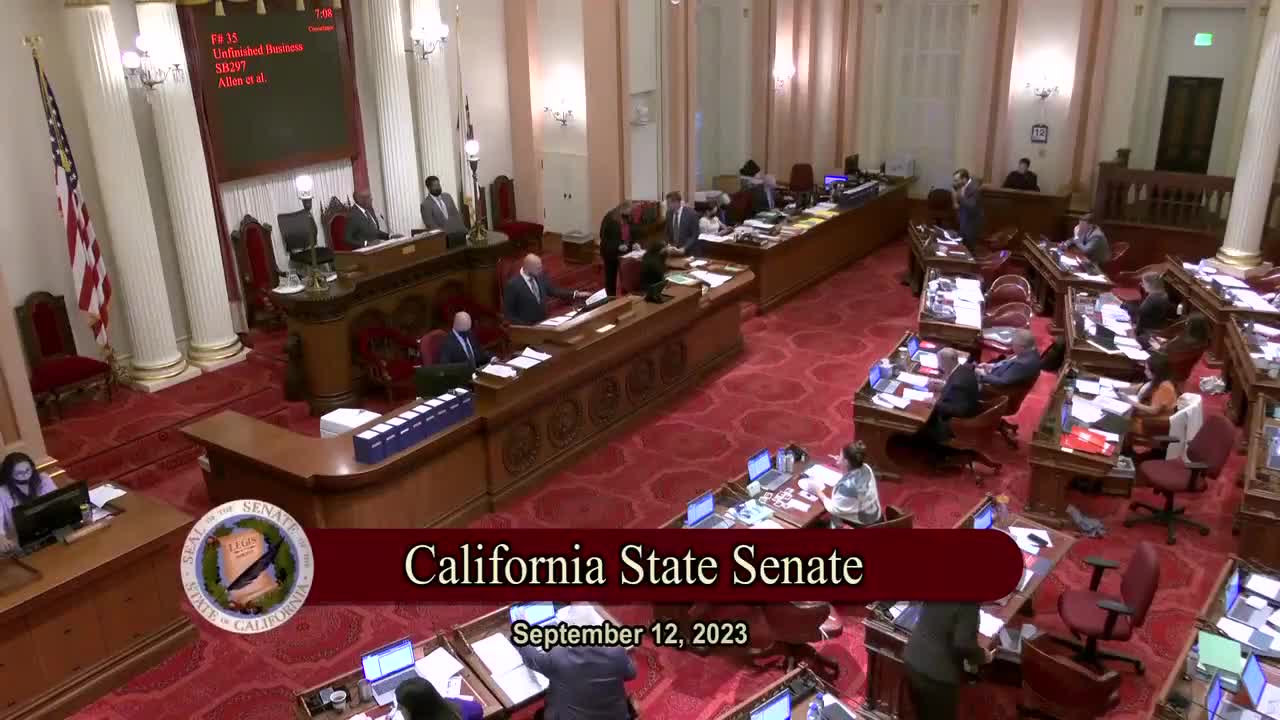 2MIN
Senate Floor
 4MIN
Assembly Floor
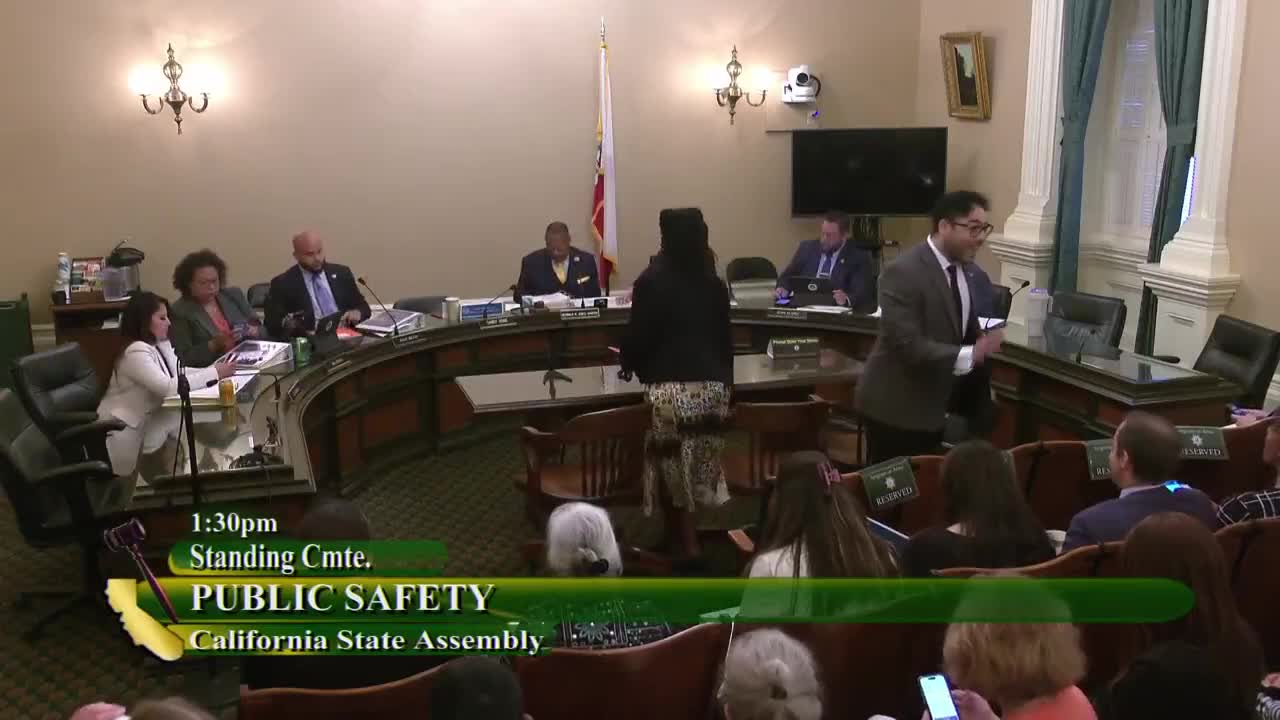 1MIN
Assembly Standing Committee on Public Safety
 26MIN
Assembly Standing Committee on Education
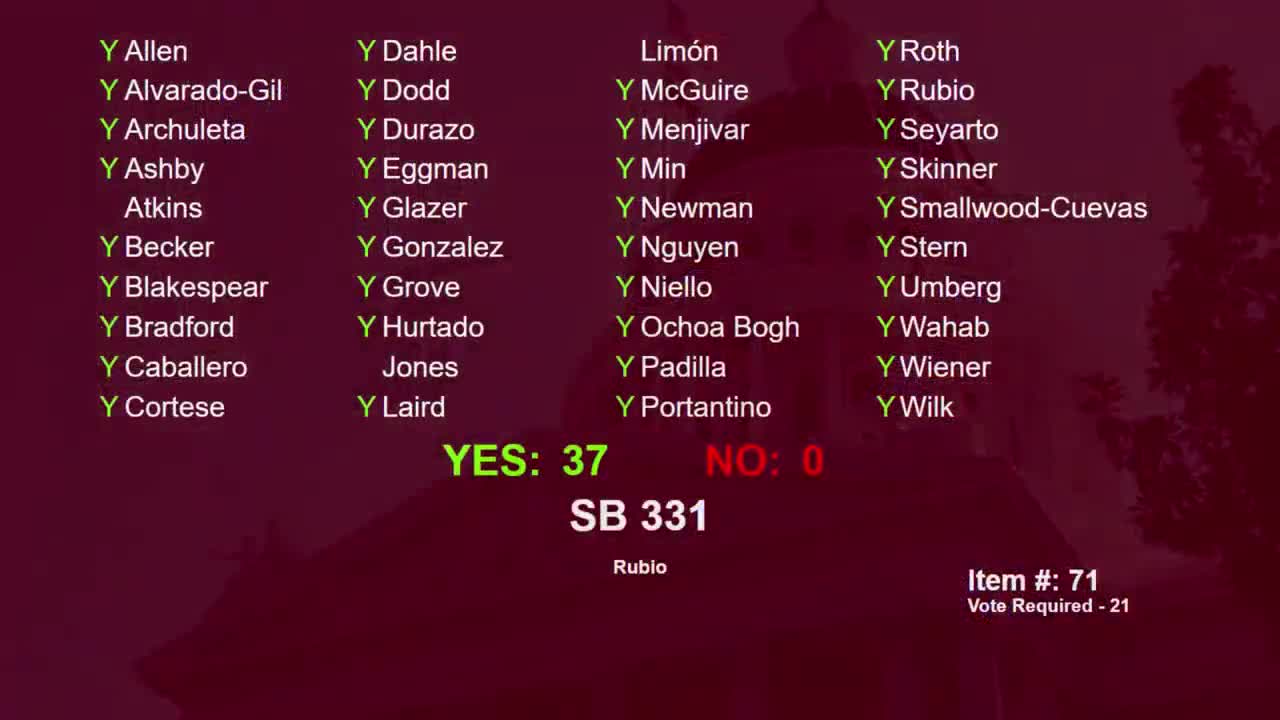 3MIN
Senate Floor
 24MIN
Senate Standing Committee on Public Safety
 6MIN
Senate Standing Committee on Education
6MIN
Senate Budget and Fiscal Review Subcommittee No. 1 on Education
Bill Author

Bill Co-Author(s):