SB 598: Health care coverage: prior authorization.
- Session Year: 2023-2024
- House: Senate
- Latest Version Date: 2023-08-14
Current Status:
Failed
(2023-09-01: September 1 hearing: Held in committee and under submission.)
Introduced
In Committee
First Chamber
In Committee
Second Chamber
Enacted
Existing law, the Knox-Keene Health Care Service Plan Act of 1975, provides for the licensure and regulation of health care service plans by the Department of Managed Health Care, and makes a willful violation of the act a crime. Existing law provides for the regulation of health insurers by the Department of Insurance. Existing law generally authorizes a health care service plan or health insurer to use prior authorization and other utilization review or utilization management functions, under which a licensed physician or a licensed health care professional who is competent to evaluate specific clinical issues may approve, modify, delay, or deny requests for health care services based on medical necessity. Existing law requires a health care service plan or health insurer, including those plans or insurers that delegate utilization review or utilization management functions to medical groups, independent practice associations, or to other contracting providers, to comply with specified requirements and limitations on their utilization review or utilization management functions. Existing law requires the criteria or guidelines used to determine whether or not to authorize, modify, or deny health care services to be developed with involvement from actively practicing health care providers.
On or after January 1, 2025, 2026, this bill would prohibit a health care service plan or health insurer from requiring a contracted health professional to complete or obtain a prior authorization for any covered health care services if the plan or insurer approved or would have approved not less than 90% of the prior authorization requests they submitted in the most recent completed one-year contracted period. The bill would set standards for this exemption and its denial, rescission, and appeal. The bill would authorize a plan or insurer to evaluate the continuation of an exemption not more than once every 12 months, and would authorize a plan or insurer to rescind an exemption only at the end of the 12-month period and only if specified criteria are met. The bill would require a plan or insurer to provide an electronic prior authorization process. The bill would also require a plan or insurer to have a process for annually monitoring prior authorization approval, modification, appeal, and denial rates to identify services, items, and supplies that are regularly approved, and to discontinue prior authorization on those services, items, and supplies that are approved 95% of the time. Because a willful violation of the bills requirements relative to health care service plans would be a crime, the bill would impose a state-mandated local program.
The California Constitution requires the state to reimburse local agencies and school districts for certain costs mandated by the state. Statutory provisions establish procedures for making that reimbursement.
This bill would provide that no reimbursement is required by this act for a specified reason.
Existing law, the Knox-Keene Health Care Service Plan Act of 1975, provides for the licensure and regulation of health care service plans by the Department of Managed Health Care, and makes a willful violation of the act a crime. Existing law provides for the regulation of health insurers by the Department of Insurance. Existing law generally authorizes a health care service plan or health insurer to use prior authorization and other utilization review or utilization management functions, under which a licensed physician or a licensed health care professional who is competent to evaluate specific clinical issues may approve, modify, delay, or deny requests for health care services based on medical necessity. Existing law requires a health care service plan or health insurer, including those plans or insurers that delegate utilization review or utilization management functions to medical groups, independent practice associations, or to other contracting providers, to comply with specified requirements and limitations on their utilization review or utilization management functions. Existing law requires the criteria or guidelines used to determine whether or not to authorize, modify, or deny health care services to be developed with involvement from actively practicing health care providers.
On or after January 1, 2025, this bill would prohibit a health care service plan or health insurer from requiring a contracted health professional to complete or obtain a prior authorization for any covered health care services if the plan or insurer approved or would have approved not less than 90% of the prior authorization requests they submitted in the most recent one-year contracted period. The bill would set standards for this exemption and its denial, rescission, and appeal. The bill would authorize a plan or insurer to evaluate the continuation of an exemption not more than once every 12 months, and would authorize a plan or insurer to rescind an exemption only at the end of the 12-month period and only if specified criteria are met. The bill would require a plan or insurer to provide an electronic prior authorization process. The bill would also require a plan or insurer to have a process for annually monitoring prior authorization approval, modification, appeal, and denial rates to identify services, items, and supplies that are regularly approved, and to discontinue prior authorization on those services, items, and supplies that are approved 95% of the time. Because a willful violation of the bills requirements relative to health care service plans would be a crime, the bill would impose a state-mandated local program.
The California Constitution requires the state to reimburse local agencies and school districts for certain costs mandated by the state. Statutory provisions establish procedures for making that reimbursement.
This bill would provide that no reimbursement is required by this act for a specified reason.
Existing law, the Knox-Keene Health Care Service Plan Act of 1975, provides for the licensure and regulation of health care service plans by the Department of Managed Health Care, and makes a willful violation of the act a crime. Existing law provides for the regulation of health insurers by the Department of Insurance. Existing law generally authorizes a health care service plan or health insurer to use prior authorization and other utilization review or utilization management functions, under which a licensed physician or a licensed health care professional who is competent to evaluate specific clinical issues may approve, modify, delay, or deny requests for health care services based on medical necessity. Existing law requires a health care service plan or health insurer, including those plans or insurers that delegate utilization review or utilization management functions to medical groups, independent practice associations, or to other contracting providers, to comply with specified requirements and limitations on their utilization review or utilization management functions. Existing law requires the criteria or guidelines used to determine whether or not to authorize, modify, or deny health care services to be developed with involvement from actively practicing health care providers.
On or after January 1, 2025, this bill would prohibit a health care service plan or health insurer from requiring a contracted health professional to complete or obtain a prior authorization for any covered health care services if the plan or insurer approved or would have approved not less than 90% of the prior authorization requests they submitted in the most recent one-year contracted period. The bill would set standards for this exemption and its denial, rescission, and appeal. The bill would authorize a plan or insurer to evaluate the continuation of an exemption not more than once every 12 months, and would authorize a plan or insurer to rescind an exemption only at the end of the 12-month period and only if specified criteria are met. Because a willful violation of the bills requirements relative to health care service plans would be a crime, the bill would impose a state-mandated local program.
The California Constitution requires the state to reimburse local agencies and school districts for certain costs mandated by the state. Statutory provisions establish procedures for making that reimbursement.
This bill would provide that no reimbursement is required by this act for a specified reason.
Existing law, the Knox-Keene Health Care Service Plan Act of 1975, provides for the licensure and regulation of health care service plans by the Department of Managed Health Care, and makes a willful violation of the act a crime. Existing law provides for the regulation of health insurers by the Department of Insurance. Existing law generally authorizes a health care service plan or health insurer to use prior authorization and other utilization review or utilization management functions, under which a licensed physician or a licensed health care professional who is competent to evaluate specific clinical issues may approve, modify, delay, or deny requests for health care services based on medical necessity. Existing law requires a health care service plan or health insurer, including those plans or insurers that delegate utilization review or utilization management functions to medical groups, independent practice associations, or to other contracting providers, to comply with specified requirements and limitations on their utilization review or utilization management functions. Existing law requires the criteria or guidelines used to determine whether or not to authorize, modify, or deny health care services to be developed with involvement from actively practicing health care providers.
On or after January 1, 2025, this bill would prohibit a health care service plan or health insurer from requiring a contracted health professional to complete or obtain a prior authorization for any health care services if the plan or insurer approved or would have approved not less than 90% of the prior authorization requests they submitted in the most recent one-year contracted period. The bill would set standards for this exemption and its denial, rescission, and appeal. The bill would authorize a plan or insurer to evaluate the continuation of an exemption not more than once every 12 months, and would authorize a plan or insurer to rescind an exemption only at the end of the 12-month period and only if specified criteria are met. Because a willful violation of the bills requirements relative to health care service plans would be a crime, the bill would impose a state-mandated local program.
The California Constitution requires the state to reimburse local agencies and school districts for certain costs mandated by the state. Statutory provisions establish procedures for making that reimbursement.
This bill would provide that no reimbursement is required by this act for a specified reason.
For purposes of this article:
(a)Health professional means a physician and surgeon or other professional who is licensed in California to deliver or furnish health care services.
(b)(1)Health care service means a health care procedure, treatment, or service that is either of the following:
(A)Provided at a health facility licensed in California.
(B)Provided or ordered by a physician and surgeon or within the scope of practice for which a health care professional is licensed in California.
(2)Health care service also includes the provision of pharmaceutical products or services services, or durable medical equipment.
(3)Health care service includes brand name prescription drugs until January 1, 2028. 2029.
(4)Health care service does not include any of the following:
(A)Tier four prescription drugs, as defined in Section 1342.73, under the applicable enrollees coverage.
(B)Experimental, investigational, or unproven drugs or products under the applicable enrollees coverage.
(C)Prescription drugs not approved by the federal Food and Drug Administration.
(c)(1)Prior authorization means the process by which utilization review determines the medical necessity or medical appropriateness of otherwise covered health care services before or concurrent with the rendering of those health care services. Prior
(2)Prior authorization also includes a health care service plan requirement that an enrollee or health professional notify the health care service plan before providing a health care service, including preauthorization, precertification, and prior approval.
(3)Prior authorization does not include utilization review used and submitted by health facilities, such as hospitals, skilled nursing facilities, long-term care facilities, and acute rehabilitation facilities, to track the ongoing appropriateness of care and confirm payment to the facilities from health care service plans.
1366.71.(a)(1)On or after January 1, 2025, 2026, a health care service plan shall not require a contracted health professional to complete or obtain a prior authorization for any covered health care services if, in the most recent completed one-year contracted period, the health care service plan approved or would have approved not less than 90 percent of the prior authorization requests submitted by the health professional for the class of health care services or treatments subject to prior authorization for enrollees of the health care service plan.
(2)A health professional shall have a total contracting history of at least 36 months with the health care service plan to be considered eligible for an exemption pursuant to paragraph (1). The 36 months do not need to be continuous.
(3)For purposes of this section, a modification by a plan of a prior authorization request that is ultimately approved shall count as an approval.
(4)A health professionals exemption pursuant to paragraph (1) shall apply to all health care services, items, and supplies, including drugs, that are covered by the plan contract and are within the contracted health professionals medical licensure, board certification, specialty, or scope of practice.
(5)This article applies to any and all product types offered by the health care service plan that are regulated by the department, but includes Medi-Cal managed care plans only to the extent permissible under federal law.
(6)(A)A health care service plan shall provide an electronic prior authorization process.
(B)A health professional shall agree to use the plans electronic prior authorization process to be considered eligible for an exemption pursuant to paragraph (1). A health care service plan may waive this requirement based on the health professionals access to requisite technologies and infrastructure, including broadband internet.
(b)A health care service plan shall evaluate if a contracted health professional without an exemption qualifies for an exemption from prior authorization requirements under subdivision (a) once every 12 months or upon the request of the health professional, but no more often than once every 12 months. A health care service plan may evaluate if a contracted health care professional continues to qualify for an exemption from prior authorization requirements under subdivision (a) not more than once every 12 months. This section does not require a health care service plan to evaluate an existing exemption or prevent the establishment of a longer exemption period. A contracted health professional is not required to request an exemption to qualify for the exemption.
(c)A health care service plan shall provide a health professional who receives an exemption with a notice that includes a statement that the health professional qualifies for an exemption from preauthorization requirements and a statement of the duration of the exemption.
1366.72.(a)Upon a health professionals request, the health care service plan shall provide a health professional who is denied a prior authorization exemption with the facts and information that supports its denial, including statistics and data for the relevant prior authorization request evaluation period and detailed information sufficient to demonstrate that the health professional does not meet the criteria for an exemption pursuant to Section 1366.71.
(b)A health professionals exemption from prior authorization shall remain in effect until the 30th calendar day after the date the health care service plan notifies the health professional of the health care service plans determination to rescind the exemption, or, if the health professional appeals the rescission determination, the fifth business day after the date the independent review affirms the health care service plans determination to rescind the exemption.
1366.73.(a)A health care service plan shall only rescind a prior authorization exemption at the end of the 12-month period and if the health care service plan meets all of the following requirements:
(1)For exemptions pursuant to paragraph (1) of subdivision (a) of Section 1366.71, makes a determination that the health professional would not have met the 90-percent approval criteria based on a retrospective review of a sample of a minimum of 15, but no more than 25, claims for covered services for which the exemption applies for the previous 12 months.
(2)Complies with other applicable requirements specified in this section, including both of the following:
(A)Notifies the health professional at least 30 calendar days before the proposed rescission is to take effect.
(B)Provides the notice required under subparagraph (A) with both of the following:
(i)The information and data relied on to make the determination.
(ii)A plain-language explanation of how the health professional may appeal and seek an independent review of the determination pursuant to this section.
(b)A determination to rescind or deny a prior authorization exemption shall be made by a health professional licensed in California California, of the same or similar specialty as the health professional being considered for an exemption and exemption, and who has experience in providing the type of services for which the exemption applies.
(c)If a health care service plan does not finalize a rescission determination as specified in subdivision (a), then the individual health professional is considered to have met the criteria under Section 1366.71 to continue to qualify for the exemption.
(d)(1)A health professional may appeal the decision to deny or rescind a prior authorization exemption and has a right to have the appeal conducted and completed by a health professional licensed in California of the same or similar specialty as the health professional being considered for an exemption who was not directly involved in making the initial denial or rescission of the exemption.
(2)This appeal review may be performed by a health care service plans contracted specialist reviewer, provided the reviewer is a licensed health professional of the same or similar specialty as the health professional seeking the appeal.
(2)(3)A health professional may request that the reviewing health professional consider a random sample of claims submitted to the health care service plan by the health professional during the relevant evaluation period as part of their review.
(3)(4)Within 30 calendar days of receipt of the appeal, the health care service plan shall reconsider the denial or rescission of the exemption and provide a written response to the health professional with the appeal determination and the basis for the determination, including pertinent facts and information relied upon in reaching the determination.
1366.74.A health care service plan shall be bound by the determination made pursuant to Section 1366.73. A health care service plan shall not retroactively deny or modify a covered health care service on the basis of a rescission of an exemption, even if the health care service plans determination to rescind the prior authorization exemption is affirmed pursuant to Section 1366.73.
1366.75.Following a final determination or review affirming the rescission or denial of an exemption, a health professional is eligible for consideration of an exemption after a 12-month period.
1366.76.A health care service plan shall not deny or reduce payment for a covered health care service exempted from a prior authorization requirement pursuant to paragraph (1) of subdivision (a) of Section 1366.71, including a covered health care service performed or supervised by another health care professional when the performing or supervising health care professional or other health care professional who ordered the service received a prior authorization exemption, unless the performing or supervising health care professional or other health care professional did either of the following:
(a)Knowingly and materially misrepresented the health care service in a request for payment submitted to a health care service plan with the specific intent to deceive and obtain an unlawful payment from the health care service plan.
(b)Failed to substantially perform the health care service.
1366.77.This article does not prevent a health care service plan from taking action, including rescinding a prior authorization exemption granted under subdivision (a) of Section 1366.71 at any time, against a contracted health professional that has been found, through an investigation by the plan, to have committed fraud or to have a pattern of waste or abuse in violation of the plans contract.
1366.78.A grievance or appeal submitted by or on behalf of an enrollee regarding a delay, denial, or modification of health care services shall be reviewed by a physician and surgeon of the same or similar specialty as the physician and surgeon requesting authorization for those health care services.
1366.79.(a)A health care service plans policies and procedures pursuant to Section 1367.01 shall include a process for annually monitoring prior authorization approval, modification, appeal, and denial rates to identify services, items, and supplies, including drugs, that are regularly approved.
(b)A health care service plan shall discontinue requiring prior authorization on services, items, and supplies, including drugs, that are approved 95 percent of the time.
1366.80.(a)A plan shall not delegate the requirements in this article to a delegated provider unless the parties have negotiated and agreed upon a new provision to the parties contract pursuant to Section 1375.7. That change to the parties contract shall be considered a material change.1366.80.(a)This article does not apply to prior authorization that is delegated by a health care service plan to a risk-bearing organization, as defined in subdivision (g) of Section 1375.4. This article does not require a health care service plan to perform prior authorization that has otherwise been delegated to a risk-bearing organization.
(b)This article does not apply to fully integrated delivery systems, as defined in subdivision (h) of Section 127500.2.
(c)This article does not apply to vision-only and dental-only health care service plans and coverage.
(d)This article applies to a pharmacy benefit manager under contract with a health care service plan to administer prior authorization for prescription drugs.
1366.81.(a)The department shall conduct an analysis of the inclusion of brand name prescription drugs as a health care service for purposes of this article, including an analysis of the costs and savings, prospects for continuing or expanding the gold card program for brand name prescription drugs, feedback received from the provider community, and an assessment of the administrative costs to the plan of administering or implementing the gold card program for brand name prescription drugs.
(b)The department shall submit a report on its findings to the Legislature on or before July 1, 2027. 2029. The report shall be submitted in compliance with Section 9795 of the Government Code.
(c)This section shall remain in effect only until January 1, 2029, 2030, and as of that date is repealed.
SEC. 2.Article 1.3 (commencing with Section 10127.40) is added to Chapter 1 of Part 2 of Division 2 of the Insurance Code, to read:1.3.Prior Authorization Exemptions10127.40.For purposes of this article:
(a)Health professional means a physician and surgeon or other professional who is licensed in California to deliver or furnish health care services.
(b)(1)Health care service means a health care procedure, treatment, or service that is either of the following:
(A)Provided at a health facility licensed in California.
(B)Provided or ordered by a physician and surgeon or within the scope of practice for which a health care professional is licensed in California.
(2)Health care service also includes the provision of pharmaceutical products or services services, or durable medical equipment.
(3)Health care service includes brand name prescription drugs until January 1, 2028. 2029.
(4)Health care service does not include any of the following:
(A)Tier four prescription drugs, as defined in Section 10123.1932, under the applicable insureds coverage.
(B)Experimental, investigational, or unproven drugs or products under the applicable insureds coverage.
(C)Prescription drugs not approved by the federal Food and Drug Administration.
(c)(1)Prior authorization means the process by which utilization review determines the medical necessity or medical appropriateness of otherwise covered health care services before or concurrent with the rendering of those health care services. Prior
(2)Prior authorization also includes a health insurer requirement that an insured or health professional notify the health insurer before providing a health care service, including preauthorization, precertification, and prior approval.
(3)Prior authorization does not include utilization review used and submitted by health facilities, such as hospitals, skilled nursing facilities, long-term care facilities, and acute rehabilitation facilities, used to track the ongoing appropriateness of care and confirm payment to the facilities from health insurers.
10127.41.(a)(1)On or after January 1, 2025, 2026, a health insurer shall not require a contracted health professional to complete or obtain a prior authorization for any covered health care services if, in the most recent completed one-year contracted period, the health insurer approved or would have approved not less than 90 percent of the prior authorization requests submitted by the health professional for the class of health care services or treatments subject to prior authorization for insureds of the health insurer.
(2)A health professional shall have a total contracting history of at least 36 months with the health insurer to be considered eligible for an exemption pursuant to paragraph (1). The 36 months do not need to be continuous.
(3)For purposes of this section, a modification by an insurer of a prior authorization request that is ultimately approved shall count as an approval.
(4)A health professionals exemption pursuant to paragraph (1) shall apply to all health care services, items, and supplies, including drugs, that are covered by the insurance policy and are within the contracted health professionals medical licensure, board certification, specialty, or scope of practice.
(5)This article applies to any and all product types offered by the health insurer that are regulated by the department.
(6)(A)A health insurer shall provide an electronic prior authorization process.
(B)A health professional shall agree to use the insurers electronic prior authorization process to be considered eligible for an exemption pursuant to paragraph (1). A health insurer may waive this requirement based on the health professionals access to requisite technologies and infrastructure, including broadband internet.
(b)A health insurer shall evaluate if a contracted health professional without an exemption qualifies for an exemption from prior authorization requirements under subdivision (a) once every 12 months or upon the request of the health professional, but no more often than once every 12 months. A health insurer may evaluate if a contracted health care professional continues to qualify for an exemption from prior authorization requirements under subdivision (a) not more than once every 12 months. This section does not require a health insurer to evaluate an existing exemption or prevent the establishment of a longer exemption period. A contracted health professional is not required to request an exemption to qualify for the exemption.
(c)A health insurer shall provide a health professional who receives an exemption with a notice that includes a statement that the health professional qualifies for an exemption from preauthorization requirements and a statement of the duration of the exemption.
10127.42.(a)Upon a health professionals request, the health insurer shall provide a health professional who is denied a prior authorization exemption with the facts and information that supports its denial, including statistics and data for the relevant prior authorization request evaluation period and detailed information sufficient to demonstrate that the health professional does not meet the criteria for an exemption pursuant to Section 10127.41.
(b)A health professionals exemption from prior authorization shall remain in effect until the 30th calendar day after the date the health insurer notifies the health professional of the health insurers determination to rescind the exemption, or, if the health professional appeals the rescission determination, the fifth business day after the date the independent review affirms the health insurers determination to rescind the exemption.
10127.43.(a)A health insurer shall only rescind a prior authorization exemption at the end of the 12-month period and if the health insurer meets all of the following requirements:
(1)For exemptions pursuant to paragraph (1) of subdivision (a) of Section 10127.41, makes a determination that the health professional would not have met the 90-percent approval criteria based on a retrospective review of a sample of a minimum of 15, but no more than 25, claims for covered services for which the exemption applies for the previous 12 months.
(2)Complies with other applicable requirements specified in this section, including both of the following:
(A)Notifies the health professional at least 30 calendar days before the proposed rescission is to take effect.
(B)Provides the notice required under subparagraph (A) with both of the following:
(i)The information and data relied on to make the determination.
(ii)A plain-language explanation of how the health professional may appeal and seek an independent review of the determination pursuant to this section.
(b)A determination to rescind or deny a prior authorization exemption shall be made by a health professional licensed in California of the same or similar specialty as the health professional being considered for an exemption and who has experience in providing the type of services for which the exemption applies.
(c)If a health insurer does not finalize a rescission determination as specified in subdivision (a), then the individual health professional is considered to have met the criteria under Section 10127.41 to continue to qualify for the exemption.
(d)(1)A health professional may appeal the decision to deny or rescind a prior authorization exemption and has a right to have the appeal conducted and completed by a health professional licensed in California California, of the same or similar specialty as the health professional being considered for an exemption exemption, and who was not directly involved in making the initial denial or rescission of the exemption.
(2)This appeal review may be performed by a health insurers contracted specialist reviewer, provided the reviewer is a licensed health professional of the same or similar specialty as the health professional seeking the appeal.
(2)(3)A health professional may request that the reviewing health professional consider a random sample of claims submitted to the health insurer by the health professional during the relevant evaluation period as part of their review.
(3)(4)Within 30 calendar days of receipt of the appeal, the health insurer shall reconsider the denial or rescission of the exemption and provide a written response to the health professional with the appeal determination and the basis for the determination, including pertinent facts and information relied upon in reaching the determination.
10127.44.A health insurer shall be bound by the determination made pursuant to Section 10127.43. A health insurer shall not retroactively deny or modify a covered health care service on the basis of a rescission of an exemption, even if the health insurers determination to rescind the prior authorization exemption is affirmed pursuant to Section 10127.43.
10127.45.Following a final determination or review affirming the rescission or denial of an exemption, a health professional is eligible for consideration of an exemption after a 12-month period.
10127.46.A health insurer shall not deny or reduce payment for a covered health care service exempted from a prior authorization requirement pursuant to paragraph (1) of subdivision (a) of Section 10127.41, including a covered health care service performed or supervised by another health care professional when the performing or supervising health care professional or other health care professional who ordered the service received a prior authorization exemption, unless the performing or supervising health care professional or other health care professional did either of the following:
(a)Knowingly and materially misrepresented the health care service in a request for payment submitted to a health insurer with the specific intent to deceive and obtain an unlawful payment from the health insurer.
(b)Failed to substantially perform the health care service.
10127.47.This article does not prevent a health insurer from taking action, including rescinding a prior authorization exemption granted under subdivision (a) of Section 10127.41 at any time, against a contracted health professional that has been found, through an investigation by the insurer, to have committed fraud or to have a pattern of waste or abuse in violation of the insurers contract.
10127.48.A grievance or appeal submitted by or on behalf of an insured regarding a delay, denial, or modification of health care services shall be reviewed by a physician and surgeon of the same or similar specialty as the physician and surgeon requesting authorization for those health care services.
10127.49.(a)A health insurers policies and procedures pursuant to Section 10123.135 shall include a process for annually monitoring prior authorization approval, modification, appeal, and denial rates to identify services, items, and supplies, including drugs, that are regularly approved.
(b)A health insurer shall discontinue requiring prior authorization on services, items, and supplies, including drugs, that are approved 95 percent of the time.
10127.50.(a)An insurer shall not delegate the requirements in this article to a delegated provider unless the parties have negotiated and agreed upon a new provision to the parties contract pursuant to Section 10133.65. That change to the parties contract shall be considered a material change.
(b)This article does not apply to fully integrated delivery systems, as defined in subdivision (h) of Section 127500.2 of the Health and Safety Code.
(c)This article does not apply to vision-only and dental-only health insurance policies and coverage.
(d)This article applies to a pharmacy benefit manager under contract with a health insurer to administer prior authorization for prescription drugs.
10127.51.(a)The department shall conduct an analysis of the inclusion of brand name prescription drugs as a health care service for purposes of this article, including an analysis of the costs and savings, prospects for continuing or expanding the gold card program for brand name prescription drugs, feedback received from the provider community, and an assessment of the administrative costs to the insurer of administering or implementing the gold card program for brand name prescription drugs.
(b)The department shall submit a report on its findings to the Legislature on or before July 1, 2027. 2029. The report shall be submitted in compliance with Section 9795 of the Government Code.
(c)This section shall remain in effect only until January 1, 2029, 2030, and as of that date is repealed.
SEC. 3.No reimbursement is required by this act pursuant to Section 6 of Article XIIIB of the California Constitution because the only costs that may be incurred by a local agency or school district will be incurred because this act creates a new crime or infraction, eliminates a crime or infraction, or changes the penalty for a crime or infraction, within the meaning of Section 17556 of the Government Code, or changes the definition of a crime within the meaning of Section 6 of Article XIIIB of the California Constitution.
For purposes of this article:
(a)Health professional means a physician and surgeon or other professional who is licensed in California to deliver or furnish health care services.
(b)(1)Health care service means a health care procedure, treatment, or service that is either of the following:
(A)Provided at a health facility licensed in California.
(B)Provided or ordered by a physician and surgeon or within the scope of practice for which a health care professional is licensed in California.
(2)Health care service also includes the provision of pharmaceutical products or services or durable medical equipment.
(3)Health care service includes brand name prescription drugs until January 1, 2028.
(4)Health care service does not include any of the following:
(A)Tier four prescription drugs, as defined in Section 1342.73, under the applicable enrollees coverage.
(B)Experimental, investigational, or unproven drugs or products under the applicable enrollees coverage.
(C)Prescription drugs not approved by the federal Food and Drug Administration.
(c)Prior authorization means the process by which utilization review determines the medical necessity or medical appropriateness of otherwise covered health care services before or concurrent with the rendering of those health care services. Prior authorization also includes a health care service plan requirement that an enrollee or health professional notify the health care service plan before providing a health care service, including preauthorization, precertification, and prior approval.
1366.71.(a)(1)On or after January 1, 2025, a health care service plan shall not require a contracted health professional to complete or obtain a prior authorization for any covered health care services if, in the most recent one-year contracted period, the health care service plan approved or would have approved not less than 90 percent of the prior authorization requests submitted by the health professional for the class of health care services or treatments subject to prior authorization for enrollees of the health care service plan.
(2)A health professional shall have a total contracting history of at least 36 months with the health care service plan to be considered eligible for an exemption pursuant to paragraph (1). The 36 months do not need to be continuous.
(3)For purposes of this section, a modification by a plan of a prior authorization request that is ultimately approved shall count as an approval.
(4)A health professionals exemption pursuant to paragraph (1) shall apply to services, items, and supplies, including drugs, that are covered by the plan contract and are within the contracted health professionals medical licensure, board certification, specialty, or scope of practice.
(5)This article applies to any and all product types offered by the health care service plan that are regulated by the department, but includes Medi-Cal managed care plans only to the extent permissible under federal law.
(6)(A)A health care service plan shall provide an electronic prior authorization process.
(B)A health professional shall agree to use the plans electronic prior authorization process to be considered eligible for an exemption pursuant to paragraph (1). A health care service plan may waive this requirement based on the health professionals access to requisite technologies and infrastructure, including broadband internet.
(b)A health care service plan shall evaluate if a contracted health professional without an exemption qualifies for an exemption from prior authorization requirements under subdivision (a) once every 12 months or upon the request of the health professional, but no more often than once every 12 months. A health care service plan may evaluate if a contracted health care professional continues to qualify for an exemption from prior authorization requirements under subdivision (a) not more than once every 12 months. This section does not require a health care service plan to evaluate an existing exemption or prevent the establishment of a longer exemption period. A contracted health professional is not required to request an exemption to qualify for the exemption.
(c)A health care service plan shall provide a health professional who receives an exemption with a notice that includes a statement that the health professional qualifies for an exemption from preauthorization requirements and a statement of the duration of the exemption.
1366.72.(a)Upon a health professionals request, the health care service plan shall provide a health professional who is denied a prior authorization exemption with the facts and information that supports its denial, including statistics and data for the relevant prior authorization request evaluation period and detailed information sufficient to demonstrate that the health professional does not meet the criteria for an exemption pursuant to Section 1366.71.
(b)A health professionals exemption from prior authorization shall remain in effect until the 30th calendar day after the date the health care service plan notifies the health professional of the health care service plans determination to rescind the exemption, or, if the health professional appeals the rescission determination, the fifth business day after the date the independent review affirms the health care service plans determination to rescind the exemption.
1366.73.(a)A health care service plan shall only rescind a prior authorization exemption at the end of the 12-month period and if the health care service plan meets all of the following requirements:
(1)For exemptions pursuant to paragraph (1) of subdivision (a) of Section 1366.71, makes a determination that the health professional would not have met the 90-percent approval criteria based on a retrospective review of a random sample of a minimum of 15, but no more than 25, claims for covered services for which the exemption applies for the previous 12 months.
(2)Complies with other applicable requirements specified in this section, including both of the following:
(A)Notifies the health professional at least 30 calendar days before the proposed rescission is to take effect.
(B)Provides the notice required under subparagraph (A) with both of the following:
(i)The information and data relied on to make the determination.
(ii)A plain-language explanation of how the health professional may appeal and seek an independent review of the determination pursuant to this section.
(b)A determination to rescind or deny a prior authorization exemption shall be made by a health professional licensed in California of the same or similar specialty as the health professional being considered for an exemption and who has experience in providing the type of services for which the exemption applies.
(c)If a health care service plan does not finalize a rescission determination as specified in subdivision (a), then the individual health professional is considered to have met the criteria under Section 1366.71 to continue to qualify for the exemption.
(d)(1)A health professional may appeal the decision to deny or rescind a prior authorization exemption and has a right to have the appeal conducted and completed by a health professional licensed in California of the same or similar specialty as the health professional being considered for an exemption who was not directly involved in making the initial denial or rescission of the exemption.
(2)A health professional may request that the reviewing health professional consider another a random sample of claims submitted to the health care service plan by the health professional during the relevant evaluation period as part of their review.
(3)Within 30 calendar days of receipt of the appeal, the health care service plan shall reconsider the denial or rescission of the exemption and provide a written response to the health professional with the appeal determination and the basis for the determination, including pertinent facts and information relied upon in reaching the determination.
1366.74.A health care service plan shall be bound by the determination made pursuant to Section 1366.73. A health care service plan shall not retroactively deny or modify a covered health care service on the basis of a rescission of an exemption, even if the health care service plans determination to rescind the prior authorization exemption is affirmed pursuant to Section 1366.73.
1366.75.Following a final determination or review affirming the rescission or denial of an exemption, a health professional is eligible for consideration of an exemption after a 12-month period.
1366.76.A health care service plan shall not deny or reduce payment for a covered health care service exempted from a prior authorization requirement pursuant to paragraph (1) of subdivision (a) of Section 1366.71, including a covered health care service performed or supervised by another health care professional when the performing or supervising health care professional or other health care professional who ordered the service received a prior authorization exemption, unless the performing or supervising health care professional or other health care professional did either of the following:
(a)Knowingly and materially misrepresented the health care service in a request for payment submitted to a health care service plan with the specific intent to deceive and obtain an unlawful payment from the health care service plan.
(b)Failed to substantially perform the health care service.
1366.77.This article does not prevent a health care service plan from taking action, including rescinding a prior authorization exemption granted under subdivision (a) of Section 1366.71 at any time, against a contracted health professional that has been found, through an investigation by the plan, to have committed fraud or to have a pattern of abuse in violation of the plans contract.
1366.78.A grievance or appeal submitted by or on behalf of an enrollee regarding a delay, denial, or modification of health care services shall be reviewed by a physician and surgeon of the same or similar specialty as the physician and surgeon requesting authorization for those health care services.
1366.79.(a)A health care service plans policies and procedures pursuant to Section 1367.01 shall include a process for annually monitoring prior authorization approval, modification, appeal, and denial rates to identify services, items, and supplies, including drugs, that are regularly approved.
(b)A health care service plan shall discontinue requiring prior authorization on services, items, and supplies, including drugs, that are approved 95 percent of the time.
1366.79.1366.80.(a)A plan shall not delegate the requirements in this article to a delegated provider unless the parties have negotiated and agreed upon a new provision to the parties contract pursuant to Section 1375.7. That change to the parties contract shall be considered a material change.
(b)This article does not apply to fully integrated delivery systems, as defined in subdivision (h) of Section 127500.2.
(c)This article does not apply to vision-only and dental-only health care service plans and coverage.
(d)This article applies to a pharmacy benefit manager under contract with a health care service plan to administer prior authorization for prescription drugs.
1366.80.1366.81.(a)The department shall conduct an analysis of the inclusion of brand name prescription drugs as a health care service for purposes of this article, including an analysis of the costs and savings, prospects for continuing or expanding the gold card program for brand name prescription drugs, feedback received from the provider community, and an assessment of the administrative costs to the plan of administering or implementing the gold card program for brand name prescription drugs.
(b)The department shall submit a report on its findings to the Legislature on or before July 1, 2027. The report shall be submitted in compliance with Section 9795 of the Government Code.
(c)This section shall remain in effect only until January 1, 2029, and as of that date is repealed.
SEC. 2.Article 1.3 (commencing with Section 10127.40) is added to Chapter 1 of Part 2 of Division 2 of the Insurance Code, to read:1.3.Prior Authorization Exemptions10127.40.For purposes of this article:
(a)Health professional means a physician and surgeon or other professional who is licensed in California to deliver or furnish health care services.
(b)(1)Health care service means a health care procedure, treatment, or service that is either of the following:
(A)Provided at a health facility licensed in California.
(B)Provided or ordered by a physician and surgeon or within the scope of practice for which a health care professional is licensed in California.
(2)Health care service also includes the provision of pharmaceutical products or services or durable medical equipment.
(3)Health care service includes brand name prescription drugs until January 1, 2028.
(4)Health care service does not include any of the following:
(A)Tier four prescription drugs, as defined in Section 10123.1932, under the applicable insureds coverage.
(B)Experimental, investigational, or unproven drugs or products under the applicable insureds coverage.
(C)Prescription drugs not approved by the federal Food and Drug Administration.
(c)Prior authorization means the process by which utilization review determines the medical necessity or medical appropriateness of otherwise covered health care services before or concurrent with the rendering of those health care services. Prior authorization also includes a health insurer requirement that an insured or health professional notify the health insurer before providing a health care service, including preauthorization, precertification, and prior approval.
10127.41.(a)(1)On or after January 1, 2025, a health insurer shall not require a contracted health professional to complete or obtain a prior authorization for any covered health care services if, in the most recent one-year contracted period, the health insurer approved or would have approved not less than 90 percent of the prior authorization requests submitted by the health professional for the class of health care services or treatments subject to prior authorization for insureds of the health insurer.
(2)A health professional shall have a total contracting history of at least 36 months with the health insurer to be considered eligible for an exemption pursuant to paragraph (1). The 36 months do not need to be continuous.
(3)For purposes of this section, a modification by an insurer of a prior authorization request that is ultimately approved shall count as an approval.
(4)A health professionals exemption pursuant to paragraph (1) shall apply to services, items, and supplies, including drugs, that are covered by the insurance policy and are within the contracted health professionals medical licensure, board certification, specialty, or scope of practice.
(5)This article applies to any and all product types offered by the health insurer that are regulated by the department.
(6)(A)A health insurer shall provide an electronic prior authorization process.
(B)A health professional shall agree to use the insurers electronic prior authorization process to be considered eligible for an exemption pursuant to paragraph (1). A health insurer may waive this requirement based on the health professionals access to requisite technologies and infrastructure, including broadband internet.
(b)A health insurer shall evaluate if a contracted health professional without an exemption qualifies for an exemption from prior authorization requirements under subdivision (a) once every 12 months or upon the request of the health professional, but no more often than once every 12 months. A health insurer may evaluate if a contracted health care professional continues to qualify for an exemption from prior authorization requirements under subdivision (a) not more than once every 12 months. This section does not require a health insurer to evaluate an existing exemption or prevent the establishment of a longer exemption period. A contracted health professional is not required to request an exemption to qualify for the exemption.
(c)A health insurer shall provide a health professional who receives an exemption with a notice that includes a statement that the health professional qualifies for an exemption from preauthorization requirements and a statement of the duration of the exemption.
10127.42.(a)Upon a health professionals request, the health insurer shall provide a health professional who is denied a prior authorization exemption with the facts and information that supports its denial, including statistics and data for the relevant prior authorization request evaluation period and detailed information sufficient to demonstrate that the health professional does not meet the criteria for an exemption pursuant to Section 10127.41.
(b)A health professionals exemption from prior authorization shall remain in effect until the 30th calendar day after the date the health insurer notifies the health professional of the health insurers determination to rescind the exemption, or, if the health professional appeals the rescission determination, the fifth business day after the date the independent review affirms the health insurers determination to rescind the exemption.
10127.43.(a)A health insurer shall only rescind a prior authorization exemption at the end of the 12-month period and if the health insurer meets all of the following requirements:
(1)For exemptions pursuant to paragraph (1) of subdivision (a) of Section 10127.41, makes a determination that the health professional would not have met the 90-percent approval criteria based on a retrospective review of a random sample of a minimum of 15, but no more than 25, claims for covered services for which the exemption applies for the previous 12 months.
(2)Complies with other applicable requirements specified in this section, including both of the following:
(A)Notifies the health professional at least 30 calendar days before the proposed rescission is to take effect.
(B)Provides the notice required under subparagraph (A) with both of the following:
(i)The information and data relied on to make the determination.
(ii)A plain-language explanation of how the health professional may appeal and seek an independent review of the determination pursuant to this section.
(b)A determination to rescind or deny a prior authorization exemption shall be made by a health professional licensed in California of the same or similar specialty as the health professional being considered for an exemption and who has experience in providing the type of services for which the exemption applies.
(c)If a health insurer does not finalize a rescission determination as specified in subdivision (a), then the individual health professional is considered to have met the criteria under Section 10127.41 to continue to qualify for the exemption.
(d)(1)A health professional may appeal the decision to deny or rescind a prior authorization exemption and has a right to have the appeal conducted and completed by a health professional licensed in California of the same or similar specialty as the health professional being considered for an exemption who was not directly involved in making the initial denial or rescission of the exemption.
(2)A health professional may request that the reviewing health professional consider another a random sample of claims submitted to the health insurer by the health professional during the relevant evaluation period as part of their review.
(3)Within 30 calendar days of receipt of the appeal, the health insurer shall reconsider the denial or rescission of the exemption and provide a written response to the health professional with the appeal determination and the basis for the determination, including pertinent facts and information relied upon in reaching the determination.
10127.44.A health insurer shall be bound by the determination made pursuant to Section 10127.43. A health insurer shall not retroactively deny or modify a covered health care service on the basis of a rescission of an exemption, even if the health insurers determination to rescind the prior authorization exemption is affirmed pursuant to Section 10127.43.
10127.45.Following a final determination or review affirming the rescission or denial of an exemption, a health professional is eligible for consideration of an exemption after a 12-month period.
10127.46.A health insurer shall not deny or reduce payment for a covered health care service exempted from a prior authorization requirement pursuant to paragraph (1) of subdivision (a) of Section 10127.41, including a covered health care service performed or supervised by another health care professional when the performing or supervising health care professional or other health care professional who ordered the service received a prior authorization exemption, unless the performing or supervising health care professional or other health care professional did either of the following:
(a)Knowingly and materially misrepresented the health care service in a request for payment submitted to a health insurer with the specific intent to deceive and obtain an unlawful payment from the health insurer.
(b)Failed to substantially perform the health care service.
10127.47.This article does not prevent a health insurer from taking action, including rescinding a prior authorization exemption granted under subdivision (a) of Section 10127.41 at any time, against a contracted health professional that has been found, through an investigation by the insurer, to have committed fraud or to have a pattern of abuse in violation of the insurers contract.
10127.48.A grievance or appeal submitted by or on behalf of an insured regarding a delay, denial, or modification of health care services shall be reviewed by a physician and surgeon of the same or similar specialty as the physician and surgeon requesting authorization for those health care services.
10127.49.(a)A health insurers policies and procedures pursuant to Section 10123.135 shall include a process for annually monitoring prior authorization approval, modification, appeal, and denial rates to identify services, items, and supplies, including drugs, that are regularly approved.
(b)A health insurer shall discontinue requiring prior authorization on services, items, and supplies, including drugs, that are approved 95 percent of the time.
10127.49.10127.50.(a)An insurer shall not delegate the requirements in this article to a delegated provider unless the parties have negotiated and agreed upon a new provision to the parties contract pursuant to Section 10133.65. That change to the parties contract shall be considered a material change.
(b)This article does not apply to fully integrated delivery systems, as defined in subdivision (h) of Section 127500.2 of the Health and Safety Code.
(c)This article does not apply to vision-only and dental-only health insurance policies and coverage.
(d)This article applies to a pharmacy benefit manager under contract with a health insurer to administer prior authorization for prescription drugs.
10127.50.10127.51.(a)The department shall conduct an analysis of the inclusion of brand name prescription drugs as a health care service for purposes of this article, including an analysis of the costs and savings, prospects for continuing or expanding the gold card program for brand name prescription drugs, feedback received from the provider community, and an assessment of the administrative costs to the insurer of administering or implementing the gold card program for brand name prescription drugs.
(b)The department shall submit a report on its findings to the Legislature on or before July 1, 2027. The report shall be submitted in compliance with Section 9795 of the Government Code.
(c)This section shall remain in effect only until January 1, 2029, and as of that date is repealed.
SEC. 3.No reimbursement is required by this act pursuant to Section 6 of Article XIIIB of the California Constitution because the only costs that may be incurred by a local agency or school district will be incurred because this act creates a new crime or infraction, eliminates a crime or infraction, or changes the penalty for a crime or infraction, within the meaning of Section 17556 of the Government Code, or changes the definition of a crime within the meaning of Section 6 of Article XIIIB of the California Constitution.
For purposes of this article:
(a)Health professional means a physician and surgeon or other professional who is licensed in California to deliver or furnish health care services.
(b)(1)Health care service means a health care procedure, treatment, or service that is either of the following:
(A)Provided at a health facility licensed in California.
(B)Provided or ordered by a physician and surgeon or within the scope of practice for which a health care professional is licensed in California.
(2)Health care service also includes the provision of pharmaceutical products or services or durable medical equipment.
(3)Health care service includes brand name prescription drugs until January 1, 2028.
(4)Health care service does not include any of the following:
(A)Tier four prescription drugs, as defined in Section 1342.73, under the applicable enrollees coverage.
(B)Experimental, investigational, or unproven drugs or products under the applicable enrollees coverage.
(C)Prescription drugs not approved by the federal Food and Drug Administration.
(c)Prior authorization means the process by which utilization review determines the medical necessity or medical appropriateness of otherwise covered health care services before or concurrent with the rendering of those health care services. Prior authorization also includes a health care service plan requirement that an enrollee or health professional notify the health care service plan before providing a health care service, including preauthorization, precertification, and prior approval.
1366.71.(a)(1)On or after January 1, 2025, a health care service plan shall not require a contracted health professional to complete or obtain a prior authorization for any covered health care services if, in the most recent one-year contracted period, the health care service plan approved or would have approved not less than 90 percent of the prior authorization requests submitted by the health professional for the class of health care services or treatments subject to prior authorization for enrollees of the health care service plan.
(2)A health professional shall have a total contracting history of at least 36 months with the health care service plan to be considered eligible for an exemption pursuant to paragraph (1). The 36 months do not need to be continuous.
(2)(3)For purposes of this section, a modification by a plan of a prior authorization request that is ultimately approved shall count as an approval.
(3)(4)A health professionals exemption pursuant to paragraph (1) shall apply to services, items, and supplies, including drugs, that are covered by the plan contract and are within the contracted health professionals medical licensure, board certification, specialty, or scope of practice.
(4)(5)This article applies to any and all product types offered by the health care service plan that are regulated by the department, but includes Medi-Cal managed care plans only to the extent permissible under federal law.
(b)A health care service plan shall evaluate if a contracted health professional without an exemption qualifies for an exemption from prior authorization requirements under subdivision (a) once every 12 months or upon the request of the health professional, but no more often than once every 12 months. A health care service plan may evaluate if a contracted health care professional continues to qualify for an exemption from prior authorization requirements under subdivision (a) not more than once every 12 months. This section does not require a health care service plan to evaluate an existing exemption or prevent the establishment of a longer exemption period. A contracted health professional is not required to request an exemption to qualify for the exemption.
(c)A health care service plan shall provide a health professional who receives an exemption with a notice that includes a statement that the health professional qualifies for an exemption from preauthorization requirements and a statement of the duration of the exemption.
1366.72.(a)Upon a health professionals request, the health care service plan shall provide a health professional who is denied a prior authorization exemption with the facts and information that supports its denial, including statistics and data for the relevant prior authorization request evaluation period and detailed information sufficient to demonstrate that the health professional does not meet the criteria for an exemption pursuant to Section 1366.71.
(b)A health professionals exemption from prior authorization shall remain in effect until the 30th calendar day after the date the health care service plan notifies the health professional of the health care service plans determination to rescind the exemption, or, if the health professional appeals the rescission determination, the fifth business day after the date the independent review affirms the health care service plans determination to rescind the exemption.
1366.73.(a)A health care service plan shall only rescind a prior authorization exemption at the end of the 12-month period and if the health care service plan meets all of the following requirements:
(1)For exemptions pursuant to paragraph (1) of subdivision (a) of Section 1366.71, makes a determination that the health professional would not have met the 90-percent approval criteria based on a retrospective review of a random sample of a minimum of 15, but no more than 25, claims for covered services for which the exemption applies for the previous 12 months.
(2)Complies with other applicable requirements specified in this section, including both of the following:
(A)Notifies the health professional at least 30 calendar days before the proposed rescission is to take effect.
(B)Provides the notice required under subparagraph (A) with both of the following:
(i)The information and data relied on to make the determination.
(ii)A plain-language explanation of how the health professional may appeal and seek an independent review of the determination pursuant to this section.
(b)A determination to rescind or deny a prior authorization exemption shall be made by a health professional licensed in California of the same or similar specialty as the health professional being considered for an exemption and who has experience in providing the type of services for which the exemption applies.
(c)If a health care service plan does not finalize a rescission determination as specified in subdivision (a), then the individual health professional is considered to have met the criteria under Section 1366.71 to continue to qualify for the exemption.
(d)(1)A health professional may appeal the decision to deny or rescind a prior authorization exemption and has a right to have the appeal conducted and completed by a health professional licensed in California of the same or similar specialty as the health professional being considered for an exemption who was not directly involved in making the initial denial or rescission of the exemption.
(2)A health professional may request that the reviewing health professional consider another random sample of claims submitted to the health care service plan by the health professional during the relevant evaluation period as part of their review.
(3)Within 30 calendar days of receipt of the appeal, the health care service plan shall reconsider the denial or rescission of the exemption and provide a written response to the health professional with the appeal determination and the basis for the determination, including pertinent facts and information relied upon in reaching the determination.
1366.74.A health care service plan shall be bound by the determination made pursuant to Section 1366.73. A health care service plan shall not retroactively deny or modify a covered health care service on the basis of a rescission of an exemption, even if the health care service plans determination to rescind the prior authorization exemption is affirmed pursuant to Section 1366.73.
1366.75.Following a final determination or review affirming the rescission or denial of an exemption, a health professional is eligible for consideration of an exemption after a 12-month period.
1366.76.A health care service plan shall not deny or reduce payment for a covered health care service exempted from a prior authorization requirement pursuant to paragraph (1) of subdivision (a) of Section 1366.71, including a covered health care service performed or supervised by another health care professional when the performing or supervising health care professional or other health care professional who ordered the service received a prior authorization exemption, unless the performing or supervising health care professional or other health care professional did either of the following:
(a)Knowingly and materially misrepresented the health care service in a request for payment submitted to a health care service plan with the specific intent to deceive and obtain an unlawful payment from the health care service plan.
(b)Failed to substantially perform the health care service.
1366.77.This article does not prevent a health care service plan from taking action, including rescinding a prior authorization exemption granted under subdivision (a) of Section 1366.71 at any time, against a contracted health professional that has been found, through an investigation by the plan, to have committed fraud or to have a pattern of abuse in violation of the plans contract.
1366.78.(a)A grievance involving a delay, denial, or modification of health care services pursuant to Section 1368 shall be reviewed by a physician and surgeon of the same or similar specialty as the physician and surgeon requesting authorization for those health care services.(b)A consultation regarding, or resolution of, a disputed request for authorization pursuant to Section 1371.4 shall be provided by a physician and surgeon of the same or similar specialty as the physician and surgeon requesting authorization for those health care services.(c)A health care service plan shall not require the filing of a grievance challenging an adverse result of a prior authorization request before the filing of an independent medical review pursuant to Section 1374.30.1366.78.A grievance or appeal submitted by or on behalf of an enrollee regarding a delay, denial, or modification of health care services shall be reviewed by a physician and surgeon of the same or similar specialty as the physician and surgeon requesting authorization for those health care services.
1366.79.(a)A plan shall not delegate the requirements in this article to a delegated provider unless the parties have negotiated and agreed upon a new provision to the parties contract pursuant to Section 1375.7. That change to the parties contract shall be considered a material change.
(b)This article does not apply to fully integrated delivery systems, as defined in subdivision (h) of Section 127500.2.
(c)This article does not apply to vision-only and dental-only health care service plans and coverage.
1366.80.(a)The department shall conduct an analysis of the inclusion of brand name prescription drugs as a health care service for purposes of this article, including an analysis of the costs and savings, prospects for continuing or expanding the gold card program for brand name prescription drugs, feedback received from the provider community, and an assessment of the administrative costs to the plan of administering or implementing the gold card program for brand name prescription drugs.
(b)The department shall submit a report on its findings to the Legislature on or before July 1, 2027. The report shall be submitted in compliance with Section 9795 of the Government Code.
(c)This section shall remain in effect only until January 1, 2029, and as of that date is repealed.
SEC. 2.Article 1.3 (commencing with Section 10127.40) is added to Chapter 1 of Part 2 of Division 2 of the Insurance Code, to read:1.3.Prior Authorization Exemptions10127.40.For purposes of this article:
(a)Health professional means a physician and surgeon or other professional who is licensed in California to deliver or furnish health care services.
(b)(1)Health care service means a health care procedure, treatment, or service that is either of the following:
(A)Provided at a health facility licensed in California.
(B)Provided or ordered by a physician and surgeon or within the scope of practice for which a health care professional is licensed in California.
(2)Health care service also includes the provision of pharmaceutical products or services or durable medical equipment.
(3)Health care service includes brand name prescription drugs until January 1, 2028.
(4)Health care service does not include any of the following:
(A)Tier four prescription drugs, as defined in Section 10123.1932, under the applicable insureds coverage.
(B)Experimental, investigational, or unproven drugs or products under the applicable insureds coverage.
(C)Prescription drugs not approved by the federal Food and Drug Administration.
(c)Prior authorization means the process by which utilization review determines the medical necessity or medical appropriateness of otherwise covered health care services before or concurrent with the rendering of those health care services. Prior authorization also includes a health insurer requirement that an insured or health professional notify the health insurer before providing a health care service, including preauthorization, precertification, and prior approval.
10127.41.(a)(1)On or after January 1, 2025, a health insurer shall not require a contracted health professional to complete or obtain a prior authorization for any covered health care services if, in the most recent one-year contracted period, the health insurer approved or would have approved not less than 90 percent of the prior authorization requests submitted by the health professional for the class of health care services or treatments subject to prior authorization for insureds of the health insurer.
(2)A health professional shall have a total contracting history of at least 36 months with the health insurer to be considered eligible for an exemption pursuant to paragraph (1). The 36 months do not need to be continuous.
(2)(3)For purposes of this section, a modification by an insurer of a prior authorization request that is ultimately approved shall count as an approval.
(3)(4)A health professionals exemption pursuant to paragraph (1) shall apply to services, items, and supplies, including drugs, that are covered by the insurance policy and are within the contracted health professionals medical licensure, board certification, specialty, or scope of practice.
(4)(5)This article applies to any and all product types offered by the health insurer that are regulated by the department.
(b)A health insurer shall evaluate if a contracted health professional without an exemption qualifies for an exemption from prior authorization requirements under subdivision (a) once every 12 months or upon the request of the health professional, but no more often than once every 12 months. A health insurer may evaluate if a contracted health care professional continues to qualify for an exemption from prior authorization requirements under subdivision (a) not more than once every 12 months. This section does not require a health insurer to evaluate an existing exemption or prevent the establishment of a longer exemption period. A contracted health professional is not required to request an exemption to qualify for the exemption.
(c)A health insurer shall provide a health professional who receives an exemption with a notice that includes a statement that the health professional qualifies for an exemption from preauthorization requirements and a statement of the duration of the exemption.
10127.42.(a)Upon a health professionals request, the health insurer shall provide a health professional who is denied a prior authorization exemption with the facts and information that supports its denial, including statistics and data for the relevant prior authorization request evaluation period and detailed information sufficient to demonstrate that the health professional does not meet the criteria for an exemption pursuant to Section 10127.41.
(b)A health professionals exemption from prior authorization shall remain in effect until the 30th calendar day after the date the health insurer notifies the health professional of the health insurers determination to rescind the exemption, or, if the health professional appeals the rescission determination, the fifth business day after the date the independent review affirms the health insurers determination to rescind the exemption.
10127.43.(a)A health insurer shall only rescind a prior authorization exemption at the end of the 12-month period and if the health insurer meets all of the following requirements:
(1)For exemptions pursuant to paragraph (1) of subdivision (a) of Section 10127.41, makes a determination that the health professional would not have met the 90-percent approval criteria based on a retrospective review of a random sample of a minimum of 15, but no more than 25, claims for covered services for which the exemption applies for the previous 12 months.
(2)Complies with other applicable requirements specified in this section, including both of the following:
(A)Notifies the health professional at least 30 calendar days before the proposed rescission is to take effect.
(B)Provides the notice required under subparagraph (A) with both of the following:
(i)The information and data relied on to make the determination.
(ii)A plain-language explanation of how the health professional may appeal and seek an independent review of the determination pursuant to this section.
(b)A determination to rescind or deny a prior authorization exemption shall be made by a health professional licensed in California of the same or similar specialty as the health professional being considered for an exemption and who has experience in providing the type of services for which the exemption applies.
(c)If a health insurer does not finalize a rescission determination as specified in subdivision (a), then the individual health professional is considered to have met the criteria under Section 10127.41 to continue to qualify for the exemption.
(d)(1)A health professional may appeal the decision to deny or rescind a prior authorization exemption and has a right to have the appeal conducted and completed by a health professional licensed in California of the same or similar specialty as the health professional being considered for an exemption who was not directly involved in making the initial denial or rescission of the exemption.
(2)A health professional may request that the reviewing health professional consider another random sample of claims submitted to the health insurer by the health professional during the relevant evaluation period as part of their review.
(3)Within 30 calendar days of receipt of the appeal, the health insurer shall reconsider the denial or rescission of the exemption and provide a written response to the health professional with the appeal determination and the basis for the determination, including pertinent facts and information relied upon in reaching the determination.
10127.44.A health insurer shall be bound by the determination made pursuant to Section 10127.43. A health insurer shall not retroactively deny or modify a covered health care service on the basis of a rescission of an exemption, even if the health insurers determination to rescind the prior authorization exemption is affirmed pursuant to Section 10127.43.
10127.45.Following a final determination or review affirming the rescission or denial of an exemption, a health professional is eligible for consideration of an exemption after a 12-month period.
10127.46.A health insurer shall not deny or reduce payment for a covered health care service exempted from a prior authorization requirement pursuant to paragraph (1) of subdivision (a) of Section 10127.41, including a covered health care service performed or supervised by another health care professional when the performing or supervising health care professional or other health care professional who ordered the service received a prior authorization exemption, unless the performing or supervising health care professional or other health care professional did either of the following:
(a)Knowingly and materially misrepresented the health care service in a request for payment submitted to a health insurer with the specific intent to deceive and obtain an unlawful payment from the health insurer.
(b)Failed to substantially perform the health care service.
10127.47.This article does not prevent a health insurer from taking action, including rescinding a prior authorization exemption granted under subdivision (a) of Section 10127.41 at any time, against a contracted health professional that has been found, through an investigation by the insurer, to have committed fraud or to have a pattern of abuse in violation of the insurers contract.
10127.48.(a)A grievance involving a delay, denial, or modification of health care services shall be reviewed by a physician and surgeon of the same or similar specialty as the physician and surgeon requesting authorization for those health care services.(b)A consultation regarding, or resolution of, a disputed request for authorization shall be provided by a physician and surgeon of the same or similar specialty as the physician and surgeon requesting authorization for those health care services.(c)A health insurer shall not require the filing of a grievance challenging an adverse result of a prior authorization request before the filing of an independent medical review pursuant to Section 10169.10127.48.A grievance or appeal submitted by or on behalf of an insured regarding a delay, denial, or modification of health care services shall be reviewed by a physician and surgeon of the same or similar specialty as the physician and surgeon requesting authorization for those health care services.
10127.49.(a)An insurer shall not delegate the requirements in this article to a delegated provider unless the parties have negotiated and agreed upon a new provision to the parties contract pursuant to Section 10133.65. That change to the parties contract shall be considered a material change.
(b)This article does not apply to fully integrated delivery systems, as defined in subdivision (h) of Section 127500.2 of the Health and Safety Code.
(c)This article does not apply to vision-only and dental-only health insurance policies and coverage.
10127.50.(a)The department shall conduct an analysis of the inclusion of brand name prescription drugs as a health care service for purposes of this article, including an analysis of the costs and savings, prospects for continuing or expanding the gold card program for brand name prescription drugs, feedback received from the provider community, and an assessment of the administrative costs to the insurer of administering or implementing the gold card program for brand name prescription drugs.
(b)The department shall submit a report on its findings to the Legislature on or before July 1, 2027. The report shall be submitted in compliance with Section 9795 of the Government Code.
(c)This section shall remain in effect only until January 1, 2029, and as of that date is repealed.
SEC. 3.No reimbursement is required by this act pursuant to Section 6 of Article XIIIB of the California Constitution because the only costs that may be incurred by a local agency or school district will be incurred because this act creates a new crime or infraction, eliminates a crime or infraction, or changes the penalty for a crime or infraction, within the meaning of Section 17556 of the Government Code, or changes the definition of a crime within the meaning of Section 6 of Article XIIIB of the California Constitution.
For purposes of this article:
(a)Health professional means a physician and surgeon or other professional who is licensed in California to deliver or furnish health care services.
(b)(1)Health care service means a health care procedure, treatment, or service that is either of the following:
(A)Provided at a facility licensed in California.
(B)Provided or ordered by a physician and surgeon or within the scope of practice for which a health care professional is licensed in California.
(2)Health care service also includes the provision of pharmaceutical products or services or durable medical equipment.
(3)Health care service includes brand name prescription drugs until January 1, 2028.
(4)Health care service does not include any of the following:
(A)Tier four prescription drugs, as defined in Section 1342.73, under the applicable enrollees coverage.
(B)Experimental, investigational, or unproven drugs or products under the applicable enrollees coverage.
(C)Prescription drugs not approved by the federal Food and Drug Administration.
(c)Prior authorization means the process by which utilization review determines the medical necessity or medical appropriateness of otherwise covered health care services before or concurrent with the rendering of those health care services. Prior authorization also includes a health care service plan requirement that an enrollee or health professional notify the health care service plan before providing a health care service, including preauthorization, precertification, and prior approval.
1366.71.(a)(1)On or after January 1, 2025, a health care service plan shall not require a contracted health professional to complete or obtain a prior authorization for any health care services if, in the most recent one-year contracted period, the health care service plan approved or would have approved not less than 90 percent of the prior authorization requests submitted by the health professional for the class of health care services or treatments subject to prior authorization for enrollees of the health care service plan.
(2)For purposes of this section, a modification by a plan of a prior authorization request that is ultimately approved shall count as an approval.
(3)A health professionals exemption shall apply to services, items, and supplies, including drugs, within the contracted health professionals medical licensure, board certification, specialty, or scope of practice.
(4)This article applies to any and all product types offered by the health care service plan that are regulated by the department, but includes Medi-Cal managed care plans only to the extent permissible under federal law.
(b)A health care service plan shall evaluate if a contracted health professional without an exemption qualifies for an exemption from prior authorization requirements under subdivision (a) once every 12 months or upon the request of the health professional, but no more often than once every 12 months. A health care service plan may evaluate if a contracted health care professional continues to qualify for an exemption from prior authorization requirements under subdivision (a) not more than once every 12 months. This section does not require a health care service plan to evaluate an existing exemption or prevent the establishment of a longer exemption period. A contracted health professional is not required to request an exemption to qualify for the exemption.
(c)A health care service plan shall provide a health professional who receives an exemption with a notice that includes a statement that the health professional qualifies for an exemption from preauthorization requirements and a statement of the duration of the exemption.
1366.72.(a)Upon a health professionals request, the health care service plan shall provide a health professional who is denied a prior authorization exemption with the facts and information that supports its denial, including statistics and data for the relevant prior authorization request evaluation period and detailed information sufficient to demonstrate that the health professional does not meet the criteria for an exemption pursuant to Section 1366.71.
(b)A health professionals exemption from prior authorization shall remain in effect until the 30th calendar day after the date the health care service plan notifies the health professional of the health care service plans determination to rescind the exemption, or, if the health professional appeals the rescission determination, the fifth business day after the date the independent review affirms the health care service plans determination to rescind the exemption.
1366.73.(a)A health care service plan shall only rescind a prior authorization exemption at the end of the 12-month period and if the health care service plan meets all of the following requirements:
(1)For exemptions pursuant to paragraph (1) of subdivision (a) of Section 1366.71, makes a determination that the health professional would not have met the 90-percent approval criteria based on a retrospective review of a random sample of a minimum of 15, but no more than 25, claims for covered services for which the exemption applies for the previous 12 months.
(2)Complies with other applicable requirements specified in this section, including both of the following:
(A)Notifies the health professional at least 30 calendar days before the proposed rescission is to take effect.
(B)Provides the notice required under subparagraph (A) with both of the following:
(i)The information and data relied on to make the determination.
(ii)A plain-language explanation of how the health professional may appeal and seek an independent review of the determination pursuant to this section.
(b)A determination to rescind or deny a prior authorization exemption shall be made by a health professional licensed in California of the same or similar specialty as the health professional being considered for an exemption and who has experience in providing the type of services for which the exemption applies.
(c)If a health care service plan does not finalize a rescission determination as specified in subdivision (a), then the individual health professional is considered to have met the criteria under Section 1366.71 to continue to qualify for the exemption.
(d)(1)A health professional may appeal the decision to deny or rescind a prior authorization exemption and has a right to have the appeal conducted and completed by a health professional licensed in California of the same or similar specialty as the health professional being considered for an exemption who was not directly involved in making the initial denial or rescission of the exemption.
(2)A health professional may request that the reviewing health professional consider another random sample of claims submitted to the health care service plan by the health professional during the relevant evaluation period as part of their review.
(3)Within 30 calendar days of receipt of the appeal, the health care service plan shall reconsider the denial or rescission of the exemption and provide a written response to the health professional with the appeal determination and the basis for the determination, including pertinent facts and information relied upon in reaching the determination.
1366.74.A health care service plan shall be bound by the determination made pursuant to Section 1366.73. A health care service plan shall not retroactively deny or modify a health care service on the basis of a rescission of an exemption, even if the health care service plans determination to rescind the prior authorization exemption is affirmed pursuant to Section 1366.73.
1366.75.Following a final determination or review affirming the rescission or denial of an exemption, a health professional is eligible for consideration of an exemption after a 12-month period.
1366.76.A health care service plan shall not deny or reduce payment for a health care service exempted from a prior authorization requirement pursuant to paragraph (1) of subdivision (a) of Section 1366.71, including a health care service performed or supervised by another health care professional when the performing or supervising health care professional or other health care professional who ordered the service received a prior authorization exemption, unless the performing or supervising health care professional or other health care professional did either of the following:
(a)Knowingly and materially misrepresented the health care service in a request for payment submitted to a health care service plan with the specific intent to deceive and obtain an unlawful payment from the health care service plan.
(b)Failed to substantially perform the health care service.
1366.77.This article does not prevent a health care service plan from taking action, including rescinding a prior authorization exemption granted under subdivision (a) of Section 1366.71 at any time, against a contracted health professional that has been found, through an investigation by the plan, to have committed fraud or to have a pattern of abuse in violation of the plans contract.
1366.78.(a)A grievance involving a delay, denial, or modification of health care services pursuant to Section 1368 shall be reviewed by a physician and surgeon of the same or similar specialty as the physician and surgeon requesting authorization for those health care services.
(b)A consultation regarding, or resolution of, a disputed request for authorization pursuant to Section 1371.4 shall be provided by a physician and surgeon of the same or similar specialty as the physician and surgeon requesting authorization for those health care services.
(c)A health care service plan shall not require the filing of a grievance challenging an adverse result of a prior authorization request before the filing of an independent medical review pursuant to Section 1374.30.
1366.79.(a)A plan shall not delegate the requirements in this article to a delegated provider unless the parties have negotiated and agreed upon a new provision to the parties contract pursuant to Section 1375.7. That change to the parties contract shall be considered a material change.
(b)This article does not apply to fully integrated delivery systems, as defined in subdivision (h) of Section 127500.2.
(c)This article does not apply to vision-only and dental-only health care service plans and coverage.
1366.80.(a)The department shall conduct an analysis of the inclusion of brand name prescription drugs as a health care service for purposes of this article, including an analysis of the costs and savings, prospects for continuing or expanding the gold card program for brand name prescription drugs, feedback received from the provider community, and an assessment of the administrative costs to the plan of administering or implementing the gold card program for brand name prescription drugs.
(b)The department shall submit a report on its findings to the Legislature on or before July 1, 2027. The report shall be submitted in compliance with Section 9795 of the Government Code.
(c)This section shall remain in effect only until January 1, 2029, and as of that date is repealed.
SEC. 2.Article 1.3 (commencing with Section 10127.40) is added to Chapter 1 of Part 2 of Division 2 of the Insurance Code, to read:1.3.Prior Authorization Exemptions10127.40.For purposes of this article:
(a)Health professional means a physician and surgeon or other professional who is licensed in California to deliver or furnish health care services.
(b)(1)Health care service means a health care procedure, treatment, or service that is either of the following:
(A)Provided at a facility licensed in California.
(B)Provided or ordered by a physician and surgeon or within the scope of practice for which a health care professional is licensed in California.
(2)Health care service also includes the provision of pharmaceutical products or services or durable medical equipment.
(3)Health care service includes brand name prescription drugs until January 1, 2028.
(4)Health care service does not include any of the following:
(A)Tier four prescription drugs, as defined in Section 10123.1932, under the applicable insureds coverage.
(B)Experimental, investigational, or unproven drugs or products under the applicable insureds coverage.
(C)Prescription drugs not approved by the federal Food and Drug Administration.
(c)Prior authorization means the process by which utilization review determines the medical necessity or medical appropriateness of otherwise covered health care services before or concurrent with the rendering of those health care services. Prior authorization also includes a health insurer requirement that an insured or health professional notify the health insurer before providing a health care service, including preauthorization, precertification, and prior approval.
10127.41.(a)(1)On or after January 1, 2025, a health insurer shall not require a contracted health professional to complete or obtain a prior authorization for any health care services if, in the most recent one-year contracted period, the health insurer approved or would have approved not less than 90 percent of the prior authorization requests submitted by the health professional for the class of health care services or treatments subject to prior authorization for insureds of the health insurer.
(2)For purposes of this section, a modification by an insurer of a prior authorization request that is ultimately approved shall count as an approval.
(3)A health professionals exemption shall apply to services, items, and supplies, including drugs, within the contracted health professionals medical licensure, board certification, specialty, or scope of practice.
(4)This article applies to any and all product types offered by the health insurer that are regulated by the department.
(b)A health insurer shall evaluate if a contracted health professional without an exemption qualifies for an exemption from prior authorization requirements under subdivision (a) once every 12 months or upon the request of the health professional, but no more often than once every 12 months. A health insurer may evaluate if a contracted health care professional continues to qualify for an exemption from prior authorization requirements under subdivision (a) not more than once every 12 months. This section does not require a health insurer to evaluate an existing exemption or prevent the establishment of a longer exemption period. A contracted health professional is not required to request an exemption to qualify for the exemption.
(c)A health insurer shall provide a health professional who receives an exemption with a notice that includes a statement that the health professional qualifies for an exemption from preauthorization requirements and a statement of the duration of the exemption.
10127.42.(a)Upon a health professionals request, the health insurer shall provide a health professional who is denied a prior authorization exemption with the facts and information that supports its denial, including statistics and data for the relevant prior authorization request evaluation period and detailed information sufficient to demonstrate that the health professional does not meet the criteria for an exemption pursuant to Section 10127.41.
(b)A health professionals exemption from prior authorization shall remain in effect until the 30th calendar day after the date the health insurer notifies the health professional of the health insurers determination to rescind the exemption, or, if the health professional appeals the rescission determination, the fifth business day after the date the independent review affirms the health insurers determination to rescind the exemption.
10127.43.(a)A health insurer shall only rescind a prior authorization exemption at the end of the 12-month period and if the health insurer meets all of the following requirements:
(1)For exemptions pursuant to paragraph (1) of subdivision (a) of Section 10127.41, makes a determination that the health professional would not have met the 90-percent approval criteria based on a retrospective review of a random sample of a minimum of 15, but no more than 25, claims for covered services for which the exemption applies for the previous 12 months.
(2)Complies with other applicable requirements specified in this section, including both of the following:
(A)Notifies the health professional at least 30 calendar days before the proposed rescission is to take effect.
(B)Provides the notice required under subparagraph (A) with both of the following:
(i)The information and data relied on to make the determination.
(ii)A plain-language explanation of how the health professional may appeal and seek an independent review of the determination pursuant to this section.
(b)A determination to rescind or deny a prior authorization exemption shall be made by a health professional licensed in California of the same or similar specialty as the health professional being considered for an exemption and who has experience in providing the type of services for which the exemption applies.
(c)If a health insurer does not finalize a rescission determination as specified in subdivision (a), then the individual health professional is considered to have met the criteria under Section 10127.41 to continue to qualify for the exemption.
(d)(1)A health professional may appeal the decision to deny or rescind a prior authorization exemption and has a right to have the appeal conducted and completed by a health professional licensed in California of the same or similar specialty as the health professional being considered for an exemption who was not directly involved in making the initial denial or rescission of the exemption.
(2)A health professional may request that the reviewing health professional consider another random sample of claims submitted to the health insurer by the health professional during the relevant evaluation period as part of their review.
(3)Within 30 calendar days of receipt of the appeal, the health insurer shall reconsider the denial or rescission of the exemption and provide a written response to the health professional with the appeal determination and the basis for the determination, including pertinent facts and information relied upon in reaching the determination.
10127.44.A health insurer shall be bound by the determination made pursuant to Section 10127.43. A health insurer shall not retroactively deny or modify a health care service on the basis of a rescission of an exemption, even if the health insurers determination to rescind the prior authorization exemption is affirmed pursuant to Section 10127.43.
10127.45.Following a final determination or review affirming the rescission or denial of an exemption, a health professional is eligible for consideration of an exemption after a 12-month period.
10127.46.A health insurer shall not deny or reduce payment for a health care service exempted from a prior authorization requirement pursuant to paragraph (1) of subdivision (a) of Section 10127.41, including a health care service performed or supervised by another health care professional when the performing or supervising health care professional or other health care professional who ordered the service received a prior authorization exemption, unless the performing or supervising health care professional or other health care professional did either of the following:
(a)Knowingly and materially misrepresented the health care service in a request for payment submitted to a health insurer with the specific intent to deceive and obtain an unlawful payment from the health insurer.
(b)Failed to substantially perform the health care service.
10127.47.This article does not prevent a health insurer from taking action, including rescinding a prior authorization exemption granted under subdivision (a) of Section 10127.41 at any time, against a contracted health professional that has been found, through an investigation by the insurer, to have committed fraud or to have a pattern of abuse in violation of the insurers contract.
10127.48.(a)A grievance involving a delay, denial, or modification of health care services shall be reviewed by a physician and surgeon of the same or similar specialty as the physician and surgeon requesting authorization for those health care services.
(b)A consultation regarding, or resolution of, a disputed request for authorization shall be provided by a physician and surgeon of the same or similar specialty as the physician and surgeon requesting authorization for those health care services.
(c)A health insurer shall not require the filing of a grievance challenging an adverse result of a prior authorization request before the filing of an independent medical review pursuant to Section 10169.
10127.49.(a)An insurer shall not delegate the requirements in this article to a delegated provider unless the parties have negotiated and agreed upon a new provision to the parties contract pursuant to Section 10133.65. That change to the parties contract shall be considered a material change.
(b)This article does not apply to fully integrated delivery systems, as defined in subdivision (h) of Section 127500.2 of the Health and Safety Code.
(c)This article does not apply to vision-only and dental-only health insurance policies and coverage.
10127.50.(a)The department shall conduct an analysis of the inclusion of brand name prescription drugs as a health care service for purposes of this article, including an analysis of the costs and savings, prospects for continuing or expanding the gold card program for brand name prescription drugs, feedback received from the provider community, and an assessment of the administrative costs to the insurer of administering or implementing the gold card program for brand name prescription drugs.
(b)The department shall submit a report on its findings to the Legislature on or before July 1, 2027. The report shall be submitted in compliance with Section 9795 of the Government Code.
(c)This section shall remain in effect only until January 1, 2029, and as of that date is repealed.
SEC. 3.No reimbursement is required by this act pursuant to Section 6 of Article XIIIB of the California Constitution because the only costs that may be incurred by a local agency or school district will be incurred because this act creates a new crime or infraction, eliminates a crime or infraction, or changes the penalty for a crime or infraction, within the meaning of Section 17556 of the Government Code, or changes the definition of a crime within the meaning of Section 6 of Article XIIIB of the California Constitution.
|
Date
|
Status
|
|---|---|
| Sep 1, 2023 | September 1 hearing: Held in committee and under submission. |
| Aug 23, 2023 | August 23 set for first hearing. Placed on suspense file. |
| Aug 14, 2023 | Read second time and amended. Re-referred to Com. on APPR. |
| Jul 13, 2023 | From committee: Do pass as amended and re-refer to Com. on APPR. (Ayes 11. Noes 0.) (July 11). |
| Jun 1, 2023 | Referred to Com. on HEALTH. |
| May 25, 2023 | In Assembly. Read first time. Held at Desk. |
| May 24, 2023 | Read third time. Passed. (Ayes 33. Noes 2. Page 1256.) Ordered to the Assembly. |
| May 18, 2023 | Read second time. Ordered to third reading. |
| May 18, 2023 | From committee: Do pass. (Ayes 5. Noes 2. Page 1176.) (May 18). |
| May 12, 2023 | Set for hearing May 18. |
| Apr 24, 2023 | April 24 hearing: Placed on APPR suspense file. |
| Apr 18, 2023 | Set for hearing April 24. |
| Apr 17, 2023 | Read second time and amended. Re-referred to Com. on APPR. |
| Apr 13, 2023 | From committee: Do pass as amended and re-refer to Com. on APPR. (Ayes 10. Noes 0. Page 711.) (April 12). |
| Mar 28, 2023 | Set for hearing April 12. |
| Mar 27, 2023 | March 29 hearing postponed by committee. |
| Mar 22, 2023 | From committee with author's amendments. Read second time and amended. Re-referred to Com. on HEALTH. |
| Mar 20, 2023 | Set for hearing March 29. |
| Feb 22, 2023 | Referred to Com. on HEALTH. |
| Feb 16, 2023 | From printer. May be acted upon on or after March 18. |
| Feb 15, 2023 | Introduced. Read first time. To Com. on RLS. for assignment. To print. |
|
Date
|
Description
|
Location
|
Votes
|
|
|---|---|---|---|---|
| Jul 11, 2023 | Do pass as amended and be re-referred to the Committee on [Appropriations] | Assembly Standing Committee on Health |
Passed |
|
| May 24, 2023 | Senate 3rd Reading SB598 Skinner et al. | Senate Floor |
Passed |
|
| May 18, 2023 | Do pass | Senate Standing Committee on Appropriations |
Passed |
|
| Apr 24, 2023 | Placed on suspense file | Senate Standing Committee on Appropriations |
Passed |
|
| Apr 12, 2023 | Do pass as amended, but first amend, and re-refer to the Committee on [Appropriations] | Senate Standing Committee on Health |
Passed |
This list shows positions taken on this bill by organizations on the date displayed, which is linked to the original source.
Positions by individuals are not included.
|
Organization
|
Position
|
Date
|
|---|---|---|
| Albie Aware Breast Cancer Foundation | ** Support | |
| american college of physicians- california services chapter | ** Support | |
| American Gi Forum Education Foundation of Santa Maria, CA | ** Support | |
| American Medical Association | ** Support | |
| America'S Health Insurance Plans | ** Against | |
| America'S Physician Groups | ** Against | |
| Association for Clinical Oncology | ** Support | |
| Association Of California Life And Health Insurance Companies | ** Against | |
| Association Of Northern California Oncologists | ** Support | |
| California Academy of Child and Adolescent Psychiatry | ** Support | |
| California Academy of Eye Physicians and Surgeons | ** Support | |
| California Academy Of Family Physicians | ** Support | |
| California Association Of Health Plans | ** Against | |
| California Association of Local Behavioral Health Boards and Commissions | ** Support | |
| California Chamber Of Commerce | ** Against | |
| California Chapter American College Of Cardiology | ** Support | |
| California Chronic Care Coalition | ** Support | |
| California Council Of Community Behavioral Health Agencies | ** Support | |
| California Health+advocates, Subsidiary of The California Primary Care Association | ** Support | |
| California Life Sciences | ** Support | |
| California Medical Association | ** Support | |
| California Nurses Association | ** Support | |
| California Optometric Association | ** Support | |
| California Orthopedic Association | ** Support | |
| California Physical Therapy Association | ** Support | |
| California Podiatric Medical Association | ** Support | |
| California Radiological Society | ** Support | |
| California Radiology Society | ** Support | |
| California Rheumatology Alliance | ** Support | |
| California Society Of Anesthesiologists | ** Support | |
| California Society Of Dermatology & Dermatologic Surgery | ** Support | |
| California Society Of Pathologists | ** Support | |
| California Society Of Plastic Surgeons | ** Support | |
| California State Association of Psychiatrists | ** Support | |
| Children Now | ** Support | |
| Children'S Specialty Care Coalition | ** Support | |
| Chronic Disease Coalition | ** Support | |
| Cigna | ** Against | |
| Connection Coalition | ** Support | |
| Everylife Foundation For Rare Diseases | ** Support | |
| Health Care La Ipa | ** Against | |
| Hill Physicians Medical Group | ** Against | |
| Local Health Plans Of California | ** Against | |
| Medical Oncology Association Of Southern California | ** Support | |
| Mental Health America of California | ** Support | |
| National Multiple Sclerosis Society, Mscan | ** Support | |
| Nomi Health | ** Support | |
| North East Medical Services | ** Against | |
| Orange County Chapter of National Association of Pediatric Nurse Practitioners | ** Support | |
| Planned Parenthood Affiliates Of California | ** Support | |
| Psychiatric Physicians Alliance of California | ** Support | |
| san francisco marin medical society | ** Support | |
| Santa Clara Family Health Plan | ** Against | |
| Steinberg Institute | ** Support | |
| Western Center on Law & Poverty, INC. | ** Support |
Date of Hearing: August 23, 2023
ASSEMBLY COMMITTEE ON APPROPRIATIONS
Chris Holden, Chair
SBPCA Bill Id:SB 598
Author:(Skinner) – As Amended Ver:August 14, 2023
Policy Committee: | Health | Vote: | 11 - 0 |
|
| ||
|
|
Urgency: No State Mandated Local Program: Yes Reimbursable: No
SUMMARY:
This bill prohibits a health care service plan (health plan) or health insurer from requiring a contracted health professional to complete or obtain a prior authorization (PA) for any covered health services if the plan or insurer approved or would have approved at least 90% of the PA requests the health professional submitted in the most recent one-year contracted period (PA exemption).
This bill also:
- Sets standards for exemption, denial, rescission, and appeal of the PA exemption.
- Authorizes a health plan or insurer to evaluate the continuation of a PA exemption not more than once every 12 months, and to rescind an exemption only at the end of the 12-month period and only if specified criteria are met.
- Requires a health plan or insurer to provide an electronic PA process.
- Requires a health plan or insurer to have a process for monitoring PA approval, modification, appeal, and denial rates to identify services, items, and supplies that are regularly approved, and to discontinue PA on those services, items, and supplies that are approved 95% of the time.
- Applies a health professional’s PA exemption to services, items, and supplies, including drugs, that are covered by the plan contract or insurance policy and are within the contracted health professional’s medical licensure, board certification, specialty, or scope of practice.
- Authorizes a health plan or insurer to rescind a PA exemption at the end of the 12-month period if the health plan or insurer meets specified requirements.
- Requires a determination to rescind or deny a PA exemption to be made by a health professional licensed in California of the same or similar specialty as the health professional being considered for an exemption and who has experience in providing the type of services for which the exemption applies.
- Allows a health professional to appeal the decision to deny or rescind a PA exemption and requires the review be conducted by a health professional licensed in California in the same or similar specialty and who was not directly involved in making the initial denial or rescission of the exemption.
- Applies provisions of this bill to a pharmacy benefit manager under contract with a health plan or insurer.
- Requires the Department of Managed Health Care (DMHC) and the California Department of Insurance (CDI) to conduct an analysis of the inclusion of brand name prescription drugs as a health care service for purposes of this bill, including an analysis of the costs and savings, prospects for continuing or expanding the gold card program for brand name prescription drugs, feedback received from the provider community, and an assessment of the administrative costs to the plan or insurer of administering or implementing the gold card program for brand name prescription drugs. Requires DMHC and CDI to submit reports to the Legislature on or before July 1, 2029.
FISCAL EFFECT:
CDI estimates costs of $202,000 in fiscal year (FY) 2024-25 and $189,000 in FY 2025-26 and FY 2026-27 (Insurance Fund).
DMHC estimates costs to be approximately $4.4 million in FY 2023-24, $15.1 million in FY 2024-25, $13.9 million in FY 2025-26, $14.4 million in FY 2026-27, and $14.3 million in FY 2027-28 and annually thereafter (Managed Care Fund (MCF)).
COMMENTS:
- Purpose. This bill is sponsored by the California Medical Association and the California Academy of Child and Adolescent Psychiatry. According to the author:
Insurance companies routinely use a tool known as “prior authorization” ostensibly to control costs, but that practice is often at the expense of patients who need essential care. This barrier to care can result in unnecessary denials and delay, forcing providers and clinicians to waste valuable time advocating for the care they’ve already deemed necessary and essential for their patient's health. Often, by the time the treatment is finally approved, the patient is in significantly worse condition, sometimes rendering the treatment ineffective. Prior authorization also can cause serious adverse medical events, and even life-threatening or permanently impairing damage.
SB 598 will bar insurance companies from harming California patients solely for the purpose of protecting their bottom line.
- Background.
PA. To manage health care costs, most payers use some type of utilization management, such as PA, which requires clinicians to obtain advance payment coverage approval from a health plan or insurer before providing a medication, procedure, service, medical device, or supply to a patient. PA requirements can be challenging for patients, health care providers who must spend time and resources to get approvals, and payers because of the effort to design and administer increasingly complex PA systems. The author indicates 88% of physicians rank PA as either a high or extremely high administrative burden for their practice, and physicians complete an average of 45 PAs per week—averaging two days a week—on requests for medically necessary care that is ultimately approved a vast majority of the time.
“Gold Card” Programs. A “gold card” program is an audit-based system where PA is waived for a clinician who is deemed high-performing, meaning they regularly have prior authorizations approved, for a specified period of time. For example, Vermont’s gold carding system for radiology procedures required a denial rate of 3% or less on at least 100 imaging requests in 18 months for gold card status. This bill requires a denial rate of 10% for a PA exemption or “gold card” status. Implementation of audit-based systems such as gold carding has been challenged by difficulties identifying high-performing clinicians with available data.
- Other Approaches. Other strategies for streamlining PA include sunsetting PA requirements on therapeutics or services that are usually approved, as well as electronic PA, which appears to be faster, less expensive, and acceptable to physicians. Vermont requires insurers to implement a gold card pilot program by January 15, 2022, and requires any plan with more than 1,000 covered lives to implement a pilot program that automatically exempts from, or streamlines, certain PA requirements for a subset of participating providers. In February of this year, the federal Centers for Medicare and Medicaid Services issued a proposed rule designed to address the administrative burden of PA by requiring certain payers to implement an automated process, meet shorter time frames for decision making, and improve transparency. The proposal applies to payer processes mainly in public programs, with more limited application to health insurance marketplaces and no requirements on employer-sponsored coverage.
- Prior Legislation.
- SB 250 (Pan), of the 2021-22 Legislative Session, was substantially similar to this bill. SB 250 was held on this committee’s suspense file.
- AB 1268 (Rodriguez), of the 2019-20 Legislative Session, would have required a health plan or insurer to report to the appropriate department the number of times in the preceding calendar year that it approved or denied each of 30 health care services for which PA was most frequently requested. AB 1268 was held on this committee’s suspense file.
- SB 250 (Pan), of the 2021-22 Legislative Session, was substantially similar to this bill. SB 250 was held on this committee’s suspense file.
Analysis Prepared by: Allegra Kim / APPR. / (916) 319-2081
Date of Hearing: July 11, 2023
ASSEMBLY COMMITTEE ON HEALTH
Jim Wood, Chair
SBPCA Bill Id:SB 598
Author:(Skinner) – As Amended Ver:April 17, 2023
SENATE VOTE: 33-2
SUBJECT: Health care coverage: prior authorization.
SUMMARY: Prohibits a health plan or health insurer, on or after January 1, 2025, from requiring a contracted health professional to complete or obtain a prior authorization (PA) for any covered health care services if the plan or insurer approved or would have approved not less than 90% of the PA requests they submitted in the most recent one-year contracted period (PA exemption). Sets standards for this exemption and its denial, rescission, and appeal. Authorizes a plan or insurer to evaluate the continuation of an exemption not more than once every 12 months, and authorizes a plan or insurer to rescind an exemption only at the end of the 12-month period and only if specified criteria are met. Requires a plan or insurer to provide an electronic PA process. Requires a plan or insurer to have a process for annually monitoring PA approval, modification, appeal, and denial rates to identify services, items, and supplies that are regularly approved, and to discontinue prior authorization on those services, items, and supplies that are approved 95% of the time. Specifically, this bill,
Gold Carding
- Prohibits a health plan or insurer, on or after January 1, 2025, from requiring a contracted health professional to complete or obtain a PA for any covered health care services if, in the most recent one-year contracted period, the health plan or insurer approved or would have approved not less than 90% of the PA requests submitted by the health professional for the class of health care services or treatments subject to prior authorization for enrollees or insureds.
- Requires a health professional to have a total contracting history of at least 36 months with the health plan or insurer to be considered eligible for an exemption in 1) above.
- Specifies that a modification by a plan or insurer of a PA request that is ultimately approved is an approval.
- Applies a health professional’s exemption under 1) above to services, items, and supplies, including drugs, that are covered by the plan contract or insurance policy and are within the contracted health professional’s medical licensure, board certification, specialty, or scope of practice.
- Applies 1) above to any and all product types offered by the health plan or insurer and includes Medi-Cal managed care plans only to the extent permissible under federal law.
- Requires a health plan or insurer to provide an electronic PA process. Requires a health professional to agree to use the plan or insurer’s electronic PA process to be considered eligible for an exemption pursuant to 1) above. Allows a health plan or insurer to waive this requirement based on the health professional’s access to requisite technologies and infrastructure, including broadband internet.
- Requires a health plan or insurer to evaluate if a contracted health professional without an exemption qualifies for an exemption from PA requirements once every 12 months or upon the request of the health professional, but no more often than once every 12 months. Allows a health plan or insurer to evaluate if a contracted health care professional continues to qualify for an exemption from PA requirements under 1) above not more than once every 12 months. Specifies that this bill does not require plans or insurers to evaluate an existing exemption or prevent the establishment of a longer exemption period. Provides that a contracted health professional is not required to request an exemption to qualify for the exemption.
- Requires a health plan or insurer to provide a health professional who receives an exemption with a notice that includes a statement that the health professional qualifies for an exemption from preauthorization requirements and a statement of the duration of the exemption.
PA exemption denials
- Requires a health plan or insurer, upon a health professional’s request, to provide a health professional who is denied a PA exemption with the facts and information that supports its denial, including statistics and data for the relevant PA request evaluation period and detailed information sufficient to demonstrate that the health professional does not meet the criteria for an exemption pursuant to 1) above. Requires a health professional’s PA exemption to remain in effect until the 30th calendar day after the date the health plan or insurer notifies the health professional of the health plan or insurer’s determination to rescind the exemption, or, if the health professional appeals the rescission determination, the fifth business day after the date the independent review affirms the health plan or insurer’s determination to rescind the exemption.
- Authorizes a health plan or insurer to rescind a PA exemption at the end of the 12-month period if the health plan or insurer meets all of the following requirements:
- Determines that the health professional would not have met the 90% approval criteria based on a retrospective review of a sample of a minimum of 15, but no more than 25, claims for covered services for which the exemption applies for the previous 12 months;
- Complies with other applicable requirements specified in this section, including both of the following;
- Notifies the health professional at least 30 calendar days before the proposed rescission is to take effect; and,
- Requires the notice to include both of the following:
- The information and data relied on to make the determination; and,
- A plain-language explanation of how the health professional may appeal and seek an independent review of the determination pursuant to this bill.
- Requires a determination to rescind or deny a PA exemption to be made by a health professional licensed in California of the same or similar specialty as the health professional being considered for an exemption and who has experience in providing the type of services for which the exemption applies.
- Specifies that if a health plan or insurer does not finalize a rescission determination as specified in 10) above, then the individual health professional is considered to have met the criteria under 1) above to continue to qualify for the exemption.
- Allows a health professional to appeal the decision to deny or rescind a PA exemption and has a right to have the appeal conducted and completed by a health professional licensed in California of the same or similar specialty as the health professional being considered for an exemption who was not directly involved in making the initial denial or rescission of the exemption.
- Allows a health professional to request that the reviewing health professional consider a random sample of claims submitted to the health plan or insurer by the health professional during the relevant evaluation period as part of their review.
- Requires the health plan or insurer, within 30 calendar days of receipt of the appeal, to reconsider the denial or rescission of the exemption and provide a written response to the health professional with the appeal determination and the basis for the determination, including pertinent facts and information relied upon in reaching the determination.
- Bounds a health plan or insurer by the determination made pursuant to 10) above. Prohibits a health plan or insurer from retroactively denying or modifying a covered health care service on the basis of a rescission of an exemption, even if the health plan or insurer’s determination to rescind the PA exemption is affirmed pursuant to 10) above.
- Following a final determination or review affirming the rescission or denial of an exemption, a health professional is eligible for consideration of an exemption after a 12-month period.
- Prohibits a health plan from denying or reducing payment for a covered health care service exempted from a PA requirement pursuant to 1) above, including a covered health care service performed or supervised by another health care professional when the performing or supervising health care professional or other health care professional who ordered the service received a PA exemption, unless the performing or supervising health care professional or other health care professional did either of the following:
- Knowingly and materially misrepresented the health care service in a request for payment submitted to a health plan or insurer with the specific intent to deceive and obtain an unlawful payment from the health plan or insurer; or,
- Failed to substantially perform the health care service.
- Allows a health plan or insurer to take action, including rescinding a prior authorization exemption granted under 1) above at any time, against a contracted health professional that has been found, through an investigation by the plan or insurer, to have committed fraud or to have a pattern of abuse in violation of the plan’s contract or insurer’s policy.
- Requires a grievance or appeal submitted by or on behalf of an enrollee or insured regarding a delay, denial, or modification of health care services to be reviewed by a physician and surgeon of the same or similar specialty as the physician and surgeon requesting authorization for those health care services.
Policies and Procedures
Requires a health plan or insurer’s utilization review (UR) policies and procedures to include a process for annually monitoring PA approval, modification, appeal, and denial rates to identify services, items, and supplies, including drugs, that are regularly approved.
Authorizes a health plan or insurer to discontinue requiring PA on services, items, and supplies, including drugs, that are approved 95% of the time.
Delegation
Prohibits a health plan from delegating the requirements of this bill to a delegated provider unless the parties have negotiated and agreed upon a new provision to the parties’ contract, as specified. Considers this change to the parties’ contract to be a material change.
Exempts fully integrated delivery systems, as defined; and, vision-only and dental-only health plans and insurers from the provisions of this bill.
Applies provisions of this bill to a pharmacy benefit manager under contract with a health plan or insurer to administer PA for prescription drugs.
Prescription drugs
- Requires the Department of Managed Health Care (DMHC) or the California Department of Insurance (CDI) to conduct an analysis of the inclusion of brand name prescription drugs as a health care service for purposes of this bill, including an analysis of the costs and savings, prospects for continuing or expanding the gold card program for brand name prescription drugs, feedback received from the provider community, and an assessment of the administrative costs to the plan or insurer of administering or implementing the gold card program for brand name prescription drugs.
- Requires DMHC or CDI to submit a report on its findings to the Legislature on or before July 1, 2027.
- Sunsets 26) and 27) above on January 1, 2029.
Definitions
- Defines the following for purposes of this bill:
- Health professional as a physician and surgeon or other professional who is licensed in California to deliver or furnish health care services.
- Health care service as a health care procedure, treatment, or service that is either of the following: Provided at a health facility licensed in California; or, Provided or ordered by a physician and surgeon or within the scope of practice for which a health care professional is licensed in California.
- Includes the provision of pharmaceutical products or services or durable medical equipment (DME);
- Includes brand name prescription drugs until January 1, 2028;
- Excludes any of the following:
- Tier four prescription drugs, as defined, under the applicable enrollee’s coverage or indured’s policy;
- Experimental, investigational, or unproven drugs or products under the applicable enrollee’s coverage or insured’s policy; or,
- Prescription drugs not approved by the federal Food and Drug Administration.
- PA as the process by which UR determines the medical necessity or medical appropriateness of otherwise covered health care services before or concurrent with the rendering of those health care services. Includes a health care service plan requirement that an enrollee or health professional notify the health care service plan before providing a health care service, including preauthorization, precertification, and prior approval.
EXISTING LAW:
- Establishes the DMHC to regulate health plans under the Knox-Keene Health Care Service Plan Act of 1975 and CDI to regulate health insurance. [Health and Safety Code (HSC) §1340, et seq., Insurance Code (INS) §106, et seq.]
- Establishes the Medi-Cal program, administered by the Department of Health Care Services, under which low-income individuals are eligible for medical coverage. [Welfare and Institutions Code § 14000, et seq.]
- Establishes as California's essential health benefits benchmark the Kaiser Small Group Health Maintenance Organization, existing California mandates, and 10 federal Patient Protection and Affordable Care Act mandated benefits. [HSC §1367.005 and INS §10112.27]
- Requires the criteria or guidelines used by health plans and insurers, or any entities with which plans or insurers contract for UR or utilization management (UM) functions, to determine whether to authorize, modify, or deny health care services to:
- Be developed with involvement from actively practicing health care providers;
- Be consistent with sound clinical principles and processes;
- Be evaluated, and updated if necessary, at least annually;
- If used as the basis of a decision to modify, delay, or deny services in a specified case under review, be disclosed to the provider and the enrollee or insured in that specified case; and,
- Be available to the public upon request. [HSC §1363.5 and INS §10123.135]
- Requires reviews, for purposes of Independent Medical Review, to determine whether the disputed health care service was medically necessary based on the specific medical needs of the enrollee or insured and any of the following:
- Peer-reviewed scientific and medical evidence regarding the effectiveness of the disputed service;
- Nationally recognized professional standards;
- Expert opinion;
- Generally accepted standards of medical practice; or,
- Treatments that are likely to provide a benefit to a patient for conditions for which other treatments are not clinically efficacious. [HSC §1374.33 and INS §10169.3]
- Requires health plans to demonstrate that medical decisions are rendered by qualified medical providers, unhindered by fiscal and administrative management. [HSC §1367]
- Requires, if a health plan or health insurer that provides coverage for prescription drugs or a contracted physicians group fails to respond to a PA, or step therapy exception request, as specified, within 72 hours for nonurgent requests, and within 24 hours if exigent circumstances exist, upon the receipt of a completed request form, the request is deemed granted. [HSC §1367.241 and INS §10123.191]
- Authorizes a health plan or insurer that provides coverage for prescription drugs to require step therapy if there is more than one drug that is clinically appropriate for the treatment of a medical condition. [HSC §1367.206 and INS §10123.201]
- Requires a health plan or insurer to expeditiously grant a request for a step therapy exception within the applicable time limit described in 7) above if a prescribing provider submits necessary justification and supporting clinical documentation that the required prescription drug is inconsistent with good professional practice for provision of medically necessary covered services, taking into consideration the enrollee’s or insured’s needs and medical history. Permits the basis of the provider’s determination for a step therapy exception to include, but not be limited to, any of the following criteria:
- The prescription drug required by the plan or insurer is contraindicated or is likely, or expected, to cause an adverse reaction or physical or mental harm in comparison to the requested prescription drug;
- The required prescription drug is expected to be ineffective based on the known clinical characteristics of the enrollee or insured and the known characteristics and history of the enrollee’s or insured’s prescription drug regimen;
- The enrollee or insured has tried the required prescription drug while covered by their current or previous health coverage or Medicaid, and that prescription drug was discontinued due to lack of efficacy or effectiveness, diminished effect, or an adverse reaction. Permits the plan or insurer to require the submission of documentation demonstrating that the enrollee or insured tried the required prescription drug before it was discontinued;
- The required prescription drug is not clinically appropriate for the enrollee or insured because the required drug is expected to do any of the following, as determined by the prescribing provider:
- Worsen a comorbid condition;
- Decrease the capacity to maintain a reasonable functional ability in performing daily activities; or,
- Pose a significant barrier to adherence to, or compliance with, the enrollee or insured’s drug regimen or plan of care.
- The enrollee or insured is stable on a prescription drug selected by the prescribing provider for the medical condition under consideration while covered by their current or previous health coverage or Medicaid. [HSC §1367.206 and INS §10123.201]
- Prohibits a health plan contract from limiting or excluding coverage for a drug for an enrollee if the drug previously had been approved for coverage by the plan for a medical condition of the enrollee and the plan’s prescribing provider continues to prescribe the drug for the medical condition, provided that the drug is appropriately prescribed and is considered safe and effective for treating the enrollee’s condition. Permits the prescriber to prescribe another covered drug that is medically appropriate or a generic substitution, as authorized. [HSC §1367.22]
- Requires contracts between providers and health plans to be in writing and prohibits, except for applicable copayments and deductibles, a contracted provider from invoicing or balance billing a health plan’s enrollee for the difference between the provider’s billed charges and the reimbursement paid by the health plan or the health plan’s capitated provider for any covered benefit. Prohibits a provider, in the event that a contract has not been reduced to writing, or does not contain the prohibition above, from collecting or attempting to collect from the subscriber or enrollee sums owed by the health plan. [HSC §1379]
- Specifies that the obligation of the plan to comply with existing law is not waived when the plan delegates any services that it is required to perform to its medical groups, independent physician associations, or other contracting entities. [HSC §1399.873]
- Establishes the Health Care Providers’ Bill of Rights that specifies that a health plan change to a material term of the contract must negotiated and agreed to by the provider. [HSC §1375.7]
FISCAL EFFECT: According to the Senate Appropriations Committee,
- Unknown, ongoing cost pressures in the Medi-Cal program (General Fund and federal funds) to the extent prior authorization or other UR is prohibited and would lead to potentially greater utilization of services;
- DMHC estimates annual costs of approximately $14 million (Managed Care Fund), at full implementation, for state administration;
- CDI estimates costs of $202,000 in 2024-25, $189,000 in 2025-26 and $189,000 in 2026-27 (Insurance Fund) for state administration.
COMMENTS:
- PURPOSE OF THIS BILL. According to the author, California patients are too often denied life-saving care or are forced to endure excruciating pain because of unnecessary bureaucratic red tape in the health care industry. Insurance companies routinely use a tool known as “prior authorization” ostensibly to control costs, but that practice is often at the expense of patients who need essential care. This barrier to care can result in unnecessary denials and delay, forcing providers and clinicians to waste valuable time advocating for the care already deemed necessary and essential for their patient's health. Often, by the time the treatment is finally approved, the patient is in significantly worse condition, sometimes rendering the treatment ineffective. PA also can cause serious adverse medical events, and even life-threatening or permanently impairing damage. The author states that this bill will bar insurance companies from harming California patients solely for the purpose of protecting their bottom line. This bill creates a PA exemption program for providers with a proven record of prescribing medically appropriate treatments. Providers must continue to prove they are responsibly prescribing treatments to maintain the exemption for subsequent years. This bill also ensures insurance reviewers understand the disease they are evaluating by requiring them to have the same medical expertise as the physician ordering the treatment under review. These reforms strike an appropriate balance by holding medical providers accountable for the treatments they prescribe without sacrificing the health and well-being of patients in the process. The author concludes that medical providers and their patients are the most qualified people to make medical decisions, not insurance companies whose primary goal is to protect their bottom line.
- BACKGROUND.
- Health Care Expenditures. According to California’s Office of Health Care Affordability, health care spending in California reached $10,299 per capita and $405 billion overall in 2020, up 30% from 2015. Californians with job-based coverage are facing higher out-of-pocket costs, with the share of workers with a large deductible ($1,000 or more) increasing from 6% in 2006 to 54% in 2020. For the third consecutive year, the 2022 California Health Care Foundation California Health Policy Survey found that half of Californians (49%), and fully two-thirds of those with lower incomes (under 200% of the federal policy level), reported skipping or delaying at least one kind of health care due to cost in the past 12 months. Among those who reported skipping or delaying care due to cost, about half reported that their conditions worsened as a result.
- PA. PA is a decision by a health plan or insurer that a health care service, treatment plan, prescription drug, or DME is medically necessary. The health plan or insurer may require preauthorization for certain services before an individual receives them, except in an emergency.
Health plans and insurers are subject to various requirements in California, as stated in existing law above, including an obligation to file policies and procedures that describe UR or UM functions, used to authorize, modify, or deny health care services under the benefits provided by the health plan. Additionally, existing law requires these policies and procedures to ensure that decisions based on the medical necessity of proposed health care services are consistent with criteria or guidelines that are supported by clinical principles and processes.
Furthermore, California law requires DMHC to conduct a routine medical survey of each licensed full service and specialty health plan at least once every three years. DMHC may also perform an investigative medical survey as often as deemed necessary by DMHC's Director. The medical survey is a comprehensive evaluation of the plan's compliance with the law in the following health plan program areas:- Quality Assurance;
- Grievances and Appeals (enrollee complaints);
- Access and Availability;
- UM (referrals and authorizations); and,
- Overall plan performance in meeting enrollees' health care needs.
According to the Kaiser Family Foundation (KFF), insurers use PA to reduce payments for care that is not medically necessary or appropriate, which in turn helps to keep premiums down. However, PA has come under scrutiny for creating unnecessary burdens for providers, plans, and patients. Patients can find it challenging to know what services require PA, the process and criteria plans use to make a PA coverage decision, and whether providers are giving the needed information to a plan to determine coverage. Inefficient processes can delay decisions and consequently access to care, increasing health risks to patients. Improper denials may increase patient out-of-pocket costs or cause patients to abandon care. The process itself may have a chilling effect on individuals seeking out care and providers recommending it.
- Industry efforts. In January 2018, America’s Health Insurance Plans (AHIP) issued a Consensus Statement identifying that physicians, pharmacists, medical groups, hospitals, and health insurance providers are working together to improve PA processes for patients’ medical treatments, also known as pre-approval. These groups acknowledge that this will help patients have access to safe, timely, and affordable care, while reducing administrative burdens for both health care professionals, hospitals and health insurance providers. According to the Consensus Statement, these health care leaders will work together to:
- Reduce the number of health care professionals subject to PA requirements based on their performance, adherence to evidence-based medical practices, or participation in a value-based agreement with the health insurance provider;
- Regularly review the services and medications that require PA and eliminate requirements for therapies that no longer warrant them;
- Improve channels of communications between health insurance providers, health care professionals, and patients to minimize care delays and ensure clarity on PA requirements, rationale, and changes;
- Protect continuity of care for patients who are on an ongoing, active treatment or a stable treatment regimen when there are changes in coverage, health insurance providers or PA requirements; and,
- Accelerate industry adoption of national electronic standards for PA and improve transparency of formulary information and coverage restrictions at the point-of-care.
- Industry efforts. In January 2018, America’s Health Insurance Plans (AHIP) issued a Consensus Statement identifying that physicians, pharmacists, medical groups, hospitals, and health insurance providers are working together to improve PA processes for patients’ medical treatments, also known as pre-approval. These groups acknowledge that this will help patients have access to safe, timely, and affordable care, while reducing administrative burdens for both health care professionals, hospitals and health insurance providers. According to the Consensus Statement, these health care leaders will work together to:
In 2022, AHIP documented an update to improve PA processes and noted that increasing the adoption of electronic PA was one of the major opportunities identified for improving PA.
- ADMINISTRATIVE BURDEN. According to information provided by the author, 88% of physicians rank PA as either a high or an extremely high administrative burden for their practice. This is not surprising given that physicians complete an average of forty-five PAs per week (averaging two days a week) on requests for medically necessary care that is ultimately approved a vast majority of the time. The author states that this extra administrative burden is a nuisance for physicians, but it is the patients who truly suffer, patients receive less attention from their providers because their time is used up on paperwork and the quality of care is decreased due to unnecessary delays or refusal to cover medically necessary treatments. According to the American Medical Association (AMA), the vast majority of physicians report that prior authorization causes negative health care outcomes, 93% of physicians report that prior authorization causes delays in care and 82% report it results in treatment abandonment by patients. Many physicians also report that PA causes more severe health care consequences including unnecessary hospitalization, permanent medical harm, and life-threatening events.
- OTHER STATES AND FEDERAL PROPOSALS. According to the AMA, under Texas law, physicians who have a 90% prior authorization approval rate over a six-month period on certain services will be exempt, or “gold carded,” from prior authorization requirements for those services. AHIP expressed concern in 2021 about the law in Texas in a statement provided to MedPage Today, that gold carding may be targeted to specific services, and where used, provider performance can be regularly reviewed to ensure consistently high-quality care and patient safety, but the Texas law distorts this concept by mandating broad provider exemptions with no accountability from providers. Other states like Colorado allow carriers to offer providers with a history of adherence to the carrier's PA requirements at least one alternative to PA, including an exemption from PA requirements for a provider that has at least an 80% approval rate of PA requests over the immediately preceding 12 months and requires the carrier to re-evaluate the provider at least annually. Vermont requires insurers to implement a gold carding pilot program by January 15, 2022 and requires any plan with more than 1,000 covered lives to implement a pilot program that automatically exempts from or streamlines certain PA requirements for a subset of participating providers.
In February of this year, the Centers for Medicare and Medicaid Services issued a proposed rule designed to address the administrative hassles of PA by requiring certain payers to implement an automated process, meet shorter time frames for decision making, and improve transparency, according to the KFF. The proposal applies to payer processes mainly in public programs, with more limited application to health insurance marketplaces and no requirements on employer-sponsored coverage. The proposal launches the government’s next step in addressing a longstanding goal to improve health care administration through “interoperable” systems based on the use of standardized protocols for payers and providers across federal health programs.
- SUPPORT. The California Medical Association (CMA), sponsor, writes that this bill is a balanced approach that ensures physicians practice within the plan’s criteria, while also allowing the physician to care for the needs of their patients without undue burden from health plans. CMA points out there are patient safety, fraud and waste protections built into the bill that are consistent with current practice and law. Additionally, there is a three year sunset and a report on the exemption program for prescriptions, to ensure there are no significant cost impacts to patients or misuse by physicians. Finally, a provider with a PA exemption cannot provide services that are outside of their general specialty or scope of practice. On average, physicians complete 45 PAs per week, taking nearly two working days (14 hours) out of the week to complete. Time spent on unnecessary bureaucracy like this is valuable time that could be better spent with patients in the exam room, coordinating care for patients with chronic conditions and increasing clinical time available to new patients. This bill is necessary to streamline a process that has led to significant patient care delays, worsened patient outcomes, increased health care costs, and bogged physicians down with administrative red tape. CMA concludes that in total, these reforms will allow physicians to practice medicine in the best interest of their patients without costly delays and undue interference from health plans.
- OPPOSE UNLESS AMENDED. The Association of California Life and Health Insurance Companies (ACLHIC), states that the targeted attack on PA directed at Preferred Provider Organization products could not only lead to an increase in unnecessary and ultimately harmful patient services being authorized but will most certainly result in disparate treatment of enrollees/insureds based on the healthcare products they have access to. Furthermore, health plans and insurers act as stewards of the premium dollar and as such have an obligation to invest those dollars in proper and effective care. ACLHIC writes that if a provider meets the criteria in this bill, PA is waived for all services and most drugs rendered by the provider. This waiver would even apply to services that are associated with a high risk of fraud, waste, and abuse. This would presumably apply to drugs that are known to have serious side effects for certain patients. This bill takes no steps to ensure that the rate of fraudulent and wasteful care does not increase during the 12 month no-look back period. Additionally, this bill defeats an essential purpose of utilization management and obstructs the “right care, right place, right time” imperative. Broadly waiving PA could lead to clinically inappropriate prescribing, exposing our enrollees and insureds to potential harm by using a service or drug where there is little to no evidence of clinical benefit. Further, it could harm patients by allowing doctors to prescribe medication that could have a harmful interaction with another medication the patient is using – which is checked during the PA process. It will also increase waste through use of drugs with no evidence of clinical benefit. This outcome would be irresponsible from both a care and cost perspective.
ACLHIC with physician group partners at America’s Physician Groups propose amendments to strike the appropriate balance of providing immediate relief to all enrollees/insureds while also protecting the integrity of the healthcare system as a whole. These amendments seek to set in place a universal standard by which all commercial plans/insurers would be required to evaluate and eliminate PA when appropriate. These amendments will ensure that all enrollees/insureds are treated equally and that both patients and providers will directly benefit from a streamlined process. Ultimately, the proposed amendments accomplish goals to help eliminate unnecessary administrative burdens while preserving the integrity of the system so that patients continue to receive appropriate high-quality care.
- OPPOSITION. Local Health Plans of California (LHPC) writes that this bill makes it nearly impossible for plans to retract a PA exemption from a provider, it simply goes too far and fails to provide necessary safeguards. Additionally, recent amendments take this bill beyond the original scope to provide relief from PA for providers with good track records to categorically requiring removal of PA of services, items, and supplies with high approval rates. This bill does not account for how PA works in health plans today. PA serves as a tool to ensure that members are receiving medically necessary services, and it communicates information about the provider and requested service that is needed for health plans to pay a claim from a provider. It is not uncommon for a provider to order a service to be rendered by another provider. In this scenario, if the ordering provider has a PA exemption but the provider rendering the service does not, the plan will likely deny the claim submitted by the other provider because they would have no reason to know to pay it. Although the sponsors have indicated the PA exemption is not intended to apply to services ordered by exempted providers, LHPC believes the language of this bill, as written, would in fact apply in these circumstances. This bill routinely omits the term “medically necessary” when referring to the type of services that should be subject to PA exemption. Medical necessity is a cornerstone of health care and LHPC believes the addition of this language is clarifying yet critical. Health plans and providers share the responsibility of ensuring that members are receiving care that is medically necessary. The absence of this term throughout the bill is problematic. There are certain services, items and supplies that should never be included in a PA exemption because they have little to do with physician judgement and decision making. For example, certain DME such as prosthetics are ordered by a physician but all of the customization is determined by the DME company. This is one area that is rife for fraud, waste, and abuse because there are financial incentives for these companies to choose certain modifications. LHPC concludes that although the idea of streamlining PA has merits, this bill weakens provider oversight and creates operational complexities.
- RELATED LEGISLATION. AB 931 (Irwin) prohibits a health plan or health insurance policy issued, amended, or renewed on or after January 1, 2025, that provides coverage for physical therapy from imposing PA for the initial 12 treatment visits for a new episode of care for physical therapy. Requires a physical therapy provider to verify an enrollee’s or an insured’s coverage and disclose their share of the cost of care, as specified. Requires a physical therapy provider to disclose if the provider is not in the network of the enrollee’s plan or the insured’s policy, and if so, to obtain the enrollee’s or the insured’s consent in writing to receive services from the noncontracting provider prior to initiating care. AB 931 is pending in the Senate Appropriations Committee.
- PREVIOUS LEGISLATION.
- SB 250 (Pan) of 2022 would have prohibited a health plan or health insurer from requiring a contracted health professional to complete or obtain a PA for any health care services if the plan or insurer approved or would have approved not less than 90% of the prior authorization requests they submitted in the most recent one-year contracted period; would have included brand name prescription drugs in the exemption request process until January 1, 2027; and, would have required DMHC or CDI to each conduct an analysis of the inclusion of brand name prescription drugs as a health care service and report its findings to the Legislature by July 1, 2026. SB 250 was held on suspense in the Assembly Appropriations Committee.
- AB 1268 (Rodriguez) of 2019 would have required a health plan or health insurer, on or before July 1, 2020, and annually on July 1 thereafter, to report to the appropriate department the number of times in the preceding calendar year that it approved or denied each of the 30 health care services for which prospective review was most frequently requested. AB 1268 was held on suspense in the Assembly Appropriations Committee.
- AUTHOR’S AMENDMENTS. The author is proposing the following amendments to address concerns in this bill:
- Delay implementation to 2026;
- Extend the inclusion of brand name drugs until January 1, 2029 from January 1, 2028, consistent with the delayed implementation;
- Excludes from prior authorization requirements, the UR used and submitted by health facilities, such as hospitals, skilled nursing facilities, long-term care facilities, and acute rehab facilities, used to track the ongoing appropriateness of care and confirm payment to the facilities from health plans or insurers;
- Allow for an appeal review to be performed by a health plan or insurer’s contracted specialist reviewer, provided the reviewer is a licensed health professional of the same or similar specialty as the health professional seeking the appeal;
- Excludes PA that is delegated by a health plan or insurer to a risk bearing organization; and,
- Make other conforming changes, including to delay implementation of the DMHC and CDI reporting requirements.
- POLICY COMMENTS.
- Potential Implementation Issues. Given that other states are experiencing implementation issues with their gold card programs, and since there are no data to prove the effectiveness of these programs, it is unclear what challenges California and health plans would face when this bill is implemented.
- Costs of appeals. This bill is currently silent as to which entity is financially responsible for the appeals cost of a denied gold card exemption. It should be noted that current law specifies for surprise balance billing claims dispute in AB 72 (Bonta), Chapter 942, Statutes of 2016, that the regulator establish reasonable and necessary fees for the purpose of administering independent dispute resolution process, to be paid by both parties. The Committee recommends that the appeal costs under this bill should also be borne by both parties.
- Cost containment and Potential Unintended Consequences. The purpose of UR is that unnecessary care can be controlled, saving substantial amounts of money and improving quality of care. PAs are used to encourage the appropriate use of procedures and medications, to assist in the reduction of drug costs for all beneficiaries, and to promote safe and evidence-based utilization. Prohibiting the use of PA can increase health care costs and takes away protocols that are in place to prevent adverse outcomes. Concerns have been raised that this bill could negatively impact consumers, indirectly through increased and unnecessary administrative costs for health plans and insurers, which could be passed on to consumers, and lack oversight of their clinical decisions for a period. At this time, the impact on costs and to prescribing patterns as a result of the gold card program are unknown. Does this bill strike the appropriate balance between patient access to timely care and services and controlling unnecessary utilization of services?
REGISTERED SUPPORT / OPPOSITION:
Support
Albie Aware Breast Cancer Foundation
American College of Physicians California Services Chapter
American GI Forum Education Foundation of Santa Maria, CA
American Medical Association
Association for Clinical Oncology
Association of Northern California Oncologists
California Academy of Child and Adolescent Psychiatry
California Academy of Eye Physicians and Surgeons
California Academy of Family Physicians
California Chapter American College of Cardiology
California Chronic Care Coalition
California Council of Community Behavioral Health Agencies
California Health+Advocates, Subsidiary of The California Primary Care Association
California Life Sciences
California Medical Association
California Nurses Association
California Optometric Association
California Orthopedic Association
California Physical Therapy Association
California Podiatric Medical Association
California Radiological Society
California Rheumatology Alliance
California Society of Anesthesiologists
California Society of Dermatology & Dermatologic Surgery
California Society of Pathologists
California Society of Plastic Surgeons
California State Association of Psychiatrists
Children Now
Children's Specialty Care Coalition
Chronic Disease Coalition
Connection Coalition
Everylife Foundation for Rare Diseases
Medical Oncology Association of Southern California
Mental Health America of California
National Multiple Sclerosis Society, MS-CAN
Nomi Health
Orange County Chapter of National Association of Pediatric Nurse Practitioners
Planned Parenthood Affiliates of California
Psychiatric Physicians Alliance of California
San Francisco Marin Medical Society
Steinberg Institute
The California Association of Local Behavioral Health Boards and Commissions
Western Center on Law & Poverty, INC.
Opposition
America's Health Insurance Plans
America's Physician Groups
California Association of Health Plans
California Chamber of Commerce
Cigna
Health Care LA IPA
Hill Physicians Medical Group
Local Health Plans of California
North East Medical Services
Santa Clara Family Health Plan
Analysis Prepared by: Kristene Mapile / HEALTH / (916) 319-2097
SENATE RULES COMMITTEE Office of Senate Floor Analyses (916) 651-1520 Fax: (916) 327-4478 | SB 598 |
THIRD READING
Bill No: SB 598
Author: Skinner (D), et al.
Amended: 4/17/23
Vote: 21
SENATE HEALTH COMMITTEE: 10-0, 4/12/23
AYES: Eggman, Glazer, Gonzalez, Hurtado, Limón, Menjivar, Roth, Rubio, Wahab, Wiener
NO VOTE RECORDED: Nguyen, Grove
SENATE APPROPRIATIONS COMMITTEE: 5-2, 5/18/23
AYES: Portantino, Ashby, Bradford, Wahab, Wiener
NOES: Jones, Seyarto
SUBJECT: Health care coverage: prior authorization
SOURCE: California Academy of Child and Adolescent Psychiatry
California Medical Association
DIGEST: This bill p
rohibits a health plan or health insurer from requiring a contracted health professional with a total contracting history of at least 36 months, to complete or obtain a prior authorization for specified covered health care services if, in the most recent one-year contracted period, the health plan approved or would have approved not less than 90% of the prior authorization requests submitted by the health professional for the class of health care services or treatments subject to prior authorization.
ANALYSIS:
Existing law:
- Establishes the Department of Managed Health Care (DMHC) to regulate health plans under the Knox-Keene Health Care Service Plan Act of 1975 (Knox-Keene Act) and the California Department of Insurance (CDI) to regulate health insurance. [HSC §1340, et seq., INS §106, et seq.]
- Requires the criteria or guidelines used by health plans and insurers, or any entities with which plans or insurers contract for utilization review or utilization management functions, to determine whether to authorize, modify, or deny health care services to:
- Be developed with involvement from actively practicing health care providers;
- Be consistent with sound clinical principles and processes;
- Be evaluated, and updated if necessary, at least annually;
- If used as the basis of a decision to modify, delay, or deny services in a specified case under review, be disclosed to the provider and the enrollee or insured in that specified case; and,
- Be available to the public upon request. [HSC §1363.5 and INS §10123.135]
- Requires the criteria or guidelines used by health plans and insurers, or any entities with which plans or insurers contract for utilization review or utilization management functions, to determine whether to authorize, modify, or deny health care services to:
- Be developed with involvement from actively practicing health care providers;
- Be consistent with sound clinical principles and processes;
- Be evaluated, and updated if necessary, at least annually;
- If used as the basis of a decision to modify, delay, or deny services in a specified case under review, be disclosed to the provider and the enrollee or insured in that specified case; and,
- Be available to the public upon request. [HSC §1363.5 and INS §10123.135]
- Requires health plans and disability insurers and any contracted entity that performs utilization review or utilization management functions, prospectively, retrospectively, or concurrently, based on medical necessity requests to comply with specified requirements. [HSC §1367.01 and INS §10123.135]
- Prohibits any individual, other than a licensed physician or a licensed health care professional who is competent to evaluate the specific clinical issues involved in the health care services requested by the provider, from denying or modifying requests for authorization of health care services for an enrollee or insured for reasons of medical necessity. Requires the decision to be communicated to the provider within 24 hours of the decision, and the enrollee (in writing) within two business days of the decision. In the case of concurrent review, prohibits discontinuance of care until the treating provider has been notified and has agreed to a care plan that is appropriate for the medical needs of the patient. [HSC §1367.01 and INS §10123.135]
- Requires, when the condition is such that the insured or enrollee faces an imminent and serious threat to his or her health, including, but not limited to, the potential loss of life, limb, or other major bodily function, or the normal timeframe for the decisionmaking process would be detrimental to the insured’s life or health or could jeopardize the insured’s or enrollee’s ability to regain maximum function, decisions to approve, modify, or deny requests by providers prior to, or concurrent with, the provision of health care services to be made in a timely fashion, appropriate for the nature of the insured’s condition, but not to exceed 72 hours or, if shorter, the period of time required under federal law and any subsequent rules or regulations issued thereunder, after the receipt of the information reasonably necessary and requested by the insurer or plan to make the determination. [HSC §1367.01 and INS §10123.135]
- Requires, if a health plan or health insurer that provides coverage for prescription drugs fails to respond to a prior authorization or step therapy exception request, as specified, within 72 hours for nonurgent requests, and within 24 hours if exigent circumstances exist, upon the receipt of a completed form, the request to be deemed granted. [HSC §1367.241 and INS §10123.191]
- Allows for appeal of a denial of an exception request for coverage of a nonformulary drug, prior authorization request, or step therapy exception request by filing an internal appeal pursuant to federal law and any subsequent rules or regulations issued thereunder. [INS §10123.201]
- Establishes, in DMHC and CDI, the Independent Medical Review System (IMR) which reviews disputed health care services that a plan, or one of its contracting entities, or insurer determines is not medically necessary or is experimental or investigational. [HSC §1374.30-1374.36 and INS §10169]
- Requires every health plan to establish and maintain a grievance system approved by DMHC under which enrollees may submit their grievances and complaints to the plan. Permits enrollees to submit those grievances to DMHC after undergoing the plan’s internal process for at least 30 days, unless the case involves imminent and serious threat, severe pain, potential loss of life, limb, or major bodily function, cancellations, rescissions, or the nonrenewal of a contract or any other case where DMHC determines early review is warranted. Requires to the extent required by federal law and any subsequent rules or regulations, an independent external review pursuant to the standards required by the United States Secretary of Health and Human Services of a health plan’s cancellation, rescission, or nonrenewal of an enrollee’s or subscriber’s coverage. [HSC §1368]
- Requires under federal law a group health plan and a health insurance issuer offering group or individual health insurance coverage to implement an effective appeals process for appeals of coverage determinations and claims, including an internal claims appeal process with notices in a culturally and linguistically appropriate manner, of available internal and external appeals process. Establishes processes for internal and external reviews. [42 U.S.C. §300gg-19]
This bill:
Prior Authorization Exemption or “Gold Carding”
- Prohibits, on or after January 1, 2025, a health plan or health insurer from requiring a contracted health professional with a total contracting history of at least 36 months, to complete or obtain a prior authorization for any covered health care services if, in the most recent one-year contracted period, the health plan or insurer approved or would have approved not less than 90% of the prior authorization requests submitted by the health professional for the class of health care services or treatments subject to prior authorization. Indicates the 36-month contracting period does not have to be continuous. Includes as an approval, a modification of a prior authorization request by a plan or insured.
- Exempts fully integrated delivery systems (defined as a system that includes a physician organization, health facility or health system, and a nonprofit health care service plan that provides health care services to enrollees in a specific geographic region of the state through an affiliate hospital system and an exclusive contract between the nonprofit health care service plan and a single physician organization in each geographic region to provide those medical services) vision-only and dental-only health plans, policies, and coverage.
Items Covered
- Applies 1) above specifically to services, items, and supplies, including drugs, that are covered by the contract or policy and are within the contracted health professional’s medical licensure, board certification, specialty, or scope of practice. Defines “health professional” as a physician or professional licensed to deliver or furnish health care services.
- Defines “health care service” to include:
- A health care procedure, treatment, or service provided at a health facility licensed in California, or, provided or ordered by a physician and surgeon, or within the scope of practice for which a health care professional is licensed in California; and,
- The provision of pharmaceutical products, services or durable medical equipment; and, until January 1, 2028 brand name prescription drugs.
- Specifies that “health care service” excludes:
- Tier four, experimental, investigational, or unproven drugs or products under the applicable enrollee’s or insured’s coverage, and,
- Prescription drugs not approved by the federal Food and Drug Administration.
Process for Exemption
- Requires a health plan or insurer to provide an electronic prior authorization process, and a health professional to agree to use the plan’s electronic prior authorization to be eligible for the exemption. Allows waiver of this requirement.
- Requires a health plan or health insurer to evaluate if a contracted health professional without an exemption qualifies for an exemption from prior authorization requirements once every 12 months or upon the request of the health professional, but no more often than once every 12 months. Does not require contracted health professionals to request this exemption.
- Permits a health plan or insurer to evaluate if a contracted health care professional continues to qualify for an exemption from prior authorization requirements not more than once every 12 months. Indicates a health plan or insurer does not have to evaluate an existing exemption and permits a health plan or insurer to establish a longer exemption period.
Rescission of Exemption
- Permits a health plan or insurer to rescind a prior authorization exemption at the end of the 12-month period only if the health plan or insurer makes a determination that the health professional would not have met the 90% approval criteria based on a retrospective review of a sample of a minimum of 15, but no more than 25, claims for covered services for which the exemption applies for the previous 12 months; and, complies with other applicable requirements specified in this bill.
- Requires a determination to rescind or deny a prior authorization exemption to be made by a health professional licensed in California of the same or similar specialty as the health professional being considered for an exemption and who has experience in providing the type of services for which the exemption applies.
Appeal
- Permits a health professional to appeal the decision to deny or rescind a prior authorization exemption and have a right to have the appeal conducted and completed by a health professional licensed in California of the same or similar specialty as the health professional being considered for an exemption who was not directly involved in making the initial denial or rescission of the exemption.
- Permits a health professional to request that the reviewing health professional consider a random sample of claims submitted to the health plan or insurer by the health professional during the relevant evaluation period as part of their review.
Miscellaneous
- Prohibits a plan or insurer from delegating the requirements in this bill to a delegated provider unless the parties have negotiated and agreed upon a new provision to the parties’ contract pursuant to the Health Care Provider’s Bill of Rights, as specified. Requires that change to the parties’ contract to be considered a material change.
- Requires a plan’s or procedures policies or procedures to include a process for annually monitoring prior authorization approval, modification, appeal, and denial rates to identify services, items, and supplies, including drugs that are regularly approved.
- Requires a plan or insurer to discontinue requiring prior authorization on services, items, and supplies, including drugs that are approved 95% of the time.
Comments
According to the author, California patients are too often denied life-saving care or are forced to endure excruciating pain because of unnecessary bureaucratic red tape in the health care industry. Insurance companies routinely use a tool known as “prior authorization” to control costs, often at the expense of patients who need essential care. This barrier to care also results in unnecessary denials and delay, forcing providers and clinicians to waste their valuable time on advocating for patients rather than treating their health care issues. Often, by the time the treatment is finally approved, the patient is in significantly worse condition, sometimes rendering the treatment ineffective. Prior authorization also can cause serious adverse medical events, and even life-threatening or permanently impairing damage. This bill will bar insurance companies from harming California patients solely for the purpose of protecting their bottom line. This bill creates a prior authorization exemption program for providers with a proven record of prescribing medically appropriate treatments. Providers must continue to prove they are responsibly prescribing treatments to maintain the exemption for subsequent years. The bill also ensures insurance reviewers understand the disease they are evaluating by requiring them to have the same medical expertise as the physician ordering the treatment under review. These reforms strike an appropriate balance by holding medical providers accountable for the treatments they prescribe without sacrificing the health and well-being of patients in the process.
Prior authorization. Prior authorization is a form of utilization review or utilization management. Utilization review can occur prospectively, retrospectively, or concurrently and a plan or insurer can approve, modify, delay or deny in whole or in part a request based on its medical necessity. California law requires written policies and procedures that are consistent with criteria or guidelines that are supported by clinical principles and processes. These policies and procedures must be filed with regulators, and disclosed, upon request, to providers, plans and enrollees or insureds. There are timelines in the law for plans and insurers to respond to requests once any requested medical information that is reasonably necessary to make the determination is provided. California also has a standardized form for prior authorization submissions. If a health plan or insurer fails to respond to the prior authorization request within 72 hours for nonurgent requests, and within 24 hours if exigent circumstances exist, upon the receipt of a completed form, the request is deemed granted. An enrollee or insured can apply for Independent Medical Review (IMR) when they have filed a grievance with the plan, provider or insurer and the decision was upheld or remains unresolved after 30 days.
Impacts on cost and quality. A November 2019 brief funded by the National Institute for Health Reform, titled “Impacts of Prior Authorization on Health Care Cost and Quality” is a review of peer-reviewed and gray literature and interviews with experts. This report indicates that payers use prior authorization to reduce utilization of overused or low-value services, reduce spending, and improve quality. Prescription drugs, durable medical equipment, diagnostic radiology, surgical procedures, inpatient stays, and behavioral health treatments are commonly subject to prior authorization requirements, and pharmacy benefit managers often play a role in prior authorization of prescription drugs. Many initial denials of prior authorization are due to incomplete information, which are approved once complete information is provided. According to the report, physicians report overall 72% of requests are approved upon initial request and 7% are approved upon appeal. With respect to health outcomes, the report indicates there is evidence that prior authorization can delay receipt of care or result in patients abandoning prescribed care.
Consensus statement: Six national health care organizations (American Hospital Association, America’s Health Insurance Plans (AHIP), American Medical Association, American Pharmacists Association, BlueCross BlueShield Association, and the Medical Group Management Association) adopted a consensus statement on improving the prior authorization process in 2018. Some of the agreements related to this bill include:
- Encourage the use of programs that selectively implement prior authorization requirements based on stratification of health care providers’ performance and adherence to evidence-based medicine;
- Encourage the development of criteria to select and maintain health care providers in these selective prior authorization programs with the input of contracted health care providers and/or provider organizations; and, making these criteria transparent and easily accessible to contracted providers;
- Encourage review of medical services and prescription drugs requiring prior authorization on at least an annual basis, with the input of contracted health care providers and/or provider organizations;
- Encourage revision of prior authorization requirements, including the list of services subject to prior authorization, based on data analytics and up-to-date clinical criteria; and,
- Encourage health care providers, health systems, health plans, and pharmacy benefit managers to accelerate use of existing national standard transactions for electronic prior authorization.
Carrier Efforts. According to a July 2022 AHIP brief, prior authorization is most often focused on areas such as: high-tech imaging, elective services, and specialty drugs. Plans are waiving or reducing prior authorization as more providers are entering risk-based contracts for medical services and prescription medications. Plans are using gold carding programs but with mixed reviews. While 69% of plans with gold carding programs observed some positive outcomes such as reduced administrative burden and improved provider satisfaction, 73% reported negative outcomes such as reduced quality of care for patients, higher costs, and administratively difficult implementation. The 2019 report on cost and quality indicates that AHIP also reports that performance tends to slip once the provider has gold card status.
FISCAL EFFECT: Appropriation: No Fiscal Com.: Yes Local: Yes
According to the Senate Appropriations Committee,
- Unknown, ongoing cost pressures in the Medi-Cal program (General Fund and federal funds) to the extent prior authorization or other utilization review is prohibited and would lead to potentially greater utilization of services.
- The Department of Managed Health Care estimates annual costs of approximately $14 million (Managed Care Fund), at full implementation, for state administration.
- The Department of Insurance estimates costs of $202,000 in 2024-25, $189,000 in 2025-26 and $189,000 in 2026-27 (Insurance Fund) for state administration.
SUPPORT: (Verified 5/19/23)
California Academy of Child and Adolescent Psychiatry (co-source)
California Medical Association (co-source)
American College of Physicians California Services Chapter
American Medical Association
Association for Clinical Oncology
Association of Northern California Oncologists
California Academy of Eye Physicians and Surgeons
California Association of Local Behavioral Health Boards and Commissions
California Chapter American College of Cardiology
California Chronic Care Coalition
California Life Sciences
California Nurses Association
California Optometric Association
California Orthopedic Association
California Physical Therapy Association
California Podiatric Medical Association
California Radiology Society
California Rheumatology Alliance
California Society of Anesthesiologists
California Society of Dermatology & Dermatologic Surgery
California Society of Pathologists
California Society of Plastic Surgeons
California State Association of Psychiatrists
Children’s Specialty Care Coalition
Medical Oncology Association of Southern California
National Association of Pediatric Nurse Practitioners
Nomi Health
Orange County Chapter of National Association of Pediatric Nurse Practitioners
Planned Parenthood Affiliates of California
Psychiatric Physicians Alliance of California
Steinberg Institute
Western Center on Law and Poverty
One individual
OPPOSITION: (Verified 5/19/23)
America’s Health Insurance Plans
America’s Physician Groups
Association of California Life and Health Insurance Companies
California Association of Health Plans
California Chamber of Commerce
CIGNA
Health Care LA IPA
Hill Physicians Medical Group
North East Medical Services
One Individual
ARGUMENTS IN SUPPORT: The California Medical Association, one of this bill’s cosponsors, writes this bill will ensure timely access to treatments, improve patient health outcomes and improve the efficiency and effectiveness of physician practices to increase patient access to care. This bill takes a comprehensive approach to reforming the prior authorization process, by requiring plans to create a prior authorization exemption program that allows physicians who are practicing within the plan's utilization criteria 90% of the time to get a one-year exemption from prior authorizations, and giving a treating physician that does not have a prior authorization exemption the right to have a physician of the same or similar specialty conduct an appeal of a prior authorization denial. The California Academy of Child and Adolescent Psychiatry (another cosponsor) writes that while patient-centered care may be the stated goals of many insurance companies, patient stories have shed light on how insurers are using the prior authorization process to protect profit margins and leave patients without the care they need. This bill is a balanced approach that ensures providers practice within the plan’s criteria, while also allowing the provider to care for the needs of their patients without undue influence from health plans. In a December 2022 physician survey, the American Medical Association found that 94% of physicians reported prior authorization results in care delays and 89% reported a negative impact on patient health outcomes because of prior authorization results and delays.
ARGUMENTS IN OPPOSITION: The California Association of Health Plans (CAHP), the Association of California Life and Health Insurance Companies (ACLHIC), and AHIP write that this bill will increase the cost of health care and lead to poor patient outcomes, specifically increasing unnecessary and ultimately harmful patient services. Medical and utilization management tools, like prior authorization, are key to promoting safe, effective, and smart care for plan enrollees and insureds. CAHP, ACLHIC, and AHIP indicate that this waiver would even apply to services that are associated with a high risk of fraud, waste, and abuse, and presumably apply to drugs that are known to have serious side effects for certain patients. America’s Physician Groups (APG) writes referencing the Provider Bill of Rights does not provide any actual carve out of APG member physician organizations, they will remain subject to the provisions that also apply to health plans and insurers under the bill. The California Chamber of Commerce writes that prohibiting the prior authorization process in a vast majority of instances as this bill outlines would increase health care costs.
Prepared by: Teri Boughton / HEALTH / (916) 651-4111
5/20/23 13:00:31
**** END ****
SENATE COMMITTEE ON APPROPRIATIONS
Senator Anthony Portantino, Chair
2023 - 2024 Regular Session
SB 598 (Skinner) - Health care coverage: prior authorization
Version: April 17, 2023 | Policy Vote: HEALTH 10 - 0 |
Urgency: No | Mandate: Yes |
Hearing Date: April 24, 2023 | Consultant: Agnes Lee |
Bill Summary:
SB 598 would prohibit a health plan or health insurer from requiring a contracted health professional with a total contracting history of at least 36 months, to complete or obtain a prior authorization for specified covered health care services if, in the most recent one-year contracted period, the health plan approved or would have approved not less than 90% of the prior authorization requests submitted by the health professional for the class of health care services or treatments subject to prior authorization.
Fiscal Impact:
- Unknown, ongoing cost pressures in the Medi-Cal program (General Fund and federal funds) to the extent prior authorization or other utilization review is prohibited and would lead to potentially greater utilization of services.
- The Department of Managed Health Care estimates annual costs of approximately $14 million (Managed Care Fund), at full implementation, for state administration.
- The Department of Insurance estimates costs of $202,000 in 2024-25, $189,000 in 2025-26 and $189,000 in 2026-27 (Insurance Fund) for state administration.
Background:
Existing law establishes the Department of Managed Health Care (DMHC) to regulate health plans under the Knox-Keene Act and the California Department of Insurance (CDI) to regulate health insurance.
Prior authorization is a form of utilization review or utilization management used by health plans and insurers to determine whether to authorize, modify, or deny health care services. Utilization review can occur prospectively, retrospectively, or concurrently and a plan or insurer can approve, modify, delay or deny in whole or in part a request based on its medical necessity. California law requires written policies and procedures that are consistent with criteria or guidelines that are supported by clinical principles and processes. These policies and procedures must be filed with regulators, and disclosed, upon request, to providers, plans and enrollees or insureds. There are timelines in the law for plans and insurers to respond to requests once any requested medical information that is reasonably necessary to make the determination is provided. California also has a standardized form for prior authorization submissions. If a health plan or insurer fails to respond to the prior authorization request within 72 hours for non-urgent requests, and within 24 hours if exigent circumstances exist, upon the receipt of a completed form, the request is deemed granted.
Proposed Law:
Specific provisions of the bill would:
- Prohibit, on or after January 1, 2025, a health plan or health insurer from requiring a contracted health professional with a total contracting history of at least 36 months, to complete or obtain a prior authorization for specified covered health care services if, in the most recent one-year contracted period, the health plan or insurer approved or would have approved not less than 90% of the prior authorization requests submitted by the health professional for the class of health care services or treatments subject to prior authorization. The bill would include Medi-Cal managed care plans only to the extent permissible under federal law.
- Establish standards and a process for the above exemptions from prior authorization requirements, including denial, rescission, and appeal.
- Require a health plan or health insurer to have a process for annually monitoring prior authorization approval, modification, appeal, and denial rates to identify services, items, and supplies that are regularly approved, and to discontinue prior authorization on those services, items, and supplies that are approved 95% of the time.
- Require DMHC and CDI to conduct an analysis of the inclusion of brand name prescription drugs as a health care service for purposes of this bill. The bill would require DMHC and CDI to submit reports on their findings to the Legislature on or before July 1, 2027, as specified and sunset this report provision on January 1, 2029.
Related Legislation:
SB 250 (Pan, 2022) was similar to this bill. This bill was held on the suspense file in the Assembly Appropriations Committee.
-- END --
SENATE COMMITTEE ON HEALTH
Senator Dr. Susan Talamantes Eggman, Chair
BILL NO: SB 598
AUTHOR: | Skinner | ||
VERSION: | March 22, 2023 | ||
HEARING DATE: | April 12, 2023 | ||
CONSULTANT: | Teri Boughton | ||
SUBJECT: Health care coverage: prior authorization
SUMMARY:
Prohibits a health plan or health insurer from requiring a contracted health professional with a total contracting history of at least 36 months, to complete or obtain a prior authorization for specified covered health care services if, in the most recent one-year contracted period, the health plan approved or would have approved not less than 90% of the prior authorization requests submitted by the health professional for the class of health care services or treatments subject to prior authorization.
Existing law:
- Establishes the Department of Managed Health Care (DMHC) to regulate health plans under the Knox-Keene Health Care Service Plan Act of 1975 (Knox-Keene Act) and the California Department of Insurance (CDI) to regulate health insurance. [HSC §1340, et seq., INS §106, et seq.]
- Requires the criteria or guidelines used by health plans and insurers, or any entities with which plans or insurers contract for utilization review or utilization management functions, to determine whether to authorize, modify, or deny health care services to:
- Be developed with involvement from actively practicing health care providers;
- Be consistent with sound clinical principles and processes;
- Be evaluated, and updated if necessary, at least annually;
- If used as the basis of a decision to modify, delay, or deny services in a specified case under review, be disclosed to the provider and the enrollee or insured in that specified case; and,
- Be available to the public upon request. [HSC §1363.5 and INS §10123.135]
- Requires the criteria or guidelines used by health plans and insurers, or any entities with which plans or insurers contract for utilization review or utilization management functions, to determine whether to authorize, modify, or deny health care services to:
- Be developed with involvement from actively practicing health care providers;
- Be consistent with sound clinical principles and processes;
- Be evaluated, and updated if necessary, at least annually;
- If used as the basis of a decision to modify, delay, or deny services in a specified case under review, be disclosed to the provider and the enrollee or insured in that specified case; and,
- Be available to the public upon request. [HSC §1363.5 and INS §10123.135]
- Requires health plans and disability insurers and any contracted entity that performs utilization review or utilization management functions, prospectively, retrospectively, or concurrently, based on medical necessity requests to comply with specified requirements. [HSC §1367.01 and INS §10123.135]
- Prohibits any individual, other than a licensed physician or a licensed health care professional who is competent to evaluate the specific clinical issues involved in the health care services requested by the provider, from denying or modifying requests for authorization of health care services for an enrollee or insured for reasons of medical necessity. Requires the decision to be communicated to the provider within 24 hours of the decision, and the enrollee (in writing) within two business days of the decision. In the case of concurrent review, prohibits discontinuance of care until the treating provider has been notified and has agreed to a care plan that is appropriate for the medical needs of the patient. [HSC §1367.01 and INS §10123.135]
- Requires, when the condition is such that the insured or enrollee faces an imminent and serious threat to his or her health, including, but not limited to, the potential loss of life, limb, or other major bodily function, or the normal timeframe for the decisionmaking process would be detrimental to the insured’s life or health or could jeopardize the insured’s or enrollee’s ability to regain maximum function, decisions to approve, modify, or deny requests by providers prior to, or concurrent with, the provision of health care services to be made in a timely fashion, appropriate for the nature of the insured’s condition, but not to exceed 72 hours or, if shorter, the period of time required under federal law and any subsequent rules or regulations issued thereunder, after the receipt of the information reasonably necessary and requested by the insurer or plan to make the determination. [HSC §1367.01 and INS §10123.135]
- Requires, if a health plan or health insurer that provides coverage for prescription drugs fails to respond to a prior authorization or step therapy exception request, as specified, within 72 hours for nonurgent requests, and within 24 hours if exigent circumstances exist, upon the receipt of a completed form, the request to be deemed granted. [HSC §1367.241 and INS §10123.191]
- Allows for appeal of a denial of an exception request for coverage of a nonformulary drug, prior authorization request, or step therapy exception request by filing an internal appeal pursuant to federal law and any subsequent rules or regulations issued thereunder. [INS §10123.201]
- Establishes, in DMHC and CDI, the Independent Medical Review System (IMR) which reviews disputed health care services that a plan, or one of its contracting entities, or insurer determines is not medically necessary or is experimental or investigational. [HSC §1374.30-1374.36 and INS §10169]
- Requires every health plan to establish and maintain a grievance system approved by DMHC under which enrollees may submit their grievances and complaints to the plan. Permits enrollees to submit those grievances to DMHC after undergoing the plan’s internal process for at least 30 days, unless the case involves imminent and serious threat, severe pain, potential loss of life, limb, or major bodily function, cancellations, rescissions, or the nonrenewal of a contract or any other case where DMHC determines early review is warranted. Requires to the extent required by federal law and any subsequent rules or regulations, an independent external review pursuant to the standards required by the United States Secretary of Health and Human Services of a health plan’s cancellation, rescission, or nonrenewal of an enrollee’s or subscriber’s coverage. [HSC §1368]
- Requires under federal law a group health plan and a health insurance issuer offering group or individual health insurance coverage to implement an effective appeals process for appeals of coverage determinations and claims, including an internal claims appeal process with notices in a culturally and linguistically appropriate manner, of available internal and external appeals process. Establishes processes for internal and external reviews. [42 U.S.C. §300gg-19]
This bill:
Prior Authorization Exemption or “Gold Carding”
- Prohibits, on or after January 1, 2025, a health plan or health insurer from requiring a contracted health professional with a total contracting history of at least 36 months, to complete or obtain a prior authorization for any covered health care services if, in the most recent one-year contracted period, the health plan or insurer approved or would have approved not less than 90% of the prior authorization requests submitted by the health professional for the class of health care services or treatments subject to prior authorization. Indicates the 36-month contracting period does not have to be continuous. Includes as an approval, a modification of a prior authorization request by a plan or insured.
- Applies this bill to any and all product types offered by the health plan that
are regulated by DMHC and insurers regulated by CDI. However, includes Medi-Cal managed care plans only to the extent permissible under federal law. - Exempts fully integrated delivery systems (defined as a system that includes a physician organization, health facility or health system, and a nonprofit health care service plan that provides health care services to enrollees in a specific geographic region of the state through an affiliate hospital system and an exclusive contract between the nonprofit health care service plan and a single physician organization in each geographic region to provide those medical services) vision-only and dental-only health plans, policies, and coverage.
Items Covered
- Applies 1) above specifically to services, items, and supplies, including drugs, that are covered by the contract or policy and are within the contracted health professional’s medical licensure, board certification, specialty, or scope of practice. Defines “health professional” as a physician or professional licensed to deliver or furnish health care services.
- Defines “health care service” to include:
- A health care procedure, treatment, or service provided at a health facility licensed in California, or, provided or ordered by a physician and surgeon, or within the scope of practice for which a health care professional is licensed in California; and,
- The provision of pharmaceutical products, services or durable medical equipment; and, until January 1, 2028 brand name prescription drugs.
- Specifies that “health care service” excludes:
- Tier four, experimental, investigational, or unproven drugs or products under the applicable enrollee’s or insured’s coverage, and,
- Prescription drugs not approved by the federal Food and Drug Administration.
Process for Exemption
- Requires a health plan or health insurer to evaluate if a contracted health professional
without an exemption qualifies for an exemption from prior authorization requirements once every 12 months or upon the request of the health professional, but no more often than once every 12 months. Does not require contracted health professionals to request this exemption.
- Permits a health plan or insurer to evaluate if a contracted health care professional continues to qualify for an exemption from prior authorization requirements not more than once every 12 months. Indicates a health plan or insurer does not have to evaluate an existing exemption and permits a health plan or insurer to establish a longer exemption period.
- Requires a health plan or insurer to provide a health professional who receives an exemption with a notice that includes a statement that the health professional qualifies for an exemption from preauthorization requirements and a statement of the duration of the exemption.
- Requires a health plan or insurer, upon request, to provide a health professional who is denied a prior authorization exemption with the facts and information that supports the denial, including statistics and data for the relevant prior authorization request evaluation period and detailed information sufficient to demonstrate that the health professional does not meet the criteria for an exemption.
- Requires a health professional’s exemption from prior authorization to remain in effect until the 30th calendar day after the date the health plan or insurer notifies the health professional of the determination to rescind the exemption, or, if the health professional appeals the rescission determination, the fifth business day after the date the independent review affirms the health plan’s or insurer’s determination to rescind the exemption.
Rescission of Exemption
- Permits a health plan or insurer to rescind a prior authorization exemption at the end of the 12-month period only if the health plan or insurer:
- Makes a determination that the health professional would not have met the 90% approval criteria based on a retrospective review of a random sample of a minimum of 15, but no more than 25, claims for covered services for which the exemption applies for the previous 12 months; and,
- Complies with other applicable requirements specified in this bill, including:
- The health plan or insurer notifies the health professional at least 30 calendar days before the proposed rescission is to take effect;
- The health plan or insurer provides notice of the information and data relied on to make the determination; and,
- A plain-language explanation of how the health professional may appeal and seek an independent review of the determination.
- Requires a determination to rescind or deny a prior authorization exemption to be made by a health professional licensed in California of the same or similar specialty as the health professional being considered for an exemption and who has experience in providing the type of services for which the exemption applies.
- Makes a rescission determination that is not finalized as specified in 10) and 11) above considered to continue the health professional to qualify for the exemption.
Appeal
- Permits a health professional to appeal the decision to deny or rescind a prior authorization exemption and have a right to have the appeal conducted and completed by a health professional licensed in California of the same or similar specialty as the health professional being considered for an exemption who was not directly involved in making the initial denial or rescission of the exemption.
- Permits a health professional to request that the reviewing health professional consider another random sample of claims submitted to the health plan or insurer by the health professional during the relevant evaluation period as part of their review.
- Requires, within 30 calendar days of receipt of the appeal, the health plan or insurer to reconsider the denial or rescission of the exemption and provide a written response to the health professional with the appeal determination and the basis for the determination, including pertinent facts and information relied upon in reaching the determination.
- Requires a health plan or insurer to be bound by a determination made pursuant to 9) though 14) above, and prohibits a health plan or insurer from retroactively denying or modifying a covered health care service on the basis of a rescission of an exemption, even if the determination to rescind the prior authorization exemption is affirmed.
- Makes a health professional eligible for consideration of an exemption after a 12-month period following a final determination or review affirming the rescission or denial of an exemption.
Miscellaneous
- Prohibits a health plan or insurer from denying or reducing payment for a covered health care service exempted from a prior authorization requirement pursuant to this bill, including a covered health care service performed or supervised by another health care professional when the performing or supervising health care professional or other health care professional who ordered the service received a prior authorization exemption, unless the performing or supervising health care professional or other health care professional did either of the following:
- Knowingly and materially misrepresented the health care service in a request for payment submitted to a health care service plan with the specific intent to deceive and obtain an unlawful payment from the health care service plan; or,
- Failed to substantially perform the health care service.
- Indicates this bill does not prevent a health plan or insurer from taking action, including rescinding a prior authorization exemption at any time, against a contracted health professional that has been found, through an investigation by the plan, to have committed fraud or to have a pattern of abuse in violation of the contract.
- Requires a grievance or appeal submitted by or on behalf of an enrollee or insured regarding a delay, denial, or modification of health care services to be reviewed by a physician and surgeon of the same or similar specialty as the physician requesting authorization for those health care services.
- Prohibits a plan or insurer from delegating the requirements in this bill to a delegated provider unless the parties have negotiated and agreed upon a new provision to the parties’ contract pursuant to the Health Care Provider’s Bill of Rights, as specified. Requires that change to the parties’ contract to be considered a material change.
- Requires DMHC and CDI to conduct an analysis of the inclusion of brand name prescription drugs as a health care service for purposes of this bill, including an analysis of the costs and savings, prospects for continuing or expanding the gold card program for brand name prescription drugs, feedback received from the provider community, and an assessment of the administrative costs to the plan of administering or implementing the gold card program for brand name prescription drugs. Requires DMHC and CDI to submit reports on their findings to the Legislature on or before July 1, 2027, as specified. Sunsets this report provision on January 1, 2029.
FISCAL EFFECT:
This bill has not been analyzed by a fiscal committee.
COMMENTS:
- Author’s statement. According to the author, California patients are too often denied life-saving care or are forced to endure excruciating pain because of unnecessary bureaucratic red tape in the health care industry. Insurance companies routinely use a tool known as “prior authorization” to control costs, often at the expense of patients who need essential care. This barrier to care also results in unnecessary denials and delay, forcing providers and clinicians to waste their valuable time on advocating for patients rather than treating their health care issues. Often, by the time the treatment is finally approved, the patient is in significantly worse condition, sometimes rendering the treatment ineffective. Prior authorization also can cause serious adverse medical events, and even life-threatening or permanently impairing damage. This bill will bar insurance companies from harming California patients solely for the purpose of protecting their bottom line. This bill creates a prior authorization exemption program for providers with a proven record of prescribing medically appropriate treatments. Providers must continue to prove they are responsibly prescribing treatments to maintain the exemption for subsequent years. The bill also ensures insurance reviewers understand the disease they are evaluating by requiring them to have the same medical expertise as the physician ordering the treatment under review. These reforms strike an appropriate balance by holding medical providers accountable for the treatments they prescribe without sacrificing the health and well-being of patients in the process.
- Prior authorization. Prior authorization is a form of utilization review or utilization management. Utilization review can occur prospectively, retrospectively, or concurrently and a plan or insurer can approve, modify, delay or deny in whole or in part a request based on its medical necessity. California law requires written policies and procedures that are consistent with criteria or guidelines that are supported by clinical principles and processes. These policies and procedures must be filed with regulators, and disclosed, upon request, to providers, plans and enrollees or insureds. There are timelines in the law for plans and insurers to respond to requests once any requested medical information that is reasonably necessary to make the determination is provided. California also has a standardized form for prior authorization submissions. If a health plan or insurer fails to respond to the prior authorization request within 72 hours for nonurgent requests, and within 24 hours if exigent circumstances exist, upon the receipt of a completed form, the request is deemed granted.
- IMR process. An enrollee or insured can apply for IMR when they have filed a grievance with the plan, provider or insurer and the decision was upheld or remains unresolved after 30 days. A grievance requiring expedited review can go to IMR after three days of the grievance process. Enrollees and insureds can apply for IMR when a) the provider has recommended a health care service as medically necessary; b) the enrollee or insured has received urgent care or emergency services that a provider determined was medically necessary; c) the enrollee has received experimental or investigational treatment for a serious condition; or, d) the enrollee or insured has been seen by an in-plan provider for the diagnosis or treatment of the medical condition and the disputed health care service has been denied, modified, or delayed by the plan or insurer or by one of its contracting providers, based on a decision that it is not medical necessary. IMR is free to the enrollee or insured, and in most cases decided within 30 days of IMR qualification and receipt of all required documentation. For more urgent situations, an expedited IMR can be requested and is usually decided within seven days after the supporting documentation is provided. An IMR can take longer if all of the medical records needed are not provided in a timely manner. In approximately 68% of IMR cases at the DMHC, the health plan’s denial of service was reversed by the health plan or overturned by the IMR organization and the enrollee received authorization for the requested service or treatment. If the IMR decision is in favor of the enrollee, the health plan must authorize the service or treatment within five business days. CDI’s Annual Report indicates a total number of 191 IMR cases for 2021, in which 121 (63%) were overturned in favor of the insured.
- Impacts on cost and quality. A November 2019 brief funded by the National Institute for Health Reform, titled “Impacts of Prior Authorization on Health Care Cost and Quality” is a review of peer-reviewed and gray literature and interviews with experts. This report indicates that payers use prior authorization to reduce utilization of overused or low-value services, reduce spending, and improve quality. Prescription drugs, durable medical equipment, diagnostic radiology, surgical procedures, inpatient stays, and behavioral health treatments are commonly subject to prior authorization requirements, and pharmacy benefit managers often play a role in prior authorization of prescription drugs. Many initial denials of prior authorization are due to incomplete information, which are approved once complete information is provided. According to the report, physicians report overall 72% of requests are approved upon initial request and 7% are approved upon appeal. With respect to health outcomes, the report indicates there is evidence that prior authorization can delay receipt of care or result in patients abandoning prescribed care. The extent to which either negatively affects patient outcomes is less clear. The report suggests the following as improvements to prior authorization: standardizing prior authorization across payer groups, standardizing the submission process, automation, strategic application of prior authorization requirements, such as ending requirements on drugs or services where the majority of requests are approved, gold card or exclusion programs, and provider process improvements such as a centralized clinical team to handle prior authorization requests. The report concludes with the following: “Research has not yet definitively established (1) the net economic impact of prior authorization across all system costs and benefits and (2) the downstream health impacts. For today, standardizing, streamlining, and automating the process and targeting the requirements are consensus approaches to decreasing the burden, thus increasing the net benefit of these programs.”
- Consensus statement: Six national health care organizations (American Hospital Association, America’s Health Insurance Plans (AHIP), American Medical Association, American Pharmacists Association, BlueCross BlueShield Association, and the Medical Group Management Association) adopted a consensus statement on improving the prior authorization process in 2018. Some of the agreements related to this bill include:
- Encourage the use of programs that selectively implement prior authorization requirements based on stratification of health care providers’ performance and adherence to evidence-based medicine;
- Encourage (1) the development of criteria to select and maintain health care providers in these selective prior authorization programs with the input of contracted health care providers and/or provider organizations; and, (2) making these criteria transparent and easily accessible to contracted providers;
- Encourage appropriate adjustments to prior authorization requirements when health care providers participate in risk-based payment contracts;
- Encourage review of medical services and prescription drugs requiring prior authorization on at least an annual basis, with the input of contracted health care providers and/or provider organizations;
- Encourage revision of prior authorization requirements, including the list of services subject to prior authorization, based on data analytics and up-to-date clinical criteria;
- Encourage the sharing of changes to the lists of medical services and prescription drugs requiring prior authorization via: (1) provider-accessible websites; and (2) at least annual communications to contracted health care providers;
- Encourage health care providers, health systems, health plans, and pharmacy benefit managers to accelerate use of existing national standard transactions for electronic prior authorization;
- Advocate for adoption of national standards for the electronic exchange of clinical documents (i.e., electronic attachment standards) to reduce administrative burdens associated with prior authorization;
- Advocate that health care provider and health plan trading partners, such as intermediaries, clearinghouses, and electronic health records and practice management system vendors, develop and deploy software and processes that facilitate prior authorization automation using standard electronic transactions; and,
- Encourage the communication of up-to-date prior authorization and step therapy requirements, coverage criteria and restrictions, drug tiers, relative costs, and covered alternatives: (1) to electronic health records, pharmacy system, and other vendors to promote the accessibility of this information to health care providers at the point-of-care via integration into ordering and dispensing technology interfaces; and, (2) via websites easily accessible to contracted health care providers.
- Streamlining prior authorization. A July 2020 paper published in Circulation: Cardiovascular Quality and Outcomes, describes streamlining prior authorization is an audit-based system where prospective prior authorization is waived for clinicians deemed high-performing. This gold carding recognizes clinicians who regularly have prior authorizations approved and lifts requirements for them for a time period. Blue Cross and Blue Shield of Nebraska has allowed clinicians who reached gold card status to use a special fax sheet for automatic approval since 2018. Under this program, a clinician must have a low denial rate of (≤6%) for nine to 12 months, and is awarded gold card status for 12 months. Similarly, Vermont’s gold carding system for radiology procedures required a denial rate of ≤3% on at least 100 imaging requests in 18 months, and Alabama required a ≤5% denial rate in the same time period. Some challenges with audit based systems, include potentially exacerbating existing inequities in care. For example, larger integrated health systems often have more time and resources to successfully obtain prior authorization approvals and appeals, especially compared with smaller practices. In contrast, some Medicaid and lower-cost managed care plans may have lower prior authorization approval rates than more expensive plans. Therefore, it is possible for audit-based systems to worsen inequities, as patients served by larger health systems would have increased access to drugs and services compared with lower resource settings. There can also be challenges identifying high-performing clinicians with available data.
- Carrier Efforts. According to a July 2022 AHIP brief, prior authorization is most often focused on areas such as: high-tech imaging, elective services, and specialty drugs. Plans are waiving or reducing prior authorization as more providers are entering risk-based contracts for medical services and prescription medications. Plans are using gold carding programs but with mixed reviews. While 69% of plans with gold carding programs observed some positive outcomes such as reduced administrative burden and improved provider satisfaction, 73% reported negative outcomes such as reduced quality of care for patients, higher costs, and administratively difficult implementation. The 2019 report on cost and quality indicates that AHIP also reports that performance tends to slip once the provider has gold card status. More insurers are streamlining prior authorization through electronic prior authorization for prescription medications and medical services. Through technology initiatives median time between submitting requests and receiving a decision was three times faster. Experienced users of the system reported less time on phone calls and faxing.
- Related legislation. SB 324 (Limón) prohibits health plans, insurers, and the Medi-Cal program from requiring prior authorization or other utilization review for any clinically indicated treatment for endometriosis, as determined by the treating physician and consistent with nationally recognized evidence-based clinical guidelines. SB 324 is scheduled to be heard in the Senate Health Committee on April 11, 2021.
SB 427 (Portantino) prohibits a nongrandfathered health plan contract or health insurance policy from imposing any cost-sharing or utilization review requirements for antiretroviral drugs, devices, or products that are either approved by the federal Food and Drug Administration or recommended by the federal Centers for Disease Control and Prevention for the prevention of AIDS/HIV, including preexposure prophylaxis or postexposure prophylaxis. SB 427 is pending in the Senate Health Committee.
AB 931 (Irwin) prohibits a health plan contract or disability insurance policy issued, amended, or renewed on or after January 1, 2025 that provides coverage for physical therapy from requiring prior authorization for the initial 12 treatment visits for physical therapy. AB 931 is scheduled to be heard in the Assembly Health Committee on April 11, 2023.
AB 1288 (Reyes) prohibits a health plan or insurer from subjecting to prior authorization a buprenorphine product, methadone, or long-acting injectable naltrexone for detoxification or maintenance of a substance use disorder prescribed according to generally accepted national professional guidelines for the treatment of a substance use disorder. AB 1288 is scheduled to be heard in the Assembly Health Committee on April 25, 2023.
- Prior legislation. SB 250 (Pan of 2022) is similar to this bill. SB 250 was held in the Assembly Appropriations Committee suspense file.
AB 1880 (Arambula of 2022) would have required a health plan or health insurer's utilization management process to ensure that an appeal of a denial, is reviewed by a clinical peer, as specified. AB 1880 would have defined “clinical peer” as a physician or other health professional who holds an unrestricted license or certification from any state and whose practice is in the same or a similar specialty as the medical condition, procedures, or treatment under review. AB 1880 would have required health plans and insurers that require step therapy or prior authorization to maintain specified information, including, but not limited to, the number of step therapy exception requests and prior authorization requests received by the plan or insurer, and, upon request, to provide the information in a deidentified format to the DMHC or the CDI commissioner, as appropriate. AB 1880 was vetoed by the Governor, who stated:
This bill would require a health plan or insurer to have a clinical peer review when a provider appeals a denial of requests for step therapy exception, exception requests for coverage of nonformulary drugs, and prior authorization of prescription drugs.
Health plans and health insurers should make every effort to streamline utilization management processes and reduce barriers to all medically necessary care. However, the bill’s requirements, which are limited to denied authorizations for prescription drugs, are duplicative of California’s existing Independent Medical Review requirements, which provide enrollees, insureds, and their designated representatives with the opportunity to request an external review from an independent provider. I encourage the Legislature to pursue options that leverage existing requirements and resources, rather than creating duplicative new processes.
AB 1268 (Rodriguez of 2019) would have required a health plan or insurer to report the number of times in the preceding calendar year that it approved or denied each of the 30 health care services for which prospective review was most frequently requested. AB 1268 was held on the Assembly Appropriations Committee suspense file.
- Support. The California Medical Association, one of this bill’s cosponsors, writes this bill will ensure timely access to treatments, improve patient health outcomes and improve the efficiency and effectiveness of physician practices to increase patient access to care. This bill takes a comprehensive approach to reforming the prior authorization process, by requiring plans to create a prior authorization exemption program that allows physicians who are practicing within the plan's utilization criteria 90% of the time to get a one-year exemption from prior authorizations, and giving a treating physician that does not have a prior authorization exemption the right to have a physician of the same or similar specialty conduct an appeal of a prior authorization denial. The California Academy of Child and Adolescent Psychiatry (another cosponsor) writes that while patient-centered care may be the stated goals of many insurance companies, patient stories have shed light on how insurers are using the prior authorization process to protect profit margins and leave patients without the care they need. This bill is a balanced approach that ensures providers practice within the plan’s criteria, while also allowing the provider to care for the needs of their patients without undue influence from health plans. In a December 2022 physician survey, the American Medical Association found that 94% of physicians reported prior authorization results in care delays and 89% reported a negative impact on patient health outcomes because of prior authorization results and delays. California’s health care system should revolve around a patient’s needs and their ability to receive their treatments promptly. Patient-centered care, not corporate health plan profits, is what should drive medical decision making, however, patient horror stories have shed light on how insurers are using the prior authorization process to protect profit margins and leave patients without the care they need. This practice leaves California patients to navigate a complex system while their symptoms and condition worsen, making it more expensive to treat and extending their recovery time. The status quo is proving ineffective at delivering timely treatments to patients who need them most.
- Opposition. The California Association of Health Plans (CAHP), the Association of California Life and Health Insurance Companies (ACLHIC), and AHIP write that this bill will increase the cost of health care and lead to poor patient outcomes, specifically increasing unnecessary and ultimately harmful patient services. Medical and utilization management tools, like prior authorization, are key to promoting safe, effective, and smart care for plan enrollees and insureds. Health plans and insurers are also stewards of the premium dollar and have an obligation to invest those dollars in proper and effective care. In recognition of the need to streamline the process, many health plans and insurers are currently implementing their own enhanced prior authorization programs to help ease the burden on providers and enrollees. This bill will disrupt those efforts and potentially harm all the good work that has been done to date. CAHP, ACLHIC, and AHIP indicate that this waiver would even apply to services that are associated with a high risk of fraud, waste, and abuse, and presumably apply to drugs that are known to have serious side effects for certain patients. This bill takes no steps to ensure that the rate of fraudulent and wasteful care does not increase during the twelve-month no-look back period. This bill defeats an essential purpose of utilization management and obstructs the “right care, right place, right time” imperative. Broadly waiving prior authorization could lead to clinically inappropriate prescribing, exposing enrollees and insureds to potential harm by using a service or drug where there is little to no evidence of clinical benefit. It will also increase waste through use of drugs with no evidence of clinical benefit. America’s Physician’s Groups (APG) writes referencing the Provider Bill of Rights does not provide any actual carve out of APG member physician organizations, they will remain subject to the provisions that also apply to health plans and insurers under the bill. The physician organizations would be de-delegated for the preauthorization oversight. APG has attempted to work with CMA to discuss alternatives, and will continue to dialogue in good faith but APG’s concerns are not reflected in the current version of the bill, and APG must remain opposed. The California Chamber of Commerce writes that prohibiting the prior authorization process in a vast majority of instances as this bill outlines would increase health care costs. While not identical, this bill is modeled after HB 3459 which was recently signed into law in Texas. While the bill has been extremely difficult to implement, it has been posited that the new law will substantially increase premiums for small businesses and individuals in the fully insured market. While there are situations where this process could make sense, the one-size-fits-all approach will inevitably result in preventable and unnecessary waste within the medical system.
- Policy comment. There is limited evidence-based data available to determine how Californians are being impacted by prior authorization policies. One article provided by the bill’s sponsor described a physician who had to complain on social media in order to get a high cost cancer treatment covered by a California patient’s health insurance company. There are many policy efforts that have been approved by the Legislature that are underway to control high health care costs and encourage the use of health care data exchange with the goal to improve access, quality and affordability for patients. Individual bills should be evaluated in this context. This is one of several bills that are being advanced to address health insurance prior authorization policies. In contrast to the others, this bill is broad in its application with respect to the services and treatments covered. Policymakers may wish to narrow the scope of this bill in a way that can moderate administrative burdens, improve patient care, and control low value and unnecessary over utilization of services.
- Amendments. The Chair has requested and the author has accepted amendments to support and encourage health care providers and plans to make progress toward the 2018 consensus agreements to improve prior authorization. Specifically:
- Plans and insurers should annually monitor prior authorization approval, modification, appeal, and denial rates;
- Plans and insurers should end prior authorization requirements on procedures, treatments, or services that are approved 95% of the time;
- Plans must offer and professionals must agree to electronic prior authorization in order to be considered eligible for gold carding;
- Allow plans and insurers to choose the sample of claims for audit when determining if gold carding exemption should continue; and,
- Apply the gold carding to pharmacy benefit managers that are under contract with plans and insurers to administer prior authorization for prescription drugs.
SUPPORT AND OPPOSITION:
Support: California Medical Association (cosponsor)
California Academy of Child and Adolescent Psychiatry (cosponsor)
American College of Physicians California Services Chapter
American Medical Association
Association for Clinical Oncology
Association of Northern California Oncologists
California Academy of Eye Physicians and Surgeons
California Chapter American College of Cardiology
California Chronic Care Coalition
California Life Sciences
California Nurses Association
California Optometric Association
California Orthopedic Association
California Physical Therapy Association
California Podiatric Medical Association
California Radiology Society
California Rheumatology Alliance
California Society of Anesthesiologists
California Society of Pathologists
California Society of Plastic Surgeons
California State Association of Psychiatrists
Children’s Specialty Care Coalition
Medical Oncology Association of Southern California
Planned Parenthood Affiliates of California
Western Center on Law and Poverty
One Individual
Oppose: America’s Health Insurance Plans
America’s Physician Groups
Association of California Life and Health Insurance Companies
California Association of Health Plans
California Chamber of Commerce
CIGNA
Health Care LA IPA
Hill Physicians Medical Group
One Individual
-- END --
Discussed in Hearing
 36MIN
Assembly Standing Committee on Health
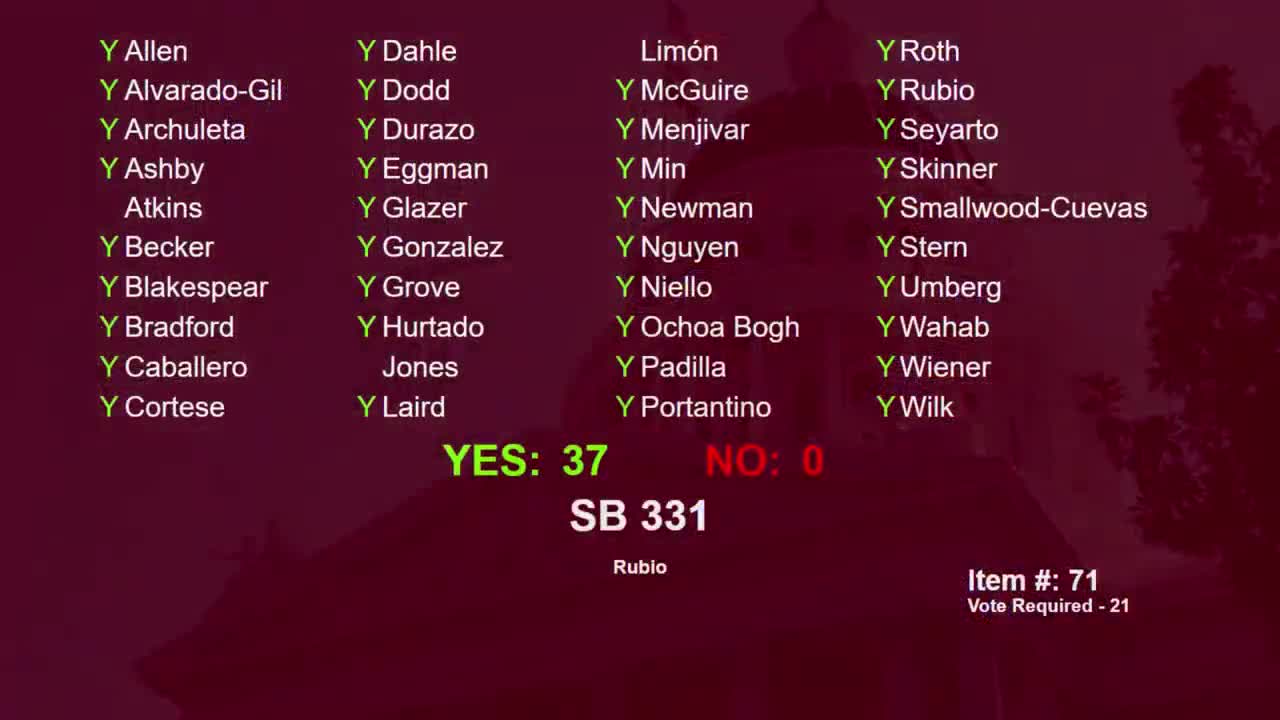 4MIN
Senate Floor
 53MIN
Senate Standing Committee on Health
Bill Author