SB 605: Wave and tidal energy.
- Session Year: 2023-2024
- House: Senate
- Latest Version Date: 2023-10-07
Current Status:
Passed
(2023-10-07: Chaptered by Secretary of State. Chapter 405, Statutes of 2023.)
Introduced
In Committee
First Chamber
In Committee
Second Chamber
Enacted
Existing law requires the State Energy Resources Conservation and Development Commission (Energy Commission) to undertake various actions in furtherance of meeting the states clean energy and pollution reduction objectives, including actions related to energy infrastructure.
This bill would require the Energy Commission, as part of a specified 2024 energy policy review, in consultation with other appropriate state agencies to evaluate the feasibility, costs, and benefits of using wave energy and tidal energy, as specified. The bill would require the commission, in coordination and consultation with the California Coastal Commission, the Department of Fish and Wildlife, the Ocean Protection Council, and the State Lands Commission, to work with other state and local agencies and stakeholders to identify suitable sea space for offshore wave energy and tidal energy projects in state and federal waters. The bill would require the Energy Commission to submit a written report to the Governor and the Legislature on or before January 1, 2025, that includes a summary of findings from the evaluation and considerations that may inform legislative and executive actions, as specified.
Existing law requires the State Energy Resources Conservation and Development Commission (Energy Commission) to undertake various actions in furtherance of meeting the states clean energy and pollution reduction objectives, including actions related to energy infrastructure.
This bill would require the Energy Commission and the Ocean Protection Council, on or before February 1, 2024, to commence a comprehensive, collaborative study Commission, as part of a specified 2024 energy policy review, to evaluate the feasibility feasibility, costs, and benefits of using wave energy and tidal energy, as specified. The bill would require the commission, in coordination with the California Coastal Commission, the Department of Fish and Wildlife, the Ocean Protection Council, and the State Lands Commission, to work with other state and local agencies and stakeholders to identify suitable sea space for offshore wave energy and tidal energy projects in state and federal waters. The bill would require the Energy Commission and the council to submit a written report to the Governor and the Legislature on or before January 1, 2025, that includes, among other things, findings from the study and data and findings from certain pilot projects, includes a summary of findings from the evaluation and considerations that may inform legislative and executive actions, as specified. The bill would require the Energy Commission to consider in the investment planning process for the Electric Program Investment Charge program, wave energy and tidal energy pilot projects that assess the technological feasibility and provide research and demonstration of the technology, and maximize ratepayer and public benefits.
Existing law requires the State Energy Resources Conservation and Development Commission (Energy Commission) to undertake various actions in furtherance of meeting the states clean energy and pollution reduction objectives, including actions related to energy infrastructure.
This bill would require the Energy Commission and the Ocean Protection Council, on or before February 1, 2024, to commence a comprehensive, collaborative study to evaluate the feasibility and benefits of using wave energy and tidal energy, as specified. The bill would require the Energy Commission and the council to submit a written report to the Governor and the Legislature on or before January 1, 2025, that includes, among other things, findings from the study and data and findings from certain pilot projects, as specified. The bill would require the commission, upon appropriation by the Legislature, to solicit applications for, and consider approving, Energy Commission to consider in the investment planning process for the Electric Program Investment Charge program, wave energy and tidal energy pilot projects that assess the technological feasibility and provide research and demonstration of the technology. technology, and maximize ratepayer and public benefits.
Existing law requires the State Energy Resources Conservation and Development Commission (Energy Commission) to undertake various actions in furtherance of meeting the states clean energy and pollution reduction objectives, including actions related to energy infrastructure.
This bill would require the Energy Commission and the Ocean Protection Council, on or before February 1, 2024, to commence a comprehensive, collaborative study to evaluate the feasibility and benefits of using wave energy and tidal energy, as specified. The bill would require the Energy Commission and the council, on or before January 1, 2025, to develop a strategic plan for the deployment of wave energy and tidal energy technologies, infrastructure, and facilities. The bill would require the strategic plan to include wave energy generation goals and tidal energy generation goals, as provided. The bill would require the Energy Commission and the council to submit a written report to the Governor and the Legislature on or before January 1, 2025, that includes, among other things, the strategic plan and findings from the study. study and data and findings from certain pilot projects, as specified. The bill would require the commission commission, upon appropriation by the Legislature, to solicit applications for, and consider approving, wave energy and tidal energy pilot projects for purposes of the study and, after the study ends, to solicit applications for, and consider approving, the continuation of those projects and for new wave energy and tidal energy projects, as provided. that assess the technological feasibility and provide research and demonstration of the technology.
Under existing law, it is the policy of the state that eligible renewable energy resources and zero-carbon resources supply 90% of all retail sales of electricity to California end-use customers by December 31, 2035, 95% of all retail sales of electricity to California end-use customers by December 31, 2040, 100% of all retail sales of electricity to California end-use customers by December 31, 2045, and 100% of electricity procured to serve all state agencies by December 31, 2035. Existing law requires the Public Utilities Commission, Energy Commission, and State Air Resources Board to issue a joint report to the Legislature by January 1, 2021, and at least every 4 years thereafter, that includes, among other things, a review of this policy and the barriers to, and benefits of, achieving the policy.This bill would require the Public Utilities Commission, Energy Commission, and State Air Resources Board to include the wave energy and tidal energy strategic plan in the first joint report issued after January 1, 2024.Existing law requires the State Energy Resources Conservation and Development Commission (Energy Commission) to undertake various actions in furtherance of meeting the states clean energy and pollution reduction objectives, including actions related to energy infrastructure.
This bill would state the intent of the Legislature to enact future legislation relating to the commission and wave and tidal energy, as specified.This bill would require the Energy Commission and the Ocean Protection Council, on or before February 1, 2024, to commence a comprehensive, collaborative study to evaluate the feasibility and benefits of using wave energy and tidal energy, as specified. The bill would require the Energy Commission and the council, on or before January 1, 2025, to develop a strategic plan for the deployment of wave energy and tidal energy technologies, infrastructure, and facilities. The bill would require the strategic plan to include wave energy generation goals and tidal energy generation goals, as provided. The bill would require the Energy Commission and the council to submit a written report to the Governor and the Legislature on or before January 1, 2025, that includes, among other things, the strategic plan and findings from the study. The bill would require the commission to solicit applications for, and consider approving, wave energy and tidal energy pilot projects for purposes of the study and, after the study ends, to solicit applications for, and consider approving, the continuation of those projects and for new wave energy and tidal energy projects, as provided.
Under existing law, it is the policy of the state that eligible renewable energy resources and zero-carbon resources supply 90% of all retail sales of electricity to California end-use customers by December 31, 2035, 95% of all retail sales of electricity to California end-use customers by December 31, 2040, 100% of all retail sales of electricity to California end-use customers by December 31, 2045, and 100% of electricity procured to serve all state agencies by December 31, 2035. Existing law requires the Public Utilities Commission, Energy Commission, and State Air Resources Board to issue a joint report to the Legislature by January 1, 2021, and at least every 4 years thereafter, that includes, among other things, a review of this policy and the barriers to, and benefits of, achieving the policy.
This bill would require the Public Utilities Commission, Energy Commission, and State Air Resources Board to include the wave energy and tidal energy strategic plan in the first joint report issued after January 1, 2024.
Existing law requires the State Energy Resources Conservation and Development Commission to undertake various actions in furtherance of meeting the states clean energy and pollution reduction objectives, including actions related to energy infrastructure.
This bill would state the intent of the Legislature to enact future legislation relating to the commission and wave and tidal energy, as specified.
(a)As part of the 2024 energy policy review prepared pursuant to subdivision (c) of Section 25302, the commission, in consultation with other appropriate state agencies, including, but not limited to, the Ocean Protection Council, the Department of Fish and Wildlife, the State Lands Commission, and the California Coastal Commission, shall evaluate the feasibility, costs, and benefits of using wave energy and tidal energy as forms of clean energy in the state.
(b)For purposes of the evaluation identified in subdivision (a), the commission shall do all of the following:
(1)Evaluate factors that may contribute to the increased use of wave energy and tidal energy in the state.
(2)Provide findings on the latest research about the technological and economic feasibility of deploying offshore wave and tidal energy in the state.
(3)Evaluate wave energy and tidal energy project potential transmission needs and permitting requirements.
(4)Evaluate wave energy and tidal energy project economic and workforce development needs.
(5)Identify near-term actions, particularly related to investments and the workforce for wave energy and tidal energy projects, to maximize job creation and economic development, while considering affordable electric rates and bills.
(6)Identify a robust monitoring strategy designed to gather sufficient data to evaluate the impacts from wave energy and tidal energy projects to marine and tidal ecosystems and affected species, including, but not limited to, fish, marine mammals, and aquatic plants, to inform adaptive management of the projects.
(c)(1)The commission, in coordination and consultation with the California Coastal Commission, the Department of Fish and Wildlife, the Ocean Protection Council, and the State Lands Commission, shall work with other state and local agencies, the offshore wave energy and tidal energy industry, the commercial and recreational fishing communities, California Native American tribes, nongovernmental organizations, and other stakeholders to identify suitable sea space for offshore wave energy and tidal energy projects in state and federal waters.
(2)For purposes of identifying suitable sea space, the commission shall consider all of the following:
(A)Existing data and information on offshore wave energy and tidal energy resource potential and commercial viability.
(B)Existing transmission facilities and infrastructure, and necessary additional transmission facilities and infrastructure.
(C)Protection of cultural and biological resources with the goal of prioritizing ocean areas that pose the least conflict to those resources.
(3)For purposes of this subdivision, the commission shall incorporate the information developed by the federal Bureau of Ocean Energy Managements California Intergovernmental Renewable Energy Task Force, as applicable.
(4)The commission, in coordination and consultation with the California Coastal Commission, Department of Fish and Wildlife, Ocean Protection Council, State Lands Commission, other state and local agencies, the offshore wind energy industry, the commercial and recreational fishing communities, California Native American tribes, nongovernmental organizations, and other stakeholders, shall identify measures that would avoid, minimize, and mitigate significant adverse environmental and ecosystem impacts and use conflicts, and for monitoring and adaptive management for offshore wave energy and tidal energy projects, consistent with Californias long-term goals relating to renewable energy, reduction of greenhouse gas emissions, and biodiversity.
(5)Nothing in this subdivision modifies the authority of any state agency over project-specific siting and permitting.
(6)The commission shall seek to coordinate and consult with federal agencies, as appropriate and applicable, in performing the work required by this subdivision.
25996.1.(a)On or before January 1, 2025, the commission shall submit a written report to the Governor and the Legislature that includes both of the following:
(1)A summary and findings from the evaluation and work described in Section 25996.
(2)Considerations that may inform legislative and executive actions to facilitate, encourage, and promote the development and increased use of technologically and economically feasible wave energy and tidal energy technologies, infrastructure, and facilities in the state.
(b)(1)The report described in this section shall be submitted to the Legislature pursuant to Section 9795 of the Government Code.
(2)Pursuant to Section 10231.5 of the Government Code, this section shall remain in effect only until January 1, 2029, and as of that date is repealed.
(a)On or before February 1, 2024, As part of the 2024 energy policy review prepared pursuant to subdivision (c) of Section 25302, the commission and the Ocean Protection Council, commission, in consultation with other appropriate state agencies, including, but not limited to, the Ocean Protection Council, the Department of Fish and Wildlife, the State Lands Commission, and the California Coastal Commission, shall commence a comprehensive, collaborative study to evaluate the feasibility feasibility, costs, and benefits of using wave energy and tidal energy as forms of clean energy in the state.
(b)For purposes of the study evaluation identified in subdivision (a), the commission and the Ocean Protection Council shall do all of the following:
(1)Evaluate factors that would may contribute to the increased use of wave energy and tidal energy in the state.
(2)Provide findings on the latest research about the technological and economic feasibility of deploying offshore wave and tidal energy in the state.
(3)Evaluate the need for wave energy and tidal energy project potential transmission planning needs and possible permitting changes to facilitate wave energy and tidal energy projects. requirements.
(4)Evaluate whether wave energy and tidal energy project economic and workforce development is necessary to bring wave energy and tidal energy technology to scale. needs.
(5)Identify near-term actions, particularly related to investments and the workforce for wave energy and tidal energy projects, to maximize job creation and economic development. development, while considering affordable electric rates and bills.
(6)Develop Identify a robust monitoring strategy designed to gather sufficient data to evaluate the impacts from wave energy and tidal energy projects to marine and tidal ecosystems and affected species, including, but not limited to, fish, marine mammals, and aquatic plants, to inform adaptive management of the projects.
(c)(1)As part of the study identified in subdivision (a), the The commission, in coordination and consultation with the California Coastal Commission, the Department of Fish and Wildlife, the Ocean Protection Council, and the State Lands Commission, shall work with other state and local agencies, the offshore wave energy and tidal energy industry, the commercial and recreational fishing communities, California Native American tribes, nongovernmental organizations, and other stakeholders to identify suitable sea space for offshore wave energy and tidal energy projects in state and federal waters.
(2)For purposes of identifying suitable sea space, the commission shall consider all of the following:
(A)Existing data and information on offshore wave energy and tidal energy resource potential and commercial viability.
(B)Existing transmission facilities and infrastructure, and necessary additional transmission facilities and infrastructure.
(C)Protection of cultural and biological resources with the goal of prioritizing ocean areas that pose the least conflict to those resources.
(3)For purposes of this subdivision, the commission shall incorporate the information developed by the federal Bureau of Ocean Energy Managements California Intergovernmental Renewable Energy Task Force, as applicable.
(4)The commission, in coordination and consultation with the California Coastal Commission, Department of Fish and Wildlife, Ocean Protection Council, State Lands Commission, other state and local agencies, the offshore wind energy industry, the commercial and recreational fishing communities, California Native American tribes, nongovernmental organizations, and other stakeholders, shall make recommendations for the avoidance, minimization, and mitigation of identify measures that would avoid, minimize, and mitigate significant adverse environmental and ecosystem impacts and use conflicts, and for monitoring and adaptive management for offshore wave energy and tidal energy projects, consistent with Californias long-term goals relating to renewable energy, reduction of greenhouse gas emissions, and promoting biodiversity.
(5)Nothing in this subdivision modifies the authority of any state agency over project-specific siting and permitting.
(6)The commission shall seek to coordinate and consult with federal agencies, as appropriate and applicable, in performing the work required by this subdivision.
25996.1.(a)On or before January 1, 2025, the commission and the Ocean Protection Council shall cooperatively prepare and submit a written report to the Governor and the Legislature that includes all both of the following:
(1)Findings A summary and findings from the study evaluation and work described in Section 25996.
(2)Recommendations for legislative, executive, and other Considerations that may inform legislative and executive actions to facilitate, encourage, and promote the development and increased use of technologically and economically feasible wave energy and tidal energy technologies, infrastructure, and facilities in the state.
(3)Data and findings from the wave energy and tidal energy pilot projects described in Section 25996.2, to the extent the pilot projects have been approved.(b)(1)The report described in this section shall be submitted to the Legislature pursuant to Section 9795 of the Government Code.
(2)Pursuant to Section 10231.5 of the Government Code, this section shall remain in effect only until January 1, 2029, and as of that date is repealed.
25996.2.(a)The commission shall consider in the investment planning process for the Electric Program Investment Charge (EPIC) program, wave energy and tidal energy pilot projects in the state that assess the technological feasibility and provide research and demonstration of the technology along Californias shores, and maximize ratepayer and public benefits.(b)In determining the appropriate amount of EPIC funding for wave and tidal energy pilot projects, the commission shall consider the findings and recommendations included in the report described in Section 25996.1.(c)The commission shall coordinate with the California Coastal Commission, and shall seek to coordinate with the federal Bureau of Ocean Energy Management in the United States Department of the Interior to facilitate the leasing or permitting of offshore areas under federal jurisdiction for wave energy and tidal energy projects. The commission shall also coordinate and consult with the Ocean Protection Council, the California Coastal Commission, the State Lands Commission, and other appropriate state agencies to facilitate the leasing or permitting of coastal or onshore areas under state jurisdiction for wave energy and tidal energy projects.The Legislature finds and declares all of the following:
(a)If developed and deployed at scale, offshore wave and tidal energy has the potential to provide economic and environmental benefits to the state and the nation.
(b)Ocean energy may represent the third largest source of renewable energy and is potentially the largest source of underutilized renewable energy. Ocean energy primarily comes in two forms: (1) wave energy, harnessed by waves; and (2) tidal energy, harnessed by tides.
(c)California may need to build at least 48 gigawatts of new renewable energy and energy storage developments by 2030 and at least 145 gigawatts of new renewable energy and energy storage developments development, according to the 2021 SB 100 Joint Agency Report released in March 2021, by 2045 to achieve the goals set forth in Section 454.53 of the Public Utilities Code.
(d)California has set ambitious clean energy targets on the path to carbon neutrality by 2045, but the need for more clean energy is immediate. Wave and tidal energy, or hydrokinetic energy, has the potential to provide that energy in a more expedited fashion as blue economy innovators in California are now looking to bring the technology to scale. as the technology scales up.
(e)Wave and tidal energy development presents an opportunity to attract investment capital and to realize community economic development and workforce development benefits in California, including the development and preservation of a skilled and trained workforce to carry out projects, long-term job creation, and deployment of an offshore wave and tidal energy supply chain.
(f)Wave and tidal energy may contribute to a diverse, secure, reliable, and affordable renewable energy resource portfolio to serve the electricity needs of California ratepayers and improve air quality, particularly in disadvantaged communities.
(g)Wave and tidal energy can add resource and technology diversity to the states clean, renewable energy portfolio. Diversity in energy resources and technologies in some instances lowers overall costs.
(h)In its 2021 report on marine energy opportunities for the United States Department of Energy, the National Renewable Energy Laboratory concluded that even if only a small portion of the technical resource potential is captured, marine energy technologies would make significant contributions to our nations energy needs.
(i)Furthermore, the report found that wave power has the technical feasible resource potential to meet 30 percent of the countrys electricity demand.
(j)The Biden Administration is counting on wave and tidal energy to help the United States reach its goal of carbon neutrality by 2050 and has allocated tens of millions of dollars to advance the technology.
(k)By promoting and facilitating growth in the emerging wave and tidal energy sectors and incorporating ambitious but achievable wave and tidal energy generation goals, sectors, California can position itself as a nationwide leader in ocean energy, while facilitating the development of high-quality jobs and technological advancements in this burgeoning industry.
(l)Investment in onshore and offshore wave and tidal energy development can offer career pathways and workforce training in clean energy development by providing sustainable blue economy employment opportunities, supporting apprenticeship opportunities for a diverse labor pool, and providing those opportunities to local communities experiencing high unemployment through prioritization of local hiring first.
(m)Onshore and offshore wave and tidal energy should be developed in a manner that protects coastal and marine ecosystems. The state should use its authority under state programs and policies to ensure avoidance, minimization, and mitigation of significant adverse impacts and monitoring and adaptive management for offshore wave and tidal energy projects and their associated infrastructure.
(n)Onshore and offshore wave and tidal energy development can provide clean air benefits to inland communities that experience increased impacts from poor air quality.
SEC. 2.Chapter 18 (commencing with Section 25996) is added to Division 15 of the Public Resources Code, to read:18.Wave Energy and Tidal Energy25996.(a)On or before February 1, 2024, the commission and the Ocean Protection Council, in consultation with other appropriate state agencies, including, but not limited to, the Department of Fish and Wildlife, the State Lands Commission, and the California Coastal Commission, shall commence a comprehensive, collaborative study to evaluate the feasibility and benefits of using wave energy and tidal energy as forms of clean energy in the state.
(b)For purposes of the study identified in subdivision (a), the commission and the Ocean Protection Council shall do all of the following:
(1)Evaluate factors that would affect contribute to the increased use of wave energy and tidal energy in the state.
(2)Provide findings on the latest research about the technological feasibility of deploying offshore wave and tidal energy in the state.
(3)Evaluate the need for transmission planning and possible permitting changes to facilitate wave energy and tidal energy projects.
(4)Evaluate whether economic and workforce development is necessary to bring wave energy and tidal energy technology to scale.
(5)Identify near-term actions, particularly related to investments and the workforce for wave energy and tidal energy projects, to accommodate the probable immediate need for jobs maximize job creation and economic development.
(6)Develop a robust monitoring strategy designed to gather sufficient data to evaluate the impacts from wave energy and tidal energy projects to marine and tidal ecosystems and affected species, including, but not limited to, fish, marine mammals, and aquatic plants, to inform adaptive management of the projects.
(c)(1)As part of the study identified in subdivision (a), the commission, in coordination and consultation with the California Coastal Commission, Department of Fish and Wildlife, Ocean Protection Council, and State Lands Commission, shall work with other state and local agencies, the offshore wave energy and tidal energy industry, the commercial and recreational fishing communities, California Native American tribes, nongovernmental organizations, and other stakeholders to identify suitable sea space for offshore wave energy and tidal energy projects in state and federal waters.
(2)For purposes of identifying suitable sea space, the commission shall consider all of the following:
(A)Existing data and information on offshore wave energy and tidal energy resource potential and commercial viability.
(B)Existing transmission facilities and infrastructure, and necessary additional transmission facilities and infrastructure.
(C)Protection of cultural and biological resources with the goal of prioritizing ocean areas that pose the least conflict to those resources.
(3)For purposes of this subdivision, the commission shall incorporate the information developed by the federal Bureau of Ocean Energy Managements California Intergovernmental Renewable Energy Task Force, as applicable.
(4)The commission, in coordination and consultation with the California Coastal Commission, Department of Fish and Wildlife, Ocean Protection Council, State Lands Commission, other state and local agencies, the offshore wind energy industry, the commercial and recreational fishing communities, California Native American tribes, nongovernmental organizations, and other stakeholders, shall make recommendations for the avoidance, minimization, and mitigation of significant adverse environmental and ecosystem impacts and use conflicts, and for monitoring and adaptive management for offshore wave energy and tidal energy projects, consistent with Californias long-term goals relating to renewable energy, reduction of greenhouse gas emissions, and promoting biodiversity.
(5)Nothing in this subdivision modifies the authority of any state agency over project-specific siting and permitting.
(6)The commission shall seek to coordinate and consult with federal agencies, as appropriate and applicable, in performing the work required by this subdivision.
25996.1.(a)On or before January 1, 2025, the commission and the Ocean Protection Council shall cooperatively prepare and submit a written report to the Governor and the Legislature that includes all of the following:
(1)Findings from the study described in Section 25996.
(2)Recommendations for legislative, executive, and other actions to facilitate, encourage, and promote the development and increased use of wave energy and tidal energy technologies, infrastructure, and facilities in the state.
(3)Data and findings from the wave energy and tidal energy pilot projects described in Section 25996.2, to the extent the pilot projects have been approved.(b)(1)The report described in this section shall be submitted to the Legislature pursuant to Section 9795 of the Government Code.
(2)Pursuant to Section 10231.5 of the Government Code, this section shall remain in effect only until January 1, 2029, and as of that date is repealed.
25996.2.(a)The commission, upon appropriation by the Legislature, shall solicit applications for, and consider approving, commission shall consider in the investment planning process for the Electric Program Investment Charge (EPIC) program, wave energy and tidal energy pilot projects in the state that assess the technological feasibility and provide research and demonstration of the technology along Californias shores. shores, and maximize ratepayer and public benefits.(b)The In determining the appropriate amount of EPIC funding for wave and tidal energy pilot projects, the commission shall consider the findings and recommendations included in the report described in Section 25996.1.(c)The commission shall coordinate with the California Coastal Commission, and shall seek to coordinate with the federal Bureau of Ocean Energy Management in the United States Department of the Interior to facilitate the leasing or permitting of offshore areas under federal jurisdiction for wave energy and tidal energy projects. The commission shall also coordinate and consult with the Ocean Protection Council, the California Coastal Commission, the State Lands Commission, and other appropriate state agencies to facilitate the leasing or permitting of coastal or onshore areas under state jurisdiction for wave energy and tidal energy projects.The Legislature finds and declares all of the following:
(a)If developed and deployed at scale, offshore wave and tidal energy has the potential to provide economic and environmental benefits to the state and the nation.
(b)Ocean energy may represent the third largest source of renewable energy and is potentially the largest source of underutilized renewable energy. Ocean energy primarily comes in two forms: (1) wave energy, harnessed by waves; and (2) tidal energy, harnessed by tides.
(c)California may need to build at least 48 gigawatts of new renewable energy and energy storage developments by 2030 and at least 145 gigawatts of new renewable energy and energy storage developments by 2045 to achieve the goals set forth in Section 454.53 of the Public Utilities Code.
(d)California has set ambitious clean energy targets on the path to carbon neutrality by 2045, but the need for more clean energy is immediate. Wave and tidal energy, or hydrokinetic energy, has the potential to provide that energy in a more expedited fashion as blue economy innovators in California are now looking to bring the technology to scale.
(e)Wave and tidal energy development presents an opportunity to attract investment capital and to realize community economic development and workforce development benefits in California, including the development and preservation of a skilled and trained workforce to carry out projects, long-term job creation, and deployment of an offshore wave and tidal energy supply chain.
(f)Wave and tidal energy may contribute to a diverse, secure, reliable, and affordable renewable energy resource portfolio to serve the electricity needs of California ratepayers and improve air quality, particularly in disadvantaged communities.
(g)Wave and tidal energy can add resource and technology diversity to the states clean, renewable energy portfolio. Diversity in energy resources and technologies in some instances lowers overall costs.
(h)In its 2021 report on marine energy opportunities for the United States Department of Energy, the National Renewable Energy Laboratory concluded that even if only a small portion of the technical resource potential is captured, marine energy technologies would make significant contributions to our nations energy needs.
(i)Furthermore, the report found that wave power has the technical feasible resource potential to meet 30 percent of the countrys electricity demand.
(j)The Biden Administration is counting on wave and tidal energy to help the United States reach its goal of carbon neutrality by 2050 and has allocated tens of millions of dollars to advance the technology.
(k)By promoting and facilitating growth in the emerging wave and tidal energy sectors and incorporating ambitious but achievable wave and tidal energy generation goals, California can position itself as a nationwide leader in ocean energy, while facilitating the development of high-quality jobs and technological advancements in this burgeoning industry.
(l)Investment in onshore and offshore wave and tidal energy development can offer career pathways and workforce training in clean energy development by providing sustainable blue economy employment opportunities, supporting apprenticeship opportunities for a diverse labor pool, and providing those opportunities to local communities experiencing high unemployment through prioritization of local hiring first.
(m)Onshore and offshore wave and tidal energy should be developed in a manner that protects coastal and marine ecosystems. The state should use its authority under state programs and policies to ensure avoidance, minimization, and mitigation of significant adverse impacts and monitoring and adaptive management for offshore wave and tidal energy projects and their associated infrastructure.
(n)Onshore and offshore wave and tidal energy development can provide clean air benefits to inland communities that experience increased impacts from poor air quality.
SECTION 1.SEC. 2.Chapter 18 (commencing with Section 25996) is added to Division 15 of the Public Resources Code, to read:18.Wave Energy and Tidal Energy25996.The Legislature finds and declares all of the following:(a)If developed and deployed at scale, offshore wave and tidal energy can provide economic and environmental benefits to the state and the nation.(b)Ocean energy represents the third largest source of renewable energy and the largest source of underutilized renewable energy. Ocean energy primarily comes in two forms: (1) wave energy, harnessed by waves; and (2) tidal energy, harnessed by tides.(c)California may need to build at least 48 gigawatts of new renewable energy and energy storage developments by 2030 and at least 145 gigawatts of new renewable energy and energy storage developments by 2045 to achieve the goals set forth in Section 454.53 of the Public Utilities Code.(d)California has set ambitious clean energy targets on the path to carbon neutrality by 2045, but the need for more clean energy is immediate. Wave and tidal energy, or hydrokinetic energy, has the potential to provide that energy in a more expedited fashion as blue economy innovators in California are now looking to bring the technology to scale.(e)Wave and tidal energy development presents an opportunity to attract investment capital and to realize community economic-development and workforce-development benefits in California, including the development and preservation of a skilled and trained workforce to carry out projects, long-term job creation, and deployment of an offshore wave and tidal energy supply chain.(f)Wave and tidal energy can contribute to a diverse, secure, reliable, and affordable renewable energy resource portfolio to serve the electricity needs of California ratepayers and improve air quality, particularly in disadvantaged communities.(g)Wave and tidal energy can add resource and technology diversity to the states clean, renewable energy portfolio. Diversity in energy resources and technologies lowers overall costs.(h)In its 2021 report on marine energy opportunities for the United States Department of Energy, the National Renewable Energy Laboratory concluded that even if only a small portion of the technical resource potential is captured, marine energy technologies would make significant contributions to our nations energy needs.(i)Furthermore, the report found that wave power has the technical feasible resource potential to meet 30 percent of the countrys electricity demand.(j)The Biden Administration is counting on wave and tidal energy to help the United States reach its goal of carbon neutrality by 2050 and has allocated tens of millions of dollars to advance the technology.(k)By promoting and facilitating growth in the emerging wave and tidal energy sectors and incorporating ambitious but achievable wave and tidal energy generation goals, California can position itself as a nationwide leader in ocean energy, while facilitating the development of high-quality jobs and technological advancements in this burgeoning industry.(l)Investment in onshore and offshore wave and tidal energy development can offer career pathways and workforce training in clean energy development by providing sustainable blue economy employment opportunities, supporting apprenticeship opportunities for a diverse labor pool, and providing those opportunities to local communities experiencing high unemployment through prioritization of local hiring first.(m)Onshore and offshore wave and tidal energy should be developed in a manner that protects coastal and marine ecosystems. The state should use its authority under state programs and policies to ensure avoidance, minimization, and mitigation of significant adverse impacts and monitoring and adaptive management for offshore wave and tidal energy projects and their associated infrastructure.(n)Onshore and offshore wave and tidal energy development can provide clean air benefits to inland communities that experience increased impacts from poor air quality.25996.1.25996.(a)On or before February 1, 2024, the commission and the Ocean Protection Council, in consultation with other appropriate state agencies, including, but not limited to, the Department of Fish and Wildlife, the State Lands Commission, and the California Coastal Commission, shall commence a comprehensive, collaborative study to evaluate the feasibility and benefits of using wave energy and tidal energy as forms of clean energy in the state.
(b)For purposes of the study, study identified in subdivision (a), the commission and the Ocean Protection Council shall do all of the following:
(1)Evaluate factors that would affect the increased use of wave energy and tidal energy in the state.
(2)Authorize wave energy and tidal energy pilot projects in the state.(2)Provide findings on the latest research about the technological feasibility of deploying offshore wave and tidal energy in the state.
(3)Evaluate the need for transmission planning and possible permitting changes to facilitate wave energy and tidal energy projects.
(4)Evaluate whether economic and workforce development is necessary to bring wave energy and tidal energy technology to scale.
(5)Identify near-term actions, particularly related to investments and the workforce for wave energy and tidal energy projects, to accommodate the probable immediate need for jobs and economic development.
(6)Develop a robust monitoring strategy designed to gather sufficient data to evaluate the impacts from wave energy and tidal energy projects to marine and tidal ecosystems and affected species, including, but not limited to, fish, marine mammals, and aquatic plants, to inform adaptive management of the projects.
(c)(1)The As part of the study identified in subdivision (a), the commission, in coordination and consultation with the California Coastal Commission, Department of Fish and Wildlife, Ocean Protection Council, and State Lands Commission, shall work with other state, local, and federal state and local agencies, the offshore wave energy and tidal energy industry, the commercial and recreational fishing communities, California Native American tribes, nongovernmental organizations, and other stakeholders to identify suitable sea space for offshore wave energy and tidal energy projects in state and federal waters that are sufficient to meet the wave energy generation goals and tidal energy generation goals included in the strategic plan pursuant to Section 25996.2. waters.
(2)For purposes of identifying suitable sea space, the commission shall consider all of the following:
(A)Existing data and information on offshore wave energy and tidal energy resource potential and commercial viability.
(B)Existing transmission facilities and infrastructure, and necessary additional transmission facilities and infrastructure.
(C)Protection of cultural and biological resources with the goal of prioritizing ocean areas that pose the least conflict to those resources.
(3)For purposes of this subdivision, the commission shall incorporate the information developed by the federal Bureau of Ocean Energy Management Managements California Intergovernmental Renewable Energy Task Force. Force, as applicable.
(4)The commission, in coordination and consultation with the California Coastal Commission, Department of Fish and Wildlife, Ocean Protection Council, State Lands Commission, other state, local, and federal state and local agencies, the offshore wind energy industry, the commercial and recreational fishing communities, California Native American tribes, nongovernmental organizations, and other stakeholders, shall make recommendations for the avoidance, minimization, and mitigation of significant adverse environmental and ecosystem impacts and use conflicts, and for monitoring and adaptive management for offshore wave energy and tidal energy projects, consistent with Californias long-term goals relating to renewable energy, reduction of greenhouse gas emissions, and promoting biodiversity.
(5)Nothing in this subdivision modifies the authority of any state agency over project-specific siting and permitting.
(6)The commission shall seek to coordinate and consult with federal agencies, as appropriate and applicable, in performing the work required by this subdivision.
25996.2.(a)On or before January 1, 2025, the commission and the Ocean Protection Council shall develop a strategic plan for the deployment of wave energy and tidal energy technologies, infrastructure, and facilities in the state.(b)(1)The strategic plan shall identify specific wave energy generation goals and tidal energy generation goals, in megawatts, that the state will endeavor to meet by 2030, 2040, and 2050 to ensure the timely and effective deployment of wave energy and tidal energy technologies and the sufficient incorporation of wave energy and tidal energy into the states energy portfolio.(2)The strategic plan shall identify workforce development necessary to bring wave energy and tidal energy technology to scale. For purposes of this paragraph, the commission and the Ocean Protection Council shall consult with representatives of appropriate labor organizations and apprenticeship programs that would be involved in dispatching and training the construction workforce for wave energy and tidal energy projects.(c)Before finalizing the strategic plan, the commission and the Ocean Protection Council shall provide an opportunity for public review and comment on a draft version of the strategic plan.25996.3.25996.1.(a)On or before January 1, 2025, the commission and the Ocean Protection Council shall cooperatively prepare and submit a written report to the Governor and the Legislature that includes all of the following:
(1)Findings from the study described in Section 25996.1. 25996.
(2)Recommendations for legislative, executive, and other actions to facilitate, encourage, and promote the development and increased use of wave energy and tidal energy technologies, infrastructure, and facilities in the state.
(3)The strategic plan described in Section 25996.2.(4)(3)Data and findings from the wave energy and tidal energy pilot projects described in Section 25996.4. 25996.2, to the extent the pilot projects have been approved.
(b)(1)The report described in this section shall be submitted to the Legislature pursuant to Section 9795 of the Government Code.
(2)Pursuant to Section 10231.5 of the Government Code, this section shall remain in effect only until January 1, 2029, and as of that date is repealed.
25996.4.25996.2.(a)The commission commission, upon appropriation by the Legislature, shall solicit applications for, and consider approving, wave energy and tidal energy pilot projects in the state as part of the study described in Section 25996.1. The commission may take other appropriate action to facilitate wave energy and tidal energy pilot projects for purposes of the study. that assess the technological feasibility and provide research and demonstration of the technology along Californias shores.
(b)Based on the The commission shall consider the findings and recommendations included in the report described in Section 25996.3, the commission shall solicit applications for, and consider approving, the continuation of pilot projects commenced pursuant to subdivision (a) and for new wave energy and tidal energy projects that will result in net positive economic and environmental benefits for the state. The commission may take other appropriate action to facilitate wave energy and tidal energy projects, including through the use of financial or other incentives. 25996.1.
(c)The commission shall coordinate with the California Coastal Commission, and shall seek to coordinate with the federal Bureau of Ocean Energy Management in the United States Department of the Interior to facilitate the leasing or permitting of offshore areas under federal jurisdiction for wave energy and tidal energy projects. The commission shall also coordinate and consult with the Ocean Protection Council, the California Coastal Commission, the State Lands Commission, and other appropriate state agencies to facilitate the leasing or permitting of coastal or onshore areas under state jurisdiction for wave energy and tidal energy projects.
SEC. 2.Section 454.53 of the Public Utilities Code is amended to read:454.53.(a)It is the policy of the state that eligible renewable energy resources and zero-carbon resources supply 90 percent of all retail sales of electricity to California end-use customers by December 31, 2035, 95 percent of all retail sales of electricity to California end-use customers by December 31, 2040, 100 percent of all retail sales of electricity to California end-use customers by December 31, 2045, and 100 percent of electricity procured to serve all state agencies by December 31, 2035. The achievement of this policy for California shall not increase carbon emissions elsewhere in the western grid and shall not allow resource shuffling. The commission and Energy Commission, in consultation with the State Air Resources Board, shall take steps to ensure that a transition to a zero-carbon electric system for the State of California does not cause or contribute to greenhouse gas emissions increases elsewhere in the western grid, and is undertaken in a manner consistent with clause 3 of Section 8 of Article I of the United States Constitution. The commission, the Energy Commission, the State Air Resources Board, and all other state agencies shall incorporate this policy into all relevant planning.(b)The commission, Energy Commission, State Air Resources Board, and all other state agencies shall ensure that actions taken in furtherance of subdivision (a) do all of the following:(1)Maintain and protect the safety, reliable operation, and balancing of the electric system.(2)Prevent unreasonable impacts to electricity, gas, and water customer rates and bills resulting from implementation of this section, taking into full consideration the economic and environmental costs and benefits of renewable energy and zero-carbon resources.(3)To the extent feasible and authorized under law, lead to the adoption of policies and taking of actions in other sectors to obtain greenhouse gas emission reductions that ensure equity between other sectors and the electricity sector.(4)Not affect in any manner the rules and requirements for the oversight of, and enforcement against, retail sellers and local publicly owned electric utilities pursuant to the California Renewables Portfolio Standard Program (Article 16 (commencing with Section 399.11) of Chapter 2.3) and Sections 454.51, 454.52, 9621, and 9622.(c)Nothing in this section shall affect a retail sellers obligation to comply with the federal Public Utility Regulatory Policies Act of 1978 (16 U.S.C. Sec. 2601 et seq.).(d)The commission, Energy Commission, and State Air Resources Board shall do all of the following:(1)Use programs authorized under existing statutes to achieve the policy described in subdivision (a).(2)In consultation with all California balancing authorities, as defined in subdivision (d) of Section 399.12, as part of a public process, issue a joint report to the Legislature by January 1, 2021, and at least every four years thereafter. The joint report shall include all of the following:(A)A review of the policy described in subdivision (a) focused on technologies, forecasts, then-existing transmission, and maintaining safety, environmental and public safety protection, affordability, and system and local reliability.(B)An evaluation identifying the potential benefits and impacts on system and local reliability associated with achieving the policy described in subdivision (a).(C)An evaluation identifying the nature of any anticipated financial costs and benefits to electric, gas, and water utilities, including customer rate impacts and benefits.(D)The barriers to, and benefits of, achieving the policy described in subdivision (a).(E)Alternative scenarios in which the policy described in subdivision (a) can be achieved and the estimated costs and benefits of each scenario.(3)On or before December 1, 2023, and annually thereafter, in consultation with California balancing authorities, as defined in subdivision (d) of Section 399.12, and as part of, or an interim addendum to, the quadrennial joint report required by paragraph (2), as applicable, issue a joint reliability progress report that reviews system and local reliability within the context of the policy described in subdivision (a), with a particular focus on summer reliability. The joint reliability progress report shall identify challenges and gaps, if any, to achieving system and local reliability and identify the amount and cause of any delays to achieving compliance with all energy and capacity procurement requirements set by the commission.(4)In the first quadrennial joint report required by paragraph (2) that is issued after January 1, 2024, the commission, Energy Commission, and State Air Resources Board shall include the wave energy and tidal energy strategic plan described in Section 25996.2 of the Public Resources Code and the wave energy generation goals and tidal energy generation goals identified in the strategic plan.(e)Nothing in this section authorizes the commission to establish any requirements on a nonmobile self-cogeneration or cogeneration facility that served onsite load, or that served load pursuant to an over-the-fence arrangement if that arrangement existed on or before December 20, 1995.(f)This section does not limit any entity, including local governments, from accelerating their achievement of the states electric sector decarbonization targets.The Legislature finds and declares all of the following:
(a)If developed and deployed at scale, offshore wave and tidal energy can provide economic and environmental benefits to the state and the nation.
(b)Ocean energy represents the third largest source of renewable energy and the largest source of underutilized renewable energy. Ocean energy primarily comes in two forms: (1) wave energy, harnessed by waves; and (2) tidal energy, harnessed by tides.
(c)California may need to build at least 48 gigawatts of new renewable energy and energy storage developments by 2030 and at least 145 gigawatts of new renewable energy and energy storage developments by 2045 to achieve the goals set forth in Section 454.53 of the Public Utilities Code.
(d)California has set ambitious clean energy targets on the path to carbon neutrality by 2045, but the need for more clean energy is immediate. Wave and tidal energy, or hydrokinetic energy, has the potential to provide that energy in a more expedited fashion as blue economy innovators in California are now looking to bring the technology to scale.
(e)Wave and tidal energy development presents an opportunity to attract investment capital and to realize community economic-development and workforce-development benefits in California, including the development and preservation of a skilled and trained workforce to carry out projects, long-term job creation, and deployment of an offshore wave and tidal energy supply chain.
(f)Wave and tidal energy can contribute to a diverse, secure, reliable, and affordable renewable energy resource portfolio to serve the electricity needs of California ratepayers and improve air quality, particularly in disadvantaged communities.
(g)Wave and tidal energy can add resource and technology diversity to the states clean, renewable energy portfolio. Diversity in energy resources and technologies lowers overall costs.
(h)In its 2021 report on marine energy opportunities for the United States Department of Energy, the National Renewable Energy Laboratory concluded that even if only a small portion of the technical resource potential is captured, marine energy technologies would make significant contributions to our nations energy needs.
(i)Furthermore, the report found that wave power has the technical feasible resource potential to meet 30 percent of the countrys electricity demand.
(j)The Biden Administration is counting on wave and tidal energy to help the United States reach its goal of carbon neutrality by 2050 and has allocated tens of millions of dollars to advance the technology.
(k)By promoting and facilitating growth in the emerging wave and tidal energy sectors and incorporating ambitious but achievable wave and tidal energy generation goals, California can position itself as a nationwide leader in ocean energy, while facilitating the development of high-quality jobs and technological advancements in this burgeoning industry.
(l)Investment in onshore and offshore wave and tidal energy development can offer career pathways and workforce training in clean energy development by providing sustainable blue economy employment opportunities, supporting apprenticeship opportunities for a diverse labor pool, and providing those opportunities to local communities experiencing high unemployment through prioritization of local hiring first.
(m)Onshore and offshore wave and tidal energy should be developed in a manner that protects coastal and marine ecosystems. The state should use its authority under state programs and policies to ensure avoidance, minimization, and mitigation of significant adverse impacts and monitoring and adaptive management for offshore wave and tidal energy projects and their associated infrastructure.
(n)Onshore and offshore wave and tidal energy development can provide clean air benefits to inland communities that experience increased impacts from poor air quality.
25996.1.(a)On or before February 1, 2024, the commission and the Ocean Protection Council, in consultation with other appropriate state agencies, shall commence a comprehensive, collaborative study to evaluate the feasibility and benefits of using wave energy and tidal energy as forms of clean energy in the state.
(b)For purposes of the study, the commission and the Ocean Protection Council shall do all of the following:
(1)Evaluate factors that would affect the increased use of wave energy and tidal energy in the state.
(2)Authorize wave energy and tidal energy pilot projects in the state.
(3)Evaluate the need for transmission planning and possible permitting changes to facilitate wave energy and tidal energy projects.
(4)Evaluate whether economic and workforce development is necessary to bring wave energy and tidal energy technology to scale.
(5)Identify near-term actions, particularly related to investments and the workforce for wave energy and tidal energy projects, to accommodate the probable immediate need for jobs and economic development.
(c)(1)The commission, in coordination with the California Coastal Commission, Department of Fish and Wildlife, Ocean Protection Council, and State Lands Commission, shall work with other state, local, and federal agencies, the offshore wave energy and tidal energy industry, and other stakeholders to identify suitable sea space for offshore wave energy and tidal energy projects in state and federal waters that are sufficient to meet the wave energy generation goals and tidal energy generation goals included in the strategic plan pursuant to Section 25996.2.
(2)For purposes of identifying suitable sea space, the commission shall consider all of the following:
(A)Existing data and information on offshore wave energy and tidal energy resource potential and commercial viability.
(B)Existing transmission facilities and infrastructure, and necessary additional transmission facilities and infrastructure.
(C)Protection of cultural and biological resources with the goal of prioritizing ocean areas that pose the least conflict to those resources.
(3)For purposes of this subdivision, the commission shall incorporate the information developed by the Bureau of Ocean Energy Management California Intergovernmental Renewable Energy Task Force.
(4)The commission, in coordination with the California Coastal Commission, Department of Fish and Wildlife, Ocean Protection Council, State Lands Commission, other state, local, and federal agencies, the offshore wind energy industry, and other stakeholders, shall make recommendations for the avoidance, minimization, and mitigation of significant adverse impacts and use conflicts, and for monitoring and adaptive management for offshore wave energy and tidal energy projects, consistent with Californias long-term goals relating to renewable energy, reduction of greenhouse gas emissions, and biodiversity.
(5)Nothing in this subdivision modifies the authority of any state agency over project-specific siting and permitting.
25996.2.(a)On or before January 1, 2025, the commission and the Ocean Protection Council shall develop a strategic plan for the deployment of wave energy and tidal energy technologies, infrastructure, and facilities in the state.
(b)(1)The strategic plan shall identify specific wave energy generation goals and tidal energy generation goals, in megawatts, that the state will endeavor to meet by 2030, 2040, and 2050 to ensure the timely and effective deployment of wave energy and tidal energy technologies and the sufficient incorporation of wave energy and tidal energy into the states energy portfolio.
(2)The strategic plan shall identify workforce development necessary to bring wave energy and tidal energy technology to scale. For purposes of this paragraph, the commission and the Ocean Protection Council shall consult with representatives of appropriate labor organizations and apprenticeship programs that would be involved in dispatching and training the construction workforce for wave energy and tidal energy projects.
(c)Before finalizing the strategic plan, the commission and the Ocean Protection Council shall provide an opportunity for public review and comment on a draft version of the strategic plan.
25996.3.(a)On or before January 1, 2025, the commission and the Ocean Protection Council shall cooperatively prepare and submit a written report to the Governor and the Legislature that includes all of the following:
(1)Findings from the study described in Section 25996.1.
(2)Recommendations for legislative, executive, and other actions to facilitate, encourage, and promote the development and increased use of wave energy and tidal energy technologies, infrastructure, and facilities in the state.
(3)The strategic plan described in Section 25996.2.
(4)Data and findings from the wave energy and tidal energy pilot projects described in Section 25996.4.
(b)(1)The report described in this section shall be submitted to the Legislature pursuant to Section 9795 of the Government Code.
(2)Pursuant to Section 10231.5 of the Government Code, this section shall remain in effect only until January 1, 2029, and as of that date is repealed.
25996.4.(a)The commission shall solicit applications for, and consider approving, wave energy and tidal energy pilot projects in the state as part of the study described in Section 25996.1. The commission may take other appropriate action to facilitate wave energy and tidal energy pilot projects for purposes of the study.
(b)Based on the recommendations included in the report described in Section 25996.3, the commission shall solicit applications for, and consider approving, the continuation of pilot projects commenced pursuant to subdivision (a) and for new wave energy and tidal energy projects that will result in net positive economic and environmental benefits for the state. The commission may take other appropriate action to facilitate wave energy and tidal energy projects, including through the use of financial or other incentives.
(c)The commission shall coordinate with the federal Bureau of Ocean Energy Management in the United States Department of the Interior to facilitate the leasing or permitting of offshore areas under federal jurisdiction for wave energy and tidal energy projects. The commission shall also coordinate with the Ocean Protection Council, the California Coastal Commission, and other appropriate state agencies to facilitate the leasing or permitting of coastal or onshore areas under state jurisdiction for wave energy and tidal energy projects.
SEC. 2.Section 454.53 of the Public Utilities Code is amended to read:454.53.(a)It is the policy of the state that eligible renewable energy resources and zero-carbon resources supply 90 percent of all retail sales of electricity to California end-use customers by December 31, 2035, 95 percent of all retail sales of electricity to California end-use customers by December 31, 2040, 100 percent of all retail sales of electricity to California end-use customers by December 31, 2045, and 100 percent of electricity procured to serve all state agencies by December 31, 2035. The achievement of this policy for California shall not increase carbon emissions elsewhere in the western grid and shall not allow resource shuffling. The commission and Energy Commission, in consultation with the State Air Resources Board, shall take steps to ensure that a transition to a zero-carbon electric system for the State of California does not cause or contribute to greenhouse gas emissions increases elsewhere in the western grid, and is undertaken in a manner consistent with clause 3 of Section 8 of Article I of the United States Constitution. The commission, the Energy Commission, the State Air Resources Board, and all other state agencies shall incorporate this policy into all relevant planning.
(b)The commission, Energy Commission, State Air Resources Board, and all other state agencies shall ensure that actions taken in furtherance of subdivision (a) do all of the following:
(1)Maintain and protect the safety, reliable operation, and balancing of the electric system.
(2)Prevent unreasonable impacts to electricity, gas, and water customer rates and bills resulting from implementation of this section, taking into full consideration the economic and environmental costs and benefits of renewable energy and zero-carbon resources.
(3)To the extent feasible and authorized under law, lead to the adoption of policies and taking of actions in other sectors to obtain greenhouse gas emission reductions that ensure equity between other sectors and the electricity sector.
(4)Not affect in any manner the rules and requirements for the oversight of, and enforcement against, retail sellers and local publicly owned electric utilities pursuant to the California Renewables Portfolio Standard Program (Article 16 (commencing with Section 399.11) of Chapter 2.3) and Sections 454.51, 454.52, 9621, and 9622.
(c)Nothing in this section shall affect a retail sellers obligation to comply with the federal Public Utility Regulatory Policies Act of 1978 (16 U.S.C. Sec. 2601 et seq.).
(d)The commission, Energy Commission, and State Air Resources Board shall do all of the following:
(1)Use programs authorized under existing statutes to achieve the policy described in subdivision (a).
(2)In consultation with all California balancing authorities, as defined in subdivision (d) of Section 399.12, as part of a public process, issue a joint report to the Legislature by January 1, 2021, and at least every four years thereafter. The joint report shall include all of the following:
(A)A review of the policy described in subdivision (a) focused on technologies, forecasts, then-existing transmission, and maintaining safety, environmental and public safety protection, affordability, and system and local reliability.
(B)An evaluation identifying the potential benefits and impacts on system and local reliability associated with achieving the policy described in subdivision (a).
(C)An evaluation identifying the nature of any anticipated financial costs and benefits to electric, gas, and water utilities, including customer rate impacts and benefits.
(D)The barriers to, and benefits of, achieving the policy described in subdivision (a).
(E)Alternative scenarios in which the policy described in subdivision (a) can be achieved and the estimated costs and benefits of each scenario.
(3)On or before December 1, 2023, and annually thereafter, in consultation with California balancing authorities, as defined in subdivision (d) of Section 399.12, and as part of, or an interim addendum to, the quadrennial joint report required by paragraph (2), as applicable, issue a joint reliability progress report that reviews system and local reliability within the context of the policy described in subdivision (a), with a particular focus on summer reliability. The joint reliability progress report shall identify challenges and gaps, if any, to achieving system and local reliability and identify the amount and cause of any delays to achieving compliance with all energy and capacity procurement requirements set by the commission.
(4)In the first quadrennial joint report required by paragraph (2) that is issued after January 1, 2024, the commission, Energy Commission, and State Air Resources Board shall include the wave energy and tidal energy strategic plan described in Section 25996.2 of the Public Resources Code and the wave energy generation goals and tidal energy generation goals identified in the strategic plan.
(e)Nothing in this section authorizes the commission to establish any requirements on a nonmobile self-cogeneration or cogeneration facility that served onsite load, or that served load pursuant to an over-the-fence arrangement if that arrangement existed on or before December 20, 1995.
(f)This section does not limit any entity, including local governments, from accelerating their achievement of the states electric sector decarbonization targets.
SECTION 1.(a)For purposes of this section, Energy Commission means the State Energy Resources Conservation and Development Commission.(b)It is the intent of the Legislature to enact future legislation to do all of the following:(1)Require a study of the oceans wave energy potential in the state, which would further provide for the states clean energy plans, including the joint report issued pursuant to paragraph (2) of subdivision (d) of Section 454.53 of the Public Utilities Code, and goals to be updated to incorporate new goals related to the generation of wave and tidal energy, which are both forms of clean energy that are derived from untapped and inexhaustible ocean resources.(2)(A)Require the Energy Commission, the Department of Fish and Wildlife, and other appropriate governmental agencies, within 30 days after this acts effective date, to commence a comprehensive, collaborative study to evaluate the feasibility and benefits of using wave and tidal energy as forms of clean energy in the state.(B)Require the Energy Commission and the Department of Fish and Wildlife, in conducting the study, to do both of the following:(i)Evaluate various factors related to the increased use of wave and tidal energy in the state.(ii)Authorize individuals and entities to engage in pilot wave and tidal energy projects in the state.(3)Require the Chair of the Energy Commission and the Director of Fish and Wildlife, not more than 12 months after this acts effective date, to cooperatively prepare and submit a written report to the Governor and the Legislature that identifies the findings from the wave and tidal energy study described in paragraph (2) and provides recommendations for legislative, executive, and other actions that can be taken to facilitate, encourage, and promote the development and increased use of wave and tidal energy technologies, infrastructure, and facilities in the state. Among other things, the report would be required to include a strategic plan for the deployment of wave and tidal energy technologies, infrastructure, and facilities in the state, which would identify, at minimum, specific wave energy generation goals, tidal energy generation goals, or both, in megawatts, that the state should endeavor to meet by 2030, 2040, and 2050, in order to ensure the timely and effective deployment of wave and tidal energy technologies and the sufficient incorporation of wave and tidal energy into the states energy portfolio.(4)Require the Energy Commission, in its next edition of the joint report issued pursuant to paragraph (2) of subdivision (d) of Section 454.53 of the Public Utilities Code following this acts effective date, to incorporate into the report information regarding the wave and tidal energy strategic plan described in paragraph (3) and, to the extent practical, the wave and tidal energy generation goals recommended by the strategic plan.(5)Require the Energy Commission to solicit and approve applications for, and to take appropriate action to facilitate, the initiation of pilot wave and tidal energy projects in the state as part of the wave and tidal energy study described in paragraph (2), with data from the pilot projects to be included in the study and in the report described in paragraph (3).(6)Require the Energy Commission, acting in accordance with the recommendations set forth in the report described in paragraph (3), to solicit and approve applications for, and to take other appropriate action to facilitate, through the use of financial or nonfinancial incentives, the continuation of pilot projects commenced under the study described in paragraph (2) and the initiation of new wave and tidal energy projects that will result in a positive net economic and environmental benefit to the state.(7)Require the Energy Commission to take certain other affirmative agency actions to facilitate the development of the wave and tidal energy sectors in this state.(8)Require the Energy Commission to coordinate with the federal Bureau of Ocean Energy Management in the United States Department of the Interior to facilitate the leasing or permitting of offshore areas, under federal jurisdiction, for wave or tidal energy projects, and to coordinate with the Department of Fish and Wildlife and other permitting agencies to facilitate the leasing or permitting of coastal or onshore areas under state jurisdiction for that purpose.(a)For purposes of this section, Energy Commission means the State Energy Resources Conservation and Development Commission.
(b)It is the intent of the Legislature to enact future legislation to do all of the following:
(1)Require a study of the oceans wave energy potential in the state, which would further provide for the states clean energy plans, including the joint report issued pursuant to paragraph (2) of subdivision (d) of Section 454.53 of the Public Utilities Code, and goals to be updated to incorporate new goals related to the generation of wave and tidal energy, which are both forms of clean energy that are derived from untapped and inexhaustible ocean resources.
(2)(A)Require the Energy Commission, the Department of Fish and Wildlife, and other appropriate governmental agencies, within 30 days after this acts effective date, to commence a comprehensive, collaborative study to evaluate the feasibility and benefits of using wave and tidal energy as forms of clean energy in the state.
(B)Require the Energy Commission and the Department of Fish and Wildlife, in conducting the study, to do both of the following:
(i)Evaluate various factors related to the increased use of wave and tidal energy in the state.
(ii)Authorize individuals and entities to engage in pilot wave and tidal energy projects in the state.
(3)Require the Chair of the Energy Commission and the Director of Fish and Wildlife, not more than 12 months after this acts effective date, to cooperatively prepare and submit a written report to the Governor and the Legislature that identifies the findings from the wave and tidal energy study described in paragraph (2) and provides recommendations for legislative, executive, and other actions that can be taken to facilitate, encourage, and promote the development and increased use of wave and tidal energy technologies, infrastructure, and facilities in the state. Among other things, the report would be required to include a strategic plan for the deployment of wave and tidal energy technologies, infrastructure, and facilities in the state, which would identify, at minimum, specific wave energy generation goals, tidal energy generation goals, or both, in megawatts, that the state should endeavor to meet by 2030, 2040, and 2050, in order to ensure the timely and effective deployment of wave and tidal energy technologies and the sufficient incorporation of wave and tidal energy into the states energy portfolio.
(4)Require the Energy Commission, in its next edition of the joint report issued pursuant to paragraph (2) of subdivision (d) of Section 454.53 of the Public Utilities Code following this acts effective date, to incorporate into the report information regarding the wave and tidal energy strategic plan described in paragraph (3) and, to the extent practical, the wave and tidal energy generation goals recommended by the strategic plan.
(5)Require the Energy Commission to solicit and approve applications for, and to take appropriate action to facilitate, the initiation of pilot wave and tidal energy projects in the state as part of the wave and tidal energy study described in paragraph (2), with data from the pilot projects to be included in the study and in the report described in paragraph (3).
(6)Require the Energy Commission, acting in accordance with the recommendations set forth in the report described in paragraph (3), to solicit and approve applications for, and to take other appropriate action to facilitate, through the use of financial or nonfinancial incentives, the continuation of pilot projects commenced under the study described in paragraph (2) and the initiation of new wave and tidal energy projects that will result in a positive net economic and environmental benefit to the state.
(7)Require the Energy Commission to take certain other affirmative agency actions to facilitate the development of the wave and tidal energy sectors in this state.
(8)Require the Energy Commission to coordinate with the federal Bureau of Ocean Energy Management in the United States Department of the Interior to facilitate the leasing or permitting of offshore areas, under federal jurisdiction, for wave or tidal energy projects, and to coordinate with the Department of Fish and Wildlife and other permitting agencies to facilitate the leasing or permitting of coastal or onshore areas under state jurisdiction for that purpose.
|
Date
|
Status
|
|---|---|
| Oct 7, 2023 | Chaptered by Secretary of State. Chapter 405, Statutes of 2023. |
| Oct 7, 2023 | Approved by the Governor. |
| Sep 21, 2023 | Enrolled and presented to the Governor at 4 p.m. |
| Sep 14, 2023 | Assembly amendments concurred in. (Ayes 40. Noes 0. Page 2828.) Ordered to engrossing and enrolling. |
| Sep 14, 2023 | In Senate. Concurrence in Assembly amendments pending. |
| Sep 14, 2023 | Read third time. Passed. (Ayes 80. Noes 0. Page 3523.) Ordered to the Senate. |
| Sep 6, 2023 | Read second time. Ordered to third reading. |
| Sep 5, 2023 | Read second time and amended. Ordered to second reading. |
| Sep 5, 2023 | From committee: Do pass as amended. (Ayes 11. Noes 0.) (September 1). |
| Aug 16, 2023 | August 16 set for first hearing. Placed on suspense file. |
| Jun 30, 2023 | Read second time and amended. Re-referred to Com. on APPR. |
| Jun 29, 2023 | From committee: Do pass as amended and re-refer to Com. on APPR. with recommendation: To consent calendar. (Ayes 14. Noes 0.) (June 28). |
| Jun 8, 2023 | Referred to Com. on U. & E. |
| May 25, 2023 | In Assembly. Read first time. Held at Desk. |
| May 25, 2023 | Read third time. Passed. (Ayes 40. Noes 0. Page 1302.) Ordered to the Assembly. |
| May 23, 2023 | Ordered to special consent calendar. |
| May 18, 2023 | Read second time. Ordered to third reading. |
| May 18, 2023 | From committee: Do pass. (Ayes 7. Noes 0. Page 1177.) (May 18). |
| May 12, 2023 | Set for hearing May 18. |
| May 8, 2023 | May 8 hearing: Placed on APPR suspense file. |
| May 2, 2023 | Set for hearing May 8. |
| Apr 27, 2023 | Read second time and amended. Re-referred to Com. on APPR. |
| Apr 26, 2023 | From committee: Do pass as amended and re-refer to Com. on APPR. (Ayes 10. Noes 0. Page 899.) (April 25). |
| Apr 20, 2023 | Set for hearing April 25. |
| Apr 18, 2023 | From committee: Do pass and re-refer to Com. on N.R. & W. (Ayes 15. Noes 0. Page 769.) (April 18). Re-referred to Com. on N.R. & W. |
| Apr 10, 2023 | Set for hearing April 18. |
| Mar 29, 2023 | Re-referred to Coms. on E., U. & C. and N.R. & W. |
| Mar 20, 2023 | From committee with author's amendments. Read second time and amended. Re-referred to Com. on RLS. |
| Feb 22, 2023 | Referred to Com. on RLS. |
| Feb 16, 2023 | From printer. May be acted upon on or after March 18. |
| Feb 15, 2023 | Introduced. Read first time. To Com. on RLS. for assignment. To print. |
|
Date
|
Description
|
Location
|
Votes
|
|
|---|---|---|---|---|
| Sep 14, 2023 | Unfinished Business SB605 Padilla et al. Concurrence | Senate Floor |
Passed |
|
| Sep 14, 2023 | SB 605 Padilla Senate Third Reading By Muratsuchi | Assembly Floor |
Passed |
|
| Sep 1, 2023 | Do pass as amended. | Assembly Standing Committee on Appropriations |
Passed |
|
| Jun 28, 2023 | Do pass as amended, and be re-referred to the Committee on [Appropriations] with recommendation: To Consent Calendar | Assembly Standing Committee on Utilities and Energy |
Passed |
|
| May 25, 2023 | Special Consent SB605 Padilla et al. | Senate Floor |
Passed |
|
| May 18, 2023 | Do pass | Senate Standing Committee on Appropriations |
Passed |
|
| May 8, 2023 | Placed on suspense file | Senate Standing Committee on Appropriations |
Passed |
|
| Apr 25, 2023 | Do pass as amended, but first amend, and re-refer to the Committee on [Appropriations] | Senate Standing Committee on Natural Resources and Water |
Passed |
|
| Apr 18, 2023 | Do pass, but first be re-referred to the Committee on [Natural Resources and Water] | Senate Standing Committee on Energy, Utilities and Communications |
Passed |
This list shows positions taken on this bill by organizations on the date displayed, which is linked to the original source.
Positions by individuals are not included.
|
Organization
|
Position
|
Date
|
|---|---|---|
| 7th Generation Advisors | ** Support | |
| Alliance for SoCal Innovation | ** Support | |
| AltaSea | ** Support | |
| altasea at the port of los angeles | ** Support | |
| Arrecife Energy Systems | ** Support | |
| AW Energy | ** Support | |
| Breakwave Energy | ** Support | |
| CalWave Power Technologies | ** Support | |
| Captura | ** Support | |
| Carlsbad Aquafarm | ** Support | |
| Carnegie Clean Energy | ** Support | |
| Civicas Women’s Civic Action Network | ** Support | |
| cleanearth4kids.org | ** Support | |
| Continest | ** Support | |
| CorPower Ocean | ** Support | |
| C-Power | ** Support | |
| Dive n' Surf | ** Support | |
| Dive n’ Surf | ** Support | |
| EarthEcho International | ** Support | |
| Eco Equity | ** Support | |
| Eco Wave Power | ** Support | |
| Environmental Charter Schools | ** Support | |
| Environment California | ** Support | |
| EXP the Opportunity Engine | ** Support | |
| Fishermen’s Island Inc. | ** Support | |
| Global Green | ** Support | |
| Green Finance Corporation | ** Support | |
| Holdfast Aquaculture | ** Support | |
| Hydro Air Concept Energy | ** Support | |
| Los Angeles County Economic Development Corporation | ** Support | |
| Lost Chord Productions, Inc. | ** Support | |
| Mocean Energy | ** Support | |
| North American Marine Environment Protection Association | ** Support | |
| Novige AB | ** Support | |
| NoviOcean | ** Support | |
| Ocean Motion | ** Support | |
| Ocean Motion Tech | ** Support | |
| Ocean Wave Energy Company | ** Support | |
| Ocean Well Water | ** Support | |
| Oscilla Power | ** Support | |
| Paddle Power Energy | ** Support | |
| RCAM | ** Support | |
| San Diego Unified Port District | ** Support | |
| San Pedro Chamber of Commerce | ** Support | |
| SeaTopia | ** Support | |
| Seatrec | ** Support | |
| Southern California Coastal Ocean Observing System | ** Support | |
| Southern California Marine Institute | ** Support | |
| Suntex Marinas | ** Support | |
| SWEL | ** Support | |
| TMA BlueTech | ** Support | |
| TMA Blue Tech | ** Support | |
| Wave Swell Energy | ** Support | |
| Wenverter | ** Support | |
| Wildcoast | ** Support | |
| WST Group | ** Support |
SENATE RULES COMMITTEE Office of Senate Floor Analyses (916) 651-1520 Fax: (916) 327-4478 | SB 605 |
UNFINISHED BUSINESS
Bill No: SB 605
Author: Padilla (D), et al.
Amended: 9/5/23
Vote: 21
SENATE ENERGY, U. & C. COMMITTEE: 15-0, 4/18/23
AYES: Bradford, Ashby, Becker, Caballero, Dodd, Durazo, Eggman, Gonzalez, Grove, McGuire, Min, Newman, Rubio, Seyarto, Skinner
NO VOTE RECORDED: Dahle, Stern, Wilk
SENATE NATURAL RES. & WATER COMMITTEE: 10-0, 4/25/23
AYES: Min, Seyarto, Allen, Dahle, Eggman, Grove, Hurtado, Laird, Limón, Padilla
NO VOTE RECORDED: Stern
SENATE APPROPRIATIONS COMMITTEE: 7-0, 5/18/23
AYES: Portantino, Jones, Ashby, Bradford, Seyarto, Wahab, Wiener
SENATE FLOOR: 40-0, 5/25/23
AYES: Allen, Alvarado-Gil, Archuleta, Ashby, Atkins, Becker, Blakespear, Bradford, Caballero, Cortese, Dahle, Dodd, Durazo, Eggman, Glazer, Gonzalez, Grove, Hurtado, Jones, Laird, Limón, McGuire, Menjivar, Min, Newman, Nguyen, Niello, Ochoa Bogh, Padilla, Portantino, Roth, Rubio, Seyarto, Skinner, Smallwood-Cuevas, Stern, Umberg, Wahab, Wiener, Wilk
ASSEMBLY FLOOR: 66-0, 9/14/23
(ROLL CALL NOT AVAILABLE)
SUBJECT: Wave and tidal energy
SOURCE: AltaSea at the Port of Los Angeles
DIGEST:
This bill requires the California Energy Commission (CEC) to include as part of the 2024 integrated energy policy report, an evaluation of the feasibility, costs, and benefits of using wave energy and tidal energy. This bill also requires the CEC to submit a report on the findings to the Legislature by January 1, 2025.
Assembly Amendments
require the report to be included within the 2024 integrated energy policy report as part of the require energy policy review, delete provisions authorizing pilot projects upon appropriation by the Legislature, and make other related clarifying changes.
ANALYSIS:
Existing law:
- Requires the State Energy Resources Conservation and Development Commission (California Energy Commission (CEC)) to undertake various actions in furtherance of meeting the state’s clean energy and pollution reduction objectives, including actions related to energy infrastructure. (Public Resources Code §25307 and Public Utilities Code §400)
- Establishes the Ocean Protection Council (OPC) within state government and consists of the Secretary of the Natural Resources Agency, the Secretary for Environmental Protection, the Chair of the State Lands Commission, and two members of the public appointed by the governor. Requires the OPC to coordinate activities of state agencies that are related to the protection and conservation of coastal waters and ocean ecosystems to improve the effectiveness of state efforts to protect ocean resources. (Public Resources Code §35600)
- Establishes the policy of the state that eligible renewable energy resources and zero-carbon resources supply 90 percent of all retail sales of electricity to California end-use customers by December 31, 2035, 95 percent of all retail sales of electricity to California end-use customers by December 31, 2040, 100 percent of all retail sales of electricity to California end-use customers by December 31, 2045, and 100 percent of electricity procured to serve all state agencies by December 31, 2035. (Public Utilities Code §454.53)
- Requires the CEC, on a biennial basis, to adopt an integrated energy policy report (IEPR) containing an overview of major trends and issues facing the state. Requires the report to include an assessment and forecast of system reliability and the need for resource additions, efficiency, and conservation that considers all aspects of energy industries and markets that are essential for the state economy, general welfare, public health and safety, energy diversity, and protection of the environment. (Public Resources Code §25302)
- Requires the California Public Utilities Commission (CPUC), CEC, and California Air Resources Board (CARB) to issue a joint report to the Legislature by January 1, 2021, and at least every four years thereafter, that includes, among other things, a review of this policy and the barriers to, and benefits of, achieving the policy. (Public Utilities Code §454.53)
- Defines “renewable energy generation facility” to include a facility that uses ocean wave, ocean thermal, or tidal currents. (Public Resources Code §25741)
This bill:
- Requires the CEC, as part of the 2024 energy policy review within the integrated energy policy report, to evaluate the feasibility, costs, and benefits of using wave energy and tidal energy, as specified.
- Requires the CEC, in coordination with the California Coastal Commission, the Department of Fish and Wildlife, the Ocean Protection Council, and the State Lands Commission, to work with other state and local agencies and stakeholders to identify suitable sea space for offshore wave energy and tidal energy projects in state and federal waters.
- Requires the CEC to submit a written report to the Governor and the Legislature on or before January 1, 2025, that includes a summary of findings from the evaluation and considerations that may inform legislative and executive actions, as specified.
Background
Tidal and wave energy potential. Wave and tidal energy can be considered a renewable energy resource and zero-carbon energy resource that has the potential to advance the state’s clean energy and zero-carbon emissions goals. According to the National Renewable Energy Laboratory (NREL) technical report Marine Energy in the United States: An Overview of Opportunities (2021), total marine energy technical resources in the 50 states is 2,300 terrawatt hours per year (TWh/year), equivalent to 57 percent of the electricity generated by those states in 2019. The report is based on U.S. Department of Energy (DOE)-funded marine energy resource assessments for wave, tidal currents, ocean currents, ocean thermal gradients, and river currents.
Tidal and wave energy potential for California. The Pacific shorelines, encompassing California, Oregon, Washington, Alaska, and Hawaii, are noted in the NREL report as particularly energetic with massive quantities of wave energy arriving on the coastline every year. For California, the NREL report finds that the wave energy resource accounts for nearly all the state’s marine energy resource (140 TWh/year) with another much smaller amount of 1.6 TWh/year for tidal energy along the San Francisco Bay entrance. California has had previous experience attempting to site tidal and wave energy projects.
Report acknowledges need for further detailed studies. The NREL report acknowledges the need for more work to improve accuracy of the technical resource estimates, as well as, the need to study the practical resource, meaning the marine energy which is available after consideration of external constraints, including socioeconomic, environmental, regulatory, and other competing use constraints that determine viability for a project. The report notes the challenges of studying the practical resource in detail without commercial technologies. In the case of wave and other marine energy resources, the report states the technologies are still at relatively early stages of development.
Role of ocean in supporting energy development. California’s cherished long coastline and ocean waters have helped support the state’s energy needs as the ocean waters help cool steam to generate electricity at several natural gas power plants (known as the once-through-cooling plants which have been scheduled to retire due to related water regulations) and at California’s last operating nuclear power plant. These efforts have come with challenges and concerns about the impacts to coastal areas, local communities, marine natural environments, and impacts to fisheries and tourism. These issues came to a head nearly 15 years ago when the Federal Energy Regulatory Commission (FERC’s) granted preliminary permits in state near-shore water off along with much of the coast in California and Oregon without informing state and local officials. Commercial fishers, environmentalists and others opposed FERC’s permits. FERC failed to include the State Lands Commission in the process and that ultimately resulted in the project failing to launch. More recently, efforts in San Luis Obispo have attempted to launch wave energy, including at the former Morro Bay power plant, but have not been successful. A San Luis Obispo project also applied for the Biden Administration funds that were awarded to Oregon. Concerns about the wave and tidal energy’s interference and impacts to marine life and the coast still abound.
Integrated Energy Policy Report (IEPR). The IEPR provides a cohesive approach to identifying and solving the state’s pressing energy needs and issues. The report, which is crafted in collaboration with a range of stakeholders, develops and implements energy plans and policies. SB 1389 (Bowen, Chapter 568, Statutes of 2002) required the CEC to conduct assessments and forecasts of all 10 aspects of energy industry supply, production, transportation, delivery and distribution, demand, and prices. The CEC is then required to use these assessments and forecasts to “develop energy policies that conserve resources, protect the environment, ensure energy reliability, enhance the state's economy, and protect public health and safety.” The CEC adopts an IEPR every two years and an update every other year.
Comments
Critical to the State’s success in achieving its SB 100 (De León, Chapter 312, Statutes of 2018) goals is the need to explore diverse energy resources that can be integrated with intermittent energy resources, including solar and wind. The SB 100 Joint Agency Report’s preliminary findings that California may need to advance procurement of clean energy resources at record-breaking rates further underscores the need to explore all available energy resources. As acknowledged by the NREL report, DOE’s funding opportunities, and implied by the bill, itself, wave and tidal energy is still a nascent resource that requires further study, research and demonstration, and piloting before it can be deployed in large volumes at grid-scale. Moreover, wave energy is not expected to power the electric grid anytime in the next decade. However, a requirement to evaluate the state of wave and tidal technology and feasibility of the resource could be useful as California explores various energy generation resources.
Related/Prior Legislation
SB 1020 (Laird, Chapter 361, Statutes of 2022) established interim targets to reach SB 100 clean energy goals.
AB 525 (Chiu, Chapter 231, Statutes of 2021) required the CEC to establish, by June 1, 2022, planning goals for the years 2030 and 2045 from electricity generated by OSW. The bill also required the CEC, in coordination with specified agencies, to develop a strategic plan for OSW developments and to submit the plan to the Natural Resources Agency and the Legislature by June 30, 2023.
SB 100 (De León, Chapter 312, Statutes of 2018) established the 100 Percent Clean Energy Act of 2017 which increases the RPS requirement from 50 percent by 2030 to 60 percent, and created the policy of planning to meet all of the state's retail electricity supply with a mix of RPS-eligible and zero-carbon resources by December 31, 2045, for a total of 100 percent clean energy.
FISCAL EFFECT: Appropriation: No Fiscal Com.: Yes Local: No
According to the Assembly Appropriations Committee:
- CEC estimates it will need one program specialist ($199,000 annually) and approximately $500,000 one time for third-party technical support and expertise to conduct the study (Energy Resources Program Account (ERPA) or other special fund).
CEC warns that ERPA, its main funding source, is in a structural deficit and likely could not support the cost to implement this bill.
- OPC was not able to estimate the cost to implement this bill, but notes costs would be “likely significant,” requiring “at least” one environmental scientist, at a cost of $190,000 annually, along with an unknown, “but likely substantial amount” of additional funding to support the study itself.
- Costs to any other appropriate state agency to work with CEC and OPC should be in the tens of thousands of dollars.
SUPPORT: (Verified 9/8/23)
AltaSea at the Port of Los Angeles (source)
7th Generation Advisors
Alliance for SoCal Innovation
Arrecife Energy Systems
AW Energy
Breakwave Energy
C-Power
CalWave Power Technologies
Captura
Carlsbad Aquafarm
Carnegie Clean Energy
Civicas Women’s Civic Action Network
CleanEarth4Kids.org
Continest
CorPower Ocean
Dive n’ Surf
EarthEcho International
Eco Equity
Eco Wave Power
Environment California
Environmental Charter Schools
EXP the Opportunity Engine
Fishermen’s Island Inc.
Global Green
Green Finance Corporation
Hydro Air Concept Energy
Holdfast Aquaculture
Los Angeles County Economic Development Corporation
Lost Chord Productions, Inc.
Mocean Energy
North American Marine Environment Protection Association
Novige AB
NoviOcean
Ocean Motion Tech
Ocean Wave Energy Company
Ocean Well Water
Oscilla Power
Paddle Power Energy
RCAM
San Diego Unified Port District
San Pedro Chamber of Commerce
SeaTopia
Seatrec
Southern California Coastal Ocean Observing System
Southern California Marine Institute
Suntex Marinas
SWEL
The National Hydropower Association
TMA BlueTech
Wave Swell Energy
Wenverter
WILDCOAST
WST Group
Four Individuals
OPPOSITION: (Verified 9/8/23)
None received
ARGUMENTS IN SUPPORT: According to the author:
As California builds upon our ambitious climate goals, we need to take advantage of every opportunity to diversity our energy supply and reduce our dependence on fossil fuels. Wave and tidal energy is an abundant source of clean energy that California should study to continue our leadership and innovation in this space.
Prepared by: Nidia Bautista / E., U. & C. / (916) 651-4107
9/14/23 15:06:24
**** END ****
SENATE THIRD READING
STR Bill Id:SB 605
Author:(Padilla)
As Amended Ver:September 5, 2023
Majority vote
SUMMARY
This bill requires the California Energy Commission (CEC), in consultation with specified state agencies, to evaluate the feasibility, costs, and benefits of wave and tidal energy generation in California as part of the 2024 integrated energy policy report (IEPR) update, and to, in consultation with specified agencies and stakeholders, identify suitable sea space for offshore wave energy and tidal energy projects in state and federal waters. The CEC is required to submit its findings, along with considerations to inform legislation and executive actions related to the development of economically feasible wave and tidal energy technologies in California, in a report to the Legislature and the Governor by January 1, 2025.
Major Provisions
COMMENTS
Motion In The Ocean. Ocean waves and tidal fluxes contain kinetic energy which, if effectively harnessed to generate electricity, could contribute to California's renewable and zero-carbon energy goals. A 2021 report by the National Renewable Energy Laboratory found that the technical potential wave energy resources in California, out to 200 miles, is 140 terawatt hours per year (TWh/year) – equivalent to approximately 70% of California's total energy demand in 2019. While significant, this value represents the technical potential of wave energy; only a fraction of that total may be feasibly utilized. Wave and tidal energy generation technologies are in the early stages of commercialization. The deployment challenges include high development and maintenance costs, lack of infrastructure, regulatory challenges, and impacts on the surrounding environment. The potentially environmental impacts range from habitat disruption during installation, collisions between marine life and underwater turbines, disruption of water flow, and the creation of underwater noise.
Deep Dives And Current Events. Wave and tidal energy projects in California have been limited to proposals and pilot studies. CalWave conducted a wave energy generation pilot project off a pier in San Diego in 2021 and, in January 2023, AltaSea announced a similar project to be developed near San Pedro. To the committee's knowledge, these recent pilots were funded through federal monies or private investment. In February 2021, the United States (U.S.) Bureau of Ocean Energy Management (BOEM) announced a lease for the first wave energy research project in federal waters off the U.S. West Coast. The lease, offered to Oregon State University, is for a proposed wave energy center to test the viability of up to twenty wave energy converter devices, buoyed by a $25 million award from the U.S. Department of Energy (DOE).
The cost of wave and tidal energy generation has been a significant barrier to widespread development. According to a 2011 report by Pacific Gas & Electric (PG&E) on the utility's WaveConnect Program, "It is unclear when or if wave power will become competitive with renewable energy alternatives. Significant additional investment in design, testing and demonstration will be needed to improve designs and reduce costs." The WaveConnect Program was discontinued prior to deploying any wave energy generating devices, with excessive cost cited as a primary reason for shutting down the program. The International Energy Agency forecasted a levelized cost of energy for the first commercial-scale project of $120‒470 per megawatt hour (MWh) for wave energy and $130‒280/MWh for tidal energy, compared to $33/MWh for utility-scale solar energy in the U.S. in 2021. OPC funded a report, issued in December of 2022, which considered the effects of location, depth, and technology on wave energy generation potential and costs.
The Integrated Energy Policy Report (IEPR). Existing law requires the CEC to develop the IEPR every two years, with an update in the years between full reports, and establishes requirements for certain reports that must be included in the IEPR. The IEPR is a comprehensive energy policy report covering many aspects of California's energy market, including assessments of major energy trends and issues facing California's electricity, natural gas, and transportation fuel sectors. The IEPR provides policy recommendations to conserve resources, ensure reliable and diverse energy supplies, protect the environment, and enhance the state's economy. The CEC develops the IEPR through public workshops to solicit the input of relevant stakeholders and releases a draft version of the report for public comment. The final IEPR is submitted to the Governor, the Legislature, and other stakeholders in addition to being posted on the CEC's webpage.
According to the Author
"As California builds upon our ambitious climate goals, we need to take advantage of every opportunity to diversify our energy supply and reduce our dependence on fossil fuels. Wave and tidal energy is an abundant source of clean energy that California should study to continue our leadership and innovation in this space."
Arguments in Support
This bill is supported by Environmental California and marine-focused energy developers, including Altasea and Eco Wave Power, which argue that wave and tidal energy technologies provide a promising source of renewable energy and merit further investment.
Arguments in Opposition
None on file.
FISCAL COMMENTS
According to the Assembly Appropriations Committee, this bill will result in one-time costs of an unknown, but significant amount, likely in the low hundreds of thousands of dollars, to the CEC to conduct the evaluation. One-time costs to any other appropriate state agency to work with the CEC to complete the evaluation should be in the tens of thousands of dollars to low hundreds of thousands of dollars.
VOTES
SENATE FLOOR: 40-0-0
YES: Allen, Alvarado-Gil, Archuleta, Ashby, Atkins, Becker, Blakespear, Bradford, Caballero, Cortese, Dahle, Dodd, Durazo, Eggman, Glazer, Gonzalez, Grove, Hurtado, Jones, Laird, Limón, McGuire, Menjivar, Min, Newman, Nguyen, Niello, Ochoa Bogh, Padilla, Portantino, Roth, Rubio, Seyarto, Skinner, Smallwood-Cuevas, Stern, Umberg, Wahab, Wiener, Wilk
ASM UTILITIES AND ENERGY: 14-0-1
YES: Garcia, Jim Patterson, Bauer-Kahan, Calderon, Wendy Carrillo, Chen, Connolly, Hart, Mathis, Muratsuchi, Reyes, Santiago, Schiavo, Wallis
ABS, ABST OR NV: Holden
ASM APPROPRIATIONS: 11-0-5
YES: Holden, Bryan, Calderon, Wendy Carrillo, Mike Fong, Hart, Lowenthal, Papan, Pellerin, Weber, Wilson
ABS, ABST OR NV: Megan Dahle, Dixon, Mathis, Sanchez, Soria
UPDATED
VERSION: September 5, 2023
CONSULTANT: Samuel Mahanes / U. & E. / (916) 319-2083 FN: 0001643
Date of Hearing: August 16, 2023
ASSEMBLY COMMITTEE ON APPROPRIATIONS
Chris Holden, Chair
SBPCA Bill Id:SB 605
Author:(Padilla) – As Amended Ver:June 30, 2023
Policy Committee: | Utilities and Energy | Vote: | 14 - 0 |
|
| ||
|
|
Urgency: No State Mandated Local Program: No Reimbursable: No
SUMMARY:
This bill directs the California Energy Commission (CEC) and the Ocean Protection Council (OPC) to study and evaluate the feasibility and benefits of using hydrokinetic energy—that is, wave and tidal energy—as forms of clean energy in California and to submit their findings and related recommendations to the Legislature and the Governor on or before January 1, 2025.
The bill directs CEC and OPC to work with “other appropriate state agencies” and specifically names as such the Department of Fish and Wildlife, the State Lands Commission and the California Coastal Commission, as well as other state and local agencies, the offshore wave energy industry, commercial and recreational fishing communities, California Native American tribes, nongovernmental organizations and other stakeholders.
The bill requires CEC to consider hydrokinetic energy pilot projects for funding through the Electric Program Investment Charge (EPIC) investment planning process.
FISCAL EFFECT:
- CEC estimates it will need one program specialist ($199,000 annually) and approximately $500,000 one time for third-party technical support and expertise to conduct the study (Energy Resources Program Account (ERPA) or other special fund).
CEC warns that ERPA, its main funding source, is in a structural deficit and likely could not support the cost to implement this bill.
- OPC was not able to estimate the cost to implement this bill, but notes costs would be “likely significant,” requiring “at least” one environmental scientist, at a cost of $190,000 annually, along with an unknown, “but likely substantial amount” of additional funding to support the study itself.
- Costs to any other appropriate state agency to work with CEC and OPC should be in the tens of thousands of dollars.
COMMENTS:
- Purpose. The author intends this bill to further efforts to develop wave and tidal energy in California. According to the author:
As California builds upon our ambitious climate goals, we need to take advantage of every opportunity to diversify our energy supply and reduce our dependence on fossil fuels. Wave and tidal energy is an abundant source of clean energy that California should study to continue our leadership and innovation in this space.
- Background.
Wave and Tidal Energy in California. California has abundant wave and tidal energy, a renewable resource according to California’s renewable portfolio standard (RPS) law. According to a report by the National Research Energy Laboratory (NREL)—a national laboratory of the U.S. Department of Energy—titled “Marine Energy in the United States: An Overview of Opportunities,” issued in February 2021:
In California, the marine energy technical resource total extending to the [exclusive economic zone] is 140 TWh/yr [terawatt hours per year], equivalent to the power needs of 13-million homes, 69% of California’s 2019 net electricity generation, or 3.4% of the total electricity generation by U.S. states in 2019 (Table 3a). The wave resource accounts for nearly all of the state’s marine energy resource (140 TWh/yr total). The tidal resource in the San Francisco Bay entrance has the potential to power an additional 73,000 homes.
This is a tremendous amount of energy that, according to NREL, can be harnessed “using existing technology options.” However, developing this energy resources is a distant reality.
Currently, according to CEC, there are no wave or tidal energy projects operating in California. According to the analysis of this bill by the Assembly Committee on Utilities and Energy, Pacific Gas and Electric (PG&E) proposed a wave energy project in 2007, though the project did not come to fruition. More recently, CalWave conducted a pilot project using its prototype Xwave device off a pier in San Diego in 2021, and, in January 2023, AltaSea announced a new wave energy generation pilot project to be developed near San Pedro.
Both CEC and OPC have considered wave and tidal energy. CEC issued a report, “California Ocean Energy Wave Assessment.” The report found:
An average 7460MW might be expected to generate up to 65 TWh per year from California’s ocean waves. California’s 2005 total energy generated (including energy imports) was 288 TWh, meaning that it would be technically possible to meet about 23% of California’s electricity needs with ocean wave energy. However, it should be noted that environmental impacts, land-use and grid interconnection constraints will likely impose further limits to how much of the resource can ultimately be developed.
While the finding is promising, the CEC report is now more than 16 years old.
More recently, OPC funded a report, “Wave Energy Conversion in California under the present and future Climate and economic feasibility analysis of different technologies,” issued in December of 2022. The OPC report considered the effects of location, depth and technology on wave energy potential and costs.
Neither CEC nor OPC report the intent to fund additional wave or tidal energy research in the immediate future. CEC’s EPIC program funds investments in scientific and technological research to accelerate the transformation of the electricity sector to meet the state’s energy and climate goals. CEC notes it has developed its 2026-30 EPIC program investment plan, which includes research areas in offshore wind, geothermal and solar energy generation and that CEC will submit investment plan to the California Public Utilities Commission (CPUC) for approval by October 1, 2025.
ERPA Structural Deficit. ERPA was established to provide funds for ongoing energy programs and energy projects, including the operations of the CEC. The ERPA fund is supported by a statutory surcharge on electricity consumption. The surcharge was increased to its statutory maximum—from $0.00029 to $0.0003 per kilowatt-hour (kWh)—by CEC, effective January 1, 2019. The surcharge generated approximately $67.5 million in 2017-18 and costs the average household $2.01 annually.
ERPA is in a structural deficit and, as a result, CEC has overspent revenues by more than $17.4 million since fiscal year 2014-15. CEC attributes the structural deficit to the CEC’s growing role in implementing aggressive climate policies that reduce electricity consumption, thereby reducing ERPA revenues. This structural deficit limits ERPA’s ability to support new programs.
Analysis Prepared by: Jay Dickenson / APPR. / (916) 319-2081
Date of Hearing: June 28, 2023
ASSEMBLY COMMITTEE ON UTILITIES AND ENERGY
Eduardo Garcia, Chair
SBPCA Bill Id:SB 605
Author:(Padilla) – As Amended Ver:April 27, 2023
SENATE VOTE: 40-0
SUBJECT: Wave and tidal energy
SUMMARY: Requires the California Energy Commission (CEC), in consultation with specified agencies and stakeholders, to conduct a study on and, upon appropriation by the legislature, solicit and review applications for pilot projects to assess the feasibility and potential benefits of wave and tidal energy generation in California. The CEC is also required to, in cooperation with the Ocean Protection Council (OPC), submit a report to the Governor and the Legislature by January 1, 2025, outlining the findings of the study, data collected from the pilot projects, should any be funded and implemented, and recommendations for actions to facilitate the development of wave energy and tidal energy generation in the state.
EXISTING LAW:
- Establishes the policy of the state that eligible renewable energy resources and zero-carbon resources supply 90% of all retail sales of electricity to California end-use customers by December 31, 2035, 95% of all retail sales of electricity to California end-use customers by December 31, 2040, 100% of all retail sales of electricity to California end-use customers by December 31, 2045, and 100% of electricity procured to serve all state agencies by December 31, 2035. (Public Utilities Code § 454.53)
- Requires the California Public Utilities Commission (CPUC), CEC, and California Air Resources Board (CARB) to issue a joint report to the Legislature by January 1, 2021, and at least every four years thereafter, that includes, among other things, a review of the 100% Clean Energy policy and the barriers to, and benefits of, achieving the policy. (Public Utilities Code § 454.53)
- Establishes the Ocean Protection Council (OPC) within state government and consists of the Secretary of the Natural Resources Agency, the Secretary for Environmental Protection, the Chair of the State Lands Commission, and two members of the public appointed by the governor. Requires the OPC to coordinate activities of state agencies that are related to the protection and conservation of coastal waters and ocean ecosystems to improve the effectiveness of state efforts to protect ocean resources. (Public Resources Code § 35600)
- Defines “renewable energy generation facility” for eligibility in the Renewables Portfolio Standard (RPS) to include a facility that uses ocean waves, ocean thermal, or tidal currents. (Public Resources Code § 25741)
- Establishes the Voluntary Offshore Wind and Coastal Resources Protection Program to fund assessments, studies of impacts, comprehensive environmental impacts monitoring, adaptive management, and to fulfill infrastructure readiness commitments, among other activities, with the overall goal of avoiding and minimizing impacts to coastal resources from floating offshore wind. (Public Resources Code § 25992)
FISCAL EFFECT: According to the Senate Committee on Appropriations, costs to implement this bill are unknown but likely significant for the California Coastal Commission (CCC), the Ocean Protection Council, and the CEC, in addition to unknown but likely significant cost pressure to scale up or expand pilot projects deployed as a result of this bill.
BACKGROUND:
Wave and Tidal Energy – Ocean waves and tidal fluxes contain enormous amounts of kinetic energy which, if effectively harnessed to generate electricity, could contribute to California’s renewable and zero-carbon energy goals.[1] A 2021 report by the National Renewable Energy Laboratory assessed the technical potential of US marine energy resources at the state, regional, and national scales using the best available data. The report found that the potential wave energy resources in California, out to 200 miles, is 140 terawatt hours per year (TWh/year) – equivalent to approximately 70% of California’s total energy demand in 2019 and sufficient to power 13 million homes. While seemingly significant, this value represents the technical potential of wave energy; only a fraction of that total may be feasibly utilized. In addition to the wave energy potential of the state’s Pacific coastline, the San Francisco Bay represents a potential tidal resource of about 1.6 TWh/year.[2] Wave and tidal energy generation technologies have the potential to reduce dependence on fossil fuels, provide predictable energy generation to complement other renewable energy resources, provide locally-sourced power for offshore industries, support coastal communities, and assist in disaster recovery.[3],[4]
Wave and tidal energy generation technologies are in the early stages of commercialization. The deployment challenges include high development and maintenance costs, lack of infrastructure, regulatory challenges, and impacts on the surrounding environment.[5] The environmental effects include the potential for habitat disruption during installation, collisions between marine life and underwater turbines, disruption of water flow, and the creation of underwater noise.[6] Tidal energy development faces the additional issue of location limitations. The potential for tidal energy generation capacity is greatest in areas with large tidal fluctuations and locations where the tidal flux is channeled through narrow corridors.[7] Places which satisfy both conditions are limited and may not be located near suitable transmission infrastructure or electrical load centers, leaving any electricity generated with nowhere to go. The most effective methods for harnessing wave and tidal energy is the focus of much ongoing research at the federal level and internationally, as well as the subject of many proposed but scuttled projects in recent decades. While a variety of means of energy generation from wave and tidal sources have been designed and tested, none have emerged as a market leader that could establish supply chains and begin reducing costs.
The cost of wave and tidal energy generation has been a significant barrier to more widespread development. According to a 2011 report by Pacific Gas & Electric (PG&E) on the WaveConnect Program, “It is unclear when or if wave power will become competitive with renewable energy alternatives. Significant additional investment in design, testing and demonstration will be needed to improve designs and reduce costs. Using a vendor-provided installed cost goal of $2500/kW for mature WECs (wave energy converters) in five to 10 years, PG&E concluded that their LCOE (levelized cost of energy[8]) would be in the range of $175–$250 per megawatt-hour ($/MWh), which is not competitive with current or near-term renewable alternatives such as wind or solar photovoltaics.”[9] The report also indicated that European-based wave energy generation device manufacturers relied on high feed-in tariffs, further suggesting that wave energy was not financially viable at that time. The WaveConnect Program was discontinued prior to deploying any wave energy generating devices, with excessive cost cited as a primary reason for shutting down the program.[10] The International Energy Agency forecasted a levelized cost of energy (LCOE) for the first commercial-scale project of $120‒470/MWh for wave energy and $130‒280/MWh for tidal energy.[11] For comparison, the LCOE of utility-scale solar energy in the U.S. was $33/MWh in 2021.[12]
Deep Dives And Current Events – Wave and tidal energy projects in California have been limited to proposals and pilot studies. As noted above, the WaveConnect pilot project proposed by PG&E in 2007 aimed to provide a site to test wave energy generation technologies while providing electricity to a nearby coastal community in Humboldt County. However, the project was discontinued early in development due to permitting issues, high development costs, and forecasts that any electricity generated would be so expensive as to not be competitive with other renewable generation methods.[13] More recently, CalWave conducted a pilot project using its prototype Xwave device off a pier in San Diego in 2021[14] and, in January 2023, AltaSea announced a new wave energy generation pilot project to be developed near San Pedro.[15] To the committee’s knowledge, these recent pilots were funded through federal monies or private investment.
The U.S. has only one active, grid-connected wave energy project, which has been operating since 2020 at the U.S. Navy Wave Energy Test Site in Hawaii.[16] However, in February 2021, the U.S. Bureau of Ocean Energy Management (BOEM) announced a lease for the first wave energy research project in federal waters off the U.S. West Coast. The lease, offered to Oregon State University, is for a proposed open ocean wave energy test center.[17] Up to twenty wave energy converter devices with an installed total capacity of up to 20 MW will be deployed at the site for research and testing, buoyed by a $25 million award from the U.S. Department of Energy (DOE).[18] In addition, in March 2023, the DOE announced a prize program to award up to $2.3 million to foster early stage development of technologies for harnessing wave energy.[19]
Internationally, wave and tidal energy have received considerable investment and is generating electricity at scale. A large tidal installation near La Rance, France, was built in 1966 and is still in operation with 240 MW of electricity generation capacity. A tidal power plant at Sihwa Lake, in South Korea, has a capacity of 254 MW.[20] The MeyGen tidal stream project, off the northern coast of Scotland, supplied 13.8 gigawatt-hours of electricity to the UK grid in 2019. It currently consists of four turbines with a total capacity of 6 MW, with 49 more turbines and a total additional capacity of 73.5 MW planned for the next stage of development.[21] Over the last decade, Europe has invested more than $414 million in ocean energy research and development, alongside a stated target of deploying 100 MW of wave and tidal energy capacity by 2025.[22] At least 17 major projects are already in development in Europe, representing over 160 MW of capacity and $1.2 billion of investment.[23]
Related Resources – California’s coastline and ocean waters have historically helped support the state’s energy needs in a variety of ways. Ocean waters have been used to facilitate electricity generation at several natural gas power plants (known as once-through-cooling plants, which have been scheduled to retire due to regulations), as well as at the Diablo Canyon nuclear power plant and the now-shuttered San Onofre Nuclear Generating Station. These facilities use ocean water to cool down and condense steam after it has been used to generate power by turning a steam turbine. Both the water intake and discharge of heated water can impact local marine ecosystems, as well as the fishing and tourism industries.[24] Assessments prior to the construction of these facilities and any data collected from monitoring efforts during their operation may inform the potential development of wave and tidal generation, as may recent CEC reports on the development of offshore wind energy in California.
AB 525 (Chiu, Chapter 231, Statutes of 2021) requires the CEC, in collaboration with the CCC and other agencies, to undertake specified studies to support the deployment of offshore wind energy off the coast of California, including evaluations of permitting challenges and the potential environmental impacts related to offshore wind development. Extrapolating from the CEC’s Offshore Wind Energy Permitting Roadmap, technologies deployed in state or federal waters would likely require either a coastal development permit or a federal consistency determination by the CCC, as well as a tidelands lease of some form issued by the State Lands Commission (SLC).[25] In addition, the California Department of Fish and Wildlife would have an important role in at least addressing site-specific mitigation. Permitting issues have stymied past efforts to develop coastal energy development in California. A high-profile instance of permitting issues occurred nearly 15 years ago when the Federal Energy Regulatory Commission (FERC) granted preliminary permits for wave and tidal energy near-shore waters off much of the coast in California and Oregon without informing state and local officials.[26] Commercial fishers, environmentalists and others opposed the FERC permits, and FERC’s failure to include the SLC in the process ultimately resulted in the project failing to proceed.
The potential for environmental damage associated with wave and tidal development may also be informed by recent efforts to develop offshore wind. In a recent CCC staff report evaluating federal leasing for offshore wind development, the potential impacts included “seafloor disturbance; turbine strikes; increased entanglement risk; marine species displacement, avoidance or attraction; increased ship strike risk; elevated levels of underwater sound; fish aggregation and the artificial reef effect; invasive species; weakened upwelling, and electromagnetic fields.”[27] The staff report noted the potential impacts on commercial and recreational fishers, California Native American tribes, environmental justice communities, and other stakeholders, which may also be relevant to any wave and tidal energy development. While not wholly applicable, many of the potential impacts associated with offshore wind development may also apply to wave and tidal energy generation.
In addition to the ability of prior coastal energy projects to inform wave and tidal energy development, direct synergy among the projects may also be possible. The CEC established planning goals for offshore wind of 2,000 MW–5,000 MW for 2030 and 25,000 MW for 2045.[28] Reaching these targets for offshore wind will require a substantial transmission capacity in certain coastal areas of California. The California Independent System Operator (CAISO) has identified areas where existing transmission infrastructure may be repurposed to support offshore wind generation, but a significant buildout of transmission lines will be necessary to effectively realize California’s planning goals for offshore wind.[29] Wave and tidal energy projects may be able to leverage some of the existing transmission capacity, particularly in areas with on-shore generation facilities that are, or will soon be, no longer operational, as well as potentially benefit from the anticipated transmission buildout in coastal California. Alternatively, projects which propose to attach wave energy devices to offshore wind farms or floating solar panels are already under consideration in Europe.[30]
COMMENTS:
- Author’s Statement. According to the author, “As California builds upon our ambitious climate goals, we need to take advantage of every opportunity to diversify our energy supply and reduce our dependence on fossil fuels. Wave and tidal energy is an abundant source of clean energy that California should study to continue our leadership and innovation in this space.”
- Tides and Timelines. The timeframe outlined in the bill allows approximately one year for the CEC to solicit applications and approve qualifying pilot projects before a report, which is meant to include data from the pilots, is due to the Legislature. The ability for those projects to be proposed, reviewed, funded, developed, implemented, and collect sufficient data to produce significant results within that timeframe is suspect. However, given the existence of a recent pilot project in California and more mature projects internationally, as well as the considerable amount of data gathered by the CEC related to offshore wind development which may also be relevant to wave and tidal energy, the report should be a valuable resource regardless of whether any data from the pilot studies proposed under this bill are yet available.
- An EPIC Shift. The bill requires the CEC to study a variety of technologies and approaches to harnessing wave and tidal energy, as well as calling for new pilot projects for the energy resource. The study’s set of methods, as previously or currently implemented, represent a generous selection of successes and failures, each of which may inform any further pursuit of wave and tidal energy generation. The existence of so many examples suggests that an inventory of the strengths of each may be prudent before mandating or funding wave and tidal projects with state dollars. Moreover, the installation of two wave pilots in Sothern California over the last two years could provide ample data to evaluate the opportunities for wave and tidal energy raised by this measure, without necessitating additional pilots. This bill seems to recognize this by making the pilots upon appropriation by the Legislature. However, such pilot proposals may be more suitable as part of the existing research and development work at the CEC, through their Electric Program Investment Charge (EPIC) program.
The stated purpose of EPIC is to “fund public investments in research to create and advance new energy solutions, foster regional innovation, and bring ideas from the lab to the marketplace.”[31] Since 2012, EPIC has provided about $1.125 billion in funding for 474 projects, including $236 million to support the “clean energy Entrepreneurial Ecosystem, leveraging, aligning, and expanding California’s existing assets to build a more interconnected and inclusive statewide ecosystem and helping bring innovations to market.”[32] The CEC has identified designing mooring lines, anchors, and environmental monitoring technologies for floating offshore wind as priority investment for 2023, suggesting that research and development in marine energy generation infrastructure is well within the scope of the program.[33] As such, the author and committee may wish to consider amendments to 25996.2(a) to strike the current language and instead ask the CEC to consider funding pilot projects under the EPIC program.
- Findings and Clarifications. Portions of this bill’s language were unclear or presupposed a potential outcome of the wave and tidal energy study. As such, the author and committee may wish to consider amendments to clarify or strike portions of the findings and declarations, as well as the factors to be studied as specified in 25996(b).
- Related Legislation.
AB 3 (Zbur), would require the CEC to develop a plan for seaport readiness for offshore wind energy developments by December 31, 2026, and to conduct a study on the feasibility of achieving specified in-state assembly and manufacturing goals, as well as federal domestic content thresholds, in the development of offshore wind energy by December 31, 2027. Status: pending hearing in the Senate Committee on Natural Resources and Water, after passage in the Senate Committee on Energy, Utilities, and Communications on a 18-0 vote.
AB 80 (Addis), would require the Ocean Protection Council, upon an appropriation by the Legislature, to establish and oversee a West Coast Offshore Wind Science Entity to ensure that comprehensive baseline assessments and ongoing monitoring data related to the California ocean ecosystem are available to inform state and federal decision-making. Status: pending hearing in the Senate Committee on Natural Resources and Water.
SB 286 (McGuire), would require that the State Lands Commission be the lead agency for purposes of environmental review for offshore wind energy projects, establish the California Offshore Wind Energy Fisheries Working and require the California Coastal Commission to convene the working group before January 1, 2025, to develop a statewide strategy for ensuring that offshore wind energy projects avoid, minimize, or fully mitigate impacts to ocean fisheries to be adopted by the California Coastal Commission by May 1, 2026, as well as create the Offshore Wind Energy Resiliency Fund and require the State Lands Commission to consider including measures in leases for offshore wind projects to generate revenue for the fund. Status: pending hearing in this committee.
- Prior Legislation.
AB 525 (Chiu) required the CEC to establish, by June 1, 2022, planning goals for the years 2030 and 2045 from electricity generated by OSW. The bill also requires the CEC, in coordination with specified agencies, to develop a strategic plan for OSW developments and to submit the plan to the Natural Resources Agency and the Legislature by June 30, 2023. Status: Chapter 231, Statutes of 2021.
SB 100 (De León) established the 100 Percent Clean Energy Act of 2017 which increases the RPS requirement from 50 percent by 2030 to 60 percent and creates the policy of planning to meet all of the state's retail electricity supply with a mix of RPS-eligible and zero-carbon resources by December 31, 2045, for a total of 100 percent clean energy. Status: Chapter 312, Statutes of 2018.
REGISTERED SUPPORT / OPPOSITION:
Support
AltaSea (sponsor)
Eco Equity
Eco Wave Power
Environment California
Tma Bluetech
Opposition
None on file.
Analysis Prepared by: Samuel Mahanes / U. & E. / (916) 319-2083
U.S. Energy Information Administration; “Hydropower explained”; August 2022; https://www.eia.gov/energyexplained/hydropower/wave-power.php ↑
National Renewable Energy Laboratory; “Marine Energy in the United States: An Overview of Opportunities”; February 2021; https://www.nrel.gov/docs/fy21osti/78773.pdf ↑
U.S. Government Accountability Office; Science and Tech Spotlight: Renewable Ocean Technology; June 2021; https://www.gao.gov/products/gao-21-533sp ↑
U.S. Department of Energy; “CalWave Launches California’s First Long-Term Wave Energy Project”; March 2022; https://www.energy.gov/eere/water/articles/calwave-launches-californias-first-long-term-wave-energy-project ↑
U.S. Government Accountability Office; Science and Tech Spotlight: Renewable Ocean Technology; June 2021; https://www.gao.gov/products/gao-21-533sp ↑
Pacific Northwest National Laboratory; “Tidal Energy”; September 2021; https://www.pnnl.gov/explainer-articles/tidal-energy ↑
Pacific Northwest National Laboratory; “Tidal Energy”; September 2021; https://www.pnnl.gov/explainer-articles/tidal-energy ↑
An economic measure used to compare the lifetime costs of generating electricity across various generation technologies. ↑
Pg. ii; Pacific Gas & Electric; “PG&E WaveConnect Program Final Report”; December 2011; https://www.osti.gov/biblio/1032845 ↑
Pacific Gas & Electric; “PG&E WaveConnect Program Final Report”; December 2011; https://www.osti.gov/biblio/1032845 ↑
U.S. Department of Energy; “Powering the Blue Economy: Exploring Opportunities for Marine Renewable Energy in Maritime Markets: Appendices”; April 2019. ↑
Lawrence Berkeley National Laboratory; “Utility-Scale Solar”; https://emp.lbl.gov/utility-scale-solar ↑
Pacific Gas & Electric; “PG&E WaveConnect Program Final Report”; December 2011; https://www.osti.gov/biblio/1032845 ↑
U.S. Department of Energy; “CalWave Launches California’s First Long-Term Wave Energy Project”; March 2022; https://www.energy.gov/eere/water/articles/calwave-launches-californias-first-long-term-wave-energy-project ↑
Daily Breeze; “San Pedro’s AltaSea unveils wave-energy pilot program, new campus tenant”; January 2023; https://www.dailybreeze.com/2023/01/13/san-pedros-altasea-unveils-wave-energy-pilot-program-new-campus-tenant/ ↑
GreenBiz; “Wave energy sees ripples of activity in the U.S.”; March 2022; https://www.greenbiz.com/article/wave-energy-sees-ripples-activity-us ↑
Bureau of Ocean Energy Management; “BOEM Issues Lease for First Wave Energy Research Project in Federal Waters Offshore the U.S. West Coast”; February 2021; https://www.boem.gov/boem-issues-lease-first-wave-energy-research-project-federal-waters ↑
Oregon Public Broadcasting; “US Department of Energy awards $25M for wave energy testing at first-in-nation Oregon facility”; February 2022; https://www.opb.org/article/2022/02/13/oregon-state-univiersity-wave-energy-facility-pacwave-project-federal-funding/ ↑
U.S. Department of Energy; “DOE Launches Prize to Harness the Power of Ocean Waves with New Technologies”; March 2023; https://www.energy.gov/eere/water/articles/doe-launches-prize-harness-power-ocean-waves-new-technologies ↑
Pacific Northwest National Laboratory; “Tidal Energy”; September 2021; https://www.pnnl.gov/explainer-articles/tidal-energy ↑
CleanTechnica; “MeyGen Tidal Power Facility Exported 13.8 GWh Of Electricity To The UK Grid In 2019”; January 2020; https://cleantechnica.com/2020/01/29/meygen-tidal-power-facility-exported-13-8-gwh-of-electricity-to-the-uk-grid-in-2019/ ↑
GreenBiz; “Wave energy sees ripples of activity in the U.S.”; March 2022; https://www.greenbiz.com/article/wave-energy-sees-ripples-activity-us ↑
Power Technology; “Projects, pipelines and power: around the world’s tidal projects”; January 2023; https://www.power-technology.com/features/tidal-power-development-projects/ ↑
U.S. Energy Information Administration; “Over half the cooling systems at U.S. electric power plants reuse water”; November 2011; https://www.eia.gov/todayinenergy/detail.php?id=3950 ↑
CEC; “Assembly Bill 525 Offshore Wind Energy Permitting Roadmap”; April 2023. ↑
Reuters; “U.S. cuts red tape on offshore renewable energy”; March 2009; https://www.reuters.com/article/btscenes-us-usa-renewables-offshore-idUKTRE52G50X20090317 ↑
Pg. 4-5; California Coastal Commission; “Staff Report for CD-0001-22”; March 2022. ↑
CEC; “Offshore Wind Energy Development off the California Coast Maximum Feasible Capacity and Megawatt Planning Goals for 2030 and 2045”; August 2022. ↑
California Independent System Operator; “Offshore wind could boost California’s transition towards clean-energy future”; August 2022; http://www.caiso.com/about/Pages/Blog/Posts/Offshore-wind-could-boost-Californias-transition-towards-clean-energy-future.aspx ↑
GreenBiz; “Wave energy sees ripples of activity in the U.S.”; March 2022; https://www.greenbiz.com/article/wave-energy-sees-ripples-activity-us ↑
Pg. ii; CEC; “Electric Program Investment Charge 2022 Annual Report”; April 2023. ↑
Pg. 3; CEC; “Electric Program Investment Charge 2022 Annual Report”; April 2023. ↑
CEC; “Electric Program Investment Charge 2022 Annual Report”; April 2023. ↑
SENATE RULES COMMITTEE Office of Senate Floor Analyses (916) 651-1520 Fax: (916) 327-4478 | SB 605 |
THIRD READING
Bill No: SB 605
Author: Padilla (D), et al.
Amended: 4/27/23
Vote: 21
SENATE ENERGY, U. & C. COMMITTEE: 15-0, 4/18/23
AYES: Bradford, Ashby, Becker, Caballero, Dodd, Durazo, Eggman, Gonzalez, Grove, McGuire, Min, Newman, Rubio, Seyarto, Skinner
NO VOTE RECORDED: Dahle, Stern, Wilk
SENATE NATURAL RES. & WATER COMMITTEE: 10-0, 4/25/23
AYES: Min, Seyarto, Allen, Dahle, Eggman, Grove, Hurtado, Laird, Limón, Padilla
NO VOTE RECORDED: Stern
SENATE APPROPRIATIONS COMMITTEE: 7-0, 5/18/23
AYES: Portantino, Jones, Ashby, Bradford, Seyarto, Wahab, Wiener
SUBJECT: Wave and tidal energy
SOURCE: AltaSea at the Port of Los Angeles
DIGEST:
This bill requires a study and pilot projects, upon appropriation by the Legislature, to deploy wave and tidal energy.
ANALYSIS:
Existing law:
- Requires the State Energy Resources Conservation and Development Commission (California Energy Commission (CEC)) to undertake various actions in furtherance of meeting the state’s clean energy and pollution reduction objectives, including actions related to energy infrastructure. (Public Resources Code § 25307 and Public Utilities Code §400)
- Establishes the Ocean Protection Council (OPC) within state government and consists of the Secretary of the Natural Resources Agency, the Secretary for Environmental Protection, the Chair of the State Lands Commission, and two members of the public appointed by the governor. Requires the OPC to coordinate activities of state agencies that are related to the protection and conservation of coastal waters and ocean ecosystems to improve the effectiveness of state efforts to protect ocean resources. (Public Resources Code §35600)
- Establishes the policy of the state that eligible renewable energy resources and zero-carbon resources supply 90 percent of all retail sales of electricity to California end-use customers by December 31, 2035, 95 percent of all retail sales of electricity to California end-use customers by December 31, 2040, 100 percent of all retail sales of electricity to California end-use customers by December 31, 2045, and 100 percent of electricity procured to serve all state agencies by December 31, 2035. (Public Utilities Code §454.53)
- Requires the California Public Utilities Commission (CPUC), CEC, and California Air Resources Board (CARB) to issue a joint report to the Legislature by January 1, 2021, and at least every four years thereafter, that includes, among other things, a review of this policy and the barriers to, and benefits of, achieving the policy. (Public Utilities Code §454.53)
- Defines “renewable energy generation facility” to include a facility that uses ocean wave, ocean thermal, or tidal currents. (Public Resources Code §25741)
This bill:
- Requires the CEC and the OPC, on or before February 1, 2024, to commence a comprehensive, collaborative study to evaluate the feasibility and benefits of using wave energy and tidal energy, as specified.
- Requires the CEC and the OPC to submit a written report to the governor and the Legislature on or before January 1, 2025, that includes findings from the study, data, and findings from certain pilot projects.
- Requires the CEC, upon appropriation by the Legislature, to solicit applications for, and consider approving, wave energy and tidal energy pilot projects that assess the technological feasibility and provide research and demonstration of the technology.
- Requires the CPUC, CEC, and CARB to include the wave energy and tidal energy strategic plan in the first SB 100 joint report issued after January 1, 2024.
Background
Tidal and wave energy potential. Wave and tidal energy can be considered a renewable energy resource and zero-carbon energy resource that has the potential to advance the state’s clean energy and zero-carbon emissions goals. According to the National Renewable Energy Laboratory (NREL) technical report Marine Energy in the United States: An Overview of Opportunities (2021), total marine energy technical resources in the 50 states is 2,300 terrawatt hours per year (TWh/yr), equivalent to 57 percent of the electricity generated by those states in 2019. The report is based on U.S. Department of Energy (DOE)-funded marine energy resource assessments for wave, tidal currents, ocean currents, ocean thermal gradients, and river currents.
The NREL report focuses on technically recoverable resource, meaning the energy available in the resource that can be captured using existing options, without consideration of external constraints, within the nation’s exclusive economic zone (generally the area from the coast to 200 nautical miles out to sea) that can be harnessed for utility-scale (megawatt- to gigawatt-scale) energy generation. The NREL report suggests that even if a small fraction of the technically recoverable resource is captured, marine energy technologies would make significant contributions to our nation’s energy needs. However, the NREL report notes excluding the potential from Hawaii and Alaska significantly reduces the overall technical resource for the remainder 48 states to 830 TWh/year. The NREL report does not include marine energy resources that may be valuable to many “blue economy” applications, including those that provide power at sea to support offshore industries. (Blue economy applications often have lower power requirements and can use low-energy marine energy resources that are not sufficiently energetic for large-scale energy generation.)
Tidal and wave energy potential for California. The Pacific shorelines, encompassing California, Oregon, Washington, Alaska, and Hawaii, are noted in the NREL report as particularly energetic with massive quantities of wave energy arriving on the coastline every year. For California, the NREL report finds that the wave energy resource accounts for nearly all the state’s marine energy resource (140 TWh/year) with another much smaller amount of 1.6 TWh/year for tidal energy along the San Francisco Bay entrance. California has had previous experience attempting to site tidal and wave energy projects.
Report acknowledges need for further detailed studies. The NREL report acknowledges the need for more work to improve accuracy of the technical resource estimates, as well as, the need to study the practical resource, meaning the marine energy which is available after consideration of external constraints, including socioeconomic, environmental, regulatory, and other competing use constraints that determine viability for a project. The report notes the challenges of studying the practical resource in detail without commercial technologies. In the case of wave and other marine energy resources, the report states the technologies are still at relatively early stages of development.
Biden Administration pursues wave and tidal energy. In February 2021, the U.S. Bureau of Ocean Energy Management announced the issuance of a lease for the first wave energy research project in federal waters off the U.S. West Coast. The lease part of the Biden Administration’s efforts to address climate change and promote offshore renewable energy production. The lease was offered to Oregon State University for a proposed open ocean wave energy test center to harness energy from ocean waves, tides and currents, and convert it into electricity. The project will consist of four test berths of up to 20 wave energy converter devices, with an installed capacity not to exceed 20 megawatts of floating or underwater devices that are moored to the seafloor to capture energy. Additionally, in March, the Biden Administration’s DOE launched a prize program to award up to $2.3 million to foster the early stage development of distributed embedded energy converter technologies for harnessing and converting the power of ocean waves into usable types of energy.
Role of ocean in supporting energy development. California’s cherished long coastline and ocean waters have helped support the state’s energy needs as the ocean waters help cool steam to generate electricity at several natural gas power plants (known as the once-through-cooling plants which have been scheduled to retire due to regulations) and at California’s last operating nuclear power plant. These efforts have come with challenges and concerns about the impacts to coastal areas, local communities, marine natural environments, and impacts to fisheries and tourism. These issues came to a head nearly 15 years ago when the Federal Energy Regulatory Commission (FERC’s) granted preliminary permits in state near-shore water off along with much of the coast in California and Oregon without informing state and local officials. Commercial fishers, environmentalists and others opposed FERC’s permits. FERC failed to include the State Lands Commission in the process and that ultimately resulted in the project failing to launch. More recently, efforts in San Luis Obispo have attempted to launch wave energy, including at the former Morro Bay power plant, but have not been successful. A San Luis Obispo project also applied for the Biden Administration funds that were awarded to Oregon. Concerns about the wave and tidal energy’s interference and impacts to marine life and the coast still abound.
Comments
The need to explore diverse energy resources that can be integrated with intermittent energy resources, including solar and wind, is critical to the State’s success in achieving its SB 100 goals. The SB 100 Joint Agency Report’s preliminary findings that California may need to advance procurement of clean energy resources at record-breaking rates further underscores the need to explore all available energy resources. As acknowledged by the NREL report, DOE’s funding opportunities, and implied by the bill, itself, wave and tidal energy is still a nascent resource that requires further study, research and demonstration, and piloting before it can be deployed in large volumes at grid-scale. Moreover, wave energy is not expected to power the electric grid anytime in the next decade. However, a requirement on the state of wave and tidal technology and feasibility of the resource could be useful as California explores various energy generation resources. Additionally, a pilot and demonstration project could also be helpful, should funding be identified.
Related/Prior Legislation
SB 1020 (Laird, Chapter 361, Statutes of 2022) established interim targets to reach SB 100 clean energy goals.
AB 525 (Chiu, Chapter 231, Statutes of 2021) required the CEC to establish, by June 1, 2022, planning goals for the years 2030 and 2045 from electricity generated by OSW. The bill also requires the CEC, in coordination with specified agencies, to develop a strategic plan for OSW developments and to submit the plan to the Natural Resources Agency and the Legislature by June 30, 2023.
SB 100 (De León, Chapter 312, Statutes of 2018) established the 100 Percent Clean Energy Act of 2017 which increases the RPS requirement from 50 percent by 2030 to 60 percent, and creates the policy of planning to meet all of the state's retail electricity supply with a mix of RPS-eligible and zero-carbon resources by December 31, 2045, for a total of 100 percent clean energy.
FISCAL EFFECT: Appropriation: No Fiscal Com.: Yes Local: No
According to the Senate Appropriations Committee:
- The California Coastal Commission (Coastal Commission) estimates one-time costs of about $270,000 (General Fund or special fund) and one limited-term position to produce the report. The Coastal Commission notes that the short timeframe for producing the report (due January 1, 2025) as well as the large number of complex items it would cover would increase its cost. The Commission also notes that recruiting for a one-year, limited-term position would be difficult.
- Unknown but likely very significant one-time costs (General Fund or special fund) and at least two positions for the Ocean Protection Council (OPC) to create a comprehensive feasibility study on wave and tidal energy from 2023-2025. OPC notes that the annual cost for a personnel year (PY) at the Environmental Scientist level, including salary and benefits, is estimated to be $360,000, plus $20,000 in travel and other costs. The required amount of collaboration with other agencies, industry, and tribal communities would be a significant undertaking needing expert knowledge on the topic. In addition, OPC estimates additional funding would be needed to support OPC’s involvement in the study itself.
- Unknown, potentially significant costs (General Fund or special fund) for the California Energy Commission (CEC) to implement the provisions of this bill.
- Unknown but likely significant cost pressure (various funds) to provide funding for activities and projects identified in the study and report required by this bill, and to scale up or expand pilot projects deployed as a result of this bill.
SUPPORT: (Verified 5/18/23)
AltaSea at the Port of Los Angeles (source)
7th Generation Advisors
Alliance for SoCal Innovation
CalWave Power Technologies
Captura
Carlsbad Aquafarm
Civicas Women’s Civic Action Network
Continest
Dive n’ Surf
EarthEcho International
Eco Equity
Eco Wave Power
Environment California
Environmental Charter Schools
EXP the Opportunity Engine
Global Green
Holdfast Aquaculture
Los Angeles County Economic Development Corporation
Lost Chord Productions, Inc.
North American Marine Environment Protection Association
Novige AB
Ocean Motion
Ocean Well Water
RCAM
San Pedro Chamber of Commerce
SeaTopia
Seatrec
Southern California Coastal Ocean Observing System
Southern California Marine Institute
Suntex Marinas
TMA BlueTech
Wenverter
WILDCOAST
WST Group
Four Individuals
OPPOSITION: (Verified 5/18/23)
None received
ARGUMENTS IN SUPPORT: According to the author:
As California builds upon our ambitious climate goals, we need to take advantage of every opportunity to diversity our energy supply and reduce our dependence on fossil fuels. Wave and tidal energy is an abundant source of clean energy that California should study to continue our leadership and innovation in this space.
Prepared by: Nidia Bautista / E., U. & C. / (916) 651-4107
5/20/23 13:00:32
SENATE COMMITTEE ON
Senator Anthony Portantino, Chair
2023 - 2024 Regular Session
SB 605 (Padilla) - Wave and tidal energy
Version: | Policy Vote: |
Urgency: | Mandate: |
Hearing Date: | Consultant: |
Bill Summary:
This bill would require a study, report, and pilot projects to deploy wave and tidal energy.
Fiscal Impact:
- The California Coastal Commission (Coastal Commission) estimates one-time costs of about $270,000 (General Fund or special fund) and one limited-term position to produce the report. The Coastal Commission notes that the short timeframe for producing the report (due January 1, 2025) as well as the large number of complex items it would cover would increase its cost. The Commission also notes that recruiting for a one-year, limited-term position would be difficult.
- Unknown but likely very significant one-time costs (General Fund or special fund) and at least two positions for the Ocean Protection Council (OPC) to create a comprehensive feasibility study on wave and tidal energy from 2023-2025. OPC notes that the annual cost for a personnel year (PY) at the Environmental Scientist level, including salary and benefits, is estimated to be $360,000, plus $20,000 in travel and other costs. The required amount of collaboration with other agencies, industry, and tribal communities would be a significant undertaking needing expert knowledge on the topic. In addition, OPC estimates additional funding would be needed to support OPC’s involvement in the study itself.
- Unknown, potentially significant costs (General Fund or special fund) for the California Energy Commission (CEC) to implement the provisions of this bill.
- Unknown but likely significant cost pressure (various funds) to provide funding for activities and projects identified in the study and report required by this bill, and to scale up or expand pilot projects deployed as a result of this bill.
Background:
SB 100 (de León, Chapter 312, Statutes of 2018)(SB 100) established the 100 Percent Clean Energy Act of 2018 as a policy of the state that eligible renewable energy resources and zero-carbon resources supply 100 percent of retail sales of electricity to California end-use customers and 100 percent of electricity procured to serve all state agencies by December 31, 2045. SB 1020 (Laird, Chapter 361, Statutes of 2022) established interim targets to reach the SB 100 goals, specifically to provide that eligible renewable energy resources and zero-carbon resources supply 90 percent and 95 percent of all retail sales of electricity to state end-use customers by December 31, 2035, and December 31, 2040, respectively. SB 100 also required the California Public Utilities Commission (CPUC), Energy Resources Conservation and Development Commission (the California Energy Commission (CEC)), and the State Air Resources Board to issue a joint report by January 1, 2021, and at least every four years thereafter, that describes technologies, forecasts, affordability, and system and local reliability. The joint report is required to include an evaluation of the costs and benefits to customer rate impacts, as well as barriers to achieving the SB 100 policy.
The first joint report, issued in January 2021, suggests that the state’s clean energy goals are achievable, and opportunities remain to reduce overall system costs. The joint report also indicates that the state will need to sustain its expansion of clean electricity generation capacity at “record-breaking” rates for the next 25 years. On average, the state will have to build six gigawatts (GWs) of new solar, wind, and battery storage resources annually.
The potential of tidal and wave energy. While the importance of large-scale deployment of offshore wind energy resources in state and federal waters to achieving the state’s clean energy goals is widely acknowledged, there are other renewable water-related technologies that also have the potential to supply zero-carbon energy. These technologies utilize wave and tidal energy to generate electricity. While less developed than offshore wind, power generation equipment driven by kinetic energy of waves and tides, thermal gradients between different marine depths or other sources have the potential to eventually be significant sources of electricity generation.
For technologies deployed in state or federal waters, there would likely need to be either a coastal development permit or a federal consistency determination by the Coastal Commission, and a tidelands lease of some form issued by the State Lands Commission. In addition, the California Department of Fish and Wildlife, particularly the Marine Division, would have an important role in at least addressing site-specific mitigation.
Proposed Law:
This bill would require a study, report, and pilot projects to deploy wave and tidal energy. Specifically, this bill would:
- Require the CEC and the OPC, in consultation with other appropriate state agencies, on or before February 1, 2024, to commence a comprehensive, collaborative study to evaluate the feasibility and benefits of using wave energy and tidal energy, as specified.
- Require the CEC and the OPC to submit a written report to the governor and the Legislature on or before January 1, 2025, that includes findings from the study and data and findings from certain pilot projects, as specified.
- Require the CEC, upon an appropriation from the Legislature, to solicit applications for, and consider approving, wave energy and tidal energy pilot projects that assess the technological feasibility and provide research and demonstration of the technology.
Related Legislation:
AB 2140 (Muratsuchi, 2022) would have prohibited the State Water Resources Control Board from granting an operator of a power plant any extension of time to comply with the once-through cooling policy if the Statewide Advisory Committee on Cooling Water Intake Structures determines that the extension is not necessary to ensure electricity reliability, and if the city or county that has jurisdiction over the site of the power plant formally adopts a resolution objecting to the extension. (This bill was held on the Suspense File in the Assembly Appropriations Committee.)
SB 1020 (Laird, Chapter 361, Statutes of 2022) established interim targets to reach the SB 100 clean energy goals.
AB 525 (Chiu, Chapter 231, Statutes of 2021) required the CEC to establish, by June 1, 2022, planning goals for the years 2030 and 2045 from electricity generated by offshore wind energy. The bill also requires the CEC, in coordination with specified agencies, to develop a strategic plan for offshore wind energy development and to submit the plan to the Natural Resources Agency and the Legislature by June 30, 2023.
SB 100 (de León, Chapter 312, Statutes of 2018) established the 100 Percent Clean Energy Act of 2017 which increases the Renewable Portfolio Standard (RPS) requirement from 50% by 2030 to 60 percent, and creates the policy of planning to meet all of the state’s retail electricity supply with a mix of RPS-eligible and zero-carbon resources by December 31, 2045, to achieve 100% clean energy.
-- END --
SENATE COMMITTEE ON NATURAL RESOURCES AND WATER
Senator Dave Min, Chair
2023 - 2024 Regular
Bill No: SB 605 Hearing Date: April 25, 2023
Author: | Padilla | ||
Version: | March 20, 2023 Amended | ||
Urgency: | No | Fiscal: | Yes |
Consultant: | Katharine Moore | ||
Subject: Wave and tidal energy
BACKGROUND AND EXISTING LAW
Background: the state’s clean energy goals.
According to the Senate Energy, Utilities, and Communications Committee, SB 100 (de León, Chapter 312, Statutes of 2018)(SB 100) established the 100 Percent Clean Energy Act of 2018 as a policy of the state that eligible renewable energy resources and zero-carbon resources supply 100 percent of retail sales of electricity to California end-use customers and 100 percent of electricity procured to serve all state agencies by December 31, 2045. SB 1020 (Laird, Chapter 361, Statutes of 2022) established interim targets to reach the SB 100 goals, specifically to provide that eligible renewable energy resources and zero-carbon resources supply 90 percent and 95 percent of all retail sales of electricity to state end-use customers by December 31, 2035, and December 31, 2040, respectively.
SB 100 also required the California Public Utilities Commission (CPUC), Energy Resources Conservation and Development Commission (the California Energy Commission (CEC)), and the State Air Resources Board to issue a joint report by January 1, 2021, and at least every four years thereafter, that describes technologies, forecasts, affordability, and system and local reliability. The joint report is required to include an evaluation of the costs and benefits to customer rate impacts, as well as barriers to achieving the SB 100 policy.
The first joint report, issued in January 2021, suggests that the state’s clean energy goals are achievable, and opportunities remain to reduce overall system costs. The joint report also indicates that the state will need to sustain its expansion of clean electricity generation capacity at “record-breaking” rates for the next 25 years. On average, the state will have to build six gigawatts (GWs) of new solar, wind, and battery storage resources annually.
Background: the potential of tidal and wave energy.
While the importance of large-scale deployment of offshore wind energy resources in state and federal waters to achieving the state’s clean energy goals is widely acknowledged, there are other renewable water-related technologies that also have the potential to supply zero-carbon energy. These technologies utilize wave and tidal energy to generate electricity. While less developed than offshore wind, power generation equipment driven by kinetic energy of waves and tides, thermal gradients between different marine depths or other sources have the potential to eventually be significant sources of electricity generation.
In 2021, the National Renewable Energy Laboratory released the technical report Marine Energy in the United States: An Overview of Opportunities (NREL report). The NREL report is based upon the best available data on US marine energy resources at the state, regional, and national scales. These include energy generated from wave, tidal and ocean currents, ocean thermal gradients, and river currents, and the report notes that these technologies “are still at the relatively early stages of development,” but that “the resource potential is immense.”
NREL’s report found that for California the potential wave energy resources out to 200 miles is 140 TWh/year (terrawatt hours per year) – power for 13 million homes. In addition to the wave energy potential off the state’s Pacific coastline, the San Francisco Bay represents a potential tidal resource of about 1.6 TWh/year. In addition, wave and tidal energy technologies may help meet on-site energy requirements for certain marine operations, such as aquaculture, in addition to their use for large-scale electricity generation.
The NREL report bases its estimates upon the energy available in the resource that can be captured using existing options – without consideration of external constraints – within state and federal waters that can be utilized for utility-scale energy generation. The NREL report recognizes that “external constraints” such as “socio-economical, environmental, regulatory, and other competing-use constraints” determine whether a project is viable at a given site. The “practical” resource will depend upon site-specific analyses.
The U.S. Government Accountability Office (GAO) in a recent review of renewable ocean energy[1] also noted that these technologies are in the “early stages of commercialization.” The GAO identified the potential importance of these technologies to reduce dependence on fossil fuels, provide predictable and stable energy generation, provide locally-sourced power for offshore industries, support coastal and rural island communities, and assist in disaster recovery. The challenges to deployment include high costs – including for maintenance in the challenging marine environment – lack of infrastructure, regulatory challenges, and environmental effects. The environmental effects include the collision of marine life with underwater turbines, creation of underwater sound, and habitat changes.
AB 525 (Chiu, Chapter 231, Statutes of 2021) requires the CEC to undertake certain studies and planning goals in coordination with other agencies that support the deployment of offshore wind energy technology off the coast of California. Part of the required evaluation is of the environmental impacts of offshore wind. In a recent California Coastal Commission (Coastal Commission) staff report evaluating federal leasing of federal waters for the development of offshore wind energy, these impacts included the potential to adversely affect marine resources through seafloor disturbance; turbine strikes; increased [marine species] entanglement risk; marine species displacement, avoidance or attraction; increased ship strike risk; elevated levels of underwater sound; fish aggregation and the artificial reef effect; invasive species; weakened upwelling, and electromagnetic fields. While not wholly applicable, many of these may also be factors in locating wave and tidal energy. Further, the Coastal Commission staff report noted the potential impacts to commercial and recreational fishers, California Native American tribes, environmental justice communities, and other stakeholders.
For technologies deployed in state or federal waters, there would likely need to be either a coastal development permit or a federal consistency determination by the Coastal Commission, and a tidelands lease of some form issued by the State Lands Commission. In addition, the California Department of Fish and Wildlife, particularly the Marine Division, would have an important role in at least addressing site-specific mitigation.
Existing law, pursuant to the California Coastal Act of 1976 (Coastal Act):
- Establishes the Coastal Commission in the California Natural Resources Agency.
- Provides for the planning and regulation of development within the coastal zone.
- A person planning to perform or undertake any development in the coastal zone is required to obtain a coastal development permit from the Coastal Commission or local government enforcing a local coastal program (LCP) certified by the Coastal Commission.
- The coastal zone means the coastal land and waters of California, and includes the lands that extend inland generally 1,000 yards from the mean high tide line, as specified, with various exceptions, including the San Francisco Bay.
- The Coastal Commission has the primary responsibility for the implementation of the provisions of the Coastal Act, is designated as the state coastal zone planning and management agency, and may exercise the powers set forth in the Federal Coastal Zone Management Act of 1972 (Title 16, United States Code, §§1451 et seq.) that relates to the planning or management of the coastal zone, as provided. (Public Resources Code (PRC) §30330)
Existing law further:
- Establishes the Ocean Protection Council (OPC) in state government composed of the Secretary of the Natural Resources Agency, the Secretary for Environmental Protection, the Chair of the State Lands Commission and two members of the public appointed by the Governor.
- The OPC, among other duties, coordinates activities of state agencies that are related to the protection and conservation of coastal waters and ocean ecosystems, as provided; advances science; and transmits the results of research and investigations to state agencies to provide information for policy decisions. (PRC §35600, §35615)
- Establishes the State Lands Commission and vests it with jurisdiction over certain public and sovereign lands, including tidelands and submerged lands.
- The State Lands Commission is vested with jurisdiction over certain public and sovereign lands, including tidelands and submerged lands. (PRC §§6101 et seq.) The State Lands Commission administers these lands pursuant to statute and the public trust doctrine, a common law doctrine which, among other things, provides for the protection of maritime or water-dependent commerce.
- Establishes the California Department of Fish and Wildlife (CDFW).
- The CDFW’s mission includes “to manage California’s diverse fish, wildlife, and plant resources, and the habitats upon which they depend, for their ecological values and for their use and enjoyment by the public.” (Fish and Game Code §712.1)
- Establishes, as part of the Warren-Alquist State Energy Resources Conservation and Development Act, the CEC, and grants the CEC the exclusive authority to certify any stationary or floating electrical generating facility using any source of thermal energy, with a generating capacity of 50 megawatts or more, and any facilities appurtenant thereto. (PRC §§25000 et seq.)
- Defines a “renewable electrical generation facility” as one that, among other requirements, uses biomass, solar thermal, photovoltaic, wind, geothermal, fuel cells using renewable fuels, small hydroelectric generation of 30 megawatts or less, digester gas, municipal solid waste conversion, landfill gas, ocean wave, ocean thermal, or tidal current, and any additions or enhancements to the facility using that technology. (PRC §25741)
- Establishes the 100 Percent Clean Energy Act of 2018 as a policy of the state that eligible renewable energy resources and zero-carbon resources supply 100 percent of retail sales of electricity to California end-use customers and 100 percent of electricity procured to serve all state agencies by December 31, 2045. Institutes certain related planning and reporting requirements. (Public Utilities Code §454.53)
PROPOSED LAW
This bill would require a study, strategic plan, energy generation goals, and pilot projects to deploy wave and tidal energy. Specifically, this bill would:
- Require the CEC and the OPC, on or before February 1, 2024, to commence a comprehensive, collaborative study to evaluate the feasibility and benefits of using wave energy and tidal energy, as specified.
- Require the CEC, in coordination with the Coastal Commission, CDFW, OPC, and the State Lands Commission, among others, to identify suitable sea space for wave and tidal energy, as provided.
- Require the CEC, in coordination with the Coastal Commission, CDFW, OPC, the State Lands Commission, and others, to make recommendation for the avoidance, minimization, and mitigation of significant adverse impacts and use conflicts, and for monitoring and adaptive management for wave and tidal energy, as provided.
- Require the CEC and the OPC, on or before January 1, 2025, to develop a strategic plan for the deployment of wave energy and tidal energy technologies, infrastructure, and facilities.
- Require the strategic plan to include wave energy generation goals and tidal energy generation goals, as provided.
- Require the CEC and the OPC to submit a written report to the Governor and the Legislature, on or before January 1, 2025, that includes the strategic plan and findings from the study.
- Require the CEC to solicit applications for, and consider approving, wave energy and tidal energy pilot projects for purposes of the study and, after the study ends, to solicit applications for, and consider approving, the continuation of those projects and for new wave energy and tidal energy projects, as provided.
- Require the CPUC, CEC, and the State Air Resources Board to include the wave energy and tidal energy strategic plan in the first SB 100 joint report issued after January 1, 2024.
ARGUMENTS IN SUPPORT
According to the author, “As California builds upon our ambitious climate goals, we need to take advantage of every opportunity to diversity our energy supply and reduce our dependence on fossil fuels. Wave and tidal energy is an abundant source of clean energy that California should study to continue our leadership and innovation in this space.”
ARGUMENTS IN OPPOSITION
None received
COMMENTS
This Committee is the Senate Committee of 2nd referral on this bill.
Elements of the bill related to the Senate Energy, Utilities and Communications Committee’s jurisdiction were heard before that Committee and are included here for completeness and context.
Due to the time needed to process amendments and to ensure that this Committee received the bill in sufficient time to hear it, the author agreed to committee amendments in the Senate Energy, Utilities and Communications Committee which will be taken in this Committee. These amendments narrow the bill to a study, allow for pilot projects, upon appropriation, as provided, and make additional clarifying and conforming changes. A discussion of these amendments may be found in the Senate Energy, Utilities and Communications Committee’s bill analysis. [Amendment 1]
The sea space identification process acknowledges the necessity of monitoring.
The provision requiring the CEC, in coordination with others, to identify suitable sea space for wave and tidal energy technologies includes the requirement to make further recommendations to avoid adverse impacts. This requirement acknowledges the importance of these impacts to appropriate planning for and management of wave and tidal energy technologies once deployed. However, particularly as wave and tidal energy technology is at the nascent stages of development, it makes sense for the required study itself to explicitly address monitoring in order to inform adaptive management of the technologies. It is likely that any impacts will not be known or well-assessed until these systems are deployed given the dearth of relevant data currently available. In view of this, the Committee may wish to add the design of monitoring systems to the required study. [Amendment 2]
Affected stakeholders.
In its current form, the bill primarily places requirements on the CEC and the OPC while authorizing the participation of “other” stakeholders and “other” governmental agencies. The OPC exercises no regulatory authority. Conducting studies is one of the OPC’s key functions. Relevant state regulators include the Coastal Commission, CDFW, and the State Lands Commission. In addition, the Coastal Commission, in its recent federal consistency determinations for offshore wind leases, found that commercial and recreational fishers, California Native American tribes, and others are highly likely to be impacted by these projects. Again, the author implicitly includes these parties in the bill, but, in order to ensure they have an opportunity to participate, the Committee may wish to explicitly include these entities, as appropriate. [Amendment 3]
Technical amendments.
The bill language requires “coordination” among the stakeholders the CEC is directed to work with, and requires the CEC to undertake the lead role. However, the CEC’s area of expertise does not include all of the elements required in the study or sea space identification, and consultation with the stakeholders is required. In addition, federal agencies are not subject to state law. The Committee may wish to amend the bill to address these two concerns, as well as make additional minor technical and conforming changes to the bill’s language. [Amendment 4]
CalWave Power Technologies’ Xwave pilot study.
Recently CalWave conducted a pilot project using its prototype Xwave device off the Scripps Institution of Oceanography’s research pier in San Diego. The Xwave generates electricity from wave action and can locate itself on the surface or at depth depending upon conditions. According to the U.S. Department of Energy, the pilot was successful and included sound and video monitoring to collect data on machine-ecosystem interactions.
Biden Administration support for wave and tidal energy projects.
According to the Senate Energy, Utilities and Communications Committee, the U.S. Bureau of Ocean Energy Management in February 2021 announced a lease for the first wave energy research project in federal waters off the U.S. West Coast. The lease, offered to Oregon State University, is for a proposed open ocean wave energy test center. Twenty wave energy converter devices with an installed capacity of up to 20 megawatts will be deployed. In addition, in March 2023, the U.S. Department of Energy announced a prize program to award up to $2.3 million to foster early stage development of distributed embedded energy converter technologies for harnessing and converting the power of ocean waves into usable types of energy.
Profound changes underway offshore.
The impacts of climate change offshore are already having a profound effect on coastal and ocean ecosystems. For example, in many locations off the northern California coast, almost all of the kelp forest has been replaced by urchin barrens in the last few years. It may be that some of the recent increases in observed whale entanglements in fishing gear are related to changing feeding patterns stemming from changes in upwelling. Changes are underway in ocean currents that will not stabilize for decades or centuries, and remain imperfectly understood. While the desire by proponents to identify suitable sea space locations for wave and tidal energy deployment is reasonable, it is unclear how robust in the long-term those identifications will be. It is a fair point, acknowledged by proponents, that adaptive management is one tool to address this, although the significant cost associated with, for example, transmission line infrastructure, may effectively limit future management flexibility.
Recent related legislation
AB 2140 (Muratsuchi, 2022) would have prohibited the State Water Resources Control Board from granting an operator of a power plant any extension of time to comply with the once-through cooling policy if the Statewide Advisory Committee on Cooling Water Intake Structures determines that the extension is not necessary to ensure electricity reliability, and if the city or county that has jurisdiction over the site of the power plant formally adopts a resolution objecting to the extension. (This bill was held on the suspense file in the Assembly Appropriations Committee.)
SB 1020 (Laird, Chapter 361, Statutes of 2022) established interim targets to reach the SB 100 clean energy goals.
AB 525 (Chiu, Chapter 231, Statutes of 2021) required the CEC to establish, by June 1, 2022, planning goals for the years 2030 and 2045 from electricity generated by offshore wind energy. The bill also requires the CEC, in coordination with specified agencies, to develop a strategic plan for offshore wind energy development and to submit the plan to the Natural Resources Agency and the Legislature by June 30, 2023.
SB 100 (de León, Chapter 312, Statutes of 2018) established the 100 Percent Clean Energy Act of 2017 which increases the Renewable Portfolio Standard (RPS) requirement from 50% by 2030 to 60 percent, and creates the policy of planning to meet all of the state’s retail electricity supply with a mix of RPS-eligible and zero-carbon resources by December 31, 2045, to achieve 100% clean energy.
SUGGESTED AMENDMENTS
AMENDMENT 1
These are the Senate Energy, Utilities and Communications Committee’s amendments to this bill.
- Page 2, line 8: replace “can” with “has the potential to”.
- Page 2, line 10: replace “represents” with “may represent”.
- Page 2, line 11: insert “potentially” between “and” and “the”.
- Page 3, line 20: replace “can” with “may”.
- Page 4, lines 33 – 34: delete both lines in their entirety, and replace with “(2) Provide findings on the latest research about the technological feasibility of deploying offshore wave and tidal energy in California.”
- Page 5, line 11: delete “that are sufficient to meet the”.
- Page 5, lines 12 & 13: delete both lines in their entirety.
- Page 5, lines 39 – 40 and Page 6 lines 1 – 18: delete these lines in their entirety.
- Page 6, line 28: delete this line in its entirety.
- Page 6, line 29: replace “(4)” with “(3)”.
- Page 6, line 30: add “, to the extent pilot projects have been approved” after “Section 25996.4”.
- Page 6, line 37: insert “, upon appropriation by the legislature,” between “commission” and “shall”.
- Page 6, line 39: insert “that assess the technological feasibility and provide research and demonstration of the technology along California’s shores.” Between “state” and “as part”.
- Page 6, line 39: delete “as part of the study described in Section”.
- Page 6, line 40, and Page 7, lines 1 – 2: delete these lines in their entirety.
- Page 7, line 3: insert “The commission shall consider the findings and” between “(b)” and “Based”.
- Page 7, line 3: delete “Based on the”.
- Page 7, line 4: replace the comma after “25996.3” with a period.
- Page 7, line 4: delete “the commission shall solicit”.
- Page 7, lines 5 – 11: delete these lines in their entirety.
- Page 7, lines 21 – 40; page 8, lines 1 – 38 and page 9, lines 1 – 38: delete these lines in their entirety.
AMENDMENT 2
Add a monitoring strategy to the study.
- Page 5, between lines 4 and 5: insert “(6) Develop a robust monitoring strategy designed to gather sufficient data to evaluate the impacts from wave energy and tidal energy projects to marine and tidal ecosystems and affected species, including, but not limited to, fish, marine mammals, and aquatic plants, to inform adaptive management of projects.”
AMENDMENT 3
Explicitly identify additional stakeholders.
- Page 4, line 26: insert “including, but not limited to, the Department of Fish and Wildlife, the State Lands Commission, and the California Coastal Commission,” between “agencies,” and “shall”.
- Page 5, line 9: insert “the commercial and recreational fishing community, California Native American tribes, non-governmental organizations” between “industry,” and “and other”.
- Page 5, line 30: insert “the commercial and recreational fishing community, California Native American tribes, non-governmental organizations” between “industry,” and “and other”.
- Page 7, line 12: insert “the California Coastal Commission, and shall seek to coordinate with” between “with” and “the federal”.
- Page 7, line 17: insert “the State Lands Commission,” between “Commission” and “and other”.
AMENDMENT 4
Technical and conforming changes.
- Uncodify the legislative findings and declarations.
- Page 3, line 26: insert “in some instances” between “technologies” and “lowers”.
- Page 4, line 29: insert “identified in subdivision (a)” between “study” and “, the commission”.
- Page 5, line 5: insert “As part of the study identified in subdivision (a),” between “(1)” and “The”.
- Page 5, line 5: insert “and consultation” between “coordination” and “with”.
- Page 5, line 8: revise “other state, local, and federal agencies” to read “other state and local agencies”.
- Page 5, line 26: add “, as applicable” after “Task Force”.
- Page 5, line 27: insert “and consultation” between “coordination” and “with”.
- Page 5, line 29: revise “other state, local, and federal” to read “other state and local”.
- Page 5, line 32: insert “environmental and ecosystem” between “adverse” and “impacts”.
- Page 5, line 36: insert “promoting” between “and” and “biodiversity.”
- Page 5, between lines 38 and 39: insert “(6) The commission shall seek to coordinate and consult with federal agencies, as appropriate and applicable, in performing the work required by this subdivision.”
- Page 7, line 16: insert “and consult” between “coordinate” and “with”.
SUPPORT
AltaSea at the Port of Los Angeles (sponsor)
7th Generation Advisors
Alliance for SoCal Innovation
CalWave Power Technologies
Captura
Carlsbad Aquafarm
Civicas Women's Civic Action Network
Continest
Dive n' Surf
EarthEcho International
Eco Wave Power
Environment California
Environmental Charter Schools
EXP the Opportunity Engine
Global Green
Holdfast Aquaculture
Los Angeles County Economic Development Corporation, World Trade Center Los Angeles (WTCLA)
Lost Chord Productions, Inc.
North American Marine Environment Protection Association
Novige AB
Ocean Motion
Ocean Well Water
RCAM
San Pedro Chamber of Commerce
SeaTopia
Seatrec
Southern California Marine Institute
Southern California Coastal Ocean Observing System
Suntex Marinas
TMA Blue Tech
Wenverter
WILDCOAST
WST Group
Four individuals
OPPOSITION
None received
-- END --
U.S. Government Accountability Office Science and Tech Spotlight: Renewable Ocean Technology, June 2021. ↑
SENATE COMMITTEE ON ENERGY, UTILITIES AND COMMUNICATIONS
Senator Steven Bradford, Chair
2023 - 2024 Regular
Bill No: SB 605 Hearing Date: 4/18/2023
Author: | Padilla | ||
Version: | 3/20/2023 Amended | ||
Urgency: | No | Fiscal: | Yes |
Consultant: | Nidia Bautista | ||
SUBJECT: Wave and tidal energy
DIGEST: This bill requires a study, strategic plan, energy generation goals, and pilot projects to deploy wave and tidal energy.
ANALYSIS:
Existing law:
- Requires the State Energy Resources Conservation and Development Commission (California Energy Commission (CEC)) to undertake various actions in furtherance of meeting the state’s clean energy and pollution reduction objectives, including actions related to energy infrastructure. (Public Resources Code § 25307 and Public Utilities Code §400)
- Establishes the Ocean Protection Council (OPC) within state government and consists of the Secretary of the Natural Resources Agency, the Secretary for Environmental Protection, the Chair of the State Lands Commission, and two members of the public appointed by the governor. Requires the OPC to coordinate activities of state agencies that are related to the protection and conservation of coastal waters and ocean ecosystems to improve the effectiveness of state efforts to protect ocean resources. (Public Resources Code §35600)
- Establishes the policy of the state that eligible renewable energy resources and zero-carbon resources supply 90 percent of all retail sales of electricity to California end-use customers by December 31, 2035, 95 percent of all retail sales of electricity to California end-use customers by December 31, 2040, 100 percent of all retail sales of electricity to California end-use customers by December 31, 2045, and 100 percent of electricity procured to serve all state agencies by December 31, 2035. (Public Utilities Code §454.53)
- Requires the California Public Utilities Commission (CPUC), CEC, and California Air Resources Board (CARB) to issue a joint report to the Legislature by January 1, 2021, and at least every four years thereafter, that includes, among other things, a review of this policy and the barriers to, and benefits of, achieving the policy. (Public Utilities Code §454.53)
- Defines “renewable energy generation facility” to include a facility that uses ocean wave, ocean thermal, or tidal currents. (Public Resources Code §25741)
This bill:
- Requires the CEC and the OPC, on or before February 1, 2024, to commence a comprehensive, collaborative study to evaluate the feasibility and benefits of using wave energy and tidal energy, as specified.
- Requires the CEC and the OPC, on or before January 1, 2025, to develop a strategic plan for the deployment of wave energy and tidal energy technologies, infrastructure, and facilities.
- Requires the strategic plan to include wave energy generation goals and tidal energy generation goals, as provided.
- Requires the CEC and the OPC to submit a written report to the governor and the Legislature on or before January 1, 2025, that includes, the strategic plan and findings from the study.
- Requires the CEC to solicit applications for, and consider approving, wave energy and tidal energy pilot projects for purposes of the study and, after the study ends, to solicit applications for, and consider approving, the continuation of those projects and for new wave energy and tidal energy projects, as provided.
- Requires the CPUC, CEC, and CARB to include the wave energy and tidal energy strategic plan in the first SB 100 joint report issued after January 1, 2024.
Background
SB 100 clean energy goals and interim goals. SB 100 (De León, Chapter 312, Statutes of 2018) established the 100 Percent Clean Energy Act of 2017 which increases the Renewables Portfolio Standard (RPS) requirement from 50 percent by 2030 to 60 percent, and created the policy of planning to meet all of the state's retail electricity supply with a mix of RPS-eligible and zero-carbon resources by December 31, 2045, for a total of 100 percent clean energy. SB 1020 (Laird, Chapter 361, Statutes of 2022) established interim targets to reach SB 100 goals, specifically to provide that eligible renewable energy resources and zero-carbon resources supply 90 percent of all retail sales of electricity to California end-use customers by December 31, 2035 and 95 percent of all retail sales of electricity to California end-use customers by December 31, 2040.
SB 100 Joint Agency Report. SB 100 also required CARB, CEC, and CPUC to issue a joint report by January 1, 2021, and at least every four years, that describes technologies, forecasts, affordability, and system and local reliability. The report is required to include an evaluation of costs and benefits to customer rate impacts, as well as, barriers to achieving the SB 100 policy. The first Joint Agency report was issued January 2021, and initial findings suggest that the goals of SB 100 are achievable, though opportunities remain to reduce overall system costs. The report presents various scenarios to meet the 100 percent clean electricity target with existing technologies, as well as alternative scenarios. The preliminary findings are intended to inform state planning and are not intended as a comprehensive nor prescriptive roadmap to 2045. Among the findings, the joint report suggests California will need to sustain its expansion of clean electricity generation capacity at a record-breaking rate for the next 25 years. On average, the state will need to build six gigawatts of new solar, wind and battery storage resources annually.
Tidal and wave energy potential. Wave and tidal energy can be considered a renewable energy resource and zero-carbon energy resource that has the potential to advance the state’s clean energy and zero-carbon emissions goals. According to the National Renewable Energy Laboratory (NREL) technical report Marine Energy in the United States: An Overview of Opportunities (2021), total marine energy technical resources in the 50 states is 2,300 terrawatt hours per year (TWh/yr), equivalent to 57 percent of the electricity generated by those states in 2019. The report is based on U.S. Department of Energy (DOE)-funded marine energy resource assessments for wave, tidal currents, ocean currents, ocean thermal gradients, and river currents.
The NREL report focuses on technically recoverable resource, meaning the energy available in the resource that can be captured using existing options, without consideration of external constraints, within the nation’s exclusive economic zone (generally the area from the coast to 200 nautical miles out to sea) that can be harnessed for utility-scale (megawatt- to gigawatt-scale) energy generation. The NREL report suggests that even if a small fraction of the technically recoverable resource is captured, marine energy technologies would make significant contributions to our nation’s energy needs. However, the NREL report notes excluding the potential from Hawaii and Alaska significantly reduces the overall technical resource for the remainder 48 states to 830 TWh/year. The NREL report does not include marine energy resources that may be valuable to many “blue economy” applications, including those that provide power at sea to support offshore industries. (Blue economy applications often have lower power requirements and can use low-energy marine energy resources that are not sufficiently energetic for large-scale energy generation.)
Tidal and wave energy potential for California. The Pacific shorelines, encompassing California, Oregon, Washington, Alaska, and Hawaii, are noted in the NREL report as particularly energetic with massive quantities of wave energy arriving on the coastline every year. For California, the NREL report finds that the wave energy resource accounts for nearly all the state’s marine energy resource (140 TWh/year) with another much smaller amount of 1.6 TWh/year for tidal energy along the San Francisco Bay entrance. California has had previous experience attempting to site tidal and wave energy projects.
Report acknowledges need for further detailed studies. The NREL report acknowledges the need for more work to improve accuracy of the technical resource estimates, as well as, the need to study the practical resource, meaning the marine energy which is available after consideration of external constraints, including socioeconomic, environmental, regulatory, and other competing use constraints that determine viability for a project. The report notes the challenges of studying the practical resource in detail without commercial technologies. In the case of wave and other marine energy resources, the report states the technologies are still at relatively early stages of development.
Biden Administration pursues wave and tidal energy. In February 2021, the U.S. Bureau of Ocean Energy Management announced the issuance of a lease for the first wave energy research project in federal waters off the U.S. West Coast. The lease part of the Biden Administration’s efforts to address climate change and promote offshore renewable energy production. The lease was offered to Oregon State University for a proposed open ocean wave energy test center to harness energy from ocean waves, tides and currents, and convert it into electricity. The project will consist of four test berths of up to 20 wave energy converter devices, with an installed capacity not to exceed 20 megawatts of floating or underwater devices that are moored to the seafloor to capture energy. Additionally, in March, the Biden Administration’s DOE launched a prize program to award up to $2.3 million to foster the early stage development of distributed embedded energy converter technologies for harnessing and converting the power of ocean waves into usable types of energy.
Role of ocean in supporting energy development. California’s cherished long coastline and ocean waters have helped support the state’s energy needs as the ocean waters help cool steam to generate electricity at several natural gas power plants (known as the once-through-cooling plants which have been scheduled to retire due to regulations) and at California’s last operating nuclear power plant. These efforts have come with challenges and concerns about the impacts to coastal areas, local communities, marine natural environments, and impacts to fisheries and tourism. These issues came to a head nearly 15 years ago when the Federal Energy Regulatory Commission (FERC’s) granted preliminary permits in state near-shore water off along with much of the coast in California and Oregon without informing state and local officials. Commercial fishers, environmentalists and others opposed FERC’s permits. FERC failed to include the State Lands Commission in the process and that ultimately resulted in the project failing to launch. More recently, efforts in San Luis Obispo have attempted to launch wave energy, including at the former Morro Bay power plant, but have not been successful. A San Luis Obispo project also applied for the Biden Administration funds that were awarded to Oregon. Concerns about the wave and tidal energy’s interference and impacts to marine life and the coast still abound.
Comments
The need to explore diverse energy resources that can be integrated with intermittent energy resources, including solar and wind, is critical to the state’s success in achieving its SB 100 goals. The SB 100 joint report’s preliminary findings that California may need to advance procurement of clean energy resources at record-breaking rates further underscores the need to explore all available energy resources.
This bill attempts to mimic, in part, the legislative efforts of AB 525 (Chiu, Chapter 231, Statutes of 2021) which supported the deployment of offshore wind (OSW). AB 525 like this bill also required the development of a strategy (in that case for OSW development projects installed along California’s coast) and required the CEC working with other agencies and stakeholders to establish planning goals for 2030 and 2045 for OSW resources. However, unlike OSW wind, there does not seem to be similar momentum and support for wave and tidal energy. Moreover, as acknowledged by the NREL report, DOE’s funding opportunities, and implied by the bill, itself, wave and tidal energy is still a nascent resource that requires further study, research and demonstration, and piloting before it can be deployed in large volumes at grid-scale. Moreover, wave energy is not expected to power the electric grid anytime in the next decade. As such, the requirements in the bill to develop a strategy and goals to achieve the SB 100 goals are likely premature. However, a requirement on the state of wave and tidal technology and feasibility of the resource could be useful. Additionally, a pilot and demonstration project could also be helpful. However, funding for the pilot should be identified.
Amendments needed. In this regard, the author and committee may wish to amend this bill to:
- Delete the requirement for a strategy as proposed in this bill.
- Delete the requirements for planning goals.
- Allow for a pilot project, upon appropriation by the Legislature.
Dual Referral. Should this bill be approved by this committee, it will be re-referred to the Senate Committee on Natural Resources and Water.
Prior/Related Legislation
AB 525 (Chiu, Chapter 231, Statutes of 2021) required the CEC to establish, by June 1, 2022, planning goals for the years 2030 and 2045 from electricity generated by OSW. The bill also requires the CEC, in coordination with specified agencies, to develop a strategic plan for OSW developments and to submit the plan to the Natural Resources Agency and the Legislature by June 30, 2023.
SB 1020 (Laird, Chapter 361, Statutes of 2022) established interim targets to reach SB 100 clean energy goals.
SB 100 (De León, Chapter 312, Statutes of 2018) established the 100 Percent Clean Energy Act of 2017 which increases the RPS requirement from 50 percent by 2030 to 60 percent, and creates the policy of planning to meet all of the state's retail electricity supply with a mix of RPS-eligible and zero-carbon resources by December 31, 2045, for a total of 100 percent clean energy.
FISCAL EFFECT: Appropriation: No Fiscal Com.: Yes Local: No
SUPPORT:
AltaSea at the Port of Los Angeles, Sponsor
7th Generation Advisors
Alliance for SoCal Innovation
CalWave Power Technologies
Captura
Carlsbad Aquafarm
Civicas Women’s Civic Action Network
Continest
Dive n’ Surf
EarthEcho International
Eco Equity
Eco Wave Power
Environment California
Environmental Charter Schools
EXP the Opportunity Engine
Global Green
Holdfast Aquaculture
Los Angeles County Economic Development Corporation
Lost Chord Productions, Inc.
North American Marine Environment Protection Association
Novige AB
Ocean Motion
Ocean Well Water
RCAM
San Pedro Chamber of Commerce
SeaTopia
Seatrec
Southern California Coastal Ocean Observing System
Southern California Marine Institute
Suntex Marinas
TMA BlueTech
Wenverter
WILDCOAST
WST Group
Four Individuals
OPPOSITION:
None received
ARGUMENTS IN SUPPORT: According to the author:
As California builds upon our ambitious climate goals, we need to take advantage of every opportunity to diversity our energy supply and reduce our dependence on fossil fuels. Wave and tidal energy is an abundant source of clean energy that California should study to continue our leadership and innovation in this space.
-- END --
Discussed in Hearing
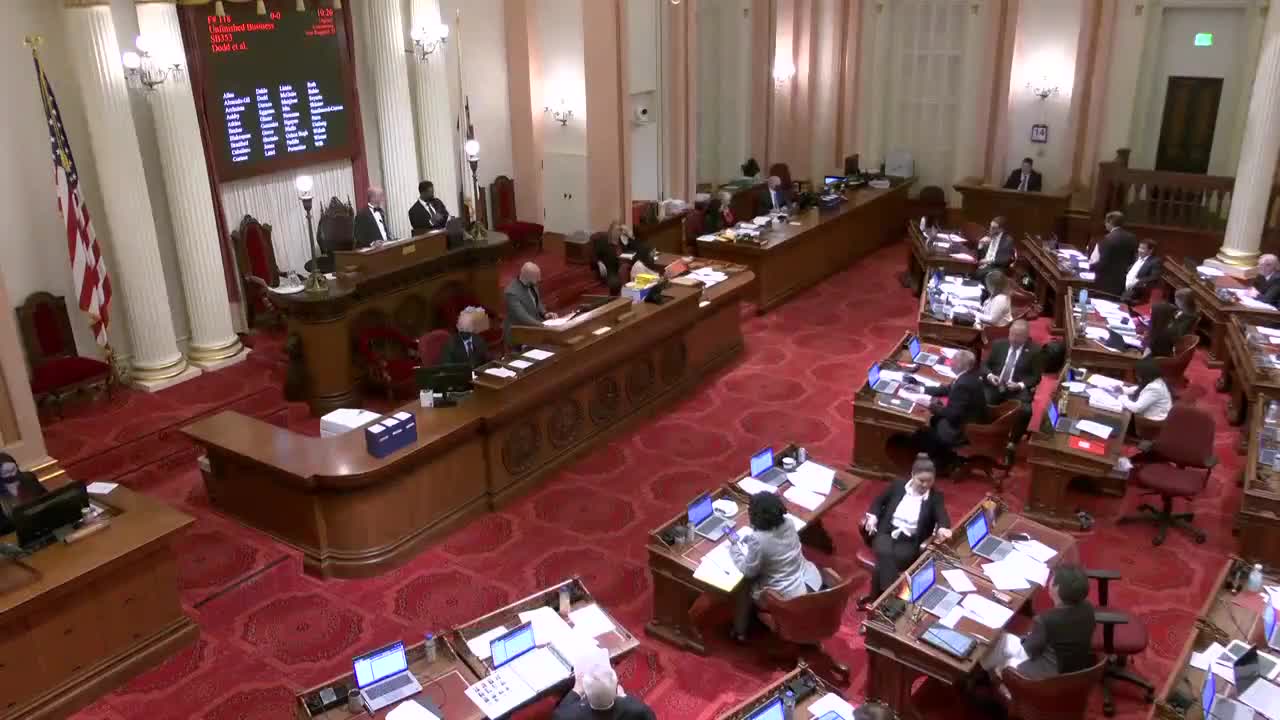 33SEC
Senate Floor
 1MIN
Assembly Floor
 11MIN
Senate Standing Committee on Natural Resources and Water
 9MIN
Senate Standing Committee on Energy, Utilities and Communications
Bill Author