SB 607: Controlled substances.
- Session Year: 2023-2024
- House: Senate
- Latest Version Date: 2024-09-28
Current Status:
Passed
(2024-09-28: Chaptered by Secretary of State. Chapter 862, Statutes of 2024.)
Introduced
In Committee
First Chamber
In Committee
Second Chamber
Enacted
Existing law requires a prescriber, with certain exceptions, before directly dispensing or issuing for a minor the first prescription for a controlled substance containing an opioid in a single course of treatment, to discuss specified information with the minor, the minors parent or guardian, or another adult authorized to consent to the minors medical treatment.
This bill would extend that requirement for the prescriber by applying it to any patient, not only a minor, under those circumstances.
Existing law requires a prescriber, with certain exceptions, before directly dispensing or issuing for a minor the first prescription for a controlled substance containing an opioid in a single course of treatment, to discuss specified information with the minor, the minors parent or guardian, or another adult authorized to consent to the minors medical treatment.
This bill would extend that requirement for the prescriber by applying it to any patient, not only a minor, under those circumstances.
Existing law requires a prescriber, with certain exceptions, before directly dispensing or issuing for a minor the first prescription for a controlled substance containing an opioid in a single course of treatment, to discuss specified information with the minor, the minors parent or guardian, or another adult authorized to consent to the minors medical treatment.
This bill would extend that requirement for the prescriber by applying it to any patient, not only a minor, under those circumstances. The bill would also require the prescriber to discuss the availability of nonpharmacological treatments for pain.
Existing law requires a prescriber, with certain exceptions, before directly dispensing or issuing for a minor the first prescription for a controlled substance containing an opioid in a single course of treatment, to discuss specified information with the minor, the minors parent or guardian, or another adult authorized to consent to the minors medical treatment.
This bill would extend that requirement for the prescriber by applying it to any patient, not only a minor, under those circumstances. The bill would also require the prescriber to discuss the availability of nonpharmacological treatments for pain.
Existing law, the Knox-Keene Health Care Service Plan Act of 1975, provides for the licensure and regulation of health care service plans by the Department of Managed Health Care. Existing law provides for the regulation of health insurers by the Department of Insurance. Under existing law, specified persons are exempt from that regulation by the Department of Managed Health Care or the Department of Insurance.This bill would authorize a student health plan operated by a bona fide, private, nonprofit institution of higher learning to operate in California if the institution files a yearly report with the Director of the Department of Managed Health Care that certifies specified information, including information relating to specific coverage the student health plan would provide, and the characteristics the institution would use for purposes of establishing rates for individual students and any dependents. The bill would require the report to be certified under penalty of perjury. The bill would exempt a student health plan that complies with those requirements from other regulation by the Department of Managed Health Care or the Department of Insurance, except as specified. By expanding the crime of perjury, the bill would impose a state-mandated local program.The California Constitution requires the state to reimburse local agencies and school districts for certain costs mandated by the state. Statutory provisions establish procedures for making that reimbursement.This bill would provide that no reimbursement is required by this act for a specified reason.This bill would declare that it is to take effect immediately as an urgency statute.Existing law, the Knox-Keene Health Care Service Plan Act of 1975, provides for the licensure and regulation of health care service plans by the Department of Managed Health Care. Existing law provides for the regulation of health insurers by the Department of Insurance. Under existing law, specified persons are exempt from that regulation by the Department of Managed Health Care or the Department of Insurance.
This bill would authorize a student health plan operated by a bona fide, private, nonprofit institution of higher learning to operate in California if the institution files a yearly report with the Director of the Department of Managed Health Care that certifies specified information under penalty of perjury. information, including information relating to specific coverage the student health plan would provide, and the characteristics the institution would use for purposes of establishing rates for individual students and any dependents. The bill would require the report to be certified under penalty of perjury. The bill would exempt a student health plan that complies with those requirements from other regulation by the Department of Managed Health Care or the Department of Insurance, except as specified. By expanding the crime of perjury, the bill would impose a state-mandated local program.
The California Constitution requires the state to reimburse local agencies and school districts for certain costs mandated by the state. Statutory provisions establish procedures for making that reimbursement.
This bill would provide that no reimbursement is required by this act for a specified reason.
This bill would declare that it is to take effect immediately as an urgency statute.
Existing law, the Knox-Keene Health Care Service Plan Act of 1975, provides for the licensure and regulation of health care service plans by the Department of Managed Health Care. Existing law provides for the regulation of health insurers by the Department of Insurance. Under existing law, specified persons are exempt from that regulation by the Department of Managed Health Care or the Department of Insurance.
This bill would authorize a student health plan operated by a bona fide, private, nonprofit institution of higher learning to operate in California if the institution files a yearly report with the Director of the Department of Managed Health Care that certifies specified information under penalty of perjury. The bill would exempt a student health plan that complies with those requirements from other regulation by the Department of Managed Health Care or the Department of Insurance, except as specified. By expanding the crime of perjury, the bill would impose a state-mandated local program.
The California Constitution requires the state to reimburse local agencies and school districts for certain costs mandated by the state. Statutory provisions establish procedures for making that reimbursement.
This bill would provide that no reimbursement is required by this act for a specified reason.
This bill would declare that it is to take effect immediately as an urgency statute.
Existing law, the Knox-Keene Health Care Service Plan Act of 1975, provides for the licensure and regulation of health care service plans by the Department of Managed Health Care. Existing law provides for the regulation of health insurers by the Department of Insurance. Under existing law, specified persons are exempt from that regulation by the Department of Managed Health Care or the Department of Insurance.
This bill would authorize a student health plan operated by a bona fide, private, nonprofit institution of higher learning to operate in California if the institution files a yearly report with the Director of the Department of Managed Health Care that certifies specified information under penalty of perjury. The bill would exempt a student health plan that complies with those requirements from other regulation by the Department of Managed Health Care or the Department of Insurance, except as specified. By expanding the crime of perjury, the bill would impose a state-mandated local program.
The California Constitution requires the state to reimburse local agencies and school districts for certain costs mandated by the state. Statutory provisions establish procedures for making that reimbursement.
This bill would provide that no reimbursement is required by this act for a specified reason.
This bill would declare that it is to take effect immediately as an urgency statute.
(a)Except when a patient is being treated as set forth in Sections 11159, 11159.2, and 11167.5, and Article 2 (commencing with Section 11215) of Chapter 5, pertaining to the treatment of persons with substance use disorder, except when a patient is currently receiving hospice care, a prescriber shall discuss all of the following information with the patient, or if the patient is a minor, the minor, the minors parent or guardian, or another adult authorized to consent to the minors medical treatment, before directly dispensing or issuing to a patient the first prescription in a single course of treatment for a controlled substance containing an opioid:
(1)The risks of addiction and overdose associated with the use of opioids.
(2)The increased risk of addiction to an opioid for an individual who is suffering from both mental and substance abuse disorders.
(3)The danger of taking an opioid with a benzodiazepine, alcohol, or another central nervous system depressant.
(4)Any other information required by law.
(b)This section does not apply in any of the following circumstances:
(1)If the patients treatment includes emergency services and care as defined in Section 1317.1.
(2)If the patients treatment is associated with, or incidental to, an emergency surgery, regardless of whether the surgery is performed on an inpatient or outpatient basis.
(3)If, in the prescribers professional judgment, fulfilling the requirements of subdivision (a) would be detrimental to the patients health or safety, or in violation of the patients legal rights regarding confidentiality.
(c)Notwithstanding any other law, including Section 11374, failure to comply with this section shall not constitute a criminal offense.
(a)Except when a patient is being treated as set forth in Sections 11159, 11159.2, and 11167.5, and Article 2 (commencing with Section 11215) of Chapter 5, pertaining to the treatment of persons with substance use disorder, except when a patient is currently receiving hospice care, a prescriber shall discuss all of the following information with the patient, or if the patient is a minor, the minor, the minors parent or guardian, or another adult authorized to consent to the minors medical treatment, before directly dispensing or issuing to a patient the first prescription in a single course of treatment for a controlled substance containing an opioid:
(1)The risks of addiction and overdose associated with the use of opioids.
(2)The increased risk of addiction to an opioid for an individual who is suffering from both mental and substance abuse disorders.
(3)The danger of taking an opioid with a benzodiazepine, alcohol, or another central nervous system depressant.
(4)Any other information required by law.
(b)This section does not apply in any of the following circumstances:
(1)If the patients treatment includes emergency services and care as defined in Section 1317.1.
(2)If the patients treatment is associated with, or incidental to, an emergency surgery, regardless of whether the surgery is performed on an inpatient or outpatient basis.
(3)If, in the prescribers professional judgment, fulfilling the requirements of subdivision (a) would be detrimental to the patients health or safety, or in violation of the patients legal rights regarding confidentiality.
(c)Notwithstanding any other law, including Section 11374, failure to comply with this section shall not constitute a criminal offense.
(a)Except when a patient is being treated as set forth in Sections 11159, 11159.2, and 11167.5, and Article 2 (commencing with Section 11215) of Chapter 5, pertaining to the treatment of persons with substance use disorder, except when a patient is currently receiving hospice care, a prescriber shall discuss all of the following information with the patient, or if the patient is a minor, the minor, the minors parent or guardian, or another adult authorized to consent to the minors medical treatment, before directly dispensing or issuing to a patient the first prescription in a single course of treatment for a controlled substance containing an opioid:
(1)The risks of addiction and overdose associated with the use of opioids.
(2)The increased risk of addiction to an opioid for an individual who is suffering from both mental and substance abuse disorders.
(3)The danger of taking an opioid with a benzodiazepine, alcohol, or another central nervous system depressant.
(4)The availability of nonpharmacological treatments for pain. (5)(4)Any other information required by law.
(b)This section does not apply in any of the following circumstances:
(1)If the patients treatment includes emergency services and care as defined in Section 1317.1.
(2)If the patients treatment is associated with, or incidental to, an emergency surgery, regardless of whether the surgery is performed on an inpatient or outpatient basis.
(3)If, in the prescribers professional judgment, fulfilling the requirements of subdivision (a) would be detrimental to the patients health or safety, or in violation of the patients legal rights regarding confidentiality.
(c)Notwithstanding any other law, including Section 11374, failure to comply with this section shall not constitute a criminal offense.
(a)Except when a patient is being treated as set forth in Sections 11159, 11159.2, and 11167.5, and Article 2 (commencing with Section 11215) of Chapter 5, pertaining to the treatment of persons with substance use disorder, or for a diagnosis of chronic intractable pain as used in Section 124960 of this code and Section 2241.5 of the Business and Professions Code, except when a patient is currently receiving hospice care, a prescriber shall discuss all of the following with the minor, the information with the patient, or if the patient is a minor, the minor, the minors parent or guardian, or another adult authorized to consent to the minors medical treatment treatment, before directly dispensing or issuing for a minor to a patient the first prescription in a single course of treatment for a controlled substance containing an opioid:
(1)The risks of addiction and overdose associated with the use of opioids.
(2)The increased risk of addiction to an opioid to for an individual who is suffering from both mental and substance abuse disorders.
(3)The danger of taking an opioid with a benzodiazepine, alcohol, or another central nervous system depressant.
(4)The availability of nonpharmacological treatments for pain.
(4)(5)Any other information required by law.
(b)This section does not apply in any of the following circumstances:
(1)If the minors patients treatment includes emergency services and care as defined in Section 1317.1.
(2)If the minors patients treatment is associated with with, or incident to incidental to, an emergency surgery, regardless of whether the surgery is performed on an inpatient or outpatient basis.
(3)If, in the prescribers professional judgment, fulfilling the requirements of subdivision (a) would be detrimental to the minors patients health or safety, or in violation of the minors patients legal rights regarding confidentiality.
(c)Notwithstanding any other law, including Section 11374, failure to comply with this section shall not constitute a criminal offense.
All matter omitted in this version of the bill appears in the bill as amended in the Senate, April 24, 2023. (JR11)The Legislature finds and declares the following:
It is the intent of the Legislature to require that a bona fide, private, nonprofit institution of higher learning that elects to offer a self-funded student health plan in accordance with this act shall maintain or exceed coverage standards of the federal Patient Protection and Affordable Care Act, including all California-mandated benefits under the federal Patient Protection and Affordable Care Act, and to comply with the provisions of this act.
SEC. 2.Section 1343 of the Health and Safety Code is amended to read:1343.(a)This chapter shall apply to health care service plans and specialized health care service plan contracts as defined in subdivisions (f) and (o) of Section 1345.
(b)The director may by the adoption of rules or the issuance of orders deemed necessary and appropriate, either unconditionally or upon specified terms and conditions or for specified periods, exempt from this chapter any class of persons or plan contracts if the director finds the action to be in the public interest and not detrimental to the protection of subscribers, enrollees, or persons regulated under this chapter, and that the regulation of the persons or plan contracts is not essential to the purposes of this chapter.
(c)The director, upon request of the Director of Health Care Services, shall exempt from this chapter any county-operated pilot program contracting with the State Department of Health Care Services pursuant to Article 7 (commencing with Section 14490) of Chapter 8 of Part 3 of Division 9 of the Welfare and Institutions Code. The director may exempt noncounty-operated pilot programs upon request of the Director of Health Care Services. Those exemptions may be subject to conditions the Director of Health Care Services deems appropriate.
(d)Upon the request of the Director of Health Care Services, the director may exempt from this chapter any mental health plan contractor or any capitated rate contract under Chapter 8.9 (commencing with Section 14700) of Part 3 of Division 9 of the Welfare and Institutions Code. Those exemptions may be subject to conditions the Director of Health Care Services deems appropriate.
(e)This chapter shall not apply to:
(1)A person organized and operating pursuant to a certificate issued by the Insurance Commissioner unless the entity is directly providing the health care service through those entity-owned or contracting health facilities and providers, in which case this chapter shall apply to the insurers plan and to the insurer.
(2)A plan directly operated by a bona fide public or private institution of higher learning that directly provides health care services only to its students, faculty, staff, administration, and their respective dependents, except that a plan described in this paragraph shall be subject to Sections 1343.2 and 1367.33, and Article 5.55 (commencing with Section 1374.30), as provided in Section 1343.2.
(3)A person who does all of the following:
(A)Promises to provide care for life or for more than one year in return for a transfer of consideration from, or on behalf of, a person 60 years of age or older.
(B)Has obtained a written license pursuant to Chapter 2 (commencing with Section 1250) or Chapter 3.2 (commencing with Section 1569).
(C)Has obtained a certificate of authority from the State Department of Social Services.
(4)The Major Risk Medical Insurance Board when engaging in activities under Chapter 8 (commencing with Section 10700) of Part 2 of Division 2 of the Insurance Code, Part 6.3 (commencing with Section 12695) of Division 2 of the Insurance Code, and Part 6.5 (commencing with Section 12700) of Division 2 of the Insurance Code.
(5)The California Small Group Reinsurance Fund.
SEC. 3.Section 1343.2 is added to the Health and Safety Code, to read:1343.2.(a)A plan operated by a bona fide, private, nonprofit institution of higher learning that directly provides health care services to its students and their respective dependents may operate in the state if, on or before July 1 of each year for which the student health plan will be offered for the upcoming school year, the institution files a report with the director under penalty of perjury certifying that all of the following are true:
(1)The student health plan does all of the following:
(1)The student health plan satisfies(A)Satisfies all applicable minimum essential coverage standards under federal law and the federal Centers for Medicare and Medicaid Services within the United States Department of Health and Human Services has issued a minimum essential coverage certification pursuant to Section 156.604 of Title 45 of the Code of Federal Regulations or otherwise acknowledges that the student health plan satisfies all applicable minimum essential coverage standards.
(B)Provides guaranteed coverage to eligible students, with no waiting periods or exclusions of preexisting conditions.
(C)Provides 100-percent coverage of preventive health services, including preventive health services for women as defined in the federal Patient Protection and Affordable Care Act (PPACA) (Section 2713 of the federal Public Health Service Act (42 U.S.C. Sec. 300gg-13)) and its implementing regulations (Part 147 of Title 45 of the Code of Federal Regulations).
(D)Provides coverage for all essential health benefits, as defined in PPACA and its implementing regulations.
(E)Provides coverage for the health benefits covered by the Kaiser Foundation Health Plan Small Group HMO 30 plan (federal health product identification number 40513CA035) as this plan was offered during the first quarter of 2014, as follows, regardless of whether the benefits are specifically referenced in the plan contract or evidence of coverage for that plan:
(i)Medically necessary basic health care services, as defined in subdivision (b) of Section 1345 of this code and Section 1300.67 of Title 28 of the California Code of Regulations.
(ii)The health benefits mandated by statutes enacted before December 31, 2011, as described in the following sections: Sections 1367.002, 1367.06, and 1367.35 (preventive services for children); Section 1367.25 (prescription drug coverage for contraceptives); Section 1367.45 (AIDS vaccine); Section 1367.46 (HIV testing); Section 1367.51 (diabetes); Section 1367.54 (alpha-fetoprotein testing); Section 1367.6 (breast cancer screening); Section 1367.61 (prosthetics for laryngectomy); Section 1367.62 (maternity hospital stay); Section 1367.63 (reconstructive surgery); Section 1367.635 (mastectomies); Section 1367.64 (prostate cancer); Section 1367.65 (mammography); Section 1367.66 (cervical cancer); Section 1367.665 (cancer screening tests); Section 1367.67 (osteoporosis); Section 1367.68 (surgical procedures for jaw bones); Section 1367.71 (anesthesia for dental); Section 1367.9 (conditions attributable to diethylstilbestrol); Section 1368.2 (hospice care); Section 1370.6 (cancer clinical trials); Section 1371.5 (emergency response ambulance or ambulance transport services); subdivision (b) of Section 1373 (sterilization operations or procedures); Section 1373.4 (inpatient hospital and ambulatory maternity); Section 1374.56 (phenylketonuria); Section 1374.17 (organ transplants for HIV); Section 1374.72 (mental health parity); and Section 1374.73 (autism/behavioral health treatment).
(iii)Any other benefits mandated by statutes enacted before December 31, 2011, as described in those statutes.
(iv)The health benefits that are not otherwise required to be covered under Chapter 2.2 (commencing with Section 1340), to the extent otherwise required pursuant to Sections 1367.18, 1367.21, 1367.215, 1367.22, 1367.24, and 1367.25, and Section 1300.67.24 of Title 28 of the California Code of Regulations.
(2)The institution pledges assets sufficient to support the liabilities of the student health plan.
(3)The institution has received a report prepared by an actuary a Fellow of the Society of Actuaries that includes both of the following:
(A)Support for the proposed premiums for the plan.
(B)The assets pledged by the institution to support the liabilities of the student health plan are sufficient for the institution to operate the student health plan.
(4)The institution operated operated, or participated in, an employer-sponsored plan in the prior calendar year with at least 10,000 enrollees, including employees and their dependents.
(5)The institution maintains at least an AA bond rating by one of the major credit rating agencies. agencies, or the institution obtains an annual independent actuarial assessment of the outstanding future liability of the program and secures a surety bond of equal or greater value to cover all outstanding future liability associated with the program.
(6)The institution will operate the student health plan in compliance with the independent medical review system established pursuant to Article 5.55 (commencing with Section 1374.30).
(7)The institution will operate the student health plan in compliance with the grievance system established pursuant to Section 1368.
(8)The institution will use only the following characteristics of an individual, and any dependent thereof, for purposes of establishing the rate of the individual, and any dependent thereof:
(A)Age, pursuant to the age bands established by the United States Secretary of Health and Human Services and the age rating curve established by the federal Centers for Medicare and Medicaid Services pursuant to Section 2701(a)(3) of the federal Public Health Service Act (42 U.S.C. Sec. 300gg(a)(3)). Rates based on age shall be determined using the individuals age as of the date of the plan issuance or renewal, as applicable, and shall not vary by more than three to one for like individuals of different ages who are 21 years of age or older as described in federal regulations adopted pursuant to Section 2701(a)(3) of the federal Public Health Service Act (42 U.S.C. Sec. 300gg(a)(3)).
(B)Geographic region. The geographic regions for purposes of rating shall be the following:
(i)Region 1 shall consist of the Counties of Alpine, Amador, Butte, Calaveras, Colusa, Del Norte, Glenn, Humboldt, Lake, Lassen, Mendocino, Modoc, Nevada, Plumas, Shasta, Sierra, Siskiyou, Sutter, Tehama, Trinity, Tuolumne, and Yuba.
(ii)Region 2 shall consist of the Counties of Marin, Napa, Solano, and Sonoma.
(iii)Region 3 shall consist of the Counties of El Dorado, Placer, Sacramento, and Yolo.
(iv)Region 4 shall consist of the City and County of San Francisco.
(v)Region 5 shall consist of the County of Contra Costa.
(vi)Region 6 shall consist of the County of Alameda.
(vii)Region 7 shall consist of the County of Santa Clara.
(viii)Region 8 shall consist of the County of San Mateo.
(ix)Region 9 shall consist of the Counties of Monterey, San Benito, and Santa Cruz.
(x)Region 10 shall consist of the Counties of Mariposa, Merced, San Joaquin, Stanislaus, and Tulare.
(xi)Region 11 shall consist of the Counties of Fresno, Kings, and Madera.
(xii)Region 12 shall consist of the Counties of San Luis Obispo, Santa Barbara, and Ventura.
(xiii)Region 13 shall consist of the Counties of Imperial, Inyo, and Mono.
(xiv)Region 14 shall consist of the County of Kern.
(xv)Region 15 shall consist of the ZIP Codes in the County of Los Angeles starting with 906 to 912, inclusive, 915, 917, 918, and 935.
(xvi)Region 16 shall consist of the ZIP Codes in the County of Los Angeles other than those identified in clause (xv).
(xvii)Region 17 shall consist of the Counties of Riverside and San Bernardino.
(xviii)Region 18 shall consist of the County of Orange.
(xix)Region 19 shall consist of the County of San Diego.
(C)Whether the plan covers an individual, or an individual and dependents thereof.
(9)The plan will apply an annual limit on maximum out-of-pocket expenses as follows:
(A)The limit shall not exceed the limit described in Section 1302(c) of PPACA and any subsequent rules, regulations, or guidance issued under that section.
(B)The limit shall result in a total maximum out-of-pocket limit for all covered essential health benefits that shall equal the dollar amounts in effect under Section 223(c)(2)(A)(ii) of the Internal Revenue Code of 1986 with the dollar amounts adjusted as specified in Section 1302(c)(1)(B) of PPACA.
(C)The limit shall not be construed to affect the reduction in cost sharing for eligible enrollees described in Section 1402 of PPACA and any subsequent rules, regulations, or guidance issued under that section.
(D)The maximum out-of-pocket limit shall apply to any copayment, coinsurance, deductible, and any other form of cost sharing for all covered benefits that meet the definition of essential health benefits under Section 1367.005.
(10)The plan will not establish either of the following:
(A)Lifetime limits on the dollar value of any specific covered benefits that are essential health benefits, whether provided in network or out of network.
(B)Annual limits on the dollar value of any specific covered benefits that are essential health benefits, whether provided in network or out of network.
(11)All contracts between the institution and a provider of medical services to plan enrollees shall bar the provider from seeking payment from the plan enrollee other than a copayment specified therein.
(12)The institution will not submit any charge to the plan:
(A)That is not incurred for the operation of the plan.
(B)That does not reflect fair market value cost.
(b)A plan that has complied with subdivision (a) is exempt from this chapter, except for Sections 1367.33, 1368, and 1379 and Article 5.55 (commencing with Section 1374.30 of the Health and Safety Code).
(c)This section does not apply to a plan operated by the University of California system.
(d)As used in this section, the term institution of higher learning means an institution of higher education as defined in the federal Higher Education Act of 1965 (20 U.S.C Sec. 1001).
SEC. 4.Section 740 of the Insurance Code is amended to read:740.(a)Notwithstanding any other law, and except as provided in this section, a person or other entity that provides coverage in this state for medical, surgical, chiropractic, physical therapy, speech pathology, audiology, professional mental health, dental, hospital, or optometric expenses, whether the coverage is by direct payment, reimbursement, or otherwise, shall be presumed to be subject to the jurisdiction of the department unless the person or other entity shows that while providing the services it is subject to the jurisdiction of another agency of this or another state or the federal government.
(b)A person or entity may show that it is subject to the jurisdiction of another agency of this or another state or the federal government by providing to the commissioner the appropriate certificate or license issued by the other governmental agency that permits or qualifies it to provide those services for which it is licensed or certificated.
(c)A person or entity that is unable to show that it is subject to the jurisdiction of another agency of this or another state or the federal government, shall submit to an examination by the commissioner to determine the organization and solvency of the person or the entity, and to determine whether the person or entity is in compliance with the applicable provisions of this code, and shall be required to obtain a certificate of authority to do business in California and be required to meet all appropriate reserve, surplus, capital, and other necessary requirements imposed by this code for all insurers.
(d)A person or entity unable to show that it is subject to the jurisdiction of another agency of this or another state or the federal government shall be subject to all appropriate provisions of this code regarding the conduct of its business.
(e)The department shall prepare and maintain for public inspection a list of those persons or entities described in subdivision (a) that are not subject to the jurisdiction of another agency of this or another state or the federal government and that the department knows to be operating in this state. There shall be no liability of any kind on the part of the state, the department, and its employees for the accuracy of the list or for any comments made with respect to it.
(f)(1)An administrator licensed by the department who advertises or administers coverage in this state described in subdivision (a), that is provided by any person or entity described in subdivision (c), and where the coverage does not meet all pertinent requirements specified in this code and that is not provided or completely underwritten, insured or otherwise fully covered by an admitted life or disability insurer, hospital service plan or health care service plan, shall advise and disclose to any purchaser, prospective purchaser, covered person or entity, and any production agency licensed by the department involved in the transaction, all financial and operational information relative to the content and scope of the plan and, specifically, as to the lack of insurance or other coverage.
(2)A production agency obtaining knowledge of any coverage relative to the content and scope of a hospital service plan or health care service plan, as required under this subdivision, shall advise and disclose to any purchaser, prospective purchaser, covered person or entity, the knowledge regarding the content and scope of the plan and, specifically, as to the lack of insurance by an admitted carrier or other qualified plan.
(g)A health care service plan, as defined in Chapter 2.2 (commencing with Section 1340) of Division 2 of the Health and Safety Code, shall not be subject to this section.
(h)The department shall notify, in writing, the Director of the Department of Managed Health Care whenever it determines that a multiple employer trust qualifies as a health care service plan subject to Chapter 2.2 (commencing with Section 1340) of Division 2 of the Health and Safety Code.
(i)A health care service plan, including a self-insured reimbursement plan that pays for or reimburses any part of the cost of health care services, operated by any city, county, city and county, public entity, or political subdivision, or a public joint labor management trust as described in subdivision (c) of Section 1349.2 of the Health and Safety Code, that is exempt pursuant to Section 1349.2 of the Health and Safety Code from the Knox-Keene Health Care Service Plan Act of 1975 (Chapter 2.2 (commencing with Section 1340) of Division 2 of the Health and Safety Code), is also exempt from this code.
(j)A self-funded student health plan operated by a bona fide, private, nonprofit institution of higher learning that directly provides health care services to its students and their respective dependents and that timely files the report required by Section 1343.2 of the Health and Safety Code is exempt from this code.
SEC. 5.No reimbursement is required by this act pursuant to Section 6 of Article XIIIB of the California Constitution because the only costs that may be incurred by a local agency or school district will be incurred because this act creates a new crime or infraction, eliminates a crime or infraction, or changes the penalty for a crime or infraction, within the meaning of Section 17556 of the Government Code, or changes the definition of a crime within the meaning of Section 6 of Article XIIIB of the California Constitution.
SEC. 6.This act is an urgency statute necessary for the immediate preservation of the public peace, health, or safety within the meaning of Article IV of the California Constitution and shall go into immediate effect. The facts constituting the necessity are:
To authorize universities to implement self-funded student health plans commencing with the fall 2023 academic semester and thereby end hardship to enrollees of existing student health plans underwritten by commercial plans and insurers in the form of higher rates and limited benefits, it is necessary that this bill take effect immediately.
The Legislature finds and declares the following:
It is the intent of the Legislature to require that a bona fide, private, nonprofit institution of higher learning that elects to offer a self-funded student health plan in accordance with this act shall maintain or exceed coverage standards of the federal Patient Protection and Affordable Care Act, including all California-mandated benefits under the federal Patient Protection and Affordable Care Act, and to comply with the provisions of this act.
SECTION 1.SEC. 2.Section 1343 of the Health and Safety Code is amended to read:1343.(a)This chapter shall apply to health care service plans and specialized health care service plan contracts as defined in subdivisions (f) and (o) of Section 1345.
(b)The director may by the adoption of rules or the issuance of orders deemed necessary and appropriate, either unconditionally or upon specified terms and conditions or for specified periods, exempt from this chapter any class of persons or plan contracts if the director finds the action to be in the public interest and not detrimental to the protection of subscribers, enrollees, or persons regulated under this chapter, and that the regulation of the persons or plan contracts is not essential to the purposes of this chapter.
(c)The director, upon request of the Director of Health Care Services, shall exempt from this chapter any county-operated pilot program contracting with the State Department of Health Care Services pursuant to Article 7 (commencing with Section 14490) of Chapter 8 of Part 3 of Division 9 of the Welfare and Institutions Code. The director may exempt noncounty-operated pilot programs upon request of the Director of Health Care Services. Those exemptions may be subject to conditions the Director of Health Care Services deems appropriate.
(d)Upon the request of the Director of Health Care Services, the director may exempt from this chapter any mental health plan contractor or any capitated rate contract under Chapter 8.9 (commencing with Section 14700) of Part 3 of Division 9 of the Welfare and Institutions Code. Those exemptions may be subject to conditions the Director of Health Care Services deems appropriate.
(e)This chapter shall not apply to:
(1)A person organized and operating pursuant to a certificate issued by the Insurance Commissioner unless the entity is directly providing the health care service through those entity-owned or contracting health facilities and providers, in which case this chapter shall apply to the insurers plan and to the insurer.
(2)A plan directly operated by a bona fide public or private institution of higher learning that directly provides health care services only to its students, faculty, staff, administration, and their respective dependents, except that a plan described in this paragraph shall be subject to Sections 1343.2 and 1367.33, and Article 5.55 (commencing with Section 1374.30), as provided in Section 1343.2.
(3)A person who does all of the following:
(A)Promises to provide care for life or for more than one year in return for a transfer of consideration from, or on behalf of, a person 60 years of age or older.
(B)Has obtained a written license pursuant to Chapter 2 (commencing with Section 1250) or Chapter 3.2 (commencing with Section 1569).
(C)Has obtained a certificate of authority from the State Department of Social Services.
(4)The Major Risk Medical Insurance Board when engaging in activities under Chapter 8 (commencing with Section 10700) of Part 2 of Division 2 of the Insurance Code, Part 6.3 (commencing with Section 12695) of Division 2 of the Insurance Code, and Part 6.5 (commencing with Section 12700) of Division 2 of the Insurance Code.
(5)The California Small Group Reinsurance Fund.
SEC. 2.SEC. 3.Section 1343.2 is added to the Health and Safety Code, to read:1343.2.(a)A plan operated by a bona fide, private, nonprofit institution of higher learning that directly provides health care services to its students and their respective dependents may operate in the state if, on or before July 1 of each year for which the student health plan will be offered for the upcoming school year, the institution files a report with the director under penalty of perjury certifying that all of the following are true:
(1)The student health plan satisfies all applicable minimum essential coverage standards under federal law. law and the federal Centers for Medicare and Medicaid Services within the United States Department of Health and Human Services has issued a minimum essential coverage certification pursuant to Section 156.604 of Title 45 of the Code of Federal Regulations or otherwise acknowledges that the student health plan satisfies all applicable minimum essential coverage standards.
(2)The institution pledges assets sufficient to support the liabilities of the student health plan.
(3)The institution has received a report prepared by an actuary that includes both of the following:
(A)Support for the proposed premiums for the plan.
(B)The assets pledged by the institution to support the liabilities of the student health plan are sufficient for the institution to operate the student health plan.
(3)(4)The institution operated an employer-sponsored plan in the prior calendar year with at least 10,000 enrollees, including employees and their dependents.
(4)(5)The institution maintains at least an AA bond rating by one of the major credit rating agencies.
(5)(6)The institution will operate the student health plan in compliance with the independent medical review system established pursuant to Article 5.55 (commencing with Section 1374.30).
(7)The institution will operate the student health plan in compliance with the grievance system established pursuant to Section 1368.
(b)A plan that has complied with subdivision (a) is exempt from this chapter, except for Section 1367.33 Sections 1367.33, 1368, and 1379 and Article 5.55 (commencing with Section 1374.30 of the Health and Safety Code).
(c)This section does not apply to a plan operated by the University of California system.
(d)As used in this section, the term institution of higher learning means an institution of higher education as defined in the federal Higher Education Act of 1965 (20 U.S.C Sec. 1001).
SEC. 3.SEC. 4.Section 740 of the Insurance Code is amended to read:740.(a)Notwithstanding any other law, and except as provided in this section, a person or other entity that provides coverage in this state for medical, surgical, chiropractic, physical therapy, speech pathology, audiology, professional mental health, dental, hospital, or optometric expenses, whether the coverage is by direct payment, reimbursement, or otherwise, shall be presumed to be subject to the jurisdiction of the department unless the person or other entity shows that while providing the services it is subject to the jurisdiction of another agency of this or another state or the federal government.
(b)A person or entity may show that it is subject to the jurisdiction of another agency of this or another state or the federal government by providing to the commissioner the appropriate certificate or license issued by the other governmental agency that permits or qualifies it to provide those services for which it is licensed or certificated.
(c)A person or entity that is unable to show that it is subject to the jurisdiction of another agency of this or another state or the federal government, shall submit to an examination by the commissioner to determine the organization and solvency of the person or the entity, and to determine whether the person or entity is in compliance with the applicable provisions of this code, and shall be required to obtain a certificate of authority to do business in California and be required to meet all appropriate reserve, surplus, capital, and other necessary requirements imposed by this code for all insurers.
(d)A person or entity unable to show that it is subject to the jurisdiction of another agency of this or another state or the federal government shall be subject to all appropriate provisions of this code regarding the conduct of its business.
(e)The department shall prepare and maintain for public inspection a list of those persons or entities described in subdivision (a) that are not subject to the jurisdiction of another agency of this or another state or the federal government and that the department knows to be operating in this state. There shall be no liability of any kind on the part of the state, the department, and its employees for the accuracy of the list or for any comments made with respect to it.
(f)(1)An administrator licensed by the department who advertises or administers coverage in this state described in subdivision (a), that is provided by any person or entity described in subdivision (c), and where the coverage does not meet all pertinent requirements specified in this code and that is not provided or completely underwritten, insured or otherwise fully covered by an admitted life or disability insurer, hospital service plan or health care service plan, shall advise and disclose to any purchaser, prospective purchaser, covered person or entity, and any production agency licensed by the department involved in the transaction, all financial and operational information relative to the content and scope of the plan and, specifically, as to the lack of insurance or other coverage.
(2)A production agency obtaining knowledge of any coverage relative to the content and scope of a hospital service plan or health care service plan, as required under this subdivision, shall advise and disclose to any purchaser, prospective purchaser, covered person or entity, the knowledge regarding the content and scope of the plan and, specifically, as to the lack of insurance by an admitted carrier or other qualified plan.
(g)A health care service plan, as defined in Chapter 2.2 (commencing with Section 1340) of Division 2 of the Health and Safety Code, shall not be subject to this section.
(h)The department shall notify, in writing, the Director of the Department of Managed Health Care whenever it determines that a multiple employer trust qualifies as a health care service plan subject to Chapter 2.2 (commencing with Section 1340) of Division 2 of the Health and Safety Code.
(i)A health care service plan, including a self-insured reimbursement plan that pays for or reimburses any part of the cost of health care services, operated by any city, county, city and county, public entity, or political subdivision, or a public joint labor management trust as described in subdivision (c) of Section 1349.2 of the Health and Safety Code, that is exempt pursuant to Section 1349.2 of the Health and Safety Code from the Knox-Keene Health Care Service Plan Act of 1975 (Chapter 2.2 (commencing with Section 1340) of Division 2 of the Health and Safety Code), is also exempt from this code.
(j)A self-funded student health plan operated by a bona fide, private, nonprofit institution of higher learning that directly provides health care services to its students and their respective dependents and that timely files the report required by Section 1343.2 of the Health and Safety Code is exempt from this code.
SEC. 4.SEC. 5.No reimbursement is required by this act pursuant to Section 6 of Article XIIIB of the California Constitution because the only costs that may be incurred by a local agency or school district will be incurred because this act creates a new crime or infraction, eliminates a crime or infraction, or changes the penalty for a crime or infraction, within the meaning of Section 17556 of the Government Code, or changes the definition of a crime within the meaning of Section 6 of Article XIIIB of the California Constitution.
SEC. 5.SEC. 6.This act is an urgency statute necessary for the immediate preservation of the public peace, health, or safety within the meaning of Article IV of the California Constitution and shall go into immediate effect. The facts constituting the necessity are:
To authorize universities to implement self-funded student health plans commencing with the fall 2023 academic semester and thereby end hardship to enrollees of existing student health plans underwritten by commercial plans and insurers in the form of higher rates and limited benefits, it is necessary that this bill take effect immediately.
(a)This chapter shall apply to health care service plans and specialized health care service plan contracts as defined in subdivisions (f) and (o) of Section 1345.
(b)The director may by the adoption of rules or the issuance of orders deemed necessary and appropriate, either unconditionally or upon specified terms and conditions or for specified periods, exempt from this chapter any class of persons or plan contracts if the director finds the action to be in the public interest and not detrimental to the protection of subscribers, enrollees, or persons regulated under this chapter, and that the regulation of the persons or plan contracts is not essential to the purposes of this chapter.
(c)The director, upon request of the Director of Health Care Services, shall exempt from this chapter any county-operated pilot program contracting with the State Department of Health Care Services pursuant to Article 7 (commencing with Section 14490) of Chapter 8 of Part 3 of Division 9 of the Welfare and Institutions Code. The director may exempt noncounty-operated pilot programs upon request of the Director of Health Care Services. Those exemptions may be subject to conditions the Director of Health Care Services deems appropriate.
(d)Upon the request of the Director of Health Care Services, the director may exempt from this chapter any mental health plan contractor or any capitated rate contract under Chapter 8.9 (commencing with Section 14700) of Part 3 of Division 9 of the Welfare and Institutions Code. Those exemptions may be subject to conditions the Director of Health Care Services deems appropriate.
(e)This chapter shall not apply to:
(1)A person organized and operating pursuant to a certificate issued by the Insurance Commissioner unless the entity is directly providing the health care service through those entity-owned or contracting health facilities and providers, in which case this chapter shall apply to the insurers plan and to the insurer.
(2)A plan directly operated by a bona fide public or private institution of higher learning that directly provides health care services only to its students, faculty, staff, administration, and their respective dependents, except that a plan described in this paragraph shall be subject to Section 1367.33. Sections 1343.2 and 1367.33, and Article 5.55 (commencing with Section 1374.30), as provided in Section 1343.2.
(3)A person who does all of the following:
(A)Promises to provide care for life or for more than one year in return for a transfer of consideration from, or on behalf of, a person 60 years of age or older.
(B)Has obtained a written license pursuant to Chapter 2 (commencing with Section 1250) or Chapter 3.2 (commencing with Section 1569).
(C)Has obtained a certificate of authority from the State Department of Social Services.
(4)The Major Risk Medical Insurance Board when engaging in activities under Chapter 8 (commencing with Section 10700) of Part 2 of Division 2 of the Insurance Code, Part 6.3 (commencing with Section 12695) of Division 2 of the Insurance Code, and Part 6.5 (commencing with Section 12700) of Division 2 of the Insurance Code.
(5)The California Small Group Reinsurance Fund.
SEC. 2.Section 1343.2 is added to the Health and Safety Code, to read:1343.2.(a)A plan operated by a bona fide, private, nonprofit institution of higher learning that directly provides health care services to its students and their respective dependents may operate in the state if, on or before July 1 of each year for which the student health plan will be offered for the upcoming school year, the institution files a report with the director under penalty of perjury certifying that all of the following are true:
(1)The student health plan satisfies all applicable minimum essential coverage standards under federal law.
(2)The institution pledges assets sufficient to support the liabilities of the student health plan.
(3)The institution operated an employer-sponsored plan in the prior calendar year with at least 10,000 enrollees, including employees and their dependents.
(4)The institution maintains at least an AA bond rating by one of the major credit rating agencies.
(5)The institution will operate the student health plan in compliance with the independent medical review system established pursuant to Article 5.55 (commencing with Section 1374.30).
(b)A plan that has complied with subdivision (a) is exempt from this chapter, except for Section 1367.33 and Article 5.55 (commencing with Section 1374.30 of the Health and Safety Code).
(c)This section does not apply to a plan operated by the University of California system.
SEC. 3.Section 740 of the Insurance Code is amended to read:740.(a)Notwithstanding any other provision of law, and except as provided herein, any in this section, a person or other entity that provides coverage in this state for medical, surgical, chiropractic, physical therapy, speech pathology, audiology, professional mental health, dental, hospital, or optometric expenses, whether the coverage is by direct payment, reimbursement, or otherwise, shall be presumed to be subject to the jurisdiction of the department unless the person or other entity shows that while providing the services it is subject to the jurisdiction of another agency of this or another state or the federal government.
(b)A person or entity may show that it is subject to the jurisdiction of another agency of this or another state or the federal government by providing to the commissioner the appropriate certificate or license issued by the other governmental agency that permits or qualifies it to provide those services for which it is licensed or certificated.
(c)Any A person or entity that is unable to show that it is subject to the jurisdiction of another agency of this or another state or the federal government, shall submit to an examination by the commissioner to determine the organization and solvency of the person or the entity, and to determine whether the person or entity is in compliance with the applicable provisions of this code, and shall be required to obtain a certificate of authority to do business in California and be required to meet all appropriate reserve, surplus, capital, and other necessary requirements imposed by this code for all insurers.
(d)Any A person or entity unable to show that it is subject to the jurisdiction of another agency of this or another state or the federal government shall be subject to all appropriate provisions of this code regarding the conduct of its business.
(e)The department shall prepare and maintain for public inspection a list of those persons or entities described in subdivision (a) that are not subject to the jurisdiction of another agency of this or another state or the federal government and that the department knows to be operating in this state. There shall be no liability of any kind on the part of the state, the department, and its employees for the accuracy of the list or for any comments made with respect to it.
(f)Any (1)An administrator licensed by the department who advertises or administers coverage in this state described in subdivision (a), that is provided by any person or entity described in subdivision (c), and where the coverage does not meet all pertinent requirements specified in this code and that is not provided or completely underwritten, insured or otherwise fully covered by an admitted life or disability insurer, hospital service plan or health care service plan, shall advise and disclose to any purchaser, prospective purchaser, covered person or entity, and any production agency licensed by the department involved in the transaction, all financial and operational information relative to the content and scope of the plan and, specifically, as to the lack of insurance or other coverage.
Any(2)A production agency obtaining knowledge of any coverage relative to the content and scope of a hospital service plan or health care service plan, as required under this subdivision, shall advise and disclose to any purchaser, prospective purchaser, covered person or entity, the knowledge regarding the content and scope of the plan and, specifically, as to the lack of insurance by an admitted carrier or other qualified plan.
(g)A health care service plan, as defined in Chapter 2.2 (commencing with Section 1340) of Division 2 of the Health and Safety Code, shall not be subject to this section.
(h)The department shall notify, in writing, the Director of the Department of Managed Health Care whenever it determines that a multiple employer trust qualifies as a health care service plan subject to Chapter 2.2 (commencing with Section 1340) of Division 2 of the Health and Safety Code.
(i)Any A health care service plan, including a self-insured reimbursement plan that pays for or reimburses any part of the cost of health care services, operated by any city, county, city and county, public entity, or political subdivision, or a public joint labor management trust as described in subdivision (c) of Section 1349.2 of the Health and Safety Code, that is exempt pursuant to Section 1349.2 of the Health and Safety Code from the Knox-Keene Health Care Service Plan Act of 1975 (Chapter 2.2 (commencing with Section 1340) of Division 2 of the Health and Safety Code), is also exempt from this code.
(j)A self-funded student health plan operated by a bona fide, private, nonprofit institution of higher learning that directly provides health care services to its students and their respective dependents and that timely files the report required by Section 1343.2 of the Health and Safety Code is exempt from this code.
SEC. 4.No reimbursement is required by this act pursuant to Section 6 of Article XIIIB of the California Constitution because the only costs that may be incurred by a local agency or school district will be incurred because this act creates a new crime or infraction, eliminates a crime or infraction, or changes the penalty for a crime or infraction, within the meaning of Section 17556 of the Government Code, or changes the definition of a crime within the meaning of Section 6 of Article XIIIB of the California Constitution.
SEC. 5.This act is an urgency statute necessary for the immediate preservation of the public peace, health, or safety within the meaning of Article IV of the California Constitution and shall go into immediate effect. The facts constituting the necessity are:
To authorize universities to implement self-funded student health plans commencing with the fall 2023 academic semester and thereby end hardship to enrollees of existing student health plans underwritten by commercial plans and insurers in the form of higher rates and limited benefits, it is necessary that this bill take effect immediately.
|
Date
|
Status
|
|---|---|
| Sep 28, 2024 | Chaptered by Secretary of State. Chapter 862, Statutes of 2024. |
| Sep 28, 2024 | Approved by the Governor. |
| Sep 3, 2024 | Enrolled and presented to the Governor at 3 p.m. |
| Aug 28, 2024 | In Senate. Ordered to engrossing and enrolling. |
| Aug 27, 2024 | Read third time. Passed. (Ayes 49. Noes 3. Page 6661.) Ordered to the Senate. |
| Jul 3, 2024 | Read second time. Ordered to third reading. |
| Jul 2, 2024 | From committee: Do pass. (Ayes 11. Noes 0.) (July 2). |
| Jun 26, 2024 | June 26 hearing postponed by committee. |
| Jun 11, 2024 | From committee: Do pass and re-refer to Com. on APPR. (Ayes 12. Noes 1.) (June 11). Re-referred to Com. on APPR. |
| May 23, 2024 | June 4 hearing postponed by committee. |
| Apr 29, 2024 | Referred to Com. on B. & P. |
| Jan 22, 2024 | In Assembly. Read first time. Held at Desk. |
| Jan 22, 2024 | Read third time. Passed. (Ayes 39. Noes 0. Page 3020.) Ordered to the Assembly. |
| Jan 17, 2024 | Read second time. Ordered to third reading. |
| Jan 16, 2024 | From committee: Be ordered to second reading pursuant to Senate Rule 28.8. |
| Jan 10, 2024 | Set for hearing January 16. |
| Jan 8, 2024 | From committee: Do pass and re-refer to Com. on APPR. (Ayes 12. Noes 0. Page 2950.) (January 8). Re-referred to Com. on APPR. |
| Jan 4, 2024 | From committee with author's amendments. Read second time and amended. Re-referred to Com. on B., P. & E. D. |
| Jan 4, 2024 | Set for hearing January 8. |
| Jan 3, 2024 | Re-referred to Com. on B., P. & E. D. |
| Jan 3, 2024 | Re-referred to Com. on RLS. |
| Jan 3, 2024 | Withdrawn from committee. |
| Jan 3, 2024 | From committee with author's amendments. Read second time and amended. Re-referred to Com. on HEALTH. |
| May 1, 2023 | May 3 set for second hearing canceled at the request of author. |
| Apr 25, 2023 | Set for hearing May 3. |
| Apr 24, 2023 | From committee with author's amendments. Read second time and amended. Re-referred to Com. on HEALTH. |
| Apr 24, 2023 | April 26 set for first hearing canceled at the request of author. |
| Apr 17, 2023 | From committee with author's amendments. Read second time and amended. Re-referred to Com. on HEALTH. |
| Apr 12, 2023 | Set for hearing April 26. |
| Feb 22, 2023 | Referred to Com. on HEALTH. |
| Feb 16, 2023 | From printer. May be acted upon on or after March 18. |
| Feb 15, 2023 | Introduced. Read first time. To Com. on RLS. for assignment. To print. |
|
Date
|
Description
|
Location
|
Votes
|
|
|---|---|---|---|---|
| Aug 27, 2024 | SB 607 Portantino Senate Third Reading By Low | Assembly Floor |
Passed |
|
| Jul 2, 2024 | Do pass. | Assembly Standing Committee on Appropriations |
Passed |
|
| Jun 11, 2024 | Do pass and be re-referred to the Committee on [Appropriations] | Assembly Standing Committee on Business and Professions |
Passed |
|
| Jan 22, 2024 | Senate 3rd Reading SB607 Portantino | Senate Floor |
Passed |
|
| Jan 8, 2024 | Do pass, but first be re-referred to the Committee on [Appropriations] | Senate Standing Committee on Business, Professions and Economic Development |
Passed |
This list shows positions taken on this bill by organizations on the date displayed, which is linked to the original source.
Positions by individuals are not included.
SENATE THIRD READING
STR Bill Id:SB 607
Author:(Portantino)
As Amended Ver:January 4, 2024
Majority vote
SUMMARY
Expands the existing requirement for prescribers to discuss information about the risks associated with opioid use and addiction when issuing or dispensing opioids to a minor patient to require that discussion to occur regardless of the patient's age, with exceptions.
Major Provisions
- Requires prescribers to discuss the information regarding the risks and dangers of opioid use and addiction with adult patients in addition to the existing requirement for minors.
- Exempts patients currently receiving hospice care from the discussion requirement.
- Repeals the exemption from the discussion requirement for patients who are being treated for a diagnosis of chronic intractable pain.
COMMENTS
Opioids are a class of drugs prescribed and administered by health professionals to manage pain. The term "opioid" is commonly used to describe both naturally occurring opiates derived from the opium poppy as well as their manufactured synthetics. Common examples of prescription opioids include oxycodone (OxyContin, Percocet); hydrocodone (Vicodin, Norco, Lorcet); codeine; and morphine. Heroin is also an opioid, but is ineligible for lawful prescription.
In addition to providing pain relief, opioids can be used as a cough suppressant, an antidiarrheal, a method of sedation, and a treatment for shortness of breath. The majority of pharmaceutical opioids are Schedule II drugs under the federal Controlled Substances Act, considered by the DEA to have a high potential for abuse that may lead to severe psychological or physical dependence. However, combination drugs containing lower doses of opioids combined with other active ingredients are typically less restricted; for example, cough syrups containing low doses of codeine are frequently classified Schedule V medications.
In October of 2017, the White House declared the opioid crisis a national public health emergency, formally recognizing a growing epidemic responsible for devastation in communities across the country. According to the CDC, as many as 50,000 Americans died of an opioid overdose in 2016, representing a 28% increase over the previous year. The California Department of Public Health estimated that nearly 2,000 Californians died of an opioid overdose in 2016. These death rates compare to those at the height of the AIDS epidemic.
The nature of the country's opioid crisis has evolved over the past several years as illicitly manufactured fentanyl has replaced prescribed pain management medication as the dominant source of opioid-related overdoses. Fentanyl is a synthetic opioid that is up to 100 times stronger than morphine. Fentanyl is often pressed into pills to imitate more common (and less potent) pharmaceutical products, and other drugs can be unknowingly "laced" with fentanyl. Over 70,000 Americans died of a fentanyl overdose in 2021, including 5,961 deaths in California – approximately 83% of all opioid-related deaths in California.
Historically, the abuse of controlled substances was previously viewed primarily as a criminal concern analogous to street narcotics cases regularly investigated by law enforcement. However, an expert consensus has evolved that the substance abuse must be addressed through the lens of public health policy. In 2018, a coalition of California State Assemblymembers announced a package of legislation aimed at combating the opioid crisis, which sought to address the opioid crisis by curbing overprescribing, encouraging treatment, and preventing diversion.
Another bill introduced to address the opioid crisis in 2018 was Senate Bill 1109 by Minority Leader Patricia Bates. That bill required warning labels for opioid prescription drug containers; required that the Opioid Factsheet for Patients be provided to athletes engaged in after-school youth sports; required that existing trainings for prescribers related to pain management include addiction risks associated with Schedule II drugs; and required that prescribers discuss the dangers of opioid abuse and addiction with minor patients or their parents or guardians prior to prescribing a controlled substance containing an opioid.
This bill would expand the discussion requirements previously enacted through Senate Bill 1109 to apply to all patients of any age, not just minors. The bill would additionally repeal the exemption for patients diagnosed with chronic intractable pain but add a new exemption for patients receiving hospice care, and existing exemptions would remain in place. The author believes that adult patients would also benefit from receiving information about the risks of opioids from their health care providers, especially as overdose death rates remain high.
According to the Author
"Existing law requires a prescriber to discuss specified opioid information when dispensing or issuing controlled substances. However, this requirement only applies when prescribing opioids to minors, not adults. Opioid overdoses are not exclusive to minors. The number of overdose deaths involving opioids, including prescription opioids, heroin, and synthetic opioids in 2021 was 10 times the number in 1999, which indicates that many measures to reduce opioid use have been unsuccessful. In an effort to mitigate the frequency of overdoses and reduce the number of opioid overdose deaths, SB 607 would expand the current requirement to include all patients, not just minors."
Arguments in Support
The Medical Board of California (MBC) supports this bill, writing: "This bill promotes patient safety and helps ensure that important conversations related to the safe use of opioid medications occur between patients and providers. Notably, the proposed requirements in the bill are compatible with the Board's recently updated Guidelines for Prescribing Controlled Substances for Pain. For these reasons, the Board is pleased to support SB 607."
Arguments in Opposition
The California Medical Association (CMA) opposes this bill unless amended to limit penalties or liabilities for a prescriber who fails to engage in the required discussion with their patient. The CMA writes: "While this bill is well intended it would add redundancy to an already cumbersome prescribing process by putting federal guidelines into state statute. Putting federal guidelines into state statute is concerning due to guidelines being often volatile in nature. Physicians currently provide the notifications mentioned in this bill and are diligent about staying up to date with federal guidance, while providing their patients with the most accurate information on prescribing. However, this bill could undermine that relationship by putting physicians in a bind when federal guidelines are updated but the state statute has not been."
FISCAL COMMENTS
According to the Assembly Committee on Appropriations, the Department of Consumer Affairs reports the healing arts boards anticipate this bill will have minor, if any, costs; the California Board of Naturopathic Medicine states that if enforcement cases increase, the board may need additional funding in the future, but is unable to quantify the amount.
VOTES
SENATE FLOOR: 39-0-1
YES: Allen, Alvarado-Gil, Archuleta, Ashby, Atkins, Becker, Blakespear, Bradford, Caballero, Cortese, Dahle, Dodd, Durazo, Eggman, Glazer, Gonzalez, Grove, Hurtado, Jones, Laird, Limón, McGuire, Menjivar, Min, Newman, Nguyen, Niello, Ochoa Bogh, Padilla, Portantino, Roth, Rubio, Seyarto, Skinner, Stern, Umberg, Wahab, Wiener, Wilk
ABS, ABST OR NV: Smallwood-Cuevas
ASM BUSINESS AND PROFESSIONS: 12-1-5
YES: Berman, Juan Carrillo, Grayson, Irwin, Jackson, Low, Lowenthal, McKinnor, Stephanie Nguyen, Pellerin, Soria, Zbur
NO: Bains
ABS, ABST OR NV: Flora, Alanis, Chen, Dixon, Sanchez
ASM APPROPRIATIONS: 11-0-4
YES: Wicks, Arambula, Bryan, Calderon, Wendy Carrillo, Mike Fong, Grayson, Haney, Hart, Pellerin, Villapudua
ABS, ABST OR NV: Sanchez, Dixon, Jim Patterson, Ta
UPDATED
VERSION: January 4, 2024
CONSULTANT: Robert Sumner / B. & P. / (916) 319-3301 FN: 0003705
Date of Hearing: July 2, 2024
ASSEMBLY COMMITTEE ON APPROPRIATIONS
Buffy Wicks, Chair
SBPCA Bill Id:SB 607
Author:(Portantino) – As Amended Ver:January 4, 2024
Policy Committee: | Business and Professions | Vote: | 12 - 1 |
|
| ||
|
|
Urgency: No State Mandated Local Program: No Reimbursable: No
SUMMARY:
This bill expands the requirement for a prescriber to discuss information about risks associated with opioid use and addiction before issuing or dispensing an opioid to a minor patient to instead apply, with exceptions, regardless of the patient’s age.
Specifically, this bill:
- Requires a prescriber to discuss information about risks associated with opioid use and addiction when issuing or dispensing opioids, regardless of the patient’s age, except as follows:
- The patient is receiving hospice care.
- The patient’s treatment includes emergency services, as defined, or is associated with emergency surgery.
- In the prescriber’s professional judgment, fulfilling the requirements in 1, above, would be detrimental to the patient’s health or safety, or would violate the patient’s legal rights regarding confidentiality.
- Repeals from the requirement in 1, above, the exemption for a patient who is being treated for chronic intractable pain.
FISCAL EFFECT:
The Department of Consumer Affairs reports the healing arts boards anticipate this bill will have minor, if any, costs. The California Board of Naturopathic Medicine (board) states that if enforcement cases increase, the board may need additional funding in the future, but is unable to quantify the amount.
COMMENTS:
- Purpose. According to the author:
Existing law requires a prescriber to discuss specified opioid information when dispensing or issuing controlled substances. However, this requirement only applies when prescribing opioids to minors, not adults. Opioid overdoses are not exclusive to minors. The number of overdose deaths involving opioids, including prescription opioids, heroin, and synthetic opioids in 2021 was 10 times the number in 1999, which indicates that many measures to reduce opioid use have been unsuccessful. In an effort to mitigate the frequency of overdoses and reduce the number of opioid overdose deaths, SB 607 would expand the current requirement to include all patients, not just minors.
- Background. Opioids are a class of drugs prescribed and administered by health professionals to manage pain. Opioids may be naturally occurring opiates derived from the opium poppy, or manufactured synthetics. Common examples of prescription opioids include oxycodone (brand names include OxyContin and Percocet); hydrocodone (brand names include Vicodin and Norco); codeine; and morphine. Heroin is also an opioid, but is ineligible for lawful prescription in the U.S.
- Related Legislation. AB 1751 (Gipson), of the current legislative session, would have similarly expanded the requirement for prescribers to discuss the risks of opioid use to apply to all patients and would have required prescribers to discuss the availability of non-pharmacological treatments for pain. AB 1751 died in the Assembly Committee on Health.
- Prior Legislation.
- SB 1109 (Bates), Chapter 693, Statutes of 2018 required a prescriber to discuss with a minor, or the minor’s representative, information relating to the risks associated with opioids prior to dispensing or issuing a prescription of opioids to a minor for the first time.
- AB 888 (Low), of the 2019-20 Legislative Session, was substantially similar to AB 1751 and died in the Senate Committee on Business, Professions, and Economic Development.
- Oppose Unless Amended. The California Medical Association (CMA) opposes this bill unless amended to limit penalties or liabilities for a prescriber who fails to engage in the required discussion with their patient. The CMA writes:
While this bill is well intended it would add redundancy to an already cumbersome prescribing process by putting federal guidelines into state statute. Putting federal guidelines into state statute is concerning due to guidelines being often volatile in nature. Physicians currently provide the notifications mentioned in this bill and are diligent about staying up to date with federal guidance, while providing their patients with the most accurate information on prescribing. However, this bill could undermine that relationship by putting physicians in a bind when federal guidelines are updated but the state statute has not been.
Analysis Prepared by: Allegra Kim / APPR. / (916) 319-2081
Date of Hearing: June 11, 2024
ASSEMBLY COMMITTEE ON BUSINESS AND PROFESSIONS
Marc Berman, Chair
SBPCA Bill Id:SB 607
Author:(Portantino) – As Amended Ver:January 4, 2024
SENATE VOTE: 39-0
SUBJECT: Controlled substances
SUMMARY: Expands the existing requirement for prescribers to discuss information about the risks associated with opioid use and addiction when issuing or dispensing opioids to a minor patient to require that discussion to occur regardless of the patient’s age, with exceptions.
EXISTING LAW:
- Allows only a physician, dentist, podiatrist, or veterinarian; or, within a specified scope of practice, a naturopathic doctor, pharmacist, registered nurse, certified nurse-midwife, nurse practitioner, physician assistant, optometrist, or out-of-state prescriber; to write or issue a prescription. (Health and Safety Code (HSC) § 11150)
- States that a prescription for a controlled substance shall only be issued for a legitimate medical purpose by an individual practitioner acting in the usual course of their professional practice, and that the responsibility for the proper prescribing and dispensing of controlled substances is upon the prescribing practitioner, but a corresponding responsibility rests with the pharmacist who fills the prescription. (HSC § 11153)
- Prohibits medical professionals from prescribing, administering, or dispensing a controlled substance to a person with substance use disorder, as defined. (HSC § 11156)
- Requires a prescriber to discuss with a minor, or the minor’s representative, prior to dispensing or issuing a prescription for a controlled substance containing an opioid for the first time, all of the following information, with specified exceptions:
- The risks of addiction and overdose associated with the use of opioids.
- The increased risk of addiction to an opioid to an individual who is suffering from both mental and substance abuse disorders.
- The danger of taking an opioid with a benzodiazepine, alcohol, or another central nervous system depressant.
- Any other information required by law.
(HSC § 11158.1)
- Lists a number of required features that must be included for all prescription forms for controlled substances, including fraud-prevention identifiers, printing information, and information relating to the prescribing practitioner. (HSC § 11162.1)
- Requires all prescriptions and dispensations of controlled substances to meet a series of requirements including use of a controlled substance prescription form, presence of a signature and date in ink, and the address of the patient. (HSC § 11164)
- Establishes the Controlled Substance Utilization Review and Evaluation System (CURES), a prescription drug monitoring program maintained by the Department of Justice to collect records of dispensed controlled substances for review by licensed prescribers and dispensers, regulatory investigators, law enforcement, and researchers. (HSC § 11165)
- Requires health care practitioners in receipt of a federal Drug Enforcement Administration registration providing authorization to prescribe controlled substances, as well as pharmacists, to register for access to the CURES database. (HSC § 11165.1)
- Requires health care practitioners to consult the CURES database to review a patient’s controlled substance history before prescribing a Schedule II, Schedule III, or Schedule IV controlled substance to the patient for the first time and at least once every six months thereafter if the substance remains part of the treatment of the patient. (HSC § 11165.4)
- Requires schools and youth sports organizations to annually provide athletes of all ages, as well as the parents or guardians of athletes 17 years of age or younger, with a copy of the Opioid Factsheet for Patients published by the Centers for Disease Control and Prevention (CDC), and requires that a signed document acknowledging receipt of the factsheet be returned prior to the athlete’s participation in the sport. (HSC § 124236)
- Requires a prescriber to do both of the following when prescribing an opioid or benzodiazepine medication to a patient, subject to specified conditions and exceptions:
- Offer a prescription for naloxone hydrochloride or a similar drug approved for the complete or partial reversal of opioid-induced respiratory depression.
- Provide education to the patient, or a minor patient’s parent or guardian, on opioid overdose prevention and the use of naloxone hydrochloride or similar drugs.
(Business and Professions Code (BPC) § 741)
- Requires all physicians and surgeons to complete a continuing education course in pain management and the treatment of terminally ill and dying patients. (BPC § 2190.5)
- Defines “dispense” as the furnishing of drugs or devices upon a prescription from an authored prescriber acting within the scope of their practice, or the furnishing of drugs or devices directly to a patient by prescribers. (BPC § 4024)
- Requires labeling of all containers of prescription drugs stating information about the drug, directions for use, the names of the patient and the prescriber, and other information required by the California State Board of Pharmacy. (BPC § 4076)
- Requires a pharmacy or practitioner to prominently display on the label or container for any opioid that is dispensed to a patient for outpatient use a notice that states “Caution: Opioid. Risk of overdose and addiction.” (BPC § 4076.7)
THIS BILL:
- Requires prescribers to discuss the information regarding the risks and dangers of opioid use and addiction with adult patients in addition to the existing requirement for minors.
- Exempts patients currently receiving hospice care from the discussion requirement.
- Repeals the exemption from the discussion requirement for patients who are being treated for a diagnosis of chronic intractable pain.
FISCAL EFFECT: Pursuant to Senate Rule 28.8, negligible state costs.
COMMENTS:
Purpose. This bill is sponsored by the author. According to the author:
“Existing law requires a prescriber to discuss specified opioid information when dispensing or issuing controlled substances. However, this requirement only applies when prescribing opioids to minors, not adults. Opioid overdoses are not exclusive to minors. The number of overdose deaths involving opioids, including prescription opioids, heroin, and synthetic opioids in 2021 was 10 times the number in 1999, which indicates that many measures to reduce opioid use have been unsuccessful. In an effort to mitigate the frequency of overdoses and reduce the number of opioid overdose deaths, SB 607 would expand the current requirement to include all patients, not just minors.”
Background.
Overview of the Opioid Crisis. Opioids are a class of drugs prescribed and administered by health professionals to manage pain. The term “opioid” is commonly used to describe both naturally occurring opiates derived from the opium poppy as well as their manufactured synthetics. Common examples of prescription opioids include oxycodone (OxyContin, Percocet); hydrocodone (Vicodin, Norco, Lorcet); codeine; and morphine. Heroin is also an opioid, but is ineligible for lawful prescription in the United States.
In addition to providing pain relief, opioids can be used as a cough suppressant, an antidiarrheal, a method of sedation, and a treatment for shortness of breath. The majority of pharmaceutical opioids are Schedule II drugs under the federal Controlled Substances Act, considered by the DEA to have a high potential for abuse that may lead to severe psychological or physical dependence. However, combination drugs containing lower doses of opioids combined with other active ingredients are typically less restricted; for example, cough syrups containing low doses of codeine are frequently classified Schedule V medications.
In October of 2017, the White House declared the opioid crisis a national public health emergency, formally recognizing a growing epidemic responsible for devastation in communities across the country. According to the CDC, as many as 50,000 Americans died of an opioid overdose in 2016, representing a 28 percent increase over the previous year. The California Department of Public Health estimated that nearly 2,000 Californians died of an opioid overdose in 2016. These death rates compare to those at the height of the AIDS epidemic.
The nature of the country’s opioid crisis has evolved over the past several years as illicitly manufactured fentanyl has replaced prescribed pain management medication as the dominant source of opioid-related overdoses. Fentanyl is a synthetic opioid that is up to 100 times stronger than morphine. Fentanyl is often pressed into pills to imitate more common (and less potent) pharmaceutical products, and other drugs can be unknowingly “laced” with fentanyl. Over 70,000 Americans died of a fentanyl overdose in 2021, including 5,961 deaths in California – approximately 83% of all opioid-related deaths in California.
Historically, the abuse of controlled substances was previously viewed primarily as a criminal concern analogous to street narcotics cases regularly investigated by law enforcement. However, an expert consensus has evolved that the substance abuse must be addressed through the lens of public health policy. In 2018, a coalition of California State Assemblymembers announced a package of legislation aimed at combating the opioid crisis, which sought to address the opioid crisis by curbing overprescribing, encouraging treatment, and preventing diversion.
Another bill introduced to address the opioid crisis in 2018 was Senate Bill 1109 by Minority Leader Patricia Bates. That bill required warning labels for opioid prescription drug containers; required that the Opioid Factsheet for Patients be provided to athletes engaged in after-school youth sports; required that existing trainings for prescribers related to pain management include addiction risks associated with Schedule II drugs; and required that prescribers discuss the dangers of opioid abuse and addiction with minor patients or their parents or guardians prior to prescribing a controlled substance containing an opioid.
This bill would expand the discussion requirements previously enacted through Senate Bill 1109 to apply to all patients of any age, not just minors. The bill would additionally repeal the exemption for patients diagnosed with chronic intractable pain but add a new exemption for patients receiving hospice care, and existing exemptions would remain in place. The author believes that adult patients would also benefit from receiving information about the risks of opioids from their health care providers, especially as overdose death rates remain high.
Current Related Legislation.
AB 2115 (Haney) would allow an authorized practitioner to dispense a narcotic drug from a clinic’s supply for the purpose of relieving acute withdrawal symptoms when necessary while arrangements are being made for referral to opioid addiction treatment. This bill is pending in the Senate Committee on Business, Professions, and Economic Development.
Prior Related Legislation.
AB 1751 (Gipson) of 2023 would have similarly expanded the requirement for prescribers to discuss the risks of opioid use to apply to all patients and would have additionally required prescribers to discuss the availability of nonpharmacological treatments for pain. This bill died in the Assembly Committee on Health.
AB 888 (Low) of 2019 would also have similarly expanded the requirement for prescribers to discuss the risks of opioid use to apply to all patients and would have additionally required prescribers to discuss the availability of nonpharmacological treatments for pain. This bill died in the Senate Committee on Business, Professions, and Economic Development.
AB 528 (Low, Chapter 677, Statutes of 2019) reduced the required timeframe in which pharmacists are required to report dispensed prescriptions to CURES from seven days to the following business day, added Schedule V drugs to CURES, and changed the requirement for health practitioners to continue consulting the CURES database from every four months to every six months beginning July 1, 2021.
AB 2859 (Caballero, Chapter 240, Statutes of 2018) previously required certain pharmacies that dispense Schedule II, III, or IV controlled substances to display safe storage products, as defined, for sale in a place on the building premises that is located close to the pharmacy.
SB 1109 (Bates, Chapter 693, Statutes of 2018) required a prescriber to discuss with a minor, or the minor’s parent, guardian, or other adult authorized to consent to the minor’s medical treatment, information relating to the risks associated with opioids prior to dispensing or issuing a prescription of opioids to a minor for the first time.
ARGUMENTS IN SUPPORT:
The Medical Board of California (MBC) supports this bill, writing: “This bill promotes patient safety and helps ensure that important conversations related to the safe use of opioid medications occur between patients and providers. Notably, the proposed requirements in the bill are compatible with the Board’s recently updated Guidelines for Prescribing Controlled Substances for Pain. For these reasons, the Board is pleased to support SB 607.”
ARGUMENTS IN OPPOSITION:
The California Medical Association (CMA) opposes this bill unless amended to limit penalties or liabilities for a prescriber who fails to engage in the required discussion with their patient. The CMA writes: “While this bill is well intended it would add redundancy to an already cumbersome prescribing process by putting federal guidelines into state statute. Putting federal guidelines into state statute is concerning due to guidelines being often volatile in nature. Physicians currently provide the notifications mentioned in this bill and are diligent about staying up to date with federal guidance, while providing their patients with the most accurate information on prescribing. However, this bill could undermine that relationship by putting physicians in a bind when federal guidelines are updated but the state statute has not been.”
REGISTERED SUPPORT:
California Association of Highway Patrolmen
The Chrysalis Center
Medical Board of California
REGISTERED OPPOSITION:
California Medical Association
California Orthopedic Association
Analysis Prepared by: Robert Sumner / B. & P. / (916) 319-3301
SENATE RULES COMMITTEE Office of Senate Floor Analyses (916) 651-1520 Fax: (916) 327-4478 | SB 607 |
THIRD READING
Bill No: SB 607
Author: Portantino (D)
Amended: 1/4/24
Vote: 21
SENATE BUS., PROF. & ECON. DEV. COMMITTEE: 12-0, 1/8/24
AYES: Roth, Nguyen, Alvarado-Gil, Archuleta, Ashby, Becker, Dodd, Glazer, Niello, Smallwood-Cuevas, Wahab, Wilk
NO VOTE RECORDED: Eggman
SENATE APPROPRIATIONS COMMITTEE: Senate Rule 28.8
SUBJECT: Controlled substances
SOURCE: Author
DIGEST:
This bill expands requirements for prescribers to discuss risks and dangers of opioids and opioid addiction to all patients other than those currently exempt or those receiving hospice care.
ANALYSIS:
Existing law:
- Establishes various practice acts in the Business and Professions Code (BPC) governed by various boards within the Department of Consumer Affairs (DCA), which provide for the licensing and regulation of health care professionals. (BPC § 500 et seq.)
- Requires that existing trainings for certain health care professionals related to pain management include addiction risks associated with Schedule II drugs.
- Prohibits any person other than a physician, dentist, podiatrist, veterinarian, naturopathic doctor (according to certain supervision and protocol requirements), pharmacist (according to certain authorizations, policies and procedures), certified nurse-midwife (CNM) (if furnished or ordered incidentally to the provision of family planning services, routine health care or perinatal care, or care rendered consistent with the CNM’s practice, occurs under physician and surgeon supervision, and is in accordance with standardized procedures or protocols as specified), nurse practitioner (NP) (if it is consistent with a NP’s educational preparation or for which clinical competency has been established and maintained, occurs under physician and surgeon supervision, and is in accordance with standardized procedures or protocols as specified); a pharmacist or registered nurse or physician’s assistant acting within the scope of an experimental health workforce project authorized by the Office of Statewide Health Planning and Development (Health and Safety Code (HSC) § 128125 et seq.); an optometrist licensed under the Optometry Practice Act; or an out-of-state prescriber acting in an emergency situation from writing or issuing a prescription for a controlled substance. (HSC § 11150)
- Establishes schedules of drugs, from I – V, under the Uniform Controlled Substances Act, in descending order of the potential for abuse. (HSC §§ 11053 et seq)
- Specifies that a prescription for a controlled substance shall only be issued for a legitimate medical purpose and establishes responsibility for proper prescribing on the prescribing practitioner. States that a violation shall result in imprisonment for up to one year or a fine of up to $20,000, or both. (HSC § 11153)
- Requires a prescriber, for minor patients, prior to directly dispensing or issuing a prescription for a single course of treatment for a controlled substance containing an opioid, to discuss information, including the risks of addiction and overdose associated with the use of opioids, the increased risk of addiction to an individual who is suffering from both mental and substance abuse disorders, and the danger of taking an opioid with a benzodiazepine, alcohol, or another central nervous system depressant. Exempts all treatments of addiction, chronic intractable pain, medical emergencies, or any situation where the prescriber believes the discussion would be detrimental to the minor's health or safety or in violation of the minor's legal rights regarding confidentiality from the discussion requirements. (HSC § 11158.1)
This bill expands requirements for prescribers in 6) above to discuss risks and dangers of opioids and opioid addiction from only minor patients to all patients other than those currently exempt and those receiving hospice care.
Background
Opioids are a class of drugs prescribed and administered by health professionals to manage pain. The term “opioid” is commonly used to describe both naturally occurring opiates derived from the opium poppy as well as their manufactured synthetics. Common examples of prescription opioids include oxycodone (OxyContin, Percocet); hydrocodone (Vicodin, Norco, Lorcet); codeine; and morphine. In addition to providing pain relief, opioids can be used as a cough suppressant, an antidiarrheal, a method of sedation, and a treatment for shortness of breath. The majority of pharmaceutical opioids are Schedule II drugs under the federal Controlled Substances Act, considered by the Drug Enforcement Agency to have a high potential for abuse that may lead to severe psychological or physical dependence. However, combination drugs containing lower doses of opioids combined with other active ingredients are typically less restricted; for example, cough syrups containing low doses of codeine are frequently classified Schedule V medications.
In October 2017, the White House declared the opioid crisis a national public health emergency, formally recognizing what had long been understood to be a growing epidemic responsible for devastation in communities across the country. The California Department of Public Health estimated that over 7,000 Californians died of an opioid overdose in 2022.
The nature of the country’s opioid crisis has evolved over the past several years as illicitly manufactured fentanyl has replaced prescribed pain management medication as the dominant source of opioid-related overdoses. Fentanyl is a synthetic opioid that is up to 100 times stronger than morphine. Fentanyl is often pressed into pills to imitate more common (and less potent) pharmaceutical products, and other drugs can be unknowingly “laced” with fentanyl. Over 70,000 Americans died of a fentanyl overdose in 2021, including 5,961 deaths in California – approximately 83% of all opioid-related deaths in California.
The abuse of prescription drugs was historically viewed as a criminal concern analogous to street narcotics cases regularly investigated by law enforcement. In recent years, however, an expert consensus has evolved around the opinion that the opioid crisis must be addressed through the lens of public health policy. It is widely accepted that health professionals must continue to play a critical role in any meaningful solutions through safe-prescribing and the medication-assisted treatment of opioid-use disorder.
FISCAL EFFECT: Appropriation: No Fiscal Com.: Yes Local: No
SUPPORT: (Verified 1/17/24)
None received
OPPOSITION: (Verified 1/17/24)
None received
Prepared by: Sarah Mason / B., P. & E.D. /
1/17/24 14:34:09
**** END ****
SENATE COMMITTEE ON
BUSINESS, PROFESSIONS AND ECONOMIC DEVELOPMENT
Senator Richard Roth, Chair
2023 - 2024 Regular
Bill No: Hearing Date: January 8, 2024
Author: | |||
Version: | January 4, 2024 | ||
Urgency: | Yes | Fiscal: | Yes |
Consultant: | Sarah Mason | ||
Subject: Controlled substances
SUMMARY:
Expands requirements for prescribers to discuss risks and dangers of opioids and opioid addiction to all patients other than those currently exempt or those receiving hospice care.
Existing law:
- Establishes various practice acts in the Business and Professions Code (BPC) governed by various boards within the Department of Consumer Affairs (DCA), which provide for the licensing and regulation of health care professionals. (Business and Professions Code (BPC) § 500 et seq.)
- Requires that existing trainings for certain health care professionals related to pain management include addiction risks associated with Schedule II drugs.
- Prohibits any person other than a physician, dentist, podiatrist, veterinarian, naturopathic doctor (ND) (according to certain supervision and protocol requirements), pharmacist (according to certain authorizations, policies and procedures), certified nurse-midwife (CNM) (if furnished or ordered incidentally to the provision of family planning services, routine health care or perinatal care, or care rendered consistent with the CNM’s practice; occurs under physician and surgeon supervision; and is in accordance with standardized procedures or protocols as specified), nurse practitioner (NP) (if it is consistent with a NP’s educational preparation or for which clinical competency has been established and maintained; occurs under physician and surgeon supervision; and is in accordance with standardized procedures or protocols as specified); a pharmacist or registered nurse or physician’s assistant (PA) acting within the scope of an experimental health workforce project authorized by the Office of Statewide Health Planning and Development (Health and Safety Code (HSC) § 128125 et seq.); an optometrist licensed under the Optometry Practice Act, or an out-of-state prescriber acting in an emergency situation from writing or issuing a prescription for a controlled substance. (HSC § 11150)
- Establishes schedules of drugs, from I – V, under the Uniform Controlled Substances Act, in descending order of the potential for abuse. (HSC §§ 11053 et seq)
- Specifies that a prescription for a controlled substance shall only be issued for a legitimate medical purpose and establishes responsibility for proper prescribing on the prescribing practitioner. States that a violation shall result in imprisonment for up to one year or a fine of up to $20,000, or both. (HSC § 11153)
- Requires a prescriber, for minor patients, prior to directly dispensing or issuing a prescription for a single course of treatment for a controlled substance containing an opioid, to discuss information, including the risks of addiction and overdose associated with the use of opioids, the increased risk of addiction to an individual who is suffering from both mental and substance abuse disorders, and the danger of taking an opioid with a benzodiazepine, alcohol, or another central nervous system depressant. Exempts all treatments of addiction, chronic intractable pain, medical emergencies, or any situation where the prescriber believes the discussion would be detrimental to the minor's health or safety or in violation of the minor's legal rights regarding confidentiality from the discussion requirements. (HSC § 11158.1)
This bill expands requirements for prescribers in 6) above to discuss risks and dangers of opioids and opioid addiction from only minor patients to all patients other than those currently exempt and those receiving hospice care.
FISCAL EFFECT:
Unknown. This bill is keyed fiscal by Legislative Counsel.
COMMENTS:
- Purpose. The Author is the Sponsor of this bill. According to the Author, “Existing law requires a prescriber to discuss specified opioid information when dispensing or issuing controlled substances. However, this requirement only applies when prescribing opioids to minors, not adults. Opioid overdoses are not exclusive to minors. The number of overdose deaths involving opioids, including prescription opioids, heroin, and synthetic opioids in 2021 was 10 times the number in 1999, which indicates that many measures to reduce opioid use have been unsuccessful. In an effort to mitigate the frequency of overdoses and reduce the number of opioid overdose deaths, SB 607 would expand the current requirement to include all patients, not just minors.”
- Background. Opioids are a class of drugs prescribed and administered by health professionals to manage pain. The term “opioid” is commonly used to describe both naturally occurring opiates derived from the opium poppy as well as their manufactured synthetics. Common examples of prescription opioids include oxycodone (OxyContin, Percocet); hydrocodone (Vicodin, Norco, Lorcet); codeine; and morphine. In addition to providing pain relief, opioids can be used as a cough suppressant, an antidiarrheal, a method of sedation, and a treatment for shortness of breath. The majority of pharmaceutical opioids are Schedule II drugs under the federal Controlled Substances Act, considered by the Drug Enforcement Agency to have a high potential for abuse that may lead to severe psychological or physical dependence. However, combination drugs containing lower doses of opioids combined with other active ingredients are typically less restricted; for example, cough syrups containing low doses of codeine are frequently classified Schedule V medications.
In October of 2017, the White House declared the opioid crisis a national public health emergency, formally recognizing what had long been understood to be a growing epidemic responsible for devastation in communities across the country. The California Department of Public Health estimated that over 7,000 Californians died of an opioid overdose in 2022.
The nature of the country’s opioid crisis has evolved over the past several years as illicitly manufactured fentanyl has replaced prescribed pain management medication as the dominant source of opioid-related overdoses. Fentanyl is a synthetic opioid that is up to 100 times stronger than morphine. Fentanyl is often pressed into pills to imitate more common (and less potent) pharmaceutical products, and other drugs can be unknowingly “laced” with fentanyl. Over 70,000 Americans died of a fentanyl overdose in 2021, including 5,961 deaths in California – approximately 83% of all opioid-related deaths in California.
The abuse of prescription drugs was historically viewed as a criminal concern analogous to street narcotics cases regularly investigated by law enforcement. In recent years, however, an expert consensus has evolved around the opinion that the opioid crisis must be addressed through the lens of public health policy. It is widely accepted that health professionals must continue to play a critical role in any meaningful solutions through safe-prescribing and the medication-assisted treatment of opioid use disorder.
SUPPORT AND OPPOSITION:
Support:
None received
Opposition:
None received
-- END --
Discussed in Hearing
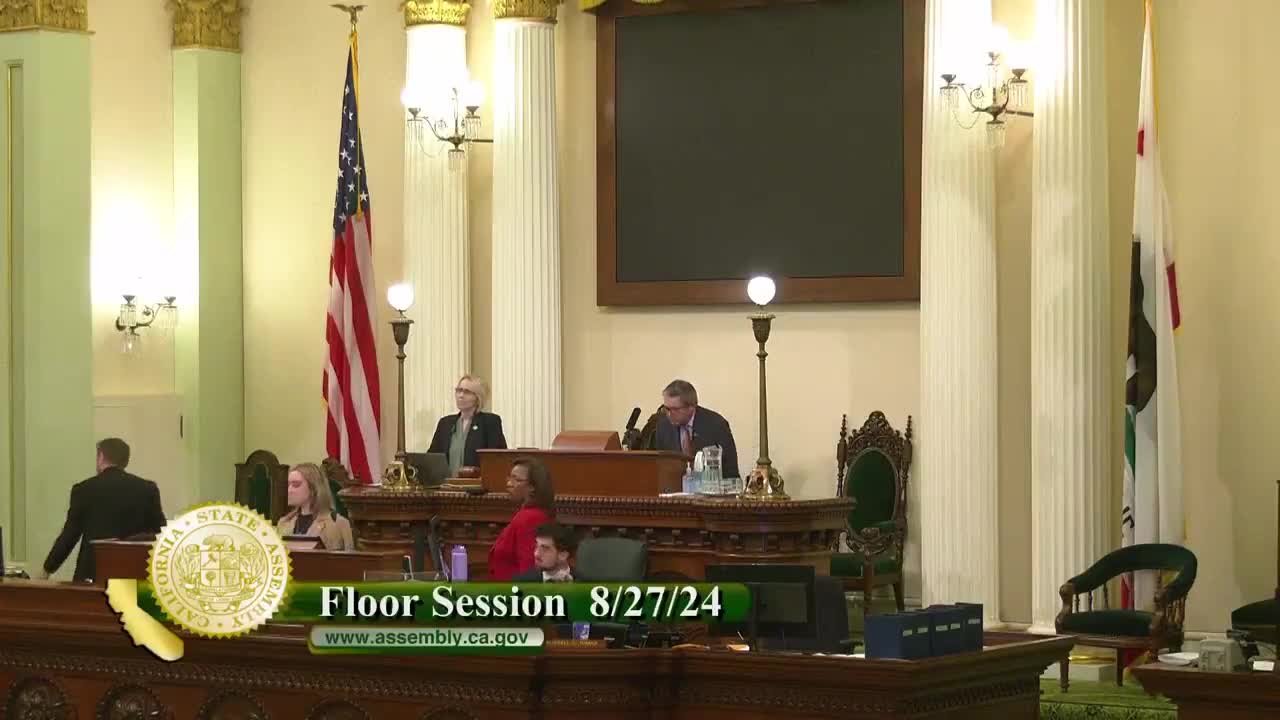 3MIN
Assembly Floor
 1MIN
Assembly Standing Committee on Appropriations
 13MIN
Assembly Standing Committee on Business and Professions
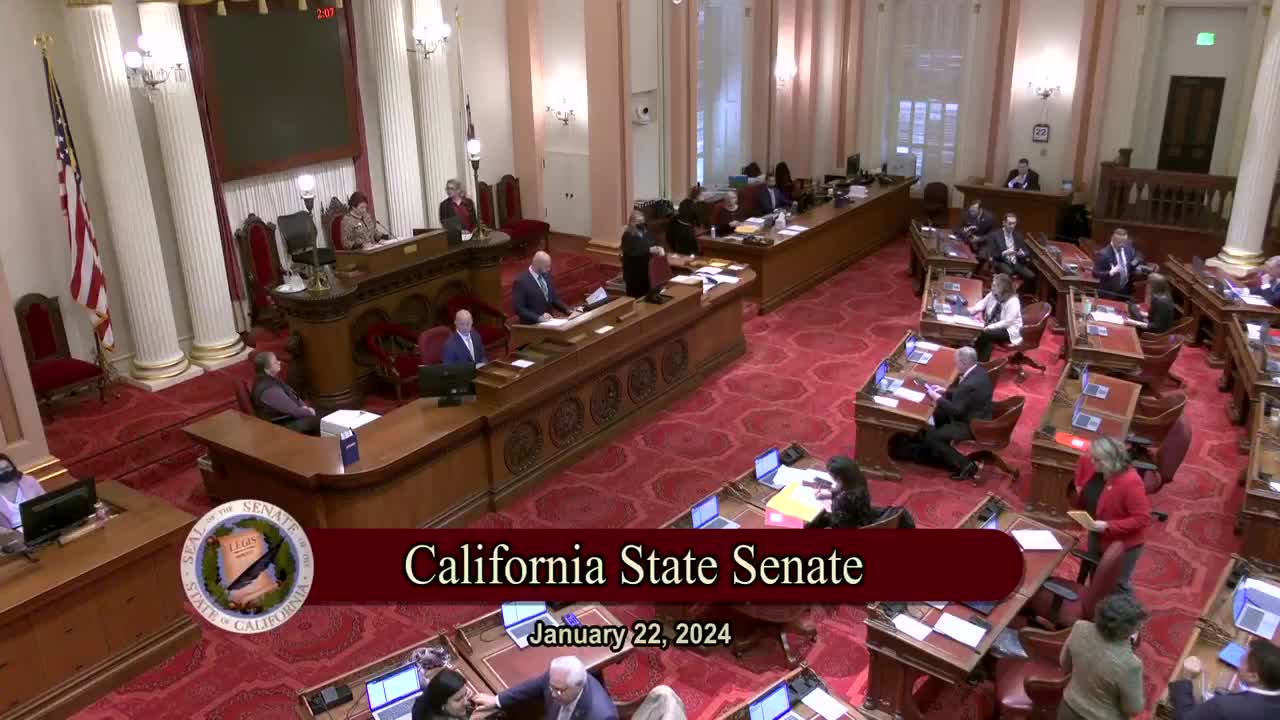 1MIN
Senate Floor
 7MIN
Senate Standing Committee on Business, Professions and Economic Development
Bill Author

Bill Co-Author(s):