SB 635: Health care coverage: hearing aids.
- Session Year: 2023-2024
- House: Senate
- Latest Version Date: 2023-09-19
Current Status:
Failed
(2024-01-25: Veto sustained.)
Introduced
In Committee
First Chamber
In Committee
Second Chamber
Enacted
Existing law, the Knox-Keene Health Care Service Plan Act of 1975, provides for the licensure and regulation of health care service plans by the Department of Managed Health Care and makes a willful violation of the act a crime. Existing law also provides for the regulation of health insurers by the Department of Insurance. Existing law sets forth specified coverage requirements for health care service plan contracts and health insurance policies.
This bill, the Let California Kids Hear Act, would require a health care service plan contract or health insurance policy issued, amended, or renewed on or after January 1, 2025, to include coverage for hearing aids for enrollees and insureds under 21 years of age, if medically necessary. The bill would limit the maximum required coverage amount to $3,000 per individual hearing aid, as specified. Because a willful violation of the bills requirements relative to a health care service plan would be a crime, the bill would impose a state-mandated local program.
The California Constitution requires the state to reimburse local agencies and school districts for certain costs mandated by the state. Statutory provisions establish procedures for making that reimbursement.
This bill would provide that no reimbursement is required by this act for a specified reason.
Existing law, the Knox-Keene Health Care Service Plan Act of 1975, provides for the licensure and regulation of health care service plans by the Department of Managed Health Care and makes a willful violation of the act a crime. Existing law also provides for the regulation of health insurers by the Department of Insurance. Existing law sets forth specified coverage requirements for health care service plan contracts and health insurance policies.
This bill bill, the Let California Kids Hear Act, would require a health care service plan contract or health insurance policy issued, amended, or renewed on or after January 1, 2025, to include coverage for hearing aids for enrollees and insureds under 21 years of age, if medically necessary. The bill would limit the maximum required coverage amount to $3,000 per individual hearing aid, as specified. Because a willful violation of the bills requirements relative to a health care service plan would be a crime, the bill would impose a state-mandated local program.
The California Constitution requires the state to reimburse local agencies and school districts for certain costs mandated by the state. Statutory provisions establish procedures for making that reimbursement.
This bill would provide that no reimbursement is required by this act for a specified reason.
Existing law, the Knox-Keene Health Care Service Plan Act of 1975, provides for the licensure and regulation of health care service plans by the Department of Managed Health Care and makes a willful violation of the act a crime. Existing law also provides for the regulation of health insurers by the Department of Insurance. Existing law sets forth specified coverage requirements for health care service plan contracts and health insurance policies.
This bill would require a health care service plan contract or health insurance policy issued, amended, or renewed on or after January 1, 2024, 2025, to include coverage for hearing aids for enrollees and insureds under 21 years of age, if medically necessary. The bill would limit the maximum required coverage amount to $3,000 per individual hearing aid, as specified. Because a willful violation of the bills requirements relative to a health care service plan would be a crime, the bill would impose a state-mandated local program.
The California Constitution requires the state to reimburse local agencies and school districts for certain costs mandated by the state. Statutory provisions establish procedures for making that reimbursement.
This bill would provide that no reimbursement is required by this act for a specified reason.
Existing law, the Knox-Keene Health Care Service Plan Act of 1975, provides for the licensure and regulation of health care service plans by the Department of Managed Health Care and makes a willful violation of the act a crime. Existing law also provides for the regulation of health insurers by the Department of Insurance. Existing law sets forth specified coverage requirements for health care service plan contracts and health insurance policies.
This bill would require a health care service plan contract or health insurance policy issued, amended, or renewed on or after January 1, 2024, to include coverage for hearing aids for enrollees and insureds under 21 years of age, if medically necessary. The bill would limit the maximum required coverage amount to $3,000 per individual hearing aid, as specified. Because a willful violation of the bills requirements relative to a health care service plan would be a crime, the bill would impose a state-mandated local program.
The California Constitution requires the state to reimburse local agencies and school districts for certain costs mandated by the state. Statutory provisions establish procedures for making that reimbursement.
This bill would provide that no reimbursement is required by this act for a specified reason.
Existing law, the Early Education Act, among other things, requires the Superintendent of Public Instruction to administer all California state preschool programs, including, but not limited to, part-day and full-day age and developmentally appropriate programs for 3- and 4-year-old children. Existing law, the Child Care and Development Services Act, administered by the State Department of Social Services, establishes a system of child care and development services for children up to 13 years of age.This bill would require a California state preschool program and a child care and development program to, with consent from parents or legal guardians, screen each enrolled child who is 0 to 5 years of age, inclusive, with a validated developmental screening tool and to report the information from the screening to the State Department of Education or State Department of Social Services, respectively. The bill would require the program to refer the childs family to the appropriate regional center or other intervention service if the screening shows a need for services, and would, subject to an appropriation by the Legislature, provide specified funding for the programs in supporting the administration, referral, and coordination of families to services. The bill would require the State Department of Education and the State Department of Social Services to establish a centralized billing point to draw down federal funding to pay for the costs of providing the screening, and to work with the State Department of Developmental Services, the State Department of Health Care Services, and the Office of the Surgeon General to establish memoranda of understanding and referral pathways to ensure identified children are receiving any needed intervention services, as specified.Existing law provides for various home visiting programs, including the Nurse-Family Partnership program, which is administered by the State Department of Public Health to provide grants for voluntary nurse home visiting programs for expectant first-time mothers, their children, and their families, and the CalWORKs Home Visiting Program, a voluntary program for the purpose of supporting positive health, development, and well-being outcomes for eligible CalWORKs assistance units with pregnant and parenting people, families, and infants born into poverty.This bill would also require a home visiting program funded by state or local governmental moneys to, with consent from a parent or legal guardian, screen each enrolled child who is 0 to 5 years of age, inclusive, with a validated developmental screening tool.Existing law, the Early Education Act, among other things, requires the Superintendent of Public Instruction to administer all California state preschool programs, including, but not limited to, part-day and full-day age and developmentally appropriate programs for 3- and 4-year-old children. Existing law, the Child Care and Development Services Act, administered by the State Department of Social Services, establishes a system of child care and development services for children up to 13 years of age.
This bill would require a California state preschool program and a child care and development program to, with consent from parents or legal guardians, screen each enrolled child who is 0 to 5 years of age, inclusive, with an Ages and Stages Questionnaire, a validated developmental screening tool and to report the information from the screening to the State Department of Education or State Department of Social Services, respectively. The bill would require the program to refer the childs family to the appropriate regional center or other intervention service if the screening shows a need for services, and would, subject to an appropriation by the Legislature, provide specified funding for the programs in supporting the administration, referral, and coordination of families to services. The bill would require the State Department of Education and the State Department of Social Services to establish a centralized billing point to draw down federal funding to pay for the costs of providing the screening, and to work with the State Department of Developmental Services, the State Department of Health Care Services, and the Office of the Surgeon General to establish memoranda of understanding and referral pathways to ensure identified children are receiving any needed intervention services, as specified.
Existing law provides for various home visiting programs, including the Nurse-Family Partnership program, which is administered by the State Department of Public Health to provide grants for voluntary nurse home visiting programs for expectant first-time mothers, their children, and their families, and the CalWORKs Home Visiting Program, a voluntary program for the purpose of supporting positive health, development, and well-being outcomes for eligible CalWORKs assistance units with pregnant and parenting people, families, and infants born into poverty.
This bill would also require a home visiting program funded by state or local governmental moneys to, with consent from a parent or legal guardian, screen each enrolled child who is 0 to 5 years of age, inclusive, with an Ages and Stages Questionnaire. a validated developmental screening tool.
Existing law, the Early Education Act, among other things, requires the Superintendent of Public Instruction to administer all California state preschool programs, including, but not limited to, part-day and full-day age and developmentally appropriate programs for 3- and 4-year-old children. Existing law, the Child Care and Development Services Act, administered by the State Department of Social Services, establishes a system of child care and development services for children up to 13 years of age.
This bill would require a California state preschool program and a child care and development program to, with consent from parents or legal guardians, screen each enrolled child who is 0 to 5 years of age, inclusive, with an Ages and Stages Questionnaire, and to report the information from the screening to the State Department of Education or State Department of Social Services, respectively. The bill would require the program to refer the childs family to the appropriate regional center or other intervention service if the screening shows a need for services, and would, subject to an appropriation by the Legislature, provide specified funding for the programs in supporting the administration, referral, and coordination of families to services. The bill would require the State Department of Education and the State Department of Social Services to establish a centralized billing point to draw down federal funding to pay for the costs of providing the screening, and to work with the State Department of Developmental Services, the State Department of Health Care Services, and the Office of the Surgeon General to establish memoranda of understanding and referral pathways to ensure identified children are receiving any needed intervention services, as specified.
Existing law provides for various home visiting programs, including the Nurse-Family Partnership program, which is administered by the State Department of Public Health to provide grants for voluntary nurse home visiting programs for expectant first-time mothers, their children, and their families, and the CalWORKs Home Visiting Program, a voluntary program for the purpose of supporting positive health, development, and well-being outcomes for eligible CalWORKs assistance units with pregnant and parenting people, families, and infants born into poverty.
This bill would also require a home visiting program funded by state or local governmental moneys to, with consent from a parent or legal guardian, screen each enrolled child who is 0 to 5 years of age, inclusive, with an Ages and Stages Questionnaire.
This act shall be known, and may be cited, as the Let California Kids Hear Act.
SEC. 2.Section 1367.72 is added to the Health and Safety Code, to read:1367.72.(a)A health care service plan contract issued, amended, or renewed on or after January 1, 2025, shall include coverage for hearing aids for all enrollees under 21 years of age, if medically necessary. The covered service shall be provided by a contracted provider, unless the contract allows for out-of-network coverage. For children under five years of age, a contracted provider shall include a pediatric audiologist.
(b)The maximum required coverage amount under this section is three thousand dollars ($3,000) per individual hearing aid. An enrollee may choose to purchase a hearing aid that exceeds the maximum coverage amount and shall be responsible for the difference between the cost of the hearing aid and the maximum coverage amount.
(1)Hearing aids covered pursuant to this section shall not be subject to a deductible, coinsurance, or copayment requirement. Coverage of hearing aids under this section shall not be subject to financial or treatment limitations, including a dollar limit that is set below three thousand dollars ($3,000) per individual hearing aid.
(2)If a contract is a high deductible health plan under the definition set forth in Section 223(c)(2) of Title 26 of the United States Code, the contract shall not impose cost sharing as specified above, unless not applying cost sharing would conflict with federal requirements for high deductible health plans.
(3)Coverage for hearing aids shall include an initial assessment, new hearing aids at least once every four years, new earmolds, new hearing aids if alterations to existing hearing aids cannot meet the needs of the enrollee, a new hearing aid if the existing one is no longer working, and fittings, adjustments, auditory training, and maintenance of the hearing aids. The new hearing aid limit shall not apply if alterations to existing hearing aids cannot meet the needs of the enrollee or an existing hearing aid is no longer working.
(c)For purposes of this section, hearing aid means an electronic device designed to aid or compensate for impaired human hearing and any parts, attachments, or accessories, including earmolds, but excluding batteries and cords. This includes both hearing aids traditionally worn behind the ear and nonimplanted auditory osseointegrated devices.
(d)(1)This section does not apply to a Medicare supplement policy or specialized health care service plan contract that covers only dental or vision benefits.
(2)This section shall not apply to Medi-Cal managed care plans that contract with the State Department of Health Care Services pursuant to Chapter 7 (commencing with Section 14000) of, and Chapter 8 (commencing with Section 14200) of, Part 3 of Division 9 of the Welfare and Institutions Code. For these plans, the Medi-Cal requirements imposed pursuant to subdivision (l) of Section 14132 of the Welfare and Institutions Code shall apply.
(e)Services described in this section shall be covered by a nongrandfathered health care service plan contract in the individual and small group market only to the extent that there is an appropriation to cover the cost of the services for plans offered through the Exchange, if it is determined that federal law requires the state to defray the costs of the benefits.
SEC. 3.Section 10123.72 is added to the Insurance Code, to read:10123.72.(a)A health insurance policy issued, amended, or renewed on or after January 1, 2025, shall include coverage for hearing aids for all insureds under 21 years of age, if medically necessary. The covered service shall be provided by a contracted provider, unless the policy allows for out-of-network coverage. For children under five years of age, a contracted provider shall include a pediatric audiologist.
(b)The maximum required coverage amount under this section is three thousand dollars ($3,000) per individual hearing aid. An insured may choose to purchase a hearing aid that exceeds the maximum coverage amount and shall be responsible for the difference between the cost of the hearing aid and the maximum coverage amount.
(1)Hearing aids covered pursuant to this section shall not be subject to a deductible, coinsurance, or copayment requirement. Coverage of hearing aids under this section shall not be subject to financial or treatment limitations, including a dollar limit that is set below three thousand dollars ($3,000) per individual hearing aid.
(2)If a health insurance policy is a high deductible health plan under the definition set forth in Section 223(c)(2) of Title 26 of the United States Code, the policy shall not impose cost sharing as specified above, unless not applying cost sharing would conflict with federal requirements for high deductible health plans.
(3)Coverage for hearing aids shall include an initial assessment, new hearing aids at least once every four years, new earmolds, new hearing aids if alterations to existing hearing aids cannot meet the needs of the insured, a new hearing aid if the existing one is no longer working, and fittings, adjustments, auditory training, and maintenance of the hearing aids. The new hearing aid limit shall not apply if alterations to existing hearing aids cannot meet the needs of the insured or an existing hearing aid is no longer working.
(c)For purposes of this section, hearing aid means an electronic device designed to aid or compensate for impaired human hearing and any parts, attachments, or accessories, including earmolds, but excluding batteries and cords. This includes both hearing aids traditionally worn behind the ear and nonimplanted auditory osseointegrated devices.
(d)(1)This section does not apply to a specialized health insurance policy that covers only dental or vision benefits or a Medicare supplemental policy.
(2)This section shall not apply to Medi-Cal managed care plans that contract with the State Department of Health Care Services pursuant to Chapter 7 (commencing with Section 14000) of, and Chapter 8 (commencing with Section 14200) of, Part 3 of Division 9 of the Welfare and Institutions Code. For these plans, the Medi-Cal requirements imposed pursuant to subdivision (l) of Section 14132 of the Welfare and Institutions Code shall apply.
(e)Services described in this section shall be covered by a nongrandfathered health care service plan contract in the individual and small group market only to the extent that there is an appropriation to cover the cost of the services for plans offered through the Exchange, if it is determined that federal law requires the state to defray the costs of the benefits.
SEC. 4.No reimbursement is required by this act pursuant to Section 6 of Article XIIIB of the California Constitution because the only costs that may be incurred by a local agency or school district will be incurred because this act creates a new crime or infraction, eliminates a crime or infraction, or changes the penalty for a crime or infraction, within the meaning of Section 17556 of the Government Code, or changes the definition of a crime within the meaning of Section 6 of Article XIIIB of the California Constitution.
This act shall be known, and may be cited, as the Let California Kids Hear Act.
SECTION 1.SEC. 2.Section 1367.72 is added to the Health and Safety Code, to read:1367.72.(a)A health care service plan contract issued, amended, or renewed on or after January 1, 2025, shall include coverage for hearing aids for all enrollees under 21 years of age, if medically necessary. The covered service shall be provided by a contracted provider, unless the contract allows for out-of-network coverage. For children under five years of age, a contracted provider shall include a pediatric audiologist.
(b)The maximum required coverage amount under this section is three thousand dollars ($3,000) per individual hearing aid. An enrollee may choose to purchase a hearing aid that exceeds the maximum coverage amount and shall be responsible for the difference between the cost of the hearing aid and the maximum coverage amount.
(1)Hearing aids covered pursuant to this section shall not be subject to a deductible deductible, coinsurance, or copayment requirement. Coverage of hearing aids under this section shall not be subject to financial or treatment limitations, including annual caps a dollar limit that is set below three thousand dollars ($3,000) per individual hearing aid.
(2)If a contract is a high deductible health plan under the definition set forth in Section 223(c)(2) of Title 26 of the United States Code, the contract shall not impose cost sharing as specified above, unless not applying cost sharing would conflict with federal requirements for high deductible health plans.
(2)(3)Coverage for hearing aids shall include an initial assessment, new hearing aids at least once every four years, new earmolds, new hearing aids if alterations to existing hearing aids cannot meet the needs of the enrollee, a new hearing aid if the existing one is no longer working, and fittings, adjustments, auditory training, and maintenance of the hearing aids. The new hearing aid limit shall not apply if alterations to existing hearing aids cannot meet the needs of the enrollee or an existing hearing aid is no longer working.
(c)For purposes of this section, hearing aid means an electronic device designed to aid or compensate for impaired human hearing and any parts, attachments, or accessories, including earmolds, but excluding batteries and cords. This includes both hearing aids traditionally worn behind the ear and nonimplanted auditory osseointegrated devices.
(d)(1)This section does not apply to a Medicare supplement policy or specialized health care service plan contract. contract that covers only dental or vision benefits.
(2)This section shall not apply to Medi-Cal managed care plans that contract with the State Department of Health Care Services pursuant to Chapter 7 (commencing with Section 14000) of, and Chapter 8 (commencing with Section 14200) of, Part 3 of Division 9 of the Welfare and Institutions Code. For these plans, the Medi-Cal requirements imposed pursuant to subdivision (l) of Section 14132 of the Welfare and Institutions Code shall apply.
(e)Services described in this section shall be covered by a nongrandfathered health care service plan contract in the individual and small group market only to the extent that there is an appropriation to cover the cost of the services for plans offered through the Exchange, if it is determined that federal law requires the state to defray the costs of the benefits.
SEC. 2.SEC. 3.Section 10123.72 is added to the Insurance Code, to read:10123.72.(a)A health insurance policy issued, amended, or renewed on or after January 1, 2025, shall include coverage for hearing aids for all insureds under 21 years of age, if medically necessary. The covered service shall be provided by a contracted provider, unless the policy allows for out-of-network coverage. For children under five years of age, a contracted provider shall include a pediatric audiologist.
(b)The maximum required coverage amount under this section is three thousand dollars ($3,000) per individual hearing aid. An insured may choose to purchase a hearing aid that exceeds the maximum coverage amount and shall be responsible for the difference between the cost of the hearing aid and the maximum coverage amount.
(1)Hearing aids covered pursuant to this section shall not be subject to a deductible deductible, coinsurance, or copayment requirement. Coverage of hearing aids under this section shall not be subject to financial or treatment limitations, including annual caps a dollar limit that is set below three thousand dollars ($3,000) per individual hearing aid.
(2)If a health insurance policy is a high deductible health plan under the definition set forth in Section 223(c)(2) of Title 26 of the United States Code, the policy shall not impose cost sharing as specified above, unless not applying cost sharing would conflict with federal requirements for high deductible health plans.
(2)(3)Coverage for hearing aids shall include an initial assessment, new hearing aids at least once every four years, new earmolds, new hearing aids if alterations to existing hearing aids cannot meet the needs of the insured, a new hearing aid if the existing one is no longer working, and fittings, adjustments, auditory training, and maintenance of the hearing aids. The new hearing aid limit shall not apply if alterations to existing hearing aids cannot meet the needs of the insured or an existing hearing aid is no longer working.
(c)For purposes of this section, hearing aid means an electronic device designed to aid or compensate for impaired human hearing and any parts, attachments, or accessories, including earmolds, but excluding batteries and cords. This includes both hearing aids traditionally worn behind the ear and nonimplanted auditory osseointegrated devices.
(d)(1)This section does not apply to an accident-only, specified disease, hospital indemnity, Medicare supplement, or specialized health insurance policy. a specialized health insurance policy that covers only dental or vision benefits or a Medicare supplemental policy.
(2)This section shall not apply to Medi-Cal managed care plans that contract with the State Department of Health Care Services pursuant to Chapter 7 (commencing with Section 14000) of, and Chapter 8 (commencing with Section 14200) of, Part 3 of Division 9 of the Welfare and Institutions Code. For these plans, the Medi-Cal requirements imposed pursuant to subdivision (l) of Section 14132 of the Welfare and Institutions Code shall apply.
(e)Services described in this section shall be covered by a nongrandfathered health care service plan contract in the individual and small group market only to the extent that there is an appropriation to cover the cost of the services for plans offered through the Exchange, if it is determined that federal law requires the state to defray the costs of the benefits.
SEC. 3.SEC. 4.No reimbursement is required by this act pursuant to Section 6 of Article XIIIB of the California Constitution because the only costs that may be incurred by a local agency or school district will be incurred because this act creates a new crime or infraction, eliminates a crime or infraction, or changes the penalty for a crime or infraction, within the meaning of Section 17556 of the Government Code, or changes the definition of a crime within the meaning of Section 6 of Article XIIIB of the California Constitution.
(a)A health care service plan contract issued, amended, or renewed on or after January 1, 2024, 2025, shall include coverage for hearing aids for all enrollees under 21 years of age, if medically necessary. The covered service shall be provided by a contracted provider, unless the contract allows for out-of-network coverage. For children under five years of age, a contracted provider shall include a pediatric audiologist.
(b)The maximum required coverage amount under this section is three thousand dollars ($3,000) per individual hearing aid. An enrollee may choose to purchase a hearing aid that exceeds the maximum coverage amount and shall be responsible for the difference between the cost of the hearing aid and the maximum coverage amount.
(1)Hearing aids covered pursuant to this section shall not be subject to a deductible or copayment requirement. Coverage of hearing aids under this section shall not be subject to financial or treatment limitations, including annual caps set below three thousand dollars ($3,000) per individual hearing aid.
(2)Coverage for hearing aids shall include an initial assessment, new hearing aids at least every four years, new earmolds, new hearing aids if alterations to existing hearing aids cannot meet the needs of the enrollee, a new hearing aid if the existing one is no longer working, and fittings, adjustments, auditory training, and maintenance of the hearing aids.
(c)For purposes of this section, hearing aid means an electronic device designed to aid or compensate for impaired human hearing and any parts, attachments, or accessories, including earmolds, but excluding batteries and cords. This includes both hearing aids traditionally worn behind the ear and nonimplanted auditory osseointegrated devices.
(d)This section does not apply to a Medicare supplement or specialized health care service plan contract.
SEC. 2.Section 10123.72 is added to the Insurance Code, to read:10123.72.(a)A health insurance policy issued, amended, or renewed on or after January 1, 2024, 2025, shall include coverage for hearing aids for all insureds under 21 years of age, if medically necessary. The covered service shall be provided by a contracted provider, unless the policy allows for out-of-network coverage. For children under five years of age, a contracted provider shall include a pediatric audiologist.
(b)The maximum required coverage amount under this section is three thousand dollars ($3,000) per individual hearing aid. An insured may choose to purchase a hearing aid that exceeds the maximum coverage amount and shall be responsible for the difference between the cost of the hearing aid and the maximum coverage amount.
(1)Hearing aids covered pursuant to this section shall not be subject to a deductible or copayment requirement. Coverage of hearing aids under this section shall not be subject to financial or treatment limitations, including annual caps set below three thousand dollars ($3,000) per individual hearing aid.
(2)Coverage for hearing aids shall include an initial assessment, new hearing aids at least every four years, new earmolds, new hearing aids if alterations to existing hearing aids cannot meet the needs of the insured, a new hearing aid if the existing one is no longer working, and fittings, adjustments, auditory training, and maintenance of the hearing aids.
(c)For purposes of this section, hearing aid means an electronic device designed to aid or compensate for impaired human hearing and any parts, attachments, or accessories, including earmolds, but excluding batteries and cords. This includes both hearing aids traditionally worn behind the ear and nonimplanted auditory osseointegrated devices.
(d)This section does not apply to an accident-only, specified disease, hospital indemnity, Medicare supplement, or specialized health insurance policy.
SEC. 3.No reimbursement is required by this act pursuant to Section 6 of Article XIIIB of the California Constitution because the only costs that may be incurred by a local agency or school district will be incurred because this act creates a new crime or infraction, eliminates a crime or infraction, or changes the penalty for a crime or infraction, within the meaning of Section 17556 of the Government Code, or changes the definition of a crime within the meaning of Section 6 of Article XIIIB of the California Constitution.
(a)A health care service plan contract issued, amended, or renewed on or after January 1, 2024, shall include coverage for hearing aids for all enrollees under 21 years of age, if medically necessary. The covered service shall be provided by a contracted provider, unless the contract allows for out-of-network coverage. For children under five years of age, a contracted provider shall include a pediatric audiologist.
(b)The maximum required coverage amount under this section is three thousand dollars ($3,000) per individual hearing aid. An enrollee may choose to purchase a hearing aid that exceeds the maximum coverage amount and shall be responsible for the difference between the cost of the hearing aid and the maximum coverage amount.
(1)Hearing aids covered pursuant to this section shall not be subject to a deductible or copayment requirement. Coverage of hearing aids under this section shall not be subject to financial or treatment limitations, including annual caps set below three thousand dollars ($3,000) per individual hearing aid.
(2)Coverage for hearing aids shall include an initial assessment, new hearing aids at least every four years, new earmolds, new hearing aids if alterations to existing hearing aids cannot meet the needs of the enrollee, a new hearing aid if the existing one is no longer working, and fittings, adjustments, auditory training, and maintenance of the hearing aids.
(c)For purposes of this section, hearing aid means an electronic device designed to aid or compensate for impaired human hearing and any parts, attachments, or accessories, including earmolds, but excluding batteries and cords. This includes both hearing aids traditionally worn behind the ear and nonimplanted auditory osseointegrated devices.
(d)This section does not apply to a Medicare supplement or specialized health care service plan contract.
SEC. 2.Section 10123.72 is added to the Insurance Code, to read:10123.72.(a)A health insurance policy issued, amended, or renewed on or after January 1, 2024, shall include coverage for hearing aids for all insureds under 21 years of age, if medically necessary. The covered service shall be provided by a contracted provider, unless the policy allows for out-of-network coverage. For children under five years of age, a contracted provider shall include a pediatric audiologist.
(b)The maximum required coverage amount under this section is three thousand dollars ($3,000) per individual hearing aid. An insured may choose to purchase a hearing aid that exceeds the maximum coverage amount and shall be responsible for the difference between the cost of the hearing aid and the maximum coverage amount.
(1)Hearing aids covered pursuant to this section shall not be subject to a deductible or copayment requirement. Coverage of hearing aids under this section shall not be subject to financial or treatment limitations, including annual caps set below three thousand dollars ($3,000) per individual hearing aid.
(2)Coverage for hearing aids shall include an initial assessment, new hearing aids at least every four years, new earmolds, new hearing aids if alterations to existing hearing aids cannot meet the needs of the insured, a new hearing aid if the existing one is no longer working, and fittings, adjustments, auditory training, and maintenance of the hearing aids.
(c)For purposes of this section, hearing aid means an electronic device designed to aid or compensate for impaired human hearing and any parts, attachments, or accessories, including earmolds, but excluding batteries and cords. This includes both hearing aids traditionally worn behind the ear and nonimplanted auditory osseointegrated devices.
(d)This section does not apply to an accident-only, specified disease, hospital indemnity, Medicare supplement, or specialized health insurance policy.
SEC. 3.No reimbursement is required by this act pursuant to Section 6 of Article XIIIB of the California Constitution because the only costs that may be incurred by a local agency or school district will be incurred because this act creates a new crime or infraction, eliminates a crime or infraction, or changes the penalty for a crime or infraction, within the meaning of Section 17556 of the Government Code, or changes the definition of a crime within the meaning of Section 6 of Article XIIIB of the California Constitution.
SECTION 1.Section 8209.5 is added to the Education Code, to read:8209.5.(a)(1)A California state preschool program shall, with consent from a parent or legal guardian, screen each enrolled child with a validated developmental screening tool and report the information from the screening to the department.(2)If the screening for a child shows a need for services, the California state preschool program shall refer the childs family to the appropriate regional center or other intervention service.(3)Subject to an appropriation in the Budget Act or another statute for these purposes, each program shall receive a 0.5-percent increase to their administrative funds for purposes of supporting the administration, referral, and coordination of families to services, and reporting requirements for the screening, as required under this subdivision.(b)The department shall collect information of the children screened pursuant to subdivision (a), and shall, in conjunction with the State Department of Social Services, establish a centralized billing point to draw down federal funding, including, but not limited to, federal Medicaid funding, to pay for the costs of providing the screening.(c)The department, in conjunction with the State Department of Social Services, shall work with the State Department of Developmental Services, the State Department of Health Care Services, and the Office of the Surgeon General to establish memoranda of understanding and referral pathways to ensure that children who have been identified as needing prevention and intervention services are receiving those services in a timely manner and, to the extent possible, in their home language.SEC. 2.Chapter 7 (commencing with Section 124255) is added to Part 2 of Division 106 of the Health and Safety Code, to read:7.Home Visiting Program Screening124255.A home visiting program funded by state or local governmental moneys may, with consent from a parent or legal guardian, screen each enrolled child who is 0 to 5 years of age, inclusive, with a validated developmental screening tool.SEC. 3.Section 10271.1 is added to the Welfare and Institutions Code, to read:10271.1.(a)(1)A child care and development program shall, with consent from a parent or legal guardian, screen each enrolled child who is 0 to 5 years of age, inclusive, with a validated developmental screening tool and report the information from the screening to the department.(2)If the screening for a child shows a need for services, the child care and development program shall refer the childs family to the appropriate regional center or other intervention service.(3)Subject to an appropriation in the Budget Act or another statute for these purposes, each program shall receive a 0.5-percent increase to their administrative and supportive services funds for purposes of supporting the administration, referral, and coordination of families to services, and reporting requirements for the screening, as required under this subdivision.(b)The department shall collect information of the children screened pursuant to subdivision (a), and shall, in conjunction with the State Department of Education, establish a centralized billing point to draw down federal funding, including, but not limited to, federal Medicaid funding, to pay for the costs of providing the screening.(c)The department, in conjunction with the State Department of Education, shall work with the State Department of Developmental Services, the State Department of Health Care Services, and the Office of the Surgeon General to establish memoranda of understanding and referral pathways to ensure that children who have been identified as needing prevention and intervention services are receiving those services in a timely manner and, to the extent possible, in their home language.(a)(1)A California state preschool program shall, with consent from a parent or legal guardian, screen each enrolled child with an Ages and Stages Questionnaire a validated developmental screening tool and report the information from the screening to the department.
(2)If the screening for a child shows a need for services, the California state preschool program shall refer the childs family to the appropriate regional center or other intervention service.
(3)Subject to an appropriation in the Budget Act or another statute for these purposes, each program shall receive a 1-percent 0.5-percent increase to their administrative funds for purposes of supporting the administration, referral, and coordination of families to services, and reporting requirements for the screening, as required under this subdivision.
(b)The department shall collect information of the children screened pursuant to subdivision (a), and shall, in conjunction with the State Department of Social Services, establish a centralized billing point to draw down federal funding, including, but not limited to, federal Medicaid funding, to pay for the costs of providing the screening.
(c)The department, in conjunction with the State Department of Social Services, shall work with the State Department of Developmental Services, the State Department of Health Care Services, and the Office of the Surgeon General to establish memoranda of understanding and referral pathways to ensure that children who have been identified as needing prevention and intervention services are receiving those services in a timely manner and, to the extent possible, in their home language.
SEC. 2.Chapter 7 (commencing with Section 124255) is added to Part 2 of Division 106 of the Health and Safety Code, to read:7.Home Visiting Program Screening124255.A home visiting program funded by state or local governmental moneys may, with consent from a parent or legal guardian, screen each enrolled child who is 0 to 5 years of age, inclusive, with an Ages and Stages Questionnaire. a validated developmental screening tool.
SEC. 3.Section 10271.1 is added to the Welfare and Institutions Code, to read:10271.1.(a)(1)A child care and development program shall, with consent from a parent or legal guardian, screen each enrolled child who is 0 to 5 years of age, inclusive, with an Ages and Stages Questionnaire, a validated developmental screening tool and report the information from the screening to the department.
(2)If the screening for a child shows a need for services, the child care and development program shall refer the childs family to the appropriate regional center or other intervention service.
(3)Subject to an appropriation in the Budget Act or another statute for these purposes, each program shall receive a 1-percent 0.5-percent increase to their administrative and supportive services funds for purposes of supporting the administration, referral, and coordination of families to services, and reporting requirements for the screening, as required under this subdivision.
(b)The department shall collect information of the children screened pursuant to subdivision (a), and shall, in conjunction with the State Department of Education, establish a centralized billing point to draw down federal funding, including, but not limited to, federal Medicaid funding, to pay for the costs of providing the screening.
(c)The department, in conjunction with the State Department of Education, shall work with the State Department of Developmental Services, the State Department of Health Care Services, and the Office of the Surgeon General to establish memoranda of understanding and referral pathways to ensure that children who have been identified as needing prevention and intervention services are receiving those services in a timely manner and, to the extent possible, in their home language.
(a)(1)A California state preschool program shall, with consent from a parent or legal guardian, screen each enrolled child with an Ages and Stages Questionnaire and report the information from the screening to the department.
(2)If the screening for a child shows a need for services, the California state preschool program shall refer the childs family to the appropriate regional center or other intervention service.
(3)Subject to an appropriation in the Budget Act or another statute for these purposes, each program shall receive a 1-percent increase to their administrative funds for purposes of supporting the administration, referral, and coordination of families to services, and reporting requirements for the screening, as required under this subdivision.
(b)The department shall collect information of the children screened pursuant to subdivision (a), and shall, in conjunction with the State Department of Social Services, establish a centralized billing point to draw down federal funding, including, but not limited to, federal Medicaid funding, to pay for the costs of providing the screening.
(c)The department, in conjunction with the State Department of Social Services, shall work with the State Department of Developmental Services, the State Department of Health Care Services, and the Office of the Surgeon General to establish memoranda of understanding and referral pathways to ensure that children who have been identified as needing prevention and intervention services are receiving those services in a timely manner and, to the extent possible, in their home language.
SEC. 2.Chapter 7 (commencing with Section 124255) is added to Part 2 of Division 106 of the Health and Safety Code, to read:7.Home Visiting Program Screening124255.A home visiting program funded by state or local governmental moneys may, with consent from a parent or legal guardian, screen each enrolled child who is 0 to 5 years of age, inclusive, with an Ages and Stages Questionnaire.
SEC. 3.Section 10271.1 is added to the Welfare and Institutions Code, to read:10271.1.(a)(1)A child care and development program shall, with consent from a parent or legal guardian, screen each enrolled child who is 0 to 5 years of age, inclusive, with an Ages and Stages Questionnaire, and report the information from the screening to the department.
(2)If the screening for a child shows a need for services, the child care and development program shall refer the childs family to the appropriate regional center or other intervention service.
(3)Subject to an appropriation in the Budget Act or another statute for these purposes, each program shall receive a 1-percent increase to their administrative and supportive services funds for purposes of supporting the administration, referral, and coordination of families to services, and reporting requirements for the screening, as required under this subdivision.
(b)The department shall collect information of the children screened pursuant to subdivision (a), and shall, in conjunction with the State Department of Education, establish a centralized billing point to draw down federal funding, including, but not limited to, federal Medicaid funding, to pay for the costs of providing the screening.
(c)The department, in conjunction with the State Department of Education, shall work with the State Department of Developmental Services, the State Department of Health Care Services, and the Office of the Surgeon General to establish memoranda of understanding and referral pathways to ensure that children who have been identified as needing prevention and intervention services are receiving those services in a timely manner and, to the extent possible, in their home language.
|
Date
|
Status
|
|---|---|
| Jan 25, 2024 | Veto sustained. |
| Jan 25, 2024 | Stricken from file. |
| Oct 7, 2023 | In Senate. Consideration of Governor's veto pending. |
| Oct 7, 2023 | Vetoed by the Governor. |
| Sep 21, 2023 | Enrolled and presented to the Governor at 4 p.m. |
| Sep 14, 2023 | Assembly amendments concurred in. (Ayes 40. Noes 0. Page 2837.) Ordered to engrossing and enrolling. |
| Sep 13, 2023 | From committee: That the Assembly amendments be concurred in. (Ayes 12. Noes 0. Page 2770.) |
| Sep 12, 2023 | From committee: Be re-referred to Com. on HEALTH pursuant to Senate Rule 29.10(d). (Ayes 4. Noes 0. Page 2611.) Re-referred to Com. on HEALTH. |
| Sep 12, 2023 | Re-referred to Com. on RLS pursuant to Senate Rule 29.10(d). |
| Sep 11, 2023 | In Senate. Concurrence in Assembly amendments pending. |
| Sep 11, 2023 | Read third time. Passed. (Ayes 78. Noes 0. Page 3203.) Ordered to the Senate. |
| Sep 8, 2023 | Ordered to third reading. |
| Sep 8, 2023 | Read third time and amended. |
| Sep 5, 2023 | Read second time. Ordered to third reading. |
| Sep 1, 2023 | From committee: Do pass. (Ayes 16. Noes 0.) (September 1). |
| Aug 23, 2023 | August 23 set for first hearing. Placed on suspense file. |
| Jul 13, 2023 | Read second time and amended. Re-referred to Com. on APPR. |
| Jul 12, 2023 | From committee: Do pass as amended and re-refer to Com. on APPR. (Ayes 15. Noes 0.) (July 11). |
| Jun 8, 2023 | From committee with author's amendments. Read second time and amended. Re-referred to Com. on HEALTH. |
| Jun 8, 2023 | Referred to Com. on HEALTH. |
| May 31, 2023 | In Assembly. Read first time. Held at Desk. |
| May 30, 2023 | Read third time. Passed. (Ayes 40. Noes 0. Page 1365.) Ordered to the Assembly. |
| May 26, 2023 | Ordered to special consent calendar. |
| May 22, 2023 | Read second time. Ordered to third reading. |
| May 18, 2023 | Read second time and amended. Ordered to second reading. |
| May 18, 2023 | From committee: Do pass as amended. (Ayes 7. Noes 0. Page 1178.) (May 18). |
| May 12, 2023 | Set for hearing May 18. |
| May 8, 2023 | May 8 hearing: Placed on APPR suspense file. |
| May 1, 2023 | Set for hearing May 8. |
| Apr 25, 2023 | From committee: Do pass and re-refer to Com. on APPR. (Ayes 5. Noes 0. Page 877.) (April 24). Re-referred to Com. on APPR. |
| Apr 11, 2023 | Set for hearing April 24. |
| Mar 29, 2023 | From committee: Do pass and re-refer to Com. on HUMAN S. (Ayes 7. Noes 0. Page 570.) (March 29). Re-referred to Com. on HUMAN S. |
| Mar 8, 2023 | Set for hearing March 29. |
| Mar 1, 2023 | Referred to Coms. on ED. and HUMAN S. |
| Feb 17, 2023 | From printer. May be acted upon on or after March 19. |
| Feb 16, 2023 | Introduced. Read first time. To Com. on RLS. for assignment. To print. |
|
Date
|
Description
|
Location
|
Votes
|
|
|---|---|---|---|---|
| Sep 14, 2023 | Unfinished Business SB635 Menjivar et al. Concurrence | Senate Floor |
Passed |
|
| Sep 13, 2023 | That the Assembly amendments be concurred in | Senate Standing Committee on Health |
Passed |
|
| Sep 11, 2023 | SB 635 Menjivar Senate Third Reading By Arambula | Assembly Floor |
Passed |
|
| Sep 1, 2023 | Do pass. | Assembly Standing Committee on Appropriations |
Passed |
|
| Jul 11, 2023 | Do pass as amended and be re-referred to the Committee on [Appropriations] | Assembly Standing Committee on Health |
Passed |
|
| May 30, 2023 | Special Consent SB635 Menjivar | Senate Floor |
Passed |
|
| May 18, 2023 | Do pass as amended | Senate Standing Committee on Appropriations |
Passed |
|
| May 8, 2023 | Placed on suspense file | Senate Standing Committee on Appropriations |
Passed |
|
| Apr 24, 2023 | Do pass, but first be re-referred to the Committee on [Appropriations] | Senate Standing Committee on Human Services |
Passed |
|
| Mar 29, 2023 | Do pass, but first be re-referred to the Committee on [Human Services] | Senate Standing Committee on Education |
Passed |
This list shows positions taken on this bill by organizations on the date displayed, which is linked to the original source.
Positions by individuals are not included.
|
Organization
|
Position
|
Date
|
|---|---|---|
| AltaMed | ** Support | |
| American Academy Of Pediatrics, California | ** Support | |
| Association Of California School Administrators | ** Support | |
| Association Of Regional Center Agencies | ** Support | |
| Autism Speaks | ** Support | |
| BANANAS | ** Support | |
| BANANAS, Inc. | ** Support | |
| California Academy Of Audiology | ** Support | |
| California Alternative Payment Program Association | ** Support | |
| California Association for Supervision and Curriculum Development | ** Support | |
| California Children'S Hospital Association | ** Support | |
| California Children's Trust | ** Support | |
| California Educators of The Deaf | ** Support | |
| California Faculty Association | ** Support | |
| California Federation of Teachers, AFL-CIO | ** Support | |
| California Hands & Voices | ** Support | |
| California Health+ Advocates | ** Support | |
| California Medical Association | ** Support | |
| California School-Based Health Alliance | ** Support | |
| California School Nurses Organization | ** Support | |
| CCHAT Sacramento | ** Support | |
| Center for Autism and Related Disorders | ** Support | |
| Center for Early Intervention on Deafness | ** Support | |
| Child Care Resource Center | ** Support | |
| Children Now | ** Support | |
| Children's Bureau of Southern California | ** Support | |
| Childrens Hospital of Orange County | ** Support | |
| Children'S Specialty Care Coalition | ** Support | |
| City and County of San Francisco, Department of Early Childhood | ** Support | |
| deaf and hard of hearing service center | ** Support | |
| Department Of Finance | ** Against | |
| Disability Rights California | ** Support | |
| Disability Voices United | ** Support | |
| Early Edge California | ** Support | |
| Edvoice | ** Support | |
| EveryChild California | ** Support | |
| First 5 Association Of California | ** Support | |
| First 5 San Bernardino | ** Support | |
| First 5 San Mateo County | ** Support | |
| First 5 Santa Clara County | ** Support | |
| First 5 Santa Cruz County | ** Support | |
| Health Access California | ** Support | |
| Healthier Kids Foundation | ** Support | |
| Hearing Healthcare Providers/California | ** Support | |
| Hearing Loss Association of America California State Association | ** Support | |
| House Children's Hearing Center | ** Support | |
| Integrated Community Collaborative | ** Support | |
| Jakara Movement | ** Support | |
| John Tracy Clinic | ** Support | |
| Keck School of Medicine, University of Southern California | ** Support | |
| Kern County Superintendent of Schools Office | ** Support | |
| LA Best Babies Network | ** Support | |
| Latino Coalition for a Healthy California | ** Support | |
| Let California Kids Hear | ** Support | |
| Loma Linda University Children’s Hospital | ** Support | |
| Loma Linda University Health | ** Support | |
| Los Angeles County Office Of Education | ** Support | |
| Lucile Packard Children's Hospital_stanford Children's Health | ** Support | |
| March of Dimes | ** Support | |
| Maternal and Child Health Access | ** Support | |
| National Association Of Social Workers, California Chapter | ** Support | |
| National Health Law Program | ** Support | |
| No Limits for Deaf Children and Families | ** Support | |
| NorCal Services for Deaf & Hard of Hearing | ** Support | |
| Nurse Family Partnership | ** Support | |
| Pacific Neuroscience Institute | ** Support | |
| Pathways LA | ** Support | |
| Project Talk | ** Support | |
| Public Advocates Inc. | ** Support | |
| Rady Children's Hospital | ** Support | |
| SELPA Administrators of California | ** Support | |
| Small School Districts Association | ** Support | |
| Speech-Language Pathology and Audiology and Hearing Aid Dispensers Board | ** Support | |
| Tahoe Family Hearing Clinic | ** Support | |
| The California Children's Trust | ** Support | |
| The Children's Partnership | ** Support | |
| the los angeles trust for children's health | ** Support | |
| United Ways Of California | ** Support | |
| USCF Benioff Children’s Hospital Oakland | ** Support | |
| Valley Children's Healthcare | ** Support | |
| Vision y Compromiso | ** Support | |
| Weingarten Childrens Center | ** Support | |
| Western Center on Law & Poverty, INC. | ** Support | |
| YMCA of San Diego County | ** Support |
SENATE RULES COMMITTEE Office of Senate Floor Analyses (916) 651-1520 Fax: (916) 327-4478 | SB 635 |
VETO
Bill No: SB 635
Author: Menjivar (D) and Portantino (D), et al.
Amended: 9/8/23
Vote: 27
PRIOR VOTES NOT RELEVANT
SENATE HEALTH COMMITTEE: 12-0, 9/13/23 (Pursuant to Senate Rules 29.10)
AYES: Eggman, Nguyen, Glazer, Gonzalez, Grove, Hurtado, Limón, Menjivar, Roth, Rubio, Wahab, Wiener
SENATE FLOOR: 40-0, 9/14/23
AYES: Allen, Alvarado-Gil, Archuleta, Ashby, Atkins, Becker, Blakespear, Bradford, Caballero, Cortese, Dahle, Dodd, Durazo, Eggman, Glazer, Gonzalez, Grove, Hurtado, Jones, Laird, Limón, McGuire, Menjivar, Min, Newman, Nguyen, Niello, Ochoa Bogh, Padilla, Portantino, Roth, Rubio, Seyarto, Skinner, Smallwood-Cuevas, Stern, Umberg, Wahab, Wiener, Wilk
ASSEMBLY FLOOR: 78-0, 9/11/23 - See last page for vote
SUBJECT: Health care coverage: hearing aids
SOURCE: Children Now
Let California Kids Hear
DIGEST:
This bill requires a health plan contract or health insurance policy issued, amended, or renewed on or after January 1, 2025, to include coverage for hearing aids and related services for all enrollees and insureds under 21 years of age, if medically necessary. Limits the maximum required coverage amount to $3,000 per individual hearing aid, and prohibits hearing aids covered from being subject to a coinsurance, deductible or copayment requirement, or, subject to financial or treatment limitations, including a dollar limit set below $3,000 per individual hearing aid.
ANALYSIS:
Existing law:
- Establishes the Department of Managed Health Care (DMHC) to regulate health plans under the Knox-Keene Health Care Services Plan Act of 1975; the California Department of Insurance (CDI) to regulate health and other insurers; Covered California as California’s health benefit exchange for individual and small business purchasers as authorized under the federal Patient Protection and Affordable Care Act (ACA); and, the Department of Health Care Services (DHCS) to administer the Medi-Cal program, under which low-income individuals, including children are eligible for health coverage. [HSC §1340, et seq., INS §106, et seq., GOV §100500 -100522, and WIC §14000, et seq.]
- Establishes, as California's essential health benefits (EHBs) benchmark, the Kaiser Small Group Health Maintenance Organization, existing California mandates (including medically necessary basic health care services), and ten ACA mandated benefits. Requires non-grandfathered individual and small group plan contracts and insurance policies to cover EHBs. [HSC §1367.005 and INS §10112.27]
- Establishes California Children Services (CCS), administered by DHCS, under which individuals under the age of 21 who have eligible medical conditions established in regulation and meet financial requirements, are eligible to receive medically necessary services and treatments. [HSC §123800, et seq.]
- Establishes the Hearing Aids Coverage for Children Program (HACCP). HACCP covers hearing aids and related services for children under the age of 21, who have a household income of up to 600% of the Federal Poverty Level (FPL), which is approximately $166,000 annually for family of four, and who are not otherwise eligible for Medi-Cal or CCS, or who do not have insurance coverage, which includes a person who has health insurance coverage but not coverage for hearing aids, or, a person with health insurance coverage that covers hearing aids but with a limit of $1,500 or less. [Budget Act of 2023]
This bill:
- Requires a health plan contract or health insurance policy issued, amended, or renewed on or after January 1, 2025, to include coverage for hearing aids for all enrollees and insureds under 21 years of age, if medically necessary. Requires the covered services to be provided by a contracted provider, unless the contract or policy allows for out-of-network coverage. Requires for children under five years of age, a contracted provider to include a pediatric audiologist.
- Limits the maximum required coverage amount under this bill to $3,000 per individual hearing aid. Permits an enrollee or insured to choose to purchase a hearing aid that exceeds the maximum coverage amount and be responsible for the difference between the cost of the hearing aid and the maximum coverage amount.
- Prohibits hearing aids covered under this bill from being subject to a deductible, coinsurance or copayment requirement, or, subject to financial or treatment limitations, including a dollar limit that is set below $3,000 per individual hearing aid.
- Prohibits, if a contract is a “high deductible health plan” under the definition set forth in federal law, from imposing cost-sharing under this bill, unless not applying cost-sharing would conflict with federal requirements for high deductible health plans.
- Requires coverage for hearing aids to include an initial assessment, new hearing aids at least once every four years, new earmolds, new hearing aids if alterations to existing hearing aids cannot meet the needs of the enrollee, a new hearing aid if the existing one is no longer working, and fittings, adjustments, auditory training, and maintenance of the hearing aids. Prohibits the new hearing aid limit from applying if alterations to existing hearing aids cannot meet the needs of the enrollee or insured or an existing hearing aid is no longer working.
- Defines “hearing aid” as an electronic device designed to aid or compensate for impaired human hearing and any parts, attachments, or accessories, including earmolds, but excluding batteries and cords. This includes both hearing aids traditionally worn behind the ear and nonimplanted auditory osseointegrated devices.
- Exempts an accident-only, specified disease, hospital indemnity, Medicare supplement policy or specialized health plan contract or specialized health insurance policy that covers dental or vision benefits from this bill.
- Exempts Medi-Cal managed care plans that contract with DHCS. Requires these plans to comply with existing Medi-Cal requirements regarding hearing aid coverage.
- Requires services described in this bill to be covered by a nongrandfathered health plan contract or health insurance policy in the individual and small group market only to the extent there is an appropriation to cover the cost of the services for plans offered through Covered California, if it is determined that federal law requires the state to defray the costs of the benefits.
Comments
- Author’s statement. According to the author, numerous experts agree that pediatric hearing loss is considered a developmental emergency requiring timely intervention to prevent permanent delays. These preventable consequences are not only devastating for children and family; they are costly to society. California requires hospitals to screen all newborns to identify those that are Deaf or Hard of Hearing (DHH). Despite California identifying nearly all DHH newborns there remains a lack of access to hearing aids once they have been identified. Since private health insurance plans are not required to cover hearing aids for kids, only one in ten families in California have some coverage. The lack of comprehensive coverage means care can be unaffordable, leaving children without access to hearing aids and services that support their development. Over 30 states in the United States require coverage for children’s hearing aids through commercial plans and/or the state exchange. California should follow suit. California has tried to address this issue through HACCP launched by DHCS on July 1, 2021. However, to date HACCP has only served 225 of the 7,000 eligible youth. Few pediatric providers are participating due to historically low reimbursement rates and high administrative burdens creating poor geographic coverage and segmented care. California is not alone in these challenges as Georgia tried a similar program and failed, ultimately passing an insurance mandate in 2018. The author indicates that the estimated cost to the state associated with this bill would benefit 20,000 children that would be offset by the $13.4 million for HACCP.
- Concerns: The Association of California Life and Health Insurance Companies, America’s Health Insurance Plans, and California Association of Health Plans write that the benchmark plan selected by the Legislature in California did not include hearing aids. CHBRP has confirmed that coverage for hearing aids and associated services mandated by this proposal would exceed EHBs, and therefore trigger the ACA requirement that the state defray the cost of additional benefit coverage for enrollees in qualified health plans in Covered California. CHBRP estimates that this bill could translate to a state-responsibility of $11,268,000 annually. It’s also important to note that this would be the first time since the passage of the ACA that California could pass a coverage mandate that exceeds the EHBs. Health plans and insurers are concerned about the precedent that this action may set, which could trigger a slew of new mandates to be introduced that exceed the EHBs, requiring more state funding to defray these costs. Additionally, this mandate is projected to cost enrollees approximately $52 million in increased premiums. Health plans and insurers are also concerned about this bill’s potential to harm affordability for small businesses and individual market consumers.
FISCAL EFFECT: Appropriation: No Fiscal Com.: Yes Local: Yes
According to the Assembly Appropriations Committee:
- According to the California Health Benefits Review Program, California Public Employees' Retirement System (CalPERS) premiums would increase by $594,000. Approximately 60% of these premiums are paid by the state (Public Employees Health Care Fund).
- Possible cost pressures of $11 million to Covered California if the proposed coverage exceeds EHBs (General Fund).
- CDI estimates costs of $22,000 in fiscal year 2024-25 (Insurance Fund).
- DMHC anticipates minor and absorbable costs.
SUPPORT: (Verified 9/12/23)
Children Now (co-source)
Let California Kids Hear (co-source)
AltaMed
American Academy of Pediatrics, California
Association of California School Administrators
Association of Regional Center Agencies
California Academy of Audiology
California Association for Supervision and Curriculum Development
California Children's Hospital Association
California Children's Trust
California Educators of the Deaf
California Faculty Association
California Federation of Teachers AFL-CIO
California Hands & Voices
California Health+ Advocates
California Medical Association
California School Nurses Organization
California School-Based Health Alliance
CCHAT Sacramento (Children's Choice for Hearing and Talking)
Center for Early Intervention on Deafness
Children’s Hospital of Orange County
Children's Specialty Care Coalition
Deaf and Hard of Hearing Service Center
Disability Rights California
First 5 Association of California
First 5 San Mateo County
First 5 Santa Clara County
First 5 Santa Cruz County
Health Access California
Healthier Kids Foundation
Hearing Healthcare Providers/California
Hearing Loss Association of America, California State Association
House Children's Hearing Center
Jakara Movement
John Tracy Clinic
Keck School of Medicine, University of Southern California
Kern County Superintendent of Schools Office
LA Best Babies Network
Latino Coalition for a Healthy California\
Loma Linda University Health
Lucile Packard Children's Hospital, Stanford Children's Health
Maternal and Child Health Access
March of Dimes
National Association of Social Workers, California Chapter
National Health Law Program
No Limits for Deaf Children and Families
Norcal Services for Deaf & Hard of Hearing
Nurse - Family Partnership
Pacific Neuroscience Institute
Project Talk
Public Advocates INC.
Rady Children's Hospital
SELPA Administrators of California
Small School Districts’ Association
Speech-Language Pathology and Audiology and Hearing Aid Dispensers Board
Tahoe Family Hearing Clinic
The Children's Partnership
The Los Angeles Trust for Children's Health
United Ways of California
USCF Benioff Children’s Hospital Oakland
Valley Children's Healthcare
Vision Y Compromiso
Weingarten Childrens Center
Western Center on Law & Poverty, Inc.
One individual
OPPOSITION: (Verified 9/12/23)
Department of Finance
ARGUMENTS IN SUPPORT: Children Now and Let California Kids Hear, cosponsors of this bill, write unfortunately, after two years, with $32.8 million budgeted (one-third of that for administration), only 225 of the estimated 7,000 children who need assistance to afford hearing aids have benefited from HACCP. Few pediatric providers are participating due to historically low reimbursement rates and high administrative burdens, creating poor geographic coverage, segmented care, and barriers that are difficult to overcome. California is not alone in these challenges; Georgia tried a similar program and failed, ultimately passing a mandate in 2018. The cosponsors indicate nearly four in ten HACCP service requests are not approved and the provider network is very limited. Furthermore, to address prior concerns from the Administration regarding age discrimination, our organizations along with Health Law sought clarification from CCIIO. The cosponsors indicate CCIIO confirmed that mandating coverage for children’s hearing aids would not violate age-discrimination laws. Additionally, they believe CHBRP’s abbreviated report overstates the number of impacted deaf and hard-of-hearing children and youth as well as an inflated cost estimate to the state. House Children’s Hearing Center writes children who need hearing aids are a vulnerable population, and lack of early treatment has negative and permanent consequences. As Dr. Dylan Chan MD, PhD, Associate Professor of Pediatric Otolaryngology at the University of California, San Francisco has succinctly put it, “Pediatric hearing loss is considered a developmental emergency requiring timely intervention to prevent permanent delays. These preventable consequences are not only devastating for the child and family; they are costly to society.” Children who get started with hearing aids within 3 to 6 months of age can develop at the same rate as their hearing peers, demonstrating the importance of early intervention. California spends over $400 million per year on education for Deaf or Hard of Hearing students, which could be dramatically reduced if children have timely intervention.
ARGUMENTS IN OPPOSITION: DOF is opposed to this bill because its provisions were considered during the budget process and were ultimately not included in the 2023 Budget Act. This bill appears partially duplicative of existing efforts through HACCP. Also, the bill requirements exceed the state’s benchmark plan for EHBs and require the state to defray significant General Fund costs on an ongoing basis. Additionally, this bill results in increased health care premiums due to new requirements for condition-specific provisions, which may create disparities and inequities for individuals that suffer from other health conditions and potentially increases healthcare costs for all enrollees.
GOVERNOR'S VETO MESSAGE:
This bill would require health plans to cover medically necessary hearing aids for individuals under 21 years of age, up to $3,000 per individual hearing aid without any cost sharing, beginning January l, 2025. I am committed to ensuring that hearing impaired children have access to the services and supports they need, including hearing aids. Today, children can receive hearing aids and related services through the CCS program or through Medi-Cal. In July 2021 we launched HACCP within DHCS for those who do not qualify for hearing aids through CCS or Medi-Cal. HACCP was created to improve access and coverage for children's hearing aids, a shared goal of this proposed bill. Unlike HACCP, however, SB 635 would exceed the state's set of EHBs, which are established by the state's benchmark plan under the provisions of the federal ACA. As such, this bill's mandate would require the state to defray the costs of coverage in Covered California. This would not only increase ongoing state General Fund costs, but it would set a new precedent by adding requirements that exceed the benchmark plan. A pattern of new coverage mandate bills like this could open the state to millions to billions of dollars in new costs to cover services relating to other health conditions. This creates uncertainty for our healthcare system's affordability, particularly when we have developed an alternative program that can serve the target population. That said, improving access to hearing aids for children is a priority for my Administration. We can, and we must, do better for these children and their families as we implement HACCP. To this end, I am directing my Administration to explore increases to Medi-Cal provider payments with the goal of incentivizing additional provider participation in HACCP, increasing access for youth in need of hearing aids. In addition, DHCS has developed a comprehensive plan to increase provider participation and program enrollment. These improvements will enable HACCP to reach and serve more children, which is our shared goal. Specifically, in the next six months, DHCS will take a variety of steps to help patients maximize benefits, including: (1) partnering with other state entities to promote participation and awareness of HACCP, (2) completing translations for HACCP related materials into 18 languages, (3) implementing a streamlined annual eligibility renewal process to simplify provider enrollment, (4) conducting outreach to Medi-Cal providers not yet participating in HACCP to support their participation, (5) hosting quarterly webinars with providers and stakeholders, and (6) continuing to identify potential service improvements and strategies to increase program success. Given the structural concerns this bill presents to our healthcare system and the opportunity to improve the existing HACCP to accomplish the same objectives, I cannot sign this bill
ASSEMBLY FLOOR: 78-0, 9/11/23
AYES: Addis, Aguiar-Curry, Alanis, Alvarez, Arambula, Bains, Bauer-Kahan, Bennett, Berman, Boerner, Bonta, Bryan, Calderon, Juan Carrillo, Wendy Carrillo, Cervantes, Chen, Connolly, Megan Dahle, Davies, Dixon, Flora, Mike Fong, Vince Fong, Friedman, Gabriel, Gallagher, Garcia, Gipson, Grayson, Haney, Hart, Holden, Hoover, Irwin, Jackson, Kalra, Lackey, Lee, Low, Lowenthal, Maienschein, Mathis, McCarty, McKinnor, Muratsuchi, Stephanie Nguyen, Ortega, Pacheco, Papan, Jim Patterson, Joe Patterson, Pellerin, Petrie-Norris, Quirk-Silva, Ramos, Rendon, Reyes, Luz Rivas, Rodriguez, Blanca Rubio, Sanchez, Santiago, Schiavo, Soria, Ta, Ting, Valencia, Villapudua, Waldron, Wallis, Ward, Weber, Wicks, Wilson, Wood, Zbur, Robert Rivas
NO VOTE RECORDED: Essayli, Jones-Sawyer
Prepared by: Teri Boughton / HEALTH / (916) 651-4111
10/19/23 11:03:49
**** END ****
SENATE RULES COMMITTEE Office of Senate Floor Analyses (916) 651-1520 Fax: (916) 327-4478 | SB 635 |
UNFINISHED BUSINESS
Bill No: SB 635
Author: Menjivar (D) and Portantino (D), et al.
Amended: 9/8/23
Vote: 21
PRIOR SENATE VOTES NOT RELEVANT
SENATE HEALTH COMMITTEE: 12-0, 9/13/23 (Pursuant to Senate Rule 29.10)
AYES: Eggman, Nguyen, Glazer, Gonzalez, Grove, Hurtado, Limón, Menjivar, Roth, Rubio, Wahab, Wiener
ASSEMBLY FLOOR: 78-0, 9/11/23 - See last page for vote
SUBJECT: Health care coverage: hearing aids
SOURCE: Children Now
Let California Kids Hear
DIGEST:
This bill requires a health plan contract or health insurance policy issued, amended, or renewed on or after January 1, 2025, to include coverage for hearing aids and related services for all enrollees and insureds under 21 years of age, if medically necessary. Limits the maximum required coverage amount to $3,000 per individual hearing aid, and prohibits hearing aids covered from being subject to a coinsurance, deductible or copayment requirement, or, subject to financial or treatment limitations, including a dollar limit set below $3,000 per individual hearing aid.
Assembly Amendments
delete the contents of this bill as it was passed by the Senate and replace it with a requirement that state regulated health insurance cover hearing aids and related services for enrollees and insureds under 21 years of age, with a maximum dollar limit of $3,000 per individual hearing aid.
ANALYSIS:
Existing law:
- Establishes the Department of Managed Health Care (DMHC) to regulate health plans under the Knox-Keene Health Care Services Plan Act of 1975; the California Department of Insurance (CDI) to regulate health and other insurers; Covered California as California’s health benefit exchange for individual and small business purchasers as authorized under the federal Patient Protection and Affordable Care Act (ACA); and, the Department of Health Care Services (DHCS) to administer the Medi-Cal program, under which low-income individuals, including children are eligible for health coverage. [HSC §1340, et seq., INS §106, et seq., GOV §100500 -100522, and WIC §14000, et seq.]
- Establishes, as California's essential health benefits (EHBs) benchmark, the Kaiser Small Group Health Maintenance Organization, existing California mandates (including medically necessary basic health care services), and ten ACA mandated benefits. Requires non-grandfathered individual and small group plan contracts and insurance policies to cover EHBs. [HSC §1367.005 and INS §10112.27]
- Establishes California Children Services (CCS), administered by DHCS, under which individuals under the age of 21 who have eligible medical conditions established in regulation and meet financial requirements, are eligible to receive medically necessary services and treatments. [HSC §123800, et seq.]
- Establishes the Hearing Aids Coverage for Children Program (HACCP). HACCP covers hearing aids and related services for children under the age of 21, who have a household income of up to 600% of the Federal Poverty Level (FPL), which is approximately $166,000 annually for family of four, and who are not otherwise eligible for Medi-Cal or CCS, or who do not have insurance coverage, which includes a person who has health insurance coverage but not coverage for hearing aids, or, a person with health insurance coverage that covers hearing aids but with a limit of $1,500 or less. [Budget Act of 2023]
This bill:
- Requires a health plan contract or health insurance policy issued, amended, or renewed on or after January 1, 2025, to include coverage for hearing aids for all enrollees and insureds under 21 years of age, if medically necessary. Requires the covered services to be provided by a contracted provider, unless the contract or policy allows for out-of-network coverage. Requires for children under five years of age, a contracted provider to include a pediatric audiologist.
- Limits the maximum required coverage amount under this bill to $3,000 per individual hearing aid. Permits an enrollee or insured to choose to purchase a hearing aid that exceeds the maximum coverage amount and be responsible for the difference between the cost of the hearing aid and the maximum coverage amount.
- Prohibits hearing aids covered under this bill from being subject to a deductible, coinsurance or copayment requirement, or, subject to financial or treatment limitations, including a dollar limit that is set below $3,000 per individual hearing aid.
- Prohibits, if a contract is a “high deductible health plan” under the definition set forth in federal law, from imposing cost-sharing under this bill, unless not applying cost-sharing would conflict with federal requirements for high deductible health plans.
- Requires coverage for hearing aids to include an initial assessment, new hearing aids at least once every four years, new earmolds, new hearing aids if alterations to existing hearing aids cannot meet the needs of the enrollee, a new hearing aid if the existing one is no longer working, and fittings, adjustments, auditory training, and maintenance of the hearing aids. Prohibits the new hearing aid limit from applying if alterations to existing hearing aids cannot meet the needs of the enrollee or insured or an existing hearing aid is no longer working.
- Defines “hearing aid” as an electronic device designed to aid or compensate for impaired human hearing and any parts, attachments, or accessories, including earmolds, but excluding batteries and cords. This includes both hearing aids traditionally worn behind the ear and nonimplanted auditory osseointegrated devices.
- Exempts an accident-only, specified disease, hospital indemnity, Medicare supplement policy or specialized health plan contract or specialized health insurance policy that covers dental or vision benefits from this bill.
- Exempts Medi-Cal managed care plans that contract with DHCS. Requires these plans to comply with existing Medi-Cal requirements regarding hearing aid coverage.
- Requires services described in this bill to be covered by a nongrandfathered health plan contract or health insurance policy in the individual and small group market only to the extent there is an appropriation to cover the cost of the services for plans offered through Covered California, if it is determined that federal law requires the state to defray the costs of the benefits.
Comments
- Author’s statement. According to the author, numerous experts agree that pediatric hearing loss is considered a developmental emergency requiring timely intervention to prevent permanent delays. These preventable consequences are not only devastating for children and family; they are costly to society. California requires hospitals to screen all newborns to identify those that are Deaf or Hard of Hearing (DHH). Despite California identifying nearly all DHH newborns there remains a lack of access to hearing aids once they have been identified. Since private health insurance plans are not required to cover hearing aids for kids, only one in ten families in California have some coverage. The lack of comprehensive coverage means care can be unaffordable, leaving children without access to hearing aids and services that support their development. Over 30 states in the United States require coverage for children’s hearing aids through commercial plans and/or the state exchange. California should follow suit. California has tried to address this issue through HACCP launched by DHCS on July 1, 2021. However, to date HACCP has only served 225 of the 7,000 eligible youth. Few pediatric providers are participating due to historically low reimbursement rates and high administrative burdens creating poor geographic coverage and segmented care. California is not alone in these challenges as Georgia tried a similar program and failed, ultimately passing an insurance mandate in 2018. The author indicates that the estimated cost to the state associated with this bill would benefit 20,000 children that would be offset by the $13.4 million for HACCP.
FISCAL EFFECT: Appropriation: No Fiscal Com.: Yes Local: Yes
According to the Assembly Appropriations Committee:
- According to the California Health Benefits Review Program, California Public Employees' Retirement System (CalPERS) premiums would increase by $594,000. Approximately 60% of these premiums are paid by the state (Public Employees Health Care Fund).
- Possible cost pressures of $11 million to Covered California if the proposed coverage exceeds EHBs (General Fund).
- CDI estimates costs of $22,000 in fiscal year 2024-25 (Insurance Fund).
- DMHC anticipates minor and absorbable costs.
SUPPORT: (Verified 9/12/23)
Children Now (co-source)
Let California Kids Hear (co-source)
AltaMed
American Academy of Pediatrics, California
Association of California School Administrators
Association of Regional Center Agencies
California Academy of Audiology
California Association for Supervision and Curriculum Development
California Children's Hospital Association
California Children's Trust
California Educators of the Deaf
California Faculty Association
California Federation of Teachers AFL-CIO
California Hands & Voices
California Health+ Advocates
California Medical Association
California School Nurses Organization
California School-Based Health Alliance
CCHAT Sacramento (Children's Choice for Hearing and Talking)
Center for Early Intervention on Deafness
Children’s Hospital of Orange County
Children's Specialty Care Coalition
Deaf and Hard of Hearing Service Center
Disability Rights California
First 5 Association of California
First 5 San Mateo County
First 5 Santa Clara County
First 5 Santa Cruz County
Health Access California
Healthier Kids Foundation
Hearing Healthcare Providers/California
Hearing Loss Association of America, California State Association
House Children's Hearing Center
Jakara Movement
John Tracy Clinic
Keck School of Medicine, University of Southern California
Kern County Superintendent of Schools Office
LA Best Babies Network
Latino Coalition for a Healthy California\
Loma Linda University Health
Lucile Packard Children's Hospital, Stanford Children's Health
Maternal and Child Health Access
March of Dimes
National Association of Social Workers, California Chapter
National Health Law Program
No Limits for Deaf Children and Families
Norcal Services for Deaf & Hard of Hearing
Nurse - Family Partnership
Pacific Neuroscience Institute
Project Talk
Public Advocates INC.
Rady Children's Hospital
SELPA Administrators of California
Small School Districts’ Association
Speech-Language Pathology and Audiology and Hearing Aid Dispensers Board
Tahoe Family Hearing Clinic
The Children's Partnership
The Los Angeles Trust for Children's Health
United Ways of California
USCF Benioff Children’s Hospital Oakland
Valley Children's Healthcare
Vision Y Compromiso
Weingarten Childrens Center
Western Center on Law & Poverty, Inc.
One individual
OPPOSITION: (Verified 9/12/23)
Department of Finance
ARGUMENTS IN SUPPORT: Children Now and Let California Kids Hear, cosponsors of this bill, write unfortunately, after two years, with $32.8 million budgeted (one-third of that for administration), only 225 of the estimated 7,000 children who need assistance to afford hearing aids have benefited from HACCP. Few pediatric providers are participating due to historically low reimbursement rates and high administrative burdens, creating poor geographic coverage, segmented care, and barriers that are difficult to overcome. California is not alone in these challenges; Georgia tried a similar program and failed, ultimately passing a mandate in 2018. The cosponsors indicate nearly four in ten HACCP service requests are not approved and the provider network is very limited. Furthermore, to address prior concerns from the Administration regarding age discrimination, our organizations along with Health Law sought clarification from CCIIO. The cosponsors indicate CCIIO confirmed that mandating coverage for children’s hearing aids would not violate age-discrimination laws. Additionally, they believe CHBRP’s abbreviated report overstates the number of impacted deaf and hard-of-hearing children and youth as well as an inflated cost estimate to the state. House Children’s Hearing Center writes children who need hearing aids are a vulnerable population, and lack of early treatment has negative and permanent consequences. As Dr. Dylan Chan MD, PhD, Associate Professor of Pediatric Otolaryngology at the University of California, San Francisco has succinctly put it, “Pediatric hearing loss is considered a developmental emergency requiring timely intervention to prevent permanent delays. These preventable consequences are not only devastating for the child and family; they are costly to society.” Children who get started with hearing aids within 3 to 6 months of age can develop at the same rate as their hearing peers, demonstrating the importance of early intervention. California spends over $400 million per year on education for Deaf or Hard of Hearing students, which could be dramatically reduced if children have timely intervention.
ARGUMENTS IN OPPOSITION: DOF is opposed to this bill because its provisions were considered during the budget process and were ultimately not included in the 2023 Budget Act. This bill appears partially duplicative of existing efforts through HACCP. Also, the bill requirements exceed the state’s benchmark plan for EHBs and require the state to defray significant General Fund costs on an ongoing basis. Additionally, this bill results in increased health care premiums due to new requirements for condition-specific provisions, which may create disparities and inequities for individuals that suffer from other health conditions and potentially increases healthcare costs for all enrollees.
CONCERNS: The Association of California Life and Health Insurance Companies, America’s Health Insurance Plans, and California Association of Health Plans write that the benchmark plan selected by the Legislature in California did not include hearing aids. CHBRP has confirmed that coverage for hearing aids and associated services mandated by this proposal would exceed EHBs, and therefore trigger the ACA requirement that the state defray the cost of additional benefit coverage for enrollees in qualified health plans in Covered California. CHBRP estimates that this bill could translate to a state-responsibility of $11,268,000 annually. It’s also important to note that this would be the first time since the passage of the ACA that California could pass a coverage mandate that exceeds the EHBs. Health plans and insurers are concerned about the precedent that this action may set, which could trigger a slew of new mandates to be introduced that exceed the EHBs, requiring more state funding to defray these costs. Additionally, this mandate is projected to cost enrollees approximately $52 million in increased premiums. Health plans and insurers are also concerned about this bill’s potential to harm affordability for small businesses and individual market consumers.
ASSEMBLY FLOOR: 78-0, 9/11/23
AYES: Addis, Aguiar-Curry, Alanis, Alvarez, Arambula, Bains, Bauer-Kahan, Bennett, Berman, Boerner, Bonta, Bryan, Calderon, Juan Carrillo, Wendy Carrillo, Cervantes, Chen, Connolly, Megan Dahle, Davies, Dixon, Flora, Mike Fong, Vince Fong, Friedman, Gabriel, Gallagher, Garcia, Gipson, Grayson, Haney, Hart, Holden, Hoover, Irwin, Jackson, Kalra, Lackey, Lee, Low, Lowenthal, Maienschein, Mathis, McCarty, McKinnor, Muratsuchi, Stephanie Nguyen, Ortega, Pacheco, Papan, Jim Patterson, Joe Patterson, Pellerin, Petrie-Norris, Quirk-Silva, Ramos, Rendon, Reyes, Luz Rivas, Rodriguez, Blanca Rubio, Sanchez, Santiago, Schiavo, Soria, Ta, Ting, Valencia, Villapudua, Waldron, Wallis, Ward, Weber, Wicks, Wilson, Wood, Zbur, Robert Rivas
NO VOTE RECORDED: Essayli, Jones-Sawyer
Prepared by: Teri Boughton / HEALTH / (916) 651-4111
9/13/23 17:09:35
**** END ****
SENATE COMMITTEE ON HEALTH
Senator Dr. Susan Talamantes Eggman, Chair
BILL NO: SB 635
AUTHOR: | Menjivar and Portantino | ||
VERSION: | September 8, 2023 | ||
HEARING DATE: | September 13, 2023 | ||
CONSULTANT: | Teri Boughton | ||
PURSUANT TO SENATE RULE 29.10
SUBJECT: Health care coverage: hearing aids.
SUMMARY:
Requires a health plan contract or health insurance policy issued, amended, or renewed on or after January 1, 2025, to include coverage for hearing aids for all enrollees and insureds under 21 years of age, if medically necessary. Limits the maximum required coverage amount to $3,000 per individual hearing aid, and prohibits hearing aids covered from being subject to a coinsurance, deductible or copayment requirement, or, subject to financial or treatment limitations, including a dollar limit set below $3,000 per individual hearing aid.
Existing law:
- Establishes the Department of Managed Health Care (DMHC) to regulate health plans under the Knox-Keene Health Care Services Plan Act of 1975; the California Department of Insurance (CDI) to regulate health and other insurers; Covered California as California’s health benefit exchange for individual and small business purchasers as authorized under the federal Patient Protection and Affordable Care Act (ACA); and, the Department of Health Care Services (DHCS) to administer the Medi-Cal program, under which low-income individuals, including children are eligible for health coverage. [HSC §1340, et seq., INS §106, et seq., GOV §100500 -100522, and WIC §14000, et seq.]
- Establishes, as California's essential health benefits (EHBs) benchmark, the Kaiser Small Group Health Maintenance Organization, existing California mandates (including medically necessary basic health care services), and ten ACA mandated benefits as described below. Requires non-grandfathered individual and small group plan contracts and insurance policies to cover EHBs:
- Ambulatory patient services;
- Emergency services;
- Hospitalization;
- Maternity and newborn care;
- Mental health and substance use disorder services, including behavioral health treatment;
- Prescription drugs;
- Rehabilitative and habilitative services and devices;
- Laboratory services;
- Preventive and wellness services and chronic disease management; and,
- Pediatric services, including oral and vision care. [HSC §1367.005 and INS §10112.27]
- Establishes California Children Services (CCS), administered by DHCS, under which individuals under the age of 21 who have eligible medical conditions established in regulation and meet financial requirements, are eligible to receive medically necessary services and treatments. [HSC §123800, et seq.]
- Establishes the Hearing Aids Coverage for Children Program (HACCP). HACCP covers hearing aids and related services for children under the age of 21, who have a household income of up to 600% of the Federal Poverty Level (FPL), which is approximately $166,000 annually for family of four, and who are not otherwise eligible for Medi-Cal or CCS, or who do not have insurance coverage, which includes a person who has health insurance coverage but not coverage for hearing aids, or, a person with health insurance coverage that covers hearing aids but with a limit of $1,500 or less. [Budget Act of 2023]
This bill:
- Requires a health plan contract or health insurance policy issued, amended, or renewed on or after January 1, 2025, to include coverage for hearing aids for all enrollees and insureds under 21 years of age, if medically necessary. Requires the covered services to be provided by a contracted provider, unless the contract or policy allows for out-of-network coverage. Requires for children under five years of age, a contracted provider to include a pediatric audiologist.
- Limits the maximum required coverage amount under this bill to $3,000 per individual hearing aid. Permits an enrollee or insured to choose to purchase a hearing aid that exceeds the maximum coverage amount and be responsible for the difference between the cost of the hearing aid and the maximum coverage amount.
- Prohibits hearing aids covered under this bill from being subject to a deductible, coinsurance or copayment requirement, or, subject to financial or treatment limitations, including a dollar limit that is set below $3,000 per individual hearing aid.
- Prohibits, if a contract is a “high deductible health plan” under the definition set forth in federal law, from imposing cost-sharing under this bill, unless not applying cost-sharing would conflict with federal requirements for high deductible health plans.
- Requires coverage for hearing aids to include an initial assessment, new hearing aids at least once every four years, new earmolds, new hearing aids if alterations to existing hearing aids cannot meet the needs of the enrollee, a new hearing aid if the existing one is no longer working, and fittings, adjustments, auditory training, and maintenance of the hearing aids. Prohibits the new hearing aid limit from applying if alterations to existing hearing aids cannot meet the needs of the enrollee or insured or an existing hearing aid is no longer working.
- Defines “hearing aid” as an electronic device designed to aid or compensate for impaired human hearing and any parts, attachments, or accessories, including earmolds, but excluding batteries and cords. This includes both hearing aids traditionally worn behind the ear and nonimplanted auditory osseointegrated devices.
- Exempts an accident-only, specified disease, hospital indemnity, Medicare supplement policy or specialized health plan contract or specialized health insurance policy that covers dental or vision benefits from this bill.
- Exempts Medi-Cal managed care plans that contract with DHCS. Requires these plans to comply with existing Medi-Cal requirements regarding hearing aid coverage.
- Requires services described in this bill to be covered by a nongrandfathered health plan contract or health insurance policy in the individual and small group market only to the extent there is an appropriation to cover the cost of the services for plans offered through Covered California, if it is determined that federal law requires the state to defray the costs of the benefits.
FISCAL EFFECT:
According to the Assembly Appropriations Committee:
- According to the California Health Benefits Review Program (CHBRP), California Public Employees' Retirement System (CalPERS) premiums would increase by $594,000. Approximately 60% of these premiums are paid by the state (Public Employees Health Care Fund).
- Possible cost pressures of $11 million to Covered California if the proposed coverage exceeds EHBs (General Fund).
- CDI estimates costs of $22,000 in fiscal year 2024-25 (Insurance Fund).
- DMHC anticipates minor and absorbable costs.
COMMENTS:
- Author’s statement. According to the author, numerous experts agree that pediatric hearing loss is considered a developmental emergency requiring timely intervention to prevent permanent delays. These preventable consequences are not only devastating for children and family; they are costly to society. California requires hospitals to screen all newborns to identify those that are Deaf or Hard of Hearing (DHH). Despite California identifying nearly all DHH newborns there remains a lack of access to hearing aids once they have been identified. Since private health insurance plans are not required to cover hearing aids for kids, only one in ten families in California have some coverage. The lack of comprehensive coverage means care can be unaffordable, leaving children without access to hearing aids and services that support their development. Over 30 states in the United States require coverage for children’s hearing aids through commercial plans and/or the state exchange. California should follow suit. California has tried to address this issue through HACCP launched by DHCS on July 1, 2021. However, to date HACCP has only served 225 of the 7,000 eligible youth. Few pediatric providers are participating due to historically low reimbursement rates and high administrative burdens creating poor geographic coverage and segmented care. California is not alone in these challenges as Georgia tried a similar program and failed, ultimately passing an insurance mandate in 2018. The author indicates that the estimated cost to the state associated with this bill would benefit 20,000 children that would be offset by the $13.4 million for HACCP.
- Existing hearing aid coverage for children.
- Medi-Cal. Children with family income up to 266% FPL (almost $80,000 annually for a family of four) are eligible for Medi-Cal. Children up to age 21 years covered through Medi-Cal have coverage for hearing aids. Medi-Cal will pay up to $1,510 per person each fiscal year (between July 1 and June 30) for hearing aid benefits, including hearing aids, except for those beneficiaries who fall under the exemptions because they are not subject to the hearing aid benefit cap. Children who are younger than age 21 and receive full-scope Medi-Cal are not subject to the hearing aid benefit cap. In addition, hearing aids that are lost, stolen, or irreparably damaged beyond the patient’s control are not subject to the cap.
- CCS. Children who meet certain qualifications, including a qualifying hearing loss, have coverage for hearing aids through CCS. CCS is a state program that provides coverage for children under age 21 with certain eligible medical conditions, including hearing loss. Children may also qualify for CCS by meeting certain age, residence, medical, and financial requirements. The eligibility criteria are: 1) the child must be under age 21; 2) the child must be a California resident; 3) the child has a medical condition that is covered by CCS; and, 4) the child and family meets one of the following criteria: i) family state adjusted gross income of $40,000 or less; ii) out-of-pocket medical expenses expected to be more than 20% of family's adjusted gross income; iii) a need for an evaluation to find out whether there is a health problem covered by CCS; iv) the child was adopted with a known health problem that is covered by CCS; v) the child has a need for the Medical Therapy Program (a state program that provides services for children who have handicapping conditions, generally due to neurological or musculoskeletal disorders); or, vi) the child is eligible for Medi-Cal, with full benefits.
- HACCP. Effective July 1, 2021, HACCP began accepting applications. The DHCS program uses an administrative vendor, MAXIMUS, to perform eligibility and ongoing case management activities for this program. HACCP covers hearing aids and related services for children under the age of 18 (age 21 beginning in 2023), who have a household income of up to 600% FPL, and who are not otherwise eligible for Medi-Cal or CCS. This is also available to individuals whose health insurance does not cover hearing aids and services. These services below are covered based on a referral from an audiologist, otolaryngologist, or physician:
- Medi-Cal. Children with family income up to 266% FPL (almost $80,000 annually for a family of four) are eligible for Medi-Cal. Children up to age 21 years covered through Medi-Cal have coverage for hearing aids. Medi-Cal will pay up to $1,510 per person each fiscal year (between July 1 and June 30) for hearing aid benefits, including hearing aids, except for those beneficiaries who fall under the exemptions because they are not subject to the hearing aid benefit cap. Children who are younger than age 21 and receive full-scope Medi-Cal are not subject to the hearing aid benefit cap. In addition, hearing aids that are lost, stolen, or irreparably damaged beyond the patient’s control are not subject to the cap.
- Hearing aid(s) and hearing aid replacement;
- Hearing aid supplies/accessories;
- Hearing aid-related audiology services; and,
- Other related post-evaluation services.
Based on the referral, an enrolled Medi-Cal audiologist or hearing aid dispenser will document the degree of hearing loss, medical necessity for the requested amplification method, name of the manufacturer, type of hearing aid authorized, and the number of units. The program utilizes existing Medi-Cal and CCS policies to guide the benefit structure. According to the DHCS website, as of July 2023, 458 program applications were received and 255 applicants were enrolled. Over 28% of the applicants were referred to Medi-Cal or were already enrolled in Medi-Cal or CCS. Approximately 10% of applicants were otherwise not eligible for the program. According to the Department of Finance (DOF), the 2023 Budget Act includes $1.5 million General Fund to support this program. The author’s office indicates that DOF projects the program to enroll 904 children in 23-24.
- California’s benchmark plan. California’s current benchmark plan is the Kaiser Foundation Health Plan Small Group HMO 30 plan. The benchmark plan and other state mandates existing prior to December 31, 2011 are used to determine EHBs. Any state mandate exceeding EHBs, such as the hearing aid mandate proposed by this bill, requires the state to defray the costs associated with the mandate. California last reviewed its benchmark plan in 2015. At that time, CHBRP asked Milliman to analyze and compare the health services covered by the ten plans available to California as options for California’s EHB benchmark effective January 1, 2017, similar to an analysis completed for Covered California in 2012. Milliman found relatively small differences in average healthcare costs among the ten benchmark options. Among the plan options, Milliman found differing coverage of acupuncture, infertility treatment, chiropractic care, and hearing aids. The three California small group plans were essentially the same average cost as the California EHB plan and the California large group and CalPERS plans were approximately 0.2% to 1% higher in cost. The estimated average costs for the three federal employee plan options was approximately 0.8% to 1.2% higher than the California EHB plan. On April 17, 2015, the Secretary of California’s Health and Human Services Agency sent a letter to the federal Center for Consumer Information and Insurance Oversight (CCIIO) selecting the same Kaiser Small Group Plan to remain as California’s benchmark plan.
- Updating EHBs. According to a 2022 CHBRP brief on EHBs, federal HHS issued final rules in 2018 and 2019, which provided new flexibility for states by allowing three new options for the EHB benchmark plan, in addition to the option of retaining the current EHB benchmark plan. Beginning with the 2020 plan year, states could: 1) select an EHB benchmark plan used by another state for the 2017 plan year; 2) replace one or more of the ten EHB categories in the state’s EHB benchmark plan with the same category or categories of EHBs from another state’s 2017 EHB benchmark plan; or, 3) otherwise select a set of benefits that would become the state’s EHB benchmark plan. At a minimum, the EHB benchmark plan must provide a scope of benefits equal to or greater than a typical employer plan. Furthermore, a new “generosity test” requires that EHBs cannot exceed the generosity of the most generous among the set of ten previous 2017 benchmark comparison plan options. A mandate that is added through the benchmark plan process is not subject to the requirement that the state defray those mandate costs if it is not a state mandated benefit enacted after December 31, 2011.
- CHBRP Report. AB 1996 (Thomson, Chapter 795, Statutes of 2002) requests the University of California to assess legislation proposing a mandated benefit or service and prepare a written analysis with relevant data on the medical, economic, and public health impacts of proposed health plan and health insurance benefit mandate legislation. CHBRP was created in response to AB 1996, and reviewed this bill. Key findings include:
- Coverage. CHBRP estimates that in commercial plans and policies, about 9% of enrollees up to 20 years old have coverage for hearing aids and services at baseline. CHBRP estimates that 100% of CalPERS enrollees up to 20 years old have coverage for hearing aids.
- Utilization. Some evidence suggests that hearing aids are largely price inelastic; in other words, the purchase and use of hearing aids may be largely unaffected by price. CHBRP estimates that the removal of a cost barrier when coverage is introduced for hearing aids would thus result in a modest increase in utilization of 2.2% among enrollees who do not have coverage for hearing aids and services postmandate. CHBRP estimates no change in utilization among the population with baseline coverage. The combined rate of utilization for the total population of enrollees aged 0 to 20 years postmandate is estimated at 0.9%. This reflects the utilization increase that occurs for enrollees who were not covered at baseline and would have coverage postmandate as well as increased utilization due to a reduction in cost sharing. CHBRP estimates that an additional 446 children needing hearing aids or services would be newly covered in the first year.
- Expenditures. Postmandate, CHBRP estimates hearing aids and services cost on average $1,832 per enrollee per year, which includes children who may not have purchased a new hearing aid in the given year, but may use related hearing aid services in that year. The proposed mandate would increase total net annual expenditures by $30,267,000, or 0.0206%, for enrollees with DMHC-regulated plans and CDI-regulated policies. This is due to a $53,246,000 increase in total health insurance premiums paid by employers, employees, individuals and families for newly covered benefits. Net annual expenditures are adjusted by a $38,802,000 decrease in enrollee expenses for covered and/or noncovered benefits for those enrollees using hearing aids and services.
- EHBs. CHBRP has considered means of projecting the potential cost to the state of enacting a benefit mandate that would exceed EHBs. As federal regulations are not yet final, CHBRP presents a state cost estimate, should the proposed mandate be judged to exceed EHBs. Impacts would vary by market segment (and by market segment enrollment), but would likely range between $0.15 per-member-per-month (PMPM) and $0.27 PMPM in a particular market. CHBRP estimates the total cost to the state as $11,268,000.
- Coverage. CHBRP estimates that in commercial plans and policies, about 9% of enrollees up to 20 years old have coverage for hearing aids and services at baseline. CHBRP estimates that 100% of CalPERS enrollees up to 20 years old have coverage for hearing aids.
- Prior legislation.
AB 102 (Ting, Chapter 38, Statutes of 2023), the Budget Act of 2023 makes up to $10,000,000 available for the HACCP for the purpose of providing medically necessary hearing aids and related services to eligible persons, as specified.
AB 89 (Ting, Chapter 7, Statutes of 2020), the Budget Act of 2020, authorized HACCP.
AB 598 (Bloom of 2019) would have required a health plan contract or a health insurance to include coverage for hearing aids, as defined, for an enrollee or insured under 18 years of age, and would have limited the maximum coverage amount to $3,000 per individual hearing aid. AB 598 was placed on the Assembly inactive file at the request of the author.
AB 1601 (Bloom of 2017) and AB 2004 (Bloom of 2016) are substantially similar to this bill. AB 1601 was held in Assembly Appropriations Committee. AB 2004 was held in Senate Appropriations Committee.
SB 43 (Hernandez, Chapter 648, Statutes of 2015) updates California’s EHB law to make it consistent with new federal requirements promulgated under the ACA, which includes adoption of the federally required definition of habilitative services and devices.
SB 951 (Hernandez, Chapter 866, Statutes of 2012) and AB 1453 (Monning, Chapter 854, Statutes of 2012) select the Kaiser Small Group HMO as California’s benchmark plan to serve as the EHB standard, as required by federal law.
AB 368 (Carter of 2007) would have required health care service plans and health insurers to offer, at minimal cost, coverage up to $1,000 for hearing aids, as defined, to all enrollees, subscribers, and insureds under 18 years of age. AB 368 was vetoed by Governor Schwarzenegger stated, in part: “The addition of a new mandate, no matter how small, will only serve to increase the overall cost of health care and increasing the cost of coverage by mandating benefits, may ultimately leave more children without any coverage.”
SB 1223 (Scott of 2006) would have required health plans and health insurers to offer or provide, as specified, coverage up to $1,000 for hearing aids, as defined, to all enrollees, subscribers, and insureds under 18 years of age. SB 1223 was vetoed by Governor Schwarzenegger, who indicated that the bill may contribute to rising premiums and make health care less affordable and accessible for uninsured Californians.
SB 174 (Scott, Koretz, and Wiggins of 2004) would have required health plans and health insurers to provide coverage, up to $1,000, for hearing aids, as defined, to all enrollees and subscribers under 18 years of age. SB 174 was held in Senate Rules Committee.
SB 1158 (Scott of 2004) would have required health plans and health insurers to provide coverage up to $1,000 for hearing aids, as defined, to all enrollees, subscribers, and insureds under 18 years of age. SB 1158 was vetoed by Governor Schwarzenegger, who indicated that increasing the cost of health coverage by mandating benefits, if even by a small amount, would have the far more serious consequence of leaving some children without health insurance.
- Support. Children Now and Let California Kids Hear, cosponsors of this bill, write unfortunately, after two years, with $32.8 million budgeted (one-third of that for administration), only 225 of the estimated 7,000 children who need assistance to afford hearing aids have benefited from HACCP. Few pediatric providers are participating due to historically low reimbursement rates and high administrative burdens, creating poor geographic coverage, segmented care, and barriers that are difficult to overcome. California is not alone in these challenges; Georgia tried a similar program and failed, ultimately passing a mandate in 2018. The cosponsors indicate nearly four in ten HACCP service requests are not approved and the provider network is very limited. Furthermore, to address prior concerns from the Administration regarding age discrimination, our organizations along with Health Law sought clarification from CCIIO. The cosponsors indicate CCIIO confirmed that mandating coverage for children’s hearing aids would not violate age-discrimination laws. Additionally, they believe CHBRP’s abbreviated report overstates the number of impacted deaf and hard-of-hearing children and youth as well as an inflated cost estimate to the state. House Children’s Hearing Center writes children who need hearing aids are a vulnerable population, and lack of early treatment has negative and permanent consequences. As Dr. Dylan Chan MD, PhD, Associate Professor of Pediatric Otolaryngology at the University of California, San Francisco has succinctly put it, “Pediatric hearing loss is considered a developmental emergency requiring timely intervention to prevent permanent delays. These preventable consequences are not only devastating for the child and family; they are costly to society.” Children who get started with hearing aids within 3 to 6 months of age can develop at the same rate as their hearing peers, demonstrating the importance of early intervention. California spends over $400 million per year on education for Deaf or Hard of Hearing students, which could be dramatically reduced if children have timely intervention.
- Opposition. DOF is opposed to this bill because its provisions were considered during the budget process and were ultimately not included in the 2023 Budget Act. This bill appears partially duplicative of existing efforts through HACCP. Also, the bill requirements exceed the state’s benchmark plan for EHBs and require the state to defray significant General Fund costs on an ongoing basis. Additionally, this bill results in increased health care premiums due to new requirements for condition-specific provisions, which may create disparities and inequities for individuals that suffer from other health conditions and potentially increases healthcare costs for all enrollees.
- Concerns. The Association of California Life and Health Insurance Companies, America’s Health Insurance Plans, and California Association of Health Plans write that the benchmark plan selected by the Legislature in California did not include hearing aids. CHBRP has confirmed that coverage for hearing aids and associated services mandated by this proposal would exceed EHBs, and therefore trigger the ACA requirement that the state defray the cost of additional benefit coverage for enrollees in qualified health plans in Covered California. CHBRP estimates that this bill could translate to a state-responsibility of $11,268,000 annually. It’s also important to note that this would be the first time since the passage of the ACA that California could pass a coverage mandate that exceeds the EHBs. Health plans and insurers are concerned about the precedent that this action may set, which could trigger a slew of new mandates to be introduced that exceed the EHBs, requiring more state funding to defray these costs. Additionally, this mandate is projected to cost enrollees approximately $52 million in increased premiums. Health plans and insurers are also concerned about this bill’s potential to harm affordability for small businesses and individual market consumers.
- Policy Comment. This is one of multiple bills considered by this Committee this year that establish mandates that exceed EHBs – but it is the only such bill that is still moving. While this bill cannot be further amended, the Committee may wish to consider an alternative approach that would direct the Administration and Legislature to revisit California’s benchmark plan to reflect benefits the Legislature now deems essential. Not only would this approach allow a more comprehensive evaluation of California’s EHB benchmark option, it would also avoid the state having to pay nongrandfathered individual and small group health plans for the cost impact of these benefits.
SUPPORT AND OPPOSITION:
Support: Children Now (cosponsor)
Let California Kids Hear (cosponsor)
AltaMed
American Academy of Pediatrics, California
Association of California School Administrators
Association of Regional Center Agencies
California Academy of Audiology
California Association for Supervision and Curriculum Development
California Children's Hospital Association
California Children's Trust
California Educators of the Deaf
California Faculty Association
California Federation of Teachers AFL-CIO
California Hands & Voices
California Health+ Advocates
California Medical Association
California School Nurses Organization
California School-Based Health Alliance
CCHAT Sacramento (Children's Choice for Hearing and Talking)
Center for Early Intervention on Deafness
Children’s Hospital of Orange County
Children's Specialty Care Coalition
Deaf and Hard of Hearing Service Center
Disability Rights California
First 5 Association of California
First 5 San Mateo County
First 5 Santa Clara County
First 5 Santa Cruz County
Health Access California
Healthier Kids Foundation
Hearing Healthcare Providers/California
Hearing Loss Association of America, California State Association
House Children's Hearing Center
Jakara Movement
John Tracy Clinic
Keck School of Medicine, University of Southern California
Kern County Superintendent of Schools Office
LA Best Babies Network
Latino Coalition for a Healthy California\
Loma Linda University Health
Lucile Packard Children's Hospital, Stanford Children's Health
Maternal and Child Health Access
March of Dimes
National Association of Social Workers, California Chapter
National Health Law Program
No Limits for Deaf Children and Families
Norcal Services for Deaf & Hard of Hearing
Nurse - Family Partnership
Pacific Neuroscience Institute
Project Talk
Public Advocates INC.
Rady Children's Hospital
SELPA Administrators of California
Small School Districts’ Association
Speech-Language Pathology and Audiology and Hearing Aid Dispensers Board
Tahoe Family Hearing Clinic
The Children's Partnership
The Los Angeles Trust for Children's Health
United Ways of California
USCF Benioff Children’s Hospital Oakland
Valley Children's Healthcare
Vision Y Compromiso
Weingarten Childrens Center
Western Center on Law & Poverty, INC.
One individual
Oppose: Department of Finance
-- END --
SENATE THIRD READING
STR Bill Id:SB 635
Author:(Menjivar and Portantino)
As Amended Ver:September 8, 2023
Majority vote
SUMMARY
Establishes the Let California Kids Hear Act. Requires a health plan contract or health insurance policy to cover hearing aids for enrollees and insureds under 21 years of age, if medically necessary. Limits the maximum required coverage amount to $3,000 per individual hearing aid, as specified. Prohibits hearing aids from being subject to a deductible or copayment requirement or financial or treatment limitations, including annual caps set below $3,000 per individual hearing aid. Requires initial assessment, new hearing aids at least every four years, new earmolds, new hearing aids if alterations to existing hearing aids cannot meet the needs of the enrollee or insured, a new hearing aid if the existing one is no longer working, and fittings, adjustments, auditory training, and maintenance of the hearing aids. Prohibits the new hearing aid limit from applying if alterations to existing hearing aids cannot meet the enrollee or insured's needs. Requires coverage by a nongrandfathered health plan contract in the individual and small group market only to extent there is an appropriation and if it is determined that federal law requires the state to defray the costs. Exempts Medi-Cal managed care plans from the provisions of this bill and clarifies that existing Medi-Cal requirements apply for these plans.
Major Provisions
COMMENTS
According to the California Health Benefits Review Program (CHBRP), research in the 1990s found that early identification and treatment of hearing loss in children prevented delays in speech, language, and cognitive development, which led to the implementation of the universal newborn hearing screening programs (NHSP) in the United States. The California NHSP requires California hospitals to screen newborns for hearing loss before discharge.
Types and Costs of Hearing Aids and Ability to Pay. Hearing aids generally cost between $1,500 and $4,000 per ear depending on the technology and enhancements selected by the patient. Patients also incur costs for hearing aid-related services such as fittings, repairs, and related audiometry testing. Families of children with hearing loss experience additional costs associated with more frequent fittings of new ear molds necessary to accommodate the child's growth (up to four times per year for infants/toddlers). CHBRP found one study reported that the most important challenges to parents in obtaining pediatric hearing aids were the ability to pay, accepting the need for hearing aids, and the wait time for a pediatric audiologist.
California law and regulations. California law requires screening for hearing loss among children, first at birth in the NHSP and subsequently at school age (for students in the public school system). There is no existing law mandating any kind of coverage for hearing aids for commercial insurance. However, for children aged 21 years and under in Medi-Cal and children who meet certain qualifications including a qualifying hearing loss, hearing aids are covered through the California Children's Services (CCS) Program. CCS provides coverage for children under age 21 years with certain eligible medical conditions, including hearing loss. Children may also qualify for CCS by meeting certain age, residence, medical, and financial requirements. Having commercial insurance does not preclude a child from receiving services through CCS. If they meet one or more of the previously mentioned requirements, children with commercial insurance may receive coverage through CCS for certain conditions (e.g., hearing loss) that their insurance does not cover or for services that meet the out-of-pocket medical expense eligibility. The Budget Act of 2020 in AB 89 (Ting), Chapter 7, Statutes of 2020, authorized the Hearing Aid Coverage for Children Program (HACCP), which launched on July 1, 2021. This newer state-only program serves California children who are not eligible for Medi-Cal and/or hearing-related coverage through CCS and live in a household with income up to 600% of the federal poverty level. Children can qualify for HACCP regardless of immigration status. HACCP was initially available to children under 18 without insurance or whose insurance does not cover hearing aids and related services.
Effective January 1, 2023, the Budget Act of 2022 in AB 179 (Ting), Chapter 249, Statutes of 2022, expanded the age criteria for HACCP to children under the age of 21, and broadened coverage to children who had other insurance with coverage of $1,500 per year or less for hearing aids. Thirty-one states have or will have as of 2024 requirements regarding coverage of pediatric hearing aids. Four states (Arizona, Hawaii, Nevada, and New York) include hearing aids as part of the essential health benefit (EHB) benchmark plan, while five states have a mandate in place that does not apply to plans that are required to cover EHBs (Arkansas, Georgia, Montana, Nebraska, and Virginia). The remaining states have included hearing aids in the EHB benchmark plan in addition to state mandates. Vermont and Virginia's laws will go into effect in 2024.
- CHBRP analysis. CHBRP states the following in its analysis of this bill:
- Enrollees covered. CHBRP estimates that in commercial plans and policies, about 9% of enrollees aged 0 to 20 years have coverage for hearing aids and services at baseline. CHBRP estimates that 100% of California Public Employees' Retirement System (CalPERS) enrollees aged 0 to 20 years have coverage for hearing aids and services at baseline, and 100% of Medi-Cal beneficiaries aged 0 to 20 years have the equivalent of partial coverage for hearing aids and services at baseline, subject to a $1,510 annual maximum benefit.
- Utilization and Expenditures. Given the necessity of hearing aids for children who need them, parents and guardians may find a way to obtain hearing aids even without insurance coverage. According to CHBRP, the purchase and use of hearing aids may be largely unaffected by price.
- The combined rate of utilization for the total population of enrollees aged 0 to 20 years postmandate is estimated at 0.9%. This reflects the utilization increase that occurs for enrollees who were not covered at baseline and would have coverage postmandate as well as increased utilization due to a reduction in cost sharing. CHBRP estimates that an additional 446 children needing hearing aids or services would be newly covered in the first year. For some, this permits first-time use of hearing aids, and for all newly covered hearing aid users, it permits more repairs, replacements, testing, and recasted ear molds, which improve the effectiveness of the hearing aids. All of these newly covered children would be in commercial health insurance plans or policies since Medi-Cal and CalPERS currently cover hearing aids and services. Postmandate, CHBRP estimates hearing aids and services cost on average $1,832 per enrollee per year, which includes children who may not have purchased a new hearing aid in the given year, but may use related hearing aid services in that year. The proposed mandate would increase total net annual expenditures by $30,267,000, or 0.0206%, for enrollees with the Department of Managed Health Care (DMHC)-regulated plans and California Department of Insurance (CDI)-regulated policies. This is due to a $53,246,000 increase in total health insurance premiums paid by employers and enrollees for newly covered benefits, adjusted by $38,802,000 decrease in enrollee expenses for covered and/or noncovered benefits.
- CHBRP estimates a 0.04% increase in premium expenditures. For employer sponsored plans, premiums are estimated to increase by $23,897,000 (0.04%). Premiums for CalPERS employer would increase by $594,000 (0.01%). Enrollees with group insurance would see premiums increase by $7,208,000 (0.04%). Premiums for Medi-Cal managed care plans regulated by DMHC would increase by $16,411,000 (0.06%). For enrollees purchasing insurance on the individual market, premiums would increase by $5,136,000 (0.02%).
- EHBs. The state's benchmark plan, which determines which services are included as a part of California's EHBs, does not include coverage for hearing aids. Coverage for children's hearing aids and associated services (e.g., replacement, repair) mandated by this bill appears to exceed EHBs, and therefore would appear to trigger the ACA requirement that the state defray the cost of additional benefit coverage for enrollees in qualified health plans (QHPs) in Covered California. A state that requires QHPs to offer benefits in excess of the EHBs could be required to make payments to defray the cost of those additionally mandated benefits, either by paying the purchaser directly or by paying the QHP. CHBRP estimates that this bill could translate to a state-responsibility of $11,268,000.
According to the Author
Numerous experts agree that pediatric hearing loss is considered a developmental emergency requiring timely intervention to prevent permanent delays. These preventable consequences are not only devastating for children and family; they are costly to society. California requires hospitals and perinatal services to screen all newborns to identify those that are Deaf or Hard of Hearing (DHH). Despite California identifying nearly all DHH children as newborns there remains a lack of access to hearing aids once they have been identified as DHH. Since private health insurance plans are not required to cover hearing aids for kids, only one in 10 families in California have some coverage. The lack of comprehensive coverage means care can be unaffordable and leave children without access to hearing aids and services that support their development.
Arguments in Support
Children Now and Let California Kids Hear write as cosponsors of this bill, the Let California Kids Hear Act, which would require health insurance plans in California to cover children's hearing aids and services. Children who need hearing aids are vulnerable, and lack of early treatment and interventions has negative and permanent consequences. Experts note that pediatric hearing loss is a developmental emergency requiring timely intervention to prevent permanent delays that are devastating for children and families and costly to society. In 1998 California created the Newborn Hearing Screening Program, acknowledging the urgent need to screen, diagnose and provide early intervention for deaf and hard-of-hearing children. Yet today, access to hearing aids for children is not mandated and unaffordable. Hearing aids can cost up to $6,000 per pair and must be replaced every three to four years, resulting in a cost of over $30,000 by the time the child reaches 21. More than 30 states mandate hearing aid coverage for children in commercial plans and/or the essential health benefit state exchange. California is not one of them. As a result, only 9% of children aged 0 to 20 years in commercial health plans in California have some coverage for hearing aids and services. In 2019, the Legislature addressed this coverage gap by unanimously passing a bill (AB 598, Bloom) that would have required commercial insurance coverage for children. Instead of signing the mandate into law at that time, Governor Newsom offered funding for an alternative program administered by DHCS and its vendor MAXIMUS. On July 1, 2021, DHCS launched HACCP to help families in California with incomes under 600% of the federal poverty level afford hearing aids for their children. Unfortunately, after two years, with $32.8 million budgeted (one-third of that for administration), only 225 of the estimated 7,000 children who need assistance to afford hearing aids have benefited from HACCP. Few pediatric providers are participating due to historically low reimbursement rates and high administrative burdens, creating poor geographic coverage, segmented care, and barriers that are difficult to overcome. California is not alone in these challenges; Georgia tried a similar program and failed, ultimately passing a mandate in 2018. Furthermore, to address prior concerns from the Administration regarding age discrimination, our organizations along with Health Law sought clarification from the federal Center for Consumer Information and Insurance Oversight (CCIIO). CCIIO confirmed that mandating coverage for children's hearing aids would not violate age-discrimination laws. The sponsors believe CHBRP's abbreviated report on this bill, that was issued on June 9, 2023, overstates the number of impacted deaf and hard-of-hearing children and youth as well as an inflated cost estimate to the state. This bill is a policy approach allowing families to use their commercial health plans to support access to local providers within their medical homes, reducing delays in accessing care and improving outcomes for kids.
Concerns
The California Association of Health Plans (CAHP), the Association of California Life and Health Insurance Companies (ACLHIC), and America's Health Insurance Plans (AHIP), write that under the ACA, states are required to select an essential health benefit (EHB) plan that defines the health-related services and equipment that health plans and insurance policies must cover. The benchmark plan selected by the Legislature in California did not include hearing aids. CHBRP has confirmed that coverage for hearing aids and associated services mandated by this proposal would exceed EHBs, and therefore trigger the ACA requirement that the state defray the cost of additional benefit coverage for enrollees in QHPs in Covered California. CHBRP estimates that this bill could translate to a state-responsibility of $11,268,000 annually. It's also important to note that this would be the first time since the passage of the ACA that California could pass a coverage mandate that exceeds the EHBs. The opposition is concerned about the precedent that this action may set, which could trigger a slew of new mandates to be introduced that exceed the EHBs, requiring more state funding to defray these costs. Additionally, this mandate is projected to cost enrollees approximately $52 million in increased premiums. CAHP, ACLHIC, and AHIP are also concerned about this bill's potential to harm affordability for small businesses and individual market consumers.
Arguments in Opposition
According to the Department of Finance, this bill appears partially duplicative of existing efforts through the DHCS Hearing Aid Coverage for Children Program. Also, this bill requirements exceed the state's benchmark plan for EHBs and require the state to defray significant General Fund costs on an ongoing basis. Additionally, this bill results in increased health care premiums due to new requirements for condition-specific provisions, which may create disparities and inequities for individuals that suffer from other health conditions and potentially increases healthcare costs for all enrollees.
FISCAL COMMENTS
According to the Assembly Appropriations Committee:
- According to CHBRP, CalPERS premiums would increase by $594,000. Approximately 60% of these premiums are paid by the state (Public Employees Health Care Fund).
- Costs to the DHCS of $16.4 million for Medi-Cal beneficiaries in DMHC-regulated plans (General Fund, federal funds).
- Possible cost pressures of $11 million to Covered California if the proposed coverage exceeds EHBs (General Fund).
- CDI estimates costs of $22,000 in fiscal year 2024-25 (Insurance Fund).
- DMHC anticipates minor and absorbable costs.
VOTES
SENATE FLOOR: 40-0-0
YES: Allen, Alvarado-Gil, Archuleta, Ashby, Atkins, Becker, Blakespear, Bradford, Caballero, Cortese, Dahle, Dodd, Durazo, Eggman, Glazer, Gonzalez, Grove, Hurtado, Jones, Laird, Limón, McGuire, Menjivar, Min, Newman, Nguyen, Niello, Ochoa Bogh, Padilla, Portantino, Roth, Rubio, Seyarto, Skinner, Smallwood-Cuevas, Stern, Umberg, Wahab, Wiener, Wilk
ASM HEALTH: 15-0-0
YES: Wood, Waldron, Aguiar-Curry, Arambula, Boerner, Wendy Carrillo, Flora, Vince Fong, Maienschein, McCarty, Joe Patterson, Rodriguez, Santiago, Villapudua, Weber
ASM APPROPRIATIONS: 16-0-0
YES: Holden, Megan Dahle, Bryan, Calderon, Wendy Carrillo, Dixon, Mike Fong, Hart, Lowenthal, Mathis, Papan, Pellerin, Sanchez, Soria, Weber, Wilson
UPDATED
VERSION: September 8, 2023
CONSULTANT: Kristene Mapile / HEALTH / (916) 319-2097 FN: 0002100
SENATE THIRD READING
STR Bill Id:SB 635
Author:(Menjivar and Portantino)
As Amended Ver:July 13, 2023
Majority vote
SUMMARY
Requires a health plan contract or health insurance policy to cover hearing aids for enrollees and insureds under 21 years of age, if medically necessary. Limits the maximum required coverage amount to $3,000 per individual hearing aid, as specified. Prohibits hearing aids from being subject to a deductible or copayment requirement or financial or treatment limitations, including annual caps set below $3,000 per individual hearing aid. Requires initial assessment, new hearing aids at least every four years, new earmolds, new hearing aids if alterations to existing hearing aids cannot meet the needs of the enrollee or insured, a new hearing aid if the existing one is no longer working, and fittings, adjustments, auditory training, and maintenance of the hearing aids.
Major Provisions
COMMENTS
According to the California Health Benefits Review Program (CHBRP), research in the 1990s found that early identification and treatment of hearing loss in children prevented delays in speech, language, and cognitive development, which led to the implementation of the universal newborn hearing screening programs (NHSP) in the United States. The California NHSP requires California hospitals to screen newborns for hearing loss before discharge.
Types and Costs of Hearing Aids and Ability to Pay. Hearing aids generally cost between $1,500 and $4,000 per ear depending on the technology and enhancements selected by the patient. Patients also incur costs for hearing aid-related services such as fittings, repairs, and related audiometry testing. Families of children with hearing loss experience additional costs associated with more frequent fittings of new ear molds necessary to accommodate the child’s growth (up to four times per year for infants/toddlers). CHBRP found one study reported that the most important challenges to parents in obtaining pediatric hearing aids were the ability to pay, accepting the need for hearing aids, and the wait time for a pediatric audiologist.
California law and regulations. California law requires screening for hearing loss among children, first at birth in the NHSP and subsequently at school age (for students in the public school system). There is no existing law mandating any kind of coverage for hearing aids for commercial insurance. However, for children aged 21 years and under in Medi-Cal and children who meet certain qualifications including a qualifying hearing loss, hearing aids are covered through the California Children's Services (CCS) Program. CCS provides coverage for children under age 21 years with certain eligible medical conditions, including hearing loss. Children may also qualify for CCS by meeting certain age, residence, medical, and financial requirements. Having commercial insurance does not preclude a child from receiving services through CCS. If they meet one or more of the previously mentioned requirements, children with commercial insurance may receive coverage through CCS for certain conditions (e.g., hearing loss) that their insurance does not cover or for services that meet the out-of-pocket medical expense eligibility. The Budget Act of 2020 in AB 89 (Ting), Chapter 7, Statutes of 2020, authorized the Hearing Aid Coverage for Children Program (HACCP), which launched on July 1, 2021. This newer state-only program serves California children who are not eligible for Medi-Cal and/or hearing-related coverage through CCS and live in a household with income up to 600% of the federal poverty level. Children can qualify for HACCP regardless of immigration status. HACCP was initially available to children under 18 without insurance or whose insurance does not cover hearing aids and related services.
Effective January 1, 2023, the Budget Act of 2022 in AB 179 (Ting), Chapter 249, Statutes of 2022, expanded the age criteria for HACCP to children under the age of 21, and broadened coverage to children who had other insurance with coverage of $1,500 per year or less for hearing aids. Thirty-one states have or will have as of 2024 requirements regarding coverage of pediatric hearing aids. Four states (Arizona, Hawaii, Nevada, and New York) include hearing aids as part of the essential health benefit (EHB) benchmark plan, while five states have a mandate in place that does not apply to plans that are required to cover EHBs (Arkansas, Georgia, Montana, Nebraska, and Virginia). The remaining states have included hearing aids in the EHB benchmark plan in addition to state mandates. Vermont and Virginia’s laws will go into effect in 2024.
- CHBRP analysis. CHBRP states the following in its analysis of this bill:
- Enrollees covered. CHBRP estimates that in commercial plans and policies, about 9% of enrollees aged 0 to 20 years have coverage for hearing aids and services at baseline. CHBRP estimates that 100% of California Public Employees' Retirement System (CalPERS) enrollees aged 0 to 20 years have coverage for hearing aids and services at baseline, and 100% of Medi-Cal beneficiaries aged 0 to 20 years have the equivalent of partial coverage for hearing aids and services at baseline, subject to a $1,510 annual maximum benefit.
- Utilization and Expenditures. Given the necessity of hearing aids for children who need them, parents and guardians may find a way to obtain hearing aids even without insurance coverage. According to CHBRP, the purchase and use of hearing aids may be largely unaffected by price.
- The combined rate of utilization for the total population of enrollees aged 0 to 20 years postmandate is estimated at 0.9%. This reflects the utilization increase that occurs for enrollees who were not covered at baseline and would have coverage postmandate as well as increased utilization due to a reduction in cost sharing. CHBRP estimates that an additional 446 children needing hearing aids or services would be newly covered in the first year. For some, this permits first-time use of hearing aids, and for all newly covered hearing aid users, it permits more repairs, replacements, testing, and recasted ear molds, which improve the effectiveness of the hearing aids. All of these newly covered children would be in commercial health insurance plans or policies since Medi-Cal and CalPERS currently cover hearing aids and services. Postmandate, CHBRP estimates hearing aids and services cost on average $1,832 per enrollee per year, which includes children who may not have purchased a new hearing aid in the given year, but may use related hearing aid services in that year. The proposed mandate would increase total net annual expenditures by $30,267,000, or 0.0206%, for enrollees with the Department of Managed Health Care (DMHC)-regulated plans and California Department of Insurance (CDI)-regulated policies. This is due to a $53,246,000 increase in total health insurance premiums paid by employers and enrollees for newly covered benefits, adjusted by $38,802,000 decrease in enrollee expenses for covered and/or noncovered benefits.
- CHBRP estimates a 0.04% increase in premium expenditures. For employer sponsored plans, premiums are estimated to increase by $23,897,000 (0.04%). Premiums for CalPERS employer would increase by $594,000 (0.01%). Enrollees with group insurance would see premiums increase by $7,208,000 (0.04%). Premiums for Medi-Cal managed care plans regulated by DMHC would increase by $16,411,000 (0.06%). For enrollees purchasing insurance on the individual market, premiums would increase by $5,136,000 (0.02%).
- EHBs. The state's benchmark plan, which determines which services are included as a part of California's EHBs, does not include coverage for hearing aids. Coverage for children's hearing aids and associated services (e.g., replacement, repair) mandated by this bill appears to exceed EHBs, and therefore would appear to trigger the ACA requirement that the state defray the cost of additional benefit coverage for enrollees in qualified health plans (QHPs) in Covered California. A state that requires QHPs to offer benefits in excess of the EHBs could be required to make payments to defray the cost of those additionally mandated benefits, either by paying the purchaser directly or by paying the QHP. CHBRP estimates that this bill could translate to a state-responsibility of $11,268,000.
According to the Author
Numerous experts agree that pediatric hearing loss is considered a developmental emergency requiring timely intervention to prevent permanent delays. These preventable consequences are not only devastating for children and family; they are costly to society. California requires hospitals and perinatal services to screen all newborns to identify those that are Deaf or Hard of Hearing (DHH). Despite California identifying nearly all DHH children as newborns there remains a lack of access to hearing aids once they have been identified as DHH. Since private health insurance plans are not required to cover hearing aids for kids, only one in 10 families in California have some coverage. The lack of comprehensive coverage means care can be unaffordable and leave children without access to hearing aids and services that support their development.
Arguments in Support
Children Now and Let California Kids Hear write as cosponsors of this bill, the Let California Kids Hear Act, which would require health insurance plans in California to cover children's hearing aids and services. Children who need hearing aids are vulnerable, and lack of early treatment and interventions has negative and permanent consequences. Experts note that pediatric hearing loss is a developmental emergency requiring timely intervention to prevent permanent delays that are devastating for children and families and costly to society. In 1998 California created the Newborn Hearing Screening Program, acknowledging the urgent need to screen, diagnose and provide early intervention for deaf and hard-of-hearing children. Yet today, access to hearing aids for children is not mandated and unaffordable. Hearing aids can cost up to $6,000 per pair and must be replaced every three to four years, resulting in a cost of over $30,000 by the time the child reaches 21. More than 30 states mandate hearing aid coverage for children in commercial plans and/or the essential health benefit state exchange. California is not one of them. As a result, only 9% of children aged 0 to 20 years in commercial health plans in California have some coverage for hearing aids and services. In 2019, the Legislature addressed this coverage gap by unanimously passing a bill (AB 598, Bloom) that would have required commercial insurance coverage for children. Instead of signing the mandate into law at that time, Governor Newsom offered funding for an alternative program administered by DHCS and its vendor MAXIMUS. On July 1, 2021, DHCS launched HACCP to help families in California with incomes under 600% of the federal poverty level afford hearing aids for their children. Unfortunately, after two years, with $32.8 million budgeted (one-third of that for administration), only 225 of the estimated 7,000 children who need assistance to afford hearing aids have benefited from HACCP. Few pediatric providers are participating due to historically low reimbursement rates and high administrative burdens, creating poor geographic coverage, segmented care, and barriers that are difficult to overcome. California is not alone in these challenges; Georgia tried a similar program and failed, ultimately passing a mandate in 2018. Furthermore, to address prior concerns from the Administration regarding age discrimination, our organizations along with Health Law sought clarification from the federal Center for Consumer Information and Insurance Oversight (CCIIO). CCIIO confirmed that mandating coverage for children’s hearing aids would not violate age-discrimination laws. The sponsors believe CHBRP’s abbreviated report on this bill, that was issued on June 9, 2023, overstates the number of impacted deaf and hard-of-hearing children and youth as well as an inflated cost estimate to the state. This bill is a policy approach allowing families to use their commercial health plans to support access to local providers within their medical homes, reducing delays in accessing care and improving outcomes for kids.
Concerns
The California Association of Health Plans (CAHP), the Association of California Life and Health Insurance Companies (ACLHIC), and America's Health Insurance Plans (AHIP), write that under the ACA, states are required to select an essential health benefit (EHB) plan that defines the health-related services and equipment that health plans and insurance policies must cover. The benchmark plan selected by the Legislature in California did not include hearing aids. CHBRP has confirmed that coverage for hearing aids and associated services mandated by this proposal would exceed EHBs, and therefore trigger the ACA requirement that the state defray the cost of additional benefit coverage for enrollees in QHPs in Covered California. CHBRP estimates that this bill could translate to a state-responsibility of $11,268,000 annually. It's also important to note that this would be the first time since the passage of the ACA that California could pass a coverage mandate that exceeds the EHBs. The opposition is concerned about the precedent that this action may set, which could trigger a slew of new mandates to be introduced that exceed the EHBs, requiring more state funding to defray these costs. Additionally, this mandate is projected to cost enrollees approximately $52 million in increased premiums. CAHP, ACLHIC, and AHIP are also concerned about this bill’s potential to harm affordability for small businesses and individual market consumers.
Arguments in Opposition
According to the Department of Finance, this bill appears partially duplicative of existing efforts through the DHCS Hearing Aid Coverage for Children Program. Also, this bill requirements exceed the state’s benchmark plan for EHBs and require the state to defray significant General Fund costs on an ongoing basis. Additionally, this bill results in increased health care premiums due to new requirements for condition-specific provisions, which may create disparities and inequities for individuals that suffer from other health conditions and potentially increases healthcare costs for all enrollees.
FISCAL COMMENTS
According to the Assembly Appropriations Committee:
- According to CHBRP, CalPERS premiums would increase by $594,000. Approximately 60% of these premiums are paid by the state (Public Employees Health Care Fund).
- Costs to the DHCS of $16.4 million for Medi-Cal beneficiaries in DMHC-regulated plans (General Fund, federal funds).
- Possible cost pressures of $11 million to Covered California if the proposed coverage exceeds EHBs (General Fund).
- CDI estimates costs of $22,000 in fiscal year 2024-25 (Insurance Fund).
- DMHC anticipates minor and absorbable costs.
VOTES
SENATE FLOOR: 40-0-0
YES: Allen, Alvarado-Gil, Archuleta, Ashby, Atkins, Becker, Blakespear, Bradford, Caballero, Cortese, Dahle, Dodd, Durazo, Eggman, Glazer, Gonzalez, Grove, Hurtado, Jones, Laird, Limón, McGuire, Menjivar, Min, Newman, Nguyen, Niello, Ochoa Bogh, Padilla, Portantino, Roth, Rubio, Seyarto, Skinner, Smallwood-Cuevas, Stern, Umberg, Wahab, Wiener, Wilk
ASM HEALTH: 15-0-0
YES: Wood, Waldron, Aguiar-Curry, Arambula, Boerner, Wendy Carrillo, Flora, Vince Fong, Maienschein, McCarty, Joe Patterson, Rodriguez, Santiago, Villapudua, Weber
ASM APPROPRIATIONS: 16-0-0
YES: Holden, Megan Dahle, Bryan, Calderon, Wendy Carrillo, Dixon, Mike Fong, Hart, Lowenthal, Mathis, Papan, Pellerin, Sanchez, Soria, Weber, Wilson
UPDATED
VERSION: July 13, 2023
CONSULTANT: Kristene Mapile / HEALTH / (916) 319-2097 FN: 0001573
Date of Hearing: August 23, 2023
ASSEMBLY COMMITTEE ON APPROPRIATIONS
Chris Holden, Chair
SBPCA Bill Id:SB 635
Author:(Menjivar) – As Amended Ver:July 13, 2023
Policy Committee: | Health | Vote: | 15 - 0 |
|
| ||
|
|
Urgency: No State Mandated Local Program: Yes Reimbursable: No
SUMMARY:
This bill requires a health care service plan contract (health plan) or insurance policy to include coverage for medically necessary hearing aids for all enrollees under 21 years of age, without a deductible or copayment.
Specifically, this bill:
- Requires a health plan contract or health insurance policy issued, amended, or renewed on or after January 1, 2025, to include coverage for hearing aids for all enrollees under 21 years of age, if medically necessary. Requires service to be provided by a contracted provider, unless the contract allows for out-of-network coverage.
- Limits the maximum required coverage amount to $3,000 per individual hearing aid. Allows an enrollee or insured to choose to purchase a hearing aid that exceeds $3,000 and requires the enrollee to pay the difference.
- Prohibits a health plan or insurer from subjecting hearing aids covered pursuant to this bill to a deductible or copayment or to financial or treatment limitations, including annual caps set below $3,000 per individual hearing aid.
- Requires a health plan or insurer to include an initial assessment, new hearing aids at least every four years, new earmolds, new hearing aids if alterations to existing hearing aids cannot meet the needs of the enrollee, a new hearing aid if the existing one is no longer working, and fittings, adjustments, auditory training, and maintenance of the hearing aids as part of the hearing aid coverage.
- Defines, for purposes of this bill, “hearing aid” as an electronic device designed to aid or compensate for impaired human hearing, including hearing aids traditionally worn behind the ear and nonimplanted auditory osseointegrated devices, and any parts, attachments, or accessories, including earmolds, but excluding batteries and cords.
FISCAL EFFECT:
- According to the California Health Benefits Review Program (CHBRP), CalPERS premiums would increase by $594,000. Approximately 60% of these premiums are paid by the state (Public Employees Health Care Fund).
- Costs to the Department of Health Care Services of $16.4 million for Medi-Cal beneficiaries in DMHC-regulated plans (General Fund, federal funds).
- Possible cost pressures of $11 million to Covered California if the proposed coverage exceeds Essential Health Benefits (EHBs) (General Fund).
- The California Department of Insurance estimates costs of $22,000 in fiscal year 2024-25 (Insurance Fund).
- The Department of Managed Health Care (DMHC) anticipates minor and absorbable costs.
COMMENTS:
- Purpose. This bill is sponsored by Children Now and Let California Kids Hear. According to the author:
Numerous experts agree that pediatric hearing loss is considered a developmental emergency requiring timely intervention to prevent permanent delays. These preventable consequences are not only devastating for children and family; they are costly to society. California requires hospitals and perinatal services to screen all newborns to identify those that are Deaf or Hard of Hearing (DHH). Despite California identifying nearly all DHH children as newborns there remains a lack of access to hearing aids once they have been identified as Deaf or Hard of Hearing. Since private health insurance plans are not required to cover hearing aids for kids, only 1 in 10 families in California have some coverage...
Over 30 states…require coverage for children’s hearing aids through commercial plans and/or the state exchange. California should follow suit in ensuring that children are able to access hearing aids at an early stage in life. California has tried to address this very issue through the Hearing Aid Coverage for Children Program (HACCP) launched by the Department of Health Care Services on July 1, 2021. However, to date the HACCP has only served 225 of the 7,000 eligible youth have received hearing aids through the program. Additionally, few pediatric providers are participating due to historically low reimbursement rates and high administrative burdens creating poor geographic coverage, segmented care, and barriers that are difficult to overcome. California is not alone in these challenges as Georgia tried a similar program and failed, ultimately passing an insurance mandate in 2018.
- Background. California law requires screening for hearing loss among children, first at birth through the California Newborn Hearing Screening Program, and subsequently at school age (for students in the public school system). Commercial insurance is not required to provide any kind of coverage for hearing aids. However, for children aged 21 years and under in Medi-Cal and children who meet certain qualifications including a qualifying hearing loss, hearing aids are covered through the California Children’s Services (CCS) Program. Children may qualify for CCS by meeting certain age, residence, medical, and financial requirements. Having commercial insurance does not preclude a child from receiving services through CCS.
The Budget Act of 2020 authorized the HACCP, which serves California children who are not eligible for Medi-Cal or hearing-related coverage through CCS and live in a household with income up to 600% of the federal poverty level (FPL), regardless of immigration status. The Budget Act of 2022 expanded the age criteria for HACCP from children under the age of 18, to children under the age of 21, effective January 1, 2023, and added coverage to children who had other insurance with coverage of $1,500 per year or less for hearing aids. However, as noted in the author’s statement, HACCP has not benefited many children. - CHBRP Report. CHBRP analyzed this bill, and reports the following:
- Utilization. Given the necessity of hearing aids for children who need them, parents and guardians may find a way to obtain hearing aids even without insurance coverage. Consequently, the purchase and use of hearing aids may be largely unaffected by price, and the removal of a cost barrier for hearing aids would result in a modest increase in utilization of 2.2% among enrollees who do not have coverage for hearing aids at baseline. CHBRP estimates that an additional 446 children needing hearing aids or services would be newly covered in the first year. For some, this bill permits first-time use of hearing aids, and for all newly covered hearing aid users, it permits more repairs, replacements, testing, and recasted ear molds, which improve the effectiveness of the hearing aids.
- Costs. This bill would increase total net annual expenditures by $30.3 million (0.0206%) for enrollees with DMHC-regulated plans and CDI-regulated policies, due to a $53.3 million (0.04%) increase in total premiums paid by employers and enrollees for newly covered benefits, adjusted by a $38.8 million decrease in enrollee expenses for covered and noncovered benefits.
CalPERS premiums would increase by $594,000 (0.01%). Premiums for Medi-Cal managed care plans regulated by DMHC would increase by $16.4 million (0.06%). For enrollees purchasing insurance on the individual market, premiums would increase by $5.1 million (0.02%).
- Utilization. Given the necessity of hearing aids for children who need them, parents and guardians may find a way to obtain hearing aids even without insurance coverage. Consequently, the purchase and use of hearing aids may be largely unaffected by price, and the removal of a cost barrier for hearing aids would result in a modest increase in utilization of 2.2% among enrollees who do not have coverage for hearing aids at baseline. CHBRP estimates that an additional 446 children needing hearing aids or services would be newly covered in the first year. For some, this bill permits first-time use of hearing aids, and for all newly covered hearing aid users, it permits more repairs, replacements, testing, and recasted ear molds, which improve the effectiveness of the hearing aids.
- EHBs. The state’s benchmark plan, which determines which services are considered EHBs, does not include coverage for hearing aids. Coverage for children’s hearing aids mandated by this bill appears to exceed EHBs, and therefore appears to trigger the federal Affordable Care Act requirement that the state defray the cost of additional benefit coverage for enrollees in qualified health plans (QHPs) in Covered California. CHBRP notes federal regulations are not final, but the state could be required to defray the cost of those additionally mandated benefits, either by paying the purchaser directly or by paying the QHPs. CHBRP estimates the state’s responsibility would be $11.3 million.
Analysis Prepared by: Allegra Kim / APPR. / (916) 319-2081
Date of Hearing: July 11, 2023
ASSEMBLY COMMITTEE ON HEALTH
Jim Wood, Chair
SBPCA Bill Id:SB 635
Author:(Menjivar) – As Amended Ver:June 8, 2023
SENATE VOTE: Not relevant.
SUBJECT: Health care coverage: hearing aids.
SUMMARY: Requires a health plan contract or health insurance policy to cover hearing aids for enrollees and insureds under 21 years of age, if medically necessary. Limits the maximum required coverage amount to $3,000 per individual hearing aid, as specified. Specifically, this bill:
- Requires a health plan contract or health insurance policy issued, amended, or renewed on or after January 1, 2024, to include coverage for hearing aids for all enrollees under 21 years of age, if medically necessary. Requires coverage to include a contracted pediatric audiologist for children under five years of age.
- Limits coverage to $3,000 per individual hearing aid. Allows an enrollee or insured to choose to purchase a hearing aid that exceeds the maximum coverage amount and to be responsible for the difference between the cost of the hearing aid and the maximum coverage amount.
- Prohibits hearing aids from being subject to a deductible or copayment requirement and from being subject to financial or treatment limitations, including annual caps set below $3,000 per individual hearing aid.
- Requires coverage to include an initial assessment, new hearing aids at least every four years, new earmolds, new hearing aids if alterations to existing hearing aids cannot meet the needs of the enrollee or insured, a new hearing aid if the existing one is no longer working, and fittings, adjustments, auditory training, and maintenance of the hearing aids.
- Defines hearing aid as an electronic device designed to aid or compensate for impaired human hearing and any parts, attachments, or accessories, including earmolds, but excluding batteries and cords. Includes both hearing aids traditionally worn behind the ear and nonimplanted auditory osseointegrated devices.
- Exempts a Medicare supplement, specialized health plan contract, accident-only, specified disease, hospital indemnity, or specialized health insurance policy from the provisions of this bill.
EXIStiNG LAW:
- Establishes the Department of Managed Health Care (DMHC) to regulate health plans under the Knox-Keene Health Care Service Plan Act of 1975 and the California Department of Insurance (CDI) to regulate health insurers. [Health and Safety Code (HSC) §1340, et seq., and Insurance Code (INS) §106, et seq.]
- Establishes the Medi-Cal program, administered by the Department of Health Care Services (DHCS), under which low-income individuals are eligible for medical coverage. [Welfare and Institutions Code (WIC) § 14000, et seq.]
- Establishes a schedule of benefits under the Medi-Cal program, which includes benefits required under federal law and benefits provided at state option but for which federal financial participation is available. [WIC § 14132]
- Establishes as California's essential health benefits (EHBs) benchmark under the Patient Protection and Affordable Care Act (ACA), the Kaiser Small Group Health Maintenance Organization, existing California health insurance mandates, and the 10 ACA mandated benefits, including durable medical equipment (DME) coverage. Specifies EHBs in the following 10 categories: ambulatory patient services; emergency services; hospitalization; maternity and newborn care; mental health and substance use disorder services; prescription drugs; rehabilitative and habilitative services and devices; laboratory services; preventive and wellness services and chronic disease management; and, pediatric services, including oral and vision care. [HSC §1367.005 and INS §10112.27]
- Includes, in regulations, DMEs as other health benefits that EHBs must cover. [Title 28 Code of Regulations §1300.67.005]
- Defines “basic health care services” as all of the following:
- Physician services, including consultation and referral;
- Hospital inpatient services and ambulatory care services;
- Diagnostic laboratory and therapeutic radiologic services;
- Home health services;
- Preventive health services;
- Emergency health care services, including ambulance and ambulance transport services and out-of-area coverage. Basic health care services includes ambulance and ambulance transport services provided through the 911 emergency response system; and,
- Hospice care, as specified. [HSC §1345]
FISCAL EFFECT: This bill, as amended, has not yet been analyzed by a fiscal committee.
COMMENTS:
- PURPOSE OF THIS BILL. According to the author, numerous experts agree that pediatric hearing loss is considered a developmental emergency requiring timely intervention to prevent permanent delays. These preventable consequences are not only devastating for children and family; they are costly to society. California requires hospitals and perinatal services to screen all newborns to identify those that are Deaf or Hard of Hearing (DHH). Despite California identifying nearly all DHH children as newborns there remains a lack of access to hearing aids once they have been identified as DHH. Since private health insurance plans are not required to cover hearing aids for kids, only one in 10 families in California have some coverage. The lack of comprehensive coverage means care can be unaffordable and leave children without access to hearing aids and services that support their development.
The author states that over 30 states in the United States require coverage for children’s hearing aids through commercial plans and/or the state exchange. California should follow suit in ensuring that children are able to access hearing aids at an early stage in life. California has tried to address this very issue through the Hearing Aid Coverage for Children Program (HACCP) launched by DHCS on July 1, 2021. However, the HACCP has only served 225 of the 7,000 eligible youth to date. Additionally, few pediatric providers are participating due to historically low reimbursement rates and high administrative burdens creating poor geographic coverage, segmented care, and barriers that are difficult to overcome. The author concludes that California is not alone in these challenges as Georgia tried a similar program and failed, ultimately passing an insurance mandate in 2018.
- BACKGROUND. According to the California Health Benefits Review Program (CHBRP), research in the 1990s found that early identification and treatment of hearing loss in children prevented delays in speech, language, and cognitive development, which led to the implementation of the universal newborn hearing screening programs (NHSP) in the United States. The California NHSP requires California hospitals to screen newborns for hearing loss before discharge. The most recent data (2013) showed that 97% of live births in California were screened, and of those, 0.2% (909 infants) were diagnosed with hearing loss by age six months. Public screening programs for hearing loss in school-aged children also identify those with previously undiagnosed loss and acquired hearing loss. Specifically, California requires school-aged children to be screened in kindergarten or first grade, second, fifth, eighth, and tenth or eleventh grade. If a child fails the hearing test, the school must provide the parents or guardians a written notice of the results and provide a recommendation for medical and audiological follow-up evaluations.
According to the Centers for Disease Control and Prevention, estimating the total number of children with hearing loss is dependent on the age groups studied and the definition of hearing loss. Various national surveys and programs track the incidence and prevalence of children with hearing loss using different age groups (e.g., cohorts of newborns, aged eight years, aged three to 17 years); different definitions (e.g., moderate-to-profound loss, affected by hearing loss), and different methods (e.g., selfreport, administrative records, audiometric evaluations). These differences make it difficult to calculate an overall prevalence rate for children under age 19 years. CHBRP found that the literature frequently notes that the incidence of moderate-to-profound pediatric hearing loss ranges between one and five per 1,000 children (0.1% to 0.5%). Other sources report prevalence rates between 3.1% to 5.3% and up to 15% of children (aged six to 19 years and 12 to 19 years, respectively) with a hearing loss of at least 16 dB (slight loss) in one or both ears.
Types and Costs of Hearing Aids and Ability to Pay. Hearing aids generally cost between $1,500 and $4,000 per ear depending on the technology and enhancements selected by the patient. Patients also incur costs for hearing aid-related services such as fittings, repairs, and related audiometry testing. Families of children with hearing loss experience additional costs associated with more frequent fittings of new ear molds necessary to accommodate the child’s growth (up to four times per year for infants/toddlers). CHBRP found one study reported that the most important challenges to parents in obtaining pediatric hearing aids were the ability to pay, accepting the need for hearing aids, and the wait time for a pediatric audiologist.
California law and regulations. California law requires screening for hearing loss among children, first at birth in the NHSP and subsequently at school age (for students in the public school system). There is no existing law mandating any kind of coverage for hearing aids for commercial insurance. However, for children aged 21 years and under in Medi-Cal and children who meet certain qualifications including a qualifying hearing loss, hearing aids are covered through the California Children’s Services (CCS) Program. CCS provides coverage for children under age 21 years with certain eligible medical conditions, including hearing loss. Children may also qualify for CCS by meeting certain age, residence, medical, and financial requirements. Having commercial insurance does not preclude a child from receiving services through CCS. If they meet one or more of the previously mentioned requirements, children with commercial insurance may receive coverage through CCS for certain conditions (e.g., hearing loss) that their insurance does not cover or for services that meet the out-of-pocket medical expense eligibility. The Budget Act of 2020 in AB 89, Chapter 7, Statutes of 2020, authorized the HACCP, which launched on July 1, 2021. This newer state-only program serves California children who are not eligible for Medi-Cal and/or hearing-related coverage through CCS and live in a household with income up to 600% of the federal poverty level (FPL). Children can qualify for HACCP regardless of immigration status. HACCP was initially available to children under 18 without insurance or whose insurance does not cover hearing aids and related services.
Effective January 1, 2023, the Budget Act of 2022 in AB 179, Chapter 249, Statutes of 2022, expanded the age criteria for HACCP to children under the age of 21, and broadened coverage to children who had other insurance with coverage of $1,500 per year or less for hearing aids. Thirty-one states have or will have as of 2024 requirements regarding coverage of pediatric hearing aids. Four states (Arizona, Hawaii, Nevada, and New York) include hearing aids as part of the EHB benchmark plan, while five states have a mandate in place that does not apply to plans that are required to cover EHBs (Arkansas, Georgia, Montana, Nebraska, and Virginia). The remaining states have included hearing aids in the EHB benchmark plan in addition to state mandates. Vermont and Virginia’s laws will go into effect in 2024.
Federal Policy Landscape. Medicare is the federal health insurance program for older U.S. adults that offers coverage once a person turns 65 (beneficiaries may also qualify if they have permanent kidney failure or receive disability benefits). Original Medicare (also known as Parts A and B, or the public portion of Medicare) does not cover most routine hearing care or the cost of hearing aids. However, Medicare Advantage plans (Part C) generally provide coverage for the cost of hearing aids. Legislation to expand coverage for hearing aids has been proposed in recent years, but has not yet been passed.
- CHBRP analysis. AB 1996 (Thomson), Chapter 795, Statutes of 2002, requests the University of California to assess legislation proposing a mandated benefit or service and prepare a written analysis with relevant data on the medical, economic, and public health impacts of proposed health plan and health insurance benefit mandate legislation. CHBRP was created in response to AB 1996. SB 125 (Hernandez), Chapter 9, Statutes of 2015, added an impact assessment on EHBs, and legislation that impacts health insurance benefit designs, cost sharing, premiums, and other health insurance topics. CHBRP states the following in its analysis of this bill:
- Enrollees covered. CHBRP estimates that in commercial plans and policies, about 9% of enrollees aged 0 to 20 years have coverage for hearing aids and services at baseline. CHBRP estimates that 100% of California Public Employees' Retirement System (CalPERS) enrollees aged 0 to 20 years have coverage for hearing aids and services at baseline, and 100% of Medi-Cal beneficiaries aged 0 to 20 years have the equivalent of partial coverage for hearing aids and services at baseline, subject to a $1,510 annual maximum benefit.
- Utilization and Expenditures. Given the necessity of hearing aids for children who need them, parents and guardians may find a way to obtain hearing aids even without insurance coverage. According to CHBRP, the purchase and use of hearing aids may be largely unaffected by price.
- CHBRP estimates that the removal of a cost barrier when coverage is introduced for hearing aids would thus result in a modest increase in utilization of 2.2% among enrollees who do not have coverage for hearing aids and services postmandate.
- CHBRP estimates no change in utilization among the population with baseline coverage.
- The combined rate of utilization for the total population of enrollees aged 0 to 20 years postmandate is estimated at 0.9%. This reflects the utilization increase that occurs for enrollees who were not covered at baseline and would have coverage postmandate as well as increased utilization due to a reduction in cost sharing. CHBRP estimates that an additional 446 children needing hearing aids or services would be newly covered in the first year. For some, this permits first-time use of hearing aids, and for all newly covered hearing aid users, it permits more repairs, replacements, testing, and recasted ear molds, which improve the effectiveness of the hearing aids. All of these newly covered children would be in commercial health insurance plans or policies since Medi-Cal and CalPERS currently cover hearing aids and services. Postmandate, CHBRP estimates hearing aids and services cost on average $1,832 per enrollee per year, which includes children who may not have purchased a new hearing aid in the given year, but may use related hearing aid services in that year. The proposed mandate would increase total net annual expenditures by $30,267,000, or 0.0206%, for enrollees with DMHC-regulated plans and CDI-regulated policies. This is due to a $53,246,000 increase in total health insurance premiums paid by employers and enrollees for newly covered benefits, adjusted by $38,802,000 decrease in enrollee expenses for covered and/or noncovered benefits.
- CHBRP estimates a 0.04% increase in premium expenditures. For employer sponsored plans, premiums are estimated to increase by $23,897,000 (0.04%). Premiums for CalPERS employer would increase by $594,000 (0.01%). Enrollees with group insurance would see premiums increase by $7,208,000 (0.04%). Premiums for Medi-Cal managed care plans regulated by DMHC would increase by $16,411,000 (0.06%). For enrollees purchasing insurance on the individual market, premiums would increase by $5,136,000 (0.02%).
- EHBs. The state’s benchmark plan, which determines which services are included as a part of California’s EHBs, does not include coverage for hearing aids. Coverage for children’s hearing aids and associated services (e.g., replacement, repair) mandated by this bill appears to exceed EHBs, and therefore would appear to trigger the ACA requirement that the state defray the cost of additional benefit coverage for enrollees in qualified health plans (QHPs) in Covered California. A state that requires QHPs to offer benefits in excess of the EHBs could be required to make payments to defray the cost of those additionally mandated benefits, either by paying the purchaser directly or by paying the QHP. CHBRP estimates that this bill could translate to a state-responsibility of $11,268,000.
- Long-Term Impacts. As technology changes, it is possible that unit costs of these devices will change. In the absence of data on likely changes to unit cost of hearing aids, the long-term impact is not quantifiable. CHBRP did not conduct a new public health analysis in the abbreviated time provided for this analysis. However, it stands to reason that those who use hearing aids at a young age and maintain their communication skills into adulthood would experience improved outcomes as compared with not using hearing aids.
- CHBRP analysis. AB 1996 (Thomson), Chapter 795, Statutes of 2002, requests the University of California to assess legislation proposing a mandated benefit or service and prepare a written analysis with relevant data on the medical, economic, and public health impacts of proposed health plan and health insurance benefit mandate legislation. CHBRP was created in response to AB 1996. SB 125 (Hernandez), Chapter 9, Statutes of 2015, added an impact assessment on EHBs, and legislation that impacts health insurance benefit designs, cost sharing, premiums, and other health insurance topics. CHBRP states the following in its analysis of this bill:
- SUPPORT. Children Now and Let California Kids Hear write as cosponsors of this bill, the Let California Kids Hear Act, which would require health insurance plans in California to cover children’s hearing aids and services. Children who need hearing aids are vulnerable, and lack of early treatment and interventions has negative and permanent consequences. Experts note that pediatric hearing loss is a developmental emergency requiring timely intervention to prevent permanent delays that are devastating for children and families and costly to society. In 1998 California created the Newborn Hearing Screening Program, acknowledging the urgent need to screen, diagnose and provide early intervention for deaf and hard-of-hearing children. Yet today, access to hearing aids for children is not mandated and unaffordable. Hearing aids can cost up to $6,000 per pair and must be replaced every three to four years, resulting in a cost of over $30,000 by the time the child reaches 21. More than 30 states mandate hearing aid coverage for children in commercial plans and/or the essential health benefit state exchange. California is not one of them. As a result, only 9% of children aged 0 to 20 years in commercial health plans in California have some coverage for hearing aids and services. In 2019, the Legislature addressed this coverage gap by unanimously passing a bill (AB 598, Bloom) that would have required commercial insurance coverage for children. Instead of signing the mandate into law at that time, Governor Newsom offered funding for an alternative program administered by DHCS and its vendor MAXIMUS. On July 1, 2021, DHCS launched HACCP to help families in California with incomes under 600% of the federal poverty level afford hearing aids for their children. Unfortunately, after two years, with $32.8 million budgeted (one-third of that for administration), only 225 of the estimated 7,000 children who need assistance to afford hearing aids have benefited from HACCP. Few pediatric providers are participating due to historically low reimbursement rates and high administrative burdens, creating poor geographic coverage, segmented care, and barriers that are difficult to overcome. California is not alone in these challenges; Georgia tried a similar program and failed, ultimately passing a mandate in 2018. Furthermore, to address prior concerns from the Administration regarding age discrimination, our organizations along with Health Law sought clarification from the federal Center for Consumer Information and Insurance Oversight (CCIIO). CCIIO confirmed that mandating coverage for children’s hearing aids would not violate age-discrimination laws. The sponsors believe CHBRP’s abbreviated report on this bill, that was issued on June 9, 2023, overstates the number of impacted deaf and hard-of-hearing children and youth as well as an inflated cost estimate to the state. This bill is a policy approach allowing families to use their commercial health plans to support access to local providers within their medical homes, reducing delays in accessing care and improving outcomes for kids.
- CONCERNS. The California Association of Health Plans (CAHP), the Association of California Life and Health Insurance Companies (ACLHIC), and America’s Health Insurance Plans (AHIP), write that under the ACA, states are required to select an EHB plan that defines the health-related services and equipment that health plans and insurance policies must cover. The benchmark plan selected by the Legislature in California did not include hearing aids. CHBRP has confirmed that coverage for hearing aids and associated services mandated by this proposal would exceed EHBs, and therefore trigger the ACA requirement that the state defray the cost of additional benefit coverage for enrollees in QHPs in Covered California. CHBRP estimates that this bill could translate to a state-responsibility of $11,268,000 annually. It’s also important to note that this would be the first time since the passage of the ACA that California could pass a coverage mandate that exceeds the EHBs. The opposition is concerned about the precedent that this action may set, which could trigger a slew of new mandates to be introduced that exceed the EHBs, requiring more state funding to defray these costs. Additionally, this mandate is projected to cost enrollees approximately $52 million in increased premiums. CAHP, ACLHIC, and AHIP are also concerned about this bill’s potential to harm affordability for small businesses and individual market consumers.
- RELATED LEGISLATION. AB 1157 (Ortega) specifies that coverage of rehabilitative and habilitative services and devices under a health plan or health insurance policy includes DME, services, and repairs, if the equipment, services, or repairs are prescribed or ordered by a physician, surgeon, or other health professional acting within the scope of their license. Defines DME as devices, including replacement devices, that are designed for repeated use, and that are used for the treatment or monitoring of a medical condition or injury in order to help a person to partially or fully acquire, improve, keep, or learn, or minimize the loss of, skills and functioning of daily living. Prohibits DME coverage and services from being subject to financial or treatment limitations, as specified. AB 1157 is pending in Senate Health Committee.
- PREVIOUS LEGISLATION.
- AB 598 (Bloom) of 2019 would have required a health plan contract or a health insurance policy issued, amended, or renewed on or after July 1, 2020, to include coverage for hearing aids, as defined, for an enrollee or insured under 18 years of age. Would have required the coverage to be performed by contracted providers, except as specified. Would have required the contracted providers to include a pediatric audiologist for children under five years of age. AB 598 was withdrawn from engrossing and enrolling.
- AB 1601 (Bloom) of 2017 and AB 2004 (Bloom) of 2016 would have required coverage for hearing aids. AB 1601 was held in Assembly Appropriations Committee. AB 2004 was held in Senate Appropriations Committee.
- AB 368 (Carter) of 2007 would have required health care service plans and health insurers, on or after January 1, 2009, to offer, at minimal cost, coverage up to $1,000 for hearing aids, as defined, to all enrollees, subscribers, and insureds under 18 years of age. The Governor vetoed AB 368 and indicated that “the addition of a new mandate, no matter how small, will only serve to increase the overall cost of health care and increasing the cost of coverage by mandating benefits, may ultimately leave more children without any coverage.”
- SB 1223 (Scott) of 2006 would have required health plans and health insurers to offer or provide, as specified, coverage up to $1,000 for hearing aids, as defined, to all enrollees, subscribers, and insureds under 18 years of age. SB 1223 was vetoed by the Governor who indicated that the bill may contribute to rising premiums and make health care less affordable and accessible for uninsured Californians.
- SB 174 (Scott, Koretz, and Wiggins) of 2004 would have required health plans and health insurers to provide coverage, up to $1,000, for hearing aids, as defined, to all enrollees and subscribers under 18 years of age. SB 174 was held in Senate Rules Committee.
- SB 1158 (Scott) of 2004 would have required health plans and health insurers to provide coverage up to $1,000 for hearing aids, as defined, to all enrollees, subscribers, and insureds under 18 years of age. SB 1158 was vetoed by the Governor who indicated that increasing the cost of health coverage by mandating benefits, if even by a small amount, would have the far more serious consequence of leaving some children without health insurance.
- AMENDMENTS. The author is proposing to delay provisions of this bill for one year.
- COMMENTS. EHBs. According to CHBRP, a number of ACA provisions have the potential to or do interact with state benefit mandates. In California, nongrandfathered individual and small-group health insurance are generally required to cover EHBs. In 2024, approximately 12.1% of all Californians will be enrolled in a plan or policy that must cover EHBs. States may require state-regulated health insurance to offer benefits that exceed EHBs. The state’s benchmark plan, which determines which services are included as a part of California’s EHBs, does not include coverage for hearing aids. Coverage for children’s hearing aids appears to exceed EHBs, and therefore may trigger the ACA requirement that the state defray the cost of additional benefit coverage for enrollees in QHPs in Covered California (individual and small group products sold on the Exchange). If this bill were enacted, this bill could trigger this requirement, and would require the state to defray related costs. It should be noted that the state has not yet triggered this ACA requirement.
REGISTERED SUPPORT / OPPOSITION:
Support
Children Now (sponsor)
Let California Kids Hear Coalition (sponsor)
American Academy of Pediatrics, California
Association of California School Administrators
Association of Regional Center Agencies
California Academy of Audiology
California Children's Hospital Association
California Educators of The Deaf
California Federation of Teachers AFL-CIO
California Hands & Voices
California Medical Association
California School Nurses Organization
California School-based Health Alliance
CCHAT Sacramento (Children's Choice for Hearing and Talking)
Center for Early Intervention on Deafness
Children's Partnership, the
Children's Specialty Care Coalition
Deaf and Hard of Hearing Service Center
Disability Rights California
First 5 Association of California
First 5 San Mateo County
First 5 Santa Clara County
First 5 Santa Cruz County
Health Access California
Hearing Healthcare Providers/California
House Children's Hearing Center
John Tracy Clinic
Keck School of Medicine, University of Southern California
Kern County Superintendent of Schools Office
LA Best Babies Network
Latino Coalition for a Healthy California
Loma Linda University Adventist Health Sciences Center and its Affiliated Entities
Lucile Packard Children's Hospital, Stanford Children's Health
Maternal and Child Health Access
National Health Law Program
Norcal Services for Deaf & Hard of Hearing
Nurse - Family Partnership
Pacific Neuroscience Institute
Project Talk
Public Advocates INC.
Rady Children's Hospital
SELPA Administrators of California
The California Children's Trust
The Los Angeles Trust for Children's Health
United Ways of California (UWCA)
Valley Children's Healthcare
Vision Y Compromiso
Western Center on Law & Poverty, INC.
Opposition
None on file.
Analysis Prepared by: Kristene Mapile / HEALTH / (916) 319-2097
SENATE RULES COMMITTEE Office of Senate Floor Analyses (916) 651-1520 Fax: (916) 327-4478 | SB 635 |
THIRD READING
Bill No: SB 635
Author: Menjivar (D)
Amended: 5/18/23
Vote: 21
SENATE EDUCATION COMMITTEE: 7-0, 3/29/23
AYES: Newman, Ochoa Bogh, Cortese, Glazer, McGuire, Smallwood-Cuevas, Wilk
SENATE HUMAN SERVICES COMMITTEE: 5-0, 4/24/23
AYES: Alvarado-Gil, Ochoa Bogh, Hurtado, Menjivar, Wahab
SENATE APPROPRIATIONS COMMITTEE: 7-0, 5/18/23
AYES: Portantino, Jones, Ashby, Bradford, Seyarto, Wahab, Wiener
SUBJECT: Early education and childcare
SOURCE: Child Care Resource Center
EveryChild California
First 5 San Bernardino
DIGEST:
This bill (1) requires state preschool programs and child care programs, with consent from a parent, to screen each enrolled child with a validated developmental screening tool and report the information from the screening to the California Department of Education (CDE) or Department of Social Services (DSS); (2) requires state preschool programs and child care programs to refer the child’s family to the appropriate regional center or other intervention service if the screening shows a need for services; and (3) authorizes a home visiting program, with consent from a parent, screen each enrolled child who is zero to five years of age with a validated developmental screening tool.
ANALYSIS:
Existing law:
- Requires the Superintendent of Public Instruction to adopt rules and regulations related to the administration of early education, including rules and regulations related to eligibility, enrollment, and priority of services. Existing law requires regulations to also include the recommendations of the State Department of Health Care Services relative to health care screening and the provision of health care services. (Education Code § 8207)
- Requires Head Start programs, in collaboration with each child’s parent and with parental consent, to complete or obtain a current developmental screening to identify concerns regarding a child’s developmental, behavioral, motor, language, social, cognitive, and emotional skills within 45 calendar days of when the child first attends the program or, for the home-based program option, receives a home visit. Head Start programs must use one or more research-based developmental standardized screening tools to complete the screening. (Head Start Program Performance Standards, 1302 Subpart C)
- Requires each early learning and care program contractor to include in its program a health and social service component that:
- Identifies the needs of the child and the family for health or social services;
- Refers a child and/or family to appropriate agencies in the community based on the health or social service needs; and
- Conducts follow-up procedures with the parent to ensure that the needs have been met. (California Code of Regulation, Title 5, § 18276)
- Provides that early and periodic screening, diagnosis, and treatment (EPSDT) for any individual under 21 years of age is a covered benefit under Medi-Cal. (Welfare and Institutions Code § 14132)
This bill:
State preschool and child care programs
- Requires state preschool programs and child care programs, with consent from a parent, to screen each enrolled child with a validated developmental screening tool and report the information from the screening to the CDE and DSS, respectively.
- Requires state preschool programs and child care programs to refer the child’s family to the appropriate regional center or other intervention service if the screening shows a need for services.
- Provides that, subject to an appropriation, each program is to receive a 0.5 percent increase to their administrative funds for purposes of supporting the administration, referral, and coordination of families to services, and reporting requirements for the screening.
- Requires CDE and DSS to collect information of the children screened and, in conjunction with each other, establish a centralized billing point to draw down federal funding, including, but not limited to, federal Medicaid funding, to pay for the costs of providing the screening.
- Requires the CDE and DSS to work with the State Department of Health Care Services and the Office of the Surgeon General to establish memoranda of understanding and referral pathways to ensure that children who have been identified as needing prevention and intervention services are receiving those services in a timely manner and, to the extent possible, in their home language.
Home Visiting Program
- Authorizes a home visiting program funded by state or local funds, with consent from a parent, to screen each enrolled child who is 0 to 5 years of age with a validated developmental screening tool.
Comments
Need for the bill. According to the author, “The early years of a child’s life are pivotal points for future success. Developmental screening and early intervention programs offered during these early stages promote the growth and prosperity of youth, families, and communities. It is estimated that 1 in 6 children in the United States has a developmental disability. However, only 3% of infants and toddlers relative to the state’s population receive early intervention services. Research shows that barriers to accessing developmental screening also persist for low-income and communities of color. Black children with autism spectrum disorder (ASD), for instance, are diagnosed in the later stages of their childhood compared to White children, and Latino children are less likely to be diagnosed.
“California has made historic investments to expand services within our health, mental health, and developmental services. In 2019, AB 1004 (McCarty) ensured that Medi-Cal beneficiaries ages 0-3 could access early periodic screening and services. Despite this entitlement, the California Budget and Policy Center found that California lags in providing these screenings with a rate of 26% and is ranked one of the lowest in providing access. Building upon that growth, we can create a clear pathway for eligible families to access developmental screenings and services through existing programs and relationships that have been formed at the local level. This pathway would be through subsidized programs such as Alternative Payment, General Child Care, CalWORKs, Family Child Care Home Education Network (FCCHEN), and California State Preschool. There is a need for this clear framework. These subsidized programs have been able to provide services and develop a rapport with families. This framework would support the linguistic needs of families and be delivered in accessible locations and during convenient hours.”
What screening tool is currently used, and which children are currently screened? Head Start programs are required to conduct developmental screening, but current law does not directly require other child care or state preschool programs to administer developmental screening to children. Existing state regulations require early learning and care program contractors (state preschools and most child care programs) to have a health and social service component that identifies the needs of the child and the family for health or social services, refers a child and/or family to appropriate agencies in the community based on the health or social service needs, and conducts follow-up procedures with the parent to ensure that the needs have been met.
This bill essentially extends federal Head Start developmental screening requirements to state preschool programs and child care programs, some of whom are already choosing to administer developmental screening.
Other settings that administer developmental screenings to children. Children are legally entitled to a variety of preventive and medically necessary services through Medi-Cal. The Early & Periodic Screening, Diagnosis & Treatment (EPSDT) benefit applies to all children under the age of 21 and covers preventive care such as well-child visits, dental, vision, hearing and trauma screenings and vaccinations; timely access to and coordination with language-appropriate care; and any treatments a child may need for a physical or mental condition.
California’s EPSDT program requires all Medi-Cal managed care plans to use questionnaires developed by the California Department of Health Care Services, the Staying Healthy Assessment Questionnaires, to assess health education areas that may be covered during medical visits.
FISCAL EFFECT: Appropriation: No Fiscal Com.: Yes Local: No
According to the Senate Appropriations Committee:
- The DSS estimates General Fund costs of approximately $1 million and 6.0 positions for various workload activities necessary to implement this bill. This includes the modification of its CalSparks database and building data infrastructure to establish a centralized billing point to draw down federal funding and pay for the costs of screening. In addition, the DSS indicates that there would likely be costs for contractors to collect and report data.
- To the extent that the amount of federal funds drawn for screenings is insufficient to cover the full cost of screenings, this bill could result in additional, unknown General Fund costs. A precise amount would depend on the number of screenings statewide and the availability of federal funds for this purpose.
- This bill provides that, subject to an appropriation, each program is to receive a 0.5 percent increase to their administrative funds for purposes of supporting the administration, referral, and coordination of families to services, and reporting requirements for the screening. Further, the increase in referrals could lead to additional, unknown costs to the Department of Development Services and the state’s regional centers.
- The CDE estimates General Fund costs of about $1.2 million and 7.5 new positions for additional workload that includes training for staff and contractors on the new screening requirement and updating existing data systems.
SUPPORT: (Verified 5/19/23)
Child Care Resource Center (co-source)
EveryChild California (co-source)
First 5 San Bernardino (co-source)
Autism Speaks
BANANAS, Inc.
California Alternative Payment Program Association
California Federation of Teachers
Center for Autism and Related Disorders
Children’s Bureau of Southern California
City and County of San Francisco, Department of Early Childhood
Disability Voices United
Early Edge California
EdVoice
First 5 Riverside County
Integrated Community Collaborative
Los Angeles County Office of Education
National Association of Social Workers, California Chapter
Pathways LA
YMCA of San Diego County
One individual
OPPOSITION: (Verified 5/19/23)
None received
Prepared by: Lynn Lorber / ED. / (916) 651-4105
5/23/23 13:28:27
**** END ****
SENATE COMMITTEE ON APPROPRIATIONS
Senator Anthony Portantino, Chair
2023 - 2024 Regular Session
SB 635 (Menjivar) - Early education and childcare
Version: February 16, 2023 | Policy Vote: ED. 7 - 0, HUMAN S. 5 - 0 |
Urgency: No | Mandate: No |
Hearing Date: May 18, 2023 | Consultant: Lenin Del Castillo |
Bill Summary:
This bill would require state preschool programs and child care programs, with consent from a parent, to screen each enrolled child with an Ages and Stages Questionnaire and report the information from the screening to the California Department of Education (CDE) or Department of Social Services (DSS). This bill would also require these programs to refer the child’s family to the appropriate regional center or other intervention service if the screening shows a need for services.
*********** ANALYSIS ADDENDUM – SUSPENSE FILE ***********
The following information is revised to reflect amendments
adopted by the committee on May 18, 2023
Fiscal Impact:
- The DSS estimates General Fund costs of approximately $1 million and 6.0 positions for various workload activities necessary to implement the bill. This includes the modification of its CalSparks database and building data infrastructure to establish a centralized billing point to draw down federal funding and pay for the costs of screening. In addition, the DSS indicates that there would likely be costs for contractors to collect and report data.
- To the extent that the amount of federal funds drawn for screenings is insufficient to cover the full cost of screenings, this bill could result in additional, unknown General Fund costs. A precise amount would depend on the number of screenings statewide and the availability of federal funds for this purpose.
- This bill provides that, subject to an appropriation, each program is to receive a .5 percent increase to their administrative funds for purposes of supporting the administration, referral, and coordination of families to services, and reporting requirements for the screening. Further, the increase in referrals could lead to additional, unknown costs to the Department of Development Services and the state’s regional centers.
- The CDE estimates General Fund costs of about $1.2 million and 7.5 new positions for additional workload that includes training for staff and contractors on the new screening requirement and updating existing data systems.
Author Amendments:
Provide flexibility on the screening tool to be used; reduce the administrative increase from 1 percent to .5 percent; and make clarifying changes.
-- END --
SENATE COMMITTEE ON
Senator Anthony Portantino, Chair
2023 - 2024 Regular Session
SB 635 (Menjivar) - Early education and childcare
Version: | Policy Vote: |
Urgency: | Mandate: |
Hearing Date: | Consultant: |
Bill Summary:
This bill would require state preschool programs and child care programs, with consent from a parent, to screen each enrolled child with an Ages and Stages Questionnaire and report the information from the screening to the California Department of Education (CDE) or Department of Social Services (DSS). This bill would also require these programs to refer the child’s family to the appropriate regional center or other intervention service if the screening shows a need for services.
Fiscal Impact:
- The DSS estimates General Fund costs of approximately $1 million and 6.0 positions for various workload activities necessary to implement the bill. This includes the modification of its CalSparks database and building data infrastructure to establish a centralized billing point to draw down federal funding and pay for the costs of screening. In addition, the DSS indicates that there would likely be costs for contractors to collect and report data.
- To the extent that the amount of federal funds drawn for screenings is insufficient to cover the full cost of screenings, this bill could result in additional, unknown General Fund costs. A precise amount would depend on the number of screenings statewide and the availability of federal funds for this purpose. The Ages and Stages Questionnaire starter kit for children age one month to five ½ years of age is available for $295.
- This bill provides that, subject to an appropriation, each program is to receive a 1-percent increase to their administrative funds for purposes of supporting the administration, referral, and coordination of families to services, and reporting requirements for the screening. Further, the increase in referrals could lead to additional, unknown costs to the Department of Development Services and the state’s regional centers.
- The CDE estimates General Fund costs of about $1.2 million and 7.5 new positions for additional workload that includes training for staff and contractors on the new screening requirement and updating existing data systems.
Background:
Existing law requires Head Start programs, in collaboration with each child’s parent and with parental consent, to complete or obtain a current developmental screening to identify concerns regarding a child’s developmental, behavioral, motor, language, social, cognitive, and emotional skills within 45 calendar days of when the child first attends the program or, for the home-based program option, receives a home visit. Head Start programs must use one or more research-based developmental standardized screening tools to complete the screening.
Existing law requires each early learning and care program contractor to include in its program a health and social service component that:
- Identifies the needs of the child and the family for health or social services;
- Refers a child and/or family to appropriate agencies in the community based on the health or social service needs; and
- Conducts follow-up procedures with the parent to ensure that the needs have been met.
- Identifies the needs of the child and the family for health or social services;
The Ages and Stages Questionnaire is a proprietary developmental screening tool with questionnaires for different ages of children. The questionnaire is distributed to parents, who then voluntarily answer the questions. Parents may decline to have their child screened. The areas screened are communication, gross motor, fine motor, problem solving, and personal-social. Questions are based on the specific age of the child; questions for children age 45 months-50 months include “Does your child use all of the words in a sentence to make complete sentences,” “Does your child climb the rungs of a ladder of a playground slide and slide down without help,” “Does your child put together a five-to seven-piece interlocking puzzle,” and “Does your child dress or undress herself/himself without help”? The questionnaire typically takes 10-15 minutes for parents to complete.
Proposed Law:
This bill requires state preschool programs and child care programs, with consent from a parent, to screen each enrolled child with an Ages and Stages Questionnaire and report the information from the screening to the CDE and DSS, respectively. It also requires the state preschool programs and child care programs to refer the child’s family to the appropriate regional center or other intervention service if the screening shows a need for services.
This bill provides that, subject to an appropriation, each program is to receive a 1-percent increase to their administrative funds for purposes of supporting the administration, referral, and coordination of families to services, and reporting requirements for the screening.
This bill requires CDE and DSS to collect information of the children screened and, in conjunction with each other, establish a centralized billing point to draw down federal funding, including, but not limited to, federal Medicaid funding, to pay for the costs of providing the screening.
This bill requires the CDE and DSS to work with the State Department of Health Care Services and the Office of the Surgeon General to establish memoranda of understanding and referral pathways to ensure that children who have been identified as needing prevention and intervention services are receiving those services in a timely manner and, to the extent possible, in their home language.
This bill authorizes a home visiting program funded by state or local funds, with consent from a parent, to screen each enrolled child who is 0 to 5 years of age with an Ages and Stages Questionnaire.
-- END --
SENATE COMMITTEE ON HUMAN SERVICES
Senator Alvarado-Gil, Chair
2023 - 2024 Regular
Bill No: | SB 635 | ||
Author: | Menjivar | ||
Version: | February 16, 2023 | Hearing Date: | April 24, 2023 |
Urgency: | No | Fiscal: | Yes |
Consultant: | Bridgett Hankerson | ||
Subject: Early education and childcare
SUMMARY
This bill requires California State Preschool Programs (CSPPs) and child care and development (child care) programs, with parent or guardian consent, to screen each enrolled child with an Ages and Stages Questionnaire (ASQ), to report the screening information to the California Department of Education (CDE) or California Department of Social Services (CDSS), and to refer the child’s family to the appropriate regional center (RC) or other intervention service if the screening shows a need for services. This bill also requires CDE to establish a memoranda of understanding and referral pathways, in conjunction with other state departments, to ensure that children identified as needing prevention and intervention services receive timely service, and to the extent possible, in their home language. This bill permits, with consent, home visiting programs (HVP) to screen each enrolled child who is 0 to 5 years of age, inclusive, with an ASQ.
ABSTRACT
Existing Law:
- Requires the Superintendent of Public Instruction to adopt rules and regulations related to the administration of early education, including rules and regulations related to eligibility, enrollment, and priority of services. Further, requires regulations to also include the recommendations of the State Department of Health Care Services (DHCS) relative to health care screening and the provision of health care services. (EDC 8207)
- Establishes the Lanterman Developmental Disabilities Services Act, which states that California is responsible for providing an array of services and supports sufficiently to meet the needs and choices of each person with developmental disabilities, regardless of age or degree of disability, at each stage of life, and to support their integration into the mainstream life of the community. (WIC 4500, et seq.)
- Defines “child daycare facility” to mean a facility that provides nonmedical care to children under 18 years of age in need of personal services, supervision, or assistance essential for sustaining the activities of daily living or for the protection of the individual on less than a 24-hour basis. Child daycare facilities include day care centers, employer-sponsored child care centers, and family daycare homes. (HSC 1596.750)
- Defines “family child care home” to mean a facility that regularly provides care, protection, and supervision for 14 or fewer children, in the provider’s own home, for periods of less than 24 hours per day, while the parents or guardians are away, and is either a large family daycare home or a small family daycare home. (HSC 1596.78(a))
- Defines “daycare center” to mean a child day care facility, other than a family day care home, and includes infant centers, preschools, extended day care facilities, and schoolage child care centers, and includes licensed child care centers, as provided. (HSC 1596.76)
- Requires Head Start programs, with parental consent and collaboration, to complete or obtain a current developmental screening to identify concerns regarding a child’s developmental, behavioral, motor, language, social, cognitive, and emotional skills within 45 calendar days of when the child first attends the program or, for the home-based program option, receives a home visit. Head Start programs must use one or more research-based developmental standardized screening tools to complete the screening. (Head Start Program Performance Standards, 1302 Subpart C)
- Requires each early learning and care program contractor to include in its program a health and social service component that:
- Identifies the needs of the child and the family for health or social services;
- Refers a child and/or family to appropriate agencies in the community based on the health or social service needs; and
- Conducts follow-up procedures with the parent to ensure that the needs have been met. (CCR, Title 5, section 18276)
- Identifies the needs of the child and the family for health or social services;
- Provides that an early and periodic screening, diagnosis, and treatment (EPSDT) for any individual under 21 years of age is a covered benefit under Medi-Cal. (WIC 14132)
This Bill:
- Requires CSPPs and child care programs to, with consent from a parent or legal guardian, screen each enrolled child with an ASQ and report the information from the screening to CDE and CDSS, respectively.
- Permits HVPs to, with consent from a parent or legal guardian, screen each enrolled child who is 0 to 5 years of age, inclusive, with an ASQ.
- Requires CSPPs and child care programs to refer the child’s family to the appropriate RC or other intervention services if the screening shows a need for services.
- Requires each CSPP and child care program, subject to an appropriation in the Budget Act or another statute for these purposes, to receive a 1-percent increase to their administrative funds for purposes of supporting the administration, referral, and coordination of families to services, and reporting requirements for the screening.
- Requires CDE and CDSS to collect information of the children screened and, in conjunction with each other, establish a centralized billing point to draw down federal funding, including, but not limited to, federal Medicaid funding, to pay for the costs of providing the screening.
- Requires CDE and CDSS to work with the Department of Developmental Services (DDS) and the Department of Health Care Services (DHCS) and the Office of the Surgeon General to establish memoranda of understanding and referral pathways to ensure that children who have been identified as needing prevention and intervention services are receiving those services in a timely manner and, to the extent possible, in their home language.
FISCAL IMPACT
This bill has not yet been analyzed by a fiscal committee.
BACKGROUND AND DISCUSSION
Purpose of the Bill:
According to the author, “The early years of a child’s life are pivotal points for future success. Developmental screening and early intervention programs offered during these stages promote the growth and prosperity of youth, families, and communities. It is estimated that 1 in 6 children in the United States has a developmental disability. However, only 3 percent of infants and toddlers relative to the state’s population receive early intervention services. Research shows that barriers to accessing developmental screening also persist for low-income and communities of color. Black children with autism spectrum disorder (ASD), for instance, are diagnosed in later stages of their childhood compared to White children, and Latino children are less likely to be diagnosed at all.”
The author further states, “California has made historic investments to expand services within our health, mental health, and developmental services. In 2019, AB 1004 (McCarty) ensured that Medi-Cal beneficiaries ages 0-3 could access early periodic screening and services. Despite this entitlement, the California Budget and Policy Center found that California lags in providing these screenings with a rate of 26 percent and is ranked one of the lowest in providing access. Building upon that growth, we can create a clear pathway for eligible families to access developmental screenings and services through existing programs and relationships that have been formed at the local level. This pathway would be through subsidized programs such as Alternative Payment, General Child Care, California Work Opportunity and Responsibility to Kids (CalWORKs), Family Child Care Home Education Network, and the CSPP. There is a need for this clear framework. These subsidized programs have been able to provide services and develop a rapport with families. This framework would support the linguistic needs of families and be delivered in accessible locations and during convenient hours.”
California’s Child Care and Development Programs
On July 1, 2021, as authorized by SB 89 (Committee on Budget and Fiscal Review, Chapter 24, Statutes of 2020), child care and development programs were transferred from CDE to CDSS. The transfer of these programs included: CalWORKs stages 2 and 3; the Emergency Child Care Bridge Program for Foster Children; Alternative Payment Programs; Migrant Child Care; General Child Care and Development Programs; Child Care for Children with Disabilities; and a variety of local supports for these programs, such as Resource and Referral and Local Child Care Planning Councils, in addition to quality improvement projects. The change in department oversight was meant to, among other things, reduce administrative and other barriers to program access so that providers can focus on positive outcomes for children and families. However, SB 98 did not transfer the CSPPs from CDE to CDSS.
Under current law, care of children can be provided by center-based or family “home-based” daycare providers. Center-based daycare is usually located in a commercial building, where they provide “non-medical care” and supervision for infant to school age children in a group setting for periods of less than 24 hours. There are two types of family daycare homes—licensed and family, friend or neighbor (FFN) care. Family daycare is child care offered in a provider’s home. Families may choose family daycare for their children because it is a home-based setting and offers lower adult-to-child ratios. FFN care, also known as license-exempt child care, is care provided in the child’s or child care provider’s home by a person who is a relative, friend, neighbor, or other license-exempt provider. Families who choose this type of care may know and trust the caregiver, choose them for linguistic or cultural reasons, or for flexibility in scheduling, and transportation. While license-exempt child care providers are not required to be licensed in the State of California, they may be required to complete a background check in order to be reimbursed for their care through a voucher-based program.
The provisions of this bill pertains to contractor and licensed child care programs and CSPPs and not to FFN care.
Ages and Stages Questionnaire (ASQ)
Screenings promote and support parents' understanding of their child's development, health, and learning. A developmental screening is an early identification of children at risk for cognitive, motor, communication, or social-emotional delays. These are delays that may interfere with expected learning, growth, and development, and may warrant further evaluation, assessment and diagnosis. Developmental screening instruments include the areas of: cognition, fine and gross motor skills, speech and language, and social-emotional development. The ASQ is one such screening tool for children.
The ASQ is a proprietary developmental screening tool with questionnaires for different ages of children. The questionnaire is provided to parents, who can voluntarily choose to answer the questions or decline to have their child screened. According to the ASQ website, the questionnaire typically takes 10-15 minutes for parents to complete, which screens five areas that are based on the child’s age. The areas screened are: communication, gross motor, fine motor, problem solving, and personal-social. For example, questions for children age 45 to 50 months include, “Does your child use all of the words in a sentence to make complete sentences,” “Does your child climb the rungs of a ladder of a playground slide and slide down without help,” “Does your child put together a five- to seven-piece interlocking puzzle,” and “Does your child dress or undress herself/himself without help”. The questionnaire is available in Arabic, Chinese, English, French, Spanish, and Vietnamese.
The ASQ’s answers are “scored,” and results are provided to the entity administering the questionnaire (i.e. child care programs, home visit programs, and state preschool programs under this bill). The ASQ results are communicated to the parent, along with suggested resources for follow-up, monitoring, or further assessment, if needed. Child care and CSPP providers who will be “scoring” the results of the questionnaire and making referrals may need guidance or training on how to do so. The ASQ provides purchasers of the questionnaire with a User’s Guide for Educators (only available in English) for each age-specific module, and a separate training module is also available.[1] The ASQ User’s Guide is meant to assist programs in understanding when a screening shows a need for services. Referrals for intervention services may be made to an RC, the child’s physician, or other services such as local Help Me Grow programs that are funded by local First 5 commissions.[2]
Under current law, Head Start programs are required to conduct developmental screening, but it does not directly require CSPPs or other licensed child care programs to administer developmental screening to children in their care. However, existing state regulations do require early learning and care program contractors, including CSPPs and most child care programs, to have a component that identifies a child and family’s needs for health or social services, makes referrals to appropriate agencies in the community based on those needs, and conducts follow-up procedures with the parent to ensure that the needs have been met.
This bill would require CSPPs and licensed child care programs to administer a developmental screening for children in their care, as specified. This bill would also require CSPP and child care programs to report aggregate data to CDE and CDSS for the purpose of drawing down federal funding; however, all individual and identifiable results are kept by the preschool or child care program, and no data is shared with the company that owns the ASQ.
Reasons for Screening Children Early
According to the Center for Disease Control (CDC), nationwide about 1 in 6 children aged 3 to 17 have one or more developmental or behavioral disabilities, such as a learning disorder, or attention-deficit/hyperactivity disorder or autism. A 2023 report by the Early Childhood Technical Center found that racial and economic disparities also occur in access to early intervention, screening, identification, and referral. Some children with developmental delays or disabilities are not identified until they start attending school, which postpones treatment opportunities that could have significantly improved the child’s and their family’s life sooner.
The Early & Periodic Screening, Diagnosis & Treatment (EPSDT)
Children are legally entitled to a variety of preventive and medically necessary services through Medi-Cal. The California EPSDT benefit applies to all children under the age of 21 and covers preventive services and care such as well-child visits, hearing, vision, dental, and trauma screenings (e.g. adverse childhood experiences or ACES) and vaccinations; timely access to and coordination with language-appropriate care; and any treatments a child may need for a physical or mental condition. Further, the EPSDT program requires all Medi-Cal managed care plans to use questionnaires developed by the DHCS– the Staying Healthy Assessment Questionnaires – to assess health education areas that may be covered during medical visits.
Home Visiting Programs (HVP)
Evidence-based HVPs provide support and education to families to promote positive parenting and improve child health and development. The following are some HVPs offered in California:
California Home Visiting Program (CHVP). According to CDPH’s website, CHVP is designed for “overburdened families who are at risk for adverse childhood experiences, including child maltreatment, domestic violence, substance use disorder and mental health related issues.”[3] CHVP goal is to strengthen family functioning, promote maternal health and well-being, improve infant and child health and development, and cultivate strong communities. CHVP’s Public Health Nurse or paraprofessional provide voluntary services to the family in the family’s home, and can begin while the person is pregnant or post-birth of the baby. The number of Public Health Nurse or paraprofessional visits is based on need, and services provided through CHVP may continue until the child is age 3. Services may include:
- Teaching parenting skills and modeling parenting techniques.
- Providing information and guidance on a range of topics, such as safe sleep position, injury prevention and nutrition.
- Providing referrals to address substance use disorder, family violence and maternal depression.
- Screening children for developmental delays and facilitating intervention.
- Promoting early learning in the home that emphasizes positive parenting and building a language-rich environment.
CalWORKs Home Visiting Program. The CalWORKs HVP[4] is a voluntary program that is administered by participating counties to provide CalWORKs eligible participants with in-home support. Individuals who are pregnant, and/or a parent or caretaker relative of a child less than 24 months of age at the time of enrollment, who are otherwise apparently eligible for CalWORKs aid are eligible to participate in the CalWORKs HVP. The program’s goal is to support positive health development and well-being outcomes for pregnant and parenting people, families, and infants born into poverty and improve the likelihood that they will exit poverty by “expanding the family’s future educational, economic, and financial capability opportunities.”[5] Like CHVP, the CalWORKs HVP provides the new parent(s) with a nurse or trained professional who makes regular visits to the participant’s home to provide guidance, coaching, and access to health and social services. The CalWORKs HVP supports and resources may include, but are not be limited to: prenatal, infant and toddler care; infant and child nutrition; child developmental screening and assessments; parent education; parent and child interaction; child development; job readiness; and barrier removal, such as addressing domestic violence and behavioral health needs.
Other evidenced-based home visiting models that are used in the 58 counties, as well as in other states include, the Nurse-Family Partnership, Family Spirit program, Healthy Families America, Early Head Start-Home Visiting, and Parents as Teachers.
This bill would permit HPVs, with parental consent, to screen each enrolled child aged 0 to 5 years with an ASQ.
Developmental Services
In 1969, the Lanterman Developmental Disabilities (Lanterman) Act established that individuals with developmental disabilities and their families have a right to receive the necessary supports and services required to live independently in the community. The Lanterman Act enumerates the rights of individuals with developmental disabilities, as well as the rights of their families, what services and supports are available to these individuals, and how RCs and service providers work together to provide these supports and services. While the Lanterman Act services are an entitlement and are fully covered, families whose children receive specific services are required to pay sliding scale fees based on income. DDS is the state’s oversight agency for developmental services.
The term “developmental disability” is defined as a disability that originates before a person reaches 18 years of age, is expected to continue indefinitely, and is a significant disability for those individuals. Such disabilities include: epilepsy, autism spectrum disorder, and cerebral palsy. Together with the RCs, DDS currently serves more than 330,000 qualifying individuals, also known as consumers. Additionally, the Early Start Program provides for the delivery of services to infants and toddlers at risk of a developmental disability, which is the focus of this bill.
Early Start Program
DDS’s Early Start Program is an early intervention program for infants and toddlers with disabilities and their families. The Early Start Program services are available and provided statewide in a coordinated, family-centered way. When there is a concern about a child’s development, a parent or guardian can discuss this with their child’s physician, who may recommend that the family contact the RC or LEA, depending on the child’s age. Once contact is made with the RC or LEA, a representative of the agency provide additional information about services, and will make arrangements with the family to have the child evaluated, if appropriate. There is no cost to the family for this evaluation, which assesses the child’s motor skills, communication development, learning skills, social interaction, and emotional development. If the child qualifies for special services, the family works with the agency representative to decide which early intervention services may be best for the child and an Individualized Family Service Plan (IFSP) is developed which outlines the services and supports based on the child’s needs. Early intervention services under the Early Start Program are provided by RCs and LEAs throughout California.
Related/Prior Legislation:
AB 1004 (McCarty, Chapter387, Statutes of 2019) required, consistent with federal law, that screening services provided as an EPSDT benefit include developmental screening services for individuals zero to 3 years of age, inclusive, and required Medi-Cal managed care plans to ensure that providers who contract with these plans render those services in conformity with specified standards.
AB 1811 (Committee on Budget, Chapter 35, Statutes of 2018) established the CalWORKs Home Visiting Initiative (now CalWORKs HVP), as a voluntary program for the purpose of supporting positive health, development, and well-being outcomes for pregnant and parenting women, families, and infants born into poverty, expanding their future educational, economic, and financial capability opportunities, and improving the likelihood that they will exit poverty.
COMMENTS
This bill would require CDE and CDSS to work with the DDS, DHCS and the Office of the Surgeon General to establish an MOU and referral pathways to ensure that children who have been identified as needing prevention and intervention services are receiving those services timely and in their home language, when possible. This bill also seeks to provide a pathway for children to receive early screenings by requiring licensed child care and CSPP providers to screen children, with permission from their parent or guardian, and to provide the screening information to CDSS and CDE, respectively. The early years of a child’s life are a crucial time of development. The sooner a concern is identified, the sooner a child and family can receive specialized services to help support their child’s growth and development. Some child care and CSPP providers are already providing a developmental screening to children in their care, however not all do.
As currently written, the bill requires contracted, licensed child care and CSPP providers to use the ASQ. The ASQ is a reputable, proprietary screening tool. The least-expensive price for a module for children ages one month to five and a half years of age is for the “starter kit,” available for $295. The starter kit includes 21 paper masters of the questionnaire and scoring sheets, a CD-ROM with printable PDF questionnaires, The User’s Guide and a Quick Start Guide with scoring and administration basics. For some child care and CSPPs providers, using only the ASQ to screen the children in care may be cost prohibitive. Since there are other validated developmental screening tools available, the author may wish to consider language to permit CSPPs and child care programs to use any validated developmental screening tool of their choice as an alternative to the Ages and Stages Questionnaire. The author’s office is working with the Committee to clarify the provisions of this bill, and is committed to continue to do so as the bill works its way through the legislative process.
PRIOR VOTES
Senate Education Committee: | 7-0 |
POSITIONS
Support:
Everychild California (Sponsor)
Autism Speaks
Bananas
Center for Autism and Related Disorders (CARD); the
Early Edge California
First 5 Riverside County
National Association of Social Workers, California Chapter
Pathways LA
YMCA of San Diego County
Oppose:
None received
-- END --
https://products.brookespublishing.com/ASQ-3-Users-Guide-P571.aspx ↑
https://helpmegrowca.org/index.php/help-me-grow-california/ ↑
https://www.cdph.ca.gov/Programs/CFH/DMCAH/CHVP/Pages/default.aspx ↑
Formerly known as the CalWORKs Home Visiting Initiative (HVI); ↑
https://www.cdss.ca.gov/inforesources/calworkshomevisitinginitiative ↑
SENATE COMMITTEE ON EDUCATION
Senator Josh Newman, Chair
2023 - 2024 Regular
Bill No: SB 635 Hearing Date: March 29, 2023
Author: | |||
Version: | February 16, 2023 | ||
Urgency: | No | Fiscal: | Yes |
Consultant: | Lynn Lorber | ||
Subject: Early education and childcare.
NOTE: This bill has been referred to the Committees on Education and Human Services. A "do pass" motion should include referral to the Committee on Human Services.
SUMMARY
This bill a) requires state preschool programs and child care programs, with consent from a parent, to screen each enrolled child with an Ages and Stages Questionnaire and report the information from the screening to the California Department of Education (CDE) or Department of Social Services (DSS); b) requires state preschool programs and child care programs to refer the child’s family to the appropriate regional center or other intervention service if the screening shows a need for services; and c) authorizes a home visiting program, with consent from a parent, screen each enrolled child who is 0 to 5 years of age with an Ages and Stages Questionnaire.
BACKGROUND
Existing law:
- Requires the Superintendent of Public Instruction to adopt rules and regulations related to the administration of early education, including rules and regulations related to eligibility, enrollment, and priority of services. Existing law requires regulations to also include the recommendations of the State Department of Health Care Services relative to health care screening and the provision of health care services. (Education Code § 8207)
- Requires Head Start programs, in collaboration with each child’s parent and with parental consent, to complete or obtain a current developmental screening to identify concerns regarding a child’s developmental, behavioral, motor, language, social, cognitive, and emotional skills within 45 calendar days of when the child first attends the program or, for the home-based program option, receives a home visit. Head Start programs must use one or more research-based developmental standardized screening tools to complete the screening. (Head Start Program Performance Standards, 1302 Subpart C)
- Requires each early learning and care program contractor to include in its program a health and social service component that:
- Identifies the needs of the child and the family for health or social services;
- Refers a child and/or family to appropriate agencies in the community based on the health or social service needs; and
- Conducts follow-up procedures with the parent to ensure that the needs have been met. (California Code of Regulation, Title 5, § 18276)
- Identifies the needs of the child and the family for health or social services;
- Provides that early and periodic screening, diagnosis, and treatment (EPSDT) for any individual under 21 years of age is a covered benefit under Medi-Cal. (Welfare and Institutions Code § 14132)
ANALYSIS
This bill:
State preschool and child care programs
- Requires state preschool programs and child care programs, with consent from a parent, to screen each enrolled child with an Ages and Stages Questionnaire and report the information from the screening to the CDE and DSS, respectively.
- Requires state preschool programs and child care programs to refer the child’s family to the appropriate regional center or other intervention service if the screening shows a need for services.
- Provides that, subject to an appropriation, each program is to receive a 1-percent increase to their administrative funds for purposes of supporting the administration, referral, and coordination of families to services, and reporting requirements for the screening.
- Requires CDE and DSS to collect information of the children screened and, in conjunction with each other, establish a centralized billing point to draw down federal funding, including, but not limited to, federal Medicaid funding, to pay for the costs of providing the screening.
- Requires the CDE and DSS to work with the State Department of Health Care Services and the Office of the Surgeon General to establish memoranda of understanding and referral pathways to ensure that children who have been identified as needing prevention and intervention services are receiving those services in a timely manner and, to the extent possible, in their home language.
Home Visiting Program
- Authorizes a home visiting program funded by state or local funds, with consent from a parent, to screen each enrolled child who is 0 to 5 years of age with an Ages and Stages Questionnaire.
STAFF COMMENTS
- Need for the bill. According to the author, “The early years of a child’s life are pivotal points for future success. Developmental screening and early intervention programs offered during these early stages promote the growth and prosperity of youth, families, and communities. It is estimated that 1 in 6 children in the United States has a developmental disability. However, only 3% of infants and toddlers relative to the state’s population receive early intervention services. Research shows that barriers to accessing developmental screening also persist for low-income and communities of color. Black children with autism spectrum disorder (ASD), for instance, are diagnosed in the later stages of their childhood compared to White children, and Latino children are less likely to be diagnosed.
“California has made historic investments to expand services within our health, mental health, and developmental services. In 2019, AB 1004 (McCarty) ensured that Medi-Cal beneficiaries ages 0-3 could access early periodic screening and services. Despite this entitlement, the California Budget and Policy Center found that California lags in providing these screenings with a rate of 26% and is ranked one of the lowest in providing access. Building upon that growth, we can create a clear pathway for eligible families to access developmental screenings and services through existing programs and relationships that have been formed at the local level. This pathway would be through subsidized programs such as Alternative Payment, General Child Care, CalWORKs, Family Child Care Home Education Network (FCCHEN), and California State Preschool. There is a need for this clear framework. These subsidized programs have been able to provide services and develop a rapport with families. This framework would support the linguistic needs of families and be delivered in accessible locations and during convenient hours.” - What is the Ages and Stages Questionnaire and how will children be screened? The Ages and Stages Questionnaire is a proprietary developmental screening tool with questionnaires for different ages of children. The questionnaire is distributed to parents, who then voluntarily answer the questions. Parents may decline to have their child screened.
The areas screened are communication, gross motor, fine motor, problem solving, and personal-social. Questions are based on the specific age of the child; questions for children age 45 months-50 months include “Does your child use all of the words in a sentence to make complete sentences,” “Does your child climb the rungs of a ladder of a playground slide and slide down without help,” “Does your child put together a five-to seven-piece interlocking puzzle,” and “Does your child dress or undress herself/himself without help”?
According to the Ages and Stages website, the questionnaire typically takes 10-15 minutes for parents to complete. The questionnaire is available in Arabic, Chinese, English, French, Spanish, and Vietnamese.
The answers are “scored” and the results are provided to the entity administering the questionnaire (child care programs, home visit programs, and state preschool programs under this bill); the results are then communicated to the parent and suggestions are made for resources for follow-up, monitoring, or further assessment if needed.
This bill requires preschool and child care programs to report aggregate data to CDE and DSS for the purpose of drawing down federal funding, but all individual and identifiable results are kept by the preschool or child care program (no information is shared with the company that owns the Ages and Stages Questionnaire. https://agesandstages.com/ - What screening tool is currently used, and which children are currently screened? Head Start programs are required to conduct developmental screening, but current law does not directly require other child care or state preschool programs to administer developmental screening to children. Existing state regulations require early learning and care program contractors (state preschools and most child care programs) to have a health and social service component that identifies the needs of the child and the family for health or social services, refers a child and/or family to appropriate agencies in the community based on the health or social service needs, and conducts follow-up procedures with the parent to ensure that the needs have been met. This bill essentially extends federal Head Start developmental screening requirements to state preschool programs and child care programs, some of whom are already choosing to administer developmental screening.
- Identifying a need for service and referring for services. This bill requires state preschool programs and child care programs to refer a child’s family to the appropriate regional center or other intervention service if the screening for a child shows a need for services. Preschool and child care providers who will be “scoring” the results of the questionnaire and making referrals may need guidance or training on how to do so. A User’s Guide for educators (only available in English) is included in age-specific modules, and a separate training module is also available. https://products.brookespublishing.com/ASQ-3-Users-Guide-P571.aspx The User’s Guide should assist programs in understanding when a screening shows a need for services. Referrals for intervention services may be made to regional centers, the child’s physician, or other services such as local Help Me Grow programs that are funded by local First 5 commissions.
- Obtaining the Ages and Stages Questionnaire. The Ages and Stages Questionnaire is readily available for purchase. The least-expensive price for the module for children age one month to five½ years of age is for the “starter kit,” available for $295, which includes:
- Twenty one paper masters of the questionnaires and scoring sheets;
- CD-ROM with printable PDF questionnaires;
- The User’s Guide; and,
- A Quick Start Guide with scoring and administration basics.
- Twenty one paper masters of the questionnaires and scoring sheets;
While the Ages & Stages Questionnaire is well-regarded, the cost may be a barrier for some programs. Considering that there are other validated developmental screening tools available, the author may wish to consider authorizing state preschool programs and child care programs to use a validated developmental screening tool of their choice as an alternative to the Ages and Stages Questionnaire.
- Other settings that administer developmental screenings to children. Children are legally entitled to a variety of preventive and medically necessary services through Medi-Cal. The Early & Periodic Screening, Diagnosis & Treatment (EPSDT) benefit applies to all children under the age of 21 and covers preventive care such as well-child visits, dental, vision, hearing and trauma screenings and vaccinations; timely access to and coordination with language-appropriate care; and any treatments a child may need for a physical or mental condition.
California’s EPSDT program requires all Medi-Cal managed care plans to use questionnaires developed by the California Department of Health Care Services, the Staying Healthy Assessment Questionnaires, to assess health education areas that may be covered during medical visits.
SUPPORT
Child Care Resource Center (co-sponsor)
EveryChild California (co-sponsor)
First 5 San Bernardino (co-sponsor)
California Alternative Payment Program Association
Center for Autism and Related Disorders
EdVoice
Loma Linda University Children’s Hospital
National Association of Social Workers, California Chapter
YMCA of San Diego County
OPPOSITION
None received
-- END --
Discussed in Hearing
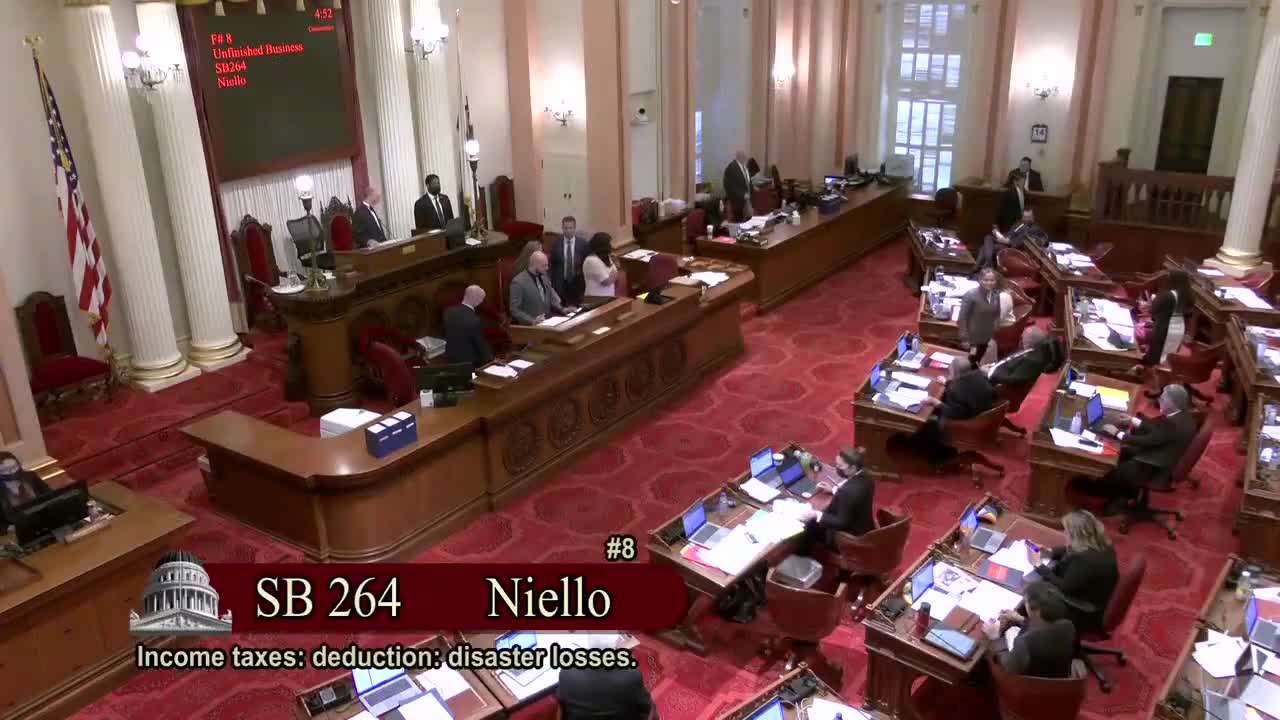 7MIN
Senate Floor
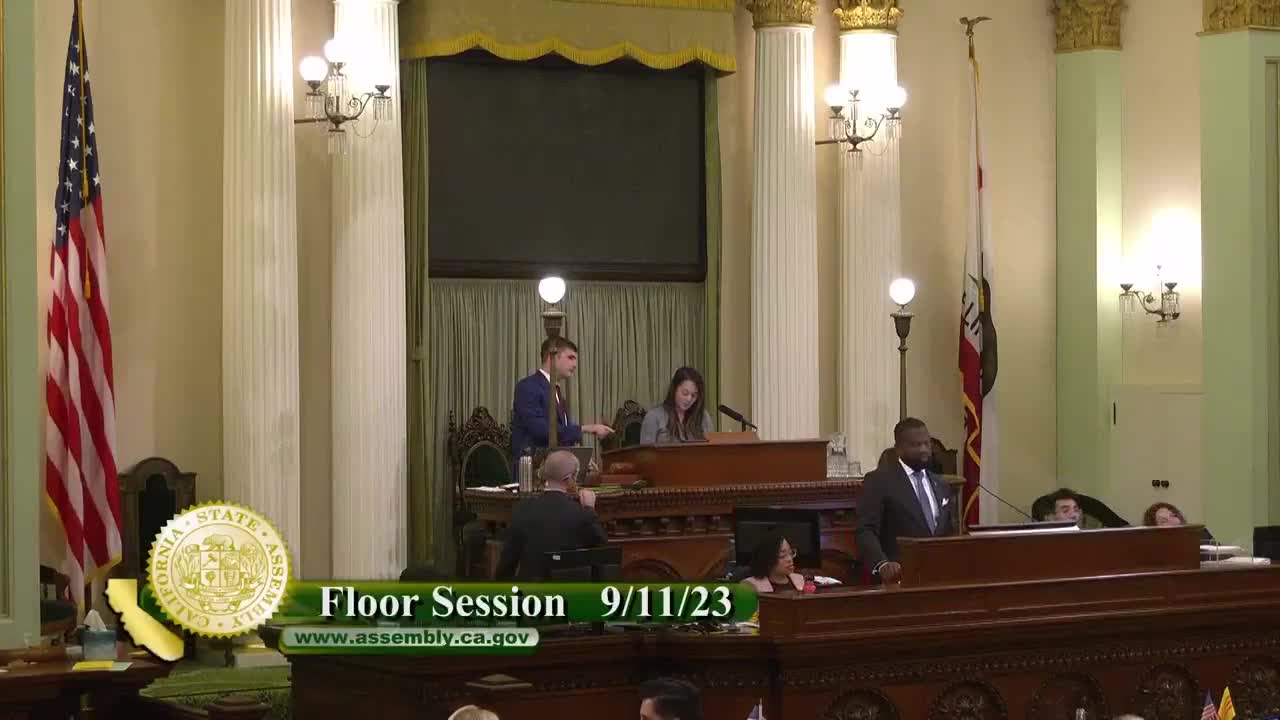 2MIN
Assembly Floor
 59SEC
Assembly Floor
 24MIN
Assembly Standing Committee on Health
 16MIN
Senate Standing Committee on Human Services
 17MIN