SB 683: Hotels and short-term rentals: advertised rates: mandatory fees.
- Session Year: 2023-2024
- House: Senate
- Latest Version Date: 2023-09-07
Current Status:
Failed
(2024-08-30: Ordered to inactive file on request of Assembly Member Grayson.)
Introduced
In Committee
First Chamber
In Committee
Second Chamber
Enacted
The False Advertising Law (FAL) makes it a crime for a person or a firm, corporation, or association, or any employee thereof, to engage in specified false or misleading advertising practices. The Unfair Competition Law (UCL) makes various unfair competition practices unlawful, including any unlawful, unfair, or fraudulent business act or practice and unfair, deceptive, untrue, or misleading advertising.
Existing law requires every keeper of a hotel, inn, or lodginghouse to post a statement of rates by the day for lodging and prohibits collection of a sum greater than that amount, as specified.
This bill would, beginning July 1, 2024, require a person or an internet website, application, or other similar centralized platform that advertises a hotel room rate or short-term rental rate before the public in this state, or from this state before the public in any state, to include in the advertised hotel room rate or short-term rental rate all mandatory fees, as defined, that will be charged in order for the consumer to stay in the hotel room or short-term rental. The bill would require a hotel or a short-term rental to clearly and conspicuously disclose on its internet website a list of all mandatory fees and any payment surcharges imposed on consumers. The rental and include in the total price to be paid, before the consumer reserves the stay, all taxes and fees imposed by a government on the stay.
This bill would authorize certain public attorneys, including the Attorney General, to bring an enforcement action action against a person or an internet website, application, or other similar centralized platform that knew or should have known that it has advertised a hotel room rate or short-term rental rate in violation of these provisions, and would require a court to impose a civil penalty of not more than $10,000 for each violation after consideration of specified factors. The bill would also provide that a violation of its provisions constitutes a false or misleading statement under the FAL. By expanding the scope of a crime, the bill would impose a state-mandated local program.
The California Constitution requires the state to reimburse local agencies and school districts for certain costs mandated by the state. Statutory provisions establish procedures for making that reimbursement.This bill would provide that no reimbursement is required by this act for a specified reason.The False Advertising Law (FAL) makes it a crime for a person or a firm, corporation, or association, or any employee thereof, to engage in specified false or misleading advertising practices. The Unfair Competition Law (UCL) makes various unfair competition practices unlawful, including any unlawful, unfair, or fraudulent business act or practice and unfair, deceptive, untrue, or misleading advertising.
Existing law requires every keeper of a hotel, inn, or lodginghouse to post a statement of rates by the day for lodging and prohibits collection of a sum greater than that amount, as specified.
This bill would would, beginning July 1, 2024, require a person that advertises a hotel room rate or short-term rental rate before the public in this state, or from this state before the public in any state, to include in the advertised hotel room rate or short-term rental rate all mandatory fees, as defined, that will be charged in order for the consumer to stay in the hotel room or short-term rental. The bill would require a hotel or a short-term rental to clearly and conspicuously disclose on its internet website a list of all mandatory fees and credit card any payment surcharges imposed on consumers. The bill would authorize certain public attorneys, including the Attorney General, to bring an enforcement action and would require a court to impose a civil penalty of not more than $10,000 for each violation after consideration of specified factors. The bill would also provide that a violation of its provisions constitutes a false or misleading statement under the FAL. By expanding the scope of a crime, the bill would impose a state-mandated local program.
The California Constitution requires the state to reimburse local agencies and school districts for certain costs mandated by the state. Statutory provisions establish procedures for making that reimbursement.
This bill would provide that no reimbursement is required by this act for a specified reason.
The False Advertising Law (FAL) makes it a crime for a person or a firm, corporation, or association, or any employee thereof, to engage in specified false or misleading advertising practices. The Unfair Competition Law (UCL) makes various unfair competition practices unlawful, including any unlawful, unfair, or fraudulent business act or practice and unfair, deceptive, untrue, or misleading advertising.
Existing law requires every keeper of a hotel, inn, or lodginghouse to post a statement of rates by the day for lodging and prohibits collection of a sum greater than that amount, as specified.
This bill would require a person that advertises a hotel room rate or short-term rental rate before the public in this state, or from this state before the public in any state, to include in the advertised hotel room rate or short-term rental rate all mandatory fees, as defined, that will be charged in order for the consumer to stay in the hotel room or short-term rental. The bill would require a hotel or a short-term rental to clearly and conspicuously disclose on its internet website a list of all mandatory fees and credit card surcharges imposed on consumers. The bill would authorize certain public attorneys, including the Attorney General, to bring an enforcement action and would require a court to impose a civil penalty of not more than $10,000 for each violation after consideration of specified factors. The bill would also provide that a violation of its provisions constitutes a false or misleading statement under the FAL. By expanding the scope of a crime, the bill would impose a state-mandated local program.
The California Constitution requires the state to reimburse local agencies and school districts for certain costs mandated by the state. Statutory provisions establish procedures for making that reimbursement.
This bill would provide that no reimbursement is required by this act for a specified reason.
The False Advertising Law (FAL) makes it a crime for a person or a firm, corporation, or association, or any employee thereof, to engage in specified false or misleading advertising practices. The Unfair Competition Law (UCL) makes various unfair competition practices unlawful, including any unlawful, unfair, or fraudulent business act or practice and unfair, deceptive, untrue, or misleading advertising.
Existing law requires every keeper of a hotel, inn, or lodginghouse to post a statement of rates by the day for lodging and prohibits collection of a sum greater than that amount, as specified.
This bill would require a person that advertises a hotel room rate or short-term rental rate before the public in this state, or from this state before the public in any state, to include in the advertised rate all mandatory fees, as provided. in the advertised hotel room rate or short-term rental rate all mandatory fees, as defined, that will be charged in order for the consumer to stay in the hotel room or short-term rental. The bill would require a hotel or a short-term rental to clearly and conspicuously disclose on its internet website a list of all mandatory fees and credit card surcharges imposed on consumers. The bill would authorize certain public attorneys, including the Attorney General General, to bring an enforcement action and would require a court to impose a civil penalty of not more than $10,000 for each violation, depending on violation after consideration of specified factors. The bill would also provide that a violation of its provisions constitutes an unfair and unlawful business act or practice and a false or misleading statement under the FAL and the UCL. FAL. By expanding the scope of a crime, the bill would impose a state-mandated local program.
The California Constitution requires the state to reimburse local agencies and school districts for certain costs mandated by the state. Statutory provisions establish procedures for making that reimbursement.
This bill would provide that no reimbursement is required by this act for a specified reason.
The False Advertising Law (FAL) makes it a crime for a person or a firm, corporation, or association, or any employee thereof, to engage in specified false or misleading advertising practices. The Unfair Competition Law (UCL) makes various unfair competition practices unlawful, including any unlawful, unfair, or fraudulent business act or practice and unfair, deceptive, untrue, or misleading advertising.
Existing law requires every keeper of a hotel, inn, or lodginghouse to post a statement of rates by the day for lodging and prohibits collection of a sum greater than that amount, as specified.
This bill would require a person that advertises a hotel room rate or short-term rental rate before the public in this state, or from this state before the public in any state, to include in the advertised rate all mandatory fees, as provided. The bill would require a hotel or a short-term rental to clearly and conspicuously disclose on its internet website a list of all mandatory fees and credit card surcharges imposed on consumers. The bill would authorize the Attorney General to bring an enforcement action and would require a court to impose a civil penalty of not more than $10,000 for each violation, depending on consideration of specified factors. The bill would also provide that a violation of its provisions constitutes an unfair and unlawful business act or practice and a false or misleading statement under the FAL and the UCL. By expanding the scope of a crime, the bill would impose a state-mandated local program.
The California Constitution requires the state to reimburse local agencies and school districts for certain costs mandated by the state. Statutory provisions establish procedures for making that reimbursement.
This bill would provide that no reimbursement is required by this act for a specified reason.
(a)For purposes of this section:
(1)(A)Hotel means a hotel, motel, bed and breakfast inn, or other similar transient lodging establishment.
(B)Hotel does not include a residential hotel, as defined in Section 50519 of the Health and Safety Code.
(2)(A)Mandatory fees means any fees, taxes, costs, or other charges that a consumer is required to pay in order to stay in a hotel or short-term rental.
(B)Mandatory fees does not include taxes and fees imposed by a government on the stay or a charge for any optional service or amenity that a consumer elects to pay. For purposes of this section, assessments under Chapter 1 (commencing with Section 13995) of Part 4.7 of Division 3 of Title 2 of the Government Code or under Part 6 (commencing with Section 36500) or Part 7 (commencing with Section 36600) of Division 18 of the Streets and Highways Code are fees imposed by a government on the stay.
(3)Short-term rental means a residential dwelling, or any portion of a residential dwelling, that is rented to a person for 30 or fewer consecutive days.
(b)A person or an internet website, application, or other similar centralized platform that advertises a hotel room rate or short-term rental rate before the public in this state, or from this state before the public in any state, shall do both of the following:
(1)Include in the advertised hotel room rate or short-term rental rate all mandatory fees that will be charged in order for the consumer to stay in the hotel room or short-term rental.
(2)Clearly and conspicuously disclose in the advertised hotel room rate or short-term rental rate and the total price displayed at the time of booking the amount of any payment surcharge that will be applied.(c)A hotel or short-term rental shall clearly and conspicuously disclose on its internet website a list of all mandatory fees and any payment surcharges imposed on consumers.(2)Include in the total price to be paid, before the consumer reserves the stay, all taxes and fees imposed by a government on the stay and clearly and conspicuously disclose as a subitem of the total price all taxes and fees imposed by a government on the stay.
(c)(1)An action for a violation of this section may be brought against a person or an internet website, application, or other similar centralized platform that knew or should have known that it has advertised a hotel room rate or short-term rental rate in violation of this section.
(d)(1)(2)An action for a violation of this section may be brought only by any of the following:
(A)The Attorney General.
(B)A district attorney.
(C)A city attorney of a city having a population in excess of 750,000.
(D)A county counsel of any county within which a city has a population in excess of 750,000.
(E)With the consent of the district attorney, a city prosecutor in a city that has a full-time city prosecutor.
(2)(3)In an action alleging a violation of this section, the court shall impose a civil penalty of not more than ten thousand dollars ($10,000) for each violation of this section. In determining the amount of the civil penalty, the court shall consider all of the relevant circumstances presented by any of the parties to the case, including, but not limited to, all of the following:
(A)The nature and seriousness of the misconduct.
(B)The number of violations.
(C)The persistence of the misconduct.
(D)The length of time over which the misconduct occurred.
(E)The willfulness of the misconduct.
(F)The assets, liabilities, and net worth of the defendant.
(3)Each day that a defendant remains in violation of this section shall constitute a single violation.(4)The penalties provided by this subdivision are in addition to any other civil, criminal, and administrative penalties or sanctions provided by law and do not supplant, but are cumulative to, other penalties or sanctions.
(5)The duties and obligations imposed by this section are cumulative with any other duties or obligations imposed under other law and shall not be construed to relieve any party from any duties or obligations imposed under other law.
(e)A violation of this section constitutes a false or misleading statement under Section 17500 and may be enforced under Chapter 5 (commencing with Section 17200) of Part 2 and Chapter 3 (commencing with Section 17500).(d)The provisions of this section are severable. If any provision of this section or its application is held invalid, that invalidity shall not affect other provisions or applications that can be given effect without the invalid provision or application.
(f)(e)This section shall become operative on July 1, 2024.
SEC. 2.No reimbursement is required by this act pursuant to Section 6 of Article XIIIB of the California Constitution because the only costs that may be incurred by a local agency or school district will be incurred because this act creates a new crime or infraction, eliminates a crime or infraction, or changes the penalty for a crime or infraction, within the meaning of Section 17556 of the Government Code, or changes the definition of a crime within the meaning of Section 6 of Article XIIIB of the California Constitution.(a)For purposes of this section:
(1)(A)Hotel means a hotel, motel, bed and breakfast inn, or other similar transient lodging establishment.
(B)Hotel does not include a residential hotel, as defined in Section 50519 of the Health and Safety Code.
(2)(A)Mandatory fees means any fees, taxes, costs, or other charges that a consumer is required to pay in order to stay in a hotel or short-term rental.
(B)Mandatory fees does not include a charge for any optional service or amenity that a consumer elects to pay.
(3)Short-term rental means a residential dwelling, or any portion of a residential dwelling, that is rented to a person for 30 or fewer consecutive days.
(b)A person that advertises a hotel room rate or short-term rental rate before the public in this state, or from this state before the public in any state, shall do both of the following:
(1)Include in the advertised hotel room rate or short-term rental rate all mandatory fees that will be charged in order for the consumer to stay in the hotel room or short-term rental.
(2)Clearly and conspicuously disclose in the advertised hotel room rate or short-term rental rate and the total price displayed at the time of booking the amount of the credit card any payment surcharge that will be applied, if any. applied.
(c)A hotel or short-term rental shall clearly and conspicuously disclose on its internet website a list of all mandatory fees and credit card any payment surcharges imposed on consumers.
(d)(1)An action for a violation of this section may be brought only by any of the following:
(A)The Attorney General.
(B)A district attorney.
(C)A city attorney of a city having a population in excess of 750,000.
(D)A county counsel of any county within which a city has a population in excess of 750,000.
(E)With the consent of the district attorney, a city prosecutor in a city that has a full-time city prosecutor.
(2)In an action alleging a violation of this section, the court shall impose a civil penalty of not more than ten thousand dollars ($10,000) for each violation of this section. In determining the amount of the civil penalty, the court shall consider all of the relevant circumstances presented by any of the parties to the case, including, but not limited to, all of the following:
(A)The nature and seriousness of the misconduct.
(B)The number of violations.
(C)The persistence of the misconduct.
(D)The length of time over which the misconduct occurred.
(E)The willfulness of the misconduct.
(F)The assets, liabilities, and net worth of the defendant.
(3)Each day that a defendant remains in violation of this section shall constitute a single violation.
(4)The penalties provided by this subdivision are in addition to any other civil, criminal, and administrative penalties or sanctions provided by law, law and do not supplant, but are cumulative to, other penalties or sanctions.
(5)The duties and obligations imposed by this section are cumulative with any other duties or obligations imposed under other law and shall not be construed to relieve any party from any duties or obligations imposed under other law.
(e)A violation of this section constitutes a false or misleading statement under Section 17500 and may be enforced under Chapter 5 (commencing with Section 17200) of Part 2 and Chapter 3 (commencing with Section 17500).
(f)This section shall become operative on July 1, 2024.
SEC. 2.No reimbursement is required by this act pursuant to Section 6 of Article XIIIB of the California Constitution because the only costs that may be incurred by a local agency or school district will be incurred because this act creates a new crime or infraction, eliminates a crime or infraction, or changes the penalty for a crime or infraction, within the meaning of Section 17556 of the Government Code, or changes the definition of a crime within the meaning of Section 6 of Article XIIIB of the California Constitution.
(a)For purposes of this section:
(1)(A)Hotel means a hotel, motel, bed and breakfast inn, or other similar transient lodging establishment.
(B)Hotel does not include a residential hotel, as defined in Section 50519 of the Health and Safety Code.
(2)(A)Mandatory fees means any fees, taxes, costs, or other charges that a consumer is required to pay in order to stay in a hotel or short-term rental.
(B)Mandatory fees does not include a charge for any optional service or amenity that a consumer elects to pay.
(3)Short-term rental means a residential dwelling, or any portion of a residential dwelling, that is rented to a person for 30 or fewer consecutive days.
(b)A person that advertises a hotel room rate or short-term rental rate before the public in this state, or from this state before the public in any state, shall do both of the following:
(1)Include in the advertised hotel room rate or short-term rental rate all mandatory fees that will be charged in order for the consumer to stay in the hotel room or short-term rental.(2)Clearly and conspicuously disclose in the advertised hotel room rate or short-term rental rate and the total price displayed at the time of booking the amount of the credit card surcharge that will be applied, if any.
(c)A hotel or short-term rental shall clearly and conspicuously disclose on its internet website a list of all mandatory fees and credit card surcharges imposed on consumers.
(d)(1)An action for a violation of this section may be brought only by any of the following:
(A)The Attorney General.
(B)A district attorney.
(C)A city attorney of a city having a population in excess of 750,000.
(D)A county counsel of any county within which a city has a population in excess of 750,000.
(E)With the consent of the district attorney, a city prosecutor in a city that has a full-time city prosecutor.
(2)In an action alleging a violation of this section, the court shall impose a civil penalty of not more than ten thousand dollars ($10,000) for each violation of this section. In determining the amount of the civil penalty, the court shall consider all of the relevant circumstances presented by any of the parties to the case, including, but not limited to, all of the following:
(A)The nature and seriousness of the misconduct.
(B)The number of violations.
(C)The persistence of the misconduct.
(D)The length of time over which the misconduct occurred.
(E)The willfulness of the misconduct.
(F)The assets, liabilities, and net worth of the defendant.
(3)Each day that a defendant remains in violation of this section shall constitute a single violation.
(4)The penalties provided by this subdivision are in addition to any other civil, criminal, and administrative penalties or sanctions provided by law, and do not supplant, but are cumulative to, other penalties or sanctions.
(5)The duties and obligations imposed by this section are cumulative with any other duties or obligations imposed under other law and shall not be construed to relieve any party from any duties or obligations imposed under other law.
(e)A violation of this section constitutes a false or misleading statement under Section 17500 and may be enforced under Chapter 5 (commencing with Section 17200) of Part 2 and Chapter 3 (commencing with Section 17500).
SEC. 2.No reimbursement is required by this act pursuant to Section 6 of Article XIIIB of the California Constitution because the only costs that may be incurred by a local agency or school district will be incurred because this act creates a new crime or infraction, eliminates a crime or infraction, or changes the penalty for a crime or infraction, within the meaning of Section 17556 of the Government Code, or changes the definition of a crime within the meaning of Section 6 of Article XIIIB of the California Constitution.
REVISIONS: HeadingLines 3 and 4.(a)For purposes of this section, the following definitions apply: section:
(1)(A)Hotel means any a hotel, motel, bed and breakfast inn, or other similar transient lodging establishment, but it does not include a residential hotel as defined in Section 50519 of the Health and Safety Code. establishment.
(B)Hotel does not include a residential hotel, as defined in Section 50519 of the Health and Safety Code.
(2)(A)Mandatory fees means any fees, taxes, costs, or other charges that a consumer is required to pay in order to check stay in to a hotel or short-term rental, including, but not limited to, resort fees. Mandatory fees do not include taxes or fees imposed by state or local government. Mandatory fees do not include charges for any optional services or amenities that a consumer elects to pay. rental.
(B)Mandatory fees does not include a charge for any optional service or amenity that a consumer elects to pay.
(3)Short-term rental means a residential dwelling, or any portion of a residential dwelling, that is rented to a person for 30 or fewer consecutive days or less. days.
(b)A person that advertises a hotel room rate or short-term rental rate before the public in this state, or from this state before the public in any state, shall do all both of the following:
(1)Include in the advertised hotel room rate or short-term rental rate all mandatory fees. fees that will be charged in order for the consumer to stay in the hotel room or short-term rental.(2)At the time of booking, clearly and conspicuously disclose or include in the total price all mandatory fees that will be charged in order for the consumer to book the hotel room or short-term rental. If any mandatory fees will not be charged at the time of booking, they shall be clearly and conspicuously disclosed directly under the total price and identified as fees that will be charged after the time of booking.(3)(2)Clearly and conspicuously disclose in the advertised hotel room rate or short-term rental rate and the total price displayed at the time of booking the amount of the credit card surcharge that will be applied, if any.
(c)A hotel or short-term rental shall clearly and conspicuously disclose on its internet website a list of all mandatory fees and credit card surcharges imposed on consumers.
(d)(1)The Attorney General may bring an action in a court of competent jurisdiction against any person who violates this section.(d)(1)An action for a violation of this section may be brought only by any of the following:
(A)The Attorney General.
(B)A district attorney.
(C)A city attorney of a city having a population in excess of 750,000.
(D)A county counsel of any county within which a city has a population in excess of 750,000.
(E)With the consent of the district attorney, a city prosecutor in a city that has a full-time city prosecutor.
(2)The In an action alleging a violation of this section, the court shall impose a civil penalty of not more than ten thousand dollars ($10,000) for each violation of this section. In determining the amount of the civil penalty, the court shall consider all of the relevant circumstances presented by any of the parties to the case, including, but not limited to, all of the following:
(A)The nature and seriousness of the misconduct.
(B)The number of violations.
(C)The persistence of the misconduct.
(D)The length of time over which the misconduct occurred.
(E)The willfulness of the misconduct.
(F)The assets, liabilities, and net worth of the person in violation of this section. defendant.
(3)Each day that a person defendant remains in violation of this section shall constitute a single violation.
(4)The penalties provided by this subdivision are in addition to any other civil, criminal, and administrative penalties or sanctions provided by law, and do not supplant, but are cumulative to, other penalties or sanctions.
(e)A violation of this section constitutes an unfair and unlawful business act or practice under Section 17200 and a false or misleading statement under Section 17500 and may be enforced under Chapter 5 (commencing with Section 17200) of Part 2 and Chapter 3 (commencing with Section 17500). A violation of this section is not subject to Chapter 4 (commencing with Section 1780) of Title 1.5 of Part 4 of Division 3 of the Civil Code.
SEC. 2.No reimbursement is required by this act pursuant to Section 6 of Article XIIIB of the California Constitution because the only costs that may be incurred by a local agency or school district will be incurred because this act creates a new crime or infraction, eliminates a crime or infraction, or changes the penalty for a crime or infraction, within the meaning of Section 17556 of the Government Code, or changes the definition of a crime within the meaning of Section 6 of Article XIIIB of the California Constitution.
(a)For purposes of this section, the following definitions apply:
(1)Hotel means any hotel, motel, bed and breakfast inn, or other similar transient lodging establishment, but it does not include a residential hotel as defined in Section 50519 of the Health and Safety Code.
(2)Mandatory fees means any fees, costs, or other charges that a consumer is required to pay in order to check in to a hotel or short-term rental, including, but not limited to, resort fees. Mandatory fees do not include taxes or fees imposed by state or local government. Mandatory fees do not include charges for any optional services or amenities that a consumer elects to pay.
(3)Short-term rental means a residential dwelling, or any portion of a residential dwelling, that is rented to a person for 30 consecutive days or less.
(b)A person that advertises a hotel room rate or short-term rental rate before the public in this state, or from this state before the public in any state, shall do all of the following:
(1)Include in the advertised hotel room rate or short-term rental rate all mandatory fees.
(2)At the time of booking, clearly and conspicuously disclose or include in the total price all mandatory fees that will be charged in order for the consumer to book the hotel room or short-term rental. If any mandatory fees will not be charged at the time of booking, they shall be clearly and conspicuously disclosed directly under the total price and identified as fees that will be charged after the time of booking.
(3)Clearly and conspicuously disclose in the advertised hotel room rate or short-term rental rate and the total price displayed at the time of booking the amount of the credit card surcharge that will be applied, if any.
(c)A hotel or short-term rental shall clearly and conspicuously disclose on its internet website a list of all mandatory fees and credit card surcharges imposed on consumers.
(d)(1)The Attorney General may bring an action in a court of competent jurisdiction against any person who violates this section.
(2)The court shall impose a civil penalty of not more than ten thousand dollars ($10,000) for each violation of this section. In determining the amount of the civil penalty, the court shall consider all of the relevant circumstances presented by any of the parties to the case, including, but not limited to, all of the following:
(A)The nature and seriousness of the misconduct.
(B)The number of violations.
(C)The persistence of the misconduct.
(D)The length of time over which the misconduct occurred.
(E)The willfulness of the misconduct.
(F)The assets, liabilities, and net worth of the person in violation of this section.
(3)Each day that a person remains in violation of this section shall constitute a single violation.
(4)The penalties provided by this subdivision are in addition to any other civil, criminal, and administrative penalties or sanctions provided by law, and do not supplant, but are cumulative to, other penalties or sanctions.
(e)A violation of this section constitutes an unfair and unlawful business act or practice under Section 17200 and a false or misleading statement under Section 17500 and may be enforced under Chapter 5 (commencing with Section 17200) of Part 2 and Chapter 3 (commencing with Section 17500). A violation of this section is not subject to Chapter 4 (commencing with Section 1780) of Title 1.5 of Part 4 of Division 3 of the Civil Code.
SEC. 2.No reimbursement is required by this act pursuant to Section 6 of Article XIIIB of the California Constitution because the only costs that may be incurred by a local agency or school district will be incurred because this act creates a new crime or infraction, eliminates a crime or infraction, or changes the penalty for a crime or infraction, within the meaning of Section 17556 of the Government Code, or changes the definition of a crime within the meaning of Section 6 of Article XIIIB of the California Constitution.
|
Date
|
Status
|
|---|---|
| Aug 30, 2024 | Ordered to inactive file on request of Assembly Member Grayson. |
| Aug 19, 2024 | Ordered to third reading. |
| Aug 19, 2024 | From inactive file. |
| Aug 15, 2024 | Notice of intention to remove from inactive file given by Assembly Member Berman. |
| Sep 13, 2023 | Ordered to inactive file on request of Assembly Member Berman. |
| Sep 7, 2023 | Assembly Rule 69 suspended. (Ayes 62. Noes 15. Page 3010.) |
| Sep 7, 2023 | Ordered to third reading. |
| Sep 7, 2023 | Read third time and amended. |
| Sep 5, 2023 | Read second time. Ordered to third reading. |
| Sep 1, 2023 | From committee: Do pass. (Ayes 13. Noes 2.) (September 1). |
| Aug 16, 2023 | August 16 set for first hearing. Placed on suspense file. |
| Jun 28, 2023 | Read second time and amended. Re-referred to Com. on APPR. |
| Jun 27, 2023 | From committee: Do pass as amended and re-refer to Com. on APPR. (Ayes 8. Noes 3.) (June 27). |
| Jun 20, 2023 | From committee: Do pass and re-refer to Com. on JUD. (Ayes 11. Noes 0.) (June 20). Re-referred to Com. on JUD. |
| Jun 20, 2023 | Coauthors revised. |
| Jun 1, 2023 | Referred to Coms. on B. & P. and JUD. |
| May 25, 2023 | In Assembly. Read first time. Held at Desk. |
| May 24, 2023 | Read third time. Passed. (Ayes 40. Noes 0. Page 1262.) Ordered to the Assembly. |
| May 18, 2023 | Read second time. Ordered to third reading. |
| May 18, 2023 | From committee: Do pass. (Ayes 7. Noes 0. Page 1179.) (May 18). |
| May 12, 2023 | Set for hearing May 18. |
| Apr 24, 2023 | April 24 hearing: Placed on APPR suspense file. |
| Apr 18, 2023 | Set for hearing April 24. |
| Apr 13, 2023 | Read second time and amended. Re-referred to Com. on APPR. |
| Apr 12, 2023 | From committee: Do pass as amended and re-refer to Com. on APPR. (Ayes 9. Noes 0. Page 687.) (April 11). |
| Mar 30, 2023 | From committee with author's amendments. Read second time and amended. Re-referred to Com. on JUD. |
| Mar 21, 2023 | Set for hearing April 11. |
| Mar 1, 2023 | Referred to Com. on JUD. |
| Feb 17, 2023 | From printer. May be acted upon on or after March 19. |
| Feb 16, 2023 | Introduced. Read first time. To Com. on RLS. for assignment. To print. |
|
Date
|
Description
|
Location
|
Votes
|
|
|---|---|---|---|---|
| Sep 1, 2023 | Do pass. | Assembly Standing Committee on Appropriations |
Passed |
|
| Jun 27, 2023 | Do pass as amended and be re-referred to the Committee on [Appropriations] | Assembly Standing Committee on Judiciary |
Passed |
|
| Jun 20, 2023 | Do pass and be re-referred to the Committee on [Judiciary] | Assembly Standing Committee on Business and Professions |
Passed |
|
| May 24, 2023 | Senate 3rd Reading SB683 Glazer et al. | Senate Floor |
Passed |
|
| May 18, 2023 | Do pass | Senate Standing Committee on Appropriations |
Passed |
|
| Apr 24, 2023 | Placed on suspense file | Senate Standing Committee on Appropriations |
Passed |
|
| Apr 11, 2023 | Do pass as amended, but first amend, and re-refer to the Committee on [Appropriations] | Senate Standing Committee on Judiciary |
Passed |
This list shows positions taken on this bill by organizations on the date displayed, which is linked to the original source.
Positions by individuals are not included.
|
Organization
|
Position
|
Date
|
|---|---|---|
| Airbnb, Inc | ** Against | |
| California Chamber Of Commerce | ** Against | |
| California Hotel & Lodging Association | ** Against | |
| California Travel Association | ** Against | |
| CALPIRG, California Public Interest Research Group | ** Support | |
| Consumer Attorneys Of California | ** Support | |
| Expedia Group | ** Against | |
| Travel Technology Association | ** Against | |
| VALLEY INDUSTRY AND COMMERCE ASSOCIATION | ** Support |
SENATE THIRD READING
STR Bill Id:SB 683
Author:(Glazer)
As Amended Ver:September 7, 2023
Majority vote
SUMMARY
Requires, beginning July 1, 2024, a person or an internet website, application, or other similar centralized platform that advertises a hotel room rate or short-term rental rate to 1) include all mandatory fees in the advertised rental rate, and 2) include all government-imposed taxes and fees in the total price before the consumer reserves the stay.
Major Provisions
- Require a person or an internet website, application, or other similar centralized platform that advertises a hotel room rate or short-term rental rate before the public in this state, or from this state before the public in any state, to do both of the following:
- Include in the advertised hotel room rate or short-term rental rate all mandatory fees that will be charged in order for the consumer to stay in the hotel room or short-term rental.
- Include in the total price to be paid, before the consumer reserves the stay, all taxes and fees imposed by a government on the stay and clearly and conspicuously disclose as a subitem of the total price all government-imposed taxes and fees.
- Authorize an action for a violation to be brought against a person or an internet website, application, or other similar centralized platform that knew or should have known that it has advertised a hotel room rate or short-term rental rate in violation of the bill's requirements.
- Specify that an action for a violation of this section may be brought only by the Attorney General, a district attorney, a city attorney or county counsel of a city or county whose population is greater than 750,000 residents, or, with the consent of the district attorney, a city prosecutor in a city that has a full-time city prosecutor.
- Require the court to impose a civil penalty of not more than $10,000 for each violation.
- Require the court, in determining the amount of the civil penalty, to consider all of the relevant circumstances presented by any of the parties to the case.
- Specify that the penalties provided by in this bill are in addition to any other civil, criminal, and administrative penalties or sanctions provided by law, and do not supplant, but are cumulative to, other penalties or sanctions.
- State that the duties and obligations imposed by this bill are cumulative with any other duties or obligations imposed under other law and shall not be construed to relieve any party from any duties or obligations imposed under other law.
- Define "hotel" to mean a hotel, motel, bed and breakfast inn, or other similar transient lodging establishment. Provides that hotel does not include a residential hotel, as defined in existing law.
- Define "mandatory fees" to mean any fees, costs, or other charges that a consumer is required to pay in order to stay in a hotel or short-term rental. Specifies that mandatory fees do not include taxes and fees imposed by a government on the stay or a charge for any optional service or amenity that a consumer elects to pay. Specifies that certain assessments are fees imposed by a government.
- Define "short-term rental" to mean a residential dwelling, or any portion of a residential dwelling, that is rented to a person for 30 or fewer consecutive days.
- Include a severability clause.
- Delay implementation of this bill's requirements until July 1, 2024.
COMMENTS
Junk Fees. In 2022, the Biden Administration announced that it would seek to end the prolific imposition of "junk fees" – hidden fees, charges, and add-ons for goods and services – that increase costs for consumers (e.g. mandatory fees such as processing fees or resort fees that are tacked on to the price of the goods or services at checkout).
The practice of advertising low prices and then adding mandatory fees to the total in the final stages of a purchase is known as "drip pricing" and has been found to cause consumers to underestimate the total price and spend more than they planned. One study indicated that drip pricing led consumers to spend more than they would if businesses were required to provide pricing inclusive of all fees.
Resort Fees. Estimates indicate that junk fees account for billions of dollars in revenue in many industries. Bjorn Hanson, PhD, an adjunct professor at the New York University School of Professional Studies Jonathan M. Tisch Center for Hospitality and Tourism, estimated that hotel resort fees would generate $2.93 billion in 2018. Resort fees are per-room, per-night, mandatory fees charged by some hotels and are intended to cover the cost of resort amenities such as swimming pools and gyms. Forbes Magazine reports that a 2022 OTA Insight analysis for the American Hotel and Lodging Association indicated that approximately 6 percent of hotels charge resort fees at an average cost of $26 per day, an amount cheaper than if consumers were required to pay for amenities individually. NerdWallet found the average resort fee to be $42.41 per night (roughly 10.76% of the room's overall nightly cost) of the more than 100 U.S. hotels that it analyzed with January 2023 check-in dates.
The current policy debate on resort fees centers on the disclosure of the fees themselves. Consumers and advocacy groups argue that the fees are deceptive and misleading because they are not included in the basic room rate, but hotels and lodging groups contend that the industry is transparent about the fees it charges by breaking them out separately to provide clarity and disclosing the amount prior to completing a reservation or booking. Hotels and lodging groups have also indicated that resort fees help lower the commission fees they pay to online travel agents.
From 2012 to 2013, the Federal Trade Commission (FTC) issued 45 warning letters to several hotel chains and online travel agents for not adequately disclosing resort fees on reservation websites, noting that such practices may be considered deceptive marketing and in violation of federal law. In those letters, the FTC wrote: "We believe that online hotel reservation sites should include in the quoted total price any unavoidable and mandatory fees, such as resort fees, that consumers will be charged to stay at the hotel. While a hotel site may break down the components of the reservation estimate (e.g., room rate, estimated taxes, and any mandatory, unavoidable fees), the most prominent figure for consumers should be the total inclusive estimate." Several years later, Consumer Reports followed up with the hotels and online travel agencies that were sent warning letters by the FTC and found that none of the 31 hotels that still charge hotel fees include those fees in the initial prices advertised to consumers. According to Consumer Reports, "the hotels show only the base cost of the room on the first pricing page, without including additional mandatory charges, though some mentioned the existence of fees in small print or via a hyperlink, [but] Customers have to make multiple clicks to arrive at a checkout page to see the total costs, including fees."
Recent Legal Action. In 2019, the Attorney General for Nebraska filed a lawsuit against Hilton, alleging that the hotel chain hid the true price of hotel rooms, failed to clearly disclose all booking fees, and misled consumers on what resort fees actually pay for. A similar lawsuit was filed by the Attorney General for the District of Columbia against Marriott, adding to the allegations that the chain also misrepresented resort fees as imposed by the government, by labeling them "taxes and fees."
Advertise Airline Rates. The Department of Transportation prohibits drip pricing for airfare by requiring airlines and travel agencies to advertise the entire price of a flight to be paid by the customer, including taxes and fees, as either the exact amount or rounded up to the next whole dollar. Optional services (e.g. Wi-Fi, travel insurance, baggage fees, priority seating), are not required to be included in the advertised rates, and cannot be automatically included in the ticket price, which would require consumers to actively unselect those optional services.
This bill would similarly require, beginning July 1, 2024, the advertised rate for hotels and short-term rentals to include all mandatory fees, which explicitly do not include charges for any optional services or amenities that a consumer elects to pay or government-imposed taxes and fees.
Proposed Regulations. The FTC is in the early stages of developing regulations concerning unfair or deceptive fees. On November 8, 2022, the FTC issued an advance notice of proposed rulemaking and solicited written comment, data, and arguments concerning the need for such a rulemaking to protect consumers. The public comment period ended on January 9, 2023, but was extended to February 8, 2023.
According to the Author
"Many industries engage in drip pricing practices that mislead consumers about the total cost of a product or service. Unfortunately, lodging has become an all-too-common industry where consumers believe they are receiving a good deal based on the "nightly" rate, and then realize at the end of the transaction, or even at check-in, that the total cost is much more expensive. Current California law already prohibits false advertising and misleading advertising practices, yet this problem persists in many industries. There is a host of studies and evidence showing that current practices of advertising a cheaper rate, only to reveal a more expensive total rate, mislead consumers. In fact, one study from the Federal Trade Commission (FTC) found resort fees that are undisclosed in the posted room rate "artificially increase the search costs and the cognitive costs" for consumers. Other studies show that misleading pricing practices cause consumers to select more expensive products and services in general. This bill would require all lodging services, including hotels, short-term rentals, and third party booking services, to display the total cost of the stay inclusive of all extra fees, such as resort fees, in the advertised rate. This bill would improve consumer protections and prevent confusion by prohibiting intentionally misleading prices."
Arguments in Support
The California Public Interest Research Group writes in support:
Consumers deserve to know what they are paying for, and how much, up front. It's that simple. Unfortunately, many companies, including hotels, are blindsiding us with hidden fees…In 2017, the Federal Trade Commission did an analysis of "resort fees" and concluded that "separating resort fees from the room rate without first disclosing the total price is unlikely to result in benefits that offset the likely harm to consumers," which include additional time searching for a hotel's mandatory fees or making an uninformed choice resulting in a costly hotel stay.
Arguments in Opposition
Airbnb writes in their "Oppose unless amended" letter:
We request an amendment that requires the option of viewing these mandatory fees in the advertised rate. Consumers have diverse preferences for how they'd like to search for listings. While a total price option is important, it should be up to the consumer's discretion… Importantly, the scope of this legislation should be narrowed to only California listings that are viewed by California guests. A state bill cannot regulate extraterritorial conduct, such as searches for a listing located outside of California to guests out of, state for individuals that happen to search while in California. Hosts and Guests from outside California may have different pricing display requirements than hosts and guests who live in California – meaning California's law could directly conflict with the requirements of another jurisdiction. For example, a guest searching South Lake Tahoe could see listings in both California and Nevada – creating the burden of an entirely different viewing experience for each. This bill would likely result in consumers facing even greater confusion, and they would see a different price display on the same exact listings when viewed in California and outside California.
The Expedia Group writes in the "Oppose" letter:
President Biden and others at the federal level are actively pursuing the issue of price transparency for consumers, including in the travel sector. While we applaud state legislators for their interest in ensuring a fair and transparent experience for travelers, a state-level approach risks creating an unworkable patchwork of differing standards across states. This is not only burdensome for platforms, but more importantly would create a confusing and challenging environment for consumers who, rather than being able to rely on a single standard for price transparency, may encounter differing models based on their location of origin or destination.
FISCAL COMMENTS
According to the Assembly Appropriations Committee:
- Cost pressures (Trial Court Trust Fund, General Fund) likely in the low- to mid-hundreds of thousands of dollars annually for trial courts to hear and adjudicate additional civil actions for alleged violations of short-term lodging advertising requirements pursuant to this bill. This bill allows district attorneys, the AG, county counsels, and city attorneys to sue for violations. If five cases are filed in civil court annually requiring seven to 10 days (56 to 80 hours) of court time, at an average cost per hour of $1,000 in workload costs, the cost to the trial courts would be between $128,000 and $400,000 annually. Actual costs would vary depending on the number of cases filed and the amount of court time required in each case.
Although courts are not funded on the basis of workload, increased pressure on the courts and staff may create a need for increased funding for courts to perform existing duties. Numerous trial court operations are funded through the imposition and collection of criminal fines and fees. However, the Legislature has reduced and eliminated criminal fines and fees over the past decade. As a result, the 2023-24 state budget includes an ongoing annual allocation of $105.1 million from the GF to backfill declining revenue to the Trial Court Trust Fund.
VOTES
SENATE FLOOR: 40-0-0
YES: Allen, Alvarado-Gil, Archuleta, Ashby, Atkins, Becker, Blakespear, Bradford, Caballero, Cortese, Dahle, Dodd, Durazo, Eggman, Glazer, Gonzalez, Grove, Hurtado, Jones, Laird, Limón, McGuire, Menjivar, Min, Newman, Nguyen, Niello, Ochoa Bogh, Padilla, Portantino, Roth, Rubio, Seyarto, Skinner, Smallwood-Cuevas, Stern, Umberg, Wahab, Wiener, Wilk
ASM BUSINESS AND PROFESSIONS: 11-0-8
YES: Berman, Alvarez, Gipson, Grayson, Irwin, Jackson, Lee, Lowenthal, McCarty, McKinnor, Ting
ABS, ABST OR NV: Flora, Alanis, Bains, Bonta, Chen, Dixon, Stephanie Nguyen, Joe Patterson
ASM JUDICIARY: 8-3-0
YES: Maienschein, Connolly, Haney, Kalra, Pacheco, Papan, Reyes, Lee
NO: Essayli, Dixon, Sanchez
ASM APPROPRIATIONS: 13-2-1
YES: Holden, Bryan, Calderon, Wendy Carrillo, Mike Fong, Hart, Lowenthal, Mathis, Papan, Pellerin, Soria, Weber, Wilson
NO: Megan Dahle, Dixon
ABS, ABST OR NV: Sanchez
UPDATED
VERSION: September 7, 2023
CONSULTANT: Kaitlin Curry / B. & P. / (916) 319-3301 FN: 0002006
SENATE THIRD READING
STR Bill Id:SB 683
Author:(Glazer)
As Amended Ver:June 28, 2023
Majority vote
SUMMARY
Requires, beginning July 1, 2024, a person who advertises a hotel room rate or short-term rental rate to include in the advertised hotel room rate or short-term rental rate all mandatory fees that will be charged in order for the consumer to stay in the hotel room or short-term rental and to clearly and conspicuously disclose in the advertised hotel room rate or short-term rental rate and in the total price displayed at the time of booking the amount of any applicable payment surcharges.
Major Provisions
- Requires a person who advertises a hotel room rate or short-term rental rate before the public in this state, or from this state before the public in any state, to do both of the following:
- Include in the advertised hotel room rate or short-term rental rate all mandatory fees that will be charged in order for the consumer to stay in the hotel room or short-term rental.
- Clearly and conspicuously disclose in the advertised hotel room rate or short-term rental rate and the total price displayed at the time of booking the amount of any applicable payment surcharge.
- Requires a hotel or short-term rental to clearly and conspicuously disclose on its internet website a list of all mandatory fees and payment surcharges imposed on consumers.
- Specifies that an action for a violation of this section may be brought only by the Attorney General, a district attorney, a city attorney or county counsel of a city or county whose population is greater than 750,000 residents, or, with the consent of the district attorney, a city prosecutor in a city that has a full-time city prosecutor
- Requires the court to impose a civil penalty of not more than $10,000 for each violation.
- Requires the court, in determining the amount of the civil penalty, to consider all of the relevant circumstances presented by any of the parties to the case.
- Provides that each day that a defendant violates these requirements constitutes a single violation.
- Specifies that the penalties provided by in this bill are in addition to any other civil, criminal, and administrative penalties or sanctions provided by law, and do not supplant, but are cumulative to, other penalties or sanctions.
- States that the duties and obligations imposed by this bill are cumulative with any other duties or obligations imposed under other law and shall not be construed to relieve any party from any duties or obligations imposed under other law.
- Provides that a violation constitutes a false or misleading statement and may be enforced pursuant to existing law.
- Defines "hotel" to mean a hotel, motel, bed and breakfast inn, or other similar transient lodging establishment. Provides that hotel does not include a residential hotel, as defined in existing law.
- Defines "mandatory fees" to mean any fees, taxes, costs, or other charges that a consumer is required to pay in order to stay in a hotel or short-term rental. Specifies that mandatory fees do not include a charge for any optional service or amenity that a consumer elects to pay.
- Defines "short-term rental" to mean a residential dwelling, or any portion of a residential dwelling, that is rented to a person for 30 or fewer consecutive days.
- Delays implementation of this bill's requirements until July 1, 2024.
COMMENTS
Junk Fees. In 2022, the Biden Administration announced that it would seek to end the prolific imposition of "junk fees" – hidden fees, charges, and add-ons for goods and services – that increase costs for consumers (e.g. mandatory fees such as processing fees or resort fees that are tacked on to the price of the goods or services at checkout).
The practice of advertising low prices and then adding mandatory fees to the total in the final stages of a purchase is known as "drip pricing" and has been found to cause consumers to underestimate the total price and spend more than they planned. One study indicated that drip pricing led consumers to spend more than they would if businesses were required to provide pricing inclusive of all fees.
Resort Fees. Estimates indicate that junk fees account for billions of dollars in revenue in many industries. Bjorn Hanson, PhD, an adjunct professor at the New York University School of Professional Studies Jonathan M. Tisch Center for Hospitality and Tourism, estimated that hotel resort fees would generate $2.93 billion in 2018. Resort fees are per-room, per-night, mandatory fees charged by some hotels and are intended to cover the cost of resort amenities such as swimming pools and gyms. Forbes Magazine reports that a 2022 OTA Insight analysis for the American Hotel and Lodging Association indicated that approximately 6 percent of hotels charge resort fees at an average cost of $26 per day, an amount cheaper than if consumers were required to pay for amenities individually. NerdWallet found the average resort fee to be $42.41 per night (roughly 10.76% of the room's overall nightly cost) of the more than 100 U.S. hotels that it analyzed with January 2023 check-in dates.
The current policy debate on resort fees centers on the disclosure of the fees themselves. Consumers and advocacy groups argue that the fees are deceptive and misleading because they are not included in the basic room rate, but hotels and lodging groups contend that the industry is transparent about the fees it charges by breaking them out separately to provide clarity and disclosing the amount prior to completing a reservation or booking. Hotels and lodging groups have also indicated that resort fees help lower the commission fees they pay to online travel agents.
From 2012 to 2013, the Federal Trade Commission (FTC) issued 45 warning letters to several hotel chains and online travel agents for not adequately disclosing resort fees on reservation websites, noting that such practices may be considered deceptive marketing and in violation of federal law. In those letters, the FTC wrote: "We believe that online hotel reservation sites should include in the quoted total price any unavoidable and mandatory fees, such as resort fees, that consumers will be charged to stay at the hotel. While a hotel site may break down the components of the reservation estimate (e.g., room rate, estimated taxes, and any mandatory, unavoidable fees), the most prominent figure for consumers should be the total inclusive estimate." Several years later, Consumer Reports followed up with the hotels and online travel agencies that were sent warning letters by the FTC and found that none of the 31 hotels that still charge hotel fees include those fees in the initial prices advertised to consumers. According to Consumer Reports, "the hotels show only the base cost of the room on the first pricing page, without including additional mandatory charges, though some mentioned the existence of fees in small print or via a hyperlink, [but] Customers have to make multiple clicks to arrive at a checkout page to see the total costs, including fees."
Recent Legal Action. In 2019, the Attorney General for Nebraska filed a lawsuit against Hilton, alleging that the hotel chain hid the true price of hotel rooms, failed to clearly disclose all booking fees, and misled consumers on what resort fees actually pay for. A similar lawsuit was filed by the Attorney General for the District of Columbia against Marriott, adding to the allegations that the chain also misrepresented resort fees as imposed by the government, by labeling them "taxes and fees."
Advertise Airline Rates. The Department of Transportation prohibits drip pricing for airfare by requiring airlines and travel agencies to advertise the entire price of a flight to be paid by the customer, including taxes and fees, as either the exact amount or rounded up to the next whole dollar. Optional services (e.g. Wi-Fi, travel insurance, baggage fees, priority seating), are not required to be included in the advertised rates, and cannot be automatically included in the ticket price, which would require consumers to actively unselect those optional services.
This bill would similarly require, beginning July 1, 2024, the advertised rate for hotels and short-term rentals to include all mandatory fees, which explicitly do not include charges for any optional services or amenities that a consumer elects to pay.
Payment Surcharges. Credit card surcharges are an added fee that a business may add to the purchase price when the consumer pays with a credit card instead of a debit card or cash. Credit card surcharges usually range from one percent to four percent and must be disclosed prior to payment. This bill would require, beginning July 1, 2024, the person to clearly and conspicuously disclose in the advertised hotel room rate or short-term rental rate, and in the total price displayed at the time of booking, the amount of any applicable payment surcharge.
Proposed Regulations. The FTC is in the early stages of developing regulations concerning unfair or deceptive fees. On November 8, 2022, the FTC issued an advance notice of proposed rulemaking and solicited written comment, data, and arguments concerning the need for such a rulemaking to protect consumers. The public comment period ended on January 9, 2023, but was extended to February 8, 2023.
According to the Author
Many industries engage in drip pricing practices that mislead consumers about the total cost of a product or service. Unfortunately, lodging has become an all-too-common industry where consumers believe they are receiving a good deal based on the "nightly" rate, and then realize at the end of the transaction, or even at check-in, that the total cost is much more expensive. Current California law already prohibits false advertising and misleading advertising practices, yet this problem persists in many industries. There is a host of studies and evidence showing that current practices of advertising a cheaper rate, only to reveal a more expensive total rate, mislead consumers. In fact, one study from the Federal Trade Commission (FTC) found resort fees that are undisclosed in the posted room rate "artificially increase the search costs and the cognitive costs" for consumers. Other studies show that misleading pricing practices cause consumers to select more expensive products and services in general. This bill would require all lodging services, including hotels, short-term rentals, and third party booking services, to display the total cost of the stay inclusive of all extra fees, such as taxes, credit card fees, and resort fees in the advertised rate. This bill would improve consumer protections and prevent confusion by prohibiting intentionally misleading prices.
Arguments in Support
The California Public Interest Research Group writes in support:
Consumers deserve to know what they are paying for, and how much, up front. It's that simple. Unfortunately, many companies, including hotels, are blindsiding us with hidden fees…In 2017, the Federal Trade Commission did an analysis of "resort fees" and concluded that "separating resort fees from the room rate without first disclosing the total price is unlikely to result in benefits that offset the likely harm to consumers," which include additional time searching for a hotel's mandatory fees or making an uninformed choice resulting in a costly hotel stay.
Arguments in Opposition
The California Chamber of Commerce and California Travel Association write in opposition to this bill:
We do not believe that eliminating the distinction between the advertised price (the actual price set by the business), and the price including state/locally/district-mandated additional amounts actually improves customer knowledge. To the contrary, it masks the additional amounts added by taxes and fees from the consumer…Moreover, including all taxes/assessments/district-related costs in initial advertised prices will make California's tourism market appear less competitive than other states…
FISCAL COMMENTS
According to the Assembly Appropriations Committee:
- Cost pressures (Trial Court Trust Fund, General Fund) likely in the low- to mid-hundreds of thousands of dollars annually for trial courts to hear and adjudicate additional civil actions for alleged violations of short-term lodging advertising requirements pursuant to this bill. This bill allows district attorneys, the AG, county counsels, and city attorneys to sue for violations. If five cases are filed in civil court annually requiring seven to 10 days (56 to 80 hours) of court time, at an average cost per hour of $1,000 in workload costs, the cost to the trial courts would be between $128,000 and $400,000 annually. Actual costs would vary depending on the number of cases filed and the amount of court time required in each case.
Although courts are not funded on the basis of workload, increased pressure on the courts and staff may create a need for increased funding for courts to perform existing duties. Numerous trial court operations are funded through the imposition and collection of criminal fines and fees. However, the Legislature has reduced and eliminated criminal fines and fees over the past decade. As a result, the 2023-24 state budget includes an ongoing annual allocation of $105.1 million from the GF to backfill declining revenue to the Trial Court Trust Fund.
- Likely minor and absorbable costs to the Department of Justice to bring enforcement actions under the False Advertising Law.
VOTES
SENATE FLOOR: 40-0-0
YES: Allen, Alvarado-Gil, Archuleta, Ashby, Atkins, Becker, Blakespear, Bradford, Caballero, Cortese, Dahle, Dodd, Durazo, Eggman, Glazer, Gonzalez, Grove, Hurtado, Jones, Laird, Limón, McGuire, Menjivar, Min, Newman, Nguyen, Niello, Ochoa Bogh, Padilla, Portantino, Roth, Rubio, Seyarto, Skinner, Smallwood-Cuevas, Stern, Umberg, Wahab, Wiener, Wilk
ASM BUSINESS AND PROFESSIONS: 11-0-8
YES: Berman, Alvarez, Gipson, Grayson, Irwin, Jackson, Lee, Lowenthal, McCarty, McKinnor, Ting
ABS, ABST OR NV: Flora, Alanis, Bains, Bonta, Chen, Dixon, Stephanie Nguyen, Joe Patterson
ASM JUDICIARY: 8-3-0
YES: Maienschein, Connolly, Haney, Kalra, Pacheco, Papan, Reyes, Lee
NO: Essayli, Dixon, Sanchez
ASM APPROPRIATIONS: 12-2-2
YES: Holden, Bryan, Calderon, Wendy Carrillo, Mike Fong, Hart, Lowenthal, Mathis, Papan, Pellerin, Weber, Wilson
NO: Megan Dahle, Dixon
ABS, ABST OR NV: Sanchez, Soria
UPDATED
VERSION: June 28, 2023
CONSULTANT: Kaitlin Curry / B. & P. / (916) 319-3301 FN: 0001490
Date of Hearing: August 16, 2023
ASSEMBLY COMMITTEE ON APPROPRIATIONS
Chris Holden, Chair
SBPCA Bill Id:SB 683
Author:(Glazer) – As Amended Ver:June 28, 2023
Policy Committee: | Business and Professions | Vote: | 11 - 0 |
Judiciary | 8 - 3 | ||
|
|
Urgency: No State Mandated Local Program: Yes Reimbursable: No
SUMMARY:
This bill, beginning July 1, 2024, requires advertisements of hotels and short-term rentals to disclose all fees and taxes required to be paid in order to stay at the hotel or short-term rental.
Among the bill’s provisions:
- Requires a person who advertises a hotel room rate or short-term rental rate to the public in this state, or from this state in any state, to do both of the following:
- Include in the advertised hotel room rate or short-term rental rate all mandatory fees that will be charged in order for the consumer to stay in the hotel room or short-term rental.
- Clearly and conspicuously disclose in the advertised hotel room rate or short-term rental rate and the total price displayed at the time of booking the amount any payment surcharge that will be applied.
- Defines “mandatory fees” as any fees, taxes, costs, or other charges that a consumer is required to pay in order to stay in a hotel or short-term rental. Specifies mandatory fees do not include a charge for any optional service or amenity a consumer elects to pay.
- Requires a hotel or short-term rental to clearly and conspicuously disclose on its internet website a list of all mandatory fees and payment surcharges imposed on consumers.
- Specifies an action for a violation of this section may be brought only by the Attorney General, a district attorney, a city attorney or county counsel of a city or county whose population is greater than 750,000 residents, or, with the consent of the district attorney, a city prosecutor in a city that has a full-time city prosecutor.
- Requires the court to impose a civil penalty of not more than $10,000 for each violation and requires the court, in determining the amount of the civil penalty, to consider all of the relevant circumstances presented by any of the parties to the case, as specified.
- Specifies that each day a defendant remains in violation of this section is a single violation.
- Provides that a violation of this section constitutes a false or misleading statement and may be enforced pursuant to existing law.
- Delays implementation of the bill’s provisions until July 1, 2024.
FISCAL EFFECT:
- Cost pressures (Trial Court Trust Fund, General Fund) likely in the low- to mid-hundreds of thousands of dollars annually for trial courts to hear and adjudicate additional civil actions for alleged violations of short-term lodging advertising requirements pursuant to this bill. This bill allows district attorneys, the AG, county counsels, and city attorneys to sue for violations. If five cases are filed in civil court annually requiring seven to 10 days (56 to 80 hours) of court time, at an average cost per hour of $1,000 in workload costs, the cost to the trial courts would be between $128,000 and $400,000 annually. Actual costs would vary depending on the number of cases filed and the amount of court time required in each case.
Although courts are not funded on the basis of workload, increased pressure on the courts and staff may create a need for increased funding for courts to perform existing duties. Numerous trial court operations are funded through the imposition and collection of criminal fines and fees. However, the Legislature has reduced and eliminated criminal fines and fees over the past decade. As a result, the 2023-24 state budget includes an ongoing annual allocation of $105.1 million from the GF to backfill declining revenue to the Trial Court Trust Fund.
- Likely minor and absorbable costs to the Department of Justice to bring enforcement actions under the False Advertising Law.
COMMENTS:
- Purpose. This bill implements transparency measures for fees in advertising for short-term lodging. According to the author:
Many industries engage in drip pricing practices that mislead consumers about the total cost of a product or service. Unfortunately, lodging has become an all-too-common industry where consumers believe they are receiving a good deal based on the “nightly” rate, and then realize at the end of the transaction, or even at check-in, that the total cost is much more expensive. Current California law already prohibits false advertising and misleading advertising practices, yet this problem persists in many industries. There is a host of studies and evidence showing that current practices of advertising a cheaper rate, only to reveal a more expensive total rate, mislead consumers. This bill would require all lodging services, including hotels, short-term rentals, and third party booking services, to display the total cost of the stay inclusive of all extra fees, such as taxes, credit card fees, and resort fees in the advertised rate. This bill would improve consumer protections and prevent confusion by prohibiting intentionally misleading prices.
- Background. According to a recent study by the American Hotel and Lodging Association, hotels in the United States collected a record $3.1 billion in fees and surcharges in 2018, representing a seven percent increase from the previous year. These fees can range from resort fees and parking fees to mandatory service charges and energy surcharges, and can add up to significant amounts for travelers. Governmental taxes, fees, and assessments that are industry-wide (or geographically applied to an area) also add considerably to the price set by the business and are often undisclosed to the consumer in advertising. This issue has sparked consumer advocacy efforts and legal action as travelers push for greater transparency and fairness in short-term lodging pricing.
The proposed federal Junk Fee Prevention Act requires full prices be shown upfront for short-term rentals, concert seats, airline tickets, and other items and empowers the Federal Trade Commission and Federal Communications Commission to issue new rules and enforcement guidelines. If passed, the act would standardize disclosure requirements across all states.
This bill prohibits a place of short-term lodging from advertising a room rate that does not include all of the required fees and taxes to be paid in order to stay at the place of short-term lodging. This bill is similar to AB 537 (Berman), passed by this committee earlier this year, but with notable differences. Unlike AB 537, this bill does not require consumers to enter specific travel dates when searching for a room rate, often the most important driver of the price of lodging as room prices vary depending on the day of the week or the season. Also unlike AB 537, this bill does not include liability for internet websites (other than a hotel or short-term rental’s own website) or any applications or other similar centralized online platforms, such as AirBnB or Expedia. In practice, this would mean that any entity advertising a hotel room online, other than a hotel or short-term rental advertising itself, would not be subject to the bill’s requirements.
- Arguments in Support. The California Public Interest Research Group (CALPIRG) writes in support:
Consumers deserve to know what they are paying for, and how much, up front. It’s that simple. Unfortunately, many companies, including hotels, are blindsiding us with hidden fees. More and more hotels are unbundling the cost of your stay, advertising the room price upfront and then separate, often compulsory fees at check-in for things like wifi, parking, use of the pool and health clubs, in-room safe, and the phone in your room. These additional fees, commonly called “resort fees” are often not disclosed upfront and rather charged at check-in or when you pay for your stay. In 2017, the Federal Trade Commission did an analysis of “resort fees” and concluded that “separating resort fees from the room rate without first disclosing the total price is unlikely to result in benefits that offset the likely harm to consumers,” which include additional time searching for a hotel’s mandatory fees or making an uninformed choice resulting in a costly hotel stay. California consumers deserve complete pricing information to help inform our purchases.
- Arguments in Opposition. The California Chamber of Commerce and the California Travel Association explain their opposition to including taxes and other government-imposed fees in advertised hotel prices:
For virtually every product that a consumer buys – from appetizers at a restaurant to groceries in the supermarket to even buying a property – taxes are not included in the initial advertised price. As a result, it is common practice in booking to display the room’s rate in initial advertisements (as set by the hotel or short-term rental, “STR”), and then to calculate taxes once the reservation’s details have been entered. This is common practice in all transactions – from restaurants to groceries to a kitchen remodel – and is not deceptive. For hotels and STRs, there are a range of governmental taxes, fees, and assessments that are industry-wide and consumers should be aware that these additions are not necessarily the choice of the individual hotel or STR.
Notably, we do not stand in defense of “hidden” fees.” However, we do not believe that eliminating the distinction between the advertised price (the actual price set by the business), and the price including state/locally/district-mandated additional amounts actually improves customer knowledge. To the contrary, it masks the effect of governmental choices – such as taxes and similar fees – from the consumer.
- Related Legislation. This bill is one of several bills pending before the Legislature this session dealing with similar issues:
AB 537 (Berman) requires a place of short-term lodging and any online platform that advertises that lodging to include in the advertised hotel room rate or short-term rental rate all mandatory fees that will be charged in order for the consumer to stay in the hotel room or short-term rental. AB 537 is pending in the Senate Appropriations Committee.
AB 8 (Friedman) imposes various disclosure requirements on ticket sellers relating to ticket prices, including that a ticket seller display the total cost and fees for a ticket prior to the ticket being selected for purchase. AB 8 is pending in the Senate Appropriations Committee.
SB 478 (Dodd) makes unlawful advertising, displaying, or offering a price for a good or service that does not include all mandatory fees or charges, other than taxes imposed by a government. SB 478 is pending on the Assembly Floor.
- Prior Legislation. AB 3235 (Chu), of the 2019-20 Legislative Session, was similar to this bill, but did not require local or state taxes be included in the advertised rates. AB 3235 failed passage in the Assembly Business and Professions Committee.
Analysis Prepared by: Jennifer Swenson / APPR. / (916) 319-2081
Date of Hearing: June 27, 2023
ASSEMBLY COMMITTEE ON JUDICIARY
Brian Maienschein, Chair
SBPCA Bill Id:SB 683
Author:(Glazer) – As Amended Ver:April 13, 2023
As Proposed to be Amended
SENATE VOTE: 40-0
SUBJECT: Hotels and short-term rentals: advertised rates: mandatory fees
KEY ISSUE: should HOTELS AND SHORT-TERM RENTALS be required to disclose all fees AND TAXES for a stay at the time of booking?
SYNOPSIS
Undisclosed hotel fees have become an increasingly prevalent problem in the travel industry, with many consumers finding themselves surprised by unadvertised fees and charges. According to a recent study by the American Hotel and Lodging Association, hotels in the United States collected a record $3.1 billion in fees and surcharges in 2018, representing a 7% increase from the previous year. These fees can range from resort fees and parking fees to mandatory service charges and energy surcharges, and can add up to significant amounts for travelers. Governmental taxes, fees, and assessments that are industry-wide (or geographically applied to an area) also add considerably to the price set by the business and are often undisclosed to the consumer in advertising. This issue has sparked consumer advocacy efforts and legal action, as travelers push for greater transparency and fairness in short-term lodging pricing. Numerous bills targeting disclosure of junk fees are making their way through Congress and in the Legislature.
This bill is specifically focused on providing consumers complete disclosure of all fees, taxes, and other charges in the advertised price of their short-term lodging. Opponents of the bill argue that a complete disclosure requirement of taxes and fees will place California’s businesses at a competitive disadvantage. The author does not propose to remove taxes from the required disclosures, and this analysis discusses the potential tradeoffs of including or omitting taxes from the required disclosure. Proposed author’s amendments that clarify the bill’s provisions and delay the implementation date until July 1, 2024 are incorporated into the Summary of the bill, below, and explained in the analysis. This bill is supported by a number of consumer advocacy groups, and opposed by members of the travel industry and by the Chamber of Commerce.
SUMMARY: Requires advertisements of hotels and short-term rentals to disclose all fees and taxes required to be paid in order to stay at the hotel or short-term rental. Specifically, this bill:
- Requires a person who advertises a hotel room rate or short-term rental rate before the public in this state, or from this state before the public in any state, to do both of the following:
- Include in the advertised hotel room rate or short-term rental rate all mandatory fees that will be charged in order for the consumer to stay in the hotel room or short-term rental.
- Clearly and conspicuously disclose in the advertised hotel room rate or short-term rental rate and the total price displayed at the time of booking the amount of the payment surcharge that will be applied, if any.
- Requires a hotel or short-term rental to clearly and conspicuously disclose on its internet website a list of all mandatory fees and payment surcharges imposed on consumers.
- Specifies that an action for a violation of this section may be brought only by the Attorney General, a district attorney, a city attorney or county counsel of a city or county whose population is greater than 750,000 residents, or, with the consent of the district attorney, a city prosecutor in a city that has a full-time city prosecutor.
- Requires the court to impose a civil penalty of not more than $10,000 for each violation.
- Requires the court, in determining the amount of the civil penalty, to consider all of the relevant circumstances presented by any of the parties to the case, including, but not limited to, all of the following:
- The nature and seriousness of the misconduct.
- The number of violations.
- The persistence of the misconduct.
- The length of time over which the misconduct occurred.
- The willfulness of the misconduct.
- The assets, liabilities, and net worth of the defendant.
- Provides that each day that a defendant remains in violation of this section shall constitute a single violation.
- Specifies that the penalties provided by this subdivision are in addition to any other civil, criminal, and administrative penalties or sanctions provided by law, and do not supplant, but are cumulative to, other penalties or sanctions.
- States that the duties and obligations imposed by this section are cumulative with any other duties or obligations imposed under other law and shall not be construed to relieve any party from any duties or obligations imposed under other law.
- Provides that a violation of this section constitutes a false or misleading statement and may be enforced pursuant to existing law.
- Defines “hotel” to mean a hotel, motel, bed and breakfast inn, or other similar transient lodging establishment. Provides that hotel does not include a residential hotel, as defined in existing law.
- Defines “mandatory fees” to mean any fees, taxes, costs, or other charges that a consumer is required to pay in order to stay in a hotel or short-term rental. Specifies that mandatory fees do not include a charge for any optional service or amenity that a consumer elects to pay.
- Defines “short-term rental” to mean a residential dwelling, or any portion of a residential dwelling, that is rented to a person for 30 or fewer consecutive days.
- Delays implementation of the bill until July 1, 2024.
EXISTING LAW:
- Establishes the Unfair Competition Law, which provides a statutory cause of action for any unlawful, unfair, or fraudulent business act or practice and unfair, deceptive, untrue, or misleading advertising, including over the internet. (Business and Professions Code Section 17200 et seq.)
- Establishes the Consumer Legal Remedies Act, which prohibits unfair methods of competition and unfair or deceptive acts or practices undertaken by any person in a transaction intended to result, or which results in, the sale or lease of goods or services to any consumer. (Civil Code Section 1750 et seq.)
- Provides remedies for individuals who have suffered damages as a result of fraud or deceit, including situations involving fraudulent misrepresentations. (Civil Code Sections 1709-1710, 1572-1573.)
- Establishes the False Advertising Law, which makes it a crime for a person or a firm, corporation, or association or any employee thereof, to engage in specified false or misleading practices, punishable by imprisonment in county jail for up to six months and a fine not to exceed $2,500. (Business and Professions Code Sections 17500-17509.)
- Defines “room rate” as rates at which rooms or other accommodations are rented to occupants. (Business and Professions Code Section 17561.)
- Establishes, under Section 230 of the Communications Decency Act, that no provider or user of an interactive computer service shall be treated as the publisher or speaker of any information provided by another information content provider. (47 U.S.C. Section 230(c)(1).)
FISCAL EFFECT: As currently in print this bill is keyed fiscal.
COMMENTS: Undisclosed hotel fees have become an increasingly prevalent problem in the travel industry, with many consumers finding themselves surprised by unadvertised fees and charges. According to a recent study by the American Hotel and Lodging Association, hotels in the United States collected a record $3.1 billion in fees and surcharges in 2018, representing a seven percent increase from the previous year. These fees can range from resort fees and parking fees to mandatory service charges and energy surcharges, and can add up to significant amounts for travelers. Governmental taxes, fees, and assessments that are industry-wide (or geographically applied to an area) also add considerably to the price set by the business and are often undisclosed to the consumer in advertising. This issue has sparked consumer advocacy efforts and legal action, as travelers push for greater transparency and fairness in short-term lodging pricing. According to the author:
Many industries engage in drip pricing practices that mislead consumers about the total cost of a product or service. Unfortunately, lodging has become an all-too-common industry where consumers believe they are receiving a good deal based on the “nightly” rate, and then realize at the end of the transaction, or even at check-in, that the total cost is much more expensive. Current California law already prohibits false advertising and misleading advertising practices, yet this problem persists in many industries. There is a host of studies and evidence showing that current practices of advertising a cheaper rate, only to reveal a more expensive total rate, mislead consumers. In fact, one study from the Federal Trade Commission (FTC) found resort fees that are undisclosed in the posted room rate “artificially increase the search costs and the cognitive costs” for consumers. Other studies show that misleading pricing practices cause consumers to select more expensive products and services in general. This bill would require all lodging services, including hotels, short-term rentals, and third party booking services, to display the total cost of the stay inclusive of all extra fees, such as taxes, credit card fees, and resort fees in the advertised rate. This bill would improve consumer protections and prevent confusion by prohibiting intentionally misleading prices.
Both the Biden administration and the Legislature have recently taken aim at undisclosed “junk fees.” In his most recent State of the Union speech, President Biden declared war on junk fees, lamenting the adverse effect they have on the average American family. “Junk fees may not matter to the very wealthy, but they matter to most folks in homes like the one I grew up in. They add up to hundreds of dollars a month,” Biden said in his speech. “I know how unfair it feels when a company overcharges you and gets away with it.” (Remarks of President Joe Biden – State of the Union as Prepared for Delivery (February 7, 2023), available at https://www.whitehouse.gov/briefing-room/speeches-remarks/2023/02/07/remarks-of-president-joe-biden-state-of-the-union-address-as-prepared-for-delivery/.)
The federal Junk Fee Prevention Act advances President Biden’s objectives by requiring full prices be shown upfront, for anything from short-term rentals to concert seats to airline tickets, putting an end to unnecessary and excessive fees, and empowering the Federal Trade Commission and Federal Communications Commission to step in and issue new rules and enforcement guidelines. The battle against non-disclosure of junk fees has also come to the Legislature. This bill is one of several bills currently pending before the Legislature this session dealing with similar issue areas:
- SB 478 (Dodd, Skinner) Attorney General Bonta, with Senator Bill Dodd and Senator Nancy Skinner, introduced SB 478, landmark legislation seeking to prohibit in California the practice of hiding mandatory fees, also known as junk fees. It would require the advertised price of a product or service include all fees other than taxes. SB 478 is pending in the Assembly Judiciary Committee.
- AB 537 (Berman) requires a place of short-term lodging and any online platform that advertises that lodging to include in the advertised hotel room rate or short-term rental rate all mandatory fees that will be charged in order for the consumer to stay in the hotel room or short-term rental. AB 578 is pending in the Senate Judiciary Committee.
- AB 8 (Friedman) would impose various disclosure requirements on ticket sellers relating to ticket prices, including that the ticket seller display the total cost and fees for a ticket prior to the ticket being selected for purchase. AB 8 is pending in the Senate Committee on Business, Professions and Economic Development.
Ultimately, the proposed federal legislation, if passed, would standardize price transparency across all states.
Undisclosed fees and taxes add up to a significantly higher-than-advertised price for short-term lodging. As evidenced by a flurry of bills at both the state and federal level on the topic – undisclosed fees when booking short-term lodging is a problem. Hotels began charging “resort fees,” mandatory per-night fees that purported to cover some of the costs of the amenities offered at resorts, as early as 1997. (Mary W. Sullivan, Economic Analysis of Hotel Resort Fees, Federal Trade Commission (FTC), January 2017.) These fees were highly unpopular with consumers as these fees were supposed to cover the use of amenities like a pool towel, fitness center access, or an airport shuttle that most consumers would expect to be included in the nightly hotel rate at the time of booking. Therefore, they result in surprising charges at the conclusion of a stay. Since the FTC took action in 2012 by issuing a warning letter to the hotel industry, many hotel operators and third-party booking websites have been more forthcoming about the inclusion of resort fees in total hotel prices for a stay, for example by allowing a search to return “total prices” for stays if the user checks a box.
These fees continue to frustrate some consumers as they can be collected in inconsistent ways, for example, at the time of booking when using a direct hotel website but collected at check-in when using third-party booking sites. (Ibid.) The FTC labels this practice of partitioning fees across various stages of the booking process as “drip pricing,” or advertising only part of a product’s price upfront, and revealing additional charges later in the buying process. Consumer groups argue that drip pricing is harmful to consumers, and hinders their ability to comparison shop and make the best financial decisions when searching for hotel accommodations. States and jurisdictions like Nebraska, Pennsylvania, and Washington D.C. have taken bipartisan legal actions against these hidden fees. For example, Nebraska’s Republican Attorney General Doug Peterson filed a lawsuit in 2019 against Hilton Hotels Corporation for hiding their “true price of hotel rooms from consumers to increase profits.” (Las Vegas Review Journal, Nebraska AG files lawsuit against Hilton for resort fees, https://www.reviewjournal.com/business/casinos-gaming/nebraska-ag-files-lawsuit-against-hilton-for-resort-fees-1810143/.)
In 2021, Marriott International, Inc. (Marriott) was found to be engaging in deceptive practices and in direct violation of Pennsylvania’s Consumer Protection Law. Then Attorney General Josh Shapiro found that Marriott was actively engaging in “drip pricing.” Marriott settled with the Pennsylvania Attorney General’s office and committed to establishing policies that would make the disclosure of mandatory fees, including resort fees, transparent and evident so that consumers can find deals best suited for them. The District of Columbia’s Office of the Attorney General released documents later that year that showed that Marriott hotels had accumulated over $206 million in resort fees from January 2012 through June 2014 alone, an average of almost $7 million per month. (The Points Guy, Marriott Resort Fees Lawsuit Update, https://thepointsguy.com/news/marriott-resort-fees-lawsuit-update/.)
The problem is not limited to major hotel chains. Short-term rental online platforms—which allow consumers to book private residential properties for short stays—have also their own form of added mandatory fees. Consumer groups found that property managers often charge mandatory “cleaning fees” or “service fees,” and that although these charges are set directly by the property owners, the short-term rental platform interface may not adequately disclose those fees. In some instances, the cleaning fee for a short-term rental can equal, or even exceed, the nightly rate and is not included in the displayed rate until a consumer goes to book the rental. According to a 2020 analysis by the Los Angeles Times, at least one thousand of the 40,000 short-term rental listings examined for its study charged a cleaning fee that was only $10 less than the nightly rate. (L.A. Times, AirBnB and Other Short Term Rental Guests Complain About Fees, https://www.latimes.com/business/story/2020-01-09/airbnb-and-other-short-term-rental-guests-complain-about-fees.) The study also found that 83% of short-term rentals in Los Angeles charged a cleaning fee which typically ranged from $5 to $1,500, with one fee as much as $2,500. (Ibid.)
A non-exhaustive list of potential taxes and fees that may be imposed—but not advertised—include the following:
- Transient Occupancy Tax (TOT): This tax is assessed on the rental of rooms or other accommodations for a period of 30 days or less. The TOT rate varies by jurisdiction but can be as high as 15.5% in some areas.
- Tourism Assessment Fee: This fee is imposed by some cities and counties to fund tourism marketing and promotion. The rate varies but is typically between 0.5% and 2% of the room rate.
- Sales Tax: California imposes a state sales tax of 7.25% on the rental of short-term lodging. Some cities and counties also impose a local sales tax, which can bring the total sales tax rate to as high as 10.25%.
- Cleaning Fees: Many short-term rentals charge a separate fee for cleaning services. This fee is typically charged per stay and can range from $50 to $200 or more, depending on the size and type of rental.
- Resort or “Destination” Fees: Some hotels and resorts charge a daily resort fee, which covers amenities such as pool access, Wi-Fi, and fitness center use. These fees can range from $10 to $50 per day and are often not included in the advertised room rate.
- Parking Fees: Some hotels and short-term rentals charge a fee for parking. This fee can range from $10 to $50 per day and is typically not included in the advertised room rate.
- Pet Fees: Some short-term rentals charge an additional fee for guests who bring pets. This fee can range from $10 to $50 per day and is typically not included in the advertised room rate.
There is no systematic pattern to the level of the fee and what it includes; in some cases, a higher fee at one hotel may include fewer services relative to another. This variation across hotels ultimately makes it difficult for consumers to quickly and easily compare the services they are paying for, given that these fees are all mandatory add-ons required for a reservation. In addition, many of the fees include services for amenities that consumers may already reasonably assume to be part of the cost of a hotel room, such as internet access, access to an existing on-site fitness center, use of an in-room safe, and access to filtered water.
Tax rates likewise differ. For hotels and short-term rentals, there are a range of governmental taxes, fees, and assessments that may be imposed on a city, county, and state level. Although the rate and applicability of the tax are not determined by the advertiser, those costs are nevertheless ones that are ultimately imposed, and often hidden at the point of advertisement, from the short-term lodging shopper.
An anecdotal sample of a variety of different short-term lodging options on different platforms underscores the problem.
Sample #1: Two-night, two adults, one bedroom boutique hotel in Los Angeles (Booking.com)
- Advertised: $1,138
- At check-out: $1,438.76
- Undisclosed fees and taxes: $300.76
- 15.20 % tax: $172.98
- 3 % Property service charge: $34.14
- Resort fee: $80.64
- City tax: $13
Sample #2: Two-night, two adults, one bedroom chain hotel in San Diego (Hyatt.com)
- Advertised: $648
- At check-out: $818.06
- Undisclosed fees and taxes: $170.06
- Destination fee: $87.76
- Occupancy tax: $68.04
- Tourism Marketing District assessment: $12.96
- CA Tourism fee: $1.30
Sample #3: Two-night, two adults, one bedroom house in Marin County (Airbnb.com)
- Advertised: $600
- At check-out: $894.89
- Undisclosed fees and taxes: $294.89
- Cleaning fee: $121.00
- Airbnb service fee: $101.79
- Taxes: $72.10
This bill would strengthen consumer protection and increase transparency by requiring the up-front disclosure of all fees and taxes. This bill seeks to implement transparency measures for fees in advertising for short-term lodging. Specifically, the bill prohibits a place of short-term lodging from advertising a room rate that does not include all of the required fees and taxes to be paid in order to stay at the place of short-term lodging.
Opposition’s concerns. The California Hotel and Lodging Association, representing over 6,000, hotels and lodging properties in the state raise three main concerns: 1) requiring up-front disclosure of taxes places California businesses at a competitive disadvantage; 2) instances where the accommodation provider does not have control over the information displayed; and 3) the time period for compliance is too short. Each issue will be discussed in detail below.
Disclosure of taxes. Under the current language of the bill, a hotel is required to disclose taxes and fees incurred by a guest when the guest books their room. As the opposition correctly notes, these taxes are beyond the control of hotels. The opposition argues that this bill would require hotels to display prices which would render them less competitive on the domestic and international travel markets. The California Chamber of Commerce and the California Travel Association raise similar concerns. But there is nothing in this bill that would increase the actual cost associated with short-term lodging in California; the opposition’s concerns are with the appearance of more expensive accommodations, as compared to other states. The corollary to this argument is that hiding costs from customers will drive business to California (only for customers to find out about the hidden costs later on). This practice may have the unintended consequence of harming the state’s tourism industry if visitors feel duped by hidden costs and opt to vacation elsewhere in the future.
Furthermore, these concerns appear overstated. First, a third of all overnight visitors to California are from within the state, and to the extent they are comparing different places to stay within California, all lodging options would be subject to the same disclosure rules. (Visit California, Domestic Visitor Report, March 3, 2023, available at: https://industry.visitcalifornia.com/research/domestic-visitor-profile?region=California%20Total.)
Second, an overnight stay in California has long been more expensive (not just seemingly more expensive) than most of its sister states. In February 2023, the California average daily rate was $30 more expensive than the U.S. average daily rate for the same time period. (Visit California, California Lodging Report, March 23, 2023, available at: https://industry.visitcalifornia.com/research/domestic-visitor-profile?region=California%20Total.) That has not dissuaded tourism from the state; the traveler coming in to see the famous California redwoods, the Golden Gate Bridge, or visit the Hollywood sign will likely not be dissuaded from doing so because California’s short-term lodging facilities fully and accurately provide their lodging rates at the time of booking. Indeed, the California hotel occupancy rate is consistently higher than the U.S. hotel occupancy rate. (Visit California, Domestic Visitor Report, March 3, 2023, available at: https://industry.visitcalifornia.com/research/domestic-visitor-profile?region=California%20Total.)
Finally, tourism in the state is only expected to rise: tourism spending in California is on course to reach $154.4 billion in 2023, 107% of the 2019 amount. (Visit California, California Travel-Related Spend & Visitation Forecast, March 3, 2023, available at: https://industry.visitcalifornia.com/research/domestic-visitor-profile?region=California%20Total.) California’s sunshine draws in millions of overnight visitors; this bill’s requirement for sunlight seems unlikely to dissuade them.
Rather than disincentivizing travel to California, this measure may have the functional effect of changing the practices of accommodation providers on a national scale. In the event this bill becomes law, accommodation providers across the state (and across the country) would need to provide complete pricing information in their advertising to California consumers. For large, national hotel brands this might cause accommodation providers to do it across the board for all their properties, regardless of where they are located, in order to avoid technology issues related to different systems in different states. It could also create a strengthened disclosure expectation in consumers, further motivating this disclosure-in-pricing movement, which is already firmly afoot.
Liability for violations by third-party booking sites. The concern that the bill’s liability provision would punish accommodation providers that do not have control over the information provided is understandable. The bill in print does not impose an intent standard for violation, meaning that any per se violation could trigger liability. The bill also applies only to “persons who advertise a hotel room or short-term rental,” expressly imposing its mandate on “hotel[s] and short-term rental[s].” It does not include any liability for websites (other than a hotel or short-term rental’s own website) or any applications or platforms, such as AirBnB or Expedia. Given the significant interplay between individual accommodation providers and the online platforms on which they advertise their properties, the author may wish to consider adding clarifying amendments imposing liability on platforms where hotels and short-term rentals are advertised. The author may also wish to add a “know or should have known” standard so that liability is not improperly assigned to an accommodation provider for an intentional omission/misrepresentation of mandatory fees by the platform, or vice versa.
Compliance period. The opposition notes that the measure, if passed, would take effect January 1, 2024, which would provide accommodation providers insufficient time to bring their systems into compliance. Although six months seems like a reasonable period of time to update website systems, the author’s amendments extend the compliance date to July 1, 2024, to allow accommodation providers to properly update their systems.
Author’s amendments. The author proposes the following clarifying amendments:
17568.51(a)(b)(2) & (c)- Clarifying that any payment surcharges (not just the potentially more limited credit card surcharges) must be disclosed.
(2) Clearly and conspicuously disclose in the advertised hotel room rate or short-term rental rate and the total price displayed at the time of booking the amount of the credit card any payment surcharge that will be applied, if any. applied.
(c) A hotel or short-term rental shall clearly and conspicuously disclose on its internet website a list of all mandatory fees and any payment credit card surcharges imposed on consumers.
17568.51(d)(5) – removing an unnecessary comma.
The penalties provided by this subdivision are in addition to any other civil, criminal, and administrative penalties or sanctions provided by law, law and do not supplant, but are cumulative to, other penalties or sanctions.
17568.51(f) – delayed implementation.
This section shall become operative on July 1, 2024.
Additional considerations. This bill differs from AB 537 (Berman) in a few significant respects. First, it does not appear to impose liability on platforms or third-party websites that advertise rates in violation of the proposed bill. Second, it does not impose any intent requirement. For the reasons discussed above, the author may wish to consider adding those amendments to ensure that no responsible party evades liability.
Third, the bill requires disclosures of prices, without accounting for certain vital inputs that may have a significant impact on the price. The author may wish to consider allowing for certain inputs before triggering disclosure obligations, such as specific travel dates, in order to account for any seasonal differences, as room prices vary depending on the day of the week (weekday vs. weekend rate) or the season. While the date is often the most important driver of the price of lodging, the author may also wish to consider including other consumer input that may impact pricing, such as number of travelers or bed sizes.
Fourth, the bill imposes its disclosure mandates not just on any hotel or short-term rentals located in the state, but on property (anywhere) that “advertises…before the public in this state.” While this does not appear to be a violation of the Dormant Commerce Clause, in that it does not favor in-state properties over out-of-state properties, it does raise some interesting considerations.
The Supreme Court recently held that California’s Proposition 12, which imposes certain animal welfare requirements on sellers of pork products, did not violate the Dormant Commerce Clause. The Court determined that the law did not discriminate against non-California pork producers, because they “may provide all their pigs the space the California law requires; they may segregate their operations to ensure pork products entering California meet its standards; or they may withdraw from that State’s market.” (See Nat’l Pork Producers Council v. Ross, 143 S. Ct. 1142, 1161-62 (2023).) By way of analogy, a hotel advertising an out-of-state property could advertise mandatory fees and taxes for all of its properties in compliance with SB 683 regardless of who was viewing the advertisement, it could have two different ads/disclosures for users with a California IP address and those without a California IP address, or it could just block California users altogether (i.e., withdraw from the State’s market). It is unclear which of these scenarios would occur, but one would assume that large hotel chains would choose to standardize their advertisements for all their properties around the country (and maybe the world?) to comply with SB 683’s requirements—thereby successfully imposing the “California effect” on hotel price transparency. Smaller hotels and individual short-term rentals located out-of-state may choose an alternative approach, or none at all, as that would require them to know that SB 683 existed in the first place.
The author is aware of these considerations, but “strongly believes that this bill should not only be enforced on California properties, but also within California borders.” Whether it will be enforced on out-of-state properties will depend on the public prosecutors who have authority to bring a claim to enforce SB 683. And the bill sets out circumstances for the court to consider in imposing penalties, including the seriousness of the violations and the assets of the violator, thereby assuaging concerns that this bill might penalize unknowing small accommodation providers. The bigger question may be whether the U.S. Congress will exercise the (wakeful) Commerce Clause to adopt federal legislation that may preempt this (and many other disclosure bills currently pending before this Legislature) altogether.
ARGUMENTS IN SUPPORT: This bill is supported by a broad coalition of consumer advocacy groups. CALPIRG writes in support of this transparency measure:
Consumers deserve to know what they are paying for, and how much, up front. It’s that simple. Unfortunately, many companies, including hotels, are blindsiding us with hidden fees. More and more hotels are unbundling the cost of your stay, advertising the room price upfront and then separate, often compulsory fees at check-in for things like wifi, parking, use of the pool and health clubs, in-room safe, and the phone in your room. These additional fees, commonly called “resort fees” are often not disclosed upfront and rather charged at check-in or when you pay for your stay. In 2017, the Federal Trade Commission did an analysis of “resort fees” and concluded that “separating resort fees from the room rate without first disclosing the total price is unlikely to result in benefits that offset the likely harm to consumers,” which include additional time searching for a hotel’s mandatory fees or making an uninformed choice resulting in a costly hotel stay. California consumers deserve complete pricing information to help inform our purchases. That’s why CALPIRG supports SB 683 to require transparency of all mandatory fees associated with hotel and lodging services.
The Consumer Attorneys of California are likewise in support of the bill in print, which clarifies that a private right of action for violation of any consumer protection law remains available:
SB 683 requires all lodging services, including hotels, short-term rentals, and third party booking services, to display the total cost of the stay inclusive of all extra fees, rather than just the “nightly” cost.
We believe clarity in this area is needed to protect users; we also believe private enforcement is a necessary tool to enforce any consumer protection law. To that end, thank you for agreeing to amend the bills to state:
The duties and obligations imposed by this title are cumulative with any other duties or obligations imposed under other law, and shall not be construed to relieve any party from any duties or obligations imposed under other law.
ARGUMENTS IN OPPOSITION: The California Chamber of Commerce and the California Travel Association explain their opposition to including taxes and other government-imposed fees in advertised hotel prices:
For virtually every product that a consumer buys – from appetizers at a restaurant to groceries in the supermarket to even buying a property – taxes are not included in the initial advertised price. As a result, it is common practice in booking to display the room’s rate in initial advertisements (as set by the hotel or short-term rental, “STR”), and then to calculate taxes once the reservation’s details have been entered. This is common practice in all transactions – from restaurants to groceries to a kitchen remodel – and is not deceptive. For hotels and STRs, there are a range of governmental taxes, fees, and assessments that are industry-wide and consumers should be aware that these additions are not necessarily the choice of the individual hotel or STR. For example, these include assessments related to improvement districts under Str & Hwy Code 36500 et seq or 36615.5, or an assessment under Government Code 13995. However, SB 683 appears to outlaw this commonplace method of displaying the price as set by the hotel or STR, then adding taxes/fees once the details of the booking are selected.
Notably, we do not stand in defense of “hidden” fees – to the contrary, all elements must be disclosed before the booking is complete. That is critical for consumer knowledge, and is not our concern. If this bill were to simply ensure that all fees be disclosed to the consumer prior to booking – that would not be a concern.
However, we do not believe that eliminating the distinction between the advertised price (the actual price set by the business), and the price including state/locally/district-mandated additional amounts actually improves customer knowledge. To the contrary, it masks the additional amounts added by taxes and fees from the consumer.
REGISTERED SUPPORT / OPPOSITION:
Support
CALPIRG, California Public Interest Research Group
Consumer Attorneys of California
Valley Industry and Commerce Association (VICA)
Opposition
California Chamber of Commerce
California Travel Association
Expedia Group
Travel Technology Association
Airbnb, INC
California Hotel & Lodging Association
Analysis Prepared by: Shiran Zohar / JUD. / (916) 319-2334
Date of Hearing: June 20, 2023
ASSEMBLY COMMITTEE ON BUSINESS AND PROFESSIONS
Marc Berman, Chair
SBPCA Bill Id:SB 683
Author:(Glazer) – As Amended Ver:April 13, 2023
SENATE VOTE: 40-0
SUBJECT: Hotels and short-term rentals: advertised rates: mandatory fees
SUMMARY: Requires a person who advertises a hotel room rate or short-term rental rate to include in the advertised hotel room rate or short-term rental rate all mandatory fees that will be charged in order for the consumer to stay in the hotel room or short-term rental and to clearly and conspicuously disclose in the advertised hotel room rate or short-term rental rate and in the total price displayed at the time of booking the amount of the credit card surcharge that will be applied, if any.
EXISTING LAW:
- Establishes the Unfair Competition Law, which provides a statutory cause of action for any unlawful, unfair, or fraudulent business act or practice and unfair, deceptive, untrue, or misleading advertising, including over the internet. (Business and Professions Code (BPC) §§ 17200 et seq.)
- Consumer Legal Remedies Act, which prohibits unfair methods of competition and unfair or deceptive acts or practices undertaken by any person in a transaction intended to result, or which results in, the sale or lease of goods or services to any consumer. (Civil Code §§ 1750 et seq.)
- Provides remedies for individuals who have suffered damages as a result of fraud or deceit, including situations involving fraudulent misrepresentations. (Civil Code §§ 1709-1710, 1572-1573)
- Establishes the False Advertising Law, which makes it a crime for a person or a firm, corporation, or association or any employee thereof, to engage in specified false or misleading practices, punishable by imprisonment in county jail for up to six months and a fine not to exceed $2,500. (BPC §§ 17500-17509)
- Defines “room rate” as the rates at which rooms or other accommodations are rented to occupants. (BPC § 17561)
THIS BILL:
- Requires a person who advertises a hotel room rate or short-term rental rate before the public in this state, or from this state before the public in any state, to do both of the following:
- Include in the advertised hotel room rate or short-term rental rate all mandatory fees that will be charged in order for the consumer to stay in the hotel room or short-term rental.
- Clearly and conspicuously disclose in the advertised hotel room rate or short-term rental rate and the total price displayed at the time of booking the amount of the credit card surcharge that will be applied, if any.
- Requires a hotel or short-term rental to clearly and conspicuously disclose on its internet website a list of all mandatory fees and credit card surcharges imposed on consumers.
- Specifies that an action for a violation of this section may be brought only by the Attorney General, a district attorney, a city attorney or county counsel of a city or county whose population is greater than 750,000 residents, or, with the consent of the district attorney, a city prosecutor in a city that has a full-time city prosecutor
- Requires the court to impose a civil penalty of not more than $10,000 for each violation.
- Requires the court, in determining the amount of the civil penalty, to consider all of the relevant circumstances presented by any of the parties to the case, including, but not limited to, all of the following:
- The nature and seriousness of the misconduct.
- The number of violations.
- The persistence of the misconduct.
- The length of time over which the misconduct occurred.
- The willfulness of the misconduct.
- The assets, liabilities, and net worth of the defendant.
- Provides that each day that a defendant remains in violation of this section shall constitute a single violation.
- Specifies that the penalties provided by this subdivision are in addition to any other civil, criminal, and administrative penalties or sanctions provided by law, and do not supplant, but are cumulative to, other penalties or sanctions.
- States that the duties and obligations imposed by this section are cumulative with any other duties or obligations imposed under other law and shall not be construed to relieve any party from any duties or obligations imposed under other law.
- Provides that a violation of this section constitutes a false or misleading statement and may be enforced pursuant to existing law.
- Defines “hotel” to mean a hotel, motel, bed and breakfast inn, or other similar transient lodging establishment. Provides that hotel does not include a residential hotel, as defined in existing law.
- Defines “mandatory fees” to mean any fees, taxes, costs, or other charges that a consumer is required to pay in order to stay in a hotel or short-term rental. Specifies that mandatory fees do not include a charge for any optional service or amenity that a consumer elects to pay.
- Defines “short-term rental” to mean a residential dwelling, or any portion of a residential dwelling, that is rented to a person for 30 or fewer consecutive days.
FISCAL EFFECT: According to the Senate Appropriations Committee, this bill would result in unknown court workload cost pressures in order to adjudicate civil violations of this bill’s provisions and likely minor and absorbable costs to the Department of Justice in order to bring enforcement actions under the False Advertising Law.
COMMENTS:
Purpose. This bill is sponsored by the author. According to the author:
Many industries engage in drip pricing practices that mislead consumers about the total cost of a product or service. Unfortunately, lodging has become an all-too-common industry where consumers believe they are receiving a good deal based on the “nightly” rate, and then realize at the end of the transaction, or even at check-in, that the total cost is much more expensive. Current California law already prohibits false advertising and misleading advertising practices, yet this problem persists in many industries. There is a host of studies and evidence showing that current practices of advertising a cheaper rate, only to reveal a more expensive total rate, mislead consumers. In fact, one study from the Federal Trade Commission (FTC) found resort fees that are undisclosed in the posted room rate “artificially increase the search costs and the cognitive costs” for consumers. Other studies show that misleading pricing practices cause consumers to select more expensive products and services in general. This bill would require all lodging services, including hotels, short-term rentals, and third party booking services, to display the total cost of the stay inclusive of all extra fees, such as taxes, credit card fees, and resort fees in the advertised rate. This bill would improve consumer protections and prevent confusion by prohibiting intentionally misleading prices.
Background.
Junk Fees. In 2022, the Biden Administration announced that it would seek to end the prolific imposition of “junk fees”—hidden fees, charges, and add-ons for goods and services—that increase costs for consumers.[1] The following are examples of junk fees:
- Fraudulent fees such as those charged for a bank account that was advertised as having no fees;
- Exploitative or predatory fees such as bank overdraft fees and termination fees that often take advantage of consumers who are economically vulnerable or locked into the product or service;
- Surprise fees that consumers do not expect such as surprise hospital bills from out-of-network doctors at an in-network hospital and family seating fees charged by airlines if parents want to ensure that they are seated with their children; and
- Mandatory fees such as processing fees or resort fees that are tacked on to the price of the goods or services at checkout.[2]
The practice of advertising low prices and then adding mandatory fees to the total in the final stages of a purchase is known as “drip pricing” and has been found to cause consumers to underestimate the total price and spend more than they planned.[3] One study indicated that drip pricing led consumers to spend more than they would if businesses were required to provide pricing inclusive of all fees.[4]
Resort Fees. Estimates indicate that junk fees account for billions of dollars in revenue in many industries. Bjorn Hanson, PhD, an adjunct professor at the NYU School of Professional Studies Jonathan M. Tisch Center for Hospitality and Tourism, estimated that hotel resort fees would generate $2.93 billion in 2018.[5] Resort fees are per-room, per-night, mandatory fees charged by some hotels and are intended to cover the cost of resort amenities such as swimming pools and gyms.[6] [7] Forbes Magazine reports that a 2022 OTA Insight analysis for the American Hotel and Lodging Association indicated that approximately 6 percent of hotels charge resort fees at an average cost of $26 per day, an amount cheaper than if consumers were required to pay for amenities individually.[8] [9] NerdWallet found the average resort fee to be $42.41 per night (roughly 10.76% of the room’s overall nightly cost) of the more than 100 U.S. hotels that it analyzed with January 2023 check-in dates.[10]
The current policy debate on resort fees centers on the disclosure of the fees themselves. Consumers and advocacy groups argue that the fees are deceptive and misleading because they are not included in the basic room rate, but hotels and lodging groups contend that the industry is transparent about the fees it charges by breaking them out separately to provide clarity and disclosing the amount prior to completing a reservation or booking.[11] Hotels and lodging groups have also indicated that resort fees help lower the commission fees they pay to online travel agents.[12]
From 2012 to 2013, the FTC issued 45 warning letters to several hotel chains and online travel agents for not adequately disclosing resort fees on reservation websites, noting that such practices may be considered deceptive marketing and in violation of federal law.[13] In those letters, the FTC wrote: “We believe that online hotel reservation sites should include in the quoted total price any unavoidable and mandatory fees, such as resort fees, that consumers will be charged to stay at the hotel. While a hotel site may break down the components of the reservation estimate (e.g., room rate, estimated taxes, and any mandatory, unavoidable fees), the most prominent figure for consumers should be the total inclusive estimate.”[14] Several years later, Consumer Reports followed up with the hotels and online travel agencies that were sent warning letters by the FTC and found that none of the 31 hotels that still charge hotel fees include those fees in the initial prices advertised to consumers.[15] According to Consumer Reports, “the hotels show only the base cost of the room on the first pricing page, without including additional mandatory charges, though some mentioned the existence of fees in small print or via a hyperlink, [but] Customers have to make multiple clicks to arrive at a checkout page to see the total costs, including fees.”[16]
Recent Legal Action. In 2019, the Attorney General for Nebraska filed a lawsuit against Hilton, alleging that the hotel chain hid the true price of hotel rooms, failed to clearly disclose all booking fees, and misled consumers on what resort fees actually pay for.[17] A similar lawsuit was filed by the Attorney General for the District of Columbia against Marriott, adding to the allegations that the chain also misrepresented resort fees as imposed by the government, by labeling them “taxes and fees.”[18] In the press release announcing the lawsuit, the District of Columbia Attorney General indicated that the effort “follows an investigation into the hotel industry’s pricing practices by the Attorneys General in all 50 states.”[19]
Proposed Regulations. The Federal Trade Commission (FTC) is in the early stages of developing regulations concerning unfair or deceptive fees. On November 8, 2022, the FTC issued an advance notice of proposed rulemaking and solicited written comment, data, and arguments concerning the need for such a rulemaking to protect consumers.[20] The public comment period ended on January 9, 2023, but was extended to February 8, 2023.
In the meantime, this bill would require a person that advertises a hotel room rate or short-term rental rate to the public in this state or from this state to the public in any other state to include in the advertised hotel room rate or short-term rental rate all mandatory fees that will be charged in order for the consumer to stay in the hotel room or short-term rental. Additionally, this bill would require the person to clearly and conspicuously disclose in the advertised hotel room rate or short-term rental rate, and in the total price displayed at the time of booking, the amount of any applicable credit card surcharge. Credit card surcharges are an added fee that a business adds to the purchase price when the consumer pays with a credit card instead of a debit card or cash.[21] Credit card surcharges usually range from one percent to four percent and must be disclosed prior to payment.[22] In the event a consumer makes a hotel or short-term rental booking online and plans to pay at the hotel or short-term rental, this requirement would help ensure that consumers are aware of credit card surcharges prior to their arrival. The author and sponsor contend that these requirements will benefit low and moderate-income consumers, as well as seniors, by promoting a more transparent marketplace and allowing them to make better informed decisions.
Further discussion of issues relating to civil penalty provisions in this bill is anticipated to occur when this bill is heard in the Assembly Committee on Judiciary.
Advertise Airline Rates. The Department of Transportation prohibits drip pricing for airfare by requiring airlines and travel agencies to advertise the entire price of a flight to be paid by the customer, including taxes and fees, as either the exact amount or rounded up to the next whole dollar.[23] Optional services (e.g. Wi-Fi, travel insurance, baggage fees, priority seating), are not required to be included in the advertised rates, and cannot be automatically included in the ticket price, which would require consumers to actively unselect those optional services.[24]
This bill would similarly require the advertised rate for hotels and short-term rentals to include all mandatory fees, which explicitly do not include charges for any optional services or amenities that a consumer elects to pay.
Current Related Legislation.
AB 537 (Berman) would prohibit a place of short-term lodging, as defined, from advertising or offering a room rate that does not include all taxes and fees required to stay at the short-term lodging. AB 537 is pending in the Senate Judiciary Committee.
SB 478 (Dodd) would make unlawful advertising, displaying, or offering a price for a good or service that does not include all mandatory fees or charges other than taxes imposed by a government. SB 478 is pending in the Assembly Privacy and Consumer Protection Committee.
AB 8 (Friedman) would impose various disclosure requirements on ticket sellers relating to ticket price, including that the ticket seller display the total cost and fees for a ticket prior to the ticket being selected for purchase. AB 8 is pending in the Senate Business, Professions, and Economic Development Committee.
Prior Related Legislation.
AB 3235 (Chu) of 2020 was substantially similar to this bill, with notable differences. The bill did not require local or state taxes to be included in the advertised rates; prohibited a place of short-term lodging from advertising a room rate that does not include all of the required fees needed to stay there once specific dates are chosen by a consumer; and stated that the bill’s requirements to include all mandatory fees in advertising were intended to clarify existing law. This bill failed passage in the Assembly Business and Professions Committee.
ARGUMENTS IN SUPPORT:
The California Public Interest Research Group writes in support:
Consumers deserve to know what they are paying for, and how much, up front. It’s that simple.
Unfortunately, many companies, including hotels, are blindsiding us with hidden fees.
[…]
In 2017, the Federal Trade Commission did an analysis of “resort fees” and concluded that “separating resort fees from the room rate without first disclosing the total price is unlikely to result in benefits that offset the likely harm to consumers,” which include additional time searching for a hotel’s mandatory fees or making an uninformed choice resulting in a costly hotel stay.
California consumers deserve complete pricing information to help inform our purchases.
ARGUMENTS IN OPPOSITION:
The California Chamber of Commerce and California Travel Association write in opposition to this bill:
We do not believe that eliminating the distinction between the advertised price (the actual price set by the business), and the price including state/locally/district-mandated additional amounts actually improves customer knowledge. To the contrary, it masks the additional amounts added by taxes and fees from the consumer.
[…]
Moreover, including all taxes/assessments/district-related costs in initial advertised prices will make California’s tourism market appear less competitive than other states…
These potential visitors – if [this bill] is passed – will see prices that appear significantly higher than other states. Of course, this will be an illusory increase, because other states’ displayed rates will not include their taxes and applicable fees. Out-of-state consumers, however, will have no way to predict this distinction, and might reasonably think that both states’ prices do not include taxes (as this is standard across the vast majority of all goods in trade). As a result, California’s inflated pricing will potentially dissuade more tourists from looking at booking visits to California – and thereby further slow the recovery of our embattled tourism industry.
Notably, there is also federal legislation considering this issue, which, if passed, would standardize the practices across all states and avoid any such anti-competitive concerns.
In both California and elsewhere, taxes and non-owner-imposed fees are treated differently than owner-imposed fees. For example, in Pennsylvania, the Attorney General recently signed a settlement with a large hotel chain regarding clear pricing. In that settlement, the AG required Marriott to inform consumers of so-called “hidden fees” – but excluded taxes from its provisions. In other words: the settlement compelled owner-imposed fees (such as “resort” or “destination” fees) to be disclosed up front, but did not treat taxes like those fees. Closer to home, Senator Dodd’s SB 478 similarly excludes “taxes or fees imposed by a government on the transaction.
REGISTERED SUPPORT:
California Public Interest Research Group
Consumer Attorneys of California
Valley Industry and Commerce Association
REGISTERED OPPOSITION:
Airbnb, INC (unless amended)
California Hotel & Lodging Association (unless amended)
California Chamber of Commerce
California Travel Association
Expedia Group
Travel Technology Association
Analysis Prepared by: Kaitlin Curry / B. & P. / (916) 319-3301
Deese, B., Mahoney, N., & Wu, T. (2022, October 26). The President’s Initiative on Junk Fees and Related Pricing Practices. The White House. Retrieved April 8, 2023, from https://www.whitehouse.gov/briefing-room/blog/2022/10/26/the-presidents-initiative-on-junk-fees-and-related-pricing-practices/ ↑
Ibid. ↑
Ibid. ↑
Ibid. ↑
Bjorn Hanson. (2018, August 27). U.S. Lodging Industry Fees and Surcharges Forecast to Increase to a New Record Level in 2018 – $2.93 Billion, and Another Record Anticipated for 2019 – the Newest Emerging Category is “Resort Fees” for Urban Luxury and Full Service Hotels. Bjorn Hanson, LLC. Retrieved April 8, 2023, from https://bjornhansonhospitality.com/fees-%26-surcharges ↑
Sullivan, M. W. (2017, January). Economic Analysis of Hotel Resort Fees. Federal Trade Commission. Retrieved April 8, 2023, from https://www.ftc.gov/reports/economic-analysis-hotel-resort-fees ↑
Braverman, B. (2019, May 29). Avoid sneaky hotel fees on your next vacation. Consumer Reports. Retrieved April 8, 2023, from https://www.consumerreports.org/fees-billing/how-to-avoid-sneaky-hotel-fees/ ↑
American Hotel and Lodging Association. (n.d.). Get the Facts on Mandatory Resort Fees . American Hotel and Lodging Association. ↑
Goldstein, M. (2023, February 21). Biden takes on hotel industry, calls resort fees 'junk'. Forbes. Retrieved April 8, 2023, from https://www.forbes.com/sites/michaelgoldstein/2023/02/21/did-president-biden-just-take-on-the-hotel-industry-over-resort-fees/?sh=51f15cd77ee7 ↑
French, S. (2023, March 19). Americans prefer to know hotel costs upfront - fees and all. NerdWallet. Retrieved April 8, 2023, from https://www.nerdwallet.com/article/travel/americans-prefer-to-know-hotel-costs-upfront-fees-and-all ↑
Sullivan, M. W. (2017, January). Economic Analysis of Hotel Resort Fees. Federal Trade Commission. Retrieved April 8, 2023, from https://www.ftc.gov/reports/economic-analysis-hotel-resort-fees ↑
Ibid. ↑
Engle, M. K. (2012-2013). WARNING LETTER. Washington, DC; United States Federal Trade Commission. Retrieved April 8, 2023, from https://www.ftc.gov/system/files/documents/foia_requests/2016-00453_warning_letters_93_pgs.pdf ↑
Ibid. ↑
Wang, P. (2019, August 7). The Sneaky Ways Hotels Are Hiding Their Resort Fees. Consumer Reports. Retrieved April 8, 2023, from https://www.consumerreports.org/fees-billing/the-sneaky-ways-hotels-are-hiding-their-resort-fees/ ↑
Ibid. ↑
Nebraska Attorney General. (2019, July 23). AG Peterson Sues Hilton on Behalf of Nebraska Consumers. Nebraska Attorney General. Retrieved April 8, 2023, from https://ago.nebraska.gov/news/ag-peterson-sues-hilton-behalf-nebraska-consumers ↑
Office of the Attorney General for the District of Columbia. (2019, July 9). AG Racine Sues Marriott for Charging Deceptive Resort Fees and Misleading Tens of Thousands of District Consumers. Office of the Attorney General for the District of Columbia. Retrieved April 8, 2023, from https://oag.dc.gov/release/ag-racine-sues-marriott-charging-deceptive-resort ↑
Ibid. ↑
Federal Trade Commission. (2023, January 24). Unfair or Deceptive Fees Trade Regulation Rule. Regulations.gov. https://www.regulations.gov/document/FTC-2022-0069-5957 ↑
Taylor, M. (2022, November 29). What are credit card surcharges and where are they legal?. Fortune Recommends. https://fortune.com/recommends/credit-cards/what-are-credit-card-surcharges/ ↑
Ibid. ↑
U.S. Department of Transportation. (2020, March 4). Buying a Ticket. U.S. Department of Transportation. https://www.transportation.gov/individuals/aviation-consumer-protection/buying-ticket ↑
Ibid. ↑
SENATE RULES COMMITTEE Office of Senate Floor Analyses (916) 651-1520 Fax: (916) 327-4478 | SB 683 |
THIRD READING
Bill No: SB 683
Author: Glazer (D), et al.
Amended: 4/13/23
Vote: 21
SENATE JUDICIARY COMMITTEE: 9-0, 4/11/23
AYES: Umberg, Wilk, Allen, Ashby, Laird, McGuire, Min, Niello, Wiener
NO VOTE RECORDED: Durazo, Stern
SENATE APPROPRIATIONS COMMITTEE: 7-0, 5/18/23
AYES: Portantino, Jones, Ashby, Bradford, Seyarto, Wahab, Wiener
SUBJECT: Hotels and short-term rentals: advertised rates: mandatory fees
SOURCE: Author
DIGEST:
This bill requires advertised rates for hotel rooms and short-term rentals to include all mandatory fees in their advertising and that hotels and short-term rentals provide clear pricing disclosures, all subject to public enforcement.
ANALYSIS:
Existing law:
- Establishes the Unfair Competition Law (UCL), which provides a statutory cause of action for any unlawful, unfair, or fraudulent business act or practice and unfair, deceptive, untrue, or misleading advertising, including over the internet. (Bus. & Prof. Code § 17200 et seq.)
- Establishes the False Advertising Law (FAL), which proscribes making or disseminating any statement that is known or should be known to be untrue or misleading with intent to directly or indirectly dispose of real or personal property. (Bus. & Prof. Code § 17500 et seq.)
- Provides remedies for individuals who have suffered damages as a result of fraud or deceit, including situations involving fraudulent misrepresentations. (See Civil Code §§ 1709-1710, 1572-1573.)
This bill:
- Requires a person that publicly advertises a rate for a hotel room or short-term rental in or from this state to do both of the following:
- Include in the advertised rate all mandatory fees; and
- Clearly and conspicuously disclose any credit card surcharge that will be applied in the advertised rate and in the total price displayed at the time of booking.
- Requires a hotel or short-term rental to clearly and conspicuously disclose on its internet website a list of all mandatory fees and credit card surcharges imposed on consumers.
- Defines the following relevant terms:
- “Hotel” means any hotel, motel, bed and breakfast inn, or other similar transient lodging establishment, except as provided;
- “Mandatory fees” means any fees, taxes, costs, or other charges that a consumer is required to pay in order to stay in a hotel or short-term rental. This does not include charges for optional services or amenities that a consumer elects to pay; and
- “Short-term rental” means a residential dwelling, or any portion of a residential dwelling, that is rented to a person for 30 or fewer consecutive days.
- Authorizes the Attorney General, district attorneys, and specified city attorneys and county counsel to bring a civil action against any person who violates these provisions.
- Requires the court to impose a civil penalty of not more than $10,000 for each violation. In determining the amount of the civil penalty, the court shall consider all of the relevant circumstances presented by any of the parties to the case, including all of the following:
- The nature and seriousness of the misconduct;
- The number of violations;
- The persistence of the misconduct;
- The length of time over which the misconduct occurred;
- The willfulness of the misconduct; and
- The assets, liabilities, and net worth of the defendant.
- Provides that each day that a defendant remains in violation constitutes a single violation.
- Provides that violations are predicate violations for purposes of the FAL. This bill states that the penalties provided are in addition to any other civil, criminal, and administrative penalties or sanctions provided by law, and do not supplant, but are cumulative to, other penalties or sanctions. The duties and obligations imposed by this bill are cumulative with any other duties or obligations imposed under other law, and shall not be construed to relieve any party from any duties or obligations imposed under other law.
Background
The issue of “junk” fees and other pricing schemes gained more prominence nationally when President Joe Biden took aim at them in his State of the Union address in February 2023. There are various types of pricing schemes generally deemed unfair or unlawful business practices, but this bill specifically targets price transparency.
When merchants include hidden or “junk” fees in the purchase price of goods and services after putting out a much lower advertised price (“the bait”), consumers are often misled and kept from properly assessing the best prices, hindering the market, especially online.
One growing industry for price opacity is in the hotel and short-term rental industry with the most infamous hidden charge being the “resort fee.” This bill requires advertised rates for hotel rooms and short-term rentals to include all mandatory fees, including taxes. Hotels and short-term rentals are further required to provide specified pricing disclosures. This bill subjects violations to public enforcement. This bill is author-sponsored. It is supported by CALPIRG. This bill is opposed by the California Chamber of Commerce and the California Hotel and Lodging Association.
Comments
According to the author:
Many industries engage in drip pricing practices that mislead consumers about the total cost of a product or service. Unfortunately, lodging has become an all-too-common industry where consumers believe they are receiving a good deal based on the “nightly” rate, and then realize at the end of the transaction, or even at check-in, that the total cost is much more expensive. Current California law already prohibits false advertising and misleading advertising practices, yet this problem persists in many industries.
There is a host of studies and evidence showing that current practices of advertising a cheaper rate, only to reveal a more expensive total rate, mislead consumers. In fact, one study from the Federal Trade Commission (FTC) found resort fees that are undisclosed in the posted room rate “artificially increase the search costs and the cognitive costs” for consumers. Other studies show that misleading pricing practices cause consumers to select more expensive products and services in general. This bill would require all lodging services, including hotels, short-term rentals, and third party booking services, to display the total cost of the stay inclusive of all extra fees, such as taxes, credit card fees, and resort fees in the advertised rate. This bill would improve consumer protections and prevent confusion by prohibiting intentionally misleading prices.
Pricing transparency
In his prepared speech for his State of the Union address, President Biden took aim at so-called “junk fees”:
My administration is also taking on “junk” fees, those hidden surcharges too many businesses use to make you pay more. For example, we’re making airlines show you the full ticket price upfront and refund your money if your flight is cancelled or delayed. We’ve reduced exorbitant bank overdraft fees, saving consumers more than $1 billion a year. We’re cutting credit card late fees by 75%, from $30 to $8. Junk fees may not matter to the very wealthy, but they matter to most folks in homes like the one I grew up in. They add up to hundreds of dollars a month. They make it harder for you to pay the bills or afford that family trip.
I know how unfair it feels when a company overcharges you and gets away with it. Not anymore. We’ve written a bill to stop all that. It’s called the Junk Fee Prevention Act. We’ll ban surprise “resort fees” that hotels tack on to your bill. These fees can cost you up to $90 a night at hotels that aren’t even resorts. We’ll make cable internet and cellphone companies stop charging you up to $200 or more when you decide to switch to another provider. We’ll cap service fees on tickets to concerts and sporting events and make companies disclose all fees upfront. And we’ll prohibit airlines from charging up to $50 roundtrip for families just to sit together. Baggage fees are bad enough – they can’t just treat your child like a piece of luggage.
Americans are tired of being played for suckers.[1]
While the Biden Administration has clearly declared war with hidden fees at the federal level, a host of bills have been introduced in the California Legislature this year to combat these deceptive practices at the state level.
This bill targets pricing for hotel rooms and short-term rentals. It specifically addresses the practice of offering certain rates that do not include all attendant fees and charges, commonly referred to as drip pricing. The Federal Trade Commission (FTC) defines drip pricing as a “pricing technique in which firms advertise only part of a product’s price and reveal other charges later as the customer goes through the buying process. The additional charges can be mandatory charges, such as hotel resort fees, or fees for optional upgrades and add-ons.”[2]
As part of its rulemaking, the FTC has made the case for why government action in response to these practices is critical to protecting consumers:
Junk fees are especially likely to cause consumer harm when they arise “without real notice, unconnected to any additional service, in an industry where advertising is essential.” Junk fees manifest in markets ranging from auto financing to international calling cards and payday loans. A 2019 poll conducted by Consumer Reports found that eighty-two percent of those surveyed had spent money on hidden fees in the previous year. The respondents cited telecommunications and live entertainment as sources of hidden fees more than any other industries.
Junk fees not only are widespread but also are growing. In various industries, fees are increasing at higher rates than the base prices of the goods or services to which they are added. For example, in higher education and hospitality, fees are increasing faster than tuition or posted room rates. After first emerging in the late 1990s, hotel “resort fees” accounted for $2 billion, or one-sixth of total hotel revenue, by 2015. With rising prices, fees are becoming more prevalent, allowing some businesses to raise effective prices without appearing to do so.
Junk fees impose substantial economic harms on consumers and impede the dissemination of important market information. A Commission analysis of hotel “resort fees” that were mandatory and undisclosed in the posted room rates concluded that such fees “artificially increas[e] the search costs and the cognitive costs” for consumers carrying out the transaction. Junk fees force consumers either to accept a higher actual price for a service or product after beginning the transaction or to spend more time searching for lower actual prices elsewhere. Consumers faced with such fees pay upward of twenty percent more than when the actual price was disclosed upfront. These fee practices can be found throughout the economy but appear to be particularly widespread in markets for travel such as hotels, room-sharing, car rentals, and cruises. Tickets for live events appear to be another market with widespread junk fees.[3]
These fees artificially disrupt the balance of the market, resulting in “significant market misallocations.” “Because in a price-obscuring transaction consumers initiate purchasing decisions without knowing the actual cost, ‘[t]ickets will not necessarily go to the consumers who value them the most.’”[4]
This troubling practice is particularly well-suited for government regulation as market participants are not best situated to refrain from such pricing practices if competitors are not held to account. The FTC conducted a workshop that “highlighted the inability of market participants to correct this course without intervention.” Case in point: “After a market leader took unilateral action to phase out hidden fees, the platform ‘lost significant market share and abandoned the policy after a year because consumers perceived the platform’s advertised prices to be higher than its competitors’ displayed prices.’”[5]
This bill requires rates for hotel rooms and short-term rentals to be transparent and requires certain clear disclosures from hotels and short-term rentals. First, any publicly advertised rate must include all mandatory fees, defined as any fees, taxes, costs, or other charges that a consumer is required to pay in order to check in to a hotel or short-term rental. Charges for additional services or amenities that are optional are not included in the definition.
This bill authorizes the Attorney General, district attorneys, and specified city attorneys and county counsel to prosecute such actions, enabling them to seek up to a $10,000 civil penalty for each violation. To ensure this modest consumer protection does not interfere with other existing rights, the author has agreed to include the following provision:
FISCAL EFFECT: Appropriation: No Fiscal Com.: Yes Local: Yes
According to the Senate Appropriations Committee:
- Judicial Branch: Unknown court workload cost pressures in order to adjudicate civil violations of this bill’s provisions (Trial Court Trust Fund, General Fund).
- DOJ: Likely minor and absorbable costs to the Department of Justice (DOJ) in order to bring enforcement actions under the FAL.
SUPPORT: (Verified 5/18/23)
CALPIRG
Consumer Attorneys of California
Valley Industry and Commerce Association
OPPOSITION: (Verified 5/18/23)
Airbnb
California Chamber of Commerce
California Hotel and Lodging Association
ARGUMENTS IN SUPPORT: CALPIRG states the need for this bill, “Consumers deserve to know what they are paying for, and how much, up front. It’s that simple. Unfortunately, many companies, including hotels, are blindsiding us with hidden fees.
“More and more hotels are unbundling the cost of your stay, advertising the room price upfront and then separate, often compulsory fees at check-in for things like wifi, parking, use of the pool and health clubs, in-room safe, and the phone in your room. These additional fees, commonly called “resort fees” are often not disclosed upfront and rather charged at check-in or when you pay for your stay.”
ARGUMENTS IN OPPOSITION: The California Chamber of Commerce takes issue with the inclusion of taxes, writing, “For virtually every product that a consumer buys – from appetizers at a restaurant to groceries in the supermarket to even buying a property – taxes are not included in the initial advertised price. As a result, it is common practice in booking to display the room’s rate in initial advertisements (as set by the hotel or short-term rental, “STR”), and then to calculate taxes once the reservation’s details have been entered. This is common practice in all transactions – from restaurants to groceries to a kitchen remodel – and is not deceptive. For hotels and STRs, there are a range of governmental taxes, fees, and assessments that are industry-wide and consumers should be aware are that these additions are not necessarily the choice of the individual hotel or STR. For example, these include assessments related to improvement districts under Str & Hwy Code 36500 et seq or 36615.5, or an assessment under Government code 13995. However, SB 683 appears to outlaw this commonplace method of displaying the price as set by the hotel or STR, then adding taxes/fees once the details of the booking are selected.”
Prepared by: Christian Kurpiewski / JUD. / (916) 651-4113
5/20/23 13:05:24
**** END ****
Remarks of President Joe Biden – State of the Union Address as Prepared for Delivery (February 7, 2023) The White House Briefing Room, https://www.whitehouse.gov/briefing-room/speeches-remarks/2023/02/07/remarks-of-president-joe-biden-state-of-the-union-address-as-prepared-for-delivery/. All internet citations are current as of March 13, 2023. ↑
The Economics of Drip Pricing, FTC, https://www.ftc.gov/news-events/events/2012/05/economics-drip-pricing. ↑
Federal Register, Unfair or Deceptive Fees Trade Regulation Rule Commission Matter No. R207011 (November 8, 2022) FTC, https://www.govinfo.gov/content/pkg/FR-2022-11-08/pdf/2022-24326.pdf. ↑
Ibid. ↑
Ibid. ↑
SENATE COMMITTEE ON
Senator Anthony Portantino, Chair
2023 - 2024 Regular Session
SB 683 (Glazer) - Hotels and short-term rentals: advertised rates: mandatory fees
Version: | Policy Vote: |
Urgency: | Mandate: |
Hearing Date: | Consultant: |
Bill Summary:
SB 683 would require advertised rates for hotel rooms and short-term rentals to include all mandatory fees in their advertising and that hotels and short-term rentals provide clear pricing disclosures, all subject to public enforcement.
Fiscal Impact:
- Judicial Branch: Unknown court workload cost pressures in order to adjudicate civil violations of this bill’s provisions (Trial Court Trust Fund, General Fund). See Staff Comments for additional details.
- DOJ: Likely minor and absorbable costs to the Department of Justice (DOJ) in order to bring enforcement actions under the FAL.
Background:
The False Advertising Law (FAL) proscribes making or disseminating any statement that is known or should be known to be untrue or misleading with intent to directly or indirectly dispose of real or personal property. Violators are subject to a civil penalty not to exceed $2,500 for each violation in an action brought by the Attorney General or by any district attorney, county counsel, or city attorney. Similar to the UCL, the FAL provides that a person may bring an action for an injunction or restitution if the person has suffered injury in fact and has lost money or property as a result of a violation of the FAL.
This bill targets pricing for hotel rooms and short-term rentals. It specifically addresses the practice of offering certain rates that do not include all attendant fees and charges, commonly referred to as drip pricing. The Federal Trade Commission (FTC) defines drip pricing as a “pricing technique in which firms advertise only part of a product’s price and reveal other charges later as the customer goes through the buying process. The additional charges can be mandatory charges, such as hotel resort fees, or fees for optional upgrades and add-ons.” This bill requires rates for hotel rooms and short-term rentals to be transparent and requires certain clear disclosures from hotels and short-term rentals. First, any publicly advertised rate must include all mandatory fees, defined as any fees, taxes, costs, or other charges that a consumer is required to pay in order to check in to a hotel or short-term rental. Charges for additional services or amenities that are optional are not included in the definition.
Proposed Law:
- Requires a person that publicly advertises a rate for a hotel room or short-term rental in or from this state to do both of the following:
- Include in the advertised rate all mandatory fees; and
- Clearly and conspicuously disclose any credit card surcharge that will be applied in the advertised rate and in the total price displayed at the time of booking.
- Requires a hotel or short-term rental to clearly and conspicuously disclose on its internet website a list of all mandatory fees and credit card surcharges imposed on consumers.
- Authorizes the Attorney General, district attorneys, and specified city attorneys and county counsel to bring a civil action against any person who violates these provisions.
- Requires the court to impose a civil penalty of not more than $10,000 for each violation. In determining the amount of the civil penalty, the court shall consider all of the relevant circumstances presented by any of the parties to the case, including all of the following:
- The nature and seriousness of the misconduct;
- The number of violations;
- The persistence of the misconduct;
- The length of time over which the misconduct occurred;
- The willfulness of the misconduct; and
- The assets, liabilities, and net worth of the defendant.
- Provides that each day that a defendant remains in violation constitutes a single violation.
- Provides that violations are predicate violations for purposes of the False Advertising Law (FAL). The bill states that the penalties provided are in addition to any other civil, criminal, and administrative penalties or sanctions provided by law, and do not supplant, but are cumulative to, other penalties or sanctions.
Related Legislation:
- SB 644 (Glazer, 2023) would require a hosting platform, hotel, third-party booking service, or short-term rental to allow a consumer to cancel a reservation within 24 hours without penalty and to have the funds refunded to the original form of payment, as specified. SB 644 is pending in this committee.
- SB 478 (Dodd, 2023) would make it an unlawful business practice pursuant to the Consumer Legal Remedies Act to advertise, display, or offer a price for a good or service that does not include all mandatory fees or charges other than taxes imposed by a government. SB 478 is currently pending in the Senate Judiciary Committee.
- SB 683 (Glazer, 2023) would require a person that publicly advertises a rate for a hotel room or short-term rental in or from this state to include in the advertised rate all mandatory fees and to make certain disclosures clearly and conspicuously. It authorizes the Attorney General to bring civil actions seeking civil penalties and makes violations actionable under the UCL. SB 683 is pending in this Committee.
- SB 829 (Wilk, 2023) would prohibit the operator of an entertainment facility and a primary ticket seller from entering into a contract that provides for the primary ticket seller to be the exclusive ticket seller for the operator of the entertainment facility. SB 829 is currently pending in the Senate Judiciary Committee.
- AB 8 (Friedman, 2023) requires a ticket seller to disclose to a purchaser the total price of the ticket and the portion of that price that represents any fees or surcharges. The seller must also provide a link to an internet webpage that includes certain refund requirements, as specified. AB 8 is currently pending referral in the Assembly.
- AB 537 (Berman, 2023) would prohibit a place of “short-term lodging,” which includes short-term rentals and hotels, from advertising or offering a room rate that does not include all taxes and fees required to book or reserve the short-term lodging. This bill is currently pending in the Senate Judiciary Committee.
Staff Comments:
It is unknown how many violations of SB 683 will occur and necessitate court involvement. It generally costs about $1,000 to operate a courtroom for one hour. Therefore, if actions are brought that consume 50 hours or more of court time, this measure would meet the Suspense threshold. Although courts are not funded on the basis of workload, increased staff time and resources may create a need for increased funding for courts from the General Fund (GF) to perform existing duties. Numerous trial court operations are funded through the imposition and collection of criminal fines and fees. However, the Legislature has reduced and eliminated criminal fines and fees over the past decade. As a result, the 2023-24 proposed budget anticipates an ongoing annual allocation of $109.3 million from the GF to backfill declining revenue to the Trial Court Trust Fund.
-- END --
Senator Thomas Umberg, Chair
2023-2024 Regular Session
Bill No: SB 683 (Author:Glazer)
Version: March 30, 2023
Hearing Date: April 11, 2023
Fiscal: Yes
Urgency: No
Consultant: CK
SUBJECT
Hotels and short-term rentals: advertised rates: mandatory fees
DIGEST
This bill requires advertised rates for hotel rooms and short-term rentals to include all mandatory fees in their advertising and that hotels and short-term rentals provide clear pricing disclosures, all subject to public enforcement.
EXECUTIVE SUMMARY
The issue of “junk” fees and other pricing schemes gained more prominence nationally when President Joe Biden took aim at them in his State of the Union address in February 2023. There are various types of pricing schemes generally deemed unfair or unlawful business practices, but this bill specifically targets price transparency.
When merchants include hidden or “junk” fees in the purchase price of goods and services after putting out a much lower advertised price (“the bait”), consumers are often misled and kept from properly assessing the best prices, hindering the market, especially online.
One growing industry for price opacity is in the hotel and short-term rental industry with the most infamous hidden charge being the “resort fee.” This bill requires advertised rates for hotel rooms and short-term rentals to include all mandatory fees, including taxes. Hotels and short-term rentals are further required to provide specified pricing disclosures. The bill subjects violations to public enforcement.
The bill is author-sponsored. It is supported by CALPIRG. The bill is opposed by the California Chamber of Commerce and the California Hotel and Lodging Association.
PROPOSED CHANGES TO THE LAW
Existing law:
- Establishes the Unfair Competition Law (UCL), which provides a statutory cause of action for any unlawful, unfair, or fraudulent business act or practice and unfair, deceptive, untrue, or misleading advertising, including over the internet. (Bus. & Prof. Code § 17200 et seq.)
- Establishes the False Advertising Law (FAL), which proscribes making or disseminating any statement that is known or should be known to be untrue or misleading with intent to directly or indirectly dispose of real or personal property. (Bus. & Prof. Code § 17500 et seq.)
- Establishes the Consumer Legal Remedies Act (CLRA), which prohibits unfair methods of competition and unfair or deceptive acts or practices undertaken by any person in a transaction intended to result, or which results in, the sale or lease of goods or services to any consumer. (Civ. Code § 1750 et seq.)
- Provides that any consumer who suffers any damage as a result of the use or employment by any person of a method, act, or practice declared to be unlawful by Section 1770 of the Civil Code may bring an action against that person to recover or obtain any of the following:
- actual damages, but in no case shall the total award of damages in a class action be less than $1,000;
- an order enjoining the methods, acts, or practices;
- restitution of property;
- punitive damages;
- court costs and attorney’s fees to a prevailing plaintiff. However, reasonable attorney’s fees may be awarded to a prevailing defendant upon a finding by the court that the plaintiff’s prosecution of the action was not in good faith; and
- any other relief that the court deems proper. (Civ. Code § 1780(a), (e).)
- Provides remedies for individuals who have suffered damages as a result of fraud or deceit, including situations involving fraudulent misrepresentations. (See Civil Code §§ 1709-1710, 1572-1573.)
This bill:
- Requires a person that publicly advertises a rate for a hotel room or short-term rental in or from this state to do both of the following:
- include in the advertised rate all mandatory fees; and
- clearly and conspicuously disclose any credit card surcharge that will be applied in the advertised rate and in the total price displayed at the time of booking.
- Requires a hotel or short-term rental to clearly and conspicuously disclose on its internet website a list of all mandatory fees and credit card surcharges imposed on consumers.
- Defines the following relevant terms:
- “hotel” means any hotel, motel, bed and breakfast inn, or other similar transient lodging establishment, except as provided;
- “mandatory fees” means any fees, taxes, costs, or other charges that a consumer is required to pay in order to stay in a hotel or short-term rental. This does not include charges for optional services or amenities that a consumer elects to pay; and
- “short-term rental” means a residential dwelling, or any portion of a residential dwelling, that is rented to a person for 30 or fewer consecutive days.
- Authorizes the Attorney General, district attorneys, and specified city attorneys and county counsel to bring a civil action against any person who violates these provisions.
- Requires the court to impose a civil penalty of not more than $10,000 for each violation. In determining the amount of the civil penalty, the court shall consider all of the relevant circumstances presented by any of the parties to the case, including all of the following:
- the nature and seriousness of the misconduct;
- the number of violations;
- the persistence of the misconduct;
- the length of time over which the misconduct occurred;
- the willfulness of the misconduct; and
- the assets, liabilities, and net worth of the defendant.
- Provides that each day that a defendant remains in violation constitutes a single violation.
- Provides that violations are predicate violations for purposes of the FAL. The bill states that the penalties provided are in addition to any other civil, criminal, and administrative penalties or sanctions provided by law, and do not supplant, but are cumulative to, other penalties or sanctions.
COMMENTS
- California’s consumer protection laws
The Legislature has long considered consumer protection to be a matter of high importance. State law is replete with statutes aimed at protecting California consumers from unfair, dishonest, or harmful market practices.
The UCL (Bus. & Prof. Code § 17200) provides remedies for “anything that can properly be called a business practice and that at the same time is forbidden by law.” (Cel-Tech Communications, Inc. v. Los Angeles Cellular Telephone Co. (1999) 20 Cal.4th 163, 180 [citations omitted].) The UCL provides that a court “may make such orders or judgments . . . as may be necessary to restore to any person in interest any money or property, real or personal, which may have been acquired by means of such unfair competition.” (Bus. & Prof. Code § 17203; see also Korea Supply Co. v. Lockheed Martin Corp. (2003) 29 Cal.4th 1134, 1146 [“An order for restitution, then, is authorized by the clear language of the [UCL.”]].) The law also permits courts to award injunctive relief and, in certain cases, to assess civil penalties against the violator. (Bus. & Prof. Code §§ 17203, 17206.)
The FAL proscribes making or disseminating any statement that is known or should be known to be untrue or misleading with intent to directly or indirectly dispose of real or personal property. (Bus. & Prof. Code § 17500 et seq.) Violators are subject to a civil penalty not to exceed $2,500 for each violation in an action brought by the Attorney General or by any district attorney, county counsel, or city attorney. (Bus. & Prof. Code § 17536.) Similar to the UCL, the FAL provides that a person may bring an action for an injunction or restitution if the person has suffered injury in fact and has lost money or property as a result of a violation of the FAL. (Bus. & Prof. Code § 17535.)
The CLRA was enacted “to protect the statute’s beneficiaries from deceptive and unfair business practices,” and to provide aggrieved consumers with “strong remedial provisions for violations of the statute.” (Am. Online, Inc. v. Superior Court (2001) 90 Cal.App.4th 1, 11.) The CLRA prohibits “unfair methods of competition and unfair or deceptive acts or practices undertaken by any person in a transaction intended to result or which results in the sale or lease of goods or services to any consumer,” (Civ. Code § 1770(a)), and prohibits conduct “likely to mislead a reasonable consumer,” (Colgan v. Leatherman Tool Grp., Inc. (2006) 135 Cal. App. 4th 663, 680; internal quotation marks omitted.)
Among other things, the CLRA prohibits merchants from “representing that a transaction confers or involves rights, remedies, or obligations which it does not have or involve, or which are prohibited by law,” or representing that goods “are of a particular standard, quality, or grade” when they are of another. (Civ. Code § 1770.) Consumers who are harmed by unlawful practices specified in the Act have a right of action under the CLRA to recover damages and other remedies, including actual damages; an order to enjoin the unlawful act; restitution; punitive damages; or any other relief that the court deems proper. (Civ. Code § 1780.) Additionally, the statute authorizes courts to award attorney’s fees to prevailing plaintiffs and contains mechanisms for securing remedies on a class wide basis. (Civ. Code §§ 1780, 1781.) Consumers who are over the age of 65 are eligible to additionally seek and be awarded, in addition to the above remedies, up to $5,000 where the trier of fact finds certain circumstances are met.
- Pricing transparency
In his prepared speech for his State of the Union address, President Biden took aim at so-called “junk fees”:
My administration is also taking on “junk” fees, those hidden surcharges too many businesses use to make you pay more. For example, we’re making airlines show you the full ticket price upfront and refund your money if your flight is cancelled or delayed. We’ve reduced exorbitant bank overdraft fees, saving consumers more than $1 billion a year. We’re cutting credit card late fees by 75%, from $30 to $8. Junk fees may not matter to the very wealthy, but they matter to most folks in homes like the one I grew up in. They add up to hundreds of dollars a month. They make it harder for you to pay the bills or afford that family trip.
I know how unfair it feels when a company overcharges you and gets away with it. Not anymore. We’ve written a bill to stop all that. It’s called the Junk Fee Prevention Act. We’ll ban surprise “resort fees” that hotels tack on to your bill. These fees can cost you up to $90 a night at hotels that aren’t even resorts. We’ll make cable internet and cellphone companies stop charging you up to $200 or more when you decide to switch to another provider. We’ll cap service fees on tickets to concerts and sporting events and make companies disclose all fees upfront. And we’ll prohibit airlines from charging up to $50 roundtrip for families just to sit together. Baggage fees are bad enough – they can’t just treat your child like a piece of luggage.
Americans are tired of being played for suckers.[1]
While the Biden Administration has clearly declared war with hidden fees at the federal level, a host of bills have been introduced in the California Legislature this year to combat these deceptive practices at the state level.
This bill targets pricing for hotel rooms and short-term rentals. It specifically addresses the practice of offering certain rates that do not include all attendant fees and charges, commonly referred to as drip pricing. The Federal Trade Commission (FTC) defines drip pricing as a “pricing technique in which firms advertise only part of a product’s price and reveal other charges later as the customer goes through the buying process. The additional charges can be mandatory charges, such as hotel resort fees, or fees for optional upgrades and add-ons.”[2]
As part of its rulemaking, the FTC has made the case for why government action in response to these practices is critical to protecting consumers:
Junk fees are especially likely to cause consumer harm when they arise “without real notice, unconnected to any additional service, in an industry where advertising is essential.” Junk fees manifest in markets ranging from auto financing to international calling cards and payday loans. A 2019 poll conducted by Consumer Reports found that eighty-two percent of those surveyed had spent money on hidden fees in the previous year. The respondents cited telecommunications and live entertainment as sources of hidden fees more than any other industries.
Junk fees not only are widespread but also are growing. In various industries, fees are increasing at higher rates than the base prices of the goods or services to which they are added. For example, in higher education and hospitality, fees are increasing faster than tuition or posted room rates. After first emerging in the late 1990s, hotel “resort fees” accounted for $2 billion, or one-sixth of total hotel revenue, by 2015. With rising prices, fees are becoming more prevalent, allowing some businesses to raise effective prices without appearing to do so.
Junk fees impose substantial economic harms on consumers and impede the dissemination of important market information. A Commission analysis of hotel “resort fees” that were mandatory and undisclosed in the posted room rates concluded that such fees “artificially increas[e] the search costs and the cognitive costs” for consumers carrying out the transaction. Junk fees force consumers either to accept a higher actual price for a service or product after beginning the transaction or to spend more time searching for lower actual prices elsewhere. Consumers faced with such fees pay upward of twenty percent more than when the actual price was disclosed upfront. These fee practices can be found throughout the economy but appear to be particularly widespread in markets for travel such as hotels, room-sharing, car rentals, and cruises. Tickets for live events appear to be another market with widespread junk fees.[3]
These fees artificially disrupt the balance of the market, resulting in “significant market misallocations.” “Because in a price-obscuring transaction consumers initiate purchasing decisions without knowing the actual cost, ‘[t]ickets will not necessarily go to the consumers who value them the most.’”[4]
This troubling practice is particularly well-suited for government regulation as market participants are not best situated to refrain from such pricing practices if competitors are not held to account. The FTC conducted a workshop that “highlighted the inability of market participants to correct this course without intervention.” Case in point: “After a market leader took unilateral action to phase out hidden fees, the platform ‘lost significant market share and abandoned the policy after a year because consumers perceived the platform’s advertised prices to be higher than its competitors’ displayed prices.’”[5]
According to the author:
Many industries engage in drip pricing practices that mislead consumers about the total cost of a product or service. Unfortunately, lodging has become an all-too-common industry where consumers believe they are receiving a good deal based on the “nightly” rate, and then realize at the end of the transaction, or even at check-in, that the total cost is much more expensive. Current California law already prohibits false advertising and misleading advertising practices, yet this problem persists in many industries.
There is a host of studies and evidence showing that current practices of advertising a cheaper rate, only to reveal a more expensive total rate, mislead consumers. In fact, one study from the Federal Trade Commission (FTC) found resort fees that are undisclosed in the posted room rate “artificially increase the search costs and the cognitive costs” for consumers. Other studies show that misleading pricing practices cause consumers to select more expensive products and services in general. This bill would require all lodging services, including hotels, short-term rentals, and third party booking services, to display the total cost of the stay inclusive of all extra fees, such as taxes, credit card fees, and resort fees in the advertised rate. This bill would improve consumer protections and prevent confusion by prohibiting intentionally misleading prices.
This bill requires rates for hotel rooms and short-term rentals to be transparent and requires certain clear disclosures from hotels and short-term rentals. First, any publicly advertised rate must include all mandatory fees, defined as any fees, taxes, costs, or other charges that a consumer is required to pay in order to check in to a hotel or short-term rental. Charges for additional services or amenities that are optional are not included in the definition.
Writing in opposition, the California Chamber of Commerce takes issue with the inclusion of taxes within the definition of mandatory fees:
For virtually every product that a consumer buys – from appetizers at a restaurant to groceries in the supermarket to even buying a property – taxes are not included in the initial advertised price. As a result, it is common practice in booking to display the room’s rate in initial advertisements (as set by the hotel or short-term rental, “STR”), and then to calculate taxes once the reservation’s details have been entered. This is common practice in all transactions – from restaurants to groceries to a kitchen remodel – and is not deceptive. For hotels and STRs, there are a range of governmental taxes, fees, and assessments that are industry-wide and consumers should be aware are that these additions are not necessarily the choice of the individual hotel or STR. For example, these include assessments related to improvement districts under Str & Hwy Code 36500 et seq or 36615.5, or an assessment under Government code 13995. However, SB 683 appears to outlaw this commonplace method of displaying the price as set by the hotel or STR, then adding taxes/fees once the details of the booking are selected.
The bill authorizes the Attorney General, district attorneys, and specified city attorneys and county counsel to prosecute such actions, enabling them to seek up to a $10,000 civil penalty for each violation. To ensure this modest consumer protection does not interfere with other existing rights, the author has agreed to include the following provision:
Amendment
“The duties and obligations imposed by this title are cumulative with any other duties or obligations imposed under other law, and shall not be construed to relieve any party from any duties or obligations imposed under other law.”
Writing in support, CALPIRG states the need for the bill:
Consumers deserve to know what they are paying for, and how much, up front. It’s that simple. Unfortunately, many companies, including hotels, are blindsiding us with hidden fees.
More and more hotels are unbundling the cost of your stay, advertising the room price upfront and then separate, often compulsory fees at check-in for things like wifi, parking, use of the pool and health clubs, in-room safe, and the phone in your room. These additional fees, commonly called “resort fees” are often not disclosed upfront and rather charged at check-in or when you pay for your stay.
SUPPORT
CALPIRG
Consumer Attorneys of California
OPPOSITION
California Chamber of Commerce
California Hotel and Lodging Association
RELATED LEGISLATION
Pending Legislation:
SB 478 (Dodd, 2023) makes it an unlawful business practice pursuant to the Consumer Legal Remedies Act to advertise, display, or offer a price for a good or service that does not include all mandatory fees or charges other than taxes imposed by a government. SB 478 is currently in this Committee.
SB 644 (Glazer, 2023) requires a hotel, third-party booking service, hosting platform, or short-term rental to allow a reservation to be canceled without penalty if the cancellation is commenced within 24 hours of the reservation being finalized so long as the reservation is made 24 hours or more prior to the day of check-in. The bill prescribes certain procedures for issuing the attendant refunds. It authorizes public prosecutors to bring civil actions seeking civil penalties. SB 644 is set to be heard in this Committee on the same day as this bill.
SB 829 (Wilk, 2023) prohibits the operator of an entertainment facility and a primary ticket seller from entering into a contract that provides for the primary ticket seller to be the exclusive ticket seller for the operator of the entertainment facility. This bill is currently in the Senate Business, Professions, and Economic Development Committee.
AB 8 (Friedman, 2023) requires a ticket seller to disclose to a purchaser the total price of the ticket and the portion of that price that represents any fees or surcharges. The seller must also provide a link to an internet webpage that includes certain refund requirements, as specified. This bill is currently pending referral in the Assembly.
AB 537 (Berman, 2023) prohibits a place of “short-term lodging,” which includes short-term rentals and hotels, from advertising or offering a room rate that does not include all taxes and fees required to book or reserve the short-term lodging. This prohibition extends to applications and online platforms whereby rental of a place of short-term lodging is advertised or offered. This bill is currently in the Assembly Business and Professions Committee.
Prior Legislation:
AB 1904 (Grayson, Ch. 324, Stats. 2022) requires financial service and product providers to clearly disclose in solicitations that the material is an advertisement and to include their name and contact information.
AB 790 (Quirk-Silva, Ch. 589, Stats. 2021) makes clear that the Consumer Legal Remedies Act’s prohibition on certain home solicitations of senior citizens applies to Property Assessed Clean Energy (PACE) assessments that are part of a pattern or practice in violation of PACE regulations.
AB 1556 (Friedman, Ch. 180, Stats. 2021) requires for cancelled events, that a refund be made within 30 calendar days of the cancellation; and requires a ticket price at any event which is postponed, rescheduled, or replaced with another event at the same date and time be fully refunded to the purchaser by the ticket seller upon request within 30 calendar days of the refund request.
SB 342 (Hertzberg, Ch. 162, Stats. 2020) makes it unlawful to register, traffic in, or use the name of a professional sports team or the names of professional sports leagues, among others, in a domain or subdomain name of a website to sell tickets in a fraudulent, deceptive, or misleading manner. It provides a private right of action to a person who suffers an economic injury as a result of such misconduct.
AB 3235 (Kansen Chu, 2020) would have prohibited a place of short-term lodging, an internet or mobile website, application, or centralized online platform from advertising a room rate that does not include all of the required fees to be paid in order to stay at the place of lodging, as specified. The bill declared that its provisions regarding fee disclosures were declaratory of existing law. The bill failed passage in the Assembly Business and Professions Committee.
**************
Remarks of President Joe Biden – State of the Union Address as Prepared for Delivery (February 7, 2023) The White House Briefing Room, https://www.whitehouse.gov/briefing-room/speeches-remarks/2023/02/07/remarks-of-president-joe-biden-state-of-the-union-address-as-prepared-for-delivery/. All internet citations are current as of March 13, 2023. ↑
The Economics of Drip Pricing, FTC, https://www.ftc.gov/news-events/events/2012/05/economics-drip-pricing. ↑
Federal Register, Unfair or Deceptive Fees Trade Regulation Rule Commission Matter No. R207011 (November 8, 2022) FTC, https://www.govinfo.gov/content/pkg/FR-2022-11-08/pdf/2022-24326.pdf. ↑
Ibid. ↑
Ibid. ↑
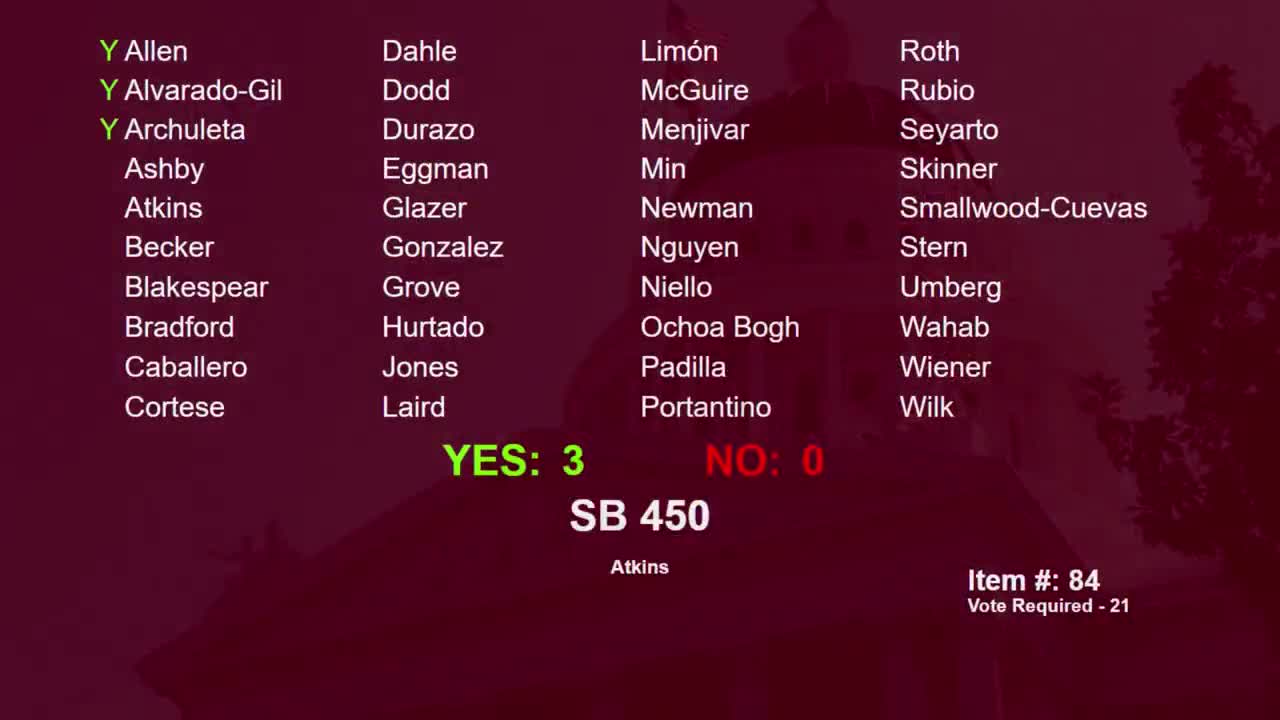
Bill Author

Bill Co-Author(s):








