SB 690: Domestic violence.
- Session Year: 2023-2024
- House: Senate
- Latest Version Date: 2024-09-27
Current Status:
Passed
(2024-09-27: Chaptered by Secretary of State. Chapter 653, Statutes of 2024.)
Introduced
In Committee
First Chamber
In Committee
Second Chamber
Enacted
Existing law makes the infliction of corporal injury resulting in a traumatic condition upon specified victims, including the offenders spouse or former spouse, punishable by imprisonment in the state prison for 2, 3, or 4 years, or in a county jail for not more than one year, or a fine of up to $6,000, or by both that fine and imprisonment. Existing law authorizes prosecution for that criminal act to be commenced within 5 years, and applies this provision to criminal acts that are committed on or after January 1, 2020, and to criminal acts for which the statute of limitations that was in effect prior to January 1, 2020, has not run as of January 1, 2020.
This bill would authorize prosecution for that crime to be commenced within 7 years. The bill would apply to crimes that are committed on or after January 1, 2025, and to crimes for which the statute of limitations that was in effect prior to January 1, 2025, has not run as of January 1, 2025.
Existing law makes the infliction of corporal injury resulting in a traumatic condition upon specified victims, including the offenders spouse or former spouse, punishable by imprisonment in the state prison for 2, 3, or 4 years, or in a county jail for not more than one year, or a fine of up to $6,000, or by both that fine and imprisonment. Existing law authorizes prosecution for that criminal act to be commenced within 5 years, and applies this provision to criminal acts that are committed on or after January 1, 2020, and to criminal acts for which the statute of limitations that was in effect prior to January 1, 2020, has not run as of January 1, 2020.
This bill would authorize prosecution for that crime to be commenced within 15 7 years. The bill would apply to crimes that are committed on or after January 1, 2024, 2025, and to crimes for which the statute of limitations that was in effect prior to January 1, 2024, 2025, has not run as of January 1, 2024. By extending the statute of limitations for a crime, the bill would impose a state-mandated local program. 2025.
The California Constitution requires the state to reimburse local agencies and school districts for certain costs mandated by the state. Statutory provisions establish procedures for making that reimbursement.This bill would provide that no reimbursement is required by this act for a specified reason.Existing law makes the infliction of corporal injury resulting in a traumatic condition upon specified victims, including the offenders spouse or former spouse, punishable by imprisonment in the state prison for 2, 3, or 4 years, or in a county jail for not more than one year, or a fine of up to $6,000, or by both that fine and imprisonment. Existing law authorizes prosecution for that criminal act to be commenced within 5 years, and applies this provision to criminal acts that are committed on or after January 1, 2020, and to criminal acts for which the statute of limitations that was in effect prior to January 1, 2020, has not run as of January 1, 2020.
This bill would authorize prosecution for that crime to be commenced within 15 years. The bill would apply to crimes that are committed on or after January 1, 2024, and to crimes for which the statute of limitations that was in effect prior to January 1, 2024, has not run as of January 1, 2024. By extending the statute of limitations for a crime, the bill would impose a state-mandated local program.
The California Constitution requires the state to reimburse local agencies and school districts for certain costs mandated by the state. Statutory provisions establish procedures for making that reimbursement.
This bill would provide that no reimbursement is required by this act for a specified reason.
This act shall be known, and may be cited, as the Phoenix Act.
SEC. 2.Section 803.7 of the Penal Code is amended to read:803.7.(a)Notwithstanding any other law, prosecution for a violation of Section 273.5 may be commenced within seven years of the crime.
(b)This section applies to crimes that are committed on or after January 1, 2025, and to crimes for which the statute of limitations that was in effect prior to January 1, 2025, has not elapsed as of January 1, 2025.
This act shall be known, and may be cited, as the Phoenix Act.
SEC. 2.Section 803.7 of the Penal Code is amended to read:803.7.(a)Notwithstanding any other law, prosecution for a violation of Section 273.5 may be commenced within 15 seven years of the crime.
(b)This section applies to crimes that are committed on or after January 1, 2024, 2025, and to crimes for which the statute of limitations that was in effect prior to January 1, 2024, 2025, has not elapsed as of January 1, 2024. 2025.
SEC. 3.No reimbursement is required by this act pursuant to Section 6 of Article XIIIB of the California Constitution because the only costs that may be incurred by a local agency or school district will be incurred because this act creates a new crime or infraction, eliminates a crime or infraction, or changes the penalty for a crime or infraction, within the meaning of Section 17556 of the Government Code, or changes the definition of a crime within the meaning of Section 6 of Article XIIIB of the California Constitution.This act shall be known, and may be cited, as the Phoenix Act.
SEC. 2.Section 803.7 of the Penal Code is amended to read:803.7.(a)Notwithstanding any other law, prosecution for a violation of Section 273.5 may be commenced within 5 15 years of the crime.
(b)This section applies to crimes that are committed on or after January 1, 2020, 2024, and to crimes for which the statute of limitations that was in effect prior to January 1, 2020, 2024, has not elapsed as of January 1, 2020. 2024.
SEC. 3.No reimbursement is required by this act pursuant to Section 6 of Article XIIIB of the California Constitution because the only costs that may be incurred by a local agency or school district will be incurred because this act creates a new crime or infraction, eliminates a crime or infraction, or changes the penalty for a crime or infraction, within the meaning of Section 17556 of the Government Code, or changes the definition of a crime within the meaning of Section 6 of Article XIIIB of the California Constitution.
|
Date
|
Status
|
|---|---|
| Sep 27, 2024 | Chaptered by Secretary of State. Chapter 653, Statutes of 2024. |
| Sep 27, 2024 | Approved by the Governor. |
| Sep 11, 2024 | Enrolled and presented to the Governor at 3 p.m. |
| Aug 31, 2024 | Assembly amendments concurred in. (Ayes 40. Noes 0. Page 5788.) Ordered to engrossing and enrolling. |
| Aug 31, 2024 | In Senate. Concurrence in Assembly amendments pending. |
| Aug 31, 2024 | Read third time. Passed. (Ayes 77. Noes 0. Page 7042.) Ordered to the Senate. |
| Aug 20, 2024 | Read second time. Ordered to third reading. |
| Aug 19, 2024 | Read second time and amended. Ordered to second reading. |
| Aug 15, 2024 | From committee: Do pass as amended. (Ayes 14. Noes 0.) (August 15). |
| Sep 1, 2023 | September 1 hearing postponed by committee. |
| Aug 16, 2023 | August 16 set for first hearing. Placed on suspense file. |
| Jul 12, 2023 | From committee: Do pass and re-refer to Com. on APPR. (Ayes 8. Noes 0.) (July 11). Re-referred to Com. on APPR. |
| Jun 27, 2023 | June 27 set for first hearing canceled at the request of author. |
| Jun 1, 2023 | Referred to Com. on PUB. S. |
| May 25, 2023 | In Assembly. Read first time. Held at Desk. |
| May 24, 2023 | Read third time. Passed. (Ayes 39. Noes 0. Page 1259.) Ordered to the Assembly. |
| May 18, 2023 | Read second time. Ordered to third reading. |
| May 18, 2023 | From committee: Do pass. (Ayes 6. Noes 0. Page 1180.) (May 18). |
| May 12, 2023 | Set for hearing May 18. |
| May 8, 2023 | May 8 hearing: Placed on APPR suspense file. |
| May 1, 2023 | Set for hearing May 8. |
| Apr 26, 2023 | From committee: Do pass and re-refer to Com. on APPR. (Ayes 5. Noes 0. Page 902.) (April 25). Re-referred to Com. on APPR. |
| Apr 20, 2023 | Set for hearing April 25. |
| Apr 18, 2023 | April 18 set for second hearing canceled at the request of author. |
| Mar 21, 2023 | Set for hearing April 18. |
| Mar 1, 2023 | Referred to Com. on PUB S. |
| Feb 17, 2023 | From printer. May be acted upon on or after March 19. |
| Feb 16, 2023 | Introduced. Read first time. To Com. on RLS. for assignment. To print. |
|
Date
|
Description
|
Location
|
Votes
|
|
|---|---|---|---|---|
| Aug 31, 2024 | Unfinished Business SB690 Rubio Concurrence | Senate Floor |
Passed |
|
| Aug 31, 2024 | SB 690 Rubio Senate Third Reading By Blanca Rubio | Assembly Floor |
Passed |
|
| Aug 15, 2024 | Do pass as amended. | Assembly Standing Committee on Appropriations |
Passed |
|
| Jul 11, 2023 | Do pass and be re-referred to the Committee on [Appropriations] | Assembly Standing Committee on Public Safety |
Passed |
|
| May 24, 2023 | Senate 3rd Reading SB690 Rubio | Senate Floor |
Passed |
|
| May 18, 2023 | Do pass | Senate Standing Committee on Appropriations |
Passed |
|
| May 8, 2023 | Placed on suspense file | Senate Standing Committee on Appropriations |
Passed |
|
| Apr 25, 2023 | Do pass, but first be re-referred to the Committee on [Appropriations] | Senate Standing Committee on Public Safety |
Passed |
This list shows positions taken on this bill by organizations on the date displayed, which is linked to the original source.
Positions by individuals are not included.
|
Organization
|
Position
|
Date
|
|---|---|---|
| Advocates for Child Empowerment and Safety | ** Support | |
| ARCADIA POLICE OFFICERS ASSOCIATION | ** Support | |
| Burbank Police Officers Association | ** Support | |
| California Attorneys For Criminal Justice | ** Against | |
| California District Attorneys Association | ** Support | |
| California Federation of Teachers, AFL-CIO | ** Support | |
| California Police Chiefs Association | ** Support | |
| California Protective Parents Association | ** Support | |
| California Public Defenders Association | ** Against | |
| Chino Police Department | ** Support | |
| CLAREMONT POLICE OFFICERS ASSOCIATION | ** Support | |
| Corona Police Officers Association | ** Support | |
| Crime Survivors Resource Center | ** Support | |
| Crime Victims Alliance | ** Support | |
| Culver City Police Officers' Association | ** Support | |
| Deputy Sheriffs Association of Monterey County | ** Support | |
| FULLERTON POLICE OFFICERS ASSOCIATION | ** Support | |
| Fullerton Police Officers’ Association; Murrieta Police Officers’ Association Newport Beach Police Association | ** Support | |
| House Of Ruth | ** Support | |
| Laura’s House | ** Support | |
| marjaree mason center | ** Support | |
| MURRIETA POLICE OFFICERS ASSOCIATION | ** Support | |
| Newport Beach Police Association | ** Support | |
| Palos Verdes Police Officers Association | ** Support | |
| Peace Officers Research Association Of California | ** Support | |
| Placer County Deputy Sheriffs’ Association | ** Support | |
| POMONA POLICE OFFICERS ASSOCIATION | ** Support | |
| RIVERSIDE POLICE OFFICERS ASSOCIATION | ** Support | |
| San Francisco Public Defender | ** Against | |
| Santa Ana Police Officers Association | ** Support | |
| Upland Police Officers Association | ** Support |
SENATE RULES COMMITTEE Office of Senate Floor Analyses (916) 651-1520 Fax: (916) 327-4478 | SB 690 |
UNFINISHED BUSINESS
Bill No: SB 690
Author: Rubio (D)
Amended: 8/19/24
Vote: 21
SENATE PUBLIC SAFETY COMMITTEE: 5-0, 4/25/23
AYES: Wahab, Ochoa Bogh, Bradford, Skinner, Wiener
SENATE APPROPRIATIONS COMMITTEE: 6-0, 5/18/23
AYES: Portantino, Ashby, Bradford, Seyarto, Wahab, Wiener
NO VOTE RECORDED: Jones
SENATE FLOOR: 39-0, 5/24/23
AYES: Allen, Alvarado-Gil, Archuleta, Ashby, Atkins, Becker, Blakespear, Bradford, Caballero, Cortese, Dahle, Dodd, Durazo, Eggman, Glazer, Gonzalez, Grove, Hurtado, Jones, Laird, McGuire, Menjivar, Min, Newman, Nguyen, Niello, Ochoa Bogh, Padilla, Portantino, Roth, Rubio, Seyarto, Skinner, Smallwood-Cuevas, Stern, Umberg, Wahab, Wiener, Wilk
NO VOTE RECORDED: Limón
ASSEMBLY FLOOR: 59-0, 8/31/24 – Roll call not available
SUBJECT: Domestic violence
SOURCE: Author
DIGEST:
This bill extends the statute of limitations for domestic violence.
Assembly Amendments reduce the statute of limitations in the bill from 15 years to 7 years and change the date of applicability to crimes committed on or after January 1, 2025 and to crimes for which the statute of limitations that was in effect prior to January 1, 2025, has not run as of that date.
ANALYSIS:
Existing law:
- Provides that any person who willfully inflicts corporal injury resulting in a traumatic condition upon a victim, as described, is guilty of a felony. Provides that the punishment is imprisonment in the state prison for two, three, or four years, or in a county jail for not more than one year, or by a fine of up to $6,000, or by both that fine and imprisonment. (Pen. Code, § 273.5, subd. (a).)
- Provides that the above penalty applies if the victim is or was one or more of the following:
- The offender’s spouse or former spouse.
- The offender’s cohabitant or former cohabitant.
- The offender’s fiancé or fiancée, or someone with whom the offender has, or previously had, an engagement or dating relationship, as defined.
- The mother or father of the offender’s child. (Pen. Code, § 273.5, subd. (b).)
- Defines “traumatic condition” as a condition of the body, such as a wound, or external or internal injury, including, but not limited to, injury as a result of strangulation or suffocation, whether of a minor or serious nature, caused by a physical force. Provides that “strangulation” and “suffocation” include impeding the normal breathing or circulation of the blood of a person by applying pressure on the throat or neck. (Pen. Code, § 273.5, subd. (d).)
- Provides, generally, that the statute of limitations for most misdemeanors is one year. (Pen. Code, § 802, subd. (a).)
- Provides, generally, that the statute of limitations for most felonies is three years, except as specified. (Pen. Code, § 801.)
- Establishes a five-year statute of limitations for domestic violence. Provides that the five-year statute of limitations only applies to crimes that were committed on or after January 1, 2020, and to crimes for which the statute of limitations that was in effect prior to January 1, 2020, has not elapsed as of January 1, 2020. (Pen. Code, § 804.7.)
This bill extends the statute of limitations for domestic violence from five years to seven years. This bill also provides that the 7-year statute of limitations only applies to crimes that were committed on or after January 1, 2025, and to crimes for which the statute of limitations that was in effect prior to January 1, 2025, has not elapsed as of that date.
Background
Domestic violence is defined as “willfully inflict[ing] corporal injury resulting in a traumatic condition upon a victim.” (Pen. Code, § 273.5, subd. (a).) The victim must be the offender’s spouse or former spouse, the offender’s cohabitant or former cohabitant, the offender’s fiancé or fiancée, or someone with whom the offender has, or previously had, an engagement or dating relationship, or the mother or father of the offender’s child. (Pen. Code, § 273.5, subd. (b).) “Traumatic condition” is defined as “a condition of the body, such as a wound, or external or internal injury, including, but not limited to, injury as a result of strangulation or suffocation, whether of a minor or serious nature, caused by a physical force.” (Pen. Code, § 273.5, subd. (d).) The statute of limitations for the crime of domestic violence when charged as a violation of Penal Code Section 273.5 was previously three years from the commission of the offense. SB 273 (Rubio, Chapter 546, Statutes of 2019) extended the statute of limitations to five years from the commission of the offense. (Pen. Code, § 803.7.)
This bill further extends the statute of limitations for the crime of domestic violence from five years to seven years and limits its application to crimes that are committed on or after January 1, 2025, and to crimes for which the statute of limitations that was in effect prior to January 1, 2025, has not run as of that date.
Statute of Limitations—Public Policy Consideration. The statute of limitations requires commencement of a prosecution within a certain period of time after the commission of a crime. The prosecution of an individual is initiated by filing an indictment or information, filing a complaint, arraigning the defendant on a complaint that charges the defendant with a felony, or issuing an arrest or bench warrant. (Pen. Code, § 804.) The failure of a prosecution to be commenced within the applicable period of limitation is a complete defense to the charge. The statute of limitations is jurisdictional and may be raised as a defense at any time, before or after judgment. (People v. Morris (1988) 46 Cal.3d 1, 13.) The defense may only be waived under limited circumstances. (See Cowan v. Superior Court (1996) 14 Cal.4th 367.)
In 1984, the California Law Revision Commission published a series of recommendations to revise the statute of limitations. The impetus for reform derived from numerous changes made to the statute of limitations by the Legislature. The Commission commented, “[t]his simple scheme has been made complex by numerous modifications . . . the result of this development is that the California law is complex and filled with inconsistencies.” (California Law Revision Commission, Recommendation Relating to Statutes of Limitations for Felonies (Jan. 1984) 17 Cal. Law Revision Com. Rep. (1984), p. 307 available at <http://www.clrc.ca.gov/pub/Printed-Reports/Pub146.pdf .) In its report, the Commission described the rationale of the statute of limitations:
The statute of limitations is simply a societal declaration that it will no longer pursue a criminal after a certain period of time. The period selected may be somewhat arbitrary but still achieves society’s purpose of imposing an outside limit that recognizes the staleness problem, that requires that crime must come to light and be investigated within a reasonable time, and that represents the point after which society declares it no longer has an interest in prosecution and seeks repose.
(Id. at pp. 313-314.)
The three principal policy reasons for felony statute of limitations include:
- Staleness: The statute of limitations protects persons accused of crime: (i) from having to face charges based on evidence that may be unreliable, and (ii) from losing access to the evidentiary means to defend against the accusation. With the passage of time, memory fades, witnesses die or otherwise become unavailable, and physical evidence becomes unobtainable or contaminated.
- Prompt Investigation: The statute of limitations imposes a priority among crimes for investigation and prosecution. The deadline serves to motivate the police and to ensure against bureaucratic delays in investigating crimes.
- Repose: The statute of limitations reflect society’s lack of desire to prosecute for crimes committed in the distant past. The interest in repose represents a societal evaluation of the time after which it is neither profitable nor desirable to commence a prosecution.
(Id. at pp. 308-310.)
These principals are reflected in court decisions. The U.S. Supreme Court has stated that statutes of limitations are “the primary guarantee against bringing overly stale criminal charges.” (United States v. Ewell (1966) 383 U.S. 116, 122.) There is a measure of predictability provided by specifying a limit beyond which there is an irrebutable presumption that a defendant’s right to a fair trial would be prejudiced. Such laws reflect legislative assessments of relative interests of the state and the defendant in administering and receiving justice. More recently, in Stogner v. California (2003) 539 U.S. 67, the Court underscored the basis for statutes of limitations:
Significantly, a statute of limitations reflects a legislative judgment that, after a certain time, no quantum of evidence is sufficient to convict. And that judgment typically rests, in large part, upon evidentiary concerns – for example, concern that the passage of time has eroded memories or made witnesses or other evidence unavailable. (Id. at p. 615.)
FISCAL EFFECT: Appropriation: No Fiscal Com.: Yes Local: No
According to the Assembly Appropriations Committee:
Costs (Trial Court Trust Fund, General Fund) of an unknown but likely significant amount to the courts to adjudicate domestic violence cases that would otherwise be barred by the existing statute of limitations. The type of domestic violence offense affected by this bill may be charged as a misdemeanor or a felony. A defendant charged with a misdemeanor or felony has the right to a jury trial and no-cost legal representation, which can lead to longer and more complex legal proceedings. This bill triples the length of the current statute of limitations for this offense, which could result in significantly more domestic violence cases filed by prosecutors. Actual costs will depend on the number of violations, prosecutorial discretion, and the amount of court time needed to adjudicate each case. Although courts are not funded on the basis of workload, increased pressure on the Trial Court Trust Fund may create a need for increased funding for courts from the General Fund. The 2023-24 budget includes $105 million from the General Fund to backfill declining revenue to the Trial Court Trust Fund.
Costs (General Fund) to the California Department of Corrections and Rehabilitation (CDCR) due to additional prison commitments, potentially in the millions of dollars annually. To the extent this bill results in additional felony domestic violence convictions that would otherwise be barred by the current statute of limitations, it will result in significant, ongoing incarceration costs to CDCR. Felony domestic violence is punishable by imprisonment in prison for two, three, or four years. According to a 2022 estimate by the Legislative Analyst’s Office, the average annual cost to incarcerate one person in state prison is $106,000. If, under this bill, 10 defendants are convicted of domestic violence offenses for which prosecution would otherwise be time-barred and each defendant serves three years in prison, the resulting cost would be about $3.2 million over three years.
SUPPORT: (Verified 8/26/24)
Advocates for Child Empowerment and Safety
Arcadia Police Officers’ Association
Burbank Police Officers’ Association
California District Attorneys Association
California Federation of Teachers AFL-CIO
California Police Chiefs Association
California Protective Parents Association
Chino Police Department
Claremont Police Officers Association
Corona Police Officers Association
Crime Survivors Resource Center
Culver City Police Officers’ Association
Deputy Sheriffs’ Association of Monterey County
Fullerton Police Officers’ Association
House of Ruth
Laura’s House
Murrieta Police Officers’ Association
Newport Beach Police Association
Palos Verdes Police Officers Association
Peace Officers Research Association of California
Placer County Deputy Sheriffs’ Association
Pomona Police Officers’ Association
Riverside Police Officers Association
Santa Ana Police Officers Association
Upland Police Officers Association
OPPOSITION: (Verified 8/26/24)
California Attorneys for Criminal Justice
California Public Defenders Association
San Francisco Public Defender
ARGUMENT IN SUPPORT: The California District Attorneys Association writes:
Victims of domestic violence often hide their abuse – and may do so for years on end. Currently, when this happens justice cannot be served through prosecution due to the short statute of limitations. …
CDAA supports SB 690 because it protects victims and survivors by providing them with more time to come forward and seek the justice they deserve.
ARGUMENT IN OPPOSITION: According to the California Public Defenders Association:
SB 690 would extend the current five year statute of limitations for misdemeanors and felonies … for domestic violence. This five-year statute of limitation for domestic violence was just enacted in 2019 (SB 273). Previously the statute of limitations for misdemeanor domestic violence was one year and three years for felonies.
Nothing has happened in the intervening 3-1/2 years since SB 273 became effective that warrants upsetting the careful balancing of interests by the Legislature in 2019. We strongly oppose SB 690’s extension of the statute of limitations for domestic violence prosecutions. The extension of the state of limitations will result in the conviction of innocent people, is bad public policy and wastes scarce resources that could be better spent on evidence based and effective strategies to end domestic violence.
…
Criminal statutes of limitations in the United States date back to colonial times . . . The statute’s fundamental purpose is to protect people accused of crimes from having to face charges based on evidence that may be unreliable, and from losing access to the means to defend themselves. …
Prepared by: Stephanie Jordan / PUB. S. /
8/31/24 17:53:55
SENATE THIRD READING
STR Bill Id:SB 690
Author:(Rubio)
As Amended Ver:August 19, 2024
Majority vote
SUMMARY
Extends the statute of limitations for the crime of domestic violence from five years to seven years.
Major Provisions
- States that a prosecution for the offense of domestic violence, as specified, may be commenced within seven years of the crime.
- Provides that this statute of limitations applies only to crimes that were committed on or after January 1, 2025, and to crimes for which the statute of limitations that was in effect before January 1, 2025 has not expired as of January 1, 2025.
COMMENTS
According to the Author
"Survivors of domestic violence often need years to overcome their trauma and build the courage to report their abuse. A common factor in all stories for victims includes a deep-rooted trauma and paralyzing fear that comes from their experience. This bill will allow more time for domestic violence victims to heal and come forward, by extending the statute of limitations to 15 years to report their abuse. Victims of abuse, often times can end up without a home or any resources due to the financial intimate partner dependency element in the relationship, or even worse, it could be fatal. In the U.S., an average of 50 women are shot to death by their intimate partners every month, and many more are injured. By allowing more time to report abuse, we provide survivors with sufficient time to heal and come forward while also mitigating the escalation of domestic violence cases that may result in a tragic death."
Arguments in Support
According to the California District Attorneys Association, "Victims of domestic violence often hide their abuse – and may do so for years on end. Currently, when this happens justice cannot be served through prosecution due to the short statute of limitations. Having the ability to reach back 15 years will help us hold abusers accountable and provide substantial justice for victims.
"CDAA supports SB 690 because it protects victims and survivors by providing them with more time to come forward and seek the justice they deserve."
Arguments in Opposition
According to the California Public Defenders Association, "SB 690 would extend the current five year statute of limitations for misdemeanors and felonies to 15 years for domestic violence. This five-year statute of limitations for domestic violence was just enacted in 2019 (SB 273). Previously the statute of limitations for misdemeanor domestic violence was one year and three years for felonies.
"Nothing has happened in the intervening 3-1/2 years since SB 273 became effective that warrants upsetting the careful balancing of interests by the Legislature in 2019. We strongly oppose SB 690's extension of the statute of limitations for domestic violence prosecutions. The extension of the statute of limitations will result in the conviction of innocent people, is bad public policy and wastes scarce resources that could be better spent on evidence based and effective strategies to end domestic violence.
"Criminal statutes of limitations in the United States date back to colonial times, with the first such statute appearing as early as 1652. The statutes' fundamental purpose is to protect people accused of crimes from having to face charges based on evidence that may be unreliable, and from losing access to the means to defend themselves. The United States Supreme Court has stated that statutes of limitations are considered 'the primary guarantee against bringing overly stale criminal charges' and that they 'protect individuals from having to defend themselves against charges when the basic facts may have become obscured by the passage of time…' Likewise, the California Supreme Court has noted that statutes of limitations 'encourage the swift and effective enforcement of the law, hopefully producing a stronger deterrent effect.'
"With the passage of time, memories fade, witnesses die, records and biological evidence are lost or destroyed. All of this makes it more likely that an innocent person will be wrongly convicted.
"Statutes of limitations also serve the purpose of encouraging swift investigations and prosecutions. Given the incidence of domestic violence in the United States and California, proponents of SB 690 rightly complain that relatively few domestic violence cases are actually investigated and prosecuted in California. The primary reason for this is not because of statutes of limitations. Rather, the failure to investigate and prosecute domestic violence results from choices made about allocation of resources and priorities and lingering ignorance about the generational harms of domestic violence. Extending the statute of limitations will do nothing to address those obstacles."
FISCAL COMMENTS
According to the Assembly Appropriations Committee:
- Costs (Trial Court Trust Fund, General Fund) of an unknown but potentially significant amount to the courts to adjudicate domestic violence cases that would otherwise be barred by the existing statute of limitations. The type of domestic violence offense affected by this bill may be charged as a misdemeanor or a felony. A defendant charged with a misdemeanor or felony has the right to a jury trial and no-cost legal representation, which can lead to longer and more complex legal proceedings. Actual costs will depend on the number of violations, prosecutorial discretion, and the amount of court time needed to adjudicate each case. Although courts are not funded on the basis of workload, increased pressure on the Trial Court Trust Fund may create a need for increased funding for courts from the General Fund. The fiscal year 2024-25 state budget provides $37.3 million ongoing General Fund to backfill declining revenue to the Trial Court Trust Fund.
- Costs (General Fund) to the California Department of Corrections and Rehabilitation (CDCR) due to additional prison commitments, potentially in the millions of dollars annually. To the extent this bill results in additional felony domestic violence convictions that would otherwise be barred by the current statute of limitations, it will result in significant, ongoing incarceration costs to CDCR. Felony domestic violence is punishable by imprisonment in prison for two, three, or four years. The Legislative Analyst's Office (LAO) estimates the average annual cost to incarcerate one person in state prison is $133,000.
VOTES
SENATE FLOOR: 39-0-1
YES: Allen, Alvarado-Gil, Archuleta, Ashby, Atkins, Becker, Blakespear, Bradford, Caballero, Cortese, Dahle, Dodd, Durazo, Eggman, Glazer, Gonzalez, Grove, Hurtado, Jones, Laird, McGuire, Menjivar, Min, Newman, Nguyen, Niello, Ochoa Bogh, Padilla, Portantino, Roth, Rubio, Seyarto, Skinner, Smallwood-Cuevas, Stern, Umberg, Wahab, Wiener, Wilk
ABS, ABST OR NV: Limón
ASM PUBLIC SAFETY: 8-0-0
YES: Jones-Sawyer, Alanis, Bonta, Bryan, Lackey, Ortega, Santiago, Zbur
ASM APPROPRIATIONS: 14-0-1
YES: Wicks, Sanchez, Arambula, Bryan, Calderon, Wendy Carrillo, Dixon, Mike Fong, Grayson, Haney, Hart, Pellerin, Ta, Villapudua
ABS, ABST OR NV: Jim Patterson
UPDATED
VERSION: August 19, 2024
CONSULTANT: Ilan Zur / PUB. S. / (916) 319-3744 FN: 0004016
Date of Hearing: August 16, 2023
ASSEMBLY COMMITTEE ON APPROPRIATIONS
Chris Holden, Chair
SBPCA Bill Id:SB 690
Author:(Rubio) – As Introduced Ver:February 16, 2023
Policy Committee: | Public Safety | Vote: | 8 - 0 |
|
| ||
|
|
Urgency: No State Mandated Local Program: Yes Reimbursable: No
SUMMARY:
This bill extends the statute of limitations for prosecution of domestic violence from five years to 15 years. The extended statute of limitations applies to offenses that occur after January 1, 2024, and to any offense for which the statute of limitations has not yet run as of January 1, 2024.
FISCAL EFFECT:
- Costs (Trial Court Trust Fund, General Fund) of an unknown but likely significant amount to the courts to adjudicate domestic violence cases that would otherwise be barred by the existing statute of limitations. The type of domestic violence offense affected by this bill may be charged as a misdemeanor or a felony. A defendant charged with a misdemeanor or felony has the right to a jury trial and no-cost legal representation, which can lead to longer and more complex legal proceedings. This bill triples the length of the current statute of limitations for this offense, which could result in significantly more domestic violence cases filed by prosecutors. Actual costs will depend on the number of violations, prosecutorial discretion, and the amount of court time needed to adjudicate each case. Although courts are not funded on the basis of workload, increased pressure on the Trial Court Trust Fund may create a need for increased funding for courts from the General Fund. The 2023-24 budget includes $105 million from the General Fund to backfill declining revenue to the Trial Court Trust Fund.
- Costs (General Fund) to the California Department of Corrections and Rehabilitation (CDCR) due to additional prison commitments, potentially in the millions of dollars annually. To the extent this bill results in additional felony domestic violence convictions that would otherwise be barred by the current statute of limitations, it will result in significant, ongoing incarceration costs to CDCR. Felony domestic violence is punishable by imprisonment in prison for two, three, or four years. According to a 2022 estimate by the Legislative Analyst’s Office, the average annual cost to incarcerate one person in state prison is $106,000. If, under this bill, 10 defendants are convicted of domestic violence offenses for which prosecution would otherwise be time-barred and each defendant serves three years in prison, the resulting cost would be about $3.2 million over three years.
COMMENTS:
- Purpose. According to the author:
Survivors of domestic violence often need years to overcome their trauma and build the courage to report their abuse. A common factor in all stories for victims includes a deep-rooted trauma and paralyzing fear that comes from their experience. This bill will allow more time for domestic violence victims to heal and come forward, by extending the statute of limitations to 15 years to report their abuse. Victims of abuse, often times can end up without a home or any resources due to the financial intimate partner dependency element in the relationship, or even worse, it could be fatal. In the U.S., an average of 50 women are shot to death by their intimate partners every month, and many more are injured. By allowing more time to report abuse, we provide survivors with sufficient time to heal and come forward while also mitigating the escalation of domestic violence cases that may result in a tragic death.
- Background. In California, a person may be convicted of domestic violence if they willfully inflict physical injury resulting in a traumatic condition on their spouse, former spouse, cohabitant, former cohabitant, fiancé, a current or former dating partner, or the mother or father of the their child. This offense may be charged as a misdemeanor or a felony, and is punishable by a fine and imprisonment in prison for two, three, or four years, or in a county jail for up to one year.
A statute of limitations is a legal requirement that the prosecution of a criminal offense must be commenced within a set period of time after the offense occurred. These statutes help protect a defendant from facing a charge they can no longer effectively defend against due to the passage of time. Over time, physical evidence can get lost or degrade so that it cannot be tested, and witnesses may move, die, or forget what they saw. If criminal charges are filed many years after an offense occurred, it can be extremely difficult for a defendant to mount an effective legal defense, even if the defendant is, in fact, innocent. With some exceptions, existing law generally establishes a one-year statute of limitations for most misdemeanors and a three-year statute of limitations for felonies punishable by less than eight years in prison.
This bill extends the statute of limitation for domestic violence from five years to 15 years. As described above, if, as supporters hope, the bill prompts additional prosecutions and convictions for domestic violence, it will result in significant ongoing costs to the courts and CDCR. The statute of limitations for this offense was last extended in 2019 by SB 273 (Rubio), Chapter 546, Statutes of 2019, from three to five years. At this point, a full five years have not yet elapsed since the current five-year statute of limitations was established, so it may be too soon to determine whether an additional extension is needed. Additionally, as detailed in the analysis of this bill by the Assembly Committee on Public Safety, there are a number of public policy considerations that weigh against further extending the statute of limitations for this offense. Although domestic violence is horrific and all too common, it is unclear whether this further extension would provide meaningful benefits to domestic violence survivors.
- Support and Opposition. In support of this bill, the California District Attorneys Association writes:
Victims of domestic violence often hide their abuse – and may do so for years on end. Currently, when this happens justice cannot be served through prosecution due to the short statute of limitations. Having the ability to reach back 15 years will help us hold abusers accountable and provide substantial justice for victims.
In opposition, the California Public Defenders Association writes:
Nothing has happened in the intervening 3-1/2 years since SB 273 became effective that warrants upsetting the careful balancing of interests by the Legislature in 2019... The extension of the statute of limitations will result in the conviction of innocent people, is bad public policy and wastes scarce resources that could be better spent on evidence based and effective strategies to end domestic violence…. [P]roponents of SB 690 rightly complain that relatively few domestic violence cases are actually investigated and prosecuted in California. The primary reason for this is not because of statutes of limitations. Rather, the failure to investigate and prosecute domestic violence results from choices made about allocation of resources and priorities and lingering ignorance about the generational harms of domestic violence. Extending the statute of limitations will do nothing to address those obstacles.
Analysis Prepared by: Annika Carlson / APPR. / (916) 319-2081
Date of Hearing: July 11, 2023
Chief Counsel: Sandy Uribe
ASSEMBLY COMMITTEE ON PUBLIC SAFETY
Reginald Byron Jones-Sawyer, Sr., Chair
SBPCA Bill Id:SB 690
Author:(Rubio) – As Introduced Ver:February 16, 2023
SUMMARY: Extends the statute of limitations for the crime of domestic violence from 5 years to 15 years. Specifically, this bill:
- States that, notwithstanding any other law, a prosecution for the offense of domestic violence as proscribed by Penal Code section 273.5 may be commenced within 15 years of the crime.
- Provides that this statute of limitations applies only to crimes that were committed on or after January 1, 2024, and to crimes for which the statute of limitations that was in effect before January 1, 2024 has not expired as of that date.
EXISTING LAW:
- Provides that a person who willfully inflicts corporal injury resulting in a traumatic condition upon a spouse, former spouse, cohabitant, former cohabitant, fiancé or fiancée, someone with whom the person has, or previously had, an engagement or dating relationship, or the mother or father of the offender’s child, is guilty of domestic violence. (Pen. Code, § 273.5.)
- Defines “traumatic condition” as “a condition of the body, such as a wound, or external or internal injury, … whether of a minor or serious nature, caused by a physical force.” (Pen. Code, § 273.5. subd. (d).)
- Punishes domestic violence by imprisonment in the state prison for two, three, or four years, or in a county jail for not more than one year, or by a fine of up to $ 6,000 or by both that fine and imprisonment. (Pen. Code, § 273.5, subd. (a).)
- Establishes a five-year statute of limitations for domestic violence. Provides that the five-year statute of limitations only applies to crimes that were committed on or after January 1, 2020, and to crimes for which the statute of limitations that was in effect prior to January 1, 2020, has not lapsed as of that date. (Pen. Code, § 803.7.)
- Provides that prosecution for crimes punishable by imprisonment for eight years or more must be commenced within six years after commission of the offense. (Pen. Code, § 800.)
- Provides that prosecution for other felonies punishable by less than eight years must be commenced within three years after commission of the offense. (Pen. Code, § 801.)
- Provides, generally, that the statute of limitations for most misdemeanors is one year. (Pen. Code, § 802, subd. (a).)
- Provides that there is no statute of limitations for crimes punishable by death, or by imprisonment in the state prison for life, or by life without the possibility of parole. (Pen. Code, § 799, subd. (a).)
- Provides that there is no statute of limitations for specified sex crimes if the crime was committed on or after January 1, 2017, or if the crime was committed before that date but the statute of limitations had not expired on January 1, 2017. (Pen. Code, § 799, subd. (b)(1).)
- Provides that, notwithstanding any other time limitations, for specified sex crimes that are alleged to have been committed when the victim was under the age of 18, prosecution may be commenced any time prior to the victim's 40th birthday. (Pen. Code, § 801.1, subd. (a).)
- Provides that notwithstanding any other time limitations, if other provisions extending the statute of limitations for sex crimes do not apply, prosecution for a felony offense requiring sex offender registration shall be commenced within 10 years after commission of the offense. (Pen. Code, § 801.1, subd. (b).)
- Provides that, notwithstanding any other limitation of time, a criminal complaint for specified sex crimes may be filed within one year of the date on which the identity of the suspect is conclusively established by deoxyribonucleic acid (DNA) testing if specified conditions are met. (Pen. Code, § 803, subd. (g)(1).)
- Provides that if more than one time period described in the statute of limitations scheme applies, the time for commencing an action is governed by that period that expires the latest in time. (Pen. Code, § 803.6, subd. (a).)
FISCAL EFFECT:
COMMENTS:
- Author's Statement: According to the author, “Survivors of domestic violence often need years to overcome their trauma and build the courage to report their abuse. A common factor in all stories for victims includes a deep-rooted trauma and paralyzing fear that comes from their experience. This bill will allow more time for domestic violence victims to heal and come forward, by extending the statute of limitations to 15 years to report their abuse. Victims of abuse, often times can end up without a home or any resources due to the financial intimate partner dependency element in the relationship, or even worse, it could be fatal. In the U.S., an average of 50 women are shot to death by their intimate partners every month, and many more are injured. By allowing more time to report abuse, we provide survivors with sufficient time to heal and come forward while also mitigating the escalation of domestic violence cases that may result in a tragic death.”
- Statute of Limitations Generally: The statute of limitations requires commencement of a prosecution within a certain period of time after the commission of a crime. A prosecution is
initiated by filing an indictment or information, filing a complaint, certifying a case to superior court, or issuing an arrest or bench warrant. (Pen. Code, § 804.)
The statute of limitations serves several important purposes in a criminal prosecution, including staleness, prompt investigation, and repose. The statute of limitations protects persons accused of crime from having to face charges based on evidence that may be unreliable, and from losing access to the evidentiary means to defend against the accusation. With the passage of time, memory fades, witnesses die or otherwise become unavailable, and physical evidence becomes unobtainable or contaminated.
The statute of limitations also imposes a priority among crimes for investigation and prosecution. The deadline serves to motivate the police and to ensure against bureaucratic delays in investigating crimes.
Additionally, the statute of limitations reflects society's lack of desire to prosecute for crimes committed in the distant past. The interest in repose represents a societal evaluation of the time after which it is neither profitable nor desirable to commence a prosecution.
These principals are reflected in court decisions. The United States Supreme Court has stated that statutes of limitations are the primary guarantee against bringing overly stale criminal charges. (United States v. Ewell (1966) 383 U.S. 116, 122.) There is a measure of predictability provided by specifying a limit beyond which there is an irrebuttable presumption that a defendant's right to a fair trial would be prejudiced. Such laws reflect legislative assessments of relative interests of the state and the defendant in administering and receiving justice.
In Stogner v. California (2003) 539 U.S. 607, the United States Supreme Court underscored the basis for statutes of limitations: "Significantly, a statute of limitations reflects a legislative judgment that, after a certain time, no quantum of evidence is sufficient to convict. And that judgment typically rests, in large part, upon evidentiary concerns – for example, concern that the passage of time has eroded memories or made witnesses or other evidence unavailable." (Id. at p. 615.)
The amount of time a prosecuting agency may charge an alleged defendant varies based on the crime. In general, the limitations period is related to the seriousness of the offense as reflected in the length of punishment established by the Legislature. (People v. Turner (2005) 134 Cal.App.4th 1591, 1594-1595; see, e.g., Pen. Code, §§ 799-805.) After a comprehensive review of criminal statutes of limitation in 1984, the Law Revision Commission recommended that the length of a “limitations statute should generally be based on the seriousness of the crime.” (17 Cal. Law Revision Com. Rep. (1984) p. 313.) The Legislature overhauled the entire statutory scheme with this recommendation in mind. In People v. Turner, supra, 134 Cal.App.4th 1591, the court summarized the recommendations of the Law Revision Commission:
The use of seriousness of the crime as the primary factor in determining the length of the applicable statute of limitations was designed to strike the right balance between the societal interest in pursuing and punishing those who commit serious crimes, and the importance of barring stale claims. It also served the procedural need to provid[e] predictability and promote uniformity of treatment for perpetrators and victims of all serious crimes. The commission suggested that the seriousness of an offense could easily be determined in the first instance by the classification of the crime as a felony rather than a misdemeanor. Within the class of felonies, a long term of imprisonment is a determination that it is one of the more serious felonies; and imposition of the death penalty or life in prison is a determination that society views the crime as the most serious. (People v. Turner, supra, 134 Cal.App.4th at pp. 1594-1595, citations omitted.)
The failure of a prosecution to be commenced within the applicable period of limitation is a complete defense to the charge. The statute of limitations is jurisdictional and may be raised as a defense at any time, before or after judgment. (People v. Morris (1988) 46 Cal.3d 1, 13.) The defense may only be waived under limited circumstances. (See Cowan v. Superior Court (1996) 14 Cal.4th 367.)
The prosecution bears the burden of proving, by a preponderance of the evidence, that a charged offense was committed within the applicable period of limitations. (People v. Lopez (1997) 52 Cal.App.4th 233, 248.) The court is required to construe application of the statute of limitations strictly in favor of the defendants. (People v. Zamora (1976) 18 Cal.3d 538, 574; People v. Lee (2000) 82 Cal.App.4th 1352, 1357-1358.)
For most types of offenses, the statute of limitations begins to run on the day that the offense was actually committed. However, the statute of limitations period does not commence as to continuing offenses until the entire course of conduct is complete. (People v. Zamora, supra, 18 Cal.3d 538.) And in cases involving crimes such as fraud or embezzlement the statute of limitations may begin to run at the point that the offense is discovered. (See e.g. Pen. Code, § 803, subd. (c).)
Until January 1, 2020, the statute of limitations to prosecute a criminal case of felony domestic violence was three years. (People v. Sillas (2002) 100 Cal.App.4th Supp. 1, 5.) However, SB 273 (S. Rubio), Chapter 546, Statutes of 2019, extended the statute of limitations for this crime to five years. (See Pen. Code, § 803.7.) This extension was based on the recognition that in some cases there are reasons why a victim of domestic violence might not immediately report the crime to law enforcement, such as emotional manipulation, financial insecurity, or having no place to go. However, it should be noted that, initially SB 273 sought a much longer statute of limitations and that the longer statute would only apply in limited circumstances. Ultimately, the Legislature decreased the proposed statute of limitation to the current five years.
This bill would extend the statute of limitations in domestic violence cases even further to 15 years. This statute of limitations would be equally applicable whether or not the crime was being charged as a felony or a misdemeanor, and regardless of the circumstances. Notably, for any cases occurring after the new five-year statute of limitations, there is still 1.5 years available on the current statute of limitations. Based on this, it is unclear why the statute of limitations needs to be further extended.
It bears repeating, that as noted above, there is a strong public policy against extending the statute of limitations. Memories fade as time passes. Evidence that might have been gathered by the police is lost. Witnesses move or die. Fairness and due process demand prosecution be commenced in a reasonable time so the accused may be able to gather evidence to prove his or her innocence. And despite its traumatic nature, domestic abuse does not fall within the type of crimes that would normally warrant extension. The domestic abuse statute, Penal Code section 273.5, prohibits the willful infliction of corporal injury resulting in a traumatic condition upon a victim with which the offender has a specified domestic relationship. So, the identity of the perpetrator is not at issue. Moreover, domestic abuse is not the type of crime where the person does not discover until a later date that the crime has occurred. As a general matter, most people know that a battery is criminal conduct. In fact, if a victim of abuse is taking photographs of sustained injuries, the victim recognizes that criminal conduct has occurred. It seems a rejection of firmly rooted public policy to further significantly extend the statute of limitations in this type of case.
- Ex Post Facto: In Stogner v. California, supra, 539 U.S. 607 the Supreme Court ruled that a law enacted after expiration of a previously applicable limitations period violates the Ex Post Facto Clause when it is applied to revive a previously time-barred prosecution. (Id. at pp. 610-611, 616.) However, extension of an existing statute of limitations is not ex post facto as long as the prior limitations period has not expired. (Id. at pp. 618-619.)
This bill states that it the provisions eliminating the statute of limitations for the specified crimes will apply either only to crimes committed after its effective date, or to crimes for which a statute of limitations that was in effect before its effective date has not run as of that date. In other words, the bill extends current limitations periods, but does not try to revive time-barred cases. Therefore, there do not appear to be any ex post facto concerns raised by this bill. - Argument in Support: According to the California District Attorneys Association, “Victims of domestic violence often hide their abuse – and may do so for years on end. Currently, when this happens justice cannot be served through prosecution due to the short statute of limitations. Having the ability to reach back 15 years will help us hold abusers accountable and provide substantial justice for victims.
“CDAA supports SB 690 because it protects victims and survivors by providing them with more time to come forward and seek the justice they deserve.” - Argument in Opposition: According to the California Public Defenders Association, “SB 690 would extend the current five year statute of limitations for misdemeanors and felonies to 15 years for domestic violence. This five-year statute of limitations for domestic violence was just enacted in 2019 (SB 273). Previously the statute of limitations for misdemeanor domestic violence was one year and three years for felonies.
“Nothing has happened in the intervening 3-1/2 years since SB 273 became effective that warrants upsetting the careful balancing of interests by the Legislature in 2019. We strongly oppose SB 690’s extension of the statute of limitations for domestic violence prosecutions. The extension of the statute of limitations will result in the conviction of innocent people, is bad public policy and wastes scarce resources that could be better spent on evidence based and effective strategies to end domestic violence.
“Criminal statutes of limitations in the United States date back to colonial times, with the first such statute appearing as early as 1652. The statutes’ fundamental purpose is to protect people accused of crimes from having to face charges based on evidence that may be unreliable, and from losing access to the means to defend themselves. The United States Supreme Court has stated that statutes of limitations are considered ‘the primary guarantee against bringing overly stale criminal charges’ and that they ‘protect individuals from having to defend themselves against charges when the basic facts may have become obscured by the passage of time…’ Likewise, the California Supreme Court has noted that statutes of limitations ‘encourage the swift and effective enforcement of the law, hopefully producing a
stronger deterrent effect.’
“With the passage of time, memories fade, witnesses die, records and biological
evidence are lost or destroyed. All of this makes it more likely that an innocent
person will be wrongly convicted.
“Statutes of limitations also serve the purpose of encouraging swift investigations and
prosecutions. Given the incidence of domestic violence in the United States and
California, proponents of SB 690 rightly complain that relatively few domestic
violence cases are actually investigated and prosecuted in California. The primary
reason for this is not because of statutes of limitations. Rather, the failure to
investigate and prosecute domestic violence results from choices made about
allocation of resources and priorities and lingering ignorance about the generational
harms of domestic violence. Extending the statute of limitations will do nothing to
address those obstacles.”
- Related Legislation: SB 601 (McGuire), among other things, extends the statute of limitations for a violation of various prohibitions related to a license, certificate, permit or registration issued by the Department of Consumer Affairs from one year to three years. SB 601 is pending hearing in the Assembly Committee on Business and Professions.
- Prior Legislation:
- SB 273 (S. Rubio), Chapter 546, Statutes of 2019, provides that, notwithstanding any other law, a prosecution for the crime domestic violence prosecuted under Penal Code section 273.5 may be commenced within five years of the crime.
- SB 610 (Nguyen), Chapter 74, Statutes of 2017, extends the statute of limitations for the crime of concealing an accidental death to no more than four years after the concealment.
- SB 813 (Leyva), Chapter 777, Statutes of 2016, eliminated the statute of limitations for specified sex crimes.
- SB 273 (S. Rubio), Chapter 546, Statutes of 2019, provides that, notwithstanding any other law, a prosecution for the crime domestic violence prosecuted under Penal Code section 273.5 may be commenced within five years of the crime.
REGISTERED SUPPORT / OPPOSITION:
Support
Advocates for Child Empowerment and Safety
Arcadia Police Officers' Association
Burbank Police Officers' Association
California District Attorneys Association
California Federation of Teachers AFL-CIO
California Police Chiefs Association
California Protective Parents Association
Claremont Police Officers Association
Corona Police Officers Association
Crime Victims Alliance
Culver City Police Officers' Association
Deputy Sheriffs' Association of Monterey County
Fullerton Police Officers' Association
Marjaree Mason Center
Murrieta Police Officers' Association
Newport Beach Police Association
Palos Verdes Police Officers Association
Peace Officers Research Association of California
Placer County Deputy Sheriffs' Association
Pomona Police Officers' Association
Riverside Police Officers Association
Santa Ana Police Officers Association
Upland Police Officers Association
Opposition
California Attorneys for Criminal Justice
California Public Defenders Association
San Francisco Public Defender
Analysis Prepared by: Sandy Uribe / PUB. S. / (916) 319-3744
Date of Hearing: June 27, 2023
Chief Counsel: Sandy Uribe
ASSEMBLY COMMITTEE ON PUBLIC SAFETY
Reginald Byron Jones-Sawyer, Sr., Chair
SBPCA Bill Id:SB 690
Author:(Rubio) – As Introduced Ver:February 16, 2023
SUMMARY: Extends the statute of limitations for the crime of domestic violence from 5 years to 15 years. Specifically, this bill:
- States that, notwithstanding any other law, a prosecution for the offense of domestic violence as proscribed by Penal Code section 273.5 may be commenced within 15 years of the crime.
- Provides that this statute of limitations applies only to crimes that were committed on or after January 1, 2024, and to crimes for which the statute of limitations that was in effect before January 1, 2024 has not expired as of that date.
EXISTING LAW:
- Provides that a person who willfully inflicts corporal injury resulting in a traumatic condition upon a spouse, former spouse, cohabitant, former cohabitant, fiancé or fiancée, someone with whom the person has, or previously had, an engagement or dating relationship, or the mother or father of the offender’s child, is guilty of domestic violence. (Pen. Code, § 273.5.)
- Defines “traumatic condition” as “a condition of the body, such as a wound, or external or internal injury, … whether of a minor or serious nature, caused by a physical force.” (Pen. Code, § 273.5. subd. (d).)
- Punishes domestic violence by imprisonment in the state prison for two, three, or four years, or in a county jail for not more than one year, or by a fine of up to $ 6,000 or by both that fine and imprisonment. (Pen. Code, § 273.5, subd. (a).)
- Establishes a five-year statute of limitations for domestic violence. Provides that the five-year statute of limitations only applies to crimes that were committed on or after January 1, 2020, and to crimes for which the statute of limitations that was in effect prior to January 1, 2020, has not lapsed as of that date. (Pen. Code, § 803.7.)
- Provides that prosecution for crimes punishable by imprisonment for eight years or more must be commenced within six years after commission of the offense. (Pen. Code, § 800.)
- Provides that prosecution for other felonies punishable by less than eight years must be commenced within three years after commission of the offense. (Pen. Code, § 801.)
- Provides, generally, that the statute of limitations for most misdemeanors is one year. (Pen. Code, § 802, subd. (a).)
- Provides that there is no statute of limitations for crimes punishable by death, or by imprisonment in the state prison for life, or by life without the possibility of parole. (Pen. Code, § 799, subd. (a).)
- Provides that there is no statute of limitations for specified sex crimes if the crime was committed on or after January 1, 2017, or if the crime was committed before that date but the statute of limitations had not expired on January 1, 2017. (Pen. Code, § 799, subd. (b)(1).)
- Provides that, notwithstanding any other time limitations, for specified sex crimes that are alleged to have been committed when the victim was under the age of 18, prosecution may be commenced any time prior to the victim's 40th birthday. (Pen. Code, § 801.1, subd. (a).)
- Provides that notwithstanding any other time limitations, if other provisions extending the statute of limitations for sex crimes do not apply, prosecution for a felony offense requiring sex offender registration shall be commenced within 10 years after commission of the offense. (Pen. Code, § 801.1, subd. (b).)
- Provides that, notwithstanding any other limitation of time, a criminal complaint for specified sex crimes may be filed within one year of the date on which the identity of the suspect is conclusively established by deoxyribonucleic acid (DNA) testing if specified conditions are met. (Pen. Code, § 803, subd. (g)(1).)
- Provides that if more than one time period described in the statute of limitations scheme applies, the time for commencing an action is governed by that period that expires the latest in time. (Pen. Code, § 803.6, subd. (a).)
FISCAL EFFECT:
COMMENTS:
- Author's Statement: According to the author, ">
- Statute of Limitations Generally: The statute of limitations requires commencement of a prosecution within a certain period of time after the commission of a crime. A prosecution is
initiated by filing an indictment or information, filing a complaint, certifying a case to superior court, or issuing an arrest or bench warrant. (Pen. Code, § 804.)
The statute of limitations serves several important purposes in a criminal prosecution, including staleness, prompt investigation, and repose. The statute of limitations protects persons accused of crime from having to face charges based on evidence that may be unreliable, and from losing access to the evidentiary means to defend against the accusation. With the passage of time, memory fades, witnesses die or otherwise become unavailable, and physical evidence becomes unobtainable or contaminated.
The statute of limitations also imposes a priority among crimes for investigation and prosecution. The deadline serves to motivate the police and to ensure against bureaucratic delays in investigating crimes.
Additionally, the statute of limitations reflects society's lack of desire to prosecute for crimes committed in the distant past. The interest in repose represents a societal evaluation of the time after which it is neither profitable nor desirable to commence a prosecution.
These principals are reflected in court decisions. The United States Supreme Court has stated that statutes of limitations are the primary guarantee against bringing overly stale criminal charges. (United States v. Ewell (1966) 383 U.S. 116, 122.) There is a measure of predictability provided by specifying a limit beyond which there is an irrebuttable presumption that a defendant's right to a fair trial would be prejudiced. Such laws reflect legislative assessments of relative interests of the state and the defendant in administering and receiving justice.
In Stogner v. California (2003) 539 U.S. 607, the United States Supreme Court underscored the basis for statutes of limitations: "Significantly, a statute of limitations reflects a legislative judgment that, after a certain time, no quantum of evidence is sufficient to convict. And that judgment typically rests, in large part, upon evidentiary concerns – for example, concern that the passage of time has eroded memories or made witnesses or other evidence unavailable." (Id. at p. 615.)
The amount of time a prosecuting agency may charge an alleged defendant varies based on the crime. In general, the limitations period is related to the seriousness of the offense as reflected in the length of punishment established by the Legislature. (People v. Turner (2005) 134 Cal.App.4th 1591, 1594-1595; see, e.g., Pen. Code, §§ 799-805.) After a comprehensive review of criminal statutes of limitation in 1984, the Law Revision Commission recommended that the length of a “limitations statute should generally be based on the seriousness of the crime.” (17 Cal. Law Revision Com. Rep. (1984) p. 313.) The Legislature overhauled the entire statutory scheme with this recommendation in mind. In People v. Turner, supra, 134 Cal.App.4th 1591, the court summarized the recommendations of the Law Revision Commission:
The use of seriousness of the crime as the primary factor in determining the length of the applicable statute of limitations was designed to strike the right balance between the societal interest in pursuing and punishing those who commit serious crimes, and the importance of barring stale claims. It also served the procedural need to provid[e] predictability and promote uniformity of treatment for perpetrators and victims of all serious crimes. The commission suggested that the seriousness of an offense could easily be determined in the first instance by the classification of the crime as a felony rather than a misdemeanor. Within the class of felonies, a long term of imprisonment is a determination that it is one of the more serious felonies; and imposition of the death penalty or life in prison is a determination that society views the crime as the most serious. (People v. Turner, supra, 134 Cal.App.4th at pp. 1594-1595, citations omitted.)
The failure of a prosecution to be commenced within the applicable period of limitation is a complete defense to the charge. The statute of limitations is jurisdictional and may be raised as a defense at any time, before or after judgment. (People v. Morris (1988) 46 Cal.3d 1, 13.) The defense may only be waived under limited circumstances. (See Cowan v. Superior Court (1996) 14 Cal.4th 367.)
The prosecution bears the burden of proving, by a preponderance of the evidence, that a charged offense was committed within the applicable period of limitations. (People v. Lopez (1997) 52 Cal.App.4th 233, 248.) The court is required to construe application of the statute of limitations strictly in favor of the defendants. (People v. Zamora (1976) 18 Cal.3d 538, 574; People v. Lee (2000) 82 Cal.App.4th 1352, 1357-1358.)
For most types of offenses, the statute of limitations begins to run on the day that the offense was actually committed. However, the statute of limitations period does not commence as to continuing offenses until the entire course of conduct is complete. (People v. Zamora, supra, 18 Cal.3d 538.) And in cases involving crimes such as fraud or embezzlement the statute of limitations may begin to run at the point that the offense is discovered. (See e.g. Pen. Code, § 803, subd. (c).)
Until January 1, 2020, the statute of limitations to prosecute a criminal case of felony domestic violence was three years. (People v. Sillas (2002) 100 Cal.App.4th Supp. 1, 5.) However, SB 273 (S. Rubio), Chapter 546, Statutes of 2019, extended the statute of limitations for this crime to five years. (See Pen. Code, § 803.7.) This extension was based on the recognition that in some cases there are reasons why a victim of domestic violence might not immediately report the crime to law enforcement, such as emotional manipulation, financial insecurity, or having no place to go. However, it should be noted that, initially SB 273 sought a much longer statute of limitations and that the longer statute would only apply in limited circumstances. Ultimately, the Legislature decreased the proposed statute of limitation to the current five years.
This bill would extend the statute of limitations in domestic violence cases even further to 15 years. This statute of limitations would be equally applicable whether or not the crime was being charged as a felony or a misdemeanor, and regardless of the circumstances. Notably, for any cases occurring after the new five-year statute of limitations, there is still 1.5 years available on the current statute of limitations. Based on this, it is unclear why the statute of limitations needs to be further extended.
It bears repeating, that as noted above, there is a strong public policy against extending the statute of limitations. Memories fade as time passes. Evidence that might have been gathered by the police is lost. Witnesses move or die. Fairness and due process demand prosecution be commenced in a reasonable time so the accused may be able to gather evidence to prove his or her innocence. And despite its traumatic nature, domestic abuse does not fall within the type of crimes that would normally warrant extension. The domestic abuse statute, Penal Code section 273.5, prohibits the willful infliction of corporal injury resulting in a traumatic condition upon a victim with which the offender has a specified domestic relationship. So, the identity of the perpetrator is not at issue. Moreover, domestic abuse is not the type of crime where the person does not discover until a later date that the crime has occurred. As a general matter, most people know that a battery is criminal conduct. In fact, if a victim of abuse is taking photographs of sustained injuries, the victim recognizes that criminal conduct has occurred. It seems a rejection of firmly rooted public policy to further significantly extend the statute of limitations in this type of case.
- Ex Post Facto: In Stogner v. California, supra, 539 U.S. 607 the Supreme Court ruled that a law enacted after expiration of a previously applicable limitations period violates the Ex Post Facto Clause when it is applied to revive a previously time-barred prosecution. (Id. at pp. 610-611, 616.) However, extension of an existing statute of limitations is not ex post facto as long as the prior limitations period has not expired. (Id. at pp. 618-619.)
This bill states that it the provisions eliminating the statute of limitations for the specified crimes will apply either only to crimes committed after its effective date, or to crimes for which a statute of limitations that was in effect before its effective date has not run as of that date. In other words, the bill extends current limitations periods, but does not try to revive time-barred cases. Therefore, there do not appear to be any ex post facto concerns raised by this bill. - Argument in Support: According to the California District Attorneys Association, “Victims of domestic violence often hide their abuse – and may do so for years on end. Currently, when this happens justice cannot be served through prosecution due to the short statute of limitations. Having the ability to reach back 15 years will help us hold abusers accountable and provide substantial justice for victims.
“CDAA supports SB 690 because it protects victims and survivors by providing them with more time to come forward and seek the justice they deserve.” - Argument in Opposition: According to the California Public Defenders Association, “SB 690 would extend the current five year statute of limitations for misdemeanors and felonies to 15 years for domestic violence. This five-year statute of limitations for domestic violence was just enacted in 2019 (SB 273). Previously the statute of limitations for misdemeanor domestic violence was one year and three years for felonies.
“Nothing has happened in the intervening 3-1/2 years since SB 273 became effective that warrants upsetting the careful balancing of interests by the Legislature in 2019. We strongly oppose SB 690’s extension of the statute of limitations for domestic violence prosecutions. The extension of the statute of limitations will result in the conviction of innocent people, is bad public policy and wastes scarce resources that could be better spent on evidence based and effective strategies to end domestic violence.
“Criminal statutes of limitations in the United States date back to colonial times, with the first such statute appearing as early as 1652. The statutes’ fundamental purpose is to protect people accused of crimes from having to face charges based on evidence that may be unreliable, and from losing access to the means to defend themselves. The United States Supreme Court has stated that statutes of limitations are considered ‘the primary guarantee against bringing overly stale criminal charges’ and that they ‘protect individuals from having to defend themselves against charges when the basic facts may have become obscured by the passage of time…’ Likewise, the California Supreme Court has noted that statutes of limitations ‘encourage the swift and effective enforcement of the law, hopefully producing a
stronger deterrent effect.’
“With the passage of time, memories fade, witnesses die, records and biological
evidence are lost or destroyed. All of this makes it more likely that an innocent
person will be wrongly convicted.
“Statutes of limitations also serve the purpose of encouraging swift investigations and
prosecutions. Given the incidence of domestic violence in the United States and
California, proponents of SB 690 rightly complain that relatively few domestic
violence cases are actually investigated and prosecuted in California. The primary
reason for this is not because of statutes of limitations. Rather, the failure to
investigate and prosecute domestic violence results from choices made about
allocation of resources and priorities and lingering ignorance about the generational
harms of domestic violence. Extending the statute of limitations will do nothing to
address those obstacles.”
- Related Legislation: SB 601 (McGuire), among other things, extends the statute of limitations for a violation of various prohibitions related to a license, certificate, permit or registration issued by the Department of Consumer Affairs from one year to three years. SB 601 is pending hearing in the Assembly Committee on Business and Professions.
- Prior Legislation:
- SB 273 (S. Rubio), Chapter 546, Statutes of 2019, provides that, notwithstanding any other law, a prosecution for the crime domestic violence prosecuted under Penal Code section 273.5 may be commenced within five years of the crime.
- SB 610 (Nguyen), Chapter 74, Statutes of 2017, extends the statute of limitations for the crime of concealing an accidental death to no more than four years after the concealment.
- SB 813 (Leyva), Chapter 777, Statutes of 2016, eliminated the statute of limitations for specified sex crimes.
- SB 273 (S. Rubio), Chapter 546, Statutes of 2019, provides that, notwithstanding any other law, a prosecution for the crime domestic violence prosecuted under Penal Code section 273.5 may be commenced within five years of the crime.
REGISTERED SUPPORT / OPPOSITION:
Support
Advocates for Child Empowerment and Safety
Arcadia Police Officers' Association
Burbank Police Officers' Association
California District Attorneys Association
California Federation of Teachers Afl-cio
California Police Chiefs Association
California Protective Parents Association
Claremont Police Officers Association
Corona Police Officers Association
Crime Victims Alliance
Culver City Police Officers' Association
Deputy Sheriffs' Association of Monterey County
Fullerton Police Officers' Association
Marjaree Mason Center
Murrieta Police Officers' Association
Newport Beach Police Association
Palos Verdes Police Officers Association
Peace Officers Research Association of California
Placer County Deputy Sheriffs' Association
Pomona Police Officers' Association
Riverside Police Officers Association
Santa Ana Police Officers Association
Upland Police Officers Association
Opposition
California Attorneys for Criminal Justice
California Public Defenders Association
San Francisco Public Defender
Analysis Prepared by: Sandy Uribe / PUB. S. / (916) 319-3744
SENATE RULES COMMITTEE Office of Senate Floor Analyses (916) 651-1520 Fax: (916) 327-4478 | SB 690 |
THIRD READING
Bill No: SB 690
Author: Rubio (D)
Introduced: 2/16/23
Vote: 21
SENATE PUBLIC SAFETY COMMITTEE: 5-0, 4/25/23
AYES: Wahab, Ochoa Bogh, Bradford, Skinner, Wiener
SENATE APPROPRIATIONS COMMITTEE: 6-0, 5/18/23
AYES: Portantino, Ashby, Bradford, Seyarto, Wahab, Wiener
NO VOTE RECORDED: Jones
SUBJECT: Domestic violence
SOURCE: Author
DIGEST:
This bill extends the statute of limitations for domestic violence from five years to 15 years.
ANALYSIS:
Existing law:
- Provides that any person who willfully inflicts corporal injury resulting in a traumatic condition upon a victim, as described, is guilty of a felony. Provides that the punishment is imprisonment in the state prison for two, three, or four years, or in a county jail for not more than one year, or by a fine of up to $6,000, or by both that fine and imprisonment. (Pen. Code, § 273.5, subd. (a).)
- Provides that the above penalty applies if the victim is or was one or more of the following:
- The offender’s spouse or former spouse.
- The offender’s cohabitant or former cohabitant.
- The offender’s fiancé or fiancée, or someone with whom the offender has, or previously had, an engagement or dating relationship, as defined.
- The mother or father of the offender’s child. (Pen. Code, § 273.5, subd. (b).)
- Defines “traumatic condition” as a condition of the body, such as a wound, or external or internal injury, including, but not limited to, injury as a result of strangulation or suffocation, whether of a minor or serious nature, caused by a physical force. Provides that “strangulation” and “suffocation” include impeding the normal breathing or circulation of the blood of a person by applying pressure on the throat or neck. (Pen. Code, § 273.5, subd. (d).)
- Provides, generally, that the statute of limitations for most misdemeanors is one year. (Pen. Code, § 802, subd. (a).)
- Provides, generally, that the statute of limitations for most felonies is three years, except as specified. (Pen. Code, § 801.)
- Establishes a five-year statute of limitations for domestic violence. Provides that the five-year statute of limitations only applies to crimes that were committed on or after January 1, 2020, and to crimes for which the statute of limitations that was in effect prior to January 1, 2020, has not elapsed as of January 1, 2020. (Pen. Code, § 804.7.)
This bill extends the statute of limitations for domestic violence from five years to 15 years. Provides that the 15-year statute of limitations only applies to crimes that were committed on or after January 1, 2024, and to crimes for which the statute of limitations that was in effect prior to January 1, 2024, has not elapsed as of January 1, 2024.
Background
Domestic violence is defined as “willfully inflict[ing] corporal injury resulting in a traumatic condition upon a victim.” (Pen. Code, § 273.5, subd. (a).) The victim must be the offender’s spouse or former spouse, the offender’s cohabitant or former cohabitant, the offender’s fiancé or fiancée, or someone with whom the offender has, or previously had, an engagement or dating relationship, or the mother or father of the offender’s child. (Pen. Code, § 273.5, subd. (b).) “Traumatic condition” is defined as “a condition of the body, such as a wound, or external or internal injury, including, but not limited to, injury as a result of strangulation or suffocation, whether of a minor or serious nature, caused by a physical force.” (Pen. Code, § 273.5, subd. (d).) The statute of limitations for the crime of domestic violence when charged as a violation of Penal Code Section 273.5 was previously three years from the commission of the offense. SB 273 (Rubio, Chapter 546, Statutes of 2019) extended the statute of limitations to five years from the commission of the offense. (Pen. Code, § 803.7.)
This bill further extends the statute of limitations for the crime of domestic violence from five years to 15 years and limits its application to crimes that are committed on or after January 1, 2024, and to crimes for which the statute of limitations that was in effect prior to January 1, 2024, has not run as of January 1, 2024.
Statute of Limitations—Public Policy Considerations
The statute of limitations requires commencement of a prosecution within a certain period of time after the commission of a crime. The prosecution of an individual is initiated by filing an indictment or information, filing a complaint, arraigning the defendant on a complaint that charges the defendant with a felony, or issuing an arrest or bench warrant. (Pen. Code, § 804.) The failure of a prosecution to be commenced within the applicable period of limitation is a complete defense to the charge. The statute of limitations is jurisdictional and may be raised as a defense at any time, before or after judgment. (People v. Morris (1988) 46 Cal.3d 1, 13.) The defense may only be waived under limited circumstances. (See Cowan v. Superior Court (1996) 14 Cal.4th 367.)
In 1984, the California Law Revision Commission published a series of recommendations to revise the statute of limitations. The impetus for reform derived from numerous changes made to the statute of limitations by the Legislature. The Commission commented, “[t]his simple scheme has been made complex by numerous modifications . . . the result of this development is that the California law is complex and filled with inconsistencies.” (California Law Revision Commission, Recommendation Relating to Statutes of Limitations for Felonies (Jan. 1984) 17 Cal. Law Revision Com. Rep. (1984), p. 307 available at <http://www.clrc.ca.gov/pub/Printed-Reports/Pub146.pdf .) In its report, the Commission described the rationale of the statute of limitations:
The statute of limitations is simply a societal declaration that it will no longer pursue a criminal after a certain period of time. The period selected may be somewhat arbitrary but still achieves society’s purpose of imposing an outside limit that recognizes the staleness problem, that requires that crime must come to light and be investigated within a reasonable time, and that represents the point after which society declares it no longer has an interest in prosecution and seeks repose.
(Id. at pp. 313-314.)
The three principal policy reasons for felony statute of limitations include:
- Staleness: The statute of limitations protects persons accused of crime: (i) from having to face charges based on evidence that may be unreliable, and (ii) from losing access to the evidentiary means to defend against the accusation. With the passage of time, memory fades, witnesses die or otherwise become unavailable, and physical evidence becomes unobtainable or contaminated.
- Prompt Investigation: The statute of limitations imposes a priority among crimes for investigation and prosecution. The deadline serves to motivate the police and to ensure against bureaucratic delays in investigating crimes.
- Repose: The statute of limitations reflect society’s lack of desire to prosecute for crimes committed in the distant past. The interest in repose represents a societal evaluation of the time after which it is neither profitable nor desirable to commence a prosecution.
(Id. at pp. 308-310.)
These principals are reflected in court decisions. The U.S. Supreme Court has stated that statutes of limitations are “the primary guarantee against bringing overly stale criminal charges.” (United States v. Ewell (1966) 383 U.S. 116, 122.) There is a measure of predictability provided by specifying a limit beyond which there is an irrebutable presumption that a defendant’s right to a fair trial would be prejudiced. Such laws reflect legislative assessments of relative interests of the state and the defendant in administering and receiving justice. More recently, in Stogner v. California (2003) 539 U.S. 67, the Court underscored the basis for statutes of limitations:
Significantly, a statute of limitations reflects a legislative judgment that, after a certain time, no quantum of evidence is sufficient to convict. And that judgment typically rests, in large part, upon evidentiary concerns – for example, concern that the passage of time has eroded memories or made witnesses or other evidence unavailable. (Id. at p. 615.)
FISCAL EFFECT: Appropriation: No Fiscal Com.: Yes Local: Yes
According to the Senate Appropriations Committee:
- Judicial Branch: Unknown, potentially-significant workload cost pressures to the courts to adjudicate charges brought against defendants that would be time barred under current law (Trial Court Trust Fund, General Fund).
- Incarceration Costs: Unknown, potential increase in state costs for new commitments to state prison that otherwise would not have resulted in convictions because the charges were not filed within five years of the date of the alleged offenses (General Fund). The proposed FY 2023-24 per capita cost to detain a person in a state prison is $127,716 with an annual marginal rate per inmate of approximately $12,000. Actual costs would depend on how many felony cases are charged and result in convictions after the current statute of limitations would have lapsed.
SUPPORT: (Verified 5/18/23)
Advocates for Child Empowerment and Safety
Arcadia Police Officers’ Association
Burbank Police Officers’ Association
California District Attorneys Association
California Federation of Teachers AFL-CIO
California Police Chiefs Association
California Protective Parents Association
Claremont Police Officers Association
Corona Police Officers Association
Culver City Police Officers’ Association
Deputy Sheriffs’ Association of Monterey County
Fullerton Police Officers’ Association; Murrieta Police Officers’ Association Newport Beach Police Association
Palos Verdes Police Officers Association
Peace Officers Research Association of California
Placer County Deputy Sheriffs’ Association
Pomona Police Officers’ Association
Riverside Police Officers Association
Santa Ana Police Officers Association
Upland Police Officers Association
OPPOSITION: (Verified 5/18/23)
California Attorneys for Criminal Justice
California Public Defenders Association
San Francisco Public Defender
ARGUMENT IN SUPPORT: The California District Attorneys Association writes:
Victims of domestic violence often hide their abuse – and may do so for years on end. Currently, when this happens justice cannot be served through prosecution due to the short statute of limitations. Having the ability to reach back 15 years will help us hold abusers accountable and provide substantial justice for victims.
CDAA supports SB 690 because it protects victims and survivors by providing them with more time to come forward and seek the justice they deserve.
ARGUMENT IN OPPOSITION: According to the California Public Defenders Association:
SB 690 would extend the current five year statute of limitations for misdemeanors and felonies to 15 years for domestic violence. This five-year statute of limitation for domestic violence was just enacted in 2019 (SB 273). Previously the statute of limitations for misdemeanor domestic violence was one year and three years for felonies.
Nothing has happened in the intervening 3-1/2 years since SB 273 became effective that warrants upsetting the careful balancing of interests by the Legislature in 2019. We strongly oppose SB 690’s extension of the statute of limitations for domestic violence prosecutions. The extension of the state of limitations will result in the conviction of innocent people, is bad public policy and wastes scarce resources that could be better spent on evidence based and effective strategies to end domestic violence.
Criminal statutes of limitations in the United States date back to colonial times . . . The statute’s fundamental purpose is to protect people accused of crimes from having to face charges based on evidence that may be unreliable, and from losing access to the means to defend themselves.
…
With the passage of time, memories fade, witnesses die, records and biological evidence are lost or destroyed. All of this makes it more likely that an innocent person will be wrongly convicted.
Statutes of limitations also serve the purpose of encouraging swift investigations and prosecutions. Given the incidence of domestic violence in the United States and California, proponents of SB 690 rightly complain that relatively few domestic violence cases are actually investigated and prosecuted in California. The primary reason for this is not because of statutes of limitations. Rather, the failure to investigate and prosecute domestic violence results from choices made about allocation of resources and priorities and lingering ignorance about the generational harms of domestic violence. Extending the statute of limitations will do nothing to address those obstacles.
…
SB 690 is bad public policy and proposes to waste scarce resources imprisoning more individuals for domestic violence when there are evidence based programs that have been proven effective at reducing violence. …
Both domestically and internationally researchers have found that school and community based education programs work. …
In contrast, there has been no research showing that SB 690’s proposed 15 year statute of limitations … is warranted.
Prepared by: Stephanie Jordan / PUB. S. /
5/20/23 13:05:26
**** END ****
SENATE COMMITTEE ON
Senator Anthony Portantino, Chair
2023 - 2024 Regular Session
SB 690 (Rubio) - Domestic violence
Version: | Policy Vote: |
Urgency: | Mandate: |
Hearing Date: | Consultant: |
Bill Summary:
SB 690 would extend the statute of limitations for specified domestic violence offenses from 5 years to 15 years.
Fiscal Impact:
- Judicial Branch: Unknown, potentially-significant workload cost pressures to the courts to adjudicate charges brought against defendants that would be time barred under current law (Trial Court Trust Fund, General Fund). See Staff Comments for additional detail.
- Incarceration Costs: Unknown, potential increase in state costs for new commitments to state prison that otherwise would not have resulted in convictions because the charges were not filed within five years of the date of the alleged offenses (General Fund). The proposed FY 2023-24 per capita cost to detain a person in a state prison is $127,716 with an annual marginal rate per inmate of approximately $12,000. Actual costs would depend on how many felony cases are charged and result in convictions after the current statute of limitations would have lapsed.
Background:
Domestic violence under Penal Code section 273.5 is defined as willfully inflict[ing] corporal injury resulting in a traumatic condition upon a victim. The victim must be the offender’s spouse or former spouse, the offender’s cohabitant or former cohabitant, the offender’s fiancé or fiancée, or someone with whom the offender has, or previously had, an engagement or dating relationship, or the mother or father of the offender’s child. “Traumatic condition” is defined as “a condition of the body, such as a wound, or external or internal injury, including, but not limited to, injury as a result of strangulation or suffocation, whether of a minor or serious nature, caused by a physical force.” The statute of limitations for the crime of domestic violence when charged as a violation of Penal Code section 273.5 was previously three years from the commission of the offense. Senate Bill 273 (Rubio, Chapter 546, Statutes of 2019) extended the statute of limitations to five years from the commission of the offense. This bill would further extend the statute of limitations for the crime of domestic violence from 5 years to 15 years and limits its application to crimes that are committed on or after January 1, 2024, and to crimes for which the statute of limitations that was in effect prior to January 1, 2024, has not run as of January 1, 2024.
Proposed Law:
- Extends the statute of limitations for corporal injury to a spouse from five years to fifteen years.
- Specifies that the fifteen-year statute of limitations only applies to crimes that were committed on or after January 1, 2024, and to crimes for which the statute of limitations that was in effect prior to January 1, 2024, has not elapsed as of January 1, 2024.
Related Legislation:
- SB 558 (Rubio, 2023) would amend the definition of “distribute” for purposes of criminal offenses dealing with obscene matter, including child pornography, and extend the statute of limitations for civil causes of action for recovery of damages suffered as a result of specified forms of childhood sexual assault. SB 558 is pending on this Committee’s Suspense File.
- SB 273 (Rubio), Ch. 546, Stats. 2019 extended the statute of limitations for domestic violence offenses from three to five years.
Staff Comments:
Domestic violence offenses under penal code section 273.5 can be charged as either a felony or a misdemeanor. It is unknown how many prosecutions would be brought under the extended period of limitations proposed by SB 690, that would otherwise be barred. However, both felony and misdemeanor charges carry the potential for incarceration, therefore certain defendants’ rights are attached to the proceedings. These include the right to a jury trial and the right to counsel (at public expense if the defendants are unable to afford the costs of representation) which could lead to lengthier and more complex court proceedings. It generally costs about $1,000 to operate a courtroom for one hour. Although courts are not funded on the basis of workload, increased staff time and resources may create a need for increased funding for courts from the General Fund (GF) to perform existing duties. Numerous trial court operations are funded through the imposition and collection of criminal fines and fees. However, the Legislature has reduced and eliminated criminal fines and fees over the past decade. As a result, the 2023-24 proposed budget anticipates an ongoing annual allocation of $109.3 million from the GF to backfill declining revenue to the Trial Court Trust Fund.
-- END --
SENATE COMMITTEE ON PUBLIC SAFETY
Senator Aisha Wahab, Chair
2023 - 2024 Regular
Bill No: SB 690 Hearing Date: April 25, 2023
Author: | Rubio | ||
Version: | February 16, 2023 | ||
Urgency: | No | Fiscal: | Yes |
Consultant: | SJ | ||
Subject: Domestic violence
HISTORY
Source: Author
Prior Legislation: SB 273 (Rubio), Ch. 546, Stats. 2019
SB 1331 (Jackson), Ch. 137, Stats. 2018
SB 813 (Leyva), Ch. 777, Stats. 2016
Support: Advocates for Child Empowerment and Safety; Arcadia Police Officers’ Association; Burbank Police Officers’ Association; California District Attorneys Association; California Federation of Teachers AFL-CIO; California Police Chiefs Association; California Protective Parents Association; Claremont Police Officers Association; Corona Police Officers Association; Culver City Police Officers’ Association; Deputy Sheriffs’ Association of Monterey County; Fullerton Police Officers’ Association; Murrieta Police Officers’ Association; Newport Beach Police Association; Palos Verdes Police Officers Association; Peace Officers Research Association of California; Placer County Deputy Sheriffs’ Association; Pomona Police Officers’ Association; Riverside Police Officers Association; Santa Ana Police Officers Association; Upland Police Officers Association
Opposition: California Public Defenders Association; San Francisco Public Defender
PURPOSE
The purpose of this bill is to extend the statute of limitations for domestic violence from 5 years to 15 years.
Existing law provides that any person who willfully inflicts corporal injury resulting in a traumatic condition upon a victim, as described, is guilty of a felony. Provides that the punishment is imprisonment in the state prison for two, three, or four years, or in a county jail for not more than one year, or by a fine of up to $6,000, or by both that fine and imprisonment. (Pen. Code, § 273.5, subd. (a).)
Existing law provides that the above penalty applies if the victim is or was one or more of the following:
- The offender’s spouse or former spouse.
- The offender’s cohabitant or former cohabitant.
- The offender’s fiancé or fiancée, or someone with whom the offender has, or previously had, an engagement or dating relationship, as defined.
- The mother or father of the offender’s child. (Pen. Code, § 273.5, subd. (b).)
Existing law defines “traumatic condition” as a condition of the body, such as a wound, or external or internal injury, including, but not limited to, injury as a result of strangulation or suffocation, whether of a minor or serious nature, caused by a physical force. Provides that “strangulation” and “suffocation” include impeding the normal breathing or circulation of the blood of a person by applying pressure on the throat or neck. (Pen. Code, § 273.5, subd. (d).)
Existing law provides, generally, that the statute of limitations for most misdemeanors is one year. (Pen. Code, § 802, subd. (a).)
Existing provides, generally, that the statute of limitations for most felonies is three years, except as specified. (Pen. Code, § 801.)
Existing law establishes a five-year statute of limitations for domestic violence. Provides that the five-year statute of limitations only applies to crimes that were committed on or after January 1, 2020, and to crimes for which the statute of limitations that was in effect prior to January 1, 2020, has not elapsed as of January 1, 2020. (Pen. Code, § 804.7.)
This bill extends the statute of limitations for domestic violence from five years to fifteen years. Provides that the fifteen-year statute of limitations only applies to crimes that were committed on or after January 1, 2024, and to crimes for which the statute of limitations that was in effect prior to January 1, 2024, has not elapsed as of January 1, 2024.
COMMENTS
- Need For This Bill
According to the author:
Survivors of domestic violence often need years to overcome their trauma and build the courage to report their abuse. A common factor in all stories for victims includes a deep-rooted trauma and paralyzing fear that comes from their experience. This bill will allow more time for domestic violence victims to heal and come forward, by extending the statute of limitations to 15 years to report their abuse. Victims of abuse, often times can end up without a home or any resources due to the financial intimate partner dependency element in the relationship, or even worse, it could be fatal. In the U.S., an average of 50 women are shot to death by their intimate partners every month, and many more are injured. By allowing more time to report abuse, we provide survivors with sufficient time to heal and come forward while also mitigating the escalation of domestic violence cases that may result in a tragic death.
- Current Statute of Limitations for Domestic Violence
Domestic violence is defined as “willfully inflict[ing] corporal injury resulting in a traumatic condition upon a victim.” (Pen. Code, § 273.5, subd. (a).) The victim must be the offender’s spouse or former spouse, the offender’s cohabitant or former cohabitant, the offender’s fiancé or fiancée, or someone with whom the offender has, or previously had, an engagement or dating relationship, or the mother or father of the offender’s child. (Pen. Code, § 273.5, subd. (b).) “Traumatic condition” is defined as “a condition of the body, such as a wound, or external or internal injury, including, but not limited to, injury as a result of strangulation or suffocation, whether of a minor or serious nature, caused by a physical force.” (Pen. Code, § 273.5, subd. (d).) The statute of limitations for the crime of domestic violence when charged as a violation of Penal Code section 273.5 was previously three years from the commission of the offense. Senate Bill 273 (Rubio, Chapter 546, Statutes of 2019) extended the statute of limitations to five years from the commission of the offense. (Pen. Code, § 803.7.)
This bill would further extend the statute of limitations for the crime of domestic violence from 5 years to 15 years and limits its application to crimes that are committed on or after January 1, 2024, and to crimes for which the statute of limitations that was in effect prior to January 1, 2024, has not run as of January 1, 2024.
- Public Policy Considerations
The statute of limitations requires commencement of a prosecution within a certain period of time after the commission of a crime. The prosecution of an individual is initiated by filing an indictment or information, filing a complaint, arraigning the defendant on a complaint that charges the defendant with a felony, or issuing an arrest or bench warrant. (Pen. Code, § 804.) The failure of a prosecution to be commenced within the applicable period of limitation is a complete defense to the charge. The statute of limitations is jurisdictional and may be raised as a defense at any time, before or after judgment. (People v. Morris (1988) 46 Cal.3d 1, 13.) The defense may only be waived under limited circumstances. (See Cowan v. Superior Court (1996) 14 Cal.4th 367.)
In 1984, the California Law Revision Commission published a series of recommendations to revise the statute of limitations. The impetus for reform derived from numerous changes made to the statute of limitations by the Legislature. The Commission commented, “[t]his simple scheme has been made complex by numerous modifications . . . the result of this development is that the California law is complex and filled with inconsistencies.” (California Law Revision Commission, Recommendation Relating to Statutes of Limitations for Felonies (Jan. 1984) 17 Cal. Law Revision Com. Rep. (1984), p. 307 available at <http://www.clrc.ca.gov/pub/Printed-Reports/Pub146.pdf>.) In its report, the Commission described the rationale of the statute of limitations:
The statute of limitations is simply a societal declaration that it will no longer pursue a criminal after a certain period of time. The period selected may be somewhat arbitrary but still achieves society’s purpose of imposing an outside limit that recognizes the staleness problem, that requires that crime must come to light and be investigated within a reasonable time, and that represents the point after which society declares it no longer has an interest in prosecution and seeks repose.
(Id. at pp. 313-314.)
The three principal policy reasons for felony statute of limitations include:
- Staleness: The statute of limitations protects persons accused of crime: (i) from having to face charges based on evidence that may be unreliable, and (ii) from losing access to the evidentiary means to defend against the accusation. With the passage of time, memory fades, witnesses die or otherwise become unavailable, and physical evidence becomes unobtainable or contaminated.
- Prompt Investigation: The statute of limitations imposes a priority among crimes for investigation and prosecution. The deadline serves to motivate the police and to ensure against bureaucratic delays in investigating crimes.
- Repose: The statute of limitations reflect society’s lack of desire to prosecute for crimes committed in the distant past. The interest in repose represents a societal evaluation of the time after which it is neither profitable nor desirable to commence a prosecution.
(Id. at pp. 308-310.)
These principals are reflected in court decisions. The U.S. Supreme Court has stated that statutes of limitations are “the primary guarantee against bringing overly stale criminal charges.” (United States v. Ewell (1966) 383 U.S. 116, 122.) There is a measure of predictability provided by specifying a limit beyond which there is an irrebutable presumption that a defendant’s right to a fair trial would be prejudiced. Such laws reflect legislative assessments of relative interests of the state and the defendant in administering and receiving justice. More recently, in Stogner v. California (2003) 539 U.S. 67, the Court underscored the basis for statutes of limitations:
Significantly, a statute of limitations reflects a legislative judgment that, after a certain time, no quantum of evidence is sufficient to convict. And that judgment typically rests, in large part, upon evidentiary concerns – for example, concern that the passage of time has eroded memories or made witnesses or other evidence unavailable. (Id. at p. 615.)
- Argument in Support
The California District Attorneys Association writes:
Victims of domestic violence often hide their abuse – and may do so for years on end. Currently, when this happens justice cannot be served through prosecution due to the short statute of limitations. Having the ability to reach back 15 years will help us hold abusers accountable and provide substantial justice for victims.
CDAA supports SB 690 because it protects victims and survivors by providing them with more time to come forward and seek the justice they deserve.
- Argument in Opposition
According to the California Public Defenders Association:
SB 690 would extend the current five year statute of limitations for misdemeanors and felonies to 15 years for domestic violence. This five-year statute of limitation for domestic violence was just enacted in 2019 (SB 273). Previously the statute of limitations for misdemeanor domestic violence was one year and three years for felonies.
Nothing has happened in the intervening 3-1/2 years since SB 273 became effective that warrants upsetting the careful balancing of interests by the Legislature in 2019. We strongly oppose SB 690’s extension of the statute of limitations for domestic violence prosecutions. The extension of the state of limitations will result in the conviction of innocent people, is bad public policy and wastes scarce resources that could be better spent on evidence based and effective strategies to end domestic violence.
Criminal statutes of limitations in the United States date back to colonial times . . . The statute’s fundamental purpose is to protect people accused of crimes from having to face charges based on evidence that may be unreliable, and from losing access to the means to defend themselves.
…
With the passage of time, memories fade, witnesses die, records and biological evidence are lost or destroyed. All of this makes it more likely that an innocent person will be wrongly convicted.
Statutes of limitations also serve the purpose of encouraging swift investigations and prosecutions. Given the incidence of domestic violence in the United States and California, proponents of SB 690 rightly complain that relatively few domestic violence cases are actually investigated and prosecuted in California. The primary reason for this is not because of statutes of limitations. Rather, the failure to investigate and prosecute domestic violence results from choices made about allocation of resources and priorities and lingering ignorance about the generational harms of domestic violence. Extending the statute of limitations will do nothing to address those obstacles.
…
SB 690 is bad public policy and proposes to waste scarce resources imprisoning more individuals for domestic violence when there are evidence based programs that have been proven effective at reducing violence. …
Both domestically and internationally researchers have found that school and community based education programs work. …
In contrast, there has been no research showing that SB 690’s proposed 15 year statute of limitations … is warranted.
-- END --
SENATE COMMITTEE ON PUBLIC SAFETY
Senator Aisha Wahab, Chair
2023 - 2024 Regular
Bill No: SB 690 Hearing Date: April 18, 2023
Author: | Rubio | ||
Version: | February 16, 2023 | ||
Urgency: | No | Fiscal: | Yes |
Consultant: | SJ | ||
Subject: Domestic violence
HISTORY
Source: Author
Prior Legislation: SB 273 (Rubio), Ch. 546, Stats. 2019
SB 1331 (Jackson), Ch. 137, Stats. 2018
SB 813 (Leyva), Ch. 777, Stats. 2016
Support: Arcadia Police Officers’ Association; Burbank Police Officers’ Association; California District Attorneys Association; California Federation of Teachers AFL-CIO; California Police Chiefs Association; Claremont Police Officers Association; Corona Police Officers Association; Culver City Police Officers’ Association; Deputy Sheriffs’ Association of Monterey County; Fullerton Police Officers’ Association; Murrieta Police Officers’ Association; Newport Beach Police Association; Palos Verdes Police Officers Association; Peace Officers Research Association of California; Placer County Deputy Sheriffs’ Association; Pomona Police Officers’ Association; Riverside Police Officers Association; Santa Ana Police Officers Association; Upland Police Officers Association
Opposition: California Public Defenders Association
PURPOSE
The purpose of this bill is to extend the statute of limitations for domestic violence from 5 years to 15 years.
Existing law provides that any person who willfully inflicts corporal injury resulting in a traumatic condition upon a victim, as described, is guilty of a felony. Provides that the punishment is imprisonment in the state prison for two, three, or four years, or in a county jail for not more than one year, or by a fine of up to $6,000, or by both that fine and imprisonment. (Pen. Code, § 273.5, subd. (a).)
Existing law provides that the above penalty applies if the victim is or was one or more of the following:
- The offender’s spouse or former spouse.
- The offender’s cohabitant or former cohabitant.
- The offender’s fiancé or fiancée, or someone with whom the offender has, or previously had, an engagement or dating relationship, as defined.
- The mother or father of the offender’s child. (Pen. Code, § 273.5, subd. (b).)
Existing law defines “traumatic condition” as a condition of the body, such as a wound, or external or internal injury, including, but not limited to, injury as a result of strangulation or suffocation, whether of a minor or serious nature, caused by a physical force. Provides that “strangulation” and “suffocation” include impeding the normal breathing or circulation of the blood of a person by applying pressure on the throat or neck. (Pen. Code, § 273.5, subd. (d).)
Existing law provides, generally, that the statute of limitations for most misdemeanors is one year. (Pen. Code, § 802, subd. (a).)
Existing provides, generally, that the statute of limitations for most felonies is three years, except as specified. (Pen. Code, § 801.)
Existing law establishes a five-year statute of limitations for domestic violence. Provides that the five-year statute of limitations only applies to crimes that were committed on or after January 1, 2020, and to crimes for which the statute of limitations that was in effect prior to January 1, 2020, has not elapsed as of January 1, 2020. (Pen. Code, § 804.7.)
This bill extends the statute of limitations for domestic violence from five years to fifteen years. Provides that the fifteen-year statute of limitations only applies to crimes that were committed on or after January 1, 2024, and to crimes for which the statute of limitations that was in effect prior to January 1, 2024, has not elapsed as of January 1, 2024.
COMMENTS
- Need For This Bill
According to the author:
Survivors of domestic violence often need years to overcome their trauma and build the courage to report their abuse. A common factor in all stories for victims includes a deep-rooted trauma and paralyzing fear that comes from their experience. This bill will allow more time for domestic violence victims to heal and come forward, by extending the statute of limitations to 15 years to report their abuse. Victims of abuse, often times can end up without a home or any resources due to the financial intimate partner dependency element in the relationship, or even worse, it could be fatal. In the U.S., an average of 50 women are shot to death by their intimate partners every month, and many more are injured. By allowing more time to report abuse, we provide survivors with sufficient time to heal and come forward while also mitigating the escalation of domestic violence cases that may result in a tragic death.
- Current Statute of Limitations for Domestic Violence
Domestic violence is defined as “willfully inflict[ing] corporal injury resulting in a traumatic condition upon a victim.” (Pen. Code, § 273.5, subd. (a).) The victim must be the offender’s spouse or former spouse, the offender’s cohabitant or former cohabitant, the offender’s fiancé or fiancée, or someone with whom the offender has, or previously had, an engagement or dating relationship, or the mother or father of the offender’s child. (Pen. Code, § 273.5, subd. (b).) “Traumatic condition” is defined as “a condition of the body, such as a wound, or external or internal injury, including, but not limited to, injury as a result of strangulation or suffocation, whether of a minor or serious nature, caused by a physical force.” (Pen. Code, § 273.5, subd. (d).) The statute of limitations for the crime of domestic violence when charged as a violation of Penal Code section 273.5 was previously three years from the commission of the offense. Senate Bill 273 (Rubio, Chapter 546, Statutes of 2019) extended the statute of limitations to five years from the commission of the offense. (Pen. Code, § 803.7.)
This bill would further extend the statute of limitations for the crime of domestic violence from 5 years to 15 years and limits its application to crimes that are committed on or after January 1, 2024, and to crimes for which the statute of limitations that was in effect prior to January 1, 2024, has not run as of January 1, 2024.
- Public Policy Considerations
The statute of limitations requires commencement of a prosecution within a certain period of time after the commission of a crime. The prosecution of an individual is initiated by filing an indictment or information, filing a complaint, arraigning the defendant on a complaint that charges the defendant with a felony, or issuing an arrest or bench warrant. (Pen. Code, § 804.) The failure of a prosecution to be commenced within the applicable period of limitation is a complete defense to the charge. The statute of limitations is jurisdictional and may be raised as a defense at any time, before or after judgment. (People v. Morris (1988) 46 Cal.3d 1, 13.) The defense may only be waived under limited circumstances. (See Cowan v. Superior Court (1996) 14 Cal.4th 367.)
In 1984, the California Law Revision Commission published a series of recommendations to revise the statute of limitations. The impetus for reform derived from numerous changes made to the statute of limitations by the Legislature. The Commission commented, “[t]his simple scheme has been made complex by numerous modifications . . . the result of this development is that the California law is complex and filled with inconsistencies.” (California Law Revision Commission, Recommendation Relating to Statutes of Limitations for Felonies (Jan. 1984) 17 Cal. Law Revision Com. Rep. (1984), p. 307 available at <http://www.clrc.ca.gov/pub/Printed-Reports/Pub146.pdf>.) In its report, the Commission described the rationale of the statute of limitations:
The statute of limitations is simply a societal declaration that it will no longer pursue a criminal after a certain period of time. The period selected may be somewhat arbitrary but still achieves society’s purpose of imposing an outside limit that recognizes the staleness problem, that requires that crime must come to light and be investigated within a reasonable time, and that represents the point after which society declares it no longer has an interest in prosecution and seeks repose.
(Id. at pp. 313-314.)
The three principal policy reasons for felony statute of limitations include:
- Staleness: The statute of limitations protects persons accused of crime: (i) from having to face charges based on evidence that may be unreliable, and (ii) from losing access to the evidentiary means to defend against the accusation. With the passage of time, memory fades, witnesses die or otherwise become unavailable, and physical evidence becomes unobtainable or contaminated.
- Prompt Investigation: The statute of limitations imposes a priority among crimes for investigation and prosecution. The deadline serves to motivate the police and to ensure against bureaucratic delays in investigating crimes.
- Repose: The statute of limitations reflect society’s lack of desire to prosecute for crimes committed in the distant past. The interest in repose represents a societal evaluation of the time after which it is neither profitable nor desirable to commence a prosecution.
(Id. at pp. 308-310.)
These principals are reflected in court decisions. The U.S. Supreme Court has stated that statutes of limitations are “the primary guarantee against bringing overly stale criminal charges.” (United States v. Ewell (1966) 383 U.S. 116, 122.) There is a measure of predictability provided by specifying a limit beyond which there is an irrebutable presumption that a defendant’s right to a fair trial would be prejudiced. Such laws reflect legislative assessments of relative interests of the state and the defendant in administering and receiving justice. More recently, in Stogner v. California (2003) 539 U.S. 67, the Court underscored the basis for statutes of limitations:
Significantly, a statute of limitations reflects a legislative judgment that, after a certain time, no quantum of evidence is sufficient to convict. And that judgment typically rests, in large part, upon evidentiary concerns – for example, concern that the passage of time has eroded memories or made witnesses or other evidence unavailable. (Id. at p. 615.)
- Argument in Support
The California District Attorneys Association writes:
Victims of domestic violence often hide their abuse – and may do so for years on end. Currently, when this happens justice cannot be served through prosecution due to the short statute of limitations. Having the ability to reach back 15 years will help us hold abusers accountable and provide substantial justice for victims.
CDAA supports SB 690 because it protects victims and survivors by providing them with more time to come forward and seek the justice they deserve.
- Argument in Opposition
According to the California Public Defenders Association:
SB 690 would extend the current five year statute of limitations for misdemeanors and felonies to 15 years for domestic violence. This five-year statute of limitation for domestic violence was just enacted in 2019 (SB 273). Previously the statute of limitations for misdemeanor domestic violence was one year and three years for felonies.
Nothing has happened in the intervening 3-1/2 years since SB 273 became effective that warrants upsetting the careful balancing of interests by the Legislature in 2019. We strongly oppose SB 690’s extension of the statute of limitations for domestic violence prosecutions. The extension of the state of limitations will result in the conviction of innocent people, is bad public policy and wastes scarce resources that could be better spent on evidence based and effective strategies to end domestic violence.
Criminal statutes of limitations in the United States date back to colonial times . . . The statute’s fundamental purpose is to protect people accused of crimes from having to face charges based on evidence that may be unreliable, and from losing access to the means to defend themselves.
…
With the passage of time, memories fade, witnesses die, records and biological evidence are lost or destroyed. All of this makes it more likely that an innocent person will be wrongly convicted.
Statutes of limitations also serve the purpose of encouraging swift investigations and prosecutions. Given the incidence of domestic violence in the United States and California, proponents of SB 690 rightly complain that relatively few domestic violence cases are actually investigated and prosecuted in California. The primary reason for this is not because of statutes of limitations. Rather, the failure to investigate and prosecute domestic violence results from choices made about allocation of resources and priorities and lingering ignorance about the generational harms of domestic violence. Extending the statute of limitations will do nothing to address those obstacles.
…
SB 690 is bad public policy and proposes to waste scarce resources imprisoning more individuals for domestic violence when there are evidence based programs that have been proven effective at reducing violence. …
Both domestically and internationally researchers have found that school and community based education programs work. …
In contrast, there has been no research showing that SB 690’s proposed 15 year statute of limitations … is warranted.
-- END --
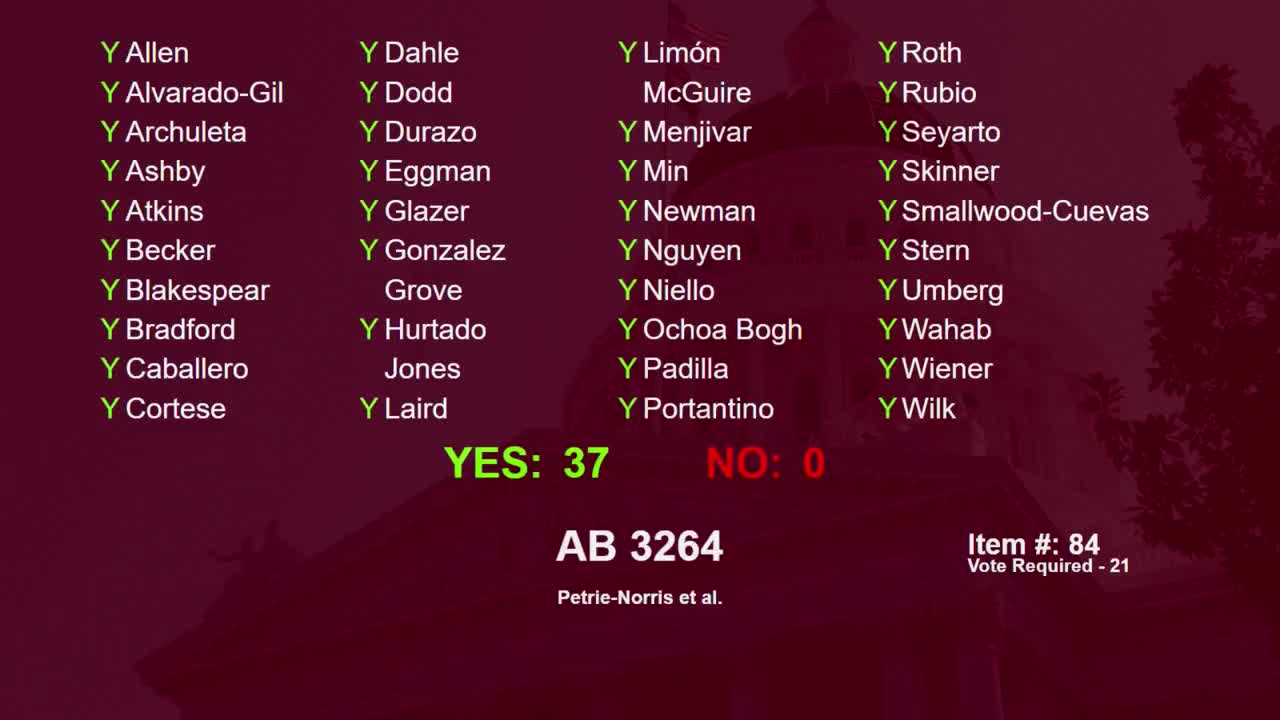
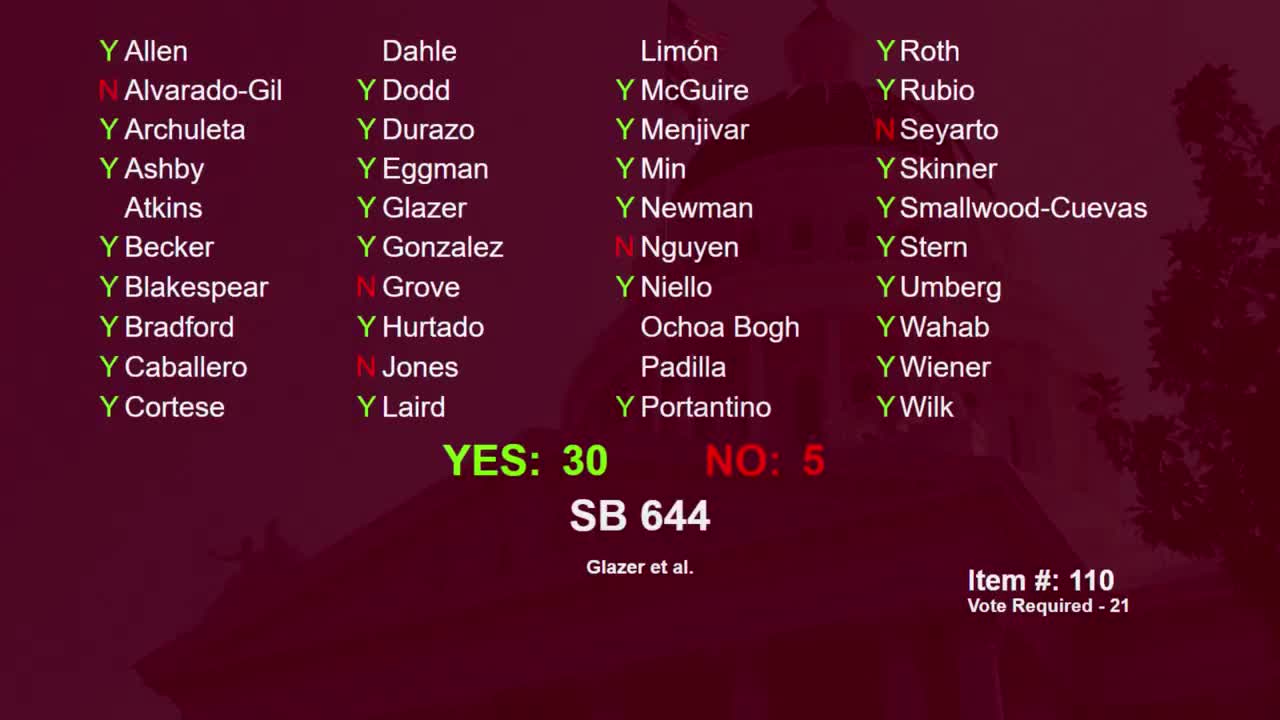
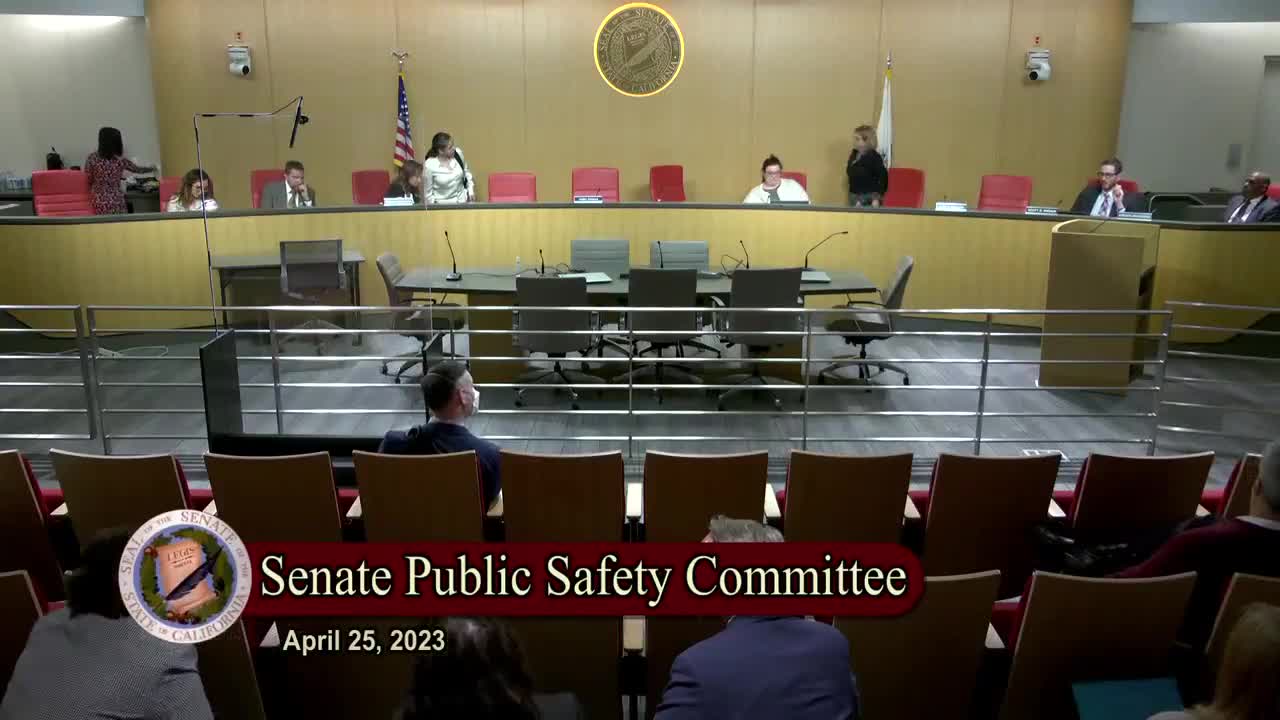
Bill Author

Bill Co-Author(s):