SB 691: Pupil attendance: truancy notifications.
- Session Year: 2023-2024
- House: Senate
- Latest Version Date: 2024-09-28
Current Status:
Passed
(2024-09-28: Chaptered by Secretary of State. Chapter 863, Statutes of 2024.)
Introduced
In Committee
First Chamber
In Committee
Second Chamber
Enacted
Existing law requires a pupil subject to compulsory full-time education or compulsory continuation education, and who is absent from school without a valid excuse 3 full days in one school year, tardy or absent for more than a 30-minute period during the schoolday without a valid excuse on 3 occasions in one school year, or any combination thereof, to be classified as a truant. Existing law requires a school district, upon a pupils initial classification as a truant, to notify the pupils parent or guardian of specified information, including, among other information, that the pupil and parent or guardian of the pupil may be subject to prosecution, as specified, and that it is recommended that the parent or guardian accompany the pupil to school and attend classes with the pupil for one day.
This bill, commencing July 1, 2025, would remove those specific pieces of information from that notification and would require that notification to include additional information, including, among other information, that mental health and supportive services may be available to the pupil and the family and that school personnel are available to meet with the pupil and family to develop strategies to support the pupils attendance at school. To the extent the bill would impose additional duties on school district officials, the bill would impose a state-mandated local program.
The California Constitution requires the state to reimburse local agencies and school districts for certain costs mandated by the state. Statutory provisions establish procedures for making that reimbursement.
This bill would provide that, if the Commission on State Mandates determines that the bill contains costs mandated by the state, reimbursement for those costs shall be made pursuant to the statutory provisions noted above.
(2)Existing
Existing law requires a pupil subject to compulsory full-time education or to compulsory continuation education who is absent from school without a valid excuse 3 full days in one school year, or tardy or absent for more than a 30-minute period during the schoolday without a valid excuse on 3 occasions in one school year, or any combination thereof, to be classified as a truant. Existing law requires, upon a pupils initial classification as a truant, a school district to notify the pupils parent or guardian of specified information, including, among other information, that the pupil and parent or guardian of the pupil may be subject to prosecution, as specified, and that it is recommended that the parent or guardian accompany the pupil to school and attend classes with the pupil for one day.
This bill, commencing July 1, 2025, would remove those specific pieces of information from that notification and would require that notification to include additional information, including, among other information, that mental health and supportive services may be available to the pupil and the family and that school personnel are available to meet with the pupil and family to develop strategies to support the pupils attendance at school. To the extent the bill would impose additional duties on school district officials, the bill would impose a state-mandated local program.
(3)The
The California Constitution requires the state to reimburse local agencies and school districts for certain costs mandated by the state. Statutory provisions establish procedures for making that reimbursement.
This bill would provide that, if the Commission on State Mandates determines that the bill contains costs mandated by the state, reimbursement for those costs shall be made pursuant to the statutory provisions noted above.
(1)Existing law establishes the State Board of Education, consisting of 10 members who are appointed by the Governor with the advice and consent of 2/3 of the Senate and one student member who is appointed by the Governor, pursuant to a specified selection process, with the advice and consent of 2/3 of the Senate. Under existing law, the student member is a voting member with the full rights and duties of the other 10 members of the state board. Existing law requires, as part of the selection process for the student member, a screening committee of the state board to select 12 semifinalists from among those who apply for the student member position. Existing law requires the California Association of Student Councils to select a maximum of 6 final candidates from the list of semifinalists. Existing law requires the state board to select 3 finalists from the candidates selected by the California Association of Student Councils and requires the Governor to appoint the student member from among those finalists.
This bill would instead require the state board to present for the Governors consideration all of the final candidates selected by the California Association of Student Councils. The bill would require the Governor to appoint 2 additional student members to the state board, as provided, and would require those student members to have preferential voting rights, as described.
(2)Existing law requires a pupil subject to compulsory full-time education or to compulsory continuation education who is absent from school without a valid excuse 3 full days in one school year, or tardy or absent for more than a 30-minute period during the schoolday without a valid excuse on 3 occasions in one school year, or any combination thereof, to be classified as a truant. Existing law requires, upon a pupils initial classification as a truant, a school district to notify the pupils parent or guardian of specified information, including, among other information, that the pupil and parent or guardian of the pupil may be subject to prosecution, as specified, and that it is recommended that the parent or guardian accompany the pupil to school and attend classes with the pupil for one day.
This bill bill, commencing July 1, 2025, would remove those specific pieces of information from that notification and would require that notification to include additional information, including, among other information, that mental health and supportive services may be available to the pupil and the family and that school personnel look forward to meeting are available to meet with the pupil and family to develop strategies to support and welcome the pupil the pupils attendance at school. To the extent the bill would impose additional duties on school district officials, the bill would impose a state-mandated local program.
(3)The California Constitution requires the state to reimburse local agencies and school districts for certain costs mandated by the state. Statutory provisions establish procedures for making that reimbursement.
This bill would provide that, if the Commission on State Mandates determines that the bill contains costs mandated by the state, reimbursement for those costs shall be made pursuant to the statutory provisions noted above.
(1)Existing law establishes the State Board of Education, consisting of 10 members who are appointed by the Governor with the advice and consent of 2/3 of the Senate and one student member who is appointed by the Governor, pursuant to a specified selection process, with the advice and consent of 2/3 of the Senate. Under existing law, the student member is a voting member with the full rights and duties of the other 10 members of the state board. Existing law requires, as part of the selection process for the student member, a screening committee of the state board to select 12 semifinalists from among those who apply for the student member position. Existing law requires the California Association of Student Councils to select a maximum of 6 final candidates from the list of semifinalists. Existing law requires the state board to select 3 finalists from the candidates selected by the California Association of Student Councils and requires the Governor to appoint the student member from among those finalists.
This bill would instead require the state board to present for the Governors consideration all of the final candidates selected by the California Association of Student Councils. The bill would require the Governor to appoint 2 additional student members to the state board, as provided, and would require those student members to have preferential voting rights, as described.
(2)Existing law requires a pupil subject to compulsory full-time education or to compulsory continuation education who is absent from school without a valid excuse 3 full days in one school year, or tardy or absent for more than a 30-minute period during the schoolday without a valid excuse on 3 occasions in one school year, or any combination thereof, to be classified as a truant. Existing law requires, upon a pupils initial classification as a truant, a school district to notify the pupils parent or guardian of specified information, including, among other information, that the pupil and parent or guardian of the pupil may be subject to prosecution, as specified, and that it is recommended that the parent or guardian accompany the pupil to school and attend classes with the pupil for one day.
This bill would remove those specific pieces of information from that notification and would require that notification to include additional information, including, among other information, that mental health and supportive services may be available to the pupil and the family and that school personnel look forward to meeting with the pupil and family to develop strategies to support and welcome the pupil at school. To the extent the bill would impose additional duties on school district officials, the bill would impose a state-mandated local program.
(3)The California Constitution requires the state to reimburse local agencies and school districts for certain costs mandated by the state. Statutory provisions establish procedures for making that reimbursement.
This bill would provide that, if the Commission on State Mandates determines that the bill contains costs mandated by the state, reimbursement for those costs shall be made pursuant to the statutory provisions noted above.
Existing law establishes the State Board of Education, consisting of 10 members who are appointed by the Governor with the advice and consent of 2/3 of the Senate and one student member who is appointed by the Governor, pursuant to a specified selection process, with the advice and consent of 2/3 of the Senate. Under existing law, the student member is a voting member with the full rights and duties of the other 10 members of the state board. Existing law requires, as part of the selection process for the student member, a screening committee of the state board to select 12 semifinalists from among those who apply for the student member position. Existing law requires the California Association of Student Councils to select a maximum of 6 final candidates from the list of semifinalists. Existing law requires the state board to select 3 finalists from the candidates selected by the California Association of Student Councils and requires the Governor to appoint the student member from among those finalists.
This bill would eliminate the requirement for the Governor to appoint a student member with the advice and consent of 2/3 of the Senate and would instead require the state board to select the 3 student members from among the candidates presented by the California Association of Student Councils, as provided. instead require the state board to present for the Governors consideration all of the final candidates selected by the California Association of Student Councils. The bill would require the Governor to appoint 2 additional student members to the state board, as provided, and would require those student members to have preferential voting rights, as described.
Existing law establishes the State Board of Education, consisting of 10 members who are appointed by the Governor with the advice and consent of 2/3 of the Senate and one student member who is appointed by the Governor, pursuant to a specified selection process, with the advice and consent of 2/3 of the Senate. Existing law requires, as part of the selection process for the student member, a screening committee of the state board to select 12 semifinalists from among those who apply for the student member position. Existing law requires the California Association of Student Councils to select a maximum of 6 final candidates from the list of semifinalists. Existing law requires the state board to select 3 finalists from the candidates selected by the California Association of Student Councils and requires the Governor to appoint the student member from among those finalists.
This bill would eliminate the requirement for the Governor to appoint a student member with the advice and consent of 2/3 of the Senate and would instead require the state board to select the 3 student members from among the candidates presented by the California Association of Student Councils, as provided.
Existing law requires the Superintendent of Public Instruction to develop program guidelines for dyslexia to be used to assist regular education teachers, special education teachers, and parents to identify and assess pupils with dyslexia, as provided. Existing law requires a pupil who is assessed as being dyslexic and meets specified eligibility criteria to be entitled to special education and related services.This bill would require, on or before June 30, 2024, the State Board of Education to establish an approved list of evidence-based culturally, linguistically, and developmentally appropriate screening instruments to be used by a local educational agency, as defined, to screen pupils for risk of dyslexia, as provided. The bill would require, commencing with the 202425 school year, and annually thereafter, a local educational agency serving pupils in any of the grades kindergarten to grade 2, inclusive, to screen each pupil in those grades for risk of dyslexia by using the screening instrument or instruments identified above, as provided. The bill would require results from the screening, among other things, to be made available to a pupils parent or guardian in a timely manner, but no more than 45 calendar days from administering the screening. The bill would require a local educational agency to provide a pupil identified as being at risk of dyslexia with evidence-based literacy instruction, progress monitoring, and early intervention in the regular general education program. By expanding the duties of a local educational agency, the bill would impose a state-mandated local program.The California Constitution requires the state to reimburse local agencies and school districts for certain costs mandated by the state. Statutory provisions establish procedures for making that reimbursement.This bill would provide that, if the Commission on State Mandates determines that the bill contains costs mandated by the state, reimbursement for those costs shall be made pursuant to the statutory provisions noted above.Existing law requires the Superintendent of Public Instruction to develop program guidelines for dyslexia to be used to assist regular education teachers, special education teachers, and parents to identify and assess pupils with dyslexia, as provided. Existing law requires a pupil who is assessed as being dyslexic and meets specified eligibility criteria to be entitled to special education and related services.
This bill would require, on or before June 30, 2024, the State Board of Education to establish an approved list of evidence-based culturally, linguistically, and developmentally appropriate screening instruments to be used by a local educational agency, as defined, to screen pupils for risk of dyslexia, as provided. The bill would require, commencing with the 202425 school year, and annually thereafter, a local educational agency serving pupils in any of the grades kindergarten to grade 2, inclusive, to screen each pupil in those grades for risk of dyslexia by using the screening instrument or instruments identified above, as provided. The bill would require results from the screening, among other things, to be made available to a pupils parent or guardian in a timely manner, but no more than 45 calendar days from administering the screening. The bill would require a local educational agency to provide a pupil identified as being at risk of dyslexia with evidence-based literacy instruction, progress monitoring, and early intervention in the regular general education program. By expanding the duties of a local educational agency, the bill would impose a state-mandated local program.
The California Constitution requires the state to reimburse local agencies and school districts for certain costs mandated by the state. Statutory provisions establish procedures for making that reimbursement.
This bill would provide that, if the Commission on State Mandates determines that the bill contains costs mandated by the state, reimbursement for those costs shall be made pursuant to the statutory provisions noted above.
Upon a pupils initial classification as a truant, the school district shall notify the pupils parent or guardian using the most cost-effective method possible, which may include email or a telephone call:
(a)That the pupil is truant.
(b)That the parent or guardian is obligated to compel the attendance of the pupil at school.
(c)That parents or guardians who fail to meet this obligation may be guilty of an infraction and subject to prosecution pursuant to Article 6 (commencing with Section 48290).
(d)That alternative educational programs are available in the school district.
(e)That the parent or guardian has the right to meet with appropriate school personnel to discuss solutions to the pupils truancy.
(f)That the pupil may be subject to prosecution under Section 48264.
(g)That it is recommended that the parent or guardian accompany the pupil to school and attend classes with the pupil for one day.
(h)This section shall become inoperative on July 1, 2025, and, as of January 1, 2026, is repealed.
SEC. 2.Section 48260.5 is added to the Education Code, to read:48260.5.Upon a pupils initial classification as a truant, the school district shall notify the pupils parent or guardian using the most cost-effective method possible, which may include email or a telephone call:
(a)That the pupil is truant.
(b)That the parent or guardian is obligated to compel the attendance of the pupil at school.
(c)That alternative educational programs are available in the school district.
(d)That the parent or guardian has the right to meet with appropriate school personnel to discuss solutions to the pupils truancy.
(e)That mental health and supportive services may be available to the pupil and the family.
(f)That school personnel are available to meet with the pupil and family to develop strategies to support the pupils attendance at school.
(g)That research shows that missing 10 percent of school for any reason can translate into pupils having difficulty learning to read by third grade, achieving in middle school, and graduating from high school.
(h)This section shall become operative on July 1, 2025.
SEC. 3.If the Commission on State Mandates determines that this act contains costs mandated by the state, reimbursement to local agencies and school districts for those costs shall be made pursuant to Part 7 (commencing with Section 17500) of Division 4 of Title 2 of the Government Code.
Upon a pupils initial classification as a truant, the school district shall notify the pupils parent or guardian using the most cost-effective method possible, which may include email or a telephone call:
(a)That the pupil is truant.
(b)That the parent or guardian is obligated to compel the attendance of the pupil at school.
(c)That parents or guardians who fail to meet this obligation may be guilty of an infraction and subject to prosecution pursuant to Article 6 (commencing with Section 48290).
(d)That alternative educational programs are available in the school district.
(e)That the parent or guardian has the right to meet with appropriate school personnel to discuss solutions to the pupils truancy.
(f)That the pupil may be subject to prosecution under Section 48264.
(g)That it is recommended that the parent or guardian accompany the pupil to school and attend classes with the pupil for one day.
(h)This section shall become inoperative on July 1, 2025, and, as of January 1, 2026, is repealed.
SEC. 3.SEC. 2.Section 48260.5 is added to the Education Code, to read:48260.5.Upon a pupils initial classification as a truant, the school district shall notify the pupils parent or guardian using the most cost-effective method possible, which may include email or a telephone call:
(a)That the pupil is truant.
(b)That the parent or guardian is obligated to compel the attendance of the pupil at school.
(c)That alternative educational programs are available in the school district.
(d)That the parent or guardian has the right to meet with appropriate school personnel to discuss solutions to the pupils truancy.
(e)That mental health and supportive services may be available to the pupil and the family.
(f)That school personnel are available to meet with the pupil and family to develop strategies to support the pupils attendance at school.
(g)That research shows that missing 10 percent of school for any reason can translate into pupils having difficulty learning to read by third grade, achieving in middle school, and graduating from high school.
(h)This section shall become operative on July 1, 2025.
SEC. 4.SEC. 3.If the Commission on State Mandates determines that this act contains costs mandated by the state, reimbursement to local agencies and school districts for those costs shall be made pursuant to Part 7 (commencing with Section 17500) of Division 4 of Title 2 of the Government Code.
(a)Notwithstanding Sections 33000 and 33001, the Governor shall also appoint three student members to the state board with the advice and consent of two-thirds of the Senate.
(b)The term of office of each student member is one year, and shall begin on August 1. An individual may serve only one term as a student member.
(c)(1)Notwithstanding Section 1020 of the Government Code, each student member shall be, at the time the student members one-year term commences, a student enrolled in good standing in grade 12 in a public high school. The student members shall be selected from the finalists presented to the Governor by the state board pursuant to subdivision (d). One student member shall be a voting member with the full rights and duties of the other 10 members of the state board. The remaining student members appointed to the state board shall have preferential voting rights.
(2)Preferential voting, as used in this section, means a formal expression of opinion that is recorded in the minutes and cast before the official vote of the state board. A preferential vote shall not serve in determining the final numerical outcome of a vote. No preferential vote shall be solicited on matters subject to closed session discussion.
(d)The process for selecting the student members shall be as follows:
(1)Each year, the state board shall notify every school district that applications are being accepted for the student member positions.
(2)A screening committee of the state board shall select 12 semifinalists for the student member positions. Those semifinalists shall be presented to the California Association of Student Councils, which shall select a maximum of six final candidates for presentation to the state board.
(3)Each year, the state board shall present the finalists for the Governors consideration and may rank the finalists according to its preference.
SEC. 2.Section 48260.5 of the Education Code is amended to read:48260.5.Upon a pupils initial classification as a truant, the school district shall notify the pupils parent or guardian using the most cost-effective method possible, which may include electronic mail or a telephone call:(a)That the pupil is truant.(b)That the parent or guardian is obligated to compel the attendance of the pupil at school.(c)That alternative educational programs are available in the school district.(d)That the parent or guardian has the right to meet with appropriate school personnel to discuss solutions to the pupils truancy.(e)That mental health and supportive services may be available to the pupil and the family.(f)That school personnel look forward to meeting with the pupil and family to develop strategies to support and welcome the pupil at school.(g)That research shows that missing 10 percent of school, or about 18 days, negatively affects a pupils academic performance, that poor attendance can influence whether pupils read proficiently by the end of third grade or will be held back, and that by sixth grade chronic absenteeism becomes a leading indicator that a pupil will drop out of high school.SEC. 2.Section 48260.5 of the Education Code is amended to read:48260.5.Upon a pupils initial classification as a truant, the school district shall notify the pupils parent or guardian using the most cost-effective method possible, which may include electronic mail email or a telephone call:
(a)That the pupil is truant.
(b)That the parent or guardian is obligated to compel the attendance of the pupil at school.
(c)That parents or guardians who fail to meet this obligation may be guilty of an infraction and subject to prosecution pursuant to Article 6 (commencing with Section 48290).
(d)That alternative educational programs are available in the school district.
(e)That the parent or guardian has the right to meet with appropriate school personnel to discuss solutions to the pupils truancy.
(f)That the pupil may be subject to prosecution under Section 48264.
(g)That it is recommended that the parent or guardian accompany the pupil to school and attend classes with the pupil for one day.
(h)This section shall become inoperative on July 1, 2025, and, as of January 1, 2026, is repealed.
SEC. 3.Section 48260.5 is added to the Education Code, to read:48260.5.Upon a pupils initial classification as a truant, the school district shall notify the pupils parent or guardian using the most cost-effective method possible, which may include email or a telephone call:
(a)That the pupil is truant.
(b)That the parent or guardian is obligated to compel the attendance of the pupil at school.
(c)That alternative educational programs are available in the school district.
(d)That the parent or guardian has the right to meet with appropriate school personnel to discuss solutions to the pupils truancy.
(e)That mental health and supportive services may be available to the pupil and the family.
(f)That school personnel are available to meet with the pupil and family to develop strategies to support the pupils attendance at school.
(g)That research shows that missing 10 percent of school for any reason can translate into pupils having difficulty learning to read by third grade, achieving in middle school, and graduating from high school.
(h)This section shall become operative on July 1, 2025.
SEC. 3.SEC. 4.If the Commission on State Mandates determines that this act contains costs mandated by the state, reimbursement to local agencies and school districts for those costs shall be made pursuant to Part 7 (commencing with Section 17500) of Division 4 of Title 2 of the Government Code.
(a)Notwithstanding Sections 33000 and 33001, the Governor shall also appoint three student members to the state board with the advice and consent of two-thirds of the Senate.
(b)The term of office of each student member is one year, and shall begin on August 1. An individual may serve only one term as a student member.
(c)(1)Notwithstanding Section 1020 of the Government Code, each student member shall be, at the time the student members one-year term commences, a student enrolled in good standing in grade 12 in a public high school. The student members shall be selected from the finalists presented to the Governor by the state board pursuant to subdivision (d). One student member shall be a voting member with the full rights and duties of the other 10 members of the state board. The remaining student members appointed to the state board shall have preferential voting rights.
(2)Preferential voting, as used in this section, means a formal expression of opinion that is recorded in the minutes and cast before the official vote of the state board. A preferential vote shall not serve in determining the final numerical outcome of a vote. No preferential vote shall be solicited on matters subject to closed session discussion.
(d)The process for selecting the student members shall be as follows:
(1)Each year, the state board shall notify every school district that applications are being accepted for the student member positions.
(2)A screening committee of the state board shall select 12 semifinalists for the student member positions. Those semifinalists shall be presented to the California Association of Student Councils, which shall select a maximum of six final candidates for presentation to the state board.
(3)Each year, the state board shall present the finalists for the Governors consideration and may rank the finalists according to its preference.
SEC. 2.Section 48260.5 of the Education Code is amended to read:48260.5.Upon a pupils initial classification as a truant, the school district shall notify the pupils parent or guardian using the most cost-effective method possible, which may include electronic mail or a telephone call:
(a)That the pupil is truant.
(b)That the parent or guardian is obligated to compel the attendance of the pupil at school.
(c)That parents or guardians who fail to meet this obligation may be guilty of an infraction and subject to prosecution pursuant to Article 6 (commencing with Section 48290).(d)(c)That alternative educational programs are available in the school district.
(e)(d)That the parent or guardian has the right to meet with appropriate school personnel to discuss solutions to the pupils truancy.
(f)That the pupil may be subject to prosecution under Section 48264.(g)That it is recommended that the parent or guardian accompany the pupil to school and attend classes with the pupil for one day.(e)That mental health and supportive services may be available to the pupil and the family.
(f)That school personnel look forward to meeting with the pupil and family to develop strategies to support and welcome the pupil at school.
(g)That research shows that missing 10 percent of school, or about 18 days, negatively affects a pupils academic performance, that poor attendance can influence whether pupils read proficiently by the end of third grade or will be held back, and that by sixth grade chronic absenteeism becomes a leading indicator that a pupil will drop out of high school.
SEC. 3.If the Commission on State Mandates determines that this act contains costs mandated by the state, reimbursement to local agencies and school districts for those costs shall be made pursuant to Part 7 (commencing with Section 17500) of Division 4 of Title 2 of the Government Code.
(a)Notwithstanding Sections 33000 and 33001, the Governor shall also appoint a three student member members to the state board with the advice and consent of two-thirds of the Senate.
(b)The term of office of the each student member is one year, and shall begin on August 1. An individual may serve only one term as a student member.
(c)(1)Notwithstanding Section 1020 of the Government Code, the each student member shall be, at the time the student members one-year term commences, a student enrolled in good standing in grade 12 in a public high school. The student member members shall be selected from three students recommended the finalists presented to the Governor by the state board pursuant to subdivision (d). The One student member shall be a voting member with the full rights and duties of the other 10 members of the state board. The remaining student members appointed to the state board shall have preferential voting rights.
(2)Preferential voting, as used in this section, means a formal expression of opinion that is recorded in the minutes and cast before the official vote of the state board. A preferential vote shall not serve in determining the final numerical outcome of a vote. No preferential vote shall be solicited on matters subject to closed session discussion.
(d)The process for selecting the student member members shall be as follows:
(1)Each year, the state board shall notify every school district that applications are being accepted for the student members position. member positions.
(2)A screening committee of the state board shall select 12 semifinalists for the student members position. member positions. Those semifinalists shall be presented to the California Association of Student Councils, which shall select a maximum of six final candidates for presentation to the state board.
(3)Each year, the state board shall select three present the finalists for the Governors consideration and may rank the finalists according to its preference.
SECTION 1.Section 33000.5 of the Education Code is amended to read:33000.5.(a)Notwithstanding Sections 33000 and 33001, three student members shall be appointed to the state board pursuant to this section.(b)The term of office of each student member is one year, and shall begin on August 1. An individual may serve only one term as a student member.(c)Notwithstanding Section 1020 of the Government Code, each student member shall be, at the time the student members one-year term commences, a student enrolled in good standing in grade 12 in a public high school. Each student member shall be selected by the state board from the final candidates recommended by the California Association of Student Councils pursuant to subdivision (d). Each student member shall be a voting member with the full rights and duties of the other 10 members of the state board.(d)The process for selecting the student members shall be as follows:(1)Each year, the state board shall notify every school district that applications are being accepted for the student member positions.(2)A screening committee of the state board shall select 12 semifinalists for the student member positions. Those semifinalists shall be presented to the California Association of Student Councils, which shall select a maximum of six final candidates for presentation to the state board.(a)Notwithstanding Sections 33000 and 33001, the Governor shall also appoint a student member to the state board with the advice and consent of two-thirds of the Senate. three student members shall be appointed to the state board pursuant to this section.
(b)The term of office of the each student member is one year, and shall begin on August 1. An individual may serve only one term as a student member.
(c)Notwithstanding Section 1020 of the Government Code, the each student member shall be, at the time the student members one-year term commences, a student enrolled in good standing in grade 12 in a public high school. The Each student member shall be selected by the state board from three students the final candidates recommended by the state board the California Association of Student Councils pursuant to subdivision (d). The Each student member shall be a voting member with the full rights and duties of the other 10 members of the state board.
(d)The process for selecting the student member members shall be as follows:
(1)Each year, the state board shall notify every school district that applications are being accepted for the student members position. member positions.
(2)A screening committee of the state board shall select 12 semifinalists for the student members position. member positions. Those semifinalists shall be presented to the California Association of Student Councils, which shall select a maximum of six final candidates for presentation to the state board.
(3)Each year, the state board shall select three finalists for the Governors consideration and may rank the finalists according to its preference.SECTION 1.The Legislature finds and declares all of the following:(a)Research from multiple scientific studies is unequivocal: early identification and intervention with evidence-based early literacy instructional strategies and materials improves literacy outcomes for students at risk of or with dyslexia and other struggling readers.(b)Dyslexia is the most common learning disability with at least 10 percent of the general population having dyslexia, while some estimate it to be over 15 percent. Unfortunately, hundreds of thousands of California pupils on the dyslexia spectrum struggle every day with reading at grade level, often without the proper identification and support.(c)Pupils with dyslexia are less likely to graduate high school and attend college, and also experience higher rates of incarceration. In some prisons today, where nearly 80 percent of the inmates are illiterate, almost one-half of the inmates are on the dyslexia spectrum.(d)The lack or delay in screening of struggling readers and pupils at risk of dyslexia results in unnecessary delays in receiving appropriate support and intervention. Due to these delays, the academic gap and learning loss in core content is often very difficult to overcome even after significant cost and interventions.(e)According to the National Center on Improving Literacy, forty states have passed legislation requiring screening for risk of dyslexia.(f)By screening all pupils for risk of dyslexia early, California can help families and teachers achieve the best learning and life outcomes for all pupils, close academic achievement gaps, and help end the school-to-prison pipeline.SEC. 2.Chapter 15.6 (commencing with Section 53009) is added to Part 28 of Division 4 of Title 2 of the Education Code, to read:15.6.Screening for Risk of Dyslexia53009.(a)(1)(A)On or before June 30, 2024, the state board shall establish an approved list of evidence-based culturally, linguistically, and developmentally appropriate screening instruments to be used by a local educational agency to screen pupils for risk of dyslexia. The areas to be screened by approved instruments shall include, but not be limited to, all of the following as developmentally and linguistically appropriate:(i)Phonological and phonemic awareness, including phoneme blending, phoneme segmenting, and phoneme manipulation tasks.(ii)Sound-symbol recognition and symbol-sound recognition.(iii)Alphabet knowledge.(iv)Decoding skills, including real and nonsense words.(v)Rapid automatized naming, with letters, digits, objects, or colors.(B)This paragraph does not prohibit the board from periodically adding to the list described in subparagraph (A).(2)(A)Commencing with the 202425 school year, and annually thereafter, a local educational agency serving pupils in any of the grades kindergarten to grade 2, inclusive, shall screen each pupil in kindergarten to grade 2, inclusive, for risk of dyslexia by using a state-approved instrument or instruments with fidelity, as identified in paragraph (1), within 90 calendar days from the start of instruction for the school year, unless objected to in writing by the pupils parent or guardian.(B)When screening English learners, factors, including, but not limited to, English language acquisition status, home language, and language of instruction shall be considered.(3)Results from the screening shall be made available to the pupils parent or guardian in a timely manner, but no more than 45 calendar days from administering the screening, and shall include information as to how the parent or guardian can access, on the departments internet website, information about the Multi-Tiered System of Supports, and the California Dyslexia Guidelines developed by the Superintendent pursuant to Section 56335.(4)If a pupil enrolls for the first time in any of the grades kindergarten to grade 2, inclusive, after the screening has been administered pursuant to paragraph (2), the local educational agency shall screen the pupil for risk of dyslexia by using a state-approved instrument or instruments with fidelity, as identified in paragraph (1), within 30 calendar days of enrollment, unless the parent or guardian objects in writing or presents documentation that the pupil had a similar screening in their prior school and the parent or guardian was made aware of the results.(5)Screening pursuant to this subdivision shall not be considered an evaluation to establish eligibility for special education and related services pursuant to the federal Individuals with Disabilities Education Act (20 U.S.C. Sec. 1400 et seq.), or an evaluation to determine eligibility for a plan pursuant to Section 504 of the federal Rehabilitation Act of 1973 (29 U.S.C. Sec. 794).(6)It is the intent of the Legislature that results from the screening pursuant to this subdivision and the California Dyslexia Guidelines developed pursuant to Section 56335 be available for use by teachers and by parents and guardians in order to provide knowledge of the characteristics exhibited by pupils with dyslexia and related learning differences, to provide knowledge of the instructional strategies that can be successfully used with pupils at risk of dyslexia, and to help parents and guardians understand their rights.(7)A local educational agency shall provide a pupil identified as being at risk of dyslexia pursuant to this subdivision with evidence-based literacy instruction, progress monitoring, and early intervention in the regular general education program. A local educational agency may also provide additional support and referrals, as recommended in the California Dyslexia Guidelines, the English Language Arts/English Language Development Framework, and the California Multi-Tiered System of Supports. Local educational agencies are encouraged to use a structured literacy approach to instruction as recommended by the California Dyslexia Guidelines.(b)For purposes of this section, the following definitions apply:(1)Local educational agency means a school district, county office of education, or charter school.(2)Screening instrument means a brief tool administered by an appropriately trained school employee, including, but not limited to, a certificated teacher of record, measuring discrete areas to determine risk of dyslexia and possible need for early intervention. SEC. 3.If the Commission on State Mandates determines that this act contains costs mandated by the state, reimbursement to local agencies and school districts for those costs shall be made pursuant to Part 7 (commencing with Section 17500) of Division 4 of Title 2 of the Government Code.The Legislature finds and declares all of the following:
(a)Research from multiple scientific studies is unequivocal: early identification and intervention with evidence-based early literacy instructional strategies and materials improves literacy outcomes for students at risk of or with dyslexia and other struggling readers.
(b)Dyslexia is the most common learning disability with at least 10 percent of the general population having dyslexia, while some estimate it to be over 15 percent. Unfortunately, hundreds of thousands of California pupils on the dyslexia spectrum struggle every day with reading at grade level, often without the proper identification and support.
(c)Pupils with dyslexia are less likely to graduate high school and attend college, and also experience higher rates of incarceration. In some prisons today, where nearly 80 percent of the inmates are illiterate, almost one-half of the inmates are on the dyslexia spectrum.
(d)The lack or delay in screening of struggling readers and pupils at risk of dyslexia results in unnecessary delays in receiving appropriate support and intervention. Due to these delays, the academic gap and learning loss in core content is often very difficult to overcome even after significant cost and interventions.
(e)According to the National Center on Improving Literacy, forty states have passed legislation requiring screening for risk of dyslexia.
(f)By screening all pupils for risk of dyslexia early, California can help families and teachers achieve the best learning and life outcomes for all pupils, close academic achievement gaps, and help end the school-to-prison pipeline.
SEC. 2.Chapter 15.6 (commencing with Section 53009) is added to Part 28 of Division 4 of Title 2 of the Education Code, to read:15.6.Screening for Risk of Dyslexia53009.(a)(1)(A)On or before June 30, 2024, the state board shall establish an approved list of evidence-based culturally, linguistically, and developmentally appropriate screening instruments to be used by a local educational agency to screen pupils for risk of dyslexia. The areas to be screened by approved instruments shall include, but not be limited to, all of the following as developmentally and linguistically appropriate:
(i)Phonological and phonemic awareness, including phoneme blending, phoneme segmenting, and phoneme manipulation tasks.
(ii)Sound-symbol recognition and symbol-sound recognition.
(iii)Alphabet knowledge.
(iv)Decoding skills, including real and nonsense words.
(v)Rapid automatized naming, with letters, digits, objects, or colors.
(B)This paragraph does not prohibit the board from periodically adding to the list described in subparagraph (A).
(2)(A)Commencing with the 202425 school year, and annually thereafter, a local educational agency serving pupils in any of the grades kindergarten to grade 2, inclusive, shall screen each pupil in kindergarten to grade 2, inclusive, for risk of dyslexia by using a state-approved instrument or instruments with fidelity, as identified in paragraph (1), within 90 calendar days from the start of instruction for the school year, unless objected to in writing by the pupils parent or guardian.
(B)When screening English learners, factors, including, but not limited to, English language acquisition status, home language, and language of instruction shall be considered.
(3)Results from the screening shall be made available to the pupils parent or guardian in a timely manner, but no more than 45 calendar days from administering the screening, and shall include information as to how the parent or guardian can access, on the departments internet website, information about the Multi-Tiered System of Supports, and the California Dyslexia Guidelines developed by the Superintendent pursuant to Section 56335.
(4)If a pupil enrolls for the first time in any of the grades kindergarten to grade 2, inclusive, after the screening has been administered pursuant to paragraph (2), the local educational agency shall screen the pupil for risk of dyslexia by using a state-approved instrument or instruments with fidelity, as identified in paragraph (1), within 30 calendar days of enrollment, unless the parent or guardian objects in writing or presents documentation that the pupil had a similar screening in their prior school and the parent or guardian was made aware of the results.
(5)Screening pursuant to this subdivision shall not be considered an evaluation to establish eligibility for special education and related services pursuant to the federal Individuals with Disabilities Education Act (20 U.S.C. Sec. 1400 et seq.), or an evaluation to determine eligibility for a plan pursuant to Section 504 of the federal Rehabilitation Act of 1973 (29 U.S.C. Sec. 794).
(6)It is the intent of the Legislature that results from the screening pursuant to this subdivision and the California Dyslexia Guidelines developed pursuant to Section 56335 be available for use by teachers and by parents and guardians in order to provide knowledge of the characteristics exhibited by pupils with dyslexia and related learning differences, to provide knowledge of the instructional strategies that can be successfully used with pupils at risk of dyslexia, and to help parents and guardians understand their rights.
(7)A local educational agency shall provide a pupil identified as being at risk of dyslexia pursuant to this subdivision with evidence-based literacy instruction, progress monitoring, and early intervention in the regular general education program. A local educational agency may also provide additional support and referrals, as recommended in the California Dyslexia Guidelines, the English Language Arts/English Language Development Framework, and the California Multi-Tiered System of Supports. Local educational agencies are encouraged to use a structured literacy approach to instruction as recommended by the California Dyslexia Guidelines.
(b)For purposes of this section, the following definitions apply:
(1)Local educational agency means a school district, county office of education, or charter school.
(2)Screening instrument means a brief tool administered by an appropriately trained school employee, including, but not limited to, a certificated teacher of record, measuring discrete areas to determine risk of dyslexia and possible need for early intervention.
SEC. 3.If the Commission on State Mandates determines that this act contains costs mandated by the state, reimbursement to local agencies and school districts for those costs shall be made pursuant to Part 7 (commencing with Section 17500) of Division 4 of Title 2 of the Government Code.
|
Date
|
Status
|
|---|---|
| Sep 28, 2024 | Chaptered by Secretary of State. Chapter 863, Statutes of 2024. |
| Sep 28, 2024 | Approved by the Governor. |
| Sep 3, 2024 | Enrolled and presented to the Governor at 3 p.m. |
| Aug 27, 2024 | Assembly amendments concurred in. (Ayes 31. Noes 9. Page 5509.) Ordered to engrossing and enrolling. |
| Aug 26, 2024 | From committee: That the Assembly amendments be concurred in. (Ayes 5. Noes 1. Page 5425.) |
| Aug 22, 2024 | Set for hearing August 26. |
| Aug 20, 2024 | From committee: Be re-referred to Com. on ED. pursuant to Senate Rule 29.10(d). (Ayes 5. Noes 0. Page 5216.) Re-referred to Com. on ED. |
| Aug 20, 2024 | Re-referred to Com. on RLS pursuant to Senate Rule 29.10(d). |
| Aug 20, 2024 | In Senate. Concurrence in Assembly amendments pending. |
| Aug 19, 2024 | Read third time. Passed. (Ayes 58. Noes 5. Page 6381.) Ordered to the Senate. |
| Aug 12, 2024 | Read second time. Ordered to third reading. |
| Aug 8, 2024 | Read second time and amended. Ordered to second reading. |
| Aug 7, 2024 | From committee: Do pass as amended. (Ayes 10. Noes 2.) (August 7). |
| Jun 27, 2024 | Read second time and amended. Re-referred to Com. on APPR. |
| Jun 26, 2024 | From committee: Do pass as amended and re-refer to Com. on APPR. (Ayes 6. Noes 0.) (June 26). |
| Jun 7, 2024 | June 12 hearing postponed by committee. |
| Apr 29, 2024 | From committee with author's amendments. Read second time and amended. Re-referred to Com. on ED. |
| Apr 29, 2024 | Referred to Com. on ED. |
| Jan 29, 2024 | In Assembly. Read first time. Held at Desk. |
| Jan 29, 2024 | Read third time. Passed. (Ayes 31. Noes 7. Page 3051.) Ordered to the Assembly. |
| Jan 22, 2024 | Read second time. Ordered to third reading. |
| Jan 18, 2024 | From committee: Do pass. (Ayes 4. Noes 2. Page 3011.) (January 18). |
| Jan 17, 2024 | Set for hearing January 18. |
| Jan 16, 2024 | January 16 hearing: Placed on APPR suspense file. |
| Jan 11, 2024 | From committee with author's amendments. Read second time and amended. Re-referred to Com. on APPR. |
| Jan 11, 2024 | Set for hearing January 16. |
| Jan 10, 2024 | From committee: Do pass and re-refer to Com. on APPR. (Ayes 5. Noes 2. Page 2969.) (January 10). Re-referred to Com. on APPR. |
| Jan 5, 2024 | Set for hearing January 10. |
| Jan 3, 2024 | Re-referred to Com. on ED. |
| Jan 3, 2024 | Re-referred to Com. on RLS. |
| Jan 3, 2024 | Withdrawn from committee. |
| Jan 3, 2024 | From committee with author's amendments. Read second time and amended. Re-referred to Com. on APPR. |
| May 18, 2023 | May 18 hearing: Held in committee and under submission. |
| May 12, 2023 | Set for hearing May 18. |
| Apr 10, 2023 | April 10 hearing: Placed on APPR suspense file. |
| Apr 3, 2023 | Set for hearing April 10. |
| Mar 29, 2023 | From committee: Do pass and re-refer to Com. on APPR. (Ayes 7. Noes 0. Page 570.) (March 29). Re-referred to Com. on APPR. |
| Mar 9, 2023 | Set for hearing March 29. |
| Mar 1, 2023 | Referred to Com. on ED. |
| Feb 17, 2023 | From printer. May be acted upon on or after March 19. |
| Feb 16, 2023 | Introduced. Read first time. To Com. on RLS. for assignment. To print. |
|
Date
|
Description
|
Location
|
Votes
|
|
|---|---|---|---|---|
| Aug 27, 2024 | Unfinished Business SB691 Portantino Concurrence | Senate Floor |
Passed |
|
| Aug 26, 2024 | That the Assembly amendments be concurred in | Senate Standing Committee on Education |
Passed |
|
| Aug 19, 2024 | SB 691 Portantino Senate Third Reading By McCarty | Assembly Floor |
Passed |
|
| Aug 7, 2024 | Do pass as amended. | Assembly Standing Committee on Appropriations |
Passed |
|
| Jun 26, 2024 | Do pass as amended and be re-referred to the Committee on [Appropriations] | Assembly Standing Committee on Education |
Passed |
|
| Jan 29, 2024 | Senate 3rd Reading SB691 Portantino | Senate Floor |
Passed |
|
| Jan 18, 2024 | Do pass | Senate Standing Committee on Appropriations |
Passed |
|
| Jan 16, 2024 | Placed on suspense file | Senate Standing Committee on Appropriations |
Passed |
|
| Jan 10, 2024 | Do pass, but first be re-referred to the Committee on [Appropriations] | Senate Standing Committee on Education |
Passed |
|
| Apr 10, 2023 | Placed on suspense file | Senate Standing Committee on Appropriations |
Passed |
|
| Mar 29, 2023 | Do pass, but first be re-referred to the Committee on [Appropriations] | Senate Standing Committee on Education |
Passed |
This list shows positions taken on this bill by organizations on the date displayed, which is linked to the original source.
Positions by individuals are not included.
|
Organization
|
Position
|
Date
|
|---|---|---|
| 21St Century Alliance | ** Support | |
| American Academy Of Pediatrics, California | ** Support | |
| Association Of Regional Center Agencies | ** Support | |
| California Association For Bilingual Education | ** Against | |
| California Association Of School Psychologists | ** Support | |
| California Catholic Conference | ** Support | |
| California Court Appointed Special Advocate Association | ** Support | |
| Californians Together | ** Against | |
| California Parent Power | ** Support | |
| California Reading Coalition | ** Support | |
| California State Parent Teacher Association | ** Support | |
| California Teachers Association | ** Against | |
| California Youth Services | ** Support | |
| City of Rohnert Park | ** Support | |
| County of Monterey | ** Support | |
| Decoding Dyslexia CA | ** Support | |
| Disability Rights California | ** Support | |
| Dyslexia Training Institute | ** Support | |
| Educate. Advocate. | ** Support | |
| Educators for Excellence Los Angeles | ** Support | |
| Edvoice | ** Support | |
| Eye to Eye | ** Support | |
| FULCRUM | ** Support | |
| Future Is Now Schools - Los Angeles | ** Support | |
| Glean Education | ** Support | |
| Govern for California | ** Support | |
| Initiate Justice | ** Support | |
| International Dyslexia Association - Los Angeles | ** Support | |
| International Dyslexia Association - Northern California | ** Support | |
| International Dyslexia Association - Southern California Tri-counties | ** Support | |
| John Burton Advocates for Youth | ** Support | |
| La Comadre | ** Support | |
| Learning Disabilities Association of California | ** Support | |
| Learning Rights Law Center | ** Support | |
| Motivating Individual Leadership for Public Advancement | ** Support | |
| Mt. Diablo Community Advisory Committee for Special Education | ** Support | |
| Numerous individuals | ** Support | |
| Our Turn | ** Support | |
| Pacific Juvenile Defender Center | ** Support | |
| Para Los Niños | ** Support | |
| Parents Helping Parents | ** Support | |
| Prosecutors Alliance California | ** Support | |
| Reading for Berkeley | ** Support | |
| Right to Read Project | ** Support | |
| San Francisco Unified Community Advisory Committee for Special Education | ** Support | |
| San Ramon Valley Council of PTAs | ** Support | |
| San Ramon Valley Unified School District SELPA | ** Support | |
| Santa Clara County School Boards Association | ** Support | |
| Sister Warriors Freedom Coalition | ** Support | |
| Smart Justice California | ** Support | |
| The Council of Parent Attorneys and Advocates | ** Support |
SENATE RULES COMMITTEE Office of Senate Floor Analyses (916) 651-1520 Fax: (916) 327-4478 | SB 691 |
UNFINISHED BUSINESS
Bill No: SB 691
Author: Portantino (D)
Amended: 8/8/24
Vote: 21
PRIOR SENATE VOTES NOT RELEVANT
SENATE EDUCATION COMMITTEE: 5-1, 8/26/24
AYES: Newman, Cortese, Glazer, Gonzalez, Smallwood-Cuevas
NOES: Wilk
NO VOTE RECORDED: Ochoa Bogh
ASSEMBLY FLOOR: 58-5, 8/19/24 - See last page for vote
SUBJECT: Pupil attendance: truancy notifications
SOURCE: Author
DIGEST:
This bill requires a local educational agency (LEA), beginning July 1, 2025, to notify a pupil’s parent or guardian, as specified, if that pupil is classified as being truant, as specified.
Assembly Amendments
- (1) amend the language required in the notification to state that school personnel are available to support the student and the family in developing strategies to improve attendance; (2) amend references to research on chronic absenteeism; and (3) change the operative date for the changes to the truancy notification to July 1, 2025.
ANALYSIS:
Existing law:
- Defines “truant” as any pupil subject to compulsory full-time education or to compulsory continuation education who is absent from school without a valid excuse three full days in one school year or tardy or absent for more than any 30-minute period during the schoolday without a valid excuse on three occasions in one school year, or any combination thereof. (Education Code (EC) § 48260)
- Provides that upon a pupil’s initial classification as a truant, the school district shall notify the pupil’s parent or guardian using the most cost-effective method possible, which may include electronic mail or a telephone call:
- That the pupil is truant.
- That the parent or guardian is obligated to compel the attendance of the pupil at school.
- That parents or guardians who fail to meet this obligation may be guilty of an infraction and subject to prosecution, as specified.
- That alternative educational programs are available in the school district.
- That the parent or guardian has the right to meet with appropriate school personnel to discuss solutions to the pupil’s truancy.
- That the pupil may be subject to prosecution, as specified.
- That it is recommended that the parent or guardian accompany the pupil to school and attend classes with the pupil for one day. (EC § 48260.5)
- States any pupil who has once been reported as a truant and who is again absent from school without valid excuse one or more days, or tardy on one or more days, shall again be reported as a truant to the attendance supervisor or the superintendent of the district. (EC § 48261)
- Provides the attendance supervisor or his or her designee, a peace officer, a school administrator or his or her designee, or a probation officer may arrest or assume temporary custody, during school hours, of any minor subject to compulsory full-time education or to compulsory continuation education found away from his or her home and who is absent from school without valid excuse within the county, city, or city and county, or school district. (EC § 48264)
- Defines “habitual truant” as any pupil who has been reported as a truant three or more times per school year, where an appropriate district officer or employee had made a conscientious effort to hold at least one conference with a parent and the pupil, after the filing of either a truancy report to the attendance supervisor or district superintendent. Specifies that a habitual truant may be referred to a student attendance review board (SARB) or a truancy mediation program. (EC § 48262)
- Provides that a valid excuse may include other reasons that are within the discretion of school administrators and based on the facts of the pupil’s circumstances. (EC § 48260)
This bill:
- Requires an LEA to beginning July 1, 2025, to notify a pupil’s parent or guardian if that pupil is classified as being truant with the following information using the most cost-effective method possible, which may include email or a telephone call:
- That the pupil is truant.
- That the parent or guardian is obligated to compel the attendance of the pupil at school.
- That alternative educational programs are available in the school district.
- That the parent or guardian has the right to meet with appropriate school personnel to discuss solutions to the pupil’s truancy.
- That mental health and supportive services may be available to the pupil and the family.
- That school personnel are available to meet with the pupil and family to develop strategies to support the pupil’s attendance at school.
- That research shows that missing 10 percent of school for any reason can translate into pupils having difficulty learning to read by third grade, achieving in middle school, and graduating from high school.
Comments
- Need for the bill. According to the author, “It is necessary to address the language in existing law that threatens to prosecute parents, guardians, and students if they have 3 or more unexcused absences. Punitive approaches to address truancy contradict an emerging body of research showing that positive problem solving methods are more effective. Best practices avoid punitive messaging and instead encourage communication between schools and families to develop solutions together to reduce truancies.”
- Unexcused Absences Trigger Truancy Provisions. While excused and unexcused absences may be treated the same for funding purposes, they are not treated the same for attendance purposes. A student absent from school without a valid excuse on any day or tardy for more than 30 minutes, or any combination thereof, for three days in a school year is considered a truant.
Excused Absences Do Not Generate ADA.
In California, school funding is primarily calculated using ADA. Each time a student is absent, that absence negatively impacts the LEA’s ADA, ultimately reducing their overall funding. While each absence may be insignificant relative to overall funding levels, absences affect overall funding in the aggregate. Under current law, all absences, whether excused or unexcused, reduce overall ADA.
- Truant Notifications To Pupil’s Parents or Guardians. Currently, upon a pupil’s initial classification as being truant, the school district is required to notify the pupil’s parent or guardian the following information using the most cost-effective method possible, which may include electronic mail or a telephone call:
- That the pupil is truant.
- That the parent or guardian is obligated to compel the attendance of the pupil at school.
- That parents or guardians who fail to meet this obligation may be guilty of an infraction and subject to prosecution, as specified.
- That alternative educational programs are available in the school district.
- That the parent or guardian has the right to meet with appropriate school personnel to discuss solutions to the pupil’s truancy.
- That the pupil may be subject to prosecution, as specified.
- That it is recommended that the parent or guardian accompany the pupil to school and attend classes with the pupil for one day. (EC 48260.5)
The first time a truancy report is issued, the pupil and, as appropriate, the parent or legal guardian, may be requested to attend a meeting with a school counselor or other school designee to discuss the root causes of the attendance issue and develop a joint plan to improve the pupil’s attendance.
This bill alters the initial notification information to a parent or guardian upon a pupil’s initial classification as being truant. Furthermore, this bill does not prohibit an LEA from including information regarding prosecution for truancy.
The second time a truancy report is issued within the same school year, the pupil may be given a written warning by a peace officer. A record of the written warning may be kept at the school for not less than two years or until the pupil graduates or transfers from that school. If the pupil transfers from that school, the record may be forwarded to the school receiving the pupil’s school records. A record of the written warning may be maintained by the law enforcement agency in accordance with that law enforcement agency’s policies and procedures. The pupil may also be assigned by the school to an afterschool or weekend study program located within the same county as the pupil’s school. If the pupil fails to successfully complete the assigned study program
The third time a truancy report is issued within the same school year, the pupil shall be classified as a habitual truant, and may be referred to, and required to attend, an attendance review board or a truancy mediation program. If the school district does not have a truancy mediation program, the pupil may be required to attend a comparable program deemed acceptable by the school district’s attendance supervisor. If the pupil does not successfully complete the truancy mediation program or other similar program.
The fourth time a truancy report is issued within the same school year, the pupil may be within the jurisdiction of the juvenile court that may adjudge the pupil to be a ward of the court. If the pupil is adjudged a ward of the court, the pupil shall be required to do one or more of the following:
- Performance at court-approved community services sponsored by either a public or private nonprofit agency for not less than 20 hours but not more than 40 hours over a period not to exceed 90 days, during a time other than the pupil’s hours of school attendance or employment. The probation officer shall report to the court the failure of the pupil to comply.
- Payment of a fine by the pupil of not more than fifty dollars ($50) for which a parent or legal guardian of the pupil may be jointly liable.
- Attendance of a court-approved truancy prevention program.
A minor who is classified as a truant may be required to attend makeup classes conducted on one day of a weekend.
- Recent Efforts to Encourage Attendance. So far this year, several bills have been signed to encourage pupil attendance. AB 2771 (Maienschein, Chapter 154, Statutes of 2024) requires the CDE to post information on its website about methods of reducing chronic absenteeism by the beginning of the 2026-27 school year, including but not limited to the formation of schoolsite absence intervention teams. Furthermore, AB 1939 (Maienschein, Chapter 13, Statutes of 2024) would require each county and local SARB to consult with a diverse group of students from the schools they serve at least once a year. The goal of these consultations is to gather feedback that will help the board better understand and propose interventions for any attendance or behavioral issues that students may be facing. Both these bills are in addition to attendance recovery programs designed to provide a broad spectrum of instructional programs for students with excused/unexcused absences.
- Chronic Absenteeism. Chronic absenteeism is when students miss 10 percent or more of school for any reason. If not addressed, this can lead to difficulties learning to read by Grade 3, reaching grade-level standards in middle school, and graduating from high school. The COVID-19 pandemic has led to a significant increase in chronic absenteeism in California and across the country. Addressing this issue is crucial in helping students catch up academically. This analysis examines the trends in chronic absenteeism through the 2022-23 school year, using data from the California Department of Education (CDE). Although there has been a decrease in chronic absence rates, they are still alarmingly high.
In a report released by PACE, Unpacking California’s Chronic Absence Crisis Through 2022–23: Seven Key Facts, chronic absence rates increased from 12 percent (702,531 students) in 2018–19 to a high of 30 percent (1,799,734) in 2021–22. In 2022–23, there was a decrease of 5 percentage points to a chronic absenteeism rate of 25 percent (1,486,302 students). Although this modest decrease is a hopeful sign, rates are still much higher than they were prior to the pandemic.
Schools that serve socioeconomically disadvantaged (SED) students tend to have higher rates of chronic absenteeism. Only 2 percent of the most affluent schools (those serving 0–24 percent SED students) experience extreme levels of chronic absence. In comparison, 60 percent of schools serving 75 percent or more SED students have extreme levels of chronic absence. Due to the challenges posed by the pandemic, SED students are significantly behind their non-SED peers in academic performance. Chronic absence is also high among particular student populations, although all have experienced modest decreases in the last year. Students who are involved in the foster care system, are experiencing homelessness, and have been identified as having a disability have extraordinarily high levels of chronic absenteeism.
The reasons behind chronic absenteeism are complex; hence addressing this issue requires a multifaceted approach. This approach should involve services that meet their basic needs, create a safe and welcoming school environment, and provide engaging and challenging learning opportunities. Furthermore, partnerships with community organizations and public agencies are crucial to tackle the barriers and challenges to school attendance that may be beyond the capacity of educators. This bill attempts to foster respectful interaction between school districts and parents or guardians of pupils, prior to using punitive measures as afforded by statute.
FISCAL EFFECT: Appropriation: No Fiscal Com.: Yes Local: Yes
According to the Assembly Appropriations Committee analysis, “One-time Proposition 98 General Fund costs, of a likely minor amount, to make changes to the information provided on initial truancy notifications. If the Commission on State Mandates determines the bill’s requirements to be a reimbursable state mandate, the state would need to reimburse these costs to LEAs or provide funding through the K-12 Mandate Block Grant. Minor and absorbable General Fund costs to the California Department of Education (CDE) related to changes to SBE membership.”
SUPPORT: (Verified 8/26/24)
None received
OPPOSITION: (Verified 8/26/24)
None received
ASSEMBLY FLOOR: 58-5, 8/19/24
AYES: Addis, Aguiar-Curry, Alvarez, Arambula, Bains, Bauer-Kahan, Bennett, Berman, Boerner, Bonta, Bryan, Calderon, Juan Carrillo, Wendy Carrillo, Cervantes, Connolly, Mike Fong, Friedman, Gabriel, Garcia, Gipson, Grayson, Haney, Hart, Holden, Irwin, Jackson, Kalra, Lee, Low, Lowenthal, Maienschein, McCarty, McKinnor, Muratsuchi, Stephanie Nguyen, Pacheco, Papan, Pellerin, Petrie-Norris, Quirk-Silva, Ramos, Rendon, Luz Rivas, Rodriguez, Blanca Rubio, Santiago, Schiavo, Ting, Valencia, Villapudua, Ward, Weber, Wicks, Wilson, Wood, Zbur, Robert Rivas
NOES: Davies, Essayli, Joe Patterson, Waldron, Wallis
NO VOTE RECORDED: Alanis, Chen, Megan Dahle, Dixon, Flora, Gallagher, Hoover, Jones-Sawyer, Lackey, Mathis, Ortega, Jim Patterson, Reyes, Sanchez, Soria, Ta
Prepared by: Kordell Hampton / ED. / (916) 651-4105
8/26/24 21:34:22
**** END ****
SENATE COMMITTEE ON EDUCATION
Senator Josh Newman, Chair
2023 - 2024 Regular
Bill No: Hearing Date: August 26, 2024
Author: | Portantino | ||
Version: |
| ||
Urgency: | Fiscal: | ||
Consultant: | |||
Subject: Pupil attendance: truancy notifications.
NOTE: This bill has been amended to replace its contents and this is the first time this bill is being heard in its current form in the Senate.
SUMMARY
This bill requires a local educational agency (LEA), beginning July 1, 2025, to notify a pupil’s parent or guardian, as specified, if that pupil is classified as being truant, as specified.
BACKGROUND
Existing Law:
Education Code (EC)
- Defines "truant" as any pupil subject to compulsory full-time education or to compulsory continuation education who is absent from school without a valid excuse three full days in one school year or tardy or absent for more than any 30-minute period during the schoolday without a valid excuse on three occasions in one school year, or any combination thereof. (EC § 48260)
- Upon a pupil’s initial classification as a truant, the school district shall notify the pupil’s parent or guardian using the most cost-effective method possible, which may include electronic mail or a telephone call:
- That the pupil is truant.
- That the parent or guardian is obligated to compel the attendance of the pupil at school.
- That parents or guardians who fail to meet this obligation may be guilty of an infraction and subject to prosecution, as specified.
- That alternative educational programs are available in the school district.
- That the parent or guardian has the right to meet with appropriate school personnel to discuss solutions to the pupil’s truancy.
- That the pupil may be subject to prosecution, as specified.
- That it is recommended that the parent or guardian accompany the pupil to school and attend classes with the pupil for one day. (EC § 48260.5)
- States any pupil who has once been reported as a truant and who is again absent from school without valid excuse one or more days, or tardy on one or more days, shall again be reported as a truant to the attendance supervisor or the superintendent of the district (EC § 48261)
- The attendance supervisor or his or her designee, a peace officer, a school administrator or his or her designee, or a probation officer may arrest or assume temporary custody, during school hours, of any minor subject to compulsory full-time education or to compulsory continuation education found away from his or her home and who is absent from school without valid excuse within the county, city, or city and county, or school district. (EC § 48264)
- Defines "habitual truant" as any pupil who has been reported as a truant three or more times per school year, where an appropriate district officer or employee had made a conscientious effort to hold at least one conference with a parent and the pupil, after the filing of either a truancy report to the attendance supervisor or district superintendent. Specifies that a habitual truant may be referred to a student attendance review board (SARB) or a truancy mediation program. (EC § 48262)
- Defines "chronic truant" as any pupil subject to compulsory full-time education or to compulsory continuation education who is absent from school without a valid excuse for 10 percent or more of the schooldays in one school year, from the date of enrollment to the current date. (EC § 48263.6)
- Provides a list of reasons that constitute an excused absence, which include, among others, that the absence of a student is to be excused when the absence, as specified. (EC § 48205)
- Provides that a valid excuse may include other reasons that are within the discretion of school administrators and based on the facts of the pupil’s circumstances. (EC § 48260)
ANALYSIS
This bill:
- Requires an LEA to beginning July 1, 2025, to notify a pupil’s parent or guardian if that pupil is classified as being truant with the following information using the most cost-effective method possible, which may include email or a telephone call:
- That the pupil is truant.
- That the parent or guardian is obligated to compel the attendance of the pupil at school.
- That alternative educational programs are available in the school district.
- That the parent or guardian has the right to meet with appropriate school personnel to discuss solutions to the pupil’s truancy.
- That mental health and supportive services may be available to the pupil and the family.
- That school personnel are available to meet with the pupil and family to develop strategies to support the pupil’s attendance at school.
- That research shows that missing 10 percent of school for any reason can translate into pupils having difficulty learning to read by third grade, achieving in middle school, and graduating from high school.
STAFF COMMENTS
- Need for the bill. According to the author, “It is necessary to address the language in existing law that threatens to prosecute parents, guardians, and students if they have 3 or more unexcused absences. Punitive approaches to address truancy contradict an emerging body of research showing that positive problem solving methods are more effective. Best practices avoid punitive messaging and instead encourage communication between schools and families to develop solutions together to reduce truancies."
- Unexcused Absences Trigger Truancy Provisions. While excused and unexcused absences may be treated the same for funding purposes, they are not treated the same for attendance purposes. A student absent from school without a valid excuse on any day or tardy for more than 30 minutes, or any combination thereof, for three days in a school year is considered a truant.
Excused Absences Do Not Generate ADA.
In California, school funding is primarily calculated using ADA. Each time a student is absent, that absence negatively impacts the LEA’s ADA, ultimately reducing their overall funding. While each absence may be insignificant relative to overall funding levels, absences affect overall funding in the aggregate. Under current law, all absences, whether excused or unexcused, reduce overall ADA.
- Truant Notifications To Pupil’s Parents or Guardians. Currently, upon a pupil’s initial classification as being truant, the school district is required to notify the pupil’s parent or guardian the following information using the most cost-effective method possible, which may include electronic mail or a telephone call:
- That the pupil is truant.
- That the parent or guardian is obligated to compel the attendance of the pupil at school.
- That parents or guardians who fail to meet this obligation may be guilty of an infraction and subject to prosecution, as specified.
- That alternative educational programs are available in the school district.
- That the parent or guardian has the right to meet with appropriate school personnel to discuss solutions to the pupil’s truancy.
- That the pupil may be subject to prosecution, as specified.
- That it is recommended that the parent or guardian accompany the pupil to school and attend classes with the pupil for one day. (EC 48260.5)
The first time a truancy report is issued, the pupil and, as appropriate, the parent or legal guardian, may be requested to attend a meeting with a school counselor or other school designee to discuss the root causes of the attendance issue and develop a joint plan to improve the pupil’s attendance.
This bill alters the initial notification information to a parent or guardian upon a pupil’s initial classification as being truant.
The second time a truancy report is issued within the same school year, the pupil may be given a written warning by a peace officer. A record of the written warning may be kept at the school for not less than two years or until the pupil graduates or transfers from that school. If the pupil transfers from that school, the record may be forwarded to the school receiving the pupil’s school records. A record of the written warning may be maintained by the law enforcement agency in accordance with that law enforcement agency’s policies and procedures. The pupil may also be assigned by the school to an afterschool or weekend study program located within the same county as the pupil’s school. If the pupil fails to successfully complete the assigned study program
The third time a truancy report is issued within the same school year, the pupil shall be classified as a habitual truant, and may be referred to, and required to attend, an attendance review board or a truancy mediation program. If the school district does not have a truancy mediation program, the pupil may be required to attend a comparable program deemed acceptable by the school district’s attendance supervisor. If the pupil does not successfully complete the truancy mediation program or other similar program.
The fourth time a truancy report is issued within the same school year, the pupil may be within the jurisdiction of the juvenile court that may adjudge the pupil to be a ward of the court. If the pupil is adjudged a ward of the court, the pupil shall be required to do one or more of the following:
- Performance at court-approved community services sponsored by either a public or private nonprofit agency for not less than 20 hours but not more than 40 hours over a period not to exceed 90 days, during a time other than the pupil’s hours of school attendance or employment. The probation officer shall report to the court the failure of the pupil to comply.
- Payment of a fine by the pupil of not more than fifty dollars ($50) for which a parent or legal guardian of the pupil may be jointly liable.
- Attendance of a court-approved truancy prevention program.
A minor who is classified as a truant may be required to attend makeup classes conducted on one day of a weekend.
Student Attendance Review Boards (SARB)
In 1974, the California Legislature passed a statute to improve the enforcement of compulsory education laws and prevent students with persistent attendance or behavior problems from being sent to the juvenile justice system until all resources have been utilized. LEAs and county offices of education (COE) were authorized to establish SARBs at the local and county levels to provide a safety net for students and ensure a meaningful educational experience. SARBs consist of representatives from various youth-serving agencies and assist truant or recalcitrant students and their parents or guardians in resolving school attendance and behavior problems.
A State SARB was established for statewide policy coordination and personnel training to divert students with serious attendance and behavior problems from the juvenile justice system and reduce dropouts in the state public education system. The State Superintendent of Public Instruction (SPI) extends participation invitations to representatives of appropriate groups nationwide and makes annual recommendations regarding the needs of high-risk youth.
- Recent Efforts to Encourage Attendance. So far this year, several bills have been signed to encourage pupil attendance. AB 2771 (Maienschein, Chapter 154, Statutes of 2024) requires the CDE to post information on its website about methods of reducing chronic absenteeism by the beginning of the 2026-27 school year, including but not limited to the formation of schoolsite absence intervention teams. Furthermore, AB 1939 (Maienschein, Chapter 13, Statutes of 2024) would require each county and local SARB to consult with a diverse group of students from the schools they serve at least once a year. The goal of these consultations is to gather feedback that will help the board better understand and propose interventions for any attendance or behavioral issues that students may be facing. Both these bills are in addition to attendance recovery programs designed to provide a broad spectrum of instructional programs for students with excused/unexcused absences.
- Chronic Absenteeism. Chronic absenteeism is when students miss 10 percent or more of school for any reason. If not addressed, this can lead to difficulties learning to read by Grade 3, reaching grade-level standards in middle school, and graduating from high school. The COVID-19 pandemic has led to a significant increase in chronic absenteeism in California and across the country. Addressing this issue is crucial in helping students catch up academically. This analysis examines the trends in chronic absenteeism through the 2022-23 school year, using data from the California Department of Education (CDE). Although there has been a decrease in chronic absence rates, they are still alarmingly high.
Statewide Rates of Chronic Absence from 2017-18 to 2022-23 |

In a report released by PACE, Unpacking California’s Chronic Absence Crisis Through 2022–23: Seven Key Facts, chronic absence rates increased from 12 percent (702,531 students) in 2018–19 to a high of 30 percent (1,799,734) in 2021–22. In 2022–23, there was a decrease of 5 percentage points to a chronic absenteeism rate of 25 percent (1,486,302 students). Although this modest decrease is a hopeful sign, rates are still much higher than they were prior to the pandemic.
Schools that serve socioeconomically disadvantaged (SED) students tend to have higher rates of chronic absenteeism. Only 2 percent of the most affluent schools (those serving 0–24 percent SED students) experience extreme levels of chronic absence. In comparison, 60 percent of schools serving 75 percent or more SED students have extreme levels of chronic absence. Due to the challenges posed by the pandemic, SED students are significantly behind their non-SED peers in academic performance. Chronic absence is also high among particular student populations, although all have experienced modest decreases in the last year. Students who are involved in the foster care system, are experiencing homelessness, and have been identified as having a disability have extraordinarily high levels of chronic absenteeism. In addition, Native American, Black, and Pacific Islander students have exceptionally high rates of chronic absence. For these populations, chronic absenteeism both reflects and exacerbates inequities. These high rates can reflect challenges facing students and families in the community (e.g., lack of access to health care, unreliable transportation, housing, and food insecurity, etc.) and within the school (e.g., bullying, unwelcoming school climate, biased disciplinary or attendance practices, or lack of a meaningful and culturally relevant curriculum). Such difficulties can affect students’ learning ability and cause them to fall farther behind because they miss invaluable instruction.
Chronic Absenteeism Rates By Student Group and Year |

The reasons behind chronic absenteeism are complex; hence addressing this issue requires a multifaceted approach. This approach should involve services that meet their basic needs, create a safe and welcoming school environment, and provide engaging and challenging learning opportunities. Furthermore, partnerships with community organizations and public agencies are crucial to tackle the barriers and challenges to school attendance that may be beyond the capacity of educators.
This bill attempts to foster respectful interaction between school districts and parents or guardians of pupils, prior to using punitive measures as afforded by statute.
- Related Legislation.
AB 1939 (Maienschein, Chapter 13, Statutes of 2024) would require each county and local SARB to consult with a diverse group of students from the schools they serve at least once a year. The goal of these consultations is to gather feedback that will help the board better understand and propose interventions for any attendance or behavioral issues that students may be facing.
AB 2771 (Maienschein, Chapter 154, Statutes of 2024) requires the CDE to post information on its website about methods of reducing chronic absenteeism by the beginning of the 2026-27 school year, including but not limited to the formation of schoolsite absence intervention teams.
AB 2815 (O’Donnell, Chapter 829, Statues of 2016) authorizes a supervisor of attendance to provide specified support services and take specified interventions.
SUPPORT
None received
OPPOSITION
None received
-- END --
SENATE THIRD READING
STR Bill Id:SB 691
Author:(Portantino)
As Amended Ver:August 8, 2024
Majority vote
SUMMARY
Removes the requirement that the mandatory truancy notification letter include references to parents or guardians being subject to prosecution for failing to ensure their child attends school and that a student being subject to prosecution for truancy.
Major Provisions
- Removes the requirement that the notification to a parent or guardian, upon a student being classified as a truant, include the following:
- That parents or guardians who fail to compel their child to attend school may be guilty of an infraction and subject to prosecution; and
- That the student may be subject to prosecution.
- Requires the notification to a parent or guardian, upon a student being classified as a truant, to include, among other items:
- That the parent or guardian has the right to meet with appropriate school personnel to discuss solutions to the pupil's truancy.
- That mental health and supportive services may be available to the pupil and the family.
- That school personnel are available to meet with the pupil and family to develop strategies to support the pupil's attendance at school.
- That research shows that missing 10% of school for any reason can translate into pupils having difficulty learning to read by third grade, achieving in middle school, and graduating from high school.
COMMENTS
Impacts of chronic absenteeism. Students are considered chronically absent when they miss 10% or more of school for any reason. Left unaddressed, chronic absence can translate into students having difficulty learning to read by Grade 3, reaching grade-level standards in middle school, and graduating from high school. Chronic absenteeism has soared in California and nationally in the wake of the COVID-19 pandemic, and addressing this extraordinary increase is crucial to helping students catch up academically. Although rates of chronic absence have begun to decrease, they remain alarmingly high. Ensuring equitable opportunities to learn will require ongoing attention and action. (Chang, 2024)
According to the Author
"It is necessary to address the language in existing law that threatens to prosecute parents, guardians, and students if they have 3 or more unexcused absences. Punitive approaches to address truancy contradict an emerging body of research showing that positive problem solving methods are more effective. Best practices avoid punitive messaging and instead encourage communication between schools and families to develop solutions together to reduce truancies."
Arguments in Support
The California State PTA writes, "California State PTA believes in the importance of including parents/guardians in decisions that affect the education and well-being of their children, and promotes involvement in their children's schools to better support the needs of vulnerable children in all aspects of their lives. By deleting intimidating language in required truancy notices about prosecuting the parent and student and instead adding language that is welcoming and supportive, families can be encouraged to partner with the school to resolve attendance issues. Friendly outreach provides the opportunity to connect families with needed resources and supports the student better."
Arguments in Opposition
None on file.
FISCAL COMMENTS
According to the Assembly Appropriations Committee, "One-time Proposition 98 General Fund costs, of a likely minor amount, to make changes to the information provided on initial truancy notifications. If the Commission on State Mandates determines the bill's requirements to be a reimbursable state mandate, the state would need to reimburse these costs to LEAs or provide funding through the K-12 Mandate Block Grant."
VOTES
SENATE FLOOR: 31-7-2
YES: Allen, Alvarado-Gil, Archuleta, Ashby, Atkins, Becker, Blakespear, Bradford, Caballero, Cortese, Dodd, Durazo, Eggman, Glazer, Hurtado, Laird, Limón, McGuire, Menjivar, Min, Newman, Padilla, Portantino, Roth, Rubio, Skinner, Smallwood-Cuevas, Stern, Umberg, Wahab, Wiener
NO: Dahle, Grove, Jones, Nguyen, Niello, Seyarto, Wilk
ABS, ABST OR NV: Gonzalez, Ochoa Bogh
ASM EDUCATION: 6-0-1
YES: Muratsuchi, Addis, Alvarez, Bonta, Flora, McCarty
ABS, ABST OR NV: Hoover
ASM APPROPRIATIONS: 10-2-3
YES: Wicks, Arambula, Bryan, Calderon, Wendy Carrillo, Mike Fong, Grayson, Haney, Hart, Pellerin
NO: Sanchez, Dixon
ABS, ABST OR NV: Jim Patterson, Ta, Villapudua
UPDATED
VERSION: August 8, 2024
CONSULTANT: Debbie Look / ED. / (916) 319-2087 FN: 0003905
SENATE THIRD READING
STR Bill Id:SB 691
Author:(Portantino)
As Amended Ver:August 8, 2024
Majority vote
SUMMARY
Removes the ability of parents or guardians to be found guilty of an infraction and be subject to prosecution for failing to ensure their child attends school; and removes the ability to subject a student to prosecution for truancy.
Major Provisions
- Revokes the authority to find parents or guardians guilty of an infraction and be subject to prosecution for failing to ensure their child attends school.
- Revokes the authority to subject a student to prosecution for truancy.
- Requires the notification to a parent or guardian, upon a student being classified as a truant, to include, among other items:
- That mental health and supportive services may be available to the student and the family;
- That school personnel look forward to meeting with the student and family to develop strategies to support and welcome the student at school; and
- That research shows that missing 10% of school or about 18 days negatively affects a student's academic performance, that poor attendance can influence whether students read proficiently by third grade, or will be held back, and that by sixth grade chronic absenteeism becomes a leading indicator that a student will drop out of high school.
COMMENTS
Impacts of chronic absenteeism. Students are considered chronically absent when they miss 10% or more of school for any reason. Left unaddressed, chronic absence can translate into students having difficulty learning to read by Grade 3, reaching grade-level standards in middle school, and graduating from high school. Chronic absenteeism has soared in California and nationally in the wake of the COVID-19 pandemic, and addressing this extraordinary increase is crucial to helping students catch up academically. Although rates of chronic absence have begun to decrease, they remain alarmingly high. Ensuring equitable opportunities to learn will require ongoing attention and action. (Chang, 2024)
According to the Author
"It is necessary to address the language in existing law that threatens to prosecute parents, guardians, and students if they have 3 or more unexcused absences. Punitive approaches to address truancy contradict an emerging body of research showing that positive problem solving methods are more effective. Best practices avoid punitive messaging and instead encourage communication between schools and families to develop solutions together to reduce truancies."
Arguments in Support
The California State PTA writes, "California State PTA believes in the importance of including parents/guardians in decisions that affect the education and well-being of their children, and promotes involvement in their children's schools to better support the needs of vulnerable children in all aspects of their lives. By deleting intimidating language in required truancy notices about prosecuting the parent and student and instead adding language that is welcoming and supportive, families can be encouraged to partner with the school to resolve attendance issues. Friendly outreach provides the opportunity to connect families with needed resources and supports the student better."
Arguments in Opposition
None on file
FISCAL COMMENTS
According to the Assembly Appropriations Committee, "One-time Proposition 98 General Fund costs, of a likely minor amount, to make changes to the information provided on initial truancy notifications. If the Commission on State Mandates determines the bill's requirements to be a reimbursable state mandate, the state would need to reimburse these costs to LEAs or provide funding through the K-12 Mandate Block Grant."
VOTES
SENATE FLOOR: 31-7-2
YES: Allen, Alvarado-Gil, Archuleta, Ashby, Atkins, Becker, Blakespear, Bradford, Caballero, Cortese, Dodd, Durazo, Eggman, Glazer, Hurtado, Laird, Limón, McGuire, Menjivar, Min, Newman, Padilla, Portantino, Roth, Rubio, Skinner, Smallwood-Cuevas, Stern, Umberg, Wahab, Wiener
NO: Dahle, Grove, Jones, Nguyen, Niello, Seyarto, Wilk
ABS, ABST OR NV: Gonzalez, Ochoa Bogh
ASM EDUCATION: 6-0-1
YES: Muratsuchi, Addis, Alvarez, Bonta, Flora, McCarty
ABS, ABST OR NV: Hoover
ASM APPROPRIATIONS: 10-2-3
YES: Wicks, Arambula, Bryan, Calderon, Wendy Carrillo, Mike Fong, Grayson, Haney, Hart, Pellerin
NO: Sanchez, Dixon
ABS, ABST OR NV: Jim Patterson, Ta, Villapudua
UPDATED
VERSION: August 8, 2024
CONSULTANT: Debbie Look / ED. / (916) 319-2087 FN: 0003808
Date of Hearing: August 7, 2024
ASSEMBLY COMMITTEE ON APPROPRIATIONS
Buffy Wicks, Chair
SBPCA Bill Id:SB 691
Author:(Portantino) – As Amended Ver:June 27, 2024
Policy Committee: | Education | Vote: | 6 - 0 |
|
| ||
|
|
Urgency: No State Mandated Local Program: Yes Reimbursable: Yes
SUMMARY:
This bill requires, beginning July 1, 2025, certain changes to the notification that a local education agency (LEA) must to provide to a parent or guardian of a truant student. The bill also requires three student members, rather than one, be appointed to the State Board of Education (SBE) and makes changes to the selection process of student members.
Specifically, with regard to the portion of the bill related to truancy notifications, this bill deletes requirements that an LEA must include the following information in the notification it is required to send to a truant student’s parents or guardian upon a student’s initial classification as a truant:
- That parents or guardians who fail to meet the obligation to compel the attendance of the student to school may be guilty of an infraction and subject to prosecution.
- That the student may be subject to prosecution for truancy.
- That it is recommended that the parent or guardian accompany the student to school and attend classes with the student for one day.
The bill adds the following information to truancy notifications:
- That mental health and supportive services may be available to the student and the family.
- That school personnel are available to meet with the student and family to develop strategies to support the student’s attendance at school.
- That research shows that missing 10% of school for any reason can translate into students having difficulty learning to read by third grade, achieving in middle school, and graduating from high school.
With regard to the portion of this bill related to increasing student members on the SBE, this bill maintains full voting rights for one student member and provides preferential voting rights to the other two student members. The bill defines “preferential voting” as a means a formal expression of opinion that is recorded in the minutes and cast before the official vote of the SBE. The bill also changes how student members are selected for appointment by requiring the SBE to present all of the up to six candidates selected by the California Association of Student Councils to the Governor for consideration, rather than three.
FISCAL EFFECT:
- One-time Proposition 98 General Fund costs, of a likely minor amount, to make changes to the information provided on initial truancy notifications. If the Commission on State Mandates determines the bill’s requirements to be a reimbursable state mandate, the state would need to reimburse these costs to LEAs or provide funding through the K-12 Mandate Block Grant.
- Minor and absorbable General Fund costs to the California Department of Education (CDE) related to changes to SBE membership.
COMMENTS:
- Purpose. According to the author:
Including sufficient student representation on the SBE is crucial for the decision-making process when facing public school issues. Actively involving students to help address new challenges is key to ensure that SBE policies and initiatives align with the changing needs and perspectives of the student body. This approach empowers students to have a voice in shaping the changes that directly affect the public school system.
It is also necessary to address the language in existing law that threatens to prosecute parents, guardians, and students if they have 3 or more unexcused absences. Punitive approaches to address truancy contradict an emerging body of research showing that positive problem solving methods are more effective. Best practices avoid punitive messaging and instead encourage communication between schools and families to develop solutions together to reduce truancies.
- Background.
Truancy Notifications. Current law classifies a student who is absent from school without a valid excuse three full days in one school year, or tardy or absent for more than a 30-minute period during the schoolday without a valid excuse on three occasions in one school year, or any combination thereof, as “truant.” Upon initial classification as a truant, current law requires an LEA to notify the student’s parent or guardian of specified information.
Specifically, current law requires notifications state (a) that the student is truant, (b) that the parent or guardian is obligated to compel the attendance of the student at school, (c) that parents or guardians who fail to meet this obligation may be guilty of an infraction and subject to prosecution pursuant to Article 6 (commencing with Education Code Section 48290), (d) that alternative educational programs are available in the school district, (e) that the parents or guardian has the right to meet with appropriate school personnel to discuss solutions to the student’s truancy, (f) that the student may be subject to prosecution under Education Code Section 48264, and (g) that it is recommended that the parents or guardian accompany the student to school and attend classes with the student for one day.
This bill requires LEAs delete some of this information and add certain information to initial truancy notifications. While this bill deletes information from initial truancy notifications related to prosecution for truancy, it does not make changes to sections of law that allow the prosecution of parents or guardians of a student who is classified as “habitually truant” or “chronically truant,” or prosecution of the truant student themselves. These classifications and the option to prosecute come after multiple attempts to notify parents or guardians and after other steps to improve attendance have been taken unsuccessfully.
Student Members of the SBE. The SBE is California’s K-12 policy-making body for academic standards, curriculum, instructional materials, assessments, and accountability. The SBE consists of 11 members total, including one student member, all of which are voting members with full rights and duties. Of these members, 10 members are appointed by the Governor with the advice and consent of two-thirds of the Senate. One member is a student member. To select a student member of the SBE, the SBE notifies LEAs that applications are being accepted. Next, the screening committee selects 12 semifinalists. The semifinalists are presented to the California Association of Student Councils who selects up to six final candidates. The SBE then selects three finalists to present to the Governor for consideration. The Governor then appoints a student member with the advice and consent of two-thirds of the Senate.
This bill increases the number of student members from one to three and changes the selection process for student members. Specifically, this bill requires the SBE to present all of the up to six candidates selected by the California Association of Student Councils to the Governor for consideration. The bill maintains voting rights for only one student member, but provides preferential voting to the other two members. The bill does not specify which of the three members receives voting rights.
Analysis Prepared by: Natasha Collins / APPR. / (916) 319-2081
Date of Hearing: June 26, 2024
ASSEMBLY COMMITTEE ON EDUCATION
Al Muratsuchi, Chair
SBPCA Bill Id:SB 691
Author:(Portantino) – As Amended Ver:April 29, 2024
SENATE VOTE: 31-7
SUBJECT: State Board of Education: student members: truancy notifications
SUMMARY: Increases the number of students appointed to the State Board of Education (SBE) to serve as student board members from 1 to 3 and provides the two additional student board members with preferential voting rights; removes the requirement that the mandatory truancy notification letter include references to parents or guardians being subject to prosecution for failing to ensure their child attends school and that a student being subject to prosecution for truancy. Specifically, this bill:
- Increases the number of students appointed to the SBE to serve as student board members from 1 to 3 and provides the two additional student board members with preferential voting rights.
- Removes the requirement that the notification to a parent or guardian, upon a student being classified as a truant, include the following:
- That parents or guardians who fail to compel their child to attend school may be guilty of an infraction and subject to prosecution; and
- That the student may be subject to prosecution.
- Requires the notification to a parent or guardian upon a student being classified as a truant to include, among other items:
- That mental health and supportive services may be available to the student and the family;
- That school personnel look forward to meeting with the student and family to develop strategies to support and welcome the student at school; and
- That research shows that missing 10% of school or about 18 days negatively affects a student’s academic performance, that poor attendance can influence whether students read proficiently by the third grade or will be held back, and that by the sixth grade, chronic absenteeism becomes a leading indicator that a student will drop out of high school.
EXISTING LAW:
- Requires the Governor to appoint a student member to the SBE to serve for no more than one term of one year beginning on August 1 as a voting member with the full rights and duties of the other 10 members of the SBE. (Education Code (EC) 33000.5)
- Authorizes a student enrolled in a high school of a school district, county office of education (COE), or a charter school to petition the governing board or body to appoint one or more student members to the governing board or body. Requires each student member to have the right to attend all meetings of the governing board of the school district, except executive sessions and to have preferential voting rights. (EC 35012)
- Requires a student between the ages of 6 and 18 to attend school full-time in the school district where either parent or legal guardian resides, except as specified. (EC 48200)
- Defines a "truant" as any student subject to compulsory full-time education or to compulsory continuation education who is absent from school without a valid excuse on any day or is tardy for more than 30 minutes, or any combination thereof, for three days in a school year. (EC 48260)
- Requires a school district, upon a student’s initial classification as a truant, to notify the student’s parent or guardian of the following:
- The student is truant;
- The parent or guardian is obligated to compel the attendance of the student at school;
- Parents or guardians who fail to meet this obligation may be guilty of an infraction and subject to prosecution;
- Alternative educational programs are available in the school district;
- The parent or guardian has the right to meet with appropriate school personnel to discuss solutions to the student’s truancy;
- The student may be subject to prosecution; and
- It is recommended that the parent or guardian accompany the student to school and attend classes with the student for one day. (EC 48260.5)
- Requires that any student who has once been reported as a truant and who is again absent from school without a valid excuse or tardy for one or more days be reported again to the attendance supervisor or the superintendent of the district. (EC 48261)
- Requires that any student reported as truant three or more times per school year be deemed a habitual truant once an appropriate district employee has made a conscientious effort to hold at least one conference with the student’s parent or guardian and the student. (EC 48262)
- Authorizes a school district to refer a student who is a habitual truant, is a chronic absentee, or is habitually insubordinate or disorderly during attendance at school to a school attendance review board (SARB) or to the probation department for services. (EC 48263)
- Requires that a student who is absent from school without a valid excuse for 10% or more of the schooldays in one year be deemed a chronic truant, subject to the school district having taken specified actions. (EC 48263.6)
- Authorizes an attendance supervisor or designee, a peace officer, a school administrator or designee, or a probation officer to arrest or assume temporary custody, during school hours, of any minor subject to compulsory education found away from their home and who is absent from school without a valid excuse, and requires the person arresting or assuming temporary custody to deliver the minor to the parent or guardian or to the school from which the student is absent, or to a non-secure youth service or community center designated by the school district for counseling prior to returning the student to their home or school, or if the student is a habitual truant, the student must be brought before the probation officer of the relevant county. (EC 48264 and 48265)
- Authorizes the school district to take the following actions:
- The first time a truancy report is issued, the student and their parent or guardian may be requested to attend a meeting with a school counselor or other school designee to discuss the root causes of the attendance issue and develop a joint plan to improve attendance;
- The second time a truancy report is issued within the same school year, the student may be given a written warning by a peace officer, the record may be maintained at the school and at the law enforcement agency, and the student may be assigned to an afterschool or weekend study program;
- The third time a truancy report is issued within the same school year, the student is classified as a habitual truant and may be referred to and required to attend a SARB or truancy mediation program or comparable program; and
- The fourth time a truancy report is issued within the same school year, the student may be within the jurisdiction of the juvenile court that may adjudge the student to be a ward of the court and would be required to do one or more of the following:
- Complete court-approved community service sponsored by either a public or private nonprofit agency for 20-40 hours over a 90-day period, during a time other than the pupil’s hours of school attendance or employment. The probation officer must report to the court the failure of the pupil to comply;
- Payment of a fine by the pupil of not more than $50; or
- Attendance of a court-approved truancy prevention program. (EC 48264.5)
- Authorizes a court to render judgment that the parent or guardian of a pupil who is a truant be required to deliver the student to school at the beginning of each schoolday for the remainder of the school term. (EC 48268)
- Authorizes a SARB to be established at the local and county level to provide intensive guidance and coordinated community services to meet the needs of students with school attendance or school behavior problems. (EC Section 48320)
- If a minor between 12 and 17 years of age, inclusive, has four or more truancies within one school year, or a SARB or probation officer determines that the available public and private services are insufficient or inappropriate to correct the habitual truancy of the minor, or if the minor fails to respond to directives of a SARB or probation officer or to services provided, the minor is then within the jurisdiction of the juvenile court, which may adjudge the minor to be a ward of the court. However, states the intent of the Legislature that a minor who is described in this subdivision, adjudged a ward of the court pursuant solely to this subdivision, or found in contempt of court for failure to comply with a court order not be held in a secure facility and not be removed from the custody of the parent or guardian except for the purposes of school attendance. (Welfare and Institutions Code (WIC) 601)
- Makes a parent or guardian of a student who is in kindergarten through 8th grade and is a chronic truant, who has failed to reasonably supervise and encourage the pupil’s school attendance, and who has been offered language accessible support services to address the pupil’s truancy, guilty of a misdemeanor punishable by a fine not exceeding $2,000 or by imprisonment in a county jail not exceeding one year, or by both that fine and imprisonment. A parent or guardian guilty of a misdemeanor may participate in the deferred entry of judgment program, as defined. (Penal Code (PEN) 270.1)
- Defines “chronic absentee” as a student who is absent on 10% or more of the schooldays in the school year. (EC 60901)
FISCAL EFFECT: Unknown
COMMENTS:
Need for the bill. According to the author, “Including sufficient student representation on the SBE is crucial for the decision-making process when facing public school issues. Actively involving students to help address new challenges is key to ensure that SBE policies and initiatives align with the changing needs and perspectives of the student body. This approach empowers students to have a voice in shaping the changes that directly affect the public school system.
It is also necessary to address the language in existing law that threatens to prosecute parents, guardians, and students if they have 3 or more unexcused absences. Punitive approaches to address truancy contradict an emerging body of research showing that positive problem solving methods are more effective. Best practices avoid punitive messaging and instead encourage communication between schools and families to develop solutions together to reduce truancies.”
Student board members in California. Current law requires the governing board of a school district, county board of education, and governing body of a charter school, to include a student board member if a petition signed by a specified number of high school students is brought before the governing board. The California School Boards Association estimates that approximately half of all school district governing boards include a student board member.
At the state level, the Governor annually appoints one high school senior to SBE for a one-year term. The student member functions as a regular voting member of the SBE.
Importance of student voice. Research identifies the importance of student voice in influencing education policy and practice. Student voice may be defined as student input in their education, ranging from input into the instructional topics, the way students learn, the way schools are designed, and more. Numerous surveys show that students do not feel engaged in school, especially in later years, which can be an impediment to success in their academic career. Therefore, ensuring that all students are engaged by increasing access to rigorous coursework and providing the necessary supports for success is paramount. Equally important is the need to ensure students have a voice in their education. Schools should empower students to influence instruction, school climate, and education policies. In addition, researchers suggest that teachers, school administrators, and policymakers should adopt practices or structures that allow students to share their perspectives—and make their voices heard. Increasing student voice is particularly important for historically marginalized populations, including students from Black, Latinx, Native American, and low-income communities, as well as students with disabilities. (Benner, 2019)
Californians for Justice identifies a continuum of student voice from students as bystanders to student governance:
One study of a large school district in Kansas found a consistent, positive relationship between a school’s responsiveness to student voice and students’ grades and attendance. Responsiveness to student voice was related to higher grade point averages, fewer absences, and less chronic absenteeism. (Kahne, 2022)
This bill addresses student voice as well as truancy. This bill would increase the student voice at the SBE by increasing the number of student board members from one to three, although only one would have full voting rights. This bill also addresses the issue of truancy notifications, which are described in the following sections.
 California’s approach to truancy. California’s truancy process begins with the first notification of truancy. School districts must notify the parent or guardian the first time that a student is designated as truant after the student has three combined unexcused absences or tardies during the school year. In addition, the student and parents may be requested to attend a meeting with a school counselor or other school designee “to discuss the root cause of the attendance issue and develop a joint plan to improve the pupil’s attendance.”
The initial truancy notification (often known as the T1 letter) must provide seven pieces of information, as shown in the figure to the left. (The restrictions on driving privileges no longer apply.) The objective of the notification is not only to notify the parent that the student is legally truant, but also to inform the parents of their rights and legal requirements, the consequences of truancy, and the resources available to help them resolve the problem. This bill proposes to remove references in the required notification to the parent and student being subject to prosecution.
Source: In School + On Track, California Attorney General Kamala Harris, 2013
The second truancy notification is required if a student who has once been reported truant is again absent or tardy in excess of 30 minutes from school without a valid excuse one more day after the first report of truancy, namely if the student incurs a fourth unexcused absence or tardy within the school year, then the school is legally required to report the student again as a truant to the attendance supervisor or the superintendent of the school district. Although the law requires reporting the second truancy to the attendance supervisor or the superintendent, there is no requirement that the parent or guardian be notified of the second truancy.
The third notification of truancy triggers a designation as a “habitual truant.” Upon a fifth unexcused absence or tardy in excess of 30 minutes in a school year, the district must give the parent or guardian a mandatory notification of the student’s third truancy by making a conscientious effort to hold at least one meeting with the student and his or her parent or guardian. After the third report of truancy, if the school and/or district has properly reported the first and second truancy and made a conscientious effort to meet with the parent at least once, the student will be deemed a “habitual truant.”
Once a student has been deemed a habitual truant, the student and their parent or guardian may be referred to a SARB and required to attend a SARB hearing. SARBs function as an intermediate step between schools and prosecuting authorities. At a hearing, SARB committee members identify the core problem and its contributing factors through discussion with the parents of the truant student and the student in order to tailor strategies to improve the student’s attendance. By doing so, the SARB members can determine if available community resources – such as county health care services, county welfare services, nutritional counseling, or alternative transportation options – can resolve the truancy problem.
If a SARB determines that available community resources can resolve the truancy problem, the SARB will refer the student and parent to the relevant services and may require proof of participation in those services. Many SARBs and the parents enter into what is commonly referred to as a SARB contract, its main goal being to improve student attendance. If a parent fails to respond to the directives of a SARB, either by failing to attend the SARB hearing in the first instance or by failing to comply with the SARB contract, then the SARB will generally refer the matter for criminal prosecution.
After a student is deemed a habitual truant, any subsequent unexcused absence within the same school year may be criminally prosecuted. Parents or guardians of a truant student may be charged and found guilty of a criminal infraction that carries a fine up to $100 for a first conviction, a fine up to $250 for a second conviction, and a fine up to $500 for a third conviction. Instead of a fine, a court may – and often does – exercise its discretion and order the guardians to be placed in a parent education and counseling program.
A student is considered a chronic truant if he or she is absent without a valid excuse for 10% or more of the school days in the school year from the date of enrollment to the current date – provided that the school has complied with reporting the first and subsequent truancies to the superintendent or attendance supervisor, has sent the notification of first truancy to the parent and has made a conscientious effort to meet with the parent. As such, a student must first be habitually truant before later being classified as chronically truant. A district attorney may exercise their authority to charge the parent of a chronically truant student with a criminal misdemeanor when the guardian has failed to reasonably supervise and encourage the child’s attendance. This statute only applies to parents of children who are at least six years old and up to the 8th grade.
Although prosecution of a misdemeanor can result in serious fines and even jail time, the law provides a mechanism to offer parents one final opportunity to improve their child’s attendance before imposing such legal penalties. Under the statute, the district attorney and the superior court can decide to postpone a judgment (i.e., defer entry of judgment) and enroll the parent or guardian in a program designed to remove the barriers that are keeping a chronically truant child from school.
There are a multitude of steps school districts and law enforcement must take before anyone is eligible to be prosecuted. This multi-step process allows for early action, but also provides for escalated interventions when initial efforts fail to correct the problem. It is recommended that parents are imprisoned for truancy violations in only the most extreme cases. (DOJ, 2013)
This bill does not amend the truancy process, including the authority to prosecute a parent, guardian, or student, but rather removes the references to prosecution in the initial truancy notification.
Truancy versus chronic absenteeism. Truancy arises when a student is absent from school without an excuse, whereas chronic absenteeism refers to missing so much school for any reason that a student is academically at risk. Chronic absence is defined as missing 10% or more of school for any reason, including excused absences, unexcused absences or truancy, and suspensions. Left unaddressed, chronic absence can translate into students having difficulty learning to read by Grade 3, reaching grade-level standards in middle school, and graduating from high school. Ensuring equitable opportunities to learn will require ongoing attention and action. (Chang, 2024)
Chronic absenteeism has risen significantly in recent years. Statewide chronic absence rates increased to a high of 30% in 2021-22 during the COVID-19 pandemic. In 2022-23, the overall chronic absence rate fell to 25%. Although this represents a decrease from the prior year, the rate is still more than double that of the average rate of 12% prior to the pandemic.
Chronic absences have a disproportionate impact on different subgroups of students. Students who are involved in the foster care system, are experiencing homelessness, and/or have been identified as having a disability have extraordinarily high levels of chronic absenteeism. In addition, Native American, Black, and Pacific Islander students also have especially high rates of chronic absences. See figure 1 below. (Chang, 2024)
Chronic absenteeism also varies significantly by grade level. Kindergarten chronic absence increased from the pre-pandemic level of 16% to 40% in 2021-22 and remained at 36% in 2022-23, the highest level among all grade levels. High school chronic absenteeism increased from the pre-pandemic level of 16% to 30% at the height of the pandemic and dropped to 26% in 2022-23. (Chang, 2024)
Factors contributing to chronic absenteeism. As noted in the figure below, students may be absent from school for a wide range of reasons, including myths relating to the importance of school attendance, barriers relating to student and family needs, an aversion to attending school, and a sense of disengagement from school.

Source: Portraits of Change, Attendance Works, 2017.
Focus on support rather than punitive measures. Research suggests that improving attendance involves not just adopting proven, evidence-based practices but also discarding ineffective approaches. That means shifting away from a punitive response to truancy and using legal action only as a last resort, combining it with additional support when needed. It also means examining potential bias in deciding which absences are labeled unexcused and count toward truancy. When an absence is labeled unexcused, students can be denied course credit, lose the opportunity to make up missed work, be excluded from extracurricular activities, and eventually be taken to court and fined. As absences accumulate, responses generally become more punitive. (Jordan, 2023)
One study found that punitive responses are unlikely to improve attendance when absences occur for reasons beyond the control of the student and their family, such as transportation challenges, the lack of access to health care, or bullying in the classroom. For instance, in many districts, a student who misses four consecutive days with the flu will have their absences excused if they show up with a doctor’s note, but not if they couldn’t get in to see a doctor. Overuse of the unexcused absence label could undermine efforts to partner with students and families to identify the underlying challenges that cause students to miss school. (McNeely, 2021)
These policies also exacerbate disparities. A recent analysis found that socioeconomically disadvantaged students are much more likely to have their absences labeled unexcused. This is also true for Black, Native American, Latino and Pacific Islander students, compared to White, Asian American and Filipino students. Black students experience the largest disparity. These disparities cannot be fully explained by poverty since they persist across differences in socioeconomic status. (Policy Analysis for California Education, 2023)
Strategies that rely on court action alone have not proven effective. Research suggests that an arrest, court involvement, and/or system supervision for youth who are truant or commit other low-level offenses actually decreases their likelihood of attending school and completing high school. One study notes that taking punitive measures such as barring students from attending in-person classes, automatic suspensions, or expulsions or requiring attendance in alternative schools makes it harder, not easier, for students to stay connected to the positive adults, peers, and activities that are critical to successful education. (Council of State Governments, 2020)
Improving communication about attendance policies and practices. A recent paper on addressing the disparities in chronic absenteeism notes that how information about unexcused absences and their consequences is communicated to students and families can have a tremendous impact on whether students and families feel they can openly discuss the barriers they face to getting to school. (Jordan, 2023) Both the tone and clarity of the language used in handbooks, websites, and letters are extremely important. The tone should convey that school staff are willing to work with parents, guardians, and students to maximize attendance and properly excuse absences.
As noted previously, this bill proposes to amend the initial truancy notification to remove references to prosecutions of students and parents or guardians.
Recommended Committee Amendments. Staff recommends that the bill be amended as follows:
- Amend the language required in the notification to state that school personnel are available to support the student and the family in developing strategies to improve attendance.
- Amend references to research on chronic absenteeism.
- Change the operative date for the changes to the truancy notification to July 1, 2025.
Arguments in support. Generation Up writes, “Generation Up is a completely youth-led organization dedicated to educational equity, and one of our most fundamental guiding principles is that students should be represented at every step of the decision-making process in education. Students provide an invaluable window into the student experience and the needs of their peers. They can evaluate the implementation of policies on the ground, and ideate solutions that directly address the issues they face in their daily lives.
The California State Board of Education is, by statute, the governing and policy-making body of the State in regard to educational issues. The SBE is responsible for a wide range of responsibilities such as adopting regulations and standards, adopting curriculum frameworks, and authorizing and monitoring charter schools. The student member of the State Board of Education is one of the most influential offices a student can hold in California—they are able to weigh into the most pressing issues facing California students today and have a unique platform to uplift the student experience. However, with 5.8 million K-12 public school students enrolled in the state of California, a single student board member cannot effectively represent the diversity of backgrounds and experiences that exist in our state.
SB 691 (Portantino) enables a more effective representation of the student body by requiring the Governor to appoint three student members to the State Board of Education. These student members would be selected from a maximum of six semi-finalists nominated by the California Association of Student Councils. In addition to increasing the diversity of student experience represented on the Board, student leaders with at least one other student on their team are empowered to weigh in more frequently, speak with confidence, and stand by their decisions, which enables more effective governance and greater representation of the student perspective.”
Related legislation. AB 2771 (Mainschein) of the 2023-24 Session would require the California Department of Education (CDE) to post information on its website about methods of reducing chronic absenteeism by the beginning of the 2026-27 school year.
AB 2815 (O’Donnell), Chapter 829, Statutes of 2016, authorizes a supervisor of attendance to provide specified support services and take specified interventions.
AB 275 (Ward) of the 2023-24 Session would authorize a governing board of a school district, county board of education, and charter school governing board to award a pupil member elective course credit or financial compensation, or both while serving as a pupil member
AB 417 (Bennett) of the 2023-24 Session would authorize a pupil who is enrolled in a high school that is under the jurisdiction of the county board of education to be selected to serve as a member of the county board of education if no petition is submitted to select a pupil.
AB 824 (Bennett), Chapter 669, Statutes of 2021, authorizes a pupil petition requesting that a county board of education or the governing body of a charter school appoint one or more pupil board members to be submitted to a board or body operating one or more high schools.
SB 1236 (Glazer) of the 2021-22 Session would have authorized the governing board of a school district to adopt resolutions to make each preferential voting pupil member a full voting pupil member of the governing board and would have authorized the governing board to restrict by resolution a full voting pupil member from voting on certain matters. This bill was held in the Assembly Education Committee.
AB 709 (Bonta), Chapter 437, Statutes of 2019, requires pupil members of a governing board of a school district be appointed to subcommittees in the same manner as other board members, among other requirements.
AB 261 (Thurmond), Chapter 257, Statutes of 2017, provides that a pupil member of the governing board of a school district shall have preferential voting rights.
SB 468 (Leyva), Chapter 283, Statutes of 2017, modifies the existing requirement that school district governing boards provide the student board member with materials presented to the board members to specify that the student members are to receive all open meeting materials at the same time the materials are presented to the board members, and requires governing boards to invite the student member to staff briefings provided to board members or provide a separate briefing within the same timeframe as the briefing of board members.
REGISTERED SUPPORT / OPPOSITION:
Support
California State PTA
Generation Up
Opposition
None on file
Analysis Prepared by: Debbie Look / ED. / (916) 319-2087
SENATE COMMITTEE ON APPROPRIATIONS
Senator Anthony Portantino, Chair
2023 - 2024 Regular Session
SB 691 (Portantino) - State Board of Education: student members
Version: January 12, 2024 | Policy Vote: ED. 7 - 0, ED. 5 - 2 |
Urgency: No | Mandate: No |
Hearing Date: January 16, 2024 | Consultant: Lenin Del Castillo |
Bill Summary:
This bill increases the amount of students appointed to the State Board of Education (SBE) to serve as student board members from 1 to 3 and provides them with preferential voting rights.
Fiscal Impact:
The SBE is likely to incur additional General Fund costs related to travel and stipends for the additional members. The extent of these costs is unknown but could be in the high tens of thousands to low hundreds of thousands of dollars each year. Additionally, there could be additional unknown cost pressures on existing staff to provide increased support for these members.
Background:
Since 1969, a California public high school student has been chosen each year to serve on the SBE for a one-year term. To be eligible, the student must be a good-standing senior, enrolled in a California public high school, and available to participate in a statewide student leader conference. The selected student must attend regular SBE meetings every other month for at least two successive school days.
At the start of each school year, the SBE informs all school districts that they accept applications from students who wish to become board members. After the application period closes, the Ad-Hoc Screening Committee (Screening Committee) from the SBE will review all the applications and choose 12 semifinalists from the pool of applicants.
Existing law requires the Governor to appoint a student member to the SBE with the advice and consent of two-thirds of the Senate, and requires the student selection process to include:
- A notification to every school district that applications are being accepted for the student member’s position.
- Requires the SBE to screen 12 semifinalists and for the CASC to select 6 final candidates from the original 12 for presentation to the SBE.
- Requires the SBE to select 3 finalists from the 6 final candidates for the Governor’s consideration and may rank the finalists according to the SBE’s preference.
Existing law provides that when the student member’s one-year term commences, that student must be enrolled in good standing in grade 12 in a public high school. It also specifies the student member as a voting member with the full rights and duties of the other 10 SBE members. Existing law provides that whenever by any law the SBE is authorized to appoint members to a board, commission, or other statutorily created body, the SBE may also appoint a nonvoting student member to that body.
Proposed Law:
This bill increases the amount of students appointed to the SBE to serve as student board members from 1 to 3 and also provides each of them with preferential voting rights.
Related Legislation:
AB 417 (Bennett, Chapter 437, Statutes of 2023) authorizes a pupil who is enrolled in a high school that is under the jurisdiction of the county board of education to be selected to serve as a member of the county board of education if no petition is submitted to choose a pupil.
AB 275 (Ward, Chapter 321, Statues of 2023) permits a governing board of a school district and a county board of education to award a pupil member elective course credit or financial compensation, or both while serving as a pupil member.
-- END --
SENATE RULES COMMITTEE Office of Senate Floor Analyses (916) 651-1520 Fax: (916) 327-4478 | SB 691 |
THIRD READING
Bill No: SB 691
Author: Portantino (D)
Amended: 1/11/24
Vote: 21
PRIOR VOTES NOT RELEVANT
SENATE EDUCATION COMMITTEE: 5-2, 1/10/24
AYES: Newman, Cortese, Glazer, Laird, Smallwood-Cuevas
NOES: Wilk, Grove
SENATE APPROPRIATIONS COMMITTEE: 4-2, 1/18/24
AYES: Portantino, Bradford, Wahab, Wiener
NOES: Jones, Seyarto
NO VOTE RECORDED: Ashby
SUBJECT: State Board of Education: student members
SOURCE: Author
DIGEST:
This bill increases the amount of students appointed to the State Board of Education (SBE), from one to three and provides one student board member with regular voting rights while the remaining student board members receive preferential voting rights.
ANALYSIS:
Existing law:
- Requires the Governor to appoint a student member to the SBE with the advice and consent of two-thirds of the Senate. (EC 33000.5)
- Clarifies the student selection process includes:
- A notification to every school district that applications are being accepted for the student member’s position.
- Requires the SBE to screen 12 semifinalists and for the California Association of Student Councils to select six final candidates from the original 12 for presentation to the SBE.
- Requires the SBE to select three finalists from the six final candidates for the Governor’s consideration and may rank the finalists according to the SBE’s preference. (EC 33000.5)
- Specifies that when the student member’s one-year term commences, that student must be enrolled in good standing in grade 12 in a public high school. (EC 33000.5)
- Specifies the student member as a voting member with the full rights and duties of the other 10 SBE members. (EC 33000.5)
- Specifies whenever by any law the SBE is authorized to appoint members to a board, commission, or other statutorily created body, the SBE may also appoint a nonvoting student member to that body. (EC 33011)
This bill:
- Increases the amount of students appointed to the SBE to serve as student board members from one to three.
- Provides one student board member with regular voting rights and provides the remaining student board members with preferential voting rights.
- Makes technical changes.
Comments
- Need for this bill. According to the author, “Including sufficient student representation on the SBE is crucial for the decision-making process when facing public school issues. Actively involving students to help address new challenges is key to ensure that SBE policies and initiatives align with the changing needs and perspectives of the student body. This approach empowers students to have a voice in shaping the changes that directly affect the public school system.”
- SBE: Student Board Members. Since 1969, a California public high school student has been chosen each year to serve on the SBE for a one-year term. To be eligible, the student must be a good-standing senior, enrolled in a California public high school, and available to participate in a statewide student leader conference. The selected student must attend regular SBE meetings every other month for at least two successive school days.
At the start of each school year, the SBE informs all school districts that they accept applications from students who wish to become SBE members. After the application period closes, the Ad-Hoc Screening Committee (Screening Committee) from the SBE will review all the applications and choose 12 semifinalists from the pool of applicants. It's important to note that the decision of the Screening Committee is final.
The SBE selects the student board member through the annual Student Advisory Board on Education (SABE) conference. The 12 semifinalists are required to participate in the SABE Conference, where they will engage in all SABE activities. Additionally, each semifinalist will make an individual presentation to all other SABE participants, outlining their qualifications and interest for the student board member position. Following a secret ballot by the SABE participants, the names of six candidates will be submitted for further consideration by the SBE's Screening Committee. The decision made by the SABE participants is final.
The Screening Committee will interview the last six candidates. Based on the interviews, the Screening Committee will recommend three finalists to the SBE after the SBE selects the three finalists, their names will be forwarded to the Governor with advice and consent with two-thirds of the Senate. The SBE's recommendations to the Governor are final.
- Full Versus Preferential Voting Members. What’s The Difference? Current statute provides the student board member at the SBE with the same full voting rights and duties as the other 10 members (EC 33000.5 (c)). Members can exercise decision-making power through full voting rights during a public meeting, which is recorded in meeting minutes. The final numerical outcome of the vote from members with full voting rights impacts the day-to-day operation of their SBE’s jurisdiction.
Student board members of local educational agencies, charter schools, and county offices of education are provided preferential voting rights. Preferential voting is a formal way of expressing one's opinion on an agenda item. As per the current law, preferential voting is recorded in the minutes and cast before the official vote of the school district governing board. However, unlike members with full voting rights, preferential voting cannot determine the final numerical outcome of a vote, nor can it be solicited on matters subject to closed-session discussion.
FISCAL EFFECT: Appropriation: No Fiscal Com.: Yes Local: No
According to the Senate Appropriations Committee, “The SBE is likely to incur additional General Fund costs related to travel and stipends for the additional members. The extent of these costs is unknown but could be in the high tens of thousands to low hundreds of thousands of dollars each year. Additionally, there could be unknown cost pressures on existing staff to provide increased support for these members since they would have full voting rights and duties as the other board members.”
SUPPORT: (1/22/24)
None received
OPPOSITION: (1/22/24)
Prepared by: Kordell Hampton / ED. / (916) 651-4105
1/22/24 15:22:50
SENATE COMMITTEE ON EDUCATION
Senator Josh Newman, Chair
2023 - 2024 Regular
Bill No: SB 691 Hearing Date: January 10, 2024
Author: | |||
Version: | January 03, 2024 | ||
Urgency: | No | Fiscal: | Yes |
Consultant: | Kordell Hampton | ||
Subject: State Board of Education: student members.
SUMMARY
This bill would eliminate the requirement for the Governor to appoint a student member to the State Board of Education (SBE) with the advice and consent of two-thirds of the Senate and would instead require the SBE to select 3 student members rather than 1 from among the candidates presented by the California Association of Student Councils (CASC).
BACKGROUND
Existing Law
Education Code (EC)
- Requires the Governor to appoint a student member to the SBE with the advice and consent of two-thirds of the Senate. (EC 33000.5)
- Clarifies the student selection process includes:
- A notification to every school district that applications are being accepted for the student member’s position.
- Requires the SBE to screen 12 semifinalists and for the CASC to select 6 final candidates from the original 12 for presentation to the SBE.
- Requires the SBE to select 3 finalists from the 6 final candidates for the Governor’s consideration and may rank the finalists according to the SBE’s preference. (EC 33000.5)
- Specifies that when the student member’s one-year term commences, that student must be enrolled in good standing in grade 12 in a public high school. (EC 33000.5)
- Specifies the student member as a voting member with the full rights and duties of the other 10 SBE members. (EC 33000.5)
- Specifies whenever by any law the SBE is authorized to appoint members to a board, commission, or other statutorily created body, the SBE may also appoint a nonvoting student member to that body. (EC 33011)
ANALYSIS
This bill:
- Increases the amount of students appointed to the SBE to serve as student board members from 1 to 3.
- Removes the requirement that advice and consent of two-thirds of the Senate must be provided before a student is appointed to serve as a student board member at the SBE.
- Removes the ability of the Governor to appoint students to serve as student board members at the SBE.
- Makes technical changes.
STAFF COMMENTS
- Need for the bill. According to the author, “Including sufficient student representation on the SBE is crucial for the decision-making process when facing public school issues. Actively involving students to help address new challenges is key to ensure that SBE policies and initiatives align with the changing needs and perspectives of the student body. This approach empowers students to have a voice in shaping the changes that directly affect the public school system.”
- State Board of Education: Student Board Members. Since 1969, a California public high school student has been chosen each year to serve on the SBE for a one-year term. To be eligible, the student must be a good-standing senior, enrolled in a California public high school, and available to participate in a statewide student leader conference. The selected student must attend regular SBE meetings every other month for at least two successive school days.
At the start of each school year, the SBE informs all school districts that they accept applications from students who wish to become board members. After the application period closes, the Ad-Hoc Screening Committee (Screening Committee) from the SBE will review all the applications and choose 12 semifinalists from the pool of applicants. It's important to note that the decision of the Screening Committee is final.
The SBE selects the Student Board Member through the annual Student Advisory Board on Education (SABE) conference. The 12 semifinalists are required to participate in the SABE Conference, where they will engage in all SABE activities. Additionally, each semifinalist will make an individual presentation to all other SABE participants, outlining their qualifications and interest for the Student Board Member position. Following a secret ballot by the SABE participants, the names of 6 candidates will be submitted for further consideration by the SBE's Screening Committee. The decision made by the SABE participants is final.
The Screening Committee will interview the last 6 candidates. Based on the interviews, the Screening Committee will recommend 3 finalists to the SBE after the SBE selects the 3 finalists, their names will be forwarded to the Governor with advice and consent with two-thirds of the Senate. The SBE's recommendations to the Governor are final.
- Appointments: Advice and Consent From The Senate. Historically, the Senate has been responsible for giving advice and consent on potential appointees before they are presented to the Governor for consideration. This verification process usually involves a hearing where members of the Senate Rules Committee ask questions about the potential appointee's character, aptitude, and subject matter knowledge. This process helps to ensure that only qualified candidates receive an appointment from the Governor to serve as a board member on one of the many boards within the executive branch.
While this bill increases the amount of students that are appointed to serve as student board members at the SBE, this bill also eliminates the student board member appointment from the Governor and the requirement for the Senate to provide two-thirds advice and consent. The author has accepted amendments to reinstate the Governor appointment along with two-thirds advice and consent from the Senate.
- Full Versus Preferential Voting Members. What’s The Difference? Current statute provides the student board member at the SBE with the same full voting rights and duties as the other 10 members (EC 33000.5 (c)). Members can exercise decision-making power through full voting rights during a public meeting, which is recorded in meeting minutes. The final numerical outcome of the vote from members with full voting rights impacts the day-to-day operation of their board's jurisdiction.
Student board members of local educational agencies, charter schools, and county offices of education are provided preferential voting rights. Preferential voting is a formal way of expressing one's opinion on an agenda item. As per the current law, preferential voting is recorded in the minutes and cast before the official vote of the school district governing board. However, unlike members with full voting rights, preferential voting cannot determine the final numerical outcome of a vote, nor can it be solicited on matters subject to closed-session discussion.
In addition to increasing the number of students who serve as members at the SBE, this bill also provides each student member with the same full voting rights and duties as the other 10 members of the SBE, drastically shifting the board’s voting dynamic. The author has accepted amendments to provide additional student board members appointed to the SBE to have preferential voting rights.
- Committee Amendments. The committee recommends, and the author has agreed, to take the following amendments in the Senate Appropriations Committee:
- Reinstate the ability for the Governor to appoint students to the SBE with the advice and consent of two-thirds of the Senate.
- Provide additional student board members, appointed to the SBE, preferential voting rights.
- Makes technical changes.
- Related Legislation
AB 417 (Bennett), Chapter 437, Statutes of 2023, authorizes a pupil who is enrolled in a high school that is under the jurisdiction of the county board of education to be selected to serve as a member of the county board of education if no petition is submitted to choose a pupil.
AB 275 (Ward), Chapter 321, Statues of 2023, permits a governing board of a school district and a county board of education to award a pupil member elective course credit or financial compensation, or both while serving as a pupil member.
AB 824 (Bennett), Chapter 669, Statutes of 2021, authorized a pupil petition requesting that a COE or the governing body of a charter school appoint one or more pupil board members to be submitted to a board or body operating one or more high schools.
AB 709 (Bonta) Chapter 437, Statutes of 2019, requires pupil members of a school district’s governing board to be appointed to subcommittees like other board members, among other requirements.
AB 261 (Thurmond), Chapter 257, Statutes of 2017, provided that a pupil member of the governing board of a school district shall have preferential voting rights.
SB 468 (Leyva), Chapter 283, Statutes of 2017, modified the existing requirement that school district governing boards provide the student board member with materials presented to the board members to specify that the student members are to receive all open meeting materials at the same time the materials are presented to the board members, and required governing boards to invite the student member to staff briefings provided to board members or offer a separate briefing within the same timeframe as the briefing of board members.
SB 532 (Leyva), Chapter 317, Statutes of 2015 required a majority vote of all voting board members on a motion to eliminate the nonvoting or preferential voting pupil member position from the governing board of a school district and requires the motion to be listed as a public agenda item for a meeting of the governing board of the school district before the motion being voted upon.
SUPPORT
None on received
OPPOSITION
None on received
-- END --
SENATE COMMITTEE ON
Senator Anthony Portantino, Chair
2023 - 2024 Regular Session
SB 691 (Portantino) - Dyslexia risk screening
Version: | Policy Vote: |
Urgency: | Mandate: |
Hearing Date: | Consultant: |
Bill Summary:
This bill requires local educational agencies (LEAs) serving students in kindergarten to grade 2 to annually screen students for risk of dyslexia using state-approved instruments, unless objected to in writing by a student’s parent or guardian, beginning in the 2024-25 school year.
Fiscal Impact:
By requiring LEAs to screen students in grades kindergarten to 2 for dyslexia each year, this bill could result in a reimbursable state mandate. Depending on how an LEA elects to comply with the bill’s requirements and the extent of the associated staff time, the Proposition 98 General Fund costs could be in the low millions of dollars each year. It is unclear how many students would be identified as being at risk of dyslexia and require evidence-based literacy instruction, progress monitoring, and early intervention in the regular general education program, which could potentially increase this estimate. Further, school districts could experience unknown cost savings over time to the extent that the early screening of dyslexia leads to a reduction in the number of students placed in special education.
The California Department of Education (CDE) estimates one-time General Fund costs of $56,000 to establish a list of screening instruments to be used by LEAs to screen for risk of dyslexia.
Background:
Existing law defines a specific learning disability as a disorder in one or more of the basic psychological processes involved in understanding or in using language, spoken or written, which may manifest itself in the imperfect ability to listen, think, speak, read, write, spell, or perform mathematical calculations. It includes in the definition of a specific learning disability conditions such as perceptual disabilities, brain injury, minimal brain dysfunction, dyslexia, and developmental aphasia. Existing regulations specify that the basic psychological processes include attention, visual processing, auditory processing, sensory-motor skills, cognitive abilities (including association), conceptualization and expression.
Existing law provides that a student who is assessed as being dyslexic and meets eligibility criteria for the category of specific learning disabilities is entitled to special education and related services. It also provides that if a student who exhibits the characteristics of dyslexia or another related reading dysfunction is not found to be eligible for special education and related services, the student’s instructional program is to be provided in the regular education program.
Dyslexia is a neurological condition caused by an atypical wiring of the brain. It is characterized by difficulties with accurate and/or fluent word recognition and by poor spelling and decoding abilities. These difficulties typically result from a deficit in the phonological component of language that is often unexpected in relation to other cognitive abilities and the provision of effective classroom instruction. Secondary consequences may include problems in reading comprehension and reduced reading experience that can impede growth of vocabulary and background knowledge. According to the International Dyslexia Association, the key symptoms of dyslexia are problems with decoding or single word reading and/or poor reading fluency and poor spelling. Assessment by a skilled professional can determine if the student struggles with phonological processing.
Proposed Law:
This bill requires the State Board of Education to establish by June 30, 2024 a list of culturally, linguistically, and developmentally appropriate screening instruments to be used by LEAs to screen pupils for risk of dyslexia. The areas to be screened shall include specified components, including phonological and phonemic awareness, sound-symbol recognition and symbol-sound recognition, and alphabet knowledge.
This bill requires LEAs serving students in kindergarten to grade 2 to annually screen all students for risk of dyslexia using state-approved instruments, unless objected to in writing by a student’s parent or guardian, beginning in the 2024-25 school year. It also requires the results from the required screenings to be made available to an assessed pupil’s parent or guardian in a timely manner, but within 45 days of the assessment, and include information on how parents or guardians can access, on the department’s internet website, information about the Multi-Tiered System of Supports and the California Dyslexia Guidelines.
This bill specifies that if a pupil from another state enrolls for the first time in any of the grades kindergarten to grade 2, inclusive, in the middle of the school year, the LEA must screen the pupil for dyslexia upon enrollment, unless the parent or guardian objects in writing or presents documentation that the pupil had a similar screening in their prior state of residence and the parent or guardian was made aware of the results.
This bill encourages LEAs to use structured literacy instruction and progress monitoring recommended in the California Dyslexia Guidelines, as appropriate, for pupils assessed as being dyslexic in their regular education program, and specifies that screening pursuant to this measure shall not be considered an evaluation to establish eligibility for special education and related services. This bill also requires LEAs to provide a pupil identified as being at risk of dyslexia with evidence-based literacy instruction, progress monitoring, and early intervention in the regular general education program.
Related Legislation:
SB 237 (Portantino, 2021) was substantially similar to this bill and failed passage in the Assembly Education Committee.
Staff Comments:
The 2019-20 state budget appropriated $4 million for the California Dyslexia Initiative, which is now administered by the Sacramento County Office of Education. The goals of the Initiative include building capacity in the statewide system of support for LEAs to provide early intervention services and supports for students with specific learning disabilities (such as dyslexia), identifying effective models for identification and treatment of specific learning disabilities, developing and delivering professional development on evidence-based instruction and strategies informed by research, developing partnerships between LEAs, and using the statewide system of support structure to disseminate professional learning, resources, and information developed or identified as a result of the Initiative.
-- END --
SENATE COMMITTEE ON EDUCATION
Senator Josh Newman, Chair
2023 - 2024 Regular
Bill No: SB 691 Hearing Date: March 29, 2023
Author: | |||
Version: | February 16, 2023 | ||
Urgency: | No | Fiscal: | Yes |
Consultant: | Ian Johnson | ||
Subject: Dyslexia risk screening.
SUMMARY
This bill requires local educational agencies (LEAs) serving students in kindergarten to grade 2 to annually screen all students for risk of dyslexia using state-approved instruments, unless objected to in writing by a student’s parent or guardian, beginning in the 2024-25 school year.
BACKGROUND
Existing law:
- Defines a specific learning disability as a disorder in one or more of the basic psychological processes involved in understanding or in using language, spoken or written, which may manifest itself in the imperfect ability to listen, think, speak, read, write, spell, or perform mathematical calculations.
(United States Code, Title 20, § 1401, and Education Code § 56337)
- Includes in the definition of a specific learning disability conditions such as perceptual disabilities, brain injury, minimal brain dysfunction, dyslexia, and developmental aphasia. Existing regulations specify that the basic psychological processes include attention, visual processing, auditory processing, sensory-motor skills, cognitive abilities (including association), conceptualization and expression. (California Code of Regulations, Title 5, § 3030)
- Provides that a student who is assessed as being dyslexic and meets eligibility criteria for the category of specific learning disabilities is entitled to special education and related services. (EC § 56337.5)
- Provides that if a student who exhibits the characteristics of dyslexia or another related reading dysfunction is not found to be eligible for special education and related services, the student’s instructional program is to be provided in the regular education program. (EC § 56337.5)
- Encourages institutions of higher education to provide, in teacher training programs, increased emphasis on the recognition of, and teaching strategies for, specific learning disabilities, including dyslexia and related disorders. (EC § 44227.7)
- Encourages the inclusion of a component on the recognition of, and teaching strategies for, specific learning disabilities, including dyslexia and related disorders, in local in-service training programs for regular education teachers and special education teachers in LEAs. (EC § 56245)
- Requires the Superintendent of Public Instruction (SPI) to develop program guidelines for dyslexia to be used no later than the beginning of the 2017-18 school year to assist regular education teachers, special education teachers, and parents to identify and assess pupils with dyslexia. The program guidelines must include characteristics typical of pupils with dyslexia and strategies for their remediation, as well as information to assist educators in distinguishing between characteristics of dyslexia and characteristics of normal growth and development. (EC § 56335)
ANALYSIS
This bill:
- Requires the State Board of Education to establish by June 30, 2024 a list of evidence-based culturally, linguistically, and developmentally appropriate screening instruments to be used by LEAs to screen pupils for risk of dyslexia. The areas to be screened shall include at least the following as developmentally and linguistically appropriate:
- Phonological and phonemic awareness, including phoneme blending, phoneme segmenting, and phoneme manipulation tasks.
- Sound-symbol recognition and symbol-sound recognition.
- Alphabet knowledge.
- Decoding skills, including real and nonsense words.
- Rapid automatized naming, with letters, digits, objects, or colors.
- Requires LEAs serving students in kindergarten to grade 2 to annually screen all students for risk of dyslexia using state-approved instruments, unless objected to in writing by a student’s parent or guardian, beginning in the 2024-25 school year.
- Requires factors, including, but not limited to, English language acquisition status, home language, and language of instruction, to be considered when screening English learners.
- Requires the results from the required screenings to be made available to an assessed pupil’s parent or guardian in a timely manner, but within 45 days of the assessment, and include information on how parents or guardians can access, on the department’s internet website, information about the Multi-Tiered System of Supports and the California Dyslexia Guidelines.
- Specifies that if a pupil enrolls for the first time in any of the grades kindergarten to grade 2, inclusive, after the screening has been administered, the LEA must screen the pupil for dyslexia upon enrollment, unless the parent or guardian objects in writing or presents documentation that the pupil had a similar screening in their prior school and the parent or guardian was made aware of the results.
- Encourages LEAs to use structured literacy instruction and progress monitoring recommended in the California Dyslexia Guidelines, as appropriate, for pupils assessed as being dyslexic in their regular education program.
- Specifies that screening pursuant to this measure shall not be considered an evaluation to establish eligibility for special education and related services.
- Requires LEAs to provide a pupil identified as being at risk of dyslexia with evidence-based literacy instruction, progress monitoring, and early intervention in the regular general education program.
STAFF COMMENTS
- Need for the bill. According to the author, “Research from multiple scientific studies is unequivocal: early identification and intervention with evidence-based early literacy instructional strategies and materials improves literacy out-comes for students at risk of or with dyslexia and other struggling readers.
Dyslexia is the most common learning disability with at least 10% of the general population having dyslexia—some estimate it to be over 15%. Unfortunately, hundreds of thousands of California children on the dyslexia spectrum struggle every day with reading at grade-level, often without the proper identification and support. The repeated failure struggling readers often experience before receiving intervention can contribute to anxiety, depression and other mental health conditions.
Unfortunately, children without sufficient family resources and advocacy on their behalf are less likely to receive the appropriate instruction and support they need to reach their full potential.
Screening should value the cultural and linguistic assets of California’s diverse student population. By screening all students for risk of dyslexia early, California can help teachers and families achieve the best learning and life outcomes for all students, close academic achievement gaps, and help end the school-to-prison pipeline.”
- What is dyslexia? Dyslexia is a neurological condition caused by an atypical wiring of the brain. It is characterized by difficulties with accurate and/or fluent word recognition and by poor spelling and decoding abilities. These difficulties typically result from a deficit in the phonological component of language that is often unexpected in relation to other cognitive abilities and the provision of effective classroom instruction. Secondary consequences may include problems in reading comprehension and reduced reading experience that can impede growth of vocabulary and background knowledge.
There is no cure for dyslexia and individuals with this condition must learn coping strategies. However, research indicates that dyslexia has no relationship to intelligence. Individuals with dyslexia are neither more nor less intelligent than the general population. In fact, the way individuals with dyslexia think can be an asset in that it allows them to evaluate problems and create solutions in innovative ways.
- Identifying dyslexia. According to the International Dyslexia Association, the key symptoms of dyslexia are problems with decoding or single word reading and/or poor reading fluency and poor spelling. Assessment by a skilled professional can determine if the student struggles with phonological processing.
Assessment of dyslexia involves individual testing, most often provided by a team of qualified professionals who have had extensive clinical training in assessment as part of a graduate degree program. Evaluation by a medical doctor is not required for assessment or identification of dyslexia. Federal law states that assessment for a specific learning disability, such as dyslexia, must consider a student’s response to intervention or classroom instruction. Early intervention or additional direct instruction should begin as early as kindergarten or first grade for struggling readers when the gap is small and students benefit from brain plasticity advantages for learning language-based information.
Evaluation of dyslexia involves collecting information about birth history, family history, child development, including speech and language development, and early educational history. School records and child response to previous interventions is also needed to ensure an accurate assessment.
- Existing program guidelines for dyslexia. AB 1369 (Frazier), Chapter 647, Statutes of 2015, required the SPI to develop, and complete for use beginning in the 2017-18 school year, program guidelines for dyslexia. The guidelines are to be used to assist regular education teachers, special education teachers, and parents to identify and assess pupils with dyslexia, and to plan, provide, evaluate, and improve educational services to pupils with dyslexia.
For purposes of writing the guidelines, the California Department of Education was required to consult with teachers, school administrators, other educational professionals, medical professionals, parents, and other professionals involved in the identification and education of pupils with dyslexia. In addition, CDE created an e-mail box through which the public can send questions or comments pertaining to the dyslexia guidelines.
- The California Dyslexia Initiative. The 2019-20 state budget appropriated $4 million for the California Dyslexia Initiative, which is now administered by the Sacramento County Office of Education. The goals of the Initiative include building capacity in the statewide system of support for LEAs to provide early intervention services and supports for students with specific learning disabilities (such as dyslexia), identifying effective models for identification and treatment of specific learning disabilities, developing and delivering professional development on evidence-based instruction and strategies informed by research, developing partnerships between LEAs, and using the statewide system of support structure to disseminate professional learning, resources, and information developed or identified as a result of the Initiative.
SUPPORT
Decoding Dyslexia CA (co-sponsor)
Edvoice (co-sponsor)
21st Century Alliance
American Academy of Pediatrics, California
Association of Regional Center Agencies
California Parent Power
California Association of School Psychologists
California Catholic Conference
California Court Appointed Special Advocate Association
California Parent Power
California Reading Coalition
California State Parent Teacher Association
California Youth Services
City of Rohnert Park
County of Monterey
Disability Rights California
Dyslexia Training Institute
Educate. Advocate.
Educators for Excellence - Los Angeles
Eye to Eye
FULCRUM
Future Is Now Schools - Los Angeles
Glean Education
Govern for California
Initiate Justice
International Dyslexia Association - Los Angeles
International Dyslexia Association - Northern California
International Dyslexia Association - Southern California Tri-counties
John Burton Advocates for Youth
La Comadre
Learning Disabilities Association of California
Learning Rights Law Center
Motivating Individual Leadership for Public Advancement
Mt. Diablo Community Advisory Committee for Special Education
Our Turn
Pacific Juvenile Defender Center
Para Los Niños
Parents Helping Parents
Prosecutors Alliance California
Reading for Berkeley
Right to Read Project
San Francisco Unified Community Advisory Committee for Special Education
San Ramon Valley Council of PTAs
San Ramon Valley Unified School District SELPA
Santa Clara County School Boards Association
Sister Warriors Freedom Coalition
Smart Justice California
The Council of Parent Attorneys and Advocates
Numerous Individuals
OPPOSITION
California Association for Bilingual Education
California Teachers Association
Californians Together
-- END --
Discussed in Hearing
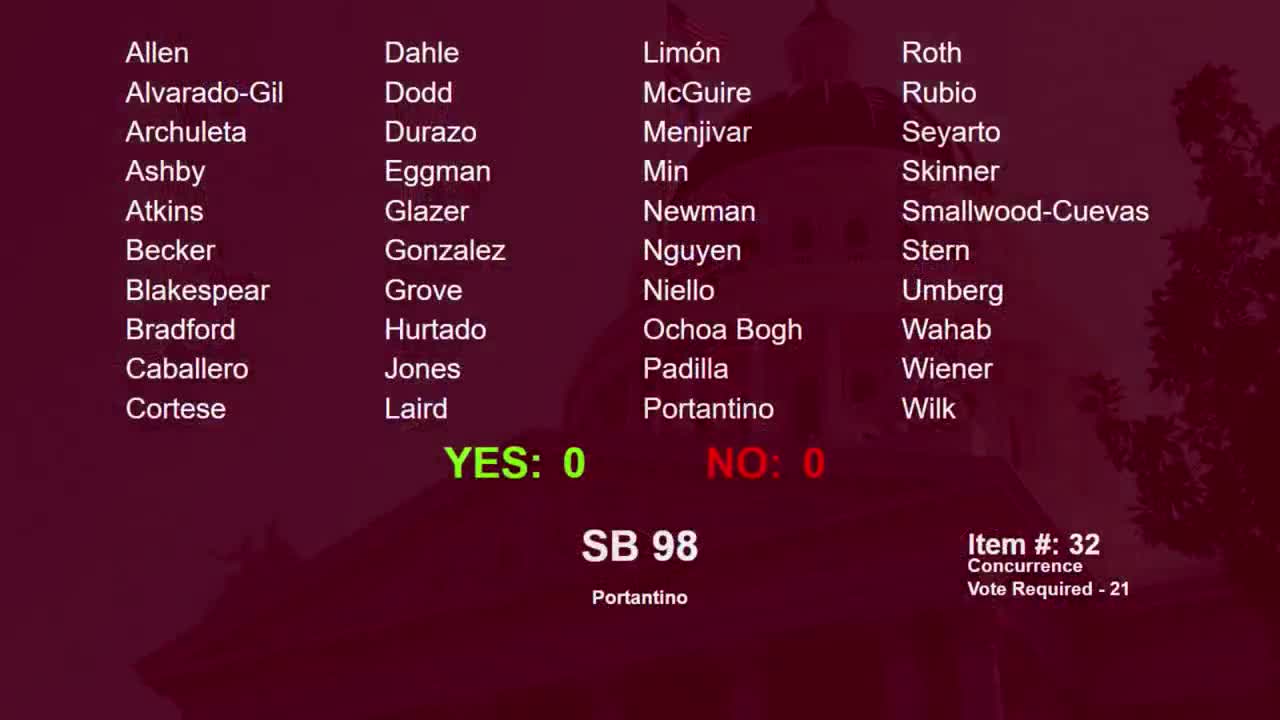 2MIN
Senate Floor
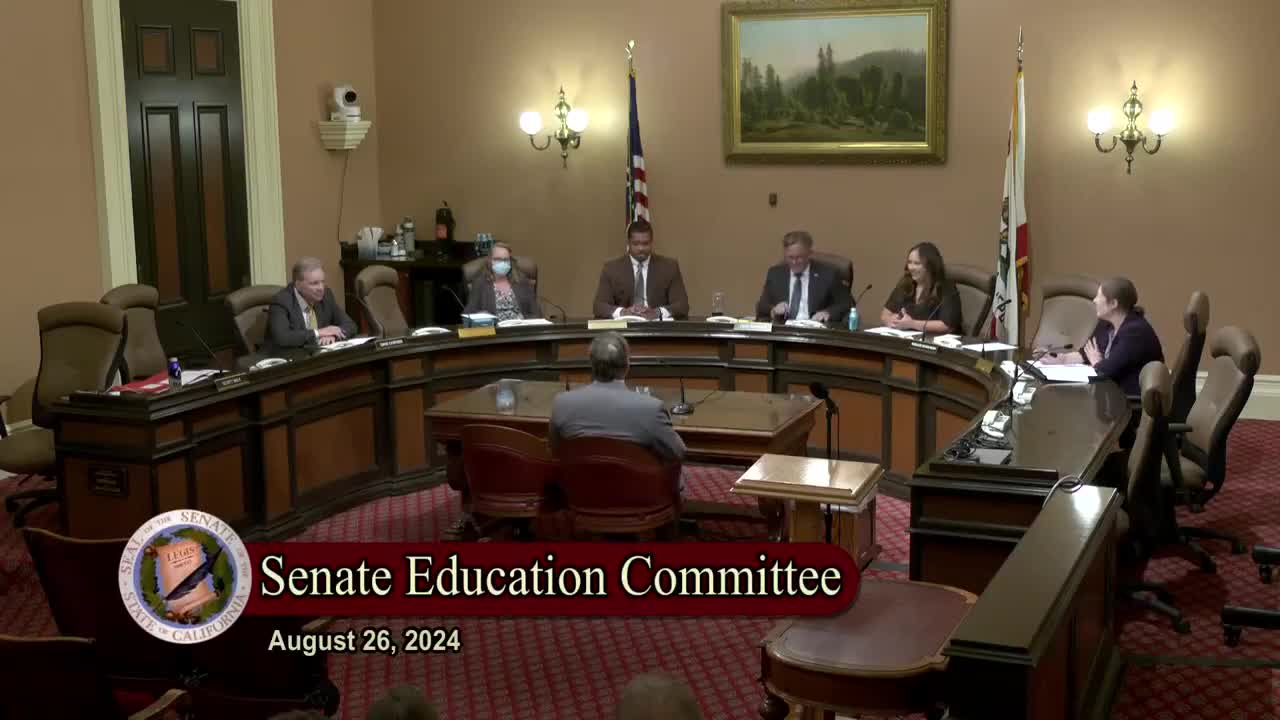 6MIN
Senate Standing Committee on Education
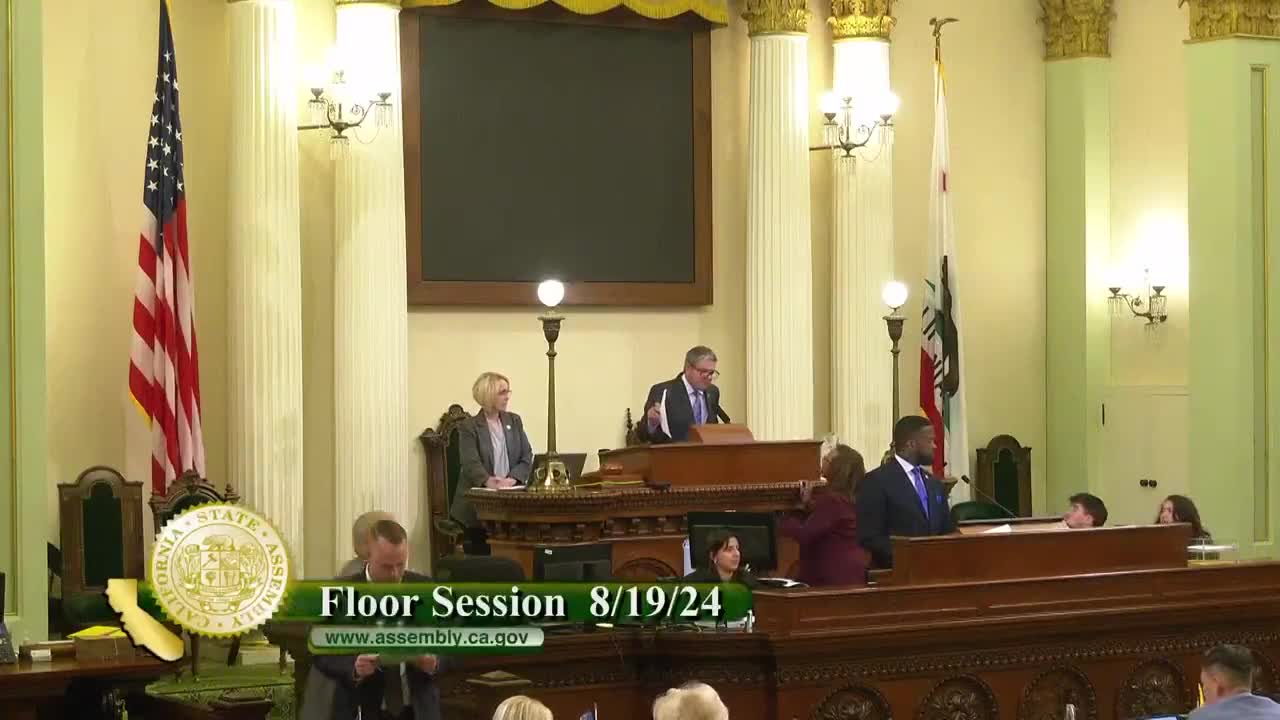 1MIN
Assembly Floor
 3MIN
Assembly Standing Committee on Appropriations
 5MIN
Assembly Standing Committee on Education
 1MIN
Senate Floor
 2MIN
Senate Standing Committee on Education
 1H
Senate Standing Committee on Education
Bill Author

Bill Co-Author(s):