AB 852: Public works: prevailing wages.
- Session Year: 2015-2016
- House: Assembly
- Latest Version Date: 2015-10-10
Existing law defines public works, for the purposes of regulating public works contracts, as, among other things, construction, alteration, demolition, installation, or repair work done under contract and paid for, in whole or in part, out of public funds. Existing law further requires that, except as specified, not less than the general prevailing rate of per diem wages be paid to workers employed on public works and imposes misdemeanor penalties for a willful violation of this requirement.
This bill would expand the definition of public works, for the purposes of provisions relating to the prevailing rate of per diem wages, to also include any construction, alteration, demolition, installation, or repair work done under private contract on a project for a general acute care hospital, except on a project for a rural general acute care hospital with a maximum of 76 beds, when the project is paid for, in whole or in part, with the proceeds of conduit revenue bonds, as defined, that were issued on or after January 1, 2016.
Because the willful violation of prevailing wage requirements when engaged in these public works projects would result in the imposition of misdemeanor penalties, this bill would impose a state-mandated local program.
The California Constitution requires the state to reimburse local agencies and school districts for certain costs mandated by the state. Statutory provisions establish procedures for making that reimbursement.
This bill would provide that no reimbursement is required by this act for a specified reason.
Existing law defines public works, for the purposes of regulating public works contracts, as, among other things, construction, alteration, demolition, installation, or repair work done under contract and paid for, in whole or in part, out of public funds. Existing law further requires that, except as specified, not less than the general prevailing rate of per diem wages be paid to workers employed on public works and imposes misdemeanor penalties for a willful violation of this requirement.
This bill would expand the definition of public works, for the purposes of provisions relating to the prevailing rate of per diem wages, to also include any construction, alteration, demolition, installation, or repair work done under private contract on a project for a general acute care hospital, as defined, except on a project for a rural general acute care hospital with a maximum of 76 beds, when the project is paid for, in whole or in part, with the proceeds of conduit revenue bonds, as defined, that were issued on or after January 1, 2016.
Because the willful violation of prevailing wage requirements when engaged in these public works projects would result in the imposition of misdemeanor penalties, this bill would impose a state-mandated local program.
The California Constitution requires the state to reimburse local agencies and school districts for certain costs mandated by the state. Statutory provisions establish procedures for making that reimbursement.
This bill would provide that no reimbursement is required by this act for a specified reason.
Existing law defines public works, for the purposes of regulating public works contracts, as, among other things, construction, alteration, demolition, installation, or repair work done under contract and paid for, in whole or in part, out of public funds. Existing law further requires that, except as specified, not less than the general prevailing rate of per diem wages be paid to workers employed on public works and imposes misdemeanor penalties for a violation of this requirement.
This bill would expand the definition of public works, for the purposes of provisions relating to the prevailing rate of per diem wages, to also include any construction, alteration, demolition, installation, or repair work done under private contract on a hospital or health care facility project general acute care hospital, as defined, when the project is paid for, in whole or in part, with the proceeds of conduit revenue bonds, as defined, that were issued on or after January 1, 2016.
Because the violation of prevailing wage requirements when engaged in these public works projects would result in the imposition of misdemeanor penalties, this bill would impose a state-mandated local program.
The California Constitution requires the state to reimburse local agencies and school districts for certain costs mandated by the state. Statutory provisions establish procedures for making that reimbursement.
This bill would provide that no reimbursement is required by this act for a specified reason.
Existing law defines public works, for the purposes of regulating public works contracts, as, among other things, construction, alteration, demolition, installation, or repair work done under contract and paid for, in whole or in part, out of public funds. Existing law further requires that, except as specified, not less than the general prevailing rate of per diem wages be paid to workers employed on public works and imposes misdemeanor penalties for a violation of this requirement.
This bill would expand the definition of public works, for the purposes of provisions relating to the prevailing rate of per diem wages, to also include any construction, alteration, demolition, installation, or repair work done under private contract on a hospital or health care facility project when the project is paid for, in whole or in part, with the proceeds of conduit revenue bonds, as defined, that were issued on or after January 1, 2016.
Because the violation of prevailing wage requirements when engaged in these public works projects would result in the imposition of misdemeanor penalties, this bill would impose a state-mandated local program.
The California Constitution requires the state to reimburse local agencies and school districts for certain costs mandated by the state. Statutory provisions establish procedures for making that reimbursement.
This bill would provide that no reimbursement is required by this act for a specified reason.
For the limited purposes of Article 2 (commencing with Section 1770) of this chapter, public works also means any construction, alteration, demolition, installation, or repair work done under private contract on a project for a general acute care hospital, except on a project for a rural general acute care hospital with a maximum of 76 beds, when the project is paid for, in whole or in part, with the proceeds of conduit revenue bonds, as defined in Section 5870 of the Government Code, issued on or after January 1, 2016, by a public agency. For purposes of this section, general acute care hospital and rural general acute care hospital have the same meaning as each term is defined in subdivision (a) of Section 1250 of the Health and Safety Code.
SEC. 2.No reimbursement is required by this act pursuant to Section 6 of Article XIIIB of the California Constitution because the only costs that may be incurred by a local agency or school district will be incurred because this act creates a new crime or infraction, eliminates a crime or infraction, or changes the penalty for a crime or infraction, within the meaning of Section 17556 of the Government Code, or changes the definition of a crime within the meaning of Section 6 of Article XIIIB of the California Constitution.
For the limited purposes of Article 2 (commencing with Section 1770) of this chapter, public works also means any construction, alteration, demolition, installation, or repair work done under private contract on a project for a general acute care hospital hospital, except on a project for a rural general acute care hospital with a maximum of 76 beds, when the project is paid for, in whole or in part, with the proceeds of conduit revenue bonds, as defined in Section 5870 of the Government Code, issued on or after January 1, 2016, by a public agency. For purposes of this section, general acute care hospital has and rural general acute care hospital have the same meaning as each term is defined in subdivision (a) of Section 1250 of the Health and Safety Code.
SEC. 2.No reimbursement is required by this act pursuant to Section 6 of Article XIIIB of the California Constitution because the only costs that may be incurred by a local agency or school district will be incurred because this act creates a new crime or infraction, eliminates a crime or infraction, or changes the penalty for a crime or infraction, within the meaning of Section 17556 of the Government Code, or changes the definition of a crime within the meaning of Section 6 of Article XIIIB of the California Constitution.
For the limited purposes of Article 2 (commencing with Section 1770) of this chapter, public works also means any construction, alteration, demolition, installation, or repair work done under private contract on a hospital or health care facility project general acute care hospital when the project is paid for, in whole or in part, with the proceeds of conduit revenue bonds, as defined in Section 5870 of the Government Code, issued on or after January 1, 2016, by a public agency. For purposes of this section, general acute care hospital has the same meaning as defined in subdivision (a) of Section 1250 of the Health and Safety Code.
SEC. 2.No reimbursement is required by this act pursuant to Section 6 of Article XIIIB of the California Constitution because the only costs that may be incurred by a local agency or school district will be incurred because this act creates a new crime or infraction, eliminates a crime or infraction, or changes the penalty for a crime or infraction, within the meaning of Section 17556 of the Government Code, or changes the definition of a crime within the meaning of Section 6 of Article XIIIB of the California Constitution.
For the limited purposes of Article 2 (commencing with Section 1770) of this chapter, public works also means any construction, alteration, demolition, installation, or repair work done under private contract on a hospital or health care facility project when the project is paid for, in whole or in part, with the proceeds of conduit revenue bonds, as defined in Section 5870 of the Government Code, issued on or after January 1, 2016, by a public agency.
SEC. 2.No reimbursement is required by this act pursuant to Section 6 of Article XIIIB of the California Constitution because the only costs that may be incurred by a local agency or school district will be incurred because this act creates a new crime or infraction, eliminates a crime or infraction, or changes the penalty for a crime or infraction, within the meaning of Section 17556 of the Government Code, or changes the definition of a crime within the meaning of Section 6 of Article XIIIB of the California Constitution.
|
Date
|
Status
|
|---|---|
| Oct 10, 2015 | Chaptered by Secretary of State - Chapter 745, Statutes of 2015. |
| Oct 10, 2015 | Approved by the Governor. |
| Sep 16, 2015 | Enrolled and presented to the Governor at 4 p.m. |
| Sep 4, 2015 | Senate amendments concurred in. To Engrossing and Enrolling. (Ayes 58. Noes 21. Page 2904.). |
| Sep 4, 2015 | Senate amendments concurred in. To Engrossing and Enrolling. (Ayes 58. Noes 21.). |
| Sep 4, 2015 | Senate amendments concurred in. To Engrossing and Enrolling. |
| Sep 2, 2015 | Read third time. Passed. Ordered to the Assembly. (Ayes 27. Noes 13. Page 2432.). |
| Sep 2, 2015 | In Assembly. Concurrence in Senate amendments pending. May be considered on or after September 4 pursuant to Assembly Rule 77. |
| Sep 2, 2015 | Read third time. Passed. Ordered to the Assembly. |
| Aug 31, 2015 | Read second time. Ordered to third reading. |
| Aug 27, 2015 | From committee: Do pass. (Ayes 5. Noes 2.) (August 27). |
| Jul 6, 2015 | In committee: Referred to APPR. suspense file. |
| Jun 25, 2015 | From committee: Do pass and re-refer to Com. on APPR. (Ayes 4. Noes 1.) (June 24). Re-referred to Com. on APPR. |
| Jun 15, 2015 | From committee chair, with author's amendments: Amend, and re-refer to committee. Read second time, amended, and re-referred to Com. on L. & I.R. |
| May 7, 2015 | Referred to Com. on L. & I.R. |
| Apr 27, 2015 | In Senate. Read first time. To Com. on RLS. for assignment. |
| Apr 27, 2015 | Read third time. Passed. Ordered to the Senate. (Ayes 55. Noes 24. Page 1143.) |
| Apr 27, 2015 | Read third time. Passed. Ordered to the Senate. |
| Apr 23, 2015 | Read second time. Ordered to third reading. |
| Apr 22, 2015 | From committee: Do pass. (Ayes 12. Noes 5.) (April 22). |
| Apr 9, 2015 | From committee: Do pass and re-refer to Com. on APPR. (Ayes 5. Noes 2.) (April 8). Re-referred to Com. on APPR. |
| Apr 7, 2015 | Re-referred to Com. on L. & E. |
| Apr 6, 2015 | From committee chair, with author's amendments: Amend, and re-refer to Com. on L. & E. Read second time and amended. |
| Mar 16, 2015 | Referred to Com. on L. & E. |
| Feb 27, 2015 | From printer. May be heard in committee March 29. |
| Feb 26, 2015 | Read first time. To print. |
|
Date
|
Description
|
Location
|
Votes
|
|
|---|---|---|---|---|
| Sep 4, 2015 | AB 852 BURKE Concurrence in Senate Amendments | Assembly Floor |
Passed |
|
| Sep 2, 2015 | Assembly 3rd Reading AB852 Burke By Galgiani | Senate Floor |
Passed |
|
| Aug 27, 2015 | Do pass | Senate Standing Committee on Appropriations |
Passed |
|
| Jul 6, 2015 | Placed on suspense file | Senate Standing Committee on Appropriations |
Passed |
|
| Jun 24, 2015 | Do pass, but first be re-referred to the Committee on [Appropriations] | Senate Standing Committee on Labor and Industrial Relations |
Passed |
|
| Apr 27, 2015 | AB 852 BURKE Assembly Third Reading | Assembly Floor |
Passed |
|
| Apr 22, 2015 | Do pass. | Assembly Standing Committee on Appropriations |
Passed |
|
| Apr 8, 2015 | Do pass and be re-referred to the Committee on [Appropriations] | Assembly Standing Committee on Labor and Employment |
Passed |
This list shows positions taken on this bill by organizations on the date displayed, which is linked to the original source.
Positions by individuals are not included.
AB 852
Page 2
CONCURRENCE IN SENATE AMENDMENTS
AB 852
(Burke)
As Amended June 15, 2015
Majority vote
ASSEMBLY: |
55-24 |
(April 27, 2015) |
SENATE: |
27-13 |
(September 2, 2015) |
Original Committee Reference: L. & E.
SUMMARY: Specifies that "public work" for purposes of prevailing wage law also means any construction, alteration, demolition, installation, or repair work done under private contract on a general acute care hospital when the project is paid for in whole or in part with the proceeds of conduit revenue bonds issued by a public agency.
The Senate amendments provide that this bill does not apply to a project for a rural general acute care hospital with a maximum of 76 beds.
FISCAL EFFECT: According to the Senate Appropriations Committee, this bill would increase workload for the Department of Industrial Relations at a cost of $125,000 in the first year, and $120,000 ongoing (special funds), which could lead to potential General Fund cost pressure. Additionally, this bill could impact revenues to the California Health Facilities Financing Authority (CHFFA).
COMMENTS: Bonds that are issued for the purpose of making loans to entities other than state or local governments are commonly referred to as "conduit bonds" or "conduit issues," and state or local governments which issue these bonds are commonly referred to as "conduit issuers." (Your Responsibilities as a Conduit Issuer of Tax-Exempt Bonds, Publication 5005 (4-2012) Catalog #59471F, Department of the Treasury, Internal Revenue Service). According to the Internal Revenue Service, a conduit issuer in a conduit bond financing typically issues the bonds and loans the bond proceeds to a conduit borrower. A conduit borrower is generally responsible for the payment of debt service on the conduit bond issue and is usually contractually obligated to maintain the tax-exempt status of the bonds.
The author of the measure states that the proposed changes with this bill, would add conduit bond financing to the types of subsidies that trigger prevailing wage coverage, thereby recognizing that public funds (through foregone tax revenues) are being used to subsidize the project.
According to the author, conduit revenue bond financing is a method by which the public subsidizes a private development project. A public entity acts as the "issuer" of the bonds so the interest payments on the bonds will be tax-exempt to the bondholders under the income tax code. Because the bondholders will not be taxed on the interest, they are willing to accept a lower return on their investment, and the cost of borrowing is lower. The bond proceeds are transferred to a private developer, which is responsible for making the payments to the bondholders. The public entity issuing the bonds acts purely as a "conduit" – it does not receive the bond proceeds or pay back the bondholders. But the tax code looks to the form of the transaction, not its substance, so the interest on the bonds is still tax-exempt to the bondholders. The public thereby subsidizes the private development project by foregoing the tax revenues that would otherwise be paid by the bondholders.
According to the author, due to the fact that private entities utilize these bonds to save money in interest payments, it makes sense to ensure that any work being paid for by proceeds from conduit bonds should, at the very least, go towards providing a livable wage for the construction workers building the projects that the bonds fund. Additionally, they argue, the prevailing wage ensures that the most skilled and qualified workers build these complex medical facilities.
According to supporters, this bill will close a loophole in state law by requiring healthcare companies electing to receive tax-exempt conduit bond financing from a public agency to pay construction workers the prevailing wage and therefore attract the most competent and skilled local workforce to build these complex medical facilities.
It is also worth noting that this bill narrows the focus of its predecessor, SB 615 (Galgiani) of 2013, by shifting the focus of the public works from "a hospital or health care facility project" to a general acute care hospital.
Analysis Prepared by: Ben Ebbink / L. & E. / (916) 319-2091 FN: 0001635
AB 852
Page 7
|
Office of Senate Floor Analyses (916) 651-1520 Fax: (916) 327-4478 |
THIRD READING
Bill No: AB 852
Amended: 6/15/15 in Senate
SENATE LABOR & IND. REL. COMMITTEE: 4-1, 6/24/15
AYES: Mendoza, Jackson, Leno, Mitchell
NOES: Stone
SENATE APPROPRIATIONS COMMITTEE: 5-2, 8/27/15
AYES: Lara, Beall, Hill, Leyva, Mendoza
NOES: Bates, Nielsen
ASSEMBLY FLOOR: 55-24, 4/27/15 - See last page for vote
SUBJECT: Public works: prevailing wages
SOURCE: State Building and Construction Trades Council of California
DIGEST: This bill expands the definition of “public works” to also include any construction, alteration, demolition, installation, or repair work done under private contract on a project for a general acute care hospital, as specified, when the project is paid for, in whole or in part, with the proceeds of conduit revenue bonds issued by a public agency on or after January 1, 2016.
Existing law:
Requires that not less than the general prevailing rate of per diem wages, as determined by the director of the Department of Industrial Relations, be paid to all workers employed on a "public works" project costing over $1,000 dollars and imposes misdemeanor penalties for violation of this requirement.
Defines "public work" to include, among other things, construction, alteration, demolition, installation or repair work done under contract and paid for, in whole or in part, out of public funds.
Defines “paid for in whole or in part out of public funds” to include, among other things, fees, costs, rents, insurance or bond premiums, loans, interest rates, or other obligations normally required in the execution of a contract that are paid, reduced, charged at less than fair market value, waived or forgiven by the state or political subdivision.
Exempts from the definition of “paid for in whole or in part out of public funds” specified types of affordable housing, private residential housing, private development projects, qualified residential projects, low income housing projects, state manufacturing tax credits, and single family residential projects.
Defines “conduit revenue bond” as any municipal security the proceeds of which are loaned to any nongovernmental borrower, including, but not limited to, persons, for-profit corporations, nonprofit corporations pursuant to the Internal Revenue Code, partnerships, and other legal entities for purposes that are permitted for qualified private activity bonds under applicable federal law.
Defines “conduit financing provider” as any county, city, city and county, public district, public authority, public corporation, nonprofit corporation, joint powers authority, or other statutorily constituted public entity that issues one or more conduit revenue bonds.
This bill:
Expands the definition of “public works,” for purposes of prevailing wage payment requirements, to also include any construction, alteration, demolition, installation, or repair work done under private contract on a project for a general acute care hospital when the project is paid for, in whole or in part, with the proceeds of conduit revenue bonds issued by a public agency on or after January 1, 2016.
Exempts from its provisions, a project for a rural general acute care hospital with a maximum of 76 beds.
Background
A Brief History of Prevailing Wage Law: Existing law requires that not less than the general prevailing wage rate of per diem wages, as determined by the director of the Department of Industrial Relations (DIR), be paid to all workers employed on a “public works” projects. The prevailing wage rate is the basic hourly rate paid on public works projects to a majority of workers engaged in a particular craft, classification or type of work within the locality and in the nearest labor market area. In general, "public works" is defined to include construction, alteration, demolition, installation or repair work done under contract and "paid for in whole or in part out of public funds." Over a decade ago, there was much administrative and legislative action over what constituted the term "paid for in whole or in part out of public funds." These debates culminated in the enactment of SB 975 (Alarcon, Chapter 938, Statutes of 2001), which codified a definition of "paid for in whole or in part out of public funds" that included certain payments, transfers, credits, reductions, waivers and performances of work. SB 975 also exempted certain affordable housing, residential and private development projects.
Conduit Revenue Bonds: Bonds that are issued for the purpose of making loans to entities other than state or local governments are commonly referred to as “conduit bonds” or “conduit issues,” and state or local governments which issue these bonds are commonly referred to as “conduit issuers.” (Your Responsibilities as a Conduit Issuer of Tax-Exempt Bonds, Publication 5005 (4-2012) Catalog #59471F, Department of the Treasury, Internal Revenue Service) According to the IRS, a conduit issuer in a conduit bond financing typically issues the bonds and loans the bond proceeds to a conduit borrower. A conduit borrower is generally responsible for the payment of debt service on the conduit bond issue and is usually contractually obligated to maintain the tax-exempt status of the bonds.
The California Infrastructure and Economic Development Bank (I-Bank), housed within the CA Business, Transportation and Housing Agency, is the State’s only general purpose financing authority whose mission is to finance public infrastructure and private developments that promote a healthy climate for jobs, contribute to a strong economy and improve the quality of life in California communities. The I-Bank facilitates access to funding from private capital markets through its Conduit Revenue Bond Financing Program, which provides tax-exempt bond funding for eligible economic development facility projects throughout California. The bonds are repaid by the private sector borrower, and are not a debt of the I-Bank or the State of California.
According to the I-Banks annual activity report from fiscal year 2011-2012, I-Bank issued $867,856,500 of conduit revenue bonds for qualified California manufacturing companies, 501(c)(3) nonprofit entities and for other governmental entities to create/retain jobs in the state, to facilitate research and cultural endeavors and for other public purposes.
A Los Angeles Times article from 2011 reported that conduits had grown roughly three times faster than the general municipal market over the last five years, according to data from Thomson Reuters, a New York data firm; $84 billion of these bonds were issued in 2010 alone. (‘Conduit’ muni bond defaults draw scrutiny, June 14, 2011) According to the article, investors don’t have to pay taxes on their interest from municipal bonds, enabling companies to borrow money at lower interest rates than they could get on their own. The article notes that although conduits account for roughly 20% of all municipal bonds, they have been responsible for about 70% of all defaults in the municipal bond market in recent years, according to the Income Securities Advisors, a Florida research firm.
Stated need for the bill: Because these types of public subsidies are not included under the definition of “paid for in whole or in part out of public funds,” they don’t currently trigger the coverage of the prevailing wage law. A couple of determinations by the Department of Industrial Relations (DIR) have addressed this issue finding that conduit bond funded projects are not public work, and therefore not subject to the prevailing wage.
In a 2005 determination [by then acting director of DIR, John Rea] regarding a Rancho Santa Fe Village Senior Affordable Housing Project, the director stated that: “…money collected for, or in the coffers of, a public entity is “public funds” within the meaning of Section 1720 (which defines public works). Here neither the conduit bond revenues nor the loan repayments ever enter the coffers of a public entity, nor are they collected for the public entity. Since none of the money flows into or out of public coffers, the conduit bond financing is not “the payment of money or the equivalent of money by the state or political subdivision…” Rancho Santa Fe Village Senior Affordable Housing Project, PW 2004-16 (Feb. 25, 2005)
The acting director argued that because it assigns all of its rights to a bond trustee, the issuer never has possession of either the bond proceeds or the loan repayments that are made by the borrower directly to the bond trustee. However, the State Building and Construction Trades Council (source of this bill) argued that the use of tax-exempt bond financing constitutes a loan at below-market interest rates and therefore is covered under Labor Code §1720(b)(4). This code section states that “paid for in whole or in part out of public funds” includes “(4) Fees, costs, rents, insurance or bond premiums, loans, interest rates, or other obligations that would normally be required in the execution of the contract, that are paid, reduced, charged at less than fair market value, waived, or forgiven by the state or political subdivision.”
This bill would address this uncertainty regarding conduit revenue bonds being paid for by public funds by specifying that “public work” also means any work done under private contract on a project for a general acute care hospital, except as specified, when the project is paid for, in whole or in part, with the proceeds of conduit revenue bonds issued by a public agency.
Prior Legislation
SB 615 (Galgiani of 2013) was very similar to this bill and would have expanded
the definition of “public works” to include specified work done under private contract on a hospital or health care facility project when the project is paid for in whole or in part with the proceeds of conduit revenue bonds. Unlike this bill, SB 615 did not include an exemption for rural general acute care hospitals of 76 beds or less. SB 615 was vetoed by the Governor.
FISCAL EFFECT: Appropriation: No Fiscal Com.: Yes Local: Yes
According to the Senate Appropriations Committee, this measure would increase the number of public works projects. Consequently, the Department of Industrial Relations (DIR) would likely experience additional workload related to the administration and enforcement of California prevailing wage law. The number of future health facility construction projects subject to this bill is unknown; however, if the additional workload to DIR required a new position, total costs (salary, benefits and equipment expenses) would be $125,000 in the first year, and $120,000 ongoing (special funds).
The Compliance Monitoring Unit (CMU) is the component within DIR that monitors and enforces prevailing wage requirements on public works projects. It is currently funded through a combination of (1) the General Fund, (2) a special fund loan, and (3) a ¼ of one percent surcharge on state issuances of general obligation (GO) bonds. Because this bill concerns conduit revenue bonds, not GO bonds, their issuance will not fund the CMU. Consequently, any increased costs to DIR resulting from the bill could lead to a potential General Fund cost pressure.
Additionally, the bill could impact revenues to the California Health Facilities Financing Authority (CHFFA). Specifically, revenues to CHFFA could be either higher or lower, depending on future CHFFA conduit bond issuance.
State Building and Construction Trades Council of California (source)
California Chapters of the National Electrical Contractors Association
California Conference Board of the Amalgamated Transit Union
California Conference of Machinists
California Labor Federation, AFL-CIO
California Legislative Conference of the Plumbing, Heating and Piping Industry
California Teamsters Public Affairs Council
Construction Employers’ Association
Engineers & Scientists of California
International Longshore & Warehouse Union
Professional & Technical Engineers
UNITE-HERE, AFL-CIO
Union Roofing Contractors Association
United Contractors
Utility Workers Union of America
Wall and Ceiling Alliance
OPPOSITION: (Verified 8/28/15)
None received
ARGUMENTS IN SUPPORT: The author argues that this bill would add
conduit bond financing to the types of subsidies that trigger prevailing wage
coverage, thereby recognizing that public funds (through foregone tax revenues) are being used to subsidize the project. According to supporters, this bill will close a loophole in state law by requiring healthcare companies electing to receive tax-exempt conduit bond financing from a public agency to pay construction workers the prevailing wage and therefore attract the most competent and skilled local workforce to build these complex medical facilities. They argue that because private entities utilize these bonds to save money in interest payments, it makes sense to ensure that any work being paid for by proceeds from conduit bonds should, at the very least, go towards providing a livable wage for the construction workers building the projects that the bonds fund.
ASSEMBLY FLOOR: 55-24, 4/27/15
AYES: Alejo, Bloom, Bonilla, Bonta, Brown, Burke, Calderon, Chau, Chiu, Chu, Cooley, Cooper, Dababneh, Dahle, Daly, Dodd, Eggman, Frazier, Cristina Garcia, Eduardo Garcia, Gatto, Gipson, Gomez, Gonzalez, Gordon, Gray, Roger Hernández, Holden, Irwin, Jones-Sawyer, Levine, Linder, Lopez, Low, McCarty, Medina, Mullin, Nazarian, O'Donnell, Olsen, Perea, Quirk, Rendon, Ridley-Thomas, Rodriguez, Salas, Santiago, Steinorth, Mark Stone, Thurmond, Ting, Weber, Williams, Wood, Atkins
NOES: Achadjian, Travis Allen, Baker, Bigelow, Brough, Chang, Chávez, Beth Gaines, Gallagher, Grove, Hadley, Harper, Jones, Kim, Lackey, Maienschein, Mathis, Mayes, Melendez, Obernolte, Patterson, Wagner, Waldron, Wilk
NO VOTE RECORDED: Campos
Prepared by: Alma Perez / L. & I.R. / (916) 651-1556
8/31/15 16:35:20
**** END ****
AB 852 (Burke) Page 3 of 3
SENATE COMMITTEE ON APPROPRIATIONS
Senator Ricardo Lara, Chair
2015 - 2016 Regular Session
AB 852 (Burke) - Public works: prevailing wages.
|
|
Version: June 15, 2015 |
Policy Vote: L. & I.R. 4 - 1 |
Urgency: No |
Mandate: Yes |
Hearing Date: July 6, 2015 |
Consultant: Robert Ingenito |
This bill may meet the criterial for referral to the Suspense File.
Bill Summary:
AB 852 would define "public work." for purposes of prevailing wage law to also mean any construction, alteration, demolition, installation, or repair work done under private contract on a general acute care hospital when the project is paid for in whole or in part with the proceeds of conduit revenue bonds issued by a public agency. A project for a rural general acute care hospital with a maximum of 76 beds would be exempt from this requirement
Fiscal Impact:
This measure would increase the number of public works projects. Consequently, the Department of Industrial Relations (DIR) would likely experience additional workload related to the administration and enforcement of California prevailing wage law. The number of future health facility construction projects subject to this bill is unknown; however, if the additional workload to DIR required a new position, total costs (salary, benefits and equipment expenses) would be $125,000 in the first year, and $120,000 ongoing (special funds).
The Compliance Monitoring Unit (CMU) is the component within DIR that monitors and enforces prevailing wage requirements on public works projects. It is currently funded through a combination of (1) the General Fund, (2) a special fund loan, and (3) a ¼ of one percent surcharge on state issuances of general obligation (GO) bonds. Because this bill concerns conduit revenue bonds, not GO bonds, their issuance will not fund the CMU. Consequently, any increased costs to DIR resulting from the bill could lead to a potential General Fund cost pressure.
Additionally, the bill could impact revenues to the California Health Facilities Financing Authority (CHFFA). Specifically, revenues to CHFFA could be either higher or lower, depending on future CHFFA conduit bond issuance (see Staff Comment).
Background:
Current law requires that not less than the general prevailing wage rate of per diem wages, as determined by DIR, be paid to all workers employed on a “public works” projects. The prevailing wage rate is the basic hourly rate paid on public works projects to a majority of workers engaged in a particular craft, classification or type of work within the locality and in the nearest labor market area.
In general, "public works" is defined to include construction, alteration, demolition, installation or repair work done under contract and "paid for in whole or in part out of public funds."
The California Health Facilities Financing Authority (CHFFA) was established to help public and non-profit health facilities reduce their cost of capital, and to promote health access, healthcare improvement and cost containment objectives by providing cost-effective tax-exempt bond, low-cost loan, and direct grant programs. CHFFA assists eligible and credit-worthy nonprofit and public health facilities reduce their cost of capital.
Bonds that are issued for the purpose of making loans to entities other than state or local governments are commonly referred to as conduit bonds. A conduit issuer (such as CHFFA) in a conduit bond financing typically issues the bonds and loans the bond proceeds to a conduit borrower. A conduit borrower is generally responsible for the payment of debt service on the conduit bond issue and is usually contractually obligated to maintain the tax-exempt status of the bonds.
Proposed Law:
This bill would expand the definition of “public works,” for purposes of prevailing wage payment requirements, to also include any construction, alteration, demolition, installation, or repair work done under private contract on a project for a general acute care hospital, except on a project for a rural general acute care hospital with a maximum of 76 beds, when the project is paid for, in whole or in part, by using conduit revenue bonds issued by a public agency on or after January 1, 2016.
Related Legislation:
SB 615 (Galgiani) of 2013 was very similar to this bill and would have expanded the definition of “public works” to also include any construction, alteration, demolition, installation, or repair work done under private contract on a hospital or health care facility project when the project is paid for in whole or in part with the proceeds of conduit revenue bonds. The bill was vetoed by the Governor.
Staff Comments:
To the extent that this measure results in additional public works projects, DIR would experience additional workload related to the administration and enforcement of California prevailing wage law. The number of future health facility construction projects subject to this bill is unknown; however, if the additional workload to DIR required a new position, total costs (salary, benefits and equipment expenses) would be in the range of $120,000 to $125,000.
The impact of this bill on CHFFA revenues is unknown. The requirement that hospitals pay prevailing wage on their projects would increase overall construction costs and could lead a borrower to choose other financing options (such as a taxable bond) rather than utilize a conduit issuer so it can avoid the prevailing wage requirement. To the extent that this occurs, CHFFA conduit bond issuance would decline, resulting in a decrease in CHFFA’s revenues (which are derived from the initial and annual fees of hospitals and healthcare facilities seeking tax-exempt financing). Roughly half of CHFFA’s income derives from initial fees paid by borrowers.
Conversely, if a borrower were decide to use conduit bond financing and pay prevailing wage, the conduit bond amount issued could be upsized to pay the higher construction costs that result from the prevailing wage requirement. To the extent that this occurs, revenues to CHFFA would increase.
-- END --
AB 852 (Burke) Page 6 of 6
SENATE COMMITTEE ON LABOR AND INDUSTRIAL RELATIONS
Senator Tony Mendoza, Chair
2015 - 2016 Regular
Bill No: AB 852 Hearing Date: June 24, 2015
Author: |
Burke |
||
Version: |
June 15, 2015 |
||
Urgency: |
No |
Fiscal: |
Yes |
Consultant: |
Alma Perez-Schwab |
||
Subject: Public works: prevailing wages.
KEY ISSUES
Should the Legislature require the payment of prevailing wages for any work done under private contract on a project for a general acute care hospital when the project is paid for, in whole or in part, with the proceeds of conduit revenue bonds?
Should a project for a rural general acute care hospital with a maximum of 76 beds be exempt from this requirement?
ANALYSIS
Existing law requires that workers employed on public works projects in California be paid the applicable prevailing wage, as determined by the director of the Department of Industrial Relations, and that the body awarding a contract for a public works project assure compliance with this requirement.
Among other things, existing law regarding “public works” projects:
Requires that not less than the general prevailing rate of per diem wages be paid to all workers employed on a "public works" project costing over $1,000 dollars and imposes misdemeanor penalties for violation of this requirement. (Labor Code §1771)
Defines "public work" to include, among other things, construction, alteration, demolition, installation or repair work done under contract and paid for, in whole or in part, out of public funds.
Defines “paid for in whole or in part out of public funds” to include, among other things, fees, costs, rents, insurance or bond premiums, loans, interest rates, or other obligations normally required in the execution of a contract that are paid, reduced, charged at less than fair market value, waived or forgiven by the state or political subdivision. (Labor Code §1720)
Exempts from the definition of “paid for in whole or in part out of public funds” specified types of affordable housing, private residential housing, private development projects, qualified residential projects, low income housing projects, state manufacturing tax credits, and single family residential projects.
Existing law, Government Code §5870, provides the following definitions:
“Conduit financing provider” means any county, city, city and county, public district, public authority, public corporation, nonprofit corporation, joint powers authority, or other statutorily constituted public entity that issues one or more conduit revenue bonds.
"Conduit revenue bond" means any municipal security the proceeds of which are loaned to any nongovernmental borrower, including, but not limited to, persons, for-profit corporations, nonprofit corporations pursuant to Section 501(c)(3) of the Internal Revenue Code, partnerships, and other legal entities for purposes that are permitted for qualified private activity bonds under applicable federal law.
This Bill expands the definition of “public works,” for purposes of prevailing wage payment requirements, to also include any construction, alteration, demolition, installation, or repair work done under private contract on a project for a general acute care hospital, except on a project for a rural general acute care hospital with a maximum of 76 beds, when the project is paid for, in whole or in part, with the proceeds of conduit revenue bonds issued by a public agency on or after January 1, 2016.
COMMENTS
1. A Brief History of Prevailing Wage Law:
State prevailing wage laws vary from state to state, but do share a common history that predates federal prevailing wage law. Many of these state laws were enacted as part of Progressive Era reform efforts to improve working conditions at the end of the 19th and the beginning of the 20th centuries. Between 1891 and 1923, seven states adopted prevailing wage laws that required payment of specified hourly wages on government construction projects, the State of Kansas being the first in 1891. Eighteen additional states followed (including California in 1931) and the federal government in adopting prevailing wage laws.
Existing law requires that not less than the general prevailing wage rate of per diem wages, as determined by the director of the Department of Industrial Relations (DIR), be paid to all workers employed on a “public works” projects. The prevailing wage rate is the basic hourly rate paid on public works projects to a majority of workers engaged in a particular craft, classification or type of work within the locality and in the nearest labor market area. The determination of whether a project is deemed to constitute a "public work" is important because the Labor Code requires (except for projects of $1,000 or less) that the "prevailing wage" to be paid to all workers employed on public works projects.
In general, "public works" is defined to include construction, alteration, demolition, installation or repair work done under contract and "paid for in whole or in part out of public funds." Over a decade ago, there was much administrative and legislative action over what constituted the term "paid for in whole or in part out of public funds." These debates culminated in the enactment of SB 975 (Alarcón), Chapter # 938, Statutes of 2001, which codified a definition of "paid for in whole or in part out of public funds" that included certain payments, transfers, credits, reductions, waivers and performances of work. SB 975 also exempted certain affordable housing, residential and private development projects that met specific criteria.
2. Background on Conduit Revenue Bonds:
Bonds that are issued for the purpose of making loans to entities other than state or local governments are commonly referred to as “conduit bonds” or “conduit issues,” and state or local governments which issue these bonds are commonly referred to as “conduit issuers.” (Your Responsibilities as a Conduit Issuer of Tax-Exempt Bonds, Publication 5005 (4-2012) Catalog #59471F, Department of the Treasury, Internal Revenue Service) According to the IRS, a conduit issuer in a conduit bond financing typically issues the bonds and loans the bond proceeds to a conduit borrower. A conduit borrower is generally responsible for the payment of debt service on the conduit bond issue and is usually contractually obligated to maintain the tax-exempt status of the bonds.
The California Infrastructure and Economic Development Bank (I-Bank), housed within the CA Business, Transportation and Housing Agency, is the State’s only general purpose financing authority whose mission is to finance public infrastructure and private development that promote a healthy climate for jobs, contribute to a strong economy and improve the quality of life in California communities. The I-Bank facilitates access to funding from private capital markets through its Conduit Revenue Bond Financing Program, which provides tax-exempt bond funding for eligible economic development facility projects located throughout the State. The bonds are repaid by the private sector borrower, and are not a debt of the I-Bank or the State of California.
According to the I-Banks annual activity report from fiscal year 2011-2012, I-Bank issued $867,856,500 of conduit revenue bonds for qualified California manufacturing companies, 501(c)(3) nonprofit entities and for other governmental entities to create/retain jobs in the state, to facilitate research and cultural endeavors and for other public purposes.
A Los Angeles Times article from 2011 reported that conduits had grown roughly three times faster than the general municipal market over the last five years, according to data from Thomson Reuters, a New York data firm; $84 billion of these bonds were issued in 2010 alone. (‘Conduit’ muni bond defaults draw scrutiny, June 14, 2011) According to the article, investors don’t have to pay taxes on their interest from municipal bonds, enabling companies to borrow money at lower interest rates than they could get on their own. The article notes that although conduits account for roughly 20% of all municipal bonds, they have been responsible for about 70% of all defaults in the municipal bond market in recent years, according to the Income Securities Advisors, a Florida research firm.
3. Need for this bill?
Because these types of public subsidies are not included under the definition of “paid for in whole or in part out of public funds,” they don’t currently trigger the coverage of the prevailing wage law. A couple of determinations by the Department of Industrial Relations (DIR) have addressed this issue finding that conduit bond funded projects are not public work, and therefore not subject to the prevailing wage.
In a 2005 determination [by then acting director of DIR, John Rea] regarding a Rancho Santa Fe Village Senior Affordable Housing Project, the director stated that:
“…money collected for, or in the coffers of, a public entity is “public funds” within the meaning of Section 1720 (which defines public works). Here neither the conduit bond revenues nor the loan repayments ever enter the coffers of a public entity, nor are they collected for the public entity. Since none of the money flows into or out of public coffers, the conduit bond financing
is not “the payment of money or the equivalent of money by the state or political subdivision…”
Rancho Santa Fe Village Senior Affordable Housing Project, PW 2004-16 (Feb. 25, 2005)
The acting director argued that because it assigns all of its rights to a bond trustee, the issuer never has possession of either the bond proceeds or the loan repayments that are made by the borrower directly to the bond trustee. However, the State Building and Construction Trades Council argued that the use of tax-exempt bond financing constitutes a loan at below-market interest rates and therefore is covered under Labor Code §1720(b)(4). This code section states that “paid for in whole or in part out of public funds” includes “(4) Fees, costs, rents, insurance or bond premiums, loans, interest rates, or other obligations that would normally be required in the execution of the contract, that are paid, reduced, charged at less than fair market value, waived, or forgiven by the state or political subdivision.”
This bill would address this uncertainty regarding conduit revenue bonds being paid for by public funds by specifying that “public work” also means any construction, alteration, demolition, installation, or repair work done under private contract on a project for a general acute care hospital, except on a project for a rural general acute care hospital with a maximum of 76 beds, when the project is paid for, in whole or in part, with the proceeds of conduit revenue bonds issued by a public agency.
4. Proponent Arguments:
The author of the measure states that the proposed changes with this bill, would add conduit bond financing to the types of subsidies that trigger prevailing wage coverage, thereby recognizing that public funds (through foregone tax revenues) are being used to subsidize the project. According to supporters, this bill will close a loophole in state law by requiring healthcare companies electing to receive tax-exempt conduit bond financing from a public agency to pay construction workers the prevailing wage and therefore attract the most competent and skilled local workforce to build these complex medical facilities.
According to the author, conduit revenue bond financing is a method by which the public subsidizes a private development project. A public entity acts as the “issuer” of the bonds so the interest payments on the bonds will be tax-exempt to the bondholders under the income tax code. Because the bondholders will not be taxed on the interest, they are willing to accept a lower return on their investment, and the cost of borrowing is lower. The bond proceeds are transferred to a private developer, which is responsible for making the payments to the bondholders. The public entity issuing the bonds acts purely as a “conduit” – it does not receive the bond proceeds or pay back the bondholders. But the tax code looks to the form of the transaction, not its substance, so the interest on the bonds is still tax-exempt to the bondholders. The public thereby subsidizes the private development project by foregoing the tax revenues that would otherwise be paid by the bondholders.
According to the author, due to the fact that private entities utilize these bonds to save money in interest payments, it makes sense to ensure that any work being paid for by proceeds from conduit bonds should, at the very least, go towards providing a livable wage for the construction workers building the projects that the bonds fund. Additionally, they argue, the prevailing wage ensures that the most skilled and qualified workers build these complex medical facilities.
5. Opponent Arguments:
None received.
6. Prior Legislation:
SB 615 (Galgiani) of 2013: Vetoed by the Governor
SB 615 was very similar to this bill and would have expanded the definition of “public works” to also include any construction, alteration, demolition, installation, or repair work done under private contract on a hospital or health care facility project when the project is paid for in whole or in part with the proceeds of conduit revenue bonds. In his veto message, the Governor stated the following:
“While I am staunchly supportive of prevailing wages, and the quality work and good paying jobs that are associated with these wages, I am unable to sign this measure. Applying prevailing wage requirements to healthcare facility projects that receive conduit revenue bond financing would result in unbudgeted state enforcement and investigative costs. Further, the measure fails to define the term ‘health care facilities’ which could result in many more projects being subject to this measure than intended.”
SB 975 (Alarcon) of 2001: Chaptered
This bill declared legislative intent that projects financed through Industrial Development Bonds issued by the California Infrastructure and Economic Development Bank must comply with existing laws pertaining to prevailing wages. Additionally, the bill established a definition for “public funds” and included “installation” in the existing definition of “public works.”
SUPPORT
State Building and Construction Trades Council of California (Sponsor)
California Chapters of the National Electrical Contractors Association
California Conference Board of the Amalgamated Transit Union
California Conference of Machinists
California Labor Federation, AFL-CIO
California Legislative Conference of the Plumbing, Heating and Piping Industry
California Teamsters Public Affairs Council
Construction Employers’ Association
Engineers & Scientists of California
International Longshore & Warehouse Union
Professional & Technical Engineers
UNITE-HERE, AFL-CIO
Union Roofing Contractors Association
United Contractors
Utility Workers Union of America
Wall and Ceiling Alliance
OPPOSITION
None received
-- END –
AB 852
Page 2
ASSEMBLY THIRD READING
AB 852
(Burke)
As Amended April 6, 2015
Majority vote
Committee |
Votes |
Ayes |
Noes |
Labor |
5-2 |
Roger Hernández, Chu, Low, McCarty, Thurmond |
Harper, Patterson |
Appropriations |
12-5 |
Gomez, Bloom, Bonta, Calderon, Daly, Eggman, Eduardo Garcia, Holden, Quirk, Rendon, Weber, Wood |
Bigelow, Chang, Gallagher, Jones, Wagner |
SUMMARY: Specifies that "public work" for purposes of prevailing wage law also means any construction, alteration, demolition, installation, or repair work done under private contract on a general acute care hospital when the project is paid for in whole or in part with the proceeds of conduit revenue bonds issued by a public agency. For purposes of this section, "general acute hospital" has the same meaning as in Health and Safety Code Section 1250 (a).
EXISTING LAW:
Defines "conduit revenue bond" to mean any municipal security the proceeds of which are loaned to any nongovernmental borrower, including, but not limited to, persons, for-profit corporations, nonprofit corporations pursuant to Internal Revenue Code Section 501(c)(3), partnerships, and other legal entities for purposes that are permitted for qualified private activity bonds under applicable federal law.
Defines "conduit financing provider" to mean any county, city, city and county, public district, public authority, public corporation, nonprofit corporation, joint powers authority, or other statutorily constituted public entity that issues one or more conduit revenue bonds.
FISCAL EFFECT: According to the Assembly Appropriations Committee, this bill will result in approximately $120,000 to $125,000 (special funds) for the Department of Industrial Relations Compliance Monitoring Unit.
COMMENTS: Bonds that are issued for the purpose of making loans to entities other than state or local governments are commonly referred to as "conduit bonds" or "conduit issues," and state or local governments which issue these bonds are commonly referred to as "conduit issuers." (Your Responsibilities as a Conduit Issuer of Tax-Exempt Bonds, Publication 5005 (4-2012) Catalog #59471F, Department of the Treasury, Internal Revenue Service) According to the Internal Revenue Service, a conduit issuer in a conduit bond financing typically issues the bonds and loans the bond proceeds to a conduit borrower. A conduit borrower is generally responsible for the payment of debt service on the conduit bond issue and is usually contractually obligated to maintain the tax-exempt status of the bonds.
The author of the measure states that the proposed changes with this bill, would add conduit bond financing to the types of subsidies that trigger prevailing wage coverage, thereby recognizing that public funds (through foregone tax revenues) are being used to subsidize the project.
According to the author, conduit revenue bond financing is a method by which the public subsidizes a private development project. A public entity acts as the "issuer" of the bonds so the interest payments on the bonds will be tax-exempt to the bondholders under the income tax code. Because the bondholders will not be taxed on the interest, they are willing to accept a lower return on their investment, and the cost of borrowing is lower. The bond proceeds are transferred to a private developer, which is responsible for making the payments to the bondholders. The public entity issuing the bonds acts purely as a "conduit" – it does not receive the bond proceeds or pay back the bondholders. But the tax code looks to the form of the transaction, not its substance, so the interest on the bonds is still tax-exempt to the bondholders. The public thereby subsidizes the private development project by foregoing the tax revenues that would otherwise be paid by the bondholders.
According to the author, due to the fact that private entities utilize these bonds to save money in interest payments, it makes sense to ensure that any work being paid for by proceeds from conduit bonds should, at the very least, go towards providing a livable wage for the construction workers building the projects that the bonds fund. Additionally, they argue, the prevailing wage ensures that the most skilled and qualified workers build these complex medical facilities.
According to supporters, this bill will close a loophole in state law by requiring healthcare companies electing to receive tax-exempt conduit bond financing from a public agency to pay construction workers the prevailing wage and therefore attract the most competent and skilled local workforce to build these complex medical facilities.
It is also worth noting that this bill narrows the focus of its predecessor, SB 615 (Galgiani) of 2013, by shifting the focus of the public works from "a hospital or health care facility project" to a general acute care hospital.
Analysis Prepared by: Ben Ebbink / L. & E. / (916) 319-2091 FN: 0000180
AB 852
Page 3
Date of Hearing: April 22, 2015
ASSEMBLY COMMITTEE ON APPROPRIATIONS
Jimmy Gomez, Chair
AB 852
(Burke) – As Amended April 6, 2015
Policy Committee: |
Labor and Employment |
Vote: |
5 - 2 |
|
|
|
|
|
|
|
|
Urgency: No State Mandated Local Program: Yes Reimbursable: No
SUMMARY: This bill defines "public work." for purposes of prevailing wage law to also mean any construction, alteration, demolition, installation, or repair work done under private contract on a general acute care hospital when the project is paid for in whole or in part with the proceeds of conduit revenue bonds issued by a public agency. For purposes of this section, “general acute hospital” has the same meaning as defined in the Health and Safety Code.
FISCAL EFFECT:
Approximately $120,000 to $125,000 (special funds) for the Department of Industrial Relations (DIR) Compliance Monitoring Unit (CMU) to monitor and enforce the prevailing wage requirements of this measure.
To the extent this measure results in additional public works projects, the Department of Industrial Relations (DIR) would experience additional workload related to the administration and enforcement of California prevailing wage law. The number of future health facility construction projects subject to this bill is unknown; however, if the additional workload to DIR required a new position, total costs (salary, benefits and equipment expenses) would be in the range of $120,000 to $125,000.
The CMU is the component within DIR that monitors and enforces prevailing wage requirements on public works projects. This unit is funded through contractor registration fees submitted to the newly created State Public Works Enforcement Fund, authorized through the 2014 Budget Act.
Expanding the definition of public works would likely result in increased costs for general acute care hospital projects that currently utilize conduit bond financing.
COMMENTS:
Background. Prevailing wage laws are generally meant to ensure that wages commonly paid to construction workers in a particular region will determine the minimum wage paid to the same type of workers employed on publicly funded construction projects. Existing law requires prevailing wage to be paid to all workers on public works projects (except for projects of $1,000 or less). In general, "public works" is defined to include construction, alteration, demolition, installation or repair work done under contract and "paid for in whole or in part out of public funds."
Bonds that are issued for the purpose of making loans to entities other than state or local governments are commonly referred to as conduit bonds. The public entity issuing the bond acts solely as a "conduit" and does not receive any bond proceeds. The bond proceeds are transferred to a private developer, who is responsible for making the payments to the bondholders. Because the interest is tax-exempt to the bondholders, they are willing to accept a lower return on their investment, and, therefore, the cost of borrowing for the developer is lower.
Many types of governmental agencies can issue conduit revenue bonds, including state financing authorities, chartered cities, counties, and joint powers of authorities. The California Health Facilities Financing Authority (CHFFA), established in 1979, serves as the conduit issuer for public and non-profit health care providers in the state. The authority provides financing assistance to a number of entities, including rural community-based organizations and large multi-hospital systems. CHFFA collects reimbursements for assisting entities in the issuance of bonds.
Purpose. Existing law related to the definition of a public works project, and whether or not a conduit revenue bond meets the definition of "paid for in whole or in part out of public funds," has been the basis for DIR determining projects funded via this financing mechanism are not "public works" projects, and therefore, are not subject to prevailing wage statutes. For example, in 2005 DIR determined an affordable housing project in Rancho Santa Fe financed under a conduit revenue bond is not subject to prevailing wage laws because it is not a public works project. Specifically, DIR states: "…money collected for, or in the coffers of, a public entity is 'public funds' within the meaning of [state law referenced above.] Here neither the conduit bond revenues nor the loan repayments ever enter the coffers of a public entity, nor are they collected for the public entity. Since none of the money flows into or out of the public coffers, the conduit bond financing is not 'the payment of money in the equivalent of money by the state or political subdivision within the meaning of [state law referenced above]."
The State Building and Construction Trades Council are sponsoring this bill to add conduit bond financing to the types of subsidies that trigger prevailing wage coverage, thereby recognizing that public funds (through foregone tax revenues) are being used to subsidize the project.
Prior Legislation. SB 615 (Galgiani) of 2013 proposed to expand the definition of “public works,” for the purposes of prevailing wage payment requirements, to also include any construction, alteration, demolition, installation, or repair work done under private contract on a hospital or health care facility project when the project is paid for, in whole or in part, with the proceeds of conduit revenue bonds. This bill was vetoed by Governor Brown, the veto message reads as follows:
"While I am staunchly supportive of prevailing wages, and the
quality work and good paying jobs that are associated with these
wages, I am unable to sign this measure.
Applying
prevailing wage requirements to healthcare facility projects that
receive conduit revenue bond financing would result in unbudgeted
state enforcement and investigative costs.
Further, the
measure fails to define the term 'health care facilities' which could
result in many more projects being subject to this measure than
intended."
This bill differs from SB 615 in that applies to a "general acute care hospital" rather a hospital or health care facility project generally.
Analysis Prepared by: Misty Feusahrens / APPR. / (916) 319-2081
AB 852
Page 5
Date of Hearing: April 8, 2015
ASSEMBLY COMMITTEE ON LABOR AND EMPLOYMENT
Roger Hernández, Chair
AB 852
(Burke) – As Amended April 6, 2015
SUBJECT: Public works: prevailing wages
SUMMARY: Specifies that "public work" for purposes of prevailing wage law also means any construction, alteration, demolition, installation, or repair work done under private contract on a general acute care hospital when the project is paid for in whole or in part with the proceeds of conduit revenue bonds issued by a public agency. For purposes of this section, “general acute hospital” has the same meaning as in subdivision (a) of Section 1250 of the Health and Safety Code.
EXISTING LAW:
Defines "conduit revenue bond" to mean any municipal security the proceeds of which are loaned to any nongovernmental borrower, including, but not limited to, persons, for-profit corporations, nonprofit corporations pursuant to Section 501(c)(3) of the Internal Revenue Code, partnerships, and other legal entities for purposes that are permitted for qualified private activity bonds under applicable federal law.
Defines "conduit financing provider” to mean any county, city, city and county, public district, public authority, public corporation, nonprofit corporation, joint powers authority, or other statutorily constituted public entity that issues one or more conduit revenue bonds.
FISCAL EFFECT: Unknown
COMMENTS:
A Brief History of State and Federal Prevailing Wage Law
State prevailing wage laws vary from state to state, but do share a common history that actually predates federal prevailing wage law. Many of these state laws were enacted as part of general reform efforts to improve working conditions at the end of the 19th and the beginning of the 20th centuries. Between 1891 and 1923, seven states adopted prevailing wage laws that required payment of specified hourly wages on government construction projects. The State of Kansas enacted the first prevailing wage law in 1891.
Eighteen additional states and the federal government adopted prevailing wage laws during the Great Depression of the 1930s amidst concern that acceptance of the low bid, a common requirement of government contracting for public projects when government had become the major purchaser of construction, would operate to reduce the wages paid to workers on those projects to a level that would disrupt the local economy.
California's prevailing was law was enacted in 1931.
In general, the proponents of prevailing wage legislation wanted to prevent the government from using its purchasing power to undermine the wages of its citizens. It was believed that the government should set an example, by paying the wages prevailing in a locality for each occupation hired by government contractors to build public projects. Thus, prevailing wage laws are generally meant to ensure that wages commonly paid to construction workers in a particular region will determine the minimum wage paid to the same type of workers employed on publicly funded construction projects.
Most public construction projects contracted for or by the federal government or the District of Columbia are covered by the federal prevailing wage law, the Davis-Bacon Act (Act), while 33 states have prevailing wage laws, often referred to as “little Davis-Bacon Acts,” that encompass projects financed by states and their political subdivisions.
The federal Davis-Bacon Act was enacted by Congress in 1931. The Act requires workers employed under public construction contracts of the federal government in excess of $2,000 to be paid a minimum wage that the United States Department of Labor determines to be prevailing for corresponding classes of workers. In addition, sixty separate federal laws currently specify the payment of Davis- Bacon wages for work prescribed.
The federal government also has two additional prevailing wage laws – the Walsh-Healy Public Contracts Act of 1935 (which covers federal contractors in manufacturing and supply industries), and the O'Hara-McNamara Services Act of 1965 (which covers service contracts).
The United States Supreme Court has stated the public policy underlying the Davis-
Bacon Act as one of:
“protecting local wage standards by preventing contractors from basing their bids on wages lower than those prevailing in the area . . . [and] giving local labor and the local contractor a fair opportunity to participate in this building program.” Universities Research Ass'n. v. Coutu (1981) 450 U.S. 754, 773-774).
General Background on "Public Works" Under California Law
In general, "public works" is defined to include construction, alteration, demolition, installation or repair work done under contract and "paid for in whole or in part out of public funds."
Over a decade ago, there was much administrative and legislative action over what constituted the term "paid for in whole or in part out of public funds." This action culminated in the enactment of SB 975 (Alarcón), Chapter # 938, Statutes of 2001, which codified a definition of "paid for in whole or in part out of public funds" that included certain payments, transfers, credits, reductions, waivers and performances of work. At the time, supporters of SB 975 stated that it established a definition that conformed to several precedential coverage decisions made by the Department of Industrial Relations (DIR).
These coverage decisions defined payment by land, reimbursement plans, installation, grants, waiver of fees, and other types of public subsidy as public funds for purposes of prevailing wage law. According to the sponsors, SB 975 was intended to remove ambiguity regarding the definition of public subsidy of development projects.
SB 975 also exempted certain affordable housing, residential and private development projects that met certain criteria.
Follow-up legislation, SB 972 (Costa), Chapter 1048, Statutes of 2002, was intended to clarify the application of SB 975 and was the result of extensive discussions between the State Building and Construction Trades Council (sponsor of SB 975), affordable housing advocates, and the Davis Administration. Supporters of SB 972 contended that the original legislation had unintended consequences for self-help housing and housing rehabilitation projects. As a result of that compromise, SB 972 exempted from public works requirements the construction or rehabilitation of privately-owned residential projects that met certain criteria.
Why It Matters: "Prevailing Wage"
The determination of whether a project is deemed to constitute a "public work" is important because the Labor Code requires (except for projects of $1,000 or less) that the "prevailing wage" to be paid to all workers employed on public works projects.
Background on Conduit Revenue Bonds
Bonds that are issued for the purpose of making loans to entities other than state or local governments are commonly referred to as “conduit bonds” or “conduit issues,” and state or local governments which issue these bonds are commonly referred to as “conduit issuers.” (Your Responsibilities as a Conduit Issuer of Tax-Exempt Bonds, Publication 5005 (4-2012) Catalog #59471F, Department of the Treasury, Internal Revenue Service) According to the IRS, a conduit issuer in a conduit bond financing typically issues the bonds and loans the bond proceeds to a conduit borrower. A conduit borrower is generally responsible for the payment of debt service on the conduit bond issue and is usually contractually obligated to maintain the tax-exempt status of the bonds.
A Los Angeles Times article from 2011 reported that conduits had grown roughly three times faster than the general municipal market over the last five years, according to data from Thomson Reuters, a New York data firm; $84 billion of these bonds were issued in 2010 alone. (‘Conduit’ muni bond defaults draws scrutiny, June 14, 2011) According to the article, investors don’t have to pay taxes on their interest from municipal bonds, enabling companies to borrow money at lower interest rates than they could get on their own. The article notes that although conduits account for roughly 20 percent of all municipal bonds, they have been responsible for about 70 percent of all defaults in the municipal bond market in recent years, according to the Income Securities Advisors, a Florida research firm.
Because these types of public subsidies are arguably not included under the definition of “paid for in whole or in part out of public funds,” they don’t currently trigger the coverage of the prevailing wage law. Several determinations by DIR have addressed this issue finding that conduit bond funded projects are not public works, and therefore not subject to the prevailing wage.
For example, in a 2005 determination regarding a Rancho Santa Fe Village Senior Affordable Housing Project, the director stated that:
“…money collected for, or in the coffers of, a public entity is “public funds” within the meaning of Section 1720 (which defines public works). Here neither the conduit bond revenues nor the loan repayments ever enter thecoffers of a public entity, nor are they collected for the public entity. Since none of the money flows into or out of public coffers, the conduit bond financing is not “the payment of money or the equivalent of money by the state or political subdivision…”
Rancho Santa Fe Village Senior Affordable Housing Project, PW 2004-16 (Feb. 25, 2005)
The acting director argued that because it assigns all of its rights to a bond trustee, the issuer never has possession of either the bond proceeds or the loan repayments that are made by the borrower directly to the bond trustee. However, the State Building and Construction Trades Council argued that the use of tax-exempt bond financing constitutes a loan at below-market interest rates and therefore is covered under Labor Code §1720(b)(4). This code section states that “paid for in whole or in part out of public funds” includes “(4) Fees, costs, rents, insurance or bond premiums, loans, interest rates, or other obligations that would normally be required in the execution of the contract, that are paid, reduced, charged at less than fair market value, waived, or forgiven by the state or political subdivision.”
This bill would address this uncertainty regarding conduit revenue bonds being paid for by public funds by specifying that “public work” also means any construction, alteration, demolition, installation, or repair work done under private contract on a general acute care hospital project when the project is “paid for in whole or in part” with the proceeds of conduit revenue bonds issued by a public agency.
ARGUMENTS IN SUPPORT:
The author of the measure states that the proposed changes with this bill, would add conduit bond financing to the types of subsidies that trigger prevailing wage coverage, thereby recognizing that public funds (through foregone tax revenues) are being used to subsidize the project.
According to the author, conduit revenue bond financing is a method by which the public subsidizes a private development project. A public entity acts as the “issuer” of the bonds so the interest payments on the bonds will be tax-exempt to the bondholders under the income tax code. Because the bondholders will not be taxed on the interest, they are willing to accept a lower return on their investment, and the cost of borrowing is lower. The bond proceeds are transferred to a private developer, which is responsible for making the payments to the bondholders. The public entity issuing the bonds acts purely as a “conduit” – it does not receive the bond proceeds or pay back the bondholders. But the tax code looks to the form of the transaction, not its substance, so the interest on the bonds is still tax-exempt to the bondholders. The public thereby subsidizes the private development project by foregoing the tax revenues that would otherwise be paid by the bondholders.
According to the author, due to the fact that private entities utilize these bonds to save money in interest payments, it makes sense to ensure that any work being paid for by proceeds from conduit bonds should, at the very least, go towards providing a livable wage for the construction workers building the projects that the bonds fund. Additionally, they argue, the prevailing wage ensures that the most skilled and qualified workers build these complex medical facilities.
According to supporters, this bill will close a loophole in state law by requiring healthcare companies electing to receive tax-exempt conduit bond financing from a public agency to pay construction workers the prevailing wage and therefore attract the most competent and skilled local workforce to build these complex medical facilities.
It is also worth noting that this bill narrows the focus of its predecessor, SB 615, by shifting the focus of the public works from “a hospital or health care facility project” to a general acute care hospital.
REGISTERED SUPPORT / OPPOSITION:
Support
CA Chapters of the National Electrical Contractors Association
CA Conference Board of the Amalgamated Transit Union
CA Conference of Machinists
CA Legislative Conference of the Plumbing, Heating and Piping Industry United Contractors
California Teamsters Public Affairs Council
Construction Employers' Association
Engineers & Scientists of California
International Longshore & Warehouse Union
Professional & Technical Engineers
Southern California Contractors Association
State Building and Construction Trades Council (Sponsor)
Union Roofing Contractors Association
UNITE-HERE
Utility Workers Union of America
Opposition
None on file.
Analysis Prepared by: Christopher Martin/ Ben Ebbink / L. & E. / (916) 319-2091
Discussed in Hearing
 39SEC
Assembly Floor
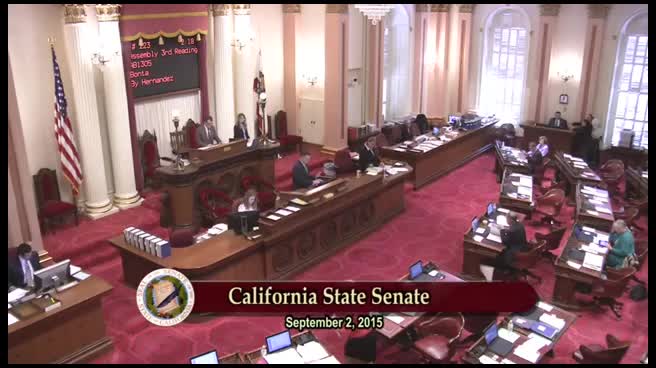 4MIN
Senate Floor
 2MIN
Senate Standing Committee on Appropriations
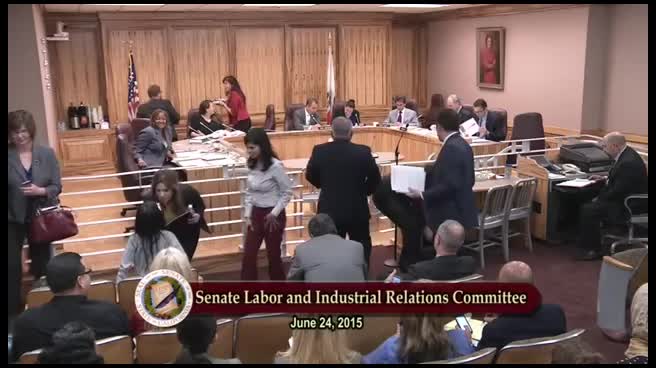 5MIN
Senate Standing Committee on Labor and Industrial Relations
 4MIN
Assembly Floor
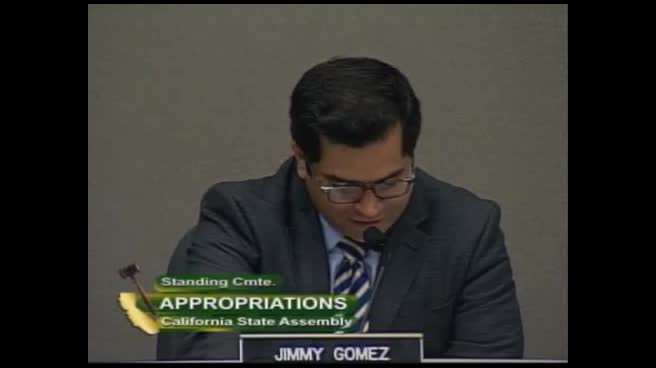 3MIN
Assembly Standing Committee on Appropriations
 5MIN
Assembly Standing Committee on Labor and Employment
Bill Author




