SB 768: California Environmental Quality Act: Department of Housing and Community Development: vehicle miles traveled: study.
- Session Year: 2023-2024
- House: Senate
- Latest Version Date: 2024-09-27
Current Status:
Passed
(2024-09-27: Chaptered by Secretary of State. Chapter 773, Statutes of 2024.)
Introduced
In Committee
First Chamber
In Committee
Second Chamber
Enacted
The California Environmental Quality Act (CEQA) requires a lead agency, as defined, to prepare, or cause to be prepared, and certify the completion of an environmental impact report on a project that it proposes to carry out or approve that may have a significant effect on the environment or to adopt a negative declaration if it finds that the project will not have that effect. CEQA also requires a lead agency to prepare a mitigated negative declaration for a project that may have a significant effect on the environment if revisions in the project would avoid or mitigate that effect and there is no substantial evidence that the project, as revised, would have a significant effect on the environment.
Existing law requires the Office of Planning and Research to prepare, develop, and transmit to the Secretary of the Natural Resources Agency for certification and adoption proposed revisions to guidelines establishing criteria, for purposes of CEQA, for determining the significance of transportation impacts of projects within transit priority areas to promote the reduction of greenhouse gas emissions, the development of multimodal transportation networks, and a diversity of land uses.
Existing law establishes the Department of Housing and Community Development in the Business, Consumer Services, and Housing Agency and makes the department responsible for administering various housing programs throughout the state.
This bill would require the department, in consultation with local governments and other interested parties, as specified, by January 1, 2028, and subject to an appropriation by the Legislature for this purpose, to conduct and post on its internet website a study on how vehicle miles traveled is used as a metric for measuring transportation impacts of housing projects pursuant to CEQA. The bill would require the study to include, among other things, an analysis of the differences in the availability and feasibility of mitigation measures to housing projects for vehicle miles traveled in rural, suburban, urban, and low vehicle miles traveled areas. The bill would repeal those provisions on January 1, 2029.
The California Environmental Quality Act (CEQA) requires a lead agency, as defined, to prepare, or cause to be prepared, and certify the completion of an environmental impact report (EIR) on a project that it proposes to carry out or approve that may have a significant effect on the environment or to adopt a negative declaration if it finds that the project will not have that effect. CEQA also requires a lead agency to prepare a mitigated negative declaration for a project that may have a significant effect on the environment if revisions in the project would avoid or mitigate that effect and there is no substantial evidence that the project, as revised, would have a significant effect on the environment.
Existing law requires the Office of Planning and Research to prepare, develop, and transmit to the Secretary of the Natural Resources Agency for certification and adoption proposed revisions to guidelines establishing criteria, for purposes of CEQA, for determining the significance of transportation impacts of projects within transit priority areas to promote the reduction of greenhouse gas emissions, the development of multimodal transportation networks, and a diversity of land uses.
Existing law establishes the Transportation Agency in state government with various duties and responsibilities. The agency is under the supervision of the Secretary of Transportation, who has the power of general supervision over specified departments and offices, including the Department of Transportation.Existing law establishes the Department of Housing and Community Development in the Business, Consumer Services, and Housing Agency and makes the department responsible for administering various housing programs throughout the state.
This bill would require the Transportation Agency, department, in consultation with local governments and other interested parties, as specified, by January 1, 2028, and subject to an appropriation by the Legislature for this purpose, to conduct and post on its internet website a study on how vehicle miles traveled is used as a metric for measuring transportation impacts of housing projects pursuant to CEQA. The bill would require the study to include, among other things, an analysis of the differences in the availability and feasibility of mitigation measures to housing projects for vehicle miles traveled in rural, suburban, urban, and low vehicle miles traveled areas. The bill would repeal those provisions on January 1, 2029.
The California Environmental Quality Act (CEQA) requires a lead agency, as defined, to prepare, or cause to be prepared, and certify the completion of an environmental impact report (EIR) on a project that it proposes to carry out or approve that may have a significant effect on the environment or to adopt a negative declaration if it finds that the project will not have that effect. CEQA also requires a lead agency to prepare a mitigated negative declaration for a project that may have a significant effect on the environment if revisions in the project would avoid or mitigate that effect and there is no substantial evidence that the project, as revised, would have a significant effect on the environment.
Existing law requires the Office of Planning and Research to prepare, develop, and transmit to the Secretary of the Natural Resources Agency for certification and adoption proposed revisions to guidelines establishing criteria criteria, for purposes of CEQA, for determining the significance of transportation impacts of projects within transit priority areas to promote the reduction of greenhouse gas emissions, the development of multimodal transportation networks, and a diversity of land uses.
Existing law establishes the Transportation Agency in state government with various duties and responsibilities. The agency is under the supervision of the Secretary of Transportation, who has the power of general supervision over specified departments and offices, including the Department of Transportation.
This bill would require the Transportation Agency, in consultation with local governments and other interested parties, as specified, by January 1, 2028, and subject to an appropriation by the Legislature for this purpose, to conduct and post on its internet website a study on how vehicle miles traveled is used as a metric for measuring transportation impacts pursuant to CEQA. The bill would require the study to include, among other things, an analysis of the differences in the availability and feasibility of mitigation measures for vehicle miles traveled in rural, suburban, and urban urban, and low vehicle miles traveled areas. The bill would repeal those provisions on January 1, 2029.
The California Environmental Quality Act (CEQA) requires a lead agency, as defined, to prepare, or cause to be prepared, and certify the completion of an environmental impact report (EIR) on a project that it proposes to carry out or approve that may have a significant effect on the environment or to adopt a negative declaration if it finds that the project will not have that effect. CEQA also requires a lead agency to prepare a mitigated negative declaration for a project that may have a significant effect on the environment if revisions in the project would avoid or mitigate that effect and there is no substantial evidence that the project, as revised, would have a significant effect on the environment.
Existing law requires the Office of Planning and Research to prepare, develop, and transmit to the Secretary of the Natural Resources Agency for certification and adoption proposed revisions to guidelines establishing criteria for determining the significance of transportation impacts of projects within transit priority areas to promote the reduction of greenhouse gas emissions, the development of multimodal transportation networks, and a diversity of land uses.
Existing law establishes the Transportation Agency in state government with various duties and responsibilities. The agency is under the supervision of the Secretary of Transportation, who has the power of general supervision over specified departments and offices, including the Department of Transportation.
Existing law creates the State Air Resources Board as the state agency charged with coordinating efforts to attain and maintain ambient air quality standards, to conduct research into the causes of and solution to air pollution, and to systematically attack the serious problem caused by motor vehicles, which is the major source of air pollution in many areas of the state. Existing law authorizes the state board to do those acts as may be necessary for the proper execution of the powers and duties granted to, and imposed upon, the state board.This bill would require the state board, Transportation Agency, in consultation with local governments and other interested parties, as specified, by January 1, 2026, 2028, and subject to an appropriation by the Legislature for this purpose, to conduct and submit to the Legislature post on its internet website a study on how vehicle miles traveled is used as a metric for measuring transportation impacts pursuant to CEQA, as specified. CEQA. The bill would require the study to include, among other things, an analysis of the differences in the availability and feasibility of mitigation measures for vehicle miles traveled in rural, suburban, and urban areas. The bill would repeal those provisions on January 1, 2029.
The California Environmental Quality Act (CEQA) requires a lead agency, as defined, to prepare, or cause to be prepared, and certify the completion of an environmental impact report (EIR) on a project that it proposes to carry out or approve that may have a significant effect on the environment or to adopt a negative declaration if it finds that the project will not have that effect. CEQA also requires a lead agency to prepare a mitigated negative declaration for a project that may have a significant effect on the environment if revisions in the project would avoid or mitigate that effect and there is no substantial evidence that the project, as revised, would have a significant effect on the environment.
Existing law requires the Office of Planning and Research to prepare, develop, and transmit to the Secretary of the Natural Resources Agency for certification and adoption proposed revisions to guidelines establishing criteria for determining the significance of transportation impacts of projects within transit priority areas to promote the reduction of greenhouse gas emissions, the development of multimodal transportation networks, and a diversity of land uses.
Existing law creates the State Air Resources Board as the state agency charged with coordinating efforts to attain and maintain ambient air quality standards, to conduct research into the causes of and solution to air pollution, and to systematically attack the serious problem caused by motor vehicles, which is the major source of air pollution in many areas of the state. Existing law authorizes the state board to do those acts as may be necessary for the proper execution of the powers and duties granted to, and imposed upon, the state board.
This bill would require the state board, by January 1, 2026, to conduct and submit to the Legislature a study on how vehicle miles traveled is used as a metric for measuring transportation impacts pursuant to CEQA, as specified.
The California Environmental Quality Act (CEQA) requires a lead agency, as defined, to prepare, or cause to be prepared, and certify the completion of an environmental impact report (EIR) on a project that it proposes to carry out or approve that may have a significant effect on the environment or to adopt a negative declaration if it finds that the project will not have that effect. CEQA also requires a lead agency to prepare a mitigated negative declaration for a project that may have a significant effect on the environment if revisions in the project would avoid or mitigate that effect and there is no substantial evidence that the project, as revised, would have a significant effect on the environment.CEQA prohibits a public agency from approving or carrying out a project for which a certified EIR has identified one or more significant effects on the environment that would occur if the project is approved or carried out unless the public agency finds either (1) changes or alterations have been required in, or incorporated into, the project that mitigate or avoid the significant effects on the environment, (2) those changes or alterations are within the jurisdiction of another public agency and have been, or can and should be, adopted by the other agency, or (3) specific economic, legal, social, technological, or other considerations make infeasible the mitigation measures or alternatives identified in the EIR and the public agency finds that those specific considerations outweigh the significant effects on the environment, commonly known as a statement of overriding consideration.This bill would provide that a public agency, in approving or carrying out a housing development project, as defined, a commercial project, or an industrial project, is not required to issue a statement of overriding consideration for significant effects on the environment identified by a projects vehicle miles traveled or similar metrics if the lead agency has imposed all feasible mitigation measures on the project and it finds no feasible alternatives to the project.By imposing additional duties on the lead agency in determining the applicability of the provisions of the bill to a project, this bill would impose a state-mandated local program.The California Constitution requires the state to reimburse local agencies and school districts for certain costs mandated by the state. Statutory provisions establish procedures for making that reimbursement.This bill would provide that no reimbursement is required by this act for a specified reason.The California Environmental Quality Act (CEQA) requires a lead agency, as defined, to prepare, or cause to be prepared, and certify the completion of an environmental impact report (EIR) on a project that it proposes to carry out or approve that may have a significant effect on the environment or to adopt a negative declaration if it finds that the project will not have that effect. CEQA also requires a lead agency to prepare a mitigated negative declaration for a project that may have a significant effect on the environment if revisions in the project would avoid or mitigate that effect and there is no substantial evidence that the project, as revised, would have a significant effect on the environment.
CEQA prohibits a public agency from approving or carrying out a project for which a certified EIR has identified one or more significant effects on the environment that would occur if the project is approved or carried out unless the public agency finds either (1) changes or alterations have been required in, or incorporated into, the project that mitigate or avoid the significant effects on the environment, (2) those changes or alterations are within the jurisdiction of another public agency and have been, or can and should be, adopted by the other agency, or (3) specific economic, legal, social, technological, or other considerations make infeasible the mitigation measures or alternatives identified in the EIR and the public agency finds that those specific considerations outweigh the significant effects on the environment, commonly known as a statement of overriding consideration.
This bill would provide that a public agency, in approving or carrying out a housing development project, as defined, a commercial project, or an industrial project, is not required to issue a statement of overriding consideration for significant effects on the environment identified by a projects vehicle miles traveled or similar metrics if the lead agency has imposed all feasible mitigation measures on the project and it finds no feasible alternatives to the project.
By imposing additional duties on the lead agency in determining the applicability of the provisions of the bill to a project, this bill would impose a state-mandated local program.
The California Constitution requires the state to reimburse local agencies and school districts for certain costs mandated by the state. Statutory provisions establish procedures for making that reimbursement.
This bill would provide that no reimbursement is required by this act for a specified reason.
The California Environmental Quality Act (CEQA) requires a lead agency, as defined, to prepare, or cause to be prepared, and certify the completion of an environmental impact report on a project that it proposes to carry out or approve that may have a significant effect on the environment or to adopt a negative declaration if it finds that the project will not have that effect. CEQA also requires a lead agency to prepare a mitigated negative declaration for a project that may have a significant effect on the environment if revisions in the project would avoid or mitigate that effect and there is no substantial evidence that the project, as revised, would have a significant effect on the environment.CEQA exempts from its requirements a project for the development of a regional transportation improvement program, the state transportation program, or a congestion management program, as specified.This bill would state the intent of the Legislature to enact subsequent legislation that would create a new transportation impact analysis for rural areas for purposes of CEQA.The California Environmental Quality Act (CEQA) requires a lead agency, as defined, to prepare, or cause to be prepared, and certify the completion of an environmental impact report on a project that it proposes to carry out or approve that may have a significant effect on the environment or to adopt a negative declaration if it finds that the project will not have that effect. CEQA also requires a lead agency to prepare a mitigated negative declaration for a project that may have a significant effect on the environment if revisions in the project would avoid or mitigate that effect and there is no substantial evidence that the project, as revised, would have a significant effect on the environment.
CEQA exempts from its requirements a project for the development of a regional transportation improvement program, the state transportation program, or a congestion management program, as specified.
This bill would state the intent of the Legislature to enact subsequent legislation that would create a new transportation impact analysis for rural areas for purposes of CEQA.
(a)On or before January 1, 2028, the Department of Housing and Community Development shall conduct and post on its internet website a study on how vehicle miles traveled is used as a metric for measuring transportation impacts of housing projects pursuant to this division.
(b)The Department of Housing and Community Development, in conducting the study, shall consult with local governments and other interested parties, including, but not limited to, all of the following:
(1)State agencies, such as the Transportation Agency, the State Air Resources Board, the Department of Transportation, and the Office of Planning and Research.
(2)Local agencies, or organizations represented by member agencies, such as councils of government, metropolitan planning agencies, or regional transportation planning agencies, on a volunteer basis.
(3)Industry organizations, including those with specific expertise in analyzing traffic and housing impacts under this division, on a volunteer basis.
(c)The study shall include all of the following:
(1)An analysis of the implementation and outcomes of the guidelines described in paragraph (1) of subdivision (b) of Section 21099, as they pertain to housing projects.
(2)An analysis and comparison of how vehicle miles traveled impacts of mitigation measures are identified, measured, and deployed at the local, regional, and statewide level that shall include an exhaustive list of housing project types that are considered to increase capacity, induce vehicle miles traveled, or both. The analysis may include how the projected vehicle miles traveled is estimated for each mitigation strategy.
(3)A list of the cost of vehicle miles traveled mitigation measures to housing projects thus far, and an analysis of whether the cost of those measures either indefinitely delayed, temporarily delayed, or necessitated the phasing of those projects.
(4)(A)A list of housing project types, if any, that are exempted from analysis of vehicle miles traveled.
(B)The study may include an inventory of countywide regional vehicle miles traveled mitigation program framework studies that have been prepared for transportation or planning agencies, and summaries of the findings and conclusions of those studies.
(5)(A)An analysis of the differences in the availability and feasibility of mitigation measures to housing projects for vehicle miles traveled in rural, suburban, urban, and low vehicle miles traveled areas.
(B)The analysis shall include best strategies and planning changes to mitigate vehicle miles traveled in areas where public transportation or active transportation infrastructure is infeasible.
(6)A discussion of the relationship between vehicle miles traveled reduction, greenhouse gas emissions reduction, housing volume, housing affordability, transportation, economic development, public health, and equity.
(d)Implementation of this section is contingent upon an appropriation by the Legislature for purposes of this section in the annual Budget Act or another statute.
(e)This section shall remain in effect only until January 1, 2029, and as of that date is repealed.
(a)On or before January 1, 2028, the Transportation Agency Department of Housing and Community Development shall conduct and post on its internet website a study on how vehicle miles traveled is used as a metric for measuring transportation impacts of housing projects pursuant to this division.
(b)The Transportation Agency, The Department of Housing and Community Development, in conducting the study, shall consult with local governments and other interested parties, including, but not limited to, all of the following:
(1)State agencies, such as the Transportation Agency, the State Air Resources Board, the Department of Transportation, the Department of Housing and Community Development, and the Office of Planning and Research.
(2)Local agencies, or organizations represented by member agencies, such as councils of government, metropolitan planning agencies, or regional transportation planning agencies, on a volunteer basis.
(3)Industry organizations, including those with specific expertise in analyzing traffic and housing impacts under this division, on a volunteer basis.
(c)The study shall include all of the following:
(1)An analysis of the implementation and outcomes of the guidelines described in paragraph (1) of subdivision (b) of Section 21099. 21099, as they pertain to housing projects.
(2)An analysis of the methodologies used to create vehicle miles traveled reduction targets as part of a mitigation measure at the local, regional, and statewide level.(3)(2)An analysis and comparison of how vehicle miles traveled impacts and of mitigation measures are identified, measured, and deployed at the local, regional, and statewide level that shall include an exhaustive list of housing project types that are considered to increase capacity, induce vehicle miles traveled, or both. The analysis may include how the projected vehicle miles traveled is estimated for each mitigation strategy.
(4)An inventory(3)A list of the cost of vehicle miles traveled mitigation measures to housing projects thus far, including housing projects, and an analysis of whether the cost of those measures either indefinitely delayed, temporarily delayed, or necessitated the phasing of those projects.
(5)An inventory of countywide or regional vehicle miles traveled mitigation program framework studies that have been prepared for transportation or planning agencies, and summaries of the findings and conclusions of those studies.(6)An inventory of(4)(A)A list of housing project types, if any, that are exempted from analysis of vehicle miles traveled.
(B)The study may include an inventory of countywide regional vehicle miles traveled mitigation program framework studies that have been prepared for transportation or planning agencies, and summaries of the findings and conclusions of those studies.
(7)(5)(A)An analysis of the differences in the availability and feasibility of mitigation measures to housing projects for vehicle miles traveled in rural, suburban, urban, and low vehicle miles traveled areas.
(B)The analysis shall include best strategies and planning changes to mitigate vehicle miles traveled in areas where public transportation or active transportation infrastructure is infeasible.
(8)(6)A discussion of the relationship between vehicle miles traveled reduction, greenhouse gas emissions reduction, housing volume, housing affordability, transportation, economic development, public health, and equity.
(d)Implementation of this section is contingent upon an appropriation by the Legislature for purposes of this section in the annual Budget Act or another statute.
(e)This section shall remain in effect only until January 1, 2029, and as of that date is repealed.
(a)On or before January 1, 2028, the Transportation Agency shall conduct and post on its internet website a study on how vehicle miles traveled is used as a metric for measuring transportation impacts pursuant to the California Environmental Quality Act. this division.
(b)The Transportation Agency, in conducting the study, shall consult with local governments and other interested parties, including, but not limited to, all of the following:
(1)State agencies, such as the State Air Resources Board, the Department of Transportation, the Department of Housing and Community Development, and the Office of Planning and Research.
(2)Local agencies, or organizations represented by member agencies, such as councils of government, metropolitan planning agencies, or regional transportation planning agencies, on a volunteer basis.
(3)Industry organizations, including those with specific expertise in analyzing traffic impacts under this division, on a volunteer basis.
(c)The study shall include all of the following:
(1)An analysis of the implementation and ramifications outcomes of the guidelines described in paragraph (1) of subdivision (b) of Section 21099.
(2)An analysis of the methodologies used to create vehicle miles traveled reduction targets as part of a mitigation measure at the local, regional, and statewide level.
(3)An analysis and comparison of how vehicle miles traveled impacts and mitigation measures are identified, measured, and deployed at the local, regional, and statewide level that shall include an exhaustive list of project types that are considered to increase capacity, induce vehicle miles traveled, or both. The analysis may include how the projected vehicle miles traveled is estimated for each mitigation strategy.
(4)An inventory of the cost of vehicle miles traveled mitigation measures to projects thus far, including housing projects, and an analysis of whether the cost of those measures either indefinitely delayed, temporarily delayed, or necessitated the phasing of those projects.
(5)An inventory of countywide or regional vehicle miles traveled mitigation program framework studies that have been prepared for transportation or planning agencies, and summaries of the findings and conclusions of those studies.
(5)(6)An inventory of project types, if any, that are exempted from analysis of vehicle miles traveled.
(6)(7)(A)An analysis of the differences in the availability and feasibility of mitigation measures for vehicle miles traveled in rural, suburban, and urban areas. urban, and low vehicle miles traveled areas.
(B)The analysis shall include best strategies and planning changes to mitigate vehicle miles traveled in areas where public transportation or active transportation infrastructure is inadequate. infeasible.
(7)(8)A discussion of the relationship between vehicle miles traveled reduction, greenhouse gas emissions reduction, housing, housing volume, housing affordability, transportation, economic development, public health, and equity.
(d)Implementation of this section is contingent upon an appropriation by the Legislature for purposes of this section in the annual Budget Act or another statute.
(e)This section shall remain in effect only until January 1, 2029, and as of that date is repealed.
(a)On or before January 1, 2026, 2028, the State Air Resources Board Transportation Agency shall conduct and submit to the Legislature post on its internet website a study on how vehicle miles traveled is used as a metric for measuring transportation impacts pursuant to the California Environmental Quality Act.
(b)The study shall be conducted in collaboration with Transportation Agency, in conducting the study, shall consult with local governments and other interested parties, including, but not limited to, all of the following:
(1)State agencies, such as the Transportation Agency, State Air Resources Board, the Department of Transportation, the Department of Housing and Community Development, and the Office of Planning and Research.
(2)Local agencies, or organizations represented by member agencies, such as a council of governments, councils of government, metropolitan planning agency, agencies, or regional transportation planning agency, agencies, on a volunteer basis.
(3)Academic and research institutions with demonstrated expertise in transportation impacts and analyzing vehicle miles traveled, on a volunteer basis.(4)(3)Industry organizations, on a volunteer basis.
(c)The study shall include all of the following:
(1)A study on the impacts and implementation An analysis of the implementation and ramifications of the guidelines described in paragraph (1) of subdivision (b) of Section 21099.
(2)An analysis of the methodology methodologies used to create vehicle miles traveled reduction targets as part of a mitigation measure at the local, regional, and statewide level.
(3)An analysis and comparison of how vehicle miles traveled impacts and mitigation measures are identified, measured, and deployed at the local, regional, and statewide level. level that shall include an exhaustive list of project types that are considered to increase capacity, induce vehicle miles traveled, or both.
(4)An inventory of the cost of vehicle miles traveled mitigation measures to projects thus far, and an analysis of whether the cost of those measures either indefinitely delayed, temporarily delayed, or necessitated the phasing of those projects.
(5)An inventory of project types, if any, that are exempted from analysis of vehicle miles traveled.
(4)(6)(A)An analysis of the differences in the availability and feasibility of mitigation measures for vehicle miles traveled mitigation measures used in rural in rural, suburban, and urban areas.
(B)The analysis shall include best strategies and planning changes to mitigate vehicle miles traveled in areas where public transportation is inadequate.
(5)An analysis(7)A discussion of the relationship between vehicle miles traveled reduction, greenhouse gas emissions reduction, housing, transportation, economic development, and equity.
(6)A review of the implications of an electrified mobility future on vehicle miles traveled.(d)(1)The study required to be submitted pursuant to this section shall be submitted in compliance with Section 9795 of the Government Code.(2) Pursuant to Section 10231.5 of the Government Code, this section is repealed on December 31, 2030.(d)Implementation of this section is contingent upon an appropriation by the Legislature for purposes of this section in the annual Budget Act or another statute.
(e)This section shall remain in effect only until January 1, 2029, and as of that date is repealed.
(a)On or before January 1, 2026, the State Air Resources Board shall conduct and submit to the Legislature a study on how vehicle miles traveled is used as a metric for measuring transportation impacts pursuant to the California Environmental Quality Act.
(b)The study shall be conducted in collaboration with other interested parties, including, but not limited to, all of the following:
(1)State agencies, such as the Transportation Agency, the Department of Transportation, the Department of Housing and Community Development, and the Office of Planning and Research.
(2)Local agencies, such as a council of governments, metropolitan planning agency, or regional transportation planning agency, on a volunteer basis.
(3)Academic and research institutions with demonstrated expertise in transportation impacts and analyzing vehicle miles traveled, on a volunteer basis.
(4)Industry organizations, on a volunteer basis.
(c)The study shall include all the following:
(1)A study on the impacts and implementation of the guidelines described in paragraph (1) of subdivision (b) of Section 21099.
(2)An analysis of the methodology used to create vehicle miles traveled reduction targets as part of a mitigation measure at the local, regional, and statewide level.
(3)An analysis of how vehicle miles traveled impacts and mitigation measures are identified, measured, and deployed at the local, regional, and statewide level.
(4)An analysis of the differences in vehicle miles traveled mitigation measures used in rural and urban areas.
(5)An analysis of the relationship between vehicle miles traveled reduction, greenhouse gas emissions reduction, housing, transportation, economic development, and equity.
(6)A review of the implications of an electrified mobility future on vehicle miles traveled.
(d)(1)The study required to be submitted pursuant to this section shall be submitted in compliance with Section 9795 of the Government Code.
(2)Pursuant to Section 10231.5 of the Government Code, this section is repealed on December 31, 2030.
SECTION 1.Section 21081.1 is added to the Public Resources Code, to read:21081.1.(a)For purposes of this section, project means a housing development project, as defined in Section 65905.5 of the Government Code, a commercial project, or an industrial project.(b)Notwithstanding Section 21081, with respect to significant effects on the environment identified by a projects vehicle miles traveled analysis or similar metrics, a public agency, in approving or carrying out a project, is not required to comply with paragraph (3) of subdivision (a) of, and subdivision (b) of, Section 21081 for those effects on the environment if both of the following are met:(1)The lead agency has imposed all feasible mitigation measures on the project for those effects.(2)The lead agency finds no feasible alternative to the project.(c)This section shall not be interpreted to affect the definition of environment set forth in Section 21060.5 or significant effect on the environment set forth in Section 21068.SEC. 2.No reimbursement is required by this act pursuant to Section 6 of Article XIIIB of the California Constitution because a local agency or school district has the authority to levy service charges, fees, or assessments sufficient to pay for the program or level of service mandated by this act, within the meaning of Section 17556 of the Government Code.(a)For purposes of this section, project means a housing development project, as defined in Section 65905.5 of the Government Code, a commercial project, or an industrial project.
(b)Notwithstanding Section 21081, with respect to significant effects on the environment identified by a projects vehicle miles traveled analysis or similar metrics, a public agency, in approving or carrying out a project, is not required to comply with paragraph (3) of subdivision (a) of, and subdivision (b) of, Section 21081 for those effects on the environment if both of the following are met:
(1)The lead agency has imposed all feasible mitigation measures on the project for those effects.
(2)The lead agency finds no feasible alternative to the project.
(c)This section shall not be interpreted to affect the definition of environment set forth in Section 21060.5 or significant effect on the environment set forth in Section 21068.
SEC. 2.No reimbursement is required by this act pursuant to Section 6 of Article XIIIB of the California Constitution because a local agency or school district has the authority to levy service charges, fees, or assessments sufficient to pay for the program or level of service mandated by this act, within the meaning of Section 17556 of the Government Code.
SECTION 1.It is the intent of the Legislature to enact subsequent legislation that would create a new transportation impact analysis for rural areas for purposes of the California Environmental Quality Act.It is the intent of the Legislature to enact subsequent legislation that would create a new transportation impact analysis for rural areas for purposes of the California Environmental Quality Act.
|
Date
|
Status
|
|---|---|
| Sep 27, 2024 | Chaptered by Secretary of State. Chapter 773, Statutes of 2024. |
| Sep 27, 2024 | Approved by the Governor. |
| Sep 3, 2024 | Enrolled and presented to the Governor at 3 p.m. |
| Aug 27, 2024 | Assembly amendments concurred in. (Ayes 34. Noes 4. Page 5505.) Ordered to engrossing and enrolling. |
| Aug 26, 2024 | In Senate. Concurrence in Assembly amendments pending. |
| Aug 26, 2024 | Read third time. Passed. (Ayes 72. Noes 0. Page 6522.) Ordered to the Senate. |
| Aug 22, 2024 | Ordered to third reading. |
| Aug 22, 2024 | Read third time and amended. |
| Aug 20, 2024 | Read second time. Ordered to third reading. |
| Aug 19, 2024 | Read second time and amended. Ordered to second reading. |
| Aug 15, 2024 | From committee: Do pass as amended. (Ayes 11. Noes 2.) (August 15). |
| Jul 2, 2024 | July 2 set for first hearing. Placed on suspense file. |
| Jun 26, 2024 | June 26 hearing postponed by committee. |
| Jun 11, 2024 | From committee: Do pass and re-refer to Com. on APPR. (Ayes 10. Noes 0.) (June 10). Re-referred to Com. on APPR. |
| May 29, 2024 | From committee with author's amendments. Read second time and amended. Re-referred to Com. on NAT. RES. |
| Apr 29, 2024 | Referred to Com. on NAT. RES. |
| Jan 29, 2024 | In Assembly. Read first time. Held at Desk. |
| Jan 29, 2024 | Read third time. Passed. (Ayes 34. Noes 4. Page 3052.) Ordered to the Assembly. |
| Jan 22, 2024 | Read second time. Ordered to third reading. |
| Jan 18, 2024 | From committee: Do pass. (Ayes 4. Noes 2. Page 3012.) (January 18). |
| Jan 17, 2024 | Set for hearing January 18. |
| Jan 16, 2024 | January 16 hearing: Placed on APPR suspense file. |
| Jan 12, 2024 | Set for hearing January 16. |
| Jan 11, 2024 | Re-referred to Com. on APPR. |
| Jan 11, 2024 | Withdrawn from committee. |
| Jan 11, 2024 | From committee with author's amendments. Read second time and amended. Re-referred to Com. on APPR. |
| Jan 10, 2024 | From committee: Do pass and re-refer to Com. on HOUSING. (Ayes 6. Noes 1. Page 2970.) (January 10). Re-referred to Com. on HOUSING. |
| Jan 5, 2024 | Set for hearing January 10. |
| Apr 18, 2023 | April 19 set for first hearing canceled at the request of author. |
| Apr 11, 2023 | Set for hearing April 19. |
| Mar 29, 2023 | Re-referred to Coms. on E.Q. and HOUSING. |
| Mar 22, 2023 | From committee with author's amendments. Read second time and amended. Re-referred to Com. on RLS. |
| Mar 1, 2023 | Referred to Com. on RLS. |
| Feb 21, 2023 | From printer. May be acted upon on or after March 20. |
| Feb 17, 2023 | Introduced. Read first time. To Com. on RLS. for assignment. To print. |
|
Date
|
Description
|
Location
|
Votes
|
|
|---|---|---|---|---|
| Aug 27, 2024 | Unfinished Business SB768 Caballero et al. Concurrence | Senate Floor |
Passed |
|
| Aug 26, 2024 | SB 768 Caballero Senate Third Reading By Wood | Assembly Floor |
Passed |
|
| Aug 15, 2024 | Do pass as amended. | Assembly Standing Committee on Appropriations |
Passed |
|
| Jun 10, 2024 | Do pass and be re-referred to the Committee on [Appropriations] | Assembly Standing Committee on Natural Resources |
Passed |
|
| Jan 29, 2024 | Senate 3rd Reading SB768 Caballero | Senate Floor |
Passed |
|
| Jan 18, 2024 | Do pass | Senate Standing Committee on Appropriations |
Passed |
|
| Jan 16, 2024 | Placed on suspense file | Senate Standing Committee on Appropriations |
Passed |
|
| Jan 10, 2024 | Do pass, but first be re-referred to the Committee on [Housing] | Senate Standing Committee on Environmental Quality |
Passed |
This list shows positions taken on this bill by organizations on the date displayed, which is linked to the original source.
Positions by individuals are not included.
|
Organization
|
Position
|
Date
|
|---|---|---|
| Associated General Contractors Of California | ** Support | |
| California Building Industry Association | ** Support | |
| California Environmental Voters | ** Against | |
| California State Association Of Counties | ** Support | |
| Coalition For Clean Air | ** Against | |
| Contra Costa Transportation Authority | ** Support | |
| East Bay Leadership Council | ** Support | |
| League Of California Cities | ** Support | |
| Natural Resources Defense Council | ** Against | |
| Orange County Transportation Authority | ** Support | |
| Riverside County Transportation Commission | ** Support | |
| Rural County Representatives of California | ** Support | |
| Sierra Club California | ** Against | |
| Transportation Agency For Monterey County | ** Support | |
| Transportation California | ** Support |
SENATE RULES COMMITTEE Office of Senate Floor Analyses (916) 651-1520 Fax: (916) 327-4478 | SB 768 |
UNFINISHED BUSINESS
Bill No: SB 768
Author: Caballero (D), et al.
Amended: 8/22/24
Vote: 21
SENATE ENVIRONMENTAL QUALITY COMMITTEE: 6-1, 1/10/24
AYES: Allen, Dahle, Gonzalez, Hurtado, Menjivar, Skinner
NOES: Nguyen
SENATE APPROPRIATIONS COMMITTEE: 4-2, 1/18/24
AYES: Portantino, Bradford, Wahab, Wiener
NOES: Jones, Seyarto
NO VOTE RECORDED: Ashby
SENATE FLOOR: 34-4, 1/29/24
AYES: Allen, Alvarado-Gil, Archuleta, Ashby, Atkins, Becker, Blakespear, Bradford, Caballero, Cortese, Dahle, Dodd, Durazo, Eggman, Glazer, Grove, Hurtado, Laird, Limón, McGuire, Menjivar, Min, Newman, Niello, Padilla, Portantino, Roth, Rubio, Skinner, Smallwood-Cuevas, Stern, Umberg, Wahab, Wiener
NOES: Jones, Nguyen, Ochoa Bogh, Wilk
NO VOTE RECORDED: Gonzalez, Seyarto
ASSEMBLY FLOOR: 72-0, 8/26/24 - See last page for vote
SUBJECT: California Environmental Quality Act: Department of Housing and Community Development: vehicle miles traveled: study
SOURCE: Author
DIGEST:
This bill requires the Department of Housing and Community Development (HCD) to study how vehicle miles traveled (VMT) is used as a metric for measuring transportation impacts of housing projects pursuant to the California Environmental Quality Act (CEQA)
Assembly Amendments
remove the California Transportation Agency as the lead agency for the study on how VMT is used as a metric for measuring transportation impacts and instead
ANALYSIS:
Existing Law
- Requires HCD, on or before January 1, 2028, to conduct and post on its internet website a study on how VMT is used as a metric for measuring transportation impacts of housing projects pursuant to CEQA.
- Requires HCD to consult with local governments and other interested parties.
- Requires the study to include:
- An analysis of the implementation and outcomes of the CEQA guidelines for determining the significance of transportation impacts, as they pertain to housing projects.
- An analysis and comparison of how VMT impacts of mitigation measures are identified, measured, and deployed at the local, regional, and statewide level that shall include an exhaustive list of housing project types that are considered to increase capacity, induce VMT, or both.
- A list of the cost of VMT mitigation measures to housing projects thus far, and an analysis of whether the cost of those measures either indefinitely delayed, temporarily delayed, or necessitated the phasing of those projects.
- A list of housing project types, if any, that are exempted from analysis of VMT.
- An analysis of the differences in the availability and feasibility of mitigation measures for VMT in rural, suburban, urban, and low-VMT areas, including best strategies and planning changes to mitigate VMT in areas where public transportation or active transportation infrastructure is infeasible.
- A discussion of the relationship between VMT reduction, greenhouse gas (GHG) emissions reduction, housing, transportation, economic development, public health, and equity.
4) Declares that implementation is contingent upon an appropriation by the Legislature.
5) Sunsets January 1, 2029.
Background
- VMTs measure transportation effects in CEQA. Vehicle Miles Traveled (VMT) measures the amount of travel for all vehicles in a geographic region over a given period (typically one year), and can be calculated for a region or on a per-capita basis. In July 2020, the CEQA guidelines directed agencies to use VMT to analyze the transportation impacts of a project under CEQA, replacing an older metric for transportation impacts, Level of Services (LOS). While LOS measures the presence of traffic and how quickly cars can move through a street, VMTs are a metric that simultaneously considers greenhouse gas (GHG) emissions, the development of multimodal transportation networks, and diversity of land uses.
To help lead agencies use VMTs as a tool to assess whether a project has significant transportation impacts under CEQA, OPR released a “Technical Advisory on Evaluating Transportation Impacts in CEQA” (Technical Advisory) that includes a recommended threshold VMT level over which additional VMTs would be considered a significant impact. The Technical Advisory also recommends a large number of mitigation actions that could be used to reduce a project’s VMTs.
The threshold for “significant transportation impacts” recommended by OPR for residential projects is a VMT level that is least 15% lower than existing VMTs per capita in the project area. For retail projects, any net increase in total VMT is considered a significant transportation impact. The pre-existing VMT per capita in an area used to measure the relative VMT impacts of the project may be measured as regional VMT per capita or as city VMT per capita. Having the option to compare a project’s VMTs to regional or city VMT per capita gives projects some flexibility in achieving the 15% threshold.
Importantly, these VMT reduction thresholds are merely recommendations – they are not a requirement that projects must adhere to. Local entities can develop their own thresholds or VMT criteria. In fact, OPR writes in the Technical Advisory that “in rural areas… fewer options may be available for reducing VMT, and significance thresholds may be best determined on a case-by-case basis.” Thus, under current law, local governments already have the control they need to develop VMT criteria that meet the needs of their jurisdiction.
- How can projects meet VMT reduction targets to achieve CEQA compliance? In its ‘Technical Advisory’, OPR provides a long list of actions a local government could take to reduce a project’s VMT. These mitigation measures include, among others:
- Orient the project toward transit, bicycle and pedestrian facilities.
- Improve pedestrian or bicycle networks, or transit service.
- Project design (street grid instead of cul-de-sacs).
- Incorporate affordable housing into the project.
- Incorporate a neighborhood electric vehicle network.
- Provide traffic calming.
- Provide bicycle parking.
- Limit or eliminate the supply of parking.
- Implement or provide access to a commute reduction program.
- Provide car-sharing, bike-sharing, and ride-sharing programs.
- Provide transit passes.
- Shift single occupancy vehicle trips to carpooling or vanpooling.
- Provide telework options for office projects.
In addition to modifying projects to reduce VMTs, lead agencies may establish an in-lieu fee program to offset VMTs. Because VMT is largely a regional impact, regional-scale VMT-reduction programs can be an appropriate form of mitigation. To date, courts have determined in lieu fees are a valid form of mitigation where there is both a commitment to pay fees and evidence that regional-scale mitigation will actually occur (e.g., Save Our Peninsula Committee v. Monterey County Bd. of Supervisors (2001) 87 Cal.App.4th 99, 140-141; Gentry v. City of Murrieta (1995) 36 Cal.App.4th 1359; Kings County Farm Bureau v. City of Hanford (1990) 221 Cal.App.3d 692, 727–728.)
- Why is VMT reduction important? Reducing VMTs is critical to reaching the state’s climate goals, reducing air pollution, creating connected communities, and advancing health through active transportation. The transportation sector is the single largest contributor to greenhouse gas emissions in the state. Approximately 99% of vehicles on the road in California today are powered by fossil fuels: reducing VMTs from these vehicles is essential to reducing GHG emissions and other air pollutants. The California Air Resource Board's (CARB’s) 2022 Scoping Plan relies heavily on VMT reduction to meet the state’s climate goals, calling for a 25% reduction in VMT from 1990 levels by 2030, and 30% by 2040.
Reducing VMT has many co-benefits to GHG reduction, making cities more livable and advancing more diverse transportation options that can serve the diverse needs of Californians. A 2014 review study by the Victoria Transport Policy Institute found that sprawling, high-VMT areas with strong reliance on individual car ownership had 30-50% higher transportation expenses compared to compact, multimodal neighborhoods with lower VMTs. People in higher VMT areas also had longer commutes and these communities had inequitable access to education, jobs, and service for non-drivers. High-VMT communities had three to five times higher traffic fatality rates compared to low-VMT areas, and pollution emission levels were two to three times higher than in low-VMT areas.
Reducing VMTs also comes with health benefits associated with a shift away from single-occupant vehicles to active transportation: in the 2022 Scoping Plan, CARB collaborated with the California Department of Public Health (CDPH) to model the impacts of reducing VMTs on human mortality. When CARB and CDPH modeled the health impacts of VMT reduction in line with the state’s 2050 VMT reduction goal, the result was a decrease in mortality of nearly 8,000 Californians in 2050 alone.
Comments
- Purpose of the bill. According to the Author SB 768 will shed light on the statewide implementation of applying VMT as the new standard of measuring transportation impacts through CEQA, as required by SB 743. SB 743 required OPR create new metrics to measure a proposed development's impacts on traffic congestion and the environment through the CEQA process. Effective July 2020, OPR replaced the prior metric, LOS, which analyzed traffic patterns and road conditions, with VMT, which quantifies the number of vehicle trips a proposed development would generate. We are only just beginning to see the consequences of this change. In areas without access to reliable, high quality public transportation and other multimodal options, developers must now consider how to mitigate VMT in their projects, through fees or implementation of other measures, which ultimately drive up costs. For housing development, especially in rural parts of the state, where public transportation is sparse or non-existent, increased project costs are passed on to the homebuyer or renter. SB 768 tasks HCD with conducting a study of the implementation and impact of VMT to ensure the adoption of this standard is fair, equitable, and achieving its proposed goals.
- VMT metric specific to housing. SB 768 recently pivoted from a broader study on use of VMTs as a measure of transportation impacts under CEQA to a more narrow study on VMT as a measure for transportation impacts just for housing projects. Along with this more narrowed focus on housing, the bill also tasks the HCD, rather than the previously identified CalSTA, with conducting this study. However, switching from CalSTA to HCD comes with trade-offs. HCD may be the most appropriate entity to conduct this study given the department’s housing expertise. However, it is less clear if HCD has the VMT experience and VMT in CEQA expertise to take the lead on this issue.
FISCAL EFFECT: Appropriation: No Fiscal Com.: Yes Local: No
According to the Assembly Appropriations Committee, based on the prior version of the bill, the Transportation Agency (CalSTA) estimates one-time costs of $750,000 to $1 million to contract with a consultant to conduct the study, potentially higher depending on the scope of projects included. In addition, CalTrans, with whom CalSTA is required to consult, anticipates costs of $560,000 for two full-time limited-term staff for two years to collect, validate, and organize data for use by the consultant, as well as coordinate between the consultant and Caltrans subject matter experts. (Note there is no estimate of the fiscal impact of HCD assuming the study.) ARB estimates costs of $220,000 from the Motor Vehicle Account for one limited term Air Pollution Specialist to meet the consultation and analysis requirements of the bill
SUPPORT: (Verified 8/27/24)
Associated General Contractors of California
California State Association of Counties
California State Association of Counties
Contra Costa Transportation Authority
East Bay Leadership Council
League of California Cities
Orange County Transportation Authority
Riverside County Transportation Commission
Rural County Representatives of California
Transportation Agency for Monterey County
OPPOSITION: (Verified 8/27/24)
None received
ASSEMBLY FLOOR: 72-0, 8/26/24
AYES: Addis, Aguiar-Curry, Alanis, Alvarez, Arambula, Bains, Bauer-Kahan, Bennett, Berman, Boerner, Bonta, Bryan, Calderon, Juan Carrillo, Wendy Carrillo, Chen, Connolly, Megan Dahle, Davies, Dixon, Essayli, Flora, Mike Fong, Gabriel, Gallagher, Garcia, Gipson, Grayson, Haney, Hart, Holden, Hoover, Irwin, Jackson, Jones-Sawyer, Kalra, Lee, Low, Lowenthal, Maienschein, Mathis, McCarty, McKinnor, Muratsuchi, Stephanie Nguyen, Pacheco, Papan, Jim Patterson, Joe Patterson, Pellerin, Petrie-Norris, Quirk-Silva, Ramos, Rendon, Reyes, Luz Rivas, Rodriguez, Blanca Rubio, Santiago, Schiavo, Ta, Ting, Valencia, Villapudua, Waldron, Wallis, Ward, Weber, Wicks, Wilson, Wood, Robert Rivas
NO VOTE RECORDED: Cervantes, Friedman, Lackey, Ortega, Sanchez, Soria, Zbur
Prepared by: Brynn Cook / E.Q. / (916) 651-4108
8/27/24 12:23:03
**** END ****
SENATE THIRD READING
STR Bill Id:SB 768
Author:(Caballero)
As Amended Ver:August 22, 2024
Majority vote
SUMMARY
Requires the Department of Housing and Community Development (HCD) to study how vehicle miles traveled (VMT) is used as a metric for measuring transportation impacts of housing projects pursuant to the California Environmental Quality Act (CEQA).
Major Provisions
- Requires HCD, on or before January 1, 2028, to conduct and post on its internet website a study on how VMT is used as a metric for measuring transportation impacts of housing projects pursuant to CEQA.
- Requires HCD to consult with local governments and other interested parties.
- Requires the study to include:
- An analysis of the implementation and outcomes of the CEQA guidelines for determining the significance of transportation impacts, as they pertain to housing projects.
- An analysis and comparison of how VMT impacts of mitigation measures are identified, measured, and deployed at the local, regional, and statewide level that shall include an exhaustive list of housing project types that are considered to increase capacity, induce VMT, or both.
- A list of the cost of VMT mitigation measures to housing projects thus far, and an analysis of whether the cost of those measures either indefinitely delayed, temporarily delayed, or necessitated the phasing of those projects.
- A list of housing project types, if any, that are exempted from analysis of VMT.
- An analysis of the differences in the availability and feasibility of mitigation measures for VMT in rural, suburban, urban, and low-VMT areas, including best strategies and planning changes to mitigate VMT in areas where public transportation or active transportation infrastructure is infeasible.
- A discussion of the relationship between VMT reduction, greenhouse gas (GHG) emissions reduction, housing, transportation, economic development, public health, and equity.
- Declares that implementation is contingent upon an appropriation by the Legislature.
- Sunsets January 1, 2029.
COMMENTS
Level of Service (LOS) is a measure used by traffic engineers to determine the effectiveness of elements of transportation infrastructure. It measures the presence of traffic and how quickly cars can move through a street.
Some contend that LOS is outdated and neglects transit, pedestrian crossings, and bicycles, and believe that an over-reliance on LOS considerations by planners had led to widening intersections and roadways to move automobile traffic faster at the expense of other modes of transportation.
In response, SB 743 (Steinberg), Chapter 386, Statutes of 2013, required OPR to update the criteria for analyzing transportation impacts of projects to replace LOS in transit priority areas (TPAs), which are areas within a one-half mile of a major transit stop, existing or planned. According to SB 743, "(n)ew methodologies under (CEQA) are needed for evaluating transportation impacts that are better able to promote the state's goals of reducing (GHG) emissions and traffic-related air pollution, promoting the development of multimodal transportation system, and providing clean, efficient access to destinations." Under SB 743, the criteria was required to promote the reduction of GHG emissions, the development of multimodal transportation networks, and a diversity of land uses. For areas outside of a TPA, OPR was authorized to adopt guidelines that would establish alternative metrics to LOS. Additionally, OPR could retain LOS as a part of those alternative metrics outside of a TPA, if and where OPR deemed appropriate.
Pursuant to SB 743, OPR proposed changes to the CEQA Guidelines that identify VMT as the most appropriate metric to evaluate a project's transportation impacts and to apply VMT statewide (both within and outside of TPAs). VMT measures the amount and distance of automobile travel attributable to a project. Those Guidelines took effect July 2020 and agencies are now required to analyze the transportation impacts of a project using a VMT metric instead of LOS.
According to OPR's Technical Advisory on Evaluating Transportation Impacts in CEQA, published in December 2018:
The transportation sector has three major means of reducing GHG emissions: increasing vehicle efficiency, reducing fuel carbon content, and reducing the amount of vehicle travel. The California Air Resources Board (ARB) has provided a path forward for achieving these emission reductions from the transportation sector in its 2016 Mobile Source Strategy. ARB determined that it will not be possible to achieve the State's 2030 and post-2030 emission goals without reducing VMT growth. Further, in its 2018 Progress Report on California's Sustainable Communities and Climate Protection Act, ARB found that despite the State meetings its 2020 climate goals, 'emissions from statewide passenger vehicle travel per capita (have been) increasing and going in the wrong direction,' and 'California cannot meet its (long-term) climate goals without curbing growth in single-occupancy vehicle activity.' ARB also found that '(w)ith emissions from the transportation sector continuing to rise despite increases in fuel efficiency and decreases in the carbon content of fuel, California will not achieve the necessary (GHG) emissions reductions to meet mandates for 2030 and beyond without significant changes to how communities and transportation systems are planned, funded, and built.'
Thus, to achieve the State's long-term climate goals, California needs to reduce per capita VMT. This can occur under CEQA through VMT mitigation. Half of California's GHG emissions come from the transportation sector, therefore, reducing VMT is an effective climate strategy, which can also result in co-benefits. Furthermore, without early VMT mitigation, the state may follow a path that meets GHG targets in the early years, but finds itself poorly positioned to meet more stringent targets later.
According to the Author
SB 768 will shed light on the statewide implementation of applying VMT as the new standard of measuring transportation impacts through CEQA, as required by SB 743. SB 743 required OPR create new metrics to measure a proposed development's impacts on traffic congestion and the environment through the CEQA process. Effective July 2020, OPR replaced the prior metric, LOS, which analyzed traffic patterns and road conditions, with VMT, which quantifies the number of vehicle trips a proposed development would generate.
We are only just beginning to see the consequences of this change. In areas without access to reliable, high quality public transportation and other multimodal options, developers must now consider how to mitigate VMT in their projects, through fees or implementation of other measures, which ultimately drive up costs. For housing development, especially in rural parts of the state, where public transportation is sparse or non-existent, increased project costs are passed on to the homebuyer or renter. SB 768 tasks HCD with conducting a study of the implementation and impact of VMT to ensure the adoption of this standard is fair, equitable, and achieving its proposed goals.
Arguments in Support
According to the League of California Cities, this study will allow a better understanding of how VMT has been implemented, and will review a variety of areas, including, but not limited to: An analysis of the methodology used to create VMT reduction targets; An analysis of how VMT impacts and mitigation measures are identified and measured; An analysis between the differences in VMT mitigation used in rural and urban areas; An analysis of the relationship between VMT reduction and GHG emission reduction, housing, transportation, and economic development.
Arguments in Opposition
None received.
FISCAL COMMENTS
Based on the prior version of the bill, according to the Assembly Appropriations Committee, the Transportation Agency (CalSTA) estimates one-time costs of $750,000 to $1 million to contract with a consultant to conduct the study, potentially higher depending on the scope of projects included. In addition, CalTrans, with whom CalSTA is required to consult, anticipates costs of $560,000 for two full-time limited-term staff for two years to collect, validate, and organize data for use by the consultant, as well as coordinate between the consultant and Caltrans subject matter experts.
(Note there is no estimate of the fiscal impact of HCD assuming the study.)
ARB estimates costs of $220,000 from the Motor Vehicle Account for one limited term Air Pollution Specialist to meet the consultation and analysis requirements of the bill.
VOTES
SENATE FLOOR: 34-4-2
YES: Allen, Alvarado-Gil, Archuleta, Ashby, Atkins, Becker, Blakespear, Bradford, Caballero, Cortese, Dahle, Dodd, Durazo, Eggman, Glazer, Grove, Hurtado, Laird, Limón, McGuire, Menjivar, Min, Newman, Niello, Padilla, Portantino, Roth, Rubio, Skinner, Smallwood-Cuevas, Stern, Umberg, Wahab, Wiener
NO: Jones, Nguyen, Ochoa Bogh, Wilk
ABS, ABST OR NV: Gonzalez, Seyarto
ASM NATURAL RESOURCES: 10-0-1
YES: Bryan, Flora, Bauer-Kahan, Friedman, Hoover, Kalra, Muratsuchi, Pellerin, Wicks, Wood
ABS, ABST OR NV: Mathis
ASM APPROPRIATIONS: 11-2-2
YES: Wicks, Arambula, Bryan, Calderon, Wendy Carrillo, Mike Fong, Grayson, Haney, Hart, Pellerin, Villapudua
NO: Dixon, Ta
ABS, ABST OR NV: Sanchez, Jim Patterson
UPDATED
VERSION: August 22, 2024
CONSULTANT: Lawrence Lingbloom / NAT. RES. / (916) 319-2092 FN: 0004506
SENATE THIRD READING
STR Bill Id:SB 768
Author:(Caballero)
As Amended Ver:August 19, 2024
Majority vote
SUMMARY
Requires the Transportation Agency (CalSTA) to study how vehicle miles traveled (VMT) is used as a metric for measuring transportation impacts pursuant to the California Environmental Quality Act (CEQA).
Major Provisions
- Requires CalSTA, on or before January 1, 2028, to conduct and post on its internet website a study on how VMT is used as a metric for measuring transportation impacts pursuant to CEQA.
- Requires CalSTA to consult with local governments and other interested parties.
- Requires the study to include:
- An analysis of the implementation and outcomes of the CEQA guidelines for determining the significance of transportation impacts.
- An analysis of the methodologies used to create VMT reduction targets as part of a mitigation measure at the local, regional, and statewide level.
- An analysis and comparison of how VMT impacts and mitigation measures are identified, measured, and deployed at the local, regional, and statewide level that shall include an exhaustive list of project types that are considered to increase capacity, induce VMT, or both.
- An inventory of the cost of VMT mitigation measures to projects thus far, and an analysis of whether the cost of those measures either indefinitely delayed, temporarily delayed, or necessitated the phasing of those projects.
- An inventory of countywide or regional VMT mitigation program framework studies.
- An inventory of project types, if any, that are exempted from analysis of VMT.
- An analysis of the differences in the availability and feasibility of mitigation measures for VMT in rural, suburban, urban, and low-VMT areas, including best strategies and planning changes to mitigate VMT in areas where public transportation or active transportation infrastructure is infeasible.
- A discussion of the relationship between VMT reduction, greenhouse gas (GHG) emissions reduction, housing, transportation, economic development, public health, and equity.
- Declares that implementation is contingent upon an appropriation by the Legislature.
- Sunsets January 1, 2029.
COMMENTS
Level of Service (LOS) is a measure used by traffic engineers to determine the effectiveness of elements of transportation infrastructure. It measures the presence of traffic and how quickly cars can move through a street.
Some contend that LOS is outdated and neglects transit, pedestrian crossings, and bicycles, and believe that an over-reliance on LOS considerations by planners had led to widening intersections and roadways to move automobile traffic faster at the expense of other modes of transportation.
In response, SB 743 (Steinberg), Chapter 386, Statutes of 2013, required the Office of Planning and Research (OPR) to update the criteria for analyzing transportation impacts of projects to replace LOS in transit priority areas (TPAs), which are areas within a one-half mile of a major transit stop, existing or planned. According to SB 743, "(n)ew methodologies under (CEQA) are needed for evaluating transportation impacts that are better able to promote the state's goals of reducing (GHG) emissions and traffic-related air pollution, promoting the development of multimodal transportation system, and providing clean, efficient access to destinations." Under SB 743, the criteria was required to promote the reduction of GHG emissions, the development of multimodal transportation networks, and a diversity of land uses. For areas outside of a TPA, OPR was authorized to adopt guidelines that would establish alternative metrics to LOS. Additionally, OPR could retain LOS as a part of those alternative metrics outside of a TPA, if and where OPR deemed appropriate.
Pursuant to SB 743, OPR proposed changes to the CEQA Guidelines that identify VMT as the most appropriate metric to evaluate a project's transportation impacts and to apply VMT statewide (both within and outside of TPAs). VMT measures the amount and distance of automobile travel attributable to a project. Those Guidelines took effect July 2020 and agencies are now required to analyze the transportation impacts of a project using a VMT metric instead of LOS.
According to OPR's Technical Advisory on Evaluating Transportation Impacts in CEQA, published in December 2018:
The transportation sector has three major means of reducing GHG emissions: increasing vehicle efficiency, reducing fuel carbon content, and reducing the amount of vehicle travel. The California Air Resources Board (ARB) has provided a path forward for achieving these emission reductions from the transportation sector in its 2016 Mobile Source Strategy. ARB determined that it will not be possible to achieve the State's 2030 and post-2030 emission goals without reducing VMT growth. Further, in its 2018 Progress Report on California's Sustainable Communities and Climate Protection Act, ARB found that despite the State meetings its 2020 climate goals, 'emissions from statewide passenger vehicle travel per capita (have been) increasing and going in the wrong direction,' and 'California cannot meet its (long-term) climate goals without curbing growth in single-occupancy vehicle activity.' ARB also found that '(w)ith emissions from the transportation sector continuing to rise despite increases in fuel efficiency and decreases in the carbon content of fuel, California will not achieve the necessary (GHG) emissions reductions to meet mandates for 2030 and beyond without significant changes to how communities and transportation systems are planned, funded, and built.'
Thus, to achieve the State's long-term climate goals, California needs to reduce per capita VMT. This can occur under CEQA through VMT mitigation. Half of California's GHG emissions come from the transportation sector, therefore, reducing VMT is an effective climate strategy, which can also result in co-benefits. Furthermore, without early VMT mitigation, the state may follow a path that meets GHG targets in the early years, but finds itself poorly positioned to meet more stringent targets later.
According to the Author
SB 768 will shed light on the statewide implementation of applying VMT as the new standard of measuring transportation impacts through CEQA, as required by SB 743. SB 743 required OPR create new metrics to measure a proposed development's impacts on traffic congestion and the environment through the CEQA process. Effective July 2020, OPR replaced the prior metric, LOS, which analyzed traffic patterns and road conditions, with VMT, which quantifies the number of vehicle trips a proposed development would generate.
We are only just beginning to see the consequences of this change. In areas without access to reliable, high quality public transportation and other multimodal options, developers must now consider how to mitigate VMT in their projects, through fees or implementation of other measures, which ultimately drive up costs. For housing development, especially in rural parts of the state, where public transportation is sparse or non-existent, increased project costs are passed on to the homebuyer or renter. SB 768 tasks CalSTA with conducting a study of the implementation and impact of VMT to ensure the adoption of this standard is fair, equitable, and achieving its proposed goals.
Arguments in Support
According to the League of California Cities, this study will allow a better understanding of how VMT has been implemented, and will review a variety of areas, including, but not limited to: An analysis of the methodology used to create VMT reduction targets; An analysis of how VMT impacts and mitigation measures are identified and measured; An analysis between the differences in VMT mitigation used in rural and urban areas; An analysis of the relationship between VMT reduction and GHG emission reduction, housing, transportation, and economic development.
Arguments in Opposition
None received.
FISCAL COMMENTS
According to the Assembly Appropriations Committee, CalSTA estimates one-time costs of $750,000 to $1 million to contract with a consultant to conduct the study, potentially higher depending on the scope of projects included. In addition, CalTrans, with whom CalSTA is required to consult, anticipates costs of $560,000 for two full-time limited-term staff for two years to collect, validate, and organize data for use by the consultant, as well as coordinate between the consultant and Caltrans subject matter experts.
ARB estimates costs of $220,000 from the Motor Vehicle Account for one limited term Air Pollution Specialist to meet the consultation and analysis requirements of the bill.
VOTES
SENATE FLOOR: 34-4-2
YES: Allen, Alvarado-Gil, Archuleta, Ashby, Atkins, Becker, Blakespear, Bradford, Caballero, Cortese, Dahle, Dodd, Durazo, Eggman, Glazer, Grove, Hurtado, Laird, Limón, McGuire, Menjivar, Min, Newman, Niello, Padilla, Portantino, Roth, Rubio, Skinner, Smallwood-Cuevas, Stern, Umberg, Wahab, Wiener
NO: Jones, Nguyen, Ochoa Bogh, Wilk
ABS, ABST OR NV: Gonzalez, Seyarto
ASM NATURAL RESOURCES: 10-0-1
YES: Bryan, Flora, Bauer-Kahan, Friedman, Hoover, Kalra, Muratsuchi, Pellerin, Wicks, Wood
ABS, ABST OR NV: Mathis
ASM APPROPRIATIONS: 11-2-2
YES: Wicks, Arambula, Bryan, Calderon, Wendy Carrillo, Mike Fong, Grayson, Haney, Hart, Pellerin, Villapudua
NO: Dixon, Ta
ABS, ABST OR NV: Sanchez, Jim Patterson
UPDATED
VERSION: August 19, 2024
CONSULTANT: Lawrence Lingbloom / NAT. RES. / (916) 319-2092 FN: 0003990
Date of Hearing: July 2, 2024
ASSEMBLY COMMITTEE ON APPROPRIATIONS
Buffy Wicks, Chair
SBPCA Bill Id:SB 768
Author:(Caballero) – As Amended Ver:May 29, 2024
Policy Committee: | Natural Resources | Vote: | 10 - 0 |
|
| ||
|
|
Urgency: No State Mandated Local Program: No Reimbursable: No
SUMMARY:
This bill requires the Transportation Agency (CalSTA) to study how vehicle miles traveled (VMT) is used as a metric for measuring transportation impacts pursuant to the California Environmental Quality Act (CEQA).
Specifically, this bill:
- Requires CalSTA, on or before January 1, 2028, to conduct and post on its internet website a study on how VMT is used as a metric for measuring transportation impacts under CEQA.
- Requires CalSTA, in conducting the study, to consult with state agencies such as the State Air Resources Board (ARB), the Department of Transportation, Department of Housing and Community Development, and the Office of Planning and Research; and requires CalSTA to consult with local governments and other interested parties on a voluntary basis.
- Requires the study to include specified issues including analysis and comparisons of impacts, methodologies, mitigation measures and prior outcomes, inventory of exempt projects, and other broad topics with reference to geographic and urban-rural differences.
FISCAL EFFECT:
CalSTA estimates one-time costs of $750,000 to $1 million to contract with a consultant to conduct the study, potentially higher depending on the scope of projects included. In addition, CalTrans, with whom CalSTA is required to consult, anticipates costs of $560,000 for two full-time limited-term staff for two years to collect, validate, and organize data for use by the consultant, as well as coordinate between the consultant and Caltrans subject matter experts.
ARB estimates costs of $220,000 from the Motor Vehicle Account for one limited term Air Pollution Specialist to meet the consultation and analysis requirements of the bill.
Recent amendments to this bill changed ARB’s role from being responsible for the study to being an agency with whom CalSTA is required to consult, and it is unclear if costs are higher with CalSTA in charge but still needing to rely on ARB’s expertise.
COMMENTS:
- Purpose. According to the author:
SB 768 will shed light on the statewide implementation of applying VMT as the new standard of measuring transportation impacts through CEQA. SB 743 required OPR create new metrics to measure a proposed development’s impacts on traffic congestion and the environment through the CEQA process. Effective July 2020, OPR replaced the prior metric, LOS, which analyzed traffic patterns and road conditions, with VMT, which quantifies the number of vehicle trips a proposed development would generate.
We are only just beginning to see the consequences of this change. In areas without access to reliable, high quality public transportation and other multimodal options, developers must now consider how to mitigate VMT in their projects, through fees or implementation of other measures, which ultimately drive up costs. For housing development, especially in rural parts of the state, where public transportation is sparse or non-existent, increased project costs are passed on to the homebuyer or renter. SB 768 tasks CalSTA with conducting a study of the implementation and impact of VMT to ensure the adoption of this standard is fair, equitable, and achieving its proposed goals.
- Background. CEQA requires a lead agency to evaluate environmental impacts of a proposed project and issue a negative declaration, mitigated negative declaration, or environmental impact report, unless a project is exempt from CEQA. The Office of Planning and Research (OPR) is required to issue CEQA guidelines for public agencies to follow in evaluating projects, including criteria for determining transportation impacts. As of July 2020, the CEQA guidelines directed agencies to use VMT to analyze the transportation impacts, replacing the older Level of Services (LOS) metric. LOS measures the presence of traffic and how quickly cars can move through a street. VMT quantifies vehicle trips that a project would generate while also considering greenhouse gas (GHG) emissions, the development of multimodal transportation networks, and diversity of land uses. VMT measures the amount of travel for all vehicles in a geographic region over a given period (typically one year), and can be calculated for a region or on a per-capita basis.
OPR guidance, citing the California Air Resources Board, recognizes that reducing VMT is essential to achieving state climate goals. OPR recommends many mitigation actions that could reduce a proposed project’s VMTs, while acknowledging that in rural areas, fewer options such as public transportation may be available for reducing VMT.
- Prior Legislation.
SB 743 (Steinberg), Chapter 386, Statutes 2013, requires OPR to update the criteria for analyzing transportation impacts of projects under CEQA.
SB 1410 (Caballero), of the 2021-22 Legislative Session, would have required OPR to establish a grant program for local jurisdictions to implement guidelines related to the criteria and alternative metrics used for analyzing transportation impacts and required OPR to conduct and submit a study on those guidelines to the Legislature. The bill was held in the Assembly Appropriations Committee.
Analysis Prepared by: Jacqueline Kinney / APPR. / (916) 319-2081
Date of Hearing: June 10, 2024
ASSEMBLY COMMITTEE ON NATURAL RESOURCES
Isaac G. Bryan, Chair
SBPCA Bill Id:SB 768
Author:(Caballero) – As Amended Ver:May 29, 2024
SENATE VOTE: 34-4
SUBJECT: California Environmental Quality Act: Transportation Agency: vehicle miles traveled: study
SUMMARY: Requires the Transportation Agency (CalSTA) to study how vehicle miles traveled (VMT) is used as a metric for measuring transportation impacts pursuant to the California Environmental Quality Act (CEQA).
EXISTING LAW:
- Requires lead agencies with the principal responsibility for carrying out or approving a proposed discretionary project to prepare a negative declaration (ND), mitigated negative declaration (MND), or environmental impact report (EIR) for this action, unless the project is exempt from CEQA. (Public Resources Code (PRC) 21000, et seq.)
- Requires the Office of Planning and Research (OPR) to prepare and develop proposed guidelines for the implementation of CEQA by public agencies. Requires the guidelines to include objectives and criteria for the orderly evaluation of projects and the preparation of EIRs and NDs. Also requires the guidelines to include criteria for public agencies to follow in determining whether a proposed project may have a significant effect on the environment. (PRC 21083)
- Requires OPR to prepare proposed revisions to the CEQA Guidelines establishing criteria for determining the significance of transportation impacts within transit priority areas (TPAs). Requires the criteria to promote the reduction of greenhouse gas (GHG) emissions, the development of multimodal transportation networks, and a diversity of land uses. (PRC 21099)
- Authorizes OPR to adopt CEQA Guidelines establishing alternative metrics to traffic “levels of service” (LOS) for transportation impacts outside of TPAs. Authorizes the alternative metrics to include the retention of LOS, where appropriate and as determined by OPR. (PRC 21099)
- Defines “transit priority area” as an area within one-half mile of a major transit stop that is existing or planned, if the planned stop is scheduled to be completed within the planning horizon included in a Transportation Improvement Program or applicable regional transportation plan. (PRC 21099)
THIS BILL:
- Requires CalSTA, on or before January 1, 2028, to conduct and post on its internet website a study on how VMT is used as a metric for measuring transportation impacts pursuant to CEQA.
- Requires CalSTA to consult with local governments and other interested parties.
- Requires the study to include:
- An analysis of the implementation and ramifications of the CEQA guidelines for determining the significance of transportation impacts.
- An analysis of the methodologies used to create VMT reduction targets as part of a mitigation measure at the local, regional, and statewide level.
- An analysis and comparison of how VMT impacts and mitigation measures are identified, measured, and deployed at the local, regional, and statewide level that shall include an exhaustive list of project types that are considered to increase capacity, induce VMT, or both.
- An inventory of the cost of VMT mitigation measures to projects thus far, and an analysis of whether the cost of those measures either indefinitely delayed, temporarily delayed, or necessitated the phasing of those projects.
- An inventory of project types, if any, that are exempted from analysis of VMT.
- An analysis of the differences in the availability and feasibility of mitigation measures for VMT in rural, suburban, and urban areas, including best strategies and planning changes to mitigate VMT in areas where public transportation is inadequate.
- A discussion of the relationship between VMT reduction, greenhouse gas emissions reduction, housing, transportation, economic development, and equity.
- Declares that implementation is contingent upon an appropriation by the Legislature.
- Sunsets January 1, 2029.
FISCAL EFFECT: Unknown
COMMENTS:
- Background. LOS is a measure used by traffic engineers to determine the effectiveness of elements of transportation infrastructure. It measures the presence of traffic and how quickly cars can move through a street.
Some contend that LOS is outdated and neglects transit, pedestrian crossings, and bicycles, and believe that an over-reliance on LOS considerations by planners had led to widening intersections and roadways to move automobile traffic faster at the expense of other modes of transportation.
In response, SB 743 (Steinberg), Chapter 386, Statutes of 2013, required OPR to update the criteria for analyzing transportation impacts of projects to replace LOS in TPAs (areas within a one-half mile of a major transit stop, existing or planned). According to SB 743, “(n)ew methodologies under (CEQA) are needed for evaluating transportation impacts that are better able to promote the state’s goals of reducing (GHG) emissions and traffic-related air pollution, promoting the development of multimodal transportation system, and providing clean, efficient access to destinations.” Under SB 743, the criteria was required to promote the reduction of GHG emissions, the development of multimodal transportation networks, and a diversity of land uses. For areas outside of a TPA, OPR was authorized to adopt guidelines that would establish alternative metrics to LOS. Additionally, OPR could retain LOS as a part of those alternative metrics outside of a TPA, if and where OPR deemed appropriate.
Pursuant to SB 743, OPR proposed changes to the CEQA Guidelines that identify Vehicle Miles Traveled (VMT) as the most appropriate metric to evaluate a project’s transportation impacts and to apply VMT statewide (both within and outside of TPAs). VMT measures the amount and distance of automobile travel attributable to a project. Those Guidelines took effect July 2020 and agencies are now required to analyze the transportation impacts of a project using a VMT metric instead of LOS.
According to OPR’s Technical Advisory on Evaluating Transportation Impacts in CEQA, published in December 2018:
The transportation sector has three major means of reducing GHG emissions: increasing vehicle efficiency, reducing fuel carbon content, and reducing the amount of vehicle travel. The California Air Resources Board (CARB) has provided a path forward for achieving these emission reductions from the transportation sector in its 2016 Mobile Source Strategy. CARB determined that it will not be possible to achieve the State’s 2030 and post-2030 emission goals without reducing VMT growth. Further, in its 2018 Progress Report on California’s Sustainable Communities and Climate Protection Act, CARB found that despite the State meetings its 2020 climate goals, ‘emissions from statewide passenger vehicle travel per capita (have been) increasing and going in the wrong direction,’ and ‘California cannot meet its (long-term) climate goals without curbing growth in single-occupancy vehicle activity.’ CARB also found that ‘(w)ith emissions from the transportation sector continuing to rise despite increases in fuel efficiency and decreases in the carbon content of fuel, California will not achieve the necessary (GHG) emissions reductions to meet mandates for 2030 and beyond without significant changes to how communities and transportation systems are planned, funded, and built.’
Thus, to achieve the State’s long-term climate goals, California needs to reduce per capita VMT. This can occur under CEQA through VMT mitigation. Half of California’s GHG emissions come from the transportation sector, therefore, reducing VMT is an effective climate strategy, which can also result in co-benefits. Furthermore, without early VMT mitigation, the state may follow a path that meets GHG targets in the early years, but finds itself poorly positioned to meet more stringent targets later.
- Author’s statement:
SB 768 will shed light on the statewide implementation of applying VMT as the new standard of measuring transportation impacts through CEQA, as required by SB 743. SB 743 required OPR create new metrics to measure a proposed development’s impacts on traffic congestion and the environment through the CEQA process. Effective July 2020, OPR replaced the prior metric, LOS, which analyzed traffic patterns and road conditions, with VMT, which quantifies the number of vehicle trips a proposed development would generate.
We are only just beginning to see the consequences of this change. In areas without access to reliable, high quality public transportation and other multimodal options, developers must now consider how to mitigate VMT in their projects, through fees or implementation of other measures, which ultimately drive up costs. For housing development, especially in rural parts of the state, where public transportation is sparse or non-existent, increased project costs are passed on to the homebuyer or renter. SB 768 tasks CalSTA with conducting a study of the implementation and impact of VMT to ensure the adoption of this standard is fair, equitable, and achieving its proposed goals.
REGISTERED SUPPORT / OPPOSITION:
Support
Associated General Contractors of California
California State Association of Counties
Contra Costa Transportation Authority
League of California Cities
Riverside County Transportation Commission
Rural County Representatives of California
Opposition
None on file
Analysis Prepared by: Lawrence Lingbloom / NAT. RES. /
SENATE RULES COMMITTEE Office of Senate Floor Analyses (916) 651-1520 Fax: (916) 327-4478 | SB 768 |
THIRD READING
Bill No: SB 768
Author: Caballero (D)
Amended: 1/11/24
Vote: 21
SENATE ENVIRONMENTAL QUALITY COMMITTEE: 6-1, 1/10/24
AYES: Allen, Dahle, Gonzalez, Hurtado, Menjivar, Skinner
NOES: Nguyen
SENATE APPROPRIATIONS COMMITTEE: 4-2, 1/18/24
AYES: Portantino, Bradford, Wahab, Wiener
NOES: Jones, Seyarto
NO VOTE RECORDED: Ashby
SUBJECT: California Environmental Quality Act: State Air Resources Board: vehicle miles traveled: study
SOURCE: Author
DIGEST:
This bill requires the California Air and Resources Board (CARB), in consultation with other private and public entities, to conduct a study for the Legislature on the use of Vehicle Miles Traveled (VMTs) as a metric for transportation impacts pursuant to the California Environmental Quality Act (CEQA) by January 1, 2026.
ANALYSIS:
Existing law:
- Requires, pursuant to CEQA, that a lead agency to spearhead an environmental impact report (EIR) for a project that may have a significant effect on the environment. CEQA also requires a lead agency to prepare a negative declaration (ND) for a project that will have no significant effects on the environment, or a mitigated negative declaration (MND) for projects that have no significant effects after mitigation. (Public Resources Code (PRC) §§ 21000 et seq.)
- Requires the Office of Planning and Research (OPR) to develop the CEQA Guidelines to help public agencies implement CEQA. The guidelines include criteria to determine whether a proposed project may have a significant effect on the environment. (PRC §21083)
- Authorizes OPR to adopt CEQA Guidelines establishing alternative metrics for “traffic levels of service” (LOS) for transportation impacts outside of Transit Priority Areas (TPAs). (PRC §21099)
- Defines “TPAs” as an area within one-half mile of a major transit stop that is existing or planned, if the planned stop is scheduled to be completed within the planning horizon included in a Transportation Improvement Program or applicable regional transportation plan.
This bill:
- Requires CARB to submit a report to the Legislature by January 1, 2026, on the use of VMTs as a metric for transportation impacts pursuant to CEQA.
- Authorizes CARB to collaborate with other entities, including state and local public agencies, research institutions, and industry organizations for this report.
Background
- The A, B, C’s of CEQA. CEQA was enacted by the Legislature in 1970, and while it has evolved into a complex Act over the past 54 years, CEQA’s core principles are relatively simple.
CEQA is designed to (a) make government agencies and the public aware of the environmental impacts of a proposed project, (b) ensure the public can take part in the review process, and (c) identify and implement measures to mitigate or eliminate any negative impact the project may have on the environment.
CEQA is a self-executing statute that is enforced by civil lawsuits that can challenge any project’s environmental review. Public agencies, as well as private individuals and organizations, can file lawsuits under CEQA.
Under CEQA, if a project is discretionary and is not otherwise exempt from, it must undergo environmental review, beginning with an initial study to determine if a project is likely to have a significant effect on the environment. If the initial study finds that there are no significant effects, or if the significant effects can be fully mitigated, the lead agency prepares an ND or MND. If the initial study shows that the project may have a significant effect on the environment, the lead agency prepares an EIR.
An EIR describes the proposed project, identifies and analyzes each significant environmental impact associated with the project, identifies mitigation measures to reduce those impacts to the extent feasible, and evaluates a range of reasonable alternatives.
- VMTs measure transportation effects in CEQA. The transportation impacts of a project are one of the key environmental impacts that must be considered under CEQA.
In July 2020, the CEQA guidelines directed agencies to use VMT to analyze the transportation impacts of a project under CEQA, replacing an older metric for transportation impacts, LOS. While LOS measures the presence of traffic and how quickly cars can move through a street, VMTs are a metric that simultaneously considers greenhouse gas (GHG) emissions, the development of multimodal transportation networks, and diversity of land uses. VMT measures the amount of travel for all vehicles in a geographic region over a given period (typically one year), and can be calculated for a region or on a per-capita basis.
To help lead agencies use VMTs as a tool to assess whether a project has significant transportation impacts under CEQA, OPR released a “Technical Advisory on Evaluating Transportation Impacts in CEQA” (Technical Advisory) that includes a recommended threshold VMT level over which additional VMTs would be considered a significant impact. The Technical Advisory also recommends a large number of mitigation actions that could be used to reduce a project’s VMTs.
The threshold for “significant transportation impacts” recommended by OPR for residential projects is a VMT level that is least 15% lower than existing VMTs per capita in the project area. For retail projects, any net increase in total VMT is considered a significant transportation impact. The pre-existing VMT per capita in an area used to measure the relative VMT impacts of the project may be measured as regional VMT per capita or as city VMT per capita. Having the option to compare a project’s VMTs to regional or city VMT per capita gives projects some flexibility in achieving the 15% threshold.
These VMT reduction thresholds are recommendations, not requirements. Local entities can develop their own thresholds or VMT criteria. In fact, OPR writes in the Technical Advisory that “In rural areas… fewer options may be available for reducing VMT, and significance thresholds may be best determined on a case-by-case basis.”
- How can projects meet VMT reduction targets to achieve CEQA compliance? In its ‘Technical Advisory’, OPR provides a long list of actions a local government could take to reduce a project’s VMT. These mitigation measures include, among others:
- Orient the project toward transit, bicycle and pedestrian facilities.
- Improve pedestrian or bicycle networks, or transit service.
- Project design (street grid instead of cul-de-sacs).
- Incorporate affordable housing into the project.
- Incorporate a neighborhood electric vehicle network.
- Provide traffic calming.
- Provide bicycle parking.
- Limit or eliminate the supply of parking.
- Implement or provide access to a commute reduction program.
- Provide car-sharing, bike-sharing, and ride-sharing programs.
- Provide transit passes.
- Shift single occupancy vehicle trips to carpooling or vanpooling.
- Provide telework options for office projects.
In addition to modifying projects to reduce VMTs, lead agencies may establish an in-lieu fee program to offset VMTs. Because VMT is largely a regional impact, regional-scale VMT-reduction programs can be an appropriate form of mitigation. To date, courts have determined in lieu fees are a valid form of mitigation where there is both a commitment to pay fees and evidence that regional-scale mitigation will actually occur (e.g., Save Our Peninsula Committee v. Monterey County Bd. of Supervisors (2001) 87 Cal.App.4th 99, 140-141; Gentry v. City of Murrieta (1995) 36 Cal.App.4th 1359; Kings County Farm Bureau v. City of Hanford (1990) 221 Cal.App.3d 692, 727–728.).
Comments
- Purpose of this bill. According to the author, “SB 768 will shed light on the statewide, regional, and local implementation VMT as the new standard of measuring transportation impacts through CEQA, as required by SB 743 (Steinberg, 2013). In areas without access to reliable, high quality public transportation and other multimodal options, developers must now consider how to mitigate VMT in their projects, through fees or implementation of other measures, which ultimately drive up costs. For housing development, especially in rural parts of the state, where public transportation is sparse or non-existent, increased project costs are often passed on to the homebuyer or renter. SB 768 tasks the California State Transportation Agency, in cooperation with a wide range of stakeholders, with conducting a study of the implementation and impact of VMT to ensure the adoption of this new standard is fair, equitable, and achieving its proposed goals.”
- How are rural areas setting VMT thresholds? While OPR has developed a recommended VMT threshold for urban areas, there is no standard recommendation for projects in rural areas. Instead, OPR’s Technical Advisory notes that for projects in rural areas: “Significance thresholds may be best determined on a case-by-case basis.” At the same time, public agencies in rural areas may not have the resources to develop tailored VMT significance thresholds for their areas given the complex nature of calculating VMTs. The study proposed in this bill provides insight into an important outstanding question—what VMT significance thresholds and what mitigation strategies are currently being adopted for projects in rural areas?
- Ahead of Its Time? In July 2020, the CEQA guidelines directed agencies to use VMT to analyze the transportation impacts of a project under CEQA. Since EIRs often take a year or more to develop, there may be close to only two years of available data from projects that use VMTs to measure transportation impacts. Such a limited dataset may be too small to answer some of the pivotal questions posited in the study described in this bill.
Related/Prior Legislation
SB 1410 (Caballero, 2022) would have, after it was amended to a study bill, required OPR to establish a grant program for local jurisdictions to implement guidelines related to the criteria and alternative metrics used for analyzing transportation impacts and required OPR to conduct and submit a study on those guidelines to the Legislature. The bill died in the Assembly Appropriations Committee
SB 743 (Steinberg, Chapter 386, Statutes 2013) required OPR to update the criteria for analyzing transportation impacts of projects within TPAs, establish alternative metrics to the metrics used for LOS for transportation impacts outside of TPAs, and authorized the alternative metrics to include the retention of LOS.
FISCAL EFFECT: Appropriation: No Fiscal Com.: Yes Local: No
According to the Senate Appropriations Committee:
- CARB estimates one-time costs of up to $1 million (Cost of Implementation Account) for a research contract to conduct the study and analysis, write and review the report, and conduct the mandated report review process. CARB notes that it would be infeasible to submit the report by January 1, 2026.
- Unknown but likely minor costs (various funds) for other state agencies to consult with CARB on the study.
SUPPORT: (Verified 1/19/24)
None received
OPPOSITION: (Verified 1/19/24)
None received
Prepared by: Brynn Cook / E.Q. / (916) 651-4108
1/24/24 13:47:29
**** END ****
SENATE COMMITTEE ON
Senator Anthony Portantino, Chair
2023 - 2024 Regular Session
SB 768 (Caballero) - California Environmental Quality Act: State Air Resources Board: vehicle miles traveled: study
Version: | Policy Vote: |
Urgency: | Mandate: |
Hearing Date: | Consultant: |
Bill Summary:
This bill would require the California Air Resources Board (ARB) to study how vehicle miles travelled (VMT) is used as a metric for measuring transportation impacts pursuant to the California Environmental Quality Act (CEQA), as specified.
Fiscal Impact:
- ARB estimates one-time costs of up to $1 million (Cost of Implementation Account [COIA]) for a research contract to conduct the study and analysis, write and review the report, and conduct the mandated report review process. ARB notes that it would be infeasible to submit the report by January 1, 2026.
- Unknown but likely minor costs (various funds) for other state agencies to consult with ARB on the study.
Background:
Overview of CEQA Process. CEQA provides a process for evaluating the environmental effects of a project, and includes statutory exemptions, as well as categorical exemptions in the CEQA guidelines. If a project is not exempt from CEQA, an initial study is prepared to determine whether a project may have a significant effect on the environment. If the initial study shows that there would not be a significant effect on the environment, the lead agency must prepare a ND. If the initial study shows that the project may have a significant effect on the environment, the lead agency must prepare an EIR.
Generally, an EIR must accurately describe the proposed project, identify and analyze each significant environmental impact expected to result from the proposed project, identify mitigation measures to reduce those impacts to the extent feasible, and evaluate a range of reasonable alternatives to the proposed project.
VMTs measure transportation effects in CEQA. The transportation impacts are one of the key environmental impacts that must be considered under CEQA.
In July 2020, the CEQA guidelines directed agencies to use VMT to analyze the transportation impacts of a project under CEQA, replacing an older metric for transportation impacts, Level of Services (LOS). While LOS measures the presence of traffic and how quickly cars can move through a street, VMTs are a metric that simultaneously considers greenhouse gas (GHG) emissions, the development of multimodal transportation networks, and diversity of land uses. VMT measures the amount of travel for all vehicles in a geographic region over a given period (typically one year), and can be calculated for a region or on a per-capita basis.
To help lead agencies use VMTs as a tool to assess whether a project has significant transportation impacts under CEQA, OPR released a “Technical Advisory on Evaluating Transportation Impacts in CEQA” (Technical Advisory) that includes a recommended threshold VMT level over which additional VMTs would be considered a significant impact. The Technical Advisory also recommends a large number of mitigation actions that could be used to reduce a project’s VMTs.
The threshold for “significant transportation impacts” recommended by OPR for residential projects is a VMT level that is least 15% lower than existing VMTs per capita in the project area. For retail projects, any net increase in total VMT is considered a significant transportation impact. The pre-existing VMT per capita in an area used to measure the relative VMT impacts of the project may be measured as regional VMT per capita or as city VMT per capita. Having the option to compare a project’s VMTs to regional or city VMT per capita gives projects some flexibility in achieving the 15% threshold and some variability across projects and regions.
These VMT reduction thresholds are recommendations, not requirements. Local entities can develop their own thresholds or VMT criteria. In fact, OPR writes in the Technical Advisory that “in rural areas… fewer options may be available for reducing VMT, and significance thresholds may be best determined on a case-by-case basis.”
Proposed Law:
This bill would require ARB, by January 1, 2026, to conduct and submit to the Legislature a study on how VMT is used as a metric for measuring transportation impacts pursuant to CEQA. Specifically, this bill would:
- Require ARB, on or before January 1, 2026, to conduct and submit to the Legislature a study on how VMT is used as a metric for measuring transportation impacts pursuant to CEQA.
- Specify that the study shall be conducted in collaboration with other interested parties, including, but not limited to:
- State agencies, such as the Transportation Agency, the Department of Transportation, the Department of Housing and Community Development, and the Office of Planning and Research.
- Local agencies, such as a council of governments, metropolitan planning agency, or regional transportation planning agency, on a volunteer basis.
- Academic and research institutions with demonstrated expertise in transportation impacts and analyzing vehicle miles traveled, on a volunteer basis.
- Industry organizations, on a volunteer basis.
- Specify that the study shall include all the following:
- A study on the impacts and implementation of the guidelines described in paragraph (1) of subdivision (b) of Section 21099.
- An analysis of the methodology used to create vehicle miles traveled reduction targets as part of a mitigation measure at the local, regional, and statewide level.
- An analysis of how VMT impacts and mitigation measures are identified, measured, and deployed at the local, regional, and statewide level.
- An analysis of the differences in VMT mitigation measures used in rural and urban areas.
- An analysis of the relationship between VMT reduction, greenhouse gas emissions reduction, housing, transportation, economic development, and equity.
- A review of the implications of an electrified mobility future on VMT.
Related Legislation:
SB 1410 (Caballero, 2022) was amended into a study bill that would have required OPR to establish a grant program for local jurisdictions to implement guidelines related to the criteria and alternative metrics used for analyzing transportation impacts and required OPR to conduct and submit a study on those guidelines to the Legislature. This bill was held in the Assembly Appropriations Committee.
SB 743 (Steinberg, Chapter 386, Statutes 2013) requires OPR to update the criteria for analyzing transportation impacts of projects within TPAs, establish alternative metrics to the metrics used for LOS for transportation impacts outside of TPAs, and authorized the alternative metrics to include the retention of LOS.
Staff Comments:
According to the Senate Environmental Quality Committee, there is currently no systematic study examining how public agencies are using VMTs as a metric for transportation impacts in the CEQA process or comparing different approaches. Collecting this data could not only shed light on whether OPR-developed VMT recommendations have been unreachable for some areas, but could also help identify what strategies for reaching VMT goals are or could be successfully employed in variable regions across the state.
ARB estimates it realistically could complete the report and submit it to the Legislature by July 1, 2028. ARB notes that a later due date would reduce estimated costs as well as likely result in production of a higher quality study.
-- END --
SENATE COMMITTEE ON ENVIRONMENTAL QUALITY
Senator Allen, Chair
2023 - 2024 Regular
Bill No: SB 768
Author: | Caballero | ||
Version: | 3/22/2023 | Hearing Date: | 1/10/2024 |
Urgency: | No | Fiscal: | Yes |
Consultant: | Brynn Cook | ||
SUBJECT: California Environmental Quality Act: vehicle miles traveled: statement of overriding consideration
DIGEST: This bill waives the requirement that public agencies must issue a “statement of overriding considerations” on projects that have significant impacts on the environment in certain circumstances.
ANALYSIS:
Existing law:
- The California Environmental Quality Act (CEQA) requires a lead agency to spearhead an environmental impact report (EIR) for a project that may have a significant effect on the environment. CEQA also requires a lead agency to prepare a negative declaration (ND) for a project that will have no significant effects on the environment, or a mitigated negative declaration (MND) for projects that have no significant effects after mitigation. (Public Resources Code (PRC) §§ 21000 et seq.)
- CEQA prohibits a public agency from approving or carrying out a project for which a certified EIR has identified one or more significant effects on the environment unless those effects are mitigated or specific economic, legal, social, technological, or other considerations make mitigation measures or alternatives identified in the EIR infeasible. In this situation, the public agency must author a “statement of overriding consideration” explaining why those specific considerations outweigh the significant effects to the environment. (California Code of Regulations (CCR) tit. 14 § 15090)
- Requires a statement of overriding considerations to be supported by substantial evidence in the record. If an agency makes a statement of overriding considerations, it should be included in the record of the project approval and should be mentioned in the notice of determination. (CCR tit. 14 § 15093)
- Requires the Office of Planning and Research (OPR) to develop the CEQA Guidelines to help public agencies implement CEQA. The guidelines include criteria to determine whether a proposed project may have a significant effect on the environment. (PRC §21083)
- Authorizes OPR to adopt CEQA Guidelines establishing alternative metrics for “traffic levels of service” (LOS) for transportation impacts outside of Transit Priority Areas (TPAs). (PRC §21099)
This bill:
- Waives the requirement that a public agency issue a “statement of overriding consideration” when it approves or carries out a housing development, or a commercial or industrial project that has significant effects on the environment due to the project’s vehicle miles traveled (VMT) or similar metrics.
Background
- The A, B, C’s of CEQA. CEQA was enacted by the Legislature and signed into law by Governor Ronald Reagan in 1970. While it has evolved into a very complex Act over the intervening 50 years, the basic principles of CEQA are relatively simple.
CEQA is designed to (a) make government agencies and the public aware of the environmental impacts of a proposed project, (b) ensure the public can take part in the review process, and (c) identify and implement measures to mitigate or eliminate any negative impact the project may have on the environment.
CEQA is a self-executing statute that is enforced by civil lawsuits that can challenge any project’s environmental review. Public agencies, as well as private individuals and organizations, can file lawsuits under CEQA.
Under CEQA, if a project is discretionary and is not otherwise exempt from CEQA, it must undergo environmental review, beginning with an initial study to determine if a project is likely to have a significant effect on the environment. If the initial study finds that there are no significant effects, or if the significant effects can be fully mitigated, the lead agency prepares an ND or MND. If the initial study shows that the project may have a significant effect on the environment, the lead agency prepares an EIR.
An EIR describes the proposed project, identifies and analyzes each significant environmental impact associated with the project, identifies mitigation measures to reduce those impacts to the extent feasible, and evaluates a range of reasonable alternatives.
- VMTs measure transportation effects in CEQA. The transportation impacts are one of the key environmental impacts that must be considered under CEQA.
In July 2020, the CEQA guidelines directed agencies to use VMT to analyze the transportation impacts of a project under CEQA, replacing an older metric for transportation impacts, Level of Services (LOS). While LOS measures the presence of traffic and how quickly cars can move through a street, VMTs are a metric that simultaneously considers greenhouse gas (GHG) emissions, the development of multimodal transportation networks, and diversity of land uses. VMT measures the amount of travel for all vehicles in a geographic region over a given period (typically one year), and can be calculated for a region or on a per-capita basis.
To help lead agencies use VMTs as a tool to assess whether a project has significant transportation impacts under CEQA, OPR released a “Technical Advisory on Evaluating Transportation Impacts in CEQA” (Technical Advisory) that includes a recommended threshold VMT level over which additional VMTs would be considered a significant impact. The Technical Advisory also recommends a large number of mitigation actions that could be used to reduce a project’s VMTs.
The threshold for “significant transportation impacts” recommended by OPR for residential projects is a VMT level that is least 15% lower than existing VMTs per capita in the project area. For retail projects, any net increase in total VMT is considered a significant transportation impact. The pre-existing VMT per capita in an area used to measure the relative VMT impacts of the project may be measured as regional VMT per capita or as city VMT per capita. Having the option to compare a project’s VMTs to regional or city VMT per capita gives projects some flexibility in achieving the 15% threshold and some variability across projects and regions.
These VMT reduction thresholds are recommendations, not requirements. Local entities can develop their own thresholds or VMT criteria. In fact, OPR writes in the Technical Advisory that “in rural areas… fewer options may be available for reducing VMT, and significance thresholds may be best determined on a case-by-case basis.”
- How can projects meet VMT reduction targets to achieve CEQA compliance? In its ‘Technical Advisory’, OPR provides a long list of actions a local government could take to reduce a project’s VMT. These mitigation measures include, among others:
- Orient the project toward transit, bicycle and pedestrian facilities.
- Improve pedestrian or bicycle networks, or transit service.
- Project design (street grid instead of cul-de-sacs).
- Incorporate affordable housing into the project.
- Incorporate a neighborhood electric vehicle network.
- Provide traffic calming.
- Provide bicycle parking.
- Limit or eliminate the supply of parking.
- Implement or provide access to a commute reduction program.
- Provide car-sharing, bike-sharing, and ride-sharing programs.
- Provide transit passes.
- Shift single occupancy vehicle trips to carpooling or vanpooling.
- Provide telework options for office projects.
In addition to modifying projects to reduce VMTs, lead agencies may establish an in-lieu fee program to offset VMTs.
- Why is VMT reduction important? Reducing VMTs is critical to reaching the state’s climate goals, reducing air pollution, creating connected communities, and advancing health through active transportation.
The transportation sector is the single largest contributor to greenhouse gas emissions in the state. Approximately 99% of vehicles on the road in California today are powered by fossil fuels: reducing VMTs from these vehicles is essential to reducing GHG emissions and other air pollutants. The California Air Resource Board's (CARB’s) 2022 Scoping Plan relies heavily on VMT reduction to meet the state’s climate goals, calling for a 25% reduction in VMT from 1990 levels by 2030, and 30% by 2040.
Reducing VMT has many co-benefits to GHG reduction, making cities more livable and advancing more diverse transportation options that can serve the diverse needs of Californians. A 2014 review study by the Victoria Transport Policy Institute found that sprawling, high-VMT areas with strong reliance on individual car ownership had 30-50% higher transportation expenses compared to compact, multimodal neighborhoods with lower VMTs. People in higher VMT areas also had longer commutes and these communities had inequitable access to education, jobs, and service for non-drivers. High-VMT communities had three to five times higher traffic fatality rates compared to low-VMT areas, and pollution emission levels were two to three times higher than in low-VMT areas.
Reducing VMTs also comes with health benefits associated with a shift away from single-occupant vehicles to active transportation: in the 2022 Scoping Plan, CARB collaborated with the California Department of Public Health (CDPH) to model the impacts of reducing VMTs on human mortality. When CARB and CDPH modeled the health impacts of VMT reduction in line with the state’s 2050 VMT reduction goal, the result was a decrease in mortality of nearly 8,000 Californians in 2050 alone.
- What is in a statement of overriding considerations? When public agencies choose to move forward with a project that will have significant environmental impacts on the community (as identified in an EIR) they must first consider if there are any feasible ways to remove or mitigate those environmental impacts. Only if specific economic, legal, social, technological, or other considerations make mitigation measures or alternatives infeasible can the public agency move forward with the project. This finding is expressed in a statement of overriding considerations. The adoption of the statement of considerations is a public process, adding transparency to CEQA review.
Comments
- Purpose of Bill. According to the author, “Under CEQA, projects must now mitigate VMT generated by new development through a variety of tactics such as improving access to transit and providing transit passes, expanding pedestrian or bicycle networks, or limiting or eliminating parking. Unfortunately, many of the recommendations to reduce VMT per project impose additional costs and can render a project unfeasible.”
“SB 768 will provide greater flexibility to approve projects that have deployed every feasible VMT mitigation measure, as determined by the approving agency, but are still unable to achieve a VMT reduction that meets local and regional requirements under CEQA. This bill provides an approving agency the ability to bypass the adoption of a statement of overriding consideration if, and only if, the agency has determined the project has deployed all feasible VMT mitigation measures, and any other measures would ultimately result in the project not moving forward. SB 768 maintains the integrity of the VMT mitigation and the CEQA process, but provides approving agencies more ability to say which projects make sense in their communities.”
- Is the process really the problem? SB 768 removes an important layer of accountability in the CEQA process in an attempt to address the concern that mitigating transportation impacts in line with OPR’s VMT recommendations is not feasible. Rather than removing the statement of overriding considerations, which constitutes a significant change to the CEQA process, it may be simpler to directly address the real area of concern: achieving VMT reduction targets for new projects to avoid significant transportation impacts under CEQA.
While the jury is still out on whether OPR’s recommended VMT reduction is infeasible for some jurisdictions, it is generally accepted that some rural areas will likely face greater challenges in reaching VMT reduction targets compared to urban or other areas. In its Technical Advisory, ORP encourages projects in rural areas to evaluate a reasonable VMT target on a case-by-case basis. What might prevent a lead agency in a rural area from following this advice? Local jurisdictions may not feel empowered to set their own VMT metrics for many reasons, including the potential risk of litigation, concerns that they may not align with requirements for state or federal grants, or the inability to meet the start-up costs of developing a new VMT target.
There is currently no systematic study examining how public agencies are using VMTs as a metric for transportation impacts in the CEQA process or comparing different approaches. Collecting this data could not only shed light on whether OPR-developed VMT recommendations have been unreachable for some areas, but could also help identify what strategies for reaching VMT goals are or could be successfully employed in variable regions across the state.
Committee staff recommends that the bill be amended to strike the existing language that waives the statement of overriding considerations and instead require the California Air and Resources Board, in consultation with other private and public entities, to conduct a study for the Legislature on the use of VMTs as a metric for transportation impacts pursuant to CEQA by Jan 1, 2026. This study would include:
- An analysis of the methodology used to create vehicle miles traveled reduction targets as part of a mitigation measure at the local, regional, and statewide level.
- An analysis of how vehicle miles traveled impacts and mitigation measures are identified, measured, and deployed at the local, regional, and statewide level.
- An analysis of the differences in vehicle miles traveled mitigation measures used in rural and urban areas.
- An analysis of the relationship between vehicle miles traveled reduction, greenhouse gas emissions reduction, housing, transportation, economic development, and equity.
- A review of the implications of an electrified mobility future on vehicle miles traveled.
The support and opposition listed on the analysis reflect the version of the bill in print 3/22/2023: the proposed amendments may change the position of the organizations listed.
- Committee amendments. Staff recommends the committee adopt the bolded amendments contained in comment 2 above. Due to timing constraints, if the committee chooses to support the staff recommendations, amendments shall be adopted in Senate Appropriations Committee.
DOUBLE REFERRAL:
If this measure is approved by the Senate Environmental Quality Committee, the do-pass motion must include the action to re-refer the bill to the Senate Housing Committee.
Related/Prior Legislation
SB 1410 (Caballero, 2022) was amended to a study bill that would have required OPR to establish a grant program for local jurisdictions to implement guidelines related to the criteria and alternative metrics used for analyzing transportation impacts and required OPR to conduct and submit a study on those guidelines to the Legislature. This bill died in the Assembly Appropriations Committee.
SB 743 (Steinberg, Chapter 386, Statutes 2013) requires OPR to update the criteria for analyzing transportation impacts of projects within TPAs, establish alternative metrics to the metrics used for LOS for transportation impacts outside of TPAs, and authorized the alternative metrics to include the retention of LOS.
SOURCE:
Author
SUPPORT:
California Building Industry Association (CBIA)
Transportation California
OPPOSITION:
California Environmental Voters (formerly Clcv)
Coalition for Clean Air
Natural Resources Defense Council (NRDC)
Sierra Club California
-- END --
SENATE COMMITTEE ON ENVIRONMENTAL QUALITY
Senator Allen, Chair
2023 - 2024 Regular
Bill No: SB 768
Author: | Caballero | ||
Version: | 3/22/2023 | Hearing Date: | 4/19/2023 |
Urgency: | No | Fiscal: | Yes |
Consultant: | Brynn Cook | ||
SUBJECT: California Environmental Quality Act: vehicle miles traveled: statement of overriding consideration
DIGEST: This bill waives the requirement that public agencies must issue a “statement of overriding considerations” on projects that have significant impacts on the environment in certain circumstances.
ANALYSIS:
Existing law:
- The California Environmental Quality Act (CEQA) requires a lead agency to spearhead an environmental impact report (EIR) for a project that may have a significant effect on the environment. CEQA also requires a lead agency to prepare a negative declaration (ND) for a project that will have no significant effects on the environment, or a mitigated negative declaration (MND) for projects that have no significant effects after mitigation. (Public Resources Code (PRC) §§ 21000 et seq.)
- CEQA prohibits a public agency from approving or carrying out a project for which a certified EIR has identified one or more significant effects on the environment unless those effects are mitigated or specific economic, legal, social, technological, or other considerations make mitigation measures or alternatives identified in the EIR infeasible. In this situation, the public agency must author a “statement of overriding consideration” explaining why those specific considerations outweigh the significant effects to the environment. (California Code of Regulations (CCR) tit. 14 § 15090)
- Requires a statement of overriding considerations to be supported by substantial evidence in the record. If an agency makes a statement of overriding considerations, it should be included in the record of the project approval and should be mentioned in the notice of determination. (CCR tit. 14 § 15093)
- Requires the Office of Planning and Research (OPR) to develop the CEQA Guidelines to help public agencies implement CEQA. The guidelines include criteria to determine whether a proposed project may have a significant effect on the environment. (PRC §21083)
- Authorizes OPR to adopt CEQA Guidelines establishing alternative metrics for “traffic levels of service” (LOS) for transportation impacts outside of Transit Priority Areas (TPAs). (PRC §21099)
This bill:
- Waives the requirement that a public agency issue a “statement of overriding consideration” when it approves or carries out a housing development, or a commercial or industrial project that has significant effects on the environment due to the project’s vehicle miles traveled (VMT) or similar metrics.
Background
- The A, B, C’s of CEQA. CEQA was enacted by the Legislature and signed into law by Governor Ronald Reagan in 1970. While it has evolved into a very complex Act over the past 53 years, at its core the basic principles of CEQA are relatively simple.
It is designed to (a) make government agencies and the public aware of the environmental impacts of a proposed project, (b) ensure the public can take part in the review process, and (c) identify and implement measures to mitigate or eliminate any negative impact the project may have on the environment.
CEQA is a self-executing statute that is enforced by civil lawsuits that can challenge any project’s environmental review. Public agencies, as well as private individuals and organizations, can file lawsuits under CEQA.
- What is in a statement of overriding considerations? CEQA is designed to make public agencies “look before they leap” and consider the environmental impacts of new projects.
When public agencies choose to move forward with a project that will have significant environmental impacts on the community (as identified in an EIR) they must first consider if there are any feasible ways to remove or mitigate those environmental impacts. Only if specific economic, legal, social, technological, or other considerations make mitigation measures or alternatives infeasible can the public agency move forward with the project. This finding is expressed in a statement of overriding considerations.
Before proceeding with a project that has significant environmental impacts, the lead agency must adopt findings explaining its conclusions, documenting each environmental impact and corresponding mitigation effort. Where the findings end, the statement of consideration begins, evaluating the environmental impacts that were not mitigated and providing evidence that the benefits to be gained by moving the project forward outweigh those impacts. The justifications in the statement of overriding considerations can include a quantification of the benefits of the project, such as the number of jobs it will create, or describe why the community needs the project to function or thrive. The adoption of the statement of considerations is a public process, adding important transparency to CEQA review.
- VMTs measure transportation effects in CEQA. Vehicle Miles Traveled (VMT) measures the amount of travel for all vehicles in a geographic region over a given period (typically one year), and can be calculated for a region or on a per-capita basis. In July 2020, the CEQA guidelines directed agencies to use VMT to analyze the transportation impacts of a project under CEQA, replacing an older metric for transportation impacts, Level of Services (LOS). While LOS measures the presence of traffic and how quickly cars can move through a street, VMTs are a metric that simultaneously considers greenhouse gas (GHG) emissions, the development of multimodal transportation networks, and diversity of land uses.
To help lead agencies use VMTs as a tool to assess whether a project has significant transportation impacts under CEQA, OPR released a “Technical Advisory on Evaluating Transportation Impacts in CEQA” (Technical Advisory) that includes a recommended threshold VMT level over which additional VMTs would be considered a significant impact. The Technical Advisory also recommends a large number of mitigation actions that could be used to reduce a project’s VMTs.
The threshold for “significant transportation impacts” recommended by OPR for residential projects is a VMT level that is least 15% lower than existing VMTs per capita in the project area. For retail projects, any net increase in total VMT is considered a significant transportation impact. The pre-existing VMT per capita in an area used to measure the relative VMT impacts of the project may be measured as regional VMT per capita or as city VMT per capita. Having the option to compare a project’s VMTs to regional or city VMT per capita gives projects some flexibility in achieving the 15% threshold.
Importantly, these VMT reduction thresholds are merely recommendations – they are not a requirement that projects must adhere to. Local entities can develop their own thresholds or VMT criteria. In fact, OPR writes in the Technical Advisory that “in rural areas… fewer options may be available for reducing VMT, and significance thresholds may be best determined on a case-by-case basis.” Thus, under current law, local governments already have the control they need to develop VMT criteria that meet the needs of their jurisdiction.
- How can projects meet VMT reduction targets to achieve CEQA compliance? In its ‘Technical Advisory’, OPR provides a long list of actions a local government could take to reduce a project’s VMT. These mitigation measures include, among others:
- Orient the project toward transit, bicycle and pedestrian facilities.
- Improve pedestrian or bicycle networks, or transit service.
- Project design (street grid instead of cul-de-sacs).
- Incorporate affordable housing into the project.
- Incorporate a neighborhood electric vehicle network.
- Provide traffic calming.
- Provide bicycle parking.
- Limit or eliminate the supply of parking.
- Implement or provide access to a commute reduction program.
- Provide car-sharing, bike-sharing, and ride-sharing programs.
- Provide transit passes.
- Shift single occupancy vehicle trips to carpooling or vanpooling.
- Provide telework options for office projects.
In addition to modifying projects to reduce VMTs, lead agencies may establish an in-lieu fee program to offset VMTs. Because VMT is largely a regional impact, regional-scale VMT-reduction programs can be an appropriate form of mitigation. To date, courts have determined in lieu fees are a valid form of mitigation where there is both a commitment to pay fees and evidence that regional-scale mitigation will actually occur (e.g., Save Our Peninsula Committee v. Monterey County Bd. of Supervisors (2001) 87 Cal.App.4th 99, 140-141; Gentry v. City of Murrieta (1995) 36 Cal.App.4th 1359; Kings County Farm Bureau v. City of Hanford (1990) 221 Cal.App.3d 692, 727–728.)
- Why is VMT reduction important? Reducing VMTs is critical to reaching the state’s climate goals, reducing air pollution, creating connected communities, and advancing health through active transportation.
The transportation sector is the single largest contributor to greenhouse gas emissions in the state. Approximately 99% of vehicles on the road in California today are powered by fossil fuels: reducing VMTs from these vehicles is essential to reducing GHG emissions and other air pollutants. The California Air Resource Board's (CARB’s) 2022 Scoping Plan relies heavily on VMT reduction to meet the state’s climate goals, calling for a 25% reduction in VMT from 1990 levels by 2030, and 30% by 2040.
Reducing VMT has many co-benefits to GHG reduction, making cities more livable and advancing more diverse transportation options that can serve the diverse needs of Californians. A 2014 review study by the Victoria Transport Policy Institute found that sprawling, high-VMT areas with strong reliance on individual car ownership had 30-50% higher transportation expenses compared to compact, multimodal neighborhoods with lower VMTs. People in higher VMT areas also had longer commutes and these communities had inequitable access to education, jobs, and service for non-drivers. High-VMT communities had three to five times higher traffic fatality rates compared to low-VMT areas, and pollution emission levels were two to three times higher than in low-VMT areas.
Reducing VMTs also comes with health benefits associated with a shift away from single-occupant vehicles to active transportation: in the 2022 Scoping Plan, CARB collaborated with the California Department of Public Health (CDPH) to model the impacts of reducing VMTs on human mortality. When CARB and CDPH modeled the health impacts of VMT reduction in line with the state’s 2050 VMT reduction goal, the result was a decrease in mortality of nearly 8,000 Californians in 2050 alone.
Comments
- as improving access to transit and providing transit passes, expanding pedestrian or bicycle networks, or limiting or eliminating parking. Unfortunately, many of the recommendations to reduce VMT per project impose additional costs and can render a project unfeasible.”
“SB 768 will provide greater flexibility to approve projects that have deployed every feasible VMT mitigation measure, as determined by the approving agency, but are still unable to achieve a VMT reduction that meets local and regional requirements under CEQA. This bill provides an approving agency the ability to bypass the adoption of a statement of overriding consideration if, and only if, the agency has determined the project has deployed all feasible VMT mitigation measures, and any other measures would ultimately result in the project not moving forward. SB 768 maintains the integrity of the VMT mitigation and the CEQA process, but provides approving agencies more ability to say which projects make sense in their communities.”
- SB 768 decreases accountability for projects that have significant environmental impacts. Calls for CEQA reform typically stem from a view that projects with little to no environmental impact are being held back by CEQA, either because the CEQA process is too complicated and lengthy or because the low threshold required to challenge a project in court is being misused. In contrast, SB 768 attempts to speed up the CEQA process by reducing the transparency around public agencies’ CEQA decisions only for projects that have a known, significant, environmental impact. Are these the types of projects that should have lowered thresholds of accountability and review under CEQA? The statement of overriding considerations is an important layer of transparency that provides public agencies with a platform to explain their decisions to proceed with projects that have environmental impacts on the community, and requires them to do so in a public process.
- Is the process really the problem? SB 768 removes an important layer of accountability in the CEQA process in an attempt to address the concern that mitigating transportation impacts in line with OPR’s VMT recommendations is not feasible. Rather than removing the statement of overriding considerations, which constitutes a significant change to the CEQA process, it may be simpler to directly address the real area of concern: achieving VMT reduction targets. According to information provided by the author, OPR’s recommendation to have a 15% relative reduction in VMT has “severely penalized housing projects throughout the state” and “increasingly led to housing projects being determined to have a significant and unavoidable VMT impact under CEQA even after the imposition of all feasible mitigation measures.”
While the jury is still out on whether OPR’s recommended VMT reduction is infeasible for some jurisdictions, it is accepted that some rural areas will likely face greater challenges in reaching VMT reduction targets compared to urban or other areas. In its Technical Advisory, ORP encourages projects in rural areas to evaluate a reasonable VMT target on a case-by-case basis. What might prevent a lead agency in a rural area from following this advice? Local jurisdictions may not feel empowered to set their own VMT metrics for many reasons, including the potential risk of litigation, concerns that they may not align with requirements for state or federal grants, or the inability to meet the start-up costs of developing a new VMT target (developing a VMT target would require either specific software or a contract with consultants that have VMT expertise). As a result, projects in rural areas that have no specific VMT threshold recommendation from OPR may default to using the 15% relative reduction target.
Suggested amendment: To more directly address the author’s concern, the committee and author may wish to strike the existing language that waives the statement of overriding considerations and instead direct OPR to develop a recommendation for a threshold VMT that projects could meet to avoid having significant transportation impacts under CEQA.
- Committee amendments. Staff recommends the committee adopt the bolded amendments contained in comment 3 above.
- DOUBLE REFERRAL:
If this measure is approved by the Senate Environmental Quality Committee, the do pass motion must include the action to re-refer the bill to the Senate Housing Committee.
Related/Prior Legislation
SB 1410 (Caballero, 2022) would have limited the use of VMTs as a metric for transportation impacts under CEQA to transit priority areas and would have removed the criteria to promote the development of multimodal transportation networks and diversity of land uses as part of transportation impacts. The bill was later amended to be a study bill, which died in the Assembly Appropriations Committee.
SB 743 (Steinberg, Chapter 386, Statutes 2013) requires OPR to update the criteria for analyzing transportation impacts of projects within TPAs, establish alternative metrics to the metrics used for LOS for transportation impacts outside of TPAs, and authorized the alternative metrics to include the retention of LOS.
SOURCE:
CA Building Industry Association.
SUPPORT:
California Building Industry Association (CBIA)
Transportation California
OPPOSITION:
None received
ARGUMENTS IN SUPPORT:
ARGUMENTS IN OPPOSITION:
-- END --
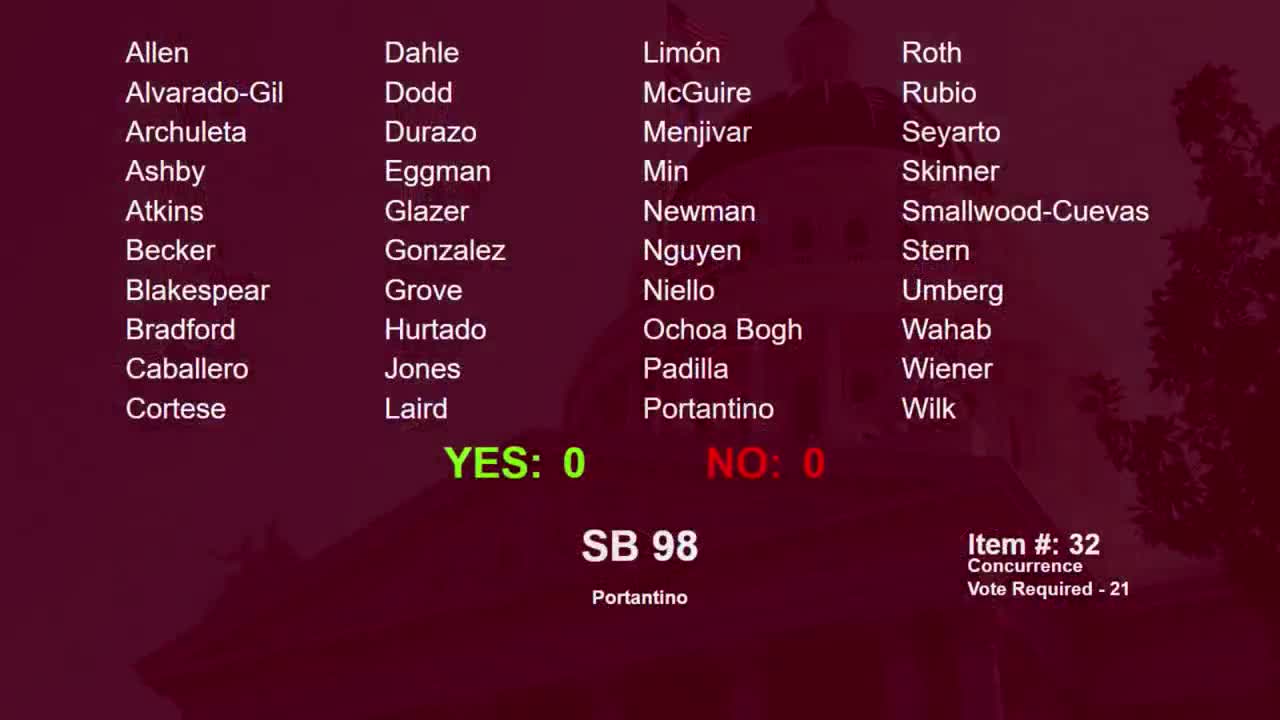
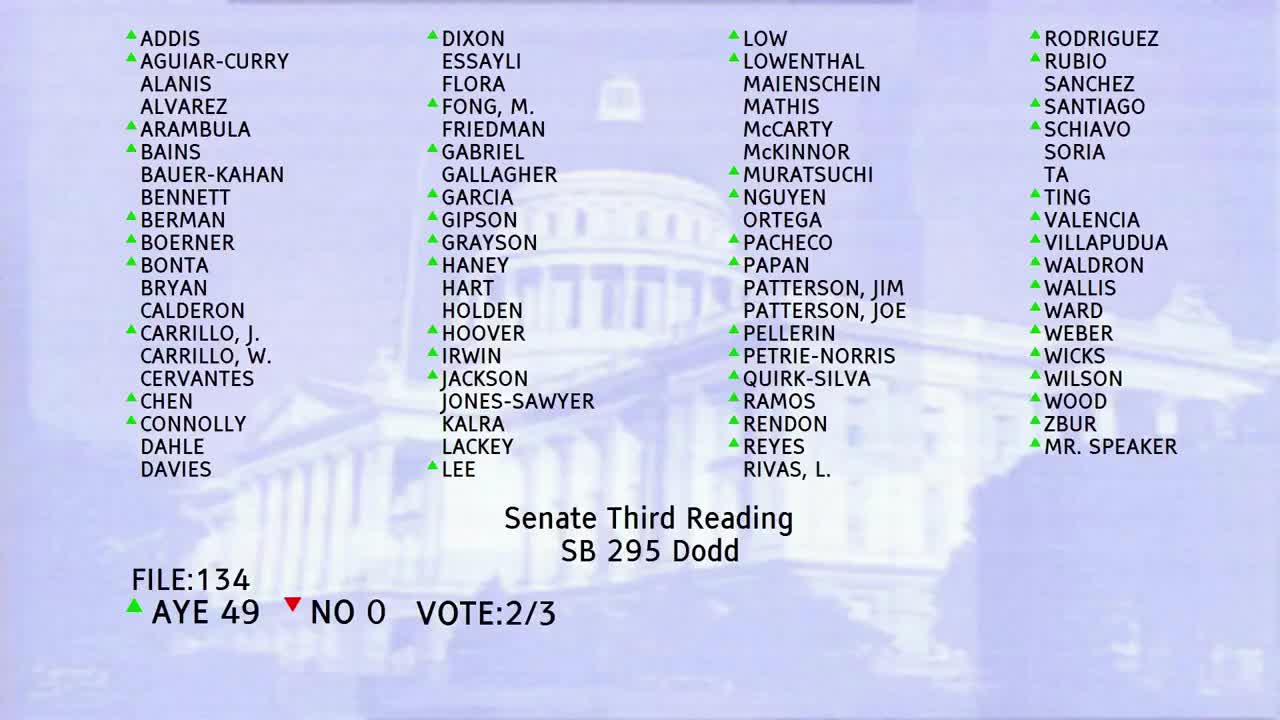
Bill Author

Bill Co-Author(s):
