SB 803: Heal Our Heroes Act.
- Session Year: 2023-2024
- House: Senate
- Latest Version Date: 2024-06-17
Current Status:
Failed
(2024-06-25: June 25 set for first hearing canceled at the request of author.)
Introduced
In Committee
First Chamber
In Committee
Second Chamber
Enacted
Existing law makes it a crime to possess, cultivate, and administer specified controlled substances, including psilocybin and psilocyn. Existing law makes it a crime for a person to rent, lease, or make available for use any building or room for the purpose of storing or distributing any controlled substance. Existing law authorizes forfeiture of property used for specified crimes involving controlled substances.
This bill, the Heal Our Heroes Act, would would, until January 1, 2028, establish the Psychedelic-Assisted Facilitation Pilot Program. The bill, as part of the pilot program, would authorize the public health officers of the City and County of San Francisco, the County of San Diego, and the County of Santa Cruz to approve entities to establish and operate up to 5 psychedelic-assisted facilitation centers per jurisdiction to administer psilocybin or psilocyn to patients meeting specified criteria, including being a veteran or former first responder over 21 years of age who has passed a suitability screening, as defined. The bill would authorize the jurisdictions to issue up to 3 permits to cultivate, as specified. The bill would require the public health officers to consult with experts in psilocybin or psilocyn facilitation on program design, to issue facilitator permits only to specified health providers, licensed physicians and surgeons and to report certain data and an evaluation of the program to the Legislature no later than January 1, 2027. The bill would exempt a person from, among other things, civil liability, professional discipline, or existing criminal sanctions, solely for good faith actions, conduct, or omissions in compliance with the pilot program. The bill would make related findings and declarations.
Existing law makes it a crime to possess, cultivate, and administer specified controlled substances, including psilocybin and psilocyn. Existing law makes it a crime for a person to rent, lease, or make available for use any building or room for the purpose of storing or distributing any controlled substance. Existing law authorizes forfeiture of property used for specified crimes involving controlled substances.
This bill, the Heal Our Heroes Act, would establish the Psychedelic-Assisted Facilitation Pilot Program. The bill, as part of the pilot program, would authorize the public health officers of the City and County of San Francisco, the County of San Diego, and the County of Santa Cruz to approve entities to establish and operate up to 5 psychedelic-assisted facilitation centers per jurisdiction to administer psilocybin or psilocyn to patients meeting specified criteria, including being a veteran or first responder over 21 years of age who has passed a suitability screening, as defined. The bill would authorize the jurisdictions to issue up to 3 permits to cultivate, as specified. The bill would require the public health officers to consult with experts in psilocybin or psilocyn facilitation on program design, to issue facilitator permits only to specified health providers, and to report certain data and an evaluation of the program to the Legislature no later than January 1, 2027. The bill would exempt a person from, among other things, civil liability, professional discipline, or existing criminal sanctions, solely for good faith actions, conduct, or omissions in compliance with the pilot program. The bill would make related findings and declarations.
Existing law, the State Civil Service Act, regulates employment with the state and vests in the Department of Human Resources all powers, duties, and authority necessary to operate the state civil service system. Existing law permits state agencies to enter into personal services contracts if certain conditions are met. Existing law requires a state agency that enters into a personal services contract for certain types of workers to include provisions for employee wages and benefits to be valued at least 85% of the state employer cost of wages and benefits provided to state employees performing similar duties. Existing law requires the department to annually establish the state employer wage and benefits costs covered by these provisions. Existing law additionally requires that those benefit costs be established using rates based on single employee, employee plus one dependent, and employee plus 2 or more dependents, or based on a blended rate, subject to the determination of the department.This bill would instead require those benefit costs to be established using rates based on single employee, employee plus one dependent, and employee plus 2 or more dependents, and on a blended rate, subject to the determination of the department. The bill would also require that the department use at least 85% of the top rate of pay for the corresponding civil service classification for state employees performing similar duties to establish wage costs.Existing law additionally applies the above-described provisions to wages and benefits of employees of subcontractors providing the same types of services in state-leased facilities where the facility is at least 50,000 square feet in area and the state leases all of the occupied floorspace of the facility.This bill would instead apply these provisions to services performed in state-leased facilities that are at least 50,000 square feet in area and more than one-half of the occupied office space is leased by the state, as specified.This bill would make its provisions applicable upon appropriation by the Legislature in the annual Budget Act of 2024, and also make nonsubstantive changes to correct erroneous cross-references in those provisions.Existing law, the State Civil Service Act, regulates employment with the state and vests in the Department of Human Resources all powers, duties, and authority necessary to operate the state civil service system. Existing law permits state agencies to enter into personal services contracts if certain conditions are met. Existing law requires a state agency that enters into a personal services contract for certain types of workers to include provisions for employee wages and benefits to be valued at least 85% of the state employer cost of wages and benefits provided to state employees performing similar duties. Existing law requires the department to annually establish the state employer wage and benefits costs covered by these provisions. Existing law additionally requires that those benefit costs be established using rates based on single employee, employee plus one dependent, and employee plus 2 or more dependents, or based on a blended rate, subject to the determination of the department.
This bill would require, for purposes of determining 85% of wage costs, instead require those benefit costs to be established using rates based on single employee, employee plus one dependent, and employee plus 2 or more dependents, and on a blended rate, subject to the determination of the department. The bill would also require that the department use at least 85% of the top rate of pay for the corresponding civil service classification for state employees performing similar duties. duties to establish wage costs.
Existing law additionally applies the above-described provisions to wages and benefits of employees of subcontractors providing the same types of services in state-leased facilities where the facility is at least 50,000 square feet in area and the state leases all of the occupied floorspace of the facility.
This bill would instead apply these provisions to services performed in state-leased facilities that are at least 50,000 square feet in area and more than one-half of the occupied office space is leased by the state, as specified.
This bill would make its provisions applicable upon appropriation by the Legislature in the annual Budget Act of 2024, and also make nonsubstantive changes to correct erroneous cross-references in those provisions.
Existing law, the State Civil Service Act, regulates employment with the state and vests in the Department of Human Resources all powers, duties, and authority necessary to operate the state civil service system. Existing law permits state agencies to enter into personal services contracts if certain conditions are met. Existing law requires a state agency that enters into a personal services contract for certain types of workers to include provisions for employee wages and benefits to be valued at least 85% of the state employer cost of wages and benefits provided to state employees performing similar duties. Existing law requires the department to annually establish the state employer wage and benefits costs covered by these provisions.
This bill would require, for purposes of determining 85% of wage costs, that the department use the top rate of pay for the corresponding civil service classification for state employees performing similar duties.
Existing law additionally applies the above-described provisions to wages and benefits of employees of subcontractors providing the same types of services in state-leased facilities where the facility is at least 50,000 square feet in area and the state leases all of the occupied floorspace of the facility.
This bill would instead apply these provisions to services performed in state-leased facilities that are at least 50,000 square feet in area and more than one-half of the occupied office space is leased by the state, as specified.
This bill would make nonsubstantive changes to correct erroneous cross-references in those provisions.
Existing law establishes the Department of General Services (DGS) in the Government Operations Agency for purposes of, among other things, planning, acquiring, constructing, and maintaining state buildings and property. Under existing law, by executive order, the DGS was required to, among other things, create a digitized inventory of all excess state land, create screening tools for prioritizing affordable housing development on excess state land, and issue requests for proposals for and select affordable housing developments on excess state land, as described. Specifically, Executive Order No. N-06-19 required the DGS to create a digitized inventory of excess state land no later than April 30, 2019, and required the DGS, the Department of Housing and Community Development (HCD), and the California Housing Finance Agency (CalHFA) to collaborate to develop 2 new screening tools for prioritizing affordable housing development on excess state land no later than March 29, 2019.Existing law requires the DGS to develop, in consultation with the HCD, no later than September 1, 2023, a set of criteria to consistently evaluate state-owned parcels for suitability as affordable housing sites. Existing law requires the department, on or before January 1, 2024, to update the digitized inventory created pursuant to the above-described executive order with all excess state land suitable for affordable housing identified, as specified.The bill would require the DGS to verify a sample of the digitized inventory at least once every 4 years to ensure that digitized inventory is accurate.Existing law establishes the Department of General Services (DGS) in the Government Operations Agency for purposes of, among other things, planning, acquiring, constructing, and maintaining state buildings and property. Under existing law, by executive order, the DGS was required to, among other things, create a digitized inventory of all excess state land, create screening tools for prioritizing affordable housing development on excess state land, and issue requests for proposals for and select affordable housing developments on excess state land, as described. Specifically, Executive Order No. N-06-19 (E.O. N-06-19) required the DGS to create a digitized inventory of excess state land no later than April 30, 2019, and required the DGS, the Department of Housing and Community Development (HCD), and the California Housing Finance Agency (CalHFA) to collaborate to develop 2 new screening tools for prioritizing affordable housing development on excess state land no later than March 29, 2019.
Existing law requires the DGS to develop, in consultation with the HCD, no later than September 1, 2023, a set of criteria to consistently evaluate state-owned parcels for suitability as affordable housing sites. Existing law requires the department, on or before January 1, 2024, to update the digitized inventory created pursuant to the above-described executive order with all excess state land suitable for affordable housing identified, as specified.
The bill would require the DGS to annually verify a sample of the digitized inventory at least once every 4 years to ensure that digitized inventory is accurate.
Existing law establishes the Department of General Services (DGS) in the Government Operations Agency for purposes of, among other things, planning, acquiring, constructing, and maintaining state buildings and property. Under existing law, by executive order, the DGS was required to, among other things, create a digitized inventory of all excess state land, create screening tools for prioritizing affordable housing development on excess state land, and issue requests for proposals for and select affordable housing developments on excess state land, as described. Specifically, Executive Order No. N-06-19 (E.O. N-06-19) required the DGS to create a digitized inventory of excess state land no later than April 30, 2019, and required the DGS, the Department of Housing and Community Development (HCD), and the California Housing Finance Agency (CalHFA) to collaborate to develop 2 new screening tools for prioritizing affordable housing development on excess state land no later than March 29, 2019.
Existing law requires the DGS to develop, in consultation with the HCD, no later than September 1, 2023, a set of criteria to consistently evaluate state-owned parcels for suitability as affordable housing sites. Existing law requires the department, on or before January 1, 2024, to update the digitized inventory created pursuant to the above-described executive order with all excess state land suitable for affordable housing identified, as specified.
The bill would require the DGS to annually verify a sample of the digitized inventory to ensure that digitized inventory is accurate.
The Child Care and Development Services Act, administered by the State Department of Social Services, establishes a system of childcare and development services for children up to 13 years of age. Existing law sets forth the purposes of the act, which include, among other things, the provision of a comprehensive, coordinated, and cost-effective system of childcare and development services for children and their parents.This bill would make technical, nonsubstantive changes to those provisions.The Child Care and Development Services Act, administered by the State Department of Social Services, establishes a system of childcare and development services for children up to 13 years of age. Existing law sets forth the purposes of the act, which include, among other things, the provision of a comprehensive, coordinated, and cost-effective system of childcare and development services for children and their parents.
This bill would make technical, nonsubstantive changes to those provisions.
The Legislature finds and declares all of the following:
(a)Every day, an average of 16.8 veterans commit suicide. The Legislature acknowledges that one veteran life lost to suicide is too many.
(b)The Legislature acknowledges the significant mental health challenges veterans and former first responders face. These individuals are often exposed to traumatic experiences that can lead to conditions such as post-traumatic stress disorder (PTSD), depression, and anxiety.
(c)Emerging research suggests that psilocybin and psilocyn, when used in a controlled and facilitated setting, may offer significant benefits in treating mental health disorders, particularly those related to trauma and stress. The United States Food and Drug Administration has determined that preliminary clinical evidence indicates psilocybin may demonstrate substantial improvement over available therapies for treatment-resistant depression and has granted a breakthrough therapy designation for a treatment that uses psilocybin as a therapy for treatment-resistant depression.
(d)The facilitated use of psilocybin and psilocyn should be available to veterans and former first responders in a manner that ensures safety, efficacy, and ethical standards, including use only under the supervision of a trained facilitator.
(e)Establishing a pilot program allows for a controlled, research-based approach to evaluate the benefits and risks of facilitated use of psilocybin and psilocyn for veterans and former first responders. The data collected will inform future decisions regarding broader implementation or modification of the program.
(f)Ensuring public health and safety is paramount. This program will include safety screening for participants and testing of psilocybin and psilocyn by certified laboratories.
(g)Additional data and research from this program will help lawmakers make more informed decisions about policies related to psychedelics in the future.
SEC. 2.Article 5 (commencing with Section 11300) is added to Chapter 5 of Division 10 of the Health and Safety Code, to read:SEC. 2.Article 6 (commencing with Section 11310) is added to Chapter 5 of Division 10 of the Health and Safety Code, to read:5.6.Psychedelic-Assisted Facilitation Pilot Program11300.11310.This act shall be known and may be cited as the Heal our Heroes Act.
11301.11311.(a)The Legislature hereby establishes the Psychedelic-Assisted Facilitation Pilot Program. Notwithstanding any other law, the public health officer of the City and County of San Francisco, the public health officer of the County of San Diego, and the public health officer of the County of Santa Cruz may create a program to approve entities within their jurisdictions to establish and operate psychedelic-assisted facilitation centers. The public health officer of the authorizing jurisdiction shall consult with experts in psilocybin or psilocyn facilitation on program design.
(b)Prior to approving an entity within its jurisdiction pursuant to subdivision (a), the public health officer of the authorizing jurisdiction shall provide local law enforcement officials, local public health officials, and the public with an opportunity to comment in a public meeting. The notice of the meeting to the public shall be sufficient to ensure adequate participation in the meeting by the public. The meeting shall be noticed in accordance with all state laws and local ordinances, and as local officials deem appropriate.
(c)(1)The public health officer of the authorizing jurisdiction shall collect all of the following information:
(A)The total number of participants.
(B)The demographic information of each participant.
(C)Reports on outcomes, including any serious adverse events.
(2)The public health officer of the authorizing jurisdiction shall report the data collected pursuant to this section to the Legislature no later than January 1, 2027. The report shall include an evaluation of the pilot program, including any recommendations for changes to the program.
(3)A report submitted pursuant to this section shall be submitted in compliance with Section 9795 of the Government Code.
(d)An authorizing jurisdiction shall issue a permit to a facilitator. The jurisdiction shall issue a permit pursuant to this subdivision only to licensed physicians and surgeons, clinical psychologists, licensed clinical social workers, nurse practitioners, physician assistants, licensed professional clinical counselors, and naturopathic doctors. surgeons.
11302.11312.(a)In order for an entity to be approved to operate a psychedelic-assisted facilitation center, the entity shall demonstrate that it will, at a minimum, do all of the following:
(1)Provide a hygienic space to consume the psychedelic under supervision of trained staff.
(2)Provide sterile consumption supplies and provide secure disposal services.
(3)Monitor participants and provide care as necessary.
(4)Provide access or referrals to substance use disorder treatment services, primary medical care, mental health services, and social services.
(5)Provide reasonable security of the center location.
(6)Establish operating procedures for the center, including, but not limited to, standard hours of operation, training standards for staff, a minimum number of personnel required to be onsite during those hours of operation, and the maximum number of individuals who can be served at one time.
(7)Establish a plan for staff and workplace safety.
(8)Establish an emergency response plan.
(b)Notwithstanding other legal allowances, a psychedelic-assisted facilitation center shall administer only psilocybin or psilocyn that meets all the requirements of Section 11303. 11313. A psychedelic-assisted facilitation center shall not possess or administer any other psychedelic substance, unless otherwise authorized by law.
(c)A psychedelic-assisted facilitation center shall only administer a psychedelic to an individual who meets all of the following requirements:
(1)Has served in the military or as a first responder, including, but not limited to, a peace officer, firefighter, or emergency medical technician.(1)(A)Is a veteran or a former first responder as defined in Section 8562 of the Government Code.
(B)A person is not eligible to participate in the Psychedelic-Assisted Facilitation Pilot Program if they are serving on active duty in the military or are currently employed as a first responder.
(2)Is 21 years of age or older.
(3)Has passed a suitability screening.
(d)Only a facilitator with a permit issued pursuant to Section 11301 may administer a psychedelic at 11311 may operate a psychedelic-assisted facilitation center.
(e)Administration and use of a psychedelic outside of a facilitated session at a psychedelic-assisted facilitation center is prohibited.
(f)An authorizing jurisdiction shall have no more than five psychedelic-assisted facilitation centers.
11303.11313.(a)Notwithstanding Section 11390, an individual with a permit issued pursuant to Section 11301 may a participating authorizing jurisdiction shall issue no more than three permits to cultivate a spore or mycellium or other material with the intent to cultivate psilocybin or psilocyn for the purpose of providing the psychedelic to a facilitator or a facilitation center for use pursuant to this article.
(b)Psilocybin or psilocyn shall not be distributed or sold in this state without a certificate of analysis from an independent testing laboratory that has been certified by the state that confirms both of the following:
(1)The product is of a batch of psilocybin or psilocyn that was tested by the independent testing laboratory.
(2)The tested sample of the batch did not contain contaminants that are unsafe for human or animal consumption.
(c)Each participating authorizing jurisdiction shall issue no more than three permits to cultivate.11304.11314.A person or entity, including, but not limited to, property owners, managers, employees, volunteers, clients or participants, and employees of the authorizing jurisdiction acting in the course and scope of employment, engaged, in good faith, in the activities of a psychedelic-assisted facilitation center authorized by this article, in accordance with established protocols and on the program site, shall not be subject to any of the following:
(a)Arrest, charge, or prosecution pursuant to subdivision (f) of Section 647 of the Penal Code, or Section 11366.5, 11377, 11378, 11379, 11390, or 11391, including for attempt, aiding and abetting, or conspiracy to commit a violation of any of those sections, for activity or conduct at the location of a psychedelic-assisted facilitation center.
(b)Civil or administrative penalty or liability or disciplinary action by a professional licensing board or for conduct relating to the approval of an entity to operate, inspection, licensing, or other regulation unless performed in a grossly negligent manner or in bad faith.
11305.11315.As used in this article, the following terms have the following meanings:
(a)Authorizing jurisdiction means the public health officer of the City and County of San Francisco, the public health officer of the County of San Diego, or the public health officer of the County of Santa Cruz, or their deputies.
(b)Psychedelic means psilocybin or psilocyn as described in paragraphs (18) and (19) of subdivision (d) of Section 11054.
(c)Suitability screening means a screening for medical conditions, mental health conditions, family history, contraindications, pharmacological interactions, and any other information or data requested by a facilitator that shall be provided to every participant before an administration session. A suitability screening shall include a determination as to whether the individual is pregnant or breastfeeding. A pregnant or breastfeeding individual shall not pass a suitability screening.
11306.11316.This article shall remain in effect only until January 1, 2028, and as of that date is repealed, unless a later enacted statute that is enacted before January 1, 2028, deletes or extends that date.
The Legislature finds and declares all of the following:
(a)Every day, an average of 16.8 veterans commit suicide. The Legislature acknowledges that one veteran life lost to suicide is too many.
(b)The Legislature acknowledges the significant mental health challenges veterans and first responders face. These individuals are often exposed to traumatic experiences that can lead to conditions such as post-traumatic stress disorder (PTSD), depression, and anxiety.
(c)Emerging research suggests that psilocybin and psilocyn, when used in a controlled and facilitated setting, may offer significant benefits in treating mental health disorders, particularly those related to trauma and stress. The United States Food and Drug Administration has determined that preliminary clinical evidence indicates psilocybin may demonstrate substantial improvement over available therapies for treatment-resistant depression and has granted a breakthrough therapy designation for a treatment that uses psilocybin as a therapy for treatment-resistant depression.
(d)The facilitated use of psilocybin and psilocyn should be available to veterans and first responders in a manner that ensures safety, efficacy, and ethical standards, including use only under the supervision of a trained facilitator.
(e)Establishing a pilot program allows for a controlled, research-based approach to evaluate the benefits and risks of facilitated use of psilocybin and psilocyn for veterans and first responders. The data collected will inform future decisions regarding broader implementation or modification of the program.
(f)Ensuring public health and safety is paramount. This program will include safety screening for participants and testing of psilocybin and psilocyn by certified laboratories.
(g)Additional data and research from this program will help lawmakers make more informed decisions about policies related to psychedelics in the future.
SEC. 2.Article 5 (commencing with Section 11300) is added to Chapter 5 of Division 10 of the Health and Safety Code, to read:5.Psychedelic-Assisted Facilitation Pilot Program11300.This act shall be known and may be cited as the Heal our Heroes Act.
11301.(a)The Legislature hereby establishes the Psychedelic-Assisted Facilitation Pilot Program. Notwithstanding any other law, the public health officer of the City and County of San Francisco, the public health officer of the County of San Diego, and the public health officer of the County of Santa Cruz may create a program to approve entities within their jurisdictions to establish and operate psychedelic-assisted facilitation centers. The public health officer of the authorizing jurisdiction shall consult with experts in psilocybin or psilocyn facilitation on program design.
(b)Prior to approving an entity within its jurisdiction pursuant to subdivision (a), the public health officer of the authorizing jurisdiction shall provide local law enforcement officials, local public health officials, and the public with an opportunity to comment in a public meeting. The notice of the meeting to the public shall be sufficient to ensure adequate participation in the meeting by the public. The meeting shall be noticed in accordance with all state laws and local ordinances, and as local officials deem appropriate.
(c)(1)The public health officer of the authorizing jurisdiction shall collect all of the following information:
(A)The total number of participants.
(B)The demographic information of each participant.
(C)Reports on outcomes, including any serious adverse events.
(2)The public health officer of the authorizing jurisdiction shall report the data collected pursuant to this section to the Legislature no later than January 1, 2027. The report shall include an evaluation of the pilot program, including any recommendations for changes to the program.
(3)A report submitted pursuant to this section shall be submitted in compliance with Section 9795 of the Government Code.
(d)An authorizing jurisdiction shall issue a permit to a facilitator. The jurisdiction shall issue a permit pursuant to this subdivision only to licensed physicians and surgeons, clinical psychologists, licensed clinical social workers, nurse practitioners, physician assistants, licensed professional clinical counselors, and naturopathic doctors.
11302.(a)In order for an entity to be approved to operate a psychedelic-assisted facilitation center, the entity shall demonstrate that it will, at a minimum, do all of the following:
(1)Provide a hygienic space to consume the psychedelic under supervision of trained staff.
(2)Provide sterile consumption supplies and provide secure disposal services.
(3)Monitor participants and provide care as necessary.
(4)Provide access or referrals to substance use disorder treatment services, primary medical care, mental health services, and social services.
(5)Provide reasonable security of the center location.
(6)Establish operating procedures for the center, including, but not limited to, standard hours of operation, training standards for staff, a minimum number of personnel required to be onsite during those hours of operation, and the maximum number of individuals who can be served at one time.
(7)Establish a plan for staff and workplace safety.
(8)Establish an emergency response plan.
(b) Notwithstanding other legal allowances, a psychedelic-assisted facilitation center shall administer only psilocybin or psilocyn that meets all the requirements of Section 11303. A psychedelic-assisted facilitation center shall not possess or administer any other psychedelic substance, unless otherwise authorized by law.
(c)A psychedelic-assisted facilitation center shall only administer a psychedelic to an individual who meets all of the following requirements:
(1)Has served in the military or as a first responder, including, but not limited to, a peace officer, firefighter, or emergency medical technician.
(2)Is 21 years of age or older.
(3)Has passed a suitability screening.
(d)Only a facilitator with a permit issued pursuant to Section 11301 may administer a psychedelic at a psychedelic-assisted facilitation center.
(e)Administration and use of a psychedelic outside of a facilitated session at a psychedelic-assisted facilitation center is prohibited.
(f)An authorizing jurisdiction shall have no more than five psychedelic-assisted facilitation centers.
11303.(a)Notwithstanding Section 11390, an individual with a permit issued pursuant to Section 11301 may cultivate a spore or mycellium or other material with the intent to cultivate psilocybin or psilocyn for the purpose of providing the psychedelic to a facilitator or a facilitation center for use pursuant to this article.
(b)Psilocybin or psilocyn shall not be distributed or sold in this state without a certificate of analysis from an independent testing laboratory that has been certified by the state that confirms both of the following:
(1)The product is of a batch of psilocybin or psilocyn that was tested by the independent testing laboratory.
(2)The tested sample of the batch did not contain contaminants that are unsafe for human or animal consumption.
(c)Each participating authorizing jurisdiction shall issue no more than three permits to cultivate.
11304.A person or entity, including, but not limited to, property owners, managers, employees, volunteers, clients or participants, and employees of the authorizing jurisdiction acting in the course and scope of employment, engaged, in good faith, in the activities of a psychedelic-assisted facilitation center authorized by this article, in accordance with established protocols and on the program site, shall not be subject to any of the following:
(a)Arrest, charge, or prosecution pursuant to subdivision (f) of Section 647 of the Penal Code, or Section 11366.5, 11377, 11378, 11379, 11390, or 11391, including for attempt, aiding and abetting, or conspiracy to commit a violation of any of those sections, for activity or conduct at the location of a psychedelic-assisted facilitation center.
(b)Civil or administrative penalty or liability or disciplinary action by a professional licensing board or for conduct relating to the approval of an entity to operate, inspection, licensing, or other regulation unless performed in a grossly negligent manner or in bad faith.
11305.As used in this article, the following terms have the following meanings:
(a)Authorizing jurisdiction means the public health officer of the City and County of San Francisco, the public health officer of the County of San Diego, or the public health officer of the County of Santa Cruz, or their deputies.
(b)Psychedelic means psilocybin or psilocyn as described in paragraphs (18) and (19) of subdivision (d) of Section 11054.
(c)Suitability screening means a screening for medical conditions, mental health conditions, family history, contraindications, pharmacological interactions, and any other information or data requested by a facilitator that shall be provided to every participant before an administration session. A suitability screening shall include a determination as to whether the individual is pregnant or breastfeeding. A pregnant or breastfeeding individual shall not pass a suitability screening.
11306.This article shall remain in effect only until January 1, 2028, and as of that date is repealed, unless a later enacted statute that is enacted before January 1, 2028, deletes or extends that date.
SECTION 1.Section 19134 of the Government Code is amended to read:19134.(a)Personal services contracts entered into by a state agency in accordance with Section 19130 for persons providing janitorial and housekeeping services, custodians, food service workers, laundry workers, window cleaners, and security guard services shall include provisions for employee wages and benefits that are valued at least 85 percent of the state employer cost of wages and benefits provided to state employees for performing similar duties.(b)For purposes of this section, benefits includes health, dental, retirement, and vision benefits, and holiday, sick, and vacation pay.(c)(1)The Department of Human Resources shall establish annually the state employer wage and benefit costs for workers covered pursuant to this section.(2)Wage costs shall be established using at least 85 percent of the top rate of pay for the corresponding civil service classification for state employees performing similar duties. Benefit costs shall be established using rates based on single employee, employee plus one dependent, and employee plus two or more dependents, and on a blended rate, subject to the determination of the Department of Human Resources.(d)In lieu of providing actual benefits, contractors may comply with this section by a cash payment to employees equal to the applicable determination under subdivision (c).(e)Failure to provide benefits or cash in lieu to employees as required under this section shall be deemed to be a material breach for any contract for personal services covered by this section.(f)The Department of General Services and the Department of Human Resources may adopt guidelines and regulations to implement the requirements of this section.(g)This section applies to all contracts exceeding 90 days.(h)Holiday pay shall be provided to employees of contractors providing services specified in subdivision (a) on any state holiday that the state facility in which the services are being provided is closed.(i)This section also applies to wages and benefits of employees of subcontractors providing services specified in subdivision (a) in state-leased facilities where the facility is at least 50,000 square feet in area and the state leases more than one-half of the occupied office space of the facility.(j)With the exception of subdivision (h), this section does not apply to personal services contracts for the services described in subdivision (a) performed by employees of nonprofit organizations that are employed in accordance with any of the following:(1)A special license issued pursuant to Section 1191.5 of the Labor Code.(2)A special certificate issued pursuant to Section 214 of Title 29 of the United States Code.(3)A community rehabilitation plan described in Sections 19152 and 19404 of the Welfare and Institutions Code.(4)A habilitation services program as described in Sections 4851 and 4861 of the Welfare and Institutions Code.(k)The amendments to this section made by the act amending this section in the 202324 Regular Session shall apply upon appropriation by the Legislature in the annual Budget Act of 2024 for those purposes.(a)Personal services contracts entered into by a state agency in accordance with Section 19130 for persons providing janitorial and housekeeping services, custodians, food service workers, laundry workers, window cleaners, and security guard services shall include provisions for employee wages and benefits that are valued at least 85 percent of the state employer cost of wages and benefits provided to state employees for performing similar duties.
(b)For purposes of this section, benefits includes health, dental, retirement, and vision benefits, and holiday, sick, and vacation pay.
(c)(1)The Department of Human Resources shall establish annually the state employer wage and benefit costs for workers covered pursuant to this section.
(2)Wage costs shall be established using at least 85 percent of the top rate of pay for the corresponding civil service classification for state employees performing similar duties. Benefit costs shall be established using rates based on single employee, employee plus one dependent, and employee plus two or more dependents, or the costs may be based and on a blended rate, subject to the determination of the Department of Human Resources.
(d)In lieu of providing actual benefits, contractors may comply with this section by a cash payment to employees equal to the applicable determination under subdivision (c).
(e)Failure to provide benefits or cash in lieu to employees as required under this section shall be deemed to be a material breach for any contract for personal services covered by this section.
(f)The Department of General Services and the Department of Human Resources may adopt guidelines and regulations to implement the requirements of this section.
(g)This section applies to all contracts exceeding 90 days.
(h)Holiday pay shall be provided to employees of contractors providing services specified in subdivision (a) on any state holiday that the state facility in which the services are being provided is closed.
(i)This section also applies to wages and benefits of employees of subcontractors providing services specified in subdivision (a) in state-leased facilities where the facility is at least 50,000 square feet in area and the state leases more than one-half of the occupied office space of the facility.
(j)With the exception of subdivision (h), this section does not apply to personal services contracts for the services described in subdivision (a) performed by employees of nonprofit organizations that are employed in accordance with any of the following:
(1)A special license issued pursuant to Section 1191.5 of the Labor Code.
(2)A special certificate issued pursuant to Section 214 of Title 29 of the United States Code.
(3)A community rehabilitation plan described in Sections 19152 and 19404 of the Welfare and Institutions Code.
(4)A habilitation services program as described in Sections 4851 and 4861 of the Welfare and Institutions Code.
(k)The amendments to this section made by the act amending this section in the 202324 Regular Session shall apply upon appropriation by the Legislature in the annual Budget Act of 2024 for those purposes.
(a)Personal services contracts entered into by a state agency in accordance with Section 19130 for persons providing janitorial and housekeeping services, custodians, food service workers, laundry workers, window cleaners, and security guard services shall include provisions for employee wages and benefits that are valued at least 85 percent of the state employer cost of wages and benefits provided to state employees for performing similar duties.
(b)For purposes of this section, benefits includes health, dental, retirement, and vision benefits, and holiday, sick, and vacation pay.
(c)(1)The Department of Human Resources shall establish annually the state employer wage and benefit costs for workers covered pursuant to this section.
(2)Wage costs shall be established using 85 percent of the top rate of pay for the corresponding civil service classification for state employees performing similar duties. Benefit costs shall be established using rates based on single employee, employee plus one dependent, and employee plus two or more dependents, or the costs may be based on a blended rate, subject to the determination of the Department of Human Resources.
(d)In lieu of providing actual benefits, contractors may comply with this section by a cash payment to employees equal to the applicable determination under subdivision (c).
(e)Failure to provide benefits or cash in lieu to employees as required under this section shall be deemed to be a material breach for any contract for personal services covered by this section.
(f)The Department of General Services and the Department of Human Resources may adopt guidelines and regulations to implement the requirements of this section.
(g)This section applies to all contracts exceeding 90 days.
(h)Holiday pay shall be provided to employees of contractors providing services specified in subdivision (a) on any state holiday that the state facility in which the services are being provided is closed.
(i)This section also applies to wages and benefits of employees of subcontractors providing services specified in subdivision (a) in state-leased facilities where the facility is at least 50,000 square feet in area and the state leases all more than one-half of the occupied floorspace office space of the facility.
(j)With the exception of subdivision (h), this section does not apply to personal services contracts for the services described in subdivision (a) performed by employees of nonprofit organizations that are employed in accordance with any of the following:
(1)A special license issued pursuant to Section 1191.5 of the Labor Code.
(2)A special certificate issued pursuant to Section 214 of Title 29 of the United States Code.
(3)A community rehabilitation plan described in Sections 19152 and 19404 of the Welfare and Institutions Code.
(4)A habilitation services program as described in Sections 19352 4851 and 19356.6 4861 of the Welfare and Institutions Code.
SECTION 1.Section 14684.3 of the Government Code is amended to read:14684.3.(a)Not later than September 1, 2023, the department, in consultation with the Department of Housing and Community Development, shall develop a set of criteria to consistently evaluate state-owned parcels for suitability as affordable housing sites.(b)On or before July 1, 2024, and every four years thereafter, the department shall do all of the following:(1)Conduct a review of all state-owned property and identify state-owned parcels that are potentially viable for affordable housing based on the established criteria developed in subdivision (a).(2)Following each review, contact all related state agencies to determine excess state land.(3)Collaborate with the Department of Housing and Community Development to prioritize excess state land for development.(c)(1)On or before January 1, 2024, and every four years thereafter, the department shall update the digitized inventory created pursuant to Executive Order No. N-06-19 with all excess state land suitable for affordable housing identified pursuant to subdivision (b).(2)Not later than June 1, 2023, and annually thereafter, the department and the Department of Housing and Community Development shall evaluate and update the screening tools jointly developed pursuant to Executive Order No. N-06-19.(3)The department, in consultation with the Department of Housing and Community Development, shall pursue the development of affordable housing on excess state properties, including those in the digitized inventory described in paragraph (1).(4)The department shall, at least once every four years, verify a sample of the digitized inventory created pursuant to paragraph (1) to ensure that the inventory is accurate.(d)(1)All state agencies shall respond to the departments request for information to satisfy the requirements of this section.(2)Notwithstanding any other law, all state agencies shall consider exchanging excess state land with local governments for other parcels for purposes of affordable housing development and preservation, if the exchange is appropriate and maximizes regional capacity to build and preserve affordable housing units.(3)All state agencies shall use all existing legal and financial authority, subject to the direction of the Governor, to expedite and prioritize the developments described in paragraph (4) of subdivision (c).(e)For purposes of this section, excess state land means state-owned parcels that are in excess of state agencies foreseeable needs.(f)On or before January 1, 2024, and annually thereafter, the department shall report to the Legislature on the status of the excess state properties identified pursuant to subdivision (c), including, but not limited to, whether the property has been leased and, if so, for what purpose.(a)Not later than September 1, 2023, the department, in consultation with the Department of Housing and Community Development, shall develop a set of criteria to consistently evaluate state-owned parcels for suitability as affordable housing sites.
(b)On or before July 1, 2024, and every four years thereafter, the department shall do all of the following:
(1)Conduct a review of all state-owned property and identify state-owned parcels that are potentially viable for affordable housing based on the established criteria developed in subdivision (a).
(2)Following each review, contact all related state agencies to determine excess state land.
(3)Collaborate with the Department of Housing and Community Development to prioritize excess state land for development.
(c)(1)On or before January 1, 2024, and every four years thereafter, the department shall update the digitized inventory created pursuant to Executive Order No. N-06-19 with all excess state land suitable for affordable housing identified pursuant to subdivision (b).
(2)Not later than June 1, 2023, and annually thereafter, the department and the Department of Housing and Community Development shall evaluate and update the screening tools jointly developed pursuant to Executive Order No. N-06-19.
(3)The department, in consultation with the Department of Housing and Community Development, shall pursue the development of affordable housing on excess state properties, including those in the digitized inventory described in paragraph (1).
(4)The department shall annually shall, at least once every four years, verify a sample of the digitized inventory created pursuant to paragraph (1) to ensure that the inventory is accurate.
(d)(1)All state agencies shall respond to the departments request for information to satisfy the requirements of this section.
(2)Notwithstanding any other law, all state agencies shall consider exchanging excess state land with local governments for other parcels for purposes of affordable housing development and preservation, if the exchange is appropriate and maximizes regional capacity to build and preserve affordable housing units.
(3)All state agencies shall use all existing legal and financial authority, subject to the direction of the Governor, to expedite and prioritize the developments described in paragraph (4) of subdivision (c).
(e)For purposes of this section, excess state land means state-owned parcels that are in excess of state agencies foreseeable needs.
(f)On or before January 1, 2024, and annually thereafter, the department shall report to the Legislature on the status of the excess state properties identified pursuant to subdivision (c), including, but not limited to, whether the property has been leased and, if so, for what purpose.
(a)Not later than September 1, 2023, the department, in consultation with the Department of Housing and Community Development, shall develop a set of criteria to consistently evaluate state-owned parcels for suitability as affordable housing sites.
(b)On or before July 1, 2024, and every four years thereafter, the department shall do all of the following:
(1)Conduct a review of all state-owned property and identify state-owned parcels that are potentially viable for affordable housing based on the established criteria developed in subdivision (a).
(2)Following each review, contact all related state agencies to determine excess state land.
(3)Collaborate with the Department of Housing and Community Development to prioritize excess state land for development.
(c)(1)On or before January 1, 2024, and every four years thereafter, the department shall update the digitized inventory created pursuant to Executive Order No. N-06-19 with all excess state land suitable for affordable housing identified pursuant to subdivision (b).
(2)Not later than June 1, 2023, and annually thereafter, the department and the Department of Housing and Community Development shall evaluate and update the screening tools jointly developed pursuant to Executive Order No. N-06-19.
(3)The department, in consultation with the Department of Housing and Community Development, shall pursue the development of affordable housing on excess state properties, including those in the digitized inventory described in paragraph (1).
(4)The department shall annually verify a sample of the digitized inventory created pursuant to paragraph (1) is accurate.
(d)(1)All state agencies shall respond to the departments request for information to satisfy the requirements of this section.
(2)Notwithstanding any other law, all state agencies shall consider exchanging excess state land with local governments for other parcels for purposes of affordable housing development and preservation, if the exchange is appropriate and maximizes regional capacity to build and preserve affordable housing units.
(3)All state agencies shall use all existing legal and financial authority, subject to the direction of the Governor, to expedite and prioritize the developments described in paragraph (4) of subdivision (c).
(e)For purposes of this section, excess state land means state-owned parcels that are in excess of state agencies foreseeable needs.
(f)On or before January 1, 2024, and annually thereafter, the department shall report to the Legislature on the status of the excess state properties identified pursuant to subdivision (c), including, but not limited to, whether the property has been leased and, if so, for what purpose.
SECTION 1.Section 10207 of the Welfare and Institutions Code is amended to read:10207.The purpose of this part is as follows:(a)To provide a comprehensive, coordinated, and cost-effective system of childcare and development services for children from infancy to 13 years of age and their parents, including a full range of supervision, health, and support services through full- and part-time programs.(b)To encourage community-level coordination in support of childcare and development services.(c)To provide an environment that is healthy and nurturing for all children in childcare and development programs.(d)To provide the opportunity for positive parenting to take place through understanding of human growth and development.(e)To reduce strain between parent and child in order to prevent abuse, neglect, or exploitation.(f)To enhance the cognitive development of children, with particular emphasis upon those children who require special assistance, including bilingual capabilities to attain their full potential.(g)To establish a framework for the expansion of childcare and development services.(h)To empower and encourage parents and families of children who require childcare services to take responsibility to review the safety of the childcare program or facility and to evaluate the ability of the program or facility to meet the needs of the child.The purpose of this part is as follows:
(a)To provide a comprehensive, coordinated, and cost-effective system of child care childcare and development services for children from infancy to 13 years of age and their parents, including a full range of supervision, health, and support services through full- and part-time programs.
(b)To encourage community-level coordination in support of child care childcare and development services.
(c)To provide an environment that is healthy and nurturing for all children in child care childcare and development programs.
(d)To provide the opportunity for positive parenting to take place through understanding of human growth and development.
(e)To reduce strain between parent and child in order to prevent abuse, neglect, or exploitation.
(f)To enhance the cognitive development of children, with particular emphasis upon those children who require special assistance, including bilingual capabilities to attain their full potential.
(g)To establish a framework for the expansion of child care childcare and development services.
(h)To empower and encourage parents and families of children who require child care childcare services to take responsibility to review the safety of the child care childcare program or facility and to evaluate the ability of the program or facility to meet the needs of the child.
|
Date
|
Status
|
|---|---|
| Jun 25, 2024 | June 25 set for first hearing canceled at the request of author. |
| Jun 17, 2024 | From committee with author's amendments. Read second time and amended. Re-referred to Com. on HEALTH. |
| Jun 10, 2024 | Re-referred to Coms. on HEALTH and PUB. S. pursuant to Assembly Rule 77.2. |
| Jun 6, 2024 | Ordered to third reading. |
| Jun 6, 2024 | Read third time and amended. |
| Jun 3, 2024 | Ordered to third reading. |
| Jun 3, 2024 | From inactive file. |
| May 30, 2024 | Notice of intention to remove from inactive file given by Assembly Member Santiago. |
| Sep 11, 2023 | Ordered to inactive file on request of Assembly Member Bryan. |
| Sep 5, 2023 | Read second time. Ordered to third reading. |
| Sep 1, 2023 | Read second time and amended. Ordered to second reading. |
| Sep 1, 2023 | From committee: Do pass as amended. (Ayes 11. Noes 3.) (September 1). |
| Aug 16, 2023 | August 16 set for first hearing. Placed on suspense file. |
| Jul 12, 2023 | From committee: Do pass and re-refer to Com. on APPR. (Ayes 5. Noes 0.) (July 12). Re-referred to Com. on APPR. |
| Jun 22, 2023 | From committee with author's amendments. Read second time and amended. Re-referred to Com. on P.E. & R. |
| Jun 22, 2023 | Referred to Com. on P.E. & R. |
| May 31, 2023 | In Assembly. Read first time. Held at Desk. |
| May 30, 2023 | Read third time. Passed. (Ayes 40. Noes 0. Page 1365.) Ordered to the Assembly. |
| May 26, 2023 | Ordered to special consent calendar. |
| May 22, 2023 | Read second time. Ordered to third reading. |
| May 18, 2023 | Read second time and amended. Ordered to second reading. |
| May 18, 2023 | From committee: Do pass as amended. (Ayes 7. Noes 0. Page 1184.) (May 18). |
| May 12, 2023 | Set for hearing May 18. |
| Apr 24, 2023 | April 24 hearing: Placed on APPR suspense file. |
| Apr 14, 2023 | Set for hearing April 24. |
| Apr 11, 2023 | From committee: Do pass and re-refer to Com. on APPR with recommendation: To consent calendar. (Ayes 15. Noes 0. Page 657.) (April 11). Re-referred to Com. on APPR. |
| Apr 6, 2023 | Set for hearing April 11. |
| Mar 29, 2023 | Re-referred to Com. on G.O. |
| Mar 21, 2023 | From committee with author's amendments. Read second time and amended. Re-referred to Com. on RLS. |
| Mar 1, 2023 | Referred to Com. on RLS. |
| Feb 21, 2023 | From printer. May be acted upon on or after March 20. |
| Feb 17, 2023 | Introduced. Read first time. To Com. on RLS. for assignment. To print. |
|
Date
|
Description
|
Location
|
Votes
|
|
|---|---|---|---|---|
| Sep 1, 2023 | Do pass as amended. | Assembly Standing Committee on Appropriations |
Passed |
|
| Jul 12, 2023 | Do pass and be re-referred to the Committee on [Appropriations] | Assembly Standing Committee on Public Employment and Retirement |
Passed |
|
| May 30, 2023 | Special Consent SB803 Becker | Senate Floor |
Passed |
|
| May 18, 2023 | Do pass as amended | Senate Standing Committee on Appropriations |
Passed |
|
| Apr 24, 2023 | Placed on suspense file | Senate Standing Committee on Appropriations |
Passed |
|
| Apr 11, 2023 | Do pass, but first be re-referred to the Committee on [Appropriations] with the recommendation: To Consent Calendar | Senate Standing Committee on Governmental Organization |
Passed |
This list shows positions taken on this bill by organizations on the date displayed, which is linked to the original source.
Positions by individuals are not included.
|
Organization
|
Position
|
Date
|
|---|---|---|
| Service Employees International Union, California State Council | ** Support |
Date of Hearing: June 25, 2024
ASSEMBLY COMMITTEE ON HEALTH
Mia Bonta, Chair
SBPCA Bill Id:SB 803
Author:(Becker) – As Amended Ver:June 17, 2024
SENATE VOTE: Not relevant.
SUBJECT: Heal Our Heroes Act.
SUMMARY: Creates the Heal our Heroes Act which establishes the Psychedelic-Assisted Facilitation Pilot Program (pilot program) in the City and County of San Francisco, the County of San Diego, and the County of Santa Cruz. Specifically, this bill:
- Establishes the pilot program. Permits the public health officers (PHOs) of the City and County of San Francisco, the County of San Diego, and the County of Santa Cruz to create programs to approve entities within their jurisdictions to establish and operate psychedelic-assisted facilitation centers. Requires PHOs of authorizing jurisdictions to consult with experts in psilocybin or psilocin facilitation on program design.
- Requires PHOs of authorizing jurisdictions to provide law enforcement officials, local public health officials, and the public with an opportunity to comment in a public meeting.
- Requires the PHO of the authorizing jurisdiction to collect all of the following:
- The total number of participants;
- The demographic information of each participant; and,
- Reports on outcomes, including any serious adverse events.
- Requires the PHO of the authorizing jurisdiction to submit a report on the collected data with recommendations for changes to the program to the Legislature no later than January 1, 2027.
- Requires authorized jurisdictions to issue permits to facilitators. Requires facilitators to be licensed physicians and surgeons.
- Requires entities, in order to be approved to operate a psychedelic-assisted facilitation center, to at a minimum:
- Provide a hygienic space to consume the psychedelic under supervision of trained staff;
- Provide sterile consumption supplies and provide secure disposal services;
- Monitor participants and provide care as necessary;
- Provide access or referrals to substance use disorder (SUD) treatment services, primary medical care, mental health services, and social services;
- Provide reasonable security of the center location;
- Establish operating procedures for the center, including, but not limited to, standard hours of operation, training standards for staff, a minimum number of personnel required to be onsite during those hours of operation, and the maximum number of individuals who can be served at one time;
- Establish a plan for staff and workplace safety; and,
- Establish an emergency response plan.
- Requires psychedelic-assisted facilitation centers to only administer psilocybin or psilocin as authorized by this bill. Prohibits a psychedelic-assisted facilitation center from possessing or administering any other psychedelic substance, unless otherwise authorized by law.
- Requires psychedelic-assisted facilitation centers to only administer psychedelics to persons who:
- Are a veteran or former first responder;
- Are 21 years of age or older; and,
- Have passed a suitability screening.
- Permits only facilitators with a permit to administer a psychedelic at a psychedelic-assisted facilitation center. Prohibits administration outside of a facilitated session at a psychedelic-assisted facilitation center.
- Limits authorizing jurisdictions to five psychedelic-assisted facilitation centers.
- Permits an individual with an issued permit to cultivate a spore or mycelium or other material with the intent to cultivate psilocybin or psilocin for the purpose of the pilot program.
- Prohibits the distribution or sale of psilocybin or psilocin in this state without a certificate of analysis from an independent testing laboratory that has been certified by the state that confirms both of the following:
- The product is a batch of psilocybin or psilocin that was tested by the independent testing laboratory; and,
- The tested sample of the batch did not contain contaminants that are unsafe for human or animal consumption.
- Limits authorizing jurisdictions to three permits to cultivate.
- Creates liability protections for persons involved in the activities of a psychedelic-assisted facilitation center, as specified.
- States legislative findings and declarations on the mental health challenges of veterans and first responders and emerging research on psychedelic treatment.
- Repeals the provisions of this bill on January 1, 2028.
EXISTING FEDERAL LAW:
- Makes it unlawful for any person to knowingly or intentionally possess a controlled substance unless such substance was obtained directly, or pursuant to a valid prescription or order, from a practitioner, while acting in the course of their professional practice, or as otherwise specified. [21 United States Code (U.S.C.) § 844]
- Makes it unlawful to knowingly open, lease, rent, use, or maintain any place, whether permanently or temporarily, for the purpose of manufacturing, distributing, or using any controlled substance. [21 U.S.C. § 856 (a)]
- Makes it unlawful to manage or control any place, whether permanently or temporarily, either as an owner, lessee, agent, employee, occupant, or mortgagee, and knowingly and intentionally renting, leasing, profiting from, or making available for use, with or without compensation, the place for the purpose of unlawfully manufacturing, storing, distributing, or using a controlled substance. [21 U.S.C. § 856, (b)]
EXISTING STATE LAW:
- Establishes the Uniform Controlled Substances Act which regulates controlled substances and defines an opiate as any substance having an addiction-forming or addiction-sustaining liability similar to morphine or being capable of conversion into a drug having addiction-forming or addiction-sustaining liability. [Health and Safety Code (HSC) § 11020]
- Lists controlled substances into five “schedules” intended to list drugs in decreasing order of harm and increasing medical utility or safety and provides penalties for the possession of and the engagement in commerce of a controlled substances. Includes in Schedule I the most serious and heavily controlled substances, with Schedule V being the least serious and most lightly controlled substances. [HSC § 11054-11058]
- Classifies several hallucinogenic substances including Dimethyltryptamine (DMT), ibogaine, mescaline, psilocybin, and psilocin as Schedule I substances. [HSC § 11054(d)]
- Prohibits the possession of several specified controlled substances. [HSC §11350(a)]
- Makes it is unlawful to possess any device, instrument, or paraphernalia used for unlawfully injecting or smoking specified controlled substances, except as specified. [HSC §11364(a)]
- Makes it unlawful for any person to deliver, furnish, or transfer, possess with intent to deliver, furnish, or transfer, or manufacture with the intent to deliver, furnish, or transfer, drug paraphernalia, knowing that it will be used to plant, propagate, cultivate, grow, harvest, compound, convert, produce, process, prepare, test, analyze, pack, repack, store, contain, conceal, inject, ingest, inhale, or otherwise introduce into the human body a controlled substance. [HSC §11364.7]
- Makes it unlawful to visit or to be in any room or place where specified controlled substances are being unlawfully smoked or used with knowledge that such activity is occurring. [HSC §11365(a)]
- Provides that the possession of methamphetamine and other specified controlled substances is unlawful. [HSC §11377(a)]
- Makes it unlawful for a person to transport, import into this state, sell, furnish, administer, or give away, or offer to transport, import into this state, sell, furnish, administer, or give away, or attempt to import into this state or transport specified controlled substances, including psilocybin and psilocyn. [HSC § 11379]
- Makes it unlawful for a person to agree, consent, or in any manner offer to unlawfully sell, furnish, transport, administer, or give specified controlled substances, including psilocybin and psilocyn. [HSC §11382}]
- Provides that it is unlawful to be under the influence of specified controlled substances. [HSC §11550(a)]
- Makes it unlawful for a person who, with the intent to produce psilocybin or psilocin, cultivates any spores or mycelium capable of producing mushrooms or other material which contains such a controlled substance. [HSC §11390]
- Makes it unlawful to transport, import into this state, sell, furnish, give away, or offer to transport, import into this state, sell, furnish, or give away any spores or mycelium capable of producing mushrooms or other material which contain psilocybin or psilocin. [HSC §
11391]
FISCAL EFFECT: None.
COMMENTS:
- PURPOSE OF THIS BILL. According to the author, this bill is a practical measure aimed at improving mental health support for California's veterans and first responders. The author argues that research shows that when used with proper screening and support, psychedelics can significantly help those struggling with mental health and addiction disorders. The author continues that as public interest in these treatments grows, surveys suggest more people are turning to unregulated sources for access. The author concludes that this bill takes an evidence-based approach to providing safe access to these promising treatments. California has a responsibility to provide quality care for its heroes, and this bipartisan effort will make a real impact on those who serve our state and country.
- BACKGROUND.
- Psychedelics. Psychedelics, also known as hallucinogens, are a diverse group of drugs that alter a person’s perception or awareness of their surroundings. Some hallucinogens are found in plants and fungi and some are synthetically produced. According to the National Institute on Drug Abuse, hallucinogens are commonly split into two categories: classic hallucinogens and dissociative drugs. Both types can cause hallucinations, and dissociative drugs can cause the user to feel disconnected from their body or environment. Hallucinogens can be consumed in a variety of ways, including swallowed as tablets, pills, or liquid, consumed raw or dried, snorted, injected, inhaled, vaporized, smoked, or absorbed through the lining of the mouth using drug-soaked pieces of paper. Common hallucinogens include lysergic acid diethylamide (LSD), Dimethyltryptamine (DMT), psilocybin, peyote, mescaline, and ketamine.
- Psychedelics. Psychedelics, also known as hallucinogens, are a diverse group of drugs that alter a person’s perception or awareness of their surroundings. Some hallucinogens are found in plants and fungi and some are synthetically produced. According to the National Institute on Drug Abuse, hallucinogens are commonly split into two categories: classic hallucinogens and dissociative drugs. Both types can cause hallucinations, and dissociative drugs can cause the user to feel disconnected from their body or environment. Hallucinogens can be consumed in a variety of ways, including swallowed as tablets, pills, or liquid, consumed raw or dried, snorted, injected, inhaled, vaporized, smoked, or absorbed through the lining of the mouth using drug-soaked pieces of paper. Common hallucinogens include lysergic acid diethylamide (LSD), Dimethyltryptamine (DMT), psilocybin, peyote, mescaline, and ketamine.
Many hallucinogenic substances, including LSD, DMT, mescaline, and psilocybin are classified as Schedule I substances under the state’s Uniform Controlled Substances Act. Schedule I substances are defined as those controlled substances having no medical utility and that have a high potential for abuse. There is research, however, that indicates that many of these substances have therapeutic benefits. (Davis et. al, “Effects of Psilocybin-Assisted Therapy on Major Depressive Disorder”, JAMA Psychiatry (2020); D’Souza et al., “Exploratory Study of the Dose-Related Safety, Tolerability, and Efficacy of Dimethyltryptamine (DMT) in Healthy Volunteers and Major Depressive Disorder,” Neuropsychopharmacol (2022); Köck et al., “A Systematic Literature Review of Clinical Trials and Therapeutic Applications of Ibogaine,” Journal of Substance Abuse Treatment (2022)).
In recent years, the U.S. Federal Drug Administration (FDA) has designated psilocybin as a “breakthrough therapy” to treat severe depression. (Saplakoglu, “FDA Calls Psychedelic Psilocybin a ‘Breakthrough Therapy’ for Severe Depression,” Live Science (Nov. 25, 2019). The “breakthrough therapy” designation is “a process designed to expedite the development and review of drugs that are intended to treat a serious condition and preliminary clinical evidence indicates that the drug may demonstrate substantial improvement over available therapy on a clinically significant endpoint.”
While research on hallucinogenic substances is promising, their use is not without risk. Hallucinogens included in this bill are associated with significant harms. The absence of adequate reporting systems to track these harms hampers the ability to quantify them, however, a review of the medical literature, demonstrates these drugs contribute to non-trivial risks for individuals and the public health. Case reports document adverse effects of psilocybin and other hallucinogens including acute panic (Nordic Council of Ministries, 2009; Riley and Blackman, 2008; van Amsterdam et al., 2011), risk of physical self-harm (Allen et al., 1991; Schwartz and Smith, 1988; van Amsterdam et al., 2011), self-harm resulting in death, including in cases with no known medical or psychiatric history (Honyiglo et al., 2019), medical help-seeking (Allen et al., 1991; Nordic Council of Ministries, 2009; Mowry et al., 2014), and enduring negative psychological or psychiatric problems (Allen et al., 1991; Nordic Council of Ministries, 2009; Nielen et al., 2004; Espiard et al., 2020; Hendin et al., 2021).
- California and Federal Drug Schedules. California and Federal drug schedules closely mirror each other. Both have five schedules intended to list drugs in decreasing order of harm and increasing medical utility or safety and provides penalties for possession of and engaging in the commerce of controlled substances. Schedule I includes the most serious and heavily controlled substances, with Schedule V being the least serious and most lightly controlled substances. The drugs on each schedule are largely consistent.
Schedule I – The drug has a high potential for abuse; the drug has no currently accepted medical use in treatment in the United States (US); there is a lack of accepted safety for use of the drug under medical supervision.
Schedule II – The drug has a high potential for abuse; the drug has a currently accepted medical use in treatment in the U.S. or a currently accepted medical use with severe restrictions; abuse of the drug may lead to severe psychological or physical dependence.
Schedule III – The drug has potential for abuse less than the drugs or other substances in Schedule I and II; the drug has a currently accepted medical use in treatment in the U.S.; abuse of the drug or other substance may lead to moderate or low physical dependence or high psychological dependence.
Schedule IV – The drug has a low potential for abuse relative to the drugs in Schedule III; the drug has a currently accepted medical use in the U.S.; abuse of the drug may lead to limited physical dependence or psychological dependence relative to the drugs or other substances in Schedule III.
Schedule V – The drug has a low potential for abuse relative to the drugs or other substances in IV; the drug has a currently accepted medical use in treatment in the U.S.; abuse of the drug may lead to limited physical dependence of psychological dependence relative to the drugs or other substances in Schedule IV. - Criminal Under Federal Law: State authorization does not nullify federal drug laws, and the substances this bill authorizes for use in the pilot program remain illegal under federal law. As a result, PHO authorization for approved facilitators and facilities to use psilocybin and psilocin would not prevent the federal government from shutting down those facilities. Likewise, state authorization does not provide immunity from federal criminal proceedings, if federal law enforcement was inclined to pursue them.
- California and Federal Drug Schedules. California and Federal drug schedules closely mirror each other. Both have five schedules intended to list drugs in decreasing order of harm and increasing medical utility or safety and provides penalties for possession of and engaging in the commerce of controlled substances. Schedule I includes the most serious and heavily controlled substances, with Schedule V being the least serious and most lightly controlled substances. The drugs on each schedule are largely consistent.
For example, federal law provides, “It shall be unlawful for any person knowingly or intentionally to possess a controlled substance unless such substance was obtained directly, or pursuant to a valid prescription or order, from a practitioner, while acting in the course of his professional practice,” or as otherwise specified. Federal law also makes it unlawful to do either of the following:
- Knowingly open, lease, rent, use, or maintain any place, whether permanently or temporarily, for the purpose of manufacturing, distributing, or using any controlled substance; or,
- Manage or control any place, whether permanently or temporarily, either as an owner, lessee, agent, employee, occupant, or mortgagee, and knowingly and intentionally rent, lease, profit from, or make available for use, with or without compensation, the place for the purpose of unlawfully manufacturing, storing, distributing, or using a controlled substance.
This means the facilitators and centers proposed in this bill would still be illegal under federal law.
- Reform Efforts Related to Psychedelics: Though most psychedelic drugs remain federally controlled, some states and the District of Columbia have decriminalized possession or deprioritized enforcement of laws against the substances. According to a 2022 JAMA Psychiatry article “Psychedelics Drug Legislative Reform and Legalization in the US,” 25 states have considered 74 bills. Nearly all specified psilocybin (67), and many also included methylenedioxymethamphetamine (MDMA) (27). While bills varied in their framework, most proposed decriminalization (43), of which few delineated medical oversight (10 of 43) or training and/or licensure requirements (15 of 43).
In 2019, voters in Denver approved a measure to make the personal use and possession of psilocybin by adults 21 years of age and older the lowest law enforcement priority and to prohibit the city from spending resources to impose criminal penalties related to such conduct. That same year, the Oakland City Council passed a resolution prohibiting the use of city funding “to assist in the enforcement of laws imposing criminal penalties for the use and possession of entheogenic plants by adults” and specifies that investigating people for growing, buying, distributing or possessing those substances “shall be amongst the lowest law enforcement priority for the City of Oakland.” Similarly, a resolution passed by the Santa Cruz City Council in 2020 made the personal possession and use of entheogenic plants and fungi a low priority for law enforcement. Additional jurisdictions have passed similar measures since 2020.
In 2020, Oregon voters approved Measure 109, the Psilocybin Services Act, which directed the Oregon Health Authority to create a state-licensed, psilocybin-assisted therapy program over a two-year period. In implementing Measure 109, Oregon had to determine how to license and regulate the manufacturing, transportation, delivery, sale and purchase of psilocybin products as well as the provision of psilocybin services. Following the two-year development period for psilocybin services, the state began taking license applications on January 2, 2023. Psilocybin services refers to preparation, administration, and integration sessions provided by a licensed facilitator. Psilocybin services are available to individuals aged 21 and older and do not require a prescription or medical referral. The psilocybin products consumed must be cultivated or produced by a licensed psilocybin manufacturer and can only be provided to a client at a licensed psilocybin service center during an administration session.
In 2021, Texas adopted House Bill 1802, which directed their Department of State Health Services to, in collaboration with the Texas Medical Board, conduct a study to evaluate the therapeutic efficacy of alternative therapies, including the use of MDMA, psilocybin, and ketamine in the treatment of mental health and other medical conditions including, depression, anxiety, post-traumatic stress disorder, bipolar disorder, chronic pain, and migraines. The evaluation should include a determination of whether alternative therapies are effective in treating the mental health and other medical conditions described in the bill and to compare the efficacy of the alternative therapies with the efficacy of treatments currently used for those conditions.
In 2022, Colorado voters approved Proposition 122 which, among things, decriminalized the personal possession and use of psilocybin, psilocyn, DMT, ibogaine and mescaline for adults aged 21 and older. The measure additionally establishes a program for licensed “healing centers” to administer psilocybin and psilocyn to adults by licensed professionals, and creates a regulatory framework for the manufacture, cultivation, testing, storage, transport, transfer, delivery, sale, and purchase of the covered substances between healing centers and other permitted entities.
e) FDA Draft Guidance on Clinical Trials with Psychedelic Drugs. On June 23, 2023, FDA published draft guidance to highlight fundamental considerations to researchers investigating the use of psychedelic drugs for potential treatment of medical conditions, including for psychiatric conditions or SUDs. This is the first FDA draft guidance that presents considerations to industry for designing clinical trials for psychedelic drugs.
There has been growing interest in the therapeutic potential of psychedelic drugs in recent years. They are being evaluated for use in the potential treatment of conditions such as depression, post-traumatic stress disorder, SUDs and other conditions. However, designing clinical studies to evaluate the safety and effectiveness of these compounds presents a number of unique challenges that require careful consideration.
“Psychedelic drugs show initial promise as potential treatments for mood, anxiety and SUDs. However, these are still investigational products. Tiffany Farchione, M.D., director of the Division of Psychiatry in the FDA’s Center for Drug Evaluation and Research said that “sponsors evaluating the therapeutic potential of these drugs should consider their unique characteristics when designing clinical studies. By publishing this draft guidance, the FDA hopes to outline the challenges inherent in designing psychedelic drug development programs and provide information on how to address these challenges. The goal is to help researchers design studies that will yield interpretable results that will be capable of supporting future drug applications.”
The purpose of the draft guidance is to advise researchers on study design and other considerations as they develop medications that contain psychedelics. Within the draft guidance, the term psychedelics refers to “classic psychedelics,” typically understood to be drugs such as psilocybin and LSD that act on the brain’s serotonin system, as well as “entactogens” or “empathogens” such as MDMA.
The FDA draft guidance describes basic considerations throughout the drug development process including trial conduct, data collection, subject safety and new drug application requirements. For example, psychedelic drugs may produce psychoactive effects such as mood and cognitive changes, as well as hallucinations. As a result, there is the potential for abuse of these drugs, which is a drug safety issue that requires careful consideration and putting sufficient safety measures in place for preventing misuse throughout clinical development. For psychedelics that are currently Schedule I controlled substances, the draft guidance notes that activities associated with investigations under an Investigational New Drug Application must comply with applicable Drug Enforcement Administration regulatory requirements.
The evidentiary standard for establishing effectiveness of psychedelic drugs is the same as for all other drugs. However, there are unique factors investigators may need to consider when designing their clinical trials if those trials are to be considered adequate and well-controlled. The draft guidance also addresses the role of psychotherapy in psychedelic drug development, considerations for safety monitoring and the importance of characterizing dose-response and the durability of any treatment effect.
- SUPPORT. Law Enforcement Action Partnership (LEAP) supports this bill, stating it will pose little risk to public safety, and will not increase recreational psychedelic consumption, as it does not decriminalize the sale, possession, or use of psychedelics outside of the therapeutic, regulated pilot program. LEAP continues that millions of military veterans and first responders are struggling with serious mental health challenges and therapy, daily medication, and other coping mechanisms help some people get by — but for many, these tools aren’t working. LEAP argues that this bill would promote the safe use and continued research of psychedelic assisted therapy. LEAP continues that in the wake of an unaddressed mental health crisis, rampant opioid overdoses, and police and veteran suicides caused by PTSD, this bill would offer hope.
- DOUBLE REFERRAL. This bill is double referred; upon passage in this Committee, this bill will be referred to the Assembly Committee on Public Safety
- RELATED LEGISLATION.
- AB 941 (Waldron) requires the California Health and Human Services Agency to convene a workgroup to study and make recommendations on the establishment of a framework governing psychedelic-assisted therapy. Requires the workgroup to send a report to the Legislature containing those recommendations on or before January 1, 2026. Makes, contingent upon the Legislature enacting a framework governing psychedelic-assisted therapy, the use of hallucinogenic/psychedelic substances for psychedelic-assisted therapy lawful. AB 941 is currently pending in the Senate Health Committee.
- SB 1012 (Wiener) would have established the Regulated Psychedelic Facilitators Act and Regulated Psychedelic-Assisted Therapy Act administered by three new state entities: a Division of Regulated Psychedelic-Assisted Therapy; a Board of Regulated Psychedelic Facilitators and; a Regulated Psychedelic Substances Oversight Committee, each of which is required to undertake significant regulatory efforts to determine, define, and establish standards for psychedelic facilitation in California. SB 1012 was held on the Senate Appropriations Suspense file.
- PREVIOUS LEGISLATION.
- SB 58 (Wiener) of 2023 would have decriminalized possessing, preparing, obtaining, transferring, as specified, or transporting of, specified quantities of psilocybin, psilocyn, DMT, ibogaine, and mescaline, for personal use or facilitated or supported use, as defined, by and with persons 21 years of age or older. SB 58 was vetoed by Governor Newsom whose veto message stated in part:
“California should immediately begin work to set up regulated treatment guidelines - replete with dosing information, therapeutic guidelines, rules to prevent against exploitation during guided treatments, and medical clearance of no underlying psychoses. Unfortunately, this bill would decriminalize possession prior to these guidelines going into place, and I cannot sign it. I urge the legislature to send me legislation next year that includes therapeutic guidelines.”
- SB 519 (Wiener) of 2022 was substantially similar to SB 58. SB 519 died on the Assembly inactive file.
- SB 57 (Wiener) of 2022 would have authorized the City and County of San Francisco, the County of Los Angeles, and the City of Oakland to approve entities to operate overdose prevention program for adults supervised by healthcare professionals or other trained staff where people who use drugs can safely consume drugs and get access or referrals SUD treatment services, primary medical care, mental health services, and social services. SB 57 was vetoed by Governor Newsom whose veto message stated in part:
- SB 519 (Wiener) of 2022 was substantially similar to SB 58. SB 519 died on the Assembly inactive file.
“I have long supported the cutting edge of harm reduction strategies. However, I am acutely concerned about the operations of safe injection sites without strong, engaged local leadership and well-documented, vetted, and thoughtful operational and sustainability plans. The unlimited number of safe injection sites that this bill would authorize - facilities which could exist well into the later part of this decade - could induce a world of unintended consequences. It is possible that these sites would help improve the safety and health of our urban areas, but if done without a strong plan, they could work against this purpose. These unintended consequences in cities like Los Angeles, San Francisco, and Oakland cannot be taken lightly. Worsening drug consumption challenges in these areas is not a risk we can take.”
- AB 362 (Eggman) of 2020 would have authorized the City and County of San Francisco to approve entities to operate an overdose prevention program for adults supervised by healthcare professionals or other trained staff where people who use drugs can safely consume drugs and get access to referrals to addiction treatment. AB 362 was never heard in the Senate Health Committee.
- AB 2495 (Eggman) of 2016 would have decriminalized conduct connected to use and operation of an adult public health or medical intervention facility that is permitted by state or local health departments and intended to reduce death, disability, or injury due to the use of controlled substances. SB 294 was heard for testimony and returned to the desk.
- AB 362 (Eggman) of 2020 would have authorized the City and County of San Francisco to approve entities to operate an overdose prevention program for adults supervised by healthcare professionals or other trained staff where people who use drugs can safely consume drugs and get access to referrals to addiction treatment. AB 362 was never heard in the Senate Health Committee.
- POLICY CONCERNS.
- Lack of oversight, standards, and framework. This bill authorizes the PHOs in San Francisco, Santa Cruz, and San Diego counties to establish a psychedelic-assisted facilitation pilot program. PHOs are physicians appointed by each county to support their mandate to “take measures as may be necessary to preserve and protect the public health.” PHOs have over 170 distinct duties and are granted broad authority to prevent disease, including the authority to issue public health orders and declare local health emergencies. While PHOs are physicians, their duties are focused on public health. It is highly unlikely that these officers have the background, experience, and capacity to single-handedly establish and operate an experimental pilot program. This premise is especially concerning given that there is zero role for local or state government in establishing or overseeing the pilot programs in this bill.
- Program design lacks clarity. To establish the pilot program, PHOs only need to fulfill one requirement: consult with experts in psilocybin or psilocin facilitation on program design. Prior to approving an entity to operate a psychedelic-assisted facilitation center under the pilot, this bill simply requires a PHO to hold a public meeting to provide “local law enforcement officials, local public health officials, and the public with an opportunity to comment.” The final requirement on a PHO is to collect data and provide a single report to the Legislature on: the total number of participants, demographic information of each participant, and reports on outcomes, including any serious adverse events.
This limited framework leaves a number of questions and concerns unaddressed. The PHO is not required to do anything with the commentary provided during the public meeting. Beyond design, the PHO is not required to consult with experts or researchers throughout the pilot to observe, assess, or adjust the pilot as needed. The PHO is not required to collaborate with, seek approval from, or even notify any local or state officials before establishing the pilot program. There are no minimum standards or planning processes to ensure consistency across the pilot programs in the three counties. Under this bill, there would be no analysis of the pilot programs to meaningfully inform local or state government on outcomes and support future legislative efforts on psychedelics.
- Scarce health and safety standards. In addition to establishing the pilot program, this bill empowers the PHO to approve psychedelic-assisted facilitation centers for operation. In order for an entity to be approved, they must demonstrate a minimum set of services, including to provide a hygienic space for psychedelic consumption, to monitor participants and provide care “as necessary,” and to establish an emergency response plan. Leaving the demonstration of operability up to the facilities is of great concern. There is no requirement for the facilities to meet health or safety standards required of other health facilities, no minimum clinical staffing for medical care and intervention, no required services to be provided onsite outside of facilitation, and no required partnerships with law enforcement or emergency services. There is no one designated to manage the day-to-day oversight of facilities after they’re approved, no requirement to monitor activities and outcomes throughout the pilot, no requirement to report adverse events as they happen, and no tools for shutting down a facility that’s found to be harming participants.
- Cultivation with no regulation. This bill also permits a PHO to issue three permits to cultivate a spore or mycelium or other material with the intent to cultivate psilocybin or psilocin. There are no guidelines on who can be a cultivator – no age limits, experience, or expertise required. This bill does require the psilocybin or psilocin to be independently tested by a laboratory to confirm that it did not contain contaminants that are unsafe for human or animal consumption, but beyond that there are no parameters as to where cultivation can and cannot happen, or what a safe environment is for cultivation. There is no limit on how much psilocybin or psilocin each permittee can cultivate, no limit on how much each facilitation center can purchase. And again, there is no requirement that local or state government is informed of the granting of a cultivation permit, no continual oversight of cultivators, and no requirement to monitor or report activities related to cultivation.
- Patient safety concerns. To be qualified to participate in the pilot, an individual must meet three requirements: be a veteran or former first responder, be 21 years of age or older, and pass a “suitability screening.” A suitability screening, as defined in this bill, is not required to be completed by a physician and, beyond pregnancy or breastfeeding, does not identify conditions or markers that would make a participant ineligible for psychedelic-assisted treatment. The use of psychedelics can negatively impact the well-being of individuals and are specifically contraindicated for individuals who have a personal or family history of primary psychotic or affective disorders like Schizophrenia or Bipolar 1, depression, as well as for people with significant trauma histories. For example, psychedelics could lead to reliving traumatic experiences, and opening up repressed traumatic memories that can lead to significant emotional upheaval. Because of these significant contraindications, there should be thorough physical and mental health screenings, completed by clinicians, to thoroughly assess the appropriateness of an individual’s participation in this pilot. This bill is also silent on what happens after facilitation to monitor and assess a patient’s outcomes and state of being. At a minimum there should be required post-facilitation physical and mental health assessments, none of which is specified in this bill.
Additionally, despite the findings in this bill citing the varied mental health challenges that burden first responders and veterans, there are no specified conditions that make a participant eligible for psychedelic-assisted treatment. No post-traumatic stress disorder, depression, anxiety, or any mental health diagnosis is necessary to participate. Without a defined diagnosis, how would a facilitator know what they are treating, testing, monitoring, and assessing? If the goal is to ensure that individuals, particularly those with certain conditions are able to safely access these substances for treatment and therapy, that should be made clear much like it is under California’s medicinal cannabis laws. Lastly, there are no dosage guidelines or limitations in the bill – leaving the door open for improper facilitation and treatment.
- Unclear urgency. The current contents of this bill were introduced on June 6, 2024 and subsequently amended on June 17, 2024. This late introduction provides policy committees less than 3.5 weeks to hear, amend, and vote on legislation that would authorize the use of experimental, federally illegal, treatment on veterans and first responders. In the short time this Committee had to review the bill it identified extensive health concerns, but this analysis does not cover the varied concerns that have been raised by other committees and stakeholders. If there was more time, this Committee is confident even more concerns would arise.
There has been no clear urgency demonstrated as to why the Legislature must rush such a consequential bill through the process. The proponents of this bill have pointed to the Governor’s veto message of SB 58 (Wiener) as their direction to move swiftly on this issue. However, the Governor’s veto clearly stated his desire for legislation “to set up regulated treatment guidelines - replete with dosing information, therapeutic guidelines, rules to prevent against exploitation during guided treatments, and medical clearance of no underlying psychoses.” As noted in the policy comments above, such guidelines are absent in this bill and left to localities to establish.
- Conclusion. This narrative does not encompass all of the Committee’s concerns in these regards, but demonstrates the significant lack of parameters and guardrails in this bill. The proponents of this bill have stated that local control is a key element for a pilot program, arguing that locals need to be able to make it work for their own community. But local control cannot come at the expense of patient safety. This bill is authorizing the therapeutic use of psychedelic substances that are not being utilized under the strict parameters of clinical research have nor have they been subjected to the rigorous drug approval process of the FDA. Safeguards need to be in place to ensure that each pilot program is established and run in a manner that is safe for participants, scientifically sound, meeting local and state health standards, and is producing conclusions of value for the state.
REGISTERED SUPPORT / OPPOSITION:
Support
Law Enforcement Action Partnership
Opposition
None on file.
Analysis Prepared by: Riana King / HEALTH / (916) 319-2097
SENATE THIRD READING
STR Bill Id:SB 803
Author:(Becker)
As Amended Ver:September 1, 2023
Majority vote
SUMMARY
Makes changes to existing law relating to state agencies and personal services contracts.
Major Provisions
- Require, when a state agency enters into a personal services contract for certain types of workers, that their benefit costs be established using rates based on a single employee, employee plus one dependent, and employee plus two or more dependents, or on a blended rate, subject to departmental determination.
- Require the department to use at least 85% of the top rate of pay for the corresponding civil service classification for state employees performing similar duties to establish wage costs.
- Modify existing law to apply these provisions to services performed in state-leased facilities that are at least 50,000 square feet in area and more than one-half of the occupied space of the facility is leased by the state; whereas, this currently applies in which the state leases all of the occupied floorspace of the facility.
- Make these provisions applicable upon appropriation by the Legislature in the annual Budget Act of 2024.
- Make nonsubstantive changes to correct erroneous cross-references to sections in the Welfare and Institutions Code.
COMMENTS
- Background
Under current law, state agencies are authorized to contract for personal services. For janitorial and housekeeping services, custodians, food service workers, laundry workers, window cleaners, and security guard services, such contracts must include provisions for employee wages and benefits that are valued at least 85% of the state employer cost of wages and benefits provided to state employees for performing similar duties, and the CalHR must annually establish state employer wage and benefit costs for workers.
In addition, those benefit costs must be established using rates based on a single employee; employee plus one dependent, and employee plus two dependents; or, based on a blended rate, subject to the determination of the department. These wages and benefits of subcontractor employees in state-leased facilities apply where the facility is at least 50,000 square feet in area and the state leases all of the occupied floorspace of the facility.
2) This Bill
This bill resolves to increase the level of wages and benefits for employees of state agency subcontractors towards increasing employee self-sufficiency and reducing their potential reliance on multiple employment and/or various forms of public assistance.
3) Please see the policy committee analysis for a full discussion of this bill.
According to the Author
"Wages for janitors, security guards, and other service workers have been driven down by competition among property service companies to submit the lowest bids to customers. These customers include state agencies. The workers affected are predominantly people of color and are among some of the lowest-paid employees in the state. This population is also especially vulnerable to wage theft, sexual harassment, and workplace injuries. Existing law attempts to combat low wages in this industry by establishing a floor for worker compensation in contracts with state agencies, but this does not go far enough.
"[This bill] would improve upon existing law by mandating that state contractors use 85[%] of the top rate of pay and benefits for corresponding civil service positions to calculate wages for their employees, rather than 85[%] of the lowest rate of pay and benefits. Property service workers are underpaid and underrepresented, and [this bill] will fairly compensate these workers for the essential work they do for California."
Arguments in Support
The California State Council of the Service Employees International Union (SEIU CA) states in part that, "[existing law] permits the contracting out of state civil service jobs as long as the contract does not undercut state employee pay and benefits. It also requires that contractors pay wages at the industry level. Property service contracts have additional wage and benefit requirements included in [existing law]. It requires that employee wages and benefits are at least 85[%] of the value paid to comparable state employee positions. However, for workers assigned to state-leased buildings, this provision only applies if the state occupies all of the building's floor space.
"Although the law is intended to prevent state contracts from undercutting state employee wages and benefits, two loopholes allow state property service contractors to pay less than minimum wage after accounting for wage theft. First, state contractors use 85[%] of the lowest salary step to calculate wage and benefit amounts. For property service workers, especially security officers, state pay scales have not been updated for decades. Second, the law doesn't apply if a state-leased building includes office space for building management, a cafeteria, or even a coffee cart. As a result, property services companies compete for state contracts by keeping labor costs low, creating an ideal environment for workplace injuries, abuse, and wage theft. These workers are often one incident away from poverty and homelessness. Property service workers are predominantly people of color. We cannot allow state contractors to perpetuate economic racism by paying these workers below industry standards. [This bill] would require state contractors for property services to use 85[%] of the top pay rate for corresponding civil service positions to calculate wages. It would also apply the law to state-leased buildings if the state occupies more than half of the floor space."
Arguments in Opposition
None.
FISCAL COMMENTS
The Assembly Appropriations Committee notes that this bill would result in ongoing General Fund and special fund costs to state agencies that contract out for certain services, potentially in the range of $20 million annually.
In addition, according to the Department of General Services (DGS), this bill would have the greatest impact on state contracts and subcontracts for janitorial and security services. State agencies spend about $96 million annually to contract out for security guards and about $1.4 million annually to contract out for janitorial services. Further, according to CalHR, this bill would result in between 17.86% and 20.14% in increased combined wage and benefit costs for employees of state-contracted entities. The effect of this increase translates to cost increases for contracted services of between $17.1 million and $19.3 million annually for security guards and between $240,000 and $270,000 annually for janitorial workers.
Finally, with regard to subcontractors, this bill would increase the wage and benefits of employees of subcontractors who provide the same types of services in certain state-leased facilities and would expand the number of facilities that would be subject to its wage and benefits provisions. The DGS anticipates subcontractors would seek to pass the costs of this bill back to state agencies. Although the magnitude of this cost increase is unknown, the DGS estimates costs could be in the low millions of dollars annually.
VOTES
SENATE FLOOR: 40-0-0
YES: Allen, Alvarado-Gil, Archuleta, Ashby, Atkins, Becker, Blakespear, Bradford, Caballero, Cortese, Dahle, Dodd, Durazo, Eggman, Glazer, Gonzalez, Grove, Hurtado, Jones, Laird, Limón, McGuire, Menjivar, Min, Newman, Nguyen, Niello, Ochoa Bogh, Padilla, Portantino, Roth, Rubio, Seyarto, Skinner, Smallwood-Cuevas, Stern, Umberg, Wahab, Wiener, Wilk
ASM PUBLIC EMPLOYMENT AND RETIREMENT: 5-0-2
YES: McKinnor, Addis, Haney, Stephanie Nguyen, Lee
ABS, ABST OR NV: Lackey, Vince Fong
ASM APPROPRIATIONS: 11-3-2
YES: Holden, Bryan, Calderon, Wendy Carrillo, Mike Fong, Hart, Lowenthal, Papan, Pellerin, Weber, Wilson
NO: Megan Dahle, Dixon, Mathis
ABS, ABST OR NV: Sanchez, Soria
UPDATED
VERSION: September 1, 2023
CONSULTANT: Michael Bolden / P. E. & R. / (916) 319-3957 FN: 0001630
SENATE THIRD READING
STR Bill Id:SB 803
Author:(Becker)
As Amended Ver:September 1, 2023
Majority vote
SUMMARY
Makes changes to existing law relating to state agencies and personal services contracts.
Major Provisions
- Require, when a state agency enters into a personal services contract for certain types of workers, that their benefit costs be established using rates based on a single employee, employee plus one dependent, and employee plus two or more dependents, and on a blended rate, subject to departmental determination.
- Require the department to use at least 85% of the top rate of pay for the corresponding civil service classification for state employees performing similar duties to establish wage costs.
- Modify existing law to apply these provisions to services performed in state-leased facilities that are at least 50,000 square feet in area and more than one-half of the occupied space of the facility is leased by the state; whereas, this currently applies in which the state leases all of the occupied floorspace of the facility.
- Make these provisions applicable upon appropriation by the Legislature in the annual Budget Act of 2024.
- Make nonsubstantive changes to correct erroneous cross-references to sections in the Welfare and Institutions Code.
COMMENTS
- Background
Under current law, state agencies are authorized to contract for personal services. For janitorial and housekeeping services, custodians, food service workers, laundry workers, window cleaners, and security guard services, such contracts must include provisions for employee wages and benefits that are valued at least 85% of the state employer cost of wages and benefits provided to state employees for performing similar duties, and the CalHR must annually establish state employer wage and benefit costs for workers.
In addition, those benefit costs must be established using rates based on a single employee; employee plus one dependent, and employee plus two dependents; or, based on a blended rate, subject to the determination of the department. These wages and benefits of subcontractor employees in state-leased facilities apply where the facility is at least 50,000 square feet in area and the state leases all of the occupied floorspace of the facility.
2) This Bill
This bill resolves to increase the level of wages and benefits for employees of state agency subcontractors towards increasing employee self-sufficiency and reducing their potential reliance on multiple employment and/or various forms of public assistance.
3) Equity Solutions and Maximizing Benefits for Underserved and Marginalized Communities
Pursuant to HR 39 (Gipson) of 2021), to continue the Assembly's commitment to investing in equity solutions and maximizing benefits for underserved and marginalized communities, legislative analyses of the Assembly must discuss the equity impact that a bill will, or may, have on such communities, if any.
This bill does not present a particular focus towards addressing equity in relation to maximizing benefits for underserved or marginalized communities in relation to the provisions articulated in HR 39. However, under a broader context, the author asserts that, "[a]bout 83[%] of private sector janitors are Latinx, Asian America/Pacific Islander, or Black. Women comprise about 35[%] of the private sector janitorial workforce. The proportion of women is much larger among subcontracted janitors, at 48% (sources cited above). Property service workers are among the most marginalized members of our communities. The industry's employment practices are associated with especially poor economic outcomes for workers, such as food and housing insecurity."
- Please see the policy committee analysis for a full discussion of this bill.
According to the Author
"Wages for janitors, security guards, and other service workers have been driven down by competition among property service companies to submit the lowest bids to customers. These customers include state agencies. The workers affected are predominantly people of color and are among some of the lowest-paid employees in the state. This population is also especially vulnerable to wage theft, sexual harassment, and workplace injuries. Existing law attempts to combat low wages in this industry by establishing a floor for worker compensation in contracts with state agencies, but this does not go far enough.
"[This bill] would improve upon existing law by mandating that state contractors use 85[%] of the top rate of pay and benefits for corresponding civil service positions to calculate wages for their employees, rather than 85[%] of the lowest rate of pay and benefits. Property service workers are underpaid and underrepresented, and [this bill] will fairly compensate these workers for the essential work they do for California."
Arguments in Support
The California State Council of the Service Employees International Union (SEIU CA) states in part that, "[existing law] permits the contracting out of state civil service jobs as long as the contract does not undercut state employee pay and benefits. It also requires that contractors pay wages at the industry level. Property service contracts have additional wage and benefit requirements included in [existing law]. It requires that employee wages and benefits are at least 85[%] of the value paid to comparable state employee positions. However, for workers assigned to state-leased buildings, this provision only applies if the state occupies all of the building's floor space.
"Although the law is intended to prevent state contracts from undercutting state employee wages and benefits, two loopholes allow state property service contractors to pay less than minimum wage after accounting for wage theft. First, state contractors use 85[%] of the lowest salary step to calculate wage and benefit amounts. For property service workers, especially security officers, state pay scales have not been updated for decades. Second, the law doesn't apply if a state-leased building includes office space for building management, a cafeteria, or even a coffee cart. As a result, property services companies compete for state contracts by keeping labor costs low, creating an ideal environment for workplace injuries, abuse, and wage theft. These workers are often one incident away from poverty and homelessness. Property service workers are predominantly people of color. We cannot allow state contractors to perpetuate economic racism by paying these workers below industry standards. [This bill] would require state contractors for property services to use 85[%] of the top pay rate for corresponding civil service positions to calculate wages. It would also apply the law to state-leased buildings if the state occupies more than half of the floor space."
Arguments in Opposition
None.
FISCAL COMMENTS
The Assembly Appropriations Committee notes that this bill would result in ongoing General Fund and special fund costs to state agencies that contract out for certain services, potentially in the range of $20 million annually.
In addition, according to the Department of General Services (DGS), this bill would have the greatest impact on state contracts and subcontracts for janitorial and security services. State agencies spend about $96 million annually to contract out for security guards and about $1.4 million annually to contract out for janitorial services. Further, according to CalHR, this bill would result in between 17.86% and 20.14% in increased combined wage and benefit costs for employees of state-contracted entities. The effect of this increase translates to cost increases for contracted services of between $17.1 million and $19.3 million annually for security guards and between $240,000 and $270,000 annually for janitorial workers.
Finally, with regard to subcontractors, this bill would increase the wage and benefits of employees of subcontractors who provide the same types of services in certain state-leased facilities and would expand the number of facilities that would be subject to its wage and benefits provisions. The DGS anticipates subcontractors would seek to pass the costs of this bill back to state agencies. Although the magnitude of this cost increase is unknown, the DGS estimates costs could be in the low millions of dollars annually.
VOTES
SENATE FLOOR: 40-0-0
YES: Allen, Alvarado-Gil, Archuleta, Ashby, Atkins, Becker, Blakespear, Bradford, Caballero, Cortese, Dahle, Dodd, Durazo, Eggman, Glazer, Gonzalez, Grove, Hurtado, Jones, Laird, Limón, McGuire, Menjivar, Min, Newman, Nguyen, Niello, Ochoa Bogh, Padilla, Portantino, Roth, Rubio, Seyarto, Skinner, Smallwood-Cuevas, Stern, Umberg, Wahab, Wiener, Wilk
ASM PUBLIC EMPLOYMENT AND RETIREMENT: 5-0-2
YES: McKinnor, Addis, Haney, Stephanie Nguyen, Lee
ABS, ABST OR NV: Lackey, Vince Fong
ASM APPROPRIATIONS: 11-3-2
YES: Holden, Bryan, Calderon, Wendy Carrillo, Mike Fong, Hart, Lowenthal, Papan, Pellerin, Weber, Wilson
NO: Megan Dahle, Dixon, Mathis
ABS, ABST OR NV: Sanchez, Soria
UPDATED
VERSION: September 1, 2023
CONSULTANT: Michael Bolden / P. E. & R. / (916) 319-3957 FN: 0001630
Date of Hearing: August 16, 2023
ASSEMBLY COMMITTEE ON APPROPRIATIONS
Chris Holden, Chair
SBPCA Bill Id:SB 803
Author:(Becker) – As Amended Ver:June 22, 2023
Policy Committee: | Public Employment and Retirement | Vote: | 5 - 0 |
|
| ||
|
|
Urgency: No State Mandated Local Program: No Reimbursable: No
SUMMARY:
This bill makes changes to existing law related to state contracting for certain services, including janitorial and security services.
Specifically, this bill specifies the California Department of Human Resources (CalHR), when calculating the wages a contracted worker must earn to comply with current law, must use 85% of the top rate of wage and benefits for the corresponding service classification for state employees performing similar duties. The bill also applies these wage and benefit requirements to employees of subcontractors providing the same types of services in certain state-leased facilities where the state leases at least half of the occupied floor space.
FISCAL EFFECT:
Ongoing General Fund and special fund costs to state agencies that contract out for certain services, potentially in the range of $20 million annually.
According to the Department of General Services (DGS), this bill would have the greatest impact on state contracts and subcontracts for janitorial and security services. State agencies spend about $96 million annually to contract out for security guards and about $1.4 million annually to contract out for janitorial services. According to CalHR, this bill would result in between 17.86% and 20.14% in increased combined wage and benefit costs for employees of state-contracted entities. The effect of this increase translates to cost increases for contracted services of between $17.1 million and $19.3 million annually for security guards and between $240,000 and $270,000 annually for janitorial workers.
With regard to subcontractors, this bill would increase the wage and benefits of employees of subcontractors who provide the same types of services in certain state-leased facilities and would expand the number of facilities that would be subject to its wage and benefits provisions. DGS anticipates subcontractors would seek to pass the costs of this bill back to state agencies. Although the magnitude of this cost increase is unknown, DGS estimates costs could be in the low millions of dollars annually.
COMMENTS:
1) Purpose. According to the author:
Wages for janitors, security guards, and other service workers have been driven down by competition among property service companies to submit the lowest bids to customers. These customers include state agencies. The workers affected are predominantly people of color and are among some of the lowest-paid employees in the state. This population is also especially vulnerable to wage theft, sexual harassment, and workplace injuries. Existing law attempts to combat low wages in this industry by establishing a floor for worker compensation in contracts with state agencies, but this does not go far enough.
SB 803 would improve upon existing law by mandating that state contractors use 85% of the top rate of wage and benefits for corresponding civil service positions to calculate wages for their employees, rather than 85% of the lowest rate of wage and benefits. Property service workers are underpaid and underrepresented, and SB 803 will fairly compensate these workers for the essential work they do for California.
- Background. Current law allows state agencies to enter into personal service contracts, or “contract out,” if the contracts meet certain conditions. Specifically, a state agency that contracts out for certain types of services, such as janitorial and security, must ensure those contracted employees’ wages and benefits are valued at at least 85% of the state employer cost of wage and benefits provided to state employees performing similar duties. Current law also applies these requirements to wage and benefits of employees of subcontractors providing the same types of services in state-leased facilities where the facility is at least 50,000 square feet in area and the state leases all of the occupied floor space of the facility.
According to this bill’s sponsors, California State Council of the Service Employees International Union (SEIU CA), state agencies use the lowest salary step when calculating the 85% of wage and benefits provision of current law, which results in lower wages for contracted and subcontracted workers.This bill requires CalHR, when calculating the 85% of wage and benefits, to use the highest salary step for a given service classification.
According to SEIU CA, some state-leased buildings may be overwhelmingly occupied by a state agency, but because a small portion of the building is leased by another entity, subcontractors are exempt from wage and benefit provisions of current law. This bill applies wage and benefit requirements to employees of subcontractors working at state-leased buildings at which at least half of the occupied floor space is state-leased.
Analysis Prepared by: Natasha Collins / APPR. / (916) 319-2081
Date of Hearing: July 12, 2023
ASSEMBLY COMMITTEE ON PUBLIC EMPLOYMENT AND RETIREMENT
Tina S. McKinnor, Chair
SBPCA Bill Id:SB 803
Author:(Becker) – As Amended Ver:June 22, 2023
SENATE VOTE: 40-0
SUBJECT: Personal services contracts
SUMMARY: Makes changes to existing law relating to personal services contracts and the state civil service. Specifically, this bill:
- Requires, for purposes of determining 85 percent of wage costs, that the California Department of Human Resources (CalHR) use the top rate of pay for the corresponding service classification for state employees performing similar duties.
- Modifies existing law to apply these provisions to services performed in state-leased facilities that are at least 50,000 square feet in area and more than one-half of the occupied space of the facility is leased by the state; whereas, this currently applies in which the state leases all of the occupied floorspace of the facility.[1]
- Makes nonsubstantive changes to correct erroneous cross-references to sections in the Welfare and Institutions Code.
EXISTING LAW:
- Establishes, pursuant to Article VII of the California Constitution, that the civil service includes every officer and employee of the state, except as otherwise provided, and that in the civil service permanent appointment and promotion must be made under a general systems based on merit ascertained by competitive examination.
- Establishes the State Civil Service Act to promote increased economy and efficiency in the state services by providing a comprehensive personnel system for the state civil service.[2]
- Authorizes state agencies to contract for personal services.[3]
- Provides regarding such contracts, that for janitorial and housekeeping services, custodians, food service workers, laundry workers, window cleaners, an security guard services; however, such contracts must include provisions for employee wages and benefits that are valued at least 85 percent of the state employer cost of wages and benefits provided to state employees for performing similar duties.[4]
- Requires the California Department of Human Resources (CalHR) to annually establish state employer wage and benefit costs for workers, as provided.[5]
- Applies the requirements relating to personal services contracts by state agencies to wages and benefits of employees of subcontractors providing the aforementioned services in state-leased facilities where the facility is at least 50,000 square feet in area and the state leases all of the occupied floorspace of the facility.[6]
FISCAL EFFECT: Unknown. This bill is flagged as fiscal by Legislative Counsel
COMMENTS: Information provided by the author states that, [… under existing law,] proposals to contract out work [must] be eligible for approval if the contractor’s wages are at the industry’s level and do not significantly undercut state pay rates. Specific to services, [the law] requires employees to receive pay and benefits that are valued at least 85 percent of state costs for state employees performing similar jobs. However, when calculating 85 percentage of pay and benefits, these contracts use the lowest salary step, and in the case of unarmed security officers, the state’s pay scale has not been updated for over a decade.”
Moreover, “[existing law] excludes state-leased facilities if the state does not occupy all of the facility floor space. Some state-leased buildings include cafeteria space or offices for building management, and these buildings are exempt from the provision. These two loopholes undermine existing laws intended to prevent substandard wages and benefits for workers who maintain clean and safe environments for state employees and the public. [This bill] fixes these loopholes by requiring contracted property service workers to receive at least 85 percent of wage costs for corresponding civil service positions and by applying the law to state-leased buildings if more than one-half of the space is occupied by the state.”
For these purposes, the author states that, “[w]ages for janitors, security guards, and other service workers have been driven down by competition among property service companies to submit the lowest bids to customers. These customers include state agencies. The workers affected are predominantly people of color and are among some of the lowest-paid employees in the state. This population is also especially vulnerable to wage theft, sexual harassment, and workplace injuries. Existing law attempts to combat low wages in this industry by establishing a floor for worker compensation in contracts with state agencies, but this does not go far enough.
“[This bill] would improve upon existing law by mandating that state contractors use 85 percent of the top rate of pay and benefits for corresponding civil service positions to calculate wages for their employees, rather than 85 percent of the lowest rate of pay and benefits. Property service workers are underpaid and underrepresented, and [this bill] will fairly compensate these workers for the essential work they do for California.
- Increasing Reliance by Public Employers on Contracting Out Employment for Services
The committee is reminded of its informational hearing on May 10, 2023, titled “Strengthening California through the Public Sector and Its Workforce,” which focused on various subjects, including contracting out of public employee work.
During that hearing, the committee heard from a number of panelists, including experts from the University of California at Berkeley Labor Center, where data was provided and substantial concerns were expressed by other panelists about the ongoing and increasing reliance by public employers, including the state – as an employer, on a contingent, part-time, temporary, contracted out, or retired annuitant workforce to fill public sector vacancies, or to perform the duties of willing and capable public employees.
These concerns also detailed how public employers are increasingly relying on these forms of employment and in a manner that has deleterious effects on wage growth, employee morale, employer-employee relations, and the need to ensure operational consistency and quality in the provision of services to the public that could be performed by permanent employees.
- This Bill
This bill seeks to address the issue of contracting out in a manner that may increase the wages of workers who provide personal services to the state and that may, over time, discourage the continuing use of such services as wages, and therefore, costs for such services to the state increase to the extent that the wages become more comparable to the wages of a capable state civil service employee who performs similar work.
This bill may be viewed as a step towards addressing the highlighted concerns discussed during the committee’s informational hearing, as previously discussed.
- Equity Solutions and Maximizing Benefits for Underserved and Marginalized Communities
Pursuant to House Resolution (HR) 39 (Gipson, 2021), to continue the Assembly’s commitment to investing in equity solutions and maximizing benefits for underserved and marginalized communities, legislative analyses of the Assembly must discuss the equity impact that a bill will, or may, have on such communities, if any.
This bill does not present a particular focus towards addressing equity in relation to maximizing benefits for underserved or marginalized communities in relation to the provisions articulated in HR 39. However, under a broader context, the author asserts that, “[a]bout 83 percent of private sector janitors are Latinx, Asian America/Pacific Islander, or Black. Women comprise about 35 percent of the private sector janitorial workforce. The proportion of women is much larger among subcontracted janitors, at 48% (sources cited above). Property service workers are among the most marginalized members of our communities. The industry's employment practices are associated with especially poor economic outcomes for workers, such as food and housing insecurity.”
- Comments by Supporters
The California State Council of the Service Employees International Union (SEIU CA) states in part that, “[existing law] permits the contracting out of state civil service jobs as long as the contract does not undercut state employee pay and benefits. It also requires that contractors pay wages at the industry level. Property service contracts have additional wage and benefit requirements included in [existing law]. It requires that employee wages and benefits are at least 85 percent of the value paid to comparable state employee positions. However, for workers assigned to state-leased buildings, this provision only applies if the state occupies all of the building’s floor space.
“Although the law is intended to prevent state contracts from undercutting state employee wages and benefits, two loopholes allow state property service contractors to pay less than minimum wage after accounting for wage theft. First, state contractors use 85 percent of the lowest salary step to calculate wage and benefit amounts. For property service workers, especially security officers, state pay scales have not been updated for decades. Second, the law doesn’t apply if a state-leased building includes office space for building management, a cafeteria, or even a coffee cart. As a result, property services companies compete for state contracts by keeping labor costs low, creating an ideal environment for workplace injuries, abuse, and wage theft. These workers are often one incident away from poverty and homelessness. Property service workers are predominantly people of color. We cannot allow state contractors to perpetuate economic racism by paying these workers below industry standards. [This bill] would require state contractors for property services to use 85 percent of the top pay rate for corresponding civil service positions to calculate wages. It would also apply the law to state-leased buildings if the state occupies more than half of the floor space.”
- Comments by Opponents
None on file.
- Prior or Related Legislation
Alarcon SB 927 (Alarcon, 2003) proposed to apply provisions relating to personal services contracts of the state to wages of benefits of employees of subcontractors providing the same services in state-leased facilities where the state leases a substantial portion of the occupied floor space of the facility. This bill was held in the Senate Labor and Industrial Relations Committee.
Chapter 1132, Statutes of 2002 (Assembly Bill 1357, Wiggins) requires that state agencies entering into personal service contracts include provisions for employee wages that are valued at no less than 85 percent of the state employer cost of providing wages and benefits to state employees performing similar duties, among other provisions.
Chapter 895, Statutes of 2000 (Assembly Bill 674, Wiggins) authorized a state contractor to give cash payments to employees in lieu of benefits, among other provisions.
Chapter 127, Statutes of 2000 (Assembly Bill 2866, Migden) among other things, made changes to existing law relating to personal services contracts by the state.
REGISTERED SUPPORT / OPPOSITION:
Support
Service Employees International Union, California State Council (Sponsor)
Opposition
None on file.
Analysis Prepared by: Michael Bolden / P. E. & R. / (916) 319-3957
SENATE RULES COMMITTEE Office of Senate Floor Analyses (916) 651-1520 Fax: (916) 327-4478 | SB 803 |
THIRD READING
Bill No: SB 803
Author: Becker (D)
Amended: 5/18/23
Vote: 21
SENATE GOVERNMENTAL ORG. COMMITTEE: 15-0, 4/11/23
AYES: Dodd, Wilk, Alvarado-Gil, Archuleta, Ashby, Bradford, Glazer, Jones, Nguyen, Ochoa Bogh, Padilla, Portantino, Roth, Rubio, Seyarto
SENATE APPROPRIATIONS COMMITTEE: 7-0, 5/18/23
AYES: Portantino, Jones, Ashby, Bradford, Seyarto, Wahab, Wiener
SUBJECT: Excess state land: development of affordable housing
SOURCE: Author
DIGEST: This bill requires the Department of General Services (DGS) to, at least once every four years, verify a sample of the digitized inventory to ensure that the inventory is accurate. Current law requires DGS to conduct a comprehensive survey of all state-owned parcels every four years and to keep a digitized inventory of state-owned parcels that are suitable for affordable housing.
ANALYSIS:
Existing law:
- Establishes DGS for purposes of, among other things, planning, acquiring, constructing, and maintaining state buildings and property.
- Authorizes DGS, subject to legislative approval, to sell, lease, exchange, or transfer various specified properties for current market value, or upon such other terms and conditions that DGS determines are in the best interest of the state.
- Requires, by executive order, DGS to, among other things, create a digitized inventory of all excess state land, create screening tools for prioritizing affordable housing development on excess state land, and issue requests for proposals and select affordable housing developments on excess state land, as described.
- Establishes criteria for state agencies to use in determining and reporting excess lands. A state agency must report land as surplus that is:
- Not currently utilized, or is underutilized, for any existing or ongoing programs;
- Land for which the agency cannot identify a specific utilization relative to future needs; and,
- Land not identified by the state agency within its master plan for facility development.
- Requires DGS to dispose of surplus state real property in a specified manner, and prescribes the priority of disposition of the property before DGS may offer it for sale to private entities or individuals.
- Authorizes DGS to sell surplus real property to a local agency or to a nonprofit affordable housing sponsor for affordable housing projects at a sales price less than fair market value if DGS determines that such a discount will enable housing for persons and families of low or moderate income.
- Requires DGS, in consultation with the California Department of Housing and Community Development (HCD), to develop criteria to evaluate the suitability of excess state-owned parcels for affordable housing and to use that criteria to conduct a comprehensive survey of all state-owned parcels by July 1, 2021, and every four years thereafter.
- Requires DGS, upon conclusion of each comprehensive survey, to update its digitized inventory of all state-owned parcels that are determined or declared excess of the state’s foreseeable needs and suitable for affordable housing.
- Authorizes the Department of Transportation, if it determines that real property or an interest therein acquired by the state for highway purposes is no longer necessary for those purposes, to sell to DGS surplus property at less than the property’s current fair market value, to the extent permissible, if the property is used for the development of affordable housing.
This bill requires DGS to, at least once every four years, verify a sample of the digitized inventory to ensure that digitized inventory is accurate.
Background
Purpose of the bill. According to the author’s office, “California has a significant amount of state-owned land that could be used to develop affordable housing. The state is moving to support the use of surplus and excess state-owned land in the development of affordable housing. Governor Newsom’s Executive Order N-06-19, SB 561 (Dodd, 2022), and AB 2233(Quirk Silva, 2022) required DGS to complete a survey of all state-owned land that meets the criteria for affordable housing development every four years and post this information online on the State Property Inventory website. The State Auditor indicated that over 44,000 surplus or excess land parcels were identified, and over 75 properties were viable for affordable housing development.”
The author’s office further states that, “the State Auditor's office has identified mismatches in reported property on the State Property Inventory and county data, and a lack of agencies meeting their reporting requirements. Once an agency’s inventory of excess state-owned land is submitted to DGS, that information is not verified to assess the accuracy of listed excess property. SB 803 will aid the state in identifying excess land by verifying that surplus property submitted by state agencies is accurate through verifying a sample of the data agencies provide annually. Verifying the accuracy of this land will help clear the pathway further for affordable housing development on state land all over California.”
Current Process for Disposal of Surplus Property. DGS is currently responsible for the disposition of state-owned property that has been declared surplus to future state needs. The Legislature must declare the property to be surplus and must authorize the Director of DGS to sell, exchange, lease, or transfer the surplus property according to specified procedures set forth in law.
Generally, current law requires surplus property to be transferred or sold at market value, or upon such other terms and conditions that DGS determines are in the best interest of the state. Current law gives right of first refusal on any surplus property to a local agency and then to a nonprofit affordable housing sponsor, prior to being offered for sale to private entities or individuals in the open market. In addition, DGS is authorized to sell surplus property to a local agency or to a nonprofit affordable housing sponsor at a sales price less than fair market value if DGS determines that such a discount will enable housing for individuals or families of low or moderate income.
Executive Order N-06-19. In January 2019, Governor Newsom issued Executive Order (EO) N-06-19, which directed DGS and HCD to identify and inventory excess state-owned property for affordable housing projects. Within the required three months, DGS reviewed over 44,000 parcels, and identified 92 properties that were potentially suitable for housing. As of March 2022, DGS had offered 19 of these properties for affordable housing development, each of which is proceeding through the planning, development, or construction phase. The properties will provide approximately 1,700 affordable housing units.
State Audit Report. In March of 2022, the State Auditor issued an audit titled State Surplus Property: the State Should Use Its Available Property More Effectively to Help Alleviate the Affordable Housing Crisis. The audit was mostly positive about the EO, stating that the audit had “found that the executive order has proven effective in its intent, and we estimate that it could ultimately make way for more than 32,000 housing units.” It also found that the EO has resulted in the pace of converting excess state property to affordable housing has accelerated from less than one per year to more than six.
However, the audit went on to identify a number of issues with implementation of the EO, including that:
- At current staffing levels, it will take DGS seven more years to offer up the remaining 73 properties identified in the initial analysis;
- Given the expedited nature of the initial review, DGS missed sites that would have been identified using more rigorous search criteria; and
- That the EO did not create an ongoing process for reviewing, identifying, and disposing of surplus land for possible development of affordable housing.
The audit concludes with recommendations for the Legislature, DGS, and HCD. The audit recommended that the Legislature pass legislation to put the provisions of the EO permanently into statute. Last year, the Governor signed SB 561 (Dodd, Chapter 446, Statutes of 2022) which permanently set in statute many of the provisions of the EO. Specifically, SB 561 requires DGS, in consultation with HCD to develop criteria to evaluate the suitability of excess state-owned parcels for affordable housing and to use that criteria to conduct a comprehensive survey of all state-owned parcels by September 1, 2023, and every four years thereafter. The bill also requires, upon conclusion of each comprehensive survey, to update its digitized inventory of all state-owned parcels that are determined or declared excess of the state’s foreseeable needs and suitable for affordable housing.
This bill requires DGS to, at least once every four years, verify a sample of the digitized inventory to ensure that digitized inventory is accurate.
Related/Prior Legislation
SB 240 (Ochoa Bogh, 2023) authorizes a local agency or nonprofit affordable housing sponsors to be considered as a potential priority buyer of surplus state real property upon demonstration that the property is to be used for transitional housing for formerly incarcerated individuals, as specified. Additionally, the bill provides that the development of surplus state real property by a local agency or nonprofit housing for an affordable housing project is by right, making the development ministerial in nature and exempt from requirements under the California Environmental Quality Act. (Pending on the Senate Floor)
SB 387 (Dodd, 2023) authorizes DGS, with the consent of the agency concerned, to lease real property under the jurisdiction of a state agency, department, or district agricultural association in support of broadband development in the state, at an amount less than fair market value. (Pending in the Assembly Accountability and Administrative Review Committee)
SB 561 (Dodd, Chapter 446, Statutes of 2022) required DGS, in consultation with HCD to develop criteria to evaluate the suitability of excess state-owned parcels for affordable housing and to use that criteria to conduct a comprehensive survey of all state-owned parcels by July 1, 2021, and every four years thereafter. The bill also required, upon conclusion of each comprehensive survey, to update its digitized inventory of all state-owned parcels that are determined or declared excess of the state’s foreseeable needs and suitable for affordable housing.
AB 2233 (Quirk-Silva, Chapter 438, Statutes of 2022) required DGS to develop a plan to facilitate the development of affordable housing on state-owned excess land, as specified.
AB 2592 (McCarty, Chapter 439, Statutes of 2022) required DGS to prepare and report to the Legislature a streamlined plan to transition underutilized multistory state buildings into housing, as specified. (Pending on the Governor’s Desk)
FISCAL EFFECT: Appropriation: No Fiscal Com.: Yes Local: No
According to the Senate Appropriations Committee, unknown fiscal impact to DGS, likely ranging in the low- to mid-hundreds of thousands of dollars in the first year and every four years thereafter for either a limited-term staff or contractor to verify a sample of Statewide Property Inventory Data (General Fund).
SUPPORT: (Verified 5/18/23)
None received
OPPOSITION: (Verified 5/18/23)
None received
Prepared by: Felipe Lopez / G.O. / (916) 651-1530
5/23/23 13:10:34
**** END ****
SENATE COMMITTEE ON APPROPRIATIONS
Senator Anthony Portantino, Chair
2023 - 2024 Regular Session
SB 803 (Becker) - Excess state land: development of affordable housing
Version: March 21, 2023 | Policy Vote: G.O. 15 - 0 |
Urgency: No | Mandate: No |
Hearing Date: May 18, 2023 | Consultant: Janelle Miyashiro |
Bill Summary:
SB 803 requires the Department of General Services to annually verify the accuracy of a sample of the digitized inventory of all state-owned property and parcels that are potentially viable for affordable housing.
*********** ANALYSIS ADDENDUM – SUSPENSE FILE ***********
The following information is revised to reflect amendments
adopted by the committee on May 18, 2023
Fiscal Impact:
Unknown fiscal impact to the Department of General Services (DGS), likely ranging in the low- to mid-hundreds of thousands of dollars in the first year and every four years thereafter for either a limited-term staff or contractor to verify a sample of Statewide Property Inventory data (General Fund).
Author Amendments:
Require DGS to verify a sample of the digitized inventory at least once every four years, rather than annually.
-- END --
SENATE COMMITTEE ON APPROPRIATIONS
Senator Anthony Portantino, Chair
2023 - 2024 Regular Session
SB 803 (Becker) - Excess state land: development of affordable housing
Version: March 21, 2023 | Policy Vote: G.O. 15 - 0 |
Urgency: No | Mandate: No |
Hearing Date: April 24, 2023 | Consultant: Janelle Miyashiro |
Bill Summary:
SB 803 requires the Department of General Services to annually verify the accuracy of a sample of the digitized inventory of all state-owned property and parcels that are potentially viable for affordable housing.
Fiscal Impact:
The Department of General Services (DGS) estimates one-time costs of $697,000 in Fiscal Year (FY) 2024-25 and ongoing costs of $648,000 starting in FY 2025-26 to annually verify a sampling of Statewide Property Inventory data (General Fund).
Background:
In January 2019, Governor Newsom issued Executive Order (EO) N-06-19, which directed DGS and the Department of Housing and Community Development (HCD) to identify and inventory excess state-owned property for affordable housing projects. Within the required three months, DGS reviewed over 44,000 parcels, and identified 92 properties that were potentially suitable for housing. As of March 2022, DGS had offered 19 of these properties for affordable housing development, each of which is proceeding through the planning, development, or construction phase. The properties will provide approximately 1,700 affordable housing units.
In March of 2022, the State Auditor issued an audit titled State Surplus Property: the State Should Use Its Available Property More Effectively to Help Alleviate the Affordable Housing Crisis. The audit was mostly positive about the EO, stating that the audit had “found that the executive order has proven effective in its intent, and we estimate that it could ultimately make way for more than 32,000 housing units.” It also found that the EO has resulted in the pace of converting excess state property to affordable housing has accelerated from less than one per year to more than six.
However, the audit went on to identify a number of issues with implementation of the EO, including that:
1) At current staffing levels, it will take DGS seven more years to offer up the remaining 73 properties identified in the initial analysis.
2) Given the expedited nature of the initial review, DGS missed sites that would have been identified using more rigorous search criteria; and
3) That the EO did not create an ongoing process for reviewing, identifying, and disposing of surplus land for possible development of affordable housing.
The audit concludes with recommendations for the Legislature, DGS, and HCD. The audit recommended that the Legislature pass legislation to put the provisions of the EO permanently into statute.
Last year, the Governor signed SB 561 (Dodd, Chapter 446, Statutes of 2022) and AB 2233 (Quirk-Silva, Chapter 438, Statutes of 2022) which permanently set in statute many of the provisions of the EO and expanded on the requirement for DGS to repeat its property analysis. Specifically, SB 561 requires DGS, in consultation with HCD to develop criteria to evaluate the suitability of excess state-owned parcels for affordable housing and to use that criteria to conduct a comprehensive survey of all state-owned parcels by September 1, 2023, and every four years thereafter. SB 561 also requires, upon conclusion of each comprehensive survey, to update its digitized inventory of all state-owned parcels that are determined or declared excess of the state’s foreseeable needs and suitable for affordable housing. AB 2233 requires DGS to develop a plan to facilitate the development of affordable housing on state-owned excess land.
Proposed Law:
- Requires the DGS to annually verify the accuracy of a sample of the digitized inventory of all state-owned property and parcels that are potentially viable for affordable housing.
Staff Comments: DGS’s cost estimate includes four permanent personnel years at the Associate Governmental Program Analyst classification to handle substantial workload related to validating the status of properties as proscribed.
DGS notes that the inventory the bill tasks the department with validating consists of about 100 properties and is not the product of reporting by other state agencies. DGS establishes this inventory directly, by direct analysis of all state property, in consultation with the Department of Housing and Community Development.
DGS currently has a Budget Change Proposal for $516,000 in one-time expenditure authority from the General Fund and one permanent position in Fiscal Year (FY) 2023-24 and $316,000 in FY 2024-25 and ongoing to address the expansive codification of EO N-06-19 as required by SB 561 and AB 2233. Generally, DGS states workload associated with its expanded responsibilities under SB 561 and AB 2233 include establishing a screening methodology to automate the site evaluation process, conducting property reviews, and providing legal support.
-- END --
SENATE COMMITTEE ON GOVERNMENTAL ORGANIZATION
Senator Bill Dodd
Chair
2023 - 2024 Regular
Bill No: 803 Hearing Date: 4/11/2023
Author: | |||
Version: | 3/21/2023 as amended | ||
Urgency: | No | Fiscal: | Yes |
Consultant: | Felipe Lopez | ||
SUBJECT: Excess state land: development of affordable housing
DIGEST: This bill requires the Department of General Services (DGS) to annually verify a sample of the digitized inventory to ensure that digitized inventory is accurate. Current law requires DGS to conduct a comprehensive survey of all state-owned parcels every four years and to keep a digitized inventory of state-owned parcels that are suitable for affordable housing.
ANALYSIS:
Existing law:
- Establishes DGS for purposes of, among other things, planning, acquiring, constructing, and maintaining state buildings and property.
- Authorizes DGS, subject to legislative approval, to sell, lease, exchange, or transfer various specified properties for current market value, or upon such other terms and conditions that DGS determines are in the best interest of the state.
- Requires, by executive order, DGS to, among other things, create a digitized inventory of all excess state land, create screening tools for prioritizing affordable housing development on excess state land, and issue requests for proposals and select affordable housing developments on excess state land, as described.
- Establishes criteria for state agencies to use in determining and reporting excess lands. A state agency must report land as surplus that is:
- Not currently utilized, or is underutilized, for any existing or ongoing programs;
- Land for which the agency cannot identify a specific utilization relative to future needs; and,
- Land not identified by the state agency within its master plan for facility development.
- Requires DGS to dispose of surplus state real property in a specified manner, and prescribes the priority of disposition of the property before DGS may offer it for sale to private entities or individuals.
- Authorizes DGS to sell surplus real property to a local agency or to a nonprofit affordable housing sponsor for affordable housing projects at a sales price less than fair market value if DGS determines that such a discount will enable housing for persons and families of low or moderate income.
- Requires DGS, in consultation with the California Department of Housing and Community Development (HCD), to develop criteria to evaluate the suitability of excess state-owned parcels for affordable housing and to use that criteria to conduct a comprehensive survey of all state-owned parcels by July 1, 2021, and every four years thereafter.
- Requires DGS, upon conclusion of each comprehensive survey, to update its digitized inventory of all state-owned parcels that are determined or declared excess of the state’s foreseeable needs and suitable for affordable housing.
- Authorizes the Department of Transportation, if it determines that real property or an interest therein acquired by the state for highway purposes is no longer necessary for those purposes, to sell to DGS surplus property at less than the property’s current fair market value, to the extent permissible, if the property is used for the development of affordable housing.
This bill requires DGS to annually verify a sample of the digitized inventory to ensure that digitized inventory is accurate.
Background
Purpose of the Bill. According to the author’s office, “California has a significant amount of state-owned land that could be used to develop affordable housing. The state is moving to support the use of surplus and excess state-owned land in the development of affordable housing. Governor Newsom’s Executive Order N-06-19, SB 561 (Dodd, 2022), and AB 2233(Quirk Silva, 2022) required DGS to complete a survey of all state-owned land that meets the criteria for affordable housing development every four years and post this information online on the State Property Inventory website. The State Auditor indicated that over 44,000 surplus or excess land parcels were identified, and over 75 properties were viable for affordable housing development.”
The author’s office further states that, “the State Auditor's office has identified mismatches in reported property on the State Property Inventory and county data, and a lack of agencies meeting their reporting requirements. Once an agency’s inventory of excess state-owned land is submitted to DGS, that information is not verified to assess the accuracy of listed excess property. SB 803 will aid the state in identifying excess land by verifying that surplus property submitted by state agencies is accurate through verifying a sample of the data agencies provide annually. Verifying the accuracy of this land will help clear the pathway further for affordable housing development on state land all over California.”
Current Process for Disposal of Surplus Property. DGS is currently responsible for the disposition of state-owned property that has been declared surplus to future state needs. The Legislature must declare the property to be surplus and must authorize the Director of DGS to sell, exchange, lease, or transfer the surplus property according to specified procedures set forth in law.
Generally, current law requires surplus property to be transferred or sold at market value, or upon such other terms and conditions that DGS determines are in the best interest of the state. Current law gives right of first refusal on any surplus property to a local agency and then to a nonprofit affordable housing sponsor, prior to being offered for sale to private entities or individuals in the open market. In addition, DGS is authorized to sell surplus property to a local agency or to a nonprofit affordable housing sponsor at a sales price less than fair market value if DGS determines that such a discount will enable housing for individuals or families of low or moderate income.
Executive Order N-06-19. In January 2019, Governor Newsom issued Executive Order (EO) N-06-19, which directed DGS and HCD to identify and inventory excess state-owned property for affordable housing projects. Within the required three months, DGS reviewed over 44,000 parcels, and identified 92 properties that were potentially suitable for housing. As of March 2022, DGS had offered 19 of these properties for affordable housing development, each of which is proceeding through the planning, development, or construction phase. The properties will provide approximately 1,700 affordable housing units.
State Audit Report. In March of 2022, the State Auditor issued an audit titled State Surplus Property: the State Should Use Its Available Property More Effectively to Help Alleviate the Affordable Housing Crisis. The audit was mostly positive about the EO, stating that the audit had “found that the executive order has proven effective in its intent, and we estimate that it could ultimately make way for more than 32,000 housing units.” It also found that the EO has resulted in the pace of converting excess state property to affordable housing has accelerated from less than one per year to more than six.
However, the audit went on to identify a number of issues with implementation of the EO, including that:
- At current staffing levels, it will take DGS seven more years to offer up the remaining 73 properties identified in the initial analysis;
- Given the expedited nature of the initial review, DGS missed sites that would have been identified using more rigorous search criteria; and
- That the EO did not create an ongoing process for reviewing, identifying, and disposing of surplus land for possible development of affordable housing.
The audit concludes with recommendations for the Legislature, DGS, and HCD. The audit recommended that the Legislature pass legislation to put the provisions of the EO permanently into statute. Last year, the Governor signed SB 561 (Dodd, Chapter 446, Statutes of 2022) which permanently set in statute many of the provisions of the EO. Specifically, SB 561 requires DGS, in consultation with HCD to develop criteria to evaluate the suitability of excess state-owned parcels for affordable housing and to use that criteria to conduct a comprehensive survey of all state-owned parcels by September 1, 2023, and every four years thereafter. The bill also requires, upon conclusion of each comprehensive survey, to update its digitized inventory of all state-owned parcels that are determined or declared excess of the state’s foreseeable needs and suitable for affordable housing.
This bill requires DGS to annually verify a sample of the digitized inventory to ensure that digitized inventory is accurate.
Prior/Related Legislation
SB 240 (Ochoa Bogh, 2023) authorizes a local agency or nonprofit affordable housing sponsors to be considered as a potential priority buyer of surplus state real property upon demonstration that the property is to be used for transitional housing for formerly incarcerated individuals, as specified. Additionally, the bill provides that the development of surplus state real property by a local agency or nonprofit housing for an affordable housing project or transitional housing for formerly incarcerated individuals is by right, making the development ministerial in nature and exempt from requirements under the California Environmental Quality Act. (Pending in the Senate Governmental Organization Committee)
SB 387 (Dodd, 2023) would authorize DGS, with the consent of the agency concerned, to lease real property under the jurisdiction of a state agency, department, or district agricultural association in support of broadband development in the state, at an amount less than fair market value. (Pending in the Senate Governmental Organization Committee)
SB 561 (Dodd, Chapter 446, Statutes of 2022) requires DGS, in consultation with HCD to develop criteria to evaluate the suitability of excess state-owned parcels for affordable housing and to use that criteria to conduct a comprehensive survey of all state-owned parcels by July 1, 2021, and every four years thereafter. The bill also requires, upon conclusion of each comprehensive survey, to update its digitized inventory of all state-owned parcels that are determined or declared excess of the state’s foreseeable needs and suitable for affordable housing.
AB 2233 (Quirk-Silva, Chapter 438, Statutes of 2022) requires DGS to develop a plan to facilitate the development of affordable housing on state-owned excess land, as specified.
AB 2592 (McCarty, Chapter 439, Statutes of 2022) requires DGS to prepare and report to the Legislature a streamlined plan to transition underutilized multistory state buildings into housing, as specified. (Pending on the Governor’s Desk)
FISCAL EFFECT: Appropriation: Fiscal Com.: Local:
SUPPORT:
None received
OPPOSITION:
None received
Discussed in Hearing
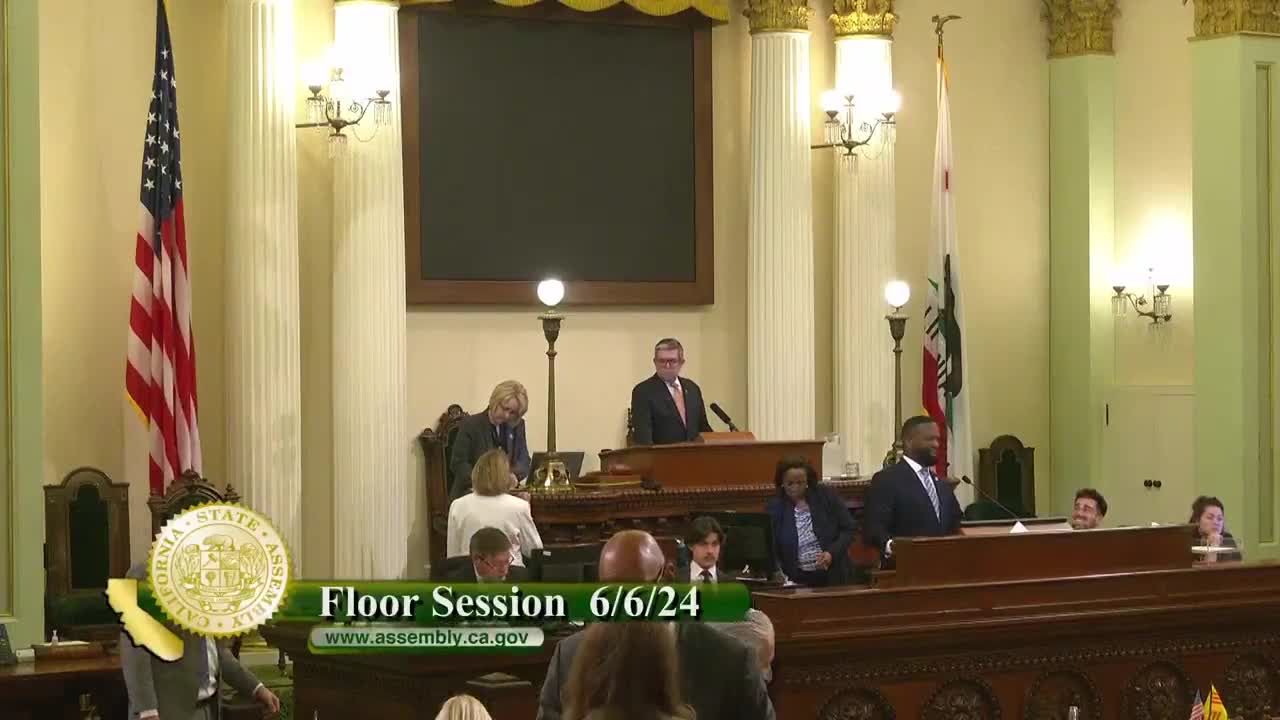 1MIN
Assembly Floor
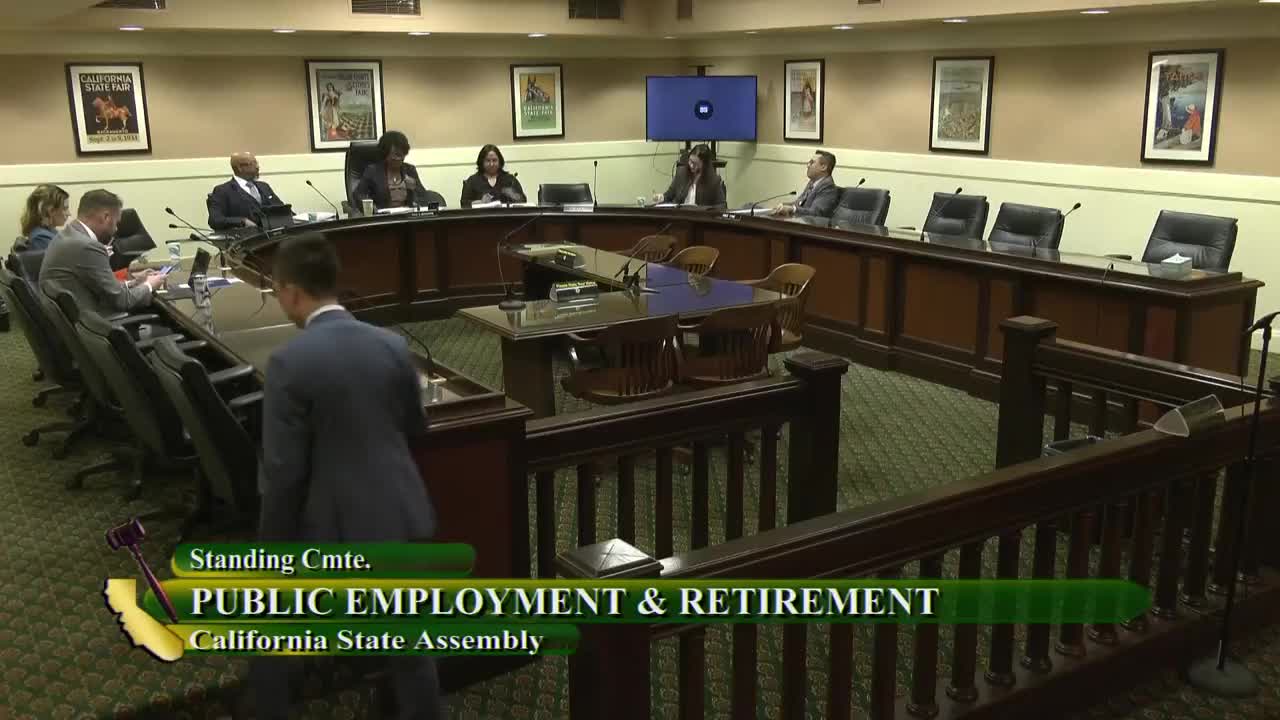 40MIN
Assembly Standing Committee on Public Employment and Retirement

Bill Co-Author(s):