SB 806: Trash receptacles and storage containers: reflective markings: enforcement.
- Session Year: 2023-2024
- House: Senate
- Latest Version Date: 2023-10-10
Current Status:
Passed
(2023-10-10: Chaptered by Secretary of State. Chapter 722, Statutes of 2023.)
Introduced
In Committee
First Chamber
In Committee
Second Chamber
Enacted
Existing law requires, commencing January 1, 2025, a manufacturer who sells or provides for compensation, and, commencing January 1, 2026, an owner of, a trash receptacle or storage container that is longer than 3 feet and taller than 4 feet and that is designed to be placed on a roadway or the curb of a roadway in order to be emptied or picked up to mark the receptacle or container with a reflector on each side, as specified. Existing law provides that a violation of these requirements would result in a criminal infraction punishable by a fine, as specified.
This bill would replace the criterion for a trash receptacle or storage container to be designed to be placed on a roadway or curb to be emptied or picked up with it being placed on a roadway or curb to be emptied or picked up. The bill would reduce the size of the required reflectors, change the required placement of the reflectors, and expand the types of reflectors that meet the requirement, as specified. The bill would authorize the Attorney General, or the district attorney or city attorney in the location where the violation is observed, to enforce a violation of the above-described provisions. The bill would create the Accident Prevention and Road Safety Fund and would require the fines collected to be deposited into this fund.
Existing law requires, commencing January 1, 2025, a manufacturer who sells or provides for compensation, and, commencing January 1, 2026, an owner of, a trash receptacle or storage container that is longer than 3 feet and taller than 4 feet and that is designed to be placed on a roadway or the curb of a roadway in order to be emptied or picked up to mark the receptacle or container with a reflector on each side, as specified. Existing law provides that a violation of these requirements would result in a criminal infraction punishable by a fine, as specified.
This bill would, with respect to a manufacturer, would replace the criterion for a trash receptacle or storage container to be designed to be placed on a roadway or curb to be emptied or picked up with it being placed on a roadway or curb to be emptied or picked up. The bill would reduce the size of the required reflectors, change the required placement of the reflectors, and expand the types of reflectors that meet the requirement, as specified. The bill would authorize the Attorney General, or the district attorney or city attorney in the location where the violation is observed, to enforce a violation of the above-described provisions. The bill would create the Accident Prevention and Road Safety Fund and would require the fines collected to be deposited into this fund.
Existing law requires, commencing January 1, 2025, a manufacturer who sells or provides for compensation, and, commencing January 1, 2026, an owner of, a trash receptacle or storage container that is longer than 3 feet and taller than 4 feet and that is designed to be placed on a roadway or the curb of a roadway in order to be emptied or picked up to mark the receptacle or container with a reflector on each side, as specified. Existing law provides that a violation of these requirements would result in a criminal infraction punishable by a fine, as specified.
This bill would would, with respect to a manufacturer, replace the criterion for a trash receptacle or storage container to be designed to be placed on a roadway or curb to be emptied or picked up with it being placed on a roadway or curb to be emptied or picked up. The bill would reduce the size of the required reflectors, change the required placement of the reflectors, and expand the types of reflectors that meet the requirement, as specified. The bill would authorize the Attorney General, or the district attorney or city attorney in the location where the violation is observed, to enforce a violation of the above-described provisions. The bill would create the Accident Prevention and Road Safety Fund and would require the fines collected to be deposited into this fund.
Existing law requires, commencing January 1, 2025, a manufacturer who sells or provides for compensation, and, commencing January 1, 2026, an owner of, a trash receptacle or storage container that is longer than 3 feet and taller than 4 feet and that is designed to be placed on a roadway or the curb of a roadway in order to be emptied or picked up to mark the receptacle or container with a reflector on each side, as specified. Existing law provides that a violation of these requirements would result in a criminal infraction punishable by a fine, as specified.
This bill would authorize a city counsel the Attorney General, or the district attorney or city attorney in the location where the violation is observed, to enforce a violation of the above-described provisions. The bill would create the Accident Prevention and Road Safety Fund and would require the fines collected to be deposited into this fund.
Existing law requires, commencing January 1, 2025, a manufacturer who sells or provides for compensation, and, commencing January 1, 2026, an owner of, a trash receptacle or storage container that is longer than 3 feet and taller than 4 feet and that is designed to be placed on a roadway or the curb of a roadway in order to be emptied or picked up to mark the receptacle or container with a reflector on each side, as specified. Existing law provides that a violation of these requirements would result in a criminal infraction punishable by a fine, as specified.
This bill would make a technical, nonsubstantive change to that provision.This bill would authorize a city counsel or city attorney to enforce a violation of the above-described provisions. The bill would create the Accident Prevention and Road Safety Fund and would require the fines collected to be deposited into this fund.
Existing law requires, commencing January 1, 2025, a manufacturer who sells or provides for compensation, and, commencing January 1, 2026, an owner of, a trash receptacle or storage container that is longer than 3 feet and taller than 4 feet and that is designed to be placed on a roadway or the curb of a roadway in order to be emptied or picked up to mark the receptacle or container with a reflector on each side, as specified.
This bill would make a technical, nonsubstantive change to that provision.
(a)(1)A manufacturer who sells or provides for compensation a trash receptacle or storage container that is on a roadway or the curb of a roadway in order to be emptied or picked up shall mark the trash receptacle or storage container with a reflector on each side. This paragraph applies to any trash receptacle or storage container marketed for sale on and after January 1, 2025, as well as any trash receptacle or storage container that was manufactured before January 1, 2025, that remains under the ownership of the manufacturer as of January 1, 2025.
(2)(A)An owner, other than a manufacturer, of a trash receptacle or storage container that is on a roadway or the curb of a roadway in order to be emptied or picked up shall mark the trash receptacle or storage container with a reflector on each side. This paragraph applies to any trash receptacle or storage container purchased before, on, or after January 1, 2026.
(B)Notwithstanding subdivision (g), this paragraph shall not become operative until January 1, 2026.
(b)(1)Subject to paragraphs (2) and (3), a trash receptacle or storage container subject to subdivision (a) shall have at least eight strips of reflective tape, each a minimum of two inches wide and two feet long. One tape strip shall be applied horizontally to each of the top and bottom portions of the four corners where the vertical walls of the trash receptacle or storage container meet, and be oriented so that approximately 12 inches of each tape strip is visible on each of the two outside walls to which it is applied. The reflective tape shall be fluorescent yellow and be made of high-performance retroreflective sheeting of American Society for Testing and Materials D4956-13 Type V, VIII, IX, or XI.
(2)If reflective tape cannot be applied to a trash receptacle or storage container in the manner prescribed in paragraph (1) because of the design or a physical characteristic of the trash receptacle or storage container, the reflective tape shall be placed as close to the top and bottom of the trash receptacle or storage container as possible or on the center of the smaller outside facing walls of the trash receptacle or storage container.
(3)A trash receptacle or storage container subject to subdivision (a) shall not be required to comply with the requirements in paragraph (1) if the reflective tape was applied to the trash receptacle or storage container before July 1, 2023, and if the reflective tape is made of high-performance retroreflective sheeting of American Society for Testing and Materials D4956-13 Type V, VIII, IX, or XI.
(c)An owner of a trash receptacle or storage container that is on a roadway or the curb of a roadway in order to be emptied or picked up shall clearly label the trash receptacle or storage container with the owners name and current telephone number.
(d)(1)A manufacturer or an owner who violates this section shall be guilty of an infraction punishable by a fine of one hundred dollars ($100) for the first violation of this section if not corrected within 14 days of notice, five hundred dollars ($500) for the second violation of this section if not corrected within 14 days of notice, and one thousand dollars ($1,000) for the third violation, or any subsequent violation, of this section if not corrected within 14 days of notice. The fines shall be deposited into the Accident Prevention and Road Safety Fund, which is hereby created in the State Treasury. Moneys in the fund are available upon appropriation by the Legislature.
(2)The Attorney General, or the district attorney or city attorney in the location where the violation is observed, may enforce this section.
(3)For purposes of this subdivision, a violation means the failure to mark an individual trash receptacle or storage container as required pursuant to subdivision (a), (b), or (c).
(4)For purposes of this subdivision, owner shall not mean a local governmental entity.
(e)This section only applies to trash receptacles and storage containers that are longer than three feet in length and taller than four feet in height.
(f)For purposes of this section, provides for compensation includes containers that are rented or provided as part of a service for which the owner or manufacturer receives compensation.
(g)This section shall become operative on January 1, 2025.
(a)(1)A manufacturer who sells or provides for compensation a trash receptacle or storage container that is on a roadway or the curb of a roadway in order to be emptied or picked up shall mark the trash receptacle or storage container with a reflector on each side. This paragraph applies to any trash receptacle or storage container marketed for sale on and after January 1, 2025, as well as any trash receptacle or storage container that was manufactured before January 1, 2025, that remains under the ownership of the manufacturer as of January 1, 2025.
(2)(A)An owner, other than a manufacturer, of a trash receptacle or storage container that is designed to be placed on a roadway or the curb of a roadway in order to be emptied or picked up shall mark the trash receptacle or storage container with a reflector on each side. This paragraph applies to any trash receptacle or storage container purchased before, on, or after January 1, 2026.
(B)Notwithstanding subdivision (g), this paragraph shall not become operative until January 1, 2026.
(b)(1)Subject to paragraphs (2) and (3), a trash receptacle or storage container subject to subdivision (a) shall have at least eight strips of reflective tape, each a minimum of two inches wide and two feet long. One tape strip shall be applied horizontally to each of the top and bottom portions of the four corners where the vertical walls of the trash receptacle or storage container meet, and be oriented so that approximately 12 inches of each tape strip is visible on each of the two outside walls to which it is applied.The applied. The reflective tape shall be fluorescent yellow and be made of high-performance retroreflective sheeting of American Society for Testing and Materials D4956-13 Type V, VIII, IX, or XI.
(2)If reflective tape cannot be applied to a trash receptacle or storage container in the manner prescribed in paragraph (1) because of the design or a physical characteristic of the trash receptacle or storage container, the reflective tape shall be placed as close to the top and bottom of the trash receptacle or storage container as possible or on the center of the smaller outside facing walls of the trash receptacle or storage container.
(3)A trash receptacle or storage container subject to subdivision (a) shall not be required to comply with the requirements in paragraph (1) if the reflective tape was applied to the trash receptacle or storage container before July 1, 2023, and if the reflective tape is made of high-performance retroreflective sheeting of American Society for Testing and Materials D4956-13 Type V, VIII, IX, or XI.
(c)An owner of a trash receptacle or storage container that is designed to be placed on a roadway or the curb of a roadway in order to be emptied or picked up shall clearly label the trash receptacle or storage container with the owners name and current telephone number.
(d)(1)A manufacturer or an owner who violates this section shall be guilty of an infraction punishable by a fine of one hundred dollars ($100) for the first violation of this section if not corrected within 14 days of notice, five hundred dollars ($500) for the second violation of this section if not corrected within 14 days of notice, and one thousand dollars ($1,000) for the third violation, or any subsequent violation, of this section if not corrected within 14 days of notice. The fines shall be deposited into the Accident Prevention and Road Safety Fund, which is hereby created in the State Treasury. Moneys in the fund are available upon appropriation by the Legislature.
(2)The Attorney General, or the district attorney or city attorney in the location where the violation is observed, may enforce this section.
(3)For purposes of this subdivision, a violation means the failure to mark an individual trash receptacle or storage container as required pursuant to subdivision (a), (b), or (c).
(4)For purposes of this subdivision, owner shall not mean a local governmental entity.
(e)This section only applies to trash receptacles and storage containers that are longer than three feet in length and taller than four feet in height.
(f)For purposes of this section, provides for compensation includes containers that are rented or provided as part of a service for which the owner or manufacturer receives compensation.
(g)This section shall become operative on January 1, 2025.
(a)(1)A manufacturer who sells or provides for compensation a trash receptacle or storage container that is designed to be placed on a roadway or the curb of a roadway in order to be emptied or picked up shall mark the trash receptacle or storage container with a reflector on each side. This paragraph applies to any trash receptacle or storage container marketed for sale on and after January 1, 2025, as well as any trash receptacle or storage container that was manufactured before January 1, 2025, that remains under the ownership of the manufacturer as of January 1, 2025.
(2)(A)An owner, other than a manufacturer, of a trash receptacle or storage container that is designed to be placed on a roadway or the curb of a roadway in order to be emptied or picked up shall mark the trash receptacle or storage container with a reflector on each side. This paragraph applies to any trash receptacle or storage container purchased before, on, or after January 1, 2026.
(B)Notwithstanding subdivision (g), this paragraph shall not become operative until January 1, 2026.
(b)A trash receptacle or storage container subject to subdivision (a) shall have a strip of reflective tape that is at a minimum six inches wide and four feet long placed vertically over each corner of the container where two vertical sides of the container meet. (1)Subject to paragraphs (2) and (3), a trash receptacle or storage container subject to subdivision (a) shall have at least eight strips of reflective tape, each a minimum of two inches wide and two feet long. One tape strip shall be applied horizontally to each of the top and bottom portions of the four corners where the vertical walls of the trash receptacle or storage container meet, and be oriented so that approximately 12 inches of each tape strip is visible on each of the two outside walls to which it is applied.The reflective tape shall be fluorescent yellow and be made of high-performance retroreflective sheeting of American Society for Testing and Materials D4956-13 Type IX. V, VIII, IX, or XI.
(2)If reflective tape cannot be applied to a trash receptacle or storage container in the manner prescribed in paragraph (1) because of the design or a physical characteristic of the trash receptacle or storage container, the reflective tape shall be placed as close to the top and bottom of the trash receptacle or storage container as possible or on the center of the smaller outside facing walls of the trash receptacle or storage container.
(3)A trash receptacle or storage container subject to subdivision (a) shall not be required to comply with the requirements in paragraph (1) if the reflective tape was applied to the trash receptacle or storage container before July 1, 2023, and if the reflective tape is made of high-performance retroreflective sheeting of American Society for Testing and Materials D4956-13 Type V, VIII, IX, or XI.
(c)An owner of a trash receptacle or storage container that is designed to be placed on a roadway or the curb of a roadway in order to be emptied or picked up shall clearly label the trash receptacle or storage container with the owners name and current telephone number.
(d)(1)A manufacturer or an owner who violates this section shall be guilty of an infraction punishable by a fine of one hundred dollars ($100) for the first violation of this section, section if not corrected within 14 days of notice, five hundred dollars ($500) for the second violation of this section, section if not corrected within 14 days of notice, and one thousand dollars ($1,000) for the third violation, or any subsequent violation, of this section. section if not corrected within 14 days of notice. The fines shall be deposited into the Accident Prevention and Road Safety Fund, which is hereby created in the State Treasury. Moneys in the fund are available upon appropriation by the Legislature.
(2)The Attorney General, or the district attorney or city attorney in the location where the violation is observed, may enforce this section.
(3)For purposes of this subdivision, a violation means the failure to mark an individual trash receptacle or storage container as required pursuant to subdivision (a), (b), or (c).
(4)For purposes of this subdivision, owner shall not mean a local governmental entity.
(e)This section only applies to trash receptacles and storage containers that are longer than three feet in length and taller than four feet in height.
(f)For purposes of this section, provides for compensation includes containers that are rented or provided as part of a service for which the owner or manufacturer receives compensation.
(g)This section shall become operative on January 1, 2025.
(a)(1)A manufacturer who sells or provides for compensation a trash receptacle or storage container that is designed to be placed on a roadway or the curb of a roadway in order to be emptied or picked up shall mark the trash receptacle or storage container with a reflector on each side. This paragraph applies to any trash receptacle or storage container marketed for sale on and after January 1, 2025, as well as any trash receptacle or storage container that was manufactured before January 1, 2025, that remains under the ownership of the manufacturer as of January 1, 2025.
(2)(A)An owner, other than a manufacturer, of a trash receptacle or storage container that is designed to be placed on a roadway or the curb of a roadway in order to be emptied or picked up shall mark the trash receptacle or storage container with a reflector on each side. This paragraph applies to any trash receptacle or storage container purchased before, on, or after January 1, 2026.
(B)Notwithstanding subdivision (g), this paragraph shall not become operative until January 1, 2026.
(b)A trash receptacle or storage container subject to subdivision (a) shall have a strip of reflective tape that is at a minimum six inches wide and four feet long placed vertically over each corner of the container where two vertical sides of the container meet. The reflective tape shall be fluorescent yellow and be made of high-performance retroreflective sheeting of American Society for Testing and Materials D4956-13 Type IX.
(c)An owner of a trash receptacle or storage container that is designed to be placed on a roadway or the curb of a roadway in order to be emptied or picked up shall clearly label the trash receptacle or storage container with the owners name and current telephone number.
(d)(1)A manufacturer or an owner who violates this section shall be guilty of an infraction punishable by a fine of one hundred dollars ($100) for the first violation of this section, five hundred dollars ($500) for the second violation of this section, and one thousand dollars ($1,000) for the third violation, or any subsequent violation, of this section. The fines shall be deposited into the Accident Prevention and Road Safety Fund, which is hereby created in the State Treasury. Moneys in the fund are available upon appropriation by the Legislature.
(2)The Attorney General, or the district attorney or city attorney or city counsel in the location where the violation is observed observed, may enforce this section.
(3)For purposes of this subdivision, a violation means the failure to mark an individual trash receptacle or storage container as required pursuant to subdivision (a), (b), or (c).
(4)For purposes of this subdivision, owner shall not mean a local governmental entity.
(e)This section only applies to trash receptacles and storage containers that are longer than three feet in length and taller than four feet in height.
(f)For purposes of this section, provides for compensation includes containers that are rented or provided as part of a service for which the owner or manufacturer receives compensation.
(g)This section shall become operative on January 1, 2025.
(a)(1)A manufacturer who sells or provides for compensation a trash receptacle or storage container that is designed to be placed on a roadway or the curb of a roadway in order to be emptied or picked up shall mark the trash receptacle or storage container with a reflector on each side. This paragraph applies to any trash receptacle or storage container marketed for sale on and after January 1, 2025, as well as any trash receptacle or storage container that was manufactured before January 1, 2025, that remains under the ownership of the manufacturer as of January 1, 2025.
(2)(A)An owner, other than a manufacturer, of a trash receptacle or storage container that is designed to be placed on a roadway or the curb of a roadway in order to be emptied or picked up shall mark the trash receptacle or storage container with a reflector on each side. This paragraph applies to any trash receptacle or storage container purchased before, on, or after January 1, 2026.
(B)Notwithstanding subdivision (g), this paragraph shall not become operative until January 1, 2026.
(b)A trash receptacle or storage container subject to subdivision (a) shall have a strip of reflective tape that is at a minimum six inches wide and four feet long placed vertically over each corner of the container where two vertical sides of the container meet. The reflective tape shall be fluorescent yellow and be made of high-performance retroreflective sheeting of American Society for Testing and Materials D4956-13 Type IX.
(c)An owner of a trash receptacle or storage container that is designed to be placed on a roadway or the curb of a roadway in order to be emptied or picked up shall clearly label the trash receptacle or storage container with the owners name and current telephone number.
(d)(1)A manufacturer or an owner who violates this section shall be guilty of an infraction punishable by a fine of one hundred dollars ($100) for the first violation of this section, five hundred dollars ($500) for the second violation of this section, and one thousand dollars ($1,000) for the third violation, or any subsequent violation, of this section. The fines shall be deposited into the Accident Prevention and Road Safety Fund, which is hereby created in the State Treasury. Moneys in the fund are available upon appropriation by the Legislature.
(2)The city attorney or city counsel in the location where the violation is observed may enforce this section.
(2)(3)For purposes of this subdivision, a violation means the failure to mark an individual trash receptacle or storage container as required pursuant to subdivision (a), (b), or (c).
(3)(4)For purposes of this subdivision, owner shall not mean a local governmental entity.
(e)This section only applies to trash receptacles and storage containers that are longer than three feet in length and taller than four feet in height.
(f)For purposes of this section, provides for compensation includes containers that are rented or provided as part of a service for which the owner or manufacturer receives compensation.
(g)This section shall become operative on January 1, 2025.
(a)(1)A manufacturer who sells or provides for compensation a trash receptacle or storage container that is designed to be placed on a roadway or the curb of a roadway in order to be emptied or picked up shall mark the trash receptacle or storage container with a reflector on each side. This paragraph applies to any trash receptacle or storage container marketed for sale on and after January 1, 2025, as well as any trash receptacle or storage container that was manufactured before January 1, 2025, that remains under the ownership of the manufacturer as of January 1, 2025.
(2)(A)An owner, other than a manufacturer, of a trash receptacle or storage container that is designed to be placed on a roadway or the curb of a roadway in order to be emptied or picked up shall mark the trash receptacle or storage container with a reflector on each side. This paragraph applies to any trash receptacle or storage container purchased before, on, or after January 1, 2026.
(B)Notwithstanding subdivision (g), this paragraph shall not become operative until January 1, 2026.
(b)A trash receptacle or storage container subject to subdivision (a) shall have a strip of reflective tape that is at a minimum six inches wide and four feet long placed vertically over each corner of the container where two vertical sides of the container meet. The reflective tape shall be fluorescent yellow and be made of high-performance retroreflective sheeting of American Society for Testing and Materials (ASTM) D4956-13 Type IX.
(c)An owner of a trash receptacle or storage container that is designed to be placed on a roadway or the curb of a roadway in order to be emptied or picked up shall clearly label the trash receptacle or storage container with the owners name and current telephone number.
(d)(1)A manufacturer or an owner who violates this section shall be guilty of an infraction punishable by a fine of one hundred dollars ($100) for the first violation of this section, five hundred dollars ($500) for the second violation of this section, and one thousand dollars ($1,000) for the third violation, or any subsequent violation, of this section.
(2)For purposes of this subdivision, a violation means the failure to mark an individual trash receptacle or storage container as required pursuant to subdivision (a), (b), or (c).
(3)For purposes of this subdivision, owner shall not mean a local governmental entity.
(e)This section only applies to trash receptacles and storage containers that are longer than three feet in length and taller than four feet in height.
(f)For purposes of this section, provides for compensation includes containers that are rented or provided as part of a service for which the owner or manufacturer receives compensation.
(g)This section shall become operative on January 1, 2025.
|
Date
|
Status
|
|---|---|
| Oct 10, 2023 | Chaptered by Secretary of State. Chapter 722, Statutes of 2023. |
| Oct 10, 2023 | Approved by the Governor. |
| Sep 21, 2023 | Enrolled and presented to the Governor at 4 p.m. |
| Sep 14, 2023 | Assembly amendments concurred in. (Ayes 40. Noes 0. Page 2795.) Ordered to engrossing and enrolling. |
| Sep 13, 2023 | In Senate. Concurrence in Assembly amendments pending. |
| Sep 13, 2023 | Read third time. Passed. (Ayes 65. Noes 12. Page 3352.) Ordered to the Senate. |
| Sep 8, 2023 | Ordered to third reading. |
| Sep 8, 2023 | Read third time and amended. |
| Aug 24, 2023 | Read second time. Ordered to third reading. |
| Aug 23, 2023 | From committee: Do pass. (Ayes 11. Noes 4.) (August 23). |
| Jul 10, 2023 | Read second time and amended. Re-referred to Com. on APPR. |
| Jul 6, 2023 | From committee: Do pass as amended and re-refer to Com. on APPR. (Ayes 13. Noes 2.) (July 5). |
| Jun 15, 2023 | Referred to Com. on TRANS. |
| May 25, 2023 | In Assembly. Read first time. Held at Desk. |
| May 25, 2023 | Read third time. Passed. (Ayes 40. Noes 0. Page 1288.) Ordered to the Assembly. |
| May 9, 2023 | Read second time. Ordered to third reading. |
| May 8, 2023 | From committee: Be ordered to second reading pursuant to Senate Rule 28.8. |
| May 2, 2023 | Set for hearing May 8. |
| Apr 27, 2023 | Read second time and amended. Re-referred to Com. on APPR. |
| Apr 26, 2023 | From committee: Do pass as amended and re-refer to Com. on APPR. (Ayes 11. Noes 0. Page 896.) (April 25). |
| Apr 14, 2023 | Set for hearing April 25. |
| Mar 29, 2023 | Re-referred to Com. on JUD. |
| Mar 22, 2023 | From committee with author's amendments. Read second time and amended. Re-referred to Com. on RLS. |
| Mar 1, 2023 | Referred to Com. on RLS. |
| Feb 21, 2023 | From printer. May be acted upon on or after March 20. |
| Feb 17, 2023 | Introduced. Read first time. To Com. on RLS. for assignment. To print. |
|
Date
|
Description
|
Location
|
Votes
|
|
|---|---|---|---|---|
| Sep 14, 2023 | Unfinished Business SB806 Archuleta Concurrence | Senate Floor |
Passed |
|
| Sep 13, 2023 | SB 806 Archuleta Senate Third Reading By Calderon | Assembly Floor |
Passed |
|
| Aug 23, 2023 | Do pass. | Assembly Standing Committee on Appropriations |
Passed |
|
| Jul 5, 2023 | Do pass as amended and be re-referred to the Committee on [Appropriations] | Assembly Standing Committee on Transportation |
Passed |
|
| May 25, 2023 | Senate 3rd Reading SB806 Archuleta | Senate Floor |
Passed |
|
| Apr 25, 2023 | Do pass as amended, but first amend, and re-refer to the Committee on [Appropriations] | Senate Standing Committee on Judiciary |
Passed |
This list shows positions taken on this bill by organizations on the date displayed, which is linked to the original source.
Positions by individuals are not included.
|
Organization
|
Position
|
Date
|
|---|---|---|
| 3M | ** Support |
SENATE RULES COMMITTEE Office of Senate Floor Analyses (916) 651-1520 Fax: (916) 327-4478 | SB 806 |
UNFINISHED BUSINESS
Bill No: SB 806
Author: Archuleta (D)
Amended: 9/8/23
Vote: 21
SENATE JUDICIARY COMMITTEE: 11-0, 4/25/23
AYES: Umberg, Wilk, Allen, Ashby, Caballero, Durazo, Laird, Min, Niello, Stern, Wiener
SENATE APPROPRIATIONS COMMITTEE: Senate Rule 28.8
SENATE FLOOR: 40-0, 5/25/23
AYES: Allen, Alvarado-Gil, Archuleta, Ashby, Atkins, Becker, Blakespear, Bradford, Caballero, Cortese, Dahle, Dodd, Durazo, Eggman, Glazer, Gonzalez, Grove, Hurtado, Jones, Laird, Limón, McGuire, Menjivar, Min, Newman, Nguyen, Niello, Ochoa Bogh, Padilla, Portantino, Roth, Rubio, Seyarto, Skinner, Smallwood-Cuevas, Stern, Umberg, Wahab, Wiener, Wilk
ASSEMBLY FLOOR: 65-12, 9/13/23 - See last page for vote
SUBJECT: Trash receptacles and storage containers: reflective markings: enforcement
SOURCE: Author
DIGEST:
This bill authorizes the Attorney General, or the district attorney or city attorney in the location where a violation is observed, to enforce the law requiring certain markings to be placed on trash receptacles, including reflectors and certain contact information. This bill establishes a fund within the State Treasury where all collected fines are to be deposited.
Assembly Amendments
change the technical specifications for the reflective markings and provide a right to cure.
ANALYSIS:
Existing law:
- Requires motortrucks, semitrailers, and buses 80 or more inches in width to be equipped with an amber reflector on each side at the front and a red reflector on each side at the rear, and if the vehicle is 30 or more feet in length, the vehicle must be equipped with an amber reflector on each side at the approximate midpoint of the vehicle. (Veh. Code § 24068.)
- Provides vehicles with a gross vehicle weight rating of over 10,000 may alternatively comply with reflector-marking requirements set forth in federal regulations; they must also be equipped with the federally mandated conspicuity system consisting of retroreflective sheeting, reflex reflectors, or a combination thereof. (Veh. Code §§ 244611; see 49 C.F.R. 571.108.)
- Requires truck tractors and certain vehicles 80 or more inches in width to be equipped with at least three red emergency reflectors, maintained in good working condition, to be used when the vehicle is disabled on the roadway during darkness, in configurations contingent upon the distance of the vehicle from the road. (Veh. Code § 25300.)
- Requires electrically motorized boards operated upon a highway during darkness to be equipped with, among other things, a red reflector on the rear that is visible from a distance of 500 feet, and a white or yellow reflector on each side that is visible from a distance of 200 feet. (Veh. Code § 21293.)
- Requires utility or public utility vehicles operated during darkness to have a warning light, which may consist of a reflector, not more than 50 feet in advance of the vehicle and not more than 50 feet to the rear, or farther as specified when the speed limit on the highway is in excess of 25 miles per hour. (Veh. Code, § 25301.)
- Provides, generally, that reflectors on the front of a vehicle shall be white or yellow, and generally prohibits the use of red reflectorizing material on the front of a vehicle. (Veh. Code, §§ 25500, 25950.)
- Authorizes a writ of mandate to be issued by any court to compel the performance of a legal duty imposed on a public body. (Code Civ. Proc., § 1085(a); James v. State of California (2014) 229 Cal.App.4th 130, 136.)
- Requires that a manufacturer who sells or provides for compensation a trash receptacle or storage container that is designed to be placed on a roadway or the curb of a roadway in order to be emptied or picked up shall mark the trash receptacle or storage container with a reflector on each side, beginning January 1, 2025. (Health & Saf. Code § 26275.)
- Requires the above reflector markings to include a strip of reflective tape that is at least six inches wide and four inches long placed vertically over each corner of the container where two vertical sides of the container meet. The reflective tape must be fluorescent yellow and made of high-performance retroreflective sheeting of American Society for Testing and Materials (ASTM) D4956-13 Type IX. The requirement applies to any trash receptacle or storage container marketed for sale on and after January 1, 2025, as well as any receptacle or container manufactured previously but still under the ownership of the manufacturer. (Health & Saf. Code § 26275.)
- Requires an owner, other than the manufacturer, of a trash receptacle or storage container that is designed to be placed on a roadway or the curb of a roadway in order to be emptied or picked up shall mark the trash receptacle or storage container with a reflector on each side, beginning January 1, 2026. (Health & Saf. Code § 26275.)
- Requires that an owner of a trash receptacle or storage container who sells or provides it for compensation that is designed to be placed on a roadway or the curb of a roadway in order to be emptied or picked up shall clearly label the trash receptacle or storage container with the owner’s name and current telephone number, beginning January 1, 2025. (Health & Saf. Code § 26275.)
- Provides that a manufacturer or owner, other than a local government entity, who violates the above provisions is guilty of an infraction punishable by a fine, as follows:
- $100 for the first infraction;
- $500 for the second infraction; and
- $1,000 for the third and any subsequent infractions. (Health & Saf. Code § 26275.)
This bill:
- Amends the technical specifications of the type of reflective markings required to be placed on trash receptacles. It applies the law to containers and receptacles that are on roadways or curbs, rather than those “designed to be placed” in such places.
- Authorizes the Attorney General, or the district attorney or city attorney in the location where a violation of the trash receptacle reflector law is observed, to enforce this section.
- Provides a 14-day right to cure any violations upon notice.
- Establishes the Accident Prevention and Road Safety Fund in the State Treasury.
- Provides that all fines for violations of the reflector law are to be deposited in the above fund. Such funds are available upon appropriation by the Legislature.
Background
In order to address the safety issues with unmarked trash receptacles for motorists, cyclists, and pedestrians, legislation was passed to require reflectors on specified bins beginning January 1, 2025. Owners are also required to place their name and phone number on the bins. This bill amends the technical specifications of those markings.
A manufacturer or an owner who violates this section is guilty of an infraction punishable by a fine of $100 for the first violation, $500 for the second violation, and $1,000 for the third, or any subsequent violation.
To ensure enforcement of this law, this bill authorizes the Attorney General, or the district attorney or city attorney in the location where a violation is observed, to enforce this section. It further specifies that any collected fines are to be deposited into the Accident Prevention and Road Safety Fund, which is created in the State Treasury by this bill. A right to cure is provided for violations.
This bill is author-sponsored. There is no known support or opposition.
Comments
SB 1111 (Archuleta, Chapter 244, Statutes of 2022) was introduced and signed into law in response to concerns that the absence of nighttime safety markings on large trash receptacles that are placed in the street for pickup can be a safety hazard for motorists, cyclists, and pedestrians who might not see the receptacles until it is too late. SB 1111 established the Rick Best Safety Act, which requires a person who sells, or provides for compensation, a trash receptacle or storage container designed to be placed on the side of the road or curb to be emptied, which is larger than three feet in length and four feet in height (collectively, bins), to mark the bin with a reflector on each side, beginning on January 1, 2025.
Owners of bins purchased before the marking requirement takes effect have until January 1, 2026, to add reflectors to their bins. The law also requires bin owners, beginning January 1, 2025, to mark their bins with their name and telephone number so as to ensure that they can be contacted in the case of violations.
A violation of the reflector and labeling requirements is an infraction, unless the owner or seller is a local government entity, punishable by an escalating fine: $100 for the first violation, $500 for the second violation, and $1,000 for the third and any subsequent violations.
The law becomes operative on January 1, 2025.
This bill makes several changes to this law. It creates the Accident Prevention and Road Safety Fund in the State Treasury. All fines collected in connection with violations of this law are to be deposited into this fund. Moneys in the fund are available upon appropriation by the Legislature.
This bill also provides that the Attorney General, or the district attorney or city attorney in the location where a violation is observed, may enforce the law. As it stands, public prosecutors are given broad authority to enforce violations of the law, pursuant to statutes such as the Unfair Competition Law, for instance. This provision works to ensure that these public prosecutors are among those offices that can so enforce the Rick Best Safety Act. The bill also provides a 14-day right to cure, which will arguably hamper compliance and enforcement, especially as it applies to subsequent violations.
FISCAL EFFECT: Appropriation: No Fiscal Com.: Yes Local: No
According to the Assembly Appropriations Committee: “Negligible state costs, if any.”
SUPPORT: (Verified 9/12/23)
None received
OPPOSITION: (Verified 9/12/23)
None received
ARGUMENTS IN SUPPORT: According to the author:
The Best Safety Act, named after long time legislative staff and lobbyist Roderick “Rick” Best who sadly passed away after a traffic accident with an unmarked dumpster, is a necessary safety measure that will protect the lives of everyone on our roadways. This commonsense bill will require large trash receptacles placed on roads or curbs that are virtually invisible on a dark night to have reflective markings on both sides. Making our roads safer for all will save lives and prevent serious injuries.
ASSEMBLY FLOOR: 65-12, 9/13/23
AYES: Addis, Aguiar-Curry, Alvarez, Arambula, Bains, Bauer-Kahan, Bennett, Berman, Boerner, Bonta, Bryan, Calderon, Juan Carrillo, Wendy Carrillo, Cervantes, Connolly, Davies, Mike Fong, Friedman, Gabriel, Garcia, Gipson, Grayson, Haney, Hart, Holden, Irwin, Jackson, Jones-Sawyer, Kalra, Lackey, Lee, Low, Lowenthal, Maienschein, McCarty, McKinnor, Muratsuchi, Stephanie Nguyen, Ortega, Pacheco, Papan, Pellerin, Petrie-Norris, Quirk-Silva, Ramos, Rendon, Reyes, Luz Rivas, Rodriguez, Blanca Rubio, Santiago, Schiavo, Soria, Ting, Valencia, Villapudua, Wallis, Ward, Weber, Wicks, Wilson, Wood, Zbur, Robert Rivas
NOES: Alanis, Chen, Megan Dahle, Dixon, Essayli, Flora, Vince Fong, Hoover, Mathis, Joe Patterson, Sanchez, Waldron
NO VOTE RECORDED: Gallagher, Jim Patterson, Ta
Prepared by: Christian Kurpiewski / JUD. / (916) 651-4113
9/14/23 11:40:28
*** END ****
SENATE THIRD READING
STR Bill Id:SB 806
Author:(Archuleta)
As Amended Ver:September 8, 2023
Majority vote
SUMMARY
Authorizes the Attorney General, or the district attorney or city attorney to enforce the law requiring reflectors and contact information to be placed on trash receptacles and establishes the Accident Prevention and Road Safety Fund within the State Treasury where all collected fines are to be deposited and available upon appropriation by the Legislature.
Major Provisions
- Create a design criteria for manufacturers of trash receptacles or storage containers on a roadway or curb to be emptied or picked up.
- Design criteria includes; reduces the size of the required reflectors, changes the required placement of the reflectors, and expands the types of reflectors that meet the requirement, as specified.
COMMENTS
Objects on the road at night—even large ones—are hard to see. In recognition of this, current law establishes lighting and reflector requirements for vehicles and equipment on the roadway at night to make them visible, so as to avoid collisions.
Starting in 2025, trash receptacles and storage containers will be required to be marked with reflectors on each side. These bins can be very large and very heavy, and can lead to tragedy when collided with by an unsuspecting person. The absence of nighttime safety markings on large trash receptacles that are placed in the street for pickup can be a safety hazard for motorists, cyclists, and pedestrians who might not see the receptacles until it is too late.
Owners of bins purchased before the marking requirement takes effect have until January 1, 2026, to add reflectors to their bins. The law also requires bin owners, beginning January 1, 2025, to mark their bins with their name and telephone number so as to ensure that they can be contacted in the case of violations.
A violation of the reflector and labeling requirements is an infraction, unless the owner or seller is a local government entity, punishable by an escalating fine: $100 for the first violation, $500 for the second violation, and $1,000 for the third and any subsequent violations.
In 2002, long time staffer and environmental advocate, Rick Best was killed after colliding with an unmarked dumpster late at night. This bill seeks to add technical changes to existing law, in order to help prevent collisions with vehicles, bikers, joggers, skaters and others.
This bill makes minor changes to existing law. It creates the Accident Prevention and Road Safety Fund in the State Treasury, and authorizes the Attorney General, or the district attorney or city attorney to enforce the law requiring certain markings to be placed on trash receptacles, including reflectors and certain contact information.
According to the Author
"The Best Safety Act, named after long time legislative staff and lobbyist Roderick "Rick" Best who sadly passed away after a traffic accident with an unmarked dumpster, is a necessary safety measure that will protect the lives of everyone on our roadways. This commonsense bill will require large trash receptacles placed on roads or curbs that are virtually invisible on a dark night to have reflective markings on both sides. Making our roads safer for all will save lives and prevent serious injuries."
Arguments in Support
3M writes, "SB 806 is another important step California can take to improve roadway safety. We commend you for this effort and we are grateful for your efforts to honor a valued member of the Capitol family, Rock Best, as well as your commitment to keeping motorists safe."
Arguments in Opposition
No opposition on file.
FISCAL COMMENTS
According to the Assembly Appropriations Committee: Negligible state costs, if any.
VOTES
SENATE FLOOR: 40-0-0
YES: Allen, Alvarado-Gil, Archuleta, Ashby, Atkins, Becker, Blakespear, Bradford, Caballero, Cortese, Dahle, Dodd, Durazo, Eggman, Glazer, Gonzalez, Grove, Hurtado, Jones, Laird, Limón, McGuire, Menjivar, Min, Newman, Nguyen, Niello, Ochoa Bogh, Padilla, Portantino, Roth, Rubio, Seyarto, Skinner, Smallwood-Cuevas, Stern, Umberg, Wahab, Wiener, Wilk
ASM TRANSPORTATION: 13-2-0
YES: Friedman, Alvarez, Berman, Juan Carrillo, Davies, Gipson, Hart, Jackson, Kalra, Stephanie Nguyen, Wallis, Ward, Wicks
NO: Vince Fong, Sanchez
ASM APPROPRIATIONS: 11-4-1
YES: Holden, Bryan, Calderon, Wendy Carrillo, Mike Fong, Hart, Papan, Pellerin, Soria, Weber, Wilson
NO: Megan Dahle, Dixon, Mathis, Sanchez
ABS, ABST OR NV: McCarty
UPDATED
VERSION: September 8, 2023
CONSULTANT: Julia Kingsley / TRANS. / (916) 319-2093 FN: 0002134
SENATE THIRD READING
STR Bill Id:SB 806
Author:(Archuleta)
As Amended Ver:July 10, 2023
Majority vote
SUMMARY
Authorizes the Attorney General, or the district attorney or city attorney to enforce the law requiring reflectors and contact information to be placed on trash receptacles and establishes the Accident Prevention and Road Safety Fund within the State Treasury where all collected fines are to be deposited and available upon appropriation by the Legislature.
Major Provisions
Creates a design criteria for manufacturers of trash receptacles or storage containers to be placed on a roadway or curb to be emptied or picked up.
- Design criteria includes; reduces the size of the required reflectors, changes the required placement of the reflectors, and expands the types of reflectors that meet the requirement, as specified.
COMMENTS
Objects on the road at night – even large ones – are hard to see. In recognition of this, current law establishes lighting and reflector requirements for vehicles and equipment on the roadway at night to make them visible, so as to avoid collisions.
Starting in 2025, trash receptacles and storage containers will be required to be marked with reflectors on each side. These bins can be very large and very heavy, and can lead to tragedy when collided with by an unsuspecting person. The absence of nighttime safety markings on large trash receptacles that are placed in the street for pickup can be a safety hazard for motorists, cyclists, and pedestrians who might not see the receptacles until it is too late.
Owners of bins purchased before the marking requirement takes effect have until January 1, 2026, to add reflectors to their bins. The law also requires bin owners, beginning January 1, 2025, to mark their bins with their name and telephone number so as to ensure that they can be contacted in the case of violations.
A violation of the reflector and labeling requirements is an infraction, unless the owner or seller is a local government entity, punishable by an escalating fine: $100 for the first violation, $500 for the second violation, and $1,000 for the third and any subsequent violations.
In 2002, long time staffer and environmental advocate, Rick Best was killed after colliding with an unmarked dumpster late at night. This bill seeks to add technical changes to existing law, in order to help prevent collisions with vehicles, bikers, joggers, skaters and others.
This bill makes minor changes to existing law. It creates the Accident Prevention and Road Safety Fund in the State Treasury, and authorizes the Attorney General, or the district attorney or city attorney to enforce the law requiring certain markings to be placed on trash receptacles, including reflectors and certain contact information.
According to the Author
"The Best Safety Act, named after long time legislative staff and lobbyist Roderick "Rick" Best who sadly passed away after a traffic accident with an unmarked dumpster, is a necessary safety measure that will protect the lives of everyone on our roadways. This commonsense bill will require large trash receptacles placed on roads or curbs that are virtually invisible on a dark night to have reflective markings on both sides. Making our roads safer for all will save lives and prevent serious injuries."
Arguments in Support
3M writes, "SB 806 is another important step California can take to improve roadway safety. We commend you for this effort and we are grateful for your efforts to honor a valued member of the Capitol family, Rock Best, as well as your commitment to keeping motorists safe."
Arguments in Opposition
None on file
FISCAL COMMENTS
According to the Assembly Appropriations Committee, negligible state costs, if any.
VOTES
SENATE FLOOR: 40-0-0
YES: Allen, Alvarado-Gil, Archuleta, Ashby, Atkins, Becker, Blakespear, Bradford, Caballero, Cortese, Dahle, Dodd, Durazo, Eggman, Glazer, Gonzalez, Grove, Hurtado, Jones, Laird, Limón, McGuire, Menjivar, Min, Newman, Nguyen, Niello, Ochoa Bogh, Padilla, Portantino, Roth, Rubio, Seyarto, Skinner, Smallwood-Cuevas, Stern, Umberg, Wahab, Wiener, Wilk
ASM TRANSPORTATION: 13-2-0
YES: Friedman, Alvarez, Berman, Juan Carrillo, Davies, Gipson, Hart, Jackson, Kalra, Stephanie Nguyen, Wallis, Ward, Wicks
NO: Vince Fong, Sanchez
ASM APPROPRIATIONS: 11-4-1
YES: Holden, Bryan, Calderon, Wendy Carrillo, Mike Fong, Hart, Papan, Pellerin, Soria, Weber, Wilson
NO: Megan Dahle, Dixon, Mathis, Sanchez
ABS, ABST OR NV: McCarty
UPDATED
VERSION: April 27, 2023
CONSULTANT: Julia Kingsley / TRANS. / (916) 319-2093 FN: 0001315
Date of Hearing: August 23, 2023
ASSEMBLY COMMITTEE ON APPROPRIATIONS
Chris Holden, Chair
SBPCA Bill Id:SB 806
Author:(Archuleta) – As Amended Ver:July 10, 2023
Policy Committee: | Transportation | Vote: | 13 - 2 |
|
| ||
|
|
Urgency: No State Mandated Local Program: No Reimbursable: No
SUMMARY:
This bill authorizes the Attorney General, or the district attorney or city attorney in the location where a violation occurs, to enforce existing law requiring reflectors and contact information to be placed on trash receptacles. The bill also establishes the Accident Prevention and Road Safety Fund where all collected fines are to be deposited and available upon appropriation by the Legislature.
The bill also specifies the location and characteristics of reflective tape that existing law requires a manufacturer or owner to place on a trash receptacle if the reflective tape was applied on or after July 1, 2023, if certain conditions are met.
FISCAL EFFECT:
Negligible state costs, if any.
COMMENTS:
In 2022, the Legislature approved SB 1111 (Archuleta), Chapter 244, Statutes of 2022, to require a person who sells, or provides for compensation, a trash or storage bin designed to be placed on the side of the road or curb to be emptied to mark the bin with a reflector on each side, beginning on January 1, 2025. Owners of bins purchased before the marking requirement takes effect have until January 1, 2026, to add reflectors to their bins. The law also requires bin owners, beginning January 1, 2025, to mark their bins with their name and telephone number to ensure they can be contacted in the case of violations. SB 1111 provides that a violation of the reflector and labeling requirements is an infraction, unless the owner or seller is a local government entity, punishable by an escalating fine: $100 for the first violation, $500 for the second violation, and $1,000 for the third and any subsequent violations.
This bill makes minor changes to SB 1111, none of which create state costs. There is no opposition to this bill.
Analysis Prepared by: Jay Dickenson / APPR. / (916) 319-2081
Date of Hearing: July 5, 2023
ASSEMBLY COMMITTEE ON TRANSPORTATION
Laura Friedman, Chair
SBPCA Bill Id:SB 806
Author:(Archuleta) – As Amended Ver:April 27, 2023
SENATE VOTE: 40-0
SUBJECT: Trash receptacles and storage containers: reflective markings: enforcement
SUMMARY: Authorizes the Attorney General, or the district attorney or city attorney to enforce the law requiring reflectors and contact information to be placed on trash receptacles and establishes the Accident Prevention and Road Safety Fund within the State Treasury where all collected fines are to be deposited and available upon appropriation by the Legislature.
EXISTING LAW:
- Requires that a manufacturer who sells or provides for compensation a trash receptacle or storage container that is designed to be placed on a roadway or the curb of a roadway in order to be emptied or picked up to mark the trash receptacle or storage container with a reflector on each side beginning January 1, 2025. (Health and Safety Code (HSC) Section 26275)
- Requires the reflector markings to include a strip of reflective tape that is at least six inches wide and four inches long placed vertically over each corner of the container where two vertical sides of the container meet. The reflective tape must be fluorescent yellow and made of high-performance retroreflective sheeting of American Society for Testing and Materials (ASTM) D4956-13 Type IX. The requirement applies to any trash receptacle or storage container marketed for sale on and after January 1, 2025, as well as any receptacle or container manufactured previously but still under the ownership of the manufacturer. (HSC 26275)
- Requires an owner, other than the manufacturer, of a trash receptacle or storage container that is designed to be placed on a roadway or the curb of a roadway in order to be emptied or picked up shall mark the trash receptacle or storage container with a reflector on each side, beginning January 1, 2026. (HSC Section 26275)
- Requires that an owner of a trash receptacle or storage container who sells or provides it for compensation that is designed to be placed on a roadway or the curb of a roadway in order to be emptied or picked up shall clearly label the trash receptacle or storage container with the owner’s name and current telephone number, beginning January 1, 2025. (HSC Section 26275)
- Provides that a manufacturer or owner, other than a local government entity, who violates the above provisions is guilty of an infraction punishable by a fine, as follows:
- $100 for the first infraction;
- $500 for the second infraction; and,
- $1,000 for the third and any subsequent infractions. (HSC Section 26275)
FISCAL EFFECT: According to the Senate Appropriations Committee, pursuant to Senate Rule 28.8, negligible state costs.
COMMENTS: Objects on the road at night—even large ones—are hard to see. In recognition of this, current law establishes lighting and reflector requirements for vehicles and equipment on the roadway at night to make them visible, so as to avoid collisions.
Starting in 2025, trash receptacles and storage containers will be required to be marked with reflectors on each side. These bins can be very large and very heavy, and can lead to tragedy when collided with by an unsuspecting person. The absence of nighttime safety markings on large trash receptacles that are placed in the street for pickup can be a safety hazard for motorists, cyclists, and pedestrians who might not see the receptacles until it is too late.
Owners of bins purchased before the marking requirement takes effect have until January 1, 2026, to add reflectors to their bins. The law also requires bin owners, beginning January 1, 2025, to mark their bins with their name and telephone number so as to ensure that they can be contacted in the case of violations.
A violation of the reflector and labeling requirements is an infraction, unless the owner or seller is a local government entity, punishable by an escalating fine: $100 for the first violation, $500 for the second violation, and $1,000 for the third and any subsequent violations.
In 2002, long time staffer and environmental advocate, Rick Best was killed after colliding with an unmarked dumpster late at night. This bill seeks to add technical changes to existing law, in order to help prevent collisions with vehicles, bikers, joggers, skaters and others.
This bill makes minor changes to existing law. It creates the Accident Prevention and Road Safety Fund in the State Treasury, and authorizes the Attorney General, or the district attorney or city attorney to enforce the law requiring certain markings to be placed on trash receptacles, including reflectors and certain contact information.
Work to be done. While there is no registered opposition to the bill in print as of the date of this analysis, the author’s office is working with a variety of stakeholders on the specifications of reflective tape. There have been concerns raised regarding the specifications of the reflective tape (American Society for Testing and Materials (ASTM) D4956-13 Type IX). The author may wish to make the following amendments:
SECTION 1. Section 26275 of the Health and Safety Code is amended to read:
26275. (a) (1) A manufacturer who sells or provides for compensation a trash receptacle or storage container that is designed to be placed on a roadway or the curb of a roadway in order to be emptied or picked up shall mark the trash receptacle or storage container with a reflector on each side. This paragraph applies to any trash receptacle or storage container marketed for sale on and after January 1, 2025, as well as any trash receptacle or storage container that was manufactured before January 1, 2025, that remains under the ownership of the manufacturer as of January 1, 2025.
(2) (A) An owner, other than a manufacturer, of a trash receptacle or storage container that is designed to be placed on a roadway or the curb of a roadway in order to be emptied or picked up shall mark the trash receptacle or storage container with a reflector on each side. This paragraph applies to any trash receptacle or storage container purchased before, on, or after January 1, 2026.
(B) Notwithstanding subdivision (g), this paragraph shall not become operative until January 1, 2026.
(b)(1) Subject to paragraphs (2) and (3), a trash receptacle or storage container subject to subdivision (a) shall have at least eight strips of reflective tape, each a minimum of two inches wide and two feet long. One tape strip shall be applied horizontally to each of the top and bottom portions of the four corners where the vertical walls of the trash receptacle or storage container meet, and be oriented so that approximately 12 inches of each tape strip is visible on each of the two outside walls to which it is applied. The reflective tape shall be fluorescent yellow and be made of high-performance retroreflective sheeting of American Society for Testing and Materials D4956-13 Type V, VIII, IX, or XI.
(2) If reflective tape cannot be applied to a trash receptacle or storage container in the manner prescribed in paragraph (1) because of the design or a physical characteristic of the trash receptacle or storage container, the reflective tape shall be placed as close to the top and bottom of the trash receptacle as possible or on the center of the two smaller outside facing walls of the trash receptacle or storage container.
(3) A trash receptacle or storage container subject to subdivision (a) shall not be required to comply with the requirements in paragraph (1) if reflective tape was applied to the trash receptacle or storage container before July 1, 2023 and if the reflective tape is made of high-performance retroreflective sheeting of American Society for Testing and Materials D4956-13 Type V, VIII, IX or XI.
(c) An owner of a trash receptacle or storage container that is designed to be placed on a roadway or the curb of a roadway in order to be emptied or picked up shall clearly label the trash receptacle or storage container with the owner’s name and current telephone number.
(d) (1) A manufacturer or an owner who violates this section shall be guilty of an infraction punishable by a fine of one hundred dollars ($100) for the first violation of this section if not corrected within 14 days of notice, five hundred dollars ($500) for the second violation of this section if not corrected within 14 days of notice, and one thousand dollars ($1,000) for the third violation if not corrected within 14 days of notice, or any subsequent violation, of this section. The fines shall be deposited into the Accident Prevention and Road Safety Fund, which is hereby created in the State Treasury. Moneys in the fund are available upon appropriation by the Legislature.
According to the author, “The Best Safety Act, named after long time legislative staff and lobbyist Roderick “Rick” Best who sadly passed away after a traffic accident with an unmarked dumpster, is a necessary safety measure that will protect the lives of everyone on our roadways. This commonsense bill will require large trash receptacles placed on roads or curbs that are virtually invisible on a dark night to have reflective markings on both sides. Making our roads safer for all will save lives and prevent serious injuries.”
In support, 3m writes, “SB 806 is another important step California can take to improve roadway safety. We commend you for this effort and we are grateful for your efforts to honor a valued member of the Capitol family, Rock Best, as well as your commitment to keeping motorists safe.”
Previous legislation. SB 1111 (Archuleta), Chapter 244, Statutes of 2022 requires manufacturers and owners of trash receptacles and storage containers of specified dimensions be marked with a reflector on each side and contact information, respectively and as specified.
SB 741 (Archuleta of 2021) would have required the seller or provider of a roadside trash and storage container larger than three feet and taller than four feet to mark the container with a reflector on each side and imposed a civil penalty for failure to do so. This bill died in the Senate Transportation Committee.
SB 1353 (Archuleta of 2020) would have imposed substantially the same requirement of reflectors on trash receptacles as SB 741. This bill died in the Senate Transportation Committee.
REGISTERED SUPPORT / OPPOSITION:
Support
3m
Opposition
None on file
Analysis Prepared by: Julia Kingsley / TRANS. / (916) 319-2093
SENATE RULES COMMITTEE Office of Senate Floor Analyses (916) 651-1520 Fax: (916) 327-4478 | SB 806 |
THIRD READING
Bill No: SB 806
Author: Archuleta (D)
Amended: 4/27/23
Vote: 21
SENATE JUDICIARY COMMITTEE: 11-0, 4/25/23
AYES: Umberg, Wilk, Allen, Ashby, Caballero, Durazo, Laird, Min, Niello, Stern, Wiener
SENATE APPROPRIATIONS COMMITTEE: Senate Rule 28.8
SUBJECT: Trash receptacles and storage containers: reflective markings
SOURCE: Author
DIGEST:
This bill authorizes the Attorney General, or the district attorney or city attorney in the location where a violation is observed, to enforce the law requiring certain markings to be placed on trash receptacles, including reflectors and certain contact information. This bill establishes a fund within the State Treasury where all collected fines are to be deposited.
ANALYSIS:
Existing law:
- Requires motortrucks, semitrailers, and buses 80 or more inches in width to be equipped with an amber reflector on each side at the front and a red reflector on each side at the rear, and if the vehicle is 30 or more feet in length, the vehicle must be equipped with an amber reflector on each side at the approximate midpoint of the vehicle. (Veh. Code § 24068.)
- Provides vehicles with a gross vehicle weight rating of over 10,000 may alternatively comply with reflector-marking requirements set forth in federal regulations; they must also be equipped with the federally mandated conspicuity system consisting of retroreflective sheeting, reflex reflectors, or a combination thereof. (Veh. Code §§ 244611; see 49 C.F.R. 571.108.)
- Requires truck tractors and certain vehicles 80 or more inches in width to be equipped with at least three red emergency reflectors, maintained in good working condition, to be used when the vehicle is disabled on the roadway during darkness, in configurations contingent upon the distance of the vehicle from the road. (Veh. Code § 25300.)
- Requires electrically motorized boards operated upon a highway during darkness to be equipped with, among other things, a red reflector on the rear that is visible from a distance of 500 feet, and a white or yellow reflector on each side that is visible from a distance of 200 feet. (Veh. Code § 21293.)
- Requires utility or public utility vehicles operated during darkness to have a warning light, which may consist of a reflector, not more than 50 feet in advance of the vehicle and not more than 50 feet to the rear, or farther as specified when the speed limit on the highway is in excess of 25 miles per hour. (Veh. Code, § 25301.)
- Provides, generally, that reflectors on the front of a vehicle shall be white or yellow, and generally prohibits the use of red reflectorizing material on the front of a vehicle. (Veh. Code, §§ 25500, 25950.)
- Authorizes a writ of mandate to be issued by any court to compel the performance of a legal duty imposed on a public body. (Code Civ. Proc., § 1085(a); James v. State of California (2014) 229 Cal.App.4th 130, 136.)
- Requires that a manufacturer who sells or provides for compensation a trash receptacle or storage container that is designed to be placed on a roadway or the curb of a roadway in order to be emptied or picked up shall mark the trash receptacle or storage container with a reflector on each side, beginning January 1, 2025. (Health & Saf. Code § 26275.)
- Requires the above reflector markings to include a strip of reflective tape that is at least six inches wide and four inches long placed vertically over each corner of the container where two vertical sides of the container meet. The reflective tape must be fluorescent yellow and made of high-performance retroreflective sheeting of American Society for Testing and Materials (ASTM) D4956-13 Type IX. The requirement applies to any trash receptacle or storage container marketed for sale on and after January 1, 2025, as well as any receptacle or container manufactured previously but still under the ownership of the manufacturer. (Health & Saf. Code § 26275.)
- Requires an owner, other than the manufacturer, of a trash receptacle or storage container that is designed to be placed on a roadway or the curb of a roadway in order to be emptied or picked up shall mark the trash receptacle or storage container with a reflector on each side, beginning January 1, 2026. (Health & Saf. Code § 26275.)
- Requires that an owner of a trash receptacle or storage container who sells or provides it for compensation that is designed to be placed on a roadway or the curb of a roadway in order to be emptied or picked up shall clearly label the trash receptacle or storage container with the owner’s name and current telephone number, beginning January 1, 2025. (Health & Saf. Code § 26275.)
- Provides that a manufacturer or owner, other than a local government entity, who violates the above provisions is guilty of an infraction punishable by a fine, as follows:
- $100 for the first infraction;
- $500 for the second infraction; and
- $1,000 for the third and any subsequent infractions. (Health & Saf. Code § 26275.)
This bill:
- Authorizes the Attorney General, or the district attorney or city attorney in the location where a violation of the trash receptacle reflector law is observed, to enforce this section.
- Establishes the Accident Prevention and Road Safety Fund in the State Treasury.
- Provides that all fines for violations of the reflector law are to be deposited in the above fund. Such funds are available upon appropriation by the Legislature.
Background
In order to address the safety issues with unmarked trash receptacles for motorists, cyclists, and pedestrians, legislation was passed to require reflectors on specified bins beginning January 1, 2025. Owners are also required to place their name and phone number on the bins.
A manufacturer or an owner who violates this section is guilty of an infraction punishable by a fine of $100 for the first violation, $500 for the second violation, and $1,000 for the third, or any subsequent violation.
To ensure enforcement of this law, this bill authorizes the Attorney General, or the district attorney or city attorney in the location where a violation is observed, to enforce this section. It further specifies that any collected fines are to be deposited into the Accident Prevention and Road Safety Fund, which is created in the State Treasury by this bill.
This bill is author-sponsored. There is no known support or opposition.
Comments
SB 1111 (Archuleta, Chapter 244, Statutes of 2022) was introduced and signed into law in response to concerns that the absence of nighttime safety markings on large trash receptacles that are placed in the street for pickup can be a safety hazard for motorists, cyclists, and pedestrians who might not see the receptacles until it is too late. SB 1111 established the Rick Best Safety Act, which requires a person who sells, or provides for compensation, a trash receptacle or storage container designed to be placed on the side of the road or curb to be emptied, which is larger than three feet in length and four feet in height (collectively, bins), to mark the bin with a reflector on each side, beginning on January 1, 2025.
Owners of bins purchased before the marking requirement takes effect have until January 1, 2026, to add reflectors to their bins. The law also requires bin owners, beginning January 1, 2025, to mark their bins with their name and telephone number so as to ensure that they can be contacted in the case of violations.
A violation of the reflector and labeling requirements is an infraction, unless the owner or seller is a local government entity, punishable by an escalating fine: $100 for the first violation, $500 for the second violation, and $1,000 for the third and any subsequent violations.
The law becomes operative on January 1, 2025.
This bill makes minor changes to this law. It creates the Accident Prevention and Road Safety Fund in the State Treasury. All fines collected in connection with violations of this law are to be deposited into this fund. Moneys in the fund are available upon appropriation by the Legislature.
This bill also provides that the Attorney General, or the district attorney or city attorney in the location where a violation is observed, may enforce the law. As it stands, public prosecutors are given broad authority to enforce violations of the law, pursuant to statutes such as the Unfair Competition Law, for instance. This provision works to ensure that these public prosecutors are among those offices that can so enforce the Rick Best Safety Act.
FISCAL EFFECT: Appropriation: No Fiscal Com.: Yes Local: No
SUPPORT: (Verified 5/9/23)
None received
OPPOSITION: (Verified 5/9/23)
None received
ARGUMENTS IN SUPPORT: According to the author: The Best Safety Act, named after long time legislative staff and lobbyist Roderick “Rick” Best who sadly passed away after a traffic accident with an unmarked dumpster, is a necessary safety measure that will protect the lives of everyone on our roadways. This commonsense bill will require large trash receptacles placed on roads or curbs that are virtually invisible on a dark night to have reflective markings on both sides. Making our roads safer for all will save lives and prevent serious injuries.
Prepared by: Christian Kurpiewski / JUD. / (916) 651-4113
5/10/23 15:34:59
**** END ****
Senator Thomas Umberg, Chair
2023-2024 Regular Session
Bill No: SB 806 (Author:Archuleta)
Version: March 22, 2023
Hearing Date: April 25, 2023
Fiscal: Yes
Urgency: No
Consultant: CK
SUBJECT
Trash receptacles and storage containers: reflective markings
DIGEST
This bill authorizes the city attorney or “city counsel” to enforce the law requiring certain markings to be placed on trash receptacles, including reflectors and certain contact information. The bill establishes a fund within the State Treasury where all collected fines are to be deposited.
EXECUTIVE SUMMARY
In order to address the safety issues with unmarked trash receptacles for motorists, cyclists, and pedestrians, legislation was passed to require reflectors on specified bins beginning January 1, 2025. Owners are also required to place their name and phone number on the bins.
A manufacturer or an owner who violates this section is guilty of an infraction punishable by a fine of $100 for the first violation, $500 for the second violation, and $1,000 for the third, or any subsequent violation.
To ensure enforcement of this law, this bill authorizes the city attorney or “city counsel” in the jurisdiction where the violation occurred to enforce this section. It further specifies that any collected fines are to be deposited into the Accident Prevention and Road Safety Fund, which is created in the State Treasury by this bill.
This bill is author-sponsored. There is no known support or opposition.
PROPOSED CHANGES TO THE LAW
Existing state law:
- Requires motortrucks, semitrailers, and buses 80 or more inches in width to be equipped with an amber reflector on each side at the front and a red reflector on each side at the rear, and if the vehicle is 30 or more feet in length, the vehicle must be equipped with an amber reflector on each side at the approximate midpoint of the vehicle. (Veh. Code § 24068.)
- Vehicles with a gross vehicle weight rating of over 10,000 may alternatively comply with reflector-marking requirements set forth in federal regulations; they must also be equipped with the federally mandated conspicuity system consisting of retroreflective sheeting, reflex reflectors, or a combination thereof. (Veh. Code §§ 244611; see 49 C.F.R. 571.108.)
- Requires truck tractors and certain vehicles 80 or more inches in width to be equipped with at least three red emergency reflectors, maintained in good working condition, to be used when the vehicle is disabled on the roadway during darkness, in configurations contingent upon the distance of the vehicle from the road. (Veh. Code § 25300.)
- Requires electrically motorized boards operated upon a highway during darkness to be equipped with, among other things, a red reflector on the rear that is visible from a distance of 500 feet, and a white or yellow reflector on each side that is visible from a distance of 200 feet. (Veh. Code § 21293.)
- Requires utility or public utility vehicles operated during darkness to have a warning light, which may consist of a reflector, not more than 50 feet in advance of the vehicle and not more than 50 feet to the rear, or farther as specified when the speed limit on the highway is in excess of 25 miles per hour. (Veh. Code, § 25301.)
- Generally provides that reflectors on the front of a vehicle shall be white or yellow, and generally prohibits the use of red reflectorizing material on the front of a vehicle. (Veh. Code, §§ 25500, 25950.)
- Authorizes a writ of mandate to be issued by any court to compel the performance of a legal duty imposed on a public body. (Code Civ. Proc., § 1085(a); James v. State of California (2014) 229 Cal.App.4th 130, 136.)
- Requires that a manufacturer who sells or provides for compensation a trash receptacle or storage container that is designed to be placed on a roadway or the curb of a roadway in order to be emptied or picked up shall mark the trash receptacle or storage container with a reflector on each side, beginning January 1, 2025. (Health & Saf. Code § 26275.)
- Requires the above reflector markings to include a strip of reflective tape that is at least six inches wide and four inches long placed vertically over each corner of the container where two vertical sides of the container meet. The reflective tape must be fluorescent yellow and made of high-performance retroreflective sheeting of American Society for Testing and Materials (ASTM) D4956-13 Type IX. The requirement applies to any trash receptacle or storage container marketed for sale on and after January 1, 2025, as well as any receptacle or container manufactured previously but still under the ownership of the manufacturer. (Health & Saf. Code § 26275.)
- Requires an owner, other than the manufacturer, of a trash receptacle or storage container that is designed to be placed on a roadway or the curb of a roadway in order to be emptied or picked up shall mark the trash receptacle or storage container with a reflector on each side, beginning January 1, 2026. (Health & Saf. Code § 26275.)
- Requires that an owner of a trash receptacle or storage container who sells or provides it for compensation that is designed to be placed on a roadway or the curb of a roadway in order to be emptied or picked up shall clearly label the trash receptacle or storage container with the owner’s name and current telephone number, beginning January 1, 2025. (Health & Saf. Code § 26275.)
- Provides that a manufacturer or owner, other than a local government entity, who violates the above provisions is guilty of an infraction punishable by a fine, as follows:
- $100 for the first infraction;
- $500 for the second infraction; and
- $1,000 for the third and any subsequent infractions. (Health & Saf. Code § 26275.)
This bill:
- Authorizes the city attorney or city counsel in the location where a violation of the trash receptacle reflector law is observed to enforce this section.
- Establishes the Accident Prevention and Road Safety Fund in the State Treasury.
- Provides that all fines for violations of the reflector law are to be deposited in the above fund. Such funds are available upon appropriation by the Legislature.
COMMENTS
- Trash receptacle safety
SB 1111 (Archuleta, Ch. 244, Stats. 2022) was introduced and signed into law in response to concerns that the absence of nighttime safety markings on large trash receptacles that are placed in the street for pickup can be a safety hazard for motorists, cyclists, and pedestrians who might not see the receptacles until it is too late. SB 1111 established the Rick Best Safety Act, which requires a person who sells, or provides for compensation, a trash receptacle or storage container designed to be placed on the side of the road or curb to be emptied, which is larger than three feet in length and four feet in height (collectively, bins), to mark the bin with a reflector on each side, beginning on January 1, 2025.
Owners of bins purchased before the marking requirement takes effect have until January 1, 2026, to add reflectors to their bins. The law also requires bin owners, beginning January 1, 2025, to mark their bins with their name and telephone number so as to ensure that they can be contacted in the case of violations.
A violation of the reflector and labeling requirements is an infraction, unless the owner or seller is a local government entity, punishable by an escalating fine: $100 for the first violation, $500 for the second violation, and $1,000 for the third and any subsequent violations.
The law becomes operative on January 1, 2025.
- Enforcement clarity
This bill makes minor changes to this law. It creates the Accident Prevention and Road Safety Fund in the State Treasury. All fines collected in connection with violations of this law are to be deposited into this fund. Moneys in the fund are available upon appropriation by the Legislature.
The bill also provides: “The city attorney or city counsel in the location where the violation is observed may enforce this section.” As it stands, public prosecutors are given broad authority to enforce violations of the law, pursuant to statutes such as the Unfair Competition Law, for instance. This provision works to ensure that these public prosecutors are among those offices that can so enforce the Rick Best Safety Act.
It is unclear how the term “city counsel” is intended to be distinct from city attorneys. The phrase cannot be found in any other statutes. The author indicates the intent is to ensure broad public enforcement authority. To effectuate that intent, the author has agreed to the following amendment:
Amendment
Amend Section 26275(d)(2) to read: “(2) The Attorney General, or the district attorney or city attorney in the location where the violation is observed, may enforce this section.”
According to the author:
The Best Safety Act, named after long time legislative staff and lobbyist Roderick “Rick” Best who sadly passed away after a traffic accident with an unmarked dumpster, is a necessary safety measure that will protect the lives of everyone on our roadways. This commonsense bill will require large trash receptacles placed on roads or curbs that are virtually invisible on a dark night to have reflective markings on both sides. Making our roads safer for all will save lives and prevent serious injuries.
SUPPORT
None known
OPPOSITION
None known
RELATED LEGISLATION
Pending Legislation: None known.
Prior Legislation:
SB 1111 (Archuleta, Ch. 244, Stats. 2022) See Comment 1.
SB 741 (Archuleta, 2021) would have required the seller or provider of a roadside trash and storage container larger than three feet and taller than four feet to mark the container with a reflector on each side and imposed a civil penalty for failure to do so. SB 741 was similar to SB 1111 but contained fewer specifics. SB 741 died in the Senate Transportation Committee.
SB 1353 (Archuleta, 2020) would have imposed substantially the same requirement of reflectors on trash receptacles as SB 741. SB 1353 was held in the Senate Transportation Committee due to COVID-19-related bill limits.
**************
Discussed in Hearing
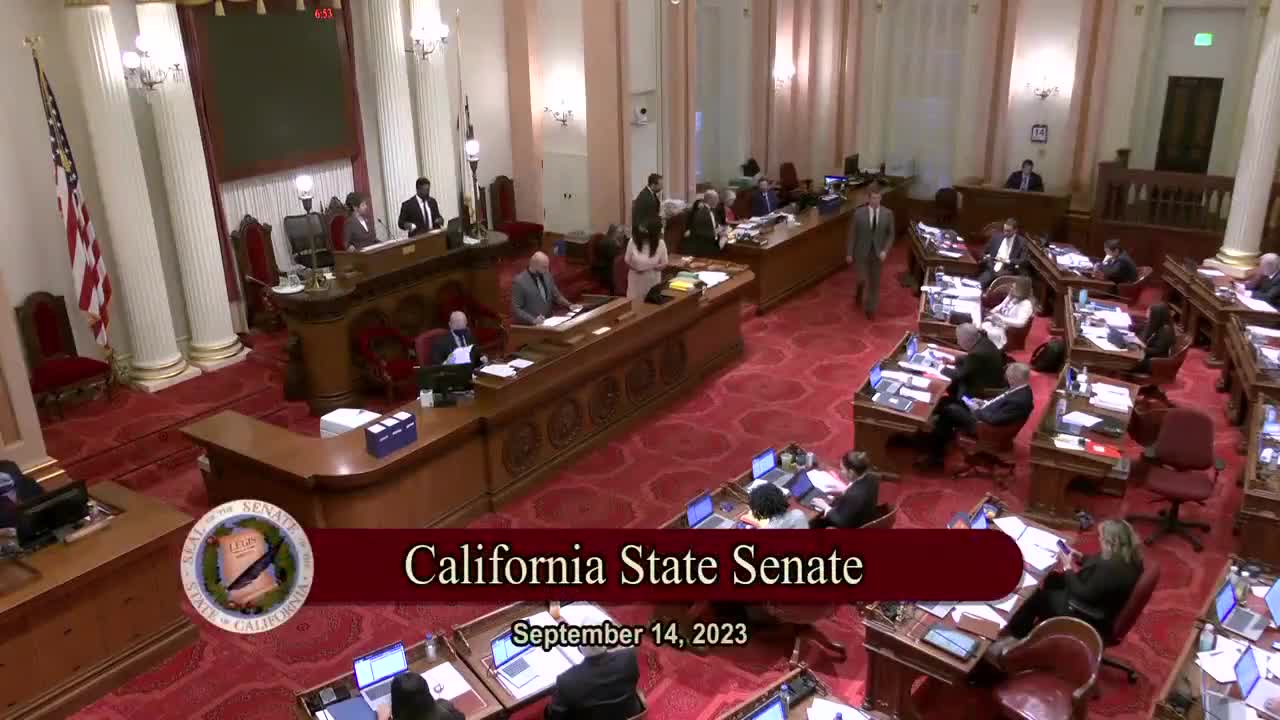 48SEC
Senate Floor
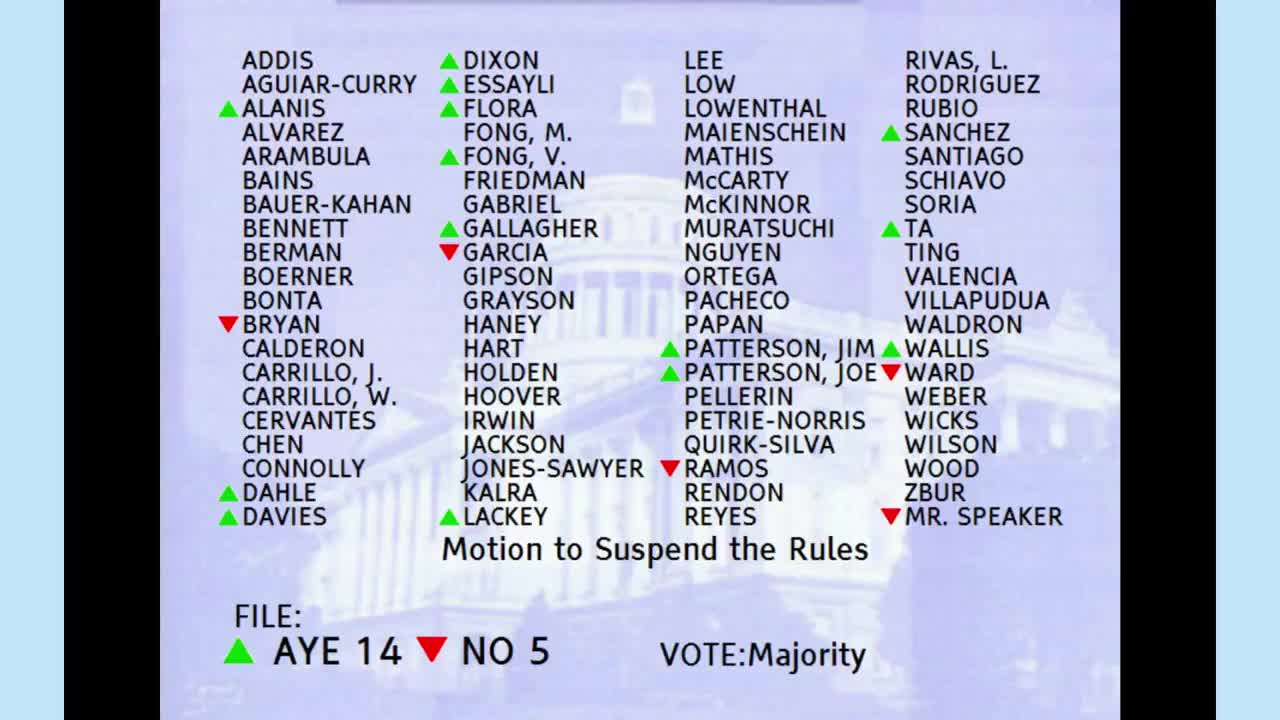 36SEC
Assembly Floor
 42SEC
Assembly Floor
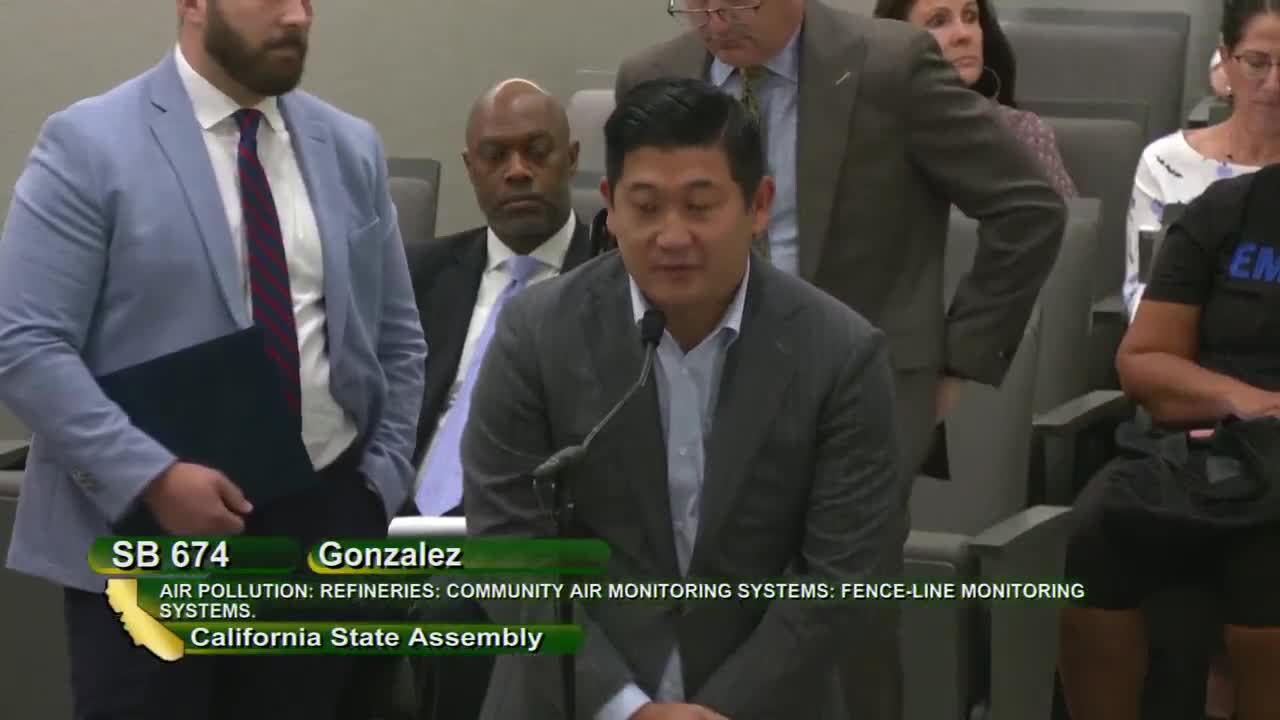 2MIN
Assembly Standing Committee on Appropriations
 8MIN
Assembly Standing Committee on Transportation
 4MIN
Senate Standing Committee on Judiciary
Bill Author

Bill Co-Author(s):