SB 816: Professions and vocations.
- Session Year: 2023-2024
- House: Senate
- Latest Version Date: 2023-10-10
Current Status:
Passed
(2023-10-10: Chaptered by Secretary of State. Chapter 723, Statutes of 2023.)
Introduced
In Committee
First Chamber
In Committee
Second Chamber
Enacted
(1)Existing law, the Vocational Nursing Practice Act, establishes in the Department of Consumer Affairs a Board of Vocational Nursing and Psychiatric Technicians of the State of California, which is charged with various licensing, regulatory, and disciplinary functions related to vocational nursing. Existing law, effective until January 1, 2025, sets forth an approval process for a vocational nursing school or program and authorizes the board to reduce the continuing approval fees, by no more than 1/2 of the established fee, for a program that experiences a reduction in state funding that directly leads to a reduction in enrollment capacity.
Existing law, the Psychiatric Technicians Law, also grants the board authority to license and regulate psychiatric technicians. That law, effective until January 1, 2025, similarly establishes an approval process for a school or program for psychiatric technicians and authorizes the board to reduce the continuing approval fees, by no more than 1/2 of the established fee, for a program that experiences a reduction in state funding that directly leads to a reduction in enrollment capacity.
This bill would instead authorize the board to reduce the continuing approval fees in the above-described circumstances for a program that experiences a reduction in enrollment capacity that directly leads to a reduction in state funding. The bill would revise related provisions to require the board to require a program to provide documentation for purposes of issuing the fee reduction.
(2)Existing law, the Psychology Licensing Law, imposes various fees on applicants for licensure and on licensees, including an application fee for registration as a psychologist of $50, a biennial renewal fee for registration as a psychologist of $400, an initial psychologist licensing fee in an amount not to exceed the renewal fee, an application fee for registration as a psychological associate of $75, an annual renewal fee for registration of a psychological associate of no more than $75, and a delinquency fee for each license type not to exceed $150. Existing law requires a licensed psychologist who holds an inactive license to pay a biennial renewal fee of no more than $40.
This bill would increase various fees imposed under the Psychology Licensing Law. In this regard, the bill would increase the application fee for registration as a psychologist to $236, the biennial renewal fee for registration as a psychologist to $795, the initial psychologist licensing fee to $231, the application fee for registration as a psychological associate to $424, and the annual renewal fee for registration of a psychological associate to $224. The bill would increase the maximum delinquency fee for each of these license types to $397.50. The bill would also establish an application fee in the amount of $127 for the California Psychology Law and Ethics Examination and a fee in the amount of $184 for Fingerprint Hard Card Processing for Out-of-State Applicants. The bill would increase the biennial renewal fee that a licensed psychologist with an inactive license must pay to $221.
(3)Existing law, until January 1, 2027, provides a comprehensive scheme for the certification and regulation of interior designers. Under existing law, a Certified Interior Designer may obtain a stamp from an interior design organization that includes a number that identifies and bears the name of the designer, and that stamp certifies that the Certified Interior Designer has provided the interior design organization with evidence of passage of an interior design examination and completion of certain interior design education or experience requirements.
This bill would, instead, establish the California Council for Interior Design Certification to carry out duties and responsibilities governing the stamp certification and regulation of interior designers. The bill would authorize the council to issue certifications pursuant to these provisions to applicants who provide satisfactory evidence of compliance with specified education, experience, and examination requirements. The bill would identify the individual as either a Certified Interior Designer or Certified Commercial Interior Designer if the designer has completed certain additional interior design courses and examination requirements for the commercial designation, as determined by the council.
This bill would authorize the council to adopt bylaws, rules, and procedures and establish reasonable application fees, renewal fees, and other fees related to the regulatory cost of providing services and carrying out the councils duties. The bill would make other related and conforming changes to these provisions.
(4)Existing law, the Pharmacy Law, establishes the licensure and regulation of the practice of pharmacy, including, among others, pharmacies, wholesalers or third-party logistics providers, nonresident wholesalers or third-party logistic providers, centralized hospital packing pharmacies, sterile compounding pharmacies, and paramedics. Existing law specifies the fees for issuance or renewal of licenses issued pursuant to the Pharmacy Law, including, among others, pharmacy licenses, outsourcing facility licenses, and centralized hospital packaging licenses.
This bill would reorganize and revise the fee schedule for specified licenses issued pursuant to the Pharmacy Law to both increase and decrease the amounts charged for the original issuance and renewal of those licenses, as well as for temporary licenses. The bill would also establish the fee schedule for the application and licensing fees of remote dispensing site pharmacies. The bill would make these provisions operative on January 1, 2025.
(5)Existing law, the Veterinary Medicine Practice Act, provides for the regulation of the practice of veterinary medicine by the Veterinary Medical Board in the Department of Consumer Affairs. Existing law requires the board to adopt regulations establishing animal health care tasks that may be performed by licensed veterinarians, registered veterinary technicians, or veterinary assistants. Existing law establishes a process by which a veterinary assistant may apply for a controlled substance permit. Existing law prohibits the board from issuing a veterinary assistant controlled substance permit to any applicant with a state or federal felony controlled substance conviction. Existing law makes it a misdemeanor for any person to violate or aid or abet in the violation of the act.
This bill would delete the prohibition on the board issuing a veterinary assistant controlled substance permit to an applicant with a conviction, as described above. By expanding the application of the act, the violation of which is a crime, the bill would impose a state-mandated local program.
(6)Existing law establishes the California Board of Accountancy, which is within the Department of Consumer Affairs, and requires the board to license and regulate accountants in this state. Existing law imposes various fees on applicants for licensure as a certified public accountant and on certified public accountant licensees, including an application fee for a certified public accountant certificate in an amount not to exceed $250 and a biennial renewal fee for each permit to engage in the practice of public accountancy in an amount not to exceed $280. Existing law imposes a fee in an amount not to exceed $250 to each applicant for registration as a partnership or professional corporation. Existing law credits all moneys received by the board to the Accountancy Fund and continuously appropriates all money in that fund derived from fees.
This bill would increase various fees, including the application fee for a certified public accountant certificate to $700. The bill would adjust and increase the biennial renewal fee for each permit to engage in the practice of public accountancy that expires after June 30, 2024, to $340 for a certified public accountant and $400 for a partnership or professional corporation. The bill would adjust and increase the biennial renewal fee for each permit to engage in the practice of public accountancy that expires after June 30, 2026, to $400 for a certified public accountant and $520 for a partnership or professional corporation. The bill would increase the fee imposed on an applicant for registration as a partnership or professional corporation to no less than $250, but no more than $2,000. By increasing the fees deposited in a continuously appropriated fund, this bill would make an appropriation.
(7)Existing law establishes the California Architects Board within the Department of Consumer Affairs, and sets forth its powers and duties relating to the licensing and regulation of landscape architects, including the authority to issue licenses for the practice of landscape architecture. Existing law imposes various fees on applicants for licensure as a landscape architect and on landscape architect licensees, including an application fee not to exceed $100, a fee for the examination for a license to practice landscape architecture in an amount not to exceed the actual cost to the board to administer each exam, a fee not to exceed $400 for an original license, a fee not to exceed $50 for a duplicate license, and a renewal fee not to exceed $400.
This bill would increase the above-described fees imposed on landscape architect applicants and licensees. In this regard, the bill would impose an application fee of $100 and a fee for the California Supplemental Examination of not less than $350. The bill would authorize the board to increase the examination fee by regulation up to $400. The bill would increase the fee for an original license to $700. The bill would authorize the board to increase the fee by regulation up to $800. The bill would increase the fee for a duplicate license to $300 and would increase the renewal fee to be not less than $700. The bill would authorize the board to increase the original license fee by regulation up to $800.
(8)Existing law requires a person who weighs, measures, or counts a commodity and issues a statement or memorandum of the weight, measure, or count that is used as the basis for either the purchase or sale of that commodity or charge for service, to obtain a license as a weighmaster from the Department of Food and Agriculture, and imposes an annual license fee and various other requirements on weighmasters. Existing law, until January 1, 2024, requires a recycler or junk dealer who is an applicant for a new weighmaster license or a renewal of a weighmaster license to furnish specified additional information on the application, and requires a weighmaster who is a junk dealer or recycler to pay an additional annual fee of $500 to the department for each location at which the weighmaster operates, as specified. Existing law provides for license fees collected pursuant to these provisions to be deposited in the Department of Food and Agriculture Fund and continuously appropriated for the administration and enforcement of these provisions.
This bill would extend the operation of the requirements to furnish the additional application information and to pay the additional annual fee to January 1, 2028. By extending the collection of a fee deposited in a continuously appropriated fund, this bill would make an appropriation.
(9)This bill would incorporate additional changes to Section 5134 of the Business and Professions Code proposed by SB 887 to be operative only if this bill and SB 887 are enacted and this bill is enacted last.
(10)The California Constitution requires the state to reimburse local agencies and school districts for certain costs mandated by the state. Statutory provisions establish procedures for making that reimbursement.
This bill would provide that no reimbursement is required by this act for a specified reason.
(1)Existing law, the Vocational Nursing Practice Act, establishes in the Department of Consumer Affairs a Board of Vocational Nursing and Psychiatric Technicians of the State of California, which is charged with various licensing, regulatory, and disciplinary functions related to vocational nursing. Existing law, effective until January 1, 2025, sets forth an approval process for a vocational nursing school or program and authorizes the board to reduce the continuing approval fees, by no more than 1/2 of the established fee, for a program that experiences a reduction in state funding that directly leads to a reduction in enrollment capacity.
Existing law, the Psychiatric Technicians Law, also grants the board authority to license and regulate psychiatric technicians. That law, effective until January 1, 2025, similarly establishes an approval process for a school or program for psychiatric technicians and authorizes the board to reduce the continuing approval fees, by no more than 1/2 of the established fee, for a program that experiences a reduction in state funding that directly leads to a reduction in enrollment capacity.
This bill would instead authorize the board to reduce the continuing approval fees in the above-described circumstances for a program that experiences a reduction in enrollment capacity that directly leads to a reduction in state funding. The bill would revise related provisions to require the board to require a program to provide documentation for purposes of issuing the fee reduction.
(2)Existing law, the Psychology Licensing Law, imposes various fees on applicants for licensure and on licensees, including an application fee for registration as a psychologist of $50, a biennial renewal fee for registration as a psychologist of $400, an initial psychologist licensing fee in an amount not to exceed the renewal fee, an application fee for registration as a psychological associate of $75, an annual renewal fee for registration of a psychological associate of no more than $75, and a delinquency fee for each license type not to exceed $150. Existing law requires a licensed psychologist who holds an inactive license to pay a biennial renewal fee of no more than $40.
This bill would increase various fees imposed under the Psychology Licensing Law. In this regard, the bill would increase the application fee for registration as a psychologist to $236, the biennial renewal fee for registration as a psychologist to $795, the initial psychologist licensing fee to $231, the application fee for registration as a psychological associate to $424, and the annual renewal fee for registration of a psychological associate to $224. The bill would increase the maximum delinquency fee for each of these license types to $397.50. The bill would also establish an application fee in the amount of $127 for the California Psychology Law and Ethics Examination and a fee in the amount of $184 for Fingerprint Hard Card Processing for Out-of-State Applicants. The bill would increase the biennial renewal fee that a licensed psychologist with an inactive license must pay to $221.
(3)Existing law, until January 1, 2027, provides a comprehensive scheme for the certification and regulation of interior designers. Under existing law, a Certified Interior Designer may obtain a stamp from an interior design organization that includes a number that identifies and bears the name of the designer, and that stamp certifies that the Certified Interior Designer has provided the interior design organization with evidence of passage of an interior design examination and completion of certain interior design education or experience requirements.
This bill would, instead, establish the California Council for Interior Design Certification to carry out duties and responsibilities governing the stamp certification and regulation of interior designers. The bill would authorize the council to issue certifications pursuant to these provisions to applicants who provide satisfactory evidence of compliance with specified education, experience, and examination requirements. The bill would identify the individual as either a Certified Interior Designer or Certified Commercial Interior Designer if the designer has completed certain additional interior design courses and examination requirements for the commercial designation, as determined by the council.
This bill would authorize the council to adopt bylaws, rules, and procedures and establish reasonable application fees, renewal fees, and other fees related to the regulatory cost of providing services and carrying out the councils duties. The bill would make other related and conforming changes to these provisions.
(4)Existing law, the Pharmacy Law, establishes the licensure and regulation of the practice of pharmacy, including, among others, pharmacies, wholesalers or third-party logistics providers, nonresident wholesalers or third-party logistic providers, centralized hospital packing pharmacies, sterile compounding pharmacies, and paramedics. Existing law specifies the fees for issuance or renewal of licenses issued pursuant to the Pharmacy Law, including, among others, pharmacy licenses, outsourcing facility licenses, and centralized hospital packaging licenses.
This bill would reorganize and revise the fee schedule for specified licenses issued pursuant to the Pharmacy Law to both increase and decrease the amounts charged for the original issuance and renewal of those licenses, as well as for temporary licenses. The bill would also establish the fee schedule for the application and licensing fees of remote dispensing site pharmacies. The bill would make these provisions operative on January 1, 2025.
(5)Existing law, the Veterinary Medicine Practice Act, provides for the regulation of the practice of veterinary medicine by the Veterinary Medical Board in the Department of Consumer Affairs. Existing law requires the board to adopt regulations establishing animal health care tasks that may be performed by licensed veterinarians, registered veterinary technicians, or veterinary assistants. Existing law establishes a process by which a veterinary assistant may apply for a controlled substance permit. Existing law prohibits the board from issuing a veterinary assistant controlled substance permit to any applicant with a state or federal felony controlled substance conviction. Existing law makes it a misdemeanor for any person to violate or aid or abet in the violation of the act.
This bill would delete the prohibition on the board issuing a veterinary assistant controlled substance permit to an applicant with a conviction, as described above. By expanding the application of the act, the violation of which is a crime, the bill would impose a state-mandated local program.
(6)Existing law establishes the California Board of Accountancy, which is within the Department of Consumer Affairs, and requires the board to license and regulate accountants in this state. Existing law imposes various fees on applicants for licensure as a certified public accountant and on certified public accountant licensees, including an application fee for a certified public accountant certificate in an amount not to exceed $250 and a biennial renewal fee for each permit to engage in the practice of public accountancy in an amount not to exceed $280. Existing law imposes a fee in an amount not to exceed $250 to each applicant for registration as a partnership or professional corporation. Existing law credits all moneys received by the board to the Accountancy Fund and continuously appropriates all money in that fund derived from fees.
This bill would increase various fees, including the application fee for a certified public accountant certificate to $700. The bill would adjust and increase the biennial renewal fee for each permit to engage in the practice of public accountancy that expires after June 30, 2024, to $340 for a certified public accountant and $400 for a partnership or professional corporation. The bill would adjust and increase the biennial renewal fee for each permit to engage in the practice of public accountancy that expires after June 30, 2026, to $400 for a certified public accountant and $520 for a partnership or professional corporation. The bill would increase the fee imposed on an applicant for registration as a partnership or professional corporation to no less than $250, but no more than $2,000. By increasing the fees deposited in a continuously appropriated fund, this bill would make an appropriation.
(7)Existing law establishes the California Architects Board within the Department of Consumer Affairs, and sets forth its powers and duties relating to the licensing and regulation of landscape architects, including the authority to issue licenses for the practice of landscape architecture. Existing law imposes various fees on applicants for licensure as a landscape architect and on landscape architect licensees, including an application fee not to exceed $100, a fee for the examination for a license to practice landscape architecture in an amount not to exceed the actual cost to the board to administer each exam, a fee not to exceed $400 for an original license, a fee not to exceed $50 for a duplicate license, and a renewal fee not to exceed $400.
This bill would increase the above-described fees imposed on landscape architect applicants and licensees. In this regard, the bill would impose an application fee of $100 and a fee for the California Supplemental Examination of not less than $350. The bill would authorize the board to increase the examination fee by regulation up to $400. The bill would increase the fee for an original license to $700. The bill would authorize the board to increase the fee by regulation up to $800. The bill would increase the fee for a duplicate license to $300 and would increase the renewal fee to be not less than $700. The bill would authorize the board to increase the original license fee by regulation up to $800.
(8)Existing law requires a person who weighs, measures, or counts a commodity and issues a statement or memorandum of the weight, measure, or count that is used as the basis for either the purchase or sale of that commodity or charge for service, to obtain a license as a weighmaster from the Department of Food and Agriculture, and imposes an annual license fee and various other requirements on weighmasters. Existing law, until January 1, 2024, requires a recycler or junk dealer who is an applicant for a new weighmaster license or a renewal of a weighmaster license to furnish specified additional information on the application, and requires a weighmaster who is a junk dealer or recycler to pay an additional annual fee of $500 to the department for each location at which the weighmaster operates, as specified. Existing law provides for license fees collected pursuant to these provisions to be deposited in the Department of Food and Agriculture Fund and continuously appropriated for the administration and enforcement of these provisions.
This bill would extend the operation of the requirements to furnish the additional application information and to pay the additional annual fee to January 1, 2028. By extending the collection of a fee deposited in a continuously appropriated fund, this bill would make an appropriation.
(9)This bill would incorporate additional changes to Section 5134 of the Business and Professions Code proposed by SB 887 to be operative only if this bill and SB 887 are enacted and this bill is enacted last.
(9)(10)The California Constitution requires the state to reimburse local agencies and school districts for certain costs mandated by the state. Statutory provisions establish procedures for making that reimbursement.
This bill would provide that no reimbursement is required by this act for a specified reason.
(1)Existing law, the Vocational Nursing Practice Act, establishes in the Department of Consumer Affairs a Board of Vocational Nursing and Psychiatric Technicians of the State of California, which is charged with various licensing, regulatory, and disciplinary functions related to vocational nursing. Existing law, effective until January 1, 2025, sets forth an approval process for a vocational nursing school or program and authorizes the board to reduce the continuing approval fees, by no more than 1/2 of the established fee, for a program that experiences a reduction in state funding that directly leads to a reduction in enrollment capacity.
Existing law, the Psychiatric Technicians Law, also grants the board authority to license and regulate psychiatric technicians. That law, effective until January 1, 2025, similarly establishes an approval process for a school or program for psychiatric technicians and authorizes the board to reduce the continuing approval fees, by no more than 1/2 of the established fee, for a program that experiences a reduction in state funding that directly leads to a reduction in enrollment capacity.
This bill would instead authorize the board to reduce the continuing approval fees in the above-described circumstances for a program that experiences a reduction in enrollment capacity that directly leads to a reduction in state funding. The bill would revise related provisions to require the board to require a program to provide documentation for purposes of issuing the fee reduction.
(2)Existing law, the Psychology Licensing Law, imposes various fees on applicants for licensure and on licensees, including an application fee for registration as a psychologist of $50, a biennial renewal fee for registration as a psychologist of $400, an initial psychologist licensing fee in an amount not to exceed the renewal fee, an application fee for registration as a psychological associate of $75, an annual renewal fee for registration of a psychological associate of no more than $75, and a delinquency fee for each license type not to exceed $150. Existing law requires a licensed psychologist who holds an inactive license to pay a biennial renewal fee of no more than $40.
This bill would increase various fees imposed under the Psychology Licensing Law. In this regard, the bill would increase the application fee for registration as a psychologist to $236, the biennial renewal fee for registration as a psychologist to $795, the initial psychologist licensing fee to $231, the application fee for registration as a psychological associate to $424, and the annual renewal fee for registration of a psychological associate to $224. The bill would increase the maximum delinquency fee for each of these license types to $397.50. The bill would also establish an application fee in the amount of $127 for the California Psychology Law and Ethics Examination and a fee in the amount of $184 for Fingerprint Hard Card Processing for Out of State Out-of-State Applicants. The bill would increase the biennial renewal fee that a licensed psychologist with an inactive license must pay to $221.
(3)Existing law, until January 1, 2027, provides a comprehensive scheme for the certification and regulation of interior designers. Under existing law, a Certified Interior Designer may obtain a stamp from an interior design organization that includes a number that identifies and bears the name of the designer, and that stamp certifies that the Certified Interior Designer has provided the interior design organization with evidence of passage of an interior design examination and completion of certain interior design education or experience requirements.
This bill would, instead, establish the California Council for Interior Design Certification to carry out duties and responsibilities governing the stamp certification and regulation of interior designers. The bill would authorize the council to issue certifications pursuant to these provisions to applicants who provide satisfactory evidence of compliance with specified education, experience, and examination requirements. The bill would identify the individual as either a Certified Interior Designer or Certified Commercial Interior Designer if the designer has completed certain additional interior design courses and examination requirements for the commercial designation, as determined by the council.
This bill would authorize the council to adopt bylaws, rules, and procedures and establish reasonable application fees, renewal fees, and other fees related to the regulatory cost of providing services and carrying out the councils duties. The bill would make other related and conforming changes to these provisions.
(4)Existing law, the Pharmacy Law, establishes the licensure and regulation of the practice of pharmacy, including, among others, pharmacies, wholesalers or third-party logistics providers, nonresident wholesalers or third-party logistic providers, centralized hospital packing pharmacies, sterile compounding pharmacies, and paramedics. Existing law specifies the fees for issuance or renewal of licenses issued pursuant to the Pharmacy Law, including, among others, pharmacy licenses, outsourcing facility licenses, and centralized hospital packaging licenses.
This bill would reorganize and revise the fee schedule for specified licenses issued pursuant to the Pharmacy Law to both increase and decrease the amounts charged for the original issuance and renewal of those licenses, as well as for temporary licenses. The bill would also establish the fee schedule for the application and licensing fees of remote dispensing site pharmacies. The bill would make these provisions operative on January 1, 2025.
(5)Existing law, the Veterinary Medicine Practice Act, provides for the regulation of the practice of veterinary medicine by the Veterinary Medical Board in the Department of Consumer Affairs. Existing law requires the board to adopt regulations establishing animal health care tasks that may be performed by licensed veterinarians, registered veterinary technicians, or veterinary assistants. Existing law establishes a process by which a veterinary assistant may apply for a controlled substance permit. Existing law prohibits the board from issuing a veterinary assistant controlled substance permit to any applicant with a state or federal felony controlled substance conviction. Existing law makes it a misdemeanor for any person to violate or aid or abet in the violation of the act.
This bill would delete the prohibition on the board issuing a veterinary assistant controlled substance permit to an applicant with a conviction, as described above. By expanding the application of the act, the violation of which is a crime, the bill would impose a state-mandated local program.
(6)Existing law establishes the California Board of Accountancy, which is within the Department of Consumer Affairs, and requires the board to license and regulate accountants in this state. Existing law imposes various fees on applicants for licensure as a certified public accountant and on certified public accountant licensees, including an application fee for a certified public accountant certificate in an amount not to exceed $250 and a biennial renewal fee for each permit to engage in the practice of public accountancy in an amount not to exceed $280. Existing law imposes a fee in an amount not to exceed $250 to each applicant for registration as a partnership or professional corporation. Existing law credits all moneys received by the board to the Accountancy Fund and continuously appropriates all money in that fund derived from fees.
This bill would increase various fees, including the application fee for a certified public accountant certificate to $700. The bill would adjust and increase the biennial renewal fee for each permit to engage in the practice of public accountancy that expires after June 30, 2024, to $340 for a certified public accountant and $400 for a partnership or professional corporation. The bill would adjust and increase the biennial renewal fee for each permit to engage in the practice of public accountancy that expires after June 30, 2026, to $400 for a certified public accountant and $520 for a partnership or professional corporation. The bill would increase the fee imposed on an applicant for registration as a partnership or professional corporation to no less than $250, but no more than $2,000. By increasing the fees deposited in a continuously appropriated fund, this bill would make an appropriation.
(7)Existing law establishes the California Architects Board within the Department of Consumer Affairs, and sets forth its powers and duties relating to the licensing and regulation of landscape architects, including the authority to issue licenses for the practice of landscape architecture. Existing law imposes various fees on applicants for licensure as a landscape architect and on landscape architect licensees, including an application fee not to exceed $100, a fee for the examination for a license to practice landscape architecture in an amount not to exceed the actual cost to the board to administer each exam, a fee not to exceed $400 for an original license, a fee not to exceed $50 for a duplicate license, and a renewal fee not to exceed $400.
This bill would increase the above-described fees imposed on landscape architect applicants and licensees. In this regard, the bill would impose an application fee of $100 and a fee for the California Supplemental Examination of not less than $350. The bill would authorize the board to increase the examination fee by regulation up to $400. The bill would increase the fee for an original license to $700. The bill would authorize the board to increase the fee by regulation up to $800. The bill would increase the fee for a duplicate license to $300 and would increase the renewal fee to be not less than $700. The bill would authorize the board to increase the original license fee by regulation up to $800.
(8)Existing law requires a person who weighs, measures, or counts a commodity and issues a statement or memorandum of the weight, measure, or count that is used as the basis for either the purchase or sale of that commodity or charge for service, to obtain a license as a weighmaster from the Department of Food and Agriculture, and imposes an annual license fee and various other requirements on weighmasters. Existing law, until January 1, 2024, requires a recycler or junk dealer who is an applicant for a new weighmaster license or a renewal of a weighmaster license to furnish specified additional information on the application, and requires a weighmaster who is a junk dealer or recycler to pay an additional annual fee of $500 to the department for each location at which the weighmaster operates, as specified. Existing law provides for license fees collected pursuant to these provisions to be deposited in the Department of Food and Agriculture Fund and continuously appropriated for the administration and enforcement of these provisions.
This bill would extend the operation of the requirements to furnish the additional application information and to pay the additional annual fee to January 1, 2028. By extending the collection of a fee deposited in a continuously appropriated fund, this bill would make an appropriation.
(8)(9)The California Constitution requires the state to reimburse local agencies and school districts for certain costs mandated by the state. Statutory provisions establish procedures for making that reimbursement.
This bill would provide that no reimbursement is required by this act for a specified reason.
(1)Existing law, the Vocational Nursing Practice Act, establishes in the Department of Consumer Affairs a Board of Vocational Nursing and Psychiatric Technicians of the State of California, which is charged with various licensing, regulatory, and disciplinary functions related to vocational nursing. Existing law, effective until January 1, 2025, sets forth an approval process for a vocational nursing school or program and authorizes the board to reduce the continuing approval fees, by no more than 1/2 of the established fee, for a program that experiences a reduction in state funding that directly leads to a reduction in enrollment capacity.
Existing law, the Psychiatric Technicians Law, also grants the board authority to license and regulate psychiatric technicians. That law, effective until January 1, 2025, similarly establishes an approval process for a school or program for psychiatric technicians and authorizes the board to reduce the continuing approval fees, by no more than 1/2 of the established fee, for a program that experiences a reduction in state funding that directly leads to a reduction in enrollment capacity.
This bill would instead authorize the board to reduce the continuing approval fees in the above-described circumstances for a program that experiences a reduction in enrollment capacity that directly leads to a reduction in state funding. The bill would revise related provisions to require the board to require a program to provide documentation for purposes of issuing the fee reduction.
(2)Existing law, the Psychology Licensing Law, imposes various fees on applicants for licensure and on licensees, including an application fee for registration as a psychologist of $50, a biennial renewal fee for registration as a psychologist of $400, an initial psychologist licensing fee in an amount not to exceed the renewal fee, an application fee for registration as a psychological associate of $75, an annual renewal fee for registration of a psychological associate of no more than $75, and a delinquency fee for each license type not to exceed $150. Existing law requires a licensed psychologist who holds an inactive license to pay a biennial renewal fee of no more than $40.
This bill would increase various fees imposed under the Psychology Licensing Law. In this regard, the bill would increase the application fee for registration as a psychologist to $236, the biennial renewal fee for registration as a psychologist to $795, the initial psychologist licensing fee to $231, the application fee for registration as a psychological associate to $424, and the annual renewal fee for registration of a psychological associate to $224. The bill would increase the maximum delinquency fee for each of these license types to $397.50. The bill would also establish an application fee in the amount of $127 for the California Psychology Law and Ethics Examination and a fee in the amount of $184 for Fingerprint Hard Card Processing for Out of State Applicants. The bill would increase the biennial renewal fee that a licensed psychologist with an inactive license must pay to $221.
(2)(3)Existing law, until January 1, 2027, provides a comprehensive scheme for the certification and regulation of interior designers. Under existing law, a Certified Interior Designer may obtain a stamp from an interior design organization that includes a number that identifies and bears the name of the designer, and that stamp certifies that the Certified Interior Designer has provided the interior design organization with evidence of passage of an interior design examination and completion of certain interior design education or experience requirements.
This bill would, instead, establish the California Council for Interior Design Certification to carry out duties and responsibilities governing the stamp certification and regulation of interior designers. The bill would authorize the council to issue certifications pursuant to these provisions to applicants who provide satisfactory evidence of compliance with specified education, experience, and examination requirements. The bill would identify the individual as either a Certified Interior Designer or Certified Commercial Interior Designer if the designer has completed certain additional interior design courses and examination requirements for the commercial designation, as determined by the council.
This bill would authorize the council to adopt bylaws, rules, and procedures and establish reasonable application fees, renewal fees, and other fees related to the regulatory cost of providing services and carrying out the councils duties. The bill would make other related and conforming changes to these provisions.
(4)Existing law, the Pharmacy Law, establishes the licensure and regulation of the practice of pharmacy, including, among others, pharmacies, wholesalers or third-party logistics providers, nonresident wholesalers or third-party logistic providers, centralized hospital packing pharmacies, sterile compounding pharmacies, and paramedics. Existing law specifies the fees for issuance or renewal of licenses issued pursuant to the Pharmacy Law, including, among others, pharmacy licenses, outsourcing facility licenses, and centralized hospital packaging licenses.
This bill would reorganize and revise the fee schedule for specified licenses issued pursuant to the Pharmacy Law to both increase and decrease the amounts charged for the original issuance and renewal of those licenses, as well as for temporary licenses. The bill would also establish the fee schedule for the application and licensing fees of remote dispensing site pharmacies. The bill would make these provisions operative on January 1, 2025.
(3)(5)Existing law, the Veterinary Medicine Practice Act, provides for the regulation of the practice of veterinary medicine by the Veterinary Medical Board in the Department of Consumer Affairs. Existing law requires the board to adopt regulations establishing animal health care tasks that may be performed by licensed veterinarians, registered veterinary technicians, or veterinary assistants. Existing law establishes a process by which a veterinary assistant may apply for a controlled substance permit. Existing law prohibits the board from issuing a veterinary assistant controlled substance permit to any applicant with a state or federal felony controlled substance conviction. Existing law makes it a misdemeanor for any person to violate or aid or abet in the violation of the act.
This bill would delete the prohibition on the board issuing a veterinary assistant controlled substance permit to an applicant with a conviction, as described above. By expanding the application of the act, the violation of which is a crime, the bill would impose a state-mandated local program.
(6)Existing law establishes the California Board of Accountancy, which is within the Department of Consumer Affairs, and requires the board to license and regulate accountants in this state. Existing law imposes various fees on applicants for licensure as a certified public accountant and on certified public accountant licensees, including an application fee for a certified public accountant certificate in an amount not to exceed $250 and a biennial renewal fee for each permit to engage in the practice of public accountancy in an amount not to exceed $280. Existing law imposes a fee in an amount not to exceed $250 to each applicant for registration as a partnership or professional corporation. Existing law credits all moneys received by the board to the Accountancy Fund and continuously appropriates all money in that fund derived from fees.
This bill would increase various fees, including the application fee for a certified public accountant certificate to $700. The bill would adjust and increase the biennial renewal fee for each permit to engage in the practice of public accountancy that expires after June 30, 2024, to $340 for a certified public accountant and $400 for a partnership or professional corporation. The bill would adjust and increase the biennial renewal fee for each permit to engage in the practice of public accountancy that expires after June 30, 2026, to $400 for a certified public accountant and $520 for a partnership or professional corporation. The bill would increase the fee imposed on an applicant for registration as a partnership or professional corporation to no less than $250, but no more than $2,000. By increasing the fees deposited in a continuously appropriated fund, this bill would make an appropriation.
(7)Existing law establishes the California Architects Board within the Department of Consumer Affairs, and sets forth its powers and duties relating to the licensing and regulation of landscape architects, including the authority to issue licenses for the practice of landscape architecture. Existing law imposes various fees on applicants for licensure as a landscape architect and on landscape architect licensees, including an application fee not to exceed $100, a fee for the examination for a license to practice landscape architecture in an amount not to exceed the actual cost to the board to administer each exam, a fee not to exceed $400 for an original license, a fee not to exceed $50 for a duplicate license, and a renewal fee not to exceed $400.
This bill would increase the above-described fees imposed on landscape architect applicants and licensees. In this regard, the bill would impose an application fee of $100 and a fee for the California Supplemental Examination of not less than $350. The bill would authorize the board to increase the examination fee by regulation up to $400. The bill would increase the fee for an original license to $700. The bill would authorize the board to increase the fee by regulation up to $800. The bill would increase the fee for a duplicate license to $300 and would increase the renewal fee to be not less than $700. The bill would authorize the board to increase the original license fee by regulation up to $800.
The(8)The California Constitution requires the state to reimburse local agencies and school districts for certain costs mandated by the state. Statutory provisions establish procedures for making that reimbursement.
This bill would provide that no reimbursement is required by this act for a specified reason.
(1)Existing law, the Vocational Nursing Practice Act, establishes in the Department of Consumer Affairs a Board of Vocational Nursing and Psychiatric Technicians of the State of California, which is charged with various licensing, regulatory, and disciplinary functions related to vocational nursing. Existing law, effective until January 1, 2025, sets forth an approval process for a vocational nursing school or program and authorizes the board to reduce the continuing approval fees, by no more than 1/2 of the established fee, for a program that experiences a reduction in state funding that directly leads to a reduction in enrollment capacity.
Existing law, the Psychiatric Technicians Law, also grants the board authority to license and regulate psychiatric technicians. That law, effective until January 1, 2025, similarly establishes an approval process for a school or program for psychiatric technicians and authorizes the board to reduce the continuing approval fees, by no more than 1/2 of the established fee, for a program that experiences a reduction in state funding that directly leads to a reduction in enrollment capacity.
This bill would instead authorize the board to reduce the continuing approval fees in the above-described circumstances for a program that experiences a reduction in enrollment capacity that directly leads to a reduction in state funding. The bill would revise related provisions to require the board to require a program to provide documentation for purposes of issuing the fee reduction.
Existing
(2)Existing law, until January 1, 2027, provides a comprehensive scheme for the certification and regulation of interior designers. Under existing law, a Certified Interior Designer may obtain a stamp from an interior design organization that includes a number that identifies and bears the name of the designer, and that stamp certifies that the Certified Interior Designer has provided the interior design organization with evidence of passage of an interior design examination and completion of certain interior design education or experience requirements.
This bill would, instead, establish the California Council for Interior Design Certification to carry out duties and responsibilities governing the stamp certification and regulation of interior designers. The bill would authorize the council to issue certifications pursuant to these provisions to applicants who provide satisfactory evidence of compliance with specified education, experience, and examination requirements. The bill would identify the individual as either a Certified Interior Designer or Certified Commercial Interior Designer if the designer has completed certain additional interior design courses and examination requirements for the commercial designation, as determined by the council.
This bill would authorize the council to adopt bylaws, rules, and procedures and establish reasonable application fees, renewal fees, and other fees related to the regulatory cost of providing services and carrying out the councils duties. The bill would make other related and conforming changes to these provisions.
(3)Existing law, the Veterinary Medicine Practice Act, provides for the regulation of the practice of veterinary medicine by the Veterinary Medical Board in the Department of Consumer Affairs. Existing law requires the board to adopt regulations establishing animal health care tasks that may be performed by licensed veterinarians, registered veterinary technicians, or veterinary assistants. Existing law establishes a process by which a veterinary assistant may apply for a controlled substance permit. Existing law prohibits the board from issuing a veterinary assistant controlled substance permit to any applicant with a state or federal felony controlled substance conviction. Existing law makes it a misdemeanor for any person to violate or aid or abet in the violation of the act.
This bill would delete the prohibition on the board issuing a veterinary assistant controlled substance permit to an applicant with a conviction, as described above. By expanding the application of the act, the violation of which is a crime, the bill would impose a state-mandated local program.
The California Constitution requires the state to reimburse local agencies and school districts for certain costs mandated by the state. Statutory provisions establish procedures for making that reimbursement.
This bill would provide that no reimbursement is required by this act for a specified reason.
Existing law, until January 1, 2027, provides a comprehensive scheme for the certification and regulation of interior designers. Under existing law, a Certified Interior Designer may obtain a stamp from an interior design organization that includes a number that identifies and bears the name of the designer, and that stamp certifies that the Certified Interior Designer has provided the interior design organization with evidence of passage of an interior design examination and completion of certain interior design education or experience requirements.
This bill would, instead, establish the California Council for Interior Design Certification to carry out duties and responsibilities governing the stamp certification and regulation of interior designers. The bill would authorize the council to issue certifications pursuant to these provisions to applicants who provide satisfactory evidence of compliance with specified education, experience, and examination requirements. The bill would identify the individual as either a Certified Interior Designer or Certified Commercial Interior Designer if the designer has completed certain additional interior design courses and examination requirements for the commercial designation, as determined by the council.
This bill would authorize the council to adopt bylaws, rules, and procedures and establish reasonable application fees, renewal fees, and other fees related to the regulatory cost of providing services and carrying out the councils duties. The bill would make other related and conforming changes to these provisions.
(a)The approval process for a school or program shall be consistent with the following timelines:
(1)(A)Upon receipt of a letter of intent to submit an application for approval as a school or program of licensed vocational nursing, the board shall notify the proposed school or program of the steps in the approval process and provide an estimated wait time until active assignment to a nursing education consultant.
(B)Upon active assignment of a nursing education consultant, the school or program shall submit an initial application for approval within 60 days.
(2)(A)Within 30 days of the date the board receives an initial application for approval, the board shall notify the school or program whether the application is complete.
(B)A notice that an initial application is not complete shall specify what additional documents or payment of fees the school or program is required to submit to the board to make the application complete.
(3)Within 60 days from the date the board notifies the school or program that the initial application is not complete, the school or program shall provide the missing information. If a school or program fails to submit the required information, the board shall take the application out of consideration consistent with subdivision (c) of Section 2881.3. The board may provide a school or program with an additional 30 days to complete its application.
(4)Within six months of the date the board receives an initial application for approval as a school or program, the board shall approve the school or program, deny approval, or notify the school or program that corrective action is required.
(b)A school or program of vocational nursing seeking approval by the board shall remit to the board for deposit in the Vocational Nursing and Psychiatric Technicians Fund fees in accordance with the following schedule:
(1)The nonrefundable initial application fee shall be in an amount equal to the reasonable costs incurred by the board in reviewing and processing the application up to five thousand dollars ($5,000).
(2)(A)Except as provided in subparagraph (B), the final approval fee shall be in an amount equal to the reasonable costs incurred by the board in the application approval process up to fifteen thousand dollars ($15,000).
(B)The final approval fee for an applicant program that meets all of the following criteria shall be in an amount equal to the reasonable costs incurred by the board in the application approval process up to five thousand dollars ($5,000):
(i)The program is affiliated with an approved school or program that is in good standing.
(ii)The program utilizes the curriculum and policies approved by the board for the approved school or program.
(3)The continuing approval fee shall be in an amount equal to the reasonable costs incurred by the board in providing oversight and review of a school or program up to five thousand dollars ($5,000) once every four years.
(c)If the board makes an initial determination that the cost of providing oversight and review of a school or program under this section is less than the amount of any fees required to be paid by that school or program, the board shall decrease the fees applicable to that institution to an amount that is proportional to the boards reasonable costs associated with that school or program.
(d)The board may reduce the continuing approval fees, by no more than one-half of the established fee, for a program that experiences a reduction in enrollment capacity that directly leads to a reduction in state funding. The board shall require a program to provide documentation for the purposes of issuing the fee reduction.
(e)(1)Notwithstanding Chapter 3.5 (commencing with Section 11340) of Part 1 of Division 3 of Title 2 of the Government Code, the board shall, without taking any further regulatory action, implement, interpret, or make specific this section by means of provider bulletins or similar instructions until emergency regulations are adopted pursuant to paragraph (2). The board shall provide written notice 30 days prior to the adoption of any instruction under this paragraph and post the notice on its internet website. It is the intent of the Legislature that the board have temporary authority as necessary to implement program changes until completion of the regulatory process.
(2)The board shall adopt emergency regulations no later than June 30, 2022. The adoption of regulations shall be deemed an emergency and necessary to avoid serious harm to the public peace, health, safety, or general welfare within the meaning of Section 11342.545 of the Government Code, and the board need not make a written finding of emergency as required by Section 11346.1 of the Government Code. Notwithstanding subdivisions (e) and (h) of Section 11346.1 of the Government Code, the board may annually readopt any emergency regulation authorized by this section that is the same as or substantially equivalent to an emergency regulation previously adopted pursuant to this section until January 1, 2024.
(3)The initial adoption of emergency regulations and the readoption of emergency regulations authorized by this section shall be submitted to the Office of Administrative Law for filing with the Secretary of State. The emergency regulations shall remain in effect for no more than one year from the date any regulation became effective as an emergency regulation.
(f)This section shall remain in effect only until January 1, 2025, and as of that date is repealed.
SEC. 2.Section 2987 of the Business and Professions Code is amended to read:2987.The amount of the fees prescribed by this chapter shall be determined by the board, and shall be as follows:
(a)The application fee for a psychologist shall be two hundred thirty-six dollars ($236).
(b)The examination and reexamination fees for the examinations shall be the actual cost to the board of developing, purchasing, and grading of each examination, plus the actual cost to the board of administering each examination.
(c)The application fee for the California Psychology Law and Ethics Examination (CPLEE) shall be one hundred twenty-seven dollars ($127).
(d)The initial license fee for a psychologist shall be two hundred thirty-one dollars ($231).
(e)The biennial renewal fee for a psychologist shall be seven hundred ninety-five dollars ($795). The board may adopt regulations to set the fee at a higher amount, up to a maximum of one thousand one hundred dollars ($1,100).
(f)The application fee for registration as a registered psychological associate under Section 2913 shall be four hundred twenty-four dollars ($424).
(g)The annual renewal fee for registration of a psychological associate shall be two hundred twenty-four dollars ($224). The board may adopt regulations to set the fee at a higher amount, up to a maximum of four hundred dollars ($400).
(h)The duplicate license or registration fee is five dollars ($5).
(i)The delinquency fee is 50 percent of the renewal fee for each license type, not to exceed three hundred ninety-seven dollars and fifty cents ($397.50).
(j)The endorsement fee is five dollars ($5).
(k)The file transfer fee is ten dollars ($10).
(l)The registration fee for a psychological testing technician shall be seventy-five dollars ($75).
(m)The annual renewal fee for a psychological testing technician is seventy-five dollars ($75).
(n)The fee for Fingerprint Hard Card Processing for Out of State Applicants shall be one hundred eighty-four dollars ($184). Applicants shall also pay the actual cost to the board of processing the fingerprint hard card with the Department of Justice and Federal Bureau of Investigation.
(o)The fee for a psychological associate to add or change their supervisor shall be two hundred ten dollars ($210). The fee shall be the actual cost to the board of processing the addition or change.
(p)Notwithstanding any other provision of law, the board may reduce any fee prescribed by this section, when, in its discretion, the board deems it administratively appropriate.
SEC. 3.Section 2988 of the Business and Professions Code is amended to read:2988.A licensed psychologist who for reasons, including, but not limited to, retirement, ill health, or absence from the state, is not engaged in the practice of psychology, may apply to the board to request that their license be placed on an inactive status. A licensed psychologist who holds an inactive license shall pay a biennial renewal fee, fixed by the board, of two hundred twenty-one dollars ($221). The board may adopt regulations to set the fee at a higher amount, up to a maximum of four hundred dollars ($400). A psychologist holding an inactive license shall be exempt from continuing education requirements specified in Section 2915, but shall otherwise be subject to this chapter and shall not engage in the practice of psychology in this state. Licensees on inactive status who have not committed any acts or crimes constituting grounds for denial of licensure and have completed the continuing education requirements specified in Section 2915 may, upon their request, have their license to practice psychology placed on active status.
SEC. 4.Section 4119.01 of the Business and Professions Code is amended to read:4119.01.(a)Notwithstanding any other law, a pharmacy, or a licensed wholesaler that is also an emergency medical services provider agency, may restock dangerous drugs or dangerous devices into an emergency medical services automated drug delivery system (EMSADDS) that is licensed by the board under this section. Dangerous drugs and dangerous devices stored or maintained in an EMSADDS shall be used for the sole purpose of restocking a secured emergency pharmaceutical supplies container as authorized in subdivision (b) of Section 4119. The EMSADDS may be used only if all of the following conditions are met:
(1)The emergency medical services provider agency obtains a license from the board to operate the EMSADDS. As a requirement for licensure, the EMSADDS shall be located on the premises of a fire department headquarters, a fire station, or at an emergency medical services provider agencys location. A separate license shall be required for each location.
(A)As part of its license application, the emergency medical services provider agency shall provide: the address where the EMSADDS will be located; the name of the medical director responsible for overseeing the emergency medical services provider agency; the name of any designated pharmacist or licensed designated paramedic who is responsible for performing the duties as required under this section; the policies and procedures detailing the provisions under which the EMSADDS will operate; and the name and license number of the pharmacy or emergency medical services provider agency wholesaler that will furnish the dangerous drugs and dangerous devices through the EMSADDS.
(B)The application and initial license fee to operate EMSADDS shall be one hundred dollars ($100) per machine. The license shall be renewed annually. The license fee may not be transferred to a different location if the EMSADDS is moved. The penalty fee for failure to renew an EMSADDS license shall be thirty-five dollars ($35).
(C)The application and renewal fee for a licensed wholesaler that is also an emergency medical services provider agency shall be seven hundred eighty dollars ($780).
(2)Each EMSADDS shall collect, control, and maintain all transaction information necessary to accurately track the movement of drugs into and out of the system for purposes of security, accuracy, and accountability.
(3)The medical director and designated pharmacist, or the medical director and the licensed designated paramedic, shall develop, adopt, and maintain policies and procedures detailing the provisions under which the EMSADDS will operate. At a minimum, the policies and procedures shall address (A) inventory controls, (B) training, (C) storage and security of the dangerous drugs and dangerous devices, and (D) safeguards to limit access to the EMSADDS to authorized staff only.
(4)The licensed EMSADDS operator shall limit access to the EMSADDS only to employees of the operator who are licensed by the state and as authorized in this section.
(A)An EMSADDS may only be restocked by the medical director, a pharmacist, or a licensed designated paramedic, each of whom may possess and transport dangerous drugs or dangerous devices for that purpose. The transport of dangerous drugs or dangerous devices for restocking into an EMSADDS shall be done in a secured manner to prevent theft or unauthorized access, and shall be done under conditions appropriate to meet storage and handling requirements of the dangerous drugs or dangerous devices. While the dangerous drugs or dangerous devices may be transported, representatives shall not store a dangerous drug or dangerous device at an unlicensed location.
(B)Only a medical director, a pharmacist, or a paramedic may remove dangerous drugs or dangerous devices from an EMSADDS to fill a secured emergency pharmaceutical supplies container. This access shall be observed by a second person who is also a paramedic, a pharmacist, or a medical director. Both the individual who removes dangerous drugs or dangerous devices from the EMSADDS and the observer shall record their participation in the removal of the dangerous drugs or dangerous devices via their signatures or use of biometric identifiers. The restocking of the secured emergency pharmaceutical supplies container from the EMSADDS shall occur at the licensed location of the EMSADDS.
(C)A medical director, a pharmacist, or a licensed designated paramedic may remove outdated dangerous drugs or dangerous devices from an EMSADDS. Any outdated dangerous drugs or dangerous devices shall be provided to a licensed reverse distributor for destruction.
(5)Every EMSADDS operator shall perform monthly inventory and inventory reconciliation functions. The medical director, designated pharmacist, or licensed designated paramedic shall perform a reconciliation and prepare a written report based on written policies and procedures developed to maintain the security and quality of the dangerous drugs and dangerous devices. The written inventory reconciliation report shall include all of the following:
(A)A physical count of all quantities of dangerous drugs and dangerous devices stored in the EMSADDS.
(B)A review of all dangerous drugs and dangerous devices added into and removed from each EMSADDS since the last monthly inventory.
(C)A comparison of subparagraphs (A) and (B), and identification of any variances.
(D)A review of all individuals who accessed the EMSADDS since the last inventory and identification of unauthorized individuals accessing the EMSADDS or suspicious activity.
(E)Identification of possible causes of shortages and overages.
(6)The medical director and designated pharmacist, or medical director and licensed designated paramedic, shall be jointly responsible for monthly review of the inventory reconciliation report, the training, storage, and security of dangerous drugs and dangerous devices, and the restocking of the EMSADDS. Any inventory losses from an EMSADDS shall be reported to the board within seven days from identification of the loss.
(7)In order for an individual to perform the functions of a licensed designated paramedic described in this section, that individual shall be licensed by the board pursuant to Section 4202.5. A paramedic who only restocks a secured emergency pharmaceutical supplies container from an EMSADDS need not be licensed with the board.
(8)A record of each access to the EMSADDS, as well as all records used to compile an inventory reconciliation report, shall be maintained at the operators location for at least three years in a readily retrievable form. The records shall include the identity of every individual who accessed the system or witnessed such access; the date of each access; and the drug, dosage, form, strength, and quantity of dangerous drugs or dangerous devices added or removed.
(b)A violation of any of the provisions of this section shall constitute unprofessional conduct and provides the board the authority to take action against the EMSADDS operators license.
(c)This section shall be repealed on January 1, 2025.
SEC. 5.Section 4119.01 is added to the Business and Professions Code, to read:4119.01.(a)Notwithstanding any other law, a pharmacy, or a licensed wholesaler that is also an emergency medical services provider agency, may restock dangerous drugs or dangerous devices into an emergency medical services automated drug delivery system (EMSADDS) that is licensed by the board under this section. Dangerous drugs and dangerous devices stored or maintained in an EMSADDS shall be used for the sole purpose of restocking a secured emergency pharmaceutical supplies container as authorized in subdivision (b) of Section 4119. The EMSADDS may be used only if all of the following conditions are met:
(1)The emergency medical services provider agency obtains a license from the board to operate the EMSADDS. As a requirement for licensure, the EMSADDS shall be located on the premises of a fire department headquarters, a fire station, or at an emergency medical services provider agencys location. A separate license shall be required for each location. As part of its license application, the emergency medical services provider agency shall provide: the address where the EMSADDS will be located; the name of the medical director responsible for overseeing the emergency medical services provider agency; the name of any designated pharmacist or licensed designated paramedic who is responsible for performing the duties as required under this section; the policies and procedures detailing the provisions under which the EMSADDS will operate; and the name and license number of the pharmacy or emergency medical services provider agency wholesaler that will furnish the dangerous drugs and dangerous devices through the EMSADDS.
(2)Each EMSADDS shall collect, control, and maintain all transaction information necessary to accurately track the movement of drugs into and out of the system for purposes of security, accuracy, and accountability.
(3)The medical director and designated pharmacist, or the medical director and the licensed designated paramedic, shall develop, adopt, and maintain policies and procedures detailing the provisions under which the EMSADDS will operate. At a minimum, the policies and procedures shall address (A) inventory controls, (B) training, (C) storage and security of the dangerous drugs and dangerous devices, and (D) safeguards to limit access to the EMSADDS to authorized staff only.
(4)The licensed EMSADDS operator shall limit access to the EMSADDS only to employees of the operator who are licensed by the state and as authorized in this section.
(A)An EMSADDS may only be restocked by the medical director, a pharmacist, or a licensed designated paramedic, each of whom may possess and transport dangerous drugs or dangerous devices for that purpose. The transport of dangerous drugs or dangerous devices for restocking into an EMSADDS shall be done in a secured manner to prevent theft or unauthorized access, and shall be done under conditions appropriate to meet storage and handling requirements of the dangerous drugs or dangerous devices. While the dangerous drugs or dangerous devices may be transported, representatives shall not store a dangerous drug or dangerous device at an unlicensed location.
(B)Only a medical director, a pharmacist, or a paramedic may remove dangerous drugs or dangerous devices from an EMSADDS to fill a secured emergency pharmaceutical supplies container. This access shall be observed by a second person who is also a paramedic, a pharmacist, or a medical director. Both the individual who removes dangerous drugs or dangerous devices from the EMSADDS and the observer shall record their participation in the removal of the dangerous drugs or dangerous devices via their signatures or use of biometric identifiers. The restocking of the secured emergency pharmaceutical supplies container from the EMSADDS shall occur at the licensed location of the EMSADDS.
(C)A medical director, a pharmacist, or a licensed designated paramedic may remove outdated dangerous drugs or dangerous devices from an EMSADDS. Any outdated dangerous drugs or dangerous devices shall be provided to a licensed reverse distributor for destruction.
(5)Every EMSADDS operator shall perform monthly inventory and inventory reconciliation functions. The medical director, designated pharmacist, or licensed designated paramedic shall perform a reconciliation and prepare a written report based on written policies and procedures developed to maintain the security and quality of the dangerous drugs and dangerous devices. The written inventory reconciliation report shall include all of the following:
(A)A physical count of all quantities of dangerous drugs and dangerous devices stored in the EMSADDS.
(B)A review of all dangerous drugs and dangerous devices added into and removed from each EMSADDS since the last monthly inventory.
(C)A comparison of subparagraphs (A) and (B), and identification of any variances.
(D)A review of all individuals who accessed the EMSADDS since the last inventory and identification of unauthorized individuals accessing the EMSADDS or suspicious activity.
(E)Identification of possible causes of shortages and overages.
(6)The medical director and designated pharmacist, or medical director and licensed designated paramedic, shall be jointly responsible for monthly review of the inventory reconciliation report, the training, storage, and security of dangerous drugs and dangerous devices, and the restocking of the EMSADDS. Any inventory losses from an EMSADDS shall be reported to the board within seven days from identification of the loss.
(7)In order for an individual to perform the functions of a licensed designated paramedic described in this section, that individual shall be licensed by the board pursuant to Section 4202.5. A paramedic who only restocks a secured emergency pharmaceutical supplies container from an EMSADDS need not be licensed with the board.
(8)A record of each access to the EMSADDS, as well as all records used to compile an inventory reconciliation report, shall be maintained at the operators location for at least three years in a readily retrievable form. The records shall include the identity of every individual who accessed the system or witnessed such access; the date of each access; and the drug, dosage, form, strength, and quantity of dangerous drugs or dangerous devices added or removed.
(b)A violation of any of the provisions of this section shall constitute unprofessional conduct and provides the board the authority to take action against the EMSADDS operators license.
(c)This section shall become operative on January 1, 2025.
SEC. 6.Section 4119.11 of the Business and Professions Code is amended to read:4119.11.(a)A pharmacy located in the state may provide pharmacy services to the patients of a covered entity, as defined in Section 256b of Title 42 of the United States Code, through the use of an automated patient dispensing system located on the premises of the covered entity or on the premises of medical professional practices under contract to provide medical services to covered entity patients, which need not be the same location as the pharmacy, if all of the following conditions are met:
(1)The pharmacy obtains a license from the board to operate the automated patient dispensing system at the covered entity or affiliated site. As part of the application, the pharmacy shall provide the address at which the automated patient dispensing system shall be placed and identify the covered entity. A separate license shall be required for each location and shall be renewed annually concurrent with the pharmacy license. The application and renewal fee shall be three hundred dollars ($300) and may be increased to five hundred dollars ($500). The board is authorized to lower the renewal fee to not less than two hundred dollars ($200) if a lower fee level will provide sufficient resources to support the regulatory activities.
(2)The pharmacy providing the pharmacy services to the patients of the covered entity, including, unless otherwise prohibited by any other law, patients enrolled in the Medi-Cal program, shall be under contract with that covered entity as described in Section 4126 to provide those pharmacy services through the use of the automated patient dispensing system.
(3)Drugs stored in an automated patient dispensing system shall be part of the inventory of the pharmacy providing pharmacy services to the patients of the covered entity and drugs dispensed from the automated patient dispensing system shall be considered to have been dispensed by that pharmacy.
(4)The pharmacy shall maintain records of the acquisition and disposition of dangerous drugs stored in the automated patient dispensing system separate from other pharmacy records.
(5)The pharmacy shall be solely responsible for the security, operation, and maintenance of the automated patient dispensing system.
(6)The pharmacy shall provide training regarding the operation and use of the automated patient dispensing system to both pharmacy and covered entity personnel using the system.
(7)The operation of the automated patient dispensing system shall be under the supervision of a licensed pharmacist acting on behalf of the pharmacy providing services to the patients of the covered entity. The pharmacist need not be physically present at the site of the automated patient dispensing system and may supervise the system electronically.
(8)Notwithstanding Section 4107, the board may issue a license for the operation of an automated patient dispensing system at an address for which it has issued another site license.
(9)The board, within 30 days after receipt of an application for an automated patient dispensing system license, shall conduct a prelicensure inspection at the proposed location of the automated patient dispensing system. Relocation of the automated patient dispensing system shall require a new application for licensure. Replacement of an automated patient dispensing system shall require notice to the board within 30 days.
(10)The automated patient dispensing system license shall be canceled by operation of law if the underlying pharmacy license is not current, valid, and active. Upon reissuance or reinstatement of the underlying pharmacy license, a new application for an automated patient dispensing system license may be submitted to the board.
(11)A pharmacy that holds an automated patient dispensing system license shall advise the board in writing within 30 days if use of the automated patient dispensing system is discontinued.
(b)For purposes of this section, the following definitions shall apply:
(1)An automated drug delivery system (ADDS) means a mechanical system that performs operations or activities, other than compounding or administration, relative to the storage, dispensing, or distribution of drugs. An ADDS shall collect, control, and maintain all transaction information to accurately track the movement of drugs into and out of the system for security, accuracy, and accountability.
(2)An automated patient dispensing system (APDS) is an ADDS for storage and dispensing of prescribed drugs directly to patients pursuant to prior authorization by a pharmacist.
(3)An automated unit dose system (AUDS) is an ADDS for storage and retrieval of unit doses of drugs for administration to patients by persons authorized to perform these functions.
(c)(1)An automated patient dispensing system shall collect, control, and maintain all transaction information to accurately track the movement of drugs into and out of the system for security, accuracy, and accountability.
(2)Transaction information shall be made readily available in a downloadable format for review and inspection by individuals authorized by law. These records shall be maintained by the pharmacy for a minimum of three years.
(d)Drugs from the automated patient dispensing system may be dispensed directly to the patient, if all of the following requirements are met:
(1)The pharmacy shall develop, implement, and annually review written policies and procedures with respect to all of the following:
(A)Maintaining the security of the automated patient dispensing system and the dangerous drugs and devices within that automated patient dispensing system.
(B)Determining and applying inclusion criteria regarding which drugs and devices are appropriate for placement in the automated patient dispensing system and for which patients.
(C)Ensuring that patients are aware that consultation with a pharmacist is available for any prescription medication, including those delivered via the automated patient dispensing system.
(D)Describing assignment of responsibilities to, and training of, pharmacy personnel, and other personnel using the automated patient dispensing system at the location where the automated patient dispensing system is placed, regarding maintenance and filing procedures for the automated patient dispensing system.
(E)Orienting participating patients on the use of the automated patient dispensing system, notifying patients when expected prescription medications are not available in the automated patient dispensing system, and ensuring that patient use of the automated patient dispensing system does not interfere with delivery of drugs and devices.
(F)Ensuring delivery of drugs and devices to patients expecting to receive them from the automated patient dispensing system if the automated patient dispensing system is disabled or malfunctions.
(2)The automated patient dispensing system shall only be used for patients who have signed a written consent demonstrating their informed consent to receive prescribed drugs and devices from an automated patient dispensing system and whose use of the automated patient dispensing system meet the criteria pursuant to paragraph (1).
(3)The automated patient dispensing system shall have a means to identify each patient and only release the identified patients drugs and devices to the patient or the patients agent.
(4)A pharmacist shall perform all clinical services conducted as part of the dispensing process, including, but not limited to, drug utilization review and consultation.
(5)Drugs shall be dispensed from the automated patient dispensing system only upon authorization from a pharmacist after the pharmacist has reviewed the prescription and the patients profile for potential contraindications and adverse drug reactions.
(6)All prescribed drugs and devices dispensed from the automated patient dispensing system for the first time shall be accompanied by a consultation conducted by a pharmacist licensed by the board via a telecommunications link that has two-way audio and video.
(7)The automated patient dispensing system shall include a notice, prominently posted on the automated patient dispensing system, that provides the name, address, and telephone number of the pharmacy that holds the automated patient dispensing system license for that automated patient dispensing system.
(8)The labels on all drugs dispensed by the automated patient dispensing system shall comply with Section 4076 of this code and with Section 1707.5 of Title 16 of the California Code of Regulations.
(9)Any complaint, error, or omission involving the automated patient dispensing system shall be reviewed as part of the pharmacys quality assurance program pursuant to Section 4125.
(10)The board shall not issue a pharmacy more than 15 licenses for automated patient dispensing system units under this section. Consistent with Section 4001.1, the board may adopt regulations to reduce the number of automated patient dispensing system licenses that may be issued to a pharmacy.
(11)The pharmacy holding the license for the automated patient dispensing system shall maintain the policies and procedures developed pursuant to paragraph (1) for three years after the last date of use of that automated patient dispensing system.
(e)Access to the automated patient dispensing system shall be controlled and tracked using an identification or password system or biosensor. A system that is accessed via a password system shall include a camera that records a picture of the individual accessing the machine. Picture records shall be maintained for a minimum of 180 days.
(f)The automated patient dispensing system shall make a complete and accurate record of all transactions that will include all users accessing the system and all drugs added to, or removed from, the system.
(g)The stocking of an automated patient dispensing system shall be performed by a pharmacist. If the automated patient dispensing system utilizes removable pockets, cards, drawers, similar technology, or unit of use or single dose containers as defined by the United States Pharmacopeia, the stocking system may be done outside of the facility and be delivered to the facility, if all of the following conditions are met:
(1)The task of placing drugs into the removable pockets, cards, drawers, similar technology, or unit of use or single dose containers is performed by a pharmacist, or by an intern pharmacist or a pharmacy technician working under the direct supervision of a pharmacist.
(2)The removable pockets, cards, drawers, similar technology, or unit of use or single dose containers are transported between the pharmacy and the facility in a secure tamper-evident container.
(3)The pharmacy, in conjunction with the covered entity, has developed policies and procedures to ensure that the removable pockets, cards, drawers, similar technology, or unit of use or single dose containers are properly placed into the automated patient dispensing system.
(h)Review of the drugs contained within, and the operation and maintenance of, the automated patient dispensing system shall be done in accordance with law and shall be the responsibility of the pharmacy. A pharmacist shall conduct the review on a monthly basis, which shall include a physical inspection of the drugs in the automated patient dispensing system, an inspection of the automated patient dispensing system machine for cleanliness, and a review of all transaction records in order to verify the security and accountability of the system.
(i)A pharmacy holding an automated patient dispensing system license shall complete a self-assessment, performed pursuant to Section 1715 of Title 16 of the California Code of Regulations, evaluating the pharmacys compliance with pharmacy law relating to the use of the automated patient dispensing system. All information regarding operation, maintenance, compliance, error, omissions, or complaints pertaining to the automated patient dispensing system shall be included in the self-assessment.
(j)The pharmacy shall comply with all recordkeeping and quality assurance requirements pursuant to this chapter, and shall maintain those records within the pharmacy holding the automated patient dispensing system license and separately from other pharmacy records.
(k)This section shall be repealed on January 1, 2025.
SEC. 7.Section 4119.11 is added to the Business and Professions Code, to read:4119.11.(a)A pharmacy located in the state may provide pharmacy services to the patients of a covered entity, as defined in Section 256b of Title 42 of the United States Code, through the use of an automated patient dispensing system located on the premises of the covered entity or on the premises of medical professional practices under contract to provide medical services to covered entity patients, which need not be the same location as the pharmacy, if all of the following conditions are met:
(1)The pharmacy obtains a license from the board to operate the automated patient dispensing system at the covered entity or affiliated site. As part of the application, the pharmacy shall provide the address at which the automated patient dispensing system shall be placed and identify the covered entity. A separate license shall be required for each location and shall be renewed annually concurrent with the pharmacy license.
(2)The pharmacy providing the pharmacy services to the patients of the covered entity, including, unless otherwise prohibited by any other law, patients enrolled in the Medi-Cal program, shall be under contract with that covered entity as described in Section 4126 to provide those pharmacy services through the use of the automated patient dispensing system.
(3)Drugs stored in an automated patient dispensing system shall be part of the inventory of the pharmacy providing pharmacy services to the patients of the covered entity and drugs dispensed from the automated patient dispensing system shall be considered to have been dispensed by that pharmacy.
(4)The pharmacy shall maintain records of the acquisition and disposition of dangerous drugs stored in the automated patient dispensing system separate from other pharmacy records.
(5)The pharmacy shall be solely responsible for the security, operation, and maintenance of the automated patient dispensing system.
(6)The pharmacy shall provide training regarding the operation and use of the automated patient dispensing system to both pharmacy and covered entity personnel using the system.
(7)The operation of the automated patient dispensing system shall be under the supervision of a licensed pharmacist acting on behalf of the pharmacy providing services to the patients of the covered entity. The pharmacist need not be physically present at the site of the automated patient dispensing system and may supervise the system electronically.
(8)Notwithstanding Section 4107, the board may issue a license for the operation of an automated patient dispensing system at an address for which it has issued another site license.
(9)The board, within 30 days after receipt of an application for an automated patient dispensing system license, shall conduct a prelicensure inspection at the proposed location of the automated patient dispensing system. Relocation of the automated patient dispensing system shall require a new application for licensure. Replacement of an automated patient dispensing system shall require notice to the board within 30 days.
(10)The automated patient dispensing system license shall be canceled by operation of law if the underlying pharmacy license is not current, valid, and active. Upon reissuance or reinstatement of the underlying pharmacy license, a new application for an automated patient dispensing system license may be submitted to the board.
(11)A pharmacy that holds an automated patient dispensing system license shall advise the board in writing within 30 days if use of the automated patient dispensing system is discontinued.
(b)For purposes of this section, the following definitions shall apply:
(1)An automated drug delivery system (ADDS) means a mechanical system that performs operations or activities, other than compounding or administration, relative to the storage, dispensing, or distribution of drugs. An ADDS shall collect, control, and maintain all transaction information to accurately track the movement of drugs into and out of the system for security, accuracy, and accountability.
(2)An automated patient dispensing system (APDS) is an ADDS for storage and dispensing of prescribed drugs directly to patients pursuant to prior authorization by a pharmacist.
(3)An automated unit dose system (AUDS) is an ADDS for storage and retrieval of unit doses of drugs for administration to patients by persons authorized to perform these functions.
(c)(1)An automated patient dispensing system shall collect, control, and maintain all transaction information to accurately track the movement of drugs into and out of the system for security, accuracy, and accountability.
(2)Transaction information shall be made readily available in a downloadable format for review and inspection by individuals authorized by law. These records shall be maintained by the pharmacy for a minimum of three years.
(d)Drugs from the automated patient dispensing system may be dispensed directly to the patient, if all of the following requirements are met:
(1)The pharmacy shall develop, implement, and annually review written policies and procedures with respect to all of the following:
(A)Maintaining the security of the automated patient dispensing system and the dangerous drugs and devices within that automated patient dispensing system.
(B)Determining and applying inclusion criteria regarding which drugs and devices are appropriate for placement in the automated patient dispensing system and for which patients.
(C)Ensuring that patients are aware that consultation with a pharmacist is available for any prescription medication, including those delivered via the automated patient dispensing system.
(D)Describing assignment of responsibilities to, and training of, pharmacy personnel, and other personnel using the automated patient dispensing system at the location where the automated patient dispensing system is placed, regarding maintenance and filing procedures for the automated patient dispensing system.
(E)Orienting participating patients on the use of the automated patient dispensing system, notifying patients when expected prescription medications are not available in the automated patient dispensing system, and ensuring that patient use of the automated patient dispensing system does not interfere with delivery of drugs and devices.
(F)Ensuring delivery of drugs and devices to patients expecting to receive them from the automated patient dispensing system if the automated patient dispensing system is disabled or malfunctions.
(2)The automated patient dispensing system shall only be used for patients who have signed a written consent demonstrating their informed consent to receive prescribed drugs and devices from an automated patient dispensing system and whose use of the automated patient dispensing system meet the criteria pursuant to paragraph (1).
(3)The automated patient dispensing system shall have a means to identify each patient and only release the identified patients drugs and devices to the patient or the patients agent.
(4)A pharmacist shall perform all clinical services conducted as part of the dispensing process, including, but not limited to, drug utilization review and consultation.
(5)Drugs shall be dispensed from the automated patient dispensing system only upon authorization from a pharmacist after the pharmacist has reviewed the prescription and the patients profile for potential contraindications and adverse drug reactions.
(6)All prescribed drugs and devices dispensed from the automated patient dispensing system for the first time shall be accompanied by a consultation conducted by a pharmacist licensed by the board via a telecommunications link that has two-way audio and video.
(7)The automated patient dispensing system shall include a notice, prominently posted on the automated patient dispensing system, that provides the name, address, and telephone number of the pharmacy that holds the automated patient dispensing system license for that automated patient dispensing system.
(8)The labels on all drugs dispensed by the automated patient dispensing system shall comply with Section 4076 of this code and with Section 1707.5 of Title 16 of the California Code of Regulations.
(9)Any complaint, error, or omission involving the automated patient dispensing system shall be reviewed as part of the pharmacys quality assurance program pursuant to Section 4125.
(10)The board shall not issue a pharmacy more than 15 licenses for automated patient dispensing system units under this section. Consistent with Section 4001.1, the board may adopt regulations to reduce the number of automated patient dispensing system licenses that may be issued to a pharmacy.
(11)The pharmacy holding the license for the automated patient dispensing system shall maintain the policies and procedures developed pursuant to paragraph (1) for three years after the last date of use of that automated patient dispensing system.
(e)Access to the automated patient dispensing system shall be controlled and tracked using an identification or password system or biosensor. A system that is accessed via a password system shall include a camera that records a picture of the individual accessing the machine. Picture records shall be maintained for a minimum of 180 days.
(f)The automated patient dispensing system shall make a complete and accurate record of all transactions that will include all users accessing the system and all drugs added to, or removed from, the system.
(g)The stocking of an automated patient dispensing system shall be performed by a pharmacist. If the automated patient dispensing system utilizes removable pockets, cards, drawers, similar technology, or unit of use or single dose containers as defined by the United States Pharmacopeia, the stocking system may be done outside of the facility and be delivered to the facility, if all of the following conditions are met:
(1)The task of placing drugs into the removable pockets, cards, drawers, similar technology, or unit of use or single dose containers is performed by a pharmacist, or by an intern pharmacist or a pharmacy technician working under the direct supervision of a pharmacist.
(2)The removable pockets, cards, drawers, similar technology, or unit of use or single dose containers are transported between the pharmacy and the facility in a secure tamper-evident container.
(3)The pharmacy, in conjunction with the covered entity, has developed policies and procedures to ensure that the removable pockets, cards, drawers, similar technology, or unit of use or single dose containers are properly placed into the automated patient dispensing system.
(h)Review of the drugs contained within, and the operation and maintenance of, the automated patient dispensing system shall be done in accordance with law and shall be the responsibility of the pharmacy. A pharmacist shall conduct the review on a monthly basis, which shall include a physical inspection of the drugs in the automated patient dispensing system, an inspection of the automated patient dispensing system machine for cleanliness, and a review of all transaction records in order to verify the security and accountability of the system.
(i)A pharmacy holding an automated patient dispensing system license shall complete a self-assessment, performed pursuant to Section 1715 of Title 16 of the California Code of Regulations, evaluating the pharmacys compliance with pharmacy law relating to the use of the automated patient dispensing system. All information regarding operation, maintenance, compliance, error, omissions, or complaints pertaining to the automated patient dispensing system shall be included in the self-assessment.
(j)The pharmacy shall comply with all recordkeeping and quality assurance requirements pursuant to this chapter, and shall maintain those records within the pharmacy holding the automated patient dispensing system license and separately from other pharmacy records.
(k)This section shall become operative on January 1, 2025.
SEC. 8.Section 4128.2 of the Business and Professions Code is amended to read:4128.2.(a)In addition to the pharmacy license requirement described in Section 4110, a centralized hospital packaging pharmacy shall obtain a specialty license from the board prior to engaging in the functions described in Section 4128.
(b)An applicant seeking a specialty license pursuant to this article shall apply to the board on forms established by the board.
(c)Before issuing the specialty license, the board shall inspect the pharmacy and ensure that the pharmacy is in compliance with this article and regulations established by the board.
(d)A license to perform the functions described in Section 4128 may only be issued to a pharmacy that is licensed by the board as a hospital pharmacy.
(e)A license issued pursuant to this article shall be renewed annually and is not transferrable.
(f)An applicant seeking renewal of a specialty license shall apply to the board on forms established by the board.
(g)A license to perform the functions described in Section 4128 shall not be renewed until the pharmacy has been inspected by the board and found to be in compliance with this article and regulations established by the board.
(h)Until July 1, 2017, the fee for issuance or annual renewal of a centralized hospital packaging pharmacy license shall be six hundred dollars ($600) and may be increased by the board to eight hundred dollars ($800).
(i)This section shall be repealed on January 1, 2025.
SEC. 9.Section 4128.2 is added to the Business and Professions Code, to read:4128.2.(a)In addition to the pharmacy license requirement described in Section 4110, a centralized hospital packaging pharmacy shall obtain a specialty license from the board prior to engaging in the functions described in Section 4128.
(b)An applicant seeking a specialty license pursuant to this article shall apply to the board on forms established by the board.
(c)Before issuing the specialty license, the board shall inspect the pharmacy and ensure that the pharmacy is in compliance with this article and regulations established by the board.
(d)A license to perform the functions described in Section 4128 may only be issued to a pharmacy that is licensed by the board as a hospital pharmacy.
(e)A license issued pursuant to this article shall be renewed annually and is not transferrable.
(f)An applicant seeking renewal of a specialty license shall apply to the board on forms established by the board.
(g)A license to perform the functions described in Section 4128 shall not be renewed until the pharmacy has been inspected by the board and found to be in compliance with this article and regulations established by the board.
(h)This section shall become operative on January 1, 2025.
SEC. 10.Section 4161 of the Business and Professions Code is amended to read:4161.(a)A person located outside this state that (1) ships, sells, mails, warehouses, distributes, or delivers dangerous drugs or dangerous devices into this state or (2) sells, brokers, warehouses, or distributes dangerous drugs or devices within this state shall be considered a nonresident wholesaler or a nonresident third-party logistics provider.
(b)A nonresident wholesaler or nonresident third-party logistics provider shall be licensed by the board prior to shipping, selling, mailing, warehousing, distributing, or delivering dangerous drugs or dangerous devices to a site located in this state or selling, brokering, warehousing, or distributing dangerous drugs or devices within this state.
(c)(1)A separate license shall be required for each place of business owned or operated by a nonresident wholesaler or nonresident third-party logistics provider from or through which dangerous drugs or dangerous devices are shipped, sold, mailed, warehoused, distributed, or delivered to a site located in this state or sold, brokered, warehoused, or distributed within this state. Each place of business may only be issued a single license by the board, except as provided in paragraph (2). A license shall be renewed annually and shall not be transferable.
(2)A nonresident wholesaler and a nonresident third-party logistics provider under common ownership may be licensed at the same place of business provided that all of the following requirements are satisfied:
(A)The wholesaler and the third-party logistics provider each separately maintain the records required under Section 4081.
(B)Dangerous drugs and dangerous devices owned by the wholesaler are not commingled with the dangerous drugs and dangerous devices handled by the third-party logistics provider.
(C)Any individual acting as a designated representative for the wholesaler is not concurrently acting as a designated representative-3PL on behalf of the third-party logistics provider. Nothing in this subparagraph shall be construed to prohibit an individual from concurrently holding a license to act as a designated representative and to act as a designated representative-3PL.
(D)The wholesaler has its own designated representative-in-charge responsible for the operations of the wholesaler and the third-party logistics provider has its own responsible manager responsible for the operations of the third-party logistics provider. The same individual shall not concurrently serve as the responsible manager and the designated representative-in-charge for a wholesaler and a third-party logistics provider licensed at the same place of business.
(E)The third-party logistics provider does not handle the prescription drugs or prescription devices owned by a prescriber.
(F)The third-party logistics provider is not a reverse third-party logistics provider.
(G)The wholesaler is not acting as a reverse distributor.
(d)The following information shall be reported, in writing, to the board at the time of initial application for licensure by a nonresident wholesaler or a nonresident third-party logistics provider, on renewal of a nonresident wholesaler or nonresident third-party logistics provider license, or within 30 days of a change in that information:
(1)Its agent for service of process in this state.
(2)Its principal corporate officers, as specified by the board, if any.
(3)Its general partners, as specified by the board, if any.
(4)Its owners if the applicant is not a corporation or partnership.
(e)A report containing the information in subdivision (d) shall be made within 30 days of any change of ownership, office, corporate officer, or partner.
(f)A nonresident wholesaler or nonresident third-party logistics provider shall comply with all directions and requests for information from the regulatory or licensing agency of the state in which it is licensed, as well as with all requests for information made by the board.
(g)A nonresident wholesaler or nonresident third-party logistics provider shall maintain records of dangerous drugs and dangerous devices sold, traded, transferred, warehoused, or distributed to persons in this state or within this state, so that the records are in a readily retrievable form.
(h)A nonresident wholesaler or nonresident third-party logistics provider shall at all times maintain a valid, unexpired license, permit, or registration to conduct the business of the wholesaler or nonresident third-party logistics provider in compliance with the laws of the state in which it is a resident. An application for a nonresident wholesaler or nonresident third-party logistics provider license in this state shall include a license verification from the licensing authority in the applicants state of residence. The board may waive the home state licensure requirement for a nonresident third-party logistics provider if the board inspects the location and finds it to be in compliance with this article and any regulations adopted by the board or the applicant provides evidence of its accreditation by the Drug Distributor Accreditation program of the National Association of Boards of Pharmacy. The nonresident third-party logistics provider shall reimburse the board for all actual and necessary costs incurred by the board in conducting an inspection of the location, pursuant to subdivision (v) of Section 4400.
(i)(1)The board shall not issue or renew a nonresident wholesaler license until the nonresident wholesaler identifies a designated representative-in-charge and notifies the board in writing of the identity and license number of the designated representative-in-charge.
(2)The board shall not issue or renew a nonresident third-party logistics provider license until the nonresident third-party logistics provider identifies a responsible manager and notifies the board in writing of the identity and license number of the designated representative-3PL who will be the responsible manager.
(j)The designated representative-in-charge shall be responsible for the compliance of the nonresident wholesaler with state and federal laws governing wholesalers. The responsible manager shall be responsible for the compliance of the nonresident third-party logistics providers place of business with state and federal laws governing third-party logistics providers. A nonresident wholesaler or nonresident third-party logistics provider shall identify and notify the board of a new designated representative-in-charge or responsible manager within 30 days of the date that the prior designated representative-in-charge or responsible manager ceases to be the designated representative-in-charge or responsible manager.
(k)The board may issue a temporary license, upon conditions and for periods of time as the board determines to be in the public interest. A temporary license fee shall be five hundred fifty dollars ($550) or another amount established by the board not to exceed the annual fee for renewal of a license to compound sterile drug products. When needed to protect public safety, a temporary license may be issued for a period not to exceed 180 days, subject to terms and conditions that the board deems necessary. If the board determines that a temporary license was issued by mistake or denies the application for a permanent license, the temporary license shall terminate upon either personal service of the notice of termination upon the licenseholder or service by certified mail, return receipt requested, at the licenseholders address of record with the board, whichever occurs first. Neither for purposes of retaining a temporary license, nor for purposes of any disciplinary or license denial proceeding before the board, shall the temporary licenseholder be deemed to have a vested property right or interest in the license.
(l)The registration fee shall be the fee specified in subdivision (f) of Section 4400.
(m)This section shall be repealed on January 1, 2025.
SEC. 11.Section 4161 is added to the Business and Professions Code, to read:4161.(a)A person located outside this state that (1) ships, sells, mails, warehouses, distributes, or delivers dangerous drugs or dangerous devices into this state or (2) sells, brokers, warehouses, or distributes dangerous drugs or devices within this state shall be considered a nonresident wholesaler or a nonresident third-party logistics provider.
(b)A nonresident wholesaler or nonresident third-party logistics provider shall be licensed by the board prior to shipping, selling, mailing, warehousing, distributing, or delivering dangerous drugs or dangerous devices to a site located in this state or selling, brokering, warehousing, or distributing dangerous drugs or devices within this state.
(c)(1)A separate license shall be required for each place of business owned or operated by a nonresident wholesaler or nonresident third-party logistics provider from or through which dangerous drugs or dangerous devices are shipped, sold, mailed, warehoused, distributed, or delivered to a site located in this state or sold, brokered, warehoused, or distributed within this state. Each place of business may only be issued a single license by the board, except as provided in paragraph (2). A license shall be renewed annually and shall not be transferable.
(2)A nonresident wholesaler and a nonresident third-party logistics provider under common ownership may be licensed at the same place of business provided that all of the following requirements are satisfied:
(A)The wholesaler and the third-party logistics provider each separately maintain the records required under Section 4081.
(B)Dangerous drugs and dangerous devices owned by the wholesaler are not commingled with the dangerous drugs and dangerous devices handled by the third-party logistics provider.
(C)Any individual acting as a designated representative for the wholesaler is not concurrently acting as a designated representative-3PL on behalf of the third-party logistics provider. Nothing in this subparagraph shall be construed to prohibit an individual from concurrently holding a license to act as a designated representative and to act as a designated representative-3PL.
(D)The wholesaler has its own designated representative-in-charge responsible for the operations of the wholesaler and the third-party logistics provider has its own responsible manager responsible for the operations of the third-party logistics provider. The same individual shall not concurrently serve as the responsible manager and the designated representative-in-charge for a wholesaler and a third-party logistics provider licensed at the same place of business.
(E)The third-party logistics provider does not handle the prescription drugs or prescription devices owned by a prescriber.
(F)The third-party logistics provider is not a reverse third-party logistics provider.
(G)The wholesaler is not acting as a reverse distributor.
(d)The following information shall be reported, in writing, to the board at the time of initial application for licensure by a nonresident wholesaler or a nonresident third-party logistics provider, on renewal of a nonresident wholesaler or nonresident third-party logistics provider license, or within 30 days of a change in that information:
(1)Its agent for service of process in this state.
(2)Its principal corporate officers, as specified by the board, if any.
(3)Its general partners, as specified by the board, if any.
(4)Its owners if the applicant is not a corporation or partnership.
(e)A report containing the information in subdivision (d) shall be made within 30 days of any change of ownership, office, corporate officer, or partner.
(f)A nonresident wholesaler or nonresident third-party logistics provider shall comply with all directions and requests for information from the regulatory or licensing agency of the state in which it is licensed, as well as with all requests for information made by the board.
(g)A nonresident wholesaler or nonresident third-party logistics provider shall maintain records of dangerous drugs and dangerous devices sold, traded, transferred, warehoused, or distributed to persons in this state or within this state, so that the records are in a readily retrievable form.
(h)A nonresident wholesaler or nonresident third-party logistics provider shall at all times maintain a valid, unexpired license, permit, or registration to conduct the business of the wholesaler or nonresident third-party logistics provider in compliance with the laws of the state in which it is a resident. An application for a nonresident wholesaler or nonresident third-party logistics provider license in this state shall include a license verification from the licensing authority in the applicants state of residence. The board may waive the home state licensure requirement for a nonresident third-party logistics provider if the board inspects the location and finds it to be in compliance with this article and any regulations adopted by the board or the applicant provides evidence of its accreditation by the Drug Distributor Accreditation program of the National Association of Boards of Pharmacy. The nonresident third-party logistics provider shall reimburse the board for all actual and necessary costs incurred by the board in conducting an inspection of the location, pursuant to subdivision (v) of Section 4400.
(i)(1)The board shall not issue or renew a nonresident wholesaler license until the nonresident wholesaler identifies a designated representative-in-charge and notifies the board in writing of the identity and license number of the designated representative-in-charge.
(2)The board shall not issue or renew a nonresident third-party logistics provider license until the nonresident third-party logistics provider identifies a responsible manager and notifies the board in writing of the identity and license number of the designated representative-3PL who will be the responsible manager.
(j)The designated representative-in-charge shall be responsible for the compliance of the nonresident wholesaler with state and federal laws governing wholesalers. The responsible manager shall be responsible for the compliance of the nonresident third-party logistics providers place of business with state and federal laws governing third-party logistics providers. A nonresident wholesaler or nonresident third-party logistics provider shall identify and notify the board of a new designated representative-in-charge or responsible manager within 30 days of the date that the prior designated representative-in-charge or responsible manager ceases to be the designated representative-in-charge or responsible manager.
(k)The board may issue a temporary license, upon conditions and for periods of time as the board determines to be in the public interest. When needed to protect public safety, a temporary license may be issued for a period not to exceed 180 days, subject to terms and conditions that the board deems necessary. If the board determines that a temporary license was issued by mistake or denies the application for a permanent license, the temporary license shall terminate upon either personal service of the notice of termination upon the licenseholder or service by certified mail, return receipt requested, at the licenseholders address of record with the board, whichever occurs first. Neither for purposes of retaining a temporary license, nor for purposes of any disciplinary or license denial proceeding before the board, shall the temporary licenseholder be deemed to have a vested property right or interest in the license.
(l)The registration fee shall be the fee specified in subdivision (f) of Section 4400.
(m)This section shall become operative on January 1, 2025.
SEC. 12.Section 4202.5 of the Business and Professions Code is amended to read:4202.5.(a)The board may issue a designated paramedic license to an individual if they hold a license as a paramedic in this state and meets the criteria of this section.
(b)The board shall conduct a criminal background check of the applicant to determine if the applicant has committed acts that would constitute grounds for denial of licensure, pursuant to this chapter or Chapter 2 (commencing with Section 480) of Division 1.5.
(c)The board may suspend or revoke a license issued pursuant to this section on any ground specified in Section 4301.
(d)A license issued under this section is dependent on the validity of the holders paramedic license and shall be automatically suspended if the individuals paramedic license is expired, revoked, or otherwise invalidated by the issuing authority.
(e)The fee for application and issuance of an initial license as a designated paramedic shall be one hundred forty dollars ($140) for a two-year license. The biennial renewal shall be one hundred forty dollars ($140). The penalty fee for failure to renew an authorized paramedic license shall be sixty-five dollars ($65).
(f)This section shall be repealed on January 1, 2025.
SEC. 13.Section 4202.5 is added to the Business and Professions Code, to read:4202.5.(a)The board may issue a designated paramedic license to an individual if they hold a license as a paramedic in this state and meets the criteria of this section.
(b)The board shall conduct a criminal background check of the applicant to determine if the applicant has committed acts that would constitute grounds for denial of licensure, pursuant to this chapter or Chapter 2 (commencing with Section 480) of Division 1.5.
(c)The board may suspend or revoke a license issued pursuant to this section on any ground specified in Section 4301.
(d)A license issued under this section is dependent on the validity of the holders paramedic license and shall be automatically suspended if the individuals paramedic license is expired, revoked, or otherwise invalidated by the issuing authority.
(e)This section shall become operative on January 1, 2025.
SEC. 14.Section 4210 of the Business and Professions Code is amended to read:4210.(a)A person who seeks recognition as an advanced practice pharmacist shall meet all of the following requirements:
(1)Hold an active license to practice pharmacy issued pursuant to this chapter that is in good standing.
(2)(A)Satisfy any two of the following criteria:
(i)Earn certification in a relevant area of practice, including, but not limited to, ambulatory care, critical care, geriatric pharmacy, nuclear pharmacy, nutrition support pharmacy, oncology pharmacy, pediatric pharmacy, pharmacotherapy, or psychiatric pharmacy, from an organization recognized by the Accreditation Council for Pharmacy Education or another entity recognized by the board.
(ii)Complete a postgraduate residency through an accredited postgraduate institution where at least 50 percent of the experience includes the provision of direct patient care services with interdisciplinary teams.
(iii)Have provided clinical services to patients for at least one year under a collaborative practice agreement or protocol with a physician, advanced practice pharmacist, pharmacist practicing collaborative drug therapy management, or health system.
(B)For purposes of this paragraph, if, as a condition of completion of one of the required criteria fulfillment of a second criterion is also required, that completion shall be deemed to satisfy this paragraph.
(3)File an application with the board for recognition as an advanced practice pharmacist.
(4)Pay the applicable fee to the board.
(b)An advanced practice pharmacist recognition issued pursuant to this section shall be valid for two years, coterminous with the certificate holders license to practice pharmacy.
(c)The board shall adopt regulations establishing the means of documenting completion of the requirements in this section.
(d)The board shall, by regulation, set the fee for the issuance and renewal of advanced practice pharmacist recognition at the reasonable cost of regulating advanced practice pharmacists pursuant to this chapter. The fee shall not exceed three hundred dollars ($300).
(e)This section shall be repealed on January 1, 2025.
SEC. 15.Section 4210 is added to the Business and Professions Code, to read:4210.(a)A person who seeks recognition as an advanced practice pharmacist shall meet all of the following requirements:
(1)Hold an active license to practice pharmacy issued pursuant to this chapter that is in good standing.
(2)(A)Satisfy any two of the following criteria:
(i)Earn certification in a relevant area of practice, including, but not limited to, ambulatory care, critical care, geriatric pharmacy, nuclear pharmacy, nutrition support pharmacy, oncology pharmacy, pediatric pharmacy, pharmacotherapy, or psychiatric pharmacy, from an organization recognized by the Accreditation Council for Pharmacy Education or another entity recognized by the board.
(ii)Complete a postgraduate residency through an accredited postgraduate institution where at least 50 percent of the experience includes the provision of direct patient care services with interdisciplinary teams.
(iii)Have provided clinical services to patients for at least one year under a collaborative practice agreement or protocol with a physician, advanced practice pharmacist, pharmacist practicing collaborative drug therapy management, or health system.
(B)For purposes of this paragraph, if, as a condition of completion of one of the required criteria fulfillment of a second criterion is also required, that completion shall be deemed to satisfy this paragraph.
(3)File an application with the board for recognition as an advanced practice pharmacist.
(4)Pay the applicable fee to the board.
(b)An advanced practice pharmacist recognition issued pursuant to this section shall be valid for two years, coterminous with the certificate holders license to practice pharmacy.
(c)The board shall adopt regulations establishing the means of documenting completion of the requirements in this section.
(d)This section shall become operative on January 1, 2025.
SEC. 16.Section 4400 of the Business and Professions Code is amended to read:4400.The amount of fees and penalties prescribed by this chapter, except as otherwise provided, is that fixed by the board according to the following schedule:
(a)The fee for a pharmacy license shall be five hundred twenty dollars ($520) and may be increased to five hundred seventy dollars ($570). The fee for the issuance of a temporary pharmacy permit shall be two hundred fifty dollars ($250) and may be increased to three hundred twenty-five dollars ($325).
(b)The fee for a pharmacy license annual renewal shall be six hundred sixty-five dollars ($665) and may be increased to nine hundred thirty dollars ($930).
(c)The fee for the pharmacist application and examination shall be two hundred sixty dollars ($260) and may be increased to two hundred eighty-five dollars ($285).
(d)The fee for regrading an examination shall be ninety dollars ($90) and may be increased to one hundred fifteen dollars ($115). If an error in grading is found and the applicant passes the examination, the regrading fee shall be refunded.
(e)The fee for a pharmacist license shall be one hundred ninety-five dollars ($195) and may be increased to two hundred fifteen dollars ($215). The fee for a pharmacist biennial renewal shall be three hundred sixty dollars ($360) and may be increased to five hundred five dollars ($505).
(f)The fee for a wholesaler or third-party logistics provider license and annual renewal shall be seven hundred eighty dollars ($780) and may be increased to eight hundred twenty dollars ($820). The application fee for any additional location after licensure of the first 20 locations shall be three hundred dollars ($300) and may be decreased to no less than two hundred twenty-five dollars ($225). A temporary license fee shall be seven hundred fifteen dollars ($715) and may be decreased to no less than five hundred fifty dollars ($550).
(g)The fee for a hypodermic license shall be one hundred seventy dollars ($170) and may be increased to two hundred forty dollars ($240). The fee for a hypodermic license renewal shall be two hundred dollars ($200) and may be increased to two hundred eighty dollars ($280).
(h)(1)The fee for application, investigation, and issuance of a license as a designated representative pursuant to Section 4053, as a designated representative-3PL pursuant to Section 4053.1, or as a designated representative-reverse distributor pursuant to Section 4053.2 shall be one hundred fifty dollars ($150) and may be increased to two hundred ten dollars ($210).
(2)The fee for the annual renewal of a license as a designated representative, designated representative-3PL, or designated representative-reverse distributor shall be two hundred fifteen dollars ($215) and may be increased to three hundred dollars ($300).
(i)(1)The fee for the application, investigation, and issuance of a license as a designated representative for a veterinary food-animal drug retailer pursuant to Section 4053 shall be one hundred fifty dollars ($150) and may be increased to two hundred ten dollars ($210).
(2)The fee for the annual renewal of a license as a designated representative for a veterinary food-animal drug retailer shall be two hundred fifteen dollars ($215) and may be increased to three hundred dollars ($300).
(j)(1)The application fee for a nonresident wholesaler or third-party logistics provider license issued pursuant to Section 4161 shall be seven hundred eighty dollars ($780) and may be increased to eight hundred twenty dollars ($820).
(2)For nonresident wholesalers or third-party logistics providers that have 21 or more facilities operating nationwide the application fees for the first 20 locations shall be seven hundred eighty dollars ($780) and may be increased to eight hundred twenty dollars ($820). The application fee for any additional location after licensure of the first 20 locations shall be three hundred dollars ($300) and may be decreased to no less than two hundred twenty-five dollars ($225). A temporary license fee shall be seven hundred fifteen dollars ($715) and may be decreased to no less than five hundred fifty dollars ($550).
(3)The annual renewal fee for a nonresident wholesaler license or third-party logistics provider license issued pursuant to Section 4161 shall be seven hundred eighty dollars ($780) and may be increased to eight hundred twenty dollars ($820).
(k)The fee for evaluation of continuing education courses for accreditation shall be set by the board at an amount not to exceed forty dollars ($40) per course hour.
(l)The fee for an intern pharmacist license shall be one hundred sixty-five dollars ($165) and may be increased to two hundred thirty dollars ($230). The fee for transfer of intern hours or verification of licensure to another state shall be twenty-five dollars ($25) and may be increased to thirty dollars ($30).
(m)The board may waive or refund the additional fee for the issuance of a license where the license is issued less than 45 days before the next regular renewal date.
(n)The fee for the reissuance of any license, or renewal thereof, that has been lost or destroyed or reissued due to a name change shall be thirty-five dollars ($35) and may be increased to forty-five dollars ($45).
(o)The fee for processing an application to change information on a premises license record shall be one hundred dollars ($100) and may be increased to one hundred thirty dollars ($130).
(p)It is the intent of the Legislature that, in setting fees pursuant to this section, the board shall seek to maintain a reserve in the Pharmacy Board Contingent Fund equal to approximately one years operating expenditures.
(q)The fee for any applicant for a clinic license shall be five hundred twenty dollars ($520) for each license and may be increased to five hundred seventy dollars ($570). The annual fee for renewal of the license shall be three hundred twenty-five dollars ($325) for each license and may be increased to three hundred sixty dollars ($360).
(r)The fee for the issuance of a pharmacy technician license shall be one hundred forty dollars ($140) and may be increased to one hundred ninety-five dollars ($195). The fee for renewal of a pharmacy technician license shall be one hundred forty dollars ($140) and may be increased to one hundred ninety-five dollars ($195).
(s)The fee for a veterinary food-animal drug retailer license shall be four hundred thirty-five dollars ($435) and may be increased to six hundred ten dollars ($610). The annual renewal fee for a veterinary food-animal drug retailer license shall be three hundred thirty dollars ($330) and may be increased to four hundred sixty dollars ($460).
(t)The fee for issuance of a retired license pursuant to Section 4200.5 shall be thirty-five dollars ($35) and may be increased to forty-five dollars ($45).
(u)The fee for issuance of a sterile compounding pharmacy license or a hospital satellite compounding pharmacy shall be one thousand six hundred forty-five dollars ($1,645) and may be increased to two thousand three hundred five dollars ($2,305). The fee for a temporary license shall be five hundred fifty dollars ($550) and may be increased to seven hundred fifteen dollars ($715). The annual renewal fee of the license shall be one thousand three hundred twenty-five dollars ($1,325) and may be increased to one thousand eight hundred fifty-five dollars ($1,855).
(v)The fee for the issuance of a nonresident sterile compounding pharmacy license shall be two thousand three hundred eighty dollars ($2,380) and may be increased to three thousand three hundred thirty-five dollars ($3,335). The annual renewal of the license shall be two thousand two hundred seventy dollars ($2,270) and may be increased to three thousand one hundred eighty dollars ($3,180). In addition to paying that application fee, the nonresident sterile compounding pharmacy shall deposit, when submitting the application, a reasonable amount, as determined by the board, necessary to cover the boards estimated cost of performing the inspection required by Section 4127.2. If the required deposit is not submitted with the application, the application shall be deemed to be incomplete. If the actual cost of the inspection exceeds the amount deposited, the board shall provide to the applicant a written invoice for the remaining amount and shall not take action on the application until the full amount has been paid to the board. If the amount deposited exceeds the amount of actual and necessary costs incurred, the board shall remit the difference to the applicant.
(w)The fee for the issuance of an outsourcing facility license shall be two thousand two hundred seventy dollars ($2,270) and may be increased to up to three thousand one hundred eighty dollars ($3,180) by the board. The fee for the renewal of an outsourcing facility license shall be one thousand three hundred twenty-five dollars ($1,325) and may be increased to up to one thousand eight hundred fifty-five dollars ($1,855) by the board. The fee for a temporary outsourcing facility license shall be seven hundred fifteen dollars ($715).
(x)The fee for the issuance of a nonresident outsourcing facility license shall be two thousand three hundred eighty dollars ($2,380) and may be increased to up to three thousand three hundred thirty-five dollars ($3,335) by the board. The fee for the renewal of a nonresident outsourcing facility license shall be two thousand two hundred seventy dollars ($2,270) and may be increased to up to three thousand one hundred eighty dollars ($3,180) by the board. In addition to paying that application fee, the nonresident outsourcing facility shall deposit, when submitting the application, a reasonable amount, as determined by the board, necessary to cover the boards estimated cost of performing the inspection required by Section 4129.2. If the required deposit is not submitted with the application, the application shall be deemed to be incomplete. If the actual cost of the inspection exceeds the amount deposited, the board shall provide to the applicant a written invoice for the remaining amount and shall not take action on the application until the full amount has been paid to the board. If the amount deposited exceeds the amount of actual and necessary costs incurred, the board shall remit the difference to the applicant.
(y)The fee for the issuance of a centralized hospital packaging license shall be eight hundred twenty dollars ($820) and may be increased to one thousand one hundred fifty dollars ($1,150). The annual renewal of the license shall be eight hundred five dollars ($805) and may be increased to one thousand one hundred twenty-five dollars ($1,125).
(z)The fee for the issuance of a license to a correctional clinic pursuant to Article 13.5 (commencing with Section 4187) that is not owned by the state shall be five hundred twenty dollars ($520) and may be increased to five hundred seventy dollars ($570). The annual renewal fee for that correctional clinic license shall be three hundred twenty-five dollars ($325) and may be increased to three hundred sixty dollars ($360).
(aa)Beginning on and after July 1, 2019, the fee for an ADDS license shall be two hundred dollars ($200) and may be increased to two hundred fifty dollars ($250). The fee for the annual renewal of the license shall be two hundred dollars ($200) and may be increased to two hundred fifty dollars ($250).
(ab)This section shall become operative on July 1, 2021.
(ac)This section shall be repealed on January 1, 2025.
SEC. 17.Section 4400 is added to the Business and Professions Code, to read:4400.The amount of fees and penalties prescribed by this chapter, except as otherwise provided, is that fixed by the board according to the following schedule:
(a)(1)The fee for a pharmacy license shall be seven hundred fifty dollars ($750) and may be increased to two thousand dollars ($2,000). The fee for the issuance of a temporary pharmacy permit shall be one thousand six hundred dollars ($1,600) and may be increased to two thousand seven hundred forty dollars ($2,740).
(2)The fee for a nonresident pharmacy license shall be two thousand four hundred twenty-seven dollars ($2,427) and may be increased to three thousand four hundred twenty-four dollars ($3,424). The fee for the issuance of a temporary nonresident pharmacy permit shall be two thousand dollars ($2,000) and may be increased to two thousand four hundred sixty-nine dollars ($2,469).
(b)(1)The fee for a pharmacy license annual renewal shall be one thousand twenty-five dollars ($1,025) and may be increased to two thousand dollars ($2,000).
(2)The fee for a nonresident pharmacy license annual renewal shall be one thousand twenty-five dollars ($1,025) and may be increased to two thousand dollars ($2,000).
(c)The fee for the pharmacist application and examination shall be two hundred sixty dollars ($260) and may be increased to two hundred eighty-five dollars ($285).
(d)The fee for regrading an examination shall be one hundred fifteen dollars ($115) and may be increased to two hundred dollars ($200). If an error in grading is found and the applicant passes the examination, the regrading fee shall be refunded.
(e)The fee for a pharmacist license shall be one hundred ninety-five dollars ($195) and may be increased to two hundred fifteen dollars ($215). The fee for a pharmacist biennial renewal shall be four hundred fifty dollars ($450) and may be reduced to three hundred sixty dollars ($360).
(f)The fee for a wholesaler or third-party logistics provider license and annual renewal shall be one thousand dollars ($1,000) and may be increased to one thousand four hundred eleven dollars ($1,411). A temporary license fee shall be seven hundred fifteen dollars ($715) and may be increased to one thousand nine dollars ($1,009).
(g)The fee for a hypodermic license shall be five hundred fifty dollars ($550) and may be increased to seven hundred seventy-five dollars ($775). The fee for a hypodermic license renewal shall be four hundred dollars ($400) and may be increased to five hundred sixty-one dollars ($561).
(h)(1)The fee for application, investigation, and issuance of a license as a designated representative pursuant to Section 4053, as a designated representative-3PL pursuant to Section 4053.1, or as a designated representative-reverse distributor pursuant to Section 4053.2 shall be three hundred forty-five dollars ($345) and may be increased to four hundred eighty-five dollars ($485).
(2)The fee for the annual renewal of a license as a designated representative, designated representative-3PL, or designated representative-reverse distributor shall be three hundred eighty-eight dollars ($388) and may be increased to five hundred forty-seven dollars ($547).
(i)(1)The fee for the application, investigation, and issuance of a license as a designated representative for a veterinary food-animal drug retailer pursuant to Section 4053 shall be three hundred forty-five dollars ($345) and may be increased to four hundred eighty-five dollars ($485).
(2)The fee for the annual renewal of a license as a designated representative for a veterinary food-animal drug retailer shall be three hundred eighty-eight dollars ($388) and may be increased to five hundred forty-seven dollars ($547).
(j)(1)The application fee for a nonresident wholesaler or third-party logistics provider license issued pursuant to Section 4161 shall be one thousand dollars ($1,000) and may be increased to one thousand four hundred eleven dollars ($1,411).
(2)A temporary license fee shall be seven hundred fifteen dollars ($715) and may be increased to one thousand nine dollars ($1,009).
(3)The annual renewal fee for a nonresident wholesaler license or third-party logistics provider license issued pursuant to Section 4161 shall be one thousand dollars ($1,000) and may be increased to one thousand four hundred eleven dollars ($1,411).
(k)The fee for evaluation of continuing education courses for accreditation shall be set by the board at an amount not to exceed forty dollars ($40) per course hour.
(l)The fee for an intern pharmacist license shall be one hundred seventy-five dollars ($175) and may be increased to two hundred forty-five dollars ($245). The fee for transfer of intern hours or verification of licensure to another state shall be one hundred twenty dollars ($120) and may be increased to one hundred sixty-eight dollars ($168).
(m)The board may waive or refund the additional fee for the issuance of a license where the license is issued less than 45 days before the next regular renewal date.
(n)The fee for the reissuance of any license, or renewal thereof, that has been lost or destroyed or reissued due to a name change shall be seventy-five dollars ($75) and may be increased to one hundred dollars ($100).
(o)(1)The fee for processing an application to change information on a premises license record shall be three hundred ninety-five dollars ($395) and may be increased to five hundred fifty-seven dollars ($557).
(2)The fee for processing an application to change a name or correct an address on a premises license record shall be two hundred six dollars ($206) and may be increased to two hundred eighty-two dollars ($282).
(3)The fee for processing an application to change a pharmacist-in-charge, designated representative-in-charge, or responsible manager on a premises license record shall be two hundred fifty dollars ($250) and may be increased to three hundred fifty-three dollars ($353).
(p)It is the intent of the Legislature that, in setting fees pursuant to this section, the board shall seek to maintain a reserve in the Pharmacy Board Contingent Fund equal to approximately one years operating expenditures.
(q)The fee for any applicant for a clinic license shall be six hundred twenty dollars ($620) and may be increased to eight hundred seventy-three dollars ($873). The annual fee for renewal of the license shall be four hundred dollars ($400) and may be increased to five hundred sixty-one dollars ($561).
(r)The fee for the issuance of a pharmacy technician license shall be one hundred twenty dollars ($120) and may be increased to one hundred sixty-five dollars ($165). The fee for renewal of a pharmacy technician license shall be one hundred eighty dollars ($180) and may be reduced to one hundred twenty-five dollars ($125).
(s)The fee for a veterinary food-animal drug retailer license shall be six hundred ten dollars ($610) and may be increased to eight hundred twenty-five dollars ($825). The annual renewal fee for a veterinary food-animal drug retailer license shall be four hundred sixty dollars ($460) and may be increased to five hundred sixty-one dollars ($561). The fee for the temporary license shall be five hundred twenty dollars ($520) and may be increased to seven hundred thirty-two dollars ($732).
(t)The fee for issuance of a retired license pursuant to Section 4200.5 shall be fifty dollars ($50) and may be increased to one hundred dollars ($100).
(u)The fee for issuance of a sterile compounding pharmacy license or a hospital satellite compounding pharmacy shall be three thousand eight hundred seventy-five dollars ($3,875) and may be increased to five thousand four hundred sixty-six dollars ($5,466). The fee for a temporary license shall be one thousand sixty-five dollars ($1,065) and may be increased to one thousand five hundred three dollars ($1,503). The annual renewal fee of the license shall be four thousand eighty-five dollars ($4,085) and may be increased to five thousand seven hundred sixty-two dollars ($5,762).
(v)The fee for the issuance of a nonresident sterile compounding pharmacy license shall be eight thousand five hundred dollars ($8,500) and may be increased to sixteen thousand five hundred two dollars ($16,502). The annual renewal of the license shall be eight thousand five hundred dollars ($8,500) and may be increased to seventeen thousand forty dollars ($17,040). In addition to paying that application fee, the nonresident sterile compounding pharmacy shall deposit, when submitting the application, a reasonable amount, as determined by the board, necessary to cover the boards estimated cost of performing the inspection required by Section 4127.2. If the required deposit is not submitted with the application, the application shall be deemed to be incomplete. If the actual cost of the inspection exceeds the amount deposited, the board shall provide to the applicant a written invoice for the remaining amount and shall not take action on the application until the full amount has been paid to the board. If the amount deposited exceeds the amount of actual and necessary costs incurred, the board shall remit the difference to the applicant. The fee for a temporary license shall be one thousand five hundred dollars ($1,500) and may be increased to two thousand dollars ($2,000).
(w)The fee for the issuance of an outsourcing facility license shall be twenty-five thousand dollars ($25,000) and may be increased to thirty-five thousand two hundred fifty-six dollars ($35,256). The fee for the renewal of an outsourcing facility license shall be twenty-five thousand dollars ($25,000) and may be increased to forty-one thousand three hundred sixty-six dollars ($41,366). The fee for a temporary outsourcing facility license shall be four thousand dollars ($4,000) and may be increased to five thousand six hundred forty-two dollars ($5,642).
(x)The fee for the issuance of a nonresident outsourcing facility license shall be twenty-eight thousand five hundred dollars ($28,500) and may be increased to forty-two thousand three hundred eighteen dollars ($42,318). The fee for the renewal of a nonresident outsourcing facility license shall be twenty-eight thousand five hundred dollars ($28,500) and may be increased to forty-six thousand three hundred fifty-three dollars ($46,353). In addition to paying that application fee, the nonresident outsourcing facility shall deposit, when submitting the application, a reasonable amount, as determined by the board, necessary to cover the boards estimated cost of performing the inspection required by Section 4129.2. If the required deposit is not submitted with the application, the application shall be deemed to be incomplete. If the actual cost of the inspection exceeds the amount deposited, the board shall provide to the applicant a written invoice for the remaining amount and shall not take action on the application until the full amount has been paid to the board. If the amount deposited exceeds the amount of actual and necessary costs incurred, the board shall remit the difference to the applicant. The fee for a temporary nonresident outsourcing license shall be four thousand dollars ($4,000) and may be increased to five thousand six hundred forty-two dollars ($5,642).
(y)The fee for the issuance of a centralized hospital packaging license shall be three thousand eight hundred fifteen dollars ($3,815) and may be increased to five thousand three hundred eighteen dollars ($5,318). The annual renewal of the license shall be two thousand nine hundred twelve dollars ($2,912) and may be increased to four thousand one hundred seven dollars ($4,107).
(z)(1)The fee for the issuance of a license to a correctional clinic pursuant to Article 13.5 (commencing with Section 4187) shall be six hundred twenty dollars ($620) and may be increased to eight hundred seventy-three dollars ($873). The annual renewal fee for that correctional clinic license shall be four hundred dollars ($400) and may be increased to five hundred sixty-one dollars ($561).
(2)The fee for the issuance of an ADDS license to a correctional clinic pursuant to Article 13.5 (commencing with Section 4187) shall be five hundred dollars ($500) and may be increased to seven hundred five dollars ($705). The annual renewal fee for the correctional clinic ADDS shall be four hundred dollars ($400) and may be increased to five hundred sixty-one dollars ($561).
(aa)The fee for an ADDS license shall be five hundred twenty-five dollars ($525) and may be increased to seven hundred forty-one dollars ($741). The fee for the annual renewal of the license shall be four hundred fifty-three dollars ($453) and may be increased to six hundred thirty-nine dollars ($639).
(ab)The application and initial license fee for a remote dispensing site pharmacy application shall be one thousand seven hundred thirty dollars ($1,730) and may be increased to two thousand four hundred forty dollars ($2,440). The fee for the annual renewal shall be one thousand twenty-five dollars ($1,025) and may be increased to two thousand dollars ($2,000). The fee for a temporary license shall be eight hundred ninety dollars ($890) and may be increased to one thousand one hundred ninety-nine dollars ($1,199).
(ac)The application and initial license fee to operate EMSADDS shall be one hundred fifty dollars ($150) and may be increased to three hundred eighty dollars ($380) per machine. The fee for the annual renewal shall be two hundred dollars ($200) and may be increased to two hundred seventy-three dollars ($273). The license fee may not be transferred to a different location if the EMSADDS is moved. The application and renewal fee for a licensed wholesaler that is also an emergency medical services provider agency shall be eight hundred ten dollars ($810) and may be increased to one thousand one hundred forty-three dollars ($1,143).
(ad)The fee for application and issuance of an initial license as a designated paramedic shall be three hundred fifty dollars ($350) and may be increased to four hundred ninety-four dollars ($494). The fee of biennial renewal shall be two hundred dollars ($200) and may be increased to two hundred ninety-two dollars ($292).
(ae)The fee for an application for an advanced practice pharmacist license and renewal of advanced practice pharmacist license shall be three hundred dollars ($300) and may be increased to four hundred eighteen dollars ($418).
(af)This section shall become operative on January 1, 2025.
SEC. 18.Section 4531.1 of the Business and Professions Code is amended to read:4531.1.(a)The approval process for a school or program shall be consistent with the following timelines:
(1)(A)Upon receipt of a letter of intent to submit an application for approval as a school or program for psychiatric technicians, the board shall notify the proposed school or program of the steps in the approval process and provide an estimated wait time until active assignment to a nursing education consultant.
(B)Upon active assignment of a nursing education consultant, the school or program shall submit an initial application for approval within 60 days.
(2)(A)Within 30 days of the date the board receives an initial application for approval, the board shall notify the school or program whether the application is complete.
(B)A notice that an initial application is not complete shall specify what additional documents or payment of fees the school or program is required to submit to the board to make the application complete.
(3)Within 60 days from the date the board notifies the school or program that the initial application is not complete, the school or program shall provide the missing information. If a school or program fails to submit the required information, the board shall take the application out of consideration consistent with subdivision (c) of Section 4531.2. The board may provide a school or program with an additional 30 days to complete its application.
(4)Within six months of the date the board receives an initial application for approval as a school or program, the board shall approve the school or program, deny approval, or notify the school or program that corrective action is required.
(b)A school or program for psychiatric technicians seeking approval by the board shall remit to the board for deposit in the Vocational Nursing and Psychiatric Technicians Fund fees in accordance with the following schedule:
(1)The nonrefundable initial application fee shall be in an amount equal to the reasonable costs incurred by the board in reviewing and processing the application up to five thousand dollars ($5,000).
(2)(A)Except as provided in subparagraph (B), the final approval fee shall be in an amount equal to the reasonable costs incurred by the board in the application approval process up to fifteen thousand dollars ($15,000).
(B)The final approval fee for an applicant program that meets the following criteria shall be in an amount equal to the reasonable costs incurred by the board in the application approval process up to five thousand dollars ($5,000):
(i)The program is affiliated with an approved school or program that is in good standing.
(ii)The program utilizes the curriculum and policies approved by the board for the approved school or program.
(3)The continuing approval fee shall be in an amount equal to the reasonable costs incurred by the board in providing oversight and review of a school or program up to five thousand dollars ($5,000) once every four years.
(c)If the board makes an initial determination that the cost of providing oversight and review of a school or program under this section is less than the amount of any fees required to be paid by that school or program, the board shall decrease the fees applicable to that institution to an amount that is proportional to the boards reasonable costs associated with that school or program.
(d)The board may reduce the continuing approval fees, by no more than one-half of the established fee, for a program that experiences a reduction in enrollment capacity that directly leads to a reduction in state funding. The board shall require a program to provide documentation for the purposes of issuing the fee reduction.
(e)(1)Notwithstanding Chapter 3.5 (commencing with Section 11340) of Part 1 of Division 3 of Title 2 of the Government Code, the board shall, without taking any further regulatory action, implement, interpret, or make specific this section by means of provider bulletins or similar instructions until emergency regulations are adopted pursuant to paragraph (2). The board shall provide written notice 30 days prior to the adoption of any instruction under this paragraph and post the notice on its internet website. It is the intent of the Legislature that the board have temporary authority as necessary to implement program changes until completion of the regulatory process.
(2)The board shall adopt emergency regulations no later than June 30, 2022. The adoption of regulations shall be deemed an emergency and necessary to avoid serious harm to the public peace, health, safety, or general welfare within the meaning of Section 11342.545 of the Government Code, and the board need not make a written finding of emergency as required by Section 11346.1 of the Government Code. Notwithstanding subdivisions (e) and (h) of Section 11346.1 of the Government Code, the board may annually readopt any emergency regulation authorized by this section that is the same as or substantially equivalent to an emergency regulation previously adopted pursuant to this section until January 1, 2024.
(3)The initial adoption of emergency regulations and the readoption of emergency regulations authorized by this section shall be submitted to the Office of Administrative Law for filing with the Secretary of State. The emergency regulations shall remain in effect for no more than one year from the date any regulation became effective as an emergency regulation.
(f)This section shall remain in effect only until January 1, 2025, and as of that date is repealed.
SEC. 19.Section 4836.2 of the Business and Professions Code is amended to read:4836.2.(a)Applications for a veterinary assistant controlled substance permit shall be upon a form furnished by the board.
(b)The board may suspend or revoke the controlled substance permit of a veterinary assistant after notice and hearing for any cause provided in this subdivision. The proceedings under this section shall be conducted in accordance with the provisions for administrative adjudication in Chapter 5 (commencing with Section 11500) of Part 1 of Division 3 of Title 2 of the Government Code, and the board shall have all the powers granted therein. The board may deny, revoke, or suspend a veterinary assistant controlled substance permit, or, subject to terms and conditions deemed appropriate by the board, issue a probationary veterinary assistant controlled substance permit, for any of the following reasons:
(1)The employment of fraud, misrepresentation, or deception in obtaining a veterinary assistant controlled substance permit.
(2)Chronic inebriety or habitual use of controlled substances.
(3)The applicant or permitholder has been convicted of a state or federal felony controlled substance violation.
(4)Violating or attempts to violate, directly or indirectly, or assisting in or abetting the violation of, or conspiring to violate, any provision of this chapter, or of the regulations adopted under this chapter.
(5)Conviction of a crime substantially related to the qualifications, functions, or duties of veterinary medicine, veterinary surgery, or veterinary dentistry, in which case the record of the conviction shall be conclusive evidence.
(c)(1)As part of the application for a veterinary assistant controlled substance permit, the applicant shall submit to the Department of Justice fingerprint images and related information, as required by the Department of Justice for all veterinary assistant applicants, for the purposes of obtaining information as to the existence and content of a record of state or federal convictions and state or federal arrests and information as to the existence and content of a record of state or federal arrests for which the Department of Justice establishes that the person is free on bail or on the persons own recognizance pending trial or appeal.
(2)When received, the Department of Justice shall forward to the Federal Bureau of Investigation requests for federal summary criminal history information that it receives pursuant to this section. The Department of Justice shall review any information returned to it from the Federal Bureau of Investigation and compile and disseminate a response to the board summarizing that information.
(3)The Department of Justice shall provide a state or federal level response to the board pursuant to paragraph (1) of subdivision (p) of Section 11105 of the Penal Code.
(4)The Department of Justice shall charge a reasonable fee sufficient to cover the cost of processing the request described in this subdivision.
(d)The board shall request from the Department of Justice subsequent notification service, as provided pursuant to Section 11105.2 of the Penal Code, for persons described in paragraph (1) of subdivision (c).
SEC. 20.Section 5134 of the Business and Professions Code is amended to read:5134.The amount of fees prescribed by this chapter is as follows:
(a)The fee to be charged to each applicant for the certified public accountant examination shall be fixed by the board at an amount not to exceed six hundred dollars ($600). The board may charge a reexamination fee not to exceed seventy-five dollars ($75) for each part that is subject to reexamination.
(b)The application fee to be charged to each applicant for issuance of a certified public accountant certificate shall be fixed by the board at an amount not to exceed seven hundred dollars ($700).
(c)After June 30, 2024, the fee to be charged to each applicant for registration as a partnership or professional corporation shall not be less than two hundred fifty dollars ($250) and shall not exceed two thousand dollars ($2,000).
(d)(1)The biennial renewal fee for a certified public accountant to engage in the practice of public accountancy, as specified in Section 5070, shall be three hundred forty dollars ($340) for permits expiring after June 30, 2024.
(2)The biennial renewal fee for a certified public accountant to engage in the practice of public accountancy, as specified in Section 5070, shall be four hundred dollars ($400) for permits expiring after June 30, 2026.
(e)(1)The biennial renewal fee for a partnership or professional corporation shall be four hundred dollars ($400) for permits expiring after June 30, 2024.
(2)The biennial renewal fee for a partnership or professional corporation shall be five hundred twenty dollars ($520) for permits expiring after June 30, 2026.
(f)If the board has unencumbered funds in an amount that is equal to more than the boards operating budget for the next two fiscal years, the board may fix the biennial renewal fees by regulation at an amount less than those identified in subdivision (d) for certified public accountants and subdivision (e) for partnerships and professional corporations.
(g)The application fee to be charged to each applicant for a retired status license, as described in Section 5070.1, shall be fixed by the board at an amount not to exceed two hundred fifty dollars ($250).
(h)The application fee to be charged to each applicant for restoration of a license in a retired status to an active status pursuant to subdivision (f) of Section 5070.1 shall be fixed by the board at an amount not to exceed one thousand dollars ($1,000).
(i)The delinquency fee shall be 50 percent of the accrued renewal fee.
(j)The initial permit fee is an amount equal to the renewal fee in effect on the last regular renewal date before the date on which the permit is issued, except that, if the permit is issued one year or less before it will expire, then the initial permit fee is an amount equal to 50 percent of the renewal fee in effect on the last regular renewal date before the date on which the permit is issued. The board may, by regulation, provide for the waiver or refund of the initial permit fee where the permit is issued less than 45 days before the date on which it will expire.
(k)(1)The annual fee to be charged an individual for a practice privilege pursuant to Section 5096 with an authorization to sign attest reports shall be fixed by the board at an amount not to exceed one hundred twenty-five dollars ($125).
(2)The annual fee to be charged an individual for a practice privilege pursuant to Section 5096 without an authorization to sign attest reports shall be fixed by the board at an amount not to exceed 80 percent of the fee authorized under paragraph (1).
(l)The fee to be charged for the certification of documents evidencing passage of the certified public accountant examination, the certification of documents evidencing the grades received on the certified public accountant examination, or the certification of documents evidencing licensure shall be twenty-five dollars ($25).
(m)The board shall fix the fees in accordance with the limits of this section and any increase in a fee fixed by the board shall be pursuant to regulation duly adopted by the board in accordance with the limits of this section.
(n)It is the intent of the Legislature that, to ease entry into the public accounting profession in California, any administrative cost to the board related to the certified public accountant examination or issuance of the certified public accountant certificate that exceeds the maximum fees authorized by this section shall be covered by the fees charged for the biennial renewal of the permit to practice.
SEC. 20.5.Section 5134 of the Business and Professions Code is amended to read:5134.The amount of fees prescribed by this chapter is as follows:
(a)The fee to be charged to each applicant for the certified public accountant examination shall be fixed by the board at an amount not to exceed six hundred dollars ($600). The board may charge a reexamination fee not to exceed seventy-five dollars ($75) for each part that is subject to reexamination.
(b)The application fee to be charged to each applicant for issuance of a certified public accountant certificate shall be fixed by the board at an amount not to exceed seven hundred dollars ($700).
(c)After June 30, 2024, the fee to be charged to each applicant for registration as a partnership or professional corporation shall not be less than two hundred fifty dollars ($250) and shall not exceed two thousand dollars ($2,000).
(d)(1)The biennial renewal fee for a certified public accountant to engage in the practice of public accountancy, as specified in Section 5070, shall be three hundred forty dollars ($340) for permits expiring after June 30, 2024.
(2)The biennial renewal fee for a certified public accountant to engage in the practice of public accountancy, as specified in Section 5070, shall be four hundred dollars ($400) for permits expiring after June 30, 2026.
(e)(1)The biennial renewal fee for a partnership or professional corporation shall be four hundred dollars ($400) for permits expiring after June 30, 2024.
(2)The biennial renewal fee for a partnership or professional corporation shall be five hundred twenty dollars ($520) for permits expiring after June 30, 2026.
(f)If the board has unencumbered funds in an amount that is equal to more than the boards operating budget for the next two fiscal years, the board may fix the biennial renewal fees by regulation at an amount less than those identified in subdivision (d) for certified public accountants and subdivision (e) for partnerships and professional corporations.
(g)The application fee to be charged to each applicant for a retired status license, as described in Section 5070.1, shall be fixed by the board at an amount not to exceed two hundred fifty dollars ($250).
(h)The application fee to be charged to each applicant for restoration of a license in a retired status to an active status pursuant to subdivision (f) of Section 5070.1 shall be fixed by the board at an amount not to exceed one thousand dollars ($1,000).
(i)The delinquency fee shall be 50 percent of the accrued renewal fee.
(j)The initial permit fee is an amount equal to the renewal fee in effect on the last regular renewal date before the date on which the permit is issued, except that, if the permit is issued one year or less before it will expire, then the initial permit fee is an amount equal to 50 percent of the renewal fee in effect on the last regular renewal date before the date on which the permit is issued. The board may, by regulation, provide for the waiver or refund of the initial permit fee where the permit is issued less than 45 days before the date on which it will expire.
(k)The fee to be charged for the certification of documents evidencing passage of the certified public accountant examination, the certification of documents evidencing the grades received on the certified public accountant examination, or the certification of documents evidencing licensure shall be twenty-five dollars ($25).
(l)The board shall fix the fees in accordance with the limits of this section and any increase in a fee fixed by the board shall be pursuant to regulation duly adopted by the board in accordance with the limits of this section.
(m)It is the intent of the Legislature that, to ease entry into the public accounting profession in California, any administrative cost to the board related to the certified public accountant examination or issuance of the certified public accountant certificate that exceeds the maximum fees authorized by this section shall be covered by the fees charged for the biennial renewal of the permit to practice.
SEC. 21.Section 5681 of the Business and Professions Code is amended to read:5681.The fees prescribed by this chapter for landscape architect applicants and landscape architect licensees shall be fixed by the board as follows:
(a)The application fee for reviewing an applicants eligibility to take any section of the examination shall be one hundred dollars ($100).
(b)The fee for any section of the examination administered by the board shall not exceed the actual cost to the board for purchasing and administering each exam. The fee for the California Supplemental Examination shall be three hundred fifty dollars ($350). The board may adopt regulations to set the fee at a higher amount, up to a maximum of four hundred dollars ($400).
(c)The fee for an original license shall be seven hundred dollars ($700) and the board may adopt regulations to set the fee at a higher amount, up to a maximum of eight hundred dollars ($800), except that, if the license is issued less than one year before the date on which it will expire, then the fee shall equal 50 percent of the fee fixed by the board for an original license. The board may, by appropriate regulation, provide for the waiver or refund of the initial license fee where the license is issued less than 45 days before the date on which it will expire.
(d)The fee for a duplicate license shall be three hundred dollars ($300).
(e)The renewal fee shall be seven hundred dollars ($700). The board may adopt regulations to set the fee at a higher amount, up to a maximum of eight hundred dollars ($800).
(f)The penalty for failure to notify the board of a change of address within 30 days from an actual change in address may not exceed fifty dollars ($50).
(g)The delinquency fee shall be 50 percent of the renewal fee for the license in effect on the date of the renewal of the license, but not less than fifty dollars ($50) nor more than two hundred dollars ($200).
(h)The fee for filing an application for approval of a school pursuant to Section 5650 may not exceed six hundred dollars ($600) charged and collected on an biennial basis.
SEC. 22.Section 5800 of the Business and Professions Code is amended to read:5800.As used in this chapter:
(a)Certified Interior Designer means a person who prepares and submits nonstructural or nonseismic plans consistent with Sections 5805 and 5538 to local building departments that are of sufficient complexity so as to require the skills of a licensed contractor to implement them, and who engages in programming, planning, designing, and documenting the construction and installation of nonstructural or nonseismic elements, finishes and furnishings within the interior spaces of a building, and has demonstrated by means of education, experience and examination, the competency to protect and enhance the health, safety, and welfare of the public.
(b)An interior design organization means the California Council for Interior Design Certification (council), a nonprofit organization that is exempt from taxation under Section 501(c)(3) of Title 26 of the United States Code, and consists of Certified Interior Designers whose governing board includes representatives of the public.
SEC. 23.Section 5801 of the Business and Professions Code is amended to read:5801.A Certified Interior Designer may obtain a stamp from the council that shall include a number that uniquely identifies and bears the name of that Certified Interior Designer and identifies the individual as either a Certified Interior Designer or a Certified Interior Designer with commercial designation if the Certified Interior Designer has met the requirements pursuant to paragraph (2) of subdivision (a) of Section 5811.1. The stamp certifies that the Certified Interior Designer has provided the council with evidence of meeting the education, experience, and examination requirements pursuant to Section 5811.1.
SEC. 24.Section 5801.1 of the Business and Professions Code is amended to read:5801.1.The procedure for the issuance of a stamp by the council under Section 5801, including the examinations recognized and required by the council, shall be subject to the occupational analyses and examination validation required by Section 139 every five to seven years.
SEC. 25.Section 5802 of the Business and Professions Code is amended to read:5802.(a)All drawings, specifications, or documents prepared for submission to any government regulatory agency by any Certified Interior Designer, or under their supervision shall be affixed by a stamp, as specified in Section 5801, and signed by that Certified Interior Designer.
(b)All documents shall be identified as interior design documents, which are not architectural or engineering documents.
SEC. 26.Section 5803 of the Business and Professions Code is amended to read:5803.A Certified Interior Designer, as defined in this chapter, is exempt from Chapter 9 (commencing with Section 7000) of Division 3 insofar as they are designing systems for work to be performed by a licensed contractor.
SEC. 27.Section 5804 of the Business and Professions Code is amended to read:5804.It is an unfair business practice for any Certified Interior Designer or any other person to advertise or put out any sign or card or other device, including any stamp or seal, or to represent to the public through any print or electronic media, that the person is state certified to practice interior design, or to use any other words or symbols that represent to the public that the person is so certified.
SEC. 28.Section 5805 of the Business and Professions Code is amended to read:5805.Nothing in this chapter shall preclude Certified Interior Designers or any other person from submitting interior design plans for commercial or residential buildings to local building officials, except as provided in Section 5538. In exercising discretion with respect to the acceptance of interior design plans, the local building official shall reference the California Building Standards Code and the occupational title standard set forth in Section 5800.
SEC. 29.Section 5807 of the Business and Professions Code is amended to read:5807.(a)A Certified Interior Designer shall use a written contract when contracting to provide interior design services to a client pursuant to this chapter. The written contract shall be executed by the Certified Interior Designer and the client, or the clients representative, prior to the Certified Interior Designer commencing work. The written contract shall include, but not be limited to, all of the following:
(1)A description of the services to be provided to the client by the Certified Interior Designer.
(2)A description of any basis of compensation applicable to the contract and the method of payment agreed upon by the parties.
(3)The name, address, and certification number of the Certified Interior Designer and the name and address of the client.
(4)A description of the procedure that the Certified Interior Designer and the client will use to accommodate additional services.
(5)A description of the procedure to be used by any party to terminate the contract.
(6)A three-day rescission clause in accordance with Chapter 2 (commencing with Section 1688) of Title 5 of Part 2 of Division 3 of the Civil Code.
(7)A written disclosure stating whether the Certified Interior Designer carries errors and omissions insurance.
(b)Subdivision (a) shall not apply to any of the following:
(1)Interior design services rendered by a Certified Interior Designer for which the client will not pay compensation.
(2)Interior design services rendered by a Certified Interior Designer to any of the following:
(A)An architect licensed under Chapter 3 (commencing with Section 5500).
(B)A landscape architect licensed under Chapter 3.5 (commencing with Section 5615).
(C)An engineer licensed under Chapter 7 (commencing with Section 6700).
(c)As used in this section, written contract includes a contract in electronic form.
SEC. 30.Section 5811.1 of the Business and Professions Code is amended and renumbered to read:5811.(a)The California Council for Interior Design Certification, as defined in subdivision (b) of Section 5800, is hereby established to carry out the responsibilities and duties set forth in this chapter.
(b)The meetings of the council issuing stamps under Section 5801 shall be subject to the rules of the Bagley-Keene Open Meeting Act (Article 9 (commencing with Section 11120) of Chapter 1 of Part 1 of Division 3 of Title 2 of the Government Code).
(c)The council may take reasonable actions to carry out its responsibilities and duties, as set forth in this chapter.
(d)The council may adopt bylaws, rules, and procedures necessary to effectuate the purposes of this chapter.
(e)The council may establish application fees, renewal fees, and other fees related to the regulatory costs of providing services and carrying out the councils responsibilities and duties pursuant to this chapter. These fees shall not exceed the reasonable costs to the council of providing those services and carrying out those responsibilities and duties.
SEC. 31.Section 5811.1 is added to the Business and Professions Code, to read:5811.1.(a)The council may issue a certification to any applicant who provides satisfactory evidence that they meet all of the requirements of this chapter and who complies with the bylaws, rules, and procedures established by the council.
(1)In order to obtain a certification, an applicant shall submit an application as provided by the council and provide the council with satisfactory evidence that they meet all of the following requirements:
(A)Passage of an interior design examination approved by the council.
(B)Any of the following education and experience pathways:
(i)The person is a graduate of a four- or five-year accredited interior design degree program, and has two years of diversified interior design experience.
(ii)The person has completed a three-year accredited interior design certificate program, and has completed three years of diversified interior design experience.
(iii)The person has completed a two-year accredited interior design program and has completed four years of diversified interior design experience.
(iv)The person has at least eight years of interior design education, or at least eight years of diversified interior design experience, or a combination of interior design education and diversified interior design experience that together total at least eight years.
(C)All fees required by the council, as described in subdivision (e) of Section 5811, have been paid.
(2)The council may issue a commercial designation to a Certified Interior Designer or qualified applicant who, in addition to the requirements in paragraph (1), passes additional interior design courses and examinations, as determined to be required by the council.
(b)(1) Any certificate under this chapter shall be subject to renewal every two years in a manner prescribed by the council, and shall expire unless renewed in that manner. The council may provide for the late renewal of a registration.
(2)The council may require Certified Interior Designers to complete continuing education specific to the practice of interior design each two-year certification cycle.
SEC. 32.Section 5812 of the Business and Professions Code is amended to read:5812.It is an unfair business practice for any person to represent or hold themselves out as, or to use the title Certified Interior Designer or any other term, such as licensed, registered, or CID, that implies or suggests that the person is certified as an interior designer when they do not hold a valid certification as provided in Sections 5800 and 5801.
SEC. 33.Section 12703.1 of the Business and Professions Code is amended to read:12703.1.(a)In addition to any other requirements for issuance of a license pursuant to this chapter, if the applicant is a recycler or junk dealer as defined in Section 21601, the department shall require the applicant to furnish all of the following information accurately on any application for a new license or the renewal of a license issued pursuant to this chapter:
(1)A copy of the applicants current business license.
(2)A statement indicating that the applicant has either filed an application for a stormwater permit or is not required to obtain a stormwater permit.
(3)A statement indicating that the applicant has the equipment necessary to comply with the photographic and thumbprinting requirements for the purchase and sale of nonferrous materials pursuant to Section 21608.5 or a statement indicating that the applicant will not be purchasing or selling nonferrous materials and is not required to comply with Section 21608.5.
(4)A statement indicating that the applicant has requested to receive theft alert notifications pursuant to subdivision (a) of Section 21608.7, unless that requirement does not apply pursuant to subdivision (b) of that section.
(5)The name or names of any deputy weighmasters.
(b)The department shall issue a license to a junk dealer or recycler upon receipt of an application for a new license or renewal of a license that contains the information required by subdivision (a) and that is accompanied by the appropriate fee.
(c)(1)The department shall make a thorough investigation of all the information contained in the application required by subdivision (a) within 90 days for a new license, and within one calendar year for a renewal of a license.
(2)Notwithstanding Section 12708, if the department determines that the information submitted pursuant to subdivision (a) is materially inaccurate, the department shall revoke the license issued to a junk dealer or recycler unless the junk dealer or recycler complies with the requirements of subdivision (a) within 14 days of notice from the department of a proposed revocation pursuant to this subdivision.
(3)A junk dealer or recycler whose license has been revoked pursuant to this subdivision is entitled to a hearing conducted pursuant to Chapter 5 (commencing with Section 11500) of Part 1 of Division 3 of Title 2 of the Government Code.
(d)The secretary may enter into a cooperative agreement with any county sealer to carry out the provisions of this section.
(e)This section shall not apply to a pawnbroker licensed pursuant to Chapter 3 (commencing with Section 21300) of Division 8 of the Financial Code and a secondhand dealer licensed pursuant to Article 4 (commencing with Section 21625) of Chapter 9 of Division 8.
(f)This section shall remain in effect only until January 1, 2028, and as of that date is repealed, unless a later enacted statute, that is enacted before January 1, 2028, deletes or extends that date.
SEC. 34.Section 12704 of the Business and Professions Code, as amended by Section 2 of Chapter 392 of the Statutes of 2018, is amended to read:12704.(a)A weighmaster shall pay to the department the following license fee for each license year as applicable to the operation:
(1)Seventy-five dollars ($75) if the weighmaster is operating at a fixed location.
(2)Thirty dollars ($30) for each additional fixed location at which the weighmaster is operating.
(3)Two hundred dollars ($200) if the weighmaster is operating at other than a fixed location.
(4)Twenty dollars ($20) for each deputy weighmaster.
(b)In addition to the license fees set forth in subdivision (a), a weighmaster who is a recycler or a junk dealer as defined in Section 21601 or is performing services on behalf of a recycler or junk dealer shall also pay to the department the following license fee for each license year as applicable to the operation:
(1)Five hundred dollars ($500) if the weighmaster is operating at a fixed location.
(2)Five hundred dollars ($500) for each additional fixed location at which the weighmaster is operating.
(3)Five hundred dollars ($500) if the weighmaster is operating at other than a fixed location.
(c)License year means the period of time beginning with the first day of the month the weighmaster is required to be licensed in this state, and ending on the date designated by the secretary for expiration of the license, or yearly intervals after the first renewal.
(d)Location means a premise on which weighing, measuring, or counting devices are used.
(e)This section shall remain in effect only until January 1, 2028, and as of that date is repealed, unless a later enacted statute, that is enacted before January 1, 2028, deletes or extends that date.
SEC. 35.Section 12704 of the Business and Professions Code, as amended by Section 3 of Chapter 392 of the Statutes of 2018, is amended to read:12704.(a)A weighmaster shall pay to the department the following license fee for each license year as applicable to the operation:
(1)Seventy-five dollars ($75) if the weighmaster is operating at a fixed location.
(2)Thirty dollars ($30) for each additional fixed location at which the weighmaster is operating.
(3)Two hundred dollars ($200) if the weighmaster is operating at other than a fixed location.
(4)Twenty dollars ($20) for each deputy weighmaster.
(b)License year means the period of time beginning with the first day of the month the weighmaster is required to be licensed in this state, and ending on the date designated by the secretary for expiration of the license, or yearly intervals after the first renewal.
(c)Location means a premise on which weighing, measuring, or counting devices are used.
(d)This section shall become operative on January 1, 2028.
SEC. 36.Section 12709 of the Business and Professions Code, as amended by Section 4 of Chapter 392 of the Statutes of 2018, is amended to read:12709.(a)All license fees collected pursuant to this chapter shall be deposited in the Department of Food and Agriculture Fund to be expended by the department for the administration and enforcement of this chapter, except as provided in subdivision (b).
(b)License fees collected pursuant to subdivision (b) of Section 12704 shall be deposited in a special account in the Department of Food and Agriculture Fund to be expended by the department for the administration and enforcement of Section 12703.1.
(c)This section shall remain in effect only until January 1, 2028, and as of that date is repealed, unless a later enacted statute, that is enacted before January 1, 2028, deletes or extends that date.
SEC. 37.Section 12709 of the Business and Professions Code, as amended by Section 5 of Chapter 392 of the Statutes of 2018, is amended to read:12709.(a)All license fees collected pursuant to this chapter shall be deposited in the Department of Food and Agriculture Fund to be expended by the department for the administration and enforcement of this chapter.
(b)This section shall become operative on January 1, 2028.
SEC. 38.Section 20.5 of this bill incorporates amendments to Section 5134 of the Business and Professions Code proposed by both this bill and Senate Bill 887. That section of this bill shall only become operative if (1) both bills are enacted and become effective on or before January 1, 2024, (2) each bill amends Section 5134 of the Business and Professions Code, and (3) this bill is enacted after Senate Bill 887, in which case Section 20 of this bill shall not become operative.
SEC. 39.No reimbursement is required by this act pursuant to Section 6 of Article XIIIB of the California Constitution because the only costs that may be incurred by a local agency or school district will be incurred because this act creates a new crime or infraction, eliminates a crime or infraction, or changes the penalty for a crime or infraction, within the meaning of Section 17556 of the Government Code, or changes the definition of a crime within the meaning of Section 6 of Article XIIIB of the California Constitution.
(a)The approval process for a school or program shall be consistent with the following timelines:
(1)(A)Upon receipt of a letter of intent to submit an application for approval as a school or program of licensed vocational nursing, the board shall notify the proposed school or program of the steps in the approval process and provide an estimated wait time until active assignment to a nursing education consultant.
(B)Upon active assignment of a nursing education consultant, the school or program shall submit an initial application for approval within 60 days.
(2)(A)Within 30 days of the date the board receives an initial application for approval, the board shall notify the school or program whether the application is complete.
(B)A notice that an initial application is not complete shall specify what additional documents or payment of fees the school or program is required to submit to the board to make the application complete.
(3)Within 60 days from the date the board notifies the school or program that the initial application is not complete, the school or program shall provide the missing information. If a school or program fails to submit the required information, the board shall take the application out of consideration consistent with subdivision (c) of Section 2881.3. The board may provide a school or program with an additional 30 days to complete its application.
(4)Within six months of the date the board receives an initial application for approval as a school or program, the board shall approve the school or program, deny approval, or notify the school or program that corrective action is required.
(b)A school or program of vocational nursing seeking approval by the board shall remit to the board for deposit in the Vocational Nursing and Psychiatric Technicians Fund fees in accordance with the following schedule:
(1)The nonrefundable initial application fee shall be in an amount equal to the reasonable costs incurred by the board in reviewing and processing the application up to five thousand dollars ($5,000).
(2)(A)Except as provided in subparagraph (B), the final approval fee shall be in an amount equal to the reasonable costs incurred by the board in the application approval process up to fifteen thousand dollars ($15,000).
(B)The final approval fee for an applicant program that meets all of the following criteria shall be in an amount equal to the reasonable costs incurred by the board in the application approval process up to five thousand dollars ($5,000):
(i)The program is affiliated with an approved school or program that is in good standing.
(ii)The program utilizes the curriculum and policies approved by the board for the approved school or program.
(3)The continuing approval fee shall be in an amount equal to the reasonable costs incurred by the board in providing oversight and review of a school or program up to five thousand dollars ($5,000) once every four years.
(c)If the board makes an initial determination that the cost of providing oversight and review of a school or program under this section is less than the amount of any fees required to be paid by that school or program, the board shall decrease the fees applicable to that institution to an amount that is proportional to the boards reasonable costs associated with that school or program.
(d)The board may reduce the continuing approval fees, by no more than one-half of the established fee, for a program that experiences a reduction in enrollment capacity that directly leads to a reduction in state funding. The board shall require a program to provide documentation for the purposes of issuing the fee reduction.
(e)(1)Notwithstanding Chapter 3.5 (commencing with Section 11340) of Part 1 of Division 3 of Title 2 of the Government Code, the board shall, without taking any further regulatory action, implement, interpret, or make specific this section by means of provider bulletins or similar instructions until emergency regulations are adopted pursuant to paragraph (2). The board shall provide written notice 30 days prior to the adoption of any instruction under this paragraph and post the notice on its internet website. It is the intent of the Legislature that the board have temporary authority as necessary to implement program changes until completion of the regulatory process.
(2)The board shall adopt emergency regulations no later than June 30, 2022. The adoption of regulations shall be deemed an emergency and necessary to avoid serious harm to the public peace, health, safety, or general welfare within the meaning of Section 11342.545 of the Government Code, and the board need not make a written finding of emergency as required by Section 11346.1 of the Government Code. Notwithstanding subdivisions (e) and (h) of Section 11346.1 of the Government Code, the board may annually readopt any emergency regulation authorized by this section that is the same as or substantially equivalent to an emergency regulation previously adopted pursuant to this section until January 1, 2024.
(3)The initial adoption of emergency regulations and the readoption of emergency regulations authorized by this section shall be submitted to the Office of Administrative Law for filing with the Secretary of State. The emergency regulations shall remain in effect for no more than one year from the date any regulation became effective as an emergency regulation.
(f)This section shall remain in effect only until January 1, 2025, and as of that date is repealed.
SEC. 2.Section 2987 of the Business and Professions Code is amended to read:2987.The amount of the fees prescribed by this chapter shall be determined by the board, and shall be as follows:
(a)The application fee for a psychologist shall be two hundred thirty-six dollars ($236).
(b)The examination and reexamination fees for the examinations shall be the actual cost to the board of developing, purchasing, and grading of each examination, plus the actual cost to the board of administering each examination.
(c)The application fee for the California Psychology Law and Ethics Examination (CPLEE) shall be one hundred twenty-seven dollars ($127).
(d)The initial license fee for a psychologist shall be two hundred thirty-one dollars ($231).
(e)The biennial renewal fee for a psychologist shall be seven hundred ninety-five dollars ($795). The board may adopt regulations to set the fee at a higher amount, up to a maximum of one thousand one hundred dollars ($1,100).
(f)The application fee for registration as a registered psychological associate under Section 2913 shall be four hundred twenty-four dollars ($424).
(g)The annual renewal fee for registration of a psychological associate shall be two hundred twenty-four dollars ($224). The board may adopt regulations to set the fee at a higher amount, up to a maximum of four hundred dollars ($400).
(h)The duplicate license or registration fee is five dollars ($5).
(i)The delinquency fee is 50 percent of the renewal fee for each license type, not to exceed three hundred ninety-seven dollars and fifty cents ($397.50).
(j)The endorsement fee is five dollars ($5).
(k)The file transfer fee is ten dollars ($10).
(l)The registration fee for a psychological testing technician shall be seventy-five dollars ($75).
(m)The annual renewal fee for a psychological testing technician is seventy-five dollars ($75).
(n)The fee for Fingerprint Hard Card Processing for Out of State Applicants shall be one hundred eighty-four dollars ($184). Applicants shall also pay the actual cost to the board of processing the fingerprint hard card with the Department of Justice and Federal Bureau of Investigation.
(o)The fee for a psychological associate to add or change their supervisor shall be two hundred ten dollars ($210). The fee shall be the actual cost to the board of processing the addition or change.
(p)Notwithstanding any other provision of law, the board may reduce any fee prescribed by this section, when, in its discretion, the board deems it administratively appropriate.
SEC. 3.Section 2988 of the Business and Professions Code is amended to read:2988.A licensed psychologist who for reasons, including, but not limited to, retirement, ill health, or absence from the state, is not engaged in the practice of psychology, may apply to the board to request that their license be placed on an inactive status. A licensed psychologist who holds an inactive license shall pay a biennial renewal fee, fixed by the board, of two hundred twenty-one dollars ($221). The board may adopt regulations to set the fee at a higher amount, up to a maximum of four hundred dollars ($400). A psychologist holding an inactive license shall be exempt from continuing education requirements specified in Section 2915, but shall otherwise be subject to this chapter and shall not engage in the practice of psychology in this state. Licensees on inactive status who have not committed any acts or crimes constituting grounds for denial of licensure and have completed the continuing education requirements specified in Section 2915 may, upon their request, have their license to practice psychology placed on active status.
SEC. 4.Section 4119.01 of the Business and Professions Code is amended to read:4119.01.(a)Notwithstanding any other law, a pharmacy, or a licensed wholesaler that is also an emergency medical services provider agency, may restock dangerous drugs or dangerous devices into an emergency medical services automated drug delivery system (EMSADDS) that is licensed by the board under this section. Dangerous drugs and dangerous devices stored or maintained in an EMSADDS shall be used for the sole purpose of restocking a secured emergency pharmaceutical supplies container as authorized in subdivision (b) of Section 4119. The EMSADDS may be used only if all of the following conditions are met:
(1)The emergency medical services provider agency obtains a license from the board to operate the EMSADDS. As a requirement for licensure, the EMSADDS shall be located on the premises of a fire department headquarters, a fire station, or at an emergency medical services provider agencys location. A separate license shall be required for each location.
(A)As part of its license application, the emergency medical services provider agency shall provide: the address where the EMSADDS will be located; the name of the medical director responsible for overseeing the emergency medical services provider agency; the name of any designated pharmacist or licensed designated paramedic who is responsible for performing the duties as required under this section; the policies and procedures detailing the provisions under which the EMSADDS will operate; and the name and license number of the pharmacy or emergency medical services provider agency wholesaler that will furnish the dangerous drugs and dangerous devices through the EMSADDS.
(B)The application and initial license fee to operate EMSADDS shall be one hundred dollars ($100) per machine. The license shall be renewed annually. The license fee may not be transferred to a different location if the EMSADDS is moved. The penalty fee for failure to renew an EMSADDS license shall be thirty-five dollars ($35).
(C)The application and renewal fee for a licensed wholesaler that is also an emergency medical services provider agency shall be seven hundred eighty dollars ($780).
(2)Each EMSADDS shall collect, control, and maintain all transaction information necessary to accurately track the movement of drugs into and out of the system for purposes of security, accuracy, and accountability.
(3)The medical director and designated pharmacist, or the medical director and the licensed designated paramedic, shall develop, adopt, and maintain policies and procedures detailing the provisions under which the EMSADDS will operate. At a minimum, the policies and procedures shall address (A) inventory controls, (B) training, (C) storage and security of the dangerous drugs and dangerous devices, and (D) safeguards to limit access to the EMSADDS to authorized staff only.
(4)The licensed EMSADDS operator shall limit access to the EMSADDS only to employees of the operator who are licensed by the state and as authorized in this section.
(A)An EMSADDS may only be restocked by the medical director, a pharmacist, or a licensed designated paramedic, each of whom may possess and transport dangerous drugs or dangerous devices for that purpose. The transport of dangerous drugs or dangerous devices for restocking into an EMSADDS shall be done in a secured manner to prevent theft or unauthorized access, and shall be done under conditions appropriate to meet storage and handling requirements of the dangerous drugs or dangerous devices. While the dangerous drugs or dangerous devices may be transported, representatives shall not store a dangerous drug or dangerous device at an unlicensed location.
(B)Only a medical director, a pharmacist, or a paramedic may remove dangerous drugs or dangerous devices from an EMSADDS to fill a secured emergency pharmaceutical supplies container. This access shall be observed by a second person who is also a paramedic, a pharmacist, or a medical director. Both the individual who removes dangerous drugs or dangerous devices from the EMSADDS and the observer shall record their participation in the removal of the dangerous drugs or dangerous devices via their signatures or use of biometric identifiers. The restocking of the secured emergency pharmaceutical supplies container from the EMSADDS shall occur at the licensed location of the EMSADDS.
(C)A medical director, a pharmacist, or a licensed designated paramedic may remove outdated dangerous drugs or dangerous devices from an EMSADDS. Any outdated dangerous drugs or dangerous devices shall be provided to a licensed reverse distributor for destruction.
(5)Every EMSADDS operator shall perform monthly inventory and inventory reconciliation functions. The medical director, designated pharmacist, or licensed designated paramedic shall perform a reconciliation and prepare a written report based on written policies and procedures developed to maintain the security and quality of the dangerous drugs and dangerous devices. The written inventory reconciliation report shall include all of the following:
(A)A physical count of all quantities of dangerous drugs and dangerous devices stored in the EMSADDS.
(B)A review of all dangerous drugs and dangerous devices added into and removed from each EMSADDS since the last monthly inventory.
(C)A comparison of subparagraphs (A) and (B), and identification of any variances.
(D)A review of all individuals who accessed the EMSADDS since the last inventory and identification of unauthorized individuals accessing the EMSADDS or suspicious activity.
(E)Identification of possible causes of shortages and overages.
(6)The medical director and designated pharmacist, or medical director and licensed designated paramedic, shall be jointly responsible for monthly review of the inventory reconciliation report, the training, storage, and security of dangerous drugs and dangerous devices, and the restocking of the EMSADDS. Any inventory losses from an EMSADDS shall be reported to the board within seven days from identification of the loss.
(7)In order for an individual to perform the functions of a licensed designated paramedic described in this section, that individual shall be licensed by the board pursuant to Section 4202.5. A paramedic who only restocks a secured emergency pharmaceutical supplies container from an EMSADDS need not be licensed with the board.
(8)A record of each access to the EMSADDS, as well as all records used to compile an inventory reconciliation report, shall be maintained at the operators location for at least three years in a readily retrievable form. The records shall include the identity of every individual who accessed the system or witnessed such access; the date of each access; and the drug, dosage, form, strength, and quantity of dangerous drugs or dangerous devices added or removed.
(b)A violation of any of the provisions of this section shall constitute unprofessional conduct and provides the board the authority to take action against the EMSADDS operators license.
(c)This section shall be repealed on January 1, 2025.
SEC. 5.Section 4119.01 is added to the Business and Professions Code, to read:4119.01.(a)Notwithstanding any other law, a pharmacy, or a licensed wholesaler that is also an emergency medical services provider agency, may restock dangerous drugs or dangerous devices into an emergency medical services automated drug delivery system (EMSADDS) that is licensed by the board under this section. Dangerous drugs and dangerous devices stored or maintained in an EMSADDS shall be used for the sole purpose of restocking a secured emergency pharmaceutical supplies container as authorized in subdivision (b) of Section 4119. The EMSADDS may be used only if all of the following conditions are met:
(1)The emergency medical services provider agency obtains a license from the board to operate the EMSADDS. As a requirement for licensure, the EMSADDS shall be located on the premises of a fire department headquarters, a fire station, or at an emergency medical services provider agencys location. A separate license shall be required for each location. As part of its license application, the emergency medical services provider agency shall provide: the address where the EMSADDS will be located; the name of the medical director responsible for overseeing the emergency medical services provider agency; the name of any designated pharmacist or licensed designated paramedic who is responsible for performing the duties as required under this section; the policies and procedures detailing the provisions under which the EMSADDS will operate; and the name and license number of the pharmacy or emergency medical services provider agency wholesaler that will furnish the dangerous drugs and dangerous devices through the EMSADDS.
(2)Each EMSADDS shall collect, control, and maintain all transaction information necessary to accurately track the movement of drugs into and out of the system for purposes of security, accuracy, and accountability.
(3)The medical director and designated pharmacist, or the medical director and the licensed designated paramedic, shall develop, adopt, and maintain policies and procedures detailing the provisions under which the EMSADDS will operate. At a minimum, the policies and procedures shall address (A) inventory controls, (B) training, (C) storage and security of the dangerous drugs and dangerous devices, and (D) safeguards to limit access to the EMSADDS to authorized staff only.
(4)The licensed EMSADDS operator shall limit access to the EMSADDS only to employees of the operator who are licensed by the state and as authorized in this section.
(A)An EMSADDS may only be restocked by the medical director, a pharmacist, or a licensed designated paramedic, each of whom may possess and transport dangerous drugs or dangerous devices for that purpose. The transport of dangerous drugs or dangerous devices for restocking into an EMSADDS shall be done in a secured manner to prevent theft or unauthorized access, and shall be done under conditions appropriate to meet storage and handling requirements of the dangerous drugs or dangerous devices. While the dangerous drugs or dangerous devices may be transported, representatives shall not store a dangerous drug or dangerous device at an unlicensed location.
(B)Only a medical director, a pharmacist, or a paramedic may remove dangerous drugs or dangerous devices from an EMSADDS to fill a secured emergency pharmaceutical supplies container. This access shall be observed by a second person who is also a paramedic, a pharmacist, or a medical director. Both the individual who removes dangerous drugs or dangerous devices from the EMSADDS and the observer shall record their participation in the removal of the dangerous drugs or dangerous devices via their signatures or use of biometric identifiers. The restocking of the secured emergency pharmaceutical supplies container from the EMSADDS shall occur at the licensed location of the EMSADDS.
(C)A medical director, a pharmacist, or a licensed designated paramedic may remove outdated dangerous drugs or dangerous devices from an EMSADDS. Any outdated dangerous drugs or dangerous devices shall be provided to a licensed reverse distributor for destruction.
(5)Every EMSADDS operator shall perform monthly inventory and inventory reconciliation functions. The medical director, designated pharmacist, or licensed designated paramedic shall perform a reconciliation and prepare a written report based on written policies and procedures developed to maintain the security and quality of the dangerous drugs and dangerous devices. The written inventory reconciliation report shall include all of the following:
(A)A physical count of all quantities of dangerous drugs and dangerous devices stored in the EMSADDS.
(B)A review of all dangerous drugs and dangerous devices added into and removed from each EMSADDS since the last monthly inventory.
(C)A comparison of subparagraphs (A) and (B), and identification of any variances.
(D)A review of all individuals who accessed the EMSADDS since the last inventory and identification of unauthorized individuals accessing the EMSADDS or suspicious activity.
(E)Identification of possible causes of shortages and overages.
(6)The medical director and designated pharmacist, or medical director and licensed designated paramedic, shall be jointly responsible for monthly review of the inventory reconciliation report, the training, storage, and security of dangerous drugs and dangerous devices, and the restocking of the EMSADDS. Any inventory losses from an EMSADDS shall be reported to the board within seven days from identification of the loss.
(7)In order for an individual to perform the functions of a licensed designated paramedic described in this section, that individual shall be licensed by the board pursuant to Section 4202.5. A paramedic who only restocks a secured emergency pharmaceutical supplies container from an EMSADDS need not be licensed with the board.
(8)A record of each access to the EMSADDS, as well as all records used to compile an inventory reconciliation report, shall be maintained at the operators location for at least three years in a readily retrievable form. The records shall include the identity of every individual who accessed the system or witnessed such access; the date of each access; and the drug, dosage, form, strength, and quantity of dangerous drugs or dangerous devices added or removed.
(b)A violation of any of the provisions of this section shall constitute unprofessional conduct and provides the board the authority to take action against the EMSADDS operators license.
(c)This section shall become operative on January 1, 2025.
SEC. 6.Section 4119.11 of the Business and Professions Code is amended to read:4119.11.(a)A pharmacy located in the state may provide pharmacy services to the patients of a covered entity, as defined in Section 256b of Title 42 of the United States Code, through the use of an automated patient dispensing system located on the premises of the covered entity or on the premises of medical professional practices under contract to provide medical services to covered entity patients, which need not be the same location as the pharmacy, if all of the following conditions are met:
(1)The pharmacy obtains a license from the board to operate the automated patient dispensing system at the covered entity or affiliated site. As part of the application, the pharmacy shall provide the address at which the automated patient dispensing system shall be placed and identify the covered entity. A separate license shall be required for each location and shall be renewed annually concurrent with the pharmacy license. The application and renewal fee shall be three hundred dollars ($300) and may be increased to five hundred dollars ($500). The board is authorized to lower the renewal fee to not less than two hundred dollars ($200) if a lower fee level will provide sufficient resources to support the regulatory activities.
(2)The pharmacy providing the pharmacy services to the patients of the covered entity, including, unless otherwise prohibited by any other law, patients enrolled in the Medi-Cal program, shall be under contract with that covered entity as described in Section 4126 to provide those pharmacy services through the use of the automated patient dispensing system.
(3)Drugs stored in an automated patient dispensing system shall be part of the inventory of the pharmacy providing pharmacy services to the patients of the covered entity and drugs dispensed from the automated patient dispensing system shall be considered to have been dispensed by that pharmacy.
(4)The pharmacy shall maintain records of the acquisition and disposition of dangerous drugs stored in the automated patient dispensing system separate from other pharmacy records.
(5)The pharmacy shall be solely responsible for the security, operation, and maintenance of the automated patient dispensing system.
(6)The pharmacy shall provide training regarding the operation and use of the automated patient dispensing system to both pharmacy and covered entity personnel using the system.
(7)The operation of the automated patient dispensing system shall be under the supervision of a licensed pharmacist acting on behalf of the pharmacy providing services to the patients of the covered entity. The pharmacist need not be physically present at the site of the automated patient dispensing system and may supervise the system electronically.
(8)Notwithstanding Section 4107, the board may issue a license for the operation of an automated patient dispensing system at an address for which it has issued another site license.
(9)The board, within 30 days after receipt of an application for an automated patient dispensing system license, shall conduct a prelicensure inspection at the proposed location of the automated patient dispensing system. Relocation of the automated patient dispensing system shall require a new application for licensure. Replacement of an automated patient dispensing system shall require notice to the board within 30 days.
(10)The automated patient dispensing system license shall be canceled by operation of law if the underlying pharmacy license is not current, valid, and active. Upon reissuance or reinstatement of the underlying pharmacy license, a new application for an automated patient dispensing system license may be submitted to the board.
(11)A pharmacy that holds an automated patient dispensing system license shall advise the board in writing within 30 days if use of the automated patient dispensing system is discontinued.
(b)For purposes of this section, the following definitions shall apply:
(1)An automated drug delivery system (ADDS) means a mechanical system that performs operations or activities, other than compounding or administration, relative to the storage, dispensing, or distribution of drugs. An ADDS shall collect, control, and maintain all transaction information to accurately track the movement of drugs into and out of the system for security, accuracy, and accountability.
(2)An automated patient dispensing system (APDS) is an ADDS for storage and dispensing of prescribed drugs directly to patients pursuant to prior authorization by a pharmacist.
(3)An automated unit dose system (AUDS) is an ADDS for storage and retrieval of unit doses of drugs for administration to patients by persons authorized to perform these functions.
(c)(1)An automated patient dispensing system shall collect, control, and maintain all transaction information to accurately track the movement of drugs into and out of the system for security, accuracy, and accountability.
(2)Transaction information shall be made readily available in a downloadable format for review and inspection by individuals authorized by law. These records shall be maintained by the pharmacy for a minimum of three years.
(d)Drugs from the automated patient dispensing system may be dispensed directly to the patient, if all of the following requirements are met:
(1)The pharmacy shall develop, implement, and annually review written policies and procedures with respect to all of the following:
(A)Maintaining the security of the automated patient dispensing system and the dangerous drugs and devices within that automated patient dispensing system.
(B)Determining and applying inclusion criteria regarding which drugs and devices are appropriate for placement in the automated patient dispensing system and for which patients.
(C)Ensuring that patients are aware that consultation with a pharmacist is available for any prescription medication, including those delivered via the automated patient dispensing system.
(D)Describing assignment of responsibilities to, and training of, pharmacy personnel, and other personnel using the automated patient dispensing system at the location where the automated patient dispensing system is placed, regarding maintenance and filing procedures for the automated patient dispensing system.
(E)Orienting participating patients on the use of the automated patient dispensing system, notifying patients when expected prescription medications are not available in the automated patient dispensing system, and ensuring that patient use of the automated patient dispensing system does not interfere with delivery of drugs and devices.
(F)Ensuring delivery of drugs and devices to patients expecting to receive them from the automated patient dispensing system if the automated patient dispensing system is disabled or malfunctions.
(2)The automated patient dispensing system shall only be used for patients who have signed a written consent demonstrating their informed consent to receive prescribed drugs and devices from an automated patient dispensing system and whose use of the automated patient dispensing system meet the criteria pursuant to paragraph (1).
(3)The automated patient dispensing system shall have a means to identify each patient and only release the identified patients drugs and devices to the patient or the patients agent.
(4)A pharmacist shall perform all clinical services conducted as part of the dispensing process, including, but not limited to, drug utilization review and consultation.
(5)Drugs shall be dispensed from the automated patient dispensing system only upon authorization from a pharmacist after the pharmacist has reviewed the prescription and the patients profile for potential contraindications and adverse drug reactions.
(6)All prescribed drugs and devices dispensed from the automated patient dispensing system for the first time shall be accompanied by a consultation conducted by a pharmacist licensed by the board via a telecommunications link that has two-way audio and video.
(7)The automated patient dispensing system shall include a notice, prominently posted on the automated patient dispensing system, that provides the name, address, and telephone number of the pharmacy that holds the automated patient dispensing system license for that automated patient dispensing system.
(8)The labels on all drugs dispensed by the automated patient dispensing system shall comply with Section 4076 of this code and with Section 1707.5 of Title 16 of the California Code of Regulations.
(9)Any complaint, error, or omission involving the automated patient dispensing system shall be reviewed as part of the pharmacys quality assurance program pursuant to Section 4125.
(10)The board shall not issue a pharmacy more than 15 licenses for automated patient dispensing system units under this section. Consistent with Section 4001.1, the board may adopt regulations to reduce the number of automated patient dispensing system licenses that may be issued to a pharmacy.
(11)The pharmacy holding the license for the automated patient dispensing system shall maintain the policies and procedures developed pursuant to paragraph (1) for three years after the last date of use of that automated patient dispensing system.
(e)Access to the automated patient dispensing system shall be controlled and tracked using an identification or password system or biosensor. A system that is accessed via a password system shall include a camera that records a picture of the individual accessing the machine. Picture records shall be maintained for a minimum of 180 days.
(f)The automated patient dispensing system shall make a complete and accurate record of all transactions that will include all users accessing the system and all drugs added to, or removed from, the system.
(g)The stocking of an automated patient dispensing system shall be performed by a pharmacist. If the automated patient dispensing system utilizes removable pockets, cards, drawers, similar technology, or unit of use or single dose containers as defined by the United States Pharmacopeia, the stocking system may be done outside of the facility and be delivered to the facility, if all of the following conditions are met:
(1)The task of placing drugs into the removable pockets, cards, drawers, similar technology, or unit of use or single dose containers is performed by a pharmacist, or by an intern pharmacist or a pharmacy technician working under the direct supervision of a pharmacist.
(2)The removable pockets, cards, drawers, similar technology, or unit of use or single dose containers are transported between the pharmacy and the facility in a secure tamper-evident container.
(3)The pharmacy, in conjunction with the covered entity, has developed policies and procedures to ensure that the removable pockets, cards, drawers, similar technology, or unit of use or single dose containers are properly placed into the automated patient dispensing system.
(h)Review of the drugs contained within, and the operation and maintenance of, the automated patient dispensing system shall be done in accordance with law and shall be the responsibility of the pharmacy. A pharmacist shall conduct the review on a monthly basis, which shall include a physical inspection of the drugs in the automated patient dispensing system, an inspection of the automated patient dispensing system machine for cleanliness, and a review of all transaction records in order to verify the security and accountability of the system.
(i)A pharmacy holding an automated patient dispensing system license shall complete a self-assessment, performed pursuant to Section 1715 of Title 16 of the California Code of Regulations, evaluating the pharmacys compliance with pharmacy law relating to the use of the automated patient dispensing system. All information regarding operation, maintenance, compliance, error, omissions, or complaints pertaining to the automated patient dispensing system shall be included in the self-assessment.
(j)The pharmacy shall comply with all recordkeeping and quality assurance requirements pursuant to this chapter, and shall maintain those records within the pharmacy holding the automated patient dispensing system license and separately from other pharmacy records.
(k)This section shall be repealed on January 1, 2025.
SEC. 7.Section 4119.11 is added to the Business and Professions Code, to read:4119.11.(a)A pharmacy located in the state may provide pharmacy services to the patients of a covered entity, as defined in Section 256b of Title 42 of the United States Code, through the use of an automated patient dispensing system located on the premises of the covered entity or on the premises of medical professional practices under contract to provide medical services to covered entity patients, which need not be the same location as the pharmacy, if all of the following conditions are met:
(1)The pharmacy obtains a license from the board to operate the automated patient dispensing system at the covered entity or affiliated site. As part of the application, the pharmacy shall provide the address at which the automated patient dispensing system shall be placed and identify the covered entity. A separate license shall be required for each location and shall be renewed annually concurrent with the pharmacy license.
(2)The pharmacy providing the pharmacy services to the patients of the covered entity, including, unless otherwise prohibited by any other law, patients enrolled in the Medi-Cal program, shall be under contract with that covered entity as described in Section 4126 to provide those pharmacy services through the use of the automated patient dispensing system.
(3)Drugs stored in an automated patient dispensing system shall be part of the inventory of the pharmacy providing pharmacy services to the patients of the covered entity and drugs dispensed from the automated patient dispensing system shall be considered to have been dispensed by that pharmacy.
(4)The pharmacy shall maintain records of the acquisition and disposition of dangerous drugs stored in the automated patient dispensing system separate from other pharmacy records.
(5)The pharmacy shall be solely responsible for the security, operation, and maintenance of the automated patient dispensing system.
(6)The pharmacy shall provide training regarding the operation and use of the automated patient dispensing system to both pharmacy and covered entity personnel using the system.
(7)The operation of the automated patient dispensing system shall be under the supervision of a licensed pharmacist acting on behalf of the pharmacy providing services to the patients of the covered entity. The pharmacist need not be physically present at the site of the automated patient dispensing system and may supervise the system electronically.
(8)Notwithstanding Section 4107, the board may issue a license for the operation of an automated patient dispensing system at an address for which it has issued another site license.
(9)The board, within 30 days after receipt of an application for an automated patient dispensing system license, shall conduct a prelicensure inspection at the proposed location of the automated patient dispensing system. Relocation of the automated patient dispensing system shall require a new application for licensure. Replacement of an automated patient dispensing system shall require notice to the board within 30 days.
(10)The automated patient dispensing system license shall be canceled by operation of law if the underlying pharmacy license is not current, valid, and active. Upon reissuance or reinstatement of the underlying pharmacy license, a new application for an automated patient dispensing system license may be submitted to the board.
(11)A pharmacy that holds an automated patient dispensing system license shall advise the board in writing within 30 days if use of the automated patient dispensing system is discontinued.
(b)For purposes of this section, the following definitions shall apply:
(1)An automated drug delivery system (ADDS) means a mechanical system that performs operations or activities, other than compounding or administration, relative to the storage, dispensing, or distribution of drugs. An ADDS shall collect, control, and maintain all transaction information to accurately track the movement of drugs into and out of the system for security, accuracy, and accountability.
(2)An automated patient dispensing system (APDS) is an ADDS for storage and dispensing of prescribed drugs directly to patients pursuant to prior authorization by a pharmacist.
(3)An automated unit dose system (AUDS) is an ADDS for storage and retrieval of unit doses of drugs for administration to patients by persons authorized to perform these functions.
(c)(1)An automated patient dispensing system shall collect, control, and maintain all transaction information to accurately track the movement of drugs into and out of the system for security, accuracy, and accountability.
(2)Transaction information shall be made readily available in a downloadable format for review and inspection by individuals authorized by law. These records shall be maintained by the pharmacy for a minimum of three years.
(d)Drugs from the automated patient dispensing system may be dispensed directly to the patient, if all of the following requirements are met:
(1)The pharmacy shall develop, implement, and annually review written policies and procedures with respect to all of the following:
(A)Maintaining the security of the automated patient dispensing system and the dangerous drugs and devices within that automated patient dispensing system.
(B)Determining and applying inclusion criteria regarding which drugs and devices are appropriate for placement in the automated patient dispensing system and for which patients.
(C)Ensuring that patients are aware that consultation with a pharmacist is available for any prescription medication, including those delivered via the automated patient dispensing system.
(D)Describing assignment of responsibilities to, and training of, pharmacy personnel, and other personnel using the automated patient dispensing system at the location where the automated patient dispensing system is placed, regarding maintenance and filing procedures for the automated patient dispensing system.
(E)Orienting participating patients on the use of the automated patient dispensing system, notifying patients when expected prescription medications are not available in the automated patient dispensing system, and ensuring that patient use of the automated patient dispensing system does not interfere with delivery of drugs and devices.
(F)Ensuring delivery of drugs and devices to patients expecting to receive them from the automated patient dispensing system if the automated patient dispensing system is disabled or malfunctions.
(2)The automated patient dispensing system shall only be used for patients who have signed a written consent demonstrating their informed consent to receive prescribed drugs and devices from an automated patient dispensing system and whose use of the automated patient dispensing system meet the criteria pursuant to paragraph (1).
(3)The automated patient dispensing system shall have a means to identify each patient and only release the identified patients drugs and devices to the patient or the patients agent.
(4)A pharmacist shall perform all clinical services conducted as part of the dispensing process, including, but not limited to, drug utilization review and consultation.
(5)Drugs shall be dispensed from the automated patient dispensing system only upon authorization from a pharmacist after the pharmacist has reviewed the prescription and the patients profile for potential contraindications and adverse drug reactions.
(6)All prescribed drugs and devices dispensed from the automated patient dispensing system for the first time shall be accompanied by a consultation conducted by a pharmacist licensed by the board via a telecommunications link that has two-way audio and video.
(7)The automated patient dispensing system shall include a notice, prominently posted on the automated patient dispensing system, that provides the name, address, and telephone number of the pharmacy that holds the automated patient dispensing system license for that automated patient dispensing system.
(8)The labels on all drugs dispensed by the automated patient dispensing system shall comply with Section 4076 of this code and with Section 1707.5 of Title 16 of the California Code of Regulations.
(9)Any complaint, error, or omission involving the automated patient dispensing system shall be reviewed as part of the pharmacys quality assurance program pursuant to Section 4125.
(10)The board shall not issue a pharmacy more than 15 licenses for automated patient dispensing system units under this section. Consistent with Section 4001.1, the board may adopt regulations to reduce the number of automated patient dispensing system licenses that may be issued to a pharmacy.
(11)The pharmacy holding the license for the automated patient dispensing system shall maintain the policies and procedures developed pursuant to paragraph (1) for three years after the last date of use of that automated patient dispensing system.
(e)Access to the automated patient dispensing system shall be controlled and tracked using an identification or password system or biosensor. A system that is accessed via a password system shall include a camera that records a picture of the individual accessing the machine. Picture records shall be maintained for a minimum of 180 days.
(f)The automated patient dispensing system shall make a complete and accurate record of all transactions that will include all users accessing the system and all drugs added to, or removed from, the system.
(g)The stocking of an automated patient dispensing system shall be performed by a pharmacist. If the automated patient dispensing system utilizes removable pockets, cards, drawers, similar technology, or unit of use or single dose containers as defined by the United States Pharmacopeia, the stocking system may be done outside of the facility and be delivered to the facility, if all of the following conditions are met:
(1)The task of placing drugs into the removable pockets, cards, drawers, similar technology, or unit of use or single dose containers is performed by a pharmacist, or by an intern pharmacist or a pharmacy technician working under the direct supervision of a pharmacist.
(2)The removable pockets, cards, drawers, similar technology, or unit of use or single dose containers are transported between the pharmacy and the facility in a secure tamper-evident container.
(3)The pharmacy, in conjunction with the covered entity, has developed policies and procedures to ensure that the removable pockets, cards, drawers, similar technology, or unit of use or single dose containers are properly placed into the automated patient dispensing system.
(h)Review of the drugs contained within, and the operation and maintenance of, the automated patient dispensing system shall be done in accordance with law and shall be the responsibility of the pharmacy. A pharmacist shall conduct the review on a monthly basis, which shall include a physical inspection of the drugs in the automated patient dispensing system, an inspection of the automated patient dispensing system machine for cleanliness, and a review of all transaction records in order to verify the security and accountability of the system.
(i)A pharmacy holding an automated patient dispensing system license shall complete a self-assessment, performed pursuant to Section 1715 of Title 16 of the California Code of Regulations, evaluating the pharmacys compliance with pharmacy law relating to the use of the automated patient dispensing system. All information regarding operation, maintenance, compliance, error, omissions, or complaints pertaining to the automated patient dispensing system shall be included in the self-assessment.
(j)The pharmacy shall comply with all recordkeeping and quality assurance requirements pursuant to this chapter, and shall maintain those records within the pharmacy holding the automated patient dispensing system license and separately from other pharmacy records.
(k)This section shall become operative on January 1, 2025.
SEC. 8.Section 4128.2 of the Business and Professions Code is amended to read:4128.2.(a)In addition to the pharmacy license requirement described in Section 4110, a centralized hospital packaging pharmacy shall obtain a specialty license from the board prior to engaging in the functions described in Section 4128.
(b)An applicant seeking a specialty license pursuant to this article shall apply to the board on forms established by the board.
(c)Before issuing the specialty license, the board shall inspect the pharmacy and ensure that the pharmacy is in compliance with this article and regulations established by the board.
(d)A license to perform the functions described in Section 4128 may only be issued to a pharmacy that is licensed by the board as a hospital pharmacy.
(e)A license issued pursuant to this article shall be renewed annually and is not transferrable.
(f)An applicant seeking renewal of a specialty license shall apply to the board on forms established by the board.
(g)A license to perform the functions described in Section 4128 shall not be renewed until the pharmacy has been inspected by the board and found to be in compliance with this article and regulations established by the board.
(h)Until July 1, 2017, the fee for issuance or annual renewal of a centralized hospital packaging pharmacy license shall be six hundred dollars ($600) and may be increased by the board to eight hundred dollars ($800).
(i)This section shall be repealed on January 1, 2025.
SEC. 9.Section 4128.2 is added to the Business and Professions Code, to read:4128.2.(a)In addition to the pharmacy license requirement described in Section 4110, a centralized hospital packaging pharmacy shall obtain a specialty license from the board prior to engaging in the functions described in Section 4128.
(b)An applicant seeking a specialty license pursuant to this article shall apply to the board on forms established by the board.
(c)Before issuing the specialty license, the board shall inspect the pharmacy and ensure that the pharmacy is in compliance with this article and regulations established by the board.
(d)A license to perform the functions described in Section 4128 may only be issued to a pharmacy that is licensed by the board as a hospital pharmacy.
(e)A license issued pursuant to this article shall be renewed annually and is not transferrable.
(f)An applicant seeking renewal of a specialty license shall apply to the board on forms established by the board.
(g)A license to perform the functions described in Section 4128 shall not be renewed until the pharmacy has been inspected by the board and found to be in compliance with this article and regulations established by the board.
(h)This section shall become operative on January 1, 2025.
SEC. 10.Section 4161 of the Business and Professions Code is amended to read:4161.(a)A person located outside this state that (1) ships, sells, mails, warehouses, distributes, or delivers dangerous drugs or dangerous devices into this state or (2) sells, brokers, warehouses, or distributes dangerous drugs or devices within this state shall be considered a nonresident wholesaler or a nonresident third-party logistics provider.
(b)A nonresident wholesaler or nonresident third-party logistics provider shall be licensed by the board prior to shipping, selling, mailing, warehousing, distributing, or delivering dangerous drugs or dangerous devices to a site located in this state or selling, brokering, warehousing, or distributing dangerous drugs or devices within this state.
(c)(1)A separate license shall be required for each place of business owned or operated by a nonresident wholesaler or nonresident third-party logistics provider from or through which dangerous drugs or dangerous devices are shipped, sold, mailed, warehoused, distributed, or delivered to a site located in this state or sold, brokered, warehoused, or distributed within this state. Each place of business may only be issued a single license by the board, except as provided in paragraph (2). A license shall be renewed annually and shall not be transferable.
(2)A nonresident wholesaler and a nonresident third-party logistics provider under common ownership may be licensed at the same place of business provided that all of the following requirements are satisfied:
(A)The wholesaler and the third-party logistics provider each separately maintain the records required under Section 4081.
(B)Dangerous drugs and dangerous devices owned by the wholesaler are not commingled with the dangerous drugs and dangerous devices handled by the third-party logistics provider.
(C)Any individual acting as a designated representative for the wholesaler is not concurrently acting as a designated representative-3PL on behalf of the third-party logistics provider. Nothing in this subparagraph shall be construed to prohibit an individual from concurrently holding a license to act as a designated representative and to act as a designated representative-3PL.
(D)The wholesaler has its own designated representative-in-charge responsible for the operations of the wholesaler and the third-party logistics provider has its own responsible manager responsible for the operations of the third-party logistics provider. The same individual shall not concurrently serve as the responsible manager and the designated representative-in-charge for a wholesaler and a third-party logistics provider licensed at the same place of business.
(E)The third-party logistics provider does not handle the prescription drugs or prescription devices owned by a prescriber.
(F)The third-party logistics provider is not a reverse third-party logistics provider.
(G)The wholesaler is not acting as a reverse distributor.
(d)The following information shall be reported, in writing, to the board at the time of initial application for licensure by a nonresident wholesaler or a nonresident third-party logistics provider, on renewal of a nonresident wholesaler or nonresident third-party logistics provider license, or within 30 days of a change in that information:
(1)Its agent for service of process in this state.
(2)Its principal corporate officers, as specified by the board, if any.
(3)Its general partners, as specified by the board, if any.
(4)Its owners if the applicant is not a corporation or partnership.
(e)A report containing the information in subdivision (d) shall be made within 30 days of any change of ownership, office, corporate officer, or partner.
(f)A nonresident wholesaler or nonresident third-party logistics provider shall comply with all directions and requests for information from the regulatory or licensing agency of the state in which it is licensed, as well as with all requests for information made by the board.
(g)A nonresident wholesaler or nonresident third-party logistics provider shall maintain records of dangerous drugs and dangerous devices sold, traded, transferred, warehoused, or distributed to persons in this state or within this state, so that the records are in a readily retrievable form.
(h)A nonresident wholesaler or nonresident third-party logistics provider shall at all times maintain a valid, unexpired license, permit, or registration to conduct the business of the wholesaler or nonresident third-party logistics provider in compliance with the laws of the state in which it is a resident. An application for a nonresident wholesaler or nonresident third-party logistics provider license in this state shall include a license verification from the licensing authority in the applicants state of residence. The board may waive the home state licensure requirement for a nonresident third-party logistics provider if the board inspects the location and finds it to be in compliance with this article and any regulations adopted by the board or the applicant provides evidence of its accreditation by the Drug Distributor Accreditation program of the National Association of Boards of Pharmacy. The nonresident third-party logistics provider shall reimburse the board for all actual and necessary costs incurred by the board in conducting an inspection of the location, pursuant to subdivision (v) of Section 4400.
(i)(1)The board shall not issue or renew a nonresident wholesaler license until the nonresident wholesaler identifies a designated representative-in-charge and notifies the board in writing of the identity and license number of the designated representative-in-charge.
(2)The board shall not issue or renew a nonresident third-party logistics provider license until the nonresident third-party logistics provider identifies a responsible manager and notifies the board in writing of the identity and license number of the designated representative-3PL who will be the responsible manager.
(j)The designated representative-in-charge shall be responsible for the compliance of the nonresident wholesaler with state and federal laws governing wholesalers. The responsible manager shall be responsible for the compliance of the nonresident third-party logistics providers place of business with state and federal laws governing third-party logistics providers. A nonresident wholesaler or nonresident third-party logistics provider shall identify and notify the board of a new designated representative-in-charge or responsible manager within 30 days of the date that the prior designated representative-in-charge or responsible manager ceases to be the designated representative-in-charge or responsible manager.
(k)The board may issue a temporary license, upon conditions and for periods of time as the board determines to be in the public interest. A temporary license fee shall be five hundred fifty dollars ($550) or another amount established by the board not to exceed the annual fee for renewal of a license to compound sterile drug products. When needed to protect public safety, a temporary license may be issued for a period not to exceed 180 days, subject to terms and conditions that the board deems necessary. If the board determines that a temporary license was issued by mistake or denies the application for a permanent license, the temporary license shall terminate upon either personal service of the notice of termination upon the licenseholder or service by certified mail, return receipt requested, at the licenseholders address of record with the board, whichever occurs first. Neither for purposes of retaining a temporary license, nor for purposes of any disciplinary or license denial proceeding before the board, shall the temporary licenseholder be deemed to have a vested property right or interest in the license.
(l)The registration fee shall be the fee specified in subdivision (f) of Section 4400.
(m)This section shall be repealed on January 1, 2025.
SEC. 11.Section 4161 is added to the Business and Professions Code, to read:4161.(a)A person located outside this state that (1) ships, sells, mails, warehouses, distributes, or delivers dangerous drugs or dangerous devices into this state or (2) sells, brokers, warehouses, or distributes dangerous drugs or devices within this state shall be considered a nonresident wholesaler or a nonresident third-party logistics provider.
(b)A nonresident wholesaler or nonresident third-party logistics provider shall be licensed by the board prior to shipping, selling, mailing, warehousing, distributing, or delivering dangerous drugs or dangerous devices to a site located in this state or selling, brokering, warehousing, or distributing dangerous drugs or devices within this state.
(c)(1)A separate license shall be required for each place of business owned or operated by a nonresident wholesaler or nonresident third-party logistics provider from or through which dangerous drugs or dangerous devices are shipped, sold, mailed, warehoused, distributed, or delivered to a site located in this state or sold, brokered, warehoused, or distributed within this state. Each place of business may only be issued a single license by the board, except as provided in paragraph (2). A license shall be renewed annually and shall not be transferable.
(2)A nonresident wholesaler and a nonresident third-party logistics provider under common ownership may be licensed at the same place of business provided that all of the following requirements are satisfied:
(A)The wholesaler and the third-party logistics provider each separately maintain the records required under Section 4081.
(B)Dangerous drugs and dangerous devices owned by the wholesaler are not commingled with the dangerous drugs and dangerous devices handled by the third-party logistics provider.
(C)Any individual acting as a designated representative for the wholesaler is not concurrently acting as a designated representative-3PL on behalf of the third-party logistics provider. Nothing in this subparagraph shall be construed to prohibit an individual from concurrently holding a license to act as a designated representative and to act as a designated representative-3PL.
(D)The wholesaler has its own designated representative-in-charge responsible for the operations of the wholesaler and the third-party logistics provider has its own responsible manager responsible for the operations of the third-party logistics provider. The same individual shall not concurrently serve as the responsible manager and the designated representative-in-charge for a wholesaler and a third-party logistics provider licensed at the same place of business.
(E)The third-party logistics provider does not handle the prescription drugs or prescription devices owned by a prescriber.
(F)The third-party logistics provider is not a reverse third-party logistics provider.
(G)The wholesaler is not acting as a reverse distributor.
(d)The following information shall be reported, in writing, to the board at the time of initial application for licensure by a nonresident wholesaler or a nonresident third-party logistics provider, on renewal of a nonresident wholesaler or nonresident third-party logistics provider license, or within 30 days of a change in that information:
(1)Its agent for service of process in this state.
(2)Its principal corporate officers, as specified by the board, if any.
(3)Its general partners, as specified by the board, if any.
(4)Its owners if the applicant is not a corporation or partnership.
(e)A report containing the information in subdivision (d) shall be made within 30 days of any change of ownership, office, corporate officer, or partner.
(f)A nonresident wholesaler or nonresident third-party logistics provider shall comply with all directions and requests for information from the regulatory or licensing agency of the state in which it is licensed, as well as with all requests for information made by the board.
(g)A nonresident wholesaler or nonresident third-party logistics provider shall maintain records of dangerous drugs and dangerous devices sold, traded, transferred, warehoused, or distributed to persons in this state or within this state, so that the records are in a readily retrievable form.
(h)A nonresident wholesaler or nonresident third-party logistics provider shall at all times maintain a valid, unexpired license, permit, or registration to conduct the business of the wholesaler or nonresident third-party logistics provider in compliance with the laws of the state in which it is a resident. An application for a nonresident wholesaler or nonresident third-party logistics provider license in this state shall include a license verification from the licensing authority in the applicants state of residence. The board may waive the home state licensure requirement for a nonresident third-party logistics provider if the board inspects the location and finds it to be in compliance with this article and any regulations adopted by the board or the applicant provides evidence of its accreditation by the Drug Distributor Accreditation program of the National Association of Boards of Pharmacy. The nonresident third-party logistics provider shall reimburse the board for all actual and necessary costs incurred by the board in conducting an inspection of the location, pursuant to subdivision (v) of Section 4400.
(i)(1)The board shall not issue or renew a nonresident wholesaler license until the nonresident wholesaler identifies a designated representative-in-charge and notifies the board in writing of the identity and license number of the designated representative-in-charge.
(2)The board shall not issue or renew a nonresident third-party logistics provider license until the nonresident third-party logistics provider identifies a responsible manager and notifies the board in writing of the identity and license number of the designated representative-3PL who will be the responsible manager.
(j)The designated representative-in-charge shall be responsible for the compliance of the nonresident wholesaler with state and federal laws governing wholesalers. The responsible manager shall be responsible for the compliance of the nonresident third-party logistics providers place of business with state and federal laws governing third-party logistics providers. A nonresident wholesaler or nonresident third-party logistics provider shall identify and notify the board of a new designated representative-in-charge or responsible manager within 30 days of the date that the prior designated representative-in-charge or responsible manager ceases to be the designated representative-in-charge or responsible manager.
(k)The board may issue a temporary license, upon conditions and for periods of time as the board determines to be in the public interest. When needed to protect public safety, a temporary license may be issued for a period not to exceed 180 days, subject to terms and conditions that the board deems necessary. If the board determines that a temporary license was issued by mistake or denies the application for a permanent license, the temporary license shall terminate upon either personal service of the notice of termination upon the licenseholder or service by certified mail, return receipt requested, at the licenseholders address of record with the board, whichever occurs first. Neither for purposes of retaining a temporary license, nor for purposes of any disciplinary or license denial proceeding before the board, shall the temporary licenseholder be deemed to have a vested property right or interest in the license.
(l)The registration fee shall be the fee specified in subdivision (f) of Section 4400.
(m)This section shall become operative on January 1, 2025.
SEC. 12.Section 4202.5 of the Business and Professions Code is amended to read:4202.5.(a)The board may issue a designated paramedic license to an individual if they hold a license as a paramedic in this state and meets the criteria of this section.
(b)The board shall conduct a criminal background check of the applicant to determine if the applicant has committed acts that would constitute grounds for denial of licensure, pursuant to this chapter or Chapter 2 (commencing with Section 480) of Division 1.5.
(c)The board may suspend or revoke a license issued pursuant to this section on any ground specified in Section 4301.
(d)A license issued under this section is dependent on the validity of the holders paramedic license and shall be automatically suspended if the individuals paramedic license is expired, revoked, or otherwise invalidated by the issuing authority.
(e)The fee for application and issuance of an initial license as a designated paramedic shall be one hundred forty dollars ($140) for a two-year license. The biennial renewal shall be one hundred forty dollars ($140). The penalty fee for failure to renew an authorized paramedic license shall be sixty-five dollars ($65).
(f)This section shall be repealed on January 1, 2025.
SEC. 13.Section 4202.5 is added to the Business and Professions Code, to read:4202.5.(a)The board may issue a designated paramedic license to an individual if they hold a license as a paramedic in this state and meets the criteria of this section.
(b)The board shall conduct a criminal background check of the applicant to determine if the applicant has committed acts that would constitute grounds for denial of licensure, pursuant to this chapter or Chapter 2 (commencing with Section 480) of Division 1.5.
(c)The board may suspend or revoke a license issued pursuant to this section on any ground specified in Section 4301.
(d)A license issued under this section is dependent on the validity of the holders paramedic license and shall be automatically suspended if the individuals paramedic license is expired, revoked, or otherwise invalidated by the issuing authority.
(e)This section shall become operative on January 1, 2025.
SEC. 14.Section 4210 of the Business and Professions Code is amended to read:4210.(a)A person who seeks recognition as an advanced practice pharmacist shall meet all of the following requirements:
(1)Hold an active license to practice pharmacy issued pursuant to this chapter that is in good standing.
(2)(A)Satisfy any two of the following criteria:
(i)Earn certification in a relevant area of practice, including, but not limited to, ambulatory care, critical care, geriatric pharmacy, nuclear pharmacy, nutrition support pharmacy, oncology pharmacy, pediatric pharmacy, pharmacotherapy, or psychiatric pharmacy, from an organization recognized by the Accreditation Council for Pharmacy Education or another entity recognized by the board.
(ii)Complete a postgraduate residency through an accredited postgraduate institution where at least 50 percent of the experience includes the provision of direct patient care services with interdisciplinary teams.
(iii)Have provided clinical services to patients for at least one year under a collaborative practice agreement or protocol with a physician, advanced practice pharmacist, pharmacist practicing collaborative drug therapy management, or health system.
(B)For purposes of this paragraph, if, as a condition of completion of one of the required criteria fulfillment of a second criterion is also required, that completion shall be deemed to satisfy this paragraph.
(3)File an application with the board for recognition as an advanced practice pharmacist.
(4)Pay the applicable fee to the board.
(b)An advanced practice pharmacist recognition issued pursuant to this section shall be valid for two years, coterminous with the certificate holders license to practice pharmacy.
(c)The board shall adopt regulations establishing the means of documenting completion of the requirements in this section.
(d)The board shall, by regulation, set the fee for the issuance and renewal of advanced practice pharmacist recognition at the reasonable cost of regulating advanced practice pharmacists pursuant to this chapter. The fee shall not exceed three hundred dollars ($300).
(e)This section shall be repealed on January 1, 2025.
SEC. 15.Section 4210 is added to the Business and Professions Code, to read:4210.(a)A person who seeks recognition as an advanced practice pharmacist shall meet all of the following requirements:
(1)Hold an active license to practice pharmacy issued pursuant to this chapter that is in good standing.
(2)(A)Satisfy any two of the following criteria:
(i)Earn certification in a relevant area of practice, including, but not limited to, ambulatory care, critical care, geriatric pharmacy, nuclear pharmacy, nutrition support pharmacy, oncology pharmacy, pediatric pharmacy, pharmacotherapy, or psychiatric pharmacy, from an organization recognized by the Accreditation Council for Pharmacy Education or another entity recognized by the board.
(ii)Complete a postgraduate residency through an accredited postgraduate institution where at least 50 percent of the experience includes the provision of direct patient care services with interdisciplinary teams.
(iii)Have provided clinical services to patients for at least one year under a collaborative practice agreement or protocol with a physician, advanced practice pharmacist, pharmacist practicing collaborative drug therapy management, or health system.
(B)For purposes of this paragraph, if, as a condition of completion of one of the required criteria fulfillment of a second criterion is also required, that completion shall be deemed to satisfy this paragraph.
(3)File an application with the board for recognition as an advanced practice pharmacist.
(4)Pay the applicable fee to the board.
(b)An advanced practice pharmacist recognition issued pursuant to this section shall be valid for two years, coterminous with the certificate holders license to practice pharmacy.
(c)The board shall adopt regulations establishing the means of documenting completion of the requirements in this section.
(d)This section shall become operative on January 1, 2025.
SEC. 16.Section 4400 of the Business and Professions Code is amended to read:4400.The amount of fees and penalties prescribed by this chapter, except as otherwise provided, is that fixed by the board according to the following schedule:
(a)The fee for a pharmacy license shall be five hundred twenty dollars ($520) and may be increased to five hundred seventy dollars ($570). The fee for the issuance of a temporary pharmacy permit shall be two hundred fifty dollars ($250) and may be increased to three hundred twenty-five dollars ($325).
(b)The fee for a pharmacy license annual renewal shall be six hundred sixty-five dollars ($665) and may be increased to nine hundred thirty dollars ($930).
(c)The fee for the pharmacist application and examination shall be two hundred sixty dollars ($260) and may be increased to two hundred eighty-five dollars ($285).
(d)The fee for regrading an examination shall be ninety dollars ($90) and may be increased to one hundred fifteen dollars ($115). If an error in grading is found and the applicant passes the examination, the regrading fee shall be refunded.
(e)The fee for a pharmacist license shall be one hundred ninety-five dollars ($195) and may be increased to two hundred fifteen dollars ($215). The fee for a pharmacist biennial renewal shall be three hundred sixty dollars ($360) and may be increased to five hundred five dollars ($505).
(f)The fee for a wholesaler or third-party logistics provider license and annual renewal shall be seven hundred eighty dollars ($780) and may be increased to eight hundred twenty dollars ($820). The application fee for any additional location after licensure of the first 20 locations shall be three hundred dollars ($300) and may be decreased to no less than two hundred twenty-five dollars ($225). A temporary license fee shall be seven hundred fifteen dollars ($715) and may be decreased to no less than five hundred fifty dollars ($550).
(g)The fee for a hypodermic license shall be one hundred seventy dollars ($170) and may be increased to two hundred forty dollars ($240). The fee for a hypodermic license renewal shall be two hundred dollars ($200) and may be increased to two hundred eighty dollars ($280).
(h)(1)The fee for application, investigation, and issuance of a license as a designated representative pursuant to Section 4053, as a designated representative-3PL pursuant to Section 4053.1, or as a designated representative-reverse distributor pursuant to Section 4053.2 shall be one hundred fifty dollars ($150) and may be increased to two hundred ten dollars ($210).
(2)The fee for the annual renewal of a license as a designated representative, designated representative-3PL, or designated representative-reverse distributor shall be two hundred fifteen dollars ($215) and may be increased to three hundred dollars ($300).
(i)(1)The fee for the application, investigation, and issuance of a license as a designated representative for a veterinary food-animal drug retailer pursuant to Section 4053 shall be one hundred fifty dollars ($150) and may be increased to two hundred ten dollars ($210).
(2)The fee for the annual renewal of a license as a designated representative for a veterinary food-animal drug retailer shall be two hundred fifteen dollars ($215) and may be increased to three hundred dollars ($300).
(j)(1)The application fee for a nonresident wholesaler or third-party logistics provider license issued pursuant to Section 4161 shall be seven hundred eighty dollars ($780) and may be increased to eight hundred twenty dollars ($820).
(2)For nonresident wholesalers or third-party logistics providers that have 21 or more facilities operating nationwide the application fees for the first 20 locations shall be seven hundred eighty dollars ($780) and may be increased to eight hundred twenty dollars ($820). The application fee for any additional location after licensure of the first 20 locations shall be three hundred dollars ($300) and may be decreased to no less than two hundred twenty-five dollars ($225). A temporary license fee shall be seven hundred fifteen dollars ($715) and may be decreased to no less than five hundred fifty dollars ($550).
(3)The annual renewal fee for a nonresident wholesaler license or third-party logistics provider license issued pursuant to Section 4161 shall be seven hundred eighty dollars ($780) and may be increased to eight hundred twenty dollars ($820).
(k)The fee for evaluation of continuing education courses for accreditation shall be set by the board at an amount not to exceed forty dollars ($40) per course hour.
(l)The fee for an intern pharmacist license shall be one hundred sixty-five dollars ($165) and may be increased to two hundred thirty dollars ($230). The fee for transfer of intern hours or verification of licensure to another state shall be twenty-five dollars ($25) and may be increased to thirty dollars ($30).
(m)The board may waive or refund the additional fee for the issuance of a license where the license is issued less than 45 days before the next regular renewal date.
(n)The fee for the reissuance of any license, or renewal thereof, that has been lost or destroyed or reissued due to a name change shall be thirty-five dollars ($35) and may be increased to forty-five dollars ($45).
(o)The fee for processing an application to change information on a premises license record shall be one hundred dollars ($100) and may be increased to one hundred thirty dollars ($130).
(p)It is the intent of the Legislature that, in setting fees pursuant to this section, the board shall seek to maintain a reserve in the Pharmacy Board Contingent Fund equal to approximately one years operating expenditures.
(q)The fee for any applicant for a clinic license shall be five hundred twenty dollars ($520) for each license and may be increased to five hundred seventy dollars ($570). The annual fee for renewal of the license shall be three hundred twenty-five dollars ($325) for each license and may be increased to three hundred sixty dollars ($360).
(r)The fee for the issuance of a pharmacy technician license shall be one hundred forty dollars ($140) and may be increased to one hundred ninety-five dollars ($195). The fee for renewal of a pharmacy technician license shall be one hundred forty dollars ($140) and may be increased to one hundred ninety-five dollars ($195).
(s)The fee for a veterinary food-animal drug retailer license shall be four hundred thirty-five dollars ($435) and may be increased to six hundred ten dollars ($610). The annual renewal fee for a veterinary food-animal drug retailer license shall be three hundred thirty dollars ($330) and may be increased to four hundred sixty dollars ($460).
(t)The fee for issuance of a retired license pursuant to Section 4200.5 shall be thirty-five dollars ($35) and may be increased to forty-five dollars ($45).
(u)The fee for issuance of a sterile compounding pharmacy license or a hospital satellite compounding pharmacy shall be one thousand six hundred forty-five dollars ($1,645) and may be increased to two thousand three hundred five dollars ($2,305). The fee for a temporary license shall be five hundred fifty dollars ($550) and may be increased to seven hundred fifteen dollars ($715). The annual renewal fee of the license shall be one thousand three hundred twenty-five dollars ($1,325) and may be increased to one thousand eight hundred fifty-five dollars ($1,855).
(v)The fee for the issuance of a nonresident sterile compounding pharmacy license shall be two thousand three hundred eighty dollars ($2,380) and may be increased to three thousand three hundred thirty-five dollars ($3,335). The annual renewal of the license shall be two thousand two hundred seventy dollars ($2,270) and may be increased to three thousand one hundred eighty dollars ($3,180). In addition to paying that application fee, the nonresident sterile compounding pharmacy shall deposit, when submitting the application, a reasonable amount, as determined by the board, necessary to cover the boards estimated cost of performing the inspection required by Section 4127.2. If the required deposit is not submitted with the application, the application shall be deemed to be incomplete. If the actual cost of the inspection exceeds the amount deposited, the board shall provide to the applicant a written invoice for the remaining amount and shall not take action on the application until the full amount has been paid to the board. If the amount deposited exceeds the amount of actual and necessary costs incurred, the board shall remit the difference to the applicant.
(w)The fee for the issuance of an outsourcing facility license shall be two thousand two hundred seventy dollars ($2,270) and may be increased to up to three thousand one hundred eighty dollars ($3,180) by the board. The fee for the renewal of an outsourcing facility license shall be one thousand three hundred twenty-five dollars ($1,325) and may be increased to up to one thousand eight hundred fifty-five dollars ($1,855) by the board. The fee for a temporary outsourcing facility license shall be seven hundred fifteen dollars ($715).
(x)The fee for the issuance of a nonresident outsourcing facility license shall be two thousand three hundred eighty dollars ($2,380) and may be increased to up to three thousand three hundred thirty-five dollars ($3,335) by the board. The fee for the renewal of a nonresident outsourcing facility license shall be two thousand two hundred seventy dollars ($2,270) and may be increased to up to three thousand one hundred eighty dollars ($3,180) by the board. In addition to paying that application fee, the nonresident outsourcing facility shall deposit, when submitting the application, a reasonable amount, as determined by the board, necessary to cover the boards estimated cost of performing the inspection required by Section 4129.2. If the required deposit is not submitted with the application, the application shall be deemed to be incomplete. If the actual cost of the inspection exceeds the amount deposited, the board shall provide to the applicant a written invoice for the remaining amount and shall not take action on the application until the full amount has been paid to the board. If the amount deposited exceeds the amount of actual and necessary costs incurred, the board shall remit the difference to the applicant.
(y)The fee for the issuance of a centralized hospital packaging license shall be eight hundred twenty dollars ($820) and may be increased to one thousand one hundred fifty dollars ($1,150). The annual renewal of the license shall be eight hundred five dollars ($805) and may be increased to one thousand one hundred twenty-five dollars ($1,125).
(z)The fee for the issuance of a license to a correctional clinic pursuant to Article 13.5 (commencing with Section 4187) that is not owned by the state shall be five hundred twenty dollars ($520) and may be increased to five hundred seventy dollars ($570). The annual renewal fee for that correctional clinic license shall be three hundred twenty-five dollars ($325) and may be increased to three hundred sixty dollars ($360).
(aa)Beginning on and after July 1, 2019, the fee for an ADDS license shall be two hundred dollars ($200) and may be increased to two hundred fifty dollars ($250). The fee for the annual renewal of the license shall be two hundred dollars ($200) and may be increased to two hundred fifty dollars ($250).
(ab)This section shall become operative on July 1, 2021.
(ac)This section shall be repealed on January 1, 2025.
SEC. 17.Section 4400 is added to the Business and Professions Code, to read:4400.The amount of fees and penalties prescribed by this chapter, except as otherwise provided, is that fixed by the board according to the following schedule:
(a)(1)The fee for a pharmacy license shall be seven hundred fifty dollars ($750) and may be increased to two thousand dollars ($2,000). The fee for the issuance of a temporary pharmacy permit shall be one thousand six hundred dollars ($1,600) and may be increased to two thousand seven hundred forty dollars ($2,740).
(2)The fee for a nonresident pharmacy license shall be two thousand four hundred twenty-seven dollars ($2,427) and may be increased to three thousand four hundred twenty-four dollars ($3,424). The fee for the issuance of a temporary nonresident pharmacy permit shall be two thousand dollars ($2,000) and may be increased to two thousand four hundred sixty-nine dollars ($2,469).
(b)(1)The fee for a pharmacy license annual renewal shall be one thousand twenty-five dollars ($1,025) and may be increased to two thousand dollars ($2,000).
(2)The fee for a nonresident pharmacy license annual renewal shall be one thousand twenty-five dollars ($1,025) and may be increased to two thousand dollars ($2,000).
(c)The fee for the pharmacist application and examination shall be two hundred sixty dollars ($260) and may be increased to two hundred eighty-five dollars ($285).
(d)The fee for regrading an examination shall be one hundred fifteen dollars ($115) and may be increased to two hundred dollars ($200). If an error in grading is found and the applicant passes the examination, the regrading fee shall be refunded.
(e)The fee for a pharmacist license shall be one hundred ninety-five dollars ($195) and may be increased to two hundred fifteen dollars ($215). The fee for a pharmacist biennial renewal shall be four hundred fifty dollars ($450) and may be reduced to three hundred sixty dollars ($360).
(f)The fee for a wholesaler or third-party logistics provider license and annual renewal shall be one thousand dollars ($1,000) and may be increased to one thousand four hundred eleven dollars ($1,411). A temporary license fee shall be seven hundred fifteen dollars ($715) and may be increased to one thousand nine dollars ($1,009).
(g)The fee for a hypodermic license shall be five hundred fifty dollars ($550) and may be increased to seven hundred seventy-five dollars ($775). The fee for a hypodermic license renewal shall be four hundred dollars ($400) and may be increased to five hundred sixty-one dollars ($561).
(h)(1)The fee for application, investigation, and issuance of a license as a designated representative pursuant to Section 4053, as a designated representative-3PL pursuant to Section 4053.1, or as a designated representative-reverse distributor pursuant to Section 4053.2 shall be three hundred forty-five dollars ($345) and may be increased to four hundred eighty-five dollars ($485).
(2)The fee for the annual renewal of a license as a designated representative, designated representative-3PL, or designated representative-reverse distributor shall be three hundred eighty-eight dollars ($388) and may be increased to five hundred forty-seven dollars ($547).
(i)(1)The fee for the application, investigation, and issuance of a license as a designated representative for a veterinary food-animal drug retailer pursuant to Section 4053 shall be three hundred forty-five dollars ($345) and may be increased to four hundred eighty-five dollars ($485).
(2)The fee for the annual renewal of a license as a designated representative for a veterinary food-animal drug retailer shall be three hundred eighty-eight dollars ($388) and may be increased to five hundred forty-seven dollars ($547).
(j)(1)The application fee for a nonresident wholesaler or third-party logistics provider license issued pursuant to Section 4161 shall be one thousand dollars ($1,000) and may be increased to one thousand four hundred eleven dollars ($1,411).
(2)A temporary license fee shall be seven hundred fifteen dollars ($715) and may be increased to one thousand nine dollars ($1,009).
(3)The annual renewal fee for a nonresident wholesaler license or third-party logistics provider license issued pursuant to Section 4161 shall be one thousand dollars ($1,000) and may be increased to one thousand four hundred eleven dollars ($1,411).
(k)The fee for evaluation of continuing education courses for accreditation shall be set by the board at an amount not to exceed forty dollars ($40) per course hour.
(l)The fee for an intern pharmacist license shall be one hundred seventy-five dollars ($175) and may be increased to two hundred forty-five dollars ($245). The fee for transfer of intern hours or verification of licensure to another state shall be one hundred twenty dollars ($120) and may be increased to one hundred sixty-eight dollars ($168).
(m)The board may waive or refund the additional fee for the issuance of a license where the license is issued less than 45 days before the next regular renewal date.
(n)The fee for the reissuance of any license, or renewal thereof, that has been lost or destroyed or reissued due to a name change shall be seventy-five dollars ($75) and may be increased to one hundred dollars ($100).
(o)(1)The fee for processing an application to change information on a premises license record shall be three hundred ninety-five dollars ($395) and may be increased to five hundred fifty-seven dollars ($557).
(2)The fee for processing an application to change a name or correct an address on a premises license record shall be two hundred six dollars ($206) and may be increased to two hundred eighty-two dollars ($282).
(3)The fee for processing an application to change a pharmacist-in-charge, designated representative-in-charge, or responsible manager on a premises license record shall be two hundred fifty dollars ($250) and may be increased to three hundred fifty-three dollars ($353).
(p)It is the intent of the Legislature that, in setting fees pursuant to this section, the board shall seek to maintain a reserve in the Pharmacy Board Contingent Fund equal to approximately one years operating expenditures.
(q)The fee for any applicant for a clinic license shall be six hundred twenty dollars ($620) and may be increased to eight hundred seventy-three dollars ($873). The annual fee for renewal of the license shall be four hundred dollars ($400) and may be increased to five hundred sixty-one dollars ($561).
(r)The fee for the issuance of a pharmacy technician license shall be one hundred twenty dollars ($120) and may be increased to one hundred sixty-five dollars ($165). The fee for renewal of a pharmacy technician license shall be one hundred eighty dollars ($180) and may be reduced to one hundred twenty-five dollars ($125).
(s)The fee for a veterinary food-animal drug retailer license shall be six hundred ten dollars ($610) and may be increased to eight hundred twenty-five dollars ($825). The annual renewal fee for a veterinary food-animal drug retailer license shall be four hundred sixty dollars ($460) and may be increased to five hundred sixty-one dollars ($561). The fee for the temporary license shall be five hundred twenty dollars ($520) and may be increased to seven hundred thirty-two dollars ($732).
(t)The fee for issuance of a retired license pursuant to Section 4200.5 shall be fifty dollars ($50) and may be increased to one hundred dollars ($100).
(u)The fee for issuance of a sterile compounding pharmacy license or a hospital satellite compounding pharmacy shall be three thousand eight hundred seventy-five dollars ($3,875) and may be increased to five thousand four hundred sixty-six dollars ($5,466). The fee for a temporary license shall be one thousand sixty-five dollars ($1,065) and may be increased to one thousand five hundred three dollars ($1,503). The annual renewal fee of the license shall be four thousand eighty-five dollars ($4,085) and may be increased to five thousand seven hundred sixty-two dollars ($5,762).
(v)The fee for the issuance of a nonresident sterile compounding pharmacy license shall be eight thousand five hundred dollars ($8,500) and may be increased to sixteen thousand five hundred two dollars ($16,502). The annual renewal of the license shall be eight thousand five hundred dollars ($8,500) and may be increased to seventeen thousand forty dollars ($17,040). In addition to paying that application fee, the nonresident sterile compounding pharmacy shall deposit, when submitting the application, a reasonable amount, as determined by the board, necessary to cover the boards estimated cost of performing the inspection required by Section 4127.2. If the required deposit is not submitted with the application, the application shall be deemed to be incomplete. If the actual cost of the inspection exceeds the amount deposited, the board shall provide to the applicant a written invoice for the remaining amount and shall not take action on the application until the full amount has been paid to the board. If the amount deposited exceeds the amount of actual and necessary costs incurred, the board shall remit the difference to the applicant. The fee for a temporary license shall be one thousand five hundred dollars ($1,500) and may be increased to two thousand dollars ($2,000).
(w)The fee for the issuance of an outsourcing facility license shall be twenty-five thousand dollars ($25,000) and may be increased to thirty-five thousand two hundred fifty-six dollars ($35,256). The fee for the renewal of an outsourcing facility license shall be twenty-five thousand dollars ($25,000) and may be increased to forty-one thousand three hundred sixty-six dollars ($41,366). The fee for a temporary outsourcing facility license shall be four thousand dollars ($4,000) and may be increased to five thousand six hundred forty-two dollars ($5,642).
(x)The fee for the issuance of a nonresident outsourcing facility license shall be twenty-eight thousand five hundred dollars ($28,500) and may be increased to forty-two thousand three hundred eighteen dollars ($42,318). The fee for the renewal of a nonresident outsourcing facility license shall be twenty-eight thousand five hundred dollars ($28,500) and may be increased to forty-six thousand three hundred fifty-three dollars ($46,353). In addition to paying that application fee, the nonresident outsourcing facility shall deposit, when submitting the application, a reasonable amount, as determined by the board, necessary to cover the boards estimated cost of performing the inspection required by Section 4129.2. If the required deposit is not submitted with the application, the application shall be deemed to be incomplete. If the actual cost of the inspection exceeds the amount deposited, the board shall provide to the applicant a written invoice for the remaining amount and shall not take action on the application until the full amount has been paid to the board. If the amount deposited exceeds the amount of actual and necessary costs incurred, the board shall remit the difference to the applicant. The fee for a temporary nonresident outsourcing license shall be four thousand dollars ($4,000) and may be increased to five thousand six hundred forty-two dollars ($5,642).
(y)The fee for the issuance of a centralized hospital packaging license shall be three thousand eight hundred fifteen dollars ($3,815) and may be increased to five thousand three hundred eighteen dollars ($5,318). The annual renewal of the license shall be two thousand nine hundred twelve dollars ($2,912) and may be increased to four thousand one hundred seven dollars ($4,107).
(z)(1)The fee for the issuance of a license to a correctional clinic pursuant to Article 13.5 (commencing with Section 4187) shall be six hundred twenty dollars ($620) and may be increased to eight hundred seventy-three dollars ($873). The annual renewal fee for that correctional clinic license shall be four hundred dollars ($400) and may be increased to five hundred sixty-one dollars ($561).
(2)The fee for the issuance of an ADDS license to a correctional clinic pursuant to Article 13.5 (commencing with Section 4187) shall be five hundred dollars ($500) and may be increased to seven hundred five dollars ($705). The annual renewal fee for the correctional clinic ADDS shall be four hundred dollars ($400) and may be increased to five hundred sixty-one dollars ($561).
(aa)The fee for an ADDS license shall be five hundred twenty-five dollars ($525) and may be increased to seven hundred forty-one dollars ($741). The fee for the annual renewal of the license shall be four hundred fifty-three dollars ($453) and may be increased to six hundred thirty-nine dollars ($639).
(ab)The application and initial license fee for a remote dispensing site pharmacy application shall be one thousand seven hundred thirty dollars ($1,730) and may be increased to two thousand four hundred forty dollars ($2,440). The fee for the annual renewal shall be one thousand twenty-five dollars ($1,025) and may be increased to two thousand dollars ($2,000). The fee for a temporary license shall be eight hundred ninety dollars ($890) and may be increased to one thousand one hundred ninety-nine dollars ($1,199).
(ac)The application and initial license fee to operate EMSADDS shall be one hundred fifty dollars ($150) and may be increased to three hundred eighty dollars ($380) per machine. The fee for the annual renewal shall be two hundred dollars ($200) and may be increased to two hundred seventy-three dollars ($273). The license fee may not be transferred to a different location if the EMSADDS is moved. The application and renewal fee for a licensed wholesaler that is also an emergency medical services provider agency shall be eight hundred ten dollars ($810) and may be increased to one thousand one hundred forty-three dollars ($1,143).
(ad)The fee for application and issuance of an initial license as a designated paramedic shall be three hundred fifty dollars ($350) and may be increased to four hundred ninety-four dollars ($494). The fee of biennial renewal shall be two hundred dollars ($200) and may be increased to two hundred ninety-two dollars ($292).
(ae)The fee for an application for an advanced practice pharmacist license and renewal of advanced practice pharmacist license shall be three hundred dollars ($300) and may be increased to four hundred eighteen dollars ($418).
(af)This section shall become operative on January 1, 2025.
SEC. 18.Section 4531.1 of the Business and Professions Code is amended to read:4531.1.(a)The approval process for a school or program shall be consistent with the following timelines:
(1)(A)Upon receipt of a letter of intent to submit an application for approval as a school or program for psychiatric technicians, the board shall notify the proposed school or program of the steps in the approval process and provide an estimated wait time until active assignment to a nursing education consultant.
(B)Upon active assignment of a nursing education consultant, the school or program shall submit an initial application for approval within 60 days.
(2)(A)Within 30 days of the date the board receives an initial application for approval, the board shall notify the school or program whether the application is complete.
(B)A notice that an initial application is not complete shall specify what additional documents or payment of fees the school or program is required to submit to the board to make the application complete.
(3)Within 60 days from the date the board notifies the school or program that the initial application is not complete, the school or program shall provide the missing information. If a school or program fails to submit the required information, the board shall take the application out of consideration consistent with subdivision (c) of Section 4531.2. The board may provide a school or program with an additional 30 days to complete its application.
(4)Within six months of the date the board receives an initial application for approval as a school or program, the board shall approve the school or program, deny approval, or notify the school or program that corrective action is required.
(b)A school or program for psychiatric technicians seeking approval by the board shall remit to the board for deposit in the Vocational Nursing and Psychiatric Technicians Fund fees in accordance with the following schedule:
(1)The nonrefundable initial application fee shall be in an amount equal to the reasonable costs incurred by the board in reviewing and processing the application up to five thousand dollars ($5,000).
(2)(A)Except as provided in subparagraph (B), the final approval fee shall be in an amount equal to the reasonable costs incurred by the board in the application approval process up to fifteen thousand dollars ($15,000).
(B)The final approval fee for an applicant program that meets the following criteria shall be in an amount equal to the reasonable costs incurred by the board in the application approval process up to five thousand dollars ($5,000):
(i)The program is affiliated with an approved school or program that is in good standing.
(ii)The program utilizes the curriculum and policies approved by the board for the approved school or program.
(3)The continuing approval fee shall be in an amount equal to the reasonable costs incurred by the board in providing oversight and review of a school or program up to five thousand dollars ($5,000) once every four years.
(c)If the board makes an initial determination that the cost of providing oversight and review of a school or program under this section is less than the amount of any fees required to be paid by that school or program, the board shall decrease the fees applicable to that institution to an amount that is proportional to the boards reasonable costs associated with that school or program.
(d)The board may reduce the continuing approval fees, by no more than one-half of the established fee, for a program that experiences a reduction in enrollment capacity that directly leads to a reduction in state funding. The board shall require a program to provide documentation for the purposes of issuing the fee reduction.
(e)(1)Notwithstanding Chapter 3.5 (commencing with Section 11340) of Part 1 of Division 3 of Title 2 of the Government Code, the board shall, without taking any further regulatory action, implement, interpret, or make specific this section by means of provider bulletins or similar instructions until emergency regulations are adopted pursuant to paragraph (2). The board shall provide written notice 30 days prior to the adoption of any instruction under this paragraph and post the notice on its internet website. It is the intent of the Legislature that the board have temporary authority as necessary to implement program changes until completion of the regulatory process.
(2)The board shall adopt emergency regulations no later than June 30, 2022. The adoption of regulations shall be deemed an emergency and necessary to avoid serious harm to the public peace, health, safety, or general welfare within the meaning of Section 11342.545 of the Government Code, and the board need not make a written finding of emergency as required by Section 11346.1 of the Government Code. Notwithstanding subdivisions (e) and (h) of Section 11346.1 of the Government Code, the board may annually readopt any emergency regulation authorized by this section that is the same as or substantially equivalent to an emergency regulation previously adopted pursuant to this section until January 1, 2024.
(3)The initial adoption of emergency regulations and the readoption of emergency regulations authorized by this section shall be submitted to the Office of Administrative Law for filing with the Secretary of State. The emergency regulations shall remain in effect for no more than one year from the date any regulation became effective as an emergency regulation.
(f)This section shall remain in effect only until January 1, 2025, and as of that date is repealed.
SEC. 19.Section 4836.2 of the Business and Professions Code is amended to read:4836.2.(a)Applications for a veterinary assistant controlled substance permit shall be upon a form furnished by the board.
(b)The board may suspend or revoke the controlled substance permit of a veterinary assistant after notice and hearing for any cause provided in this subdivision. The proceedings under this section shall be conducted in accordance with the provisions for administrative adjudication in Chapter 5 (commencing with Section 11500) of Part 1 of Division 3 of Title 2 of the Government Code, and the board shall have all the powers granted therein. The board may deny, revoke, or suspend a veterinary assistant controlled substance permit, or, subject to terms and conditions deemed appropriate by the board, issue a probationary veterinary assistant controlled substance permit, for any of the following reasons:
(1)The employment of fraud, misrepresentation, or deception in obtaining a veterinary assistant controlled substance permit.
(2)Chronic inebriety or habitual use of controlled substances.
(3)The applicant or permitholder has been convicted of a state or federal felony controlled substance violation.
(4)Violating or attempts to violate, directly or indirectly, or assisting in or abetting the violation of, or conspiring to violate, any provision of this chapter, or of the regulations adopted under this chapter.
(5)Conviction of a crime substantially related to the qualifications, functions, or duties of veterinary medicine, veterinary surgery, or veterinary dentistry, in which case the record of the conviction shall be conclusive evidence.
(c)(1)As part of the application for a veterinary assistant controlled substance permit, the applicant shall submit to the Department of Justice fingerprint images and related information, as required by the Department of Justice for all veterinary assistant applicants, for the purposes of obtaining information as to the existence and content of a record of state or federal convictions and state or federal arrests and information as to the existence and content of a record of state or federal arrests for which the Department of Justice establishes that the person is free on bail or on the persons own recognizance pending trial or appeal.
(2)When received, the Department of Justice shall forward to the Federal Bureau of Investigation requests for federal summary criminal history information that it receives pursuant to this section. The Department of Justice shall review any information returned to it from the Federal Bureau of Investigation and compile and disseminate a response to the board summarizing that information.
(3)The Department of Justice shall provide a state or federal level response to the board pursuant to paragraph (1) of subdivision (p) of Section 11105 of the Penal Code.
(4)The Department of Justice shall charge a reasonable fee sufficient to cover the cost of processing the request described in this subdivision.
(d)The board shall request from the Department of Justice subsequent notification service, as provided pursuant to Section 11105.2 of the Penal Code, for persons described in paragraph (1) of subdivision (c).
SEC. 20.Section 5134 of the Business and Professions Code is amended to read:5134.The amount of fees prescribed by this chapter is as follows:
(a)The fee to be charged to each applicant for the certified public accountant examination shall be fixed by the board at an amount not to exceed six hundred dollars ($600). The board may charge a reexamination fee not to exceed seventy-five dollars ($75) for each part that is subject to reexamination.
(b)The application fee to be charged to each applicant for issuance of a certified public accountant certificate shall be fixed by the board at an amount not to exceed seven hundred dollars ($700).
(c)After June 30, 2024, the fee to be charged to each applicant for registration as a partnership or professional corporation shall not be less than two hundred fifty dollars ($250) and shall not exceed two thousand dollars ($2,000).
(d)(1)The biennial renewal fee for a certified public accountant to engage in the practice of public accountancy, as specified in Section 5070, shall be three hundred forty dollars ($340) for permits expiring after June 30, 2024.
(2)The biennial renewal fee for a certified public accountant to engage in the practice of public accountancy, as specified in Section 5070, shall be four hundred dollars ($400) for permits expiring after June 30, 2026.
(e)(1)The biennial renewal fee for a partnership or professional corporation shall be four hundred dollars ($400) for permits expiring after June 30, 2024.
(2)The biennial renewal fee for a partnership or professional corporation shall be five hundred twenty dollars ($520) for permits expiring after June 30, 2026.
(f)If the board has unencumbered funds in an amount that is equal to more than the boards operating budget for the next two fiscal years, the board may fix the biennial renewal fees by regulation at an amount less than those identified in subdivision (d) for certified public accountants and subdivision (e) for partnerships and professional corporations.
(g)The application fee to be charged to each applicant for a retired status license, as described in Section 5070.1, shall be fixed by the board at an amount not to exceed two hundred fifty dollars ($250).
(h)The application fee to be charged to each applicant for restoration of a license in a retired status to an active status pursuant to subdivision (f) of Section 5070.1 shall be fixed by the board at an amount not to exceed one thousand dollars ($1,000).
(i)The delinquency fee shall be 50 percent of the accrued renewal fee.
(j)The initial permit fee is an amount equal to the renewal fee in effect on the last regular renewal date before the date on which the permit is issued, except that, if the permit is issued one year or less before it will expire, then the initial permit fee is an amount equal to 50 percent of the renewal fee in effect on the last regular renewal date before the date on which the permit is issued. The board may, by regulation, provide for the waiver or refund of the initial permit fee where the permit is issued less than 45 days before the date on which it will expire.
(k)(1)The annual fee to be charged an individual for a practice privilege pursuant to Section 5096 with an authorization to sign attest reports shall be fixed by the board at an amount not to exceed one hundred twenty-five dollars ($125).
(2)The annual fee to be charged an individual for a practice privilege pursuant to Section 5096 without an authorization to sign attest reports shall be fixed by the board at an amount not to exceed 80 percent of the fee authorized under paragraph (1).
(l)The fee to be charged for the certification of documents evidencing passage of the certified public accountant examination, the certification of documents evidencing the grades received on the certified public accountant examination, or the certification of documents evidencing licensure shall be twenty-five dollars ($25).
(m)The board shall fix the fees in accordance with the limits of this section and any increase in a fee fixed by the board shall be pursuant to regulation duly adopted by the board in accordance with the limits of this section.
(n)It is the intent of the Legislature that, to ease entry into the public accounting profession in California, any administrative cost to the board related to the certified public accountant examination or issuance of the certified public accountant certificate that exceeds the maximum fees authorized by this section shall be covered by the fees charged for the biennial renewal of the permit to practice.
SEC. 20.5.Section 5134 of the Business and Professions Code is amended to read:5134.The amount of fees prescribed by this chapter is as follows:
(a)The fee to be charged to each applicant for the certified public accountant examination shall be fixed by the board at an amount not to exceed six hundred dollars ($600). The board may charge a reexamination fee not to exceed seventy-five dollars ($75) for each part that is subject to reexamination.
(b)The fee to be charged to out-of-state candidates for the certified public accountant examination shall be fixed by the board at an amount not to exceed six hundred dollars ($600) per candidate. (c)(b)The application fee to be charged to each applicant for issuance of a certified public accountant certificate shall be fixed by the board at an amount not to exceed two hundred fifty dollars ($250). seven hundred dollars ($700).
(d)The application fee to be charged to each applicant for issuance of a certified public accountant certificate by waiver of examination shall be fixed by the board at an amount not to exceed two hundred fifty dollars ($250).(e)The(c)After June 30, 2024, the fee to be charged to each applicant for registration as a partnership or professional corporation shall be fixed by the board at an amount not to exceed two hundred fifty dollars ($250). not be less than two hundred fifty dollars ($250) and shall not exceed two thousand dollars ($2,000).
(d)(1)The biennial renewal fee for a certified public accountant to engage in the practice of public accountancy, as specified in Section 5070, shall be three hundred forty dollars ($340) for permits expiring after June 30, 2024.
(f)(2)The biennial fee for the renewal of each of the permits renewal fee for a certified public accountant to engage in the practice of public accountancy accountancy, as specified in Section 5070 shall not be less than two hundred fifty dollars ($250) and shall not exceed two hundred eighty dollars ($280). 5070, shall be four hundred dollars ($400) for permits expiring after June 30, 2026.
(e)(1)The biennial renewal fee for a partnership or professional corporation shall be four hundred dollars ($400) for permits expiring after June 30, 2024.
(2)The biennial renewal fee for a partnership or professional corporation shall be five hundred twenty dollars ($520) for permits expiring after June 30, 2026.
(f)If the board has unencumbered funds in an amount that is equal to more than the boards operating budget for the next two fiscal years, the board may fix the biennial renewal fees by regulation at an amount less than those identified in subdivision (d) for certified public accountants and subdivision (e) for partnerships and professional corporations.
(g)The application fee to be charged to each applicant for a retired status license, as described in Section 5070.1, shall be fixed by the board at an amount not to exceed two hundred fifty dollars ($250).
(h)The application fee to be charged to each applicant for restoration of a license in a retired status to an active status pursuant to subdivision (f) of Section 5070.1 shall be fixed by the board at an amount not to exceed one thousand dollars ($1,000).
(i)The delinquency fee shall be 50 percent of the accrued renewal fee.
(j)The initial permit fee is an amount equal to the renewal fee in effect on the last regular renewal date before the date on which the permit is issued, except that, if the permit is issued one year or less before it will expire, then the initial permit fee is an amount equal to 50 percent of the renewal fee in effect on the last regular renewal date before the date on which the permit is issued. The board may, by regulation, provide for the waiver or refund of the initial permit fee where the permit is issued less than 45 days before the date on which it will expire.
(k)(1)The annual fee to be charged an individual for a practice privilege pursuant to Section 5096 with an authorization to sign attest reports shall be fixed by the board at an amount not to exceed one hundred twenty-five dollars ($125).(2)The annual fee to be charged an individual for a practice privilege pursuant to Section 5096 without an authorization to sign attest reports shall be fixed by the board at an amount not to exceed 80 percent of the fee authorized under paragraph (1).(l)(k)The fee to be charged for the certification of documents evidencing passage of the certified public accountant examination, the certification of documents evidencing the grades received on the certified public accountant examination, or the certification of documents evidencing licensure shall be twenty-five dollars ($25).
(m)(l)The board shall fix the fees in accordance with the limits of this section and any increase in a fee fixed by the board shall be pursuant to regulation duly adopted by the board in accordance with the limits of this section.
(n)(m)It is the intent of the Legislature that, to ease entry into the public accounting profession in California, any administrative cost to the board related to the certified public accountant examination or issuance of the certified public accountant certificate that exceeds the maximum fees authorized by this section shall be covered by the fees charged for the biennial renewal of the permit to practice.
SEC. 21.Section 5681 of the Business and Professions Code is amended to read:5681.The fees prescribed by this chapter for landscape architect applicants and landscape architect licensees shall be fixed by the board as follows:
(a)The application fee for reviewing an applicants eligibility to take any section of the examination shall be one hundred dollars ($100).
(b)The fee for any section of the examination administered by the board shall not exceed the actual cost to the board for purchasing and administering each exam. The fee for the California Supplemental Examination shall be three hundred fifty dollars ($350). The board may adopt regulations to set the fee at a higher amount, up to a maximum of four hundred dollars ($400).
(c)The fee for an original license shall be seven hundred dollars ($700) and the board may adopt regulations to set the fee at a higher amount, up to a maximum of eight hundred dollars ($800), except that, if the license is issued less than one year before the date on which it will expire, then the fee shall equal 50 percent of the fee fixed by the board for an original license. The board may, by appropriate regulation, provide for the waiver or refund of the initial license fee where the license is issued less than 45 days before the date on which it will expire.
(d)The fee for a duplicate license shall be three hundred dollars ($300).
(e)The renewal fee shall be seven hundred dollars ($700). The board may adopt regulations to set the fee at a higher amount, up to a maximum of eight hundred dollars ($800).
(f)The penalty for failure to notify the board of a change of address within 30 days from an actual change in address may not exceed fifty dollars ($50).
(g)The delinquency fee shall be 50 percent of the renewal fee for the license in effect on the date of the renewal of the license, but not less than fifty dollars ($50) nor more than two hundred dollars ($200).
(h)The fee for filing an application for approval of a school pursuant to Section 5650 may not exceed six hundred dollars ($600) charged and collected on an biennial basis.
SEC. 22.Section 5800 of the Business and Professions Code is amended to read:5800.As used in this chapter:
(a)Certified Interior Designer means a person who prepares and submits nonstructural or nonseismic plans consistent with Sections 5805 and 5538 to local building departments that are of sufficient complexity so as to require the skills of a licensed contractor to implement them, and who engages in programming, planning, designing, and documenting the construction and installation of nonstructural or nonseismic elements, finishes and furnishings within the interior spaces of a building, and has demonstrated by means of education, experience and examination, the competency to protect and enhance the health, safety, and welfare of the public.
(b)An interior design organization means the California Council for Interior Design Certification (council), a nonprofit organization that is exempt from taxation under Section 501(c)(3) of Title 26 of the United States Code, and consists of Certified Interior Designers whose governing board includes representatives of the public.
SEC. 23.Section 5801 of the Business and Professions Code is amended to read:5801.A Certified Interior Designer may obtain a stamp from the council that shall include a number that uniquely identifies and bears the name of that Certified Interior Designer and identifies the individual as either a Certified Interior Designer or a Certified Interior Designer with commercial designation if the Certified Interior Designer has met the requirements pursuant to paragraph (2) of subdivision (a) of Section 5811.1. The stamp certifies that the Certified Interior Designer has provided the council with evidence of meeting the education, experience, and examination requirements pursuant to Section 5811.1.
SEC. 24.Section 5801.1 of the Business and Professions Code is amended to read:5801.1.The procedure for the issuance of a stamp by the council under Section 5801, including the examinations recognized and required by the council, shall be subject to the occupational analyses and examination validation required by Section 139 every five to seven years.
SEC. 25.Section 5802 of the Business and Professions Code is amended to read:5802.(a)All drawings, specifications, or documents prepared for submission to any government regulatory agency by any Certified Interior Designer, or under their supervision shall be affixed by a stamp, as specified in Section 5801, and signed by that Certified Interior Designer.
(b)All documents shall be identified as interior design documents, which are not architectural or engineering documents.
SEC. 26.Section 5803 of the Business and Professions Code is amended to read:5803.A Certified Interior Designer, as defined in this chapter, is exempt from Chapter 9 (commencing with Section 7000) of Division 3 insofar as they are designing systems for work to be performed by a licensed contractor.
SEC. 27.Section 5804 of the Business and Professions Code is amended to read:5804.It is an unfair business practice for any Certified Interior Designer or any other person to advertise or put out any sign or card or other device, including any stamp or seal, or to represent to the public through any print or electronic media, that the person is state certified to practice interior design, or to use any other words or symbols that represent to the public that the person is so certified.
SEC. 28.Section 5805 of the Business and Professions Code is amended to read:5805.Nothing in this chapter shall preclude Certified Interior Designers or any other person from submitting interior design plans for commercial or residential buildings to local building officials, except as provided in Section 5538. In exercising discretion with respect to the acceptance of interior design plans, the local building official shall reference the California Building Standards Code and the occupational title standard set forth in Section 5800.
SEC. 29.Section 5807 of the Business and Professions Code is amended to read:5807.(a)A Certified Interior Designer shall use a written contract when contracting to provide interior design services to a client pursuant to this chapter. The written contract shall be executed by the Certified Interior Designer and the client, or the clients representative, prior to the Certified Interior Designer commencing work. The written contract shall include, but not be limited to, all of the following:
(1)A description of the services to be provided to the client by the Certified Interior Designer.
(2)A description of any basis of compensation applicable to the contract and the method of payment agreed upon by the parties.
(3)The name, address, and certification number of the Certified Interior Designer and the name and address of the client.
(4)A description of the procedure that the Certified Interior Designer and the client will use to accommodate additional services.
(5)A description of the procedure to be used by any party to terminate the contract.
(6)A three-day rescission clause in accordance with Chapter 2 (commencing with Section 1688) of Title 5 of Part 2 of Division 3 of the Civil Code.
(7)A written disclosure stating whether the Certified Interior Designer carries errors and omissions insurance.
(b)Subdivision (a) shall not apply to any of the following:
(1)Interior design services rendered by a Certified Interior Designer for which the client will not pay compensation.
(2)Interior design services rendered by a Certified Interior Designer to any of the following:
(A)An architect licensed under Chapter 3 (commencing with Section 5500).
(B)A landscape architect licensed under Chapter 3.5 (commencing with Section 5615).
(C)An engineer licensed under Chapter 7 (commencing with Section 6700).
(c)As used in this section, written contract includes a contract in electronic form.
SEC. 30.Section 5811.1 of the Business and Professions Code is amended and renumbered to read:5811.(a)The California Council for Interior Design Certification, as defined in subdivision (b) of Section 5800, is hereby established to carry out the responsibilities and duties set forth in this chapter.
(b)The meetings of the council issuing stamps under Section 5801 shall be subject to the rules of the Bagley-Keene Open Meeting Act (Article 9 (commencing with Section 11120) of Chapter 1 of Part 1 of Division 3 of Title 2 of the Government Code).
(c)The council may take reasonable actions to carry out its responsibilities and duties, as set forth in this chapter.
(d)The council may adopt bylaws, rules, and procedures necessary to effectuate the purposes of this chapter.
(e)The council may establish application fees, renewal fees, and other fees related to the regulatory costs of providing services and carrying out the councils responsibilities and duties pursuant to this chapter. These fees shall not exceed the reasonable costs to the council of providing those services and carrying out those responsibilities and duties.
SEC. 31.Section 5811.1 is added to the Business and Professions Code, to read:5811.1.(a)The council may issue a certification to any applicant who provides satisfactory evidence that they meet all of the requirements of this chapter and who complies with the bylaws, rules, and procedures established by the council.
(1)In order to obtain a certification, an applicant shall submit an application as provided by the council and provide the council with satisfactory evidence that they meet all of the following requirements:
(A)Passage of an interior design examination approved by the council.
(B)Any of the following education and experience pathways:
(i)The person is a graduate of a four- or five-year accredited interior design degree program, and has two years of diversified interior design experience.
(ii)The person has completed a three-year accredited interior design certificate program, and has completed three years of diversified interior design experience.
(iii)The person has completed a two-year accredited interior design program and has completed four years of diversified interior design experience.
(iv)The person has at least eight years of interior design education, or at least eight years of diversified interior design experience, or a combination of interior design education and diversified interior design experience that together total at least eight years.
(C)All fees required by the council, as described in subdivision (e) of Section 5811, have been paid.
(2)The council may issue a commercial designation to a Certified Interior Designer or qualified applicant who, in addition to the requirements in paragraph (1), passes additional interior design courses and examinations, as determined to be required by the council.
(b)(1) Any certificate under this chapter shall be subject to renewal every two years in a manner prescribed by the council, and shall expire unless renewed in that manner. The council may provide for the late renewal of a registration.
(2)The council may require Certified Interior Designers to complete continuing education specific to the practice of interior design each two-year certification cycle.
SEC. 32.Section 5812 of the Business and Professions Code is amended to read:5812.It is an unfair business practice for any person to represent or hold themselves out as, or to use the title Certified Interior Designer or any other term, such as licensed, registered, or CID, that implies or suggests that the person is certified as an interior designer when they do not hold a valid certification as provided in Sections 5800 and 5801.
SEC. 33.Section 12703.1 of the Business and Professions Code is amended to read:12703.1.(a)In addition to any other requirements for issuance of a license pursuant to this chapter, if the applicant is a recycler or junk dealer as defined in Section 21601, the department shall require the applicant to furnish all of the following information accurately on any application for a new license or the renewal of a license issued pursuant to this chapter:
(1)A copy of the applicants current business license.
(2)A statement indicating that the applicant has either filed an application for a stormwater permit or is not required to obtain a stormwater permit.
(3)A statement indicating that the applicant has the equipment necessary to comply with the photographic and thumbprinting requirements for the purchase and sale of nonferrous materials pursuant to Section 21608.5 or a statement indicating that the applicant will not be purchasing or selling nonferrous materials and is not required to comply with Section 21608.5.
(4)A statement indicating that the applicant has requested to receive theft alert notifications pursuant to subdivision (a) of Section 21608.7, unless that requirement does not apply pursuant to subdivision (b) of that section.
(5)The name or names of any deputy weighmasters.
(b)The department shall issue a license to a junk dealer or recycler upon receipt of an application for a new license or renewal of a license that contains the information required by subdivision (a) and that is accompanied by the appropriate fee.
(c)(1)The department shall make a thorough investigation of all the information contained in the application required by subdivision (a) within 90 days for a new license, and within one calendar year for a renewal of a license.
(2)Notwithstanding Section 12708, if the department determines that the information submitted pursuant to subdivision (a) is materially inaccurate, the department shall revoke the license issued to a junk dealer or recycler unless the junk dealer or recycler complies with the requirements of subdivision (a) within 14 days of notice from the department of a proposed revocation pursuant to this subdivision.
(3)A junk dealer or recycler whose license has been revoked pursuant to this subdivision is entitled to a hearing conducted pursuant to Chapter 5 (commencing with Section 11500) of Part 1 of Division 3 of Title 2 of the Government Code.
(d)The secretary may enter into a cooperative agreement with any county sealer to carry out the provisions of this section.
(e)This section shall not apply to a pawnbroker licensed pursuant to Chapter 3 (commencing with Section 21300) of Division 8 of the Financial Code and a secondhand dealer licensed pursuant to Article 4 (commencing with Section 21625) of Chapter 9 of Division 8.
(f)This section shall remain in effect only until January 1, 2028, and as of that date is repealed, unless a later enacted statute, that is enacted before January 1, 2028, deletes or extends that date.
SEC. 34.Section 12704 of the Business and Professions Code, as amended by Section 2 of Chapter 392 of the Statutes of 2018, is amended to read:12704.(a)A weighmaster shall pay to the department the following license fee for each license year as applicable to the operation:
(1)Seventy-five dollars ($75) if the weighmaster is operating at a fixed location.
(2)Thirty dollars ($30) for each additional fixed location at which the weighmaster is operating.
(3)Two hundred dollars ($200) if the weighmaster is operating at other than a fixed location.
(4)Twenty dollars ($20) for each deputy weighmaster.
(b)In addition to the license fees set forth in subdivision (a), a weighmaster who is a recycler or a junk dealer as defined in Section 21601 or is performing services on behalf of a recycler or junk dealer shall also pay to the department the following license fee for each license year as applicable to the operation:
(1)Five hundred dollars ($500) if the weighmaster is operating at a fixed location.
(2)Five hundred dollars ($500) for each additional fixed location at which the weighmaster is operating.
(3)Five hundred dollars ($500) if the weighmaster is operating at other than a fixed location.
(c)License year means the period of time beginning with the first day of the month the weighmaster is required to be licensed in this state, and ending on the date designated by the secretary for expiration of the license, or yearly intervals after the first renewal.
(d)Location means a premise on which weighing, measuring, or counting devices are used.
(e)This section shall remain in effect only until January 1, 2028, and as of that date is repealed, unless a later enacted statute, that is enacted before January 1, 2028, deletes or extends that date.
SEC. 35.Section 12704 of the Business and Professions Code, as amended by Section 3 of Chapter 392 of the Statutes of 2018, is amended to read:12704.(a)A weighmaster shall pay to the department the following license fee for each license year as applicable to the operation:
(1)Seventy-five dollars ($75) if the weighmaster is operating at a fixed location.
(2)Thirty dollars ($30) for each additional fixed location at which the weighmaster is operating.
(3)Two hundred dollars ($200) if the weighmaster is operating at other than a fixed location.
(4)Twenty dollars ($20) for each deputy weighmaster.
(b)License year means the period of time beginning with the first day of the month the weighmaster is required to be licensed in this state, and ending on the date designated by the secretary for expiration of the license, or yearly intervals after the first renewal.
(c)Location means a premise on which weighing, measuring, or counting devices are used.
(d)This section shall become operative on January 1, 2028.
SEC. 36.Section 12709 of the Business and Professions Code, as amended by Section 4 of Chapter 392 of the Statutes of 2018, is amended to read:12709.(a)All license fees collected pursuant to this chapter shall be deposited in the Department of Food and Agriculture Fund to be expended by the department for the administration and enforcement of this chapter, except as provided in subdivision (b).
(b)License fees collected pursuant to subdivision (b) of Section 12704 shall be deposited in a special account in the Department of Food and Agriculture Fund to be expended by the department for the administration and enforcement of Section 12703.1.
(c)This section shall remain in effect only until January 1, 2028, and as of that date is repealed, unless a later enacted statute, that is enacted before January 1, 2028, deletes or extends that date.
SEC. 37.Section 12709 of the Business and Professions Code, as amended by Section 5 of Chapter 392 of the Statutes of 2018, is amended to read:12709.(a)All license fees collected pursuant to this chapter shall be deposited in the Department of Food and Agriculture Fund to be expended by the department for the administration and enforcement of this chapter.
(b)This section shall become operative on January 1, 2028.
SEC. 38.Section 20.5 of this bill incorporates amendments to Section 5134 of the Business and Professions Code proposed by both this bill and Senate Bill 887. That section of this bill shall only become operative if (1) both bills are enacted and become effective on or before January 1, 2024, (2) each bill amends Section 5134 of the Business and Professions Code, and (3) this bill is enacted after Senate Bill 887, in which case Section 20 of this bill shall not become operative.
SEC. 38.SEC. 39.No reimbursement is required by this act pursuant to Section 6 of Article XIIIB of the California Constitution because the only costs that may be incurred by a local agency or school district will be incurred because this act creates a new crime or infraction, eliminates a crime or infraction, or changes the penalty for a crime or infraction, within the meaning of Section 17556 of the Government Code, or changes the definition of a crime within the meaning of Section 6 of Article XIIIB of the California Constitution.
(a)The approval process for a school or program shall be consistent with the following timelines:
(1)(A)Upon receipt of a letter of intent to submit an application for approval as a school or program of licensed vocational nursing, the board shall notify the proposed school or program of the steps in the approval process and provide an estimated wait time until active assignment to a nursing education consultant.
(B)Upon active assignment of a nursing education consultant, the school or program shall submit an initial application for approval within 60 days.
(2)(A)Within 30 days of the date the board receives an initial application for approval, the board shall notify the school or program whether the application is complete.
(B)A notice that an initial application is not complete shall specify what additional documents or payment of fees the school or program is required to submit to the board to make the application complete.
(3)Within 60 days from the date the board notifies the school or program that the initial application is not complete, the school or program shall provide the missing information. If a school or program fails to submit the required information, the board shall take the application out of consideration consistent with subdivision (c) of Section 2881.3. The board may provide a school or program with an additional 30 days to complete its application.
(4)Within six months of the date the board receives an initial application for approval as a school or program, the board shall approve the school or program, deny approval, or notify the school or program that corrective action is required.
(b)A school or program of vocational nursing seeking approval by the board shall remit to the board for deposit in the Vocational Nursing and Psychiatric Technicians Fund fees in accordance with the following schedule:
(1)The nonrefundable initial application fee shall be in an amount equal to the reasonable costs incurred by the board in reviewing and processing the application up to five thousand dollars ($5,000).
(2)(A)Except as provided in subparagraph (B), the final approval fee shall be in an amount equal to the reasonable costs incurred by the board in the application approval process up to fifteen thousand dollars ($15,000).
(B)The final approval fee for an applicant program that meets all of the following criteria shall be in an amount equal to the reasonable costs incurred by the board in the application approval process up to five thousand dollars ($5,000):
(i)The program is affiliated with an approved school or program that is in good standing.
(ii)The program utilizes the curriculum and policies approved by the board for the approved school or program.
(3)The continuing approval fee shall be in an amount equal to the reasonable costs incurred by the board in providing oversight and review of a school or program up to five thousand dollars ($5,000) once every four years.
(c)If the board makes an initial determination that the cost of providing oversight and review of a school or program under this section is less than the amount of any fees required to be paid by that school or program, the board shall decrease the fees applicable to that institution to an amount that is proportional to the boards reasonable costs associated with that school or program.
(d)The board may reduce the continuing approval fees, by no more than one-half of the established fee, for a program that experiences a reduction in enrollment capacity that directly leads to a reduction in state funding. The board shall require a program to provide documentation for the purposes of issuing the fee reduction.
(e)(1)Notwithstanding Chapter 3.5 (commencing with Section 11340) of Part 1 of Division 3 of Title 2 of the Government Code, the board shall, without taking any further regulatory action, implement, interpret, or make specific this section by means of provider bulletins or similar instructions until emergency regulations are adopted pursuant to paragraph (2). The board shall provide written notice 30 days prior to the adoption of any instruction under this paragraph and post the notice on its internet website. It is the intent of the Legislature that the board have temporary authority as necessary to implement program changes until completion of the regulatory process.
(2)The board shall adopt emergency regulations no later than June 30, 2022. The adoption of regulations shall be deemed an emergency and necessary to avoid serious harm to the public peace, health, safety, or general welfare within the meaning of Section 11342.545 of the Government Code, and the board need not make a written finding of emergency as required by Section 11346.1 of the Government Code. Notwithstanding subdivisions (e) and (h) of Section 11346.1 of the Government Code, the board may annually readopt any emergency regulation authorized by this section that is the same as or substantially equivalent to an emergency regulation previously adopted pursuant to this section until January 1, 2024.
(3)The initial adoption of emergency regulations and the readoption of emergency regulations authorized by this section shall be submitted to the Office of Administrative Law for filing with the Secretary of State. The emergency regulations shall remain in effect for no more than one year from the date any regulation became effective as an emergency regulation.
(f)This section shall remain in effect only until January 1, 2025, and as of that date is repealed.
SEC. 2.Section 2987 of the Business and Professions Code is amended to read:2987.The amount of the fees prescribed by this chapter shall be determined by the board, and shall be as follows:
(a)The application fee for a psychologist shall be two hundred thirty-six dollars ($236).
(b)The examination and reexamination fees for the examinations shall be the actual cost to the board of developing, purchasing, and grading of each examination, plus the actual cost to the board of administering each examination.
(c)The application fee for the California Psychology Law and Ethics Examination (CPLEE) shall be one hundred twenty-seven dollars ($127).
(d)The initial license fee for a psychologist shall be two hundred thirty-one dollars ($231).
(e)The biennial renewal fee for a psychologist shall be seven hundred ninety-five dollars ($795). The board may adopt regulations to set the fee at a higher amount, up to a maximum of one thousand one hundred dollars ($1,100).
(f)The application fee for registration as a registered psychological associate under Section 2913 shall be four hundred twenty-four dollars ($424).
(g)The annual renewal fee for registration of a psychological associate shall be two hundred twenty-four dollars ($224). The board may adopt regulations to set the fee at a higher amount, up to a maximum of four hundred dollars ($400).
(h)The duplicate license or registration fee is five dollars ($5).
(i)The delinquency fee is 50 percent of the renewal fee for each license type, not to exceed three hundred ninety-seven dollars and fifty cents ($397.50).
(j)The endorsement fee is five dollars ($5).
(k)The file transfer fee is ten dollars ($10).
(l)The registration fee for a psychological testing technician shall be seventy-five dollars ($75).
(m)The annual renewal fee for a psychological testing technician is seventy-five dollars ($75).
(n)The fee for Fingerprint Hard Card Processing for Out of State Applicants shall be one hundred eighty-four dollars ($184). Applicants shall also pay the actual cost to the board of processing the fingerprint hard card with the Department of Justice and Federal Bureau of Investigation.
(o)The fee for a psychological associate to add or change their supervisor shall be two hundred ten dollars ($210). The fee shall be the actual cost to the board of processing the addition or change.
(p)Notwithstanding any other provision of law, the board may reduce any fee prescribed by this section, when, in its discretion, the board deems it administratively appropriate.
SEC. 3.Section 2988 of the Business and Professions Code is amended to read:2988.A licensed psychologist who for reasons, including, but not limited to, retirement, ill health, or absence from the state, is not engaged in the practice of psychology, may apply to the board to request that their license be placed on an inactive status. A licensed psychologist who holds an inactive license shall pay a biennial renewal fee, fixed by the board, of two hundred twenty-one dollars ($221). The board may adopt regulations to set the fee at a higher amount, up to a maximum of four hundred dollars ($400). A psychologist holding an inactive license shall be exempt from continuing education requirements specified in Section 2915, but shall otherwise be subject to this chapter and shall not engage in the practice of psychology in this state. Licensees on inactive status who have not committed any acts or crimes constituting grounds for denial of licensure and have completed the continuing education requirements specified in Section 2915 may, upon their request request, have their license to practice psychology placed on active status.
SEC. 4.Section 4119.01 of the Business and Professions Code is amended to read:4119.01.(a)Notwithstanding any other law, a pharmacy, or a licensed wholesaler that is also an emergency medical services provider agency, may restock dangerous drugs or dangerous devices into an emergency medical services automated drug delivery system (EMSADDS) that is licensed by the board under this section. Dangerous drugs and dangerous devices stored or maintained in an EMSADDS shall be used for the sole purpose of restocking a secured emergency pharmaceutical supplies container as authorized in subdivision (b) of Section 4119. The EMSADDS may be used only if all of the following conditions are met:
(1)The emergency medical services provider agency obtains a license from the board to operate the EMSADDS. As a requirement for licensure, the EMSADDS shall be located on the premises of a fire department headquarters, a fire station, or at an emergency medical services provider agencys location. A separate license shall be required for each location.
(A)As part of its license application, the emergency medical services provider agency shall provide: the address where the EMSADDS will be located; the name of the medical director responsible for overseeing the emergency medical services provider agency; the name of any designated pharmacist or licensed designated paramedic who is responsible for performing the duties as required under this section; the policies and procedures detailing the provisions under which the EMSADDS will operate; and the name and license number of the pharmacy or emergency medical services provider agency wholesaler that will furnish the dangerous drugs and dangerous devices through the EMSADDS.
(B)The application and initial license fee to operate EMSADDS shall be one hundred dollars ($100) per machine. The license shall be renewed annually. The license fee may not be transferred to a different location if the EMSADDS is moved. The penalty fee for failure to renew an EMSADDS license shall be thirty-five dollars ($35).
(C)The application and renewal fee for a licensed wholesaler that is also an emergency medical services provider agency shall be seven hundred eighty dollars ($780).
(2)Each EMSADDS shall collect, control, and maintain all transaction information necessary to accurately track the movement of drugs into and out of the system for purposes of security, accuracy, and accountability.
(3)The medical director and designated pharmacist, or the medical director and the licensed designated paramedic, shall develop, adopt, and maintain policies and procedures detailing the provisions under which the EMSADDS will operate. At a minimum, the policies and procedures shall address (A) inventory controls, (B) training, (C) storage and security of the dangerous drugs and dangerous devices, and (D) safeguards to limit access to the EMSADDS to authorized staff only.
(4)The licensed EMSADDS operator shall limit access to the EMSADDS only to employees of the operator who are licensed by the state and as authorized in this section.
(A)An EMSADDS may only be restocked by the medical director, a pharmacist, or a licensed designated paramedic, each of whom may possess and transport dangerous drugs or dangerous devices for that purpose. The transport of dangerous drugs or dangerous devices for restocking into an EMSADDS shall be done in a secured manner to prevent theft or unauthorized access, and shall be done under conditions appropriate to meet storage and handling requirements of the dangerous drugs or dangerous devices. While the dangerous drugs or dangerous devices may be transported, representatives shall not store a dangerous drug or dangerous device at an unlicensed location.
(B)Only a medical director, a pharmacist, or a paramedic may remove dangerous drugs or dangerous devices from an EMSADDS to fill a secured emergency pharmaceutical supplies container. This access shall be observed by a second person who is also a paramedic, a pharmacist, or a medical director. Both the individual who removes dangerous drugs or dangerous devices from the EMSADDS and the observer shall record their participation in the removal of the dangerous drugs or dangerous devices via their signatures or use of biometric identifiers. The restocking of the secured emergency pharmaceutical supplies container from the EMSADDS shall occur at the licensed location of the EMSADDS.
(C)A medical director, a pharmacist, or a licensed designated paramedic may remove outdated dangerous drugs or dangerous devices from an EMSADDS. Any outdated dangerous drugs or dangerous devices shall be provided to a licensed reverse distributor for destruction.
(5)Every EMSADDS operator shall perform monthly inventory and inventory reconciliation functions. The medical director, designated pharmacist, or licensed designated paramedic shall perform a reconciliation and prepare a written report based on written policies and procedures developed to maintain the security and quality of the dangerous drugs and dangerous devices. The written inventory reconciliation report shall include all of the following:
(A)A physical count of all quantities of dangerous drugs and dangerous devices stored in the EMSADDS.
(B)A review of all dangerous drugs and dangerous devices added into and removed from each EMSADDS since the last monthly inventory.
(C)A comparison of subparagraphs (A) and (B), and identification of any variances.
(D)A review of all individuals who accessed the EMSADDS since the last inventory and identification of unauthorized individuals accessing the EMSADDS or suspicious activity.
(E)Identification of possible causes of shortages and overages.
(6)The medical director and designated pharmacist, or medical director and licensed designated paramedic, shall be jointly responsible for monthly review of the inventory reconciliation report, the training, storage, and security of dangerous drugs and dangerous devices, and the restocking of the EMSADDS. Any inventory losses from an EMSADDS shall be reported to the board within seven days from identification of the loss.
(7)In order for an individual to perform the functions of a licensed designated paramedic described in this section, that individual shall be licensed by the board pursuant to Section 4202.5. A paramedic who only restocks a secured emergency pharmaceutical supplies container from an EMSADDS need not be licensed with the board.
(8)A record of each access to the EMSADDS, as well as all records used to compile an inventory reconciliation report, shall be maintained at the operators location for at least three years in a readily retrievable form. The records shall include the identity of every individual who accessed the system or witnessed such access; the date of each access; and the drug, dosage, form, strength, and quantity of dangerous drugs or dangerous devices added or removed.
(b)A violation of any of the provisions of this section shall constitute unprofessional conduct and provides the board the authority to take action against the EMSADDS operators license.
(c)This section shall be repealed on January 1, 2025.
SEC. 5.Section 4119.01 is added to the Business and Professions Code, to read:4119.01.(a)Notwithstanding any other law, a pharmacy, or a licensed wholesaler that is also an emergency medical services provider agency, may restock dangerous drugs or dangerous devices into an emergency medical services automated drug delivery system (EMSADDS) that is licensed by the board under this section. Dangerous drugs and dangerous devices stored or maintained in an EMSADDS shall be used for the sole purpose of restocking a secured emergency pharmaceutical supplies container as authorized in subdivision (b) of Section 4119. The EMSADDS may be used only if all of the following conditions are met:
(1)The emergency medical services provider agency obtains a license from the board to operate the EMSADDS. As a requirement for licensure, the EMSADDS shall be located on the premises of a fire department headquarters, a fire station, or at an emergency medical services provider agencys location. A separate license shall be required for each location. As part of its license application, the emergency medical services provider agency shall provide: the address where the EMSADDS will be located; the name of the medical director responsible for overseeing the emergency medical services provider agency; the name of any designated pharmacist or licensed designated paramedic who is responsible for performing the duties as required under this section; the policies and procedures detailing the provisions under which the EMSADDS will operate; and the name and license number of the pharmacy or emergency medical services provider agency wholesaler that will furnish the dangerous drugs and dangerous devices through the EMSADDS.
(2)Each EMSADDS shall collect, control, and maintain all transaction information necessary to accurately track the movement of drugs into and out of the system for purposes of security, accuracy, and accountability.
(3)The medical director and designated pharmacist, or the medical director and the licensed designated paramedic, shall develop, adopt, and maintain policies and procedures detailing the provisions under which the EMSADDS will operate. At a minimum, the policies and procedures shall address (A) inventory controls, (B) training, (C) storage and security of the dangerous drugs and dangerous devices, and (D) safeguards to limit access to the EMSADDS to authorized staff only.
(4)The licensed EMSADDS operator shall limit access to the EMSADDS only to employees of the operator who are licensed by the state and as authorized in this section.
(A)An EMSADDS may only be restocked by the medical director, a pharmacist, or a licensed designated paramedic, each of whom may possess and transport dangerous drugs or dangerous devices for that purpose. The transport of dangerous drugs or dangerous devices for restocking into an EMSADDS shall be done in a secured manner to prevent theft or unauthorized access, and shall be done under conditions appropriate to meet storage and handling requirements of the dangerous drugs or dangerous devices. While the dangerous drugs or dangerous devices may be transported, representatives shall not store a dangerous drug or dangerous device at an unlicensed location.
(B)Only a medical director, a pharmacist, or a paramedic may remove dangerous drugs or dangerous devices from an EMSADDS to fill a secured emergency pharmaceutical supplies container. This access shall be observed by a second person who is also a paramedic, a pharmacist, or a medical director. Both the individual who removes dangerous drugs or dangerous devices from the EMSADDS and the observer shall record their participation in the removal of the dangerous drugs or dangerous devices via their signatures or use of biometric identifiers. The restocking of the secured emergency pharmaceutical supplies container from the EMSADDS shall occur at the licensed location of the EMSADDS.
(C)A medical director, a pharmacist, or a licensed designated paramedic may remove outdated dangerous drugs or dangerous devices from an EMSADDS. Any outdated dangerous drugs or dangerous devices shall be provided to a licensed reverse distributor for destruction.
(5)Every EMSADDS operator shall perform monthly inventory and inventory reconciliation functions. The medical director, designated pharmacist, or licensed designated paramedic shall perform a reconciliation and prepare a written report based on written policies and procedures developed to maintain the security and quality of the dangerous drugs and dangerous devices. The written inventory reconciliation report shall include all of the following:
(A)A physical count of all quantities of dangerous drugs and dangerous devices stored in the EMSADDS.
(B)A review of all dangerous drugs and dangerous devices added into and removed from each EMSADDS since the last monthly inventory.
(C)A comparison of subparagraphs (A) and (B), and identification of any variances.
(D)A review of all individuals who accessed the EMSADDS since the last inventory and identification of unauthorized individuals accessing the EMSADDS or suspicious activity.
(E)Identification of possible causes of shortages and overages.
(6)The medical director and designated pharmacist, or medical director and licensed designated paramedic, shall be jointly responsible for monthly review of the inventory reconciliation report, the training, storage, and security of dangerous drugs and dangerous devices, and the restocking of the EMSADDS. Any inventory losses from an EMSADDS shall be reported to the board within seven days from identification of the loss.
(7)In order for an individual to perform the functions of a licensed designated paramedic described in this section, that individual shall be licensed by the board pursuant to Section 4202.5. A paramedic who only restocks a secured emergency pharmaceutical supplies container from an EMSADDS need not be licensed with the board.
(8)A record of each access to the EMSADDS, as well as all records used to compile an inventory reconciliation report, shall be maintained at the operators location for at least three years in a readily retrievable form. The records shall include the identity of every individual who accessed the system or witnessed such access; the date of each access; and the drug, dosage, form, strength, and quantity of dangerous drugs or dangerous devices added or removed.
(b)A violation of any of the provisions of this section shall constitute unprofessional conduct and provides the board the authority to take action against the EMSADDS operators license.
(c)This section shall become operative on January 1, 2025.
SEC. 6.Section 4119.11 of the Business and Professions Code is amended to read:4119.11.(a)A pharmacy located in the state may provide pharmacy services to the patients of a covered entity, as defined in Section 256b of Title 42 of the United States Code, through the use of an automated patient dispensing system located on the premises of the covered entity or on the premises of medical professional practices under contract to provide medical services to covered entity patients, which need not be the same location as the pharmacy, if all of the following conditions are met:
(1)The pharmacy obtains a license from the board to operate the automated patient dispensing system at the covered entity or affiliated site. As part of the application, the pharmacy shall provide the address at which the automated patient dispensing system shall be placed and identify the covered entity. A separate license shall be required for each location and shall be renewed annually concurrent with the pharmacy license. The application and renewal fee shall be three hundred dollars ($300) and may be increased to five hundred dollars ($500). The board is authorized to lower the renewal fee to not less than two hundred dollars ($200) if a lower fee level will provide sufficient resources to support the regulatory activities.
(2)The pharmacy providing the pharmacy services to the patients of the covered entity, including, unless otherwise prohibited by any other law, patients enrolled in the Medi-Cal program, shall be under contract with that covered entity as described in Section 4126 to provide those pharmacy services through the use of the automated patient dispensing system.
(3)Drugs stored in an automated patient dispensing system shall be part of the inventory of the pharmacy providing pharmacy services to the patients of the covered entity and drugs dispensed from the automated patient dispensing system shall be considered to have been dispensed by that pharmacy.
(4)The pharmacy shall maintain records of the acquisition and disposition of dangerous drugs stored in the automated patient dispensing system separate from other pharmacy records.
(5)The pharmacy shall be solely responsible for the security, operation, and maintenance of the automated patient dispensing system.
(6)The pharmacy shall provide training regarding the operation and use of the automated patient dispensing system to both pharmacy and covered entity personnel using the system.
(7)The operation of the automated patient dispensing system shall be under the supervision of a licensed pharmacist acting on behalf of the pharmacy providing services to the patients of the covered entity. The pharmacist need not be physically present at the site of the automated patient dispensing system and may supervise the system electronically.
(8)Notwithstanding Section 4107, the board may issue a license for the operation of an automated patient dispensing system at an address for which it has issued another site license.
(9)The board, within 30 days after receipt of an application for an automated patient dispensing system license, shall conduct a prelicensure inspection at the proposed location of the automated patient dispensing system. Relocation of the automated patient dispensing system shall require a new application for licensure. Replacement of an automated patient dispensing system shall require notice to the board within 30 days.
(10)The automated patient dispensing system license shall be canceled by operation of law if the underlying pharmacy license is not current, valid, and active. Upon reissuance or reinstatement of the underlying pharmacy license, a new application for an automated patient dispensing system license may be submitted to the board.
(11)A pharmacy that holds an automated patient dispensing system license shall advise the board in writing within 30 days if use of the automated patient dispensing system is discontinued.
(b)For purposes of this section, the following definitions shall apply:
(1)An automated drug delivery system (ADDS) means a mechanical system that performs operations or activities, other than compounding or administration, relative to the storage, dispensing, or distribution of drugs. An ADDS shall collect, control, and maintain all transaction information to accurately track the movement of drugs into and out of the system for security, accuracy, and accountability.
(2)An automated patient dispensing system (APDS) is an ADDS for storage and dispensing of prescribed drugs directly to patients pursuant to prior authorization by a pharmacist.
(3)An automated unit dose system (AUDS) is an ADDS for storage and retrieval of unit doses of drugs for administration to patients by persons authorized to perform these functions.
(c)(1)An automated patient dispensing system shall collect, control, and maintain all transaction information to accurately track the movement of drugs into and out of the system for security, accuracy, and accountability.
(2)Transaction information shall be made readily available in a downloadable format for review and inspection by individuals authorized by law. These records shall be maintained by the pharmacy for a minimum of three years.
(d)Drugs from the automated patient dispensing system may be dispensed directly to the patient, if all of the following requirements are met:
(1)The pharmacy shall develop, implement, and annually review written policies and procedures with respect to all of the following:
(A)Maintaining the security of the automated patient dispensing system and the dangerous drugs and devices within that automated patient dispensing system.
(B)Determining and applying inclusion criteria regarding which drugs and devices are appropriate for placement in the automated patient dispensing system and for which patients.
(C)Ensuring that patients are aware that consultation with a pharmacist is available for any prescription medication, including those delivered via the automated patient dispensing system.
(D)Describing assignment of responsibilities to, and training of, pharmacy personnel, and other personnel using the automated patient dispensing system at the location where the automated patient dispensing system is placed, regarding maintenance and filing procedures for the automated patient dispensing system.
(E)Orienting participating patients on the use of the automated patient dispensing system, notifying patients when expected prescription medications are not available in the automated patient dispensing system, and ensuring that patient use of the automated patient dispensing system does not interfere with delivery of drugs and devices.
(F)Ensuring delivery of drugs and devices to patients expecting to receive them from the automated patient dispensing system if the automated patient dispensing system is disabled or malfunctions.
(2)The automated patient dispensing system shall only be used for patients who have signed a written consent demonstrating their informed consent to receive prescribed drugs and devices from an automated patient dispensing system and whose use of the automated patient dispensing system meet the criteria pursuant to paragraph (1).
(3)The automated patient dispensing system shall have a means to identify each patient and only release the identified patients drugs and devices to the patient or the patients agent.
(4)A pharmacist shall perform all clinical services conducted as part of the dispensing process, including, but not limited to, drug utilization review and consultation.
(5)Drugs shall be dispensed from the automated patient dispensing system only upon authorization from a pharmacist after the pharmacist has reviewed the prescription and the patients profile for potential contraindications and adverse drug reactions.
(6)All prescribed drugs and devices dispensed from the automated patient dispensing system for the first time shall be accompanied by a consultation conducted by a pharmacist licensed by the board via a telecommunications link that has two-way audio and video.
(7)The automated patient dispensing system shall include a notice, prominently posted on the automated patient dispensing system, that provides the name, address, and telephone number of the pharmacy that holds the automated patient dispensing system license for that automated patient dispensing system.
(8)The labels on all drugs dispensed by the automated patient dispensing system shall comply with Section 4076 of this code and with Section 1707.5 of Title 16 of the California Code of Regulations.
(9)Any complaint, error, or omission involving the automated patient dispensing system shall be reviewed as part of the pharmacys quality assurance program pursuant to Section 4125.
(10)The board shall not issue a pharmacy more than 15 licenses for automated patient dispensing system units under this section. Consistent with Section 4001.1, the board may adopt regulations to reduce the number of automated patient dispensing system licenses that may be issued to a pharmacy.
(11)The pharmacy holding the license for the automated patient dispensing system shall maintain the policies and procedures developed pursuant to paragraph (1) for three years after the last date of use of that automated patient dispensing system.
(e)Access to the automated patient dispensing system shall be controlled and tracked using an identification or password system or biosensor. A system that is accessed via a password system shall include a camera that records a picture of the individual accessing the machine. Picture records shall be maintained for a minimum of 180 days.
(f)The automated patient dispensing system shall make a complete and accurate record of all transactions that will include all users accessing the system and all drugs added to, or removed from, the system.
(g)The stocking of an automated patient dispensing system shall be performed by a pharmacist. If the automated patient dispensing system utilizes removable pockets, cards, drawers, similar technology, or unit of use or single dose containers as defined by the United States Pharmacopeia, the stocking system may be done outside of the facility and be delivered to the facility, if all of the following conditions are met:
(1)The task of placing drugs into the removable pockets, cards, drawers, similar technology, or unit of use or single dose containers is performed by a pharmacist, or by an intern pharmacist or a pharmacy technician working under the direct supervision of a pharmacist.
(2)The removable pockets, cards, drawers, similar technology, or unit of use or single dose containers are transported between the pharmacy and the facility in a secure tamper-evident container.
(3)The pharmacy, in conjunction with the covered entity, has developed policies and procedures to ensure that the removable pockets, cards, drawers, similar technology, or unit of use or single dose containers are properly placed into the automated patient dispensing system.
(h)Review of the drugs contained within, and the operation and maintenance of, the automated patient dispensing system shall be done in accordance with law and shall be the responsibility of the pharmacy. A pharmacist shall conduct the review on a monthly basis, which shall include a physical inspection of the drugs in the automated patient dispensing system, an inspection of the automated patient dispensing system machine for cleanliness, and a review of all transaction records in order to verify the security and accountability of the system.
(i)A pharmacy holding an automated patient dispensing system license shall complete a self-assessment, performed pursuant to Section 1715 of Title 16 of the California Code of Regulations, evaluating the pharmacys compliance with pharmacy law relating to the use of the automated patient dispensing system. All information regarding operation, maintenance, compliance, error, omissions, or complaints pertaining to the automated patient dispensing system shall be included in the self-assessment.
(j)The pharmacy shall comply with all recordkeeping and quality assurance requirements pursuant to this chapter, and shall maintain those records within the pharmacy holding the automated patient dispensing system license and separately from other pharmacy records.
(k)This section shall be repealed on January 1, 2025.
SEC. 7.Section 4119.11 is added to the Business and Professions Code, to read:4119.11.(a)A pharmacy located in the state may provide pharmacy services to the patients of a covered entity, as defined in Section 256b of Title 42 of the United States Code, through the use of an automated patient dispensing system located on the premises of the covered entity or on the premises of medical professional practices under contract to provide medical services to covered entity patients, which need not be the same location as the pharmacy, if all of the following conditions are met:
(1)The pharmacy obtains a license from the board to operate the automated patient dispensing system at the covered entity or affiliated site. As part of the application, the pharmacy shall provide the address at which the automated patient dispensing system shall be placed and identify the covered entity. A separate license shall be required for each location and shall be renewed annually concurrent with the pharmacy license.
(2)The pharmacy providing the pharmacy services to the patients of the covered entity, including, unless otherwise prohibited by any other law, patients enrolled in the Medi-Cal program, shall be under contract with that covered entity as described in Section 4126 to provide those pharmacy services through the use of the automated patient dispensing system.
(3)Drugs stored in an automated patient dispensing system shall be part of the inventory of the pharmacy providing pharmacy services to the patients of the covered entity and drugs dispensed from the automated patient dispensing system shall be considered to have been dispensed by that pharmacy.
(4)The pharmacy shall maintain records of the acquisition and disposition of dangerous drugs stored in the automated patient dispensing system separate from other pharmacy records.
(5)The pharmacy shall be solely responsible for the security, operation, and maintenance of the automated patient dispensing system.
(6)The pharmacy shall provide training regarding the operation and use of the automated patient dispensing system to both pharmacy and covered entity personnel using the system.
(7)The operation of the automated patient dispensing system shall be under the supervision of a licensed pharmacist acting on behalf of the pharmacy providing services to the patients of the covered entity. The pharmacist need not be physically present at the site of the automated patient dispensing system and may supervise the system electronically.
(8)Notwithstanding Section 4107, the board may issue a license for the operation of an automated patient dispensing system at an address for which it has issued another site license.
(9)The board, within 30 days after receipt of an application for an automated patient dispensing system license, shall conduct a prelicensure inspection at the proposed location of the automated patient dispensing system. Relocation of the automated patient dispensing system shall require a new application for licensure. Replacement of an automated patient dispensing system shall require notice to the board within 30 days.
(10)The automated patient dispensing system license shall be canceled by operation of law if the underlying pharmacy license is not current, valid, and active. Upon reissuance or reinstatement of the underlying pharmacy license, a new application for an automated patient dispensing system license may be submitted to the board.
(11)A pharmacy that holds an automated patient dispensing system license shall advise the board in writing within 30 days if use of the automated patient dispensing system is discontinued.
(b)For purposes of this section, the following definitions shall apply:
(1)An automated drug delivery system (ADDS) means a mechanical system that performs operations or activities, other than compounding or administration, relative to the storage, dispensing, or distribution of drugs. An ADDS shall collect, control, and maintain all transaction information to accurately track the movement of drugs into and out of the system for security, accuracy, and accountability.
(2)An automated patient dispensing system (APDS) is an ADDS for storage and dispensing of prescribed drugs directly to patients pursuant to prior authorization by a pharmacist.
(3)An automated unit dose system (AUDS) is an ADDS for storage and retrieval of unit doses of drugs for administration to patients by persons authorized to perform these functions.
(c)(1)An automated patient dispensing system shall collect, control, and maintain all transaction information to accurately track the movement of drugs into and out of the system for security, accuracy, and accountability.
(2)Transaction information shall be made readily available in a downloadable format for review and inspection by individuals authorized by law. These records shall be maintained by the pharmacy for a minimum of three years.
(d)Drugs from the automated patient dispensing system may be dispensed directly to the patient, if all of the following requirements are met:
(1)The pharmacy shall develop, implement, and annually review written policies and procedures with respect to all of the following:
(A)Maintaining the security of the automated patient dispensing system and the dangerous drugs and devices within that automated patient dispensing system.
(B)Determining and applying inclusion criteria regarding which drugs and devices are appropriate for placement in the automated patient dispensing system and for which patients.
(C)Ensuring that patients are aware that consultation with a pharmacist is available for any prescription medication, including those delivered via the automated patient dispensing system.
(D)Describing assignment of responsibilities to, and training of, pharmacy personnel, and other personnel using the automated patient dispensing system at the location where the automated patient dispensing system is placed, regarding maintenance and filing procedures for the automated patient dispensing system.
(E)Orienting participating patients on the use of the automated patient dispensing system, notifying patients when expected prescription medications are not available in the automated patient dispensing system, and ensuring that patient use of the automated patient dispensing system does not interfere with delivery of drugs and devices.
(F)Ensuring delivery of drugs and devices to patients expecting to receive them from the automated patient dispensing system if the automated patient dispensing system is disabled or malfunctions.
(2)The automated patient dispensing system shall only be used for patients who have signed a written consent demonstrating their informed consent to receive prescribed drugs and devices from an automated patient dispensing system and whose use of the automated patient dispensing system meet the criteria pursuant to paragraph (1).
(3)The automated patient dispensing system shall have a means to identify each patient and only release the identified patients drugs and devices to the patient or the patients agent.
(4)A pharmacist shall perform all clinical services conducted as part of the dispensing process, including, but not limited to, drug utilization review and consultation.
(5)Drugs shall be dispensed from the automated patient dispensing system only upon authorization from a pharmacist after the pharmacist has reviewed the prescription and the patients profile for potential contraindications and adverse drug reactions.
(6)All prescribed drugs and devices dispensed from the automated patient dispensing system for the first time shall be accompanied by a consultation conducted by a pharmacist licensed by the board via a telecommunications link that has two-way audio and video.
(7)The automated patient dispensing system shall include a notice, prominently posted on the automated patient dispensing system, that provides the name, address, and telephone number of the pharmacy that holds the automated patient dispensing system license for that automated patient dispensing system.
(8)The labels on all drugs dispensed by the automated patient dispensing system shall comply with Section 4076 of this code and with Section 1707.5 of Title 16 of the California Code of Regulations.
(9)Any complaint, error, or omission involving the automated patient dispensing system shall be reviewed as part of the pharmacys quality assurance program pursuant to Section 4125.
(10)The board shall not issue a pharmacy more than 15 licenses for automated patient dispensing system units under this section. Consistent with Section 4001.1, the board may adopt regulations to reduce the number of automated patient dispensing system licenses that may be issued to a pharmacy.
(11)The pharmacy holding the license for the automated patient dispensing system shall maintain the policies and procedures developed pursuant to paragraph (1) for three years after the last date of use of that automated patient dispensing system.
(e)Access to the automated patient dispensing system shall be controlled and tracked using an identification or password system or biosensor. A system that is accessed via a password system shall include a camera that records a picture of the individual accessing the machine. Picture records shall be maintained for a minimum of 180 days.
(f)The automated patient dispensing system shall make a complete and accurate record of all transactions that will include all users accessing the system and all drugs added to, or removed from, the system.
(g)The stocking of an automated patient dispensing system shall be performed by a pharmacist. If the automated patient dispensing system utilizes removable pockets, cards, drawers, similar technology, or unit of use or single dose containers as defined by the United States Pharmacopeia, the stocking system may be done outside of the facility and be delivered to the facility, if all of the following conditions are met:
(1)The task of placing drugs into the removable pockets, cards, drawers, similar technology, or unit of use or single dose containers is performed by a pharmacist, or by an intern pharmacist or a pharmacy technician working under the direct supervision of a pharmacist.
(2)The removable pockets, cards, drawers, similar technology, or unit of use or single dose containers are transported between the pharmacy and the facility in a secure tamper-evident container.
(3)The pharmacy, in conjunction with the covered entity, has developed policies and procedures to ensure that the removable pockets, cards, drawers, similar technology, or unit of use or single dose containers are properly placed into the automated patient dispensing system.
(h)Review of the drugs contained within, and the operation and maintenance of, the automated patient dispensing system shall be done in accordance with law and shall be the responsibility of the pharmacy. A pharmacist shall conduct the review on a monthly basis, which shall include a physical inspection of the drugs in the automated patient dispensing system, an inspection of the automated patient dispensing system machine for cleanliness, and a review of all transaction records in order to verify the security and accountability of the system.
(i)A pharmacy holding an automated patient dispensing system license shall complete a self-assessment, performed pursuant to Section 1715 of Title 16 of the California Code of Regulations, evaluating the pharmacys compliance with pharmacy law relating to the use of the automated patient dispensing system. All information regarding operation, maintenance, compliance, error, omissions, or complaints pertaining to the automated patient dispensing system shall be included in the self-assessment.
(j)The pharmacy shall comply with all recordkeeping and quality assurance requirements pursuant to this chapter, and shall maintain those records within the pharmacy holding the automated patient dispensing system license and separately from other pharmacy records.
(k)This section shall become operative on January 1, 2025.
SEC. 8.Section 4128.2 of the Business and Professions Code is amended to read:4128.2.(a)In addition to the pharmacy license requirement described in Section 4110, a centralized hospital packaging pharmacy shall obtain a specialty license from the board prior to engaging in the functions described in Section 4128.
(b)An applicant seeking a specialty license pursuant to this article shall apply to the board on forms established by the board.
(c)Before issuing the specialty license, the board shall inspect the pharmacy and ensure that the pharmacy is in compliance with this article and regulations established by the board.
(d)A license to perform the functions described in Section 4128 may only be issued to a pharmacy that is licensed by the board as a hospital pharmacy.
(e)A license issued pursuant to this article shall be renewed annually and is not transferrable.
(f)An applicant seeking renewal of a specialty license shall apply to the board on forms established by the board.
(g)A license to perform the functions described in Section 4128 shall not be renewed until the pharmacy has been inspected by the board and found to be in compliance with this article and regulations established by the board.
(h)Until July 1, 2017, the fee for issuance or annual renewal of a centralized hospital packaging pharmacy license shall be six hundred dollars ($600) and may be increased by the board to eight hundred dollars ($800).
(i)This section shall be repealed on January 1, 2025.
SEC. 9.Section 4128.2 is added to the Business and Professions Code, to read:4128.2.(a)In addition to the pharmacy license requirement described in Section 4110, a centralized hospital packaging pharmacy shall obtain a specialty license from the board prior to engaging in the functions described in Section 4128.
(b)An applicant seeking a specialty license pursuant to this article shall apply to the board on forms established by the board.
(c)Before issuing the specialty license, the board shall inspect the pharmacy and ensure that the pharmacy is in compliance with this article and regulations established by the board.
(d)A license to perform the functions described in Section 4128 may only be issued to a pharmacy that is licensed by the board as a hospital pharmacy.
(e)A license issued pursuant to this article shall be renewed annually and is not transferrable.
(f)An applicant seeking renewal of a specialty license shall apply to the board on forms established by the board.
(g)A license to perform the functions described in Section 4128 shall not be renewed until the pharmacy has been inspected by the board and found to be in compliance with this article and regulations established by the board.
(h)This section shall become operative on January 1, 2025.
SEC. 10.Section 4161 of the Business and Professions Code is amended to read:4161.(a)A person located outside this state that (1) ships, sells, mails, warehouses, distributes, or delivers dangerous drugs or dangerous devices into this state or (2) sells, brokers, warehouses, or distributes dangerous drugs or devices within this state shall be considered a nonresident wholesaler or a nonresident third-party logistics provider.
(b)A nonresident wholesaler or nonresident third-party logistics provider shall be licensed by the board prior to shipping, selling, mailing, warehousing, distributing, or delivering dangerous drugs or dangerous devices to a site located in this state or selling, brokering, warehousing, or distributing dangerous drugs or devices within this state.
(c)(1)A separate license shall be required for each place of business owned or operated by a nonresident wholesaler or nonresident third-party logistics provider from or through which dangerous drugs or dangerous devices are shipped, sold, mailed, warehoused, distributed, or delivered to a site located in this state or sold, brokered, warehoused, or distributed within this state. Each place of business may only be issued a single license by the board, except as provided in paragraph (2). A license shall be renewed annually and shall not be transferable.
(2)A nonresident wholesaler and a nonresident third-party logistics provider under common ownership may be licensed at the same place of business provided that all of the following requirements are satisfied:
(A)The wholesaler and the third-party logistics provider each separately maintain the records required under Section 4081.
(B)Dangerous drugs and dangerous devices owned by the wholesaler are not commingled with the dangerous drugs and dangerous devices handled by the third-party logistics provider.
(C)Any individual acting as a designated representative for the wholesaler is not concurrently acting as a designated representative-3PL on behalf of the third-party logistics provider. Nothing in this subparagraph shall be construed to prohibit an individual from concurrently holding a license to act as a designated representative and to act as a designated representative-3PL.
(D)The wholesaler has its own designated representative-in-charge responsible for the operations of the wholesaler and the third-party logistics provider has its own responsible manager responsible for the operations of the third-party logistics provider. The same individual shall not concurrently serve as the responsible manager and the designated representative-in-charge for a wholesaler and a third-party logistics provider licensed at the same place of business.
(E)The third-party logistics provider does not handle the prescription drugs or prescription devices owned by a prescriber.
(F)The third-party logistics provider is not a reverse third-party logistics provider.
(G)The wholesaler is not acting as a reverse distributor.
(d)The following information shall be reported, in writing, to the board at the time of initial application for licensure by a nonresident wholesaler or a nonresident third-party logistics provider, on renewal of a nonresident wholesaler or nonresident third-party logistics provider license, or within 30 days of a change in that information:
(1)Its agent for service of process in this state.
(2)Its principal corporate officers, as specified by the board, if any.
(3)Its general partners, as specified by the board, if any.
(4)Its owners if the applicant is not a corporation or partnership.
(e)A report containing the information in subdivision (d) shall be made within 30 days of any change of ownership, office, corporate officer, or partner.
(f)A nonresident wholesaler or nonresident third-party logistics provider shall comply with all directions and requests for information from the regulatory or licensing agency of the state in which it is licensed, as well as with all requests for information made by the board.
(g)A nonresident wholesaler or nonresident third-party logistics provider shall maintain records of dangerous drugs and dangerous devices sold, traded, transferred, warehoused, or distributed to persons in this state or within this state, so that the records are in a readily retrievable form.
(h)A nonresident wholesaler or nonresident third-party logistics provider shall at all times maintain a valid, unexpired license, permit, or registration to conduct the business of the wholesaler or nonresident third-party logistics provider in compliance with the laws of the state in which it is a resident. An application for a nonresident wholesaler or nonresident third-party logistics provider license in this state shall include a license verification from the licensing authority in the applicants state of residence. The board may waive the home state licensure requirement for a nonresident third-party logistics provider if the board inspects the location and finds it to be in compliance with this article and any regulations adopted by the board or the applicant provides evidence of its accreditation by the Drug Distributor Accreditation program of the National Association of Boards of Pharmacy. The nonresident third-party logistics provider shall reimburse the board for all actual and necessary costs incurred by the board in conducting an inspection of the location, pursuant to subdivision (v) of Section 4400.
(i)(1)The board shall not issue or renew a nonresident wholesaler license until the nonresident wholesaler identifies a designated representative-in-charge and notifies the board in writing of the identity and license number of the designated representative-in-charge.
(2)The board shall not issue or renew a nonresident third-party logistics provider license until the nonresident third-party logistics provider identifies a responsible manager and notifies the board in writing of the identity and license number of the designated representative-3PL who will be the responsible manager.
(j)The designated representative-in-charge shall be responsible for the compliance of the nonresident wholesaler with state and federal laws governing wholesalers. The responsible manager shall be responsible for the compliance of the nonresident third-party logistics providers place of business with state and federal laws governing third-party logistics providers. A nonresident wholesaler or nonresident third-party logistics provider shall identify and notify the board of a new designated representative-in-charge or responsible manager within 30 days of the date that the prior designated representative-in-charge or responsible manager ceases to be the designated representative-in-charge or responsible manager.
(k)The board may issue a temporary license, upon conditions and for periods of time as the board determines to be in the public interest. A temporary license fee shall be five hundred fifty dollars ($550) or another amount established by the board not to exceed the annual fee for renewal of a license to compound sterile drug products. When needed to protect public safety, a temporary license may be issued for a period not to exceed 180 days, subject to terms and conditions that the board deems necessary. If the board determines that a temporary license was issued by mistake or denies the application for a permanent license, the temporary license shall terminate upon either personal service of the notice of termination upon the licenseholder or service by certified mail, return receipt requested, at the licenseholders address of record with the board, whichever occurs first. Neither for purposes of retaining a temporary license, nor for purposes of any disciplinary or license denial proceeding before the board, shall the temporary licenseholder be deemed to have a vested property right or interest in the license.
(l)The registration fee shall be the fee specified in subdivision (f) of Section 4400.
(m)This section shall be repealed on January 1, 2025.
SEC. 11.Section 4161 is added to the Business and Professions Code, to read:4161.(a)A person located outside this state that (1) ships, sells, mails, warehouses, distributes, or delivers dangerous drugs or dangerous devices into this state or (2) sells, brokers, warehouses, or distributes dangerous drugs or devices within this state shall be considered a nonresident wholesaler or a nonresident third-party logistics provider.
(b)A nonresident wholesaler or nonresident third-party logistics provider shall be licensed by the board prior to shipping, selling, mailing, warehousing, distributing, or delivering dangerous drugs or dangerous devices to a site located in this state or selling, brokering, warehousing, or distributing dangerous drugs or devices within this state.
(c)(1)A separate license shall be required for each place of business owned or operated by a nonresident wholesaler or nonresident third-party logistics provider from or through which dangerous drugs or dangerous devices are shipped, sold, mailed, warehoused, distributed, or delivered to a site located in this state or sold, brokered, warehoused, or distributed within this state. Each place of business may only be issued a single license by the board, except as provided in paragraph (2). A license shall be renewed annually and shall not be transferable.
(2)A nonresident wholesaler and a nonresident third-party logistics provider under common ownership may be licensed at the same place of business provided that all of the following requirements are satisfied:
(A)The wholesaler and the third-party logistics provider each separately maintain the records required under Section 4081.
(B)Dangerous drugs and dangerous devices owned by the wholesaler are not commingled with the dangerous drugs and dangerous devices handled by the third-party logistics provider.
(C)Any individual acting as a designated representative for the wholesaler is not concurrently acting as a designated representative-3PL on behalf of the third-party logistics provider. Nothing in this subparagraph shall be construed to prohibit an individual from concurrently holding a license to act as a designated representative and to act as a designated representative-3PL.
(D)The wholesaler has its own designated representative-in-charge responsible for the operations of the wholesaler and the third-party logistics provider has its own responsible manager responsible for the operations of the third-party logistics provider. The same individual shall not concurrently serve as the responsible manager and the designated representative-in-charge for a wholesaler and a third-party logistics provider licensed at the same place of business.
(E)The third-party logistics provider does not handle the prescription drugs or prescription devices owned by a prescriber.
(F)The third-party logistics provider is not a reverse third-party logistics provider.
(G)The wholesaler is not acting as a reverse distributor.
(d)The following information shall be reported, in writing, to the board at the time of initial application for licensure by a nonresident wholesaler or a nonresident third-party logistics provider, on renewal of a nonresident wholesaler or nonresident third-party logistics provider license, or within 30 days of a change in that information:
(1)Its agent for service of process in this state.
(2)Its principal corporate officers, as specified by the board, if any.
(3)Its general partners, as specified by the board, if any.
(4)Its owners if the applicant is not a corporation or partnership.
(e)A report containing the information in subdivision (d) shall be made within 30 days of any change of ownership, office, corporate officer, or partner.
(f)A nonresident wholesaler or nonresident third-party logistics provider shall comply with all directions and requests for information from the regulatory or licensing agency of the state in which it is licensed, as well as with all requests for information made by the board.
(g)A nonresident wholesaler or nonresident third-party logistics provider shall maintain records of dangerous drugs and dangerous devices sold, traded, transferred, warehoused, or distributed to persons in this state or within this state, so that the records are in a readily retrievable form.
(h)A nonresident wholesaler or nonresident third-party logistics provider shall at all times maintain a valid, unexpired license, permit, or registration to conduct the business of the wholesaler or nonresident third-party logistics provider in compliance with the laws of the state in which it is a resident. An application for a nonresident wholesaler or nonresident third-party logistics provider license in this state shall include a license verification from the licensing authority in the applicants state of residence. The board may waive the home state licensure requirement for a nonresident third-party logistics provider if the board inspects the location and finds it to be in compliance with this article and any regulations adopted by the board or the applicant provides evidence of its accreditation by the Drug Distributor Accreditation program of the National Association of Boards of Pharmacy. The nonresident third-party logistics provider shall reimburse the board for all actual and necessary costs incurred by the board in conducting an inspection of the location, pursuant to subdivision (v) of Section 4400.
(i)(1)The board shall not issue or renew a nonresident wholesaler license until the nonresident wholesaler identifies a designated representative-in-charge and notifies the board in writing of the identity and license number of the designated representative-in-charge.
(2)The board shall not issue or renew a nonresident third-party logistics provider license until the nonresident third-party logistics provider identifies a responsible manager and notifies the board in writing of the identity and license number of the designated representative-3PL who will be the responsible manager.
(j)The designated representative-in-charge shall be responsible for the compliance of the nonresident wholesaler with state and federal laws governing wholesalers. The responsible manager shall be responsible for the compliance of the nonresident third-party logistics providers place of business with state and federal laws governing third-party logistics providers. A nonresident wholesaler or nonresident third-party logistics provider shall identify and notify the board of a new designated representative-in-charge or responsible manager within 30 days of the date that the prior designated representative-in-charge or responsible manager ceases to be the designated representative-in-charge or responsible manager.
(k)The board may issue a temporary license, upon conditions and for periods of time as the board determines to be in the public interest. When needed to protect public safety, a temporary license may be issued for a period not to exceed 180 days, subject to terms and conditions that the board deems necessary. If the board determines that a temporary license was issued by mistake or denies the application for a permanent license, the temporary license shall terminate upon either personal service of the notice of termination upon the licenseholder or service by certified mail, return receipt requested, at the licenseholders address of record with the board, whichever occurs first. Neither for purposes of retaining a temporary license, nor for purposes of any disciplinary or license denial proceeding before the board, shall the temporary licenseholder be deemed to have a vested property right or interest in the license.
(l)The registration fee shall be the fee specified in subdivision (f) of Section 4400.
(m)This section shall become operative on January 1, 2025.
SEC. 12.Section 4202.5 of the Business and Professions Code is amended to read:4202.5.(a)The board may issue a designated paramedic license to an individual if they hold a license as a paramedic in this state and meets the criteria of this section.
(b)The board shall conduct a criminal background check of the applicant to determine if the applicant has committed acts that would constitute grounds for denial of licensure, pursuant to this chapter or Chapter 2 (commencing with Section 480) of Division 1.5.
(c)The board may suspend or revoke a license issued pursuant to this section on any ground specified in Section 4301.
(d)A license issued under this section is dependent on the validity of the holders paramedic license and shall be automatically suspended if the individuals paramedic license is expired, revoked, or otherwise invalidated by the issuing authority.
(e)The fee for application and issuance of an initial license as a designated paramedic shall be one hundred forty dollars ($140) for a two-year license. The biennial renewal shall be one hundred forty dollars ($140). The penalty fee for failure to renew an authorized paramedic license shall be sixty-five dollars ($65).
(f)This section shall be repealed on January 1, 2025.
SEC. 13.Section 4202.5 is added to the Business and Professions Code, to read:4202.5.(a)The board may issue a designated paramedic license to an individual if they hold a license as a paramedic in this state and meets the criteria of this section.
(b)The board shall conduct a criminal background check of the applicant to determine if the applicant has committed acts that would constitute grounds for denial of licensure, pursuant to this chapter or Chapter 2 (commencing with Section 480) of Division 1.5.
(c)The board may suspend or revoke a license issued pursuant to this section on any ground specified in Section 4301.
(d)A license issued under this section is dependent on the validity of the holders paramedic license and shall be automatically suspended if the individuals paramedic license is expired, revoked, or otherwise invalidated by the issuing authority.
(e)This section shall become operative on January 1, 2025.
SEC. 14.Section 4210 of the Business and Professions Code is amended to read:4210.(a)A person who seeks recognition as an advanced practice pharmacist shall meet all of the following requirements:
(1)Hold an active license to practice pharmacy issued pursuant to this chapter that is in good standing.
(2)(A)Satisfy any two of the following criteria:
(i)Earn certification in a relevant area of practice, including, but not limited to, ambulatory care, critical care, geriatric pharmacy, nuclear pharmacy, nutrition support pharmacy, oncology pharmacy, pediatric pharmacy, pharmacotherapy, or psychiatric pharmacy, from an organization recognized by the Accreditation Council for Pharmacy Education or another entity recognized by the board.
(ii)Complete a postgraduate residency through an accredited postgraduate institution where at least 50 percent of the experience includes the provision of direct patient care services with interdisciplinary teams.
(iii)Have provided clinical services to patients for at least one year under a collaborative practice agreement or protocol with a physician, advanced practice pharmacist, pharmacist practicing collaborative drug therapy management, or health system.
(B)For purposes of this paragraph, if, as a condition of completion of one of the required criteria fulfillment of a second criterion is also required, that completion shall be deemed to satisfy this paragraph.
(3)File an application with the board for recognition as an advanced practice pharmacist.
(4)Pay the applicable fee to the board.
(b)An advanced practice pharmacist recognition issued pursuant to this section shall be valid for two years, coterminous with the certificate holders license to practice pharmacy.
(c)The board shall adopt regulations establishing the means of documenting completion of the requirements in this section.
(d)The board shall, by regulation, set the fee for the issuance and renewal of advanced practice pharmacist recognition at the reasonable cost of regulating advanced practice pharmacists pursuant to this chapter. The fee shall not exceed three hundred dollars ($300).
(e)This section shall be repealed on January 1, 2025.
SEC. 15.Section 4210 is added to the Business and Professions Code, to read:4210.(a)A person who seeks recognition as an advanced practice pharmacist shall meet all of the following requirements:
(1)Hold an active license to practice pharmacy issued pursuant to this chapter that is in good standing.
(2)(A)Satisfy any two of the following criteria:
(i)Earn certification in a relevant area of practice, including, but not limited to, ambulatory care, critical care, geriatric pharmacy, nuclear pharmacy, nutrition support pharmacy, oncology pharmacy, pediatric pharmacy, pharmacotherapy, or psychiatric pharmacy, from an organization recognized by the Accreditation Council for Pharmacy Education or another entity recognized by the board.
(ii)Complete a postgraduate residency through an accredited postgraduate institution where at least 50 percent of the experience includes the provision of direct patient care services with interdisciplinary teams.
(iii)Have provided clinical services to patients for at least one year under a collaborative practice agreement or protocol with a physician, advanced practice pharmacist, pharmacist practicing collaborative drug therapy management, or health system.
(B)For purposes of this paragraph, if, as a condition of completion of one of the required criteria fulfillment of a second criterion is also required, that completion shall be deemed to satisfy this paragraph.
(3)File an application with the board for recognition as an advanced practice pharmacist.
(4)Pay the applicable fee to the board.
(b)An advanced practice pharmacist recognition issued pursuant to this section shall be valid for two years, coterminous with the certificate holders license to practice pharmacy.
(c)The board shall adopt regulations establishing the means of documenting completion of the requirements in this section.
(d)This section shall become operative on January 1, 2025.
SEC. 16.Section 4400 of the Business and Professions Code is amended to read:4400.The amount of fees and penalties prescribed by this chapter, except as otherwise provided, is that fixed by the board according to the following schedule:
(a)The fee for a pharmacy license shall be five hundred twenty dollars ($520) and may be increased to five hundred seventy dollars ($570). The fee for the issuance of a temporary pharmacy permit shall be two hundred fifty dollars ($250) and may be increased to three hundred twenty-five dollars ($325).
(b)The fee for a pharmacy license annual renewal shall be six hundred sixty-five dollars ($665) and may be increased to nine hundred thirty dollars ($930).
(c)The fee for the pharmacist application and examination shall be two hundred sixty dollars ($260) and may be increased to two hundred eighty-five dollars ($285).
(d)The fee for regrading an examination shall be ninety dollars ($90) and may be increased to one hundred fifteen dollars ($115). If an error in grading is found and the applicant passes the examination, the regrading fee shall be refunded.
(e)The fee for a pharmacist license shall be one hundred ninety-five dollars ($195) and may be increased to two hundred fifteen dollars ($215). The fee for a pharmacist biennial renewal shall be three hundred sixty dollars ($360) and may be increased to five hundred five dollars ($505).
(f)The fee for a wholesaler or third-party logistics provider license and annual renewal shall be seven hundred eighty dollars ($780) and may be increased to eight hundred twenty dollars ($820). The application fee for any additional location after licensure of the first 20 locations shall be three hundred dollars ($300) and may be decreased to no less than two hundred twenty-five dollars ($225). A temporary license fee shall be seven hundred fifteen dollars ($715) and may be decreased to no less than five hundred fifty dollars ($550).
(g)The fee for a hypodermic license shall be one hundred seventy dollars ($170) and may be increased to two hundred forty dollars ($240). The fee for a hypodermic license renewal shall be two hundred dollars ($200) and may be increased to two hundred eighty dollars ($280).
(h)(1)The fee for application, investigation, and issuance of a license as a designated representative pursuant to Section 4053, as a designated representative-3PL pursuant to Section 4053.1, or as a designated representative-reverse distributor pursuant to Section 4053.2 shall be one hundred fifty dollars ($150) and may be increased to two hundred ten dollars ($210).
(2)The fee for the annual renewal of a license as a designated representative, designated representative-3PL, or designated representative-reverse distributor shall be two hundred fifteen dollars ($215) and may be increased to three hundred dollars ($300).
(i)(1)The fee for the application, investigation, and issuance of a license as a designated representative for a veterinary food-animal drug retailer pursuant to Section 4053 shall be one hundred fifty dollars ($150) and may be increased to two hundred ten dollars ($210).
(2)The fee for the annual renewal of a license as a designated representative for a veterinary food-animal drug retailer shall be two hundred fifteen dollars ($215) and may be increased to three hundred dollars ($300).
(j)(1)The application fee for a nonresident wholesaler or third-party logistics provider license issued pursuant to Section 4161 shall be seven hundred eighty dollars ($780) and may be increased to eight hundred twenty dollars ($820).
(2)For nonresident wholesalers or third-party logistics providers that have 21 or more facilities operating nationwide the application fees for the first 20 locations shall be seven hundred eighty dollars ($780) and may be increased to eight hundred twenty dollars ($820). The application fee for any additional location after licensure of the first 20 locations shall be three hundred dollars ($300) and may be decreased to no less than two hundred twenty-five dollars ($225). A temporary license fee shall be seven hundred fifteen dollars ($715) and may be decreased to no less than five hundred fifty dollars ($550).
(3)The annual renewal fee for a nonresident wholesaler license or third-party logistics provider license issued pursuant to Section 4161 shall be seven hundred eighty dollars ($780) and may be increased to eight hundred twenty dollars ($820).
(k)The fee for evaluation of continuing education courses for accreditation shall be set by the board at an amount not to exceed forty dollars ($40) per course hour.
(l)The fee for an intern pharmacist license shall be one hundred sixty-five dollars ($165) and may be increased to two hundred thirty dollars ($230). The fee for transfer of intern hours or verification of licensure to another state shall be twenty-five dollars ($25) and may be increased to thirty dollars ($30).
(m)The board may waive or refund the additional fee for the issuance of a license where the license is issued less than 45 days before the next regular renewal date.
(n)The fee for the reissuance of any license, or renewal thereof, that has been lost or destroyed or reissued due to a name change shall be thirty-five dollars ($35) and may be increased to forty-five dollars ($45).
(o)The fee for processing an application to change information on a premises license record shall be one hundred dollars ($100) and may be increased to one hundred thirty dollars ($130).
(p)It is the intent of the Legislature that, in setting fees pursuant to this section, the board shall seek to maintain a reserve in the Pharmacy Board Contingent Fund equal to approximately one years operating expenditures.
(q)The fee for any applicant for a clinic license shall be five hundred twenty dollars ($520) for each license and may be increased to five hundred seventy dollars ($570). The annual fee for renewal of the license shall be three hundred twenty-five dollars ($325) for each license and may be increased to three hundred sixty dollars ($360).
(r)The fee for the issuance of a pharmacy technician license shall be one hundred forty dollars ($140) and may be increased to one hundred ninety-five dollars ($195). The fee for renewal of a pharmacy technician license shall be one hundred forty dollars ($140) and may be increased to one hundred ninety-five dollars ($195).
(s)The fee for a veterinary food-animal drug retailer license shall be four hundred thirty-five dollars ($435) and may be increased to six hundred ten dollars ($610). The annual renewal fee for a veterinary food-animal drug retailer license shall be three hundred thirty dollars ($330) and may be increased to four hundred sixty dollars ($460).
(t)The fee for issuance of a retired license pursuant to Section 4200.5 shall be thirty-five dollars ($35) and may be increased to forty-five dollars ($45).
(u)The fee for issuance of a sterile compounding pharmacy license or a hospital satellite compounding pharmacy shall be one thousand six hundred forty-five dollars ($1,645) and may be increased to two thousand three hundred five dollars ($2,305). The fee for a temporary license shall be five hundred fifty dollars ($550) and may be increased to seven hundred fifteen dollars ($715). The annual renewal fee of the license shall be one thousand three hundred twenty-five dollars ($1,325) and may be increased to one thousand eight hundred fifty-five dollars ($1,855).
(v)The fee for the issuance of a nonresident sterile compounding pharmacy license shall be two thousand three hundred eighty dollars ($2,380) and may be increased to three thousand three hundred thirty-five dollars ($3,335). The annual renewal of the license shall be two thousand two hundred seventy dollars ($2,270) and may be increased to three thousand one hundred eighty dollars ($3,180). In addition to paying that application fee, the nonresident sterile compounding pharmacy shall deposit, when submitting the application, a reasonable amount, as determined by the board, necessary to cover the boards estimated cost of performing the inspection required by Section 4127.2. If the required deposit is not submitted with the application, the application shall be deemed to be incomplete. If the actual cost of the inspection exceeds the amount deposited, the board shall provide to the applicant a written invoice for the remaining amount and shall not take action on the application until the full amount has been paid to the board. If the amount deposited exceeds the amount of actual and necessary costs incurred, the board shall remit the difference to the applicant.
(w)The fee for the issuance of an outsourcing facility license shall be two thousand two hundred seventy dollars ($2,270) and may be increased to up to three thousand one hundred eighty dollars ($3,180) by the board. The fee for the renewal of an outsourcing facility license shall be one thousand three hundred twenty-five dollars ($1,325) and may be increased to up to one thousand eight hundred fifty-five dollars ($1,855) by the board. The fee for a temporary outsourcing facility license shall be seven hundred fifteen dollars ($715).
(x)The fee for the issuance of a nonresident outsourcing facility license shall be two thousand three hundred eighty dollars ($2,380) and may be increased to up to three thousand three hundred thirty-five dollars ($3,335) by the board. The fee for the renewal of a nonresident outsourcing facility license shall be two thousand two hundred seventy dollars ($2,270) and may be increased to up to three thousand one hundred eighty dollars ($3,180) by the board. In addition to paying that application fee, the nonresident outsourcing facility shall deposit, when submitting the application, a reasonable amount, as determined by the board, necessary to cover the boards estimated cost of performing the inspection required by Section 4129.2. If the required deposit is not submitted with the application, the application shall be deemed to be incomplete. If the actual cost of the inspection exceeds the amount deposited, the board shall provide to the applicant a written invoice for the remaining amount and shall not take action on the application until the full amount has been paid to the board. If the amount deposited exceeds the amount of actual and necessary costs incurred, the board shall remit the difference to the applicant.
(y)The fee for the issuance of a centralized hospital packaging license shall be eight hundred twenty dollars ($820) and may be increased to one thousand one hundred fifty dollars ($1,150). The annual renewal of the license shall be eight hundred five dollars ($805) and may be increased to one thousand one hundred twenty-five dollars ($1,125).
(z)The fee for the issuance of a license to a correctional clinic pursuant to Article 13.5 (commencing with Section 4187) that is not owned by the state shall be five hundred twenty dollars ($520) and may be increased to five hundred seventy dollars ($570). The annual renewal fee for that correctional clinic license shall be three hundred twenty-five dollars ($325) and may be increased to three hundred sixty dollars ($360).
(aa)Beginning on and after July 1, 2019, the fee for an ADDS license shall be two hundred dollars ($200) and may be increased to two hundred fifty dollars ($250). The fee for the annual renewal of the license shall be two hundred dollars ($200) and may be increased to two hundred fifty dollars ($250).
(ab)This section shall become operative on July 1, 2021.
(ac)This section shall be repealed on January 1, 2025.
SEC. 17.Section 4400 is added to the Business and Professions Code, to read:4400.The amount of fees and penalties prescribed by this chapter, except as otherwise provided, is that fixed by the board according to the following schedule:
(a)(1)The fee for a pharmacy license shall be seven hundred fifty dollars ($750) and may be increased to two thousand dollars ($2,000). The fee for the issuance of a temporary pharmacy permit shall be one thousand six hundred dollars ($1,600) and may be increased to two thousand seven hundred forty dollars ($2,740).
(2)The fee for a nonresident pharmacy license shall be two thousand four hundred twenty-seven dollars ($2,427) and may be increased to three thousand four hundred twenty-four dollars ($3,424). The fee for the issuance of a temporary nonresident pharmacy permit shall be two thousand dollars ($2,000) and may be increased to two thousand four hundred sixty-nine dollars ($2,469).
(b)(1)The fee for a pharmacy license annual renewal shall be one thousand twenty-five dollars ($1,025) and may be increased to two thousand dollars ($2,000).
(2)The fee for a nonresident pharmacy license annual renewal shall be one thousand twenty-five dollars ($1,025) and may be increased to two thousand dollars ($2,000).
(c)The fee for the pharmacist application and examination shall be two hundred sixty dollars ($260) and may be increased to two hundred eighty-five dollars ($285).
(d)The fee for regrading an examination shall be one hundred fifteen dollars ($115) and may be increased to two hundred dollars ($200). If an error in grading is found and the applicant passes the examination, the regrading fee shall be refunded.
(e)The fee for a pharmacist license shall be one hundred ninety-five dollars ($195) and may be increased to two hundred fifteen dollars ($215). The fee for a pharmacist biennial renewal shall be four hundred fifty dollars ($450) and may be reduced to three hundred sixty dollars ($360).
(f)The fee for a wholesaler or third-party logistics provider license and annual renewal shall be one thousand dollars ($1,000) and may be increased to one thousand four hundred eleven dollars ($1,411). A temporary license fee shall be seven hundred fifteen dollars ($715) and may be increased to one thousand nine dollars ($1,009).
(g)The fee for a hypodermic license shall be five hundred fifty dollars ($550) and may be increased to seven hundred seventy-five dollars ($775). The fee for a hypodermic license renewal shall be four hundred dollars ($400) and may be increased to five hundred sixty-one dollars ($561).
(h)(1)The fee for application, investigation, and issuance of a license as a designated representative pursuant to Section 4053, as a designated representative-3PL pursuant to Section 4053.1, or as a designated representative-reverse distributor pursuant to Section 4053.2 shall be three hundred forty-five dollars ($345) and may be increased to four hundred eighty-five dollars ($485).
(2)The fee for the annual renewal of a license as a designated representative, designated representative-3PL, or designated representative-reverse distributor shall be three hundred eighty-eight dollars ($388) and may be increased to five hundred forty-seven dollars ($547).
(i)(1)The fee for the application, investigation, and issuance of a license as a designated representative for a veterinary food-animal drug retailer pursuant to Section 4053 shall be three hundred forty-five dollars ($345) and may be increased to four hundred eighty-five dollars ($485).
(2)The fee for the annual renewal of a license as a designated representative for a veterinary food-animal drug retailer shall be three hundred eighty-eight dollars ($388) and may be increased to five hundred forty-seven dollars ($547).
(j)(1)The application fee for a nonresident wholesaler or third-party logistics provider license issued pursuant to Section 4161 shall be one thousand dollars ($1,000) and may be increased to one thousand four hundred eleven dollars ($1,411).
(2)A temporary license fee shall be seven hundred fifteen dollars ($715) and may be increased to one thousand nine dollars ($1,009).
(3)The annual renewal fee for a nonresident wholesaler license or third-party logistics provider license issued pursuant to Section 4161 shall be one thousand dollars ($1,000) and may be increased to one thousand four hundred eleven dollars ($1,411).
(k)The fee for evaluation of continuing education courses for accreditation shall be set by the board at an amount not to exceed forty dollars ($40) per course hour.
(l)The fee for an intern pharmacist license shall be one hundred seventy-five dollars ($175) and may be increased to two hundred forty-five dollars ($245). The fee for transfer of intern hours or verification of licensure to another state shall be one hundred twenty dollars ($120) and may be increased to one hundred sixty-eight dollars ($168).
(m)The board may waive or refund the additional fee for the issuance of a license where the license is issued less than 45 days before the next regular renewal date.
(n)The fee for the reissuance of any license, or renewal thereof, that has been lost or destroyed or reissued due to a name change shall be seventy-five dollars ($75) and may be increased to one hundred dollars ($100).
(o)(1)The fee for processing an application to change information on a premises license record shall be three hundred ninety-five dollars ($395) and may be increased to five hundred fifty-seven dollars ($557).
(2)The fee for processing an application to change a name or correct an address on a premises license record shall be two hundred six dollars ($206) and may be increased to two hundred eighty-two dollars ($282).
(3)The fee for processing an application to change a pharmacist-in-charge, designated representative-in-charge, or responsible manager on a premises license record shall be two hundred fifty dollars ($250) and may be increased to three hundred fifty-three dollars ($353).
(p)It is the intent of the Legislature that, in setting fees pursuant to this section, the board shall seek to maintain a reserve in the Pharmacy Board Contingent Fund equal to approximately one years operating expenditures.
(q)The fee for any applicant for a clinic license shall be six hundred twenty dollars ($620) and may be increased to eight hundred seventy-three dollars ($873). The annual fee for renewal of the license shall be four hundred dollars ($400) and may be increased to five hundred sixty-one dollars ($561).
(r)The fee for the issuance of a pharmacy technician license shall be one hundred twenty dollars ($120) and may be increased to one hundred sixty-five dollars ($165). The fee for renewal of a pharmacy technician license shall be one hundred eighty dollars ($180) and may be reduced to one hundred twenty-five dollars ($125).
(s)The fee for a veterinary food-animal drug retailer license shall be six hundred ten dollars ($610) and may be increased to eight hundred twenty-five dollars ($825). The annual renewal fee for a veterinary food-animal drug retailer license shall be four hundred sixty dollars ($460) and may be increased to five hundred sixty-one dollars ($561). The fee for the temporary license shall be five hundred twenty dollars ($520) and may be increased to seven hundred thirty-two dollars ($732).
(t)The fee for issuance of a retired license pursuant to Section 4200.5 shall be fifty dollars ($50) and may be increased to one hundred dollars ($100).
(u)The fee for issuance of a sterile compounding pharmacy license or a hospital satellite compounding pharmacy shall be three thousand eight hundred seventy-five dollars ($3,875) and may be increased to five thousand four hundred sixty-six dollars ($5,466). The fee for a temporary license shall be one thousand sixty-five dollars ($1,065) and may be increased to one thousand five hundred three dollars ($1,503). The annual renewal fee of the license shall be four thousand eighty-five dollars ($4,085) and may be increased to five thousand seven hundred sixty-two dollars ($5,762).
(v)The fee for the issuance of a nonresident sterile compounding pharmacy license shall be eight thousand five hundred dollars ($8,500) and may be increased to sixteen thousand five hundred two dollars ($16,502). The annual renewal of the license shall be eight thousand five hundred dollars ($8,500) and may be increased to seventeen thousand forty dollars ($17,040). In addition to paying that application fee, the nonresident sterile compounding pharmacy shall deposit, when submitting the application, a reasonable amount, as determined by the board, necessary to cover the boards estimated cost of performing the inspection required by Section 4127.2. If the required deposit is not submitted with the application, the application shall be deemed to be incomplete. If the actual cost of the inspection exceeds the amount deposited, the board shall provide to the applicant a written invoice for the remaining amount and shall not take action on the application until the full amount has been paid to the board. If the amount deposited exceeds the amount of actual and necessary costs incurred, the board shall remit the difference to the applicant. The fee for a temporary license shall be one thousand five hundred dollars ($1,500) and may be increased to two thousand dollars ($2,000).
(w)The fee for the issuance of an outsourcing facility license shall be twenty-five thousand dollars ($25,000) and may be increased to thirty-five thousand two hundred fifty-six dollars ($35,256). The fee for the renewal of an outsourcing facility license shall be twenty-five thousand dollars ($25,000) and may be increased to forty-one thousand three hundred sixty-six dollars ($41,366). The fee for a temporary outsourcing facility license shall be four thousand dollars ($4,000) and may be increased to five thousand six hundred forty-two dollars ($5,642).
(x)The fee for the issuance of a nonresident outsourcing facility license shall be twenty-eight thousand five hundred dollars ($28,500) and may be increased to forty-two thousand three hundred eighteen dollars ($42,318). The fee for the renewal of a nonresident outsourcing facility license shall be twenty-eight thousand five hundred dollars ($28,500) and may be increased to forty-six thousand three hundred fifty-three dollars ($46,353). In addition to paying that application fee, the nonresident outsourcing facility shall deposit, when submitting the application, a reasonable amount, as determined by the board, necessary to cover the boards estimated cost of performing the inspection required by Section 4129.2. If the required deposit is not submitted with the application, the application shall be deemed to be incomplete. If the actual cost of the inspection exceeds the amount deposited, the board shall provide to the applicant a written invoice for the remaining amount and shall not take action on the application until the full amount has been paid to the board. If the amount deposited exceeds the amount of actual and necessary costs incurred, the board shall remit the difference to the applicant. The fee for a temporary nonresident outsourcing license shall be four thousand dollars ($4,000) and may be increased to five thousand six hundred forty-two dollars ($5,642).
(y)The fee for the issuance of a centralized hospital packaging license shall be three thousand eight hundred fifteen dollars ($3,815) and may be increased to five thousand three hundred eighteen dollars ($5,318). The annual renewal of the license shall be two thousand nine hundred twelve dollars ($2,912) and may be increased to four thousand one hundred seven dollars ($4,107).
(z)(1)The fee for the issuance of a license to a correctional clinic pursuant to Article 13.5 (commencing with Section 4187) shall be six hundred twenty dollars ($620) and may be increased to eight hundred seventy-three dollars ($873). The annual renewal fee for that correctional clinic license shall be four hundred dollars ($400) and may be increased to five hundred sixty-one dollars ($561).
(2)The fee for the issuance of an ADDS license to a correctional clinic pursuant to Article 13.5 (commencing with Section 4187) shall be five hundred dollars ($500) and may be increased to seven hundred five dollars ($705). The annual renewal fee for the correctional clinic ADDS shall be four hundred dollars ($400) and may be increased to five hundred sixty-one dollars ($561).
(aa)The fee for an ADDS license shall be five hundred twenty-five dollars ($525) and may be increased to seven hundred forty-one dollars ($741). The fee for the annual renewal of the license shall be four hundred fifty-three dollars ($453) and may be increased to six hundred thirty-nine dollars ($639).
(ab)The application and initial license fee for a remote dispensing site pharmacy application shall be one thousand seven hundred thirty dollars ($1,730) and may be increased to two thousand four hundred forty dollars ($2,440). The fee for the annual renewal shall be one thousand twenty-five dollars ($1,025) and may be increased to two thousand dollars ($2,000). The fee for a temporary license shall be eight hundred ninety dollars ($890) and may be increased to one thousand one hundred ninety-nine dollars ($1,199).
(ac)The application and initial license fee to operate EMSADDS shall be one hundred fifty dollars ($150) and may be increased to three hundred eighty dollars ($380) per machine. The fee for the annual renewal shall be two hundred dollars ($200) and may be increased to two hundred seventy-three dollars ($273). The license fee may not be transferred to a different location if the EMSADDS is moved. The application and renewal fee for a licensed wholesaler that is also an emergency medical services provider agency shall be eight hundred ten dollars ($810) and may be increased to one thousand one hundred forty-three dollars ($1,143).
(ad)The fee for application and issuance of an initial license as a designated paramedic shall be three hundred fifty dollars ($350) and may be increased to four hundred ninety-four dollars ($494). The fee of biennial renewal shall be two hundred dollars ($200) and may be increased to two hundred ninety-two dollars ($292).
(ae)The fee for an application for an advanced practice pharmacist license and renewal of advanced practice pharmacist license shall be three hundred dollars ($300) and may be increased to four hundred eighteen dollars ($418).
(af)This section shall become operative on January 1, 2025.
SEC. 18.Section 4531.1 of the Business and Professions Code is amended to read:4531.1.(a)The approval process for a school or program shall be consistent with the following timelines:
(1)(A)Upon receipt of a letter of intent to submit an application for approval as a school or program for psychiatric technicians, the board shall notify the proposed school or program of the steps in the approval process and provide an estimated wait time until active assignment to a nursing education consultant.
(B)Upon active assignment of a nursing education consultant, the school or program shall submit an initial application for approval within 60 days.
(2)(A)Within 30 days of the date the board receives an initial application for approval, the board shall notify the school or program whether the application is complete.
(B)A notice that an initial application is not complete shall specify what additional documents or payment of fees the school or program is required to submit to the board to make the application complete.
(3)Within 60 days from the date the board notifies the school or program that the initial application is not complete, the school or program shall provide the missing information. If a school or program fails to submit the required information, the board shall take the application out of consideration consistent with subdivision (c) of Section 4531.2. The board may provide a school or program with an additional 30 days to complete its application.
(4)Within six months of the date the board receives an initial application for approval as a school or program, the board shall approve the school or program, deny approval, or notify the school or program that corrective action is required.
(b)A school or program for psychiatric technicians seeking approval by the board shall remit to the board for deposit in the Vocational Nursing and Psychiatric Technicians Fund fees in accordance with the following schedule:
(1)The nonrefundable initial application fee shall be in an amount equal to the reasonable costs incurred by the board in reviewing and processing the application up to five thousand dollars ($5,000).
(2)(A)Except as provided in subparagraph (B), the final approval fee shall be in an amount equal to the reasonable costs incurred by the board in the application approval process up to fifteen thousand dollars ($15,000).
(B)The final approval fee for an applicant program that meets the following criteria shall be in an amount equal to the reasonable costs incurred by the board in the application approval process up to five thousand dollars ($5,000):
(i)The program is affiliated with an approved school or program that is in good standing.
(ii)The program utilizes the curriculum and policies approved by the board for the approved school or program.
(3)The continuing approval fee shall be in an amount equal to the reasonable costs incurred by the board in providing oversight and review of a school or program up to five thousand dollars ($5,000) once every four years.
(c)If the board makes an initial determination that the cost of providing oversight and review of a school or program under this section is less than the amount of any fees required to be paid by that school or program, the board shall decrease the fees applicable to that institution to an amount that is proportional to the boards reasonable costs associated with that school or program.
(d)The board may reduce the continuing approval fees, by no more than one-half of the established fee, for a program that experiences a reduction in enrollment capacity that directly leads to a reduction in state funding. The board shall require a program to provide documentation for the purposes of issuing the fee reduction.
(e)(1)Notwithstanding Chapter 3.5 (commencing with Section 11340) of Part 1 of Division 3 of Title 2 of the Government Code, the board shall, without taking any further regulatory action, implement, interpret, or make specific this section by means of provider bulletins or similar instructions until emergency regulations are adopted pursuant to paragraph (2). The board shall provide written notice 30 days prior to the adoption of any instruction under this paragraph and post the notice on its internet website. It is the intent of the Legislature that the board have temporary authority as necessary to implement program changes until completion of the regulatory process.
(2)The board shall adopt emergency regulations no later than June 30, 2022. The adoption of regulations shall be deemed an emergency and necessary to avoid serious harm to the public peace, health, safety, or general welfare within the meaning of Section 11342.545 of the Government Code, and the board need not make a written finding of emergency as required by Section 11346.1 of the Government Code. Notwithstanding subdivisions (e) and (h) of Section 11346.1 of the Government Code, the board may annually readopt any emergency regulation authorized by this section that is the same as or substantially equivalent to an emergency regulation previously adopted pursuant to this section until January 1, 2024.
(3)The initial adoption of emergency regulations and the readoption of emergency regulations authorized by this section shall be submitted to the Office of Administrative Law for filing with the Secretary of State. The emergency regulations shall remain in effect for no more than one year from the date any regulation became effective as an emergency regulation.
(f)This section shall remain in effect only until January 1, 2025, and as of that date is repealed.
SEC. 19.Section 4836.2 of the Business and Professions Code is amended to read:4836.2.(a)Applications for a veterinary assistant controlled substance permit shall be upon a form furnished by the board.
(b)The board may suspend or revoke the controlled substance permit of a veterinary assistant after notice and hearing for any cause provided in this subdivision. The proceedings under this section shall be conducted in accordance with the provisions for administrative adjudication in Chapter 5 (commencing with Section 11500) of Part 1 of Division 3 of Title 2 of the Government Code, and the board shall have all the powers granted therein. The board may deny, revoke, or suspend a veterinary assistant controlled substance permit, or, subject to terms and conditions deemed appropriate by the board, issue a probationary veterinary assistant controlled substance permit, for any of the following reasons:
(1)The employment of fraud, misrepresentation, or deception in obtaining a veterinary assistant controlled substance permit.
(2)Chronic inebriety or habitual use of controlled substances.
(3)The applicant or permitholder has been convicted of a state or federal felony controlled substance violation.
(4)Violating or attempts to violate, directly or indirectly, or assisting in or abetting the violation of, or conspiring to violate, any provision of this chapter, or of the regulations adopted under this chapter.
(5)Conviction of a crime substantially related to the qualifications, functions, or duties of veterinary medicine, veterinary surgery, or veterinary dentistry, in which case the record of the conviction shall be conclusive evidence.
(c)(1)As part of the application for a veterinary assistant controlled substance permit, the applicant shall submit to the Department of Justice fingerprint images and related information, as required by the Department of Justice for all veterinary assistant applicants, for the purposes of obtaining information as to the existence and content of a record of state or federal convictions and state or federal arrests and information as to the existence and content of a record of state or federal arrests for which the Department of Justice establishes that the person is free on bail or on the persons own recognizance pending trial or appeal.
(2)When received, the Department of Justice shall forward to the Federal Bureau of Investigation requests for federal summary criminal history information that it receives pursuant to this section. The Department of Justice shall review any information returned to it from the Federal Bureau of Investigation and compile and disseminate a response to the board summarizing that information.
(3)The Department of Justice shall provide a state or federal level response to the board pursuant to paragraph (1) of subdivision (p) of Section 11105 of the Penal Code.
(4)The Department of Justice shall charge a reasonable fee sufficient to cover the cost of processing the request described in this subdivision.
(d)The board shall request from the Department of Justice subsequent notification service, as provided pursuant to Section 11105.2 of the Penal Code, for persons described in paragraph (1) of subdivision (c).
SEC. 20.Section 5134 of the Business and Professions Code is amended to read:5134.The amount of fees prescribed by this chapter is as follows:
(a)The fee to be charged to each applicant for the certified public accountant examination shall be fixed by the board at an amount not to exceed six hundred dollars ($600). The board may charge a reexamination fee not to exceed seventy-five dollars ($75) for each part that is subject to reexamination.
(b)The application fee to be charged to each applicant for issuance of a certified public accountant certificate shall be fixed by the board at an amount not to exceed seven hundred dollars ($700).
(c)After June 30, 2024, the fee to be charged to each applicant for registration as a partnership or professional corporation shall not be less than two hundred fifty dollars ($250) and shall not exceed two thousand dollars ($2,000).
(d)(1)The biennial renewal fee for a certified public accountant to engage in the practice of public accountancy, as specified in Section 5070, shall be three hundred forty dollars ($340) for permits expiring after June 30, 2024.
(2)The biennial renewal fee for a certified public accountant to engage in the practice of public accountancy, as specified in Section 5070, shall be four hundred dollars ($400) for permits expiring after June 30, 2026.
(e)(1)The biennial renewal fee for a partnership or professional corporation shall be four hundred dollars ($400) for permits expiring after June 30, 2024.
(2)The biennial renewal fee for a partnership or professional corporation shall be five hundred twenty dollars ($520) for permits expiring after June 30, 2026.
(f)If the board has unencumbered funds in an amount that is equal to more than the boards operating budget for the next two fiscal years, the board may fix the biennial renewal fees by regulation at an amount less than those identified in subdivision (d) for certified public accountants and subdivision (e) for partnerships and professional corporations.
(g)The application fee to be charged to each applicant for a retired status license, as described in Section 5070.1, shall be fixed by the board at an amount not to exceed two hundred fifty dollars ($250).
(h)The application fee to be charged to each applicant for restoration of a license in a retired status to an active status pursuant to subdivision (f) of Section 5070.1 shall be fixed by the board at an amount not to exceed one thousand dollars ($1,000).
(i)The delinquency fee shall be 50 percent of the accrued renewal fee.
(j)The initial permit fee is an amount equal to the renewal fee in effect on the last regular renewal date before the date on which the permit is issued, except that, if the permit is issued one year or less before it will expire, then the initial permit fee is an amount equal to 50 percent of the renewal fee in effect on the last regular renewal date before the date on which the permit is issued. The board may, by regulation, provide for the waiver or refund of the initial permit fee where the permit is issued less than 45 days before the date on which it will expire.
(k)(1)The annual fee to be charged an individual for a practice privilege pursuant to Section 5096 with an authorization to sign attest reports shall be fixed by the board at an amount not to exceed one hundred twenty-five dollars ($125).
(2)The annual fee to be charged an individual for a practice privilege pursuant to Section 5096 without an authorization to sign attest reports shall be fixed by the board at an amount not to exceed 80 percent of the fee authorized under paragraph (1).
(l)The fee to be charged for the certification of documents evidencing passage of the certified public accountant examination, the certification of documents evidencing the grades received on the certified public accountant examination, or the certification of documents evidencing licensure shall be twenty-five dollars ($25).
(m)The board shall fix the fees in accordance with the limits of this section and any increase in a fee fixed by the board shall be pursuant to regulation duly adopted by the board in accordance with the limits of this section.
(n)It is the intent of the Legislature that, to ease entry into the public accounting profession in California, any administrative cost to the board related to the certified public accountant examination or issuance of the certified public accountant certificate that exceeds the maximum fees authorized by this section shall be covered by the fees charged for the biennial renewal of the permit to practice.
SEC. 21.Section 5681 of the Business and Professions Code is amended to read:5681.The fees prescribed by this chapter for landscape architect applicants and landscape architect licensees shall be fixed by the board as follows:
(a)The application fee for reviewing an applicants eligibility to take any section of the examination shall be one hundred dollars ($100).
(b)The fee for any section of the examination administered by the board shall not exceed the actual cost to the board for purchasing and administering each exam. The fee for the California Supplemental Examination shall be three hundred fifty dollars ($350). The board may adopt regulations to set the fee at a higher amount, up to a maximum of four hundred dollars ($400).
(c)The fee for an original license shall be seven hundred dollars ($700) and the board may adopt regulations to set the fee at a higher amount, up to a maximum of eight hundred dollars ($800), except that, if the license is issued less than one year before the date on which it will expire, then the fee shall equal 50 percent of the fee fixed by the board for an original license. The board may, by appropriate regulation, provide for the waiver or refund of the initial license fee where the license is issued less than 45 days before the date on which it will expire.
(d)The fee for a duplicate license shall be three hundred dollars ($300).
(e)The renewal fee shall be seven hundred dollars ($700). The board may adopt regulations to set the fee at a higher amount, up to a maximum of eight hundred dollars ($800).
(f)The penalty for failure to notify the board of a change of address within 30 days from an actual change in address may not exceed fifty dollars ($50).
(g)The delinquency fee shall be 50 percent of the renewal fee for the license in effect on the date of the renewal of the license, but not less than fifty dollars ($50) nor more than two hundred dollars ($200).
(h)The fee for filing an application for approval of a school pursuant to Section 5650 may not exceed six hundred dollars ($600) charged and collected on an biennial basis.
SEC. 22.Section 5800 of the Business and Professions Code is amended to read:5800.As used in this chapter:
(a)Certified Interior Designer means a person who prepares and submits nonstructural or nonseismic plans consistent with Sections 5805 and 5538 to local building departments that are of sufficient complexity so as to require the skills of a licensed contractor to implement them, and who engages in programming, planning, designing, and documenting the construction and installation of nonstructural or nonseismic elements, finishes and furnishings within the interior spaces of a building, and has demonstrated by means of education, experience and examination, the competency to protect and enhance the health, safety, and welfare of the public.
(b)An interior design organization means the California Council for Interior Design Certification (council), a nonprofit organization that is exempt from taxation under Section 501(c)(3) of Title 26 of the United States Code, and consists of Certified Interior Designers whose governing board includes representatives of the public.
SEC. 23.Section 5801 of the Business and Professions Code is amended to read:5801.A Certified Interior Designer may obtain a stamp from the council that shall include a number that uniquely identifies and bears the name of that Certified Interior Designer and identifies the individual as either a Certified Interior Designer or a Certified Interior Designer with commercial designation if the Certified Interior Designer has met the requirements pursuant to paragraph (2) of subdivision (a) of Section 5811.1. The stamp certifies that the Certified Interior Designer has provided the council with evidence of meeting the education, experience, and examination requirements pursuant to Section 5811.1.
SEC. 24.Section 5801.1 of the Business and Professions Code is amended to read:5801.1.The procedure for the issuance of a stamp by the council under Section 5801, including the examinations recognized and required by the council, shall be subject to the occupational analyses and examination validation required by Section 139 every five to seven years.
SEC. 25.Section 5802 of the Business and Professions Code is amended to read:5802.(a)All drawings, specifications, or documents prepared for submission to any government regulatory agency by any Certified Interior Designer, or under their supervision shall be affixed by a stamp, as specified in Section 5801, and signed by that Certified Interior Designer.
(b)All documents shall be identified as interior design documents, which are not architectural or engineering documents.
SEC. 26.Section 5803 of the Business and Professions Code is amended to read:5803.A Certified Interior Designer, as defined in this chapter, is exempt from Chapter 9 (commencing with Section 7000) of Division 3 insofar as they are designing systems for work to be performed by a licensed contractor.
SEC. 27.Section 5804 of the Business and Professions Code is amended to read:5804.It is an unfair business practice for any Certified Interior Designer or any other person to advertise or put out any sign or card or other device, including any stamp or seal, or to represent to the public through any print or electronic media, that the person is state certified to practice interior design, or to use any other words or symbols that represent to the public that the person is so certified.
SEC. 28.Section 5805 of the Business and Professions Code is amended to read:5805.Nothing in this chapter shall preclude Certified Interior Designers or any other person from submitting interior design plans for commercial or residential buildings to local building officials, except as provided in Section 5538. In exercising discretion with respect to the acceptance of interior design plans, the local building official shall reference the California Building Standards Code and the occupational title standard set forth in Section 5800.
SEC. 29.Section 5807 of the Business and Professions Code is amended to read:5807.(a)A Certified Interior Designer shall use a written contract when contracting to provide interior design services to a client pursuant to this chapter. The written contract shall be executed by the Certified Interior Designer and the client, or the clients representative, prior to the Certified Interior Designer commencing work. The written contract shall include, but not be limited to, all of the following:
(1)A description of the services to be provided to the client by the Certified Interior Designer.
(2)A description of any basis of compensation applicable to the contract and the method of payment agreed upon by the parties.
(3)The name, address, and certification number of the Certified Interior Designer and the name and address of the client.
(4)A description of the procedure that the Certified Interior Designer and the client will use to accommodate additional services.
(5)A description of the procedure to be used by any party to terminate the contract.
(6)A three-day rescission clause in accordance with Chapter 2 (commencing with Section 1688) of Title 5 of Part 2 of Division 3 of the Civil Code.
(7)A written disclosure stating whether the Certified Interior Designer carries errors and omissions insurance.
(b)Subdivision (a) shall not apply to any of the following:
(1)Interior design services rendered by a Certified Interior Designer for which the client will not pay compensation.
(2)Interior design services rendered by a Certified Interior Designer to any of the following:
(A)An architect licensed under Chapter 3 (commencing with Section 5500).
(B)A landscape architect licensed under Chapter 3.5 (commencing with Section 5615).
(C)An engineer licensed under Chapter 7 (commencing with Section 6700).
(c)As used in this section, written contract includes a contract in electronic form.
SEC. 30.Section 5811.1 of the Business and Professions Code is amended and renumbered to read:5811.(a)The California Council for Interior Design Certification, as defined in subdivision (b) of Section 5800, is hereby established to carry out the responsibilities and duties set forth in this chapter.
(b)The meetings of the council issuing stamps under Section 5801 shall be subject to the rules of the Bagley-Keene Open Meeting Act (Article 9 (commencing with Section 11120) of Chapter 1 of Part 1 of Division 3 of Title 2 of the Government Code).
(c)The council may take reasonable actions to carry out its responsibilities and duties, as set forth in this chapter.
(d)The council may adopt bylaws, rules, and procedures necessary to effectuate the purposes of this chapter.
(e)The council may establish application fees, renewal fees, and other fees related to the regulatory costs of providing services and carrying out the councils responsibilities and duties pursuant to this chapter. These fees shall not exceed the reasonable costs to the council of providing those services and carrying out those responsibilities and duties.
SEC. 31.Section 5811.1 is added to the Business and Professions Code, to read:5811.1.(a)The council may issue a certification to any applicant who provides satisfactory evidence that they meet all of the requirements of this chapter and who complies with the bylaws, rules, and procedures established by the council.
(1)In order to obtain a certification, an applicant shall submit an application as provided by the council and provide the council with satisfactory evidence that they meet all of the following requirements:
(A)Passage of an interior design examination approved by the council.
(B)Any of the following education and experience pathways:
(i)The person is a graduate of a four- or five-year accredited interior design degree program, and has two years of diversified interior design experience.
(ii)The person has completed a three-year accredited interior design certificate program, and has completed three years of diversified interior design experience.
(iii)The person has completed a two-year accredited interior design program and has completed four years of diversified interior design experience.
(iv)The person has at least eight years of interior design education, or at least eight years of diversified interior design experience, or a combination of interior design education and diversified interior design experience that together total at least eight years.
(C)All fees required by the council, as described in subdivision (e) of Section 5811, have been paid.
(2)The council may issue a commercial designation to a Certified Interior Designer or qualified applicant who, in addition to the requirements in paragraph (1), passes additional interior design courses and examinations, as determined to be required by the council.
(b)(1) Any certificate under this chapter shall be subject to renewal every two years in a manner prescribed by the council, and shall expire unless renewed in that manner. The council may provide for the late renewal of a registration.
(2)The council may require Certified Interior Designers to complete continuing education specific to the practice of interior design each two-year certification cycle.
SEC. 32.Section 5812 of the Business and Professions Code is amended to read:5812.It is an unfair business practice for any person to represent or hold themselves out as, or to use the title Certified Interior Designer or any other term, such as licensed, registered, or CID, that implies or suggests that the person is certified as an interior designer when they do not hold a valid certification as provided in Sections 5800 and 5801.
SEC. 33.Section 12703.1 of the Business and Professions Code is amended to read:12703.1.(a)In addition to any other requirements for issuance of a license pursuant to this chapter, if the applicant is a recycler or junk dealer as defined in Section 21601, the department shall require the applicant to furnish all of the following information accurately on any application for a new license or the renewal of a license issued pursuant to this chapter:
(1)A copy of the applicants current business license.
(2)A statement indicating that the applicant has either filed an application for a stormwater permit or is not required to obtain a stormwater permit.
(3)A statement indicating that the applicant has the equipment necessary to comply with the photographic and thumbprinting requirements for the purchase and sale of nonferrous materials pursuant to Section 21608.5 or a statement indicating that the applicant will not be purchasing or selling nonferrous materials and is not required to comply with Section 21608.5.
(4)A statement indicating that the applicant has requested to receive theft alert notifications pursuant to subdivision (a) of Section 21608.7, unless that requirement does not apply pursuant to subdivision (b) of that section.
(5)The name or names of any deputy weighmasters.
(b)The department shall issue a license to a junk dealer or recycler upon receipt of an application for a new license or renewal of a license that contains the information required by subdivision (a) and that is accompanied by the appropriate fee.
(c)(1)The department shall make a thorough investigation of all the information contained in the application required by subdivision (a) within 90 days for a new license, and within one calendar year for a renewal of a license.
(2)Notwithstanding Section 12708, if the department determines that the information submitted pursuant to subdivision (a) is materially inaccurate, the department shall revoke the license issued to a junk dealer or recycler unless the junk dealer or recycler complies with the requirements of subdivision (a) within 14 days of notice from the department of a proposed revocation pursuant to this subdivision.
(3)A junk dealer or recycler whose license has been revoked pursuant to this subdivision is entitled to a hearing conducted pursuant to Chapter 5 (commencing with Section 11500) of Part 1 of Division 3 of Title 2 of the Government Code.
(d)The secretary may enter into a cooperative agreement with any county sealer to carry out the provisions of this section.
(e)This section shall not apply to a pawnbroker licensed pursuant to Chapter 3 (commencing with Section 21300) of Division 8 of the Financial Code and a secondhand dealer licensed pursuant to Article 4 (commencing with Section 21625) of Chapter 9 of Division 8.
(f)This section shall remain in effect only until January 1, 2024, 2028, and as of that date is repealed, unless a later enacted statute, that is enacted before January 1, 2024, 2028, deletes or extends that date.
SEC. 34.Section 12704 of the Business and Professions Code, as amended by Section 2 of Chapter 392 of the Statutes of 2018, is amended to read:12704.(a)A weighmaster shall pay to the department the following license fee for each license year as applicable to the operation:
(1)Seventy-five dollars ($75) if the weighmaster is operating at a fixed location.
(2)Thirty dollars ($30) for each additional fixed location at which the weighmaster is operating.
(3)Two hundred dollars ($200) if the weighmaster is operating at other than a fixed location.
(4)Twenty dollars ($20) for each deputy weighmaster.
(b)In addition to the license fees set forth in subdivision (a), a weighmaster who is a recycler or a junk dealer as defined in Section 21601 or is performing services on behalf of a recycler or junk dealer shall also pay to the department the following license fee for each license year as applicable to the operation:
(1)Five hundred dollars ($500) if the weighmaster is operating at a fixed location.
(2)Five hundred dollars ($500) for each additional fixed location at which the weighmaster is operating.
(3)Five hundred dollars ($500) if the weighmaster is operating at other than a fixed location.
(c)License year means the period of time beginning with the first day of the month the weighmaster is required to be licensed in this state, and ending on the date designated by the secretary for expiration of the license, or yearly intervals after the first renewal.
(d)Location means a premise on which weighing, measuring, or counting devices are used.
(e)This section shall remain in effect only until January 1, 2024, 2028, and as of that date is repealed, unless a later enacted statute, that is enacted before January 1, 2024, 2028, deletes or extends that date.
SEC. 35.Section 12704 of the Business and Professions Code, as amended by Section 3 of Chapter 392 of the Statutes of 2018, is amended to read:12704.(a)A weighmaster shall pay to the department the following license fee for each license year as applicable to the operation:
(1)Seventy-five dollars ($75) if the weighmaster is operating at a fixed location.
(2)Thirty dollars ($30) for each additional fixed location at which the weighmaster is operating.
(3)Two hundred dollars ($200) if the weighmaster is operating at other than a fixed location.
(4)Twenty dollars ($20) for each deputy weighmaster.
(b)License year means the period of time beginning with the first day of the month the weighmaster is required to be licensed in this state, and ending on the date designated by the secretary for expiration of the license, or yearly intervals after the first renewal.
(c)Location means a premise on which weighing, measuring, or counting devices are used.
(d)This section shall become operative on January 1, 2024. 2028.
SEC. 36.Section 12709 of the Business and Professions Code, as amended by Section 4 of Chapter 392 of the Statutes of 2018, is amended to read:12709.(a)All license fees collected pursuant to this chapter shall be deposited in the Department of Food and Agriculture Fund to be expended by the department for the administration and enforcement of this chapter, except as provided in subdivision (b).
(b)License fees collected pursuant to subdivision (b) of Section 12704 shall be deposited in a special account in the Department of Food and Agriculture Fund to be expended by the department for the administration and enforcement of Section 12703.1.
(c)This section shall remain in effect only until January 1, 2024, 2028, and as of that date is repealed, unless a later enacted statute, that is enacted before January 1, 2024, 2028, deletes or extends that date.
SEC. 37.Section 12709 of the Business and Professions Code, as amended by Section 5 of Chapter 392 of the Statutes of 2018, is amended to read:12709.(a)All license fees collected pursuant to this chapter shall be deposited in the Department of Food and Agriculture Fund to be expended by the department for the administration and enforcement of this chapter.
(b)This section shall become operative on January 1, 2024. 2028.
SEC. 33.SEC. 38.No reimbursement is required by this act pursuant to Section 6 of Article XIIIB of the California Constitution because the only costs that may be incurred by a local agency or school district will be incurred because this act creates a new crime or infraction, eliminates a crime or infraction, or changes the penalty for a crime or infraction, within the meaning of Section 17556 of the Government Code, or changes the definition of a crime within the meaning of Section 6 of Article XIIIB of the California Constitution.
(a)The approval process for a school or program shall be consistent with the following timelines:
(1)(A)Upon receipt of a letter of intent to submit an application for approval as a school or program of licensed vocational nursing, the board shall notify the proposed school or program of the steps in the approval process and provide an estimated wait time until active assignment to a nursing education consultant.
(B)Upon active assignment of a nursing education consultant, the school or program shall submit an initial application for approval within 60 days.
(2)(A)Within 30 days of the date the board receives an initial application for approval, the board shall notify the school or program whether the application is complete.
(B)A notice that an initial application is not complete shall specify what additional documents or payment of fees the school or program is required to submit to the board to make the application complete.
(3)Within 60 days from the date the board notifies the school or program that the initial application is not complete, the school or program shall provide the missing information. If a school or program fails to submit the required information, the board shall take the application out of consideration consistent with subdivision (c) of Section 2881.3. The board may provide a school or program with an additional 30 days to complete its application.
(4)Within six months of the date the board receives an initial application for approval as a school or program, the board shall approve the school or program, deny approval, or notify the school or program that corrective action is required.
(b)A school or program of vocational nursing seeking approval by the board shall remit to the board for deposit in the Vocational Nursing and Psychiatric Technicians Fund fees in accordance with the following schedule:
(1)The nonrefundable initial application fee shall be in an amount equal to the reasonable costs incurred by the board in reviewing and processing the application up to five thousand dollars ($5,000).
(2)(A)Except as provided in subparagraph (B), the final approval fee shall be in an amount equal to the reasonable costs incurred by the board in the application approval process up to fifteen thousand dollars ($15,000).
(B)The final approval fee for an applicant program that meets all of the following criteria shall be in an amount equal to the reasonable costs incurred by the board in the application approval process up to five thousand dollars ($5,000):
(i)The program is affiliated with an approved school or program that is in good standing.
(ii)The program utilizes the curriculum and policies approved by the board for the approved school or program.
(3)The continuing approval fee shall in be be in an amount equal to the reasonable costs incurred by the board in providing oversight and review of a school or program up to five thousand dollars ($5,000) once every four years.
(c)If the board makes an initial determination that the cost of providing oversight and review of a school or program under this section is less than the amount of any fees required to be paid by that school or program, the board shall decrease the fees applicable to that institution to an amount that is proportional to the boards reasonable costs associated with that school or program.
(d)The board may reduce the continuing approval fees, by no more than one-half of the established fee, for a program that experiences a reduction in enrollment capacity that directly leads to a reduction in state funding. The board shall require a program to provide documentation for the purposes of issuing the fee reduction.
(e)(1)Notwithstanding Chapter 3.5 (commencing with Section 11340) of Part 1 of Division 3 of Title 2 of the Government Code, the board shall, without taking any further regulatory action, implement, interpret, or make specific this section by means of provider bulletins or similar instructions until emergency regulations are adopted pursuant to paragraph (2). The board shall provide written notice 30 days prior to the adoption of any instruction under this paragraph and post the notice on its internet website. It is the intent of the Legislature that the board have temporary authority as necessary to implement program changes until completion of the regulatory process.
(2)The board shall adopt emergency regulations no later than June 30, 2022. The adoption of regulations shall be deemed an emergency and necessary to avoid serious harm to the public peace, health, safety, or general welfare within the meaning of Section 11342.545 of the Government Code, and the board need not make a written finding of emergency as required by Section 11346.1 of the Government Code. Notwithstanding subdivisions (e) and (h) of Section 11346.1 of the Government Code, the board may annually readopt any emergency regulation authorized by this section that is the same as or substantially equivalent to an emergency regulation previously adopted pursuant to this section until January 1, 2024.
(3)The initial adoption of emergency regulations and the readoption of emergency regulations authorized by this section shall be submitted to the Office of Administrative Law for filing with the Secretary of State. The emergency regulations shall remain in effect for no more than one year from the date any regulation became effective as an emergency regulation.
(f)This section shall remain in effect only until January 1, 2025, and as of that date is repealed.
SEC. 2.Section 2987 of the Business and Professions Code is amended to read:2987.The amount of the fees prescribed by this chapter shall be determined by the board, and shall be as follows:
(a)The application fee for a psychologist shall not be more than fifty dollars ($50). be two hundred thirty-six dollars ($236).
(b)The examination and reexamination fees for the examinations shall be the actual cost to the board of developing, purchasing, and grading of each examination, plus the actual cost to the board of administering each examination.
(c)The application fee for the California Psychology Law and Ethics Examination (CPLEE) shall be one hundred twenty-seven dollars ($127).
(d)The initial license fee for a psychologist shall be two hundred thirty-one dollars ($231).
(c)The initial license fee is an amount equal to the renewal fee in effect on the last regular renewal date before the date on which the license is issued.(d)(e)The biennial renewal fee for a psychologist shall be four hundred dollars ($400). The board may increase the renewal fee to an amount not to exceed five hundred dollars ($500). seven hundred ninety-five dollars ($795). The board may adopt regulations to set the fee at a higher amount, up to a maximum of one thousand one hundred dollars ($1,100).
(e)(f)The application fee for registration as a registered psychological associate under Section 2913 shall not be more than seventy-five dollars ($75). be four hundred twenty-four dollars ($424).
(f)(g)The annual renewal fee for registration of a psychological associate shall not be more than seventy-five dollars ($75). be two hundred twenty-four dollars ($224). The board may adopt regulations to set the fee at a higher amount, up to a maximum of four hundred dollars ($400).
(g)(h)The duplicate license or registration fee is five dollars ($5).
(h)(i)The delinquency fee is 50 percent of the renewal fee for each license type, not to exceed one hundred fifty dollars ($150). three hundred ninety-seven dollars and fifty cents ($397.50).
(i)(j)The endorsement fee is five dollars ($5).
(j)(k)The file transfer fee is ten dollars ($10).
(k)(l)The registration fee for a psychological testing technician shall be seventy-five dollars ($75).(l)(m)The annual renewal fee for a psychological testing technician is seventy-five dollars ($75).(m)The fee to add or change a supervisor for a psychological testing technician is twenty-five dollars ($25).(n)The fee for Fingerprint Hard Card Processing for Out of State Applicants shall be one hundred eighty-four dollars ($184). Applicants shall also pay the actual cost to the board of processing the fingerprint hard card with the Department of Justice and Federal Bureau of Investigation.
(o)The fee for a psychological associate to add or change their supervisor shall be two hundred ten dollars ($210). The fee shall be the actual cost to the board of processing the addition or change.
Notwithstanding(p)Notwithstanding any other provision of law, the board may reduce any fee prescribed by this section, when, in its discretion, the board deems it administratively appropriate.
SEC. 3.Section 2988 of the Business and Professions Code is amended to read:2988.A licensed psychologist who for reasons, including, but not limited to, retirement, ill health, or absence from the state, is not engaged in the practice of psychology, may apply to the board to request that his or her their license be placed on an inactive status. A licensed psychologist who holds an inactive license shall pay a biennial renewal fee, fixed by the board, of no more than forty dollars ($40). of two hundred twenty-one dollars ($221). The board may adopt regulations to set the fee at a higher amount, up to a maximum of four hundred dollars ($400). A psychologist holding an inactive license shall be exempt from continuing education requirements specified in Section 2915, but shall otherwise be subject to this chapter and shall not engage in the practice of psychology in this state. Licensees on inactive status who have not committed any acts or crimes constituting grounds for denial of licensure and have completed the continuing education requirements specified in Section 2915 may, upon their request have their license to practice psychology placed on active status.
SEC. 4.Section 4119.01 of the Business and Professions Code is amended to read:4119.01.(a)Notwithstanding any other law, a pharmacy, or a licensed wholesaler that is also an emergency medical services provider agency, may restock dangerous drugs or dangerous devices into an emergency medical services automated drug delivery system (EMSADDS) that is licensed by the board under this section. Dangerous drugs and dangerous devices stored or maintained in an EMSADDS shall be used for the sole purpose of restocking a secured emergency pharmaceutical supplies container as authorized in subdivision (b) of Section 4119. The EMSADDS may be used only if all of the following conditions are met:
(1)The emergency medical services provider agency obtains a license from the board to operate the EMSADDS. As a requirement for licensure, the EMSADDS shall be located on the premises of a fire department headquarters, a fire station, or at an emergency medical services provider agencys location. A separate license shall be required for each location.
(A)As part of its license application, the emergency medical services provider agency shall provide: the address where the EMSADDS will be located; the name of the medical director responsible for overseeing the emergency medical services provider agency; the name of any designated pharmacist or licensed designated paramedic who is responsible for performing the duties as required under this section; the policies and procedures detailing the provisions under which the EMSADDS will operate; and the name and license number of the pharmacy or emergency medical services provider agency wholesaler that will furnish the dangerous drugs and dangerous devices through the EMSADDS.
(B)The application and initial license fee to operate EMSADDS shall be one hundred dollars ($100) per machine. The license shall be renewed annually. The license fee may not be transferred to a different location if the EMSADDS is moved. The penalty fee for failure to renew an EMSADDS license shall be thirty-five dollars ($35).
(C)The application and renewal fee for a licensed wholesaler that is also an emergency medical services provider agency shall be seven hundred eighty dollars ($780).
(2)Each EMSADDS shall collect, control, and maintain all transaction information necessary to accurately track the movement of drugs into and out of the system for purposes of security, accuracy, and accountability.
(3)The medical director and designated pharmacist, or the medical director and the licensed designated paramedic, shall develop, adopt, and maintain policies and procedures detailing the provisions under which the EMSADDS will operate. At a minimum, the policies and procedures shall address (A) inventory controls, (B) training, (C) storage and security of the dangerous drugs and dangerous devices, and (D) safeguards to limit access to the EMSADDS to authorized staff only.
(4)The licensed EMSADDS operator shall limit access to the EMSADDS only to employees of the operator who are licensed by the state and as authorized in this section.
(A)An EMSADDS may only be restocked by the medical director, a pharmacist, or a licensed designated paramedic, each of whom may possess and transport dangerous drugs or dangerous devices for that purpose. The transport of dangerous drugs or dangerous devices for restocking into an EMSADDS shall be done in a secured manner to prevent theft or unauthorized access, and shall be done under conditions appropriate to meet storage and handling requirements of the dangerous drugs or dangerous devices. While the dangerous drugs or dangerous devices may be transported, representatives shall not store a dangerous drug or dangerous device at an unlicensed location.
(B)Only a medical director, a pharmacist, or a paramedic may remove dangerous drugs or dangerous devices from an EMSADDS to fill a secured emergency pharmaceutical supplies container. This access shall be observed by a second person who is also a paramedic, a pharmacist, or a medical director. Both the individual who removes dangerous drugs or dangerous devices from the EMSADDS and the observer shall record their participation in the removal of the dangerous drugs or dangerous devices via their signatures or use of biometric identifiers. The restocking of the secured emergency pharmaceutical supplies container from the EMSADDS shall occur at the licensed location of the EMSADDS.
(C)A medical director, a pharmacist, or a licensed designated paramedic may remove outdated dangerous drugs or dangerous devices from an EMSADDS. Any outdated dangerous drugs or dangerous devices shall be provided to a licensed reverse distributor for destruction.
(5)Every EMSADDS operator shall perform monthly inventory and inventory reconciliation functions. The medical director, designated pharmacist, or licensed designated paramedic shall perform a reconciliation and prepare a written report based on written policies and procedures developed to maintain the security and quality of the dangerous drugs and dangerous devices. The written inventory reconciliation report shall include all of the following:
(A)A physical count of all quantities of dangerous drugs and dangerous devices stored in the EMSADDS.
(B)A review of all dangerous drugs and dangerous devices added into and removed from each EMSADDS since the last monthly inventory.
(C)A comparison of subparagraphs (A) and (B), and identification of any variances.
(D)A review of all individuals who accessed the EMSADDS since the last inventory and identification of unauthorized individuals accessing the EMSADDS or suspicious activity.
(E)Identification of possible causes of shortages and overages.
(6)The medical director and designated pharmacist, or medical director and licensed designated paramedic, shall be jointly responsible for monthly review of the inventory reconciliation report, the training, storage, and security of dangerous drugs and dangerous devices, and the restocking of the EMSADDS. Any inventory losses from an EMSADDS shall be reported to the board within seven days from identification of the loss.
(7)In order for an individual to perform the functions of a licensed designated paramedic described in this section, that individual shall be licensed by the board pursuant to Section 4202.5. A paramedic who only restocks a secured emergency pharmaceutical supplies container from an EMSADDS need not be licensed with the board.
(8)A record of each access to the EMSADDS, as well as all records used to compile an inventory reconciliation report, shall be maintained at the operators location for at least three years in a readily retrievable form. The records shall include the identity of every individual who accessed the system or witnessed such access; the date of each access; and the drug, dosage, form, strength, and quantity of dangerous drugs or dangerous devices added or removed.
(b)A violation of any of the provisions of this section shall constitute unprofessional conduct and provides the board the authority to take action against the EMSADDS operators license.
(c)This section shall be repealed on January 1, 2025.
SEC. 5.Section 4119.01 is added to the Business and Professions Code, to read:4119.01.(a)Notwithstanding any other law, a pharmacy, or a licensed wholesaler that is also an emergency medical services provider agency, may restock dangerous drugs or dangerous devices into an emergency medical services automated drug delivery system (EMSADDS) that is licensed by the board under this section. Dangerous drugs and dangerous devices stored or maintained in an EMSADDS shall be used for the sole purpose of restocking a secured emergency pharmaceutical supplies container as authorized in subdivision (b) of Section 4119. The EMSADDS may be used only if all of the following conditions are met:
(1)The emergency medical services provider agency obtains a license from the board to operate the EMSADDS. As a requirement for licensure, the EMSADDS shall be located on the premises of a fire department headquarters, a fire station, or at an emergency medical services provider agencys location. A separate license shall be required for each location. As part of its license application, the emergency medical services provider agency shall provide: the address where the EMSADDS will be located; the name of the medical director responsible for overseeing the emergency medical services provider agency; the name of any designated pharmacist or licensed designated paramedic who is responsible for performing the duties as required under this section; the policies and procedures detailing the provisions under which the EMSADDS will operate; and the name and license number of the pharmacy or emergency medical services provider agency wholesaler that will furnish the dangerous drugs and dangerous devices through the EMSADDS.
(2)Each EMSADDS shall collect, control, and maintain all transaction information necessary to accurately track the movement of drugs into and out of the system for purposes of security, accuracy, and accountability.
(3)The medical director and designated pharmacist, or the medical director and the licensed designated paramedic, shall develop, adopt, and maintain policies and procedures detailing the provisions under which the EMSADDS will operate. At a minimum, the policies and procedures shall address (A) inventory controls, (B) training, (C) storage and security of the dangerous drugs and dangerous devices, and (D) safeguards to limit access to the EMSADDS to authorized staff only.
(4)The licensed EMSADDS operator shall limit access to the EMSADDS only to employees of the operator who are licensed by the state and as authorized in this section.
(A)An EMSADDS may only be restocked by the medical director, a pharmacist, or a licensed designated paramedic, each of whom may possess and transport dangerous drugs or dangerous devices for that purpose. The transport of dangerous drugs or dangerous devices for restocking into an EMSADDS shall be done in a secured manner to prevent theft or unauthorized access, and shall be done under conditions appropriate to meet storage and handling requirements of the dangerous drugs or dangerous devices. While the dangerous drugs or dangerous devices may be transported, representatives shall not store a dangerous drug or dangerous device at an unlicensed location.
(B)Only a medical director, a pharmacist, or a paramedic may remove dangerous drugs or dangerous devices from an EMSADDS to fill a secured emergency pharmaceutical supplies container. This access shall be observed by a second person who is also a paramedic, a pharmacist, or a medical director. Both the individual who removes dangerous drugs or dangerous devices from the EMSADDS and the observer shall record their participation in the removal of the dangerous drugs or dangerous devices via their signatures or use of biometric identifiers. The restocking of the secured emergency pharmaceutical supplies container from the EMSADDS shall occur at the licensed location of the EMSADDS.
(C)A medical director, a pharmacist, or a licensed designated paramedic may remove outdated dangerous drugs or dangerous devices from an EMSADDS. Any outdated dangerous drugs or dangerous devices shall be provided to a licensed reverse distributor for destruction.
(5)Every EMSADDS operator shall perform monthly inventory and inventory reconciliation functions. The medical director, designated pharmacist, or licensed designated paramedic shall perform a reconciliation and prepare a written report based on written policies and procedures developed to maintain the security and quality of the dangerous drugs and dangerous devices. The written inventory reconciliation report shall include all of the following:
(A)A physical count of all quantities of dangerous drugs and dangerous devices stored in the EMSADDS.
(B)A review of all dangerous drugs and dangerous devices added into and removed from each EMSADDS since the last monthly inventory.
(C)A comparison of subparagraphs (A) and (B), and identification of any variances.
(D)A review of all individuals who accessed the EMSADDS since the last inventory and identification of unauthorized individuals accessing the EMSADDS or suspicious activity.
(E)Identification of possible causes of shortages and overages.
(6)The medical director and designated pharmacist, or medical director and licensed designated paramedic, shall be jointly responsible for monthly review of the inventory reconciliation report, the training, storage, and security of dangerous drugs and dangerous devices, and the restocking of the EMSADDS. Any inventory losses from an EMSADDS shall be reported to the board within seven days from identification of the loss.
(7)In order for an individual to perform the functions of a licensed designated paramedic described in this section, that individual shall be licensed by the board pursuant to Section 4202.5. A paramedic who only restocks a secured emergency pharmaceutical supplies container from an EMSADDS need not be licensed with the board.
(8)A record of each access to the EMSADDS, as well as all records used to compile an inventory reconciliation report, shall be maintained at the operators location for at least three years in a readily retrievable form. The records shall include the identity of every individual who accessed the system or witnessed such access; the date of each access; and the drug, dosage, form, strength, and quantity of dangerous drugs or dangerous devices added or removed.
(b)A violation of any of the provisions of this section shall constitute unprofessional conduct and provides the board the authority to take action against the EMSADDS operators license.
(c)This section shall become operative on January 1, 2025.
SEC. 6.Section 4119.11 of the Business and Professions Code is amended to read:4119.11.(a)A pharmacy located in the state may provide pharmacy services to the patients of a covered entity, as defined in Section 256b of Title 42 of the United States Code, through the use of an automated patient dispensing system located on the premises of the covered entity or on the premises of medical professional practices under contract to provide medical services to covered entity patients, which need not be the same location as the pharmacy, if all of the following conditions are met:
(1)The pharmacy obtains a license from the board to operate the automated patient dispensing system at the covered entity or affiliated site. As part of the application, the pharmacy shall provide the address at which the automated patient dispensing system shall be placed and identify the covered entity. A separate license shall be required for each location and shall be renewed annually concurrent with the pharmacy license. The application and renewal fee shall be three hundred dollars ($300) and may be increased to five hundred dollars ($500). The board is authorized to lower the renewal fee to not less than two hundred dollars ($200) if a lower fee level will provide sufficient resources to support the regulatory activities.
(2)The pharmacy providing the pharmacy services to the patients of the covered entity, including, unless otherwise prohibited by any other law, patients enrolled in the Medi-Cal program, shall be under contract with that covered entity as described in Section 4126 to provide those pharmacy services through the use of the automated patient dispensing system.
(3)Drugs stored in an automated patient dispensing system shall be part of the inventory of the pharmacy providing pharmacy services to the patients of the covered entity and drugs dispensed from the automated patient dispensing system shall be considered to have been dispensed by that pharmacy.
(4)The pharmacy shall maintain records of the acquisition and disposition of dangerous drugs stored in the automated patient dispensing system separate from other pharmacy records.
(5)The pharmacy shall be solely responsible for the security, operation, and maintenance of the automated patient dispensing system.
(6)The pharmacy shall provide training regarding the operation and use of the automated patient dispensing system to both pharmacy and covered entity personnel using the system.
(7)The operation of the automated patient dispensing system shall be under the supervision of a licensed pharmacist acting on behalf of the pharmacy providing services to the patients of the covered entity. The pharmacist need not be physically present at the site of the automated patient dispensing system and may supervise the system electronically.
(8)Notwithstanding Section 4107, the board may issue a license for the operation of an automated patient dispensing system at an address for which it has issued another site license.
(9)The board, within 30 days after receipt of an application for an automated patient dispensing system license, shall conduct a prelicensure inspection at the proposed location of the automated patient dispensing system. Relocation of the automated patient dispensing system shall require a new application for licensure. Replacement of an automated patient dispensing system shall require notice to the board within 30 days.
(10)The automated patient dispensing system license shall be canceled by operation of law if the underlying pharmacy license is not current, valid, and active. Upon reissuance or reinstatement of the underlying pharmacy license, a new application for an automated patient dispensing system license may be submitted to the board.
(11)A pharmacy that holds an automated patient dispensing system license shall advise the board in writing within 30 days if use of the automated patient dispensing system is discontinued.
(b)For purposes of this section, the following definitions shall apply:
(1)An automated drug delivery system (ADDS) means a mechanical system that performs operations or activities, other than compounding or administration, relative to the storage, dispensing, or distribution of drugs. An ADDS shall collect, control, and maintain all transaction information to accurately track the movement of drugs into and out of the system for security, accuracy, and accountability.
(2)An automated patient dispensing system (APDS) is an ADDS for storage and dispensing of prescribed drugs directly to patients pursuant to prior authorization by a pharmacist.
(3)An automated unit dose system (AUDS) is an ADDS for storage and retrieval of unit doses of drugs for administration to patients by persons authorized to perform these functions.
(c)(1)An automated patient dispensing system shall collect, control, and maintain all transaction information to accurately track the movement of drugs into and out of the system for security, accuracy, and accountability.
(2)Transaction information shall be made readily available in a downloadable format for review and inspection by individuals authorized by law. These records shall be maintained by the pharmacy for a minimum of three years.
(d)Drugs from the automated patient dispensing system may be dispensed directly to the patient, if all of the following requirements are met:
(1)The pharmacy shall develop, implement, and annually review written policies and procedures with respect to all of the following:
(A)Maintaining the security of the automated patient dispensing system and the dangerous drugs and devices within that automated patient dispensing system.
(B)Determining and applying inclusion criteria regarding which drugs and devices are appropriate for placement in the automated patient dispensing system and for which patients.
(C)Ensuring that patients are aware that consultation with a pharmacist is available for any prescription medication, including those delivered via the automated patient dispensing system.
(D)Describing assignment of responsibilities to, and training of, pharmacy personnel, and other personnel using the automated patient dispensing system at the location where the automated patient dispensing system is placed, regarding maintenance and filing procedures for the automated patient dispensing system.
(E)Orienting participating patients on the use of the automated patient dispensing system, notifying patients when expected prescription medications are not available in the automated patient dispensing system, and ensuring that patient use of the automated patient dispensing system does not interfere with delivery of drugs and devices.
(F)Ensuring delivery of drugs and devices to patients expecting to receive them from the automated patient dispensing system if the automated patient dispensing system is disabled or malfunctions.
(2)The automated patient dispensing system shall only be used for patients who have signed a written consent demonstrating their informed consent to receive prescribed drugs and devices from an automated patient dispensing system and whose use of the automated patient dispensing system meet the criteria pursuant to paragraph (1).
(3)The automated patient dispensing system shall have a means to identify each patient and only release the identified patients drugs and devices to the patient or the patients agent.
(4)A pharmacist shall perform all clinical services conducted as part of the dispensing process, including, but not limited to, drug utilization review and consultation.
(5)Drugs shall be dispensed from the automated patient dispensing system only upon authorization from a pharmacist after the pharmacist has reviewed the prescription and the patients profile for potential contraindications and adverse drug reactions.
(6)All prescribed drugs and devices dispensed from the automated patient dispensing system for the first time shall be accompanied by a consultation conducted by a pharmacist licensed by the board via a telecommunications link that has two-way audio and video.
(7)The automated patient dispensing system shall include a notice, prominently posted on the automated patient dispensing system, that provides the name, address, and telephone number of the pharmacy that holds the automated patient dispensing system license for that automated patient dispensing system.
(8)The labels on all drugs dispensed by the automated patient dispensing system shall comply with Section 4076 of this code and with Section 1707.5 of Title 16 of the California Code of Regulations.
(9)Any complaint, error, or omission involving the automated patient dispensing system shall be reviewed as part of the pharmacys quality assurance program pursuant to Section 4125.
(10)The board shall not issue a pharmacy more than 15 licenses for automated patient dispensing system units under this section. Consistent with Section 4001.1, the board may adopt regulations to reduce the number of automated patient dispensing system licenses that may be issued to a pharmacy.
(11)The pharmacy holding the license for the automated patient dispensing system shall maintain the policies and procedures developed pursuant to paragraph (1) for three years after the last date of use of that automated patient dispensing system.
(e)Access to the automated patient dispensing system shall be controlled and tracked using an identification or password system or biosensor. A system that is accessed via a password system shall include a camera that records a picture of the individual accessing the machine. Picture records shall be maintained for a minimum of 180 days.
(f)The automated patient dispensing system shall make a complete and accurate record of all transactions that will include all users accessing the system and all drugs added to, or removed from, the system.
(g)The stocking of an automated patient dispensing system shall be performed by a pharmacist. If the automated patient dispensing system utilizes removable pockets, cards, drawers, similar technology, or unit of use or single dose containers as defined by the United States Pharmacopeia, the stocking system may be done outside of the facility and be delivered to the facility, if all of the following conditions are met:
(1)The task of placing drugs into the removable pockets, cards, drawers, similar technology, or unit of use or single dose containers is performed by a pharmacist, or by an intern pharmacist or a pharmacy technician working under the direct supervision of a pharmacist.
(2)The removable pockets, cards, drawers, similar technology, or unit of use or single dose containers are transported between the pharmacy and the facility in a secure tamper-evident container.
(3)The pharmacy, in conjunction with the covered entity, has developed policies and procedures to ensure that the removable pockets, cards, drawers, similar technology, or unit of use or single dose containers are properly placed into the automated patient dispensing system.
(h)Review of the drugs contained within, and the operation and maintenance of, the automated patient dispensing system shall be done in accordance with law and shall be the responsibility of the pharmacy. A pharmacist shall conduct the review on a monthly basis, which shall include a physical inspection of the drugs in the automated patient dispensing system, an inspection of the automated patient dispensing system machine for cleanliness, and a review of all transaction records in order to verify the security and accountability of the system.
(i)A pharmacy holding an automated patient dispensing system license shall complete a self-assessment, performed pursuant to Section 1715 of Title 16 of the California Code of Regulations, evaluating the pharmacys compliance with pharmacy law relating to the use of the automated patient dispensing system. All information regarding operation, maintenance, compliance, error, omissions, or complaints pertaining to the automated patient dispensing system shall be included in the self-assessment.
(j)The pharmacy shall comply with all recordkeeping and quality assurance requirements pursuant to this chapter, and shall maintain those records within the pharmacy holding the automated patient dispensing system license and separately from other pharmacy records.
(k)This section shall be repealed on January 1, 2025.
SEC. 7.Section 4119.11 is added to the Business and Professions Code, to read:4119.11.(a)A pharmacy located in the state may provide pharmacy services to the patients of a covered entity, as defined in Section 256b of Title 42 of the United States Code, through the use of an automated patient dispensing system located on the premises of the covered entity or on the premises of medical professional practices under contract to provide medical services to covered entity patients, which need not be the same location as the pharmacy, if all of the following conditions are met:
(1)The pharmacy obtains a license from the board to operate the automated patient dispensing system at the covered entity or affiliated site. As part of the application, the pharmacy shall provide the address at which the automated patient dispensing system shall be placed and identify the covered entity. A separate license shall be required for each location and shall be renewed annually concurrent with the pharmacy license.
(2)The pharmacy providing the pharmacy services to the patients of the covered entity, including, unless otherwise prohibited by any other law, patients enrolled in the Medi-Cal program, shall be under contract with that covered entity as described in Section 4126 to provide those pharmacy services through the use of the automated patient dispensing system.
(3)Drugs stored in an automated patient dispensing system shall be part of the inventory of the pharmacy providing pharmacy services to the patients of the covered entity and drugs dispensed from the automated patient dispensing system shall be considered to have been dispensed by that pharmacy.
(4)The pharmacy shall maintain records of the acquisition and disposition of dangerous drugs stored in the automated patient dispensing system separate from other pharmacy records.
(5)The pharmacy shall be solely responsible for the security, operation, and maintenance of the automated patient dispensing system.
(6)The pharmacy shall provide training regarding the operation and use of the automated patient dispensing system to both pharmacy and covered entity personnel using the system.
(7)The operation of the automated patient dispensing system shall be under the supervision of a licensed pharmacist acting on behalf of the pharmacy providing services to the patients of the covered entity. The pharmacist need not be physically present at the site of the automated patient dispensing system and may supervise the system electronically.
(8)Notwithstanding Section 4107, the board may issue a license for the operation of an automated patient dispensing system at an address for which it has issued another site license.
(9)The board, within 30 days after receipt of an application for an automated patient dispensing system license, shall conduct a prelicensure inspection at the proposed location of the automated patient dispensing system. Relocation of the automated patient dispensing system shall require a new application for licensure. Replacement of an automated patient dispensing system shall require notice to the board within 30 days.
(10)The automated patient dispensing system license shall be canceled by operation of law if the underlying pharmacy license is not current, valid, and active. Upon reissuance or reinstatement of the underlying pharmacy license, a new application for an automated patient dispensing system license may be submitted to the board.
(11)A pharmacy that holds an automated patient dispensing system license shall advise the board in writing within 30 days if use of the automated patient dispensing system is discontinued.
(b)For purposes of this section, the following definitions shall apply:
(1)An automated drug delivery system (ADDS) means a mechanical system that performs operations or activities, other than compounding or administration, relative to the storage, dispensing, or distribution of drugs. An ADDS shall collect, control, and maintain all transaction information to accurately track the movement of drugs into and out of the system for security, accuracy, and accountability.
(2)An automated patient dispensing system (APDS) is an ADDS for storage and dispensing of prescribed drugs directly to patients pursuant to prior authorization by a pharmacist.
(3)An automated unit dose system (AUDS) is an ADDS for storage and retrieval of unit doses of drugs for administration to patients by persons authorized to perform these functions.
(c)(1)An automated patient dispensing system shall collect, control, and maintain all transaction information to accurately track the movement of drugs into and out of the system for security, accuracy, and accountability.
(2)Transaction information shall be made readily available in a downloadable format for review and inspection by individuals authorized by law. These records shall be maintained by the pharmacy for a minimum of three years.
(d)Drugs from the automated patient dispensing system may be dispensed directly to the patient, if all of the following requirements are met:
(1)The pharmacy shall develop, implement, and annually review written policies and procedures with respect to all of the following:
(A)Maintaining the security of the automated patient dispensing system and the dangerous drugs and devices within that automated patient dispensing system.
(B)Determining and applying inclusion criteria regarding which drugs and devices are appropriate for placement in the automated patient dispensing system and for which patients.
(C)Ensuring that patients are aware that consultation with a pharmacist is available for any prescription medication, including those delivered via the automated patient dispensing system.
(D)Describing assignment of responsibilities to, and training of, pharmacy personnel, and other personnel using the automated patient dispensing system at the location where the automated patient dispensing system is placed, regarding maintenance and filing procedures for the automated patient dispensing system.
(E)Orienting participating patients on the use of the automated patient dispensing system, notifying patients when expected prescription medications are not available in the automated patient dispensing system, and ensuring that patient use of the automated patient dispensing system does not interfere with delivery of drugs and devices.
(F)Ensuring delivery of drugs and devices to patients expecting to receive them from the automated patient dispensing system if the automated patient dispensing system is disabled or malfunctions.
(2)The automated patient dispensing system shall only be used for patients who have signed a written consent demonstrating their informed consent to receive prescribed drugs and devices from an automated patient dispensing system and whose use of the automated patient dispensing system meet the criteria pursuant to paragraph (1).
(3)The automated patient dispensing system shall have a means to identify each patient and only release the identified patients drugs and devices to the patient or the patients agent.
(4)A pharmacist shall perform all clinical services conducted as part of the dispensing process, including, but not limited to, drug utilization review and consultation.
(5)Drugs shall be dispensed from the automated patient dispensing system only upon authorization from a pharmacist after the pharmacist has reviewed the prescription and the patients profile for potential contraindications and adverse drug reactions.
(6)All prescribed drugs and devices dispensed from the automated patient dispensing system for the first time shall be accompanied by a consultation conducted by a pharmacist licensed by the board via a telecommunications link that has two-way audio and video.
(7)The automated patient dispensing system shall include a notice, prominently posted on the automated patient dispensing system, that provides the name, address, and telephone number of the pharmacy that holds the automated patient dispensing system license for that automated patient dispensing system.
(8)The labels on all drugs dispensed by the automated patient dispensing system shall comply with Section 4076 of this code and with Section 1707.5 of Title 16 of the California Code of Regulations.
(9)Any complaint, error, or omission involving the automated patient dispensing system shall be reviewed as part of the pharmacys quality assurance program pursuant to Section 4125.
(10)The board shall not issue a pharmacy more than 15 licenses for automated patient dispensing system units under this section. Consistent with Section 4001.1, the board may adopt regulations to reduce the number of automated patient dispensing system licenses that may be issued to a pharmacy.
(11)The pharmacy holding the license for the automated patient dispensing system shall maintain the policies and procedures developed pursuant to paragraph (1) for three years after the last date of use of that automated patient dispensing system.
(e)Access to the automated patient dispensing system shall be controlled and tracked using an identification or password system or biosensor. A system that is accessed via a password system shall include a camera that records a picture of the individual accessing the machine. Picture records shall be maintained for a minimum of 180 days.
(f)The automated patient dispensing system shall make a complete and accurate record of all transactions that will include all users accessing the system and all drugs added to, or removed from, the system.
(g)The stocking of an automated patient dispensing system shall be performed by a pharmacist. If the automated patient dispensing system utilizes removable pockets, cards, drawers, similar technology, or unit of use or single dose containers as defined by the United States Pharmacopeia, the stocking system may be done outside of the facility and be delivered to the facility, if all of the following conditions are met:
(1)The task of placing drugs into the removable pockets, cards, drawers, similar technology, or unit of use or single dose containers is performed by a pharmacist, or by an intern pharmacist or a pharmacy technician working under the direct supervision of a pharmacist.
(2)The removable pockets, cards, drawers, similar technology, or unit of use or single dose containers are transported between the pharmacy and the facility in a secure tamper-evident container.
(3)The pharmacy, in conjunction with the covered entity, has developed policies and procedures to ensure that the removable pockets, cards, drawers, similar technology, or unit of use or single dose containers are properly placed into the automated patient dispensing system.
(h)Review of the drugs contained within, and the operation and maintenance of, the automated patient dispensing system shall be done in accordance with law and shall be the responsibility of the pharmacy. A pharmacist shall conduct the review on a monthly basis, which shall include a physical inspection of the drugs in the automated patient dispensing system, an inspection of the automated patient dispensing system machine for cleanliness, and a review of all transaction records in order to verify the security and accountability of the system.
(i)A pharmacy holding an automated patient dispensing system license shall complete a self-assessment, performed pursuant to Section 1715 of Title 16 of the California Code of Regulations, evaluating the pharmacys compliance with pharmacy law relating to the use of the automated patient dispensing system. All information regarding operation, maintenance, compliance, error, omissions, or complaints pertaining to the automated patient dispensing system shall be included in the self-assessment.
(j)The pharmacy shall comply with all recordkeeping and quality assurance requirements pursuant to this chapter, and shall maintain those records within the pharmacy holding the automated patient dispensing system license and separately from other pharmacy records.
(k)This section shall become operative on January 1, 2025.
SEC. 8.Section 4128.2 of the Business and Professions Code is amended to read:4128.2.(a)In addition to the pharmacy license requirement described in Section 4110, a centralized hospital packaging pharmacy shall obtain a specialty license from the board prior to engaging in the functions described in Section 4128.
(b)An applicant seeking a specialty license pursuant to this article shall apply to the board on forms established by the board.
(c)Before issuing the specialty license, the board shall inspect the pharmacy and ensure that the pharmacy is in compliance with this article and regulations established by the board.
(d)A license to perform the functions described in Section 4128 may only be issued to a pharmacy that is licensed by the board as a hospital pharmacy.
(e)A license issued pursuant to this article shall be renewed annually and is not transferrable.
(f)An applicant seeking renewal of a specialty license shall apply to the board on forms established by the board.
(g)A license to perform the functions described in Section 4128 shall not be renewed until the pharmacy has been inspected by the board and found to be in compliance with this article and regulations established by the board.
(h)Until July 1, 2017, the fee for issuance or annual renewal of a centralized hospital packaging pharmacy license shall be six hundred dollars ($600) and may be increased by the board to eight hundred dollars ($800).
(i)This section shall be repealed on January 1, 2025.
SEC. 9.Section 4128.2 is added to the Business and Professions Code, to read:4128.2.(a)In addition to the pharmacy license requirement described in Section 4110, a centralized hospital packaging pharmacy shall obtain a specialty license from the board prior to engaging in the functions described in Section 4128.
(b)An applicant seeking a specialty license pursuant to this article shall apply to the board on forms established by the board.
(c)Before issuing the specialty license, the board shall inspect the pharmacy and ensure that the pharmacy is in compliance with this article and regulations established by the board.
(d)A license to perform the functions described in Section 4128 may only be issued to a pharmacy that is licensed by the board as a hospital pharmacy.
(e)A license issued pursuant to this article shall be renewed annually and is not transferrable.
(f)An applicant seeking renewal of a specialty license shall apply to the board on forms established by the board.
(g)A license to perform the functions described in Section 4128 shall not be renewed until the pharmacy has been inspected by the board and found to be in compliance with this article and regulations established by the board.
(h)This section shall become operative on January 1, 2025.
SEC. 10.Section 4161 of the Business and Professions Code is amended to read:4161.(a)A person located outside this state that (1) ships, sells, mails, warehouses, distributes, or delivers dangerous drugs or dangerous devices into this state or (2) sells, brokers, warehouses, or distributes dangerous drugs or devices within this state shall be considered a nonresident wholesaler or a nonresident third-party logistics provider.
(b)A nonresident wholesaler or nonresident third-party logistics provider shall be licensed by the board prior to shipping, selling, mailing, warehousing, distributing, or delivering dangerous drugs or dangerous devices to a site located in this state or selling, brokering, warehousing, or distributing dangerous drugs or devices within this state.
(c)(1)A separate license shall be required for each place of business owned or operated by a nonresident wholesaler or nonresident third-party logistics provider from or through which dangerous drugs or dangerous devices are shipped, sold, mailed, warehoused, distributed, or delivered to a site located in this state or sold, brokered, warehoused, or distributed within this state. Each place of business may only be issued a single license by the board, except as provided in paragraph (2). A license shall be renewed annually and shall not be transferable.
(2)A nonresident wholesaler and a nonresident third-party logistics provider under common ownership may be licensed at the same place of business provided that all of the following requirements are satisfied:
(A)The wholesaler and the third-party logistics provider each separately maintain the records required under Section 4081.
(B)Dangerous drugs and dangerous devices owned by the wholesaler are not commingled with the dangerous drugs and dangerous devices handled by the third-party logistics provider.
(C)Any individual acting as a designated representative for the wholesaler is not concurrently acting as a designated representative-3PL on behalf of the third-party logistics provider. Nothing in this subparagraph shall be construed to prohibit an individual from concurrently holding a license to act as a designated representative and to act as a designated representative-3PL.
(D)The wholesaler has its own designated representative-in-charge responsible for the operations of the wholesaler and the third-party logistics provider has its own responsible manager responsible for the operations of the third-party logistics provider. The same individual shall not concurrently serve as the responsible manager and the designated representative-in-charge for a wholesaler and a third-party logistics provider licensed at the same place of business.
(E)The third-party logistics provider does not handle the prescription drugs or prescription devices owned by a prescriber.
(F)The third-party logistics provider is not a reverse third-party logistics provider.
(G)The wholesaler is not acting as a reverse distributor.
(d)The following information shall be reported, in writing, to the board at the time of initial application for licensure by a nonresident wholesaler or a nonresident third-party logistics provider, on renewal of a nonresident wholesaler or nonresident third-party logistics provider license, or within 30 days of a change in that information:
(1)Its agent for service of process in this state.
(2)Its principal corporate officers, as specified by the board, if any.
(3)Its general partners, as specified by the board, if any.
(4)Its owners if the applicant is not a corporation or partnership.
(e)A report containing the information in subdivision (d) shall be made within 30 days of any change of ownership, office, corporate officer, or partner.
(f)A nonresident wholesaler or nonresident third-party logistics provider shall comply with all directions and requests for information from the regulatory or licensing agency of the state in which it is licensed, as well as with all requests for information made by the board.
(g)A nonresident wholesaler or nonresident third-party logistics provider shall maintain records of dangerous drugs and dangerous devices sold, traded, transferred, warehoused, or distributed to persons in this state or within this state, so that the records are in a readily retrievable form.
(h)A nonresident wholesaler or nonresident third-party logistics provider shall at all times maintain a valid, unexpired license, permit, or registration to conduct the business of the wholesaler or nonresident third-party logistics provider in compliance with the laws of the state in which it is a resident. An application for a nonresident wholesaler or nonresident third-party logistics provider license in this state shall include a license verification from the licensing authority in the applicants state of residence. The board may waive the home state licensure requirement for a nonresident third-party logistics provider if the board inspects the location and finds it to be in compliance with this article and any regulations adopted by the board or the applicant provides evidence of its accreditation by the Drug Distributor Accreditation program of the National Association of Boards of Pharmacy. The nonresident third-party logistics provider shall reimburse the board for all actual and necessary costs incurred by the board in conducting an inspection of the location, pursuant to subdivision (v) of Section 4400.
(i)(1)The board shall not issue or renew a nonresident wholesaler license until the nonresident wholesaler identifies a designated representative-in-charge and notifies the board in writing of the identity and license number of the designated representative-in-charge.
(2)The board shall not issue or renew a nonresident third-party logistics provider license until the nonresident third-party logistics provider identifies a responsible manager and notifies the board in writing of the identity and license number of the designated representative-3PL who will be the responsible manager.
(j)The designated representative-in-charge shall be responsible for the compliance of the nonresident wholesaler with state and federal laws governing wholesalers. The responsible manager shall be responsible for the compliance of the nonresident third-party logistics providers place of business with state and federal laws governing third-party logistics providers. A nonresident wholesaler or nonresident third-party logistics provider shall identify and notify the board of a new designated representative-in-charge or responsible manager within 30 days of the date that the prior designated representative-in-charge or responsible manager ceases to be the designated representative-in-charge or responsible manager.
(k)The board may issue a temporary license, upon conditions and for periods of time as the board determines to be in the public interest. A temporary license fee shall be five hundred fifty dollars ($550) or another amount established by the board not to exceed the annual fee for renewal of a license to compound sterile drug products. When needed to protect public safety, a temporary license may be issued for a period not to exceed 180 days, subject to terms and conditions that the board deems necessary. If the board determines that a temporary license was issued by mistake or denies the application for a permanent license, the temporary license shall terminate upon either personal service of the notice of termination upon the licenseholder or service by certified mail, return receipt requested, at the licenseholders address of record with the board, whichever occurs first. Neither for purposes of retaining a temporary license, nor for purposes of any disciplinary or license denial proceeding before the board, shall the temporary licenseholder be deemed to have a vested property right or interest in the license.
(l)The registration fee shall be the fee specified in subdivision (f) of Section 4400.
(m)This section shall be repealed on January 1, 2025.
SEC. 11.Section 4161 is added to the Business and Professions Code, to read:4161.(a)A person located outside this state that (1) ships, sells, mails, warehouses, distributes, or delivers dangerous drugs or dangerous devices into this state or (2) sells, brokers, warehouses, or distributes dangerous drugs or devices within this state shall be considered a nonresident wholesaler or a nonresident third-party logistics provider.
(b)A nonresident wholesaler or nonresident third-party logistics provider shall be licensed by the board prior to shipping, selling, mailing, warehousing, distributing, or delivering dangerous drugs or dangerous devices to a site located in this state or selling, brokering, warehousing, or distributing dangerous drugs or devices within this state.
(c)(1)A separate license shall be required for each place of business owned or operated by a nonresident wholesaler or nonresident third-party logistics provider from or through which dangerous drugs or dangerous devices are shipped, sold, mailed, warehoused, distributed, or delivered to a site located in this state or sold, brokered, warehoused, or distributed within this state. Each place of business may only be issued a single license by the board, except as provided in paragraph (2). A license shall be renewed annually and shall not be transferable.
(2)A nonresident wholesaler and a nonresident third-party logistics provider under common ownership may be licensed at the same place of business provided that all of the following requirements are satisfied:
(A)The wholesaler and the third-party logistics provider each separately maintain the records required under Section 4081.
(B)Dangerous drugs and dangerous devices owned by the wholesaler are not commingled with the dangerous drugs and dangerous devices handled by the third-party logistics provider.
(C)Any individual acting as a designated representative for the wholesaler is not concurrently acting as a designated representative-3PL on behalf of the third-party logistics provider. Nothing in this subparagraph shall be construed to prohibit an individual from concurrently holding a license to act as a designated representative and to act as a designated representative-3PL.
(D)The wholesaler has its own designated representative-in-charge responsible for the operations of the wholesaler and the third-party logistics provider has its own responsible manager responsible for the operations of the third-party logistics provider. The same individual shall not concurrently serve as the responsible manager and the designated representative-in-charge for a wholesaler and a third-party logistics provider licensed at the same place of business.
(E)The third-party logistics provider does not handle the prescription drugs or prescription devices owned by a prescriber.
(F)The third-party logistics provider is not a reverse third-party logistics provider.
(G)The wholesaler is not acting as a reverse distributor.
(d)The following information shall be reported, in writing, to the board at the time of initial application for licensure by a nonresident wholesaler or a nonresident third-party logistics provider, on renewal of a nonresident wholesaler or nonresident third-party logistics provider license, or within 30 days of a change in that information:
(1)Its agent for service of process in this state.
(2)Its principal corporate officers, as specified by the board, if any.
(3)Its general partners, as specified by the board, if any.
(4)Its owners if the applicant is not a corporation or partnership.
(e)A report containing the information in subdivision (d) shall be made within 30 days of any change of ownership, office, corporate officer, or partner.
(f)A nonresident wholesaler or nonresident third-party logistics provider shall comply with all directions and requests for information from the regulatory or licensing agency of the state in which it is licensed, as well as with all requests for information made by the board.
(g)A nonresident wholesaler or nonresident third-party logistics provider shall maintain records of dangerous drugs and dangerous devices sold, traded, transferred, warehoused, or distributed to persons in this state or within this state, so that the records are in a readily retrievable form.
(h)A nonresident wholesaler or nonresident third-party logistics provider shall at all times maintain a valid, unexpired license, permit, or registration to conduct the business of the wholesaler or nonresident third-party logistics provider in compliance with the laws of the state in which it is a resident. An application for a nonresident wholesaler or nonresident third-party logistics provider license in this state shall include a license verification from the licensing authority in the applicants state of residence. The board may waive the home state licensure requirement for a nonresident third-party logistics provider if the board inspects the location and finds it to be in compliance with this article and any regulations adopted by the board or the applicant provides evidence of its accreditation by the Drug Distributor Accreditation program of the National Association of Boards of Pharmacy. The nonresident third-party logistics provider shall reimburse the board for all actual and necessary costs incurred by the board in conducting an inspection of the location, pursuant to subdivision (v) of Section 4400.
(i)(1)The board shall not issue or renew a nonresident wholesaler license until the nonresident wholesaler identifies a designated representative-in-charge and notifies the board in writing of the identity and license number of the designated representative-in-charge.
(2)The board shall not issue or renew a nonresident third-party logistics provider license until the nonresident third-party logistics provider identifies a responsible manager and notifies the board in writing of the identity and license number of the designated representative-3PL who will be the responsible manager.
(j)The designated representative-in-charge shall be responsible for the compliance of the nonresident wholesaler with state and federal laws governing wholesalers. The responsible manager shall be responsible for the compliance of the nonresident third-party logistics providers place of business with state and federal laws governing third-party logistics providers. A nonresident wholesaler or nonresident third-party logistics provider shall identify and notify the board of a new designated representative-in-charge or responsible manager within 30 days of the date that the prior designated representative-in-charge or responsible manager ceases to be the designated representative-in-charge or responsible manager.
(k)The board may issue a temporary license, upon conditions and for periods of time as the board determines to be in the public interest. When needed to protect public safety, a temporary license may be issued for a period not to exceed 180 days, subject to terms and conditions that the board deems necessary. If the board determines that a temporary license was issued by mistake or denies the application for a permanent license, the temporary license shall terminate upon either personal service of the notice of termination upon the licenseholder or service by certified mail, return receipt requested, at the licenseholders address of record with the board, whichever occurs first. Neither for purposes of retaining a temporary license, nor for purposes of any disciplinary or license denial proceeding before the board, shall the temporary licenseholder be deemed to have a vested property right or interest in the license.
(l)The registration fee shall be the fee specified in subdivision (f) of Section 4400.
(m)This section shall become operative on January 1, 2025.
SEC. 12.Section 4202.5 of the Business and Professions Code is amended to read:4202.5.(a)The board may issue a designated paramedic license to an individual if he or she holds they hold a license as a paramedic in this state and meets the criteria of this section.
(b)The board shall conduct a criminal background check of the applicant to determine if the applicant has committed acts that would constitute grounds for denial of licensure, pursuant to this chapter or Chapter 2 (commencing with Section 480) of Division 1.5.
(c)The board may suspend or revoke a license issued pursuant to this section on any ground specified in Section 4301.
(d)A license issued under this section is dependent on the validity of the holders paramedic license and shall be automatically suspended if the individuals paramedic license is expired, revoked, or otherwise invalidated by the issuing authority.
(e)The fee for application and issuance of an initial license as a designated paramedic shall be one hundred forty dollars ($140) for a two-year license. The biennial renewal shall be one hundred forty dollars ($140). The penalty fee for failure to renew an authorized paramedic license shall be sixty-five dollars ($65).
(f)This section shall be repealed on January 1, 2025.
SEC. 13.Section 4202.5 is added to the Business and Professions Code, to read:4202.5.(a)The board may issue a designated paramedic license to an individual if they hold a license as a paramedic in this state and meets the criteria of this section.
(b)The board shall conduct a criminal background check of the applicant to determine if the applicant has committed acts that would constitute grounds for denial of licensure, pursuant to this chapter or Chapter 2 (commencing with Section 480) of Division 1.5.
(c)The board may suspend or revoke a license issued pursuant to this section on any ground specified in Section 4301.
(d)A license issued under this section is dependent on the validity of the holders paramedic license and shall be automatically suspended if the individuals paramedic license is expired, revoked, or otherwise invalidated by the issuing authority.
(e)This section shall become operative on January 1, 2025.
SEC. 14.Section 4210 of the Business and Professions Code is amended to read:4210.(a)A person who seeks recognition as an advanced practice pharmacist shall meet all of the following requirements:
(1)Hold an active license to practice pharmacy issued pursuant to this chapter that is in good standing.
(2)(A)Satisfy any two of the following criteria:
(i)Earn certification in a relevant area of practice, including, but not limited to, ambulatory care, critical care, geriatric pharmacy, nuclear pharmacy, nutrition support pharmacy, oncology pharmacy, pediatric pharmacy, pharmacotherapy, or psychiatric pharmacy, from an organization recognized by the Accreditation Council for Pharmacy Education or another entity recognized by the board.
(ii)Complete a postgraduate residency through an accredited postgraduate institution where at least 50 percent of the experience includes the provision of direct patient care services with interdisciplinary teams.
(iii)Have provided clinical services to patients for at least one year under a collaborative practice agreement or protocol with a physician, advanced practice pharmacist, pharmacist practicing collaborative drug therapy management, or health system.
(B)For purposes of this paragraph, if, as a condition of completion of one of the required criteria fulfillment of a second criterion is also required, that completion shall be deemed to satisfy this paragraph.
(3)File an application with the board for recognition as an advanced practice pharmacist.
(4)Pay the applicable fee to the board.
(b)An advanced practice pharmacist recognition issued pursuant to this section shall be valid for two years, coterminous with the certificate holders license to practice pharmacy.
(c)The board shall adopt regulations establishing the means of documenting completion of the requirements in this section.
(d)The board shall, by regulation, set the fee for the issuance and renewal of advanced practice pharmacist recognition at the reasonable cost of regulating advanced practice pharmacists pursuant to this chapter. The fee shall not exceed three hundred dollars ($300).
(e)This section shall be repealed on January 1, 2025.
SEC. 15.Section 4210 is added to the Business and Professions Code, to read:4210.(a)A person who seeks recognition as an advanced practice pharmacist shall meet all of the following requirements:
(1)Hold an active license to practice pharmacy issued pursuant to this chapter that is in good standing.
(2)(A)Satisfy any two of the following criteria:
(i)Earn certification in a relevant area of practice, including, but not limited to, ambulatory care, critical care, geriatric pharmacy, nuclear pharmacy, nutrition support pharmacy, oncology pharmacy, pediatric pharmacy, pharmacotherapy, or psychiatric pharmacy, from an organization recognized by the Accreditation Council for Pharmacy Education or another entity recognized by the board.
(ii)Complete a postgraduate residency through an accredited postgraduate institution where at least 50 percent of the experience includes the provision of direct patient care services with interdisciplinary teams.
(iii)Have provided clinical services to patients for at least one year under a collaborative practice agreement or protocol with a physician, advanced practice pharmacist, pharmacist practicing collaborative drug therapy management, or health system.
(B)For purposes of this paragraph, if, as a condition of completion of one of the required criteria fulfillment of a second criterion is also required, that completion shall be deemed to satisfy this paragraph.
(3)File an application with the board for recognition as an advanced practice pharmacist.
(4)Pay the applicable fee to the board.
(b)An advanced practice pharmacist recognition issued pursuant to this section shall be valid for two years, coterminous with the certificate holders license to practice pharmacy.
(c)The board shall adopt regulations establishing the means of documenting completion of the requirements in this section.
(d)This section shall become operative on January 1, 2025.
SEC. 16.Section 4400 of the Business and Professions Code is amended to read:4400.The amount of fees and penalties prescribed by this chapter, except as otherwise provided, is that fixed by the board according to the following schedule:
(a)The fee for a pharmacy license shall be five hundred twenty dollars ($520) and may be increased to five hundred seventy dollars ($570). The fee for the issuance of a temporary pharmacy permit shall be two hundred fifty dollars ($250) and may be increased to three hundred twenty-five dollars ($325).
(b)The fee for a pharmacy license annual renewal shall be six hundred sixty-five dollars ($665) and may be increased to nine hundred thirty dollars ($930).
(c)The fee for the pharmacist application and examination shall be two hundred sixty dollars ($260) and may be increased to two hundred eighty-five dollars ($285).
(d)The fee for regrading an examination shall be ninety dollars ($90) and may be increased to one hundred fifteen dollars ($115). If an error in grading is found and the applicant passes the examination, the regrading fee shall be refunded.
(e)The fee for a pharmacist license shall be one hundred ninety-five dollars ($195) and may be increased to two hundred fifteen dollars ($215). The fee for a pharmacist biennial renewal shall be three hundred sixty dollars ($360) and may be increased to five hundred five dollars ($505).
(f)The fee for a wholesaler or third-party logistics provider license and annual renewal shall be seven hundred eighty dollars ($780) and may be increased to eight hundred twenty dollars ($820). The application fee for any additional location after licensure of the first 20 locations shall be three hundred dollars ($300) and may be decreased to no less than two hundred twenty-five dollars ($225). A temporary license fee shall be seven hundred fifteen dollars ($715) and may be decreased to no less than five hundred fifty dollars ($550).
(g)The fee for a hypodermic license shall be one hundred seventy dollars ($170) and may be increased to two hundred forty dollars ($240). The fee for a hypodermic license renewal shall be two hundred dollars ($200) and may be increased to two hundred eighty dollars ($280).
(h)(1)The fee for application, investigation, and issuance of a license as a designated representative pursuant to Section 4053, as a designated representative-3PL pursuant to Section 4053.1, or as a designated representative-reverse distributor pursuant to Section 4053.2 shall be one hundred fifty dollars ($150) and may be increased to two hundred ten dollars ($210).
(2)The fee for the annual renewal of a license as a designated representative, designated representative-3PL, or designated representative-reverse distributor shall be two hundred fifteen dollars ($215) and may be increased to three hundred dollars ($300).
(i)(1)The fee for the application, investigation, and issuance of a license as a designated representative for a veterinary food-animal drug retailer pursuant to Section 4053 shall be one hundred fifty dollars ($150) and may be increased to two hundred ten dollars ($210).
(2)The fee for the annual renewal of a license as a designated representative for a veterinary food-animal drug retailer shall be two hundred fifteen dollars ($215) and may be increased to three hundred dollars ($300).
(j)(1)The application fee for a nonresident wholesaler or third-party logistics provider license issued pursuant to Section 4161 shall be seven hundred eighty dollars ($780) and may be increased to eight hundred twenty dollars ($820).
(2)For nonresident wholesalers or third-party logistics providers that have 21 or more facilities operating nationwide the application fees for the first 20 locations shall be seven hundred eighty dollars ($780) and may be increased to eight hundred twenty dollars ($820). The application fee for any additional location after licensure of the first 20 locations shall be three hundred dollars ($300) and may be decreased to no less than two hundred twenty-five dollars ($225). A temporary license fee shall be seven hundred fifteen dollars ($715) and may be decreased to no less than five hundred fifty dollars ($550).
(3)The annual renewal fee for a nonresident wholesaler license or third-party logistics provider license issued pursuant to Section 4161 shall be seven hundred eighty dollars ($780) and may be increased to eight hundred twenty dollars ($820).
(k)The fee for evaluation of continuing education courses for accreditation shall be set by the board at an amount not to exceed forty dollars ($40) per course hour.
(l)The fee for an intern pharmacist license shall be one hundred sixty-five dollars ($165) and may be increased to two hundred thirty dollars ($230). The fee for transfer of intern hours or verification of licensure to another state shall be twenty-five dollars ($25) and may be increased to thirty dollars ($30).
(m)The board may waive or refund the additional fee for the issuance of a license where the license is issued less than 45 days before the next regular renewal date.
(n)The fee for the reissuance of any license, or renewal thereof, that has been lost or destroyed or reissued due to a name change shall be thirty-five dollars ($35) and may be increased to forty-five dollars ($45).
(o)The fee for processing an application to change information on a premises license record shall be one hundred dollars ($100) and may be increased to one hundred thirty dollars ($130).
(p)It is the intent of the Legislature that, in setting fees pursuant to this section, the board shall seek to maintain a reserve in the Pharmacy Board Contingent Fund equal to approximately one years operating expenditures.
(q)The fee for any applicant for a clinic license shall be five hundred twenty dollars ($520) for each license and may be increased to five hundred seventy dollars ($570). The annual fee for renewal of the license shall be three hundred twenty-five dollars ($325) for each license and may be increased to three hundred sixty dollars ($360).
(r)The fee for the issuance of a pharmacy technician license shall be one hundred forty dollars ($140) and may be increased to one hundred ninety-five dollars ($195). The fee for renewal of a pharmacy technician license shall be one hundred forty dollars ($140) and may be increased to one hundred ninety-five dollars ($195).
(s)The fee for a veterinary food-animal drug retailer license shall be four hundred thirty-five dollars ($435) and may be increased to six hundred ten dollars ($610). The annual renewal fee for a veterinary food-animal drug retailer license shall be three hundred thirty dollars ($330) and may be increased to four hundred sixty dollars ($460).
(t)The fee for issuance of a retired license pursuant to Section 4200.5 shall be thirty-five dollars ($35) and may be increased to forty-five dollars ($45).
(u)The fee for issuance of a sterile compounding pharmacy license or a hospital satellite compounding pharmacy shall be one thousand six hundred forty-five dollars ($1,645) and may be increased to two thousand three hundred five dollars ($2,305). The fee for a temporary license shall be five hundred fifty dollars ($550) and may be increased to seven hundred fifteen dollars ($715). The annual renewal fee of the license shall be one thousand three hundred twenty-five dollars ($1,325) and may be increased to one thousand eight hundred fifty-five dollars ($1,855).
(v)The fee for the issuance of a nonresident sterile compounding pharmacy license shall be two thousand three hundred eighty dollars ($2,380) and may be increased to three thousand three hundred thirty-five dollars ($3,335). The annual renewal of the license shall be two thousand two hundred seventy dollars ($2,270) and may be increased to three thousand one hundred eighty dollars ($3,180). In addition to paying that application fee, the nonresident sterile compounding pharmacy shall deposit, when submitting the application, a reasonable amount, as determined by the board, necessary to cover the boards estimated cost of performing the inspection required by Section 4127.2. If the required deposit is not submitted with the application, the application shall be deemed to be incomplete. If the actual cost of the inspection exceeds the amount deposited, the board shall provide to the applicant a written invoice for the remaining amount and shall not take action on the application until the full amount has been paid to the board. If the amount deposited exceeds the amount of actual and necessary costs incurred, the board shall remit the difference to the applicant.
(w)The fee for the issuance of an outsourcing facility license shall be two thousand two hundred seventy dollars ($2,270) and may be increased to up to three thousand one hundred eighty dollars ($3,180) by the board. The fee for the renewal of an outsourcing facility license shall be one thousand three hundred twenty-five dollars ($1,325) and may be increased to up to one thousand eight hundred fifty-five dollars ($1,855) by the board. The fee for a temporary outsourcing facility license shall be seven hundred fifteen dollars ($715).
(x)The fee for the issuance of a nonresident outsourcing facility license shall be two thousand three hundred eighty dollars ($2,380) and may be increased to up to three thousand three hundred thirty-five dollars ($3,335) by the board. The fee for the renewal of a nonresident outsourcing facility license shall be two thousand two hundred seventy dollars ($2,270) and may be increased to up to three thousand one hundred eighty dollars ($3,180) by the board. In addition to paying that application fee, the nonresident outsourcing facility shall deposit, when submitting the application, a reasonable amount, as determined by the board, necessary to cover the boards estimated cost of performing the inspection required by Section 4129.2. If the required deposit is not submitted with the application, the application shall be deemed to be incomplete. If the actual cost of the inspection exceeds the amount deposited, the board shall provide to the applicant a written invoice for the remaining amount and shall not take action on the application until the full amount has been paid to the board. If the amount deposited exceeds the amount of actual and necessary costs incurred, the board shall remit the difference to the applicant.
(y)The fee for the issuance of a centralized hospital packaging license shall be eight hundred twenty dollars ($820) and may be increased to one thousand one hundred fifty dollars ($1,150). The annual renewal of the license shall be eight hundred five dollars ($805) and may be increased to one thousand one hundred twenty-five dollars ($1,125).
(z)The fee for the issuance of a license to a correctional clinic pursuant to Article 13.5 (commencing with Section 4187) that is not owned by the state shall be five hundred twenty dollars ($520) and may be increased to five hundred seventy dollars ($570). The annual renewal fee for that correctional clinic license shall be three hundred twenty-five dollars ($325) and may be increased to three hundred sixty dollars ($360).
(aa)Beginning on and after July 1, 2019, the fee for an ADDS license shall be two hundred dollars ($200) and may be increased to two hundred fifty dollars ($250). The fee for the annual renewal of the license shall be two hundred dollars ($200) and may be increased to two hundred fifty dollars ($250).
(ab)This section shall become operative on July 1, 2021.
(ac)This section shall be repealed on January 1, 2025.
SEC. 17.Section 4400 is added to the Business and Professions Code, to read:4400.The amount of fees and penalties prescribed by this chapter, except as otherwise provided, is that fixed by the board according to the following schedule:
(a)(1)The fee for a pharmacy license shall be seven hundred fifty dollars ($750) and may be increased to two thousand dollars ($2,000). The fee for the issuance of a temporary pharmacy permit shall be one thousand six hundred dollars ($1,600) and may be increased to two thousand seven hundred forty dollars ($2,740).
(2)The fee for a nonresident pharmacy license shall be two thousand four hundred twenty-seven dollars ($2,427) and may be increased to three thousand four hundred twenty-four dollars ($3,424). The fee for the issuance of a temporary nonresident pharmacy permit shall be two thousand dollars ($2,000) and may be increased to two thousand four hundred sixty-nine dollars ($2,469).
(b)(1)The fee for a pharmacy license annual renewal shall be one thousand twenty-five dollars ($1,025) and may be increased to two thousand dollars ($2,000).
(2)The fee for a nonresident pharmacy license annual renewal shall be one thousand twenty-five dollars ($1,025) and may be increased to two thousand dollars ($2,000).
(c)The fee for the pharmacist application and examination shall be two hundred sixty dollars ($260) and may be increased to two hundred eighty-five dollars ($285).
(d)The fee for regrading an examination shall be one hundred fifteen dollars ($115) and may be increased to two hundred dollars ($200). If an error in grading is found and the applicant passes the examination, the regrading fee shall be refunded.
(e)The fee for a pharmacist license shall be one hundred ninety-five dollars ($195) and may be increased to two hundred fifteen dollars ($215). The fee for a pharmacist biennial renewal shall be four hundred fifty dollars ($450) and may be reduced to three hundred sixty dollars ($360).
(f)The fee for a wholesaler or third-party logistics provider license and annual renewal shall be one thousand dollars ($1,000) and may be increased to one thousand four hundred eleven dollars ($1,411). A temporary license fee shall be seven hundred fifteen dollars ($715) and may be increased to one thousand nine dollars ($1,009).
(g)The fee for a hypodermic license shall be five hundred fifty dollars ($550) and may be increased to seven hundred seventy-five dollars ($775). The fee for a hypodermic license renewal shall be four hundred dollars ($400) and may be increased to five hundred sixty-one dollars ($561).
(h)(1)The fee for application, investigation, and issuance of a license as a designated representative pursuant to Section 4053, as a designated representative-3PL pursuant to Section 4053.1, or as a designated representative-reverse distributor pursuant to Section 4053.2 shall be three hundred forty-five dollars ($345) and may be increased to four hundred eighty-five dollars ($485).
(2)The fee for the annual renewal of a license as a designated representative, designated representative-3PL, or designated representative-reverse distributor shall be three hundred eighty-eight dollars ($388) and may be increased to five hundred forty-seven dollars ($547).
(i)(1)The fee for the application, investigation, and issuance of a license as a designated representative for a veterinary food-animal drug retailer pursuant to Section 4053 shall be three hundred forty-five dollars ($345) and may be increased to four hundred eighty-five dollars ($485).
(2)The fee for the annual renewal of a license as a designated representative for a veterinary food-animal drug retailer shall be three hundred eighty-eight dollars ($388) and may be increased to five hundred forty-seven dollars ($547).
(j)(1)The application fee for a nonresident wholesaler or third-party logistics provider license issued pursuant to Section 4161 shall be one thousand dollars ($1,000) and may be increased to one thousand four hundred eleven dollars ($1,411).
(2)A temporary license fee shall be seven hundred fifteen dollars ($715) and may be increased to one thousand nine dollars ($1,009).
(3)The annual renewal fee for a nonresident wholesaler license or third-party logistics provider license issued pursuant to Section 4161 shall be one thousand dollars ($1,000) and may be increased to one thousand four hundred eleven dollars ($1,411).
(k)The fee for evaluation of continuing education courses for accreditation shall be set by the board at an amount not to exceed forty dollars ($40) per course hour.
(l)The fee for an intern pharmacist license shall be one hundred seventy-five dollars ($175) and may be increased to two hundred forty-five dollars ($245). The fee for transfer of intern hours or verification of licensure to another state shall be one hundred twenty dollars ($120) and may be increased to one hundred sixty-eight dollars ($168).
(m)The board may waive or refund the additional fee for the issuance of a license where the license is issued less than 45 days before the next regular renewal date.
(n)The fee for the reissuance of any license, or renewal thereof, that has been lost or destroyed or reissued due to a name change shall be seventy-five dollars ($75) and may be increased to one hundred dollars ($100).
(o)(1)The fee for processing an application to change information on a premises license record shall be three hundred ninety-five dollars ($395) and may be increased to five hundred fifty-seven dollars ($557).
(2)The fee for processing an application to change a name or correct an address on a premises license record shall be two hundred six dollars ($206) and may be increased to two hundred eighty-two dollars ($282).
(3)The fee for processing an application to change a pharmacist-in-charge, designated representative-in-charge, or responsible manager on a premises license record shall be two hundred fifty dollars ($250) and may be increased to three hundred fifty-three dollars ($353).
(p)It is the intent of the Legislature that, in setting fees pursuant to this section, the board shall seek to maintain a reserve in the Pharmacy Board Contingent Fund equal to approximately one years operating expenditures.
(q)The fee for any applicant for a clinic license shall be six hundred twenty dollars ($620) and may be increased to eight hundred seventy-three dollars ($873). The annual fee for renewal of the license shall be four hundred dollars ($400) and may be increased to five hundred sixty-one dollars ($561).
(r)The fee for the issuance of a pharmacy technician license shall be one hundred twenty dollars ($120) and may be increased to one hundred sixty-five dollars ($165). The fee for renewal of a pharmacy technician license shall be one hundred eighty dollars ($180) and may be reduced to one hundred twenty-five dollars ($125).
(s)The fee for a veterinary food-animal drug retailer license shall be six hundred ten dollars ($610) and may be increased to eight hundred twenty-five dollars ($825). The annual renewal fee for a veterinary food-animal drug retailer license shall be four hundred sixty dollars ($460) and may be increased to five hundred sixty-one dollars ($561). The fee for the temporary license shall be five hundred twenty dollars ($520) and may be increased to seven hundred thirty-two dollars ($732).
(t)The fee for issuance of a retired license pursuant to Section 4200.5 shall be fifty dollars ($50) and may be increased to one hundred dollars ($100).
(u)The fee for issuance of a sterile compounding pharmacy license or a hospital satellite compounding pharmacy shall be three thousand eight hundred seventy-five dollars ($3,875) and may be increased to five thousand four hundred sixty-six dollars ($5,466). The fee for a temporary license shall be one thousand sixty-five dollars ($1,065) and may be increased to one thousand five hundred three dollars ($1,503). The annual renewal fee of the license shall be four thousand eighty-five dollars ($4,085) and may be increased to five thousand seven hundred sixty-two dollars ($5,762).
(v)The fee for the issuance of a nonresident sterile compounding pharmacy license shall be eight thousand five hundred dollars ($8,500) and may be increased to sixteen thousand five hundred two dollars ($16,502). The annual renewal of the license shall be eight thousand five hundred dollars ($8,500) and may be increased to seventeen thousand forty dollars ($17,040). In addition to paying that application fee, the nonresident sterile compounding pharmacy shall deposit, when submitting the application, a reasonable amount, as determined by the board, necessary to cover the boards estimated cost of performing the inspection required by Section 4127.2. If the required deposit is not submitted with the application, the application shall be deemed to be incomplete. If the actual cost of the inspection exceeds the amount deposited, the board shall provide to the applicant a written invoice for the remaining amount and shall not take action on the application until the full amount has been paid to the board. If the amount deposited exceeds the amount of actual and necessary costs incurred, the board shall remit the difference to the applicant. The fee for a temporary license shall be one thousand five hundred dollars ($1,500) and may be increased to two thousand dollars ($2,000).
(w)The fee for the issuance of an outsourcing facility license shall be twenty-five thousand dollars ($25,000) and may be increased to thirty-five thousand two hundred fifty-six dollars ($35,256). The fee for the renewal of an outsourcing facility license shall be twenty-five thousand dollars ($25,000) and may be increased to forty-one thousand three hundred sixty-six dollars ($41,366). The fee for a temporary outsourcing facility license shall be four thousand dollars ($4,000) and may be increased to five thousand six hundred forty-two dollars ($5,642).
(x)The fee for the issuance of a nonresident outsourcing facility license shall be twenty-eight thousand five hundred dollars ($28,500) and may be increased to forty-two thousand three hundred eighteen dollars ($42,318). The fee for the renewal of a nonresident outsourcing facility license shall be twenty-eight thousand five hundred dollars ($28,500) and may be increased to forty-six thousand three hundred fifty-three dollars ($46,353). In addition to paying that application fee, the nonresident outsourcing facility shall deposit, when submitting the application, a reasonable amount, as determined by the board, necessary to cover the boards estimated cost of performing the inspection required by Section 4129.2. If the required deposit is not submitted with the application, the application shall be deemed to be incomplete. If the actual cost of the inspection exceeds the amount deposited, the board shall provide to the applicant a written invoice for the remaining amount and shall not take action on the application until the full amount has been paid to the board. If the amount deposited exceeds the amount of actual and necessary costs incurred, the board shall remit the difference to the applicant. The fee for a temporary nonresident outsourcing license shall be four thousand dollars ($4,000) and may be increased to five thousand six hundred forty-two dollars ($5,642).
(y)The fee for the issuance of a centralized hospital packaging license shall be three thousand eight hundred fifteen dollars ($3,815) and may be increased to five thousand three hundred eighteen dollars ($5,318). The annual renewal of the license shall be two thousand nine hundred twelve dollars ($2,912) and may be increased to four thousand one hundred seven dollars ($4,107).
(z)(1)The fee for the issuance of a license to a correctional clinic pursuant to Article 13.5 (commencing with Section 4187) shall be six hundred twenty dollars ($620) and may be increased to eight hundred seventy-three dollars ($873). The annual renewal fee for that correctional clinic license shall be four hundred dollars ($400) and may be increased to five hundred sixty-one dollars ($561).
(2)The fee for the issuance of an ADDS license to a correctional clinic pursuant to Article 13.5 (commencing with Section 4187) shall be five hundred dollars ($500) and may be increased to seven hundred five dollars ($705). The annual renewal fee for the correctional clinic ADDS shall be four hundred dollars ($400) and may be increased to five hundred sixty-one dollars ($561).
(aa)The fee for an ADDS license shall be five hundred twenty-five dollars ($525) and may be increased to seven hundred forty-one dollars ($741). The fee for the annual renewal of the license shall be four hundred fifty-three dollars ($453) and may be increased to six hundred thirty-nine dollars ($639).
(ab)The application and initial license fee for a remote dispensing site pharmacy application shall be one thousand seven hundred thirty dollars ($1,730) and may be increased to two thousand four hundred forty dollars ($2,440). The fee for the annual renewal shall be one thousand twenty-five dollars ($1,025) and may be increased to two thousand dollars ($2,000). The fee for a temporary license shall be eight hundred ninety dollars ($890) and may be increased to one thousand one hundred ninety-nine dollars ($1,199).
(ac)The application and initial license fee to operate EMSADDS shall be one hundred fifty dollars ($150) and may be increased to three hundred eighty dollars ($380) per machine. The fee for the annual renewal shall be two hundred dollars ($200) and may be increased to two hundred seventy-three dollars ($273). The license fee may not be transferred to a different location if the EMSADDS is moved. The application and renewal fee for a licensed wholesaler that is also an emergency medical services provider agency shall be eight hundred ten dollars ($810) and may be increased to one thousand one hundred forty-three dollars ($1,143).
(ad)The fee for application and issuance of an initial license as a designated paramedic shall be three hundred fifty dollars ($350) and may be increased to four hundred ninety-four dollars ($494). The fee of biennial renewal shall be two hundred dollars ($200) and may be increased to two hundred ninety-two dollars ($292).
(ae)The fee for an application for an advanced practice pharmacist license and renewal of advanced practice pharmacist license shall be three hundred dollars ($300) and may be increased to four hundred eighteen dollars ($418).
(af)This section shall become operative on January 1, 2025.
SEC. 2.SEC. 18.Section 4531.1 of the Business and Professions Code is amended to read:4531.1.(a)The approval process for a school or program shall be consistent with the following timelines:
(1)(A)Upon receipt of a letter of intent to submit an application for approval as a school or program for psychiatric technicians, the board shall notify the proposed school or program of the steps in the approval process and provide an estimated wait time until active assignment to a nursing education consultant.
(B)Upon active assignment of a nursing education consultant, the school or program shall submit an initial application for approval within 60 days.
(2)(A)Within 30 days of the date the board receives an initial application for approval, the board shall notify the school or program whether the application is complete.
(B)A notice that an initial application is not complete shall specify what additional documents or payment of fees the school or program is required to submit to the board to make the application complete.
(3)Within 60 days from the date the board notifies the school or program that the initial application is not complete, the school or program shall provide the missing information. If a school or program fails to submit the required information, the board shall take the application out of consideration consistent with subdivision (c) of Section 4531.2. The board may provide a school or program with an additional 30 days to complete its application.
(4)Within six months of the date the board receives an initial application for approval as a school or program, the board shall approve the school or program, deny approval, or notify the school or program that corrective action is required.
(b)A school or program for psychiatric technicians seeking approval by the board shall remit to the board for deposit in the Vocational Nursing and Psychiatric Technicians Fund fees in accordance with the following schedule:
(1)The nonrefundable initial application fee shall be in an amount equal to the reasonable costs incurred by the board in reviewing and processing the application up to five thousand dollars ($5,000).
(2)(A)Except as provided in subparagraph (B), the final approval fee shall be in an amount equal to the reasonable costs incurred by the board in the application approval process up to fifteen thousand dollars ($15,000).
(B)The final approval fee for an applicant program that meets the following criteria shall be in an amount equal to the reasonable costs incurred by the board in the application approval process up to five thousand dollars ($5,000):
(i)The program is affiliated with an approved school or program that is in good standing.
(ii)The program utilizes the curriculum and policies approved by the board for the approved school or program.
(3)The continuing approval fee shall in be be in an amount equal to the reasonable costs incurred by the board in providing oversight and review of a school or program up to five thousand dollars ($5,000) once every four years.
(c)If the board makes an initial determination that the cost of providing oversight and review of a school or program under this section is less than the amount of any fees required to be paid by that school or program, the board shall decrease the fees applicable to that institution to an amount that is proportional to the boards reasonable costs associated with that school or program.
(d)The board may reduce the continuing approval fees, by no more than one-half of the established fee, for a program that experiences a reduction in enrollment capacity that directly leads to a reduction in state funding. The board shall require a program to provide documentation for the purposes of issuing the fee reduction.
(e)(1)Notwithstanding Chapter 3.5 (commencing with Section 11340) of Part 1 of Division 3 of Title 2 of the Government Code, the board shall, without taking any further regulatory action, implement, interpret, or make specific this section by means of provider bulletins or similar instructions until emergency regulations are adopted pursuant to paragraph (2). The board shall provide written notice 30 days prior to the adoption of any instruction under this paragraph and post the notice on its internet website. It is the intent of the Legislature that the board have temporary authority as necessary to implement program changes until completion of the regulatory process.
(2)The board shall adopt emergency regulations no later than June 30, 2022. The adoption of regulations shall be deemed an emergency and necessary to avoid serious harm to the public peace, health, safety, or general welfare within the meaning of Section 11342.545 of the Government Code, and the board need not make a written finding of emergency as required by Section 11346.1 of the Government Code. Notwithstanding subdivisions (e) and (h) of Section 11346.1 of the Government Code, the board may annually readopt any emergency regulation authorized by this section that is the same as or substantially equivalent to an emergency regulation previously adopted pursuant to this section until January 1, 2024.
(3)The initial adoption of emergency regulations and the readoption of emergency regulations authorized by this section shall be submitted to the Office of Administrative Law for filing with the Secretary of State. The emergency regulations shall remain in effect for no more than one year from the date any regulation became effective as an emergency regulation.
(f)This section shall remain in effect only until January 1, 2025, and as of that date is repealed.
SEC. 3.SEC. 19.Section 4836.2 of the Business and Professions Code is amended to read:4836.2.(a)Applications for a veterinary assistant controlled substance permit shall be upon a form furnished by the board.
(b)The board may suspend or revoke the controlled substance permit of a veterinary assistant after notice and hearing for any cause provided in this subdivision. The proceedings under this section shall be conducted in accordance with the provisions for administrative adjudication in Chapter 5 (commencing with Section 11500) of Part 1 of Division 3 of Title 2 of the Government Code, and the board shall have all the powers granted therein. The board may deny, revoke, or suspend a veterinary assistant controlled substance permit, or, subject to terms and conditions deemed appropriate by the board, issue a probationary veterinary assistant controlled substance permit, for any of the following reasons:
(1)The employment of fraud, misrepresentation, or deception in obtaining a veterinary assistant controlled substance permit.
(2)Chronic inebriety or habitual use of controlled substances.
(3)The applicant or permitholder has been convicted of a state or federal felony controlled substance violation.
(4)Violating or attempts to violate, directly or indirectly, or assisting in or abetting the violation of, or conspiring to violate, any provision of this chapter, or of the regulations adopted under this chapter.
(5)Conviction of a crime substantially related to the qualifications, functions, or duties of veterinary medicine, veterinary surgery, or veterinary dentistry, in which case the record of the conviction shall be conclusive evidence.
(c)(1)As part of the application for a veterinary assistant controlled substance permit, the applicant shall submit to the Department of Justice fingerprint images and related information, as required by the Department of Justice for all veterinary assistant applicants, for the purposes of obtaining information as to the existence and content of a record of state or federal convictions and state or federal arrests and information as to the existence and content of a record of state or federal arrests for which the Department of Justice establishes that the person is free on bail or on the persons own recognizance pending trial or appeal.
(2)When received, the Department of Justice shall forward to the Federal Bureau of Investigation requests for federal summary criminal history information that it receives pursuant to this section. The Department of Justice shall review any information returned to it from the Federal Bureau of Investigation and compile and disseminate a response to the board summarizing that information.
(3)The Department of Justice shall provide a state or federal level response to the board pursuant to paragraph (1) of subdivision (p) of Section 11105 of the Penal Code.
(4)The Department of Justice shall charge a reasonable fee sufficient to cover the cost of processing the request described in this subdivision.
(d)The board shall request from the Department of Justice subsequent notification service, as provided pursuant to Section 11105.2 of the Penal Code, for persons described in paragraph (1) of subdivision (c).
SEC. 20.Section 5134 of the Business and Professions Code is amended to read:5134.The amount of fees prescribed by this chapter is as follows:
(a)The fee to be charged to each applicant for the certified public accountant examination shall be fixed by the board at an amount not to exceed six hundred dollars ($600). The board may charge a reexamination fee not to exceed seventy-five dollars ($75) for each part that is subject to reexamination.
(b)The fee to be charged to out-of-state candidates for the certified public accountant examination shall be fixed by the board at an amount not to exceed six hundred dollars ($600) per candidate. (c)(b)The application fee to be charged to each applicant for issuance of a certified public accountant certificate shall be fixed by the board at an amount not to exceed two hundred fifty dollars ($250). seven hundred dollars ($700).
(d)The application fee to be charged to each applicant for issuance of a certified public accountant certificate by waiver of examination shall be fixed by the board at an amount not to exceed two hundred fifty dollars ($250).(e)The(c)After June 30, 2024, the fee to be charged to each applicant for registration as a partnership or professional corporation shall be fixed by the board at an amount not to exceed not be less than two hundred fifty dollars ($250). ($250) and shall not exceed two thousand dollars ($2,000).
(f)The biennial fee for the renewal of each of the permits to engage in the practice of public accountancy specified in Section 5070 shall not be less than two hundred fifty dollars ($250) and shall not exceed two hundred eighty dollars ($280).(d)(1)The biennial renewal fee for a certified public accountant to engage in the practice of public accountancy, as specified in Section 5070, shall be three hundred forty dollars ($340) for permits expiring after June 30, 2024.
(2)The biennial renewal fee for a certified public accountant to engage in the practice of public accountancy, as specified in Section 5070, shall be four hundred dollars ($400) for permits expiring after June 30, 2026.
(e)(1)The biennial renewal fee for a partnership or professional corporation shall be four hundred dollars ($400) for permits expiring after June 30, 2024.
(2)The biennial renewal fee a partnership or professional corporation shall be five hundred twenty dollars ($520) for permits expiring after June 30, 2026.
(f)If the board has unencumbered funds in an amount that is equal to more than the boards operating budget for the next two fiscal years, the board may fix the biennial renewal fees by regulation at an amount less than those identified in subdivision (d) for certified public accountants and subdivision (e) for partnerships and professional corporations.
(g)The application fee to be charged to each applicant for a retired status license, as described in Section 5070.1, shall be fixed by the board at an amount not to exceed two hundred fifty dollars ($250).
(h)The application fee to be charged to each applicant for restoration of a license in a retired status to an active status pursuant to subdivision (f) of Section 5070.1 shall be fixed by the board at an amount not to exceed one thousand dollars ($1,000).
(i)The delinquency fee shall be 50 percent of the accrued renewal fee.
(j)The initial permit fee is an amount equal to the renewal fee in effect on the last regular renewal date before the date on which the permit is issued, except that, if the permit is issued one year or less before it will expire, then the initial permit fee is an amount equal to 50 percent of the renewal fee in effect on the last regular renewal date before the date on which the permit is issued. The board may, by regulation, provide for the waiver or refund of the initial permit fee where the permit is issued less than 45 days before the date on which it will expire.
(k)(1)The annual fee to be charged an individual for a practice privilege pursuant to Section 5096 with an authorization to sign attest reports shall be fixed by the board at an amount not to exceed one hundred twenty-five dollars ($125).
(2)The annual fee to be charged an individual for a practice privilege pursuant to Section 5096 without an authorization to sign attest reports shall be fixed by the board at an amount not to exceed 80 percent of the fee authorized under paragraph (1).
(l)The fee to be charged for the certification of documents evidencing passage of the certified public accountant examination, the certification of documents evidencing the grades received on the certified public accountant examination, or the certification of documents evidencing licensure shall be twenty-five dollars ($25).
(m)The board shall fix the fees in accordance with the limits of this section and any increase in a fee fixed by the board shall be pursuant to regulation duly adopted by the board in accordance with the limits of this section.
(n)It is the intent of the Legislature that, to ease entry into the public accounting profession in California, any administrative cost to the board related to the certified public accountant examination or issuance of the certified public accountant certificate that exceeds the maximum fees authorized by this section shall be covered by the fees charged for the biennial renewal of the permit to practice.
SEC. 21.Section 5681 of the Business and Professions Code is amended to read:5681.The fees prescribed by this chapter for landscape architect applicants and landscape architect licensees shall be fixed by the board as follows:
(a)The application fee for reviewing an applicants eligibility to take any section of the examination may not exceed shall be one hundred dollars ($100).
(b)The fee for any section of the examination administered by the board shall not exceed the actual cost to the board for purchasing and administering each exam. The fee for the California Supplemental Examination shall be three hundred fifty dollars ($350). The board may adopt regulations to set the fee at a higher amount, up to a maximum of four hundred dollars ($400).
(c)The fee for an original license may not exceed four hundred dollars ($400), shall be seven hundred dollars ($700) and the board may adopt regulations to set the fee at a higher amount, up to a maximum of eight hundred dollars ($800), except that, if the license is issued less than one year before the date on which it will expire, then the fee shall equal 50 percent of the fee fixed by the board for an original license. The board may, by appropriate regulation, provide for the waiver or refund of the initial license fee where the license is issued less than 45 days before the date on which it will expire.
(d)The fee for a duplicate license may not exceed fifty dollars ($50). shall be three hundred dollars ($300).
(e)The renewal fee may not exceed four hundred dollars ($400). shall be seven hundred dollars ($700). The board may adopt regulations to set the fee at a higher amount, up to a maximum of eight hundred dollars ($800).
(f)The penalty for failure to notify the board of a change of address within 30 days from an actual change in address may not exceed fifty dollars ($50).
(g)The delinquency fee shall be 50 percent of the renewal fee for the license in effect on the date of the renewal of the license, but not less than fifty dollars ($50) nor more than two hundred dollars ($200).
(h)The fee for filing an application for approval of a school pursuant to Section 5650 may not exceed six hundred dollars ($600) charged and collected on an biennial basis.
SEC. 4.SEC. 22.Section 5800 of the Business and Professions Code is amended to read:5800.As used in this chapter:
(a)Certified Interior Designer means a person who prepares and submits nonstructural or nonseismic plans consistent with Sections 5805 and 5538 to local building departments that are of sufficient complexity so as to require the skills of a licensed contractor to implement them, and who engages in programming, planning, designing, and documenting the construction and installation of nonstructural or nonseismic elements, finishes and furnishings within the interior spaces of a building, and has demonstrated by means of education, experience and examination, the competency to protect and enhance the health, safety, and welfare of the public.
(b)An interior design organization means the California Council for Interior Design Certification (council), (council), a nonprofit organization that is exempt from taxation under Section 501(c)(3) of Title 26 of the United States Code, and consists of Certified Interior Designers whose governing board includes representatives of the public.
SEC. 5.SEC. 23.Section 5801 of the Business and Professions Code is amended to read:5801.A Certified Interior Designer may obtain a stamp from the council that shall include a number that uniquely identifies and bears the name of that Certified Interior Designer and identifies the individual as either a Certified Interior Designer or a Certified Commercial Interior Designer with commercial designation if the Certified Interior Designer has met the requirements to use the title Certified Commercial Interior Designer, pursuant to paragraph (2) of subdivision (a) of Section 5811.1. The stamp certifies that the Certified Interior Designer has provided the council with evidence of meeting the education, experience, and examination requirements pursuant to Section 5811.1.
SEC. 6.SEC. 24.Section 5801.1 of the Business and Professions Code is amended to read:5801.1.The procedure for the issuance of a stamp by the council under Section 5801, including the examinations recognized and required by the council, shall be subject to the occupational analyses and examination validation required by Section 139 every five to seven years.
SEC. 7.SEC. 25.Section 5802 of the Business and Professions Code is amended to read:5802.(a)All drawings, specifications, or documents prepared for submission to any government regulatory agency by any Certified Interior Designer, or under their supervision shall be affixed by a stamp, as specified in Section 5801, and signed by that Certified Interior Designer.
(b)All documents shall be identified as interior design documents, which are not architectural or engineering documents.
SEC. 8.SEC. 26.Section 5803 of the Business and Professions Code is amended to read:5803.A Certified Interior Designer, as defined in this chapter, is exempt from Chapter 9 (commencing with Section 7000) of Division 3 insofar as they are designing systems for work to be performed by a licensed contractor.
SEC. 9.SEC. 27.Section 5804 of the Business and Professions Code is amended to read:5804.It is an unfair business practice for any Certified Interior Designer or any other person to advertise or put out any sign or card or other device, including any stamp or seal, or to represent to the public through any print or electronic media, that the person is state certified to practice interior design, or to use any other words or symbols that represent to the public that the person is so certified.
SEC. 10.SEC. 28.Section 5805 of the Business and Professions Code is amended to read:5805.Nothing in this chapter shall preclude Certified Interior Designers or any other person from submitting interior design plans for commercial or residential buildings to local building officials, except as provided in Section 5538. In exercising discretion with respect to the acceptance of interior design plans, the local building official shall reference the California Building Standards Code and the occupational title standard set forth in Section 5800.
SEC. 11.SEC. 29.Section 5807 of the Business and Professions Code is amended to read:5807.(a)A Certified Interior Designer shall use a written contract when contracting to provide interior design services to a client pursuant to this chapter. The written contract shall be executed by the Certified Interior Designer and the client, or the clients representative, prior to the Certified Interior Designer commencing work. The written contract shall include, but not be limited to, all of the following:
(1)A description of the services to be provided to the client by the Certified Interior Designer.
(2)A description of any basis of compensation applicable to the contract and the method of payment agreed upon by the parties.
(3)The name, address, and certification number of the Certified Interior Designer and the name and address of the client.
(4)A description of the procedure that the Certified Interior Designer and the client will use to accommodate additional services.
(5)A description of the procedure to be used by any party to terminate the contract.
(6)A three-day rescission clause in accordance with Chapter 2 (commencing with Section 1688) of Title 5 of Part 2 of Division 3 of the Civil Code.
(7)A written disclosure stating whether the Certified Interior Designer carries errors and omissions insurance.
(b)Subdivision (a) shall not apply to any of the following:
(1)Interior design services rendered by a Certified Interior Designer for which the client will not pay compensation.
(2)Interior design services rendered by a Certified Interior Designer to any of the following:
(A)An architect licensed under Chapter 3 (commencing with Section 5500).
(B)A landscape architect licensed under Chapter 3.5 (commencing with Section 5615).
(C)An engineer licensed under Chapter 7 (commencing with Section 6700).
(c)As used in this section, written contract includes a contract in electronic form.
SEC. 12.SEC. 30.Section 5811.1 of the Business and Professions Code is amended and renumbered to read:5811.(a)The California Council for Interior Design Certification, as defined in subdivision (b) of Section 5800, is hereby established to carry out the responsibilities and duties set forth in this chapter.
(b)The meetings of the council issuing stamps under Section 5801 shall be subject to the rules of the Bagley-Keene Open Meeting Act (Article 9 (commencing with Section 11120) of Chapter 1 of Part 1 of Division 3 of Title 2 of the Government Code).
(c)The council may take reasonable actions to carry out its responsibilities and duties, as set forth in this chapter.
(d)The council may adopt bylaws, rules, and procedures necessary to effectuate the purposes of this chapter.
(e)The council may establish application fees, renewal fees, and other fees related to the regulatory costs of providing services and carrying out the councils responsibilities and duties pursuant to this chapter. These fees shall not exceed the reasonable costs to the council of providing those services and carrying out those responsibilities and duties.
SEC. 13.SEC. 31.Section 5811.1 is added to the Business and Professions Code, to read:5811.1.(a)The council may issue a certification to any applicant who provides satisfactory evidence that they meet all of the requirements of this chapter and who complies with the bylaws, rules, and procedures established by the council.
(1)In order to obtain a certification, an applicant shall submit an application as provided by the council and provide the council with satisfactory evidence that they meet all of the following requirements:
(A)Passage of an interior design examination approved by the council.
(B)Any of the following education and experience pathways:
(i)The person is a graduate of a four- or five-year accredited interior design degree program, and has two years of diversified interior design experience.
(ii)The person has completed a three-year accredited interior design certificate program, and has completed three years of diversified interior design experience.
(iii)The person has completed a two-year accredited interior design program and has completed four years of diversified interior design experience.
(iv)The person has at least eight years of interior design education, or at least eight years of diversified interior design experience, or a combination of interior design education and diversified interior design experience that together total at least eight years.
(C)All fees required by the council, as described in subdivision (e) of Section 5811, have been paid.
(2)The council may issue a commercial designation to a Certified Interior Designer or qualified applicant who, in addition to the requirements in paragraph (1), passes additional interior design courses and examinations, as determined to be required by the council.
(b)(1) Any certificate under this chapter shall be subject to renewal every two years in a manner prescribed by the council, and shall expire unless renewed in that manner. The council may provide for the late renewal of a registration.
(2)The council may require Certified Interior Designers to complete continuing education specific to the practice of interior design each two-year certification cycle.
SEC. 14.SEC. 32.Section 5812 of the Business and Professions Code is amended to read:5812.It is an unfair business practice for any person to represent or hold themselves out as, or to use the title Certified Interior Designer or any other term, such as licensed, registered, or CID, that implies or suggests that the person is certified as an interior designer when they do not hold a valid certification as provided in Sections 5800 and 5801.
SEC. 15.SEC. 33.No reimbursement is required by this act pursuant to Section 6 of Article XIIIB of the California Constitution because the only costs that may be incurred by a local agency or school district will be incurred because this act creates a new crime or infraction, eliminates a crime or infraction, or changes the penalty for a crime or infraction, within the meaning of Section 17556 of the Government Code, or changes the definition of a crime within the meaning of Section 6 of Article XIIIB of the California Constitution.
(a)The approval process for a school or program shall be consistent with the following timelines:
(1)(A)Upon receipt of a letter of intent to submit an application for approval as a school or program of licensed vocational nursing, the board shall notify the proposed school or program of the steps in the approval process and provide an estimated wait time until active assignment to a nursing education consultant.
(B)Upon active assignment of a nursing education consultant, the school or program shall submit an initial application for approval within 60 days.
(2)(A)Within 30 days of the date the board receives an initial application for approval, the board shall notify the school or program whether the application is complete.
(B)A notice that an initial application is not complete shall specify what additional documents or payment of fees the school or program is required to submit to the board to make the application complete.
(3)Within 60 days from the date the board notifies the school or program that the initial application is not complete, the school or program shall provide the missing information. If a school or program fails to submit the required information, the board shall take the application out of consideration consistent with subdivision (c) of Section 2881.3. The board may provide a school or program with an additional 30 days to complete its application.
(4)Within six months of the date the board receives an initial application for approval as a school or program, the board shall approve the school or program, deny approval, or notify the school or program that corrective action is required.
(b)A school or program of vocational nursing seeking approval by the board shall remit to the board for deposit in the Vocational Nursing and Psychiatric Technicians Fund fees in accordance with the following schedule:
(1)The nonrefundable initial application fee shall be in an amount equal to the reasonable costs incurred by the board in reviewing and processing the application up to five thousand dollars ($5,000).
(2)(A)Except as provided in subparagraph (B), the final approval fee shall be in an amount equal to the reasonable costs incurred by the board in the application approval process up to fifteen thousand dollars ($15,000).
(B)The final approval fee for an applicant program that meets all of the following criteria shall be an amount equal to the reasonable costs incurred by the board in the application approval process up to five thousand dollars ($5,000):
(i)The program is affiliated with an approved school or program that is in good standing.
(ii)The program utilizes the curriculum and policies approved by the board for the approved school or program.
(3)The continuing approval fee shall in be an amount equal to the reasonable costs incurred by the board in providing oversight and review of a school or program up to five thousand dollars ($5,000) once every four years.
(c)If the board makes an initial determination that the cost of providing oversight and review of a school or program under this section is less than the amount of any fees required to be paid by that school or program, the board shall decrease the fees applicable to that institution to an amount that is proportional to the boards reasonable costs associated with that school or program.
(d)The board may reduce the continuing approval fees, by no more than one-half of the established fee, for a program that experiences a reduction in state funding enrollment capacity that directly leads to a reduction in enrollment capacity. state funding. The board shall require a program to provide documentation for the purposes of issuing the fee delay. reduction.
(e)(1)Notwithstanding Chapter 3.5 (commencing with Section 11340) of Part 1 of Division 3 of Title 2 of the Government Code, the board shall, without taking any further regulatory action, implement, interpret, or make specific this section by means of provider bulletins or similar instructions until emergency regulations are adopted pursuant to paragraph (2). The board shall provide written notice 30 days prior to the adoption of any instruction under this paragraph and post the notice on its internet website. It is the intent of the Legislature that the board have temporary authority as necessary to implement program changes until completion of the regulatory process.
(2)The board shall adopt emergency regulations no later than June 30, 2022. The adoption of regulations shall be deemed an emergency and necessary to avoid serious harm to the public peace, health, safety, or general welfare within the meaning of Section 11342.545 of the Government Code, and the board need not make a written finding of emergency as required by Section 11346.1 of the Government Code. Notwithstanding subdivisions (e) and (h) of Section 11346.1 of the Government Code, the board may annually readopt any emergency regulation authorized by this section that is the same as or substantially equivalent to an emergency regulation previously adopted pursuant to this section until January 1, 2024.
(3)The initial adoption of emergency regulations and the readoption of emergency regulations authorized by this section shall be submitted to the Office of Administrative Law for filing with the Secretary of State. The emergency regulations shall remain in effect for no more than one year from the date any regulation became effective as an emergency regulation.
(f)This section shall remain in effect only until January 1, 2025, and as of that date is repealed.
SEC. 2.Section 4531.1 of the Business and Professions Code is amended to read:4531.1.(a)The approval process for a school or program shall be consistent with the following timelines:
(1)(A)Upon receipt of a letter of intent to submit an application for approval as a school or program for psychiatric technicians, the board shall notify the proposed school or program of the steps in the approval process and provide an estimated wait time until active assignment to a nursing education consultant.
(B)Upon active assignment of a nursing education consultant, the school or program shall submit an initial application for approval within 60 days.
(2)(A)Within 30 days of the date the board receives an initial application for approval, the board shall notify the school or program whether the application is complete.
(B)A notice that an initial application is not complete shall specify what additional documents or payment of fees the school or program is required to submit to the board to make the application complete.
(3)Within 60 days from the date the board notifies the school or program that the initial application is not complete, the school or program shall provide the missing information. If a school or program fails to submit the required information, the board shall take the application out of consideration consistent with subdivision (c) of Section 4531.2. The board may provide a school or program with an additional 30 days to complete its application.
(4)Within six months of the date the board receives an initial application for approval as a school or program, the board shall approve the school or program, deny approval, or notify the school or program that corrective action is required.
(b)A school or program for psychiatric technicians seeking approval by the board shall remit to the board for deposit in the Vocational Nursing and Psychiatric Technicians Fund fees in accordance with the following schedule:
(1)The nonrefundable initial application fee shall be in an amount equal to the reasonable costs incurred by the board in reviewing and processing the application up to five thousand dollars ($5,000).
(2)(A)Except as provided in subparagraph (B), final approval fee shall be in an amount equal to the reasonable costs incurred by the board in the application approval process up to fifteen thousand dollars ($15,000).
(B)The final approval fee for an applicant program that meets the following criteria shall be an amount equal to the reasonable costs incurred by the board in the application approval process up to five thousand dollars ($5,000):
(i)The program is affiliated with an approved school or program that is in good standing.
(ii)The program utilizes the curriculum and policies approved by the board for the approved school or program.
(3)The continuing approval fee shall in be an amount equal to the reasonable costs incurred by the board in providing oversight and review of a school or program up to five thousand dollars ($5,000) once every four years.
(c)If the board makes an initial determination that the cost of providing oversight and review of a school or program under this section is less than the amount of any fees required to be paid by that school or program, the board shall decrease the fees applicable to that institution to an amount that is proportional to the boards reasonable costs associated with that school or program.
(d)The board may reduce the continuing approval fees, by no more than one-half of the established fee, for a program that experiences a reduction in state funding enrollment capacity that directly leads to a reduction in enrollment capacity. state funding. The board shall require a program to provide documentation for the purposes of issuing the fee delay. reduction.
(e)(1)Notwithstanding Chapter 3.5 (commencing with Section 11340) of Part 1 of Division 3 of Title 2 of the Government Code, the board shall, without taking any further regulatory action, implement, interpret, or make specific this section by means of provider bulletins or similar instructions until emergency regulations are adopted pursuant to paragraph (2). The board shall provide written notice 30 days prior to the adoption of any instruction under this paragraph and post the notice on its internet website. It is the intent of the Legislature that the board have temporary authority as necessary to implement program changes until completion of the regulatory process.
(2)The board shall adopt emergency regulations no later than June 30, 2022. The adoption of regulations shall be deemed an emergency and necessary to avoid serious harm to the public peace, health, safety, or general welfare within the meaning of Section 11342.545 of the Government Code, and the board need not make a written finding of emergency as required by Section 11346.1 of the Government Code. Notwithstanding subdivisions (e) and (h) of Section 11346.1 of the Government Code, the board may annually readopt any emergency regulation authorized by this section that is the same as or substantially equivalent to an emergency regulation previously adopted pursuant to this section until January 1, 2024.
(3)The initial adoption of emergency regulations and the readoption of emergency regulations authorized by this section shall be submitted to the Office of Administrative Law for filing with the Secretary of State. The emergency regulations shall remain in effect for no more than one year from the date any regulation became effective as an emergency regulation.
(f)This section shall remain in effect only until January 1, 2025, and as of that date is repealed.
SEC. 3.Section 4836.2 of the Business and Professions Code is amended to read:4836.2.(a)Applications for a veterinary assistant controlled substance permit shall be upon a form furnished by the board.
(b)The board may suspend or revoke the controlled substance permit of a veterinary assistant after notice and hearing for any cause provided in this subdivision. The proceedings under this section shall be conducted in accordance with the provisions for administrative adjudication in Chapter 5 (commencing with Section 11500) of Part 1 of Division 3 of Title 2 of the Government Code, and the board shall have all the powers granted therein. The board may deny, revoke, or suspend a veterinary assistant controlled substance permit, or, subject to terms and conditions deemed appropriate by the board, issue a probationary veterinary assistant controlled substance permit, for any of the following reasons:
(1)The employment of fraud, misrepresentation, or deception in obtaining a veterinary assistant controlled substance permit.
(2)Chronic inebriety or habitual use of controlled substances.
(3)The applicant or permitholder has been convicted of a state or federal felony controlled substance violation.
(4)Violating or attempts to violate, directly or indirectly, or assisting in or abetting the violation of, or conspiring to violate, any provision of this chapter, or of the regulations adopted under this chapter.
(5)Conviction of a crime substantially related to the qualifications, functions, or duties of veterinary medicine, veterinary surgery, or veterinary dentistry, in which case the record of the conviction shall be conclusive evidence.
(c)The board shall not issue a veterinary assistant controlled substance permit to any applicant with a state or federal felony controlled substance conviction.(d)(c)(1)As part of the application for a veterinary assistant controlled substance permit, the applicant shall submit to the Department of Justice fingerprint images and related information, as required by the Department of Justice for all veterinary assistant applicants, for the purposes of obtaining information as to the existence and content of a record of state or federal convictions and state or federal arrests and information as to the existence and content of a record of state or federal arrests for which the Department of Justice establishes that the person is free on bail or on the persons own recognizance pending trial or appeal.
(2)When received, the Department of Justice shall forward to the Federal Bureau of Investigation requests for federal summary criminal history information that it receives pursuant to this section. The Department of Justice shall review any information returned to it from the Federal Bureau of Investigation and compile and disseminate a response to the board summarizing that information.
(3)The Department of Justice shall provide a state or federal level response to the board pursuant to paragraph (1) of subdivision (p) of Section 11105 of the Penal Code.
(4)The Department of Justice shall charge a reasonable fee sufficient to cover the cost of processing the request described in this subdivision.
(e)(d)The board shall request from the Department of Justice subsequent notification service, as provided pursuant to Section 11105.2 of the Penal Code, for persons described in paragraph (1) of subdivision (d). (c).
SECTION 1.SEC. 4.Section 5800 of the Business and Professions Code is amended to read:5800.As used in this chapter:
(a)Certified Interior Designer means a person who prepares and submits nonstructural or nonseismic plans consistent with Sections 5805 and 5538 to local building departments that are of sufficient complexity so as to require the skills of a licensed contractor to implement them, and who engages in programming, planning, designing, and documenting the construction and installation of nonstructural or nonseismic elements, finishes and furnishings within the interior spaces of a building, and has demonstrated by means of education, experience and examination, the competency to protect and enhance the health, safety, and welfare of the public.
(b)An interior design organization means the California Council for Interior Design Certification (council), a nonprofit organization that is exempt from taxation under Section 501(c)(3) of Title 26 of the United States Code, and consists of Certified Interior Designers whose governing board includes representatives of the public.
SEC. 2.SEC. 5.Section 5801 of the Business and Professions Code is amended to read:5801.A Certified Interior Designer may obtain a stamp from the council that shall include a number that uniquely identifies and bears the name of that Certified Interior Designer and identifies the individual as either a Certified Interior Designer or Certified Commercial Interior Designer if the Certified Interior Designer has met the requirements to use the title Certified Commercial Interior Designer, pursuant to paragraph (2) of subdivision (a) of Section 5811.1. The stamp certifies that the Certified Interior Designer has provided the council with evidence of meeting the education, experience, and examination requirements pursuant to Section 5811.1.
SEC. 3.SEC. 6.Section 5801.1 of the Business and Professions Code is amended to read:5801.1.The procedure for the issuance of a stamp by the council under Section 5801, including the examinations recognized and required by the council, shall be subject to the occupational analyses and examination validation required by Section 139 every five to seven years.
SEC. 4.SEC. 7.Section 5802 of the Business and Professions Code is amended to read:5802.(a)All drawings, specifications, or documents prepared for submission to any government regulatory agency by any Certified Interior Designer, or under their supervision shall be affixed by a stamp, as specified in Section 5801, and signed by that Certified Interior Designer.
(b)All documents shall be identified as interior design documents, which are not architectural or engineering documents.
SEC. 5.SEC. 8.Section 5803 of the Business and Professions Code is amended to read:5803.A Certified Interior Designer, as defined in this chapter, is exempt from Chapter 9 (commencing with Section 7000) of Division 3 insofar as they are designing systems for work to be performed by a licensed contractor.
SEC. 6.SEC. 9.Section 5804 of the Business and Professions Code is amended to read:5804.It is an unfair business practice for any Certified Interior Designer or any other person to advertise or put out any sign or card or other device, including any stamp or seal, or to represent to the public through any print or electronic media, that the person is state certified to practice interior design, or to use any other words or symbols that represent to the public that the person is so certified.
SEC. 7.SEC. 10.Section 5805 of the Business and Professions Code is amended to read:5805.Nothing in this chapter shall preclude Certified Interior Designers or any other person from submitting interior design plans for commercial or residential buildings to local building officials, except as provided in Section 5538. In exercising discretion with respect to the acceptance of interior design plans, the local building official shall reference the California Building Standards Code and the occupational title standard set forth in Section 5800.
SEC. 8.SEC. 11.Section 5807 of the Business and Professions Code is amended to read:5807.(a)A Certified Interior Designer shall use a written contract when contracting to provide interior design services to a client pursuant to this chapter. The written contract shall be executed by the Certified Interior Designer and the client, or the clients representative, prior to the Certified Interior Designer commencing work. The written contract shall include, but not be limited to, all of the following:
(1)A description of the services to be provided to the client by the Certified Interior Designer.
(2)A description of any basis of compensation applicable to the contract and the method of payment agreed upon by the parties.
(3)The name, address, and certification number of the Certified Interior Designer and the name and address of the client.
(4)A description of the procedure that the Certified Interior Designer and the client will use to accommodate additional services.
(5)A description of the procedure to be used by any party to terminate the contract.
(6)A three-day rescission clause in accordance with Chapter 2 (commencing with Section 1688) of Title 5 of Part 2 of Division 3 of the Civil Code.
(7)A written disclosure stating whether the Certified Interior Designer carries errors and omissions insurance.
(b)Subdivision (a) shall not apply to any of the following:
(1)Interior design services rendered by a Certified Interior Designer for which the client will not pay compensation.
(2)Interior design services rendered by a Certified Interior Designer to any of the following:
(A)An architect licensed under Chapter 3 (commencing with Section 5500).
(B)A landscape architect licensed under Chapter 3.5 (commencing with Section 5615).
(C)An engineer licensed under Chapter 7 (commencing with Section 6700).
(c)As used in this section, written contract includes a contract in electronic form.
SEC. 9.SEC. 12.Section 5811.1 of the Business and Professions Code is amended and renumbered to read:5811.(a)The California Council for Interior Design Certification, as defined in subdivision (b) of Section 5800, is hereby established to carry out the responsibilities and duties set forth in this chapter.
(b)The meetings of the council issuing stamps under Section 5801 shall be subject to the rules of the Bagley-Keene Open Meeting Act (Article 9 (commencing with Section 11120) of Chapter 1 of Part 1 of Division 3 of Title 2 of the Government Code).
(c)The council may take reasonable actions to carry out its responsibilities and duties, as set forth in this chapter.
(d)The council may adopt bylaws, rules, and procedures necessary to effectuate the purposes of this chapter.
(e)The council may establish application fees, renewal fees, and other fees related to the regulatory costs of providing services and carrying out the councils responsibilities and duties pursuant to this chapter. These fees shall not exceed the reasonable costs to the council of providing those services and carrying out those responsibilities and duties.
SEC. 10.SEC. 13.Section 5811.1 is added to the Business and Professions Code, to read:5811.1.(a)The council may issue a certification to any applicant who provides satisfactory evidence that they meet all of the requirements of this chapter and who complies with the bylaws, rules, and procedures established by the council.
(1)In order to obtain a certification, an applicant shall submit an application as provided by the council and provide the council with satisfactory evidence that they meet all of the following requirements:
(A)Passage of an interior design examination approved by the council.
(B)Any of the following education and experience pathways:
(i)The person is a graduate of a four- or five-year accredited interior design degree program, and has two years of diversified interior design experience.
(ii)The person has completed a three-year accredited interior design certificate program, and has completed three years of diversified interior design experience.
(iii)The person has completed a two-year accredited interior design program and has completed four years of diversified interior design experience.
(iv)The person has at least eight years of interior design education, or at least eight years of diversified interior design experience, or a combination of interior design education and diversified interior design experience that together total at least eight years.
(C)All fees required by the council, as described in subdivision (e) of Section 5811, have been paid.
(2)The council may issue a commercial designation to a Certified Interior Designer or qualified applicant who, in addition to the requirements in paragraph (1), passes additional interior design courses and examinations, as determined to be required by the council.
(b)(1) Any certificate under this chapter shall be subject to renewal every two years in a manner prescribed by the council, and shall expire unless renewed in that manner. The council may provide for the late renewal of a registration.
(2)The council may require Certified Interior Designers to complete continuing education specific to the practice of interior design each two-year certification cycle.
SEC. 11.SEC. 14.Section 5812 of the Business and Professions Code is amended to read:5812.It is an unfair business practice for any person to represent or hold themselves out as, or to use the title Certified Interior Designer or any other term, such as licensed, registered, or CID, that implies or suggests that the person is certified as an interior designer when they do not hold a valid certification as provided in Sections 5800 and 5801.
SEC. 15.No reimbursement is required by this act pursuant to Section 6 of Article XIIIB of the California Constitution because the only costs that may be incurred by a local agency or school district will be incurred because this act creates a new crime or infraction, eliminates a crime or infraction, or changes the penalty for a crime or infraction, within the meaning of Section 17556 of the Government Code, or changes the definition of a crime within the meaning of Section 6 of Article XIIIB of the California Constitution.
As used in this chapter:
(a)Certified interior designer Interior Designer means a person who prepares and submits nonstructural or nonseismic plans consistent with Sections 5805 and 5538 to local building departments that are of sufficient complexity so as to require the skills of a licensed contractor to implement them, and who engages in programming, planning, designing, and documenting the construction and installation of nonstructural or nonseismic elements, finishes and furnishings within the interior spaces of a building, and has demonstrated by means of education, experience and examination, the competency to protect and enhance the health, safety, and welfare of the public.
(b)An interior design organization means a nonprofit organization, the California Council for Interior Design Certification (council), a nonprofit organization that is exempt from taxation under Section 501(c)(3) of Title 26 of the United States Code, and consists of certified interior designers Certified Interior Designers whose governing board shall include includes representatives of the public, except that an organization that is not currently exempt under that section that submits an application to the Internal Revenue Service requesting an exemption under that section shall be eligible to be an interior design organization if it meets the requirements under that section within a reasonable period of time. public.
SEC. 2.Section 5801 of the Business and Professions Code is amended to read:5801.A certified interior designer Certified Interior Designer may obtain a stamp from an interior design organization the council that shall include a number that uniquely identifies and bears the name of that certified interior designer. Certified Interior Designer and identifies the individual as either a Certified Interior Designer or Certified Commercial Interior Designer if the Certified Interior Designer has met the requirements to use the title Certified Commercial Interior Designer, pursuant to paragraph (2) of subdivision (a) of Section 5811.1. The stamp certifies that the interior designer Certified Interior Designer has provided the interior design organization council with evidence of passage of an interior design examination approved by that interior design organization and any of the following: meeting the education, experience, and examination requirements pursuant to Section 5811.1.
(a)He or she is a graduate of a four- or five-year accredited interior design degree program, and has two years of diversified interior design experience.(b)He or she has completed a three-year accredited interior design certificate program, and has completed three years of diversified interior design experience.(c)He or she has completed a two-year accredited interior design program and has completed four years of diversified interior design experience.(d)He or she has at least eight years of interior design education, or at least eight years of diversified interior design experience, or a combination of interior design education and diversified interior design experience that together total at least eight years.SEC. 3.Section 5801.1 of the Business and Professions Code is amended to read:5801.1.The procedure for the issuance of a stamp by an interior design organization the council under Section 5801, including the examinations recognized and required by the organization, council, shall be subject to the occupational analyses and examination validation required by Section 139 every five to seven years.
SEC. 4.Section 5802 of the Business and Professions Code is amended to read:5802.(a)All drawings, specifications, or documents prepared for submission to any government regulatory agency by any certified interior designer, Certified Interior Designer, or under his or her their supervision shall be affixed by a stamp, as specified in Section 5801, and signed by that certified interior designer. Certified Interior Designer.
(b)All such documents shall be identified as interior design documents, which are not architectural or engineering documents.
SEC. 5.Section 5803 of the Business and Professions Code is amended to read:5803.A certified interior designer, Certified Interior Designer, as defined in this chapter, is exempt from Chapter 9 (commencing with Section 7000) of Division 3 insofar as he or she is they are designing systems for work to be performed by a licensed contractor.
SEC. 6.Section 5804 of the Business and Professions Code is amended to read:5804.It is an unfair business practice for any certified interior designer Certified Interior Designer or any other person to advertise or put out any sign or card or other device, including any stamp or seal, or to represent to the public through any print or electronic media, that he or she the person is state certified to practice interior design, or to use any other words or symbols that represent to the public that he or she the person is so certified.
SEC. 7.Section 5805 of the Business and Professions Code is amended to read:5805.Nothing in this chapter shall preclude certified interior designers Certified Interior Designers or any other person from submitting interior design plans for commercial or residential buildings to local building officials, except as provided in Section 5538. In exercising discretion with respect to the acceptance of interior design plans, the local building official shall reference the California Building Standards Code. Code and the occupational title standard set forth in Section 5800.
SEC. 8.Section 5807 of the Business and Professions Code is amended to read:5807.(a)A certified interior designer Certified Interior Designer shall use a written contract when contracting to provide interior design services to a client pursuant to this chapter. The written contract shall be executed by the certified interior designer Certified Interior Designer and the client, or his or her the clients representative, prior to the certified interior designer Certified Interior Designer commencing work. The written contract shall include, but not be limited to, all of the following:
(1)A description of the services to be provided to the client by the certified interior designer. Certified Interior Designer.
(2)A description of any basis of compensation applicable to the contract and the method of payment agreed upon by the parties.
(3)The name, address, and certification number of the certified interior designer Certified Interior Designer and the name and address of the client.
(4)A description of the procedure that the certified interior designer Certified Interior Designer and the client will use to accommodate additional services.
(5)A description of the procedure to be used by any party to terminate the contract.
(6)A three-day rescission clause in accordance with Chapter 2 (commencing with Section 1688) of Title 5 of Part 2 of Division 3 of the Civil Code.
(7)A written disclosure stating whether the certified interior designer Certified Interior Designer carries errors and omissions insurance.
(b)Subdivision (a) shall not apply to any of the following:
(1)Interior design services rendered by a certified interior designer Certified Interior Designer for which the client will not pay compensation.
(2)Interior design services rendered by a certified interior designer Certified Interior Designer to any of the following:
(A)An architect licensed under Chapter 3 (commencing with Section 5500).
(B)A landscape architect licensed under Chapter 3.5 (commencing with Section 5615).
(C)An engineer licensed under Chapter 7 (commencing with Section 6700).
(c)As used in this section, written contract includes a contract in electronic form.
SEC. 9.Section 5811.1 of the Business and Professions Code is amended and renumbered to read:5811.1.The5811.(a)The California Council for Interior Design Certification, as defined in subdivision (b) of Section 5800, is hereby established to carry out the responsibilities and duties set forth in this chapter.
(b)The meetings of an interior design organization the council issuing stamps under Section 5801 shall be subject to the rules of the Bagley-Keene Open Meeting Act (Article 9 (commencing with Section 11120) of Chapter 1 of Part 1 of Division 3 of Title 2 of the Government Code).
(c)The council may take reasonable actions to carry out its responsibilities and duties, as set forth in this chapter.
(d)The council may adopt bylaws, rules, and procedures necessary to effectuate the purposes of this chapter.
(e)The council may establish application fees, renewal fees, and other fees related to the regulatory costs of providing services and carrying out the councils responsibilities and duties pursuant to this chapter. These fees shall not exceed the reasonable costs to the council of providing those services and carrying out those responsibilities and duties.
SEC. 10.Section 5811.1 is added to the Business and Professions Code, to read:5811.1.(a)The council may issue a certification to any applicant who provides satisfactory evidence that they meet all of the requirements of this chapter and who complies with the bylaws, rules, and procedures established by the council.
(1)In order to obtain a certification, an applicant shall submit an application as provided by the council and provide the council with satisfactory evidence that they meet all of the following requirements:
(A)Passage of an interior design examination approved by the council.
(B)Any of the following education and experience pathways:
(i)The person is a graduate of a four- or five-year accredited interior design degree program, and has two years of diversified interior design experience.
(ii)The person has completed a three-year accredited interior design certificate program, and has completed three years of diversified interior design experience.
(iii)The person has completed a two-year accredited interior design program and has completed four years of diversified interior design experience.
(iv)The person has at least eight years of interior design education, or at least eight years of diversified interior design experience, or a combination of interior design education and diversified interior design experience that together total at least eight years.
(C)All fees required by the council, as described in subdivision (e) of Section 5811, have been paid.
(2)The council may issue a commercial designation to a Certified Interior Designer or qualified applicant who, in addition to the requirements in paragraph (1), passes additional interior design courses and examinations, as determined to be required by the council.
(b)(1) Any certificate under this chapter shall be subject to renewal every two years in a manner prescribed by the council, and shall expire unless renewed in that manner. The council may provide for the late renewal of a registration.
(2)The council may require Certified Interior Designers to complete continuing education specific to the practice of interior design each two-year certification cycle.
SEC. 11.Section 5812 of the Business and Professions Code is amended to read:5812.It is an unfair business practice for any person to represent or hold himself or herself themselves out as, or to use the title certified interior designer Certified Interior Designer or any other term, such as licensed, registered, or CID, that implies or suggests that the person is certified as an interior designer when he or she does they do not hold a valid certification as provided in Sections 5800 and 5801.
|
Date
|
Status
|
|---|---|
| Oct 10, 2023 | Chaptered by Secretary of State. Chapter 723, Statutes of 2023. |
| Oct 10, 2023 | Approved by the Governor. |
| Sep 21, 2023 | Enrolled and presented to the Governor at 4 p.m. |
| Sep 14, 2023 | Assembly amendments concurred in. (Ayes 31. Noes 9. Page 2839.) Ordered to engrossing and enrolling. |
| Sep 13, 2023 | From committee: That the Assembly amendments be concurred in. (Ayes 8. Noes 3. Page 2769.) |
| Sep 12, 2023 | From committee: Be re-referred to Com. on B., P. & E. D. pursuant to Senate Rule 29.10(d). (Ayes 4. Noes 0. Page 2683.) Re-referred to Com. on B., P. & E. D. |
| Sep 12, 2023 | Re-referred to Com. on RLS pursuant to Senate Rule 29.10(d). |
| Sep 12, 2023 | In Senate. Concurrence in Assembly amendments pending. |
| Sep 12, 2023 | Read third time. Passed. (Ayes 59. Noes 11. Page 3265.) Ordered to the Senate. |
| Sep 8, 2023 | Ordered to third reading. |
| Sep 8, 2023 | Read third time and amended. |
| Sep 5, 2023 | Read second time. Ordered to third reading. |
| Sep 1, 2023 | From committee: Do pass. (Ayes 11. Noes 3.) (September 1). |
| Aug 16, 2023 | August 16 set for first hearing. Placed on suspense file. |
| Jul 12, 2023 | Read second time and amended. Re-referred to Com. on APPR. |
| Jul 11, 2023 | From committee: Do pass as amended and re-refer to Com. on APPR. (Ayes 13. Noes 2.) (July 11). |
| Jun 27, 2023 | From committee with author's amendments. Read second time and amended. Re-referred to Com. on B. & P. |
| Jun 1, 2023 | Referred to Com. on B. & P. |
| May 25, 2023 | In Assembly. Read first time. Held at Desk. |
| May 24, 2023 | Read third time. Passed. (Ayes 39. Noes 0. Page 1257.) Ordered to the Assembly. |
| May 9, 2023 | Read second time. Ordered to third reading. |
| May 8, 2023 | From committee: Be ordered to second reading pursuant to Senate Rule 28.8. |
| May 1, 2023 | Set for hearing May 8. |
| Apr 24, 2023 | From committee: Do pass and re-refer to Com. on APPR. (Ayes 12. Noes 0. Page 854.) (April 24). Re-referred to Com. on APPR. |
| Apr 20, 2023 | From committee with author's amendments. Read second time and amended. Re-referred to Com. on B., P. & E. D. |
| Mar 6, 2023 | Set for hearing April 24. |
| Mar 1, 2023 | Referred to Com. on B., P. & E. D. |
| Feb 21, 2023 | From printer. May be acted upon on or after March 20. |
| Feb 17, 2023 | Introduced. Read first time. To Com. on RLS. for assignment. To print. |
|
Date
|
Description
|
Location
|
Votes
|
|
|---|---|---|---|---|
| Sep 14, 2023 | Unfinished Business SB816 Roth Concurrence | Senate Floor |
Passed |
|
| Sep 13, 2023 | That the Assembly amendments be concurred in | Senate Standing Committee on Business, Professions and Economic Development |
Passed |
|
| Sep 12, 2023 | SB 816 Roth Senate Third Reading By Berman | Assembly Floor |
Passed |
|
| Sep 1, 2023 | Do pass. | Assembly Standing Committee on Appropriations |
Passed |
|
| Jul 11, 2023 | Do pass as amended and be re-referred to the Committee on [Appropriations] | Assembly Standing Committee on Business and Professions |
Passed |
|
| May 24, 2023 | Senate 3rd Reading SB816 Roth | Senate Floor |
Passed |
|
| Apr 24, 2023 | Do pass, but first be re-referred to the Committee on [Appropriations] | Senate Standing Committee on Business, Professions and Economic Development |
Passed |
This list shows positions taken on this bill by organizations on the date displayed, which is linked to the original source.
Positions by individuals are not included.
|
Organization
|
Position
|
Date
|
|---|---|---|
| American Institute Of Architects California | ** Support | |
| California Board of Accountancy | ** Support | |
| California Board of Psychology | ** Support | |
| California Society of Health System Pharmacists | ** Against | |
| California State Board of Pharmacy | ** Support | |
| International Interior Design Association Northern California Chapter Inc | ** Support | |
| International Interior Design Association Southern California Chapter | ** Support |
SENATE COMMITTEE ON
BUSINESS, PROFESSIONS AND ECONOMIC DEVELOPMENT
Senator Richard Roth, Chair
2023 - 2024 Regular
Bill No: Hearing Date: September 13, 2023
Author: | |||
Version: | July 12, 2023 | ||
Urgency: | No | Fiscal: | Yes |
Consultant: | Elissa Silva | ||
Subject:
SUMMARY:
Makes various changes stemming from prior sunset review oversight efforts, including codifying the California Interior Design Council (CCIDC) as the certifying organization for the profession, deletes conflicting language related to the veterinary assistant controlled substance permit (VACSP) issued by the Veterinary Medical Board (VMB), and makes a clarifying change to educational institutions approval by the Board of Vocational Nursing and Psychiatric Technicians (BVNPT). Additionally, this bill increases various licensing fees imposed by the Board of Psychology (BOP), Board of Pharmacy, Board of Accountancy (BOA), and the Landscape Architects Technical Committee (LATC).
Existing law:
- Defines a certified interior designer (CID) as “a person who prepares and submits nonstructural or non-seismic plans, as specified, to local building departments that are of sufficient complexity so as to require the skills of a licensed contractor to implement them, and who engages in the programming, planning, designing, and documenting the construction and installation of nonstructural or non-seismic elements, finishes and furnishings within the interior design space of the building and has demonstrated by means of education, experience, and examination the competency to protect and enhance the health, safety and welfare of the public.” (Business and Professions Code (Business and Professions Code (BPC) § 5800(a))
- Defines an interior design organization as “a non-profit, 501(c)(3) tax exempt organization of interior designers whose governing board includes representatives of the public, as specified. (BPC § 5800(b))
- Permits a CID to obtain a stamp from an interior design organization that includes a unique identifying number and bears the name of the CID; whereas, the stamp certifies the CID has provided satisfactory evidence of passage of an interior design examination approved by the interior design organization and met education and/or experience requirements, as specified. (BPC § 5801)
- States that it is an unfair business practice for any CID or any other person to put out any sign, card or other device including any stamp or seal that they are “state certified” to practice interior design, or to use any other words or symbols that represent to the public that they are “state certified” to practice interior design, or to use any other words or symbols that represent to the public that they are certified. (BPC § 5804)
- States that nothing precludes a CID or any other person from submitting interior design plans to local building officials, except as specified, and in exercising discretion with respect to acceptance of interior design plans, the local building official shall reference the California Building Standards Code (BPC § 5805)
- Requires an interior design organization issuing stamps, as authorized, to provide the Joint Committees on Boards, Commissions, and Consumer Protection by September 1, 2008, a report that reviews and assesses the costs and benefits associated with the California Code and Regulations Examinations and explores feasible alternatives to that examination. (BPC § 5811)
- States that the architect practice act does not prohibit any person from furnishing either alone, or with contractors, labor and materials, with or without plans, drawings, specifications, instruments of service, or other data covering such labor and materials to be used for any of the following:
- Nonstructural or non-seismic storefronts, interior alterations or additions, fixtures, cabinetwork, furniture, or other appliances or equipment.
- Nonstructural or non-seismic work necessary to provide for their installation.
- Nonstructural or non-seismic alterations or additions to any building necessary to or attendant upon the installation of those storefronts, interior alterations or additions, fixtures, cabinetwork, furniture, appliances, or equipment, provided those alterations do not change or affect the structural system or safety of the building. (BPC § 5588)
- Establishes the BVNPT to license and regulate licensed vocational nurses (LVNs) and psychiatric technicians (PTs) and administer the Vocational Nursing Practice Act and the Psychiatric Technicians Law until January 1, 2025. (BPC §§ 2840-2895.5 and §§ 4500-4548)
- Authorizes the BVNPT to reduce the continuing approval fees, by no more than one-half of the established fee, for a program that experiences a reduction in state funding that directly leads to a reduction in enrollment capacity. (BPC § 2881.2(d) and BPC § 4531.1(d))
- Establishes the VMB to license and regulate veterinarians, registered veterinary technicians (RVTs), to issue premises permits for veterinary hospitals, and to issue VACSPs. (BPC § 4800 et seq.)
- Establishes the BOA within DCA for the purpose of licensing, regulating, and enforcement of certified public accountants and accountancy corporations. (BPC §§ 5000 - 5025.3)
- Sets forth specified licensing fees assessed by the BOA (BPC §§ 5000 - 5025.3)
- Establishes the BOP for the licensure, regulation, and enforcement of psychologists and psychological associates. (BPC §§ 2900-2919)
- Establishes the specified licensing fees assessed by the BOP (BPC §§ 2900-2919)
- Establishes the Board of Pharmacy within DCA for the purpose of licensing, regulating, and enforcement of pharmacists, advanced practice pharmacists, intern pharmacists, pharmacy technicians, designated representatives, and designated paramedics, and facility licenses. (BPC §§ 4000 - 4427.8)
- Establishes the specified licensing fees assessed by the Board of Pharmacy (BPC §§ 4000 - 4427.8)
- Requires, in addition to any other requirements for issuance of a license as a weighmaster, if the applicant is a recycler or junk dealer, as defined, to provide to the Department of Food and Agriculture (DFA), the following information on an application for a weighmaster’s license:
- A copy of the applicant’s current business license,
- A statement indicating that the applicant has obtained the appropriate storm water permit if necessary;
- A statement noting the applicant’s ability to comply with specified thumbprint and photographic technology;
- A statement that the applicant has requested to receive theft alert notifications, as specified; and,
- The name or names of any deputy weighmasters. (BPC § 12703.1)
- Requires a weighmaster who is a recycler or junk dealer to pay to the DFA the following license fee for each license year as applicable to the operation and sunsets that requirement on January 1, 2019:
- $500 if operating at a fixed location;
- $500 for each additional fixed location;
- $500 if the weighmaster is operating at other than a fixed location. (BPC § 12704)
This bill:
- Names the CCIDIC as the organization responsible for oversight of the voluntary certification program. Permits the CCIDC to take reasonable actions to carry out its responsibilities and duties, as specified. Authorizes the CCIDC to adopt bylaws, rules and procedures necessary to effectuate the purpose of the interior design act.
Authorizes the CCIDC to establish application fees, renewal fees, and other fees related to the regulatory costs of providing services and carrying out the CCIDC’s responsibilities and duties, as specified, and states that the fees may not exceed the reasonable costs to carry to the CCIDC’s cost to provide those services. - Deletes a conflicting code section related to issuing a VACSP probationary permit.
- Updates the fee schedules for the BOP, Board of Pharmacy, BOA, and the LATC in order to continue program operations. Decreases pharmacist licensing fees and delays the date upon which Board of Pharmacy fee adjustments take effect.
- Extends the sunset date by four years, until January 1, 2028, for a junk dealer or recycler to submit additional information regarding its junk dealer business to the DFA and the fees that junk dealers or recyclers pay for each fixed location.
- Makes numerous other technical and clarifying changes.
FISCAL EFFECT:
According to the Assembly Committee on Appropriations, DCA anticipates the following revenue increases: an ongoing revenue increase of $301,000 in fiscal year (FY) 2023-24, and $611,000 annually thereafter to LATC; an ongoing revenue increase of $2.35 million in FY 2023-24, and $4.7 million annually thereafter to Board of Pharmacy; an ongoing revenue increase of $1.61 million in FY 2023-24, and $3.22 million annually thereafter to BOP; and an ongoing revenue increase of $3.34 million in FY 2023-24 and FY 2025-26, and $6.63 million annually thereafter for BOA. The Committee also notes other absorbable costs for provisions in the bill affecting BOA, technological updates, and VMB. CDFA estimates ongoing revenue of approximately $300,500 annually, until January 1, 2028, from the extension of the additional weighmaster fee for junk dealers and recyclers.
COMMENTS:
- Purpose. This bill is sponsored by the Author. According to the Author, “this bill is intended to be an omnibus bill which includes several changes to programs reviewed through the sunset review oversight process.” The Author notes that DCA licensing entities do not receive General Fund support and are solely funded by revenue generated from fees paid by the regulated professionals and businesses these programs oversee.
- Background.
California Council on Interior Design Certification (CCIDC). The CCIDC was created in 1991 as a result of SB 153, (Craven, Chapter 396, Statues of 1990) which established both a formal certification program and title protection for certified interior designers (CID). The legislation specified the education and examination requirements for certification. In addition, the enabling legislation required the formation of a non-profit entity for the role of oversight authority, and CCIDC formed as that regulatory body in 1991.
The interior design practice act calls for a non-profit organization to oversee the administration of the voluntary interior design certification program; however, the statute does not specify current CCIDC organization in statute. This bill seeks to update the current practice act, to clarify the organization that was formed to administer the voluntary certification and stamp program.
The CCIDC was the organization established pursuant to BPC § 5800 et seq. The CCIDC is responsible for issuing a “stamp” to an individual who has met the education, experience and examination requirements specified in BPC § 5801. Certification from the CCIDC, enables CIDs to submit plans for non-structural, non-seismic work consistent with exemptions identified in the architecture practice act, to local building officials. CIDs engage other licensed professionals, such as contractors. Currently, interior design certification is voluntary, and non-certified individuals may provider interior design services. However, the issuance of a stamp demonstrates that the individual has met education and examination requirements.
In establishing a regulatory program for certified CIDs, the goal was to help alleviate confusion amongst local building authorities in circumstances where building permits were required, and provide assurance in knowing that a CID is competent to provide interior design services in accordance with the state building codes for the work they are allowed to perform.
Under BPC §§ 5537 and 5538 of the Architect’s Practice Act, there are exemptions for “laypersons” to do non-structural and non-seismic work where a licensed/registered architect or engineer is not required to stamp and or sign drawings that may be needed for a building permit issued by a local jurisdiction.
“Laypersons” are individuals who are not a licensed/registered design professional, i.e. architect or engineer. Examples of persons who fit into this definition are licensed contractors or subcontractors, developers, interior designers, and members of the public who possess the skills necessary to prepare drawings that require the skills of a licensed contractor to implement them.
Review of the CCIDC in the 2022. The CCIDC was last reviewed as part of the sunset review program in 2017, and received a four-year extension at that time. Due to the constraints of the COVID-19 pandemic on legislative business, the legislature extended the CCIDC’s sunset date, by one year, in order to allow for a comprehensive review. While the Committee has raised a number of issues pertaining to the CCIDC, an important issue was to be addressed in last year’s sunset review bill pertaining to the CCIDC, which included updating provisions of the practice act to address technical deficiencies and better identify the CCIDC’s oversight role.
The current law provides for a voluntary system whereby an interior designer may become certified and obtain a “stamp” from an interior design organization (CCIDC) by demonstrating competency through education, experience, and examination (BPC §§ 5800 et seq.).
In November of 2017, the CCIDC board unanimously voted to create an additional path of certification. The Path 4 certification is for those candidates who wish to obtain a Commercial Designation as part of their certification. Path 4 certification has the same requirements as Path 3, with the additional requirement of completing five specific ICC courses developed specifically for CIDs. As noted by the CCIDC, the purpose of this program is to allow building officials to identify CIDs who have prepared non-structural, non-seismic commercial tenant improvement plans in accordance with BPC §§ 5537 and 5538 that do not require an architect or engineer’s stamp or signature who are submitting plans for the purpose of obtaining a building permit. The goal of this designation is likely to make it easier on plan reviewers to acknowledge the certification of the CID and approve plans (as authorized) without the requirement to obtain additional sign-offs from an architect or engineer as long as the project specifications meet the current exemptions to any licensure or practice requirements for architects or engineers.
This issue of a commercial designation was raised during the CCIDC’s last sunset review in 2017. As part of the staff background paper it was noted that, “Many interested parties have also suggested that, if a new certification for commercial interior designers were to be created, an individual should meet the following requirements: 1) Passage of the National Council for Interior Design Qualification (NCIDQ) Exam, 2) Passage of a supplemental exam testing knowledge of the California Building Code, 3) Annual CE courses sanctioned by the California Building Officials (CALBO) and agreed upon by the interior design profession.” In response to the sunset issue, in September 2017, the CCIDC held a strategic planning meeting to address the topic, which reportedly included stakeholders, CIDS, and public participants. The outcome of the meeting was the creation of the commercial designation for CIDs who wish to use that particular designation when submitting plans for approval or providing services. There is no prohibition on a CID from providing commercial design services without the commercial designation, as it is voluntary.
To date, the CCIDC reports that nearly 200 candidates have successfully obtained the commercial designation. In addition to clarifying the CCIDC’s role, this bill codifies the CCIDC’s commercial designation program.
Veterinary Medical Board and the VACSP. The VMB licenses and regulates veterinarians, RVTs, schools/programs and veterinary premises/hospitals through the enforcement of the California Veterinary Medicine Practice Act. The VMB develops and enforces the standards for examinations, licensing, and hospital and school inspections. The veterinary medical profession provides health care to a variety of animals including livestock, poultry, and pets from birds, fish, rabbits, hamsters, and snakes to dogs, cats, goats, pigs, horses, and llamas
SB 304 (Chapter 515, Statutes of 2013) authorized a veterinary assistant to obtain or administer a controlled substance pursuant to the order, control, and full professional responsibility of a licensed veterinarian if the person is designated by a licensed veterinarian to obtain or administer controlled substances; and holds a veterinary assistant controlled substance permit (VACSP). Once VACSP-related regulations became effective, the VMB began issuing permits in late 2016. The VMB now regulates roughly 11,200 VACSPs.
AB 2138 (Chapter 995, Statutes of 2018) revised BPC § 480 to prohibit boards from denying applications based on a conviction that occurred over seven years ago, was dismissed, or expunged (with the exception of serious felonies pursuant to Penal Code § 1192.7). This bill simply deletes a conflicting code section that prohibits the VMB from issuing a probationary VACSP to clarify that the VMB may issue a probationary VACSP if it determines the applicant is eligible.
BVNPT. The BVNPT is a licensing entity within the DCA. The BVNPT is responsible for administering and enforcing both the Vocational Nursing Practice Act and the Psychiatric Technicians Law. The BVNPT also approves educational programs for both licenses. LVNs utilize technical and manual skills to provide basic nursing care under the direction of a licensed physician or registered nurse. PTs utilize technical and manual skills to provide care to clients diagnosed with mental disorders or developmental disabilities under the direction of a physician and surgeon, psychiatrist, psychologist, rehabilitation therapist, social worker, registered nurse, or other professional personnel. The BVNPT performs lengthy and intensive reviews educational schools and programs that require Nurse Education Consultants. This bill clarifies, based on a recommendation from the Office of Administrative Law to amend BPC §§ 2881.2(d) and 4531.1(d) to correct the statute.
Board of Pharmacy. The Board of Pharmacy is responsible for the licensure and enforcement of pharmacies, pharmacists, pharmacist interns, pharmacy technicians, and drug wholesalers. The Board of Pharmacy’s current licensing, certificate, registrant and permit population is approximately 141,000, which includes 48,000 pharmacists, 67,000 pharmacist technicians and approximately 6,400 pharmacies. In total, the Board of Pharmacy issues certificates, permits, licenses and registrations in 32 different classifications and as a result has approximately 60 different fee categories. The BOP is a special fund agency, which relies on the fees collected for operation of its duties. BPC § 4400 generally establishes the Board of Pharmacy’s statutory maximum and minimum fees for applications and renewals.
The Board of Pharmacy’s last fee bill was in 2016, SB 1039 (Chapter 799, Statutes of 2016). The new fees became effective July 1, 2017. At that time not all fees were increased. As a precursor to the bill, in 2015 the DCA performed a fee analysis for the Board. The Board’s authorized budget at that time was $19,770,000. (Prior to that bill, the Board completed an audit of its fees in 2008, followed by a fee bill in 2009.) In April 2020, in response to major budget adjustments impacting the Board, fees were raised via regulation to existing statutory maximums. The Board recently contracted with Capitol Accounting Partners to conduct a fee study. The Board had previously noted in publicly available meeting materials the likely need for a fee increase and described efforts underway to secure a fee audit. The results of the fee study California State Board of Pharmacy – Fee Audit Report 2022 demonstrated that the Board is not fully recovering its costs and noted that “to avert a crisis, we urge the adoption and implementation of the fees the Board recommends.” These findings, which advised the need for licensing fee increases across almost all categories of licensees, were presented and discussed at the October 2022 Board meeting and again at the December 2022 Board Meeting. Not a single stakeholder spoke during public comments at either Board meeting or during any public Legislative hearing meeting expressing a position on this revenue adjustment proposal, in either support or opposition to these fees.
This bill provides a delayed implementation of the fee increases in order to provide sufficient time for programming, application and renewal form changes. Notably, this bill lowers the fees for a pharmacist license.
California Board of Accountancy (BOA). The BOA is responsible for the licensure of CPAs and CPA firms. The BOA oversees approximately 75,000 licensees including approximately 65,000 CPAs and 4,300 CPA corporations. The BOA is a special funded agency, which relies on the fees collected for various services provided to examination and licensure applicants, licensees, and other stakeholders to provide the financial resources necessary to operate. BOA fees are set in both statutes and regulations. As identified in the BOA fee Analysis, the BOA is not collecting fees at the appropriate level to cover the cost of performing specified services. As a result, the BOA’s revenues are not adequately covering its authorized expenditures, which directly affects the BOA’s reserve fund and months in reserve. Fee increases are necessary to eliminate the structural imbalance and ensure the BOA has the resources necessary to carry out its operations. This bill increases the application fee for a CPA license to $700 and incrementally increases the renewal fees for both a CPA and CPA corporation license. This bill also includes a $250 application review fee for new accountancy firms. SB 816 also includes new proposed language that would authorize the BOA to lower license renewal fees if the accountancy fund exceeds 24 months in reserve. This will allow the BOA to do a fee reduction, via regulation; if reserves get too high to ensure the BOA is only charging the appropriate fees necessary for operations.
California Board of Psychology. The BOP is responsible for the licensure and regulation of licensed psychologists, registered psychologists and psychological assistants. The BOP oversees approximately 25,000 licensees. The BOP is funded solely through license, application, and examination fees and receives no general fund money. According to information provided by the BOP at a board meeting in April of 2023, it was reported that the BOP is currently facing a budget structural deficit, with expenditures outpacing revenue streams. According to information from the BOP, it has not increased its initial application or renewal fees since 1992 and as operating costs have increased, it has resulted in the structural imbalance. This bill updates and increases various licensing fees to provide the BOP with the appropriate revenue to match operational requirements.
Landscape Architects Technical Committee (LATC). The LATC, under the of the California Architects Board, was established to protect the health, safety, and welfare of the public by establishing standards for licensure and enforcing the laws and regulations that govern the practice of landscape architecture in California. The LATC oversees approximately 3,600 licensees. As requested by the LATC in working with the DCA and the California Architects Board to ensure appropriate revenue and expenditures, this bill sets the fee at $350 for the California Supplemental Examination and increases the original license fee for a landscape architect license. The LATC conducted a fee analysis, which was completed in October of 2022. Ultimately, that analysis noted the following in its conclusions:
“The LATC is not currently (or projected) to recover the full costs of its operations. For FY 2022-23, the LATC’s expenditure authorization plus direct draws to the fund are currently projected at $1.38 million with projected revenues of $837,000, which results in a deficit of $543,000 (39%).” This structural imbalance is projected to continue to increase in the future and is unsustainable. Based on current projected revenues and expenditures, the LATC is scheduled to become insolvent in late FY 2023-24.” This bill revises and updates the fee structure to ensure the LATC is collecting the appropriate licensing and renewal fees to match operational requirements.
Weights and measures. Enforcement of California's weights and measures laws and regulations is the responsibility of the Division of Measurement Standards (DMS) under the DFA. The DMS works with county sealers of weights and measures who, under the supervision and direction of the Secretary of DFA, carry out many of the weights and measures inspection and enforcement activities at the local level. County weights and measures officials inspect and test packaged commodities and all commercially used devices.
Under current law, an applicant seeking a weighmaster's license is required to complete the application form and submit it with the proper fees and other required information. The type of information required on a current application includes name, business license, contact information, a statement that the business can comply with thumb-printing and photographic requirements, a statement that the applicant has requested to receive theft alert notifications, business locations and the name or names of any deputy weighmasters. As a result of SB 485 (Calderon, Chapter 518, Statutes of 2013), applicants for a weighmaster's license or renewal were required to provide additional information and pay an additional $500 fee for each fixed location or other location where it operates to cover costs associated with the investigative work performed by DMS to review the additional material submitted on the application in order to help the DFA determine if a junk dealer or recycler business is operating a legitimate business. In order to verify the efficacy of these new requirements, SB 485 included a January 1, 2019, sunset date to give industry, DFA and other stakeholders an opportunity to review the additional application requirements and determine if they are helping to deter non-compliant junk dealers or recycling businesses who may deal in lost or stolen metal property. AB 2676 (Gipson, Chapter 392, Statutes of 2018) extended the sunset date by another four years, and this bill once again, extends that sunset to January 1, 2028.
- Related Legislation. SB 1443 (Roth, Chapter 623, Statutes of 2022) among other changes, updated licensing fees to fund the CFB, and made various conforming and technical changes.
AB 3330 (Calderon, Chapter 359, Statutes of 2020) contains statutory provisions related to consumer protections and related regulatory fees necessary to implement the Budget Act of 2020. Increases the fee charged to licensees authorized to utilize the state’s prescription drug monitoring program, Controlled Substance Utilization Review and Evaluation System and increases licensing and regulatory fees for the Podiatric Medical Board, the California Acupuncture Board, and the Board of Behavioral Sciences.
SB 1480 (Hill, Chapter 571, Statures of 2018), among other provisions, makes a number of substantive changes to various boards and bureaus within the Department of Consumer Affair (DCA), including several types of licensing fees imposed by the Board of Chiropractic Examiners (BCE), the Board of Podiatric Medicine (BPM), the Board of Vocational Nursing and Psychiatric Technicians (BVNPT), and the Naturopathic Medicine Committee (NMC).
SB 547 (Hill, Chapter 429, Statutes of 2017),provides for fee increases for several boards and a bureau of the DCA; extends the operation of the (CCIDC); requires that the fees collected by the California Department of Food and Agriculture (CDFA) to recover administration costs also include reasonable costs to maintain state weights and measures standards; among other changes.
- Arguments in Support. The Board of Pharmacy, the Board of Accountancy and the Board of Psychology note that this bill will help maintain fiscal solvency for these boards and maintain their ability to fulfill their consumer protection mandates.
The International Interior Design Association Northern California Chapter and the International Interior Design Association Southern California Chapter write in support and note, the recent clarifying amendments to refer to Certified Interior Designers who obtain the CCIDC commercial designation stamp as “Certified Interior Designers with commercial designation” now accurately reflects the title utilized currently by CCIDC in the issuance of the voluntary stamp and will help mitigate confusion for Commercial Interior Designers who already have, or are planning to obtain, the stamp.”
The American Institute of Architects writes in support and notes that this bill codifies the commercial designation.
- Arguments in Opposition. The California Society of Health Systems Pharmacists writes in opposition unless amended and notes, “…the fee increases outlined in SB 816 have not received sufficient stakeholder consideration and will have a detrimental impact on services and providers in communities across the state.”
SUPPORT AND OPPOSITION:
Support:
American Institute of Architects California
California Board of Accountancy
California Board of Psychology
California State Board of Pharmacy
International Interior Design Association Northern California Chapter
International Interior Design Association Southern California Chapter
Opposition:
California Society of Health System Pharmacists
-- END --
SENATE RULES COMMITTEE Office of Senate Floor Analyses (916) 651-1520 Fax: (916) 327-4478 | SB 816 |
UNFINISHED BUSINESS
Bill No: SB 816
Author: Roth (D)
Amended: 9/8/23
Vote: 21
PRIOR SENATE VOTES NOT RELEVANT
SENATE BUS., PROF. & ECON. DEV. COMMITTEE: 8-3, 9/13/23 (Pursuant to Senate Rule 29.10)
AYES: Roth, Archuleta, Ashby, Becker, Dodd, Eggman, Smallwood-Cuevas, Wahab
NOES: Nguyen, Niello, Wilk
NO VOTE RECORDED: Alvarado-Gil, Glazer
ASSEMBLY FLOOR: 59-11, 9/12/23 - See last page for vote
SUBJECT: Professions and vocations
SOURCE: Author
DIGEST:
This bill makes various changes stemming from prior sunset review oversight efforts, including codifying the California Interior Design Council (CCIDC) as the certifying organization for the profession, deleting conflicting language related to the veterinary assistant controlled substance permit (VACSP) issued by the Veterinary Medical Board (VMB), and makes a clarifying change to educational institution approval by the Board of Vocational Nursing and Psychiatric Technicians (BVNPT). The bill also includes necessary revenue adjustments in order to fund special fund licensing entities within the Department of Consumer Affairs (DCA) and extends the sunset date for a required fee and collection of additional information for specified weighmasters’ license applicants.
Assembly Amendments
include necessary revenue adjustments in order to fund special fund licensing entities within the DCA and extended the sunset date for a required fee and collection of additional information for specified weighmasters’ license applicants
ANALYSIS:
Existing law:
- Defines a certified interior designer (CID) as “a person who prepares and submits nonstructural or non-seismic plans, as specified, to local building departments that are of sufficient complexity so as to require the skills of a licensed contractor to implement them, and who engages in the programming, planning, designing, and documenting the construction and installation of nonstructural or non-seismic elements, finishes and furnishings within the interior design space of the building and has demonstrated by means of education, experience, and examination the competency to protect and enhance the health, safety and welfare of the public.” (Business and Professions Code (Business and Professions Code (BPC) § 5800(a))
- Defines an interior design organization as “a non-profit, 501(c)(3) tax exempt organization of interior designers whose governing board includes representatives of the public, as specified.” (BPC § 5800(b))
- Permits a CID to obtain a stamp from an interior design organization that includes a unique identifying number and bears the name of the CID; whereas, the stamp certifies the CID has provided satisfactory evidence of passage of an interior design examination approved by the interior design organization and met education and/or experience requirements, as specified. (BPC § 5801)
- Establishes the BVNPT to license and regulate licensed vocational nurses (LVNs) and psychiatric technicians (PTs) and administer the Vocational Nursing Practice Act (Act) and the Psychiatric Technicians Law (PT Law) until January 1, 2022. (Business and Professions Code (BPC) §§ 2840-2895.5 and §§ 4500-4548)
- Establishes the VMB under the DCA, to license and regulate veterinarians, registered veterinary technicians (RVTs), to issue premises permits for veterinary hospitals, and to issue VACSPs. (BPC § 4800 et seq.)
- Establishes the California Board of Accountancy (BOA) within DCA for the purpose of licensing, regulating, and enforcement of certified public accountants and accountancy corporations and sets forth specified licensing fees assessed by the BOA. (BPC §§ 5000 - 5025.3)
- Establishes the California Board of Psychology (BOP) within the DCA for the licensure, regulation, and enforcement of psychologists and psychological associates, and the specified licensing fees assessed by the BOP. (BPC §§ 2900-2919)
- Establishes the pharmacy board within DCA for the purpose of licensing, regulating, and enforcement of pharmacists, advanced practice pharmacists, intern pharmacists, pharmacy technicians, designated representatives, and designated paramedics, and facility licenses, and the specified licensing fees assessed by the pharmacy board. (BPC §§ 4000 - 4427.8)
- Requires, in addition to any other requirements for issuance of a license as a weighmaster, if the applicant is a recycler or junk dealer, as defined, to provide additional information to the Department of Food and Agriculture (DFA), on an application for a weighmaster’s license, as specified. (BPC § 12703.1)
This bill:
- Names the CCIDC as the organization responsible for oversight of the voluntary certification program.
- Permits the CCIDC to take reasonable actions to carry out its responsibilities and duties, as specified.
- Authorizes the CCIDC to adopt bylaws, rules and procedures necessary to effectuate the purpose of the interior design act.
- Authorizes the CCIDC to establish application fees, renewal fees, and other fees related to the regulatory costs of providing services and carrying out the CCIDC’s responsibilities and duties, as specified, and states that the fees may not exceed the reasonable costs to carry to the CCIDC’s cost to provide those services.
- Revises, recasts, increases and updates various licensing and regulatory fees for the BOP, pharmacy board, Landscape Architects Technical Committee (LATC) and the California Architects Board (CAB).
- Deletes a conflicting code section related to issuing a VACSP probationary permit.
- Makes other technical and clarifying amendments.
Background
California Council on Interior Design Certification (CCIDC). The interior design practice act calls for a non-profit organization to oversee the administration of the voluntary interior design certification program; however, the statute does not specify current CCIDC organization in statute. This bill seeks to update the current practice act, to clarify the organization formed to administer the voluntary certification and stamp program.
The CCIDC was the organization established pursuant to Business and Professions Code Section 5800 et seq. The CCIDC is responsible for issuing a “stamp” to an individual who has met the education, experience and examination requirements specified in Business and Professions Code Section 5801. Certification from the CCIDC, enables CIDs to submit plans for non-structural, non-seismic work consistent with exemptions identified in the architecture practice act, to local building officials. CIDs engage other licensed professionals, such as contractors. Currently, interior design certification is voluntary, and non-certified individuals may provider interior design services. However, the issuance of a stamp demonstrates that the individual has met education and examination requirements.
Review of the CCIDC in the 2022. The CCIDC was previously reviewed as part of the sunset review program in 2017, and received a four-year extension at that time. Due to the constraints of the COVID-19 pandemic on legislative business, the legislature extended the CCIDC’s sunset date, by one year, in order to allow for a comprehensive review. While the Committee has raised a number of issues pertaining to the CCIDC, an important issue was to be addressed in last year’s sunset review bill pertaining to the CCIDC, which included updating provisions of the practice act to address technical deficiencies and better identify the CCIDC’s oversight role.
The current law provides for a voluntary system whereby an interior designer may become certified and obtain a “stamp” from an interior design organization (CCIDC) by demonstrating competency through education, experience, and examination. (BPC §§ 5800 et seq.).
This issue of a commercial designation was raised during the CCIDC’s last sunset review in 2017. As part of the staff background paper it was noted that, “Many interested parties have also suggested that, if a new certification for commercial interior designers were to be created, an individual should meet the following requirements: 1) Passage of the National Council for Interior Design Qualification (NCIDQ) Exam, 2) Passage of a supplemental exam testing knowledge of the California Building Code, 3) Annual CE courses sanctioned by the California Building Officials (CALBO) and agreed upon by the interior design profession.” In response to the sunset issue, in September 2017, the CCIDC held a strategic planning meeting to address the topic, which reportedly included stakeholders, CIDS, and public participants. The outcome of the meeting was the creation of the commercial designation for CIDs who wish to use that particular designation when submitting plans for approval or providing services. There is no prohibition on a CID from providing commercial design services without the commercial designation, as it is voluntary.
Veterinary Medical Board and the VACSP. The VMB licenses and regulates veterinarians, RVTs, schools/programs and veterinary premises/hospitals through the enforcement of the California Veterinary Medicine Practice Act. The VMB develops and enforces the standards for examinations, licensing, and hospital and school inspections. The veterinary medical profession provides health care to a variety of animals including livestock, poultry, and pets from birds, fish, rabbits, hamsters, and snakes to dogs, cats, goats, pigs, horses, and llamas
SB 304 (Lieu, Chapter 515, Statutes of 2013) authorized a veterinary assistant to obtain or administer a controlled substance pursuant to the order, control, and full professional responsibility of a licensed veterinarian if the person is designated by a licensed veterinarian to obtain or administer controlled substances; and holds a VACSP. Once VACSP-related regulations became effective, the VMB began issuing permits in late 2016. The Board now regulates roughly 11,200 VACSPs.
AB 2138 (Chiu, Chapter 995, Statutes of 2018) revised Business and Professions Code Section 480 to prohibit boards from denying applications based on a conviction occurred over seven years ago, was dismissed, or expunged (with the exception of serious felonies pursuant to Penal Code Section 1192.7). The bill simply deletes a conflicting code section that prohibits the VMB from issuing a probationary VACSP to clarify that the VMB may issue a probationary VACSP if it determines the applicant is eligible.
BVNPT. The BVNPT is a licensing entity within the DCA. The BVNPT is responsible for administering and enforcing both the Vocational Nursing Practice Act (Act) and the PT Law. The BVNPT also approves educational programs for both licenses. LVNs utilize technical and manual skills to provide basic nursing care under the direction of a licensed physician or registered nurse. PTs utilize technical and manual skills to provide care to clients diagnosed with mental disorders or developmental disabilities under the direction of a physician and surgeon, psychiatrist, psychologist, rehabilitation therapist, social worker, registered nurse, or other professional personnel. The BVNPT performs lengthy and intensive reviews educational schools and programs that require expensive Nurse Education Consultants (NEC). This bill clarifies, based in a recommendation from the Office of Administrative Law to amend Business and Professions Code Subsection 2881.2(d) and 4531.1(d) to correct the statute.
Comments
DCA licensing entities do not receive General Fund support and are solely funded by revenue generated from fees paid by the regulated professionals and businesses these programs oversee. This bill was amended in June prior to a policy committee in the Assembly to include necessary revenue adjustments in order to continue funding a number of DCA licensing entities, including the LATC, the CAB, the BOP, and the Board of Pharmacy. The Board of Pharmacy’s last fee bill was in 2016, SB 1039 (Hill, Chapter 799, Statutes of 2016). The new fees became effective July 1, 2017. At that time not all fees were increased. As a precursor to the bill, in 2015 the DCA performed a fee analysis for the Board. The Board’s authorized budget at that time was $19,770,000. (Prior to that bill, the Board completed an audit of its fees in 2008, followed by a fee bill in 2009.) In April 2020, in response to major budget adjustments impacting the Board, fees were raised via regulation to existing statutory maximums. The Board recently contracted with Capitol Accounting Partners to conduct a fee study. The Board had previously noted in publicly available meeting materials the likely need for a fee increase and described efforts underway to secure a fee audit. The results of the fee study California State Board of Pharmacy – Fee Audit Report 2022 demonstrated that the Board is not fully recovering its costs and noted that “to avert a crisis, we urge the adoption and implementation of the fees the Board recommends.” These findings, which advised the need for licensing fee increases across almost all categories of licensees, were presented and discussed at the October 2022 Board meeting and again at the December 2022 Board Meeting. Not a single stakeholder spoke during public comments at either Board meeting or during any public legislative hearing meeting expressing a position on this revenue adjustment proposal, in either support or opposition to these fees.
FISCAL EFFECT: Appropriation: Yes Fiscal Com.: Yes Local: Yes
According to the Assembly Appropriations Committee, DCA anticipates revenue increases attributable to the various fee increases and DCA’s Office of Information Services estimates one-time costs of $38,000 for numerous fee code updates, costs that are absorbable with the redirection of existing maintenance resources. The VMB estimates costs for additional workload to be minor and absorbable and CDFA estimates ongoing revenue of approximately $300,500 annually, until January 1, 2028, from the extension of the additional weighmaster fee for junk dealers and recyclers.
SUPPORT: (Verified 9/12/23)
American Institute of Architects California
California Board of Accountancy
California Board of Psychology
California State Board of Pharmacy
International Interior Design Association Northern California Chapter
International Interior Design Association Southern California Chapter
OPPOSITION: (Verified 9/12/23)
California Society of Health System Pharmacists
ARGUMENTS IN SUPPORT: The American Institute of Architects California, International Interior Design Association Northern California Chapter, and International Interior Design Association Southern California Chapter appreciate that the bill codifies the commercial designation being issued by CCIDC.
Various licensing programs support provisions of the bill increasing revenue to support the programs’ operations and regulatory work.
ARGUMENTS IN OPPOSITION: The California Society of Health System
Pharmacists writes that the Board of Pharmacy “should conduct a more thorough
stakeholder engagement process and better assess their resource needs using a
dynamic analysis that factors in post-pandemic utilization figures and
prioritizes consumer cost implications before locking in this new fee schedule.”
ASSEMBLY FLOOR: 59-11, 9/12/23
AYES: Addis, Aguiar-Curry, Alvarez, Arambula, Bains, Bauer-Kahan, Bennett, Berman, Boerner, Bonta, Bryan, Calderon, Juan Carrillo, Wendy Carrillo, Cervantes, Connolly, Mike Fong, Friedman, Gabriel, Garcia, Gipson, Grayson, Haney, Hart, Holden, Irwin, Jackson, Jones-Sawyer, Kalra, Lee, Low, Lowenthal, Maienschein, McCarty, McKinnor, Muratsuchi, Stephanie Nguyen, Ortega, Pacheco, Papan, Pellerin, Petrie-Norris, Quirk-Silva, Ramos, Rendon, Reyes, Luz Rivas, Rodriguez, Blanca Rubio, Santiago, Ting, Valencia, Ward, Weber, Wicks, Wilson, Wood, Zbur, Robert Rivas
NOES: Megan Dahle, Davies, Essayli, Flora, Vince Fong, Gallagher, Mathis, Jim Patterson, Joe Patterson, Sanchez, Wallis
NO VOTE RECORDED: Alanis, Chen, Dixon, Hoover, Lackey, Schiavo, Soria, Ta, Villapudua, Waldron
Prepared by: Elissa Silva / B., P. & E.D. / 916-651-4104
9/13/23 19:42:29
**** END ****
SENATE THIRD READING
STR Bill Id:SB 816
Author:(Roth)
As Amended Ver:September 8, 2023
Majority vote
SUMMARY
Raises several types of licensing fees imposed by the Board of Psychology, Board of Pharmacy, Board of Accountancy, and the Landscape Architects Technical Committee; makes clarifying changes pertaining to the Board of Vocational Nursing and Psychiatric Technicians (BVNPT) and Veterinary Medical Board (VMB); extends the requirement for a junk dealer seeking a weighmaster license to furnish additional information and pay an additional annual fee; and makes numerous technical changes, statutory improvements, and policy reforms raised during the California Council for Interior Design Certification's (CCIDC) sunset review in 2022.
Major Provisions
- Increase several types of fees imposed by the Board of Psychology, the Board of Pharmacy, the Board of Accountancy, and the Landscape Architects Technical Committee, including application, initial license, and renewal fees, among other fees.
- Establish CCIDC in statute as the organization responsible for the oversight and regulation of certified interior designers and authorizes a Certified Interior Designer (CID) to obtain a stamp from CCIDC that identifies that individual as a CID with commercial designation if they met specified requirements.
- Extend until January 1, 2028, the requirement for a junk dealer or recycler who is an applicant for a weighmaster license from the California Department of Food and Agriculture (CDFA) to furnish additional information and pay an additional annual fee for each fixed location.
- Delete the provision of existing law that prohibits the VMB from issuing a veterinary assistant controlled substance permit to any applicant with a state or federal felony controlled substance conviction.
- Clarify that the BVNPT may reduce the continuing approval fees for vocational nursing programs and psychiatric technician programs by no more than one-half of the established fee for a program that experiences a reduction in enrollment capacity that directly leads to a reduction in state funding.
- Address potential chaptering conflicts with another bill amending the same code section.
COMMENTS
Fee Increases. Within the Department of Consumer Affairs (DCA) there are 36 boards, bureaus, commissions, and councils responsible for licensing, regulating, and enforcing the laws and regulations pertaining to a myriad of professions in California. Each entity is expected to be self-sustaining via its licensing fees and receives no financial support from the state's General Fund. This bill modifies the fee schedules of the following entities: The Board of Psychology; Board of Pharmacy; Board of Accountancy, and Landscape Architects Technical Committee. The fee changes included in this bill were deemed necessary based on fee analyses from 2022.
Board of Vocational Nursing and Psychiatric Technicians. Existing law requires vocational nursing and psychiatric technician schools and programs seeking approval by the BVNPT to pay specified fees, including a continuing approval fee every four years. That fee is statutorily required to be equal to the reasonable costs incurred by the BVNPT for providing oversight and review of the school or program—up to $5,000. However, existing law authorizes BVNPT to reduce the continuing approval fee by up to one-half of the established fee, for a program that experiences a reduction in state funding that directly leads to a reduction in enrollment capacity. However, the causal relationship expressed in this provision of law is inaccurate. State appropriation is based on enrollment, therefore a reduction in enrollment causes the reduction in funding. This bill clarifies that the BVNPT may reduce the continuing approval fee by up to one-half of the established fee for a program that experiences a reduction in enrollment capacity that directly leads to a reduction in state funding.
Veterinary Medical Board. Existing law clearly authorizes the VMB to issue a probationary veterinary assistant controlled substance permit to an applicant who has been convicted of a state or federal felony controlled substance violation, subject to terms and conditions. However, existing law is conflicting in regards to whether the VMB may issue an unconditional veterinary assistant controlled substance permit to an applicant with a state or federal controlled substance conviction. Business and Professions Code Section (BPC) 4836.2(c) prohibits the VMB from issuing a veterinary assistant controlled substance permit to any applicant with a state or federal felony controlled substance conviction, however BPC 480 prohibits boards and bureaus under the Department of Consumer Affairs from denying applications based on a conviction that occurred more than seven years prior, or that was dismissed or expunged, with some exceptions. This bill would delete the prohibition in BPC 4836.2, thereby permitting the VMB, at its discretion, to issue an unconditional permit to a veterinary assistant who was convicted of a controlled substance violation, including within the prior seven years.
Junk Dealers. Existing law requires a junk dealer or recycler, until January 1, 2024, to submit specified information regarding its junk dealer business to the CDFA when applying for a weighmaster’s license or a renewal license, along with the payment of additional fees for each fixed location. This bill would extend those requirements to January 1, 2028.
California Council on Interior Design Certification (CCIDC). The current law provides for a voluntary system whereby an interior designer may become certified and obtain a "stamp" from an interior design organization (CCIDC) by demonstrating competency through education, experience, and examination. Although any person may call themselves an interior designer, only those who have become certified and obtained a stamp from CCIDC may use the title, "Certified Interior Designer" (CID). As the entity responsible for certifying interior designers, the CCIDC is subject to the sunset review process and was reauthorized by SB 1437 (Roth), Chapter 311, Statutes of 2022, which extended CCIDC's sunset (repeal) date to January 1, 2027. This bill makes numerous technical changes, statutory improvements, and policy reforms raised during CCIDC's sunset review in 2022. For more background information about CCIDC and a complete list of issues raised during their 2022 sunset review, please refer to the committee background paper available on this committee's website: [https://abp.assembly.ca.gov/jointsunsethearings.]
According to the Author
"This bill is intended to be an omnibus bill which includes several changes to programs reviewed through the sunset review oversight process."
Arguments in Support
The Board of Psychology writes in support:
This bill would allow the Board to increase the application, renewal, and exam fees for psychologists and increase the application and renewal fee for registered psychological associates. The Board has not increased application and renewal fees for psychologists since 1992. Increased operating costs and the cost of living in this time has caused a structural imbalance. By increasing the fees, the Board will be able to avoid fiscal insolvency and eliminate the Board’s structural imbalance, so the Board can continue in its mission of consumer protection.
The Board of Pharmacy writes in support:
The Board is a consumer protection agency charged with regulating the practice of pharmacy. [This bill] seeks to recast the Board’s current fee structure consistent with the findings of an independent fee analysis, which demonstrated that the Board is not fully recovering its costs in many areas. An aye vote on [this bill] would address these budgetary shortfalls and ensure the Board maintains sufficient resources to continue providing vital consumer protection services to the public.
The California Board of Accountancy writes in support:
The CBA is in support of [this bill], as amended on June 27, 2023, which will provide increased revenues for the CBA to eliminate its negative annual cash flow, more closely align fees with the associated service, and build its reserves to ensure the CBA has the resources necessary to meet its consumer protection mission.
Arguments in Opposition
The California Society of Health System Pharmacists writes in opposition:
Pharmacy-related fees were last increased by the Board of Pharmacy in 2020 to the statutory maximum amount as provided in the Board's last fee bill in 2016; as a second house amendment in late June, [this bill] now proposes significantly raising fees again, anywhere from 18-94 percent depending on the type of license. Such increases to businesses and institutions could significantly impact individual pharmacists, internpharmacists and pharmacy technicians. For example, the increased costs associated with "non-resident compounding facilities" may increase as much as 64 percent, likely translating to increased prices for their services. For in-state institutions utilizing services from non-resident facilities, that cost burden could trickle down to in-state institutions. Such cost jumps would come at a time when the industry continues to recover from the vastly increased workload pharmacists underwent during the COVID-19 pandemic.
FISCAL COMMENTS
According to the Assembly Appropriations Committee:
- DCA anticipates revenue increases (various special funds) to the Landscape Architects Technical Committee, California Board of Pharmacy, Board of Psychology, and the Board of Accountancy as follows:
- The Landscape Architects Technical Committee estimates an ongoing revenue increase of $301,000 in fiscal year (FY) 2023-24, and $611,000 annually thereafter, from increases in renewal fees and other regulatory licenses and permit fees.
- The California Board of Pharmacy estimates an ongoing revenue increase of $2.35 million in FY 2023-24, and $4.7 million annually thereafter, from increases in renewal fees and other regulatory fees, licenses, and permits.
- The Board of Psychology estimates an ongoing revenue increase of $1.61 million in FY 2023-24, and $3.22 million annually thereafter, from increases in renewal fees and other regulatory licenses and permits.
- The California Board of Accountancy (CBA) estimates an ongoing revenue increase of $3.34 million in FY 2023-24 and FY 2025-26, and $6.63 million annually thereafter, from increases in renewal fees, delinquent fees, and other regulatory fees, licenses and permits. CBA also estimates a one-time increase in workload equivalent to $1,000 in staff time to implement the fee increase. CBA considers this cost absorbable within existing resources.
- DCA's Office of Information Services (OIS) estimates one-time General Fund (GF) costs of $38,000 for numerous fee code updates. OIS indicates these costs are absorbable with the redirection of existing maintenance resources.
- No state costs for the changes related to the CCIDC. Per its enabling statute, the CCIDC was formed as a non-profit entity with oversight authority over the certification process. Under this bill, the CCIDC remains a nonprofit regulating entity outside of state government and not supported by state funds.
- The VMB estimates costs for additional workload to be minor and absorbable. The VMB anticipates denying 20% of the veterinary assistant controlled substance permit applications with felonies it receives as a result of this bill.
- CDFA estimates ongoing revenue of approximately $300,500 annually, until January 1, 2028, from the extension of the additional weighmaster fee for junk dealers and recyclers. Approximately 601 weighmasters in the junk dealer/recycler category pay the annual $500 fee to CDFA's Division of Measurement Standard. These funds are provided to county sealers to perform on-site inspections and other activities intended to reduce metal theft. CDFA indicates it would be unable to absorb the loss of this funding.
VOTES
SENATE FLOOR: 39-0-1
YES: Allen, Alvarado-Gil, Archuleta, Ashby, Atkins, Becker, Blakespear, Bradford, Caballero, Cortese, Dahle, Dodd, Durazo, Eggman, Glazer, Gonzalez, Grove, Hurtado, Jones, Laird, McGuire, Menjivar, Min, Newman, Nguyen, Niello, Ochoa Bogh, Padilla, Portantino, Roth, Rubio, Seyarto, Skinner, Smallwood-Cuevas, Stern, Umberg, Wahab, Wiener, Wilk
ABS, ABST OR NV: Limón
ASM BUSINESS AND PROFESSIONS: 13-2-4
YES: Berman, Aguiar-Curry, Bonta, Gipson, Grayson, Irwin, Jackson, Lee, Lowenthal, McCarty, McKinnor, Stephanie Nguyen, Ting
NO: Flora, Joe Patterson
ABS, ABST OR NV: Alanis, Bains, Chen, Dixon
ASM APPROPRIATIONS: 11-3-2
YES: Holden, Bryan, Calderon, Wendy Carrillo, Mike Fong, Hart, Lowenthal, Papan, Pellerin, Weber, Wilson
NO: Megan Dahle, Mathis, Sanchez
ABS, ABST OR NV: Dixon, Soria
UPDATED
VERSION: September 8, 2023
CONSULTANT: Kaitlin Curry / B. & P. / (916) 319-3301 FN: 0002102
SENATE THIRD READING
STR Bill Id:SB 816
Author:(Roth)
As Amended Ver:July 12, 2023
Majority vote
SUMMARY
Raises several types of licensing fees imposed by the Board of Psychology, Board of Pharmacy, Board of Accountancy, and the Landscape Architects Technical Committee; makes clarifying changes pertaining to the Board of Vocational Nursing and Psychiatric Technicians (BVNPT) and Veterinary Medical Board (VMB); extends the requirement for a junk dealer seeking a weighmaster license to furnish additional information and pay an additional annual fee; and makes numerous technical changes, statutory improvements, and policy reforms raised during the California Council for Interior Design Certification's (CCIDC) sunset review in 2022.
Major Provisions
- Increases several types of fees imposed by the Board of Psychology, the Board of Pharmacy, the Board of Accountancy, and the Landscape Architects Technical Committee, including application, initial license, and renewal fees, among other fees.
- Establishes CCIDC in statute as the organization responsible for the oversight and regulation of certified interior designers and authorizes a Certified Interior Designer (CID) to obtain a stamp from CCIDC that identifies that individual as a CID with commercial designation if they met specified requirements.
- Extends until January 1, 2028, the requirement for a junk dealer or recycler who is an applicant for a weighmaster license from the California Department of Food and Agriculture (CDFA) to furnish additional information and pay an additional annual fee for each fixed location.
- Deletes the provision of existing law that prohibits the VMB from issuing a veterinary assistant controlled substance permit to any applicant with a state or federal felony controlled substance conviction.
- Clarifies that the BVNPT may reduce the continuing approval fees for vocational nursing programs and psychiatric technician programs by no more than one-half of the established fee for a program that experiences a reduction in enrollment capacity that directly leads to a reduction in state funding.
COMMENTS
Fee Increases. Within the Department of Consumer Affairs (DCA) there are 36 boards, bureaus, commissions, and councils responsible for licensing, regulating, and enforcing the laws and regulations pertaining to a myriad of professions in California. Each entity is expected to be self-sustaining via its licensing fees and receives no financial support from the state's General Fund. This bill modifies the fee schedules of the following entities: The Board of Psychology; Board of Pharmacy; Board of Accountancy, and Landscape Architects Technical Committee. The fee changes included in this bill were deemed necessary based on fee analyses from 2022.
Board of Vocational Nursing and Psychiatric Technicians. Existing law requires vocational nursing and psychiatric technician schools and programs seeking approval by the BVNPT to pay specified fees, including a continuing approval fee every four years. That fee is statutorily required to be equal to the reasonable costs incurred by the BVNPT for providing oversight and review of the school or program – up to $5,000. However, existing law authorizes BVNPT to reduce the continuing approval fee by up to one-half of the established fee, for a program that experiences a reduction in state funding that directly leads to a reduction in enrollment capacity. However, the causal relationship expressed in this provision of law is inaccurate. State appropriation is based on enrollment, therefore a reduction in enrollment causes the reduction in funding. This bill clarifies that the BVNPT may reduce the continuing approval fee by up to one-half of the established fee for a program that experiences a reduction in enrollment capacity that directly leads to a reduction in state funding.
Veterinary Medical Board. Existing law clearly authorizes the VMB to issue a probationary veterinary assistant controlled substance permit to an applicant who has been convicted of a state or federal felony controlled substance violation, subject to terms and conditions. However, existing law is conflicting in regards to whether the VMB may issue an unconditional veterinary assistant controlled substance permit to an applicant with a state or federal controlled substance conviction. Business and Professions Code Section (BPC) 4836.2(c) prohibits the VMB from issuing a veterinary assistant controlled substance permit to any applicant with a state or federal felony controlled substance conviction, however BPC 480 prohibits boards and bureaus under the Department of Consumer Affairs from denying applications based on a conviction that occurred more than seven years prior, or that was dismissed or expunged, with some exceptions. This bill would delete the prohibition in BPC 4836.2, thereby permitting the VMB, at its discretion, to issue an unconditional permit to a veterinary assistant who was convicted of a controlled substance violation, including within the prior seven years.
Junk Dealers. Existing law requires a junk dealer or recycler, until January 1, 2024, to submit specified information regarding its junk dealer business to the CDFA when applying for a weighmaster's license or a renewal license, along with the payment of additional fees for each fixed location. This bill would extend those requirements to January 1, 2028.
California Council on Interior Design Certification (CCIDC). The current law provides for a voluntary system whereby an interior designer may become certified and obtain a "stamp" from an interior design organization (CCIDC) by demonstrating competency through education, experience, and examination. Although any person may call themselves an interior designer, only those who have become certified and obtained a stamp from CCIDC may use the title, "Certified Interior Designer" (CID). As the entity responsible for certifying interior designers, the CCIDC is subject to the sunset review process and was reauthorized by SB 1437 (Roth), Chapter 311, Statutes of 2022, which extended CCIDC's sunset (repeal) date to January 1, 2027. This bill makes numerous technical changes, statutory improvements, and policy reforms raised during CCIDC's sunset review in 2022. For more background information about CCIDC and a complete list of issues raised during their 2022 sunset review, please refer to the committee background paper available on this committee's website: https://abp.assembly.ca.gov/jointsunsethearings.
According to the Author
"This bill is intended to be an omnibus bill which includes several changes to programs reviewed through the sunset review oversight process."
Arguments in Support
The Board of Psychology writes in support:
This bill would allow the Board to increase the application, renewal, and exam fees for psychologists and increase the application and renewal fee for registered psychological associates. The Board has not increased application and renewal fees for psychologists since 1992. Increased operating costs and the cost of living in this time has caused a structural imbalance. By increasing the fees, the Board will be able to avoid fiscal insolvency and eliminate the Board’s structural imbalance, so the Board can continue in its mission of consumer protection.
The Board of Pharmacy writes in support:
The Board is a consumer protection agency charged with regulating the practice of pharmacy. [This bill] seeks to recast the Board's current fee structure consistent with the findings of an independent fee analysis, which demonstrated that the Board is not fully recovering its costs in many areas. An aye vote on [this bill] would address these budgetary shortfalls and ensure the Board maintains sufficient resources to continue providing vital consumer protection services to the public.
The California Board of Accountancy writes in support:
The CBA is in support of [this bill], as amended on June 27, 2023, which will provide increased revenues for the CBA to eliminate its negative annual cash flow, more closely align fees with the associated service, and build its reserves to ensure the CBA has the resources necessary to meet its consumer protection mission.
Arguments in Opposition
The California Society of Health System Pharmacists writes in opposition:
Pharmacy-related fees were last increased by the Board of Pharmacy in 2020 to the statutory maximum amount as provided in the Board's last fee bill in 2016; as a second house amendment in late June, [this bill] now proposes significantly raising fees again, anywhere from 18-94 percent depending on the type of license. Such increases to businesses and institutions could significantly impact individual pharmacists, internpharmacists and pharmacy technicians. For example, the increased costs associated with "non-resident compounding facilities" may increase as much as 64 percent, likely translating to increased prices for their services. For in-state institutions utilizing services from non-resident facilities, that cost burden could trickle down to in-state institutions. Such cost jumps would come at a time when the industry continues to recover from the vastly increased workload pharmacists underwent during the COVID-19 pandemic.
FISCAL COMMENTS
According to the Assembly Appropriations Committee:
- DCA anticipates revenue increases (various special funds) to the Landscape Architects Technical Committee, California Board of Pharmacy, Board of Psychology, and the Board of Accountancy as follows:
- The Landscape Architects Technical Committee estimates an ongoing revenue increase of $301,000 in fiscal year (FY) 2023-24, and $611,000 annually thereafter, from increases in renewal fees and other regulatory licenses and permit fees.
- The California Board of Pharmacy estimates an ongoing revenue increase of $2.35 million in FY 2023-24, and $4.7 million annually thereafter, from increases in renewal fees and other regulatory fees, licenses, and permits.
- The Board of Psychology estimates an ongoing revenue increase of $1.61 million in FY 2023-24, and $3.22 million annually thereafter, from increases in renewal fees and other regulatory licenses and permits.
- The California Board of Accountancy (CBA) estimates an ongoing revenue increase of $3.34 million in FY 2023-24 and FY 2025-26, and $6.63 million annually thereafter, from increases in renewal fees, delinquent fees, and other regulatory fees, licenses and permits. CBA also estimates a one-time increase in workload equivalent to $1,000 in staff time to implement the fee increase. CBA considers this cost absorbable within existing resources.
- DCA's Office of Information Services (OIS) estimates one-time General Fund (GF) costs of $38,000 for numerous fee code updates. OIS indicates these costs are absorbable with the redirection of existing maintenance resources.
- No state costs for the changes related to the CCIDC. Per its enabling statute, the CCIDC was formed as a non-profit entity with oversight authority over the certification process. Under this bill, the CCIDC remains a nonprofit regulating entity outside of state government and not supported by state funds.
- The VMB estimates costs for additional workload to be minor and absorbable. The VMB anticipates denying 20% of the veterinary assistant controlled substance permit applications with felonies it receives as a result of this bill.
- CDFA estimates ongoing revenue of approximately $300,500 annually, until January 1, 2028, from the extension of the additional weighmaster fee for junk dealers and recyclers. Approximately 601 weighmasters in the junk dealer/recycler category pay the annual $500 fee to CDFA's Division of Measurement Standard. These funds are provided to county sealers to perform on-site inspections and other activities intended to reduce metal theft. CDFA indicates it would be unable to absorb the loss of this funding.
VOTES
SENATE FLOOR: 39-0-1
YES: Allen, Alvarado-Gil, Archuleta, Ashby, Atkins, Becker, Blakespear, Bradford, Caballero, Cortese, Dahle, Dodd, Durazo, Eggman, Glazer, Gonzalez, Grove, Hurtado, Jones, Laird, McGuire, Menjivar, Min, Newman, Nguyen, Niello, Ochoa Bogh, Padilla, Portantino, Roth, Rubio, Seyarto, Skinner, Smallwood-Cuevas, Stern, Umberg, Wahab, Wiener, Wilk
ABS, ABST OR NV: Limón
ASM BUSINESS AND PROFESSIONS: 13-2-4
YES: Berman, Aguiar-Curry, Bonta, Gipson, Grayson, Irwin, Jackson, Lee, Lowenthal, McCarty, McKinnor, Stephanie Nguyen, Ting
NO: Flora, Joe Patterson
ABS, ABST OR NV: Alanis, Bains, Chen, Dixon
ASM APPROPRIATIONS: 11-3-2
YES: Holden, Bryan, Calderon, Wendy Carrillo, Mike Fong, Hart, Lowenthal, Papan, Pellerin, Weber, Wilson
NO: Megan Dahle, Mathis, Sanchez
ABS, ABST OR NV: Dixon, Soria
UPDATED
VERSION: July 12, 2023
CONSULTANT: Kaitlin Curry / B. & P. / (916) 319-3301 FN: 0001482
Date of Hearing: August 16, 2023
ASSEMBLY COMMITTEE ON APPROPRIATIONS
Chris Holden, Chair
SBPCA Bill Id:SB 816
Author:(Roth) – As Amended Ver:July 12, 2023
Policy Committee: | Business and Professions | Vote: | 13 - 2 |
|
| ||
|
|
Urgency: No State Mandated Local Program: Yes Reimbursable: No
SUMMARY:
This bill increases various licensing fees imposed by four regulatory entities within the Department of Consumer Affairs (DCA); establishes the California Council for Interior Design Certification (CCIDC) as the organization responsible for the oversight of interior designers; extends the requirement for a junk dealer seeking a weighmaster license to furnish additional information and pay an additional annual fee; and makes other technical and clarifying changes.
Specifically, this bill:
- Increases several types of fees imposed by the Board of Psychology, the Board of Pharmacy, the Board of Accountancy, and the Landscape Architects Technical Committee, including application, initial license, and renewal fees, among other fees.
- Establishes the CCIDC in statute as the organization responsible for the oversight and regulation of interior designers. Authorizes the CCIDC to:
- Take reasonable actions to carry out its responsibilities governing the stamp certification and regulation of interior designers.
- Adopt bylaws, rules, and procedures as necessary to carry out the purposes of the program.
- Establish reasonable application fees, renewal fees, and other fees related to the regulatory cost of providing services and carrying out CCIDC’s duties.
- Extends the requirement, to January 1, 2028, for a junk dealer or recycler who is an applicant for a weighmaster license from the California Department of Food and Agriculture (CDFA) to furnish additional information and pay an additional annual fee for each fixed location.
- Clarifies the prohibition on the Veterinary Medical Board (VMB) issuing a veterinary assistant controlled substance permit to an applicant with a felony controlled substance conviction.
- Clarifies the process regarding reductions to the continuing approval fee established by the Board of Vocational Nursing and Psychiatric Technicians.
For a detailed description of the changes proposed in this bill see the Assembly Business and Professions Committee analysis.
FISCAL EFFECT:
- DCA anticipates revenue increases (various special funds) to the Landscape Architects Technical Committee, California Board of Pharmacy, Board of Psychology, and the Board of Accountancy as follows:
- The Landscape Architects Technical Committee estimates an ongoing revenue increase of $301,000 in fiscal year (FY) 2023-24, and $611,000 annually thereafter, from increases in renewal fees and other regulatory licenses and permit fees.
- The California Board of Pharmacy estimates an ongoing revenue increase of $2.35 million in FY 2023-24, and $4.7 million annually thereafter, from increases in renewal fees and other regulatory fees, licenses, and permits.
- The Board of Psychology estimates an ongoing revenue increase of $1.61 million in FY 2023-24, and $3.22 million annually thereafter, from increases in renewal fees and other regulatory licenses and permits.
- The California Board of Accountancy (CBA) estimates an ongoing revenue increase of $3.34 million in FY 2023-24 and FY 2025-26, and $6.63 million annually thereafter, from increases in renewal fees, delinquent fees, and other regulatory fees, licenses and permits. CBA also estimates a one-time increase in workload equivalent to $1,000 in staff time to implement the fee increase. CBA considers this cost absorbable within existing resources.
- DCA’s Office of Information Services (OIS) estimates one-time General Fund (GF) costs of $38,000 for numerous fee code updates. OIS indicates these costs are absorbable with the redirection of existing maintenance resources.
- No state costs for the changes related to the CCIDC. Per its enabling statute, the CCIDC was formed as a non-profit entity with oversight authority over the certification process. Under this bill, the CCIDC remains a nonprofit regulating entity outside of state government and not supported by state funds.
- The VMB estimates costs for additional workload to be minor and absorbable. The VMB anticipates denying 20% of the veterinary assistant controlled substance permit applications with felonies it receives as a result of this bill.
- CDFA estimates ongoing revenue of approximately $300,500 annually, until January 1, 2028, from the extension of the additional weighmaster fee for junk dealers and recyclers. Approximately 601 weighmasters in the junk dealer/recycler category pay the annual $500 fee to CDFA’s Division of Measurement Standard. These funds are provided to county sealers to perform on-site inspections and other activities intended to reduce metal theft. CDFA indicates it would be unable to absorb the loss of this funding.
COMMENTS:
- Purpose. The author seeks to consolidate several changes related to various regulatory programs governed by the Business and Professions Code.
- Background.
Fee Increases. Within DCA there are 36 boards, bureaus, commissions, and councils responsible for licensing, regulating, and enforcing the laws and regulations pertaining to a myriad of professions in California. Each entity is expected to be self-sustaining via its licensing fees and receives no financial support from the state’s General Fund. This bill modifies the fee schedules of the Board of Psychology, the Board of Pharmacy, the Board of Accountancy, and the Landscape Architects Technical Committee. The fee changes included in this bill were deemed necessary by the affected boards and DCA based on fee analyses completed in 2022 for each entity.
California Council on Interior Design Certification (CCIDC). The CCIDC was created in 1991 as a result of SB 153 (Craven), Chapter 396, Statues of 1990, which established a certification program and title protection for certified interior designers (CID). The enabling legislation specified the education and examination requirements for certification and required the formation of a non-profit entity as an oversight authority. The CCIDC formed as the regulatory body in 1991, but is not specified in statute.
Existing law allows an interior designer to become certified and obtain a “stamp” from an interior design organization (CCIDC) by demonstrating competency through education, experience, and examination. Only those who are certified and have obtained a stamp may use the title, “Certified Interior Designer” (CID). As the entity responsible for certifying interior designers, the CCIDC, along with the statutory process for certification, is subject to the sunset review process. Most recently, SB 1437 (Roth), Chapter 311, Statutes of 2022, extended the sunset date of the program to January 1, 2027, but did not include the recommended changes to the program. This bill codifies the CCIDC as the organization responsible for oversight of the certification program, updates the program, and makes numerous technical changes based on the 2022 sunset review recommendations.
VMB. Existing law prohibits the VMB from issuing a veterinary assistant controlled substance permit to an applicant with a state or federal felony controlled substance conviction. However, SB 1480 (Hill), Chapter 571, Statutes of 2018, authorized the VMB to issue a probationary veterinary assistant controlled substance permit, subject to terms and conditions deemed appropriate by the board. In addition, AB 2138 (Chiu), Chapter 995, Statutes of 2018, prohibited boards within DCA from denying an application based on a conviction that occurred more than seven years prior, was dismissed, or was expunged (with the exception of certain serious felonies). This bill deletes the prohibition on issuing a veterinary assistant controlled substance permit to an applicant with a controlled substance felony conviction, in order to conform to these statutory changes.
Junk Dealers and Recyclers. Existing law requires a junk dealer or recycler, until January 1, 2024, when applying for a weighmaster’s license or a renewal license, to submit to CDFA additional information along with payment of an additional annual fee of $500 for each fixed location. This bill extends these requirements to January 1, 2028.
Analysis Prepared by: Jennifer Swenson / APPR. / (916) 319-2081
Date of Hearing: July 11, 2023
ASSEMBLY COMMITTEE ON BUSINESS AND PROFESSIONS
Marc Berman, Chair
SBPCA Bill Id:SB 816
Author:(Roth) – As Amended Ver:June 27, 2023
SENATE VOTE: 39-0
SUBJECT: Professions and vocations
SUMMARY: Raises several types of licensing fees imposed by the Board of Psychology, Board of Pharmacy, Board of Accountancy, and the Landscape Architects Technical Committee and makes two technical changes pertaining to the Board of Vocational Nursing and Psychiatric Technicians (BVNPT) and Veterinary Medical Board (VMB). Makes numerous technical changes, statutory improvements, and policy reforms raised during the California Council for Interior Design Certification’s (CCIDC) sunset review in 2022.
EXISTING LAW RELATED TO THE BOARD OF PSYCHOLOGY:
- Establishes the Board of Psychology within the Department of Consumer Affairs (DCA) for the purpose of licensing, regulating, and enforcement of psychologists and psychological associates. (Business and Professions Code (BPC) §§ 2900-2919)
- Sets forth specified licensing fees assessed by the Board of Psychology (BPC §§ 2900-2919)
EXISTING LAW RELATED TO THE BOARD OF PHARMACY:
- Establishes the California State Board of Pharmacy within DCA for the purpose of licensing, regulating, and enforcement of pharmacists, advanced practice pharmacists, intern pharmacists, pharmacy technicians, designated representatives, and designated paramedics, and facility licenses. (BPC §§ 4000 - 4427.8)
- Sets forth specified licensing fees assessed by the Board of Pharmacy (BPC §§ 4000 - 4427.8)
EXISTING LAW RELATED TO THE BOARD OF ACCOUNTANCY:
- Establishes the California Board of Accountancy within DCA for the purpose of licensing, regulating, and enforcement of certified public accountants and accountancy corporations. (BPC §§ 5000 - 5025.3)
- Sets forth specified licensing fees assessed by the Board of Accountancy (BPC §§ 5000 - 5025.3)
EXISTING LAW RELATED TO THE LANDSCAPE ARCHITECTS TECHNICAL COMMITTEE:
- Establishes the California Architects Board within DCA for the purpose of licensing, regulating, and enforcement of architects. (BPC §§ 5500 - 5610.7)
- Establishes the Landscape Architects Technical Committee within the California Architects Board and authorizes the Landscape Architects Technical Committee to assist with all of the following:
- Assist in the examination of candidates for a landscape architect’s license and, after investigation, evaluate and make recommendations regarding potential violations.
- Investigate, assist, and make recommendations to the board regarding the regulation of landscape architects in this state.
- Perform duties and functions that have been delegated to it by the California Architects Board.
- Send a representative to all meetings of the full California Architects Board to report on their activities.
(BPC §§ 5621 - 5622)
- Sets forth specified licensing fees assessed by the California Architects Board. (BPC § 5681)
EXISTING LAW RELATED TO THE Board of Vocational Nursing and Psychiatric Technicians:
- Establishes the BVNPT within the DCA to license and regulate vocational nurses and psychiatric technicians, and enforce the Vocational Nursing Practice Act and Psychiatric Technicians Law. (BPC §§ 2841, 4501)
- Requires a vocational nursing and psychiatric technician school or program seeking approval by the BVNPT to pay specified fees, including a continuing approval fee in an amount equal to the reasonable costs incurred by the BVNPT in providing oversight and review of the school or program up to $5,000 once every four years. (BPC § 2881.2(b)(3) and BPC § 4531.1(b)(3))
- Authorizes the BVNPT to reduce the continuing approval fees, by no more than one-half of the established fee, for a program that experiences a reduction in state funding that directly leads to a reduction in enrollment capacity. (BPC § 2881.2(d) and BPC § 4531.1(d))
EXISTING LAW RELATED TO THE Veterinary Medical Board:
- Establishes the VMB within the DCA for the purpose of licensing, regulating, and enforcement of veterinarians, veterinary technicians, and veterinary assistants in California. (BPC § 4800 et seq.)
- Authorizes the VMB to issue a probationary veterinary assistant controlled substance permit, subject to terms and conditions deemed appropriate by the board. (BPC § 4836.2(b))
- Prohibits the VMB from issuing a veterinary assistant controlled substance permit to any applicant with a state or federal felony controlled substance conviction if, among other reasons, the applicant or permit holder has been convicted of a state or federal felony controlled substance violation. (BPC § 4836.2(c))
- Authorizes the VMB to deny, revoke, or suspend a license or registration or assess a fine as provided, for, among other things,
- A conviction of a crime substantially related to the qualifications, functions, or duties of veterinary medicine, surgery, or dentistry, in which case the record of the conviction shall be conclusive evidence.
- Unprofessional conduct, that includes, but is not limited to, a conviction of a charge of violating any state or federal statutes or rules regulating dangerous drugs or controlled substances, as specified.
EXISTING LAW RELATED TO California Council for Interior Design Certification:
- Defines “certified interior designer” (CID) to mean a person who prepares and submits nonstructural or nonseismic plans consistent with Sections 5805 and 5538 to local building departments that are of sufficient complexity so as to require the skills of a licensed contractor to implement them, and who engages in programming, planning, designing, and documenting the construction and installation of nonstructural or nonseismic elements, finishes and furnishings within the interior spaces of a building, and has demonstrated by means of education, experience and examination, the competency to protect and enhance the health, safety, and welfare of the public. (BPC § 5800(a))
- Defines an “interior design organization” to mean a nonprofit organization of CIDs whose governing board shall include representatives of the public as specified. (BPC § 5800(b))
- Authorizes a CID to obtain a stamp from an interior design organization that includes a number that uniquely identifies and bears the name of that CID. The stamp certifies that the interior designer has provided the interior design organization with evidence of passage of an interior design examination approved by that interior design organization and met education and/or experience requirements, as specified. (BPC § 5801)
- Requires all drawings, specifications, or documents prepared for submission to any government regulatory agency by any CID to be affixed by a stamp, as specified, and signed by that CID. (BPC § 5802(a))
- Provides that it is an unfair business practice for any CID or any other person to advertise or put out any sign or card or other device, including any stamp or seal, or to represent to the public through any print or electronic media, that they are “state certified” to practice interior design, or to use any other words or symbols that represent to the public that they are so certified. (BPC § 5804)
- States that nothing precludes CIDs or any other person from submitting interior design plans to local building officials, except as specified. In exercising discretion with respect to the acceptance of interior design plans, the local building official shall reference the California Building Standards Code. (BPC § 5805)
- States that nothing prohibits interior design or interior decorator services by any person or retail activity. (BPC § 5806)
- Requires a CID to use a written contract when contracting to provide interior design services to a client, except as specified. The written contract shall be executed by the CID and the client, or their representative, prior to the CID commencing work. The written contract shall contain specified information. (BPC § 5807)
- States that it is an unfair business practice for any person to represent or hold himself or herself out as, or to use the title “certified interior designer” or any other term, such as “licensed,” “registered,” or “CID,” that implies or suggests that the person is certified as an interior designer when they do not hold a valid certification. (BPC § 5812)
- Sunsets the aforementioned provisions on January 1, 2027. (BPC § 5810(b))
- States that the Architect Practice Act does not prohibit any person from furnishing either alone, or with contractors, labor and materials, with or without plans, drawings, specifications, instruments of service, or other data covering such labor and materials to be used for any of the following:
- Nonstructural or non-seismic storefronts, interior alterations or additions, fixtures, cabinetwork, furniture, or other appliances or equipment.
- Nonstructural or non-seismic work necessary to provide for their installation.
- Nonstructural or non-seismic alterations or additions to any building necessary to or attendant upon the installation of those storefronts, interior alterations or additions, fixtures, cabinetwork, furniture, appliances, or equipment, provided those alterations do not change or affect the structural system or safety of the building.
(BPC § 5588)
THIS BILL:
- Makes the following change related to the Board of Vocational Nursing and Psychiatric Technicians:
- Authorizes the BVNPT to reduce the continuing approval fees for vocational nursing programs, by no more than one-half of the established fee, for a program that experiences a reduction in enrollment capacity that directly leads to a reduction in state funding.
- Authorizes the BVNPT to reduce the continuing approval fees for psychiatric technician programs, by no more than one-half of the established fee, for a program that experiences a reduction in enrollment capacity that directly leads to a reduction in state funding.
- Makes the following changes related to the Board of Psychology:
- Sets the application fee for a psychologist at $236.
- Sets the application fee for the California Psychology Law and Ethics Examination at $127.
- Deletes the provision of existing law that specifies that the initial license fee is an amount equal to the renewal fee in effect on the last regular renewal date for the date on which the license is issued.
- Sets the initial license fee for a psychologist at $231.
- Sets the biennial renewal fee for a psychologist at $795 and authorizes the Board of Psychology to adopt regulations to set the fee at a higher amount, up to a maximum of $1,100.
- Sets the application fee for registration as a registered psychological associate at $424.
- Sets the annual renewal fee for the registration of a psychological association at $224 and authorized the Board of Psychology to adopt regulations to set the fee at a higher amount, up to a maximum of $400.
- Specifies that the delinquency fee for renewal of each license type may not exceed $397.50.
- Sets the fee for Fingerprint Hard Card Processing for Out of State Applicants to be $184 and specifies that applicants must also pay the Board of Psychology for the actual cost of processing the fingerprint hard card with the Department of Justice and Federal Bureau of Investigation.
- Sets the fee for a psychological associate to add or change their supervisor to be $210 and requires the fee to be the actual cost to the Board of Pharmacy of processing the addition or change.
- Requires a licensed psychologist who holds an inactive license to pay a biennial renewal fee of $221 and authorizes the Board of Psychology to adopt regulations to set the fee at a higher amount, up to a maximum of $400.
- Makes the following change to the Board of Pharmacy:
- Repeals BPC § 4119.01 on January 1, 2025, and recasts those provisions in a new BPC § 4119.01 beginning January 1, 2025, in order to delay implementation of the following fee changes:
- Sets the application and initial license fee to operate an emergency medical services automated drug delivery system (EMSADDS) at $100 per machine. Requires the license to be renewed annually and prohibits the license fee from being transferred to a different location if the EMSADDS Is moved.
- Sets the penalty fee for failure to renew an EMSADDS license at $35.
- Sets the application and renewal fee for a licensed wholesaler that is also an emergency medical services provider agency at $780.
- Repeals BPC § 4119.11 on January 1, 2025, and recasts those provisions in a new BPC § 4119.11 beginning January 1, 2025, in order to delay implementation of the following fee:
- Sets the application and renewal fee for a pharmacy to operate an automated patient dispensing system at $300, which may be increased to $500. Authorizes the Board of Pharmacy to lower to renewal fee to not less than $200 if a lower fee level will provide sufficient resources to support their regulatory activities.
- Repeals BPC § 4128.2 on January 1, 2025, and recasts those provisions in a new BPC § 4128.2 beginning January 1, 2025, to delay repealing a provision that specifies that until January 1, 2017, the fee for issuance or annual renewal of a centralized hospital packaging pharmacy license must be $600 and may be increased by the Board of Pharmacy to $800.
- Repeals BPC § 4161 on January 1, 2025, and recasts those provisions in a new BPC § 4161 beginning January 1, 2025, in order to delay implementation of the following fee:
- Specifies that a temporary license fee for a nonresident wholesaler or nonresident third-party logistics provider must be $550 or another amount established by the Board of Pharmacy not to exceed the annual fee for renewal of a license to compound sterile drug products.
- Repeals BPC § 4202.5 on January 1, 2025, and recasts those provisions in a new BPC § 4202.5 beginning January 1, 2025, to delay repealing a provision that specifies that the fee for application and issuance of an initial license as a designated paramedic must be $140 for a two-year license, the biennial renewal must be $140, and the penalty fee for failure to renew an authorized paramedic license must be $65.
- Repeals BPC § 4210 on January 1, 2025, and recasts those provisions in a new BPC § 4210 beginning January 1, 2025, to delay repealing a provision that specifies that the Board of Pharmacy may, by regulation, set the fee for the issuance and renewal of advanced practice pharmacist recognition at the reasonable cost of regulating advances practice pharmacists pursuant and prohibits the fee from exceeding $300.
- Repeals BPC § 4400 on January 1, 2025, and recasts those provisions in a new BPC § 4400 beginning January 1, 2025, to delay the following changes to various fees assessed by the Board of Pharmacy:
- Sets the fee for a pharmacy license at $750 and authorizes the fee to be increased to $2,000. Sets the fee for the issuance of a temporary pharmacy permit at $1,600 and authorizes the fee to be increased to $2,740.
- Sets the fee for a nonresident pharmacy license at $2,427 and authorizes the fee to be increased to $3,424. Sets the fee for the issuance of a temporary nonresident pharmacy permit at $2,000 and authorizes it to be increased to $2,469.
- Sets the fee for a pharmacy license annual renewal at $1,025 and authorizes the fee to be increased to $2,000.
- Sets the fee for a nonresident pharmacy license annual renewal at $1,025 and authorizes the fee to be increased to $2,000.
- Set the fee for regrading an examination at $115 and authorized the fee to be increased to $200.
- Sets the fee for a pharmacist biennial renewal at $450 and authorizes the fee to be reduced to $360.
- Sets the fee for a wholesaler or third-party logistics provider license and annual renewal at $1,000 and authorizes the fee to be increases to $1,411. Deletes a provision that specifies that the application fee for any additional location after licensure of the first 20 locations is $300 and may be decreased to no less than $225. Specifies that a temporary license fee may be increased to $1,009.
- Sets the fee for a hypodermic license at $550 and authorizes the fee to be increased to $775. Sets the fee for a hypodermic license renewal at $400 and authorizes the fee to be increased to $561.
- Sets the fee for application, investigation, and issuance of a license as a designative representative, designated representative-3PL, or designated representative-reverse distributor at $345 and authorizes the fee to be increased to $485.
- Sets the fee for the annual renewal of license as a designative representative, designated representative-3PL, or designated representative-reverse distributor at $388 and authorizes the fee to be increased to $547.
- Sets the fee for the application, investigation, and issuance of a license as a designated representative for a veterinary food-animal drug retailer at $345 and authorizes the fee to be increased to $485.
- Sets the fee for the annual renewal of a license as a designated representative for a veterinary food-animal drug retailer at $388 and authorizes the fee to be increased to $547.
- Sets the application fee for a nonresident wholesaler or third-party logistics provider license at $1,000 and authorizes the fee to be increased to $1,411.
- Deletes a provision specifying that for nonresident wholesalers or third-party logistics providers that have 21 or more facilities operating nationwide the application fees for the first 20 locations must $780 and may be increased to $820, that the application fee for any additional location after licensure of the first 20 locations is $300 and may be decreased to no less than $225, and that a temporary license fee is $715 and may be decreased to no less $550.
- Sets a temporary license fee at $715 and authorizes the fee to be increased to $1,009.
- Sets the annual renewal fee for a nonresident wholesaler license or third-party logistics provider license at $1,000 and authorizes the fee to be increased to $1,411.
- Sets the fee for an intern pharmacist license at $175 and authorizes the fee to be increased to $245. Set the fee for transfer of intern hours or verification of licensure to another state at $120 and authorizes the fee to be increased to $168.
- Sets the fee for the reissuance of any license, or renewal thereof, that has been lost or destroyed or reissued due to a name change at $75 and authorizes the fee to be increased to $100.
- Sets the fee for processing an application to change information on a premises license record at $395 and authorizes the fee to be increased to $557.
- Sets the fee for processing an application to change a name or correct an address on a premises license record at $206 and authorizes the fee to be increased to $282.
- Sets the fee for processing an application to change a pharmacist-in-charge, designated representative-in-charge, or responsible manager on a premises license at $250 and authorizes the fee to be increased to $353.
- Sets the fee for any applicant for a clinic license to be $620 and authorizes the fee to be increased to $873. Sets the annual fee for renewal of the license at $400 and authorizes the fee to be increased to $561.
- Sets the fee for the issuance of a pharmacy technician license at $120 and authorizes the fee to be increased to $165. Sets the fee for the renewal of a pharmacy technician license at $180 and authorizes the fee to be reduced to $125.
- Sets the fee for veterinary food-animal drug retailer license at $610 and authorizes the fee to be increased to $825. Sets the annual renewal fee for a veterinary food-animal drug retailer license at $460 and authorizes the fee to be increased to $561. Sets the fee for the temporary license at $520 and authorizes the fee to be increased to $732.
- Sets the fee for issuance of a retired license, as specified, at $50 and authorizes the fee to be increased to $100.
- Specifies that the fee for issuance of a sterile compounding pharmacy license or a hospital satellite compounding pharmacy at $3,875 and authorizes the fee to be increased to $2,466. Sets the fee for a temporary license at $1.065 and authorizes the fee to be increased to $1,503. Sets the annual renewal fee of the license at $4,085 and authorizes the fee to be increased to $5,762.
- Sets the fee for the issuance of a nonresident sterile compounding pharmacy license at $8,500 and authorizes the fee to be increased to $16,502. Sets the annual renewal of the license at $8,500 and authorizes the fee to be increased to $17,040. Sets the fee for a temporary license at $1,500 and authorizes the fee to be increased to $2,000.
- Sets the fee for the issuance of an outsourcing facility license at $25,000 and authorizes the fee to be increased to $35,256. Sets the fee for the renewal of an outsourcing facility license at $25,000 and authorizes the fee to be increased to $41,366. Sets the fee for a temporary outsourcing facility license at $4,000 and authorizes the fee to be increased to $5,642.
- Sets the fee for the issuance of a nonresident outsourcing facility license at $28,500 and authorizes the fee to be increased to $43,318. Sets the fee for the renewal of a nonresident outsourcing facility license at $28,500 and authorizes the fee to be increased to $46,353. Sets the fee for a temporary nonresident outsourcing facility license at $4,000 and authorizes the fee to be increased to $5,642.
- Sets the fee for the issuance of a centralized hospital packaging license at $3,815 and authorizes the fee to be increased to $5,318. Sets the annual renewal of the license at $2,912 and authorizes the fee to be increased to $4,107.
- Sets the fee for the issuance of a license to a correctional facility, as specified, at $620 and authorizes the fee to be increased to $873. Sets the annual renewal fee for that correctional clinic license at $400 and authorizes the fee to be increased to $561.
- Specifies that the fee for the issuance of an Automated Drug Delivery System (ADDS) license to a correctional clinic, as specified, is $500 and authorizes the fee to be increased to $705. The annual renewal fee for the correctional clinic ADDs shall be $400 and authorizes the fee to be increased to $561.
- Sets the fee for an ADDS license at $525 and authorizes the fee to be increased to $741. Sets the fee for the annual renewal of the license at $453 and authorizes the fee to be increased to $639.
- Sets the application and initial license fee for a remote dispensing site pharmacy application at $1,730 and authorizes the fee to be increased to $2,440. Sets the fee for the annual renewal at $1,025 and authorizes the fee to be increased to $2,000. Sets the fee for a temporary license at $890 and authorizes the fee to be increased to $1,199.
- Sets the application and initial license fee to operate EMSADDS at $150 and authorizes the fee to be increased to $380 per machine. Sets the fee for the annual renewal at $273 and specifies that the license fee may not be transferred to a different location if the EMSADDS is moved. Sets the application and renewal fee for a licensed wholesaler that is also an emergency medical services provider agency at $810 and authorizes the fee to be increased to $1,143.
- Sets the fee for the application and issuance of an initial license as a designated paramedic to $350 and authorizes the fee to be increased to $494. Sets the biennial renewal at $200 and authorizes the fee to be increased to $292.
- Sets the fee for an application for an advanced practice pharmacist license and renewal of advanced practice pharmacist license to be $300 and authorizes the fee to be increased to $418.
- Repeals BPC § 4119.01 on January 1, 2025, and recasts those provisions in a new BPC § 4119.01 beginning January 1, 2025, in order to delay implementation of the following fee changes:
- Makes the following change related to the Veterinary Medical Board:
- Deletes the provision of existing law that prohibits the VMB from issuing a veterinary assistant controlled substance permit to any applicant with a state or federal felony controlled substance conviction.
- Makes the following changes to the Board of Accountancy:
- Deletes the provision of existing law that limits the amount of the fee that can be charged to out-of-state candidates for the certified public accountant examination.
- Authorizes the Board of Accountancy to set the application fee to be charged to each applicant for the issuance of a certified public accountant certificate at an amount not to exceed $700.
- Deletes the provision of existing law that authorizes the Board of Accountancy to set the application fee to be charged to each applicant for issuance of a certified public accountant certificate by waiver of an examination at an amount not to exceed $250.
- Specifies that after June 30, 2023, the fee to be charged to each applicant for registration as a partnership or professional corporation must not be less than $250, nor more than $2,000.
- Sets the biennial renewal fee for a certified public accountant to engage in the practice of public accountancy at $340 for permits expiring after June 30, 2024, and $400 for permits expiring after June 30, 2026.
- Sets the biennial renewal fee for a partnership or professional corporation to be $400 for permits expiring after June 30, 2024, and $525 for permits expiring after June 30, 2026.
- Specifies that if the Board of Accountancy has unencumbered funds in an amount that is equal to more than their operating budget for the next two fiscal years, it may fix the biennial renewal fees by regulation at an amount less than those specified.
- Makes the following changes to the Landscape Architects Technical Committee:
- Sets the application fee for reviewing an applicant’s eligibility to take any section of the examination at $100.
- Sets the fee for the California Supplemental Examination at $350. Authorizes the California Architects Board to adopt regulations to set the fee at a higher amount, up to a maximum of $400.
- Sets the fee for an original license at $700 and authorizes the California Architects Board to adopt regulations to set the fee at a higher amount, up to a maximum of $800.
- Sets the fee for a duplicate license at $300.
- Sets the renewal fee at $700 and authorizes the California State Board of Landscape Architects to adopt regulations to set the fee at a higher amount, up to a maximum of $800.
- Makes the following changes related to the California Council for Interior Design Certification:
- Defines “interior design organization” to mean the CCIDC, a nonprofit organization that is exempt from taxation under Section 501(c)(3) of Title 26 of the United States Code and consists of CIDs whose governing board includes representatives of the public.
- Authorizes a CID to obtain a stamp from the CCIDC that identifies the individual as a CID with commercial designation if the CID has met specified requirements.
- Specifies that CIDs, nor any other person, are precluded from submitting interior design plans for commercial or residential buildings to local building officials, except as provided in the Architects Practice Act.
- Requires local building officials, when exercising discretion with respect to the acceptance of interior design plans, to reference the occupational title standard in statute in addition to the California Building Standards Code.
- Clarifies that the CCIDC is established for the purpose of carrying out the responsibilities and duties specified in existing law.
- Authorizes the CCIDC to do all of the following:
- Take reasonable actions to carry out its responsibilities and duties, as provided in statute.
- Adopt bylaws, rules, and procedures necessary to effectuate the purposes of the CCIDC and related laws.
- Establish application fees, renewal fees, and other fees related to the regulator costs of providing services and carry out the CCIDC responsibilities and duties. Specifies that these fees may not exceed the reasonable costs to the council of providing those services and carrying out those responsibilities and duties.
- Authorizes the CCIDC to issue a certification to any applicant who provides satisfactory evidence that they meet all of the requirements and who complies with the bylaws, rules, and procedures established by the CCIDC.
- Codifies the CCIDC’s existing certification requirements, specifically:
- Passage of an interior design examination approved by the council.
- Completion of specified education and experience pathways.
- Payment of all fees required by the CCIDC.
- Authorizes the CCIDC to issue a commercial designation to a CID or qualified applicant who passes additional interior design courses and examinations, as determined to be required by the council.
- Specifies that CID certificates are subject to renewal every two years in a manner prescribed by the CCIDC and will expire unless renewed in that manner.
- Authorizes the CCIDC to provide for the late renewal of a registration.
- Authorizes the CCIDC to require CIDs to complete continuing education specific to the practice of interior design each two-year certification cycle.
- Makes additional technical, non-substantive, and conforming changes.
FISCAL EFFECT: According to the Senate Appropriations Committee pursuant to Senate Rule 28.8, no significant state costs anticipated.
COMMENTS:
Purpose. This bill is the annual omnibus committee bill authored by the Senate Business, Professions and Economic Development Committee which consolidates a number of non-controversial provisions related to various regulatory programs and professions governed by the BPC within the DCA. Consolidating the provisions in one bill is designed to relieve the various licensing Boards, bureaus and professions from the necessity and burden of having separate measures for a number of non-controversial revisions. As noted by the author, many of the provisions in this bill are minor and technical changes which update outdated references or titles in existing law. Other provisions may be substantive consensus changes which aim to improve the efficacy of the various healing arts entities in administering and enforcing the provisions of their respective licensing laws.
Background.
Fee Increases. Within DCA there are 36 boards, bureaus, commissions, and councils responsible for licensing, regulating, and enforcing the laws and regulations pertaining to a myriad of professions in California.[1] Each entity is expected to be self-sustaining via its licensing fees and receives no financial support from the state’s General Fund. This bill modifies the fee schedules of the following entities: The Board of Psychology; Board of Pharmacy; Board of Accountancy, and Landscape Architects Technical Committee. The fee changes included in this bill were deemed necessary based on fee analyses from 2022.
Code Clean Up. This bill includes the following two changes:
1) Existing law requires vocational nursing and psychiatric technician schools and programs seeking approval by the BVNPT to pay specified fees, including a continuing approval fee every four years.[2] That fee is statutorily required to be equal to the reasonable costs incurred by the BVNPT for providing oversight and review of the school or program—up to $5,000. However, existing law authorizes BVNPT to reduce the continuing approval fee by up to one-half of the established fee, for a program that experiences a reduction in state funding that directly leads to a reduction in enrollment capacity.[3] However, the causal relationship expressed in this provision of law is inaccurate. State appropriation is based on enrollment, therefore a reduction in enrollment causes the reduction in funding. This bill clarifies that the BVNPT may reduce the continuing approval fee by up to one-half of the established fee for a program that experiences a reduction in enrollment capacity that directly leads to a reduction in state funding.
2) Existing law is conflicting in regards to whether the VBM may issue a veterinary assistant controlled substance permit to an applicant with a state or federal controlled substance conviction. Prior to the enactment of SB 1480 (Hill), Chapter 571, Statutes of 2018, the law clearly prohibited the VMB from issuing a veterinary assistant controlled substance permit to an applicant with a state or federal controlled substance conviction, if the applicant or permit holder has been convicted of a state or federal felony controlled substance violation.[4] However, SB 1480 (Hill) authorized the VBM to issue a probationary veterinary assistant controlled substance permit, subject to terms and conditions deemed appropriate by the board.[5] This bill would delete the outdated prohibition on issuing a controlled substance permit to an applicant with a state or federal controlled substance conviction.
California Council on Interior Design Certification (CCIDC). The current law provides for a voluntary system whereby an interior designer may become certified and obtain a “stamp” from an interior design organization (CCIDC) by demonstrating competency through education, experience, and examination.[6] Although any person may call themselves an interior designer, only those who have become certified and obtained a stamp from the CCIDC may use the title, “Certified Interior Designer” (CID). As the entity responsible for certifying interior designers, the CCIDC is subject to the sunset review[7] process and was reauthorized by SB 1437 (Roth), Chapter 311, Statutes of 2022, which extended the CCIDC’s sunset (repeal) date to January 1, 2027. This bill makes numerous technical changes, statutory improvements, and policy reforms raised during the CCIDC’s sunset review in 2022. For more background information about the CCIDC and a complete list of issues raised during their 2022 sunset review, please refer to the committee background paper available on this committee’s website: https://abp.assembly.ca.gov/jointsunsethearings.
Prior Related Legislation.
SB 1437 (Roth), Chapter 311, Statutes of 2022, extended the sunset date for the CCIDC by four years, until January 1, 2027, and deleted an obsolete reference.
ARGUMENTS IN SUPPORT:
The Board of Psychology writes in support:
This bill would allow the Board to increase the application, renewal, and exam fees for psychologists and increase the application and renewal fee for registered psychological associates. The Board has not increased application and renewal fees for psychologists since 1992. Increased operating costs and the cost of living in this time has caused a structural imbalance. By increasing the fees, the Board will be able to avoid fiscal insolvency and eliminate the Board’s structural imbalance, so the Board can continue in its mission of consumer protection.
The Board of Pharmacy writes in support:
The Board is a consumer protection agency charged with regulating the practice of pharmacy. Senate Bill 816 seeks to recast the Board’s current fee structure consistent with the findings of an independent fee analysis, which demonstrated that the Board is not fully recovering its costs in many areas. An aye vote on Senate Bill 816 would address these budgetary shortfalls and ensure the Board maintains sufficient resources to continue providing vital consumer protection services to the public. The scope of the fee change varies based on the license type. For example, the intern application fee, pharmacy technician application and renewal fees and pharmacist renewal fees will be reduced. Further, several license types would not experience a fee increase based on legislation unless the Board raised fees via regulation after the statutory changes proposed by the bill become effective. As an example, the current advanced practice pharmacist application and renewal fees are $300. As proposed the statutory minimum would remain $300 and a new statutory maximum would be added. As another example, the veterinary food-animal drug retailer renewal fee would remain at $610 with a new maximum range established using the model offered by the fee auditor. Other fees will be immediately increased with new minimum and maximum fees established consistent with the recommendations of the audit findings.
AMENDMENTS:
At the request of the author, amend the bill as follows to continue requiring a junk dealer or recycler to, until January 1, 2028, submit additional information regarding its junk dealer business to the Department of Food and Agriculture when applying for a weighmaster’s license or a renewal license, along with the payment of additional fees for each fixed location:
On page 61, after line 19, add:
SEC. 33. Section 12703.1 of the Business and Professions Code is amended to read:
12703.1. (a) In addition to any other requirements for issuance of a license pursuant to this chapter, if the applicant is a recycler or junk dealer as defined in Section 21601, the department shall require the applicant to furnish all of the following information accurately on any application for a new license or the renewal of a license issued pursuant to this chapter:
(1) A copy of the applicant’s current business license.
(2) A statement indicating that the applicant has either filed an application for a stormwater permit or is not required to obtain a stormwater permit.
(3) A statement indicating that the applicant has the equipment necessary to comply with the photographic and thumbprinting requirements for the purchase and sale of nonferrous materials pursuant to Section 21608.5 or a statement indicating that the applicant will not be purchasing or selling nonferrous materials and is not required to comply with Section 21608.5.
(4) A statement indicating that the applicant has requested to receive theft alert notifications pursuant to subdivision (a) of Section 21608.7, unless that requirement does not apply pursuant to subdivision (b) of that section.
(5) The name or names of any deputy weighmasters.
(b) The department shall issue a license to a junk dealer or recycler upon receipt of an application for a new license or renewal of a license that contains the information required by subdivision (a) and that is accompanied by the appropriate fee.
(c) (1) The department shall make a thorough investigation of all the information contained in the application required by subdivision (a) within 90 days for a new license, and within one calendar year for a renewal of a license.
(2) Notwithstanding Section 12708, if the department determines that the information submitted pursuant to subdivision (a) is materially inaccurate, the department shall revoke the license issued to a junk dealer or recycler unless the junk dealer or recycler complies with the requirements of subdivision (a) within 14 days of notice from the department of a proposed revocation pursuant to this subdivision.
(3) A junk dealer or recycler whose license has been revoked pursuant to this subdivision is entitled to a hearing conducted pursuant to Chapter 5 (commencing with Section 11500) of Part 1 of Division 3 of Title 2 of the Government Code.
(d) The secretary may enter into a cooperative agreement with any county sealer to carry out the provisions of this section.
(e) This section shall not apply to a pawnbroker licensed pursuant to Chapter 3 (commencing with Section 21300) of Division 8 of the Financial Code and a secondhand dealer licensed pursuant to Article 4 (commencing with Section 21625) of Chapter 9 of Division 8.
(f) This section shall remain in effect only until January 1, 2024, 2028, and as of that date is repealed, unless a later enacted statute, that is enacted before January 1, 2024, 2028, deletes or extends that date.
SEC. 34. Section 12704 of the Business and Professions Code is amended to read:
12704. (a) A weighmaster shall pay to the department the following license fee for each license year as applicable to the operation:
(1) Seventy-five dollars ($75) if the weighmaster is operating at a fixed location.
(2) Thirty dollars ($30) for each additional fixed location at which the weighmaster is operating.
(3) Two hundred dollars ($200) if the weighmaster is operating at other than a fixed location.
(4) Twenty dollars ($20) for each deputy weighmaster.
(b) In addition to the license fees set forth in subdivision (a), a weighmaster who is a recycler or a junk dealer as defined in Section 21601 or is performing services on behalf of a recycler or junk dealer shall also pay to the department the following license fee for each license year as applicable to the operation:
(1) Five hundred dollars ($500) if the weighmaster is operating at a fixed location.
(2) Five hundred dollars ($500) for each additional fixed location at which the weighmaster is operating.
(3) Five hundred dollars ($500) if the weighmaster is operating at other than a fixed location.
(c) “License year” means the period of time beginning with the first day of the month the weighmaster is required to be licensed in this state, and ending on the date designated by the secretary for expiration of the license, or yearly intervals after the first renewal.
(d) “Location” means a premise on which weighing, measuring, or counting devices are used.
(e) This section shall remain in effect only until January 1, 2024, 2028, and as of that date is repealed, unless a later enacted statute, that is enacted before January 1, 2024, 2028, deletes or extends that date.
SEC. 35. Section 12704 of the Business and Professions Code is amended to read:
12704. (a) A weighmaster shall pay to the department the following license fee for each license year as applicable to the operation:
(1) Seventy-five dollars ($75) if the weighmaster is operating at a fixed location.
(2) Thirty dollars ($30) for each additional fixed location at which the weighmaster is operating.
(3) Two hundred dollars ($200) if the weighmaster is operating at other than a fixed location.
(4) Twenty dollars ($20) for each deputy weighmaster.
(b) “License year” means the period of time beginning with the first day of the month the weighmaster is required to be licensed in this state, and ending on the date designated by the secretary for expiration of the license, or yearly intervals after the first renewal.
(c) “Location” means a premise on which weighing, measuring, or counting devices are used.
(d) This section shall become operative on January 1, 2024, 2028.
SEC. 36. Section 12709 of the Business and Professions Code is amended to read:
12709. (a) All license fees collected pursuant to this chapter shall be deposited in the Department of Food and Agriculture Fund to be expended by the department
for the administration and enforcement of this chapter, except as provided in subdivision (b).
(b) License fees collected pursuant to subdivision (b) of Section 12704 shall be deposited in a special account in the Department of Food and Agriculture Fund to be expended by the department for the administration and enforcement of Section 12703.1.
(c) This section shall remain in effect only until January 1, 2024, 2028, and as of that date is repealed, unless a later enacted statute, that is enacted before January 1, 2024, 2028, deletes or extends that date.
SEC. 37. Section 12709 of the Business and Professions Code is amended to read:
12709. (a) All license fees collected pursuant to this chapter shall be deposited in the Department of Food and Agriculture Fund to be expended by the department for the administration and enforcement of this chapter.
(b) This section shall become operative on January 1, 2024, 2028.
SEC. 33. SEC. 38. No reimbursement is required by this act pursuant to Section 6 of Article XIIIB of the California Constitution because the only costs that may be incurred by a local agency or school district will be incurred because this act creates a new crime or infraction, eliminates a crime or infraction, or changes the penalty for a crime or infraction, within the meaning of Section 17556 of the Government Code, or changes the definition of a crime within the meaning of Section 6 of Article XIIIB of the California Constitution.
REGISTERED SUPPORT:
California Board of Psychology
California State Board of Pharmacy
International Interior Design Association Northern California Chapter
International Interior Design Association Southern California Chapter
One individual
REGISTERED OPPOSITION:
None on file.
Analysis Prepared by: Kaitlin Curry / B. & P. / (916) 319-3301
Department of Consumer Affairs. (n.d.). DCA Boards/Bureaus. Department of Consumer Affairs. https://www.dca.ca.gov/about_us/entities.shtml ↑
BPC § 2881.2(b)(3) ↑
BPC § 2881.2(d) ↑
BPC § 4836.2(c) ↑
BPC § 4836.2(b) ↑
BPC § 5800 et seq. ↑
In order to ensure that California’s myriad of professional boards, bureaus, and councils are meeting the state’s public protection priorities, authorizing statutes for these regulatory bodies are subject to statutory dates of repeal, at which point the entity “sunsets” unless the date is extended by the Legislature. The sunset process provides a regular forum for discussion around the successes and challenges of various programs and the consideration of proposed changes to laws governing the regulation of professionals. Legislation is subsequently introduced extending the repeal date for the entity along with any reforms identified during the sunset review process. ↑
SENATE RULES COMMITTEE Office of Senate Floor Analyses (916) 651-1520 Fax: (916) 327-4478 | SB 816 |
THIRD READING
Bill No: SB 816
Author: Roth (D)
Amended: 4/20/23
Vote: 21
SENATE BUS., PROF. & ECON. DEV. COMMITTEE: 12-0, 4/24/23
AYES: Roth, Alvarado-Gil, Archuleta, Ashby, Becker, Dodd, Eggman, Glazer, Niello, Smallwood-Cuevas, Wahab, Wilk
NO VOTE RECORDED: Nguyen
SENATE APPROPRIATIONS COMMITTEE: Senate Rule 28.8
SUBJECT: Professions and vocations
SOURCE: Author
DIGEST:
This bill makes various changes stemming from prior sunset review oversight efforts, including codifying the California Interior Design Council (CCIDC) as the certifying organization for the profession, deleting conflicting language related to the veterinary assistant controlled substance permit (VACSP) issued by the Veterinary Medical Board (VMB), and makes a clarifying change to educational institution approval by the Board of Vocational Nursing and Psychiatric Technicians (BVNPT).
ANALYSIS:
Existing law:
- Defines a certified interior designer (CID) as “a person who prepares and submits nonstructural or non-seismic plans, as specified, to local building departments that are of sufficient complexity so as to require the skills of a licensed contractor to implement them, and who engages in the programming, planning, designing, and documenting the construction and installation of nonstructural or non-seismic elements, finishes and furnishings within the interior design space of the building and has demonstrated by means of education, experience, and examination the competency to protect and enhance the health, safety and welfare of the public.” (Business and Professions Code (Business and Professions Code (BPC) § 5800(a))
- Defines an interior design organization as “a non-profit, 501(c)(3) tax exempt organization of interior designers whose governing board includes representatives of the public, as specified. (BPC § 5800(b))
- Permits a CID to obtain a stamp from an interior design organization that includes a unique identifying number and bears the name of the CID; whereas, the stamp certifies the CID has provided satisfactory evidence of passage of an interior design examination approved by the interior design organization and met education and/or experience requirements, as specified. (BPC § 5801)
- Establishes the BVNPT to license and regulate licensed vocational nurses (LVNs) and psychiatric technicians (PTs) and administer the Vocational Nursing Practice Act (Act) and the Psychiatric Technicians Law (PT Law) until January 1, 2022. (Business and Professions Code (BPC) §§ 2840-2895.5 and §§ 4500-4548)
- Establishes the Veterinary Medical Board (VMB) under the Department of Consumer Affairs, to license and regulate veterinarians, registered veterinary technicians (RVTs), to issue premises permits for veterinary hospitals, and to issue Veterinary Assistant Controlled Substances Permits (VACSPs). (BPC § 4800 et seq.)
This bill:
- Names the California Council on Interior Design Certification as the organization responsible for oversight of the voluntary certification program.
- Permits the CCIDC to take reasonable actions to carry out its responsibilities and duties, as specified.
- Authorizes the CCIDC to adopt bylaws, rules and procedures necessary to effectuate the purpose of the interior design act.
- Authorizes the CCIDC to establish application fees, renewal fees, and other fees related to the regulatory costs of providing services and carrying out the CCIDC’s responsibilities and duties, as specified, and states that the fees may not exceed the reasonable costs to carry to the CCIDC’s cost to provide those services.
- Deletes a conflicting code section related to issuing a VACSP probationary permit.
- Makes other technical and clarifying amendments.
Background
California Council on Interior Design Certification (CCIDC). The interior design practice act calls for a non-profit organization to oversee the administration of the voluntary interior design certification program; however, the statute does not specify current CCIDC organization in statute. This bill seeks to update the current practice act, to clarify the organization formed to administer the voluntary certification and stamp program.
The CCIDC was the organization established pursuant to BPC § 5800 et seq. The CCIDC is responsible for issuing a “stamp” to an individual who has met the education, experience and examination requirements specified in BPC § 5801. Certification from the CCIDC, enables CIDs to submit plans for non-structural, non-seismic work consistent with exemptions identified in the architecture practice act, to local building officials. CIDs engage other licensed professionals, such as contractors. Currently, interior design certification is voluntary, and non-certified individuals may provider interior design services. However, the issuance of a stamp demonstrates that the individual has met education and examination requirements.
Review of the CCIDC in the 2022. The CCIDC was previously reviewed as part of the sunset review program in 2017, and received a four-year extension at that time. Due to the constraints of the COVID-19 pandemic on legislative business, the legislature extended the CCIDC’s sunset date, by one year, in order to allow for a comprehensive review. While the Committee has raised a number of issues pertaining to the CCIDC, an important issue was to be addressed in last year’s sunset review bill pertaining to the CCIDC, which included updating provisions of the practice act to address technical deficiencies and better identify the CCIDC’s oversight role.
The current law provides for a voluntary system whereby an interior designer may become certified and obtain a “stamp” from an interior design organization (CCIDC) by demonstrating competency through education, experience, and examination (BPC §§ 5800 et seq.).
This issue of a commercial designation was raised during the CCIDC’s last sunset review in 2017. As part of the staff background paper it was noted that, “Many interested parties have also suggested that, if a new certification for commercial interior designers were to be created, an individual should meet the following requirements: 1) Passage of the National Council for Interior Design Qualification (NCIDQ) Exam, 2) Passage of a supplemental exam testing knowledge of the California Building Code, 3) Annual CE courses sanctioned by the California Building Officials (CALBO) and agreed upon by the interior design profession.” In response to the sunset issue, in September 2017, the CCIDC held a strategic planning meeting to address the topic, which reportedly included stakeholders, CIDS, and public participants. The outcome of the meeting was the creation of the commercial designation for CIDs who wish to use that particular designation when submitting plans for approval or providing services. There is no prohibition on a CID from providing commercial design services without the commercial designation, as it is voluntary.
Veterinary Medical Board and the VACSP. The VMB licenses and regulates veterinarians, RVTs, schools/programs and veterinary premises/hospitals through the enforcement of the California Veterinary Medicine Practice Act. The VMB develops and enforces the standards for examinations, licensing, and hospital and school inspections. The veterinary medical profession provides health care to a variety of animals including livestock, poultry, and pets from birds, fish, rabbits, hamsters, and snakes to dogs, cats, goats, pigs, horses, and llamas
SB 304 (Chapter 515, Statutes of 2013) authorized a veterinary assistant to obtain or administer a controlled substance pursuant to the order, control, and full professional responsibility of a licensed veterinarian if the person is designated by a licensed veterinarian to obtain or administer controlled substances; and holds a veterinary assistant controlled substance permit (VACSP). Once VACSP-related regulations became effective, the VMB began issuing permits in late 2016. The Board now regulates roughly 11,200 VACSPs.
AB 2138 (Chapter 995, Statutes of 2018) revised BPC § 480 to prohibit boards from denying applications based on a conviction occurred over seven years ago, was dismissed, or expunged (with the exception of serious felonies pursuant to Penal Code 1192.7). This bill simply deletes a conflicting code section that prohibits the VMB from issuing a probationary VACSP to clarify that the VMB may issue a probationary VACSP if it determines the applicant is eligible.
BVNPT. The BVNPT is a licensing entity within the DCA. The BVNPT is responsible for administering and enforcing both the Vocational Nursing Practice Act and the Psychiatric Technicians Law. The BVNPT also approves educational programs for both licenses. LVNs utilize technical and manual skills to provide basic nursing care under the direction of a licensed physician or registered nurse. PTs utilize technical and manual skills to provide care to clients diagnosed with mental disorders or developmental disabilities under the direction of a physician and surgeon, psychiatrist, psychologist, rehabilitation therapist, social worker, registered nurse, or other professional personnel. The BVNPT performs lengthy and intensive reviews educational schools and programs that require expensive Nurse Education Consultants (NEC). This bill clarifies, based in a recommendation from the Office of Administrative Law to amend BPC §§ 2881.2(d) and 4531.1(d) to correct the statute.
Comments
The Northern and Southern California chapters of the International Interior Design Association write in support if amended and note, “SB 816 declares a Certified Interior Designer who obtains the CCIDC commercial designation stamp as a “Certified Commercial Interior Designer”. We believe a more accurate representation for the issuance of the voluntary stamp by CCIDC to Certified Interior Designers would be a “Certified Interior Designer with Commercial Designation”. Additionally, our hope is any future changes to educational or examination requirements would be in consultation with the Legislature and we are happy to work with staff on how to best accomplish this in the bill.”
FISCAL EFFECT: Appropriation: No Fiscal Com.: Yes Local: Yes
SUPPORT: (Verified 5/9/23)
None received
OPPOSITION: (Verified 5/9/23)
None received
Prepared by: Elissa Silva / B., P. & E.D. / 916-651-4104
5/19/23 16:36:22
SENATE COMMITTEE ON
BUSINESS, PROFESSIONS AND ECONOMIC DEVELOPMENT
Senator Richard Roth, Chair
2023 - 2024 Regular
Bill No: SB 816 Hearing Date: April 24, 2023
Author: | Roth | ||
Version: | February 17, 2023 | ||
Urgency: | No | Fiscal: | Yes |
Consultant: | Elissa Silva | ||
Subject: Interior designers
SUMMARY:
Makes various changes stemming from prior sunset review oversight efforts, including codifying the California Interior Design Council (CCIDC) as the certifying organization for the profession, deleting conflicting language related to the veterinary assistant controlled substance permit (VACSP) issued by the Veterinary Medical Board (VMB), and makes a clarifying change to educational institution approval by the Board of Vocational Nursing and Psychiatric Technicians (BVNPT).
Existing law:
- Defines a certified interior designer (CID) as “a person who prepares and submits nonstructural or non-seismic plans, as specified, to local building departments that are of sufficient complexity so as to require the skills of a licensed contractor to implement them, and who engages in the programming, planning, designing, and documenting the construction and installation of nonstructural or non-seismic elements, finishes and furnishings within the interior design space of the building and has demonstrated by means of education, experience, and examination the competency to protect and enhance the health, safety and welfare of the public.” (Business and Professions Code (Business and Professions Code (BPC) § 5800(a))
- Defines an interior design organization as “a non-profit, 501(c)(3) tax exempt organization of interior designers whose governing board includes representatives of the public, as specified. (BPC § 5800(b))
- Permits a CID to obtain a stamp from an interior design organization that includes a unique identifying number and bears the name of the CID; whereas, the stamp certifies the CID has provided satisfactory evidence of passage of an interior design examination approved by the interior design organization and met education and/or experience requirements, as specified. (BPC § 5801)
- States that it is an unfair business practice for any CID or any other person to put out any sign, card or other device including any stamp or seal that they are “state certified” to practice interior design, or to use any other words or symbols that represent to the public that they are “state certified” to practice interior design, or to use any other words or symbols that represent to the public that they are certified. (BPC § 5804)
- States that nothing precludes a CID or any other person from submitting interior design plans to local building officials, except as specified, and in exercising discretion with respect to acceptance of interior design plans, the local building official shall reference the California Building Standards Code (BPC § 5805)
- Requires an interior design organization issuing stamps, as authorized, to provide the Joint Committees on Boards, Commissions, and Consumer Protection by September 1, 2008, a report that reviews and assesses the costs and benefits associated with the California Code and Regulations Examinations and explores feasible alternatives to that examination. (BPC § 5811)
- States that the architect practice act does not prohibit any person from furnishing either alone, or with contractors, labor and materials, with or without plans, drawings, specifications, instruments of service, or other data covering such labor and materials to be used for any of the following:
- Nonstructural or non-seismic storefronts, interior alterations or additions, fixtures, cabinetwork, furniture, or other appliances or equipment.
- Nonstructural or non-seismic work necessary to provide for their installation.
- Nonstructural or non-seismic alterations or additions to any building necessary to or attendant upon the installation of those storefronts, interior alterations or additions, fixtures, cabinetwork, furniture, appliances, or equipment, provided those alterations do not change or affect the structural system or safety of the building. (BPC § 5588)
- Establishes the BVNPT to license and regulate licensed vocational nurses (LVNs) and psychiatric technicians (PTs) and administer the Vocational Nursing Practice Act (Act) and the Psychiatric Technicians Law (PT Law) until January 1, 2022. (Business and Professions Code (BPC) §§ 2840-2895.5 and §§ 4500-4548)
- Establishes the Veterinary Medical Board (VMB) under the Department of Consumer Affairs, to license and regulate veterinarians, registered veterinary technicians (RVTs), to issue premises permits for veterinary hospitals, and to issue Veterinary Assistant Controlled Substances Permits (VACSPs). (BPC § 4800 et seq.)
This bill:
- Names the California Council on Interior Design Certification as the organization responsible for oversight of the voluntary certification program.
- Permits the CCIDC to take reasonable actions to carry out its responsibilities and duties, as specified.
- Authorizes the CCIDC to adopt bylaws, rules and procedures necessary to effectuate the purpose of the interior design act.
- Authorizes the CCIDC to establish application fees, renewal fees, and other fees related to the regulatory costs of providing services and carrying out the CCIDC’s responsibilities and duties, as specified, and states that the fees may not exceed the reasonable costs to carry to the CCIDC’s cost to provide those services.
- Deletes a conflicting code section related to issuing a VACSP probationary permit.
- Makes other technical and clarifying amendments.
FISCAL EFFECT:
Unknown. This bill is keyed fiscal by Legislative Counsel.
COMMENTS:
- Purpose. This bill is sponsored by the Author. According to the Author, “this bill is intended to be an omnibus bill which includes several changes to programs reviewed through the sunset review oversight process.”
- Background.
California Council on Interior Design Certification (CCIDC). The CCIDC was created in 1991 as a result of SB 153, (Craven, Chapter 396, Statues of 1990) which established both a formal certification program and title protection for certified interior designers (CID). The legislation specified the education and examination requirements for certification. In addition, the enabling legislation required the formation of a non-profit entity for the role of oversight authority, and CCIDC formed as that regulatory body in 1991.
The interior design practice act calls for a non-profit organization to oversee the administration of the voluntary interior design certification program; however, the statute does not specify current CCIDC organization in statute. This bill seeks to update the current practice act, to clarify the organization that was formed to administer the voluntary certification and stamp program.
The CCIDC was the organization established pursuant to BPC § 5800 et seq. The CCIDC is responsible for issuing a “stamp” to an individual who has met the education, experience and examination requirements specified in BPC § 5801. Certification from the CCIDC, enables CIDs to submit plans for non-structural, non-seismic work consistent with exemptions identified in the architecture practice act, to local building officials. CIDs engage other licensed professionals, such as contractors. Currently, interior design certification is voluntary, and non-certified individuals may provider interior design services. However, the issuance of a stamp demonstrates that the individual has met education and examination requirements.
In establishing a regulatory program for certified CIDs, the goal was to help alleviate confusion amongst local building authorities in circumstances where building permits were required, and provide assurance in knowing that a CID is competent to provide interior design services in accordance with the state building codes for the work they are allowed to perform.
Under BPC §§ 5537 and 5538 of the Architect’s Practice Act, there are exemptions for “laypersons” to do non-structural and non-seismic work where a licensed/registered architect or engineer is not required to stamp and or sign drawings that may be needed for a building permit issued by a local jurisdiction.
“Laypersons” are individuals who are not a licensed/registered design professional, i.e. architect or engineer. Examples of persons who fit into this definition are licensed contractors or subcontractors, developers, interior designers, and members of the public who possess the skills necessary to prepare drawings that require the skills of a licensed contractor to implement them.
Review of the CCIDC in the 2022. The CCIDC was last reviewed as part of the sunset review program in 2017, and received a four-year extension at that time. Due to the constraints of the COVID-19 pandemic on legislative business, the legislature extended the CCIDC’s sunset date, by one year, in order to allow for a comprehensive review. While the Committee has raised a number of issues pertaining to the CCIDC, an important issue was to be addressed in last year’s sunset review bill pertaining to the CCIDC, which included updating provisions of the practice act to address technical deficiencies and better identify the CCIDC’s oversight role.
The current law provides for a voluntary system whereby an interior designer may become certified and obtain a “stamp” from an interior design organization (CCIDC) by demonstrating competency through education, experience, and examination (BPC §§ 5800 et seq.).
In November of 2017, the CCIDC board unanimously voted to create an additional path of certification. The Path 4 certification is for those candidates who wish to obtain a Commercial Designation as part of their certification. Path 4 certification has the same requirements as Path 3, with the additional requirement of completing five specific ICC courses developed specifically for CIDs. As noted by the CCIDC, the purpose of this program is to allow building officials to identify CIDs who have prepared non-structural, non-seismic commercial tenant improvement plans in accordance with BPC §§ 5537 and 5538 that do not require an architect or engineer’s stamp or signature who are submitting plans for the purpose of obtaining a building permit. The goal of this designation is likely to make it easier on plan reviewers to acknowledge the certification of the CID and approve plans (as authorized) without the requirement to obtain additional sign-offs from an architect or engineer as long as the project specifications meet the current exemptions to any licensure or practice requirements for architects or engineers.
This issue of a commercial designation was raised during the CCIDC’s last sunset review in 2017. As part of the staff background paper it was noted that, “Many interested parties have also suggested that, if a new certification for commercial interior designers were to be created, an individual should meet the following requirements: 1) Passage of the National Council for Interior Design Qualification (NCIDQ) Exam, 2) Passage of a supplemental exam testing knowledge of the California Building Code, 3) Annual CE courses sanctioned by the California Building Officials (CALBO) and agreed upon by the interior design profession.” In response to the sunset issue, in September 2017, the CCIDC held a strategic planning meeting to address the topic, which reportedly included stakeholders, CIDS, and public participants. The outcome of the meeting was the creation of the commercial designation for CIDs who wish to use that particular designation when submitting plans for approval or providing services. There is no prohibition on a CID from providing commercial design services without the commercial designation, as it is voluntary.
To date, the CCIDC reports that nearly 200 candidates have successfully obtained the commercial designation. In addition to clarifying the CCIDC’s role, this bill codifies the CCIDC’s commercial designation program.
Veterinary Medical Board and the VACSP. The VMB licenses and regulates veterinarians, RVTs, schools/programs and veterinary premises/hospitals through the enforcement of the California Veterinary Medicine Practice Act. The VMB develops and enforces the standards for examinations, licensing, and hospital and school inspections. The veterinary medical profession provides health care to a variety of animals including livestock, poultry, and pets from birds, fish, rabbits, hamsters, and snakes to dogs, cats, goats, pigs, horses, and llamas
SB 304 (Chapter 515, Statutes of 2013) authorized a veterinary assistant to obtain or administer a controlled substance pursuant to the order, control, and full professional responsibility of a licensed veterinarian if the person is designated by a licensed veterinarian to obtain or administer controlled substances; and holds a veterinary assistant controlled substance permit (VACSP). Once VACSP-related regulations became effective, the VMB began issuing permits in late 2016. The Board now regulates roughly 11,200 VACSPs.
AB 2138 (Chapter 995, Statutes of 2018) revised BPC § 480 to prohibit boards from denying applications based on a conviction occurred over seven years ago, was dismissed, or expunged (with the exception of serious felonies pursuant to PC 1192.7). This bill simply deletes a conflicting code section that prohibits the VMB from issuing a probationary VACSP to clarify that the VMB may issue a probationary VACSP if it determines the applicant is eligible.
BVNPT. The BVNPT is a licensing entity within the DCA. The BVNPT is responsible for administering and enforcing both the Vocational Nursing Practice Act and the Psychiatric Technicians Law. The BVNPT also approves educational programs for both licenses. LVNs utilize technical and manual skills to provide basic nursing care under the direction of a licensed physician or registered nurse. PTs utilize technical and manual skills to provide care to clients diagnosed with mental disorders or developmental disabilities under the direction of a physician and surgeon, psychiatrist, psychologist, rehabilitation therapist, social worker, registered nurse, or other professional personnel. The BVNPT performs lengthy and intensive reviews educational schools and programs that require expensive Nurse Education Consultants (NEC). This bill clarifies, based in a recommendation from the Office of Administrative Law to amend BPC §§ 2881.2(d) and 4531.1(d) to correct the statute.
- Comments from interested parties. The Northern and Southern California chapters of the International Interior Design Association believe that this bill should be amended to align to current practice to reflect the title utilized currently by CCIDC and the associated requirements. This stamp was created without statutory authority and to prevent that in the future–the bill should reflect what exists now–no more and no less. As introduced, SB 816 declares a Certified Interior Designer who obtains the CCIDC commercial designation stamp as a “Certified Commercial Interior Designer”. We believe a more accurate representation for the issuance of the voluntary stamp by CCIDC to Certified Interior Designers would be a “Certified Interior Designer with Commercial Designation”. Additionally, we believe section 5811.1 paragraph (2) should be amended to declare that the courses and examinations required by CCIDC for the stamp must be as they existed as of December 31, 2022. Any further changes should be brought to the Legislature.”
Council for Interior Design Qualification supports the formal adoption of a commercial designation for interior designers and the ability of commercial title holders to stamp and seal non-structural interior construction plans for permitting. We believe SB 816 to be a step in the right direction but suggest that this bill be amended to include language requiring an examination that assesses competence in commercial interior design as a prerequisite for the commercial interior designer designation.”
SUPPORT AND OPPOSITION:
Support:
None received
Opposition:
None received
-- END --
Discussed in Hearing
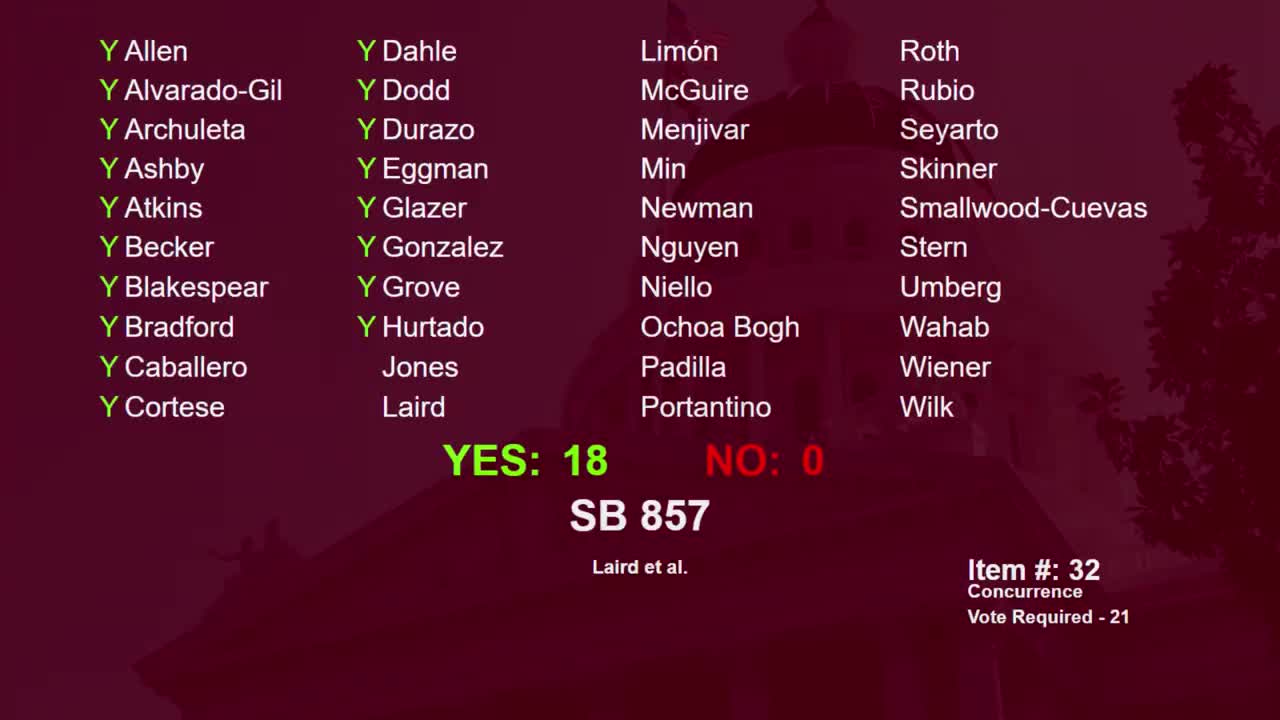 2MIN
Senate Floor
 14MIN
Senate Standing Committee on Business, Professions and Economic Development
 3MIN
Assembly Floor
 31SEC
Assembly Floor
 3MIN
Assembly Standing Committee on Business and Professions
 2MIN
Senate Floor
 5MIN
Senate Standing Committee on Business, Professions and Economic Development
Bill Author

Bill Co-Author(s):