AB 865: State Energy Resources Conservation and Development Commission: contracts, grants, and loans: diversity.
- Session Year: 2015-2016
- House: Assembly
- Latest Version Date: 2015-10-08
The Warren-Alquist State Energy Resources Conservation and Development Act establishes the State Energy Resources Conservation and Development Commission. Existing law requires the State Energy Resources Conservation and Development Commission to administer various grant and loan programs.
This bill would require the State Energy Resources Conservation and Development Commission to develop and implement an outreach program to inform the most qualified loan and grant applicants, and contractors, including, but not limited to, women, minority, disabled veteran, and LGBT business enterprises, as defined, about workshops, trainings, and funding opportunities. The bill would require that one component of the outreach program be a process for tracking the diversity of contractors, loan recipients, and grant recipients. The bill would require the outreach program to include a strategy to encourage the participation of certified women, minority, disabled veteran, and LGBT business enterprises in the commissions relevant programs and consider including them in capacity building activities. The bill would authorize the commission to consider establishing a Diversity Task Force to consider and make recommendations about diversity in the energy industry, including diversity of corporate governing boards and procurement from diverse businesses, and addressing and promoting local and targeted hiring.
The Warren-Alquist State Energy Resources Conservation and Development Act establishes the State Energy Resources Conservation and Development Commission. Existing law requires the State Energy Resources Conservation and Development Commission to administer various grant and loan programs.
This bill would require the State Energy Resources Conservation and Development Commission to develop and implement an outreach program to inform the most qualified loan and grant applicants, and contractors, including, but not limited to, women, minority, disabled veteran, and LGBT business enterprises, as defined. defined, about workshops, trainings, and funding opportunities. The bill would require that one component of the outreach program be a process for tracking the diversity of contractors, loan recipients, and grant recipients. The bill would require the outreach program to include a strategy to inform encourage the participation of certified women, minority, disabled veteran, and LGBT business enterprises about workshops, trainings, and funding opportunities, as appropriate, in the commissions relevant programs and consider including them in capacity building activities. The bill would require the commission to require that each contractor, recipient of a grant awarded, or loan approved by the commission on or after July 1, 2017, for an amount of $1,000,000 or more, including amended contracts, loans, and grant agreements that bring the total value of the loan or grant to $1,000,000 or more, or a different threshold or criteria determined to be appropriate by the commission, to (1) submit a report to the commission on the demographic makeup of the management of the firm or organization, (2) submit a detailed outreach plan to the commission for increasing subcontractor opportunities by certified women, minority, disabled veteran, and LGBT business enterprises, (3) implement the outreach plan to the best of the contractors or recipients financial and administrative capacity, and (4) furnish a report to the commission regarding the activities and outcomes achieved in implementing the outreach plan. The bill would require the commission to establish guidelines for all contractors, grant recipients, and loan recipients to utilize in preparing, implementing, and reporting on the outreach plans. The bill would require each contractor and recipient of a grant or loan that is subject to the bills requirements to submit data in a format to be specified by the commission of the activities and outcomes of its outreach plan on October 1 of the following fiscal year in which the contract, grant, or loan was awarded. The bill would require authorize the commission to consider establishing a Diversity Task Force to consider and make recommendations about diversity in the energy industry, including diversity of corporate governing boards and procurement from diverse businesses, and addressing and promoting local and targeted hiring.
The Warren-Alquist State Energy Resources Conservation and Development Act establishes the State Energy Resources Conservation and Development Commission. Existing law requires the State Energy Resources Conservation and Development Commission to administer various grant and loan programs.
This bill would require the State Energy Resources Conservation and Development Commission to develop an outreach program to inform and recruit the most qualified loan and grant applicants, and contractors, including, but not limited to, women, minority, disabled veteran, and LGBT business enterprises, as defined. The bill would require that one component of the outreach program be a process for tracking the diversity of contractors, loan recipients, and grant recipients. The bill would require the commission to include certified the outreach program to include a strategy to inform certified women, minority, disabled veteran, and LGBT business enterprises in announcements about workshops, trainings, and funding opportunities, as appropriate, and consider including them in capacity building activities. The bill would require the commission to require that each contractor, recipient of a grant awarded, or loan approved by the commission on or after October 1, 2016, July 1, 2017, for an amount of $1,000,000 or more, including amended contracts, loans, and grant agreements that bring the total value of the loan or grant to $1,000,000 or more (1) report more, or a different threshold or criteria determined to be appropriate by the commission, to (1) submit a report to the commission on the demographic makeup of the management of the firm or organization, (2) submit a detailed and verifiable outreach plan to the commission for increasing subcontractor opportunities by certified women, minority, disabled veteran, and LGBT business enterprises, (3) implement the outreach plan to the best of the contractors or recipients financial and administrative capacity, and (4) furnish a report to the commission regarding the activities and outcomes achieved in implementing the outreach plan. The bill would require the commission to establish guidelines for all contractors, grant recipients, and loan recipients to utilize in preparing, implementing, and reporting on the outreach plans. The bill would require each contractor and recipient of a grant or loan that is subject to the bills requirements to submit data on a form provided in a format to be specified by the commission of the activities and outcomes of its outreach plan on October 1 of the following fiscal year in which the contract was awarded, the loan was approved, or the grant was received. contract, grant, or loan was awarded. The bill would require the State Energy Resources Conservation and Development Commission commission to consider establishing a Diversity Task Force to consider and make recommendations about diversity in the energy industry, including diversity of corporate governing boards and procurement from diverse businesses. businesses, and addressing and promoting local and targeted hiring.
The Warren-Alquist State Energy Resources Conservation and Development Act establishes the State Energy Resources Conservation and Development Commission. Existing law requires the State Energy Resources Conservation and Development Commission to administer various grant and loan programs.
This bill would require the State Energy Resources Conservation and Development Commission to require that each recipient of a grant or loan, where the recipient has gross annual revenues exceeding $25,000,000, or a different threshold determined by the commission, as a condition for the receipt of that grant or loan, annually submit a detailed and verifiable plan for increasing procurement from women, minority, disabled veteran, and LGBT business enterprises, as defined, in all categories, including, but not limited to, renewable energy, advanced technologies, and demonstration projects, and furnish an annual report regarding the implementation of programs established pursuant to this requirement. The bill would require the State Energy Resources Conservation and Development Commission to establish guidelines for those grant or loan recipients to utilize in establishing programs pursuant to these requirements. The bill would require the State Energy Resources Conservation and Development Commission to develop, and would require those grant or loan recipients to implement, an outreach program to inform and recruit women, minority, disabled veteran, and LGBT business enterprises to apply for procurement contracts. develop an outreach program to inform and recruit the most qualified loan and grant applicants, and contractors, including, but not limited to, women, minority, disabled veteran, and LGBT business enterprises, as defined. The bill would require that one component of the outreach program be a process for tracking the diversity of contractors, loan recipients, and grant recipients. The bill would require the commission to include certified women, minority, disabled veteran, and LGBT business enterprises in announcements about workshops, trainings, and funding opportunities, as appropriate, and consider including them in capacity building activities. The bill would require the commission to require that each contractor, recipient of a grant awarded, or loan approved by the commission on or after October 1, 2016, for an amount of $1,000,000 or more, including amended contracts, loans, and grant agreements that bring the total value of the loan or grant to $1,000,000 or more (1) report on the demographic makeup of the management of the firm or organization, (2) submit a detailed and verifiable outreach plan for increasing subcontractor opportunities by certified women, minority, disabled veteran, and LGBT business enterprises, (3) implement the outreach plan to the best of the contractors or recipients financial and administrative capacity, and (4) furnish a report to the commission regarding the activities and outcomes achieved in implementing the outreach plan. The bill would require the commission to establish guidelines for all contractors, grant recipients, and loan recipients to utilize in preparing, implementing, and reporting on the outreach plans. The bill would require each contractor and recipient of a grant or loan that is subject to the bills requirements to submit data on a form provided by the commission of the activities and outcomes of its outreach plan on October 1 of the following fiscal year in which the contract was awarded, the loan was approved, or the grant was received. The bill would require the State Energy Resources Conservation and Development Commission to consider establishing a Diversity Task Force to consider and make recommendations about diversity in the energy industry, including diversity of corporate governing boards and procurement from diverse businesses.
The Warren-Alquist State Energy Resources Conservation and Development Act establishes the State Energy Resources Conservation and Development Commission. Existing law requires the State Energy Resources Conservation and Development Commission to administer various grant and loan programs.
This bill would require the State Energy Resources Conservation and Development Commission to require that each recipient of a grant or loan, where the recipient has gross annual revenues exceeding $25,000,000, or a different threshold determined by the commission, as a condition for the receipt of that grant or loan, annually submit a detailed and verifiable plan for increasing procurement from women, minority, disabled veteran, and LGBT business enterprises, as defined, in all categories, including, but not limited to, renewable energy, advanced technologies, and demonstration projects, and furnish an annual report regarding the implementation of programs established pursuant to this requirement. The bill would require the State Energy Resources Conservation and Development Commission to establish guidelines for all those grant or loan recipients to utilize in establishing programs pursuant to these requirements. The bill would require the State Energy Resources Conservation and Development Commission to develop, and would require every those grant or loan recipient recipients to implement, an outreach program to inform and recruit women, minority, disabled veteran, and LGBT business enterprises to apply for procurement contracts. The bill would require the State Energy Resources Conservation and Development Commission to establish consider establishing a Diversity Task Force to consider and make recommendations about diversity in the energy industry, including diversity of corporate governing boards and procurement from diverse businesses.
The Warren-Alquist State Energy Resources Conservation and Development Act establishes the State Energy Resources Conservation and Development Commission. Existing law requires the State Energy Resources Conservation and Development Commission to administer various grant and loan programs.
This bill would require the State Energy Resources Conservation and Development Commission to require that each recipient of a grant or loan, as a condition for the receipt of that grant or loan, annually submit a detailed and verifiable plan for increasing procurement from women, minority, disabled veteran, and LGBT business enterprises, as defined, in all categories, including, but not limited to, renewable energy, advanced technologies, and demonstration projects, and furnish an annual report regarding the implementation of programs established pursuant to this requirement. The bill would require the State Energy Resources Conservation and Development Commission to establish guidelines for all grant or loan recipients to utilize in establishing programs pursuant to these requirements. The bill would require the State Energy Resources Conservation and Development Commission to develop, and would require every grant or loan recipient to implement, an outreach program to inform and recruit women, minority, disabled veteran, and LGBT business enterprises to apply for procurement contracts. The bill would require the State Energy Resources Conservation and Development Commission to establish a Diversity Task Force to consider and make recommendations about diversity in the energy industry, including diversity of corporate governing boards and procurement from diverse businesses.
(a)For purposes of this section, the following terms have the following meanings:
(1)Certified means a business enterprise that is certified by the Public Utilities Commission, the Department of General Services, or other nonprofit organizations that verify or certify women, minority, disabled veteran, and LGBT business enterprises.
(2)Control means exercising the power to make policy decisions.
(3)Disabled veteran business enterprise has the same meaning as defined in Section 999 of the Military and Veterans Code.
(4)LGBT business enterprise means a business enterprise that is at least 51 percent owned by a lesbian, gay, bisexual, or transgender person or persons, or, in the case of any publicly owned business, at least 51 percent of the stock of which is owned by one or more lesbian, gay, bisexual, or transgender persons, and whose management and daily business operations are controlled by one or more of those individuals.
(5)Minority business enterprise means a business enterprise that is at least 51 percent owned by a minority group or groups, or, in the case of any publicly owned business, at least 51 percent of the stock of which is owned by one or more minority groups, and whose management and daily business operations are controlled by one or more of those individuals. The contracting utility shall presume that minority includes African Americans, Hispanic Americans, Native Americans, and Asian Pacific Americans.
(6)To operate means to be actively involved in the day-to-day management. It is not enough to merely be an officer or director.
(7)Women business enterprise means a business enterprise that is at least 51 percent owned by a woman or women, or, in the case of any publicly owned business, at least 51 percent of the stock of which is owned by one or more women, and whose management and daily business operations are controlled by one or more of those individuals.
(b)(1)The commission shall develop and implement an outreach program to inform the most qualified loan and grant applicants, and contractors, including, but not limited to, women, minority, disabled veteran, and LGBT business enterprises, about workshops, trainings, and funding opportunities. The purpose of the program is to ensure that the commission recognizes the demographic shifts of the California marketplace and is nurturing the new and next generation of energy technology leaders.
(2)One component of the outreach program shall be a process for tracking the diversity of contractors, loan recipients, and grant recipients. The commission may rely on existing sources for locating information on certified women, minority, disabled veteran, and LGBT business, which may include, but is not limited to, the clearinghouse database maintained by the Public Utilities Commission, the list of Disabled Veteran Business Enterprises certified by the Procurement Division of the Department of General Services, as well as information on other nonprofit organizations that verify or certify women, minority, and LGBT business enterprises.
(3)The outreach program shall include a strategy to encourage the participation of certified women, minority, disabled veteran, and LGBT business enterprises in the commissions relevant programs and shall consider including them in capacity building activities.
(c)The commission may consider establishing a Diversity Task Force to consider and make recommendations about diversity in the energy industry, including diversity of corporate governing boards and procurement from diverse businesses, and addressing and promoting local and targeted hiring.
(a)For purposes of this section, the following terms have the following meanings:
(1)Certified means a business enterprise that is certified by the Public Utilities Commission, the Department of General Services, or other nonprofit organizations that verify or certify women, minority, disabled veteran, and LGBT business enterprises.
(2)Control means exercising the power to make policy decisions.
(3)Disabled veteran business enterprise has the same meaning as defined in Section 999 of the Military and Veterans Code.
(4)LGBT business enterprise means a business enterprise that is at least 51 percent owned by a lesbian, gay, bisexual, or transgender person or persons, or, in the case of any publicly owned business, at least 51 percent of the stock of which is owned by one or more lesbian, gay, bisexual, or transgender persons, and whose management and daily business operations are controlled by one or more of those individuals.
(5)Minority business enterprise means a business enterprise that is at least 51 percent owned by a minority group or groups, or, in the case of any publicly owned business, at least 51 percent of the stock of which is owned by one or more minority groups, and whose management and daily business operations are controlled by one or more of those individuals. The contracting utility shall presume that minority includes African Americans, Hispanic Americans, Native Americans, and Asian Pacific Americans.
(6)To operate means to be actively involved in the day-to-day management. It is not enough to merely be an officer or director.
(7)Renewable energy project means a project for the development and operation of an eligible renewable energy resource meeting the requirements of the California Renewables Portfolio Standard Program (Article 16 (commencing with Section 399.11) of Chapter 2.3 of Part 1 of Division 1 of the Public Utilities Code).
(8)
(7)Women business enterprise means a business enterprise that is at least 51 percent owned by a woman or women, or, in the case of any publicly owned business, at least 51 percent of the stock of which is owned by one or more women, and whose management and daily business operations are controlled by one or more of those individuals.
(b)(1)The commission shall develop and implement an outreach program to inform the most qualified loan and grant applicants, and contractors, including, but not limited to, women, minority, disabled veteran, and LGBT business enterprises. enterprises, about workshops, trainings, and funding opportunities. The purpose of the program is to ensure that the commission recognizes the demographic shifts of the California marketplace and is nurturing the new and next generation of energy technology leaders.
(2)One component of the outreach program shall be a process for tracking the diversity of contractors, loan recipients, and grant recipients. The commission may rely on existing sources for locating information on certified women, minority, disabled veteran, and LGBT business, which may include, but is not limited to, the clearinghouse database maintained by the Public Utilities Commission, the list of Disabled Veteran Business Enterprises certified by the Procurement Division of the Department of General Services, as well as information on other nonprofit organizations that verify or certify women, minority, and LGBT business enterprises.
(3)The outreach program shall include a strategy to inform encourage the participation of certified women, minority, disabled veteran, and LGBT business enterprises about workshops, trainings, and funding opportunities, as appropriate, in the commissions relevant programs and shall consider including them in capacity building activities.
(c)The commission shall require that each contractor, recipient of a grant awarded, or loan approved by the commission on or after July 1, 2017, for an amount of one million dollars ($1,000,000) or more, or a different threshold or criteria determined to be appropriate by the commission, including amended contracts, loans, and grant agreements that bring the total value of the contract, loan, or grant to one million dollars ($1,000,000) or more, or the alternative threshold amount set by the commission, do all of the following as a condition for the receipt of that grant or loan:
(1)Submit a report to the commission on the demographic makeup of the management of the firm or organization awarded the contract or receiving the grant or loan.
(2)Submit a detailed outreach plan to the commission for increasing subcontractor opportunities with the prime contractor, grantee, or borrower by certified women, minority, disabled veteran, and LGBT business enterprises in California pursuant to the requirements of this section.
(3)Implement the outreach plan submitted to the commission to the best of the contractors or recipients financial and administrative capacity.
(4)Furnish a report to the commission regarding the activities and outcomes achieved in implementing the outreach plan, pursuant to the requirements of this section.
(d)Each report required by this section shall be a public document and shall be made readily available on an Internet Web site maintained by the commission.
(e)(1)The commission shall establish guidelines for all contractors, grant recipients, and loan recipients, subject to subdivision (c), to utilize in preparing, implementing, and reporting on the outreach plans pursuant to this section.
(2)The guidelines shall include methods for contractors, grant recipients, and loan recipients to use to engage certified women, minority, disabled veteran, and LGBT business enterprises in subcontracts in all categories that provide subcontracting opportunities, including, but not limited to, renewable energy projects, advanced technologies, and demonstration projects.
(3)The guidelines shall integrate the existing reporting requirements for state contractors, as relevant, and shall not require duplicate reporting of data that is otherwise required by state law. The contractor or loan or grant recipient may submit reports of another state entity to provide the same information.
(4)The commission shall adopt the guidelines at a publicly noticed meeting and shall provide an opportunity for public comment. The commission shall provide written public notice of a meeting not less than 30 days prior to the meeting. For substantive revisions of the guidelines, the commission shall provide written notice of a meeting not less than 10 days prior to the meeting at which the revision is to be considered or adopted. The adoption or revision of guidelines pursuant to this subdivision is exempt from Chapter 3.5 (commencing with Section 11340) of Part 1 of Division 3 of Title 2 of the Government Code.
(f)(1)Each recipient of a loan or grant, or contract, subject to this section, shall submit the outreach plan described in subdivision (c) within 60 days of the approval of the loan, grant, or contract.
(2)The outreach plan shall include short- and long-term goals and timetables, but not quotas, and shall include methods the contractor, grant recipient, or loan recipient intends to use to increase the number of certified women, minority, disabled veteran, and LGBT business enterprises that participate in all categories of subcontracting opportunities, including, but not limited to, renewable energy projects, advanced technologies, and demonstration projects.
(3)The outreach plan may be updated, as necessary, to reflect changes in the marketplace, local conditions, changes in the structure of the firm or organization, and other issues impacting the effectiveness of the plan.
(g)Each contractor and recipient of a grant or loan subject to this section shall submit data in a format to be specified by the commission of the activities and outcomes of its outreach plan on October 1 of the following fiscal year in which the contract, grant, or loan was awarded.
(h)After receipt of the initial plans and reports, the commission shall
(c)The commission may consider establishing a Diversity Task Force to consider and make recommendations about diversity in the energy industry, including diversity of corporate governing boards and procurement from diverse businesses, and addressing and promoting local and targeted hiring.
(a)For purposes of this section, the following terms have the following meanings:
(1)Certified means a business enterprise that is certified by the Public Utilities Commission, the Department of General Services, or other nonprofit organizations that verify or certify women, minority, disabled veteran, and LGBT business enterprises.
(1)
(2)Control means exercising the power to make policy decisions.
(2)
(3)Disabled veteran business enterprise has the same meaning as defined in Section 999 of the Military and Veterans Code.
(3)
(4)LGBT business enterprise means a business enterprise that is at least 51 percent owned by a lesbian, gay, bisexual, or transgender person or persons, or, in the case of any publicly owned business, at least 51 percent of the stock of which is owned by one or more lesbian, gay, bisexual, or transgender persons, and whose management and daily business operations are controlled by one or more of those individuals.
(4)
(5)Minority business enterprise means a business enterprise that is at least 51 percent owned by a minority group or groups, or, in the case of any publicly owned business, at least 51 percent of the stock of which is owned by one or more minority groups, and whose management and daily business operations are controlled by one or more of those individuals. The contracting utility shall presume that minority includes African Americans, Hispanic Americans, Native Americans, and Asian Pacific Americans.
(5)
(6)To operate means to be actively involved in the day-to-day management. It is not enough to merely be an officer or director.
(6)
(7)Renewable energy project means a project for the development and operation of an eligible renewable energy resource meeting the requirements of the California Renewables Portfolio Standard Program (Article 16 (commencing with Section 399.11) of Chapter 2.3 of Part 1 of Division 1). 1 of the Public Utilities Code).
(7)
(8)Women business enterprise means a business enterprise that is at least 51 percent owned by a woman or women, or, in the case of any publicly owned business, at least 51 percent of the stock of which is owned by one or more women, and whose management and daily business operations are controlled by one or more of those individuals.
(b)(1)The commission shall develop an outreach program to inform and recruit the most qualified loan and grant applicants, and contractors, including, but not limited to, women, minority, disabled veteran, and LGBT business enterprises. The purpose of the program is to ensure that the commission recognizes the demographic shifts of the California marketplace and is nurturing the new and next generation of energy technology leaders.
(2)One component of the outreach program shall be a process for tracking the diversity of contractors, loan recipients, and grant recipients. Among other activities, the commission shall identify The commission may rely on existing sources for locating information on certified women, minority, disabled veteran, and LGBT business, which may include, but is not limited to, the clearinghouse database maintained by the Public Utilities Commission, the list of Disabled Veteran Business Enterprises certified by the Procurement Division of the Department of General Services, as well as information on other nonprofit organizations that verify or certify women, minority, and LGBT business enterprises.
(3)The commission shall include outreach program shall include a strategy to inform certified women, minority, disabled veteran, and LGBT business enterprises in announcements about workshops, trainings, and funding opportunities, as appropriate, and shall consider including them in capacity building activities.
(c)The commission shall require that each contractor, recipient of a grant awarded, or loan approved by the commission on or after October 1, 2016, July 1, 2017, for an amount of one million dollars ($1,000,000) or more, or a different threshold or criteria determined to be appropriate by the commission, including amended contracts, loans, and grant agreements that bring the total value of the contract, loan, or grant to one million dollars ($1,000,000) or more, or the alternative threshold amount set by the commission, do all of the following as a condition for the receipt of that grant or loan:
(1)Report Submit a report to the commission on the demographic makeup of the management of the firm or organization awarded the contract or receiving the grant or loan.
(2)Submit a detailed and verifiable outreach plan to the commission for increasing subcontractor opportunities with the prime contractor, grantee, or borrower by certified women, minority, disabled veteran, and LGBT business enterprises in California pursuant to the requirements of this section.
(3)Implement the outreach plan submitted to the commission to the best of the contractors or recipients financial and administrative capacity.
(4)Furnish a report to the commission regarding the activities and outcomes achieved in implementing the outreach plan, pursuant to the requirements of this section.
(d)Each report required by this section shall be a public document and shall be made readily available on an Internet Web site maintained by the commission.
(e)(1)The commission shall establish guidelines for all contractors, grant recipients, and loan recipients, subject to subdivision (c), to utilize in preparing, implementing, and reporting on the outreach plans pursuant to this section.
(2)The guidelines shall include methods for encouraging contractors, grant recipients, and loan recipients to use to engage certified women, minority, disabled veteran, and LGBT business enterprises in subcontracts in all categories that provide subcontracting opportunities, including, but not limited to, renewable energy projects, advanced technologies, and demonstration projects.
(3)The commission shall consider specifying consequences for not meeting the requirements of subdivision (c).
(4)
(3)The guidelines shall integrate the existing reporting requirements for state contractors, as relevant, and shall not require duplicate reporting of data that is otherwise required by state law. The contractor or loan or grant recipient may submit reports of another state entity to provide the same information.
(4)The commission shall adopt the guidelines at a publicly noticed meeting and shall provide an opportunity for public comment. The commission shall provide written public notice of a meeting not less than 30 days prior to the meeting. For substantive revisions of the guidelines, the commission shall provide written notice of a meeting not less than 10 days prior to the meeting at which the revision is to be considered or adopted. The adoption or revision of guidelines pursuant to this subdivision is exempt from Chapter 3.5 (commencing with Section 11340) of Part 1 of Division 3 of Title 2 of the Government Code.
(f)(1)Each recipient of a loan or grant, or contract, subject to this section, shall submit the outreach plan described in subdivision (c) within 60 days of the award or approval of the loan, grant, or contract.
(2)The outreach plan shall include short- and long-term goals and timetables, but not quotas, and shall include methods the contractor, grant recipient, or loan recipient intends to use to increase the number of certified women, minority, disabled veteran, and LGBT business enterprises that participate in all categories of subcontracting opportunities, including, but not limited to, renewable energy projects, advanced technologies, and demonstration projects.
(3)The outreach plan may be updated, as necessary, to reflect changes in the marketplace, local conditions, changes in the structure of the firm or organization, and other issues impacting the effectiveness of the plan.
(g)Each contractor and recipient of a grant or loan subject to this section shall submit data on a form provided in a format to be specified by the commission of the activities and outcomes of its outreach plan on October 1 of the following fiscal year in which the contract was awarded, the loan was approved, or the grant was received. contract, grant, or loan was awarded.
(h)After receipt of the initial plans and reports, the commission shall consider establishing a Diversity Task Force to consider and make recommendations about diversity in the energy industry, including diversity of corporate governing boards and procurement from diverse businesses. If the commission establishes a Diversity Task Force, the commission shall consider how it can address and promote local and targeted hiring. businesses, and addressing and promoting local and targeted hiring.
(a)For purposes of this section, the following terms have the following meanings:
(1)Control means exercising the power to make policy decisions.
(2)Disabled veteran business enterprise has the same meaning as defined in Section 999 of the Military and Veterans Code.
(3)LGBT business enterprise means a business enterprise that is at least 51 percent owned by a lesbian, gay, bisexual, or transgender person or persons, or, in the case of any publicly owned business, at least 51 percent of the stock of which is owned by one or more lesbian, gay, bisexual, or transgender persons, and whose management and daily business operations are controlled by one or more of those individuals.
(4)Minority business enterprise means a business enterprise that is at least 51 percent owned by a minority group or groups, or, in the case of any publicly owned business, at least 51 percent of the stock of which is owned by one or more minority groups, and whose management and daily business operations are controlled by one or more of those individuals. The contracting utility shall presume that minority includes African Americans, Hispanic Americans, Native Americans, and Asian Pacific Americans.
(5)To operate means to be actively involved in the day-to-day management. It is not enough to merely be an officer or director.
(6)Renewable energy project means a project for the development and operation of an eligible renewable energy resource meeting the requirements of the California Renewables Portfolio Standard Program (Article 16 (commencing with Section 399.11) of Chapter 2.3 of Part 1 of Division 1).
(7)Women business enterprise means a business enterprise that is at least 51 percent owned by a woman or women, or, in the case of any publicly owned business, at least 51 percent of the stock of which is owned by one or more women, and whose management and daily business operations are controlled by one or more of those individuals.
(b)(1)The commission shall develop an outreach program to inform and recruit the most qualified loan and grant applicants, and contractors, including, but not limited to, women, minority, disabled veteran, and LGBT business enterprises. The purpose of the program is to ensure that the commission recognizes the demographic shifts of the California marketplace and is nurturing the new and next generation of energy technology leaders.
(2)One component of the outreach program shall be a process for tracking the diversity of contractors, loan recipients, and grant recipients. Among other activities, the commission shall identify existing sources for locating information on certified women, minority, disabled veteran, and LGBT business, which may include, but is not limited to, the clearinghouse database maintained by the Public Utilities Commission, the list of Disabled Veteran Business Enterprises certified by the Procurement Division of the Department of General Services, as well as information on other nonprofit organizations that verify or certify women, minority, and LGBT business enterprises.
(3)The commission shall include certified women, minority, disabled veteran, and LGBT business enterprises in announcements about workshops, trainings, and funding opportunities, as appropriate, and shall consider including them in capacity building activities.
(b)
(c)The commission shall require that each contractor, recipient of a grant awarded, or loan administered approved by the commission, where the recipient has annual revenues exceeding twenty-five million dollars ($25,000,000), or a different threshold determined to be appropriate by the commission, do both commission on or after October 1, 2016, for an amount of one million dollars ($1,000,000) or more, including amended contracts, loans, and grant agreements that bring the total value of the contract, loan, or grant to one million dollars ($1,000,000) or more, do all of the following as a condition for the receipt of that grant or loan:
(1)Report on the demographic makeup of the management of the firm or organization awarded the contract or receiving the grant or loan.
(1)Annually submit
(2)Submit a detailed and verifiable outreach plan for increasing procurement from subcontractor opportunities with the prime contractor, grantee, or borrower by certified women, minority, disabled veteran, and LGBT business enterprises in all categories, including, but not limited to, renewable energy, advanced technologies, and demonstration projects. These annual plans shall include short- and long-term goals and timetables, but not quotas, and shall include methods for encouraging both prime contractors and grantees to engage women, minority, disabled veteran, and LGBT business enterprises in subcontracts in all categories that provide subcontracting opportunities, including, but not limited to, renewable energy, advanced technologies, and demonstration projects. pursuant to the requirements of this section.
(3)Implement the outreach plan submitted to the commission to the best of the contractors or recipients financial and administrative capacity.
(2)Furnish an annual
(4)Furnish a report to the commission regarding the implementation of programs established pursuant to this section in a form that the commission shall require, and at the time that the commission shall annually designate. Each activities and outcomes achieved in implementing the outreach plan, pursuant to the requirements of this section.
(d)Each report required by this section shall be a public document and shall be made readily available on an Internet Web site either maintained by the grant or loan recipient or maintained by the commission.
(c)
(e)(1)The commission shall establish guidelines for all grant or contractors, grant recipients, and loan recipients, subject to subdivision (b), (c), to utilize in establishing programs preparing, implementing, and reporting on the outreach plans pursuant to this section.
(d)The commission shall develop, and require every grant or loan recipient, subject to subdivision (b), to implement, an outreach program to inform and recruit women, minority, disabled veteran, and LGBT business enterprises to apply for procurement contracts under this section.
(2)The guidelines shall include methods for encouraging contractors, grant recipients, and loan recipients to engage certified women, minority, disabled veteran, and LGBT business enterprises in subcontracts in all categories that provide subcontracting opportunities, including, but not limited to, renewable energy projects, advanced technologies, and demonstration projects.
(3)The commission shall consider specifying consequences for not meeting the requirements of subdivision (c).
(4)The guidelines shall integrate the existing reporting requirements for state contractors, as relevant, and shall not require duplicate reporting of data that is otherwise required by state law. The contractor or loan or grant recipient may submit reports of another state entity to provide the same information.
(f)(1)Each recipient of a loan or grant, or contract, subject to this section, shall submit the outreach plan described in subdivision (c) within 60 days of the award or approval of the loan, grant, or contract.
(2)The outreach plan shall include short- and long-term goals and timetables, but not quotas, and shall include methods the contractor, grant recipient, or loan recipient intends to use to increase the number of certified women, minority, disabled veteran, and LGBT business enterprises that participate in all categories of subcontracting opportunities, including, but not limited to, renewable energy projects, advanced technologies, and demonstration projects.
(3)The outreach plan may be updated, as necessary, to reflect changes in the marketplace, local conditions, changes in the structure of the firm or organization, and other issues impacting the effectiveness of the plan.
(g)Each contractor and recipient of a grant or loan subject to this section shall submit data on a form provided by the commission of the activities and outcomes of its outreach plan on October 1 of the following fiscal year in which the contract was awarded, the loan was approved, or the grant was received.
(e)
(h)After receipt of the detailed initial plans and annual reports, the commission shall consider establishing a Diversity Task Force to consider and make recommendations about diversity in the energy industry, including diversity of corporate governing boards and procurement from diverse businesses. If the commission establishes a Diversity Task Force, the commission shall consider how it can address and promote local and targeted hiring.
(a)For purposes of this section, the following terms have the following meanings:
(1)Control means exercising the power to make policy decisions.
(2)Disabled veteran business enterprise has the same meaning as defined in Section 999 of the Military and Veterans Code.
(3)LGBT business enterprise means a business enterprise that is at least 51 percent owned by a lesbian, gay, bisexual, or transgender person or persons, or, in the case of any publicly owned business, at least 51 percent of the stock of which is owned by one or more lesbian, gay, bisexual, or transgender persons, and whose management and daily business operations are controlled by one or more of those individuals.
(4)Minority business enterprise means a business enterprise that is at least 51 percent owned by a minority group or groups, or, in the case of any publicly owned business, at least 51 percent of the stock of which is owned by one or more minority groups, and whose management and daily business operations are controlled by one or more of those individuals. The contracting utility shall presume that minority includes African Americans, Hispanic Americans, Native Americans, and Asian Pacific Americans.
(5)To operate means to be actively involved in the day-to-day management. It is not enough to merely be an officer or director.
(6)Renewable energy project means a project for the development and operation of an eligible renewable energy resource meeting the requirements of the California Renewables Portfolio Standard Program (Article 16 (commencing with Section 399.11) of Chapter 2.3 of Part 1 of Division 1).
(7)Women business enterprise means a business enterprise that is at least 51 percent owned by a woman or women, or, in the case of any publicly owned business, at least 51 percent of the stock of which is owned by one or more women, and whose management and daily business operations are controlled by one or more of those individuals.
(b)The commission shall require that each recipient of a grant or loan administered by the commission commission, where the recipient has annual revenues exceeding twenty-five million dollars ($25,000,000), or a different threshold determined to be appropriate by the commission, do both of the following as a condition for the receipt of that grant or loan:
(1)Annually submit a detailed and verifiable plan for increasing procurement from women, minority, disabled veteran, and LGBT business enterprises in all categories, including, but not limited to, renewable energy, advanced technologies, and demonstration projects. These annual plans shall include short- and long-term goals and timetables, but not quotas, and shall include methods for encouraging both prime contractors and grantees to engage women, minority, disabled veteran, and LGBT business enterprises in subcontracts in all categories that provide subcontracting opportunities, including, but not limited to, renewable energy, advanced technologies, and demonstration projects.
(2)Furnish an annual report to the commission regarding the implementation of programs established pursuant to this section in a form that the commission shall require, and at the time that the commission shall annually designate. Each report shall be a public document and shall be made readily available on an Internet Web site either maintained by the grant or loan recipient or by the commission.
(c)The commission shall establish guidelines for all grant or loan recipients recipients, subject to subdivision (b), to utilize in establishing programs pursuant to this section.
(d)The commission shall develop, and require every grant or loan recipient recipient, subject to subdivision (b), to implement, an outreach program to inform and recruit women, minority, disabled veteran, and LGBT business enterprises to apply for procurement contracts under this section.
(e)The After receipt of the detailed plans and annual reports, the commission shall establish consider establishing a Diversity Task Force to consider and make recommendations about diversity in the energy industry, including diversity of corporate governing boards and procurement from diverse businesses. The Diversity Task Force shall do all the following: If the commission establishes a Diversity Task Force, the commission shall consider how it can address and promote local and targeted hiring.
(1)Identify and promote energy companies that are actively engaged in diversity issues.
(2)Explore the status of diverse representation on energy company governing boards.
(3)Identify actions that the commission can take to encourage insurance companies to increase procurement with diverse suppliers.
(4)Provide recommendations regarding current legislation and suggest changes to existing law.
(a)For purposes of this section, the following terms have the following meanings:
(1)Control means exercising the power to make policy decisions.
(2)Disabled veteran business enterprise has the same meaning as defined in Section 999 of the Military and Veterans Code.
(3)LGBT business enterprise means a business enterprise that is at least 51 percent owned by a lesbian, gay, bisexual, or transgender person or persons, or, in the case of any publicly owned business, at least 51 percent of the stock of which is owned by one or more lesbian, gay, bisexual, or transgender persons, and whose management and daily business operations are controlled by one or more of those individuals.
(4)Minority business enterprise means a business enterprise that is at least 51 percent owned by a minority group or groups, or, in the case of any publicly owned business, at least 51 percent of the stock of which is owned by one or more minority groups, and whose management and daily business operations are controlled by one or more of those individuals. The contracting utility shall presume that minority includes African Americans, Hispanic Americans, Native Americans, and Asian Pacific Americans.
(5)To operate means to be actively involved in the day-to-day management. It is not enough to merely be an officer or director.
(6)Renewable energy project means a project for the development and operation of an eligible renewable energy resource meeting the requirements of the California Renewables Portfolio Standard Program (Article 16 (commencing with Section 399.11) of Chapter 2.3 of Part 1 of Division 1).
(7)Women business enterprise means a business enterprise that is at least 51 percent owned by a woman or women, or, in the case of any publicly owned business, at least 51 percent of the stock of which is owned by one or more women, and whose management and daily business operations are controlled by one or more of those individuals.
(b)The commission shall require that each recipient of a grant or loan administered by the commission do both of the following as a condition for the receipt of that grant or loan:
(1)Annually submit a detailed and verifiable plan for increasing procurement from women, minority, disabled veteran, and LGBT business enterprises in all categories, including, but not limited to, renewable energy, advanced technologies, and demonstration projects. These annual plans shall include short- and long-term goals and timetables, but not quotas, and shall include methods for encouraging both prime contractors and grantees to engage women, minority, disabled veteran, and LGBT business enterprises in subcontracts in all categories that provide subcontracting opportunities, including, but not limited to, renewable energy, advanced technologies, and demonstration projects.
(2)Furnish an annual report to the commission regarding the implementation of programs established pursuant to this section in a form that the commission shall require, and at the time that the commission shall annually designate. Each report shall be a public document and shall be made readily available on an Internet Web site either maintained by the grant or loan recipient or by the commission.
(c)The commission shall establish guidelines for all grant or loan recipients to utilize in establishing programs pursuant to this section.
(d)The commission shall develop, and require every grant or loan recipient to implement, an outreach program to inform and recruit women, minority, disabled veteran, and LGBT business enterprises to apply for procurement contracts under this section.
(e)The commission shall establish a Diversity Task Force to consider and make recommendations about diversity in the energy industry, including diversity of corporate governing boards and procurement from diverse businesses. The Diversity Task Force shall do all the following:
(1)Identify and promote energy companies that are actively engaged in diversity issues.
(2)Explore the status of diverse representation on energy company governing boards.
(3)Identify actions that the commission can take to encourage insurance companies to increase procurement with diverse suppliers.
(4)Provide recommendations regarding current legislation and suggest changes to existing law.
|
Date
|
Status
|
|---|---|
| Oct 8, 2015 | Chaptered by Secretary of State - Chapter 583, Statutes of 2015. |
| Oct 8, 2015 | Approved by the Governor. |
| Sep 17, 2015 | Enrolled and presented to the Governor at 11:30 a.m. |
| Sep 8, 2015 | Senate amendments concurred in. To Engrossing and Enrolling. (Ayes 59. Noes 16. Page 2945.). |
| Sep 8, 2015 | Senate amendments concurred in. To Engrossing and Enrolling. (Ayes 59. Noes 16.). |
| Sep 8, 2015 | Senate amendments concurred in. To Engrossing and Enrolling. |
| Sep 3, 2015 | Read third time. Passed. Ordered to the Assembly. (Ayes 28. Noes 11. Page 2481.). |
| Sep 3, 2015 | In Assembly. Concurrence in Senate amendments pending. May be considered on or after September 5 pursuant to Assembly Rule 77. |
| Sep 3, 2015 | Read third time. Passed. Ordered to the Assembly. |
| Sep 1, 2015 | Read second time and amended. Ordered to third reading. |
| Aug 31, 2015 | From committee: Amend, and do pass as amended. (Ayes 5. Noes 2.) (August 27). |
| Aug 17, 2015 | In committee: Referred to APPR. suspense file. |
| Jul 14, 2015 | From committee: Do pass and re-refer to Com. on APPR. (Ayes 9. Noes 2.) (July 13). Re-referred to Com. on APPR. |
| Jul 6, 2015 | From committee chair, with author's amendments: Amend, and re-refer to committee. Read second time, amended, and re-referred to Com. on E., U., & C. |
| Jun 29, 2015 | In committee: Hearing postponed by committee. |
| Jun 11, 2015 | Referred to Com. on E., U., & C. |
| Jun 2, 2015 | In Senate. Read first time. To Com. on RLS. for assignment. |
| Jun 2, 2015 | Read third time. Passed. Ordered to the Senate. (Ayes 59. Noes 16. Page 1783.) |
| Jun 2, 2015 | Read third time. Passed. Ordered to the Senate. |
| Jun 1, 2015 | Read second time. Ordered to third reading. |
| May 28, 2015 | From committee: Do pass. (Ayes 12. Noes 4.) (May 28). |
| May 20, 2015 | In committee: Set, first hearing. Referred to APPR. suspense file. |
| May 20, 2015 | In committee: Set, first hearing. Referred to suspense file. |
| May 13, 2015 | In committee: Hearing postponed by committee. |
| May 7, 2015 | Re-referred to Com. on APPR. |
| May 6, 2015 | Read second time and amended. |
| May 5, 2015 | From committee: Amend, and do pass as amended and re-refer to Com. on APPR. (Ayes 6. Noes 1.) (April 29). |
| Apr 20, 2015 | Re-referred to Com. on J., E.D., & E. |
| Apr 16, 2015 | Read second time and amended. |
| Apr 15, 2015 | From committee: Amend, and do pass as amended and re-refer to Com. on J., E.D., & E. (Ayes 10. Noes 3.) (April 13). |
| Mar 16, 2015 | Referred to Coms. on U. & C. and J., E.D., & E. |
| Feb 27, 2015 | From printer. May be heard in committee March 29. |
| Feb 26, 2015 | Read first time. To print. |
|
Date
|
Description
|
Location
|
Votes
|
|
|---|---|---|---|---|
| Sep 8, 2015 | AB 865 ALEJO Concurrence in Senate Amendments | Assembly Floor |
Passed |
|
| Sep 3, 2015 | Assembly 3rd Reading AB865 Alejo By Hueso | Senate Floor |
Passed |
|
| Aug 27, 2015 | Do pass as amended | Senate Standing Committee on Appropriations |
Passed |
|
| Aug 17, 2015 | Placed on suspense file | Senate Standing Committee on Appropriations |
Passed |
|
| Jul 13, 2015 | Do pass, but first be re-referred to the Committee on [Appropriations] | Senate Standing Committee on Energy, Utilities and Communications |
Passed |
|
| Jun 2, 2015 | AB 865 ALEJO Assembly Third Reading | Assembly Floor |
Passed |
|
| May 28, 2015 | Do pass. | Assembly Standing Committee on Appropriations |
Passed |
|
| Apr 29, 2015 | Do pass as amended and be re-referred to the Committee on [Appropriations] | Assembly Standing Committee on Jobs, Economic Development, and the Economy |
Passed |
|
| Apr 13, 2015 | Do pass as amended and be re-referred to the Committee on [Jobs, Economic Development, and the Economy] | Assembly Standing Committee on Utilities and Commerce |
Passed |
This list shows positions taken on this bill by organizations on the date displayed, which is linked to the original source.
Positions by individuals are not included.
AB 865
Page 2
CONCURRENCE IN SENATE AMENDMENTS
AB 865
(Alejo)
As Amended September 1, 2015
Majority vote
ASSEMBLY: |
59-16 |
(June 2, 2015) |
SENATE: |
28-11 |
(September 3, 2015) |
Original Committee Reference: U. & C.
SUMMARY: Requires the California Energy Commission (CEC) to develop and implement an outreach program to inform certified women, minorities, disabled veterans, and gay, lesbian, bisexual, and transgender (LGBT) businesses of CEC workshops, training, and funding opportunities, as specified.
The Senate amendments deleted the requirements on recipients of contracts and grants, and made other clarifying changes.
EXISTING LAW:
Requires the CEC to take steps to solicit various loan applications, as specified. (Public Resources Code Section 25412.5)
Directs the CEC to oversee much of the state's investments in clean energy research, clean transportation, and energy efficiency. (Public Resources Code Sections 25007, 25008, and 25400)
Declares that it is the policy of California to aid in the interests of women, minority, disabled veterans, and LGBT business enterprises, encourage greater economic opportunity for these groups, and promote competition among utilities to procure contracts with diverse businesses. (Public Utilities Code Section 8281)
FISCAL EFFECT: According to the Senate Appropriations Committee, this bill would have costs of up to $150,000 annually to the Energy Resource Program Account to the CEC for implementation of its outreach program.
COMMENTS:
Author’s Statement: "AB 865 will ensure that California's clean energy future is inclusive of diverse communities. This bill will help working families and working-class communities make economic and environmental gains with its investments. The CEC currently directs much of California's investments in clean energy research, clean transportation, and energy efficiency. This bill helps ensure California's climate change policies and investments have maximum co-benefits to reduce pollution and poverty."
Background: Beginning in 1986, the Legislature enacted a series of statutes, resulting in the adoption of General Order (GO) 156 by the California Public Utilities Commission (CPUC). GO 156 established the Supplier Diversity program, symbolizing an evolving state effort to increase utility contracting with women and minority-owned businesses. Disabled veterans were added in 1990, and LGBT enterprises were added to the program in 2012.
Under GO 156, each electrical, gas, water, and telephone corporation with gross annual revenues exceeding $25 million, and their associated CPUC-regulated subsidiaries and affiliates, are required to participate in the Supplier Diversity program. Under this program, utilities are required to annually submit a detailed and verifiable plan with goals and timetables for increasing supplier diversity in all procurement categories.
CEC Resolution: On April 8, 2015, the CEC adopted a resolution to implement a policy to reflect the CEC’s commitment to making sure the widest possible range of Californians participate in existing and future programs. The resolution specifically aims to maximize opportunities for small businesses, women, disabled veterans, minority and LGBT-owned businesses, as well as economically disadvantaged and underserved communities, to participate in and benefit from CEC programs.
This bill would promote greater implementation of the CEC's resolution by requiring the CEC to develop and implement an outreach program to inform certified women, minorities, disabled veterans, and LGBT businesses of CEC workshops, training, and funding opportunities, as specified.
Analysis Prepared by: Edmond Cheung / U. & C. / (916) 319-2083 FN: 0002037
AB 865
Page 6
|
Office of Senate Floor Analyses (916) 651-1520 Fax: (916) 327-4478 |
THIRD READING
Bill No: AB 865
Amended: 9/1/15 in Senate
SENATE ENERGY, U. & C. COMMITTEE: 9-2, 7/13/15
AYES: Hueso, Cannella, Hertzberg, Hill, Lara, Leyva, McGuire, Pavley, Wolk
NOES: Fuller, Morrell
SENATE APPROPRIATIONS COMMITTEE: 5-2, 8/27/15
AYES: Lara, Beall, Hill, Leyva, Mendoza
NOES: Bates, Nielsen
ASSEMBLY FLOOR: 59-16, 6/2/15 - See last page for vote
SUBJECT: State Energy Resources Conservation and Development Commission: contracts, grants, and loans: diversity
SOURCE: The Greenlining Institute
DIGEST: This bill requires the California Energy Commission (CEC) to develop an outreach program to inform women, minorities, disabled veterans, and lesbian, gay, bisexual, and transgender (LGBT) individuals of CEC funding programs and procurement opportunities.
Existing law:
Establishes the State Energy Resources Conservation and Development Commission, otherwise known as the CEC. (Public Resources Code §25000 et seq.)
Requires the CEC to administer various grants and loan programs. (Public Resources Code §25412.5)
Directs the CEC to oversee much of the state’s investments in clean energy research, clean transportation, and energy efficiency. (Public Resources Code §§§25007, 25008, 25400)
Declares that is the policy of California to aid in the interests of women, minority, disabled veteran, and LGBT business enterprises, encourages greater economic opportunity for these groups and promotes competition among utilities to procure contracts with diverse businesses. (Public Utilities Code §8281)
This bill:
Requires the CEC to develop and implement an outreach program to inform potential applicants of CEC loans, grants and contracts (including women, minority, disabled veteran, and LGBT business enterprises).
Requires that a component of the outreach program include a process for tracking the diversity of contractors, loan and grant recipients.
Requires the outreach program to include a strategy to inform and encourage participation of certified women, minority, disabled veteran, and LGBT business enterprises about CEC workshops, trainings, and funding opportunities, and to consider including these enterprises in capacity building opportunities.
Provides that the CEC may consider establishing a Diversity Task Force to consider and make recommendations about diversity in the energy industry, including diversity of corporate governing boards and procurement from diverse businesses, and addressing and promoting local and targeted hiring.
Background
Diversity at the California Public Utilities Commission (CPUC). Beginning in 1986, the Legislature enacted a series of statutes, resulting in the CPUC adopting General Order (GO) 156, which established the Supplier Diversity Program for the purpose of encouraging greater participation in utility contracts by women and minority-owned businesses. Disabled veteran-owned business enterprises were added in 1990, and in 2014, LGBT business enterprises were added through statute.
GO 156 currently applies to regulated utilities including electrical, gas, water, wireless telecommunications service providers, and telephone corporations with gross annual revenues over $25 million including CPUC-regulated subsidiaries and affiliates. These regulated entities must participate in the Supplier Diversity Program. Regulated entities are required to annually submit a detailed and verifiable plan, with goals and timetables, for increasing participation from these aforementioned demographic groups in all categories of procurement, including technology, equipment, supplies, services, materials, and construction. Although there is no penalty for failure of a utility to meet its goals, each utility is required to report annually on its progress. The CPUC, in turn, is required to make an annual progress report to the Legislature
Showing signs of success. In March 2014, the CPUC reported that companies participating in the Supplier Diversity Program achieved a new record in 2013, procuring approximately $8.5 billion in goods and services from qualified diverse suppliers, an increase of about $500 million over 2012 procurement. According to the CPUC, more than 30 companies continue to participate in the program, including Pacific Gas and Electric, Southern California Edison, AT&T and several others.
CEC resolution. On April 8, 2015, the CEC adopted a resolution to implement a policy to reflect the CEC’s commitment to diversity outreach for all its programs, including grants, loans and procurement opportunities. The resolution notes the unique ability of the CEC to promote diversity by providing opportunities for increased participation in CEC programs of small businesses and women, disabled veteran, minority, and LGBT owned businesses. AB 865 further bolsters the CEC’s efforts by providing more specificity regarding how the CEC will achieve and measure its commitment to support more diversity.
Prior Legislation
AB 2593 (Bradford, 2014) would have required a business enterprise with gross annual revenues exceeding $25 million participating in a program administered by the California Air Resources Board to increase procurement from women, minority, and disabled veteran business enterprises. The bill was vetoed by the Governor.
AB 1678 (Gordon, Chapter 633, Statutes of 2014) extended provisions of the CPUC’s Supplier Diversity Program to LGBT business enterprises.
AB 2758 (Bradford, Chapter 475, Statutes of 2010) required cable corporations, with gross annual revenues exceeding $25 million, to annually submit a detailed and verifiable plan for increasing procurement from diverse businesses. It specified that renewable energy, wireless telecommunications, broadband, smart grid and rail projects should be projects of focus for utility procurement with diverse businesses.
AB 873 (Davis, Chapter 316, Statutes of 2008) required each water corporation with 10,000 or more service connections to submit annual plans for increasing procurement from women- and minority-owned businesses and disabled veteran business enterprises to encourage each electrical, gas, water, and telephone corporation that is not required to submit a plan under current law to voluntarily adopt a plan for increasing women, minority, and disabled veteran business enterprises procurement in all categories.
AB 3678 (Moore, Chapter 1259, Statutes of 1986) codified the broader parameters of GO 156, and required each electrical, gas, and telephone corporations, with gross annual revenues exceeding $25 million, to annually submit a detailed and verifiable plan for increasing diverse business procurement in all categories that includes short- and long-term goals and timetables, and furnish an annual report.
FISCAL EFFECT: Appropriation: No Fiscal Com.: Yes Local: No
According to the Senate Appropriations Committee, up to $150,000 annually to the Energy Resources Program Account (General Fund) to the CEC for implementation its outreach program.
The Greenlining Institute (source)
American GI Forum
Asian Business Association
Asian Business Association – Inland Empire
Asian Pacific Environmental Network
California Black Chamber of Commerce
City of Oakland
Coalition for Clean Air
Environment California
Environmental Defense Fund
Equality California
Green Technical Education & Employment
National Latina Business Women Association
Natural Resources Defense Council
PolicyLink
Small Business California
Small Business Majority
sustainableSMARTS
West Angeles Community Development Corporation
OPPOSITION: (Verified 8/31/15)
None received
ARGUMENTS IN SUPPORT: The Greenlining Institute, the sponsor of the bill, states: “The CEC provides almost $800 million a year in funding for clean energy projects, and there are currently no policies in place to promote diversity in these procurement pipelines. Small and ethnic businesses must be part of the clean energy economy if California is to meet its economic and environmental goals. This is because entrepreneurship is key to the American Dream, and if we are to build a healthy state economy, it is vitally important that California’s diverse communities have access to entrepreneurial opportunities.
“This bill aims to increase the rate of entrepreneurship opportunities among minorities, women, LGBT-identified individuals, and disabled veterans. In doing so, this bill recognizes the demographic shifts of the California marketplace and helps to nurture the new and next generation of energy technology leaders.
“AB 865 will help to ensure that the growing clean energy economy is transparent, competitive, diverse and inclusive of all Californians.”
ASSEMBLY FLOOR: 59-16, 6/2/15
AYES: Achadjian, Alejo, Baker, Bloom, Bonilla, Bonta, Brown, Burke, Calderon, Campos, Chau, Chiu, Chu, Cooley, Cooper, Dababneh, Daly, Dodd, Frazier, Cristina Garcia, Eduardo Garcia, Gatto, Gipson, Gomez, Gonzalez, Gordon, Gray, Roger Hernández, Holden, Irwin, Jones-Sawyer, Lackey, Levine, Linder, Lopez, Low, Maienschein, Mathis, McCarty, Medina, Mullin, Nazarian, O'Donnell, Olsen, Perea, Quirk, Rendon, Ridley-Thomas, Rodriguez, Salas, Santiago, Mark Stone, Thurmond, Ting, Waldron, Weber, Williams, Wood, Atkins
NOES: Travis Allen, Bigelow, Brough, Beth Gaines, Gallagher, Grove, Hadley, Harper, Jones, Kim, Melendez, Obernolte, Patterson, Steinorth, Wagner, Wilk
NO VOTE RECORDED: Chang, Chávez, Dahle, Eggman, Mayes
Prepared by: Nidia Bautista / E., U., & C. / (916) 651-4107
9/1/15 21:30:33
**** END ****
AB 865 (Alejo) Page 0 of 1
SENATE COMMITTEE ON APPROPRIATIONS
Senator Ricardo Lara, Chair
2015 - 2016 Regular Session
AB 865 (Alejo) - State Energy Resources Conservation and Development Commission: contracts, grants, and loans: diversity.
|
|
Version: July 6, 2015 |
Policy Vote: E., U., & C. 9 - 2 |
Urgency: No |
Mandate: No |
Hearing Date: August 27, 2015 |
Consultant: Marie Liu |
*********** ANALYSIS ADDENDUM – SUSPENSE FILE ***********
The following information is revised to reflect amendments
adopted by the committee on August 27, 2015
Bill Summary:
AB 865 would require the California Energy Commission (CEC) to develop an outreach program to inform women, minorities, disabled veterans, and gay, lesbian, bisexual, and transgender (LGBT) businesses of CEC funding opportunities.
Fiscal Impact:
Up to $150,000 annually to the Energy Resources Program Account (General Fund) to the CEC for implementation its outreach program.
Author Amendments:
Delete the requirements of recipients of contracts and grants and clarifying changes.
-- END --
AB 865 (Alejo) Page 2 of 2
SENATE COMMITTEE ON APPROPRIATIONS
Senator Ricardo Lara, Chair
2015 - 2016 Regular Session
AB 865 (Alejo) - State Energy Resources Conservation and Development Commission: contracts, grants, and loans: diversity.
|
|
Version: July 6, 2015 |
Policy Vote: E., U., & C. 9 - 2 |
Urgency: No |
Mandate: No |
Hearing Date: August 17, 2015 |
Consultant: Marie Liu |
This bill meets the criteria for referral to the Suspense File.
Bill Summary:
AB 865 would require the California Energy Commission (CEC) to develop an outreach program to inform women, minorities, disabled veterans, and gay, lesbian, bisexual, and transgender (LGBT) businesses of CEC funding opportunities. This bill would also require CEC contractors, grantees, and loan awardees to report demographic information and to implement a diversity outreach plan for subcontractor opportunities.
Fiscal Impact:
Ongoing costs of $300,000 annually to the Energy Resources Program Account (General Fund) to the CEC for implementation of the outreach program.
Background:
Existing law directs various agencies to take actions to increase contracting with women, minority, disabled veteran, and LGBT businesses. For example the California Public Utilities Commission (CPUC) established the Supplier Diversity Program under General Order 156 which encourages greater participation in utility contracts by women, minority, disabled veteran, and LGBT business enterprises. Under that program, regulated entities must report annually to the CPUC a detailed and verifiable plan, with goals and timetables, for increasing participation from women, minority, disabled veteran, and LGBT owned businesses in all categories of procurement. The CPUC is then required to report annually to the Legislature regarding the success of the program.
On April 5, 2015, the CEC adopted a resolution to implement a policy to reflect the CEC’s commitment to diversity outreach for all its programs. The resolution notes the unique ability of the CEC to promote diversity by providing opportunities for increased participation in CEC programs of small businesses and women, minority, disabled veteran, and LGBT owned businesses.
Proposed Law:
This bill would require the CEC to develop an outreach program to inform the most qualified loan and grant applicants and contractors about funding opportunities that includes women, minority, disabled veteran, and LGBT business enterprises. The program must have a process for tracking the diversity of contractors, loan recipients, and grant recipients.
This bill would also require the CEC to develop guidelines that require the a party that receives a contract, grant, or loan from the CEC after July 1, 2017 that exceeds one million dollars, or a different threshold or criteria as determined appropriate by the CEC, to do the following:
Report to the CEC on the demographic makeup of its management.
Develop and implement a detailed outreach plan for increasing subcontractor opportunities for women, minority, disabled veteran, and LGBT business enterprises in California.
Report to the CEC regarding its plan and its implementation outcomes. This report would be a public document and would be required to be available on the CEC’s website.
The CEC would be required to develop these guidelines at a publically noticed meeting where the public would be able to provide comment.
This bill would also require the CEC to consider establishing a Diversity Task Force to consider and make recommendations about diversity in the energy industry after the receipt of initial plans and reports from contractors and grantees.
Staff Comments:
To implement the program created in the bill, the CEC would need to first develop guidelines and establish new policies and procedures for all funding agreements. Then the CEC would need to work with award recipients to establish an outreach plan, perform additional outreach, and to track the diversity of award applicants. To accomplish these tasks, the CEC anticipates needing approximately two new staff positions at a cost of $300,000 annually. These costs would likely also cover the costs of implementing the Diversity Task Force if the CEC decides to do so convene the task force.
-- END --
AB 865 (Alejo) Page 5 of 5
SENATE COMMITTEE ON ENERGY, UTILITIES AND COMMUNICATIONS
Senator Ben Hueso, Chair
2015 - 2016 Regular
Bill No: AB 865 Hearing Date: 7/13/2015
Author: |
Alejo |
||
Version: |
7/6/2015 As Amended |
||
Urgency: |
No |
Fiscal: |
Yes |
Consultant: |
Nidia Bautista |
||
SUBJECT: State Energy Resources Conservation and Development Commission: contracts, grants, and loans: diversity
DIGEST: This bill requires the California Energy Commission (CEC) to develop an outreach program to inform women, minorities, disabled veterans, and gay, lesbian, bisexual, and transgender individuals of CEC funding programs and procurement opportunities. This bill also requires CEC contractors, grantees and loan awardees to report demographic information and other data as required by the CEC.
ANALYSIS:
Existing law:
Establishes the State Energy Resources Conservation and Development Commission, otherwise known as the CEC. (Public Resources Code §25000 et seq.)
Requires the CEC to administer various grants and loan programs. (Public Resources Code §25412.5)
Directs the CEC to oversee much of the state’s investments in clean energy research, clean transportation, and energy efficiency. (Public Resources Code §§§25007, 25008, 25400)
Declares that is the policy of California to aid in the interests of women, minority, disabled veteran, and lesbian, gay, bisexual, and transgender (LGBT) business enterprises, encourages greater economic opportunity for these groups and promotes competition among utilities to procure contracts with diverse businesses. (Public Utilities Code §8281)
This bill:
Requires the CEC to develop an outreach program to inform potential applicants of CEC loans, grants and contracts (including women, minority, disabled veteran, and LGBT business enterprises.)
Requires that a component of the outreach program include a process for tracking the diversity of contractors, loan and grant recipients.
Requires the outreach program to include a strategy to inform certified women, minority, disabled veteran, and LGBT business enterprises about CEC workshops, trainings, and funding opportunities, and to consider including these enterprises in capacity building opportunities.
Requires the CEC to establish guidelines for contractor, grant and loan recipients to use in preparing, implementing and reporting on their respective outreach plans and the format for the reporting.
Requires the CEC to adopt the guidelines at a publicly noticed meeting of the CEC.
Requires the CEC to require each contractor and grant or loan recipient awarded $1,000,000 or more, or a different threshold or criteria determined by the CEC, on or after July 1, 2017, to: (1) submit a report to the CEC on the demographic makeup of the management of the firm or organization, (2) submit a detailed outreach plan for increasing subcontractor opportunities by women, minority, disabled veteran and LGBT business enterprises, (3) implement the outreach plan to the best of the awardees ability, and (4) report to the CEC regarding activities and outcomes.
Requires the CEC, after receipt of initial plans and reports, to consider establishing a Diversity Task Force to consider and make recommendations about diversity in the energy industry, including diversity of corporate governing boards and procurement from diverse businesses, and addressing and promoting local and targeted hiring.
Background
Diversity at the CPUC. Beginning in 1986, the Legislature enacted a series of statutes, resulting in the CPUC adopting General Order (GO) 156, which established the Supplier Diversity Program for the purpose of encouraging greater participation in utility contracts by women and minority-owned businesses. Disable- veteran-owned business enterprises were added in 1990, and in 2014, lesbian, gay, bisexual, and transgender business enterprises were added through statute.
GO 156 currently applies to regulated utilities including electrical, gas, water, wireless telecommunications service providers, and telephone corporations with gross annual revenues over $25 million including CPUC-regulated subsidiaries and affiliates. These regulated entities must participate in the Supplier Diversity Program. Regulated entities are required to annually submit a detailed and verifiable plan, with goals and timetables, for increasing participation from these aforementioned demographic groups in all categories of procurement, including technology, equipment, supplies, services, materials, and construction. Although there is no penalty for failure of a utility to meet its goals, each utility is required to report annually on its progress. The CPUC, in turn, is required to make an annual progress report to the Legislature
Showing signs of success. In March 2014, the CPUC reported that companies participating in the Supplier Diversity Program achieved a new record in 2013, procuring approximately $8.5 billion in goods and services from qualified diverse suppliers, an increase of about $500 million over 2012 procurement. According to the CPUC, more than 30 companies continue to participate in the program, including Pacific Gas and Electric, Southern California Edison, AT&T and several others.
CEC resolution. On April 8, 2015, the CEC adopted a resolution to implement a policy to reflect the CEC’s commitment to diversity outreach for all its programs, including grants, loans and procurement opportunities. The resolution notes the unique ability of the CEC to promote diversity by providing opportunities for increased participation in CEC programs of small businesses and women, disabled veteran, minority, and lesbian, gay, bisexual, and transgender owned businesses. AB 865 proposal would further bolster the CEC’s efforts by providing more specificity regarding how the CEC will achieve and measure its commitment to support more diversity.
Prior/Related Legislation
AB 2593 (Bradford, 2014) required a business enterprise with gross annual revenues exceeding $25 million participating in a program administered by the California Air Resources Board to increase procurement from women, minority, and disabled veteran business enterprises. The bill was vetoed by the governor.
AB 1678 (Gordon, Chapter 633, Statutes of 2014) extended provisions of the CPUC’s Supplier Diversity Program to LGBT business enterprises.
AB 2758 (Bradford, Chapter 475, Statutes of 2010) required cable corporations, with gross annual revenues exceeding $25 million, to annually submit a detailed and verifiable plan for increasing procurement from diverse businesses. It specified that renewable energy, wireless telecommunications, broadband, smart grid and rail projects should be projects of focus for utility procurement with diverse businesses.
AB 873 (Davis, Chapter 316, Statutes of 2008) required each water corporation with 10,000 or more service connections to submit annual plans for increasing procurement from women- and minority-owned businesses and disabled veteran business enterprises to encourage each electrical, gas, water, and telephone corporation that is not required to submit a plan under current law to voluntarily adopt a plan for increasing women, minority, and disabled veteran business enterprises procurement in all categories.
AB 3678 (Moore, Chapter 1259, Statutes of 1986) codified the broader parameters of GO 156, and required each electrical, gas, and telephone corporations, with gross annual revenues exceeding $25 million, to annually submit a detailed and verifiable plan for increasing diverse business procurement in all categories that includes short- and long-term goals and timetables, and furnish an annual report.
FISCAL EFFECT: Appropriation: No Fiscal Com.: Yes Local: No
ASSEMBLY VOTES:
Assembly Floor (59-16)
Assembly Appropriations Committee (12-4)
Assembly Jobs, Economic Development & the Economy Committee (6-1)
Assembly Utilities and Commerce Committee (10-3)
SUPPORT:
The Greenlining Institute (source)
American GI Forum
Asian Business Association
Asian Business Association – Inland Empire
Asian Pacific Environmental Network
California Black Chamber of Commerce
City of Oakland
Coalition for Clean Air
Environment California
Environmental Defense Fund
Equality California
Green Technical Education & Employment
National Latina Business Women Association
Natural Resources Defense Council
PolicyLink
Small Business California
Small Business Majority
sustainableSMARTS
West Angeles Community Development Corporation
OPPOSITION:
None received
ARGUMENTS IN SUPPORT: The Greenlining Institute, the sponsor of the bill, states: “The CEC provides almost $800 million a year in funding for clean energy projects, and there are currently no policies in place to promote diversity in these procurement pipelines. Small and ethnic businesses must be part of the clean energy economy if California is to meet its economic and environmental goals. This is because entrepreneurship is key to the American Dream, and if we are to build a healthy state economy, it is vitally important that California’s diverse communities have access to entrepreneurial opportunities.
This bill aims to increase the rate of entrepreneurship opportunities among minorities, women, LGBT-identified individuals, and disabled veterans. In doing so, this bill recognizes the demographic shifts of the California marketplace and helps to nurture the new and next generation of energy technology leaders.
AB 865 will help to ensure that the growing clean energy economy is transparent, competitive, diverse and inclusive of all Californians.”
-- END --
AB 865
Page 2
ASSEMBLY THIRD READING
AB 865
(Alejo)
As Amended May 6, 2015
Majority vote
Committee |
Votes |
Ayes |
Noes |
Utilities |
10-3 |
Rendon, Achadjian, Bonilla, Burke, Eggman, Cristina Garcia, Quirk, Santiago, Ting, Williams |
Patterson, Hadley, Obernolte |
Jobs |
6-1 |
Eduardo Garcia, Brown, Chu, Gipson, Irwin, Mathis |
Brough |
Appropriations |
12-4 |
Gomez, Bonta, Calderon, Daly, Eggman, Eduardo Garcia, Gordon, Holden, Quirk, Rendon, Weber, Wood |
Bigelow, Gallagher, Jones, Wagner |
SUMMARY: Requires any contractor or recipient of a grant or loan of $1 million or more from the California Energy Commission (CEC), on or after October 1, 2016, to prepare, implement, and report on an outreach plan for increasing subcontractor opportunities for certified women, minority, disabled veteran, and lesbian, gay, bisexual, and transgender (LGBT) business enterprises as specified. This bill also requires CEC to develop an outreach program to inform and recruit the most qualified loan and grant applicants and contractors, including but not limited to women, minority, disabled veteran, and LGBT business enterprises as defined.
FISCAL EFFECT: According to the Assembly Appropriations Committee, increased annual costs of $300,000 (Energy Resources Program Account or other fund) to develop guidelines for the outreach programs, establish policies for funding agreements, and perform additional outreach and tracking activities.
COMMENTS:
Author’s Statement: "AB 865 will ensure that California’s clean energy future is inclusive of diverse communities. This bill will help working families and working-class communities make economic and environmental gains with its investments. The CEC currently directs much of California’s investments in clean energy research, clean transportation, and energy efficiency. This bill helps ensure California’s climate change policies and investments have maximum co-benefits to reduce pollution and poverty."
CEC Resolution: On April 8, 2015, the CEC adopted a resolution to implement a policy to reflect the CEC’s commitment to making sure the widest possible range of Californians participate in existing and future programs. The resolution specifically aims to maximize opportunities for small businesses, women, disabled veteran, minority and LGBT-owned businesses, as well as economically disadvantaged and underserved communities, to participate in and benefit from CEC programs.
Similar PUC programs: Beginning in 1986, the Legislature enacted a series of statutes, resulting in the adoption of General Order (GO) 156 by the California Public Utilities Commission (CPUC).
GO 156 established the Supplier Diversity program, symbolizing an evolving state effort to increase utility contracting with women and minority-owned businesses. Disabled veterans were added in 1990, and LGBT enterprises were added to the program in 2012.
Under GO 156, each electrical, gas, water, and telephone corporation with gross annual revenues exceeding $25 million, and their associated CPUC-regulated subsidiaries and affiliates, are required to participate in the Supplier Diversity program. Under this program, utilities are required to annually submit a detailed and verifiable plan with goals and timetables for increasing supplier diversity in all procurement categories.
Auditor Report: A recent State Auditor’s report, titled Disabled Veteran Business Enterprise Program, released in February 2014, analyzes the current way the state contracts with Disabled Veteran businesses, a subcategory of what this bill requires. The Disabled Veteran Business Enterprise (DVBE) program, administered by the Department of General Services, directs state governmental entities to procure goods and services from DVBE firms. The legislative intent of the DVBE program is to target DVBE firms and have them benefit financially from doing business with the State. However, based on data compiled in the State Auditor’s report, only a relatively small subset of DVBE firms benefit from the program and State contracting. For example, during the fiscal year 2012 to 2013, 83 percent of the DVBE contracting went to only 30 firms. A significant cause of this problem, among others, can be attributed to weak reporting requirements. This bill addresses the discrepancies in the reporting process and is in line with the Auditor’s recommendations.
Analysis Prepared by: Allegra Roth / U. & C. / (916) 319-2083 FN: 0000710
AB 865
Page 2
Date of Hearing: May 20, 2015
ASSEMBLY COMMITTEE ON APPROPRIATIONS
Jimmy Gomez, Chair
AB 865
(Alejo) – As Amended May 6, 2015
Policy Committee: |
Utilities and Commerce |
Vote: |
10 - 3 |
|
Jobs, Economic Development, and the Economy |
|
6 - 1 |
|
|
|
|
Urgency: No State Mandated Local Program: No Reimbursable: No
SUMMARY:
This bill requires any contractor or recipient of a grant or loan of $1 million or more from the California Energy Commission (CEC), on or after October 1, 2016, to prepare, implement and report on an outreach plan for increasing subcontractor opportunities for certified women, minority, disabled veteran, and LGBT business enterprises as specified.
This bill also requires CEC to develop an outreach program to inform and recruit the most qualified loan and grant applicants and contractors, including but not limited to women, minority, disabled veteran, and LGBT business enterprises as defined.
FISCAL EFFECT:
Increased annual costs of $300,000 (Energy Resources Program Account or other fund) to develop guidelines for the outreach programs, establish policies for funding agreements, and perform additional outreach and tracking activities.
COMMENTS:
Purpose. According to the author, CEC currently directs much of California’s investments in clean energy research, clean transportation, and energy efficiency. This bill will help ensure California’s climate change policies and investments have the co-benefits of reducing pollution and poverty.
CEC Resolution. On April 8, 2015, the CEC adopted a resolution to implement a policy to reflect the Commission’s commitment to making sure the widest possible range of Californians participate in existing and future programs. The resolution specifically aims to maximize opportunities for small businesses, women, disabled veteran, minority and LGBT-owned businesses, as well as economically disadvantaged and underserved communities, to participate in and benefit from CEC programs.
Similar PUC programs. Beginning in 1986, the Legislature enacted a series of statutes, resulting in the adoption of General Order (GO) 156 by the Public Utilities Commission.
GO 156 established the Supplier Diversity program, symbolizing an evolving state effort to increase utility contracting with women and minority-owned businesses. Disabled veterans were added in 1990, and LGBT enterprises were added to the program in 2012.
Under GO 156, each electrical, gas, water, and telephone corporation with gross annual revenues exceeding $25 million, and their associated PUC-regulated subsidiaries and affiliates, are required to participate in the Supplier Diversity program. Under this program, utilities are required to annually submit a detailed and verifiable plan, with goals and timetables, for increasing supplier diversity in all procurement categories.
Analysis Prepared by: Jennifer Galehouse / APPR. / (916) 319-2081
AB 865
Page 9
Date of Hearing: April 29, 2016
ASSEMBLY COMMITTEE ON JOBS, ECONOMIC DEVELOPMENT, AND THE ECONOMY
Eduardo Garcia, Chair
AB 865
Alejo – As Amended April 16, 2015
SUBJECT: State Energy Resources Conservation and Development Commission: grants and loans: diversity
SUMMARY: Requires the State Energy Resources Conservation and Development Commission (Commission) to establish guidelines for the purpose of encouraging grantees and borrowers to engage women, minority, disabled veterans, and LGBT business enterprises in subcontracts, as specified. Specifically, this bill:
Requires the Commission to condition the receipt of a grant or loan with a commitment by the grantee or borrower of a certain size to meet diversity planning and reporting requirements.
Requires each grant or loan recipient with revenues exceeding $25 million to undertake the following:
Annually submit a detailed and verifiable plan for increasing procurement from women, minority, disabled veteran, and LGBT business enterprises in all categories, including, but not limited to, renewable energy, advanced technologies, and demonstration projects; and
Provide an annual report to the Commission regarding the implementation of outreach programs to inform and recruit women, minority, disabled veteran, and LGBT business enterprises to apply for procurement contracts, as specified.
Requires the Commission to establish guidelines for specified grantees and borrowers to use in creating supplier and subcontractor outreach programs.
Authorizes the Commission to set a revenue threshold other than $25 million for those Commission grantees and borrowers mandated to comply with the planning and reporting requirements in this measure.
Requires that the annual report on outreach program implementation be a public document and posted on the Internet website of the grant or loan recipient or Commission.
Requires the Commission, following the recipient of the plans and reports, to consider establishing a Diversity Task Force to consider and make recommendations about diversity in the energy industry, including diversity of corporate governing boards and procurement from diverse businesses.
Provides that if the Commission establishes a Diversity Task Force, that the Commission consider how the Task Force can address and promote local and targeted hiring.
Defines the following terms:
“Control” means exercising the power to make policy decisions.
“Disabled veteran business enterprise” has the same meaning as defined in Section 999 of the Military and Veterans Code, which is defined under existing law.
“LGBT business enterprise” means a business enterprise that is at least 51 percent owned by a lesbian, gay, bisexual, or transgender person or persons, or, in the case of any publicly owned business, at least 51 percent of the stock of which is owned by one or more lesbian, gay, bisexual, or transgender persons, and whose management and daily business operations are controlled by one or more of those individuals.
“Minority business enterprise” means a business enterprise that is at least 51 percent owned by a minority group or groups, or, in the case of any publicly owned business, at least 51 percent of the stock of which is owned by one or more minority groups, and whose management and daily business operations are controlled by one or more of those individuals. The contracting utility shall presume that minority includes African Americans, Hispanic Americans, Native Americans, and Asian Pacific Americans.
To “operate” means to be actively involved in the day-to-day management. It is not enough to merely be an officer or director.
“Renewable energy project” means a project for the development and operation of an eligible renewable energy resource meeting the requirements of the California Renewables Portfolio Standard Program [Article 16 (commencing with Section 399.11) of Chapter 2.3 of Part 1 of Division 1].
“Women business enterprise” means a business enterprise that is at least 51 percent owned by a woman or women, or, in the case of any publicly owned business, at least 51 percent of the stock of which is owned by one or more women, and whose management and daily business operations are controlled by one or more of those individuals.
EXISTING LAW:
Establishes the Commission to serve as the state's primary energy policy and planning agency. The Energy Commission is comprised of a five-member board appointed by the Governor and approved by the California State Senate. Among other duties, the Energy Commission administers a range of grant and loan programs
Requires the Public Utilities Commission (PUC) to require each electrical, gas, water, wireless telecommunications service provider, and telephone corporation with gross annual revenues over $25 million (including commission-regulated subsidiaries and affiliates) to submit annually a detailed and verifiable plan for increasing women- and minority-owned business and DVBE procurement in all categories.
Defines the following terms:
“Women business enterprise” means a business enterprise that is at least 51% owned by a woman or women; or, in the case of any publicly owned business, at least 51% of the stock of which is owned by one or more women; and whose management and daily business operations are controlled by one or more of those individuals.
“Minority business enterprise” means a business enterprise that is at least 51% owned by a minority group or groups; or, in the case of any publicly owned business, at least 51% of the stock of which is owned by one or more minority groups, and whose management and daily business operations are controlled by one or more of those individuals. The contracting utility is directed to presume that minority includes Black Americans, Hispanic Americans, Native Americans, and Asian Pacific Americans.
"DVBE" means a sole proprietorship, corporation, or partnership whose management and control of the daily business operations is by one or more disabled veterans. If the enterprise is a sole proprietorship, then at least 51% is owned by one or more disabled veterans. A publicly owned business must have at least 51% of its stock unconditionally owned by one or more disabled veterans. A subsidiary that is wholly owned by a parent corporation is a DVBE if at least 51% of the voting stock of the parent corporation is unconditionally owned by one or more disabled veterans and a joint venture is a DVBE if at least 51% of the joint venture’s management, control, and earnings are held by one or more disabled veterans.
FISCAL EFFECT: Unknown
POLICY ISSUE FRAME:
Although California has enormous diversity in its population, this does not mean by default that historically underserved populations are seeing an increased prosperous role in the U.S. economy. Research demonstrates that the highest earners received most of their income from capital gains and business ownership. This strongly suggests that an often overlooked means for challenging income disparity is to increase diversity among entrepreneurs and acting on behalf of minority, women, LGBT, and disabled veteran business owners, to increase their access to self-employment and correct for historical disparities.
This measure proposes to increase the rate of successful entrepreneurship among minorities, women, LGBT-identified individuals, and disabled veterans. In doing so the bill recognizes the demographic shifts of the California marketplace and helps to nurture the new and next generation of energy technology leaders. As an additional community benefit, the bill mark progress towards mitigating social prejudice and income disparity.
The Comment section of the analyses includes additional information on a model program and its complimentary outreach activities which draw comparison to the intent of this bill, a Congressional Budget Office report’s findings on income disparity as it relates to business ownership, and the contrast between current demographic shifts and the lack of diversity among corporate leadership. Comment 6 includes a list of amendments the author will be accepting that help operationalize this measure.
COMMENTS:
Author's Purpose: According to the author's statement, "AB865 will ensure that California’s clean energy future is inclusive of diverse communities. This bill will help working families and working-class communities make economic and environmental gains with its investments. The Commission currently directs much of California’s investments in clean energy research, clean transportation, and energy efficiency. This bill helps ensure California’s climate change policies and investments have maximum co-benefits to reduce pollution and poverty.
This bill will require recipients of commission funding – which supports projects advancing clean transportation and energy technologies as well as cutting edge research – to report annually on their minority-, women-, LGBT- and disabled veteran-owned business procurement efforts.
It will also require that fund recipients develop a verifiable supplier diversity plan. In addition, it will create a diversity advisory committee to support the Commission’s supplier diversity efforts, including creating guidelines for fund recipients to use in carrying out bill requirements.
AB865 builds upon the success of CPUC, General Order 156, which created an effective supplier diversity program that has led to $8.5 billion in procurement contracts with diverse business enterprises out of the $24 billion total purchased by applicable companies. The insurance industry has seen similar success under AB53, with an effective and innovative diversity task force achieving higher diversity procurement numbers in California. It is now time to see a successful supplier diversity program apply to the entire energy sector."
Model Program: Beginning in 1986, the Legislature enacted a series of statutes, and the PUC adopted General Order (GO) 156, for the purpose of encouraging greater participation in utility contracts by women, minorities, and disabled veteran owned business enterprises (WMDVBE). In 2014, lesbian, gay, bisexual, and transgender business enterprises were added through statute. Currently regulated entities include electrical, gas, water, wireless telecommunications service providers, and telephone corporations with gross annual revenues over $25 million including commission-regulated subsidiaries and affiliates.
Statute and GO 156 include rules and regulations for the utilities' compliance with the WMDVBE contracting program, and requires participating utilities to inform, recruit, and obtain at least 20% of their products and services purchased within a five-year period from women- and minority-owned businesses. The targets are 15% for minority-owned businesses, 5% for women-owned businesses, and 1.5% for DVBEs.
GO 156 further requires woman- and minority-owned business enterprises to be certified through the CPUC’s Utility Diversity Supplier Program Clearinghouse, and disabled veteran-owned businesses to be certified by the Department of General Services pursuant to DVBE certification established under the California Disabled Veteran Business Enterprise Program. There are currently 7,944 verified vendors in the Clearinghouse database, of which 2,358 are minority-owned businesses, 2,661 are women-owned businesses, 1,164 are minority women-owned or woman and minority male–owned businesses, and 1,761 are DVBEs. Utilities subject to these diversity contracting requirements are assessed a charge based on intrastate revenues to support operation of the Clearinghouse.
Regulated entities are required to annually submit a detailed and verifiable plan, with goals and timetables, for increasing WMDVBE participation in all categories of procurement, including technology, equipment, supplies, services, materials, and construction. Although there is no penalty for failure of a utility to meet its goals, each utility is required to report annually on its progress. The CPUC, in turn, is required to make an annual progress report to the Legislature.
The California Constitution prohibits the state from discriminating against, or granting preferential treatment to, any individual or group on the basis of race, sex, color, ethnicity, or national origin in the operation of public employment, public education, or public contracting. According to the CPUC, nothing in GO 156 authorizes or permits a utility to use set-asides, preferences, or quotas in administration of its WMDVBE program, and utilities retain the authority to use legitimate business judgment to select a supplier for a particular contract.
Outreach Activities: AB 865 requires grantees and borrowers to establish outreach programs as a means to inform and recruit a broader diversity of applicants to their contracting activities. Examples of the types of outreach activities recommended in GO 156 include:
Actively seek out opportunities to identify WMDVBE contractors and to expand WMDVBE source pools;
Actively support the efforts of organizations experienced in the field who promote the interests of WMDVBE contractors;
Work with WMDVBE contractors to facilitate contracting relationships by explaining utility qualification requirements, bid and contracting procedures, materials requirements, invoicing and payment schedules, and other procurement practices and procedures;
Encourage employees involved in procurement activities to break apart purchases and contracts as appropriate to accommodate the capabilities of WMDVBEs; and
At the request of any unsuccessful WMDVBE bidder, provide information concerning the relative range/ranking of the WMDVBE contractor's bid as contrasted with the successful bid.
GO 156 also provides that outreach activities should vary for each utility depending on its size, service territory, and specific lines of business.
Using Entrepreneurship to Address Income Disparity: In understanding how business ownership can shift the income disparity dynamic, it may be useful to consider a 2011 Congressional Budget Office (CBO) report on after-tax incomes of American households.
The CBO found that between 1979 and 2007, income for households at the higher end of the income scale rose much more rapidly than income for households in the middle and at the lower end of the income scale. Most significantly, by the end of the reporting period (2005-2007), the after-tax income received by the top 20% exceeded the after-tax income of the remaining 80%. The chart below illustrates the CBO's findings in more detail.
-
After-Tax Income Growth 1979 to 2007
Income Bracket
Income Earners
Percentile
Percentage Growth
1
Top 1%
100th
275%
2
Next 20%
81st to 99th
65%
3
Next 60%
20th to 80th
40%
4
Bottom 20%
1 to 19th
18%
Source: “Trends in the Distribution of House Income Between 1979 and 2007,″ Congressional Budget Office, 2011
The two primary reasons for the increase in income disparities were (a) the uneven distribution in the sources of household income and (b) the differing economic circumstances of those sources. Households in the higher income brackets (1 & 2) received a majority of their income through capital gains and business income, which increased in value as a share of total income, while individuals in the bottom two brackets (3 & 4) received a majority of their income from labor income and capital income, which decreased in value. With the recession, this income disparity has continued to increase, in part, because of the impact of long term unemployment on wages (a core component of labor income), and rental rates (a core component of capital income).
The findings in the report also suggest that policies that inhibit access to self-employment serve to reinforce income disparities and that policies which encourage entrepreneurship, especially to historically underserved populations, could begin to break the trend.
Market Impacts of California's Demographic Shift: As unprecedented numbers of baby boomers prepare to retire from the market place, many corporate boards will be seeking new members to help shape their businesses for the future. This demographic trend reflects not only a generational shift in the U.S., but it also marks a shift in the race and ethnicity of the nation's working age population.
The California Budget Project estimates that by 2020, nearly 60% of the working age population in California will be comprised of Latinos, African Americans, and Asian Americans. Similarly, the composition of the U.S. consumer base is changing. Minority purchasing power in the U.S. is expected to triple from $1.3 trillion in 2000 to over $4 trillion by 2045. This represents over a 70% growth of total U.S. purchasing power during the same time period. Latino and African American purchasing power is already so significant in the U.S. that if it were compared to national GDPs, it would be greater than all but nine economies in the world.
Companies that want to remain competitive are designing new and adapting existing products and services to meet this expanding market. Corporate leadership, however, has not kept pace with the changing demographics, and there remains a gap in the ethnic and gender diversity on corporate boards. According to a 2008 report by Virtcom Consulting on the leadership of Fortune 100 companies, while women comprise slightly more than half the U.S. population, they hold only 17% of the positions on corporate boards of Fortune 100 companies. Research also suggests that companies with more diverse boards have higher performance and other financial metrics such as return on equity, return on sales, and return on investment.
However, even given this type of empirical evidence for out-performance, there has been very little progress in bringing diversity to boardrooms. The above-referenced report states that Caucasian, non-Latinos, still hold a disproportionate share of board seats by occupying 84% of the 1,031 corporate board seats of Fortune 100 companies. African Americans held 10%, Asian Americans 2%, and Latinos 4%. Another study conducted by the Alliance for Board Diversity examined growth in diversity from 2004 to 2006, revealing that only three net seats were gained by women and minorities.
A 2012 study by Alliance for Board Diversity noted that between 2004 and 2012, among Fortune 100 companies:
Women had gained only 38 board seats, 16.2% to 19.8% or a 2.9% increase.
Minority men had gained only 12 seats, 11.9% to 12.4% or a 0.5% increase.
Minority women had gained 9 seats, 3% to 3.9% or a 0.9% increase.
Among Fortune 500 companies, women held less than 20% of corporate board seats in 2014, according to a January 2015 study by Catalyst, a Canadian nonprofit organization that publishes research on women and business.
Encouraging more diverse boards is an important public policy as it lessens income and equity gaps, generates higher tax revenues, and contributes to the state's overall competitiveness. By modernizing the state's procurement policies to reflect new cultural, racial and gender business conditions, AB 865 advances an important public policy for the post-recession economy.
Proposed Amendments: The Committee staff is in discussions with the author on the amendments listed below.
Shift the size of business revenue trigger to a size of loan or grant trigger.
Streamline the Commission's oversight and clarify the purpose of the outreach programs.
Reduce planning and reporting to an outreach plan and a document that tracks its implementation and outcomes.
Direct the Commission to address certification of the targeted populations including the use of existing certification processes of the state and nationally recognized third-party certifications.
Require the grantee or borrower, within 60 days following a grant award or loan approval subject to this bill, to report to the Commission on whether they are a certified business, as well as the diversity composition of their suppliers and subcontractors in the current and prior year.
Require the grantee or borrower to continue to track and report on the diversity of its subcontractors for two-years following receipt of the Commission's funds or the term of the loan or grant, whichever is longer.
Require all annual reports to be on the Commission's website.
Related Legislation: Below is a list of bills from the current and prior sessions.
AB 873 (Davis) PUC Procurement Contracts with Water Companies: This bill requires each water corporation with 10,000 or more service connections to submit annual plans for increasing procurement from women- and minority-owned businesses and DVBEs to encourage each electrical, gas, water, and telephone corporation that is not required to submit a plan under current law to voluntarily adopt a plan for increasing women, minority, and DVBE procurement in all categories. Status: Signed by the Governor, Chapter 316, Status of 2008.
AB 1255 (V. Manuel Pérez) Corporate Board Registries Notification: This bill, as it was heard in JEDE, would have enhanced access to information about the range of minority and/or women candidates qualified to serve on corporate boards by requiring that the Secretary of State provide corporations a listing of known registries of potential board candidates. Status: The bill was amended with different language in the Senate, 2012.
AB 1678 (Gordon) LGBT Procurement Participation: This bill extends provisions that require investor owned electrical, gas, water, wireless telecommunication service providers, and telephone corporations to encourage, recruit, and utilize minority, women, disabled veteran owned business enterprises to include Lesbian, Gay, Bisexual, and Transgender business enterprises. Status: Signed by the Governor, Chapter 633, Statutes of 2014.
AB 1918 (Davis) PUC Procurement Wireless Telecommunications: This bill requires the PUC to require specified wireless telecommunications service providers to annually report on their progress in increasing contracting with women- and minority-owned businesses and DVBEs. Status: Signed by the Governor, Chapter 456, Statutes of 2010.
AB 2593 (Bradford) Diversity at the Air Resources Board: This bill would have required businesses with gross annual revenues exceeding $25 million that participate in programs administered by the Air Resources Board (ARB) that receive funding from the Greenhouse Gas Reduction Fund to report to ARB on efforts to increase procurement from women, minority, and disabled veteran business enterprises. Status: Vetoed by the Governor, 2014. The Governor's veto message stated, "This bill would require a business enterprise with gross annual revenue exceeding $25 million, participating in a program administered by the Air Resources Board that is funded from the Greenhouse Gas Reduction Fund, to report annually to the Air Board regarding supplier diversity procurement. Without question, I support the general goal, but this bill establishes a burdensome and expensive requirement for businesses with no clear way to ensure that supplier diversity would actually increase. Furthermore, State agencies are already taking action to report on diversity procurement and currently report to both the State and Federal governments on supplier diversity procurement contracts."
AB 2758 (Bradford) PUC Minority and Women Procurement Goal Reporting: This bill requires the PUC to include in their required report to the Legislature, the renewable energy, wireless telecommunications, broadband, smart grid and rail projects as categories for which utilities should increase procurement from women, minority, and disabled veteran-owned enterprises, specified. Status: Signed by the Governor. Chapter 475, Statutes of 2010.
AB 3678 (Moore) PUC Procurement Goals: This bill codified the broader parameters of GO 156, and requires electrical, gas, and telephone corporations (with gross annual revenues exceeding $25 million) to annually submit a detailed and verifiable plan for increasing women- and minority-owned business procurement in all categories that includes short- and long-term goals and timetables, and furnish an annual report. It also required the PUC to establish guidelines for the plans. Status: Signed by the Governor, Chapter 1259, Statutes of 1986.
SB 2398 (Dills) PUC DVBE Procurement Goal: This bill included DVBEs in the classes of entities eligible under women- and minority-owned business programs. A subsequent PUC decision includes disabled veteran-owned business enterprises (D. 95-12-045) and establishes a 1.5-percent goal for disabled veteran-owned businesses. Status: Signed by the Governor, Chapter 516, Statutes of 1990.
Double Referral: The Assembly Rules Committee has referred this measure to the Assembly Committee on Utilities and Commerce (U&C) and the Assembly Committee on Jobs, Economic Development and the Economy. This measure passed U&C on a 10 to 3 vote.
REGISTERED SUPPORT / OPPOSITION:
Support
Asian Business Association
Asian Business Association, Inland Empire
Asian Pacific Environmental Network
California Black Chamber of Commerce
Coalition for Clean Air
Environment California
Environmental Defense Fund
Equality California
Green Technical Education and Employment
Greenlining Institute (Sponsor)
Natural Resource Defense Council
sustainableSMARTS
West Angeles Community Development Corporation
Opposition
None received
Analysis Prepared by: Toni Symonds / J., E.D., & E. / (916) 319-2090
AB 865
Page 5
Date of Hearing: April 13, 2015
ASSEMBLY COMMITTEE ON UTILITIES AND COMMERCE
Anthony Rendon, Chair
AB 865
(Alejo) – As Introduced February 26, 2015
SUBJECT: State Energy Resources Conservation and Development Commission: grants and loans: diversity
SUMMARY: Establishes the EmPower California Act; requires the California Energy Commission (CEC) to develop business diversity requirements as a condition for receipt of loans and grants, and requires the CEC to develop and implement various programs aimed at increasing the inclusion of women, minority, disabled veteran, and LGBT business enterprises in the CEC’s procurement process. Specifically, this bill:
Requires that the CEC require each recipient of a grant or loan administered by the commission do both of the following as a condition for the receipt of that grant or loan:
Annually submit a detailed and verifiable plan for increasing engagement with women, minority, disabled veteran, and LGBT business enterprises in categories including renewable energy, advanced technologies and demonstration projects.
Provide an annual report to the commission on the progress of implementing the aforementioned plan.
Requires the CEC to establish guidelines for all grant or loan recipients to utilize in the process of developing and implementing diversity outreach and procurement programs.
Requires the CEC to develop, and require every grant or loan recipient to implement, an outreach program to inform and recruit diverse business enterprises (DBE).
Requires the CEC to establish a Diversity Task Force that will consider and make recommendations about diversity in the energy industry.
EXISTING LAW:
Requires the CEC to administer various grant and loan programs. (Public Resources Code, Section 25412.5)
Directs the CEC to oversee much of California’s investments in clean energy research, clean transportation and energy efficiency. (Public Resources Code, Sections 25007, 25008, 25400)
Declares that it is the policy of California to aid in the interests of women, minority, disabled veteran, and LGBT businesses enterprises, and encourages greater economic opportunity for these groups and promotes competition among utilities to procure contracts with diverse businesses. (Section 8281 of the Public Utilities Code)
FISCAL EFFECT: Unknown.
COMMENTS:
Author’s Statement: AB 865 will ensure that California’s clean energy future is inclusive of diverse communities. This bill will help working families and working-class communities make economic and environmental gains with its investments. The CEC currently directs much of California’s investments in clean energy research, clean transportation, and energy efficiency. This bill helps ensure California’s climate change policies and investments have maximum co-benefits to reduce pollution and poverty.
Following in the steps of the CPUC: Beginning in 1986, the Legislature enacted a series of statutes, resulting in the CPUC adopting General Order (GO) 156. GO 156 established the Supplier Diversity program, symbolizing an evolving state effort to increase utility contracting with women and minority-owned businesses. Disabled veterans were added in 1990, and LGBT enterprises were added to the program in 2012. This timeline reflects a policy pattern of extending benefits of the Supplier Diversity program to distinct groups with a history of limited participation in utility contracting.
Under GO 156, each electrical, gas, water, and telephone corporation with gross annual revenues exceeding $25 million, and their CPUC-regulated subsidiaries and affiliates, are required to participate in the Supplier Diversity program. Under this program, utilities regulated by the CPUC are required to annually submit a detailed and verifiable plan, with goals and timetables, for increasing supplier diversity in all procurement categories. A separate annual report on progress made in meeting those goals is also required. AB 865 follows the precedent set by GO 156, and emulates the CPUC’s undertaking of a Supplier Diversity program.
Incremental success of the CPUC: In March 2014, the CPUC reported that companies participating in its Supplier Diversity program achieved a new record in 2013, procuring approximately $8.5 billion in goods and services from diverse suppliers, an increase of about $500 million over 2012 procurement. According to the CPUC, more than 30 companies continue to participate in the program. This number includes some of the most dominant utilities in California, like Pacific Gas and Electric, Southern California Edison and AT&T, among others. Though there are still questions about the long-term effectiveness of this program, the CPUC’s Supplier Diversity program represents an incremental success.
Given this attainment of the CPUC’s Supplier Diversity Program, it is financially and morally logical for the CEC and other regulatory bodies address issues of diversity, and to follow the CPUC’s example.
Continuing an important dialogue: There is a startlingly disproportionate representation of minority groups in California’s business climate. For example, according to the National Gay & Lesbian Chamber of Commerce (NGLCC), there is an estimated 1.4 million LGBT-owned businesses in the United States, and only 10% of these businesses contract with state or local governments, although a vast majority of LGBT-owned businesses have shown interest in these contracts. There is additionally a significant lack of data on workforce diversity in renewable energy and energy efficiency business in California.
AB 865 actively addresses this lack of data and the disproportionate representation by continuing the dialogue on the issue, specifically in terms of government contracts with these groups. This bill builds on the pattern of social and financial investment in California’s historically underrepresented groups.
Auditor Report: A recent State Auditor’s report, titled Disabled Veteran Business Enterprise Program, released in February 2014, analyzes the current way the state contracts with Disabled Veteran businesses, a subcategory of what AB 865 requires. The Disabled Veteran Business Enterprise (DVBE) program, administered by the Department of General Services, directs state governmental entities to procure goods and services from DVBE firms. The legislative intent of the DVBE program is to target DVBE firms and have them benefit financially from doing business with the State. However, based on data compiled in the State Auditor’s report, only a relatively small subset of DVBE firms benefit from the program and State contracting. For example, during the fiscal year 2012 to 2013, 83 percent of the DVBE contracting went to only 30 firms. A significant cause of this problem, among others, can be attributed to weak reporting requirements. AB 865 addresses the discrepancies in the reporting process and is in line with the Auditor’s recommendations.
CEC Resolution: On April 8, 2015, the CEC adopted a resolution to implement a policy to reflect the Energy Commission’s commitment to making sure the widest possible range of Californians participate in existing and future programs. The resolution specifically aims to maximize opportunities for small businesses, women, disabled veteran, minority and LGBT-owned businesses, as well as economically disadvantaged and underserved communities, to participate in and benefit from CEC programs. Regardless of how the CEC implements this policy, it is clear that the lack of diversity within the energy/utilities domain is a pervasive problem that needs to be addressed, in terms of the policy, culture, and practices of the CEC. AB 865 further prompts this conversation.
Suggested amendments to decrease costs: The author may wish to consider making amendments to clarify a reasonable threshold for businesses that are required to abide by AB 865. A minimum revenue business threshold of $25,000,000, as at the CPUC would be a good starting point, but amendments should give the CEC authority to adjust and reduce the annual revenue requirement when deemed necessary.
Additionally, the author may wish to soften the role of the Diversity Task Force in the bill, and require the CEC to consider establishing the Task Force further down the road, after receiving the data and reports required by the bill. When and if the CEC develops this Task Force, the CEC should consider how it can address and promote local and targeted hire.
The author may also wish to consider encouraging partnership with the CPUC to aid in this bill’s implementation, to share resources, reduce costs, and encourage a more coordinated effort between the two agencies.
In contrast to the CPUC’s phased approach and timeline, this bill requires the CEC to implement all aspects of the bill at once. This can be attributed to today’s heightened awareness of minority issues, and the sense of urgency needed to address them. At a later date, the author may wish to incorporate a more tiered timeline for AB 865’s requirements. Though the costs of the bill are currently unknown, a tiered timeline would potentially reduce costs and allow the CEC to tackle its approach to diversity in a more thoughtful and deliberate manner.
Specific amendments are:
25230 (b) The commission shall require that each recipient of a grant or loan administered by the commission, with gross annual revenues exceeding twenty-five million dollars ($25,000,000) or a different threshold deemed appropriate by the CEC, do both of the following as a condition for the receipt of that grant or loan:
(1) Annually submit a detailed and verifiable plan for increasing procurement from women, minority, disabled veteran, and LGBT business enterprises in all categories, including, but not limited to, renewable energy, advanced technologies, and demonstration projects. These annual plans shall include short- and long-term goals and timetables, but not quotas, and shall include methods for encouraging both prime contractors and grantees to engage women, minority, disabled veteran and LGBT business enterprises in subcontracts in all categories that provide subcontracting opportunities, including, but not limited to, renewable energy, advanced technologies, and demonstration projects.
(e) After receipt of the detailed plans and annual reports,
The commission shall establish consider
establishing a Diversity Task Force to consider and make
recommendations about diversity in the energy industry, including
diversity of corporate governing boards and procurement from diverse
businesses. When, and if, the commission
develops this Task Force, the commission shall consider how it can
address and promote local and targeted hire. The
Diversity Task Force shall do all the following:
(1) Identify and promote energy companies that are
actively engaged in diversity issues.
(2) Explore the status of diverse representation on
energy company governing boards.
(3) Identify actions that the commission can take to
encourage insurance companies to increase procurement with diverse
suppliers.
(4) Provide recommendations regarding current
legislation and suggest changes to existing law.
Related Legislation
AB 2593 (Bradford) 2014: Vetoed by Governor Brown: Required a business enterprise with gross annual revenues exceeding $25,000,000 participating in a program administered by the Air Resources Board to increase procurement from women, minority, and disabled veteran business enterprises.
AB 1678 (Gordon) 2014: Chapter 633: Extended provisions of the CPUC utilities' Supplier Diversity Program to Lesbian, Gay, Bisexual and/or Transgender (LGBT) business enterprises.
AB 2758 (Bradford) 2010: Chapter 475: Required cable corporations, with gross annual revenues exceeding $25 million, to annually submit a detailed and verifiable plan for increasing procurement from diverse businesses. It specifies that renewable energy, wireless telecommunications, broadband, smart grid and rail projects should be projects of focus for utility procurement with diverse businesses.
AB 3678 (Moore) 1986: Chapter 1259: Codified the broader parameters of GO 156, and requires each electrical, gas, and telephone corporations, with gross annual revenues exceeding $25 million, to annually submit a detailed and verifiable plan for increasing diverse business procurement in all categories that includes short- and long-term goals and timetables, and furnish an annual report.
Double referral. This bill is double referred to the Committee on Jobs, Economic Development and the Economy.
REGISTERED SUPPORT / OPPOSITION:
Support
None on file
Opposition
None on file
Analysis Prepared by: Allegra Roth / U. & C. / (916) 319-2083
Discussed in Hearing
 11MIN
Senate Standing Committee on Veterans Affairs
 1MIN
Assembly Floor
 2MIN
Senate Floor
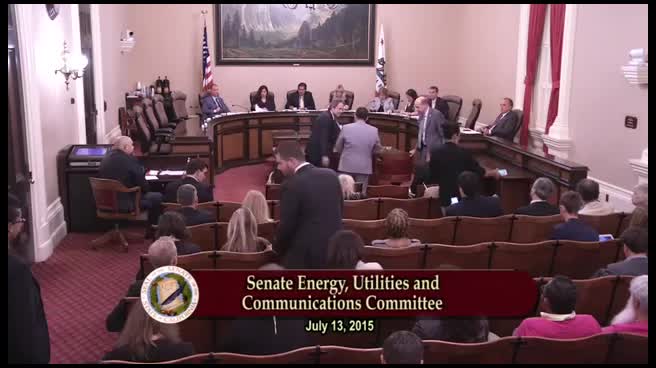 4MIN
Senate Standing Committee on Energy, Utilities and Communications
 1MIN
Assembly Floor
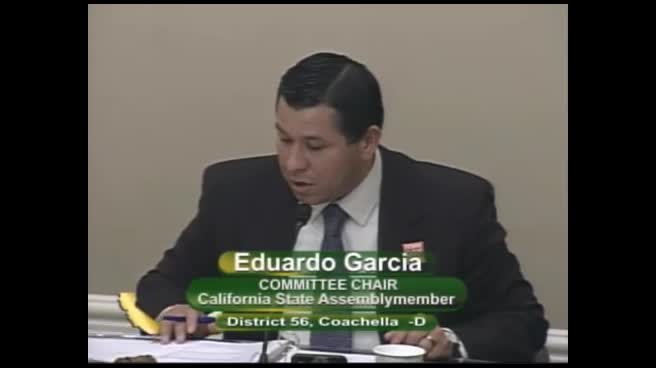 9MIN
Assembly Standing Committee on Jobs, Economic Development, and the Economy
Bill Author

Bill Co-Author(s):
