SB 823: Discounted electric vehicle charging payment card competitive grant program.
- Session Year: 2023-2024
- House: Senate
- Latest Version Date: 2023-05-01
Current Status:
Failed
(2024-02-01: Returned to Secretary of Senate pursuant to Joint Rule 56.)
Introduced
In Committee
First Chamber
In Committee
Second Chamber
Enacted
Existing law requires the State Energy Resources Conservation and Development Commission (Energy Commission) to undertake various actions in furtherance of meeting the states clean energy and pollution reduction objectives, including actions related to electric vehicles. Existing law requires the Energy Commission, working with the State Air Resources Board (state board) and the Public Utilities Commission (PUC), to prepare a statewide assessment of the electric vehicle charging infrastructure needed to support the levels of electric vehicle adoption required for the state to meet its goals of putting at least 5,000,000 zero-emission vehicles on California roads by 2030, and of reducing the emissions of greenhouse gases to 40% below 1990 levels by 2030. Existing law requires the PUC, in consultation with the Energy Commission, state board, electrical corporations, and the motor vehicle industry, to evaluate policies to develop infrastructure sufficient to overcome any barriers to the widespread deployment and use of plug-in hybrid and electric vehicles.
This bill would would, upon appropriation by the Legislature, require the Energy Commission, in consultation with the PUC, state board, and California Integrated Travel Project, to require each operator of a publicly available electric vehicle charging station that elects to participate or receives moneys from a state program, state agency, county, municipality, electrical corporation, or community choice aggregator to deploy a publicly available electric vehicle charging station to establish a Discounted Electric Vehicle Charging Payment Card Program that would enable an eligible resident, as defined, to use any of the operators competitive grant program to award moneys for projects that provide an eligible resident, as described, with a payment card that may be used at any publicly available electric vehicle charging stations located anywhere in the state using a payment card distributed by the operator, station, as specified. The bill would require that the rate charged for the use of a publicly available electric vehicle charging station pursuant to a program be equivalent to the residential electric vehicle tariff rate, or the lowest electricity rate offered to ratepayers who own electric vehicles, by the utility with jurisdiction over the service area in which the charging station is located, the Energy Commission to prioritize projects with the greatest potential to provide payment cards to individuals enrolled in a low-income residential customer electrical rate assistance program and to establish criteria for awarding a grant pursuant to the program, as specified. The bill would authorize the Energy Commission to select an administrator to oversee the program and to adopt, and revise, guidelines or other standards for the program. The bill would require the Energy Commission, on or before March 1, 2025, 15 months after the program is established, and annually thereafter, to prepare and submit to the Governor and Legislature a report that includes specified information relating to the programs, and would authorize the Energy Commission to require those operators to submit relevant information for purposes of the report to provide oversight of the programs. program.
The bill would require the PUCs Low-Income Oversight Board, on or before January 1, 2025, and annually thereafter, to submit to the Energy Commission certain information and make recommendations related to the programs, as specified. The bill would require the Energy Commission to include the Low-Income Oversight Boards information and recommendations in its annual report described above.Existing law vests the Public Utilities Commission (PUC) with regulatory authority over all public utilities, including electrical corporations. requires the State Energy Resources Conservation and Development Commission (Energy Commission) to undertake various actions in furtherance of meeting the states clean energy and pollution reduction objectives, including actions related to electric vehicles. Existing law requires the Energy Commission, working with the State Air Resources Board (state board) and the Public Utilities Commission (PUC), to prepare a statewide assessment of the electric vehicle charging infrastructure needed to support the levels of electric vehicle adoption required for the state to meet its goals of putting at least 5,000,000 zero-emission vehicles on California roads by 2030, and of reducing the emissions of greenhouse gases to 40% below 1990 levels by 2030. Existing law requires the PUC, in consultation with the State Energy Resources Conservation and Development Commission (Energy Commission), the State Air Resources Board, Commission, state board, electrical corporations, and the motor vehicle industry, to evaluate policies to develop infrastructure sufficient to overcome any barriers to the widespread deployment and use of plug-in hybrid and electric vehicles. Existing law requires the PUC, by December 31, 2020, to establish strategies and quantifiable metrics to maximize the use of feasible and cost-effective electric vehicle grid integration by January 1, 2030.
This bill would require the PUC, Energy Commission, in consultation with the Energy Commission, State Air Resources Board, PUC, state board, and California Integrated Travel Project, to require each electrical corporation, on or before July 1, 2024, operator of a publicly available electric vehicle charging station that elects to participate or receives moneys from a state program, state agency, county, municipality, electrical corporation, or community choice aggregator to deploy a publicly available electric vehicle charging station to establish a Discounted Electric Vehicle Charging Payment Card Program that would enable an eligible resident, as defined, to use a any of the operators publicly available electric vehicle charging station of a participating operator, as defined, stations located anywhere in the state through using a payment card developed by the electrical corporation in order to pay a rate equivalent to the rate that would be paid by the eligible resident if they were using an at-home electric vehicle charging station at their residence, as specified. card distributed by the operator, as specified. The bill would require that the rate charged for the use of a publicly available electric vehicle charging station pursuant to a program be equivalent to the residential electric vehicle tariff rate, or the lowest electricity rate offered to ratepayers who own electric vehicles, by the utility with jurisdiction over the service area in which the charging station is located, as specified. The bill would require the Energy Commission, on or before March 1, 2025, and annually thereafter, to prepare and submit to the Governor and Legislature a report that includes specified information relating to the programs, and would authorize the Energy Commission to require those operators to submit relevant information for purposes of the report to provide oversight of the programs.
The bill would require the PUC, on or before April 1, 2025, and annually thereafter, to prepare and submit to the Governor and the Legislature a written report on the programs. The bill would require the PUCs Low-Income Oversight Board to Board, on or before January 1, 2025, and annually determine thereafter, to submit to the Energy Commission certain information and make recommendations related to the programs. The bill would require the Energy Commission, on or before March 1, 2025, and annually thereafter, to prepare and submit to the PUC a report that includes specified information relating to the programs. programs, as specified. The bill would require the PUC Energy Commission to include the Low-Income Oversight Boards information and recommendations and the Energy Commissions report in the PUCs in its annual written report. report described above.
Under existing law, a violation of the Public Utilities Act or any order, decision, rule, direction, demand, or requirement of the PUC is a crime.Because certain of the above provisions would be part of the act and a violation of a PUC action implementing this bills requirements would be a crime, the bill would impose a state-mandated local program.The California Constitution requires the state to reimburse local agencies and school districts for certain costs mandated by the state. Statutory provisions establish procedures for making that reimbursement.This bill would provide that no reimbursement is required by this act for a specified reason.The bill would include findings that changes proposed by this bill address a matter of statewide concern rather than a municipal affair and, therefore, apply to all cities, including charter cities.Existing law vests the Public Utilities Commission (PUC) with regulatory authority over all public utilities, including electrical corporations. Existing law requires the PUC, in consultation with the State Energy Resources Conservation and Development Commission (Energy Commission), the State Air Resources Board, electrical corporations, and the motor vehicle industry, to evaluate policies to develop infrastructure sufficient to overcome any barriers to the widespread deployment and use of plug-in hybrid and electric vehicles. Existing law requires the PUC, by December 31, 2020, to establish strategies and quantifiable metrics to maximize the use of feasible and cost-effective electric vehicle grid integration by January 1, 2030.
This bill would require the PUC, in consultation with the Energy Commission, State Air Resources Board, and California Integrated Travel Project, to require each electrical corporation, on or before July 1, 2024, to establish a Discounted Electric Vehicle Charging Payment Card Program that would enable an eligible resident, as defined, to use a publicly available electric vehicle charging station of a participating operator, as defined, located anywhere in the state through a payment card developed by the electrical corporation in order to pay a rate equivalent to the rate that would be paid by the eligible resident if they were using an at-home electric vehicle charging station at their residence, as specified.
The bill would require the PUC, on or before April 1, 2025, and annually thereafter, to prepare and submit to the Governor and the Legislature a written report on the programs. The bill would require the Low-Income Oversight Board to annually determine certain information and make recommendations related to the programs. The bill would require the Energy Commission, on or before March 1, 2025, and annually thereafter, to prepare and submit to the PUC a report that includes specified information relating to the programs. The bill would require the PUC to include the Low-Income Oversight Boards information and recommendations and the Energy Commissions report in the PUCs annual written report.
Under existing law, a violation of the Public Utilities Act or any order, decision, rule, direction, demand, or requirement of the PUC is a crime.
Because certain of the above provisions would be part of the act and a violation of a PUC action implementing this bills requirements would be a crime, the bill would impose a state-mandated local program.
The California Constitution requires the state to reimburse local agencies and school districts for certain costs mandated by the state. Statutory provisions establish procedures for making that reimbursement.
This bill would provide that no reimbursement is required by this act for a specified reason.
The bill would include findings that changes proposed by this bill address a matter of statewide concern rather than a municipal affair and, therefore, apply to all cities, including charter cities.
(a)For purposes of this section, the following definitions apply:
(1)Community choice aggregator has the meaning as defined in Section 331.1 of the Public Utilities Code.(2)(1)Eligible resident means an individual eligible to receive a payment card pursuant to subdivision (c).
(3)Multiunit dwelling means two or more dwelling units within a single building or within two or more buildings on a site or parcel, including, but not limited to, garden apartments, senior housing developments, and multistory apartment and condominium buildings.(4)Participating operator means an operator of a publicly available electric vehicle charging station that elects or is required to establish a program pursuant to subdivision (d).(5)(2)Payment card means a discounted electric vehicle charging payment card distributed by a participating operator provided for purposes of its the program.
(6)(3)Program means each Discounted Electric Vehicle Charging Payment Card Program. the competitive grant program established pursuant to subdivision (b).
(7)(4)Publicly available electric vehicle charging station has the same meaning as defined in Section 44268 of the Health and Safety Code.
(8)Underserved community has the same meaning as defined in Section 1601 of the Public Utilities Code.(9)Utility means any of the following:(A)An electrical corporation, as defined in Section 218 of the Public Utilities Code.(B)A local publicly owned electric utility, as defined in Section 224.3 of the Public Utilities Code.(C)A community choice aggregator.(b)(1)The Upon an appropriation by the Legislature for purposes of developing and implementing the program, the commission, in consultation with the Public Utilities Commission, State Air Resources Board, and California Integrated Travel Project, shall require each participating operator, within six months after becoming a participating operator, to establish a Discounted Electric Vehicle Charging Payment Card Program that will enable an eligible resident to use any of the participating operators publicly available electric vehicle charging stations located anywhere in the state using a payment card. establish a competitive grant program to award moneys for projects that provide an eligible resident with a payment card that may be used at any publicly available electric vehicle charging station.
(2)Each participating operator shall begin distributing payment cards within one year of becoming a participating operator.(c)The commission shall adopt project and eligibility guidelines for the program consistent with all of the following:
(c)(1)A California resident whose household income is at or below 400 percent of the federal poverty level and who does not have access to a functioning electric vehicle charger at their residence shall be eligible to receive a payment card.
(1)A resident of a multiunit dwelling does not have access to a functioning electric vehicle charger at their residence if, pursuant to the table below, the multiunit dwelling does not have at least the specified number of functioning electric vehicle charging stations based on its total actual parking spaces:Total Actual Parking Spaces at the Multiunit DwellingFunctioning Electric Vehicle Charging Stations0 to 9, inclusive110 to 25, inclusive226 to 50, inclusive351 to 75, inclusive576 to 100, inclusive6101 to 150, inclusive8151 to 200, inclusive10201 or more6 percent of those parking spaces(2)A disabled person who is issued a distinguishing license plate or placard for parking purposes pursuant to Section 22511.5 of the Vehicle Code does not have access to a functioning electric vehicle charger at their residence if the disabled person resides in a multiunit dwelling and none of the multiunit dwellings functioning electric vehicle charging stations are accessible to the disabled person.(d)(1)An operator of a publicly available electric vehicle charging station may elect to establish a program pursuant to subdivision (b).(2)An operator of a publicly available electric vehicle charging station that receives moneys from a state program, state agency, county, municipality, electrical corporation, or community choice aggregator to deploy a publicly available electric vehicle charging station shall, as a condition of receiving those moneys, establish a program pursuant to subdivision (b).(e)(1)(A)An eligible resident who is using a payment card to use the participating operators publicly available electric vehicle charging station shall pay a rate equivalent to the lower of the following, as applicable:(i)The residential electric vehicle tariff rate of the utility with jurisdiction over the service area in which the publicly available electric vehicle charging station is located.(ii)The lowest electricity rate offered to ratepayers who own electric vehicles, including based on time of use, by the utility with jurisdiction over the service area in which the publicly available electric vehicle charging station is located.(B)For purposes of this paragraph, if a publicly available electric vehicle charging station is located within a portion of the service area of an electrical corporation in which a community choice aggregator provides electrical service, the community choice aggregator has jurisdiction over that portion of the service area.(2)An eligible resident who is using a payment card and whose income would qualify them as a California Alternate Rates for Energy Program customer or Family Electric Rate Assistance Program customer shall receive the same rate discount received through participation in that program when the eligible resident uses the payment card.(f)A participating operator shall, consistent with Section 25231.5, prioritize publicly available electric vehicle charging station uptime in underserved communities.(2)The commission shall prioritize projects with the greatest potential to provide payment cards to individuals enrolled in a low-income residential customer electrical rate assistance program, including, but not limited to, the California Alternate Rates for Energy (CARE) program established pursuant to Section 739.1 of the Public Utilities Code and the Family Electric Rate Assistance (FERA) program established pursuant to Section 739.12 of the Public Utilities Code.
(3)The commission shall establish criteria for awarding a grant pursuant to the program, including, but not limited to, requirements on the discounts provided to a participating eligible resident through a payment card.
(4)The commission may select an administrator to oversee the program.
(g)(d)(1)Notwithstanding Section 10231.5 of the Government Code, on or before March 1, 2025, 15 months after the program is established, and annually thereafter, the commission shall prepare and submit to the Governor and Legislature a report that includes all of the following:
(A)A detailed overview of the implementation and status of the programs, with participant profile statistics for that year, program, including the total number of applicants, the total number of participating eligible residents, the total kilowatt hours served to participating eligible residents, participating eligible residents utility service areas, the geographic locations of projects for which grants were awarded, a list of the grants awarded, and the estimated annual fuel cost savings for participating eligible residents.
(B)A detailed list of the participating operators.(C)(B)The total number of publicly available electric vehicle charging stations available for use under a the program.
(D)The total number and uptime of publicly available electric vehicle charging stations available for use under a program that are located in underserved communities.(C)A summary of the barriers encountered in establishing or implementing the program and recommendations for opportunities for the program to better support affordable charging for electric vehicle owners who rely on publicly available electric vehicle charging stations.
(2)A report to be submitted pursuant to this subdivision shall be submitted in compliance with Section 9795 of the Government Code.
(3)The commission shall include the Public Utilities Commissions Low-Income Oversight Boards annual report submitted to the commission pursuant to Section 913.16 of the Public Utilities Code as an appendix in the report.(h)For purposes of the report prepared and submitted pursuant to subdivision (g) and to provide oversight of the programs, the commission may require participating operators to submit relevant information to the commission.(e)To implement the program, the commission may adopt, and revise, guidelines or other standards at a commission business meeting. Before adopting or revising the guidelines or other standards, the commission shall provide an opportunity for public comment and at least one public workshop.
SEC. 2.Section 913.16 is added to the Public Utilities Code, to read:913.16.On or before January 1, 2025, and annually thereafter, the Low-Income Oversight Board shall annually submit to the Energy Commission, for inclusion in the report prepared and submitted pursuant to Section 25231.7 of the Public Resources Code, a report that includes both of the following:(a)The number of eligible residents, as defined in Section 25231.7 of the Public Resources Code, who received a payment card through a Discounted Electric Vehicle Charging Payment Card Program pursuant to Section 25231.7 of the Public Resources Code and who reside in an underserved community, as defined in Section 1601.(b)Recommendations for how to improve participation by, and benefits accrued to, low-income residents through Discounted Electric Vehicle Charging Payment Card Programs established pursuant to Section 25231.7 of the Public Resources Code.(a)For purposes of this section, the following definitions apply:
(1)Community choice aggregator has the meaning as defined in Section 331.1 of the Public Utilities Code.
(1)(2)Eligible resident means an individual eligible to receive a payment card pursuant to subdivision (c).
(2)(3)Multiunit dwelling means two or more dwelling units within a single building or within two or more buildings on a site or parcel, including, but not limited to, garden apartments, senior housing developments, and multistory apartment and condominium buildings.
(3)(4)Participating operator means an operator of a publicly available electric vehicle charging station that accepts payment cards elects or is required to establish a program pursuant to subdivision (d).
(4)(5)Payment card means a discounted electric vehicle charging payment card developed distributed by an electrical corporation a participating operator for purposes of the its program.
(5)(6)Program means the each Discounted Electric Vehicle Charging Payment Card Program.
(6)(7)Publicly available electric vehicle charging station has the same meaning as defined in Section 44268 of the Health and Safety Code and for which no fee is charged for its use. Code.
(7)(8)Underserved community has the same meaning as defined in Section 1601. 1601 of the Public Utilities Code.
(9)Utility means any of the following:
(A)An electrical corporation, as defined in Section 218 of the Public Utilities Code.
(B)A local publicly owned electric utility, as defined in Section 224.3 of the Public Utilities Code.
(C)A community choice aggregator.
(b)(1)The commission, in consultation with the Energy Public Utilities Commission, State Air Resources Board, and California Integrated Travel Project, shall require each electrical corporation, on or before July 1, 2024, participating operator, within six months after becoming a participating operator, to establish a Discounted Electric Vehicle Charging Payment Card Program that will enable an eligible resident to use a any of the participating operators publicly available electric vehicle charging station of a participating operator stations located anywhere in the state through using a payment card developed by the electrical corporation in order to pay a rate equivalent to the rate that would be paid by the eligible resident if they were using an at-home electric vehicle charging station at their residence. Each electrical corporation shall, on or before January 1, 2025, provide a payment card to each eligible resident in its service territory who requests a payment card. card.
(c)The following individuals shall be eligible to receive a payment card:(1)A California Alternate Rates for Energy Program customer who does not have access to a functioning electric vehicle charging station at their residence.(2)A Family Electric Rate Assistance Program customer who does not have access to a functioning electric vehicle charging station at their residence.(2)Each participating operator shall begin distributing payment cards within one year of becoming a participating operator.
(c)A California resident whose household income is at or below 400 percent of the federal poverty level and who does not have access to a functioning electric vehicle charger at their residence shall be eligible to receive a payment card.
(3)(1)A resident of a multiunit dwelling who does not have access to a functioning publicly available electric vehicle charging station charger at their residence. A resident of a multiunit dwelling has access to a functioning publicly available electric vehicle charging station at their residence if the commission determines, if, pursuant to the table below, that the multiunit dwelling has does not have at least the specified number of publicly available functioning electric vehicle charging stations based on its total actual parking spaces:
| Total Actual Parking Spaces at the Multiunit Dwelling | Functioning Publicly Available Electric Vehicle Charging Stations |
| 0 to 9, inclusive | 0 1 |
| 10 to 25, inclusive | 1 2 |
| 26 to 50, inclusive | 2 3 |
| 51 to 75, inclusive | 4 5 |
| 76 to 100, inclusive | 5 6 |
| 101 to 150, inclusive | 7 8 |
| 151 to 200, inclusive | 10 |
| 201 or more | 6 percent of those parking spaces |
(2)A disabled person who is issued a distinguishing license plate or placard for parking purposes pursuant to Section 22511.5 of the Vehicle Code does not have access to a functioning electric vehicle charger at their residence if the disabled person resides in a multiunit dwelling and at least one none of the multiunit dwellings functioning publicly available electric vehicle charging station is not stations are accessible to the disabled person.
(d)(1)An operator of a publicly available electric vehicle charging station may elect to accept payment cards. establish a program pursuant to subdivision (b).
(2)An operator of a publicly available electric vehicle charging station that receives moneys from a state program, state agency, county, municipality, electrical corporation, or community choice aggregator to deploy a publicly available electric vehicle charging station shall, as a condition of receiving those moneys, accept payment cards. establish a program pursuant to subdivision (b).
(e)A payment card developed by an electrical corporation shall function as a virtual electrical meter so that the electricity paid for using a payment card anywhere in the state is charged to the eligible resident on the eligible residents subsequent electricity bill at a rate equivalent to the rate that would be paid by the eligible resident if they had instead used an at-home electric vehicle charging station at their residence.(f)(1)The commission shall set a maximum rate that a participating operator may charge an eligible resident who is using a payment card to use the participating operators publicly available electric vehicle charging station.(2)When an eligible resident uses a payment card to use a publicly available level 1 or level 2 electric vehicle charging station, the rate paid by the eligible resident shall be the lesser of the following:(A)The lowest rate offered by the eligible residents electrical corporation to its ratepayers who own electric vehicles, including based on time of use, that the eligible resident would be eligible to pay if they instead used an at-home electric vehicle charging station at their residence.(B)The retail rate charged by the participating operator.(3)When an eligible resident uses a payment card to use a publicly available direct current fast charging electric vehicle charging station, the rate paid by the eligible resident shall be the rate determined pursuant to paragraph (2) and include a reasonable premium authorized by the commission.(4)An individual eligible to receive a payment card pursuant to participation in a program described in paragraph (1) or (2) of subdivision (c) shall receive the same rate discount received through participation in that program when the individual uses a payment card.(e)(1)(A)An eligible resident who is using a payment card to use the participating operators publicly available electric vehicle charging station shall pay a rate equivalent to the lower of the following, as applicable:
(i)The residential electric vehicle tariff rate of the utility with jurisdiction over the service area in which the publicly available electric vehicle charging station is located.
(ii)The lowest electricity rate offered to ratepayers who own electric vehicles, including based on time of use, by the utility with jurisdiction over the service area in which the publicly available electric vehicle charging station is located.
(B)For purposes of this paragraph, if a publicly available electric vehicle charging station is located within a portion of the service area of an electrical corporation in which a community choice aggregator provides electrical service, the community choice aggregator has jurisdiction over that portion of the service area.
(2)An eligible resident who is using a payment card and whose income would qualify them as a California Alternate Rates for Energy Program customer or Family Electric Rate Assistance Program customer shall receive the same rate discount received through participation in that program when the eligible resident uses the payment card.
(g)(f)A participating operator shall, consistent with Section 25231.5 of the Public Resources Code, 25231.5, prioritize publicly available electric vehicle charging station uptime in underserved communities.
(g)(1)Notwithstanding Section 10231.5 of the Government Code, on or before March 1, 2025, and annually thereafter, the commission shall prepare and submit to the Governor and Legislature a report that includes all of the following:
(A)A detailed overview of the implementation of the programs, with participant profile statistics for that year, including the total number of applicants, the total number of participating eligible residents, the total kilowatt hours served to participating eligible residents, participating eligible residents utility service areas, and the estimated annual fuel cost savings for participating eligible residents.
(B)A detailed list of the participating operators.
(C)The total number of publicly available electric vehicle charging stations available for use under a program.
(D)The total number and uptime of publicly available electric vehicle charging stations available for use under a program that are located in underserved communities.
(2)A report to be submitted pursuant to this subdivision shall be submitted in compliance with Section 9795 of the Government Code.
(3)The commission shall include the Public Utilities Commissions Low-Income Oversight Boards annual report submitted to the commission pursuant to Section 913.16 of the Public Utilities Code as an appendix in the report.
(h)For purposes of the report prepared and submitted pursuant to subdivision (g) and to provide oversight of the programs, the commission may require participating operators to submit relevant information to the commission.
SEC. 3.Section 913.16 is added to the Public Utilities Code, to read:913.16.(a)For purposes of this section, the following definitions apply:(1)Eligible resident has the same meaning as defined in Section 740.22.(2)Payment card has the same meaning as defined in Section 740.22.(3)Participating operator has the same meaning as defined in Section 740.22.(4)Underserved community has the same meaning as defined in Section 1601.(b)On or before April 1, 2025, and annually thereafter, the commission shall prepare and submit to the Governor and the Legislature a written report on the Discounted Electric Vehicle Charging Payment Card Programs established by electrical corporations pursuant to Section 740.22 that includes all of the following:(1)A detailed overview of the implementation of the programs.(2)Program participant profile statistics for the prior calendar year.(3)The total number of eligible residents, per electrical service area, who requested a payment card.(4)The total number of eligible residents who received a payment card.(5)The total number of participating operators.(6)The total kilowatt hours of electricity paid for using a payment card.(7)The estimated annual fuel cost savings that results from the programs for eligible residents who received a payment card.(c)(1)The Low-Income Oversight Board shall annually determine the percentage of eligible residents who received a payment card who are enrolled in the California Alternate Rates for Energy Program or Family Electric Rate Assistance Program and the number of eligible residents who received a payment card who reside in an underserved community, and shall annually make recommendations on how to improve participation by, and benefits accrued to, low-income individuals.(2)The commission shall include the Low-Income Oversight Boards determinations and recommendations in the annual written report.(d)The commission shall include the Energy Commissions annual report submitted to the commission pursuant to Section 25231.7 of the Public Resources Code as an appendix in the annual written report.SEC. 4.No reimbursement is required by this act pursuant to Section 6 of Article XIIIB of the California Constitution because the only costs that may be incurred by a local agency or school district will be incurred because this act creates a new crime or infraction, eliminates a crime or infraction, or changes the penalty for a crime or infraction, within the meaning of Section 17556 of the Government Code, or changes the definition of a crime within the meaning of Section 6 of Article XIIIB of the California Constitution.SEC. 5.The Legislature finds and declares that increasing access to, and affordability of, publicly available electric vehicle charging stations is a matter of statewide concern and is not a municipal affair as that term is used in Section 5 of Article XI of the California Constitution. Therefore, Section 2 of this act adding Section 740.22 to the Public Utilities Code applies to all cities, including charter cities.SEC. 2.Section 913.16 is added to the Public Utilities Code, to read:913.16.On or before January 1, 2025, and annually thereafter, the Low-Income Oversight Board shall annually submit to the Energy Commission, for inclusion in the report prepared and submitted pursuant to Section 25231.7 of the Public Resources Code, a report that includes both of the following:
(a)The number of eligible residents, as defined in Section 25231.7 of the Public Resources Code, who received a payment card through a Discounted Electric Vehicle Charging Payment Card Program pursuant to Section 25231.7 of the Public Resources Code and who reside in an underserved community, as defined in Section 1601.
(b)Recommendations for how to improve participation by, and benefits accrued to, low-income residents through Discounted Electric Vehicle Charging Payment Card Programs established pursuant to Section 25231.7 of the Public Resources Code.
(a)For purposes of this section, the following definitions apply:
(1)Programs means the Discounted Electric Vehicle Charging Payment Card Program established pursuant to Section 740.22 of the Public Utilities Code.
(2)Publicly available electric vehicle charging station has the same meaning as defined in Section 740.22 of the Public Utilities Code.
(b)On or before March 1, 2025, and annually thereafter, the commission, in consultation with the Public Utilities Commission, shall prepare and submit to the Public Utilities Commission a report, for inclusion as an appendix in the report submitted by the Public Utilities Commission pursuant to Section 913.16 of the Public Utilities Code, that includes a detailed list of the publicly available electric vehicle charging station networks participating in the programs, the total number of publicly available electric vehicle charging stations available for use under those programs, the total number of publicly available electric vehicle charging stations available for use under those programs that are in underserved communities, as defined in Section 1601 of the Public Utilities Code, and the uptime of those publicly available electric vehicle charging stations.
SEC. 2.Section 740.22 is added to the Public Utilities Code, to read:740.22.(a)For purposes of this section, the following definitions apply:
(1)Eligible resident means an individual eligible to receive a payment card pursuant to subdivision (c).
(2)Multiunit dwelling means two or more dwelling units within a single building or within two or more buildings on a site or parcel, including, but not limited to, garden apartments, senior housing developments, and multistory apartment and condominium buildings.
(3)Participating operator means an operator of a publicly available electric vehicle charging station that accepts payment cards pursuant to subdivision (d).
(4)Payment card means a discounted electric vehicle charging payment card developed by an electrical corporation for purposes of the program.
(5)Program means the Discounted Electric Vehicle Charging Payment Card Program.
(6)Publicly available electric vehicle charging station has the same meaning as defined in Section 44268 of the Health and Safety Code and for which no fee is charged for its use.
(7)Underserved community has the same meaning as defined in Section 1601.
(b)The commission, in consultation with the Energy Commission, State Air Resources Board, and California Integrated Travel Project, shall require each electrical corporation, on or before July 1, 2024, to establish a Discounted Electric Vehicle Charging Payment Card Program that will enable an eligible resident to use a publicly available electric vehicle charging station of a participating operator located anywhere in the state through a payment card developed by the electrical corporation in order to pay a rate equivalent to the rate that would be paid by the eligible resident if they were using an at-home electric vehicle charging station at their residence. Each electrical corporation shall, on or before January 1, 2025, provide a payment card to each eligible resident in its service territory who requests a payment card.
(c)The following individuals shall be eligible to receive a payment card:
(1)A California Alternate Rates for Energy Program customer who does not have access to a functioning electric vehicle charging station at their residence.
(2)A Family Electric Rate Assistance Program customer who does not have access to a functioning electric vehicle charging station at their residence.
(3)A resident of a multiunit dwelling who does not have access to a functioning publicly available electric vehicle charging station at their residence. A resident of a multiunit dwelling has access to a functioning publicly available electric vehicle charging station at their residence if the commission determines, pursuant to the table below, that the multiunit dwelling has at least the specified number of publicly available electric vehicle charging stations based on its total actual parking spaces:
| Total Actual Parking Spaces at the Multiunit Dwelling | Functioning Publicly Available Electric Vehicle Charging Stations |
| 0 to 9, inclusive | 0 |
| 10 to 25, inclusive | 1 |
| 26 to 50, inclusive | 2 |
| 51 to 75, inclusive | 4 |
| 76 to 100, inclusive | 5 |
| 101 to 150, inclusive | 7 |
| 151 to 200, inclusive | 10 |
| 201 or more | 6 percent of those parking spaces |
(4)A small business owner who uses one or more electric vehicles for business purposes and that meets one or more of the following requirements:
(A)The small business owner is experiencing financial hardship.
(B)The small business owner is located within, or provides service to, an underserved community.
(C)The small business is a certified women business enterprise, minority business enterprise, or disadvantaged business enterprise pursuant to Chapter 5 (commencing with Section 2050) of Part 1 of Division 2 of the Public Contract Code.
(D)The small business is a LGBT business enterprise, as defined in Section 8282.
(5)A disabled person who is issued a distinguishing license plate or placard for parking purposes pursuant to Section 22511.5 of the Vehicle Code if the disabled person resides in a multiunit dwelling and at least one of the multiunit dwellings functioning publicly available electric vehicle charging station is not accessible to the disabled person.
(d)(1)An operator of a publicly available electric vehicle charging station may elect to accept payment cards.
(2)An operator of a publicly available electric vehicle charging station that receives moneys from a state program, state agency, county, municipality, electrical corporation, or community choice aggregator to deploy a publicly available electric vehicle charging station shall, as a condition of receiving those moneys, accept payment cards.
(e)A payment card developed by an electrical corporation shall function as a virtual electrical meter so that the electricity paid for using a payment card anywhere in the state is charged to the eligible resident on the eligible residents subsequent electricity bill at a rate equivalent to the rate that would be paid by the eligible resident if they had instead used an at-home electric vehicle charging station at their residence.
(f)(1)The commission shall set a maximum rate that a participating operator may charge an eligible resident who is using a payment card to use the participating operators publicly available electric vehicle charging station.
(2)When an eligible resident uses a payment card to use a publicly available level 1 or level 2 electric vehicle charging station, the rate paid by the eligible resident shall be the lesser of the following:
(A)The lowest rate offered by the eligible residents electrical corporation to its ratepayers who own electric vehicles, including based on time of use, that the eligible resident would be eligible to pay if they instead used an at-home electric vehicle charging station at their residence.
(B)The retail rate charged by the participating operator.
(3)When an eligible resident uses a payment card to use a publicly available direct current fast charging electric vehicle charging station, the rate paid by the eligible resident shall be the rate determined pursuant to paragraph (2) and include a reasonable premium authorized by the commission.
(4)An individual eligible to receive a payment card pursuant to participation in a program described in paragraph (1) or (2) of subdivision (c) shall receive the same rate discount received through participation in that program when the individual uses a payment card.
(g)A participating operator shall, consistent with Section 25231.5 of the Public Resources Code, prioritize publicly available electric vehicle charging station uptime in underserved communities.
SEC. 3.Section 913.16 is added to the Public Utilities Code, to read:913.16.(a)For purposes of this section, the following definitions apply:
(1)Eligible resident has the same meaning as defined in Section 740.22.
(2)Payment card has the same meaning as defined in Section 740.22.
(3)Participating operator has the same meaning as defined in Section 740.22.
(4)Underserved community has the same meaning as defined in Section 1601.
(b)On or before April 1, 2025, and annually thereafter, the commission shall prepare and submit to the Governor and the Legislature a written report on the Discounted Electric Vehicle Charging Payment Card Programs established by electrical corporations pursuant to Section 740.22 that includes all of the following:
(1)A detailed overview of the implementation of the programs.
(2)Program participant profile statistics for the prior calendar year.
(3)The total number of eligible residents, per electrical service area, who requested a payment card.
(4)The total number of eligible residents who received a payment card.
(5)The total number of participating operators.
(6)The total kilowatt hours of electricity paid for using a payment card.
(7)The estimated annual fuel cost savings that results from the programs for eligible residents who received a payment card.
(c)(1)The Low-Income Oversight Board shall annually determine the percentage of eligible residents who received a payment card who are enrolled in the California Alternate Rates for Energy Program or Family Electric Rate Assistance Program and the number of eligible residents who received a payment card who reside in an underserved community, and shall annually make recommendations on how to improve participation by, and benefits accrued to, low-income individuals.
(2)The commission shall include the Low-Income Oversight Boards determinations and recommendations in the annual written report.
(d)The commission shall include the Energy Commissions annual report submitted to the commission pursuant to Section 25231.7 of the Public Resources Code as an appendix in the annual written report.
SEC. 4.No reimbursement is required by this act pursuant to Section 6 of Article XIIIB of the California Constitution because the only costs that may be incurred by a local agency or school district will be incurred because this act creates a new crime or infraction, eliminates a crime or infraction, or changes the penalty for a crime or infraction, within the meaning of Section 17556 of the Government Code, or changes the definition of a crime within the meaning of Section 6 of Article XIIIB of the California Constitution.
SEC. 5.The Legislature finds and declares that increasing access to, and affordability of, publicly available electric vehicle charging stations is a matter of statewide concern and is not a municipal affair as that term is used in Section 5 of Article XI of the California Constitution. Therefore, Section 2 of this act adding Section 740.22 to the Public Utilities Code applies to all cities, including charter cities.
|
Date
|
Status
|
|---|---|
| Feb 1, 2024 | Returned to Secretary of Senate pursuant to Joint Rule 56. |
| May 18, 2023 | May 18 hearing: Held in committee and under submission. |
| May 16, 2023 | Set for hearing May 18. |
| May 15, 2023 | May 15 hearing: Placed on APPR suspense file. |
| May 5, 2023 | Set for hearing May 15. |
| May 1, 2023 | Read second time and amended. Re-referred to Com. on APPR. |
| Apr 27, 2023 | From committee: Do pass as amended and re-refer to Com. on APPR. (Ayes 15. Noes 1. Page 871.) (April 24). |
| Apr 12, 2023 | From committee with author's amendments. Read second time and amended. Re-referred to Com. on E., U. & C. |
| Apr 12, 2023 | Set for hearing April 24. |
| Mar 1, 2023 | Referred to Com. on E., U. & C. |
| Feb 21, 2023 | From printer. May be acted upon on or after March 20. |
| Feb 17, 2023 | Introduced. Read first time. To Com. on RLS. for assignment. To print. |
|
Date
|
Description
|
Location
|
Votes
|
|
|---|---|---|---|---|
| May 15, 2023 | Placed on suspense file | Senate Standing Committee on Appropriations |
Passed |
|
| Apr 24, 2023 | Do pass as amended, but first amend, and re-refer to the Committee on [Appropriations] | Senate Standing Committee on Energy, Utilities and Communications |
Passed |
This list shows positions taken on this bill by organizations on the date displayed, which is linked to the original source.
Positions by individuals are not included.
|
Organization
|
Position
|
Date
|
|---|---|---|
| 1000 Grandmothers for Future Generations | ** Support | |
| 350 Bay Area Action | ** Support | |
| 350 Ventura County Climate Hub | ** Support | |
| Active San Gabriel Valley | ** Support | |
| Atmos Financial | ** Support | |
| Ban SUP | ** Support | |
| Center for Community Action and Environmental Justice | ** Support | |
| Clean Earth 4 Kids | ** Support | |
| Community Environmental Council | ** Support | |
| Dolores Huerta Foundation | ** Support | |
| Earth Ethics, INC | ** Support | |
| Ecology Action | ** Support | |
| Elders Climate Action Norcal Chapter | ** Support | |
| Elders Climate Action Socal Chapter | ** Support | |
| Electric Vehicle Charging Association | ** Against | |
| Equity Transit | ** Support | |
| Extinction Rebellion San Francisco Bay Area | ** Support | |
| GreenLatinos | ** Support | |
| Greenpeace Usa | ** Support | |
| jobs to move america | ** Support | |
| Labor Network for Sustainability | ** Support | |
| Lakota People's Law Project | ** Support | |
| Let’s Green CA! | ** Support | |
| Media Alliance | ** Support | |
| Mynt Systems | ** Support | |
| Pajaro Valley Pride | ** Support | |
| Rewiring America | ** Support | |
| Santa Cruz Climate Action Network | ** Support | |
| Santa Cruz Works | ** Support | |
| SLO Climate Coalition | ** Support | |
| SoCal 350 Climate Action | ** Support | |
| Sunflower Alliance | ** Support | |
| Sustainable Mill Valley | ** Support | |
| Sustainable Silicon Valley | ** Support | |
| Terra Advocati | ** Support | |
| The Climate Center | ** Support | |
| Unite Here Local 30 | ** Support |
SENATE COMMITTEE ON
Senator Anthony Portantino, Chair
2023 - 2024 Regular Session
SB 823 (Smallwood-Cuevas) - Discounted electric vehicle charging payment card competitive grant program
Version: | Policy Vote: |
Urgency: | Mandate: |
Hearing Date: | Consultant: |
Bill Summary:
This bill would require the California Energy Commission (CEC) to establish a competitive grant program for projects that provide eligible residents with a payment card that can be used at any publicly available electric vehicle (EV) charging station.
Fiscal Impact:
- Unknown ongoing costs, likely in the hundreds of thousands of dollars annually (General Fund or special fund) for the CEC to establish and administer the competitive grant program.
- Unknown, likely significant ongoing cost pressure (various funds) to provide funding for the competitive grant program that would be established by this bill.
- The California Public Utilities Commission (CPUC) and California Air Resources Board (ARB) anticipate any costs would be minor and absorbable.
Background:
Residents of multiunit buildings face a number of structural barriers to EV charging. While some of these buildings may have an insufficient number of chargers for EV-owning residents, other buildings lack any off-street parking where EV chargers can be installed. Californians who lack access to residential and workplace charging largely rely on publicly accessible chargers. However, publicly accessible chargers do not offer charging at residential rates, including any of the EV incentive rates or discounted rates for low-income Californians. Multiple programs, including CARB’s Clean Mobility Options and California Integrated Travel Project (CalITP) have supported demonstration projects that help offset the cost of driving EVs. In 2022, CalITP and the Governor’s Office of Business and Economic Development (GO-Biz) partnered with Valley Clean Air Now to provide contactless, reloadable debit cards for EV charging to 100 low-income EV owners in the San Joaquin Valley.
Proposed Law:
This bill would require the CEC to establish a competitive grant program for projects that provide eligible residents with a payment card that can be used at any publicly available EV charging station. Specifically, this bill would require the CEC to:
- Upon appropriation by the Legislature, in consultation with the CPUC, ARB, and the California Integrated Travel Project to establish a competitive grant program for projects that provide eligible residents with a payment card that to be used at any publicly available EV charging station.
- Establish eligibility guidelines for the program consistent with the following:
- A California resident whose household income is at or below 400 percent of the federal poverty level and who does not have access to a functioning electric vehicle charger at their residence shall be eligible to receive a payment card.
- Prioritize projects with the greatest potential to provide payment cards to individuals enrolled in a low-income residential customer electrical rate assistance program, including, but not limited to, the California Alternate Rates for Energy (CARE) program established pursuant to Section 739.1 of the Public Utilities Code and the Family Electric Rate Assistance (FERA) program established pursuant to Section 739.12 of the Public Utilities Code.
- Establish criteria for awarding a grant pursuant to the program, including, but not limited to, requirements on the discounts provided to a participating eligible resident through a payment card.
- Annually submit a report to the Governor and Legislature on program outcomes starting 15 months after the program is established.
- Authorize the CEC to adopt and revise guidelines or other standards at a commission business meeting to implement the program.
Related Legislation:
SB 529 (Gonzalez, 2023) would require the CEC to establish a program to fund EV car share sites at affordable housing facilities. The bill specifies that subsidized fares for use of EVs are an eligible use of grant funding under the bill.
AB 2703 (Muratsuchi, 2022) would have required CARB to establish a program to provide financial assistance for EV charging by low-income drivers and drivers who reside in disadvantaged communities. The bill also would have required the CEC to establish reliability standards for EV chargers that receive state funds. The bill was held in the Senate Appropriations Committee.
AB 2061 (Ting, Chapter 345, Statutes of 2022) required the CEC to establish definitions to calculate the “uptime” during which an EV charger is operational. The bill also required the CEC to adopt reporting and recordkeeping requirements for public and ratepayer-funded chargers to assess the uptime and accessibility of these chargers. The bill authorized the CEC to adopt certain tools to encourage EV charger reliability.
SB 1135 (Bradford, Chapter 413, Statutes of 2018) codified FERA and increased the FERA line item discount on a customer’s utility bill from 12 percent to 18 percent.
SB 862 (Budget and Fiscal Review Committee, Chapter 36, Statutes of 2014) and SB 9 (Beall, Chapter 710, Statutes of 2015) created the framework for CalITP by establishing and modifying TIRCP to fund transformative transportation capital improvements to achieve specified goals, including GHG emission reductions.
Staff Comments:
Unlike electricity rates, EV charging costs are not strictly regulated. Charging companies and site hosts can determine the mechanism and price to charge. Chargers have different bases for determining the cost of charging; public chargers may offer free charging, pay-as-you-go charging, and others are part of a subscription service that provides discounted charging for a regular fee. Certain car manufacturers provide complimentary charging for their customers at certain chargers.
-- END --
SENATE COMMITTEE ON ENERGY, UTILITIES AND COMMUNICATIONS
Senator Steven Bradford, Chair
2023 - 2024 Regular
Bill No: SB 823 Hearing Date: 4/24/2023
Author: | Smallwood-Cuevas | ||
Version: | 4/12/2023 Amended | ||
Urgency: | No | Fiscal: | Yes |
Consultant: | Sarah Smith | ||
SUBJECT: Discounted Electric Vehicle Charging Payment Card Programs
DIGEST: This bill requires the California Energy Commission (CEC) to establish a program to provide specified low-to-moderate income electric vehicle (EV) drivers with discounted EV charging rates.
ANALYSIS:
Existing law:
- Requires the California Public Utilities Commission (CPUC) to maintain the California Alternative Rates for Energy (CARE) program to provide rate assistance to electrical and gas corporation customers with annual household incomes at or below 200 percent of the federal poverty level (FPL). For electrical corporations with 100,000 or more customers, existing law specifies that the discounted CARE rate must be between 30 and 35 percent of the charges that would have been billed for the same usage by a non-CARE customer. (Public Utilities Code §739.1)
- Requires the CPUC to maintain the Family Electric Rate Assistance (FERA) program to provide an 18 percent line item discount on the electricity bills for residential customers of the state’s three largest electrical corporations who have household incomes between 200 percent and 250 percent of the FPL. (Public Utilities Code §739.12)
- Establishes the Low-Income Oversight Board (LIOB) to advise the CPUC on low-income utility customer issues and serve as a liaison for the CPUC to low-income ratepayers and representatives. (Public Utilities Code §382.1)
- Establishes the Charge Ahead Initiative at the California Air Resources Board (CARB) to deploy at least one million zero-emission vehicles (ZEVs) and near-zero-emission vehicles by January 1, 2023, and expand the deployment of ZEVs to disadvantaged communities. (Health and Safety Code §44258 et. seq.)
- Requires CARB to establish programs to increase disadvantaged and low income communities’ access to EVs, including the following:
- Financing mechanisms to increase low- and moderate-income consumers’ participation in the EV marketplace.
- Car sharing programs that serve disadvantaged communities using ZEVs and near-zero-emission vehicles.
- Deployment of charging infrastructure in multiunit dwellings in disadvantaged communities.
- Additional vehicle replacement incentives to help low-income consumers transition to cleaner vehicles. (Health and Safety Code §44258.4)
- Establishes the Transit and Intercity Rail Capital Program (TIRCP) to fund projects to modernize transportation systems to meet specified goals, including reducing greenhouse gas (GHG) emissions reductions. Existing law requires the California State Transportation Agency (CalSTA) to evaluate and approve applications for these projects, and it requires the California Transportation Commission (CTC) to allocate funding for approved projects. (Public Resources Code §75220)
This bill:
- Requires the CEC to direct each operator of a publicly accessible charging station to establish a program that enables eligible residents to use a payment card to obtain discounted EV charging at any of the operators publicly accessible EV charging stations in the state.
- Establishes eligibility criteria for individuals to participate in an EV charging discount card program established under this bill, including specifying that individuals with a household income at or below 400 percent of the FPL who lack an EV charger at their residence are eligible for a discount card. This bill also specifies that a resident of a multiunit dwelling is deemed to not have access to an EV charger at home if that either of the following conditions are met:
- The complex does not have a sufficient ratio of chargers to units, as specified.
- The resident holds a valid disabled placard and none of the chargers are accessible to a disabled person.
- Specifies the EV charging rates that an operator must provide participants with discounted charging at publicly accessible chargers based on whichever of the following rates is lowest:
- The residential EV rate.
- The lowest electricity rate offered to EV owners in the service territory.
- Specifies that customers who qualify for CARE Program customer or FERA must receive EV charging at the discounted CARE or FERA rate.
- Requires charger operators to prioritize uptime at publicly accessible EV charging stations in underserved communities.
- Requires the CEC to annually submit a report to the Governor and Legislature on program outcomes starting March 1, 2025. This bill authorizes the CEC to require EV charging companies to submit information needed for this report.
- Requires the LIOB to annually submit information to the CEC, starting on January 1, 2025, on the participation rate for this bill’s discounted EV charging program and recommendations to improve participation in the program. This bill specifies that the CEC must include this information in its annual report to the Legislature and Governor on this program.
Background
Bill attempts to address EV charging barriers for lower income, multifamily residents. Residents of multiunit buildings face a number of structural barriers to EV charging. While some of these buildings may have an insufficient number of chargers for EV-owning residents, other buildings lack any off-street parking where EV chargers can be installed. Californians who lack access to residential and workplace charging largely rely on publicly accessible chargers. However, publicly accessible chargers do not offer charging at residential rates, including any of the EV incentive rates or discounted rates for low-income Californians. Multiple programs, including CARB’s Clean Mobility Options and California Integrated Travel Project (CalITP) have supported demonstration projects that help offset the cost of driving EVs. In 2022, CalITP and the Governor’s Office of Business and Economic Development (GO-Biz) partnered with Valley Clean Air Now to provide contactless, reloadable debit cards for EV charging to 100 low-income EV owners in the San Joaquin Valley. This bill would establish a new statewide discounted EV charging program for low-to-moderate income EV drivers that rely on public charging. This discount program is aimed at providing a specified discounted rate for charging accessed through a card at EV chargers’ point-of-sale card readers.
Bill’s charging discount mechanism may be infeasible as currently written. This bill would require EV charging operators to provide program participants with EV charging rates based on the lowest EV charging rate available to residents of an electric utility’s service territory. This bill also specifies that program participants eligible for CARE or FERA must receive the CARE or FERA discount for EV charging, regardless of whether those participants are enrolled in CARE or FERA. Existing law establishes the CARE and FERA programs to provide rate assistance to customers of electrical corporations. CARE provides rate assistance to electric and natural gas corporation customers with annual household incomes at or below 200 percent of the FPL. CARE’s electrical discount fluctuates between 30 and 35 percent of billed usage, depending on the rates charged to non-CARE customers within the same service territory. For those electrical corporation customers with annual household incomes between 200 and 250 percent of the FPL, FERA provides an 18 percent discount on electricity bills. Both CARE and FERA are funded by surcharges paid by other utility customers.
This bill attempts to ensure that lower income customers can capitalize on their residential and discounted CARE or FERA rates at public chargers when they cannot charge at a residence; however, CARE and FERA rates differ between utility service territories, and any given utility rate is only offered within that specific utility’s service territory. While local publicly owned electric utilities (POUs) generally operate their own rate assistance programs, POUs do not participate in CARE and FERA.
This bill’s reliance on existing residential rates to establish discounts may result in a cost-shift between rate classes. Under existing law, there are generally four main electrical corporation customer rate classes: residential, commercial/industrial, agricultural, and street lighting rates. The CPUC reviews and approves rates for each customer class, which must be proportionate to the costs of serving that class. As a result, residential rates reflect the costs of serving residential customers, including special discounts for those customers. By requiring commercial customers to pay differences between the commercial EV rates and residential EV rates and any CARE or FERA discounts, this bill may indirectly contribute to a cost shift between customer rate classes.
Who pays? Unlike electricity rates, EV charging costs are not strictly regulated. Charging companies and site hosts can determine the mechanism and price to charge. Chargers have different bases for determining the cost of charging; public chargers may offer free charging, pay-as-you-go charging, and others are part of a subscription service that provides discounted charging for a regular fee. Certain car manufacturers provide complimentary charging for their customers at certain chargers.
While this bill is silent on a funding source for its discount, this bill implies that any difference between the cost of the electricity used for charging and the amount of revenue collected from the use of the chargers would be borne by the property owner paying the electric bill for those chargers. While charging companies may be responsible for some of this cost, site hosts who pay commercial electric rates and are forced to offer the use of their chargers at lower residential rates may also be impacted. It is unclear if requiring EV charging companies and site hosts to pay for these rate differences would conflict with limitations on regulatory takings.
Need for amendments. As currently written, this bill’s discount EV charging mechanism using electric utility rates is likely infeasible and may inadvertently result in rate shifting between different rate classes. Additionally, the scope of entities that may have to provide charging discounts under this bill is likely broader than EV charging companies. As a result, the author and committee may wish to amend this bill to do the following:
- Re-cast this bill to establish a grant program at the CEC to provide funding opportunities for the establishment of EV charging discounts to low-to-moderate income EV drivers using publicly accessible chargers.
- Specify that the implementation of the grant program is contingent upon the CEC receiving funding for the program.
Prior/Related Legislation
SB 529 (Gonzalez, 2023) would require the CEC to establish a program to fund EV car share sites at affordable housing facilities. The bill specifies that subsidized fares for use of EVs are an eligible use of grant funding under the bill. The bill is currently pending in the Senate.
AB 2703 (Muratsuchi, 2022) would have required CARB to establish a program to provide financial assistance for EV charging by low-income drivers and drivers who reside in disadvantaged communities. The bill also would have required the CEC to establish reliability standards for EV chargers that receive state funds. The bill was held in the Senate Appropriations Committee.
AB 2061 (Ting, Chapter 345, Statutes of 2022) required the CEC to establish definitions to calculate the “uptime” during which an EV charger is operational. The bill also required the CEC to adopt reporting and recordkeeping requirements for public and ratepayer-funded chargers to assess the uptime and accessibility of these chargers. The bill authorized the CEC to adopt certain tools to encourage EV charger reliability.
SB 1135 (Bradford, Chapter 413, Statutes of 2018) codified FERA and increased the FERA line item discount on a customer’s utility bill from 12 percent to 18 percent.
SB 862 (Budget and Fiscal Review Committee, Chapter 36, Statutes of 2014) and SB 9 (Beall, Chapter 710, Statutes of 2015) created the framework for CalITP by establishing and modifying TIRCP to fund transformative transportation capital improvements to achieve specified goals, including GHG emission reductions.
FISCAL EFFECT: Appropriation: No Fiscal Com.: Yes Local: No
SUPPORT:
Let’s Green CA!, Sponsor
1000 Grandmothers for Future Generations
350 Bay Area Action
350 Ventura County Climate Hub
Active San Gabriel Valley
Atmos Financial
BAN SUP
Center for Community Action and Environmental Justice
Clean Earth 4 Kids
Community Environmental Council
Dolores Huerta Foundation
Earth Ethics, Inc.
Ecology Action
Elders Climate Action, NorCal Chapter
Elders Climate Action, SoCal Chapter
Equity Transit
Extinction Rebellion San Francisco Bay Area
GreenLatinos
Greenpeace USA
Jobs to Move America
Labor Network for Sustainability
Lakota People's Law Project
Media Alliance
Mynt Systems
Pajaro Valley Pride
Rewiring America
Santa Cruz Climate Action Network
Santa Cruz Works
SLO Climate Coalition
SoCal 350 Climate Action
Sunflower Alliance
Sustainable Mill Valley
Sustainable Silicon Valley
Terra Advocati
The Climate Center
UNITE HERE Local 30
OPPOSITION:
Electric Vehicle Charging Association, unless amended
ARGUMENTS IN SUPPORT: According to the author:
Existing state incentives for at-home lower EV charging rates overwhelmingly benefit a small portion of state residents. We have a responsibility to make these programs accessible to all Californians – particularly at a time when the burden of fossil fuels is disproportionately impacting low-income communities of color. To address the disparity in EV charging options for underserved Californians, SB 823 will direct utilities to offer certain consumers a “Discounted EV Charging Payment Card” that will function as a virtual electric meter. This will help ease this burden by expanding access to the benefits of an existing, successful program.
ARGUMENTS IN OPPOSITION: Opponents argue that this bill is duplicative of existing programs and may increase overall costs for EV charging. The Electric Vehicle Charging Association (EVCA) is opposed to this bill unless it is amended to codify the existing CalITP program. In opposition, EVCA states:
EVCA appreciates that the author has prioritized increasing access to electric vehicle (EV) charging for low-income individuals in her bill, however, in its current form, SB 823 duplicates an existing state program and will lead to higher overhead costs, resulting in the installation of fewer EV charging stations in California.
-- END --
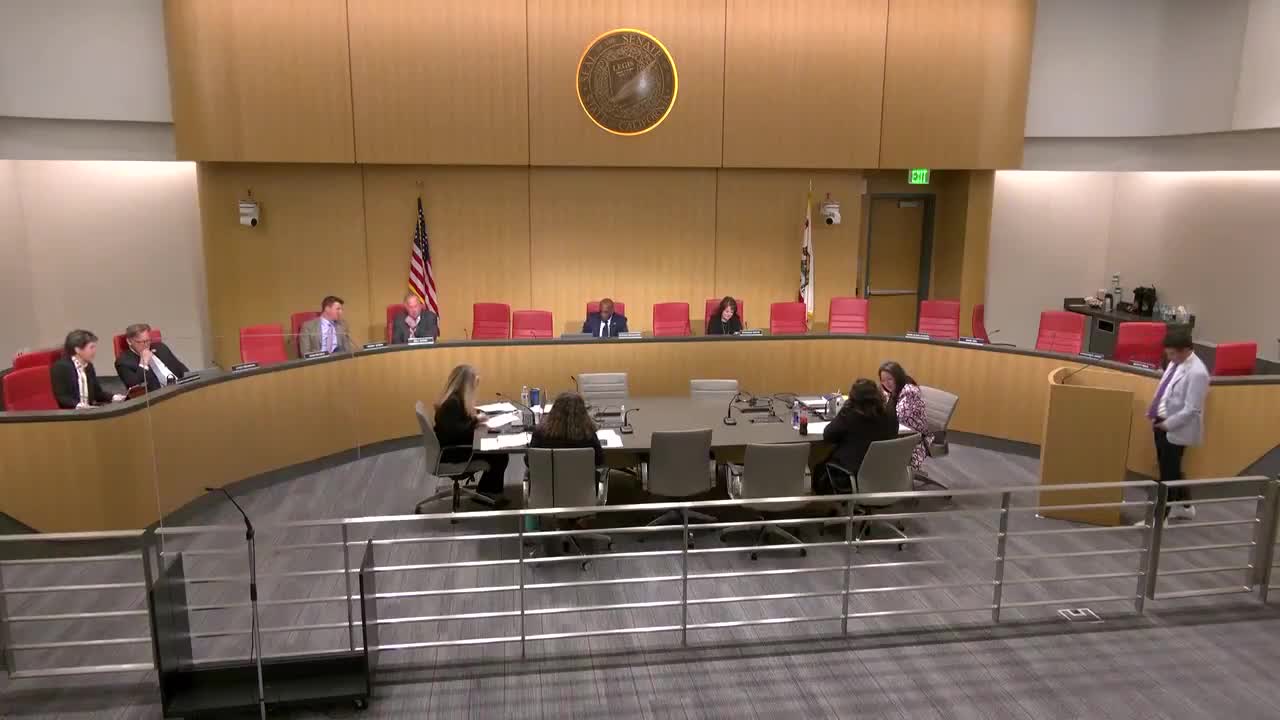
Discussed in Hearing
 10MIN
Senate Standing Committee on Energy, Utilities and Communications
Bill Author

Bill Co-Author(s):
