SB 825: Local government: public broadband services.
- Session Year: 2023-2024
- House: Senate
- Latest Version Date: 2023-09-08
Current Status:
Passed
(2023-09-08: Chaptered by Secretary of State. Chapter 186, Statutes of 2023.)
Introduced
In Committee
First Chamber
In Committee
Second Chamber
Enacted
Existing law prohibits a local agency that is engaged in the provision of broadband internet access service in the state from taking certain actions regarding the accessing of content on the internet by an end user. Existing law defines various terms for these purposes, including defining local agency to mean any agency of local government authorized by any other law to provide broadband internet access service, and lists specified categories of local government agencies included in that definition of local agency.
This bill would add metropolitan planning organizations and regional transportation planning authorities to that list of local government agencies included in the definition of local agency.
For purposes of this article, the following definitions apply:
(a)Broadband internet access service means a mass-market retail service provided by a local agency in California by wire or radio that provides the capability to transmit data to and receive data from all or substantially all internet endpoints, including any capabilities that are incidental to and enable the operation of the communications service, but excluding dial-up internet access service. Broadband internet access service also encompasses any service provided by a local agency in California that provides a functional equivalent of that service or that is used to evade the protections set forth in this article.
(b)Edge provider means any individual or entity that provides any content, application, or service over the internet, and any individual or entity that provides a device used for accessing any content, application, or service over the internet to an end user.
(c)End user means any individual or entity in California that uses a broadband internet access service that is provided by a local agency.
(d)Fixed broadband internet access service means any broadband internet access service that serves end users primarily at fixed endpoints using stationary equipment. Fixed broadband internet access service includes fixed wireless services, including fixed unlicensed wireless services, and fixed satellite services.
(e)Local agency means any agency of local government authorized by any other law to provide broadband internet access service, including the following:
(1)A city.
(2)A county, including a county service area.
(3)A community services district.
(4)A public utility district.
(5)A municipal utility district.
(6)A joint powers authority.
(7)A local educational agency, as defined in Section 47640 of the Education Code.
(8)A sovereign tribal government.
(9)An electrical cooperative, as defined in Section 2776 of the Public Utilities Code.
(10)A metropolitan planning organization.
(11)A regional transportation planning authority.
(f)Mobile broadband internet access service means any broadband internet access service that serves end users primarily using mobile stations.
(g)Network management practice means a practice that has a primarily technical network management justification, but does not include other business practices.
(h)Paid prioritization means the management of a broadband providers network to directly or indirectly favor some traffic over other traffic, including through the use of techniques such as traffic shaping, prioritization, resource reservation, or other forms of preferential traffic management, that either:
(1)Is in exchange for consideration, monetary or otherwise, from a third party.
(2)Done to benefit an affiliated entity.
(i)Reasonable network management means a network management practice that is primarily used for and tailored to achieving a legitimate network management purpose, taking into account the particular network architecture and technology of the broadband internet access service.
|
Date
|
Status
|
|---|---|
| Sep 8, 2023 | Chaptered by Secretary of State. Chapter 186, Statutes of 2023. |
| Sep 8, 2023 | Approved by the Governor. |
| Aug 30, 2023 | Enrolled and presented to the Governor at 2 p.m. |
| Aug 24, 2023 | In Senate. Ordered to engrossing and enrolling. |
| Aug 24, 2023 | Read third time. Passed. (Ayes 74. Noes 0. Page 2792.) Ordered to the Senate. |
| Jun 15, 2023 | Ordered to third reading. |
| Jun 15, 2023 | From consent calendar on motion of Assembly Member Reyes. |
| Jun 8, 2023 | Read second time. Ordered to consent calendar. |
| Jun 7, 2023 | From committee: Do pass. Ordered to consent calendar. (Ayes 8. Noes 0.) (June 7). |
| May 4, 2023 | Referred to Com. on L. GOV. |
| Apr 20, 2023 | In Assembly. Read first time. Held at Desk. |
| Apr 20, 2023 | Read third time. Passed. (Ayes 36. Noes 0. Page 814.) Ordered to the Assembly. |
| Apr 13, 2023 | Read second time. Ordered to consent calendar. |
| Apr 12, 2023 | From committee: Do pass. Ordered to consent calendar. (Ayes 8. Noes 0. Page 684.) (April 12). |
| Mar 21, 2023 | Set for hearing April 12. |
| Mar 1, 2023 | Referred to Com. on GOV. & F. |
| Feb 21, 2023 | From printer. May be acted upon on or after March 20. |
| Feb 17, 2023 | Introduced. Read first time. To Com. on RLS. for assignment. To print. |
|
Date
|
Description
|
Location
|
Votes
|
|
|---|---|---|---|---|
| Aug 24, 2023 | SB 825 Limón Senate Third Reading By Hart | Assembly Floor |
Passed |
|
| Jun 7, 2023 | Do pass. To Consent Calendar. | Assembly Standing Committee on Local Government |
Passed |
|
| Apr 20, 2023 | Consent Calendar SB825 Limón | Senate Floor |
Passed |
|
| Apr 12, 2023 | Do pass and be ordered to the Consent Calendar | Senate Standing Committee on Governance and Finance |
Passed |
This list shows positions taken on this bill by organizations on the date displayed, which is linked to the original source.
Positions by individuals are not included.
|
Organization
|
Position
|
Date
|
|---|---|---|
| Association of Monterey Bay Area Governments | ** Support | |
| California Association Of Councils Of Governments | ** Support | |
| central coast coalition | ** Support | |
| County of Santa Barbara | ** Support | |
| San Benito Council of Governments | ** Support | |
| San Luis Obispo Council of Governments | ** Support | |
| Santa Barbara County Association Of Governments | ** Support | |
| Santa Cruz County Regional Transportation Commission | ** Support | |
| Southern California Association Of Governments | ** Support | |
| Transportation Agency For Monterey County | ** Support |
SENATE THIRD READING
STR Bill Id:SB 825
Author:(Limón)
As Introduced Ver:February 17, 2023
Majority vote
SUMMARY
Alters a definition of "local agency" in existing law to help metropolitan planning organizations (MPOs) and regional transportation planning authorities (RTPAs) qualify for broadband infrastructure grant funding from the California Public Utilities Commission (CPUC).
Major Provisions
COMMENTS
According to data from the 2021 U.S. Census Bureau American Community Survey, 87% of California households have broadband access; however, 20% of all Californians lack a home internet subscription and over 20% of lower income households have no broadband of any type. Households may lack broadband for a variety of reasons. For example, some are located in areas that lack sufficient infrastructure to provide broadband service, while others may find internet service plans unaffordable. Some communities across California have historically lacked broadband service and the COVID-19 pandemic amplified the extent to which such broadband service gaps persist.
The Legislature enacted SB 156 (Committee on Budget and Fiscal Review), Chapter 112, Statutes of 2021, to create an open-access middle-mile network to bring equitable high-speed broadband service to all Californians – called the Middle-Mile Broadband Initiative. The middle-mile refers to the physical infrastructure made up of high-capacity fiber lines that carry large amounts of data at high speeds over long distances to bring internet connectivity to homes, businesses and community institutions. Implementation of the Initiative involves a partnership among several state agencies, including the California Department of Technology and the CPUC.
Pursuant to SB 156, the CPUC established the Local Agency Technical Assistance (LATA) program to support Tribes and local agencies in their efforts to expand broadband service to unserved and underserved Californians. With a $50 million budget, the program provides technical assistance grants to reimburse local agencies and Tribal governments for pre-construction expenses incurred in advance of broadband deployment. Examples of reimbursable expenses include:
- Consultant or staff time for conducting work such as needs assessments, environmental and engineering studies, network design, and broadband strategic plans.
- Costs incurred in forming a joint powers authority (JPA) for the purpose of bringing broadband to areas in need of sufficient internet connections.
According to the CPUC, the LATA program has received 117 non-Tribal Local Agency requests for $52.4M in funding, which has exceeded the $45M allocation for non-Tribal Local Agencies. As result, the CPUC is no longer accepting new LATA applications as of March 24, 2023, from non-Tribal local governments.
Local agencies that are eligible for LATA funds include any local government agency authorized to provide broadband service in California, pursuant to GOV Section 53167(e). This code section does not include MPOs or RTPAs.
According to the Author
As the state moves toward addressing climate change, broadband investments, especially in less densely populated areas, can provide a pathway to connect critical services to vulnerable communities during severe climate events. Current law excludes metropolitan planning organizations (MPOs) and regional transportation planning agencies (RTPAs) in the definition of "local agency" from applying for Local Agency Technical Assistance (LATA) grants, which limits regional coordination and collaborative solutions to expand broadband services. SB 825 adds MPOs and RTPAs to the definition of "local agencies," ensuring broadband is accessible across all households and communities. Additionally, severe climate events affecting the state have underscored the need to provide fast and affordable broadband services to increase capacity and resiliency for disaster preparedness.
Arguments in Support
SBCAG, sponsor of this measure, writes, "The 2021-22 Budget, through SB 156 (Chapter 112, Statutes of 2021), allocated a $6 billion multi-year investment to provide more Californians access to broadband coverage. Of these funds, $3.25 billion were designated to develop, acquire, construct, maintain, and operate a statewide 'open-access middle-mile' network overseen by the California Department of Technology and the Office of Broadband and Digital Literacy. The remaining $2.75 billion goes towards last-mile infrastructure grants, establishing a loan-loss recovery account, and a local agency technical assistance program (LATA) to be overseen by the California Public Utilities Commission (CPUC). However, the definition of a 'local agency' excludes metropolitan planning organizations and regional transportation planning agencies.
"Following the lead of the statewide Broadband for All initiative, the Broadband Alliance of Santa Barbara County's aggressive 1-year countywide planning effort led to the discovery of creative solutions to close the digital divide across the county and in each of the eight municipalities. The severe climate events resulting in frequent closures of US 101 and Interstate 5 over the Grapevine have underscored the mission to provide fast, affordable broadband service to interconnect communities and households and increase capacity, redundancy, and resiliency for disaster preparedness. Broadband is also a mitigation strategy to reduce greenhouse gas emissions by allowing for more telecommuting options. Access to these grants will help accelerate our response to meeting the state's climate goals."
Arguments in Opposition
None on file
FISCAL COMMENTS
None
VOTES
SENATE FLOOR: 36-0-4
YES: Allen, Alvarado-Gil, Archuleta, Ashby, Atkins, Becker, Blakespear, Bradford, Caballero, Cortese, Dahle, Dodd, Durazo, Eggman, Glazer, Gonzalez, Jones, Laird, Limón, McGuire, Menjivar, Min, Newman, Nguyen, Niello, Ochoa Bogh, Portantino, Roth, Rubio, Seyarto, Skinner, Smallwood-Cuevas, Umberg, Wahab, Wiener, Wilk
ABS, ABST OR NV: Grove, Hurtado, Padilla, Stern
ASM LOCAL GOVERNMENT: 8-0-0
YES: Aguiar-Curry, Dixon, Boerner, Pacheco, Ramos, Robert Rivas, Waldron, Wilson
UPDATED
VERSION: February 17, 2023
CONSULTANT: Angela Mapp / L. GOV. / (916) 319-3958 FN: 0001079
Date of Hearing: June 7, 2023
ASSEMBLY COMMITTEE ON LOCAL GOVERNMENT
Cecilia Aguiar-Curry, Chair
SBPCA Bill Id:SB 825
Author:(Limón) – As Introduced Ver:February 17, 2023
SENATE VOTE: 36-0
SUBJECT: Local government: public broadband services.
SUMMARY: Alters a definition of “local agency” in existing law to help metropolitan planning organizations (MPOs) and regional transportation planning authorities (RTPAs) qualify for broadband infrastructure grant funding from the California Public Utilities Commission (CPUC).
EXISTING LAW:
- Requires local agencies that provide broadband internet access service to do so according to “net neutrality” principles and defines “local agency” to mean the following entities authorized to provide broadband service:
- A city.
- A county, including a county service area.
- A community services district.
- A public utility district.
- A municipal utility district.
- A joint powers authority.
- A local educational agency, as specified.
- A sovereign tribal government.
- An electrical cooperative, as specified. [Government Code (GOV) §§ 53167-53167.5]
- Establishes, pursuant to SB 156 (Committee on Budget and Fiscal Review), Chapter 112, Statutes of 2021, the Local Agency Technical Assistance (LATA) program administered by the CPUC to provide grants to local agencies and Tribal governments for the development of broadband service.
FISCAL EFFECT: None
COMMENTS:
- Background. According to data from the 2021 U.S. Census Bureau American Community Survey, 87% of California households have broadband access; however, 20% of all Californians lack a home internet subscription and over 20% of lower income households have no broadband of any type. Households may lack broadband for a variety of reasons. For example, some are located in areas that lack sufficient infrastructure to provide broadband service, while others may find internet service plans unaffordable. Some communities across California have historically lacked broadband service and the COVID-19 pandemic amplified the extent to which such broadband service gaps persist.
- Middle-Mile Broadband Initiative. The Legislature enacted SB 156 to create an open-access middle-mile network to bring equitable high-speed broadband service to all Californians – called the Middle-Mile Broadband Initiative. The middle-mile refers to the physical infrastructure made up of high-capacity fiber lines that carry large amounts of data at high speeds over long distances to bring internet connectivity to homes, businesses and community institutions. Implementation of the Initiative involves a partnership among several state agencies, including the California Department of Technology and the CPUC.
- Local Agency Technical Assistance Program. Pursuant to SB 156, the CPUC established the LATA program to support Tribes and local agencies in their efforts to expand broadband service to unserved and underserved Californians. With a $50 million budget, the program provides technical assistance grants to reimburse local agencies and Tribal governments for pre-construction expenses incurred in advance of broadband deployment. Examples of reimbursable expenses include:
- Consultant or staff time for conducting work such as needs assessments, environmental and engineering studies, network design, and broadband strategic plans.
- Costs incurred in forming a joint powers authority (JPA) for the purpose of bringing broadband to areas in need of sufficient internet connections.
According to the CPUC, the LATA program has received 117 non-Tribal Local Agency requests for $52.4M in funding, which has exceeded the $45M allocation for non-Tribal Local Agencies. As result, the CPUC is no longer accepting new LATA applications as of March 24, 2023, from non-Tribal local governments.
Local agencies that are eligible for LATA funds include any local government agency authorized to provide broadband service in California, pursuant to GOV § 53167(e). This code section does not include MPOs or RTPAs.
- Bill Summary and Author’s Statement. This bill adds MPOs and RTPAs to the definition of “local agencies” that the CPUC uses for the purposes of determining eligibility for LATA funds.
According to the author, “As the state moves toward addressing climate change, broadband investments, especially in less densely populated areas, can provide a pathway to connect critical services to vulnerable communities during severe climate events. Current law excludes metropolitan planning organizations (MPOs) and regional transportation planning agencies (RTPAs) in the definition of “local agency” from applying for Local Agency Technical Assistance (LATA) grants, which limits regional coordination and collaborative solutions to expand broadband services. SB 825 adds MPOs and RTPAs to the definition of ‘local agencies,’ ensuring broadband is accessible across all households and communities. Additionally, severe climate events affecting the state have underscored the need to provide fast and affordable broadband services to increase capacity and resiliency for disaster preparedness.”
This bill is sponsored by SBCAG.
- Arguments in Support. SBCAG, sponsor of this measure, writes, “The 2021-22 Budget, through SB 156 (Chapter 112, Statutes of 2021), allocated a $6 billion multi-year investment to provide more Californians access to broadband coverage. Of these funds, $3.25 billion were designated to develop, acquire, construct, maintain, and operate a statewide ‘open-access middle-mile’ network overseen by the California Department of Technology and the Office of Broadband and Digital Literacy. The remaining $2.75 billion goes towards last-mile infrastructure grants, establishing a loan-loss recovery account, and a local agency technical assistance program (LATA) to be overseen by the California Public Utilities Commission (CPUC). However, the definition of a ‘local agency’ excludes metropolitan planning organizations and regional transportation planning agencies.
“Following the lead of the statewide Broadband for All initiative, the Broadband Alliance of Santa Barbara County’s aggressive 1-year countywide planning effort led to the discovery of creative solutions to close the digital divide across the county and in each of the eight municipalities. The severe climate events resulting in frequent closures of US 101 and Interstate 5 over the Grapevine have underscored the mission to provide fast, affordable broadband service to interconnect communities and households and increase capacity, redundancy, and resiliency for disaster preparedness. Broadband is also a mitigation strategy to reduce greenhouse gas emissions by allowing for more telecommuting options. Access to these grants will help accelerate our response to meeting the state’s climate goals.”
- Arguments in Opposition. None on file.
REGISTERED SUPPORT / OPPOSITION:
Support
Santa Barbara County Association of Governments [SPONSOR]
California Association of Councils of Governments
Central Coast Coalition
County of Santa Barbara
Southern California Association of Governments
Transportation Agency for Monterey County
Opposition
None on file
Analysis Prepared by: Angela Mapp / L. GOV. / (916) 319-3958
SENATE RULES COMMITTEE Office of Senate Floor Analyses (916) 651-1520 Fax: (916) 327-4478 | SB 825 |
CONSENT
Bill No: SB 825
Author: Limón (D)
Introduced: 2/17/23
Vote: 21
SENATE GOVERNANCE & FIN. COMMITTEE: 8-0, 4/12/23
AYES: Caballero, Seyarto, Blakespear, Dahle, Durazo, Glazer, Skinner, Wiener
SUBJECT: Local government: public broadband services
SOURCE: Santa Barbara County Association of Government
DIGEST:
This bill makes certain regional transportation planning entities eligible for broadband infrastructure planning grant funding from the California Public Utilities Commission.
ANALYSIS:
Existing law:
- Requires local agencies that provide broadband internet access service to do so according to “net neutrality” principles and defines “local agency” to mean the following entities authorized to provide broadband service:
- A city.
- A county, including a county service area.
- A community services district.
- A public utility district.
- A municipal utility district.
- A joint powers authority.
- A local educational agency, as specified.
- A sovereign tribal government, and,
- An electrical cooperative, as specified.
- Establishes the Local Agency Technical Assistance (LATA) program administered by the California Public Utilities Commission (CPUC) to provide grants to local agencies, as defined above, to support their efforts to expand broadband service to unserved and underserved areas.
This bill adds a metropolitan planning organization (MPO) and a regional transportation planning authority (RTPA) to the definition of “local agency” for purposes of eligibility for the LATA grant program.
Background
In July 2021, the Legislature enacted SB 156 (Committee on Budget and Fiscal Review, Chapter 112) to create an open-access middle-mile network to bring equitable high-speed broadband service to all Californians. The middle-mile refers to the physical infrastructure made up of high-capacity fiber lines that carry large amounts of data at high speeds over long distances to bring internet connectivity to homes, businesses and community institutions. Implementation of the Initiative involves a partnership among several state agencies, including the California Department of Technology and the CPUC.
SB 156 allocated $50 million to the CPUC to establish the LATA program to provide grants to local agencies to support their broadband infrastructure expansion efforts. The CPUC’s guidelines for the LATA program specify that grant recipients are reimbursed for eligible pre-construction expenses associated with broadband deployment to unserved and underserved communities. Examples of reimbursable expenses include:
- Consultant or staff time for conducting work including but not limited to needs assessments, environmental and engineering studies, network design, and broadband strategic plans.
- Costs incurred in forming a joint powers authority (JPA) for the purpose of bringing broadband to areas in need of sufficient internet connections.
CPUC limits LATA program eligibility to local agencies listed in Government Code Section 53157(a), which the Legislature enacted to require public agencies that provide broadband internet access service to do so in accordance with “net neutrality” principles (AB 1999, Chau, Chapter 963, Statutes of 2018).
MPOs and RTPAs were not expressly included in AB 1999 because they do not provide broadband internet service. SB 156 added JPAs, local education agencies, sovereign tribal governments, and electrical cooperatives onto this list, but not MPOs and RTPAs.
Due to this exclusion, the CPUC has declined to approve grant applications from several MPOs and RTPAs, including the Santa Barbara County Association of Governments (SBCAG). Initially, SBCAG submitted their LATA application as an MPO and was deemed ineligible by the CPUC. Fortunately, Santa Barbara County also applied for LATA funding around the same time and revised their LATA application accordingly to include SBCAG as a sub-contractor. The CPUC notes that while the LATA program currently excludes MPOs and RTPAs from applying, they are not precluded from working collaboratively with other local agency applicants, such as counties and JPAs, to obtain LATA funds.
This bill adds MPOs and RTPAs to the LATA program’s definition of “local agency” to satisfy the CPUC’s eligibility requirements for grant funding.
Comments
- Purpose of the bill. According to the author, “Severe climate events affecting the state have underscored the need to provide fast and affordable broadband services to increase capacity and resiliency for disaster preparedness. As the state moves toward addressing climate change, broadband investments, especially in less densely populated areas, can provide a pathway to connect critical services to vulnerable communities. Current law excludes metropolitan planning organizations (MPOs) and regional transportation planning agencies (RTPAs) in the definition of “local agency” from applying for Local Agency Technical Assistance (LATA) grants, which limits regional coordination and collaborative solutions to expand broadband services. SB 825 adds MPOs and RTPAs to the definition of “local agencies,” ensuring broadband is accessible across all households and communities.”
- Not now but maybe later. Since the LATA program began accepting applications in August 2022, the CPUC reports it has received applications exceeding the total $50 million allocated for the program. Even if the Legislature adds MPOs and RTPAs to the definition of “local agency” for purposes of eligibility, there will be no funds available to them as all LATA funds have been exhausted. However, if the program receives additional funding to continue, this bill will ensure these entities are eligible to apply.
FISCAL EFFECT: Appropriation: No Fiscal Com.: No Local: No
SUPPORT: (Verified 4/13/23)
Santa Barbara County Association of Governments (source)
Association of Monterey Bay Area Governments
County of Santa Barbara
San Benito Council of Governments
San Luis Obispo Council of Governments
Santa Cruz County Regional transportation Commission
Southern California Association of Governments
Transportation Agency for Monterey County
OPPOSITION: (Verified 4/13/23)
None received.
ARGUMENTS IN SUPPORT: According to the sponsor, the Santa Barbara County Association of Governments, “The COVID-19 pandemic and severe climate events resulting in frequent closures of US 101 and Interstate 5 over the Grapevine have underscored the mission to provide fast, affordable broadband service to interconnect communities and households and increase capacity, redundancy, and resiliency for disaster preparedness. Broadband is also a mitigation strategy to reduce greenhouse gas emissions by allowing for more telecommuting options. Access to these grants will help accelerate our response to meeting the state’s climate goals.”
Prepared by: Cassie Royce / GOV. & F. / (916) 651-4119
4/14/23 13:24:46
**** END ****
SENATE COMMITTEE ON GOVERNANCE AND FINANCE
Senator Anna M. Caballero, Chair
2023 - 2024 Regular
Bill No: | SB 825 | Hearing Date: | 4/12/23 |
Author: | Limón | Tax Levy: | No |
Version: | 2/17/23 | Fiscal: | No |
Consultant: | Royce, Grinnell | ||
Local government: public broadband services
Makes certain regional transportation planning entities eligible for broadband infrastructure grant funding from the California Public Utilities Commission.
Background
Broadband access. According to data from the 2021 U.S. Census Bureau American Community Survey, 87% of California households have broadband access; however, 20% of all Californians lack a home internet subscription and over 20% of lower income households have no broadband of any type. Households may lack broadband for a variety of reasons. For example, some are located in areas that lack sufficient infrastructure to provide broadband services, while others may find internet service plans unaffordable. Some communities across California have historically lacked broadband service and the COVID-19 pandemic amplified the extent to which such broadband service gaps persist.
Middle-Mile Broadband Initiative. In July 2021, the Legislature enacted SB 156 (Committee on Budget and Fiscal Review) to create an open-access middle-mile network to bring equitable high-speed broadband service to all Californians. The middle-mile refers to the physical infrastructure made up of high-capacity fiber lines that carry large amounts of data at high speeds over long distances to bring internet connectivity to homes, businesses and community institutions. Implementation of the Initiative involves a partnership among several state agencies, including the California Department of Technology and the California Public Utilities Commission (CPUC).
Local Agency Technical Assistance program. SB 156 allocated $50 million to the CPUC to establish the Local Agency Technical Assistance (LATA) program to provide grants to local agencies to support their efforts to expand broadband service to unserved and underserved areas in California. The CPUC’s guidelines for the LATA program specify that grant recipients are reimbursed for eligible pre-construction expenses associated with broadband deployment to unserved and underserved communities. Examples of reimbursable expenses include:
- Consultant or staff time for conducting work including but not limited to needs assessments, environmental and engineering studies, network design, and broadband strategic plans.
- Costs incurred in forming a joint powers authority (JPA) for the purpose of bringing broadband to areas in need of sufficient internet connections.
CPUC limited LATA program eligibility to local agencies listed in Government Code Section 53157(a), which the Legislature enacted to require public agencies that provide broadband internet access service to do so in accordance with “net neutrality” principles (AB 1999, Chau, 2018).
Metropolitan Planning Organizations (MPOs) and Regional Transportation Planning Authorities (RTPAs) were not expressly included in AB 1999 because they do not provide broadband internet service. SB 156 added JPAs, local education agencies, sovereign tribal governments, and electrical cooperatives onto this list, but not MPOs and RTPAs.
Due to this exclusion, the CPUC has declined to approve grant applications from several MPOs and RTPAs, including the Santa Barbara County Association of Governments (SBCAG). Initially, SBCAG submitted their LATA application as an MPO and was deemed ineligible by the CPUC. Fortunately, Santa Barbara County also applied for LATA funding around the same time and revised their LATA application accordingly to include SBCAG as a sub-contractor. The CPUC notes that while the LATA program currently excludes MPOs and RTPAs from applying, they are not precluded from working collaboratively with other local agency applicants, such as counties and JPAs, to obtain LATA funds.
The author wants to ensure MPOs and RTPAs are added to LATA’s definition of “local agency” to satisfy the CPUC’s eligibility requirements for grant funding.
Proposed Law
Senate Bill 825 adds a metropolitan planning organization and a regional transportation planning authority to the definition of a “local agency” for purposes of eligibility for the LATA grant program.
State Revenue Impact
No estimate.
Comments
1. Purpose of the bill. According to the author, “Severe climate events affecting the state have underscored the need to provide fast and affordable broadband services to increase capacity and resiliency for disaster preparedness. As the state moves toward addressing climate change, broadband investments, especially in less densely populated areas, can provide a pathway to connect critical services to vulnerable communities. Current law excludes metropolitan planning organizations (MPOs) and regional transportation planning agencies (RTPAs) in the definition of “local agency” from applying for Local Agency Technical Assistance (LATA) grants, which limits regional coordination and collaborative solutions to expand broadband services. SB 825 adds MPOs and RTPAs to the definition of “local agencies,” ensuring broadband is accessible across all households and communities.”
2. Not now but maybe later. Since the LATA program began accepting applications in August 2022, the CPUC reports it has received applications exceeding the total $50 million allocated for the program. Even if the Legislature adds MPOs and RTPAs to the definition of “local agency” for purposes of eligibility, there will be no funds available to them as all LATA funds have been exhausted. However, if the program receives additional funding to continue, this bill will ensure these entities are eligible to apply.
Support and Opposition
(4/7/23)
Support:
County of Santa Barbara
Santa Barbara County Association of Governments
Transportation Agency for Monterey County
Opposition: None submitted.
-- END --
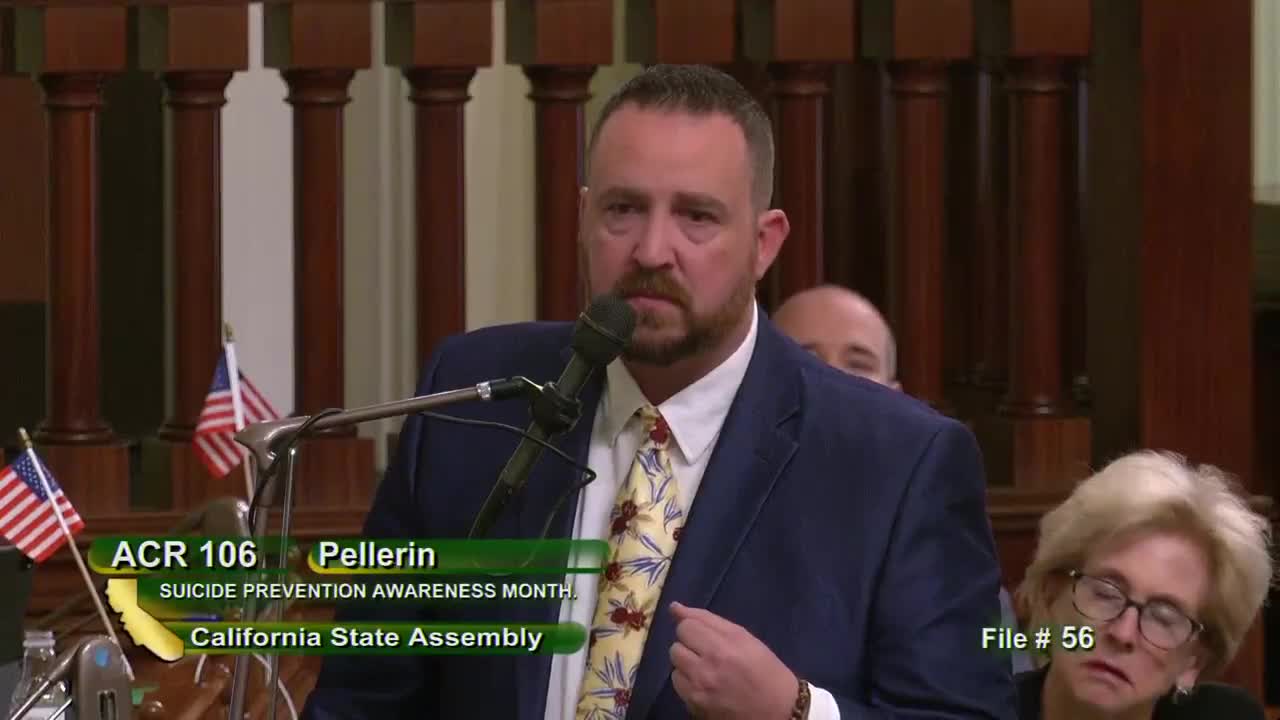
Bill Author

Bill Co-Author(s):