SB 837: Energy: building energy standards: sealed and unvented attics.
- Session Year: 2023-2024
- House: Senate
- Latest Version Date: 2023-10-08
Current Status:
Passed
(2023-10-08: Chaptered by Secretary of State. Chapter 509, Statutes of 2023.)
Introduced
In Committee
First Chamber
In Committee
Second Chamber
Enacted
Existing law requires the State Energy Resources Conservation and Development Commission to prescribe, by regulation, building design and construction standards and energy and water conservation design standards for new residential and nonresidential buildings to reduce wasteful, uneconomic, inefficient, and unnecessary consumption of energy and to manage energy loads to help maintain electrical grid reliability. Existing law requires the commission to periodically review the standards and adopt revisions that it deems necessary.
This bill would require the commission, beginning with the review of those regulations that is pending as of January 1, 2024, to consider revising the definition of conditioned space, indirectly to include sealed and unvented attics, as provided.
Existing law requires the State Energy Resources Conservation and Development Commission to prescribe, by regulation, building design and construction standards and energy and water conservation design standards for new residential and nonresidential buildings to reduce wasteful, uneconomic, inefficient, and unnecessary consumption of energy and to manage energy loads to help maintain electrical grid reliability. Existing law requires the commission to periodically review the standards and adopt revisions that it deems necessary.
This bill would require the commission, in the review of those regulations that is pending as of January 1, 2024, to consider revising the definition of conditioned space, indirectly to include sealed and unvented attics, as provided.
Existing law requires the State Energy Resources Conservation and Development Commission to prescribe, by regulation, building design and construction standards and energy and water conservation design standards for new residential and nonresidential buildings to reduce wasteful, uneconomic, inefficient, and unnecessary consumption of energy and to manage energy loads to help maintain electrical grid reliability. Existing law requires the commission to periodically review the standards and adopt revisions that it deems necessary.
This bill would require the commission, in the review of those regulations that is pending as of January 1, 2024, to consider revising the definition of conditioned space, indirectly to include unvented attics, as provided.
Beginning with the triennial review of Part 6 (commencing with Section 100.0) of Title 24 of the California Code of Regulations that is pending as of January 1, 2024, the commission shall consider revising the definition of conditioned space, indirectly for purposes of those regulations to include sealed and unvented attics, where the space is enclosed by the primary thermal and air barrier and directly adjoining conditioned space.
Beginning with the triennial review of Part 6 (commencing with Section 100.0) of Title 24 of the California Code of Regulations that is pending as of January 1, 2024, the commission shall consider revising the definition of conditioned space, indirectly for purposes of those regulations to include sealed and unvented attics, where the space is enclosed by the primary thermal and air barrier and directly adjoining conditioned space.
Beginning with the triennial review of Part 6 (commencing with Section 100.0) of Title 24 of the California Code of Regulations that is pending as of January 1, 2024, the commission shall consider revising the definition of conditioned space, indirectly for purposes of those regulations to include sealed and unvented attics, where the space is enclosed by the primary thermal and air barrier and directly adjoining conditioned space.
Beginning with the triennial review of Part 6 (commencing with Section 100.0) of Title 24 of the California Code of Regulations that is pending as of January 1, 2024, the commission shall consider revising the definition of conditioned space, indirectly for purposes of those regulations to include unvented attics, where the space is enclosed by the primary thermal and air barrier and directly adjoining conditioned space.
|
Date
|
Status
|
|---|---|
| Oct 8, 2023 | Chaptered by Secretary of State. Chapter 509, Statutes of 2023. |
| Oct 8, 2023 | Approved by the Governor. |
| Sep 7, 2023 | Enrolled and presented to the Governor at 4 p.m. |
| Aug 31, 2023 | In Senate. Ordered to engrossing and enrolling. |
| Aug 31, 2023 | Read third time. Passed. (Ayes 79. Noes 0. Page 2866.) Ordered to the Senate. |
| Aug 24, 2023 | Read second time. Ordered to consent calendar. |
| Aug 23, 2023 | From committee: Do pass. Ordered to consent calendar. (Ayes 15. Noes 0.) (August 23). |
| Jun 29, 2023 | From committee: Do pass and re-refer to Com. on APPR. (Ayes 13. Noes 0.) (June 28). Re-referred to Com. on APPR. |
| Jun 12, 2023 | June 14 set for first hearing canceled at the request of author. |
| May 26, 2023 | Referred to Com. on U. & E. |
| May 15, 2023 | In Assembly. Read first time. Held at Desk. |
| May 15, 2023 | Read third time. Passed. (Ayes 38. Noes 0. Page 1079.) Ordered to the Assembly. |
| May 9, 2023 | Read second time. Ordered to third reading. |
| May 8, 2023 | From committee: Be ordered to second reading pursuant to Senate Rule 28.8. |
| May 1, 2023 | Set for hearing May 8. |
| Apr 26, 2023 | Read second time and amended. Re-referred to Com. on APPR. |
| Apr 25, 2023 | From committee: Do pass as amended and re-refer to Com. on APPR. (Ayes 17. Noes 0. Page 872.) (April 24). |
| Apr 12, 2023 | Set for hearing April 24. |
| Mar 1, 2023 | Referred to Com. on E., U. & C. |
| Feb 21, 2023 | From printer. May be acted upon on or after March 20. |
| Feb 17, 2023 | Introduced. Read first time. To Com. on RLS. for assignment. To print. |
|
Date
|
Description
|
Location
|
Votes
|
|
|---|---|---|---|---|
| Aug 31, 2023 | SB 837 Archuleta Consent Calendar Second Day Regular Session | Assembly Floor |
Passed |
|
| Aug 23, 2023 | Do pass. To Consent Calendar. | Assembly Standing Committee on Appropriations |
Passed |
|
| Jun 28, 2023 | Do pass and be re-referred to the Committee on [Appropriations] | Assembly Standing Committee on Utilities and Energy |
Passed |
|
| May 15, 2023 | Senate 3rd Reading SB837 Archuleta | Senate Floor |
Passed |
|
| Apr 24, 2023 | Do pass as amended, but first amend, and re-refer to the Committee on [Appropriations] | Senate Standing Committee on Energy, Utilities and Communications |
Passed |
This list shows positions taken on this bill by organizations on the date displayed, which is linked to the original source.
Positions by individuals are not included.
|
Organization
|
Position
|
Date
|
|---|---|---|
| Asphalt Roofing Manufacturers Association | ** Against | |
| Associated Roofing Contractors of the Bay Area Counties | ** Against | |
| California Building Industry Association | ** Support | |
| California Building Officials | ** Support | |
| California Business Properties Association | ** Support | |
| Huntsman Corporation | ** Support | |
| Institute for the Building Envelope | ** Support | |
| National Roofing Contractors Association | ** Against | |
| North American Insulation Manufacturers Association | ** Against | |
| The Institute for The Building Envelope | ** Support | |
| Western States Roofing Contractors Association | ** Against |
Date of Hearing: August 23, 2023
ASSEMBLY COMMITTEE ON APPROPRIATIONS
Chris Holden, Chair
SBPCA Bill Id:SB 837
Author:(Archuleta) – As Amended Ver:April 26, 2023
Policy Committee: | Utilities and Energy | Vote: | 13 - 0 |
|
| ||
|
|
Urgency: No State Mandated Local Program: No Reimbursable: No
SUMMARY:
This bill requires the California Energy Commission (CEC), beginning with its review of Title 24 of the California Code of Regulations that is pending as of January 1, 2024, to consider revising the definition of “conditioned space, indirectly” for purposes of those regulations to include sealed and unvented attics, where the space is enclosed by the primary thermal and air barrier and directly adjoining conditioned space.
FISCAL EFFECT:
The CEC anticipates minor and absorbable costs since, according to the CEC “the bill requires a measure that is already in the Energy Code.”
COMMENTS:
- Purpose. The author intends this bill to lead the CEC to revise its building codes so as to favor use of sealed and unvented attics, relative to the CEC’s existing building codes. According to the author:
California’s Energy Code encourages builders to construct energy-efficient buildings, while giving them flexibility to choose which design techniques and technologies best suit their work. SB 837 is a simple bill that adds another tool to this arsenal, a tool that is recognized by the International Residential Code, utilized in other jurisdictions, and proven to have significant energy savings.
- Background. State law charges the CEC with adopting building energy efficiency standards (known as “Title 24” standards), which become part of the state building code. The CEC’s standards requires certain cost-effective building features that result in a building achieving a certain level of energy efficiency, which the CEC calls a building’s “energy budget.” The CEC refers to these features as the “prescriptive baseline.” However, a builder may deviate from the CEC’s prescriptive baseline if it includes other features in the building that, according to CEC-approved calculations, result in comparable energy efficiency.
For a newly constructed single-family home, the CEC’s prescriptive baseline assumes a vented attic. Nonetheless, the CEC reports its energy efficiency standards “[allow] for unvented attics, and even [provide] an energy credit when using the performance modeling approach.” Despite this allowance, CEC expresses the need for measures “to reduce moisture risks, primarily from mold growth” in unvented attics. And the CEC cites studies to bolster its claim. It would seem then, that CEC has considered sealed and unvented attics in its work on energy efficiency standards.
The subject of this bill is highly technical, but it sets a low bar: it requires merely that the CEC consider revising the definition of “conditioned space, indirectly,” as the bill specifies. The CEC expresses concern the bill is “requiring that all buildings have unvented attics;” but, clearly, this is not the case. Nonetheless, if this bill were to become law, the CEC should not feel compelled by this bill to necessarily include sealed and unvented attics in the definition of “conditioned space, indirectly.”
Analysis Prepared by: Jay Dickenson / APPR. / (916) 319-2081
Date of Hearing: June 28, 2023
ASSEMBLY COMMITTEE ON UTILITIES AND ENERGY
Eduardo Garcia, Chair
SBPCA Bill Id:SB 837
Author:(Archuleta) – As Amended Ver:April 26, 2023
SENATE VOTE: 38-0
SUBJECT: Energy: building energy standards: sealed and unvented attics
SUMMARY: Requires the California Energy Commission (CEC) to consider revising the definition of “conditioned space, indirectly” to include sealed and unvented attics as part of the pending cycle of building code review.
EXISTING LAW:
- Establishes the CEC’s authority to create regulations for building efficiency standards. Existing law requires the CEC to create cost-effective regulations for lighting, insulation, climate control systems, and other building design and construction standards that increase energy and water efficiency for new residential and new nonresidential buildings. Local governments may not issue permits for construction and installation projects that fail to comply with the CEC’s certified efficiency standards. (Public Resources Code § 25402(a-b))
- Allows specified state agencies, including the CEC, to propose changes to building standards or regulations related to the implementation or enforcement of building standards. Requires the agencies to submit building standards to the California Building Standards Commission (CBSC) for adoption and approval prior to codification. (Health and Safety Code § 18929)
- Requires the CEC to carry out studies, technical assessments, research projects, and data collection directed to reducing wasteful, inefficient, unnecessary, or uneconomic uses of energy, including, but not limited to, improved building design and insulation. (Public Resources Code § 25401)
- Requires the CEC’s building efficiency standards to be cost-effective when taken in their entirety and amortized over the economic life of the structure compared with historic practice. It also requires the CEC to determine the lifecycle cost of complying with a building standard. (Public Resources Code § 25402(b)(3))
- Requires the CEC to adopt a plan by January 1, 2019, to promote compliance with Part 6 of Title 24 of the California Code of Regulations in the installation of central air conditioning and heat pumps. The CEC must consult with the Contractors’ State License Board (CSLB), local building officials, and other stakeholders to create the plan. It also authorizes the CEC to create regulations to increase compliance with permitting and inspection requirements for central air conditioning and heat pumps, based on the plan. (Public Resources Code § 25402.12)
FISCAL EFFECT: Unknown. Pursuant to Senate Rule 28.8, this bill did not receive a hearing in the Senate Committee on Appropriations due to a determination that any state costs of the bill are not significant.
BACKGROUND:
Energy Codes – Existing law establishes the CEC’s authority to adopt cost-effective building and appliance standards to promote the conservation of energy and water. Title 20 of the California Code of Regulations includes the CEC’s appliance standards and Title 24 includes the CEC’s Building Energy Efficiency Standards, which are also known as the energy codes. Existing law also sets cost-effectiveness requirements for the energy codes and requires the CEC to consider the cost of housing as part of cost-effectiveness determinations. While the CEC establishes the energy codes, enforcement of these standards rests with local building officials.
Under existing law, the CEC adopts new building energy efficiency standards every three years, and standards become effective one year after their adoption. The CEC has started developing the 2025 building energy efficiency standards. According to the CEC, the updated standards will be proposed for adoption in 2024, and they will become effective on January 1, 2026. The CEC adopts three different types of codes: mandatory, performance, and prescriptive standards. While mandatory standards are required for all new construction in the state, performance standards may vary by geographic location, building type, and the energy budget for the building. The prescriptive standards provide an alternative to the performance standards, by offering a set of packages that provide a checklist-like compliance approach. Builders must build to the mandatory standards, but have more flexibility in how to meet the performance or prescriptive standards.[1]
Yes or No to Air Flow? Historically, California’s building codes have favored vented attics, in which the attic has an outside opening to allow moisture and temperature to transfer between the attic space and the surrounding environment. For vented attics, insulation is installed in the floor of the attic to insulate the building’s conditioned space below the attic from the largely ambient temperature of the attic space. Allowing for ventilation in attics enables warm air and moisture to escape the building, preventing mold and moisture damage. However, attics may also contain the building’s heating, ventilation, and air conditioning (HVAC) equipment, including ducts. Leaks of conditioned air from these ducts installed in a vented attic may be released to the outdoors, leading to energy inefficiencies.
In high-heat weather conditions, the air temperature in vented attics can increase dramatically and further reduce the energy efficiency of HVAC systems beyond potential leakage from ducts. Building owners may compensate for the loss of performance from HVAC systems in vented attics by using the HVAC for longer periods of time at cooler thermostat levels to reach the desired indoor conditioned temperature. The U.S. Department of Energy has cited the energy losses from HVAC systems in vented attics as 20% or more, resulting “in a significant energy loss when ducts are in unconditioned space.”[2] However, a 2019 study by the Lawrence Berkeley National Laboratory concluded that these energy inefficiencies can vary substantially by geographic location and season.[3]
Unlike vented attics, unvented attics do not have any designed openings and therefore do not readily allow air exchange with the surrounding environment. In unvented attics, insulation (often a spray foam, rather than conventional fiberglass) is installed throughout the attic walls and ceilings.[4] The reduced air flow in unvented attics can reduce leakage from HVAC ducts and, if the unvented attic maintains a relatively stable temperature similar to an air-conditioned space, help maintain the energy efficiency of the HVAC system. However, an unvented attic may still leak air to the outside if not properly sealed or may not have access to conditioned air from the rest of the building, limiting its effectiveness for insulating ducts that might be in the attic. Given this uncertainty as to whether an unvented attic is functioning as conditioned space in practice, the CEC neither classifies unvented attics as indirectly conditioned space in the energy code nor assumes that unvented attics provide the same energy efficiency benefit for HVAC ducts as would a conditioned space.
Unvented attics may cause excessive moisture accumulation, unless additional moisture-reduction measures are taken, leading to mold growth and potentially compromising indoor air quality.[5] Moreover, the spray foam insulation often employed in unvented attics can cost substantially more than the conventional fiberglass insulation regularly installed in vented attics.[6] Additionally, the manner in which unvented attics are insulated can more rapidly degrade roofing materials, reducing the average lifespan of shingles and other materials. This would necessitate an expensive roof replacement significantly sooner than would otherwise be required.[7]
COMMENTS:
- Author’s Statement. According to the author, “California’s Energy Code encourages builders to construct energy-efficient buildings, while giving them flexibility to choose which design techniques and technologies best suit their work. SB 837 is a simple bill that adds another tool to this arsenal, a tool that is recognized by the International Residential Code, utilized in other jurisdictions, and proven to have significant energy savings.”
- Space Oddities. This bill would require the CEC to consider changes to its definition of an indirectly conditioned space[8] to include unvented and sealed attics. Many builders in California use CBECC-Res—a free software developed by the CEC for demonstrating compliance with the California Residential Building Energy Efficiency Standards—to evaluate the energy efficiency of buildings.[9] Air circulation ducts located in a building’s conditioned space can make the building more energy efficient, which is reflected in how the building is rated by CBECC-Res.
Unvented attics are currently not classified as conditioned space in the energy codes. The author and sponsor claim that this lack of classification causes the CBECC-Res software to underrepresent the energy efficiency benefits of unvented attics, as ducts situated in unvented attics are treated as being located in unconditioned space. However, given the lingering potential for air leakage to the outside and uncertainty regarding the flow of conditioned air into the attic, whether the definition of indirectly conditioned space would more aptly reflect an unvented attic, for the purposes of maintaining HVAC efficiency, is unclear. Currently, there is neither consensus on what leakage rate an attic must meet to be considered sealed nor an accepted testing method to verify that the attic is functionally sealed. Additionally, the CEC already provides a performance approach credit for unvented attics through the CBECC-Res software, which counts toward the total energy budget of the building.
- For Your Consideration. This bill would require the CEC to consider adopting standards to include unvented attics in the definition of an indirectly conditioned space as part of the next building code cycle development. Whether this bill would substantively affect the review, and potential revision, of the energy codes by the CEC is unclear. However, this bill is clear in that it does not mandate that the CEC adopt specific standards or redefine certain terms. The language is permissive that the CEC “shall consider revising the definition.” Should the CEC choose to reclassify unvented and sealed attics, the CEC’s multi-tiered authority (mandatory, performance and prescriptive standards) affords it considerable flexibility to determine whether, and to what extent, any additional changes to standards should be made.
- Prior Legislation
SB 795 (Stern, 2023) would require the CEC to establish online systems to track sales of HVAC equipment and track compliance documents for building energy efficiency standards. Status: In the Assembly, pending referral.
SB 1164 (Stern, 2022) was substantially similar to SB 795 and would have required the CEC to create a compliance testing registry. Status: Held in the Assembly Appropriations Committee.
AB 660 (Levine, 2019) would have required the CEC to consider establishing additional cool roof requirements as part of building code development cycles occurring over 12 years. Status: the bill was subsequently amended into a different subject matter and held in the Senate Appropriations Committee.
REGISTERED SUPPORT / OPPOSITION:
Support
California Building Industry Association
California Building Officials
California Business Properties Association
Huntsman Corporation
The Institute for The Building Envelope
Opposition
Asphalt Roofing Manufacturers Association
North American Insulation Manufacturers Association
Western States Roofing Contractors Association
Analysis Prepared by: Samuel Mahanes / U. & E. / (916) 319-2083
CEC, pg iv, 2022 Building Energy Efficiency Standards for Residential and Non-residential Buildings – Title 24, Part 6, and Associated Administrative Regulations in Part 1, August 2022. ↑
U.S. Department of Energy; “Unvented, Conditioned Attics”; January 2013. ↑
Pg. 259; CEC; “Sealed and Insulated Attic Hygrothermal Performance in New California Homes Using Vapor and Air Permeable Insulation – Field Study and Simulations”; April 2019. ↑
Pg. 307, CEC, 2022 Building Energy Efficiency Standards for Residential and Non-residential Buildings – Title 24, Part 6, and Associated Administrative Regulations in Part 1, August 2022. ↑
CEC; “Sealed and Insulated Attic Hygrothermal Performance in New California Homes Using Vapor and Air Permeable Insulation – Field Study and Simulations”; April 2019. ↑
Lawrence Berkeley National Laboratory; “A Literature Review of Sealed and Insulated Attics – Thermal, Moisture and Energy Performance”; 2016. ↑
Lawrence Berkeley National Laboratory; “A Literature Review of Sealed and Insulated Attics – Thermal, Moisture and Energy Performance”; 2016. ↑
“Conditioned Space, Indirectly, is enclosed space that (1) is not directly conditioned space; and (2) either (a) has a thermal transmittance area product (UA) to directly conditioned space exceeding that to the outdoors or to unconditioned space and does not have fixed vents or openings to the outdoors or to unconditioned space, or (b) is a space through which air from directly conditioned spaces is transferred at a rate exceeding three air changes per hour. CEC, Pg. 64, 2022 Building Energy Efficiency Standards for Residential and Non-residential Buildings – Title 24, Part 6, and Associated Administrative Regulations in Part 1, August 2022. ↑
CEC; “2022 Energy Code Compliance Software”; https://www.energy.ca.gov/programs-and-topics/programs/building-energy-efficiency-standards/2022-building-energy-efficiency-1 ↑
SENATE RULES COMMITTEE Office of Senate Floor Analyses (916) 651-1520 Fax: (916) 327-4478 | SB 837 |
THIRD READING
Bill No: SB 837
Author: Archuleta (D)
Amended: 4/26/23
Vote: 21
SENATE ENERGY, U. & C. COMMITTEE: 17-0, 4/24/23
AYES: Bradford, Ashby, Becker, Caballero, Dodd, Durazo, Eggman, Gonzalez, Grove, McGuire, Min, Newman, Rubio, Seyarto, Skinner, Stern, Wilk
NO VOTE RECORDED: Dahle
SENATE APPROPRIATIONS COMMITTEE: Senate Rule 28.8
SUBJECT: Energy: building energy standards: sealed and unvented attics
SOURCE: California Building Industry Association
DIGEST:
This bill requires the California Energy Commission (CEC) to consider adopting building energy efficiency standards for unvented and sealed attics as part of the next cycle of building code development.
ANALYSIS:
Existing law:
- Establishes the CEC’s authority to create regulations for building efficiency standards. Existing law requires the CEC to create cost-effective regulations for lighting, insulation, climate control systems, and other building design and construction standards that increase energy and water efficiency for new residential and new nonresidential buildings. Local governments may not issue permits for construction and installation projects that fail to comply with the CEC’s certified efficiency standards. (Public Resources Code §25402(a-b))
- Requires the CEC’s building efficiency standards to be cost-effective when taken in their entirety and amortized over the economic life of the structure compared with historic practice. When determining cost-effectiveness, the CEC must consider the value of the water or energy saved, impact on product efficacy for the consumer, and the life-cycle cost of complying with the standard. The CEC must consider other relevant factors, including, but not limited to the standards’ cost on house costs, the total statewide costs and benefits of the standard over its lifetime, economic impacts on California businesses, and alternative approaches and their associated costs. (Public Resources Code §25402(b)(3))
This bill requires the CEC to consider revising the definition “conditioned space, indirectly” in the next cycle of building energy efficiency development to include unvented and sealed attics, where the space is enclosed by the primary thermal and air barrier directly adjoining the conditioned space.
Background
CEC’s Title 24 authority establishes energy code requirements for buildings. Existing law establishes the CEC’s authority to adopt cost-effective building and appliance standards to promote the conservation of energy and water. Title 20 of the California Code of Regulations includes the CEC’s appliance standards and Title 24 includes the CEC’s Building Energy Efficiency Standards, which are also known as energy codes. While the CEC establishes the energy codes, enforcement of these standards rests with local building officials. Existing law also sets cost-effectiveness requirements for energy codes and requires the CEC to consider the cost of housing as part of cost-effectiveness determinations.
Under existing law, the CEC adopts new building energy efficiency standards every three years, and standards become effective one year after their adoption. The CEC has started developing the 2025 building energy efficiency standards. According to the CEC, the updated standards will be proposed for adoption in 2024, and they will become effective on January 1, 2026. This bill requires the CEC to consider changes to the building energy efficiency standards for attics as part of the codes proposed in 2024.
Lofty ambitions: unvented attics may improve building performance under the right conditions. Historically, building codes have favored vented attics. These vents are intended to allow warm air and moisture to escape the building, preventing mold and moisture damage. However, attics have also been the location in which many heating, ventilation and air conditioning (HVAC) features, including ducts, are installed. In high-heat conditions, these attics can become hotter than the outside temperature and reduce the energy efficiency of HVAC systems. Frequently, building owners may accommodate for the loss of performance from HVAC systems in attics by oversizing HVAC systems and using the HVAC for longer periods of time at cooler thermostat levels to reach the desired indoor conditioned temperature. The federal Department of Energy has recognized the energy losses from HVAC systems in vented attics without air conditioning:
The additional heat loss and gain of ducts in unconditioned, vented attics increases energy use for heating and cooling 10 percent. Additionally, duct air leakage has been measured to commonly exceed 20 percent of conditioned air flow, which results in a significant energy loss when ducts are in unconditioned space.
Unlike vented attics, unvented attics are sealed to prevent heated air from transferring into the attic space. This seal can enable the attic to be an air-conditioned space. However, not all unvented attics are directly air-conditioned. This bill would require the CEC to consider changes to its definition of an indirectly air-conditioned space to include unvented attics. The 2022 Energy Code defines an indirectly air-conditioned space as an enclosed space that is not directly conditioned and also has certain features that limit the degree to which energy losses occur from heat and air transferring between the conditioned and unconditioned spaces. As part of the recent building code development cycle, multiple stakeholders submitted comments to the CEC requesting that the CEC consider adopting standards for unvented attics to be considered an indirectly air conditioned space; however, the CEC declined to consider these standards for unvented attics as part of that code cycle. This bill requires the CEC to consider adopting standards to include unvented attics in the definition of an indirectly conditioned space as part of the next code cycle development.
Bill is permissive, but some energy codes are mandatory. This bill requires the CEC to consider adopting energy codes related to unvented attics; however, this bill does not require the CEC to adopt these codes. The CEC also adopts three different types of codes: mandatory, performance and prescriptive standards. While mandatory standards are required for all new construction in the state, performance standards may vary by geographic location, building type, and the energy budget for the building. The CEC’s 2022 energy codes state:
The Energy Code is conceptually divided into three basic sets. First, there is a basic set of mandatory requirements that apply to all buildings. Second, there is a set of performance standards – the energy budgets – that vary by climate zone (of which there are 16 in California) and building type; thus the Energy Code are tailored to local conditions, and provide flexibility in how energy efficiency in buildings can be achieved. Finally, the third set constitutes an alternative to the performance standards, which is a set of prescriptive packages that provide a recipe or a checklist compliance approach.
This bill does not require mandatory energy codes for unvented attics. This bill instead requires the CEC to consider whether standards for unvented attics should be included in the energy code and allows the CEC to determine what those standards should include. For example, the CEC may identify standards to ensure energy savings and prevent moisture accumulation in sealed attics as part of its considerations.
Related/Prior Legislation
SB 795 (Stern, 2023) requires the CEC to establish online systems to track sales of HVAC equipment and track compliance documents for building energy efficiency standards. The bill is currently pending in the Senate.
SB 1164 (Stern, 2022) was substantially similar to SB 795 and would have required the CEC to create a compliance testing registry. The bill was held in the Assembly Appropriations Committee.
AB 660 (Levine, 2019) as heard by the Senate Energy, Utilities and Communications Committee, would have required the CEC to consider establishing additional cool roof requirements as part of building code development cycles occurring over 12 years. The bill was subsequently amended into a different subject matter and held in the Senate Appropriations Committee.
FISCAL EFFECT: Appropriation: No Fiscal Com.: Yes Local: No
SUPPORT: (Verified 5/8/23)
California Building Industry Association (source)
California Building Officials
California Business Properties Association
Huntsman Corporation
Institute for the Building Envelope
OPPOSITION: (Verified 5/8/23)
Asphalt Roofing Manufacturers Association
Associated Roofing Contractors of the Bay Area Counties
National Roofing Contractors Association
North American Insulation Manufacturers Association
Western States Roofing Contractors Association
ARGUMENTS IN SUPPORT: According to the author:
California’s Energy Code encourages builders to construct energy efficient buildings, while giving them flexibility to choose which design techniques and technologies best suit their work. SB 837 is a simple bill that adds another tool to this arsenal, a tool that is recognized by the International Residential Code, utilized in other jurisdictions, and proven to have significant energy savings.
ARGUMENTS IN OPPOSITION: Opponents argue that this bill is duplicative of existing efforts and constrains the CEC’s ability to flexibly consider those energy codes that are proven to provide energy savings. In opposition, the North American Insulation Manufacturers Association states:
Every home is different and impacts of a sealed vs. vented attic will vary greatly. Limited data is available to support the notion that SB 837 would result in any real energy savings. This issue requires significant research and analysis of California’s existing homes before moving forward with any efficiency strategies.
Prepared by: Sarah Smith / E., U. & C. / (916) 651-4107
5/10/23 15:35:03
**** END ****
SENATE COMMITTEE ON ENERGY, UTILITIES AND COMMUNICATIONS
Senator Steven Bradford, Chair
2023 - 2024 Regular
Bill No: SB 837 Hearing Date: 4/24/2023
Author: | Archuleta | ||
Version: | 2/17/2023 Introduced | ||
Urgency: | No | Fiscal: | Yes |
Consultant: | Sarah Smith | ||
SUBJECT: Energy: building energy standards: unvented attics
DIGEST: This bill requires the California Energy Commission (CEC) to consider adopting building energy efficiency standards for unvented attics as part of the next cycle of building code development.
ANALYSIS:
Existing law:
- Establishes the CEC’s authority to create regulations for building efficiency standards. Existing law requires the CEC to create cost-effective regulations for lighting, insulation, climate control systems, and other building design and construction standards that increase energy and water efficiency for new residential and new nonresidential buildings. Local governments may not issue permits for construction and installation projects that fail to comply with the CEC’s certified efficiency standards. (Public Resources Code §25402(a-b))
- Requires the CEC’s building efficiency standards to be cost-effective when taken in their entirety and amortized over the economic life of the structure compared with historic practice. When determining cost-effectiveness, the CEC must consider the value of the water or energy saved, impact on product efficacy for the consumer, and the life-cycle cost of complying with the standard. The CEC must consider other relevant factors, including, but not limited to the standards’ cost on house costs, the total statewide costs and benefits of the standard over its lifetime, economic impacts on California businesses, and alternative approaches and their associated costs. (Public Resources Code §25402(b)(3))
This bill requires the CEC to consider revising the definition “conditioned space, indirectly” in the next cycle of building energy efficiency development to include unvented attics, where the space is enclosed by the primary thermal and air barrier directly adjoining the conditioned space.
Background
CEC’s Title 24 authority establishes energy code requirements for buildings. Existing law establishes the CEC’s authority to adopt cost-effective building and appliance standards to promote the conservation of energy and water. Title 20 of the California Code of Regulations includes the CEC’s appliance standards and Title 24 includes the CEC’s Building Energy Efficiency Standards, which are also known as energy codes. While the CEC establishes the energy codes, enforcement of these standards rests with local building officials. Existing law also sets cost-effectiveness requirements for energy codes and requires the CEC to consider the cost of housing as part of cost-effectiveness determinations.
Under existing law, the CEC adopts new building energy efficiency standards every three years, and standards become effective one year after their adoption. The CEC has started developing the 2025 building energy efficiency standards. According to the CEC, the updated standards will be proposed for adoption in 2024, and they will become effective on January 1, 2026. This bill would require the CEC to consider changes to the building energy efficiency standards for attics as part of the codes proposed in 2024.
Lofty ambitions: unvented attics may improve building performance under the right conditions. Historically, building codes have favored vented attics. These vents are intended to allow warm air and moisture to escape the building, preventing mold and moisture damage. However, attics have also been the location in which many heating, ventilation and air conditioning (HVAC) features, including ducts, are installed. In high-heat conditions, these attics can become hotter than the outside temperature and reduce the energy efficiency of HVAC systems. Frequently, building owners may accommodate for the loss of performance from HVAC systems in attics by oversizing HVAC systems and using the HVAC for longer periods of time at cooler thermostat levels to reach the desired indoor conditioned temperature. The federal Department of Energy has recognized the energy losses from HVAC systems in vented attics without air conditioning:
The additional heat loss and gain of ducts in unconditioned, vented attics increases energy use for heating and cooling 10 percent. Additionally, duct air leakage has been measured to commonly exceed 20 percent of conditioned air flow, which results in a significant energy loss when ducts are in unconditioned space.
Unlike vented attics, unvented attics are sealed to prevent heated air from transferring into the attic space. This seal can enable the attic to be an air-conditioned space. However, not all unvented attics are directly air-conditioned. This bill would require the CEC to consider changes to its definition of an indirectly air-conditioned space to include unvented attics. The 2022 Energy Code defines an indirectly air-conditioned space as an enclosed space that is not directly conditioned and also has certain features that limit the degree to which energy losses occur from heat and air transferring between the conditioned and unconditioned spaces. As part of the recent building code development cycle, multiple stakeholders submitted comments to the CEC requesting that the CEC consider adopting standards for unvented attics to be considered an indirectly air conditioned space; however, the CEC declined to consider these standards for unvented attics as part of that code cycle. This bill would require the CEC to consider adopting standards to include unvented attics in the definition of an indirectly conditioned space as part of the next code cycle development.
Bill is permissive, but some energy codes are mandatory. This bill requires the CEC to consider adopting energy codes related to unvented attics; however, this bill does not require the CEC to adopt these codes. The CEC also adopts three different types of codes: mandatory, performance and prescriptive standards. While mandatory standards are required for all new construction in the state, performance standards may vary by geographic location, building type, and the energy budget for the building. The CEC’s 2022 energy codes state:
The Energy Code is conceptually divided into three basic sets. First, there is a basic set of mandatory requirements that apply to all buildings. Second, there is a set of performance standards – the energy budgets – that vary by climate zone (of which there are 16 in California) and building type; thus the Energy Code are tailored to local conditions, and provide flexibility in how energy efficiency in buildings can be achieved. Finally, the third set constitutes an alternative to the performance standards, which is a set of prescriptive packages that provide a recipe or a checklist compliance approach.
This bill does not require mandatory energy codes for unvented attics. This bill instead would require the CEC to consider whether standards for unvented attics should be included in the energy code and allows the CEC to determine what those standards should include. For example, the CEC may identify standards to ensure energy savings and prevent moisture accumulation in sealed attics as part of its considerations.
Need for amendments. As currently drafted, this bill uses the term “unvented attics” to refer to building measures that may also be known as “sealed attics.” To prevent confusion, the author and committee may wish to clarify that the CEC can consider standards for sealed and unvented attics.
Prior/Related Legislation
SB 795 (Stern, 2023) would require the CEC to establish online systems to track sales of HVAC equipment and track compliance documents for building energy efficiency standards. The bill is currently pending in the Senate.
SB 1164 (Stern, 2022) was substantially similar to SB 795 and would have required the CEC to create a compliance testing registry. The bill was held in the Assembly Appropriations Committee.
AB 660 (Levine, 2019) as heard by this committee, would have required the CEC to consider establishing additional cool roof requirements as part of building code development cycles occurring over 12 years. The bill was subsequently amended into a different subject matter and held in the Senate Appropriations Committee.
FISCAL EFFECT: Appropriation: No Fiscal Com.: Yes Local: No
SUPPORT:
California Building Industry Association, Sponsor
California Building Officials
California Business Properties Association
OPPOSITION:
Asphalt Roofing Manufacturers Association
Associated Roofing Contractors of the Bay Area Counties
National Roofing Contractors Association
North American Insulation Manufacturers Association
Western States Roofing Contractors Association
ARGUMENTS IN SUPPORT: According to the author:
California’s Energy Code encourages builders to construct energy efficient buildings, while giving them flexibility to choose which design techniques and technologies best suit their work. SB 837 is a simple bill that adds another tool to this arsenal, a tool that is recognized by the International Residential Code, utilized in other jurisdictions, and proven to have significant energy savings.
ARGUMENTS IN OPPOSITION: Opponents argue that this bill is duplicative of existing efforts and constrains the CEC’s ability to flexibly consider those energy codes that are proven to provide energy savings. In opposition, the North American Insulation Manufacturers Association states:
Every home is different and impacts of a sealed vs. vented attic will vary greatly. Limited data is available to support the notion that SB 837 would result in any real energy savings. This issue requires significant research and analysis of California’s existing homes before moving forward with any efficiency strategies.
-- END --
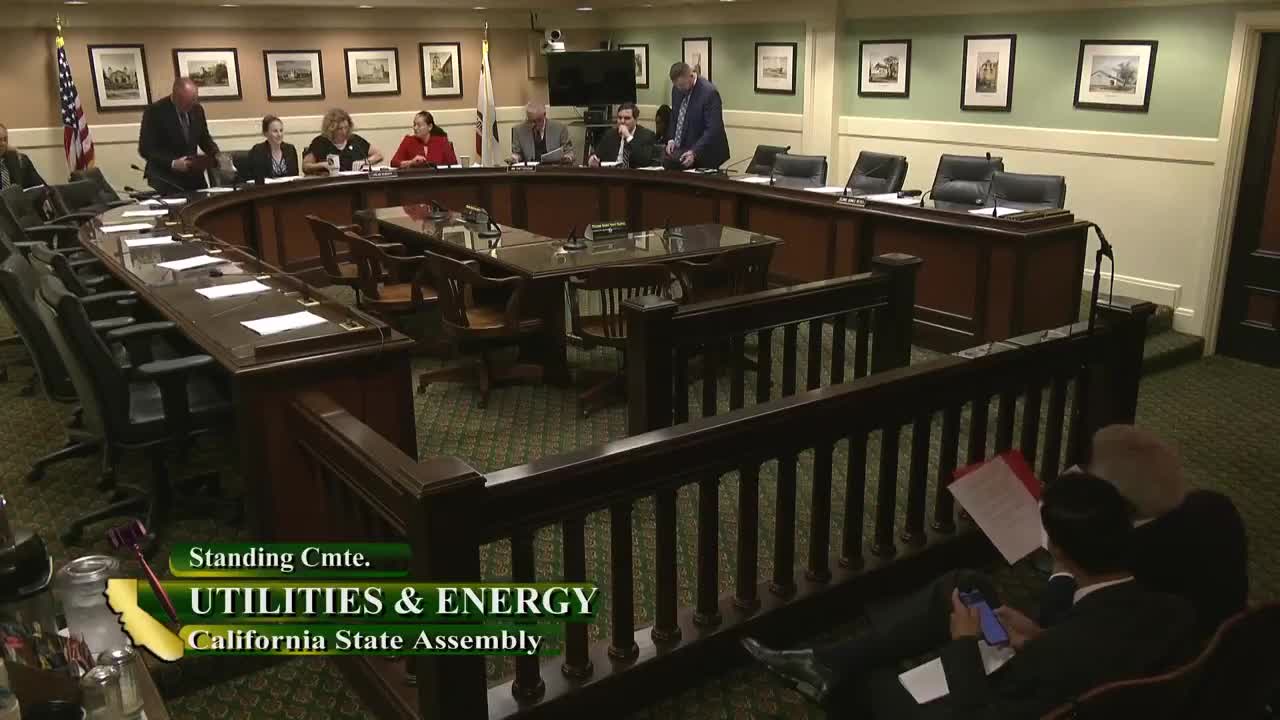
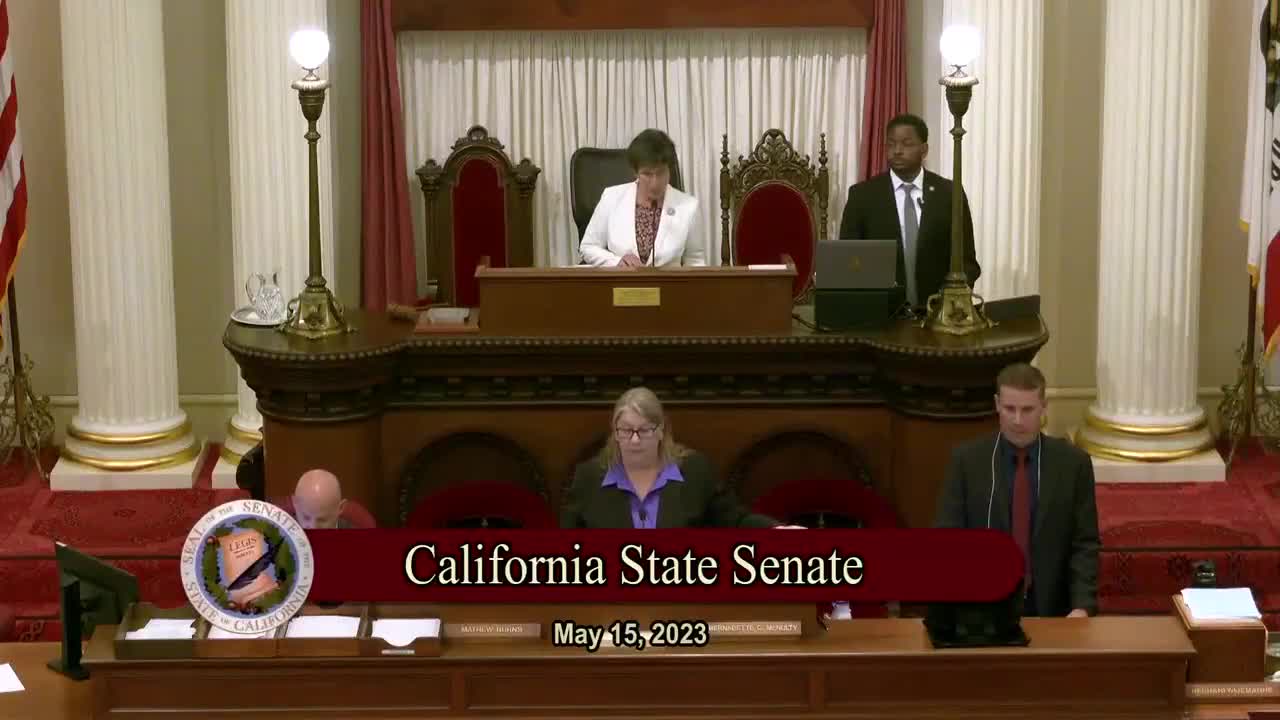
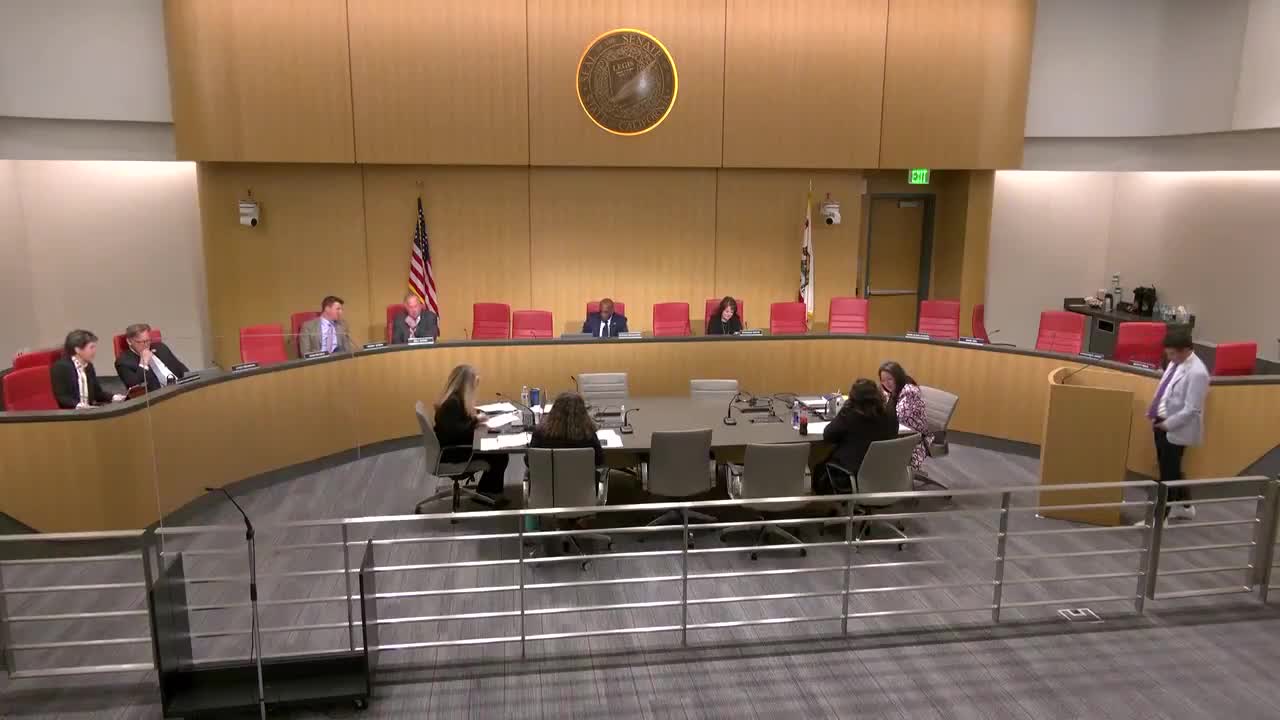
Discussed in Hearing
 5MIN
Assembly Standing Committee on Utilities and Energy
 1MIN
Senate Floor
 8MIN
Senate Standing Committee on Energy, Utilities and Communications
Bill Author

Bill Co-Author(s):