SB 936: Department of Transportation: study: state highway system: road safety projects.
- Session Year: 2023-2024
- House: Senate
- Latest Version Date: 2024-08-30
Current Status:
Failed
(2024-09-22: In Senate. Consideration of Governor's veto pending.)
Introduced
In Committee
First Chamber
In Committee
Second Chamber
Enacted
Existing law establishes the Department of Transportation and vests it with full possession and control of the state highway system.
This bill would require the department to conduct a study to identify certain locations in the state highway system with regard to vehicle collisions, projects that could improve road safety at each of those locations, and common factors, if any, contributing to the delay in the delivery of those projects. The bill would require the department to post the study on its internet website on or before January 1, 2026.
Existing law establishes the Office of Planning and Research (OPR) in the Governors office for the purpose of serving the Governor and the Governors cabinet as staff for long-range planning and research and constituting the comprehensive state planning agency. Existing law establishes the Department of Transportation and vests it with full possession and control of the state highway system.
This bill would require OPR, in coordination with the Department of Transportation, the department to conduct a study to identify certain locations in the state highway system with regard to vehicle collisions, projects that could improve road safety at each of those locations, and common factors, if any, contributing to the delay in the delivery of those projects. The bill would require OPR the department to post the study on its internet website on or before January 1, 2026.
Existing law establishes the Office of Planning and Research (OPR) in the Governors office for the purpose of serving the Governor and the Governors cabinet as staff for long-range planning and research and constituting the comprehensive state planning agency. Existing law establishes the Department of Transportation and vests it with full possession and control of the state highway system.
This bill would require OPR, in coordination with the Department of Transportation, to conduct a study to identify certain locations in the state highway system with regard to vehicle collisions and crash exposure, collisions, projects that could improve road safety at each of those locations, and common factors, if any, contributing to the delay in the delivery of those projects. The bill would require OPR to post the study on its internet website on or before January 1, 2026.
Existing law establishes the Office of Planning and Research (OPR) in the Governors office for the purpose of serving the Governor and the Governors cabinet as staff for long-range planning and research and constituting the comprehensive state planning agency. The California Environmental Quality Act (CEQA) requires OPR to prepare and develop proposed guidelines for the implementation of CEQA by public agencies. Existing law establishes the Department of Transportation and vests it with full possession and control of the state highway system.
This bill would require OPR, in coordination with the Department of Transportation, to conduct a study to identify certain locations in the state highway system with regard to vehicle collisions and crash exposure, projects that could improve road safety at each of those locations, and common factors, if any, contributing to the delay in the delivery of those projects. The bill would require the study to also identify the most common types of road safety projects across the state and the type of review typically required under CEQA for those projects. The bill would require OPR to post the study on its internet website on or before January 1, 2026.
Existing law establishes the Office of Planning and Research (OPR) in the Governors office for the purpose of serving the Governor and the Governors cabinet as staff for long-range planning and research and constituting the comprehensive state planning agency. The California Environmental Quality Act (CEQA) requires OPR to prepare and develop proposed guidelines for the implementation of CEQA by public agencies.
This bill would require OPR, in coordination with the Department of Transportation, to conduct a study to identify (1) the top 15 certain locations in the state highway system with the highest rate of vehicle collisions during each calendar year within a range of calendar years selected by OPR for purposes of the study, and (2) regard to vehicle collisions and crash exposure, projects that could improve road safety at each of those locations. locations, and common factors, if any, contributing to the delay in the delivery of those projects. The bill would require the study to also identify the most common types of road safety projects across the state and the type of review typically required under CEQA for those projects. The bill would require OPR to post the study on its internet website on or before January 1, 2026.
Existing law establishes the Office of Planning and Research (OPR) in the Governors office for the purpose of serving the Governor and the Governors cabinet as staff for long-range planning and research and constituting the comprehensive state planning agency. The California Environmental Quality Act (CEQA) requires OPR to prepare and develop proposed guidelines for the implementation of CEQA by public agencies.
This bill would require OPR, in coordination with the Department of Transportation, to conduct a study to identify (1) the top 15 locations in the state highway system with the highest rate of vehicle collisions during each calendar year within a range of calendar years selected by OPR for purposes of the study, and (2) projects that could improve road safety at each of those locations. The bill would require the study to also identify the most common types of road safety projects across the state and the type of review typically required under CEQA for those projects. The bill would require OPR to post the study on its internet website on or before January 1, 2026.
The California Environmental Quality Act (CEQA) requires a lead agency, as defined, to prepare, or cause to be prepared, and certify the completion of an environmental impact report on a project that it proposes to carry out or approve that may have a significant effect on the environment or to adopt a negative declaration if it finds that the project will not have that effect. CEQA also requires a lead agency to prepare a mitigated negative declaration for a project that may have a significant effect on the environment if revisions in the project would avoid or mitigate that effect and there is no substantial evidence that the project, as revised, would have a significant effect on the environment. This bill would exempt from CEQA activities or projects undertaken by the Department of Transportation for road and safety improvements at any of the 15 locations in the state highway system with the highest rates of vehicle collisions at any given time, as determined in accordance with data collected by the department.The California Environmental Quality Act (CEQA) requires a lead agency, as defined, to prepare, or cause to be prepared, and certify the completion of an environmental impact report on a project that it proposes to carry out or approve that may have a significant effect on the environment or to adopt a negative declaration if it finds that the project will not have that effect. CEQA also requires a lead agency to prepare a mitigated negative declaration for a project that may have a significant effect on the environment if revisions in the project would avoid or mitigate that effect and there is no substantial evidence that the project, as revised, would have a significant effect on the environment.
This bill would exempt from CEQA activities or projects undertaken by the Department of Transportation for road and safety improvements at any of the 15 locations in the state highway system with the highest rates of vehicle collisions at any given time, as determined in accordance with data collected by the department.
Existing law establishes the Department of Transportation and vests the department with full possession and control of all state highways and all property and rights in property acquired for state highway purposes. Existing law requires the department to improve and maintain the state highways. This bill would require the department to use available collision data when considering projects or improvements on the state highway system.Existing law creates the Road Maintenance and Rehabilitation Program to address deferred maintenance on the state highway system and the local street and road system and requires funds made available by the program to be prioritized for expenditure on basic road maintenance and road rehabilitation projects, and on critical safety projects. Existing law requires a specified portion of the funds available for the program to be allocated to the Department of Transportation for maintenance of the state highway system or for purposes of the State Highway Operation and Protection Program.This bill would require those funds made available to the department to be prioritized for expenditure on basic road maintenance and road rehabilitation projects, and on critical safety projects, at locations on the state highway system with the highest rate of vehicle collisions according to data collected by the department.Existing law establishes the Department of Transportation and vests the department with full possession and control of all state highways and all property and rights in property acquired for state highway purposes. Existing law requires the department to improve and maintain the state highways.
This bill would require the department to use available collision data when considering projects or improvements on the state highway system.
Existing law creates the Road Maintenance and Rehabilitation Program to address deferred maintenance on the state highway system and the local street and road system and requires funds made available by the program to be prioritized for expenditure on basic road maintenance and road rehabilitation projects, and on critical safety projects. Existing law requires a specified portion of the funds available for the program to be allocated to the Department of Transportation for maintenance of the state highway system or for purposes of the State Highway Operation and Protection Program.
This bill would require those funds made available to the department to be prioritized for expenditure on basic road maintenance and road rehabilitation projects, and on critical safety projects, at locations on the state highway system with the highest rate of vehicle collisions according to data collected by the department.
(a)The department shall conduct a study to identify all of the following:
(1)The top 15 locations in the state highway system with the highest rate of vehicle collisions during each calendar year within a range of calendar years selected by the department for purposes of the study.
(2)Projects that could improve road safety at each of the locations identified pursuant to paragraph (1).
(3)Common factors, if any, contributing to the delay in the delivery of the projects identified pursuant to paragraph (2).
(b)On or before January 1, 2026, the department shall post the study conducted pursuant to subdivision (a) on its internet website.
(a)The office, in coordination with the Department of Transportation, department shall conduct a study to identify all of the following:
(1)The top 15 locations in the state highway system with the highest rate of vehicle collisions during each calendar year within a range of calendar years selected by the office department for purposes of the study.
(2)Projects that could improve road safety at each of the locations identified pursuant to paragraph (1).
(3)Common factors, if any, contributing to the delay in the delivery of the projects identified pursuant to paragraph (2).
(b)On or before January 1, 2026, the office department shall post the study conducted pursuant to subdivision (a) on its internet website.
(a)The office, in coordination with the Department of Transportation, shall conduct a study to identify all of the following:
(1)The top 15 locations in the state highway system with the highest rate of vehicle collisions during each calendar year within a range of calendar years selected by the office for purposes of the study.
(2)The top 15 locations in the state highway system with the highest levels of crash exposure as calculated using the departments Transportation Equity Index during each calendar year within a range of calendar years selected by the office for purposes of the study.(3)(2)Projects that could improve road safety at each of the locations identified pursuant to paragraphs (1) and (2). paragraph (1).
(4)(3)Common factors, if any, contributing to the delay in the delivery of the projects identified pursuant to paragraph (3). (2).
(b)On or before January 1, 2026, the office shall post the study conducted pursuant to subdivision (a) on its internet website.
(a)The Office of Planning and Research, office, in coordination with the Department of Transportation, shall conduct a study to identify all of the following:
(1)The most common types of road safety projects across the state and the type of review typically required under this division for those road safety projects.(2)(1)The top 15 locations in the state highway system with the highest rate of vehicle collisions during each calendar year within a range of calendar years selected by the office for purposes of the study.
(3)(2)The top 15 locations in the state highway system with the highest levels of crash exposure as calculated using the departments Transportation Equity Index during each calendar year within a range of calendar years selected by the office for purposes of the study.
(4)(3)Projects that could improve road safety at each of the locations identified pursuant to paragraphs (2) and (3). (1) and (2).
(5)(4)Common factors, if any, contributing to the delay in the delivery of the projects identified pursuant to paragraph (4). (3).
(b)On or before January 1, 2026, the office shall post the study conducted pursuant to subdivision (a) on its internet website.
(a)The Office of Planning and Research, in coordination with the Department of Transportation, shall conduct a study to identify all of the following:
(1)The most common types of road safety projects across the state and the type of review typically required under this division for those road safety projects.
(2)The top 15 locations in the state highway system with the highest rate of vehicle collisions during each calendar year within a range of calendar years selected by the office for purposes of the study.
(3)The top 15 locations in the state highway system with the highest levels of crash exposure as calculated using the departments Transportation Equity Index during each calendar year within a range of calendar years selected by the office for purposes of the study.
(3)(4)Projects that could improve road safety at each of the locations identified pursuant to paragraph (2). paragraphs (2) and (3).
(5)Common factors, if any, contributing to the delay in the delivery of the projects identified pursuant to paragraph (4).
(b)On or before January 1, 2026, the office shall post the study conducted pursuant to subdivision (a) on its internet website.
(a)The Office of Planning and Research, in coordination with the Department of Transportation, shall conduct a study to identify all of the following:
(1)The most common types of road safety projects across the state and the type of review typically required under this division for those road safety projects.
(2)The top 15 locations in the state highway system with the highest rate of vehicle collisions during each calendar year within a range of calendar years selected by the office for purposes of the study.
(3)Projects that could improve road safety at each of the locations identified pursuant to paragraph (2).
(b)On or before January 1, 2026, the office shall post the study conducted pursuant to subdivision (a) on its internet website.
SECTION 1.Section 21080.38 is added to the Public Resources Code, to read:21080.38.This division does not apply to activities or projects undertaken by the Department of Transportation for road and safety improvements at any of the 15 locations in the state highway system with the highest rates of vehicle collisions at any given time, as determined in accordance with data collected by the Department of Transportation.This division does not apply to activities or projects undertaken by the Department of Transportation for road and safety improvements at any of the 15 locations in the state highway system with the highest rates of vehicle collisions at any given time, as determined in accordance with data collected by the Department of Transportation.
SECTION 1.Section 91.7 is added to the Streets and Highways Code, to read:91.7.The department shall use available collision data when considering projects or improvements on the state highway system.SEC. 2.Section 2030 of the Streets and Highways Code is amended to read:2030.(a)(1)The Road Maintenance and Rehabilitation Program is hereby created to address deferred maintenance on the state highway system and the local street and road system.(2)Except as provided in paragraph (3), funds made available by the program shall be prioritized for expenditure on basic road maintenance and road rehabilitation projects, and on critical safety projects.(3)Funds made available to the department pursuant to paragraph (1) of subdivision (h) of Section 2032 shall be prioritized for expenditure on basic road maintenance and road rehabilitation projects, and on critical safety projects, at locations on the state highway system with the highest rate of vehicle collisions according to data collected by the department.(b)(1)Funds made available by the program shall be used for projects that include, but are not limited to, the following:(A)Road maintenance and rehabilitation.(B)Safety projects.(C)Railroad grade separations.(D)Complete street components, including active transportation purposes, pedestrian and bicycle safety projects, transit facilities, and drainage and stormwater capture projects in conjunction with any other allowable project.(E)Traffic control devices.(2)Funds made available by the program may also be used to satisfy a match requirement in order to obtain state or federal funds for projects authorized by this subdivision.(c)To the extent possible and cost effective, and where feasible, the department and cities and counties receiving funds under the program shall use advanced technologies and material recycling techniques that reduce the cost of maintaining and rehabilitating the streets and highways, and that exhibit reduced levels of greenhouse gas emissions through material choice and construction method.(d)To the extent possible and cost effective, and where feasible, the department and cities and counties receiving funds under the program shall use advanced technologies and communications systems in transportation infrastructure that recognize and accommodate advanced automotive technologies that may include, but are not necessarily limited to, charging or fueling opportunities for zero-emission vehicles, and provision of infrastructure-to-vehicle communications for transitional or full autonomous vehicle systems.(e)To the extent deemed cost effective, and where feasible, in the context of both the project scope and the risk level for the asset due to global climate change, the department and cities and counties receiving funds under the program shall include features in the projects funded by the program to better adapt the asset to withstand the negative effects of climate change and make the asset more resilient to impacts such as fires, floods, and sea level rise.(f)To the extent beneficial, cost effective, and practicable in the context of facility type, right-of-way, project scope, and quality of nearby alternative facilities, and where feasible, the department and cities and counties receiving funds under the program shall incorporate complete street elements into projects funded by the program, including, but not limited to, elements that improve the quality of bicycle and pedestrian facilities and that improve safety for all users of transportation facilities.(g)For purposes of funds directed to the State Highway Operation and Protection Program, the guidelines and reporting provisions shall be consistent with Section 14526.5 of the Government Code.(h)Guidelines adopted by the commission to facilitate the allocation of funds in the Road Maintenance and Rehabilitation Account shall be exempt from the Administrative Procedure Act (Chapter 3.5 (commencing with Section 11340) of Part 1 of Division 3 of Title 2 of the Government Code).The department shall use available collision data when considering projects or improvements on the state highway system.
SEC. 2.Section 2030 of the Streets and Highways Code is amended to read:2030.(a)(1)The Road Maintenance and Rehabilitation Program is hereby created to address deferred maintenance on the state highway system and the local street and road system. Funds
(2)Except as provided in paragraph (3), funds made available by the program shall be prioritized for expenditure on basic road maintenance and road rehabilitation projects, and on critical safety projects.
(3)Funds made available to the department pursuant to paragraph (1) of subdivision (h) of Section 2032 shall be prioritized for expenditure on basic road maintenance and road rehabilitation projects, and on critical safety projects, at locations on the state highway system with the highest rate of vehicle collisions according to data collected by the department.
(b)(1)Funds made available by the program shall be used for projects that include, but are not limited to, the following:
(A)Road maintenance and rehabilitation.
(B)Safety projects.
(C)Railroad grade separations.
(D)Complete street components, including active transportation purposes, pedestrian and bicycle safety projects, transit facilities, and drainage and stormwater capture projects in conjunction with any other allowable project.
(E)Traffic control devices.
(2)Funds made available by the program may also be used to satisfy a match requirement in order to obtain state or federal funds for projects authorized by this subdivision.
(c)To the extent possible and cost effective, and where feasible, the department and cities and counties receiving funds under the program shall use advanced technologies and material recycling techniques that reduce the cost of maintaining and rehabilitating the streets and highways, and that exhibit reduced levels of greenhouse gas emissions through material choice and construction method.
(d)To the extent possible and cost effective, and where feasible, the department and cities and counties receiving funds under the program shall use advanced technologies and communications systems in transportation infrastructure that recognize and accommodate advanced automotive technologies that may include, but are not necessarily limited to, charging or fueling opportunities for zero-emission vehicles, and provision of infrastructure-to-vehicle communications for transitional or full autonomous vehicle systems.
(e)To the extent deemed cost effective, and where feasible, in the context of both the project scope and the risk level for the asset due to global climate change, the department and cities and counties receiving funds under the program shall include features in the projects funded by the program to better adapt the asset to withstand the negative effects of climate change and make the asset more resilient to impacts such as fires, floods, and sea level rise.
(f)To the extent beneficial, cost effective, and practicable in the context of facility type, right-of-way, project scope, and quality of nearby alternative facilities, and where feasible, the department and cities and counties receiving funds under the program shall incorporate complete street elements into projects funded by the program, including, but not limited to, elements that improve the quality of bicycle and pedestrian facilities and that improve safety for all users of transportation facilities.
(g)For purposes of funds directed to the State Highway Operation and Protection Program, the guidelines and reporting provisions shall be consistent with Section 14526.5 of the Government Code.
(h)Guidelines adopted by the commission to facilitate the allocation of funds in the account Road Maintenance and Rehabilitation Account shall be exempt from the Administrative Procedure Act (Chapter 3.5 (commencing with Section 11340) of Part 1 of Division 3 of Title 2 of the Government Code).
|
Date
|
Status
|
|---|---|
| Sep 22, 2024 | In Senate. Consideration of Governor's veto pending. |
| Sep 22, 2024 | Vetoed by the Governor. |
| Sep 4, 2024 | Enrolled and presented to the Governor at 4 p.m. |
| Aug 28, 2024 | Assembly amendments concurred in. (Ayes 39. Noes 0. Page 5603.) Ordered to engrossing and enrolling. |
| Aug 26, 2024 | In Senate. Concurrence in Assembly amendments pending. |
| Aug 26, 2024 | Read third time. Passed. (Ayes 76. Noes 0. Page 6548.) Ordered to the Senate. |
| Aug 20, 2024 | Read second time. Ordered to third reading. |
| Aug 19, 2024 | Read second time and amended. Ordered to second reading. |
| Aug 15, 2024 | From committee: Do pass as amended. (Ayes 11. Noes 0.) (August 15). |
| Aug 7, 2024 | August 7 set for first hearing. Placed on suspense file. |
| Jul 2, 2024 | From committee: Do pass and re-refer to Com. on APPR. with recommendation: To consent calendar. (Ayes 15. Noes 0.) (July 1). Re-referred to Com. on APPR. |
| Jun 20, 2024 | From committee with author's amendments. Read second time and amended. Re-referred to Com. on TRANS. |
| Jun 11, 2024 | June 17 set for first hearing canceled at the request of author. |
| Jun 3, 2024 | Referred to Com. on TRANS. |
| May 24, 2024 | In Assembly. Read first time. Held at Desk. |
| May 23, 2024 | Read third time. Passed. (Ayes 36. Noes 0. Page 4186.) Ordered to the Assembly. |
| May 21, 2024 | Read second time. Ordered to third reading. |
| May 20, 2024 | Read second time and amended. Ordered to second reading. |
| May 20, 2024 | From committee: Do pass as amended. (Ayes 7. Noes 0. Page 3964.) (May 16). |
| May 14, 2024 | Set for hearing May 16. |
| May 13, 2024 | May 13 hearing: Placed on APPR suspense file. |
| May 3, 2024 | Set for hearing May 13. |
| Apr 25, 2024 | Read second time and amended. Re-referred to Com. on APPR. |
| Apr 24, 2024 | From committee: Do pass as amended and re-refer to Com. on APPR. (Ayes 14. Noes 1. Page 3731.) (April 23). |
| Apr 18, 2024 | Read second time and amended. Re-referred to Com. on TRANS. |
| Apr 17, 2024 | From committee: Do pass as amended and re-refer to Com. on TRANS. (Ayes 7. Noes 0. Page 3660.) (April 17). |
| Apr 16, 2024 | Set for hearing April 23 in TRANS. pending receipt. |
| Mar 15, 2024 | Set for hearing April 17. |
| Mar 14, 2024 | April 3 set for first hearing canceled at the request of author. |
| Mar 8, 2024 | Set for hearing April 3. |
| Feb 29, 2024 | Re-referred to Coms. on E.Q. and TRANS. |
| Feb 20, 2024 | From committee with author's amendments. Read second time and amended. Re-referred to Com. on RLS. |
| Feb 14, 2024 | Referred to Com. on RLS. |
| Jan 18, 2024 | From printer. May be acted upon on or after February 17. |
| Jan 17, 2024 | Introduced. Read first time. To Com. on RLS. for assignment. To print. |
|
Date
|
Description
|
Location
|
Votes
|
|
|---|---|---|---|---|
| Aug 28, 2024 | Unfinished Business SB936 Seyarto et al. Concurrence | Senate Floor |
Passed |
|
| Aug 26, 2024 | SB 936 Seyarto Senate Third Reading By Lackey | Assembly Floor |
Passed |
|
| Aug 15, 2024 | Do pass as amended. | Assembly Standing Committee on Appropriations |
Passed |
|
| Jul 1, 2024 | Do pass and be re-referred to the Committee on [Appropriations] with recommendation: To Consent Calendar | Assembly Standing Committee on Transportation |
Passed |
|
| May 23, 2024 | Senate 3rd Reading SB936 Seyarto et al. | Senate Floor |
Passed |
|
| May 16, 2024 | Do pass as amended | Senate Standing Committee on Appropriations |
Passed |
|
| May 13, 2024 | Placed on suspense file | Senate Standing Committee on Appropriations |
Passed |
|
| Apr 23, 2024 | Do pass as amended, but first amend, and re-refer to the Committee on [Appropriations] | Senate Standing Committee on Transportation |
Passed |
|
| Apr 17, 2024 | Do pass as amended, but first amend, and re-refer to the Committee on [Transportation] | Senate Standing Committee on Environmental Quality |
Passed |
This list shows positions taken on this bill by organizations on the date displayed, which is linked to the original source.
Positions by individuals are not included.
|
Organization
|
Position
|
Date
|
|---|---|---|
| Associated General Contractors Of California | ** Support | |
| Associated General Contractors-San Diego Chapter | ** Support | |
| California Building Industry Association | ** Support | |
| California Environmental Voters | ** Against | |
| California Trucking Association | ** Support | |
| Center For Biological Diversity | ** Against | |
| Center on Race, Poverty & the Environment | ** Against | |
| Chino Valley Chamber of Commerce | ** Support | |
| Greater Coachella Valley Chamber of Commerce | ** Support | |
| Planning And Conservation League | ** Against | |
| Streets for All | ** Support |
SENATE RULES COMMITTEE Office of Senate Floor Analyses (916) 651-1520 Fax: (916) 327-4478 | SB 936 |
VETO
Bill No: SB 936
Author: Seyarto (R), et al.
Enrolled: 8/30/24
Vote: 27
SENATE ENVIRONMENTAL QUALITY COMMITTEE: 7-0, 4/17/24
AYES: Allen, Dahle, Archuleta, Gonzalez, Menjivar, Nguyen, Skinner
SENATE TRANSPORTATION COMMITTEE: 14-1, 4/23/24
AYES: Cortese, Niello, Allen, Archuleta, Blakespear, Dahle, Dodd, Gonzalez, Limón, Newman, Nguyen, Portantino, Seyarto, Umberg
NOES: Laird
SENATE APPROPRIATIONS COMMITTEE: 7-0, 5/16/24
AYES: Caballero, Jones, Ashby, Becker, Bradford, Seyarto, Wahab
SENATE FLOOR: 36-0, 5/23/24
AYES: Alvarado-Gil, Ashby, Atkins, Becker, Blakespear, Bradford, Caballero, Cortese, Dahle, Durazo, Eggman, Glazer, Gonzalez, Grove, Hurtado, Jones, Laird, Limón, McGuire, Menjivar, Min, Nguyen, Niello, Ochoa Bogh, Padilla, Portantino, Roth, Rubio, Seyarto, Skinner, Smallwood-Cuevas, Stern, Umberg, Wahab, Wiener, Wilk
NO VOTE RECORDED: Allen, Archuleta, Dodd, Newman
SENATE FLOOR: 39-0, 8/28/24
AYES: Allen, Archuleta, Ashby, Atkins, Becker, Blakespear, Bradford, Caballero, Cortese, Dahle, Dodd, Durazo, Eggman, Glazer, Gonzalez, Grove, Hurtado, Jones, Laird, Limón, McGuire, Menjivar, Min, Newman, Nguyen, Niello, Ochoa Bogh, Padilla, Portantino, Roth, Rubio, Seyarto, Skinner, Smallwood-Cuevas, Stern, Umberg, Wahab, Wiener, Wilk
NO VOTE RECORDED: Alvarado-Gil
ASSEMBLY FLOOR: 76-0, 8/26/24 - See last page for vote
SUBJECT: Department of Transportation: study: state highway system: road safety projects
SOURCE: Author
DIGEST:
This bill requires the California Department of Transportation (Caltrans), to study and post it on its website by January 1, 2026, the 15 locations in the state highway system with the highest rate of vehicle collisions and to identify projects that could improve road safety at those locations.
ANALYSIS:
Existing law:
- Assigns Caltrans the responsibility of operating and maintaining state highways. (Streets and Highway Code Section 91)
- Establishes the California Traffic Safety Program (OTS), which consists of a comprehensive plan in conformity with the laws of this state to reduce traffic accidents and deaths, injuries, and property damage resulting from accidents. (Vehicle Code Section (VEH) 2900)
- Requires OTS to provide a detailed presentation and a statement concerning the progress made in implementing the program and recommendations concerning possible legislative action deemed necessary or desirable to implement the program. (VEH 2905)
- Establishes the Office of Planning and Research to serve the Governor and the Governor’s Cabinet as staff for long-range planning and research, and constitute the comprehensive state planning agency. (Government Code Section 65040)
This bill requires the California Department of Transportation (Caltrans), to study and post it on its website by January 1, 2026, the 15 locations in the state highway system with the highest rate of vehicle collisions and to identify projects that could improve road safety at those locations.
Background
- Road safety in California. According to OTS, California continues to experience a road safety crisis. Projections from the National Highway Traffic Safety Administration (NHSTA) estimate more than 4,400 people were killed in motor vehicle crashes throughout California in 2022, or about 12 people every day. Early data from NHSTA for 2023 and 2024 estimates a year-over-year 5% increase in traffic fatalities. Across the state, traffic fatalities increased approximately 7.6% from 3,980 in 2020 to 4,285 in 2021. The increase in traffic fatalities in recent years led to the creation of the Vision Zero Network—a collaborative campaign with the goal of eliminating all traffic fatalities and severe injuries while increasing safe, healthy, and equitable mobility for all. Today, more than 40 communities (including at least 13 in California) across the country have joined the Vision Zero Network.
- Safety is the priority. The Legislature enacted in 1967 the California Traffic Safety Program, what is now OTS, to provide authority for the State to implement the requirements of national legislation. Each year OTS develops a Highway Safety Plan (HSP) to reflect current needs as well as detailing the planned use of federal funds. The HSP identifies problems, specific performance measures, proposed solutions, time frames and fiscal information on continuing and planned new grants that are designed to mitigate traffic safety problems. The OTS has identified ten priority areas of concentration for grant funding; alcohol-impaired driving, distracted driving, drug-impaired driving, occupant protection, pedestrian and bicycle safety, traffic records and roadway safety, emergency medical services, police traffic services, motorcycle safety, and public awareness and education. Additionally, OTS maintains online crash rankings for local streets and state highways within city limits so that cities can compare traffic safety statistics. These comparisons enable cities and OTS to identify emerging or ongoing traffic safety problem areas in order to help plan how to combat the problems and to facilitate grant awards. The Statewide Traffic Records System (SWITRS) provides crash data, the Department of Finance develops population estimates, and Caltrans provides daily vehicle miles traveled (DVMT).
Last year, OTS started the “Go Safely Movement,” a call to action to raise awareness about the road safety crisis and to establish a strong road safety culture. More than 2,000 California residents filled out a community survey on their perceived traffic safety concerns and actions needed to make roads safer in their community that will help inform highway safety planning. The survey also called upon residents to sign up as a “traffic safety champion” and commit to being more engaged in traffic safety for their families and community. In 2022, Caltrans issued a Director’s Policy on Road Safety (DP-36) that committed the department to a Safe System approach and reaffirmed the vision of reaching zero fatalities and serious injuries on state highways by 2050. Under the Safe System approach, Caltrans focuses on five elements: safe road users, safe roads, safe speeds, safe vehicles, and post-crash care. As part of the policy, Caltrans committed to prioritizing safety in highway planning, operation, construction, and maintenance, focusing on eliminating the most serious crashes rather than all crashes, and eliminating disparities in road safety outcomes. Last year Caltrans released their Road Safety Action Plan designed to review and track progress towards aligning Caltrans policies and practices with the Safe Systems approach. One step that was taken was to update the safety project prioritization methodology in the federally funded Highway Safety Improvement Program to better prioritize sites with the highest severity of collisions. Other goals planned to be completed by the end of this year include updating statewide planning guidelines to incorporate the Safe System Approach, developing a statewide decision-making framework for proactively identifying and prioritizing roadway safety investment, and developing trainings for project development teams on how to design safer roadways.
One key element of the Safe Systems approach is speed management to ensure that vehicles are traveling at safe speeds on the highways. One approach to reducing unsafe speeding is to improve enforcement of existing speed limits through the use of speed cameras or more traffic officers. Other approaches include traffic calming measures that encourage drivers to maintain a safer speed such as vehicle speed feedback signs, road markings that create the impression of reducing spacing on the road to encourage slower speeds, improved crosswalks and pedestrian signage, roundabouts, intersection barriers, road diets, curb bulbous, and speed humps. Caltrans’ guide on traffic calming states that traffic calming strategies should be given increased consideration along safety corridors or roadway segments with a high percentage of speed-related collisions.
- Delays in road infrastructure. The process to improve the State Highway System is forward-looking, but also protracted. Caltrans produces the Transportation Asset Management Plan (TAMP) every two years to assess the state of the physical assets on the national and state highway systems. Caltrans uses this information, along with information from its policy documents to create the State Highways System Management (SHSMP) plan, which is an operational plan that includes all major physical assets and deficiencies on the state highway system. The targets set in that plan then are used to establish the set of projects in the State Highway Operation and Protection Program (SHOPP), which is the state’s “fix-it-first” program that funs the repair, preservation, and safety improvements on the state highway system. As such, the SHOPP and the projects Caltrans will be working on for the next four years are based on the SHSMP from five years prior. Therefore, policy changes, like implementation of the Safe System approach, can take a long time to have an impact.
Comments
Purpose of the bill. According to the author, “In California, thousands of people lose their lives or suffer lifechanging injuries in automobile collisions. In 2023, pedestrian deaths increased to their highest level in 41 years in California. A 2022 study from the National Highway Traffic Safety Administration (NHTSA) found disparities in the risk of travel for low-income communities and communities of color. From rural areas to urban cities, California streets are getting more dangerous for pedestrians and drivers alike. The scattered safety improvements across the state are only a temporary fix, ultimately increasing the burden and expense of road improvements, maintenance, and development in the long run. SB-936 will identify the top 15 locations in the state highway system with the highest rates of vehicle collisions while assisting the legislature in understanding common delays in prioritizing road safety improvements.”
FISCAL EFFECT: Appropriation: No Fiscal Com.: Yes Local: No
Unknown fiscal effects.
SUPPORT: (Verified 10/7/24)
Associated General Contractors of California
Associated General Contractors-san Diego Chapter
Streets for All
OPPOSITION: (Verified 10/7/24)
None received
GOVERNOR'S VETO MESSAGE:
“This bill would require the California Department of Transportation (Caltrans) to complete a study identifying the 15 locations on the state highway system with the highest rates of vehicle collisions and to propose projects to improve road safety at each of these locations by January l, 2026.
Caltrans is already implementing various initiatives to prioritize road safety improvements, including its Safe System Approach. This innovative approach aims to reduce fatal and serious injuries for all road users by taking a comprehensive view of safety, focusing on multiple layers of protection, from building safer roads to post-crash care. While I support efforts to expedite traffic safety enhancements, this bill conflicts with Caltrans' data-driven approach to identifying and developing a holistic traffic safety framework for its projects. Prioritizing locations based solely on overall collision rates, without considering crash severity and other associated collision factors, may fail to address the areas of greatest safety concern.
Existing safety planning efforts that proactively identify and implement safety projects, such as the California Strategic Highway Safety Plan, can already effectively achieve the goals that this bill seeks to accomplish. I encourage the Legislature to partner with Caltrans to advance the implementation of these efforts.”
ASSEMBLY FLOOR: 76-0, 8/26/24
AYES: Addis, Aguiar-Curry, Alanis, Alvarez, Arambula, Bains, Bauer-Kahan, Bennett, Berman, Boerner, Bonta, Bryan, Calderon, Juan Carrillo, Wendy Carrillo, Connolly, Megan Dahle, Davies, Dixon, Essayli, Flora, Mike Fong, Friedman, Gabriel, Gallagher, Garcia, Gipson, Grayson, Haney, Hart, Holden, Hoover, Irwin, Jackson, Jones-Sawyer, Kalra, Lackey, Lee, Low, Lowenthal, Maienschein, Mathis, McCarty, McKinnor, Muratsuchi, Stephanie Nguyen, Pacheco, Papan, Jim Patterson, Joe Patterson, Pellerin, Petrie-Norris, Quirk-Silva, Ramos, Rendon, Reyes, Luz Rivas, Rodriguez, Blanca Rubio, Sanchez, Santiago, Schiavo, Soria, Ta, Ting, Valencia, Villapudua, Waldron, Wallis, Ward, Weber, Wicks, Wilson, Wood, Zbur, Robert Rivas
NO VOTE RECORDED: Cervantes, Chen, Ortega
Prepared by: Brynn Cook / E.Q. / (916) 651-4108
10/9/24 9:34:33
**** END ****
SENATE RULES COMMITTEE Office of Senate Floor Analyses (916) 651-1520 Fax: (916) 327-4478 | SB 936 |
UNFINISHED BUSINESS
Bill No: SB 936
Author: Seyarto (R), et al.
Amended: 8/19/24
Vote: 21
SENATE ENVIRONMENTAL QUALITY COMMITTEE: 7-0, 4/17/24
AYES: Allen, Dahle, Archuleta, Gonzalez, Menjivar, Nguyen, Skinner
SENATE TRANSPORTATION COMMITTEE: 14-1, 4/23/24
AYES: Cortese, Niello, Allen, Archuleta, Blakespear, Dahle, Dodd, Gonzalez, Limón, Newman, Nguyen, Portantino, Seyarto, Umberg
NOES: Laird
SENATE APPROPRIATIONS COMMITTEE: 7-0, 5/16/24
AYES: Caballero, Jones, Ashby, Becker, Bradford, Seyarto, Wahab
SENATE FLOOR: 36-0, 5/23/24
AYES: Alvarado-Gil, Ashby, Atkins, Becker, Blakespear, Bradford, Caballero, Cortese, Dahle, Durazo, Eggman, Glazer, Gonzalez, Grove, Hurtado, Jones, Laird, Limón, McGuire, Menjivar, Min, Nguyen, Niello, Ochoa Bogh, Padilla, Portantino, Roth, Rubio, Seyarto, Skinner, Smallwood-Cuevas, Stern, Umberg, Wahab, Wiener, Wilk
NO VOTE RECORDED: Allen, Archuleta, Dodd, Newman
ASSEMBLY FLOOR: 76-0, 8/26/24 - See last page for vote
SUBJECT: Department of Transportation: study: state highway system: road safety projects
SOURCE: Author
DIGEST:
This bill requires the California Department of Transportation (Caltrans), to study and post it on its website by January 1, 2026, the 15 locations in the state highway system with the highest rate of vehicle collisions and to identify projects that could improve road safety at those locations.
Assembly Amendments
. Replaces OPR with Caltrans as the agency charged with conducting the study on locations with highest vehicle collisions and methods to improve road safety at those locations.
ANALYSIS:
Existing law:
- Assigns Caltrans the responsibility of operating and maintaining state highways. (Streets and Highway Code Section 91)
- Establishes the California Traffic Safety Program (OTS), which consists of a comprehensive plan in conformity with the laws of this state to reduce traffic accidents and deaths, injuries, and property damage resulting from accidents. (Vehicle Code Section (VEH) 2900)
- Requires OTS to provide a detailed presentation and a statement concerning the progress made in implementing the program and recommendations concerning possible legislative action deemed necessary or desirable to implement the program. (VEH 2905)
- Establishes OPR to serve the Governor and the Governor’s Cabinet as staff for long-range planning and research, and constitute the comprehensive state planning agency. (Government Code Section 65040)
Background
- Road safety in California. According to OTS, California continues to experience a road safety crisis. Projections from the National Highway Traffic Safety Administration (NHSTA) estimate more than 4,400 people were killed in motor vehicle crashes throughout California in 2022, or about 12 people every day. Early data from NHSTA for 2023 and 2024 estimates a year over year 5% increase in traffic fatalities. Across the state, traffic fatalities increased approximately 7.6% from 3,980 in 2020 to 4,285 in 2021. The increase of traffic fatalities in recent years led to the creation of the Vision Zero Network—a collaborative campaign with the goal of eliminating all traffic fatalities and severe injuries while increasing safe, healthy, and equitable mobility for all. Today, more than 40 communities (including at least 13 in California) across the country have joined the Vision Zero Network.
- Safety is the priority. The Legislature enacted in 1967 the California Traffic Safety Program, what is now OTS, to provide authority for the State to implement the requirements of national legislation. Each year OTS develops a Highway Safety Plan (HSP) to reflect current needs as well as detailing the planned use of federal funds. The HSP identifies problems, specific performance measures, proposed solutions, time frames and fiscal information on continuing and planned new grants which are designed to mitigate traffic safety problems. The OTS has identified ten priority areas of concentration for grant funding; alcohol-impaired driving, distracted driving, drug-impaired driving, occupant protection, pedestrian and bicycle safety, traffic records and roadway safety, emergency medical services, police traffic services, motorcycle safety, and public awareness and education. Additionally, OTS maintains online crash rankings for local streets and state highways within city limits so that cities can compare traffic safety statistics. These comparisons enable cities and OTS to identify emerging or on-going traffic safety problem areas in order to help plan how to combat the problems and to facilitate grant awards. The Statewide Traffic Records System (SWITRS) provides crash data, the Department of Finance develops population estimates, and Caltrans provides daily vehicle miles traveled (DVMT). Last year, OTS started the “Go Safely Movement,” a call to action to raise awareness about the road safety crisis and to establish a strong road safety culture. More than 2,000 California residents filled out a community survey on their perceived traffic safety concerns and actions needed to make roads safer in their community that will help inform highway safety planning. The survey also called upon residents to sign up as a “traffic safety champion” and commit to being more engaged in traffic safety for their families and community. In 2022, Caltrans issued a Director’s Policy on Road Safety (DP-36) that committed the department to a Safe System approach and reaffirmed the vision of reaching zero fatalities and serious injuries on state highways by 2050. Under the Safe System approach, Caltrans focuses on five elements: safe road users, safe roads, safe speeds, safe vehicles, and post-crash care. As part of the policy, Caltrans committed to prioritizing safety in highway planning, operation, construction, and maintenance, to focus on eliminating the most serious crashes rather than all crashes, and eliminating disparities in road safety outcomes. Last year Caltrans released their Road Safety Action Plan designed to review and track progress towards aligning Caltrans policies and practices with the Safe Systems approach. One step that was taken was to update the safety project prioritization methodology in the federally funded Highway Safety Improvement Program to better prioritize sites with the highest severity of collisions. Other goals planned to be completed by the end of this year include updating statewide planning guidelines to incorporate the Safe System Approach, developing a statewide decision-making framework for proactively identifying and prioritizing roadway safety investment, and developing trainings for project development teams on how to design safer roadways. One key element of the Safe Systems approach is speed management to ensure that vehicles are traveling at safe speeds on the highways. One approach to reduce unsafe speeding is to improve enforcement of existing speed limits through the use of speed cameras or more traffic officers. Other approaches include traffic calming measures that encourage drivers to maintain a safer speed such as vehicle speed feedback signs, road markings that create the impression of reducing spacing on the road to encourage slower speeds, improved crosswalks and pedestrian signage, roundabouts, intersection barriers, road diets, curb bulbous, and speed humps. Caltrans’ guide on traffic calming states that traffic calming strategies should be given increased consideration along safety corridors or roadway segments with a high percentage of speed-related collisions.
- Delays in road infrastructure. The process to improve the State Highway System is forward-looking, but also protracted. Caltrans produces the Transportation Asset Management Plan (TAMP) every two years to assess the state of the physical assets on the national and state highway systems. Caltrans uses this information, along with information from its policy documents to create the State Highways System Management (SHSMP) plan, which is an operational plan that includes all major physical assets and deficiencies on the state highway system. The targets set in that plan then are used to establish the set of projects in the State Highway Operation and Protection Program (SHOPP), which is the state’s “fix-it-first” program that funs the repair, preservation, and safety improvements on the state highway system. As such, the SHOPP and the projects Caltrans will be working on for the next four years are based on the SHSMP from five years prior. Therefore, policy changes, like implementation of the Safe System approach, can take a long time to have an impact.
Comments
- Purpose of the bill. According to the author, “In California, thousands of people lose their lives or suffer lifechanging injuries in automobile collisions. In 2023, pedestrian deaths increased to their highest level in 41 years in California. A 2022 study from the National Highway Traffic Safety Administration (NHTSA) found disparities in the risk of travel for low-income communities and communities of color. From rural areas to urban cities, California streets are getting more dangerous for pedestrians and drivers alike. The scattered safety improvements across the state are only a temporary fix, ultimately increasing the burden and expense on road improvements, maintenance, and development in the long run. SB-936 will identify the top 15 locations in the state highway system with the highest rates of vehicle collisions, while assisting the legislature in understanding common delays in prioritizing road safety improvements.”
FISCAL EFFECT: Appropriation: No Fiscal Com.: Yes Local: No
According to the Assembly Appropriations Committee analysis pertains to the earlier version of this bill, which had OPR, rather than Caltrans, as the agency leading the study. On this earlier version of the bill, assembly approrpations committee writes:
1) OPR reports is does not have in house the transportation engineering expertise needed to fulfill the responsibilities in this bill and, therefore, would need to contract with a third party to complete the work. OPR estimates contract costs of $500,000 in year one and $192,000 annually until completion of the study: approximately $308,000 in contracting costs and $192,000 for an in-house staff service manager to manage the contract, coordinate with Caltrans and other state partners, and oversee and provide general management of the study itself (General Fund).
2) Costs to Caltrans, equivalent to half the time of one staff position during fiscal year 2025-26, resulting in a one-time cost of approximately $125,000 (State Highway Account), to develop a methodology, coordinate data collection and analyze the data to identify top locations for crashes as well as crash potentials, and to develop a list of counter measures to be included in the final study.
SUPPORT: (Verified 8/27/24)
Associated General Contractors of California
Associated General Contractors-san Diego Chapter
Streets for All
OPPOSITION: (Verified 8/27/24)
None received
ASSEMBLY FLOOR: 76-0, 8/26/24
AYES: Addis, Aguiar-Curry, Alanis, Alvarez, Arambula, Bains, Bauer-Kahan, Bennett, Berman, Boerner, Bonta, Bryan, Calderon, Juan Carrillo, Wendy Carrillo, Connolly, Megan Dahle, Davies, Dixon, Essayli, Flora, Mike Fong, Friedman, Gabriel, Gallagher, Garcia, Gipson, Grayson, Haney, Hart, Holden, Hoover, Irwin, Jackson, Jones-Sawyer, Kalra, Lackey, Lee, Low, Lowenthal, Maienschein, Mathis, McCarty, McKinnor, Muratsuchi, Stephanie Nguyen, Pacheco, Papan, Jim Patterson, Joe Patterson, Pellerin, Petrie-Norris, Quirk-Silva, Ramos, Rendon, Reyes, Luz Rivas, Rodriguez, Blanca Rubio, Sanchez, Santiago, Schiavo, Soria, Ta, Ting, Valencia, Villapudua, Waldron, Wallis, Ward, Weber, Wicks, Wilson, Wood, Zbur, Robert Rivas
NO VOTE RECORDED: Cervantes, Chen, Ortega
Prepared by: Brynn Cook / E.Q. / (916) 651-4108
8/27/24 12:23:09
**** END ****
SENATE THIRD READING
STR Bill Id:SB 936
Author:(Seyarto)
As Amended Ver:August 19, 2024
Majority vote
SUMMARY
Requires the California Department of Transportation (Caltrans), to study and post it on its website by January 1, 2026, the 15 locations in the state highway system with the highest rate of vehicle collisions and to identify projects that could improve road safety at those locations.
COMMENTS
According to Office of Traffic Safety (OTS), California continues to experience a road safety crisis. Projections from the National Highway Traffic Safety Administration (NHSTA) estimate more than 4,400 people were killed in motor vehicle crashes throughout California in 2022, or about 12 people every day. Early data from NHSTA for 2023 and 2024 estimates a year over year 5% increase in traffic fatalities. Across the state, traffic fatalities increased approximately 7.6% from 3,980 in 2020 to 4,285 in 2021. The increase of traffic fatalities in recent years led to the creation of the Vision Zero Network—a collaborative campaign with the goal of eliminating all traffic fatalities and severe injuries while increasing safe, healthy, and equitable mobility for all. Today, more than 40 communities (including at least 13 in California) across the country have joined the Vision Zero Network.
Safety is the priority. The Legislature enacted in 1967 the California Traffic Safety Program, what is now OTS, to provide authority for the State to implement the requirements of national legislation. Each year OTS develops a Highway Safety Plan (HSP) to reflect current needs as well as detailing the planned use of federal funds. The HSP identifies problems, specific performance measures, proposed solutions, time frames and fiscal information on continuing and planned new grants which are designed to mitigate traffic safety problems.
The OTS has identified ten priority areas of concentration for grant funding; alcohol-impaired driving, distracted driving, drug-impaired driving, occupant protection, pedestrian and bicycle safety, traffic records and roadway safety, emergency medical services, police traffic services, motorcycle safety, and public awareness and education.
Additionally, OTS maintains online crash rankings for local streets and state highways within city limits so that cities can compare traffic safety statistics. These comparisons enable cities and OTS to identify emerging or on-going traffic safety problem areas in order to help plan how to combat the problems and to facilitate grant awards. The Statewide Traffic Records System (SWITRS) provides crash data, the Department of Finance develops population estimates, and Caltrans provides daily vehicle miles traveled (DVMT).
Last year, OTS started the "Go Safely Movement," a call to action to raise awareness about the road safety crisis and to establish a strong road safety culture. More than 2,000 California residents filled out a community survey on their perceived traffic safety concerns and actions needed to make roads safer in their community that will help inform highway safety planning. The survey also called upon residents to sign up as a "traffic safety champion" and commit to being more engaged in traffic safety for their families and community.
In 2022, Caltrans issued a Director's Policy on Road Safety (DP-36) that committed the department to a Safe System approach and reaffirmed the vision of reaching zero fatalities and serious injuries on state highways by 2050. Under the Safe System approach, Caltrans focuses on five elements: safe road users, safe roads, safe speeds, safe vehicles, and post-crash care. As part of the policy, Caltrans committed to prioritizing safety in highway planning, operation, construction, and maintenance, to focus on eliminating the most serious crashes rather than all crashes, and eliminating disparities in road safety outcomes.
Last year Caltrans released their Road Safety Action Plan designed to review and track progress towards aligning Caltrans policies and practices with the Safe Systems approach. One step that was taken was to update the safety project prioritization methodology in the federally funded Highway Safety Improvement Program to better prioritize sites with the highest severity of collisions. Other goals planned to be completed by the end of this year include updating statewide planning guidelines to incorporate the Safe System Approach, developing a statewide decision-making framework for proactively identifying and prioritizing roadway safety investment, and developing trainings for project development teams on how to design safer roadways.
One key element of the Safe Systems approach is speed management to ensure that vehicles are traveling at safe speeds on the highways. One approach to reduce unsafe speeding is to improve enforcement of existing speed limits through the use of speed cameras or more traffic officers. Other approaches include traffic calming measures that encourage drivers to maintain a safer speed such as vehicle speed feedback signs, road markings that create the impression of reducing spacing on the road to encourage slower speeds, improved crosswalks and pedestrian signage, roundabouts, intersection barriers, road diets, curb bulbous, and speed humps. Caltrans' guide on traffic calming states that traffic calming strategies should be given increased consideration along safety corridors or roadway segments with a high percentage of speed-related collisions.
Delays in road infrastructure. The process to improve the State Highway System is forward-looking, but also protracted. Caltrans produces the Transportation Asset Management Plan (TAMP) every two years to assess the state of the physical assets on the national and state highway systems. Caltrans uses this information, along with information from its policy documents to create the State Highways System Management (SHSMP) plan, which is an operational plan that includes all major physical assets and deficiencies on the state highway system. The targets set in that plan then are used to establish the set of projects in the State Highway Operation and Protection Program (SHOPP), which is the state's "fix-it-first" program that funs the repair, preservation, and safety improvements on the state highway system. As such, the SHOPP and the projects Caltrans will be working on for the next four years are based on the SHSMP from five years prior. Therefore, policy changes, like implementation of the Safe System approach, can take a long time to have an impact.
According to the Author
"In California, thousands of people lose their lives or suffer life-changing injuries in automobile collisions. In 2023, pedestrian deaths increased to their highest level in 41 years in California. A 2022 study from the National Highway Traffic Safety Administration (NHTSA) found disparities in the risk of travel for low-income communities and communities of color. From rural areas to urban cities, California streets are getting more dangerous for pedestrians and drivers alike. The scattered safety improvements across the state are only a temporary fix, ultimately increasing the burden and expense on road improvements, maintenance, and development in the long run. SB-936 will identify the top 15 locations in the state highway system with the highest rates of vehicle collisions, while assisting the legislature in understanding common delays in prioritizing road safety improvements."
Arguments in Support
Associated General Contractors write, "Safety is paramount to California's transportation system. AGC is a strong supporter of examining additional ways to address areas of highest collisions on the state highway system. This study could lead to helping accelerate necessary highway safety projects to improve the highway features in the identified prioritized locations, thereby helping to decrease traffic collisions quicker."
Arguments in Opposition
None on file.
FISCAL COMMENTS
According to the Assembly Transportation Committee: "Costs to Caltrans, equivalent to half the time of one staff position during fiscal year 2025-26, resulting in a one-time cost of approximately $125,000 (State Highway Account), to develop a methodology, coordinate data collection and analyze the data to identify top locations for crashes as well as crash potentials, and to develop a list of counter measures to be included in the final study, as well as additional costs of an unknown amount, but likely in the range of $50,000 to $150,000 annually till completion of the study."
According to the Legislative Analyst's Office, the General Fund faces a structural deficit in the tens of billions of dollars over the next several fiscal years.
VOTES
SENATE FLOOR: 36-0-4
YES: Alvarado-Gil, Ashby, Atkins, Becker, Blakespear, Bradford, Caballero, Cortese, Dahle, Durazo, Eggman, Glazer, Gonzalez, Grove, Hurtado, Jones, Laird, Limón, McGuire, Menjivar, Min, Nguyen, Niello, Ochoa Bogh, Padilla, Portantino, Roth, Rubio, Seyarto, Skinner, Smallwood-Cuevas, Stern, Umberg, Wahab, Wiener, Wilk
ABS, ABST OR NV: Allen, Archuleta, Dodd, Newman
ASM TRANSPORTATION: 15-0-0
YES: Wilson, Davies, Aguiar-Curry, Berman, Juan Carrillo, Hart, Hoover, Jackson, Lowenthal, Papan, Sanchez, Ting, Wallis, Ward, Wicks
ASM APPROPRIATIONS: 11-0-4
YES: Wicks, Arambula, Bryan, Calderon, Wendy Carrillo, Mike Fong, Grayson, Haney, Hart, Pellerin, Villapudua
ABS, ABST OR NV: Sanchez, Dixon, Jim Patterson, Ta
UPDATED
VERSION: August 19, 2024
CONSULTANT: Julia Kingsley / TRANS. / (916) 319-2093 FN: 0004121
Date of Hearing: August 7, 2024
ASSEMBLY COMMITTEE ON APPROPRIATIONS
Buffy Wicks, Chair
SBPCA Bill Id:SB 936
Author:(Seyarto) – As Amended Ver:June 20, 2024
Policy Committee: | Transportation | Vote: | 15 - 0 |
|
| ||
|
|
Urgency: No State Mandated Local Program: No Reimbursable: No
SUMMARY:
This bill requires the Governor’s Office of Planning and Research (OPR), in coordination with the California Department of Transportation (Caltrans), to study and post it on its website by January 1, 2026, the 15 locations in the state highway system with the highest rate of vehicle collisions and projects that could improve road safety at those locations.
FISCAL EFFECT:
- OPR reports is does not have in house the transportation engineering expertise needed to fulfill the responsibilities in this bill and, therefore, would need to contract with a third party to complete the work. OPR estimates contract costs of $500,000 in year one and $192,000 annually until completion of the study: approximately $308,000 in contracting costs and $192,000 for an in-house staff service manager to manage the contract, coordinate with Caltrans and other state partners, and oversee and provide general management of the study itself (General Fund).
- Costs to Caltrans, equivalent to half the time of one staff position during fiscal year 2025-26, resulting in a one-time cost of approximately $125,000 (State Highway Account), to develop a methodology, coordinate data collection and analyze the data to identify top locations for crashes as well as crash potentials, and to develop a list of counter measures to be included in the final study.
According to the Legislative Analyst’s Office, the General Fund faces a structural deficit in the tens of billions of dollars over the next several fiscal years.
COMMENTS:
- Purpose. The author intends this bill to provide information to the Legislature so that road safety improvement projects may be prioritized, all to reduce injuries and save lives. According to the author:
In California, thousands of people lose their lives or suffer life-changing injuries in automobile collisions. In 2023, pedestrian deaths increased to their highest level in 41 years in California. A 2022 study from the National Highway Traffic Safety Administration (NHTSA) found disparities in the risk of travel for low-income communities and communities of color. From rural areas to urban cities, California streets are getting more dangerous for pedestrians and drivers alike. The scattered safety improvements across the state are only a temporary fix, ultimately increasing the burden and expense on road improvements, maintenance, and development in the long run. SB-936 will identify the top 15 locations in the state highway system with the highest rates of vehicle collisions, while assisting the legislature in understanding common delays in prioritizing road safety improvements.
- Background. It is dangerous to be on the road. According to the National Safety Council, vehicle miles traveled dropped 13% in 2020, but the mileage death rate went up 24%. And California’s roadways are especially deadly. According to the California Office of Traffic Safety, in 2018, 893 pedestrians were killed on California roadways, a 26% increase from 2014. Additionally, in 2018, more than 14,000 pedestrians were injured. The total number of pedestrian fatalities between 2009 and 2018 was 7,500, representing a pedestrian fatality rate almost 25% higher than the national average. Projections from the National Highway Traffic Safety Administration (NHSTA) estimate more than 4,400 people were killed in motor vehicle crashes throughout California in 2022, or about 12 people every day. Early data from NHSTA for 2023 and 2024 estimates a 5% year-over-year increase in traffic fatalities. Across the state, traffic fatalities increased approximately 7.6% from 3,980 in 2020 to 4,285 in 2021.
The California Office of Traffic Safety within the State Transportation Agency uses grants from the federal National Highway Traffic Safety Administration (NHTSA) to fund what OTS describes as “evidence-based education and enforcement programs and technologies designed to make California’s roadways safer.” To this end, OTS identifies and prioritizes the state’s most significant traffic safety problems and develops methods for the distribution of funds to address those problems. It is likely OTS has the data, or much of it, that this bill seeks to make more widely available.
The California Chapters of the Associated General Contractors writes in support of this bill, asserting it may |”lead to helping accelerate necessary highway safety projects to improve the highway features in the identified prioritized locations, thereby helping to decrease traffic collisions quicker.”
Analysis Prepared by: Jay Dickenson / APPR. / (916) 319-2081
Date of Hearing: July 1, 2024
ASSEMBLY COMMITTEE ON TRANSPORTATION
Lori D. Wilson, Chair
SBPCA Bill Id:SB 936
Author:(Seyarto) – As Amended Ver:June 20, 2024
SENATE VOTE: 36-0
SUBJECT: Office of Planning and Research: study: road safety projects
SUMMARY: Requires the Governor’s Office of Planning and Research (OPR), in coordination with the California Department of Transportation (Caltrans), to study and post it on its website by January 1, 2026 the 15 locations in the state highway system with the highest rate of vehicle collisions and projects that could improve road safety at those locations.
EXISTING LAW:
- Assigns Caltrans the responsibility of operating and maintaining state highways. (Streets and Highway Code 91)
- Establishes the California Traffic Safety Program (OTS), which consists of a comprehensive plan in conformity with the laws of this state to reduce traffic accidents and deaths, injuries, and property damage resulting from accidents. (Vehicle Code (VEH) 2900)
- Requires OTS to provide a detailed presentation and a statement concerning the progress made in implementing the program and recommendations concerning possible legislative action deemed necessary or desirable to implement the program. (VEH 2905)
- Establishes OPR to serve the Governor and the Governor’s Cabinet as staff for long-range planning and research, and constitute the comprehensive state planning agency. (Government Code 65040)
FISCAL EFFECT:
According to the Senate Committee on Appropriations:
“OPR estimates costs of approximately $500,000, including one-time contracting costs of approximately $308,000 and $192,000 for 1.0 PY of staff time. (General Fund)
Caltrans estimates one-time costs of approximately $125,000 for 0.5 PY of staff time to develop a methodology, collect and analyze data to identify top locations for collisions and crash potential, and develop a general list of counter measures for the study. (State Highway Account)”
COMMENTS: According to OTS, California continues to experience a road safety crisis. Projections from the National Highway Traffic Safety Administration (NHSTA) estimate more than 4,400 people were killed in motor vehicle crashes throughout California in 2022, or about 12 people every day. Early data from NHSTA for 2023 and 2024 estimates a year over year 5% increase in traffic fatalities. Across the state, traffic fatalities increased approximately 7.6% from 3,980 in 2020 to 4,285 in 2021. The increase of traffic fatalities in recent years led to the creation of the Vision Zero Network—a collaborative campaign with the goal of eliminating all traffic fatalities and severe injuries while increasing safe, healthy, and equitable mobility for all. Today, more than 40 communities (including at least 13 in California) across the country have joined the Vision Zero Network.
Safety is the priority. The Legislature enacted in 1967 the California Traffic Safety Program, what is now OTS, to provide authority for the State to implement the requirements of national legislation. Each year OTS develops a Highway Safety Plan (HSP) to reflect current needs as well as detailing the planned use of federal funds. The HSP identifies problems, specific performance measures, proposed solutions, time frames and fiscal information on continuing and planned new grants which are designed to mitigate traffic safety problems.
The OTS has identified ten priority areas of concentration for grant funding; alcohol-impaired driving, distracted driving, drug-impaired driving, occupant protection, pedestrian and bicycle safety, traffic records and roadway safety, emergency medical services, police traffic services, motorcycle safety, and public awareness and education.
Additionally, OTS maintains online crash rankings for local streets and state highways within city limits so that cities can compare traffic safety statistics. These comparisons enable cities and OTS to identify emerging or on-going traffic safety problem areas in order to help plan how to combat the problems and to facilitate grant awards. The Statewide Traffic Records System (SWITRS) provides crash data, the Department of Finance develops population estimates, and Caltrans provides daily vehicle miles traveled (DVMT).
Last year, OTS started the “Go Safely Movement,” a call to action to raise awareness about the road safety crisis and to establish a strong road safety culture. More than 2,000 California residents filled out a community survey on their perceived traffic safety concerns and actions needed to make roads safer in their community that will help inform highway safety planning. The survey also called upon residents to sign up as a “traffic safety champion” and commit to being more engaged in traffic safety for their families and community.
In 2022, Caltrans issued a Director’s Policy on Road Safety (DP-36) that committed the department to a Safe System approach and reaffirmed the vision of reaching zero fatalities and serious injuries on state highways by 2050. Under the Safe System approach, Caltrans focuses on five elements: safe road users, safe roads, safe speeds, safe vehicles, and post-crash care. As part of the policy, Caltrans committed to prioritizing safety in highway planning, operation, construction, and maintenance, to focus on eliminating the most serious crashes rather than all crashes, and eliminating disparities in road safety outcomes.
Last year Caltrans released their Road Safety Action Plan designed to review and track progress towards aligning Caltrans policies and practices with the Safe Systems approach. One step that was taken was to update the safety project prioritization methodology in the federally funded Highway Safety Improvement Program to better prioritize sites with the highest severity of collisions. Other goals planned to be completed by the end of this year include updating statewide planning guidelines to incorporate the Safe System Approach, developing a statewide decision-making framework for proactively identifying and prioritizing roadway safety investment, and developing trainings for project development teams on how to design safer roadways.
One key element of the Safe Systems approach is speed management to ensure that vehicles are traveling at safe speeds on the highways. One approach to reduce unsafe speeding is to improve enforcement of existing speed limits through the use of speed cameras or more traffic officers. Other approaches include traffic calming measures that encourage drivers to maintain a safer speed such as vehicle speed feedback signs, road markings that create the impression of reducing spacing on the road to encourage slower speeds, improved crosswalks and pedestrian signage, roundabouts, intersection barriers, road diets, curb bulbous, and speed humps. Caltrans’ guide on traffic calming states that traffic calming strategies should be given increased consideration along safety corridors or roadway segments with a high percentage of speed-related collisions.
Delays in road infrastructure. The process to improve the State Highway System is forward-looking, but also protracted. Caltrans produces the Transportation Asset Management Plan (TAMP) every two years to assess the state of the physical assets on the national and state highway systems. Caltrans uses this information, along with information from its policy documents to create the State Highways System Management (SHSMP) plan, which is an operational plan that includes all major physical assets and deficiencies on the state highway system. The targets set in that plan then are used to establish the set of projects in the State Highway Operation and Protection Program (SHOPP), which is the state’s “fix-it-first” program that funs the repair, preservation, and safety improvements on the state highway system. As such, the SHOPP and the projects Caltrans will be working on for the next four years are based on the SHSMP from five years prior. Therefore, policy changes, like implementation of the Safe System approach, can take a long time to have an impact.
According to the author, “In California, thousands of people lose their lives or suffer life-changing injuries in automobile collisions. In 2023, pedestrian deaths increased to their highest level in 41 years in California. A 2022 study from the National Highway Traffic Safety Administration (NHTSA) found disparities in the risk of travel for low-income communities and communities of color. From rural areas to urban cities, California streets are getting more dangerous for pedestrians and drivers alike. The scattered safety improvements across the state are only a temporary fix, ultimately increasing the burden and expense on road improvements, maintenance, and development in the long run. SB-936 will identify the top 15 locations in the state highway system with the highest rates of vehicle collisions, while assisting the legislature in understanding common delays in prioritizing road safety improvements.”
In support, the Associated General Contractors write, “Safety is paramount to California’s transportation system. AGC is a strong supporter of examining additional ways to address areas of highest collisions on the state highway system. This study could lead to helping accelerate necessary highway safety projects to improve the highway features in the identified prioritized locations, thereby helping to decrease traffic collisions quicker.”
Committee comments. Given OTS and Caltrans’ current efforts and prioritization of road safety, and existing data collection, it is unclear what this bill will add that is different or valuable. While perhaps providing an independent perspective, OPR will likely use Caltrans and OTS data in compiling the required components of this report.
Previous legislation. AB 43 (Friedman), Chapter 690, Statutes of 2021 grants the California Department of Transportation (Caltrans) and local authorities greater flexibility in setting speed limits based on recommendations the Zero Traffic Fatality Task Force (Task Force) made in January 2020.
AB 2363 (Friedman), Chapter 650, Statutes of 2018 requires the Secretary of Transportation to establish and convene the Zero Traffic Fatalities Task Force, on or before, July 1, 2019, and prepare and submit a report of findings based on the efforts of this task force by January 1, 2020.
REGISTERED SUPPORT / OPPOSITION:
Support
Associated General Contractors of California
Streets for All
Opposition
None on file
Analysis Prepared by: Julia Kingsley / TRANS. / (916) 319-2093
SENATE RULES COMMITTEE Office of Senate Floor Analyses (916) 651-1520 Fax: (916) 327-4478 | SB 936 |
THIRD READING
Bill No: SB 936
Author: Seyarto (R), et al.
Amended: 5/20/24
Vote: 21
SENATE ENVIRONMENTAL QUALITY COMMITTEE: 7-0, 4/17/24
AYES: Allen, Dahle, Archuleta, Gonzalez, Menjivar, Nguyen, Skinner
SENATE TRANSPORTATION COMMITTEE: 14-1, 4/23/24
AYES: Cortese, Niello, Allen, Archuleta, Blakespear, Dahle, Dodd, Gonzalez, Limón, Newman, Nguyen, Portantino, Seyarto, Umberg
NOES: Laird
SUBJECT: Office of Planning and Research: study: road safety projects
SOURCE: Author
DIGEST:
This bill requires the Governor’s Office of Planning and Research to conduct a study by January 1, 2026, that identifies road safety projects and the type of CEQA review typically required for those common projects.
ANALYSIS:
Existing law:
- Assigns the California Department of Transportation (Caltrans) the responsibility of operating and maintaining state highways (SHC §91)
- The California Environmental Quality Act (CEQA) requires lead agencies with the principal responsibility for carrying out or approving a project to prepare a negative declaration (ND), mitigated negative declaration (MND), or environmental impact report (EIR) for the project, unless the project is exempt from CEQA. (Public Resources Code (PRC) §21000 et seq.)
- Establishes numerous CEQA exemptions in statute and in the California Code of Regulations (CEQA guidelines Sections 15260-15285). CEQA exemptions include exemptions for emergencies and for road related actions including: the establishment or modification of tolls; a project for the institution or increase of passenger or commuter services on rail or highway rights-of-way already in use, including modernization of existing stations and parking facilities; a project for the institution or increase of passenger or commuter service on high-occupancy vehicle lanes already in use, including the modernization of existing stations and parking facilities; facility extensions not to exceed four miles in length which are required for the transfer of passengers from or to exclusive public mass transit guideway or busway public transit services; the development of a regional transportation improvement program, the state transportation improvement program, or a congestion management program.
- Exempts from CEQA, until January 1, 2030, bicycle transportation plans for an urbanized area for restriping of streets and highways, bicycle parking and storage, signal timing to improve street and highway intersection operations, and related signage for bicycles, pedestrians, and vehicles under certain conditions if the lead agency holds noticed public hearings in areas affected by the bicycle transportation plan and files a notice of exemption (NOE) with Office of Planning and Research (OPR). (PRC §21080.20)
This bill requires the Governor’s Office of Planning and Research (OPR) in coordination with Caltrans to develop a study and post it on its internet website by January 1, 2026. The study shall include: (1) identification of the top 15 locations in the state highway system with the highest rate of vehicle collisions in a given year within a range of years selected by OPR; (2) identification of the top 15 locations in the state highway system with the highest levels of crash exposure as calculated using Caltrans’ Transportation Equity Index during a range of years selected by OPR; (3) identification of projects that could improve road safety at each of these locations; and (4) common factors, if any, contributing to the delay in the delivery of these projects.
Comments
- Purpose. According to the author, “In California, thousands of people lose their lives or suffer life-changing injuries in automobile collisions. In 2023, pedestrian deaths increased to their highest level in 41 years in California. A 2022 study from the National Highway Traffic Safety Administration (NHTSA) found disparities in the risk of travel for low-income communities and communities of color. From rural areas to urban cities, California streets are getting more dangerous for pedestrians and drivers alike. The scattered safety improvements across the state are only a temporary fix, ultimately increasing the burden and expense on road improvements, maintenance, and development in the long run. SB-936 will help the Legislature address the 15 most deadliest highways for streamlining and priority improvements.”
- Traffic safety in California. Despite the general decrease in driving during the COVID-19 pandemic, traffic crashes and fatalities actually increased. According to the California Office of Traffic Safety, traffic fatalities increased approximately 7.6% from 3,980 in 2020 to 4,285 in 2021. The increase of traffic fatalities in recent years led to the creation of the Vision Zero Network a collaborative campaign with the goal of eliminating all traffic fatalities and severe injuries while increasing safe, healthy, and equitable mobility for all. Today, more than 40 communities (including at least 13 in California) across the country have joined the Vision Zero Network.
- Safe Systems. In 2022, Caltrans issued a Director’s Policy on Road Safety (DP-36) that committed the department to a Safe System approach and reaffirmed the vision of reaching zero fatalities and serious injuries on state highways by 2050. Under the Safe System approach, Caltrans focuses on five elements: safe road users, safe roads, safe speeds, safe vehicles, and post-crash care. As part of the policy, Caltrans committed to prioritizing safety in highway planning, operation, construction, and maintenance, to focus on eliminating the most serious crashes rather than all crashes, and eliminating disparities in road safety outcomes.
Last year Caltrans released their Road Safety Action Plan designed to review and track progress towards aligning Caltrans policies and practices with the Safe Systems approach. One step that was taken was to update the safety project prioritization methodology in the federally funded Highway Safety Improvement Program to better prioritize sites with the highest severity of collisions. Other goals planned to be completed by the end of this year include updating statewide planning guidelines to incorporate the Safe System Approach, developing a statewide decision-making framework for proactively identifying and prioritizing roadway safety investment, and developing trainings for project development teams on how to design safer roadways.
- Calmer roads. One key element of the Safe Systems approach is speed management to ensure that vehicles are traveling at safe speeds on the highways. One approach to reduce unsafe speeding is to improve enforcement of existing speed limits through the use of speed cameras or more traffic officers. Another, subtler approach is to include features along the roadway itself that encourage drivers to maintain a safer speed. These traffic calming devices include things like vehicle speed feedback signs, road markings that create the impression of reducing spacing on the road to encourage slower speeds, improved crosswalks and pedestrian signage, roundabouts, intersection barriers, road diets, curb bulbous, and speed humps. Caltrans’ guide on traffic calming states that traffic calming strategies should be given increased consideration along safety corridors or roadway segments with a high percentage of speed-related collisions.
- Delays in road infrastructure. The process by which improvements on the State Highway System are planned is very forward-looking, but also very protracted. The Transportation Asset Management Plan (TAMP) is the strategic plan Caltrans produces every two year that assesses the state of the physical assets on the national and state highway systems. This information, along with information from Caltrans policy documents, is used to create the State Highways System Management (SHSMP) plan, which is an operational plan that includes all major physical assets and deficiencies on the state highway system. The targets set in that plan then are used to establish the set of projects in the State Highway Operation and Protection Program (SHOPP), which is the state’s “fix-it-first” program that funs the repair, preservation, and safety improvements on the state highway system. As such, the SHOPP and the projects Caltrans will be working on for the next four years are actually based on the SHSMP from five years prior. Therefore, policy changes, like implementation of the Safe System approach, can take a long time to have an impact. Even so, delays in implementing road safety infrastructure can cost lives. This bill attempts to investigate sources of project delivery delay.
- Not all collisions are the same. This bill asks OPR to identify the top 15 locations in the state highway system with the highest rates of vehicle collisions and the 15 locations with the greatest crash exposure. This crash exposure metric measures the number of crashes occurring on roads other than closed-access highways (freeways) that resulted in injury and weights those crashes by injury severity (so a fatal crash is worth 158 crashes that only resulted in a minor injury). Including both types of locations provides a more complete picture of where safety projects are needed.
FISCAL EFFECT: Appropriation: No Fiscal Com.: Yes Local: No
According to the Senate Appropriations Committee, “OPR estimates costs of approximately $500,000, including one-time contracting costs of approximately $308,000 and $192,000 for 1.0 PY of staff time. (General Fund)
Caltrans estimates one-time costs of approximately $125,000 for 0.5 PY of staff time to develop a methodology, collect and analyze data to identify top locations for collisions and crash potential, and develop a general list of counter measures for the study. (State Highway Account)”
SUPPORT: (Verified 5/16/24)
Associated General Contractors of California
Associated General Contractors-san Diego Chapter
California Building Industry Association
California Trucking Association
Chino Valley Chamber of Commerce
Greater Coachella Valley Chamber of Commerce
Streets for All
OPPOSITION: (Verified 5/16/24)
California Environmental Voters
Center for Biological Diversity
Center on Race, Poverty & the Environment
Planning and Conservation League
Prepared by: Jacob O'Connor / TRANS. / (916) 651-4121
5/20/24 18:52:12
**** END ****
SENATE COMMITTEE ON APPROPRIATIONS
Senator Anna Caballero, Chair
2023 - 2024 Regular Session
SB 936 (Seyarto) - Office of Planning and Research: study: road safety projects
Version: April 25, 2024 | Policy Vote: E.Q. 7 - 0, TRANS. 14 - 1 |
Urgency: No | Mandate: No |
Hearing Date: May 16, 2024 | Consultant: Mark McKenzie |
Bill Summary:
SB 936 would require the Governor’s Office of Planning and Research (OPR), in coordination with the Department of Transportation (Caltrans), to conduct a study identifying locations on the state highway system with high incidents of collisions and crash exposure, and projects that can improve road safety, as specified.
*********** ANALYSIS ADDENDUM – SUSPENSE FILE ***********
The following information is revised to reflect amendments
adopted by the committee on May 16, 2024
Fiscal Impact:
- OPR estimates costs of approximately $500,000, including one-time contracting costs of approximately $308,000 and $192,000 for 1.0 PY of staff time. (General Fund)
- Caltrans estimates one-time costs of approximately $125,000 for 0.5 PY of staff time to develop a methodology, collect and analyze data to identify top locations for collisions and crash potential, and develop a general list of counter measures for the study. (State Highway Account)
Committee Amendments:
- Strike out a provision that required the identification of the most common types of road safety projects across the state, and the type of CEQA review typically required for those safety projects.
-- END --
SENATE COMMITTEE ON APPROPRIATIONS
Senator Anna Caballero, Chair
2023 - 2024 Regular Session
SB 936 (Seyarto) - Office of Planning and Research: study: road safety projects
Version: April 25, 2024 | Policy Vote: E.Q. 7 - 0, TRANS. 14 - 1 |
Urgency: No | Mandate: No |
Hearing Date: May 13, 2024 | Consultant: Mark McKenzie |
Bill Summary:
SB 936 would require the Governor’s Office of Planning and Research (OPR), in coordination with the Department of Transportation (Caltrans), to conduct a study identifying locations on the state highway system with high incidents of collisions and crash exposure, and projects that can improve road safety, as specified.
Fiscal Impact:
- OPR estimates one-time costs of approximately $1.7 million, including $1.5 million in contracting costs and $192,000 for 1.0 PY of staff time. See staff comments. (General Fund)
- Caltrans estimates one-time costs of approximately $125,000 for 0.5 PY of staff time to develop a methodology, collect and analyze data to identify top locations for collisions and crash potential, and develop a general list of counter measures for the study. (State Highway Account)
Background:
Existing law vests Caltrans with the full possession and control of all state highways, and the responsibility of operating and maintaining those highways. In 2022, Caltrans issued a Director’s Policy on Road Safety (DP-36) that committed the department to a “Safe System” approach and reaffirmed the vision of reaching zero fatalities and serious injuries on state highways by 2050. Under the Safe System approach, Caltrans focuses on five elements: safe road users, safe roads, safe speeds, safe vehicles, and post-crash care. As part of the policy, Caltrans committed to prioritizing safety in highway planning, operation, construction, and maintenance, to focus on eliminating fatal and serious injury crashes, and eliminating disparities in road safety outcomes.
Last year Caltrans released their Road Safety Action Plan, which is a coordinated effort led by its Division of Safety Programs in partnership with each of the 12 Caltrans districts and other divisions within the department. The Plan is designed to review and track progress towards aligning Caltrans policies and practices with the Safe Systems approach. One step taken by the department has been to update the safety project prioritization methodology in the federally funded Highway Safety Improvement Program to better prioritize sites with the highest severity of collisions. Other goals planned to be completed by the end of this year include updating statewide planning guidelines to incorporate the Safe System Approach, developing a statewide decision-making framework for proactively identifying and prioritizing roadway safety investment, and developing trainings for project development teams on how to design safer roadways.
Existing law, the California Environmental Quality Act (CEQA) requires the state and local governmental agencies to study and mitigate, to the extent feasible, the environmental impacts of proposed projects. An agency that proposes to undertake a project that may have a significant impact on the environment must prepare an environmental impact report (EIR) to study the impacts and identify measures to mitigate those impacts. CEQA also allows agencies to adopt a programmatic EIR, which is a more comprehensive EIR developed up front that can be used as the basis for more streamlined “tiered” EIRs for individual projects. If a local agency determines that a project subject to CEQA will not have a significant effect on the environment, it may issue a negative declaration, or if a project has impacts that can be fully mitigated, it may issue a mitigated negative declaration. Existing law and regulations also provide numerous statutory and categorical exemptions to CEQA requirements.
Existing law provides a CEQA exemption until January 1, 2030 for bicycle transportation plans for an urbanized area for restriping of streets and highways, bicycle parking and storage, signal timing to improve street and highway intersection operations, and related signage for bicycles, pedestrians, and vehicles under certain conditions. A lead agency must hold noticed public hearings in areas affected by the bicycle transportation plan and file a notice of exemption with OPR.
Proposed Law:
SB 936 would require OPR, in coordination with Caltrans, to conduct a study, which would be posted on its website by January 1, 2026, to identify all of the following:
- The most common types of road safety projects across the state and the type of CEQA review typically required for those safety projects.
- The top 15 locations in the state highway system with the highest rate of vehicle collisions during each calendar year within a range of calendar years selected by OPR.
- The top 15 locations in the state highway system with the highest levels of crash exposure as calculated using the department’s Transportation Equity Index during each calendar year within a range of calendar years selected by OPR.
- Projects that could improve road safety at each of the locations identified above with the highest rates of vehicle collisions and crash exposure.
- Common factors, if any, contributing to the delay in the delivery of those projects that could improve road safety, as specified.
Related Legislation:
SB 288 (Wiener), Chap. 200/2020, exempted various transit-related projects from CEQA, including pedestrian and bicycle facilities projects, transit prioritization projects, and projects for the institution or increase of new bus rapid transit, bus, or light rail service on existing public or highway rights-of-way.
SB 922 (Wiener), Chap. 987/2022, expanded CEQA exemptions for specified transit, bicycle, and pedestrian projects, and extends the COVID-era exemption enacted by SB 288 from 2023 to 2030.
Staff Comments:
OPR estimates that it would incur one-time costs of approximately $1.69 million to implement the requirements of this bill, including 1.0 PY of staff time at a cost of approximately $192,000 to coordinate with Caltrans and other partners, provide oversight and general management of the bill’s study, and to manage a contract for services associated with the bill. Namely, OPR indicates that will need to contract out for support services, at a one-time cost of approximately $1.5 million, primarily to conduct a broad range of local and regional outreach to identify the most common types of road safety projects across the state and determine the types of CEQA review for those projects, and subsequent analysis of information gathered through those efforts.
-- END --
SENATE COMMITTEE ON TRANSPORTATION
Senator Dave Cortese, Chair
2023 - 2024 Regular
Bill No: Hearing Date: 4/23/2024
Author: | Seyarto | ||
Version: | 4/18/2024 Amended | ||
Urgency: | No | Fiscal: | Yes |
Consultant: | Jacob O'Connor | ||
SUBJECT:
DIGEST: This bill requires the Governor’s Office of Planning and Research to conduct a study by January 1, 2026, that identifies road safety projects and the type of CEQA review typically required for those common projects.
ANALYSIS:
Existing law:
- Assigns the California Department of Transportation (Caltrans) the responsibility of operating and maintaining state highways (SHC §91)
- The California Environmental Quality Act (CEQA) requires lead agencies with the principal responsibility for carrying out or approving a project to prepare a negative declaration (ND), mitigated negative declaration (MND), or environmental impact report (EIR) for the project, unless the project is exempt from CEQA. (Public Resources Code (PRC) §21000 et seq.)
- Establishes numerous CEQA exemptions in statute and in the California Code of Regulations (CEQA guidelines Sections 15260-15285). CEQA exemptions include exemptions for emergencies and for road related actions including: the establishment or modification of tolls; a project for the institution or increase of passenger or commuter services on rail or highway rights-of-way already in use, including modernization of existing stations and parking facilities; a project for the institution or increase of passenger or commuter service on high-occupancy vehicle lanes already in use, including the modernization of existing stations and parking facilities; facility extensions not to exceed four miles in length which are required for the transfer of passengers from or to exclusive public mass transit guideway or busway public transit services; the development of a regional transportation improvement program, the state transportation improvement program, or a congestion management program.
- Exempts from CEQA, until January 1, 2030, bicycle transportation plans for an urbanized area for restriping of streets and highways, bicycle parking and storage, signal timing to improve street and highway intersection operations, and related signage for bicycles, pedestrians, and vehicles under certain conditions if the lead agency holds noticed public hearings in areas affected by the bicycle transportation plan and files a notice of exemption (NOE) with Office of Planning and Research (OPR). (PRC §21080.20)
This bill:
- Requires OPR in coordination with Caltrans to develop a study and post it on its internet website by January 1, 2026, that identifies road safety projects and the type of CEQA review typically required for those common projects. The study shall include:
- Identification of the most common types of road safety projects across the state and identification of the level of review under CEQA typically required for these road safety projects.
- Identification of the top 15 locations in the state highway system with the highest rate of vehicle collisions in a given year;
- Identification of projects that could improve road safety at each of these locations;
COMMENTS:
- Purpose. According to the author, “In California, thousands of people lose their lives or suffer life-changing injuries in automobile collisions. In 2023, pedestrian deaths increased to their highest level in 41 years in California. A 2022 study from the National Highway Traffic Safety Administration (NHTSA) found disparities in the risk of travel for low-income communities and communities of color. From rural areas to urban cities, California streets are getting more dangerous for pedestrians and drivers alike. The scattered safety improvements across the state are only a temporary fix, ultimately increasing the burden and expense on road improvements, maintenance, and development in the long run. SB-936 will help the Legislature address the 15 most deadliest highways for streamlining and priority improvements.”
- Traffic safety in California. Despite the general decrease in driving during the COVID-19 pandemic, traffic crashes and fatalities actually increased. According to the California Office of Traffic Safety, traffic fatalities increased approximately 7.6% from 3,980 in 2020 to 4,285 in 2021. The increase of traffic fatalities in recent years led to the creation of the Vision Zero Network a collaborative campaign with the goal of eliminating all traffic fatalities and severe injuries while increasing safe, healthy, and equitable mobility for all. Today, more than 40 communities (including at least 13 in California) across the country have joined the Vision Zero Network.
- Safe Systems. In 2022, Caltrans issued a Director’s Policy on Road Safety (DP-36) that committed the department to a Safe System approach and reaffirmed the vision of reaching zero fatalities and serious injuries on state highways by 2050. Under the Safe System approach, Caltrans focuses on five elements: safe road users, safe roads, safe speeds, safe vehicles, and post-crash care. As part of the policy, Caltrans committed to prioritizing safety in highway planning, operation, construction, and maintenance, to focus on eliminating the most serious crashes rather than all crashes, and eliminating disparities in road safety outcomes.
Last year Caltrans released their Road Safety Action Plan designed to review and track progress towards aligning Caltrans policies and practices with the Safe Systems approach. One step that was taken was to update the safety project prioritization methodology in the federally funded Highway Safety Improvement Program to better prioritize sites with the highest severity of collisions. Other goals planned to be completed by the end of this year include updating statewide planning guidelines to incorporate the Safe System Approach, developing a statewide decision-making framework for proactively identifying and prioritizing roadway safety investment, and developing trainings for project development teams on how to design safer roadways.
- Calmer roads. One key element of the Safe Systems approach is speed management to ensure that vehicles are traveling at safe speeds on the highways. One approach to reduce unsafe speeding is to improve enforcement of existing speed limits through the use of speed cameras or more traffic officers. Another, subtler approach is to include features along the roadway itself that encourage drivers to maintain a safer speed. These traffic calming devices include things like vehicle speed feedback signs, road markings that create the impression of reducing spacing on the road to encourage slower speeds, improved crosswalks and pedestrian signage, roundabouts, intersection barriers, road diets, curb bulbous, and speed humps. Caltrans’ guide on traffic calming states that traffic calming strategies should be given increased consideration along safety corridors or roadway segments with a high percentage of speed-related collisions.
- Delays in road infrastructure. The process by which improvements on the State Highway System are planned is very forward-looking, but also very protracted. The Transportation Asset Management Plan (TAMP) is the strategic plan Caltrans produces every two year that assesses the state of the physical assets on the national and state highway systems. This information, along with information from Caltrans policy documents, is used to create the State Highways System Management (SHSMP) plan which is an operational plan that includes all major physical assets and deficiencies on the state highway system. The targets set in that plan then are used to establish the set of projects in the State Highway Operation and Protection Program (SHOPP), which is the state’s “fix-it-first” program that funs the repair, preservation, and safety improvements on the state highway system. As such, the SHOPP and the projects Caltrans will be working on for the next four years are actually based on the SHSMP from five years prior. So policy changes, like implementation of the Safe System approach, can take a long time to have an impact. Even so, delays in implementing road safety infrastructure can cost lives. This bill attempts to investigate one possible source of delay: CEQA review.
- The A, B, C’s of CEQA. CEQA is designed to (a) make government agencies and the public aware of the environmental impacts of a proposed project, (b) ensure the public can take part in the review process, and (c) identify and implement measures to mitigate or eliminate any negative impact the project may have on the environment. CEQA is enforced by civil lawsuits that can challenge any project’s environmental review.
CEQA applies to “projects”, which are defined as any actions that involve discretionary choices by a public agency and that can cause a direct or reasonably foreseeable indirect physical change to the environment. If a project is not exempt, it must undergo environmental analysis under CEQA. This process starts with an initial study which determines what level of further environmental review is needed for a given project. If a project has no significant effects on the environment the project can move forward. If the initial study finds that the project has potential significant effects on the environment, then a full EIR is conducted. An EIR provides thorough environmental review of a proposed project. In addition to considering alternatives to the proposed project, the EIR analyzes the significant direct and indirect environmental impacts of a proposed project on water quality, air quality, transportation, land use, and many other factors. If there are significant impacts on the environment, the EIR also proposes mitigation measures for those impacts.
- CEQA exemptions and transportation projects. In October 2017, the Senate Environmental Quality Committee conducted a survey to understand CEQA compliance and litigation at state agencies. From this survey (on data from 2011-2016), the Committee found that Caltrans conducted 3,259 projects, 89.3% of which were exempt from CEQA. The full breakdown of the CEQA process for projects are:
• Exempt through a categorical exemption: 2,890 projects (88%)
• Exempt through a statutory exemption: 44 projects (1.3%)
• Subject to an ND/mitigated ND: 263 projects (8%)
• Subject to an EIR: 62 projects (1.9%)
• Total CEQA challenges filed: 29 (less than 1%) (multiple lawsuits could have been filed against a single project, making the number of projects challenged potentially even lower).
- Why only CEQA? CEQA review, while lengthy and expensive, only applies to a very small subset of Caltrans projects. There may be other types of permitting or other barriers to delivering these projects on a faster timescale. The committee may wish to amend the bill to direct OPR to additionally study what common factors may be slowing the delivery of road safety projects.
- Not all collisions are the same. This bill asks OPR to identify the top 15 locations in the state highway system with the highest rates of vehicle collisions. While collision rates are an important metric for evaluating safety, they are not the only relevant metric. One other important consideration is how many collisions result in fatalities or serious injuries, or where stretches of the highway are unusually dangerous relative to stretches in similar environments or with similar populations. Recently Caltrans has developed a new Transportation Equity Index. One component in that index is a metric they refer to as “crash exposure” which measures the number of crashes occurring on roads other than closed-access highways (freeways) that resulted in injury and weights those crashes by injury severity (so a fatal crash is worth 158 crashes that only resulted in a minor injury). It may be valuable to also identify locations with high crash exposure levels and road safety projects that are pending in those locations. The committee may wish to amend the bill to direct OPT to additionally identify the top 10 locations in the state with the highest levels of crash exposure.
Related Legislation:
SB 288 (Wiener, Chapter 200, Statutes of 2020) exempts from CEQA until 2023 various transit and complete streets-related projects.
SB 922 (Wiener, Chapter 987, Statutes of 2022) expands CEQA exemptions for specified transit, bicycle, and pedestrian projects, and extends these exemptions from 2023 to 2030.
FISCAL EFFECT: Appropriation: No Fiscal Com.: Yes Local: No
POSITIONS: (Communicated to the committee before noon on Wednesday,
April 17th.)
SUPPORT:
Associated General Contractors of California
Associated General Contractors-san Diego Chapter
California Building Industry Association
California Trucking Association
Chino Valley Chamber of Commerce
OPPOSITION:
California Environmental Voters (formerly Clcv)
Center for Biological Diversity
Center on Race, Poverty & the Environment
Planning and Conservation League
Streets for All
-- END --
SENATE COMMITTEE ON ENVIRONMENTAL QUALITY
Senator Allen, Chair
2023 - 2024 Regular
Bill No: SB 936
Author: | Seyarto | ||
Version: | 2/20/2024 | Hearing Date: | 4/17/2024 |
Urgency: | No | Fiscal: | Yes |
Consultant: | Brynn Cook | ||
SUBJECT: California Environmental Quality Act: exemption: road and safety improvement projects
DIGEST: This bill creates a California Environmental Quality Act (CEQA) exemption for road safety and improvement projects conducted by the Department of Transportation (DOT) at specified high vehicle collision sites.
ANALYSIS:
Existing law:
- CEQA requires lead agencies with the principal responsibility for carrying out or approving a project to prepare a negative declaration (ND), mitigated negative declaration (MND), or environmental impact report (EIR) for the project, unless the project is exempt from CEQA. (Public Resources Code (PRC) §21000 et seq.)
- Establishes numerous CEQA exemptions in statue and in the California Code of Regulations (CEQA guidelines Sections 15260-15285). CEQA exemptions include exemptions for emergencies and for road related actions including: the establishment or modification of tolls; a project for the institution or increase of passenger or commuter services on rail or highway rights-of-way already in use, including modernization of existing stations and parking facilities; a project for the institution or increase of passenger or commuter service on high-occupancy vehicle lanes already in use, including the modernization of existing stations and parking facilities; facility extensions not to exceed four miles in length which are required for the transfer of passengers from or to exclusive public mass transit guideway or busway public transit services; the development of a regional transportation improvement program, the state transportation improvement program, or a congestion management program.
- Exempts from CEQA, until January 1, 2030, bicycle transportation plans for an urbanized area for restriping of streets and highways, bicycle parking and storage, signal timing to improve street and highway intersection operations, and related signage for bicycles, pedestrians, and vehicles under certain conditions if the lead agency holds noticed public hearings in areas affected by the bicycle transportation plan and files a notice of exemption (NOE) with Office of Planning and Research (OPR). (PRC §21080.20)
- Establishes requirements for individuals following a collision, which includes notifying the police department of the city where the collision occurred or, if the collision occurred in unincorporated territory, the local headquarters of the Department of the California Highway Patrol. (Vehicle Code 20002(a)(2))
This bill:
- Creates a CEQA exemption for road and safety improvements conducted by the DOT at any of the 15 locations in the state highway system with the highest rates of vehicle collisions at any given time, according to data collected by the DOT.
Background
- The A, B, C’s of CEQA. CEQA is designed to (a) make government agencies and the public aware of the environmental impacts of a proposed project, (b) ensure the public can take part in the review process, and (c) identify and implement measures to mitigate or eliminate any negative impact the project may have on the environment. CEQA is enforced by civil lawsuits that can challenge any project’s environmental review. Nonprofits, private individuals, public agencies, advocacy groups, and other organizations can all file lawsuits under CEQA.
CEQA applies to “projects”, which are defined as any actions that involve discretionary choices by a public agency and that can cause a direct or reasonably foreseeable indirect physical change to the environment. If a project is not exempt, it must undergo environmental analysis under CEQA. This process starts with an initial study which determines what level of further environmental review is needed for a given project. If a project has no significant effects on the environment, or if those effects can be fully mitigated, the project can move forward with a negative declaration (ND) or mitigated negative declaration (MND). If the initial study finds that the project has potential significant effects on the environment, then a full EIR is conducted. An EIR provides thorough environmental review of a proposed project. In addition to considering alternatives to the proposed project, the EIR analyzes the significant direct and indirect environmental impacts of a proposed project on water quality, transportation, air quality and greenhouse gas emissions, terrestrial and aquatic biological resources, surface and subsurface hydrology, land use and agricultural resources, aesthetics, geology and soils, recreation, public services and utilities such as water supply and wastewater disposal, and cultural resources, among other factors. If there are significant impacts on the environment, the EIR also proposes mitigation measures for those impacts.
- CEQA exemptions. There are two types of CEQA exemptions: statutory and categorical exemptions. Statutory exemptions are created by the Legislature, and generally apply even if a project has the potential to significantly affect the environment. There are over 120 statutory CEQA exemptions in the Public Resources Code, Water Code, Government Code, and Health and Safety Code among others. In contrast to statutory exemptions, categorical exemptions, which are part of the CEQA guidelines, generally do not apply if there are significant environmental impacts associated with the project. There are 33 categorical CEQA exemptions listed in the CEQA guidelines, many of which cover a wide range of projects.
- CEQA exemptions and transportation projects. In October 2017, the Senate Environmental Quality Committee conducted a survey to understand CEQA compliance and litigation at state agencies. From this survey (on data from 2011-2016), the Committee found that the Department of Transportation (DOT) conducted 3,259 projects, 89.3% of which were exempt from CEQA. The full breakdown of the CEQA process for projects are:
• Exempt through a categorical exemption: 2,890 projects (88%)
• Exempt through a statutory exemption: 44 projects (1.3%)
• Subject to an ND/mitigated ND: 263 projects (8%)
• Subject to an EIR: 62 projects (1.9%)
• Total CEQA challenges filed: 29 (less than 1%) (multiple lawsuits could have been filed against a single project, making the number of projects challenged potentially even lower).
- Road safety planning in California. The DOT oversees the California Strategic Highway Safety Plan (SHSP), which is a statewide traffic safety plan that coordinates with federal, state, local, tribal, and private sector safety stakeholders to identify challenge areas and establish goals and objectives to increase highway safety. The document is intended to identify key safety needs and to guide investment decisions toward actions with the greatest potential to save lives and prevent injuries. The SHSP is data based and includes review of fatal and serious injury collisions across all roadways in California.
The SHSP has identified several key areas as high priorities to reduce fatalities and serious injuries across the state. The top five priorities include both road type and driver vulnerability, and include:
- Lane Departures
- Impaired Driving
- Speed Management / Aggressive Driving
- Pedestrians and Bicyclists
- Intersections
The DOT makes the data in the SHSP readily available through the SHSP Crash Data Dashboard, which provides those entities that implement SHSP with direct access to crash data to support data-driven implementation of the SHSP.
Comments
- Purpose of Bill. According to the author, in California, thousands of people lose their lives or suffer life-changing injuries in automobile collisions. In 2023, pedestrian deaths increased to their highest level in 41 years in California. A 2022 study from the National Highway Traffic Safety Administration (NHTSA) found disparities in the risk of travel for low-income communities and communities of color. From rural areas to urban cities, California streets are getting more dangerous for pedestrians and drivers alike. The scattered safety improvements across the state are only a temporary fix, ultimately increasing the burden and expense on road improvements, maintenance, and development in the long run. SB 936 will establish a CEQA exemption for road safety improvements for the top 15 locations on the state highway system with the highest rate of vehicle collisions according to data collected by the California Department of Transportation (Caltrans); assisting in Caltrans’ prioritization of road safety improvements and providing relief on the state budget, its resources, and tax-payers pocketbooks.”
- Is CEQA the Roadblock? As discussed in the background section, almost 90% of transportation projects are currently exempt from CEQA. Because there is currently no identification of the top 15 highest collision sites in the state highway system or the types of projects that might constitute safety or improvement projects, it is impossible to know how many of these projects already receive CEQA exemptions. Unless high-collision sites or the types of projects to address road safety and improvement are different from other sites or other projects in some significant but currently unknown way, then it is likely that the majority of these projects would already be eligible for an existing CEQA exemptions. For example, one type of project that might be used to address road safety, as enumerated by the author’s office, would be to add guardrails to high collision areas. A search of CEQAnet, the State’s database of filed notices for certain CEQA projects, identified dozens of projects for new, replacement, and expansion of guardrails in the last few years. All of these projects have used existing CEQA exemptions.
Even for those roadside safety or improvement projects that are not already eligible for existing CEQA exemptions, only 1.9% are subject to the more lengthy and thorough environmental review of an EIR. Finally, less than 1% of DOT transportation projects are subject to what is typically the most time-consuming component of the CEQA process—litigation.
Advancing projects that reduce road collisions is an important goal. However, there may be many factors other than CEQA that have a much more direct impact on the speed of deployment for projects that enhance road safety, including time and financial constraints. One of the primary purposes of the SHSP is to help relevant entities prioritize which actions to take to decrease on-road fatalities and injuries, fundamentally recognizing that not every action or project can be deployed immediately due to funding and time constraints among other factors.
Given that nearly 90% of DOT projects are exempt from CEQA already, and that many factors other than CEQA have a more direct impact on which projects are advanced as priorities by the DOT, it seems likely that CEQA is not a significant roadblock to deploying these important road safety and improvement projects.
- What projects are we talking about? The bill does not currently define what types of projects would be “safety and improvement” projects. Without such a definition, it is not possible to understand the type or scope of projects that might be eligible for a CEQA exemption under this bill. However, given the broad language of “safety” and “improvement,” this exemption might encompass projects such as new lanes for highways, changes to wildlife crossing locations, re-routing traffic through disadvantaged communities, or an extensive list of other projects that could be argued to improve or enhance road safety.
Since 90% of DOT projects are already exempt from CEQA, it is worth considering that the remaining 10% may merit further environmental review. The environmental review may be relatively short if appropriate: for example, another potential road safety project posited by the author’s office could be broadening road shoulders: dozens of such projects of the last decade, as identified in CEQAnet, have proceeded with ND’s or MNDs, which do not require the extensive environmental review, suggested alternatives, mitigation measures, or public engagement required in a full EIR. The 1.9% of DOT projects that do result in a full EIR are likely projects that benefit from those mitigation and transparency measures. Without CEQA, a project with significant, unknown environmental impacts could proceed without any mitigation measures or public engagement.
- Identifying and defining “high-collision sites.” The DOT does not currently produce a list of highest-collision sites on state highways. It is unclear in the current language of SB 936 what entity would be tasked with developing and maintaining such a list, or with what frequency the list would be updated (a site may be in the top 15 one day, and not in the next).
Identifying such sites may not be a simple matter. For instance, it could be important to consider the severity of the collision in developing such a list: in an average year, 20% of all car accidents in the U.S. occur in parking lots, but these collisions only result in approximately 1% of the fatalities from car crashes. SB 936 also does not specify what geographic area could constitute a “site,” meaning that a site could be a specific section of an onramp or entire highway. The implications for creating a site-based CEQA exemption depend strongly on how narrow a site is defined.
- Putting the cart before the horse. SB 936 aims to improve the timeliness of action to improve road safety. Road safety is a serious issue. According to the National Highway Traffic Safety Administration (NHTSA), more than 2,000 people died in California traffic accidents in just the first six months of 2023. TRIP, a national transportation research non-profit, fatal traffic crashes have resulted in $166 billion in economic and quality-of-life costs for Californians in 2022 alone.
However, there are several outstanding questions that would need to be understood to evaluate the specific policy advanced in SB 936 to understand how efficacious it might be and the resultant implications on communities and the environment. Some of the outstanding questions include:
- How are road “safety” and “improvement” projects defined? Would this encompass freeway expansions, routing roads through disadvantaged communities, altering wildlife corridors, or other environmentally impactful projects?
- What are the major factors that delay deployment of road safety and improvement projects, and is CEQA a significant contributor to that delayed deployment?
- What percent of “road safety” and “improvement” projects are already exempt from CEQA?
- How are high collision sites identified?
- How big is a “site”?
- How is a list of the top 15% high-collision sites updated and maintained?
Without having answers to these questions, it is impossible to evaluate whether or not creating a CEQA exemption would have an impact on increasing road safety, or to add appropriate guardrails to such an exemption to ensure that communities and the environment are not harmed. Until these questions are known, it is impossible to understand the implications to communities and the environment that could result from having projects of unknown size, significance, and environmental impact moving forward without the appropriate environmental disclosure or public engagement required under CEQA.
The author and committee may wish to remove the portion of the bill that creates a CEQA exemption, and instead direct the Office of Planning and Research in coordination with the relevant transportation agency to conduct a study identifying the level of CEQA review required for safety projects, which will be identified in the study, at high-collision sites.
- Committee amendments. Staff recommends the committee adopt the bolded amendments contained in comments 5 above.
DOUBLE REFERAL
If this measure is approved by the Senate Environmental Quality Committee, the do pass motion must include the action to re-refer the bill to the Senate Transportation Committee.
Related/Prior Legislation
SB 288 (Wiener, Chapter 200, Statutes of 2020) exempts form CEQA until 2023, various transit-related projects such as pedestrian and bicycle facilities projects, transit prioritization projects, and projects for the institution or increase of new bus rapid transit, bus, or light rail service on existing public rights-of-way or existing highway rights-of-way.
SB 922 (Wiener, Chapter 987, Statutes of 2022.) expands CEQA exemptions for specified transit, bicycle, and pedestrian projects, and extends these exemptions from 2023 to 2030.
SOURCE:
Author
SUPPORT:
Associated General Contractors of California
Associated General Contractors-san Diego Chapter
California Building Industry Association
California Trucking Association
Chino Valley Chamber of Commerce
One Individual
OPPOSITION:
California Environmental Voters (formerly Clcv)
Center for Biological Diversity
Center on Race, Poverty & the Environment
Planning and Conservation League
Streets for All
-- END --
Discussed in Hearing
 1MIN
Senate Floor
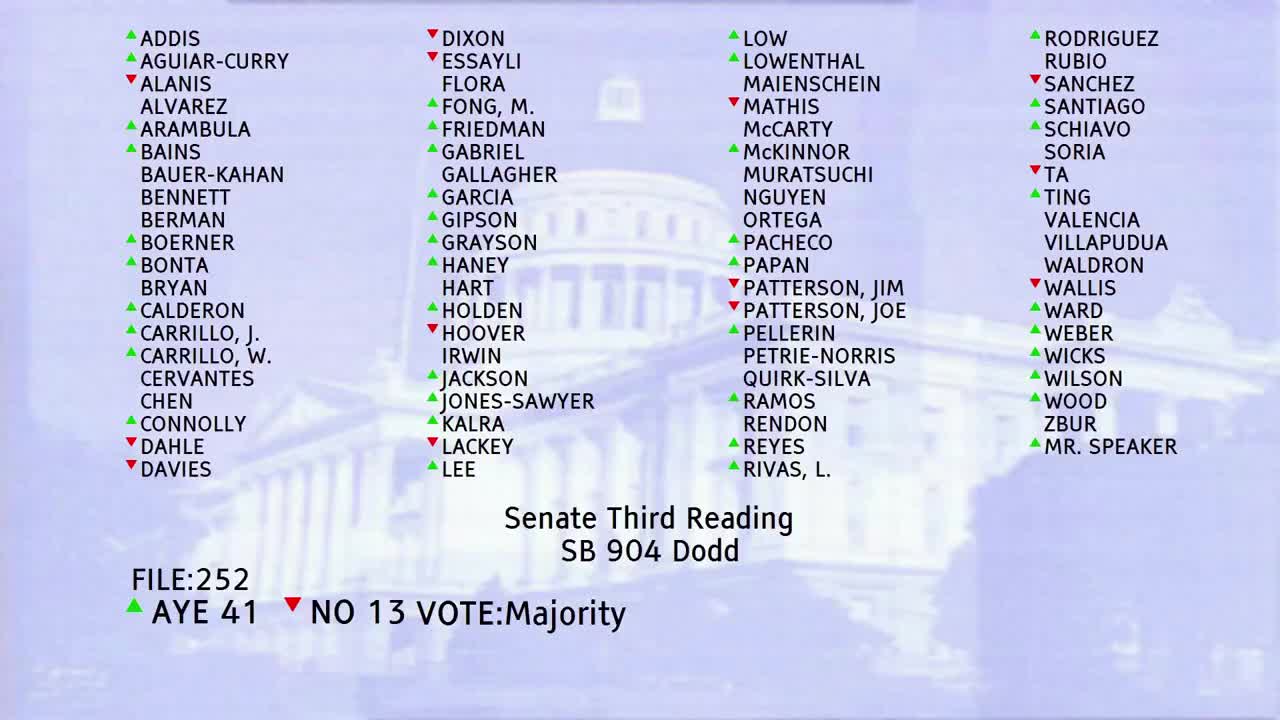 2MIN
Assembly Floor
 3MIN
Senate Floor
 4MIN
Senate Standing Committee on Transportation
 48SEC
Senate Standing Committee on Transportation
 4MIN
Senate Standing Committee on Environmental Quality
Bill Author
Bill Co-Author(s):