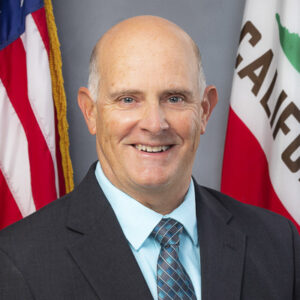
SB 952: Personal income taxes: Fire Safe Home Tax Credits Act.
- Session Year: 2023-2024
- House: Senate
- Latest Version Date: 2024-04-04
Current Status:
Failed
(2024-05-16: May 16 hearing: Held in committee and under submission.)
Introduced
In Committee
First Chamber
In Committee
Second Chamber
Enacted
The Personal Income Tax Law allows various credits against the tax imposed by that law. Existing law requires any bill authorizing a new tax credit to contain, among other things, specific goals, purposes, and objectives that the tax credit will achieve, detailed performance indicators, and data collection requirements.
This bill would allow credits against the tax imposed by the Personal Income Tax Law for each taxable year beginning on or after January 1, 2025, and before January 1, 2030, to a qualified taxpayer for qualified costs relating to qualified home hardening, as defined, and for qualified costs relating to qualified vegetation management, as defined, in specified amounts, not to exceed an aggregate amount of $500,000,000 per taxable year.
This
The bill would authorize require a qualified taxpayer to reserve a credit for qualified costs relating to qualified home hardening or qualified vegetation management prior to incurring those costs, as specified. The bill would require a qualified taxpayer that reserved a credit to submit a copy of the receipts showing the total qualified costs incurred and a certification by the qualified taxpayer, signed under penalty of perjury, that the qualified taxpayer incurred the qualified costs claimed, as specified. By requiring qualified taxpayers to submit a certification under penalty of perjury, the bill would expand the crime of perjury and impose a state-mandated local program. to be eligible for the above-described credits and provide all necessary information for this purpose, as specified.
The
This bill also would include additional information required for any bill authorizing a new income tax credit and would require the Legislative Analysts Office to prepare a written report regarding the credits, as provided.
The California Constitution requires the state to reimburse local agencies and school districts for certain costs mandated by the state. Statutory provisions establish procedures for making that reimbursement.This bill would provide that no reimbursement is required by this act for a specified reason.This bill would take effect immediately as a tax levy.
The Personal Income Tax Law allows various credits against the tax imposed by that law. Existing law requires any bill authorizing a new tax credit to contain, among other things, specific goals, purposes, and objectives that the tax credit will achieve, detailed performance indicators, and data collection requirements.
This bill would allow credits against the tax imposed by the Personal Income Tax Law for each taxable year beginning on or after January 1, 2025, and before January 1, 2030, to a qualified taxpayer for qualified costs relating to qualified home hardening, as defined, and for qualified costs relating to qualified vegetation management, as defined, in specified amounts, not to exceed an aggregate amount of $500,000,000 per taxable year.
This bill would authorize a qualified taxpayer to reserve a credit for qualified costs relating to qualified home hardening or qualified vegetation management prior to incurring those costs, as specified. The bill would require a qualified taxpayer that reserved a credit to submit a copy of the receipts showing the total qualified costs incurred and a certification by the qualified taxpayer, signed under penalty of perjury, that the qualified taxpayer incurred the qualified costs claimed, as specified. By requiring qualified taxpayers to submit a certification under penalty of perjury, the bill would expand the crime of perjury and impose a state-mandated local program.
The bill also would include additional information required for any bill authorizing a new income tax credit and would require the Legislative Analysts Office to prepare a written report regarding the credits, as provided.
The California Constitution requires the state to reimburse local agencies and school districts for certain costs mandated by the state. Statutory provisions establish procedures for making that reimbursement.
This bill would provide that no reimbursement is required by this act for a specified reason.
This bill would take effect immediately as a tax levy.
The credits allowed by Sections 17052.13 and 17052.14 of the Revenue and Taxation Code, as added by this act, shall be known and may be cited as the Fire Safe Home Tax Credits Act.
SEC. 2.Section 17052.13 is added to the Revenue and Taxation Code, to read:17052.13.(a)(1)For each taxable year beginning on or after January 1, 2025, and before January 1, 2030, there shall be allowed a credit against the net tax, as defined in Section 17039, to a qualified taxpayer who incurs qualified costs while performing qualified home hardening on a qualified property, in an amount determined pursuant to paragraph (2).
(2)The Subject to the credit reservation requirements of subdivision (f), the credit amount shall be in an amount equal to:
(A)Fifty percent of qualified costs incurred while performing qualified home hardening, not to exceed two thousand five hundred dollars ($2,500) of credit allowed, if the qualified property is located in a moderate fire hazard severity zone, per taxable year.
(B)Fifty percent of qualified costs incurred while performing qualified home hardening, not to exceed five thousand dollars ($5,000) of credit allowed, if the qualified property is located in a high fire hazard severity zone, per taxable year.
(C)Fifty percent of qualified costs incurred while performing qualified home hardening, not to exceed ten thousand dollars ($10,000) of credit allowed, if the qualified property is located in a very high fire hazard severity zone, per taxable year.
(3)The aggregate amount of credit allowed per taxable year pursuant to this section and Section 17052.14 shall be the amount calculated pursuant to paragraph (1) of subdivision (b) of Section 17052.15. (f).
(b)For purposes of this section:
(1)High fire hazard severity zone means land classified by the Director of Forestry and Fire Protection pursuant to Section 4202 of the Public Resources Code as within a high fire hazard severity zone.
(2)Moderate fire hazard severity zone means land classified by the Director of Forestry and Fire Protection pursuant to Section 4202 of the Public Resources Code as within a moderate fire hazard severity zone.
(3)Very high fire hazard severity zone means either land classified by the Director of Forestry and Fire Protection pursuant to Section 4202 of the Public Resources Code as within a very high fire hazard severity zone or an area designated by the Director of Forestry and Fire Protection pursuant to Section 51178 of the Government Code that is not a state responsibility area.
(4)(A)Qualified costs means any actual out-of-pocket expense incurred and paid by the qualified taxpayer during the taxable year in which the credit allowed by this section is claimed, documented by receipt, for performing qualified home hardening.
(B)Qualified costs do not include either of the following:
(i)Costs of any inspection or certification fees, in-kind contributions, donations, or incentives.
(ii)Expenses paid by the qualified taxpayer from any grants awarded to the qualified taxpayer for performing qualified home hardening.
(5)(A)Qualified home hardening means the replacement or repair of structural features that are affixed to the qualified property and performed or implemented for the primary purpose of reducing risk to structures from wildland fire.
(B)For purposes of this paragraph, structural features includes any of the following structural features that meet the requirements of Chapter 7A of the California Building Code: roofs, exterior walls, vents, eave assemblies, decks, fences, driveways, and chimneys.
(6)Qualified property means a dwelling or housing unit that is located in a moderate fire hazard severity zone, high fire hazard severity zone, or very high fire hazard severity zone for which a homeowners exemption pursuant to Section 218 has been granted to the qualified taxpayer in the taxable year for which the credit allowed by this section is claimed.
(7)Qualified taxpayer means a taxpayer who satisfies both of the following requirements:
(A)Has an adjusted gross income for the taxable year in which the credit allowed by this section does not exceed one hundred forty thousand dollars ($140,000) in the case of spouses filing a joint return, heads of households, and surviving spouses, as defined in Section 17046, or seventy thousand dollars ($70,000) for a single individual or a spouse filing separately.
(B)Owns a qualified property.
(c)For a qualified taxpayer who has not reserved a credit pursuant to Section 17052.15, a qualified taxpayer shall, upon request, provide receipts and documentation verifying qualified costs paid or incurred while performing qualified home hardening to the Franchise Tax Board. (d)(c)In the case where the credit allowed under this section exceeds the net tax, the excess credit may be carried over to reduce the net tax in the following taxable year, and succeeding eight taxable years, if necessary, or until the credit has been exhausted.
(e)(d)(1)In the case of two taxpayers filing a joint return, only one credit may be claimed. In the case of two taxpayers who may legally file a joint return but file separate returns, only one of the taxpayers may claim the credit allowed by this section.
(2)A taxpayer shall not use the credit allowed by this section to be reimbursed for a lien, even if the lien was to pay for qualified costs for qualified home hardening for the qualified property.
(3)A qualified property shall only be eligible for one credit allowed by this section per taxable year.
(f)A qualified taxpayer may reserve and be allocated a credit allowed under this section pursuant to Section 17052.15(e)If the credit allowed by this section is claimed by the qualified taxpayer, any deduction or credit otherwise allowed under this part for any qualified expenditure made by the qualified taxpayer as a trade or business expense shall be reduced by the amount of the credit allowed by this section.
(f)(1)The total aggregate amount of the credit that may be allocated by credit reservations to all qualified taxpayers pursuant to this section and Section 17052.14 shall not exceed five hundred million dollars ($500,000,000) per taxable year plus the unused credit amount, if any, for the preceding taxable year.
(2)To be eligible for the credit allowed by this section and Section 17052.14, a qualified taxpayer shall request a credit reservation from the Franchise Tax Board during the month of July for each taxable year or within 30 days of the start of their taxable year if the qualified taxpayers taxable year begins after July, in the form and manner prescribed by the Franchise Tax Board.
(3)To obtain a credit reservation with respect to a qualified expenditure, the qualified taxpayer shall provide all necessary information, as determined by the Franchise Tax Board.
(4)The Franchise Tax Board shall approve tentative credit reservations with respect to qualified expenditures incurred during a taxable year for qualified taxpayers, subject to the cap established under paragraph (1).
(5)The Franchise Tax Board may prescribe rules, guidelines, or procedures necessary or appropriate to carry out the purposes of this section, including any guidelines regarding the allocation of the credit allowed under this section. Chapter 3.5 (commencing with Section 11340) of Part 1 of Division 3 of Title 2 of the Government Code shall not apply to any rule, guideline, or procedure prescribed by the Franchise Tax Board pursuant to this section.
(g)For purposes of complying with Section 41 of the Revenue and Taxation Code, with respect to the Fire Safe Home Tax Credits Act, the Legislature finds and declares as follows:
(1)The specific goals, purposes, and objectives of the credits are as follows:
(A)To increase wildfire preparedness by providing a tax incentive to property owners that live in fire-prone parts of the state.
(B)To compensate taxpayers for costly mitigation measures that prepare their homes for wildfire season.
(2)To measure whether the Fire Safe Home Tax Credits meet these goals, purposes, and objectives, the Legislative Analysts Office shall prepare a written report on the following:
(A)The number of taxpayers claiming either or both of the credits.
(B)The average credit amount claimed on tax returns.
(3)The Legislative Analysts Office shall provide the written report required by paragraph (2) to the Senate Committee on Governance and Finance, the Assembly Committee on Revenue and Taxation, and the Assembly Committee on Local Government. A report submitted pursuant to this paragraph shall be submitted in compliance with Section 9795 of the Government Code.
(g)(h) This section shall remain in effect only until December 1, 2030, and as of that date is repealed.
SEC. 3.Section 17052.14 is added to the Revenue and Taxation Code, to read:17052.14.(a)(1)For each taxable year beginning on or after January 1, 2025, and before January 1, 2030, there shall be allowed as a credit against the net tax, as defined in Section 17039, to a qualified taxpayer in an amount equal to 50 percent of qualified costs incurred by the taxpayer, subject to the credit reservation requirements of subdivision (f) of Section 17052.13 and not to exceed one thousand dollars ($1,000) of credit allowed per taxable year, while performing qualified vegetation management on qualified property.
(2)The aggregate amount of credit allowed per taxable year pursuant to this section and Section 17052.13 shall be the amount calculated pursuant to paragraph (1) of subdivision (b) of Section 17052.15. paragraph (1) of subdivision (f) of Section 17052.13.
(b)For purposes of this section:
(1)High fire hazard severity zone means land classified by the Director of Forestry and Fire Protection pursuant to Section 4202 of the Public Resources Code as within a high fire hazard severity zone.
(2)Moderate fire hazard severity zone means land classified by the Director of Forestry and Fire Protection pursuant to Section 4202 of the Public Resources Code as within a moderate fire hazard severity zone.
(3)Very high fire hazard severity zone means either land classified by the Director of Forestry and Fire Protection pursuant to Section 4202 of the Public Resources Code as within a very high fire hazard severity zone or an area designated by the Director of Forestry and Fire Protection pursuant to Section 51178 of the Government Code that is not a state responsibility area.
(4)(A)Qualified costs means any actual out-of-pocket expense incurred and paid by the qualified taxpayer during the taxable year in which the credit allowed by this section is claimed, documented by receipt, for performing qualified vegetation management.
(B)Qualified costs do not include either of the following:
(i)Costs of any inspection or certification fees, in-kind contributions, donations, or incentives.
(ii)Expenses paid by the qualified taxpayer from any grants awarded to the qualified taxpayer for performing qualified vegetation management.
(5)Qualified property means a dwelling or housing unit that is located in a moderate fire hazard severity zone, high fire hazard severity zone, or very high fire hazard severity zone for which a homeowners exemption pursuant to Section 218 has been granted to the qualified taxpayer in the taxable year for which the credit allowed by this section is claimed.
(6)Qualified taxpayer means a taxpayer who satisfies both of the following requirements:
(A)Has an adjusted gross income for the taxable year in which the credit allowed by this section does not exceed one hundred forty thousand dollars ($140,000) in the case of spouses filing a joint return, heads of households, and surviving spouses, as defined in Section 17046, or seventy thousand dollars ($70,000) for a single individual or a spouse filing separately.
(B)Owns a qualified property.
(7)Qualified vegetation management means any of the following activities that meet the requirements of Section 4291 of the Public Resources Code performed by the qualified taxpayer for the primary purpose of reducing risk to structures from wildland fire:
(A)The creation of defensible space around structures.
(B)The establishment of fuel breaks.
(C)The thinning of woody vegetation.
(D)The secondary treatment of woody fuels by lopping and scattering, piling, chipping, removing from site, or prescribed burning.
(c)For a qualified taxpayer who has not reserved a credit pursuant to Section 17052.15, a qualified taxpayer shall, upon request, provide receipts and documentation verifying qualified costs paid or incurred while performing qualified vegetation management to the Franchise Tax Board. (d)(c)In the case where the credit allowed under this section exceeds the net tax, the excess credit may be carried over to reduce the net tax in the following taxable year, and succeeding eight taxable years, if necessary, or until the credit has been exhausted.
(e)(d)(1)In the case of two taxpayers filing a joint return, only one credit may be claimed. In the case of two taxpayers who may legally file a joint return but file separate returns, only one of the taxpayers may claim the credit allowed by this section.
(2)A taxpayer shall not use the credit allowed by this section to be reimbursed for a lien, even if the lien was to pay for qualified costs for qualified vegetation management for the qualified property.
(3)A qualified property shall only be eligible for one credit allowed by this section per taxable year.
(f)A qualified taxpayer may reserve and be allocated a credit allowed under this section pursuant to Section 17052.15.(e)If the credit allowed by this section is claimed by the qualified taxpayer, any deduction or credit otherwise allowed under this part for any qualified expenditure made by the qualified taxpayer as a trade or business expense shall be reduced by the amount of the credit allowed by this section.
(g)(f) This section shall remain in effect only until December 1, 2030, and as of that date is repealed.
SEC. 4.Section 17052.15 is added to the Revenue and Taxation Code, to read:17052.15.(a)(1)(A)A qualified taxpayer may, but is not required to, reserve the credit for qualified home hardening allowed pursuant to Section 17052.13 or qualified vegetation management allowed pursuant to Section 17052.14 prior to incurring qualified costs. To reserve a credit, the qualified taxpayer shall sign and submit to the Franchise Tax Board a statement that the qualified taxpayer intends to incur qualified costs associated with qualified home hardening or qualified vegetation management and the estimated amount of qualified costs to be incurred within the taxable year in which the credit is claimed. Upon receipt of the statement, the Franchise Tax Board shall notify the qualified taxpayer that the Franchise Tax Board has reserved the credit for the qualified taxpayer, pending receipt of the information required under paragraph (2).(B)The credit reservation shall be canceled if a qualified taxpayer does not provide the information required under paragraph (2) or provides a notification of cancellation before the end of the taxable year.(2)Subject to subdivision (b), a credit allocation shall be made to a qualified taxpayer who submits to the Franchise Tax Board, within two weeks after the date the qualified costs were incurred, a copy of the receipt or receipts showing the total qualified costs incurred and a certification by the qualified taxpayer, signed under penalty of perjury, that the qualified taxpayer incurred the qualified costs claimed.(b)(1)The aggregate amount of credits that may be allowed to all qualified taxpayers for allocated and nonallocated credits for a taxable year pursuant to Sections 17052.13 and 17052.14 is five hundred million dollars ($500,000,000), plus the unused credit amount, if any, for the preceding taxable year.(2)If the amount of credit reserved exceeds the amount determined pursuant to paragraph (1), the Franchise Tax Board shall establish a wait list for subsequently received certifications and reservations, with an order of priority based on the date certification or reservation was received by the Franchise Tax Board. The Franchise Tax Board shall notify qualified taxpayers on the wait list no later than December 31 of the taxable year as to whether they have been allocated a credit and the amount allocated.(c)(1)The Franchise Tax Board shall reserve and allocate, and allow nonallocated credits, to qualified taxpayers on a first-come-first-served basis.(2)(A)Except as provided in subparagraph (B), the qualified taxpayer shall claim the credit on a timely filed original return.(B)A qualified taxpayer on the wait list described in paragraph (2) of subdivision (b) that is allocated a credit for qualified costs may claim the credit on an amended income tax return for that taxable year.(3)The receipt date of the information described in subdivision (a) shall be determined by the Franchise Tax Board.(4)(A)The receipt date determined pursuant to paragraph (3), the allocation and reservation of a credit, and whether a return has been timely filed for purposes of this subdivision shall not be subject to review in any administrative or judicial proceeding.(B)A disallowance of a credit due to a determination by the Franchise Tax Board under this subdivision, including the application of the limitation specified in subdivision (b), shall be assessed by the Franchise Tax Board in the same manner as is provided by Section 19051 in the case of a mathematical error appearing on the return.(d)Unless otherwise specified, the definitions of Sections 17052.13 and 17052.14 shall apply.(e)The Franchise Tax Board may prescribe rules, guidelines, or procedures necessary or appropriate to carry out the purposes of this section, including any guidelines regarding the allocation of the credit allowed under this section. Chapter 3.5 (commencing with Section 11340) of Part 1 of Division 3 of Title 2 of the Government Code does not apply to any rule, guideline, or procedure prescribed by the Franchise Tax Board pursuant to this section.(f) This section shall remain in effect only until December 1, 2030, and as of that date is repealed.SEC. 5.For purposes of complying with Section 41 of the Revenue and Taxation Code, with respect to the Fire Safe Home Tax Credits Act, the Legislature finds and declares as follows:(a)The specific goals, purposes, and objectives of the credits are as follows:(1)To increase wildfire preparedness by providing a tax incentive to property owners that live in fire-prone parts of the state.(2)To compensate taxpayers for costly mitigation measures that prepare their homes for wildfire season.(b)To measure whether the Fire Safe Home Tax Credits meet these goals, purposes, and objectives, the Legislative Analysts Office shall prepare a written report on the following:(1)The number of taxpayers claiming either or both of the credits.(2)The average credit amount claimed on tax returns.(c)The Legislative Analysts Office shall provide the written report required by subdivision (b) to the Senate Committee on Governance and Finance, the Assembly Committee on Revenue and Taxation, and the Assembly Committee on Local Government. A report submitted pursuant to this paragraph shall be submitted in compliance with Section 9795 of the Government Code.SEC. 6. No reimbursement is required by this act pursuant to Section 6 of Article XIIIB of the California Constitution because the only costs that may be incurred by a local agency or school district will be incurred because this act creates a new crime or infraction, eliminates a crime or infraction, or changes the penalty for a crime or infraction, within the meaning of Section 17556 of the Government Code, or changes the definition of a crime within the meaning of Section 6 of Article XIIIB of the California Constitution.SEC. 7.SEC. 4.This act provides for a tax levy within the meaning of Article IV of the California Constitution and shall go into immediate effect.
The credits allowed by Sections 17052.13 and 17052.14 of the Revenue and Taxation Code, as added by this act, shall be known and may be cited as the Fire Safe Home Tax Credits Act.
SEC. 2.Section 17052.13 is added to the Revenue and Taxation Code, to read:17052.13.(a)(1)For each taxable year beginning on or after January 1, 2025, and before January 1, 2030, there shall be allowed a credit against the net tax, as defined in Section 17039, to a qualified taxpayer who incurs qualified costs while performing qualified home hardening on a qualified property, in an amount determined pursuant to paragraph (2).
(2)The credit amount shall be in an amount equal to:
(A)Fifty percent of qualified costs incurred while performing qualified home hardening, not to exceed two thousand five hundred dollars ($2,500) of credit allowed, if the qualified property is located in a moderate fire hazard severity zone, per taxable year.
(B)Fifty percent of qualified costs incurred while performing qualified home hardening, not to exceed five thousand dollars ($5,000) of credit allowed, if the qualified property is located in a high fire hazard severity zone, per taxable year.
(C)Fifty percent of qualified costs incurred while performing qualified home hardening, not to exceed ten thousand dollars ($10,000) of credit allowed, if the qualified property is located in a very high fire hazard severity zone, per taxable year.
(3)The aggregate amount of credit allowed per taxable year pursuant to this section and Section 17052.14 shall be the amount calculated pursuant to paragraph (1) of subdivision (b) of Section 17052.15.
(b)For purposes of this section:
(1)High fire hazard severity zone means land classified by the Director of Forestry and Fire Protection pursuant to Section 4202 of the Public Resources Code as within a high fire hazard severity zone.
(2)Moderate fire hazard severity zone means land classified by the Director of Forestry and Fire Protection pursuant to Section 4202 of the Public Resources Code as within a moderate fire hazard severity zone.
(3)Very high fire hazard severity zone means either land classified by the Director of Forestry and Fire Protection pursuant to Section 4202 of the Public Resources Code as within a very high fire hazard severity zone or an area designated by the Director of Forestry and Fire Protection pursuant to Section 51178 of the Government Code that is not a state responsibility area.
(4)(A)Qualified costs means any actual out-of-pocket expense incurred and paid by the qualified taxpayer during the taxable year in which the credit allowed by this section is claimed, documented by receipt, for performing qualified home hardening.
(B)Qualified costs do not include either of the following:
(i)Costs of any inspection or certification fees, in-kind contributions, donations, or incentives.
(ii)Expenses paid by the qualified taxpayer from any grants awarded to the qualified taxpayer for performing qualified home hardening.
(5)(A)Qualified home hardening means the replacement or repair of structural features that are affixed to the qualified property and performed or implemented for the primary purpose of reducing risk to structures from wildland fire.
(B)For purposes of this paragraph, structural features includes any of the following structural features that meet the requirements of Chapter 7A of the California Building Code: roofs, exterior walls, vents, eave assemblies, decks, fences, driveways, and chimneys.
(6)Qualified property means a dwelling or housing unit that is located in a moderate fire hazard severity zone, high fire hazard severity zone, or very high fire hazard severity zone for which a homeowners exemption pursuant to Section 218 has been granted to the qualified taxpayer in the taxable year for which the credit allowed by this section is claimed.
(7)Qualified taxpayer means a taxpayer who satisfies both of the following requirements:
(A)Has an adjusted gross income for the taxable year in which the credit allowed by this section does not exceed one hundred forty thousand dollars ($140,000) in the case of spouses filing a joint return, heads of households, and surviving spouses, as defined in Section 17046, or seventy thousand dollars ($70,000) for a single individual or a spouse filing separately.
(B)Owns a qualified property.
(c)For a qualified taxpayer who has not reserved a credit pursuant to Section 17052.15, a qualified taxpayer shall, upon request, provide receipts and documentation verifying qualified costs paid or incurred while performing qualified home hardening to the Franchise Tax Board.
(d)In the case where the credit allowed under this section exceeds the net tax, the excess credit may be carried over to reduce the net tax in the following taxable year, and succeeding eight taxable years, if necessary, or until the credit has been exhausted.
(e)(1)In the case of two taxpayers filing a joint return, only one credit may be claimed. In the case of two taxpayers who may legally file a joint return but file separate returns, only one of the taxpayers may claim the credit allowed by this section.
(2)A taxpayer shall not use the credit allowed by this section to be reimbursed for a lien, even if the lien was to pay for qualified costs for qualified home hardening for the qualified property.
(3)A qualified property shall only be eligible for one credit allowed by this section per taxable year.
(f)A qualified taxpayer may reserve and be allocated a credit allowed under this section pursuant to Section 17052.15
(g) This section shall remain in effect only until December 1, 2030, and as of that date is repealed.
SEC. 3.Section 17052.14 is added to the Revenue and Taxation Code, to read:17052.14.(a)(1)For each taxable year beginning on or after January 1, 2025, and before January 1, 2030, there shall be allowed as a credit against the net tax, as defined in Section 17039, to a qualified taxpayer in an amount equal to 50 percent of qualified costs incurred by the taxpayer, not to exceed one thousand dollars ($1,000) of credit allowed per taxable year, while performing qualified vegetation management on qualified property.
(2)The aggregate amount of credit allowed per taxable year pursuant to this section and Section 17052.13 shall be the amount calculated pursuant to paragraph (1) of subdivision (b) of Section 17052.15.
(b)For purposes of this section:
(1)High fire hazard severity zone means land classified by the Director of Forestry and Fire Protection pursuant to Section 4202 of the Public Resources Code as within a high fire hazard severity zone.
(2)Moderate fire hazard severity zone means land classified by the Director of Forestry and Fire Protection pursuant to Section 4202 of the Public Resources Code as within a moderate fire hazard severity zone.
(3)Very high fire hazard severity zone means either land classified by the Director of Forestry and Fire Protection pursuant to Section 4202 of the Public Resources Code as within a very high fire hazard severity zone or an area designated by the Director of Forestry and Fire Protection pursuant to Section 51178 of the Government Code that is not a state responsibility area.
(4)(A)Qualified costs means any actual out-of-pocket expense incurred and paid by the qualified taxpayer during the taxable year in which the credit allowed by this section is claimed, documented by receipt, for performing qualified vegetation management.
(B)Qualified costs do not include either of the following:
(i)Costs of any inspection or certification fees, in-kind contributions, donations, or incentives.
(ii)Expenses paid by the qualified taxpayer from any grants awarded to the qualified taxpayer for performing qualified vegetation management.
(5)Qualified property means a dwelling or housing unit that is located in a moderate fire hazard severity zone, high fire hazard severity zone, or very high fire hazard severity zone for which a homeowners exemption pursuant to Section 218 has been granted to the qualified taxpayer in the taxable year for which the credit allowed by this section is claimed.
(6)Qualified taxpayer means a taxpayer who satisfies both of the following requirements:
(A)Has an adjusted gross income for the taxable year in which the credit allowed by this section does not exceed one hundred forty thousand dollars ($140,000) in the case of spouses filing a joint return, heads of households, and surviving spouses, as defined in Section 17046, or seventy thousand dollars ($70,000) for a single individual or a spouse filing separately.
(B)Owns a qualified property.
(7)Qualified vegetation management means any of the following activities that meet the requirements of Section 4291 of the Public Resources Code performed by the qualified taxpayer for the primary purpose of reducing risk to structures from wildland fire:
(A)The creation of defensible space around structures.
(B)The establishment of fuel breaks.
(C)The thinning of woody vegetation.
(D)The secondary treatment of woody fuels by lopping and scattering, piling, chipping, removing from site, or prescribed burning.
(c)For a qualified taxpayer who has not reserved a credit pursuant to Section 17052.15, a qualified taxpayer shall, upon request, provide receipts and documentation verifying qualified costs paid or incurred while performing qualified vegetation management to the Franchise Tax Board.
(d)In the case where the credit allowed under this section exceeds the net tax, the excess credit may be carried over to reduce the net tax in the following taxable year, and succeeding eight taxable years, if necessary, or until the credit has been exhausted.
(e)(1)In the case of two taxpayers filing a joint return, only one credit may be claimed. In the case of two taxpayers who may legally file a joint return but file separate returns, only one of the taxpayers may claim the credit allowed by this section.
(2)A taxpayer shall not use the credit allowed by this section to be reimbursed for a lien, even if the lien was to pay for qualified costs for qualified vegetation management for the qualified property.
(3)A qualified property shall only be eligible for one credit allowed by this section per taxable year.
(f)A qualified taxpayer may reserve and be allocated a credit allowed under this section pursuant to Section 17052.15.
(g) This section shall remain in effect only until December 1, 2030, and as of that date is repealed.
SEC. 4.Section 17052.15 is added to the Revenue and Taxation Code, to read:17052.15.(a)(1)(A)A qualified taxpayer may, but is not required to, reserve the credit for qualified home hardening allowed pursuant to Section 17052.13 or qualified vegetation management allowed pursuant to Section 17052.14 prior to incurring qualified costs. To reserve a credit, the qualified taxpayer shall sign and submit to the Franchise Tax Board a statement that the qualified taxpayer intends to incur qualified costs associated with qualified home hardening or qualified vegetation management and the estimated amount of qualified costs to be incurred within the taxable year in which the credit is claimed. Upon receipt of the statement, the Franchise Tax Board shall notify the qualified taxpayer that the Franchise Tax Board has reserved the credit for the qualified taxpayer, pending receipt of the information required under paragraph (2).
(B)The credit reservation shall be canceled if a qualified taxpayer does not provide the information required under paragraph (2) or provides a notification of cancellation before the end of the taxable year.
(2)Subject to subdivision (b), a credit allocation shall be made to a qualified taxpayer who submits to the Franchise Tax Board, within two weeks after the date the qualified costs were incurred, a copy of the receipt or receipts showing the total qualified costs incurred and a certification by the qualified taxpayer, signed under penalty of perjury, that the qualified taxpayer incurred the qualified costs claimed.
(b)(1)The aggregate amount of credits that may be allowed to all qualified taxpayers for allocated and nonallocated credits for a taxable year pursuant to Sections 17052.13 and 17052.14 is five hundred million dollars ($500,000,000), plus the unused credit amount, if any, for the preceding taxable year.
(2)If the amount of credit reserved exceeds the amount determined pursuant to paragraph (1), the Franchise Tax Board shall establish a wait list for subsequently received certifications and reservations, with an order of priority based on the date certification or reservation was received by the Franchise Tax Board. The Franchise Tax Board shall notify qualified taxpayers on the wait list no later than December 31 of the taxable year as to whether they have been allocated a credit and the amount allocated.
(c)(1)The Franchise Tax Board shall reserve and allocate, and allow nonallocated credits, to qualified taxpayers on a first-come-first-served basis.
(2)(A)Except as provided in subparagraph (B), the qualified taxpayer shall claim the credit on a timely filed original return.
(B)A qualified taxpayer on the wait list described in paragraph (2) of subdivision (b) that is allocated a credit for qualified costs may claim the credit on an amended income tax return for that taxable year.
(3)The receipt date of the information described in subdivision (a) shall be determined by the Franchise Tax Board.
(4)(A)The receipt date determined pursuant to paragraph (3), the allocation and reservation of a credit, and whether a return has been timely filed for purposes of this subdivision shall not be subject to review in any administrative or judicial proceeding.
(B)A disallowance of a credit due to a determination by the Franchise Tax Board under this subdivision, including the application of the limitation specified in subdivision (b), shall be assessed by the Franchise Tax Board in the same manner as is provided by Section 19051 in the case of a mathematical error appearing on the return.
(d)Unless otherwise specified, the definitions of Sections 17052.13 and 17052.14 shall apply.
(e)The Franchise Tax Board may prescribe rules, guidelines, or procedures necessary or appropriate to carry out the purposes of this section, including any guidelines regarding the allocation of the credit allowed under this section. Chapter 3.5 (commencing with Section 11340) of Part 1 of Division 3 of Title 2 of the Government Code does not apply to any rule, guideline, or procedure prescribed by the Franchise Tax Board pursuant to this section.
(f) This section shall remain in effect only until December 1, 2030, and as of that date is repealed.
SEC. 5.For purposes of complying with Section 41 of the Revenue and Taxation Code, with respect to the Fire Safe Home Tax Credits Act, the Legislature finds and declares as follows:
(a)The specific goals, purposes, and objectives of the credits are as follows:
(1)To increase wildfire preparedness by providing a tax incentive to property owners that live in fire-prone parts of the state.
(2)To compensate taxpayers for costly mitigation measures that prepare their homes for wildfire season.
(b)To measure whether the Fire Safe Home Tax Credits meet these goals, purposes, and objectives, the Legislative Analysts Office shall prepare a written report on the following:
(1)The number of taxpayers claiming either or both of the credits.
(2)The average credit amount claimed on tax returns.
(c)The Legislative Analysts Office shall provide the written report required by subdivision (b) to the Senate Committee on Governance and Finance, the Assembly Committee on Revenue and Taxation, and the Assembly Committee on Local Government. A report submitted pursuant to this paragraph shall be submitted in compliance with Section 9795 of the Government Code.
SEC. 6.No reimbursement is required by this act pursuant to Section 6 of Article XIIIB of the California Constitution because the only costs that may be incurred by a local agency or school district will be incurred because this act creates a new crime or infraction, eliminates a crime or infraction, or changes the penalty for a crime or infraction, within the meaning of Section 17556 of the Government Code, or changes the definition of a crime within the meaning of Section 6 of Article XIIIB of the California Constitution.
SEC. 7.This act provides for a tax levy within the meaning of Article IV of the California Constitution and shall go into immediate effect.
|
Date
|
Status
|
|---|---|
| May 16, 2024 | May 16 hearing: Held in committee and under submission. |
| May 14, 2024 | Set for hearing May 16. |
| May 13, 2024 | May 13 hearing: Placed on APPR suspense file. |
| May 9, 2024 | Set for hearing May 13. |
| May 8, 2024 | From committee: Do pass and re-refer to Com. on APPR. (Ayes 5. Noes 0. Page 3865.) (May 8). Re-referred to Com. on APPR. |
| Apr 4, 2024 | From committee with author's amendments. Read second time and amended. Re-referred to Com. on REV. & TAX. |
| Feb 21, 2024 | Referred to Com. on REV. & TAX. |
| Jan 23, 2024 | From printer. May be acted upon on or after February 22. |
| Jan 22, 2024 | Introduced. Read first time. To Com. on RLS. for assignment. To print. |
|
Date
|
Description
|
Location
|
Votes
|
|
|---|---|---|---|---|
| May 13, 2024 | Placed on suspense file | Senate Standing Committee on Appropriations |
Passed |
|
| May 8, 2024 | Do pass, but first be re-referred to the Committee on [Appropriations] | Senate Standing Committee on Revenue and Taxation |
Passed |
This list shows positions taken on this bill by organizations on the date displayed, which is linked to the original source.
Positions by individuals are not included.
|
Organization
|
Position
|
Date
|
|---|---|---|
| California State Association Of Counties | ** Support | |
| California Teachers Association | ** Against | |
| Rural County Representatives of California | ** Support |
SENATE COMMITTEE ON APPROPRIATIONS
Senator Anna Caballero, Chair
2023 - 2024 Regular Session
SB 952 (Dahle) - Personal income taxes: Fire Safe Home Tax Credits Act
Version: April 4, 2024 | Policy Vote: REV. & TAX. 5 - 0 |
Urgency: No | Mandate: No |
Hearing Date: May 13, 2024 | Consultant: Robert Ingenito |
Bill Summary:
SB 952 enact the Fire Safe Home Tax Credits Act, as specified.
Fiscal Impact:
The Franchise Tax Board (FTB) estimates that this bill would result in General Fund revenue losses of $120 million in 2024-25, $240 million 2025-26, and $290 million in 2026-27. FTB’s costs to implement the bill have yet to be identified.
Background:
Tax expenditure programs (TEPs) are special tax provisions that reduce the amount of revenues the “basic” tax system would otherwise generate in order to provide (1) benefits to certain groups of taxpayers, and/or (2) incentives to encourage certain types of behavior and activities, such as charitable giving. Specifically, current law provides for, among other things, various income and corporation tax credits and deductions, as well as exemptions from the sales and use tax. The Department of Finance is required to publish a list of TEPs (currently totaling several hundred), which currently exceed $87 billion annually.
The California Wildfire Mitigation Financial Assistance Program, created in 2019, provides funding to local administrators to provide home hardening, vegetation management, defensible space, and other fuel modification activities provide neighborhood or community-wide benefits against wildfire. Property owners who agree to an assessment can apply for financial assistance. The Program is currently accepts applications from property owners in four areas: (1) Whitmore (Shasta County), (2) Dulzura (San Diego County), (3) Kelseyville-Riviera (Lake County), and (4) Mt. Shasta areas (Siskiyou County) defensible space only.
The Program is still in the pilot phase, and seeks to assist 500 homes in each pilot area by leveraging funds provided by the Federal Emergency Management Agency (FEMA). The State provides 25 percent of funding, while FEMA provides the remainder.
The California Department of Forestry and Fire Protection (CAL FIRE) provides wildland fire protection on non-federal lands outside cities. To accomplish this, State Board of Forestry and Fire Protection (Board) designates the State Responsibility Area (SRA) every five years. Within SRA lands, the Director of CAL FIRE designates moderate, high, and very high fire hazard severity zones (VHFHSZ). After the 1991 Oakland-Berkeley firestorm, the Legislature required CAL FIRE to designate the VHFHSZ in the Local Responsibility Area (LRA). Cities and counties may also identify areas in LRA VHVHSZs. In 2021, the Legislature shifted the responsibility to designate moderate, high, and very high fire hazard severity zones from CAL FIRE to the State Fire Marshall.
Fire hazard severity zones (FHSZs) are classified as moderate, high, and very high based on (1) statewide criteria, and (2) the severity of fire hazard that is expected to prevail in those areas. FHSZ maps evaluate “hazard” based on the physical conditions that create a likelihood and expected fire behavior over a 30 to 50-year period without considering mitigation measures such as home hardening, defensible space, vegetation management, or fuel reduction efforts
Current law requires landowners in the SRA and the VHFHSZ to follow specified fire prevention practices and meet standards developed by the Board, including (1) maintaining a defensible space of 100 feet around structures, (2) performing certain activities to reduce the amount of flammable material near and on structures, and (3) meeting specific building standards developed by CAL FIRE and the Department of Housing and Community Development that help a structure withstand ignition and reduce fire risk. State fire marshals make site inspections in high-risk areas and cite homeowners if any violations are observed. Homeowners must make any necessary improvements to their property to ensure compliance.
Proposed Law:
This bill would, among other things, do the following:
- Enact the Fire Safe Home Tax Credits Act, which would authorize two credits against the personal income tax for taxable years 2025 through 2029 for taxpayers who meet specified income thresholds.
- Provide that the home hardening credit would be equal to 50 percent of the costs incurred for “qualified home hardening,” as defined. The credit would be capped based on the zone designation where the residence is located.
- Provide that the vegetation management is would be equal to 50 percent of the cost of “qualified vegetation management,” as defined.
- Specify that taxpayers must request a credit reservation from FTB in July for each taxable year (or within 30 days of the start of their taxable year if the qualified taxpayer’s taxable year begins after July) in the form and manner prescribed by FTB, including any necessary information FTB needs. FTB must approve reservations up to the measure’s cap of $500 million annually, plus any unused amount from previous taxable years.
- Provide that the credits would not be refundable, but taxpayers could carry forward unused credit to the next succeeding eight taxable years. Taxpayers must reduce any deduction they claim for any expenses that qualify for the credit.
- Authorize FTB to prescribe any regulations necessary and appropriate to implement the bill.
Related Legislation:
- AB 582 (Connolly) would, under the Personal Income Tax Law (PITL), provide a maximum $400 tax credit each taxable year, to a qualified taxpayer with a primary residence in high or very high fire hazard zone for certain expenses paid or incurred. The bill was held under submission on the Suspense File of the Assembly Appropriations Committee.
- SB 295 (McGuire, 2019) would have created two PITL tax credits, the Qualified Home Hardening credit, and the Qualified Vegetation Management credit, collectively known as the Fire Safe Home Tax Credits. The bill was held under submission on the Suspense File of the Assembly Appropriations Committee.
- SB 944 (McGuire, 2019/2020) would create, under PITL, two home fire safety tax credits for qualified home hardening and qualified vegetation management, collectively known as the Fire Safe Home Tax Credits Act. SB 944 did not pass out of the Senate Governance and Finance Committee by the constitutional deadline.
-- END --
SENATE COMMITTEE ON REVENUE AND TAXATION
Senator Steven Glazer, Chair
2023 - 2024 Regular
Bill No: | SB 952 | Hearing Date: | 5/8/24 |
Author: | Dahle | Tax Levy: | Yes |
Version: | 4/4/24 | Fiscal: | Yes |
Consultant: | Summers & Grinnell | ||
Personal income taxes: Fire Safe Home Tax Credits Act
Enacts the Fire Safe Home Tax Credits Act, authorizing personal income tax credits to qualified taxpayers for qualified costs incurred for home hardening and vegetation management of a qualified property, as defined.
Background
Tax expenditures. California law allows various income tax credits, deductions, exemptions, and exclusions. When a tax law is determined to have a cost in the form of foregone revenues, such as a tax exemption, state law refers to them as "tax expenditures." The Legislature enacts such tax incentives to compensate taxpayers for incurring certain expenses, such as child adoption, or to influence certain behaviors, such as participating in charitable giving. The Legislature uses tax incentives to encourage taxpayers to do something they would otherwise not do but for the tax incentive. The Department of Finance must publish a list of tax expenditures annually, currently totaling around $87 billion per year.
Credits. Tax credits reduce the amount of tax owed by a taxpayer on a dollar for dollar basis. Credit amounts that exceed the taxpayer’s current tax year liability can either be refunded to the taxpayer, or carried forward to reduce tax in future years. However, except for the Earned Income Tax Credit, the Young Child Tax Credit, the Foster Youth Tax Credit, and the Motion Picture and Television Production Credit, all credits against California Personal Income and Corporation Tax are nonrefundable.
California Fires. Over the last decade, California has experienced increased, intense, and record-breaking wildfires throughout the state. These fires have resulted in a devastating loss of life and billions of dollars in damage to property and infrastructure. Fires attributed to power lines and electrical equipment comprise nine of the 20 most destructive fires in California history. According to Cal Fire, in 2022 alone there were over 7,490 incidents and over 362,000 million acres of scorched land. In 2021, wildfire destroyed 2.5 million acres of land.
Wildfire mitigation grants. In 2019, the Legislature required the Office of Emergency Services (OES) to enter into a joint powers agreement with the Department of Forestry and Fire Protection (CAL FIRE) to develop and administer a comprehensive wildfire mitigation program to provide financial assistance to create fire-resistant homes, businesses, and public buildings and facilitate vegetation management (AB 38, Wood, 2019). Known as the California Wildfire Mitigation Program, it provides funding to local administrators to provide home hardening, vegetation management, defensible space, and other fuel modification activities provide neighborhood or community-wide benefits against wildfire. Property owners who agree to an assessment can apply for financial assistance. Currently in the pilot phase, the Program accepts applications from property owners in four areas:
- Whitmore in Shasta County (96096 ZIP Code)
- Dulzura in San Diego County (91917 ZIP Code)
- Kelseyville-Riviera in Lake County (95451 ZIP Code)
- Mt. Shasta area s in Siskiyou County (96067 ZIP Code)
The programs seeks to assist 500 homes in each pilot area by leveraging funds provided by the Federal Emergency Management Agency (FEMA). The state provides 25% of funding, while FEMA provides 75%.
Fire Hazard Severity Zones. CAL FIRE provides wildland fire protection on non-federal lands outside cities. To meet this duty, the State Board of Forestry and Fire Protection (Board) designates the State Responsibility Area (SRA) every five years. Within SRA lands, the Director of CAL FIRE designates moderate, high, and very high fire hazard severity zones (VHFHSZ). After the 1991 Oakland-Berkeley firestorm, the Legislature required CAL FIRE to designate the VHFHSZ in the Local Responsibility Area (LRA). Cities and counties may also identify areas in LRA VHVHSZs. In 2021, the Legislature shifted the responsibility to designate moderate, high, and very high fire hazard severity zones from CAL FIRE to the State Fire Marshall (AB 9, Wood, and SB 63, Stern, 2021).
Fire hazard severity zones (FHSZs) fall into the following classifications: moderate, high, and very high based on a consistent statewide criteria and the severity of fire hazard that is expected to prevail in those areas. FHSZ maps evaluate “hazard” based on the physical conditions that create a likelihood and expected fire behavior over a 30 to 50-year period without considering mitigation measures such as home hardening, defensible space, vegetation management, or fuel reduction efforts
Landowners in the SRA and the VHFHSZ must follow specified fire prevention practices and meet standards developed by the Board (AB 337, Bates, 1992). These practices and standards include maintaining a defensible space of 100 feet around structures, performing certain activities to reduce the amount of flammable material near and on structures, and meeting specific building standards developed by CAL FIRE and the Department of Housing and Community Development that help a structure withstand ignition and reduce fire risk. State fire marshals make site inspections in high-risk areas and cite homeowners if any violations are observed. Homeowners must make any necessary improvements to their property to ensure compliance.
Arguing that homeowners are at the forefront of fire threat and risk reduction, the author wants to encourage low to moderate income homeowners to utilize home hardening and vegetation management strategies in moderate to very high fire hazard zones by authorizing personal income tax credits for taxpayers who implement those strategies.
Proposed Law
Senate Bill 952 enacts the Fire Safe Home Tax Credits Act, which authorizes two credits against the Personal Income Tax. Both credits begin in the 2025 taxable year, and end after the 2029 taxable year.
Home hardening. SB 952’s home hardening credits are equal to 50% of the costs incurred for “Qualified home hardening,” which is defined as the replacement or repair of structural features that are affixed to the qualified property to meet the requirements of Chapter 7A of the California Building Code, including roofs, exterior walls, vents, eave assemblies, decks, fences, driveways, and chimneys. The credit only applies to primary residences as evidenced by the homeowners’ exemption from property tax, and solely to homeowners with an income of less than $70,000 (single)/$140,000 (joint). The measure caps the per taxable year credit based on the zone designation where the residence is located:
$2,500 if located in a moderate fire hazard severity zone.
$5,000 if located in a high fire hazard severity zone.
$10,000 if located in a very high fire hazard severity zone.
Vegetation management. The measure’s credit for vegetation management is equal to 50% of the cost of “Qualified vegetation management” utilizing the definition in existing law of activities to reduce risk to structures from wildland fire:
The creation of defensible space around structures.
The establishment of fuel breaks.
The thinning of woody vegetation.
The secondary treatment of woody fuels by lopping and scattering, piling, chipping, removing from site, or prescribed burning.
The measure applies the same restrictions regarding the taxpayer’s primary residence, as well as annual income requirements, as the home hardening credit.
Both credits are subject to a reservation system administered by the Franchise Tax Board (FTB). Taxpayers must request a credit reservation from FTB in July for each taxable year (or within 30 days of the start of their taxable year if the qualified taxpayer’s taxable year begins after July) in the form and manner prescribed by the FTB, including any necessary information FTB needs. FTB must approve reservations up to the measure’s cap of $500 million annually, plus any unused amount from previous taxable years.
The credits are not refundable; taxpayers may carry forward unused credit to the next succeeding eight taxable years. Taxpayers must reduce any deduction they claim for any expenses that qualify for the credit.
SB 952 allows FTB to prescribe any regulations necessary and appropriate to implement the bill. This measure repeals its provisions on December 1, 2030.
The measure also includes legislative findings and declarations to comply with Section 41 of the Revenue and Taxation Code.
State Revenue Impact
According to the Franchise Tax Board, SB 952 would result in revenue losses to the state of $120 million in 2024-25, $240 million in 2025-26, and $290 million in 2026-27.
Comments
1. Purpose of the bill. According to the author, “California has experienced some of the most devastating wildfires in recent years. With wildfire severity increasing, it is critical that those most vulnerable are given the help they need to better protect and prepare themselves and their homes. Proper home hardening and vegetation management are among the most effective ways to protect against fires. Unfortunately, given the high cost of living in California, those living in fire hazard zones are not always able to afford these protective measures as they must prioritize things like groceries and utility bills. This bill would provide some much needed relief in the form of tax credits to help offset the cost of home hardening and vegetation management. These credits will make it easier for homeowners to afford these services thus better protecting themselves and their neighbors around them from wildfires. As California continues to grapple with how to handle our overgrown forests and catastrophic wildfires, SB 952 will prove to be an essential tool that provides financial flexibility and security that our most vulnerable residents are in desperate need of.”
2. Windfall? Tax expenditures produce two different outcomes. The first outcome is a “windfall,” where the tax expenditure rewards behavior that would have occurred without the tax benefit. The second outcome is a “but for tax benefit,” where a certain activity would not have occurred without the incentive created by the tax expenditure. In VHFHSZs, current law requires taxpayers to meet defensible space, fuels reduction, and building standard requirements. The tax credits authorized by this bill may serve as a “windfall” when homeowners use the credit to comply with state and local laws for defensible spaces, including vegetation management. However, the credits may provide a benefit to the extent a homeowner fortifies their home beyond the requirements mandated by state and local law, such as repairing or installing an ember-resistant roof.
3. Highest and best? Budget Acts enacted by the Legislature allocated $2.8 billion over a four-year period—2020-21 through 2023-24—to support wildfire and forest resilience. Roughly 40% of the funding over the four years flows to programs designed to promote healthy forests and landscapes, generally by removing hazardous fuels. Just over one-quarter of the funding supports the installation and maintenance of wildfire fuel breaks. The remaining funds are allocated for projects to increase regional capacity for conducting forest health projects, as well as to encourage forest-sector economic stimulus, science-based forest management, and community hardening. While the Governor’s 2024-25 budget proposes reducing these amounts by $101 million, it maintains 95% of the original funding. SB 952 adds to these amounts up to $500 million in tax credits annually for five years to create incentives for homeowners to harden homes and manage vegetation. Instead of funding flowing through state agencies, SB 952 seeks to accomplish similar goals by directly assisting homeowners in fire-prone areas. However, in a time of limited fiscal resources, is SB 952 the best way to reduce wildfire risk in California?
4. Narrowly tailored. SB 952 allows a tax credit for a broad range of activities – home hardening and vegetation management – while limiting eligibility solely for homeowners within specified FHSZs that meet specified income limits. To claim either credit, the taxpayer’s AGI must be less than $70,000 or less than $140,000 AGI for joint returns, heads of households, and surviving spouses. Additionally, to be a qualified property, the property must also claim the homeowners’ exemption from property tax. The taxpayer’s home must also be located within a moderate, high, or very high FHSZ.
5. Nonrefundable. The state Earned Income Tax Credit, Young Child Tax Credit, and Foster Youth Tax Credit are refundable, while SB 952’s credits are not refundable, meaning they can reduce a taxpayer’s liability to zero, but the taxpayer will not receive a refund for any remaining credit. For home hardening, the maximum credit amount ranges from $2,500 to $10,000. For vegetation management, the maximum credit amount is $1,000. Therefore, if a taxpayer claimed the max credit amount for both credits, they could claim up to $3,500 to $11,000 of credits per tax year. However, taxpayers with incomes that qualify for the credit ($70,000 single/$140,000 joint), may not be able to claim the full amount of the measure’s credit because the credit exceeds their tax liability, especially if they live in a VHFHSZ and incur expenses that generate credits every year.
6. Related legislation. This measure is similar to SB 295 (McGuire 2019), which was held on the Assembly Appropriations Committee’s suspense file. SB 952 differs by applying a lower AGI threshold to qualify for a credit, and contains a $500 million aggregate credit amount.
7. Section 41. Section 41 of the Revenue and Taxation Code requires any bill authorizing a new tax expenditure to contain, among other things, specific goals, purposes, and objectives the tax expenditure will achieve, along with data collection and reporting requirements (SB 1335, Leno, 2014). To satisfy these requirements, SB 952 states that its goal, purpose, and objective is to:
- To increase wildfire preparedness by providing a tax incentive to property owners that live in fire-prone parts of the state.
- To compensate taxpayers for costly mitigation measures that prepare their homes for wildfire season.
The measure then directs the Legislative Analyst's Office report to the Legislature regarding the number of taxpayers that claim either or both of the credits and the average amount claimed on a tax return.
8. Administration. While SB 952 limits the taxpayers who can claim the measure’s credit based on income and location, it is fairly broad with regards to home hardening and vegetation management activities that qualify for the credit. As a result, it could be difficult for FTB to verify that costs used to generate credits were actually incurred, and the activities actually took place. For example, a taxpayer could claim a credit under the vegetation management part of the bill for “thinning of woody vegetation,” which is both fairly subjective and difficult to verify when vegetation regrows.
9. Technicals. FTB and Committee staff recommend technical amendments to:
- -Add definitions for “in-kind contributions” and “incentives” in the definition of “qualified costs”
- Preclude taxpayers that share ownership in a property but are ineligible to file a joint return from claiming more than one credit on the same property.
- Grant the FTB authority to issue regulations necessary and appropriate to implement the bill, and a waiver from rulemaking procedures required under the Administrative Procedures Act for FTB rules, guidelines, procedures, and other guidance.
- Use the term “paid or incurred” to replace each instance of “incurred”, “incurred and paid”, and “purchased” and replace “paying or incurring” for “incurring.”
- In Section 17052.13(b)(7) and 17052.14(b)(6) replace the term “spouse filing separately” with “married filing separately.”
- Remove all instances of the words “actual out-of-pocket” and “performing” from the bill language.
- Remove “legally” from 17052.13(d)(1) and 17052.14(d)(1)
- Remove in its entirety 17052.13(d)(2) and 17052.14(d)(2)
Support and Opposition
(5/6/24)
Support: California State Association of Counties
Rural County Representatives of California (RCRC)
Opposition: California Teachers Association
-- END --
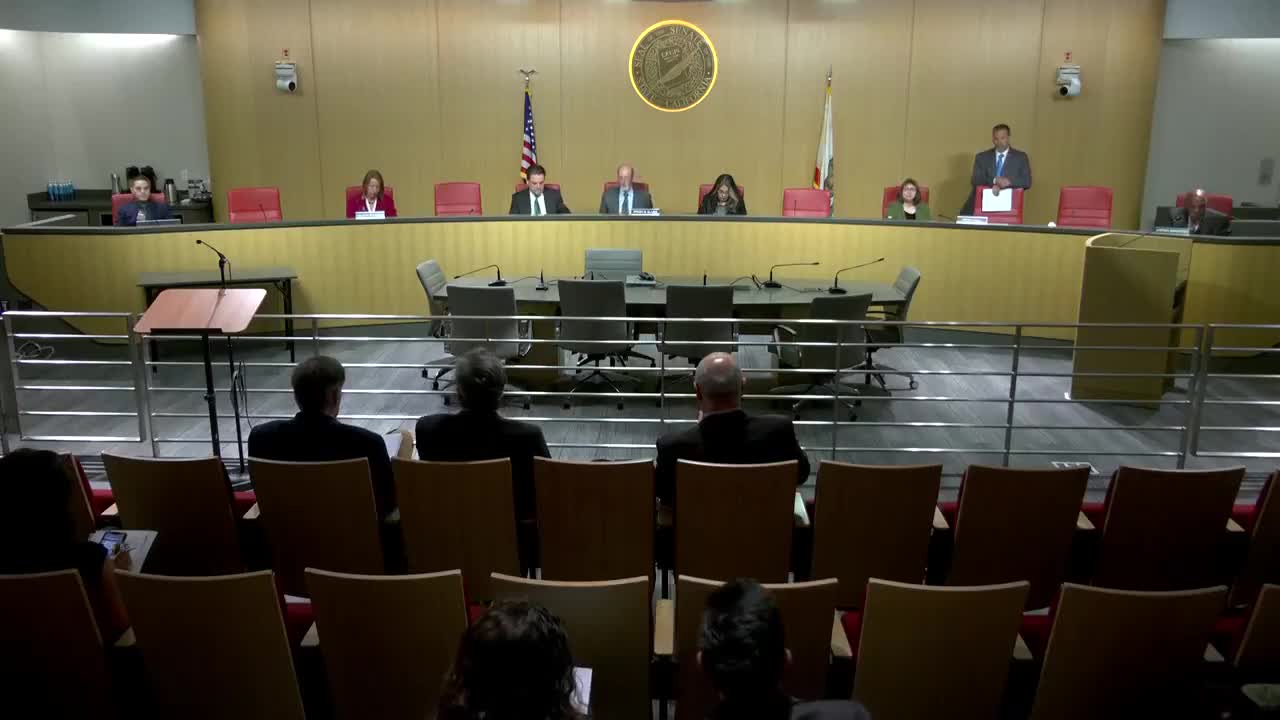
Discussed in Hearing
 9MIN