SB 957: Data collection: sexual orientation, gender identity, and intersex status.
- Session Year: 2023-2024
- House: Senate
- Latest Version Date: 2024-09-28
Current Status:
Passed
(2024-09-28: Chaptered by Secretary of State. Chapter 868, Statutes of 2024.)
Introduced
In Committee
First Chamber
In Committee
Second Chamber
Enacted
(1)Existing law, the Lesbian, Gay, Bisexual, and Transgender Disparities Reduction Act, requires the State Department of Public Health, among other specified state entities, in the course of collecting demographic data directly or by contract as to the ancestry or ethnic origin of Californians, to collect voluntary self-identification information pertaining to sexual orientation, gender identity, and intersexuality.
This bill would replace the term intersexuality with the term variations in sex characteristics/intersex status and would make conforming changes to related provisions.
Existing law, as an exception to the provision above, authorizes those state entities, instead of requiring them, to collect the demographic data under either of the following circumstances: (a) pursuant to federal programs or surveys, whereby the guidelines for demographic data collection categories are defined by the federal program or survey; or (b) demographic data are collected by other entities, including other state agencies, surveys administered by third-party entities and the state department is not the sole funder, or third-party entities that provide aggregated data to a state department.
This bill, notwithstanding the exception above, would require the State Department of Public Health to collect the demographic data from third parties, including, but not limited to, local health jurisdictions, on any forms or electronic data systems, unless prohibited by federal or state law. To the extent that the bill would create new duties for local officials in facilitating the departments data collection, the bill would impose a state-mandated local program.
The bill would specify that the provisions above do not require (1) the State Department of Public Health to collect demographic data from an individual under 18 years of age, as specified, or (2) health care providers or other third parties to collect, disclose, or report information that is not voluntarily provided self-identification information pertaining to sexual orientation, gender identity, and variations in sex characteristics/intersex status (SOGISC).
Existing law requires the above-described state entities to report to the Legislature the data collected and the method used to collect the data, and to make the data available to the public, except for personally identifiable information. Existing law deems that personally identifiable information confidential and prohibits its disclosure. Existing law sets forth different deadlines, depending on the specified state entity, for complying with those requirements.
This bill would require the State Department of Public Health, for purposes of the data collected by the department on SOGISC, to comply with the above-described requirements as early as possible but no later than March 28, 2029.
(2)Existing law authorizes local health officers and the State Department of Public Health to operate immunization information systems. Existing law requires health care providers and other certain agencies, including schools and county human services agencies, to disclose specified immunization and other information about the patient or client to local health departments and the State Department of Public Health. Existing law authorizes local health departments and the State Department of Public Health to disclose most of that same information, as specified, to each other and to other entities. Existing law authorizes a patient or a patients parent or guardian to refuse to permit recordsharing, as specified.
Under existing law, the information that is subject to disclosure under those provisions includes, among other things, certain data on immunizations received, the patients or clients date of birth, race and ethnicity, and gender.
This bill would add the adult patients or clients SOGISC and sex assigned at birth to the list of information subject to disclosure. Under the bill, a health care provider would only be required to disclose SOGISC information that is voluntarily provided by the patient or client. The bill would prohibit a health care provider from disclosing that information as it relates to any patient or client who is under 18 years of age. The bill would make conforming changes to the above-described provisions on data sharing. By expanding the duties of local officials with regard to disclosing demographic information to certain entities, the bill would impose a state-mandated local program.
(3)The bill would require the State Department of Public Health to prepare an annual report concerning SOGISC data collected by the department. The bill would require the department to annually post and make available the report on the departments internet website and to annually submit the report to the Legislature, excluding any personally identifiable information.
The bill would require the annual report to include, among other certain information, the departments efforts to collect, analyze, and report SOGISC data and, until fully implemented, the progress that the department has made in implementing recommendations set forth in a related 2023 report by the California State Auditors Office.
(4)The California Constitution requires the state to reimburse local agencies and school districts for certain costs mandated by the state. Statutory provisions establish procedures for making that reimbursement.
This bill would provide that, if the Commission on State Mandates determines that the bill contains costs mandated by the state, reimbursement for those costs shall be made pursuant to the statutory provisions noted above.
(5)Existing constitutional provisions require that a statute that limits the right of access to the meetings of public bodies or the writings of public officials and agencies be adopted with findings demonstrating the interest protected by the limitation and the need for protecting that interest.
This bill would make legislative findings to that effect.
(1)Existing law, the Lesbian, Gay, Bisexual, and Transgender Disparities Reduction Act, requires the State Department of Public Health, among other specified state entities, in the course of collecting demographic data directly or by contract as to the ancestry or ethnic origin of Californians, to collect voluntary self-identification information pertaining to sexual orientation, gender identity, and intersexuality.
This bill would replace the term intersexuality with the term variations in sex characteristics/intersex status and would make conforming changes to related provisions.
Existing law, as an exception to the provision above, authorizes those state entities, instead of requiring them, to collect the demographic data under either of the following circumstances: (a) pursuant to federal programs or surveys, whereby the guidelines for demographic data collection categories are defined by the federal program or survey; or (b) demographic data are collected by other entities, including other state agencies, surveys administered by third-party entities and the state department is not the sole funder, or third-party entities that provide aggregated data to a state department.
This bill, notwithstanding the exception above, would require the State Department of Public Health to collect the demographic data from third parties, including, but not limited to, local health jurisdictions, on any forms or electronic data systems, unless prohibited by federal or state law. To the extent that the bill would create new duties for local officials in facilitating the departments data collection, the bill would impose a state-mandated local program.
The bill would specify that the provisions above do not require (1) the State Department of Public Health to collect demographic data from an individual under 18 years of age, as specified, or (2) health care providers or other third parties to collect, disclose, or report information that is not voluntarily provided self-identification information pertaining to sexual orientation, gender identity, and variations in sex characteristics/intersex status (SOGISC).
Existing law requires the above-described state entities to report to the Legislature the data collected and the method used to collect the data, and to make the data available to the public, except for personally identifiable information. Existing law deems that personally identifiable information confidential and prohibits its disclosure. Existing law sets forth different deadlines, depending on the specified state entity, for complying with those requirements.
This bill would require the State Department of Public Health, for purposes of the data collected by the department on SOGISC, to comply with the above-described requirements as early as possible but no later than March 28, 2029.
(2)Existing law authorizes local health officers and the State Department of Public Health to operate immunization information systems. Existing law requires health care providers and other certain agencies, including schools and county human services agencies, to disclose specified immunization and other information about the patient or client to local health departments and the State Department of Public Health. Existing law authorizes local health departments and the State Department of Public Health to disclose most of that same information, as specified, to each other and to other entities. Existing law authorizes a patient or a patients parent or guardian to refuse to permit recordsharing, as specified.
Under existing law, the information that is subject to disclosure under those provisions includes, among other things, certain data on immunizations received, the patients or clients date of birth, race and ethnicity, and gender.
This bill would add the adult patients or clients SOGISC and sex assigned at birth to the list of information subject to disclosure. Under the bill, a health care provider would only be required to disclose SOGISC information that is voluntarily provided by the patient or client. The bill would prohibit a health care provider from disclosing that information as it relates to any patient or client who is under 18 years of age. The bill would make conforming changes to the above-described provisions on data sharing. By expanding the duties of local officials with regard to disclosing demographic information to certain entities, the bill would impose a state-mandated local program.
(3)The bill would require the State Department of Public Health to prepare an annual report concerning SOGISC data collected by the department. The bill would require the department to annually post and make available the report on the departments internet website and to annually submit the report to the Legislature, excluding any personally identifiable information.
The bill would require the annual report to include, among other certain information, the departments efforts to collect, analyze, and report SOGISC data and, until fully implemented, the progress that the department has made in implementing recommendations set forth in a related 2023 report by the California State Auditors Office.
(4)The California Constitution requires the state to reimburse local agencies and school districts for certain costs mandated by the state. Statutory provisions establish procedures for making that reimbursement.
This bill would provide that, if the Commission on State Mandates determines that the bill contains costs mandated by the state, reimbursement for those costs shall be made pursuant to the statutory provisions noted above.
(5)Existing constitutional provisions require that a statute that limits the right of access to the meetings of public bodies or the writings of public officials and agencies be adopted with findings demonstrating the interest protected by the limitation and the need for protecting that interest.
This bill would make legislative findings to that effect.
(1)Existing law, the Lesbian, Gay, Bisexual, and Transgender Disparities Reduction Act, requires the State Department of Public Health, among other specified state entities, in the course of collecting demographic data directly or by contract as to the ancestry or ethnic origin of Californians, to collect voluntary self-identification information pertaining to sexual orientation, gender identity, and intersexuality.
This bill would replace the term intersexuality with the term variations in sex characteristics/intersex status and would make conforming changes to related provisions.
Existing law, as an exception to the provision above, authorizes those state entities, instead of requiring them, to collect the demographic data under either of the following circumstances: (a) pursuant to federal programs or surveys, whereby the guidelines for demographic data collection categories are defined by the federal program or survey; or (b) demographic data are collected by other entities, including other state agencies, surveys administered by third-party entities and the state department is not the sole funder, or third-party entities that provide aggregated data to a state department.
This bill, notwithstanding the exception above, would require the State Department of Public Health to collect the demographic data from third parties, including, but not limited to, local health jurisdictions, on any forms or electronic data systems, unless prohibited by federal or state law. To the extent that the bill would create new duties for local officials in facilitating the departments data collection, the bill would impose a state-mandated local program.
The bill would specify that the provisions above do not require (1) the State Department of Public Health to collect demographic data from an individual under 18 years of age, as specified, or (2) health care providers or other third parties to collect, disclose, or report information that is not voluntarily provided self-identification information pertaining to sexual orientation, gender identity, and variations in sex characteristics/intersex status (SOGISC).
Existing law requires the above-described state entities to report to the Legislature the data collected and the method used to collect the data, and to make the data available to the public, except for personally identifiable information. Existing law deems that personally identifiable information confidential and prohibits its disclosure. Existing law sets forth different deadlines, depending on the specified state entity, for complying with those requirements.
This bill would require the State Department of Public Health, for purposes of the data collected by the department on SOGISC, to comply with the above-described requirements as early as possible but no later than March 28, 2029.
(2)Existing law authorizes local health officers and the State Department of Public Health to operate immunization information systems. Existing law requires health care providers and other certain agencies, including schools and county human services agencies, to disclose specified immunization and other information about the patient or client to local health departments and the State Department of Public Health. Existing law authorizes local health departments and the State Department of Public Health to disclose most of that same information, as specified, to each other and to other entities. Existing law authorizes a patient or a patients parent or guardian to refuse to permit recordsharing, as specified.
Under existing law, the information that is subject to disclosure under those provisions includes, among other things, certain data on immunizations received, the patients or clients date of birth, race and ethnicity, and gender.
This bill would replace the term gender with the term sex assigned at birth and would add the adult patients or clients SOGISC and sex assigned at birth to the list of information subject to disclosure. Under the bill, a health care provider would only be required to disclose SOGISC information that is voluntarily provided by the patient or client. The bill would prohibit a health care provider from disclosing that information as it relates to any patient or client who is under 18 years of age. The bill would make conforming changes to the above-described provisions on data sharing. By expanding the duties of local officials with regard to disclosing demographic information to certain entities, the bill would impose a state-mandated local program.
(3)The bill would require the State Department of Public Health to prepare an annual report concerning SOGISC data collected by the department. The bill would require the department to annually post and make available the report on the departments internet website and to annually submit the report to the Legislature, excluding any personally identifiable information.
The bill would require the annual report to include, among other certain information, the departments efforts to collect, analyze, and report SOGISC data and, until fully implemented, the progress that the department has made in implementing recommendations set forth in a related 2023 report by the California State Auditors Office.
(4)The California Constitution requires the state to reimburse local agencies and school districts for certain costs mandated by the state. Statutory provisions establish procedures for making that reimbursement.
This bill would provide that, if the Commission on State Mandates determines that the bill contains costs mandated by the state, reimbursement for those costs shall be made pursuant to the statutory provisions noted above.
(5)Existing constitutional provisions require that a statute that limits the right of access to the meetings of public bodies or the writings of public officials and agencies be adopted with findings demonstrating the interest protected by the limitation and the need for protecting that interest.
This bill would make legislative findings to that effect.
(1)Existing law, the Lesbian, Gay, Bisexual, and Transgender Disparities Reduction Act, requires the State Department of Public Health, among other specified state entities, in the course of collecting demographic data directly or by contract as to the ancestry or ethnic origin of Californians, to collect voluntary self-identification information pertaining to sexual orientation, gender identity, and intersexuality.
This bill would replace the term intersexuality with the term variations in sex characteristics/intersex status and would make conforming changes to related provisions.
Existing law, as an exception to the provision above, authorizes those state entities, instead of requiring them, to collect the demographic data under either of the following circumstances: (a) pursuant to federal programs or surveys, whereby the guidelines for demographic data collection categories are defined by the federal program or survey; or (b) demographic data are collected by other entities, including other state agencies, surveys administered by third-party entities and the state department is not the sole funder, or third-party entities that provide aggregated data to a state department.
This bill, notwithstanding the exception above, would require the State Department of Public Health to collect the demographic data from third parties, including, but not limited to, local health jurisdictions, on any forms or electronic data systems, unless prohibited by federal or state law. To the extent that the bill would create new duties for local officials in facilitating the departments data collection, the bill would impose a state-mandated local program.
The bill would prohibit the provisions above from being construed to require specify that the provisions above do not require the State Department of Public Health to collect demographic data from an individual under 18 years of age, as specified, or health care providers to collect, disclose, or report information that is not voluntarily provided self-identification information pertaining to sexual orientation, gender identity, and variations in sex characteristics/intersex status (SOGISC).
Existing law requires the above-described state entities to report to the Legislature the data collected and the method used to collect the data, and to make the data available to the public, except for personally identifiable information. Existing law deems that personally identifiable information confidential and prohibits its disclosure. Existing law sets forth different deadlines, depending on the specified state entity, for complying with those requirements.
This bill would require the State Department of Public Health, for purposes of the data collected by the department on SOGISC, to comply with the above-described requirements by July 1, 2026. as early as possible but no later than March 28, 2029.
(2)Existing law authorizes local health officers and the State Department of Public Health to operate immunization information systems. Existing law requires health care providers and other certain agencies, including schools and county human services agencies, to disclose specified immunization and other information about the patient or client to local health departments and the State Department of Public Health. Existing law authorizes local health departments and the State Department of Public Health to disclose most of that same information, as specified, to each other and to other entities. Existing law authorizes a patient or a patients parent or guardian to refuse to permit recordsharing, as specified.
Under existing law, the information that is subject to disclosure under those provisions includes, among other things, certain data on immunizations received, the patients or clients date of birth, race and ethnicity, and gender.
This bill would replace the term gender with the term sex assigned at birth and would add the adult patients or clients SOGISC to the list of information subject to disclosure. Under the bill, a health care provider would only be required to disclose SOGISC information that is voluntarily provided by the patient or client. The bill would prohibit a health care provider from disclosing that information as it relates to any patient or client who is under 18 years of age. The bill would make conforming changes to the above-described provisions on data sharing. By expanding the duties of local officials with regard to disclosing demographic information to certain entities, the bill would impose a state-mandated local program.
(3)The bill would require the State Department of Public Health to prepare an annual report concerning SOGISC data collected by the department. The bill would require the department to annually post and make available the report on the departments internet website, website and to annually submit the report to the Legislature, excluding any personally identifiable information.
The bill would require the annual report to include, among other certain information, the departments efforts to collect, analyze, and report SOGISC data, data and, until fully implemented, the progress that the department has made in implementing recommendations set forth in a related 2023 report by the California State Auditors Office.
(4)The California Constitution requires the state to reimburse local agencies and school districts for certain costs mandated by the state. Statutory provisions establish procedures for making that reimbursement.
This bill would provide that, if the Commission on State Mandates determines that the bill contains costs mandated by the state, reimbursement for those costs shall be made pursuant to the statutory provisions noted above.
(5)Existing constitutional provisions require that a statute that limits the right of access to the meetings of public bodies or the writings of public officials and agencies be adopted with findings demonstrating the interest protected by the limitation and the need for protecting that interest.
This bill would make legislative findings to that effect.
(1)Existing law, the Lesbian, Gay, Bisexual, and Transgender Disparities Reduction Act, requires the State Department of Public Health, among other specified state entities, in the course of collecting demographic data directly or by contract as to the ancestry or ethnic origin of Californians, to collect voluntary self-identification information pertaining to sexual orientation, gender identity, and intersexuality.
This bill would replace the term intersexuality with the term variations in sex characteristics/intersex status and would make conforming changes to related provisions.
Existing law, as an exception to the provision above, authorizes those state entities, instead of requiring them, to collect the demographic data under either of the following circumstances: (a) pursuant to federal programs or surveys, whereby the guidelines for demographic data collection categories are defined by the federal program or survey; or (b) demographic data are collected by other entities, including other state agencies, surveys administered by third-party entities and the state department is not the sole funder, or third-party entities that provide aggregated data to a state department.
This bill, notwithstanding the exception above, would require the State Department of Public Health to collect the demographic data from third parties, including, but not limited to, local health jurisdictions, on any forms or electronic data systems, unless prohibited by federal or state law. To the extent that the bill would create new duties for local officials in facilitating the departments data collection, the bill would impose a state-mandated local program.
The bill would prohibit the provisions above from being construed to require health care providers to collect, disclose, or report information that is not voluntarily provided self-identification information pertaining to sexual orientation, gender identity, and variations in sex characteristics/intersex status (SOGISC).
Existing law requires the above-described state entities to report to the Legislature the data collected and the method used to collect the data, and to make the data available to the public, except for personally identifiable information. Existing law deems that personally identifiable information confidential and prohibits it its disclosure. Existing law sets forth different deadlines, depending on the specified state entity, for complying with those requirements.
This bill would require the State Department of Public Health, for purposes of the data collected by the department on sexual orientation, gender identity, and intersexuality, SOGISC, to comply with the above-described requirements by July 1, 2026.
(2)Existing law authorizes local health officers and the State Department of Public Health to operate immunization information systems. Existing law requires health care providers and other certain agencies, including schools and county human services agencies, to disclose specified immunization and other information about the patient or client to local health departments and the State Department of Public Health. Existing law authorizes local health departments and the State Department of Public Health to disclose most of that same information, as specified, to each other and to other entities. Existing law authorizes a patient or a patients parent or guardian to refuse to permit recordsharing, as specified.
Under existing law, the information that is subject to disclosure under those provisions includes, among other things, certain data on immunizations received, the patients or clients date of birth, race and ethnicity, and gender.
This bill would add the patients or clients sexual orientation and gender identity SOGISC to the list of information subject to disclosure. Under the bill, a health care provider would only be required to disclose SOGISC information that is voluntarily provided by the patient or client. The bill would prohibit a health care provider from disclosing that information as it relates to any patient or client who is under 18 years of age. The bill would make conforming changes to the above-described provisions on data sharing. By expanding the duties of local officials with regard to disclosing demographic information to certain entities, the bill would impose a state-mandated local program.
(3)The bill would require the State Department of Public Health to prepare an annual report concerning sexual orientation and gender identity (SOGI) SOGISC data collected by the department. The bill would require the department to annually post and make available the report on the departments internet website, and to annually submit the report to the Legislature, excluding any personally identifiable information.
The bill would require the annual report to include, among other certain information, the departments efforts to collect, analyze, and report SOGI SOGISC data, and, until fully implemented, the progress that the department has made in implementing recommendations set forth in a related 2023 report by the California State Auditors Office.
(4)The California Constitution requires the state to reimburse local agencies and school districts for certain costs mandated by the state. Statutory provisions establish procedures for making that reimbursement.
This bill would provide that, if the Commission on State Mandates determines that the bill contains costs mandated by the state, reimbursement for those costs shall be made pursuant to the statutory provisions noted above.
(5)Existing constitutional provisions require that a statute that limits the right of access to the meetings of public bodies or the writings of public officials and agencies be adopted with findings demonstrating the interest protected by the limitation and the need for protecting that interest.
This bill would make legislative findings to that effect.
(1)Existing law, the Lesbian, Gay, Bisexual, and Transgender Disparities Reduction Act, requires the State Department of Public Health, among other specified state entities, in the course of collecting demographic data directly or by contract as to the ancestry or ethnic origin of Californians, to collect voluntary self-identification information pertaining to sexual orientation, gender identity, and intersexuality.
Existing law, as an exception to the provision above, authorizes those state entities, instead of requiring them, to collect the demographic data under either of the following circumstances: (a) pursuant to federal programs or surveys, whereby the guidelines for demographic data collection categories are defined by the federal program or survey; or (b) demographic data are collected by other entities, including other state agencies, surveys administered by third-party entities and the state department is not the sole funder, or third-party entities that provide aggregated data to a state department.
This bill, notwithstanding the exception above, would require the State Department of Public Health to collect the demographic data from third parties, including, but not limited to, local health jurisdictions, on any forms or electronic data systems, unless prohibited by federal or state law. To the extent that the bill would create new duties for local officials in facilitating the departments data collection, the bill would impose a state-mandated local program.
Existing law requires the above-described state entities to report to the Legislature the data collected and the method used to collect the data, and to make the data available to the public, except for personally identifiable information. Existing law deems that personally identifiable information confidential and prohibits it disclosure. Existing law sets forth different deadlines, depending on the specified state entity, for complying with those requirements.
This bill would require the State Department of Public Health, for purposes of the data collected by the department on sexual orientation, gender identity, and intersexuality, to comply with the above-described requirements by July 1, 2026.
(2)Existing law authorizes local health officers and the State Department of Public Health to operate immunization information systems. Existing law requires health care providers and other certain agencies, including schools and county human services agencies, to disclose specified immunization and other information about the patient or client to local health departments and the State Department of Public Health. Existing law authorizes local health departments and the State Department of Public Health to disclose most of that same information, as specified, to each other and to other entities. Existing law authorizes a patient or a patients parent or guardian to refuse to permit recordsharing, as specified.
Under existing law, the information that is subject to disclosure under those provisions includes, among other things, certain data on immunizations received, the patients or clients date of birth, race and ethnicity, and gender.
This bill would add the patients or clients sexual orientation and gender identity to the list of information subject to disclosure. The bill would make conforming changes to the above-described provisions on data sharing. By expanding the duties of local officials with regard to disclosing demographic information to certain entities, the bill would impose a state-mandated local program.
(3)The bill would require the State Department of Public Health to prepare an annual report concerning sexual orientation and gender identity (SOGI) data collected by the department. The bill would require the department to annually post and make available the report on the departments internet website, and to annually submit the report to the Legislature, excluding any personally identifiable information.
The bill would require the annual report to include, among other certain information, the departments efforts to collect, analyze, and report SOGI data, and, until fully implemented, the progress that the department has made in implementing recommendations set forth in a related 2023 report by the California State Auditors Office.
(4)The California Constitution requires the state to reimburse local agencies and school districts for certain costs mandated by the state. Statutory provisions establish procedures for making that reimbursement.
This bill would provide that, if the Commission on State Mandates determines that the bill contains costs mandated by the state, reimbursement for those costs shall be made pursuant to the statutory provisions noted above.
(5)Existing constitutional provisions require that a statute that limits the right of access to the meetings of public bodies or the writings of public officials and agencies be adopted with findings demonstrating the interest protected by the limitation and the need for protecting that interest.
This bill would make legislative findings to that effect.
(a)(1)This section shall only apply to the following state entities:
(A)The State Department of Health Care Services.
(B)The State Department of Public Health.
(C)The State Department of Social Services.
(D)The California Department of Aging.
(E)The State Department of Education and the Superintendent of Public Instruction, except this section shall not apply to the California Longitudinal Pupil Achievement Data System (CALPADS).
(F)The Commission on Teacher Credentialing.
(G)The Civil Rights Department.
(H)The Labor and Workforce Development Agency.
(I)The Department of Industrial Relations.
(J)The Employment Training Panel.
(K)The Employment Development Department, except this section shall not apply to the unemployment insurance program within the department.
(L)The State Department of State Hospitals.
(M)The Department of Rehabilitation.
(N)The State Department of Developmental Services.
(O)The Department of Community Services and Development.
(2)This section shall be known, and may be cited, as the Lesbian, Gay, Bisexual, Transgender, and Intersex Disparities Reduction Act.
(b)(1)Except as specified in paragraph (2), in addition to the duties imposed by Section 8310.5 and to the extent permissible by federal law, the state entities identified in subdivision (a), in the course of collecting demographic data directly or by contract as to the ancestry or ethnic origin of Californians, shall collect voluntary self-identification information pertaining to sexual orientation, gender identity, and variations in sex characteristics/intersex status (SOGISC).
(2)The state entities identified in subdivision (a) may, but are not required to, collect demographic data pursuant to this section under either of the following circumstances:
(A)Pursuant to federal programs or surveys, whereby the guidelines for demographic data collection categories are defined by the federal program or survey.
(B)Demographic data are collected by other entities including:
(i)State offices, departments, and agencies not included in subdivision (a).
(ii)Surveys administered by third-party entities and the state department is not the sole funder.
(iii)Third-party entities, including, but not limited to, private employers, that provide aggregated data to a state department.
(3)Notwithstanding paragraph (2), the State Department of Public Health shall collect demographic data pursuant to this section from third parties, including, but not limited to, local health jurisdictions, on any forms or electronic data systems, unless prohibited by federal or state law. This section does not require either of the following:
(A)The State Department of Public Health to collect demographic data pursuant to this section from an individual under 18 years of age who is applying for, or participating in, the California Special Supplemental Nutrition Program for Women, Infants, and Children.
(B)Health care providers or other third parties to collect, disclose, or report information that is not voluntarily provided self-identification information pertaining to SOGISC.
(c)(1)The state entities identified in subdivision (a) shall report to the Legislature the data collected pursuant to this section and the method used to collect those data, and make the data available to the public in accordance with state and federal law, except for personal identifying information, which shall be deemed confidential and shall not be disclosed.
(2)The state entities identified in subdivision (a) shall not report demographic data that would permit identification of individuals or would result in statistical unreliability. Demographic reports on data collected pursuant to this section, to prevent identification of individuals, may aggregate categories at a state, county, city, census tract, or ZIP Code level to facilitate comparisons and identify disparities.
(3)The state entities identified in subdivision (a) may use information voluntarily provided about SOGISC only for demographic analysis, coordination of care, quality improvement of its services, conducting approved research, fulfilling reporting requirements, and guiding policy or funding decisions. All information about SOGISC collected pursuant to this section shall be used only for purposes specified in this section.
(d)(1)The state entities identified in subparagraphs (A) to (D), inclusive, of paragraph (1) of subdivision (a) shall comply with the requirements of this section as early as possible following the effective date of this section, but no later than July 1, 2018, except as specified in paragraph (2).
(2)For purposes of data collected pursuant to paragraph (3) of subdivision (b), the State Department of Public Health shall comply with the requirements of this section as early as possible but no later than March 28, 2029.
(e)The state entities identified in subparagraphs (E) to (K), inclusive, of paragraph (1) of subdivision (a) shall comply with the requirements of this section as early as possible following the effective date of this section, but no later than July 1, 2019.
(f)The state entities identified in subparagraphs (L) to (O), inclusive, of paragraph (1) of subdivision (a) shall comply with the requirements of this section as early as possible following January 1, 2025, but no later than July 1, 2026.
SEC. 2.Section 120440 of the Health and Safety Code, as amended by Section 1 of Chapter 582 of the Statutes of 2022, is amended to read:120440.(a)For the purposes of this chapter, the following definitions shall apply:
(1)Health care provider means any person licensed pursuant to Division 2 (commencing with Section 500) of the Business and Professions Code or a clinic or health facility licensed pursuant to Division 2 (commencing with Section 1200).
(2)Schools, childcare facilities, and family childcare homes means those institutions referred to in subdivision (b) of Section 120335, regardless of whether they directly provide immunizations to patients or clients.
(3)WIC service provider means any public or private nonprofit agency contracting with the department to provide services under the California Special Supplemental Nutrition Program for Women, Infants, and Children, as provided for in Article 2 (commencing with Section 123275) of Chapter 1 of Part 2 of Division 106.
(4)Health care plan means a health care service plan as defined in subdivision (f) of Section 1345, a government-funded program the purpose of which is paying the costs of health care, or an insurer as described in Sections 10123.5 and 10123.55 of the Insurance Code, regardless of whether the plan directly provides immunizations to patients or clients.
(5)County human services agency means a county welfare agency administering the California Work Opportunity and Responsibility to Kids (CalWORKs) program, pursuant to Chapter 2 (commencing with Section 11200.5) of Part 3 of Division 9 of the Welfare and Institutions Code.
(6)Foster care agency means any of the county and state social services agencies providing foster care services in California.
(7)Tuberculosis screening means an approved intradermal tuberculin test or any other test for tuberculosis infection that is recommended by the federal Centers for Disease Control and Prevention and licensed by the federal Food and Drug Administration.
(b)(1)Local health officers may operate immunization information systems pursuant to their authority under Section 120175, in conjunction with the Immunization Branch of the State Department of Public Health. Local health officers and the State Department of Public Health may operate these systems in either or both of the following manners:
(A)Separately within their individual jurisdictions.
(B)Jointly among more than one jurisdiction.
(2)This subdivision does not preclude local health officers from sharing the information set forth in paragraphs (1) to (13), inclusive, of subdivision (c) with other health officers jointly operating the system.
(c)Notwithstanding Sections 49075 and 49076 of the Education Code, Chapter 5 (commencing with Section 10850) of Part 2 of Division 9 of the Welfare and Institutions Code, or any other law, unless a refusal to permit recordsharing is made pursuant to subdivision (e), health care providers, and other agencies, including, but not limited to, schools, childcare facilities, service providers for the California Special Supplemental Nutrition Program for Women, Infants, and Children (WIC), health care plans, foster care agencies, and county human services agencies, shall disclose the information set forth in paragraphs (1) to (13), inclusive, from the patients medical record, or the clients record, to local health departments operating countywide or regional immunization information and reminder systems and the State Department of Public Health. With respect to the information set forth in paragraph (13), a health care provider is only required to disclose information that is voluntarily provided by the patient or client. A health care provider shall not disclose any information set forth in paragraph (13) relating to any patient or client who is under 18 years of age. Local health departments and the State Department of Public Health may disclose the information set forth in paragraphs (1) to (13), inclusive, to each other and, upon a request for information pertaining to a specific person, to health care providers taking care of the patient and to the Medical Board of California and the Osteopathic Medical Board of California. Local health departments and the State Department of Public Health may disclose the information in paragraphs (1) to (7), inclusive, and paragraphs (9) to (12), inclusive, to schools, childcare facilities, county human services agencies, and family childcare homes to which the person is being admitted or in attendance, foster care agencies in assessing and providing medical care for children in foster care, and WIC service providers providing services to the person, health care plans arranging for immunization services for the patient, and county human services agencies assessing immunization histories of dependents of CalWORKs participants, upon request for information pertaining to a specific person. Determination of benefits based upon immunization of a dependent CalWORKs participant shall be made pursuant to Section 11265.8 of the Welfare and Institutions Code. The following information shall be subject to this subdivision:
(1)The name of the patient or client and names of the parents or guardians of the patient or client.
(2)Date of birth of the patient or client.
(3)Types and dates of immunizations received by the patient or client.
(4)Manufacturer and lot number for each immunization received.
(5)Adverse reaction to immunizations received.
(6)Other nonmedical information necessary to establish the patients or clients unique identity and record.
(7)Results of tuberculosis screening.
(8)Current address and telephone number of the patient or client and the parents or guardians of the patient or client.
(9)Patients or clients gender.
(10)Patients or clients place of birth.
(11)Patients or clients race and ethnicity.
(12)Patients or clients information needed to comply with Chapter 1 (commencing with Section 120325), but excluding Section 120380.
(13)An adult patients or clients sexual orientation, gender identity, and variations in sex characteristics/intersex status (SOGISC) and sex assigned at birth.
(d)(1)Health care providers, local health departments, and the State Department of Public Health shall maintain the confidentiality of information listed in subdivision (c) in the same manner as other medical record information with patient identification that they possess. These providers, departments, and contracting agencies are subject to civil action and criminal penalties for the wrongful disclosure of the information listed in subdivision (c), in accordance with existing law. They shall use the information listed in subdivision (c) only for the following purposes:
(A)To provide immunization services to the patient or client, including issuing reminder notifications to patients or clients or their parents or guardians when immunizations are due.
(B)To provide or facilitate provision of third-party payer payments for immunizations.
(C)To compile and disseminate statistical information of immunization status on groups of patients or clients or populations in California, without identifying information for these patients or clients included in these groups or populations.
(D)In the case of health care providers only, as authorized by Part 2.6 (commencing with Section 56) of Division 1 of the Civil Code.
(2)Schools, childcare facilities, family childcare homes, WIC service providers, foster care agencies, county human services agencies, and health care plans shall maintain the confidentiality of information listed in subdivision (c) in the same manner as other client, patient, and pupil information that they possess. These institutions and providers are subject to civil action and criminal penalties for the wrongful disclosure of the information listed in subdivision (c), in accordance with existing law. They shall use the information listed in subdivision (c) only for those purposes provided in subparagraphs (A) to (D), inclusive, of paragraph (1) and as follows:
(A)In the case of schools, childcare facilities, family childcare homes, and county human services agencies, to carry out their responsibilities regarding required immunization for attendance or participation benefits, or both, as described in Chapter 1 (commencing with Section 120325), and in Section 11265.8 of the Welfare and Institutions Code.
(B)In the case of WIC service providers, to perform immunization status assessments of clients and to refer those clients found to be due or overdue for immunizations to health care providers.
(C)In the case of health care plans, to facilitate payments to health care providers, to assess the immunization status of their clients, and to tabulate statistical information on the immunization status of groups of patients, without including patient-identifying information in these tabulations.
(D)In the case of foster care agencies, to perform immunization status assessments of foster children and to assist those foster children found to be due or overdue for immunization in obtaining immunizations from health care providers.
(E)(i)In the case of schools, childcare facilities, family childcare homes, and county human services agencies, for the COVID-19 public health emergency, to perform immunization status assessments of pupils, adults, and clients to ensure health and safety.
(ii)In the case of schools, this subparagraph only applies if the schools governing board or body has adopted a policy mandating COVID-19 immunization for school attendance and the school limits the use of the data to verifying immunization status for this purpose.
(e)A patient or a patients parent or guardian may refuse to permit recordsharing. The health care provider administering immunization and any other agency possessing any patient or client information listed in subdivision (c), if planning to provide patient or client information to an immunization system, as described in subdivision (b), shall inform the patient or client, or the parent or guardian of the patient or client, of the following:
(1)The information listed in subdivision (c) shall be shared with local health departments and the State Department of Public Health, except as prohibited by this section or other applicable law. The health care provider or other agency shall provide the name and address of the State Department of Public Health or of the immunization registry with which the provider or other agency will share the information.
(2)Any of the information shared with local health departments and the State Department of Public Health shall be treated as confidential medical information and shall be used only to share with each other, and, upon request, with health care providers, schools, childcare facilities, family childcare homes, WIC service providers, county human services agencies, foster care agencies, and health care plans. These providers, agencies, and institutions shall, in turn, treat the shared information as confidential, and shall use it only as described in subdivision (d).
(3)The patient or client, or parent or guardian of the patient or client, has the right to examine any immunization-related information or tuberculosis screening results shared pursuant to this section and to correct any errors in it.
(4)The patient or client, or the parent or guardian of the patient or client, may refuse to allow this information to be shared pursuant to this section or to receive immunization reminder notifications at any time, or both. After refusal, the patients or clients physician may maintain access to this information for the purposes of patient care or protecting the public health. After refusal, the local health department and the State Department of Public Health may maintain access to this information for the purpose of protecting the public health pursuant to Sections 100325, 120140, and 120175, as well as Sections 2500 to 2643.20, inclusive, of Title 17 of the California Code of Regulations.
(f)(1)The health care provider administering the immunization or tuberculosis screening and any other agency possessing any patient or client information listed in subdivision (c), may inform the patient or client, or the parent or guardian of the patient or client, by ordinary mail, of the information in paragraphs (1) to (4), inclusive, of subdivision (e). The mailing shall include a reasonable means for refusal, such as a return form or contact telephone number.
(2)The information in paragraphs (1) to (4), inclusive, of subdivision (e) may also be presented to the parent or guardian of the patient or client during any hospitalization of the patient or client.
(g)If the patient or client, or parent or guardian of the patient or client, refuses to allow the information to be shared, pursuant to paragraph (4) of subdivision (e), the health care provider or other agency may not share this information in the manner described in subdivision (c), except as provided in subparagraph (D) of paragraph (1) of subdivision (d).
(h)(1)Upon request of the patient or client, or the parent or guardian of the patient or client, in writing or by other means acceptable to the recipient, a local health department or the State Department of Public Health that has received information about a person pursuant to subdivision (c) shall do all of the following:
(A)Provide the name and address of other persons or agencies with whom the recipient has shared the information.
(B)Stop sharing the information in its possession after the date of the receipt of the request.
(2)After refusal, the patients or clients physician may maintain access to this information for the purposes of patient care or protecting the public health. After refusal, the local health department and the State Department of Public Health may maintain access to this information for the purpose of protecting the public health pursuant to Sections 100325, 120140, and 120175, as well as Sections 2500 to 2643.20, inclusive, of Title 17 of the California Code of Regulations.
(i)Upon notification, in writing or by other means acceptable to the recipient, of an error in the information, a local health department or the State Department of Public Health that has information about a person pursuant to subdivision (c) shall correct the error. If the recipient is aware of a disagreement about whether an error exists, information to that effect may be included.
(j)(1)Any party authorized to make medical decisions for a patient or client, including, but not limited to, those authorized by Section 6922, 6926, or 6927 of, Part 1.5 (commencing with Section 6550), Chapter 2 (commencing with Section 6910) of Part 4, or Chapter 1 (commencing with Section 7000) of Part 6, of Division 11 of, the Family Code, Section 1530.6 of the Health and Safety Code, or Sections 727 and 1755.3 of, and Article 6 (commencing with Section 300) of Chapter 2 of Part 1 of Division 2 of, the Welfare and Institutions Code, may permit sharing of the patients or clients record with any of the immunization information systems authorized by this section.
(2)For a patient or client who is a dependent of a juvenile court, the court or a person or agency designated by the court may permit this recordsharing.
(3)For a patient or client receiving foster care, a person or persons licensed to provide residential foster care, or having legal custody, may permit this recordsharing.
(k)For purposes of supporting immunization information systems, the State Department of Public Health shall assist the Immunization Branch of the State Department of Public Health in both of the following:
(1)Providing department records containing information about publicly funded immunizations.
(2)Supporting efforts for the reporting of publicly funded immunizations into immunization information systems by health care providers and health care plans.
(l)Subject to any other provisions of state and federal law or regulation that limit the disclosure of health information and protect the privacy and confidentiality of personal information, local health departments and the State Department of Public Health may share the information listed in paragraphs (1) to (12), inclusive, of subdivision (c) with a state, local health departments, health care providers, immunization information systems, or any representative of an entity designated by federal or state law or regulation to receive this information. Information in paragraph (13) of subdivision (c) shall not be shared beyond the parties specified for sharing in subdivision (c). The State Department of Public Health may enter into written agreements to exchange confidential immunization information with other states for the purposes of patient care, protecting the public health, entrance into school, childcare and other institutions requiring immunization prior to entry, and the other purposes described in subdivision (d). The written agreement shall provide that the state that receives confidential immunization information must maintain its confidentiality and may only use it for purposes of patient care, protecting the public health, entrance into school, childcare and other institutions requiring immunization prior to entry, and the other purposes described in subdivision (d). Information shall not be shared pursuant to this subdivision if a patient or client, or parent or guardian of a patient or client, refuses to allow the sharing of immunization information pursuant to subdivision (e).
(m)This section shall remain in effect only until January 1, 2026, and as of that date is repealed.
SEC. 3.Section 120440 of the Health and Safety Code, as added by Section 2 of Chapter 582 of the Statutes of 2022, is amended to read:120440.(a)For the purposes of this chapter, the following definitions shall apply:
(1)Health care provider means any person licensed pursuant to Division 2 (commencing with Section 500) of the Business and Professions Code or a clinic or health facility licensed pursuant to Division 2 (commencing with Section 1200).
(2)Schools, childcare facilities, and family childcare homes means those institutions referred to in subdivision (b) of Section 120335, regardless of whether they directly provide immunizations to patients or clients.
(3)WIC service provider means any public or private nonprofit agency contracting with the department to provide services under the California Special Supplemental Nutrition Program for Women, Infants, and Children, as provided for in Article 2 (commencing with Section 123275) of Chapter 1 of Part 2 of Division 106.
(4)Health care plan means a health care service plan as defined in subdivision (f) of Section 1345, a government-funded program the purpose of which is paying the costs of health care, or an insurer as described in Sections 10123.5 and 10123.55 of the Insurance Code, regardless of whether the plan directly provides immunizations to patients or clients.
(5)County human services agency means a county welfare agency administering the California Work Opportunity and Responsibility to Kids (CalWORKs) program, pursuant to Chapter 2 (commencing with Section 11200.5) of Part 3 of Division 9 of the Welfare and Institutions Code.
(6)Foster care agency means any of the county and state social services agencies providing foster care services in California.
(7)Tuberculosis screening means an approved intradermal tuberculin test or any other test for tuberculosis infection that is recommended by the federal Centers for Disease Control and Prevention and licensed by the federal Food and Drug Administration.
(b)(1)Local health officers may operate immunization information systems pursuant to their authority under Section 120175, in conjunction with the Immunization Branch of the State Department of Public Health. Local health officers and the State Department of Public Health may operate these systems in either or both of the following manners:
(A)Separately within their individual jurisdictions.
(B)Jointly among more than one jurisdiction.
(2)This subdivision does not preclude local health officers from sharing the information set forth in paragraphs (1) to (13), inclusive, of subdivision (c) with other health officers jointly operating the system.
(c)Notwithstanding Sections 49075 and 49076 of the Education Code, Chapter 5 (commencing with Section 10850) of Part 2 of Division 9 of the Welfare and Institutions Code, or any other law, unless a refusal to permit recordsharing is made pursuant to subdivision (e), health care providers, and other agencies, including, but not limited to, schools, childcare facilities, service providers for the California Special Supplemental Nutrition Program for Women, Infants, and Children (WIC), health care plans, foster care agencies, and county human services agencies, shall disclose the information set forth in paragraphs (1) to (13), inclusive, from the patients medical record, or the clients record, to local health departments operating countywide or regional immunization information and reminder systems and the State Department of Public Health. With respect to the information set forth in paragraph (13), a health care provider is only required to disclose information that is voluntarily provided by the patient or client. A health care provider shall not disclose any information set forth in paragraph (13) relating to any patient or client who is under 18 years of age. Local health departments and the State Department of Public Health may disclose the information set forth in paragraphs (1) to (13), inclusive, to each other and, upon a request for information pertaining to a specific person, to health care providers taking care of the patient and to the Medical Board of California and the Osteopathic Medical Board of California. Local health departments and the State Department of Public Health may disclose the information in paragraphs (1) to (7), inclusive, and paragraphs (9) to (12), inclusive, to schools, childcare facilities, county human services agencies, and family childcare homes to which the person is being admitted or in attendance, foster care agencies in assessing and providing medical care for children in foster care, and WIC service providers providing services to the person, health care plans arranging for immunization services for the patient, and county human services agencies assessing immunization histories of dependents of CalWORKs participants, upon request for information pertaining to a specific person. Determination of benefits based upon immunization of a dependent CalWORKs participant shall be made pursuant to Section 11265.8 of the Welfare and Institutions Code. The following information shall be subject to this subdivision:
(1)The name of the patient or client and names of the parents or guardians of the patient or client.
(2)Date of birth of the patient or client.
(3)Types and dates of immunizations received by the patient or client.
(4)Manufacturer and lot number for each immunization received.
(5)Adverse reaction to immunizations received.
(6)Other nonmedical information necessary to establish the patients or clients unique identity and record.
(7)Results of tuberculosis screening.
(8)Current address and telephone number of the patient or client and the parents or guardians of the patient or client.
(9)Patients or clients gender.
(10)Patients or clients place of birth.
(11)Patients or clients race and ethnicity.
(12)Patients or clients information needed to comply with Chapter 1 (commencing with Section 120325), but excluding Section 120380.
(13)An adult patients or clients sexual orientation, gender identity, and variations in sex characteristics/intersex status (SOGISC) and sex assigned at birth.
(d)(1)Health care providers, local health departments, and the State Department of Public Health shall maintain the confidentiality of information listed in subdivision (c) in the same manner as other medical record information with patient identification that they possess. These providers, departments, and contracting agencies are subject to civil action and criminal penalties for the wrongful disclosure of the information listed in subdivision (c), in accordance with existing law. They shall use the information listed in subdivision (c) only for the following purposes:
(A)To provide immunization services to the patient or client, including issuing reminder notifications to patients or clients or their parents or guardians when immunizations are due.
(B)To provide or facilitate provision of third-party payer payments for immunizations.
(C)To compile and disseminate statistical information of immunization status on groups of patients or clients or populations in California, without identifying information for these patients or clients included in these groups or populations.
(D)In the case of health care providers only, as authorized by Part 2.6 (commencing with Section 56) of Division 1 of the Civil Code.
(2)Schools, childcare facilities, family childcare homes, WIC service providers, foster care agencies, county human services agencies, and health care plans shall maintain the confidentiality of information listed in subdivision (c) in the same manner as other client, patient, and pupil information that they possess. These institutions and providers are subject to civil action and criminal penalties for the wrongful disclosure of the information listed in subdivision (c), in accordance with existing law. They shall use the information listed in subdivision (c) only for those purposes provided in subparagraphs (A) to (D), inclusive, of paragraph (1) and as follows:
(A)In the case of schools, childcare facilities, family childcare homes, and county human services agencies, to carry out their responsibilities regarding required immunization for attendance or participation benefits, or both, as described in Chapter 1 (commencing with Section 120325), and in Section 11265.8 of the Welfare and Institutions Code.
(B)In the case of WIC service providers, to perform immunization status assessments of clients and to refer those clients found to be due or overdue for immunizations to health care providers.
(C)In the case of health care plans, to facilitate payments to health care providers, to assess the immunization status of their clients, and to tabulate statistical information on the immunization status of groups of patients, without including patient-identifying information in these tabulations.
(D)In the case of foster care agencies, to perform immunization status assessments of foster children and to assist those foster children found to be due or overdue for immunization in obtaining immunizations from health care providers.
(e)A patient or a patients parent or guardian may refuse to permit recordsharing. The health care provider administering immunization and any other agency possessing any patient or client information listed in subdivision (c), if planning to provide patient or client information to an immunization system, as described in subdivision (b), shall inform the patient or client, or the parent or guardian of the patient or client, of the following:
(1)The information listed in subdivision (c) shall be shared with local health departments and the State Department of Public Health, except as prohibited by this section or other applicable law. The health care provider or other agency shall provide the name and address of the State Department of Public Health or of the immunization registry with which the provider or other agency will share the information.
(2)Any of the information shared with local health departments and the State Department of Public Health shall be treated as confidential medical information and shall be used only to share with each other, and, upon request, with health care providers, schools, childcare facilities, family childcare homes, WIC service providers, county human services agencies, foster care agencies, and health care plans. These providers, agencies, and institutions shall, in turn, treat the shared information as confidential, and shall use it only as described in subdivision (d).
(3)The patient or client, or parent or guardian of the patient or client, has the right to examine any immunization-related information or tuberculosis screening results shared pursuant to this section and to correct any errors in it.
(4)The patient or client, or the parent or guardian of the patient or client, may refuse to allow this information to be shared pursuant to this section or to receive immunization reminder notifications at any time, or both. After refusal, the patients or clients physician may maintain access to this information for the purposes of patient care or protecting the public health. After refusal, the local health department and the State Department of Public Health may maintain access to this information for the purpose of protecting the public health pursuant to Sections 100325, 120140, and 120175, as well as Sections 2500 to 2643.20, inclusive, of Title 17 of the California Code of Regulations.
(f)(1)The health care provider administering the immunization or tuberculosis screening and any other agency possessing any patient or client information listed in subdivision (c), may inform the patient or client, or the parent or guardian of the patient or client, by ordinary mail, of the information in paragraphs (1) to (4), inclusive, of subdivision (e). The mailing shall include a reasonable means for refusal, such as a return form or contact telephone number.
(2)The information in paragraphs (1) to (4), inclusive, of subdivision (e) may also be presented to the parent or guardian of the patient or client during any hospitalization of the patient or client.
(g)If the patient or client, or parent or guardian of the patient or client, refuses to allow the information to be shared, pursuant to paragraph (4) of subdivision (e), the health care provider or other agency may not share this information in the manner described in subdivision (c), except as provided in subparagraph (D) of paragraph (1) of subdivision (d).
(h)(1)Upon request of the patient or client, or the parent or guardian of the patient or client, in writing or by other means acceptable to the recipient, a local health department or the State Department of Public Health that has received information about a person pursuant to subdivision (c) shall do all of the following:
(A)Provide the name and address of other persons or agencies with whom the recipient has shared the information.
(B)Stop sharing the information in its possession after the date of the receipt of the request.
(2)After refusal, the patients or clients physician may maintain access to this information for the purposes of patient care or protecting the public health. After refusal, the local health department and the State Department of Public Health may maintain access to this information for the purpose of protecting the public health pursuant to Sections 100325, 120140, and 120175, as well as Sections 2500 to 2643.20, inclusive, of Title 17 of the California Code of Regulations.
(i)Upon notification, in writing or by other means acceptable to the recipient, of an error in the information, a local health department or the State Department of Public Health that has information about a person pursuant to subdivision (c) shall correct the error. If the recipient is aware of a disagreement about whether an error exists, information to that effect may be included.
(j)(1)Any party authorized to make medical decisions for a patient or client, including, but not limited to, those authorized by Section 6922, 6926, or 6927 of, Part 1.5 (commencing with Section 6550), Chapter 2 (commencing with Section 6910) of Part 4, or Chapter 1 (commencing with Section 7000) of Part 6, of Division 11 of, the Family Code, Section 1530.6 of the Health and Safety Code, or Sections 727 and 1755.3 of, and Article 6 (commencing with Section 300) of Chapter 2 of Part 1 of Division 2 of, the Welfare and Institutions Code, may permit sharing of the patients or clients record with any of the immunization information systems authorized by this section.
(2)For a patient or client who is a dependent of a juvenile court, the court or a person or agency designated by the court may permit this recordsharing.
(3)For a patient or client receiving foster care, a person or persons licensed to provide residential foster care, or having legal custody, may permit this recordsharing.
(k)For purposes of supporting immunization information systems, the State Department of Public Health shall assist the Immunization Branch of the State Department of Public Health in both of the following:
(1)Providing department records containing information about publicly funded immunizations.
(2)Supporting efforts for the reporting of publicly funded immunizations into immunization information systems by health care providers and health care plans.
(l)Subject to any other provisions of state and federal law or regulation that limit the disclosure of health information and protect the privacy and confidentiality of personal information, local health departments and the State Department of Public Health may share the information listed in paragraphs (1) to (12), inclusive, of subdivision (c) with a state, local health departments, health care providers, immunization information systems, or any representative of an entity designated by federal or state law or regulation to receive this information. Information in paragraph (13) of subdivision (c) shall not be shared beyond the parties specified for sharing in subdivision (c). The State Department of Public Health may enter into written agreements to exchange confidential immunization information with other states for the purposes of patient care, protecting the public health, entrance into school, childcare and other institutions requiring immunization prior to entry, and the other purposes described in subdivision (d). The written agreement shall provide that the state that receives confidential immunization information must maintain its confidentiality and may only use it for purposes of patient care, protecting the public health, entrance into school, childcare and other institutions requiring immunization prior to entry, and the other purposes described in subdivision (d). Information shall not be shared pursuant to this subdivision if a patient or client, or parent or guardian of a patient or client, refuses to allow the sharing of immunization information pursuant to subdivision (e).
(m)This section shall become operative on January 1, 2026.
SEC. 4.Division 122 (commencing with Section 152000) is added to the Health and Safety Code, to read:122.Sexual Orientation, Gender Identity, and Intersex Status Data Collection152000.(a)(1)The State Department of Public Health (department) shall prepare an annual report, in accordance with subdivision (c), concerning sexual orientation, gender identity, and variations in sex characteristics/intersex status (SOGISC) data collected by the department.
(2)It is the intent of the Legislature that the reports be utilized for the purpose of advancing both of the following objectives:
(A)Use of SOGISC data by different branches of the department in order to identify and address disparities in health outcomes.
(B)The departments use of an efficient mechanism to comply with its reporting requirements for SOGISC data.
(b)The department shall annually post and make available the corresponding report prepared pursuant to this section on the departments internet website. The department shall annually submit the corresponding report to the Legislature in accordance with Section 9795 of the Government Code. The annual report shall exclude any personally identifiable information.
(c)The annual report described in subdivision (a) shall include all of the following information:
(1)The departments efforts to collect, analyze, and report SOGISC data, including a comprehensive list of forms through which the collection of SOGISC data is required under existing law, the level of compliance with SOGISC data collection requirements through those forms, the forms exempt from those requirements, and the reasons for those exemptions.
(2)The status of any improvement or replacement of the California Reportable Disease Information Exchange (CalREDIE), the departments statewide database and surveillance system for reporting communicable diseases.
(3)The outcomes of data analyses that the department has performed, or has allowed other qualified researchers to perform, using SOGISC data that the department has collected.
(4)The steps that the department has taken, or has caused to be taken, to improve services or program outcomes for underserved lesbian, gay, bisexual, transgender, queer, or intersex, plus (LGBTQI+) populations.
(5)Until fully implemented, the progress that the department has made in implementing recommendations set forth in a report by the California State Auditors Office, dated April 27, 2023, and numbered 2022-102.
SEC. 5.If the Commission on State Mandates determines that this act contains costs mandated by the state, reimbursement to local agencies and school districts for those costs shall be made pursuant to Part 7 (commencing with Section 17500) of Division 4 of Title 2 of the Government Code.
SEC. 6.The Legislature finds and declares that Section 1 of this act, which amends Section 8310.8 of the Government Code, imposes a limitation on the publics right of access to the meetings of public bodies or the writings of public officials and agencies within the meaning of Section 3 of Article I of the California Constitution. Pursuant to that constitutional provision, the Legislature makes the following findings to demonstrate the interest protected by this limitation and the need for protecting that interest:
Due to the sensitive general nature of data relating to sexual orientation, gender identity, and variations in sex characteristics/intersex status (SOGISC) and the need to protect the safety of those who would provide voluntary self-identification information pertaining to their SOGISC, it is necessary to prohibit the public disclosure of personal identifying information that would allow the identification of an individual who provided voluntary self-identification information pertaining to SOGISC.
(a)(1)This section shall only apply to the following state entities:
(A)The State Department of Health Care Services.
(B)The State Department of Public Health.
(C)The State Department of Social Services.
(D)The California Department of Aging.
(E)The State Department of Education and the Superintendent of Public Instruction, except this section shall not apply to the California Longitudinal Pupil Achievement Data System (CALPADS).
(F)The Commission on Teacher Credentialing.
(G)The Civil Rights Department.
(H)The Labor and Workforce Development Agency.
(I)The Department of Industrial Relations.
(J)The Employment Training Panel.
(K)The Employment Development Department, except this section shall not apply to the unemployment insurance program within the department.
(L)The State Department of State Hospitals.
(M)The Department of Rehabilitation.
(N)The State Department of Developmental Services.
(O)The Department of Community Services and Development.
(2)This section shall be known, and may be cited, as the Lesbian, Gay, Bisexual, Transgender, and Intersex Disparities Reduction Act.
(b)(1)Except as specified in paragraph (2), in addition to the duties imposed by Section 8310.5 and to the extent permissible by federal law, the state entities identified in subdivision (a), in the course of collecting demographic data directly or by contract as to the ancestry or ethnic origin of Californians, shall collect voluntary self-identification information pertaining to sexual orientation, gender identity, and variations in sex characteristics/intersex status (SOGISC).
(2)The state entities identified in subdivision (a) may, but are not required to, collect demographic data pursuant to this section under either of the following circumstances:
(A)Pursuant to federal programs or surveys, whereby the guidelines for demographic data collection categories are defined by the federal program or survey.
(B)Demographic data are collected by other entities including:
(i)State offices, departments, and agencies not included in subdivision (a).
(ii)Surveys administered by third-party entities and the state department is not the sole funder.
(iii)Third-party entities, including, but not limited to, private employers, that provide aggregated data to a state department.
(3)Notwithstanding paragraph (2), the State Department of Public Health shall collect demographic data pursuant to this section from third parties, including, but not limited to, local health jurisdictions, on any forms or electronic data systems, unless prohibited by federal or state law. This section does not require either of the following:
(A)The State Department of Public Health to collect demographic data pursuant to this section from an individual under 18 years of age who is applying for, or participating in, the California Special Supplemental Nutrition Program for Women, Infants, and Children.
(B)Health care providers or other third parties to collect, disclose, or report information that is not voluntarily provided self-identification information pertaining to SOGISC.
(c)(1)The state entities identified in subdivision (a) shall report to the Legislature the data collected pursuant to this section and the method used to collect those data, and make the data available to the public in accordance with state and federal law, except for personal identifying information, which shall be deemed confidential and shall not be disclosed.
(2)The state entities identified in subdivision (a) shall not report demographic data that would permit identification of individuals or would result in statistical unreliability. Demographic reports on data collected pursuant to this section, to prevent identification of individuals, may aggregate categories at a state, county, city, census tract, or ZIP Code level to facilitate comparisons and identify disparities.
(3)The state entities identified in subdivision (a) may use information voluntarily provided about SOGISC only for demographic analysis, coordination of care, quality improvement of its services, conducting approved research, fulfilling reporting requirements, and guiding policy or funding decisions. All information about SOGISC collected pursuant to this section shall be used only for purposes specified in this section.
(d)(1)The state entities identified in subparagraphs (A) to (D), inclusive, of paragraph (1) of subdivision (a) shall comply with the requirements of this section as early as possible following the effective date of this section, but no later than July 1, 2018, except as specified in paragraph (2).
(2)For purposes of data collected pursuant to paragraph (3) of subdivision (b), the State Department of Public Health shall comply with the requirements of this section as early as possible but no later than March 28, 2029.
(e)The state entities identified in subparagraphs (E) to (K), inclusive, of paragraph (1) of subdivision (a) shall comply with the requirements of this section as early as possible following the effective date of this section, but no later than July 1, 2019.
(f)The state entities identified in subparagraphs (L) to (O), inclusive, of paragraph (1) of subdivision (a) shall comply with the requirements of this section as early as possible following January 1, 2025, but no later than July 1, 2026.
SEC. 2.Section 120440 of the Health and Safety Code, as amended by Section 1 of Chapter 582 of the Statutes of 2022, is amended to read:120440.(a)For the purposes of this chapter, the following definitions shall apply:
(1)Health care provider means any person licensed pursuant to Division 2 (commencing with Section 500) of the Business and Professions Code or a clinic or health facility licensed pursuant to Division 2 (commencing with Section 1200).
(2)Schools, childcare facilities, and family childcare homes means those institutions referred to in subdivision (b) of Section 120335, regardless of whether they directly provide immunizations to patients or clients.
(3)WIC service provider means any public or private nonprofit agency contracting with the department to provide services under the California Special Supplemental Nutrition Program for Women, Infants, and Children, as provided for in Article 2 (commencing with Section 123275) of Chapter 1 of Part 2 of Division 106.
(4)Health care plan means a health care service plan as defined in subdivision (f) of Section 1345, a government-funded program the purpose of which is paying the costs of health care, or an insurer as described in Sections 10123.5 and 10123.55 of the Insurance Code, regardless of whether the plan directly provides immunizations to patients or clients.
(5)County human services agency means a county welfare agency administering the California Work Opportunity and Responsibility to Kids (CalWORKs) program, pursuant to Chapter 2 (commencing with Section 11200.5) of Part 3 of Division 9 of the Welfare and Institutions Code.
(6)Foster care agency means any of the county and state social services agencies providing foster care services in California.
(7)Tuberculosis screening means an approved intradermal tuberculin test or any other test for tuberculosis infection that is recommended by the federal Centers for Disease Control and Prevention and licensed by the federal Food and Drug Administration.
(b)(1)Local health officers may operate immunization information systems pursuant to their authority under Section 120175, in conjunction with the Immunization Branch of the State Department of Public Health. Local health officers and the State Department of Public Health may operate these systems in either or both of the following manners:
(A)Separately within their individual jurisdictions.
(B)Jointly among more than one jurisdiction.
(2)This subdivision does not preclude local health officers from sharing the information set forth in paragraphs (1) to (13), inclusive, of subdivision (c) with other health officers jointly operating the system.
(c)Notwithstanding Sections 49075 and 49076 of the Education Code, Chapter 5 (commencing with Section 10850) of Part 2 of Division 9 of the Welfare and Institutions Code, or any other law, unless a refusal to permit recordsharing is made pursuant to subdivision (e), health care providers, and other agencies, including, but not limited to, schools, childcare facilities, service providers for the California Special Supplemental Nutrition Program for Women, Infants, and Children (WIC), health care plans, foster care agencies, and county human services agencies, shall disclose the information set forth in paragraphs (1) to (13), inclusive, from the patients medical record, or the clients record, to local health departments operating countywide or regional immunization information and reminder systems and the State Department of Public Health. With respect to the information set forth in paragraph (13), a health care provider is only required to disclose information that is voluntarily provided by the patient or client. A health care provider shall not disclose any information set forth in paragraph (13) relating to any patient or client who is under 18 years of age. Local health departments and the State Department of Public Health may disclose the information set forth in paragraphs (1) to (13), inclusive, to each other and, upon a request for information pertaining to a specific person, to health care providers taking care of the patient and to the Medical Board of California and the Osteopathic Medical Board of California. Local health departments and the State Department of Public Health may disclose the information in paragraphs (1) to (7), inclusive, and paragraphs (9) to (12), inclusive, to schools, childcare facilities, county human services agencies, and family childcare homes to which the person is being admitted or in attendance, foster care agencies in assessing and providing medical care for children in foster care, and WIC service providers providing services to the person, health care plans arranging for immunization services for the patient, and county human services agencies assessing immunization histories of dependents of CalWORKs participants, upon request for information pertaining to a specific person. Determination of benefits based upon immunization of a dependent CalWORKs participant shall be made pursuant to Section 11265.8 of the Welfare and Institutions Code. The following information shall be subject to this subdivision:
(1)The name of the patient or client and names of the parents or guardians of the patient or client.
(2)Date of birth of the patient or client.
(3)Types and dates of immunizations received by the patient or client.
(4)Manufacturer and lot number for each immunization received.
(5)Adverse reaction to immunizations received.
(6)Other nonmedical information necessary to establish the patients or clients unique identity and record.
(7)Results of tuberculosis screening.
(8)Current address and telephone number of the patient or client and the parents or guardians of the patient or client.
(9)Patients or clients gender.
(10)Patients or clients place of birth.
(11)Patients or clients race and ethnicity.
(12)Patients or clients information needed to comply with Chapter 1 (commencing with Section 120325), but excluding Section 120380.
(13)An adult patients or clients sexual orientation, gender identity, and variations in sex characteristics/intersex status (SOGISC) and sex assigned at birth.
(d)(1)Health care providers, local health departments, and the State Department of Public Health shall maintain the confidentiality of information listed in subdivision (c) in the same manner as other medical record information with patient identification that they possess. These providers, departments, and contracting agencies are subject to civil action and criminal penalties for the wrongful disclosure of the information listed in subdivision (c), in accordance with existing law. They shall use the information listed in subdivision (c) only for the following purposes:
(A)To provide immunization services to the patient or client, including issuing reminder notifications to patients or clients or their parents or guardians when immunizations are due.
(B)To provide or facilitate provision of third-party payer payments for immunizations.
(C)To compile and disseminate statistical information of immunization status on groups of patients or clients or populations in California, without identifying information for these patients or clients included in these groups or populations.
(D)In the case of health care providers only, as authorized by Part 2.6 (commencing with Section 56) of Division 1 of the Civil Code.
(2)Schools, childcare facilities, family childcare homes, WIC service providers, foster care agencies, county human services agencies, and health care plans shall maintain the confidentiality of information listed in subdivision (c) in the same manner as other client, patient, and pupil information that they possess. These institutions and providers are subject to civil action and criminal penalties for the wrongful disclosure of the information listed in subdivision (c), in accordance with existing law. They shall use the information listed in subdivision (c) only for those purposes provided in subparagraphs (A) to (D), inclusive, of paragraph (1) and as follows:
(A)In the case of schools, childcare facilities, family childcare homes, and county human services agencies, to carry out their responsibilities regarding required immunization for attendance or participation benefits, or both, as described in Chapter 1 (commencing with Section 120325), and in Section 11265.8 of the Welfare and Institutions Code.
(B)In the case of WIC service providers, to perform immunization status assessments of clients and to refer those clients found to be due or overdue for immunizations to health care providers.
(C)In the case of health care plans, to facilitate payments to health care providers, to assess the immunization status of their clients, and to tabulate statistical information on the immunization status of groups of patients, without including patient-identifying information in these tabulations.
(D)In the case of foster care agencies, to perform immunization status assessments of foster children and to assist those foster children found to be due or overdue for immunization in obtaining immunizations from health care providers.
(E)(i)In the case of schools, childcare facilities, family childcare homes, and county human services agencies, for the COVID-19 public health emergency, to perform immunization status assessments of pupils, adults, and clients to ensure health and safety.
(ii)In the case of schools, this subparagraph only applies if the schools governing board or body has adopted a policy mandating COVID-19 immunization for school attendance and the school limits the use of the data to verifying immunization status for this purpose.
(e)A patient or a patients parent or guardian may refuse to permit recordsharing. The health care provider administering immunization and any other agency possessing any patient or client information listed in subdivision (c), if planning to provide patient or client information to an immunization system, as described in subdivision (b), shall inform the patient or client, or the parent or guardian of the patient or client, of the following:
(1)The information listed in subdivision (c) shall be shared with local health departments and the State Department of Public Health, except as prohibited by this section or other applicable law. The health care provider or other agency shall provide the name and address of the State Department of Public Health or of the immunization registry with which the provider or other agency will share the information.
(2)Any of the information shared with local health departments and the State Department of Public Health shall be treated as confidential medical information and shall be used only to share with each other, and, upon request, with health care providers, schools, childcare facilities, family childcare homes, WIC service providers, county human services agencies, foster care agencies, and health care plans. These providers, agencies, and institutions shall, in turn, treat the shared information as confidential, and shall use it only as described in subdivision (d).
(3)The patient or client, or parent or guardian of the patient or client, has the right to examine any immunization-related information or tuberculosis screening results shared pursuant to this section and to correct any errors in it.
(4)The patient or client, or the parent or guardian of the patient or client, may refuse to allow this information to be shared pursuant to this section or to receive immunization reminder notifications at any time, or both. After refusal, the patients or clients physician may maintain access to this information for the purposes of patient care or protecting the public health. After refusal, the local health department and the State Department of Public Health may maintain access to this information for the purpose of protecting the public health pursuant to Sections 100325, 120140, and 120175, as well as Sections 2500 to 2643.20, inclusive, of Title 17 of the California Code of Regulations.
(f)(1)The health care provider administering the immunization or tuberculosis screening and any other agency possessing any patient or client information listed in subdivision (c), may inform the patient or client, or the parent or guardian of the patient or client, by ordinary mail, of the information in paragraphs (1) to (4), inclusive, of subdivision (e). The mailing shall include a reasonable means for refusal, such as a return form or contact telephone number.
(2)The information in paragraphs (1) to (4), inclusive, of subdivision (e) may also be presented to the parent or guardian of the patient or client during any hospitalization of the patient or client.
(g)If the patient or client, or parent or guardian of the patient or client, refuses to allow the information to be shared, pursuant to paragraph (4) of subdivision (e), the health care provider or other agency may not share this information in the manner described in subdivision (c), except as provided in subparagraph (D) of paragraph (1) of subdivision (d).
(h)(1)Upon request of the patient or client, or the parent or guardian of the patient or client, in writing or by other means acceptable to the recipient, a local health department or the State Department of Public Health that has received information about a person pursuant to subdivision (c) shall do all of the following:
(A)Provide the name and address of other persons or agencies with whom the recipient has shared the information.
(B)Stop sharing the information in its possession after the date of the receipt of the request.
(2)After refusal, the patients or clients physician may maintain access to this information for the purposes of patient care or protecting the public health. After refusal, the local health department and the State Department of Public Health may maintain access to this information for the purpose of protecting the public health pursuant to Sections 100325, 120140, and 120175, as well as Sections 2500 to 2643.20, inclusive, of Title 17 of the California Code of Regulations.
(i)Upon notification, in writing or by other means acceptable to the recipient, of an error in the information, a local health department or the State Department of Public Health that has information about a person pursuant to subdivision (c) shall correct the error. If the recipient is aware of a disagreement about whether an error exists, information to that effect may be included.
(j)(1)Any party authorized to make medical decisions for a patient or client, including, but not limited to, those authorized by Section 6922, 6926, or 6927 of, Part 1.5 (commencing with Section 6550), Chapter 2 (commencing with Section 6910) of Part 4, or Chapter 1 (commencing with Section 7000) of Part 6, of Division 11 of, the Family Code, Section 1530.6 of the Health and Safety Code, or Sections 727 and 1755.3 of, and Article 6 (commencing with Section 300) of Chapter 2 of Part 1 of Division 2 of, the Welfare and Institutions Code, may permit sharing of the patients or clients record with any of the immunization information systems authorized by this section.
(2)For a patient or client who is a dependent of a juvenile court, the court or a person or agency designated by the court may permit this recordsharing.
(3)For a patient or client receiving foster care, a person or persons licensed to provide residential foster care, or having legal custody, may permit this recordsharing.
(k)For purposes of supporting immunization information systems, the State Department of Public Health shall assist the Immunization Branch of the State Department of Public Health in both of the following:
(1)Providing department records containing information about publicly funded immunizations.
(2)Supporting efforts for the reporting of publicly funded immunizations into immunization information systems by health care providers and health care plans.
(l)Subject to any other provisions of state and federal law or regulation that limit the disclosure of health information and protect the privacy and confidentiality of personal information, local health departments and the State Department of Public Health may share the information listed in paragraphs (1) to (12), inclusive, of subdivision (c) with a state, local health departments, health care providers, immunization information systems, or any representative of an entity designated by federal or state law or regulation to receive this information. Information in paragraph (13) of subdivision (c) shall not be shared beyond the parties specified for sharing in subdivision (c). The State Department of Public Health may enter into written agreements to exchange confidential immunization information with other states for the purposes of patient care, protecting the public health, entrance into school, childcare and other institutions requiring immunization prior to entry, and the other purposes described in subdivision (d). The written agreement shall provide that the state that receives confidential immunization information must maintain its confidentiality and may only use it for purposes of patient care, protecting the public health, entrance into school, childcare and other institutions requiring immunization prior to entry, and the other purposes described in subdivision (d). Information shall not be shared pursuant to this subdivision if a patient or client, or parent or guardian of a patient or client, refuses to allow the sharing of immunization information pursuant to subdivision (e).
(m)This section shall remain in effect only until January 1, 2026, and as of that date is repealed.
SEC. 3.Section 120440 of the Health and Safety Code, as added by Section 2 of Chapter 582 of the Statutes of 2022, is amended to read:120440.(a)For the purposes of this chapter, the following definitions shall apply:
(1)Health care provider means any person licensed pursuant to Division 2 (commencing with Section 500) of the Business and Professions Code or a clinic or health facility licensed pursuant to Division 2 (commencing with Section 1200).
(2)Schools, childcare facilities, and family childcare homes means those institutions referred to in subdivision (b) of Section 120335, regardless of whether they directly provide immunizations to patients or clients.
(3)WIC service provider means any public or private nonprofit agency contracting with the department to provide services under the California Special Supplemental Nutrition Program for Women, Infants, and Children, as provided for in Article 2 (commencing with Section 123275) of Chapter 1 of Part 2 of Division 106.
(4)Health care plan means a health care service plan as defined in subdivision (f) of Section 1345, a government-funded program the purpose of which is paying the costs of health care, or an insurer as described in Sections 10123.5 and 10123.55 of the Insurance Code, regardless of whether the plan directly provides immunizations to patients or clients.
(5)County human services agency means a county welfare agency administering the California Work Opportunity and Responsibility to Kids (CalWORKs) program, pursuant to Chapter 2 (commencing with Section 11200.5) of Part 3 of Division 9 of the Welfare and Institutions Code.
(6)Foster care agency means any of the county and state social services agencies providing foster care services in California.
(7)Tuberculosis screening means an approved intradermal tuberculin test or any other test for tuberculosis infection that is recommended by the federal Centers for Disease Control and Prevention and licensed by the federal Food and Drug Administration.
(b)(1)Local health officers may operate immunization information systems pursuant to their authority under Section 120175, in conjunction with the Immunization Branch of the State Department of Public Health. Local health officers and the State Department of Public Health may operate these systems in either or both of the following manners:
(A)Separately within their individual jurisdictions.
(B)Jointly among more than one jurisdiction.
(2)This subdivision does not preclude local health officers from sharing the information set forth in paragraphs (1) to (13), inclusive, of subdivision (c) with other health officers jointly operating the system.
(c)Notwithstanding Sections 49075 and 49076 of the Education Code, Chapter 5 (commencing with Section 10850) of Part 2 of Division 9 of the Welfare and Institutions Code, or any other law, unless a refusal to permit recordsharing is made pursuant to subdivision (e), health care providers, and other agencies, including, but not limited to, schools, childcare facilities, service providers for the California Special Supplemental Nutrition Program for Women, Infants, and Children (WIC), health care plans, foster care agencies, and county human services agencies, shall disclose the information set forth in paragraphs (1) to (13), inclusive, from the patients medical record, or the clients record, to local health departments operating countywide or regional immunization information and reminder systems and the State Department of Public Health. With respect to the information set forth in paragraph (13), a health care provider is only required to disclose information that is voluntarily provided by the patient or client. A health care provider shall not disclose any information set forth in paragraph (13) relating to any patient or client who is under 18 years of age. Local health departments and the State Department of Public Health may disclose the information set forth in paragraphs (1) to (13), inclusive, to each other and, upon a request for information pertaining to a specific person, to health care providers taking care of the patient and to the Medical Board of California and the Osteopathic Medical Board of California. Local health departments and the State Department of Public Health may disclose the information in paragraphs (1) to (7), inclusive, and paragraphs (9) to (12), inclusive, to schools, childcare facilities, county human services agencies, and family childcare homes to which the person is being admitted or in attendance, foster care agencies in assessing and providing medical care for children in foster care, and WIC service providers providing services to the person, health care plans arranging for immunization services for the patient, and county human services agencies assessing immunization histories of dependents of CalWORKs participants, upon request for information pertaining to a specific person. Determination of benefits based upon immunization of a dependent CalWORKs participant shall be made pursuant to Section 11265.8 of the Welfare and Institutions Code. The following information shall be subject to this subdivision:
(1)The name of the patient or client and names of the parents or guardians of the patient or client.
(2)Date of birth of the patient or client.
(3)Types and dates of immunizations received by the patient or client.
(4)Manufacturer and lot number for each immunization received.
(5)Adverse reaction to immunizations received.
(6)Other nonmedical information necessary to establish the patients or clients unique identity and record.
(7)Results of tuberculosis screening.
(8)Current address and telephone number of the patient or client and the parents or guardians of the patient or client.
(9)Patients or clients gender.
(10)Patients or clients place of birth.
(11)Patients or clients race and ethnicity.
(12)Patients or clients information needed to comply with Chapter 1 (commencing with Section 120325), but excluding Section 120380.
(13)An adult patients or clients sexual orientation, gender identity, and variations in sex characteristics/intersex status (SOGISC) and sex assigned at birth.
(d)(1)Health care providers, local health departments, and the State Department of Public Health shall maintain the confidentiality of information listed in subdivision (c) in the same manner as other medical record information with patient identification that they possess. These providers, departments, and contracting agencies are subject to civil action and criminal penalties for the wrongful disclosure of the information listed in subdivision (c), in accordance with existing law. They shall use the information listed in subdivision (c) only for the following purposes:
(A)To provide immunization services to the patient or client, including issuing reminder notifications to patients or clients or their parents or guardians when immunizations are due.
(B)To provide or facilitate provision of third-party payer payments for immunizations.
(C)To compile and disseminate statistical information of immunization status on groups of patients or clients or populations in California, without identifying information for these patients or clients included in these groups or populations.
(D)In the case of health care providers only, as authorized by Part 2.6 (commencing with Section 56) of Division 1 of the Civil Code.
(2)Schools, childcare facilities, family childcare homes, WIC service providers, foster care agencies, county human services agencies, and health care plans shall maintain the confidentiality of information listed in subdivision (c) in the same manner as other client, patient, and pupil information that they possess. These institutions and providers are subject to civil action and criminal penalties for the wrongful disclosure of the information listed in subdivision (c), in accordance with existing law. They shall use the information listed in subdivision (c) only for those purposes provided in subparagraphs (A) to (D), inclusive, of paragraph (1) and as follows:
(A)In the case of schools, childcare facilities, family childcare homes, and county human services agencies, to carry out their responsibilities regarding required immunization for attendance or participation benefits, or both, as described in Chapter 1 (commencing with Section 120325), and in Section 11265.8 of the Welfare and Institutions Code.
(B)In the case of WIC service providers, to perform immunization status assessments of clients and to refer those clients found to be due or overdue for immunizations to health care providers.
(C)In the case of health care plans, to facilitate payments to health care providers, to assess the immunization status of their clients, and to tabulate statistical information on the immunization status of groups of patients, without including patient-identifying information in these tabulations.
(D)In the case of foster care agencies, to perform immunization status assessments of foster children and to assist those foster children found to be due or overdue for immunization in obtaining immunizations from health care providers.
(e)A patient or a patients parent or guardian may refuse to permit recordsharing. The health care provider administering immunization and any other agency possessing any patient or client information listed in subdivision (c), if planning to provide patient or client information to an immunization system, as described in subdivision (b), shall inform the patient or client, or the parent or guardian of the patient or client, of the following:
(1)The information listed in subdivision (c) shall be shared with local health departments and the State Department of Public Health, except as prohibited by this section or other applicable law. The health care provider or other agency shall provide the name and address of the State Department of Public Health or of the immunization registry with which the provider or other agency will share the information.
(2)Any of the information shared with local health departments and the State Department of Public Health shall be treated as confidential medical information and shall be used only to share with each other, and, upon request, with health care providers, schools, childcare facilities, family childcare homes, WIC service providers, county human services agencies, foster care agencies, and health care plans. These providers, agencies, and institutions shall, in turn, treat the shared information as confidential, and shall use it only as described in subdivision (d).
(3)The patient or client, or parent or guardian of the patient or client, has the right to examine any immunization-related information or tuberculosis screening results shared pursuant to this section and to correct any errors in it.
(4)The patient or client, or the parent or guardian of the patient or client, may refuse to allow this information to be shared pursuant to this section or to receive immunization reminder notifications at any time, or both. After refusal, the patients or clients physician may maintain access to this information for the purposes of patient care or protecting the public health. After refusal, the local health department and the State Department of Public Health may maintain access to this information for the purpose of protecting the public health pursuant to Sections 100325, 120140, and 120175, as well as Sections 2500 to 2643.20, inclusive, of Title 17 of the California Code of Regulations.
(f)(1)The health care provider administering the immunization or tuberculosis screening and any other agency possessing any patient or client information listed in subdivision (c), may inform the patient or client, or the parent or guardian of the patient or client, by ordinary mail, of the information in paragraphs (1) to (4), inclusive, of subdivision (e). The mailing shall include a reasonable means for refusal, such as a return form or contact telephone number.
(2)The information in paragraphs (1) to (4), inclusive, of subdivision (e) may also be presented to the parent or guardian of the patient or client during any hospitalization of the patient or client.
(g)If the patient or client, or parent or guardian of the patient or client, refuses to allow the information to be shared, pursuant to paragraph (4) of subdivision (e), the health care provider or other agency may not share this information in the manner described in subdivision (c), except as provided in subparagraph (D) of paragraph (1) of subdivision (d).
(h)(1)Upon request of the patient or client, or the parent or guardian of the patient or client, in writing or by other means acceptable to the recipient, a local health department or the State Department of Public Health that has received information about a person pursuant to subdivision (c) shall do all of the following:
(A)Provide the name and address of other persons or agencies with whom the recipient has shared the information.
(B)Stop sharing the information in its possession after the date of the receipt of the request.
(2)After refusal, the patients or clients physician may maintain access to this information for the purposes of patient care or protecting the public health. After refusal, the local health department and the State Department of Public Health may maintain access to this information for the purpose of protecting the public health pursuant to Sections 100325, 120140, and 120175, as well as Sections 2500 to 2643.20, inclusive, of Title 17 of the California Code of Regulations.
(i)Upon notification, in writing or by other means acceptable to the recipient, of an error in the information, a local health department or the State Department of Public Health that has information about a person pursuant to subdivision (c) shall correct the error. If the recipient is aware of a disagreement about whether an error exists, information to that effect may be included.
(j)(1)Any party authorized to make medical decisions for a patient or client, including, but not limited to, those authorized by Section 6922, 6926, or 6927 of, Part 1.5 (commencing with Section 6550), Chapter 2 (commencing with Section 6910) of Part 4, or Chapter 1 (commencing with Section 7000) of Part 6, of Division 11 of, the Family Code, Section 1530.6 of the Health and Safety Code, or Sections 727 and 1755.3 of, and Article 6 (commencing with Section 300) of Chapter 2 of Part 1 of Division 2 of, the Welfare and Institutions Code, may permit sharing of the patients or clients record with any of the immunization information systems authorized by this section.
(2)For a patient or client who is a dependent of a juvenile court, the court or a person or agency designated by the court may permit this recordsharing.
(3)For a patient or client receiving foster care, a person or persons licensed to provide residential foster care, or having legal custody, may permit this recordsharing.
(k)For purposes of supporting immunization information systems, the State Department of Public Health shall assist the Immunization Branch of the State Department of Public Health in both of the following:
(1)Providing department records containing information about publicly funded immunizations.
(2)Supporting efforts for the reporting of publicly funded immunizations into immunization information systems by health care providers and health care plans.
(l)Subject to any other provisions of state and federal law or regulation that limit the disclosure of health information and protect the privacy and confidentiality of personal information, local health departments and the State Department of Public Health may share the information listed in paragraphs (1) to (12), inclusive, of subdivision (c) with a state, local health departments, health care providers, immunization information systems, or any representative of an entity designated by federal or state law or regulation to receive this information. Information in paragraph (13) of subdivision (c) shall not be shared beyond the parties specified for sharing in subdivision (c). The State Department of Public Health may enter into written agreements to exchange confidential immunization information with other states for the purposes of patient care, protecting the public health, entrance into school, childcare and other institutions requiring immunization prior to entry, and the other purposes described in subdivision (d). The written agreement shall provide that the state that receives confidential immunization information must maintain its confidentiality and may only use it for purposes of patient care, protecting the public health, entrance into school, childcare and other institutions requiring immunization prior to entry, and the other purposes described in subdivision (d). Information shall not be shared pursuant to this subdivision if a patient or client, or parent or guardian of a patient or client, refuses to allow the sharing of immunization information pursuant to subdivision (e).
(m)This section shall become operative on January 1, 2026.
SEC. 4.Division 122 (commencing with Section 152000) is added to the Health and Safety Code, to read:122.Sexual Orientation, Gender Identity, and Intersex Status Data Collection152000.(a)(1)The State Department of Public Health (department) shall prepare an annual report, in accordance with subdivision (c), concerning sexual orientation, gender identity, and variations in sex characteristics/intersex status (SOGISC) data collected by the department.
(2)It is the intent of the Legislature that the reports be utilized for the purpose of advancing both of the following objectives:
(A)Use of SOGISC data by different branches of the department in order to identify and address disparities in health outcomes.
(B)The departments use of an efficient mechanism to comply with its reporting requirements for SOGISC data.
(b)The department shall annually post and make available the corresponding report prepared pursuant to this section on the departments internet website. The department shall annually submit the corresponding report to the Legislature in accordance with Section 9795 of the Government Code. The annual report shall exclude any personally identifiable information.
(c)The annual report described in subdivision (a) shall include all of the following information:
(1)The departments efforts to collect, analyze, and report SOGISC data, including a comprehensive list of forms through which the collection of SOGISC data is required under existing law, the level of compliance with SOGISC data collection requirements through those forms, the forms exempt from those requirements, and the reasons for those exemptions.
(2)The status of any improvement or replacement of the California Reportable Disease Information Exchange (CalREDIE), the departments statewide database and surveillance system for reporting communicable diseases.
(3)The outcomes of data analyses that the department has performed, or has allowed other qualified researchers to perform, using SOGISC data that the department has collected.
(4)The steps that the department has taken, or has caused to be taken, to improve services or program outcomes for underserved lesbian, gay, bisexual, transgender, queer, or intersex, plus (LGBTQI+) populations.
(5)Until fully implemented, the progress that the department has made in implementing recommendations set forth in a report by the California State Auditors Office, dated April 27, 2023, and numbered 2022-102.
SEC. 5.If the Commission on State Mandates determines that this act contains costs mandated by the state, reimbursement to local agencies and school districts for those costs shall be made pursuant to Part 7 (commencing with Section 17500) of Division 4 of Title 2 of the Government Code.
SEC. 6.The Legislature finds and declares that Section 1 of this act, which amends Section 8310.8 of the Government Code, imposes a limitation on the publics right of access to the meetings of public bodies or the writings of public officials and agencies within the meaning of Section 3 of Article I of the California Constitution. Pursuant to that constitutional provision, the Legislature makes the following findings to demonstrate the interest protected by this limitation and the need for protecting that interest:
Due to the sensitive general nature of data relating to sexual orientation, gender identity, and variations in sex characteristics/intersex status (SOGISC) and the need to protect the safety of those who would provide voluntary self-identification information pertaining to their SOGISC, it is necessary to prohibit the public disclosure of personal identifying information that would allow the identification of an individual who provided voluntary self-identification information pertaining to SOGISC.
(a)(1)This section shall only apply to the following state entities:
(A)The State Department of Health Care Services.
(B)The State Department of Public Health.
(C)The State Department of Social Services.
(D)The California Department of Aging.
(E)The State Department of Education and the Superintendent of Public Instruction, except this section shall not apply to the California Longitudinal Pupil Achievement Data System (CALPADS).
(F)The Commission on Teacher Credentialing.
(G)The Civil Rights Department.
(H)The Labor and Workforce Development Agency.
(I)The Department of Industrial Relations.
(J)The Employment Training Panel.
(K)The Employment Development Department, except this section shall not apply to the unemployment insurance program within the department.
(L)The State Department of State Hospitals.
(M)The Department of Rehabilitation.
(N)The State Department of Developmental Services.
(O)The Department of Community Services and Development.
(2)This section shall be known, and may be cited, as the Lesbian, Gay, Bisexual, Transgender, and Intersex Disparities Reduction Act.
(b)(1)Except as specified in paragraph (2), in addition to the duties imposed by Section 8310.5 and to the extent permissible by federal law, the state entities identified in subdivision (a), in the course of collecting demographic data directly or by contract as to the ancestry or ethnic origin of Californians, shall collect voluntary self-identification information pertaining to sexual orientation, gender identity, and variations in sex characteristics/intersex status (SOGISC).
(2)The state entities identified in subdivision (a) may, but are not required to, collect demographic data pursuant to this section under either of the following circumstances:
(A)Pursuant to federal programs or surveys, whereby the guidelines for demographic data collection categories are defined by the federal program or survey.
(B)Demographic data are collected by other entities including:
(i)State offices, departments, and agencies not included in subdivision (a).
(ii)Surveys administered by third-party entities and the state department is not the sole funder.
(iii)Third-party entities, including, but not limited to, private employers, that provide aggregated data to a state department.
(3)Notwithstanding paragraph (2), the State Department of Public Health shall collect demographic data pursuant to this section from third parties, including, but not limited to, local health jurisdictions, on any forms or electronic data systems, unless prohibited by federal or state law. This section does not require either of the following:
(A)The State Department of Public Health to collect demographic data pursuant to this section from an individual under 18 years of age who is applying for, or participating in, the California Special Supplemental Nutrition Program for Women, Infants, and Children.
(B)Health care providers or other third parties to collect, disclose, or report information that is not voluntarily provided self-identification information pertaining to SOGISC.
(c)(1)The state entities identified in subdivision (a) shall report to the Legislature the data collected pursuant to this section and the method used to collect those data, and make the data available to the public in accordance with state and federal law, except for personal identifying information, which shall be deemed confidential and shall not be disclosed.
(2)The state entities identified in subdivision (a) shall not report demographic data that would permit identification of individuals or would result in statistical unreliability. Demographic reports on data collected pursuant to this section, to prevent identification of individuals, may aggregate categories at a state, county, city, census tract, or ZIP Code level to facilitate comparisons and identify disparities.
(3)The state entities identified in subdivision (a) may use information voluntarily provided about SOGISC only for demographic analysis, coordination of care, quality improvement of its services, conducting approved research, fulfilling reporting requirements, and guiding policy or funding decisions. All information about SOGISC collected pursuant to this section shall be used only for purposes specified in this section.
(d)(1)The state entities identified in subparagraphs (A) to (D), inclusive, of paragraph (1) of subdivision (a) shall comply with the requirements of this section as early as possible following the effective date of this section, but no later than July 1, 2018, except as specified in paragraph (2).
(2)For purposes of data collected pursuant to paragraph (3) of subdivision (b), the State Department of Public Health shall comply with the requirements of this section as early as possible but no later than March 28, 2029.
(e)The state entities identified in subparagraphs (E) to (K), inclusive, of paragraph (1) of subdivision (a) shall comply with the requirements of this section as early as possible following the effective date of this section, but no later than July 1, 2019.
(f)The state entities identified in subparagraphs (L) to (O), inclusive, of paragraph (1) of subdivision (a) shall comply with the requirements of this section as early as possible following January 1, 2025, but no later than July 1, 2026.
SEC. 2.Section 120440 of the Health and Safety Code, as amended by Section 1 of Chapter 582 of the Statutes of 2022, is amended to read:120440.(a)For the purposes of this chapter, the following definitions shall apply:
(1)Health care provider means any person licensed pursuant to Division 2 (commencing with Section 500) of the Business and Professions Code or a clinic or health facility licensed pursuant to Division 2 (commencing with Section 1200).
(2)Schools, childcare facilities, and family childcare homes means those institutions referred to in subdivision (b) of Section 120335, regardless of whether they directly provide immunizations to patients or clients.
(3)WIC service provider means any public or private nonprofit agency contracting with the department to provide services under the California Special Supplemental Nutrition Program for Women, Infants, and Children, as provided for in Article 2 (commencing with Section 123275) of Chapter 1 of Part 2 of Division 106.
(4)Health care plan means a health care service plan as defined in subdivision (f) of Section 1345, a government-funded program the purpose of which is paying the costs of health care, or an insurer as described in Sections 10123.5 and 10123.55 of the Insurance Code, regardless of whether the plan directly provides immunizations to patients or clients.
(5)County human services agency means a county welfare agency administering the California Work Opportunity and Responsibility to Kids (CalWORKs) program, pursuant to Chapter 2 (commencing with Section 11200.5) of Part 3 of Division 9 of the Welfare and Institutions Code.
(6)Foster care agency means any of the county and state social services agencies providing foster care services in California.
(7)Tuberculosis screening means an approved intradermal tuberculin test or any other test for tuberculosis infection that is recommended by the federal Centers for Disease Control and Prevention and licensed by the federal Food and Drug Administration.
(b)(1)Local health officers may operate immunization information systems pursuant to their authority under Section 120175, in conjunction with the Immunization Branch of the State Department of Public Health. Local health officers and the State Department of Public Health may operate these systems in either or both of the following manners:
(A)Separately within their individual jurisdictions.
(B)Jointly among more than one jurisdiction.
(2)This subdivision does not preclude local health officers from sharing the information set forth in paragraphs (1) to (13), inclusive, of subdivision (c) with other health officers jointly operating the system.
(c)Notwithstanding Sections 49075 and 49076 of the Education Code, Chapter 5 (commencing with Section 10850) of Part 2 of Division 9 of the Welfare and Institutions Code, or any other law, unless a refusal to permit recordsharing is made pursuant to subdivision (e), health care providers, and other agencies, including, but not limited to, schools, childcare facilities, service providers for the California Special Supplemental Nutrition Program for Women, Infants, and Children (WIC), health care plans, foster care agencies, and county human services agencies, shall disclose the information set forth in paragraphs (1) to (13), inclusive, from the patients medical record, or the clients record, to local health departments operating countywide or regional immunization information and reminder systems and the State Department of Public Health. With respect to the information set forth in paragraph (13), a health care provider is only required to disclose information that is voluntarily provided by the patient or client. A health care provider shall not disclose any information set forth in paragraph (13) relating to any patient or client who is under 18 years of age. Local health departments and the State Department of Public Health may disclose the information set forth in paragraphs (1) to (13), inclusive, to each other and, upon a request for information pertaining to a specific person, to health care providers taking care of the patient and to the Medical Board of California and the Osteopathic Medical Board of California. Local health departments and the State Department of Public Health may disclose the information in paragraphs (1) to (7), inclusive, and paragraphs (9) to (13), (12), inclusive, to schools, childcare facilities, county human services agencies, and family childcare homes to which the person is being admitted or in attendance, foster care agencies in assessing and providing medical care for children in foster care, and WIC service providers providing services to the person, health care plans arranging for immunization services for the patient, and county human services agencies assessing immunization histories of dependents of CalWORKs participants, upon request for information pertaining to a specific person. Determination of benefits based upon immunization of a dependent CalWORKs participant shall be made pursuant to Section 11265.8 of the Welfare and Institutions Code. The following information shall be subject to this subdivision:
(1)The name of the patient or client and names of the parents or guardians of the patient or client.
(2)Date of birth of the patient or client.
(3)Types and dates of immunizations received by the patient or client.
(4)Manufacturer and lot number for each immunization received.
(5)Adverse reaction to immunizations received.
(6)Other nonmedical information necessary to establish the patients or clients unique identity and record.
(7)Results of tuberculosis screening.
(8)Current address and telephone number of the patient or client and the parents or guardians of the patient or client.
(9)Patients or clients sex assigned at birth. gender.
(10)Patients or clients place of birth.
(11)Patients or clients race and ethnicity.
(12)Patients or clients information needed to comply with Chapter 1 (commencing with Section 120325), but excluding Section 120380.
(13)An adult patients or clients sexual orientation, gender identity, and variations in sex characteristics/intersex status (SOGISC). (SOGISC) and sex assigned at birth.
(d)(1)Health care providers, local health departments, and the State Department of Public Health shall maintain the confidentiality of information listed in subdivision (c) in the same manner as other medical record information with patient identification that they possess. These providers, departments, and contracting agencies are subject to civil action and criminal penalties for the wrongful disclosure of the information listed in subdivision (c), in accordance with existing law. They shall use the information listed in subdivision (c) only for the following purposes:
(A)To provide immunization services to the patient or client, including issuing reminder notifications to patients or clients or their parents or guardians when immunizations are due.
(B)To provide or facilitate provision of third-party payer payments for immunizations.
(C)To compile and disseminate statistical information of immunization status on groups of patients or clients or populations in California, without identifying information for these patients or clients included in these groups or populations.
(D)In the case of health care providers only, as authorized by Part 2.6 (commencing with Section 56) of Division 1 of the Civil Code.
(2)Schools, childcare facilities, family childcare homes, WIC service providers, foster care agencies, county human services agencies, and health care plans shall maintain the confidentiality of information listed in subdivision (c) in the same manner as other client, patient, and pupil information that they possess. These institutions and providers are subject to civil action and criminal penalties for the wrongful disclosure of the information listed in subdivision (c), in accordance with existing law. They shall use the information listed in subdivision (c) only for those purposes provided in subparagraphs (A) to (D), inclusive, of paragraph (1) and as follows:
(A)In the case of schools, childcare facilities, family childcare homes, and county human services agencies, to carry out their responsibilities regarding required immunization for attendance or participation benefits, or both, as described in Chapter 1 (commencing with Section 120325), and in Section 11265.8 of the Welfare and Institutions Code.
(B)In the case of WIC service providers, to perform immunization status assessments of clients and to refer those clients found to be due or overdue for immunizations to health care providers.
(C)In the case of health care plans, to facilitate payments to health care providers, to assess the immunization status of their clients, and to tabulate statistical information on the immunization status of groups of patients, without including patient-identifying information in these tabulations.
(D)In the case of foster care agencies, to perform immunization status assessments of foster children and to assist those foster children found to be due or overdue for immunization in obtaining immunizations from health care providers.
(E)(i)In the case of schools, childcare facilities, family childcare homes, and county human services agencies, for the COVID-19 public health emergency, to perform immunization status assessments of pupils, adults, and clients to ensure health and safety.
(ii)In the case of schools, this subparagraph only applies if the schools governing board or body has adopted a policy mandating COVID-19 immunization for school attendance and the school limits the use of the data to verifying immunization status for this purpose.
(e)A patient or a patients parent or guardian may refuse to permit recordsharing. The health care provider administering immunization and any other agency possessing any patient or client information listed in subdivision (c), if planning to provide patient or client information to an immunization system, as described in subdivision (b), shall inform the patient or client, or the parent or guardian of the patient or client, of the following:
(1)The information listed in subdivision (c) shall be shared with local health departments and the State Department of Public Health, except as prohibited by this section or other applicable law. The health care provider or other agency shall provide the name and address of the State Department of Public Health or of the immunization registry with which the provider or other agency will share the information.
(2)Any of the information shared with local health departments and the State Department of Public Health shall be treated as confidential medical information and shall be used only to share with each other, and, upon request, with health care providers, schools, childcare facilities, family childcare homes, WIC service providers, county human services agencies, foster care agencies, and health care plans. These providers, agencies, and institutions shall, in turn, treat the shared information as confidential, and shall use it only as described in subdivision (d).
(3)The patient or client, or parent or guardian of the patient or client, has the right to examine any immunization-related information or tuberculosis screening results shared pursuant to this section and to correct any errors in it.
(4)The patient or client, or the parent or guardian of the patient or client, may refuse to allow this information to be shared pursuant to this section or to receive immunization reminder notifications at any time, or both. After refusal, the patients or clients physician may maintain access to this information for the purposes of patient care or protecting the public health. After refusal, the local health department and the State Department of Public Health may maintain access to this information for the purpose of protecting the public health pursuant to Sections 100325, 120140, and 120175, as well as Sections 2500 to 2643.20, inclusive, of Title 17 of the California Code of Regulations.
(f)(1)The health care provider administering the immunization or tuberculosis screening and any other agency possessing any patient or client information listed in subdivision (c), may inform the patient or client, or the parent or guardian of the patient or client, by ordinary mail, of the information in paragraphs (1) to (4), inclusive, of subdivision (e). The mailing shall include a reasonable means for refusal, such as a return form or contact telephone number.
(2)The information in paragraphs (1) to (4), inclusive, of subdivision (e) may also be presented to the parent or guardian of the patient or client during any hospitalization of the patient or client.
(g)If the patient or client, or parent or guardian of the patient or client, refuses to allow the information to be shared, pursuant to paragraph (4) of subdivision (e), the health care provider or other agency may not share this information in the manner described in subdivision (c), except as provided in subparagraph (D) of paragraph (1) of subdivision (d).
(h)(1)Upon request of the patient or client, or the parent or guardian of the patient or client, in writing or by other means acceptable to the recipient, a local health department or the State Department of Public Health that has received information about a person pursuant to subdivision (c) shall do all of the following:
(A)Provide the name and address of other persons or agencies with whom the recipient has shared the information.
(B)Stop sharing the information in its possession after the date of the receipt of the request.
(2)After refusal, the patients or clients physician may maintain access to this information for the purposes of patient care or protecting the public health. After refusal, the local health department and the State Department of Public Health may maintain access to this information for the purpose of protecting the public health pursuant to Sections 100325, 120140, and 120175, as well as Sections 2500 to 2643.20, inclusive, of Title 17 of the California Code of Regulations.
(i)Upon notification, in writing or by other means acceptable to the recipient, of an error in the information, a local health department or the State Department of Public Health that has information about a person pursuant to subdivision (c) shall correct the error. If the recipient is aware of a disagreement about whether an error exists, information to that effect may be included.
(j)(1)Any party authorized to make medical decisions for a patient or client, including, but not limited to, those authorized by Section 6922, 6926, or 6927 of, Part 1.5 (commencing with Section 6550), Chapter 2 (commencing with Section 6910) of Part 4, or Chapter 1 (commencing with Section 7000) of Part 6, of Division 11 of, the Family Code, Section 1530.6 of the Health and Safety Code, or Sections 727 and 1755.3 of, and Article 6 (commencing with Section 300) of Chapter 2 of Part 1 of Division 2 of, the Welfare and Institutions Code, may permit sharing of the patients or clients record with any of the immunization information systems authorized by this section.
(2)For a patient or client who is a dependent of a juvenile court, the court or a person or agency designated by the court may permit this recordsharing.
(3)For a patient or client receiving foster care, a person or persons licensed to provide residential foster care, or having legal custody, may permit this recordsharing.
(k)For purposes of supporting immunization information systems, the State Department of Public Health shall assist the Immunization Branch of the State Department of Public Health in both of the following:
(1)Providing department records containing information about publicly funded immunizations.
(2)Supporting efforts for the reporting of publicly funded immunizations into immunization information systems by health care providers and health care plans.
(l)Subject to any other provisions of state and federal law or regulation that limit the disclosure of health information and protect the privacy and confidentiality of personal information, local health departments and the State Department of Public Health may share the information listed in paragraphs (1) to (12), inclusive, of subdivision (c) with a state, local health departments, health care providers, immunization information systems, or any representative of an entity designated by federal or state law or regulation to receive this information. Information in paragraph (13) of subdivision (c) shall not be shared beyond the parties specified for sharing in subdivision (c). The State Department of Public Health may enter into written agreements to exchange confidential immunization information with other states for the purposes of patient care, protecting the public health, entrance into school, childcare and other institutions requiring immunization prior to entry, and the other purposes described in subdivision (d). The written agreement shall provide that the state that receives confidential immunization information must maintain its confidentiality and may only use it for purposes of patient care, protecting the public health, entrance into school, childcare and other institutions requiring immunization prior to entry, and the other purposes described in subdivision (d). Information shall not be shared pursuant to this subdivision if a patient or client, or parent or guardian of a patient or client, refuses to allow the sharing of immunization information pursuant to subdivision (e).
(m)This section shall remain in effect only until January 1, 2026, and as of that date is repealed.
SEC. 3.Section 120440 of the Health and Safety Code, as added by Section 2 of Chapter 582 of the Statutes of 2022, is amended to read:120440.(a)For the purposes of this chapter, the following definitions shall apply:
(1)Health care provider means any person licensed pursuant to Division 2 (commencing with Section 500) of the Business and Professions Code or a clinic or health facility licensed pursuant to Division 2 (commencing with Section 1200).
(2)Schools, childcare facilities, and family childcare homes means those institutions referred to in subdivision (b) of Section 120335, regardless of whether they directly provide immunizations to patients or clients.
(3)WIC service provider means any public or private nonprofit agency contracting with the department to provide services under the California Special Supplemental Nutrition Program for Women, Infants, and Children, as provided for in Article 2 (commencing with Section 123275) of Chapter 1 of Part 2 of Division 106.
(4)Health care plan means a health care service plan as defined in subdivision (f) of Section 1345, a government-funded program the purpose of which is paying the costs of health care, or an insurer as described in Sections 10123.5 and 10123.55 of the Insurance Code, regardless of whether the plan directly provides immunizations to patients or clients.
(5)County human services agency means a county welfare agency administering the California Work Opportunity and Responsibility to Kids (CalWORKs) program, pursuant to Chapter 2 (commencing with Section 11200.5) of Part 3 of Division 9 of the Welfare and Institutions Code.
(6)Foster care agency means any of the county and state social services agencies providing foster care services in California.
(7)Tuberculosis screening means an approved intradermal tuberculin test or any other test for tuberculosis infection that is recommended by the federal Centers for Disease Control and Prevention and licensed by the federal Food and Drug Administration.
(b)(1)Local health officers may operate immunization information systems pursuant to their authority under Section 120175, in conjunction with the Immunization Branch of the State Department of Public Health. Local health officers and the State Department of Public Health may operate these systems in either or both of the following manners:
(A)Separately within their individual jurisdictions.
(B)Jointly among more than one jurisdiction.
(2)This subdivision does not preclude local health officers from sharing the information set forth in paragraphs (1) to (13), inclusive, of subdivision (c) with other health officers jointly operating the system.
(c)Notwithstanding Sections 49075 and 49076 of the Education Code, Chapter 5 (commencing with Section 10850) of Part 2 of Division 9 of the Welfare and Institutions Code, or any other law, unless a refusal to permit recordsharing is made pursuant to subdivision (e), health care providers, and other agencies, including, but not limited to, schools, childcare facilities, service providers for the California Special Supplemental Nutrition Program for Women, Infants, and Children (WIC), health care plans, foster care agencies, and county human services agencies, shall disclose the information set forth in paragraphs (1) to (13), inclusive, from the patients medical record, or the clients record, to local health departments operating countywide or regional immunization information and reminder systems and the State Department of Public Health. With respect to the information set forth in paragraph (13), a health care provider is only required to disclose information that is voluntarily provided by the patient or client. A health care provider shall not disclose any information set forth in paragraph (13) relating to any patient or client who is under 18 years of age. Local health departments and the State Department of Public Health may disclose the information set forth in paragraphs (1) to (13), inclusive, to each other and, upon a request for information pertaining to a specific person, to health care providers taking care of the patient and to the Medical Board of California and the Osteopathic Medical Board of California. Local health departments and the State Department of Public Health may disclose the information in paragraphs (1) to (7), inclusive, and paragraphs (9) to (13), (12), inclusive, to schools, childcare facilities, county human services agencies, and family childcare homes to which the person is being admitted or in attendance, foster care agencies in assessing and providing medical care for children in foster care, and WIC service providers providing services to the person, health care plans arranging for immunization services for the patient, and county human services agencies assessing immunization histories of dependents of CalWORKs participants, upon request for information pertaining to a specific person. Determination of benefits based upon immunization of a dependent CalWORKs participant shall be made pursuant to Section 11265.8 of the Welfare and Institutions Code. The following information shall be subject to this subdivision:
(1)The name of the patient or client and names of the parents or guardians of the patient or client.
(2)Date of birth of the patient or client.
(3)Types and dates of immunizations received by the patient or client.
(4)Manufacturer and lot number for each immunization received.
(5)Adverse reaction to immunizations received.
(6)Other nonmedical information necessary to establish the patients or clients unique identity and record.
(7)Results of tuberculosis screening.
(8)Current address and telephone number of the patient or client and the parents or guardians of the patient or client.
(9)Patients or clients sex assigned at birth. gender.
(10)Patients or clients place of birth.
(11)Patients or clients race and ethnicity.
(12)Patients or clients information needed to comply with Chapter 1 (commencing with Section 120325), but excluding Section 120380.
(13)An adult patients or clients sexual orientation, gender identity, and variations in sex characteristics/intersex status (SOGISC). (SOGISC) and sex assigned at birth.
(d)(1)Health care providers, local health departments, and the State Department of Public Health shall maintain the confidentiality of information listed in subdivision (c) in the same manner as other medical record information with patient identification that they possess. These providers, departments, and contracting agencies are subject to civil action and criminal penalties for the wrongful disclosure of the information listed in subdivision (c), in accordance with existing law. They shall use the information listed in subdivision (c) only for the following purposes:
(A)To provide immunization services to the patient or client, including issuing reminder notifications to patients or clients or their parents or guardians when immunizations are due.
(B)To provide or facilitate provision of third-party payer payments for immunizations.
(C)To compile and disseminate statistical information of immunization status on groups of patients or clients or populations in California, without identifying information for these patients or clients included in these groups or populations.
(D)In the case of health care providers only, as authorized by Part 2.6 (commencing with Section 56) of Division 1 of the Civil Code.
(2)Schools, childcare facilities, family childcare homes, WIC service providers, foster care agencies, county human services agencies, and health care plans shall maintain the confidentiality of information listed in subdivision (c) in the same manner as other client, patient, and pupil information that they possess. These institutions and providers are subject to civil action and criminal penalties for the wrongful disclosure of the information listed in subdivision (c), in accordance with existing law. They shall use the information listed in subdivision (c) only for those purposes provided in subparagraphs (A) to (D), inclusive, of paragraph (1) and as follows:
(A)In the case of schools, childcare facilities, family childcare homes, and county human services agencies, to carry out their responsibilities regarding required immunization for attendance or participation benefits, or both, as described in Chapter 1 (commencing with Section 120325), and in Section 11265.8 of the Welfare and Institutions Code.
(B)In the case of WIC service providers, to perform immunization status assessments of clients and to refer those clients found to be due or overdue for immunizations to health care providers.
(C)In the case of health care plans, to facilitate payments to health care providers, to assess the immunization status of their clients, and to tabulate statistical information on the immunization status of groups of patients, without including patient-identifying information in these tabulations.
(D)In the case of foster care agencies, to perform immunization status assessments of foster children and to assist those foster children found to be due or overdue for immunization in obtaining immunizations from health care providers.
(e)A patient or a patients parent or guardian may refuse to permit recordsharing. The health care provider administering immunization and any other agency possessing any patient or client information listed in subdivision (c), if planning to provide patient or client information to an immunization system, as described in subdivision (b), shall inform the patient or client, or the parent or guardian of the patient or client, of the following:
(1)The information listed in subdivision (c) shall be shared with local health departments and the State Department of Public Health, except as prohibited by this section or other applicable law. The health care provider or other agency shall provide the name and address of the State Department of Public Health or of the immunization registry with which the provider or other agency will share the information.
(2)Any of the information shared with local health departments and the State Department of Public Health shall be treated as confidential medical information and shall be used only to share with each other, and, upon request, with health care providers, schools, childcare facilities, family childcare homes, WIC service providers, county human services agencies, foster care agencies, and health care plans. These providers, agencies, and institutions shall, in turn, treat the shared information as confidential, and shall use it only as described in subdivision (d).
(3)The patient or client, or parent or guardian of the patient or client, has the right to examine any immunization-related information or tuberculosis screening results shared pursuant to this section and to correct any errors in it.
(4)The patient or client, or the parent or guardian of the patient or client, may refuse to allow this information to be shared pursuant to this section or to receive immunization reminder notifications at any time, or both. After refusal, the patients or clients physician may maintain access to this information for the purposes of patient care or protecting the public health. After refusal, the local health department and the State Department of Public Health may maintain access to this information for the purpose of protecting the public health pursuant to Sections 100325, 120140, and 120175, as well as Sections 2500 to 2643.20, inclusive, of Title 17 of the California Code of Regulations.
(f)(1)The health care provider administering the immunization or tuberculosis screening and any other agency possessing any patient or client information listed in subdivision (c), may inform the patient or client, or the parent or guardian of the patient or client, by ordinary mail, of the information in paragraphs (1) to (4), inclusive, of subdivision (e). The mailing shall include a reasonable means for refusal, such as a return form or contact telephone number.
(2)The information in paragraphs (1) to (4), inclusive, of subdivision (e) may also be presented to the parent or guardian of the patient or client during any hospitalization of the patient or client.
(g)If the patient or client, or parent or guardian of the patient or client, refuses to allow the information to be shared, pursuant to paragraph (4) of subdivision (e), the health care provider or other agency may not share this information in the manner described in subdivision (c), except as provided in subparagraph (D) of paragraph (1) of subdivision (d).
(h)(1)Upon request of the patient or client, or the parent or guardian of the patient or client, in writing or by other means acceptable to the recipient, a local health department or the State Department of Public Health that has received information about a person pursuant to subdivision (c) shall do all of the following:
(A)Provide the name and address of other persons or agencies with whom the recipient has shared the information.
(B)Stop sharing the information in its possession after the date of the receipt of the request.
(2)After refusal, the patients or clients physician may maintain access to this information for the purposes of patient care or protecting the public health. After refusal, the local health department and the State Department of Public Health may maintain access to this information for the purpose of protecting the public health pursuant to Sections 100325, 120140, and 120175, as well as Sections 2500 to 2643.20, inclusive, of Title 17 of the California Code of Regulations.
(i)Upon notification, in writing or by other means acceptable to the recipient, of an error in the information, a local health department or the State Department of Public Health that has information about a person pursuant to subdivision (c) shall correct the error. If the recipient is aware of a disagreement about whether an error exists, information to that effect may be included.
(j)(1)Any party authorized to make medical decisions for a patient or client, including, but not limited to, those authorized by Section 6922, 6926, or 6927 of, Part 1.5 (commencing with Section 6550), Chapter 2 (commencing with Section 6910) of Part 4, or Chapter 1 (commencing with Section 7000) of Part 6, of Division 11 of, the Family Code, Section 1530.6 of the Health and Safety Code, or Sections 727 and 1755.3 of, and Article 6 (commencing with Section 300) of Chapter 2 of Part 1 of Division 2 of, the Welfare and Institutions Code, may permit sharing of the patients or clients record with any of the immunization information systems authorized by this section.
(2)For a patient or client who is a dependent of a juvenile court, the court or a person or agency designated by the court may permit this recordsharing.
(3)For a patient or client receiving foster care, a person or persons licensed to provide residential foster care, or having legal custody, may permit this recordsharing.
(k)For purposes of supporting immunization information systems, the State Department of Public Health shall assist the Immunization Branch of the State Department of Public Health in both of the following:
(1)Providing department records containing information about publicly funded immunizations.
(2)Supporting efforts for the reporting of publicly funded immunizations into immunization information systems by health care providers and health care plans.
(l)Subject to any other provisions of state and federal law or regulation that limit the disclosure of health information and protect the privacy and confidentiality of personal information, local health departments and the State Department of Public Health may share the information listed in paragraphs (1) to (12), inclusive, of subdivision (c) with a state, local health departments, health care providers, immunization information systems, or any representative of an entity designated by federal or state law or regulation to receive this information. Information in paragraph (13) of subdivision (c) shall not be shared beyond the parties specified for sharing in subdivision (c). The State Department of Public Health may enter into written agreements to exchange confidential immunization information with other states for the purposes of patient care, protecting the public health, entrance into school, childcare and other institutions requiring immunization prior to entry, and the other purposes described in subdivision (d). The written agreement shall provide that the state that receives confidential immunization information must maintain its confidentiality and may only use it for purposes of patient care, protecting the public health, entrance into school, childcare and other institutions requiring immunization prior to entry, and the other purposes described in subdivision (d). Information shall not be shared pursuant to this subdivision if a patient or client, or parent or guardian of a patient or client, refuses to allow the sharing of immunization information pursuant to subdivision (e).
(m)This section shall become operative on January 1, 2026.
SEC. 4.Division 122 (commencing with Section 152000) is added to the Health and Safety Code, to read:122.Sexual Orientation, Gender Identity, and Intersex Status Data Collection152000.(a)(1)The State Department of Public Health (department) shall prepare an annual report, in accordance with subdivision (c), concerning sexual orientation, gender identity, and variations in sex characteristics/intersex status (SOGISC) data collected by the department.
(2)It is the intent of the Legislature that the reports be utilized for the purpose of advancing both of the following objectives:
(A)Use of SOGISC data by different branches of the department in order to identify and address disparities in health outcomes.
(B)The departments use of an efficient mechanism to comply with its reporting requirements for SOGISC data.
(b)The department shall annually post and make available the corresponding report prepared pursuant to this section on the departments internet website. The department shall annually submit the corresponding report to the Legislature in accordance with Section 9795 of the Government Code. The annual report shall exclude any personally identifiable information.
(c)The annual report described in subdivision (a) shall include all of the following information:
(1)The departments efforts to collect, analyze, and report SOGISC data, including a comprehensive list of forms through which the collection of SOGISC data is required under existing law, the level of compliance with SOGISC data collection requirements through those forms, the forms exempt from those requirements, and the reasons for those exemptions.
(2)The status of any improvement or replacement of the California Reportable Disease Information Exchange (CalREDIE), the departments statewide database and surveillance system for reporting communicable diseases.
(3)The outcomes of data analyses that the department has performed, or has allowed other qualified researchers to perform, using SOGISC data that the department has collected.
(4)The steps that the department has taken, or has caused to be taken, to improve services or program outcomes for underserved lesbian, gay, bisexual, transgender, queer, or intersex, plus (LGBTQI+) populations.
(5)Until fully implemented, the progress that the department has made in implementing recommendations set forth in a report by the California State Auditors Office, dated April 27, 2023, and numbered 2022-102.
SEC. 5.If the Commission on State Mandates determines that this act contains costs mandated by the state, reimbursement to local agencies and school districts for those costs shall be made pursuant to Part 7 (commencing with Section 17500) of Division 4 of Title 2 of the Government Code.
SEC. 6.The Legislature finds and declares that Section 1 of this act, which amends Section 8310.8 of the Government Code, imposes a limitation on the publics right of access to the meetings of public bodies or the writings of public officials and agencies within the meaning of Section 3 of Article I of the California Constitution. Pursuant to that constitutional provision, the Legislature makes the following findings to demonstrate the interest protected by this limitation and the need for protecting that interest:
Due to the sensitive general nature of data relating to sexual orientation, gender identity, and variations in sex characteristics/intersex status (SOGISC) and the need to protect the safety of those who would provide voluntary self-identification information pertaining to their SOGISC, it is necessary to prohibit the public disclosure of personal identifying information that would allow the identification of an individual who provided voluntary self-identification information pertaining to SOGISC.
(a)(1)This section shall only apply to the following state entities:
(A)The State Department of Health Care Services.
(B)The State Department of Public Health.
(C)The State Department of Social Services.
(D)The California Department of Aging.
(E)The State Department of Education and the Superintendent of Public Instruction, except this section shall not apply to the California Longitudinal Pupil Achievement Data System (CALPADS).
(F)The Commission on Teacher Credentialing.
(G)The Civil Rights Department.
(H)The Labor and Workforce Development Agency.
(I)The Department of Industrial Relations.
(J)The Employment Training Panel.
(K)The Employment Development Department, except this section shall not apply to the unemployment insurance program within the department.
(L)The State Department of State Hospitals.
(M)The Department of Rehabilitation.
(N)The State Department of Developmental Services.
(O)The Department of Community Services and Development.
(2)This section shall be known, and may be cited, as the Lesbian, Gay, Bisexual, Transgender, and Intersex Disparities Reduction Act.
(b)(1)Except as specified in paragraph (2), in addition to the duties imposed by Section 8310.5 and to the extent permissible by federal law, the state entities identified in subdivision (a), in the course of collecting demographic data directly or by contract as to the ancestry or ethnic origin of Californians, shall collect voluntary self-identification information pertaining to sexual orientation, gender identity, and variations in sex characteristics/intersex status (SOGISC).
(2)The state entities identified in subdivision (a) may, but are not required to, collect demographic data pursuant to this section under either of the following circumstances:
(A)Pursuant to federal programs or surveys, whereby the guidelines for demographic data collection categories are defined by the federal program or survey.
(B)Demographic data are collected by other entities including:
(i)State offices, departments, and agencies not included in subdivision (a).
(ii)Surveys administered by third-party entities and the state department is not the sole funder.
(iii)Third-party entities, including, but not limited to, private employers, that provide aggregated data to a state department.
(3)Notwithstanding paragraph (2), the State Department of Public Health shall collect demographic data pursuant to this section from third parties, including, but not limited to, local health jurisdictions, on any forms or electronic data systems, unless prohibited by federal or state law. Nothing in this section shall be construed to require health This section does not require either of the following:
(A)The State Department of Public Health to collect demographic data pursuant to this section from an individual under 18 years of age who is applying for, or participating in, the California Special Supplemental Nutrition Program for Women, Infants, and Children.
(B)Health care providers to collect, disclose, or report information that is not voluntarily provided self-identification information pertaining to SOGISC.
(c)(1)The state entities identified in subdivision (a) shall report to the Legislature the data collected pursuant to this section and the method used to collect those data, and make the data available to the public in accordance with state and federal law, except for personal identifying information, which shall be deemed confidential and shall not be disclosed.
(2)The state entities identified in subdivision (a) shall not report demographic data that would permit identification of individuals or would result in statistical unreliability. Demographic reports on data collected pursuant to this section, to prevent identification of individuals, may aggregate categories at a state, county, city, census tract, or ZIP Code level to facilitate comparisons and identify disparities.
(3)The state entities identified in subdivision (a) may use information voluntarily provided about SOGISC only for demographic analysis, coordination of care, quality improvement of its services, conducting approved research, fulfilling reporting requirements, and guiding policy or funding decisions. All information about SOGISC collected pursuant to this section shall be used only for purposes specified in this section.
(d)(1)The state entities identified in subparagraphs (A) to (D), inclusive, of paragraph (1) of subdivision (a) shall comply with the requirements of this section as early as possible following the effective date of this section, but no later than July 1, 2018, except as specified in paragraph (2).
(2)For purposes of data collected pursuant to paragraph (3) of subdivision (b), the State Department of Public Health shall comply with the requirements of this section by July 1, 2026. as early as possible but no later than March 28, 2029.
(e)The state entities identified in subparagraphs (E) to (K), inclusive, of paragraph (1) of subdivision (a) shall comply with the requirements of this section as early as possible following the effective date of this section, but no later than July 1, 2019.
(f)The state entities identified in subparagraphs (L) to (O), inclusive, of paragraph (1) of subdivision (a) shall comply with the requirements of this section as early as possible following January 1, 2025, but no later than July 1, 2026.
SEC. 2.Section 120440 of the Health and Safety Code, as amended by Section 1 of Chapter 582 of the Statutes of 2022, is amended to read:120440.(a)For the purposes of this chapter, the following definitions shall apply:
(1)Health care provider means any person licensed pursuant to Division 2 (commencing with Section 500) of the Business and Professions Code or a clinic or health facility licensed pursuant to Division 2 (commencing with Section 1200).
(2)Schools, childcare facilities, and family childcare homes means those institutions referred to in subdivision (b) of Section 120335, regardless of whether they directly provide immunizations to patients or clients.
(3)WIC service provider means any public or private nonprofit agency contracting with the department to provide services under the California Special Supplemental Nutrition Program for Women, Infants, and Children, as provided for in Article 2 (commencing with Section 123275) of Chapter 1 of Part 2 of Division 106.
(4)Health care plan means a health care service plan as defined in subdivision (f) of Section 1345, a government-funded program the purpose of which is paying the costs of health care, or an insurer as described in Sections 10123.5 and 10123.55 of the Insurance Code, regardless of whether the plan directly provides immunizations to patients or clients.
(5)County human services agency means a county welfare agency administering the California Work Opportunity and Responsibility to Kids (CalWORKs) program, pursuant to Chapter 2 (commencing with Section 11200.5) of Part 3 of Division 9 of the Welfare and Institutions Code.
(6)Foster care agency means any of the county and state social services agencies providing foster care services in California.
(7)Tuberculosis screening means an approved intradermal tuberculin test or any other test for tuberculosis infection that is recommended by the federal Centers for Disease Control and Prevention and licensed by the federal Food and Drug Administration.
(b)(1)Local health officers may operate immunization information systems pursuant to their authority under Section 120175, in conjunction with the Immunization Branch of the State Department of Public Health. Local health officers and the State Department of Public Health may operate these systems in either or both of the following manners:
(A)Separately within their individual jurisdictions.
(B)Jointly among more than one jurisdiction.
(2)This subdivision does not preclude local health officers from sharing the information set forth in paragraphs (1) to (13), inclusive, of subdivision (c) with other health officers jointly operating the system.
(c)Notwithstanding Sections 49075 and 49076 of the Education Code, Chapter 5 (commencing with Section 10850) of Part 2 of Division 9 of the Welfare and Institutions Code, or any other law, unless a refusal to permit recordsharing is made pursuant to subdivision (e), health care providers, and other agencies, including, but not limited to, schools, childcare facilities, service providers for the California Special Supplemental Nutrition Program for Women, Infants, and Children (WIC), health care plans, foster care agencies, and county human services agencies, shall disclose the information set forth in paragraphs (1) to (13), inclusive, from the patients medical record, or the clients record, to local health departments operating countywide or regional immunization information and reminder systems and the State Department of Public Health. With respect to the information set forth in paragraph (13), a health care provider is only required to disclose information that is voluntarily provided by the patient or client. A health care provider shall not disclose any information set forth in paragraph (13) relating to any patient or client who is under 18 years of age. Local health departments and the State Department of Public Health may disclose the information set forth in paragraphs (1) to (13), inclusive, to each other and, upon a request for information pertaining to a specific person, to health care providers taking care of the patient and to the Medical Board of California and the Osteopathic Medical Board of California. Local health departments and the State Department of Public Health may disclose the information in paragraphs (1) to (7), inclusive, and paragraphs (9) to (13), inclusive, to schools, childcare facilities, county human services agencies, and family childcare homes to which the person is being admitted or in attendance, foster care agencies in assessing and providing medical care for children in foster care, and WIC service providers providing services to the person, health care plans arranging for immunization services for the patient, and county human services agencies assessing immunization histories of dependents of CalWORKs participants, upon request for information pertaining to a specific person. Determination of benefits based upon immunization of a dependent CalWORKs participant shall be made pursuant to Section 11265.8 of the Welfare and Institutions Code. The following information shall be subject to this subdivision:
(1)The name of the patient or client and names of the parents or guardians of the patient or client.
(2)Date of birth of the patient or client.
(3)Types and dates of immunizations received by the patient or client.
(4)Manufacturer and lot number for each immunization received.
(5)Adverse reaction to immunizations received.
(6)Other nonmedical information necessary to establish the patients or clients unique identity and record.
(7)Results of tuberculosis screening.
(8)Current address and telephone number of the patient or client and the parents or guardians of the patient or client.
(9)Patients or clients gender. sex assigned at birth.
(10)Patients or clients place of birth.
(11)Patients or clients race and ethnicity.
(12)Patients or clients information needed to comply with Chapter 1 (commencing with Section 120325), but excluding Section 120380.
(13)Patients An adult patients or clients sexual orientation, gender identity, and variations in sex characteristics/intersex status (SOGISC).
(d)(1)Health care providers, local health departments, and the State Department of Public Health shall maintain the confidentiality of information listed in subdivision (c) in the same manner as other medical record information with patient identification that they possess. These providers, departments, and contracting agencies are subject to civil action and criminal penalties for the wrongful disclosure of the information listed in subdivision (c), in accordance with existing law. They shall use the information listed in subdivision (c) only for the following purposes:
(A)To provide immunization services to the patient or client, including issuing reminder notifications to patients or clients or their parents or guardians when immunizations are due.
(B)To provide or facilitate provision of third-party payer payments for immunizations.
(C)To compile and disseminate statistical information of immunization status on groups of patients or clients or populations in California, without identifying information for these patients or clients included in these groups or populations.
(D)In the case of health care providers only, as authorized by Part 2.6 (commencing with Section 56) of Division 1 of the Civil Code.
(2)Schools, childcare facilities, family childcare homes, WIC service providers, foster care agencies, county human services agencies, and health care plans shall maintain the confidentiality of information listed in subdivision (c) in the same manner as other client, patient, and pupil information that they possess. These institutions and providers are subject to civil action and criminal penalties for the wrongful disclosure of the information listed in subdivision (c), in accordance with existing law. They shall use the information listed in subdivision (c) only for those purposes provided in subparagraphs (A) to (D), inclusive, of paragraph (1) and as follows:
(A)In the case of schools, childcare facilities, family childcare homes, and county human services agencies, to carry out their responsibilities regarding required immunization for attendance or participation benefits, or both, as described in Chapter 1 (commencing with Section 120325), and in Section 11265.8 of the Welfare and Institutions Code.
(B)In the case of WIC service providers, to perform immunization status assessments of clients and to refer those clients found to be due or overdue for immunizations to health care providers.
(C)In the case of health care plans, to facilitate payments to health care providers, to assess the immunization status of their clients, and to tabulate statistical information on the immunization status of groups of patients, without including patient-identifying information in these tabulations.
(D)In the case of foster care agencies, to perform immunization status assessments of foster children and to assist those foster children found to be due or overdue for immunization in obtaining immunizations from health care providers.
(E)(i)In the case of schools, childcare facilities, family childcare homes, and county human services agencies, for the COVID-19 public health emergency, to perform immunization status assessments of pupils, adults, and clients to ensure health and safety.
(ii)In the case of schools, this subparagraph only applies if the schools governing board or body has adopted a policy mandating COVID-19 immunization for school attendance and the school limits the use of the data to verifying immunization status for this purpose.
(e)A patient or a patients parent or guardian may refuse to permit recordsharing. The health care provider administering immunization and any other agency possessing any patient or client information listed in subdivision (c), if planning to provide patient or client information to an immunization system, as described in subdivision (b), shall inform the patient or client, or the parent or guardian of the patient or client, of the following:
(1)The information listed in subdivision (c) shall be shared with local health departments and the State Department of Public Health, except as prohibited by this section or other applicable law. The health care provider or other agency shall provide the name and address of the State Department of Public Health or of the immunization registry with which the provider or other agency will share the information.
(2)Any of the information shared with local health departments and the State Department of Public Health shall be treated as confidential medical information and shall be used only to share with each other, and, upon request, with health care providers, schools, childcare facilities, family childcare homes, WIC service providers, county human services agencies, foster care agencies, and health care plans. These providers, agencies, and institutions shall, in turn, treat the shared information as confidential, and shall use it only as described in subdivision (d).
(3)The patient or client, or parent or guardian of the patient or client, has the right to examine any immunization-related information or tuberculosis screening results shared pursuant to this section and to correct any errors in it.
(4)The patient or client, or the parent or guardian of the patient or client, may refuse to allow this information to be shared pursuant to this section or to receive immunization reminder notifications at any time, or both. After refusal, the patients or clients physician may maintain access to this information for the purposes of patient care or protecting the public health. After refusal, the local health department and the State Department of Public Health may maintain access to this information for the purpose of protecting the public health pursuant to Sections 100325, 120140, and 120175, as well as Sections 2500 to 2643.20, inclusive, of Title 17 of the California Code of Regulations.
(f)(1)The health care provider administering the immunization or tuberculosis screening and any other agency possessing any patient or client information listed in subdivision (c), may inform the patient or client, or the parent or guardian of the patient or client, by ordinary mail, of the information in paragraphs (1) to (4), inclusive, of subdivision (e). The mailing shall include a reasonable means for refusal, such as a return form or contact telephone number.
(2)The information in paragraphs (1) to (4), inclusive, of subdivision (e) may also be presented to the parent or guardian of the patient or client during any hospitalization of the patient or client.
(g)If the patient or client, or parent or guardian of the patient or client, refuses to allow the information to be shared, pursuant to paragraph (4) of subdivision (e), the health care provider or other agency may not share this information in the manner described in subdivision (c), except as provided in subparagraph (D) of paragraph (1) of subdivision (d).
(h)(1)Upon request of the patient or client, or the parent or guardian of the patient or client, in writing or by other means acceptable to the recipient, a local health department or the State Department of Public Health that has received information about a person pursuant to subdivision (c) shall do all of the following:
(A)Provide the name and address of other persons or agencies with whom the recipient has shared the information.
(B)Stop sharing the information in its possession after the date of the receipt of the request.
(2)After refusal, the patients or clients physician may maintain access to this information for the purposes of patient care or protecting the public health. After refusal, the local health department and the State Department of Public Health may maintain access to this information for the purpose of protecting the public health pursuant to Sections 100325, 120140, and 120175, as well as Sections 2500 to 2643.20, inclusive, of Title 17 of the California Code of Regulations.
(i)Upon notification, in writing or by other means acceptable to the recipient, of an error in the information, a local health department or the State Department of Public Health that has information about a person pursuant to subdivision (c) shall correct the error. If the recipient is aware of a disagreement about whether an error exists, information to that effect may be included.
(j)(1)Any party authorized to make medical decisions for a patient or client, including, but not limited to, those authorized by Section 6922, 6926, or 6927 of, Part 1.5 (commencing with Section 6550), Chapter 2 (commencing with Section 6910) of Part 4, or Chapter 1 (commencing with Section 7000) of Part 6, of Division 11 of, the Family Code, Section 1530.6 of the Health and Safety Code, or Sections 727 and 1755.3 of, and Article 6 (commencing with Section 300) of Chapter 2 of Part 1 of Division 2 of, the Welfare and Institutions Code, may permit sharing of the patients or clients record with any of the immunization information systems authorized by this section.
(2)For a patient or client who is a dependent of a juvenile court, the court or a person or agency designated by the court may permit this recordsharing.
(3)For a patient or client receiving foster care, a person or persons licensed to provide residential foster care, or having legal custody, may permit this recordsharing.
(k)For purposes of supporting immunization information systems, the State Department of Public Health shall assist the Immunization Branch of the State Department of Public Health in both of the following:
(1)Providing department records containing information about publicly funded immunizations.
(2)Supporting efforts for the reporting of publicly funded immunizations into immunization information systems by health care providers and health care plans.
(l)Subject to any other provisions of state and federal law or regulation that limit the disclosure of health information and protect the privacy and confidentiality of personal information, local health departments and the State Department of Public Health may share the information listed in subdivision (c) with a state, local health departments, health care providers, immunization information systems, or any representative of an entity designated by federal or state law or regulation to receive this information. The State Department of Public Health may enter into written agreements to exchange confidential immunization information with other states for the purposes of patient care, protecting the public health, entrance into school, childcare and other institutions requiring immunization prior to entry, and the other purposes described in subdivision (d). The written agreement shall provide that the state that receives confidential immunization information must maintain its confidentiality and may only use it for purposes of patient care, protecting the public health, entrance into school, childcare and other institutions requiring immunization prior to entry, and the other purposes described in subdivision (d). Information shall not be shared pursuant to this subdivision if a patient or client, or parent or guardian of a patient or client, refuses to allow the sharing of immunization information pursuant to subdivision (e).
(m)This section shall remain in effect only until January 1, 2026, and as of that date is repealed.
SEC. 3.Section 120440 of the Health and Safety Code, as added by Section 2 of Chapter 582 of the Statutes of 2022, is amended to read:120440.(a)For the purposes of this chapter, the following definitions shall apply:
(1)Health care provider means any person licensed pursuant to Division 2 (commencing with Section 500) of the Business and Professions Code or a clinic or health facility licensed pursuant to Division 2 (commencing with Section 1200).
(2)Schools, childcare facilities, and family childcare homes means those institutions referred to in subdivision (b) of Section 120335, regardless of whether they directly provide immunizations to patients or clients.
(3)WIC service provider means any public or private nonprofit agency contracting with the department to provide services under the California Special Supplemental Nutrition Program for Women, Infants, and Children, as provided for in Article 2 (commencing with Section 123275) of Chapter 1 of Part 2 of Division 106.
(4)Health care plan means a health care service plan as defined in subdivision (f) of Section 1345, a government-funded program the purpose of which is paying the costs of health care, or an insurer as described in Sections 10123.5 and 10123.55 of the Insurance Code, regardless of whether the plan directly provides immunizations to patients or clients.
(5)County human services agency means a county welfare agency administering the California Work Opportunity and Responsibility to Kids (CalWORKs) program, pursuant to Chapter 2 (commencing with Section 11200.5) of Part 3 of Division 9 of the Welfare and Institutions Code.
(6)Foster care agency means any of the county and state social services agencies providing foster care services in California.
(7)Tuberculosis screening means an approved intradermal tuberculin test or any other test for tuberculosis infection that is recommended by the federal Centers for Disease Control and Prevention and licensed by the federal Food and Drug Administration.
(b)(1)Local health officers may operate immunization information systems pursuant to their authority under Section 120175, in conjunction with the Immunization Branch of the State Department of Public Health. Local health officers and the State Department of Public Health may operate these systems in either or both of the following manners:
(A)Separately within their individual jurisdictions.
(B)Jointly among more than one jurisdiction.
(2)This subdivision does not preclude local health officers from sharing the information set forth in paragraphs (1) to (13), inclusive, of subdivision (c) with other health officers jointly operating the system.
(c)Notwithstanding Sections 49075 and 49076 of the Education Code, Chapter 5 (commencing with Section 10850) of Part 2 of Division 9 of the Welfare and Institutions Code, or any other law, unless a refusal to permit recordsharing is made pursuant to subdivision (e), health care providers, and other agencies, including, but not limited to, schools, childcare facilities, service providers for the California Special Supplemental Nutrition Program for Women, Infants, and Children (WIC), health care plans, foster care agencies, and county human services agencies, shall disclose the information set forth in paragraphs (1) to (13), inclusive, from the patients medical record, or the clients record, to local health departments operating countywide or regional immunization information and reminder systems and the State Department of Public Health. With respect to the information set forth in paragraph (13), a health care provider is only required to disclose information that is voluntarily provided by the patient or client. A health care provider shall not disclose any information set forth in paragraph (13) relating to any patient or client who is under 18 years of age. Local health departments and the State Department of Public Health may disclose the information set forth in paragraphs (1) to (13), inclusive, to each other and, upon a request for information pertaining to a specific person, to health care providers taking care of the patient and to the Medical Board of California and the Osteopathic Medical Board of California. Local health departments and the State Department of Public Health may disclose the information in paragraphs (1) to (7), inclusive, and paragraphs (9) to (13), inclusive, to schools, childcare facilities, county human services agencies, and family childcare homes to which the person is being admitted or in attendance, foster care agencies in assessing and providing medical care for children in foster care, and WIC service providers providing services to the person, health care plans arranging for immunization services for the patient, and county human services agencies assessing immunization histories of dependents of CalWORKs participants, upon request for information pertaining to a specific person. Determination of benefits based upon immunization of a dependent CalWORKs participant shall be made pursuant to Section 11265.8 of the Welfare and Institutions Code. The following information shall be subject to this subdivision:
(1)The name of the patient or client and names of the parents or guardians of the patient or client.
(2)Date of birth of the patient or client.
(3)Types and dates of immunizations received by the patient or client.
(4)Manufacturer and lot number for each immunization received.
(5)Adverse reaction to immunizations received.
(6)Other nonmedical information necessary to establish the patients or clients unique identity and record.
(7)Results of tuberculosis screening.
(8)Current address and telephone number of the patient or client and the parents or guardians of the patient or client.
(9)Patients or clients gender. sex assigned at birth.
(10)Patients or clients place of birth.
(11)Patients or clients race and ethnicity.
(12)Patients or clients information needed to comply with Chapter 1 (commencing with Section 120325), but excluding Section 120380.
(13)Patients An adult patients or clients sexual orientation, gender identity, and variations in sex characteristics/intersex status (SOGISC).
(d)(1)Health care providers, local health departments, and the State Department of Public Health shall maintain the confidentiality of information listed in subdivision (c) in the same manner as other medical record information with patient identification that they possess. These providers, departments, and contracting agencies are subject to civil action and criminal penalties for the wrongful disclosure of the information listed in subdivision (c), in accordance with existing law. They shall use the information listed in subdivision (c) only for the following purposes:
(A)To provide immunization services to the patient or client, including issuing reminder notifications to patients or clients or their parents or guardians when immunizations are due.
(B)To provide or facilitate provision of third-party payer payments for immunizations.
(C)To compile and disseminate statistical information of immunization status on groups of patients or clients or populations in California, without identifying information for these patients or clients included in these groups or populations.
(D)In the case of health care providers only, as authorized by Part 2.6 (commencing with Section 56) of Division 1 of the Civil Code.
(2)Schools, childcare facilities, family childcare homes, WIC service providers, foster care agencies, county human services agencies, and health care plans shall maintain the confidentiality of information listed in subdivision (c) in the same manner as other client, patient, and pupil information that they possess. These institutions and providers are subject to civil action and criminal penalties for the wrongful disclosure of the information listed in subdivision (c), in accordance with existing law. They shall use the information listed in subdivision (c) only for those purposes provided in subparagraphs (A) to (D), inclusive, of paragraph (1) and as follows:
(A)In the case of schools, childcare facilities, family childcare homes, and county human services agencies, to carry out their responsibilities regarding required immunization for attendance or participation benefits, or both, as described in Chapter 1 (commencing with Section 120325), and in Section 11265.8 of the Welfare and Institutions Code.
(B)In the case of WIC service providers, to perform immunization status assessments of clients and to refer those clients found to be due or overdue for immunizations to health care providers.
(C)In the case of health care plans, to facilitate payments to health care providers, to assess the immunization status of their clients, and to tabulate statistical information on the immunization status of groups of patients, without including patient-identifying information in these tabulations.
(D)In the case of foster care agencies, to perform immunization status assessments of foster children and to assist those foster children found to be due or overdue for immunization in obtaining immunizations from health care providers.
(e)A patient or a patients parent or guardian may refuse to permit recordsharing. The health care provider administering immunization and any other agency possessing any patient or client information listed in subdivision (c), if planning to provide patient or client information to an immunization system, as described in subdivision (b), shall inform the patient or client, or the parent or guardian of the patient or client, of the following:
(1)The information listed in subdivision (c) shall be shared with local health departments and the State Department of Public Health, except as prohibited by this section or other applicable law. The health care provider or other agency shall provide the name and address of the State Department of Public Health or of the immunization registry with which the provider or other agency will share the information.
(2)Any of the information shared with local health departments and the State Department of Public Health shall be treated as confidential medical information and shall be used only to share with each other, and, upon request, with health care providers, schools, childcare facilities, family childcare homes, WIC service providers, county human services agencies, foster care agencies, and health care plans. These providers, agencies, and institutions shall, in turn, treat the shared information as confidential, and shall use it only as described in subdivision (d).
(3)The patient or client, or parent or guardian of the patient or client, has the right to examine any immunization-related information or tuberculosis screening results shared pursuant to this section and to correct any errors in it.
(4)The patient or client, or the parent or guardian of the patient or client, may refuse to allow this information to be shared pursuant to this section or to receive immunization reminder notifications at any time, or both. After refusal, the patients or clients physician may maintain access to this information for the purposes of patient care or protecting the public health. After refusal, the local health department and the State Department of Public Health may maintain access to this information for the purpose of protecting the public health pursuant to Sections 100325, 120140, and 120175, as well as Sections 2500 to 2643.20, inclusive, of Title 17 of the California Code of Regulations.
(f)(1)The health care provider administering the immunization or tuberculosis screening and any other agency possessing any patient or client information listed in subdivision (c), may inform the patient or client, or the parent or guardian of the patient or client, by ordinary mail, of the information in paragraphs (1) to (4), inclusive, of subdivision (e). The mailing shall include a reasonable means for refusal, such as a return form or contact telephone number.
(2)The information in paragraphs (1) to (4), inclusive, of subdivision (e) may also be presented to the parent or guardian of the patient or client during any hospitalization of the patient or client.
(g)If the patient or client, or parent or guardian of the patient or client, refuses to allow the information to be shared, pursuant to paragraph (4) of subdivision (e), the health care provider or other agency may not share this information in the manner described in subdivision (c), except as provided in subparagraph (D) of paragraph (1) of subdivision (d).
(h)(1)Upon request of the patient or client, or the parent or guardian of the patient or client, in writing or by other means acceptable to the recipient, a local health department or the State Department of Public Health that has received information about a person pursuant to subdivision (c) shall do all of the following:
(A)Provide the name and address of other persons or agencies with whom the recipient has shared the information.
(B)Stop sharing the information in its possession after the date of the receipt of the request.
(2)After refusal, the patients or clients physician may maintain access to this information for the purposes of patient care or protecting the public health. After refusal, the local health department and the State Department of Public Health may maintain access to this information for the purpose of protecting the public health pursuant to Sections 100325, 120140, and 120175, as well as Sections 2500 to 2643.20, inclusive, of Title 17 of the California Code of Regulations.
(i)Upon notification, in writing or by other means acceptable to the recipient, of an error in the information, a local health department or the State Department of Public Health that has information about a person pursuant to subdivision (c) shall correct the error. If the recipient is aware of a disagreement about whether an error exists, information to that effect may be included.
(j)(1)Any party authorized to make medical decisions for a patient or client, including, but not limited to, those authorized by Section 6922, 6926, or 6927 of, Part 1.5 (commencing with Section 6550), Chapter 2 (commencing with Section 6910) of Part 4, or Chapter 1 (commencing with Section 7000) of Part 6, of Division 11 of, the Family Code, Section 1530.6 of the Health and Safety Code, or Sections 727 and 1755.3 of, and Article 6 (commencing with Section 300) of Chapter 2 of Part 1 of Division 2 of, the Welfare and Institutions Code, may permit sharing of the patients or clients record with any of the immunization information systems authorized by this section.
(2)For a patient or client who is a dependent of a juvenile court, the court or a person or agency designated by the court may permit this recordsharing.
(3)For a patient or client receiving foster care, a person or persons licensed to provide residential foster care, or having legal custody, may permit this recordsharing.
(k)For purposes of supporting immunization information systems, the State Department of Public Health shall assist the Immunization Branch of the State Department of Public Health in both of the following:
(1)Providing department records containing information about publicly funded immunizations.
(2)Supporting efforts for the reporting of publicly funded immunizations into immunization information systems by health care providers and health care plans.
(l)Subject to any other provisions of state and federal law or regulation that limit the disclosure of health information and protect the privacy and confidentiality of personal information, local health departments and the State Department of Public Health may share the information listed in subdivision (c) with a state, local health departments, health care providers, immunization information systems, or any representative of an entity designated by federal or state law or regulation to receive this information. The State Department of Public Health may enter into written agreements to exchange confidential immunization information with other states for the purposes of patient care, protecting the public health, entrance into school, childcare and other institutions requiring immunization prior to entry, and the other purposes described in subdivision (d). The written agreement shall provide that the state that receives confidential immunization information must maintain its confidentiality and may only use it for purposes of patient care, protecting the public health, entrance into school, childcare and other institutions requiring immunization prior to entry, and the other purposes described in subdivision (d). Information shall not be shared pursuant to this subdivision if a patient or client, or parent or guardian of a patient or client, refuses to allow the sharing of immunization information pursuant to subdivision (e).
(m)This section shall become operative on January 1, 2026.
SEC. 4.Division 110 (commencing with Section 130300) is added to the Health and Safety Code, to read:SEC. 4.Division 122 (commencing with Section 152000) is added to the Health and Safety Code, to read:110. 122.Sexual Orientation, Gender Identity, and Intersex Status Data Collection130300. 152000.(a)(1)The State Department of Public Health (department) shall prepare an annual report, in accordance with subdivision (c), concerning sexual orientation, gender identity, and variations in sex characteristics/intersex status (SOGISC) data collected by the department.
(2)It is the intent of the Legislature that the reports be utilized for the purpose of advancing both of the following objectives:
(A)Use of SOGISC data by different branches of the department in order to identify and address disparities in health outcomes.
(B)The departments use of an efficient mechanism to comply with its reporting requirements for SOGISC data.
(b)The department shall annually post and make available the corresponding report prepared pursuant to this section on the departments internet website. The department shall annually submit the corresponding report to the Legislature in accordance with Section 9795 of the Government Code. The annual report shall exclude any personally identifiable information.
(c)The annual report described in subdivision (a) shall include all of the following information:
(1)The departments efforts to collect, analyze, and report SOGISC data, including a comprehensive list of forms through which the collection of SOGISC data is required under existing law, the level of compliance with SOGISC data collection requirements through those forms, the forms exempt from those requirements, and the reasons for those exemptions.
(2)The status of any improvement or replacement of the California Reportable Disease Information Exchange (CalREDIE), the departments statewide database and surveillance system for reporting communicable diseases.
(3)The outcomes of data analyses that the department has performed, or has allowed other qualified researchers to perform, using SOGISC data that the department has collected.
(4)The steps that the department has taken, or has caused to be taken, to improve services or program outcomes for underserved lesbian, gay, bisexual, transgender, queer, or intersex, plus (LGBTQI+) populations.
(5)Until fully implemented, the progress that the department has made in implementing recommendations set forth in a report by the California State Auditors Office, dated April 27, 2023, and numbered 2022-102.
SEC. 5.If the Commission on State Mandates determines that this act contains costs mandated by the state, reimbursement to local agencies and school districts for those costs shall be made pursuant to Part 7 (commencing with Section 17500) of Division 4 of Title 2 of the Government Code.
SEC. 6.The Legislature finds and declares that Section 1 of this act, which amends Section 8310.8 of the Government Code, imposes a limitation on the publics right of access to the meetings of public bodies or the writings of public officials and agencies within the meaning of Section 3 of Article I of the California Constitution. Pursuant to that constitutional provision, the Legislature makes the following findings to demonstrate the interest protected by this limitation and the need for protecting that interest:
Due to the sensitive general nature of data relating to sexual orientation, gender identity, and variations in sex characteristics/intersex status (SOGISC) and the need to protect the safety of those who would provide voluntary self-identification information pertaining to their SOGISC, it is necessary to prohibit the public disclosure of personal identifying information that would allow the identification of an individual who provided voluntary self-identification information pertaining to SOGISC.
(a)(1)This section shall only apply to the following state entities:
(A)The State Department of Health Care Services.
(B)The State Department of Public Health.
(C)The State Department of Social Services.
(D)The California Department of Aging.
(E)The State Department of Education and the Superintendent of Public Instruction, except this section shall not apply to the California Longitudinal Pupil Achievement Data System (CALPADS).
(F)The Commission on Teacher Credentialing.
(G)The Civil Rights Department.
(H)The Labor and Workforce Development Agency.
(I)The Department of Industrial Relations.
(J)The Employment Training Panel.
(K)The Employment Development Department, except this section shall not apply to the unemployment insurance program within the department.
(L)The State Department of State Hospitals.
(M)The Department of Rehabilitation.
(N)The State Department of Developmental Services.
(O)The Department of Community Services and Development.
(2)This section shall be known, and may be cited, as the Lesbian, Gay, Bisexual, and Transgender Transgender, and Intersex Disparities Reduction Act.
(b)(1)Except as specified in paragraph (2), in addition to the duties imposed by Section 8310.5 and to the extent permissible by federal law, the state entities identified in subdivision (a), in the course of collecting demographic data directly or by contract as to the ancestry or ethnic origin of Californians, shall collect voluntary self-identification information pertaining to sexual orientation, gender identity, and intersexuality. variations in sex characteristics/intersex status (SOGISC).
(2)The state entities identified in subdivision (a) may, but are not required to, collect demographic data pursuant to this section under either of the following circumstances:
(A)Pursuant to federal programs or surveys, whereby the guidelines for demographic data collection categories are defined by the federal program or survey.
(B)Demographic data are collected by other entities including:
(i)State offices, departments, and agencies not included in subdivision (a).
(ii)Surveys administered by third-party entities and the state department is not the sole funder.
(iii)Third-party entities, including, but not limited to, private employers, that provide aggregated data to a state department.
(3)Notwithstanding paragraph (2), the State Department of Public Health shall collect demographic data pursuant to this section from third parties, including, but not limited to, local health jurisdictions, on any forms or electronic data systems, unless prohibited by federal or state law. Nothing in this section shall be construed to require health care providers to collect, disclose, or report information that is not voluntarily provided self-identification information pertaining to SOGISC.
(c)(1)The state entities identified in subdivision (a) shall report to the Legislature the data collected pursuant to this section and the method used to collect those data, and make the data available to the public in accordance with state and federal law, except for personal identifying information, which shall be deemed confidential and shall not be disclosed.
(2)The state entities identified in subdivision (a) shall not report demographic data that would permit identification of individuals or would result in statistical unreliability. Demographic reports on data collected pursuant to this section, to prevent identification of individuals, may aggregate categories at a state, county, city, census tract, or ZIP Code level to facilitate comparisons and identify disparities.
(3)The state entities identified in subdivision (a) may use information voluntarily provided about sexual orientation, gender identity, and intersexuality SOGISC only for demographic analysis, coordination of care, quality improvement of its services, conducting approved research, fulfilling reporting requirements, and guiding policy or funding decisions. All information about sexual orientation, gender identity, and intersexuality SOGISC collected pursuant to this section shall be used only for purposes specified in this section.
(d)(1)The state entities identified in subparagraphs (A) to (D), inclusive, of paragraph (1) of subdivision (a) shall comply with the requirements of this section as early as possible following the effective date of this section, but no later than July 1, 2018, except as specified in paragraph (2).
(2)For purposes of data collected pursuant to paragraph (3) of subdivision (b), the State Department of Public Health shall comply with the requirements of this section by July 1, 2026.
(e)The state entities identified in subparagraphs (E) to (K), inclusive, of paragraph (1) of subdivision (a) shall comply with the requirements of this section as early as possible following the effective date of this section, but no later than July 1, 2019.
(f)The state entities identified in subparagraphs (L) to (O), inclusive, of paragraph (1) of subdivision (a) shall comply with the requirements of this section as early as possible following January 1, 2025, but no later than July 1, 2026.
SEC. 2.Section 120440 of the Health and Safety Code, as amended by Section 1 of Chapter 582 of the Statutes of 2022, is amended to read:120440.(a)For the purposes of this chapter, the following definitions shall apply:
(1)Health care provider means any person licensed pursuant to Division 2 (commencing with Section 500) of the Business and Professions Code or a clinic or health facility licensed pursuant to Division 2 (commencing with Section 1200).
(2)Schools, childcare facilities, and family childcare homes means those institutions referred to in subdivision (b) of Section 120335, regardless of whether they directly provide immunizations to patients or clients.
(3)WIC service provider means any public or private nonprofit agency contracting with the department to provide services under the California Special Supplemental Nutrition Program for Women, Infants, and Children, as provided for in Article 2 (commencing with Section 123275) of Chapter 1 of Part 2 of Division 106.
(4)Health care plan means a health care service plan as defined in subdivision (f) of Section 1345, a government-funded program the purpose of which is paying the costs of health care, or an insurer as described in Sections 10123.5 and 10123.55 of the Insurance Code, regardless of whether the plan directly provides immunizations to patients or clients.
(5)County human services agency means a county welfare agency administering the California Work Opportunity and Responsibility to Kids (CalWORKs) program, pursuant to Chapter 2 (commencing with Section 11200.5) of Part 3 of Division 9 of the Welfare and Institutions Code.
(6)Foster care agency means any of the county and state social services agencies providing foster care services in California.
(7)Tuberculosis screening means an approved intradermal tuberculin test or any other test for tuberculosis infection that is recommended by the federal Centers for Disease Control and Prevention and licensed by the federal Food and Drug Administration.
(b)(1)Local health officers may operate immunization information systems pursuant to their authority under Section 120175, in conjunction with the Immunization Branch of the State Department of Public Health. Local health officers and the State Department of Public Health may operate these systems in either or both of the following manners:
(A)Separately within their individual jurisdictions.
(B)Jointly among more than one jurisdiction.
(2)This subdivision does not preclude local health officers from sharing the information set forth in paragraphs (1) to (13), inclusive, of subdivision (c) with other health officers jointly operating the system.
(c)Notwithstanding Sections 49075 and 49076 of the Education Code, Chapter 5 (commencing with Section 10850) of Part 2 of Division 9 of the Welfare and Institutions Code, or any other law, unless a refusal to permit recordsharing is made pursuant to subdivision (e), health care providers, and other agencies, including, but not limited to, schools, childcare facilities, service providers for the California Special Supplemental Nutrition Program for Women, Infants, and Children (WIC), health care plans, foster care agencies, and county human services agencies, shall disclose the information set forth in paragraphs (1) to (13), inclusive, from the patients medical record, or the clients record, to local health departments operating countywide or regional immunization information and reminder systems and the State Department of Public Health. With respect to the information set forth in paragraph (13), a health care provider is only required to disclose information that is voluntarily provided by the patient or client. A health care provider shall not disclose any information set forth in paragraph (13) relating to any patient or client who is under 18 years of age. Local health departments and the State Department of Public Health may disclose the information set forth in paragraphs (1) to (13), inclusive, to each other and, upon a request for information pertaining to a specific person, to health care providers taking care of the patient and to the Medical Board of California and the Osteopathic Medical Board of California. Local health departments and the State Department of Public Health may disclose the information in paragraphs (1) to (7), inclusive, and paragraphs (9) to (13), inclusive, to schools, childcare facilities, county human services agencies, and family childcare homes to which the person is being admitted or in attendance, foster care agencies in assessing and providing medical care for children in foster care, and WIC service providers providing services to the person, health care plans arranging for immunization services for the patient, and county human services agencies assessing immunization histories of dependents of CalWORKs participants, upon request for information pertaining to a specific person. Determination of benefits based upon immunization of a dependent CalWORKs participant shall be made pursuant to Section 11265.8 of the Welfare and Institutions Code. The following information shall be subject to this subdivision:
(1)The name of the patient or client and names of the parents or guardians of the patient or client.
(2)Date of birth of the patient or client.
(3)Types and dates of immunizations received by the patient or client.
(4)Manufacturer and lot number for each immunization received.
(5)Adverse reaction to immunizations received.
(6)Other nonmedical information necessary to establish the patients or clients unique identity and record.
(7)Results of tuberculosis screening.
(8)Current address and telephone number of the patient or client and the parents or guardians of the patient or client.
(9)Patients or clients gender.
(10)Patients or clients place of birth.
(11)Patients or clients race and ethnicity.
(12)Patients or clients information needed to comply with Chapter 1 (commencing with Section 120325), but excluding Section 120380.
(13)Patients or clients sexual orientation and gender identity. orientation, gender identity, and variations in sex characteristics/intersex status (SOGISC).
(d)(1)Health care providers, local health departments, and the State Department of Public Health shall maintain the confidentiality of information listed in subdivision (c) in the same manner as other medical record information with patient identification that they possess. These providers, departments, and contracting agencies are subject to civil action and criminal penalties for the wrongful disclosure of the information listed in subdivision (c), in accordance with existing law. They shall use the information listed in subdivision (c) only for the following purposes:
(A)To provide immunization services to the patient or client, including issuing reminder notifications to patients or clients or their parents or guardians when immunizations are due.
(B)To provide or facilitate provision of third-party payer payments for immunizations.
(C)To compile and disseminate statistical information of immunization status on groups of patients or clients or populations in California, without identifying information for these patients or clients included in these groups or populations.
(D)In the case of health care providers only, as authorized by Part 2.6 (commencing with Section 56) of Division 1 of the Civil Code.
(2)Schools, childcare facilities, family childcare homes, WIC service providers, foster care agencies, county human services agencies, and health care plans shall maintain the confidentiality of information listed in subdivision (c) in the same manner as other client, patient, and pupil information that they possess. These institutions and providers are subject to civil action and criminal penalties for the wrongful disclosure of the information listed in subdivision (c), in accordance with existing law. They shall use the information listed in subdivision (c) only for those purposes provided in subparagraphs (A) to (D), inclusive, of paragraph (1) and as follows:
(A)In the case of schools, childcare facilities, family childcare homes, and county human services agencies, to carry out their responsibilities regarding required immunization for attendance or participation benefits, or both, as described in Chapter 1 (commencing with Section 120325), and in Section 11265.8 of the Welfare and Institutions Code.
(B)In the case of WIC service providers, to perform immunization status assessments of clients and to refer those clients found to be due or overdue for immunizations to health care providers.
(C)In the case of health care plans, to facilitate payments to health care providers, to assess the immunization status of their clients, and to tabulate statistical information on the immunization status of groups of patients, without including patient-identifying information in these tabulations.
(D)In the case of foster care agencies, to perform immunization status assessments of foster children and to assist those foster children found to be due or overdue for immunization in obtaining immunizations from health care providers.
(E)(i)In the case of schools, childcare facilities, family childcare homes, and county human services agencies, for the COVID-19 public health emergency, to perform immunization status assessments of pupils, adults, and clients to ensure health and safety.
(ii)In the case of schools, this subparagraph only applies if the schools governing board or body has adopted a policy mandating COVID-19 immunization for school attendance and the school limits the use of the data to verifying immunization status for this purpose.
(e)A patient or a patients parent or guardian may refuse to permit recordsharing. The health care provider administering immunization and any other agency possessing any patient or client information listed in subdivision (c), if planning to provide patient or client information to an immunization system, as described in subdivision (b), shall inform the patient or client, or the parent or guardian of the patient or client, of the following:
(1)The information listed in subdivision (c) shall be shared with local health departments and the State Department of Public Health. Health, except as prohibited by this section or other applicable law. The health care provider or other agency shall provide the name and address of the State Department of Public Health or of the immunization registry with which the provider or other agency will share the information.
(2)Any of the information shared with local health departments and the State Department of Public Health shall be treated as confidential medical information and shall be used only to share with each other, and, upon request, with health care providers, schools, childcare facilities, family childcare homes, WIC service providers, county human services agencies, foster care agencies, and health care plans. These providers, agencies, and institutions shall, in turn, treat the shared information as confidential, and shall use it only as described in subdivision (d).
(3)The patient or client, or parent or guardian of the patient or client, has the right to examine any immunization-related information or tuberculosis screening results shared pursuant to this section and to correct any errors in it.
(4)The patient or client, or the parent or guardian of the patient or client, may refuse to allow this information to be shared pursuant to this section or to receive immunization reminder notifications at any time, or both. After refusal, the patients or clients physician may maintain access to this information for the purposes of patient care or protecting the public health. After refusal, the local health department and the State Department of Public Health may maintain access to this information for the purpose of protecting the public health pursuant to Sections 100325, 120140, and 120175, as well as Sections 2500 to 2643.20, inclusive, of Title 17 of the California Code of Regulations.
(f)(1)The health care provider administering the immunization or tuberculosis screening and any other agency possessing any patient or client information listed in subdivision (c), may inform the patient or client, or the parent or guardian of the patient or client, by ordinary mail, of the information in paragraphs (1) to (4), inclusive, of subdivision (e). The mailing shall include a reasonable means for refusal, such as a return form or contact telephone number.
(2)The information in paragraphs (1) to (4), inclusive, of subdivision (e) may also be presented to the parent or guardian of the patient or client during any hospitalization of the patient or client.
(g)If the patient or client, or parent or guardian of the patient or client, refuses to allow the information to be shared, pursuant to paragraph (4) of subdivision (e), the health care provider or other agency may not share this information in the manner described in subdivision (c), except as provided in subparagraph (D) of paragraph (1) of subdivision (d).
(h)(1)Upon request of the patient or client, or the parent or guardian of the patient or client, in writing or by other means acceptable to the recipient, a local health department or the State Department of Public Health that has received information about a person pursuant to subdivision (c) shall do all of the following:
(A)Provide the name and address of other persons or agencies with whom the recipient has shared the information.
(B)Stop sharing the information in its possession after the date of the receipt of the request.
(2)After refusal, the patients or clients physician may maintain access to this information for the purposes of patient care or protecting the public health. After refusal, the local health department and the State Department of Public Health may maintain access to this information for the purpose of protecting the public health pursuant to Sections 100325, 120140, and 120175, as well as Sections 2500 to 2643.20, inclusive, of Title 17 of the California Code of Regulations.
(i)Upon notification, in writing or by other means acceptable to the recipient, of an error in the information, a local health department or the State Department of Public Health that has information about a person pursuant to subdivision (c) shall correct the error. If the recipient is aware of a disagreement about whether an error exists, information to that effect may be included.
(j)(1)Any party authorized to make medical decisions for a patient or client, including, but not limited to, those authorized by Section 6922, 6926, or 6927 of, Part 1.5 (commencing with Section 6550), Chapter 2 (commencing with Section 6910) of Part 4, or Chapter 1 (commencing with Section 7000) of Part 6, of Division 11 of, the Family Code, Section 1530.6 of the Health and Safety Code, or Sections 727 and 1755.3 of, and Article 6 (commencing with Section 300) of Chapter 2 of Part 1 of Division 2 of, the Welfare and Institutions Code, may permit sharing of the patients or clients record with any of the immunization information systems authorized by this section.
(2)For a patient or client who is a dependent of a juvenile court, the court or a person or agency designated by the court may permit this recordsharing.
(3)For a patient or client receiving foster care, a person or persons licensed to provide residential foster care, or having legal custody, may permit this recordsharing.
(k)For purposes of supporting immunization information systems, the State Department of Public Health shall assist the Immunization Branch of the State Department of Public Health in both of the following:
(1)Providing department records containing information about publicly funded immunizations.
(2)Supporting efforts for the reporting of publicly funded immunizations into immunization information systems by health care providers and health care plans.
(l)Subject to any other provisions of state and federal law or regulation that limit the disclosure of health information and protect the privacy and confidentiality of personal information, local health departments and the State Department of Public Health may share the information listed in subdivision (c) with a state, local health departments, health care providers, immunization information systems, or any representative of an entity designated by federal or state law or regulation to receive this information. The State Department of Public Health may enter into written agreements to exchange confidential immunization information with other states for the purposes of patient care, protecting the public health, entrance into school, childcare and other institutions requiring immunization prior to entry, and the other purposes described in subdivision (d). The written agreement shall provide that the state that receives confidential immunization information must maintain its confidentiality and may only use it for purposes of patient care, protecting the public health, entrance into school, childcare and other institutions requiring immunization prior to entry, and the other purposes described in subdivision (d). Information shall not be shared pursuant to this subdivision if a patient or client, or parent or guardian of a patient or client, refuses to allow the sharing of immunization information pursuant to subdivision (e).
(m)This section shall remain in effect only until January 1, 2026, and as of that date is repealed.
SEC. 3.Section 120440 of the Health and Safety Code, as added by Section 2 of Chapter 582 of the Statutes of 2022, is amended to read:120440.(a)For the purposes of this chapter, the following definitions shall apply:
(1)Health care provider means any person licensed pursuant to Division 2 (commencing with Section 500) of the Business and Professions Code or a clinic or health facility licensed pursuant to Division 2 (commencing with Section 1200).
(2)Schools, childcare facilities, and family childcare homes means those institutions referred to in subdivision (b) of Section 120335, regardless of whether they directly provide immunizations to patients or clients.
(3)WIC service provider means any public or private nonprofit agency contracting with the department to provide services under the California Special Supplemental Nutrition Program for Women, Infants, and Children, as provided for in Article 2 (commencing with Section 123275) of Chapter 1 of Part 2 of Division 106.
(4)Health care plan means a health care service plan as defined in subdivision (f) of Section 1345, a government-funded program the purpose of which is paying the costs of health care, or an insurer as described in Sections 10123.5 and 10123.55 of the Insurance Code, regardless of whether the plan directly provides immunizations to patients or clients.
(5)County human services agency means a county welfare agency administering the California Work Opportunity and Responsibility to Kids (CalWORKs) program, pursuant to Chapter 2 (commencing with Section 11200.5) of Part 3 of Division 9 of the Welfare and Institutions Code.
(6)Foster care agency means any of the county and state social services agencies providing foster care services in California.
(7)Tuberculosis screening means an approved intradermal tuberculin test or any other test for tuberculosis infection that is recommended by the federal Centers for Disease Control and Prevention and licensed by the federal Food and Drug Administration.
(b)(1)Local health officers may operate immunization information systems pursuant to their authority under Section 120175, in conjunction with the Immunization Branch of the State Department of Public Health. Local health officers and the State Department of Public Health may operate these systems in either or both of the following manners:
(A)Separately within their individual jurisdictions.
(B)Jointly among more than one jurisdiction.
(2)This subdivision does not preclude local health officers from sharing the information set forth in paragraphs (1) to (13), inclusive, of subdivision (c) with other health officers jointly operating the system.
(c)Notwithstanding Sections 49075 and 49076 of the Education Code, Chapter 5 (commencing with Section 10850) of Part 2 of Division 9 of the Welfare and Institutions Code, or any other law, unless a refusal to permit recordsharing is made pursuant to subdivision (e), health care providers, and other agencies, including, but not limited to, schools, childcare facilities, service providers for the California Special Supplemental Nutrition Program for Women, Infants, and Children (WIC), health care plans, foster care agencies, and county human services agencies, shall disclose the information set forth in paragraphs (1) to (13), inclusive, from the patients medical record, or the clients record, to local health departments operating countywide or regional immunization information and reminder systems and the State Department of Public Health. With respect to the information set forth in paragraph (13), a health care provider is only required to disclose information that is voluntarily provided by the patient or client. A health care provider shall not disclose any information set forth in paragraph (13) relating to any patient or client who is under 18 years of age. Local health departments and the State Department of Public Health may disclose the information set forth in paragraphs (1) to (13), inclusive, to each other and, upon a request for information pertaining to a specific person, to health care providers taking care of the patient and to the Medical Board of California and the Osteopathic Medical Board of California. Local health departments and the State Department of Public Health may disclose the information in paragraphs (1) to (7), inclusive, and paragraphs (9) to (13), inclusive, to schools, childcare facilities, county human services agencies, and family childcare homes to which the person is being admitted or in attendance, foster care agencies in assessing and providing medical care for children in foster care, and WIC service providers providing services to the person, health care plans arranging for immunization services for the patient, and county human services agencies assessing immunization histories of dependents of CalWORKs participants, upon request for information pertaining to a specific person. Determination of benefits based upon immunization of a dependent CalWORKs participant shall be made pursuant to Section 11265.8 of the Welfare and Institutions Code. The following information shall be subject to this subdivision:
(1)The name of the patient or client and names of the parents or guardians of the patient or client.
(2)Date of birth of the patient or client.
(3)Types and dates of immunizations received by the patient or client.
(4)Manufacturer and lot number for each immunization received.
(5)Adverse reaction to immunizations received.
(6)Other nonmedical information necessary to establish the patients or clients unique identity and record.
(7)Results of tuberculosis screening.
(8)Current address and telephone number of the patient or client and the parents or guardians of the patient or client.
(9)Patients or clients gender.
(10)Patients or clients place of birth.
(11)Patients or clients race and ethnicity.
(12)Patients or clients information needed to comply with Chapter 1 (commencing with Section 120325), but excluding Section 120380.
(13)Patients or clients sexual orientation and gender identity. orientation, gender identity, and variations in sex characteristics/intersex status (SOGISC).
(d)(1)Health care providers, local health departments, and the State Department of Public Health shall maintain the confidentiality of information listed in subdivision (c) in the same manner as other medical record information with patient identification that they possess. These providers, departments, and contracting agencies are subject to civil action and criminal penalties for the wrongful disclosure of the information listed in subdivision (c), in accordance with existing law. They shall use the information listed in subdivision (c) only for the following purposes:
(A)To provide immunization services to the patient or client, including issuing reminder notifications to patients or clients or their parents or guardians when immunizations are due.
(B)To provide or facilitate provision of third-party payer payments for immunizations.
(C)To compile and disseminate statistical information of immunization status on groups of patients or clients or populations in California, without identifying information for these patients or clients included in these groups or populations.
(D)In the case of health care providers only, as authorized by Part 2.6 (commencing with Section 56) of Division 1 of the Civil Code.
(2)Schools, childcare facilities, family childcare homes, WIC service providers, foster care agencies, county human services agencies, and health care plans shall maintain the confidentiality of information listed in subdivision (c) in the same manner as other client, patient, and pupil information that they possess. These institutions and providers are subject to civil action and criminal penalties for the wrongful disclosure of the information listed in subdivision (c), in accordance with existing law. They shall use the information listed in subdivision (c) only for those purposes provided in subparagraphs (A) to (D), inclusive, of paragraph (1) and as follows:
(A)In the case of schools, childcare facilities, family childcare homes, and county human services agencies, to carry out their responsibilities regarding required immunization for attendance or participation benefits, or both, as described in Chapter 1 (commencing with Section 120325), and in Section 11265.8 of the Welfare and Institutions Code.
(B)In the case of WIC service providers, to perform immunization status assessments of clients and to refer those clients found to be due or overdue for immunizations to health care providers.
(C)In the case of health care plans, to facilitate payments to health care providers, to assess the immunization status of their clients, and to tabulate statistical information on the immunization status of groups of patients, without including patient-identifying information in these tabulations.
(D)In the case of foster care agencies, to perform immunization status assessments of foster children and to assist those foster children found to be due or overdue for immunization in obtaining immunizations from health care providers.
(e)A patient or a patients parent or guardian may refuse to permit recordsharing. The health care provider administering immunization and any other agency possessing any patient or client information listed in subdivision (c), if planning to provide patient or client information to an immunization system, as described in subdivision (b), shall inform the patient or client, or the parent or guardian of the patient or client, of the following:
(1)The information listed in subdivision (c) shall be shared with local health departments and the State Department of Public Health. Health, except as prohibited by this section or other applicable law. The health care provider or other agency shall provide the name and address of the State Department of Public Health or of the immunization registry with which the provider or other agency will share the information.
(2)Any of the information shared with local health departments and the State Department of Public Health shall be treated as confidential medical information and shall be used only to share with each other, and, upon request, with health care providers, schools, childcare facilities, family childcare homes, WIC service providers, county human services agencies, foster care agencies, and health care plans. These providers, agencies, and institutions shall, in turn, treat the shared information as confidential, and shall use it only as described in subdivision (d).
(3)The patient or client, or parent or guardian of the patient or client, has the right to examine any immunization-related information or tuberculosis screening results shared pursuant to this section and to correct any errors in it.
(4)The patient or client, or the parent or guardian of the patient or client, may refuse to allow this information to be shared pursuant to this section or to receive immunization reminder notifications at any time, or both. After refusal, the patients or clients physician may maintain access to this information for the purposes of patient care or protecting the public health. After refusal, the local health department and the State Department of Public Health may maintain access to this information for the purpose of protecting the public health pursuant to Sections 100325, 120140, and 120175, as well as Sections 2500 to 2643.20, inclusive, of Title 17 of the California Code of Regulations.
(f)(1)The health care provider administering the immunization or tuberculosis screening and any other agency possessing any patient or client information listed in subdivision (c), may inform the patient or client, or the parent or guardian of the patient or client, by ordinary mail, of the information in paragraphs (1) to (4), inclusive, of subdivision (e). The mailing shall include a reasonable means for refusal, such as a return form or contact telephone number.
(2)The information in paragraphs (1) to (4), inclusive, of subdivision (e) may also be presented to the parent or guardian of the patient or client during any hospitalization of the patient or client.
(g)If the patient or client, or parent or guardian of the patient or client, refuses to allow the information to be shared, pursuant to paragraph (4) of subdivision (e), the health care provider or other agency may not share this information in the manner described in subdivision (c), except as provided in subparagraph (D) of paragraph (1) of subdivision (d).
(h)(1)Upon request of the patient or client, or the parent or guardian of the patient or client, in writing or by other means acceptable to the recipient, a local health department or the State Department of Public Health that has received information about a person pursuant to subdivision (c) shall do all of the following:
(A)Provide the name and address of other persons or agencies with whom the recipient has shared the information.
(B)Stop sharing the information in its possession after the date of the receipt of the request.
(2)After refusal, the patients or clients physician may maintain access to this information for the purposes of patient care or protecting the public health. After refusal, the local health department and the State Department of Public Health may maintain access to this information for the purpose of protecting the public health pursuant to Sections 100325, 120140, and 120175, as well as Sections 2500 to 2643.20, inclusive, of Title 17 of the California Code of Regulations.
(i)Upon notification, in writing or by other means acceptable to the recipient, of an error in the information, a local health department or the State Department of Public Health that has information about a person pursuant to subdivision (c) shall correct the error. If the recipient is aware of a disagreement about whether an error exists, information to that effect may be included.
(j)(1)Any party authorized to make medical decisions for a patient or client, including, but not limited to, those authorized by Section 6922, 6926, or 6927 of, Part 1.5 (commencing with Section 6550), Chapter 2 (commencing with Section 6910) of Part 4, or Chapter 1 (commencing with Section 7000) of Part 6, of Division 11 of, the Family Code, Section 1530.6 of the Health and Safety Code, or Sections 727 and 1755.3 of, and Article 6 (commencing with Section 300) of Chapter 2 of Part 1 of Division 2 of, the Welfare and Institutions Code, may permit sharing of the patients or clients record with any of the immunization information systems authorized by this section.
(2)For a patient or client who is a dependent of a juvenile court, the court or a person or agency designated by the court may permit this recordsharing.
(3)For a patient or client receiving foster care, a person or persons licensed to provide residential foster care, or having legal custody, may permit this recordsharing.
(k)For purposes of supporting immunization information systems, the State Department of Public Health shall assist the Immunization Branch of the State Department of Public Health in both of the following:
(1)Providing department records containing information about publicly funded immunizations.
(2)Supporting efforts for the reporting of publicly funded immunizations into immunization information systems by health care providers and health care plans.
(l)Subject to any other provisions of state and federal law or regulation that limit the disclosure of health information and protect the privacy and confidentiality of personal information, local health departments and the State Department of Public Health may share the information listed in subdivision (c) with a state, local health departments, health care providers, immunization information systems, or any representative of an entity designated by federal or state law or regulation to receive this information. The State Department of Public Health may enter into written agreements to exchange confidential immunization information with other states for the purposes of patient care, protecting the public health, entrance into school, childcare and other institutions requiring immunization prior to entry, and the other purposes described in subdivision (d). The written agreement shall provide that the state that receives confidential immunization information must maintain its confidentiality and may only use it for purposes of patient care, protecting the public health, entrance into school, childcare and other institutions requiring immunization prior to entry, and the other purposes described in subdivision (d). Information shall not be shared pursuant to this subdivision if a patient or client, or parent or guardian of a patient or client, refuses to allow the sharing of immunization information pursuant to subdivision (e).
(m)This section shall become operative on January 1, 2026.
SEC. 4.Division 110 (commencing with Section 130300) is added to the Health and Safety Code, to read:110.Sexual Orientation and Gender Identity Orientation, Gender Identity, and Intersex Status Data Collection130300.(a)(1)The State Department of Public Health (department) shall prepare an annual report, in accordance with subdivision (c), concerning sexual orientation and gender identity (SOGI) orientation, gender identity, and variations in sex characteristics/intersex status (SOGISC) data collected by the department.
(2)It is the intent of the Legislature that the reports be utilized for the purpose of advancing both of the following objectives:
(A)Use of SOGI SOGISC data by different branches of the department in order to identify and address disparities in health outcomes.
(B)The departments use of an efficient mechanism to comply with its reporting requirements for SOGI SOGISC data.
(b)The department shall annually post and make available the corresponding report prepared pursuant to this section on the departments internet website. The department shall annually submit the corresponding report to the Legislature in accordance with Section 9795 of the Government Code. The annual report shall exclude any personally identifiable information.
(c)The annual report described in subdivision (a) shall include all of the following information:
(1)The departments efforts to collect, analyze, and report SOGI SOGISC data, including a comprehensive list of forms through which the collection of SOGI SOGISC data is required under existing law, the level of compliance with SOGI SOGISC data collection requirements through those forms, the forms exempt from those requirements, and the reasons for those exemptions.
(2)The status of any improvement or replacement of the California Reportable Disease Information Exchange (CalREDIE), the departments statewide database and surveillance system for reporting communicable diseases.
(3)The outcomes of data analyses that the department has performed, or has allowed other qualified researchers to perform, using SOGI SOGISC data that the department has collected.
(4)The steps that the department has taken, or has caused to be taken, to improve services or program outcomes for underserved lesbian, gay, bisexual, transgender, queer, or questioning (LGBTQ) intersex, plus (LGBTQI+) populations.
(5)Until fully implemented, the progress that the department has made in implementing recommendations set forth in a report by the California State Auditors Office, dated April 27, 2023, and numbered 2022-102.
SEC. 5.If the Commission on State Mandates determines that this act contains costs mandated by the state, reimbursement to local agencies and school districts for those costs shall be made pursuant to Part 7 (commencing with Section 17500) of Division 4 of Title 2 of the Government Code.
SEC. 6.The Legislature finds and declares that Section 1 of this act, which amends Section 8310.8 of the Government Code, imposes a limitation on the publics right of access to the meetings of public bodies or the writings of public officials and agencies within the meaning of Section 3 of Article I of the California Constitution. Pursuant to that constitutional provision, the Legislature makes the following findings to demonstrate the interest protected by this limitation and the need for protecting that interest:
Due to the sensitive general nature of data relating to sexual orientation, gender identity, and intersexuality variations in sex characteristics/intersex status (SOGISC) and the need to protect the safety of those who would provide voluntary self-identification information pertaining to their sexual orientation, gender identity, or intersexuality, SOGISC, it is necessary to prohibit the public disclosure of personal identifying information that would allow the identification of an individual who provided voluntary self-identification information pertaining to sexual orientation, gender identity, or intersexuality. SOGISC.
(a)(1)This section shall only apply to the following state entities:
(A)The State Department of Health Care Services.
(B)The State Department of Public Health.
(C)The State Department of Social Services.
(D)The California Department of Aging.
(E)The State Department of Education and the Superintendent of Public Instruction, except this section shall not apply to the California Longitudinal Pupil Achievement Data System (CALPADS).
(F)The Commission on Teacher Credentialing.
(G)The Civil Rights Department.
(H)The Labor and Workforce Development Agency.
(I)The Department of Industrial Relations.
(J)The Employment Training Panel.
(K)The Employment Development Department, except this section shall not apply to the unemployment insurance program within the department.
(L)The State Department of State Hospitals.
(M)The Department of Rehabilitation.
(N)The State Department of Developmental Services.
(O)The Department of Community Services and Development.
(2)This section shall be known known, and may be cited cited, as the Lesbian, Gay, Bisexual, and Transgender Disparities Reduction Act.
(b)(1)Except as specified in paragraph (2), in addition to the duties imposed by Section 8310.5 and to the extent permissible by federal law, the state entities identified in subdivision (a), in the course of collecting demographic data directly or by contract as to the ancestry or ethnic origin of Californians, shall collect voluntary self-identification information pertaining to sexual orientation, gender identity, and intersexuality.
(2)The state entities identified in subdivision (a) may, but are not required to, collect demographic data pursuant to this section under either of the following circumstances:
(A)Pursuant to federal programs or surveys, whereby the guidelines for demographic data collection categories are defined by the federal program or survey.
(B)Demographic data is are collected by other entities including:
(i)State offices, departments, and agencies not included in subdivision (a).
(ii)Surveys administered by third-party entities and the state department is not the sole funder.
(iii)Third-party entities, including, but not limited to, private employers, that provide aggregated data to a state department.
(3)Notwithstanding paragraph (2), the State Department of Public Health shall collect demographic data pursuant to this section from third parties, including, but not limited to, local health jurisdictions, on any forms or electronic data systems, unless prohibited by federal or state law.
(c)(1)The state entities identified in subdivision (a) shall report to the Legislature the data collected pursuant to this section and the method used to collect that those data, and make the data available to the public in accordance with state and federal law, except for personal identifying information, which shall be deemed confidential and shall not be disclosed.
(2)The state entities identified in subdivision (a) shall not report demographic data that would permit identification of individuals or would result in statistical unreliability. Demographic reports on data collected pursuant to this section, to prevent identification of individuals, may aggregate categories at a state, county, city, census tract, or ZIP Code level to facilitate comparisons and identify disparities.
(3)The state entities identified in subdivision (a) may use information voluntarily provided about sexual orientation, gender identity, and intersexuality only for demographic analysis, coordination of care, quality improvement of its services, conducting approved research, fulfilling reporting requirements, and guiding policy or funding decisions. All information about sexual orientation, gender identity, and intersexuality collected pursuant to this section shall be used only for purposes specified in this section.
(d)(1)The state entities identified in subparagraphs (A) to (D), inclusive, of paragraph (1) of subdivision (a) shall comply with the requirements of this section as early as possible following the effective date of this section, but no later than July 1, 2018. 2018, except as specified in paragraph (2).
(2)For purposes of data collected pursuant to paragraph (3) of subdivision (b), the State Department of Public Health shall comply with the requirements of this section by July 1, 2026.
(e)The state entities identified in subparagraphs (E) to (K), inclusive, of paragraph (1) of subdivision (a) shall comply with the requirements of this section as early as possible following the effective date of this section, but no later than July 1, 2019.
(f)The state entities identified in subparagraphs (L) to (O), inclusive, of paragraph (1) of subdivision (a) shall comply with the requirements of this section as early as possible following January 1, 2025, but no later than July 1, 2026.
SEC. 2.Section 120440 of the Health and Safety Code, as amended by Section 1 of Chapter 582 of the Statutes of 2022, is amended to read:120440.(a)For the purposes of this chapter, the following definitions shall apply:
(1)Health care provider means any person licensed pursuant to Division 2 (commencing with Section 500) of the Business and Professions Code or a clinic or health facility licensed pursuant to Division 2 (commencing with Section 1200).
(2)Schools, childcare facilities, and family childcare homes means those institutions referred to in subdivision (b) of Section 120335, regardless of whether they directly provide immunizations to patients or clients.
(3)WIC service provider means any public or private nonprofit agency contracting with the department to provide services under the California Special Supplemental Food Nutrition Program for Women, Infants, and Children, as provided for in Article 2 (commencing with Section 123275) of Chapter 1 of Part 2 of Division 106.
(4)Health care plan means a health care service plan as defined in subdivision (f) of Section 1345, a government-funded program the purpose of which is paying the costs of health care, or an insurer as described in Sections 10123.5 and 10123.55 of the Insurance Code, regardless of whether the plan directly provides immunizations to patients or clients.
(5)County human services agency means a county welfare agency administering the California Work Opportunity and Responsibility to Kids (CalWORKs) program, pursuant to Chapter 2 (commencing with Section 11200.5) of Part 3 of Division 9 of the Welfare and Institutions Code.
(6)Foster care agency means any of the county and state social services agencies providing foster care services in California.
(7)Tuberculosis screening means an approved intradermal tuberculin test or any other test for tuberculosis infection that is recommended by the federal Centers for Disease Control and Prevention and licensed by the federal Food and Drug Administration.
(b)(1)Local health officers may operate immunization information systems pursuant to their authority under Section 120175, in conjunction with the Immunization Branch of the State Department of Public Health. Local health officers and the State Department of Public Health may operate these systems in either or both of the following manners:
(A)Separately within their individual jurisdictions.
(B)Jointly among more than one jurisdiction.
(2)This subdivision does not preclude local health officers from sharing the information set forth in paragraphs (1) to (12), (13), inclusive, of subdivision (c) with other health officers jointly operating the system.
(c)Notwithstanding Sections 49075 and 49076 of the Education Code, Chapter 5 (commencing with Section 10850) of Part 2 of Division 9 of the Welfare and Institutions Code, or any other provision of law, unless a refusal to permit recordsharing is made pursuant to subdivision (e), health care providers, and other agencies, including, but not limited to, schools, childcare facilities, service providers for the California Special Supplemental Food Nutrition Program for Women, Infants, and Children (WIC), health care plans, foster care agencies, and county human services agencies, shall disclose the information set forth in paragraphs (1) to (12), (13), inclusive, from the patients medical record, or the clients record, to local health departments operating countywide or regional immunization information and reminder systems and the State Department of Public Health. Local health departments and the State Department of Public Health may disclose the information set forth in paragraphs (1) to (12), (13), inclusive, to each other and, upon a request for information pertaining to a specific person, to health care providers taking care of the patient and to the Medical Board of California and the Osteopathic Medical Board of California. Local health departments and the State Department of Public Health may disclose the information in paragraphs (1) to (7), inclusive, and paragraphs (9) to (12), (13), inclusive, to schools, childcare facilities, county human services agencies, and family childcare homes to which the person is being admitted or in attendance, foster care agencies in assessing and providing medical care for children in foster care, and WIC service providers providing services to the person, health care plans arranging for immunization services for the patient, and county human services agencies assessing immunization histories of dependents of CalWORKs participants, upon request for information pertaining to a specific person. Determination of benefits based upon immunization of a dependent CalWORKs participant shall be made pursuant to Section 11265.8 of the Welfare and Institutions Code. The following information shall be subject to this subdivision:
(1)The name of the patient or client and names of the parents or guardians of the patient or client.
(2)Date of birth of the patient or client.
(3)Types and dates of immunizations received by the patient or client.
(4)Manufacturer and lot number for each immunization received.
(5)Adverse reaction to immunizations received.
(6)Other nonmedical information necessary to establish the patients or clients unique identity and record.
(7)Results of tuberculosis screening.
(8)Current address and telephone number of the patient or client and the parents or guardians of the patient or client.
(9)Patients or clients gender.
(10)Patients or clients place of birth.
(11)Patients or clients race and ethnicity.
(12)Patients or clients information needed to comply with Chapter 1 (commencing with Section 120325), but excluding Section 120380.
(13)Patients or clients sexual orientation and gender identity.
(d)(1)Health care providers, local health departments, and the State Department of Public Health shall maintain the confidentiality of information listed in subdivision (c) in the same manner as other medical record information with patient identification that they possess. These providers, departments, and contracting agencies are subject to civil action and criminal penalties for the wrongful disclosure of the information listed in subdivision (c), in accordance with existing law. They shall use the information listed in subdivision (c) only for the following purposes:
(A)To provide immunization services to the patient or client, including issuing reminder notifications to patients or clients or their parents or guardians when immunizations are due.
(B)To provide or facilitate provision of third-party payer payments for immunizations.
(C)To compile and disseminate statistical information of immunization status on groups of patients or clients or populations in California, without identifying information for these patients or clients included in these groups or populations.
(D)In the case of health care providers only, as authorized by Part 2.6 (commencing with Section 56) of Division 1 of the Civil Code.
(2)Schools, childcare facilities, family childcare homes, WIC service providers, foster care agencies, county human services agencies, and health care plans shall maintain the confidentiality of information listed in subdivision (c) in the same manner as other client, patient, and pupil information that they possess. These institutions and providers are subject to civil action and criminal penalties for the wrongful disclosure of the information listed in subdivision (c), in accordance with existing law. They shall use the information listed in subdivision (c) only for those purposes provided in subparagraphs (A) to (D), inclusive, of paragraph (1) and as follows:
(A)In the case of schools, childcare facilities, family childcare homes, and county human services agencies, to carry out their responsibilities regarding required immunization for attendance or participation benefits, or both, as described in Chapter 1 (commencing with Section 120325), and in Section 11265.8 of the Welfare and Institutions Code.
(B)In the case of WIC service providers, to perform immunization status assessments of clients and to refer those clients found to be due or overdue for immunizations to health care providers.
(C)In the case of health care plans, to facilitate payments to health care providers, to assess the immunization status of their clients, and to tabulate statistical information on the immunization status of groups of patients, without including patient-identifying information in these tabulations.
(D)In the case of foster care agencies, to perform immunization status assessments of foster children and to assist those foster children found to be due or overdue for immunization in obtaining immunizations from health care providers.
(E)(i)In the case of schools, childcare facilities, family childcare homes, and county human services agencies, for the COVID-19 public health emergency, to perform immunization status assessments of pupils, adults, and clients to ensure health and safety.
(ii)In the case of schools, this subparagraph only applies if the schools governing board or body has adopted a policy mandating COVID-19 immunization for school attendance and the school limits the use of the data to verifying immunization status for this purpose.
(e)A patient or a patients parent or guardian may refuse to permit recordsharing. The health care provider administering immunization and any other agency possessing any patient or client information listed in subdivision (c), if planning to provide patient or client information to an immunization system, as described in subdivision (b), shall inform the patient or client, or the parent or guardian of the patient or client, of the following:
(1)The information listed in subdivision (c) shall be shared with local health departments and the State Department of Public Health. The health care provider or other agency shall provide the name and address of the State Department of Public Health or of the immunization registry with which the provider or other agency will share the information.
(2)Any of the information shared with local health departments and the State Department of Public Health shall be treated as confidential medical information and shall be used only to share with each other, and, upon request, with health care providers, schools, childcare facilities, family childcare homes, WIC service providers, county human services agencies, foster care agencies, and health care plans. These providers, agencies, and institutions shall, in turn, treat the shared information as confidential, and shall use it only as described in subdivision (d).
(3)The patient or client, or parent or guardian of the patient or client, has the right to examine any immunization-related information or tuberculosis screening results shared pursuant to this section and to correct any errors in it.
(4)The patient or client, or the parent or guardian of the patient or client, may refuse to allow this information to be shared pursuant to this section or to receive immunization reminder notifications at any time, or both. After refusal, the patients or clients physician may maintain access to this information for the purposes of patient care or protecting the public health. After refusal, the local health department and the State Department of Public Health may maintain access to this information for the purpose of protecting the public health pursuant to Sections 100325, 120140, and 120175, as well as Sections 2500 to 2643.20, inclusive, of Title 17 of the California Code of Regulations.
(f)(1)The health care provider administering the immunization or tuberculosis screening and any other agency possessing any patient or client information listed in subdivision (c), may inform the patient or client, or the parent or guardian of the patient or client, by ordinary mail, of the information in paragraphs (1) to (4), inclusive, of subdivision (e). The mailing shall include a reasonable means for refusal, such as a return form or contact telephone number.
(2)The information in paragraphs (1) to (4), inclusive, of subdivision (e) may also be presented to the parent or guardian of the patient or client during any hospitalization of the patient or client.
(g)If the patient or client, or parent or guardian of the patient or client, refuses to allow the information to be shared, pursuant to paragraph (4) of subdivision (e), the health care provider or other agency may not share this information in the manner described in subdivision (c), except as provided in subparagraph (D) of paragraph (1) of subdivision (d).
(h)(1)Upon request of the patient or client, or the parent or guardian of the patient or client, in writing or by other means acceptable to the recipient, a local health department or the State Department of Public Health that has received information about a person pursuant to subdivision (c) shall do all of the following:
(A)Provide the name and address of other persons or agencies with whom the recipient has shared the information.
(B)Stop sharing the information in its possession after the date of the receipt of the request.
(2)After refusal, the patients or clients physician may maintain access to this information for the purposes of patient care or protecting the public health. After refusal, the local health department and the State Department of Public Health may maintain access to this information for the purpose of protecting the public health pursuant to Sections 100325, 120140, and 120175, as well as Sections 2500 to 2643.20, inclusive, of Title 17 of the California Code of Regulations.
(i)Upon notification, in writing or by other means acceptable to the recipient, of an error in the information, a local health department or the State Department of Public Health that has information about a person pursuant to subdivision (c) shall correct the error. If the recipient is aware of a disagreement about whether an error exists, information to that effect may be included.
(j)(1)Any party authorized to make medical decisions for a patient or client, including, but not limited to, those authorized by Section 6922, 6926, or 6927 of, Part 1.5 (commencing with Section 6550), Chapter 2 (commencing with Section 6910) of Part 4, or Chapter 1 (commencing with Section 7000) of Part 6, of Division 11 of, the Family Code, Section 1530.6 of the Health and Safety Code, or Sections 727 and 1755.3 of, and Article 6 (commencing with Section 300) of Chapter 2 of Part 1 of Division 2 of, the Welfare and Institutions Code, may permit sharing of the patients or clients record with any of the immunization information systems authorized by this section.
(2)For a patient or client who is a dependent of a juvenile court, the court or a person or agency designated by the court may permit this recordsharing.
(3)For a patient or client receiving foster care, a person or persons licensed to provide residential foster care, or having legal custody, may permit this recordsharing.
(k)For purposes of supporting immunization information systems, the State Department of Public Health shall assist the Immunization Branch of the State Department of Public Health in both of the following:
(1)Providing department records containing information about publicly funded immunizations.
(2)Supporting efforts for the reporting of publicly funded immunizations into immunization information systems by health care providers and health care plans.
(l)Subject to any other provisions of state and federal law or regulation that limit the disclosure of health information and protect the privacy and confidentiality of personal information, local health departments and the State Department of Public Health may share the information listed in subdivision (c) with a state, local health departments, health care providers, immunization information systems, or any representative of an entity designated by federal or state law or regulation to receive this information. The State Department of Public Health may enter into written agreements to exchange confidential immunization information with other states for the purposes of patient care, protecting the public health, entrance into school, childcare and other institutions requiring immunization prior to entry, and the other purposes described in subdivision (d). The written agreement shall provide that the state that receives confidential immunization information must maintain its confidentiality and may only use it for purposes of patient care, protecting the public health, entrance into school, childcare and other institutions requiring immunization prior to entry, and the other purposes described in subdivision (d). Information shall not be shared pursuant to this subdivision if a patient or client, or parent or guardian of a patient or client, refuses to allow the sharing of immunization information pursuant to subdivision (e).
(m)This section shall remain in effect only until January 1, 2026, and as of that date is repealed.
SEC. 3.Section 120440 of the Health and Safety Code, as added by Section 2 of Chapter 582 of the Statutes of 2022, is amended to read:120440.(a)For the purposes of this chapter, the following definitions shall apply:
(1)Health care provider means any person licensed pursuant to Division 2 (commencing with Section 500) of the Business and Professions Code or a clinic or health facility licensed pursuant to Division 2 (commencing with Section 1200).
(2)Schools, childcare facilities, and family childcare homes means those institutions referred to in subdivision (b) of Section 120335, regardless of whether they directly provide immunizations to patients or clients.
(3)WIC service provider means any public or private nonprofit agency contracting with the department to provide services under the California Special Supplemental Food Nutrition Program for Women, Infants, and Children, as provided for in Article 2 (commencing with Section 123275) of Chapter 1 of Part 2 of Division 106.
(4)Health care plan means a health care service plan as defined in subdivision (f) of Section 1345, a government-funded program the purpose of which is paying the costs of health care, or an insurer as described in Sections 10123.5 and 10123.55 of the Insurance Code, regardless of whether the plan directly provides immunizations to patients or clients.
(5)County human services agency means a county welfare agency administering the California Work Opportunity and Responsibility to Kids (CalWORKs) program, pursuant to Chapter 2 (commencing with Section 11200.5) of Part 3 of Division 9 of the Welfare and Institutions Code.
(6)Foster care agency means any of the county and state social services agencies providing foster care services in California.
(7)Tuberculosis screening means an approved intradermal tuberculin test or any other test for tuberculosis infection that is recommended by the federal Centers for Disease Control and Prevention and licensed by the federal Food and Drug Administration.
(b)(1)Local health officers may operate immunization information systems pursuant to their authority under Section 120175, in conjunction with the Immunization Branch of the State Department of Public Health. Local health officers and the State Department of Public Health may operate these systems in either or both of the following manners:
(A)Separately within their individual jurisdictions.
(B)Jointly among more than one jurisdiction.
(2)This subdivision does not preclude local health officers from sharing the information set forth in paragraphs (1) to (12), (13), inclusive, of subdivision (c) with other health officers jointly operating the system.
(c)Notwithstanding Sections 49075 and 49076 of the Education Code, Chapter 5 (commencing with Section 10850) of Part 2 of Division 9 of the Welfare and Institutions Code, or any other provision of law, unless a refusal to permit recordsharing is made pursuant to subdivision (e), health care providers, and other agencies, including, but not limited to, schools, childcare facilities, service providers for the California Special Supplemental Food Nutrition Program for Women, Infants, and Children (WIC), health care plans, foster care agencies, and county human services agencies, shall disclose the information set forth in paragraphs (1) to (12), (13), inclusive, from the patients medical record, or the clients record, to local health departments operating countywide or regional immunization information and reminder systems and the State Department of Public Health. Local health departments and the State Department of Public Health may disclose the information set forth in paragraphs (1) to (12), (13), inclusive, to each other and, upon a request for information pertaining to a specific person, to health care providers taking care of the patient and to the Medical Board of California and the Osteopathic Medical Board of California. Local health departments and the State Department of Public Health may disclose the information in paragraphs (1) to (7), inclusive, and paragraphs (9) to (12), (13), inclusive, to schools, childcare facilities, county human services agencies, and family childcare homes to which the person is being admitted or in attendance, foster care agencies in assessing and providing medical care for children in foster care, and WIC service providers providing services to the person, health care plans arranging for immunization services for the patient, and county human services agencies assessing immunization histories of dependents of CalWORKs participants, upon request for information pertaining to a specific person. Determination of benefits based upon immunization of a dependent CalWORKs participant shall be made pursuant to Section 11265.8 of the Welfare and Institutions Code. The following information shall be subject to this subdivision:
(1)The name of the patient or client and names of the parents or guardians of the patient or client.
(2)Date of birth of the patient or client.
(3)Types and dates of immunizations received by the patient or client.
(4)Manufacturer and lot number for each immunization received.
(5)Adverse reaction to immunizations received.
(6)Other nonmedical information necessary to establish the patients or clients unique identity and record.
(7)Results of tuberculosis screening.
(8)Current address and telephone number of the patient or client and the parents or guardians of the patient or client.
(9)Patients or clients gender.
(10)Patients or clients place of birth.
(11)Patients or clients race and ethnicity.
(12)Patients or clients information needed to comply with Chapter 1 (commencing with Section 120325), but excluding Section 120380.
(13)Patients or clients sexual orientation and gender identity.
(d)(1)Health care providers, local health departments, and the State Department of Public Health shall maintain the confidentiality of information listed in subdivision (c) in the same manner as other medical record information with patient identification that they possess. These providers, departments, and contracting agencies are subject to civil action and criminal penalties for the wrongful disclosure of the information listed in subdivision (c), in accordance with existing law. They shall use the information listed in subdivision (c) only for the following purposes:
(A)To provide immunization services to the patient or client, including issuing reminder notifications to patients or clients or their parents or guardians when immunizations are due.
(B)To provide or facilitate provision of third-party payer payments for immunizations.
(C)To compile and disseminate statistical information of immunization status on groups of patients or clients or populations in California, without identifying information for these patients or clients included in these groups or populations.
(D)In the case of health care providers only, as authorized by Part 2.6 (commencing with Section 56) of Division 1 of the Civil Code.
(2)Schools, childcare facilities, family childcare homes, WIC service providers, foster care agencies, county human services agencies, and health care plans shall maintain the confidentiality of information listed in subdivision (c) in the same manner as other client, patient, and pupil information that they possess. These institutions and providers are subject to civil action and criminal penalties for the wrongful disclosure of the information listed in subdivision (c), in accordance with existing law. They shall use the information listed in subdivision (c) only for those purposes provided in subparagraphs (A) to (D), inclusive, of paragraph (1) and as follows:
(A)In the case of schools, childcare facilities, family childcare homes, and county human services agencies, to carry out their responsibilities regarding required immunization for attendance or participation benefits, or both, as described in Chapter 1 (commencing with Section 120325), and in Section 11265.8 of the Welfare and Institutions Code.
(B)In the case of WIC service providers, to perform immunization status assessments of clients and to refer those clients found to be due or overdue for immunizations to health care providers.
(C)In the case of health care plans, to facilitate payments to health care providers, to assess the immunization status of their clients, and to tabulate statistical information on the immunization status of groups of patients, without including patient-identifying information in these tabulations.
(D)In the case of foster care agencies, to perform immunization status assessments of foster children and to assist those foster children found to be due or overdue for immunization in obtaining immunizations from health care providers.
(e)A patient or a patients parent or guardian may refuse to permit recordsharing. The health care provider administering immunization and any other agency possessing any patient or client information listed in subdivision (c), if planning to provide patient or client information to an immunization system, as described in subdivision (b), shall inform the patient or client, or the parent or guardian of the patient or client, of the following:
(1)The information listed in subdivision (c) shall be shared with local health departments and the State Department of Public Health. The health care provider or other agency shall provide the name and address of the State Department of Public Health or of the immunization registry with which the provider or other agency will share the information.
(2)Any of the information shared with local health departments and the State Department of Public Health shall be treated as confidential medical information and shall be used only to share with each other, and, upon request, with health care providers, schools, childcare facilities, family childcare homes, WIC service providers, county human services agencies, foster care agencies, and health care plans. These providers, agencies, and institutions shall, in turn, treat the shared information as confidential, and shall use it only as described in subdivision (d).
(3)The patient or client, or parent or guardian of the patient or client, has the right to examine any immunization-related information or tuberculosis screening results shared pursuant to this section and to correct any errors in it.
(4)The patient or client, or the parent or guardian of the patient or client, may refuse to allow this information to be shared pursuant to this section or to receive immunization reminder notifications at any time, or both. After refusal, the patients or clients physician may maintain access to this information for the purposes of patient care or protecting the public health. After refusal, the local health department and the State Department of Public Health may maintain access to this information for the purpose of protecting the public health pursuant to Sections 100325, 120140, and 120175, as well as Sections 2500 to 2643.20, inclusive, of Title 17 of the California Code of Regulations.
(f)(1)The health care provider administering the immunization or tuberculosis screening and any other agency possessing any patient or client information listed in subdivision (c), may inform the patient or client, or the parent or guardian of the patient or client, by ordinary mail, of the information in paragraphs (1) to (4), inclusive, of subdivision (e). The mailing shall include a reasonable means for refusal, such as a return form or contact telephone number.
(2)The information in paragraphs (1) to (4), inclusive, of subdivision (e) may also be presented to the parent or guardian of the patient or client during any hospitalization of the patient or client.
(g)If the patient or client, or parent or guardian of the patient or client, refuses to allow the information to be shared, pursuant to paragraph (4) of subdivision (e), the health care provider or other agency may not share this information in the manner described in subdivision (c), except as provided in subparagraph (D) of paragraph (1) of subdivision (d).
(h)(1)Upon request of the patient or client, or the parent or guardian of the patient or client, in writing or by other means acceptable to the recipient, a local health department or the State Department of Public Health that has received information about a person pursuant to subdivision (c) shall do all of the following:
(A)Provide the name and address of other persons or agencies with whom the recipient has shared the information.
(B)Stop sharing the information in its possession after the date of the receipt of the request.
(2)After refusal, the patients or clients physician may maintain access to this information for the purposes of patient care or protecting the public health. After refusal, the local health department and the State Department of Public Health may maintain access to this information for the purpose of protecting the public health pursuant to Sections 100325, 120140, and 120175, as well as Sections 2500 to 2643.20, inclusive, of Title 17 of the California Code of Regulations.
(i)Upon notification, in writing or by other means acceptable to the recipient, of an error in the information, a local health department or the State Department of Public Health that has information about a person pursuant to subdivision (c) shall correct the error. If the recipient is aware of a disagreement about whether an error exists, information to that effect may be included.
(j)(1)Any party authorized to make medical decisions for a patient or client, including, but not limited to, those authorized by Section 6922, 6926, or 6927 of, Part 1.5 (commencing with Section 6550), Chapter 2 (commencing with Section 6910) of Part 4, or Chapter 1 (commencing with Section 7000) of Part 6, of Division 11 of, the Family Code, Section 1530.6 of the Health and Safety Code, or Sections 727 and 1755.3 of, and Article 6 (commencing with Section 300) of Chapter 2 of Part 1 of Division 2 of, the Welfare and Institutions Code, may permit sharing of the patients or clients record with any of the immunization information systems authorized by this section.
(2)For a patient or client who is a dependent of a juvenile court, the court or a person or agency designated by the court may permit this recordsharing.
(3)For a patient or client receiving foster care, a person or persons licensed to provide residential foster care, or having legal custody, may permit this recordsharing.
(k)For purposes of supporting immunization information systems, the State Department of Public Health shall assist the Immunization Branch of the State Department of Public Health in both of the following:
(1)Providing department records containing information about publicly funded immunizations.
(2)Supporting efforts for the reporting of publicly funded immunizations into immunization information systems by health care providers and health care plans.
(l)Subject to any other provisions of state and federal law or regulation that limit the disclosure of health information and protect the privacy and confidentiality of personal information, local health departments and the State Department of Public Health may share the information listed in subdivision (c) with a state, local health departments, health care providers, immunization information systems, or any representative of an entity designated by federal or state law or regulation to receive this information. The State Department of Public Health may enter into written agreements to exchange confidential immunization information with other states for the purposes of patient care, protecting the public health, entrance into school, childcare and other institutions requiring immunization prior to entry, and the other purposes described in subdivision (d). The written agreement shall provide that the state that receives confidential immunization information must maintain its confidentiality and may only use it for purposes of patient care, protecting the public health, entrance into school, childcare and other institutions requiring immunization prior to entry, and the other purposes described in subdivision (d). Information shall not be shared pursuant to this subdivision if a patient or client, or parent or guardian of a patient or client, refuses to allow the sharing of immunization information pursuant to subdivision (e).
(m)This section shall become operative on January 1, 2026.
SEC. 4.Division 110 (commencing with Section 130300) is added to the Health and Safety Code, to read:110.Sexual Orientation and Gender Identity Data Collection130300.(a)(1)The State Department of Public Health (department) shall prepare an annual report, in accordance with subdivision (c), concerning sexual orientation and gender identity (SOGI) data collected by the department.
(2)It is the intent of the Legislature that the reports be utilized for the purpose of advancing both of the following objectives:
(A)Use of SOGI data by different branches of the department in order to identify and address disparities in health outcomes.
(B)The departments use of an efficient mechanism to comply with its reporting requirements for SOGI data.
(b)The department shall annually post and make available the corresponding report prepared pursuant to this section on the departments internet website. The department shall annually submit the corresponding report to the Legislature in accordance with Section 9795 of the Government Code. The annual report shall exclude any personally identifiable information.
(c)The annual report described in subdivision (a) shall include all of the following information:
(1)The departments efforts to collect, analyze, and report SOGI data, including a comprehensive list of forms through which the collection of SOGI data is required under existing law, the level of compliance with SOGI data collection requirements through those forms, the forms exempt from those requirements, and the reasons for those exemptions.
(2)The status of any improvement or replacement of the California Reportable Disease Information Exchange (CalREDIE), the departments statewide database and surveillance system for reporting communicable diseases.
(3)The outcomes of data analyses that the department has performed, or has allowed other qualified researchers to perform, using SOGI data that the department has collected.
(4)The steps that the department has taken, or has caused to be taken, to improve services or program outcomes for underserved lesbian, gay, bisexual, transgender, queer, or questioning (LGBTQ) populations.
(5)Until fully implemented, the progress that the department has made in implementing recommendations set forth in a report by the California State Auditors Office, dated April 27, 2023, and numbered 2022-102.
SEC. 5.If the Commission on State Mandates determines that this act contains costs mandated by the state, reimbursement to local agencies and school districts for those costs shall be made pursuant to Part 7 (commencing with Section 17500) of Division 4 of Title 2 of the Government Code.
SEC. 6.The Legislature finds and declares that Section 1 of this act, which amends Section 8310.8 of the Government Code, imposes a limitation on the publics right of access to the meetings of public bodies or the writings of public officials and agencies within the meaning of Section 3 of Article I of the California Constitution. Pursuant to that constitutional provision, the Legislature makes the following findings to demonstrate the interest protected by this limitation and the need for protecting that interest:
Due to the sensitive general nature of data relating to sexual orientation, gender identity, and intersexuality and the need to protect the safety of those who would provide voluntary self-identification information pertaining to their sexual orientation, gender identity, or intersexuality, it is necessary to prohibit the public disclosure of personal identifying information that would allow the identification of an individual who provided voluntary self-identification information pertaining to sexual orientation, gender identity, or intersexuality.
|
Date
|
Status
|
|---|---|
| Sep 28, 2024 | Chaptered by Secretary of State. Chapter 868, Statutes of 2024. |
| Sep 28, 2024 | Approved by the Governor. |
| Sep 9, 2024 | Enrolled and presented to the Governor at 3 p.m. |
| Aug 29, 2024 | Assembly amendments concurred in. (Ayes 31. Noes 9. Page 5637.) Ordered to engrossing and enrolling. |
| Aug 28, 2024 | In Senate. Concurrence in Assembly amendments pending. |
| Aug 28, 2024 | Read third time. Passed. (Ayes 66. Noes 0. Page 6716.) Ordered to the Senate. |
| Aug 22, 2024 | Ordered to third reading. |
| Aug 22, 2024 | Read third time and amended. |
| Aug 20, 2024 | Read second time. Ordered to third reading. |
| Aug 19, 2024 | Read second time and amended. Ordered to second reading. |
| Aug 15, 2024 | From committee: Do pass as amended. (Ayes 12. Noes 0.) (August 15). |
| Aug 7, 2024 | August 7 set for first hearing. Placed on suspense file. |
| Jun 24, 2024 | Re-referred to Com. on APPR. pursuant to Assembly Rule 96. |
| Jun 20, 2024 | Read second time and amended. Re-referred to Com. on P. & C.P. |
| Jun 19, 2024 | From committee: Do pass as amended and re-refer to Com. on P. & C.P. (Ayes 14. Noes 1.) (June 18). |
| Jun 3, 2024 | Referred to Coms. on HEALTH and P. & C.P. |
| May 22, 2024 | In Assembly. Read first time. Held at Desk. |
| May 21, 2024 | Read third time. Passed. (Ayes 31. Noes 8. Page 4061.) Ordered to the Assembly. |
| May 16, 2024 | Read second time. Ordered to third reading. |
| May 16, 2024 | From committee: Do pass. (Ayes 5. Noes 2. Page 3965.) (May 16). |
| May 10, 2024 | Set for hearing May 16. |
| Apr 15, 2024 | April 15 hearing: Placed on APPR suspense file. |
| Apr 5, 2024 | Set for hearing April 15. |
| Apr 3, 2024 | From committee: Do pass and re-refer to Com. on APPR. (Ayes 9. Noes 2. Page 3446.) (April 2). Re-referred to Com. on APPR. |
| Mar 26, 2024 | Set for hearing April 2. |
| Mar 20, 2024 | From committee: Do pass and re-refer to Com. on JUD. (Ayes 9. Noes 2. Page 3379.) (March 20). Re-referred to Com. on JUD. |
| Mar 1, 2024 | Set for hearing March 20. |
| Feb 14, 2024 | Referred to Coms. on HEALTH and JUD. |
| Jan 23, 2024 | From printer. May be acted upon on or after February 22. |
| Jan 22, 2024 | Introduced. Read first time. To Com. on RLS. for assignment. To print. |
|
Date
|
Description
|
Location
|
Votes
|
|
|---|---|---|---|---|
| Aug 29, 2024 | Unfinished Business SB957 Wiener et al. Concurrence | Senate Floor |
Passed |
|
| Aug 28, 2024 | SB 957 Wiener Senate Third Reading By Zbur | Assembly Floor |
Passed |
|
| Aug 15, 2024 | Do pass as amended. | Assembly Standing Committee on Appropriations |
Passed |
|
| Jun 18, 2024 | Do pass as amended and be re-referred to the Committee on [Privacy and Consumer Protection] | Assembly Standing Committee on Health |
Passed |
|
| May 21, 2024 | Senate 3rd Reading SB957 Wiener | Senate Floor |
Passed |
|
| May 16, 2024 | Do pass | Senate Standing Committee on Appropriations |
Passed |
|
| Apr 15, 2024 | Placed on suspense file | Senate Standing Committee on Appropriations |
Passed |
|
| Apr 2, 2024 | Do pass, but first be re-referred to the Committee on [Appropriations] | Senate Standing Committee on Judiciary |
Passed |
|
| Mar 20, 2024 | Do pass, but first be re-referred to the Committee on [Judiciary] | Senate Standing Committee on Health |
Passed |
This list shows positions taken on this bill by organizations on the date displayed, which is linked to the original source.
Positions by individuals are not included.
|
Organization
|
Position
|
Date
|
|---|---|---|
| AARP | ** Support | |
| ABD/Skywatchers | ** Support | |
| Amador County Arts Council | ** Support | |
| American Cancer Society Cancer Action Network | ** Support | |
| API Equality-LA | ** Support | |
| APLA Health | ** Support | |
| A Seat at the Table Books | ** Support | |
| Asian Americans Advancing Justice, Southern California | ** Support | |
| Bienestar Human Services | ** Support | |
| California Baptist for Biblical Values | ** Against | |
| California Democratic Party | ** Support | |
| California Legislative LGBTQ Caucus | ** Support | |
| California LGBTQ Health and Human Services Network | ** Support | |
| California Pan-Ethnic Health Network | ** Support | |
| California School-Based Health Alliance | ** Support | |
| California Society Of Anesthesiologists | ** Support | |
| California Transcends | ** Support | |
| Casa Neighborhoods | ** Support | |
| Children Now | ** Support | |
| City of Long Beach | ** Support | |
| Connecting for Better Health | ** Support | |
| County Of Los Angeles | ** Support | |
| Courage California | ** Support | |
| Democrats for Israel, California | ** Support | |
| Democrats for Israel Los Angeles | ** Support | |
| El/La Para TransLatinas | ** Support | |
| End the Epidemics | ** Support | |
| Equality California | ** Support | |
| ETTA | ** Support | |
| Fresno, California State University | ** Support | |
| Gender Justice LA | ** Support | |
| Glide | ** Support | |
| GLSEN | ** Support | |
| Hadassah | ** Support | |
| Harvey Milk LGBT Democratic Club | ** Support | |
| Health Access California | ** Support | |
| HealthRight 360 | ** Support | |
| Holocaust Museum Los Angeles | ** Support | |
| Institute for Immigrant & LGBTQ Justice | ** Support | |
| Insure the Uninsured Project | ** Support | |
| Jewish Center for Justice | ** Support | |
| Jewish Community Federation and Endowment Fund | ** Support | |
| Jewish Community Relations Council of the Bay Area | ** Support | |
| Jewish Democratic Club of Marin | ** Support | |
| Jewish Democratic Club of Solano County | ** Support | |
| Jewish Democratic Coalition of the Bay Area | ** Support | |
| Jewish Family and Children’s Services of the San Francisco, the Peninsula, | ** Support | |
| Jewish Family Service | ** Support | |
| Jewish Federation of The Greater San Gabriel and Pomona Valleys | ** Support | |
| Jewish Long Beach | ** Support | |
| Jewish Public Affairs Committee | ** Support | |
| Jewish Silicon Valley | ** Support | |
| Justice in Aging | ** Support | |
| Latino Coalition for a Health California | ** Support | |
| Lavender Alliance at Sac State | ** Support | |
| LGBT Community Network | ** Support | |
| LGBTQ Center OC | ** Support | |
| LGBTQ+ Collaborative | ** Support | |
| Los Angeles LGBT Center | ** Support | |
| Lyon-Martin Community Health Services | ** Support | |
| Madera Coalition for Community Justice | ** Support | |
| Marina, and Sonoma Counties | ** Support | |
| National Center for Lesbian Rights | ** Support | |
| National Health Law Program | ** Support | |
| Orchid Angel Consulting | ** Support | |
| Our Family Coalition | ** Support | |
| Parivar Bay Area | ** Support | |
| PRC Baker Places | ** Support | |
| Progressive Zionists of California | ** Support | |
| Public Law Center | ** Support | |
| Queer Hmong Intersectional Pride | ** Support | |
| Radiant Health Centers | ** Support | |
| Rainbow Pride Youth Alliance | ** Support | |
| Ricardo Lara, Insurance Commissioner | ** Support | |
| Sacramento LGBT Community Center | ** Support | |
| San Diego Pride | ** Support | |
| San Francisco Aids Foundation | ** Support | |
| San Francisco Community Health Center | ** Support | |
| San Francisco Pretrial Diversion Project | ** Support | |
| San Joaquin Pride Center | ** Support | |
| sf lgbt center | ** Support | |
| Solano Pride Center | ** Support | |
| Somos Familia | ** Support | |
| Still Bisexual | ** Support | |
| The Center for Sexuality & Gender Diversity | ** Support | |
| The Childrens Partnership | ** Support | |
| The Gubbio Project | ** Support | |
| The Source Lgbt+ Center | ** Support | |
| The Trevor Project | ** Support | |
| Tom Homann LGBT Law Association | ** Support | |
| Transfamily Support Services | ** Support | |
| transgender advocates for justice & accountability coalition | ** Support | |
| Transgender Health and Wellness Center | ** Support | |
| Transgender Resource, Advocacy & Network Service | ** Support | |
| TransYouth Liberation | ** Support | |
| Viet Rainbow of Orange County | ** Support | |
| western center on law & poverty | ** Support | |
| Youth Leadership Institute | ** Support |
SENATE RULES COMMITTEE Office of Senate Floor Analyses (916) 651-1520 Fax: (916) 327-4478 | SB 957 |
UNFINISHED BUSINESS
Bill No: SB 957
Author: Wiener (D), et al.
Amended: 8/22/24
Vote: 21
SENATE HEALTH COMMITTEE: 9-2, 3/20/24
AYES: Roth, Glazer, Gonzalez, Hurtado, Limón, Menjivar, Rubio, Smallwood-Cuevas, Wiener
NOES: Nguyen, Grove
SENATE JUDICIARY COMMITTEE: 9-2, 4/2/24
AYES: Umberg, Allen, Ashby, Caballero, Durazo, Laird, Min, Stern, Wahab
NOES: Wilk, Niello
SENATE APPROPRIATIONS COMMITTEE: 5-2, 5/16/24
AYES: Caballero, Ashby, Becker, Bradford, Wahab
NOES: Jones, Seyarto
SENATE FLOOR: 31-8, 5/21/24
AYES: Alvarado-Gil, Archuleta, Ashby, Atkins, Becker, Blakespear, Bradford, Caballero, Cortese, Dodd, Durazo, Eggman, Glazer, Gonzalez, Hurtado, Laird, Limón, McGuire, Menjivar, Min, Newman, Padilla, Portantino, Roth, Rubio, Skinner, Smallwood-Cuevas, Stern, Umberg, Wahab, Wiener
NOES: Dahle, Grove, Jones, Nguyen, Niello, Ochoa Bogh, Seyarto, Wilk
NO VOTE RECORDED: Allen
ASSEMBLY FLOOR: 66-0, 8/28/24 - See last page for vote
SUBJECT: Data collection: sexual orientation, gender identity, and intersex status
SOURCE: California LGBTQ Health and Human Services Network (co-sponsor)
Equality California (co-sponsor)
San Francisco AIDS Foundation (co-sponsor)
DIGEST:
Requires, rather than permits, the California Department of Public Health (CDPH) to collect demographic data, including sexual orientation, gender identity, and variations in sex characteristics/intersex status (SOGISC), and intersexuality data, from third parties on any forms or electronic data systems, unless prohibited by federal or state law. Adds SOGISC to the information reported for the purpose of statewide or local immunization information systems. Requires CDPH to prepare an annual report concerning SOGISC data.
Assembly Amendments
:
- Replace the term “intersexuality” with the term “variations in sex characteristics/intersex status” in existing law.
- Specify that health care providers are required to disclose SOGISC information that is voluntarily provided by a patient or client; and prohibit a health care provider from disclosing that information for patients or clients under 18 years of age.
- Specify that this bill does not require CDPH to collect demographic data from an individual under 18 years of age who is applying for, or participating in, the California Special Supplemental Nutrition Program for Women, Infants, and Children.
- Require CDPH to collect the data required under this bill by March 28, 2029 (rather than July 1, 2026).
- Make other clarifying, technical changes.
ANALYSIS:
Existing law:
- Requires CDPH, among other state agencies, in the course of collecting demographic data as to the ancestry or ethnic origin of Californians, to also collect voluntary self-identification information pertaining to SOGISC and intersexuality. Permits these state agencies to collect this demographic data either pursuant to federal programs or surveys, or through any other state offices, departments, and agencies; surveys administered by third-party entities; or, third-party entities, including private employers, that provide aggregated data. [GOV §8310.8]
- Requires specified state agencies, including CDPH, to report to the Legislature the data collected in 1) above and the method used to collect that data, and make the data available to the public in accordance with state and federal law, except for personal identifying information, which is deemed confidential and cannot be disclosed. [GOV §8310.8(c)]
- Requires any electronic tool used by local health officers (LHOs) for the purpose of reporting cases of communicable disease to CDPH to include the capacity to collect and report data relating to the SOGISC of individuals who are diagnosed with a reportable disease, and requires health care providers who are in attendance on a case of a reportable disease to report the patient’s SOGI, if known. [HSC §120255]
- Permits LHOs and CDPH to operate immunization information systems, separately or jointly. Requires health care providers and other entities, including schools, child care facilities, health plans, foster care agencies, and county human services agencies, to disclose specified immunization and other personal information about the patient or client (such as the patient’s or client’s date of birth, race and ethnicity, and gender) to local health departments (LHDs) and CDPH. Permits LHDs and CDPH to disclose most of that information, as specified, to each other and to other entities. Permits a patient or a patient’s parent or guardian to refuse to permit record sharing, as specified. [HSC §120440]
This bill:
- Requires, rather than permits, CDPH to collect demographic data, including SOGISC and intersexuality data, from third parties, including, but not limited to, LHDs, on any forms or electronic data systems, unless prohibited by federal or state law. Specifies that CDPH is not required to collect this data from an individual under 18 years of age who is applying for, or participating in, the California Special Supplemental Nutrition Program for Women, Infants, and Children. Requires CDPH to provide a report to the Legislature on this data by March 28, 2029.
- Adds SOGISC to the information reported for the purpose of statewide or local immunization information systems.
- Requires CDPH to prepare an annual report concerning SOGISC data. Requires CDPH to annually post the report its website and to submit it to the Legislature. Requires the annual report to exclude any personally identifiable information. Requires the report to include:
- CDPH’s efforts to collect, analyze, and report SOGISC data, including a comprehensive list of forms through which the collection of SOGISC data is required under existing law, the level of compliance with SOGISC data collection requirements through those forms, the forms exempt from those requirements, and the reasons for those exemptions;
- The status of any improvement or replacement of the California Reportable Disease Information Exchange (CalREDIE);
- The outcomes of data analyses that CDPH has performed, or has allowed other qualified researchers to perform, using SOGI data has been collected;
- The steps that CDPH has taken, or has caused to be taken, to improve services or program outcomes for underserved lesbian, gay, bisexual, transgender, queer, or questioning (LGBTQ) populations; and,
- Until fully implemented, the progress that CDPH has made in implementing recommendations set forth in a report (numbered 2022-102 and dated April 27, 2023) by the California State Auditor’s (CSA) Office.
- Replaces the term “intersexuality” with the term “variations in sex characteristics/intersex status” in existing law.
- Specify that health care providers are required to disclose SOGISC information that is voluntarily provided by a patient or client; and prohibit a health care provider from disclosing that information for patients or clients under 18 years of age.
Comments:
- Author’s statement. According to the author, this bill implements the recommendations from last year’s State Auditor report that found that CDPH is failing to adequately assess health disparities faced by the LGBTQ community. California is still not collecting adequate data to understand the unique health challenges faced by LGBTQ people. It is egregious that during the COVID-19 pandemic, no data was being collected, leaving the LGBTQ community with limited resources. This bill requires CDPH to collect SOGISC data from third-party entities, including local health jurisdictions, on any forms or electronic data systems. Last year, the State Auditor released a report on CDPH and found that they had failed to collect SOGISC data, impacting their ability to measure LGBTQ health outcomes. The mpox outbreak of 2022 showed once again the danger of leaving LGBTQ health invisible to the public health system. By forcing CDPH to finally collect SOGISC data, this bill takes us one step closer to health equity.
- Background. According to an April 2023 report released by the CSA, the National Institutes of Health has designated sexual and gender minorities as a health disparity population, which means a population that disproportionately experiences differences in health outcomes that are often preventable. According to the Public Policy Institute of California, approximately 9% of adults in California identified as LGBTQ in 2022. Although SOGISC data is not yet widely available to perform health outcome analyses, some studies have established that LGBTQ individuals face significantly higher risks of a variety of health problems, including the leading causes of death in California in 2020: cancer, heart disease, and COVID-19. For example, the American Association for Cancer Research highlighted a study that analyzed data from the National Health Interview Survey from 2013 through 2016 and found that gay men had greater than 50% increased odds of a reported cancer diagnosis, and bisexual women had 70% increased odds of a reported cancer diagnosis, when compared to their respective heterosexual counterparts. A 2021 Centers for Disease Control and Prevention (CDC) study found that LGBTQ adults experience a high prevalence of several health conditions that have been associated with severe COVID-19, such as cancer, kidney or heart disease, breathing issues, obesity, diabetes, hypertension, and stroke. The CDC study also acknowledged that COVID-19 surveillance systems have not captured SOGISC data and that doing so would improve knowledge about disparities in infection and adverse outcomes that could have informed a more equitable response to the pandemic.
- CalREDIE. CalREDIE is CDPH’s electronic disease reporting and surveillance system and allows for 24/7/365 reporting and receipt of notifiable conditions. According to CDPH, LHDs and CDPH have access to disease and lab reports in near real-time for disease surveillance, public health investigation, and case management activities. Coordinated by CDPH’s California Disease Emergency Response Program, CalREDIE is used by all 61 of California’s LHDs in some capacity, and 58 LHDs use the system for surveillance of all notifiable communicable diseases. Additionally, public health and commercial labs electronically submit reportable lab results through CalREDIE Electronic Laboratory Reporting. In August 2020, the Newsom Administration announced that it would establish a separate system for managing COVID-19 data and sending those data to CalREDIE following issues that resulted in a backlog and delay in reporting of COVID-19. CDPH entered into a six-month, $15.3 million agreement with OptumInsight, Inc. (using federal funding) to handle the surge in reportable disease case data resulting from the pandemic. The Optuminsight contract was renewed for an additional 12 months to continue processing all electronic lab results sent to CalREDIE. In early 2022, CDPH conducted a competitive procurement for CCRS (the system that Optuminsight provided), as the initial contract expired in June 2022. Through the competitive procurement, CDPH engaged with Manifest Medex to provide the system and services for what was previously known as CCRS and is currently branded as the Surveillance and Public Health Information Reporting and Exchange (SaPHIRE). According to CDPH, it maintains a modern, sustainable infrastructure for all communicable disease reporting needs ranging from routine to emergency to pandemic.
- Immunization Registries. All 50 states, five cities, the District of Columbia, and eight territories receive immunization program funding through the federal Public Health Services Act. The immunization information systems are confidential, computerized databases that contain all immunization records for individuals submitted by participating providers. These systems – known as immunization registries – have varying functionality and are in different stages of maturity. Use of California's immunization registry (CAIR) is voluntary. Participating health care providers can enter immunization records, so long as the individual or the individual's parent has been notified about the registry and the right to "lock" information in CAIR to ensure that no user, other than their health care provider, may access the immunization information. Logging into the registry requires a user identification and password, and users must sign a confidentiality agreement. As originally designed, CAIR only enabled authorized users to access immunization data within their defined region but offered, upon request, authorized users the ability to look up information in other regional registries. CAIR2 has consolidated patient data and enables statewide searches for and retrieval of records. There are eight counties in the greater San Joaquin Valley that operate an immunization registry separate from CAIR2 known as Healthy Futures/RIDE. The eight counties are Alpine, Amador, Calaveras, Mariposa, Merced, San Joaquin, Stanislaus, and Tuolumne. As of October 2023, a copy of the immunization data from Healthy Futures/RIDE is sent to CAIR2 electronically every thirty minutes as part of a data sharing agreement between CAIR and Health Futures.
- CSA findings. The 2023 CSA report, “California Department of Public Health: It Has Missed Opportunities to Collect and Report Sexual Orientation and Gender Identity Data,” states that CDPH has been slow to adopt and enforce standardized definitions, guidelines, and training to ensure the consistent collection, analysis, and reporting of demographic data that details SOGI. As a result, CDPH has limited ability to identify and address health disparities that exist among those in the LGBTQ population. Specifically, the CSA found:
- CDPH collects SOGISC data on only a small portion of the forms it uses to gather demographic data. Of the 129 forms reviewed, 105 were exempt, but not prohibited, from collecting SOGI data. Most of these forms were exempt because the data is collected by a third party, such as a local health jurisdiction. This exemption severely limits the amount of SOGI data CDPH is required to collect. Lack of clear and consistent policies and procedures have also hindered collection of SOGI data. Of the remaining 24 forms required to collect SOGISC data, only 17 do so in a complete manner;
- CDPH’s system for collecting and reporting data on communicable diseases, CalREDIE, is inadequate for collecting and reporting SOGISC data. Because of resource and technical limitations, CDPH cannot export the SOGI data it collects for over 100 of the 128 reportable disease conditions in CalREDIE. Three of California’s largest local health jurisdictions (the counties of Los Angeles, San Francisco, and San Diego) do not use CalREDIE to report certain diseases. Instead of resolving the technical issues, CDPH plans to replace its current system with a new surveillance system in 2025;
- CDPH has only made SOGISC data available to the public from 17 of the forms the CSA reviewed, and it has not reported directly to the Legislature any SOGISC data from the forms reviewed; and,
- Despite their critical role in collecting SOGI information, CDPH has not provided guidelines, training, or resources to local health jurisdictions or health care providers regarding definitions for collecting SOGISC information or for recommended questions and response fields.
During a March 15, 2024 Senate Budget and Fiscal Review Subcommittee #3 hearing, CDPH provided testimony stating that it is working diligently to address the audit findings. There is a SOGISC data workgroup (convened in 2022) that is working with LHDs and community organizations to update its set of data collection standards and recommendations for reporting. CDPH reported that they are on track to meet the audit recommendations, with milestones as follows:
- CDPH director approval of SOGI data workgroup best practices and standards by October 2023 (completed);
- Develop a SOGI data collection reference document for LHDs and others outside of CDPH with the goal of producing best practice standards for display by August 2024;
- Develop processes for county communicable disease offices that are not using CalREDIE (including compliance with SOGI data reporting requirements) by March 2026;
- Ensure CalREDIE users and public health programs can extract SOGI data for all reportable diseases by June 2024;
- Create processes, policies, and procedures for standardized form review and monitoring by September 2024; and,
- Ensure that CalREDIE can receive SOGISC data by LHDs by July 2026 (CDPH does not have funding to meet this milestone).
FISCAL EFFECT: Appropriation: No Fiscal Com.: Yes Local: Yes
According to the Assembly Appropriations Committee:
- CDPH estimates costs of $200,000 in fiscal years (FYs) 2025-26 and FY 2026-27 to modify the existing California Immunization Registry (CAIR) data system (General Fund (GF)).
In addition, CDPH states the information technology requirements in this bill require a Project Approval Lifecycle (PAL) review and approval. Costs to begin this process are averaged and estimated to be $1.6 million over 17 months (GF). The PAL process will include an initial analysis to develop comprehensive planning that ensures the appropriate IT solution is selected and managed. This cost will be further refined and updated after the required PAL planning stages are completed.
- Costs of an unknown amount, potentially in the millions of dollars, to local health jurisdictions to update data reporting systems. According to the County Health Executives Association of California (CHEAC), cost estimates provided by a few jurisdictions suggest costs to a small county could be approximately $50,000 and costs to a medium-size county could be between $65,000 and $120,000 for each system that requires a new application programming interface (API) to enable the collection and transfer new data. CHEAC states counties would need more detail on which CDPH programs and reports would be affected, and what the state could build out, versus what local jurisdictions would need to build. There would also be workload costs for the following: (a) training on new forms and practices, (b) updating local forms, and (c) collecting information from existing clients. If the Commission on State Mandates determines requiring local jurisdictions to collect and report SOGISC data imposes a higher level of service to the public, the state could be required to reimburse local jurisdictions for these costs (GF).
According to the Legislative Analyst’s Office, the General Fund faces a structural deficit in the tens of billions of dollars over the next several fiscal years.
SUPPORT: (Verified 8/20/24)
California LGBTQ Health and Human Services Network (co-sponsor)
Equality California (co-sponsor)
San Francisco AIDS Foundation (co-sponsor)
California Legislative LGBTQ Caucus (co-sponsor)
A Seat at the Table Books
AARP
ABD/Skywatchers
Amador County Art Council
American Cancer Society Cancer Action Network
API Equality-LA
APLA Health
Asian Americans Advancing Justice, Southern California
Bienestar Human Services
California Democratic Party
California Pan-Ethnic Health Network
California School-Based Health Alliance
California Society of Anesthesiologists
California TRANScends
Casa Neighborhoods
Children Now
City of Long Beach
Connecting for Better Health
County of Los Angeles
Courage California
Democrats for Israel, California
Democrats for Israel, Los Angeles
El/La Para TransLatinas
End the Epidemics
ETTA
Gender Justice LA
GLIDE
GLSEN
Hadassah
Harvey Milk LGBTQ Democratic Club
Health Access California
HealthRIGHT 360
Holocaust Museum Los Angeles
Insure the Uninsured Project
Institute for Immigrant & LGBTQ justice
Jewish Center for Justice
Jewish Community Federation and Endowment Fund
Jewish Community Relations Council of the Bay Area
Jewish Democratic Club of Marin
Jewish Democratic Club of Solano County
Jewish Democratic Coalition of the Bay Area
Jewish Family Service
Jewish Family and Children’s Services of the San Francisco, the Peninsula,
Marina, and Sonoma Counties
Jewish Federation of the Greater San Gabriel and Pomona Valleys
Jewish Long Beach
Jewish Public Affairs Committee
Jewish Silicon Valley
Justice in Aging
Latino Coalition for a Health California
Lavender Alliance at Sac State
LGBT Community Network
LGBTQ+ Collaborative
LGBTQ Center OC
Los Angeles LGBT Center
Lyon-Martin Community Health Services
Madera Coalition for Community Justice
National Center for Lesbian Rights
National Health Law Program
Orchid Angel Consulting
Our Family Coalition
Parivar Bay Area
PRC Baker Places
Progressive Zionists of California
Public Law Center
Queer Hmong Intersectional Pride
Radiant Health Centers
Rainbow Pride Youth Alliance
Ricardo Lara, Insurance Commissioner
Sacramento LGBT Community Center
San Diego Pride
San Francisco Community Health Center
San Francisco Pretrial Diversion Project
San Joaquin Pride Center
SF LGBT Center
Solano Pride Center
Somos Familia
Still Bisexual
The Center for Sexuality & gender Diversity
The Children’s Partnership
The Gubbio Project
The Source LGBT+ Center
The Trevor Project
Tom Homann LGBTQ+ Law Association
TransFamily Support Services
Transgender Advocates for Justice and Accountability Coalition
Transgender Health and Wellness Center
Transgender Resource, Advocacy & Network Service
Transyouth Liberation
Viet Rainbow of Orange County
Western Center on Law & Poverty
Youth Leadership Institute
Three Individuals
OPPOSITION: (Verified 8/20/24)
California Baptists for Biblical Values
Five Individuals
ARGUMENTS IN SUPPORT: Numerous organizations write in support, stating that failing to collect accurate SOGI data erases the LGBTQ+ community in public health policy and undermines the state’s efforts to ensure that all Californians receive the care and services they need. This oversight can have significant consequences for LGBTQ+ people, including increased stigma, misinformation, ineffective service provision, and a delayed response to public health emergencies like COVID-19 and the recent mpox outbreak. Supporters write that to ensure that CDPH collects complete SOGI data to effectively deliver critical services to LGBTQ+ people, this bill will amend existing law to require CDPH to collect SOGI data from third-party entities, including local health jurisdictions, on all forms or electronic data systems unless prohibited by federal or state law. This bill will also allow voluntarily provided SOGI data to be included in the statewide immunization registry to better identify immunization-related disparities among LGBTQ+ people. Finally, the bill will require CDPH to provide an annual report to the public and to the Legislature on its efforts to collect, analyze, and report SOGI data. Supporters contend that the Legislature has acknowledged the importance of collecting accurate and comprehensive SOGI data to fully comprehend the challenges facing the LGBTQ+ community and applying that data to improve public services for LGBTQ+ Californians, and this bill ensures that our state has access to the complete data required to tackle public health issues facing LGBTQ+ people and uplift California’s most vulnerable communities. Health Access California writes that the collection of SOGI data plays a crucial role in ensuring healthcare access for the LGBTQ+ community by providing vital insights into the health disparities they experience. Research indicates that LGBTQ+ individuals encounter higher levels of discrimination in healthcare settings, creating significant barriers to accessing essential medical services. When members of these communities refrain from seeking medical care, it also hampers the state’s ability to respond effectively to health emergencies like COVID-19 and mpox. Moreover, the lack of data impedes the development of effective quality improvements. AARP states that collecting accurate SOGI data is essential to understanding the extent to which LGBTQ+ people in California are experiencing disparities in health and well-being as well as whether government programs are reaching LGBTQ+ people in need of care and assistance. The collection and proper dissemination of accurate SOGI data is crucial to understanding and applying that data to enhance and improve public services for California’s LGBTQ+ community and to equitably allocate resources for research on health-related issues of concern to this population.
ARGUMENTS IN OPPOSITION: California Baptists for Biblical Values writes in opposition with the following questions: Why does the state need to gather this data? What will this data be used for? Does the state need to be asking people these personal questions?
ASSEMBLY FLOOR: 66-0, 8/28/24
AYES: Addis, Aguiar-Curry, Alanis, Alvarez, Arambula, Bains, Bauer-Kahan, Bennett, Berman, Boerner, Bonta, Bryan, Calderon, Juan Carrillo, Wendy Carrillo, Connolly, Davies, Dixon, Mike Fong, Friedman, Gabriel, Garcia, Gipson, Grayson, Haney, Hart, Holden, Irwin, Jackson, Jones-Sawyer, Kalra, Lee, Low, Lowenthal, Maienschein, McCarty, McKinnor, Muratsuchi, Stephanie Nguyen, Pacheco, Papan, Pellerin, Petrie-Norris, Quirk-Silva, Ramos, Rendon, Reyes, Luz Rivas, Rodriguez, Blanca Rubio, Sanchez, Santiago, Schiavo, Soria, Ting, Valencia, Villapudua, Waldron, Wallis, Ward, Weber, Wicks, Wilson, Wood, Zbur, Robert Rivas
NO VOTE RECORDED: Cervantes, Chen, Megan Dahle, Essayli, Flora, Gallagher, Hoover, Lackey, Mathis, Ortega, Jim Patterson, Joe Patterson, Ta
Prepared by: Melanie Moreno / HEALTH / (916) 651-4111
8/29/24 12:00:21
**** END ****
SENATE RULES COMMITTEE Office of Senate Floor Analyses (916) 651-1520 Fax: (916) 327-4478 | SB 957 |
UNFINISHED BUSINESS
Bill No: SB 957
Author: Wiener (D), et al.
Amended: 8/22/24
Vote: 21
SENATE HEALTH COMMITTEE: 9-2, 3/20/24
AYES: Roth, Glazer, Gonzalez, Hurtado, Limón, Menjivar, Rubio, Smallwood-Cuevas, Wiener
NOES: Nguyen, Grove
SENATE JUDICIARY COMMITTEE: 9-2, 4/2/24
AYES: Umberg, Allen, Ashby, Caballero, Durazo, Laird, Min, Stern, Wahab
NOES: Wilk, Niello
SENATE APPROPRIATIONS COMMITTEE: 5-2, 5/16/24
AYES: Caballero, Ashby, Becker, Bradford, Wahab
NOES: Jones, Seyarto
SENATE FLOOR: 31-8, 5/21/24
AYES: Alvarado-Gil, Archuleta, Ashby, Atkins, Becker, Blakespear, Bradford, Caballero, Cortese, Dodd, Durazo, Eggman, Glazer, Gonzalez, Hurtado, Laird, Limón, McGuire, Menjivar, Min, Newman, Padilla, Portantino, Roth, Rubio, Skinner, Smallwood-Cuevas, Stern, Umberg, Wahab, Wiener
NOES: Dahle, Grove, Jones, Nguyen, Niello, Ochoa Bogh, Seyarto, Wilk
NO VOTE RECORDED: Allen
ASSEMBLY FLOOR: 66-0, 8/28/24 - See last page for vote
SUBJECT: Data collection: sexual orientation, gender identity, and intersex status
SOURCE: California LGBTQ Health and Human Services Network
Equality California
San Francisco AIDS Foundation
DIGEST:
This bill requires, rather than permits, the California Department of Public Health (CDPH) to collect demographic data, including sexual orientation, gender identity, and variations in sex characteristics/intersex status (SOGISC), and intersexuality data, from third parties on any forms or electronic data systems, unless prohibited by federal or state law. Adds SOGISC to the information reported for the purpose of statewide or local immunization information systems. Requires CDPH to prepare an annual report concerning SOGISC data.
Assembly Amendments
:
- Replace the term “intersexuality” with the term “variations in sex characteristics/intersex status” in existing law.
- Specify that health care providers are required to disclose SOGISC information that is voluntarily provided by a patient or client; and prohibit a health care provider from disclosing that information for patients or clients under 18 years of age.
- Specify that this bill does not require CDPH to collect demographic data from an individual under 18 years of age.
- Require CDPH to collect the data required under this bill by March 28, 2029 (rather than July 1, 2026).
- Make other clarifying, technical changes.
ANALYSIS:
Existing law:
- Requires CDPH, among other state agencies, in the course of collecting demographic data as to the ancestry or ethnic origin of Californians, to also collect voluntary self-identification information pertaining to SOGISC and intersexuality. Permits these state agencies to collect this demographic data either pursuant to federal programs or surveys, or through any other state offices, departments, and agencies; surveys administered by third-party entities; or, third-party entities, including private employers, that provide aggregated data. [GOV §8310.8]
- Requires specified state agencies, including CDPH, to report to the Legislature the data collected in 1) above and the method used to collect that data, and make the data available to the public in accordance with state and federal law, except for personal identifying information, which is deemed confidential and cannot be disclosed. [GOV §8310.8(c)]
- Requires any electronic tool used by local health officers (LHOs) for the purpose of reporting cases of communicable disease to CDPH to include the capacity to collect and report data relating to the SOGISC of individuals who are diagnosed with a reportable disease, and requires health care providers who are in attendance on a case of a reportable disease to report the patient’s SOGI, if known. [HSC §120255]
- Permits LHOs and CDPH to operate immunization information systems, separately or jointly. Requires health care providers and other entities, including schools, child care facilities, health plans, foster care agencies, and county human services agencies, to disclose specified immunization and other personal information about the patient or client (such as the patient’s or client’s date of birth, race and ethnicity, and gender) to local health departments (LHDs) and CDPH. Permits LHDs and CDPH to disclose most of that information, as specified, to each other and to other entities. Permits a patient or a patient’s parent or guardian to refuse to permit record sharing, as specified. [HSC §120440]
This bill:
- Requires, rather than permits, CDPH to collect demographic data, including SOGISC and intersexuality data, from third parties, including, but not limited to, LHDs, on any forms or electronic data systems, unless prohibited by federal or state law. Specifies that CDPH is not required to collect this data from an individual under 18 years of age who is applying for, or participating in, the California Special Supplemental Nutrition Program for Women, Infants, and Children. Requires CDPH to provide a report to the Legislature on this data by March 28, 2029.
- Adds SOGISC to the information reported for the purpose of statewide or local immunization information systems.
- Requires CDPH to prepare an annual report concerning SOGISC data. Requires CDPH to annually post the report its website and to submit it to the Legislature. Requires the annual report to exclude any personally identifiable information. Requires the report to include:
- CDPH’s efforts to collect, analyze, and report SOGISC data, including a comprehensive list of forms through which the collection of SOGISC data is required under existing law, the level of compliance with SOGISC data collection requirements through those forms, the forms exempt from those requirements, and the reasons for those exemptions;
- The status of any improvement or replacement of the California Reportable Disease Information Exchange (CalREDIE);
- The outcomes of data analyses that CDPH has performed, or has allowed other qualified researchers to perform, using SOGI data has been collected;
- The steps that CDPH has taken, or has caused to be taken, to improve services or program outcomes for underserved lesbian, gay, bisexual, transgender, queer, or questioning (LGBTQ) populations; and,
- Until fully implemented, the progress that CDPH has made in implementing recommendations set forth in a report (numbered 2022-102 and dated April 27, 2023) by the California State Auditor’s (CSA) Office.
- Replaces the term “intersexuality” with the term “variations in sex characteristics/intersex status” in existing law.
- Specify that health care providers are required to disclose SOGISC information that is voluntarily provided by a patient or client; and prohibit a health care provider from disclosing that information for patients or clients under 18 years of age.
Comments
- Author’s statement. According to the author, this bill implements the recommendations from last year’s State Auditor report that found that CDPH is failing to adequately assess health disparities faced by the LGBTQ community. California is still not collecting adequate data to understand the unique health challenges faced by LGBTQ people. It is egregious that during the COVID-19 pandemic, no data was being collected, leaving the LGBTQ community with limited resources. This bill requires CDPH to collect SOGISC data from third-party entities, including local health jurisdictions, on any forms or electronic data systems. Last year, the State Auditor released a report on CDPH and found that they had failed to collect SOGISC data, impacting their ability to measure LGBTQ health outcomes. The mpox outbreak of 2022 showed once again the danger of leaving LGBTQ health invisible to the public health system. By forcing CDPH to finally collect SOGISC data, this bill takes us one step closer to health equity.
- Background. According to an April 2023 report released by the CSA, the National Institutes of Health has designated sexual and gender minorities as a health disparity population, which means a population that disproportionately experiences differences in health outcomes that are often preventable. According to the Public Policy Institute of California, approximately 9% of adults in California identified as LGBTQ in 2022. Although SOGISC data is not yet widely available to perform health outcome analyses, some studies have established that LGBTQ individuals face significantly higher risks of a variety of health problems, including the leading causes of death in California in 2020: cancer, heart disease, and COVID-19. For example, the American Association for Cancer Research highlighted a study that analyzed data from the National Health Interview Survey from 2013 through 2016 and found that gay men had greater than 50% increased odds of a reported cancer diagnosis, and bisexual women had 70% increased odds of a reported cancer diagnosis, when compared to their respective heterosexual counterparts. A 2021 Centers for Disease Control and Prevention (CDC) study found that LGBTQ adults experience a high prevalence of several health conditions that have been associated with severe COVID-19, such as cancer, kidney or heart disease, breathing issues, obesity, diabetes, hypertension, and stroke. The CDC study also acknowledged that COVID-19 surveillance systems have not captured SOGISC data and that doing so would improve knowledge about disparities in infection and adverse outcomes that could have informed a more equitable response to the pandemic.
- CalREDIE. CalREDIE is CDPH’s electronic disease reporting and surveillance system and allows for 24/7/365 reporting and receipt of notifiable conditions. According to CDPH, LHDs and CDPH have access to disease and lab reports in near real-time for disease surveillance, public health investigation, and case management activities. Coordinated by CDPH’s California Disease Emergency Response Program, CalREDIE is used by all 61 of California’s LHDs in some capacity, and 58 LHDs use the system for surveillance of all notifiable communicable diseases. Additionally, public health and commercial labs electronically submit reportable lab results through CalREDIE Electronic Laboratory Reporting. In August 2020, the Newsom Administration announced that it would establish a separate system for managing COVID-19 data and sending those data to CalREDIE following issues that resulted in a backlog and delay in reporting of COVID-19. CDPH entered into a six-month, $15.3 million agreement with OptumInsight, Inc. (using federal funding) to handle the surge in reportable disease case data resulting from the pandemic. The Optuminsight contract was renewed for an additional 12 months to continue processing all electronic lab results sent to CalREDIE. In early 2022, CDPH conducted a competitive procurement for CCRS (the system that Optuminsight provided), as the initial contract expired in June 2022. Through the competitive procurement, CDPH engaged with Manifest Medex to provide the system and services for what was previously known as CCRS and is currently branded as the Surveillance and Public Health Information Reporting and Exchange (SaPHIRE). According to CDPH, it maintains a modern, sustainable infrastructure for all communicable disease reporting needs ranging from routine to emergency to pandemic.
- Immunization Registries. All 50 states, five cities, the District of Columbia, and eight territories receive immunization program funding through the federal Public Health Services Act. The immunization information systems are confidential, computerized databases that contain all immunization records for individuals submitted by participating providers. These systems – known as immunization registries – have varying functionality and are in different stages of maturity. Use of California's immunization registry (CAIR) is voluntary. Participating health care providers can enter immunization records, so long as the individual or the individual's parent has been notified about the registry and the right to "lock" information in CAIR to ensure that no user, other than their health care provider, may access the immunization information. Logging into the registry requires a user identification and password, and users must sign a confidentiality agreement. As originally designed, CAIR only enabled authorized users to access immunization data within their defined region but offered, upon request, authorized users the ability to look up information in other regional registries. CAIR2 has consolidated patient data and enables statewide searches for and retrieval of records. There are eight counties in the greater San Joaquin Valley that operate an immunization registry separate from CAIR2 known as Healthy Futures/RIDE. The eight counties are Alpine, Amador, Calaveras, Mariposa, Merced, San Joaquin, Stanislaus, and Tuolumne. As of October 2023, a copy of the immunization data from Healthy Futures/RIDE is sent to CAIR2 electronically every thirty minutes as part of a data sharing agreement between CAIR and Health Futures.
- CSA findings. The 2023 CSA report, “California Department of Public Health: It Has Missed Opportunities to Collect and Report Sexual Orientation and Gender Identity Data,” states that CDPH has been slow to adopt and enforce standardized definitions, guidelines, and training to ensure the consistent collection, analysis, and reporting of demographic data that details SOGI. As a result, CDPH has limited ability to identify and address health disparities that exist among those in the LGBTQ population. Specifically, the CSA found:
- CDPH collects SOGISC data on only a small portion of the forms it uses to gather demographic data. Of the 129 forms reviewed, 105 were exempt, but not prohibited, from collecting SOGI data. Most of these forms were exempt because the data is collected by a third party, such as a local health jurisdiction. This exemption severely limits the amount of SOGI data CDPH is required to collect. Lack of clear and consistent policies and procedures have also hindered collection of SOGI data. Of the remaining 24 forms required to collect SOGISC data, only 17 do so in a complete manner;
- CDPH’s system for collecting and reporting data on communicable diseases, CalREDIE, is inadequate for collecting and reporting SOGISC data. Because of resource and technical limitations, CDPH cannot export the SOGI data it collects for over 100 of the 128 reportable disease conditions in CalREDIE. Three of California’s largest local health jurisdictions (the counties of Los Angeles, San Francisco, and San Diego) do not use CalREDIE to report certain diseases. Instead of resolving the technical issues, CDPH plans to replace its current system with a new surveillance system in 2025;
- CDPH has only made SOGISC data available to the public from 17 of the forms the CSA reviewed, and it has not reported directly to the Legislature any SOGISC data from the forms reviewed; and,
- Despite their critical role in collecting SOGI information, CDPH has not provided guidelines, training, or resources to local health jurisdictions or health care providers regarding definitions for collecting SOGISC information or for recommended questions and response fields.
During a March 15, 2024 Senate Budget and Fiscal Review Subcommittee #3 hearing, CDPH provided testimony stating that it is working diligently to address the audit findings. There is a SOGISC data workgroup (convened in 2022) that is working with LHDs and community organizations to update its set of data collection standards and recommendations for reporting. CDPH reported that they are on track to meet the audit recommendations, with milestones as follows:
- CDPH director approval of SOGI data workgroup best practices and standards by October 2023 (completed);
- Develop a SOGI data collection reference document for LHDs and others outside of CDPH with the goal of producing best practice standards for display by August 2024;
- Develop processes for county communicable disease offices that are not using CalREDIE (including compliance with SOGI data reporting requirements) by March 2026;
- Ensure CalREDIE users and public health programs can extract SOGI data for all reportable diseases by June 2024;
- Create processes, policies, and procedures for standardized form review and monitoring by September 2024; and,
- Ensure that CalREDIE can receive SOGISC data by LHDs by July 2026 (CDPH does not have funding to meet this milestone).
FISCAL EFFECT: Appropriation: No Fiscal Com.: Yes Local: Yes
According to the Assembly Appropriations Committee:
- CDPH estimates costs of $200,000 in fiscal years (FYs) 2025-26 and FY 2026-27 to modify the existing California Immunization Registry (CAIR) data system (General Fund (GF)).
In addition, CDPH states the information technology requirements in this bill require a Project Approval Lifecycle (PAL) review and approval. Costs to begin this process are averaged and estimated to be $1.6 million over 17 months (GF). The PAL process will include an initial analysis to develop comprehensive planning that ensures the appropriate IT solution is selected and managed. This cost will be further refined and updated after the required PAL planning stages are completed.
- Costs of an unknown amount, potentially in the millions of dollars, to local health jurisdictions to update data reporting systems. According to the County Health Executives Association of California (CHEAC), cost estimates provided by a few jurisdictions suggest costs to a small county could be approximately $50,000 and costs to a medium-size county could be between $65,000 and $120,000 for each system that requires a new application programming interface (API) to enable the collection and transfer new data. CHEAC states counties would need more detail on which CDPH programs and reports would be affected, and what the state could build out, versus what local jurisdictions would need to build. There would also be workload costs for the following: (a) training on new forms and practices, (b) updating local forms, and (c) collecting information from existing clients. If the Commission on State Mandates determines requiring local jurisdictions to collect and report SOGISC data imposes a higher level of service to the public, the state could be required to reimburse local jurisdictions for these costs (GF).
According to the Legislative Analyst’s Office, the General Fund faces a structural deficit in the tens of billions of dollars over the next several fiscal years.
SUPPORT: (Verified 8/20/24)
California LGBTQ Health and Human Services Network (co-source)
Equality California (co-source)
San Francisco AIDS Foundation (co-source)
California Legislative LGBTQ Caucus (co-source)
A Seat at the Table Books
AARP
ABD/Skywatchers
Amador County Art Council
American Cancer Society Cancer Action Network
API Equality-LA
APLA Health
Asian Americans Advancing Justice, Southern California
Bienestar Human Services
California Democratic Party
California Pan-Ethnic Health Network
California School-Based Health Alliance
California Society of Anesthesiologists
California TRANScends
Casa Neighborhoods
Children Now
City of Long Beach
Connecting for Better Health
County of Los Angeles
Courage California
Democrats for Israel, California
Democrats for Israel, Los Angeles
El/La Para TransLatinas
End the Epidemics
ETTA
Gender Justice LA
GLIDE
GLSEN
Hadassah
Harvey Milk LGBTQ Democratic Club
Health Access California
HealthRIGHT 360
Holocaust Museum Los Angeles
Insure the Uninsured Project
Institute for Immigrant & LGBTQ justice
Jewish Center for Justice
Jewish Community Federation and Endowment Fund
Jewish Community Relations Council of the Bay Area
Jewish Democratic Club of Marin
Jewish Democratic Club of Solano County
Jewish Democratic Coalition of the Bay Area
Jewish Family Service
Jewish Family and Children’s Services of the San Francisco, the Peninsula,
Marina, and Sonoma Counties
Jewish Federation of the Greater San Gabriel and Pomona Valleys
Jewish Long Beach
Jewish Public Affairs Committee
Jewish Silicon Valley
Justice in Aging
Latino Coalition for a Health California
Lavender Alliance at Sac State
LGBT Community Network
LGBTQ+ Collaborative
LGBTQ Center OC
Los Angeles LGBT Center
Lyon-Martin Community Health Services
Madera Coalition for Community Justice
National Center for Lesbian Rights
National Health Law Program
Orchid Angel Consulting
Our Family Coalition
Parivar Bay Area
PRC Baker Places
Progressive Zionists of California
Public Law Center
Queer Hmong Intersectional Pride
Radiant Health Centers
Rainbow Pride Youth Alliance
Ricardo Lara, Insurance Commissioner
Sacramento LGBT Community Center
San Diego Pride
San Francisco Community Health Center
San Francisco Pretrial Diversion Project
San Joaquin Pride Center
SF LGBT Center
Solano Pride Center
Somos Familia
Still Bisexual
The Center for Sexuality & gender Diversity
The Children’s Partnership
The Gubbio Project
The Source LGBT+ Center
The Trevor Project
Tom Homann LGBTQ+ Law Association
TransFamily Support Services
Transgender Advocates for Justice and Accountability Coalition
Transgender Health and Wellness Center
Transgender Resource, Advocacy & Network Service
Transyouth Liberation
Viet Rainbow of Orange County
Western Center on Law & Poverty
Youth Leadership Institute
3 Individuals
OPPOSITION: (Verified 8/20/24)
California Baptists for Biblical Values
5 Individuals
ARGUMENTS IN SUPPORT: Numerous organizations write in support, stating that failing to collect accurate SOGI data erases the LGBTQ+ community in public health policy and undermines the state’s efforts to ensure that all Californians receive the care and services they need. This oversight can have significant consequences for LGBTQ+ people, including increased stigma, misinformation, ineffective service provision, and a delayed response to public health emergencies like COVID-19 and the recent mpox outbreak. Supporters write that to ensure that CDPH collects complete SOGI data to effectively deliver critical services to LGBTQ+ people, this bill will amend existing law to require CDPH to collect SOGI data from third-party entities, including local health jurisdictions, on all forms or electronic data systems unless prohibited by federal or state law. This bill will also allow voluntarily provided SOGI data to be included in the statewide immunization registry to better identify immunization-related disparities among LGBTQ+ people. Finally, the bill will require CDPH to provide an annual report to the public and to the Legislature on its efforts to collect, analyze, and report SOGI data. Supporters contend that the Legislature has acknowledged the importance of collecting accurate and comprehensive SOGI data to fully comprehend the challenges facing the LGBTQ+ community and applying that data to improve public services for LGBTQ+ Californians, and this bill ensures that our state has access to the complete data required to tackle public health issues facing LGBTQ+ people and uplift California’s most vulnerable communities. Health Access California writes that the collection of SOGI data plays a crucial role in ensuring healthcare access for the LGBTQ+ community by providing vital insights into the health disparities they experience. Research indicates that LGBTQ+ individuals encounter higher levels of discrimination in healthcare settings, creating significant barriers to accessing essential medical services. When members of these communities refrain from seeking medical care, it also hampers the state’s ability to respond effectively to health emergencies like COVID-19 and mpox. Moreover, the lack of data impedes the development of effective quality improvements. AARP states that collecting accurate SOGI data is essential to understanding the extent to which LGBTQ+ people in California are experiencing disparities in health and well-being as well as whether government programs are reaching LGBTQ+ people in need of care and assistance. The collection and proper dissemination of accurate SOGI data is crucial to understanding and applying that data to enhance and improve public services for California’s LGBTQ+ community and to equitably allocate resources for research on health-related issues of concern to this population.
ARGUMENTS IN OPPOSITION: California Baptists for Biblical Values writes in opposition with the following questions: Why does the state need to gather this data? What will this data be used for? Does the state need to be asking people these personal questions?
ASSEMBLY FLOOR: 66-0, 8/28/24
AYES: Addis, Aguiar-Curry, Alanis, Alvarez, Arambula, Bains, Bauer-Kahan, Bennett, Berman, Boerner, Bonta, Bryan, Calderon, Juan Carrillo, Wendy Carrillo, Connolly, Davies, Dixon, Mike Fong, Friedman, Gabriel, Garcia, Gipson, Grayson, Haney, Hart, Holden, Irwin, Jackson, Jones-Sawyer, Kalra, Lee, Low, Lowenthal, Maienschein, McCarty, McKinnor, Muratsuchi, Stephanie Nguyen, Pacheco, Papan, Pellerin, Petrie-Norris, Quirk-Silva, Ramos, Rendon, Reyes, Luz Rivas, Rodriguez, Blanca Rubio, Sanchez, Santiago, Schiavo, Soria, Ting, Valencia, Villapudua, Waldron, Wallis, Ward, Weber, Wicks, Wilson, Wood, Zbur, Robert Rivas
NO VOTE RECORDED: Cervantes, Chen, Megan Dahle, Essayli, Flora, Gallagher, Hoover, Lackey, Mathis, Ortega, Jim Patterson, Joe Patterson, Ta
Prepared by: Melanie Moreno / HEALTH / (916) 651-4111
8/28/24 22:39:36
**** END ****
SENATE THIRD READING
STR Bill Id:SB 957
Author:(Wiener)
As Amended Ver:August 22, 2024
Majority vote
SUMMARY
Requires, rather than permits, the California Department of Public Health (DPH) to collect demographic data, including sexual orientation, gender identity, and variations in sex characteristics/intersex status (SOGISC) data, from third parties on any forms or electronic data systems, unless prohibited by federal or state law, as specified. Adds SOGISC to the information reported for the purpose of statewide or local immunization information systems. Adds the adult patient's or client's SOGISC and sex assigned at birth to the list of information subject to disclosure under the provisions of this bill. Clarifies that the provisions of this bill do not require DPH to collect demographic data from an individual under 18 years of age who is applying for or participating in the Supplemental Nutrition Program for Women, Infants, and Children. Specifies that this bill does not require health care providers or other third parties to collect, disclose, or report information that is not voluntarily provided self-identification information pertaining to SOGISC. Prohibits an adult patient's or client's SOGISC and sex assigned at birth from being shared beyond the parties specified by the provisions of this bill. Requires DPH to prepare an annual report concerning SOGISC data. Requires DPH, for purposes of data collected by DPH on SOGISC, to comply with provisions of this bill as early as possible, but no later than March 28, 2029.
Major Provisions
COMMENTS
- Health Disparities Among Those in the LGBTQ Population. In 2016 the National Institutes of Health designated sexual and gender minorities as a health disparity population, which means a population that disproportionately experiences differences in health outcomes that are often preventable. According to the Public Policy Institute of California, approximately 9% of adults in California, or 2.7 million people, identified in 2022 as lesbian, gay, bisexual or transgender.
Although SOGISC data is not yet widely available to perform health outcome analyses, some studies have already established that individuals who identify LGBTQ face significantly higher risks of a variety of health problems, including the leading causes of death in California in 2020: cancer, heart disease, and COVID-19. It stands to reason that collecting SOGISC data may help to identify and understand the health and other disparities that people who identify as LGBTQ face and can offer direction to public health officials working to resolve these disparities. Please see the Assembly Health Committee analysis for more background.
- Audit findings and recommendations. The 2023 State Auditor report, numbered 2022-102, and titled "California Department of Public Health: It Has Missed Opportunities to Collect and Report Sexual Orientation and Gender Identity Data," states that DPH has been slow to adopt and enforce standardized definitions, guidelines, and training to ensure the consistent collection, analysis, and reporting of demographic data that details SOGISC. As a result, DPH has limited ability to identify and address health disparities that exist among those in the LGBTQ population. Please see the Assembly Health Committee analysis for more background on the key audit findings and recommendations. This bill implements two of four key audit recommendations. First, this bill requires DPH to collect SOGISC data from third-party entities, including local health jurisdictions, on any forms or electronic data systems unless prohibited by federal or state law. Second, this bill requires DPH to provide an annual report to the public and to the Legislature that highlights its efforts to improve SOGISC data collection and address health disparities. The bill additionally requires DPH to include in its report information regarding its progress on implementing the recommendations set forth in the audit.
According to the Author
This bill implements the recommendations from last year's California State Auditor's report that found that DPH is failing to adequately assess health disparities faced by the LGBTQ community. The author states that this bill requires the DPH to collect SOGISC data from third-party entities, including local health jurisdictions, on any forms or electronic data systems. The author contends that the Mpox [formerly called monkeypox] outbreak of 2022 showed once again the danger of leaving LGBTQ health invisible to the public health system. The author concludes that by forcing DPH to finally collect SOGISC Data, this bill takes us one step closer to health equity.
Arguments in Support
According to Equality California, the San Francisco AIDS Foundation and the California LGBTQ Health and Human Services Network, cosponsors of this bill, collecting accurate SOGISC data is essential to understanding the extent to which LGBTQ+ people in California are experiencing disparities in health and well-being and whether government programs are reaching LGBTQ+ people in need of care and assistance. The cosponsors continue that failing to collect accurate SOGISC data makes the LGBTQ+ community invisible and undermines opportunities to ensure that all Californians receive the care and services they need. The cosponsors argue that this oversight can have significant consequences for LGBTQ+ people, including increased stigma, misinformation, ineffective service provision, and a delayed response to public health emergencies like COVID-19 and the recent Mpox outbreak. The cosponsors state to ensure that DPH collects complete SOGISC data to effectively deliver services for LGBTQ+ people, this bill will require DPH to collect SOGISC data from third-party entities, including local health jurisdictions, on all forms or electronic data systems unless prohibited by federal or state law. This bill will also allow voluntarily provided SOGISC data to be included in the statewide immunization registry to better identify immunization-related disparities among LGBTQ+ people. The cosponsors conclude that this bill will require DPH to provide an annual report to the public and to the Legislature on its efforts to collect, analyze, and report SOGISC data as well as its progress in implementing the recommendations from the state audit.
Arguments in Opposition
There is no known opposition to this bill.
FISCAL COMMENTS
According to the Assembly Appropriations Committee:
- DPH estimates costs of $200,000 in fiscal years (FYs) 2025-26 and FY 2026-27 to modify the existing California Immunization Registry (CAIR) data system (General Fund (GF)).
Additional one-time, GF costs of an unknown amount, likely less than $1 million, for CPDH to implement information technology requirements. DPH indicates this bill will necessitate a Project Approval Lifecycle (PAL) review and approval, which includes an initial analysis to develop comprehensive planning to ensure the appropriate IT solution is selected, and typically is estimated to cost $1.6 million over 17 months (GF). However, as amended, the bill allows DPH to implement this bill as DPH adopts new federal standards for certain demographic data and not repeat the PAL process.
- Costs of an unknown amount, potentially in the millions of dollars, to local health jurisdictions to update data reporting systems. According to the County Health Executives Association of California (CHEAC), cost estimates provided by a few jurisdictions suggest costs to a small county could be approximately $50,000 and costs to a medium-size county could be between $65,000 and $120,000 for each system that requires a new application programming interface (API) to enable the collection and transfer new data. CHEAC states counties would need more detail on which DPH programs and reports would be affected, and what the state could build out, versus what local jurisdictions would need to build. There would also be workload costs for the following: a) training on new forms and practices, b) updating local forms, and, c) collecting information from existing clients. If the Commission on State Mandates determines requiring local jurisdictions to collect and report SOGISC data imposes a higher level of service to the public, the state could be required to reimburse local jurisdictions for these costs (GF).
VOTES
SENATE FLOOR: 31-8-1
YES: Alvarado-Gil, Archuleta, Ashby, Atkins, Becker, Blakespear, Bradford, Caballero, Cortese, Dodd, Durazo, Eggman, Glazer, Gonzalez, Hurtado, Laird, Limón, McGuire, Menjivar, Min, Newman, Padilla, Portantino, Roth, Rubio, Skinner, Smallwood-Cuevas, Stern, Umberg, Wahab, Wiener
NO: Dahle, Grove, Jones, Nguyen, Niello, Ochoa Bogh, Seyarto, Wilk
ABS, ABST OR NV: Allen
ASM HEALTH: 14-1-1
YES: Bonta, Waldron, Aguiar-Curry, Arambula, Jackson, Haney, Jones-Sawyer, Maienschein, McCarty, Rodriguez, Sanchez, Santiago, Schiavo, Weber
NO: Joe Patterson
ABS, ABST OR NV: Flora
ASM APPROPRIATIONS: 12-0-3
YES: Wicks, Sanchez, Arambula, Bryan, Calderon, Wendy Carrillo, Mike Fong, Grayson, Haney, Hart, Pellerin, Villapudua
ABS, ABST OR NV: Dixon, Jim Patterson, Ta
UPDATED
VERSION: August 22, 2024
CONSULTANT: Eliza Brooks / HEALTH / (916) 319-2097 FN: 0004553
SENATE THIRD READING
STR Bill Id:SB 957
Author:(Wiener)
As Amended Ver:August 19, 2024
Majority vote
SUMMARY
Requires, rather than permits, the California Department of Public Health (DPH) to collect demographic data, including sexual orientation, gender identity, and variations in sex characteristics/intersex status (SOGISC) data, from third parties on any forms or electronic data systems, unless prohibited by federal or state law, as specified. Adds SOGISC to the information reported for the purpose of statewide or local immunization information systems. Clarifies that the provisions of this bill do not require DPH to collect demographic data from an individual under 18 years of age who is applying for or participating in the Supplemental Nutrition Program for Women, Infants, and Children. Requires DPH to prepare an annual report concerning SOGISC data. Requires DPH, for purposes of data collected by DPH on SOGISC, to comply with provisions of this bill as early as possible, but no later than March 28, 2029.
Major Provisions
COMMENTS
- Health Disparities Among Those in the LGBTQ Population. In 2016 the National Institutes of Health designated sexual and gender minorities as a health disparity population, which means a population that disproportionately experiences differences in health outcomes that are often preventable. According to the Public Policy Institute of California, approximately 9% of adults in California, or 2.7 million people, identified in 2022 as lesbian, gay, bisexual or transgender.
Although SOGISC data is not yet widely available to perform health outcome analyses, some studies have already established that individuals who identify LGBTQ face significantly higher risks of a variety of health problems, including the leading causes of death in California in 2020: cancer, heart disease, and COVID-19. It stands to reason that collecting SOGISC data may help to identify and understand the health and other disparities that people who identify as LGBTQ face and can offer direction to public health officials working to resolve these disparities. Please see the Assembly Health Committee analysis for more background.
- Audit findings and recommendations. The 2023 State Auditor report, numbered 2022-102, and titled "California Department of Public Health: It Has Missed Opportunities to Collect and Report Sexual Orientation and Gender Identity Data," states that DPH has been slow to adopt and enforce standardized definitions, guidelines, and training to ensure the consistent collection, analysis, and reporting of demographic data that details SOGISC. As a result, DPH has limited ability to identify and address health disparities that exist among those in the LGBTQ population. Please see the Assembly Health Committee analysis for more background on the key audit findings and recommendations. This bill implements two of four key audit recommendations. First, this bill requires DPH to collect SOGISC data from third-party entities, including local health jurisdictions, on any forms or electronic data systems unless prohibited by federal or state law. Second, this bill requires DPH to provide an annual report to the public and to the Legislature that highlights its efforts to improve SOGISC data collection and address health disparities. The bill additionally requires DPH to include in its report information regarding its progress on implementing the recommendations set forth in the audit.
According to the Author
This bill implements the recommendations from last year's California State Auditor's report that found that DPH is failing to adequately assess health disparities faced by the LGBTQ community. The author states that this bill requires the DPH to collect SOGISC data from third-party entities, including local health jurisdictions, on any forms or electronic data systems. The author contends that the Mpox [formerly called monkeypox] outbreak of 2022 showed once again the danger of leaving LGBTQ health invisible to the public health system. The author concludes that by forcing DPH to finally collect SOGISC Data, this bill takes us one step closer to health equity.
Arguments in Support
According to Equality California, the San Francisco AIDS Foundation and the California LGBTQ Health and Human Services Network, cosponsors of this bill, collecting accurate SOGISC data is essential to understanding the extent to which LGBTQ+ people in California are experiencing disparities in health and well-being and whether government programs are reaching LGBTQ+ people in need of care and assistance. The cosponsors continue that failing to collect accurate SOGISC data makes the LGBTQ+ community invisible and undermines opportunities to ensure that all Californians receive the care and services they need. The cosponsors argue that this oversight can have significant consequences for LGBTQ+ people, including increased stigma, misinformation, ineffective service provision, and a delayed response to public health emergencies like COVID-19 and the recent Mpox outbreak. The cosponsors state to ensure that DPH collects complete SOGISC data to effectively deliver services for LGBTQ+ people, this bill will require DPH to collect SOGISC data from third-party entities, including local health jurisdictions, on all forms or electronic data systems unless prohibited by federal or state law. This bill will also allow voluntarily provided SOGISC data to be included in the statewide immunization registry to better identify immunization-related disparities among LGBTQ+ people. The cosponsors conclude that this bill will require DPH to provide an annual report to the public and to the Legislature on its efforts to collect, analyze, and report SOGISC data as well as its progress in implementing the recommendations from the state audit.
Arguments in Opposition
There is no known opposition to this bill.
FISCAL COMMENTS
According to the Assembly Appropriations Committee:
- CDPH estimates costs of $200,000 in fiscal years (FYs) 2025-26 and FY 2026-27 to modify the existing California Immunization Registry (CAIR) data system (General Fund (GF)).
Additional one-time, GF costs of an unknown amount, likely less than $1 million, for CPDH to implement information technology requirements. CDPH indicates this bill will necessitate a Project Approval Lifecycle (PAL) review and approval, which includes an initial analysis to develop comprehensive planning to ensure the appropriate IT solution is selected, and typically is estimated to cost $1.6 million over 17 months (GF). However, as amended, the bill allows CDPH to implement this bill as CDPH adopts new federal standards for certain demographic data and not repeat the PAL process.
- Costs of an unknown amount, potentially in the millions of dollars, to local health jurisdictions to update data reporting systems. According to the County Health Executives Association of California (CHEAC), cost estimates provided by a few jurisdictions suggest costs to a small county could be approximately $50,000 and costs to a medium-size county could be between $65,000 and $120,000 for each system that requires a new application programming interface (API) to enable the collection and transfer new data. CHEAC states counties would need more detail on which CDPH programs and reports would be affected, and what the state could build out, versus what local jurisdictions would need to build. There would also be workload costs for the following: (a) training on new forms and practices, (b) updating local forms, and (c) collecting information from existing clients. If the Commission on State Mandates determines requiring local jurisdictions to collect and report SOGISC data imposes a higher level of service to the public, the state could be required to reimburse local jurisdictions for these costs (GF).
VOTES
SENATE FLOOR: 31-8-1
YES: Alvarado-Gil, Archuleta, Ashby, Atkins, Becker, Blakespear, Bradford, Caballero, Cortese, Dodd, Durazo, Eggman, Glazer, Gonzalez, Hurtado, Laird, Limón, McGuire, Menjivar, Min, Newman, Padilla, Portantino, Roth, Rubio, Skinner, Smallwood-Cuevas, Stern, Umberg, Wahab, Wiener
NO: Dahle, Grove, Jones, Nguyen, Niello, Ochoa Bogh, Seyarto, Wilk
ABS, ABST OR NV: Allen
ASM HEALTH: 14-1-1
YES: Bonta, Waldron, Aguiar-Curry, Arambula, Jackson, Haney, Jones-Sawyer, Maienschein, McCarty, Rodriguez, Sanchez, Santiago, Schiavo, Weber
NO: Joe Patterson
ABS, ABST OR NV: Flora
ASM APPROPRIATIONS: 12-0-3
YES: Wicks, Sanchez, Arambula, Bryan, Calderon, Wendy Carrillo, Mike Fong, Grayson, Haney, Hart, Pellerin, Villapudua
ABS, ABST OR NV: Dixon, Jim Patterson, Ta
UPDATED
VERSION: August 19, 2024
CONSULTANT: Eliza Brooks / HEALTH / (916) 319-2097 FN: 0004126
Date of Hearing: August 7, 2024
ASSEMBLY COMMITTEE ON APPROPRIATIONS
Buffy Wicks, Chair
SBPCA Bill Id:SB 957
Author:(Wiener) – As Amended Ver:June 20, 2024
Policy Committee: | Health | Vote: | 14 - 1 |
|
| ||
|
|
Urgency: No State Mandated Local Program: Yes Reimbursable: Yes
SUMMARY:
This bill requires the California Department of Public Health (CDPH) to collect demographic data, including voluntary self-identification information pertaining to sexual orientation, gender identity, and “variations in sex characteristics/intersex status” (SOGISC), from third parties on forms or electronic data systems, as specified. The bill also adds SOGISC to the information health care providers report to statewide or local immunization information systems.
Specifically, this bill:
- Renames the Lesbian, Gay, Bisexual, and Transgender Disparities Reduction Act as the Lesbian, Gay, Bisexual, Transgender, and Intersex Disparities Reduction Act.
- Requires CDPH, by July 1, 2026, to collect SOGISC data from third parties, including local health jurisdictions, on any forms or electronic data systems, unless prohibited by federal or state law. Clarifies the bill does not require health care providers to collect, disclose, or report SOGISC information that is not voluntarily provided self-identification.
- Adds SOGISC information, if voluntarily provided and for an adult, to information health care providers and other entities must collect and disclose to CDPH and local health departments operating immunization information and reminder systems. Prohibits a health care provider from disclosing SOGISC information for a person under the age of 18 years.
- Requires CDPH to annually prepare a report on SOGISC data, including specified information, for the purposes of identifying and addressing health disparities and use of an efficient mechanism to comply with its reporting requirements for SOGISC data. Requires CDPH to post the report on its website and submit the report to the Legislature.
- Adds variations in sex characteristics/intersex status to the voluntary self-identification demographic information specified state entities collect.
- Declares, due to the sensitive nature of SOGISC information and the need to protect the safety of those who provide it, it is necessary to prohibit the public disclosure of personal identifying information.
FISCAL EFFECT:
- CDPH estimates costs of $200,000 in fiscal years (FYs) 2025-26 and FY 2026-27 to modify the existing California Immunization Registry (CAIR) data system (General Fund (GF)).
In addition, CDPH states the information technology requirements in this bill require a Project Approval Lifecycle (PAL) review and approval. Costs to begin this process are averaged and estimated to be $1.6 million over 17 months (GF). The PAL process will include an initial analysis to develop comprehensive planning that ensures the appropriate IT solution is selected and managed. This cost will be further refined and updated after the required PAL planning stages are completed.
- Costs of an unknown amount, potentially in the millions of dollars, to local health jurisdictions to update data reporting systems. According to the County Health Executives Association of California (CHEAC), cost estimates provided by a few jurisdictions suggest costs to a small county could be approximately $50,000 and costs to a medium-size county could be between $65,000 and $120,000 for each system that requires a new application programming interface (API) to enable the collection and transfer new data. CHEAC states counties would need more detail on which CDPH programs and reports would be affected, and what the state could build out, versus what local jurisdictions would need to build. There would also be workload costs for the following: (a) training on new forms and practices, (b) updating local forms, and (c) collecting information from existing clients. If the Commission on State Mandates determines requiring local jurisdictions to collect and report SOGISC data imposes a higher level of service to the public, the state could be required to reimburse local jurisdictions for these costs (GF).
According to the Legislative Analyst’s Office, the General Fund faces a structural deficit in the tens of billions of dollars over the next several fiscal years.
COMMENTS:
- Purpose. This bill is sponsored by Equality California, California LGBTQ Health & Human Services Network, San Francisco AIDS Foundation, and the California Legislative LGBTQ Caucus. According to the author:
SB 957 implements the recommendations from last year’s State Auditor report that found that [CDPH] is failing to adequately assess health disparities faced by the LGBTQ community. California is still not collecting adequate data to understand the unique health challenges faced by LGBTQ people. It is egregious that during the COVID-19 pandemic, no data was being collected, leaving the LGBTQ community with limited resources. Senate Bill 957 requires CDPH to collect sexual orientation and gender identity (SOGI) data from third-party entities, including local health jurisdictions, on any forms or electronic data systems…The [mpox] outbreak of 2022 showed once again the danger of leaving LGBTQ health invisible to the public health system. By forcing CDPH to finally collect SOGI Data, SB 957 takes us one step closer to health equity.
- Background.
California State Auditor (Auditor) Report. In 2023, the Auditor published “California Department of Public Health: It Has Missed Opportunities to Collect and Report Sexual Orientation and Gender Identity Data,” which reported:
[CDPH] has been slow to adopt and enforce standardized definitions, guidelines, and training to ensure the consistent collection, analysis, and reporting of demographic data that details sexual orientation and gender identity (SOGI). As a result, [CDPH] has limited its ability to identify and address health disparities among those in the lesbian, gay, bisexual, transgender, and queer or questioning (LGBTQ) population.
The Auditor made the following recommendations for the Legislature, among others:
- Amend the SOGI data collection law to require CDPH to collect SOGI data from third-party entities, including local health jurisdictions, on any forms or electronic data systems unless prohibited by federal or state law.
- Require CDPH to provide an annual report to the public and to the Legislature that highlights its efforts to improve SOGI data collection and address health disparities.
This bill implements the above recommendations and requires CDPH to include in the required report its progress on implementing the audit recommendations.
CDPH response to Auditor Report. CDPH reports it is working to address the Auditor’s findings. A SOGI data workgroup convened in 2022 and is working with local health departments (LHDs) and community organizations to update its data collection standards and recommendations for reporting. CDPH reports it is on track to meet the audit recommendations, with milestones as follows:
- CDPH director approval of SOGI data workgroup best practices and standards by October 2023 (completed).
- Develop a SOGI data collection reference document for LHDs and others outside of CDPH with the goal of producing best practice standards for display by August 2024.
- Develop processes for county communicable disease offices not using the California Reportable Disease Information Exchange (CalREDIE; including compliance with SOGI data reporting requirements) by March 2026.
- Ensure CalREDIE users and public health programs can extract SOGI data for all reportable diseases by June 2024.
- Create processes, policies, and procedures for standardized form review and monitoring by September 2024.
- Ensure that CalREDIE can receive SOGI data from LHDs by July 2026 (CDPH is not funded to meet this milestone).
- CDPH director approval of SOGI data workgroup best practices and standards by October 2023 (completed).
Analysis Prepared by: Allegra Kim / APPR. / (916) 319-2081
Date of Hearing: June 18, 2024
ASSEMBLY COMMITTEE ON HEALTH
Mia Bonta, Chair
SBPCA Bill Id:SB 957
Author:(Wiener) – As Introduced Ver:January 22, 2024
SENATE VOTE: 31-8
SUBJECT: Data collection: sexual orientation and gender identity.
SUMMARY: Requires, rather than permits, the California Department of Public Health (DPH) to collect demographic data, including sexual orientation, gender identity (SOGI), and intersexuality data, from third parties on any forms or electronic data systems, unless prohibited by federal or state law. Adds SOGI to the information reported for the purpose of statewide or local immunization information systems. Requires DPH to prepare an annual report concerning SOGI data. Specifically, this bill:
- Requires, rather than permits, DPH to collect demographic data, including SOGI and intersexuality data, from third parties, including, but not limited to, local health jurisdictions, on any forms or electronic data systems, unless prohibited by federal or state law. Requires DPH to provide a report to the Legislature on this data by July 1, 2026.
- Adds SOGI to the information reported for the purpose of statewide or local immunization information systems.
- Requires DPH to prepare an annual report concerning SOGI data. Requires DPH to annually post the report on its website and to submit it to the Legislature. Requires the annual report to exclude any personally identifiable information. Requires the report to include:
- DPH’s efforts to collect, analyze, and report SOGI data, including a comprehensive list of forms through which the collection of SOGI data is required under existing law, the level of compliance with SOGI data collection requirements through those forms, the forms exempt from those requirements, and the reasons for those exemptions;
- The status of any improvement or replacement of the California Reportable Disease Information Exchange (CalREDIE);
- The outcomes of data analyses that DPH has performed, or has allowed other qualified researchers to perform, using SOGI data has been collected;
- The steps that DPH has taken, or has caused to be taken, to improve services or program outcomes for underserved lesbian, gay, bisexual, transgender, queer, or questioning (LGBTQ) populations; and,
- Until fully implemented, the progress that DPH has made in implementing recommendations set forth in a report (numbered 2022-102 and dated April 27, 2023) by the California State Auditor’s (CSA) Office.
- DPH’s efforts to collect, analyze, and report SOGI data, including a comprehensive list of forms through which the collection of SOGI data is required under existing law, the level of compliance with SOGI data collection requirements through those forms, the forms exempt from those requirements, and the reasons for those exemptions;
- Finds and declares that the provisions of this bill impose a limitation on the public’s right of access to the meetings of public bodies or the writings of public officials and agencies within the California Constitution.
- Finds, due to the sensitive general nature of data relating to sexual orientation, gender identity, and intersexuality and the need to protect the safety of those who would provide voluntary self-identification information pertaining to their sexual orientation, gender identity, or intersexuality, that it is necessary to prohibit the public disclosure of personal identifying information that would allow the identification of an individual who provided voluntary self-identification information pertaining to sexual orientation, gender identity, or intersexuality.
EXISTING LAW:
- Requires DPH, among other specified state agencies, in the course of collecting demographic data as to the ancestry or ethnic origin of Californians, to also collect voluntary self-identification information pertaining to SOGI and intersexuality. Permits these state agencies to collect this demographic data either pursuant to federal programs or surveys, or through any other state offices, departments, and agencies; surveys administered by third-party entities; or, third-party entities, including private employers, that provide aggregated data. [Government Code (GOV) §8310.8]
- Requires specified state agencies, including DPH, to report to the Legislature the data collected in 1) above and the method used to collect that data, and make the data available to the public in accordance with state and federal law, except for personal identifying information, which is deemed confidential and cannot be disclosed. [GOV §8310.8(c)]
- Requires any electronic tool used by local health officers (LHOs) for the purpose of reporting cases of communicable disease to DPH to include the capacity to collect and report data relating to the SOGI of individuals who are diagnosed with a reportable disease, and requires health care providers who are in attendance on a case of a reportable disease to report the patient’s SOGI, if known. [Health and Safety Code (HSC) §120255]
- Permits LHOs and DPH to operate immunization information systems, separately or jointly. Requires health care providers and other entities, including schools, child care facilities, health plans, foster care agencies, and county human services agencies, to disclose specified immunization and other personal information about the patient or client (such as the patient’s or client’s date of birth, race and ethnicity, and gender) to local health departments (LHDs) and DPH. Permits LHDs and DPH to disclose most of that information, as specified, to each other and to other entities. Permits a patient or a patient’s parent or guardian to refuse to permit record sharing, as specified. [HSC §120440]
FISCAL EFFECT: According to the Senate Appropriations Committee, unknown, ongoing costs, likely hundreds of thousands (General Fund) for DPH for administration, including activities related to collecting the data and preparing the annual report. Unknown, potential ongoing costs (General Fund), for local health jurisdictions and LHDs to comply with new data reporting and disclosure requirements. Cost to counties for administration would be potentially reimbursable by the state, subject to a determination by the Commission on State Mandates.
COMMENTS:
- PURPOSE OF THIS BILL. According to the author, this bill implements the recommendations from last year’s CSA report that found that DPH is failing to adequately assess health disparities faced by the LGBTQ community. The author states that this bill requires the DPH to collect SOGI data from third-party entities, including local health jurisdictions, on any forms or electronic data systems. The author contends that the Mpox [monkeypox] outbreak of 2022 showed once again the danger of leaving LGBTQ health invisible to the public health system. The author concludes that by forcing DPH to finally collect SOGI Data, this bill takes us one step closer to health equity.
- BACKGROUND.
- Health Disparities Among Those in the LGBTQ Population. In 2016 the National Institutes of Health designated sexual and gender minorities as a health disparity population, which means a population that disproportionately experiences differences in health outcomes that are often preventable. According to the Public Policy Institute of California, approximately 9% of adults in California, or 2.7 million people, identified in 2022 as lesbian, gay, bisexual or transgender.
Although SOGI data is not yet widely available to perform health outcome analyses, some studies have already established that individuals who identify LGBTQ face significantly higher risks of a variety of health problems, including the leading causes of death in California in 2020: cancer, heart disease, and COVID-19. For example, the American Association for Cancer Research highlighted a study that analyzed data from the National Health Interview Survey from 2013 through 2016 and found that gay men had greater than 50% increased odds of a reported cancer diagnosis, and bisexual women had 70% increased odds of a reported cancer diagnosis, when compared to their respective heterosexual counterparts. The American Heart Association reported in 2020 that adults in the LGBTQ population experience worse cardiovascular health relative to their cisgender heterosexual peers. A 2021 study from the Centers for Disease Control and Prevention (CDC) found that adults in the LGBTQ population experience a high prevalence of several health conditions that have been associated with severe COVID-19, such as cancer, kidney or heart disease, breathing issues, obesity, diabetes, hypertension, and stroke. The CDC study also acknowledged that COVID-19 surveillance systems have not captured SOGI data and that doing so would improve knowledge about disparities in infection and adverse outcomes that could have informed a more equitable response to the pandemic.
- Audit findings. The 2023 CSA report, numbered 2022-102, and titled “California Department of Public Health: It Has Missed Opportunities to Collect and Report Sexual Orientation and Gender Identity Data,” states that DPH has been slow to adopt and enforce standardized definitions, guidelines, and training to ensure the consistent collection, analysis, and reporting of demographic data that details SOGI. As a result, DPH has limited ability to identify and address health disparities that exist among those in the LGBTQ population. Specifically, the CSA found:
- DPH collects SOGI data on only a small portion of the forms it uses to gather demographic data. Of the 129 forms reviewed, 105 were exempt, but not prohibited, from collecting SOGI data. Most of these forms were exempt because the data is collected by a third party, such as a local health jurisdiction. This exemption severely limits the amount of SOGI data DPH is required to collect. Lack of clear and consistent policies and procedures have also hindered collection of SOGI data. Of the remaining 24 forms required to collect SOGI data, only 17 do so in a complete manner;
- DPH’s system for collecting and reporting data on communicable diseases, CalREDIE, is inadequate for collecting and reporting SOGI data. Because of resource and technical limitations, DPH cannot export the SOGI data it collects for over 100 of the 128 reportable disease conditions in CalREDIE. Three of California’s largest local health jurisdictions (the counties of Los Angeles, San Francisco, and San Diego) do not use CalREDIE to report certain diseases. Instead of resolving the technical issues, DPH plans to replace its current system with a new surveillance system in 2025;
- DPH has only made SOGI data available to the public from 17 of the forms the CSA reviewed, and it has not reported directly to the Legislature any SOGI data from the forms reviewed; and,
- Despite their critical role in collecting SOGI information, DPH has not provided guidelines, training, or resources to local health jurisdictions or health care providers regarding definitions for collecting SOGI information or for recommended questions and response fields.
- DPH collects SOGI data on only a small portion of the forms it uses to gather demographic data. Of the 129 forms reviewed, 105 were exempt, but not prohibited, from collecting SOGI data. Most of these forms were exempt because the data is collected by a third party, such as a local health jurisdiction. This exemption severely limits the amount of SOGI data DPH is required to collect. Lack of clear and consistent policies and procedures have also hindered collection of SOGI data. Of the remaining 24 forms required to collect SOGI data, only 17 do so in a complete manner;
- CSA recommendations. CSA made four key recommendations as a result of their audit:
- The Legislature should amend the SOGI data collection law to require DPH to collect SOGI data from third-party entities, including local health jurisdictions, on any forms or electronic data systems unless prohibited by federal or state law;
- The Legislature should require DPH to provide an annual report to the public and to the Legislature that highlights its efforts to improve SOGI data collection and address health disparities;
- DPH should standardize its definitions and provide guidance for how its forms should ask questions related to sexual orientation and gender identity, and it should implement procedures to review and approve its branches’ SOGI data collection processes, including a review of its branches’ reasons for not collecting SOGI data; and,
- DPH should develop an action plan to ensure that CalREDIE users and Public Health programs can extract SOGI data for all of the reportable disease conditions currently in CalREDIE.
- The Legislature should amend the SOGI data collection law to require DPH to collect SOGI data from third-party entities, including local health jurisdictions, on any forms or electronic data systems unless prohibited by federal or state law;
- Audit findings. The 2023 CSA report, numbered 2022-102, and titled “California Department of Public Health: It Has Missed Opportunities to Collect and Report Sexual Orientation and Gender Identity Data,” states that DPH has been slow to adopt and enforce standardized definitions, guidelines, and training to ensure the consistent collection, analysis, and reporting of demographic data that details SOGI. As a result, DPH has limited ability to identify and address health disparities that exist among those in the LGBTQ population. Specifically, the CSA found:
This bill implements the recommendations in i) and ii) above, and requires DPH to include in the report required by ii) above its progress on implementing the recommendations set forth the audit.
- DPH’s response to the audit findings. During a March 15, 2024 Senate Budget and Fiscal Review Subcommittee #3 hearing, DPH provided testimony stating that it is working diligently to address the audit findings. There is a SOGI data workgroup (convened in 2022) that is working with LHDs and community organizations to update its set of data collection standards and recommendations for reporting. DPH reported that they are on track to meet the audit recommendations, with milestones as follows:
- DPH Director approval of SOGI data workgroup best practices and standards by October 2023 (completed);
- Develop a SOGI data collection reference document for LHDs and others outside of DPH with the goal of producing best practice standards for display by August 2024;
- Develop processes for county communicable disease offices that are not using CalREDIE (including compliance with SOGI data reporting requirements) by March 2026;
- Ensure CalREDIE users and public health programs can extract SOGI data for all reportable diseases by June 2024;
- Create processes, policies, and procedures for standardized form review and monitoring by September 2024; and,
- Ensure that CalREDIE can receive SOGI data by LHDs by July 2026 (DPH does not have funding to meet this milestone).
- DPH Director approval of SOGI data workgroup best practices and standards by October 2023 (completed);
- Potential Benefits of Collecting and Analyzing SOGI data. The CSA’s report notes that the San Francisco Department of Homelessness and Supportive Housing has gathered substantial SOGI data and has implemented LGBTQ-targeted initiatives. These initiatives have led to a 33% increase, from the previous year, in LGBTQ households accessing permanent housing solutions. DPH’s Office of AIDS has also used SOGI data to identify vulnerable populations, and as a result, DPH has implemented the PrEP/PEP Navigator Project to provide direct services to people in these specific priority populations, including transgender women. Navigator Projects allow physicians, health educators, and outreach workers to collaborate in identifying and addressing barriers to successful treatment.
- DPH’s response to the audit findings. During a March 15, 2024 Senate Budget and Fiscal Review Subcommittee #3 hearing, DPH provided testimony stating that it is working diligently to address the audit findings. There is a SOGI data workgroup (convened in 2022) that is working with LHDs and community organizations to update its set of data collection standards and recommendations for reporting. DPH reported that they are on track to meet the audit recommendations, with milestones as follows:
These efforts demonstrate that collecting and analyzing SOGI data can help identify and understand the health and other disparities that people who identify as LGBTQ face and can offer direction to public health officials working to resolve these disparities.
- SUPPORT. According to Equality California, the San Francisco AIDS Foundation and the California LGBTQ Health and Human Services Network, cosponsors of this bill, collecting accurate SOGI data is essential to understanding the extent to which LGBTQ+ people in California are experiencing disparities in health and well-being and whether government programs are reaching LGBTQ+ people in need of care and assistance. The cosponsors continue that failing to collect accurate SOGI data makes the LGBTQ+ community invisible and undermines opportunities to ensure that all Californians receive the care and services they need. The cosponsors argue that this oversight can have significant consequences for LGBTQ+ people, including increased stigma, misinformation, ineffective service provision, and a delayed response to public health emergencies like COVID-19 and the recent Mpox outbreak. The cosponsors state to ensure that DPH collects complete SOGI data to effectively deliver services for LGBTQ+ people, this bill will require DPH to collect SOGI data from third-party entities, including local health jurisdictions, on all forms or electronic data systems unless prohibited by federal or state law. This bill will also allow voluntarily provided SOGI data to be included in the statewide immunization registry to better identify immunization-related disparities among LGBTQ+ people. The cosponsors conclude that this bill will require DPH to provide an annual report to the public and to the Legislature on its efforts to collect, analyze, and report SOGI data as well as its progress in implementing the recommendations from the state audit.
- RELATED LEGISLATION. AB 3161 (Bonta) requires hospitals to provide demographic information about patients when reporting adverse events, requires DPH to revise the process for submitting complaints against hospitals and long-term care facilities by permitting complainants to include demographic information, requires the patient safety plan for hospitals and skilled nursing facilities to include a process for addressing racism and discrimination, including monitoring sociodemographic disparities in patients safety events, and permits DPH to impose a fine of up to $5,000 on health facilities for failure to adopt, update, or submit patient safety plans. AB 3161 is pending in the Senate Judiciary Committee.
- PREVIOUS LEGISLATION.
- AB 1163 (Luz Rivas), Chapter 832, Statutes of 2023, expands the list of state entities required to collect voluntary self-identification information on SOGI to include the Department of State Hospitals, the Department of Rehabilitation, the Department of Developmental Services, and the Department of Community Services and Development.
- SB 932 (Wiener), Chapter 183, Statutes of 2020, requires any electronic tool used by LHOs for the purpose of reporting cases of communicable disease to DPH to include the capacity to collect and report data relating to the SOGI of individuals who are diagnosed with a reportable disease, and requires health care providers who are in attendance on a case of a reportable disease to report the patient’s SOGI, if known.
- AB 677 (Chiu), Chapter 744, Statutes of 2017, expands the list of state entities required to collect voluntary self-identification information on SOGI to include various education and employment-related agencies.
- AB 959 (Chiu), Chapter 565, Statutes of 2015, requires the Department of Health Care Services, DPH, the Department of Social Services, and the Department of Aging to collect voluntary self-identification information on sexual orientation and gender identity, beginning no later than July 1, 2018, when collecting demographic data.
- PROPOSED AMENDMENTS. The author is proposing amendments to do the following:
- Clarify that providers should not report information that is not voluntarily provided, or disclose any information relating to any patient or client who is under 18.
- Amend the existing "intersexuality" language to "variations in sex characteristics/intersex status," amend, "SOGI" to "SOGISC," and;
- Amend the reporting provision in Sec. 4 to ensure that the department's reports reflect the collected intersex data as well.
- Renames the Lesbian, Gay, Bisexual and Transgender Disparities Reduction Act to the Lesbian, Gay, Bisexual, Transgender and Intersex Disparities Reduction Act.
- Clarify that providers should not report information that is not voluntarily provided, or disclose any information relating to any patient or client who is under 18.
- DOUBLE REFERRAL. This bill is double-referred, upon passage of this committee, it will be referred to the Assembly Committee on Privacy and Consumer Protection.
REGISTERED SUPPORT / OPPOSITION:
Support
A Seat At the Table Books
AARP
ABD/Skywatchers
Amador County Arts Council
API Equality-LA
APLA Health
Asian Americans Advancing Justice Southern California
Bienestar Human Services
California Democratic Party
California LGBTQ Health and Human Services Network
California Pan-ethnic Health Network
California School-based Health Alliance
California State University, Fresno
California Transcends
CASA Neighborhoods
Children Now
City of Long Beach
Connecting for Better Health
Courage California
Democrats for Israel - CA
Democrats for Israel Los Angeles
El/la Para TransLatinas
End the Epidemics: Californians Mobilizing to End HIV, Viral Hepatitis, STIs, and Overdose
Equality California
Etta
Gender Justice LA
Glide
GLSEN
GLSEN San Diego County
Hadassah
Harvey Milk LGBTQ Democratic Club
Health Access California
Healthright 360
Holocaust Museum LA
Institute for Immigrant & LGBTQ Justice
Insure the Uninsured Project
Jcrc Bay Area
Jewish Center for Justice
Jewish Community Federation and Endowment Fund
Jewish Democratic Club of Marin
Jewish Democratic Club of Solano County
Jewish Democratic Coalition of The Bay Area
Jewish Family and Children's Service of Long Beach and Orange County
Jewish Family and Children's Services of San Francisco, the Peninsula, Marin and Sonoma Counties
Jewish Family Service of Los Angeles
Jewish Family Service of San Diego
Jewish Family Services of Silicon Valley
Jewish Federation of Greater Los Angeles, the
Jewish Federation of The Greater San Gabriel and Pomona Valleys
Jewish Long Beach
Jewish Public Affairs Committee
Jewish Silicon Valley
Justice in Aging
Latino Coalition for A Healthy California
Lavender Alliance At Sac State
LGBT Community Network
LGBTQ Center OC
LGBTQ Center Orange County
LGBTQ+ Collaborative
Los Angeles Lgbt Center
Lyon-Martin Community Health Services
Madera Coalition for Community Justice
National Center for Lesbian Rights
National Health Law Program
Oasis Legal Services
Orchid Angel Consulting
Our Family Coalition
Parivar Bay Area
PRC
PRC Baker Places
Progressive Zionists of California
Public Law Center
Queer Hmong Intersectional Pride
Radiant Health Centers
Rainbow Pride Youth Alliance
Sacramento LGBT Community Center
San Diego Pride
San Francisco AIDS Foundation
San Francisco Pretrial Diversion Project
San Joaquin Pride Center
SF LGBT Center
Solano Pride Center
Somos Familia
Somos Familia Valle
Still Bisexual
The Center for Sexuality & Gender Diversity
The Children's Partnership
The Gubbio Project
The Source LGBT+ Center
The Trevor Project
Tom Homann LGBTQ+ Law Association
TransFamily Support Services
Transgender Advocates for Justice and Accountability Coalition
Transgender Health and Wellness Center
Transgender Resource, Advocacy & Network Service
TransYouth Liberation
Viet Rainbow of Orange County
Western Center on Law & Poverty, INC.
Youth Leadership Institute
Opposition
None on file.
Analysis Prepared by: Eliza Brooks / HEALTH / (916) 319-2097
SENATE RULES COMMITTEE Office of Senate Floor Analyses (916) 651-1520 Fax: (916) 327-4478 | SB 957 |
THIRD READING
Bill No: SB 957
Author: Wiener (D)
Introduced: 1/22/24
Vote: 21
SENATE HEALTH COMMITTEE: 9-2, 3/20/24
AYES: Roth, Glazer, Gonzalez, Hurtado, Limón, Menjivar, Rubio, Smallwood-Cuevas, Wiener
NOES: Nguyen, Grove
SENATE JUDICIARY COMMITTEE: 9-2, 4/2/24
AYES: Umberg, Allen, Ashby, Caballero, Durazo, Laird, Min, Stern, Wahab
NOES: Wilk, Niello
SENATE APPROPRIATIONS COMMITTEE: 5-2, 5/16/24
AYES: Caballero, Ashby, Becker, Bradford, Wahab
NOES: Jones, Seyarto
SUBJECT: Data collection: sexual orientation and gender identity
SOURCE: California LGBTQ Health and Human Services Network
Equality California
San Francisco AIDS Foundation
California Legislative LGBTQ Caucus
DIGEST:
- This bill requires, rather than permits, the California Department of Public Health (CDPH) to collect demographic data, including sexual orientation, gender identity (SOGI), and intersexuality data, from third parties on any forms or electronic data systems, unless prohibited by federal or state law. Adds SOGI to the information reported for the purpose of statewide or local immunization information systems. Requires CDPH to prepare an annual report concerning SOGI data.
ANALYSIS:
Existing law:
- Requires the California Department of Public Health (CDPH), among other state agencies, in the course of collecting demographic data as to the ancestry or ethnic origin of Californians, to also collect voluntary self-identification information pertaining to SOGI and intersexuality. Permits these state agencies to collect this demographic data either pursuant to federal programs or surveys, or through any other state offices, departments, and agencies; surveys administered by third-party entities; or, third-party entities, including private employers, that provide aggregated data. [GOV §8310.8]
- Requires specified state agencies, including CDPH, to report to the Legislature the data collected in 1) above and the method used to collect that data, and make the data available to the public in accordance with state and federal law, except for personal identifying information, which is deemed confidential and cannot be disclosed. [GOV §8310.8(c)]
- Requires any electronic tool used by local health officers (LHOs) for the purpose of reporting cases of communicable disease to CDPH to include the capacity to collect and report data relating to the SOGI of individuals who are diagnosed with a reportable disease, and requires health care providers who are in attendance on a case of a reportable disease to report the patient’s SOGI, if known. [HSC §120255]
- Permits LHOs and CDPH to operate immunization information systems, separately or jointly. Requires health care providers and other entities, including schools, child care facilities, health plans, foster care agencies, and county human services agencies, to disclose specified immunization and other personal information about the patient or client (such as the patient’s or client’s date of birth, race and ethnicity, and gender) to local health departments (LHDs) and CDPH. Permits LHDs and CDPH to disclose most of that information, as specified, to each other and to other entities. Permits a patient or a patient’s parent or guardian to refuse to permit record sharing, as specified. [HSC §120440]
This bill:
- Requires, rather than permits, CDPH to collect demographic data, including SOGI and intersexuality data, from third parties, including, but not limited to, LHDs, on any forms or electronic data systems, unless prohibited by federal or state law. Requires CDPH to provide a report to the Legislature on this data by July 1, 2026.
- Adds SOGI to the information reported for the purpose of statewide or local immunization information systems.
- Requires CDPH to prepare an annual report concerning SOGI data. Requires CDPH to annually post the report its website and to submit it to the Legislature. Requires the annual report to exclude any personally identifiable information. Requires the report to include:
- CDPH’s efforts to collect, analyze, and report SOGI data, including a comprehensive list of forms through which the collection of SOGI data is required under existing law, the level of compliance with SOGI data collection requirements through those forms, the forms exempt from those requirements, and the reasons for those exemptions;
- The status of any improvement or replacement of the California Reportable Disease Information Exchange (CalREDIE);
- The outcomes of data analyses that CDPH has performed, or has allowed other qualified researchers to perform, using SOGI data has been collected;
- The steps that CDPH has taken, or has caused to be taken, to improve services or program outcomes for underserved lesbian, gay, bisexual, transgender, queer, or questioning (LGBTQ) populations; and,
- Until fully implemented, the progress that CDPH has made in implementing recommendations set forth in a report (numbered 2022-102 and dated April 27, 2023) by the California State Auditor’s (CSA) Office.
Comments
- Author’s statement. According to the author, this bill implements the recommendations from last year’s State Auditor report that found that CDPH is failing to adequately assess health disparities faced by the LGBTQ community. California is still not collecting adequate data to understand the unique health challenges faced by LGBTQ people. It is egregious that during the COVID-19 pandemic, no data was being collected, leaving the LGBTQ community with limited resources. This bill requires CDPH to collect SOGI data from third-party entities, including local health jurisdictions, on any forms or electronic data systems. Last year, the State Auditor released a report on CDPH and found that they had failed to collect SOGI data, impacting their ability to measure LGBTQ health outcomes. The mpox outbreak of 2022 showed once again the danger of leaving LGBTQ health invisible to the public health system. By forcing CDPH to finally collect SOGI Data, this bill takes us one step closer to health equity.
- Background. According to an April 2023 report released by the CSA, the National Institutes of Health has designated sexual and gender minorities as a health disparity population, which means a population that disproportionately experiences differences in health outcomes that are often preventable. According to the Public Policy Institute of California, approximately 9% of adults in California identified as LGBTQ in 2022. Although SOGI data is not yet widely available to perform health outcome analyses, some studies have established that LGBTQ individuals face significantly higher risks of a variety of health problems, including the leading causes of death in California in 2020: cancer, heart disease, and COVID-19. For example, the American Association for Cancer Research highlighted a study that analyzed data from the National Health Interview Survey from 2013 through 2016 and found that gay men had greater than 50% increased odds of a reported cancer diagnosis, and bisexual women had 70% increased odds of a reported cancer diagnosis, when compared to their respective heterosexual counterparts. A 2021 Centers for Disease Control and Prevention (CDC) study found that LGBTQ adults experience a high prevalence of several health conditions that have been associated with severe COVID-19, such as cancer, kidney or heart disease, breathing issues, obesity, diabetes, hypertension, and stroke. The CDC study also acknowledged that COVID-19 surveillance systems have not captured SOGI data and that doing so would improve knowledge about disparities in infection and adverse outcomes that could have informed a more equitable response to the pandemic.
- CalREDIE. CalREDIE is CDPH’s electronic disease reporting and surveillance system and allows for 24/7/365 reporting and receipt of notifiable conditions. According to CDPH, LHDs and CDPH have access to disease and lab reports in near real-time for disease surveillance, public health investigation, and case management activities. Coordinated by CDPH’s California Disease Emergency Response Program, CalREDIE is used by all 61 of California’s LHDs in some capacity, and 58 LHDs use the system for surveillance of all notifiable communicable diseases. Additionally, public health and commercial labs electronically submit reportable lab results through CalREDIE Electronic Laboratory Reporting. In August 2020, the Newsom Administration announced that it would establish a separate system for managing COVID-19 data and sending those data to CalREDIE following issues that resulted in a backlog and delay in reporting of COVID-19. CDPH entered into a six-month, $15.3 million agreement with OptumInsight, Inc. (using federal funding) to handle the surge in reportable disease case data resulting from the pandemic. The Optuminsight contract was renewed for an additional 12 months to continue processing all electronic lab results sent to CalREDIE. In early 2022, CDPH conducted a competitive procurement for CCRS (the system that Optuminsight provided), as the initial contract expired in June 2022. Through the competitive procurement, CDPH engaged with Manifest Medex to provide the system and services for what was previously known as CCRS and is currently branded as the Surveillance and Public Health Information Reporting and Exchange (SaPHIRE). According to CDPH, it maintains a modern, sustainable infrastructure for all communicable disease reporting needs ranging from routine to emergency to pandemic.
- Immunization Registries. All 50 states, five cities, the District of Columbia, and eight territories receive immunization program funding through the federal Public Health Services Act. The immunization information systems are confidential, computerized databases that contain all immunization records for individuals submitted by participating providers. These systems – known as immunization registries – have varying functionality and are in different stages of maturity. Use of California's immunization registry (CAIR) is voluntary. Participating health care providers can enter immunization records, so long as the individual or the individual's parent has been notified about the registry and the right to "lock" information in CAIR to ensure that no user, other than their health care provider, may access the immunization information. Logging into the registry requires a user identification and password, and users must sign a confidentiality agreement. As originally designed, CAIR only enabled authorized users to access immunization data within their defined region but offered, upon request, authorized users the ability to look up information in other regional registries. CAIR2 has consolidated patient data and enables statewide searches for and retrieval of records. There are eight counties in the greater San Joaquin Valley that operate an immunization registry separate from CAIR2 known as Healthy Futures/RIDE. The eight counties are Alpine, Amador, Calaveras, Mariposa, Merced, San Joaquin, Stanislaus, and Tuolumne. As of October 2023, a copy of the immunization data from Healthy Futures/RIDE is sent to CAIR2 electronically every thirty minutes as part of a data sharing agreement between CAIR and Health Futures.
- CSA findings. The 2023 CSA report, “California Department of Public Health: It Has Missed Opportunities to Collect and Report Sexual Orientation and Gender Identity Data,” states that CDPH has been slow to adopt and enforce standardized definitions, guidelines, and training to ensure the consistent collection, analysis, and reporting of demographic data that details SOGI. As a result, CDPH has limited ability to identify and address health disparities that exist among those in the LGBTQ population. Specifically, the CSA found:
- CDPH collects SOGI data on only a small portion of the forms it uses to gather demographic data. Of the 129 forms reviewed, 105 were exempt, but not prohibited, from collecting SOGI data. Most of these forms were exempt because the data is collected by a third party, such as a local health jurisdiction. This exemption severely limits the amount of SOGI data CDPH is required to collect. Lack of clear and consistent policies and procedures have also hindered collection of SOGI data. Of the remaining 24 forms required to collect SOGI data, only 17 do so in a complete manner;
- CDPH’s system for collecting and reporting data on communicable diseases, CalREDIE, is inadequate for collecting and reporting SOGI data. Because of resource and technical limitations, CDPH cannot export the SOGI data it collects for over 100 of the 128 reportable disease conditions in CalREDIE. Three of California’s largest local health jurisdictions (the counties of Los Angeles, San Francisco, and San Diego) do not use CalREDIE to report certain diseases. Instead of resolving the technical issues, CDPH plans to replace its current system with a new surveillance system in 2025;
- CDPH has only made SOGI data available to the public from 17 of the forms the CSA reviewed, and it has not reported directly to the Legislature any SOGI data from the forms reviewed; and,
- Despite their critical role in collecting SOGI information, CDPH has not provided guidelines, training, or resources to local health jurisdictions or health care providers regarding definitions for collecting SOGI information or for recommended questions and response fields.
During a March 15, 2024 Senate Budget and Fiscal Review Subcommittee #3 hearing, CDPH provided testimony stating that it is working diligently to address the audit findings. There is a SOGI data workgroup (convened in 2022) that is working with LHDs and community organizations to update its set of data collection standards and recommendations for reporting. CDPH reported that they are on track to meet the audit recommendations, with milestones as follows:
- CDPH director approval of SOGI data workgroup best practices and standards by October 2023 (completed);
- Develop a SOGI data collection reference document for LHDs and others outside of CDPH with the goal of producing best practice standards for display by August 2024;
- Develop processes for county communicable disease offices that are not using CalREDIE (including compliance with SOGI data reporting requirements) by March 2026;
- Ensure CalREDIE users and public health programs can extract SOGI data for all reportable diseases by June 2024;
- Create processes, policies, and procedures for standardized form review and monitoring by September 2024; and,
- Ensure that CalREDIE can receive SOGI data by LHDs by July 2026 (CDPH does not have funding to meet this milestone).
Related/Prior Legislation
AB 1163 (Luz Rivas, Chapter 832, Statutes of 2023) expands the list of state entities required to collect voluntary self-identification information on SOGI to include the State Department of State Hospitals, the Department of Rehabilitation, the State Department of Developmental Services, and the Department of Community Services and Development.
SB 932 (Wiener, Chapter 183, Statutes of 2020) requires any electronic tool used by LHOs for the purpose of reporting cases of communicable disease to CDPH to include the capacity to collect and report data relating to the SOGI of individuals who are diagnosed with a reportable disease, and requires health care providers who are in attendance on a case of a reportable disease to report the patient’s SOGI, if known.
AB 677 (Chiu, Chapter 744, Statutes of 2017) expands the list of state entities required to collect voluntary self-identification information on SOGI to include various education and employment-related agencies.
AB 959 (Chiu, Chapter 565, Statutes of 2015) requires the Department of Health Care Services, CDPH, the Department of Social Services, and the Department of Aging to collect voluntary self-identification information on sexual orientation and gender identity, beginning no later than July 1, 2018, when collecting demographic data.
FISCAL EFFECT: Appropriation: No Fiscal Com.: Yes Local: Yes
According to the Senate Appropriations Committee:
- Unknown, ongoing costs, likely hundreds of thousands (General Fund), for the CDPH for administration, including activities related to collecting the data and preparing the annual report.
- Unknown, potential ongoing costs (General Fund), for local health jurisdictions and local health departments to comply with new data reporting and disclosure requirements. Cost to counties for administration would be potentially reimbursable by the state, subject to a determination by the Commission on State Mandates.
SUPPORT: (Verified 5/15/24)
California LGBTQ Health and Human Services Network (co-source)
Equality California (co-source)
San Francisco AIDS Foundation (co-source)
California Legislative LGBTQ Caucus (co-source)
AARP
ABD/Skywatchers
Amador County Art Council
American Cancer Society Cancer Action Network
Asian Americans Advancing Justice, Southern California
Bienestar Human Services
California Pan-Ethnic Health Network
California Society of Anesthesiologists
California TRANScends
Casa Neighborhoods
Children Now
Connecting for Better Health
Courage California
Democrats for Israel, California
Democrats for Israel, Los Angeles
El/La Para TransLatinas
ETTA
GLIDE
Hadassah
Harvey Milk LGBTQ Democratic Club
Health Access California
HealthRIGHT 360
Holocaust Museum Los Angeles
Insure the Uninsured Project
Jewish Center for Justice
Jewish Community Federation and Endowment Fund
Jewish Community Relations Council of the Bay Area
Jewish Democratic Club of Marin
Jewish Democratic Club of Solano County
Jewish Democratic Coalition of the Bay Area
Jewish Family Service
Jewish Family and Children’s Services of the San Francisco, the Peninsula,
Marina, and Sonoma Counties
Jewish Federation of the Greater San Gabriel and Pomona Valleys
Jewish Long Beach
Jewish Public Affairs Committee
Jewish Silicon Valley
Justice in Aging
LGBTQ+ Collaborative
LGBTQ Center OC
Los Angeles LGBT Center
Lyon-Martin Community Health Services
National Center for Lesbian Rights
Our Family Coalition
Parivar Bay Area
PRC Baker Places
Progressive Zionists of California
Radiant Health Centers
Rainbow Pride Youth Alliance
Sacramento LGBT Community Center
San Diego Pride
San Francisco Community Health Center
San Francisco Pretrial Diversion Project
San Joaquin Pride Center
SF LGBT Center
Somos Familia
Still Bisexual
The Gubbio Project
The Source LGBT+ Center
The Trevor Project
Transfamily Support Services
Transgender Resource, Advocacy & Network Service
Transyouth Liberation
Viet Rainbow of Orange County
Western Center on Law & Poverty
Three Individuals
OPPOSITION: (Verified 5/15/24)
California Baptists for Biblical Values
ARGUMENTS IN SUPPORT: Numerous organizations write in support, stating that failing to collect accurate SOGI data erases the LGBTQ+ community in public health policy and undermines the state’s efforts to ensure that all Californians receive the care and services they need. This oversight can have significant consequences for LGBTQ+ people, including increased stigma, misinformation, ineffective service provision, and a delayed response to public health emergencies like COVID-19 and the recent mpox outbreak. Supporters write that to ensure that CDPH collects complete SOGI data to effectively deliver critical services to LGBTQ+ people, this bill will amend existing law to require CDPH to collect SOGI data from third-party entities, including local health jurisdictions, on all forms or electronic data systems unless prohibited by federal or state law. This bill will also allow voluntarily provided SOGI data to be included in the statewide immunization registry to better identify immunization-related disparities among LGBTQ+ people. Finally, the bill will require CDPH to provide an annual report to the public and to the Legislature on its efforts to collect, analyze, and report SOGI data. Supporters contend that the Legislature has acknowledged the importance of collecting accurate and comprehensive SOGI data to fully comprehend the challenges facing the LGBTQ+ community and applying that data to improve public services for LGBTQ+ Californians, and this bill ensures that our state has access to the complete data required to tackle public health issues facing LGBTQ+ people and uplift California’s most vulnerable communities. Health Access California writes that the collection of SOGI data plays a crucial role in ensuring healthcare access for the LGBTQ+ community by providing vital insights into the health disparities they experience. Research indicates that LGBTQ+ individuals encounter higher levels of discrimination in healthcare settings, creating significant barriers to accessing essential medical services. When members of these communities refrain from seeking medical care, it also hampers the state’s ability to respond effectively to health emergencies like COVID-19 and mpox. Moreover, the lack of data impedes the development of effective quality improvements. AARP states that collecting accurate SOGI data is essential to understanding the extent to which LGBTQ+ people in California are experiencing disparities in health and well-being as well as whether government programs are reaching LGBTQ+ people in need of care and assistance. The collection and proper dissemination of accurate SOGI data is crucial to understanding and applying that data to enhance and improve public services for California’s LGBTQ+ community and to equitably allocate resources for research on health-related issues of concern to this population.
ARGUMENTS IN OPPOSITION: California Baptists for Biblical Values writes in opposition with the following questions: Why does the state need to gather this data? What will this data be used for? Does the state need to be asking people these personal questions?
Click here to enter text.
Prepared by: Melanie Moreno / HEALTH / (916) 651-4111
5/21/24 14:18:10
**** END ****
SENATE RULES COMMITTEE Office of Senate Floor Analyses (916) 651-1520 Fax: (916) 327-4478 | SB 957 |
THIRD READING
Bill No: SB 957
Author: Wiener (D)
Introduced: 1/22/24
Vote: 21
SENATE HEALTH COMMITTEE: 9-2, 3/20/24
AYES: Roth, Glazer, Gonzalez, Hurtado, Limón, Menjivar, Rubio, Smallwood-Cuevas, Wiener
NOES: Nguyen, Grove
SENATE JUDICIARY COMMITTEE: 9-2, 4/2/24
AYES: Umberg, Allen, Ashby, Caballero, Durazo, Laird, Min, Stern, Wahab
NOES: Wilk, Niello
SENATE APPROPRIATIONS COMMITTEE: 5-2, 5/16/24
AYES: Caballero, Ashby, Becker, Bradford, Wahab
NOES: Jones, Seyarto
SUBJECT: Data collection: sexual orientation and gender identity
SOURCE: California LGBTQ Health and Human Services Network (co-sponsor)
Equality California (co-sponsor)
San Francisco AIDS Foundation (co-sponsor)
California Legislative LGBTQ Caucus (co-sponsor)
DIGEST:
- Requires, rather than permits, the California Department of Public Health (CDPH) to collect demographic data, including sexual orientation, gender identity (SOGI), and intersexuality data, from third parties on any forms or electronic data systems, unless prohibited by federal or state law. Adds SOGI to the information reported for the purpose of statewide or local immunization information systems. Requires CDPH to prepare an annual report concerning SOGI data.
ANALYSIS:
Existing law:
- Requires the California Department of Public Health (CDPH), among other state agencies, in the course of collecting demographic data as to the ancestry or ethnic origin of Californians, to also collect voluntary self-identification information pertaining to SOGI and intersexuality. Permits these state agencies to collect this demographic data either pursuant to federal programs or surveys, or through any other state offices, departments, and agencies; surveys administered by third-party entities; or, third-party entities, including private employers, that provide aggregated data. [GOV §8310.8]
- Requires specified state agencies, including CDPH, to report to the Legislature the data collected in 1) above and the method used to collect that data, and make the data available to the public in accordance with state and federal law, except for personal identifying information, which is deemed confidential and cannot be disclosed. [GOV §8310.8(c)]
- Requires any electronic tool used by local health officers (LHOs) for the purpose of reporting cases of communicable disease to CDPH to include the capacity to collect and report data relating to the SOGI of individuals who are diagnosed with a reportable disease, and requires health care providers who are in attendance on a case of a reportable disease to report the patient’s SOGI, if known. [HSC §120255]
- Permits LHOs and CDPH to operate immunization information systems, separately or jointly. Requires health care providers and other entities, including schools, child care facilities, health plans, foster care agencies, and county human services agencies, to disclose specified immunization and other personal information about the patient or client (such as the patient’s or client’s date of birth, race and ethnicity, and gender) to local health departments (LHDs) and CDPH. Permits LHDs and CDPH to disclose most of that information, as specified, to each other and to other entities. Permits a patient or a patient’s parent or guardian to refuse to permit record sharing, as specified. [HSC §120440]
This bill:
- Requires, rather than permits, CDPH to collect demographic data, including SOGI and intersexuality data, from third parties, including, but not limited to, LHDs, on any forms or electronic data systems, unless prohibited by federal or state law. Requires CDPH to provide a report to the Legislature on this data by July 1, 2026.
- Adds SOGI to the information reported for the purpose of statewide or local immunization information systems.
- Requires CDPH to prepare an annual report concerning SOGI data. Requires CDPH to annually post the report its website and to submit it to the Legislature. Requires the annual report to exclude any personally identifiable information. Requires the report to include:
- CDPH’s efforts to collect, analyze, and report SOGI data, including a comprehensive list of forms through which the collection of SOGI data is required under existing law, the level of compliance with SOGI data collection requirements through those forms, the forms exempt from those requirements, and the reasons for those exemptions;
- The status of any improvement or replacement of the California Reportable Disease Information Exchange (CalREDIE);
- The outcomes of data analyses that CDPH has performed, or has allowed other qualified researchers to perform, using SOGI data has been collected;
- The steps that CDPH has taken, or has caused to be taken, to improve services or program outcomes for underserved lesbian, gay, bisexual, transgender, queer, or questioning (LGBTQ) populations; and,
- Until fully implemented, the progress that CDPH has made in implementing recommendations set forth in a report (numbered 2022-102 and dated April 27, 2023) by the California State Auditor’s (CSA) Office.
COMMENTS:
- Author’s statement. According to the author:
This bill implements the recommendations from last year’s State Auditor report that found that CDPH is failing to adequately assess health disparities faced by the LGBTQ community. California is still not collecting adequate data to understand the unique health challenges faced by LGBTQ people. It is egregious that during the COVID-19 pandemic, no data was being collected, leaving the LGBTQ community with limited resources. This bill requires CDPH to collect SOGI data from third-party entities, including local health jurisdictions, on any forms or electronic data systems. Last year, the State Auditor released a report on CDPH and found that they had failed to collect SOGI data, impacting their ability to measure LGBTQ health outcomes. The mpox outbreak of 2022 showed once again the danger of leaving LGBTQ health invisible to the public health system. By forcing CDPH to finally collect SOGI Data, this bill takes us one step closer to health equity.
- Background. According to an April 2023 report released by the CSA, the National Institutes of Health has designated sexual and gender minorities as a health disparity population, which means a population that disproportionately experiences differences in health outcomes that are often preventable. According to the Public Policy Institute of California, approximately 9% of adults in California identified as LGBTQ in 2022. Although SOGI data is not yet widely available to perform health outcome analyses, some studies have established that LGBTQ individuals face significantly higher risks of a variety of health problems, including the leading causes of death in California in 2020: cancer, heart disease, and COVID-19. For example, the American Association for Cancer Research highlighted a study that analyzed data from the National Health Interview Survey from 2013 through 2016 and found that gay men had greater than 50% increased odds of a reported cancer diagnosis, and bisexual women had 70% increased odds of a reported cancer diagnosis, when compared to their respective heterosexual counterparts. A 2021 Centers for Disease Control and Prevention (CDC) study found that LGBTQ adults experience a high prevalence of several health conditions that have been associated with severe COVID-19, such as cancer, kidney or heart disease, breathing issues, obesity, diabetes, hypertension, and stroke. The CDC study also acknowledged that COVID-19 surveillance systems have not captured SOGI data and that doing so would improve knowledge about disparities in infection and adverse outcomes that could have informed a more equitable response to the pandemic.
- CalREDIE. CalREDIE is CDPH’s electronic disease reporting and surveillance system, and allows for 24/7/365 reporting and receipt of notifiable conditions. According to CDPH, LHDs and CDPH have access to disease and lab reports in near real-time for disease surveillance, public health investigation, and case management activities. Coordinated by CDPH’s California Disease Emergency Response Program, CalREDIE is used by all 61 of California’s LHDs in some capacity, and 58 LHDs use the system for surveillance of all notifiable communicable diseases. Additionally, over 3200 facilities (including clinical and commercial labs, skilled nursing facilities, and schools) electronically submit reportable lab results through CalREDIE Electronic Laboratory Reporting. In August 2020, the Newsom Administration announced that it would establish a separate data reporting system for COVID-19 cases following issues with CalREDIE that resulted in a backlog and delay in reporting. CDPH entered into a six-month, $15.3 million agreement with OptumInsight, Inc. (using federal funding) to handle the surge in reportable disease cases resulting from the pandemic. The Optuminsight contract was renewed for an additional 12 months, but expired in June 2022. CDPH has not responded to requests by the Senate Health Committee to provide an update as to the status of CCRS (the system that Optuminsight provides). However, CDPH had previously stated that they intend to maintain a CCRS system to ensure that CDPH maintains a stable, scalable, modern, sustainable infrastructure for all communicable disease reporting needs ranging from routine to emergency to pandemic.
- Immunization Registries. All 50 states, five cities, the District of Columbia, and eight territories receive immunization program funding through the federal Public Health Services Act. The immunization information systems are confidential, computerized databases that contain all immunization records for individuals submitted by participating providers. These systems – known as immunization registries – have varying functionality and are in different stages of maturity. Use of California's immunization registry (CAIR) is voluntary. Participating health care providers can enter immunization records, so long as the individual or the individual's parent has been notified about the registry and the right to "lock" information in CAIR to ensure that no user, other than their health care provider, may access the immunization information. Logging into the registry requires a user identification and password, and users must sign a confidentiality agreement. As originally designed, CAIR only enabled authorized users to access immunization data within their defined region but offered, upon request, authorized users the ability to look up information in other regional registries. CAIR2 has consolidated patient data and enables statewide searches for and retrieval of records.
- CSA findings. The 2023 CSA report, “California Department of Public Health: It Has Missed Opportunities to Collect and Report Sexual Orientation and Gender Identity Data,” states that CDPH has been slow to adopt and enforce standardized definitions, guidelines, and training to ensure the consistent collection, analysis, and reporting of demographic data that details SOGI. As a result, CDPH has limited ability to identify and address health disparities that exist among those in the LGBTQ population. Specifically, the CSA found:
- CDPH collects SOGI data on only a small portion of the forms it uses to gather demographic data. Of the 129 forms reviewed, 105 were exempt, but not prohibited, from collecting SOGI data. Most of these forms were exempt because the data is collected by a third party, such as a local health jurisdiction. This exemption severely limits the amount of SOGI data CDPH is required to collect. Lack of clear and consistent policies and procedures have also hindered collection of SOGI data. Of the remaining 24 forms required to collect SOGI data, only 17 do so in a complete manner;
- CDPH’s system for collecting and reporting data on communicable diseases, CalREDIE, is inadequate for collecting and reporting SOGI data. Because of resource and technical limitations, CDPH cannot export the SOGI data it collects for over 100 of the 128 reportable disease conditions in CalREDIE. Three of California’s largest local health jurisdictions (the counties of Los Angeles, San Francisco, and San Diego) do not use CalREDIE to report certain diseases. Instead of resolving the technical issues, CDPH plans to replace its current system with a new surveillance system in 2025;
- CDPH has only made SOGI data available to the public from 17 of the forms the CSA reviewed, and it has not reported directly to the Legislature any SOGI data from the forms reviewed; and,
- Despite their critical role in collecting SOGI information, CDPH has not provided guidelines, training, or resources to local health jurisdictions or health care providers regarding definitions for collecting SOGI information or for recommended questions and response fields.
During a March 15, 2024 Senate Budget and Fiscal Review Subcommittee #3 hearing, CDPH provided testimony stating that it is working diligently to address the audit findings. There is a SOGI data workgroup (convened in 2022) that is working with LHDs and community organizations to update its set of data collection standards and recommendations for reporting. CDPH reported that they are on track to meet the audit recommendations, with milestones as follows:
- CDPH director approval of SOGI data workgroup best practices and standards by October 2023 (completed);
- Develop a SOGI data collection reference document for LHDs and others outside of CDPH with the goal of producing best practice standards for display by August 2024;
- Develop processes for county communicable disease offices that are not using CalREDIE (including compliance with SOGI data reporting requirements) by March 2026;
- Ensure CalREDIE users and public health programs can extract SOGI data for all reportable diseases by April 2024;
- Create processes, policies, and procedures for standardized form review and monitoring by September 2024; and,
- Ensure that CalREDIE can receive SOGI data by LHDs by July 2026 (CDPH does not have funding to meet this milestone).
Related/Prior Legislation
AB 1163 (Luz Rivas, Chapter 832, Statutes of 2023) expands the list of state entities required to collect voluntary self-identification information on SOGI to include the State Department of State Hospitals, the Department of Rehabilitation, the State Department of Developmental Services, and the Department of Community Services and Development.
SB 932 (Wiener, Chapter 183, Statutes of 2020) requires any electronic tool used by LHOs for the purpose of reporting cases of communicable disease to CDPH to include the capacity to collect and report data relating to the SOGI of individuals who are diagnosed with a reportable disease, and requires health care providers who are in attendance on a case of a reportable disease to report the patient’s SOGI, if known.
AB 677 (Chiu, Chapter 744, Statutes of 2017) expands the list of state entities required to collect voluntary self-identification information on SOGI to include various education and employment-related agencies.
AB 959 (Chiu, Chapter 565, Statutes of 2015) requires the Department of Health Care Services, CDPH, the Department of Social Services, and the Department of Aging to collect voluntary self-identification information on sexual orientation and gender identity, beginning no later than July 1, 2018, when collecting demographic data.
FISCAL EFFECT: Appropriation: No Fiscal Com.: Yes Local: Yes
According to the Senate Appropriations Committee:
- Unknown, ongoing costs, likely hundreds of thousands (General Fund), for the CDPH for administration, including activities related to collecting the data and preparing the annual report.
- Unknown, potential ongoing costs (General Fund), for local health jurisdictions and local health departments to comply with new data reporting and disclosure requirements. Cost to counties for administration would be potentially reimbursable by the state, subject to a determination by the Commission on State Mandates.
SUPPORT: (Verified 5/15/24)
California LGBTQ Health and Human Services Network (co-sponsor)
Equality California (co-sponsor)
San Francisco AIDS Foundation (co-sponsor)
California Legislative LGBTQ Caucus (co-sponsor)
AARP
ABD/Skywatchers
Amador County Art Council
American Cancer Society Cancer Action Network
Asian Americans Advancing Justice, Southern California
Bienestar Human Services
California Pan-Ethnic Health Network
California Society of Anesthesiologists
California TRANScends
Casa Neighborhoods
Children Now
Connecting for Better Health
Courage California
Democrats for Israel, California
Democrats for Israel, Los Angeles
El/La Para TransLatinas
ETTA
GLIDE
Hadassah
Harvey Milk LGBTQ Democratic Club
Health Access California
HealthRIGHT 360
Holocaust Museum Los Angeles
Insure the Uninsured Project
Jewish Center for Justice
Jewish Community Federation and Endowment Fund
Jewish Community Relations Council of the Bay Area
Jewish Democratic Club of Marin
Jewish Democratic Club of Solano County
Jewish Democratic Coalition of the Bay Area
Jewish Family Service
Jewish Family and Children’s Services of the San Francisco, the Peninsula,
Marina, and Sonoma Counties
Jewish Federation of the Greater San Gabriel and Pomona Valleys
Jewish Long Beach
Jewish Public Affairs Committee
Jewish Silicon Valley
Justice in Aging
LGBTQ+ Collaborative
LGBTQ Center OC
Los Angeles LGBT Center
Lyon-Martin Community Health Services
National Center for Lesbian Rights
Our Family Coalition
Parivar Bay Area
PRC Baker Places
Progressive Zionists of California
Radiant Health Centers
Rainbow Pride Youth Alliance
Sacramento LGBT Community Center
San Diego Pride
San Francisco Community Health Center
San Francisco Pretrial Diversion Project
San Joaquin Pride Center
SF LGBT Center
Somos Familia
Still Bisexual
The Gubbio Project
The Source LGBT+ Center
The Trevor Project
Transfamily Support Services
Transgender Resource, Advocacy & Network Service
Transyouth Liberation
Viet Rainbow of Orange County
Western Center on Law & Poverty
Three Individuals
OPPOSITION: (Verified 5/15/24)
California Baptists for Biblical Values
ARGUMENTS IN SUPPORT: Numerous organizations write in support, stating that failing to collect accurate SOGI data erases the LGBTQ+ community in public health policy and undermines the state’s efforts to ensure that all Californians receive the care and services they need. This oversight can have significant consequences for LGBTQ+ people, including increased stigma, misinformation, ineffective service provision, and a delayed response to public health emergencies like COVID-19 and the recent mpox outbreak. Supporters write that to ensure that CDPH collects complete SOGI data to effectively deliver critical services to LGBTQ+ people, this bill will amend existing law to require CDPH to collect SOGI data from third-party entities, including local health jurisdictions, on all forms or electronic data systems unless prohibited by federal or state law. This bill will also allow voluntarily provided SOGI data to be included in the statewide immunization registry to better identify immunization-related disparities among LGBTQ+ people. Finally, the bill will require CDPH to provide an annual report to the public and to the Legislature on its efforts to collect, analyze, and report SOGI data. Supporters contend that the Legislature has acknowledged the importance of collecting accurate and comprehensive SOGI data to fully comprehend the challenges facing the LGBTQ+ community and applying that data to improve public services for LGBTQ+ Californians, and this bill ensures that our state has access to the complete data required to tackle public health issues facing LGBTQ+ people and uplift California’s most vulnerable communities. Health Access California writes that the collection of SOGI data plays a crucial role in ensuring healthcare access for the LGBTQ+ community by providing vital insights into the health disparities they experience. Research indicates that LGBTQ+ individuals encounter higher levels of discrimination in healthcare settings, creating significant barriers to accessing essential medical services. When members of these communities refrain from seeking medical care, it also hampers the state’s ability to respond effectively to health emergencies like COVID-19 and mpox. Moreover, the lack of data impedes the development of effective quality improvements. AARP states that collecting accurate SOGI data is essential to understanding the extent to which LGBTQ+ people in California are experiencing disparities in health and well-being as well as whether government programs are reaching LGBTQ+ people in need of care and assistance. The collection and proper dissemination of accurate SOGI data is crucial to understanding and applying that data to enhance and improve public services for California’s LGBTQ+ community and to equitably allocate resources for research on health-related issues of concern to this population.
ARGUMENTS IN OPPOSITION: California Baptists for Biblical Values writes in opposition with the following questions: Why does the state need to gather this data? What will this data be used for? Does the state need to be asking people these personal questions?
Click here to enter text.
Prepared by: Melanie Moreno / HEALTH / (916) 651-4111
5/17/24 14:39:21
**** END ****
SENATE COMMITTEE ON APPROPRIATIONS
Senator Anna Caballero, Chair
2023 - 2024 Regular Session
SB 957 (Wiener) - Data collection: sexual orientation and gender identity
Version: January 22, 2024 | Policy Vote: HEALTH 9 - 2, JUD. 9 - 2 |
Urgency: No | Mandate: Yes |
Hearing Date: April 15, 2024 | Consultant: Agnes Lee |
Bill Summary:
SB 957 would require, rather than permit, the California Department of Public Health (CDPH) to collect demographic data, including sexual orientation, gender identity (SOGI), and intersexuality data, from third parties on any forms or electronic data systems, unless prohibited by federal or state law; and add SOGI to the information reported for the purpose of statewide or local immunization information systems.
Fiscal Impact:
- Unknown, ongoing costs, likely hundreds of thousands (General Fund), for the CDPH for administration, including activities related to collecting the data and preparing the annual report.
- Unknown, potential ongoing costs (General Fund), for local health jurisdictions and local health departments to comply with new data reporting and disclosure requirements. Cost to counties for administration would be potentially reimbursable by the state, subject to a determination by the Commission on State Mandates.
Background:
Current law requires the CDPH, among other specified state agencies, in the course of collecting demographic data as to the ancestry or ethnic origin of Californians, to also collect voluntary self-identification information pertaining to SOGI and intersexuality. However, the law also permits, rather than requires, these state agencies to collect this SOGI and intersexuality data under specified circumstances. For example, state agencies may, but are not required, to collect the data if the data is collected by certain third-party entities.
In 2023, the California State Auditor (CSA) released a report, “California Department of Public Health: It Has Missed Opportunities to Collect and Report Sexual Orientation and Gender Identity Data,” which found that “CDPH has been slow to adopt and enforce standardized definitions, guidelines, and training to ensure the consistent collection, analysis, and reporting of demographic data that details sexual orientation and gender identity (SOGI). As a result, CDPH has limited ability to identify and address health disparities that exist among those in the lesbian, gay, bisexual, transgender, and queer or questioning (LGBTQ) population.”
CDPH and local health officers (LHOs) operate immunization information systems. State law requires health care providers and other entities, including schools, child care facilities, health plans, foster care agencies, and county human services agencies, to disclose specified immunization and other personal information about the patient or client (such as the patient’s or client’s date of birth, race and ethnicity, and gender) to local health departments (LHDs) and CDPH.
Proposed Law:
Specific provisions of the bill would:
- Require, rather than permit, CDPH to collect demographic data, including SOGI and intersexuality data, from third parties, including, but not limited to, local health jurisdictions, on any forms or electronic data systems, unless prohibited by federal or state law.
- Add SOGI to the information reported for the purpose of statewide or local immunization information systems.
- Require CDPH to prepare an annual report concerning SOGI data, including:
- The department’s efforts to collect, analyze, and report SOGI data, including a comprehensive list of forms through which the collection of SOGI data is required under existing law, the level of compliance with SOGI data collection requirements through those forms, the forms exempt from those requirements, and the reasons for those exemptions.
- The status of any improvement or replacement of the California Reportable Disease Information Exchange (CalREDIE), the department’s statewide database and surveillance system for reporting communicable diseases.
- The outcomes of data analyses that the department has performed, or has allowed other qualified researchers to perform, using SOGI data that the department has collected.
- The steps that the department has taken, or has caused to be taken, to improve services or program outcomes for underserved LGBTQ populations.
- Until fully implemented, the progress that the department has made in implementing recommendations set forth in the CSA report.
-- END --
Senator Thomas Umberg, Chair
2023-2024 Regular Session
Bill No: SB 957 (Author:Wiener)
Version: January 22, 2024
Hearing Date: April 2, 2024
Fiscal: Yes
Urgency: No
Consultant: CK
SUBJECT
Data collection: sexual orientation and gender identity
DIGEST
This bill requires the California Department of Public Health (CDPH) to collect demographic data regarding sexual orientation, gender identity, and intersexuality from third parties, as provided. The bill also adds sexual orientation and gender identity information to the demographic data that health care providers and specified agencies must disclose to local health departments and CDPH, as specified. The bill requires CDPH to prepare and post an annual report to the Legislature regarding this data.
EXECUTIVE SUMMARY
The goal of collecting demographic data is to gather accurate information in order to understand and apply that data to the enhancement and improvement of public services. Given the historic exclusion and erasure of LGBT communities, data collection that provided such insights for these communities was sparse. In response, the Lesbian, Gay, Bisexual, and Transgender Disparities Reduction Act was passed. It requires various government entities, in the course of collecting other data, to collect voluntary self-identification information pertaining to sexual orientation and gender identity. The collection and dissemination of such information was subject to clear safeguards and use limitations.
This bill expands that net, requiring CDPH to collect this data from third parties. It also requires certain providers and local entities to report this data to CDPH and local health departments. CDPH is tasked with annual reporting regarding the data collected. The bill is cosponsored by Equality California, San Francisco AIDS Foundation, and the California LGBTQ Health & Human Services Network and is supported by a wide variety of groups. The Committee has received no opposition. The bill passed out of the Senate Health Committee on a vote of 9 to 2.
PROPOSED CHANGES TO THE LAW
Existing law:
- Requires that a state agency, board, or commission that directly or by contract collects demographic data as to the ancestry or ethnic origin of Californians shall use separate collection categories and tabulations for the following:
- Each major Asian group, including, but not limited to, Chinese, Japanese, Filipino, Korean, Vietnamese, Asian Indian, Laotian, and Cambodian.
- Each major Pacific Islander group, including, but not limited to, Hawaiian, Guamanian, and Samoan. (Gov. Code § 8310.5(a).)
- Provides that the above data shall be included in every demographic report on ancestry or ethnic origins of Californians by the state agency, board, or commission and shall be made available to the public in accordance with state and federal law, except for personal identifying information, which shall be deemed confidential. (Gov. Code § 8310.5(b).)
- Establishes the Lesbian, Gay, Bisexual, and Transgender Disparities Reduction Act, which requires specified state entities, in the course of collecting demographic data directly or by contract as to the ancestry or ethnic origin of Californians, to also collect voluntary self-identification information pertaining to sexual orientation, gender identity, and intersexuality. The law provides various methods by which this requirement can be carried out. (Gov. Code § 8310.8.)
- Applies the above obligation to the following entities:
- The State Department of Health Care Services.
- The State Department of Public Health.
- The State Department of Social Services.
- The California Department of Aging.
- The State Department of Education and the Superintendent of Public Instruction, except this section shall not apply to the California Longitudinal Pupil Achievement Data System (CALPADS).
- The Commission on Teacher Credentialing.
- The Civil Rights Department.
- The Labor and Workforce Development Agency.
- The Department of Industrial Relations.
- The Employment Training Panel.
- The Employment Development Department, except this section shall not apply to the unemployment insurance program within the department.
- The State Department of State Hospitals.
- The Department of Rehabilitation.
- The State Department of Developmental Services.
- The Department of Community Services and Development. (Gov. Code § 8310.8(a).)
- Requires these state entities to report to the Legislature the data collected and the method used. They shall make the data available to the public in accordance with state and federal law, except for personal identifying information, which shall be deemed confidential and shall not be disclosed. (Gov. Code § 8310.8(c).)
- Prohibits these state entities from reporting demographic data that would permit identification of individuals or would result in statistical unreliability. Demographic reports on data collected pursuant to this section, to prevent identification of individuals, may aggregate categories at a state, county, city, census tract, or ZIP Code level to facilitate comparisons and identify disparities. (Gov. Code § 8310.8(c).)
- Limits the purposes for which these state entities can use this information, including demographic analysis, coordination of care, quality improvement of its services, conducting approved research, fulfilling reporting requirements, and guiding policy or funding decisions. All information about sexual orientation and gender identity collected shall be used only for the purposes specified. (Gov. Code § 8310.8(c).)
- Permits local health officers (LHOs) to operate immunization information systems in conjunction with the Immunization Branch of CDPH. (Health & Saf. Code § 120440(b).)
- Requires health care providers and specified agencies (such as schools, childcare facilities, and human services agencies), unless a refusal to permit record sharing is made, to disclose specified information to local health departments (LHDs) and CDPH. LHDs and CDPH are permitted to disclose this information to each other and, upon a request for information pertaining to a specific person, to specified service providers and government entities. The information includes basic identifying information about the patient/client and their immunization history. (Health & Saf. Code § 120440(c).)
- Requires health care providers, LHDs, and CDPH to maintain the confidentiality of this information in the same manner as other medical record information with patient identification that they possess. The law subjects them to civil action and criminal penalties for the wrongful disclosure of this information. The law places use limitations on these data, as specified. (Health & Saf. Code § 120440(d).)
This bill:
- Requires CDPH, as of July 1, 2026, to collect demographic data from third parties, including, but not limited to, local health jurisdictions, on any forms or electronic data systems, unless prohibited by federal or state law.
- Includes a patient’s or client’s sexual orientation and gender identity (SOGI) data in the information that must be provided by health care providers and other agencies to CDPH and LHDs.
- Requires CDPH to prepare and post publicly an annual report concerning SOGI data they have collected and submit it to the Legislature. The report must exclude any personally identifiable information. It must include all of the following information:
- CDPH’s efforts to collect, analyze, and report SOGI data, including a comprehensive list of forms through which the collection of SOGI data is required under existing law, the level of compliance with SOGI data collection requirements through those forms, the forms exempt from those requirements, and the reasons for those exemptions.
- The status of any improvement or replacement of the California Reportable Disease Information Exchange (CalREDIE), CDPH’s statewide database and surveillance system for reporting communicable diseases.
- The outcomes of data analyses that CDPH has performed, or has allowed other qualified researchers to perform, using collected SOGI data.
- The steps that CDPH has taken, or has caused to be taken, to improve services or program outcomes for underserved lesbian, gay, bisexual, transgender, queer, or questioning (LGBTQ) populations.
- Until fully implemented, the progress CDPH has made in implementing recommendations set forth in a report by the California State Auditor’s Office, dated April 27, 2023, and numbered 2022-102.
COMMENTS
- A brief history of LGBT discrimination and exclusion
There is already clear evidence that the history of societal and institutional exclusion and discrimination against LGBTQ communities has resulted in disparities in health and other outcomes for those communities. Over the past decade, the specific struggles of the transgender and gender nonconforming communities have become part of the American zeitgeist, particularly as various media have explored the institutional challenges facing these communities. A 2011 National Transgender Discrimination Survey found that 90 percent of transgender people experienced mistreatment or discrimination at work or took actions to avoid such discrimination.[1] Nearly 47 percent of those surveyed lost their jobs, were denied a promotion, or were denied a job as a direct result of discrimination because they were transgender. The transgender, gender-nonconforming, and intersex (TGI) community is experiencing alarming rates of marginalization and disenfranchisement.
A key tool in addressing these issues is more thoughtful and systematic data collection. As the Center for American Progress puts it:
Data collection is an indispensable tool to understand and address challenges facing LGBTQI+ and other sexual and gender-diverse communities. Although strides have been made in recent years, a persistent lack of routine data collection on sexual orientation, gender identity, and variations in sex characteristics (SOGISC) is still a substantial roadblock for policymakers, researchers, service providers, and advocates seeking to improve the health and well-being of LGBTQI+ people. More comprehensive and accurate point-in-time and longitudinal demographic data on SOGISC are crucial to:
- Advance research agendas
- Evaluate population trends
- Identify community-based needs
- Provide high-quality services
- Track and address discrimination
- Equitably distribute funding and other resources
- Shape evidence-based policy solutions to promote equity and reduce disparities faced by LGBTQI+ populations
As the size and diversity of LGBTQI+ populations in the United States continue to expand, particularly among youth and young adults, the importance of collecting data on these communities only continues to grow. Failing to collect these data can create harms by hindering the ability of researchers, policymakers, service providers, and advocates to understand the experiences of LGBTQI+ communities, identify disparities, generate policies that promote equity, and evaluate the effectiveness of those policies.[2]
Despite the critical role this data collection plays, the number of federally funded surveys that include questions to identify LGBTQI+ respondents is limited. Here in California, many agencies that provide vital services do not offer an option for the TGI community to identify themselves on public-use forms.
- Responding to the lack of adequate data collection
To begin to address these issues, AB 959 (Chiu, Ch. 565, Stats. 2015) enacted the Lesbian, Gay, Bisexual, and Transgender Disparities Reduction Act. The Act requires specified state departments to collect voluntary self-identification information pertaining to sexual orientation and gender identity in the course of collecting other demographic data directly or by contract. The Act provides some possible methods for carrying out this data collection. Initially, only four state departments were included. After multiple expansions, 15 departments are now subject to the Act.
The departments are required to report the data collected and the method used to collect that data to the Legislature. They are further required to make the data available to the public in accordance with state and federal law. To ensure the privacy of the individuals involved, the Act specifically prohibits personal identifying information from being disclosed. The departments are further prohibited from reporting any demographic data that would permit identification of individuals or would result in statistical unreliability. The Act provides that demographic reports on data collected may aggregate categories to prevent identification of individuals. This can be done at a state, county, city, census tract, or zip code level to facilitate comparisons and identify disparities.
To provide an additional layer of privacy protection, the state departments are only authorized to use information voluntarily provided about sexual orientation and gender identity for specified purposes, namely demographic analysis, coordination of care, quality improvement of its services, conducting approved research, fulfilling reporting requirements, and guiding policy or funding decisions.
- Responding to the State Auditor’s Report
In 2023, the California State Auditor conducted an audit of CDPH and its role in collecting, reporting, and using SOGI data. The audit found that:
[CDPH] has been slow to adopt and enforce standardized guidelines to ensure the consistent collection and reporting of SOGI data, which has limited its ability to identify and address health disparities among those in the lesbian, gay, bisexual, transgender, and queer or questioning population.
Public Health collects health-related demographic data using a variety of reporting forms, questionnaires, and surveys (forms), but the department has not had clear and consistent policies regarding how such forms should collect SOGI data. Of the 129 forms we reviewed, 105 were exempt from the requirement to collect SOGI data but were not prohibited from doing so, and only 17 of the remaining 24 forms collect complete SOGI data. The lack of consistent SOGI data collection procedures, and ultimately the low number of Public Health forms that currently collect SOGI data, indicate that changes to state law may be warranted to compel more consistent and useful SOGI data collection practices.[3]
The audit laid out a series of recommendations to address these shortfalls, including the following, directed at the Legislature:
To ensure that Public Health's branches use the SOGI data it collects to identify and address disparities in health outcomes, and to provide Public Health with an efficient mechanism to fulfill its current reporting requirements, the Legislature should require Public Health to provide an annual report to the public and to the Legislature that includes descriptions of the following:
- Public Health's efforts to collect, analyze, and report SOGI data, including a comprehensive list of forms that are required to collect SOGI data, the level of compliance with SOGI data requirements for those forms, the forms exempt from these requirements, and the reasons for such exemptions.
- The status of any improvement or replacement of CalREDIE—Public Health's database used for statewide reporting of communicable diseases.
- The outcomes of data analyses that Public Health has performed or has allowed other qualified researchers to perform using the SOGI data it has collected.
- The steps Public Health has taken or has caused to be taken to improve services or program outcomes for underserved LGBTQ populations.
- Until fully implemented, the progress Public Health has made in implementing recommendations from this audit report.
To ensure that Public Health collects sufficient data to effectively implement and deliver critical services, the Legislature should amend the SOGI data collection law to require Public Health to collect SOGI data from third-party entities, including local health jurisdictions, on any forms or electronic data systems unless prohibited by federal or state law.
The Legislature should amend state law to allow voluntarily provided sexual orientation and gender identity data to be included with the immunization data that is reported to Public Health.[4]
This bill implements these recommendations. First, it requires CDPH to prepare, publicly report, and submit to the Legislature, an annual report on its SOGI data collection and its progress on the metrics laid out above by the Auditor’s report.
The bill also implements the data collection piece by amending the Act to require CDPH to collect SOGI data from third party entities, such as local health departments.
Finally, the bill carries out the final recommendation by amending existing law that requires health providers and other agencies to report specified data to CDPH. The law currently requires sharing of basic patient/client identifying information and immunization data. The bill adds SOGI data to that reporting requirement.
According to the author:
SB 957 implements the recommendations from last year’s State Auditor report that found that the California Department of Public Health (CDPH) is failing to adequately assess health disparities faced by the LGBTQ community. California is still not collecting adequate data to understand the unique health challenges faced by LGBTQ people. It is egregious that during the COVID-19 pandemic, no data was being collected, leaving the LGBTQ community with limited resources. Senate Bill 957 requires the CDPH to collect sexual orientation and gender identity (SOGI) data from third-party entities, including local health jurisdictions, on any forms or electronic data systems. Last year, the State Auditor released a report on CDPH and found that they had failed to collect SOGI data, impacting their ability to measure LGBTQ health outcomes. The MPX outbreak of 2022 showed once again the danger of leaving LGBTQ health invisible to the public health system. By forcing CDPH to finally collect SOGI Data, SB 957 takes us one step closer to health equity.
- Stakeholder positions
Equality California, San Francisco AIDS Foundation, and California LGBTQ Health & Human Services Network, co-sponsors of the bill, explain the need for the bill:
According to the Williams Institute at the UCLA School of Law, California’s overall population is made up of approximately 5.3% of people that self-identify as LGBTQ+. Collecting accurate SOGI data is essential to understanding the extent to which LGBTQ+ people in California are experiencing disparities in health and well-being and whether government programs are reaching LGBTQ+ people in need of care and assistance. Failing to collect accurate SOGI data makes the LGBTQ+ community invisible and undermines opportunities to ensure that all Californians receive the care and services they need. This oversight can have significant consequences for LGBTQ+ people, including increased stigma, misinformation, ineffective service provision, and a delayed response to public health emergencies like COVID-19 and the recent mpox outbreak.
A wide coalition of groups in support, including the Sacramento LGBT Community Center, writes:
The Legislature has acknowledged the importance of collecting accurate and comprehensive SOGI data to fully comprehend the challenges facing the LGBTQ+ community and applying that data to improve public services for LGBTQ+ Californians. SB 957 ensures that our state has access to the complete data required to tackle public health issues facing LGBTQ+ people and uplift California’s most vulnerable communities.
SUPPORT
California LGBTQ Health and Human Services Network (co-sponsor)
Equality California (co-sponsor)
San Francisco Aids Foundation (co-sponsor)
AARP
ABD/skywatchers
Amador County Arts Council
Bienestar Human Services
California Legislative LGBTQ Caucus
Children Now
Courage California
El/la Para Translatinas
Fresno, California State University
Glide
Harvey Milk LGBTQ Democratic Club
Health Access California
Healthright 360
Justice in Aging
LGBTQ+ Collaborative
Los Angeles LGBT Center
Lyon-martin Community Health Services
Our Family Coalition
PRC Baker Places
Radiant Health Centers
Rainbow Pride Youth Alliance
Sacramento LGBT Community Center
San Diego Pride
San Francisco Pretrial Diversion Project
SF LGBT Center
Somos Familia
The Source LGBT+ Center
Transgender Resource, Advocacy & Network Service
Viet Rainbow of Orange County
OPPOSITION
None received
RELATED LEGISLATION
Pending Legislation: None known.
Prior Legislation:
AB 1163 (Luz Rivas, Ch. 832, Stats. 2023) expanded the data collection obligations of the Act to three additional agencies.
AB 1797 (Weber, Ch. 582, Stats. 2022) required, rather than permitted, health care providers and specified agencies that have access to immunization information to disclose certain information from a patient medical record or a client record to CDPH and local health departments. It added “patient’s or client’s race and ethnicity” to the list of information collected for purposes of immunization information and reminder systems.
SB 932 (Wiener, Ch. 183, Stats. 2020) required any electronic tool used by LHOs for the purpose of reporting cases of communicable disease to CDPH to include the capacity to collect and report SOGI data of individuals who are diagnosed with a reportable disease, and requires health care providers who are in attendance on a case of a reportable disease to report the patient’s sexual orientation and gender identity, if known.
AB 2677 (Chiu, Ch. 744, Stats. 2017) also expanded the list of state entities to which the Act applies.
AB 532 (McCarty, Ch. 433, Stats. 2015) required any state agency, board, or commission that collects demographic data to provide forms that offer respondents the option of identifying as multiracial and selecting one or more ethnic or racial designations.
AB 959 (Chiu, Ch. 565, Stats. 2015) See Comment 2.
AB 1088 (Eng, Ch. 689, Stats. 2011) required certain state agencies to collect and tabulate data for additional major Asian groups, as listed, in order to better reflect the diversity of Asian American, Hawaiian, and Pacific Islander communities in California.
PRIOR VOTES:
Senate Health Committee (Ayes 9, Noes 2)
**************
Jaime M. Grant et al., Injustice at Every Turn: A Report of the National Transgender Discrimination Survey (2011) National Center for Transgender Equality and National Gay and Lesbian Task Force, https://transequality.org/sites/default/files/docs/resources/NTDS_Report.pdf. All internet citations are current as of March 13, 2024. ↑
Collecting Data About LGBTQI+ and Other Sexual and Gender-Diverse Communities (May 24, 2022) Center for American Progress, https://www.americanprogress.org/article/collecting-data-about-lgbtqi-and-other-sexual-and-gender-diverse-communities/. ↑
Grant Parks, California Department of Public Health: It Has Missed Opportunities to Collect and Report Sexual Orientation and Gender Identity Data (April 2023) California State Auditor, https://auditor.ca.gov/pdfs/reports/2022-102.pdf. ↑
Ibid. ↑
SENATE COMMITTEE ON HEALTH
Senator Richard Roth, Chair
BILL NO: SB 957
AUTHOR: | Wiener | ||
VERSION: | January 22, 2024 | ||
HEARING DATE: | March 20, 2024 | ||
CONSULTANT: | Melanie Moreno | ||
SUBJECT: Data collection: sexual orientation and gender identity
SUMMARY:
- Requires, rather than permits, the California Department of Public Health (CDPH) to collect demographic data, including sexual orientation, gender identity (SOGI), and intersexuality data, from third parties on any forms or electronic data systems, unless prohibited by federal or state law. Adds SOGI to the information reported for the purpose of statewide or local immunization information systems. Requires CDPH to prepare an annual report concerning SOGI data.
Existing law:
- Requires the California Department of Public Health (CDPH), among other specified state agencies, in the course of collecting demographic data as to the ancestry or ethnic origin of Californians, to also collect voluntary self-identification information pertaining to SOGI and intersexuality. Permits these state agencies to collect this demographic data either pursuant to federal programs or surveys, or through any other state offices, departments, and agencies; surveys administered by third-party entities; or, third-party entities, including private employers, that provide aggregated data. [GOV §8310.8]
- Requires specified state agencies, including CDPH, to report to the Legislature the data collected in 1) above and the method used to collect that data, and make the data available to the public in accordance with state and federal law, except for personal identifying information, which is deemed confidential and cannot be disclosed. [GOV §8310.8(c)]
- Requires any electronic tool used by local health officers (LHOs) for the purpose of reporting cases of communicable disease to CDPH to include the capacity to collect and report data relating to the SOGI of individuals who are diagnosed with a reportable disease, and requires health care providers who are in attendance on a case of a reportable disease to report the patient’s SOGI, if known. [HSC §120255]
- Permits LHOs and CDPH to operate immunization information systems, separately or jointly. Requires health care providers and other entities, including schools, child care facilities, health plans, foster care agencies, and county human services agencies, to disclose specified immunization and other personal information about the patient or client (such as the patient’s or client’s date of birth, race and ethnicity, and gender) to local health departments (LHDs) and CDPH. Permits LHDs and CDPH to disclose most of that information, as specified, to each other and to other entities. Permits a patient or a patient’s parent or guardian to refuse to permit record sharing, as specified. [HSC §120440]
This bill:
- Requires, rather than permits, CDPH to collect demographic data, including SOGI and intersexuality data, from third parties, including, but not limited to, local health jurisdictions, on any forms or electronic data systems, unless prohibited by federal or state law. Requires CDPH to provide a report to the Legislature on this data by July 1, 2026.
- Adds SOGI to the information reported for the purpose of statewide or local immunization information systems.
- Requires CDPH to prepare an annual report concerning SOGI data. Requires CDPH to annually post the report its website and to submit it to the Legislature. Requires the annual report to exclude any personally identifiable information. Requires the report to include:
- CDPH’s efforts to collect, analyze, and report SOGI data, including a comprehensive list of forms through which the collection of SOGI data is required under existing law, the level of compliance with SOGI data collection requirements through those forms, the forms exempt from those requirements, and the reasons for those exemptions;
- The status of any improvement or replacement of the California Reportable Disease Information Exchange (CalREDIE);
- The outcomes of data analyses that CDPH has performed, or has allowed other qualified researchers to perform, using SOGI data has been collected;
- The steps that CDPH has taken, or has caused to be taken, to improve services or program outcomes for underserved lesbian, gay, bisexual, transgender, queer, or questioning (LGBTQ) populations; and,
- Until fully implemented, the progress that CDPH has made in implementing recommendations set forth in a report (numbered 2022-102 and dated April 27, 2023) by the California State Auditor’s (CSA) Office.
FISCAL EFFECT:
This bill has not been analyzed by a fiscal committee.
COMMENTS:
- Author’s statement. According to the author, this bill implements the recommendations from last year’s State Auditor report that found that CDPH is failing to adequately assess health disparities faced by the LGBTQ community. California is still not collecting adequate data to understand the unique health challenges faced by LGBTQ people. It is egregious that during the COVID-19 pandemic, no data was being collected, leaving the LGBTQ community with limited resources. This bill requires CDPH to collect SOGI data from third-party entities, including local health jurisdictions, on any forms or electronic data systems. Last year, the State Auditor released a report on CDPH and found that they had failed to collect SOGI data, impacting their ability to measure LGBTQ health outcomes. The mpox outbreak of 2022 showed once again the danger of leaving LGBTQ health invisible to the public health system. By forcing CDPH to finally collect SOGI Data, this bill takes us one step closer to health equity.
- Background. According to a report released by the California State Auditor (CSA) in April 2023, the National Institutes of Health has designated sexual and gender minorities as a health disparity population, which means a population that disproportionately experiences differences in health outcomes that are often preventable. According to the Public Policy Institute of California, approximately 9% of adults in California identified as LGBTQ in 2022. Although SOGI data is not yet widely available to perform health outcome analyses, some studies have established that LGBTQ individuals face significantly higher risks of a variety of health problems, including the leading causes of death in California in 2020: cancer, heart disease, and COVID-19. For example, the American Association for Cancer Research highlighted a study that analyzed data from the National Health Interview Survey from 2013 through 2016 and found that gay men had greater than 50% increased odds of a reported cancer diagnosis, and bisexual women had 70% increased odds of a reported cancer diagnosis, when compared to their respective heterosexual counterparts. A 2021 Centers for Disease Control and Prevention (CDC) study found that LGBTQ adults experience a high prevalence of several health conditions that have been associated with severe COVID-19, such as cancer, kidney or heart disease, breathing issues, obesity, diabetes, hypertension, and stroke. The CDC study also acknowledged that COVID-19 surveillance systems have not captured SOGI data and that doing so would improve knowledge about disparities in infection and adverse outcomes that could have informed a more equitable response to the pandemic.
- CSA findings. The 2023 CSA audit report, “California Department of Public Health: It Has Missed Opportunities to Collect and Report Sexual Orientation and Gender Identity Data,” states that CDPH has been slow to adopt and enforce standardized definitions, guidelines, and training to ensure the consistent collection, analysis, and reporting of demographic data that details SOGI. As a result, CDPH has limited ability to identify and address health disparities that exist among those in the LGBTQ population. Specifically, the CSA found:
- CDPH collects SOGI data on only a small portion of the forms it uses to gather demographic data. Of the 129 forms reviewed, 105 were exempt, but not prohibited, from collecting SOGI data. Most of these forms were exempt because the data is collected by a third party, such as a local health jurisdiction. This exemption severely limits the amount of SOGI data CDPH is required to collect. Lack of clear and consistent policies and procedures have also hindered collection of SOGI data. Of the remaining 24 forms required to collect SOGI data, only 17 do so in a complete manner;
- CDPH’s system for collecting and reporting data on communicable diseases, CalREDIE, is inadequate for collecting and reporting SOGI data. Because of resource and technical limitations, CDPH cannot export the SOGI data it collects for over 100 of the 128 reportable disease conditions in CalREDIE. Three of California’s largest local health jurisdictions (the counties of Los Angeles, San Francisco, and San Diego) do not use CalREDIE to report certain diseases. Instead of resolving the technical issues, CDPH plans to replace its current system with a new surveillance system in 2025;
- CDPH has only made SOGI data available to the public from 17 of the forms the CSA reviewed, and it has not reported directly to the Legislature any SOGI data from the forms reviewed; and,
- Despite their critical role in collecting SOGI information, CDPH has not provided guidelines, training, or resources to local health jurisdictions or health care providers regarding definitions for collecting SOGI information or for recommended questions and response fields.
During a March 15, 2024 Senate Budget and Fiscal Review Subcommittee #3 hearing, CDPH provided testimony stating that it is working diligently to address the audit findings. There is a SOGI data workgroup (convened in 2022) that is working with LHDs and community organizations to update its set of data collection standards and recommendations for reporting. CDPH reported that they are on track to meet the audit recommendations, with milestones as follows:
- CDPH director approval of SOGI data workgroup best practices and standards by October 2023 (completed);
- Develop a SOGI data collection reference document for LHDs and others outside of CDPH with the goal of producing best practice standards for display by August 2024;
- Develop processes for county communicable disease offices that are not using CalREDIE (including compliance with SOGI data reporting requirements) by March 2026;
- Ensure CalREDIE users and public health programs can extract SOGI data for all reportable diseases by April 2024;
- Create processes, policies, and procedures for standardized form review and monitoring by September 2024; and,
- Ensure that CalREDIE can receive SOGI data by LHDs by July 2026 (CDPH does not have funding to meet this milestone).
- CalREDIE. CalREDIE is CDPH’s electronic disease reporting and surveillance system, and allows for 24/7/365 reporting and receipt of notifiable conditions. According to CDPH, LHDs and CDPH have access to disease and lab reports in near real-time for disease surveillance, public health investigation, and case management activities. Coordinated by CDPH’s California Disease Emergency Response Program, CalREDIE is used by all 61 of California’s LHDs in some capacity, and 58 LHDs use the system for surveillance of all notifiable communicable diseases. Additionally, over 3200 facilities (including clinical and commercial labs, skilled nursing facilities, and schools) electronically submit reportable lab results through CalREDIE Electronic Laboratory Reporting. In August 2020, the Newsom Administration announced that it would establish a separate data reporting system for COVID-19 cases following issues with CalREDIE that resulted in a backlog and delay in reporting. CDPH entered into a six-month, $15.3 million agreement with OptumInsight, Inc. (using federal funding) to handle the surge in reportable disease cases resulting from the pandemic. The Optuminsight contract was renewed for an additional 12 months, but expired in June 2022. CDPH has not provided an update as to the status of CCRS (the system that Optuminsight provides) to the Committee. However, CDPH had previously stated that they intend to maintain a CCRS system to ensure that CDPH maintains a stable, scalable, modern, sustainable infrastructure for all communicable disease reporting needs ranging from routine to emergency to pandemic.
- Immunization Registries. All 50 states, five cities, the District of Columbia, and eight territories receive immunization program funding through the federal Public Health Services Act (42 United States Code Section 201 et seq.). The immunization information systems are confidential computerized databases that contains all immunization records for individuals within a particular region submitted by participating providers. These systems – commonly known as immunization registries – have varying functionality and are in different stages of maturity. California's immunization registry (CAIR) has recently been updated to consolidate patient records and enable statewide access to immunization records; this new system is called "CAIR2." As originally designed, CAIR only enabled authorized users to access immunization data within their defined region but offered, upon request, authorized users the ability to look up information in other regional registries. CAIR2 is intended to accomplish certain goals, including consolidating patient data and enabling statewide searches for and retrieval of records.
Use of CAIR is voluntary. Participating health care providers can enter immunization records, so long as the individual or the individual's parent, where applicable, has been notified about the registry and the right to "lock" information in CAIR to ensure that no user, other than his or her health care provider, may access the immunization information. Logging into the registry requires a user identification and password, and users must sign a confidentiality agreement.
- Double referral. This bill has been double referred. Should it pass out of this Committee, it will be referred to the Committee on Judiciary.
- Prior legislation. AB 1163 (Luz Rivas, Chapter 832, Statutes of 2023) expands the list of state entities required to collect voluntary self-identification information on SOGI to include the State Department of State Hospitals, the Department of Rehabilitation, the State Department of Developmental Services, and the Department of Community Services and Development.
SB 932 (Wiener, Chapter 183, Statutes of 2020) requires any electronic tool used by LHOs for the purpose of reporting cases of communicable disease to CDPH to include the capacity to collect and report data relating to the SOGI of individuals who are diagnosed with a reportable disease, and requires health care providers who are in attendance on a case of a reportable disease to report the patient’s SOGI, if known.
AB 677 (Chiu, Chapter 744, Statutes of 2017) expands the list of state entities required to collect voluntary self-identification information on SOGI to include various education and employment-related agencies.
AB 959 (Chiu, Chapter 565, Statutes of 2015) requires the Department of Health Care Services, CDPH, the Department of Social Services, and the Department of Aging to collect voluntary self-identification information on sexual orientation and gender identity, beginning no later than July 1, 2018, when collecting demographic data.
- Support. Numerous organizations write in support, stating that failing to collect accurate SOGI data erases the LGBTQ+ community in public health policy and undermines the state’s efforts to ensure that all Californians receive the care and services they need. This oversight can have significant consequences for LGBTQ+ people, including increased stigma, misinformation, ineffective service provision, and a delayed response to public health emergencies like COVID-19 and the recent mpox outbreak. Supporters write that to ensure that CDPH collects complete SOGI data to effectively deliver critical services to LGBTQ+ people, this bill will amend existing law to require CDPH to collect SOGI data from third-party entities, including local health jurisdictions, on all forms or electronic data systems unless prohibited by federal or state law. This bill will also allow voluntarily provided SOGI data to be included in the statewide immunization registry to better identify immunization-related disparities among LGBTQ+ people. Finally, the bill will require CDPH to provide an annual report to the public and to the Legislature on its efforts to collect, analyze, and report SOGI data. Supporters contend that the Legislature has acknowledged the importance of collecting accurate and comprehensive SOGI data to fully comprehend the challenges facing the LGBTQ+ community and applying that data to improve public services for LGBTQ+ Californians, and this bill ensures that our state has access to the complete data required to tackle public health issues facing LGBTQ+ people and uplift California’s most vulnerable communities. Health Access California writes that the collection of SOGI data plays a crucial role in ensuring healthcare access for the LGBTQ+ community by providing vital insights into the health disparities they experience. Research indicates that LGBTQ+ individuals encounter higher levels of discrimination in healthcare settings, creating significant barriers to accessing essential medical services. When members of these communities refrain from seeking medical care, it also hampers the state’s ability to respond effectively to health emergencies like COVID-19 and mpox. Moreover, the lack of data impedes the development of effective quality improvements. AARP states that collecting accurate SOGI data is essential to understanding the extent to which LGBTQ+ people in California are experiencing disparities in health and well-being as well as whether government programs are reaching LGBTQ+ people in need of care and assistance. The collection and proper dissemination of accurate SOGI data is crucial to understanding and applying that data to enhance and improve public services for California’s LGBTQ+ community and to equitably allocate resources for research on health-related issues of concern to this population.
- Opposition. California Baptists for Biblical Values writes in opposition with the following questions: Why does the state need to gather this data? What will this data be used for? Does the state need to be asking people these personal questions?
SUPPORT AND OPPOSITION:
Support: AARP
ABD/Skywatchers
Amador County Art Council
Bienestar Human Services
California Legislative LGBTQ Caucus
California LGBTQ Health and Human Services Network
Children Now
Courage California
El/La Para TransLatinas
Equality California
GLIDE
Harvey Milk LGBTQ Democratic Club
Health Access California
HealthRIGHT 360
Justice in Aging
LGBTQ+ Collaborative
Los Angeles LGBT Center
Lyon-Martin Community Health Services
Our Family Coalition
PRC Baker Places
Radiant Health Centers
Rainbow Pride Youth Alliance
Sacramento LGBT Community Center
San Diego Pride
San Francisco AIDS Foundation
San Francisco Pretrial Diversion Project
SF LGBT Center
Somos Familia
The Source LGBT+ Center
Transgender Resource, Advocacy & Network Service
Viet Rainbow of Orange County
Western Center on Law & Poverty
Two Individuals
Oppose: California Baptists for Biblical Values
-- END --
Discussed in Hearing
 2MIN
Senate Floor
 2MIN
Assembly Floor
 12MIN
Assembly Standing Committee on Health
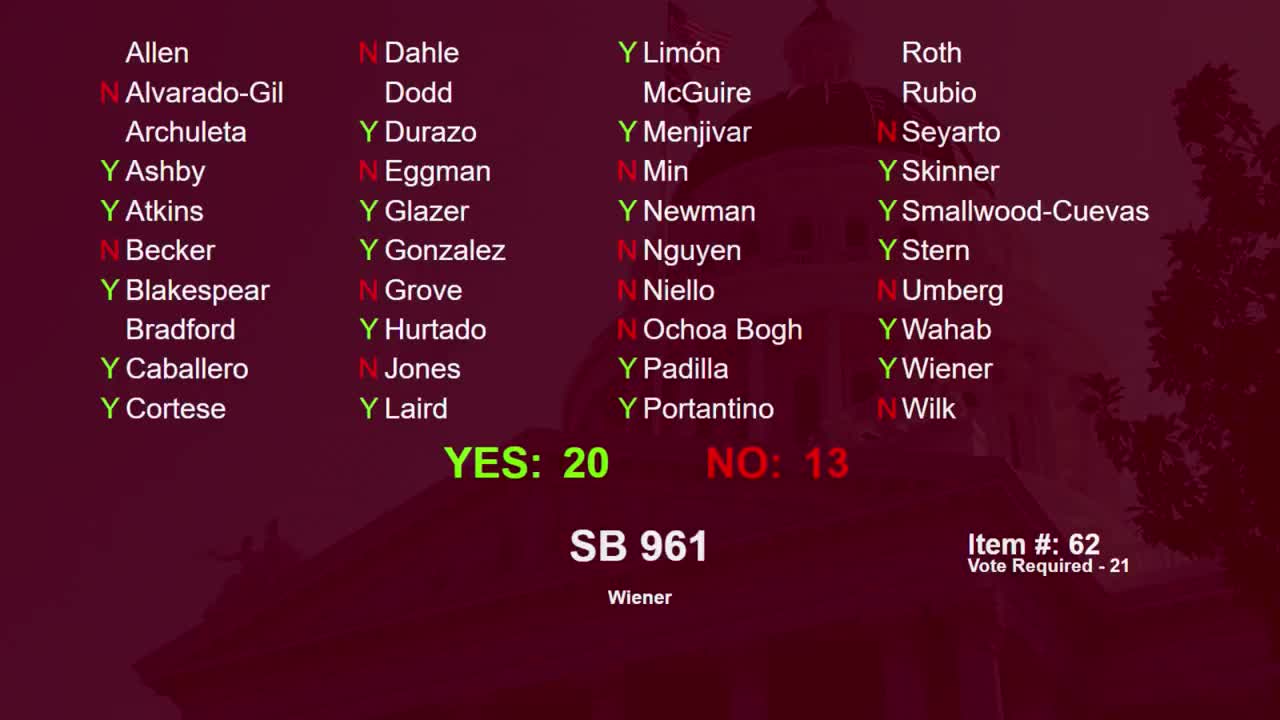 3MIN
Senate Floor
 39MIN
Senate Standing Committee on Transportation
 14MIN
Senate Standing Committee on Judiciary
 13MIN
Senate Standing Committee on Health
Bill Author

Bill Co-Author(s):
