SB 96: Historic Venue Restoration and Resiliency Act.
- Session Year: 2023-2024
- House: Senate
- Latest Version Date: 2023-10-08
Current Status:
Passed
(2023-10-08: Chaptered by Secretary of State. Chapter 595, Statutes of 2023.)
Introduced
In Committee
First Chamber
In Committee
Second Chamber
Enacted
The Sales and Use Tax Law (SUT) imposes certain sales and use taxes for the privilege of selling tangible personal property at retail. The SUT requires all fees, taxes, interest, and penalties imposed and all amounts of tax required to be paid to the state under the SUT be paid to the California Department of Tax and Fee Administration in the form of remittances payable to the department.
This bill, the Historic Venue Restoration and Resiliency Act, would, until July 1, 2030, require a return filed with the department to report gross receipts for sales tax purposes to segregate the taxable sales on a line or a separate form, as prescribed by the department, if the place of sale in this state is on or within the real property of a confirmed historic venue on the day of a qualified event and would require the department to report the amount of the total gross receipts segregated on the returns filed for the prior fiscal year to the Department of Finance on or before November 1 of each year, as prescribed. The bill would define qualified event to mean a live event at a confirmed historic venue to which tickets are offered for public sale and would define historic venue to mean a venue in the state that meets certain criteria, including that the venue contains a structure built before 1940, contains a structure officially designated by the United States National Park Service or the United States Department of the Interior as a National Historic Landmark, or is located at a site continuously used for live, ticketed events for more than 50 years. The bill would create the Historic Venue Restoration and Resiliency Fund and would continuously appropriate the moneys in the fund for transmission by the Controller to cities and counties with historic venues, as specified. The bill would require an amount equal to 5% of the total amount of gross receipts, or adjusted gross receipts, for the prior fiscal year reported to the Department of Finance by the department to be included in the next annual Governors Budget for deposit into the fund. The bill would require, no later than 30 days after the enactment of the annual Budget Act, the amount appropriated by the Legislature to the Controller, as described above, to be transferred by the Controller to the fund. By creating a continuously appropriated fund and providing revenue to be deposited into that fund, the bill would make an appropriation. The bill would, among other things, require a city or county to identify a historic venue within its jurisdiction to the department, in a form and manner prescribed by the department, for a confirmation as a historic venue, as prescribed. The bill would also require a city or county to distribute funds received pursuant to the bill only for certain purposes, including capital infrastructure improvements and preservation of a historic venue, as prescribed. The bill would also require, on or before January 1, 2027, and annually thereafter, a city or county that receives money from the fund to deliver a report to the department regarding how that money is being used. The bill would define county to mean the County of Alameda, the County of Santa Clara, and the County of Los Angeles and would define city to mean a city within the geographic boundaries of any of those counties. By requiring certain local governments to identify historic venues to the department, implement processes to distribute funds to confirmed historic venues, and report to the department regarding the use of those funds, this bill would impose a state-mandated local program.
This bill would make legislative findings and declarations as to the necessity of a special statute for the County of Alameda, the County of Santa Clara, and the County of Los Angeles and cities within the geographic boundaries of any of those counties.
The California Constitution requires the state to reimburse local agencies and school districts for certain costs mandated by the state. Statutory provisions establish procedures for making that reimbursement.
This bill would provide that, if the Commission on State Mandates determines that the bill contains costs mandated by the state, reimbursement for those costs shall be made pursuant to the statutory provisions noted above.
The Sales and Use Tax Law (SUT) imposes certain sales and use taxes for the privilege of selling tangible personal property at retail. The SUT requires all fees, taxes, interest, and penalties imposed and all amounts of tax required to be paid to the state under the SUT be paid to the California Department of Tax and Fee Administration in the form of remittances payable to the department.
This bill, the Historic Venue Restoration and Resiliency Act, would, until July 1, 2030, require a return filed with the department to report gross receipts for sales tax purposes to segregate the taxable sales on a line or a separate form, as prescribed by the department, if the place of sale in this state is on or within the real property of a confirmed historic venue on the day of a qualified event and would require the department to report the amount of the total gross receipts segregated on the returns filed for the prior fiscal year to the Department of Finance on or before November 1 of each year, as prescribed. The bill would define qualified event to mean a live event at a confirmed historic venue to which tickets are offered for public sale and would define historic venue to mean a venue in the state that meets certain criteria, including that the venue contains a structure built before 1940, contains a structure officially designated by the United States National Park Service or the United States Department of the Interior as a National Historic Landmark, or is located at a site continuously used for live, ticketed events for more than 50 years. The bill would create the Historic Venue Restoration and Resiliency Fund and would continuously appropriate the moneys in the fund for transmission by the Controller to cities and counties with historic venues, as specified. The bill would require an amount equal to 5% of the total amount of gross receipts, or adjusted gross receipts, for the prior fiscal year reported to the Department of Finance by the department to be included in the next annual Governors Budget for deposit into the fund. The bill would require, no later than 30 days after the enactment of the annual Budget Act, the amount appropriated by the Legislature to the Controller, as described above, to be transferred by the Controller to the fund. By creating a continuously appropriated fund and providing revenue to be deposited into that fund, the bill would make an appropriation. The bill would, among other things, require a city or county to identify a historic venue within its jurisdiction to the department, in a form and manner prescribed by the department, for a confirmation as a historic venue, as prescribed. The bill would also require a city or county to distribute funds received pursuant to the bill only for certain purposes, including capital infrastructure improvements and preservation of a historic venue, as prescribed. The bill would also require, on or before January 1, 2027, and annually thereafter, a city or county that receives money from the fund to deliver a report to the department regarding how that money is being used. The bill would define county to mean the County of Alameda, the County of Santa Clara, and the County of Los Angeles and would define city to mean a city within the geographic boundaries of any of those counties. By requiring certain local governments to identify historic venues to the department, implement processes to distribute funds to confirmed historic venues, and report to the department regarding the use of those funds, this bill would impose a state-mandated local program.
This bill would make legislative findings and declarations as to the necessity of a special statute for the County of Alameda, the County of Santa Clara, and the County of Los Angeles and cities within the geographic boundaries of any of those counties.
The California Constitution requires the state to reimburse local agencies and school districts for certain costs mandated by the state. Statutory provisions establish procedures for making that reimbursement.
This bill would provide that, if the Commission on State Mandates determines that the bill contains costs mandated by the state, reimbursement for those costs shall be made pursuant to the statutory provisions noted above.
The Sales and Use Tax Law (SUT) imposes certain sales and use taxes for the privilege of selling tangible personal property at retail. The SUT requires all fees, taxes, interest, and penalties imposed and all amounts of tax required to be paid to the state under the SUT be paid to the California Department of Tax and Fee Administration in the form of remittances payable to the department and requires the department to transmit the payments to the Treasurer to be deposited in the State Treasury to the credit of the Retail Sales Tax Fund, as specified. department.
This bill, the Historic Venue Restoration and Resiliency Act, would instead require the Controller, based on allocation reports from the department, to transmit as promptly as feasible all revenues, less refunds and specified costs, derived from certain sales and use taxes on the sale of tangible personal property during a qualified event to the city, county, or city and county that identified the confirmed historic venue, at which the qualified event occurred, to the department and in which the qualified event from which the revenues derive occurred and would thereby make an appropriation. would, until July 1, 2030, require a return filed with the department to report gross receipts for sales tax purposes to segregate the taxable sales on a line or a separate form, as prescribed by the department, if the place of sale in this state is on or within the real property of a confirmed historic venue on the day of a qualified event and would require the department to report the amount of the total gross receipts segregated on the returns filed for the prior fiscal year to the Department of Finance on or before November 1 of each year, as prescribed. The bill would define qualified event to mean a live event at a confirmed historic venue to which tickets are offered for public sale and would define historic venue to mean a venue in the state that meets certain criteria, including that the venue contains a structure built before 1940, contains a structure officially designated by the United States National Park Service or the United States Department of the Interior as a National Historic Landmark, or is located at a site continuously used for live, ticketed events for more than 50 years. The bill would create the Historic Venue Restoration and Resiliency Fund and would continuously appropriate the moneys in the fund for transmission by the Controller to cities and counties with historic venues, as specified. The bill would require an amount equal to 5% of the total amount of gross receipts, or adjusted gross receipts, for the prior fiscal year reported to the Department of Finance by the department to be included in the next annual Governors Budget for deposit into the fund. The bill would require, no later than 30 days after the enactment of the annual Budget Act, the amount appropriated by the Legislature to the Controller, as described above, to be transferred by the Controller to the fund. By creating a continuously appropriated fund and providing revenue to be deposited into that fund, the bill would make an appropriation. The bill would, among other things, require a city, county, or city and or county to identify a historic venue within its jurisdiction to the department, in a form and manner prescribed by the department, for a confirmation as a historic venue, as prescribed. The bill would also require a city, county, or city and or county to distribute funds received pursuant to the bill only for certain purposes, including capital infrastructure improvements and preservation of a historic venue, as prescribed. The bill would also require, on or before January 1, 2027, and annually thereafter, a city or county that receives money from the fund to deliver a report to the department regarding how that money is being used. The bill would define county to mean the County of Alameda, the County of Santa Clara, and the County of Los Angeles and would define city to mean a city within the geographic boundaries of any of those counties. By requiring certain local governments to identify historic venues to the department and department, implement processes to distribute those funds, funds to confirmed historic venues, and report to the department regarding the use of those funds, this bill would impose a state-mandated local program.
This bill would make legislative findings and declarations as to the necessity of a special statute for the County of Alameda, the County of Santa Clara, and the County of Los Angeles and cities within the geographic boundaries of any of those counties.
The California Constitution requires the state to reimburse local agencies and school districts for certain costs mandated by the state. Statutory provisions establish procedures for making that reimbursement.
This bill would provide that, if the Commission on State Mandates determines that the bill contains costs mandated by the state, reimbursement for those costs shall be made pursuant to the statutory provisions noted above.
The Sales and Use Tax Law (SUT) imposes certain sales and use taxes for the privilege of selling tangible personal property at retail. The SUT requires all fees, taxes, interest, and penalties imposed and all amounts of tax required to be paid to the state under the SUT be paid to the California Department of Tax and Fee Administration in the form of remittances payable to the department and requires the department to transmit the payments to the Treasurer to be deposited in the State Treasury to the credit of the Retail Sales Tax Fund, as specified.
This bill, the Historic Venue Restoration and Resiliency Act, would instead require the department Controller, based on allocation reports from the department, to transmit as promptly as feasible all revenues, less refunds and specified costs, derived from certain sales and use taxes on the sale of tangible personal property during a qualified event to the city, county, or city and county that identified the confirmed historic venue, at which the qualified event occurred, to the department and in which the qualified event from which the revenues derive occurred and would thereby make an appropriation. The bill would define qualified event to mean a live event at a confirmed historic venue to which tickets are offered for public sale and would define historic venue to mean a venue in the state that meets certain criteria, including that the venue contains a structure built before 1940, contains a structure officially designated by the United States National Park Service or the United States Department of the Interior as a National Historic Landmark, or is located at a site continuously used for live, ticketed events for more than 50 years. The bill would, among other things, require a city, county, or city and county to identify a historic venue within its jurisdiction to the department, in a form and manner prescribed by the department, for a confirmation as a historic venue, as prescribed. The bill would also require a city, county, or city and county to distribute funds received pursuant to the bill only for certain purposes, including capital infrastructure improvements and preservation of a historic venue, as prescribed. By requiring local governments to identify historic venues to the department and implement processes to distribute those funds, this bill would impose a state-mandated local program.
The California Constitution requires the state to reimburse local agencies and school districts for certain costs mandated by the state. Statutory provisions establish procedures for making that reimbursement.
This bill would provide that, if the Commission on State Mandates determines that the bill contains costs mandated by the state, reimbursement for those costs shall be made pursuant to the statutory provisions noted above.
The Sales and Use Tax Law (SUT) imposes certain sales and use taxes for the privilege of selling tangible personal property at retail. The SUT requires all fees, taxes, interest, and penalties imposed and all amounts of tax required to be paid to the state under the SUT be paid to the California Department of Tax and Fee Administration in the form of remittances payable to the department and requires the department to transmit the payments to the Treasurer to be deposited in the State Treasury to the credit of the Retail Sales Tax Fund, as specified.
This bill, the Historic Venue Restoration and Resiliency Act, would instead require the department to transmit as promptly as feasible all revenues, less refunds and specified costs, derived from certain sales and use taxes on the sale of tangible personal property during a qualified event to the city, county, or city and county in which the qualified event from which the revenues derive occurred and would thereby make an appropriation. The bill would define qualified event to mean a live event at a historic venue to which tickets are offered for public sale and would define historic venue to mean a venue in the state that meets certain criteria, including the venue contains a structure built before 1940, contains a structure officially designated by the United States National Park Service or the United States Department of the Interior as a National Historic Landmark, or is located at a site continuously used for live, ticketed events for more than 50 years. The bill would require a city, county, or city and county to distribute funds received pursuant to the bill only for certain purposes, including capital infrastructure improvements and preservation of a historic venue, as prescribed. By requiring local governments to implement processes to distribute those funds, this bill would impose a state-mandated local program.
The California Constitution requires the state to reimburse local agencies and school districts for certain costs mandated by the state. Statutory provisions establish procedures for making that reimbursement.
This bill would provide that, if the Commission on State Mandates determines that the bill contains costs mandated by the state, reimbursement for those costs shall be made pursuant to the statutory provisions noted above.
Existing law, the Bradley-Burns Uniform Local Sales and Use Tax Law, authorizes counties and cities to impose local sales and use taxes in conformity with the Sales and Use Tax Law, and existing laws authorize districts, as specified, to impose transactions and use taxes in accordance with the Transactions and Use Tax Law, which generally conforms to the Sales and Use Tax Law. Exemptions from state sales and use taxes are automatically incorporated into the local tax laws.Existing sales and use tax laws impose taxes on retailers measured by the gross receipts from the sale of tangible personal property sold at retail in this state, or on the storage, use, or other consumption in this state of tangible personal property purchased from a retailer for storage, use, or other consumption in this state. The Sales and Use Tax Law provides various exemptions from those taxes.This bill would state the intent of the Legislature to enact legislation that would expand the state sales and use tax exemption to transactions during live events at California historic event venues for reinvestment in historic preservation activities, as specified.Existing law, the Bradley-Burns Uniform Local Sales and Use Tax Law, authorizes counties and cities to impose local sales and use taxes in conformity with the Sales and Use Tax Law, and existing laws authorize districts, as specified, to impose transactions and use taxes in accordance with the Transactions and Use Tax Law, which generally conforms to the Sales and Use Tax Law. Exemptions from state sales and use taxes are automatically incorporated into the local tax laws.
Existing sales and use tax laws impose taxes on retailers measured by the gross receipts from the sale of tangible personal property sold at retail in this state, or on the storage, use, or other consumption in this state of tangible personal property purchased from a retailer for storage, use, or other consumption in this state. The Sales and Use Tax Law provides various exemptions from those taxes.
This bill would state the intent of the Legislature to enact legislation that would expand the state sales and use tax exemption to transactions during live events at California historic event venues for reinvestment in historic preservation activities, as specified.
This act shall be known as the Historic Venue Restoration and Resiliency Act.
SEC. 2.Section 7103 is added to the Revenue and Taxation Code, to read:7103.(a)For purposes of this section:
(1)City means a city within the geographic boundaries of a county.
(2)Confirmed historic venue means a historic venue that has received a confirmation by the department pursuant to subdivision (g).
(3)County means the County of Alameda, the County of Santa Clara, and the County of Los Angeles.
(4)Fund means the Historic Venue Restoration and Resiliency Fund created pursuant to subdivision (c).
(5)Historic venue means a venue in the state that meets all of the following criteria:
(A)The venue meets any of the following criteria:
(i)The venue contains a structure built before 1940.
(ii)The venue contains a structure officially designated by the United States National Park Service or the United States Department of the Interior as a National Historic Landmark.
(iii)The venue is located at a site continuously used for live, ticketed events for more than 50 years.
(B)The venue has total fixed seating capacity of at least 15,000 people.
(C)The venue hosts live entertainment or sporting events.
(D)The venue is owned by a public entity.
(6)Qualified event means a live event at a confirmed historic venue to which tickets are offered for public sale.
(b)Notwithstanding any other law, a return filed with the department to report gross receipts for sales tax purposes shall segregate the taxable sales on a line or a separate form, as prescribed by the department, if the place of sale in this state is on or within the real property of a confirmed historic venue on the day of a qualified event.
(c)(1)The Historic Venue Restoration and Resiliency Fund is hereby created in the State Treasury.
(2)Notwithstanding Section 13340 of the Government Code, moneys in the fund shall be continuously appropriated without regard to fiscal year and transmitted pursuant to subdivision (f).
(d)(1)The department shall report the amount of the total gross receipts segregated on the returns filed for the prior fiscal year pursuant to subdivision (b) to the Department of Finance on or before November 1 of each year.
(2)(A)The total gross receipts reported pursuant to paragraph (1) shall be subject to review, which may be a review of a sample of returns, by the department for errors.
(B)The department shall note any errors identified in the review and the approximate impact of those errors on the total gross receipts in the report to the Department of Finance required by this subdivision to allow an adjusted total gross receipt amount to be determined.
(e)(1)An amount equal to 5 percent of the total amount of gross receipts, or adjusted gross receipts, for the prior fiscal year reported to the Department of Finance by the department pursuant to subdivision (d) shall be included in the next annual Governors Budget for deposit into the fund for the Controller to transmit to cities and counties pursuant to subdivision (f).
(2)No later than 30 days after the enactment of the annual Budget Act, the amount appropriated by the Legislature to the Controller pursuant to this subdivision shall be transferred by the Controller to the fund.
(f)(1)Beginning January 1, 2025, the Controller shall transmit, as promptly as feasible, the moneys in the fund to each city or county in an amount that is proportional to the gross receipts subject to subdivision (b) derived from qualified events at confirmed historic venues identified by that city or county.
(2)(A)A city or county shall distribute funds received pursuant to this subdivision only for any of the following purposes and pursuant to subparagraph (B):
(i)Capital infrastructure improvements and preservation of a confirmed historic venue.
(ii)Preventive maintenance of a confirmed historic venue related to patrons safety.
(iii)Technological improvements at a confirmed historic venue.
(iv)Security enhancements at a confirmed historic venue.
(v)Bringing a confirmed historic venue into compliance with the federal Americans with Disabilities Act of 1990 (42 U.S.C. Sec. 12101 et seq.).
(vi)Energy efficiency improvements at a confirmed historic venue.
(vii)Upgrades related to implementation of federal and state policies at a confirmed historic venue.
(B)A city or county shall distribute funds to a confirmed historic venue in an amount commensurate with the amount of gross receipts derived from the sale of tangible personal property during qualified events at the confirmed historic venue.
(g)(1)(A)A city or county shall identify a historic venue within its jurisdiction to the department, in a form and manner prescribed by the department, for a confirmation as a historic venue.
(B)(i)Subject to clause (ii), if the venue identified pursuant to subparagraph (A) is a historic venue, the department shall issue a confirmation to the city or county as promptly as feasible.
(ii)The department shall not issue a confirmation pursuant to clause (i) if a city or county is currently receiving revenue transmitted pursuant to subdivision (f) with respect to the historic venue.
(2)A city or county that receives a confirmation from the department pursuant to paragraph (1) shall notify, within 90 days of any qualified event at the confirmed historic venue, any retailers subject to subdivision (b) making sales at the confirmed historic venue.
(h)On or before January 1, 2027, and annually thereafter, a city or county that receives money from the fund shall deliver a report to the department regarding how that money is being used.
(i)The department shall annually deliver a report to the Assembly Committee on Revenue and Taxation and the Senate Committee on Governance and Finance concerning both of the following:
(1)The identity of any confirmed historic venue and the city or county that identified that venue pursuant to subdivision (g).
(2)The amount of revenue transmitted in the preceding year pursuant to this section to a city or county with respect to each confirmed historic venue.
(j)This section shall remain operative only until July 1, 2030, and as of that date is repealed.
SEC. 3.The Legislature finds and declares that a special statute is necessary and that a general statute cannot be made applicable within the meaning of Section 16 of Article IV of the California Constitution because of the unique needs of historic venues in the County of Alameda, the County of Santa Clara, and the County of Los Angeles and cities within the geographic boundaries of any of those counties.
SEC. 4.If the Commission on State Mandates determines that this act contains costs mandated by the state, reimbursement to local agencies and school districts for those costs shall be made pursuant to Part 7 (commencing with Section 17500) of Division 4 of Title 2 of the Government Code.
This act shall be known as the Historic Venue Restoration and Resiliency Act.
SEC. 2.Section 7103 is added to the Revenue and Taxation Code, to read:7103.(a)For purposes of this section:
(1)City means a city within the geographic boundaries of a county.
(2)Confirmed historic venue means a historic venue that has received a confirmation by the department pursuant to subdivision (g).
(3)County means the County of Alameda, the County of Santa Clara, and the County of Los Angeles.
(4)Fund means the Historic Venue Restoration and Resiliency Fund created pursuant to subdivision (c).
(5)Historic venue means a venue in the state that meets all of the following criteria:
(A)The venue meets any of the following criteria:
(i)The venue contains a structure built before 1940.
(ii)The venue contains a structure officially designated by the United States National Park Service or the United States Department of the Interior as a National Historic Landmark.
(iii)The venue is located at a site continuously used for live, ticketed events for more than 50 years.
(B)The venue has total fixed seating capacity of at least 15,000 people.
(C)The venue hosts live entertainment or sporting events.
(D)The venue is owned by a public entity.
(6)Qualified event means a live event at a confirmed historic venue to which tickets are offered for public sale.
(b)Notwithstanding any other law, a return filed with the department to report gross receipts for sales tax purposes shall segregate the taxable sales on a line or a separate form, as prescribed by the department, if the place of sale in this state is on or within the real property of a confirmed historic venue on the day of a qualified event.
(c)(1)The Historic Venue Restoration and Resiliency Fund is hereby created in the State Treasury.
(2)Notwithstanding Section 13340 of the Government Code, moneys in the fund shall be continuously appropriated without regard to fiscal year and transmitted pursuant to subdivision (f).
(d)(1)The department shall report the amount of the total gross receipts segregated on the returns filed for the prior fiscal year pursuant to subdivision (b) to the Department of Finance on or before November 1 of each year.
(2)(A)The total gross receipts reported pursuant to paragraph (1) shall be subject to review, which may be a review of a sample of returns, by the department for errors.
(B)The department shall note any errors identified in the review and the approximate impact of those errors on the total gross receipts in the report to the Department of Finance required by this subdivision to allow an adjusted total gross receipt amount to be determined.
(e)(1)An amount equal to 5 percent of the total amount of gross receipts, or adjusted gross receipts, for the prior fiscal year reported to the Department of Finance by the department pursuant to subdivision (d) shall be included in the next annual Governors Budget for deposit into the fund for the Controller to transmit to cities and counties pursuant to subdivision (f).
(2)No later than 30 days after the enactment of the annual Budget Act, the amount appropriated by the Legislature to the Controller pursuant to this subdivision shall be transferred by the Controller to the fund.
(f)(1)Beginning January 1, 2025, the Controller shall transmit, as promptly as feasible, the moneys in the fund to each city or county in an amount that is proportional to the gross receipts subject to subdivision (b) derived from qualified events at confirmed historic venues identified by that city or county.
(2)(A)A city or county shall distribute funds received pursuant to this subdivision only for any of the following purposes and pursuant to subparagraph (B):
(i)Capital infrastructure improvements and preservation of a confirmed historic venue.
(ii)Preventive maintenance of a confirmed historic venue related to patrons safety.
(iii)Technological improvements at a confirmed historic venue.
(iv)Security enhancements at a confirmed historic venue.
(v)Bringing a confirmed historic venue into compliance with the federal Americans with Disabilities Act of 1990 (42 U.S.C. Sec. 12101 et seq.).
(vi)Energy efficiency improvements at a confirmed historic venue.
(vii)Upgrades related to implementation of federal and state policies at a confirmed historic venue.
(B)A city or county shall distribute funds to a confirmed historic venue in an amount commensurate with the amount of gross receipts derived from the sale of tangible personal property during qualified events at the confirmed historic venue.
(g)(1)(A)A city or county shall identify a historic venue within its jurisdiction to the department, in a form and manner prescribed by the department, for a confirmation as a historic venue.
(B)(i)Subject to clause (ii), if the venue identified pursuant to subparagraph (A) is a historic venue, the department shall issue a confirmation to the city or county as promptly as feasible.
(ii)The department shall not issue a confirmation pursuant to clause (i) if a city or county is currently receiving revenue transmitted pursuant to subdivision (f) with respect to the historic venue.
(2)A city or county that receives a confirmation from the department pursuant to paragraph (1) shall notify, within 90 days of any qualified event at the confirmed historic venue, any retailers subject to subdivision (b) making sales at the confirmed historic venue.
(h)On or before January 1, 2027, and annually thereafter, a city or county that receives money from the fund shall deliver a report to the department regarding how that money is being used.
(i)The department shall annually deliver a report to the Assembly Committee on Revenue and Taxation and the Senate Committee on Governance and Finance concerning both of the following:
(1)The identity of any confirmed historic venue and the city or county that identified that venue pursuant to subdivision (g).
(2)The amount of revenue transmitted in the preceding year pursuant to this section to a city or county with respect to each confirmed historic venue.
(j)This section shall remain operative only until July 1, 2030, and as of that date is repealed.
SEC. 3.The Legislature finds and declares that a special statute is necessary and that a general statute cannot be made applicable within the meaning of Section 16 of Article IV of the California Constitution because of the unique needs of historic venues in the County of Alameda, the County of Santa Clara, and the County of Los Angeles and cities within the geographic boundaries of any of those counties.
SEC. 4.If the Commission on State Mandates determines that this act contains costs mandated by the state, reimbursement to local agencies and school districts for those costs shall be made pursuant to Part 7 (commencing with Section 17500) of Division 4 of Title 2 of the Government Code.
This act shall be known as the Historic Venue Restoration and Resiliency Act.
SEC. 2.Section 7103 is added to the Revenue and Taxation Code, to read:7103.(a)For purposes of this section:
(1)City means a city within the geographic boundaries of a county.
(1)(2)Confirmed historic venue means a historic venue that has received a confirmation by the department pursuant to subdivision (d). (g).
(3)County means the County of Alameda, the County of Santa Clara, and the County of Los Angeles.
(4)Fund means the Historic Venue Restoration and Resiliency Fund created pursuant to subdivision (c).
(2)(5)Historic venue means a venue in the state that meets all of the following criteria:
(A)The venue meets any of the following criteria:
(i)The venue contains a structure built before 1940.
(ii)The venue contains a structure officially designated by the United States National Park Service or the United States Department of the Interior as a National Historic Landmark.
(iii)The venue is located at a site continuously used for live, ticketed events for more than 50 years.
(B)The venue has total fixed seating capacity of at least 15,000 people.
(C)The venue hosts live entertainment or sporting events.
(D)The venue is owned by a public entity.
(3)(6)Qualified event means a live event at a confirmed historic venue to which tickets are offered for public sale.
(b)(1)Notwithstanding any other law, a return filed with the department to report gross receipts for sales tax purposes shall segregate the taxable sales on a line or a separate form, as prescribed by the department, if the place of sale in this state is on or within the real property of a confirmed historic venue on the day of a qualified event.
(2)The department shall determine quarterly the amount of gross receipts and the sales price of property sold remitted by retailers subject to this subdivision.(c)(1)Notwithstanding Section 7101, the Controller, based on allocation reports from the department, shall transmit as promptly as feasible all revenues, less refunds and costs, derived from the taxes imposed by Sections 6051 and 6051.3 on the sale of tangible personal property during a qualified event to the city, county, or city and county that identified the confirmed historic venue, at which the qualified event occurred, to the department pursuant to subdivision (d) and in which the qualified event from which the revenues derive occurred.(c)(1)The Historic Venue Restoration and Resiliency Fund is hereby created in the State Treasury.
(2)Notwithstanding Section 13340 of the Government Code, moneys in the fund shall be continuously appropriated without regard to fiscal year and transmitted pursuant to subdivision (f).
(d)(1)The department shall report the amount of the total gross receipts segregated on the returns filed for the prior fiscal year pursuant to subdivision (b) to the Department of Finance on or before November 1 of each year.
(2)(A)The total gross receipts reported pursuant to paragraph (1) shall be subject to review, which may be a review of a sample of returns, by the department for errors.
(B)The department shall note any errors identified in the review and the approximate impact of those errors on the total gross receipts in the report to the Department of Finance required by this subdivision to allow an adjusted total gross receipt amount to be determined.
(e)(1)An amount equal to 5 percent of the total amount of gross receipts, or adjusted gross receipts, for the prior fiscal year reported to the Department of Finance by the department pursuant to subdivision (d) shall be included in the next annual Governors Budget for deposit into the fund for the Controller to transmit to cities and counties pursuant to subdivision (f).
(2)No later than 30 days after the enactment of the annual Budget Act, the amount appropriated by the Legislature to the Controller pursuant to this subdivision shall be transferred by the Controller to the fund.
(f)(1)Beginning January 1, 2025, the Controller shall transmit, as promptly as feasible, the moneys in the fund to each city or county in an amount that is proportional to the gross receipts subject to subdivision (b) derived from qualified events at confirmed historic venues identified by that city or county.
(2)(A)A city, county, or city and or county shall distribute funds received pursuant to this subdivision only for any of the following purposes and pursuant to subparagraph (B):
(i)Capital infrastructure improvements and preservation of a confirmed historic venue.
(ii)Preventive maintenance of a confirmed historic venue related to patrons safety.
(iii)Technological improvements at a confirmed historic venue.
(iv)Security enhancements at a confirmed historic venue.
(v)Bringing a confirmed historic venue into compliance with the federal Americans with Disabilities Act of 1990 (42 U.S.C. Sec. 12101 et sec.). seq.).
(vi)Energy efficiency improvements at a confirmed historic venue.
(vii)Upgrades related to implementation of federal and state policies at a confirmed historic venue.
(B)A city, county, or city and or county shall distribute funds to a confirmed historic venue in an amount commensurate with the amount of the funds attributable to revenues gross receipts derived from taxes imposed by Sections 6051 and 6051.3 on the sale of tangible personal property during qualified events at the confirmed historic venue.
(d)(g)(1)(A)A city, county, or city and or county shall identify a historic venue within its jurisdiction to the department, in a form and manner prescribed by the department, for a confirmation as a historic venue.
(B)If (i)Subject to clause (ii), if the venue identified pursuant to subparagraph (A) is a historic venue , venue, the department shall issue a confirmation to the city, county, or city and or county as promptly as feasible.
(ii)The department shall not issue a confirmation pursuant to clause (i) if a city or county is currently receiving revenue transmitted pursuant to subdivision (f) with respect to the historic venue.
(2)A city, county, or city and or county that receives a confirmation from the department pursuant to paragraph (1) shall notify, within 90 days of any qualified event at the confirmed historic venue, any retailers subject to subdivision (b) making sales at the confirmed historic venue.
(h)On or before January 1, 2027, and annually thereafter, a city or county that receives money from the fund shall deliver a report to the department regarding how that money is being used.
(i)The department shall annually deliver a report to the Assembly Committee on Revenue and Taxation and the Senate Committee on Governance and Finance concerning both of the following:
(1)The identity of any confirmed historic venue and the city or county that identified that venue pursuant to subdivision (g).
(2)The amount of revenue transmitted in the preceding year pursuant to this section to a city or county with respect to each confirmed historic venue.
(j)This section shall remain operative only until July 1, 2030, and as of that date is repealed.
SEC. 3.The Legislature finds and declares that a special statute is necessary and that a general statute cannot be made applicable within the meaning of Section 16 of Article IV of the California Constitution because of the unique needs of historic venues in the County of Alameda, the County of Santa Clara, and the County of Los Angeles and cities within the geographic boundaries of any of those counties.
SEC. 3.SEC. 4.If the Commission on State Mandates determines that this act contains costs mandated by the state, reimbursement to local agencies and school districts for those costs shall be made pursuant to Part 7 (commencing with Section 17500) of Division 4 of Title 2 of the Government Code.
This act shall be known as the Historic Venue Restoration and Resiliency Act.
SEC. 2.Section 7103 is added to the Revenue and Taxation Code, to read:7103.(a)For purposes of this section:
(1)Department means the California Department of Tax and Fee Administration.(1)Confirmed historic venue means a historic venue that has received a confirmation by the department pursuant to subdivision (d).
(2)Historic venue means a venue in the state that meets all of the following criteria:
(A)The venue meets any of the following criteria:
(i)The venue contains a structure built before 1940.
(ii)The venue contains a structure officially designated by the United States National Park Service or the United States Department of the Interior as a National Historic Landmark.
(iii)The venue is located at a site continuously used for live, ticketed events for more than 50 years.
(B)The venue has total fixed seating capacity of at least 15,000 people.
(C)The venue hosts live entertainment or sporting events.
(3)Qualified event means a live event at a confirmed historic venue to which tickets are offered for public sale.
(b)(1)Notwithstanding any other law, a return filed with the department to report gross receipts for sales tax purposes shall segregate the gross receipts of the seller and the sales price of the tangible personal property taxable sales on a line or a separate form, as prescribed by the department, if the place of sale in this state is on or within the real property of a historic venue on the day of a qualified event.
(2)The department shall determine quarterly the amount of gross receipts and the sales price of property sold remitted by retailers subject to this subdivision.
(c)(1)Notwithstanding Section 7101, the department Controller, based on allocation reports from the department, shall transmit as promptly as feasible all revenues, less refunds and costs, derived from the taxes imposed by Sections 6051 and 6051.3 on the sale of tangible personal property during a qualified event to the city, county, or city and county that identified the confirmed historic venue, at which the qualified event occurred, to the department pursuant to subdivision (d) and in which the qualified event from which the revenues derive occurred.
(2)(A)A city, county, or city and county shall distribute funds received pursuant to this subdivision only for any of the following purposes and pursuant to subparagraph (B):
(i)Capital infrastructure improvements and preservation of a historic venue.
(ii)Preventative Preventive maintenance of a historic venue related to patrons safety.
(iii)Technological improvements at a historic venue.
(iv)Security enhancements at a historic venue.
(v)Bringing a historic venue into compliance with the federal Americans with Disabilities Act of 1990 (42 U.S.C. Sec. 12101 et sec.).
(vi)Energy efficiency improvements at a historic venue.
(vii)Upgrades related to implementation of federal and state policies at a historic venue.
(B)A city, county, or city and county shall distribute funds to a historic venue in an amount commensurate with the amount of the funds attributable to revenues derived from taxes imposed by Sections 6051 and 6051.3 on the sale of tangible personal property during qualified events at the historic venue.
(d)(1)(A)A city, county, or city and county shall identify a historic venue within its jurisdiction to the department, in a form and manner prescribed by the department, for a confirmation as a historic venue.
(B)If the venue identified pursuant to subparagraph (A) is a historic venue , the department shall issue a confirmation to the city, county, or city and county as promptly as feasible.
(2)A city, county, or city and county that receives a confirmation from the department pursuant to paragraph (1) shall notify, within 90 days of any qualified event at the confirmed historic venue, any retailers subject to subdivision (b) making sales at the confirmed historic venue.
SEC. 3.If the Commission on State Mandates determines that this act contains costs mandated by the state, reimbursement to local agencies and school districts for those costs shall be made pursuant to Part 7 (commencing with Section 17500) of Division 4 of Title 2 of the Government Code.
This act shall be known as the Historic Venue Restoration and Resiliency Act.
SEC. 2.Section 7103 is added to the Revenue and Taxation Code, to read:7103.(a)For purposes of this section:
(1)Department means the California Department of Tax and Fee Administration.
(2)Historic venue means a venue in the state that meets all of the following criteria:
(A)The venue meets any of the following criteria:
(i)The venue contains a structure built before 1940.
(ii)The venue contains a structure officially designated by the United States National Park Service or the United States Department of the Interior as a National Historic Landmark.
(iii)The venue is located at a site continuously used for live, ticketed events for more than 50 years.
(B)The venue has total fixed seating capacity of at least 15,000 people.
(C)The venue hosts live entertainment or sporting events.
(3)Qualified event means a live event at a historic venue to which tickets are offered for public sale.
(b)(1)Notwithstanding any other law, a return filed with the department to report gross receipts for sales tax purposes shall segregate the gross receipts of the seller and the sales price of the tangible personal property on a line or a separate form, as prescribed by the department, if the place of sale in this state is on or within the real property of a historic venue on the day of a qualified event.
(2)The department shall determine quarterly the amount of gross receipts and the sales price of property sold remitted by retailers subject to this subdivision.
(c)(1)Notwithstanding Section 7101, the department shall transmit as promptly as feasible all revenues, less refunds and costs, derived from the taxes imposed by Sections 6051 and 6051.3 on the sale of tangible personal property during a qualified event to the city, county, or city and county in which the qualified event from which the revenues derive occurred.
(2)(A)A city, county, or city and county shall distribute funds received pursuant to this subdivision only for any of the following purposes and pursuant to subparagraph (B):
(i)Capital infrastructure improvements and preservation of a historic venue.
(ii)Preventative maintenance of a historic venue related to patrons safety.
(iii)Technological improvements at a historic venue.
(iv)Security enhancements at a historic venue.
(v)Bringing a historic venue into compliance with the federal Americans with Disabilities Act of 1990 (42 U.S.C. Sec. 12101 et sec.).
(vi)Energy efficiency improvements at a historic venue.
(vii)Upgrades related to implementation of federal and state policies at a historic venue.
(B)A city, county, or city and county shall distribute funds to a historic venue in an amount commensurate with the amount of the funds attributable to revenues derived from taxes imposed by Sections 6051 and 6051.3 on the sale of tangible personal property during qualified events at the historic venue.
SEC. 3.If the Commission on State Mandates determines that this act contains costs mandated by the state, reimbursement to local agencies and school districts for those costs shall be made pursuant to Part 7 (commencing with Section 17500) of Division 4 of Title 2 of the Government Code.
SECTION 1.It is the intent of the Legislature to enact legislation that would expand the state sales and use tax exemption to transactions during live events at California historic event venues for reinvestment in historic preservation activities, including, but not limited to, maintenance, renovations, and technological retrofits that enhance safety for patrons.It is the intent of the Legislature to enact legislation that would expand the state sales and use tax exemption to transactions during live events at California historic event venues for reinvestment in historic preservation activities, including, but not limited to, maintenance, renovations, and technological retrofits that enhance safety for patrons.
|
Date
|
Status
|
|---|---|
| Oct 8, 2023 | Chaptered by Secretary of State. Chapter 595, Statutes of 2023. |
| Oct 8, 2023 | Approved by the Governor. |
| Sep 15, 2023 | Enrolled and presented to the Governor at 3 p.m. |
| Sep 11, 2023 | Assembly amendments concurred in. (Ayes 38. Noes 0. Page 2597.) Ordered to engrossing and enrolling. |
| Sep 7, 2023 | In Senate. Concurrence in Assembly amendments pending. |
| Sep 7, 2023 | Read third time. Passed. (Ayes 79. Noes 0. Page 2993.) Ordered to the Senate. |
| Sep 5, 2023 | Read second time. Ordered to third reading. |
| Sep 1, 2023 | From committee: Do pass. (Ayes 16. Noes 0.) (September 1). |
| Aug 23, 2023 | August 23 set for first hearing. Placed on suspense file. |
| Jul 11, 2023 | From committee: Do pass and re-refer to Com. on APPR. (Ayes 10. Noes 0.) (July 10). Re-referred to Com. on APPR. |
| Jul 5, 2023 | From committee with author's amendments. Read second time and amended. Re-referred to Com. on REV. & TAX. |
| Jun 27, 2023 | June 26 set for first hearing. Placed on REV. & TAX. suspense file. |
| Jun 8, 2023 | Referred to Com. on REV. & TAX. |
| May 31, 2023 | In Assembly. Read first time. Held at Desk. |
| May 30, 2023 | Read third time. Passed. (Ayes 38. Noes 0. Page 1344.) Ordered to the Assembly. |
| May 18, 2023 | Read second time. Ordered to third reading. |
| May 18, 2023 | From committee: Do pass. (Ayes 7. Noes 0. Page 1160.) (May 18). |
| May 16, 2023 | Set for hearing May 18. |
| May 15, 2023 | May 15 hearing: Placed on APPR suspense file. |
| May 5, 2023 | Set for hearing May 15. |
| May 2, 2023 | Read second time and amended. Re-referred to Com. on APPR. |
| May 1, 2023 | From committee: Do pass as amended and re-refer to Com. on APPR. (Ayes 6. Noes 0. Page 938.) (April 26). |
| Apr 13, 2023 | Set for hearing April 26. |
| Mar 29, 2023 | Re-referred to Com. on GOV. & F. |
| Mar 20, 2023 | From committee with author's amendments. Read second time and amended. Re-referred to Com. on RLS. |
| Jan 25, 2023 | Referred to Com. on RLS. |
| Jan 19, 2023 | From printer. May be acted upon on or after February 18. |
| Jan 18, 2023 | Introduced. Read first time. To Com. on RLS. for assignment. To print. |
|
Date
|
Description
|
Location
|
Votes
|
|
|---|---|---|---|---|
| Sep 11, 2023 | Unfinished Business SB96 Portantino Concurrence | Senate Floor |
Passed |
|
| Sep 7, 2023 | SB 96 Portantino Senate Third Reading By Holden | Assembly Floor |
Passed |
|
| Sep 1, 2023 | Do pass. | Assembly Standing Committee on Appropriations |
Passed |
|
| Jul 10, 2023 | Do pass and be re-referred to the Committee on [Appropriations] | Assembly Standing Committee on Revenue and Taxation |
Passed |
|
| May 30, 2023 | Senate 3rd Reading SB96 Portantino | Senate Floor |
Passed |
|
| May 18, 2023 | Do pass | Senate Standing Committee on Appropriations |
Passed |
|
| May 15, 2023 | Placed on suspense file | Senate Standing Committee on Appropriations |
Passed |
|
| Apr 26, 2023 | Do pass as amended, but first amend, and re-refer to the Committee on [Appropriations] | Senate Standing Committee on Governance and Finance |
Passed |
This list shows positions taken on this bill by organizations on the date displayed, which is linked to the original source.
Positions by individuals are not included.
|
Organization
|
Position
|
Date
|
|---|---|---|
| Athletic Department, University of California, Berkeley | ** Support | |
| California State Association Of Counties | ** Support | |
| California Teachers Association | ** Against | |
| City of Pasadena Fire Department | ** Support | |
| Contemporary Services Corporation | ** Support | |
| League Of California Cities | ** Support | |
| Los Angeles County Board of Supervisors | ** Support | |
| Los Angeles Galaxy | ** Support | |
| Los Angeles Philharmonic Association | ** Support | |
| Pasadena Center Operating Company | ** Support | |
| Pasadena Chamber of Commerce and Civic Association | ** Support | |
| Pasadena City Council | ** Support | |
| Pasadena Heritage | ** Support | |
| Pasadena Police Department | ** Support | |
| Pasadena Policy Department | ** Support | |
| Pasadena Tournament of Roses Association | ** Support | |
| Rose Bowl Legacy Foundation | ** Support | |
| Rose Bowl Stadium | ** Support | |
| University of Southern California | ** Support |
SENATE RULES COMMITTEE Office of Senate Floor Analyses (916) 651-1520 Fax: (916) 327-4478 | SB 96 |
UNFINISHED BUSINESS
Bill No: SB 96
Author: Portantino (D)
Amended: 7/5/23
Vote: 27
SENATE GOVERNANCE & FIN. COMMITTEE: 6-0, 4/26/23
AYES: Caballero, Seyarto, Blakespear, Durazo, Skinner, Wiener
NO VOTE RECORDED: Dahle, Glazer
SENATE APPROPRIATIONS COMMITTEE: 7-0, 5/18/23
AYES: Portantino, Jones, Ashby, Bradford, Seyarto, Wahab, Wiener
SENATE FLOOR: 38-0, 5/30/23
AYES: Allen, Alvarado-Gil, Archuleta, Ashby, Atkins, Becker, Blakespear, Bradford, Caballero, Cortese, Dahle, Dodd, Durazo, Eggman, Gonzalez, Grove, Hurtado, Jones, Laird, Limón, McGuire, Menjivar, Newman, Nguyen, Niello, Ochoa Bogh, Padilla, Portantino, Roth, Rubio, Seyarto, Skinner, Smallwood-Cuevas, Stern, Umberg, Wahab, Wiener, Wilk
NO VOTE RECORDED: Glazer, Min
ASSEMBLY FLOOR: 79-0, 9/7/23 - See last page for vote
SUBJECT: Historic Venue Restoration and Resiliency Act
SOURCE: Author
DIGEST:
This bill enacts the Historic Venue Restoration and Resiliency Act.
Assembly Amendments
(1) replace the measure’s previous funding mechanism which continuously appropriated some sales tax revenues collected from retailers making sales during qualified events at historic venues to instead require the Governor to include a percentage of gross receipts derived from those sales in the Proposed Budget, similar to provisions in current law for sales at state-designated fairs; (2) require public ownership for a venue to meet the definition of “historic venue;” (3) define additional terms; (4) limit its provisions to Alameda, Santa Clara, and Los Angeles Counties, and cities within those counties; (5) make conforming changes; and (6) require the California Department of Tax and Fee Administration to report specified information to the Legislature.
ANALYSIS:
Existing law:
- Imposes the sales tax on every retailer “engaged in business in this state” that sells tangible personal property, and requires them to register with the California Department of Tax and Fee Administration (CDTFA), and remit any tax collected to CDFTA.
- Imposes the use tax on any person consuming tangible personal property in the state whenever a retailer does not collect sales tax.
- Sets the current statewide sales and use tax rate at 7.25%.
- Permits cities, counties, and specified special districts to increase the sales and use tax within their jurisdictions.
- Requires retailers who file sales tax returns to segregate the gross receipts from the sales price of tangible personal property when the place of sale or use is on the real property of a state-designated fair (AB 1499, Gray, Chapter 798, Statutes of 2017).
- Directs CDTFA to report the amount of total gross receipts segregated under AB 1499 to the Director of Finance on or before November 1st of each year, and requires the Governor’s annual budget to include ¾ of 1% of the amount of gross receipts recorded in the California Department of Food and Agriculture’s budget for allocation to fairs.
This bill:
- Provides that retailers making sales at historic venues during qualified events must segregate the taxable sales from those sales on a separate line or form when filing sales tax returns to CDTFA.
- Establishes the Historic Venue Restoration and Resiliency Fund in the State Treasury.
- Requires CDTFA to report the amount of the total gross receipts segregated on returns filed for the previous fiscal year to the Department of Finance (DOF) on or before November 1st each year.
- Provides that the total gross receipts amount shall be subject to review by CDTFA for errors, and requires CDTFA to note any errors, as well as their approximate impact, on the total gross receipts amount to allow for an adjusted total gross receipts amount.
- Requires the next annual Governor’s budget to include an amount equal to 5% of the total amount of gross receipts, or adjusted gross receipts, reported by CDTFA to DOF for the previous fiscal year, for deposit into the Historic Venue Restoration and Resiliency Fund to transmit to cities and counties with identified historic venues.
- Directs the State Controller to transfer to the Historic Venue Restoration and Resiliency Fund the amount appropriated by the Legislature to the Controller in the Budget Act pursuant to the bill, within 30 days of enactment of the Budget Act.
- Appropriates, continuously, moneys in the Fund without regard for fiscal year to be transmitted pursuant to this bill.
- Requires the Controller to transmit as promptly as feasible to each city or county with an identified historic venue an amount that is proportional to the gross receipts derived from sales of tangible personal property during qualified events at historic venues identified by that city or county, commencing January 1, 2025.
- Directs the city or county to distribute revenues only for the following purposes:
- Capital infrastructure improvements and preservation of a historic venue.
- Preventive maintenance of a historic venue related to patrons safety.
- Technological improvements at a historic venue.
- Security enhancements at a historic venue.
- Bringing a confirmed historic venue into compliance with the federal Americans with Disabilities Act.
- Energy efficiency improvements at a historic venue.
- Upgrades related to implementation of federal and state policies at a historic venue.
- Provides that the city or county must distribute revenues it receives to the historic venue commensurate with the amount of gross receipts derived from the sale of tangible personal property during qualified events at the historic venue.
- Requires a city or county to identify a historic venue within its jurisdiction to CDTFA, in a form and manner prescribed by CDTFA, for confirmation as a historic venue.
- Directs CDTFA to issue a confirmation to the city or county as promptly as feasible if the venue qualifies.
- Precludes CDTFA from issuing a confirmation to a city or county currently receiving revenue from the Fund with respect to the historic venue.
- Requires a city or county that receives a confirmation from CDTFA to notify any retailers subject to the bill within 90 days of the confirmation.
- Requires a city or county that receives money from the Fund to report to CDTFA regarding how the money was used.
- Requires CDTFA to report by January 1, 2027, and annually thereafter, to the Assembly Revenue and Taxation Committee and the Senate Governance and Finance Committee regarding:
- The identity of any confirmed historic venue, and the city or county that identified the venue, and
- The amount of revenue transmitted in the preceding year with respect to each confirmed historic venue.
- Defines “historic venue” to mean a venue in the state that meets one of the following criteria:
- The venue contains a structure built before 1940.
- The venue contains a structure officially designated by the United States National Park Service or the United States Department of the Interior as a National Historic Landmark.
- The venue is located at a site continuously used for live, ticketed events for more than 50 years.
- The venue is publicly owned.
- Requires the historic venue to have a total fixed seating capacity of at least 15,000 people, and host live entertainment or sporting events to qualify as a historic venue.
- Defines “qualified event” to mean a live event at a confirmed historic venue to which tickets are offered for public sale.
- Limits its provisions to Alameda, Santa Clara, and Los Angeles Counties, and cities within those counties, and includes a legislative finding and declaration regarding the need for special legislation that only applies in those jurisdictions.
- Sunsets it provisions on July 1, 2030.
FISCAL EFFECT: Appropriation: Yes Fiscal Com.: Yes Local: Yes
According to the Assembly Appropriations Committee:
- General Fund (GF) revenue loss of an unknown, but potentially significant, amount, by committing an amount equal to 5% of specified sales tax revenue to the Fund for continuous appropriation to a city or county with a confirmed historic venue. CDTFA notes the total GF revenue shift is indeterminable due to the unknown number of confirmed historic venues, number of qualified events, and volume of taxable sales.
- Costs of approximately $531,000 in FY 2023-24 and $307,000 annually thereafter to CDTFA to confirm venues, notify affected retailers, update its information technology system, modify tax returns, develop special notices, prepare guidelines for staff, and answer questions from the public (GF).
- By requiring a city or county to identify a historic venue and provide specified information to CDTFA, this bill likely creates a state-mandated local program. If the Commission on State Mandates determines the provisions of this bill create a new program or impose a higher level of service for which the state must reimburse local costs, local agencies could claim reimbursement from the state (GF). However, few jurisdictions likely have a historic venue and any such costs are likely minor and absorbable.
SUPPORT: (Verified 9/8/23)
California State Association of Counties
City of Pasadena Fire Department
Contemporary Services Corporation
League of California Cities
Los Angeles County Board of Supervisors
Los Angeles Galaxy
Pasadena Center Operating Company
Pasadena Chamber of Commerce and Civic Association
Pasadena Heritage
Pasadena Police Department
Pasadena Tournament of Roses Association
Rose Bowl Stadium
University of Southern California
OPPOSITION: (Verified 9/8/23)
California Teachers Association
ARGUMENTS IN SUPPORT: According to the author, “California is lucky to be home to a number of historic live event and entertainment venues such as the Rose Bowl Stadium in Pasadena, the Hollywood Bowl in Los Angeles, and the Cal Memorial Stadium in Berkeley amongst others. Unfortunately, these venues are in desperate need of reinvestment surrounding infrastructure, environmental sustainability, patron safety, preventative maintenance and accessibility. The significant financial resources required to make these improvements and execute annual preventative maintenance are compounded by the additional requirement to comply with the Secretary of the Interior Standards for the Treatment of Historic Properties to ensure these sites retain their status as National Historic Landmarks. These same venues produce so much for our local communities and the state through hotels at capacity, full restaurants, enhanced retail operations, and of course tourism. These venues have been critical to California’s sports culture for over a century and in order to ensure they survive for at least another century, SB 96 provides some of the sales and use taxes generated during a qualified event, back to the locals to improve and secure these sites.”
ARGUMENTS IN OPPOSITION: According to the California Teachers Association (CTA), “While we understand this bill is well intended, CTA does not support this approach, as it would reduce overall funding for education. Shifting sales tax revenues from the State General Fund to cities and counties reduces revenue to the State's General Fund, which in turn reduces Proposition 98 funding. CTA believes adequate funding for public education is a necessity. CTA opposes any reduction in revenue to the State‘s General Fund which would reduce Proposition 98 funding. The state currently faces a $31.5 billion budget deficit. This bill will further exacerbate the budget deficit and result in deeper cuts to education and other safety net programs, including childcare, higher education, healthcare and other important priorities.”
ASSEMBLY FLOOR: 79-0, 9/7/23
AYES: Addis, Aguiar-Curry, Alanis, Alvarez, Arambula, Bains, Bauer-Kahan, Bennett, Berman, Boerner, Bonta, Bryan, Calderon, Juan Carrillo, Wendy Carrillo, Cervantes, Chen, Connolly, Megan Dahle, Davies, Dixon, Flora, Mike Fong, Vince Fong, Friedman, Gabriel, Gallagher, Garcia, Gipson, Grayson, Haney, Hart, Holden, Hoover, Irwin, Jackson, Jones-Sawyer, Kalra, Lackey, Lee, Low, Lowenthal, Maienschein, Mathis, McCarty, McKinnor, Muratsuchi, Stephanie Nguyen, Ortega, Pacheco, Papan, Jim Patterson, Joe Patterson, Pellerin, Petrie-Norris, Quirk-Silva, Ramos, Rendon, Reyes, Luz Rivas, Rodriguez, Blanca Rubio, Sanchez, Santiago, Schiavo, Soria, Ta, Ting, Valencia, Villapudua, Waldron, Wallis, Ward, Weber, Wicks, Wilson, Wood, Zbur, Robert Rivas
NO VOTE RECORDED: Essayli
Prepared by: Colin Grinnell / GOV. & F. / (916) 651-4119
9/8/23 13:58:36
**** END ****
SENATE THIRD READING
STR Bill Id:SB 96
Author:(Portantino)
As Amended Ver:July 5, 2023
2/3 vote
SUMMARY
Enacts the Historic Venue Restoration and Resiliency Act.
Major Provisions
- Provides that, notwithstanding any other law, a return filed with the California Department of Tax and Fee Administration (CDTFA) to report gross receipts for sales tax purposes shall segregate the taxable sales on a line or a separate form, as CDTFA prescribes, if the place of sale in this state is on or within the real property of a "confirmed historic venue" on the day of a "qualified event".
- Defines a "historic venue" as a venue in this state that meets all the following criteria:
- The venue meets any of the following criteria:
- The venue contains a structure built before 1940;
- The venue contains a structure officially designated by the United States National Park Service or the United States Department of the Interior as a National Historic Landmark; or,
- The venue is located at a site continuously used for live, ticketed events for more than 50 years;
- The venue has total fixed seating capacity of at least 15,000 people;
- The venue hosts live entertainment or sporting events; and,
- The venue is owned by a public entity.
- The venue meets any of the following criteria:
- Defines a "qualified event" as a live event at a confirmed historic venue to which tickets are offered for public sale.
- Establishes the Historic Venue Restoration and Resiliency Fund (Fund) in the State Treasury. Notwithstanding Government Code Section 13340, moneys in the Fund shall be continuously appropriated without regard to fiscal year (FY) and transmitted, as specified in this bill.
- Requires the CDTFA to report the amount of the total gross receipts segregated on the returns filed for the prior FY to the Department of Finance (DOF) on or before November 1 of each year.
- Provides that the total gross receipts reported shall be subject to review, which may be a review of a sample of returns, by the CDTFA for errors. The CDTFA shall note any errors identified in the review and the approximate impact of those errors on the total gross receipts in the report to the DOF to allow an adjusted total gross receipt amount to be determined.
- Provides that an amount equal to 5% of the total amount of gross receipts, or adjusted gross receipts, for the prior FY shall be included in the next annual Governor's Budget for deposit into the Fund for the State Controller to transmit to "cities" and "counties". No later than 30 days after the enactment of the annual Budget Act, the amount appropriated by the Legislature to the State Controller shall be transferred by the State Controller to the Fund.
- Provides that, beginning January 1, 2025, the State Controller shall transmit, as promptly as feasible, the moneys in the Fund to each "city" or "county" in an amount that is proportional to the gross receipts derived from qualified events at confirmed historic venues identified by that "city" or "county".
- Defines a "city" as a city within the geographic boundaries of a "county".
- Defines a "county" as the County of Alameda, the County of Santa Clara, and the County of Los Angeles.
- Provides that a city or county shall distribute funds received under this bill only for any of the following purposes:
- Capital infrastructure improvements and preservation of a confirmed historic venue;
- Preventative maintenance of a confirmed historic venue related to patrons safety;
- Technological improvements at a confirmed historic venue;
- Security enhancements at a confirmed historic venue;
- Bringing a confirmed historic venue into compliance with the federal Americans with Disabilities Act of 1990;
- Energy efficiency improvements at a confirmed historic venue; or,
- Upgrades related to implementation of federal and state policies at a confirmed historic venue.
- Requires a city or county to distribute funds to a confirmed historic venue in an amount commensurate with the amount of gross receipts derived from the sale of tangible personal property (TPP) during qualified events at the confirmed historic venue.
- Requires a city or county to identify a historic venue within its jurisdiction to the CDTFA, in a form and manner prescribed by the CDTFA, for a confirmation as a historic venue. If the venue identified is a historic venue, the CDTFA shall issue a confirmation to the city or county as promptly as feasible.
- Provides that the CDTFA shall not issue a confirmation if a city or county is currently receiving revenue from this bill with respect to the historic venue.
- Requires a city or county that receives a confirmation from the CDTFA to notify, within 90 days of any qualified event at the confirmed historic venue, any retailers making sales at the confirmed historic venue.
- Defines a "confirmed historic venue" as a historic venue that has received a confirmation by the CDTFA pursuant to this bill's provisions.
- Provides that this bill's statutory provisions shall remain operative only until July 1, 2030, and are repealed as of that date.
COMMENTS
- What problem is this bill seeking to address? California is home to numerous historical entertainment venues. According to the author, these sites face ongoing challenges related to accessibility, safety, and environmental sustainability. Specifically, modernizing current infrastructure will be required to support ongoing operations. The author also argues that while historic venues like the Rose Bowl have a history of hosting successful events and spurring regional tourism, these sites face financial hurdles to facility modernization that cannot be overcome by simply increasing ticket prices or fees.
- What would this bill do? This bill authorizes the Counties of Alameda, Santa Clara, and Los Angeles, and any city in those counties, to identify a historic venue to the CDTFA. Upon receiving CDTFA confirmation of a venue's historic status, the local government would then, within 90 days of any qualified event, notify retailers making sales at the historic venue. This bill calls for SUT returns to segregate taxable sales that take place at a historic venue on the day of a qualified event. CDTFA would then report the amount of total gross receipts segregated on the returns filed for the prior FY to the DOF by November 1 of each year. An amount equal to 5% of the gross receipts for the prior FY would then be included in the next annual Governor's Budget for deposit in the Fund for the State Controller to transmit to qualifying cities and counties. Finally, local governments would be required to distribute the funds received for specified purposes, including capital infrastructure improvements, preventative maintenance, technological improvements, security enhancements, and energy efficiency improvements. Put simply, this bill creates a dedicated funding source for certain historic venues like the Rose Bowl.
According to the Author
The author has provided the following statement in support of this bill:
California is lucky to be home to a number of historic live event and entertainment venues such as the Rose Bowl Stadium in Pasadena, the Hollywood Bowl in Los Angeles, and the Cal Memorial Stadium in Berkeley amongst others. Many of these venues are one hundred years old or older and continue to be vital catalysts for our local communities and the state. Unfortunately, these venues are in desperate need of reinvestment surrounding infrastructure, environmental sustainability, patron safety, preventative maintenance and accessibility.
Arguments in Support
This bill is supported by the Rose Bowl Stadium, which notes:
The Rose Bowl is just one example of the many historic venues around the State that need assistance – each of which have provided a unique fingerprint to benefit Californians for a century (such as the Hollywood Bowl, and Cal Memorial Stadium).
The State's iconic live event venues face ongoing challenges to meet expanded safety expectations and threats, industry demands, and the increasing maintenance costs associated with historic buildings. The modernization of infrastructure is required and expected to support ongoing patronage. The memories, performances, and history made at these venues are an important part of the fabric of this great State.
Arguments in Opposition
None on file
FISCAL COMMENTS
According to the Assembly Appropriations Committee:
- General Fund (GF) revenue loss of an unknown, but potentially significant, amount, by committing an amount equal to 5% of specified sales tax revenue to the Fund for continuous appropriation to a city or county with a confirmed historic venue. CDTFA notes the total GF revenue shift is indeterminable due to the unknown number of confirmed historic venues, number of qualified events, and volume of taxable sales.
- Costs of approximately $531,000 in FY 2023-24 and $307,000 annually thereafter to CDTFA to confirm venues, notify affected retailers, update its information technology system, modify tax returns, develop special notices, prepare guidelines for staff, and answer questions from the public (GF).
- By requiring a city or county to identify a historic venue and provide specified information to CDTFA, this bill likely creates a state-mandated local program. If the Commission on State Mandates determines the provisions of this bill create a new program or impose a higher level of service for which the state must reimburse local costs, local agencies could claim reimbursement from the state (GF). However, few jurisdictions likely have a historic venue and any such costs are likely minor and absorbable.
VOTES
SENATE FLOOR: 38-0-2
YES: Allen, Alvarado-Gil, Archuleta, Ashby, Atkins, Becker, Blakespear, Bradford, Caballero, Cortese, Dahle, Dodd, Durazo, Eggman, Gonzalez, Grove, Hurtado, Jones, Laird, Limón, McGuire, Menjivar, Newman, Nguyen, Niello, Ochoa Bogh, Padilla, Portantino, Roth, Rubio, Seyarto, Skinner, Smallwood-Cuevas, Stern, Umberg, Wahab, Wiener, Wilk
ABS, ABST OR NV: Glazer, Min
ASM REVENUE AND TAXATION: 10-0-1
YES: Irwin, Wallis, Bains, Grayson, Pacheco, Jim Patterson, Petrie-Norris, Ta, Valencia, Zbur
ABS, ABST OR NV: Luz Rivas
ASM APPROPRIATIONS: 16-0-0
YES: Holden, Megan Dahle, Bryan, Calderon, Wendy Carrillo, Dixon, Mike Fong, Hart, Lowenthal, Mathis, Papan, Pellerin, Sanchez, Soria, Weber, Wilson
UPDATED
VERSION: July 5, 2023
CONSULTANT: M. David Ruff / REV. & TAX. / (916) 319-2098 FN: 0001529
Date of Hearing: August 23, 2023
ASSEMBLY COMMITTEE ON APPROPRIATIONS
Chris Holden, Chair
SBPCA Bill Id:SB 96
Author:(Portantino) – As Amended Ver:July 5, 2023
Policy Committee: | Revenue and Taxation | Vote: | 10 - 0 |
|
| ||
|
|
Urgency: No State Mandated Local Program: Yes Reimbursable: Yes
SUMMARY:
This bill establishes the Historic Venue Restoration and Resiliency Act.
Specifically, this bill:
- Requires, until July 1, 2030, a sales tax return filed with the Department of Tax and Fee Administration (CDTFA) to segregate taxable sales if the place of sale in this state is on or within the real property of a confirmed historic venue on the day of a qualified event.
- Requires, on or before November 1 of each year, CDTFA to report the amount of total gross receipts segregated on such returns filed for the prior fiscal year (FY) to the Department of Finance (DOF).
- Requires an amount equal to 5% of the above-described amount to be included in the next annual Governor’s Budget for deposit into the Historic Venue Restoration and Resiliency Fund (Fund) and continuously appropriates money in the Fund for transmission by the State Controller to cities and counties with confirmed historic venues.
- Requires a city or county to identify a historic venue within its jurisdiction to CDTFA for confirmation as a historic venue.
- Requires a city or county to distribute Fund money for specified purposes only, including capital infrastructure improvements and preservation of a confirmed historic venue, and requires the city or county to provide, by January 1, 2027, an annual report to CDTFA regarding how such money is used, with CDTFA also annually reporting specified information to the Legislature.
FISCAL EFFECT:
- General Fund (GF) revenue loss of an unknown, but potentially significant, amount, by committing an amount equal to 5% of specified sales tax revenue to the Fund for continuous appropriation to a city or county with a confirmed historic venue. CDTFA notes the total GF revenue shift is indeterminable due to the unknown number of confirmed historic venues, number of qualified events, and volume of taxable sales.
- Costs of approximately $531,000 in FY 2023-24 and $307,000 annually thereafter to CDTFA to confirm venues, notify affected retailers, update its information technology system, modify tax returns, develop special notices, prepare guidelines for staff, and answer questions from the public (GF).
- By requiring a city or county to identify a historic venue and provide specified information to CDTFA, this bill likely creates a state-mandated local program. If the Commission on State Mandates determines the provisions of this bill create a new program or impose a higher level of service for which the state must reimburse local costs, local agencies could claim reimbursement from the state (GF). However, few jurisdictions likely have a historic venue and any such costs are likely minor and absorbable.
COMMENTS:
- Purpose. According to the author:
California is lucky to be home to a number of historic live event and entertainment venues such as the Rose Bowl Stadium in Pasadena, the Hollywood Bowl in Los Angeles, and the Cal Memorial Stadium in Berkeley amongst others. Many of these venues are one hundred years old or older and continue to be vital catalysts for our local communities and the state. Unfortunately, these venues are in desperate need of reinvestment surrounding infrastructure, environmental sustainability, patron safety, preventative maintenance and accessibility.
- Support and Opposition. This bill is supported by local government associations, community organizations, and impacted historic venues such as Rose Bowl Stadium, which argues the state has “long recognized the additional costs, burdens and benefits that are associated with the preservation of Historic Properties (including the Mills Act…). Our historic event venues need similar financial assistance to continue operating and investing in important infrastructure projects.”
This bill is opposed by the California Teachers Association, which argues this bill is well intended, but “would reduce overall funding for education. Shifting sales tax revenues from the State General Fund to cities and counties…in turn reduces Proposition 98 funding.”
- Adopting the Precedent Set to Fund State Fairs. Prior to 2009, funding for California fairs was supported by licensing fees imposed on horse racing wagers. SBx2 16 (Ashburn), Chapter 12, Statutes of 2009, ended this practice and provided a continuous GF appropriation of $32 million for fairs, until the GF appropriation was eliminated in FY 2011-12. AB 1499 (Gray), Chapter 798, Statutes of 2017, provided a new mechanism for funding fairs by requiring CDTFA to develop a form to segregate sales at state-designated fairs and annually report to DOF the total gross receipts segregated the prior FY. An amount equal to 0.75% of such reported receipts must then be included in the next annual Governor’s Budget to the Department of Food and Agriculture for allocation to the fairs.
This bill applies this funding mechanism to confirmed historic venues, but increases the percentage of receipts for inclusion in the state budget to 5%, for distribution from specified local governments to confirmed historic venues for specified upkeep purposes. This bill requires the counties of Alameda, Santa Clara, and Los Angeles or a city within the geographic boundaries of those counties to identify a historic venue to CDTFA for confirmation, likely encapsulating California Memorial Stadium at University of California, Berkeley, CEFCU Stadium at San Jose State University, Rose Bowl Stadium owned by the City of Pasadena, and the Hollywood Bowl owned by the County of Los Angeles. The applicable city or county must annually report to CDTFA how distributed money is used, with CDTFA required to report other technical information to the Legislature. However, a more comprehensive report to the Legislature regarding the economic impact of this bill may help the Legislature assess whether the policy is effective.
While recent amendments reduced the scope of this bill and the funding needs of historic venues are significant, there are arguably other state and local priorities that would also benefit from the dedicated funding source this bill applies to historic venues. This committee may wish to consider the extent to which replicating this funding mechanism for historic venues may set a precedent to extend the mechanism to other priorities, resulting in future GF revenue loss.
Analysis Prepared by: Irene Ho / APPR. / (916) 319-2081
Date of Hearing: July 10, 2023
ASSEMBLY COMMITTEE ON REVENUE AND TAXATION
Jacqui Irwin, Chair
SBPCA Bill Id:SB 96
Author:(Portantino) – As Amended Ver:July 5, 2023
SUSPENSE
2/3 vote. Fiscal committee.
SENATE VOTE: 38-0
SUBJECT: Historic Venue Restoration and Resiliency Act
SUMMARY: Enacts the Historic Venue Restoration and Resiliency Act. Specifically, this bill:
- Provides that, notwithstanding any other law, a return filed with the California Department of Tax and Fee Administration (CDTFA) to report gross receipts for sales tax purposes shall segregate the taxable sales on a line or a separate form, as CDTFA prescribes, if the place of sale in this state is on or within the real property of a "confirmed historic venue" on the day of a "qualified event".
- Defines a "historic venue" as a venue in this state that meets all the following criteria:
- The venue meets any of the following criteria:
- The venue contains a structure built before 1940;
- The venue contains a structure officially designated by the United States National Park Service or the United States Department of the Interior as a National Historic Landmark; or,
- The venue is located at a site continuously used for live, ticketed events for more than 50 years;
- The venue has total fixed seating capacity of at least 15,000 people;
- The venue hosts live entertainment or sporting events; and,
- The venue is owned by a public entity.
- The venue meets any of the following criteria:
- Defines a "qualified event" as a live event at a confirmed historic venue to which tickets are offered for public sale.
- Establishes the Historic Venue Restoration and Resiliency Fund (Fund) in the State Treasury. Notwithstanding Government Code Section 13340, moneys in the Fund shall be continuously appropriated without regard to fiscal year (FY) and transmitted, as specified in this bill.
- Requires the CDTFA to report the amount of the total gross receipts segregated on the returns filed for the prior FY to the Department of Finance (DOF) on or before November 1 of each year.
- Provides that the total gross receipts reported shall be subject to review, which may be a review of a sample of returns, by the CDTFA for errors. The CDTFA shall note any errors identified in the review and the approximate impact of those errors on the total gross receipts in the report to the DOF to allow an adjusted total gross receipt amount to be determined.
- Provides that an amount equal to 5% of the total amount of gross receipts, or adjusted gross receipts, for the prior FY shall be included in the next annual Governor's Budget for deposit into the Fund for the State Controller to transmit to "cities" and "counties". No later than 30 days after the enactment of the annual Budget Act, the amount appropriated by the Legislature to the State Controller shall be transferred by the State Controller to the Fund.
- Provides that, beginning January 1, 2025, the State Controller shall transmit, as promptly as feasible, the moneys in the Fund to each "city" or "county" in an amount that is proportional to the gross receipts derived from qualified events at confirmed historic venues identified by that "city" or "county".
- Defines a "city" as a city within the geographic boundaries of a "county".
- Defines a "county" as the County of Alameda, the County of Santa Clara, and the County of Los Angeles.
- Provides that a city or county shall distribute funds received under this bill only for any of the following purposes:
- Capital infrastructure improvements and preservation of a confirmed historic venue;
- Preventative maintenance of a confirmed historic venue related to patrons safety;
- Technological improvements at a confirmed historic venue;
- Security enhancements at a confirmed historic venue;
- Bringing a confirmed historic venue into compliance with the federal Americans with Disabilities Act of 1990;
- Energy efficiency improvements at a confirmed historic venue; or,
- Upgrades related to implementation of federal and state policies at a confirmed historic venue.
- Requires a city or county to distribute funds to a confirmed historic venue in an amount commensurate with the amount of gross receipts derived from the sale of tangible personal property (TPP) during qualified events at the confirmed historic venue.
- Requires a city or county to identify a historic venue within its jurisdiction to the CDTFA, in a form and manner prescribed by the CDTFA, for a confirmation as a historic venue. If the venue identified is a historic venue, the CDTFA shall issue a confirmation to the city or county as promptly as feasible.
- Provides that the CDTFA shall not issue a confirmation if a city or county is currently receiving revenue from this bill with respect to the historic venue.
- Requires a city or county that receives a confirmation from the CDTFA to notify, within 90 days of any qualified event at the confirmed historic venue, any retailers making sales at the confirmed historic venue.
- Defines a "confirmed historic venue" as a historic venue that has received a confirmation by the CDTFA pursuant to this bill's provisions.
- Provides that, on or before January 1, 2027, and annually thereafter, a city or county that receives money from the Fund must deliver a report to the CDTFA regarding how that money is being used. The CDTFA, in turn, must annually deliver a report to the Assembly Committee on Revenue and Taxation and the Senate Committee on Governance and Finance concerning both of the following:
- The identity of any confirmed historic venue and the city or county that identified that venue; and,
- The amount of revenue transmitted in the preceding year to a city or county with respect to each confirmed historic venue.
- Provides that this bill's statutory provisions shall remain operative only until July 1, 2030, and are repealed as of that date.
- Finds and declares that a special statute is necessary and that a general statute cannot be made applicable within the meaning of Section 16 of Article IV of the California Constitution because of the unique needs of historic venues in the County of Alameda, the County of Santa Clara, and the County of Los Angeles and cities within those counties.
- Provides that if the Commission on State Mandates determines that this bill contains costs mandated by the state, reimbursement to local agencies and school districts for those costs shall be made, as specified.
EXISTING LAW:
- Imposes a sales tax on retailers for the privilege of selling TPP, absent a specific exemption. The tax is based upon the retailer's gross receipts from TPP sales in this state. (Revenue and Taxation Code (R&TC) Section 6001 et seq.)
- Imposes a complimentary use tax on the storage, use, or other consumption of TPP generally purchased out-of-state and brought into California. The use tax is imposed on the purchaser; and unless the purchaser pays the use tax to an entity registered to collect California's use tax, the purchaser remains liable for the tax. The use tax is set at the same rate as the state's sales tax and must generally be remitted to the CDTFA. (R&TC Section 6001 et seq.)
- Requires all fees, taxes, interest, and penalties imposed and all amounts of tax required to be paid to the state under the Sales and Use Tax (SUT) Law be paid to the CDTFA in the form of remittances payable to the CDTFA and requires the CDTFA to transmit the payments to the Treasurer to be deposited in the State Treasury to the credit of the Retail Sales Tax Fund, as specified. (R&TC Section 7101.)
FISCAL EFFECT: Unknown
COMMENTS:
- The author has provided the following statement in support of this bill:
California is lucky to be home to a number of historic live event and entertainment venues such as the Rose Bowl Stadium in Pasadena, the Hollywood Bowl in Los Angeles, and the Cal Memorial Stadium in Berkeley amongst others. Many of these venues are one hundred years old or older and continue to be vital catalysts for our local communities and the state. Unfortunately, these venues are in desperate need of reinvestment surrounding infrastructure, environmental sustainability, patron safety, preventative maintenance and accessibility.
- This bill is supported by the Rose Bowl Stadium, which notes:
The Rose Bowl is just one example of the many historic venues around the State that need assistance – each of which have provided a unique fingerprint to benefit Californians for a century (such as the Hollywood Bowl, and Cal Memorial Stadium).
The State's iconic live event venues face ongoing challenges to meet expanded safety expectations and threats, industry demands, and the increasing maintenance costs associated with historic buildings. The modernization of infrastructure is required and expected to support ongoing patronage. The memories, performances, and history made at these venues are an important part of the fabric of this great State.
- Committee Staff Comments:
- What problem is this bill seeking to address? California is home to numerous historical entertainment venues. According to the author, these sites face ongoing challenges related to accessibility, safety, and environmental sustainability. Specifically, modernizing current infrastructure will be required to support ongoing operations. The author also argues that while historic venues like the Rose Bowl have a history of hosting successful events and spurring regional tourism, these sites face financial hurdles to facility modernization that cannot be overcome by simply increasing ticket prices or fees.
- What would this bill do? This bill authorizes the Counties of Alameda, Santa Clara, and Los Angeles, and any city in those counties, to identify a historic venue to the CDTFA. Upon receiving CDTFA confirmation of a venue's historic status, the local government would then, within 90 days of any qualified event, notify retailers making sales at the historic venue. This bill calls for SUT returns to segregate taxable sales that take place at a historic venue on the day of a qualified event. CDTFA would then report the amount of total gross receipts segregated on the returns filed for the prior FY to the DOF by November 1 of each year. An amount equal to 5% of the gross receipts for the prior FY would then be included in the next annual Governor's Budget for deposit in the Fund for the State Controller to transmit to qualifying cities and counties. Finally, local governments would be required to distribute the funds received for specified purposes, including capital infrastructure improvements, preventative maintenance, technological improvements, security enhancements, and energy efficiency improvements. Put simply, this bill creates a dedicated funding source for certain historic venues like the Rose Bowl.
- Doesn't California do this for state fairs already? In order to increase funding support for fairs, AB 1499 (Gray), Chapter 798, Statutes of 2017, required CDTFA to develop a form for segregating sales at state-designated fairs. CDTFA is then charged with annually reporting to DOF the total gross receipts segregated on returns filed for the prior FY. An amount equal to 0.75% of the total gross receipts for the prior FY must then be included in the next annual Governor's Budget for the Department of Food and Agriculture for allocation to the fairs. (Business and Professions Code Section 19620.15.)
- What venues might qualify? This bill defines a "historic venue" as a publicly owned venue with a seating capacity of at least 15,000 that hosts live entertainment or sporting events and that meets at least one of the following criteria:
- The venue contains a structure built before 1940;
- The venue contains a structure officially designated by the United States National Park Service or the United States Department of the Interior as a National Historic Landmark; or,
- The venue is located at a site continuously used for live, ticketed events for more than 50 years.
According to the author, this definition is meant to encompass historic venues like the Rose Bowl, which is owned by the City of Pasadena.
- Prior legislation:
- AB 1499 (Gray), Chapter 798, Statutes of 2017, requires gross receipts of property sold within a designated state fair area, as defined, to be segregated on the SUT return and requires the CDTFA to report the amount to DOF on November 1 of each year for fund allocation.
- AB 700 (Krekorian), of the 2009-10 Legislative Session, would have required 20% of the state's General Fund SUT revenues, remitted by specified taxpayers, be deposited into a newly established Creative Industries and Community Economic Revitalization Fund for specified purposes. AB 700 died in the Assembly Committee on Appropriations.
- AB 1365 (Karnette), of the 2007-08 Legislative Session, would have required all SUT revenues derived from the sale of art be allocated to the California Arts Council. AB 1365 was held on the Assembly Committee on Appropriations' Suspense File.
- Prior legislation:
REGISTERED SUPPORT / OPPOSITION:
Support
City of Pasadena Fire Department
Contemporary Services Corporation
Los Angeles Galaxy
Pasadena Center Operating Company
Pasadena Chamber of Commerce
Pasadena City Council
Pasadena Heritage
Pasadena Policy Department
Pasadena Tournament of Roses Association
Rose Bowl Stadium
Opposition
None on file
Analysis Prepared by: M. David Ruff / REV. & TAX. / (916) 319-2098
Date of Hearing: June 26, 2023
ASSEMBLY COMMITTEE ON REVENUE AND TAXATION
Jacqui Irwin, Chair
SBPCA Bill Id:SB 96
Author:(Portantino) – As Amended Ver:May 2, 2023
2/3 vote. Fiscal committee.
SENATE VOTE: 38-0
SUBJECT: Historic Venue Restoration and Resiliency Act
SUMMARY: Enacts the Historic Venue Restoration and Resiliency Act. Specifically, this bill:
- Provides that, notwithstanding any other law, a return filed with the California Department of Tax and Fee Administration (CDTFA) to report gross receipts for sales tax purposes shall segregate the taxable sales on a line or a separate form, as CDTFA prescribes, if the place of sale in this state is on or within the real property of a "historic venue" on the day of a "qualified event".
- Requires the CDTFA to determine quarterly the amount of gross receipts and the sales price of property sold remitted by retailers subject to this bill's provisions.
- Defines a "historic venue" as a venue in this state that meets all the following criteria:
- The venue meets any of the following criteria:
- The venue contains a structure built before 1940;
- The venue contains a structure officially designated by the United States National Park Service or the United States Department of the Interior as a National Historic Landmark; or,
- The venue is located at a site continuously used for live, ticketed events for more than 50 years;
- The venue has total fixed seating capacity of at least 15,000 people; and,
- The venue hosts live entertainment or sporting events.
- The venue meets any of the following criteria:
- Defines a "qualified event" as a live event at a confirmed historic venue to which tickets are offered for public sale.
- Provides that, notwithstanding Revenue and Taxation Code (R&TC) Section 7101, the State Controller, based on allocation reports from the CDTFA, shall transmit as promptly as feasible all revenues, less refunds and costs, derived from the taxes imposed by R&TC Sections 6051 and 6051.3 on the sale of tangible personal property (TPP) during a qualified event to the city, county, or city and county that identified the "confirmed historic venue", at which the qualified event occurred, to the CDTFA and in which the qualified event from which the revenues derive occurred.
- Provides that a city, county, or city and county shall distribute funds received under this bill only for any of the following purposes:
- Capital infrastructure improvements and preservation of a historic venue;
- Preventative maintenance of a historic venue related to patrons safety;
- Technological improvements at a historic venue;
- Security enhancements at a historic venue;
- Bringing a historic venue into compliance with the federal Americans with Disabilities Act of 1990;
- Energy efficiency improvements at a historic venue; or,
- Upgrades related to implementation of federal and state policies at a historic venue.
- Requires a city, county, or city and county to distribute funds to a historic venue in an amount commensurate with the amount of the funds attributable to revenues derived from taxes imposed by R&TC Sections 6051 and 6051.3 on the sale of TPP during qualified events at the historic venue.
- Requires a city, county, or city and county to identify a historic venue within its jurisdiction to the CDTFA, in a form and manner prescribed by the CDTFA, for a confirmation as a historic venue. If the venue identified is a historic venue, the CDTFA shall issue a confirmation to the city, county, or city and county as promptly as feasible.
- Requires a city, county, or city and county that receives a confirmation from the CDTFA to notify, within 90 days of any qualified event at the "confirmed historic venue" any retailers making sales at the "confirmed historic venue".
- Defines a "confirmed historic venue" as a historic venue that has received a confirmation by the CDTFA pursuant to this bill's provisions.
- Provides that if the Commission on State Mandates determines that this bill contains costs mandated by the state, reimbursement to local agencies and school districts for those costs shall be made, as specified.
EXISTING LAW:
- Imposes a sales tax on retailers for the privilege of selling TPP, absent a specific exemption. The tax is based upon the retailer's gross receipts from TPP sales in this state. (R&TC Section 6001 et seq.)
- Imposes a complimentary use tax on the storage, use, or other consumption of TPP generally purchased out-of-state and brought into California. The use tax is imposed on the purchaser; and unless the purchaser pays the use tax to an entity registered to collect California's use tax, the purchaser remains liable for the tax. The use tax is set at the same rate as the state's sales tax and must generally be remitted to the CDTFA. (R&TC Section 6001 et seq.)
- Requires all fees, taxes, interest, and penalties imposed and all amounts of tax required to be paid to the state under the Sales and Use Tax (SUT) Law be paid to the CDTFA in the form of remittances payable to the CDTFA and requires the CDTFA to transmit the payments to the Treasurer to be deposited in the State Treasury to the credit of the Retail Sales Tax Fund, as specified. (R&TC Section 7101.)
FISCAL EFFECT: Due to the unknown number of qualified historic venues and public events held at those venues annually, the CDTFA is unable to determine the revenue impact of this bill.
COMMENTS:
- The author has provided the following statement in support of this bill:
California is lucky to be home to a number of historic live event and entertainment venues such as the Rose Bowl Stadium in Pasadena, the Hollywood Bowl in Los Angeles, and the Cal Memorial Stadium in Berkeley amongst others. Many of these venues are one hundred years old or older and continue to be vital catalysts for our local communities and the state. Unfortunately, these venues are in desperate need of reinvestment surrounding infrastructure, environmental sustainability, patron safety, preventative maintenance and accessibility. These venues have been critical to California's sports culture for over a century and in order to ensure they survive for at least another century, SB 96 provides some of the sales and use taxes generated during a qualified event, back to the locals to improve and secure these sites.
- This bill is supported by the Rose Bowl Stadium, which notes the following:
There are several financial hurdles that the Rose Bowl Stadium faces to ensure that the building remains relevant and can be preserved for another one hundred years without losing its authentic character. As new billion-dollar stadiums are built by private owners, the State must invest in its publicly owned buildings to make sure they will always be part of the important story of California's past, present and future.
The State of California has long recognized the additional costs, burdens and benefits that are associated with the preservation of Historic Properties (including the Mills Act, the California Environmental Quality Act requiring special consideration for historic properties in land use planning, SB 9 exempted lot splits and multi-family development within historic districts.) Our historic event venues need similar financial assistance to continue operating and investing in important infrastructure projects.
- This bill is opposed by the California Teachers Association, which notes the following:
The California Teachers Association (CTA) opposes SB 96 (Portantino), which diverts the State General Fund portion of sales tax revenue generated by historic venues at qualified historic events to the city, county, or city or county that identified the historic venue in which the qualified event occurred. The bill then requires the city, county, or city and county to spend the revenues on certain projects.
While we understand this bill is well intended, CTA does not support this approach, as it would reduce overall funding for education. Shifting sales tax revenues from the State General Fund to cities and counties reduces revenue to the State's General Fund, which in turn reduces Proposition 98 funding. CTA believes adequate funding for public education is a necessity. CTA opposes any reduction in revenue to the State's General Fund which would reduce Proposition 98 funding.
- Committee Staff Comments:
- What problem is this bill seeking to address? California is home to numerous historical entertainment venues. According to the author, these sites face ongoing challenges related to accessibility, safety, and environmental sustainability. Specifically, modernizing current infrastructure will be required to support ongoing operations. The author also argues that while historic venues like the Rose Bowl have a history of hosting successful events and spurring regional tourism, these sites face financial hurdles to facility modernization that cannot be overcome by simply increasing ticket prices or fees.
- What would this bill do? This bill authorizes cities and counties to identify a historic venue within its jurisdiction to the CDTFA. Upon receiving CDTFA confirmation of a venue's historic status, the local government would then, within 90 days of any qualified event, notify retailers making sales at the historic venue. This bill calls for SUT returns to segregate taxable sales that take place at a historic venue on the day of a qualified event. Based on reports from the CDTFA, the Controller would then transmit to the city or county the revenues derived from the General Fund (GF) SUT increments imposed by R&TC Sections 6051 and 6051.3 on sales during a qualified event. Finally, the local government would be required to distribute the funds received for specified purposes, including capital infrastructure improvements, preventative maintenance, technological improvements, security enhancements, and energy efficiency improvements. Put simply, this bill creates a dedicated and permanent funding source for certain historic venues like the Rose Bowl by providing local governments with a portion of the GF SUT revenues from sales at the historic venue during concerts, sports games, and other public events.
- The benefits and perils of earmarking: Proponents of this bill might argue that earmarking specified SUT revenues would provide a stable and much-needed source of funding for the state's historic venues. Critics, however, might contend that the practice of earmarking restricts the Legislature's ability to fund vital state programs in a holistic manner through the annual budgetary process. Critics might also argue that this bill elevates the needs of certain entertainment venues above other vital programs designed to address basic human necessities, such as health and social services. In addition, this bill would potentially establish a precedent for future dedicated funding legislation.
- Doesn't California do this for state fairs already? In order to increase funding support for fairs, AB 1499 (Gray), Chapter 798, Statutes of 2017, required CDTFA to develop a form for segregating sales at state-designated fairs. CDTFA is then charged with annually reporting to the Department of Finance (DOF) the total gross receipts segregated on returns filed for the prior fiscal year. An amount equal to 0.75% of the total gross receipts for the prior fiscal year must then be included in the next annual Governor's Budget for the Department of Food and Agriculture for allocation to the fairs. (Business and Professions Code Section 19620.15.)
Proponents of this bill note that the Legislature has already crossed the proverbial Rubicon in dedicating SUT revenues to specific purposes. Committee staff, however, would note two differences between the state fair funding mechanism and this bill. First, the percentage of gross receipts earmarked for state fairs is far lower than the proposed percentage contained in this bill. Second, the state fair legislation uses the sales occurring on fairgrounds to establish an augmented appropriation in the annual budget bill. The funding, however, is still subject to annual legislative appropriation. This bill, however, would create an ongoing funding mechanism entirely outside the budget process.
- What venues might qualify? This bill defines a "historic venue" as one with a seating capacity of at least 15,000 that hosts live entertainment or sporting events and that meets at least one of the following criteria:
- The venue contains a structure built before 1940;
- The venue contains a structure officially designated by the United States National Park Service or the United States Department of the Interior as a National Historic Landmark; or,
- The venue is located at a site continuously used for live, ticketed events for more than 50 years.
- What venues might qualify? This bill defines a "historic venue" as one with a seating capacity of at least 15,000 that hosts live entertainment or sporting events and that meets at least one of the following criteria:
According to the author, this definition is meant to encompass historic venues like the Rose Bowl, which is owned by the City of Pasadena. It would seem, however, that this definition could also encompass privately owned facilities like the Dodgers Stadium in Los Angeles. The Committee may wish to consider whether this form of public subsidy is appropriate for private venues, especially when owned by for-profit enterprises.
- Prior legislation:
- AB 1499 (Gray), Chapter 798, Statutes of 2017, requires gross receipts of property sold within a designated state fair area, as defined, to be segregated on the SUT return and requires the CDTFA to report the amount to DOF on November 1 of each year for fund allocation.
- AB 700 (Krekorian), of the 2009-10 Regular Session, would have required 20% of the state's General Fund SUT revenues, remitted by specified taxpayers, be deposited into a newly established Creative Industries and Community Economic Revitalization Fund for specified purposes. AB 700 died in the Assembly Committee on Appropriations.
- AB 1365 (Karnette), of the 2007-08 Regular Session, would have required all SUT revenues derived from the sale of art be allocated to the California Arts Council. AB 1365 was held on the Assembly Committee on Appropriations' Suspense File.
- Prior legislation:
REGISTERED SUPPORT / OPPOSITION:
Support
City of Pasadena Fire Department
County of Los Angeles Board of Supervisors
League of California Cities
Pasadena Center Operating Company
Pasadena Chamber of Commerce and Civic Association
Pasadena Heritage
Rose Bowl Stadium
University of Southern California
Opposition
California Teachers Association
Analysis Prepared by: M. David Ruff / REV. & TAX. / (916) 319-2098
SENATE RULES COMMITTEE Office of Senate Floor Analyses (916) 651-1520 Fax: (916) 327-4478 | SB 96 |
THIRD READING
Bill No: SB 96
Author: Portantino (D)
Amended: 5/2/23
Vote: 27
SENATE GOVERNANCE & FIN. COMMITTEE: 6-0, 4/26/23
AYES: Caballero, Seyarto, Blakespear, Durazo, Skinner, Wiener
NO VOTE RECORDED: Dahle, Glazer
SENATE APPROPRIATIONS COMMITTEE: 7-0, 5/18/23
AYES: Portantino, Jones, Ashby, Bradford, Seyarto, Wahab, Wiener
SUBJECT: Historic Venue Restoration and Resiliency Act
SOURCE: Author
DIGEST:
This bill enacts the Historic Venue Restoration and Resiliency Act.
ANALYSIS:
Existing law:
- Imposes the sales tax on every retailer “engaged in business in this state” that sells tangible personal property, and requires them to register with the California Department of Tax and Fee Administration (CDTFA), and remit any tax collected to CDFTA.
- Imposes the use tax on any person consuming tangible personal property in the state whenever a retailer does not collect sales tax.
- Sets the current statewide sales and use tax rate at 7.25%, of which 3.9375% is allocated to the State General Fund.
- Permits cities, counties, and specified special districts to increase the sales and use tax within their jurisdictions.
- Requires retailers who file sales tax returns to segregate the gross receipts from the sales price of tangible personal property when the place of sale or use is on the real property of a state-designated fair (AB 1499, Gray, Chapter 798, Statutes of 2017).
- Directs CDTFA to report the amount of total gross receipts segregated under AB 1499 to the Director of Finance on or before November 1st of each year, and requires the Governor’s annual budget to include ¾ of 1% of the amount of gross receipts recorded in the California Department of Food and Agriculture’s budget for allocation to fairs.
This bill:
- Provides that retailers making sales at historic venues during qualified events must segregate the taxable sales from those sales on a separate line or form when filing sales tax returns to CDTFA.
- Directs CDTFA to determine quarterly the amount of gross receipts and the sales price of property sold remitted by retailers subject to the bill.
- Requires the Controller, based on reports from CDTFA, to transmit revenues derived from the State General Fund portion of the sales and use tax imposed on the sale of tangible personal property during a qualified event at the historic venue to the city, county, or city or county that identified the historic venue in which the qualified event occurred.
- Directs the city, county, or city and county to spend the revenues on:
- Capital infrastructure improvements and preservation of a historic venue.
- Preventive maintenance of a historic venue related to patrons safety.
- Technological improvements at a historic venue.
- Security enhancements at a historic venue.
- Bringing a historic venue into compliance with the federal Americans with Disabilities Act.
- Energy efficiency improvements at a historic venue.
- Upgrades related to implementation of federal and state policies at a historic venue.
- Provides that the city, county, or city and county must distribute revenues to the historic venue commensurate with the amount of the funds attributable to revenues derived from the State General Fund portion of the sales and use tax imposed on the sale of tangible personal property during qualified events at the historic venue.
- Requires a city, county, or city and county to identify a historic venue within its jurisdiction to CDTFA, in a form and manner prescribed by CDTFA, for a confirmation as a historic venue.
- Directs CDTFA to issue a confirmation to the city, county, or city and county as promptly as feasible if the venue qualifies.
- Requires a city, county, or city and county that receives a confirmation from CDTFA to notify any retailers subject to the bill within 90 days of the confirmation.
- Defines “historic venue” to mean a venue in the state that meets one of the following criteria:
- The venue contains a structure built before 1940.
- The venue contains a structure officially designated by the United States National Park Service or the United States Department of the Interior as a National Historic Landmark.
- The venue is located at a site continuously used for live, ticketed events for more than 50 years.
- Requires the historic venue to have a total fixed seating capacity of at least 15,000 people, and host live entertainment or sporting events to qualify as a historic venue.
- Defines “qualified event” to mean a live event at a confirmed historic venue to which tickets are offered for public sale.
Comments
Priorities. The Legislature appropriates revenues from the state’s general revenue sources in the Budget Act for the general welfare of the state. The state does not generally dedicate the revenues from sales of specified products for specific purposes, or the sale of any product in a specified place, just as it doesn’t dedicate income tax revenues from specific persons, or all people who live in a specific place, to certain uses. AB 1499’s requirement that the Governor must include funds in the proposed Budget equal to include ¾ of 1% of the amount of gross receipts derived from sales at state fairgrounds seeks to dedicate revenue from one kind of product or place to a specific purpose; however, in that case, the Legislature retains its authority to allocate any revenue, and can spend more or less than the amount in the Governor’s Budget. SB 96 sets a precedent by continuously appropriating revenue from sales taxes generated in certain places that would normally flow to the General Fund back to the local agencies housing those places to be spent there. Should maintaining the state’s historic venues be a higher priority than its other needs?
FISCAL EFFECT: Appropriation: Yes Fiscal Com.: Yes Local: Yes
According to the Senate Appropriations Committee:
- The California Department of Tax and Fee Administration (CDTFA) indicates that it cannot estimate the General Fund revenue loss that would result from this bill. Developing such an estimate would require information on (1) the number of qualified historic venues, (2) the number of public events held at those venues annually, and (3) attendance at such public events.
- CDTFA anticipates it would incur substantial administrative costs to implement its provisions of the bill. Total costs could approach $1 million, depending on the amount of confirmed historic venues. Cost drivers would include notifying affected retailers, modifying tax returns (six returns), developing special notices, preparing guidelines for staff, and answering questions from retailers and the public.
- Administrative costs to the State Controller’s Office have yet to be identified.
- By requiring local governments to identify historic venues and implement processes to distribute funds, this bill creates a state-mandated local program. To the extent the Commission on State Mandates determines that the provisions of this bill create a new program or impose a higher level of service on local agencies, local agencies could claim reimbursement of those costs (General Fund). The magnitude is unknown.
SUPPORT: (Verified 5/18/23)
City of Pasadena Fire Department
Pasadena Center Operating Company
Pasadena Chamber of Commerce and Civic Association
Pasadena Heritage
Rose Bowl Stadium
University of Southern California
OPPOSITION: (Verified 5/18/23)
None received
ARGUMENTS IN SUPPORT: According to the author, “California is lucky to be home to a number of historic live event and entertainment venues such as the Rose Bowl Stadium in Pasadena, the Hollywood Bowl in Los Angeles, and the Cal Memorial Stadium in Berkeley amongst others. Unfortunately, these venues are in desperate need of reinvestment surrounding infrastructure, environmental sustainability, patron safety, preventative maintenance and accessibility. The significant financial resources required to make these improvements and execute annual preventative maintenance are compounded by the additional requirement to comply with the Secretary of the Interior Standards for the Treatment of Historic Properties to ensure these sites retain their status as National Historic Landmarks. These same venues produce so much for our local communities and the state through hotels at capacity, full restaurants, enhanced retail operations, and of course tourism. These venues have been critical to California’s sports culture for over a century and in order to ensure they survive for at least another century, SB 96 provides some of the sales and use taxes generated during a qualified event, back to the locals to improve and secure these sites.”
Prepared by: Colin Grinnell / GOV. & F. / (916) 651-4119
5/20/23 12:41:07
**** END ****
SENATE COMMITTEE ON APPROPRIATIONS
Senator Anthony Portantino, Chair
2023 - 2024 Regular Session
SB 96 (Portantino) - Historic Venue Restoration and Resiliency Act
Version: May 2, 2023 | Policy Vote: GOV. & F. 6 - 0 |
Urgency: No | Mandate: Yes |
Hearing Date: May 15, 2023 | Consultant: Robert Ingenito |
Bill Summary:
SB 96 would dedicate specified Sales and Use Tax (SUT) revenue back to local governments owning historic venues to fund maintenance and other improvements.
Fiscal Impact:
- The California Department of Tax and Fee Administration (CDTFA) indicates that it cannot estimate the General Fund revenue loss that would result from this bill. Developing such an estimate would require information on (1) the number of qualified historic venues, (2) the number of public events held at those venues annually, and (3) attendance at such public events.
- CDTFA anticipates it would incur substantial administrative costs to implement its provisions of the bill. Total costs could approach $1 million, depending on the amount of confirmed historic venues. Cost drivers would include notifying affected retailers, modifying tax returns (six returns), developing special notices, preparing guidelines for staff, and answering questions from retailers and the public.
- Administrative costs to the State Controller’s Office have yet to be identified.
- By requiring local governments to identify historic venues and implement processes to distribute funds, this bill creates a state-mandated local program. To the extent the Commission on State Mandates determines that the provisions of this bill create a new program or impose a higher level of service on local agencies, local agencies could claim reimbursement of those costs (General Fund). The magnitude is unknown.
Background:
Except where a specific exemption or exclusion is provided, current law imposes SUT on all retailers for the privilege of selling tangible personal property (TPP) at retail in California, or on the storage, use, or other consumption in this state of TPP purchased from a retailer. Unless purchasers pay the sales tax to the retailer, they are liable for the use tax, which the law imposes on any person consuming tangible personal property in the state. The use tax is the same rate as the sales tax.
After CDTFA collects SUT revenue ($78 billion in 2021-22), it allocates the money to various state and local funds. Roughly half—collected from an approximately 3.9 percent rate—goes to the General Fund and can be spent on any state program, such as education, health care, and criminal justice. Another 1.25 percent, known as the Bradley-Burns rate, goes to cities and counties for general purposes. Three sales tax funds have uniform state rates and support specified programs—a 1.0625 percent rate for 2011 realignment (county-administered criminal justice, mental health, and social service programs); a 0.5 percent rate for 1991 realignment (county-administered health and social services programs); and a 0.5 percent rate for city and county public safety programs pursuant to Proposition 172 (1993). Additionally, some local governments levy optional local rates—known as Transactions and Use Taxes (TUTs)—and a small portion of these funds are used for general purposes. As of December 31, 2022, the average statewide SUT rate was 8.56 percent.
In 2017, the Legislature required retailers who file sales tax returns to segregate the gross receipts from the sales price of tangible personal property when the place of sale or use is on the real property of a state-designated fair (AB 1499, Gray). The bill (1) directs CDTFA to report the amount of total gross receipts segregated under the bill to the Director of Finance on or before November 1st of each year, and (2) requires the Governor’s annual budget to include ¾ of 1 percent of the amount of gross receipts recorded in the California Department of Food and Agriculture’s budget for allocation to fairs. The bill then required SCO to transfer the amount appropriated by the Legislature to the Fair and Exposition Fund in the State Treasury.
California leads the nation with 147 National Historic Landmarks. Among them, the Rose Bowl in Pasadena has operated since 1902. The City of Pasadena owns the Rose Bowl, which is managed by the Rose Bowl Operating Company (RBOC). The venue hosts around 15 events per year where attendance exceeds 20,000 people, including UCLA college football, the Rose Parade, concerts, and sporting events, among others. Due to the facility’s age and negative fiscal effects from COVID-19 restrictions in 2020-21, RBOC had a net loss of $3.1 million. RBOC is projected to need $26 million over the next five years to cover its operating and debt service obligations.
Proposed Law:
This bill would, among other things, do the following:
- Define the following terms:
- "Confirmed historic venue" means a historic venue that has received confirmation by CDTFA.
- "Historic venue" means a California venue meeting all of the following criteria:
- The venue meets any of the following criteria:
- The venue contains a structure built before 1940.
- The venue contains a structure officially designated by The United States National Park Service or the Department of the Interior as a National Historic Landmark.
- The venue is located at a site continuously used for live ticketed events for more than 50 years.
- The venue has a total fixed seating capacity of at least 15,000 people.
- The venue hosts live entertainment or sporting events.
- The venue meets any of the following criteria:
- "Qualified event" means a live event at a confirmed historic venue to which tickets are offered for public sale.
- Require a city, county, or city and county to (1) identify a historic venue within its jurisdiction to CDTFA for confirmation as a historic venue in a form and manner prescribed by CDTFA, and (2) notify, within 90 days of any qualified event at a confirmed historic venue, any retailers making sales at the confirmed historic venue.
- Require retailers to segregate taxable sales on a line or a separate form on their SUT return if the place of sale is on or within the real property of a historic venue, as defined, on the day of a qualified event, as defined.
- Require CDTFA to (1) issue a historic venue confirmation to the city, county, or city and county as promptly as feasible, and (2) determine quarterly the amount of gross receipts and the sales price of property sold remitted by retailers, as specified above.
- Require SCO, based on allocation reports from CDTFA, to transmit as promptly as feasible all revenues, less refunds and specified costs, derived from certain SUT taxes on the sale of TPP during a qualified event to the city, county, or city and county that identified the confirmed historic venue, at which the qualified event occurred, to the department and in which the qualified event from which the revenues derive occurred.
- Require the city, county, or city and county to spend the revenues on (1) capital infrastructure improvements and preservation of a historic venue, (2) preventative maintenance of a historic venue related to patrons safety, (3) technological improvements at a historic venue, (4) security enhancements at a historic venue, (5) bringing a historic venue into compliance with the federal Americans with Disabilities Act, (6) energy efficiency improvements at a historic venue, or (7) upgrades related to implementation of federal and state policies at a historic venue.
Related Legislation:
- SB 736 (Umberg, 2019), would have created the Creative Economy Incentive Act for the purpose of providing financial support to specified entities to assist in financing a creative economy event, as defined. The bill, among other things, would have required CDTFA to transfer specified SUT revenues into the Creative Economy Incentive Program Account upon direction from Go-Biz to be used for the Act’s purposes. The bill was held under submission on the Suspense File of the Assembly Appropriations Committee.
- AB 1499 (Chapter 798, Statutes of 2017) required gross receipts of property sold within a state designated fair area, as defined, to be segregated on the SUT return and required CDTFA to report the amount to DOF on November 1 of each year for fund allocation.
- AB 2678 (Gray, 2016), would have required taxable sales and purchases within a state designated fair area, as defined, to be segregated on the sales and use tax return and would have required 30 percent of those segregated revenues, except as otherwise provided, to be deposited into the Fair and Exposition Fund for allocation to specified projects. The bill was held under submission on the Suspense File of this Committee.
-- END --
SENATE COMMITTEE ON GOVERNANCE AND FINANCE
Senator Anna M. Caballero, Chair
2023 - 2024 Regular
Bill No: | SB 96 | Hearing Date: | 4/26/23 |
Author: | Portantino | Tax Levy: | No |
Version: | 3/20/23 | Fiscal: | Yes |
Consultant: | Grinnell | ||
Historic Venue Restoration and Resiliency Act
Continuously appropriates state General Fund Sales and Use Tax revenue back to local governments owning historic venues to fund maintenance and other improvements.
Background
Sales and use tax. State law imposes the sales tax on every retailer “engaged in business in this state” that sells tangible personal property, and requires them to register with the California Department of Tax and Fee Administration (CDTFA), as well as collect appropriate tax at purchase and remit the amount to CDFTA. Sales tax applies whenever a retail sale occurs, which is generally any sale other than one for resale in the regular course of business. The current rate is 7.25% as shown in the table below. Additionally, cities, counties, and specified special districts may increase the sales and use tax, also known as district or transactions and use taxes.
Rate | Jurisdiction | Purpose/Authority | |
|---|---|---|---|
3.9375% | State (General Fund) | State general purposes | |
1.0625% |
| Local governments to fund local public safety services | |
0.50% | State (1991 Realignment) | Local governments to fund health and welfare programs | |
0.50% | State (Proposition 172 - 1993) | Local governments to fund public safety services | |
1.25% | Local (City/County) 1.00% City and County | City and county general operations. Dedicated to county transportation purposes | |
7.25% | Total Statewide Rate |
Unless the purchaser pays the sales tax to the retailer, the purchaser is liable for the use tax, which the law imposes on any person consuming tangible personal property in the state. The use tax is the same rate as the sales tax, and also like the sales tax, must be remitted on or before the last day of the month following the quarterly period in which the person made the purchase. CDTFA collects sales taxes from retailers, deposits the state share in the General Fund, and then allocates the local share of the Bradley-Burns sales tax and any district tax to the appropriate jurisdiction.
While component parts of the sales and use tax are allocated for specific state and local purposes, all revenue generated from the base state sales and use tax rate flows to the General Fund, which the Legislature then allocates to specific purposes annually in the Budget Act, except for sales taxes imposed on motor vehicle fuels.
AB 1499. In 2017, the Legislature required retailers who file sales tax returns to segregate the gross receipts from the sales price of tangible personal property when the place of sale or use is on the real property of a state-designated fair (AB 1499, Gray). The bill directs CDTFA to report the amount of total gross receipts segregated under the bill to the Director of Finance on or before November 1st of each year, and requires the Governor’s annual budget to include ¾ of 1% of the amount of gross receipts recorded in the California Department of Food and Agriculture’s budget for allocation to fairs. The bill then required the State Controller to transfer the amount appropriated by the Legislature to the Fair and Exposition Fund in the State Treasury.
California Historic Venues. California leads the nation with 147 National Historic Landmarks. Among them, the Rose Bowl in Pasadena has operated since 1902. The City of Pasadena owns the Rose Bowl, which is managed by the Rose Bowl Operating Company (RBOC). The venue hosts around 15 events per year where attendance exceeds 20,000 people, including UCLA college football, the Rose Parade, concerts, and sporting events, among others. Due to the facility’s age and negative fiscal effects from COVID-19 restrictions in fiscal year 2020, RBOC had a net loss of $3.1 million. RBOC is projected to need $26 million over the next five years to cover its operating and debt service obligations.
Seeking to establish an ongoing source of revenue to fund needed maintenance at the Rose Bowl and other historic venues in the state, the author wants to reallocate state General Fund Sales and Use Tax revenue back to local governments owning historic venues.
Proposed Law
Senate Bill 96 provides that retailers making sales at historic venues during historic events must segregate the gross receipts and sales prices from those sales when filing sales tax returns to CDTFA. Next, the bill requires CDTFA to determine the total amount of gross receipts segregated under the bill each quarter, and remit the amount attributable to the state General Fund component of the sales and use tax to the city, county, or city and county in which the qualified event occurred. Lastly, the measure requires the city, county, or city and county to spend the revenues on:
- Capital infrastructure improvements and preservation of a historic venue.
- Preventative maintenance of a historic venue related to patrons safety.
- Technological improvements at a historic venue.
- Security enhancements at a historic venue.
- Bringing a historic venue into compliance with the federal Americans with Disabilities Act.
- Energy efficiency improvements at a historic venue.
- Upgrades related to implementation of federal and state policies at a historic venue.
SB 96 defines “historic venue” to mean a venue in the state that meets all of the following criteria:
- The venue meets any of the following criteria:
- The venue contains a structure built before 1940.
- The venue contains a structure officially designated by the United States National Park Service or the United States Department of the Interior as a National Historic Landmark.
- The venue is located at a site continuously used for live, ticketed events for more than 50 years.
- The venue has total fixed seating capacity of at least 15,000 people.
- The venue hosts live entertainment or sporting events.
The bill requires a city, county, or city and county receiving funds from the bill to allocate them to a historic venue in an amount commensurate with the amount of the funds attributable to revenues derived there. The measure also defines other terms.
State Revenue Impact
Pending.
Comments
1. Purpose of the bill. According to the author, “California is lucky to be home to a number of historic live event and entertainment venues such as the Rose Bowl Stadium in Pasadena, the Hollywood Bowl in Los Angeles, and the Cal Memorial Stadium in Berkeley amongst others. Unfortunately, these venues are in desperate need of reinvestment surrounding infrastructure, environmental sustainability, patron safety, preventative maintenance and accessibility. The significant financial resources required to make these improvements and execute annual preventative maintenance are compounded by the additional requirement to comply with the Secretary of the Interior Standards for the Treatment of Historic Properties to ensure these sites retain their status as National Historic Landmarks. These same venues produce so much for our local communities and the state through hotels at capacity, full restaurants, enhanced retail operations, and of course tourism. These venues have been critical to California’s sports culture for over a century and in order to ensure they survive for at least another century, SB 96 provides some of the sales and use taxes generated during a qualified event, back to the locals to improve and secure these sites.”
2. Priorities. The Legislature appropriates revenues from the state’s general revenue sources in the Budget Act for the general welfare of the state. The state does not generally dedicate the revenues from sales of specified products for specific purposes, or the sale of any product in a specified place, just as it doesn’t dedicate income tax revenues from specific persons, or all people who live in a specific place, to certain uses. AB 1499’s requirement that the Governor must include funds in the proposed Budget equal to include ¾ of 1% of the amount of gross receipts derived from sales at state fairgrounds seeks to dedicate revenue from one kind of product or place to a specific purpose; however, in that case, the Legislature retains its authority to allocate any revenue, and can spend more or less than the amount in the Governor’s Budget. SB 96 sets a precedent by continuously appropriating revenue from sales taxes generated in certain places that would normally flow to the General Fund back to the local agencies housing those places to be spent there. Should maintaining the state’s historic venues be a higher priority than its other needs?
3. Easy way or the hard way? SB 96 would establish an ongoing source of revenue to maintain the state’s historic venues. However, its requirements on retailers and CDTFA could be complicated: retailers would need to separate sales made at historic venues during qualified events, potentially on a different form or schedule, and CDTFA would have to ensure these returns were accurate. While SB 96 is smaller in scope, a similar requirement in AB 1499 has been rife with errors which necessitated clean-up legislation. If maintaining historic venues is important, why not allocate General Fund money instead of creating a potentially cumbersome and costly process? Alternatively, why don’t venues increase ticket prices to finance maintenance?
4. Making it work. Committee staff recommend the following technical amendments:
- Requiring the city, county, or city and county to apply to CDTFA for approval of designation as a historic venue.
- Require the city, county, or city and county to notify CDTFA and its retailers of qualified events.
- On Page 3, Line 24, replace “the gross receipts of the seller and sales price of the tangible personal property,” with “taxable sales.”
- On Page 3, Line 32, before “Department,” insert “the Controller, based on allocation reports from the.”
- Clarify that CDTFA allocates revenue to the city, county, or city and county who applied for, and where CDTFA approved, designation of the historic venue.
Support and Opposition
(4/21/23)
Support:
Athletic Department, University of California, Berkeley
Los Angeles Philharmonic Association
Rose Bowl Legacy Foundation
Opposition: None submitted.
-- END --
Discussed in Hearing
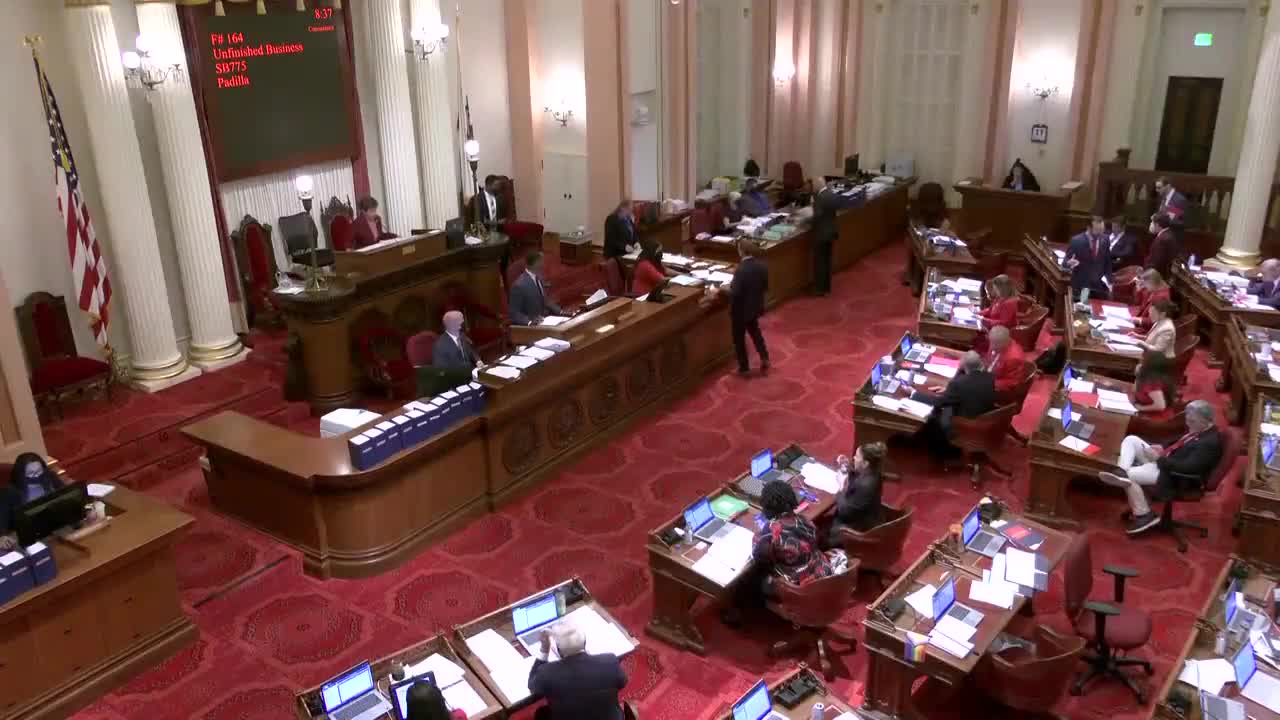 2MIN
Senate Floor
 3MIN
Assembly Floor
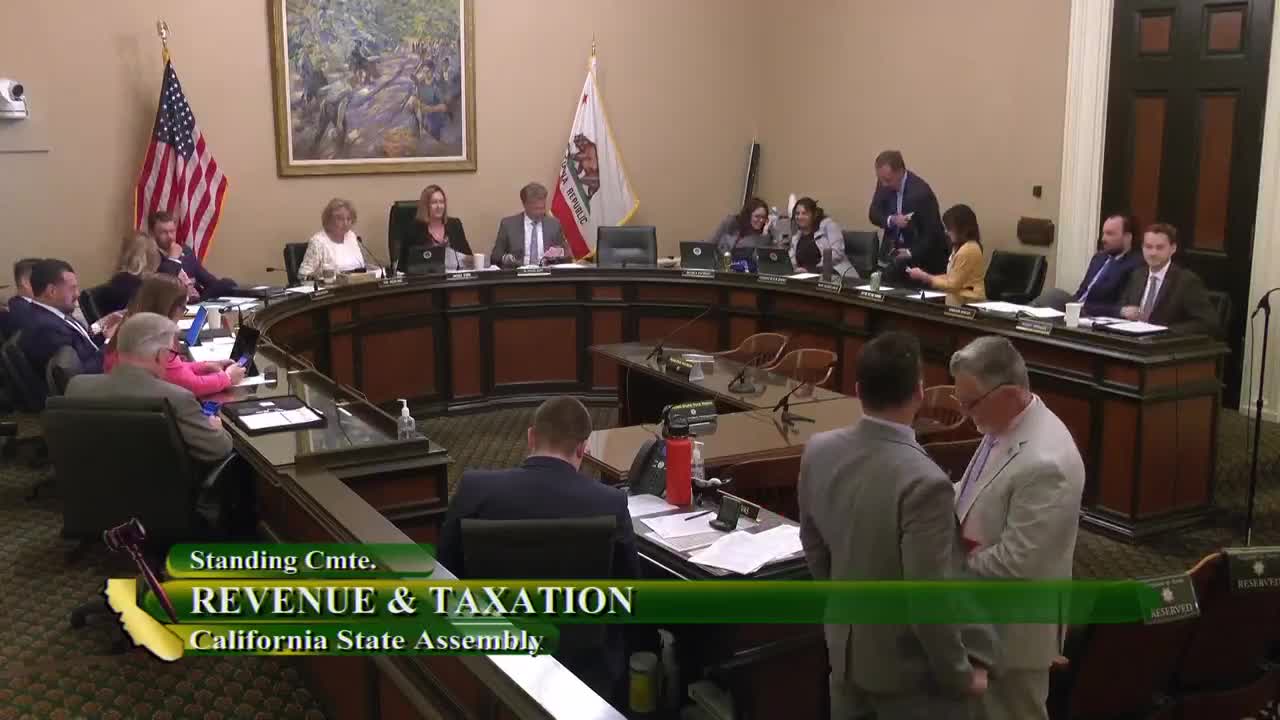 16MIN
Assembly Standing Committee on Revenue and Taxation
 4MIN
Senate Floor
 1MIN
Senate Standing Committee on Appropriations
 11MIN
Senate Standing Committee on Governance and Finance
Bill Author

Bill Co-Author(s):