SB 990: Office of Emergency Services: State Emergency Plan: LGBTQ+ individuals.
- Session Year: 2023-2024
- House: Senate
- Latest Version Date: 2024-09-20
Current Status:
Passed
(2024-09-20: Chaptered by Secretary of State. Chapter 322, Statutes of 2024.)
Introduced
In Committee
First Chamber
In Committee
Second Chamber
Enacted
Under existing law, the California Emergency Services Act, the State Emergency Plan is the official document approved by the Governor that describes the principles and methods to be applied in carrying out emergency operations or rendering mutual aid during emergencies, and includes elements addressing continuity of government, the emergency services of governmental agencies, mobilization of resources, mutual aid, and public information. Existing law makes the State Emergency Plan effective in each political subdivision of the state, and requires the governing body of each political subdivision to take necessary actions to carry out its provisions. Existing law requires the Governor to coordinate the State Emergency Plan and those programs necessary for the mitigation of the effects of an emergency in this state and to coordinate the preparation of plans and programs for the mitigation of the effects of an emergency by the political subdivisions of this state, which are to be integrated into and coordinated with the State Emergency Plan and the plans and programs of the federal government and of other states to the fullest possible extent.
Existing law establishes the Office of Emergency Services within the office of the Governor and requires the office to be responsible for the states emergency and disaster response services for natural, technological, or manmade disasters and emergencies, including responsibility for activities necessary to prevent, respond to, recover from, and mitigate the effects of emergencies and disasters to people and property. Existing law requires the office to update the State Emergency Plan on or before January 1, 2019, and every 5 years thereafter, and, when updating the plan, to coordinate with specified representatives from the access and functional needs population regarding the integration of access and functional needs into the State Emergency Plan. Existing law also requires the office, on or before July 31, 2015, to update the State Emergency Plan to include proposed best practices for local governments and nongovernmental entities to use to mobilize and evacuate people with disabilities and others with access and functional needs during an emergency or natural disaster.
This bill would require the office, as soon as possible, but no later than January 1, 2029, and every 5 years thereafter, to update the State Emergency Plan to include proposed policies and best practices for local government and nongovernmental entities to equitably serve lesbian, gay, bisexual, transgender, queer, questioning, and plus (LGBTQ+) communities during an emergency or natural disaster. The bill would require the office to coordinate with specified representatives from LGBTQ+ communities in complying with this requirement and would make related findings and declarations.
Under existing law, the California Emergency Services Act, the State Emergency Plan is the official document approved by the Governor that describes the principles and methods to be applied in carrying out emergency operations or rendering mutual aid during emergencies, and includes elements addressing continuity of government, the emergency services of governmental agencies, mobilization of resources, mutual aid, and public information. Existing law makes the State Emergency Plan effective in each political subdivision of the state, and requires the governing body of each political subdivision to take necessary actions to carry out its provisions. Existing law requires the Governor to coordinate the State Emergency Plan and those programs necessary for the mitigation of the effects of an emergency in this state and to coordinate the preparation of plans and programs for the mitigation of the effects of an emergency by the political subdivisions of this state, which are to be integrated into and coordinated with the State Emergency Plan and the plans and programs of the federal government and of other states to the fullest possible extent.
Existing law establishes the Office of Emergency Services within the office of the Governor and requires the office to be responsible for the states emergency and disaster response services for natural, technological, or manmade disasters and emergencies, including responsibility for activities necessary to prevent, respond to, recover from, and mitigate the effects of emergencies and disasters to people and property. Existing law requires the office to update the State Emergency Plan on or before January 1, 2019, and every 5 years thereafter, and, when updating the plan, to coordinate with specified representatives from the access and functional needs population regarding the integration of access and functional needs into the State Emergency Plan. Existing law also requires the office, on or before July 31, 2015, to update the State Emergency Plan to include proposed best practices for local governments and nongovernmental entities to use to mobilize and evacuate people with disabilities and others with access and functional needs during an emergency or natural disaster.
This bill would require the office, on or before January 1, 2027, as soon as possible, but no later than January 1, 2029, and every 5 years thereafter, to update the State Emergency Plan to include proposed policies and best practices for local government and nongovernmental entities to equitably serve LGBTQ+ lesbian, gay, bisexual, transgender, queer, questioning, and plus (LGBTQ+) communities during an emergency or natural disaster. The bill would require the office to coordinate with specified representatives from LGBTQ+ communities in complying with this requirement and would make related findings and declarations.
Under existing law, the California Emergency Services Act, the State Emergency Plan is the official document approved by the Governor that describes the principles and methods to be applied in carrying out emergency operations or rendering mutual aid during emergencies, and includes elements addressing continuity of government, the emergency services of governmental agencies, mobilization of resources, mutual aid, and public information. Existing law makes the State Emergency Plan effective in each political subdivision of the state, and requires the governing body of each political subdivision to take necessary actions to carry out its provisions. Existing law requires the Governor to coordinate the State Emergency Plan and those programs necessary for the mitigation of the effects of an emergency in this state and to coordinate the preparation of plans and programs for the mitigation of the effects of an emergency by the political subdivisions of this state, which are to be integrated into and coordinated with the State Emergency Plan and the plans and programs of the federal government and of other states to the fullest possible extent.
Existing law establishes the Office of Emergency Services within the office of the Governor and requires the office to be responsible for the states emergency and disaster response services for natural, technological, or manmade disasters and emergencies, including responsibility for activities necessary to prevent, respond to, recover from, and mitigate the effects of emergencies and disasters to people and property. Existing law requires the office to update the State Emergency Plan on or before January 1, 2019, and every 5 years thereafter, and, when updating the plan, to coordinate with specified representatives from the access and functional needs population regarding the integration of access and functional needs into the State Emergency Plan. Existing law also requires the office, on or before July 31, 2015, to update the State Emergency Plan to include proposed best practices for local governments and nongovernmental entities to use to mobilize and evacuate people with disabilities and others with access and functional needs during an emergency or natural disaster.
This bill would state the intent of the Legislature to enact legislation concerning disaster relief for LGBTQIA+ individuals. require the office, on or before January 1, 2027, to update the State Emergency Plan to include proposed policies and best practices for local government and nongovernmental entities to equitably serve LGBTQ+ communities during an emergency or natural disaster. The bill would require the office to coordinate with specified representatives from LGBTQ+ communities in complying with this requirement and would make related findings and declarations.
Existing law establishes the Office of Emergency Services within the office of the Governor and requires the office to be responsible for the states emergency and disaster response services for natural, technological, or manmade disasters and emergencies, including responsibility for activities necessary to prevent, respond to, recover from, and mitigate the effects of emergencies and disasters to people and property.
This bill would state the intent of the Legislature to enact legislation concerning disaster relief for LGBTQIA+ individuals.
The Legislature finds and declares all of the following:
(a)Disasters will become increasingly prevalent and intense as climate change progresses.
(b)LGBTQ+ people are disproportionately affected by disasters, both because of preexisting systemic discrimination and discriminatory disaster response policies.
(c)According to 20222023 data from the United States Census Household Pulse Survey, 2.4 percent of LGBTQ+ people in California were displaced due to a disaster in comparison to 1.4 percent of cisgender, heterosexual individuals.
(d)Data indicates that LGBTQ+ people in California face worse displacement conditions compared to cisgender, heterosexual individuals, including food and water insecurity, unsanitary conditions, and higher levels of permanent displacement.
(e)LGBTQ+ communities are overrepresented in at-risk populations, including unhoused people, low-income people, and people with chronic illnesses, for whom disasters are more likely to bring death, displacement, and other negative health and socioeconomic impacts.
(f)The marginalization experienced by LGBTQ+ communities can be further exacerbated during a disaster, including transgender people being denied access to shelters that correspond with their gender identities or LGBTQ+ people experiencing disproportionate rates of homelessness after displacement.
(g)Bias in disaster response programs, failure to recognize unique LGBTQ+ family structures, barriers to obtaining proper identification, and anti-LGBTQ+ practices in some disaster relief services provided by faith-based organizations all compound to heighten the risks that LGBTQ+ communities face during a disaster.
(h)Despite recent efforts to consider LGBTQ+ communities in disaster preparedness reports, state and federal agencies continue to lack a clear strategy on how to integrate LGBTQ+ people into disaster preparedness, planning, and emergency response.
(i)It is imperative that disaster and emergency response entities update policies and guidance materials to ensure that LGBTQ+ people are able to access affirming services and resources before, during, and after a disaster or emergency.
SEC. 2.Section 8570.4 of the Government Code is amended to read:8570.4.(a)The Office of Emergency Services shall update the State Emergency Plan on or before January 1, 2019, and every five years thereafter.
(b)(1)The office shall, when complying with subdivision (a), coordinate with representatives, including, but not limited to, social service agencies, nonprofit organizations, and transportation providers, from the access and functional needs population regarding the integration of access and functional needs into the State Emergency Plan.
(2)As used in this subdivision, access and functional needs population has the same meaning as described in Section 8593.3.
(c)(1)As soon as possible, but no later than January 1, 2029, and every five years thereafter, the office shall update the State Emergency Plan to include proposed policies and best practices for local government and nongovernmental entities to equitably serve lesbian, gay, bisexual, transgender, queer, questioning, and plus (LGBTQ+) communities during an emergency or natural disaster.
(2)In complying with this subdivision, the office shall coordinate with representatives, including, but not limited to, social service agencies, nonprofit organizations, advocates, and researchers, from LGBTQ+ communities regarding the integration of LGBTQ+ communities into the State Emergency Plan.
The Legislature finds and declares all of the following:
(a)Disasters will become increasingly prevalent and intense as climate change progresses.
(b)LGBTQ+ people are disproportionately affected by disasters, both because of preexisting systemic discrimination and discriminatory disaster response policies.
(c)According to 20222023 data from the United States Census Household Pulse Survey, 2.4% 2.4 percent of LGBTQ+ people in California were displaced due to a disaster in comparison to 1.4% 1.4 percent of cisgender, heterosexual individuals.
(d)Data indicates that LGBTQ+ people in California face worse displacement conditions compared to cisgender, heterosexual individuals, including food and water insecurity, unsanitary conditions, and higher levels of permanent displacement.
(e)LGBTQ+ communities are overrepresented in at-risk populations, including unhoused people, low-income people, and people with chronic illnesses, for whom disasters are more likely to bring death, displacement, and other negative health and socioeconomic impacts.
(f)The marginalization experienced by LGBTQ+ communities can be further exacerbated during a disaster, including transgender people being denied access to shelters that correspond with their gender identities or LGBTQ+ people experiencing disproportionate rates of homelessness after displacement.
(g)Bias in disaster response programs, failure to recognize unique LGBTQ+ family structures, barriers to obtaining proper identification, and anti-LGBTQ+ practices in some disaster relief services provided by faith-based organizations all compound to heighten the risks that LGBTQ+ communities face during a disaster.
(h)Despite recent efforts to consider LGBTQ+ communities in disaster preparedness reports, state and federal agencies continue to lack a clear strategy on how to integrate LGBTQ+ people into disaster preparedness, planning, and emergency response.
(i)It is imperative that disaster and emergency response entities update policies and guidance materials to ensure that LGBTQ+ people are able to access affirming services and resources before, during, and after a disaster or emergency.
SEC. 2.Section 8570.4 of the Government Code is amended to read:8570.4.(a)The Office of Emergency Services shall update the State Emergency Plan on or before January 1, 2019, and every five years thereafter.
(b)(1)The office shall, when complying with subdivision (a), coordinate with representatives, including, but not limited to, social service agencies, nonprofit organizations, and transportation providers, from the access and functional needs population regarding the integration of access and functional needs into the State Emergency Plan.
(2)As used in this subdivision, access and functional needs population has the same meaning as described in Section 8593.3.
(c)(1)On or before January 1, 2027, As soon as possible, but no later than January 1, 2029, and every five years thereafter, the office shall update the State Emergency Plan to include proposed policies and best practices for local government and nongovernmental entities to equitably serve LGBTQ+ lesbian, gay, bisexual, transgender, queer, questioning, and plus (LGBTQ+) communities during an emergency or natural disaster.
(2)In complying with this subdivision, the office shall coordinate with representatives, including, but not limited to, social service agencies, nonprofit organizations, advocates, and researchers, from LGBTQ+ communities regarding the integration of LGBTQ+ communities into the State Emergency Plan.
REVISIONS: HeadingLine 3.The Legislature finds and declares all of the following:
(a)Disasters will become increasingly prevalent and intense as climate change progresses.
(b)LGBTQ+ people are disproportionately affected by disasters, both because of preexisting systemic discrimination and discriminatory disaster response policies.
(c)According to 20222023 data from the United States Census Household Pulse Survey, 2.4% of LGBTQ+ people in California were displaced due to a disaster in comparison to 1.4% of cisgender, heterosexual individuals.
(d)Data indicates that LGBTQ+ people in California face worse displacement conditions compared to cisgender, heterosexual individuals, including food and water insecurity, unsanitary conditions, and higher levels of permanent displacement.
(e)LGBTQ+ communities are overrepresented in at-risk populations, including unhoused people, low-income people, and people with chronic illnesses, for whom disasters are more likely to bring death, displacement, and other negative health and socioeconomic impacts.
(f)The marginalization experienced by LGBTQ+ communities can be further exacerbated during a disaster, including transgender people being denied access to shelters that correspond with their gender identities or LGBTQ+ people experiencing disproportionate rates of homelessness after displacement.
(g)Bias in disaster response programs, failure to recognize unique LGBTQ+ family structures, barriers to obtaining proper identification, and anti-LGBTQ+ practices in some disaster relief services provided by faith-based organizations all compound to heighten the risks that LGBTQ+ communities face during a disaster.
(h)Despite recent efforts to consider LGBTQ+ communities in disaster preparedness reports, state and federal agencies continue to lack a clear strategy on how to integrate LGBTQ+ people into disaster preparedness, planning, and emergency response.
(i)It is imperative that disaster and emergency response entities update policies and guidance materials to ensure that LGBTQ+ people are able to access affirming services and resources before, during, and after a disaster or emergency.
SEC. 2.Section 8570.4 of the Government Code is amended to read:8570.4.(a)The Office of Emergency Services shall update the State Emergency Plan on or before January 1, 2019, and every five years thereafter.
(b)(1)The office shall, when complying with subdivision (a), coordinate with representatives, including, but not limited to, social service agencies, nonprofit organizations, and transportation providers, from the access and functional needs population regarding the integration of access and functional needs into the State Emergency Plan.
(2)As used in this subdivision, access and functional needs population has the same meaning as described in Section 8593.3.
(c)(1)On or before January 1, 2027, the office shall update the State Emergency Plan to include proposed policies and best practices for local government and nongovernmental entities to equitably serve LGBTQ+ communities during an emergency or natural disaster.
(2)In complying with this subdivision, the office shall coordinate with representatives, including, but not limited to, social service agencies, nonprofit organizations, advocates, and researchers, from LGBTQ+ communities regarding the integration of LGBTQ+ communities into the State Emergency Plan.
SECTION 1.It is the intent of the Legislature to enact legislation concerning disaster relief for LGBTQIA+ individuals.It is the intent of the Legislature to enact legislation concerning disaster relief for LGBTQIA+ individuals.
|
Date
|
Status
|
|---|---|
| Sep 20, 2024 | Chaptered by Secretary of State. Chapter 322, Statutes of 2024. |
| Sep 20, 2024 | Approved by the Governor. |
| Aug 22, 2024 | Enrolled and presented to the Governor at 2 p.m. |
| Aug 15, 2024 | In Senate. Ordered to engrossing and enrolling. |
| Aug 15, 2024 | Read third time. Passed. (Ayes 65. Noes 0. Page 6313.) Ordered to the Senate. |
| Jul 3, 2024 | Read second time. Ordered to third reading. |
| Jul 2, 2024 | From committee: Do pass. (Ayes 11. Noes 0.) (July 2). |
| Jul 2, 2024 | Coauthors revised. |
| Jun 26, 2024 | June 26 hearing postponed by committee. |
| Jun 11, 2024 | From committee: Do pass and re-refer to Com. on APPR. (Ayes 7. Noes 0.) (June 10). Re-referred to Com. on APPR. |
| May 28, 2024 | Referred to Com. on E.M. |
| May 21, 2024 | In Assembly. Read first time. Held at Desk. |
| May 20, 2024 | Read third time. Passed. (Ayes 32. Noes 1. Page 4023.) Ordered to the Assembly. |
| May 16, 2024 | Read second time. Ordered to third reading. |
| May 16, 2024 | From committee: Do pass. (Ayes 5. Noes 0. Page 3967.) (May 16). |
| May 14, 2024 | Set for hearing May 16. |
| May 13, 2024 | May 13 hearing: Placed on APPR suspense file. |
| May 3, 2024 | Set for hearing May 13. |
| Apr 24, 2024 | Read second time and amended. Re-referred to Com. on APPR. |
| Apr 23, 2024 | From committee: Do pass as amended and re-refer to Com. on APPR. (Ayes 12. Noes 1. Page 3721.) (April 23). |
| Apr 16, 2024 | Set for hearing April 23. |
| Mar 20, 2024 | Re-referred to Com. on G.O. |
| Mar 11, 2024 | From committee with author's amendments. Read second time and amended. Re-referred to Com. on RLS. |
| Feb 14, 2024 | Referred to Com. on RLS. |
| Jan 31, 2024 | From printer. May be acted upon on or after March 1. |
| Jan 30, 2024 | Introduced. Read first time. To Com. on RLS. for assignment. To print. |
|
Date
|
Description
|
Location
|
Votes
|
|
|---|---|---|---|---|
| Aug 15, 2024 | SB 990 Padilla Senate Third Reading By Ward | Assembly Floor |
Passed |
|
| Jul 2, 2024 | Do pass. | Assembly Standing Committee on Appropriations |
Passed |
|
| Jun 10, 2024 | Do pass and be re-referred to the Committee on [Appropriations] | Assembly Standing Committee on Emergency Management |
Passed |
|
| May 20, 2024 | Senate 3rd Reading SB990 Padilla et al. | Senate Floor |
Passed |
|
| May 16, 2024 | Do pass | Senate Standing Committee on Appropriations |
Passed |
|
| May 13, 2024 | Placed on suspense file | Senate Standing Committee on Appropriations |
Passed |
|
| Apr 23, 2024 | Do pass as amended, but first amend, and re-refer to the Committee on [Appropriations] | Senate Standing Committee on Governmental Organization |
Passed |
This list shows positions taken on this bill by organizations on the date displayed, which is linked to the original source.
Positions by individuals are not included.
|
Organization
|
Position
|
Date
|
|---|---|---|
| California Legislative LGBTQ Caucus | ** Support | |
| California Transcends | ** Support | |
| Courage California | ** Support | |
| CPCA Advocates | ** Support | |
| El/La Para TransLatinas | ** Support | |
| Equality California | ** Support | |
| Insurance Commissioner Ricardo Lara | ** Support | |
| Parivar Bay Area | ** Support | |
| Somos Familia Valle | ** Support | |
| Transfamily Support Services | ** Support | |
| TransYouth Liberation | ** Support |
SENATE THIRD READING
STR Bill Id:SB 990
Author:(Padilla)
As Amended Ver:April 24, 2024
Majority vote
SUMMARY
This bill requires the Office of Emergency Services (Cal OES) to update the State Emergency Plan (SEP) with proposed policies and best practices for local government and nongovernmental entities to equitably serve lesbian, gay, bisexual, transgender, queer, questioning, and plus (LGBTQ+) communities during an emergency or natural disaster.
Major Provisions
- Requires Cal OES to update the SEP with proposed policies and practices for local governments, nonprofits, and private entities to equitably serve LGBTQ+ communities during emergencies and disasters.
- Requires the update to occur as soon as possible, but no later than January 1, 2029, and be updated every five years.
- Requires Cal OES to coordinate with representatives from LGBTQ+ communities, as specified, on these updates.
COMMENTS
State Emergency Plan: The SEP describes how response to natural or human- caused emergencies occurs in California. The plan is a requirement of the California Emergency Services Act (ESA), and describes methods for conducting emergency operations, the process for rendering mutual aid, emergency services of government agencies, how resources are mobilized, how the public is informed, and how continuity of government is maintained during emergency.
Whole Community Preparedness: The Federal Emergency Management Agency (FEMA), in both their 2022-2026 Strategic Plan and their emergency planning guidelines (Comprehensive Preparedness Guide 101, Version 2.0) articulate the need to build a culture of preparedness by ensuring representation, equity, and services for under-represented diverse populations, including LGBTQIA+ communities, that may be more impacted by disasters.
Amplified Harm: LGBTQ+ Disaster Displacement Study: According to this study by UC Irvine, Yale University, and Claremont Graduate University that analyzed data from the U.S. Census Household Pulse Survey (2022-2023), members of the LGBTQ+ community are disproportionately impacted by disasters and emergencies, facing significantly higher rates of displacement and adverse conditions compared to their cisgender, heterosexual counterparts. In California specifically, the total population displacement rate is 1.4%, while the LGBTQ+ displacement rate is 2.4%. Furthermore, LGBTQ+ individuals in California experience higher levels of permanent displacement (52% vs. 17%), food insecurity (25% vs. 23%), water insecurity (39% vs. 20%), and fear of crime (70% vs. 35%) compared to their cisgender, heterosexual counterparts.
The LGBTQ+ Community and Disaster Impact: According to the Public Policy Institute of California (PPIC), California is home to the "largest lesbian, gay, bisexual, and transgender population – 2.7 million – in the nation." Further, the PPIC states that, "California's share of adults who identify as LGBT (9.1%) is considerably higher than the share in the rest of the nation (7.9%). It is also higher than that of any other highly populated state."
LGBTQ+ communities face their own unique emergencies, including:
Mass Shootings:
LGBTQIA+ gathering centers continue to be targets for violence, including Pride events, drag shows, nightclubs, and more. A mass shooting event occurred as recently as November 2022 when five people were killed at Club Q, an LGBTQIA+ nightclub in Colorado Springs, Colorado. This attack occurred only six years after 49 people were killed in a mass shooting at Pulse, a gay nightclub in Orlando, Florida. As more acts of violence affect the LGBTQIA+ community, it increases the chances of larger attacks and the creation of additional copycat violent extremists.
Hate Crimes and Murders:
The most recent version of the FBI's hate crime statistics asserts that approximately 21.2% of all reported hate crimes were motivated by bias related to sexual orientation or gender identity, which is more than 1.2 % higher than last year. By the end of 2022, the number of known murdered transgender individuals had increased by 93% in a four-year period—a crime often unreported or misreported. Even with incomplete data, it is clear black transgender women are disproportionately targeted.
Homeland Security Threats:
Domestic violence extremists are making more threats than ever before, likely due to sociopolitical issues related to the LGBTQIA+ community such as debates around drag performances, LGBTQIA+ curricula in schools, and gender-affirming care. For example, Tennessee banned all public drag, which places a significant target on transgender and non-binary individuals, and Florida expanded its existing ban on teaching sexual orientation and gender identity to students in grades kindergarten through third grade to apply to all grades. Furthermore, 25 states passed laws to restrict gender-affirming care for minors. These legislative actions directly contribute to the radicalization and extremism that further threatens the safety and security of LGBTQIA+ people. Furthermore, domestic extremists are not the only homeland security threats to LGBTQIA+ people. In May of 2024, the FBI and Department of Homeland Security issued a warning that "Foreign terrorist organizations or supporters may seek to exploit increased gatherings associated with the upcoming June 2024 Pride Month."
Health Emergencies:
In 2021, 70% (22,400) of the estimated 32,100 new HIV infections in the U.S. occurred among gay, bisexual, and other men who reported male-to-male sexual contact, accounting for 86% of infections among all men. Additionally, the Monkeypox outbreak also disproportionally impacted among gay, bisexual, and other men who reported male-to-male sexual contact compared to their heterosexual counterparts.
According to the Author
"California has worked hard to dispel discrimination in our policies, yet following natural disasters, when we are at are most vulnerable and in need of government assistance, research show that LGBTQ+ residents face barriers to service that cause them to be displaced at higher rates and for longer periods of time. To address that disparity, this measure would update our State Emergency Plan with best practices and policies to serve the LGBTQ+ community and ensure that kind of discrimination does not continue."
Arguments in Support
According to Equality California, "SB 990 offers an important intervention to these pervasive disparities and would require CalOES to coordinate with representatives from the LGBTQ+ community – including social service agencies, nonprofit organizations, advocates, and researchers – to develop policies and best practices to serve LGBTQ+ people during natural disasters. Consulting directly with LGBTQ+ experts will allow CalOES to better understand how to support some of the most vulnerable populations when disaster strikes. Furthermore, the bill ensures that CalOES incorporates these important community-driven insights and lessons into the next update of the State's Emergency Plan."
Arguments in Opposition
None on file.
FISCAL COMMENTS
According to the Assembly Committee on Appropriations, "Annual ongoing costs of approximately $125,000 to OES to contract with an entity to consistently engage with LGBTQ+ communities and provide consultation on SEP updates (General Fund)."
VOTES
SENATE FLOOR: 32-1-7
YES: Allen, Alvarado-Gil, Archuleta, Ashby, Atkins, Becker, Blakespear, Bradford, Caballero, Cortese, Dodd, Durazo, Eggman, Glazer, Gonzalez, Hurtado, Laird, Limón, McGuire, Menjivar, Newman, Ochoa Bogh, Padilla, Portantino, Roth, Rubio, Skinner, Smallwood-Cuevas, Stern, Umberg, Wahab, Wiener
NO: Nguyen
ABS, ABST OR NV: Dahle, Grove, Jones, Min, Niello, Seyarto, Wilk
ASM EMERGENCY MANAGEMENT: 7-0-1
YES: Rodriguez, Davies, Arambula, Boerner, Calderon, Wendy Carrillo, Waldron
ABS, ABST OR NV: Bennett
ASM APPROPRIATIONS: 11-0-4
YES: Wicks, Arambula, Bryan, Calderon, Wendy Carrillo, Mike Fong, Grayson, Haney, Hart, Pellerin, Villapudua
ABS, ABST OR NV: Sanchez, Dixon, Jim Patterson, Ta
UPDATED
VERSION: April 24, 2024
CONSULTANT: Ryan Fleming / E.M. / (916) 319-3802 FN: 0003709
Date of Hearing: July 2, 2024
ASSEMBLY COMMITTEE ON APPROPRIATIONS
Buffy Wicks, Chair
SBPCA Bill Id:SB 990
Author:(Padilla) – As Amended Ver:April 24, 2024
Policy Committee: | Emergency Management | Vote: | 7 - 0 |
|
| ||
|
|
Urgency: No State Mandated Local Program: No Reimbursable: No
SUMMARY:
This bill requires the Office of Emergency Services (OES) to update the State Emergency Plan (SEP) to include best practices for local government and non-governmental entities to equitably serve LGBTQ+ communities during an emergency or natural disaster.
Specifically, this bill:
- Requires, as soon as possible, but no later than January 1, 2029, OES to update the SEP to equitably serve LGBTQ+ communities, with subsequent updates every five years thereafter.
- Requires OES to coordinate with certain representatives from LGBTQ+ communities regarding the integration of LGBTQ+ communities into the SEP.
FISCAL EFFECT:
Annual ongoing costs of approximately $125,000 to OES to contract with an entity to consistently engage with LGBTQ+ communities and provide consultation on SEP updates (General Fund).
COMMENTS:
- Purpose. According to the author, “following natural disasters, when we are at [our] most vulnerable and in need of government assistance, research show[s] that LGBTQ+ residents face barriers to service that cause them to be displaced at higher rates and for longer periods of time.” The author intends this bill to “ensure that kind of discrimination does not continue.” This bill is co-sponsored by Insurance Commissioner Ricardo Lara and Equality California and supported by LGBTQ+ community organizations.
- SEP and Local Emergency Plans. Existing law requires OES to develop the SEP and update the plan once every five years. The SEP is the official document approved by the Governor describing the principles and methods to be applied in carrying out emergency operations or rendering mutual aid during emergencies, including the emergency services of governmental agencies and mobilization of resources. Existing law also grants local governments the full power during a local emergency to provide mutual aid to affected areas in accordance with local ordinances and the jurisdiction’s emergency plan. However, OES must develop best practices for counties developing and updating a county emergency plan, with each county required to submit its local emergency plan and any subsequent updates to OES for review. Although OES regional staff works with local governments to develop their emergency plans, OES notes the ultimate responsibility for creating and maintaining an emergency plan rests with each local jurisdiction.
This bill requires OES to coordinate with LGBTQ+ community representatives and update the SEP with best practices for local government and non-governmental entities to equitably serve LGBTQ+ communities during an emergency or natural disaster. For example, best practices may address the following issues cited in this bill’s findings and declarations:
Bias in disaster response programs, failure to recognize unique LGBTQ+ family structures, barriers to obtaining proper identification, and anti-LGBTQ+ practices in some disaster relief services provided by faith-based organizations all compound to heighten the risks that LBGTQ+ communities face during a disaster.
- Prior Legislation. AB 3267 (Smith), Chapter 260, Statutes of 2020, required OES to coordinate with representatives of the access and functional needs population when OES updates the SEP.
Analysis Prepared by: Irene Ho / APPR. / (916) 319-2081
Date of Hearing: June 10, 2024
ASSEMBLY COMMITTEE ON EMERGENCY MANAGEMENT
Freddie Rodriguez, Chair
SBPCA Bill Id:SB 990
Author:(Padilla) – As Amended Ver:April 24, 2024
SENATE VOTE: 32-1
SUBJECT: Office of Emergency Services: State Emergency Plan: LGBTQ+ individuals
SUMMARY: This bill requires the Office of Emergency Services (Cal OES) to update the State Emergency Plan (SEP) with proposed policies and best practices for local government and nongovernmental entities to equitably serve lesbian, gay, bisexual, transgender, queer, questioning, and plus (LGBTQ+) communities during an emergency or natural disaster. Specifically, this bill:
- Requires Cal OES to update the SEP with proposed policies and practices for local governments, nonprofits, and private entities to equitably serve LGBTQ+ communities during emergencies and disasters.
- Requires the update to occur as soon as possible, but no later than January 1, 2029, and be updated every 5 years.
- Requires Cal OES to coordinate with representatives from LGBTQ+ communities, as specified, on these updates.
- Makes other declarations and findings, as specified.
EXISTING LAW:
- Requires the Governor to coordinate the SEP and integrate plans and programs that mitigate against emergencies into the SEP, as specified (Government Code § 8569).
- Authorizes powers of the Governor, as specified, to coordinate the SEP and related mitigation programs (Government Code § 8570).
- Requires Cal OES to update the SEP on or before January 1, 2019 and every 5 years therafter (Government Code § 8570.4).
- Requires Cal OES to update the SEP to include best practices for local govenments and nongovernmental entities for mobilizing and evacuating people with disabilities and others with access and functional needs (AFN) during an emergency or natural disaster. (Government Code § 8570.3).
- Requires Cal OES to coordinate with representantives, as specified, from the access and functional needs (AFN) population to integrate the AFN population into the SEP (Government Code § 8570.4).
FISCAL EFFECT: According to the Senate Committee on Appropriations, “Unknown, potentially significant costs ranging in the tens of thousands to low hundreds of thousands of dollars for OES to update the SEP to integrate LGBTQ+ communities into the plan (General Fund).”
COMMENTS:
Purpose of this bill: According to the author, “California has worked hard to dispel discrimination in our policies, yet following natural disasters, when we are at are most vulnerable and in need of government assistance, research show that LGBTQ+ residents face barriers to service that cause them to be displaced at higher rates and for longer periods of time. To address that disparity, this measure would update our State Emergency Plan with best practices and policies to serve the LGBTQ+ community and ensure that kind of discrimination does not continue.”
Equity Impact: According to the author’s staff, “This legislation would help to better understand and address the disproportionate outcomes that LGBTQ+ individuals face after natural disasters.”
State Emergency Plan: The SEP describes how response to natural or human- caused emergencies occurs in California. The plan is a requirement of the California Emergency Services Act (ESA), and describes methods for conducting emergency operations, the process for rendering mutual aid, emergency services of government agencies, how resources are mobilized, how the public is informed, and how continuity of government is maintained during emergency. The SEP defines Emergency Support Functions (ESF) which are discipline-specific groups that develop functional annexes to set goals, objectives, operational concepts, capabilities, organization structures, and related policies and procedures. Under the SEP, there are 18 ESFs led by a state agency and represent an alliance of state government and other stakeholders with similar functional responsibilities.
Whole Community Preparedness: FEMA, in both their 2022-2026 Strategic Plan and their emergency planning guidelines (Comprehensive Preparedness Guide 101, Version 2.0) articulate the need to build a culture of preparedness by ensuring representation, equity, and services for under-represented diverse populations that may be more impacted by disasters including children, seniors, individuals with disabilities or access and functional needs, individuals with diverse culture and language use, individuals with lower economic capacity, LGBTQ+ communities, and other underserved populations.
Cal OES’s Office of Diversity, Equity, and Inclusion: In response to Governor Newsom’s 2022 Executive Order, N-15-22, Cal OES created the Office of Diversity, Equity, and Inclusion. The goals of this Office is to make emergency management equity-centered, elevate and expand current equity and access programs, and integrate equity and engagement principles throughout Cal OES’s actions, policies, programs, and procedures, both internally and externally. According to Cal OES, the Office of Diversity, Equity, and Inclusion works to ensure that principles of equity, justice, inclusion, transparency, and accountability govern all aspects of emergency services.
Amplified Harm: LGBTQ+ Disaster Displacement Study: According to the study Amplified Harm: LGBTQ+ Disaster Displacement by UC Irvine, Yale University, and Claremont Graduate University, members of the LGBTQ+ community are disproportionately impacted by disasters and emergencies, facing significantly higher rates of displacement and adverse conditions compared to their cisgender, heterosexual counterparts.
This study analyzed data from the U.S. Census Household Pulse Survey (2022-2023), and found 2.4% of LGBTQ+ individuals were displaced by disasters, nearly double the 1.4% displacement rate for cisgender, heterosexual individuals. They also found that nationally, LGBTQ+ individuals, particularly those with intersecting marginalized identities, endure worse conditions during displacement. They experience higher levels of food insecurity (46% vs. 35%), water insecurity (43% vs. 29%), unsanitary conditions (44% vs. 27%), feelings of isolation (52% vs. 39%), and fear of crime (52% vs. 31%) compared to their cisgender, heterosexual counterparts. Additionally, 32% of LGBTQ+ individuals never return to their homes post-displacement, compared to 12% of cisgender, heterosexual individuals, severing them from social support networks and exacerbating mental health struggles.
In California specifically, the total population displacement rate is 1.4%, while the LGBTQ+ displacement rate is 2.4%, reflecting the national average. However, LGBTQ+ individuals in California report higher levels of permanent displacement (52% vs. 17%), food insecurity (25% vs. 23%), water insecurity (39% vs. 20%), and fear of crime (70% vs. 35%) compared to their cisgender, heterosexual counterparts.
The LGBTQ+ Community and Disaster Impact: According to the Public Policy Institute of California (PPIC), California is home to the “largest lesbian, gay, bisexual, and transgender population – 2.7 million – in the nation.” Further, the PPIC states that, “California’s share of adults who identify as LGBT (9.1%) is considerably higher than the share in the rest of the nation (7.9%). It is also higher than that of any other highly populated state.”
LGBTQ+ communities face their own unique emergencies.
Mass Shootings:
LGBTQIA+ gathering centers continue to be targets for violence, including Pride events, drag shows, nightclubs, and more. A mass shooting event occurred as recently as November 2022 when five people were killed at Club Q, an LGBTQIA+ nightclub in Colorado Springs, Colorado. This attack occurred only six years after 49 people were killed in a mass shooting at Pulse, a gay nightclub in Orlando, Florida. As more acts of violence affect the LGBTQIA+ community, it increases the chances of larger attacks and the creation of additional copycat violent extremists.
Hate Crimes and Murders:
The most recent version of the FBI’s hate crime statistics asserts that approximately 21.2% of all reported hate crimes were motivated by bias related to sexual orientation or gender identity, which is more than 1.2 % higher than last year. By the end of 2022, the number of known murdered transgender individuals had increased by 93% in a four-year period—a crime often unreported or misreported. Even with incomplete data, it is clear black transgender women are disproportionately targeted.
Homeland Security Threats:
Domestic violence extremists are making more threats than ever before, likely due to sociopolitical issues related to the LGBTQIA+ community such as debates around drag performances, LGBTQIA+ curricula in schools, and gender-affirming care. For example, Tennessee banned all public drag, which places a significant target on transgender and non-binary individuals, and Florida expanded its existing ban on teaching sexual orientation and gender identity to students in grades kindergarten through third grade to apply to all grades. Furthermore, 14 states currently restrict gender-affirming care for minors, and more have indicated they plan to do the same. These legislative actions directly contribute to the radicalization and extremism that further threatens the safety and security of LGBTQIA+ people. Furthermore, domestic extremists are not the only homeland security threats to LGBTQIA+ people. In May of 2024, the FBI and Department of Homeland Security issued a warning that “Foreign terrorist organizations or supporters may seek to exploit increased gatherings associated with the upcoming June 2024 Pride Month.”
Health Emergencies:
In 2021, 70 percent (22,400) of the estimated 32,100 new HIV infections in the U.S. occurred among gay, bisexual, and other men who reported male-to-male sexual contact, accounting for 86 percent of infections among all men. Additionally, the Monkeypox outbreak also disproportionally impacted among gay, bisexual, and other men who reported male-to-male sexual contact compared to their heterosexual counterparts.
Cal OES’s current role in assisting with local Emergency Operation Plans (EOP): According to Cal OES, “through its regional staff, Cal OES assists local governments with their EOPs as necessary. This includes offering review of EOPs utilizing the 2019 EOP “crosswalk,” which is a checklist-style document designed to ensure that each jurisdiction’s plan incorporates the fundamentals of the Standardized Emergency Management System (SEMS) and the National Incident Management System (NIMS). SEMS and NIMS, which are statutorily enacted frameworks for emergency management, help to provide a measure of uniformity across California, while also allowing local jurisdictions the flexibility to account for local dynamics that they know best.
Cal OES adds, “in addition to providing subject matter expertise to local governments, Cal OES regional staff also facilitate connections between peer communities so that they can share best practices. It is important to note, however, that ultimate responsibility for EOPs rests with the local jurisdictions that create and maintain them.”
Arguments in Support: According to Equality California, “Last year, California suffered a record number of catastrophic natural disasters which will only increase in frequency and intensity as climate change worsens. Though climate disasters will touch many Californians, recent studies indicate that LGBTQ+ people are disproportionately harmed by disasters because of preexisting obstacles to accessing services and shelters, discriminatory disaster response policies, and economic marginalization.1 LGBTQ+ individuals are also overrepresented in at-risk populations for whom disasters are more likely to bring death, permanent displacement, and other negative health and socioeconomic impacts.”
They continue, “SB 990 offers in important intervention to these pervasive disparities and would require CalOES to coordinate with representatives from the LGBTQ+ community – including social service agencies, nonprofit organizations, advocates, and researchers – to develop policies and best practices to serve LGBTQ+ people during natural disasters. Consulting directly with LGBTQ+ experts will allow CalOES to better understand how to support some of the most vulnerable populations when disaster strikes. Furthermore, the bill ensures that CalOES incorporates these important community-driven insights and lessons into the next update of the State’s Emergency Plan.”
Related Legislation:
AB 2645 (Rodriguez, Chapter 247, Statutes of 2022) required counties to ensure community resilience centers are able to serve as community-wide assets during disasters – including extreme heat events – and integrate these centers into their local emergency plans, as specified.
AB 580 (Rodriguez, Chapter 744, Statutes of 2021) required OES to coordinate with representative of the access and functional needs population and to review local emergency plans.
AB 1409 (Levine, Chapter 481, Statutes of 2021) required the inclusion of evacuation locations in the safety element of a general plan.
AB 2968 (Rodriguez, Chapter 257, Statutes of 2020) required OES to establish best practices for developing county emergency plans, a process for reviewing such plans, and feedback on the extent to which plans protect and accommodates vulnerable populations, among other things.
REGISTERED SUPPORT / OPPOSITION:
Support
California Legislative LGBTQ+ Caucus (Sponsor)
Equality California (Sponsor)
Insurance Commissioner Ricardo Lara / California Department of Insurance (Sponsor)
California Transcends
Courage California
CPCA Advocates, Subsidiary of The California Primary Care Association
El/la Para Translatinas
Parivar Bay Area
Somos Familia Valle
Transfamily Support Services
Transyouth Liberation
Opposition
None on file.
Analysis Prepared by: Ryan Fleming / E.M. / (916) 319-3802
SENATE RULES COMMITTEE Office of Senate Floor Analyses (916) 651-1520 Fax: (916) 327-4478 | SB 990 |
THIRD READING
Bill No: SB 990
Author: Padilla (D), et al.
Amended: 4/24/24
Vote: 21
SENATE GOVERNMENTAL ORG. COMMITTEE: 12-1, 4/23/24
AYES: Dodd, Alvarado-Gil, Archuleta, Ashby, Bradford, Glazer, Ochoa Bogh, Padilla, Portantino, Roth, Rubio, Smallwood-Cuevas
NOES: Nguyen
NO VOTE RECORDED: Wilk, Jones, Seyarto
SENATE APPROPRIATIONS COMMITTEE: 5-0, 5/16/24
AYES: Caballero, Ashby, Becker, Bradford, Wahab
NO VOTE RECORDED: Jones, Seyarto
SUBJECT: Office of Emergency Services: State Emergency Plan: LGBTQ+ individuals
SOURCE: California Legislative LGBTQ+
Caucus and Insurance Commissioner Ricardo Lara
DIGEST:
This bill requires the Office of Emergency Services (OES), as soon as possible, but no later than January 1, 2029, and every five years thereafter, to update the State Emergency Plan (SEP) to include proposed policies and best practices for local government and nongovernmental entities to equitably serve lesbian, gay, bisexual, transgender, queer, questioning, and plus (LGBTQ+) communities during an emergency or natural disaster, as specified.
ANALYSIS:
Existing law:
- The Emergency Services Act (ESA) establishes the SEP as the official document approved by the Governor that describes the principles and methods to be applied in carrying out emergency operations or rendering mutual aid during emergencies, and includes elements addressing continuity of government, the emergency services of governmental agencies, mobilization of resources, mutual aid, and public information.
- Makes the SEP effective in each political subdivision of the state, and requires the governing body of each political subdivision to take necessary actions to carry out its provisions.
- Requires the Governor to coordinate the SEP and those programs necessary for the mitigation of the effects of an emergency by the political subdivisions of this state, which are to be integrated into and coordinated with the SEP and the plans and programs of the federal government and of other states to the fullest possible extent.
- Requires OES, on or before January 1, 2019, and every five years thereafter, to update the SEP, as specified.
This bill:
- Requires OES, as soon as possible, but no later than January 1, 2029, and every five years thereafter, to update the SEP to include proposed policies and best practices for local government and nongovernmental entities to equitable serve LGBTQ+ communities during an emergency or natural disaster.
- Requires OES, in complying with this bill, to coordinate with representatives, including but not limited to, social service agencies, nonprofit organizations, advocates, and researchers, from LGBTQ+ communities regarding the integration of LGBTQ+ communities into the SEP.
- Includes related legislative findings and declarations.
Background
Author’s Statement. According to the author’s office, “California has worked hard to dispel discrimination in our policies, yet following natural disasters, when we are at are most vulnerable and in need of government assistance, research show that LGBTQ+ residents face barriers to service that cause them to be displaced at higher rates and for longer periods of time. To address that disparity, this measure would update our State Emergency Plan with best practices and policies to serve the LGBTQ+ community and ensure that kind of discrimination does not continue.”
Emergency Preparedness and Response. OES is responsible for addressing natural, technological, or manmade disasters and emergencies, and preparing the State to prevent, respond to, quickly recover from, and mitigate the effects of both intentional and natural disasters. As part of their overall preparedness mission, OES is required to develop the SEP, the State Hazard Mitigation Plan (SHMP), and maintains the Standardized Emergency Management System (SEMS), and the Emergency Management Mutual Aid System (EMMA). OES, in coordination with the Federal Emergency Management Agency (FEMA) and local partners, has developed four Catastrophic Plans to augment the SEP.
State Emergency Plan. The SEP addresses the state's response to extraordinary emergency situations associated with natural disasters or human-caused emergencies. In accordance with the California Emergency Services Act, the plan describes the methods for carrying out emergency operations, the process for rendering mutual aid, the emergency services of governmental agencies, how resources are mobilized, how the public will be informed, and the process to ensure continuity of government during an emergency or disaster.
The SEP plays a key role in guiding state agencies, local jurisdictions, and the public on emergency management. It describes the methods for conducting emergency operations, rendering mutual aid, emergency response capabilities of state agencies, resource mobilization, public information, and continuity of government during an emergency or disaster.
The SEP is a management document intended to be read and understood before an emergency occurs. It is designed to outline the activities of all California jurisdictions within a statewide emergency management system and embraces the capabilities and resources in the broader emergency management community that includes individuals, businesses, non-governmental organizations, tribal governments, other states, the federal government, and international assistance.
The Governor is required to coordinate with local entities for the preparation of plans and programs designed to mitigate the effects of an emergency. Such plans and programs are integrated and coordinated with the SEP. In 2016, AB 2311 (Brown, Chapter 520, Statutes of 2016) required each county to integrate access and functional needs, as defined, during the next update to its emergency plan.
Similarly, AB 3267 (Smith, Chapter 260, Statutes of 2020) required OES to coordinate with representatives, including, but not limited to, social service agencies, nonprofit organizations, and transportation providers, from the access and functional needs population regarding the integration of access and functional needs into the SEP during the next update, which must be completed on or before January 1, 2024, and every five years thereafter.
The 2023 SEP Coordinating Draft was used to develop the 2024 SEP Executive Draft. The Executive Draft is currently being reviewed by OES executives, and once approved will be used to develop the Governor’s Draft for Governor’s Office review. Once approved by the Governor, the 2024 SEP is expected to be finalized and published in the spring of 2024.
Significant updates to the SEP include: enhanced whole community planning approach; updated hazards discussion with new information on wildfires, earthquakes, pandemics, severe weather, Public Safety Power Shutoffs (PSPS), and cyberattacks; updated information on Unified Coordination Group; added section on science and technology in emergency management; added information on the Fire & Rescue Coordination Center, Air Coordination Group, and the Medical and Health Coordination Center; updated state agency roles and responsibilities; and added Recovery Support Functions and the California Disaster Recovery Framework.
LGBTQ+ Communities. This bill requires OES, as soon as possible, but no later than January 1, 2029, and every five years thereafter, to update the SEP to include proposed policies and best practices for local government and nongovernmental entities to equitably serve LGBTQ+ communities during an emergency or a natural disaster. In complying with this new provision of the SEP, this bill requires OES to coordinate with representatives, including but not limited to, social service agencies, nonprofit organizations, advocates, and researchers from the LGBTQ+ communities into the SEP.
In July 2021, for the first time ever, the Census Bureau initiated a series of nationwide surveys that included questions about sexual orientation and gender identity. According to the Public Policy Institute of California (PPIC), California is home to the “largest lesbian, gay, bisexual, and transgender population – 2.7 million – in the nation.” Further, the PPIC states that, “California’s share of adults who identify as LGBT (9.1%) is considerably higher than the share in the rest of the nation (7.9%). It is also higher than that of any other highly populated state.”
Further, California is home to a number of historically LGBTQ+ neighborhoods and communities that are famous worldwide, including the Castro in San Francisco, West Hollywood in Los Angeles County, Hillcrest in San Diego, Cathedral City and Palm Springs, Lavender Heights in Sacramento, and Guerneville in Sonoma County.
The late 20th and early 21st Centuries have provided examples of emergencies somewhat unique to the LGBTQ+ community including the ongoing HIV/AIDS pandemic, targeted mass shootings, and the monkeypox outbreak of 2022, and ongoing chronic LGBTQ+ youth homelessness.
In 2021, gay, bisexual, and other men who reported male-to-male sexual contact accounted for 70 percent (22,400) of the estimated 32,100 new HIV infections in the United States and 86 percent of estimated infections among all men. Mass shooters have targeted LGBTQ+ night clubs including the 2016 attack on Pulse in Orlando, Florida, which killed 49 and wounded 53 more as well as the 2022 Club Q shooting in Colorado Springs that killed five individuals and injured 25 more.
Additionally, research has shown that those who identify as LGBTQ+ have a 120 percent higher risk of experiencing some form of homelessness, and according to the National Network for Youth up to 40 percent of the 4.2 million youth experiencing homelessness in America identify as LGBTQ+. According to 2022-2023 data from the United States Census Household Pulse Survey, 2.4 percent of LGBTQ+ people in California were displaced due to a disaster in comparison to 1.4 percent of cisgender, heterosexual individuals.
Related/Prior Legislation
AB 2645 (Rodriguez, Chapter 247, Statutes of 2022) required counties to ensure community resilience centers are able to serve as community-wide assets during disasters – including extreme heat events – and integrate these centers into their local emergency plans, as specified.
AB 580 (Rodriguez, Chapter 744, Statutes of 2021) required OES to coordinate with representative of the access and functional needs population and to review local emergency plans.
AB 1409 (Levine, Chapter 481, Statutes of 2021) required the inclusion of evacuation locations in the safety element of a general plan.
AB 2968 (Rodriguez, Chapter 257, Statutes of 2020) required OES to establish best practices for developing county emergency plans, a process for reviewing such plans, and feedback on the extent to which plans protect and accommodates vulnerable populations, among other things.
AB 3267 (Smith, Chapter 260, Statutes of 2020) required OES to coordinate with representatives from the access and functional needs population when updating the SEP, as specified.
AB 289 (Gray, Chapter 106, Statutes of 2017) required OES to update the SEP on or before January 1, 2019, and every five years thereafter.
FISCAL EFFECT: Appropriation: No Fiscal Com.: Yes Local: No
According to the Senate Appropriations Committee, unknown, potentially significant costs ranging in the tens of thousands to low hundreds of thousands of dollars for OES to update the SEP to integrate LGBTQ+ communities into the plan (General Fund).
SUPPORT: (Verified 5/16/24)
California Legislative LGBTQ Caucus (co-source)
Insurance Commissioner Ricardo Lara (co-source)
California TRANScends
Courage California
CPCA Advocates
El/La Para TransLatinas
Equality California
Parivar Bay Area
Somos Familia Valle
TransFamily Support Services
TransYouth Liberation
OPPOSITION: (Verified 5/16/24)
None received
ARGUMENTS IN SUPPORT: In support of the bill, Insurance Commissioner Ricardo Lara writes, “[l]ast year, California suffered a record number of catastrophic natural disasters which will only increase in frequency and intensity as climate change worsens. Though climate disasters will touch many Californians, recent studies indicate that LGBTQ+ people are disproportionately impacted by disasters both because of preexisting marginalization and discriminatory disaster response policies. LGBTQ+ individuals are also overrepresented in at-risk populations for whom disasters are more likely to bring death, displacement, and other negative health and socioeconomic impacts.”
Further, “LGBTQ+ individuals, particularly those of color, face worse displacement conditions compared to cisgender, heterosexual individuals. Additionally, LGBTQ+ people in California are more likely to experience water insecurity, unsanitary conditions, a shortage of food, and a fear of crime after a disaster. Californians who are LGBTQ+ experience displacement from fire and permanent displacement at much higher rates than cisgender and heterosexual individuals. Over half of LGBTQ+ Californians who were displaced never returned to their homes.”
Prepared by: Brian Duke / G.O. / (916) 651-1530
5/17/24 19:18:03
**** END ****
SENATE COMMITTEE ON APPROPRIATIONS
Senator Anna Caballero, Chair
2023 - 2024 Regular Session
SB 990 (Padilla) - Office of Emergency Services: State Emergency Plan: LGBTQ+ individuals
Version: April 24, 2024 | Policy Vote: G.O. 12 - 1 |
Urgency: No | Mandate: No |
Hearing Date: May 13, 2024 | Consultant: Janelle Miyashiro |
Bill Summary:
SB 990, by January 1, 2029 and every five years thereafter, requires the Office of Emergency Services (OES) to update the State Emergency Plan (SEP) to include proposed policies and best practices for local government and nongovernmental entities to equitably serve lesbian, gay, bisexual, transgender, queer, questioning, and plus (LGBTQ+) communities during an emergency or natural disaster.
Fiscal Impact:
Unknown, potentially significant costs ranging in the tens of thousands to low hundreds of thousands of dollars for OES to update the SEP to integrate LGBTQ+ communities into the plan (General Fund).
Background:
OES is responsible for addressing natural, technological, or manmade disasters and emergencies, and preparing the State to prevent, respond to, quickly recover from, and mitigate the effects of both intentional and natural disasters. As part of their overall preparedness mission, OES is required to develop the SEP and the State Hazard Mitigation Plan, and also maintain the Standardized Emergency Management System and the Emergency Management Mutual Aid System. OES, in coordination with the Federal Emergency Management Agency (FEMA) and local partners, has developed four Catastrophic Plans to augment the SEP.
The SEP addresses the state's response to extraordinary emergency situations associated with natural disasters or human-caused emergencies. In accordance with the California Emergency Services Act, the plan describes the methods for carrying out emergency operations, the process for rendering mutual aid, the emergency services of governmental agencies, how resources are mobilized, how the public will be informed, and the process to ensure continuity of government during an emergency or disaster.
The SEP plays a key role in guiding state agencies, local jurisdictions, and the public on emergency management. It describes the methods for conducting emergency operations, rendering mutual aid, emergency response capabilities of state agencies, resource mobilization, public information, and continuity of government during an emergency or disaster.
The SEP is a management document intended to be read and understood before an emergency occurs. It is designed to outline the activities of all California jurisdictions within a statewide emergency management system and embraces the capabilities and resources in the broader emergency management community that includes individuals, businesses, non-governmental organizations, tribal governments, other states, the federal government, and international assistance.
Proposed Law:
- As soon as possible but no later than January 1, 2029 and every five years thereafter, requires OES to update the SEP to include proposed policies and best practices for local government and nongovernmental entities to equitably serve LGBTQ+ communities during an emergency or natural disaster.
- Requires OES to coordinate with representatives from social service agencies, nonprofit organizations, advocates, and researchers form LGBTQ+ communities regarding the integration of LGBTQ+ communities into the State Emergency Plan.
- States legislative findings and declarations.
-- END --
SENATE COMMITTEE ON GOVERNMENTAL ORGANIZATION
Senator Bill Dodd
Chair
2023 - 2024 Regular
Bill No: 990 Hearing Date: 4/23/2024
Author: | |||
Version: | 3/11/2024 Amended | ||
Urgency: | No | Fiscal: | Yes |
Consultant: | Brian Duke | ||
SUBJECT: Office of Emergency Services: State Emergency Plan: LGBTQ+ individuals
DIGEST: This bill requires the Office of Emergency Services (OES), on or before January 1, 2027, to update the State Emergency Plan (SEP) to include proposed policies and best practices for local government and nongovernmental entities to equitably serve LGBTQ+ communities during an emergency or natural disaster, as specified.
ANALYSIS:
Existing law:
- The Emergency Services Act (ESA) establishes the SEP as the official document approved by the Governor that describes the principles and methods to be applied in carrying out emergency operations or rendering mutual aid during emergencies, and includes elements addressing continuity of government, the emergency services of governmental agencies, mobilization of resources, mutual aid, and public information.
- Makes the SEP effective in each political subdivision of the state, and requires the governing body of each political subdivision to take necessary actions to carry out its provisions.
- Requires the Governor to coordinate the SEP and those programs necessary for the mitigation of the effects of an emergency by the political subdivisions of this state, which are to be integrated into and coordinated with the SEP and the plans and programs of the federal government and of other states to the fullest possible extent.
- Requires OES, on or before January 1, 2019, and every five years thereafter, to update the SEP, as specified.
This bill:
- Requires OES, on or before January 1, 2027, to update the SEP to include proposed policies and best practices for local government and nongovernmental entities to equitable serve LGBTQ+ communities during an emergency or natural disaster.
- Requires OES, in complying with this bill, to coordinate with representatives, including but not limited to, social service agencies, nonprofit organizations, advocates, and researchers, from LGBTQ+ communities regarding the integration of LGBTQ+ communities into the SEP.
- Includes related legislative findings and declarations.
Background
Author Statement. According to the author’s office, “California has worked hard to dispel discrimination in our policies, yet following natural disasters, when we are at are most vulnerable and in need of government assistance, research show that LGBTQ+ residents face barriers to service that cause them to be displaced at higher rates and for longer periods of time. To address that disparity, this measure would update our State Emergency Plan with best practices and policies to serve the LGBTQ+ community and ensure that kind of discrimination does not continue.”
Emergency Preparedness and Response. OES is responsible for addressing natural, technological, or manmade disasters and emergencies, and preparing the State to prevent, respond to, quickly recover from, and mitigate the effects of both intentional and natural disasters. As part of their overall preparedness mission, OES is required to develop the SEP, the State Hazard Mitigation Plan (SHMP), and maintains the Standardized Emergency Management System (SEMS), and the Emergency Management Mutual Aid System (EMMA). OES, in coordination with the Federal Emergency Management Agency (FEMA) and local partners, has developed four Catastrophic Plans to augment the SEP.
State Emergency Plan. The SEP addresses the state's response to extraordinary emergency situations associated with natural disasters or human-caused emergencies. In accordance with the California Emergency Services Act, the plan describes the methods for carrying out emergency operations, the process for rendering mutual aid, the emergency services of governmental agencies, how resources are mobilized, how the public will be informed, and the process to ensure continuity of government during an emergency or disaster.
The SEP plays a key role in guiding state agencies, local jurisdictions, and the public on emergency management. It describes the methods for conducting emergency operations, rendering mutual aid, emergency response capabilities of state agencies, resource mobilization, public information, and continuity of government during an emergency or disaster.
The SEP is a management document intended to be read and understood before an emergency occurs. It is designed to outline the activities of all California jurisdictions within a statewide emergency management system and embraces the capabilities and resources in the broader emergency management community that includes individuals, businesses, non-governmental organizations, tribal governments, other states, the federal government, and international assistance.
The Governor is required to coordinate with local entities for the preparation of plans and programs designed to mitigate the effects of an emergency. Such plans and programs are integrated and coordinated with the SEP. In 2016, AB 2311 (Brown, Chapter 520, Statutes of 2016) required each county to integrate access and functional needs, as defined, during the next update to its emergency plan.
Similarly, AB 3267 (Smith, Chapter 260, Statutes of 2020) required OES to coordinate with representatives, including, but not limited to, social service agencies, nonprofit organizations, and transportation providers, from the access and functional needs population regarding the integration of access and functional needs into the SEP during the next update, which must be completed on or before January 1, 2024, and every five years thereafter.
The 2023 SEP Coordinating Draft was used to develop the 2024 SEP Executive Draft. The Executive Draft is currently being reviewed by OES executives, and once approved will be used to develop the Governor’s Draft for Governor’s Office review. Once approved by the Governor, the 2024 SEP is expected to be finalized and published in the spring of 2024.
Significant updates to the SEP include: enhanced whole community planning approach; updated hazards discussion with new information on wildfires, earthquakes, pandemics, severe weather, Public Safety Power Shutoffs (PSPS), and cyberattacks; updated information on Unified Coordination Group; added section on science and technology in emergency management; added information on the Fire & Rescue Coordination Center, Air Coordination Group, and the Medical and Health Coordination Center; updated state agency roles and responsibilities; and added Recovery Support Functions and the California Disaster Recovery Framework.
LGBTQ+ Communities. This bill requires OES, on or before January 1, 2027, to update the SEP to include proposed policies and best practices for local government and nongovernmental entities to equitably serve LGBTQ+ communities during an emergency or a natural disaster. In complying with this new provision of the SEP, the bill requires OES to coordinate with representatives, including but not limited to, social service agencies, nonprofit organizations, advocates, and researchers from the LGBTQ+ communities into the SEP.
In July 2021, for the first time ever, the Census Bureau initiated a series of nationwide surveys that included questions about sexual orientation and gender identity. According to the Public Policy Institute of California (PPIC), California is home to the “largest lesbian, gay, bisexual, and transgender population – 2.7 million – in the nation.” Further, the PPIC states that, “California’s share of adults who identify as LGBT (9.1%) is considerably higher than the share in the rest of the nation (7.9%). It is also higher than that of any other highly populated state.”
Further, California is home to a number of historically LGBTQ+ neighborhoods and communities that are famous worldwide, including the Castro in San Francisco, West Hollywood in Los Angeles County, Hillcrest in San Diego, Cathedral City and Palm Springs, Lavender Heights in Sacramento, and Guerneville in Sonoma County.
The late 20th and early 21st Centuries have provided examples of emergencies somewhat unique to the LGBTQ+ community including the ongoing HIV/AIDS pandemic, targeted mass shootings, and the monkeypox outbreak of 2022, and ongoing chronic LGBTQ+ youth homelessness.
In 2021, gay, bisexual, and other men who reported male-to-male sexual contact accounted for 70 percent (22,400) of the estimated 32,100 new HIV infections in the United States and 86 percent of estimated infections among all men. Mass shooters have targeted LGBTQ+ night clubs including the 2016 attack on Pulse in Orlando, Florida, which killed 49 and wounded 53 more as well as the 2022 Club Q shooting in Colorado Springs that killed five individuals and injured 25 more. Additionally, research has shown that those who identify as LGBTQ+ have a 120 percent higher risk of experiencing some form of homelessness, and according to the National Network for Youth up to 40 percent of the 4.2 million youth experiencing homelessness in America identify as LGBTQ+.
Suggested Amendment. To align this bill with the next regular update to the SEP while encouraging sooner action, and to ensure the bill conforms with existing references to “LGBTQ+” in the Government Code, the committee may wish to amend the bill as follows:
Amendment #1.
(c)(1) On or before January 1, 2027, As soon as possible, but no later than January 1, 2029, and every five years thereafter, the office shall update the State Emergency Plan to include proposed policies and best practices for local government and nongovernmental entities to equitably serve LGBTQ+ lesbian, gay, bisexual, transgender, queer, questioning, and plus (LGBTQ+) communities during an emergency or natural disaster.
Prior/Related Legislation
AB 2645 (Rodriguez, Chapter 247, Statutes of 2022) requires counties to ensure community resilience centers are able to serve as community-wide assets during disasters – including extreme heat events – and integrate these centers into their local emergency plans, as specified.
AB 580 (Rodriguez, Chapter 744, Statutes of 2021) requires OES to coordinate with representative of the access and functional needs population and to review local emergency plans.
AB 1409 (Levine, Chapter 481, Statutes of 2021) requires the inclusion of evacuation locations in the safety element of a general plan.
AB 2968 (Rodriguez, Chapter 257, Statutes of 2020) requires OES to establish best practices for developing county emergency plans, a process for reviewing such plans, and feedback on the extent to which plans protect and accommodates vulnerable populations, among other things.
AB 3267 (Smith, Chapter 260, Statutes of 2020) requires OES to coordinate with representatives from the access and functional needs population when updating the SEP, as specified.
AB 289 (Gray, Chapter 106, Statutes of 2017) requires OES to update the SEP on or before January 1, 2019, and every five years thereafter.
FISCAL EFFECT: Appropriation: Fiscal Com.: Local:
SUPPORT:
California Insurance Commissioner Ricardo Lara (Co-source)
California Legislative LGBTQ Caucus (Co-source)
Equality California
OPPOSITION:
None received
ARGUMENTS IN SUPPORT: In support of the bill, California Insurance Commissioner Ricard Lara writes that, last year, “California suffered a record number of catastrophic natural disasters which will only increase in frequency and intensity as climate change worsens. Though climate disasters will touch many Californians, recent studies indicate that LGBTQ+ people are disproportionately impacted by disasters both because of preexisting marginalization and discriminatory disaster response policies. LGBTQ+ individuals are also overrepresented in at-risk populations for whom disasters are more likely to bring death, displacement, and other negative health and socioeconomic impacts.”
Further, “LGBTQ+ individuals, particularly those of color, face worse displacement conditions compared to cisgender, heterosexual individuals. Additionally, LGBTQ+ people in California are more likely to experience water insecurity, unsanitary conditions, a shortage of food, and a fear of crime after a disaster. Californians who are LGBTQ+ experience displacement from fire and permanent displacement at much higher rates than cisgender and heterosexual individuals. Over half of LGBTQ+ Californians who were displaced never returned to their homes.”
Discussed in Hearing
 1MIN
Assembly Floor
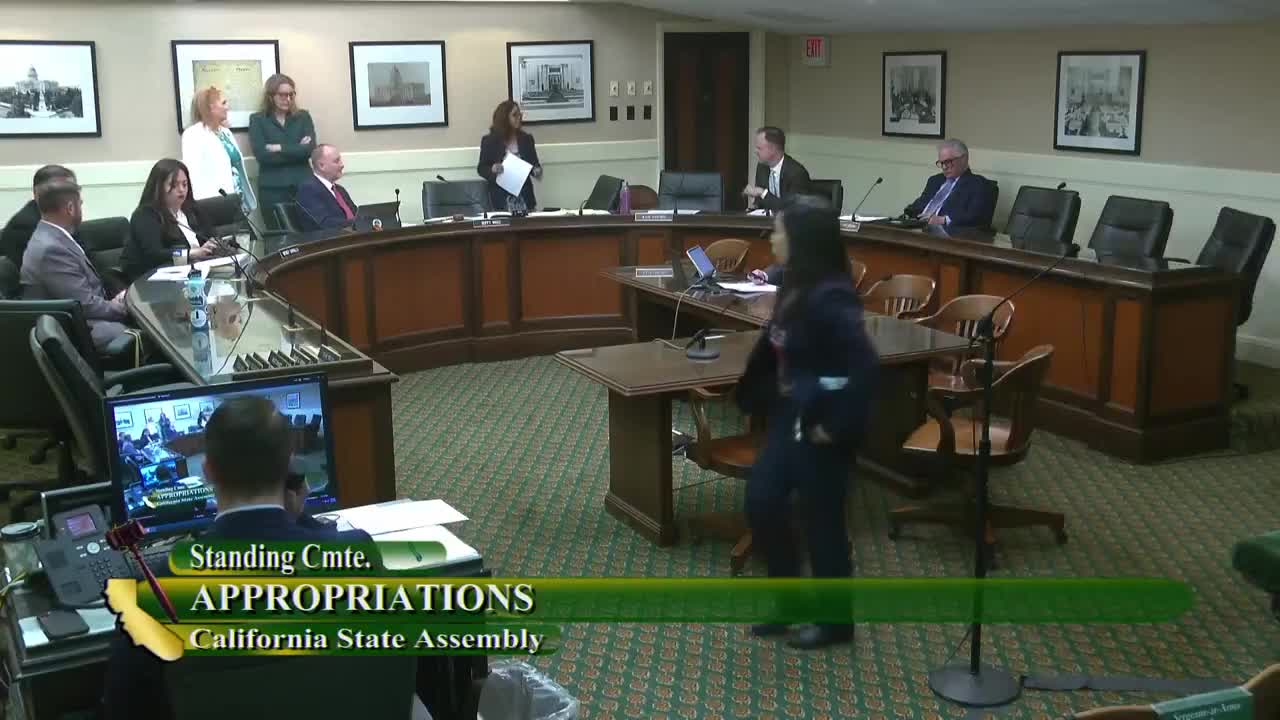 3MIN
Assembly Standing Committee on Appropriations
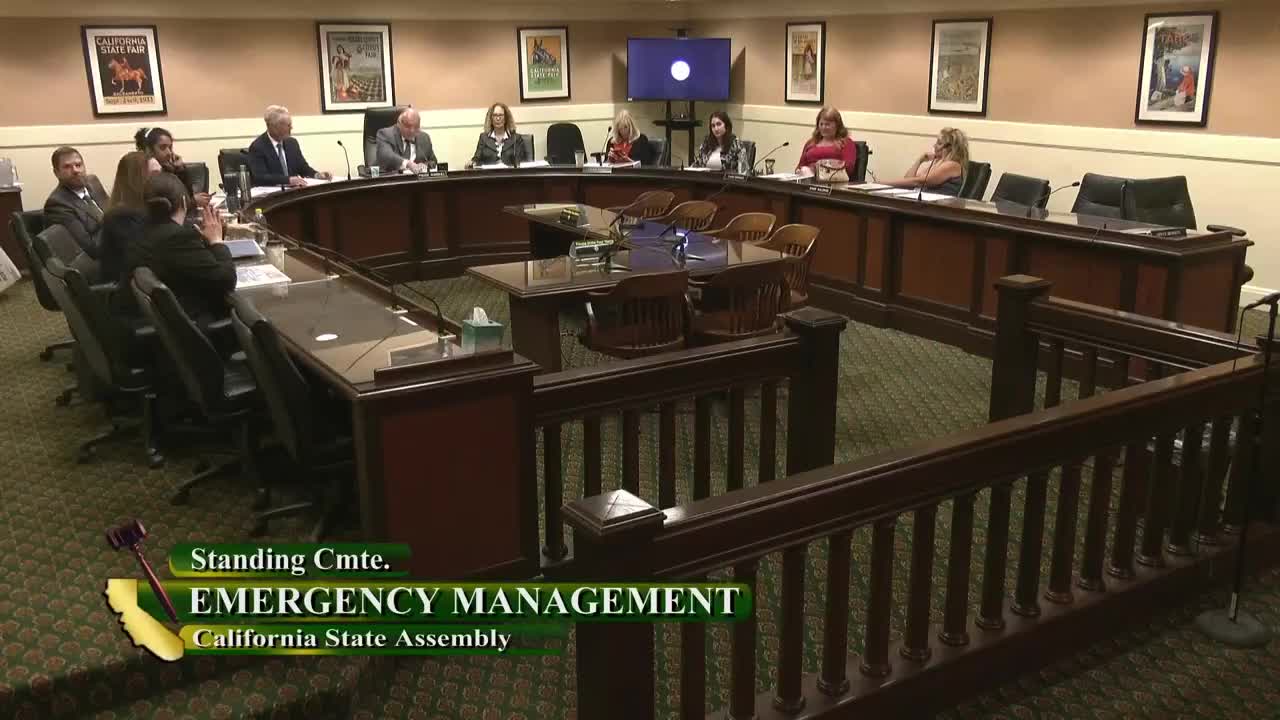 9MIN
Assembly Standing Committee on Emergency Management
 2MIN
Senate Floor
 10MIN
Senate Standing Committee on Governmental Organization
 1MIN
Senate Standing Committee on Governmental Organization
21SEC
Senate Standing Committee on Governmental Organization
Bill Author