AB 886: Transportation service network provider: passenger privacy.
- Session Year: 2015-2016
- House: Assembly
- Latest Version Date: 2016-01-04
The Passenger Charter-Party Carriers Act prohibits a transportation network company from disclosing personally identifiable information of a passenger, except as provided with certain exceptions, including when the passenger knowingly consents or pursuant to a legal obligation. A violation of the act is a crime.
This bill would prohibit a transportation service network provider, as defined, from requesting or requiring personally identifiable data, as defined, of a passenger unless the information is used for certain purposes, including establishing, maintaining, and updating a customers account. The bill would require the transportation service network provider to provide an accountholder with an opportunity to cancel or terminate an account. The bill would require a transportation service network provider to destroy or dispose of all personally identifiable data in a secure manner when the information is no longer needed for the purposes for which it was collected or when an accountholder cancels or terminates his or her account. Because a violation of these provisions would be a crime, this bill would impose a state-mandated local program.
This bill would modify the knowing consent exception to the prohibition against disclosure of personally identifiable information by requiring the affirmative consent of a passenger through an opt-in selection that is separate from and not conditioned on various other transactions between the passenger and the transportation network company. The bill would modify the legal obligation exception to the prohibition against disclosure of personally identifiable information by instead providing for disclosure pursuant to law, regulation, or court order. The bill would define personally identifiable information. By changing the definition of a crime, this bill would impose a state-mandated local program.
The California Constitution requires the state to reimburse local agencies and school districts for certain costs mandated by the state. Statutory provisions establish procedures for making that reimbursement.
This bill would provide that no reimbursement is required by this act for a specified reason.
The Passenger Charter-Party Carriers Act prohibits a transportation network company from disclosing personally identifiable information of a passenger, except as provided. A violation of the act is a crime.
This bill would prohibit a transportation service network provider, as defined, from requesting or requiring personally identifiable data, as defined, of a passenger unless the information is used for certain purposes, including establishing, maintaining, and updating a customers account. The bill would require the transportation service network provider to provide an accountholder with an opportunity to cancel or terminate an account. The bill would require a transportation service network provider to destroy or dispose of all personally identifiable data in a secure manner when the information is no longer needed for the purposes for which it was collected or when an accountholder cancels or terminates his or her account. Because a violation of these provisions would be a crime, this bill would impose a state-mandated local program.
The California Constitution requires the state to reimburse local agencies and school districts for certain costs mandated by the state. Statutory provisions establish procedures for making that reimbursement.
This bill would provide that no reimbursement is required by this act for a specified reason.
Existing law restructured the electrical services industry to provide for the authorization of direct transactions between electricity suppliers and end use customers and for the establishment of an Independent System Operator and a Power Exchange. Existing law establishes the Electricity Oversight Board to oversee the Independent System Operator and the Power Exchange.
This bill would make various nonsubstantive, technical changes in provisions that establish the Electricity Oversight Board.
(a)As used in this article, a transportation network company is an organization, including, but not limited to, a corporation, limited liability company, partnership, sole proprietor, or any other entity, operating in California that provides prearranged transportation services for compensation using an online-enabled application or platform to connect passengers with drivers using a personal vehicle.
(b)As used in this article, participating driver or driver is any person who uses a vehicle in connection with a transportation network companys online-enabled application or platform to connect with passengers.
(c)As used in this article, transportation network company insurance is a liability insurance policy that specifically covers liabilities arising from a drivers use of a vehicle in connection with a transportation network companys online-enabled application or platform.
(d)As used in this article, personally identifiable information, with respect to a transportation network company passenger, shall include electronic communication information, as defined by subdivision (d) of Section 1546 of the Penal Code, electronic device information, as defined by subdivision (g) of Section 1546 of the Penal Code, and subscriber information, as defined by subdivision (l) of Section 1546 of the Penal Code, and the social security number, physical characteristics, or financial information of the passenger.
SECTION 1.SEC. 2.Section 5437 of the Public Utilities Code is amended to read:5437.(a)A transportation network company shall not disclose to a third party any personally identifiable information of a transportation network company passenger unless one of the following applies:
(1)The customer knowingly consents. passenger affirmatively consents through an opt-in selection. Consent shall be distinct from any transaction or service provided, and shall be acquired in a format that is separate from the financial transaction for services. Consent shall not be required by the transportation network company as a condition of accepting or processing a transaction, as a condition of creating a user account, if a user account is required by the transportation network company, or as a condition of downloading or installing a mobile application.
(2)Pursuant to a legal obligation. law, regulation, or court order.
(3)The disclosure is to the commission in order to investigate a complaint filed with the commission against a transportation network company or a participating driver and the commission treats the information under confidentiality protections.
(b)This section does not apply to personally identifiable information of a transportation network passenger collected pursuant to Section 5437.5.
(b)Nothing in this section shall prohibit a transportation network company from sharing any personally identifiable information of a transportation network company passenger for the detection, investigation, or prevention of fraud, theft, identity theft, or other criminal activity if the personally identifiable information is used solely for those purposes by recipients of the personally identifiable information.
SEC. 2.Section 5437.5 is added to the Public Utilities Code, to read:5437.5.(a)For purposes of this section, the following terms mean the following:
(1)Personally identifiable data means any of the following:
(A)Information that identifies, relates to, describes, or is capable of being associated with, a particular individual, including, but not limited to, his or her name, signature, social security number, physical characteristics, address, email address, telephone number, bank account number, credit card number, debit card number, or any other financial information.
(B)Information describing or concerning the duration of the transportation service provided, the location and route of the service provided, and the monetary exchange associated with the service provided.
(C)Information relating to the mobile device or computer used to arrange transportation related services, including Internet protocol address (MAC), media access control address, device applications, and geolocational information.
(2)Transportation service network provider means any corporation, limited liability company, partnership, sole proprietor, or any other entity, operating in California, including, notwithstanding Section 5353, any entity that provides taxicab transportation services, that provides prearranged transportation service for compensation using an online-enabled application or platform to connect to passengers.
(b)(1)When rendering transportation services, a transportation service network provider shall not request or require any personally identifiable data of a passenger or accountholder unless the information is required to complete a transaction for the transportation service being provided or for the detection, investigation, or prevention of fraud, identity and other theft, or other criminal activity, and the personally identifiable data is used solely for those purposes.
(2)The transportation service network provider shall not disclose any personally identifiable data collected pursuant to this subdivision to any other person, firm, partnership, association, or corporation unless it is required to do so by state or federal law, or is contractually obligated to share the information with a financial entity to complete the transaction, or for the detection, investigation, or prevention of fraud, identity or other theft, or other criminal activity.
(c)(1)A transportation service network provider may request or require a consumer to establish an account as a condition of the transportation service and may require a customer to provide personally identifiable data to establish, maintain, and update the account if the information collected is used solely for those purposes.
(2)A transportation service network provider shall provide an accountholder with an opportunity to cancel or terminate the account at which time the transportation service network provider shall destroy or dispose of all personally identifiable data it required for the account in a secure manner.
(d)A transportation service network provider shall destroy or dispose of all personally identifiable data it acquires pursuant to this section in a secure manner after the information is no longer needed for the purposes authorized under this section.
(e)(1)A transportation service network provider that violates this section shall be subject to a civil penalty not to exceed two hundred fifty dollars ($250) for the first violation and one thousand dollars ($1,000) for each subsequent violation.
(2)The civil penalty shall be assessed and collected in a civil action brought by any aggrieved person, the Attorney General, or by a district attorney or city attorney of the jurisdiction in which an aggrieved person resides.
(3)The court shall direct the recovery of full costs, including attorneys fees, to the prevailing party.
(f)(1)The Attorney General, or district attorney or city attorney with appropriate jurisdiction, may bring an action in the superior court in the name of the People of the State of California to enjoin a violation of this section.
(2)Upon notice of not less than five days to a transportation service network provider, the Attorney General, district attorney, or city attorney may seek to temporarily restrain and preliminary enjoin a violation of this section.
(3)If the court determines that the transportation service network provider has violated this section, the court may restrain or enjoin the violation without requiring proof that any person has been damaged by the violation.
(4)In an action brought pursuant to this subdivision, if the court finds that a transportation service network provider has violated this section, the court may direct the transportation service network provider to pay the costs incurred by the Attorney General, district attorney, or city attorney.
(g)The court may consolidate an action for the assessment and collection of civil penalties with an action for injunctive relief brought pursuant to subdivision (f).
SEC. 3.No reimbursement is required by this act pursuant to Section 6 of Article XIIIB of the California Constitution because the only costs that may be incurred by a local agency or school district will be incurred because this act creates a new crime or infraction, eliminates a crime or infraction, or changes the penalty for a crime or infraction, within the meaning of Section 17556 of the Government Code, or changes the definition of a crime within the meaning of Section 6 of Article XIIIB of the California Constitution.
(a)A transportation network company shall not disclose to a third party any personally identifiable information of a transportation network company passenger unless one of the following applies:
(1)The customer knowingly consents.
(2)Pursuant to a legal obligation.
(3)The disclosure is to the commission in order to investigate a complaint filed with the commission against a transportation network company or a participating driver and the commission treats the information under confidentiality protections.
(b)This section does not apply to personally identifiable information of a transportation network passenger collected pursuant to Section 5437.5.
SEC. 2.Section 5437.5 is added to the Public Utilities Code, to read:5437.5.(a)For purposes of this section, the following terms mean the following:
(1)Personally identifiable data means any of the following:
(A)Information that identifies, relates to, describes, or is capable of being associated with, a particular individual, including, but not limited to, his or her name, signature, social security number, physical characteristics, address, email address, telephone number, bank account number, credit card number, debit card number, or any other financial information.
(B)Information describing or concerning the duration of the transportation service provided, the location and route of the service provided, and the monetary exchange associated with the service provided.
(C)Information relating to the mobile device or computer used to arrange transportation related services, including Internet protocol address (MAC), media access control address, device applications, and geolocational information.
(2)Transportation service network provider means any corporation, limited liability company, partnership, sole proprietor, or any other entity, operating in California, including, notwithstanding Section 5353, any entity that provides taxicab transportation services, that provides prearranged transportation service for compensation using an online-enabled application or platform to connect to passengers.
(b)(1)When rendering transportation services, a transportation service network provider shall not request or require any personally identifiable data of a passenger or accountholder unless the information is required to complete a transaction for the transportation service being provided or for the detection, investigation, or prevention of fraud, identity and other theft, or other criminal activity, and the personally identifiable data is used solely for those purposes.
(2)The transportation service network provider shall not disclose any personally identifiable data collected pursuant to this subdivision to any other person, firm, partnership, association, or corporation unless it is required to do so by state or federal law, or is contractually obligated to share the information with a financial entity to complete the transaction, or for the detection, investigation, or prevention of fraud, identity or other theft, or other criminal activity.
(c)(1)A transportation service network provider may request or require a consumer to establish an account as a condition of the transportation service and may require a customer to provide personally identifiable data to establish, maintain, and update the account if the information collected is used solely for those purposes.
(2)A transportation service network provider shall provide an accountholder with an opportunity to cancel or terminate the account at which time the transportation service network provider shall destroy or dispose of all personally identifiable data it required for the account in a secure manner.
(d)A transportation service network provider shall destroy or dispose of all personally identifiable data it acquires pursuant to this section in a secure manner after the information is no longer needed for the purposes authorized under this section.
(e)(1)A transportation service network provider that violates this section shall be subject to a civil penalty not to exceed two hundred fifty dollars ($250) for the first violation and one thousand dollars ($1,000) for each subsequent violation.
(2)The civil penalty shall be assessed and collected in a civil action brought by any aggrieved person, the Attorney General, or by a district attorney or city attorney of the jurisdiction in which an aggrieved person resides.
(3)The court shall direct the recovery of full costs, including attorneys fees, to the prevailing party.
(f)(1)The Attorney General, or district attorney or city attorney with appropriate jurisdiction, may bring an action in the superior court in the name of the People of the State of California to enjoin a violation of this section.
(2)Upon notice of not less than five days to a transportation service network provider, the Attorney General, district attorney, or city attorney may seek to temporarily restrain and preliminary enjoin a violation of this section.
(3)If the court determines that the transportation service network provider has violated this section, the court may restrain or enjoin the violation without requiring proof that any person has been damaged by the violation.
(4)In an action brought pursuant to this subdivision, if the court finds that a transportation service network provider has violated this section, the court may direct the transportation service network provider to pay the costs incurred by the Attorney General, district attorney, or city attorney.
(g)The court may consolidate an action for the assessment and collection of civil penalties with an action for injunctive relief brought pursuant to subdivision (f).
SEC. 3.No reimbursement is required by this act pursuant to Section 6 of Article XIIIB of the California Constitution because the only costs that may be incurred by a local agency or school district will be incurred because this act creates a new crime or infraction, eliminates a crime or infraction, or changes the penalty for a crime or infraction, within the meaning of Section 17556 of the Government Code, or changes the definition of a crime within the meaning of Section 6 of Article XIIIB of the California Constitution.
SECTION 1.Section 335 of the Public Utilities Code is amended to read:335.In order to ensure that the interests of the people of California are served, a five-member Electricity Oversight Board is hereby established, as provided in Section 336. For purposes of this chapter, any reference to the Oversight Board shall mean the Electricity Oversight Board. Its functions shall be all of the following:
(a)To oversee the Independent System Operator and the Power Exchange.
(b)To determine the composition and terms of service and to exercise the exclusive right to decline to confirm the appointments of specific members of the governing board of the Power Exchange.
(c)To serve as an appeal board for majority decisions of the Independent System Operator governing board, as those decisions relate to matters subject to exclusive state jurisdiction, as specified in Section 339.
(d)Those members of the Power Exchange governing board whose appointments the Oversight Board has the exclusive right to decline to confirm include proposed governing board members representing agricultural end users, industrial end users, commercial end users, residential end users, end users at large, nonmarket participants, and public interest groups.
(e)To investigate any matter related to the wholesale market for electricity to ensure that the interests of Californias citizens and consumers are served, protected, and represented in relation to the availability of electric transmission and generation and related costs, during periods of peak demand.
In order to ensure that the interests of the people of California are served, a five-member Electricity Oversight Board is hereby created established, as provided in Section 336. For purposes of this chapter, any reference to the Oversight Board shall mean the Electricity Oversight Board. Its functions shall be all of the following:
(a)To oversee the Independent System Operator and the Power Exchange.
(b)To determine the composition and terms of service and to exercise the exclusive right to decline to confirm the appointments of specific members of the governing board of the Power Exchange.
(c)To serve as an appeal board for majority decisions of the Independent System Operator governing board, as they those decisions relate to matters subject to exclusive state jurisdiction, as specified in Section 339.
(d)Those members of the Power Exchange governing board whose appointments the Oversight Board has the exclusive right to decline to confirm include proposed governing board members representing agricultural end users, industrial end users, commercial end users, residential end users, end users at large, nonmarket participants, and public interest groups.
(e)To investigate any matter related to the wholesale market for electricity to ensure that the interests of Californias citizens and consumers are served, protected, and represented in relation to the availability of electric transmission and generation and related costs, during periods of peak demand.
|
Date
|
Status
|
|---|---|
| Feb 1, 2016 | From committee: Filed with the Chief Clerk pursuant to Joint Rule 56. |
| Jan 31, 2016 | Died pursuant to Article IV, Sec. 10(c) of the Constitution. |
| Jan 11, 2016 | In committee: Set, second hearing. Hearing canceled at the request of author. |
| Jan 7, 2016 | (pending re-refer to Com. on P. & C.P.) |
| Jan 7, 2016 | Assembly Rule 56 suspended. (Page 3366.) |
| Jan 4, 2016 | Re-referred to Com. on U. & C. |
| Jan 4, 2016 | From committee chair, with author's amendments: Amend, and re-refer to Com. on U. & C. Read second time and amended. |
| Apr 27, 2015 | In committee: Set, second hearing. Hearing canceled at the request of author. |
| Apr 27, 2015 | In committee: Set, first hearing. Hearing canceled at the request of author. |
| Apr 23, 2015 | Assembly Rule 56 suspended. (Page 1089.) |
| Apr 23, 2015 | (pending re-refer to Com. on P. & C.P.) |
| Apr 20, 2015 | In committee: Set, first hearing. Failed passage. Reconsideration granted. |
| Apr 6, 2015 | Re-referred to Com. on U. & C. |
| Mar 26, 2015 | From committee chair, with author's amendments: Amend, and re-refer to Com. on U. & C. Read second time and amended. |
| Mar 26, 2015 | Referred to Coms. on U. & C. and P. & C.P. |
| Feb 27, 2015 | From printer. May be heard in committee March 29. |
| Feb 26, 2015 | Read first time. To print. |
|
Date
|
Description
|
Location
|
Votes
|
|
|---|---|---|---|---|
| Apr 20, 2015 | Reconsideration. | Assembly Standing Committee on Utilities and Commerce |
Passed |
|
| Apr 20, 2015 | Do pass and be re-referred to the Committee on [Privacy and Consumer Protection] | Assembly Standing Committee on Utilities and Commerce |
Failed |
This list shows positions taken on this bill by organizations on the date displayed, which is linked to the original source.
Positions by individuals are not included.
Date of Hearing: January 11, 2016
ASSEMBLY COMMITTEE ON UTILITIES AND COMMERCE
Mike Gatto, Chair
ABPCA Bill Id:AB 886 (
Author:Chau) – As Amended Ver:January 4, 2016
SUBJECT: Transportation service network provider: passenger privacy
SUMMARY: This bill prohibits a transportation network company (TNC) from disclosing to a third party any personally identifiable information unless the passenger affirmatively consents through an opt-in selection, as specified. Specifically, this bill:
- Prohibits a TNC from disclosing any personally identifiable information, as defined, to a third party unless the passenger affirmatively consents through an opt-in selection.
- Specifies that consent shall be distinct from any transaction or service provided and be acquired in a format that is separate from the financial transaction for services.
- Specifies that consent shall not be required by the TNC as a condition of accepting or processing a transaction, as a condition of creating a user account, if a user account is required by the TNC, or as a condition of downloading or installing a mobile application.
- Defines “personally identifiable information,” to include the following:
- Any information about an electronic communication or the use of an electronic communication service, including, but not limited to, the contents, sender, recipients, format, or location of the sender or recipients at any point during the communication, the time or date the communication was created, sent, or received, or any information pertaining to any individual or device participating in the communication, including, but not limited to, an IP address.
- Any information stored on or generated through the operation of an electronic device, including the current and prior locations of the device.
- The name, street address, telephone number, email address, or similar contact information provided by the subscriber to the provider to establish or maintain an account or communication channel, a subscriber or account number or identifier, the length of service, and the types of services used by a user of or subscriber to a service provider.
- The social security number, physical characteristics, or financial information of the passenger.
EXISTING LAW:
- Declares that all people are by nature free and independent and have inalienable rights. Among these are enjoying and defending life and liberty, acquiring, possessing, and protecting property, and pursuing and obtaining safety, happiness, and privacy. (California Constitution, Article 1, Section 1)
- Directs the California Public Utilities Commission (CPUC) to issue permits or certificates to charter party carriers (CPC), investigate complaints against carriers, and cancel, revoke, or suspend permits and certificates for specific violations. (Public Utilities Code Section 5387)
- Defines “charter-party carrier of passengers” as every person engaged in the transportation of persons by motor vehicle for compensation, whether in common or contract carriage, over any public highway in the state. (Public Utilities Code Section 5360)
- Defines a “passenger stage corporation” to include every corporation or person engaged as a common carrier, for compensation, in the ownership, control, operation, or management of any passenger stage, as specified. (Public Utilities Code Section 226)
- Defines a “transportation network company” to mean an organization, including, but not limited to, a corporation, limited liability company, partnership, sole proprietor, or any entity operating in California that provides prearranged transportation services for compensation using an online-enabled application or platform to connect passengers with drivers using a personal vehicle. (Public Utilities Code Section 5431)
- Prohibits a TNC from disclosing to a third party any personally identifiable information of a TNC passenger unless one of the following applies:
- The customer knowingly consents,
- Pursuant to a legal obligation, and
- The disclosure is to the CPUC in order to investigate a complaint filed against a TNC or a participating driver, and the CPUC treats the information under confidentiality protections. (Public Utilities Code Section 5437)
- Prohibits a business, as defined, form sharing, disclosing, or otherwise making accessible to any third party a customer’s data without obtaining the express consent of the customer and conspicuously disclosing to whom the disclosure will be made and how the data will be used. (Civil Code Section 1798.98)
- Prohibits an electrical corporation, gas corporation, or local publically owned electric utility from sharing, disclosing, or otherwise making accessible to any third party a customer’s electrical or gas consumption data. (Public Utilities Code Section 8380 and 8381)
- Defines “electronic communication information” to mean any information about an electronic communication or the use of an electronic communication service, including, but not limited to, the contents, sender, recipients, format, or location of the sender or recipients at any point during the communication, the time or date the communication was created, sent, or received, or any information pertaining to any individual or device participating in the communication, including, but not limited to, an IP address. (Penal Code Section 1546)
- Defines “electronic device information” to mean any information stored on or generated through the operation of an electronic device, including the current and prior locations of the device. (Penal Code Section 1546)
- Defines “subscriber information” to mean the name, street address, telephone number, email address, or similar contact information provided by the subscriber to the provider to establish or maintain an account or communication channel, a subscriber or account number or identifier, the length of service, and the types of services used by a user of or subscriber to a service provider.” (Penal Code Section 1546)
FISCAL EFFECT: Unknown.
COMMENTS:
- Author’s Statement: “As smartphone hailing applications have grown in use, more personal information, including trip data, is being collected than ever before. This information can include personal profiles created by the passenger, credit card information used to complete a transaction, trip duration data and geo-tracking location data from a personal mobile device. This information is stored and can be used to create a detailed profile of each passenger without the passenger’s knowledge or consent. Passenger trip data should only be gathered if it is strictly necessary for the operation of the transportation service being provided. Any other collection of data for passengers, especially those that use the service on a daily basis, can have serious ramifications on personal privacy.”
2) Background: The CPUC is in charge of regulating passenger carriers such as Passenger Stage Corporations (PSC) and CPCs. PSCs are services that provide transportation to the general public on an individual fare basis, such as scheduled bus operators, which are buses that operate on a fixed route and scheduled services, or airport shuttles, which operate on an on-call door-to-door share the ride service. CPCs are services that charter a vehicle, on a prearranged basis, for the exclusive use of an individual or group. Charges are based on the mileage or time of use, or a combination of both. The CPUC does not regulate the level of charges for CPCs. Types of CPCs include limousines, tour buses, sightseeing services, and charter and party buses. Taxis are excluded from the definition of CPCs and are regulated by cities or counties.
3) What are Transportation Network Companies? In September 2013, a CPUC decision placed TNCs under the purview of the CPUC, allowing it to exercise and enforce regulatory and safety requirements against TNCs. Although TNCs do not neatly fall into the conventional definition of either taxis or limousines, the CPUC does believe that TNCs are currently providing transportation for compensation and concludes that TNCs are CPCs, which fall under the CPUC’s existing jurisdiction.
TNCs work by allowing passengers to prearrange transportation services through an online application on their smartphone or computer. The CPUC decision requires TNCs to obtain a permit from the CPUC, conduct criminal background checks of drivers, establish a driver training program, implement a zero-tolerance policy on drugs and alcohol, conduct vehicle inspections, and obtain authorization from airports before conducting any operations on or into airport property.
4) Data Use and Privacy: California’s Constitution expressly guarantees a right of privacy against both private and public actors. In 2010, the Legislature passed SB 1476 (Padilla, Chapter 497, Statutes of 2010) which prohibits public and investor owned utilities from sharing a customer’s electrical and gas consumption data received from advanced metering infrastructure devices with a third party. The purpose of the bill was to ensure that as new technologies develop, added diligence is given to the protection of a customers’ personally identifiable information, including electrical and gas consumption data. Subsequently, the legislature passed AB 1274 (Bradford, Chapter 597, Statutes of 2013) which extended many of the same prohibitions that applied to gas and electrical utilities to other third party businesses.
Furthermore, the CPUC’s Privacy Rules are based on Fair Information Practice (FIP) Principle, which are a set of standards governing the collection and use of personal data adopted throughout the world. FIP Principles include: (1) transparency, (2) individual participation, (3) purpose specification, (4) data minimization, (5) use limitation, (6) data quality and integrity, (7) data security, and (8) accountability and auditing.
- Knowing Consent vs. Affirmative Consent: In 2014, the Legislature passed AB 2293 (Bonilla, Chapter 389, Statutes of 2014) which, among others things, prohibited a TNC from disclosing any personally identifiable information of a TNC passenger to a third party unless the customer knowingly consents. The topic of what is considered “knowing consent” is up for debate. Arguably in situations surrounding the use of online services, including TNCs, consent is given by a customer as a condition of using the service or application. In most cases, passengers are asked to agree to a privacy policy or terms of service before they are able to download or use an application. However, whether or not consumers are actually aware of what they are agreeing to or if they actually read the privacy policies or terms of service before they agree is questionable.
This bill seeks to establish what is considered consent by prohibiting a TNC from disclosing any personally identifiable information to a third party unless the passenger affirmatively consents through an opt-in selection. This bill does not prevent TNCs from collecting personal identifiable information, nor does it prevent TNCs from sharing the information to prevent criminal activities, but it does prevent it from sharing the information with third parties for any other purpose without the customer opting in. This minimizes the amount of personal consumer data that is shared with third parties for consumers who may choose not to have their personally identifiable information shared or used outside its intended purpose of establishing, maintaining, and updating their accounts with a TNC.
This bill requires that consent be distinct from any transaction or service provided and be in a format that is separate from the financial transaction for services. The bill prohibits TNCs from requiring consent as a condition of accepting or processing a transaction, as a condition of creating a user account if a user account is required, or as a condition of downloading or installing a mobile application. Again, it is unclear whether or not prescribing an additional separate disclosure agreement will achieve the desired effect of creating a more educated consumer or simply create one additional step that consumers agree to automatically. It is also unclear whether the request will only be requested once or each time a consumer uses the mobile application.
- Personally Identifiable Information: This bill defines “personally identifiable information (PII)” to include the definitions of electronic communication information, electronic device information, and subscriber information, as well as the social security number, physical characteristics, or financial information of the passenger. The bills definition captures information that may also be collected from a consumer’s electronic device including, location information, internet protocol addresses, account numbers, etc.
- Arguments in Support: According to the Consumer Federation of California, the sponsor of the bill, “while consumers have become comfortable with the use of smartphones to request a ride, there is a growing discomfort with the collection of sensitive information they are unknowingly releasing each time they use the application. These applications have been discovered to collect detailed data on where consumers live and work, where they travel to and when, how much they spend on the requested trip and how it was paid for. This detailed information provides new and intrusive opportunities for corporate surveillance and unwelcome marketing … The need for AB 886 is clear. Privacy protections have not kept pace with the rapid rise of technology, specifically TNCs. While the California Public Utilities Commission has adopted some modest regulations for TNCs, those regulations do not address privacy concerns. Consumers should not have to abandon their right to privacy as a condition of using a ride-hailing service. Californians who utilize these services should be assured that their personal information will not be shared, except with their consent.”
- Arguments in Opposition: According to Uber Technologies, Inc., “California already has some of the strongest privacy and consumer protection laws in the United States that regulate the collection and use of true PII without unnecessarily stifling innovation. The legislation’s burdensome opt-in consent requirements would reduce, and even prohibit, the basic functionality of TNC apps and the service consumers rely on, without providing any additional meaningful protection of true PII … This new “optional opt-in requirement” for disclosure of PII, regardless of whether it is information required to complete the transaction, would render a TNC service unworkable. A TNC would simultaneously be required to offer the service to those passengers who don’t consent, but be prohibited from sharing the information needed to provide the service.”
- Related Legislation:
AB 24 (Nazarian) 2015: This bill would require CPCs and TNCs to participate in the Department of Motor Vehicles Employer Pull Notice System and submit all drivers to a Department of Justice criminal background check. Currently pending in the Assembly Committee on Appropriations.
AB 828 (Low) 2015: This bill would exclude from the definition of “commercial vehicle,” for purposes of the California Vehicle Code, any motor vehicle operated in connection with a transportation network company. Currently pending in the Senate Committee on Energy, Utilities, and Communications.
AB 1360 (Ting) 2015: This bill would exempt a rideshare program operated by a TNC that arranges a ride among multiple passengers who share the ride in whole or in part from computing transportation charges based on a vehicle mileage or time of use, provided that the fare for each passenger is less than the fare that would be charged to a single passenger traveling alone. Currently pending in the Senate Committee on Energy, Utilities, and Communications.
- Prior Legislation:
AB 1422 (Cooper) 2015: Required TNCs to participate in the Department of Motor Vehicle Employer Pull Notice System. Chapter 791, Statutes of 2015.
AB 2293 (Bonilla) 2014: Established guidelines for insurance coverage for TNCs to ensure personal and financial safety of consumers. Chapter 389, Statutes of 2014.
AB 1274 (Bradford) 2013: Prohibited a business, as defined, from sharing, disclosing, selling, or otherwise making a customer’s electrical and gas consumption data accessible to a third party, except as specified. Chapter 597, Statutes of 2013.
SB 1476 (Padilla) 2010: Prohibited a publically owned utility and investor owned utility from sharing with a third party a customer’s electrical and gas consumption data received from an advanced metering infrastructure device with certain exceptions. This bill imposed certain provisions that a utility must comply with as it relates to the privacy of the customer’s consumption data. Chapter 497, Statutes of 2010.
- Double Referred: This bill is double referred to the Assembly Committee on Privacy and Consumer Protection.
REGISTERED SUPPORT / OPPOSITION:
Support
Consumer Federation of California (Sponsor)
CALPIRG
Privacy Rights Clearinghouse
The Utility Reform Network
Opposition
CalChamber
The Internet Association
Uber Technologies, Inc.
Analysis Prepared by: Edmond Cheung / U. & C. / (916) 319-2083
AB 886
Page 8
Date of Hearing: April 27, 2015
ASSEMBLY COMMITTEE ON UTILITIES AND COMMERCE
Anthony Rendon, Chair
AB 886
(Chau) – As Amended March 26, 2015
SUBJECT: Transportation service network provider: passenger privacy
SUMMARY: This bill would require transportation service network providers (TSNP) to adopt certain privacy standards pertaining to a passenger’s personally identifiable data. Specifically, this bill:
Defines a “transportation service network provider,” as any corporation, a limited liability company, partnership, sole proprietor, or any other entity operating in California, including any entity that provides taxicab transportation services, that provides prearranged transportation service for compensation using an online-enabled application or platform to connect to passengers.
Defines “personally identifiable data,” as the following:
Information that identifies, relates to, describes, or is capable of being associated with a particular individual, including, but not limited to, his or her name, signature, social security number, physical characteristics, address, email address, telephone number, bank account number, credit card number, debit card number, or any other financial information.
Information described or concerning the duration of the transportation service provided, the location and route of the service provided, and the monetary exchange associated with the service provided.
Information relating to the mobile device or computer used to arrange transportation related services, including Internet protocol addresses, media access control addresses, device applications, and geo-locational information.
Prohibits a TSNP from requesting or requiring any personally identifiable data of a passenger or accountholder unless the information is required to complete a transaction for the transportation service being provided or for the detection, investigation, prevention of fraud, identity or other theft, or other criminal activity.
Prohibits a TSNP from disclosing any personally identifiable data collected to any another person, firm, partnership, association, or corporation unless it is required to do so by state or federal law, or is contractually obligated to share the information with a financial entity to complete the transaction, for the detection, investigation, prevention of fraud, identity or other theft, or other criminal activity.
Allows a TSNP to request or require a consumer to establish an account, and provide personal identifiable data to maintain and update the account as a condition of using the transportation service, if the information collected is used solely for those purposes.
Requires a TSNP to provide an accountholder with an opportunity to cancel or terminate the account and to destroy or dispose of all personally identifiable data in a secure manner, upon cancellation or termination of the account.
Requires a TSNP to dispose of all personally identifiable data in a secure manner after the information is no longer needed for purposes as specified.
Provides that a TSNP found in violation is subject to a civil penalty not to exceed
$250 for the first violation and $1,000 for each subsequent violation.
EXISTING LAW:
Directs the California Public Utilities Commission (CPUC) to issue permits or certificates to charter party carriers (CPC), investigate complaints against carriers, and cancel, revoke, or suspend permits and certificates for specific violations. (Public Utilities Code §5387)
Defines “charter-party carrier of passengers” as every person engaged in the transportation of persons by motor vehicle for compensation, whether in common or contract carriage, over any public highway in the state. (Public Utilities Code §5360)
Defines a “transportation network company” (TNC) to mean an organization, including, but not limited to, a corporation, limited liability company, partnership, sole proprietor, or any entity operating in California that provides prearranged transportation services for compensation using an online-enabled application or platform to connect passengers with drivers using a personal vehicle. (Public Utilities Code §5431)
Prohibits a TNC from disclosing to a third party any personally identifiable information of a TNC passenger unless one of the following applies:
The customer knowingly consents,
Pursuant to a legal obligation, and
The disclosure is to the CPUC in order to investigate a complaint filed against a TNC or a participating driver, and the CPUC treats the information under confidentiality protections. (Public Utilities Code §5437)
Prohibits a business, as defined, from sharing, disclosing, or otherwise making accessible to any third party a customer’s data without obtaining the express consent of the customer and conspicuously disclosing to whom the disclosure will be made and how the data will be used. (Civil Code §1798.98)
Requires a business, as defined, that discloses data with the express consent of the customer, pursuant to a contract with a nonaffiliated third party, maintain reasonable security procedures and practices appropriate to the nature of the information, to protect the data from unauthorized access, destruction, use, modification, or disclosure, as specified. (Civil Code §1798.98)
Requires a business, as defined, to implement and maintain reasonable security procedures and practices appropriate to the nature of the information to protect the data from unauthorized access, destruction, use, modification, or disclosure. (Civil Code §1798.98)
Prohibits a business, as defined, from providing an incentive or discount to the customer for accessing the data without the prior consent of the customer. (Civil Code §1798.98)
Requires a business, as defined, to take all reasonable steps to dispose, or arrange for the disposal of customer data within its custody or control when the records are no longer to be retained by the business by shredding, erasing, or otherwise modifying the data in those records to make it unreadable or undecipherable through any means. (Civil Code §1798.98)
Prohibits an electrical corporation, gas corporation, or local publicly owned electric utility from sharing, disclosing, or otherwise making accessible to any third party a customer’s electrical or gas consumption data. (Public Utilities Code §8380 & §8381)
Prohibits an electrical corporation or gas corporation from selling a customer’s electrical or gas consumption data or any other personally identifiable information for any purpose. (Public Utilities Code §8380 & §8381)
Prohibits an electrical corporation, gas corporation, local publicly owned electric utility, or its contractors from providing an incentive or discount to the customer for accessing the customer’s electrical or gas consumption data without the prior consent of the customer. (Public Utilities Code §8380 & §8381)
Requires an electrical corporation, gas corporation, or local publicly owned electric utility that utilizes an advanced metering infrastructure that allows a customer to access the customer’s electrical and gas consumption data to ensure that the customer has an option to access that data without being required to agree to the sharing of his or her personally identifiable information, including electrical or gas consumption data, with a third party. (Public Utilities Code§ 8380 & §8381)
Requires an electrical corporation or gas corporation to use reasonable security procedures and practices to protect a customer’s unencrypted electrical or gas consumption data from unauthorized access, destruction, use, modification, or disclosure. (Public Utilities Code §8380 & §8381)
Requires a local publicly owned electric utility to use reasonable security procedures and practices to protect a customer’s unencrypted electrical consumption data from unauthorized access, destruction, use, modification, or disclosure, and prohibits the use of the data for a secondary commercial purpose not related to the primary purpose of the contract without the customer’s consent. (Public Utilities Code §8381)
FISCAL EFFECT: Unknown.
COMMENTS:
Author’s Statement: “As smartphone hailing applications have grown in use, more and more personal information, including trip data, is being collected than ever before. This information can include personal profiles created by the passenger, credit card information used to complete a transaction, trip duration data and geo-tracking location data from a personal mobile device. This information is stored and can be used to create a detailed profile of each passenger without the passenger’s knowledge or consent. Passenger trip data should only be gathered if it is strictly necessary for the operation of the transportation service being provided. Any other collection of data for passengers, especially those that use the service on a daily basis, can have serious ramifications on personal privacy.”
Background: California law regulates different modes of passenger transportation for compensation including taxi services, which are regulated by cities and/or counties; and CPCs and passenger stage companies (PSC), which are regulated by the PUC. Beginning as early as 2009, a new model of transportation service began springing up in cities across the United States. Known as TNCs, these companies work by allowing patrons to prearrange transportation services through an online application on their smartphone or computer. Patrons would request a ride to a predetermined location, and the application would connect them with a TNC driver. Payment is processed through the application so that no physical financial transaction occurs during the trip itself between the patron and the driver. The TNC takes a commission on each trip. The development of TNCs has made the ability for passengers seeking transportation for compensation more readily available to the general public.
What are Passenger Carriers? The CPUC is in charge of regulating passenger carriers. Passenger carriers include services such as PSCs and CPCs. PSCs are services that provide transportation to the general public on an individual fare basis, such as scheduled bus operators, which are buses that operate on a fixed route and scheduled services, or airport shuttles, which operate on an on-call door-to-door share the ride service.
CPCs are services that charter a vehicle, on a prearranged basis, for the exclusive use of an individual or group. Charges are based on the mileage or time of use, or a combination of both. The CPUC does not regulate the level of charges for CPCs. Types of CPCs include limos, tour buses, sightseeing services, and charter and party buses.
The CPUC requires CPCs to meet a number of requirements until an operating permit or certificate is issued. These requirements include providing sufficient proof of financial responsibility, maintain a preventative maintenance program for all vehicles, possessing a safety education and training program, and regularly checking the driving records of all persons operating vehicles used in transportation for compensation.
What are Not Passenger Carriers? Taxis are excluded from the definition of CPCs and are regulated by cities or counties. The key distinction between CPC rides and taxis is that CPC rides must be prearranged, while taxis are allowed to pick up passengers via street hails. Other examples of transportation services that are not considered charter party carriers include transportation services licensed and operating wholly within the limits of a single city or city and county, transportation services contracted to transport school pupils, publicly owned transit systems, passenger vehicles carrying passengers on a noncommercial enterprise basis, vehicles used exclusively to provide medical transportation, among others.
What are Transportation Network Companies? In September 2013, a CPUC decision put TNCs under the purview of the CPUC, allowing it to exercise and enforce regulatory and safety requirements against TNCs. The CPUC defined TNCs as an “organization, including, but not limited to, a corporation, limited liability company, partnership, sole proprietor, or any entity, operating in California that provides prearranged transportation services for compensation using an online-enabled application or platform to connect passengers with drivers using a personal vehicle.” The CPUC decision requires TNCs to obtain a permit from the CPUC, conduct criminal background checks of drivers, establish a driver training program, implement a zero-tolerance policy on drugs and alcohol, conduct vehicle inspections, and obtain authorization from airports before conducting any operations on or into airport property.
Subsequently, the legislature passed AB 2293 (Bonilla) Chapter 389, Statutes of 2014, which codified the CPUC’s definition of TNCs and imposed certain liability and other insurance coverage for TNCs and their participating drivers. The bill defines when personal and commercial auto insurance come into effect, and at what levels, when the driver logs onto the application until the driver accepts a ride request, and for when a ride request is accepted until the passenger exits the vehicle. The bill sought to make a clear distinction between when a vehicle is being used for TNC business activities and must require commercial insurance, and when a vehicle is not being used for TNC business activities at which time the driver’s personal auto insurance is in effect.
Transportation Network Companies vs. Transportation Service Network Providers: Although TNCs do not neatly fall into the conventional definition of either taxis or limousines, the PUC does believe that TNCs are currently providing passengers’ transportation for compensation, and reasonably concludes that TNCs are CPCs, therefore, falling under the PUC’s existing jurisdiction over these services.
This bill expands on the concept of TNCs to include TSNPs, which it defines as any corporation, a limited liability company, partnership, sole proprietor, or any other entity operating in California that provides taxicab transportation services that provides prearranged transportation service for compensation using an online-enabled application or platform to connect to passengers. The bill seeks to encompass not just TNCs, but all future transportation services, including taxis, which may someday adopt online-enabled applications or platforms to connect passengers and collect customer personally identifiable data in the process.
“God-View:” In October 2014, news reports surfaced regarding a feature on Uber’s platform known as “God View.” According to reports, when enabled “God View” allows the user to see the location of all Uber drivers in a city, as well as pending passengers who were waiting for rides. In addition, “God View” allowed the user to track in real time the movements of Uber users. Subsequently, additional news reports have surfaced regarding other incidents in which Uber employees were tracking its users, which included journalists.
Enforcement: Current law directs the CPUC to issue permits or certificates to CPCs and TNCs, investigate complaints against carriers, and cancel, revoke, or suspend permits and certificates for specific violations. Although the CPUC require TNCs to undergo certain training and safety requirements as a condition of being issued an operating permit, it does not regulate how TNCs collect, use, or maintain a consumer’s personally identifiable data. Instead, this bill would allow any aggrieved person, the Attorney General, or a district or city attorney to bring a civil suit against a TSNP for any violation of the provisions set forth in the bill, not to exceed $250 for the first violation and $1,000 for each subsequent violation. The bill would also allow the prevailing party to recover full costs, including attorney’s fees.
Data Use and Privacy: California’s Constitution expressly guarantees a right of privacy against both private and public actors. In 2010, the legislature passed SB 1476 (Padilla) Chapter 497, Statutes of 2010, which prohibits public and investor owned utilities from sharing a customer’s electrical and gas consumption data received from advanced metering infrastructure devices with a third party. The purpose of the bill was to ensure that as new technology develops, added diligence is given to the protection of a customers’ personally identifiable information, including electrical and gas consumption data. Subsequently, in 2013, the legislature passed AB 1274 (Bradford) Chapter 597, Statutes of 2013, which extended many of the same prohibitions that applied to gas and electrical utilities to other third party businesses, including, but not limited to, the customers’ Internet service provider that handles a customer’s usage data.
Furthermore, the CPUC’s Privacy Rules are based on Fair Information Practice (FIP) Principles, which is a set of standards governing the collection and use of personal data adopted throughout the world. FIP Principles include: (1) transparency, (2) individual participation, (3) purpose specification, (4) data minimization, (5) use limitation, (6) data quality and integrity, (7) data security, (8) accountability and auditing. The goal of the CPUC privacy rules is to protect customer privacy, while also enabling customers to access their energy usage data and share that data with authorized third parties to promote future conservation and grid management activities. This bill seeks to protect TSNP customer data consistent with FIP principles by limiting its collection, use, and sharing to only purposes necessary to complete a transaction, investigate criminal activities, and maintaining a user’s account.
Arguments in Support: According to the Consumer Federation of California, the sponsor of the bill, “the taxi and passenger transportation industry have been revolutionized by the prevalence of smartphones and ride-hailing mobile applications. … The use of smartphones to request a ride, and their continued use in the course of travel has resulted in the collection of a significant amount of personal information and data on each user. This data details where consumers live and work, where they go and when, as well as how much the trip cost and how it was paid for. This detailed information provides new and intrusive opportunities for corporate surveillance and for unwelcome marketing purposes. Recent reports and a growing number of headlines have detailed the potential for misuse of this data. … Privacy protections have not kept pace with the rapid rise of TNCs. Consumers should not have to abandon their right to privacy just to use a ride-hailing service. Californians who utilize these services should be assured that their personal information is not collected, stored or shared, except to the extent necessary to complete consumer-initiated transactions, or to prevent fraud or other crimes.”
Arguments in Opposition: According to the opposition, “AB 886 states that this information can only be accessed if it is necessary to “complete the transaction” or for the “detection, investigation, or prevention of fraud,” which will be narrowly interpreted to mean that only the information that is necessary to process the payment securely can be accessed by the app. Unfortunately, the end result is a measure that would make the basic functioning of ridesharing apps both a civil wrong and a crime in the State of California and unavailable to the scores of consumers that desire to use them. … This regrettable posture against one of the State's premier and growing industries -- which has already delivered immense benefits to California in terms of transportation choice, safety, environmental protection, economic growth, and more -- is unjustified and also sends a concerning and inaccurate signal to the broader mobile app economy about California's stance towards technology and innovation. Ultimately, consumers will be left frustrated with the degradation of their mobile app experience and California more generally will suffer when the companies that Californians love are spending less time innovating and more time defending themselves in court from unnecessary litigation.”
Related Legislation:
AB 24 (Nazarian) 2015: This bill would require charter-party carriers and transportation network companies to participate in the Department of Motor Vehicles Employer Pull Notice System and submit all drivers to a Department of Justice criminal background check.
AB 828 (Low) 2015: This bill would exclude from the definition of “commercial vehicle,” for purposes of the Vehicle Code, any motor vehicle operated in connection with a transportation network company.
AB 1360 (Ting) 2015: This bill would exempt a rideshare program operated by a transportation network company that arranges a ride among multiple passengers who share the ride in whole or in part from computing transportation charges based on a vehicle mileage or time of use, provided that the fare for each passenger is less than the fare that would be charged to a single passenger traveling alone.
AB 1422 (Cooper) 2015: This bill authorizes TNCs to participate in the Department of Motor Vehicle Employer Pull Notice System.
Prior Legislation:
AB 612 (Nazarian) 2014: Requires charter-party carriers to participate in the Department of Motor Vehicles Employer Pull Notice system and submit all drivers to a Department of Justice criminal background check. Held in the Assembly Committee on Transportation.
AB 2293 (Bonilla) 2014: Establishes guidelines for insurance coverage for TNCs to ensure personal and financial safety of consumers. Chaptered by the Secretary of State – Chapter 389, Statutes of 2014.
AB 1274 (Bradford) 2013: Prohibits a business, as defined, from sharing, disclosing, selling, or otherwise making a customer’s electrical and gas consumption data accessible to a third party, except as specified. Chaptered by the Secretary of State - Chapter 597, Statutes of 2013.
SB 1476 (Padilla) 2010: Prohibits a publically owned utility and investor owned utility from sharing with a third party a customer’s electrical and gas consumption data received from an advanced metering infrastructure device with certain exceptions. This bill imposes certain provisions that a utility must comply with as it relates to the privacy of the customer’s consumption data. Chaptered by the Secretary of State - Chapter 497, Statutes of 2010.
Double Referred: This bill is double referred to the Assembly Committee on Privacy and Consumer Protection.
REGISTERED SUPPORT / OPPOSITION:
Support
Consumer Federation of California (Sponsor)
American Civil Liberties Union of California (ACLU)
California Conference Board of the Amalgamated Transit Union
California Conference of Machinists
California National Organization for Women
California Teamsters Public Affairs Council
Consumer Action
Consumer Federation of America
Consumer Watchdog
Engineers & Scientists of California
International Longshore & Warehouse Union
Privacy Rights Clearinghouse
Professional & Technical Engineers
UNITE-HERE, AFL-CIO
The Utility Reform Network (TURN)
Utility Workers Union of America
Opposition
California Chamber of Commerce
Direct Marketing Association
The Internet Association
State Privacy and Security Coalition, Inc.
TechNet
Analysis Prepared by: Edmond Cheung / U. & C. / (916) 319-2083
AB 886
Page 8
Date of Hearing: April 20, 2015
ASSEMBLY COMMITTEE ON UTILITIES AND COMMERCE
Anthony Rendon, Chair
AB 886
(Chau) – As Amended March 26, 2015
SUBJECT: Transportation service network provider: passenger privacy
SUMMARY: This bill would require transportation service network providers (TSNP) to adopt certain privacy standards pertaining to a passenger’s personally identifiable data. Specifically, this bill:
Defines a “transportation service network provider,” as any corporation, a limited liability company, partnership, sole proprietor, or any other entity operating in California, including any entity that provides taxicab transportation services, that provides prearranged transportation service for compensation using an online-enabled application or platform to connect to passengers.
Defines “personally identifiable data,” as the following:
Information that identifies, relates to, describes, or is capable of being associated with a particular individual, including, but not limited to, his or her name, signature, social security number, physical characteristics, address, email address, telephone number, bank account number, credit card number, debit card number, or any other financial information.
Information described or concerning the duration of the transportation service provided, the location and route of the service provided, and the monetary exchange associated with the service provided.
Information relating to the mobile device or computer used to arrange transportation related services, including Internet protocol addresses, media access control addresses, device applications, and geo-locational information.
Prohibits a TSNP from requesting or requiring any personally identifiable data of a passenger or accountholder unless the information is required to complete a transaction for the transportation service being provided or for the detection, investigation, prevention of fraud, identity or other theft, or other criminal activity.
Prohibits a TSNP from disclosing any personally identifiable data collected to any another person, firm, partnership, association, or corporation unless it is required to do so by state or federal law, or is contractually obligated to share the information with a financial entity to complete the transaction, for the detection, investigation, prevention of fraud, identity or other theft, or other criminal activity.
Allows a TSNP to request or require a consumer to establish an account, and provide personal identifiable data to maintain and update the account as a condition of using the transportation service, if the information collected is used solely for those purposes.
Requires a TSNP to provide an accountholder with an opportunity to cancel or terminate the account and to destroy or dispose of all personally identifiable data in a secure manner, upon cancellation or termination of the account.
Requires a TSNP to dispose of all personally identifiable data in a secure manner after the information is no longer needed for purposes as specified.
Provides that a TSNP found in violation is subject to a civil penalty not to exceed
$250 for the first violation and $1,000 for each subsequent violation.
EXISTING LAW:
Directs the California Public Utilities Commission (CPUC) to issue permits or certificates to charter party carriers (CPC), investigate complaints against carriers, and cancel, revoke, or suspend permits and certificates for specific violations. (Public Utilities Code §5387)
Defines “charter-party carrier of passengers” as every person engaged in the transportation of persons by motor vehicle for compensation, whether in common or contract carriage, over any public highway in the state. (Public Utilities Code §5360)
Defines a “transportation network company” (TNC) to mean an organization, including, but not limited to, a corporation, limited liability company, partnership, sole proprietor, or any entity operating in California that provides prearranged transportation services for compensation using an online-enabled application or platform to connect passengers with drivers using a personal vehicle. (Public Utilities Code §5431)
Prohibits a TNC from disclosing to a third party any personally identifiable information of a TNC passenger unless one of the following applies:
The customer knowingly consents,
Pursuant to a legal obligation, and
The disclosure is to the CPUC in order to investigate a complaint filed against a TNC or a participating driver, and the CPUC treats the information under confidentiality protections. (Public Utilities Code §5437)
Prohibits a business, as defined, from sharing, disclosing, or otherwise making accessible to any third party a customer’s data without obtaining the express consent of the customer and conspicuously disclosing to whom the disclosure will be made and how the data will be used. (Civil Code §1798.98)
Requires a business, as defined, that discloses data with the express consent of the customer, pursuant to a contract with a nonaffiliated third party, maintain reasonable security procedures and practices appropriate to the nature of the information, to protect the data from unauthorized access, destruction, use, modification, or disclosure, as specified. (Civil Code §1798.98)
Requires a business, as defined, to implement and maintain reasonable security procedures and practices appropriate to the nature of the information to protect the data from unauthorized access, destruction, use, modification, or disclosure. (Civil Code §1798.98)
Prohibits a business, as defined, from providing an incentive or discount to the customer for accessing the data without the prior consent of the customer. (Civil Code §1798.98)
Requires a business, as defined, to take all reasonable steps to dispose, or arrange for the disposal of customer data within its custody or control when the records are no longer to be retained by the business by shredding, erasing, or otherwise modifying the data in those records to make it unreadable or undecipherable through any means. (Civil Code §1798.98)
Prohibits an electrical corporation, gas corporation, or local publicly owned electric utility from sharing, disclosing, or otherwise making accessible to any third party a customer’s electrical or gas consumption data. (Public Utilities Code §8380 & §8381)
Prohibits an electrical corporation or gas corporation from selling a customer’s electrical or gas consumption data or any other personally identifiable information for any purpose. (Public Utilities Code §8380 & §8381)
Prohibits an electrical corporation, gas corporation, local publicly owned electric utility, or its contractors from providing an incentive or discount to the customer for accessing the customer’s electrical or gas consumption data without the prior consent of the customer. (Public Utilities Code §8380 & §8381)
Requires an electrical corporation, gas corporation, or local publicly owned electric utility that utilizes an advanced metering infrastructure that allows a customer to access the customer’s electrical and gas consumption data to ensure that the customer has an option to access that data without being required to agree to the sharing of his or her personally identifiable information, including electrical or gas consumption data, with a third party. (Public Utilities Code§ 8380 & §8381)
Requires an electrical corporation or gas corporation to use reasonable security procedures and practices to protect a customer’s unencrypted electrical or gas consumption data from unauthorized access, destruction, use, modification, or disclosure. (Public Utilities Code §8380 & §8381)
Requires a local publicly owned electric utility to use reasonable security procedures and practices to protect a customer’s unencrypted electrical consumption data from unauthorized access, destruction, use, modification, or disclosure, and prohibits the use of the data for a secondary commercial purpose not related to the primary purpose of the contract without the customer’s consent. (Public Utilities Code §8381)
FISCAL EFFECT: Unknown.
COMMENTS:
Author’s Statement: “As smartphone hailing applications have grown in use, more and more personal information, including trip data, is being collected than ever before. This information can include personal profiles created by the passenger, credit card information used to complete a transaction, trip duration data and geo-tracking location data from a personal mobile device. This information is stored and can be used to create a detailed profile of each passenger without the passenger’s knowledge or consent. Passenger trip data should only be gathered if it is strictly necessary for the operation of the transportation service being provided. Any other collection of data for passengers, especially those that use the service on a daily basis, can have serious ramifications on personal privacy.”
Background: California law regulates different modes of passenger transportation for compensation including taxi services, which are regulated by cities and/or counties; and CPCs and passenger stage companies (PSC), which are regulated by the PUC. Beginning as early as 2009, a new model of transportation service began springing up in cities across the United States. Known as TNCs, these companies work by allowing patrons to prearrange transportation services through an online application on their smartphone or computer. Patrons would request a ride to a predetermined location, and the application would connect them with a TNC driver. Payment is processed through the application so that no physical financial transaction occurs during the trip itself between the patron and the driver. The TNC takes a commission on each trip. The development of TNCs has made the ability for passengers seeking transportation for compensation more readily available to the general public.
What are Passenger Carriers? The CPUC is in charge of regulating passenger carriers. Passenger carriers include services such as PSCs and CPCs. PSCs are services that provide transportation to the general public on an individual fare basis, such as scheduled bus operators, which are buses that operate on a fixed route and scheduled services, or airport shuttles, which operate on an on-call door-to-door share the ride service.
CPCs are services that charter a vehicle, on a prearranged basis, for the exclusive use of an individual or group. Charges are based on the mileage or time of use, or a combination of both. The CPUC does not regulate the level of charges for CPCs. Types of CPCs include limos, tour buses, sightseeing services, and charter and party buses.
The CPUC requires CPCs to meet a number of requirements until an operating permit or certificate is issued. These requirements include providing sufficient proof of financial responsibility, maintain a preventative maintenance program for all vehicles, possessing a safety education and training program, and regularly checking the driving records of all persons operating vehicles used in transportation for compensation.
What are Not Passenger Carriers? Taxis are excluded from the definition of CPCs and are regulated by cities or counties. The key distinction between CPC rides and taxis is that CPC rides must be prearranged, while taxis are allowed to pick up passengers via street hails. Other examples of transportation services that are not considered charter party carriers include transportation services licensed and operating wholly within the limits of a single city or city and county, transportation services contracted to transport school pupils, publicly owned transit systems, passenger vehicles carrying passengers on a noncommercial enterprise basis, vehicles used exclusively to provide medical transportation, among others.
What are Transportation Network Companies? In September 2013, a CPUC decision put TNCs under the purview of the CPUC, allowing it to exercise and enforce regulatory and safety requirements against TNCs. The CPUC defined TNCs as an “organization, including, but not limited to, a corporation, limited liability company, partnership, sole proprietor, or any entity, operating in California that provides prearranged transportation services for compensation using an online-enabled application or platform to connect passengers with drivers using a personal vehicle.” The CPUC decision requires TNCs to obtain a permit from the CPUC, conduct criminal background checks of drivers, establish a driver training program, implement a zero-tolerance policy on drugs and alcohol, conduct vehicle inspections, and obtain authorization from airports before conducting any operations on or into airport property.
Subsequently, the legislature passed AB 2293 (Bonilla) Chapter 389, Statutes of 2014, which codified the CPUC’s definition of TNCs and imposed certain liability and other insurance coverage for TNCs and their participating drivers. The bill defines when personal and commercial auto insurance come into effect, and at what levels, when the driver logs onto the application until the driver accepts a ride request, and for when a ride request is accepted until the passenger exits the vehicle. The bill sought to make a clear distinction between when a vehicle is being used for TNC business activities and must require commercial insurance, and when a vehicle is not being used for TNC business activities at which time the driver’s personal auto insurance is in effect.
Transportation Network Companies vs. Transportation Service Network Providers: Although TNCs do not neatly fall into the conventional definition of either taxis or limousines, the PUC does believe that TNCs are currently providing passengers’ transportation for compensation, and reasonably concludes that TNCs are CPCs, therefore, falling under the PUC’s existing jurisdiction over these services.
This bill expands on the concept of TNCs to include TSNPs, which it defines as any corporation, a limited liability company, partnership, sole proprietor, or any other entity operating in California that provides taxicab transportation services that provides prearranged transportation service for compensation using an online-enabled application or platform to connect to passengers. The bill seeks to encompass not just TNCs, but all future transportation services, including taxis, which may someday adopt online-enabled applications or platforms to connect passengers and collect customer personally identifiable data in the process.
“God-View:” In October 2014, news reports surfaced regarding a feature on Uber’s platform known as “God View.” According to reports, when enabled “God View” allows the user to see the location of all Uber drivers in a city, as well as pending passengers who were waiting for rides. In addition, “God View” allowed the user to track in real time the movements of Uber users. Subsequently, additional news reports have surfaced regarding other incidents in which Uber employees were tracking its users, which included journalists.
Enforcement: Current law directs the CPUC to issue permits or certificates to CPCs and TNCs, investigate complaints against carriers, and cancel, revoke, or suspend permits and certificates for specific violations. Although the CPUC require TNCs to undergo certain training and safety requirements as a condition of being issued an operating permit, it does not regulate how TNCs collect, use, or maintain a consumer’s personally identifiable data. Instead, this bill would allow any aggrieved person, the Attorney General, or a district or city attorney to bring a civil suit against a TSNP for any violation of the provisions set forth in the bill, not to exceed $250 for the first violation and $1,000 for each subsequent violation. The bill would also allow the prevailing party to recover full costs, including attorney’s fees.
Data Use and Privacy: California’s Constitution expressly guarantees a right of privacy against both private and public actors. In 2010, the legislature passed SB 1476 (Padilla) Chapter 497, Statutes of 2010, which prohibits public and investor owned utilities from sharing a customer’s electrical and gas consumption data received from advanced metering infrastructure devices with a third party. The purpose of the bill was to ensure that as new technology develops, added diligence is given to the protection of a customers’ personally identifiable information, including electrical and gas consumption data. Subsequently, in 2013, the legislature passed AB 1274 (Bradford) Chapter 597, Statutes of 2013, which extended many of the same prohibitions that applied to gas and electrical utilities to other third party businesses, including, but not limited to, the customers’ Internet service provider that handles a customer’s usage data.
Furthermore, the CPUC’s Privacy Rules are based on Fair Information Practice (FIP) Principles, which is a set of standards governing the collection and use of personal data adopted throughout the world. FIP Principles include: (1) transparency, (2) individual participation, (3) purpose specification, (4) data minimization, (5) use limitation, (6) data quality and integrity, (7) data security, (8) accountability and auditing. The goal of the CPUC privacy rules is to protect customer privacy, while also enabling customers to access their energy usage data and share that data with authorized third parties to promote future conservation and grid management activities. This bill seeks to protect TSNP customer data consistent with FIP principles by limiting its collection, use, and sharing to only purposes necessary to complete a transaction, investigate criminal activities, and maintaining a user’s account.
Arguments in Support: According to the Consumer Federation of California, the sponsor of the bill, “the taxi and passenger transportation industry have been revolutionized by the prevalence of smartphones and ride-hailing mobile applications. … The use of smartphones to request a ride, and their continued use in the course of travel has resulted in the collection of a significant amount of personal information and data on each user. This data details where consumers live and work, where they go and when, as well as how much the trip cost and how it was paid for. This detailed information provides new and intrusive opportunities for corporate surveillance and for unwelcome marketing purposes. Recent reports and a growing number of headlines have detailed the potential for misuse of this data. … Privacy protections have not kept pace with the rapid rise of TNCs. Consumers should not have to abandon their right to privacy just to use a ride-hailing service. Californians who utilize these services should be assured that their personal information is not collected, stored or shared, except to the extent necessary to complete consumer-initiated transactions, or to prevent fraud or other crimes.”
Arguments in Opposition: According to the opposition, “AB 886 states that this information can only be accessed if it is necessary to “complete the transaction” or for the “detection, investigation, or prevention of fraud,” which will be narrowly interpreted to mean that only the information that is necessary to process the payment securely can be accessed by the app. Unfortunately, the end result is a measure that would make the basic functioning of ridesharing apps both a civil wrong and a crime in the State of California and unavailable to the scores of consumers that desire to use them. … This regrettable posture against one of the State's premier and growing industries -- which has already delivered immense benefits to California in terms of transportation choice, safety, environmental protection, economic growth, and more -- is unjustified and also sends a concerning and inaccurate signal to the broader mobile app economy about California's stance towards technology and innovation. Ultimately, consumers will be left frustrated with the degradation of their mobile app experience and California more generally will suffer when the companies that Californians love are spending less time innovating and more time defending themselves in court from unnecessary litigation.”
Related Legislation:
AB 24 (Nazarian) 2015: This bill would require charter-party carriers and transportation network companies to participate in the Department of Motor Vehicles Employer Pull Notice System and submit all drivers to a Department of Justice criminal background check.
AB 828 (Low) 2015: This bill would exclude from the definition of “commercial vehicle,” for purposes of the Vehicle Code, any motor vehicle operated in connection with a transportation network company.
AB 1360 (Ting) 2015: This bill would exempt a rideshare program operated by a transportation network company that arranges a ride among multiple passengers who share the ride in whole or in part from computing transportation charges based on a vehicle mileage or time of use, provided that the fare for each passenger is less than the fare that would be charged to a single passenger traveling alone.
AB 1422 (Cooper) 2015: This bill authorizes TNCs to participate in the Department of Motor Vehicle Employer Pull Notice System.
Prior Legislation:
AB 612 (Nazarian) 2014: Requires charter-party carriers to participate in the Department of Motor Vehicles Employer Pull Notice system and submit all drivers to a Department of Justice criminal background check. Held in the Assembly Committee on Transportation.
AB 2293 (Bonilla) 2014: Establishes guidelines for insurance coverage for TNCs to ensure personal and financial safety of consumers. Chaptered by the Secretary of State – Chapter 389, Statutes of 2014.
AB 1274 (Bradford) 2013: Prohibits a business, as defined, from sharing, disclosing, selling, or otherwise making a customer’s electrical and gas consumption data accessible to a third party, except as specified. Chaptered by the Secretary of State - Chapter 597, Statutes of 2013.
SB 1476 (Padilla) 2010: Prohibits a publically owned utility and investor owned utility from sharing with a third party a customer’s electrical and gas consumption data received from an advanced metering infrastructure device with certain exceptions. This bill imposes certain provisions that a utility must comply with as it relates to the privacy of the customer’s consumption data. Chaptered by the Secretary of State - Chapter 497, Statutes of 2010.
Double Referred: This bill is double referred to the Assembly Committee on Privacy and Consumer Protection.
REGISTERED SUPPORT / OPPOSITION:
Support
Consumer Federation of California (Sponsor)
American Civil Liberties Union of California (ACLU)
California Conference Board of the Amalgamated Transit Union
California Conference of Machinists
California National Organization for Women
California Teamsters Public Affairs Council
Consumer Action
Consumer Federation of America
Consumer Watchdog
Engineers & Scientists of California
International Longshore & Warehouse Union
Privacy Rights Clearinghouse
Professional & Technical Engineers
UNITE-HERE, AFL-CIO
The Utility Reform Network (TURN)
Utility Workers Union of America
Opposition
California Chamber of Commerce
Direct Marketing Association
The Internet Association
State Privacy and Security Coalition, Inc.
TechNet
Analysis Prepared by: Edmond Cheung / U. & C. / (916) 319-2083
Discussed in Hearing
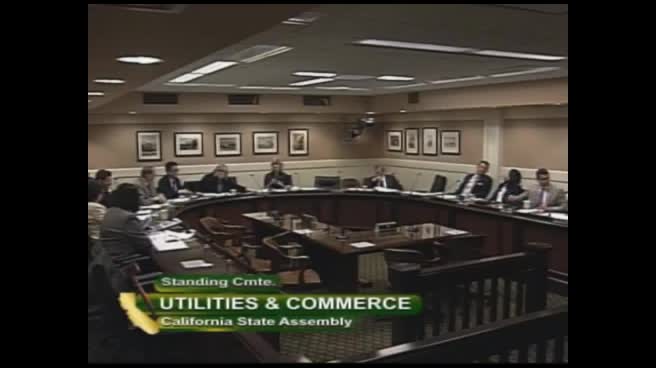 39MIN
Assembly Standing Committee on Utilities and Commerce
Bill Author

Bill Co-Author(s):