SJR 1: Social Security Act: repeal of benefit reductions.
- Session Year: 2023-2024
- House: Senate
- Latest Version Date: 2023-06-02
Current Status:
Passed
(2023-06-02: Chaptered by Secretary of State. Res. Chapter 84, Statutes of 2023.)
Introduced
In Committee
First Chamber
In Committee
Second Chamber
Enacted
This measure would request the Congress of the United States to enact, and the President to sign, legislation that would repeal the Government Pension Offset and the Windfall Elimination Provision from the Social Security Act.
This measure would request the Congress of the United States to enact, and the President to sign, legislation that would repeal the Government Pension Offset and the Windfall Elimination Provision from the Social Security Act.
This measure would request the Congress of the United States to enact, and the President to sign, legislation that would repeal the Government Pension Offset and the Windfall Elimination Provision from the Social Security Act.
This measure would request the Congress of the United States to enact, and the President to sign, legislation that would repeal the Government Pension Offset and the Windfall Elimination Provision from the Social Security Act.
This measure would request the Congress of the United States to enact, and the President to sign, legislation that would repeal the Government Pension Offset and the Windfall Elimination Provision from the Social Security Act.
WHEREAS, Two federal Social Security Administration laws, the Windfall Elimination Provision and the Government Pension Offset, passed by Congress more than 30 years ago, without statistical analysis, diminish or eliminate the fully earned Social Security benefits of large numbers of public service employees in California; and
WHEREAS, These provisions affect workers who have been employed in a government position that is not coordinated with the Social Security program, such as California public school teachers who have not been able to receive Social Security credits since 1965; and
WHEREAS, Most peace officers, including the California Highway Patrol, firefighters, and many other public servants working for cities and special districts are not covered by Social Security, making them subject to these provisions; and
WHEREAS, In California, more than 375,000 retirees have had their Social Security benefits diminished or completely eliminated by these laws; and
WHEREAS, Effective government requires highly qualified and motivated personnel, and California governmental agencies need to compete to recruit and retain outstanding employees, including hiring up to 19,700 teachers by the 202526 school year; and
WHEREAS, The recruitment and retention of qualified individuals reentering the workforce is impeded by these two provisions, which reduce or eliminate the Social Security retirement benefits either earned by workers, themselves, or received through dependent status; and
WHEREAS, The Government Pension Offset severely cuts, and usually eliminates, all spousal and survivor benefits that were earned from what is deemed by the State of California to be community property income; and
WHEREAS, The Government Pension Offset requires that a recipient of benefits report any yearly cost-of-living increase in the recipients public pension, so that the recipients Social Security benefits may be reduced by two-thirds of that amount; and
WHEREAS, The Windfall Elimination Provision cuts earned Social Security benefits from work that is separate from the work for which the individual earned a pension from a governmental entity; and
WHEREAS, The Windfall Elimination Provision subverts the purpose of Social Security retirement benefits by eliminating the formula that reimburses low-income workers at a higher rate than high-income workers, causing severe hardships for those who have not had high-paying public service; and
WHEREAS, New public sector workers were not notified they would be subject to these unjust penalties until 2005, which means that thousands of workers had no notification of them until they applied for Social Security benefits; now, therefore, be it
Resolved by the Senate and the Assembly of the State of California, jointly, That the Legislature requests that the Congress of the United States enact legislation to repeal the Government Pension Offset and the Windfall Elimination Provision from the Social Security Act, and further requests that President Joseph Biden sign that legislation; and be it further
Resolved, That the Secretary of the Senate transmit copies of this resolution to the President and the Vice President of the United States, to the Speaker of the House of Representatives, to the Majority Leader of the Senate, to each Senator and Representative from California in the Congress of the United States, and to the author for appropriate distribution.
WHEREAS, Two federal Social Security Administration laws, the Windfall Elimination Provision and the Government Pension Offset, passed by Congress more than 30 years ago ago, without statistical analysis, diminish or eliminate the fully earned Social Security benefits of large numbers of public service employees in California; and
WHEREAS, These provisions affect workers who have been employed in a government position that is not coordinated with the Social Security program, such as California public school teachers who have not been able to receive Social Security credits since 1965; and
WHEREAS, Most peace officers, including the California Highway Patrol, firefighters, and many other public servants working for cities and special districts are not covered by Social Security, making them subject to these provisions; and
WHEREAS, In California, more than 375,000 retirees have had their Social Security benefits diminished or completely eliminated by these laws; and
WHEREAS, Effective government requires highly qualified and motivated personnel, and California governmental agencies need to compete to recruit and retain outstanding employees, including hiring up to 19,700 teachers by the 202526 school year; and
WHEREAS, The recruitment and retention of qualified individuals reentering the workforce is impeded by these two provisions, which reduce or eliminate the Social Security retirement benefits either earned by workers, themselves, or received through dependent status; and
WHEREAS, The Government Pension Offset severely cuts, and usually eliminates, all spousal and survivor benefits that were earned from what is deemed by the State of California to be community property income; and
WHEREAS, The Government Pension Offset requires that a recipient of benefits report any yearly cost-of-living increase in the recipients public pension, so that the recipients Social Security benefits may be reduced by two-thirds of that amount; and
WHEREAS, The Windfall Elimination Provision cuts earned Social Security benefits from work that is separate from the work for which the individual earned a pension from a governmental entity; and
WHEREAS, The Windfall Elimination Provision subverts the purpose of Social Security retirement benefits by eliminating the formula that reimburses low-income workers at a higher rate than high-income workers, causing severe hardships for those who have not had high-paying public service; and
WHEREAS, New public sector workers were not notified they would be subject to these unjust penalties until 2005, which means that thousands of workers had no notification of them until they applied for Social Security benefits; now, therefore, be it
Resolved by the Senate and the Assembly of the State of California, jointly, That the Legislature requests that the Congress of the United States enact legislation to repeal the Government Pension Offset and the Windfall Elimination Provision from the Social Security Act, and further requests that President Joseph Biden sign that legislation; and be it further
Resolved, That the Secretary of the Senate transmit copies of this resolution to the President and the Vice President of the United States, to the Speaker of the House of Representatives, to the Majority Leader of the Senate, to each Senator and Representative from California in the Congress of the United States, and to the author for appropriate distribution.
WHEREAS, Two federal Social Security Administration laws, the Windfall Elimination Provision and the Government Pension Offset, passed by Congress more than 30 years ago without statistical analysis, diminish or eliminate the fully earned Social Security benefits of large numbers of public service employees in California; and
WHEREAS, These provisions affect workers who have been employed in a government position that is not coordinated with the Social Security program, such as California public school teachers who have not been able to receive Social Security credits since 1965; and
WHEREAS, Most peace officers, including the California Highway Patrol, firefighters, and many other public servants working for cities and special districts are not covered by Social Security, making them subject to these provisions; and
WHEREAS, In California, more than 375,000 retirees have had their Social Security benefits diminished or completely eliminated by these laws; and
WHEREAS, Effective government requires highly qualified and motivated personnel, and California governmental agencies need to compete to recruit and retain outstanding employees, including hiring more than 1,000 new public school teachers each year; up to 19,700 teachers by the 202526 school year; and
WHEREAS, The recruitment and retention of qualified individuals reentering the workforce is impeded by these two provisions, which reduce or eliminate the Social Security retirement benefits either earned by workers, themselves, or received through dependent status; and
WHEREAS, The Government Pension Offset severely cuts, and usually eliminates, all spousal and survivor benefits that were earned from what is deemed by the State of California to be community property income; and
WHEREAS, The Government Pension Offset requires that a recipient of benefits report any yearly cost-of-living increase in the recipients public pension, so that the recipients Social Security benefits may be reduced by two-thirds of that amount; and
WHEREAS, The Windfall Elimination Provision cuts earned Social Security benefits from work that is separate from the work for which the individual earned a pension from a governmental entity; and
WHEREAS, The Windfall Elimination Provision subverts the purpose of Social Security retirement benefits by eliminating the formula that reimburses low-income workers at a higher rate than high-income workers, causing severe hardships for those who have not had high-paying public service; and
WHEREAS, New public sector workers were not notified they would be subject to these unjust penalties until 2005, which means that thousands of workers had no notification of them until they applied for Social Security benefits; now, therefore, be it
Resolved by the Senate and the Assembly of the State of California, jointly, That the Legislature requests that the Congress of the United States enact legislation to repeal the Government Pension Offset and the Windfall Elimination Provision from the Social Security Act, and further requests that President Joseph Biden sign that legislation; and be it further
Resolved, That the Secretary of the Senate transmit copies of this resolution to the President and the Vice President of the United States, to the Speaker of the House of Representatives, to the Majority Leader of the Senate, to each Senator and Representative from California in the Congress of the United States, and to the author for appropriate distribution.
WHEREAS, Two federal Social Security Administration laws, the Windfall Elimination Provision and the Government Pension Offset, passed by Congress more than 30 years ago without statistical analysis, diminish or eliminate the fully earned Social Security benefits of large numbers of public service employees in California; and
WHEREAS, These provisions affect workers who have been employed in a government position that is not coordinated with the Social Security program, such as California public school teachers who have not been able to receive Social Security credits since 1965; and
WHEREAS, Most peace officers, including the California Highway Patrol, firefighters, and many other public servants working for cities and special districts are not covered by Social Security, making them subject to these provisions; and
WHEREAS, In California, more than 375,000 retirees have had their Social Security benefits diminished or completely eliminated by these laws; and
WHEREAS, Effective government requires highly qualified and motivated personnel, and California governmental agencies need to compete to recruit and retain outstanding employees, including hiring more than 1,000 new public school teachers each year; and
WHEREAS, The recruitment and retention of qualified individuals reentering the workforce is impeded by these two provisions, which reduce or eliminate the Social Security retirement benefits either earned by workers, themselves, or received through dependent status; and
WHEREAS, The Government Pension Offset severely cuts, and usually eliminates, all spousal and survivor benefits that were earned from what is deemed by the State of California to be community property income; and
WHEREAS, The Government Pension Offset requires that a recipient of benefits report any yearly cost-of-living increase in the recipients public pension, so that the recipients Social Security benefits may be reduced by two-thirds of that amount; and
WHEREAS, The Windfall Elimination Provision cuts earned Social Security benefits from work that is separate from the work for which the individual earned a pension from a governmental entity; and
WHEREAS, The Windfall Elimination Provision subverts the purpose of Social Security retirement benefits by eliminating the formula that reimburses low-income workers at a higher rate than high-income workers, causing severe hardships for those who have not had high-paying public service; and
WHEREAS, New public sector workers were not notified they would be subject to these unjust penalties until 2005, which means that thousands of workers had no notification of them until they applied for Social Security benefits; now, therefore, be it
Resolved by the Senate and the Assembly of the State of California, jointly, That the Legislature requests that the Congress of the United States enact legislation to repeal the Government Pension Offset and the Windfall Elimination Provision from the Social Security Act, and further requests that President Joseph Biden sign that legislation; and be it further
Resolved, That the Secretary of the Senate transmit copies of this resolution to the President and the Vice President of the United States, to the Speaker of the House of Representatives, to the Majority Leader of the Senate, to each Senator and Representative from California in the Congress of the United States, and to the author for appropriate distribution.
|
Date
|
Status
|
|---|---|
| Jun 2, 2023 | Chaptered by Secretary of State. Res. Chapter 84, Statutes of 2023. |
| Jun 2, 2023 | Enrolled and filed with the Secretary of State at 2 p.m. |
| May 26, 2023 | Assembly amendments concurred in. (Ayes 37. Noes 0. Page 1329.) Ordered to engrossing and enrolling. |
| May 24, 2023 | Ordered to special consent calendar. |
| May 16, 2023 | In Senate. Concurrence in Assembly amendments pending. |
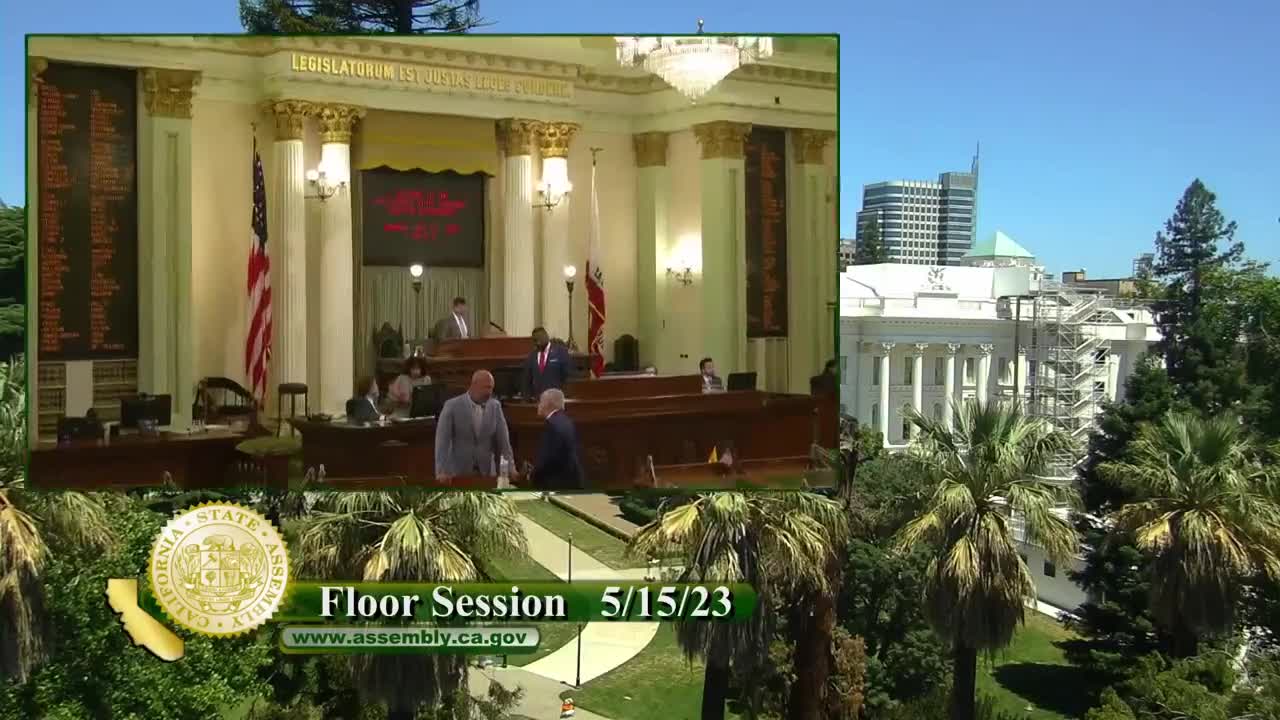
| May 15, 2023 | Read. Adopted. (Ayes 76. Noes 0. Page 1543.) Ordered to the Senate. |
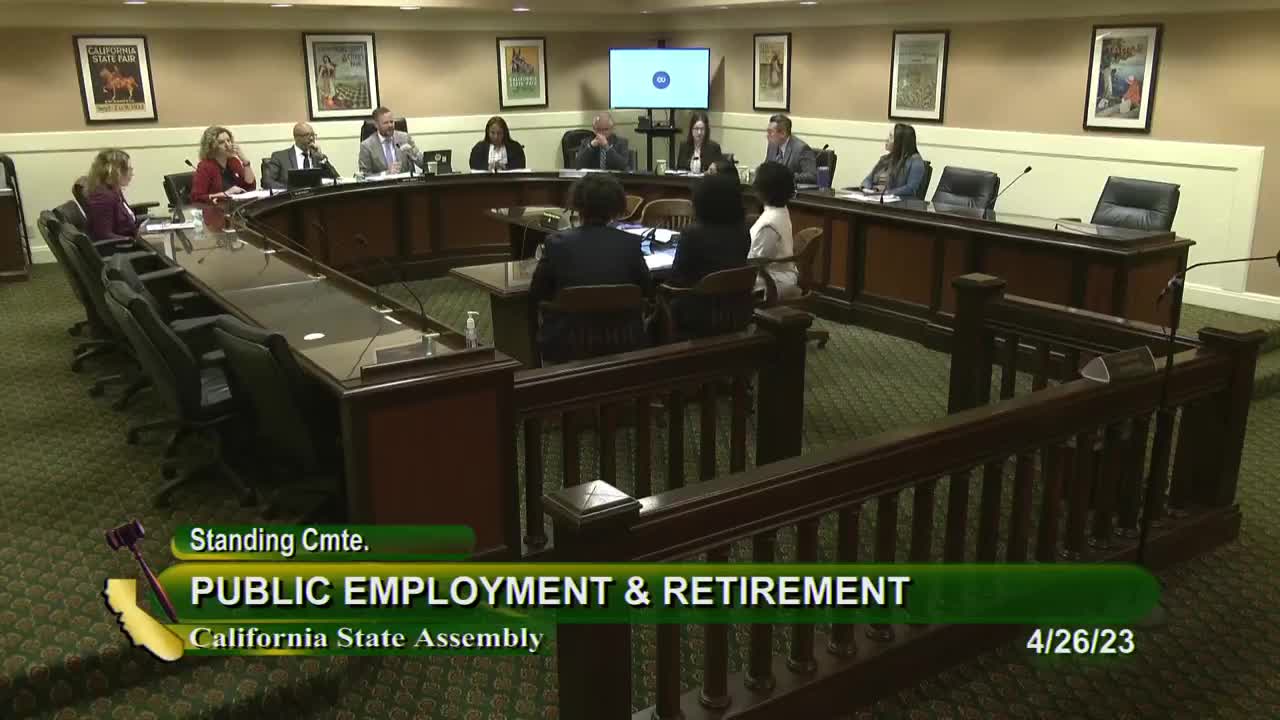
| Apr 26, 2023 | From committee: Be adopted. Ordered to third reading. (Ayes 7. Noes 0.) (April 26). |
| Apr 12, 2023 | From committee with author's amendments. Read second time and amended. Re-referred to Com. on P.E. & R. |
| Mar 30, 2023 | Referred to Com. on P.E. & R. |
| Mar 16, 2023 | In Assembly. Held at Desk. |
| Mar 16, 2023 | Read. Adopted. (Ayes 39. Noes 0. Page 360.) Ordered to the Assembly. |
| Mar 9, 2023 | Read second time. Ordered to consent calendar. |
| Mar 8, 2023 | From committee: Be adopted. Ordered to consent calendar. (Ayes 5. Noes 0. Page 306.) (March 8). |
| Mar 2, 2023 | From committee with author's amendments. Read second time and amended. Re-referred to Com. on L., P.E. & R. |
| Feb 28, 2023 | Set for hearing March 8. |
| Jan 18, 2023 | Re-referred to Com. on L., P.E. & R. |
| Dec 5, 2022 | Introduced. Referred to Com. on RLS. |
|
Date
|
Description
|
Location
|
Votes
|
|
|---|---|---|---|---|
| May 26, 2023 | Special Consent SJR1 Cortese et al. | Senate Floor |
Passed |
|
| May 15, 2023 | SJR 1 Cortese Senate Third Reading By Addis | Assembly Floor |
Passed |
|
| Apr 26, 2023 | Be adopted. To third reading. | Assembly Standing Committee on Public Employment and Retirement |
Passed |
|
| Mar 8, 2023 | Be adopted and be ordered to the Consent Calendar | Senate Standing Committee on Labor, Public Employment and Retirement |
Passed |
This list shows positions taken on this bill by organizations on the date displayed, which is linked to the original source.
Positions by individuals are not included.
|
Organization
|
Position
|
Date
|
|---|---|---|
| American Federation Of State, County And Municipal Employees, Afl-Cio | ** Support | |
| Association Of California State Supervisors | ** Support | |
| Association of School Administrators | ** Support | |
| California Association Of Highway Patrolmen | ** Support | |
| California Federation Of Teachers | ** Support | |
| California Professional Firefighters | ** Support | |
| California Retired Teachers Association | ** Support | |
| California State Retirees | ** Support | |
| California State Teachers Retirement System | ** Support | |
| California Teachers Association | ** Support | |
| DKG California | ** Support | |
| Faculty Association Of California Community Colleges | ** Support | |
| Los Angeles Unified School District | ** Support | |
| Peace Officers Research Association Of California | ** Support | |
| Retired Public Employees Association | ** Support |
SENATE RULES COMMITTEE Office of Senate Floor Analyses (916) 651-1520 Fax: (916) 327-4478 | SJR 1 |
UNFINISHED BUSINESS
Bill No: SJR 1
Author: Cortese (D), et al.
Amended: 4/12/23
Vote: 21
SENATE LABOR, PUB. EMP. & RET. COMMITTEE: 5-0, 3/8/23
AYES: Cortese, Wilk, Durazo, Laird, Smallwood-Cuevas
ASSEMBLY FLOOR: 76-0, 5/15/23 - See last page for vote
SUBJECT: Social Security Act: repeal of benefit reductions
SOURCE: California Retired Teachers Association
DIGEST:
This joint resolution petitions the United States Congress to enact, and the President of the United States to sign, legislation to repeal the Government Pension Offset and the Windfall Elimination Provision from the Social Security Act and instructs the Secretary of the Senate to transmit copies of this resolution to members of Congress.
Assembly Amendments
add a co-author.
ANALYSIS:
Existing law:
- Requires that a beneficiary’s Social Security allowance be offset if the beneficiary also receives a government pension and was employed by an employer not coordinated with Social Security. (42 U.S. Code § 403, 20 CFR § 404.243)
- Requires that a beneficiary’s spouse, widow, or widower, may receive a reduced Social Security benefit if the beneficiary also receives a government pension and was employed by an employer not coordinated with Social Security. (42 U.S. Code § 403, 20 CFR § 404.408a)
This joint resolution:
- Requests the United States Congress to enact, and the President of the United States to sign, legislation to repeal the Government Pension Offset (GPO) and the Windfall Elimination Provision (WEP) from the Social Security Act.
- Directs the Secretary of the Senate to transmit copies of this resolution to the President and Vice President of the United States, the Speaker of the House of Representatives, the Majority Leader of the Senate, and to each Senator and Representative from California in the United States Congress, and to the author for appropriate distribution.
- Makes various declarations:
- The WEP and GPO, passed by Congress over 30 years ago without statistical analyses, diminish or eliminate the fully earned Social Security benefits of large numbers of California public employees;
- WEP and GPO affect workers who have been employed in a government position which is not coordinated with Social Security, such as public school teachers who have been unable to receive Social Security credits since 1965;
- Most peace officers, including the California Highway Patrol, firefighters, and public servants working for cities and special districts, are not covered by Social Security and subject to the WEP and GPO;
- More than 375,000 California retirees have had their Social Security benefits diminished or eliminated by the WEP and GPO;
- Effective government requires highly qualified and motivated personnel, and California government agencies need to compete to recruit and retain employees, including hiring up to 19,700 teachers by the 2025-26 school year;
- The recruitment and retention of qualified individuals reentering the workforce is impeded by the WEP and GPO which reduce or eliminate the benefits earned by workers or received through dependent status;
- The GPO severely cuts, and usually eliminates, all spousal and survivor benefits earned from what is deemed by the State of California as community property income;
- The GPO requires a beneficiary to report any yearly cost-of-living increases in the recipient’s public pension, so that the recipient’s Social Security benefits may be reduced by two-thirds of that amount;
- The WEP reduces earned Social Security benefits from work that is separate from the work for which the individual earned a government pension;
- The WEP cuts earned Social Security retirement benefits by eliminating the formula that reimburses low-income workers at a higher rate than high-income workers, causing severe hardships for those who have not been employed in a high-paying public job; and
- New public sector workers were not notified they would be subject to these unjust penalties until 2005, which means that thousands of workers had no notification of them until they applied for Social Security benefits.
Comments
Need for this resolution? According to the author:
Many of California’s teachers are unfairly penalized by Social Security offsets that reduce or eliminate the earned Social Security benefits of the teacher’s benefits or their spousal benefits. The California Legislature has consistently requested that Congress repeal these offsets to protect our current and future teachers. Educational stakeholders, as well as others that represent impacted public employees have been working to garner federal support to eliminate the Windfall Elimination Provision (WEP) and Government Pension Offset (GPO).
Social Security was originally established in 1935. Initially, state and local governments, and their employees were prohibited from participating. Over the years, federal laws were passed allowing these employees the opportunity to elect to join the program, including a number of California jurisdictions, except for peace officers, firefighters, correctional officers, teachers, and others.
Nationwide, more than one-third of teachers are not covered under Social Security. Most are subject to the WEP or GPO.
The WEP reduces benefits that were paid for as part of the Social Security payroll tax. This benefit was created to ensure that a worker was not put into poverty. The WEP can lead to a significant reduction of the Social Security benefits that were earned and paid for.
The survivor benefit was paid for by the Social Security earner as part of the Social Security payroll tax. The survivor benefit was created to ensure the surviving spouse was not left without adequate financial support. The GPO eliminates the survivor benefit even with a modest public pension. When the GPO is applied to the survivor benefit, it can often force the surviving spouse into poverty.
The WEP reduces the ability to recruit private industry workers as second career teachers to bring their skills and knowledge to California’s classrooms. This transfer of knowledge is particularly important in some of the high technology areas particularly in high schools and community colleges.
Women are disproportionately impacted by the WEP and GPO in California. Approximately 72% of teachers in California are women who receive less service overall than their male colleagues.
Related/Prior Legislation
AJR 9 (Cooper, Resolution Chapter 78, Statutes of 2021)
SJR 3 (Wilk, Resolution Chapter 129, Statutes of 2019)
AJR 41 (Thurmond, Resolution Chapter 197, Statutes of 2018)
SJR 1 (Beall, Resolution Chapter 92, Statues of 2015)
SJR 30 (Hancock, Resolution Chapter 126, Statutes of 2012
AJR 10 (Torlakson, Resolution Chapter 103, Statutes of 2009)
AJR 15 (Hernandez, Resolution Chapter 116, Statutes of 2007)
SJR 15 (Dutton, Resolution Chapter 62, Statutes of 2006)
AJR 29 (Pavley, Resolution Chapter 65, Statutes of 2003)
FISCAL EFFECT: Appropriation: No Fiscal Com.: No Local: No
SUPPORT: (Verified 5/19/23)
California Retired Teachers Association (source)
American Federation of State, County and Municipal Employees, AFL-CIO
Association of California State Supervisors
Association of School Administrators
California Association of Highway Patrolmen
California Federation of Teachers
California Professional Firefighters
California State Teachers’ Retirement System
California Teachers Association
DKG California
Faculty Association of California Community Colleges
Los Angeles Unified School District
Peace Officers Research Association of California
Retired Public Employees Association
OPPOSITION: (Verified 5/19/23)
None received
ARGUMENTS IN SUPPORT: According to the California Retired Teachers Association:
The WEP reduces Social Security benefits that teachers who have worked in the private sector have paid for through Social Security payroll taxes, which significantly harms California’s ability to recruit and retain teachers from the private sector…”
“The GPO has a harsh impact on spouses and widows, often leaving a grieving spouse in dire economic conditions when her spouse passes. The survivor benefit was paid for by the Social Security earner as part of the Social Security payroll tax. This benefit was created to ensure the surviving spouse was not left without economic resources. The GPO eliminates the survivor benefit, even with a modest pension. When the GPO is applied to the survivor benefit, it can force the surviving spouse into poverty. A total of 54 percent of those impacted by the GPO are spouses, 46 percent were widows or widowers. Out of the total potential beneficiaries, 72 percent will lose all Social Security benefits.
ASSEMBLY FLOOR: 76-0, 5/15/23
AYES: Addis, Aguiar-Curry, Alanis, Alvarez, Arambula, Bauer-Kahan, Bennett, Berman, Boerner, Bonta, Bryan, Calderon, Juan Carrillo, Wendy Carrillo, Cervantes, Chen, Connolly, Megan Dahle, Davies, Dixon, Flora, Mike Fong, Vince Fong, Gabriel, Gallagher, Garcia, Gipson, Grayson, Haney, Hart, Holden, Hoover, Irwin, Jackson, Jones-Sawyer, Kalra, Lackey, Lee, Low, Lowenthal, Maienschein, Mathis, McCarty, McKinnor, Muratsuchi, Stephanie Nguyen, Ortega, Pacheco, Papan, Jim Patterson, Joe Patterson, Pellerin, Petrie-Norris, Quirk-Silva, Ramos, Reyes, Luz Rivas, Robert Rivas, Rodriguez, Blanca Rubio, Sanchez, Santiago, Schiavo, Soria, Ta, Ting, Valencia, Villapudua, Wallis, Ward, Weber, Wicks, Wilson, Wood, Zbur, Rendon
NO VOTE RECORDED: Bains, Essayli, Friedman, Waldron
Prepared by: Glenn Miles / L., P.E. & R. / (916) 651-1556
5/20/23 13:09:54
**** END ****
SENATE THIRD READING
STR Bill Id:SJR 1
Author:(Cortese)
As Amended Ver:April 12, 2023
Majority vote
SUMMARY
Petitions the United States (U.S.) Congress to enact, and the U.S. President to sign, legislation to repeal the Government Pension Offset (GPO) and Windfall Elimination Provision (WEP) from the Social Security Act, and instructs the Secretary of the Senate to transmit copies of this resolution to members of Congress.
Major Provisions
- Request the United States Congress to enact, and the President of the United States to sign, legislation to repeal the Government Pension Offset (GPO) and the Windfall Elimination Provision (WEP) from the Social Security Act.
- Make numerous declarations regarding the negative effects of the GPO and WEP on peace officers; teachers; firefighters; many other public employees; retirees; recruitment and retention in the public sector; and, the manner in which the GPO and WEP were passed by Congress more than 30 years ago without statistical analysis.
COMMENTS
Brief Background Regarding the GPO and WEP.
Social Security provides benefits to retired workers and, under certain circumstances, their spouse, former spouse, surviving spouse, and surviving former spouse. When Social Security was originally established in 1935, state and local governments and their employees were prohibited from participating. Over the years, federal laws were passed allowing these employees the opportunity to elect to join the program and many California jurisdictions joined, including the State of California, except for peace officers, firefighters, correctional officers, teachers, and others.
Nationwide, more than a third of all teachers are not covered under Social Security. A majority of these teachers will be subject to either the GPO or WEP, or, in some cases, both. The application of these provisions can have a severe impact on the financial security of these retirees. Under federal law, state and local public employees who work for an employer in a position not coordinated with Social Security and who receive a government pension upon retirement may be affected by two federal offsets to their Social Security benefits.
The WEP affects individuals who earn a pension in any job where the person did not pay into Social Security and also worked in other jobs long enough to qualify for a Social Security retirement or disability benefit for those jobs. Depending on how many years of qualifying substantial earnings the individual has in Social Security, the WEP results in a significant pro rata reduction of one of the three factors used in determining the average monthly earnings upon which the Social Security benefit is based.
The GPO affects individuals who earn a government pension based on work where the employee did not pay into Social Security but who are also eligible for Social Security dependent's benefits (i.e., benefits based on a spouse's Social Security benefit or as the widow or widower of an eligible Social Security benefit recipient). The GPO reduces the dependent's Social Security spouse/widow/widower benefit by a significant amount of the individual's government pension.
In California, the WEP and the GPO primarily impact teachers and public safety officers who may begin their careers in the private sector and earn enough qualifying quarters to receive a Social Security benefit, but later change mid-career to become, for example, a teacher in a public school or a safety officer in a job with a state or local government employer not coordinated with Social Security. Many do not learn of these consequences relating to their public employment until they apply for Social Security benefits which may be viewed as an abject failure by the federal government or public employer to notify the employee of these consequences for the period of employment not covered by Social Security.
Equity Solutions and Maximizing Benefits for Underserved and Marginalized Communities
Pursuant to House Resolution (HR) 39 (Gipson) of 2021, to continue the Assembly's commitment to investing in equity solutions and maximizing benefits for underserved and marginalized communities, legislative analyses of the Assembly must discuss the equity impact that a bill will, or may, have on such communities, if any.
This bill does not present a particular focus towards addressing equity in relation to maximizing benefits for underserved or marginalized communities as articulated in HR 39. However, under a broader context, the author states that, "[i]n California, approximately 72 percent of teachers are women, meaning women are disproportionately being impacted by these unjust federal offsets. As retirees age, female retirees outlive their male counterparts making this already skewed statistic even greater. Eliminating the WEP and GPO will provide more retirement stability to women across the state, reflecting the elimination of one of the final glass ceilings for this population of women."
According to the Author
"Many of California's teachers are unfairly penalized by Social Security offsets that reduce or eliminate the earned Social Security benefits of the teacher's benefits or their spousal benefits. The California Legislature has consistently requested that Congress repeal these offsets to protect our current and future teachers. Educational stakeholders, as well as others that represent impacted public employees have been working to garner federal support to eliminate the WEP and GPO.
The WEP reduces benefits that were paid for as part of the Social Security payroll tax. This benefit was created to ensure that a worker was not put into poverty. The WEP can lead to a significant reduction of the Social Security benefits that were earned and paid for. The survivor benefit was paid for by the Social Security earner as part of the Social Security payroll tax. The survivor benefit was created to ensure the surviving spouse was not left without adequate financial support. The GPO eliminates the survivor benefit even with a modest public pension. When the GPO is applied to the survivor benefit, it can often force the surviving spouse into poverty.
Women are disproportionately impacted by the WEP and GPO in California. Approximately 72 percent of teachers in California are women who receive less service overall than their male colleagues."
Arguments in Support
A number of supporters express that both the GPO and WEP in federal law penalize teachers, peace officers, and firefighters as these public employees in California do not participate in Social Security as a result of their public employment. Further, these provisions negatively affect teachers particularly in California because women dominate the teaching profession and whom are also financially penalized with a significant reduction in the amount of federal Social Security spousal benefits that they may otherwise receive due to the GPO and WEP. These reductions contribute to increased poverty and homelessness, reduced quality of life, and result in financial dependency from other sources.
Arguments in Opposition
None.
FISCAL COMMENTS
None.
VOTES
ASM PUBLIC EMPLOYMENT AND RETIREMENT: 7-0-0
YES: McKinnor, Lackey, Addis, Vince Fong, Haney, Stephanie Nguyen, Schiavo
UPDATED
VERSION: April 12, 2023
CONSULTANT: Michael Bolden / P. E. & R. / (916) 319-3957 FN: 0000253
Date of Hearing: April 26, 2023
ASSEMBLY COMMITTEE ON PUBLIC EMPLOYMENT AND RETIREMENT
Tina S. McKinnor, Chair
SBPCA Bill Id:SJR 1
Author:(Cortese) – As Amended Ver:April 12, 2023
SENATE VOTE: 5-0 Labor and Public Employment and Retirement
SUBJECT: Social Security Act: repeal of benefit reductions
SUMMARY: Petitions the United States (U.S.) Congress to enact, and the U.S. President to sign, legislation to repeal the Government Pension Offset (GPO) and Windfall Elimination Provision (WEP) from the Social Security Act, and instructs the Secretary of the Senate to transmit copies of this resolution to members of Congress. Specifically, this resolution:
- Requests the United States Congress to enact, and the President of the United States to sign, legislation to repeal the Government Pension Offset (GPO) and the Windfall Elimination Provision (WEP) from the Social Security Act.
- Directs the Secretary of the Senate to transmit copies of this resolution to the President and Vice President of the United States, the Speaker of the House of Representatives, the Majority Leader of the Senate, and to each Senator and Representative from California in the United States Congress, and to the author for appropriate distribution.
- Makes numerous declarations regarding the negative effects of the GPO and WEP on peace officers; teachers; firefighters; many other public employees; retirees; recruitment and retention in the public sector; and, the manner in which the GPO and WEP were passed by Congress more than 30 years ago without statistical analysis.
EXISTING LAW:
- Federal
- Requires that a beneficiary’s Social Security allowance be offset if the beneficiary also receives a government pension and was employed by an employer not coordinated with Social Security.[1]
- Requires that a beneficiary’s spouse, widow, or widower, may receive a reduced Social Security benefit if the beneficiary also receives a government pension and was employed by an employer not coordinated with Social Security.[2]
FISCAL EFFECT: None.
COMMENTS: According to the author, “[m]any of California’s teachers are unfairly penalized by Social Security offsets that reduce or eliminate the earned Social Security benefits of the teacher’s benefits or their spousal benefits. The California Legislature has consistently requested that Congress repeal these offsets to protect our current and future teachers. Educational stakeholders, as well as others that represent impacted public employees have been working to garner federal support to eliminate the WEP and GPO.
The WEP reduces benefits that were paid for as part of the Social Security payroll tax. This benefit was created to ensure that a worker was not put into poverty. The WEP can lead to a significant reduction of the Social Security benefits that were earned and paid for. The survivor benefit was paid for by the Social Security earner as part of the Social Security payroll tax. The survivor benefit was created to ensure the surviving spouse was not left without adequate financial support. The GPO eliminates the survivor benefit even with a modest public pension. When the GPO is applied to the survivor benefit, it can often force the surviving spouse into poverty.
Women are disproportionately impacted by the WEP and GPO in California. Approximately 72 percent of teachers in California are women who receive less service overall than their male colleagues.”
- Brief Background Regarding the GPO and WEP.
Social Security provides benefits to retired workers and, under certain circumstances, their spouse, former spouse, surviving spouse, and surviving former spouse. When Social Security was originally established in 1935, state and local governments and their employees were prohibited from participating. Over the years, federal laws were passed allowing these employees the opportunity to elect to join the program and many California jurisdictions joined, including the State of California, except for peace officers, firefighters, correctional officers, teachers, and others.
Nationwide, more than a third of all teachers are not covered under Social Security. A majority of these teachers will be subject to either the GPO or WEP, or, in some cases, both. The application of these provisions can have a severe impact on the financial security of these retirees. Under federal law, state and local public employees who work for an employer in a position not coordinated with Social Security and who receive a government pension upon retirement may be affected by two federal offsets to their Social Security benefits.
The WEP affects individuals who earn a pension in any job where the person did not pay into Social Security and also worked in other jobs long enough to qualify for a Social Security retirement or disability benefit for those jobs. Depending on how many years of qualifying substantial earnings the individual has in Social Security, the WEP results in a significant pro rata reduction of one of the three factors used in determining the average monthly earnings upon which the Social Security benefit is based.
The GPO affects individuals who earn a government pension based on work where the employee did not pay into Social Security but who are also eligible for Social Security dependent's benefits (i.e., benefits based on a spouse's Social Security benefit or as the widow or widower of an eligible Social Security benefit recipient). The GPO reduces the dependent's Social Security spouse/widow/widower benefit by a significant amount of the individual's government pension.
In California, the WEP and the GPO primarily impact teachers and public safety officers who may begin their careers in the private sector and earn enough qualifying quarters to receive a Social Security benefit, but later change mid-career to become, for example, a teacher in a public school or a safety officer in a job with a state or local government employer not coordinated with Social Security. Many do not learn of these consequences relating to their public employment until they apply for Social Security benefits which may be viewed as an abject failure by the federal government or public employer to notify the employee of these consequences for the period of employment not covered by Social Security.
- Equity Solutions and Maximizing Benefits for Underserved and Marginalized Communities
Pursuant to House Resolution (HR) 39 (Gipson, 2021), to continue the Assembly’s commitment to investing in equity solutions and maximizing benefits for underserved and marginalized communities, legislative analyses of the Assembly must discuss the equity impact that a bill will, or may, have on such communities, if any.
This bill does not present a particular focus towards addressing equity in relation to maximizing benefits for underserved or marginalized communities as articulated in HR 39. However, under a broader context, the author states that, “[i]n California, approximately 72 percent of teachers are women, meaning women are disproportionately being impacted by these unjust federal offsets. As retirees age, female retirees outlive their male counterparts making this already skewed statistic even greater. Eliminating the WEP and GPO will provide more retirement stability to women across the state, reflecting the elimination of one of the final glass ceilings for this population of women.”
- Comments by Supporters
A coalition letter by the Association of California School Administrators, California Federation of Teachers, AFT, AFL-CIO, California Retired Teachers Association, DKG California, and the Faculty Association of California Community Colleges states in part that, the unjust penalties resulting from the WEP and GPO harm “…dedicated public servants…,“ and that “[r]etired teachers should not be penalized for choosing to serve California’s children as a second career.”
The Los Angeles Unified School District states in part that, “[it] is proud of the work of our close to 30,000 educators and their commitment to our students, and we firmly believe they should receive the entirety of the benefits they are entitled to. However, as it stands in current law, CalSTRS members are not covered by Social Security for any California State Teachers;’ Retirement System (CalSTRS)-covered employment.
“The GPO must reflect the reality for individuals who are not financially dependent on spousal support. The dual enrollment rule unjustly penalizes the amount a person is entitled to stemming from spousal support. The GPO further punishes CalSTRS members by reducing the amount of Social Security spousal benefits they would otherwise receive by up to two-thirds. These existing inequities can only be resolved by repealing the GPO and the WEP sections of the Social Security Act.”
The California Professional Firefighters states in part that, “[w]hen the Social Security Act was passed in 1935, government employees were specifically excluded from participating. While public employees have since been allowed to enroll in Social Security, the creation of state and local pension systems to cover that need has resulted in public employees such as firefighters not being covered by Social Security because their pension systems do not coordinate with the program. [This resolution] would encourage Congress to repeal and President Biden to sign both of these provisions in order to eliminate unfair penalties on dedicated public employees. Workers who have dedicated their lives to public service should not be targeted for benefit reductions in retirement, and it is incumbent on Congress to repeal these provisions immediately. For these reasons, we are proud to support this important measure.”
The Peace Officers’ Research Association of California (PORAC) states, among other things, that, “PORAC is committed to fighting for more benefits for peace officers. SJR 1 allows officers who collect social security to not have their retirement earnings offset by the federal government.”
The Retired Public Employees Association (RPEA) states that, “RPEA has called for the elimination of the WEP and GPO for decades. WEP and GPO penalizes thousands of California’s public servants; our teachers, police officers, firefighters, emergency responders, and other local and state public servants – and their spouses or survivors – have been wrongly penalized.
The WEP and GPO provisions do not eliminate a windfall for workers; instead, they have proved to be a windfall for the federal government at the expense of public employees. That’s not right and it’s not fair. It is incumbent on Congress to repeal these inequitable provisions. Protecting Social Security and eliminating the WEP/GPO will protect Social Security benefits for senior citizens who desperately depend on these benefits to survive.”
The California Association of Highway Patrolmen (CAHP) states that, The CAHP supports legislation that will positively impact the lives of all our CHP officers. [This resolution] allows officers who collect social security to not have their retirement earnings offset by the federal government.
The CalSTRS states that, “[t]his legislation addresses concerns about the impact that these Social Security benefit offsets often have on educators who begin their career at a later age.”
- Prior or Related Legislation
Resolution Chapter 78, Statutes of 2021 (AJR 9, Cooper)
Resolution Chapter 129, Statutes of 2019 (SJR 3, Wilk)
Resolution Chapter 197, Statutes of 2018 (AJR 41, Thurmond)
Resolution Chapter 92, Statues of 2015 (SJR 1, Beall)
Resolution Chapter 126, Statutes of 2012 (SJR 30, Hancock)
Resolution Chapter 103, Statutes of 2009 (AJR 10, Torlakson)
Resolution Chapter 116, Statutes of 2007 (AJR 5, Hernandez)
Resolution Chapter 62, Statutes of 2006 (SJR 15, Dutton)
Resolution Chapter 65, Statutes of 2003 (AJR 29, Pavley)
Resolution Chapter 66, Statutes of 2001 (AJR 3, Leonard)
Resolution Chapter 94, Statutes of 2001 (SJR 4, Soto)
REGISTERED SUPPORT / OPPOSITION:
Support
California Retired Teachers Association (Sponsor)
American Federation of State, County and Municipal Employees, AFL-CIO
Association of California School Administrators
Association of California State Supervisors
California Association of Highway Patrolmen
California Federation of Teachers, AFT, AFL-CIO
California State Retirees
California Teachers Association
DKG California
Faculty Association of California Community Colleges
Peace Officers’ Research Association of California
Opposition
None on file.
Analysis Prepared by: Michael Bolden / P. E. & R. / (916) 319-3957
SENATE RULES COMMITTEE Office of Senate Floor Analyses (916) 651-1520 Fax: (916) 327-4478 | SJR 1 |
CONSENT
Bill No: SJR 1
Author: Cortese (D)
Amended: 3/2/23
Vote: 21
SENATE LABOR, PUB. EMP. & RET. COMMITTEE: 5-0, 3/8/23
AYES: Cortese, Wilk, Durazo, Laird, Smallwood-Cuevas
SUBJECT: Social Security Act: repeal of benefit reductions
SOURCE: California Retired Teachers Association
DIGEST:
This joint resolution petitions the United States Congress to enact, and the President of the United States to sign, legislation to repeal the Government Pension Offset and the Windfall Elimination Provision from the Social Security Act and instructs the Secretary of the Senate to transmit copies of this resolution to members of Congress.
ANALYSIS:
Existing law:
- Requires that a beneficiary’s Social Security allowance be offset if the beneficiary also receives a government pension and was employed by an employer not coordinated with Social Security. (42 U.S. Code § 403, 20 CFR § 404.243)
- Requires that a beneficiary’s spouse, widow, or widower, may receive a reduced Social Security benefit if the beneficiary also receives a government pension and was employed by an employer not coordinated with Social Security. (42 U.S. Code § 403, 20 CFR § 404.408a)
This joint resolution:
- Requests the United States Congress to enact, and the President of the United States to sign, legislation to repeal the Government Pension Offset (GPO) and the Windfall Elimination Provision (WEP) from the Social Security Act.
- Directs the Secretary of the Senate to transmit copies of this resolution to the President and Vice President of the United States, the Speaker of the House of Representatives, the Majority Leader of the Senate, and to each Senator and Representative from California in the United States Congress, and to the author for appropriate distribution.
- Makes various declarations:
- The WEP and GPO, passed by Congress over 30 years ago without statistical analyses, diminish or eliminate the fully earned Social Security benefits of large numbers of California public employees;
- WEP and GPO affect workers who have been employed in a government position which is not coordinated with Social Security, such as public school teachers who have been unable to receive Social Security credits since 1965;
- Most peace officers, including the California Highway Patrol, firefighters, and public servants working for cities and special districts, are not covered by Social Security and subject to the WEP and GPO;
- More than 375,000 California retirees have had their Social Security benefits diminished or eliminated by the WEP and GPO;
- Effective government requires highly qualified and motivated personnel, and California government agencies need to compete to recruit and retain employees, including hiring up to 19,700 teachers by the 2025-26 school year;
- The recruitment and retention of qualified individuals reentering the workforce is impeded by the WEP and GPO which reduce or eliminate the benefits earned by workers or received through dependent status;
- The GPO severely cuts, and usually eliminates, all spousal and survivor benefits earned from what is deemed by the State of California as community property income;
- The GPO requires a beneficiary to report any yearly cost-of-living increases in the recipient’s public pension, so that the recipient’s Social Security benefits may be reduced by two-thirds of that amount;
- The WEP reduces earned Social Security benefits from work that is separate from the work for which the individual earned a government pension;
- The WEP cuts earned Social Security retirement benefits by eliminating the formula that reimburses low-income workers at a higher rate than high-income workers, causing severe hardships for those who have not been employed in a high-paying public job; and
- New public sector workers were not notified they would be subject to these unjust penalties until 2005, which means that thousands of workers had no notification of them until they applied for Social Security benefits.
Comments
Need for this resolution? According to the author:
Many of California’s teachers are unfairly penalized by Social Security offsets that reduce or eliminate the earned Social Security benefits of the teacher’s benefits or their spousal benefits. The California Legislature has consistently requested that Congress repeal these offsets to protect our current and future teachers. Educational stakeholders, as well as others that represent impacted public employees have been working to garner federal support to eliminate the Windfall Elimination Provision (WEP) and Government Pension Offset (GPO).
Social Security was originally established in 1935. Initially, state and local governments, and their employees were prohibited from participating. Over the years, federal laws were passed allowing these employees the opportunity to elect to join the program, including a number of California jurisdictions, except for peace officers, firefighters, correctional officers, teachers, and others.
Nationwide, more than one-third of teachers are not covered under Social Security. Most are subject to the WEP or GPO.
The WEP reduces benefits that were paid for as part of the Social Security payroll tax. This benefit was created to ensure that a worker was not put into poverty. The WEP can lead to a significant reduction of the Social Security benefits that were earned and paid for.
The survivor benefit was paid for by the Social Security earner as part of the Social Security payroll tax. The survivor benefit was created to ensure the surviving spouse was not left without adequate financial support. The GPO eliminates the survivor benefit even with a modest public pension. When the GPO is applied to the survivor benefit, it can often force the surviving spouse into poverty.
The WEP reduces the ability to recruit private industry workers as second career teachers to bring their skills and knowledge to California’s classrooms. This transfer of knowledge is particularly important in some of the high technology areas particularly in high schools and community colleges.
Women are disproportionately impacted by the WEP and GPO in California. Approximately 72% of teachers in California are women who receive less service overall than their male colleagues.
Related/Prior Legislation
AJR 9 (Cooper, Resolution Chapter 78, Statutes of 2021)
SJR 3 (Wilk, Resolution Chapter 129, Statutes of 2019)
AJR 41 (Thurmond, Resolution Chapter 197, Statutes of 2018)
SJR 1 (Beall, Resolution Chapter 92, Statues of 2015)
SJR 30 (Hancock, Resolution Chapter 126, Statutes of 2012
AJR 10 (Torlakson, Resolution Chapter 103, Statutes of 2009)
AJR 15 (Hernandez, Resolution Chapter 116, Statutes of 2007)
SJR 15 (Dutton, Resolution Chapter 62, Statutes of 2006)
AJR 29 (Pavley, Resolution Chapter 65, Statutes of 2003)
FISCAL EFFECT: Appropriation: No Fiscal Com.: No Local: No
SUPPORT: (Verified 3/9/23)
California Retired Teachers Association (source)
Association of School Administrators
California Association of Highway Patrolmen
California Federation of Teachers
California Professional Firefighters
California State Teachers’ Retirement System
California Teachers Association
DKG California
Faculty Association of California Community Colleges
Los Angeles Unified School District
Peace Officers Research Association of California
Retired Public Employees Association
OPPOSITION: (Verified 3/9/23)
None received
ARGUMENTS IN SUPPORT: According to the California Retired Teachers Association:
The WEP reduces Social Security benefits that teachers who have worked in the private sector have paid for through Social Security payroll taxes, which significantly harms California’s ability to recruit and retain teachers from the private sector…”
“The GPO has a harsh impact on spouses and widows, often leaving a grieving spouse in dire economic conditions when her spouse passes. The survivor benefit was paid for by the Social Security earner as part of the Social Security payroll tax. This benefit was created to ensure the surviving spouse was not left without economic resources. The GPO eliminates the survivor benefit, even with a modest pension. When the GPO is applied to the survivor benefit, it can force the surviving spouse into poverty. A total of 54 percent of those impacted by the GPO are spouses, 46 percent were widows or widowers. Out of the total potential beneficiaries, 72 percent will lose all Social Security benefits.
Prepared by: Glenn Miles / L., P.E. & R. / (916) 651-1556
3/10/23 10:02:13
**** END ****
SENATE COMMITTEE ON LABOR, PUBLIC EMPLOYMENT AND RETIREMENT
Senator Dave Cortese, Chair
2023 - 2024 Regular
Bill No: SJR 1 Hearing Date: March 8, 2023
Author: | Cortese | ||
Version: | March 2, 2023 | ||
Urgency: |
| Fiscal: | No |
Consultant: | Glenn Miles | ||
SUBJECT: Social Security Act: repeal of benefit reductions
KEY ISSUE
Should the Legislature petition the United States Congress to enact, and the President of the United States to sign, legislation to repeal the Government Pension Offset and the Windfall Elimination Provision from the Social Security Act and to instruct the Secretary of the Senate to transmit copies of this resolution to members of Congress?
ANALYSIS
Existing law:
- Requires that a beneficiary’s Social Security allowance be offset if the beneficiary also receives a government pension and was employed by an employer not coordinated with Social Security. (42 U.S. Code § 403, 20 CFR § 404.243)
- Requires that a beneficiary’s spouse, widow, or widower, may receive a reduced Social Security benefit if the beneficiary also receives a government pension and was employed by an employer not coordinated with Social Security. (42 U.S. Code § 403, 20 CFR § 404.408a)
This joint resolution:
- Requests the United States Congress to enact, and the President of the United States to sign, legislation to repeal the Government Pension Offset (GPO) and the Windfall Elimination Provision (WEP) from the Social Security Act.
- Directs the Secretary of the Senate to transmit copies of this resolution to the President and Vice President of the United States, the Speaker of the House of Representatives, the Majority Leader of the Senate, and to each Senator and Representative from California in the United States Congress, and to the author for appropriate distribution.
- Makes various declarations:
- The WEP and GPO, passed by Congress over 30 years ago without statistical analyses, diminish or eliminate the fully earned Social Security benefits of large numbers of California public employees;
- WEP and GPO affect workers who have been employed in a government position which is not coordinated with Social Security, such as public school teachers who have been unable to receive Social Security credits since 1965;
- Most peace officers, including the California Highway Patrol, firefighters, and public servants working for cities and special districts, are not covered by Social Security and subject to the WEP and GPO;
- More than 375,000 California retirees have had their Social Security benefits diminished or eliminated by the WEP and GPO;
- Effective government requires highly qualified and motivated personnel, and California government agencies need to compete to recruit and retain employees, including hiring up to 19,700 teachers by the 2025-26 school year;
- The recruitment and retention of qualified individuals reentering the workforce is impeded by the WEP and GPO which reduce or eliminate the benefits earned by workers or received through dependent status;
- The GPO severely cuts, and usually eliminates, all spousal and survivor benefits earned from what is deemed by the State of California as community property income;
- The GPO requires a beneficiary to report any yearly cost-of-living increases in the recipient’s public pension, so that the recipient’s Social Security benefits may be reduced by two-thirds of that amount;
- The WEP reduces earned Social Security benefits from work that is separate from the work for which the individual earned a government pension;
- The WEP cuts earned Social Security retirement benefits by eliminating the formula that reimburses low-income workers at a higher rate than high-income workers, causing severe hardships for those who have not been employed in a high-paying public job;
- New public sector workers were not notified they would be subject to these unjust penalties until 2005, which means that thousands of workers had no notification of them until they applied for Social Security benefits.
COMMENTS
1. Need for this bill?
According to the author:
“Many of California’s teachers are unfairly penalized by Social Security offsets that reduce or eliminate the earned Social Security benefits of the teacher’s benefits or their spousal benefits. The California Legislature has consistently requested that Congress repeal these offsets to protect our current and future teachers. Educational stakeholders, as well as others that represent impacted public employees have been working to garner federal support to eliminate the Windfall Elimination Provision (WEP) and Government Pension Offset (GPO).
Social Security was originally established in 1935. Initially, state and local governments, and their employees were prohibited from participating. Over the years, federal laws were passed allowing these employees the opportunity to elect to join the program, including a number of California jurisdictions, except for peace officers, firefighters, correctional officers, teachers, and others.
Nationwide, more than one-third of teachers are not covered under Social Security. Most are subject to the WEP or GPO.
The WEP reduces benefits that were paid for as part of the Social Security payroll tax. This benefit was created to ensure that a worker was not put into poverty. The WEP can lead to a significant reduction of the Social Security benefits that were earned and paid for.
The survivor benefit was paid for by the Social Security earner as part of the Social Security payroll tax. The survivor benefit was created to ensure the surviving spouse was not left without adequate financial support. The GPO eliminates the survivor benefit even with a modest public pension. When the GPO is applied to the survivor benefit, it can often force the surviving spouse into poverty.
The WEP reduces the ability to recruit private industry workers as second career teachers to bring their skills and knowledge to California’s classrooms. This transfer of knowledge is particularly important in some of the high technology areas particularly in high schools and community colleges.
Women are disproportionately impacted by the WEP and GPO in California. Approximately 72% of teachers in California are women who receive less service overall than their male colleagues.”
2. Proponent Arguments:
According to the California Retired Teachers Association:
“The WEP reduces Social Security benefits that teachers who have worked in the private sector have paid for through Social Security payroll taxes, which significantly harms California’s ability to recruit and retain teachers from the private sector…”
“The GPO has a harsh impact on spouses and widows, often leaving a grieving spouse in dire economic conditions when her spouse passes. The survivor benefit was paid for by the Social Security earner as part of the Social Security payroll tax. This benefit was created to ensure the surviving spouse was not left without economic resources. The GPO eliminates the survivor benefit, even with a modest pension. When the GPO is applied to the survivor benefit, it can force the surviving spouse into poverty. A total of 54 percent of those impacted by the GPO are spouses, 46 percent were widows or widowers. Out of the total potential beneficiaries, 72 percent will lose all Social Security benefits.”
3. Opponent Arguments:
None.
4. Prior Legislation:
Resolution Chapter 78, Statutes of 2021 (AJR 9, Cooper)
Resolution Chapter 129, Statutes of 2019 (SJR 3, Wilk)
Resolution Chapter 197, Statutes of 2018 (AJR 41, Thurmond)
Resolution Chapter 92, Statues of 2015 (SJR 1, Beall)
Resolution Chapter 126, Statutes of 2012 (SJR 30, Hancock)
Resolution Chapter 103, Statutes of 2009 (AJR 10, Torlakson)
Resolution Chapter 116, Statutes of 2007 (AJR 5, Hernandez)
Resolution Chapter 62, Statutes of 2006 (SJR 15, Dutton)
Resolution Chapter 65, Statutes of 2003 (AJR 29, Pavley)
SUPPORT
California Retired Teachers Association (Sponsor)
California Association of Highway Patrolmen
California State Teachers’ Retirement System
California Teachers Association
Los Angeles Unified School District
Peace Officers Research Association of California (PORAC)
Retired Public Employees Association
OPPOSITION
None received.
-- END --
Discussed in Hearing
 2MIN
Assembly Floor
 9MIN
Assembly Standing Committee on Public Employment and Retirement
Bill Author

Bill Co-Author(s):
