SJR 7: Federal constitutional convention: firearms.
- Session Year: 2023-2024
- House: Senate
- Latest Version Date: 2023-09-21
Current Status:
Passed
(2023-09-21: Chaptered by Secretary of State. Res. Chapter 175, Statutes of 2023.)
Introduced
In Committee
First Chamber
In Committee
Second Chamber
Enacted
The measure would apply to the United States Congress to call a constitutional convention under Article V of the Constitution of the United States for the purpose of proposing a constitutional amendment relating to firearms, as specified.
The measure would apply to the United States Congress to call a constitutional convention under Article V of the Constitution of the United States for the purpose of proposing a constitutional amendment relating to firearms, as specified.
The measure would apply to the United States Congress to call a constitutional convention under Article V of the Constitution of the United States for the purpose of proposing a constitutional amendment relating to firearms, as specified.
The measure would apply to the United States Congress to call a constitutional convention under Article V of the Constitution of the United States for the purpose of proposing a constitutional amendment relating to firearms, as specified.
WHEREAS, Approximately 49,000 Americans died in 2021 as a result of gun violence, and firearms are the leading cause of death for children under 18 years of age in the United States and the most common method of both homicide and suicide, and
WHEREAS, It is estimated that there are approximately 393,000,000 firearms in civilian hands in the United States as of 2023, meaning that firearms now outnumber people in our country; and
WHEREAS, Gun safety laws are proven to lessen the scourge of gun violence, as evidenced by the fact that since some of Californias most significant gun safety laws took effect in the early 1990s, California has cut its rate of gun death in half, and the states gun death rate is 39 percent lower than the national average as of 2023; and
WHEREAS, Precedents of the Supreme Court of the United States, including its decision in New York State Rifle & Pistol Association, Inc. v. Bruen (2022) 142 S.Ct. 2111, have limited the ability of the states to enact and enforce reasonable restrictions on the public carry of firearms, and prompted challenges to many other common sense regulations, such as those allowing law enforcement officials to assess the potential dangerousness of individuals seeking to obtain firearms and prohibit possession of firearms by those deemed dangerous, and those restricting possession of certain particularly dangerous weapons, including weapons of war; and
WHEREAS, Modern technology and capabilities, including semiautomatic firing mechanisms, capacity, range, accuracy, and use of specialized ammunition, of the firearms commercially available today make them far more lethal than anything the founders could have imagined in the 18th century, when most weapons needed to be reloaded after every shot; and
WHEREAS, Common sense public safety regulations limiting aspects of firearms acquisition, possession, public carry, and use by individuals, including, but not limited to, the types of firearms and ammunition that private individuals may possess, categories of private individuals who may not acquire or possess firearms, and locations where private individuals may carry firearms, as well as procedures to ensure that individuals possessing or seeking to acquire or publicly carry firearms will not pose a threat to the safety of themselves or others or use a firearm in furtherance of otherwise unlawful conduct, are proven to save lives; and
WHEREAS, Since state leaders first announced their intention to introduce this joint resolution in June 2023, the Supreme Court of the United States has granted review in United States v. Rahimi, yet another case in which a court struck down a commonsense gun safety regulation, and the scourge of gun violence has continued unabated, with recent mass shootings bringing tragedy to communities across the country, further underscoring the need for urgent action; and
WHEREAS, Amending the United States Constitution as described herein will ensure that federal, state, and local government can effectively pursue common sense solutions to this deadly nationwide problem, consistent with the understanding that throughout American history private individuals have possessed firearms for home defense, hunting, and recreational purposes; and
WHEREAS, Article V of the Constitution of the United States requires the United States Congress to call a constitutional convention upon application of two-thirds of the legislatures of the several states for the purpose of proposing amendments to the United States Constitution; now, therefore, be it
Resolved by the Senate and the Assembly of the State of California, jointly, That the Legislature of the State of California, speaking on behalf of the people of the State of California, hereby applies to the United States Congress to call a constitutional convention under Article V of the Constitution of the United States for the purpose of proposing a constitutional amendment that would do either, or both, of the following:
(a)Affirm that federal, state, and local governments may adopt public safety regulations limiting aspects of firearms acquisition, possession, public carry, and use by individuals, and that such regulations are consistent with the Second Amendment to the United States Constitution and the understanding that throughout American history private individuals have possessed firearms for home defense, hunting, and recreational purposes;
(b)Impose, as a matter of national policy, the following firearms regulations and prohibitions: (1) universal background checks as a prerequisite to purchase or acquisition of a firearm, (2) a prohibition on sales, loans, or other transfers of firearms to those under 21 years of age, subject to limited exceptions, (3) a minimum waiting period after the purchase or acquisition of a firearm before that firearm may be delivered to the buyer or acquirer, and (4) a prohibition on the sale, loan, or transfer of assault weapons and other weapons of war to private civilians; and be it further
Resolved, That this application is for a limited constitutional convention and does not grant Congress the authority to call a constitutional convention for any purpose other than those set forth herein and that this application shall be void if ever used at any stage to consider any constitutional amendments on subjects other than those specified herein; and be it further
Resolved, That this application shall be considered as covering the same subject matter as applications from other states to the United States Congress to call a convention to propose a constitutional amendment for each respective purpose set forth herein and that this application shall be aggregated with such applications for the purpose of attaining the two-thirds of states necessary to require Congress to call a limited convention on each respective subject, but shall not be aggregated with any other applications on any other subject; and be it further
Resolved, That the State of California intends that this application shall constitute a continuing application, considered together with any applications on the respective subject that other states have adopted or may in the future adopt, until such time as two-thirds of the several states have applied for a convention and said convention is convened by Congress; and be it further
Resolved, That the Secretary of the Senate transmit copies of this resolution to the President and Vice President of the United States, the Speaker of the House of Representatives, the Minority Leader of the House of Representatives, the Majority Leader of the United States Senate, the Minority Leader of the United States Senate, and to each Senator and Representative from California in the Congress of the United States.
WHEREAS, Approximately 49,000 Americans died in 2021 as a result of gun violence, and firearms are the leading cause of death for children under 18 years of age in the United States and the most common method of both homicide and suicide, and
WHEREAS, It is estimated that there are approximately 393,000,000 firearms in civilian hands in the United States as of 2023, meaning that firearms now outnumber people in our country; and
WHEREAS, Gun safety laws are proven to lessen the scourge of gun violence, as evidenced by the fact that since some of Californias most significant gun safety laws took effect in the early 1990s, California has cut its rate of gun death in half, and the states gun death rate is 39 percent lower than the national average as of 2023; and
WHEREAS, Precedents of the Supreme Court of the United States, including its decision in New York State Rifle & Pistol Association, Inc. v. Bruen (2022) 142 S.Ct. 2111, have limited the ability of the states to enact and enforce reasonable restrictions on the public carry of firearms, and prompted challenges to many other common sense regulations, such as those allowing law enforcement officials to assess the potential dangerousness of individuals seeking to obtain firearms and prohibit possession of firearms by those deemed dangerous, and those restricting possession of certain particularly dangerous weapons, including weapons of war; and
WHEREAS, Modern technology and capabilities, including semiautomatic firing mechanisms, capacity, range, accuracy, and use of specialized ammunition, of the firearms commercially available today make them far more lethal than anything the founders could have imagined in the 18th century, when most weapons needed to be reloaded after every shot; and
WHEREAS, Common sense public safety regulations limiting aspects of firearms acquisition, possession, public carry, and use by individuals, including, but not limited to, the types of firearms and ammunition that private individuals may possess, categories of private individuals who may not acquire or possess firearms, and locations where private individuals may carry firearms, as well as procedures to ensure that individuals possessing or seeking to acquire or publicly carry firearms will not pose a threat to the safety of themselves or others or use a firearm in furtherance of otherwise unlawful conduct, are proven to save lives; and
WHEREAS, Since state leaders first announced their intention to introduce this joint resolution in June 2023, the Supreme Court of the United States has granted review in United States v. Rahimi, yet another case in which a court struck down a commonsense gun safety regulation, and the scourge of gun violence has continued unabated, with recent mass shootings bringing tragedy to communities across the country, further underscoring the need for urgent action; and
WHEREAS, Amending the United States Constitution as described herein will ensure that federal, state, and local government can effectively pursue common sense solutions to this deadly nationwide problem, consistent with the understanding that throughout American history private individuals have possessed firearms for home defense, hunting, and recreational purposes; and
WHEREAS, Article V of the Constitution of the United States requires the United States Congress to call a constitutional convention upon application of two-thirds of the legislatures of the several states for the purpose of proposing amendments to the United States Constitution; now, therefore, be it
Resolved by the Senate and the Assembly of the State of California, jointly, That the Legislature of the State of California, speaking on behalf of the people of the State of California, hereby applies to the United States Congress to call a constitutional convention under Article V of the Constitution of the United States for the purpose of proposing a constitutional amendment that would do either, or both, of the following:
(a)Affirm that federal, state, and local governments may adopt public safety regulations limiting aspects of firearms acquisition, possession, public carry, and use by individuals, and that such regulations are consistent with the Second Amendment to the United States Constitution and the understanding that throughout American history private individuals have possessed firearms for home defense, hunting, and recreational purposes;
(b)Impose, as a matter of national policy, the following firearms regulations and prohibitions: (1) universal background checks as a prerequisite to purchase or acquisition of a firearm, (2) a prohibition on sales, loans, or other transfers of firearms to those under 21 years of age, subject to limited exceptions, (3) a minimum waiting period after the purchase or acquisition of a firearm before that firearm may be delivered to the buyer or acquirer, and (4) a prohibition on the private possession sale, loan, or transfer of assault weapons and other weapons of war; war to private civilians; and be it further
Resolved, That this application is for a limited constitutional convention and does not grant Congress the authority to call a constitutional convention for any purpose other than those set forth herein and that this application shall be void if ever used at any stage to consider any constitutional amendments on subjects other than those specified herein; and be it further
Resolved, That this application shall be considered as covering the same subject matter as applications from other states to the United States Congress to call a convention to propose a constitutional amendment for each respective purpose set forth herein and that this application shall be aggregated with such applications for the purpose of attaining the two-thirds of states necessary to require Congress to call a limited convention on each respective subject, but shall not be aggregated with any other applications on any other subject; and be it further
Resolved, That the State of California intends that this application shall constitute a continuing application, considered together with any applications on the respective subject that other states have adopted or may in the future adopt, until such time as two-thirds of the several states have applied for a convention and said convention is convened by Congress; and be it further
Resolved, That the Secretary of the Senate transmit copies of this resolution to the President and Vice President of the United States, the Speaker of the House of Representatives, the Minority Leader of the House of Representatives, the Majority Leader of the United States Senate, the Minority Leader of the United States Senate, and to each Senator and Representative from California in the Congress of the United States.
WHEREAS, Approximately 49,000 Americans died in 2021 as a result of gun violence, and firearms are the leading cause of death for children under 18 years of age in the United States and the most common method of both homicide and suicide, and
WHEREAS, It is estimated that there are approximately 393,000,000 firearms in civilian hands in the United States as of 2023, meaning that firearms now outnumber people in our country; and
WHEREAS, Gun safety laws are proven to lessen the scourge of gun violence, as evidenced by the fact that since some of Californias most significant gun safety laws took effect in the early 1990s, California has cut its rate of gun death in half, and the states gun death rate is 39 percent lower than the national average as of 2023; and
WHEREAS, Precedents of the Supreme Court of the United States, including its decision in New York State Rifle & Pistol Association, Inc. v. Bruen (2022) 142 S.Ct. 2111, have limited the ability of the states to enact and enforce reasonable restrictions on the public carry of firearms, and prompted challenges to many other common sense regulations, such as those allowing law enforcement officials to assess the potential dangerousness of individuals seeking to obtain firearms and prohibit possession of firearms by those deemed dangerous, and those restricting possession of certain particularly dangerous weapons, including weapons of war; and
WHEREAS, Modern technology and capabilities, including semiautomatic firing mechanisms, capacity, range, accuracy, and use of specialized ammunition, of the firearms commercially available today make them far more lethal than anything the founders could have imagined in the 18th century, when most weapons needed to be reloaded after every shot; and
WHEREAS, Common sense public safety regulations limiting aspects of firearms acquisition, possession, public carry, and use by individuals, including, but not limited to, the types of firearms and ammunition that private individuals may possess, categories of private individuals who may not acquire or possess firearms, and locations where private individuals may carry firearms, as well as procedures to ensure that individuals possessing or seeking to acquire or publicly carry firearms will not pose a threat to the safety of themselves or others or use a firearm in furtherance of otherwise unlawful conduct, are proven to save lives; and
WHEREAS, Amending the United States Constitution as described herein will ensure that federal, state, and local government can effectively pursue common sense solutions to this deadly nationwide problem, consistent with the understanding that throughout American history private individuals have possessed firearms for home defense, hunting, and recreational purposes; and
WHEREAS, Article V of the Constitution of the United States requires the United States Congress to call a constitutional convention upon application of two-thirds of the legislatures of the several states for the purpose of proposing amendments to the United States Constitution; now, therefore, be it
Resolved by the Senate and the Assembly of the State of California, jointly, That the Legislature of the State of California, speaking on behalf of the people of the State of California, hereby applies to the United States Congress to call a constitutional convention under Article V of the Constitution of the United States for the purpose of proposing a constitutional amendment that would do either, or both, of the following:
(a)Affirm that federal, state, and local governments may adopt public safety regulations limiting aspects of firearms acquisition, possession, public carry, and use by individuals, and that such regulations are consistent with the Second Amendment to the United States Constitution and the understanding that throughout American history private individuals have possessed firearms for home defense, hunting, and recreational purposes;
(b)Impose, as a matter of national policy, the following firearms regulations and prohibitions: (1) universal background checks as a prerequisite to purchase or acquisition of a firearm, (2) a prohibition on sales, loans, or other transfers of firearms to those under 21 years of age, subject to limited exceptions, (3) a minimum waiting period after the purchase or acquisition of a firearm before that firearm may be delivered to the buyer or acquirer, and (4) a prohibition on the private possession of assault weapons and other weapons of war; and be it further
Resolved, That this application is for a limited constitutional convention and does not grant Congress the authority to call a constitutional convention for any purpose other than those set forth herein and that this application shall be void if ever used at any stage to consider any constitutional amendments on subjects other than those specified herein; and be it further
Resolved, That this application shall be considered as covering the same subject matter as applications from other states to the United States Congress to call a convention to propose a constitutional amendment for each respective purpose set forth herein and that this application shall be aggregated with such applications for the purpose of attaining the two-thirds of states necessary to require Congress to call a limited convention on each respective subject, but shall not be aggregated with any other applications on any other subject; and be it further
Resolved, That the State of California intends that this application shall constitute a continuing application, considered together with any applications on the respective subject that other states have adopted or may in the future adopt, until such time as two-thirds of the several states have applied for a convention and said convention is convened by Congress; and be it further
Resolved, That the Secretary of the Senate transmit copies of this resolution to the President and Vice President of the United States, the Speaker of the House of Representatives, the Minority Leader of the House of Representatives, the Majority Leader of the United States Senate, the Minority Leader of the United States Senate, and to each Senator and Representative from California in the Congress of the United States.
|
Date
|
Status
|
|---|---|
| Sep 21, 2023 | Chaptered by Secretary of State. Res. Chapter 175, Statutes of 2023. |
| Sep 21, 2023 | Enrolled and filed with the Secretary of State at 2 p.m. |
| Sep 14, 2023 | In Senate. Ordered to engrossing and enrolling. |
| Sep 14, 2023 | Read third time. |
| Sep 14, 2023 | Ordered to the Senate. |
| Sep 14, 2023 | Adopted. (Ayes 53. Noes 17. Page 3601.) |
| Sep 13, 2023 | From committee: Be adopted. Ordered to third reading. (Ayes 5. Noes 2.) (September 13). |
| Sep 12, 2023 | Joint Rule 62(a) suspended. |
| Sep 12, 2023 | Assembly Rule 46 and 74(d) suspended. |
| Sep 7, 2023 | Referred to Com. on PUB. S. |
| Sep 6, 2023 | In Assembly. Held at Desk. |
| Sep 6, 2023 | Ordered to the Assembly. |
| Sep 6, 2023 | Adopted. (Ayes 24. Noes 11. Page 2393.) |
| Sep 6, 2023 | Read third time. |
| Sep 5, 2023 | Read second time. Ordered to third reading. |
| Sep 1, 2023 | Ordered to second reading. |
| Sep 1, 2023 | Read third time and amended. |
| Aug 29, 2023 | From committee: Be adopted. Ordered to third reading. (Ayes 3. Noes 1. Page 2220.) (August 29). |
| Aug 24, 2023 | (Ayes 32. Noes 8. Page 2176.) |
| Aug 24, 2023 | Senate Rules suspended. |
| Aug 22, 2023 | Set for hearing August 29. |
| Aug 21, 2023 | August 22 hearing postponed by committee. |
| Aug 16, 2023 | Set for hearing August 22. |
| Aug 16, 2023 | Referred to Com. on PUB S. |
| Aug 15, 2023 | From printer. May be acted upon on or after September 14. |
| Aug 14, 2023 | Introduced. Read first time. To Com. on RLS. for assignment. To print. |
|
Date
|
Description
|
Location
|
Votes
|
|
|---|---|---|---|---|
| Sep 14, 2023 | SJR 7 Wahab Senate Third Reading By Jones-Sawyer | Assembly Floor |
Passed |
|
| Sep 13, 2023 | Be adopted. To third reading. | Assembly Standing Committee on Public Safety |
Passed |
|
| Sep 6, 2023 | Senate 3rd Reading SJR7 Wahab et al. | Senate Floor |
Passed |
|
| Aug 29, 2023 | Be adopted. Ordered to third reading | Senate Standing Committee on Public Safety |
Passed |
This list shows positions taken on this bill by organizations on the date displayed, which is linked to the original source.
Positions by individuals are not included.
|
Organization
|
Position
|
Date
|
|---|---|---|
| Alameda County Supervisor Elisa Marquez | ** Support | |
| Brotherhood Crusade | ** Support | |
| Building Opportunities for Self-Sufficiency | ** Support | |
| City Of Fullerton | ** Support | |
| City of Long Beach | ** Support | |
| City Of Los Angeles | ** Support | |
| City of Moreno Valley | ** Support | |
| City Of Palm Springs | ** Support | |
| City Of San Diego | ** Support | |
| City of Seaside City Councilmember Alexis Garcia-arrazola | ** Support | |
| Common Cause - California | ** Against | |
| County of Fresno | ** Against | |
| Greater Sacramento Urban League | ** Support | |
| Gun Owners Of California Inc | ** Against | |
| Inland Equity Partnership | ** Support | |
| League Of Women Voters Of California | ** Against | |
| National Action Network | ** Support | |
| NeverAgainCA | ** Support | |
| Office of Lieutenant Governor Eleni Kounalakis | ** Support | |
| Office of Los Angeles Mayor, Karen Bass | ** Support | |
| Orange County Board of Supervisors - Supervisor Vicente Sarmiento | ** Support | |
| Supervisor Hilda Solis, Los Angeles County Board of Supervisors | ** Support | |
| Supervisor Katrina Foley, Orange County Board of Supervisors | ** Support | |
| Supervisor Katrina Foley, Orange County Board of Supervisors - District 5 | ** Support | |
| TODEC Legal Center | ** Support | |
| Women Against Gun Violence | ** Support | |
| Women for American Values and Ethics Action Fund | ** Support | |
| Youth ALIVE! | ** Support |
SENATE THIRD READING
STR Bill Id:SJR 7
Author:(Wahab and Jones-Sawyer)
As Amended Ver:September 1, 2023
Majority vote
SUMMARY
Requests Congress to call for a constitutional convention to propose a constitutional amendment affirming that federal, state, and local governments may adopt firearms regulations consistent with the Second Amendment, or impose national firearm regulations related to background checks, assault weapons, age limits, and waiting periods, or both of the above.
Major Provisions
- Contains several findings and declarations, including the following:
- That approximately 49,000 Americans died in 2021 as a result of gun violence, and firearms are the leading cause of death for children under the age of 18 in the United States (U.S.) and the most common method of both homicide and suicide;
- There are approximately 393 million firearms in civilian hands in the United States, meaning that there are more firearms than people in our country;
- That gun safety laws are proven to lessen the scourge of gun violence, as evidenced by the fact that since some of California's most significant gun safety laws took effect in the early 1990s, California has cut its rate of gun death in half, and the State's gun death rate is 39% lower than the national average as of 2023;
- That precedents of the Supreme Court of the United States, including its decision in New York State Rifle & Pistol Association, Inc. v. Bruen, (hereafter Bruen)142 S. Ct. 2111 (2022), have limited the ability of the States to enact and enforce reasonable restrictions on public carry of firearms, and prompted challenges to many other common-sense regulations, such as those allowing law enforcement officials to assess the potential dangerousness of individuals seeking to obtain firearms and prohibit possession of firearms by those deemed dangerous, and those restricting possession of certain particularly dangerous weapons, including weapons of war;
- That modern technology and capabilities, including semi-automatic firing mechanisms, capacity, range, accuracy, and use of specialized ammunition, of the firearms commercially available today make them far more lethal than anything the Founders could have imagined in the 18th century, when most weapons needed to be reloaded after every shot;
- That common sense public safety regulations limiting aspects of firearms acquisition, possession, public carry, and use by individuals, including, but not limited to, the types of firearms and ammunition that private individuals may possess, categories of private individuals who may not acquire or possess firearms, and locations where private individuals may carry firearms, as well as procedures to ensure that individuals possessing or seeking to acquire or publicly carry firearms will not pose a threat to the safety of themselves or others or use a firearm in furtherance of otherwise unlawful conduct, are proven to save lives;
- That, since the introduction of this resolution, the United States Supreme Court has granted review in a case in which a court struck down a commonsense gun safety regulation, the scourge of gun violence has continued unabated, with recent mass shootings bringing tragedy to communities across the country, all of which underscore the need for urgent action;
- That amending the United States Constitution as described in the resolution will ensure that federal, state, and local government can effectively pursue common-sense solutions to this deadly nationwide problem, consistent with the understanding that throughout American history private individuals have possessed firearms for home defense, hunting, and recreational purposes; and,
- That U.S. Constitution Article V (Article V) requires the federal Congress to call a constitutional convention upon application of two-thirds of the state legislatures for proposing amendments to the Constitution.
- Resolves that the California Legislature applies to the United States Congress to call a constitutional convention under U.S. Constitution Article V for the purpose of proposing a constitutional amendment that would do either, or both, of the following:
- Affirm that federal, state, and local governments may adopt public safety regulations limiting firearm acquisition, possession, public carry and use by individuals, and that such regulations are consistent with the Second Amendment and America's history of private individuals possessing firearms for home defense, hunting, and recreational purposes; or,
- Impose the following regulations: i) universal background checks for firearm acquisitions; ii) a prohibition on the sale or other transfer of a firearm to those under 21 years old; iii) a minimum waiting period before a firearm can be delivered to a buyer or acquirer; and, iv) a prohibition on the sale or other transfer of assault weapons and weapons of war to private civilians.
- Resolves, that this application is for a limited constitutional convention, and voids this application should it be used to consider any constitutional amendments on subjects other than those specified herein.
- Resolves, that this application is to be considered as covering the same subject matter as similar applications from other states and that this application shall be aggregated with those applications for the purpose of attaining the application threshold needed to call a limited convention on each respective subject, but shall not be aggregated with other applications on any other subjects.
- Resolves, that this application constitutes a continuing application, to be considered with any other state applications on the respective subject covered herein, until the necessary application threshold has been met.
- Resolves, that the Secretary of the Senate transmit copies of this resolution to the President, the Vice President, the Speaker and the Minority Leaders of the House of Representatives, the Majority and Minority Leaders of the U.S. Senate, and to each Senator and Representative from California in the U.S. Congress.
COMMENTS
- Procedural Outline for Amending the Constitution: The United States' Constitution outlines the framework for the nation's system of government. (National Constitution Center. Constitution FAQs. <https://constitutioncenter.org/education/constitution-faqs> [as of Aug. 25, 2023].) Among other things, the Constitution prescribes a system for electing representatives, creates the three branches of the federal government, divides power between the federal government and the states, and enumerates certain rights and freedoms held by the people. (Ibid.) As the supreme law of the land, the Constitution defines the scope and limit of government power and cannot be contravened. (Ibid.) Therefore, amending the Constitution is necessary in order to modify any of its edicts. The process detailing how to amend the Constitution is specifically outlined in Constitution Article V itself.
Article V specifies that the Constitution may be amended in either one of two ways. The first method requires both the House and the Senate to propose a constitutional amendment by a vote of two-thirds of the members, which, if successful, results in the proposed amendment being sent to the states to be ratified by three-fourths of the state legislatures or by three-fourths of state conventions. (Library of Congress. Constitution Annotated: ArtV.1 Overview of Article V, Amending the Constitution. (hereafter Constitution Annotated: ArtV.1 Overview of Article V) <https://constitution.congress.gov/browse/essay/artV-1/ALDE_00000507/> [as of Aug. 28, 2023].) Article V states that whether the bill is ratified by the state legislatures as opposed to state conventions is determined by Congress. (Ibid.)
The second method requires two-third of the states to apply to Congress for a constitutional amendment. (Constitution Annotated: ArtV.1 Overview of Article V.) .) Once Congress receives an application meeting the two-thirds threshold, it should call a convention for the purpose of drafting a constitutional amendment. (Ibid.) After the convention proposes a finalized amendment, the amendment must then be sent to the states for ratification by either three-fourths of the state legislatures or by three-fourths of state conventions. (Ibid.) Whether the bill is ratified by the state legislatures as opposed to state conventions is determined by Congress. (Ibid.) This second method is referred to as an "Article V Convention." (Library of Congress. Constitution Annotated: ArtV.3.3 Proposals of Amendments by Convention. (hereafter LOC: ArtV.3.3) <https://constitution.congress.gov/browse/essay/artV-3-3/ALDE_00013051/> [as of August 30, 2023].)
Regardless of the method that was used, once a proposed constitutional amendment has been ratified by the states it will become part of the Constitution. This resolution proposes a constitutional amendment by utilizing the second method, which calls for an Article V Convention. Although the basic structure of the process appears straightforward, there are a myriad of legal questions surrounding an Article V Convention, such as who would assign delegates to the convention, and what procedural rules would govern the convention. This is due to the fact that no application using this method has successfully met the two-thirds requirement needed to commence an Article V Convention. (LOC: ArtV.3.3.) Such legal questions and theories are discussed further below.
- Gun Violence and Second Amendment Jurisprudence: The Second Amendment states, "A well regulated Militia, being necessary to the security of a free State, the right of the people to keep and bear Arms, shall not be infringed." (U.S. Constitution Second Amendment) For much of early American jurisprudential history, the Second Amendment was not often discussed. (Library of Congress. Constitution Annotated:Amdt2.1 Overview of Second Amendment, Right to Bear Arms. <https://constitution.congress.gov/browse/essay/amdt2-1/ALDE_00000408/> [as of September 6, 2023].) In the 20th century, the Supreme Court's major Second Amendment case seemed to imply that the Second Amendment was only tied to state militia use of certain types of firearms. (Ibid.; United States v. Miller 307 U.S. 174 (1939).) Then, in 2008, the Supreme Court decided District of Columbia v. Heller 554 U.S. 570, in which it conducted a lengthy historical analysis of the Second Amendment before concluding that it protect an individual's right to possess firearms for historically lawful purposes not necessarily tied to a militia. (Ibid.)
Last year, the Supreme Court considered the constitutionality of a New York State law requiring applicants for a license to carry a concealed pistol on their person to show "proper cause," or a special need distinguishable from the general public, as well as good moral character, when applying for license. (Bruen (2022), 142 S.Ct. 2111.) In a 6-3 decision along ideological lines, the Supreme Court ruled that the New York law's "proper cause" requirement was an unconstitutional violation of the Second Amendment. (Ibid.) The Court held that the "Second and Fourteenth Amendments protect an individual's right to carry a handgun for self-defense outside the home," effectively establishing a constitutional right to publicly carry a firearm under the Second Amendment. (Id. at 2122.) Moreover, the Bruen decision abrogated the existing two-part test courts had been using in the wake of Heller and established a new test for determining whether a law comports with the Second Amendment's right to bear arms. Under that test, in defense of a law regulating firearms, the government must show more than that the regulation promotes an important governmental interest – rather, the law must be "consistent with this Nation's historical tradition of firearm regulation." (Id. at 2132-33.)
According to the Giffords Law Center, there have been an unprecedented number of lawsuits filed that challenge various local, state, and federal gun laws since Bruen was decided. (Giffords Law Center. Second Amendment Challenges following the Supreme Court's Bruen Decisions. (Jun. 21, 2023) <https://giffords.org/lawcenter/memo/second-amendment-challenges-following-the-supreme-courts-bruen-decision/#:~:text=Even%20after%20Bruen%2C%20courts%20have,licensing%20laws%2C%20and%20many%20others.> [as of Sep. 6, 2023].) There have been more than double the number of cases challenging laws under the Second Amendment under the first year of Bruen than under the first year of Heller. (Ibid.) Giffords asserts that despite the unprecedented number of challenges, the majority of courts are upholding gun laws even under Bruen's rigid standard. (Ibid.)
That said, there have been cases successfully challenging firearm laws that were once considered to be well established and in conformity with the Second Amendment. This resolution specifically mentions one of the most notable cases. In United States v. Rahimi, the Fifth Circuit Court of Appeals invalidated a federal statute prohibiting a defendant from possessing a firearm pursuant to a domestic violence court order, even after the defendant was also charged with being involved in five shootings over the course of approximately one month. (U.S. v. Rahimi (2023) 61 F.4th 443.) This resolution points out that this case has been granted review by the Supreme Court, even though such a firearm prohibition is generally considered to be a longstanding and commonsense gun safety regulation.
Furthermore, this resolution also specifies that the government may adopt policies with the understanding that, throughout American history, private individuals have possessed firearms for home defense, hunting, and recreational purposes. Notably absent from this portion of the resolution is a historical tradition of possessing firearms outside the home. This seemingly contradicts Bruen, which specifically held that the Second Amendment protects an individual's right to carry a handgun for self-defense outside the home; predicating their ruling based off an understanding of the nation's historical tradition of firearm regulation. (142 S.Ct. at 2122, 2132-33.) If this portion of the resolution eventually does become a constitutional amendment, it would likely overrule the holding in Bruen regarding possession of a firearm outside the home, and would ensure public carry laws remain constitutionally valid.
This comes at a time when longstanding public carry laws are in danger of being overturned as evidenced in a recent ruling by Ninth Circuit Court of Appeals, Baird v. Bonta, (hereafter Baird) (2023) U.S. App. LEXIS 23760. Generally, California does not allow private individuals to openly carry a firearm in public unless the individual lives in a county of fewer than 200,000 inhabitants and they obtain a license from law enforcement. (Id. at 3-4.) The plaintiffs in the case sued arguing that this law infringed upon their Second Amendment right. (Id. at 4.) They also moved for the court to issue a preliminary injunction that would enjoin enforcement of the law criminalizing unlicensed open carry of a handgun. (Id. at 4-5.) The applicable law governing preliminary injunctions requires a judge to balance all of the following four factors: 1) whether the movant is likely to succeed on the merit of their claim, 2) whether the movant is likely to suffer irreparable harm absent the injunction, 3) whether the balance of equities tips in the movant's favor, and 4) whether a preliminary injunction is in the public interest. (Id. at 6.) The district court denied their preliminary injunction by relying on the third and fourth factors, stating that a preliminary injunction could endanger public safety because it would temporarily deprive the state of its means to limit public handgun carrying. (Id. at 9.) The court did not analyze the first factor at all, which is whether the plaintiffs were likely to succeed on the merits of their claim, as is required under the applicable preliminary injunction laws. (Id. at 8-9.) This denial was appealed by the plaintiffs. In remanding the case back down to the district court to make a determination that includes an examination of the first factor, the three-judge panel offered an interpretation of Bruen that is, according to some legal experts, "even stricter than what the Supreme Court articulated." (Los Angeles Times. 9th Circuit ruling threatens California ban on unlicensed open carry of handguns. (Sep. 7, 2023) <https://www.latimes.com/california/story/2023-09-07/9th-circuit-ruling-threatens-california-ban-open-carry-handguns-without-license> [as of Sep. 8, 2023].) Whereas Bruen broadly requires that a modern regulation be "relevantly similar" to a historical one, with consistency needed between the "how" and "why" of both regulations; the Baird court stated that, "California must identify a historical analogue that curtails the right to peaceably carry handguns openly for self-defense to a comparable degree, with a comparable severity, and with a comparable blanket enforcement to California's open-carry ban." (Bruen, 142 S.Ct. at 2132-33; Baird, U.S. App. LEXIS at 23.) With such a strict standard, it is quite possible the district court issues a ruling that would enjoin the public carry law and allow individuals in California to openly carry their firearm in the grocery store, the park, and any other public area.
As this resolution points out, the evidence generally indicates that certain gun safety laws are proven to lessen gun violence. A meta-analysis of several different firearm policies by the RAND Corporation substantiates these claims. (RAND Corporation. What Science Tells Us About the Effects of Gun Policies. (Updated Jan. 10, 2023) <https://www.rand.org/research/gun-policy/key-findings/what-science-tells-us-about-the-effects-of-gun-policies.html> [as of Sep. 6, 2023].) For example, the meta-analysis has found moderate evidence that minimum age requirements lessen suicide rates, that background checks reduce violent crime rates, that waiting periods lessen both suicide and violent crime rates, and that there is supportive evidence that concealed-carry laws reduce violent crime rates. (Ibid.) The RAND Corporation cautions that while there is an increasingly robust literature on the effect of many gun laws, there still remains a limited amount of rigorous scientific evidence on the effects of many gun policies, and that "weak evidence" does not mean a policy is ineffective, it simply means there is currently an absence of evidence examining those policies. (Ibid.)
California is an example of robust firearm policies that reduce gun violence. As the California Department of Justice's Office of Gun Violence Prevention (OGVP) points out, although the U.S. is an outlier when compared to gun violence in other wealthy nations, California has one of the lowest firearm mortality rates in the country. (OGVP. Gun Violence Data and Research. (herafter OGVP Gun Violence Research.) <https://oag.ca.gov/ogvp/data#:~:text=The%20average%20firearm%20mortality%20rate,stands%20at%208.5%20per%20100%2C000.> [as of Sep. 6, 2023].) The OGVP states,
In 2005, California's firearm mortality was much more in line with other large states like Texas and Florida. Since then, California has tightened its gun laws. Florida and Texas have gone the opposite direction. During that time period, California's firearm mortality rate dropped, while the rate has increased dramatically in Florida and Texas."
(OGVP Gun Violence Research.)
This resolution, if successful in becoming a constitutional amendment, would help ensure not only that many of California's robust and commonsense firearm laws remain constitutional, but would also ensure that commonsense firearm laws become ubiquitous throughout the rest of the country as well.
According to the Author
"Of 10 deadliest mass shootings in this country, three have been at schools. People gathered to experience joy and celebration at Pulse nightclub and the Las Vegas Strip were massacred. We can no longer go to the grocery store or a concert and feel secure in the idea that we will return home. The threat of violence in the form of a mass shooting hangs over us all.
"Presently, California has some of the strictest gun laws across this country. Many were enacted in the early 1990s and led to the state have a gun death rate that is 37% lower than the national average, according to the Centers for Disease Control and Prevention.
"Last year's Supreme Court decision in the New York State Rifle & Pistol Association, Inc. v. Bruen case changed the landscape of firearms regulation across this country. Following the ruling, the office of California's Attorney General deemed some of California's existing laws 'unconstitutional and unenforceable.'
"As an American, I strongly believe in and support the Second Amendment. As Chair of Senate Public Safety Committee, it is my responsibility and duty to protect all Californians through legislation; that legislation is actively in jeopardy.
"SJR 7 specifically calls for an amendment to the U.S. Constitution, via a Constitutional Convention, to enshrine four gun safety principles broadly supported by Democrats, Republicans, independents, and gun owners."
Arguments in Support
According to Youth Alive!, "As an organization focused on preventing gun violence in Oakland, a city that consistently ranks among the most heavily-impacted by gun violence in the nation, we firmly believe that smart gun safety laws save lives and create a safer environment for all.
"The frequency and severity of gun-related deaths are deeply troubling. In 2021, approximately 49,000 Americans died as a result of gun violence –– and gun violence is now the leading cause of death for children in our country. The impact of this violence reverberates through families, schools, workplaces, and neighborhoods, leaving a trail of tragedy in their wake. This is especially true in Oakland, where homicides increased by 314% from March 2020 to March 2021. It is our collective responsibility to address this issue with urgency and determination.
"Youth ALIVE! is a nationally recognized community-based organization known for initiating an alliance to treat violence as a public health crisis and developing young leaders in the process. Our programs prevent and interrupt violence by serving those most likely to be impacted by or perpetrate gun violence. Through this work, we are able to provide critical services to victims and survivors of gun violence, and prevent the spread of violence by addressing conflicts before they become violent. Although there is robust evidence demonstrating the effectiveness of this community violence intervention work, our ability to save lives is limited by the incessant influx of guns into our community. For these reasons, we know that common sense firearm safety policies are needed at the national level to stem the flow of guns into our streets, and give our violence prevention professionals a fighting chance at saving lives in the community they love…
"We need change now. We look forward to a day where needless gun deaths are a thing of the past, and a future where lives can be saved as a result of the adoption of your resolution, which is the first step to enshrining in our Constitution, the Right to Safety…"
Arguments in Opposition
According to the Gun Owners of California, "SJR 7 calls for the United States Congress to call for a Constitutional Convention under Article V of the U.S. Constitution for the purpose of proposing a new amendment, specifically relating to firearms. Although there are many, many Constitutional concerns with this resolution – the policies of which have been debated numerous times before this Legislature, I want to address the most obvious which is currently before us: this is an exercise in futility and a waste of taxpayer dollars.
"As you are assuredly aware, a Constitutional Convention can be called in one of two ways, either by Congress, upon 2/3rds approval of the U.S. House of Representatives and Senate, or by an application of 2/3rds of the States. It is important to note that no application by the States has successfully garnered the required 2/3rd vote.
"Further, as there are literally no provisions in the limitation of the subject matter as to what can be considered by the delegates once a Convention is called, SJR 7 makes a weak attempt to mitigate this great concern. The door will be flung wide open for other issues – not related to firearms – to be addressed. Even though the resolution states that the request for an amendment would be withdrawn if the delegates consider any other subjects, it is naïve to believe this would happen, plus its very clear that once a Constitutional Convention is called, it cannot be undone. No resolution from the State of California will have any binding authority on what could occur should a Convention actually be called.
"Finally, a fact absent from the Governor's national campaign in this regard is that ratification requires the approval of ¾ of all states. Given that 27 of the 50 States have declared themselves "Constitutional Carry" and are actively working to divest themselves of statutes that violate the Second Amendment, this is an obvious unattainable goal.
"Building on the legal precedents established by the United States Supreme Court in Miller v US, Heller v Washington DC, McDonald v Chicago, Caetano v Massachusetts, and New York State Rifle and Pistol Association v Bruen, the Second Amendment has been defined as an individual right. What's more, neither Federal nor State governments can infringe on that right with gun control laws that have no historical analog to the founding era based on text as informed by history.
"Unfortunately, there are those who have long believed that California is a unique entity and for some reason, immune from Constitutional provisions – some going so far as to say 'We're California, and we don't; pay attention to the Constitution.' Yet, because of the aforementioned court rulings, this has clearly angered Governor Newsom, so he is therefore attempting to change the document which has ably guaranteed the rights of U.S. citizens for over 200 years."
FISCAL COMMENTS
Unknown. This bill is keyed non-fiscal by the Legislative
VOTES
SENATE FLOOR: 24-11-5
YES: Archuleta, Ashby, Atkins, Becker, Blakespear, Bradford, Caballero, Cortese, Dodd, Durazo, Glazer, Gonzalez, Laird, Limón, McGuire, Menjivar, Min, Padilla, Portantino, Rubio, Skinner, Smallwood-Cuevas, Stern, Wahab
NO: Alvarado-Gil, Dahle, Grove, Hurtado, Jones, Nguyen, Niello, Ochoa Bogh, Seyarto, Wiener, Wilk
ABS, ABST OR NV: Allen, Eggman, Newman, Roth, Umberg
ASM PUBLIC SAFETY: 5-2-1
YES: Jones-Sawyer, Bonta, Ortega, Santiago, Zbur
NO: Alanis, Lackey
ABS, ABST OR NV: Bryan
UPDATED
VERSION: September 1, 2023
CONSULTANT: Mureed Rasool / PUB. S. / (916) 319-3744 FN: 0002436
Date of Hearing:
Counsel: Mureed Rasool
ASSEMBLY COMMITTEE ON PUBLIC SAFETY
Reginald Byron Jones-Sawyer, Sr., Chair
SBPCA Bill Id:SJR 7
Author:(Wahab) – As Amended Ver:September 1, 2023
SUMMARY: Requests Congress to call for a constitutional convention to propose a constitutional amendment affirming that federal, state, and local governments may adopt firearms regulations consistent with the Second Amendment, or impose national firearm regulations related to background checks, assault weapons, age limits, and waiting periods, or both of the above. Specifically, this resolution:
- Contains several findings and declarations, including the following:
- That approximately 49,000 Americans died in 2021 as a result of gun violence, and firearms are the leading cause of death for children under the age of 18 in the United States and the most common method of both homicide and suicide;
- There are approximately 393,000,000 firearms in civilian hands in the United States, meaning that there are more firearms than people in our country;
- That gun safety laws are proven to lessen the scourge of gun violence, as evidenced by the fact that since some of California’s most significant gun safety laws took effect in the early 1990s, California has cut its rate of gun death in half, and the State’s gun death rate is 39 percent lower than the national average as of 2023;
- That precedents of the Supreme Court of the United States, including its decision in New York State Rifle & Pistol Association, Inc. v. Bruen, (hereafter Bruen)142 S. Ct. 2111 (2022), have limited the ability of the States to enact and enforce reasonable restrictions on public carry of firearms, and prompted challenges to many other common-sense regulations, such as those allowing law enforcement officials to assess the potential dangerousness of individuals seeking to obtain firearms and prohibit possession of firearms by those deemed dangerous, and those restricting possession of certain particularly dangerous weapons, including weapons of war;
- That modern technology and capabilities, including semi-automatic firing mechanisms, capacity, range, accuracy, and use of specialized ammunition, of the firearms commercially available today make them far more lethal than anything the Founders could have imagined in the 18th century, when most weapons needed to be reloaded after every shot;
- That common sense public safety regulations limiting aspects of firearms acquisition, possession, public carry, and use by individuals, including, but not limited to, the types of firearms and ammunition that private individuals may possess, categories of private individuals who may not acquire or possess firearms, and locations where private individuals may carry firearms, as well as procedures to ensure that individuals possessing or seeking to acquire or publicly carry firearms will not pose a threat to the safety of themselves or others or use a firearm in furtherance of otherwise unlawful conduct, are proven to save lives;
- That, since the introduction of this resolution, the United States Supreme Court has granted review in a case in which a court struck down a commonsense gun safety regulation, the scourge of gun violence has continued unabated, with recent mass shootings bringing tragedy to communities across the country, all of which underscore the need for urgent action;
- That amending the United States Constitution as described in the resolution will ensure that federal, state, and local government can effectively pursue common-sense solutions to this deadly nationwide problem, consistent with the understanding that throughout American history private individuals have possessed firearms for home defense, hunting, and recreational purposes; and,
- That Article V of the Constitution requires the federal Congress to call a constitutional convention upon application of two-thirds of the state legislatures for proposing amendments to the Constitution.
- Resolves that the California Legislature applies to the United States Congress to call a constitutional convention under Article V of the U.S. Constitution for the purpose of proposing a constitutional amendment that would do either, or both, of the following:
- Affirm that federal, state, and local governments may adopt public safety regulations limiting firearm acquisition, possession, public carry and use by individuals, and that such regulations are consistent with the Second Amendment and America’s history of private individuals possessing firearms for home defense, hunting, and recreational purposes; or,
- Impose the following regulations: 1) universal background checks for firearm acquisitions; 2) a prohibition on the sale or other transfer of a firearm to those under 21 years old; 3) a minimum waiting period before a firearm can be delivered to a buyer or acquirer; and, 4) a prohibition on the sale or other transfer of assault weapons and weapons of war to private civilians.
- Resolves, that this application is for a limited constitutional convention, and voids this application should it be used to consider any constitutional amendments on subjects other than those specified herein.
- Resolves, that this application is to be considered as covering the same subject matter as similar applications from other states and that this application shall be aggregated with those applications for the purpose of attaining the application threshold needed to call a limited convention on each respective subject, but shall not be aggregated with other applications on any other subjects.
- Resolves, that this application constitutes a continuing application, to be considered with any other state applications on the respective subject covered herein, until the necessary application threshold has been met.
- Resolves, that the Secretary of the Senate transmit copies of this resolution to the President, the Vice President, the Speaker and the Minority Leaders of the House of Representatives, the Majority and Minority Leaders of the U.S. Senate, and to each Senator and Representative from California in the U.S. Congress.
EXISTING STATE LAW:
- Prohibits the sale, lease or transfer of firearms unless the person has been issued a license by the California Department of Justice, and establishes various exceptions to this prohibition. (Pen. Code, §§26500 – 26625.)
- Requires a firearms dealer to record and forward certain firearm transaction information, including firearm purchaser information, to the DOJ before completing a sale, lease, or transfer of a firearm. (Pen. Code, §§ 28200 et seq.)
- Restricts delivery of a firearm within 10 days of the application to purchase, within 10 days of a submission to the DOJ of any correction to the application, or within 10 days of the submission to the DOJ of any requisite fee. (Pen. Code, §§ 26815, subd. (a) & 27540, subd. (a).)
- Prohibits persons, corporations and firms from selling, loaning or transferring a firearm to a minor or selling a handgun to an individual under 21 years of age, subject to limited, specific exceptions. (Pen. Code, §§ 27505, 27510.)
- States the intent of the Legislature to place restrictions on the use of assault weapons and .50 BMG rifles and to establish a registration and permit procedure for their lawful sale and possession. (Pen. Code, § 30505.)
- Defines an “assault weapon” by specifying certain firearms such as the Beretta AR-70, Armalite AR-180, all AK series rifles, and UZI, among others. (Pen. Code, § 30510.)
- Defines an “assault weapon” as also including a firearm with certain characteristics such as a semiautomatic centerfire rifle with an overall length of less than 30 inches, a semiautomatic pistol with a fixed magazine that can accept more than 10 rounds, and other enumerated characteristics. (Pen. Code, § 30515.)
- Prohibits, among other things, the manufacturing, transporting, giving, or lending of any assault weapon, and states that a violation is a felony punishable by four, six or eight years in county jail. (Pen. Code, § 30600.)
- Prohibits the possession of any assault weapon, except as provided, and states that a violation may be a misdemeanor punishable by up to one year in county jail, or a felony punishable by 16 months, or 2, or 3 years. (Pen. Code, § 30605.)
- Provides an exception to assault weapon prohibitions for the sale, purchase, import, or possession by the Department of Justice (DOJ), police departments, sheriffs’ offices, and other specified law enforcement agencies for use in the discharge of their official duties. (Pen. Code, § 30625.)
EXISTING FEDERAL LAW
- Provides that, whenever two-thirds of both Congressional houses propose an amendment to the Constitution, such amendment becomes part of the Constitution upon ratification by the legislatures of three-fourths of the states or by conventions in three-fourths thereof, and specifies that the mode of ratification may be determined by Congress. (U.S. Const., art. V.)
- Provides further that Congress must, upon application of the legislatures of two-thirds of the states, convene a convention for proposing constitutional amendments, which shall become part of the Constitution upon ratification by the legislatures of three-fourths of the states or by conventions in three-fourths thereof, and specifies that the mode of ratification may be determined by Congress. (U.S. Const., art. V.)
- Prohibits any amendments from being made prior to 1808 that address Congress’s power to prohibit or restrict the importation of slaves and or its power to enact an unapportioned direct tax. (U.S. Const., art. V.)
- States that no constitutional amendment may be made to deprive a state of its equal suffrage in the Senate without that state’s consent. (U.S. Const., art. V.)
- Provides that, a well regulated militia, being necessary to the security of a free state, the right of the people to keep and bear arms, shall not be infringed. (U.S. Const., 2nd Amend.)
- Prohibits any person from “engaging in the business” of dealing in firearms or ammunition in interstate or foreign commerce without a license. (18 U.S.C. § 922, subd. (a)(1).)
- Prohibits any licensed importer, manufacturer, dealer or collector to sell or deliver any firearm or ammunition to any individual who the licensee knows or has reasonable cause to believe is less than 18 years of age, and, if the firearm or ammunition is other than a shotgun or rifle (i.e., a handgun), to any individual who the licensee knows or has reasonable cause to believe is less than 21 years of age. (18 U.S.C. § 922 subds. (b)(1), (c)(1).)
- Provides that no person may sell, deliver or otherwise transfer a handgun or handgun ammunition to any person the transferor knows or has reasonable cause to believe is under 18, subject to certain exceptions. (18 U.S.C. § 922 subd. (x).)
- Provides that a federally licensed dealer, importer or manufacturer shall not transfer a firearm to any unlicensed person prior to conducting a background check on the individual through the National Instant Criminal Background Check System (NICS), and imposes a specific process in the case of a person less than 21 years of age. (18 U.S.C. § 922 subd. (t)(1).)
FISCAL EFFECT: Unknown.
COMMENTS:
- Author's Statement: According to the author, “Of 10 deadliest mass shootings in this country, three have been at schools. People gathered to experience joy and celebration at Pulse nightclub and the Las Vegas Strip were massacred. We can no longer go to the grocery store or a concert and feel secure in the idea that we will return home. The threat of violence in the form of a mass shooting hangs over us all.
“Presently, California has some of the strictest gun laws across this country. Many were enacted in the early 1990s and led to the state have a gun death rate that is 37% lower than the national average, according to the Centers for Disease Control and Prevention.
“Last year’s Supreme Court decision in the New York State Rifle & Pistol Association, Inc. v. Bruen case changed the landscape of firearms regulation across this country. Following the ruling, the office of California’s Attorney General deemed some of California’s existing laws ‘unconstitutional and unenforceable.’
“As an American, I strongly believe in and support the Second Amendment. As Chair of Senate Public Safety Committee, it is my responsibility and duty to protect all Californians through legislation; that legislation is actively in jeopardy.
“SJR 7 specifically calls for an amendment to the U.S. Constitution, via a Constitutional Convention, to enshrine four gun safety principles broadly supported by Democrats, Republicans, independents, and gun owners.” - Procedural Outline for Amending the Constitution: The United States’ Constitution outlines the framework for the nation’s system of government. (National Constitution Center. Constitution FAQs. <https://constitutioncenter.org/education/constitution-faqs> [as of Aug. 25, 2023].) Among other things, the Constitution prescribes a system for electing representatives, creates the three branches of the federal government, divides power between the federal government and the states, and enumerates certain rights and freedoms held by the people. (Ibid.) As the supreme law of the land, the Constitution defines the scope and limit of government power and cannot be contravened. (Ibid.) Therefore, amending the Constitution is necessary in order to modify any of its edicts. The process detailing how to amend the Constitution is specifically outlined in Article V of the Constitution itself.
Article V specifies that the Constitution may be amended in either one of two ways. The first method requires both the House and the Senate to propose a constitutional amendment by a vote of two-thirds of the members, which, if successful, results in the proposed amendment being sent to the states to be ratified by three-fourths of the state legislatures or by three-fourths of state conventions. (Library of Congress. Constitution Annotated: ArtV.1 Overview of Article V, Amending the Constitution. (hereafter Constitution Annotated: ArtV.1 Overview of Article V) <https://constitution.congress.gov/browse/essay/artV-1/ALDE_00000507/> [as of Aug. 28, 2023].) Article V states that whether the bill is ratified by the state legislatures as opposed to state conventions is determined by Congress. (Ibid.)
The second method requires two-third of the states to apply to Congress for a constitutional amendment. (Constitution Annotated: ArtV.1 Overview of Article V.) .) Once Congress receives an application meeting the two-thirds threshold, it should call a convention for the purpose of drafting a constitutional amendment. (Ibid.) After the convention proposes a finalized amendment, the amendment must then be sent to the states for ratification by either three-fourths of the state legislatures or by three-fourths of state conventions. (Ibid.) Whether the bill is ratified by the state legislatures as opposed to state conventions is determined by Congress. (Ibid.) This second method is referred to as an “Article V Convention.” (Library of Congress. Constitution Annotated: ArtV.3.3 Proposals of Amendments by Convention. (hereafter LOC: ArtV.3.3) <https://constitution.congress.gov/browse/essay/artV-3-3/ALDE_00013051/> [as of Aug. 30, 2023].)
Regardless of the method that was used, once a proposed constitutional amendment has been ratified by the states it will become part of the Constitution. This resolution proposes a constitutional amendment by utilizing the second method, which calls for an Article V Convention. Although the basic structure of the process appears straightforward, there are a myriad of legal questions surrounding an Article V Convention, such as who would assign delegates to the convention, and what procedural rules would govern the convention. This is due to the fact that no application using this method has successfully met the two-thirds requirement needed to commence an Article V Convention. (LOC: ArtV.3.3.) Such legal questions and theories are discussed further below.
- Article V’s Historical Background: As this resolution calls for a constitutional amendment via an Article V Convention, examining the historical setting in which it was drafted seems crucial to a better understanding of the article itself. The drafting of Article V was largely influenced by the lessons learned from the Articles of Confederation. Prior to the creation of the Constitution, the United States was governed by the Articles of Confederation. (Library of Congress. Constitution Annotated: ArtV.2 Historical Background on Amending the Constitution. (Hereafter LOC: ArtV.2 Historical Background .) <https://constitution.congress.gov/browse/essay/artV-2/ALDE_00013047/#essay-10> [as of Aug. 28, 2023].) Under the Articles of Confederation, every single state as well as federal Congress had to approve any amendments before they could go in effect. (Ibid.) As a result, attempts to amend the Articles of Confederation to address its shortcomings were unsuccessful. (Ibid.) As noted by one of the Founding Fathers, Charles Pinckney, “[I]t is to this unanimous consent, the depressed situation of the Union is undoubtedly owing… To this weak, this absurd part of the Government, may all our distresses be fairly attributed.” (Ibid.)
Wanting to remedy this and numerous other deficiencies in the Articles of Confederation, the Founding Fathers called for a convention comprised of state delegates to revise it, during which the Articles of Confederation were set aside and the Constitution was created. (LOC: ArtV.2 Historical Background.) The initial draft language of Article V only allowed Congress to propose a constitutional amendment, and did not include a means for the states to propose constitutional amendments. (Ibid.) However, concerns were expressed that without such means, Congress could obstruct constitutional amendments desired by the states. (Ibid.) Ultimately, the convention added in language allowing states to propose constitutional amendments, and the version of Article V they agreed upon has remained in place to this day. Writing about Article V, James Madison stated,
“The mode preferred by the convention seems to be stamped with every mark of propriety. It guards equally against that extreme facility, which would render the Constitution too mutable; and that extreme difficulty, which might perpetuate its discovered faults. It, moreover, equally enables the general and the State governments to originate the amendment of errors, as they may be pointed out by the experience on one side, or on the other.”
(James Madison. The Federalist Papers: Federalist No. 43. Dover Publications Inc. (2014) p. 215.)
Shortly after the Constitution was ratified, the country debated amending it to address a number of different issues, including the adoption of a Bill of Rights. Commenting on these debates, President George Washington stated that it was up to the American people to judge when it was appropriate to exercise, “the occasional power delegated by the fifth article of the Constitution.” (LOC: ArtV.2 Historical Background.)
Since then, 33 constitutional amendments have successfully been proposed, and 27 of those proposed constitutional amendments have actually been ratified by the states. (Library of Congress. Constitution Annotated: ArtV.3.1 Overview of Proposing Amendments. <https://constitution.congress.gov/browse/essay/artV-3-1/ALDE_00013049/> [as of Aug. 31, 2023].) These constitutional amendments all came about through use of the first method prescribed in Article V, meaning, the House and the Senate proposed them by a two-thirds vote, and they were afterwards ratified by three-fourths of the states. (Ibid.) When it comes to the second method, an Article V Convention, according to one estimate there have been more than 700 applications filed since 1789, however, no application has ever garnered support of two-thirds of the states needed to commence the process. (Congressional Research Service. The Article V Convention to Propose Constitutional Amendments: Current Developments. (hereafter CRS Art. V Current Developments) (Nov. 15, 2017) <https://crsreports.congress.gov/product/details?prodcode=R44435> [as of Sep. 1, 2023] at p. 2.)
- Article V Legal Questions: As an Article V Convention has never been used to amend the constitution, there is a myriad of legal questions surrounding almost every step of the process. That said, legal scholars and federal policy analysts studying the matter have managed to outline and discuss some of the more apparent issues that an Article V Convention faces.
Starting at the application process itself, one of the first questions raised what constitutes a properly valid application? (CRS Art. V Current Developments at p. 4.) For example, did the framers contemplate a convention (1) limited to a certain subject-matter; (2) a general convention; or (3) a convention to consider a specific amendment, the text of which is included in the petition? (Ibid.) This is an important issue to take into account considering an application may be considered “defective” and therefore invalid, allowing Congress not to call a convention even if two-thirds of the states have submitted an application. (Congressional Research Service. The Article V Convention to Propose Constitutional Amendments: Contemporary Issues for Congress. (hereafter CRS Art. V Contemporary Issues.) (March 29, 2016) <https://crsreports.congress.gov/product/pdf/R/R42589/15> [as of Sep. 6, 2023] at p. 7.) Some observers argue that only applications for a general convention are valid, while others maintain that applications must address the same issue in order to be counted towards the two-thirds threshold requirement. (CRS Art. V Current Developments at p. 4.) Past precedent seems to indicate that states can call limited convention for the purpose of a single issue or specifically enumerated issues. (CRS Art. V Contemporary Issues at p. 12.) In 1984, the Senate Judiciary Committee indicated that states are ultimately responsible for imposing subject-matter limitations on an Article V Convention. (Id. at p. 12-13.) In 2010, a Goldwater Institute analysis examined documents from the 1787 Constitutional Convention and asserted that the Founders anticipated Congress to facilitate the will of the states; if state applications called for a convention on a specific subject matter, then Congress would have to call for an appropriately limited convention. (Id. at p. 13.)
However, there is a consensus amongst most scholars that an application proposing a specifically worded amendment would not meet the constitutional standard required to call a convention. (CRS Art. V Current Developments at p. 4.) In 1993, the House Judiciary Committee contemplated the validity of a specifically worded amendment, and concluded that the approach would render the deliberative function of an Article V Convention null. (Ibid.) As Article V states, the Convention’s purpose is to “propose amendments,” and text-limited applications would treat the Convention as part of the ratification process rather than as a deliberative body, therefore, text-limited applications would likely be considered invalid. (Ibid.)
This resolution, in part, requests a constitutional amendment that imposes, as a matter of national policy, four specific regulations and prohibitions. Those four regulations are 1) universal background checks when purchasing a firearm, 2) a prohibition on the sale or other transfer of a firearm to those under 21 years old, 3) a minimum waiting period before a firearm can be delivered to a buyer or acquirer, and 4) a prohibition on the sale or other transfer of assault weapons and weapons of war to private civilians. Would this portion of the resolution be considered a text-limited approach? Although this portion of the resolution seems quite specific, there could still be much for the convention to deliberate. For example, what would the definition of an assault weapon or “weapon of war” be, how long would the waiting period actually extend, what would be the exceptions to the firearm age limit, and so on. Assuming that this portion of the resolution was text-limited, and that text-limited approaches were actually invalid, would it render only this portion of the resolution invalid, or the entire resolution? The other portion of this resolution would broadly affirm that federal, state, and local governments may adopt public safety regulations limiting firearm acquisition, possession, public carry, and use, with the understanding that private individuals have historically possessed firearms for home defense, hunting, and recreational purposes. This portion of the resolution seems broad enough not to implicate any limited-text application concerns.
Other concerns that this resolution implicates are part of the general issues that all Article V Convention applications share. They include: the length of a state application’s validity, whether states can rescind their application, and whether states can add self-cancelling clauses rendering them void if an amendment is proposed that does not incorporate the application’s stated goal. (CRS Art. V Current Developments at p. 5.) These concerns are shared by Article V applications because an Article V Convention has never been successfully triggered. As such, these questions will likely be determined once an Article V Convention has actually been initiated. Critics of this resolution point to these open legal questions and caution that, because an Article V Convention has never been successfully commenced, its final outcomes could lead to constitutional crises. They cite to the fact that the delegates to an Article V Convention could propose amendments that overturn the Constitution itself. However, even if this were to occur, it would be unlikely that three-fourths of the states would ratify such a radical proposal.
- Gun Violence and Second Amendment Jurisprudence: The Second Amendment states, “A well regulated Militia, being necessary to the security of a free State, the right of the people to keep and bear Arms, shall not be infringed.” (U.S. Const. 2nd Amend.) For much of early American jurisprudential history, the Second Amendment was not often discussed. (Library of Congress. Constitution Annotated:Amdt2.1 Overview of Second Amendment, Right to Bear Arms. <https://constitution.congress.gov/browse/essay/amdt2-1/ALDE_00000408/> [as of Sep. 6, 2023].) In the 20th century, the Supreme Court’s major Second Amendment case seemed to imply that the Second Amendment was only tied to state militia use of certain types of firearms. (Ibid.; United States v. Miller 307 U.S. 174 (1939).) Then, in 2008, the Supreme Court decided District of Columbia v. Heller 554 U.S. 570, in which it conducted a lengthy historical analysis of the Second Amendment before concluding that it protect an individual’s right to possess firearms for historically lawful purposes not necessarily tied to a militia. (Ibid.)
Last year, the Supreme Court considered the constitutionality of a New York State law requiring applicants for a license to carry a concealed pistol on their person to show “proper cause,” or a special need distinguishable from the general public, as well as good moral character, when applying for license. (Bruen (2022), 142 S.Ct. 2111.) In a 6-3 decision along ideological lines, the Supreme Court ruled that the New York law’s “proper cause” requirement was an unconstitutional violation of the Second Amendment. (Ibid.) The Court held that the “Second and Fourteenth Amendments protect an individual’s right to carry a handgun for self-defense outside the home,” effectively establishing a constitutional right to publicly carry a firearm under the Second Amendment. (Id. at 2122.) Moreover, the Bruen decision abrogated the existing two-part test courts had been using in the wake of Heller and established a new test for determining whether a law comports with the Second Amendment’s right to bear arms. Under that test, in defense of a law regulating firearms, the government must show more than that the regulation promotes an important governmental interest – rather, the law must be “consistent with this Nation’s historical tradition of firearm regulation.” (Id. at 2132-33.)
According to the Giffords Law Center, there have been an unprecedented number of lawsuits filed that challenge various local, state, and federal gun laws since Bruen was decided. (Giffords Law Center. Second Amendment Challenges following the Supreme Court’s Bruen Decisions. (Jun. 21, 2023) <https://giffords.org/lawcenter/memo/second-amendment-challenges-following-the-supreme-courts-bruen-decision/#:~:text=Even%20after%20Bruen%2C%20courts%20have,licensing%20laws%2C%20and%20many%20others.> [as of Sep. 6, 2023].) There have been more than double the number of cases challenging laws under the Second Amendment under the first year of Bruen than under the first year of Heller. (Ibid.) Giffords asserts that despite the unprecedented number of challenges, the majority of courts are upholding gun laws even under Bruen’s rigid standard. (Ibid.)
That said, there have been cases successfully challenging firearm laws that were once considered to be well established and in conformity with the Second Amendment. This resolution specifically mentions one of the most notable cases. In United States v. Rahimi, the Fifth Circuit Court of Appeals invalidated a federal statute prohibiting a defendant from possessing a firearm pursuant to a domestic violence court order, even after the defendant was also charged with being involved in five shootings over the course of approximately one month. (U.S. v. Rahimi (2023) 61 F.4th 443.) This resolution points out that this case has been granted review by the Supreme Court, even though such a firearm prohibition is generally considered to be a longstanding and commonsense gun safety regulation.
Furthermore, this resolution also specifies that the government may adopt policies with the understanding that, throughout American history, private individuals have possessed firearms for home defense, hunting, and recreational purposes. Notably absent from this portion of the resolution is a historical tradition of possessing firearms outside the home. This seemingly contradicts Bruen, which specifically held that the Second Amendment protects an individual’s right to carry a handgun for self-defense outside the home; predicating their ruling based off an understanding of the nation’s historical tradition of firearm regulation. (142 S.Ct. at 2122, 2132-33.) If this portion of the resolution eventually does become a constitutional amendment, it would likely overrule the holding in Bruen regarding possession of a firearm outside the home, and would ensure public carry laws remain constitutionally valid.
This comes at a time when longstanding public carry laws are in danger of being overturned as evidenced in a recent ruling by Ninth Circuit Court of Appeals, Baird v. Bonta, (hereafter Baird) (2023) U.S. App. LEXIS 23760. Generally, California does not allow private individuals to openly carry a firearm in public unless the individual lives in a county of fewer than 200,000 inhabitants and they obtain a license from law enforcement. (Id. at 3-4.) The plaintiffs in the case sued arguing that this law infringed upon their Second Amendment right. (Id. at 4.) They also moved for the court to issue a preliminary injunction that would enjoin enforcement of the law criminalizing unlicensed open carry of a handgun. (Id. at 4-5.) The applicable law governing preliminary injunctions requires a judge to balance all of the following four factors: 1) whether the movant is likely to succeed on the merit of their claim, 2) whether the movant is likely to suffer irreparable harm absent the injunction, 3) whether the balance of equities tips in the movant’s favor, and 4) whether a preliminary injunction is in the public interest. (Id. at 6.) The district court denied their preliminary injunction by relying on the third and fourth factors, stating that a preliminary injunction could endanger public safety because it would temporarily deprive the state of its means to limit public handgun carrying. (Id. at 9.) The court did not analyze the first factor at all, which is whether the plaintiffs were likely to succeed on the merits of their claim, as is required under the applicable preliminary injunction laws. (Id. at 8-9.) This denial was appealed by the plaintiffs. In remanding the case back down to the district court to make a determination that includes an examination of the first factor, the three-judge panel offered an interpretation of Bruen that is, according to some legal experts, “even stricter than what the Supreme Court articulated.” (Los Angeles Times. 9th Circuit ruling threatens California ban on unlicensed open carry of handguns. (Sep. 7, 2023) <https://www.latimes.com/california/story/2023-09-07/9th-circuit-ruling-threatens-california-ban-open-carry-handguns-without-license> [as of Sep. 8, 2023].) Whereas Bruen broadly requires that a modern regulation be “relevantly similar” to a historical one, with consistency needed between the “how” and “why” of both regulations; the Baird court stated that, “California must identify a historical analogue that curtails the right to peaceably carry handguns openly for self-defense to a comparable degree, with a comparable severity, and with a comparable blanket enforcement to California’s open-carry ban.” (Bruen, 142 S.Ct. at 2132-33; Baird, U.S. App. LEXIS at 23.) With such a strict standard, it is quite possible the district court issues a ruling that would enjoin the public carry law and allow individuals in California to openly carry their firearm in the grocery store, the park, and any other public area.
As this resolution points out, the evidence generally indicates that certain gun safety laws are proven to lessen gun violence. A meta-analysis of several different firearm policies by the RAND Corporation substantiates these claims. (RAND Corporation. What Science Tells Us About the Effects of Gun Policies. (Updated Jan. 10, 2023) <https://www.rand.org/research/gun-policy/key-findings/what-science-tells-us-about-the-effects-of-gun-policies.html> [as of Sep. 6, 2023].) For example, the meta-analysis has found moderate evidence that minimum age requirements lessen suicide rates, that background checks reduce violent crime rates, that waiting periods lessen both suicide and violent crime rates, and that there is supportive evidence that concealed-carry laws reduce violent crime rates. (Ibid.) The RAND Corporation cautions that while there is an increasingly robust literature on the effect of many gun laws, there still remains a limited amount of rigorous scientific evidence on the effects of many gun policies, and that “weak evidence” does not mean a policy is ineffective, it simply means there is currently an absence of evidence examining those policies. (Ibid.)
California is an example of robust firearm policies that reduce gun violence. As the California Department of Justice’s Office of Gun Violence Prevention (OGVP) points out, although the U.S. is an outlier when compared to gun violence in other wealthy nations, California has one of the lowest firearm mortality rates in the country. (OGVP. Gun Violence Data and Research. (herafter OGVP Gun Violence Research.) <https://oag.ca.gov/ogvp/data#:~:text=The%20average%20firearm%20mortality%20rate,stands%20at%208.5%20per%20100%2C000.> [as of Sep. 6, 2023].) The OGVP states,
“In 2005, California’s firearm mortality was much more in line with other large states like Texas and Florida. Since then, California has tightened its gun laws. Florida and Texas have gone the opposite direction. During that time period, California’s firearm mortality rate dropped, while the rate has increased dramatically in Florida and Texas.”
(OGVP Gun Violence Research.)
This resolution, if successful in becoming a constitutional amendment, would help ensure not only that many of California’s robust and commonsense firearm laws remain constitutional, but would also ensure that commonsense firearm laws become ubiquitous throughout the rest of the country as well.
- Argument in Support: According to Youth Alive!, “As an organization focused on preventing gun violence in Oakland, a city that consistently ranks among the most heavily-impacted by gun violence in the nation, we firmly believe that smart gun safety laws save lives and create a safer environment for all.
“The frequency and severity of gun-related deaths are deeply troubling. In 2021, approximately 49,000 Americans died as a result of gun violence –– and gun violence is now the leading cause of death for children in our country. The impact of this violence reverberates through families, schools, workplaces, and neighborhoods, leaving a trail of tragedy in their wake. This is especially true in Oakland, where homicides increased by 314% from March 2020 to March 2021. It is our collective responsibility to address this issue with urgency and determination.
“Youth ALIVE! is a nationally recognized community-based organization known for initiating an alliance to treat violence as a public health crisis and developing young leaders in the process. Our programs prevent and interrupt violence by serving those most likely to be impacted by or perpetrate gun violence. Through this work, we are able to provide critical services to victims and survivors of gun violence, and prevent the spread of violence by addressing conflicts before they become violent. Although there is robust evidence demonstrating the effectiveness of this community violence intervention work, our ability to save lives is limited by the incessant influx of guns into our community. For these reasons, we know that common sense firearm safety policies are needed at the national level to stem the flow of guns into our streets, and give our violence prevention professionals a fighting chance at saving lives in the community they love…
“We need change now. We look forward to a day where needless gun deaths are a thing of the past, and a future where lives can be saved as a result of the adoption of your resolution, which is the first step to enshrining in our Constitution, the Right to Safety…” - Argument in Opposition: According to the Gun Owners of California, “SJR 7 calls for the United States Congress to call for a Constitutional Convention under Article V of the U.S. Constitution for the purpose of proposing a new amendment, specifically relating to firearms. Although there are many, many Constitutional concerns with this resolution – the policies of which have been debated numerous times before this Legislature, I want to address the most obvious which is currently before us: this is an exercise in futility and a waste of taxpayer dollars.
“As you are assuredly aware, a Constitutional Convention can be called in one of two ways, either by Congress, upon 2/3rds approval of the U.S. House of Representatives and Senate, or by an application of 2/3rds of the States. It is important to note that no application by the States has successfully garnered the required 2/3rd vote.
“Further, as there are literally no provisions in the limitation of the subject matter as to what can be considered by the delegates once a Convention is called, SJR 7 makes a weak attempt to mitigate this great concern. The door will be flung wide open for other issues – not related to firearms – to be addressed. Even though the resolution states that the request for an amendment would be withdrawn if the delegates consider any other subjects, it is naïve to believe this would happen, plus its very clear that once a Constitutional Convention is called, it cannot be undone. No resolution from the State of California will have any binding authority on what could occur should a Convention actually be called.
“Finally, a fact absent from the Governor’s national campaign in this regard is that ratification requires the approval of ¾ of all states. Given that 27 of the 50 States have declared themselves “Constitutional Carry” and are actively working to divest themselves of statutes that violate the Second Amendment, this is an obvious unattainable goal.
“Building on the legal precedents established by the United States Supreme Court in Miller v US, Heller v Washington DC, McDonald v Chicago, Caetano v Massachusetts, and New York State Rifle and Pistol Association v Bruen, the Second Amendment has been defined as an individual right. What’s more, neither Federal nor State governments can infringe on that right with gun control laws that have no historical analog to the founding era based on text as informed by history.
“Unfortunately, there are those who have long believed that California is a unique entity and for some reason, immune from Constitutional provisions – some going so far as to say ‘We’re California, and we don’t; pay attention to the Constitution.’ Yet, because of the aforementioned court rulings, this has clearly angered Governor Newsom, so he is therefore attempting to change the document which has ably guaranteed the rights of U.S. citizens for over 200 years.”
REGISTERED SUPPORT / OPPOSITION:
Support
Brotherhood Crusade
Building Opportunities for Self-sufficiency
City of Fullerton
City of Moreno Valley
City of Palm Springs
City of San Diego
City of Seaside City Councilmember Alexis Garcia-arrazola
Greater Sacramento Urban League
Inland Equity Partnership
Mayor of City & County of San Francisco London Breed
Mayor of Rex Richardson, City of Long Beach
National Action Network
Neveragainca
Office of Lieutenant Governor Eleni Kounalakis
Office of Los Angeles Mayor Karen Bass
Orange County Board of Supervisors - Supervisor Vicente Sarmiento
Parkview Legacy
Supervisor Hilda Solis, Los Angeles County Board of Supervisors
Supervisor Katrina Foley, Orange County Board of Supervisors - District 5
Todec Legal Center
Wiseplace
Women Against Gun Violence
Women for American Values and Ethics Action Fund
Youth Alive!
Opposition
Common CAUSE - California
County of Fresno
Gun Owners of California, INC.
League of Women Voters of California
Analysis Prepared by: Mureed Rasool / PUB. S. / (916) 319-3744
SENATE RULES COMMITTEE Office of Senate Floor Analyses (916) 651-1520 Fax: (916) 327-4478 | SJR 7 |
THIRD READING
Bill No: SJR 7
Author: Wahab (D) and Jones-Sawyer (D), et al.
Amended: 9/1/23
Vote: 21
SENATE PUBLIC SAFETY COMMITTEE: 3-1, 8/29/23
AYES: Wahab, Bradford, Skinner
NOES: Ochoa Bogh
NO VOTE RECORDED: Wiener
SUBJECT: Federal constitutional convention: firearms
SOURCE: Author
DIGEST:
This resolution applies to the United States Congress to call a constitutional convention for the purpose of proposing a constitutional amendment to (1) affirm that federal, state and local governments may adopt public safety regulations limiting aspects of firearms acquisition, possession, public carry and use, and (2) impose national firearm regulations related to background checks, transfers to individuals under 21 years of age, waiting periods, and the sale, loan or transfer of assault weapons.
Senate Floor Amendments of 9/1/23 add coauthors, add a “whereas” clause, and change one of the components of the proposed constitutional amendment from a ban on the private possession of assault weapons to a ban on the sale, loan or transfer of assault weapons.
ANALYSIS:
Existing law:
- States that Congress, whenever two thirds of both Houses shall deem it necessary, shall propose Amendments to this Constitution, or, on the application of the Legislatures of two thirds of the several States, shall call a Convention for proposing Amendments, which, in either Case, shall be valid to all Intents and Purposes, as Part of this Constitution, when ratified by the Legislatures of three fourths of the several States, or by Conventions in three fourths thereof, as the one or the other Mode of Ratification may be proposed by the Congress . . . . (U.S. Const., art. V.)
- Provides that a well-regulated militia, being necessary to the security of a free state, the right of the people to keep and bear arms, shall not be infringed. (U.S. Const. Amend. 2.)
- Prohibits any person from “engaging in the business” of dealing in firearms or ammunition in interstate or foreign commerce without a license. (18 U.S.C. § 922, subd. (a)(1).)
- Prohibits any licensed importer, dealer, manufacturer or collector from transporting in interstate or foreign commerce any firearm to any person other than a licensed importer, licensed manufacturer, licensed dealer, or licensed collector, with specified exceptions. (18 U.S.C. § 922 subd. (a)(2).)
- Prohibits any licensed importer, manufacturer, dealer or collector to sell or deliver any firearm or ammunition to any individual who the licensee knows or has reasonable cause to believe is less than 18 years of age, and, if the firearm or ammunition is other than a shotgun or rifle (i.e., a handgun), to any individual who the licensee knows or has reasonable cause to believe is less than 21 years of age. (18 U.S.C. § 922 subds. (b)(1), (c)(1).)
- Provides that no person may sell, deliver or otherwise transfer a handgun or handgun ammunition to any person the transferor knows or has reasonable cause to believe is under 18, subject to certain exceptions. (18 U.S.C. § 922 subd. (x).)
- Provides that a federally licensed dealer, importer or manufacturer shall not transfer a firearm to any unlicensed person prior to conducting a background check on the individual through the National Instant Criminal Background Check System (NICS), and imposes a specific process in the case of a person less than 21 years of age. (18 U.S.C. § 922 subd. (t)(1).)
- Makes it unlawful for any person to sell or otherwise dispose of any firearm or ammunition to any person knowing or having reasonable cause to believe that such person falls into one of several prohibited classes. (18 U.S.C. § 922 subd. (d).)
- Prohibits several classes of individuals from shipping or transporting in interstate, or possessing in or affecting commerce, any firearm or ammunition. (18 U.S.C. § 922 subd. (g).)
- Prohibits, generally, the sale, lease or transfer of firearms unless the person has been issued a license by the California Department of Justice (DOJ), and establishes various exceptions to this prohibition. (Pen. Code §§26500 – 26625.)
- Provides that a license to sell firearms is subject to forfeiture for any violation of a number of specified prohibitions and requirements, with limited exceptions. (Pen. Code §§26800 – 26915.)
- Restricts delivery of a firearm within 10 days of the application to purchase, within 10 days of a submission to the DOJ of any correction to the application, or within 10 days of the submission to the DOJ of any requisite fee. (Pen. Code, §§ 26815, subd. (a) & 27540, subd. (a).)
- Prohibits persons, corporations and firms from selling, loaning or transferring a firearm to a minor or selling a handgun to an individual under 21 years of age, subject to limited, specific exceptions. (Pen. Code § 27505, subds. (a), (b).)
- Prohibits licensed firearm dealers from selling, supplying, delivering, or giving possession or control of a firearm to a person under 21 years of age, except for specified individuals 18 years of age or older, including those with a hunting license, those who have been honorably discharged from the military, or are active law enforcement officers. (Pen. Code § 27510.)
- Requires every licensed dealer to keep a register or record of electronic or telephonic transfer in which specified information regarding firearm purchases must be recorded. (Pen. Code §§ 28100, 28160)
- Requires, generally, a firearms dealer to record and forward certain firearm transaction information, including firearm purchaser information, to the DOJ before completing a sale, lease, or transfer of a firearm. (Pen. Code, §§ 28200 et seq.)
- Requires the DOJ, upon receiving the firearm purchaser information, to examine records in order to determine if the firearm purchaser is prohibited by law from owning or possessing a firearm. (Pen. Code, § 28220, subd. (a).)
- States the intent of the Legislature to place restrictions on the use of assault weapons and .50 BMG rifles and to establish a registration and permit procedure for their lawful sale and possession. (Pen. Code § 30505.)
- Defines an “assault weapon” by specifying certain firearms such as the Beretta AR-70, Armalite AR-180, all AK series rifles, and UZI, among others. (Pen. Code, § 30510.)
- Defines an “assault weapon” as also including a firearm with certain characteristics such as a semiautomatic centerfire rifle with an overall length of less than 30 inches, a semiautomatic pistol with a fixed magazine that can accept more than 10 rounds, and other enumerated characteristics. (Pen. Code, § 30515.)
- Defines a “.50 BMG rifle” as a center fire rifle that can fire a .50 BMG cartridge and is not already an assault weapon or machinegun, and additionally defines “.50 BMG cartridge” to mean a cartridge with certain physical specifications. (Pen. Code §§ 30525, 30530).
- Prohibits, among other things, the giving or lending of any assault weapon, and states that a violation is a felony punishable by four, six or eight years in county jail. (Pen. Code, § 30600.)
- Prohibits the possession of any assault weapon, except as provided, and states that a violation may be a misdemeanor punishable by up to one year in county jail, or a felony punishable by 16 months, or two, or three years. (Pen. Code, § 30605.)
- Provides an exception to assault weapon prohibitions for the sale, purchase, import, or possession by the DOJ, police departments, sheriffs’ offices, and other specified law enforcement agencies for use in the discharge of their official duties. (Pen. Code, § 30625.)
- Provides an exception to the possession of an assault weapon for specified peace officers for law enforcement purposes, whether they are on or off duty. (Pen. Code, § 30630, subd. (a).)
This resolution:
- Finds that approximately 49,000 Americans died in 2021 as a result of gun violence, and firearms are the leading cause of death for children under the age of 18 in the United States and the most common method of both homicide and suicide.
- Finds that it is estimated that there are approximately 393 million firearms in civilian hands in the United States as of 2023, meaning that firearms now outnumber people in our country.
- Finds that gun safety laws are proven to lessen the scourge of gun violence, as evidenced by the fact that since some of California’s most significant gun safety laws took effect in the early 1990s, California has cut its rate of gun death in half, and the State’s gun death rate is 39 percent lower than the national average as of 2023.
- Finds that precedents of the Supreme Court of the United States, including its decision in New York State Rifle & Pistol Association, Inc. v. Bruen, 142 S. Ct. 2111 (2022), have limited the ability of the States to enact and enforce reasonable restrictions on public carry of firearms, and prompted challenges to many other common-sense regulations, such as those allowing law enforcement officials to assess the potential dangerousness of individuals seeking to obtain firearms and prohibit possession of firearms by those deemed dangerous, and those restricting possession of certain particularly dangerous weapons, including weapons of war.
- Finds that modern technology and capabilities, including semi-automatic firing mechanisms, capacity, range, accuracy, and use of specialized ammunition, of the firearms commercially available today make them far more lethal than anything the Founders could have imagined in the 18th century, when most weapons needed to be reloaded after every shot.
- Finds that common sense public safety regulations limiting aspects of firearms acquisition, possession, public carry, and use by individuals, including, but not limited to, the types of firearms and ammunition that private individuals may possess, categories of private individuals who may not acquire or possess firearms, and locations where private individuals may carry firearms, as well as procedures to ensure that individuals possessing or seeking to acquire or publicly carry firearms will not pose a threat to the safety of themselves or others or use a firearm in furtherance of otherwise unlawful conduct, are proven to save lives.
- Finds that since state leaders first announced their intention to introduce this Joint Resolution in June 2023, the Supreme Court of the United States has granted review in Rahimi v. United States, yet another case in which a court struck down a commonsense gun safety regulation, and the scourge of gun violence has continued unabated, with recent mass shootings bringing tragedy to communities across the country, further underscoring the need for urgent action.
- Finds that amending the United States Constitution as described in the resolution will ensure that federal, state, and local government can effectively pursue common-sense solutions to this deadly nationwide problem, consistent with the understanding that throughout American history private individuals have possessed firearms for home defense, hunting, and recreational purposes.
- Finds that Article V of the Constitution of the United States requires the United States Congress to call a constitutional convention upon application of two-thirds of the legislatures of the several states for the purpose of proposing amendments to the United States Constitution.
- Resolves that the Legislature of the State of California applies to the United States Congress to call a constitutional convention for the purpose of proposing a constitutional amendment that would do either, or both, of the following:
- Affirm that federal, state and local governments may adopt public safety regulations limiting aspects of firearms acquisition, possession, public carry, and use by individuals, and that such regulations are consistent with the Second Amendment to the United States Constitution and the understanding that throughout American history private individuals have possessed firearms for home defense, hunting, and recreational purposes.
- Impose, as a matter of national policy, the following firearms regulations and prohibitions: (i) universal background checks as a prerequisite to purchase or acquisition of a firearm, (ii) a prohibition on sales, loans or other transfers of firearms to those under 21 years of age, subject to limited exceptions, (iii) a minimum waiting period after purchase or acquisition of a firearm before that firearm may be delivered to the buyer or acquirer, and (iv) a prohibition on sale, loan or transfer of assault weapons and other weapons of war to private civilians.
- Resolves that this application is for a limited constitutional convention and does not grant Congress the authority to call a constitutional convention for any purpose other than those set forth herein and this application shall be void if ever used at any stage to consider any constitutional amendments on subjects other than those specified in this resolution.
- Resolves that this application shall be considered as covering the same subject matter as applications from other States to the United States Congress to call a convention to propose a constitutional amendment for each respective purpose set forth herein; and this application shall be aggregated with such applications for the purpose of attaining the two-thirds of States necessary to require Congress to call a limited convention on each respective subject, but shall not be aggregated with any other applications on any other subject.
- Resolves that the State of California intends that this application shall constitute a continuing application, considered together with any applications on the respective subject that other States have adopted or may in the future adopt, until such time as two-thirds of the several States have applied for a convention and said convention is convened by Congress.
- Resolves that the Chief Clerk of the Assembly transmit copies of this resolution to various parties, including the President and Vice President of the United States, the Speaker of the House of Representatives, the Minority Leader of the House of Representatives, the Majority Leader of the United States Senate, the Minority Leader of the United States Senate, and to each Senator and Representative from California in the Congress of the United States.
Comments
According to the author, “Of 10 deadliest mass shootings in this country, three have been at schools. People gathered to experience joy and celebration at Pulse nightclub and the Las Vegas Strip were massacred. We can no longer go to the grocery store or a concert and feel secure in the idea that we will return home. The threat of violence in the form of a mass shooting hangs over us all. Presently, California has some of the strictest gun laws across this country. Many were enacted in the early 1990s and led to the state have a gun death rate that is 37% lower than the national average, according to the Centers for Disease Control and Prevention.
“Last year’s Supreme Court decision in the New York State Rifle & Pistol Association, Inc. v. Bruen case changed the landscape of firearms regulation across this country. Following the ruling, the office of California’s Attorney General deemed some of California’s existing laws ‘unconstitutional and unenforceable.’ As an American, I strongly believe in and support the Second Amendment. As Chair of Senate Public Safety Committee, it is my responsibility and duty to protect all Californians through legislation; that legislation is actively in jeopardy. SJR 7 specifically calls for an amendment to the U.S. Constitution, via a Constitutional Convention, to enshrine four gun safety principles broadly supported by Democrats, Republicans, independents, and gun owners.”
This joint resolution by the Senate and Assembly applies to Congress to call a limited constitutional convention under Article V of the U.S. Constitution for the purpose of proposing a constitutional amendment that would do either, or both, of the following:
- Affirm that federal, state and local governments may adopt public safety regulations limiting aspects of firearms acquisition, possession, public carry, and use by individuals, and that such regulations are consistent with the Second Amendment to the United States Constitution and the understanding that throughout American history private individuals have possessed firearms for home defense, hunting, and recreational purposes; and
- Impose, as a matter of national policy, the following firearms regulations and prohibitions:
- Universal background checks as a prerequisite to purchase or acquisition of a firearm;
- A prohibition on sales, loans or other transfers of firearms to those under 21 years of age, subject to limited exceptions;
- A minimum waiting period after purchase or acquisition of a firearm before that firearm may be delivered to the buyer or acquirer; and
- A prohibition on private possession of assault weapons and other weapons of war.
This resolution specifies that this application for a limited constitutional convention does not grant Congress the authority to call a constitutional convention for any purpose other than those set forth in the resolution and declares that the application is void if this application is ever used to consider any other constitutional amendment than that specified in the resolution. This resolution prohibits the aggregation of this application with any other application on any other subject not covered by this resolution.
Finally, this resolution states California’s intent that this application constitutes a continuing application so that it may be considered together with any state applications on the respective subjects specified in this resolution until two-thirds of the States have applied for the same type of limited convention.
FISCAL EFFECT: Appropriation: No Fiscal Com.: No Local: No
SUPPORT: (Verified 9/1/23)
Office of Lieutenant Governor Eleni Kounalakis
Alameda County Supervisor Elisa Marquez
Brotherhood Crusade
Building Opportunities for Self-Sufficiency
City of Fullerton
City of Long Beach
City of Los Angeles
City of Moreno Valley
City of Palm Springs
City of San Diego
Greater Sacramento Urban League
Inland Equity Partnership
National Action Network
NeverAgainCA
Office of Los Angeles Mayor Karen Bass
Supervisor Hilda Solis, Los Angeles County Board of Supervisors
Supervisor Katrina Foley, Orange County Board of Supervisors
Supervisor Vicente Sarmiento, Orange County Board of Supervisors
Todec Legal Center
Wiseplace
Women Against Gun Violence
Women for American Values and Ethics
Youth Alive!
OPPOSITION: (Verified 9/1/23)
Common Cause California
Gun Owners of California, Inc.
League of Women Voters of California
Prepared by: Alex Barnett / PUB. S. /
9/4/23 9:26:44
**** END ****
SENATE RULES COMMITTEE Office of Senate Floor Analyses (916) 651-1520 Fax: (916) 327-4478 | SJR 7 |
THIRD READING
Bill No: SJR 7
Author: Wahab (D) and Jones-Sawyer (D), et al.
Introduced: 8/14/23
Vote: 21
SENATE PUBLIC SAFETY COMMITTEE: 3-1, 8/29/23
AYES: Wahab, Bradford, Skinner
NOES: Ochoa Bogh
NO VOTE RECORDED: Wiener
SUBJECT: Federal constitutional convention: firearms
SOURCE: Author
DIGEST:
This resolution applies to the United States Congress to call a constitutional convention for the purpose of proposing a constitutional amendment to (1) affirm that federal, state and local governments may adopt public safety regulations limiting aspects of firearms acquisition, possession, public carry and use, and (2) impose national firearm regulations related to background checks, transfers to individuals under 21 years of age, waiting periods, and the possession of assault weapons.
ANALYSIS:
Existing law:
- States that Congress, whenever two thirds of both Houses shall deem it necessary, shall propose Amendments to this Constitution, or, on the application of the Legislatures of two thirds of the several States, shall call a Convention for proposing Amendments, which, in either Case, shall be valid to all Intents and Purposes, as Part of this Constitution, when ratified by the Legislatures of three fourths of the several States, or by Conventions in three fourths thereof, as the one or the other Mode of Ratification may be proposed by the Congress . . . . (U.S. Const., art. V.)
- Provides that a well-regulated militia, being necessary to the security of a free state, the right of the people to keep and bear arms, shall not be infringed. (U.S. Const. Amend. 2.)
- Prohibits any person from “engaging in the business” of dealing in firearms or ammunition in interstate or foreign commerce without a license. (18 U.S.C. § 922, subd. (a)(1).)
- Prohibits any licensed importer, dealer, manufacturer or collector from transporting in interstate or foreign commerce any firearm to any person other than a licensed importer, licensed manufacturer, licensed dealer, or licensed collector, with specified exceptions. (18 U.S.C. § 922 subd. (a)(2).)
- Prohibits any licensed importer, manufacturer, dealer or collector to sell or deliver any firearm or ammunition to any individual who the licensee knows or has reasonable cause to believe is less than 18 years of age, and, if the firearm or ammunition is other than a shotgun or rifle (i.e., a handgun), to any individual who the licensee knows or has reasonable cause to believe is less than 21 years of age. (18 U.S.C. § 922 subds. (b)(1), (c)(1).)
- Provides that no person may sell, deliver or otherwise transfer a handgun or handgun ammunition to any person the transferor knows or has reasonable cause to believe is under 18, subject to certain exceptions. (18 U.S.C. § 922 subd. (x).)
- Provides that a federally licensed dealer, importer or manufacturer shall not transfer a firearm to any unlicensed person prior to conducting a background check on the individual through the National Instant Criminal Background Check System (NICS), and imposes a specific process in the case of a person less than 21 years of age. (18 U.S.C. § 922 subd. (t)(1).)
- Makes it unlawful for any person to sell or otherwise dispose of any firearm or ammunition to any person knowing or having reasonable cause to believe that such person falls into one of several prohibited classes. (18 U.S.C. § 922 subd. (d).)
- Prohibits several classes of individuals from shipping or transporting in interstate, or possessing in or affecting commerce, any firearm or ammunition. (18 U.S.C. § 922 subd. (g).)
- Prohibits, generally, the sale, lease or transfer of firearms unless the person has been issued a license by the California Department of Justice (DOJ), and establishes various exceptions to this prohibition. (Pen. Code §§26500 – 26625.)
- Provides that a license to sell firearms is subject to forfeiture for any violation of a number of specified prohibitions and requirements, with limited exceptions. (Pen. Code §§26800 – 26915.)
- Restricts delivery of a firearm within 10 days of the application to purchase, within 10 days of a submission to the DOJ of any correction to the application, or within 10 days of the submission to the DOJ of any requisite fee. (Pen. Code, §§ 26815, subd. (a) & 27540, subd. (a).)
- Prohibits persons, corporations and firms from selling, loaning or transferring a firearm to a minor or selling a handgun to an individual under 21 years of age, subject to limited, specific exceptions. (Pen. Code § 27505, subds. (a), (b).)
- Prohibits licensed firearm dealers from selling, supplying, delivering, or giving possession or control of a firearm to a person under 21 years of age, except for specified individuals 18 years of age or older, including those with a hunting license, those who have been honorably discharged from the military, or are active law enforcement officers. (Pen. Code § 27510.)
- Requires every licensed dealer to keep a register or record of electronic or telephonic transfer in which specified information regarding firearm purchases must be recorded. (Pen. Code §§ 28100, 28160)
- Requires, generally, a firearms dealer to record and forward certain firearm transaction information, including firearm purchaser information, to the DOJ before completing a sale, lease, or transfer of a firearm. (Pen. Code, §§ 28200 et seq.)
- Requires the DOJ, upon receiving the firearm purchaser information, to examine records in order to determine if the firearm purchaser is prohibited by law from owning or possessing a firearm. (Pen. Code, § 28220, subd. (a).)
- States the intent of the Legislature to place restrictions on the use of assault weapons and .50 BMG rifles and to establish a registration and permit procedure for their lawful sale and possession. (Pen. Code § 30505.)
- Defines an “assault weapon” by specifying certain firearms such as the Beretta AR-70, Armalite AR-180, all AK series rifles, and UZI, among others. (Pen. Code, § 30510.)
- Defines an “assault weapon” as also including a firearm with certain characteristics such as a semiautomatic centerfire rifle with an overall length of less than 30 inches, a semiautomatic pistol with a fixed magazine that can accept more than 10 rounds, and other enumerated characteristics. (Pen. Code, § 30515.)
- Defines a “.50 BMG rifle” as a center fire rifle that can fire a .50 BMG cartridge and is not already an assault weapon or machinegun, and additionally defines “.50 BMG cartridge” to mean a cartridge with certain physical specifications. (Pen. Code §§ 30525, 30530).
- Prohibits, among other things, the giving or lending of any assault weapon, and states that a violation is a felony punishable by four, six or eight years in county jail. (Pen. Code, § 30600.)
- Prohibits the possession of any assault weapon, except as provided, and states that a violation may be a misdemeanor punishable by up to one year in county jail, or a felony punishable by 16 months, or two, or three years. (Pen. Code, § 30605.)
- Provides an exception to assault weapon prohibitions for the sale, purchase, import, or possession by the DOJ, police departments, sheriffs’ offices, and other specified law enforcement agencies for use in the discharge of their official duties. (Pen. Code, § 30625.)
- Provides an exception to the possession of an assault weapon for specified peace officers for law enforcement purposes, whether they are on or off duty. (Pen. Code, § 30630, subd. (a).)
This resolution:
- Finds that approximately 49,000 Americans died in 2021 as a result of gun violence, and firearms are the leading cause of death for children under the age of 18 in the United States and the most common method of both homicide and suicide.
- Finds that it is estimated that there are approximately 393 million firearms in civilian hands in the United States as of 2023, meaning that firearms now outnumber people in our country.
- Finds that gun safety laws are proven to lessen the scourge of gun violence, as evidenced by the fact that since some of California’s most significant gun safety laws took effect in the early 1990s, California has cut its rate of gun death in half, and the State’s gun death rate is 39 percent lower than the national average as of 2023.
- Finds that precedents of the Supreme Court of the United States, including its decision in New York State Rifle & Pistol Association, Inc. v. Bruen, 142 S. Ct. 2111 (2022), have limited the ability of the States to enact and enforce reasonable restrictions on public carry of firearms, and prompted challenges to many other common-sense regulations, such as those allowing law enforcement officials to assess the potential dangerousness of individuals seeking to obtain firearms and prohibit possession of firearms by those deemed dangerous, and those restricting possession of certain particularly dangerous weapons, including weapons of war.
- Finds that modern technology and capabilities, including semi-automatic firing mechanisms, capacity, range, accuracy, and use of specialized ammunition, of the firearms commercially available today make them far more lethal than anything the Founders could have imagined in the 18th century, when most weapons needed to be reloaded after every shot.
- Finds that common sense public safety regulations limiting aspects of firearms acquisition, possession, public carry, and use by individuals, including, but not limited to, the types of firearms and ammunition that private individuals may possess, categories of private individuals who may not acquire or possess firearms, and locations where private individuals may carry firearms, as well as procedures to ensure that individuals possessing or seeking to acquire or publicly carry firearms will not pose a threat to the safety of themselves or others or use a firearm in furtherance of otherwise unlawful conduct, are proven to save lives.
- Finds that amending the United States Constitution as described in the resolution will ensure that federal, state, and local government can effectively pursue common-sense solutions to this deadly nationwide problem, consistent with the understanding that throughout American history private individuals have possessed firearms for home defense, hunting, and recreational purposes.
- Finds that Article V of the Constitution of the United States requires the United States Congress to call a constitutional convention upon application of two-thirds of the legislatures of the several states for the purpose of proposing amendments to the United States Constitution.
- Resolves that the Legislature of the State of California applies to the United States Congress to call a constitutional convention for the purpose of proposing a constitutional amendment that would do either, or both, of the following:
- Affirm that federal, state and local governments may adopt public safety regulations limiting aspects of firearms acquisition, possession, public carry, and use by individuals, and that such regulations are consistent with the Second Amendment to the United States Constitution and the understanding that throughout American history private individuals have possessed firearms for home defense, hunting, and recreational purposes.
- Impose, as a matter of national policy, the following firearms regulations and prohibitions: (i) universal background checks as a prerequisite to purchase or acquisition of a firearm, (ii) a prohibition on sales, loans or other transfers of firearms to those under 21 years of age, subject to limited exceptions, (iii) a minimum waiting period after purchase or acquisition of a firearm before that firearm may be delivered to the buyer or acquirer, and (iv) a prohibition on private possession of assault weapons and other weapons of war.
- Resolves that this application is for a limited constitutional convention and does not grant Congress the authority to call a constitutional convention for any purpose other than those set forth herein and this application shall be void if ever used at any stage to consider any constitutional amendments on subjects other than those specified in this resolution.
- Resolves that this application shall be considered as covering the same subject matter as applications from other States to the United States Congress to call a convention to propose a constitutional amendment for each respective purpose set forth herein; and this application shall be aggregated with such applications for the purpose of attaining the two-thirds of States necessary to require Congress to call a limited convention on each respective subject, but shall not be aggregated with any other applications on any other subject.
- Resolves that the State of California intends that this application shall constitute a continuing application, considered together with any applications on the respective subject that other States have adopted or may in the future adopt, until such time as two-thirds of the several States have applied for a convention and said convention is convened by Congress.
- Resolves that the Chief Clerk of the Assembly transmit copies of this resolution to various parties, including the President and Vice President of the United States, the Speaker of the House of Representatives, the Minority Leader of the House of Representatives, the Majority Leader of the United States Senate, the Minority Leader of the United States Senate, and to each Senator and Representative from California in the Congress of the United States.
Comments
According to the author, “Of 10 deadliest mass shootings in this country, three have been at schools. People gathered to experience joy and celebration at Pulse nightclub and the Las Vegas Strip were massacred. We can no longer go to the grocery store or a concert and feel secure in the idea that we will return home. The threat of violence in the form of a mass shooting hangs over us all. Presently, California has some of the strictest gun laws across this country. Many were enacted in the early 1990s and led to the state have a gun death rate that is 37% lower than the national average, according to the Centers for Disease Control and Prevention.
“Last year’s Supreme Court decision in the New York State Rifle & Pistol Association, Inc. v. Bruen case changed the landscape of firearms regulation across this country. Following the ruling, the office of California’s Attorney General deemed some of California’s existing laws ‘unconstitutional and unenforceable.’ As an American, I strongly believe in and support the Second Amendment. As Chair of Senate Public Safety Committee, it is my responsibility and duty to protect all Californians through legislation; that legislation is actively in jeopardy. SJR 7 specifically calls for an amendment to the U.S. Constitution, via a Constitutional Convention, to enshrine four gun safety principles broadly supported by Democrats, Republicans, independents, and gun owners.”
This joint resolution by the Senate and Assembly applies to Congress to call a limited constitutional convention under Article V of the U.S. Constitution for the purpose of proposing a constitutional amendment that would do either, or both, of the following:
- Affirm that federal, state and local governments may adopt public safety regulations limiting aspects of firearms acquisition, possession, public carry, and use by individuals, and that such regulations are consistent with the Second Amendment to the United States Constitution and the understanding that throughout American history private individuals have possessed firearms for home defense, hunting, and recreational purposes; and
- Impose, as a matter of national policy, the following firearms regulations and prohibitions:
- Universal background checks as a prerequisite to purchase or acquisition of a firearm;
- A prohibition on sales, loans or other transfers of firearms to those under 21 years of age, subject to limited exceptions;
- A minimum waiting period after purchase or acquisition of a firearm before that firearm may be delivered to the buyer or acquirer; and
- A prohibition on private possession of assault weapons and other weapons of war.
This resolution specifies that this application for a limited constitutional convention does not grant Congress the authority to call a constitutional convention for any purpose other than those set forth in the resolution and declares that the application is void if this application is ever used to consider any other constitutional amendment than that specified in the resolution. This resolution prohibits the aggregation of this application with any other application on any other subject not covered by this resolution.
Finally, this resolution states California’s intent that this application constitutes a continuing application so that it may be considered together with any state applications on the respective subjects specified in this resolution until two-thirds of the States have applied for the same type of limited convention.
FISCAL EFFECT: Appropriation: No Fiscal Com.: No Local: No
SUPPORT: (Verified 8/29/23)
Brotherhood Crusade
City of Fullerton
City of Long Beach
City of Los Angeles
City of Moreno Valley
City of Palm Springs
City of San Diego
Greater Sacramento Urban League
Inland Equity Partnership
National Action Network
NeverAgainCA
Office of Los Angeles Mayor Karen Bass
Supervisor Hilda Solis, Los Angeles County Board of Supervisors
Supervisor Katrina Foley, Orange County Board of Supervisors
Supervisor Vicente Sarmiento, Orange County Board of Supervisors
Todec Legal Center
Wiseplace
Women Against Gun Violence
Women for American Values and Ethics
OPPOSITION: (Verified 8/29/23)
Common Cause California
Gun Owners of California, Inc.
League of Women Voters of California
Prepared by: Alex Barnett / PUB. S. /
8/31/23 11:08:06
**** END ****
SENATE COMMITTEE ON PUBLIC SAFETY
Senator Aisha Wahab, Chair
2023 - 2024 Regular
Bill No: SJR 7 Hearing Date: August 29, 2023
Author: | Wahab | ||
Version: | August 14, 2023 | ||
Urgency: | No | Fiscal: | No |
Consultant: | AB | ||
Subject: Federal constitutional convention: firearms
HISTORY
Source: Governor Gavin Newsom
Prior Legislation: SB 715 (Portantino), Ch. 250, Stats. of 2021
SB 61 (Portantino), Ch. 737, Stats. of 2019
AJR 5 (Jones-Sawyer), Ch. 127, Stats. of 2019
AJR 4 (Aguiar-Curry), Ch. 103, Stats. of 2019
SB 1100 (Portantino), Ch. 894, Stats. of 2018
AB 50 (Koretz), Ch. 494, Stats. of 2004
SB 626 (Perata), Ch. 937, Stats. of 2001
SB 23 (Perata), Ch. 129, Stats. of 1999
AB 357 (Roos), Ch. 19, Stats. of 1989
SB 292 (Roberti), Ch. 18, Stats. of 1989
SB 671 (Lewis), Ch. 128, Stats. of 1996
Support: City of Fullerton; City of Los Angeles; City of Long Beach; Greater Sacramento Urban League; National Action Network; NeverAgainCA; Supervisor Hilda Solis, Los Angeles County Board of Supervisors; Wiseplace; Women Against Gun Violence; Women for American Values and Ethics
Opposition: California Common Cause; Gun Owners of California
PURPOSE
The purpose of this resolution is to apply to the United States Congress to call a constitutional convention for the purpose of proposing a constitutional amendment to 1) affirm that federal, state and local governments may adopt public safety regulations limiting aspects of firearms acquisition, possession, public carry and use, and 2) impose national firearm regulations related to background checks, transfers to individuals under 21 years of age, waiting periods, and the possession of assault weapons.
Existing Federal Law
Existing law states that Congress, whenever two thirds of both Houses shall deem it necessary, shall propose Amendments to this Constitution, or, on the application of the Legislatures of two thirds of the several States, shall call a Convention for proposing Amendments, which, in either Case, shall be valid to all Intents and Purposes, as Part of this Constitution, when ratified by the Legislatures of three fourths of the several States, or by Conventions in three fourths thereof, as the one or the other Mode of Ratification may be proposed by the Congress . . . . (U.S. Const., art. V.)
Existing law, the United States Constitution, provides that a well-regulated militia, being necessary to the security of a free state, the right of the people to keep and bear arms, shall not be infringed. (U.S. Const. Amend. 2.)
Existing law prohibits any person from “engaging in the business” of dealing in firearms or ammunition in interstate or foreign commerce without a license. (18 U.S.C. § 922, subd. (a)(1).)
Existing law prohibits any licensed importer, dealer, manufacturer or collector from transporting in interstate or foreign commerce any firearm to any person other than a licensed importer, licensed manufacturer, licensed dealer, or licensed collector, with specified exceptions. (18 U.S.C. § 922 subd. (a)(2).)
Existing law prohibits any licensed importer, manufacturer, dealer or collector to sell or deliver any firearm or ammunition to any individual who the licensee knows or has reasonable cause to believe is less than 18 years of age, and, if the firearm or ammunition is other than a shotgun or rifle (i.e., a handgun), to any individual who the licensee knows or has reasonable cause to believe is less than 21 years of age. (18 U.S.C. § 922 subds. (b)(1), (c)(1).)
Existing law provides that no person may sell, deliver or otherwise transfer a handgun or handgun ammunition to any person the transferor knows or has reasonable cause to believe is under 18, subject to certain exceptions. (18 U.S.C. § 922 subd. (x).)
Existing law provides that a federally licensed dealer, importer or manufacturer shall not transfer a firearm to any unlicensed person prior to conducting a background check on the individual through the National Instant Criminal Background Check System (NICS), and imposes a specific process in the case of a person less than 21 years of age. (18 U.S.C. § 922 subd. (t)(1).)
Existing law makes it unlawful for any person to sell or otherwise dispose of any firearm or ammunition to any person knowing or having reasonable cause to believe that such person falls into one of several prohibited classes. (18 U.S.C. § 922 subd. (d).)
Existing law prohibits several classes of individuals from shipping or transporting in interstate, or possessing in or affecting commerce, any firearm or ammunition. (18 U.S.C. § 922 subd. (g).)
Existing State Law
Existing law generally prohibits the sale, lease or transfer of firearms unless the person has been issued a license by the California Department of Justice, and establishes various exceptions to this prohibition. (Pen. Code §§26500 – 26625.)
Existing law provides that a license to sell firearms is subject to forfeiture for any violation of a number of specified prohibitions and requirements, with limited exceptions. (Pen. Code §§26800 – 26915.)
Existing law restricts delivery of a firearm within 10 days of the application to purchase, within 10 days of a submission to the DOJ of any correction to the application, or within 10 days of the submission to the DOJ of any requisite fee. (Pen. Code, §§ 26815, subd. (a) & 27540, subd. (a).)
Existing law prohibits persons, corporations and firms from selling, loaning or transferring a firearm to a minor or selling a handgun to an individual under 21 years of age, subject to limited, specific exceptions. (Pen. Code § 27505, subds. (a), (b).)
Existing law prohibits licensed firearm dealers from selling, supplying, delivering, or giving possession or control of a firearm to a person under 21 years of age, except for specified individuals 18 years of age or older, including those with a hunting license, those who have been honorably discharged from the military, or are active law enforcement officers. (Pen. Code § 27510.)
Existing law requires every licensed dealer to keep a register or record of electronic or telephonic transfer in which specified information regarding firearm purchases must be recorded. (Pen. Code §§ 28100, 28160)
Existing law generally requires a firearms dealer to record and forward certain firearm transaction information, including firearm purchaser information, to the DOJ before completing a sale, lease, or transfer of a firearm. (Pen. Code, §§ 28200 et seq.)
Existing law requires the DOJ, upon receiving the firearm purchaser information, to examine records in order to determine if the firearm purchaser is prohibited by law from owning or possessing a firearm. (Pen. Code, § 28220, subd. (a).)
Existing law states the intent of the Legislature to place restrictions on the use of assault weapons and .50 BMG rifles and to establish a registration and permit procedure for their lawful sale and possession. (Pen. Code § 30505.)
Existing law defines an “assault weapon” by specifying certain firearms such as the Beretta AR-70, Armalite AR-180, all AK series rifles, and UZI, among others. (Pen. Code, § 30510.)
Existing law defines an “assault weapon” as also including a firearm with certain characteristics such as a semiautomatic centerfire rifle with an overall length of less than 30 inches, a semiautomatic pistol with a fixed magazine that can accept more than 10 rounds, and other enumerated characteristics. (Pen. Code, § 30515.)
Existing law defines a “.50 BMG rifle” as a center fire rifle that can fire a .50 BMG cartridge and is not already an assault weapon or machinegun, and additionally defines “.50 BMG cartridge” to mean a cartridge with certain physical specifications. (Pen. Code §§ 30525, 30530).
Existing law prohibits, among other things, the giving or lending of any assault weapon, and states that a violation is a felony punishable by four, six or eight years in county jail. (Pen. Code, § 30600.)
Existing law prohibits the possession of any assault weapon, except as provided, and states that a violation may be a misdemeanor punishable by up to one year in county jail, or a felony punishable by 16 months, or 2, or 3 years. (Pen. Code, § 30605.)
Existing law provides an exception to assault weapon prohibitions for the sale, purchase, import, or possession by the Department of Justice (DOJ), police departments, sheriffs’ offices, and other specified law enforcement agencies for use in the discharge of their official duties. (Pen. Code, § 30625.)
Existing law provides an exception to the possession of an assault weapon for specified peace officers for law enforcement purposes, whether they are on or off duty. (Pen. Code, § 30630, subd. (a).)
This Resolution
This resolution finds that approximately 49,000 Americans died in 2021 as a result of gun violence, and firearms are the leading cause of death for children under the age of 18 in the United States and the most common method of both homicide and suicide.
This resolution finds that it is estimated that there are approximately 393 million firearms in civilian hands in the United States as of 2023, meaning that firearms now outnumber people in our country.
This resolution finds that gun safety laws are proven to lessen the scourge of gun violence, as evidenced by the fact that since some of California’s most significant gun safety laws took effect in the early 1990s, California has cut its rate of gun death in half, and the State’s gun death rate is 39 percent lower than the national average as of 2023.
This resolution finds that precedents of the Supreme Court of the United States, including its decision in New York State Rifle & Pistol Association, Inc. v. Bruen, 142 S. Ct. 2111 (2022), have limited the ability of the States to enact and enforce reasonable restrictions on public carry of firearms, and prompted challenges to many other common-sense regulations, such as those allowing law enforcement officials to assess the potential dangerousness of individuals seeking to obtain firearms and prohibit possession of firearms by those deemed dangerous, and those restricting possession of certain particularly dangerous weapons, including weapons of war.
This resolution finds that modern technology and capabilities, including semi-automatic firing mechanisms, capacity, range, accuracy, and use of specialized ammunition, of the firearms commercially available today make them far more lethal than anything the Founders could have imagined in the 18th century, when most weapons needed to be reloaded after every shot.
This resolution finds that common sense public safety regulations limiting aspects of firearms acquisition, possession, public carry, and use by individuals, including, but not limited to, the types of firearms and ammunition that private individuals may possess, categories of private individuals who may not acquire or possess firearms, and locations where private individuals may carry firearms, as well as procedures to ensure that individuals possessing or seeking to acquire or publicly carry firearms will not pose a threat to the safety of themselves or others or use a firearm in furtherance of otherwise unlawful conduct, are proven to save lives.
This resolution finds that amending the United States Constitution as described in the resolution will ensure that federal, state, and local government can effectively pursue common-sense solutions to this deadly nationwide problem, consistent with the understanding that throughout American history private individuals have possessed firearms for home defense, hunting, and recreational purposes.
This resolution finds that Article V of the Constitution of the United States requires the United States Congress to call a constitutional convention upon application of two-thirds of the legislatures of the several states for the purpose of proposing amendments to the United States Constitution.
This resolution resolves that the Legislature of the State of California applies to the United States Congress to call a constitutional convention for the purpose of proposing a constitutional amendment that would do either, or both, of the following:
- Affirm that federal, state and local governments may adopt public safety regulations limiting aspects of firearms acquisition, possession, public carry, and use by individuals, and that such regulations are consistent with the Second Amendment to the United States Constitution and the understanding that throughout American history private individuals have possessed firearms for home defense, hunting, and recreational purposes.
- Impose, as a matter of national policy, the following firearms regulations and prohibitions: (a) universal background checks as a prerequisite to purchase or acquisition of a firearm, (b) a prohibition on sales, loans or other transfers of firearms to those under 21 years of age, subject to limited exceptions, (c) a minimum waiting period after purchase or acquisition of a firearm before that firearm may be delivered to the buyer or acquirer, and (d) a prohibition on private possession of assault weapons and other weapons of war.
This resolution resolves that this application is for a limited constitutional convention and does not grant Congress the authority to call a constitutional convention for any purpose other than those set forth herein and this application shall be void if ever used at any stage to consider any constitutional amendments on subjects other than those specified in this resolution.
This resolution resolves that this application shall be considered as covering the same subject matter as applications from other States to the United States Congress to call a convention to propose a constitutional amendment for each respective purpose set forth herein; and this application shall be aggregated with such applications for the purpose of attaining the two-thirds of States necessary to require Congress to call a limited convention on each respective subject, but shall not be aggregated with any other applications on any other subject.
This resolution resolves that the State of California intends that this application shall constitute a continuing application, considered together with any applications on the respective subject that other States have adopted or may in the future adopt, until such time as two-thirds of the several States have applied for a convention and said convention is convened by Congress.
This resolution resolves that the Chief Clerk of the Assembly transmit copies of this resolution to various parties, including the President and Vice President of the United States, the Speaker of the House of Representatives, the Minority Leader of the House of Representatives, the Majority Leader of the United States Senate, the Minority Leader of the United States Senate, and to each Senator and Representative from California in the Congress of the United States.
COMMENTS
- Need for This Resolution
According to the Author:
Of 10 deadliest mass shootings in this country, three have been at schools. People gathered to experience joy and celebration at Pulse nightclub and the Las Vegas Strip were massacred. We can no longer go to the grocery store or a concert and feel secure in the idea that we will return home. The threat of violence in the form of a mass shooting hangs over us all.
Presently, California has some of the strictest gun laws across this country. Many were enacted in the early 1990s and led to the state have a gun death rate that is 37% lower than the national average, according to the Centers for Disease Control and Prevention.
Last year’s Supreme Court decision in the New York State Rifle & Pistol Association, Inc. v. Bruen case changed the landscape of firearms regulation across this country. Following the ruling, the office of California’s Attorney General deemed some of California’s existing laws “unconstitutional and unenforceable.”
As an American, I strongly believe in and support the Second Amendment. As Chair of Senate Public Safety Committee, it is my responsibility and duty to protect all Californians through legislation; that legislation is actively in jeopardy.
SJR 7 specifically calls for an amendment to the U.S. Constitution, via a Constitutional Convention, to enshrine four gun safety principles broadly supported by Democrats, Republicans, independents, and gun owners.
- Gun Ownership and Violence in America
Even to the casual observer, it is evident that America and its citizens have a unique cultural attachment to firearms, one which remains unmatched by any other nation in intensity or destructive potential. Although a precise accounting remains elusive, data collected over the past several years has shown that at least since 2018, there have been more firearms in America than Americans – according to a recent estimate by Switzerland-based Small Arms Survey, there are 120 guns for every 100 Americans. That is the highest rate of any country in the world, and more than double the rate of the next country on the list.[1] Other research suggests that gun ownership in America is highly concentrated – of the nation’s privately owned firearms, about half are owned by 3% of the adult population, and 8% of gun owners own 10 firearms or more, a figure amounting to 40% of the total number of privately owned guns in the United States.[2] Gun ownership varies dramatically by state: California has the 8th lowest gun ownership rate in the nation, at 28.3%. By way of reference, Montana has the highest rate of gun ownership, at 66.3%, and Massachusetts has the lowest, at 14.7%.[3]
Beyond gun ownership, the United States is an outlier when it comes to gun violence, especially given its relative wealth and resources. Among the 40 largest countries in the world, the United States in 2019 ranked 4th in the world overall for homicides by firearm, after Colombia, Brazil and Mexico, but ranks first in gun homicides for high-income nations, with 4.12 deaths per 100,000 population, followed distantly by Chile, with 1.82 deaths per 100,000.[4] Moreover, in 2020 and 2021, firearms contributed to the deaths of more children in the United States than any other type of injury or illness. The child firearm mortality rate recently doubled from a low of 1.8 deaths per 100,000 in 2013 to 3.7 in 2021. According to the Kaiser Family Foundation, “in no other similarly large, wealthy country are firearms in the top four causes of death for children and teens, let alone the number one cause. U.S. states with the most gun laws have lower rates of child and teen firearm deaths than states with few gun laws. But, even states with the lowest child and teen firearm deaths have rates much higher than what peer countries experience.”[5] America’s singular status with regard to gun violence is also borne out by the number of mass shootings we experience. As of July 2023, the United States is on track to have the most mass shootings in a single year, and has already reached a record for this point in the year, with 28 mass murders and 430 mass shootings, 33 of which have occurred in California.[6] In total in 2023, gun-related deaths number more than 26,000, just over half of which were suicides.[7]
- The Second Amendment
The Second Amendment to the U.S. Constitution provides, “A well regulated Militia, being necessary to the security of a free State, the right of the people to keep and bear Arms, shall not be infringed.” For about 150 years after the ratification of the Second Amendment in the Bill of Rights in December 1791, there was little scholarly commentary about the provision, and until 2008, no law regulating the possession of firearms was found to be unconstitutional by the U.S. Supreme Court.[8] However, into the latter half of the 20th century, a scholarly debate formed regarding whether the amendment protected an individual right (i.e. a private right of individuals to keep and bear arms for their own defense), or a collective right (i.e. the right of a state to arm its militia).[9] That debate, which was also unfolding in the federal courts of appeal, was ultimately settled when the United States Supreme Court decided District of Columbia v. Heller, in which it affirmed the individual rights interpretation of the Second Amendment, and held by a 5-4 vote that the amendment protects a personal right to keep and bear arms for lawful purposes, especially in one’s home, not the right of the states to maintain a militia.[10] Two years after Heller, the Supreme Court held in McDonald v. City of Chicago that the Second Amendment applies to the states via incorporation through the Fourteenth Amendment.[11]
After Heller and McDonald, challenges to various state and local gun laws soared, and as neither decision set forth a standard for review to be used by lower courts in evaluating these challenges, the circuit courts developed their own and began assessing the constitutionality of gun regulations using a two-part test. First, courts asked whether the challenged law burdens conduct protected by the Second Amendment. If not, the inquiry ended, but if the challenged law did burden protected conduct, courts next asked whether, under the applicable type of means-end scrutiny, the law was constitutional under that standard of review.[12] While this higher bar did spell the end of many federal, state and local firearm laws, the relatively limited applicability of the Heller and McDonald decisions, as prescribed in the decisions themselves, allowed many gun laws to stand. Indeed, the Court in McDonald underscored that:
It is important to keep in mind that Heller, while striking down a law that prohibited the possession of handguns in the home, recognized that the right to keep and bear arms is not ‘a right to keep and carry any weapon whatsoever in any manner whatsoever and for whatever purpose.’[13]
Since Heller, lower courts have upheld a wide range of gun laws as constitutional, including concealed carry (CCW) restrictions, assault weapons bans, waiting period laws, design safety standards, and many others.[14] However, the latest landmark Second Amendment decision by the Supreme Court constitutes a sea change in how courts will evaluate challenges brought under that amendment.
In New York State Rifle and Pistol Association v. Bruen (2022), 142 S.Ct. 2111, the Court considered the constitutionality of a New York State law requiring applicants for a license to carry a concealed pistol on their person to show “proper cause,” or a special need distinguishable from the general public, as well as good moral character, when applying for license. In a 6-3 decision along ideological lines, the Supreme Court ruled that the New York law’s “proper cause” requirement was an unconstitutional violation of the Second Amendment. The Court held that the “Second and Fourteenth Amendments protect an individual’s right to carry a handgun for self-defense outside the home,” effectively establishing a constitutional right to publicly carry a firearm under the Second Amendment.[15] Moreover, the Bruen decision abrogated the existing two-part test courts had been using in the wake of Heller and established a new test for determining whether a law comports with the Second Amendment’s right to bear arms. Under that test, in defense of a law regulating firearms, the government must show more than that the regulation promotes an important governmental interest – rather, the law must be “consistent with this Nation’s historical tradition of firearm regulation.”[16] Under the Bruen decision, “how and why the regulations burden a law-abiding citizen’s right to armed self-defense” matters, and further, “Whether modern and historical regulations impose a comparable burden on the right of armed self-defense and whether that burden is comparably justified are ‘central’ considerations when engaging in an analogical inquiry.”[17]
In applying this test to a torrent of new cases challenging state and local firearm regulations, courts around the country have reached wildly diverging conclusions, resulting in a “patchwork of decisions that leaves constitutional standards subject to the vagaries of district court filing practices.”[18] According to Giffords, as of June 2023 – a year since the Bruen decision – there have been more than 450 decisions analyzing that case in a Second Amendment challenge to a gun law, more than double the number of Second Amendment cases than there were in the first year after Heller.[19] Despite the fact that the majority of courts have upheld gun laws in the face of challenges under Bruen, the success rate for these challenges is significantly higher than it was for challenges under Heller.[20] And a recent memo by Giffords suggests that in a minority of cases, judges have egregiously misapplied the Bruen standard in order to deliberately strike down long-standing gun safety laws despite their historical pedigree.[21]
- Federal Gun Laws
The genesis of firearm regulation at the federal level in the United States can be traced back to the National Firearms Act of 1934 (NFA), which imposed restrictions on certain firearms and established a tax system for their ownership. Since then, the evolution of federal gun laws has been shaped by shifting perspectives on firearms by the American public, advancements in firearm technology, and a growing tension between the individual rights of gun owners and the imperatives of public safety. Key components of the existing federal framework for firearm regulation were enacted by:
- The Gun Control Act of 1968 (GCA), which established modern licensing requirements for firearm dealers and prohibitions regarding certain classes of persons prohibited from possessing firearms. The GCA also established serialization requirements and minimum ages for firearm purchases, and regulates the interstate sale of firearms.[22]
- The Firearm Owners Protection Act of 1986 (FOPA) liberalized many of the restrictions on firearms sellers and repealed many provisions of the GCA. Critically, the FOPA prevented the federal government from maintaining a centralized database of firearm dealer records and loosened the requirements for what constitutes “engaging in the business” of firearm sales for the purpose of a federal license.
- The Brady Handgun Violence Prevention Act of 1993 (Brady Act) imposed mandatory background checks for gun purchasers prior the completion of a purchase. Initially, the Brady Act imposed a 5-day waiting period for the background check before the transaction may be completed, but that period was replaced with an instant check system, which can be extended to three days when the results of the check are unclear. However, individuals who have a federal firearms license or a state-issued firearms permit (such as a CCW) are not subject to the waiting period.[23]
- In 1994, Congress enacted the Federal Assault Weapons Ban (AWB), which, until its sunset 10 years later in 2004, prohibited the transfer and possession of specific semi-automatic assault weapons and large-capacity ammunition feeding devices by civilians, but only if they were manufactured after the ban went into effect.
- Most recently, the Bipartisan Safer Communities Act of 2022(BSCA) required additional steps as part of a background check for 18-20 year olds wishing to purchase a long gun, clarified which gun sellers must obtain a federal license and conduct background checks, added penalties for gun trafficking and straw purchasing, and prohibited persons convicted of violent misdemeanors against “a current or recent former dating partner” from possessing firearms for 5 years.[24]
Another key component of the federal framework is the National Instant Criminal Background Check System, or NICS, which enables licensed firearm dealers to conduct rapid background checks on potential gun buyers to determine whether or not they fall into a prohibited category.[25]
Despite persistent and pervasive gun violence in communities across the country, gun policy remains a deeply divisive and highly polarized topic in the United States. According to a recent survey conducted by Pew Research Center, just over half of Americans (53%) say that gun laws should be stricter than they are, but almost the same number (51%) said that if it was harder for people to legally obtain guns, there would be no difference or an increase in the number of mass shootings. Additionally, the survey showed that 73% of Democrats consider gun violence to be a very big problem for the country, while only 18% of Republicans say the same. However, despite these conflicting views on the nature of the gun problem, the significant majority of respondents favored the enactment of various gun control policies, including preventing people with mental illnesses from purchasing guns (87%), making private gun sales and sales at gun shows subject to background checks (81%), creating a federal government database to track gun sales (66%), banning high capacity magazines (64%), and banning assault style weapons (63%).[26]
While moments of extreme violence and tragedy have spurred reforms, federal gun laws in the United States remain an incomprehensive and fragmented regulatory framework, molded by ideological contention and occasional compromise. In the absence of a coherent and thoroughgoing national policy on guns, many states have taken it upon themselves to enact more robust laws and address issues not covered by the federal regime, California chief among them.
- California Gun Laws
California has enacted some of the strictest and most comprehensive state gun laws in the nation, earning it an “A” rating on the annual gun law scorecard issued by the Giffords Law Center to Prevent Gun Violence.[27] California was a trailblazer in enacting assault weapons restrictions – it enacted the Roberti-Roos Assault Weapons Control Act of 1989 (AWCA), which prohibited the possession and transfer of over 50 specific brands and models of semi-automatic firearms.[28] AWCA also established the following legislative declaration, which remains a guiding principle for California gun policy today:
The Legislature hereby finds and declares that the proliferation and use of assault weapons poses a threat to the health, safety, and security of all citizens of this state. The Legislature has restricted the assault weapons specified in [state law] based upon finding that each firearm has such a high rate of fire and capacity for firepower that its function as a legitimate sports or recreational firearm is substantially outweighed by the danger that it can be used to kill and injure human beings.[29]
AWCA was augmented in 1999 to restrict acquisition and transfer of magazines that could hold more than 10 rounds of ammunition.[30] In 2004, AB 50 (Koretz, Ch. 494, Stats. of 2004), also known as the .50 Caliber BMG Regulation Act of 2004 effectively banned the sale of all .50 BMG-caliber rifles in the state by including such weapons within the definition of “assault weapon.” SB 118 (Committee on Budget, Ch. 29, Stats. of 2020), 2020’s public safety budget trailer bill, further expanded the definition of “assault weapon” to include semiautomatic centerfire firearms that are not pistols, shotguns or rifles, and do not have a fixed magazine, but do have other specific features.[31]
In addition to defining which weapons constitute prohibited assault weapons, existing law imposes various penalties for various conduct related to these weapons. Specifically, any person who manufactures or causes to be manufactured, distributes, transports, or imports into the state, keeps for sale, or offers or exposes for sale, or who gives or lends any assault weapon, with limited exception, is guilty of a felony.[32] Possession of an assault weapon is a wobbler. Recent legislation authorized a prosecutor, in lieu of criminal prosecution for possession of an assault weapon, to institute a civil action for an injunction, fine, and destruction of the firearm as a nuisance.[33]
California also maintains robust gun laws in the areas of background checks, minimum age requirements, and waiting periods, and has some of the strictest gun purchasing policies in the nation. Subject to narrow exceptions, existing law generally requires all firearm sales or transfers to be completed through a licensed dealer.[34] When both parties to a sale or transfer are not licensed, licensed dealers act as intermediaries, who must conduct the required background checks and deliver the firearm to the transferee.[35] Additionally, licensed dealers are required to verify the transferee’s age and identity prior to delivering any firearm, and are generally prohibited from selling or transferring any firearm to people under the age of 21, subject to limited exceptions.[36] California law generally prohibits minors under 18 from possessing firearms of any type, except in certain cases, such as the presence or consent of a parent/guardian, or participation in competitive shooting, agricultural, ranching or hunting activities.[37] For any firearm purchase, California law restricts a dealer from transferring a firearm to a buyer within 10 days of purchase. The purpose of the waiting period is two-fold: first, it allows the state’s Department of Justice to investigate and ascertain whether the individual is prohibited from possessing or purchasing a firearm, and second, it provides a “cooling off” period which is intended to prevent acts of violence and suicide attempts.[38]
California’s lower levels of gun violence and gun deaths are likely attributable to its strong gun regulations. For the last quarter century, at a time when most states saw increasing rates of firearm violence, those rates in California have trended downward. According to Brady California, from 1993 to 2017, California’s firearm mortality rate declined by 55 percent – almost four times the decrease in the rest of the nation.[39] According to the Centers for Disease Control, California’s rate of firearm mortality is among the nation’s lowest, with 9 gun deaths per 100,000 people in 2021, and 8.5 in 2020, representing the 8th and 7th lowest rates of gun death, respectively.[40] In the most recent year in which it collected data, Giffords found that California’s gun death rate was 39 percent lower than the national average; California’s child firearm mortality rate is 58% lower than the national average. [41]The Author argues that enacting specific, limited firearm restrictions at the national level that resemble various California gun laws may yield similar results. This resolution seeks to affect that reform via an application to Congress for a constitutional convention.
- Article V Constitutional Convention
Amendments to the U.S. Constitution may be proposed either by two-thirds of both Houses of Congress or by application of two-thirds of state legislatures calling for a constitutional convention for proposing amendments. Specifically, the U.S. Constitution provides that “Congress, whenever two thirds of both Houses shall deem it necessary, shall propose Amendments to this Constitution, or, on the application of the Legislatures of two thirds of the several States, shall call a Convention for the proposing Amendments, which, in either Case, shall be valid to all Intents and Purposes, as Part of this Constitution, when ratified by the Legislatures of three fourths of the several States, or by Conventions in three fourths thereof, as the one or the other Mode of Ratification may be proposed by the Congress . . .”[42]
All 27 current amendments to the U.S. Constitution have been first proposed by Congress. The alternative method of state applications calling for a constitutional convention has been attempted, driven by public perceptions of policy deadlock at the national level, but has not been successful:
From the 1960s through the early 1980s, supporters of Article V conventions mounted vigorous unsuccessful campaigns to call conventions to consider then-contentious issues of national policy, including a ban on school busing to achieve racial balance, restrictions on abortions, apportionment of state legislatures, and, most prominently, a requirement that the federal budget be balanced, except in wartime or other extraordinary circumstances. Although they came close to the constitutional requirement, none of these campaigns attained applications from 34 states.[43]
The language of Article V does not provide a timeframe for when all applications must be received to meet the two-thirds threshold. It is possible that the first application calling for a constitutional convention may come decades before any others are received. As seen in previous efforts, if a state believes its application is stale or no longer valid, that state legislature may a pass resolution to rescind their application, although some constitutional scholars assert that once an application is filed it cannot be rescinded. Additionally, it is possible for state legislatures to submit conditional applications, for example an application that specifically states that their applications would be rescinded upon Congressional action to adopt a similar amendment. Or a state may specify that their application is valid only if a convention were limited to a specific issue. Because no prior efforts to call a constitutional convention has to date met the two-thirds (34 states) requisite, it is unclear whether the specific language of the state applications will be followed or if the more broad language in Article V will apply.
Once the sufficient number of applications have been received, it appears that Congress is required to call a convention. (“Congress … shall call a Convention for the proposing of Amendments … .” U.S. Const., Art. V.) An issue that legal scholars have widely debated is the scope of the convention authorized by Article V. Some believe that Article V only authorizes a general convention which would be free to consider any amendment to the Constitution, regardless of language in applications to limit the scope.[44] This assertion is supported by the language in Article V which places no limitations on either the number or scope of amendments that would be within a conventions purview.
Others believe that when the Framers of the Constitution drafted Article V, they intended a limited convention, which would be restricted to consideration of issues specified by the states in their applications, which is based on the assumption that the Framers did not want a complete overhaul of the U.S. Constitution. Proponents of the limited convention model also argue that the Article V convention is an agent of the states thus, the states are authorized to set a convention’s agenda by specifying the issues it would address and Congress is obliged to call for an appropriately limited convention.[45]
Convention opponents raise the possibility of a “runaway convention,” which refers to a limited convention that departs from the specified issues in the state applications and proceeds to consider other proposals. Other scholars argue that even if such a scenario were to occur, Article V requires any proposals that come from the convention to be ratified by three fourths of the States or by Conventions in three fourths of the states.[46]
The choice of the mode of ratification of amendments lies in the sole discretion of Congress. (U.S. Const., Art. V; United States v. Sprague (1931) 282 U.S. 716, 730-731.) Article V authorizes Congress to choose between the submission of a proposed constitutional amendment to state legislatures or submission to state conventions. Congress is also authorized to fix a reasonable time for ratification. (Dillon v. Gloss (1921) 256 U.S. 368, 375-376.)
This joint resolution by the Senate and Assembly applies to Congress to call a limited constitutional convention under Article V of the U.S. Constitution for the purpose of proposing a constitutional amendment that would do either, or both, of the following:
- Affirm that federal, state and local governments may adopt public safety regulations limiting aspects of firearms acquisition, possession, public carry, and use by individuals, and that such regulations are consistent with the Second Amendment to the United States Constitution and the understanding that throughout American history private individuals have possessed firearms for home defense, hunting, and recreational purposes;
- Impose, as a matter of national policy, the following firearms regulations and prohibitions:
- Universal background checks as a prerequisite to purchase or acquisition of a firearm;
- A prohibition on sales, loans or other transfers of firearms to those under 21 years of age, subject to limited exceptions;
- A minimum waiting period after purchase or acquisition of a firearm before that firearm may be delivered to the buyer or acquirer, and,
- A prohibition on private possession of assault weapons and other weapons of war.
This resolution specifies that this application for a limited constitutional convention does not grant Congress the authority to call a constitutional convention for any purpose other than those set forth in the resolution and declares that the application is void if this application is ever used to consider any other constitutional amendment than that specified in the resolution. This resolution prohibits the aggregation of this application with any other application on any other subject not covered by this resolution.
Finally, this resolution states California’s intent that this application constitutes a continuing application so that it may be considered together with any state applications on the respective subjects specified in this resolution until two-thirds of the States have applied for the same type of limited convention.
- Argument in Support
According to Women Against Gun Violence:
The frequency and severity of gun-related deaths are deeply troubling. In 2021, approximately 49,000 Americans died as a result of gun violence –– and gun violence is now the leading cause of death for children in our country. The impact of this violence reverberates through families, schools, workplaces, and neighborhoods, leaving a trail of tragedy in their wake. It is our collective responsibility to address this issue with urgency, determination, and bold action.
We support the goal of ensuring that our elected representatives can determine the gun safety laws that are appropriate for their communities. We also support the following gun safety measures outlined in the proposed resolution:
- Raising the federal minimum age to purchase a firearm to 21
- Mandating universal background checks
- Instituting a reasonable waiting period before delivery of a firearm
- Barring civilian possession of assault weapons
We need bold action now! We look forward to a day where needless gun deaths are a thing of the past, and a future where lives can be saved as a result of the adoption of your resolution, which is the first step to enshrining our Constitution, the Right to Safety.
- Argument in Opposition
According to Gun Owners of California:
Even though the resolution states that the request for an amendment would be withdrawn if the delegates consider any other subjects, it is naïve to believe this would happen, plus it’s very clear that once a Constitutional Convention is called, it cannot be undone. No resolution from the State of California will have any binding authority on what could occur should a Convention actually be called.
Finally, a fact absent from the Governor’s national campaign in this regard is that ratification requires the approval of ¾ of all states. Given that 27 of the 50 States have declared themselves “Constitutional Carry” and are actively working to divest themselves of statutes that violate the Second Amendment, this is an obvious unattainable goal.
Building on the legal precedents established by the United States Supreme Court in Miller v US, Heller v Washington DC, McDonald v Chicago, Caetano v Massachusetts, and New York State Rifle and Pistol Association v Bruen, the Second Amendment has been defined as an individual right. What’s more, neither Federal nor State governments can infringe on that right with gun control laws that have no historical analog to the founding era based on text as informed by history.
-- END –
Karp, Aaron. “Briefing Paper: Estimating Global Civilian-Held Firearms Numbers.” Small Arms Survey. SAS-BP-Civilian-Firearms-Numbers.pdf (smallarmssurvey.org) ↑
Azrael, Deborah et. al. “The Stock and Flow of U.S. Firearms: Results from the 2015 National Firearms Survey.” The Russell Sage Foundation Journal of the Social Sciences, Volume 3, Number 5, October 2017, pp. 38-57. The Stock and Flow of U.S. Firearms: Results from the 2015 National Firearms Survey (jhu.edu) ↑
“On gun violence, the United States is an outlier.” 31 May 2022. https://www.healthdata.org/news-events/insights-blog/acting-data/gun-violence-united-states-outlier ; “U.S. Remains an Outlier in Firearm Possession, Gun-Related Deaths.” U.S. News and World Report. 30 January 2023. How the U.S. Compares to the World on Guns | Best Countries | U.S. News (usnews.com) ; See also Grinshteyn, Erin and David Hemenway, “Violent death rates in the US compared to those of the other high-income counties, 2015.” Prev Med. 2019 Jun; 123:20-26. doi: 10.1016/j.ypmed.2019.02.026. Epub 2019 Feb 25. Violent death rates in the US compared to those of the other high-income countries, 2015 - PubMed (nih.gov) ↑
McGough, Matt et. al. “Child and Teen Firearm Mortality in the U.S. and Peer Countries.” Kaiser Family Foundation. Published 18 July 2023. https://www.kff.org/global-health-policy/issue-brief/child-and-teen-firearm-mortality-in-the-u-s-and-peer-countries/ ↑
“Six Months. 28 mass killings in the US. That’s the worst yet, and all but one case involved guns.” Associated Press. 2 August 2023. https://apnews.com/article/mass-killings-record-gun-violence-0174103c37756fe4d247fd15cd3bc009 ; other statistics drawn from https://www.gunviolencearchive.org/. ↑
Ibid; “More than 25,000 people killed in gun violence so far in 2023.” ABC News. 3 August, 2023. https://abcnews.go.com/US/116-people-died-gun-violence-day-us-year/story?id=97382759 ↑
“Interpretation and Debate: The Second Amendment.” National Constitution Center. https://constitutioncenter.org/the-constitution/amendments/amendment-ii/interpretations/99 ; Erwin Chemerinsky, Constitutional Law: Principles and Policies (5th ed., 2015) The Second Amendment Right to Bear Arms, § 10.10, p.956. ↑
Prior to 2008, most courts endorsed the “collective rights” view. See, e.g. Parker v. District of Columbia (D. D.C. 2004) 311 F. Supp. 2d 103, pp. 104-05 [noting that the “vast majority of circuit courts . . . reject[ed] an individual right to bear arms separate and apart from Militia use”]. ↑
District of Columbia v. Heller (2008) 554 U.S. 570. ↑
McDonald v. City of Chicago (2010) 561 U.S. 742. ↑
Congressional Research Service, “Post-Heller Second Amendment Jurisprudence,” pp. 12-13 (March 25, 2019). ↑
McDonald at 786. ↑
“The Supreme Court and the Second Amendment.” Giffords. https://giffords.org/lawcenter/gun-laws/second-amendment/the-supreme-court-the-second-amendment/ ↑
Bruen, 142 S. Ct. at 2122. ↑
Id. at p. 2132-2133. ↑
Ibid. ↑
Charles, Jacob. “The Dead Hand of a Silent Past: Bruen, Gun Rights, and the Shackles of History.” Duke Law Journal, Vol. 73 (forthcoming). https://papers.ssrn.com/sol3/papers.cfm?abstract_id=4335545 ; “New York’s Gun Laws Sow Confusion as Nation Rethinks Regulation.” New York Times. 27 Feburary, 2023. https://www.nytimes.com/2023/02/27/nyregion/new-york-gun-rules-supreme-court.html ↑
Clark, Billy. “Second Amendment Challenges following the Supreme Court’s Bruen Decision.” Giffords. 21 June 2023. https://giffords.org/lawcenter/memo/second-amendment-challenges-following-the-supreme-courts-bruen-decision/ ↑
See Charles (above) at pp.49 et. seq. ↑
See Clark (above). ↑
The GCA is codified at 18 U.S.C. §921 et seq. Many of the GCA’s provisions were initially enacted by the Federal Firearms Act of 1938, which was repealed and expanded upon by the GCA. ↑
The Brady Act is also codified at 18 U.S.C. §921 et seq, as it primarily modifies the GCA. The Brady Act became applicable to shotguns and rifles in 1998. ↑
The major provisions are codified at 18 USC §921 et. seq and 18 USC §§932-934. For more info on the BSCA, see https://www.murphy.senate.gov/imo/media/doc/bipartisan_safer_communities_act_one_pager.pdf ↑
https://www.fbi.gov/how-we-can-help-you/more-fbi-services-and-information/nics/about-nics ↑
“Amid a Series of Mass Shootings in the U.S., Gun Policy Remains Deeply Divisive.” PEW Research. 20 April 2021. Amid a Series of Mass Shootings in the U.S., Gun Policy Remains Deeply Divisive | Pew Research Center ↑
“Annual Gun Law Scorecard.” Giffords. https://giffords.org/lawcenter/resources/scorecard/#grading-the-states?scorecard=CA ↑
Penal Code §§30500 et. seq. ↑
Penal Code §30505(a). ↑
SB 23 (Perata), Ch. 129, Stats. of 1999; Firearms and magazines that were legally owned when the law went into effect were grandfathered if they were registered with DOJ. ↑
Penal Code §30515(a). ↑
Penal Code §30600. ↑
Penal Code §30800, enacted by AB 879 (Gipson), Ch. 730, Stats. of 2019. ↑
California’s Proposition 63, effective July 1, 2017, required the state DOJ to serve as the point of contact for firearm purchaser background checks. Thus, dealers must initiate the background check required by federal law by contacting the DOJ, and must furnish the DOJ with various information about the purchaser. (Penal Code §§ 28160, 28205). ↑
Penal Code §27545 ↑
Penal Code §§ 27505, 27510. ↑
Penal Code §29610 et. seq. ↑
Penal Code §§ 26815, 27540 ↑
“Report: Trends in California Firearm Mortality Compared to the Rest of the U.S.” 14 October 2019. Brady California | Brady California (bradyunited.org) ↑
“Annual Gun Law Scorecard.” Giffords (see fn 27 for link.); Gun Safety Factsheet (ca.gov) ; see also “California Has America’s Toughest Gun Laws, and They Work.” New York Times. 31 May 2022. California Has Toughest Gun Laws in United States and Fewer Deaths - The New York Times (nytimes.com) ; for more information, see the report recently released by the DOJ Office of Gun Violence Prevention, titled “Data Report: The Impact of Gun Violence in California.” August 2023. https://oag.ca.gov/system/files/media/OGVP-Data-Report-2022.pdf ↑
U.S. Const., art. V. ↑
“The Article V Convention to Propose Constitutional Amendments: Contemporary Issues for Congress.” Congressional Research Service; (Mar. 29, 2016). ↑
Id. at p. 11. ↑
Id. at pp. 12-13. ↑
Id. at pp. 15-16. ↑
Discussed in Hearing
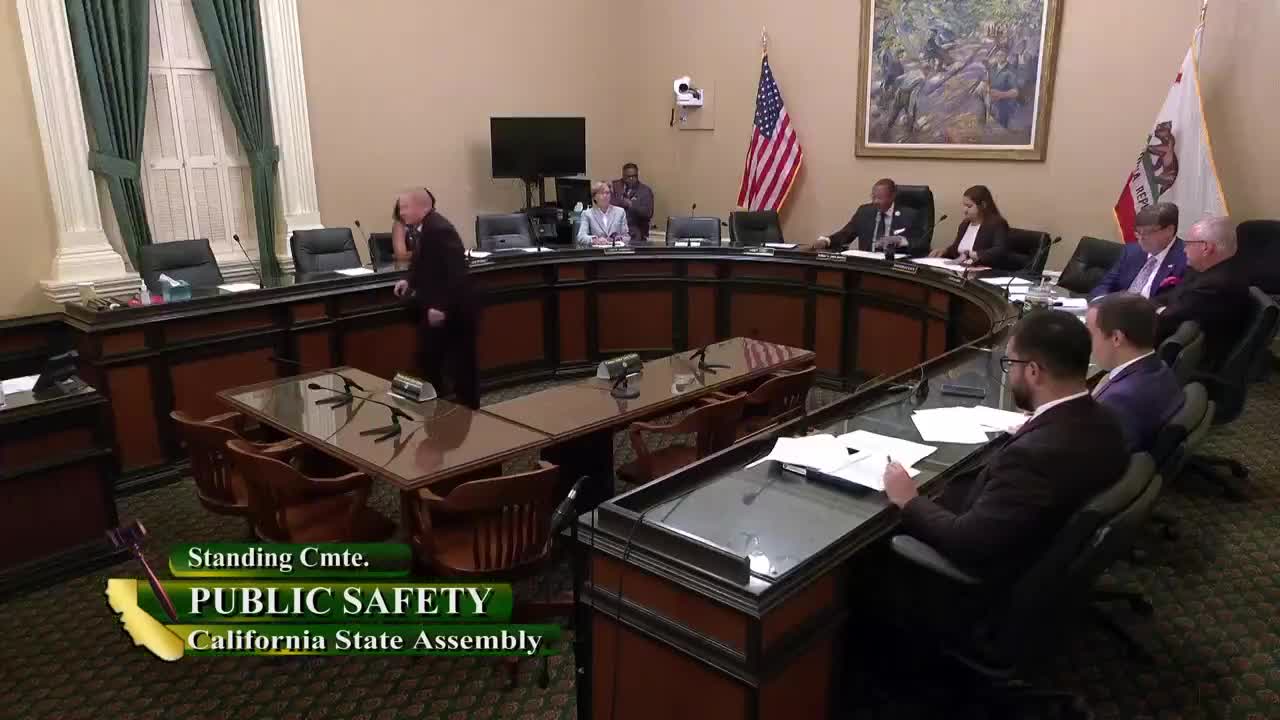 13MIN
Assembly Standing Committee on Public Safety
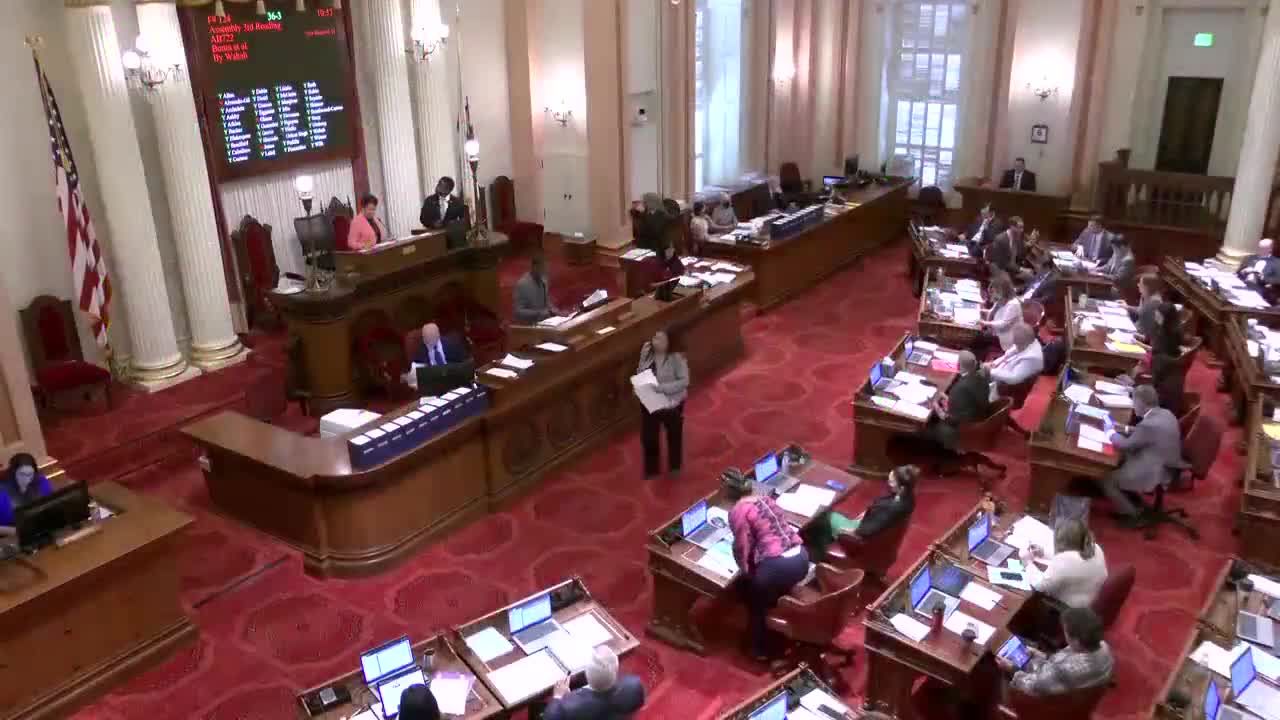 26MIN
Senate Floor
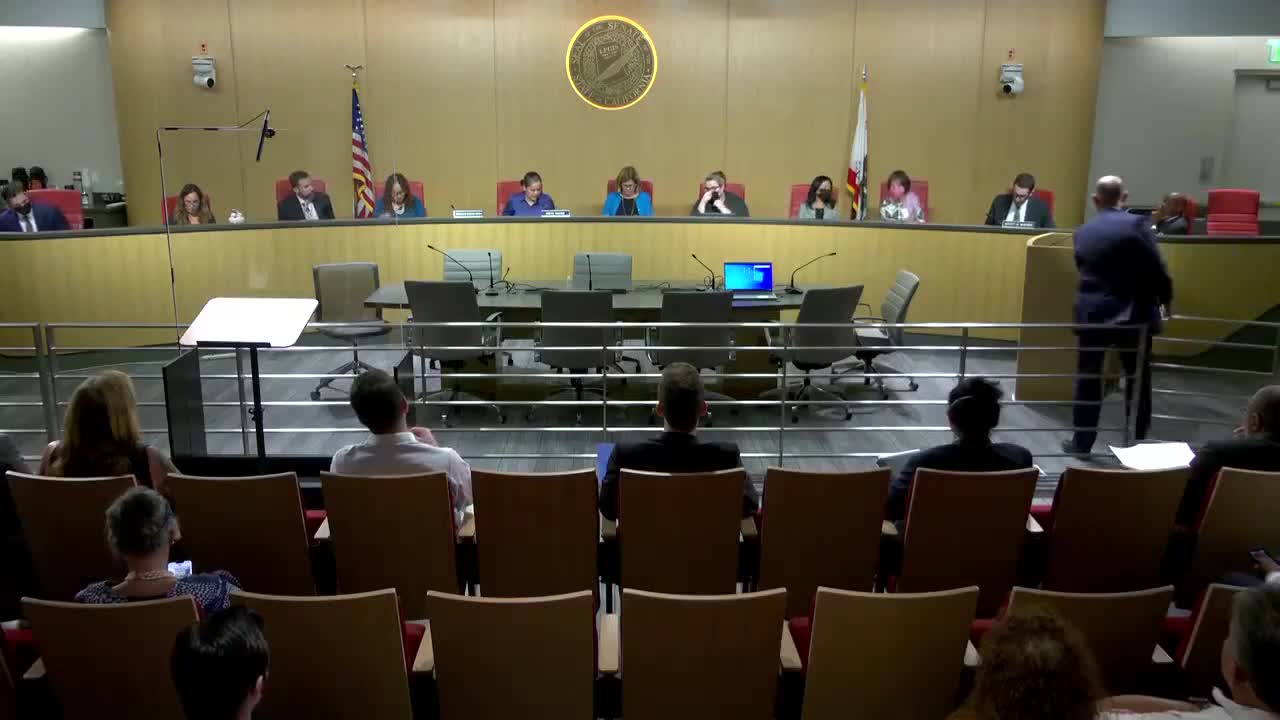 1H
Senate Standing Committee on Public Safety


Bill Co-Author(s):