SR 34
- Session Year: 2023-2024
- House: Senate
- Latest Version Date: 2023-07-05
Current Status:
Failed
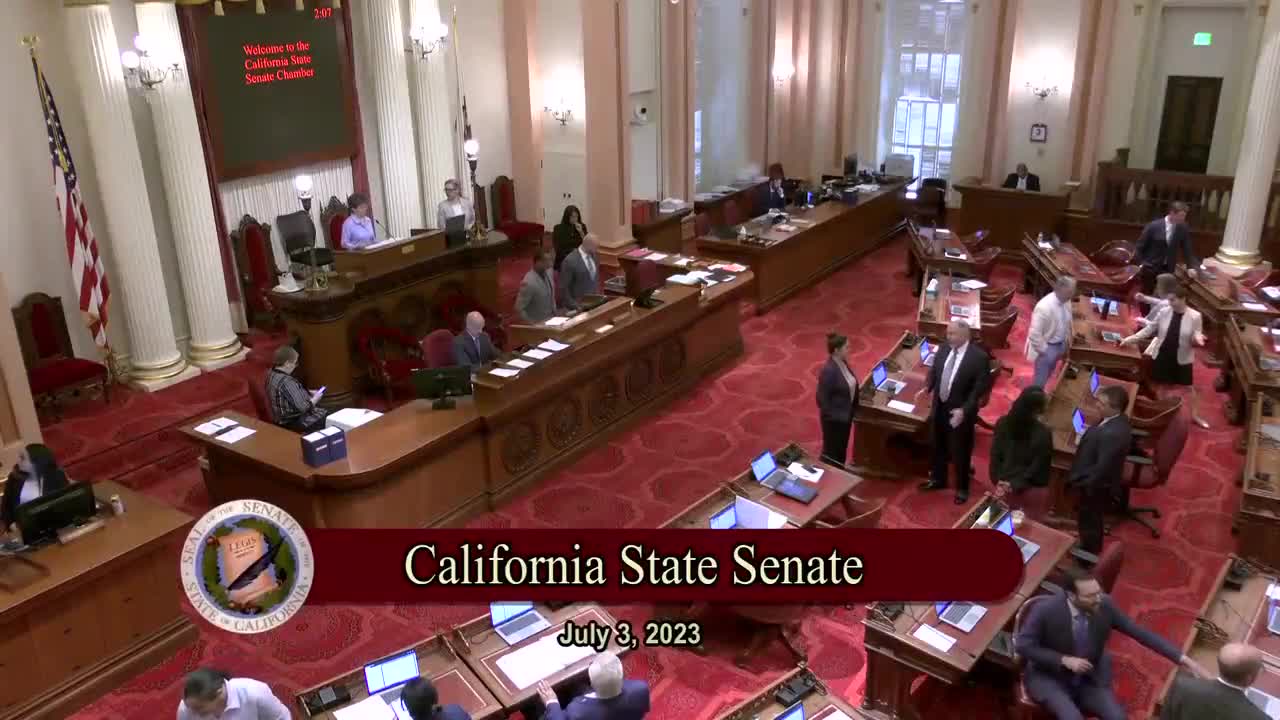
(2023-07-03: Read. Adopted. (Ayes 29. Noes 0. Page 1866.))
Introduced
In Committee
First Chamber
In Committee
Second Chamber
Enacted
WHEREAS, Humanity has an obligation to future generations to restore and maintain a safe climate that ensures long-term survival; and
WHEREAS, The human species has never before lived with a sustained atmospheric carbon dioxide (CO2) concentration above 300 parts per million (ppm); and
WHEREAS, Todays atmospheric CO2 concentration is approximately 420 ppm, 40 percent higher than in preindustrial times, resulting in serious and worsening impacts on climate, agriculture, and business; and
WHEREAS, The United Nations Framework Convention on Climate Change in 1992 stated that the ultimate objective of the convention was to achieve stabilization of greenhouse gas concentrations in the atmosphere at a level that would prevent dangerous anthropogenic interference with the climate system; and
WHEREAS, At that time, the atmospheric CO2 concentration was 350 ppm, which is the maximum level theorized to sustain the ecosystems to which humanity is adapted; and
WHEREAS, Climate restoration refers to the climate change goal and associated actions to restore atmospheric carbon dioxide concentrations to historic levels in which humans have survived long-term; and
WHEREAS, Restoring the atmospheric CO2 concentration to a safe level, below 300 ppm, will require removing approximately one trillion tons of legacy CO2 from the atmosphere; and
WHEREAS, Nature has removed roughly one trillion tons of CO2 from the atmosphere 10 times in the last 1,000,000 years, with two of natures major methods for removing geologic amounts of atmospheric CO2 being photosynthesis in the ocean and by forming limestone; and
WHEREAS, Scientists and technologists have developed and demonstrated methods, including ways to replicate and accelerate these natural processes, that have the potential to be implemented and scaled; and
WHEREAS, Climate justice requires climate restoration because low-income communities are the first and most impacted by climate change; and
WHEREAS, Climate restoration will benefit the people of the State of California by reducing losses and damage from wildfires, while producing positive effects on human and ecosystem health, industry, and jobs in agriculture and other sectors; now, therefore, be it
Resolved by the Senate of the State of California, That the Senate formally recognizes the obligation to future generations to restore a safe climate, and declares climate restoration, along with achieving net-zero and net-negative CO2 emissions, a climate policy priority; and be it further
Resolved, That the Senate calls on the State Air Resources Board to engage necessary federal entities as appropriate to urge the United States Ambassador to the United Nations to propose a climate treaty that would restore and stabilize GHG levels as our common climate goal; and be it further
Resolved, That the Secretary of the Senate transmit copies of this resolution to the State Air Resources Board.
WHEREAS, Humanity has an obligation to future generations to restore and maintain a safe climate that ensures long-term survival; and
WHEREAS, The human species has never before lived with a sustained atmospheric carbon dioxide (CO2) concentration above 300 parts per million (ppm); and
WHEREAS, Todays atmospheric CO2 concentration is approximately 420 ppm, 40 percent higher than in preindustrial times, resulting in serious and worsening impacts on climate, agriculture, and business; and
WHEREAS, The United Nations set its climate goal to stabilize greenhouse gas (GHG) levels in 1992, when the atmospheric CO2 concentration was 350 ppm, which is the maximum level theorized to sustain the ecosystems to which humanity is adapted; andWHEREAS, Achieving the 2015 Paris Agreements target of net zero by 2050 would result in an atmospheric CO2 concentration above 450 ppm, which is more than 50 percent higher than has proven safe for humans historically; andWHEREAS, An atmospheric CO2 concentration of 450 ppm would correspond to a global average temperature rise of more than 1.5 degrees Celsius; andWHEREAS, The United Nations Framework Convention on Climate Change in 1992 stated that the ultimate objective of the convention was to achieve stabilization of greenhouse gas concentrations in the atmosphere at a level that would prevent dangerous anthropogenic interference with the climate system; and
WHEREAS, At that time, the atmospheric CO2 concentration was 350 ppm, which is the maximum level theorized to sustain the ecosystems to which humanity is adapted; and
WHEREAS, Climate restoration refers to the climate change goal and associated actions to restore atmospheric carbon dioxide concentrations to historic levels in which humans have survived long-term; and
WHEREAS, Restoring the atmospheric CO2 concentration to a safe level, below 300 ppm, by 2050 ppm, will require removing approximately one trillion tons of legacy CO2 from the atmosphere, or 50 billion tons of CO2 per year for 20 years; and atmosphere; and
WHEREAS, The Intergovernmental Panel on Climate Change has told the United Nations Framework Convention on Climate Change that, A livable planet now relies on removing up to a trillion tons of carbon already in our atmosphere; andWHEREAS, Nature has removed roughly one trillion tons of CO2 from the atmosphere 10 times in the last 1,000,000 years, with each incidence preceding an ice age, and with two of natures major methods for removing geologic amounts of atmospheric CO2 being photosynthesis in the ocean and by forming limestone; and
WHEREAS, Scientists and technologists have developed and demonstrated methods, including ways to replicate and accelerate these natural processes, that can have the potential to be implemented and scaled; and
WHEREAS, Climate justice requires climate restoration because low-income communities are the first and most impacted by climate change; and
WHEREAS, Climate restoration will benefit the people of the State of California by reducing losses and damage from wildfires, while producing positive effects on human and ecosystem health, industry, and jobs in agriculture and other sectors; now, therefore, be it
Resolved by the Senate of the State of California, That the Senate formally recognizes the obligation to future generations to restore a safe climate, and declares climate restoration, along with achieving net-zero and net-negative CO2 emissions, a climate policy priority; and be it further
Resolved, That the Senate calls on the people and the State Air Resources Board to engage necessary federal entities as appropriate to urge the United States Ambassador to the United Nations to propose a climate treaty that would restore and stabilize GHG levels as our common climate goal; and be it further
Resolved, That the Secretary of the Senate transmit copies of this resolution to the State Air Resources Board and to the mayor of each city and town in California. Board.
WHEREAS, Humanity has an obligation to future generations to restore and maintain a safe climate that ensures long-term survival; and
WHEREAS, The human species has never before lived with a sustained atmospheric carbon dioxide (CO2) concentration above 300 parts per million (ppm); and
WHEREAS, Todays atmospheric CO2 concentration is 420 ppm, 40 percent higher than in preindustrial times, resulting in serious and worsening impacts on climate, agriculture, and business; and
WHEREAS, The United Nations set its climate goal to stabilize greenhouse gas (GHG) levels in 1992, when the atmospheric CO2 concentration was 350 ppm, which is the maximum level theorized to sustain the ecosystems to which humanity is adapted; and
WHEREAS, Achieving the 2015 Paris Agreements target of net zero by 2050 would result in an atmospheric CO2 concentration above 450 ppm, which is more than 50 percent higher than has proven safe for humans historically; and
WHEREAS, An atmospheric CO2 concentration of 450 ppm would correspond to a global average temperature rise of more than 1.5 degrees Celsius; and
WHEREAS, Restoring the atmospheric CO2 concentration to a safe level, below 300 ppm, by 2050 will require removing approximately one trillion tons of legacy CO2 from the atmosphere, or 50 billion tons of CO2 per year for 20 years; and
WHEREAS, The Intergovernmental Panel on Climate Change has told the United Nations Framework Convention on Climate Change that, A livable planet now relies on removing up to a trillion tons of carbon already in our atmosphere; and
WHEREAS, Nature has removed roughly one trillion tons of CO2 from the atmosphere 10 times in the last 1,000,000 years, with each incidence preceding an ice age, and with natures major methods for removing geologic amounts of atmospheric CO2 being photosynthesis in the ocean and by forming limestone; and
WHEREAS, Scientists and technologists have developed and demonstrated methods, including ways to replicate and accelerate these natural processes, that can be implemented and scaled; and
WHEREAS, Climate justice requires climate restoration because low-income communities are the first and most impacted by climate change; and
WHEREAS, Climate restoration will benefit the people of the State of California by reducing losses and damage from wildfires, while producing positive effects on human and ecosystem health, industry, and jobs in agriculture and other sectors; now, therefore, be it
Resolved by the Senate of the State of California, That the Senate formally recognizes the obligation to future generations to restore a safe climate, and declares climate restoration, along with achieving net-zero CO2 emissions, a climate policy priority; and be it further
Resolved, That the Senate calls on the people and the State Air Resources Board to engage necessary federal entities as appropriate to urge the United States Ambassador to the United Nations to propose a climate treaty that would restore and stabilize GHG levels as our common climate goal; and be it further
Resolved, That the Secretary of the Senate transmit copies of this resolution to the State Air Resources Board and to the mayor of each city and town in California.
|
Date
|
Status
|
|---|---|
| Jul 3, 2023 | Read. Adopted. (Ayes 29. Noes 0. Page 1866.) |
| Jun 8, 2023 | Read second time and amended. Ordered to third reading. |
| Jun 7, 2023 | From committee: Be adopted as amended. (Ayes 5. Noes 0. Page 1480.) (June 7). |
| May 12, 2023 | Set for hearing June 7. |
| May 10, 2023 | Re-referred to Com. on E.Q. |
| May 2, 2023 | Introduced. Referred to Com. on RLS. |
|
Date
|
Description
|
Location
|
Votes
|
|
|---|---|---|---|---|
| Jul 3, 2023 | Senate 3rd Reading SR34 Cortese | Senate Floor |
Passed |
|
| Jun 7, 2023 | Be adopted as amended | Senate Standing Committee on Environmental Quality |
Passed |
This list shows positions taken on this bill by organizations on the date displayed, which is linked to the original source.
Positions by individuals are not included.
|
Organization
|
Position
|
Date
|
|---|---|---|
| Indivisible Yolo | ** Support | |
| Ocean Iron Fertilization Alliance | ** Support | |
| Physicians for Social Responsibility, Sacramento | ** Support |
SENATE RULES COMMITTEE Office of Senate Floor Analyses (916) 651-1520 Fax: (916) 327-4478 | SR 34 |
THIRD READING
Bill No: SR 34
Author: Cortese (D)
Amended: 6/8/23
Vote: Majority
SENATE ENVIRONMENTAL QUALITY COMMITTEE: 5-0, 6/7/23
AYES: Allen, Gonzalez, Hurtado, Menjivar, Skinner
NO VOTE RECORDED: Dahle, Nguyen
SUBJECT: Climate Restoration
SOURCE: Foundation for Climate Restoration
DIGEST:
This resolution emphasizes the importance and difficulty of restoring a stable, livable climate for future generations, and it calls upon the California Air Resources Board (CARB) to urge the United States ambassador to the United Nations to propose a climate treaty that would restore and stabilize greenhouse gas (GHG) levels as our common climate goal.
ANALYSIS: Existing law, under the California Climate Crisis Act (AB 1279, Muratsuchi, Chapter 337, Statutes of 2022), states that it is the policy of the state to achieve net zero greenhouse gas (GHG) emissions no later than 2045 and maintain net negative GHG emissions thereafter, and to ensure that by 2045 statewide anthropogenic GHG emissions are reduced to at least 85% below the 1990 level.
This resolution:
- States that humanity has an obligation to future generations to restore and maintain a safe climate that ensures long-term survival.
- Makes claims regarding the atmospheric concentrations of carbon dioxide associated with human survival, specified climate and warming impacts, and goals set by the United Nations (UN).
- Describes the mass of carbon that must be removed from the atmosphere to achieve certain climate goals, the means by which atmospheric carbon has previously been removed over geologic timescales, and the availability of methods to replicate and accelerate those methods.
- Implicates climate restoration in achieving climate justice and benefiting the people, economy, and environment of California.
- Recognizes the obligation to future generations to restore a safe climate.
- Declares climate restoration, along with achieving net-zero CO2 emissions, a climate policy priority.
- Calls upon the California Air Resources Board (CARB) to engage necessary federal entities as appropriate to urge the United States Ambassador to the UN to propose a climate treaty that would restore and stabilize GHG levels as our common climate goal.
Background
- Carbon fluxes and climate change. Nature abounds with examples where seemingly simple states are actually carefully balanced, dynamic situations. The amount of CO2 in the atmosphere depends the rate CO2 is added versus the rate it is removed. The warming caused by the sun depends on the incoming solar energy, the reflectivity of the Earth’s land, water, and air, and the insulating effect of the atmosphere. The levels of the myriad nutrients in the ocean depend on countless concurrent biological, geological, and chemical processes. These are only a few examples, but the dynamic interactions between and within these systems are incredibly complex, interdependent, and consequential for life on Earth.
Due in part to the complexity of these systems, it is often frustratingly difficult to accurately state seemingly simple facts. What is the exact concentration of CO2 in the atmosphere today? How much has Earth already warmed from preindustrial levels? What will happen when we reach global net-zero carbon emissions? For better or worse, the most correct answer to these questions likely begins with, “It depends.”
Nevertheless, the reality of Earth’s changing climate today does provide some incontrovertible calls to action. The average concentration of carbon dioxide in the atmosphere is higher than it has been at any time in hundreds of thousands of years. It is at that level due to human activities, primarily the combustion of fossil fuels. Even at today’s temperatures, the world is experiencing catastrophic effects, and those are expected to worsen considerably should temperatures continue to climb. Natural fluxes of carbon between the air, water, land, and between biological, chemical, and geological processes have occurred since long before humans developed fossil fuels, and they will continue long after humanity has decarbonized our civilization. Every ton of carbon emissions humanity continue to add to our atmosphere make the situation worse: more warming, more disruption to the Earth’s systems, and more carbon that will eventually need to come back out of the air to restore a relatively stable climate.
It should be relatively easy to agree that humanity should collectively strive to halt global warming by stabilizing atmospheric CO2 at a level that prevents dangerous human-caused interference with the climate system. Where it gets much more difficult is the details. How, when, and where do we make the changes to realize that goal? - Climate restoration. The concept of “climate restoration” is used to mean a return to preindustrial atmospheric CO2 concentrations. Before the Industrial Revolution started in the mid-1700s, the global average amount of carbon dioxide in the atmosphere was about 280 parts per million (ppm). Today, that level is at approximately 420 ppm and climbing.
The term “climate restoration” has not generally been part of the discussions this committee (or Legislature) has had around GHG emission reduction goals. There is one instance of “climate restoration” appearing in California statute: the Community Economic Resilience Fund Program established pursuant to the Senate Committee on Budget and Fiscal Review’s SB 162 (Chapter 259, Statutes of 2021). The term also appeared in a bill this author introduced last year, SB 1297, which would have (among other things) stated the intent of the Legislature to advance climate restoration objectives by taking a leadership role in reducing embodied carbon in buildings.
Atmospheric CO2 levels are at the highest they have ever been in recorded history and continue to climb. Policy discussions around the end goal of emission mitigation and CO2 removal (i.e. how much carbon do we ultimately plan to remove?) are noteworthy, but do not change the vital necessity of first stopping the increase of emissions. In order to stave off the worst impacts of climate change, all efforts must be taken to minimize the peak concentration of atmospheric CO2.
Comments
- Purpose of bill. According to the author, “Climate Restoration is the global movement to return the Earth’s climate to the proven safe and healthy state in which humanity and our natural world evolved.
“With the goal of giving future generations a safe and healthy climate, with CO2 restored back to levels that humans have survived in the past, climate restoration complements climate mitigation and adaptation. We need a comprehensive approach to our climate crisis.
“SR 34 formally recognizes the obligation to future generations to restore a safe climate, and declares climate restoration, along with achieving net-zero CO2 emissions, a climate policy priority for the State of California.” - Why “climate restoration”? Per the California Climate Crisis Act (AB 1279, Muratsuchi, Chapter 337, Statutes of 2022), it is the policy of the state to achieve net zero GHG emissions no later than 2045 and maintain net negative GHG emissions thereafter. Indeed, given the extreme weather events, rising seas, and tremendous harms to humans and animals even our current climate is causing, it should come as no surprise that our goal should not only be mitigating emissions, but also to go back to a safe, sustainable climate by removing more carbon than we emit thereafter. “Climate restoration,” then appears to be less of a new or alternative idea, and more of a term applied to the relatively far-off end-goal of the state’s existing climate policies.
The sponsor of this bill, the Foundation for Climate Restoration (F4CR) states that the organization, “is non-profit and non-partisan. Our community works with us to stand for a climate that supports the long-term survival and flourishing of humanity and our natural world.” According to a recent presentation provided to Environmental Quality Committee staff, F4CR seeks to achieve that laudable goal through advocating for the return to a preindustrial atmospheric CO2 concentration of 280 ppm. It should be noted that they also advocate for restoring a “sustainable population” of roughly 2 billion people worldwide through reducing birth rates.
Leaving aside the concerning implications around reducing the global population by more than three-quarters (which, fortunately, are not included in any form in this resolution), the references to specific natural processes included in this resolution do appear to align with F4CR’s primary focuses for how to restore preindustrial atmospheric CO2 levels by 2050. - One weird trick to save the planet, cheap! F4CR advocates for policy solutions that they state are scalable, permanent, and financeable. According to a recent presentation provided to committee staff, F4CR has found four solutions that meet these criteria: ocean iron fertilization (OIF), synthetic limestone, seaweed, and methane oxidation.
All four of these processes leverage naturally-occurring carbon drawdown pathways, although as noted in the background these natural systems are exceedingly complex, dynamic, and interlinked with other systems. Assessing the viability of these four processes is far beyond the scope of this analysis, but suffice it to say that their scalability and permanence is by no means a settled fact in the scientific community.
Notably, according to the same presentation provided to committee staff, F4CR claims that advancing these solutions at the scale they propose could shockingly achieve worldwide net-zero CO2 emissions in the next four years by 2027. After that, they claim that OIF alone could draw down more CO2 each and every year than Earth’s total CO2 emissions last year. This could be achieved, they allege, at a total worldwide cost per year of $2 billion dollars.
It is the opinion of committee staff that if something sounds too good to be true, it probably is. It bears repeating that stabilizing the Earth’s climate at a level that can sustainably support a thriving biosphere is unequivocally a laudable goal. Much has been said—and remains to be decided—about how California can and should support reaching that goal. This resolution is not the appropriate venue to begin suggesting California advocate for massive deployment of specific, relatively untested nature-based CO2 removal strategies. However, given the scope of the climate challenge we are faced with, we must find ways to do more, faster to reduce CO2 in the atmosphere.
FISCAL EFFECT: Appropriation: No Fiscal Com.: No Local: No
SUPPORT: (Verified 6/8/23)
Indivisible Yolo
Ocean Iron Fertilization Alliance
Physicians for Social Responsibility/Sacramento
OPPOSITION: (Verified 6/8/23)
None received
Prepared by: Eric Walters / E.Q. / (916) 651-4108
6/9/23 9:49:15
**** END ****
SENATE COMMITTEE ON ENVIRONMENTAL QUALITY
Senator Allen, Chair
2023 - 2024 Regular
Bill No: SR 34
Author: | Cortese | ||
Version: | 5/2/2023 | Hearing Date: | 6/7/2023 |
Urgency: | No | Fiscal: | No |
Consultant: | Eric Walters | ||
SUBJECT: Climate Restoration
DIGEST: This resolution emphasizes the importance and difficulty of restoring a stable, livable climate for future generations, and it calls upon the people and the California Air Resources Board (CARB) to urge the United States ambassador to the United Nations to propose a climate treaty that would restore and stabilize greenhouse gas (GHG) levels as our common climate goal.
ANALYSIS:
Existing law:
- Under the California Climate Crisis Act (AB 1279, Muratsuchi, Chapter 337, Statutes of 2022), states that it is the policy of the state to achieve net zero greenhouse gas (GHG) emissions no later than 2045 and maintain net negative GHG emissions thereafter, and to ensure that by 2045 statewide anthropogenic GHG emissions are reduced to at least 85% below the 1990 level.
This resolution:
- States that humanity has an obligation to future generations to restore and maintain a safe climate that ensures long-term survival.
- Makes claims regarding the atmospheric concentrations of carbon dioxide associated with human survival, specified climate and warming impacts, and goals set by the United Nations (UN).
- Speculates on the mass of carbon that must be removed from the atmosphere to achieve certain climate goals, the means by which atmospheric carbon has previously been removed over geologic timescales, and the availability of methods to replicate and accelerate those methods.
- Implicates climate restoration in achieving climate justice and benefiting the people, economy, and environment of California.
- Recognizes the obligation to future generations to restore a safe climate.
- Declares climate restoration, along with achieving net-zero CO2 emissions, a climate policy priority.
- Calls upon the people and the California Air Resources Board (CARB) to engage necessary federal entities as appropriate to urge the United States Ambassador to the UN to propose a climate treaty that would restore and stabilize GHG levels as our common climate goal.
- Directs the Secretary of the Senate to transmit copies of this resolution to CARB and to the mayor of each city and town in California.
Background
- Carbon fluxes and climate change. Nature abounds with examples where seemingly simple states are actually carefully balanced, dynamic situations. The amount of CO2 in the atmosphere depends the rate CO2 is added versus the rate it is removed. The warming caused by the sun depends on the incoming solar energy, the reflectivity of the Earth’s land, water, and air, and the insulating effect of the atmosphere. The levels of the myriad nutrients in the ocean depend on countless concurrent biological, geological, and chemical processes. These are only a few examples, but the dynamic interactions between and within these systems are incredibly complex, interdependent, and consequential for life on Earth.
Due in part to the complexity of these systems, it is often frustratingly difficult to accurately state seemingly simple facts. What is the exact concentration of CO2 in the atmosphere today? How much has Earth already warmed from preindustrial levels? What will happen when we reach global net-zero carbon emissions? For better or worse, the most correct answer to these questions likely begins with, “It depends.”
Nevertheless, the reality of Earth’s changing climate today does provide some incontrovertible calls to action. The average concentration of carbon dioxide in the atmosphere is higher than it has been at any time in hundreds of thousands of years. It is at that level due to human activities, primarily the combustion of fossil fuels. Even at today’s temperatures, the world is experiencing catastrophic effects, and those are expected to worsen considerably should temperatures continue to climb. Natural fluxes of carbon between the air, water, land, and between biological, chemical, and geological processes have occurred since long before humans developed fossil fuels, and they will continue long after humanity has decarbonized our civilization. Every ton of carbon emissions humanity continue to add to our atmosphere make the situation worse: more warming, more disruption to the Earth’s systems, and more carbon that will eventually need to come back out of the air to restore a relatively stable climate.
It should be relatively easy to agree that humanity should collectively strive to halt global warming by stabilizing atmospheric CO2 at a level that prevents dangerous human-caused interference with the climate system. Where it gets much more difficult is the details. How, when, and where do we make the changes to realize that goal? - Climate restoration. The concept of “climate restoration” is used to mean a return to preindustrial atmospheric CO2 concentrations. Before the Industrial Revolution started in the mid-1700s, the global average amount of carbon dioxide in the atmosphere was about 280 parts per million (ppm). Today, that level is at approximately 420 ppm and climbing.
The term “climate restoration” has not generally been part of the discussions this committee (or Legislature) has had around GHG emission reduction goals. There is one instance of “climate restoration” appearing in California statute: the Community Economic Resilience Fund Program established pursuant to the Senate Committee on Budget and Fiscal Review’s SB 162 (Chapter 259, Statutes of 2021). The term also appeared in a bill this author introduced last year, SB 1297, which would have (among other things) stated the intent of the Legislature to advance climate restoration objectives by taking a leadership role in reducing embodied carbon in buildings.
Atmospheric CO2 levels are at the highest they have ever been in recorded history and continue to climb. Policy discussions around the end goal of emission mitigation and CO2 removal (i.e. how much carbon do we ultimately plan to remove?) are noteworthy, but do not change the vital necessity of first stopping the increase of emissions. In order to stave off the worst impacts of climate change, all efforts must be taken to minimize the peak concentration of atmospheric CO2.
Comments
- Purpose of Bill. According to the author, “Climate Restoration is the global movement to return the Earth’s climate to the proven safe and healthy state in which humanity and our natural world evolved.
“With the goal of giving future generations a safe and healthy climate, with CO2 restored back to levels that humans have survived in the past, climate restoration complements climate mitigation and adaptation. We need a comprehensive approach to our climate crisis.
“SR 34 formally recognizes the obligation to future generations to restore a safe climate, and declares climate restoration, along with achieving net-zero CO2 emissions, a climate policy priority for the State of California.” - Citation needed. This resolution makes a number of specific claims regarding the concentration of carbon in the atmosphere, the impacts on global warming of that carbon, and the safe and livable conditions for humanity. While these claims are not blatantly false, nor do they align with the most definitive available climate science, as reported by the IPCC’s sixth synthesis report released earlier this year. The resources provided to committee staff have not resolved the issue, as they lack the academic rigor and reliability needed to make such claims confidently. While these claims could potentially be litigated on their merits, doing so is beyond the scope of this analysis and committee.
Given the technical complexity of these figures, the significance of California providing its endorsement of them through this resolution, and the importance of reducing emissions to sustainable levels irrespective of those details, the committee may wish to rewrite clauses four through nine of the resolution to reflect the most sound and current scientific data available. - Why “climate restoration”? Per the California Climate Crisis Act (AB 1279, Muratsuchi, Chapter 337, Statutes of 2022), it is the policy of the state to achieve net zero GHG emissions no later than 2045 and maintain net negative GHG emissions thereafter. Indeed, given the extreme weather events, rising seas, and tremendous harms to humans and animals even our current climate is causing, it should come as no surprise that our goal should not only be mitigating emissions, but also to go back to a safe, sustainable climate by removing more carbon than we emit thereafter. “Climate restoration,” then appears to be less of a new or alternative idea, and more of a term applied to the relatively far-off end-goal of the state’s existing climate policies.
The sponsor of this bill, the Foundation for Climate Restoration (F4CR) states that the organization, “is non-profit and non-partisan. Our community works with us to stand for a climate that supports the long-term survival and flourishing of humanity and our natural world.” According to a recent presentation provided to committee staff, F4CR seeks to achieve that laudable goal through advocating for the return to a preindustrial atmospheric CO2 concentration of 280 ppm. It should be noted that they also advocate for restoring a “sustainable population” of roughly 2 billion people worldwide through reducing birth rates.
Leaving aside the concerning implications around reducing the global population by more than three-quarters (which, fortunately, are not included in any form in this resolution), the references to specific natural processes included in this resolution do appear to align with F4CR’s primary focuses for how to restore preindustrial atmospheric CO2 levels by 2050. - One weird trick to save the planet, cheap! The F4CR advocates for policy solutions that they state are scalable, permanent, and financeable. According to a recent presentation provided to the staff, F4CR has found four solutions that meet these criteria: ocean iron fertilization (OIF), synthetic limestone, seaweed, and methane oxidation.
All four of these processes leverage naturally-occurring carbon drawdown pathways, although as noted in the background these natural systems are exceedingly complex, dynamic, and interlinked with other systems. Assessing the viability of these four processes is far beyond the scope of this analysis, but suffice it to say that their scalability and permanence is by no means a settled fact in the scientific community.
Notably, according to the same presentation provided to committee staff, F4CR claims that advancing these solutions at the scale they propose could shockingly achieve global net-zero CO2 emissions by 2027. After that, they claim that OIF alone could draw down more CO2 each and every year than Earth’s total CO2 emissions last year. This could be achieved, they allege, at a total worldwide cost per year of $2 billion dollars.
It is the opinion of committee staff that if something sounds too good to be true, it probably is. In striking the clauses referenced in Comment #2, the committee would also be removing the specific references this resolution contains to the projects being advocated for by F4CR. It bears repeating that stabilizing the Earth’s climate at a level that can sustainably support a thriving biosphere is unequivocally a laudable goal. Much has been said—and remains to be decided—about the ways California can and should support reaching that goal. This resolution is not the appropriate venue to begin suggesting California advocate for massive deployment of specific, relatively untested nature-based CO2 removal strategies. - Who’s calling on whom? This resolution calls upon the people and CARB to engage with federal entities, as specified, and directs the Secretary of the Senate to transmit copies of this resolution to CARB and the mayor of each city and town in California.
It is the opinion of committee staff that the inclusion of “the people” and every mayor in the state is beyond the appropriate purview of a resolution. The committee may wish to strike these two inclusions. - Committee amendments. Staff recommends the committee adopt the bolded amendments contained in comments 2 and 5 above.
Related/Prior Legislation
SB 1297 (Cortese, 2022), among other things, stated the intent of the Legislature to advance climate restoration objectives by taking a leadership role in reducing embodied carbon in buildings. SB 1297 died on suspense in the Assembly Appropriations Committee.
SOURCE:
Foundation for Climate Restoration
SUPPORT:
Indivisible Yolo
Ocean Iron Fertilization Alliance
Physicians for Social Responsibility/sacramento
OPPOSITION:
None received
-- END --
Bill Author

Bill Co-Author(s):