SR 51
- Session Year: 2023-2024
- House: Senate
- Latest Version Date: 2024-01-17
Current Status:
Failed
(2024-01-16: Read. Adopted. (Ayes 36. Noes 0. Page 2992.))
Introduced
In Committee
First Chamber
In Committee
Second Chamber
Enacted
WHEREAS, On January 13, 1903, the history of Korean immigration to America began when 102 courageous Korean adults and children landed in the State of Hawaii after venturing across the vast Pacific Ocean aboard the S.S. Gaelic; and
WHEREAS, The hopes of these Korean immigrants for America, the land of opportunity, were quickly hindered by social, economic, and language barriers of unforeseen magnitude; and
WHEREAS, These Korean immigrants did not falter in their pursuit of the American dream. Through perseverance and sacrifice, they established a new home in a new land and educated their children; and
WHEREAS, Between 1904 and 1907, approximately 1,000 Korean Americans entered the United States mainland from the State of Hawaii through the city of San Francisco, where the first Korean American political organizations and Korean language publications were established; and
WHEREAS, While the city of San Francisco remained the center of the Korean American community, there was a gradual migration from northern California to southern California as more employment opportunities opened up, and a new, burgeoning community of Korean Americans began to thrive in Los Angeles and surrounding areas; and
WHEREAS, The city of Los Angeles is currently home to the largest population of Korean Americans in the entire United States, with more than 250,000 Korean Americans; and
WHEREAS, Korean Americans are the largest and the fastest growing citizens of Orange County, making Orange County the second largest Korean population in any county in the nation; and
WHEREAS, While the first Korean immigrants to the United States fought and sacrificed to establish themselves, their children grew up to be patriotic citizens, many of whom went on to serve in the Armed Forces of the United States during World War II and to make other important contributions to mainstream American society; and
WHEREAS, The 1965 amendments to the Federal Immigration and Nationality Act (Public Law 89-236) opened the door for a new wave of Korean immigrants to enter the United States. Since its enactment, Korean Americans have become one of the fastest growing groups of Asian Americans in the United States; and
WHEREAS, Today, the number of people of Korean ancestry living in the United States has grown to more than 1,700,000, representing more than a 67-fold increase since 1960; and
WHEREAS, In 1994, the National Association of Korean Americans (NAKA), was founded in the state of New York, becoming the first national civil and human rights organization of Korean Americans; and
WHEREAS, On June 27, 2002, the NAKA was instrumental in the passing of historic resolution S.R. 185 by the United States Senate, recognizing the 100th anniversary of Korean immigration to the United States; and
WHEREAS, In accordance with S.R. 185, President George W. Bush included a proclamation recognizing January 13, 2003, as the Centennial of Korean Immigration to the United States, commending Korean Americans for their important role in building, defending, and sustaining the United States of America; and
WHEREAS, Korean American Day is celebrated on January 13 of each year, to not only commemorate the arrival of the first Korean immigrants to the United States but also to honor the Korean Americans immense contributions to every aspect of society; and
WHEREAS, Korean Americans have made important contributions as Californians in the fields of finance, technology, law, medicine, education, sports, media, the arts, the military, and government, as well as other areas; and
WHEREAS, Korean Americans have been at the forefront of Hallyu (Korean Wave) through K-Pop, K-Drama, and K-Foods, that have become an integral part of mainstream American society and enriched our very diverse State of California; and
WHEREAS, With diligence, fortitude, and an enduring belief in the American dream, Korean immigrants have helped to turn emergent areas within the State of California into thriving and respectable communities, while raising their children; and
WHEREAS, As the Korean American community prepares for a new era and creates new history, Korean Americans must instill in younger generations the proper appreciation for the courage and values of their forefathers, a deep sense of their roots, and pride in their own cultural heritage so that they may better contribute to the great State of California, which is rich with ethnic and cultural diversity; now, therefore, be it
Resolved by the Senate of the State of California, That the Senate hereby proclaims January 13, 2024, as Korean American Day; and be it further
Resolved, That the Secretary of the Senate transmit copies of this resolution to the author for appropriate distribution.
|
Date
|
Status
|
|---|---|
| Jan 16, 2024 | Read. Adopted. (Ayes 36. Noes 0. Page 2992.) |
| Jan 10, 2024 | From committee: Ordered to third reading. |
| Jan 3, 2024 | Introduced. Referred to Com. on RLS. |
|
Date
|
Description
|
Location
|
Votes
|
|
|---|---|---|---|---|
| Jan 16, 2024 | Senate 3rd Reading SR51 Min | Senate Floor |
Passed |
This list shows positions taken on this bill by organizations on the date displayed, which is linked to the original source.
Positions by individuals are not included.
SENATE RULES COMMITTEE Office of Senate Floor Analyses (916) 651-1520 Fax: (916) 327-4478 | SR 51 |
THIRD READING
Bill No: SR 51
Author: Min (D)
Introduced: 1/3/24
Vote: Majority
SOURCE: Author
DIGEST:
This resolution proclaims January 13, 2024, as Korean American Day.
ANALYSIS: This resolution makes the following legislative findings:
- On January 13, 1903, the history of Korean immigration to America began when 102 courageous Korean adults and children landed in the State of Hawaii after venturing across the vast Pacific Ocean aboard the S.S. Gaelic. The hopes of these Korean immigrants for America, the land of opportunity, were quickly hindered by social, economic, and language barriers of unforeseen magnitude. These Korean immigrants did not falter in their pursuit of the American dream. Through perseverance and sacrifice, they established a new home in a new land and educated their children.
- Between 1904 and 1907, approximately 1,000 Korean Americans entered the United States mainland from the State of Hawaii through the city of San Francisco, where the first Korean American political organizations and Korean language publications were established.
- The city of Los Angeles is currently home to the largest population of Korean Americans in the entire United States, with more than 250,000 Korean Americans. Korean Americans are the largest and the fastest growing citizens of Orange County, making Orange County the second largest Korean population in any county in the nation.
- While the first Korean immigrants to the United States fought and sacrificed to establish themselves, their children grew up to be patriotic citizens, many of whom went on to serve in the Armed Forces of the United States during World War II and to make other important contributions to mainstream American society. The 1965 amendments to the Federal Immigration and Nationality Act (Public Law 89-236) opened the door for a new wave of Korean immigrants to enter the United States. Since its enactment, Korean Americans have become one of the fastest growing groups of Asian Americans in the United States.
- Today, the number of people of Korean ancestry living in the United States has grown to more than 1,700,000, representing more than a 67-fold increase since 1960.
- Korean American Day is celebrated on January 13 of each year, to not only commemorate the arrival of the first Korean immigrants to the United States but also to honor the Korean American’s immense contributions to every aspect of society. Korean Americans have made important contributions as Californians in the fields of finance, technology, law, medicine, education, sports, media, the arts, the military, and government, as well as other areas.
- Korean Americans have been at the forefront of Hallyu (Korean Wave) through K-Pop, K-Drama, and K-Foods, that have become an integral part of mainstream American society and enriched our very diverse State of California.
- As the Korean American community prepares for a new era and creates new history, Korean Americans must instill in younger generations the proper appreciation for the courage and values of their forefathers, a deep sense of their roots, and pride in their own cultural heritage so that they may better contribute to the great State of California, which is rich with ethnic and cultural diversity.
This resolution proclaims January 13, 2024, as Korean American Day.
Related/Prior Legislation
The following are the most recent measures recognizing Korean American Day:
- SCR 10 (Min, Resolution Chapter 5, Statutes of 2023).
- ACR 111 (Choi, Resolution Chapter 11, Statutes of 2022).
- ACR 2 (Quirk-Silva, Resolution Chapter 53, Statutes of 2021).
- ACR 142 (Choi, Resolution Chapter 3, Statutes of 2020).
- SCR 78 (Pan, Resolution Chapter 6, Statutes of 2020).
- ACR 3 (Choi, Resolution Chapter 2, Statutes of 2019).
FISCAL EFFECT: Appropriation: No Fiscal Com.: No Local: No
SUPPORT: (Verified 1/8/24)
None received
OPPOSITION: (Verified 1/8/24)
None received
Prepared by: Jonas Austin / SFA / (916) 651-1520
1/11/24 10:35:58
**** END ****

Bill Author
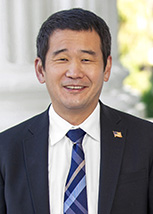
Bill Co-Author(s):