AB 908: Disability compensation: disability insurance.
- Session Year: 2015-2016
- House: Assembly
- Latest Version Date: 2016-04-11
Existing unemployment compensation disability law provides a formula for determining benefits available to qualifying disabled individuals. For an individual who has quarterly base wages of greater than $1,749.20, the weekly benefit is calculated by multiplying base wages by 55% and dividing the result by 13. For a benefit that is not a multiple of $1, existing law provides that the benefit shall be computed to the next higher multiple of $1. However, existing law provides that this amount may not exceed the maximum workers compensation temporary disability indemnity weekly benefit amount.
Under existing law, the family temporary disability insurance program provides up to 6 weeks of wage replacement benefits to workers who take time off work to care for specified persons, or to bond with a minor child within one year of the birth or placement of the child in connection with foster care or adoption. Existing law defines weekly benefit amount for purposes of this program to mean the amount of benefits available to qualifying disabled individuals pursuant to unemployment compensation disability law.
This bill would revise the formula for determining benefits available pursuant to unemployment compensation disability law and for the family temporary disability insurance program, for periods of disability commencing after January 1, 2018, but before January 1, 2022, to provide a weekly benefit amount minimum of $50 and increase the wage replacement rate to specified percentages, but not to exceed the maximum workers compensation temporary disability indemnity weekly benefit amount established by the Department of Industrial Relations pursuant to existing law.
Existing law deems an individual to be eligible for family temporary disability benefits if, among other things, the individual is unable to perform his or her regular or customary work for a 7-day waiting period during each disability benefit period. and prohibits payments for benefits during this waiting period.
This bill, on and after January 1, 2018, also would remove the 7-day waiting period for these benefits.
This bill, by authorizing an increase in the expenditure of money from the Unemployment Compensation Disability Fund, would make an appropriation.
This bill would require, by July 1, 2017, the Employment Development Department to report to the Assembly Committee on Insurance and Senate Committee on Labor and Industrial Relations specified information regarding the waiting period for disability benefits. The bill also would require, by March 1, 2021, the department to prepare a report to the Legislature and specified legislative committees on levels and trends regarding utilization, costs, and rates with respect to family leave and disability insurance.
Existing unemployment compensation disability law provides a formula for determining benefits available to qualifying disabled individuals. For an individual who has quarterly base wages of greater than $1,749.20, the weekly benefit is calculated by multiplying base wages by 55% and dividing the result by 13. For a benefit that is not a multiple of $1, existing law provides that the benefit shall be computed to the next higher multiple of $1. However, existing law provides that this amount may not exceed the maximum workers compensation temporary disability indemnity weekly benefit amount.
Under existing law, the family temporary disability insurance program provides up to 6 weeks of wage replacement benefits to workers who take time off work to care for specified persons, or to bond with a minor child within one year of the birth or placement of the child in connection with foster care or adoption. Existing law defines weekly benefit amount for purposes of this program to mean the amount of benefits available to qualifying disabled individuals pursuant to unemployment compensation disability law.
This bill would revise the formula for determining benefits available pursuant to unemployment compensation disability law and for the family temporary disability insurance program, for periods of disability commencing after January 1, 2017, 2018, but before January 1, 2022, to provide a weekly benefit amount minimum of $50 and a maximum of and increase the wage replacement rate to specified percentages, but not to exceed the maximum workers workers compensation temporary disability indemnity weekly benefit amount established by the Department of Industrial Relations pursuant to existing law.
This bill would require the family temporary disability insurance program to provide up to 8 weeks of wage replacement benefits on and after January 1, 2017.
Existing law deems an individual to be eligible for family temporary disability benefits if, among other things, the individual is unable to perform his or her regular or customary work for a 7-day waiting period during each disability benefit period. and prohibits payments for benefits during this waiting period.
This bill, on and after January 1, 2017, 2018, also would remove the 7-day waiting period for these benefits.
Under existing law, workers are required to pay contributions on remuneration that is equal to 4 times the maximum weekly benefit for a calendar year multiplied by 13 and divided by 55%. Existing law requires these contributions to be deposited into the Unemployment Compensation Disability Fund, a special fund in the State Treasury, and those funds are continuously appropriated for the purpose of providing disability benefits and making payment of expenses in administering those provisions.
This bill, on and after January 1, 2017, instead would require contributions on remuneration of less than $150,000, and would require this limit to increase annually by an amount equal to the percentage increase in the state average weekly wage, as defined. No contributions would be required on remuneration exceeding that amount.
This bill, by authorizing an increase in the amount of workers contributions into, and an increase in the expenditure of money from, from the Unemployment Compensation Disability Fund, would make an appropriation.
This bill would require, by October July 1, 2016, 2017, the Employment Development Department to report to the Assembly Committee on Insurance and Senate Committee on Labor and Industrial Relations specified information regarding the waiting period for disability benefits. The bill also would require, by March 1, 2021, the department to prepare a report to the Legislature and specified legislative committees on levels and trends regarding utilization, costs, and rates with respect to family leave and disability insurance.
Existing unemployment compensation disability law provides a formula for determining benefits available to qualifying disabled individuals. For an individual who has quarterly base wages of greater than $1,749.20, the weekly benefit is calculated by multiplying base wages by 55% and dividing the result by 13. For a benefit that is not a multiple of $1, existing law provides that the benefit shall be computed to the next higher multiple of $1. However, existing law provides that this amount may not exceed the maximum workers compensation temporary disability indemnity weekly benefit amount.
Under existing law, the family temporary disability insurance program provides up to 6 weeks of wage replacement benefits to workers who take time off work to care for specified persons, or to bond with a minor child within one year of the birth or placement of the child in connection with foster care or adoption. Existing law defines weekly benefit amount for purposes of this program to mean the amount of benefits available to qualifying disabled individuals pursuant to unemployment compensation disability law.
This bill would revise the formula for determining benefits available pursuant to unemployment compensation disability law and for the family temporary disability insurance program, for periods of disability commencing after January 1, 2017, to provide a weekly benefit amount minimum of $50 and a maximum of the maximum workers compensation temporary disability indemnity weekly benefit amount established by the Department of Industrial Relations pursuant to existing law.
This bill would require the family temporary disability insurance program to provide up to 8 weeks of wage replacement benefits on and after January 1, 2018. This bill would, for purposes of this program on and after January 1, 2017, require the weekly benefit amount to be calculated with a specified formula. However, the amount would be prohibited from being less than $250, except as specified, and more than the maximum workers compensation temporary disability indemnity weekly benefit amount, as specified. 2017.
Existing law deems an individual to be eligible for family temporary disability benefits if, among other things, the individual is unable to perform his or her regular or customary work for a 7-day waiting period during each disability benefit period. and prohibits payments for benefits during this waiting period.
This bill, on and after January 1, 2017, also would remove the 7-day waiting period for these benefits.
Under existing law, workers are required to pay contributions to on remuneration that is equal to 4 times the maximum weekly benefit for a calendar year multiplied by 13 and divided by 55%. Existing law requires these contributions to be deposited into the Unemployment Compensation Disability Fund, a special fund in the State Treasury, and those funds are continuously appropriated for the purpose of providing disability benefits and making payment of expenses in administering those provisions.
This bill, on and after January 1, 2017, instead would require contributions on remuneration of less than $150,000, and would require this limit to increase annually by an amount equal to the percentage increase in the state average weekly wage, as defined. No contributions would be required on remuneration exceeding that amount.
This bill, by authorizing an increase in the amount of workers contributions into, and an increase in the expenditure of money from from, the Unemployment Compensation Disability Fund, would make an appropriation.
This bill would require, by October 1, 2016, the Employment Development Department to report to the Assembly Committee on Insurance and Senate Committee on Labor and Industrial Relations specified information regarding the waiting period for disability benefits.
Existing unemployment compensation disability law provides a formula for determining benefits available to qualifying disabled individuals. For an individual who has quarterly base wages of greater than $1,749.20, the weekly benefit is calculated by multiplying base wages by 55% and dividing the result by 13. For a benefit that is not a multiple of $1, existing law provides that the benefit shall be computed to the next higher multiple of $1. However, existing law provides that this amount may not exceed the maximum workers compensation temporary disability indemnity weekly benefit amount.
Under existing law, the family temporary disability insurance program provides up to 6 weeks of wage replacement benefits to workers who take time off work to care for specified persons, or to bond with a minor child within one year of the birth or placement of the child in connection with foster care or adoption. Existing law defines weekly benefit amount for purposes of this program to mean the amount of benefits available to qualifying disabled individuals pursuant to unemployment compensation disability law.
This bill would require the family temporary disability insurance program to provide up to 10 8 weeks of wage replacement benefits on and after January 1, 2018. This bill would, for purposes of this program on and after January 1, 2017, require the weekly benefit amount to be calculated with a specified formula. However, the amount would be prohibited from being less than $250, except as specified, and more than the maximum workers compensation temporary disability indemnity weekly benefit amount, as specified.
Under existing law, workers are required to pay contributions to the Unemployment Compensation Disability Fund, a special fund in the State Treasury, and those funds are continuously appropriated for the purpose of providing disability benefits and making payment of expenses in administering those provisions.
This bill, by authorizing an increase in the expenditure of money from the Unemployment Compensation Disability Fund, would make an appropriation.
Existing unemployment compensation disability law provides a formula for determining benefits available to qualifying disabled individuals. For an individual who has quarterly base wages of greater than $1,749.20, the weekly benefit is calculated by multiplying base wages by 55% and dividing the result by 13. For a benefit that is not a multiple of $1, existing law provides that the benefit shall be computed to the next higher multiple of $1. However, existing law provides that this amount may not exceed the maximum workers compensation temporary disability indemnity weekly benefit amount.
Under existing law, the family temporary disability insurance program provides up to 6 weeks of wage replacement benefits to workers who take time off work to care for specified persons, or to bond with a minor child within one year of the birth or placement of the child in connection with foster care or adoption. Existing law defines weekly benefit amount for purposes of this program to mean the amount of benefits available to qualifying disabled individuals pursuant to unemployment compensation disability law.
This bill would require the family temporary disability insurance program to provide up to 10 weeks of wage replacement benefits. This bill would, for purposes of this program, require the weekly benefit amount to be calculated with a specified formula. However, the amount would be prohibited from being less than $250 and more than the maximum workers compensation temporary disability indemnity weekly benefit amount, as specified.
Under existing law, workers are required to pay contributions to the Unemployment Compensation Disability Fund, a special fund in the State Treasury, and those funds are continuously appropriated for the purpose of providing disability benefits and making payment of expenses in administering those provisions.
This bill, by authorizing an increase in the expenditure of money from the Unemployment Compensation Disability Fund, would make an appropriation.
Existing unemployment insurance law requires all standard information pamphlets provided by the Employment Development Department concerning unemployment and disability insurance programs to be printed in English and the 7 other most commonly used languages among participants in each program. Existing law also requires the Employment Development Department to make pages on its Internet Web site that provide information regarding applying for, and receiving, unemployment insurance benefits available in the 7 languages, other than English, most commonly used by unemployment insurance applicants and claimants.
This bill would instead require that information and those pages to be printed and available in 10 languages other than English.
(a)Except as provided in subdivisions (b), (c), (d), (e), and (f), an individuals weekly benefit amount shall be the amount appearing in column B in the table set forth in this subdivision on the line of which in column A of the table there appears the wage bracket containing the amount of wages paid to the individual for employment by employers during the quarter of his or her disability base period in which wages were the highest.
A | B |
$751,149.99 | $50 |
1,1501,174.99 | 51 |
1,1751,199.99 | 52 |
1,2001,224.99 | 53 |
1,2251,249.99 | 54 |
1,2501,274.99 | 55 |
1,2751,299.99 | 56 |
1,3001,324.99 | 57 |
1,3251,349.99 | 58 |
1,3501,374.99 | 59 |
1,3751,399.99 | 60 |
1,4001,424.99 | 61 |
1,4251,449.99 | 62 |
1,4501,474.99 | 63 |
1,4751,499.99 | 64 |
1,5001,524.99 | 65 |
1,5251,549.99 | 66 |
1,5501,574.99 | 67 |
1,5751,599.99 | 68 |
1,6001,624.99 | 69 |
1,6251,649.99 | 70 |
1,6501,674.99 | 71 |
1,6751,699.99 | 72 |
1,7001,724.99 | 73 |
1,7251,749.20 | 74 |
(b)For periods of disability commencing on or after January 1, 1990, and prior to January 1, 1991, if the amount of wages paid an individual for employment by employers during the quarter of his or her disability base period in which these wages were highest exceeds one thousand seven hundred forty-nine dollars and twenty cents ($1,749.20), the weekly benefit amount shall be 55 percent of these wages divided by 13, but not exceeding two hundred sixty-six dollars ($266) or the maximum workers compensation temporary disability indemnity weekly benefit amount, whichever is less. If the benefit payable under this subdivision is not a multiple of one dollar ($1), it shall be computed to the next higher multiple of one dollar ($1).
(c)For periods of disability commencing on or after January 1, 1991, but before January 1, 2000, if the amount of wages paid an individual for employment by employers during the quarter of his or her disability base period in which these wages were highest exceeds one thousand seven hundred forty-nine dollars and twenty cents ($1,749.20), the weekly benefit amount shall be 55 percent of these wages divided by 13, but not exceeding three hundred thirty-six dollars ($336). If the benefit payable under this subdivision is not a multiple of one dollar ($1), it shall be computed to the next higher multiple of one dollar ($1).
(d)(1)For periods of disability commencing on or after January 1, 2000, but before January 1, 2018, if the amount of wages paid an individual for employment by employers during the quarter of his or her disability base period in which these wages were highest exceeds one thousand seven hundred forty-nine dollars and twenty cents ($1,749.20), the weekly benefit amount shall be equal to 55 percent of these wages divided by 13, but not exceeding the maximum workers compensation temporary disability indemnity weekly benefit amount.
(2)Notwithstanding the maximum workers compensation temporary disability indemnity weekly benefit amount of paragraph (1), if the benefit under this subdivision is not a multiple of one dollar ($1), it shall be computed to the next higher multiple of one dollar ($1).
(e)For periods of disability commencing on and after January 1, 2018, but before January 1, 2022, an individuals weekly benefit amount shall be as follows:
(1)When the amount of wages paid to the individual for employment by employers during the quarter of the individuals disability base period in which these wages were highest is less than nine hundred twenty-nine dollars ($929), then fifty dollars ($50).
(2)When the amount of wages paid to the individual for employment by employers during the quarter of the individuals disability base period in which these wages were highest is nine hundred twenty-nine dollars ($929) or more, and is less than one-third of the amount of the state average quarterly wage, then 70 percent of the amount of wages paid to the individual for employment by employers during the quarter of the individuals disability base period in which these wages were highest, divided by 13. If the weekly benefit amount is not a multiple of one dollar ($1), it shall be computed to the next higher multiple of one dollar ($1).
(3)Except as provided in paragraph (4), when the amount of wages paid to the individual for employment by employers during the quarter of the individuals disability base period in which these wages were highest is one-third of the amount of the state average quarterly wage, or more, then either (A) 23.3 percent of the state average weekly wage or (B) 60 percent of the amount of wages paid to the individual for employment by employers during the quarter of the individuals disability base period in which these wages were highest divided by 13, whichever amount is greater. If the weekly benefit amount is not a multiple of one dollar ($1), it shall be computed to the next higher multiple of one dollar ($1).
(4)An individuals weekly benefit amount shall not exceed the maximum workers compensation temporary disability indemnity weekly benefit amount established by the Department of Industrial Relations pursuant to Section 4453 of the Labor Code.
(f)(1)For periods of disability commencing on or after January 1, 2022, if the amount of wages paid an individual for employment by employers during the quarter of his or her disability base period in which these wages were highest exceeds one thousand seven hundred forty-nine dollars and twenty cents ($1,749.20), the weekly benefit amount shall be equal to 55 percent of these wages divided by 13, but not exceeding the maximum workers compensation temporary disability indemnity weekly benefit amount established by the Department of Industrial Relations pursuant to Section 4453 of the Labor Code.
(2)Notwithstanding the maximum workers compensation temporary disability indemnity weekly benefit amount of paragraph (1) of subdivision (d), if the benefit under this subdivision is not a multiple of one dollar ($1), it shall be computed to the next higher multiple of one dollar ($1).
(g)For purposes of this section:
(1)State average quarterly wage means the state average weekly wage multiplied by 13.
(2)State average weekly wage means the average weekly wage paid by employers to employees covered by unemployment insurance as reported by the United States Department of Labor for California for the 12 months ending on March 31 of the calendar year preceding the year in which the disability occurred.
SEC. 2.Section 2655.1 is added to the Unemployment Insurance Code, to read:2655.1.(a)By March 1, 2021, the department shall prepare and submit to the Legislature, including the legislative committees described in subdivision (c), a report that includes data on levels and trends between January 1, 2017, and the latest date for which data is available in 2020, in the following:
(1)Utilization of paid family leave and disability insurance by income level, including, but not limited to, utilization of paid family leave by low-wage workers.
(2)Benefit costs.
(3)Supplemental disability insurance contribution rates.
(b)The report described in subdivision (a) shall also include projections of utilization and costs for three subsequent years beginning January 1, 2022, with the assumption that the wage replacement rates that are in effect on January 1, 2018, remain in effect.
(c)A report submitted pursuant to this section shall be submitted in compliance with Section 9795 of the Government Code and shall be submitted to the Assembly Committee on Insurance, the Senate Committee on Labor and Industrial Relations, the Assembly and Senate Committees on Appropriations, the Assembly Committee on Budget, and the Senate Committee on Budget and Fiscal Review.
(d)Pursuant to Section 10231.5 of the Government Code, this section is repealed on January 1, 2024.
SEC. 3.Section 3303 of the Unemployment Insurance Code is amended to read:3303.(a)On and after July 1, 2014, an individual shall be deemed eligible for family temporary disability insurance benefits equal to one-seventh of his or her weekly benefit amount on any day in which he or she is unable to perform his or her regular or customary work because he or she is bonding with a minor child during the first year after the birth or placement of the child in connection with foster care or adoption or caring for a seriously ill child, parent, grandparent, grandchild, sibling, spouse, or domestic partner, only if the director finds all of the following:
(1)The individual has made a claim for temporary disability benefits as required by authorized regulations.
(2)The individual has been unable to perform his or her regular or customary work for a seven-day waiting period during each disability benefit period, with respect to which waiting period no family temporary disability insurance benefits are payable.
(3)The individual has filed a certificate, as required by Sections 2708 and 2709.
(b)This section shall become inoperative and shall be repealed on January 1, 2018.
SEC. 4.Section 3303 is added to the Unemployment Insurance Code, to read:3303.(a)On and after July 1, 2014, an individual shall be deemed eligible for family temporary disability insurance benefits equal to one-seventh of his or her weekly benefit amount on any day in which he or she is unable to perform his or her regular or customary work because he or she is bonding with a minor child during the first year after the birth or placement of the child in connection with foster care or adoption, or caring for a seriously ill child, parent, grandparent, grandchild, sibling, spouse, or domestic partner, only if the director finds both of the following:
(1)The individual has made a claim for temporary disability benefits as required by authorized regulations.
(2)The individual has filed a certificate, as required by Sections 2708 and 2709.
(b)This section shall become operative on January 1, 2018.
SEC. 5.(a)By July 1, 2017, the Employment Development Department shall report to the Assembly Committee on Insurance and the Senate Committee on Labor and Industrial Relations the projected costs and potential benefits associated with options to reduce, eliminate, or otherwise modify the waiting period for disability insurance benefits.
(b)The report to be submitted pursuant to subdivision (a) shall be submitted in compliance with Section 9795 of the Government Code.
(c)Pursuant to Section 10231.5 of the Government Code, this section is repealed on January 1, 2021.
(a)Section 984 shall not apply to that part of the remuneration which, after remuneration with respect to employment equal to four times the maximum weekly benefit for each calendar year specified in Section 2655 multiplied by 13 and divided by 55 percent has been paid to an individual by an employer, is paid to the individual by the employer.
(b)This section shall become inoperative and repealed on January 1, 2017.
SEC. 2.Section 985 is added to the Unemployment Insurance Code, to read:985.(a)Section 984 shall not apply to that part of the remuneration that, when earned in 2017, exceeds one hundred fifty thousand dollars ($150,000). Commencing on January 1, 2018, and each January 1 thereafter, this limit amount shall increase by an amount equal to the percentage increase in the state average weekly wage as compared to the prior year.
(b)For purposes of this section, state average weekly wage means the average weekly wage paid by employers to employees covered by unemployment insurance as reported by the United States Department of Labor for California for the 12 months ending on March 31 of the calendar year preceding the year in which the disability occurred.
(c)This section shall become operative on January 1, 2017.
SEC. 3.SECTION 1.Section 2655 of the Unemployment Insurance Code is amended to read:2655.(a)Except as provided in subdivisions (b), (c), and (d), (e), and (f), an individuals weekly benefit amount shall be the amount appearing in column B in the table set forth in this subdivision on the line of which in column A of the table there appears the wage bracket containing the amount of wages paid to the individual for employment by employers during the quarter of his or her disability base period in which wages were the highest.
A | B |
$751,149.99 | $50 |
1,1501,174.99 | 51 |
1,1751,199.99 | 52 |
1,2001,224.99 | 53 |
1,2251,249.99 | 54 |
1,2501,274.99 | 55 |
1,2751,299.99 | 56 |
1,3001,324.99 | 57 |
1,3251,349.99 | 58 |
1,3501,374.99 | 59 |
1,3751,399.99 | 60 |
1,4001,424.99 | 61 |
1,4251,449.99 | 62 |
1,4501,474.99 | 63 |
1,4751,499.99 | 64 |
1,5001,524.99 | 65 |
1,5251,549.99 | 66 |
1,5501,574.99 | 67 |
1,5751,599.99 | 68 |
1,6001,624.99 | 69 |
1,6251,649.99 | 70 |
1,6501,674.99 | 71 |
1,6751,699.99 | 72 |
1,7001,724.99 | 73 |
1,7251,749.20 | 74 |
(b)For periods of disability commencing on or after January 1, 1990, and prior to January 1, 1991, if the amount of wages paid an individual for employment by employers during the quarter of his or her disability base period in which these wages were highest exceeds one thousand seven hundred forty-nine dollars and twenty cents ($1,749.20), the weekly benefit amount shall be 55 percent of these wages divided by 13, but not exceeding two hundred sixty-six dollars ($266) or the maximum workers compensation temporary disability indemnity weekly benefit amount, whichever is less. If the benefit payable under this subdivision is not a multiple of one dollar ($1), it shall be computed to the next higher multiple of one dollar ($1).
(c)For periods of disability commencing on or after January 1, 1991, but before January 1, 2000, if the amount of wages paid an individual for employment by employers during the quarter of his or her disability base period in which these wages were highest exceeds one thousand seven hundred forty-nine dollars and twenty cents ($1,749.20), the weekly benefit amount shall be 55 percent of these wages divided by 13, but not exceeding three hundred thirty-six dollars ($336). If the benefit payable under this subdivision is not a multiple of one dollar ($1), it shall be computed to the next higher multiple of one dollar ($1).
(d)(1)For periods of disability commencing on or after January 1, 2000, but before January 1, 2018, if the amount of wages paid an individual for employment by employers during the quarter of his or her disability base period in which these wages were highest exceeds one thousand seven hundred forty-nine dollars and twenty cents ($1,749.20), the weekly benefit amount shall be equal to 55 percent of these wages divided by 13, but not exceeding the maximum workers compensation temporary disability indemnity weekly benefit amount.
(2)Notwithstanding the maximum workers compensation temporary disability indemnity weekly benefit amount of paragraph (1) of subdivision (d), (1), if the benefit under this subdivision is not a multiple of one dollar ($1), it shall be computed to the next higher multiple of one dollar ($1).
(e)This section shall become inoperative and repealed on January 1, 2017.
(e)For periods of disability commencing on and after January 1, 2018, but before January 1, 2022, an individuals weekly benefit amount shall be as follows:
(1)When the amount of wages paid to the individual for employment by employers during the quarter of the individuals disability base period in which these wages were highest is less than nine hundred twenty-nine dollars ($929), then fifty dollars ($50).
(2)When the amount of wages paid to the individual for employment by employers during the quarter of the individuals disability base period in which these wages were highest is nine hundred twenty-nine dollars ($929) or more, and is less than one-third of the amount of the state average quarterly wage, then 70 percent of the amount of wages paid to the individual for employment by employers during the quarter of the individuals disability base period in which these wages were highest, divided by 13. If the weekly benefit amount is not a multiple of one dollar ($1), it shall be computed to the next higher multiple of one dollar ($1).
(3)Except as provided in paragraph (4), when the amount of wages paid to the individual for employment by employers during the quarter of the individuals disability base period in which these wages were highest is one-third of the amount of the state average quarterly wage, or more, then either (A) 23.3 percent of the state average weekly wage or (B) 60 percent of the amount of wages paid to the individual for employment by employers during the quarter of the individuals disability base period in which these wages were highest divided by 13, whichever amount is greater. If the weekly benefit amount is not a multiple of one dollar ($1), it shall be computed to the next higher multiple of one dollar ($1).
(4)An individuals weekly benefit amount shall not exceed the maximum workers compensation temporary disability indemnity weekly benefit amount established by the Department of Industrial Relations pursuant to Section 4453 of the Labor Code.
(f)(1)For periods of disability commencing on or after January 1, 2022, if the amount of wages paid an individual for employment by employers during the quarter of his or her disability base period in which these wages were highest exceeds one thousand seven hundred forty-nine dollars and twenty cents ($1,749.20), the weekly benefit amount shall be equal to 55 percent of these wages divided by 13, but not exceeding the maximum workers compensation temporary disability indemnity weekly benefit amount established by the Department of Industrial Relations pursuant to Section 4453 of the Labor Code.
(2)Notwithstanding the maximum workers compensation temporary disability indemnity weekly benefit amount of paragraph (1) of subdivision (d), if the benefit under this subdivision is not a multiple of one dollar ($1), it shall be computed to the next higher multiple of one dollar ($1).
(g)For purposes of this section:
(1)State average quarterly wage means the state average weekly wage multiplied by 13.
(2)State average weekly wage means the average weekly wage paid by employers to employees covered by unemployment insurance as reported by the United States Department of Labor for California for the 12 months ending on March 31 of the calendar year preceding the year in which the disability occurred.
SEC. 4.Section 2655 is added to the Unemployment Insurance Code, to read:2655.(a)Except as provided in subdivisions (b), (c), (d), and (e), an individuals weekly benefit amount shall be the amount appearing in column B in the table set forth in this subdivision on the line of which in column A of the table there appears the wage bracket containing the amount of wages paid to the individual for employment by employers during the quarter of his or her disability base period in which wages were the highest.
A | B |
$751,149.99 | $50 |
1,1501,174.99 | 51 |
1,1751,199.99 | 52 |
1,2001,224.99 | 53 |
1,2251,249.99 | 54 |
1,2501,274.99 | 55 |
1,2751,299.99 | 56 |
1,3001,324.99 | 57 |
1,3251,349.99 | 58 |
1,3501,374.99 | 59 |
1,3751,399.99 | 60 |
1,4001,424.99 | 61 |
1,4251,449.99 | 62 |
1,4501,474.99 | 63 |
1,4751,499.99 | 64 |
1,5001,524.99 | 65 |
1,5251,549.99 | 66 |
1,5501,574.99 | 67 |
1,5751,599.99 | 68 |
1,6001,624.99 | 69 |
1,6251,649.99 | 70 |
1,6501,674.99 | 71 |
1,6751,699.99 | 72 |
1,7001,724.99 | 73 |
1,7251,749.20 | 74 |
(b)For periods of disability commencing on or after January 1, 1990, and prior to January 1, 1991, if the amount of wages paid an individual for employment by employers during the quarter of his or her disability base period in which these wages were highest exceeds one thousand seven hundred forty-nine dollars and twenty cents ($1,749.20), the weekly benefit amount shall be 55 percent of these wages divided by 13, but not exceeding two hundred sixty-six dollars ($266) or the maximum workers compensation temporary disability indemnity weekly benefit amount, whichever is less. If the benefit payable under this subdivision is not a multiple of one dollar ($1), it shall be computed to the next higher multiple of one dollar ($1).
(c)For periods of disability commencing on or after January 1, 1991, but before January 1, 2000, if the amount of wages paid an individual for employment by employers during the quarter of his or her disability base period in which these wages were highest exceeds one thousand seven hundred forty-nine dollars and twenty cents ($1,749.20), the weekly benefit amount shall be 55 percent of these wages divided by 13, but not exceeding three hundred thirty-six dollars ($336). If the benefit payable under this subdivision is not a multiple of one dollar ($1), it shall be computed to the next higher multiple of one dollar ($1).
(d)(1)For periods of disability commencing on or after January 1, 2000, but before January 1, 2017, if the amount of wages paid an individual for employment by employers during the quarter of his or her disability base period in which these wages were highest exceeds one thousand seven hundred forty-nine dollars and twenty cents ($1,749.20), the weekly benefit amount shall be equal to 55 percent of these wages divided by 13, but not exceeding the maximum workers compensation temporary disability indemnity weekly benefit amount.
(2)Notwithstanding the maximum workers compensation temporary disability indemnity weekly benefit amount of paragraph (1), if the benefit under this subdivision is not a multiple of one dollar ($1), it shall be computed to the next higher multiple of one dollar ($1).
(e)For periods of disability commencing on and after January 1, 2017, an individuals weekly benefit amount shall be as follows:
(1)When the amount of wages paid to the individual for employment by employers during the quarter of the individuals disability base period in which these wages were highest is less than eight hundred thirteen dollars ($813), then fifty dollars ($50).
(2)When the amount of wages paid to the individual for employment by employers during the quarter of the individuals disability base period in which these wages were highest is eight hundred thirteen dollars ($813) or more, and is less than one-third of the amount of the state average base period wages, then 80percent of the amount of wages paid to the individual for employment by employers during the quarter of the individuals disability base period in which these wages were highest, divided by 13. If the weekly benefit amount is not a multiple of one dollar ($1), it shall be computed to the next higher multiple of one dollar ($1).
(3)Except as provided in paragraph (4), when the amount of wages paid to the individual for employment by employers during the quarter of the individuals disability base period in which these wages were highest is one-third of the amount of the state average base period wages, or more, then either (A) 26.67 percent of the state average weekly wage, or (B) 60 percent of the amount of wages paid to the individual for employment by employers during the quarter of the individuals disability base period in which these wages were highest divided by 13, whichever amount is greater. If the weekly benefit amount is not a multiple of one dollar ($1), it shall be computed to the next higher multiple of one dollar ($1).
(4)An individuals weekly benefit amount shall not exceed the maximum workers compensation temporary disability indemnity weekly benefit amount established by the Department of Industrial Relations pursuant to Section 4453 of the Labor Code.
(f)For purposes of this section:
(1)State average base period wages means the state average weekly wage multiplied by 13.
(2)State average weekly wage means the average weekly wage paid by employers to employees covered by unemployment insurance as reported by the United States Department of Labor for California for the 12 months ending on March 31 of the calendar year preceding the year in which the disability occurred.
(g)This section shall become operative on January 1, 2017.
SEC. 5.Section 3301 of the Unemployment Insurance Code is amended to read:3301.(a)(1)The purpose of this chapter is to establish, within the state disability insurance program, a family temporary disability insurance program. Family temporary disability insurance shall provide up to six weeks of wage replacement benefits to workers who take time off work to care for a seriously ill child, spouse, parent, grandparent, grandchild, sibling, or domestic partner, or to bond with a minor child within one year of the birth or placement of the child in connection with foster care or adoption.
(2)Nothing in this chapter shall be construed to abridge the rights and responsibilities conveyed under the CFRA or pregnancy disability leave.
(b)An individuals weekly benefit amount shall be the amount provided in Section 2655. An individual is eligible to receive family temporary disability insurance benefits equal to one-seventh of his or her weekly benefit amount for each full day during which he or she is unable to work due to caring for a seriously ill or injured family member or bonding with a minor child within one year of the birth or placement of the child in connection with foster care or adoption.
(c)The maximum amount payable to an individual during any disability benefit period for family temporary disability insurance shall be six times his or her weekly benefit amount, but in no case shall the total amount of benefits payable be more than the total wages paid to the individual during his or her disability base period. If the benefit is not a multiple of one dollar ($1), it shall be computed to the next higher multiple of one dollar ($1).
(d)No more than six weeks of family temporary disability insurance benefits shall be paid within any 12-month period.
(e)An individual shall file a claim for family temporary disability insurance benefits not later than the 41st consecutive day following the first compensable day with respect to which the claim is made for benefits, which time shall be extended by the department upon a showing of good cause. If a first claim is not complete, the claim form shall be returned to the claimant for completion and it shall be completed and returned not later than the 10th consecutive day after the date it was mailed by the department to the claimant, except that such time shall be extended by the department upon a showing of good cause.
(f)This section shall become inoperative and shall be repealed on January 1, 2017.
SEC. 6.Section 3301 is added to the Unemployment Insurance Code, to read:3301.(a)(1)The purpose of this chapter is to establish, within the state disability insurance program, a family temporary disability insurance program. Family temporary disability insurance shall provide up to eight weeks wage replacement benefits to workers who take time off work to care for a seriously ill child, spouse, parent, grandparent, grandchild, sibling, or domestic partner, or to bond with a minor child within one year of the birth or the placement of the child in connection with foster care or adoption.
(2)Nothing in this chapter shall be construed to abridge the rights and responsibilities conveyed under the CFRA or pregnancy disability leave.
(b)An individuals weekly benefit amount shall be the amount provided in Section 2655. An individual is eligible to receive family temporary disability insurance benefits equal to one-seventh of his or her weekly benefit amount for each full day during which he or she is unable to work due to caring for a seriously ill or injured family member or bonding with a minor child within one year of the birth or the placement of the child in connection with foster care or adoption.
(c)The maximum amount payable to an individual during any disability benefit period for family temporary disability insurance shall be eight times his or her weekly benefit amount, but in no case shall the total amount of benefits payable be more than the total wages paid to the individual during his or her disability base period. If the benefit is not a multiple of one dollar ($1), it shall be computed to the next higher multiple of one dollar ($1).
(d)No more than eight weeks of family temporary disability insurance benefits shall be paid within any 12-month period.
(e)An individual shall file a claim for family temporary disability insurance benefits not later than the 41st consecutive day following the first compensable day with respect to which the claim is made for benefits, which time shall be extended by the department upon a showing of good cause. If a first claim is not complete, the claim form shall be returned to the claimant for completion and it shall be completed and returned not later than the 10th consecutive day after the date it was mailed by the department to the claimant, except that such time shall be extended by the department upon a showing of good cause.
(f)This section shall become operative on January 1, 2017.
SEC. 2.Section 2655.1 is added to the Unemployment Insurance Code, to read:2655.1.(a)By March 1, 2021, the department shall prepare and submit to the Legislature, including the legislative committees described in subdivision (c), a report that includes data on levels and trends between January 1, 2017, and the latest date for which data is available in 2020, in the following:
(1)Utilization of paid family leave and disability insurance by income level, including, but not limited to, utilization of paid family leave by low-wage workers.
(2)Benefit costs.
(3)Supplemental disability insurance contribution rates.
(b)The report described in subdivision (a) shall also include projections of utilization and costs for three subsequent years beginning January 1, 2022, with the assumption that the wage replacement rates that are in effect on January 1, 2018, remain in effect.
(c)A report submitted pursuant to this section shall be submitted in compliance with Section 9795 of the Government Code and shall be submitted to the Assembly Committee on Insurance, the Senate Committee on Labor and Industrial Relations, the Assembly and Senate Committees on Appropriations, the Assembly Committee on Budget, and the Senate Committee on Budget and Fiscal Review.
(d)Pursuant to Section 10231.5 of the Government Code, this section is repealed on January 1, 2024.
SEC. 7.SEC. 3.Section 3303 of the Unemployment Insurance Code is amended to read:3303.(a)On and after July 1, 2014, an individual shall be deemed eligible for family temporary disability insurance benefits equal to one-seventh of his or her weekly benefit amount on any day in which he or she is unable to perform his or her regular or customary work because he or she is bonding with a minor child during the first year after the birth or placement of the child in connection with foster care or adoption or caring for a seriously ill child, parent, grandparent, grandchild, sibling, spouse, or domestic partner, only if the director finds all of the following:
(1)The individual has made a claim for temporary disability benefits as required by authorized regulations.
(2)The individual has been unable to perform his or her regular or customary work for a seven-day waiting period during each disability benefit period, with respect to which waiting period no family temporary disability insurance benefits are payable.
(3)The individual has filed a certificate, as required by Sections 2708 and 2709.
(b)This section shall become inoperative and shall be repealed on January 1, 2017. 2018.
SEC. 8.SEC. 4.Section 3303 is added to the Unemployment Insurance Code, to read:3303.(a)On and after July 1, 2014, an individual shall be deemed eligible for family temporary disability insurance benefits equal to one-seventh of his or her weekly benefit amount on any day in which he or she is unable to perform his or her regular or customary work because he or she is bonding with a minor child during the first year after the birth or placement of the child in connection with foster care or adoption, or caring for a seriously ill child, parent, grandparent, grandchild, sibling, spouse, or domestic partner, only if the director finds both of the following:
(1)The individual has made a claim for temporary disability benefits as required by authorized regulations.
(2)The individual has filed a certificate, as required by Sections 2708 and 2709.
(b)This section shall become operative on January 1, 2017. 2018.
SEC. 9.SEC. 5.(a)By October July 1, 2016, 2017, the Employment Development Department shall report to the Assembly Committee on Insurance and the Senate Committee on Labor and Industrial Relations the projected costs and potential benefits associated with options to reduce, eliminate, or otherwise modify the waiting period for disability insurance benefits.
(b)The report to be submitted pursuant to subdivision (a) shall be submitted in compliance with Section 9795 of the Government Code.
(c)Pursuant to Section 10231.5 of the Government Code, this section is repealed on January 1, 2020. 2021.
(a)Section 984 shall not apply to that part of the remuneration which, after remuneration with respect to employment equal to four times the maximum weekly benefit for each calendar year specified in Section 2655 multiplied by 13 and divided by 55 percent has been paid to an individual by an employer, is paid to the individual by the employer.
(b)This section shall become inoperative and repealed on January 1, 2017.
SEC. 2.Section 985 is added to the Unemployment Insurance Code, to read:985.(a)Section 984 shall not apply to that part of the remuneration that, when earned in 2017, exceeds one hundred fifty thousand dollars ($150,000). Commencing on January 1, 2018, and each January 1 thereafter, this limit amount shall increase by an amount equal to the percentage increase in the state average weekly wage as compared to the prior year.
(b)For purposes of this section, state average weekly wage means the average weekly wage paid by employers to employees covered by unemployment insurance as reported by the United States Department of Labor for California for the 12 months ending on March 31 of the calendar year preceding the year in which the disability occurred.
(c)This section shall become operative on January 1, 2017.
SEC. 3.Section 2655 of the Unemployment Insurance Code is amended to read:2655.(a)Except as provided in subdivisions (b), (c), and (d), an individuals weekly benefit amount shall be the amount appearing in column B in the table set forth in this subdivision on the line of which in column A of the table there appears the wage bracket containing the amount of wages paid to the individual for employment by employers during the quarter of his or her disability base period in which wages were the highest.
A | B |
$751,149.99 | $50 |
1,1501,174.99 | 51 |
1,1751,199.99 | 52 |
1,2001,224.99 | 53 |
1,2251,249.99 | 54 |
1,2501,274.99 | 55 |
1,2751,299.99 | 56 |
1,3001,324.99 | 57 |
1,3251,349.99 | 58 |
1,3501,374.99 | 59 |
1,3751,399.99 | 60 |
1,4001,424.99 | 61 |
1,4251,449.99 | 62 |
1,4501,474.99 | 63 |
1,4751,499.99 | 64 |
1,5001,524.99 | 65 |
1,5251,549.99 | 66 |
1,5501,574.99 | 67 |
1,5751,599.99 | 68 |
1,6001,624.99 | 69 |
1,6251,649.99 | 70 |
1,6501,674.99 | 71 |
1,6751,699.99 | 72 |
1,7001,724.99 | 73 |
1,7251,749.20 | 74 |
(b)For periods of disability commencing on or after January 1, 1990, and prior to January 1, 1991, if the amount of wages paid an individual for employment by employers during the quarter of his or her disability base period in which these wages were highest exceeds one thousand seven hundred forty-nine dollars and twenty cents ($1,749.20), the weekly benefit amount shall be 55 percent of these wages divided by 13, but not exceeding two hundred sixty-six dollars ($266) or the maximum workers compensation temporary disability indemnity weekly benefit amount, whichever is less. If the benefit payable under this subdivision is not a multiple of one dollar ($1), it shall be computed to the next higher multiple of one dollar ($1).
(c)For periods of disability commencing on or after January 1, 1991, but before January 1, 2000, if the amount of wages paid an individual for employment by employers during the quarter of his or her disability base period in which these wages were highest exceeds one thousand seven hundred forty-nine dollars and twenty cents ($1,749.20), the weekly benefit amount shall be 55 percent of these wages divided by 13, but not exceeding three hundred thirty-six dollars ($336). If the benefit payable under this subdivision is not a multiple of one dollar ($1), it shall be computed to the next higher multiple of one dollar ($1).
(d)(1)For periods of disability commencing on or after January 1, 2000, if the amount of wages paid an individual for employment by employers during the quarter of his or her disability base period in which these wages were highest exceeds one thousand seven hundred forty-nine dollars and twenty cents ($1,749.20), the weekly benefit amount shall be equal to 55 percent of these wages divided by 13, but not exceeding the maximum workers compensation temporary disability indemnity weekly benefit amount.
(2)Notwithstanding the maximum workers compensation temporary disability indemnity weekly benefit amount of paragraph (1) of subdivision (d), if the benefit under this subdivision is not a multiple of one dollar ($1), it shall be computed to the next higher multiple of one dollar ($1).
(e)This section shall become inoperative and repealed on January 1, 2017.
SEC. 4.Section 2655 is added to the Unemployment Insurance Code, to read:2655.(a)Except as provided in subdivisions (b), (c), (d), and (e), an individuals weekly benefit amount shall be the amount appearing in column B in the table set forth in this subdivision on the line of which in column A of the table there appears the wage bracket containing the amount of wages paid to the individual for employment by employers during the quarter of his or her disability base period in which wages were the highest.
A | B |
$751,149.99 | $50 |
1,1501,174.99 | 51 |
1,1751,199.99 | 52 |
1,2001,224.99 | 53 |
1,2251,249.99 | 54 |
1,2501,274.99 | 55 |
1,2751,299.99 | 56 |
1,3001,324.99 | 57 |
1,3251,349.99 | 58 |
1,3501,374.99 | 59 |
1,3751,399.99 | 60 |
1,4001,424.99 | 61 |
1,4251,449.99 | 62 |
1,4501,474.99 | 63 |
1,4751,499.99 | 64 |
1,5001,524.99 | 65 |
1,5251,549.99 | 66 |
1,5501,574.99 | 67 |
1,5751,599.99 | 68 |
1,6001,624.99 | 69 |
1,6251,649.99 | 70 |
1,6501,674.99 | 71 |
1,6751,699.99 | 72 |
1,7001,724.99 | 73 |
1,7251,749.20 | 74 |
(b)For periods of disability commencing on or after January 1, 1990, and prior to January 1, 1991, if the amount of wages paid an individual for employment by employers during the quarter of his or her disability base period in which these wages were highest exceeds one thousand seven hundred forty-nine dollars and twenty cents ($1,749.20), the weekly benefit amount shall be 55 percent of these wages divided by 13, but not exceeding two hundred sixty-six dollars ($266) or the maximum workers compensation temporary disability indemnity weekly benefit amount, whichever is less. If the benefit payable under this subdivision is not a multiple of one dollar ($1), it shall be computed to the next higher multiple of one dollar ($1).
(c)For periods of disability commencing on or after January 1, 1991, but before January 1, 2000, if the amount of wages paid an individual for employment by employers during the quarter of his or her disability base period in which these wages were highest exceeds one thousand seven hundred forty-nine dollars and twenty cents ($1,749.20), the weekly benefit amount shall be 55 percent of these wages divided by 13, but not exceeding three hundred thirty-six dollars ($336). If the benefit payable under this subdivision is not a multiple of one dollar ($1), it shall be computed to the next higher multiple of one dollar ($1).
(d)(1)For periods of disability commencing on or after January 1, 2000, but before January 1, 2017, if the amount of wages paid an individual for employment by employers during the quarter of his or her disability base period in which these wages were highest exceeds one thousand seven hundred forty-nine dollars and twenty cents ($1,749.20), the weekly benefit amount shall be equal to 55 percent of these wages divided by 13, but not exceeding the maximum workers compensation temporary disability indemnity weekly benefit amount.
(2)Notwithstanding the maximum workers compensation temporary disability indemnity weekly benefit amount of paragraph (1), if the benefit under this subdivision is not a multiple of one dollar ($1), it shall be computed to the next higher multiple of one dollar ($1).
(e)For periods of disability commencing on and after January 1, 2017, an individuals weekly benefit amount shall be as follows:
(1)When the amount of wages paid to the individual for employment by employers during the quarter of the individuals disability base period in which these wages were highest is less than eight hundred thirteen dollars ($813), then fifty dollars ($50).
(2)When the amount of wages paid to the individual for employment by employers during the quarter of the individuals disability base period in which these wages were highest is eight hundred thirteen dollars ($813) or more, and is less than one-third of the amount of the state average base period wages, then 80 percent of the amount of wages paid to the individual for employment by employers during the quarter of the individuals disability base period in which these wages were highest, divided by 13. If the weekly benefit amount is not a multiple of one dollar ($1), it shall be computed to the next higher multiple of one dollar ($1).
(3)Except as provided in paragraph (4), when the amount of wages paid to the individual for employment by employers during the quarter of the individuals disability base period in which these wages were highest is one-third of the amount of the state average base period wages, or more, then either (A) 26.67 percent of the state average weekly wage, or (B) 60 percent of the amount of wages paid to the individual for employment by employers during the quarter of the individuals disability base period in which these wages were highest divided by 13, whichever amount is greater. If the weekly benefit amount is not a multiple of one dollar ($1), it shall be computed to the next higher multiple of one dollar ($1).
(4)An individuals weekly benefit amount shall not exceed the maximum workers compensation temporary disability indemnity weekly benefit amount established by the Department of Industrial Relations pursuant to Section 4453 of the Labor Code.
(f)For purposes of this section:
(1)State average base period wages means the state average weekly wage multiplied by 13.
(2)State average weekly wage means the average weekly wage paid by employers to employees covered by unemployment insurance as reported by the United States Department of Labor for California for the 12 months ending on March 31 of the calendar year preceding the year in which the disability occurred.
(g)This section shall become operative on January 1, 2017.
SECTION 1.SEC. 5.Section 3301 of the Unemployment Insurance Code is amended to read:3301.(a)(1)The purpose of this chapter is to establish, within the state disability insurance program, a family temporary disability insurance program. Family temporary disability insurance shall provide up to six weeks of wage replacement benefits to workers who take time off work to care for a seriously ill child, spouse, parent, grandparent, grandchild, sibling, or domestic partner, or to bond with a minor child within one year of the birth or placement of the child in connection with foster care or adoption.
(2)Nothing in this chapter shall be construed to abridge the rights and responsibilities conveyed under the CFRA or pregnancy disability leave.
(b)An individuals weekly benefit amount shall be the amount provided in Section 2655. An individual is eligible to receive family temporary disability insurance benefits equal to one-seventh of his or her weekly benefit amount for each full day during which he or she is unable to work due to caring for a seriously ill or injured family member or bonding with a minor child within one year of the birth or placement of the child in connection with foster care or adoption.
(c)The maximum amount payable to an individual during any disability benefit period for family temporary disability insurance shall be six times his or her weekly benefit amount, but in no case shall the total amount of benefits payable be more than the total wages paid to the individual during his or her disability base period. If the benefit is not a multiple of one dollar ($1), it shall be computed to the next higher multiple of one dollar ($1).
(d)No more than six weeks of family temporary disability insurance benefits shall be paid within any 12-month period.
(e)An individual shall file a claim for family temporary disability insurance benefits not later than the 41st consecutive day following the first compensable day with respect to which the claim is made for benefits, which time shall be extended by the department upon a showing of good cause. If a first claim is not complete, the claim form shall be returned to the claimant for completion and it shall be completed and returned not later than the 10th consecutive day after the date it was mailed by the department to the claimant, except that such time shall be extended by the department upon a showing of good cause.
(f)This section shall become inoperative and shall be repealed on January 1, 2017.
SEC. 2.SEC. 6.Section 3301 is added to the Unemployment Insurance Code, to read:3301.(a)(1)(A)The purpose of this chapter is to establish, within the state disability insurance program, a family temporary disability insurance program. Family temporary disability insurance shall provide up to eight weeks wage replacement benefits to workers who take time off work to care for a seriously ill child, spouse, parent, grandparent, grandchild, sibling, or domestic partner, or to bond with a minor child within one year of the birth or the placement of the child in connection with foster care or adoption.
(B)Before January 1, 2018, up to six weeks of wage replacement benefits shall be provided.
(C)On and after January 1, 2018, up to eight weeks of wage replacement benefits shall be provided.
(2)Nothing in this chapter shall be construed to abridge the rights and responsibilities conveyed under the CFRA or pregnancy disability leave.
(b)An individuals weekly benefit amount shall be the amount provided in Section 2655. An individual is eligible to receive family temporary disability insurance benefits equal to one-seventh of his or her weekly benefit amount for each full day during which he or she is unable to work due to caring for a seriously ill or injured family member or bonding with a minor child within one year of the birth or the placement of the child in connection with foster care or adoption.
(c)(1)Before January 1, 2018, the The maximum amount payable to an individual during any disability benefit period for family temporary disability insurance shall be six eight times his or her weekly benefit amount, but in no case shall the total amount of benefits payable be more than the total wages paid to the individual during his or her disability base period. If the benefit is not a multiple of one dollar ($1), it shall be computed to the next higher multiple of one dollar ($1).
(2)On and after January 1, 2018, the maximum amount payable to an individual during any disability benefit period for family temporary disability insurance shall be eight times his or her weekly benefit amount, but in no case shall the total amount of benefits payable be more than the total wages paid to the individual during his or her disability base period.
(d)(1)Before January 1, 2018, no more than six weeks of family temporary disability insurance benefits shall be paid within any 12-month period.
(2)On and after January 1, 2018, no
(d)No more than eight weeks of family temporary disability insurance benefits shall be paid within any 12-month period.
(e)An individual shall file a claim for family temporary disability insurance benefits not later than the 41st consecutive day following the first compensable day with respect to which the claim is made for benefits, which time shall be extended by the department upon a showing of good cause. If a first claim is not complete, the claim form shall be returned to the claimant for completion and it shall be completed and returned not later than the 10th consecutive day after the date it was mailed by the department to the claimant, except that such time shall be extended by the department upon a showing of good cause.
(f)For purposes of this chapter, an individuals weekly benefit amount shall be as follows:
(1)When the amount of wages paid to the individual for employment by employers during the quarter of the individuals disability base period in which these wages were highest is not more than four thousand sixty three dollars ($4,063), then two hundred fifty dollars ($250), except that the weekly benefit amount shall not exceed the amount of wages paid to the individual during the quarter of the persons disability base period in which these wages were highest divided by 13.
(2)When the amount of wages paid to the individual for employment by employers during the quarter of the individuals disability base period in which these wages were highest is more than four thousand sixty three dollars ($4,063), but not more than five thousand dollars ($5,000), then 80 percent of the amount of wages paid to the individual for employment by employers during the quarter of the individuals disability base period in which these wages were highest, divided by 13. If the weekly benefit amount is not a multiple of one dollar ($1), it shall be computed to the next higher multiple of one dollar ($1).
(3)When the amount of wages paid to the individual for employment by employers during the quarter of the individuals disability base period in which these wages were highest is more than five thousand dollars ($5,000), but is not more than fifteen thousand dollars ($15,000), then either (A) three hundred eight dollars ($308) or (B) 75 percent of the amount of wages paid to the individual for employment by employers during the quarter of the individuals disability base period in which these wages were highest divided by 13, whichever amount is greater. If the weekly benefit amount is not a multiple of one dollar ($1), it shall be computed to the next higher multiple of one dollar ($1).
(4)Except as provided in paragraph (5), when the amount of wages paid to the individual for employment by employers during the quarter of the individuals disability base period in which these wages were highest exceeds fifteen thousand dollars ($15,000), then either (A) eight hundred sixty five dollars ($865) or (B) 65 percent of the amount of wages paid to the individual for employment by employers during the quarter of the individuals disability base period in which these wages were highest divided by 13, whichever amount is greater. If the weekly benefit amount is not a multiple of one dollar ($1), it shall be computed to the next higher multiple of one dollar ($1).
(5)An individuals weekly benefit amount shall not exceed the maximum workers compensation temporary disability indemnity weekly benefit amount established by the Department of Industrial Relations pursuant to Section 4453 of the Labor Code.
(g)
(f)This section shall become operative on January 1, 2017.
SEC. 7.Section 3303 of the Unemployment Insurance Code is amended to read:3303.(a)On and after July 1, 2014, an individual shall be deemed eligible for family temporary disability insurance benefits equal to one-seventh of his or her weekly benefit amount on any day in which he or she is unable to perform his or her regular or customary work because he or she is bonding with a minor child during the first year after the birth or placement of the child in connection with foster care or adoption or caring for a seriously ill child, parent, grandparent, grandchild, sibling, spouse, or domestic partner, only if the director finds all of the following:
(a)
(1)The individual has made a claim for temporary disability benefits as required by authorized regulations.
(b)
(2)The individual has been unable to perform his or her regular or customary work for a seven-day waiting period during each disability benefit period, with respect to which waiting period no family temporary disability insurance benefits are payable.
(c)
(3)The individual has filed a certificate, as required by Sections 2708 and 2709.
(b)This section shall become inoperative and repealed on January 1, 2017.
SEC. 8.Section 3303 is added to the Unemployment Insurance Code, to read:3303.(a)On and after July 1, 2014, an individual shall be deemed eligible for family temporary disability insurance benefits equal to one-seventh of his or her weekly benefit amount on any day in which he or she is unable to perform his or her regular or customary work because he or she is bonding with a minor child during the first year after the birth or placement of the child in connection with foster care or adoption, or caring for a seriously ill child, parent, grandparent, grandchild, sibling, spouse, or domestic partner, only if the director finds both of the following:
(1)The individual has made a claim for temporary disability benefits as required by authorized regulations.
(2)The individual has filed a certificate, as required by Sections 2708 and 2709.
(b)This section shall become operative on January 1, 2017.
SEC. 9.(a)By October 1, 2016, the Employment Development Department shall report to the Assembly Committee on Insurance and the Senate Committee on Labor and Industrial Relations the projected costs and potential benefits associated with options to reduce, eliminate, or otherwise modify the waiting period for disability insurance benefits.
(b)The report to be submitted pursuant to subdivision (a) shall be submitted in compliance with Section 9795 of the Government Code.
(c)Pursuant to Section 10231.5 of the Government Code, this section is repealed on January 1, 2020.
(a)(1)The purpose of this chapter is to establish, within the state disability insurance program, a family temporary disability insurance program. Family temporary disability insurance shall provide up to six weeks of wage replacement benefits to workers who take time off work to care for a seriously ill child, spouse, parent, grandparent, grandchild, sibling, or domestic partner, or to bond with a minor child within one year of the birth or placement of the child in connection with foster care or adoption.
(2)Nothing in this chapter shall be construed to abridge the rights and responsibilities conveyed under the CFRA or pregnancy disability leave.
(b)An individuals weekly benefit amount shall be the amount provided in Section 2655. An individual is eligible to receive family temporary disability insurance benefits equal to one-seventh of his or her weekly benefit amount for each full day during which he or she is unable to work due to caring for a seriously ill or injured family member or bonding with a minor child within one year of the birth or placement of the child in connection with foster care or adoption.
(c)The maximum amount payable to an individual during any disability benefit period for family temporary disability insurance shall be six times his or her weekly benefit amount, but in no case shall the total amount of benefits payable be more than the total wages paid to the individual during his or her disability base period. If the benefit is not a multiple of one dollar ($1), it shall be computed to the next higher multiple of one dollar ($1).
(d)No more than six weeks of family temporary disability insurance benefits shall be paid within any 12-month period.
(e)An individual shall file a claim for family temporary disability insurance benefits not later than the 41st consecutive day following the first compensable day with respect to which the claim is made for benefits, which time shall be extended by the department upon a showing of good cause. If a first claim is not complete, the claim form shall be returned to the claimant for completion and it shall be completed and returned not later than the 10th consecutive day after the date it was mailed by the department to the claimant, except that such time shall be extended by the department upon a showing of good cause.
(f)This section shall become operative on July 1, 2014. inoperative and shall be repealed on January 1, 2017.
SEC. 2.Section 3301 is added to the Unemployment Insurance Code, to read:3301.(a)(1)(A)The purpose of this chapter is to establish, within the state disability insurance program, a family temporary disability insurance program. Family temporary disability insurance shall provide wage replacement benefits to workers who take time off work to care for a seriously ill child, spouse, parent, grandparent, grandchild, sibling, or domestic partner, or to bond with a minor child within one year of the birth or the placement of the child in connection with foster care or adoption.
(B)Before January 1, 2018, up to six weeks of wage replacement benefits shall be provided.
(C)On and after January 1, 2018, up to eight weeks of wage replacement benefits shall be provided.
(2)Nothing in this chapter shall be construed to abridge the rights and responsibilities conveyed under the CFRA or pregnancy disability leave.
(b)An individual is eligible to receive family temporary disability insurance benefits equal to one-seventh of his or her weekly benefit amount for each full day during which he or she is unable to work due to caring for a seriously ill or injured family member or bonding with a minor child within one year of the birth or the placement of the child in connection with foster care or adoption.
(c)(1)Before January 1, 2018, the maximum amount payable to an individual during any disability benefit period for family temporary disability insurance shall be six times his or her weekly benefit amount, but in no case shall the total amount of benefits payable be more than the total wages paid to the individual during his or her disability base period.
(2)On and after January 1, 2018, the maximum amount payable to an individual during any disability benefit period for family temporary disability insurance shall be eight times his or her weekly benefit amount, but in no case shall the total amount of benefits payable be more than the total wages paid to the individual during his or her disability base period.
(d)(1)Before January 1, 2018, no more than six weeks of family temporary disability insurance benefits shall be paid within any 12-month period.
(2)On and after January 1, 2018, no more than eight weeks of family temporary disability insurance benefits shall be paid within any 12-month period.
(e)An individual shall file a claim for family temporary disability insurance benefits not later than the 41st consecutive day following the first compensable day with respect to which the claim is made for benefits, which time shall be extended by the department upon a showing of good cause. If a first claim is not complete, the claim form shall be returned to the claimant for completion and it shall be completed and returned not later than the 10th consecutive day after the date it was mailed by the department to the claimant, except that such time shall be extended by the department upon a showing of good cause.
(f)For purposes of this chapter, an individuals weekly benefit amount shall be as follows:
(1)When the amount of wages paid to the individual for employment by employers during the quarter of the individuals disability base period in which these wages were highest is not more than four thousand sixty three dollars ($4,063), then two hundred fifty dollars ($250), except that the weekly benefit amount shall not exceed the amount of wages paid to the individual during the quarter of the persons disability base period in which these wages were highest divided by 13.
(2)When the amount of wages paid to the individual for employment by employers during the quarter of the individuals disability base period in which these wages were highest is more than four thousand sixty three dollars ($4,063), but not more than five thousand dollars ($5,000), then 80 percent of the amount of wages paid to the individual for employment by employers during the quarter of the individuals disability base period in which these wages were highest, divided by 13. If the weekly benefit amount is not a multiple of one dollar ($1), it shall be computed to the next higher multiple of one dollar ($1).
(3)When the amount of wages paid to the individual for employment by employers during the quarter of the individuals disability base period in which these wages were highest is more than five thousand dollars ($5,000), but is not more than fifteen thousand dollars ($15,000), then either (A) three hundred eight dollars ($308) or (B) 75 percent of the amount of wages paid to the individual for employment by employers during the quarter of the individuals disability base period in which these wages were highest divided by 13, whichever amount is greater. If the weekly benefit amount is not a multiple of one dollar ($1), it shall be computed to the next higher multiple of one dollar ($1).
(4)Except as provided in paragraph (5), when the amount of wages paid to the individual for employment by employers during the quarter of the individuals disability base period in which these wages were highest exceeds fifteen thousand dollars ($15,000), then either (A) eight hundred sixty five dollars ($865) or (B) 65 percent of the amount of wages paid to the individual for employment by employers during the quarter of the individuals disability base period in which these wages were highest divided by 13, whichever amount is greater. If the weekly benefit amount is not a multiple of one dollar ($1), it shall be computed to the next higher multiple of one dollar ($1).
(5)An individuals weekly benefit amount shall not exceed the maximum workers compensation temporary disability indemnity weekly benefit amount established by the Department of Industrial Relations pursuant to Section 4453 of the Labor Code.
(g)This section shall become operative on January 1, 2017.
SECTION 1.Section 3301 of the Unemployment Insurance Code is amended to read:3301.(a)(1)The purpose of this chapter is to establish, within the state disability insurance program, a family temporary disability insurance program. Family temporary disability insurance shall provide up to 10 weeks of wage replacement benefits to workers who take time off work to care for a seriously ill child, spouse, parent, grandparent, grandchild, sibling, or domestic partner, or to bond with a minor child within one year of the birth or the placement of the child in connection with foster care or adoption.
(2)Nothing in this chapter shall be construed to abridge the rights and responsibilities conveyed under the CFRA or pregnancy disability leave.
(b)An individual is eligible to receive family temporary disability insurance benefits equal to one-seventh of his or her weekly benefit amount for each full day during which he or she is unable to work due to caring for a seriously ill or injured family member or bonding with a minor child within one year of the birth or the placement of the child in connection with foster care or adoption.
(c)The maximum amount payable to an individual during any disability benefit period for family temporary disability insurance shall be 10 times his or her weekly benefit amount, but in no case shall the total amount of benefits payable be more than the total wages paid to the individual during his or her disability base period.
(d)No more than 10 weeks of family temporary disability insurance benefits shall be paid within any 12-month period.
(e)An individual shall file a claim for family temporary disability insurance benefits not later than the 41st consecutive day following the first compensable day with respect to which the claim is made for benefits, which time shall be extended by the department upon a showing of good cause. If a first claim is not complete, the claim form shall be returned to the claimant for completion and it shall be completed and returned not later than the 10th consecutive day after the date it was mailed by the department to the claimant, except that such time shall be extended by the department upon a showing of good cause.
(f)For purposes of this chapter, an individuals weekly benefit amount shall be as follows:
(1)When the amount of wages paid to the individual for employment by employers during the quarter of the individuals disability base period in which these wages were highest is not more than four thousand sixty three dollars ($4,063), then two hundred fifty dollars ($250).
(2)When the amount of wages paid to the individual for employment by employers during the quarter of the individuals disability base period in which these wages were highest is more than four thousand sixty three dollars ($4,063), and does not exceed 25 percent of the amount of the annual full-time minimum wage level, then 80 percent of the amount of wages paid to the individual for employment by employers during the quarter of the individuals disability base period in which these wages were highest, divided by 13. If the weekly benefit amount is not a multiple of one dollar ($1), it shall be computed to the next higher multiple of one dollar ($1).
(3)When the amount of wages paid to the individual for employment by employers during the quarter of the individuals disability base period in which these wages were highest exceeds 25 percent of the amount of the annual full-time minimum wage level, but does not exceed 75 percent of the amount of the annual full-time minimum wage level, then either (A) 20 percent of the annual full-time minimum wage level divided by 13 or (B) 75 percent of the amount of wages paid to the individual for employment by employers during the quarter of the individuals disability base period in which these wages were highest divided by 13, whichever amount is greater. If the weekly benefit amount is not a multiple of one dollar ($1), it shall be computed to the next higher multiple of one dollar ($1).
(4)Except as provided in paragraph (5), when the amount of wages paid to the individual for employment by employers during the quarter of the individuals disability base period in which these wages were highest exceeds 75 percent of the amount of the annual full-time minimum wage level, then either (A) 56.25 percent of the annual full-time minimum wage level divided by 13 or (B) 65 percent of the amount of wages paid to the individual for employment by employers during the quarter of the individuals disability base period in which these wages were highest divided by 13, whichever amount is greater. If the weekly benefit amount is not a multiple of one dollar ($1), it shall be computed to the next higher multiple of one dollar ($1).
(5)An individuals weekly benefit amount shall not exceed the maximum workers compensation temporary disability indemnity weekly benefit amount established by the Department of Industrial Relations pursuant to Section 4453 of the Labor Code.
(g)For purposes of this chapter, the annual full-time minimum wage level means 2,000 hours multiplied by the hourly minimum wage in effect pursuant to Section 1182.12 of the Labor Code.
(a)(1)The purpose of this chapter is to establish, within the state disability insurance program, a family temporary disability insurance program. Family temporary disability insurance shall provide up to 10 weeks of wage replacement benefits to workers who take time off work to care for a seriously ill child, spouse, parent, grandparent, grandchild, sibling, or domestic partner, or to bond with a minor child within one year of the birth or the placement of the child in connection with foster care or adoption.
(2)Nothing in this chapter shall be construed to abridge the rights and responsibilities conveyed under the CFRA or pregnancy disability leave.
(b)An individual is eligible to receive family temporary disability insurance benefits equal to one-seventh of his or her weekly benefit amount for each full day during which he or she is unable to work due to caring for a seriously ill or injured family member or bonding with a minor child within one year of the birth or the placement of the child in connection with foster care or adoption.
(c)The maximum amount payable to an individual during any disability benefit period for family temporary disability insurance shall be 10 times his or her weekly benefit amount, but in no case shall the total amount of benefits payable be more than the total wages paid to the individual during his or her disability base period.
(d)No more than 10 weeks of family temporary disability insurance benefits shall be paid within any 12-month period.
(e)An individual shall file a claim for family temporary disability insurance benefits not later than the 41st consecutive day following the first compensable day with respect to which the claim is made for benefits, which time shall be extended by the department upon a showing of good cause. If a first claim is not complete, the claim form shall be returned to the claimant for completion and it shall be completed and returned not later than the 10th consecutive day after the date it was mailed by the department to the claimant, except that such time shall be extended by the department upon a showing of good cause.
(f)For purposes of this chapter, an individuals weekly benefit amount shall be as follows:
(1)When the amount of wages paid to the individual for employment by employers during the quarter of the individuals disability base period in which these wages were highest is not more than four thousand sixty three dollars ($4,063), then two hundred fifty dollars ($250).
(2)When the amount of wages paid to the individual for employment by employers during the quarter of the individuals disability base period in which these wages were highest is more than four thousand sixty three dollars ($4,063), and does not exceed 25 percent of the amount of the annual full-time minimum wage level, then 80 percent of the amount of wages paid to the individual for employment by employers during the quarter of the individuals disability base period in which these wages were highest, divided by 13. If the weekly benefit amount is not a multiple of one dollar ($1), it shall be computed to the next higher multiple of one dollar ($1).
(3)When the amount of wages paid to the individual for employment by employers during the quarter of the individuals disability base period in which these wages were highest exceeds 25 percent of the amount of the annual full-time minimum wage level, but does not exceed 75 percent of the amount of the annual full-time minimum wage level, then either (A) 20 percent of the annual full-time minimum wage level divided by 13 or (B) 75 percent of the amount of wages paid to the individual for employment by employers during the quarter of the individuals disability base period in which these wages were highest divided by 13, whichever amount is greater. If the weekly benefit amount is not a multiple of one dollar ($1), it shall be computed to the next higher multiple of one dollar ($1).
(4)Except as provided in paragraph (5), when the amount of wages paid to the individual for employment by employers during the quarter of the individuals disability base period in which these wages were highest exceeds 75 percent of the amount of the annual full-time minimum wage level, then either (A) 56.25 percent of the annual full-time minimum wage level divided by 13 or (B) 65 percent of the amount of wages paid to the individual for employment by employers during the quarter of the individuals disability base period in which these wages were highest divided by 13, whichever amount is greater. If the weekly benefit amount is not a multiple of one dollar ($1), it shall be computed to the next higher multiple of one dollar ($1).
(5)An individuals weekly benefit amount shall not exceed the maximum workers compensation temporary disability indemnity weekly benefit amount established by the Department of Industrial Relations pursuant to Section 4453 of the Labor Code.
(g)For purposes of this chapter, the annual full-time minimum wage level means 2,000 hours multiplied by the hourly minimum wage in effect pursuant to Section 1182.12 of the Labor Code.
(a)(1)The purpose of this chapter is to establish, within the state disability insurance program, a family temporary disability insurance program. Family temporary disability insurance shall provide up to six 10 weeks of wage replacement benefits to workers who take time off work to care for a seriously ill child, spouse, parent, grandparent, grandchild, sibling, or domestic partner, or to bond with a minor child within one year of the birth or placement of the child in connection with foster care or adoption.
(2)Nothing in this chapter shall be construed to abridge the rights and responsibilities conveyed under the CFRA or pregnancy disability leave.
(b)An individuals weekly benefit amount shall be the amount provided in Section 2655. An individual is eligible to receive family temporary disability insurance benefits equal to one-seventh of his or her weekly benefit amount for each full day during which he or she is unable to work due to caring for a seriously ill or injured family member or bonding with a minor child within one year of the birth or placement of the child in connection with foster care or adoption.
(c)The maximum amount payable to an individual during any disability benefit period for family temporary disability insurance shall be six 10 times his or her weekly benefit amount, but in no case shall the total amount of benefits payable be more than the total wages paid to the individual during his or her disability base period. If the benefit is not a multiple of one dollar ($1), it shall be computed to the next higher multiple of one dollar ($1).
(d)No more than six 10 weeks of family temporary disability insurance benefits shall be paid within any 12-month period.
(e)An individual shall file a claim for family temporary disability insurance benefits not later than the 41st consecutive day following the first compensable day with respect to which the claim is made for benefits, which time shall be extended by the department upon a showing of good cause. If a first claim is not complete, the claim form shall be returned to the claimant for completion and it shall be completed and returned not later than the 10th consecutive day after the date it was mailed by the department to the claimant, except that such time shall be extended by the department upon a showing of good cause.
(f)This section shall become operative on July 1, 2014.
(f)For purposes of this chapter, an individuals weekly benefit amount shall be as follows:
(1)When the amount of wages paid to the individual for employment by employers during the quarter of the individuals disability base period in which these wages were highest is not more than four thousand sixty three dollars ($4,063), then two hundred fifty dollars ($250).
(2)When the amount of wages paid to the individual for employment by employers during the quarter of the individuals disability base period in which these wages were highest is more than four thousand sixty three dollars ($4,063), and does not exceed 25 percent of the amount of the annual full-time minimum wage level, then 80 percent of the amount of wages paid to the individual for employment by employers during the quarter of the individuals disability base period in which these wages were highest, divided by 13. If the weekly benefit amount is not a multiple of one dollar ($1), it shall be computed to the next higher multiple of one dollar ($1).
(3)When the amount of wages paid to the individual for employment by employers during the quarter of the individuals disability base period in which these wages were highest exceeds 25 percent of the amount of the annual full-time minimum wage level, but does not exceed 75 percent of the amount of the annual full-time minimum wage level, then either (A) 20 percent of the annual full-time minimum wage level divided by 13 or (B) 75 percent of the amount of wages paid to the individual for employment by employers during the quarter of the individuals disability base period in which these wages were highest divided by 13, whichever amount is greater. If the weekly benefit amount is not a multiple of one dollar ($1), it shall be computed to the next higher multiple of one dollar ($1).
(4)Except as provided in paragraph (5), when the amount of wages paid to the individual for employment by employers during the quarter of the individuals disability base period in which these wages were highest exceeds 75 percent of the amount of the annual full-time minimum wage level, then either (A) 56.25 percent of the annual full-time minimum wage level divided by 13 or (B) 65 percent of the amount of wages paid to the individual for employment by employers during the quarter of the individuals disability base period in which these wages were highest divided by 13, whichever amount is greater. If the weekly benefit amount is not a multiple of one dollar ($1), it shall be computed to the next higher multiple of one dollar ($1).
(5)An individuals weekly benefit amount shall not exceed the maximum workers compensation temporary disability indemnity weekly benefit amount established by the Department of Industrial Relations pursuant to Section 4453 of the Labor Code.
(g)For purposes of this chapter, the annual full-time minimum wage level means 2,000 hours multiplied by the hourly minimum wage in effect pursuant to Section 1182.12 of the Labor Code.
SECTION 1.Section 316 of the Unemployment Insurance Code is amended to read:316.(a)There shall be maintained within an appropriate division of the department, a bureau, section, or unit relating to education and public instruction for the purpose of informing employers and workers of their rights and responsibilities under this code, and of instructing the public generally concerning its basic purposes, provisions, and operations. All standard information employee pamphlets concerning unemployment and disability insurance programs shall be printed in English and the 10 other most commonly used languages among participants in each program in such number as he or she may determine.
(b)The department shall make the pages on its Internet Web site that provide information regarding applying for, and receiving, unemployment insurance benefits available in the 10 languages, other than English, most commonly used by unemployment insurance applicants and claimants.
(a)There shall be maintained within an appropriate division of the department, a bureau, section, or unit relating to education and public instruction for the purpose of informing employers and workers of their rights and responsibilities under this code, and of instructing the public generally concerning its basic purposes, provisions, and operations. All standard information employee pamphlets concerning unemployment and disability insurance programs shall be printed in English and the seven 10 other most commonly used languages among participants in each program in such number as he or she may determine.
(b)The department shall make the pages on its Internet Web site that provide information regarding applying for, and receiving, unemployment insurance benefits available in the seven 10 languages, other than English, most commonly used by unemployment insurance applicants and claimants.
|
Date
|
Status
|
|---|---|
| Apr 11, 2016 | Chaptered by Secretary of State - Chapter 5, Statutes of 2016. |
| Apr 11, 2016 | Approved by the Governor. |
| Mar 31, 2016 | Enrolled and presented to the Governor at 4:38 p.m. |
| Mar 17, 2016 | Returned by the Governor at the request of the Assembly. |
| Mar 10, 2016 | Enrolled and presented to the Governor at 9:30 a.m. |
| Mar 3, 2016 | Senate amendments concurred in. To Engrossing and Enrolling. (Ayes 62. Noes 11. Page 3814.). |
| Mar 3, 2016 | Senate amendments concurred in. To Engrossing and Enrolling. (Ayes 62. Noes 11.). |
| Feb 29, 2016 | Read third time. Passed. Ordered to the Assembly. (Ayes 28. Noes 11. Page 3145.). |
| Feb 29, 2016 | In Assembly. Concurrence in Senate amendments pending. May be considered on or after March 2 pursuant to Assembly Rule 77. |
| Feb 29, 2016 | Read third time. Passed. Ordered to the Assembly. |
| Feb 25, 2016 | Read second time. Ordered to third reading. |
| Feb 24, 2016 | Read third time and amended. Ordered to second reading. |
| Feb 24, 2016 | Action rescinded whereby the bill was read third time, passed, and to Assembly. |
| Feb 16, 2016 | In Senate. Held at Desk. |
| Feb 16, 2016 | Ordered to the Senate. |
| Sep 11, 2015 | Read third time. Passed. Ordered to the Assembly. (Ayes 27. Noes 13. Page 2743.). |
| Sep 11, 2015 | Assembly Rule 63 suspended. (Page 3169.) |
| Sep 11, 2015 | Assembly Rule 63 suspended. |
| Sep 11, 2015 | In Assembly. Concurrence in Senate amendments pending. |
| Sep 11, 2015 | Read third time. Passed. Ordered to the Assembly. |
| Sep 10, 2015 | From committee: Return to Senate floor for consideration. (Ayes 5. Noes 2.) (September 10). |
| Sep 9, 2015 | Re-referred to Com. on APPR. |
| Sep 9, 2015 | From committee: Pursuant to Senate Rule 29.10 that the measure be re-referred to Com. on APPR. pursuant to Joint Rule 10.5. (Ayes 4. Noes 1.) |
| Sep 8, 2015 | From committee: Be re-referred to Com. on L. & I.R. pursuant to Senate Rule 29.10(b). (Ayes 5. Noes 0.) Re-referred to Com. on L. & I.R. |
| Sep 8, 2015 | Re-referred to Com. on RLS. pursuant to Senate Rule 29.10(b) . |
| Sep 8, 2015 | Re-referred to Com. on L. & I.R. pursuant to Senate Rule 29.10 (b). |
| Sep 8, 2015 | Re-referred to Com. on RLS. pursuant to Senate Rule 29.10 (b) . |
| Sep 8, 2015 | Read second time. Ordered to third reading. |
| Sep 4, 2015 | Read third time and amended. Ordered to second reading. |
| Aug 31, 2015 | Read second time and amended. Ordered to third reading. |
| Aug 27, 2015 | From committee: Amend, and do pass as amended. (Ayes 5. Noes 2.) (August 27). |
| Jul 6, 2015 | In committee: Referred to APPR. suspense file. |
| Jun 25, 2015 | From committee: Do pass and re-refer to Com. on APPR. (Ayes 4. Noes 1.) (June 24). Re-referred to Com. on APPR. |
| Jun 18, 2015 | From committee chair, with author's amendments: Amend, and re-refer to committee. Read second time, amended, and re-referred to Com. on L. & I.R. |
| Jun 11, 2015 | Referred to Com. on L. & I.R. |
| Jun 2, 2015 | Read third time. Passed. Ordered to the Senate. (Ayes 60. Noes 17. Page 1758.) |
| Jun 2, 2015 | In Senate. Read first time. To Com. on RLS. for assignment. |
| Jun 2, 2015 | Read third time. Passed. Ordered to the Senate. |
| Jun 1, 2015 | Read second time. Ordered to third reading. |
| May 28, 2015 | From committee: Do pass. (Ayes 12. Noes 5.) (May 28). |
| Apr 22, 2015 | In committee: Set, first hearing. Referred to APPR. suspense file. |
| Apr 8, 2015 | From committee: Do pass and re-refer to Com. on APPR. (Ayes 10. Noes 2.) (April 8). Re-referred to Com. on APPR. |
| Mar 19, 2015 | Re-referred to Com. on INS. |
| Mar 18, 2015 | From committee chair, with author's amendments: Amend, and re-refer to Com. on INS. Read second time and amended. |
| Mar 16, 2015 | Referred to Com. on INS. |
| Feb 27, 2015 | From printer. May be heard in committee March 29. |
| Feb 26, 2015 | Read first time. To print. |
|
Date
|
Description
|
Location
|
Votes
|
|
|---|---|---|---|---|
| Mar 3, 2016 | AB 908 GOMEZ Concurrence in Senate Amendments | Assembly Floor |
Passed |
|
| Feb 29, 2016 | Assembly 3rd Reading AB908 Gomez By Jackson | Senate Floor |
Passed |
|
| Sep 11, 2015 | Assembly 3rd Reading AB908 Gomez By Jackson | Senate Floor |
Passed |
|
| Sep 10, 2015 | That the measure be returned to Senate Floor for consideration. Ordered to third reading. | Senate Standing Committee on Appropriations |
Passed |
|
| Sep 9, 2015 | Pursuant to Senate Rule 29.10, that the measure be re-referred to the Committee on Appropriations pursuant to Joint Rule 10.5 | Senate Standing Committee on Labor and Industrial Relations |
Passed |
|
| Aug 27, 2015 | Do pass as amended | Senate Standing Committee on Appropriations |
Passed |
|
| Jul 6, 2015 | Placed on suspense file | Senate Standing Committee on Appropriations |
Passed |
|
| Jun 24, 2015 | Do pass, but first be re-referred to the Committee on [Appropriations] | Senate Standing Committee on Labor and Industrial Relations |
Passed |
|
| Jun 2, 2015 | AB 908 GOMEZ Assembly Third Reading | Assembly Floor |
Passed |
|
| May 28, 2015 | Do pass. | Assembly Standing Committee on Appropriations |
Passed |
|
| Apr 8, 2015 | Do pass and be re-referred to the Committee on [Appropriations] | Assembly Standing Committee on Insurance |
Passed |
This list shows positions taken on this bill by organizations on the date displayed, which is linked to the original source.
Positions by individuals are not included.
CONCURRENCE IN SENATE AMENDMENTS
CSA1 Bill Id:AB 908
Author:(Gomez and Burke)
As Amended Ver:February 24, 2016
Majority vote
ASSEMBLY: | 60-17 | (June 2, 2015) | SENATE: | 28-11 | (February 29, 2016) |
Original Committee Reference: INS.
SUMMARY: Increases the level and duration of benefits provided in the Paid Family Leave (PFL) and State Disability (SDI) insurance programs.
The Senate amendments:
- Increase the wage replacement rate for PFL and SDI benefits from 55% to:
- Seventy percent for those who make up to 33% of the California average weekly wage.
- Sixty percent for those who make more than 33% of the California average weekly wage.
- Sunset the increased wage replacement rate on January 1, 2022.
- Eliminate the one-week waiting period for PFL claims.
- Require the Employment Development Department (EDD) to report to the Legislature by March 1, 2021 on the utilization of SDI and PFL benefits based on income categories, the cost of the increased wage replacement rates, and on the SDI contribution rates.
- Require the EDD to perform a cost/benefit analysis of the one-week waiting period for SDI claims and report the results of that study to the Assembly Insurance Committee and the Senate Labor and Industrial Relations Committee.
EXISTING LAW:
- Establishes the PFL program that provides up to six weeks of wage replacement benefits to workers who take time off work to care for a seriously ill family member or to bond with a minor child within one year of birth or placement of the child in connection with foster care or adoption.
- Establishes the SDI Program for individuals who are unable to work due to sickness or injury, the sickness or injury of a family member, or the birth, adoption, or foster care placement of a new child.
- Requires a claimant for SDI or PFL benefits to establish his or her medical eligibility for each period of disability by obtaining a certificate from a treating physician or practitioner that establishes the sickness, injury, or pregnancy of the employee, or the condition of the family member that warrants the care of the employee. As part of the certificate of eligibility to care for a family member, the physician or practitioner must provide an estimate of the time needed by the employee to care for the child, parent, spouse, or domestic partner.
- Requires each employee to contribute to the Disability Insurance Fund (DI Fund) to pay the costs of SDI and PFL benefits. The rate of these employee contributions ranges from 0.1% to 1.5% of wages, and are calculated and announced annually by the Director of the EDD based on the financial condition of the disability fund.
- Adjusts the amount of wages subject to SDI payroll contributions annually based on the change in the California average weekly wage.
FISCAL EFFECT:
- EDD estimates that increasing the specified wage replacement level would result in increased payments from the DI Fund of $348 million in 2018, rising to $587 million by 2021. The estimates above are based on current trends in utilization, wages, and the economy. Significant changes in these trends could impact costs – for example, if utilization increases beyond current trends, costs could increase commensurately.
- EDD would likely increase the worker contribution rate by 0.1% from 2019 to 2021(assuming no change to the program's current utilization rate), in order to maintain benefit payments. The worker contribution rate adjusts according to a formula, up to a statutory maximum, in order to cover program costs.
- EDD would incur one-time IT-related costs, likely in the high hundreds of thousands of dollars, to implement the provisions of this bill.
COMMENTS:
- Purpose. According to the author, this bill makes several improvements to bolster the safety net created by the state disability and paid family leave insurance programs while maintaining solvency of the DI Fund. First, it addresses the inadequacy and inequity of the current program's 55% wage replacement rate. Many workers can't absorb the pay cut imposed by the current wage replacement rate, particularly when it is coupled with the increased financial burdens that accompany supporting a newborn child or nursing one's own serious disability. This situation is even more dire for a low-wage worker, who is more likely to live paycheck-to-paycheck. The author points out extremely low utilization for both SDI and PFL among low-wage workers compared to those with higher wages, as well as survey research raising wage replacement as a key reason workers declined to take PFL benefits. The author contends PFL and SDI should be available for all workers, not just those who can afford to take a huge pay cut. This bill raises the wage replacement rate for all workers to 60% for SDI and PFL benefits, and to 70% for the lowest-wage workers, while ensuring benefits increase as wages increase. This will make PFL and SDI a real option for low-income working families, allowing them to use benefits they are paying for. The bill eliminates a seven-day waiting period for PFL benefits, providing benefits more quickly to claimants who have an extended caregiving need, as well as requiring a study assessing the costs and benefits of modifying or eliminating the waiting period for SDI.
- Paid Family Leave Program. PFL was enacted in 2002 to extend disability compensation to individuals who take time off work to care for a seriously ill child, spouse, parent, domestic partner, or to bond with a new minor child. California was the first state in the nation to implement a paid family leave benefit with benefit payments beginning on July 1, 2004. In calendar year 2013, 203,732 PFL claims were filed, and approximately 90% of which were filed to take time off to bond with a newborn child. Many confuse the PFL program (which provides only wage replacement during leave) with the job protection guarantees in the federal Family & Medical Leave Act (FMLA) and the California Family Rights Act (CFRA), however the changes to PFL benefits in this bill do not affect these job protection laws.
The PFL program provides a cash benefit set at 55% of "base period" wages for up to 6 weeks. The maximum weekly benefit is currently set at $1,104 and is adjusted every year based on the statewide average weekly wage. The average claim in 2013 paid $527 per week for 5.4 weeks. National data show that two-thirds of women were working during their last pregnancy and that 70% of women took maternity leave with an average duration of 10 weeks.
Studies have shown paid family leave policies have positive impacts on infant and maternal health, have been associated with greater labor-force attachment (women retaining jobs into their pregnancy and returning to work after giving birth), and have resulted in increased wages for some women.
- SDI Program. The SDI program provides partial wage replacement benefits to employees who are unable to work because of pregnancy or illnesses and injuries unrelated to their job (job related injuries are covered by the workers' compensation system). To be eligible for SDI, a worker must have his/her disability certified by a health care professional. Workers receive 55% of their wages, subject to a maximum benefit amount (currently $1,104 per week) for up to 52 weeks.
- Funding PFL and SDI. The PFL program is part of the SDI program that is paid for by the proceeds of an employee payroll deduction which are deposited in the DI Fund. PFL claims are approximately 12% of total payments from the DI Fund. The SDI contribution is set at 0.9% of the first $108,160 of wages in 2015. Both the rate and the wage ceiling are adjusted by EDD according to a formula every year. At the end of 2014, the DI fund was projected to have reserves ($3.3 billion) that are over 60% of annual program costs. EDD guidelines suggest that a reserve of 25% is adequate to ensure the ongoing solvency of the DI Fund.
Analysis Prepared by: Paul Riches / INS. / (916) 319-2086 FN: 0002632
Office of Senate Floor Analyses (916) 651-1520 Fax: (916) 327-4478 | AB |
THIRD READING
Bill No: AB 908
:
SENATE LABOR & IND. REL. COMMITTEE: 4-1, 6/24/15
AYES: Mendoza, Jackson, Leno, Mitchell
NOES: Stone
SENATE APPROPRIATIONS COMMITTEE: 5-2, 8/27/15
AYES: Lara, Beall, Hill, Leyva, Mendoza
NOES: Bates, Nielsen
SENATE LABOR & IND. REL. COMMITTEE: 4-1, 9/9/15 (Pursuant to Senate Rule 29.10)
AYES: Mendoza, Jackson, Leno, Mitchell
NOES: Stone
SENATE APPROPRIATIONS COMMITTEE: 5-2, 9/10/15 (Pursuant to Joint Rule 10.5)
AYES: Lara, Beall, Hill, Leyva, Mendoza
NOES: Bates, Nielsen
ASSEMBLY FLOOR: 60-17, 6/2/15 - See last page for vote
DIGEST: This bill makes various changes to the Paid Family Leave and State Disability Insurance programs.
Senate Floor Amendments of 2/24/16 reduce the increased wage replacement for individuals whose wages are under one-third of the statewide average weekly wage from 80% to 70%, create a sunset for the increased wage replacement, eliminate the increase in compensable weeks under Paid Family Leave (PFL), require a report to the Legislature from the Employment Development Department (EDD) by March 1, 2021 on utilization of PFL, State Disability Insurance (SDI) contribution rates, and benefit costs, move the phase-in of benefit increases to January 1, 2018, and move the operative date of PFL reforms to January 1, 2018.
Senate Floor Amendments of 9/4/15 increase the wage replacement rate for PFL and SDI, eliminate the PFL waiting period, increase the SDI taxable wage ceiling, and provide EDD reporting requirements on the SDI waiting period.
Existing law:
- Establishes the SDI program which provides short-term Disability Insurance (DI) benefits to eligible workers temporarily unable to work due to non-work related illness or injury, pregnancy, or childbirth. The SDI program, administered by the EDD, is a state-mandated partial wage-replacement insurance plan funded through employee payroll deductions. Eligible individuals can receive disability benefits equal to one-seventh of his or her weekly benefit amount for each full day during which he or she is unemployed due to a disability if the Director of EDD makes specified findings, including that:
- He or she has made a claim for disability benefits as required by authorized regulations.
- He or she has been unemployed and disabled for a waiting period of seven-consecutive days during each disability benefit period. During this seven-day waiting period, no disability benefits are payable. (Labor Code §2627)
- He or she has made a claim for disability benefits as required by authorized regulations.
- Establishes a family temporary DI program, PFL that provides up to six weeks of wage replacement benefits to workers who take time off work to care for:
- A seriously ill child, spouse, parent, or domestic partner, siblings, grandparents, grandchildren, and parents-in-laws or to bond with a minor child in connection with foster care or adoption. (Unemployment Insurance Code §3301)
- Requires a claimant for SDI or PFL benefits to establish his or her medical eligibility for each period of disability by obtaining a certificate from a treating physician or practitioner that establishes the sickness, injury, or pregnancy of the employee, or the condition of the family member that warrants the care of the employee. As part of the certificate of eligibility to care for a family member, the physician or practitioner must provide an estimate of the time needed by the employee to care for the child, parent, spouse, or domestic partner. (Unemployment Insurance Code §3301)
- Requires each employee to contribute to the Disability Fund to pay the costs of DI benefits. The rate of these employee contributions ranges from 0.1% to 1.5% of wages, and are calculated and announced annually by the Director of EDD based on the financial condition of the Disability Fund. (Unemployment Insurance Code §3301)
- States that an individual is eligible to receive temporary DI benefits equal to one-seventh of his or her weekly benefit amount for each full day during which he or she is unable to work due to caring for a seriously ill or injured family member or bonding with a minor child within one year of the birth or placement of the child in connection with foster care or adoption. (Unemployment Insurance Code §3301)
- States an individual shall be deemed eligible for family temporary DI benefits equal to one-seventh of his or her weekly benefit amount on any day in which he or she is unable to perform his or her regular or customary work because he or she is bonding with a minor child during the first year after the birth or placement of the child in connection with foster care or adoption or caring for a seriously ill child, parent, grandparent, grandchild, sibling, spouse, or domestic partner, only if the Director finds all of the following:
- The individual has made a claim for temporary disability benefits as required by authorized regulations.
- The individual has been unable to perform his or her regular or customary work for a seven-day waiting period during each disability benefit period, with respect to which waiting period no family temporary DI benefits are payable. (Unemployment Insurance Code §3303)
- The individual has made a claim for temporary disability benefits as required by authorized regulations.
This bill makes various changes to the PFL and SDI programs including:
- Increasing the wage replacement benefits for both SDI and PFL as outlined below:
- Wage replacement increase to 70% for individuals whose wages (as calculated under current law) are under one-third of the statewide average weekly wage for both PFL and SDI.
- The statewide average weekly wage in 2015 was $1095, meaning this replacement rate applies to those making $18,992 annually and below.
- The statewide average weekly wage in 2015 was $1095, meaning this replacement rate applies to those making $18,992 annually and below.
- Wage replacement increase to 60% for individuals whose wages (as calculated under current law) are over one-third of the statewide average weekly wage for both PFL and SDI.
- The statewide average weekly wage in 2015 was $1095, meaning this replacement rate applies to those making above $18,992 annually.
- Wage replacement increase to 70% for individuals whose wages (as calculated under current law) are under one-third of the statewide average weekly wage for both PFL and SDI.
- Eliminating the waiting period for PFL and requires a report to the Legislature from EDD by March 1, 2021 on utilization of PFL, SDI contribution rates
- Requires the benefit increases to be operative by January 1, 2018.
Background
- California State Disability Program: Disability Insurance. The California Disability Insurance Program was added to the California Unemployment Insurance Code in 1946 and is administered by the EDD. California is one of five states that provides DI for their workforce and was the first state to provide SDI coverage for agricultural workers as well as coverage for normal pregnancies.
Approximately 13.1 million California workers are covered by the SDI program. The law requires coverage for employees working for employers in excess of $100 in a calendar quarter. Exceptions include some domestic workers and some governmental employees. Disability benefits are payable when a covered employee suffers a wage loss and cannot work due to pregnancy or illness/injury not related to their job. Benefits are payable for a maximum for 52 weeks. According to the EDD’s SDI Statistical Information, there were 633,586 total claims paid with a total of $4,515,361,557 in benefits paid. The average benefit amount was $479 with approximately 15.66 average weeks per claim.
- California State Disability Program: Paid Family Leave. In 2002, SB 1661 was enacted, making California the first state in the nation to provide Family Temporary Disability Insurance, more commonly known as Paid Family Leave. PFL provides benefits to individuals who take time off of work to care for a seriously ill child, spouse, parent, or registered domestic partner, or to bond with a new minor child due to birth, adoption, or foster care placement. Like SDI, approximately 13.1 million California workers are covered by PFL. In 2013 calendar year, 213,779 total claims were paid with a total of $599,892,578 in benefits. The average weekly benefit amount for PFL that year was $532 with an average duration of 5.32 weeks.
It is important to distinguish the difference between the PFL program (which provides only wage replacement during leave) and job protection legislation such as the federal Family and Medical Leave Act (FMLA) and the California Family Rights Act (CFRA). The PFL program itself does not provide job protection but the program itself nearly covers all employees, aside from some self-employed and public sector persons, regardless of the size of the employer. However, a claimant could have such job protection benefits if they also qualify under the requirements of FMLA or CFRA.
- Funding DI and PFL. SDI and PFL are funded by an employee-paid payroll tax with benefit levels indexed to inflation. However, unlike SDI benefits, income from PFL has been deemed taxable by the Internal Revenue Service. Under both the DI and PFL programs, workers can claim a cash benefit set at about 55% of "base period" wages. For PFL these benefits can be collected for up to six weeks and DI benefits can be payable for up to 52 weeks. The maximum weekly benefit for both programs is currently set at $1,104 and is adjusted every year based on the statewide average weekly wage.
The SDI program is paid for by the proceeds of an employee payroll deduction which are deposited in the DI Fund. The DI Fund pays out the DI and PFL benefits. PFL claims are approximately 12% of total payments from the DI Fund. The SDI contribution is set at 0.9% of the first $108,160 of wages in 2015. Both the rate and the wage ceiling are adjusted by EDD according to a formula every year.
FISCAL EFFECT: Appropriation: Fiscal Com.: Local:
According to the Senate Appropriations Committee, the 9/4/15 version of the bill:
- EDD estimates that increasing the specified benefit duration and wage replacement level would result in increased payments from the DI Fund of $651 million in 2017, rising to $1 billion by 2021, assuming no change to the program’s current utilization rate. If utilization were to rise, benefit payments would be commensurately higher.
- EDD estimates that covered workers would pay an additional $300 million in 2017, rising to $994 million in 2021, resulting from this bill’s increase to the wage ceiling related to covered workers’ contributions.
- EDD would likely adjust the worker contribution rate, from 1.0 percent to 1.1 percent beyond 2018 (assuming no change to the program’s current utilization rate), to ensure benefit payments can be maintained. If utilization were to rise, the worker contribution rate would be higher.
- EDD would incur one-time IT-related costs, likely in the high hundreds of thousands of dollars, to implement the provisions of this bill.
California State Attorney General-Kamala D. Harris
City of Los Angeles – Mayor Eric Garcetti
School Employers Association of California
Small School Districts’ Association
United Food & Commercial Workers
United Food & Commercial Workers-Western States Council
Western Center on Law & Poverty
OPPOSITION: (Verified 2/26/16)
None received
ARGUMENTS IN SUPPORT: Proponents note that California’s DI and PFL programs are wholly funded through worker contributions and cover all private sector workers and some public sector workers. Proponents bring attention to research that shows that PFL not only improves the ability of working families to meet the obligations of their family members, but employers benefit from reduced turnover as families that benefit from PFL are more likely to stay in the workforce. Proponents also highlight a recent study that found that women who take PFL are 39 percent less likely to receive public assistance and 40 percent less likely to receive food stamps in the year following a child’s birth.
Proponents argue that AB 908 will make PFL work for all workers by addressing two critical aspects of the benefit design. For many workers, the 55 percent wage replacement level is simply insufficient to offer meaningful wage replacement, especially when PFL is the only source of paid leave. They argue that PFL’s current wage replacement level of 55 percent coupled with increased financial burdens when having a baby or caring for a relative makes it financially impossible for workers to use their PFL benefits. Proponents argue that in addition to wage replacement levels, the six weeks of paid leave offered by PFL is far less than nearly every other developed county.
ASSEMBLY FLOOR: 60-17, 6/2/15
AYES: Achadjian, Alejo, Baker, Bloom, Bonilla, Bonta, Brown, Burke, Calderon, Campos, Chau, Chiu, Chu, Cooley, Cooper, Dababneh, Daly, Dodd, Eggman, Frazier, Cristina Garcia, Eduardo Garcia, Gatto, Gipson, Gomez, Gonzalez, Gordon, Gray, Grove, Roger Hernández, Holden, Irwin, Jones-Sawyer, Levine, Linder, Lopez, Low, Maienschein, Mathis, McCarty, Medina, Mullin, Nazarian, O'Donnell, Olsen, Perea, Quirk, Rendon, Ridley-Thomas, Rodriguez, Salas, Santiago, Mark Stone, Thurmond, Ting, Waldron, Weber, Williams, Wood, Atkins
NOES: Travis Allen, Bigelow, Brough, Chang, Dahle, Gallagher, Hadley, Harper, Jones, Lackey, Mayes, Melendez, Obernolte, Patterson, Steinorth, Wagner, Wilk
NO VOTE RECORDED: Chávez, Beth Gaines, Kim
2/26/16 13:31:34
**** END ****
CONCURRENCE IN SENATE AMENDMENTS
CSA1 Bill Id:AB 908
Author:(Gomez and Burke)
As Amended Ver:September 4, 2015
Majority vote
ASSEMBLY: | 60-17 | June 2, 2015 | SENATE: | 27-13 | (September 11, 2015 |
Original Committee Reference: INS.
SUMMARY: Increases the level and duration of benefits provided in the Paid Family Leave (PFL) and State Disability (SDI) insurance programs.
The Senate amendments:
- Increase the maximum duration of PFL insurance benefits from six to eight weeks.
- Increase the wage replacement rate for PFL and SDI benefits from 55% to:
- Eighty percent for those who make up to 33% of the California average weekly wage.
- Sixty percent for those who make more than 33% of the California average weekly wage.
- Eliminate the one-week waiting period for PFL claims.
- Increase the amount of wages subject to SDI payroll contributions to $150,000 and annually adjusts the wage ceiling based on the increase in the California average weekly wage.
- Require the Employment Development Department (EDD) to perform a cost/benefit analysis of the one-week waiting period for SDI claims and report the results of that study to the Assembly Committee on Insurance and the Senate Committee on Labor and Industrial Relations.
EXISTING LAW:
- Establishes the PFL program that provides up to six weeks of wage replacement benefits to workers who take time off work to care for a seriously ill family member or to bond with a minor child within one year of birth or placement of the child in connection with foster care or adoption.
- Establishes the SDI Program for individuals who are unable to work due to sickness or injury, the sickness or injury of a family member, or the birth, adoption, or foster care placement of a new child.
- Requires a claimant for SDI or PFL benefits to establish his or her medical eligibility for each period of disability by obtaining a certificate from a treating physician or practitioner that establishes the sickness, injury, or pregnancy of the employee, or the condition of the family member that warrants the care of the employee. As part of the certificate of eligibility to care for a family member, the physician or practitioner must provide an estimate of the time needed by the employee to care for the child, parent, spouse, or domestic partner.
- Requires each employee to contribute to the Disability Insurance Fund (DI Fund) to pay the costs of SDI and PFL benefits. The rate of these employee contributions ranges from 0.1% to 1.5% of wages, and are calculated and announced annually by the Director of the EDD based on the financial condition of the disability fund.
- Adjusts the amount of wages subject to SDI payroll contributions annually based on the change in the California average weekly wage.
FISCAL EFFECT: Based on preliminary estimates from EDD the bill would:
- Increase the cost of benefits by approximately $650 million.
- Generate approximately $350 million per year by increasing amount of wages subject to SDI payroll contributions.
- Increase the contribution rate by 0.2% in the first year. This bill's impact on the contribution rate is expected to fall 0.1% thereafter.
- Unknown administrative costs to EDD paid for by the DI Fund.
COMMENTS:
- Purpose. According to the author, this bill makes several improvements to bolster the safety net created by the state disability and paid family leave insurance programs while maintaining solvency of the DI Fund. First, it addresses the inadequacy and inequity of the current program's 55% wage replacement rate. Many workers can't absorb the pay cut imposed by the current wage replacement rate, particularly when it is coupled with the increased financial burdens that accompany supporting a newborn child or nursing one's own serious disability. This situation is even more dire for a low-wage worker, who is more likely to live paycheck-to-paycheck. The author points out extremely low utilization for both SDI and PFL among low-wage workers compared to those with higher wages, as well as survey research raising wage replacement as a key reason workers declined to take PFL benefits. The author contends PFL and SDI should be available for all workers, not just those who can afford to take a huge pay cut. This bill raises the wage replacement rate for all workers to 60% for SDI and PFL benefits, and to 80% for the lowest-wage workers, while ensuring benefits increase as wages increase. This will make PFL and SDI a real option for low-income working families, allowing them to use benefits they are paying for.
Second, this bill extends the maximum duration of PFL benefits from six to eight weeks. Extending the maximum number of weeks reduces the burden of unpaid bonding and caregiving leave, enhancing a number of outcomes for families and children. Extending weeks also moves California closer to aligning with the 12 weeks of job protection under the Family and Medical Leave Act and California Family Rights Act. This bill also raises revenues to help offset a portion of the additional costs, in order to ensure the DI Fund remains solvent for years to come as well as to limit the impact on worker contribution rates. Finally, this bill eliminates a seven-day waiting period for PFL benefits, providing benefits more quickly to claimants who have an extended caregiving need, as well as requiring a study assessing the costs and benefits of modifying or eliminating the waiting period for SDI.
- Paid Family Leave Program. PFL was enacted in 2002 to extend disability compensation to individuals who take time off work to care for a seriously ill child, spouse, parent, domestic partner, or to bond with a new minor child. California was the first state in the nation to implement a paid family leave benefit with benefit payments beginning on July 1, 2004. In calendar year 2013, 203,732 PFL claims were filed, and approximately 90% of which were filed to take time off to bond with a newborn child. Many confuse the PFL program (which provides only wage replacement during leave) with the job protection guarantees in the federal Family & Medical Leave Act (FMLA) and the California Family Rights Act (CFRA), however the changes to PFL benefits in this bill do not affect these job protection laws.
The PFL program provides a cash benefit set at 55% of "base period" wages for up to six weeks. The maximum weekly benefit is currently set at $1,104 and is adjusted every year based on the statewide average weekly wage. The average claim in 2013 paid $527 per week for 5.4 weeks. National data show that two-thirds of women were working during their last pregnancy and that 70% of women took maternity leave with an average duration of 10 weeks.
Studies have shown paid family leave policies have positive impacts on infant and maternal health, have been associated with greater labor-force attachment (women retaining jobs into their pregnancy and returning to work after giving birth), and have resulted in increased wages for some women.
- SDI Program. The SDI program provides partial wage replacement benefits to employees who are unable to work because of pregnancy or illnesses and injuries unrelated to their job (job related injuries are covered by the workers' compensation system). To be eligible for SDI, a worker must have his/her disability certified by a health care professional. Workers receive 55% of their wages, subject to a maximum benefit amount (currently $1,104 per week) for up to 52 weeks.
- Funding PFL and SDI. The PFL program is part of the SDI program that is paid for by the proceeds of an employee payroll deduction which are deposited in the DI Fund. PFL claims are approximately 12% of total payments from the DI Fund. The SDI contribution is set at 0.9% of the first $108,160 of wages in 2015. Both the rate and the wage ceiling are adjusted by EDD according to a formula every year. At the end of 2014, the DI fund was projected to have reserves ($3.3 billion) that are over 60% of annual program costs. EDD guidelines suggest that a reserve of 25% is adequate to ensure the ongoing solvency of the DI Fund.
Analysis Prepared by: Paul Riches / INS. / (916) 319-2086 FN: 0002386
AB 908 (Gomez) Page 4 of 4
SENATE COMMITTEE ON APPROPRIATIONS
Senator Ricardo Lara, Chair
2015 - 2016 Regular Session
AB 908 (Gomez) - Disability compensation: disability insurance
|
|
Version: September 4, 2015 |
Policy Vote: L. & I.R. 4 - 1 |
Urgency: No |
Mandate: No |
Hearing Date: September 10, 2015 |
Consultant: Robert Ingenito |
This bill meets the criteria for referral to the Suspense File. However, it was referred to the Committee pursuant to Senate Rule 29.10 (b), which only provides the option to (1) hold the bill, or (2) return the bill as approved by the Committee to the Senate floor.
Bill Summary:
AB 908 would make specified changes related to State Disability Insurance and Paid Family Leave benefits.
Fiscal Impact:
The Employment Development Department (EDD) estimates that increasing the specified benefit duration and wage replacement level would result in increased payments from the Disability Insurance Fund of $651 million in 2017, rising to $1 billion by 2021, assuming no change to the program’s current utilization rate. If utilization were to rise, benefit payments would be commensurately higher.
EDD estimates that covered workers would pay an additional $300 million in 2017, rising to $994 million in 2021, resulting from the bill’s increase to the wage ceiling related to covered workers’ contributions.
EDD would likely adjust the worker contribution rate, from 1.0 percent to 1.1 percent beyond 2018 (assuming no change to the program’s current utilization rate), to ensure benefit payments can be maintained. If utilization were to rise, the worker contribution rate would be higher.
EDD would incur one-time IT-related costs, likely in the high hundreds of thousands of dollars, to implement the provisions of the bill.
Background:
The California State Disability Insurance Program (SDI) was created in 1946 and is administered by EDD. The SDI program covers about 13 million workers. Current law requires coverage for employees working for employers in excess of $100 in a calendar quarter. Exceptions include certain domestic workers and governmental employees. Disability benefits are payable when a covered employee suffers a wage loss and cannot work due to pregnancy or illness/injury not related to their job. Benefits are payable for a maximum for 52 weeks. EDD data indicate that in 2013 there were about 634,000 total claims filed with a total of $4.5 billion in benefits paid. The average benefit amount was $479 with approximately 15.7 average weeks per claim.
Paid Family Leave (PFL) is established within the State Disability Insurance program, and provides benefits to individuals who take time off of work to care for a seriously ill child, spouse, parent, or registered domestic partner, or to bond with a new minor child due to birth, adoption, or foster care placement. California was the first state to implement a PLF benefit, which also covers about 13 million residents in the State. In 2013, PFL was extended to workers who take time off of work to care for a seriously ill parent-in-law, grandparent, grandchild, or sibling. In 2014, about 204,000 PFL claims were filed, 90 percent of which were filed to take time off to bond with a newborn child.
The SDI program is paid for by the proceeds of an employee payroll deduction whose proceeds are deposited into the Disability Insurance (DI) Fund. The DI Fund pays out the DI and PFL benefits. PFL claims are approximately 12 percent of total payments from the DI Fund. The SDI contribution is set at 0.9% of the first $108,160 of wages in 2015. Both the rate and the wage ceiling are adjusted annually by EDD according to a specified formula. At the end of 2014, the DI fund was projected to have reserves of $3.3 billion.
Unlike SDI benefits, income from PFL has been deemed taxable by the Internal Revenue Service. Under PFL, workers can claim a cash benefit set at 55 percent of "base period" wages for up to 6 weeks. The maximum weekly benefit is currently set at $1,104 and is adjusted every year based on the statewide average weekly wage. The average claim in 2013 paid $527 per week for 5.4 weeks.
Proposed Law:
This bill would make various modifications to the PFL and SDI programs, including the following:
Increasing the wage replacement benefits such that:
Wage replacement would increase to 80 percent for individuals whose wages (as calculated under current law) are under one-third of the statewide average weekly wage for both PFL and SDI (which translates to $18,992 annually or less).
Wage replacement would increase to 60 percent for individuals whose wages (as calculated under current law) are over one-third of the statewide average weekly wage for both PFL and SDI.
The bill would establish a $50 minimum weekly benefit and a maximum weekly benefit linked to the maximum weekly worker’s compensation temporary disability weekly benefit amount.
Eliminating, after January 1, 2017, the waiting period for PFL and including legislative reporting language, as specified, for EDD on the projected costs and potential benefits of eliminating, reducing, or modifying the DI waiting period.
Increasing the benefit duration under PFL from 6 weeks to 8 weeks.
Increasing, after January 1, 2017, the SDI taxable wage ceiling to $150,000 and thereafter indexing it, as specified.
Allowing for implementation on January 1, 2017 for all provisions except the report from EDD on DI waiting periods. The report would be due by October 1, 2016.
Related Legislation:
SB 770 (Jackson, Chapter 350, Statutes of 2013) expanded the definition of family to include in-laws, siblings and grandparents.
Staff Comments:
As noted previously, EDD projects that the bill would result in increased benefits payments of $651 million in 2017, partially offset by $300 million in increased contributions from higher-income covered employees, with both numbers rising in the out years. However, these figures assume no change to utilization rates. If, for example, utilization of PFL increases in response to the bill, the annual increase in benefit payments would be higher. As an order of magnitude, EDD estimated for a previous version of the bill that a 10 percent increase in usage could increase benefit payments by about $150 million, likely triggering an increase in the contribution rate paid by covered employees.
Also as noted previously, benefits for SDI (including PFL) are funded through worker contributions. These amounts under current law are a percentage of income, up to a ceiling ($104,378 in 2015). Based on 2015 May Revision data, EDD estimates that the contribution rate for workers (assuming no change in utilization) would increase in 2018 from an estimated 1.0 percent under current law to an estimated 1.2 percent with enactment of the bill, an increase of 0.2 percentage points. However, the long-run impact is estimated to be 0.1 percentage point higher than current law. Under existing law, the maximum contribution rate is capped at 1.5 percent, and the formula used to determine the rate was designed to ensure solvency during economic downturns when fewer workers are contributing.
The General Fund borrowed $303 million from the fund in 2011-12 and another $308 million in 2012-13. Repayments of these loans to the fund are scheduled in 2015-16 and 2016-17, respectively.
Under current law, the DI Fund is projected to have a reserve balance of $3.1 billion in 2016. EDD estimates that the cumulative additional benefits paid as a result of the bill for the five year period 2017-2021 would be $4.4 billion. Over the same five-year period, EDD estimates that the bill would result in cumulative additional contributions by covered employees of $4.9 billion. EDD guidelines suggest that a reserve of 25 percent is desirable to ensure the DI Fund’s ongoing solvency.
The Senate Appropriations Committee heard a previous version of this bill on July 6th, 2015; among other things, it only expanded PFL benefits (not SDI benefits), and did not raise the ceiling related to covered workers’ contributions. It was placed on the Committee’s Suspense File, and was subsequently passed to the Senate Floor with author’s amendments that delayed implementation dates and narrowed the scope of the bill.
-- END --
AB 908
Page 9
|
Office of Senate Floor Analyses (916) 651-1520 Fax: (916) 327-4478 |
THIRD READING
Bill No: AB 908
Author: Gomez (D) and Burke (D), et al.
Amended: 9/4/15 in Senate
SENATE LABOR & IND. REL. COMMITTEE: 4-1, 6/24/15
AYES: Mendoza, Jackson, Leno, Mitchell
NOES: Stone
SENATE APPROPRIATIONS COMMITTEE: 5-2, 8/27/15
AYES: Lara, Beall, Hill, Leyva, Mendoza
NOES: Bates, Nielsen
SENATE LABOR AND IND. REL. COMMITTEE: 4-1, 9/9/15 (pursuant to Senate Rule 29.10)
AYES: Mendoza, Jackson, Leno, Mitchell
NOES: Stone
SENATE APPROPRIATIONS COMMITTEE: 5-2, 9/10/15
AYES: Lara, Beall, Hill, Leyva, Mendoza
NOES: Bates, Nielsen
ASSEMBLY FLOOR: 60-17, 6/2/15 - See last page for vote
SUBJECT: Disability compensation: disability insurance
DIGEST: This bill makes various changes to the Paid Family Leave and State Disability Insurance programs.
Senate Floor Amendments of 9/4/15 increase the wage replacement rate for Paid Family Leave (PFL) and State Disability Insurance (SDI), eliminate the PFL waiting period, increase the SDI taxable wage ceiling, and provide the Employment Development Department (EDD) reporting requirements on the SDI waiting period.
Existing law:
Establishes the SDI program which provides short-term Disability Insurance (DI) benefits to eligible workers temporarily unable to work due to non-work related illness or injury, pregnancy, or childbirth. The SDI program, administered by the EDD, is a state-mandated partial wage-replacement insurance plan funded through employee payroll deductions. Eligible individuals can receive disability benefits equal to one-seventh of his or her weekly benefit amount for each full day during which he or she is unemployed due to a disability if the Director of EDD makes specified findings, including that:
He or she has made a claim for disability benefits as required by authorized regulations.
He or she has been unemployed and disabled for a waiting period of seven-consecutive days during each disability benefit period. During this seven-day waiting period, no disability benefits are payable. (Labor Code §2627)
Establishes a family temporary DI program, PFL that provides up to six weeks of wage replacement benefits to workers who take time off work to care for:
A seriously ill child, spouse, parent, or domestic partner, siblings, grandparents, grandchildren, and parents-in-laws or to bond with a minor child in connection with foster care or adoption. (Unemployment Insurance Code §3301)
Requires a claimant for SDI or PFL benefits to establish his or her medical eligibility for each period of disability by obtaining a certificate from a treating physician or practitioner that establishes the sickness, injury, or pregnancy of the employee, or the condition of the family member that warrants the care of the employee. As part of the certificate of eligibility to care for a family member, the physician or practitioner must provide an estimate of the time needed by the employee to care for the child, parent, spouse, or domestic partner. (Unemployment Insurance Code §3301)
Requires each employee to contribute to the Disability Fund to pay the costs of DI benefits. The rate of these employee contributions ranges from 0.1% to 1.5% of wages, and are calculated and announced annually by the Director of the EDD based on the financial condition of the Disability Fund. (Unemployment Insurance Code §3301)
States that an individual is eligible to receive temporary DI benefits equal to one-seventh of his or her weekly benefit amount for each full day during which he or she is unable to work due to caring for a seriously ill or injured family member or bonding with a minor child within one year of the birth or placement of the child in connection with foster care or adoption. (Unemployment Insurance Code §3301)
States an individual shall be deemed eligible for family temporary DI benefits equal to one-seventh of his or her weekly benefit amount on any day in which he or she is unable to perform his or her regular or customary work because he or she is bonding with a minor child during the first year after the birth or placement of the child in connection with foster care or adoption or caring for a seriously ill child, parent, grandparent, grandchild, sibling, spouse, or domestic partner, only if the Director finds all of the following:
The individual has made a claim for temporary disability benefits as required by authorized regulations.
The individual has been unable to perform his or her regular or customary work for a seven-day waiting period during each disability benefit period, with respect to which waiting period no family temporary DI benefits are payable. (Unemployment Insurance Code §3303)
This
bill makes various changes to the PFL and SDI programs including:
Increasing the wage replacement benefits for both SDI and PFL as outlined below:
Wage replacement increase to 80% for individuals whose wages (as calculated under current law) are under one-third of the statewide average weekly wage for both PFL and SDI.
The statewide average weekly wage in 2015 was $1095, meaning this replacement rate applies to those making $18,992 annually and below.
Wage replacement increase to 60% for individuals whose wages (as calculated under current law) are over one-third of the statewide average weekly wage for both PFL and SDI.
The statewide average weekly wage in 2015 was $1095, meaning this replacement rate applies to those making above $18,992 annually.
Includes adjustment language for wages when transitioning between 80% to 60% wage replacement rate to ensure increase in benefits.
Eliminating the waiting period for PFL and includes reporting language for the EDD on the projected costs and potential benefits of eliminating, reducing, or modifying the DI waiting period due on October 1, 2016, to the Legislature.
Increasing the benefit duration under PFL from six weeks to eight weeks.
Increasing the SDI taxable wage ceiling to $150,000 and thereafter indexed for growth equal to the percentage for the state average weekly wage compared to the prior year.
Allowing for implementation on January 1, 2017, for all provisions except the report from EDD on DI waiting periods.
Background
California State Disability Program: Disability Insurance. The California Disability Insurance Program was added to the California Unemployment Insurance Code in 1946 and is administered by the EDD. California is one of five states that provides DI for their workforce and was the first state to provide SDI coverage for agricultural workers as well as coverage for normal pregnancies.
Approximately 13.1 million California workers are covered by the SDI program. The law requires coverage for employees working for employers in excess of $100 in a calendar quarter. Exceptions include some domestic workers and some governmental employees. Disability benefits are payable when a covered employee suffers a wage loss and cannot work due to pregnancy or illness/injury not related to their job. Benefits are payable for a maximum for 52 weeks. According the EDD’s SDI Statistical Information there were 633,586 total claims paid with a total of $4,515,361,557 in benefits paid. The average benefit amount was $479 with approximately 15.66 average weeks per claim.
California State Disability Program: Paid Family Leave. In 2002 SB 1661 was enacted, making California the first state in the nation to provide Family Temporary Disability Insurance, more commonly known as Paid Family Leave. PFL provides benefits to individuals who take time off of work to care for a seriously ill child, spouse, parent, or registered domestic partner, or to bond with a new minor child due to birth, adoption, or foster care placement. Like SDI, approximately 13.1 million California workers are covered by PFL. In 2013 calendar year 213,779 total claims were paid with a total of $599,892,578 in benefits. The average weekly benefit amount for PFL that year was $532 with an average duration of 5.32 weeks.
It is important to distinguish the difference between the PFL program (which provides only wage replacement during leave) and job protection legislation such as the federal Family and Medical Leave Act (FMLA) and the California Family Rights Act (CFRA). The PFL program itself does not provide job protection but the program itself nearly covers all employees, aside from some self-employed and public sector persons, regardless of the size of the employer. However, a claimant could have such job protection benefits if they also qualify under the requirements of FMLA or CFRA.
Funding DI and PFL. SDI and PFL are funded by an employee-paid payroll tax with benefit levels indexed to inflation. However, unlike SDI benefits, income from PFL has been deemed taxable by the Internal Revenue Service. Under both the DI and PFL programs, workers can claim a cash benefit set at about 55% of "base period" wages. For PFL these benefits can be collected for up to six weeks and DI benefits can be payable for up to 52 weeks. The maximum weekly benefit for both programs is currently set at $1,104 and is adjusted every year based on the statewide average weekly wage.
The SDI program is paid for by the proceeds of an employee payroll deduction which are deposited in the DI Fund. The DI Fund pays out the DI and PFL benefits. PFL claims are approximately 12% of total payments from the DI Fund. The SDI contribution is set at 0.9% of the first $108,160 of wages in 2015. Both the rate and the wage ceiling are adjusted by EDD according to a formula every year. At the end of 2014, the DI Fund was projected to have reserves ($3.3 billion) that are over 60% of annual program costs. EDD guidelines suggest that a reserve of 25% is adequate to ensure the ongoing solvency of the DI Fund.
Comments
California’s DI and PFL programs are funded through worker contributions and provide partial wage replacement (55% of prior wage levels) for up to 52 weeks of disability leave or up to six weeks for bonding with a new child or caring for a seriously ill relative. A report from the Senate Office of Research entitled California’s Paid Family Leave Program found that in 2013 fewer than four percent of workers making under $12,000 filed for PFL and about 16 percent of workers earning $12,000 to $24,000 filed a PFL claim. Workers making over $75,000 accounted for over a quarter of PFL claims. The report also noted that since the implementation of PFL there has been a gradual increase in the number of claims filed. However, the number of claims filed by individuals in the lowest income bracket is consistently much smaller than those in the highest income bracket. The report identifies various factors for this including the current 55 percent replacement wage rate (which may provide insufficient income), lack of job protection, and a need for more outreach to employees who could benefit from PFL if they were aware of the program.
According to the author AB 908 makes several improvements to bolster the safety net created by the DI and PFL programs while maintaining the solvency of the SDI fund. The author argues that this bill addresses the inadequacy and inequity of the current program’s 55 percent wage replacement rate by increasing it to 60 percent for most workers and 80 percent for the lowest wage workers (those making under $18,992 annually). The author notes this helps workers that cannot currently afford to take a large pay cut, especially when coupled with the financial burden of caring for a newborn or nursing one’s own serious illness.
AB 908 increases the maximum benefit to eight weeks, eliminate the waiting period for PFL, require a study by EDD on the waiting period for DI, and increase the taxable wage ceiling to $150,000. The author argues that the elimination of the waiting period provides benefits more quickly to claimants who have extended caregiving need. The author also notes that the increase in the taxable wage ceiling raises revenues to help offset the additional costs and ensures the solvency of the DI fund. According to the author these changes to the DI and PFL programs will make it a real option for most working families by reducing the financial burden when having a baby, caring for an ill relative, or taking care of their own illness.
FISCAL EFFECT: Appropriation: Yes Fiscal Com.: Yes Local: No
According to the Senate Appropriations Committee:
EDD estimates that increasing the specified benefit duration and wage replacement level would result in increased payments from the DI Fund of $651 million in 2017, rising to $1 billion by 2021, assuming no change to the program’s current utilization rate. If utilization were to rise, benefit payments would be commensurately higher.
EDD estimates that covered workers would pay an additional $300 million in 2017, rising to $994 million in 2021, resulting from this bill’s increase to the wage ceiling related to covered workers’ contributions.
EDD would likely adjust the worker contribution rate, from 1.0 percent to 1.1 percent beyond 2018 (assuming no change to the program’s current utilization rate), to ensure benefit payments can be maintained. If utilization were to rise, the worker contribution rate would be higher.
EDD would incur one-time IT-related costs, likely in the high hundreds of thousands of dollars, to implement the provisions of this bill.
American Academy of Pediatrics
California Black Health Network
California Labor Federation, AFL-CIO
Children Now
Communications Workers of America, Local 9003, AFL-CIO, CLC
Courage Campaign
Friends Committee on Legislation of California
Jewish Labor Committee Western Region
Legal Aid Society – Employment Law Center
National Association of Social Workers – California Chapter
National Council of Jewish Women, Los Angeles Section
Parent
Voices
Western Center on Law & Poverty
None received
ARGUMENTS IN SUPPORT: Proponents note that California’s DI and PFL programs are wholly funded through worker contributions and cover all private sector workers and some public sector workers. Proponents bring attention to research that shows that PFL not only improves the ability of working families to meet the obligations of their family members, but employers benefit from reduced turnover as families that benefit from PFL are more likely to stay in the workforce. Proponents also highlight a recent study that found that women who take PFL are 39 percent less likely to receive public assistance and 40 percent less likely to receive food stamps in the year following a child’s birth.
Proponents argue that AB 908 will make PFL work for all workers by addressing two critical aspects of the benefit design. For many workers, the 55 percent wage replacement level is simply insufficient to offer meaningful wage replacement, especially when PFL is the only source of paid leave. They argue that PFL’s current wage replacement level of 55 percent coupled with increased financial burdens when having a baby or caring for a relative makes it financially impossible for workers to use their PFL benefits. Proponents argue that in addition to wage replacement levels, the six weeks of paid leave offered by PFL is far less than nearly every other developed county.
Proponents also note the two programs work together in a variety of ways, providing the example that a pregnant mother may claim SDI benefits prior to giving birth, SDI and PFL benefits after birth, and then the father may also claim PFL to bond with his new child. They contend that because the programs are so closely connected, the programs were designed to offer the same level of benefits to both SDI and PFL recipients. Proponents argue that by raising benefits for both SDI and PFL recipients with a new benefit structure, raising the maximum number of weeks allowed under PFL from six weeks to eight and eliminating the one-week waiting period for PFL recipients provides significant changes that strengthen a worker’s right to take advantage of these programs and help align California’s family leave laws with the true needs of California families.
ASSEMBLY FLOOR: 60-17, 6/2/15
AYES: Achadjian, Alejo, Baker, Bloom, Bonilla, Bonta, Brown, Burke, Calderon, Campos, Chau, Chiu, Chu, Cooley, Cooper, Dababneh, Daly, Dodd, Eggman, Frazier, Cristina Garcia, Eduardo Garcia, Gatto, Gipson, Gomez, Gonzalez, Gordon, Gray, Grove, Roger Hernández, Holden, Irwin, Jones-Sawyer, Levine, Linder, Lopez, Low, Maienschein, Mathis, McCarty, Medina, Mullin, Nazarian, O'Donnell, Olsen, Perea, Quirk, Rendon, Ridley-Thomas, Rodriguez, Salas, Santiago, Mark Stone, Thurmond, Ting, Waldron, Weber, Williams, Wood, Atkins
NOES: Travis Allen, Bigelow, Brough, Chang, Dahle, Gallagher, Hadley, Harper, Jones, Lackey, Mayes, Melendez, Obernolte, Patterson, Steinorth, Wagner, Wilk
NO VOTE RECORDED: Chávez, Beth Gaines, Kim
Prepared by: Deanna Ping / L. & I.R. / (916) 651-1556
9/10/15 23:08:52
**** END ****
AB 908 (Gomez) Page 7 of 7
SENATE COMMITTEE ON LABOR AND INDUSTRIAL RELATIONS
Senator Tony Mendoza, Chair
2015 - 2016 Regular
Bill No: AB 908 Hearing Date: September 9, 2015
Author: |
Gomez |
||
Version: |
September 4, 2015 |
||
Urgency: |
No |
Fiscal: |
Yes |
Consultant: |
Deanna Ping |
||
Subject: Disability compensation: disability insurance
KEY ISSUE
Should the Legislature increase the wage replacement rate for State Disability Insurance and Paid Family Leave benefits from 55% to either 60% or 80% depending on an individual's wage level?
Should the Legislature increase the State Disability Insurance taxable wage ceiling to $150,000?
Should
the Legislature extend the Paid Family Leave program benefits from 6
weeks to 8 weeks?
Should the Legislature remove the
seven-day waiting period for the Paid Family Leave program?
ANALYSIS
The existing California State Disability Insurance (SDI) program provides short-term Disability Insurance (DI) benefits to eligible workers temporarily unable to work due to non-work related illness or injury, pregnancy, or childbirth. The SDI program, administered by the Employment Development Department (EDD), is a state-mandated partial wage-replacement insurance plan funded through employee payroll deductions. Eligible individuals can receive disability benefits equal to one-seventh (1/7th) of his or her weekly benefit amount for each full day during which he or she is unemployed due to a disability if the director of EDD makes specified findings, including that:
He or she has made a claim for disability benefits as required by authorized regulations.
He or she has been unemployed and disabled for a waiting period of 7-consecutive days during each disability benefit period. During this 7-day waiting period, no disability benefits are payable. (Labor Code §2627)
Existing law established a family temporary disability insurance program, Paid Family Leave (PFL) that provides up to six weeks of wage replacement benefits to workers who take time off work to care for:
a seriously ill child, spouse, parent, or domestic partner, siblings, grandparents, grandchildren, and parents-in-laws or to bond with a minor child in connection with foster care or adoption. (Unemployment Insurance Code §3301)
Existing
law
requires a claimant for SDI or PFL benefits to establish his or her
medical eligibility for each period of disability by obtaining a
certificate from a treating physician or practitioner that
establishes the sickness, injury, or pregnancy of the employee, or
the condition of the family member that warrants the care of the
employee. As part of the certificate of eligibility to care for a
family member, the physician or practitioner must provide an estimate
of the time needed by the employee to care for the child, parent,
spouse, or domestic partner.
(Unemployment Insurance Code
§3301)
Existing law requires each employee to contribute to the Disability Fund to pay the costs of DI benefits. The rate of these employee contributions ranges from 0.1% to 1.5% of wages, and are calculated and announced annually by the Director of the EDD based on the financial condition of the disability fund. (Unemployment Insurance Code §3301)
Existing law states that an individual is eligible to receive temporary disability insurance benefits equal to one-seventh of his or her weekly benefit amount for each full day during which he or she is unable to work due to caring for a seriously ill or injured family member or bonding with a minor child within one year of the birth or placement of the child in connection with foster care or adoption. (Unemployment Insurance Code §3301)
Existing law states an individual shall be deemed eligible for family temporary disability insurance benefits equal to one-seventh of his or her weekly benefit amount on any day in which he or she is unable to perform his or her regular or customary work because he or she is bonding with a minor child during the first year after the birth or placement of the child in connection with foster care or adoption or caring for a seriously ill child, parent, grandparent, grandchild, sibling, spouse, or domestic partner, only
if the director finds all of the following:
The individual has made a claim for temporary disability benefits as required by authorized regulations.
The individual has been unable to perform his or her regular or customary work for a seven-day waiting period during each disability benefit period, with respect to which waiting period no family temporary disability insurance benefits are payable.
(Unemployment Insurance Code §3303)
This
Bill makes various
changes to the Paid Family Leave and State Disability Insurance
programs including:
Increasing the wage replacement benefits for both State Disability Insurance (SDI) and Paid Family Leave (PFL) as outlined below:
Wage replacement increase to 80% for individuals whose wages (as calculated under current law) are under 1/3 of the statewide average weekly wage for both PFL and SDI
The statewide average weekly wage in 2015 was $1095, meaning this replacement rate applies to those making $18,992 annually and below.
Wage replacement increase to 60% for individuals whose wages (as calculated under current law) are over 1/3 of the statewide average weekly wage for both PFL and SDI
The statewide average weekly wage in 2015 was $1095, meaning this replacement rate applies to those making above $18,992 annually.
Includes adjustment language for wages when transitioning between 80% to 60% wage replacement rate to ensure increase in benefits
Eliminating the waiting period for Paid Family Leave and includes reporting language for the Employment Development Department on the projected costs and potential benefits of eliminating, reducing, or modifying the DI waiting period due on October 1, 2016 to the legislature.
Increasing the benefit duration under PFL from 6 weeks to 8 weeks.
Increasing the SDI taxable wage ceiling to $150,000 and thereafter indexed for growth equal to the percentage for the state average weekly wage compared to the prior year.
Allowing for implementation on January 1, 2017 for all provisions except the report from EDD on DI waiting periods.
COMMENTS
1. Background on the California State Disability Program: Disability Insurance.
The California Disability Insurance Program was added to the California Unemployment Insurance Code in 1946 and is administered by the Employment Development Department. California is one of five states that provides disability insurance for their workforce and was the first state to provide SDI coverage for agricultural workers as well as coverage for normal pregnancies.
Approximately 13.1 million California workers are covered by the SDI program. The law requires coverage for employees working for employers in excess of $100 in a calendar quarter. Exceptions include some domestic workers and some governmental employees. Disability benefits are payable when a covered employee suffers a wage loss and cannot work due to pregnancy or illness/injury not related to their job. Benefits are payable for a maximum for 52 weeks. According the Employment Development Department’s SDI Statistical Information there were 633,586 total claims paid with a total of $4,515,361,557 in benefits paid. The average benefit amount was $479 with approximately 15.66 average weeks per claim.
2. Background on the California State Disability Program: Paid Family Leave
In 2002 Senate Bill 1661 was enacted, making California the first state in the nation to provide Family Temporary Disability Insurance, more commonly known as Paid Family Leave. PFL provides benefits to individuals who take time off of work to care for a seriously ill child, spouse, parent, or registered domestic partner, or to bond with a new minor child due to birth, adoption, or foster care placement. Like SDI, approximately 13.1 million California workers are covered by PFL. In 2013 calendar year 213,779 total claims were paid with a total of $599,892,578 in benefits. The average weekly benefit amount for PFL that year was $532 with an average duration of 5.32 weeks.
It is important to distinguish the difference between the PFL program (which provides only wage replacement during leave) and job protection legislation such as the federal Family & Medical Leave Act (FMLA) and the California Family Rights Act (CFRA). The PFL program itself does not provide job protection but the program itself nearly covers all employees, aside from some self-employed and public sector persons, regardless of the size of the employer. However, a claimant could have such job protection benefits if they also qualify under the requirements of FMLA or CFRA.
3. Funding DI and PFL.
SDI and PFL are funded by an employee-paid payroll tax with benefit levels indexed to inflation. However, unlike SDI benefits, income from PFL has been deemed taxable by the Internal Revenue Service. Under both the DI and PFL programs, workers can claim a cash benefit set at about 55% of "base period" wages. For PFL these benefits can be collected for up to 6 weeks and DI benefits can be payable for up to 52 weeks. The maximum weekly benefit for both programs is currently set at $1,104 and is adjusted every year based on the statewide average weekly wage.
The State Disability Insurance program is paid for by the proceeds of an employee payroll deduction which are deposited in the Disability Insurance (DI) Fund. The DI Fund pays out the DI and PFL benefits. PFL claims are approximately 12% of total payments from the DI Fund. The SDI contribution is set at 0.9% of the first $108,160 of wages in 2015. Both the rate and the wage ceiling are adjusted by EDD according to a formula every year. At the end of 2014, the DI fund was projected to have reserves ($3.3 billion) that are over 60% of annual program costs. EDD guidelines suggest that a reserve of 25% is adequate to ensure the ongoing solvency of the DI Fund.
4. Need for this bill?
California’s DI and PFL programs are funded through worker contributions and provide partial wage replacement (55% of prior wage levels) for up to 52 weeks of disability leave or up to 6 weeks for bonding with a new child or caring for a seriously ill relative. A report from the Senate Office of Research entitled California’s Paid Family Leave Program found that in 2013 fewer than 4 percent of workers making under $12,000 filed for PFL and about 16 percent of workers earning $12,000 to $24,000 filed a PFL claim. Workers making over $75,000 accounted for over a quarter of PFL claims. The report also noted that since the implementation of PFL there has been a gradual increase in the number of claims filed. However, the number of claims filed by individuals in the lowest income bracket is consistently much smaller than those in the highest income bracket. The report identifies various factors for this including the current 55 percent replacement wage rate (which may provide insufficient income), lack of job protection, and a need for more outreach to employees who could benefit from PFL if they were aware of the program.
According to the author AB 908 makes several improvements to bolster the safety net created by the Disability Insurance and Paid Family Leave programs while maintaining the solvency of the SDI fund. The author argues that the bill addresses the inadequacy and inequity of the current program’s 55 percent wage replacement rate by increasing it to 60 percent for most workers and 80 percent for the lowest wage workers (those making under $18,992 annually). The author notes this helps workers that cannot currently afford to take a large pay cut, especially when coupled with the financial burden of caring for a newborn or nursing one’s own serious illness.
AB 908 would increase the maximum benefit to 8 weeks, eliminate the waiting period for PFL, require a study by EDD on the waiting period for DI, and increase the taxable wage ceiling to $150,000. The author argues that the elimination of the waiting period provides benefits more quickly to claimants who have extended caregiving need. The author also notes that the increase in the taxable wage ceiling raises revenues to help offset the additional costs and ensures the solvency of the DI fund. According to the author these changes to the DI and PFL programs will make it a real option for most working families by reducing the financial burden when having a baby, caring for an ill relative, or taking care of their own illness.
5. Proponent Arguments:
Proponents note that California’s DI and PFL programs are wholly funded through worker contributions and cover all private sector workers and some public sector workers. Proponents bring attention to research that shows that paid family leave not only improves the ability of working families to meet the obligations of their family members, but employers benefit from reduced turnover as families that benefit from paid family leave are more likely to stay in the workforce. Proponents also highlight a recent study that found that women who take paid family leave are 39 percent less likely to receive public assistance and 40 percent less likely to receive food stamps in the year following a child’s birth.
Proponents argue that AB 908 will make paid family leave work for all workers by addressing two critical aspects of the benefit design. For many workers, the 55 percent wage replacement level is simply insufficient to offer meaningful wage replacement, especially when PFL is the only source of paid leave. They argue that PFL’s current wage replacement level of 55 percent coupled with increased financial burdens when having a baby or caring for a relative makes it financially impossible for workers to use their PFL benefits. Proponents argue that in addition to wage replacement levels, the 6 weeks of paid leave offered by PFL is far less than nearly every other developed county. Proponents bring attention to the fact that in comparison to the thirty-eight Organization for Economic Co-operation and Development (OECD) countries, the median amount of fully-paid leave available for mothers is over five months. Proponents also argue that longer paid leave is associated with a range of positive physical and mental health benefits for families and children, as well as improved early child development.
Proponents also note the two programs work together in a variety of ways, providing the example that a pregnant mother may claim SDI benefits prior to giving birth, SDI and PFL benefits after birth, and then the father may also claim PFL to bond with his new child. They contend that because the programs are so closely connected, the programs were designed to offer the same level of benefits to both SDI and PFL recipients. Proponents argue that by raising benefits for both SDI and PFL recipients with a new benefit structure, raising the maximum number of weeks allowed under PFL from six weeks to eight and eliminating the one-week waiting period for PFL recipients provides significant changes that strengthen a worker’s right to take advantage of these programs and help align California’s family leave laws with the true needs of California families.
6. Opponent Arguments:
None on file.
7. Prior Legislation:
SB 1661 (Kuehl) Chapter 901,
Statutes of 2002
created the PFL program which began on January 1, 2004.
SB 727 (Kuehl), Chapter 797,
Statutes of 2003 made
changes that clarified the role of EDD in maintaining the program as
well as ensuring the accumulation of enough funds to pay for the
benefits.
SB 727 (Kuehl) of 2007,
proposed to extend the PFL Program to caring for grandparents,
grandchildren, siblings, and parents-in-law, was vetoed by the
Governor.
AB 804 (Yamada) of 2011,
proposed to extend the PFL program Program to caring for
grandparents, grandchildren, siblings, and parents-in-law and was
held in the Assembly Appropriations Committee.
SB 770 (Jackson), Chapter 350, Statutes of 2013 expanded the definition of family to include in-laws, siblings and grandparents.
SB 406 (Jackson) of 2015, if passed and signed by the Governor would make changes to the California Family Rights Act.
SUPPORT
American Academy of Pediatrics
California Black Health Network
California Labor Federation, AFL-CIO
Children Now
Communications Workers of America, Local 9003, AFL-CIO, CLC
Courage Campaign
Friends Committee on Legislation of California
Jewish Labor Committee Western Region
Legal Aid Society – Employment Law Center
National Association of Social Workers – California Chapter
National Council of Jewish Women, Los Angeles Section
Parent Voices
Western Center on Law & Poverty
OPPOSITION
None received.
-- END --
AB 908
Page 7
|
Office of Senate Floor Analyses (916) 651-1520 Fax: (916) 327-4478 |
THIRD READING
Bill No: AB 908
Author: Gomez (D) and Burke (D), et al.
Amended: 8/31/15 in Senate
SENATE LABOR & IND. REL. COMMITTEE: 4-1, 6/24/15
AYES: Mendoza, Jackson, Leno, Mitchell
NOES: Stone
SENATE APPROPRIATIONS COMMITTEE: 5-2, 8/27/15
AYES: Lara, Beall, Hill, Leyva, Mendoza
NOES: Bates, Nielsen
ASSEMBLY FLOOR: 60-17, 6/2/15 - See last page for vote
SUBJECT: Disability compensation: family temporary disability insurance
DIGEST: This bill increases the level and duration of benefits provided in the Paid Family Leave insurance program, as specified.
Existing law:
Established a family temporary disability insurance program, Paid Family Leave (PFL) that provides up to six weeks of wage replacement benefits to workers who take time off work to care for a seriously ill child, spouse, parent, or domestic partner, siblings, grandparents, grandchildren, and parents-in-laws or to bond with a minor child in connection with foster care or adoption. (Unemployment Insurance Code §3301)
Establishes the State Disability Insurance (SDI) Program for individuals who are unable to work due to sickness or injury, the sickness or injury of a family member, or the birth, adoption, or foster care placement of a new child.
Requires a claimant for SDI or PFL benefits to establish his or her medical eligibility for each period of disability by obtaining a certificate from a treating physician or practitioner that establishes the sickness, injury, or pregnancy of the employee, or the condition of the family member that warrants the care of the employee. As part of the certificate of eligibility to care for a family member, the physician or practitioner must provide an estimate of the time needed by the employee to care for the child, parent, spouse, or domestic partner. (Unemployment Insurance Code §3301)
Requires each employee to contribute to the Disability Fund to pay the costs of disability insurance benefits. The rate of these employee contributions ranges from 0.1% to 1.5% of wages, and are calculated and announced annually by the Director of the Employment Development Department based on the financial condition of the disability fund. (Unemployment Insurance Code §3301)
States that an individual is eligible to receive temporary disability insurance benefits equal to one-seventh of his or her weekly benefit amount for each full day during which he or she is unable to work due to caring for a seriously ill or injured family member or bonding with a minor child within one year of the birth or placement of the child in connection with foster care or adoption. (Unemployment Insurance Code §3301)
This bill:
Increases the level and duration of benefits provided in PFL insurance program.
Increases the maximum duration of PFL insurance benefits from six to eight weeks on or after January 1, 2018.
Establishes a weekly benefit amount of $250 for an individual’s who disability base period is no more than $4,063, except the weekly benefit amount shall not exceed the amount of wages paid to the individual during the person’s highest earning quarter divided by 13.
Creates a tier-based wage replacement based on income instead of a standard 55% wage replacement rate for PFL benefits. Specifically:
80% wage replacement for an individual whose highest quarter in his or her disability base period is more than $4,063 but no more than $5,000, with benefits set at 80% of the amount of wages paid in the individual’s highest quarter divided by 13.
75% wage replacement for an individual whose highest quarter in his or her disability base period is more than $5,000 but no more than $15,000, with benefits set at 75% of the amount of wages paid in the individual’s highest quarter divided by 13 or $308 (whichever is higher).
65% wage replacement for an individual whose highest quarter in his or her disability base period exceeds $15,000, with benefits set at 80% of the amount of wages paid in the individual’s highest quarter divided by 13 or $865 (whichever is higher.)
This wage replacement section shall become operative on January 1, 2017.
Comments
PFL is funded by an employee-paid payroll tax with benefit levels indexed to inflation, built upon California’s long standing SDI system, which has provided income support for employees’ medical and pregnancy-related leaves for many years. However, unlike SDI benefits, income from PFL has been deemed taxable by the Internal Revenue Service. Under the PFL program, workers can claim a cash benefit set at 55% of "base period" wages for up to six weeks. The maximum weekly benefit is currently set at $1,104 and is adjusted every year based on the statewide average weekly wage. The average claim in 2013 paid $527 per week for 5.4 weeks. National data show that two-thirds of women were working during their last pregnancy and that 70% of women took maternity leave with an average duration of 10 weeks.
California’s PFL program is funded through worker contributions and provides partial wage replacement (55% of prior wage levels) for up to six weeks for bonding with a new child or caring for a seriously ill relative. According to the author, although the PFL benefit enhances security for claimants who take leave to bond with children or care for sick family members, the benefit is simply insufficient to offer meaningful wage replacement for workers, especially those whose only source of paid leave is PFL. The author brings attention to one survey, in which nearly a third of respondents who were aware of PFL did not apply for it when family needs arose because the wage replacement level was too low – making it difficult for workers that live pay check to paycheck to meet their basic needs. The author notes that these workers cannot absorb the pay cut imposed by the current PFL benefit limits, particularly when it is coupled with the increased financial burdens that accompany supporting a newborn child or caring for a relative. The author also notes that these workers should be able to use the PFL insurance for which they pay.
AB 908 increases the maximum benefit to eight weeks, as well as increase the wage replacement rate based on wage level ranging from 65% for a higher wage level to 80% for a lower wage level. According to the author these changes to the PFL program will make PFL a real option for most working families by reducing the financial burden when having a baby or caring for an ill relative.
FISCAL EFFECT: Appropriation: Yes Fiscal Com.: Yes Local: No
According to the
Senate Appropriations Committee:
Increasing the benefit duration and wage replacement level would likely result in increased payments from the Unemployment Compensation Disability Fund (UCDF) in the hundreds of millions of dollars annually, assuming no change to the program’s current utilization rate. If utilization were to rise, benefit payments would be higher.
The worker contribution rate would be adjusted upward to ensure benefit payments can be maintained. The current rate is 1.0 percent.
The Employment Development Department would incur IT-related costs ($844,000 one-time, $47,000 on-going) to implement the expanded benefits (UCDF).
Alliance of Californians for Community Empowerment
American Association of Retired Persons
American Association of University Women
American Federation of State, County and Municipal Employees, AFL-CIO
Breastfeed LA
California Alliance for Retired Americans
California Black Health Network
California Breastfeeding Coalition
California Child Care Resource and Referral Network
California Domestic Workers Alliance
California Employment Lawyers Association
California Partnership
California WIC Association
California Women’s Law Center
California Work and Family Coalition
Career Ladders Project
Center for Law and Social Policy
Child Care Law Center
Children Now
Communications Workers of America, AFL-CIO District 9
Communications Workers of America, AFL-CIO Local 9003
Community Clinic Association of Los Angeles County
Congress of California Seniors
County of Los Angeles Board of Supervisors
County of Monterey Board of Supervisors
County of Santa Cruz Board of Supervisors
Courage Campaign
Equal Rights Advocates
Family Caregiver Alliance, National Center on Caregiving
First 5 California
Glendale City Employees Association
Health Officers Association of California
Jewish Labor Committee Western Region
Legal Aid Society- Employment Law Center
Mujeres Unidas y Activas
National Association of Social Workers-California Chapter
National Association of Working Women, California Chapter
National Council of Jewish Women
National Council of La Raza
Next Generation
Organization of SMUD Employees
Parent Voices
Raising California Together
Restaurant Opportunities Center of Los Angeles
San Bernardino Public Employees Association
San Diego County Court Employees Association
San Francisco Breastfeeding Promotion Coalition
San Luis Obispo County Employees Association
School Employees Association of California
Small Business Majority
Small School Districts’ Association
St. Anthony Foundation
Teamsters Local 986
The Center for Popular Democracy
The Health Officers Association of California
The Women’s Foundation of California
Tradeswomen Inc.
Tulare County Breastfeeding Coalition
Tuolumne County Breastfeeding Colition
UFCW Western States Council
Ultra Violet
Western Center on Law and Poverty
Western Regional Advocacy Project
Zero to Three, National Center for Infants, Toddlers, and Families
9 to 5 California
OPPOSITION: (Verified 8/28/15)
None received
ARGUMENTS IN SUPPORT: Proponents note that California’s PFL program is wholly funded through worker contributions and covers all private sector workers and some public sector workers. Proponents bring attention to research that shows that paid family leave not only improves the ability of working families to meet the obligations of their family members, but employers benefit from reduced turnover as families that benefit from paid family leave are more likely to stay in the workforce. Proponents also highlight a recent study that found that women who take paid family leave are 39 percent less likely to receive public assistance and 40 percent less likely to receive food stamps in the year following a child’s birth.
Proponents argue that AB 908 will make PFL work for all workers by addressing two critical aspects of the benefit design. For many workers, the 55 percent wage replacement level is simply insufficient to offer meaningful wage replacement, especially when PFL is the only source of paid leave. They argue that PFL’s current wage replacement level of 55 percent coupled with increased financial burdens when having a baby or caring for a relative makes it financially impossible for workers to use their PFL benefits. Proponents argue that in addition to wage replacement levels, the six weeks of paid leave offered by PFL is far less than nearly every other developed county. Proponents bring attention to the fact that in comparison to the thirty-eight Organization for Economic Co-operation and Development countries, the median amount of fully-paid leave available for mothers is over five months. Proponents also argue that longer paid leave is associated with a range of positive physical and mental health benefits for families and children, as well as improved early child development.
ASSEMBLY FLOOR: 60-17, 6/2/15
AYES: Achadjian, Alejo, Baker, Bloom, Bonilla, Bonta, Brown, Burke, Calderon, Campos, Chau, Chiu, Chu, Cooley, Cooper, Dababneh, Daly, Dodd, Eggman, Frazier, Cristina Garcia, Eduardo Garcia, Gatto, Gipson, Gomez, Gonzalez, Gordon, Gray, Grove, Roger Hernández, Holden, Irwin, Jones-Sawyer, Levine, Linder, Lopez, Low, Maienschein, Mathis, McCarty, Medina, Mullin, Nazarian, O'Donnell, Olsen, Perea, Quirk, Rendon, Ridley-Thomas, Rodriguez, Salas, Santiago, Mark Stone, Thurmond, Ting, Waldron, Weber, Williams, Wood, Atkins
NOES: Travis Allen, Bigelow, Brough, Chang, Dahle, Gallagher, Hadley, Harper, Jones, Lackey, Mayes, Melendez, Obernolte, Patterson, Steinorth, Wagner, Wilk
NO VOTE RECORDED: Chávez, Beth Gaines, Kim
Prepared by: Deanna Ping / L. & I.R. / (916) 651-1556
8/30/15 19:42:22
**** END ****
AB 908 (Gomez) Page 0 of 1
SENATE COMMITTEE ON APPROPRIATIONS
Senator Ricardo Lara, Chair
2015 - 2016 Regular Session
AB 908 (Gomez) - Disability compensation: family temporary disability insurance.
|
|
Version: June 18, 2015 |
Policy Vote: L. & I.R. 4 - 1 |
Urgency: No |
Mandate: No |
Hearing Date: August 27, 2015 |
Consultant: Robert Ingenito |
*********** ANALYSIS ADDENDUM – SUSPENSE FILE ***********
The following information is revised to reflect amendments
adopted by the committee on August 27, 2015
Bill Summary:
AB 908 would increase the level and duration of benefits provided in the Paid Family Leave (PFL) insurance program, as specified.
Fiscal Impact:
Increasing the benefit duration and wage replacement level would likely result in increased payments from the Unemployment Compensation Disability Fund (UCDF) in the hundreds of millions of dollars annually, assuming no change to the program’s current utilization rate. If utilization were to rise, benefit payments would be higher.
The worker contribution rate would be adjusted upward to ensure benefit payments can be maintained. The current rate is 1.0 percent.
The Employment Development Department would incur IT-related costs ($844,000 one-time, $47,000 on-going) to implement the expanded benefits (UCDF).
Author Amendments:
Delay implementation dates, reduce the maximum number of weeks from ten to eight, and specify that participants would not receive more in PFL benefit payments than they would in weekly wages.
-- END --
AB 908 (Gomez) Page 3 of 3
SENATE COMMITTEE ON APPROPRIATIONS
Senator Ricardo Lara, Chair
2015 - 2016 Regular Session
AB 908 (Gomez) - Disability compensation: family temporary disability insurance
|
|
Version: June 18, 2015 |
Policy Vote: L. & I.R. 4 - 1 |
Urgency: No |
Mandate: No |
Hearing Date: July 6, 2015 |
Consultant: Robert Ingenito |
This bill meets the criteria for referral to the Suspense File.
Bill Summary:
AB 908 would increase the level and duration of benefits provided in the Paid Family Leave insurance program, as specified.
Fiscal Impact:
The Employment Development Department (EDD) indicates that increasing the benefit duration and wage replacement level would result in increased payments from the Unemployment Compensation Disability Fund (UCDF) of about $752 million annually, assuming no change to the program’s current utilization rate. If utilization were to rise, benefit payments would be higher (see Staff Comments).
EDD would adjust the worker contribution rate, from 1.0 percent to 1.3 percent (assuming no change to the program’s current utilization rate), to ensure benefit payments can be maintained. If utilization were to rise, the worker contribution rate would be higher (see Staff Comments).
EDD would incur IT-related costs ($844,000 one-time, $47,000 on-going) to implement the expanded benefits (UCDF).
Background:
Paid Family Leave (PLF) is established within the State Disability Insurance program, and provides benefits to individuals who take time off of work to care for a seriously ill child, spouse, parent, or registered domestic partner, or to bond with a new minor child due to birth, adoption, or foster care placement. California was the first state to implement a PLF benefit, which covers about 13 million residents in the State. In 2013, PFL was extended to workers who take time off of work to care for a seriously ill parent-in-law, grandparent, grandchild, or sibling. In 2014, about 204,000 PFL claims were filed, 90 percent of which were filed to take time off to bond with a newborn child.
PFL is funded by an employee-paid payroll tax with benefit levels indexed to inflation, built upon California’s long standing State Disability Insurance system, which has provided income support for employees’ medical and pregnancy-related leaves for many years. However, unlike SDI benefits, income from PFL has been deemed taxable by the Internal Revenue Service. Under PFL, workers can claim a cash benefit set at 55 percent of "base period" wages for up to 6 weeks. The maximum weekly benefit is currently set at $1,104 and is adjusted every year based on the statewide average weekly wage. The average claim in 2013 paid $527 per week for 5.4 weeks.
Proposed Law:
This bill would increase the level and duration of benefits provided in the PFL insurance program. Specifically, this bill would do all of the following:
Increase the maximum duration of PFL insurance benefits from 6 to 10 weeks.
Establish a minimum weekly benefit amount of $250.
Define the annual "full-time minimum wage" as the product of the California minimum wage and 2,000 hours.
Increase the wage replacement rate for PFL benefits from 55 percent to:
80 percent for those who make up to 25% of the full-time minimum wage.
75 percent for those who make between 25% and 75% of the full-time minimum wage.
65 percent for those who make more than 75% of the full-time minimum wage.
Related Legislation:
SB 770 (Jackson, Chapter 350, Statutes of 2013) expanded the definition of family to include in-laws, siblings and grandparents.
Staff Comments:
As noted previously, EDD projects increased benefits payments of $752 million assuming no change to the utilization rate. For illustrative purposes, if utilization of PFL does increase in response to the bill, EDD projects that the annual increase in benefit payments would be $899 million (with a 10 percent increase in usage), and $1.05 billion (with a 20 percent increase in usage).
Benefits for PFL are paid from revenues in the UCDF, which in turn is funded through worker contributions. These amounts are a percentage of income, up to a ceiling ($104,378 in 2015). Based on 2015 May Revision data, EDD estimates that the contribution rate for workers (assuming no change in utilization) would increase in 2018 from an estimated 1.0 percent under current law to an estimated 1.3 percent with enactment of the bill. On average, this would increase the yearly contributions per employee from $374 to $486, an increase of $112. If more people utilize the PFL program as a result of the bill, the worker contribution rate would increase to 1.4 percent. Under current law, the maximum contribution rate is capped at 1.5 percent, and the formula used to determine the rate was designed to ensure solvency during economic downturns when fewer workers are contributing.
The General Fund borrowed $303 million from the fund in 2011-12 and another $308 million in 2012-13. Repayments of these loans to the fund are scheduled in 2015-16 and 2016-17, respectively. The fund is projected to have a reserve balance of $3.1 billion in 2016.
AB 908 (Gomez) Page 6 of 6
SENATE COMMITTEE ON LABOR AND INDUSTRIAL RELATIONS
Senator Tony Mendoza, Chair
2015 - 2016 Regular
Bill No: AB 908 Hearing Date: June 24, 2015
Author: |
Gomez |
||
Version: |
June 18, 2015 |
||
Urgency: |
No |
Fiscal: |
Yes |
Consultant: |
Deanna Ping |
||
Subject: Disability compensation: family temporary disability insurance.
KEY ISSUE
Should the Legislature extend the paid family leave program benefits from 6 weeks to 10 weeks?
Should
the Legislature increase the wage replacement rate for PFL benefits
from 55% to either 65%, 75%, or 80% depending on an individual's wage
level?
Should the Legislature establish a $250 minimum
weekly benefit amount for the paid family leave program?
ANALYSIS
Existing law established a family temporary disability insurance program, Paid Family Leave (PFL) that provides up to six weeks of wage replacement benefits to workers who take time off work to care for:
a seriously ill child, spouse, parent, or domestic partner, siblings, grandparents, grandchildren, and parents-in-laws or to bond with a minor child in connection with foster care or adoption. (Unemployment Insurance Code §3301)
Existing law establishes the State Disability Insurance (SDI) Program for individuals who are unable to work due to sickness or injury, the sickness or injury of a family member, or the birth, adoption, or foster care placement of a new child.
Existing
law
requires a claimant for SDI or PFL benefits to establish his or her
medical eligibility for each period of disability by obtaining a
certificate from a treating physician or practitioner that
establishes the sickness, injury, or pregnancy of the employee, or
the condition of the family member that warrants the care of the
employee. As part of the certificate of eligibility to care for a
family member, the physician or practitioner must provide an estimate
of the time needed by the employee to care for the child, parent,
spouse, or domestic partner.
(Unemployment Insurance Code
§3301)
Existing law requires each employee to contribute to the Disability Fund to pay the costs of DI benefits. The rate of these employee contributions ranges from 0.1% to 1.5% of wages, and are calculated and announced annually by the Director of the EDD based on the financial condition of the disability fund. (Unemployment Insurance Code §3301)
Existing
law states that an
individual is eligible to receive temporary disability insurance
benefits equal to one-seventh of his or her weekly benefit amount for
each full day during which he or she is unable to work due to caring
for a seriously ill or injured family member or bonding with a minor
child within one year of the birth or placement of the child in
connection with foster care or adoption. (Unemployment Insurance Code
§3301)
This Bill increases the level and duration of benefits provided in the Paid Family Leave (PFL) insurance program. Specifically, this bill:
Increases the maximum duration of PFL insurance benefits from 6 to 10 weeks.
Establishes a minimum weekly benefit amount of $250.
Increases the wage replacement rate for PFL benefits from 55% to:
80% for those who make up to 25% of the full-time minimum wage.
75% for those who make between 25% and 75% of the full-time minimum wage.
65% for those who make more than 75% of the full-time minimum wage.
Defines the annual "full-time minimum wage" as product of the California minimum wage and 2,000 hours.
COMMENTS
1. Background on the Paid Family Leave Program.
In 2002 Senate Bill 1661 was enacted, making California the first state in the nation to provide Family Temporary Disability Insurance, more commonly known as Paid Family Leave. Established within the State Disability Insurance program and administered by the Employment Development Department, PFL provides benefits to individuals who take time off of work to care for a seriously ill child, spouse, parent, or registered domestic partner, or to bond with a new minor child due to birth, adoption, or foster care placement. Approximately 13.1 million Californians are covered by PFL. In 2013 Governor Brown signed SB 770 (Jackson) which extended PFL to workers who take time off of work to care for a seriously ill parent-in-law, grandparent, grandchild, or sibling. In calendar year 2013, 203,732 PFL claims were filed, and approximately 90% of which were filed to take time off to bond with a newborn child. It is important to distinguish the difference between the PFL program (which provides only wage replacement during leave) and job protection legislation such as the federal Family & Medical Leave Act (FMLA) and the California Family Rights Act (CFRA). The PFL program itself does not provide job protection but the program itself nearly covers all employees, aside from some self-employed and public sector persons, regardless of the size of the employer. However, a claimant could have such job protection benefits if they also qualify under the requirements of FMLA or CFRA.
PFL is funded by an employee-paid payroll tax with benefit levels indexed to inflation, built upon California’s long standing State Disability Insurance system, which has provided income support for employees’ medical and pregnancy-related leaves for many years. However, unlike SDI benefits, income from PFL has been deemed taxable by the Internal Revenue Service. Under the PFL program, workers can claim a cash benefit set at 55% of "base period" wages for up to 6 weeks. The maximum weekly benefit is currently set at $1,104 and is adjusted every year based on the statewide average weekly wage. The average claim in 2013 paid $527 per week for 5.4 weeks. National data show that two-thirds of women were working during their last pregnancy and that 70% of women took maternity leave with an average duration of 10 weeks.
Studies have shown paid family leave policies have positive impacts on infant and maternal health, have been associated with greater labor-force attachment (women retaining jobs into their pregnancy and returning to work after giving birth), and have resulted in increased wages for some women.
2. Funding PFL.
The PFL insurance program is part of the State Disability Insurance (SDI) program that is paid for by the proceeds of an employee payroll deduction which are deposited in the Disability Insurance (DI) Fund. PFL claims are approximately 12% of total payments from the DI Fund. The SDI contribution is set at 0.9% of the first $108,160 of wages in 2015. Both the rate and the wage ceiling are adjusted by EDD according to a formula every year. At the end of 2014, the DI fund was projected to have reserves ($3.3 billion) that are over 60% of annual program costs. EDD guidelines suggest that a reserve of 25% is adequate to ensure the ongoing solvency of the DI Fund.
3. Need for this bill?
California’s PFL program is funded through worker contributions and provides partial wage replacement (55% of prior wage levels) for up to 6 weeks for bonding with a new child or caring for a seriously ill relative. According to the author, although the PFL benefit enhances security for claimants who take leave to bond with children or care for sick family members, the benefit is simply insufficient to offer meaningful wage replacement for workers, especially those whose only source of paid leave is PFL. The author brings attention to one survey, in which nearly a third of respondents who were aware of PFL did not apply for it when family needs arose because the wage replacement level was too low – making it difficult for workers that live pay check to paycheck to meet their basic needs. The author notes that these workers cannot absorb the pay cut imposed by the current PFL benefit limits, particularly when it is coupled with the increased financial burdens that accompany supporting a newborn child or caring for a relative. The author also notes that these workers should be able to use the PFL insurance for which they pay.
AB 908 would increase the maximum benefit to 10 weeks, as well as increase the wage replacement rate based on wage level ranging from 65% for a higher wage level to 80% for a lower wage level, as well as increase the minimum weekly benefits to $250. According to the author these changes to the PFL program will make PFL a real option for most working families by reducing the financial burden when having a baby or caring for an ill relative.
4. Proponent Arguments:
Proponents note that California’s PFL program is wholly funded through worker contributions and covers all private sector workers and some public sector workers. Proponents bring attention to research that shows that paid family leave not only improves the ability of working families to meet the obligations of their family members, but employers benefit from reduced turnover as families that benefit from paid family leave are more likely to stay in the workforce. Proponents also highlight a recent study that found that women who take paid family leave are 39 percent less likely to receive public assistance and 40 percent less likely to receive food stamps in the year following a child’s birth.
Proponents argue that AB 908 will make paid family leave work for all workers by addressing two critical aspects of the benefit design. For many workers, the 55 percent wage replacement level is simply insufficient to offer meaningful wage replacement, especially when PFL is the only source of paid leave. They argue that PFL’s current wage replacement level of 55 percent coupled with increased financial burdens when having a baby or caring for a relative makes it financially impossible for workers to use their PFL benefits. Proponents argue that in addition to wage replacement levels, the 6 weeks of paid leave offered by PFL is far less than nearly every other developed county. Proponents bring attention to the fact that in comparison to the thirty-eight Organization for Economic Co-operation and Development (OECD) countries, the median amount of fully-paid leave available for mothers is over five months. Proponents also argue that longer paid leave is associated with a range of positive physical and mental health benefits for families and children, as well as improved early child development.
5. Opponent Arguments:
None on file.
6. Prior Legislation:
SB 1661 (Kuehl) Chapter 901,
Statutes of 2002
created the PFL program which began on January 1, 2004.
SB 727 (Kuehl), Chapter 797,
Statutes of 2003 made
changes that clarified the role of EDD in maintaining the program as
well as ensuring the accumulation of enough funds to pay for the
benefits.
SB 727 (Kuehl) of 2007,
proposed to extend the PFL Program to caring for grandparents,
grandchildren, siblings, and parents-in-law, was vetoed by the
Governor.
AB 804 (Yamada) of 2011,
proposed to extend the PFL program Program to caring for
grandparents, grandchildren, siblings, and parents-in-law and was
held in the Assembly Appropriations Committee.
SB 770 (Jackson), Chapter 350, Statutes of 2013 expanded the definition of family to include in-laws, siblings and grandparents.
SUPPORT
Alliance of Californians for Community Empowerment
American Association of Retired Persons
American Association of University Women
American Federation of State, County and Municipal Employees, AFL-CIO
Breastfeed LA
California Alliance for Retired Americans
California Black Health Network
California Breastfeeding Coalition
California Child Care Resource and Referral Network
California Domestic Workers Alliance
California Employment Lawyers Association
California Partnership
California WIC Association
California Women’s Law Center
California Work and Family Coalition
Career Ladders Project
Center for Law and Social Policy (CLASP)
Child Care Law Center
Children Now
Communications Workers of America, AFL-CIO District 9
Communications Workers of America, AFL-CIO Local 9003
Community Clinic Association of Los Angeles County
Congress of California Seniors
Congress of California Seniors
County of Los Angeles Board of Supervisors
County of Monterey Board of Supervisors
County of Santa Cruz Board of Supervisors
Courage Campaign
Equal Rights Advocates
Family Caregiver Alliance, National Center on Caregiving
First 5 California
Glendale City Employees Association (GCEA)
Health Officers Association of California
Jewish Labor Committee Western Region
Legal Aid Society- Employment Law Center
Mujeres Unidas y Activas
National Association of Social Workers-California Chapter
National Association of Working Women, California Chapter
National Council of Jewish Women
National Council of La Raza (NCLR)
Next Generation
Organization of SMUD Employees
Parent Voices
Raising California Together
Restaurant Opportunities Center of Los Angeles
San Bernardino Public Employees Association
San Diego County Court Employees Association
San Francisco Breastfeeding Promotion Coalition
San Luis Obispo County Employees Association
School Employees Association of California
Small Business Majority
Small School Districts’ Association
St. Anthony Foundation
Teamsters Local 986
The Center for Popular Democracy
The Health Officers Association of California
The Women’s Foundation of California
Tradeswomen Inc.
Tulare County Breastfeeding Coalition
Tuolumne County Breastfeeding Colition
UFCW Western States Council
Ultra Violet
Western Center on Law and Poverty
Western Regional Advocacy Project
Zero to Three, National Center for Infants, Toddlers, and Families
9 to 5 California
OPPOSITION
None on file.
-- END --
AB 908
Page 4
ASSEMBLY THIRD READING
AB 908
(Gomez)
As Amended March 18, 2015
Majority vote
Committee |
Votes |
Ayes |
Noes |
Insurance |
10-2 |
Daly, Calderon, Cooley, Cooper, Dababneh, Frazier, Gatto, Gonzalez, Grove, Rodriguez |
Travis Allen, Mayes |
Appropriations |
12-5 |
Gomez, Bonta, Calderon, Daly, Eggman, Eduardo Garcia, Gordon, Holden, Quirk, Rendon, Weber, Wood |
Bigelow, Chang, Gallagher, Jones, Wagner |
SUMMARY: Increases the level and duration of benefits provided in the Paid Family Leave (PFL) insurance program. Specifically, this bill:
Increases the maximum duration of PFL insurance benefits from six to 10 weeks.
Establishes a minimum weekly benefit amount of $250.
Increases the wage replacement rate for PFL benefits from 55% to:
Eighty percent for those who make up to 25% of the full-time minimum wage.
Seventy-five percent for those who make between 25% and 75% of the full-time minimum wage.
Sixty-five percent for those who make more than 75% of the full-time minimum wage.
Defines the annual "full-time minimum wage" as product of the California minimum wage and 2,000 hours.
EXISTING LAW:
Establishes the PFL program that provides up to six weeks of wage replacement benefits to workers who take time off work to care for a seriously ill family member or to bond with a minor child within one year of birth or placement of the child in connection with foster care or adoption.
Establishes the State Disability Insurance (SDI) Program for individuals who are unable to work due to sickness or injury, the sickness or injury of a family member, or the birth, adoption, or foster care placement of a new child.
Requires a claimant for SDI or PFL benefits to establish his or her medical eligibility for each period of disability by obtaining a certificate from a treating physician or practitioner that establishes the sickness, injury, or pregnancy of the employee, or the condition of the family member that warrants the care of the employee. As part of the certificate of eligibility to care for a family member, the physician or practitioner must provide an estimate of the time needed by the employee to care for the child, parent, spouse, or domestic partner.
Requires each employee to contribute to the Disability Fund to pay the costs of Disability Insurance (DI) benefits. The rate of these employee contributions ranges from 0.1% to 1.5% of wages, and are calculated and announced annually by the Director of the Employment Development Department (EDD) based on the financial condition of the disability fund.
FISCAL EFFECT: According to the Assembly Appropriations Committee:
Increasing the benefit duration and wage replacement level will result in a projected increased in expenditures from the Unemployment Compensation Disability Fund (UCDF), the special fund that pays for SDI and PFL benefits, in the range of $750 million annually.
Participating workers pay around 1% of wages, up to the first $104,000 of wages, to fund SDI/PFL benefits. On an ongoing basis, it is projected this expansion of benefits would require an increased contribution of 0.13% of wages subject to the contribution. This could hypothetically require, for example, the EDD to increase the contribution rate from 1.0% of wages to 1.13% of wages. As the UCDF is currently operating with a $2.5 billion fund balance, it is projected the fund could shoulder increased benefit payments while maintaining a 25% reserve with no changes to the contribution rate until 2017.
If utilization of the program grows due to the enhanced level of benefits offered, expenditures could be slightly higher than indicated here. For example, under assumptions of increased claims of 5% for higher-income and 20% for lower-income wage earners, increased take-up would result in expenditures of an additional $110 million annually (UCDF).
Administrative costs to the EDD, for information technology changes estimated at $800,000 (UCDF).
COMMENTS:
Purpose. According to the author, families supported by adequate PFL benefits have greater economic security when parents need to take time off work to bond with newborn children or care for sick family members. PFL has also been shown to result in significantly better mental health status and child development outcomes. However, the current PFL benefit level in California is simply insufficient to offer meaningful wage replacement for too many workers. In one survey, nearly a third of respondents who were aware of PFL did not apply for it when they needed it because they couldn't survive the 45% pay cut they would get by using their PFL benefit. Many workers live paycheck-to-paycheck, counting on each dollar to meet their basic needs. These workers can't absorb the pay cut imposed by the current PFL benefit limits, particularly when it is coupled with the increased financial burdens that accompany supporting a newborn child or caring for a relative. These workers should be able to use the PFL insurance for which they pay. This bill will make PFL a real option for most working families by increasing the wage replacement level and extending the maximum benefit period to 10 weeks.
PFL Program. PFL was enacted in 2002 to extend disability compensation to individuals who take time off work to care for a seriously ill child, spouse, parent, domestic partner, or to bond with a new minor child. California was the first state in the nation to implement a paid family leave benefit with benefit payments beginning on July 1, 2004. In 2013, 203,732 PFL claims were filed, and approximately 90% of which were filed to take time off to bond with a newborn child. Many confuse the PFL program (which provides only wage replacement during leave) with the job protection guarantees in the federal Family & Medical Leave Act (FMLA) and the California Family Rights Act (CFRA), however the changes to PFL benefits in this bill do not affect these job protection laws.
The PFL program provides a cash benefit set at 55% of "base period" wages for up to six weeks. The maximum weekly benefit is currently set at $1,104 and is adjusted every year based on the statewide average weekly wage. The average claim in 2013 paid $527 per week for 5.4 weeks. National data show that two-thirds of women were working during their last pregnancy and that 70% of women took maternity leave with an average duration of 10 weeks.
Studies have shown paid family leave policies have positive impacts on infant and maternal health, have been associated with greater labor-force attachment (women retaining jobs into their pregnancy and returning to work after giving birth), and have resulted in increased wages for some women.
Funding PFL. The PFL insurance program is part of the SDI program that is paid for by the proceeds of an employee payroll deduction which are deposited in the DI Fund. PFL claims are approximately 12% of total payments from the DI Fund. The SDI contribution is set at 0.9% of the first $108,160 of wages in 2015. Both the rate and the wage ceiling are adjusted by EDD according to a formula every year. At the end of 2014, the DI fund was projected to have reserves ($3.3 billion) that are over 60% of annual program costs. EDD guidelines suggest that a reserve of 25% is adequate to ensure the ongoing solvency of the DI Fund.
The benefit increases in this bill are substantial and no detailed estimate of the total cost is available at this time. However, assuming that the increases to both the wage replacement rate and the maximum duration of benefits represent an approximate doubling of the benefit, this bill would increase benefit payments by approximately $600 million per year. That added annual cost would likely reduce the DI Fund reserve to 25% in three to four years. Thereafter, the annual cost could be paid by increasing the contribution rate. Increasing the contribution rate by 0.1% provides an additional $600 million per year. The benefit increase in this bill will reduce the excess DI Fund reserves and provide working families with a stronger PFL benefit going forward at a negligible cost to working families.
Previous Legislation.
SB 1661 (Kuehl), Chapter 901, Statutes of 2002 created the PFL program which began on January 1, 2004.
SB 727 (Kuehl), Chapter 797, Statutes of 2003 made changes that clarified the role of EDD in maintaining the program as well as ensuring the accumulation of enough funds to pay for the benefits.
SB 727 (Kuehl) of 2007, which proposed to extend the PFL Program to caring for grandparents, grandchildren, siblings, and parents-in-law, was vetoed by the Governor.
AB 804 (Yamada) of the 2011-12 Regular Session, which proposed to extend the PFL program to caring for grandparents, grandchildren, siblings, and parents-in-law and was held in the Assembly Appropriations Committee.
SB 770 (Jackson), Chapter 350, Statutes of 2013 expanded the definition of family to include in-laws, siblings and grandparents.
Analysis Prepared by: Paul Riches / INS. / (916) 319-2086 FN: 0000729
AB 908
Page 3
Date of Hearing: April 22, 2015
ASSEMBLY COMMITTEE ON APPROPRIATIONS
Jimmy Gomez, Chair
AB 908
(Gomez) – As Amended March 18, 2015
Policy Committee: |
Insurance |
Vote: |
10 - 2 |
|
|
|
|
|
|
|
|
Urgency: No State Mandated Local Program: No Reimbursable: No
SUMMARY:
This bill increases the level and duration of benefits provided in the Paid Family Leave (PFL) insurance program. Specifically, this bill:
Increases the maximum duration of PFL insurance benefits from 6 to 10 weeks.
Establishes a minimum weekly benefit amount of $250.
Increases the wage replacement rate for PFL benefits from 55% to either 65%, 75%, or 80% depending on an individual's wage level as it relates to the "annual full-time minimum wage level," and defines this term as a product of the California minimum wage and 2,000 hours.
FISCAL EFFECT:
Increasing the benefit duration and wage replacement level will result in a projected increased in expenditures from the Unemployment Compensation Disability Fund (UCDF), the special fund that pays for State Disability Insurance (SDI) and PFL benefits, in the range of $700 million annually.
If utilization of the program grows due to the enhanced level of benefits offered, expenditures could be slightly higher than indicated here. For example, under assumptions of increased claims of 5% for higher-income and 20% for lower-income wage earners, increased take-up would result in expenditures of an additional $110 million annually (UCDF).
EDD would likely adjust worker contributions to ensure benefits are adequately funded. Currently, participating workers pay around 1% of wages, up to the first $104,000 of wages, to fund SDI/PFL benefits. On an ongoing basis, it is projected the expansion of benefits as indicated in comment (1), above, would require an increased contribution of 0.13% of wages subject to the contribution. This could hypothetically require, for example, the EDD to increase the contribution rate from 1.0% of wages to 1.13% of wages. In practical terms, EDD adjusts the contribution by 0.1% increments and so would likely require a higher contribution of either 0.1% or 0.2% in each year, as compared to current law.
Administrative costs to the Employment Development Department (EDD), for information technology changes estimated at $850,000 (UCDF).
COMMENTS:
Purpose. The author states this bill is a needed adjustment to a program that has been a lifeline for working Californians, but that many cannot access because wage replacement levels are too low. Additionally, the author points out many workers are guaranteed 12 weeks of job protection through the Family and Medical Leave Act and the California Family Rights Act, but they are often forced to forgo their wages during leave because PFL only offers 6 weeks of benefits. The author believes the modest expansion in this bill will enhance economic security for California workers while ensuring fiscal sustainability. The bill is author-sponsored and supported by a coalition of labor, women's rights, family law centers, and advocates for low-income individuals, and small businesses.
Paid Family Leave Program. PFL was enacted in 2002 to extend disability compensation to individuals who take time off work to care for a seriously ill child, spouse, parent, domestic partner, or to bond with a new minor child. California was the first state to implement a paid family leave benefit. In calendar year 2014, nearly 240,000 PFL claims were filed, approximately 90% of which were bonding claims. Many confuse the PFL program (which provides only wage replacement during leave) with the job protection guarantees in the federal Family & Medical Leave Act (FMLA) and the California Family Rights Act (CFRA); however, the changes to PFL benefits in this bill do not affect these job protection laws.
The PFL program provides a cash benefit set at 55% of "base period" wages for up to 6 weeks. The maximum weekly benefit is currently set at $1,104 and is adjusted every year based on the statewide average weekly wage. All private-sector employees, and public-sector employees who have opted in, participate in the program.
Studies have shown paid family leave policies have positive impacts on infant and maternal health, have been associated with greater labor-force attachment (women retaining jobs into their pregnancy and returning to work after giving birth), and have resulted in increased wages for some women. Surveys have found no impact, or positive impact, on business from the implementation of the program. However, policy reviews of the program by researchers, the Senate Office of Research, and others have recommended ways to strengthen the program, including increasing the wage replacement rate to enhance financial security for claimants.
Funding. Benefits for SDI and PFL are paid from revenues in the UCDF, which in turn is funded through worker contributions. EDD, which administers this program, is authorized to increase worker contributions up to a maximum rate of 1.5% of wages to fund SDI/PFL benefits. The fund has been healthy, with expenditures and revenues in good alignment as well as adequate reserves. The state GF borrowed $303 million from the fund in the Budget Act of 2011 and another $308 million in the Budget Act of 2012. Repayments of these loans to the fund are scheduled in 2015-16 and 2016-17, respectively.
Prior Legislation.
SB 1661 (Kuehl, Chapter 901 , Statutes of 2002) created the PFL program.
SB 770 (Jackson, Chapter 350, Statutes of 2013) expanded the definition of family to include in-laws, siblings and grandparents.
Analysis Prepared by: Lisa Murawski / APPR. / (916) 319-2081
AB 908
Page 4
Date of Hearing: April 8, 2015
ASSEMBLY COMMITTEE ON INSURANCE
Tom Daly, Chair
AB 908
(Gomez) – As Amended March 18, 2015
SUBJECT: Paid Family Leave Program
SUMMARY: Increases the level and duration of benefits provided in the Paid Family Leave (PFL) insurance program. Specifically, this bill:
Increases the maximum duration of PFL insurance benefits from 6 to 10 weeks.
Establishes a minimum weekly benefit amount of $250.
Increases the wage replacement rate for PFL benefits from 55% to:
80% for those who make up to 25% of the full-time minimum wage.
75% for those who make between 25% and 75% of the full-time minimum wage.
65% for those who make more than 75% of the full-time minimum wage.
Defines the annual "full-time minimum wage" as product of the California minimum wage and 2,000 hours.
EXISTING LAW:
Establishes the PFL program that provides up to six weeks of wage replacement benefits to workers who take time off work to care for a seriously ill family member or to bond with a minor child within one year of birth or placement of the child in connection with foster care or adoption.
Establishes the State Disability Insurance (SDI) Program for individuals who are unable to work due to sickness or injury, the sickness or injury of a family member, or the birth, adoption, or foster care placement of a new child.
Requires a claimant for SDI or PFL benefits to establish his or her medical eligibility for each period of disability by obtaining a certificate from a treating physician or practitioner that establishes the sickness, injury, or pregnancy of the employee, or the condition of the family member that warrants the care of the employee. As part of the certificate of eligibility to care for a family member, the physician or practitioner must provide an estimate of the time needed by the employee to care for the child, parent, spouse, or domestic partner.
Requires each employee to contribute to the Disability Fund to pay the costs of DI benefits. The rate of these employee contributions ranges from 0.1% to 1.5% of wages, and are calculated and announced annually by the Director of the EDD based on the financial condition of the disability fund.
FISCAL EFFECT: Undetermined
COMMENTS:
Purpose. According to the author, families supported by adequate PFL benefits have greater economic security when parents need to take time off work to bond with newborn children or care for sick family members. PFL has also been shown to result in significantly better mental health status and child development outcomes. However, the current PFL benefit level in California is simply insufficient to offer meaningful wage replacement for too many workers. In one survey, nearly a third of respondents who were aware of PFL did not apply for it when they needed it because they couldn't survive the 45% pay cut they would get by using their PFL benefit. Many workers live paycheck-to-paycheck, counting on each dollar to meet their basic needs. These workers can't absorb the pay cut imposed by the current PFL benefit limits, particularly when it is coupled with the increased financial burdens that accompany supporting a newborn child or caring for a relative. These workers should be able to use the PFL insurance for which they pay. This bill will make PFL a real option for most working families by increasing the wage replacement level and extending the maximum benefit period to 10 weeks.
Paid Family Leave Program. PFL was enacted in 2002 to extend disability compensation to individuals who take time off work to care for a seriously ill child, spouse, parent, domestic partner, or to bond with a new minor child. California was the first state in the nation to implement a paid family leave benefit with benefit payments beginning on July 1, 2004. In calendar year 2013, 203,732 PFL claims were filed, and approximately 90% of which were filed to take time off to bond with a newborn child. Many confuse the PFL program (which provides only wage replacement during leave) with the job protection guarantees in the federal Family & Medical Leave Act (FMLA) and the California Family Rights Act (CFRA), however the changes to PFL benefits in this bill do not affect these job protection laws.
The PFL program provides a cash benefit set at 55% of "base period" wages for up to 6 weeks. The maximum weekly benefit is currently set at $1,104 and is adjusted every year based on the statewide average weekly wage. The average claim in 2013 paid $527 per week for 5.4 weeks. National data show that two-thirds of women were working during their last pregnancy and that 70% of women took maternity leave with an average duration of 10 weeks.
Studies have shown paid family leave policies have positive impacts on infant and maternal health, have been associated with greater labor-force attachment (women retaining jobs into their pregnancy and returning to work after giving birth), and have resulted in increased wages for some women.
Funding PFL. The PFL insurance program is part of the State Disability Insurance (SDI) program that is paid for by the proceeds of an employee payroll deduction which are deposited in the Disability Insurance (DI) Fund. PFL claims are approximately 12% of total payments from the DI Fund. The SDI contribution is set at 0.9% of the first $108,160 of wages in 2015. Both the rate and the wage ceiling are adjusted by EDD according to a formula every year. At the end of 2014, the DI fund was projected to have reserves ($3.3 billion) that are over 60% of annual program costs. EDD guidelines suggest that a reserve of 25% is adequate to ensure the ongoing solvency of the DI Fund.
The benefit increases in this bill are substantial and no detailed estimate of the total cost is available at this time. However, assuming that the increases to both the wage replacement rate and the maximum duration of benefits represent an approximate doubling of the benefit, the bill would increase benefit payments by approximately $600 million per year. That added annual cost would likely reduce the DI Fund reserve to 25% in 3-4 years. Thereafter, the annual cost could be paid by increasing the contribution rate. Increasing the contribution rate by 0.1% provides an additional $600 million per year. The benefit increase in the bill will reduce the excess DI Fund reserves and provide working families with a stronger PFL benefit going forward at a negligible cost to working families.
Previous Legislation.
SB 1661 (Kuehl, Chapter 901 , Statutes of 2002) created the PFL program which began on January 1, 2004.
SB 727 (Kuehl, Chapter 797, Statutes of 2003) made changes that clarified the role of EDD in maintaining the program as well as ensuring the accumulation of enough funds to pay for the benefits.
SB 727 (Kuehl) of 2007, which proposed to extend the PFL Program to caring for grandparents, grandchildren, siblings, and parents-in-law, was vetoed by the Governor.
AB 804 (Yamada) of 2011, which proposed to extend the PFL program Program to caring for grandparents, grandchildren, siblings, and parents-in-law and was held in the Assembly Appropriations Committee.
SB 770 (Jackson, Chapter 350, Statutes of 2013) expanded the definition of family to include in-laws, siblings and grandparents.
REGISTERED SUPPORT / OPPOSITION:
Support
California Black Health Network
California Employment Lawyers Association
California WIC Association
California WIC Association
California Women’s Law Center
Center for Law and Social Policy
Center for Law and Social Policy
Child Care Law Center
Children Now
Communications Workers of America, AFL-CIO District 9
Communications Workers of America, AFL-CIO Local 9003
County of Los Angeles
County of Santa Cruz Supervisor John Leopold
Equal Rights Advocates
Glendale City Employees Association (GCEA)
Glendale City Employees Association (GCEA)
Jewish Labor Committee Western Region
Legal Aid Society – Employment Law Center
National Association of Social Workers, California Chapter (NASW-CA)
National Association of Social Workers, California Chapter (NASW-CA)
Organization of SMUD Employees (OSE)
Organization of SMUD Employees (OSE)
Restaurant Opportunities Center of Los Angeles (ROC-LA)
San Bernardino Public Employees Association (SBPEA)
San Bernardino Public Employees Association (SBPEA)
San Diego County Court Employees Association (SDCCEA)
San Diego County Court Employees Association (SDCCEA)
San Luis Obispo County Employees Association (SLOCEA)
San Luis Obispo County Employees Association (SLOCEA)
Small Business Majority
Small Business Majority
St. Anthony Foundation
Teamsters Local 986
Western Center on Law and Poverty
Western Regional Advocacy Project
Opposition
None received
Analysis Prepared by: Paul Riches / INS. / (916) 319-2086
Discussed in Hearing
 9MIN
Assembly Floor
 7MIN
Senate Floor
 5MIN
Senate Floor
 14MIN
Senate Standing Committee on Labor and Industrial Relations
 55SEC
Senate Standing Committee on Appropriations
 1H
Senate Standing Committee on Labor and Industrial Relations
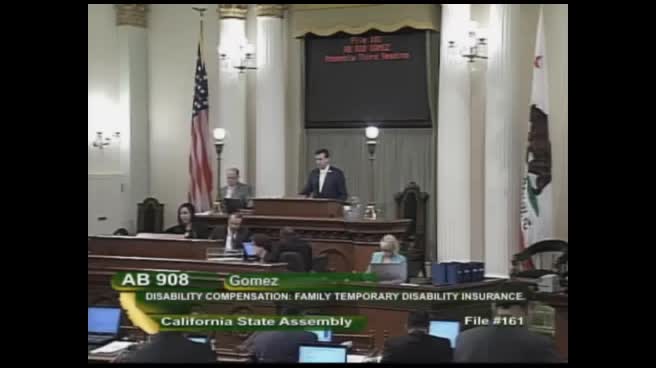 3MIN
Assembly Floor
 25MIN










