AB 910: Political Reform Act of 1974: local enforcement.
- Session Year: 2015-2016
- House: Assembly
- Latest Version Date: 2015-03-19
Existing law authorizes the Fair Political Practices Commission, upon mutual agreement between the Commission and the Board of Supervisors of the County of San Bernardino, to have primary responsibility for the impartial, effective administration, implementation, and enforcement of a local campaign finance reform ordinance of the County of San Bernardino, as specified.
This bill would authorize the Commission and the Board of Supervisors of the County of Orange governing body of any city, county, or city and county, to also enter into such an agreement, as specified. specified, if the governing body of the city, county, or city and county, or a majority of voters, approves the agreement. The bill would require, if an agreement is entered into, that the Commission report specified information to the Legislature regarding the performance of that agreement on or before January 1, 2019. The bill would repeal its provisions on January 1, 2020.
This bill would make legislative findings and declarations as to the necessity of a special statute for the County of Orange.
The Political Reform Act of 1974, an initiative measure, provides that the Legislature may amend the act to further the acts purposes upon a 2/3 vote of each house and compliance with specified procedural requirements.
This bill would declare that it furthers the purposes of the act.
Existing law authorizes the Fair Political Practices Commission, upon mutual agreement between the Commission and the Board of Supervisors of the County of San Bernardino, to have primary responsibility for the impartial, effective administration, implementation, and enforcement of a local campaign finance reform ordinance of the County of San Bernardino, as specified.
This bill would authorize the Commission and the Board of Supervisors of the County of Orange to also enter into such an agreement, as specified. The bill would require, if an agreement is entered into, that the Commission report specified information to the Legislature regarding the performance of that agreement on or before January 1, 2019. The bill would repeal its provisions on January 1, 2020.
This bill would make legislative findings and declarations as to the necessity of a special statute for the County of Orange.
The Political Reform Act of 1974, an initiative measure, provides that the Legislature may amend the act to further the acts purposes upon a 2/3 vote of each house and compliance with specified procedural requirements.
This bill would declare that it furthers the purposes of the act.
(a)(1)For purposes of this section, local agency means a city, county, or city and county.
(b)(1)Upon mutual agreement between the Commission and the Board of Supervisors of the County of Orange, governing body of a local agency, the Commission is authorized to assume primary responsibility for the impartial, effective administration, implementation, and enforcement of a local campaign finance ordinance passed by the Board of Supervisors of the County of Orange. Upon agreement, of the local agency if the agreement has been approved by either of the following:
(A)The governing body of the local agency.
(B)A majority of the voters in the local agency who voted on the agreement.
(2)(A)Upon approval of an agreement pursuant to paragraph (1), the Commission shall be the civil prosecutor responsible for the civil enforcement of that the local campaign finance ordinance of the local agency in accordance with this title.
(2)(A)
(B)As the civil prosecutor of the County of Oranges local agencys campaign finance ordinance, the Commission may do all of the following with respect to the local campaign finance ordinance:
(i)Provide advice.
(ii)Investigate possible violations.
(iii)Bring administrative actions in accordance with this title and Chapter 5 (commencing with Section 11500) of Part 1 of Division 3 of Title 2.
(iv)Bring civil actions.
(B)
(C)The Commission shall not be required to obtain authorization from the city or district attorney of the County of Orange local agency to bring an administrative or civil action pursuant to subparagraph (A). (B).
(b)
(c)A local campaign finance ordinance of the County of Orange local agency enforced by the Commission pursuant to this section shall comply with this title.
(c)The Board of Supervisors of the County of Orange
(d)The governing body of the local agency shall consult with the Commission prior to adopting and amending any local campaign finance ordinance that is subsequently enforced by the Commission pursuant to this section.
(d)
(e)(1)The Board of Supervisors of the County of Orange The governing body of the local agency and the Commission may enter into any agreements necessary and appropriate to carry out the provisions of this section, including agreements pertaining to any necessary reimbursement of state costs with county funds for costs incurred by the Commission in administering, implementing, or enforcing a local campaign finance ordinance pursuant to this section.
(2)An agreement entered into pursuant to this subdivision shall not contain any form of a cancellation fee, a liquidated damages provision, or other financial disincentive to the exercise of the right to terminate the agreement pursuant to subdivision (e), (f), except that the Commission may require the Board of Supervisors of the County of Orange governing body of the local agency to pay the Commission for services rendered and any other expenditures reasonably made by the Commission in anticipation of services to be rendered pursuant to the agreement in the event that the Board of Supervisors of the County of Orange governing body of the local agency terminates the agreement.
(e)The Board of Supervisors of the County of Orange or the Commission
(f)The governing body of the local agency may, at any time, by ordinance or resolution, terminate any an agreement made pursuant to this section for the Commission to administer, implement, or enforce a local campaign finance ordinance or any provision thereof.
(f)
(g)If an agreement is entered into pursuant to this section, the Commission shall report to the Legislature regarding the performance of that agreement on or before January 1, 2019, and shall submit that report in compliance with Section 9795. The Commission shall develop the report in consultation with the County of Orange. local agency. The report shall include, but not be limited to, all of the following:
(1)The status of the agreement.
(2)The estimated annual cost savings, if any, for the County of Orange. local agency.
(3)A summary of relevant annual performance metrics, including measures of utilization, enforcement, and customer satisfaction.
(4)Any public comments submitted to the Commission or the County of Orange local agency relative to the operation of the agreement.
(5)Any legislative recommendations.
(g)
(h)This section shall remain in effect only until January 1, 2020, and as of that date is repealed, unless a later enacted statute, that is enacted before January 1, 2020, deletes or extends that date.
SEC. 2.The Legislature finds and declares that a special law is necessary and that a general law cannot be made applicable within the meaning of Section 16 of Article IV of the California Constitution because of the necessity to ensure the integrity of the electoral process while reducing corruption, and the appearance of corruption, in the County of Orange.
SEC. 3.SEC. 2.The Legislature finds and declares that this bill furthers the purposes of the Political Reform Act of 1974 within the meaning of subdivision (a) of Section 81012 of the Government Code.
(a)(1)Upon mutual agreement between the Commission and the Board of Supervisors of the County of Orange, the Commission is authorized to assume primary responsibility for the impartial, effective administration, implementation, and enforcement of a local campaign finance ordinance passed by the Board of Supervisors of the County of Orange. Upon agreement, the Commission shall be the civil prosecutor responsible for the civil enforcement of that local campaign finance ordinance in accordance with this title.
(2)(A)As the civil prosecutor of the County of Oranges local campaign finance ordinance, the Commission may do all of the following with respect to the local campaign finance ordinance:
(i)Provide advice.
(ii)Investigate possible violations.
(iii)Bring administrative actions in accordance with this title and Chapter 5 (commencing with Section 11500) of Part 1 of Division 3 of Title 2.
(iv)Bring civil actions.
(B)The Commission shall not be required to obtain authorization from the district attorney of the County of Orange to bring an administrative or civil action pursuant to subparagraph (A).
(b)A local campaign finance ordinance of the County of Orange enforced by the Commission pursuant to this section shall comply with this title.
(c)The Board of Supervisors of the County of Orange shall consult with the Commission prior to adopting and amending any local campaign finance ordinance that is subsequently enforced by the Commission pursuant to this section.
(d)(1)The Board of Supervisors of the County of Orange and the Commission may enter into any agreements necessary and appropriate to carry out the provisions of this section, including agreements pertaining to any necessary reimbursement of state costs with county funds for costs incurred by the Commission in administering, implementing, or enforcing a local campaign finance ordinance pursuant to this section.
(2)An agreement entered into pursuant to this subdivision shall not contain any form of a cancellation fee, a liquidated damages provision, or other financial disincentive to the exercise of the right to terminate the agreement pursuant to subdivision (e), except that the Commission may require the Board of Supervisors of the County of Orange to pay the Commission for services rendered and any other expenditures reasonably made by the Commission in anticipation of services to be rendered pursuant to the agreement in the event that the Board of Supervisors of the County of Orange terminates the agreement.
(e)The Board of Supervisors of the County of Orange or the Commission may, at any time, by ordinance or resolution, terminate any agreement made pursuant to this section for the Commission to administer, implement, or enforce a local campaign finance ordinance or any provision thereof.
(f)If an agreement is entered into pursuant to this section, the Commission shall report to the Legislature regarding the performance of that agreement on or before January 1, 2019, and shall submit that report in compliance with Section 9795. The Commission shall develop the report in consultation with the County of Orange. The report shall include, but not be limited to, all of the following:
(1)The status of the agreement.
(2)The estimated annual cost savings, if any, for the County of Orange.
(3)A summary of relevant annual performance metrics, including measures of utilization, enforcement, and customer satisfaction.
(4)Any public comments submitted to the Commission or the County of Orange relative to the operation of the agreement.
(5)Any legislative recommendations.
(g)This section shall remain in effect only until January 1, 2020, and as of that date is repealed, unless a later enacted statute, that is enacted before January 1, 2020, deletes or extends that date.
SEC. 2.The Legislature finds and declares that a special law is necessary and that a general law cannot be made applicable within the meaning of Section 16 of Article IV of the California Constitution because of the necessity to ensure the integrity of the electoral process while reducing corruption, and the appearance of corruption, in the County of Orange.
SEC. 3.The Legislature finds and declares that this bill furthers the purposes of the Political Reform Act of 1974 within the meaning of subdivision (a) of Section 81012 of the Government Code.
|
Date
|
Status
|
|---|---|
| Feb 1, 2016 | From committee: Filed with the Chief Clerk pursuant to Joint Rule 56. |
| Jan 31, 2016 | Died pursuant to Article IV, Sec. 10(c) of the Constitution. |
| Apr 23, 2015 | Assembly Rule 56 suspended. (Page 1089.) |
| Apr 23, 2015 | (pending re-refer to Com. on L. GOV.) |
| Apr 23, 2015 | In committee: Set, second hearing. Hearing canceled at the request of author. |
| Apr 15, 2015 | In committee: Set, first hearing. Hearing canceled at the request of author. |
| Mar 23, 2015 | Re-referred to Com. on E. & R. |
| Mar 19, 2015 | From committee chair, with author's amendments: Amend, and re-refer to Com. on E. & R. Read second time and amended. |
| Mar 16, 2015 | Referred to Coms. on E. & R. and L. GOV. |
| Feb 27, 2015 | From printer. May be heard in committee March 29. |
| Feb 26, 2015 | Read first time. To print. |
This list shows positions taken on this bill by organizations on the date displayed, which is linked to the original source.
Positions by individuals are not included.
AB 910
Page 8
Date of Hearing: April 15, 2015
ASSEMBLY COMMITTEE ON ELECTIONS AND REDISTRICTING
Sebastian Ridley-Thomas, Chair
AB 910
(Harper) – As Amended March 19, 2015
SUBJECT: Political Reform Act of 1974: local enforcement.
SUMMARY: Authorizes the Fair Political Practices Commission (FPPC) to administer and enforce a local campaign finance ordinance upon mutual agreement between the FPPC and a local agency, as specified. Specifically, this bill:
Defines a local agency to mean a city, county, or city and county.
Permits the FPPC to enter into a mutual agreement with the governing body of a local agency to enforce a local campaign finance ordinance. Provides that the FPPC, upon mutual agreement between the FPPC and the governing body of a local agency, is authorized to assume primary responsibility for the impartial, effective administration, implementation, and enforcement of a local campaign finance ordinance of the local agency if the agreement has been approved by either of the following:
The governing body of the local agency; or,
A majority of the voters in the local agency who voted on the agreement.
Provides, upon approval of an agreement mentioned above, that the FPPC shall be the civil prosecutor responsible for the civil enforcement of the local campaign finance ordinance of the local agency pursuant to this bill. Permits the FPPC, as the civil prosecutor of the local agency’s campaign finance ordinance, to do all of the following with respect to the local campaign finance ordinance:
Provide advice;
Investigate possible violations;
Bring administrative actions in accordance with the provisions of this bill; and,
Bring civil actions.
Provides that the FPPC shall not be required to obtain authorization from the city or district attorney of the local agency to bring an administrative or civil action pursuant to the provisions of this bill.
Requires a local campaign finance ordinance of the local agency enforced by the FPPC to comply with the provisions of this bill.
Requires the governing body of the local agency to consult with the FPPC prior to adopting and amending any local campaign finance ordinance that is subsequently enforced by the FPPC pursuant to this bill.
Permits the governing body of the local agency and the FPPC to enter into any agreement necessary and appropriate to carry out the provisions of this bill, including agreements pertaining to any necessary reimbursement of state costs with county funds for costs incurred by the FPPC in administering, implementing, or enforcing a local campaign finance ordinance pursuant to the provisions of this bill.
Prohibits an agreement entered into pursuant to the provisions of this bill from containing any form of a cancellation fee, a liquidated damages provision, or other financial disincentive to the exercise of the right to terminate the agreement, except that the FPPC may require the governing body of the local agency to pay the FPPC for services rendered and any other expenditures reasonably made by the FPPC in anticipation of services to be rendered pursuant to the agreement in the event that the governing body of the local agency terminates the agreement.
Permits the governing body of the local agency, at any time, by ordinance or resolution, to terminate an agreement made pursuant to this bill for the FPPC to administer, implement, or enforce a local campaign finance ordinance or any provision thereof.
Requires the FPPC, if an agreement is entered into pursuant to this bill, to report to the Legislature regarding the performance of that agreement on or before January 1, 2019, and submit that report in compliance with existing law. Requires the FPPC to develop the report in consultation with the local agency. Requires the report to include, by not be limited to, all of the following:
The status of the agreement;
The estimated annual cost savings, if any, for the local agency;
A summary of relevant annual performance metrics, including measures of utilization, enforcement, and customer satisfaction;
Any public comments submitted to the FPPC or the local agency relative to the operation of the agreement; and,
Any legislative recommendations.
Contains a January 1, 2020 sunset date.
EXISTING LAW:
Creates the FPPC, and makes it responsible for the impartial, effective administration and implementation of the PRA.
Requires a local government agency that adopts or amends a local campaign finance ordinance to file a copy of the ordinance with the FPPC.
Prohibits a local government agency from enacting a campaign finance ordinance that imposes campaign reporting requirements that are additional to or different from those set forth in the PRA for elections held in its jurisdiction unless the additional or different requirements apply only to the candidates seeking election in that jurisdiction, their controlled committees or committees formed or existing primarily to support or oppose their candidacies, and to committees formed or existing primarily to support or oppose a candidate or to support or oppose the qualification or passage of a local ballot measure which is being voted on only in that jurisdiction, and to city or county general purpose committees active only in that city or county, respectively.
Authorizes the FPPC, until January 1, 2018, upon mutual agreement between the FPPC and the San Bernardino County Board of Supervisors, to have primary responsibility for the impartial, effective administration, implementation, and enforcement of a local San Bernardino County campaign finance reform ordinance. Requires the San Bernardino County Board of Supervisors to consult with the FPPC prior to adopting and amending any local campaign finance reform ordinance that is subsequently enforced by the FPPC.
Authorizes the FPPC, pursuant to the aforementioned agreement, to investigate possible violations of the San Bernardino County campaign finance reform ordinance and bring administrative actions against persons who violate the ordinance, as specified.
Permits the San Bernardino County Board of Supervisors and the FPPC to enter into any agreements necessary and appropriate for the operation of these provisions, including agreements for reimbursement of state costs with county funds, as specified. Permits the San Bernardino County Board of Supervisors or the FPPC, at any time, by ordinance or resolution, to terminate any agreement for the FPPC to administer, implement, or enforce the local campaign finance reform ordinance or any provision thereof.
Requires the FPPC to report to the Legislature with specified information on or before January 1, 2017, if the FPPC enters into such an agreement with the San Bernardino County Board of Supervisors.
FISCAL EFFECT: Unknown
COMMENTS:
Author's Amendments: After the committee deadline for amending this bill prior to today's committee hearing, the author submitted amendments to add co-authors and make minor, technical changes to the bill. Those amendments, which are reflected in this analysis, are entirely nonsubstantive.
Purpose of the Bill: According to the author:
AB
910 will enable cities and counties, upon approval by voters within
the affected jurisdiction to contract with the Fair Political
Practice Commission (FPPC) for the administration and enforcement of
local campaign finance laws.
The
Political Reform Act of 1974 allows local governments to adopt more
stringent campaign finance laws for elections within their
jurisdiction.
The FPPC has broad authority across the state to enforce the Political Reform Act, but it does not assume primary responsibility for a local government’s additional campaign finance laws.
Instead,
the county board of supervisors or the city council must monitor
local ordinances or create an Ethics Commission with this authority.
Implementing either of these options can be cost prohibitive for local governments.
This
bill is modeled after legislation from 2012, which authorized the
FPPC to contract with the County of San Bernardino to assume primary
responsibility for the County’s campaign finance laws.
AB
910 extends these provisions to any participating city or county upon
voter approval and authorizes the FPPC to become the civil prosecutor
responsible for the civil enforcement of local campaign finance
violations.
Contracting with the FPPC gives local governments the ability to bring in an experienced, independent, and impartial entity to investigate possible violations and bring administrative or civil action against violators.
San Bernardino County: In 2012, the Legislature passed and the Governor signed AB 2146 (Cook), Chapter 169, Statutes of 2012, which permitted San Bernardino County and the FPPC to enter into an agreement that provides for the FPPC to enforce the County’s local campaign finance reform ordinance. Prior to this the FPPC did not enforce any local campaign finance ordinances. According to previous analyses, the County of San Bernardino, which had been the subject of several high-profile corruption cases, was in the process of developing a campaign finance ordinance. Rather than appoint an ethics commission, which could present financial as well as conflict of interest challenges, the County proposed to contract with the FPPC to enforce their local campaign finance ordinance. Moreover, the County determined that it was in the best interest of the County to retain the services of the FPPC to provide for the enforcement and interpretation of San Bernardino County's local campaign finance ordinance as the FPPC has special skills, knowledge, experience, and expertise in the area of enforcement and interpretation of campaign laws necessary to effectively advise, assist, litigate, and otherwise represent the County on such matters. As a result, the FPPC and San Bernardino County entered into a mutual agreement, from January 1, 2013 through December 31, 2014, for the FPPC to provide the County campaign enforcement and interpretation services for the impartial, effective administration, implementation, and enforcement of the San Bernardino's campaign finance reform ordinance. According to the FPPC, San Bernardino County and the FPPC have entered into a new two year mutual agreement.
This bill is similar to the provisions of AB 2146 (Cook), however, this bill adds a few new elements to these provisions. First, this bill provides that the FPPC is authorized to assume primary responsibility for the impartial, effective administration, implementation, and enforcement of the local campaign finance ordinance of the local agency if the agreement is approved by either the governing body of the local agency or a majority of the voters in the local agency who voted on the agreement. According to background information provided by the author's office, in November 2014, Orange County voters approved Measure E, which authorized the County to contract with the FPPC for the administration and enforcement of its local campaign finance ordinance, commonly referred to as TINCUP. Consequently, this bill and this particular provision is an attempt to fulfill the will of Orange County voters.
Additionally, this bill expands the duties of the FPPC, as the civil prosecutor of the local agency’s campaign finance ordinance, to provide advice and bring civil actions. Finally, this bill provides that the FPPC shall not be required to obtain authorization from the city or district attorney of the local agency to bring an administrative or civil action. This provision may be problematic as it sets different rules for different local agencies that the FPPC may contract with.Local Campaign Ordinances and the PRA: Under existing law, local government agencies have the ability to adopt campaign ordinances that apply to elections within their jurisdictions, though the PRA imposes certain limited restrictions on those local ordinances. For instance, SB 726 (McCorquodale), Chapter 1456, Statutes of 1985, limited the ability of local jurisdictions to impose campaign filing requirements that differed from those in the PRA, permitting such requirements only when they applied solely to candidates and committees whose activity is restricted primarily to the jurisdiction in question. This provision sought to avoid the necessity of a candidate or committee active over a wider area being required to adhere to several different campaign filing schedules. Similarly, AB 1430 (Garrick), Chapter 708, Statutes of 2007, prohibited local governments from adopting rules governing member communications that are different than the rules that govern member communications at the state level.
Aside from these restrictions, however, local government agencies generally have a significant amount of latitude when developing local campaign finance ordinances that apply to elections in those agencies' jurisdictions. Any jurisdiction that adopts or amends a local campaign finance ordinance is required to file a copy of that ordinance with the FPPC, and the FPPC posts those ordinances on its website.
Several cities and counties have adopted campaign finance ordinances, some of which are very extensive. In some cases, those ordinances include campaign contribution limits, reporting and disclosure requirements that supplement the requirements of the PRA, temporal restrictions on when campaign funds may be raised, and voluntary public financing of local campaigns, among other provisions. In many cases, local campaign finance ordinances are enforced by the district attorney of the county or by the city attorney. In at least a few cases, however, local jurisdictions have set up independent boards or commissions to enforce the local campaign finance laws.
The FPPC does not currently enforce any local campaign finance ordinances other than San Bernardino County's. The FPPC can and does, however, bring enforcement actions in response to violations of the PRA that occur in campaigns for local office, even in cases where the local jurisdiction brings separate enforcement actions for violations of a local campaign finance ordinance.Criminal, Civil, and Administrative Enforcement of the PRA and Local Campaign Ordinances: Violations of the PRA are subject to administrative, civil, and criminal penalties. Generally, the Attorney General (AG) and district attorneys have responsibility for enforcing the criminal provisions of the PRA, though any elected city attorney of a charter city also has the authority to act as the criminal prosecutor for violations of the PRA that occur within the city. The FPPC, the AG, district attorneys, and elected city attorneys of charter cities all have responsibility for enforcement of the civil penalties and remedies provided under the PRA, depending on the nature and location of the violation, while any member of the public also has the ability to file a civil action to enforce the civil provisions of the PRA, subject to certain restrictions. The FPPC has the sole authority to bring administrative proceedings for enforcement of the PRA. When the FPPC determines on the basis of such a proceeding that a violation of the PRA has occurred, it can impose monetary penalties of up to $5,000 per violation, in addition to ordering the violator to cease and desist violation of the PRA and to file any reports, statements, or other documents or information required by the PRA.
In the case of local campaign ordinances, there is no single approach as to the types of penalties that are available for the violations of those ordinances. Many local ordinances provide for misdemeanor or civil penalties for violations, while some ordinances do not establish any penalties for violations. In some local jurisdictions that have independent boards or commissions to enforce the local campaign finance ordinances, those boards or commissions have the authority to bring administrative enforcement proceedings, similar to the authority the FPPC has under the PRA.
Is Expansion of the Law too Soon? As mentioned above, in 2012, AB 2146 (Cook), was enacted to permit San Bernardino County and the FPPC to enter into an agreement for the FPPC to enforce the County’s local campaign finance reform ordinance. Among other provisions, AB 2146 also required the FPPC, if it entered into an agreement with the San Bernardino County Board of Supervisors, to report to the Legislature with specified information on or before January 1, 2017. Current law requires the report to include, but not be limited to, the status of the agreement, the estimated annual cost savings, if any, for the County of San Bernardino, a summary of relevant annual performance metrics, as specified, any public comments submitted relative to the operation of the agreement, and any legislative recommendations. The committee is not aware that any report has been submitted from the FPPC to the Legislature. The committee may wish to consider whether it is prudent to expand the law to allow more participating cities or counties to authorize the FPPC to administer and enforce their local campaign finance ordinances when the Legislature has not received a report detailing the effectiveness of the current agreement between the FPPC and San Bernardino County.
Furthermore, the committee may wish to consider whether such an expansion of the FPPC's workload could negatively impact the ongoing enforcement of the PRA. Because there is no guarantee that local campaign finance ordinances will be consistent with the general framework of the PRA, each additional local ordinance that the FPPC is asked to enforce could add complexity to the FPPC's work. Moreover, while the added complexity of a single ordinance and a single jurisdiction likely can be handled by the FPPC without much difficulty, this bill allows for the FPPC to enter into similar arrangements with other jurisdictions, adding complexity of tracking and enforcing multiple (potentially inconsistent) ordinances in multiple jurisdictions, which could harm the FPPC's ability to focus on its primary responsibility of enforcing the PRA.
On the other hand, this bill does require a mutual agreement be made between the city council or board of supervisors of the participating city or county and the FPPC. Moreover, this bill gives the FPPC discretion on whether or not they will choose to enter into an agreement with a city or county to administer and enforce its local campaign finance ordinance.
Arguments in Support: In support, the Orange County Board of Supervisors, writes:
Orange County voters approved this proposal with the passage of Measure E in November 2014, which received 57% of the vote. The bill is modeled after legislation enacted in 2012 with AB 2146 (Cook), Chapter 169 of 2012, which authorized FPPC civil enforcement of San Bernardino County’s campaign reform laws.
Arguments in Opposition: In opposition, the Orange County Employees Association (OCEA), writes:
The OCEA takes issue with the county potentially contracting with the
FPPC because they are concerned the county’s finance law, known as
TINCUP, would be invalidated because it’s stricter than state
law…
It is not surprising that the Orange County Board
of Supervisors would be pushing legislation allowing the Fair
Political Practices Commission to investigate and enforce campaign
finance laws in the region. This would, in their minds, eliminate
the need to establish an office of ethics and compliance in Orange
County. Additionally, besides increasing the contribution limits
above what is currently allowed in Orange County per TINCUP, the FPPC
would be limited to civil, not criminal enforcement. This is not the
direction nor is it the recommendation by Orange County Grand Jury,
which issued two reports on the subject.
Political Reform Act of 1974: California voters passed an initiative, Proposition 9, in 1974 that created the FPPC and codified significant restrictions and prohibitions on candidates, officeholders, and lobbyists. That initiative is commonly known as the PRA. Amendments to the PRA that are not submitted to the voters, such as those contained in this bill, must further the purposes of the proposition and require a two-thirds vote of each house of the Legislature.
Related Legislation: AB 1083 (Eggman), which is also being heard in this committee today, is similar to this bill. AB 1083 permits the City Council of the City of Stockton and the FPPC to enter into an agreement that provides for the FPPC to enforce a local campaign finance ordinance passed by the City Council of the City of Stockton.
Previous Legislation: AB 2146 (Cook), Chapter 169, Statutes of 2012, permitted San Bernardino County and the FPPC to enter into an agreement that provides for the FPPC to enforce the County’s local campaign finance ordinance.
SB 1226 (Correa) of 2014, authorized any city or county to enter into an agreement with the FPPC to administer and enforce a local campaign finance ordinance. The bill was gutted and amended in the Assembly Appropriations Committee.
Double Referral: This bill is double-referred to the Assembly Local Government Committee.
REGISTERED SUPPORT / OPPOSITION:
Support
Orange County Board of Supervisors
Opposition
Orange County Employees Association
Four individuals
Analysis Prepared by: Nichole Becker / E. & R. / (916) 319-2094
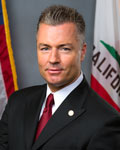
Bill Author