AB 92: Water.
- Session Year: 2015-2016
- House: Assembly
- Latest Version Date: 2015-03-27
(1)Existing law requires any new diversion of water from any stream having populations of salmon and steelhead that is determined by the Department of Fish and Wildlife to be deleterious to salmon and steelhead to be screened by the owner of the diversion. Existing law requires the department to submit to the owner its proposals as to measures necessary to protect the salmon and steelhead within 30 days of receipt of a notice of a diversion of water from a stream having populations of salmon and steelhead.
This bill would instead require the department, within 30 days of providing written notice to the owner that the department has determined that the diversion is deleterious to salmon and steelhead, to submit to the owner its proposals as to measures necessary to protect the salmon and steelhead.
(2)Existing law prohibits the construction or maintenance, in certain fish and game districts, of any device or contrivance that prevents, impedes, or tends to prevent or impede, the passing of fish up and down stream. A violation of this provision is a misdemeanor.
This bill would impose an additional civil penalty of not more than $8,000 for a violation of this provision.
(3)Existing law declares that the diversion or use of water other than as authorized by specified provisions of law is a trespass. Existing law authorizes the executive director of the State Water Resources Control Board to issue a complaint to a person who violates certain laws regarding the use and diversion of water, and subjects the violator to administrative civil liability. Existing law requires that the complaint be served by personal notice or certified mail and inform the party served that the party may request a hearing not later than 20 days from the date the party was served.
This bill would authorize the Director of the Department of Fish and Wildlife, or his or her designee, to issue a complaint in accordance with the above-specified provisions alleging that an unauthorized diversion or use of water harms fish and wildlife resources.
(4)Existing law prohibits a charter city from receiving or using state funding or financial assistance for a construction project if the city has a charter provision or ordinance that authorizes a contractor to not comply with prevailing wage provisions on any public works contract or if the city has awarded, within the prior 2 years, a public works contract without requiring the contractor to comply with prevailing wage provisions, as specified. Existing law authorizes charter cities to receive or use state funding or financial assistance if the city has a local prevailing wage ordinance, applicable to all of its public works contracts, that includes requirements that are equal to or greater than the states prevailing wage requirements, as specified.
This bill would exempt from that prohibition funding and financial assistance provided to a charter city in response to an emergency.
(5)Existing law provides various technical assistance opportunities to disadvantaged communities for projects relating to groundwater sustainability, clean drinking water, and water recycling and advanced treatment water technology projects.
This bill would establish the Office of Sustainable Water Solutions within the State Water Resources Control Board to promote permanent and sustainable drinking water and wastewater treatment solutions to ensure effective and efficient provision of safe, clean, affordable, and reliable drinking water and wastewater treatment services. The bill would authorize the office to take certain actions in furtherance of this purpose.
(6)Existing law, the Porter-Cologne Water Quality Control Act, authorizes the imposition and collection of civil and criminal penalties for specified violations of that act. The act requires certain moneys, including General Fund revenues of penalties, collected pursuant to these provisions to be deposited in the State Water Pollution Cleanup and Abatement Account in the State Water Quality Control Fund. The act continuously appropriates the moneys in the account to the State Water Resources Control Board for specified cleanup programs.
The act authorizes the state board, upon application by a public agency, specified tribal governments, or not-for-profit organizations serving disadvantaged communities that have authority to clean up a waste or abate the effects of a waste to order moneys in the account to be paid to the entity to assist in cleaning up the waste or abating its effects on waters.
This bill would, until July 1, 2018, additionally authorize the state board to pay these moneys to a community water system that serves a disadvantaged community and would authorize moneys in the account to be used to assist in addressing an urgent drinking water need. By authorizing new expenditures from a continuously appropriated account, this bill would make an appropriation. The bill would exempt projects using moneys paid pursuant to these provisions from state contracting and procurement requirements, as specified, and would authorize the state board to adopt guidelines for the allocation and administration of moneys in the account that would be exempt from the Administrative Procedure Act.
(7)Existing law establishes the CalConserve Water Use Efficiency Revolving Fund and provides that the moneys in the fund are available to the Department of Water Resources, upon appropriation by the Legislature, for the purpose of water use efficiency projects. Existing law requires moneys in the fund to be used for purposes that include, but are not limited to, at or below market interest rate loans to local agencies, as defined, and permits the department to enter into agreements with local agencies that provide water or recycled water service to provide loans.
Existing law, the Water Quality, Supply, and Infrastructure Improvement Act of 2014, approved by the voters as Proposition 1 at the November 4, 2014, statewide general election, authorizes the issuance of general obligation bonds in the amount of $7,545,000,000 to finance a water quality, supply, and infrastructure improvement program. The bond act provides that the sum of $810,000,000 is to be available, upon appropriation by the Legislature, for expenditures on, and competitive grants and loans to, projects that are included in and implemented in an adopted integrated regional water management plan and respond to climate change and contribute to regional water security. The bond act authorizes the use of $100,000,000 of those funds for direct expenditures, and for grants and loans, for certain water conservation and water use efficiency plans, projects, and programs.
This bill would transfer to the CalConserve Water Use Efficiency Revolving Fund the sum of $10,000,000 of the proceeds of these bonds for water conservation and water use efficiency projects and programs to achieve urban water use targets. This bill would require the department to use $5,000,000 for a pilot project for local agencies to provide water efficiency upgrades to eligible residents. This bill would require the department to use the other $5,000,000 for local agencies to provide low-interest loans to customers to finance the installation of onsite improvements to repair or replace, as necessary, cracked or leaking water pipes to conserve water. The bill would authorize the department to provide local agencies with zero-interest loans of up to $3,000,000 and would require a local agency that receives a loan pursuant to these provisions to exercise reasonable efforts to recover the costs of the loan. The bill would also authorize the department to waive up to 10% of the repayment amount for costs that could not be recovered by a local agency.
(8)The State Contract Act generally provides for a contracting process by state agencies for public works of improvement pursuant to a competitive bidding process, under which bids are awarded to the lowest responsible bidder, with specified alternative bidding procedures authorized in certain cases.
Existing law, the California Emergency Services Act, sets forth the emergency powers of the Governor under its provisions and empowers the Governor to proclaim a state of emergency for certain conditions, including drought. During a state of emergency, existing law authorizes the Governor to suspend any regulatory statute, or statute prescribing the procedure for conduct of state business, or the orders, rules, or regulations of any state agency where the Governor determines and declares that strict compliance with any statute, order, rule, or regulation would in any way prevent, hinder, or delay the mitigation of the effects of the emergency. Pursuant to this authority, the Governor proclaimed a state of emergency, and a continued state of emergency, due to drought conditions and suspended certain statutes.
This bill would suspend the provisions of the Government Code and the Public Contract Code applicable to state contracts for purposes of state agencies implementing the Governors orders proclaiming a state of emergency as long as the state of emergency due to drought conditions remains in effect. The bill would specify that these suspensions only apply to contracts that respond to conditions arising from the drought and that support the state agencies in specified actions. The bill would require approval by the Department of Finance prior to the execution of any contract entered into pursuant to this provision and would require that certain information relating to these contracts be posted on the California Drought Internet Web site.
This bill would require an agency receiving moneys from one or more sources as appropriated pursuant to Assembly Bill 91 or Senate Bill 75 of the 201516 Regular Session to use the services of the California Conservation Corps or a certified community conservation corps, as defined, for restoration, ecosystem protection projects, or other similar work.
(9)This bill would declare that it is to take effect immediately as a bill providing for appropriations related to the Budget Bill.
This bill would express the intent of the Legislature to enact statutory changes relating to the Budget Act of 2015.
This bill would express the intent of the Legislature to enact statutory changes relating to the Budget Act of 2015.
(a) Notwithstanding any provision of Article 3 (commencing with Section 5980) and Article 4 (commencing with Section 6020), on or after January 1, 1972, any new diversion of water from any stream having populations of salmon and steelhead that is determined by the department to be deleterious to salmon and steelhead shall be screened by the owner. The construction, operation, or maintenance costs of any screen required pursuant to this article shall be borne by the owner of the diversion.
(b)The department within 30 days of providing written notice to the owner that the department has determined that the diversion is deleterious to salmon and steelhead pursuant to subdivision (a), or within the time determined by mutual written agreement, shall submit to the owner its proposals as to measures necessary to protect the salmon and steelhead. The department shall notify the owner that it shall make onsite investigation and shall make any other investigation before it shall propose any measures necessary to protect fishlife.
(c)The department, or any agency of the state, shall provide the owner of the diversion any available information that is required by the owner in order to comply with the provisions of this article.
(d)The diversion shall not commence until the department has determined that measures necessary to protect fishlife have been incorporated into the plans and construction of the diversion.
SEC. 2.Section 12025.1 is added to the Fish and Game Code, to read:12025.1.(a)In addition to any penalties imposed by any other law, a person found to have violated Section 5901 shall be liable for a civil penalty of not more than eight thousand dollars ($8,000) for each violation. Each day that a violation of Section 5901 occurs or continues without a good faith effort by the person to cure the violation after receiving notice from the department shall constitute a separate violation.
(b)All civil penalties imposed or collected by a court for a separate violation pursuant to this section in connection with the production or cultivation of a controlled substance shall not be considered to be fines or forfeitures, as described in Section 13003, and shall be apportioned in the manner described in subdivision (d) of Section 12025.
(c)All civil penalties imposed or collected by a court for a separate violation pursuant to this section not in connection with the production or cultivation of a controlled substance shall not be considered to be fines or forfeitures, as described in Section 13003, and shall be apportioned in the following manner:
(1)Thirty percent shall be distributed to the county in which the violation was committed pursuant to Section 13003. The county board of supervisors shall first use any revenues from those penalties to reimburse the costs incurred by the district attorney or city attorney in investigating and prosecuting the violation.
(2)(A)Thirty percent shall be distributed to the investigating agency to be used to reimburse the cost of any investigation directly related to the violations described in this section.
(B)If the department receives reimbursement pursuant to this paragraph for activities funded pursuant to subdivision (f) of Section 4629.6 of the Public Resources Code, the reimbursement funds shall be deposited into the Timber Regulation and Forest Restoration Fund, created by Section 4629.3 of the Public Resources Code, if there is an unpaid balance for a loan authorized by subdivision (f) of Section 4629.6 of the Public Resources Code.
(3)Forty percent shall be deposited into the Fish and Game Preservation Fund.
(d)(1)Civil penalties authorized pursuant to subdivision (a) may be imposed administratively by the department according to the procedures described in paragraphs (1) through (4), inclusive, of subdivision (e) of Section 12025.
(2)The department shall adopt emergency regulations to implement this subdivision in accordance with the Administrative Procedure Act (Chapter 3.5 (commencing with Section 11340) of Part 1 of Division 3 of Title 2 of the Government Code). The adoption of these regulations shall be deemed to be an emergency and necessary for the immediate preservation of the public peace, health and safety, or general welfare.
(e)All administrative penalties imposed or collected by the department for a separate violation pursuant to this section in connection with the production or cultivation of a controlled substance shall not be considered to be fines or forfeitures, as described in Section 13003, and shall be deposited according the provisions of subdivision (f) of Section 12025.
(f)All administrative penalties imposed or collected by the department for a separate violation pursuant to this section not in connection with the production or cultivation of a controlled substance shall not be considered to be fines or forfeitures, as described in Section 13003, and shall be deposited into the Timber Regulation and Forest Restoration Fund, created by Section 4629.3 of the Public Resources Code, to repay any unpaid balance of a loan authorized by subdivision (f) of Section 4629.6 of the Public Resources Code. Any remaining funds from administrative penalties collected pursuant to this subdivision shall be apportioned in the following manner:
(1)Fifty percent shall be deposited into the Fish and Game Preservation Fund.
(2)Fifty percent shall be deposited into the Timber Regulation and Forest Restoration Fund for grants authorized pursuant to subdivision (h) of Section 4629.6 of the Public Resources Code.
(g)For purposes of this section, controlled substance has the same meaning as defined in Section 11007 of the Health and Safety Code.
SEC. 3.Section 12025.2 is added to the Fish and Game Code, to read:12025.2.The director or his or her designee may issue a complaint to any person or entity in accordance with Section 1055 of the Water Code alleging a violation of Section 1052 of the Water Code that harms fish and wildlife resources. The complaint is subject to the substantive and procedural requirements set forth in Section 1055 of the Water Code, and the department shall be designated a party to any proceeding before the State Water Resources Control Board regarding a complaint filed pursuant to this section.
SEC. 4.Section 8687.9 is added to the Government Code, to read:8687.9.Funding and financial assistance provided to local governments in response to an emergency, as that term is used in Section 8558, is not subject to the eligibility restrictions of Section 1782 of the Labor Code.
SEC. 5.Section 4629.6 of the Public Resources Code is amended to read:4629.6.Moneys deposited in the fund shall, upon appropriation by the Legislature, only be expended for the following purposes:
(a)To reimburse the State Board of Equalization for its administrative costs associated with the administration, collection, audit, and issuance of refunds related to the lumber products and engineered wood assessment established pursuant to Section 4629.5.
(b)To pay refunds issued pursuant to Part 30 (commencing with Section 55001) of Division 2 of the Revenue and Taxation Code.
(c)To support the activities and costs of the department, the Department of Conservation, the Department of Fish and Wildlife, the State Water Resources Control Board, and regional water quality control boards associated with the review of projects or permits necessary to conduct timber operations. On or after July 1, 2013, except for fees applicable for fire prevention or protection within state responsibility area classified lands or timber yield assessments, no currently authorized or required fees shall be charged by the agencies listed in this subdivision for activities or costs associated with the review of a project, inspection and oversight of projects, and permits necessary to conduct timber operations of those departments and boards.
(d)For transfer to the departments Forest Improvement Program, upon appropriation by the Legislature, for forest resources improvement grants and projects administered by the department pursuant to Chapter 1 (commencing with Section 4790) and Chapter 2 (commencing with Section 4799.06) of Part 2.5 of Division 4.
(e)To fund existing restoration grant programs, with priority given to the Fisheries Restoration Grant Program administered by the Department of Fish and Wildlife and grant programs administered by state conservancies.
(f)(1)As a loan to the Department of Fish and Wildlife for activities to address environmental damage occurring on forest lands resulting from marijuana cultivation. Not more than five hundred thousand dollars ($500,000) may be loaned from the fund in a fiscal year pursuant to this paragraph. This paragraph shall become inoperative on July 1, 2017.
(2)Any funds deposited into the Timber Regulation and Forest Restoration Fund pursuant to subdivision (d) or (f) of Section 12025 or subdivision (b), (c), (e), or (f) of Section 12025.1 of the Fish and Game Code shall be credited toward loan repayment.
(3)Moneys from the General Fund shall not be used to repay a loan authorized pursuant to this subdivision.
(g)To the department, upon appropriation by the Legislature, for fuel treatment grants and projects pursuant to authorities under the Wildland Fire Protection and Resources Management Act of 1978 (Article 1 (commencing with Section 4461) of Chapter 7 of Part 2 of Division 4).
(h)To the department, upon appropriation by the Legislature, to provide grants to local agencies responsible for fire protection, qualified nonprofits, recognized tribes, local and state governments, and resources conservation districts, undertaken on a state responsibility area (SRA) or on wildlands not in an SRA that pose a threat to the SRA, to reduce the costs of wildland fire suppression, reduce greenhouse gas emissions, promote adaptation of forested landscapes to changing climate, improve forest health, and protect homes and communities.
SEC. 6.Section 189 is added to the Water Code, to read:189.(a)There is hereby established the Office of Sustainable Water Solutions within the state board, which may be administered by the state board as a separate organizational unit or within the state boards divisions or offices.
(b)The purpose of the office is to promote permanent and sustainable drinking water and wastewater treatment solutions to ensure the effective and efficient provision of safe, clean, affordable, and reliable drinking water and wastewater treatment services. In furtherance of this purpose, the office may take, but is not limited to, all of the following actions:
(1)Coordinating with and providing assistance to small drinking water systems, wastewater treatment systems, and disadvantaged communities without drinking water or wastewater treatment systems.
(2)Promoting and facilitating regional drinking water and wastewater projects.
(3)Promoting and facilitating regional solutions, including consolidation of existing water districts, expansion of existing water districts to serve communities unserved by public water systems and wastewater treatment systems, and extension of services to underserved communities and disadvantaged communities.
(4)Advancing the delivery of affordable, safe drinking water to disadvantaged communities throughout the state.
(5)Providing technical assistance to disadvantaged communities and small drinking water systems and wastewater systems, including grant application assistance, outreach and education in vulnerable communities, financial management support, and facilitation of discussions within and between communities.
SEC. 7.Section 13442 of the Water Code is amended to read:13442.(a)Upon application by an eligible entity, as described in subdivision (b), the state board may approve the payment of moneys from the account to that entity to assist in cleaning up a waste, abating the effects of a waste on waters of the state, or addressing an urgent drinking water need without regard to whether the need for drinking water is a result of the discharge of waste.
(b)An entity is eligible to apply for funding pursuant to this section if that entity has authority to undertake the activity for which it seeks moneys and the entity is any of the following:
(1)A public agency.
(2)A tribal government that is on the California Tribal Consultation List maintained by the Native American Heritage Commission and is a disadvantaged community, as defined in Section 79505.5, that agrees to waive tribal sovereign immunity for the explicit purpose of regulation by the state board pursuant to this division.
(3)A not-for-profit organization serving a disadvantaged community, as defined in Section 79505.5.
(4)A community water system, as defined in Section 116275 of the Health and Safety Code, that serves a disadvantaged community, as defined in Section 79505.5.
(c)An eligible entity shall not become liable to the state board for repayment of moneys paid to the entity under this section and expended in accordance with the state boards approval of payment, but this shall not be a defense to an action brought pursuant to subdivision (c) of Section 13304 for the recovery of moneys paid under this section.
(d)Projects using moneys that are paid to an eligible entity pursuant to this section shall be exempt from state contracting and procurement requirements set forth in the Government Code and the Public Contract Code to the extent necessary to take immediate action to protect public health and safety.
(e)The state board may adopt guidelines for the allocation and administration of these moneys that shall not be subject to Chapter 3.5 (commencing with Section 11340) of Part 1 of Division 3 of Title 2 of the Government Code.
(f)This section shall become inoperative on July 1, 2018, and, as of January 1, 2019, is repealed, unless a later enacted statute, that becomes operative on or before January 1, 2019, deletes or extends the dates on which it becomes inoperative and is repealed.
SEC. 8.Section 13442 is added to the Water Code, to read:13442.(a)Upon application by a public agency, a tribal government that is on the California Tribal Consultation List maintained by the Native American Heritage Commission and is a disadvantaged community, as defined in Section 79505.5, that agrees to waive tribal sovereign immunity for the explicit purpose of regulation by the state board pursuant to this division, or a not-for-profit organization serving a disadvantaged community, as defined in Section 79505.5, with authority to clean up a waste or abate the effects of a waste, the state board may order moneys to be paid from the account to the agency, tribal government, or organization to assist it in cleaning up the waste or abating its effects on waters of the state.
(b)The agency, a tribal government that is on the California Tribal Consultation List maintained by the Native American Heritage Commission and is a disadvantaged community, as defined in Section 79505.5, that agrees to waive tribal sovereign immunity for the explicit purpose of regulation by the state board pursuant to this division, or a not-for-profit organization serving a disadvantaged community, as defined in Section 79505.5, shall not become liable to the state board for repayment of moneys paid under this section, but this shall not be a defense to an action brought pursuant to subdivision (c) of Section 13304 for the recovery of moneys paid under this section.
(c)This section shall become operative on July 1, 2018.
SEC. 9.Section 81023 is added to the Water Code, to read:81023.Consistent with Division 26.7 (commencing with Section 79700), the sum of ten million dollars ($10,000,000) of the proceeds of bonds authorized to be issued and available for the purposes of Section 79746 shall be transferred to the fund and used by the department, upon appropriation, for loans for the following water conservation and water use efficiency projects and programs to achieve urban water use targets developed pursuant to Section 10608.20:
(a)(1)Five million dollars ($5,000,000) for a pilot project for local agencies to provide water efficiency upgrades to eligible residents at no upfront cost.
(2)Five million dollars ($5,000,000) for local agencies to provide low-interest loans to customers to finance the installation of onsite improvements to repair or replace, as necessary, cracked or leaking water pipes to conserve water.
(b)The department may implement this section by providing to a local agency a zero-interest loan of up to three million dollars ($3,000,000).
(c)A local agency that receives a loan pursuant to this section shall exercise reasonable efforts to recover the costs of the loan. However, the department may waive up to 10 percent of the repayment amount for costs that could not be recovered by the local agency.
(d)The department and a local agency that is an urban retail water supplier and that receives a loan pursuant to this section may enter into a mutually agreeable schedule for making loan repayments into the CalConserve Water Use Efficiency Revolving Fund.
SEC. 10.Section 81046 of the Water Code is amended to read:81046.A local agency may implement water use efficiency loan programs pursuant to this division through on-bill financing.
SEC. 11.(a)In order to ensure that equipment and services necessary for drought response can be procured quickly, the provisions of the Government Code and the Public Contract Code applicable to state contracts, including, but not limited to, advertising and competitive bidding requirements, are suspended for purposes of state agencies implementing Executive Order B-28-14 and the proclamations of a state of emergency dated January 17, 2014, and April 25, 2014, as long as the state of emergency due to drought conditions remains in effect.
(b)The suspensions provided in subdivision (a) apply only to contracts that respond to conditions arising from the drought and that support the state agencies in any of the following:
(1)Addressing impacts on human health and safety, including providing or improving availability of food, water, or shelter.
(2)Addressing impacts on fish and wildlife resources.
(3)Providing water to persons or communities affected by the drought.
(c)Approval by the Department of Finance is required prior to the execution of any contract entered into pursuant to this section.
(d)Information related to a contract approved pursuant to this section shall be posted on the California Drought Internet Web site, including identification of the contracting agency, the contractor, the contract amount, the contract duration, and a brief description of the goods or services provided under the contract.
SEC. 12.An agency receiving moneys from one or more sources as appropriated pursuant to either Senate Bill 75 or Assembly Bill 91 of the 201516 Regular Session shall use, whenever feasible, the services of the California Conservation Corps or a certified community conservation corps, as defined under Section 14507.5 of the Public Resources Code, for restoration, ecosystem protection projects, or other similar work.
SEC. 13.This act is a bill providing for appropriations related to the Budget Bill within the meaning of subdivision (e) of Section 12 of Article IV of the California Constitution, has been identified as related to the budget in the Budget Bill, and shall take effect immediately.
(a) Notwithstanding any provision of Article 3 (commencing with Section 5980) and Article 4 (commencing with Section 6020), on or after the effective date of this article, January 1, 1972, any new diversion of water from any stream having populations of salmon and steelhead which that is determined by the department to be deleterious to salmon and steelhead shall be screened by the owner. The construction, operation, or maintenance costs of any screen required pursuant to this article shall be borne by the owner of the diversion.
The department
(b)The department within 30 days of receipt of a providing written notice of such diversion, to the owner that the department has determined that the diversion is deleterious to salmon and steelhead pursuant to subdivision (a), or within the time determined by mutual written agreement, shall submit to the owner its proposals as to measures necessary to protect the salmon and steelhead. The department shall notify the owner that it shall make onsite investigation and shall make any other investigation before it shall propose any measure measures necessary to protect fishlife.
The
(c)The department, or any agency of the state, shall provide the owner of the diversion any available information which that is required by such the owner in order to comply with the provisions of this article.
The
(d)The diversion shall not commence until the department has determined that measures necessary to protect fishlife have been incorporated into the plans and construction of such the diversion.
SEC. 2.Section 12025.1 is added to the Fish and Game Code, to read:12025.1.(a)In addition to any penalties imposed by any other law, a person found to have violated Section 5901 shall be liable for a civil penalty of not more than eight thousand dollars ($8,000) for each violation. Each day that a violation of Section 5901 occurs or continues without a good faith effort by the person to cure the violation after receiving notice from the department shall constitute a separate violation.
(b)All civil penalties imposed or collected by a court for a separate violation pursuant to this section in connection with the production or cultivation of a controlled substance shall not be considered to be fines or forfeitures, as described in Section 13003, and shall be apportioned in the manner described in subdivision (d) of Section 12025.
(c)All civil penalties imposed or collected by a court for a separate violation pursuant to this section not in connection with the production or cultivation of a controlled substance shall not be considered to be fines or forfeitures, as described in Section 13003, and shall be apportioned in the following manner:
(1)Thirty percent shall be distributed to the county in which the violation was committed pursuant to Section 13003. The county board of supervisors shall first use any revenues from those penalties to reimburse the costs incurred by the district attorney or city attorney in investigating and prosecuting the violation.
(2)(A)Thirty percent shall be distributed to the investigating agency to be used to reimburse the cost of any investigation directly related to the violations described in this section.
(B)If the department receives reimbursement pursuant to this paragraph for activities funded pursuant to subdivision (f) of Section 4629.6 of the Public Resources Code, the reimbursement funds shall be deposited into the Timber Regulation and Forest Restoration Fund, created by Section 4629.3 of the Public Resources Code, if there is an unpaid balance for a loan authorized by subdivision (f) of Section 4629.6 of the Public Resources Code.
(3)Forty percent shall be deposited into the Fish and Game Preservation Fund.
(d)(1)Civil penalties authorized pursuant to subdivision (a) may be imposed administratively by the department according to the procedures described in paragraphs (1) through (4), inclusive, of subdivision (e) of Section 12025.
(2)The department shall adopt emergency regulations to implement this subdivision in accordance with the Administrative Procedure Act (Chapter 3.5 (commencing with Section 11340) of Part 1 of Division 3 of Title 2 of the Government Code). The adoption of these regulations shall be deemed to be an emergency and necessary for the immediate preservation of the public peace, health and safety, or general welfare.
(e)All administrative penalties imposed or collected by the department for a separate violation pursuant to this section in connection with the production or cultivation of a controlled substance shall not be considered to be fines or forfeitures, as described in Section 13003, and shall be deposited according the provisions of subdivision (f) of Section 12025.
(f)All administrative penalties imposed or collected by the department for a separate violation pursuant to this section not in connection with the production or cultivation of a controlled substance shall not be considered to be fines or forfeitures, as described in Section 13003, and shall be deposited into the Timber Regulation and Forest Restoration Fund, created by Section 4629.3 of the Public Resources Code, to repay any unpaid balance of a loan authorized by subdivision (f) of Section 4629.6 of the Public Resources Code. Any remaining funds from administrative penalties collected pursuant to this subdivision shall be apportioned in the following manner:
(1)Fifty percent shall be deposited into the Fish and Game Preservation Fund.
(2)Fifty percent shall be deposited into the Timber Regulation and Forest Restoration Fund for grants authorized pursuant to subdivision (h) of Section 4629.6 of the Public Resources Code.
(g)For purposes of this section, controlled substance has the same meaning as defined in Section 11007 of the Health and Safety Code.
SEC. 3.Section 12025.2 is added to the Fish and Game Code, to read:12025.2.The director or his or her designee may issue a complaint to any person or entity in accordance with Section 1055 of the Water Code alleging a violation of Section 1052 of the Water Code that harms fish and wildlife resources. The complaint is subject to the substantive and procedural requirements set forth in Section 1055 of the Water Code, and the department shall be designated a party to any proceeding before the State Water Resources Control Board regarding a complaint filed pursuant to this section.
SEC. 4.Section 8687.9 is added to the Government Code, to read:8687.9.Funding and financial assistance provided to local governments in response to an emergency, as that term is used in Section 8558, is not subject to the eligibility restrictions of Section 1782 of the Labor Code.
SEC. 5.Section 4629.6 of the Public Resources Code is amended to read:4629.6.Moneys deposited in the fund shall, upon appropriation by the Legislature, only be expended for the following purposes:
(a)To reimburse the State Board of Equalization for its administrative costs associated with the administration, collection, audit, and issuance of refunds related to the lumber products and engineered wood assessment established pursuant to Section 4629.5.
(b)To pay refunds issued pursuant to Part 30 (commencing with Section 55001) of Division 2 of the Revenue and Taxation Code.
(c)To support the activities and costs of the department, the Department of Conservation, the Department of Fish and Wildlife, the State Water Resources Control Board, and regional water quality control boards associated with the review of projects or permits necessary to conduct timber operations. On or after July 1, 2013, except for fees applicable for fire prevention or protection within state responsibility area classified lands or timber yield assessments, no currently authorized or required fees shall be charged by the agencies listed in this subdivision for activities or costs associated with the review of a project, inspection and oversight of projects, and permits necessary to conduct timber operations of those departments and boards.
(d)For transfer to the departments Forest Improvement Program, upon appropriation by the Legislature, for forest resources improvement grants and projects administered by the department pursuant to Chapter 1 (commencing with Section 4790) and Chapter 2 (commencing with Section 4799.06) of Part 2 2.5 of Division 4.
(e)To fund existing restoration grant programs, with priority given to the Fisheries Restoration Grant Program administered by the Department of Fish and Wildlife and grant programs administered by state conservancies.
(f)(1)As a loan to the Department of Fish and Wildlife for activities to address environmental damage occurring on forest lands resulting from marijuana cultivation. Not more than five hundred thousand dollars ($500,000) may be loaned from the fund in a fiscal year pursuant to this paragraph. This paragraph shall become inoperative on July 1, 2017.
(2)Any funds deposited into the Timber Regulation and Forest Restoration Fund pursuant to subdivision (d) or (f) of Section 12025 or subdivision (b), (c), (e), or (f) of Section 12025.1 of the Fish and Game Code shall be credited toward loan repayment.
(3)Moneys from the General Fund shall not be used to repay a loan authorized pursuant to this subdivision.
(g)To the department, upon appropriation by the Legislature, for fuel treatment grants and projects pursuant to authorities under the Wildland Fire Protection and Resources Management Act of 1978 (Article 1 (commencing with Section 4461) of Chapter 7 of Part 2 of Division 4).
(h)To the department, upon appropriation by the Legislature, to provide grants to local agencies responsible for fire protection, qualified nonprofits, recognized tribes, local and state governments, and resources conservation districts, undertaken on a state responsibility area (SRA) or on wildlands not in an SRA that pose a threat to the SRA, to reduce the costs of wildland fire suppression, reduce greenhouse gas emissions, promote adaptation of forested landscapes to changing climate, improve forest health, and protect homes and communities.
SEC. 6.Section 189 is added to the Water Code, to read:189.(a)There is hereby established the Office of Sustainable Water Solutions within the state board, which may be administered by the state board as a separate organizational unit or within the state boards divisions or offices.
(b)The purpose of the office is to promote permanent and sustainable drinking water and wastewater treatment solutions to ensure the effective and efficient provision of safe, clean, affordable, and reliable drinking water and wastewater treatment services. In furtherance of this purpose, the office may take, but is not limited to, all of the following actions:
(1)Coordinating with and providing assistance to small drinking water systems, wastewater treatment systems, and disadvantaged communities without drinking water or wastewater treatment systems.
(2)Promoting and facilitating regional drinking water and wastewater projects.
(3)Promoting and facilitating regional solutions, including consolidation of existing water districts, expansion of existing water districts to serve communities unserved by public water systems and wastewater treatment systems, and extension of services to underserved communities and disadvantaged communities.
(4)Advancing the delivery of affordable, safe drinking water to disadvantaged communities throughout the state.
(5)Providing technical assistance to disadvantaged communities and small drinking water systems and wastewater systems, including grant application assistance, outreach and education in vulnerable communities, financial management support, and facilitation of discussions within and between communities.
SEC. 7.Section 13442 of the Water Code is amended to read:13442.(a)Upon application by a public agency, a an eligible entity, as described in subdivision (b), the state board may approve the payment of moneys from the account to that entity to assist in cleaning up a waste, abating the effects of a waste on waters of the state, or addressing an urgent drinking water need without regard to whether the need for drinking water is a result of the discharge of waste.
(b)An entity is eligible to apply for funding pursuant to this section if that entity has authority to undertake the activity for which it seeks moneys and the entity is any of the following:
(1)A public agency.
(2)A tribal government that is on the California Tribal Consultation List maintained by the Native American Heritage Commission and is a disadvantaged community, as defined in Section 79505.5, that agrees to waive tribal sovereign immunity for the explicit purpose of regulation by the state board pursuant to this division, or a not-for-profit organization serving a disadvantaged community, as defined in Section 79505.5, with authority to clean up a waste or abate the effects of a waste, the state board may order moneys to be paid from the account to the agency, tribal government, or organization to assist it in cleaning up the waste or abating its effects on waters of the state. division.
(3)A not-for-profit organization serving a disadvantaged community, as defined in Section 79505.5.
(4)A community water system, as defined in Section 116275 of the Health and Safety Code, that serves a disadvantaged community, as defined in Section 79505.5.
(b)The agency, a tribal government that is on the California Tribal Consultation List maintained by the Native American Heritage Commission and is a disadvantaged community, as defined in Section 79505.5, that agrees to waive tribal sovereign immunity for the explicit purpose of regulation by the state board pursuant to this division, or a not-for-profit organization serving a disadvantaged community, as defined in Section 79505.5,
(c)An eligible entity shall not become liable to the state board for repayment of moneys paid to the entity under this section, section and expended in accordance with the state boards approval of payment, but this shall not be a defense to an action brought pursuant to subdivision (c) of Section 13304 for the recovery of moneys paid under this section.
(d)Projects using moneys that are paid to an eligible entity pursuant to this section shall be exempt from state contracting and procurement requirements set forth in the Government Code and the Public Contract Code to the extent necessary to take immediate action to protect public health and safety.
(e)The state board may adopt guidelines for the allocation and administration of these moneys that shall not be subject to Chapter 3.5 (commencing with Section 11340) of Part 1 of Division 3 of Title 2 of the Government Code.
(f)This section shall become inoperative on July 1, 2018, and, as of January 1, 2019, is repealed, unless a later enacted statute, that becomes operative on or before January 1, 2019, deletes or extends the dates on which it becomes inoperative and is repealed.
SEC. 8.Section 13442 is added to the Water Code, to read:13442.(a)Upon application by a public agency, a tribal government that is on the California Tribal Consultation List maintained by the Native American Heritage Commission and is a disadvantaged community, as defined in Section 79505.5, that agrees to waive tribal sovereign immunity for the explicit purpose of regulation by the state board pursuant to this division, or a not-for-profit organization serving a disadvantaged community, as defined in Section 79505.5, with authority to clean up a waste or abate the effects of a waste, the state board may order moneys to be paid from the account to the agency, tribal government, or organization to assist it in cleaning up the waste or abating its effects on waters of the state.
(b)The agency, a tribal government that is on the California Tribal Consultation List maintained by the Native American Heritage Commission and is a disadvantaged community, as defined in Section 79505.5, that agrees to waive tribal sovereign immunity for the explicit purpose of regulation by the state board pursuant to this division, or a not-for-profit organization serving a disadvantaged community, as defined in Section 79505.5, shall not become liable to the state board for repayment of moneys paid under this section, but this shall not be a defense to an action brought pursuant to subdivision (c) of Section 13304 for the recovery of moneys paid under this section.
(c)This section shall become operative on July 1, 2018.
SEC. 9.Section 81023 is added to the Water Code, to read:81023.Consistent with Division 26.7 (commencing with Section 79700), the sum of ten million dollars ($10,000,000) of the proceeds of bonds authorized to be issued and available for the purposes of Section 79746 shall be transferred to the fund and used by the department, upon appropriation, for loans for the following water conservation and water use efficiency projects and programs to achieve urban water use targets developed pursuant to Section 10608.20:
(a)(1)Five million dollars ($5,000,000) for a pilot project for local agencies to provide water efficiency upgrades to eligible residents at no upfront cost.
(2)Five million dollars ($5,000,000) for local agencies to provide low-interest loans to customers to finance the installation of onsite improvements to repair or replace, as necessary, cracked or leaking water pipes to conserve water.
(b)The department may implement this section by providing to a local agency a zero-interest loan of up to three million dollars ($3,000,000).
(c)A local agency that receives a loan pursuant to this section shall exercise reasonable efforts to recover the costs of the loan. However, the department may waive up to 10 percent of the repayment amount for costs that could not be recovered by the local agency.
(d)The department and a local agency that is an urban retail water supplier and that receives a loan pursuant to this section may enter into a mutually agreeable schedule for making loan repayments into the CalConserve Water Use Efficiency Revolving Fund.
SEC. 10.Section 81046 of the Water Code is amended to read:81046.A local agency may implement water use efficiency loan programs pursuant to this section division through on-bill financing.
SEC. 11.(a)In order to ensure that equipment and services necessary for drought response can be procured quickly, the provisions of the Government Code and the Public Contract Code applicable to state contracts, including, but not limited to, advertising and competitive bidding requirements, are suspended for purposes of state agencies implementing Executive Order B-28-14 and the proclamations of a state of emergency dated January 17, 2014, and April 25, 2014, as long as the state of emergency due to drought conditions remains in effect.
(b)The suspensions provided in subdivision (a) apply only to contracts that respond to conditions arising from the drought and that support the state agencies in any of the following:
(1)Addressing impacts on human health and safety, including providing or improving availability of food, water, or shelter.
(2)Addressing impacts on fish and wildlife resources.
(3)Providing water to persons or communities affected by the drought.
(c)Approval by the Department of Finance is required prior to the execution of any contract entered into pursuant to this section.
(d)Information related to a contract approved pursuant to this section shall be posted on the California Drought Internet Web site, including identification of the contracting agency, the contractor, the contract amount, the contract duration, and a brief description of the goods or services provided under the contract.
SEC. 12.An agency receiving moneys from one or more sources as appropriated pursuant to either Senate Bill 75 or Assembly Bill 91 of the 201516 Regular Session shall use, whenever feasible, the services of the California Conservation Corps or a certified community conservation corps, as defined under Section 14507.5 of the Public Resources Code, for restoration, ecosystem protection projects, or other similar work.
SEC. 13.This act is a bill providing for appropriations related to the Budget Bill within the meaning of subdivision (e) of Section 12 of Article IV of the California Constitution, has been identified as related to the budget in the Budget Bill, and shall take effect immediately.
SECTION 1.It is the intent of the Legislature to enact statutory changes relating to the Budget Act of 2015.
It is the intent of the Legislature to enact statutory changes relating to the Budget Act of 2015.
|
Date
|
Status
|
|---|---|
| Apr 2, 2015 | Enrolled measure version corrected. |
| Mar 27, 2015 | Approved by the Governor. |
| Mar 27, 2015 | Chaptered by Secretary of State - Chapter 2, Statutes of 2015. |
| Mar 26, 2015 | Senate amendments concurred in. To Engrossing and Enrolling. (Ayes 50. Noes 27. Page 709.). |
| Mar 26, 2015 | Assembly Rule 63 suspended. (Page 708.) |
| Mar 26, 2015 | Assembly Rule 77 suspended. (Page 708.) |
| Mar 26, 2015 | In Assembly. Concurrence in Senate amendments pending. May be considered on or after March 28 pursuant to Assembly Rule 77. |
| Mar 26, 2015 | Enrolled and presented to the Governor at 2 p.m. |
| Mar 25, 2015 | Read third time. Passed. Ordered to the Assembly. (Ayes 25. Noes 14. Page 415.). |
| Mar 25, 2015 | Ordered to third reading. |
| Mar 25, 2015 | From committee: Do pass. (Ayes 11. Noes 4.) (March 25). |
| Mar 24, 2015 | From committee chair, with author's amendments: Amend, and re-refer to committee. Read second time, amended, and re-referred to Com. on B. & F.R. |
| Mar 23, 2015 | Read third time. Passed. Ordered to the Senate. (Ayes 51. Noes 27. Page 634.) |
| Mar 23, 2015 | Referred to Com. on B. & F.R. |
| Mar 23, 2015 | In Senate. Read first time. To Com. on RLS. for assignment. |
| Mar 19, 2015 | Read second time. Ordered to third reading. |
| Mar 19, 2015 | Ordered to second reading. |
| Mar 19, 2015 | Withdrawn from committee. |
| Mar 19, 2015 | Assembly Rule 63 suspended. (Ayes 51. Noes 25. Page 611.) |
| Mar 19, 2015 | Assembly Rule 96 suspended. (Ayes 51. Noes 25. Page 611.) |
| Jan 26, 2015 | Referred to Com. on BUDGET. |
| Jan 8, 2015 | From printer. May be heard in committee February 7. |
| Jan 7, 2015 | Read first time. To print. |
|
Date
|
Description
|
Location
|
Votes
|
|
|---|---|---|---|---|
| Mar 26, 2015 | AB 92 BUDGET Concurrence in Senate Amendments By WEBER | Assembly Floor |
Passed |
|
| Mar 25, 2015 | Assembly 3rd Reading (Supplemental File 1) AB92 Committee on Budget By Wolk | Senate Floor |
Passed |
|
| Mar 25, 2015 | Do pass | Senate Standing Committee on Budget and Fiscal Review |
Passed |
|
| Mar 23, 2015 | AB 92 BUDGET Assembly Third Reading By WEBER | Assembly Floor |
Passed |
This list shows positions taken on this bill by organizations on the date displayed, which is linked to the original source.
Positions by individuals are not included.
AB 92
Page 3
(Without Reference to File)
CONCURRENCE IN SENATE AMENDMENTS
AB 92
(Committee on Budget)
As Amended March 24, 2015
Majority vote
ASSEMBLY: |
|
March 23, 2015 |
SENATE: |
24-14 |
March 25, 2015 |
(vote not relevant)
Original Committee Reference: BUDGET
SUMMARY: Contains necessary statutory and technical changes to implement AB 91 (Budget Committee) of the current legislative session, which amends the 2014-15 Budget Act related to urgent drought relief. This bill, along with AB 91, proposes expenditures of $1.059 million for drought-related activities.
The Senate amendments delete the Assembly version of this bill, and instead:
Require the Department of Fish and Wildlife (DFW) to notify the owner of a new diversion, which is deleterious to salmon and steelhead, that it must be screened and to submit to the owner, within 30 days or upon a mutually agreed upon timeframe, proposals for protective measures.
Allow DFW to assess civil penalties, including administrative penalties, for obstructing fish passage with separate provisions for obstructions associated with marijuana cultivation. Require DFW adopt emergency regulations to implement the penalty provisions and amend the Timber and Forest Restoration Fund to allow for the receipt of penalty monies.
Allow DFW to initiate a complaint before the State Water Board for a violation or trespass in connection with an unauthorized diversion or use of water that harms fish and wildlife resources.
Establish the Office of Sustainable Water Solutions (Office) within the State Water Resources Control Board to promote permanent and sustainable drinking water and wastewater treatment solutions to ensure effective and efficient provision of safe, clean, affordable, and reliable drinking water and wastewater treatment services.
Expand the use of the Cleanup and Abatement Account for uses beyond mitigation of waste and unreasonable use to include urgent drinking water needs. Also, expands the entities eligible to receive funds to public agencies. This change would allow local water districts to be eligible to receive funds to address emergency drinking water needs. These provisions will sunset on July 1, 2018.
Transfer to CalConserve Revolving Fund $10 million of the proceeds of Proposition 1 of 2014, to fund two water conservation and water use efficiency pilot programs that will provide loans at below market rates or zero interest to urban water suppliers in order to: a) install water efficiency upgrades to eligible residents at no upfront cost; and, b) provide low-interest loans to customers to finance leak repairs. Both could be repaid through customers' utility bills.
Expedite emergency drought response time by suspending contracting provisions of the Government Code and Public Contract Code for actions related to Governor's declaration of a drought emergency that address human health and safety impacts, fish and wildlife resources, and provision of water to persons or communities. Identify and list any contracts approved under the suspended state contracting provisions on the California Drought Web site.
Amends the Government Code to ensure that funding provided to local governments in response to an emergency is not subject to the eligibility restrictions of Labor Code Section 1782.
Directs agencies receiving moneys from the 2014-15 Budget Act related to urgent drought relief to use the services of the California Conservation Corps or a certified community conservation corps, where feasible, for restoration, ecosystem restoration projects or other similar work.
COMMENTS: This bill contains the statutory changes necessary to implement AB 91, the urgent drought relief legislation. It contains five main components:
Enhanced Department of Fish and Wildlife Authorities, particularly with regard to illegal marijuana grows. The fourth year of drought is straining resources and affecting fish and wildlife in catastrophic ways. This strain is exacerbated by illegal marijuana growing operations that are diverting water directly out of streams or using trucks to siphon it from water bodies and carry it to their operations. Illegal actions are affecting fish and wildlife populations and making it harder for legal actors to comply. This bill provides DFW three new tools.
Existing law requires the owner of a new diversion in salmon or steelhead waters to notify DFW so that DFW can determine whether or not the diversion is affecting salmon or steelhead and proscribe proper screening measures, if necessary. This bill instead allows DFW to provide notification to only those owners whose diversions are affecting salmon or steelhead and requires DFW to recommend screening measures within 30 days or upon a mutually agreeable time frame.
This bill authorizes DFW to impose civil penalties, including administratively, where diversions are obstructing fish passage with separate provisions for illegal grows. This bill requires DFW to initiate an emergency rulemaking process to develop and implement due process procedures to implement its administrative penalty provisions.
This bill enhances the effectiveness of wardens by allowing those who observe unauthorized water diversions that harm fish and wildlife to initiate a complaint to the State Water Resources Control Board and remain a party to the proceeding.
Creation of the Office of Sustainable Water Solutions. This bill creates a first-of-its-kind Office as a new unit within the drinking water program at the State Water Resources Control Board.
One of the most challenging problems with water supply reliability and water quality throughout the state is the lack of help offered to small communities (small cities, rural counties, and unincorporated areas) that have small rate bases, little or no local funds, huge water infrastructure needs and few staff to help meet those needs.
The Office will help small communities apply for state and federal funds to help clean up drinking water and provide greater access to treatment technologies. It will also help communities that want to consolidate to better apportion costs of water system upgrades to prevent or mitigate huge local rate increases. Finally, the Office will provide basic technical assistance to small communities that, in many cases do not have a city manager or staff to work on providing clean drinking water to its residents.
Creation of CalConserve Revolving Fund Water Efficiency Pilot Projects. Water conservation is one of the only tools immediately available in a drought to help try to stretch existing supplies. Communities like the Town of Windsor have experienced terrific water conservation success with "Efficiency Pays" programs. Under those programs the water supplier installs water efficient upgrades such as washing machines or dishwashers at no upfront cost to the eligible homeowner and the homeowner repays them on their utility bill. After the upgrades the bill is often less even with the repayment obligation included.
In addition to stretching supplies is preserving existing supplies. DWR estimates leakage to be from 5% to 50% in many water systems. Traditional revolving funds, such as those at the State Water Resources Control Board, address leaks in the public water system but do not address leaks on private property. This pilot project would bridge that gap through a low-interest loan program administered by local agencies to their customers.
Suspension of State Contracting Provisions for Drought Emergencies. Some communities in California have literally run out of water and, as the fourth year of drought continues, there are likely to be more. The environment has also been devastated by the dry weather. Traditional state contracting provisions require agencies to engage in many procedures, including advertising contracts and selecting from multiple bids. This bill allows contracts for projects that are related to the Governor's declaration of a state of emergency to be expedited by waiving traditional contracting provisions. However, it also ensures accountability and public oversight by listing on the California Drought Internet Web site sufficient information to identify which agencies and which contracts utilized the provision.
Emergency Funding and Financial Assistance Not Subject to Certain Eligibility Restrictions. Local governments have raised concerns that they would not be eligible to receive money from the State’s Disaster Relief Fund in the event of a calamity, like an earthquake, wildfire or flood, because they are not in compliance with the eligibility restrictions of Labor Code Section 1782, which concern payment of prevailing wages and use of apprentices on municipal projects.
Analysis Prepared by: Gabrielle Meindl / BUDGET /916-319-2099 FN: 0000083
AB 92
Page 5
|
Office of Senate Floor Analyses (916) 651-1520 Fax: (916) 327-4478 |
THIRD READING
Bill No: AB 92
Amended: 3/24/15 in Senate
SENATE BUDGET & FISCAL REVIEW COMMITTEE: 11-4, 3/25/15
AYES: Leno, Allen, Beall, Block, Hancock, Mitchell, Monning, Pan, Pavley, Roth, Wolk
NOES: Nielsen, Anderson, Morrell, Nguyen
NO VOTE RECORDED: Stone
ASSEMBLY FLOOR: 51-27, 3/23/15 - See last page for vote
DIGEST: This bill contains necessary statutory and technical changes to implement AB 91 (Committee on Budget), which amends the 2014-15 Budget Act related to urgent drought relief. This bill, along with AB 91, proposes expenditures of $1,059 million for drought-related activities.
ANALYSIS: This bill, along with AB 91, proposes expenditures of $1,059 million for drought-related activities.
Requires the Department of Fish and Wildlife (DFW) to notify the owner of a new diversion, which is deleterious to salmon and steelhead, that it must be screened and to submit to the owner, within 30 days or upon a mutually agreed upon timeframe, proposals for protective measures.
Allows DFW to assess civil penalties, including administrative penalties, for obstructing fish passage with separate provisions for obstructions associated with marijuana cultivation. Requires DFW adopt emergency regulations to implement the penalty provisions and amends the Timber and Forest Restoration Fund to allow for the receipt of penalty monies.
Allows DFW to initiate a complaint before the State Water Resources Control Board (SWRCB) for a violation or trespass in connection with an unauthorized diversion or use of water that harms fish and wildlife resources.
Establishes the Office of Sustainable Water Solutions within the SWRCB to promote permanent and sustainable drinking water and wastewater treatment solutions to ensure effective and efficient provision of safe, clean, affordable, and reliable drinking water and wastewater treatment services.
Expands the use of the Cleanup and Abatement Account for uses beyond mitigation of waste and unreasonable use to include urgent drinking water needs. Also, expands the entities eligible to receive funds to public agencies. This change would allow local water districts to be eligible to receive funds to address emergency drinking water needs. These provisions will sunset on July 1, 2018.
Transfers to CalConserve Revolving Fund $10 million of the proceeds of Proposition 1 to fund two water conservation and water use efficiency pilot programs that will provide loans at below market rates or zero interest to urban water suppliers in order to: 1) install water efficiency upgrades to eligible residents at no upfront cost; and, 2) provide low-interest loans to customers to finance leak repairs. Both could be repaid through customers' utility bills.
Expedites emergency drought response time by suspending contracting provisions of the Government Code and Public Contract Code for actions related to Governor's declaration of a drought emergency that address human health and safety impacts, fish and wildlife resources, and provision of water to persons or communities. Identifies and lists any contracts approved under the suspended state contracting provisions on the California Drought Internet Web site.
Amends the Government Code to ensure that funding provided to local governments in response to an emergency is not subject to the eligibility restrictions of Section 1782 of the Labor Code.
Directs agencies receiving moneys from the 2014-15 Budget Act related to urgent drought relief to use the services of the California Conservation Corps or a certified community conservation corps, where feasible, for restoration, ecosystem restoration projects, or other similar work.
Comments: This bill contains the statutory changes necessary to implement AB 91, the urgent drought relief legislation. It contains five main components:
Enhanced Department of Fish and Wildlife Authorities, particularly with regard to illegal marijuana grows. The fourth year of drought is straining resources and affecting fish and wildlife in catastrophic ways. This strain is exacerbated by illegal marijuana growing operations that are diverting water directly out of streams or using trucks to siphon it from water bodies and carry it to their operations. Illegal actions are affecting fish and wildlife populations and making it harder for legal actors to comply. This bill provides DFW three new tools.
Existing law requires the owner of a new diversion in salmon or steelhead waters to notify DFW so that DFW can determine whether or not the diversion is affecting salmon or steelhead and proscribe proper screening measures, if necessary. This bill instead allows DFW to provide notification to only those owners whose diversions are affecting salmon or steelhead and requires DFW to recommend screening measures within 30 days or upon a mutually agreeable time frame.
This bill authorizes DFW to impose civil penalties, including administratively, where diversions are obstructing fish passage with separate provisions for illegal grows. This bill requires DFW to initiate an emergency rulemaking process to develop and implement due process procedures to implement its administrative penalty provisions.
This bill enhances the effectiveness of wardens by allowing those who observe unauthorized water diversions that harm fish and wildlife to initiate a complaint to the SWRCB and remain a party to the proceeding.
Creation of the Office of Sustainable Water Solutions. This bill creates a first-of-its-kind Office of Sustainable Water Solutions (Office) as a new unit within the drinking water program at the SWRCB.
One of the most challenging problems with water supply reliability and water quality throughout the state is the lack of help offered to small communities (small cities, rural counties, and unincorporated areas) that have small rate bases, little or no local funds, huge water infrastructure needs and few staff to help meet those needs.
The Office will help small communities apply for state and federal funds to help clean up drinking water and provide greater access to treatment technologies. It will also help communities that want to consolidate to better apportion costs of water system upgrades to prevent or mitigate huge local rate increases. Finally, the Office will provide basic technical assistance to small communities that, in many cases do not have a city manager or staff to work on providing clean drinking water to its residents.
Creation of CalConserve Revolving Fund Water Efficiency Pilot Projects. Water conservation is one of the only tools immediately available in a drought to help try to stretch existing supplies. Communities like the Town of Windsor have experienced terrific water conservation success with "Efficiency Pays" programs. Under those programs the water supplier installs water efficient upgrades such as washing machines or dishwashers at no upfront cost to the eligible homeowner and the homeowner repays them on their utility bill. After the upgrades the bill is often less even with the repayment obligation included.
In addition to stretching supplies is preserving existing supplies. DWR estimates leakage to be from 5% to 50% in many water systems. Traditional revolving funds, such as those at the SWRCB, address leaks in the public water system but do not address leaks on private property. This pilot project would bridge that gap through a low-interest loan program administered by local agencies to their customers.
Suspension of State Contracting Provisions for Drought Emergencies. Some communities in California have literally run out of water and, as the fourth year of drought continues, there are likely to be more. The environment has also been devastated by the dry weather. Traditional state contracting provisions require agencies to engage in many procedures, including advertising contracts and selecting from multiple bids. This bill allows contracts for projects that are related to the Governor's declaration of a state of emergency to be expedited by waiving traditional contracting provisions. However, it also ensures accountability and public oversight by listing on the California Drought Internet Web site sufficient information to identify which agencies and which contracts utilized the provision.
Emergency Funding and Financial Assistance Not Subject to Certain Eligibility Restrictions. Local governments have raised concerns that they would not be eligible to receive money from the State’s Disaster Relief Fund in the event of a calamity, like an earthquake, wildfire or flood, because they are not in compliance with the eligibility restrictions of Section 1782 of the Labor Code, which concern payment of prevailing wages and use of apprentices on municipal projects.
FISCAL EFFECT: Appropriation: Yes Fiscal Com.: Yes Local: No
Expenditures of $1,059 million for drought-related activities.
None received
OPPOSITION: (Verified 3/24/15)
None received
ASSEMBLY FLOOR: 51-27, 3/23/15
AYES: Wood, Dodd, McCarty, Cooley, Cooper, Levine, Frazier, Eggman, Bonilla, Thurmond, Chiu, Bonta, Ting, Quirk, Mullin, Gordon, Chu, Campos, Low, Mark Stone, Alejo, Perea, Salas, Williams, Lopez, Holden, Gatto, Irwin, Dababneh, Nazarian, Brown, Roger Hernández, Chau, Bloom, Gomez, Rodriguez, Santiago, Ridley-Thomas, Eduardo Garcia, Calderon, Cristina Garcia, Jones-Sawyer, Medina, Burke, Rendon, Gipson, Daly, O'Donnell, Weber, Gonzalez, Atkins
NOES: Achadjian, Travis Allen, Baker, Bigelow, Chang, Chávez, Dahle, Beth Gaines, Gallagher, Grove, Hadley, Harper, Jones, Kim, Lackey, Linder, Maienschein, Mathis, Mayes, Melendez, Obernolte, Olsen, Patterson, Steinorth, Wagner, Waldron, Wilk
NO VOTE RECORDED: Brough, Gray
Prepared by: Catherine Freeman / B. & F.R. / (916) 651-4103
3/25/15 16:13:53
**** END ****
AB 92 (Committee on Budget) Page 4 of 4
SENATE COMMITTEE ON BUDGET AND FISCAL REVIEW
Senator Mark Leno, Chair
2015 - 2016 Regular
Bill No: AB 92 Hearing Date: March 25, 2015
Author: |
Committee on Budget |
||
Version: |
March 24, 2015 > |
||
Urgency: |
Yes |
Fiscal: |
Yes |
Consultant: |
Catherine Freeman |
||
Subject: Budget Act of 2015
Summary:
Contains necessary statutory and technical changes to implement AB 92 (Committee on Budget), which amends the 2014-15 Budget Act related to urgent drought relief. This bill, along with AB 91, proposes expenditures of $1,059 million for drought-related activities.
Provisions:
This bill, along with AB 91, proposes expenditures of $1,059 million for drought-related activities.
Require DFW to notify the owner of a new diversion, which is deleterious to salmon and steelhead, that it must be screened and to submit to the owner, within 30 days or upon a mutually agreed upon timeframe, proposals for protective measures.
Allow DFW to assess civil penalties, including administrative penalties, for obstructing fish passage with separate provisions for obstructions associated with marijuana cultivation. Require DFW adopt emergency regulations to implement the penalty provisions and amend the Timber and Forest Restoration Fund to allow for the receipt of penalty monies.
Allow DFW to initiate a complaint before the State Water Board for a violation or trespass in connection with an unauthorized diversion or use of water that harms fish and wildlife resources.
Establish the Office of Sustainable Water Solutions within the State Water Resources Control Board to promote permanent and sustainable drinking water and wastewater treatment solutions to ensure effective and efficient provision of safe, clean, affordable, and reliable drinking water and wastewater treatment services.
Expand the use of the Cleanup and Abatement Account for uses beyond mitigation of waste and unreasonable use to include urgent drinking water needs. Also, expands the entities eligible to receive funds to public agencies. This change would allow local water districts to be eligible to receive funds to address emergency drinking water needs. These provisions will sunset on July 1, 2018.
Transfer to CalConserve Revolving Fund $10 million of the proceeds of Proposition 1 to fund two water conservation and water use efficiency pilot programs that will provide loans at below market rates or zero interest to urban water suppliers in order to: 1) install water efficiency upgrades to eligible residents at no upfront cost; and, 2) provide low-interest loans to customers to finance leak repairs. Both could be repaid through customers' utility bills.
Expedite emergency drought response time by suspending contracting provisions of the Government Code and Public Contract Code for actions related to Governor's declaration of a drought emergency that address human health and safety impacts, fish and wildlife resources, and provision of water to persons or communities. Identify and list any contracts approved under the suspended state contracting provisions on the California Drought Internet Web site.
Amends the Government Code to ensure that funding provided to local governments in response to an emergency is not subject to the eligibility restrictions of Section 1782 of the Labor Code.
Directs agencies receiving moneys from the 2014-15 Budget Act related to urgent drought relief to use the services of the California Conservation Corps or a certified community conservation corps, where feasible, for restoration, ecosystem restoration projects, or other similar work.
Fiscal Effect:
Expenditures of $1,059 million for drought-related activities.
Support:
None on file.
Opposed:
None on file.
Comments:
This bill contains the statutory changes necessary to implement SB 75, the urgent drought relief legislation. It contains five main components:
Enhanced Department of Fish and Wildlife Authorities, particularly with regard to illegal marijuana grows. The fourth year of drought is straining resources and affecting fish and wildlife in catastrophic ways. This strain is exacerbated by illegal marijuana growing operations that are diverting water directly out of streams or using trucks to siphon it from water bodies and carry it to their operations. Illegal actions are affecting fish and wildlife populations and making it harder for legal actors to comply. The bill provides DFW three new tools.
Existing law requires the owner of a new diversion in salmon or steelhead waters to notify DFW so that DFW can determine whether or not the diversion is affecting salmon or steelhead and proscribe proper screening measures, if necessary. The bill instead allows DFW to provide notification to only those owners whose diversions are affecting salmon or steelhead and requires DFW to recommend screening measures within 30 days or upon a mutually agreeable time frame.
This bill authorizes DFW to impose civil penalties, including administratively, where diversions are obstructing fish passage with separate provisions for illegal grows. The bill requires DFW to initiate an emergency rulemaking process to develop and implement due process procedures to implement its administrative penalty provisions.
This bill enhances the effectiveness of wardens by allowing those who observe unauthorized water diversions that harm fish and wildlife to initiate a complaint to the State Water Resources Control Board and remain a party to the proceeding.
Creation of the Office of Sustainable Water Solutions. The bill creates a first-of-its-kind Office of Sustainable Water Solutions as a new unit within the drinking water program at the State Water Resources Control Board.
One of the most challenging problems with water supply reliability and water quality throughout the state is the lack of help offered to small communities (small cities, rural counties, and unincorporated areas) that have small rate bases, little or no local funds, huge water infrastructure needs and few staff to help meet those needs.
The Office will help small communities apply for state and federal funds to help clean up drinking water and provide greater access to treatment technologies. It will also help communities that want to consolidate to better apportion costs of water system upgrades to prevent or mitigate huge local rate increases. Finally, the Office will provide basic technical assistance to small communities that, in many cases do not have a city manager or staff to work on providing clean drinking water to its residents.
Creation of CalConserve Revolving Fund Water Efficiency Pilot Projects. Water conservation is one of the only tools immediately available in a drought to help try to stretch existing supplies. Communities like the Town of Windsor have experienced terrific water conservation success with "Efficiency Pays" programs. Under those programs the water supplier installs water efficient upgrades such as washing machines or dishwashers at no upfront cost to the eligible homeowner and the homeowner repays them on their utility bill. After the upgrades the bill is often less even with the repayment obligation included.
In addition to stretching supplies is preserving existing supplies. DWR estimates leakage to be from 5 percent to 50 percent in many water systems. Traditional revolving funds, such as those at the State Water Resources Control Board, address leaks in the public water system but do not address leaks on private property. This pilot project would bridge that gap through a low-interest loan program administered by local agencies to their customers.
Suspension of State Contracting Provisions for Drought Emergencies. Some communities in California have literally run out of water and, as the fourth year of drought continues, there are likely to be more. The environment has also been devastated by the dry weather. Traditional state contracting provisions require agencies to engage in many procedures, including advertising contracts and selecting from multiple bids. This bill allows contracts for projects that are related to the Governor's declaration of a state of emergency to be expedited by waiving traditional contracting provisions. However, it also ensures accountability and public oversight by listing on the California Drought Internet Web site sufficient information to identify which agencies and which contracts utilized the provision.
Emergency Funding and Financial Assistance Not Subject to Certain Eligibility Restrictions. Local governments have raised concerns that they would not be eligible to receive money from the State’s Disaster Relief Fund in the event of a calamity, like an earthquake, wildfire or flood, because they are not in compliance with the eligibility restrictions of Section 1782 of the Labor Code, which concern payment of prevailing wages and use of apprentices on municipal projects.
-- END --
Discussed in Hearing
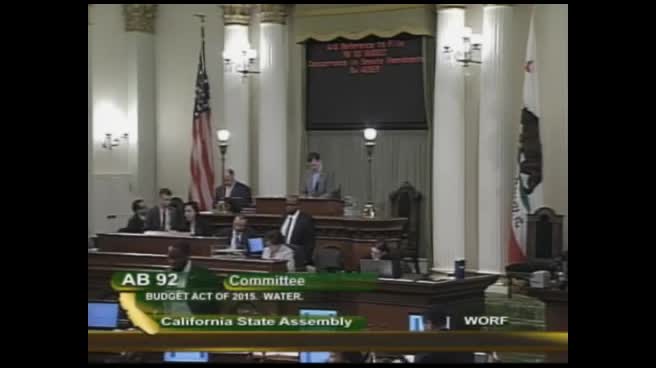 31MIN
Assembly Floor
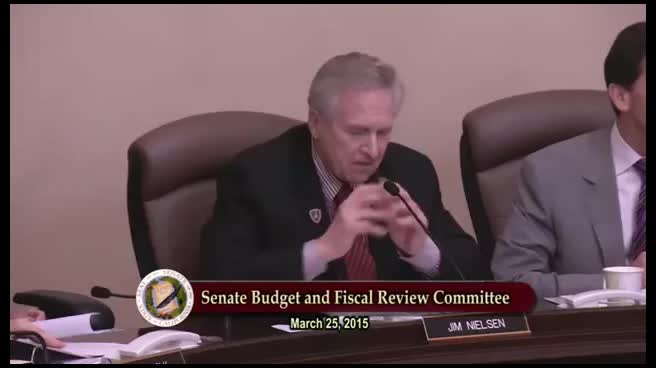 58SEC
Senate Standing Committee on Budget and Fiscal Review
 18MIN
Senate Floor
Bill Author
Bill Co-Author(s):