AB 929: Pen registers: authorized use.
- Session Year: 2015-2016
- House: Assembly
- Latest Version Date: 2015-08-13
Existing law authorizes the Attorney General or a district attorney to make a written application to a judge of a superior court for an order permitting the interception of wire communication and electronic communication, as defined. Existing law permits an application to be made informally and granted orally if an emergency situation exists, and other factors are present. Existing law conditions the granting of an oral approval on the filing of a written application by midnight of the second full court day after the oral approval is made. Existing law prohibits a communication interception from lasting for longer than 30 days. Existing law permits an extension of the original order, not to exceed 30 days, upon a showing that there is continued probable cause that the information sought is likely to be obtained under the extension.
This bill would prohibit a person, other than a provider of electronic or wire communication service for specified purposes, from installing or using a pen register or a trap and trace device, as defined. The bill would authorize a peace officer to make a written application to a magistrate for an order permitting the installation and use of a pen register or a trap and trace device. The bill would require the magistrate to enter an ex parte order authorizing the installation and use of a pen register or a trap and trace device only in specified circumstances and would permit the magistrate to question the peace officer pertaining to the need for the information. The bill would also permit an application to be made informally and granted orally if an emergency situation exists, and other factors are present. The bill would condition the grant of an oral approval on the filing of a written application by midnight of the second full court day after the pen register or trap and trace device is installed. The bill would prohibit the installation and use of a pen register or trap and trace device for longer than 60 days. The bill would permit an extension of the original order, not to exceed 60 days, upon a showing that there is continued probable cause that the information sought is likely to be obtained under the extension. The bill would clarify that any location information obtained by a pen register or a track and trace device is limited to the information that can be determined from the telephone number.
The bill would make the prohibited installation or use of a pen register or a trap and trace device punishable by a fine not exceeding $2,500, or by imprisonment in the county jail not exceeding 1 year, or by imprisonment in state prison for offenders with specified prior convictions, or by both that fine and imprisonment. By creating a new crime, the bill would impose a state-mandated local program.
The California Constitution requires the state to reimburse local agencies and school districts for certain costs mandated by the state. Statutory provisions establish procedures for making that reimbursement.
This bill would provide that no reimbursement is required by this act for a specified reason.
Existing law authorizes the Attorney General or a district attorney to make a written application to a judge of a superior court for an order permitting the interception of wire communication and electronic communication, as defined. Existing law permits an application to be made informally and granted orally if an emergency situation exists, and other factors are present. Existing law conditions the granting of an oral approval on the filing of a written application by midnight of the second full court day after the oral approval is made. Existing law prohibits a communication interception from lasting for longer than 30 days. Existing law permits an extension of the original order, not to exceed 30 days, upon a showing that there is continued probable cause that the information sought is likely to be obtained under the extension.
This bill would prohibit a person, other than a provider of electronic or wire communication service for specified purposes, from installing or using a pen register or a trap and trace device, as defined. The bill would authorize a peace officer to make a written application to a magistrate for an order permitting the installation and use of a pen register or a trap and trace device. The bill would permit an application to be made informally and granted orally if an emergency situation exists, and other factors are present. The bill would condition the grant of an oral approval on the filing of a written application by midnight of the second full court day after the pen register or trap and trace device is installed. The bill would prohibit the installation and use of a pen register or trap and trace device for longer than 60 days. The bill would permit an extension of the original order, not to exceed 60 days, upon a showing that there is continued probable cause that the information sought is likely to be obtained under the extension.
The bill would make the prohibited installation or use of a pen register or a trap and trace device punishable by a fine not exceeding $2,500, or by imprisonment in the county jail not exceeding 1 year, or by imprisonment in state prison for offenders with specified prior convictions, or by both that fine and imprisonment. By creating a new crime, the bill would impose a state-mandated local program.
The California Constitution requires the state to reimburse local agencies and school districts for certain costs mandated by the state. Statutory provisions establish procedures for making that reimbursement.
This bill would provide that no reimbursement is required by this act for a specified reason.
For purposes of this chapter, the following terms have the following meanings:
(a)Wire communication and electronic communication have the meanings set forth in subdivision (a) of Section 629.51.
(b)Pen register means a device or process that records or decodes dialing, routing, addressing, or signaling information transmitted by an instrument or facility from which a wire or electronic communication is transmitted, but not the contents of a communication. Pen register does not include a device or process used by a provider or customer of a wire or electronic communication service for billing, or recording as an incident to billing, for communications services provided by such provider, or a device or process used by a provider or customer of a wire communication service for cost accounting or other similar purposes in the ordinary course of its business.
(c)Trap and trace device means a device or process that captures the incoming electronic or other impulses that identify the originating number or other dialing, routing, addressing, or signaling information reasonably likely to identify the source of a wire or electronic communication, but not the contents of a communication.
SEC. 2.Section 638.51 is added to the Penal Code, to read:638.51.(a)Except as provided in subdivision (b), a person may not install or use a pen register or a trap and trace device without first obtaining a court order pursuant to Section 638.52 or 638.53.
(b)A provider of electronic or wire communication service may use a pen register or a trap and trace device for any of the following purposes:
(1)To operate, maintain, and test a wire or electronic communication service.
(2)To protect the rights or property of the provider.
(3)To protect users of the service from abuse of service or unlawful use of service.
(4)To record the fact that a wire or electronic communication was initiated or completed to protect the provider, another provider furnishing service toward the completion of the wire communication, or a user of that service, from fraudulent, unlawful, or abusive use of service.
(5)If the consent of the user of that service has been obtained.
(c)A violation of this section is punishable by a fine not exceeding two thousand five hundred dollars ($2,500), or by imprisonment in the county jail not exceeding one year, or by imprisonment pursuant to subdivision (h) of Section 1170, or by both that fine and imprisonment.
(d)A good faith reliance on an order issued pursuant to Section 638.52, or an authorization made pursuant to Section 638.53, is a complete defense to a civil or criminal action brought under this section or under this chapter.
SEC. 3.Section 638.52 is added to the Penal Code, to read:638.52.(a)A peace officer may make an application to a magistrate for an order or an extension of an order authorizing or approving the installation and use of a pen register or a trap and trace device. The application shall be in writing under oath or equivalent affirmation, and shall include the identity of the peace officer making the application and the identity of the law enforcement agency conducting the investigation. The applicant shall certify that the information likely to be obtained is relevant to an ongoing criminal investigation and shall include a statement of the offense to which the information likely to be obtained by the pen register or trap and trace device relates.
(b)The magistrate shall enter an ex parte order authorizing the installation and use of a pen register or a trap and trace device if he or she finds that the information likely to be obtained by the installation and use of a pen register or a trap and trace device is relevant to an ongoing investigation and that there is probable cause to believe that the pen register or trap and trace device will lead to any of the following:
(1)Recovery of stolen or embezzled property.
(2)Property or things used as the means of committing a felony.
(3)Property or things in the possession of a person with the intent to use them as a means of committing a public offense, or in the possession of another to whom he or she may have delivered them for the purpose of concealing them or preventing them from being discovered.
(4)Evidence that tends to show a felony has been committed, or tends to show that a particular person has committed or is committing a felony.
(5)Evidence that tends to show that sexual exploitation of a child, in violation of Section 311.3, or possession of matter depicting sexual conduct of a person under 18 years of age, in violation of Section 311.11, has occurred or is occurring.
(6)The location of a person who is unlawfully restrained or reasonably believed to be a witness in a criminal investigation or for whose arrest there is probable cause.
(7)Evidence that tends to show a violation of Section 3700.5 of the Labor Code, or tends to show that a particular person has violated Section 3700.5 of the Labor Code.
(8)Evidence that does any of the following:
(A)Tends to show that a felony, a misdemeanor violation of the Fish and Game Code, or a misdemeanor violation of the Public Resources Code, has been committed or is being committed.
(B)Tends to show that a particular person has committed or is committing a felony, a misdemeanor violation of the Fish and Game Code, or a misdemeanor violation of the Public Resources Code.
(C)Will assist in locating an individual who has committed or is committing a felony, a misdemeanor violation of the Fish and Game Code, or a misdemeanor violation of the Public Resources Code.
(c)Information acquired solely pursuant to the authority for a pen register or a trap and trace device shall not include any information that may disclose the physical location of the subscriber, except to the extent that the location may be determined from the telephone number. Upon the request of the person seeking the pen register or trap and trace device, the magistrate may seal portions of the application pursuant to People v. Hobbs (1994) 7 Cal.4th 948, and Sections 1040, 1041, and 1042 of the Evidence Code.
(d)An order issued pursuant to subdivision (b) shall specify all of the following:
(1)The identity, if known, of the person to whom is leased or in whose name is listed the telephone line to which the pen register or trap and trace device is to be attached.
(2)The identity, if known, of the person who is the subject of the criminal investigation.
(3)The number and, if known, physical location of the telephone line to which the pen register or trap and trace device is to be attached and, in the case of a trap and trace device, the geographic limits of the trap and trace order.
(4)A statement of the offense to which the information likely to be obtained by the pen register or trap and trace device relates.
(5)The order shall direct, if the applicant has requested, the furnishing of information, facilities, and technical assistance necessary to accomplish the installation of the pen register or trap and trace device.
(e)An order issued under this section shall authorize the installation and use of a pen register or a trap and trace device for a period not to exceed 60 days.
(f)Extensions of the original order may be granted upon a new application for an order under subdivisions (a) and (b) if the officer shows that there is a continued probable cause that the information or items sought under this subdivision are likely to be obtained under the extension. The period of an extension shall not exceed 60 days.
(g)An order or extension order authorizing or approving the installation and use of a pen register or a trap and trace device shall direct that the order be sealed until otherwise ordered by the magistrate who issued the order, or a judge of the superior court, and that the person owning or leasing the line to which the pen register or trap and trace device is attached, or who has been ordered by the court to provide assistance to the applicant, not disclose the existence of the pen register or trap and trace device or the existence of the investigation to the listed subscriber or to any other person, unless or until otherwise ordered by the magistrate or a judge of the superior court, or for compliance with Sections 1054.1 and 1054.7.
(h)Upon the presentation of an order, entered under subdivisions (b) or (f), by a peace officer authorized to install and use a pen register, a provider of wire or electronic communication service, landlord, custodian, or other person shall immediately provide the peace officer all information, facilities, and technical assistance necessary to accomplish the installation of the pen register unobtrusively and with a minimum of interference with the services provided to the party with respect to whom the installation and use is to take place, if the assistance is directed by the order.
(i)Upon the request of a peace officer authorized to receive the results of a trap and trace device, a provider of a wire or electronic communication service, landlord, custodian, or other person shall immediately install the device on the appropriate line and provide the peace officer all information, facilities, and technical assistance, including installation and operation of the device unobtrusively and with a minimum of interference with the services provided to the party with respect to whom the installation and use is to take place, if the installation and assistance is directed by the order.
(j)Unless otherwise ordered by the magistrate, the results of the pen register or trap and trace device shall be provided to the peace officer at reasonable intervals during regular business hours for the duration of the order.
(k)The magistrate, before issuing the order pursuant to subdivision (b), may examine on oath the person seeking the pen register or the trap and trace device, and any witnesses the person may produce, and shall take his or her affidavit or their affidavits in writing, and cause the affidavit or affidavits to be subscribed by the parties making them.
SEC. 4.Section 638.53 is added to the Penal Code, to read:638.53.(a)Except as otherwise provided in this chapter, upon an oral application by a peace officer, a magistrate may grant oral approval for the installation and use of a pen register or a trap and trace device, without an order, if he or she determines all of the following:
(1)There are grounds upon which an order could be issued under Section 638.52.
(2)There is probable cause to believe that an emergency situation exists with respect to the investigation of a crime.
(3)There is probable cause to believe that a substantial danger to life or limb exists justifying the authorization for immediate installation and use of a pen register or a trap and trace device before an order authorizing the installation and use can, with due diligence, be submitted and acted upon.
(b)(1)By midnight of the second full court day after the pen register or trap and trace device is installed, a written application pursuant to Section 638.52 shall be submitted by the peace officer who made the oral application to the magistrate who orally approved the installation and use of a pen register or trap and trace device. If an order is issued pursuant to Section 638.52, the order shall also recite the time of the oral approval under subdivision (a) and shall be retroactive to the time of the original oral approval.
(2)In the absence of an authorizing order pursuant to paragraph (1), the use shall immediately terminate when the information sought is obtained, when the application for the order is denied, or by midnight of the second full court day after the pen register or trap and trace device is installed, whichever is earlier.
(c)A provider of a wire or electronic communication service, landlord, custodian, or other person who provides facilities or technical assistance pursuant to this section shall be reasonably compensated by the requesting peace officers law enforcement agency for the reasonable expenses incurred in providing the facilities and assistance.
SEC. 5.No reimbursement is required by this act pursuant to Section 6 of Article XIIIB of the California Constitution because the only costs that may be incurred by a local agency or school district will be incurred because this act creates a new crime or infraction, eliminates a crime or infraction, or changes the penalty for a crime or infraction, within the meaning of Section 17556 of the Government Code, or changes the definition of a crime within the meaning of Section 6 of Article XIIIB of the California Constitution.
For purposes of this chapter, the following terms have the following meanings:
(a)Wire communication and electronic communication have the meanings set forth in subdivision (a) of Section 629.51.
(b)Pen register means a device or process that records or decodes dialing, routing, addressing, or signaling information transmitted by an instrument or facility from which a wire or electronic communication is transmitted, but not the contents of a communication. Pen register does not include a device or process used by a provider or customer of a wire or electronic communication service for billing, or recording as an incident to billing, for communications services provided by such provider, or a device or process used by a provider or customer of a wire communication service for cost accounting or other similar purposes in the ordinary course of its business.
(c)Trap and trace device means a device or process that captures the incoming electronic or other impulses that identify the originating number or other dialing, routing, addressing, or signaling information reasonably likely to identify the source of a wire or electronic communication, but not the contents of a communication.
SEC. 2.Section 638.51 is added to the Penal Code, to read:638.51.(a)Except as provided in subdivision (b), a person may not install or use a pen register or a trap and trace device without first obtaining a court order pursuant to Section 638.52 or 638.53.
(b)A provider of electronic or wire communication service may use a pen register or a trap and trace device for any of the following purposes:
(1)To operate, maintain, and test a wire or electronic communication service.
(2)To protect the rights or property of the provider.
(3)To protect users of the service from abuse of service or unlawful use of service.
(4)To record the fact that a wire or electronic communication was initiated or completed to protect the provider, another provider furnishing service toward the completion of the wire communication, or a user of that service, from fraudulent, unlawful, or abusive use of service.
(5)If the consent of the user of that service has been obtained.
(c)A violation of this section is punishable by a fine not exceeding two thousand five hundred dollars ($2,500), or by imprisonment in the county jail not exceeding one year, or by imprisonment pursuant to subdivision (h) of Section 1170, or by both that fine and imprisonment.
(d)A good faith reliance on an order issued pursuant to Section 638.52, or an authorization made pursuant to Section 638.53, is a complete defense to a civil or criminal action brought under this section or under this chapter.
SEC. 3.Section 638.52 is added to the Penal Code, to read:638.52.(a)A peace officer may make an application to a magistrate for an order or an extension of an order authorizing or approving the installation and use of a pen register or a trap and trace device. The application shall be in writing under oath or equivalent affirmation, and shall include the identity of the peace officer making the application and the identity of the law enforcement agency conducting the investigation. The applicant shall certify that the information likely to be obtained is relevant to an ongoing criminal investigation and shall include a statement of the offense to which the information likely to be obtained by the pen register or trap and trace device relates.
(b)(1)The magistrate shall enter an ex parte order authorizing the installation and use of a pen register or a trap and trace device if he or she finds that the information likely to be obtained by the installation and use of a pen register or a trap and trace device is relevant to an ongoing investigation and that there is probable cause to believe that the pen register or trap and trace device will lead to any of the following:
(A)
(1)Recovery of stolen or embezzled property.
(B)
(2)Property or things used as the means of committing a felony.
(C)
(3)Property or things in the possession of a person with the intent to use them as a means of committing a public offense, or in the possession of another to whom he or she may have delivered them for the purpose of concealing them or preventing them from being discovered.
(D)
(4)Evidence that tends to show a felony has been committed, or tends to show that a particular person has committed or is committing a felony.
(E)
(5)Evidence that tends to show that sexual exploitation of a child, in violation of Section 311.3, or possession of matter depicting sexual conduct of a person under 18 years of age, in violation of Section 311.11, has occurred or is occurring.
(F)
(6)The location of a person who is unlawfully restrained or reasonably believed to be a witness in a criminal investigation or for whose arrest there is probable cause.
(G)
(7)Evidence that tends to show a violation of Section 3700.5 of the Labor Code, or tends to show that a particular person has violated Section 3700.5 of the Labor Code.
(H)
(8)Evidence that does any of the following:
(i)
(A)Tends to show that a felony, a misdemeanor violation of the Fish and Game Code, or a misdemeanor violation of the Public Resources Code, has been committed or is being committed.
(ii)
(B)Tends to show that a particular person has committed or is committing a felony, a misdemeanor violation of the Fish and Game Code, or a misdemeanor violation of the Public Resources Code.
(iii)
(C)Will assist in locating an individual who has committed or is committing a felony, a misdemeanor violation of the Fish and Game Code, or a misdemeanor violation of the Public Resources Code.
(2)The magistrate shall enter an ex parte order authorizing the installation and use of a pen register or a trap and trace device if he or she finds that information likely to be obtained by the installation and use of a pen register or a trap and trace device is relevant to an ongoing search and rescue investigation of a person who is or is believed to be in danger because of age, health, mental or physical disability, environmental or weather conditions, that the person is in the company of a potentially dangerous person, or that there are other factors indicating that the person may be in peril.
(c)Information acquired solely pursuant to the authority for a pen register or a trap and trace device shall not include any information that may disclose the physical location of the subscriber, except to the extent that the location may be determined from the telephone number. Upon the request of the person seeking the pen register or trap and trace device, the magistrate may seal portions of the application pursuant to People v. Hobbs (1994) 7 Cal.4th 948, and Sections 1040, 1041, and 1042 of the Evidence Code.
(d)An order issued pursuant to subdivision (b) shall specify all of the following:
(1)The identity, if known, of the person to whom is leased or in whose name is listed the telephone line to which the pen register or trap and trace device is to be attached.
(2)The identity, if known, of the person who is the subject of the criminal investigation.
(3)The number and, if known, physical location of the telephone line to which the pen register or trap and trace device is to be attached and, in the case of a trap and trace device, the geographic limits of the trap and trace order.
(4)A statement of the offense to which the information likely to be obtained by the pen register or trap and trace device relates.
(5)The order shall direct, if the applicant has requested, the furnishing of information, facilities, and technical assistance necessary to accomplish the installation of the pen register or trap and trace device.
(e)An order issued under this section shall authorize the installation and use of a pen register or a trap and trace device for a period not to exceed 60 days.
(f)Extensions of the original order may be granted upon a new application for an order under subdivisions (a) and (b) if the officer shows that there is a continued probable cause that the information or items sought under this subdivision are likely to be obtained under the extension. The period of an extension shall not exceed 60 days.
(g)An order or extension order authorizing or approving the installation and use of a pen register or a trap and trace device shall direct that the order be sealed until otherwise ordered by the magistrate who issued the order, or a judge of the superior court, and that the person owning or leasing the line to which the pen register or trap and trace device is attached, or who has been ordered by the court to provide assistance to the applicant, not disclose the existence of the pen register or trap and trace device or the existence of the investigation to the listed subscriber or to any other person, unless or until otherwise ordered by the magistrate or a judge of the superior court, or for compliance with Sections 1054.1 and 1054.7.
(h)Upon the presentation of an order, entered under subdivisions (b) or (f), by a peace officer authorized to install and use a pen register, a provider of wire or electronic communication service, landlord, custodian, or other person shall immediately provide the peace officer all information, facilities, and technical assistance necessary to accomplish the installation of the pen register unobtrusively and with a minimum of interference with the services provided to the party with respect to whom the installation and use is to take place, if the assistance is directed by the order.
(i)Upon the request of a peace officer authorized to receive the results of a trap and trace device, a provider of a wire or electronic communication service, landlord, custodian, or other person shall immediately install the device on the appropriate line and provide the peace officer all information, facilities, and technical assistance, including installation and operation of the device unobtrusively and with a minimum of interference with the services provided to the party with respect to whom the installation and use is to take place, if the installation and assistance is directed by the order.
(j)Unless otherwise ordered by the magistrate, the results of the pen register or trap and trace device shall be provided to the peace officer at reasonable intervals during regular business hours for the duration of the order.
(k)The magistrate, before issuing the order pursuant to subdivision (b), may examine on oath the person seeking the pen register or the trap and trace device, and any witnesses the person may produce, and shall take his or her affidavit or their affidavits in writing, and cause the affidavit or affidavits to be subscribed by the parties making them.
SEC. 4.Section 638.53 is added to the Penal Code, to read:638.53.(a)Except as otherwise provided in this chapter, upon an oral application by a peace officer, a magistrate may grant oral approval for the installation and use of a pen register or a trap and trace device, without an order, if he or she determines all of the following:
(1)There are grounds upon which an order could be issued under Section 638.52.
(2)There is probable cause to believe that an emergency situation exists with respect to the investigation of a crime or a search and rescue investigation. crime.
(3)There is probable cause to believe that a substantial danger to life or limb exists justifying the authorization for immediate installation and use of a pen register or a trap and trace device before an order authorizing the installation and use can, with due diligence, be submitted and acted upon.
(b)(1)By midnight of the second full court day after the pen register or trap and trace device is installed, a written application pursuant to Section 638.52 shall be submitted by the peace officer who made the oral application to the magistrate who orally approved the installation and use of a pen register or trap and trace device. If an order is issued pursuant to Section 638.52, the order shall also recite the time of the oral approval under subdivision (a) and shall be retroactive to the time of the original oral approval.
(2)In the absence of an authorizing order pursuant to paragraph (1), the use shall immediately terminate when the information sought is obtained, when the application for the order is denied, or by midnight of the second full court day after the pen register or trap and trace device is installed, whichever is earlier.
(c)A provider of a wire or electronic communication service, landlord, custodian, or other person who provides facilities or technical assistance pursuant to this section shall be reasonably compensated by the requesting peace officers law enforcement agency for the reasonable expenses incurred in providing the facilities and assistance.
SEC. 5.No reimbursement is required by this act pursuant to Section 6 of Article XIIIB of the California Constitution because the only costs that may be incurred by a local agency or school district will be incurred because this act creates a new crime or infraction, eliminates a crime or infraction, or changes the penalty for a crime or infraction, within the meaning of Section 17556 of the Government Code, or changes the definition of a crime within the meaning of Section 6 of Article XIIIB of the California Constitution.
For purposes of this chapter, the following terms have the following meanings:
(a)Wire communication and electronic communication have the meaning meanings set forth in subdivision (a) of Section 629.51.
(b)Pen register means a device or process that records or decodes dialing, routing, addressing, or signaling information transmitted by an instrument or facility from which a wire or electronic communication is transmitted, but not the contents of a communication. Pen register does not include a device or process used by a provider or customer of a wire or electronic communication service for billing, or recording as an incident to billing, for communications services provided by such provider, or a device or process used by a provider or customer of a wire communication service for cost accounting or other similar purposes in the ordinary course of its business.
(c)Trap and trace device means a device or process that captures the incoming electronic or other impulses that identify the originating number or other dialing, routing, addressing, or signaling information reasonably likely to identify the source of a wire or electronic communication, but not the contents of a communication.
SEC. 2.Section 638.51 is added to the Penal Code, to read:638.51.(a)Except as provided in subdivision (b), a person may not install or use a pen register or a trap and trace device without first obtaining a court order pursuant to Section 638.52 or 638.53.
(b)A provider of electronic or wire communication service may use a pen register or a trap and trace device for any of the following purposes:
(1)To operate, maintain, and test a wire or electronic communication service.
(2)To protect the rights or property of the provider.
(3)To protect users of the service from abuse of service or unlawful use of service.
(4)To record the fact that a wire or electronic communication was initiated or completed to protect the provider, another provider furnishing service toward the completion of the wire communication, or a user of that service, from fraudulent, unlawful, or abusive use of service.
(5)If the consent of the user of that service has been obtained.
(c)A violation of this section is punishable by a fine not exceeding two thousand five hundred dollars ($2,500), or by imprisonment in the county jail not exceeding one year, or by imprisonment pursuant to subdivision (h) of Section 1170, or by both that fine and imprisonment.
(d)A good faith reliance on an order issued pursuant to Section 638.52, or an authorization made pursuant to Section 638.53, is a complete defense to a civil or criminal action brought under this section or under this chapter.
SEC. 3.Section 638.52 is added to the Penal Code, to read:638.52.(a)A peace officer may make an application to a magistrate for an order or an extension of an order authorizing or approving the installation and use of a pen register or a trap and trace device. The application shall be in writing under oath or equivalent affirmation, and shall include the identity of the peace officer making the application and the identity of the law enforcement agency conducting the investigation. The applicant shall certify that the information likely to be obtained is relevant to an ongoing criminal investigation and shall include a statement of the offense to which the information likely to be obtained by the pen register or trap and trace device relates.
(b)(1)The magistrate shall enter an ex parte order authorizing the installation and use of a pen register or a trap and trace device if he or she finds that the information likely to be obtained by the installation and use of a pen register or a trap and trace device is relevant to an ongoing investigation and that there is probable cause to believe that the pen register or trap and trace device will lead to any of the following:
(1)
(A)Recovery of stolen or embezzled property.
(2)
(B)Property or things used as the means of committing a felony.
(3)
(C)Property or things in the possession of a person with the intent to use them as a means of committing a public offense, or in the possession of another to whom he or she may have delivered them for the purpose of concealing them or preventing them from being discovered.
(4)
(D)Evidence that tends to show a felony has been committed, or tends to show that a particular person has committed or is committing a felony.
(5)
(E)Evidence that tends to show that sexual exploitation of a child, in violation of Section 311.3, or possession of matter depicting sexual conduct of a person under 18 years of age, in violation of Section 311.11, has occurred or is occurring.
(6)
(F)The location of a person who is unlawfully restrained or reasonably believed to be a witness in a criminal investigation or for whose arrest there is probable cause.
(7)
(G)Evidence that tends to show a violation of Section 3700.5 of the Labor Code, or tends to show that a particular person has violated Section 3700.5 of the Labor Code.
(8)
(H)Evidence that does any of the following:
(A)
(i)Tends to show that a felony, a misdemeanor violation of the Fish and Game Code, or a misdemeanor violation of the Public Resources Code, has been committed or is being committed.
(B)
(ii)Tends to show that a particular person has committed or is committing a felony, a misdemeanor violation of the Fish and Game Code, or a misdemeanor violation of the Public Resources Code.
(C)
(iii)Will assist in locating an individual who has committed or is committing a felony, a misdemeanor violation of the Fish and Game Code, or a misdemeanor violation of the Public Resources Code.
(2)The magistrate shall enter an ex parte order authorizing the installation and use of a pen register or a trap and trace device if he or she finds that information likely to be obtained by the installation and use of a pen register or a trap and trace device is relevant to an ongoing search and rescue investigation of a person who is or is believed to be in danger because of age, health, mental or physical disability, environmental or weather conditions, that the person is in the company of a potentially dangerous person, or that there are other factors indicating that the person may be in peril.
(c)Information acquired solely pursuant to the authority for a pen register or a trap and trace device shall not include any information that may disclose the physical location of the subscriber, except to the extent that the location may be determined from the telephone number. Upon the request of the person seeking the pen register or trap and trace device, the magistrate may seal portions of the application pursuant to People v. Hobbs (1994) 7 Cal.4th 948, and Sections 1040, 1041, and 1042 of the Evidence Code.
(d)An order issued pursuant to subdivision (b) shall specify all of the following:
(1)The identity, if known, of the person to whom is leased or in whose name is listed the telephone line to which the pen register or trap and trace device is to be attached.
(2)The identity, if known, of the person who is the subject of the criminal investigation.
(3)The number and, if known, physical location of the telephone line to which the pen register or trap and trace device is to be attached and, in the case of a trap and trace device, the geographic limits of the trap and trace order.
(4)A statement of the offense to which the information likely to be obtained by the pen register or trap and trace device relates.
(5)The order shall direct, if the applicant has requested, the furnishing of information, facilities, and technical assistance necessary to accomplish the installation of the pen register or trap and trace device.
(e)An order issued under this section shall authorize the installation and use of a pen register or a trap and trace device for a period not to exceed 60 days.
(f)Extensions of the original order may be granted upon a new application for an order under subdivisions (a) and (b) if the officer shows that there is a continued probable cause that the information or items sought under this subdivision are likely to be obtained under the extension. The period of an extension shall not exceed 60 days.
(g)An order or extension order authorizing or approving the installation and use of a pen register or a trap and trace device shall direct that the order be sealed until otherwise ordered by the magistrate who issued the order, or a judge of the superior court, and that the person owning or leasing the line to which the pen register or trap and trace device is attached, or who has been ordered by the court to provide assistance to the applicant, not disclose the existence of the pen register or trap and trace device or the existence of the investigation to the listed subscriber or to any other person, unless or until otherwise ordered by the magistrate or a judge of the superior court, or for compliance with Sections 1054.1 and 1054.7.
(h)Upon the presentation of an order, entered under subdivisions (b) or (f), by a peace officer authorized to install and use a pen register, a provider of wire or electronic communication service, landlord, custodian, or other person shall immediately provide the peace officer all information, facilities, and technical assistance necessary to accomplish the installation of the pen register unobtrusively and with a minimum of interference with the services provided to the party with respect to whom the installation and use is to take place, if the assistance is directed by the order.
(i)Upon the request of a peace officer authorized to receive the results of a trap and trace device, a provider of a wire or electronic communication service, landlord, custodian, or other person shall immediately install the device on the appropriate line and provide the peace officer all information, facilities, and technical assistance, including installation and operation of the device unobtrusively and with a minimum of interference with the services provided to the party with respect to whom the installation and use is to take place, if the installation and assistance is directed by the order.
(j)Unless otherwise ordered by the magistrate, the results of the pen register or trap and trace device shall be provided to the peace officer at reasonable intervals during regular business hours for the duration of the order.
(k)The magistrate, before issuing the order pursuant to subdivision (b), may examine on oath the person seeking the pen register or the trap and trace device, and any witnesses the person may produce, and shall take his or her affidavit or their affidavits in writing, and cause the affidavit or affidavits to be subscribed by the parties making them.
SEC. 4.Section 638.53 is added to the Penal Code, to read:638.53.(a)Except as otherwise provided in this chapter, upon an oral application by a peace officer, a magistrate may grant oral approval for the installation and use of a pen register or a trap and trace device, without an order, if he or she determines all of the following:
(1)There are grounds upon which an order could be issued under Section 638.52.
(2)There is probable cause to believe that an emergency situation exists with respect to the investigation of a crime. crime or a search and rescue investigation.
(3)There is probable cause to believe that a substantial danger to life or limb exists justifying the authorization for immediate installation and use of a pen register or a trap and trace device before an order authorizing the installation and use can, with due diligence, be submitted and acted upon.
(b)(1)By midnight of the second full court day after the pen register or trap and trace device is installed, a written application pursuant to Section 638.52 shall be submitted by the peace officer who made the oral application to the magistrate who orally approved the installation and use of a pen register or trap and trace device. If an order is issued pursuant to Section 638.52, the order shall also recite the time of the oral approval under subdivision (a) and shall be retroactive to the time of the original oral approval.
(2)In the absence of an authorizing order pursuant to paragraph (1), the use shall immediately terminate when the information sought is obtained, when the application for the order is denied, or by midnight of the second full court day after the pen register or trap and trace device is installed, whichever is earlier.
(c)A provider of a wire or electronic communication service, landlord, custodian, or other person who provides facilities or technical assistance pursuant to this section shall be reasonably compensated by the requesting peace officers law enforcement agency for the reasonable expenses incurred in providing the facilities and assistance.
SEC. 5.No reimbursement is required by this act pursuant to Section 6 of Article XIIIB of the California Constitution because the only costs that may be incurred by a local agency or school district will be incurred because this act creates a new crime or infraction, eliminates a crime or infraction, or changes the penalty for a crime or infraction, within the meaning of Section 17556 of the Government Code, or changes the definition of a crime within the meaning of Section 6 of Article XIIIB of the California Constitution.
For purposes of this chapter, the following terms have the following meanings:
(a)Wire communication and electronic communication have the meaning set forth in subdivision (a) of Section 629.51.
(b)Pen register means a device or process that records or decodes dialing, routing, addressing, or signaling information transmitted by an instrument or facility from which a wire or electronic communication is transmitted, but not the contents of a communication. Pen register does not include a device or process used by a provider or customer of a wire or electronic communication service for billing, or recording as an incident to billing, for communications services provided by such provider, or a device or process used by a provider or customer of a wire communication service for cost accounting or other similar purposes in the ordinary course of its business.
(c)Trap and trace device means a device or process that captures the incoming electronic or other impulses that identify the originating number or other dialing, routing, addressing, or signaling information reasonably likely to identify the source of a wire or electronic communication, but not the contents of a communication.
SEC. 2.Section 638.51 is added to the Penal Code, to read:638.51.(a)Except as provided in subdivision (b), a person may not install or use a pen register or a trap and trace device without first obtaining a court order pursuant to Section 638.52 or 638.53.
(b)A provider of electronic or wire communication service may use a pen register or a trap and trace device for any of the following purposes:
(1)To operate, maintain, and test a wire or electronic communication service.
(2)To protect the rights or property of the provider.
(3)To protect users of the service from abuse of service or unlawful use of service.
(4)To record the fact that a wire or electronic communication was initiated or completed to protect the provider, another provider furnishing service toward the completion of the wire communication, or a user of that service, from fraudulent, unlawful, or abusive use of service.
(5)If the consent of the user of that service has been obtained.
(c)A violation of this section is punishable by a fine not exceeding two thousand five hundred dollars ($2,500), or by imprisonment in the county jail not exceeding one year, or by imprisonment pursuant to subdivision (h) of Section 1170, or by both that fine and imprisonment.
(d)A good faith reliance on an order issued pursuant to Section 638.52, or an authorization made pursuant to Section 638.53, is a complete defense to a civil or criminal action brought under this section or under this chapter.
SEC. 3.Section 638.52 is added to the Penal Code, to read:638.52.(a)A peace officer may make an application to a magistrate for an order or an extension of an order authorizing or approving the installation and use of a pen register or a trap and trace device. The application shall be in writing under oath or equivalent affirmation, and shall include the identity of the peace officer making the application and the identity of the law enforcement agency conducting the investigation. The applicant shall certify that the information likely to be obtained is relevant to an ongoing criminal investigation and shall include a statement of the offense to which the information likely to be obtained by the pen register or trap and trace device relates.
(b)If the magistrate finds that the information likely to be obtained by the installation and use of a pen register or a trap and trace device is relevant to an ongoing criminal investigation, and finds that there is probable cause to believe that the pen register or trap and trace device will lead to obtaining evidence of a crime, contraband, fruits of crime, things criminally possessed, weapons, or other things by means of which a crime has been committed or reasonably appears about to be committed, or will lead to learning the location of a person who is unlawfully restrained or reasonably believed to be a witness in a criminal investigation or for whose arrest there is probable cause, the magistrate shall enter an ex parte order authorizing the installation and use of a pen register or a trap and trace device.
(b)The magistrate shall enter an ex parte order authorizing the installation and use of a pen register or a trap and trace device if he or she finds that the information likely to be obtained by the installation and use of a pen register or a trap and trace device is relevant to an ongoing investigation and that there is probable cause to believe that the pen register or trap and trace device will lead to any of the following:
(1)Recovery of stolen or embezzled property.
(2)Property or things used as the means of committing a felony.
(3)Property or things in the possession of a person with the intent to use them as a means of committing a public offense, or in the possession of another to whom he or she may have delivered them for the purpose of concealing them or preventing them from being discovered.
(4)Evidence that tends to show a felony has been committed, or tends to show that a particular person has committed or is committing a felony.
(5)Evidence that tends to show that sexual exploitation of a child, in violation of Section 311.3, or possession of matter depicting sexual conduct of a person under 18 years of age, in violation of Section 311.11, has occurred or is occurring.
(6)The location of a person who is unlawfully restrained or reasonably believed to be a witness in a criminal investigation or for whose arrest there is probable cause.
(7)Evidence that tends to show a violation of Section 3700.5 of the Labor Code, or tends to show that a particular person has violated Section 3700.5 of the Labor Code.
(8)Evidence that does any of the following:
(A)Tends to show that a felony, a misdemeanor violation of the Fish and Game Code, or a misdemeanor violation of the Public Resources Code, has been committed or is being committed.
(B)Tends to show that a particular person has committed or is committing a felony, a misdemeanor violation of the Fish and Game Code, or a misdemeanor violation of the Public Resources Code.
(C)Will assist in locating an individual who has committed or is committing a felony, a misdemeanor violation of the Fish and Game Code, or a misdemeanor violation of the Public Resources Code.
(c)Information acquired solely pursuant to the authority for a pen register or a trap and trace device shall not include any information that may disclose the physical location of the subscriber, except to the extent that the location may be determined from the telephone number. Upon the request of the person seeking the pen register or trap and trace device, the magistrate may seal portions of the application pursuant to People v. Hobbs (1994) 7 Cal.4th 948, and Sections 1040, 1041, and 1042 of the Evidence Code.
(c)
(d)An order issued pursuant to subdivision (b) shall specify all of the following:
(1)The identity, if known, of the person to whom is leased or in whose name is listed the telephone line to which the pen register or trap and trace device is to be attached.
(2)The identity, if known, of the person who is the subject of the criminal investigation.
(3)The number and, if known, physical location of the telephone line to which the pen register or trap and trace device is to be attached and, in the case of a trap and trace device, the geographic limits of the trap and trace order.
(4)A statement of the offense to which the information likely to be obtained by the pen register or trap and trace device relates.
(5)The order shall direct, if the applicant has requested, the furnishing of information, facilities, and technical assistance necessary to accomplish the installation of the pen register or trap and trace device.
(d)
(e)An order issued under this section shall authorize the installation and use of a pen register or a trap and trace device for a period not to exceed 60 days.
(e)
(f)Extensions of the original order may be granted upon a new application for an order under subdivisions (a) and (b) if the officer shows that there is a continued probable cause that the information or items sought under this subdivision are likely to be obtained under the extension. The period of an extension shall not exceed 60 days.
(f)
(g)An order or extension order authorizing or approving the installation and use of a pen register or a trap and trace device shall direct that the order be sealed until otherwise ordered by the magistrate who issued the order, or a judge of the superior court, and that the person owning or leasing the line to which the pen register or trap and trace device is attached, or who has been ordered by the court to provide assistance to the applicant, not disclose the existence of the pen register or trap and trace device or the existence of the investigation to the listed subscriber or to any other person, unless or until otherwise ordered by the magistrate or a judge of the superior court court, or for compliance with Sections 1054.1 and 1054.7.
(g)
(h)Upon the presentation of an order, entered under subdivisions (b) or (e) (f), by a peace officer authorized to install and use a pen register, a provider of wire or electronic communication service, landlord, custodian, or other person shall immediately provide the peace officer all information, facilities, and technical assistance necessary to accomplish the installation of the pen register unobtrusively and with a minimum of interference with the services provided to the party with respect to whom the installation and use is to take place, if the assistance is directed by the order.
(h)
(i)Upon the request of a peace officer authorized to receive the results of a trap and trace device, a provider of a wire or electronic communication service, landlord, custodian, or other person shall immediately install the device on the appropriate line and provide the peace officer all information, facilities, and technical assistance, including installation and operation of the device unobtrusively and with a minimum of interference with the services provided to the party with respect to whom the installation and use is to take place, if the installation and assistance is directed by the order.
(i)
(j)Unless otherwise ordered by the magistrate, the results of the pen register or trap and trace device shall be provided to the peace officer at reasonable intervals during regular business hours for the duration of the order.
(k)The magistrate, before issuing the order pursuant to subdivision (b), may examine on oath the person seeking the pen register or the trap and trace device, and any witnesses the person may produce, and shall take his or her affidavit or their affidavits in writing, and cause the affidavit or affidavits to be subscribed by the parties making them.
SEC. 4.Section 638.53 is added to the Penal Code, to read:638.53.(a)Except as otherwise provided in this chapter, upon an oral application by a peace officer, a magistrate may grant oral approval for the installation and use of a pen register or a trap and trace device, without an order, if he or she determines all of the following:
(1)There are grounds upon which an order could be issued under Section 638.52.
(2)There is probable cause to believe that an emergency situation exists with respect to the investigation of a crime.
(3)There is probable cause to believe that a substantial danger to life or limb exists justifying the authorization for immediate installation and use of a pen register or a trap and trace device before an order authorizing the installation and use can, with due diligence, be submitted and acted upon.
(b)(1)By midnight of the second full court day after the pen register or trap and trace device is installed, a written application pursuant to Section 638.52 shall be submitted by the peace officer who made the oral application to the magistrate who orally approved the installation and use of a pen register or trap and trace device. If an order is issued pursuant to Section 638.52, the order shall also recite the time of the oral approval under subdivision (a) and shall be retroactive to the time of the original oral approval.
(2)In the absence of an authorizing order pursuant to paragraph (1), the use shall immediately terminate when the information sought is obtained, when the application for the order is denied, or by midnight of the second full court day after the pen register or trap and trace device is installed, whichever is earlier.
(c)A provider of a wire or electronic communication service, landlord, custodian, or other person who provides facilities or technical assistance pursuant to this section shall be reasonably compensated by the requesting peace officers law enforcement agency for the reasonable expenses incurred in providing the facilities and assistance.
SEC. 5.No reimbursement is required by this act pursuant to Section 6 of Article XIIIB of the California Constitution because the only costs that may be incurred by a local agency or school district will be incurred because this act creates a new crime or infraction, eliminates a crime or infraction, or changes the penalty for a crime or infraction, within the meaning of Section 17556 of the Government Code, or changes the definition of a crime within the meaning of Section 6 of Article XIIIB of the California Constitution.
For purposes of this chapter, the following terms have the following meanings:
(a)Wire communication and electronic communication have the meaning set forth in subdivision (a) of Section 629.51.
(b)Pen register means a device or process that records or decodes dialing, routing, addressing, or signaling information transmitted by an instrument or facility from which a wire or electronic communication is transmitted, but not the contents of a communication. Pen register does not include a device or process used by a provider or customer of a wire or electronic communication service for billing, or recording as an incident to billing, for communications services provided by such provider, or a device or process used by a provider or customer of a wire communication service for cost accounting or other similar purposes in the ordinary course of its business.
(c)Trap and trace device means a device or process that captures the incoming electronic or other impulses that identify the originating number or other dialing, routing, addressing, or signaling information reasonably likely to identify the source of a wire or electronic communication, but not the contents of a communication.
SEC. 2.Section 638.51 is added to the Penal Code, to read:638.51.(a)Except as provided in subdivision (b), a person may not install or use a pen register or a trap and trace device without first obtaining a court order.
(b)A provider of electronic or wire communication service may use a pen register or a trap and trace device for any of the following purposes:
(1)To operate, maintain, and test a wire or electronic communication service.
(2)To protect the rights or property of the provider.
(3)To protect users of the service from abuse of service or unlawful use of service.
(4)To record the fact that a wire or electronic communication was initiated or completed to protect the provider, another provider furnishing service toward the completion of the wire communication, or a user of that service, from fraudulent, unlawful, or abusive use of service.
(5)If the consent of the user of that service has been obtained.
(c)A violation of this section is punishable by a fine not exceeding two thousand five hundred dollars ($2,500), or by imprisonment in the county jail not exceeding one year, or by imprisonment pursuant to subdivision (h) of Section 1170, or by both that fine and imprisonment.
(d)A good faith reliance on an order issued pursuant to Section 638.52, or an authorization made pursuant to Section 638.53, is a complete defense to a civil or criminal action brought under this section or under this chapter.
SEC. 3.Section 638.52 is added to the Penal Code, to read:638.52.(a)A peace officer may make an application to a magistrate for an order or an extension of an order authorizing or approving the installation and use of a pen register or a trap and trace device. The application shall be in writing under oath or equivalent affirmation, and shall include the identity of the peace officer making the application and the identity of the law enforcement agency conducting the investigation. The applicant shall certify that the information likely to be obtained is relevant to an ongoing criminal investigation and shall include a statement of the offense to which the information likely to be obtained by the pen register or trap and trace device relates.
(b)If the magistrate finds that the information likely to be obtained by the installation and use of a pen register or a trap and trace device is relevant to an ongoing criminal investigation, and finds that there is probable cause to believe that the pen register or trap and trace device will lead to obtaining evidence of a crime, contraband, fruits of crime, things criminally possessed, weapons, or other things by means of which a crime has been committed or reasonably appears about to be committed, or will lead to learning the location of a person who is unlawfully restrained or reasonably believed to be a witness in a criminal investigation or for whose arrest there is probable cause, the magistrate shall enter an ex parte order authorizing the installation and use of a pen register or a trap and trace device.
(c)An order issued pursuant to subdivision (b) shall specify all of the following:
(1)The identity, if known, of the person to whom is leased or in whose name is listed the telephone line to which the pen register or trap and trace device is to be attached.
(2)The identity, if known, of the person who is the subject of the criminal investigation.
(3)The number and, if known, physical location of the telephone line to which the pen register or trap and trace device is to be attached and, in the case of a trap and trace device, the geographic limits of the trap and trace order.
(4)A statement of the offense to which the information likely to be obtained by the pen register or trap and trace device relates.
(5)The order shall direct, if the applicant has requested, the furnishing of information, facilities, and technical assistance necessary to accomplish the installation of the pen register or trap and trace device.
(d)An order issued under this section shall authorize the installation and use of a pen register or a trap and trace device for a period not to exceed 60 days.
(e)Extensions of the original order may be granted upon a new application for an order under subdivisions (a) and (b) if the officer shows that there is a continued probable cause that the information or items sought under this subdivision are likely to be obtained under the extension. The period of an extension shall not exceed 60 days.
(f)An order or extension order authorizing or approving the installation and use of a pen register or a trap and trace device shall direct that the order be sealed until otherwise ordered by the magistrate who issued the order, or a judge of the superior court, and that the person owning or leasing the line to which the pen register or trap and trace device is attached, or who has been ordered by the court to provide assistance to the applicant, not disclose the existence of the pen register or trap and trace device or the existence of the investigation to the listed subscriber or to any other person, unless or until otherwise ordered by the magistrate or a judge of the superior court.
(g)Upon the presentation of an order, entered under subdivisions (b) or (e), by a peace officer authorized to install and use a pen register, a provider of wire or electronic communication service, landlord, custodian, or other person shall immediately provide the peace officer all information, facilities, and technical assistance necessary to accomplish the installation of the pen register unobtrusively and with a minimum of interference with the services provided to the party with respect to whom the installation and use is to take place, if the assistance is directed by the order.
(h)Upon the request of a peace officer authorized to receive the results of a trap and trace device, a provider of a wire or electronic communication service, landlord, custodian, or other person shall immediately install the device on the appropriate line and provide the peace officer all information, facilities, and technical assistance, including installation and operation of the device unobtrusively and with a minimum of interference with the services provided to the party with respect to whom the installation and use is to take place, if the installation and assistance is directed by the order.
(i)Unless otherwise ordered by the magistrate, the results of the pen register or trap and trace device shall be provided to the peace officer at reasonable intervals during regular business hours for the duration of the order.
SEC. 4.Section 638.53 is added to the Penal Code, to read:638.53.(a)Except as otherwise provided in this chapter, upon an oral application by a peace officer, a magistrate may grant oral approval for the installation and use of a pen register or a trap and trace device, without an order, if he or she determines all of the following:
(1)There are grounds upon which an order could be issued under Section 638.52.
(2)There is probable cause to believe that an emergency situation exists with respect to the investigation of a crime.
(3)There is probable cause to believe that a substantial danger to life or limb exists justifying the authorization for immediate installation and use of a pen register or a trap and trace device before an order authorizing the installation and use can, with due diligence, be submitted and acted upon.
(b)(1)By midnight of the second full court day after the pen register or trap and trace device is installed, a written application pursuant to Section 638.52 shall be submitted by the peace officer who made the oral application to the magistrate who orally approved the installation and use of a pen register or trap and trace device. If an order is issued pursuant to Section 638.52, the order shall also recite the time of the oral approval under subdivision (a) and shall be retroactive to the time of the original oral approval.
(2)In the absence of an authorizing order pursuant to paragraph (1), the use shall immediately terminate when the information sought is obtained, when the application for the order is denied, or by midnight of the second full court day after the pen register or trap and trace device is installed, whichever is earlier.
(c)A provider of a wire or electronic communication service, landlord, custodian, or other person who provides facilities or technical assistance pursuant to this section shall be reasonably compensated by the requesting peace officers law enforcement agency for the reasonable expenses incurred in providing the facilities and assistance.
SEC. 5.No reimbursement is required by this act pursuant to Section 6 of Article XIIIB of the California Constitution because the only costs that may be incurred by a local agency or school district will be incurred because this act creates a new crime or infraction, eliminates a crime or infraction, or changes the penalty for a crime or infraction, within the meaning of Section 17556 of the Government Code, or changes the definition of a crime within the meaning of Section 6 of Article XIIIB of the California Constitution.
|
Date
|
Status
|
|---|---|
| Aug 13, 2015 | Chaptered by Secretary of State - Chapter 204, Statutes of 2015. |
| Aug 13, 2015 | Approved by the Governor. |
| Aug 3, 2015 | Enrolled and presented to the Governor at 3 p.m. |
| Jul 9, 2015 | Senate amendments concurred in. To Engrossing and Enrolling. (Ayes 79. Noes 0. Page 2314.). |
| Jul 9, 2015 | Senate amendments concurred in. To Engrossing and Enrolling. |
| Jul 6, 2015 | Read third time. Passed. Ordered to the Assembly. (Ayes 39. Noes 0. Page 1787.). |
| Jul 6, 2015 | In Assembly. Concurrence in Senate amendments pending. May be considered on or after July 8 pursuant to Assembly Rule 77. |
| Jun 30, 2015 | Read second time. Ordered to third reading. |
| Jun 29, 2015 | From committee: Be placed on second reading file pursuant to Senate Rule 28.8. |
| Jun 17, 2015 | Read second time and amended. Re-referred to Com. on APPR. |
| Jun 16, 2015 | From committee: Amend, and do pass as amended and re-refer to Com. on APPR. (Ayes 7. Noes 0.) (June 16). |
| Jun 4, 2015 | From committee chair, with author's amendments: Amend, and re-refer to committee. Read second time, amended, and re-referred to Com. on PUB. S. |
| May 21, 2015 | Referred to Com. on PUB. S. |
| May 7, 2015 | In Senate. Read first time. To Com. on RLS. for assignment. |
| May 7, 2015 | Read third time. Passed. Ordered to the Senate. (Ayes 77. Noes 0. Page 1348.) |
| May 7, 2015 | Read third time. Passed. Ordered to the Senate. |
| Apr 30, 2015 | Read second time. Ordered to Consent Calendar. |
| Apr 29, 2015 | From committee: Do pass. To Consent Calendar. (Ayes 17. Noes 0.) (April 29). |
| Apr 22, 2015 | From committee: Do pass and re-refer to Com. on APPR. (Ayes 11. Noes 0.) (April 21). Re-referred to Com. on APPR. |
| Apr 16, 2015 | Re-referred to Com. on P. & C.P. |
| Apr 15, 2015 | Read second time and amended. |
| Apr 14, 2015 | From committee: Amend, and do pass as amended and re-refer to Com. on P. & C.P. with recommendation: To Consent Calendar. (Ayes 7. Noes 0.) (April 7). |
| Mar 16, 2015 | Referred to Coms. on PUB. S. and P. & C.P. |
| Feb 27, 2015 | From printer. May be heard in committee March 29. |
| Feb 26, 2015 | Read first time. To print. |
|
Date
|
Description
|
Location
|
Votes
|
|
|---|---|---|---|---|
| Jul 9, 2015 | AB 929 CHAU Concurrence in Senate Amendments | Assembly Floor |
Passed |
|
| Jul 6, 2015 | Assembly 3rd Reading AB929 Chau By Hall | Senate Floor |
Passed |
|
| Jun 16, 2015 | Do pass as amended, but first amend, and re-refer to the Committee on [Appropriations] | Senate Standing Committee on Public Safety |
Passed |
|
| May 7, 2015 | AB 929 CHAU Consent Calendar Second Day Regular Session | Assembly Floor |
Passed |
|
| Apr 29, 2015 | Do pass. To Consent Calendar. | Assembly Standing Committee on Appropriations |
Passed |
|
| Apr 21, 2015 | Do pass and be re-referred to the Committee on [Appropriations] | Assembly Standing Committee on Privacy and Consumer Protection |
Passed |
|
| Apr 7, 2015 | Do pass as amended, and be re-referred to the Committee on [Privacy and Consumer Protection] with recommendation: To Consent Calendar | Assembly Standing Committee on Public Safety |
Passed |
This list shows positions taken on this bill by organizations on the date displayed, which is linked to the original source.
Positions by individuals are not included.
AB 929
Page 3
CONCURRENCE IN SENATE AMENDMENTS
AB 929
(Chau)
As Amended June 17, 2015
Majority vote
ASSEMBLY: |
77-0 |
(May 7, 2015) |
SENATE: |
39-0 |
(July 6, 2015) |
Original Committee Reference: PUB. S.
SUMMARY: Authorizes state and local law enforcement to use pen register and trap and trace devices under state law, and permits the issuance of emergency pen registers and trap and trace devices.
The Senate amendments make technical, non-substantive amendments to the bill.
EXISTING FEDERAL LAW:
Provides that the right of the people to be secure in their persons, houses, papers, and effects, against unreasonable searches and seizures, shall not be violated, and no warrants shall issue, but upon probable cause, supported by oath or affirmation, and particularly describing the place to be searched and the persons or things to be seized.
Provides, except as provided, no person may install or use a pen register or a trap and trace device without first obtaining a court order under Section 3123 of this title [18 United States Code (U.S.C.) Section 3123] or under the Foreign Intelligence Surveillance Act of 1978 (50 U.S.C. Section 1801 et seq.).
Provides that unless prohibited by state law, a state investigative or law enforcement officer may make application for an order or an extension of an order authorizing or approving the installation and use of a pen register or a trap and trace device under this chapter, in writing under oath or equivalent affirmation, to a court of competent jurisdiction of such state.
EXISTING STATE LAW:
Provides that a search warrant cannot be issued but upon probable cause, supported by affidavit, naming or describing the person to be searched or searched for, and particularly describing the property, thing, or things and the place to be searched.
Requires a magistrate to issue a search warrant if he or she is satisfied of the existence of the grounds of the application or that there is probable cause to believe their existence.
AS PASSED BY THE ASSEMBLY:
Defined "pen register" as a device or process that records or decodes dialing, routing, addressing, or signaling information transmitted by an instrument or facility from which a wire or electronic communication is transmitted, but not the contents of a communication. "Pen register" does not include a device or process used by a provider or customer of a wire or electronic communication service for billing, or recording as an incident to billing, for communications services provided by such provider, or a device or process used by a provider or customer of a wire communication service for cost accounting or other similar purposes in the ordinary course of its business.
Defined "trap and trace device" means a device or process that captures the incoming electronic or other impulses that identify the originating number or other dialing, routing, addressing, or signaling information reasonably likely to identify the source of a wire or electronic communication, but not the contents of a communication.
Specified the offenses for which an order for installation of a pen register of a trap and trace device may be granted, as specified here for:
Provided, except as specified, a person may not install or use a pen register or a trap and trace device without first obtaining a court order, as specified.
Provided that extensions of the original order may be granted upon a new application for an order if the officer shows that there is a continued probable cause that the information or items sought under this subdivision are likely to be obtained under the extension. The period of an extension shall not exceed 60 days.
Provided that except as otherwise provided, upon an oral application by a peace officer, a magistrate may grant oral approval for the installation and use of a pen register or a trap and trace device, without an order, if he or she determines all of the following:
There are grounds upon which an order could be issued under specified normal application for a pen register or trap and trace device.
There is probable cause to believe that an emergency situation exists with respect to the investigation of a crime.
There is probable cause to believe that a substantial danger to life or limb exists justifying the authorization for immediate installation and use of a pen register or a trap and trace device before an order authorizing the installation and use can, with due diligence, be submitted and acted upon.
Provided that by midnight of the second full court day after the pen register or trap and trace device is installed by oral application, a written application pursuant to Penal Code Section 638.52 shall be submitted by the peace officer who made the oral application to the magistrate who orally approved the installation and use of a pen register or trap and trace device. If an order is issued pursuant to Penal Code Section 638.52, the order shall also recite the time of the oral approval and shall be retroactive to the time of the original oral approval.
FISCAL EFFECT: According to the Senate Appropriations Committee, pursuant to Senate Rule 28.8, negligible state costs.
COMMENTS: According to the author, "As technology advances, criminals are becoming more and more sophisticated in their use of technology to commit crimes and avoid law enforcement. As a result, law enforcement officials have a variety of electronic tools to counter this and help them apprehend criminals in this age of rapidly changing technology.
"One of the tools available to law enforcement is called a 'pen register' which allows law enforcement officers to record all outgoing numbers from a particular telephone line. In addition, another tool law enforcement uses is called a 'trap and trace device' which allows them to record what numbers have called a specific telephone line, i.e. all incoming phone numbers. Both pen registers and trap and trace devices do not record audio or text messages and cannot be used to obtain real-time location data on a cellular telephone. But these tools are extremely useful for law enforcement in situations such as gang and narcotic investigations.
"AB 929 would authorize state and local law enforcement officers to use pen register and trap and trace devices, including during emergency situations. The bill will require law enforcement officers to obtain a court order before using such devices by providing a judge with information that the use of information is relevant to an ongoing criminal investigation, and that there is probable cause to believe that the pen register or trap and trace device will lead to obtaining evidence of a crime.
"This higher standard of proof (probable cause vs. reasonable suspicion) is more restrictive than under federal law and is more consistent with California law governing search warrants. The bill would prohibit the installation and use of the device for longer than 60 days, but would permit an extension if there is proof of continuing probable cause to a judge. "
Analysis Prepared by: Gabriel Caswell / PUB. S. / (916) 319-3744 FN: 0001097
AB 929
Page 11
|
Office of Senate Floor Analyses (916) 651-1520 Fax: (916) 327-4478 |
THIRD READING
Bill No: AB 929
Amended: 6/17/15 in Senate
SENATE PUBLIC SAFETY COMMITTEE: 7-0, 6/16/15
AYES: Hancock, Anderson, Glazer, Leno, Liu, Monning, Stone
SENATE APPROPRIATIONS COMMITTEE: Senate Rule 28.8
ASSEMBLY FLOOR: 77-0, 5/7/15 (Consent) - See last page for vote
SUBJECT: Pen registers: authorized use
SOURCE: Los Angeles County District Attorney’s Office
Los Angeles County Sheriff’s Department
DIGEST: This bill authorizes state and local law enforcement to use pen register and trap and trace devices under state law, and permits the issuance of emergency pen registers and trap and trace devices.
Existing federal law:
Provides that, except as provided, no person may install or use a pen register or a trap and trace device without first obtaining a court order under Section 3123 of this title [18 U.S.C. § 3123] or under the Foreign Intelligence Surveillance Act of 1978 (50 U.S.C. 1801 et seq.). (18 U.S.C. § 3121.)
Provides that unless prohibited by state law, a state investigative or law enforcement officer may make application for an order or an extension of an order authorizing or approving the installation and use of a pen register or a trap and trace device under this chapter, in writing under oath or equivalent affirmation, to a court of competent jurisdiction of such state. (18 U.S.C. § 3122.)
Requires the court, upon an application, to enter an ex parte order authorizing the installation and use of a pen register or trap and trace device anywhere within the United States, if the court finds that the attorney for the government has certified to the court that the information likely to be obtained by such installation and use is relevant to an ongoing criminal investigation. The order, upon service of that order, shall apply to any person or entity providing wire or electronic communication service in the United States whose assistance may facilitate the execution of the order. Whenever such an order is served on any person or entity not specifically named in the order, upon request of such person or entity, the attorney for the government or law enforcement or investigative officer that is serving the order shall provide written or electronic certification that the order applies to the person or entity being served. (18 U.S.C. § 3123 (a)(1).)
Requires the court, upon an application made as specified, to enter an ex parte order authorizing the installation and use of a pen register or trap and trace device within the jurisdiction of the court, if the court finds that the State law enforcement or investigative officer has certified to the court that the information likely to be obtained by such installation and use is relevant to an ongoing criminal investigation. (18 U.S.C. § 3123 (a)(2).)
Provides that where the law enforcement agency implementing an ex parte order under this subsection seeks to do so by installing and using its own pen register or trap and trace device on a packet-switched data network of a provider of electronic communication service to the public, the agency shall ensure that a record will be maintained which will identify:
Any officer or officers who installed the device and any officer or officers who accessed the device to obtain information from the network;
The date and time the device was installed, the date and time the device was uninstalled, and the date, time, and duration of each time the device is accessed to obtain information;
The configuration of the device at the time of its installation and any subsequent modification thereof; and
Any information which has been collected by the device. (18 U.S.C. § 3123 (a)(3).)
Provides to the extent that the pen register or trap and trace device can be set automatically to record this information electronically, the record shall be maintained electronically throughout the installation and use of such device. (18 U.S.C. § 3123 (a)(3).)
States that the record maintained shall be provided ex parte and under seal to the court which entered the ex parte order authorizing the installation and use of the device within 30 days after termination of the order (including any extensions thereof). (18 U.S.C. § 3123 (a)(3).)
Provides that an order issued for installation of a pen register or track and trace device shall include specified information. (18 U.S.C. § 3123 (b).)
Provides that an order issued under this section shall authorize the installation and use of a pen register or a trap and trace device for a period not to exceed 60 days. (18 U.S.C. § 3123 (c).)
Provides that notwithstanding any other provision, any investigative or law enforcement officer, specially designated by the Attorney General, the Deputy Attorney General, the Associate Attorney General, any Assistant Attorney General, any acting Assistant Attorney General, or any Deputy Assistant Attorney General, or by the principal prosecuting attorney of any state or subdivision thereof acting pursuant to a statute of that state, who reasonably determines that: an emergency situation exists that involves immediate danger of death or serious bodily injury to any person; conspiratorial activities characteristic of organized crime; an immediate threat to a national security interest; or an ongoing attack on a protected computer that constitutes a crime punishable by a term of imprisonment greater than one year; (18 U.S.C. § 3125.)
Provides that in the absence of an authorizing order, such use shall immediately terminate when the information sought is obtained, when the application for the order is denied or when forty-eight hours have lapsed since the installation of the pen register or trap and trace device, whichever is earlier. (18 U.S.C. § 3125.)
Existing state law:
Defines a “search warrant” as an order in writing in the name of the People, signed by a magistrate, directed to a peace officer, commanding him or her to search for a person or persons, a thing or things, or personal property, and in the case of a thing or things or personal property, bring the same before the magistrate. (Penal Code § 1523.)
Provides that a search warrant may be issued upon specified grounds. (Penal Code § 1524(a).)
Provides that a search warrant cannot be issued but upon probable cause, supported by affidavit, naming or describing the person to be searched or searched for, and particularly describing the property, thing, or things and the place to be searched. (Penal Code § 1525.)
Requires a magistrate to issue a search warrant if he or she is satisfied of the existence of the grounds of the application or that there is probable cause to believe their existence. (Penal Code § 1528 (a).)
This bill:
Defines “pen register” as a device or process that records or decodes dialing, routing, addressing, or signaling information transmitted by an instrument or facility from which a wire or electronic communication is transmitted, but not the contents of a communication. “Pen register” does not include a device or process used by a provider or customer of a wire or electronic communication service for billing, or recording as an incident to billing, for communications services provided by such provider, or a device or process used by a provider or customer of a wire communication service for cost accounting or other similar purposes in the ordinary course of its business.
Defines “trap and trace device” as a device or process that captures the incoming electronic or other impulses that identify the originating number or other dialing, routing, addressing, or signaling information reasonably likely to identify the source of a wire or electronic communication, but not the contents of a communication.
Provides that in general a person may not install or use a pen register or a trap and trace device without first obtaining a court order. However, a provider of electronic or wire communication service may use a pen register or a trap and trace device for any of the following purposes: to operate, maintain, and test a wire or electronic communication service; to protect the rights or property of the provider; to protect users of the service from abuse of service or unlawful use of service; to record the fact that a wire or electronic communication was initiated or completed to protect the provider, another provider furnishing service toward the completion of the wire communication, or a sue of that service from fraudulent, unlawful or abusive use of service; or, if the consent of the user of that service has been obtained.
Provides that illegally installing a pen register or trap and trace device is a misdemeanor with a fine of up to $2,500 and/or up to one year in prison.
Specifies that a peace officer may make an application to a magistrate for an order or an extension of an order authorizing or approving the installation and use of a pen register or a trap and trace device. The application shall be in writing under oath or equivalent affirmation, and shall include the identity of the peace officer making the application and the identity of the law enforcement agency conducting the investigation. The applicant shall certify that the information likely to be obtained is relevant to an ongoing criminal investigation and shall include a statement of the offense to which the information likely to be obtained by the pen register or trap and trace device relates.
States that the magistrate shall enter an ex parte order authorizing the installation and use of a pen register or a trap and trace device if he or she finds that the information likely to be obtained by the installation and the use of a pen register or a trap and trace device is relevant to an ongoing investigation and the that there is probable cause to believe that the pen register or trap and trace device will lead to any of the following:
Recovery of stolen or embezzled property.
Property or things used as the means of committing a felony.
Property or things in the possession of a person with the intent to use them as a means of committing a public offense, or in the possession of another to whom he or she may have been delivered them for the purpose of concealing them or preventing them from being discovered.
Evidence tends to show a felony has been committed or tends to show that a particular person has committed or is committing a felony.
Evidence tends to show that sexual exploitation of a child or possession of a matter depicting the sexual conduct of a person under 18 years of age has occurred or is occurring.
The location of a person who is unlawfully restrained or reasonably believed to be a witness in a criminal investigation or for whose arrest there is probable cause.
Evidence that tends to show specified Labor Code violations.
Evidence that does any of the following:
Tends to show a felony, a misdemeanor violation of the Fish and Game Code or a misdemeanor violation of the Public Resources Code.
Tends to show that a particular person has committed or is committing a felony, a misdemeanor violation of the Fish and Game Code or a misdemeanor violation of the Public Resources Code.
Will assist in locating an individual who has committed or is committing a felony, a misdemeanor violation of the Fish and Game Code, or a misdemeanor violation of the Public Resources Code.
Provides that information acquired solely pursuant to the authority for a pen register or trap and trace device shall not include any information that may disclose the physical location of the subscriber, except to the extent that the location may be determined from the telephone number.
Provides that an order issued by a magistrate shall specify all of the following:
The identity, if known, of the person to whom is leased or in whose name is listed the telephone line to which the pen register or trap and trace device is to be attached;
The identity, if known, of the person who is the subject of the criminal investigation;
The number and, if known, physical location of the telephone line to which the pen register or trap and trace device is to be attached and, in the case of a trap and trace device, the geographic limits of the trap and trace order;
A statement of the offense to which the information likely to be obtained by the pen register or trap and trace device relates; and
The order shall direct, if the applicant has requested, the furnishing of information, facilities, and technical assistance necessary to accomplish the installation of the pen register or trap and trace device.
Provides that an order issued under this section shall authorize the installation and use of a pen register or a trap and trace device for a period not to exceed 60 days.
Provides that extensions of the original order may be granted upon a new application for an order if the officer shows that there is a continued probable cause that the information or items sought under this subdivision are likely to be obtained under the extension. The period of an extension shall not exceed 60 days.
Provides that the magistrate, before issuing the order, may examine on oath the person seeking the warrant and any witnesses the person may produce, and shall take his or her affidavit or their affidavits in writing, and cause the affidavit or affidavits to be subscribed by the parties making them.
Provides that an order or extension order authorizing or approving the installation and use of a pen register or a trap and trace device shall direct that the order be sealed until otherwise ordered by the magistrate who issued the order, or a judge of the superior court, and that the person owning or leasing the line to which the pen register or trap and trace device is attached, or who has been ordered by the court to provide assistance to the applicant, not disclose the existence of the pen register or trap and trace device or the existence of the investigation to the listed subscriber or to any other person, unless or until otherwise ordered by the magistrate or a judge of the superior court.
States that upon the presentation of an order issued by a magistrate for installation of a pen register or trap and trace device, by a peace officer authorized to install and use a pen register, a provider of wire or electronic communication service, landlord, custodian, or other person shall immediately provide the peace officer all information, facilities, and technical assistance necessary to accomplish the installation of the pen register unobtrusively and with a minimum of interference with the services provided to the party with respect to whom the installation and use is to take place, if the assistance is directed by the order.
Provides that upon the request of a peace officer authorized to receive the results of a trap and trace device, a provider of a wire or electronic communication service, landlord, custodian, or other person shall immediately install the device on the appropriate line and provide the peace officer all information, facilities, and technical assistance, including installation and operation of the device unobtrusively and with a minimum of interference with the services provided to the party with respect to whom the installation and use is to take place, if the installation and assistance is directed by the order.
States that unless otherwise ordered by the magistrate, the results of the pen register or trap and trace device shall be provided to the peace officer at reasonable intervals during regular business hours for the duration of the order.
Provides that the magistrate before issuing the order pursuant may examine on oath the person seeking the pen register or the trap and trace device, and any witnesses the person may produce, and shall take his or her affidavit or their affidavits in writing, and cause the affidavit or affidavits to be subscribed by the parties making them.
Provides that except as otherwise provided, upon an oral application by a peace officer, a magistrate may grant oral approval for the installation and use of a pen register or a trap and trace device, without an order, if he or she determines all of the following:
There are grounds upon which an order could be issued under specified normal application for a pen register or trap and trace device.
There is probable cause to believe that an emergency situation exists with respect to the investigation of a crime.
There is probable cause to believe that a substantial danger to life or limb exists justifying the authorization for immediate installation and use of a pen register or a trap and trace device before an order authorizing the installation and use can, with due diligence, be submitted and acted upon.
Provides that by midnight of the second full court day after the pen register or trap and trace device is installed by oral application, a written application pursuant to Penal Code Section 638.52 shall be submitted by the peace officer who made the oral application to the magistrate who orally approved the installation and use of a pen register or trap and trace device. If an order is issued the order shall also recite the time of the oral approval and shall be retroactive to the time of the original oral approval.
Specifies that in the absence of an authorizing order, the use shall immediately terminate when the information sought is obtained, when the application for the order is denied, or by midnight of the second full court day after the pen register or trap and trace device is installed, whichever is earlier.
Provides that a provider of a wire or electronic communication service, landlord, custodian, or other person who provides facilities or technical assistance pursuant to this section shall be reasonably compensated by the requesting peace officer’s law enforcement agency for the reasonable expenses incurred in providing the facilities and assistance.
Background
Federal law allows law enforcement agencies to use pen register and trap and trace devices, but they must obtain a court order from a judge prior to the installation of the device. However, during an emergency situation, law enforcement agencies may use these devices without a court order if they obtain the court order within 48 hours of the use of the device.
Law enforcement agencies must demonstrate that there is reasonable suspicion that the use of the device is relevant to an ongoing criminal investigation and will lead to obtaining evidence of a crime for a judge to authorize the use.
Though federal law authorizes states and local law enforcement officers to use pen registers and trap and trace devices by obtaining a court order first, it does not allow them to obtain an emergency order unless there is a state statute authorizing and creating a process for states and local law enforcement officers to do so. To date, California does not have a state statute authorizing the use of pen registers or trap and trace devices.
Pen registers and track and trace devices generally track incoming and outgoing telephone calls. They are often utilized by law enforcement to track which people in an investigation are communicating with one another and at what times. Unlike a wiretap authorization, pen registers and track and trace devices do not provide law enforcement with the content of the messages which are transmitted. Wiretap authorizations are therefore subject to a much higher standard of scrutiny than the orders contained within this bill. Under federal law, these authorizations can be granted on a reasonable suspicion standard, while search warrants are subject to a higher standard of probable cause.
This bill generally prohibits a person from installing or using a pen register or trap and trace device except by court order or by the provider of electronic or wire communication under specified circumstances.
Under this bill, a peace officer may make an application to a magistrate for an order authorizing the installation and use of a pen register or a trap and trace device under specified circumstances. The application shall be in writing under oath. The applicant shall certify that the information likely to be obtained is relevant to an ongoing criminal investigation and shall include a statement of the offense to which the information likely be obtained by the pent register or trap and trace device.
Though the federal standard for the issuance of a pen register or a trap and trace device is "reasonable suspicion" California law arguably requires a higher "probable cause" standard. (86 Ops.Cal.Atty.Gen 198 (2003).) In 2003, the California Attorney General’s Office issued an opinion concluding that the “federal statutes governing the installation of pen registers and trap and trace devices do not provide authority for issuance of a state court order permitting a state law enforcement officer to install or use pen registers and trap and trace devices” because the federal pen register statute requires less than probable cause. (86 Ops.Cal.Atty.Gen 198 (2003).) This bill imposes the probable cause standard and is therefore compliant with both state and federal law.
FISCAL EFFECT: Appropriation: No Fiscal Com.: Yes Local: Yes
Los Angeles County District Attorney’s Office (co-source)
Los Angeles County Sheriff’s Department (co-source)
Association for Los Angeles Deputy Sheriffs
California Civil Liberties Advocacy
California District Attorneys Association
California Peace Officers’ Association
California Police Chiefs Association
California State Lodge, Fraternal Order of Police
California State Sheriffs’ Association
California Statewide Law Enforcement Association
Long Beach Police Officers Association
Los Angeles County Professional Peace Officers Association
Los Angeles Police Protective League
Riverside Sheriffs Association
Sacramento County Deputy Sheriffs’ Association
San Diego County District Attorney
Santa Ana Police Officers Association
OPPOSITION: (Verified 6/30/15)
None received
ASSEMBLY FLOOR: 77-0, 5/7/15
AYES: Achadjian, Alejo, Travis Allen, Baker, Bigelow, Bloom, Bonilla, Bonta, Brough, Brown, Burke, Calderon, Chang, Chau, Chávez, Chiu, Chu, Cooley, Cooper, Dababneh, Dahle, Daly, Dodd, Eggman, Frazier, Beth Gaines, Gallagher, Cristina Garcia, Eduardo Garcia, Gatto, Gipson, Gomez, Gonzalez, Gordon, Gray, Grove, Hadley, Harper, Holden, Irwin, Jones, Jones-Sawyer, Kim, Lackey, Levine, Linder, Lopez, Low, Maienschein, Mathis, Mayes, McCarty, Medina, Melendez, Mullin, Nazarian, Obernolte, O'Donnell, Olsen, Patterson, Perea, Quirk, Rendon, Ridley-Thomas, Rodriguez, Salas, Santiago, Mark Stone, Thurmond, Ting, Wagner, Waldron, Weber, Wilk, Williams, Wood, Atkins
NO VOTE RECORDED: Campos, Roger Hernández, Steinorth
Prepared by: Mary Kennedy / PUB. S. /
7/1/15 11:15:47
**** END ****
AB 929 (Chau ) Page 13 of 13
SENATE COMMITTEE ON PUBLIC SAFETY
Senator Loni Hancock, Chair
2015 - 2016 Regular
Bill No: AB 929 Hearing Date: June 16, 2015
Author: |
Chau |
||
Version: |
June 4, 2015 |
||
Urgency: |
No |
Fiscal: |
Yes |
Consultant: |
MK |
||
Subject: Pen Registers: Authorized Use
HISTORY
Source: Los Angeles County District Attorney’s Office
Los Angeles County Sheriff’s Department
Prior Legislation: None
Support: The Association for Los Angeles Deputy Sheriffs; California Civil Liberties Advocacy; California District Attorneys Association; The California Peace Officers’ Association; The California Police Chiefs Association; California State Lodge, Fraternal Order of Police; California State Sheriffs’ Association; California Statewide Law Enforcement Association; Long Beach Police Officers Association; Los Angeles County Professional Peace Officers Association; The Los Angeles Police Protective League; The Riverside Sheriffs Association; Sacramento County Deputy Sheriffs’ Association; Santa Ana Police Officers Association
Opposition: None known
Assembly Floor Vote: 77 - 0
See Comment 5 for Amendments to be proposed in Committee
PURPOSE
The purpose of this bill is to authorize state and local law enforcement to use pen register and trap and trace devices under state law, and to permit the issuance of emergency pen registers and trap and trace devices.
Existing Constitutional law provides that the right of the people to be secure in their persons, houses, papers, and effects, against unreasonable searches and seizures, shall not be violated, and no warrants shall issue, but upon probable cause, supported by Oath or affirmation, and particularly describing the place to be searched and the persons or things to be seized. (U.S. Constitution 4th Amend.; California Constitution art. I, § 13.)
Existing federal law provides that, except as provided, no person may install or use a pen register or a trap and trace device without first obtaining a court order under section 3123 of this title [18 USCS § 3123] or under the Foreign Intelligence Surveillance Act of 1978 (50 U.S.C. 1801 et seq.). (18 USCS § 3121.)
The prohibition does not apply with respect to the use of a pen register or a trap and trace device by a provider of electronic or wire communication service relating to the operation, maintenance, and testing of a wire or electronic communication service or to the protection of the rights or property of such provider, or to the protection of users of that service from abuse of service or unlawful use of service; or to record the fact that a wire or electronic communication was initiated or completed in order to protect such provider, another provider furnishing service toward the completion of the wire communication, or a user of that service, from fraudulent, unlawful or abusive use of service; or where the consent of the user of that service has been obtained.
A government agency authorized to install and use a pen register or trap and trace device under this chapter (18 USCS §§ 3121 et seq) or under State law shall use technology reasonably available to it that restricts the recording or decoding of electronic or other impulses to the dialing, routing, addressing, and signaling information utilized in the processing and transmitting of wire or electronic communications so as not to include the contents of any wire or electronic communications. (18 USCS § 3121 (c).)
Whoever knowingly violates the prohibition shall be fined under this title or imprisoned not more than one year, or both. . (18 USCS § 3121 (a) & (b).)
Existing federal law provides that unless prohibited by state law, a state investigative or law enforcement officer may make application for an order or an extension of an order authorizing or approving the installation and use of a pen register or a trap and trace device under this chapter, in writing under oath or equivalent affirmation, to a court of competent jurisdiction of such state. (18 USCS § 3122.)
Existing federal law provides that an attorney for the Government, upon an application, the court shall enter an ex parte order authorizing the installation and use of a pen register or trap and trace device anywhere within the United States, if the court finds that the attorney for the Government has certified to the court that the information likely to be obtained by such installation and use is relevant to an ongoing criminal investigation. The order, upon service of that order, shall apply to any person or entity providing wire or electronic communication service in the United States whose assistance may facilitate the execution of the order. Whenever such an order is served on any person or entity not specifically named in the order, upon request of such person or entity, the attorney for the Government or law enforcement or investigative officer that is serving the order shall provide written or electronic certification that the order applies to the person or entity being served. (18 USCS § 3121 (a)(1).)
Existing federal law provides that a state investigative or law enforcement officer, upon an application made as specified, the court shall enter an ex parte order authorizing the installation and use of a pen register or trap and trace device within the jurisdiction of the court, if the court finds that the State law enforcement or investigative officer has certified to the court that the information likely to be obtained by such installation and use is relevant to an ongoing criminal investigation. (18 USCS § 3121 (a)(2).)
Existing federal law provides that where the law enforcement agency implementing an ex parte order under this subsection seeks to do so by installing and using its own pen register or trap and trace device on a packet-switched data network of a provider of electronic communication service to the public, the agency shall ensure that a record will be maintained which will identify:
Any officer or officers who installed the device and any officer or officers who accessed the device to obtain information from the network;
The date and time the device was installed, the date and time the device was uninstalled, and the date, time, and duration of each time the device is accessed to obtain information;
The configuration of the device at the time of its installation and any subsequent modification thereof; and
Any information which has been collected by the device. (18 USCS § 3121(a)(3).)
Existing federal law provides to the extent that the pen register or trap and trace device can be set automatically to record this information electronically, the record shall be maintained electronically throughout the installation and use of such device. (18 USCS § 3121(a)(3).)
Existing federal law states that the record maintained shall be provided ex parte and under seal to the court which entered the ex parte order authorizing the installation and use of the device within 30 days after termination of the order (including any extensions
thereof). (18 USCS § 3121(a)(3).)
Existing federal law provides that an order issued for installation of a pen register or track and trace device shall include:
The identity, if known, of the person to whom is leased or in whose name is listed the telephone line or other facility to which the pen register or trap and trace device is to be attached or applied;
The identity, if known, of the person who is the subject of the criminal investigation;
The attributes of the communications to which the order applies, including the number or other identifier and, if known, the location of the telephone line or other facility to which the pen register or trap and trace device is to be attached or applied, and, in the case of an order authorizing installation and use of a trap and trace device, the geographic limits of the order; and
A statement of the offense to which the information likely to be obtained by the pen register or trap and trace device relates; and
Shall direct, upon the request of the applicant, the furnishing of information, facilities, and technical assistance necessary to accomplish the installation of the pen register or trap and trace device. : (18 USCS § 3121(b).)
Existing federal law provides that an order issued under this section shall authorize the installation and use of a pen register or a trap and trace device for a period not to exceed sixty days.
Extensions of such an order may be granted, but only upon an application for an order and upon the judicial finding required as specified. The period of extension shall be for a period not to exceed sixty days.
Nondisclosure of existence of pen register or a trap and trace device. An order authorizing or approving the installation and use of a pen register or a trap and trace device shall direct that the order be sealed until otherwise ordered by the court; and the person owning or leasing the line or other facility to which the pen register or a trap and trace device is attached, or applied, or who is obligated by the order to provide assistance to the applicant, not disclose the existence of the pen register or trap and trace device or the existence of the investigation to the listed subscriber, or to any other person, unless or until otherwise ordered by the court. (18 USCS § 3121c).)
Existing federal law provides that notwithstanding any other provision, any investigative or law enforcement officer, specially designated by the Attorney General, the Deputy Attorney General, the Associate Attorney General, any Assistant Attorney General, any acting Assistant Attorney General, or any Deputy Assistant Attorney General, or by the principal prosecuting attorney of any state or subdivision thereof acting pursuant to a statute of that state, who reasonably determines that:
an emergency situation exists that involves immediate danger of death or serious bodily injury to any person;
conspiratorial activities characteristic of organized crime;
an immediate threat to a national security interest; or
an ongoing attack on a protected computer that constitutes a crime punishable by a term of imprisonment greater than one year; (18 USCS § 3125.)
Existing federal law provides that in the absence of an authorizing order, such use shall immediately terminate when the information sought is obtained, when the application for the order is denied or when forty-eight hours have lapsed since the installation of the pen register or trap and trace device, whichever is earlier. (18 USCS § 3125.)
Existing law defines a “search warrant” as an order in writing in the name of the People, signed by a magistrate, directed to a peace officer, commanding him or her to search for a person or persons, a thing or things, or personal property, and in the case of a thing or things or personal property, bring the same before the magistrate. (Penal Code § 1523.)
Existing law provides that a search warrant may be issued upon any of the following grounds:
1) When the property was stolen or embezzled;
2) When the property or things were used as the means of committing a felony;
3) When the property or things are in the possession of any person with the intent to use them as a means of committing a public offense, or in the possession of another to whom he or she may have delivered them for the purpose of concealing them or preventing them from being discovered;
4) When the property or things to be seized consist of any item or constitute any evidence that tends to show a felony has been committed, or tends to show that a particular person has committed a felony;
5) When the property or things to be seized consist of evidence that tends to show that sexual exploitation of a child, or possession of matter depicting sexual conduct of a person under the age of 18 years, has occurred or is occurring;
6) When there is a warrant to arrest a person;
7) When a provider of electronic communication service or remote computing service
has records or evidence, showing that property was stolen or embezzled constituting a misdemeanor, or that property or things are in the possession of any person with the intent to use them as a means of committing a misdemeanor public offense, or in the possession of another to whom he or she may have delivered them for the purpose of concealing them or preventing their discovery;
8) When the property to be seized includes evidence of a violation of specified Labor Code sections;
9) When the property to be seized includes a firearm or deadly weapon or any other
deadly weapon at the scene of a domestic violence offense;
10) When the property to be seized includes a firearm or deadly weapon owned by a person apprehended because of his or her mental condition;
11) When the property to be seized is a firearm in possession of a person prohibited under the family code;
12) When the information to be received from the use of a tracking device under shows a specified violation of the Fish and Game Code or Public Resources Code;
13) When a sample of blood would show evidence of a DUI; or,
14) Starting January 1, 2016, when the property to be seized is a firearm owned by a person subject to a gun violence restraining order. (Penal Code § 1524(a).)
Existing law provides that a search warrant cannot be issued but upon probable cause, supported by affidavit, naming or describing the person to be searched or searched for, and particularly describing the property, thing, or things and the place to be searched. (Penal Code, § 1525.)
Existing law requires a magistrate to issue a search warrant if he or she is satisfied of the existence of the grounds of the application or that there is probable cause to believe their existence. (Pen. Code, § 1528 (a).)
This bill defines “pen register” as a device or process that records or decodes dialing, routing, addressing, or signaling information transmitted by an instrument or facility from which a wire or electronic communication is transmitted, but not the contents of a communication. “Pen register” does not include a device or process used by a provider or customer of a wire or electronic communication service for billing, or recording as an incident to billing, for communications services provided by such provider, or a device or process used by a provider or customer of a wire communication service for cost accounting or other similar purposes in the ordinary course of its business.
This bill defines “trap and trace device” as a device or process that captures the incoming electronic or other impulses that identify the originating number or other dialing, routing, addressing, or signaling information reasonably likely to identify the source of a wire or electronic communication, but not the contents of a communication.
This bill provides that in general a person may not install or use a pen register or a trap and trace device without first obtaining a court order. However, a provider of electronic or wire communication service may use a pen register or a trap and trace device for any of the following purposes:
To operate, maintain, and test a wire or electronic communication service.
To protect the rights or property of the provider.
To protect users of the service from abuse of service or unlawful use of service.
To record the fact that a wire or electronic communication was initiated or completed to protect the provider, another provider furnishing service toward the completion of the wire communication, or a sue of that service from fraudulent, unlawful or abusive use of service.
If the consent of the user of that service has been obtained.
This bill provides that illegally installing a pen register or trap and trace device is a misdemeanor with a fine of up to $2,500 and/or up to one year in prison.
This bill specifies that a peace officer may make an application to a magistrate for an order or an extension of an order authorizing or approving the installation and use of a pen register or a trap and trace device. The application shall be in writing under oath or equivalent affirmation, and shall include the identity of the peace officer making the application and the identity of the law enforcement agency conducting the investigation. The applicant shall certify that the information likely to be obtained is relevant to an ongoing criminal investigation and shall include a statement of the offense to which the information likely to be obtained by the pen register or trap and trace device relates.
This bill states that the magistrate shall enter an ex parte order authorizing the installation and use of a pen register or a trap and trace device if he or she finds that the information likely to be obtained by the installation and the use of a pen register or a trap and trace device is relevant to an ongoing investigation and the that there is probable cause to believe that the pen register or trap and trace device will lead to any of the following:
Recovery of stolen or embezzled property
Property or things used as the means of committing a felony.
Property or things in the possession of a person with the intent to use them as a means of committing a public offense, or in the possession of another to whom he or she may have been delivered them for the purpose of concealing them or preventing them from being discovered.
Evidence tends to show a felony has been committed or tends to show that a particular person has committed or is committing a felony.
Evidence tends to show that sexual exploitation of a child or possession of a matter depicting the sexual conduct of a person under 18 years of age has occurred or is occurring.
The location of a person who is unlawfully restrained or reasonably believed to be a witness in a criminal investigation or for whose arrest there is probable cause.
Evidence that tends to show specified Labor Code violations.
Evidence that does any of the following”
Tends to show that a felony, a misdemeanor violation of the Fish and Game Code or a misdemeanor violation of the Public Resources Code.
Tends to show that a particular person has committed or is committing a felony, a misdemeanor violation of the Fish and Game Code or a misdemeanor violation of the Public Resources Code.
Will assist in locating an individual who has committed or is committing a felony, a misdemeanor violation of the Fish and Game Code, or a misdemeanor violation of the Public Resources Code.
This bill provides that information acquired solely pursuant to the authority for a pen register or trap and trace device shall not include any information that may disclose the physical location of the subscriber, except to the extent that the location may be determined from the telephone number.
This bill provides that an order issued by a magistrate shall specify all of the following:
The identity, if known, of the person to whom is leased or in whose name is listed the telephone line to which the pen register or trap and trace device is to be attached;
The identity, if known, of the person who is the subject of the criminal investigation;
The number and, if known, physical location of the telephone line to which the pen register or trap and trace device is to be attached and, in the case of a trap and trace device, the geographic limits of the trap and trace order;
A statement of the offense to which the information likely to be obtained by the pen register or trap and trace device relates; and
The order shall direct, if the applicant has requested, the furnishing of information, facilities, and technical assistance necessary to accomplish the installation of the pen register or trap and trace device.
This bill provides that an order issued under this section shall authorize the installation and use of a pen register or a trap and trace device for a period not to exceed 60 days.
This bill provides that extensions of the original order may be granted upon a new application for an order if the officer shows that there is a continued probable cause that the information or items sought under this subdivision are likely to be obtained under the extension. The period
of an extension shall not exceed 60 days.
This bill provides that the magistrate, before issuing the order, may examine on oath the person seeking the warrant and any witnesses the person may produce, and shall take his or her affidavit or their affidavits in writing, and cause the affidavit or affidavits to be subscribed by the parties making them.
This bill provides that an order or extension order authorizing or approving the installation and use of a pen register or a trap and trace device shall direct that the order be sealed until otherwise ordered by the magistrate who issued the order, or a judge of the superior court, and that the person owning or leasing the line to which the pen register or trap and trace device is attached, or who has been ordered by the court to provide assistance to the applicant, not disclose the existence of the pen register or trap and trace device or the existence of the investigation to the listed subscriber or to any other person, unless or until otherwise ordered by the magistrate or a judge of the superior court.
This bill states that upon the presentation of an order issued by a magistrate for installation of a pen register or trap and trace device, by a peace officer authorized to install and use a pen register, a provider of wire or electronic communication service, landlord, custodian, or other person shall immediately provide the peace officer all information, facilities, and technical assistance necessary to accomplish the installation of the pen register unobtrusively and with a minimum of interference with the services provided to the party with respect to whom the installation and use is to take place, if the assistance is directed by the order.
This bill provides upon the request of a peace officer authorized to receive the results of a trap and trace device, a provider of a wire or electronic communication service, landlord, custodian, or other person shall immediately install the device on the appropriate line and provide the peace officer all information, facilities, and technical assistance, including installation and operation of the device unobtrusively and with a minimum of interference with the services provided to the party with respect to whom the installation and use is to take place, if the installation and assistance is directed by the order.
This bill states that unless otherwise ordered by the magistrate, the results of the pen register or trap and trace device shall be provided to the peace officer at reasonable intervals during regular business hours for the duration of the order.
This bill provides that the magistrate before issuing the order pursuant may examine on oath the person seeking the pen register or the trap and trace device, and any witnesses the person may produce, and shall take his or her affidavit or their affidavits in writing, and cause the affidavit or affidavits to be subscribed by the parties making them.
This bill provides that except as otherwise provided, upon an oral application by a peace officer, a magistrate may grant oral approval for the installation and use of a pen register or a trap and trace device, without an order, if he or she determines all of the following:
There are grounds upon which an order could be issued under specified normal application for a pen register or trap and trace device.
There is probable cause to believe that an emergency situation exists with respect to the investigation of a crime.
There is probable cause to believe that a substantial danger to life or limb exists justifying the authorization for immediate installation and use of a pen register or a trap and trace device before an order authorizing the installation and use can, with due diligence, be submitted and acted upon.
This bill provides that by midnight of the second full court day after the pen register or trap and trace device is installed by oral application, a written application pursuant to Penal Code Section 638.52 shall be submitted by the peace officer who made the oral application to the magistrate who orally approved the installation and use of a pen register or trap and trace device. If an order is issued the order shall also recite the time of the oral approval and shall be retroactive to the time of the original oral approval.
This bill specifies that in the absence of an authorizing order, the use shall immediately terminate when the information sought is obtained, when the application for the order is denied, or by midnight of the second full court day after the pen register or trap and trace device is installed, whichever is earlier.
This bill provides that a provider of a wire or electronic communication service, landlord, custodian, or other person who provides facilities or technical assistance pursuant to this section shall be reasonably compensated by the requesting peace officer’s law enforcement agency for the reasonable expenses incurred in providing the facilities and assistance.
RECEIVERSHIP/OVERCROWDING CRISIS AGGRAVATION
For the past eight years, this Committee has scrutinized legislation referred to its jurisdiction for any potential impact on prison overcrowding. Mindful of the United States Supreme Court ruling and federal court orders relating to the state’s ability to provide a constitutional level of health care to its inmate population and the related issue of prison overcrowding, this Committee has applied its “ROCA” policy as a content-neutral, provisional measure necessary to ensure that the Legislature does not erode progress in reducing prison overcrowding.
On February 10, 2014, the federal court ordered California to reduce its in-state adult institution population to 137.5% of design capacity by February 28, 2016, as follows:
143% of design bed capacity by June 30, 2014;
141.5% of design bed capacity by February 28, 2015; and,
137.5% of design bed capacity by February 28, 2016.
In February of this year the administration reported that as “of February 11, 2015, 112,993 inmates were housed in the State’s 34 adult institutions, which amounts to 136.6% of design bed capacity, and 8,828 inmates were housed in out-of-state facilities. This current population is now below the court-ordered reduction to 137.5% of design bed capacity.”( Defendants’ February 2015 Status Report In Response To February 10, 2014 Order, 2:90-cv-00520 KJM DAD PC, 3-Judge Court, Coleman v. Brown, Plata v. Brown (fn. omitted).
While significant gains have been made in reducing the prison population, the state now must stabilize these advances and demonstrate to the federal court that California has in place the “durable solution” to prison overcrowding “consistently demanded” by the court. (Opinion Re: Order Granting in Part and Denying in Part Defendants’ Request For Extension of December 31, 2013 Deadline, NO. 2:90-cv-0520 LKK DAD (PC), 3-Judge Court, Coleman v. Brown, Plata v. Brown (2-10-14). The Committee’s consideration of bills that may impact the prison population therefore will be informed by the following questions:
Whether a proposal erodes a measure which has contributed to reducing the prison population;
Whether a proposal addresses a major area of public safety or criminal activity for which there is no other reasonable, appropriate remedy;
Whether a proposal addresses a crime which is directly dangerous to the physical safety of others for which there is no other reasonably appropriate sanction;
Whether a proposal corrects a constitutional problem or legislative drafting error; and
Whether a proposal proposes penalties which are proportionate, and cannot be achieved through any other reasonably appropriate remedy.
COMMENTS
1. Need for This Bill
According to the author:
As technology advances, criminals are becoming more and more sophisticated in their use of technology to commit crimes and avoid law enforcement. As a result, law enforcement officials have a variety of electronic tools to counter this and help them apprehend criminals in this age of rapidly changing technology.
One of the tools available to law enforcement is called a “pen register” which allows law enforcement officers to record all outgoing numbers from a particular telephone line. In addition, another tool law enforcement uses is called a “trap and trace device” which allows them to record what numbers have called a specific telephone line, i.e. all incoming phone numbers. Both pen registers and trap and trace devices do not record audio or text messages and cannot be used to obtain real-time location data on a cellular telephone. But these tools are extremely useful for law enforcement in situations such as gang and narcotic investigations.
Federal law (18 USC §3123(a)(1)) allows law enforcement agencies to use pen register and trap and trace devices, but they must obtain a court order from a judge prior to the installation of the device. However, during an emergency situation, they may use these devices without a court order if they obtain the court order within 48 hours of the use of the device. Law enforcement agencies must demonstrate that there is reasonable suspicion that the use of the device is relevant to an ongoing criminal investigation and will lead to obtaining evidence of a crime for a judge to authorize the use. Though federal law authorizes states and local law enforcement officers to use pen register and trap and trace devices by obtaining a court order first, it does not allow them to obtain an emergency order unless there is a state statute authorizing and creating a process for states and local law enforcement officers to do so.
AB 929 would authorize state and local law enforcement officers to use pen register and trap and trace devices, including during emergency situations. This bill would authorize a judge to issue a court order to install a pen register/trap and trace device upon finding that the use of a pen register/trap and trace device is relevant to an ongoing criminal investigation, and that there is probable cause to believe that the pen register or trap and trace device will lead to obtaining evidence of a crime.
This higher standard of proof (probable cause vs. reasonable suspicion) is more restrictive than under federal law and is more consistent with California law governing search warrants. The bill would prohibit the installation and use of the device for longer than 60 days, but would permit an extension if there is proof of continuing probable cause to a judge.
2. Background on Pen Registers
Federal law allows law enforcement agencies to use pen register and trap and trace devices, but they must obtain a court order from a judge prior to the installation of the device. However, during an emergency situation, law enforcement agencies may use these devices without a court order if they obtain the court order within 48 hours of the use of the device.
Law enforcement agencies must demonstrate that there is reasonable suspicion that the use of the device is relevant to an ongoing criminal investigation and will lead to obtaining evidence of a crime for a judge to authorize the use.
Though federal law authorizes states and local law enforcement officers to use pen registers and trap and trace devices by obtaining a court order first, it does not allow them to obtain an emergency order unless there is a state statute authorizing and creating a process for states and local law enforcement officers to do so. To date, California does not have a state statute authorizing the use of pen registers or trap and trace devices.
Pen registers and track and trace devices generally track incoming and outgoing telephone calls. They are often utilized by law enforcement to track which people in an investigation are communicating with one another and at what times. Unlike a wiretap authorization, pen registers and track and trace devices do not provide law enforcement with the content of the messages which are transmitted. Wiretap authorizations are therefore subject to a much higher standard of scrutiny than the orders contained within this bill. Under federal law, these authorizations can be granted on a reasonable suspicion standard, while search warrants are subject to a higher standard of probable cause.
3. Installation of a Pen Register or Trap and Trace Device Upon a Showing of Probable
Cause
This bill generally prohibits a person from installing or using a pen register or trap and trace device except by court order or by the provider of electronic or wire communication under specified circumstances.
Under this bill, a peace officer may make an application to a magistrate for an order authorizing the installation and use of a pen register or a trap and trace device under specified circumstances. The application shall be in writing under oath. The applicant shall certify that the information likely to be obtained is relevant to an ongoing criminal investigation and shall include a statement of the offense to which the information likely be obtained by the pent register or trap and trace device.
Though the federal standard for the issuance of a pen register or a trap and trace device is "reasonable suspicion" California law arguably requires a higher "probable cause" standard. (86 Ops.Cal.Atty.Gen 198 (2003).) In 2003, the California Attorney General’s Office issued an opinion concluding that the “federal statutes governing the installation of pen registers and trap and trace devices do not provide authority for issuance of a state court order permitting a state law enforcement officer to install or use pen registers and trap and trace devices” because the federal pen register statute requires less than probable cause. (86 Ops.Cal.Att.Gen 198 (2003).) This bill imposes the probable cause standard and is therefore compliant with both state and federal law.
4. Support
The sponsor of this bill, the Los Angeles County District Attorney’s Office states:
Under federal law, law enforcement agencies must obtain a court order from a judge prior to the installation of a pen register or trap and trace device. According to Section 3123(a)(1) of Title 18 of the United States Code, the court shall enter an ex parte order authorizing the installation and use of a pen register or trap and trace device anywhere within the United States, if the court (state or federal) finds that the attorney for the Government has certified to the court that the information likely to be obtained by such installation and use is relevant to an ongoing criminal investigation.
Once obtained, a pen register or trap and trace device order cannot exceed 60 days in duration. As opposed to a wiretap, a pen register/trap and trace device only records the numbers dialed to or from a particular phone number. It does not record audio or text messages, and cannot be used to obtain real-time location data on a cellular telephone. (47 U.S.C. § 1002(a)(2)(B).)
Section 3125 of Title 18 of the United States Code authorizes the installation and use of a pen register/trap and trace device for 48 hours without a court order if an emergency situation exists, including one that involves “immediate danger of death or serious bodily injury to any person.” An emergency order can be obtained if grounds exist to obtain a written order, but the emergency situation requires the installation and use of a pen register or a trap and trace device before an order authorizing such installation and use can, with due diligence, be obtained. Within 48 hours after the installation has occurred, or begins to occur, an order approving the installation or use in accordance with section 3123 must be obtained.
Section 3125 of Title 18 of the United States Code authorizes any investigative or law enforcement officer, specially designated by enumerated prosecutorial agencies, to obtain an emergency pen register/trap and trace device. However, there is no enabling statute in California that allows California District Attorneys to utilize section 3125.
Emergency/warrantless pen registers are lawful in only six states (AL, FL, GA, IA, TX, and WA) which possess emergency state statutes in accordance with section 3125. Notwithstanding, some law enforcement agencies in the remaining 44 states utilize warrantless emergency declarations. The result is that the requesting agency will unlawfully receive pen register or trap and trace data. This is a misdemeanor under federal law (18 U.S.C. § 3121). The individuals who improperly access the information may incur civil liability.
Assembly Bill 929 would authorize state and local law enforcement officers to use pen register and trap and trace devices under state law. AB 929 would also authorize the issuance of emergency pen registers and trap and trace devices. Under the provisions of AB 929 a California court could issue a court order authorizing the use of a pen register and/or a trap and trace device upon a showing of probable cause which is a higher standard than the reasonable suspicion standard required under federal law.
In 2003, the CA Attorney General’s Office issued an opinion concluding that the “federal statutes governing the installation of pen registers and trap and trace devices do not provide authority for issuance of a state court order permitting a state law enforcement officer to install or use pen registers and trap and trace devices” because the federal pen register statute requires less than probable cause. (86 Ops.Cal.Att.Gen 198 (2003).) Our office’s 2013 Search Warrant Manual cites this opinion and advises state law enforcement officers to establish probable cause in the affidavit seeking the installation or use of a pen register under the applicable federal statute.
AB 929 would create a comprehensive pen register/ trap and trace device statute in the Penal Code to cover all requests for pen registers and trap and trace devices in California, including emergency pen registers.
5. Author’s amendments to be offered in Committee.
The author will be offering the following amendments to address some issues raised by the ACLU:
Amendment #1
On page 4, line 19 delete the (1)
Amendment #2
On page 5, delete lines 29-38.
Amendment #3
On page 8, delete line 5
-- END –
AB 929
Page 2
Date of Hearing: April 29, 2015
ASSEMBLY COMMITTEE ON APPROPRIATIONS
Jimmy Gomez, Chair
AB 929
(Chau) – As AmendedApril 15, 2015
Policy Committee: |
Public Safety |
Vote: |
7 - 0 |
|
Privacy and Consumer Protection |
|
11 - 0 |
|
|
|
|
Urgency: No State Mandated Local Program: Yes Reimbursable: No
SUMMARY:
This bill authorizes state and local law enforcement agencies to seek an emergency order to use pen registers and trap and trace devices in telephone surveillance, if there is probable cause to believe that their use will lead to evidence of a crime. Specifically, this bill:
Prohibits a person from installing or using a pen register or a trap and trace device without first obtaining a court order, as specified.
Defines “pen register” as a device or process that records or decodes dialing, routing, addressing, or signaling information transmitted by an instrument or facility from which a wire or electronic communication is transmitted, but not the contents of a communication.
Defines “trap and trace device” as device or process that captures the incoming electronic or other impulses that identify the originating number or other dialing, routing, addressing, or signaling information reasonably likely to identify the source of a wire or electronic communication, but not the contents of a communication.
Provides that a violation of these provisions is punishable by a fine not exceeding $2,500, and/or by imprisonment in county jail not exceeding one year.
Specifies the offenses for which an order for installation of a pen register or a trap and trace device may be granted.
FISCAL EFFECT:
Likely minor nonreimbursable costs for enforcement, offset to some extent by fine revenues.
COMMENTS:
Author's Statement: According to the author, "As technology advances, criminals are becoming more and more sophisticated in their use of technology to commit crimes and avoid law enforcement. As a result, law enforcement officials have a variety of electronic tools to counter this and help them apprehend criminals in this age of rapidly changing technology.
"One of the tools available to law enforcement is called a 'pen register' which allows law enforcement officers to record all outgoing numbers from a particular telephone line. In addition, another tool law enforcement uses is called a “trap and trace device” which allows them to record what numbers have called a specific telephone line, i.e. all incoming phone numbers. Both pen registers and trap and trace devices do not record audio or text messages and cannot be used to obtain real-time location data on a cellular telephone. But these tools are extremely useful for law enforcement in situations such as gang and narcotic investigations."
"AB 929 would authorize state and local law enforcement officers to use pen register and trap and trace devices, including during emergency situations. The bill will require law enforcement officers to obtain a court order before using such devices by providing a judge with information that the use of information is relevant to an ongoing criminal investigation, and that there is probable cause to believe that the pen register or trap and trace device will lead to obtaining evidence of a crime."
"This higher standard of proof (probable cause vs. reasonable
suspicion) is more restrictive than under federal law and is more
consistent with California law governing search warrants. The bill
would prohibit the installation and use of the device for longer than
60 days, but would permit an extension if there is proof of
continuing probable cause to a judge. "
General Background: Federal law allows law enforcement agencies to use pen register and trap and trace devices, but they must obtain a court order from a judge prior to the installation of the device. However, during an emergency situation, law enforcement agencies may use these devices without a court order if they obtain the court order within 48 hours of the use of the device. Law enforcement agencies must demonstrate that there is reasonable suspicion that the use of the device is relevant to an ongoing criminal investigation and will lead to obtaining evidence of a crime for a judge to authorize the use.
Though federal law authorizes states and local law enforcement officers to use pen register and trap and trace devices by obtaining a court order first, it does not allow them to obtain an emergency order unless there is a state statute authorizing and creating a process for states and local law enforcement officers to do so. To date, California does not have a state statute authorizing the use of pen registers or trap and trace devices.
Analysis Prepared by: Pedro R. Reyes / APPR. / (916) 319-2081
AB 929
Page 7
`Date of Hearing: April 21, 2015
ASSEMBLY COMMITTEE ON PRIVACY AND CONSUMER PROTECTION
Mike Gatto, Chair
AB 929
(Chau) – As Amended April 15, 2015
SUBJECT: Pen registers: authorized use
SUMMARY: Authorizes state and local law enforcement agencies to seek an emergency order to use pen registers and trap and trace devices in telephone surveillance if there is probable cause to believe that their use will lead to evidence of a crime. Specifically, this bill:
Prohibits a person from installing or using a pen register or a trap and trace device without first obtaining a court order, as specified.
Authorizes a provider of electronic or wire communication service to use a pen register or a trap and trace device for any of the following purposes:
To operate, maintain, and test a wire or electronic communication service;
To protect the rights or property of the provider;
To protect users of the service from abuse of service or unlawful use of service;
To record the fact that a wire or electronic communication was initiated or completed to protect the provider, another provider furnishing service toward the completion of the wire communication, or a user of that service, from fraudulent, unlawful, or abusive use of service; or,
If the consent of the user of that service has been obtained.
Provides that a violation of these provisions is punishable by a fine not exceeding two thousand five hundred dollars ($2,500), or by imprisonment in the county jail not exceeding one year, or by imprisonment, or by both that fine and imprisonment.
Declares that a good faith reliance on an order issued or an authorization made pursuant to these provisions is a complete defense to a civil or criminal action.
Authorizes a peace officer to apply to a magistrate for an order or an extension of an order authorizing or approving the installation and use of a pen register or a trap and trace device.
Requires the application to be in writing under oath or its equivalent, include the identity of the peace officer making the application and the identity of the law enforcement agency conducting the investigation.
Requires the applicant to certify that the information likely to be obtained is relevant to an ongoing criminal investigation and shall include a statement of the offense to which the information likely to be obtained by the pen register or trap and trace device relates.
Requires the magistrate to enter an ex parte order authorizing the installation and use of a pen register or a trap and trace device if the magistrate finds that the information likely to be obtained by the installation and use of a pen register or a trap and trace device is relevant to an ongoing criminal investigation, and finds that there is probable cause to believe that the pen register or trap and trace device will lead to obtaining evidence of a crime, contraband, fruits of crime, things criminally possessed, weapons, or other things by means of which a crime has been committed or reasonably appears about to be committed, or will lead to learning the location of a person who is unlawfully restrained or reasonably believed to be a witness in a criminal investigation or for whose arrest there is probable cause.
Requires the magistrate to enter an ex parte order authorizing the installation and use of a pen register or a trap and trace device if the magistrate finds that the information likely to be obtained by the installation and use of a pen register or a trap and trace device is relevant to an ongoing criminal investigation, and finds that there is probable cause to believe that the pen register or trap and trace device will lead to:
Stolen or embezzled property;
Property or things used as the means of committing a felony;
Property or things in the possession of any person with the intent to use them as a means of committing a public offense, or in the possession of another to whom he or she may have delivered them for the purpose of concealing them or preventing them from being discovered;
Evidence that tends to show a felony has been committed, or tends to show that a particular person has committed or is committing a felony;
Evidence that tends to show that sexual exploitation of a child, or possession of matter depicting sexual conduct of a person under 18 years of age, has occurred or is occurring;
The location of a person who is unlawfully restrained or reasonably believed to be a witness in a criminal investigation or for whose arrest there is probable cause;
Evidence that tends to show a violation of specified worker's compensation and insurance provisions; or
Evidence that tends to show violations of the Fish and Game Code or the Public Resources Code.
Authorizes the magistrate to seal portions of the application upon the request of the person seeking the pen register or trap and trap device, as specified.
Provides that information acquired solely pursuant to the authority for a pen register or trap and trace device shall not include any information that may disclose the physical location of the subscriber, except to the extent that the location may be determined from the telephone number.
Requires that an ex parte order authorizing the installation and use of a pen register or a trap and trace device to specify the following:
The identity, if known, of the person to whom is leased or in whose name is listed the telephone line to which the pen register or trap and trace device is to be attached;
The identity, if known, of the person who is the subject of the criminal investigation;
The number and, if known, physical location of the telephone line to which the pen register or trap and trace device is to be attached and, in the case of a trap and trace device, the geographic limits of the trap and trace order;
A statement of the offense to which the information likely to be obtained by the pen register or trap and trace device relates; and
The order shall direct, if the applicant has requested, the furnishing of information, facilities, and technical assistance necessary to accomplish the installation of the pen register or trap and trace device.
An order authorizing the installation and use of a pen register or a trap and trace device may not exceed a period of 60 days, which may be extended by a period of no more than 60 days if there is continued probable cause that the information or items sought are likely to be obtained under the extension.
Requires an authorization order or extension to direct that the order be sealed until otherwise ordered by the magistrate or a judge of the superior court, and that the person owning or leasing the line to which the pen register or trap and trace device is attached not disclose the existence of the register, device or investigation.
Requires a communication service provider, landlord, custodian, or other person to immediately provide the peace officer all information, facilities, and technical assistance necessary to install the pen register or trap and trade device, as specified, and to provide results to the peace officer at reasonable intervals during regular business hours for the duration of the order.
Authorizes the magistrate to examine on oath the person seeking the pen register or trap and trace device and any witnesses the person may produce, and may take his or her affidavit or their affidavits in writing.
Authorizes a magistrate, upon oral application by a peace officer, to grant oral approval for the installation and use of a pen register or a trap and trace device, without an order, if he or she determines all of the following:
There are grounds upon which a 60-day order could be issued:
There is probable cause to believe that an emergency situation exists with respect to the investigation of a crime; and
There is probable cause to believe that a substantial danger to life or limb exists.
Requires the peace officer who made the oral application to submit a written application for an order to the original magistrate by midnight of the second full court day after the pen register or trap and trace device is installed. If such an order is issued, the order shall cite the time of the oral approval and shall be retroactive to the time of the original oral approval.
Requires that, in the absence of an authorizing order, the use under the oral approval shall immediately terminate when the information sought is obtained, when the application for the order is denied, or by midnight of the second full court day after the pen register or trap and trace device is installed, whichever is earlier.
Requires a communication service provider, landlord, custodian, or other person who provides facilities or technical assistance pursuant to this section to be be reasonably compensated by the requesting peace officer's law enforcement agency for the reasonable expenses incurred in providing the facilities and assistance.
Defines the terms "wire communication," "electric communication," "pen register," and "trap and trace device."
Provides that no reimbursement is required because the only costs that may be incurred by a local agency or school district will be incurred because this act creates a new crime or infraction, eliminates a crime or infraction, or changes the penalty for a crime or infraction, or changes the definition of a crime.
EXISTING LAW:
Authorizes the Attorney General or a district attorney to make a written application to a judge of a superior court for an order permitting the interception of wire communication and electronic communication, as defined. (Penal Code (PC) Section 629.50)
Permits an application to be made informally and granted orally if an emergency situation exists, and other factors are present. (PC 629.56)
Conditions the granting of an oral approval on the filing of a written application by midnight of the second full court day after the oral approval is made. (PC 629.56(b))
Prohibits a communication interception from lasting for longer than 30 days. (PC 629.58)
Permits an extension of the original order, not to exceed 30 days, upon a showing that there is continued probable cause that the information sought is likely to be obtained under the extension. (PC 629.58)
FISCAL EFFECT: Unknown
COMMENTS:
Purpose of this bill. This bill is intended to authorize state and local law enforcement to seek emergency orders for pen registers/trap and trace devices used in telephone surveillance, while requiring as a precondition a standard of evidence higher than under federal law. This bill is co-sponsored by the Los Angeles County District Attorney’s Office and the Los Angeles County Sheriff’s Department.
Author's statement. According to the author, "Federal law allows law enforcement agencies to use pen register and trap and trace devices, but they must obtain a court order from a judge prior to the installation of the device. However, during an emergency situation, they may use these devices without a court order if they obtain the court order within 48 hours of the use of the device. Law enforcement agencies must demonstrate that there is reasonable suspicion that the use of the device is relevant to an ongoing criminal investigation and will lead to obtaining evidence of a crime for a judge to authorize the use.
"Though federal law authorizes states and local law enforcement officers to use pen register and trap and trace devices by obtaining a court order first, it does not allow them to obtain an emergency order unless there is a state statue authorizing and creating a process for states and local law enforcement officers to do so.
"AB 929 will provide law enforcement officers with a critical
tool in protecting public safety during ongoing criminal
investigations and emergency situations by authorizing the use of a
pen register or a trap and trace device based on a finding of
probable cause."
Pen registers/trap and trace devices. As noted above, pen registers/trap and trace devices are used by law enforcement for telephone surveillance to record incoming and outgoing phone numbers from a tapped line. Historically, "pen registers" are used to record outgoing numbers from a particular telephone line, while "trap and trace" devices allow them to record the numbers that call in. The two terms are often used together, because the two technologies are almost always requested together. For purposes of simplicity, they will be jointly referred to here as a "pen/trap" device.
According to the author, "these technologies are extremely useful for law enforcement in situations such as gang and narcotic investigations. Federal law allows law enforcement agencies to use pen register and trap and trace devices, but they must obtain a court order from a judge prior to the installation of the device [which cannot exceed 60 days in duration]. However, during an emergency situation, they may use these devices without a court order if they obtain the court order within 48 hours of the use of the device. Law enforcement agencies must demonstrate that there is reasonable suspicion that the use of the device is relevant to an ongoing criminal investigation and will lead to obtaining evidence of a crime for a judge to authorize the use." A pen/trap order is only for the capture of incoming and outgoing phone numbers, and not to record audio or text messages, or to obtain real-time geophysical data on a cellphone.
However, there is a legal complication with the use of emergency orders. The Los Angeles District Attorney's Office writes, "[t]hough federal law authorizes states and local law enforcement officers to use pen register and trap and trace devices by obtaining a court order first, it does not allow them to obtain an emergency order unless there is a state statute authorizing and creating a process for states and local law enforcement officers to do so." California does not have such an authorizing statute, although six other states do: Alabama, Florida, George, Iowa, Texas and Washington.
As a result of the lack of an authorizing statute, the Los Angeles District Attorney's Office suggests that some law enforcement agencies have utilized warrantless emergency declarations without proper authorization, which is technically a federal misdemeanor.
In response, AB 929 would explicitly authorize state and local law enforcement officers to use pen register and trap and trace devices, including during emergency situations.
Standards of evidence. As noted above, pen/trap orders sought on the basis of federal law, such as those sought by federal law enforcement in federal courts, require the requesting agency to prove "reasonable suspicion," a standard lower than probable cause (described below), but more than an 'inchoate and unparticularized suspicion or hunch', based on specific and articulable facts, taken together with rational inferences from those facts, and associated with a specific individual. It is often applied as the standard of evidence sufficient for a police officer to stop and frisk an individual. (see Terry v. Ohio, 392 U.S. 1, 1968)
By comparison, Ballantine's Law Dictionary defines "probable cause" as "a reasonable amount of suspicion, supported by circumstances sufficiently strong to justify a prudent and cautious person's belief that certain facts are probably true." Probable cause is considered a higher standard of evidence than reasonable suspicion, and is generally used as the basis for arrests or search warrants.
Notably, there is some variation in the standards of evidence used
for pen/trap orders here in California. According to the Los Angeles
District Attorney's Office, the California Attorney General's office
has issued a legal opinion that state law enforcement officers should
be required to meet the higher probable cause standard when seeking a
pen/trap order from a state court judge since 2003 due to the right
of privacy provisions in the California Constitution. Los Angeles
County, and some other counties as well, have decided to apply the
higher standard to their own requests for pen/trap orders, but not
all counties have followed suit, in large part because the Attorney
General's opinion is advisory only.
This bill would
explicitly require the higher probable cause standard for all
pen/trap orders obtained by a state or local law enforcement agency
from a California magistrate.
Arguments in support. According to the Los Angeles County District Attorney's Office, "[AB 929] would authorize state and local law enforcement officers to use pen register and trap and trace devices under state law. AB 929 would also authorize the issuance of emergency pen registers and trap and trace devices. Under the provisions of AB 929 a California court could issue a court order authorizing the use of a pen register and/or a trap and trace device upon a showing of probable cause which is a higher standard than the reasonable suspicion standard required under federal law...AB 929 would create a comprehensive pen register/trap and trace device statute in the Penal Code to cover all requests for pen registers and trap and trace devices in California, including emergency open registers."
Question for the Committee. The key privacy question posed by this bill is how the authorization of pen registers and trap and trace devices under a probable cause standard of evidence would impact individual privacy.
As noted above, the federal standard of evidence for getting a
pen/trap order is reasonable suspicion – and will remain that way.
Federal agents going to federal court in California will still be
able to get pen/trap orders under the reasonable suspicion standard
provided by federal law. And by default, state agencies working joint
state/federal investigations seeking a similar order from a federal
magistrate under the federal statute would abide by the same
standard.
However, some agencies, such as the Los
Angeles District Attorney's Office, have opted to impose a higher
standard – probable cause – on their own pen/trap orders,
voluntarily. As a result, some law enforce agencies in other
counties currently abide by the lower federal standard when seeking a
pen/trap order, while others voluntarily follow the higher
standard.
This bill would impose the higher standard of
probable cause on all state and local law enforcement agencies and
thereby require some of those agencies to raise the standard they are
currently using. To the extent that a higher evidentiary standard
means that law enforcement must show more evidence of a potential
crime before they can lawfully utilize invasive surveillance
technology like a pen/trap, individual privacy would arguably be
better protected by this bill.
Double-referral. This bill was double-referred to the Assembly Public Safety Committee, where it was heard on April 7, 2015, and passed on a 6-0 vote.
REGISTERED SUPPORT / OPPOSITION:
Support
Los Angeles County District Attorney’s Office (co-sponsor)
Los Angeles County Sheriff’s Department (co-sponsor)
Association for Los Angeles Deputy Sheriffs
California District Attorneys Association
California Fraternal Order of Police
California State Sheriffs’ Association
California Statewide Law Enforcement Association
Long Beach Police Officers Association
Los Angeles County Professional Peace Officers Association
Los Angeles Police Protective League
Riverside Sheriffs Association
Sacramento County Deputy Sheriffs' Association
Santa Ana Police Officers Association
Opposition
None received.
Analysis Prepared by: Hank Dempsey / P. & C.P. / (916) 319-2200
AB 929
Page 18
Date of Hearing: April 7, 2015
Counsel: Gabriel Caswell
ASSEMBLY COMMITTEE ON PUBLIC SAFETY
Bill Quirk, Chair
AB 929
(Chau) – As Introduced February 26, 2015
As Proposed to be Amended in Committee
SUMMARY:
Authorizes state and local law enforcement to use pen register and trap and trace devices under state law, and permits the issuance of emergency pen registers and trap and trace devices. Specifically, this bill:
Defines “pen register” as a device or process that records or decodes dialing, routing, addressing, or signaling information transmitted by an instrument or facility from which a wire or electronic communication is transmitted, but not the contents of a communication. “Pen register” does not include a device or process used by a provider or customer of a wire or electronic communication service for billing, or recording as an incident to billing, for communications services provided by such provider, or a device or process used by a provider or customer of a wire communication service for cost accounting or other similar purposes in the ordinary course of its business.
Defines “trap and trace device” means a device or process that captures the incoming electronic or other impulses that identify the originating number or other dialing, routing, addressing, or signaling information reasonably likely to identify the source of a wire or electronic communication, but not the contents of a communication.
Specifies the offenses for which an order for installation of a pen register of a trap and trace device may be granted, as specified here for:
Stolen or embezzled property;
Property or things used as the means of committing a felony;
Property or things in the possession of any person with the intent to use them as a means of committing a public offense, or in the possession of another to whom he or she may have delivered them for the purpose of concealing them or preventing them from being discovered;
Evidence that tends to show a felony has been committed, or tends to show that a particular person has committed a felony;
Evidence that tends to show that sexual exploitation of a child, in violation of Section 311.3, or possession of matter depicting sexual conduct of a person under 18 years of age, in violation of Section 311.11 has occurred or is occurring;
The location of a person who is unlawfully restrained or reasonably believed to be a witness in a criminal investigation or for whose arrest there is probable cause;
Evidence that tends to show a violation of Section 3700.5 of the Labor Code, or tends to show that a particular person has violated Section 3700.5 of the Labor Code; and
Evidence that tends to show that either a felony, a misdemeanor violation of the Fish and Game Code, or a misdemeanor violation of the Public Resources Code has been committed or is being committed, tends to show that a particular person has committed a felony, a misdemeanor violation of the Fish and Game Code, or a misdemeanor violation of the Public Resources Code, or is committing a felony, a misdemeanor violation of the Fish and Game Code, or a misdemeanor violation of the Public Resources Code, or will assist in locating an individual who has committed or is committing a felony, a misdemeanor violation of the Fish and Game Code, or a misdemeanor violation of the Public Resources Code.
Provides, except as specified, a person may not install or use a pen register or a trap and trace device without first obtaining a court order.
Permits a provider of electronic or wire communication service to use a pen register or a trap and trace device for any of the following purposes:
To operate, maintain, and test a wire or electronic communication service;
To protect the rights or property of the provider;
To protect users of the service from abuse of service or unlawful use of service;
To record the fact that a wire or electronic communication was initiated or completed to protect the provider, another provider furnishing service toward the completion of the wire communication, or a user of that service, from fraudulent, unlawful, or abusive use of service; and
If the consent of the user of that service has been obtained.
Provides that a violation of this section is punishable by a fine not exceeding two thousand five hundred dollars ($2,500), or by imprisonment in the county jail not exceeding one year, or by imprisonment for 16 months, two or three years, or by both that fine and imprisonment; and
Provides that a good faith reliance on specified orders is a complete defense to a civil or criminal action brought under this section or under this chapter.
Specifies that information acquired solely pursuant to the authority for a pen register or trap and trace device shall not include any information that may disclose the physical location of the subscriber, except to the extent that the location may be determined from the telephone number.
Provides that the magistrate, before issuing the order, may examine on oath the person seeking the warrant and any witnesses the person may produce, and shall take his or her affidavit or their affidavits in writing, and cause the affidavit or affidavits to be subscribed by the parties making them.
Specifies that a peace officer may make an application to a magistrate for an order or an extension of an order authorizing or approving the installation and use of a pen register or a trap and trace device. The application shall be in writing under oath or equivalent affirmation, and shall include the identity of the peace officer making the application and the identity of the law enforcement agency conducting the investigation. The applicant shall certify that the information likely to be obtained is relevant to an ongoing criminal investigation and shall include a statement of the offense to which the information likely to be obtained by the pen register or trap and trace device relates.
Provides that if the magistrate finds that the information likely to be obtained by the installation and use of a pen register or a trap and trace device is relevant to an ongoing criminal investigation, and finds that there is probable cause to believe that the pen register or trap and trace device will lead to obtaining evidence of a crime, contraband, fruits of crime, things criminally possessed, weapons, or other things by means of which a crime has been committed or reasonably appears about to be committed, or will lead to learning the location of a person who is unlawfully restrained or reasonably believed to be a witness in a criminal investigation or for whose arrest there is probable cause, the magistrate shall enter an ex parte order authorizing the installation and use of a pen register or a trap and trace device.
Provides that an order issued by a magistrate shall specify all of the following:
The identity, if known, of the person to whom is leased or in whose name is listed the telephone line to which the pen register or trap and trace device is to be attached;
The identity, if known, of the person who is the subject of the criminal investigation;
The number and, if known, physical location of the telephone line to which the pen register or trap and trace device is to be attached and, in the case of a trap and trace device, the geographic limits of the trap and trace order;
A statement of the offense to which the information likely to be obtained by the pen register or trap and trace device relates;
The order shall direct, if the applicant has requested, the furnishing of information, facilities, and technical assistance necessary to accomplish the installation of the pen register or trap and trace device; and
An order issued under this section shall authorize the installation and use of a pen register or a trap and trace device for a period not to exceed 60 days.
Provides that extensions of the original order may be granted upon a new application for an order if the officer shows that there is a continued probable cause that the information or items sought under this subdivision are likely to be obtained under the extension. The period of an extension shall not exceed 60 days.
Provides that an order or extension order authorizing or approving the installation and use of a pen register or a trap and trace device shall direct that the order be sealed until otherwise ordered by the magistrate who issued the order, or a judge of the superior court, and that the person owning or leasing the line to which the pen register or trap and trace device is attached, or who has been ordered by the court to provide assistance to the applicant, not disclose the existence of the pen register or trap and trace device or the existence of the investigation to the listed subscriber or to any other person, unless or until otherwise ordered by the magistrate or a judge of the superior court.
States that upon the presentation of an order issued by a magistrate for installation of a pen register or trap and trace device, by a peace officer authorized to install and use a pen register, a provider of wire or electronic communication service, landlord, custodian, or other person shall immediately provide the peace officer all information, facilities, and technical assistance necessary to accomplish the installation of the pen register unobtrusively and with a minimum of interference with the services provided to the party with respect to whom the installation and use is to take place, if the assistance is directed by the order.
Provides upon the request of a peace officer authorized to receive the results of a trap and trace device, a provider of a wire or electronic communication service, landlord, custodian, or other person shall immediately install the device on the appropriate line and provide the peace officer all information, facilities, and technical assistance, including installation and operation of the device unobtrusively and with a minimum of interference with the services provided to the party with respect to whom the installation and use is to take place, if the installation and assistance is directed by the order.
States that unless otherwise ordered by the magistrate, the results of the pen register or trap and trace device shall be provided to the peace officer at reasonable intervals during regular business hours for the duration of the order.
Provides that except as otherwise provided, upon an oral application by a peace officer, a magistrate may grant oral approval for the installation and use of a pen register or a trap and trace device, without an order, if he or she determines all of the following:
There are grounds upon which an order could be issued under specified normal application for a pen register or trap and trace device.
There is probable cause to believe that an emergency situation exists with respect to the investigation of a crime.
There is probable cause to believe that a substantial danger to life or limb exists justifying the authorization for immediate installation and use of a pen register or a trap and trace device before an order authorizing the installation and use can, with due diligence, be submitted and acted upon.
Provides that by midnight of the second full court day after the pen register or trap and trace device is installed by oral application, a written application pursuant to Penal Code Section 638.52 shall be submitted by the peace officer who made the oral application to the magistrate who orally approved the installation and use of a pen register or trap and trace device. If an order is issued pursuant to Section 638.52, the order shall also recite the time of the oral approval and shall be retroactive to the time of the original oral approval.
Specifies that in the absence of an authorizing order, the use shall immediately terminate when the information sought is obtained, when the application for the order is denied, or by midnight of the second full court day after the pen register or trap and trace device is installed, whichever is earlier.
Provides that a provider of a wire or electronic communication service, landlord, custodian, or other person who provides facilities or technical assistance pursuant to this section shall be reasonably compensated by the requesting peace officer’s law enforcement agency for the reasonable expenses incurred in providing the facilities and assistance.
EXISTING FEDERAL LAW:
Provides that the right of the people to be secure in their persons, houses, papers, and effects, against unreasonable searches and seizures, shall not be violated, and no warrants shall issue, but upon probable cause, supported by Oath or affirmation, and particularly describing the place to be searched and the persons or things to be seized. (U.S. Const., 4th Amend.; Cal. Const., art. I, § 13.)
Provides, except as provided, no person may install or use a pen register or a trap and trace device without first obtaining a court order under section 3123 of this title [18 USCS § 3123] or under the Foreign Intelligence Surveillance Act of 1978 (50 U.S.C. 1801 et seq.). (18 USCS § 3121.)
The prohibition does not apply with respect to the use of a pen register or a trap and trace device by a provider of electronic or wire communication service relating to the operation, maintenance, and testing of a wire or electronic communication service or to the protection of the rights or property of such provider, or to the protection of users of that service from abuse of service or unlawful use of service; or to record the fact that a wire or electronic communication was initiated or completed in order to protect such provider, another provider furnishing service toward the completion of the wire communication, or a user of that service, from fraudulent, unlawful or abusive use of service; or where the consent of the user of that service has been obtained. (18 USCS § 3121, subds. (a) & (b).)
A government agency authorized to install and use a pen register or trap and trace device under this chapter (18 USCS §§ 3121 et seq.0 or under State law shall use technology reasonably available to it that restricts the recording or decoding of electronic or other impulses to the dialing, routing, addressing, and signaling information utilized in the processing and transmitting of wire or electronic communications so as not to include the contents of any wire or electronic communications. (18 USCS § 3121, subd. (c).)
Whoever knowingly violates the prohibition shall be fined under this title or imprisoned not more than one year, or both.
Provides that unless prohibited by state law, a state investigative or law enforcement officer may make application for an order or an extension of an order authorizing or approving the installation and use of a pen register or a trap and trace device under this chapter, in writing under oath or equivalent affirmation, to a court of competent jurisdiction of such state. (18 USCS § 3122.)
Provides that an attorney for the Government, upon an application, the court shall enter an ex parte order authorizing the installation and use of a pen register or trap and trace device anywhere within the United States, if the court finds that the attorney for the Government has certified to the court that the information likely to be obtained by such installation and use is relevant to an ongoing criminal investigation. The order, upon service of that order, shall apply to any person or entity providing wire or electronic communication service in the United States whose assistance may facilitate the execution of the order. Whenever such an order is served on any person or entity not specifically named in the order, upon request of such person or entity, the attorney for the Government or law enforcement or investigative officer that is serving the order shall provide written or electronic certification that the order applies to the person or entity being served. (18 USCS § 3121, subd. (a)(1).)
Provides that a state investigative or law enforcement officer, upon an application made as specified, the court shall enter an ex parte order authorizing the installation and use of a pen register or trap and trace device within the jurisdiction of the court, if the court finds that the State law enforcement or investigative officer has certified to the court that the information likely to be obtained by such installation and use is relevant to an ongoing criminal investigation. (18 USCS § 3121, subd. (a)(2).)
Provides that where the law enforcement agency implementing an ex parte order under this subsection seeks to do so by installing and using its own pen register or trap and trace device on a packet-switched data network of a provider of electronic communication service to the public, the agency shall ensure that a record will be maintained which will identify: (18 USCS § 3121, subd. (a)(3).)
Any officer or officers who installed the device and any officer or officers who accessed the device to obtain information from the network;
The date and time the device was installed, the date and time the device was uninstalled, and the date, time, and duration of each time the device is accessed to obtain information;
The configuration of the device at the time of its installation and any subsequent modification thereof; and
Any information which has been collected by the device.
Provides to the extent that the pen register or trap and trace device can be set automatically to record this information electronically, the record shall be maintained electronically throughout the installation and use of such device. (18 USCS § 3121, subd. (a)(3).)
States that the record maintained shall be provided ex parte and under seal to the court which entered the ex parte order authorizing the installation and use of the device within 30 days after termination of the order (including any extensions thereof). (18 USCS § 3121, subd. (a)(3).)
An order issued for installation of a pen register or track and trace device shall include: (18 USCS § 3121, subd. (b).)
The identity, if known, of the person to whom is leased or in whose name is listed the telephone line or other facility to which the pen register or trap and trace device is to be attached or applied;
The identity, if known, of the person who is the subject of the criminal investigation;
The attributes of the communications to which the order applies, including the number or other identifier and, if known, the location of the telephone line or other facility to which the pen register or trap and trace device is to be attached or applied, and, in the case of an order authorizing installation and use of a trap and trace device, the geographic limits of the order; and
A statement of the offense to which the information likely to be obtained by the pen register or trap and trace device relates; and
Shall direct, upon the request of the applicant, the furnishing of information, facilities, and technical assistance necessary to accomplish the installation of the pen register or trap and trace device.
Provides that an order issued under this section shall authorize the installation and use of a pen register or a trap and trace device for a period not to exceed sixty days. (18 USCS § 3121, subd.(c).)
Provides that extensions of such an order may be granted, but only upon an application for an order and upon the judicial finding required as specified. The period of extension shall be for a period not to exceed sixty days.
States that nondisclosure of existence of pen register or a trap and trace device. An order authorizing or approving the installation and use of a pen register or a trap and trace device shall direct that the order be sealed until otherwise ordered by the court; and the person owning or leasing the line or other facility to which the pen register or a trap and trace device is attached, or applied, or who is obligated by the order to provide assistance to the applicant, not disclose the existence of the pen register or trap and trace device or the existence of the investigation to the listed subscriber, or to any other person, unless or until otherwise ordered by the court.
Provides that notwithstanding any other provision, any investigative or law enforcement officer, specially designated by the Attorney General, the Deputy Attorney General, the Associate Attorney General, any Assistant Attorney General, any acting Assistant Attorney General, or any Deputy Assistant Attorney General, or by the principal prosecuting attorney of any state or subdivision thereof acting pursuant to a statute of that state, who reasonably determines that: (18 USCS § 3125.)
an emergency situation exists that involves;
immediate danger of death or serious bodily injury to any person;
conspiratorial activities characteristic of organized crime;
an immediate threat to a national security interest; or
an ongoing attack on a protected computer that constitutes a crime punishable by a term of imprisonment greater than one year;
Provides that in the absence of an authorizing order, such use shall immediately terminate when the information sought is obtained, when the application for the order is denied or when forty-eight hours have lapsed since the installation of the pen register or trap and trace device, whichever is earlier. (18 USCS § 3125.)
EXISTING
STATE LAW:
Defines a "search warrant" as a written order in the name of the people, signed by a magistrate and directed to a peace officer, commanding him or her to search for a person or persons, a thing or things, or personal property, and in the case of a thing or things or personal property, bring the same before the magistrate. (Pen. Code, § 1523.)
States that a search warrant may be issued upon any of the following grounds:
When the property was stolen or embezzled.
When the property or things were used as the means of committing a felony.
When the property or things are in the possession of any person with the intent to use them as a means of committing a public offense, or in the possession of another to whom he or she may have delivered them for the purpose of concealing them or preventing them from being discovered.
When the property or things to be seized consist of any item or constitute any evidence that tends to show a felony has been committed, or tends to show that a particular person has committed a felony.
When the property or things to be seized consist of evidence that tends to show that sexual exploitation of a child, or possession of matter depicting sexual conduct of a person under the age of 18 years, has occurred or is occurring.
When there is a warrant to arrest a person.
When a provider of electronic communication service or remote computing service has records or evidence, showing that property was stolen or embezzled constituting a misdemeanor, or that property or things are in the possession of any person with the intent to use them as a means of committing a misdemeanor public offense, or in the possession of another to whom he or she may have delivered them for the purpose of concealing them or preventing their discovery.
When a provider of electronic communication service or remote computing service has records or evidence showing that property was stolen or embezzled constituting a misdemeanor, or that property or things are in the possession of any person with the intent to use them as a means of committing a misdemeanor public offense, or in the possession of another to whom he or she may have delivered them for the purpose of concealing them or preventing their discovery.
When the property or things to be seized include an item or any evidence that tends to show a violation of the Labor Code, as specified.
When the property or things to be seized include a firearm or any other deadly weapon at the scene of, or at the premises occupied or under the control of the person arrested in connection with, a domestic violence incident involving a threat to human life or a physical assault.
When the property or things to be seized include a firearm or any other deadly weapon that is owned by, or in the possession of, or in the custody or control of, a person described in subdivision (a) of Section 8102 of the Welfare and Institutions Code.
When the property or things to be seized include a firearm that is owned by, or in the possession of, or in the custody or control of, a person who is subject to the prohibitions regarding firearms under specified provisions of the Family Code.
When the information to be received from the use of a tracking device constitutes evidence that tends to show that either a felony or a misdemeanor violation of the Fish and Game Code, or a misdemeanor violation of the Public Resources Code.
When a sample of the blood of a person constitutes evidence that tends to show a violation of misdemeanor driving under the influence and the person from whom the sample is being sought has refused an officer's request to submit to, or has failed to complete, a blood test.
When the property or things to be seized are firearms or ammunition or both that are owned by, in the possession of, or in the custody or control of a person who is the subject of a gun violence re straining order. This final provision does not go into effect until January 1, 2016. (Pen. Code, § 1524, subd. (a).)
Provides that a search warrant cannot be issued but upon probable cause, supported by affidavit, naming or describing the person to be searched or searched for, and particularly describing the property, thing, or things and the place to be searched. (Pen. Code, § 1525.)
Requires a magistrate to issue a search warrant if he or she is satisfied of the existence of the grounds of the application or that there is probable cause to believe their existence. (Pen. Code, § 1528, subd. (a).)
FISCAL EFFECT:
Unknown
COMMENTS:
>
Author's Statement: According to the author, "As technology advances, criminals are becoming more and more sophisticated in their use of technology to commit crimes and avoid law enforcement. As a result, law enforcement officials have a variety of electronic tools to counter this and help them apprehend criminals in this age of rapidly changing technology.
"One of the tools available to law enforcement is called a 'pen register' which allows law enforcement officers to record all outgoing numbers from a particular telephone line. In addition, another tool law enforcement uses is called a “trap and trace device” which allows them to record what numbers have called a specific telephone line, i.e. all incoming phone numbers. Both pen registers and trap and trace devices do not record audio or text messages and cannot be used to obtain real-time location data on a cellular telephone. But these tools are extremely useful for law enforcement in situations such as gang and narcotic investigations.
"AB 929 would authorize state and local law enforcement officers to use pen register and trap and trace devices, including during emergency situations. The bill will require law enforcement officers to obtain a court order before using such devices by providing a judge with information that the use of information is relevant to an ongoing criminal investigation, and that there is probable cause to believe that the pen register or trap and trace device will lead to obtaining evidence of a crime.
"This higher standard of proof (probable cause vs. reasonable
suspicion) is more restrictive than under federal law and is more
consistent with California law governing search warrants. The bill
would prohibit the installation and use of the device for longer than
60 days, but would permit an extension if there is proof of
continuing probable cause to a judge. "
General Background: Federal law allows law enforcement agencies to use pen register and trap and trace devices, but they must obtain a court order from a judge prior to the installation of the device. However, during an emergency situation, law enforcement agencies may use these devices without a court order if they obtain the court order within 48 hours of the use of the device. Law enforcement agencies must demonstrate that there is reasonable suspicion that the use of the device is relevant to an ongoing criminal investigation and will lead to obtaining evidence of a crime for a judge to authorize the use.
Though federal law authorizes states and local law enforcement officers to use pen register and trap and trace devices by obtaining a court order first, it does not allow them to obtain an emergency order unless there is a state statute authorizing and creating a process for states and local law enforcement officers to do so. To date, California does not have a state statute authorizing the use of pen registers or trap and trace devices.
Pen registers and track and trace devices generally track incoming
and outgoing telephone calls. They are often utilized by law
enforcement to track which people in an investigation are
communicating with one another and at what times. Unlike a wiretap
authorization, pen registers and track and trace devices do not
provide law enforcement with the content of the messages which are
transmitted. Wiretap authorizations are therefore subject to a much
higher standard of scrutiny than the orders contained within this
bill. Under federal law, these authorizations can be granted on a
reasonable suspicion standard, while search warrants are subject to a
higher standard of probable cause.
Probable Cause Standard: Though the federal standard for the issuance of a pen register or a trap and trace device is "reasonable suspicion" California law arguably requires a higher "probable cause" standard. (86 Ops.Cal.Atty.Gen 198 (2003).) This bill imposes the probable cause standard and is therefore compliant with both state and federal law.
The Proposed Amendments: The proposed amendments were drafted by committee staff in consultation with the Los Angeles District Attorney's Office and the American Civil Liberties Union (ACLU). The amendments are an attempt to address a number of concerns raised by the ACLU. Namely, the amendments limit the application of these orders to the same circumstances for which law enforcement officers can request the issuance of a search warrant. Additionally, the amendments permit a judge for whom a request has been made for an order to question the law enforcement agent pertaining to the need for the information. The amendments also clarify that any location information obtained by a pen register or a track and trace device is limited to the information that is contained in the telephone number (e.g. the area code). The amendments address what information obtained pursuant to the bill can be eventually made public, subject to the limitations of an ongoing investigation. Finally, the amendments place some technical limits on the application of the section to ensure that the orders are limited to the contents of the limitations placed in the bill.
Attorney General Opinion: In 2003 the District Attorney of Contra Costa County requested an opinion of the Attorney General on the issue of whether or not state or local law enforcement had the authority to seek a state court order permitting a state law enforcement officer to install a pen register or a trap and trace device. (86 Ops.Cal.Atty.Gen 198 (2003).) The Attorney General opined as follows:
"1. The federal statutes governing the installation of pen registers and trap and trace devices do not provide authority for issuance of a state court order permitting a state law enforcement officer to install or use pen registers or trap and trace devices.
"2. The state statutes governing the issuance of administrative subpoenas do not provide authority for a state law enforcement officer to install or use pen registers or trap and trace devices.
"A 'pen register' records the numbers dialed out from a particular telephone line. ( Smith v. Maryland (1979) 442 U.S. 735, 736,;1 People v. Blair (1979) 25 Cal.3d 640, 654, fn. 11.) A "trap and trace device" records the originating telephone numbers of the calls dialed into a particular telephone line. ( People v. Suite (1980) 101 Cal.App.3d 680, 684.) n1 The placement of pen registers and trap and trace devices allows law enforcement officers to obtain such information as the names of suspects in an investigation, the identities and relationship between individuals suspected of engaging in criminal activity, especially in conspiracies, and the location of fugitives.
"Search warrants issued by a court and subpoenas issued either by a court or grand jury are normally available to authorize the placement of pen registers and trap and trace devices in California. 2 The two questions presented for resolution concern whether federal statutes governing the installation of pen registers and trap and trace devices and state statutes governing the issuance of administrative subpoenas may also provide authority for state law enforcement officers to obtain telephone calling records. We conclude that these two additional sources of authority are not available to state law enforcement officers in the circumstances presented.
"1. Federal Statutes
"The Fourth Amendment to the United States Constitution guarantees 'the right of the people to be secure in their persons, houses, papers and effects, against unreasonable searches and seizures.' To determine whether a particular form of governmental surveillance is a "search" within the meaning of the Fourth Amendment, courts generally look to the leading case of Katz v. United States (1967) 389 U.S. 347, which involved eavesdropping by means of an electronic listening device placed on the outside of a telephone booth. (See, e.g., Kyllo v. United States (2001) 533 U.S. 27, 32-33.) In Katz, the court held that the eavesdropping in question constituted an unlawful search because it violated a subjective expectation of privacy that society recognized as reasonable. ( Katz v. United States, supra, 389 U.S. at p. 353.)
"In Smith v. Maryland, supra, 442 U.S. 735, the court followed the Katz standard, concluding that individuals have no Fourth Amendment expectation of privacy in the numbers dialed to or from their telephone lines. The court reasoned that telephone customers are generally aware that telephone companies routinely collect and use such information for various purposes including billing and system maintenance.
"In 1986, following the Smith decision, Congress enacted a statutory scheme (18 U.S.C. §§ 3121-3127) 3 regulating the use of pen registers and trap and trace devices.4 As relevant for our purposes, section 3121 provides:
"(a) Except as provided in this section, no person may install or use a pen register or a trap and trace device without first obtaining a court order under section 3123 of this title . . . .(a)(2) Unless prohibited by State law, a State investigative or law enforcement officer may make application for an order or an extension of an order under section 3123 of this title authorizing or approving the installation and use of a pen register or trap and trace device under this chapter, in writing under oath or equivalent affirmation, to a court of competent jurisdiction of such State. (b) An application under subsection (a) of this section shall include (1) the identity of . . . the State law enforcement or investigative officer making the application and the identity of the law enforcement agency conducting the investigation; and (2) a certification by the applicant that the information likely to be obtained is relevant to an ongoing criminal investigation being conducted by that agency.
"Section 3123 provides: (a)(2) Upon an application made under section 3122 of this title, the court shall enter an ex parte order authorizing the installation and use of a pen register or trap and trace device within the jurisdiction of the court if the court finds that . . . the State law enforcement or investigative officer has certified to the court that the information likely to be obtained by such installation and use is relevant to an ongoing criminal investigation…(d) An order authorizing or approving the installation and use of a pen register or a trap and trace device shall direct that (1) the order be sealed until otherwise ordered by the court; and (2) the person owning or leasing the line to which the pen register or trap and trace device is attached, or who has been ordered by the court to provide assistance to the applicant, not disclose the existence of the pen register or trap and trace device or the existence of the investigation to the listed subscriber, or to any other person, unless or until otherwise ordered by the court.
"Thus, as a general rule, federal law forbids the use of pen registers and trap and trace devices without the consent of the telephone consumer or a court order. ( § 3121.) Significantly, the federal statutes do not allow state law enforcement officers to apply for a state court order if the order would be 'prohibited by State law.' ( § 3122(a)(2).) Accordingly, we must look to California law to determine if the federal statutes may provide authority for state law enforcement officers to obtain telephone calling records in the circumstances presented.5
"The California Constitution is a 'document of independent force' (American Academy of Pediatrics v. Lungren (1997) 16 Cal.4th 307, 325), which extends protection for civil rights broader than an independent of the parallel rights afforded by the United States Constitution. (Id. at pp. 325-326; see People v. Pettingill (1978) 21 Cal.3d 231, 247; People v. Hannon (1977) 19 Cal.3d 588, 606.) Section 13 of article I of the California Constitution protects "against unreasonable seizures and searches."6 Our Supreme Court has held "that, in determining whether an illegal search has occurred under the provisions of our Constitution, the appropriate test is whether a person has exhibited a reasonable expectation of privacy and, if so, whether that expectation has been violated by unreasonable governmental intrusion." (Burrows v. Superior Court (1974) 13 Cal.3d 238, 242-243.) In Burrows, the court concluded that bank customers have a reasonable expectation of privacy in the financial information they transmit to their banks, reasoning that it is impossible to participate in the economic life of contemporary society without maintaining a bank account and that the totality of a person's bank records provides a "virtual current biography." ( Id. at p. 247.)
"In People v. Blair, supra, 25 Cal.3d 640, the court rejected the rationale of Smith v. Maryland, supra, 442 U.S. 735, and concluded that telephone records, like the bank records found protected under California law in Burrows v. Superior Court, supra, 13 Cal.3d 238, were protected against unreasonable searches and seizures in California. (Id. at p. 653.) In Blair, the telephone records were obtained by a subpoena issued by a Federal Bureau of Investigation agent under authority of a United States Attorney as authorized by a federal grand jury. The court found that the federal subpoena was insufficient for purposes of the search and seizure provisions of the California Constitution since there had been no prior "judicial determination that law enforcement officials were entitled" to the records. (Id. at p. 655; see Carlson v. Superior Court (1976) 58 Cal.App.3d 13, 21-23.) Consequently, the seizure of the telephone records was ruled a violation of article I, section 13 of the California Constitution.
"We believe that telephone calling records would additionally be protected under article I, section 1 of the California Constitution, which provides: 'All people are by nature free and independent and have inalienable rights. Among these are enjoying and defending life and liberty, acquiring, possessing, and protecting property, and pursuing and obtaining safety, happiness, and privacy.'
"Under the rationale of Burrows and Blair, information obtained from pen registers and trap and trace devices would fall within the zone of privacy protected by the state Constitution, since the records of incoming or outgoing calls could lead to the discovery of an individual's 'virtual current biography.' ( People v. Blair, supra, 25 Cal.3d at p. 653; Burrows v. Superior Court, supra, 13 Cal.3d at p. 247; People v. Chapman, supra, 36 Cal.3d at p. 109.)
"Based upon the foregoing, we find that the California Constitution allows the placement of pen registers and trap and trace devices only if a judicial ruling is first obtained that the law enforcement officers are entitled to the records. (See 69 Ops.Cal.Atty.Gen., supra, at p. 59.) Do the court procedures set forth in federal law meet this state constitutional standard for prior judicial review? They do not.
"The federal statutory scheme permits state law enforcement officers to apply for a state court order authorizing the use of a pen register or trap and trace device based upon a written certification that the information is 'relevant to an ongoing criminal investigation.' (18 U.S.C. § 3122(b)(2).) Upon a proper application, the court must issue the order. (18 U.S.C. § 3122(a)(2).) The statutes do not authorize a court to go outside the written certification ( In re Order Authorizing Installation of Pen Reg. (M.D.Fla. 1994) 846 F.Supp. 1555, 1559), thus making the judicial review 'ministerial in nature' (United States v. Fregoso (8th Cir. 1995) 60 F.3d 1314, 1320).
"Under Borrows and Blair, this federal statutory process is inadequate to protect a California resident's privacy interests in telephone calling records. As previously noted, the federal subpoena in Blair was found not to constitute appropriate 'legal process' because issuance of the subpoena was a ministerial act with no 'judicial determination' that the issuer was 'entitled' to obtain the information. (People v. Blair, supra, 25 Cal.3d at pp. 651, 655.) A seizure of information is unreasonable when 'the character, scope, and relevancy of the material obtained were determined entirely by the exercise of the unbridled discretion of the police.' ( People v. Chapman, supra, 36 Cal.3d at p. 113, quoting Burrows v. Superior Court, supra, 13 Cal.3d at p. 243); see People v. Blair, supra, 25 Cal.3d at p. 651.)
"The federal statutes governing pen registers and trap and trace devices likewise fail the California constitutional test. No adequate prior judicial review is provided in the statutory scheme; rather, unbridled discretion is given to law enforcement officers.
"We conclude in answer to the first question that the federal statutes governing the installation of pen registers and trap and trace devices do not provide authority for issuance of a state court order permitting a state law enforcement officer to install or use pen registers or trap and trace devices."
"2. State Administrative Subpoena Statutes
"Government Code section 111807 authorizes the head of each of the state's departments to conduct investigations concerning matters relating to the subjects under the department's jurisdiction. Included within this power is the right to subpoena records. (§ 11181, subd. (e).) The department head may delegate subpoena powers to any officer of the department authorized to conduct the investigation. (§ 11182.)
"Significantly, the department head or designee may issue a subpoena for investigative purposes in the absence of any formal charge or court proceeding. (§§ 11180, 11181; Brovelli v. Superior Court (1961) 56 Cal.2d 524, 527-528.) The subpoenas are returnable directly to the department head, and no provision is made for notice to a third party--such as a telephone customer--or for the filing of a motion to quash or other formal opposition. (Compare §§ 11181, 11184, 11187 with Pen. Code, §§ 1325, 1327; Code Civ. Proc., §§ 1385.3, 1385.4.) Instead, if the subpoenaed party fails to comply with the subpoena, the department head may apply to a court for an order enforcing the subpoena. (§ 11187.) If it appears at the hearing 'that the subpoena was regularly issued . . . the court shall enter an order' enforcing the subpoena. ( § 11188, italics added.) Hence, judicial enforcement of administrative subpoenas is subject to a standard less exacting than that required for a criminal search warrant. (See Craib v. Bulmash (1989) 49 Cal.3d 475, 481-486.)
"Of course, 'department heads cannot compel the production of evidence in disregard of . . . the constitutional provisions prohibiting unreasonable searches and seizures.' ( Brovelli v. Superior Court, supra, 56 Cal.2d at p. 529; see also Pacific-Union Club v. Superior Court (1991) 232 Cal.App.3d 60, 70, 79-80; Wood v. Superior Court (1985) 166 Cal.App.3d 1138, 1146-1147.) '[A] governmental administrative agency is not in a special or privileged category, exempt from the right of privacy requirements which must be met and honored generally by law enforcement officials.' (Board of Medical Quality Assurance v. Gherardini (1979) 93 Cal.App.3d 669, 679-680; see Carlson v. Superior Court, supra, 58 Cal.App.3d at p. 22 ['Surely an accused's constitutional right to privacy in his papers and records is not diminished because law enforcement officials seek to obtain them by subpoena rather than by warrant'].)
'As with the federal statutes governing the installation of pen registers and trap and trace devices, the state administrative subpoena statutes do not contain a provision allowing for prior judicial review establishing that the law enforcement officers are entitled to the records. The California Constitution requires such prior review.
"We conclude in answer to the second question that the state statutes governing the issuance of administrative subpoenas do not provide authority for a state law enforcement officer to install or use pen registers or trap and trace devices
Argument in Support: According to The Los Angeles County District Attorney’s Office "A 'pen register' is an electronic device which records all numbers called from (outgoing) a particular telephone line. A 'trap and trace device' records what numbers had called a specific telephone, i.e. all incoming phone numbers. Pen registers and trap and trace devices are extremely useful investigative tools. They are used to identify accomplices, for example.
"Under federal law, law enforcement agencies must obtain a court order from a judge prior to the installation of a pen register or trap and trace device. According to Section 3123(a)(1) of Title 18 of the United States Code, the court shall enter an ex parte order authorizing the installation and use of a pen register or trap and trace device anywhere within the United States, if the court (state or federal) finds that the attorney for the Government has certified to the court that the information likely to be obtained by such installation and use is relevant to an ongoing criminal investigation.
"Once obtained, a pen register or trap and trace device order cannot exceed 60 days in duration. As opposed to a wiretap, a pen register/trap and trace device only records the numbers dialed to or from a particular phone number. It does not record audio or text messages, and cannot be used to obtain real-time location data on a cellular telephone. (47 U.S.C. § 1002(a)(2)(B).)
"Section 3125 of Title 18 of the United States Code authorizes the installation and use of a pen register/trap and trace device for 48 hours without a court order if an emergency situation exists, including one that involves “immediate danger of death or serious bodily injury to any person.” An emergency order can be obtained if grounds exist to obtain a written order, but the emergency situation requires the installation and use of a pen register or a trap and trace device before an order authorizing such installation and use can, with due diligence, be obtained. Within 48 hours after the installation has occurred, or begins to occur, an order approving the installation or use in accordance with section 3123 must be obtained.
"Section 3125 of Title 18 of the United States Code authorizes any investigative or law enforcement officer, specially designated by enumerated prosecutorial agencies, to obtain an emergency pen register/trap and trace device. However, there is no enabling statute in California that allows California District Attorneys to utilize section 3125.
"Emergency/warrantless pen registers are lawful in only six states (AL, FL, GA, IA, TX, and WA) which possess emergency state statutes in accordance with section 3125. Notwithstanding, some law enforcement agencies in the remaining 44 states utilize warrantless emergency declarations. The result is that the requesting agency will unlawfully receive pen register or trap and trace data. This is a misdemeanor under federal law (18 U.S.C. § 3121). The individuals who improperly access the information may incur civil liability.
"Assembly Bill 929 would authorize state and local law enforcement officers to use pen register and trap and trace devices under state law. AB 929 would also authorize the issuance of emergency pen registers and trap and trace devices. Under the provisions of AB 929 a California court could issue a court order authorizing the use of a pen register and/or a trap and trace device upon a showing of probable cause which is a higher standard than the reasonable suspicion standard required under federal law.
"In 2003, the CA Attorney General’s Office issued an opinion concluding that the “federal statutes governing the installation of pen registers and trap and trace devices do not provide authority for issuance of a state court order permitting a state law enforcement officer to install or use pen registers and trap and trace devices” because the federal pen register statute requires less than probable cause. (86 Ops.Cal.Att.Gen 198 (2003).) Our office’s 2013 Search Warrant Manual cites this opinion and advises state law enforcement officers to establish probable cause in the affidavit seeking the installation or use of a pen register under the applicable federal statute.
"AB 929 would create a comprehensive pen register/ trap and trace device statute in the Penal Code to cover all requests for pen registers and trap and trace devices in California, including emergency pen registers."
REGISTERED SUPPORT / OPPOSITION:
Support
Los Angeles County Sheriff's Office (co-sponsor)
Los Angeles District Attorney's Office (co-sponsor)
Association for Los Angeles County Sheriffs
California District Attorneys Association
California State Sheriffs' Association
California Statewide Law Enforcement Association
Fraternal Order of Police
Long Beach Police Officers Association
Los Angeles Police Protective League
Los Angeles County Professional Peace Officers Association
Riverside Sheriffs Association
Sacramento county Deputy Sheriffs' Association
Santa Ana Police Officers Association
Opposition
None
Analysis Prepared by:
Gabriel Caswell / PUB. S. / (916) 319-3744
1 Pen registers and trap and trace devices are not "wiretaps," that is, they do not eavesdrop on or record telephone conversations. ( Smith v. Maryland, supra, 442 U.S. at p. 736, fn. 1;$ => People v. Blair, supra, 25 Cal.3d at p. 654, fn. 11; 69 Ops.Cal.Atty.Gen. 55, 58 (1986).) Generally speaking, the legal requirements for placing a wiretap are more stringent than those for placing a pen register or trap and trace device. (69 Ops.Cal.Atty.Gen, supra, at pp. 56-58.)
2 Law enforcement officers may also procure telephone calling information by obtaining the person's consent or if "exigent circumstances" are present. (See, e.g., People v. Chapman (1984) 36 Cal.3d 981, 113; People v. Suite, supra, 101 Cal.App.3d at p. 687.)
3 All references hereafter to title 18 of the United States Code prior to footnote 7 are by section number only.
4 The Uniting and Strengthening America by Providing Appropriate Tools Required to Intercept and Obstruct Terrorism Act of 2001 (USA Patriot Act, Pub. L. No. 107-56) amended the definitions of "pen register" and "trap and trace device" to include processes that capture routing, addressing, or signaling information transmitted by an electronic communication facility. (18 U.S.C. § 3127 (3), (4).) These amendments permit government officials to obtain information from computers and cell phones as well as from land-line telephones. (See 18 U.S.C. § 3121.) Issues arising from these statutory amendments are beyond the scope of this opinion.
5 We recognize that the California Constitution eliminates any judicially created independent state grounds for the exclusion of evidence. (Cal. Const., art. I, § 28, subd. (d); In re Lance W. (1985) 37 Cal.3d 873, 886-887.) As a result, telephone calling records would be admissible against a California defendant in a criminal trial even though their seizure violated the California Constitution, as long as th e records were admissible under the federal Constitution. (See, e.g., People v. Bencomo (1985) 171 Cal.App.3d 1005, 1015; People v. Lissauer (1985) 169 Cal.App.3d 413, 419.) Regardless of the evidence's admissibility, however, the underlying act of seizure in violation of the California Constitution would remain unlawful. ( In re Lance W., supra, 37 Cal.3d at p. 886; People v. Martino (1985) 166 Cal.App.3d 777, 785, fn. 3.)
6 "The right of the people to be secure in their persons, houses, papers, and effects against unreasonable seizures and searches may not be violated . . . ." (Cal. Const., art. I, § 13.)
7 All references hereafter to the Government Code are by section number only.
Discussed in Hearing
 51SEC
Assembly Floor
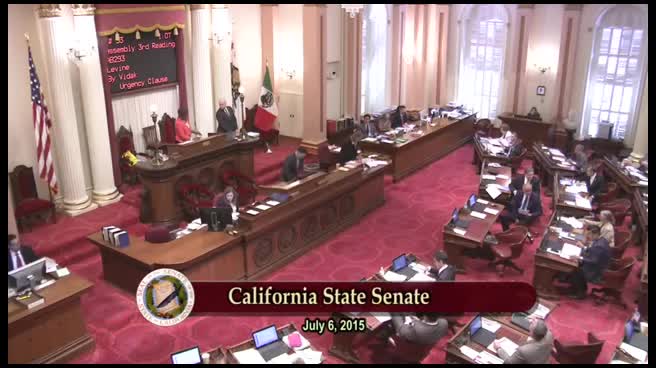 1MIN
Senate Floor
 6MIN
Senate Standing Committee on Public Safety
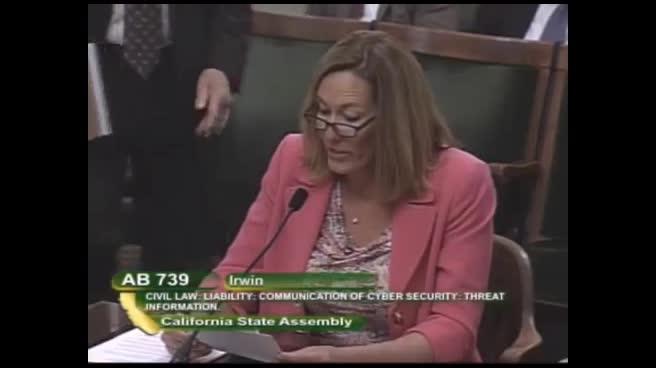 4MIN
Assembly Standing Committee on Privacy and Consumer Protection
Bill Author

Bill Co-Author(s):