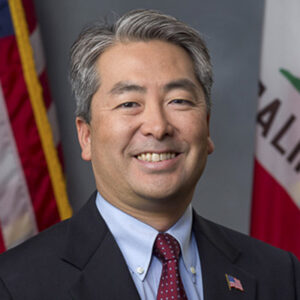
AB 1028: Community colleges: temporary employees.
- Session Year: 2025-2026
- House: Assembly
- Latest Version Date: 2025-10-03
Current Status:
Passed
(2025-10-03: Chaptered by Secretary of State - Chapter 288, Statutes of 2025.)
Introduced
In Committee
Awaiting First Chamber Vote
Passed First Chamber
In Committee
Awaiting Second Chamber Vote
Passed Second Chamber
Enacted
Existing law establishes the California Community Colleges under the administration of the Board of Governors of the California Community Colleges. Existing law authorizes the establishment of community college districts under the administration of community college governing boards, and authorizes these districts to provide instruction at community college campuses throughout the state. Existing law authorizes the governing board of a community college district to terminate the employment of a temporary employee at its discretion at the end of a day or week, whichever is appropriate, as specified.
This bill would require, if the governing board of a community college district terminates the employment of a temporary employee, that the procedure for terminating the temporary employee comply with the provisions of the local collective bargaining agreement that pertain to the termination of a temporary employee. The bill would provide that, in all cases, part-time faculty assignments are temporary in nature, contingent on enrollment and funding, and subject to program changes, and no part-time faculty member has reasonable assurance of continued employment at any point, irrespective of the status, length of service, or reemployment preference of that part-time, temporary faculty member. By imposing additional duties on community college districts, the bill would impose a state-mandated local program.
The California Constitution requires the state to reimburse local agencies and school districts for certain costs mandated by the state. Statutory provisions establish procedures for making that reimbursement.
This bill would provide that, if the Commission on State Mandates determines that the bill contains costs mandated by the state, reimbursement for those costs shall be made pursuant to the statutory provisions noted above.
Existing law establishes the California Community Colleges under the administration of the Board of Governors of the California Community Colleges. Existing law authorizes the establishment of community college districts under the administration of community college governing boards, and authorizes these districts to provide instruction at community college campuses throughout the state. Existing law authorizes the governing board of a community college district to terminate the employment of a temporary employee at its discretion at the end of a day or week, whichever is appropriate, as specified.
This bill would require, if the governing board of a community college district terminates the employment of a temporary employee, that the procedure for terminating the temporary employee comply with the provisions of the local collective bargaining agreement that pertain to the termination of a temporary employee. If there are no provisions that pertain to the termination of a temporary employee in the local collective bargaining agreement, the bill would require the governing board of a community college district to provide a written explanation for the termination of the temporary employee, if the temporary employee submits a written request within 10 calendar days of the termination. The bill would provide that, in all cases, part-time faculty assignments are temporary in nature, contingent on enrollment and funding, and subject to program changes, and no part-time faculty member has reasonable assurance of continued employment at any point, irrespective of the status, length of service, or reemployment preference of that part-time, temporary faculty member. By imposing additional duties on community college districts, the bill would impose a state-mandated local program.
The California Constitution requires the state to reimburse local agencies and school districts for certain costs mandated by the state. Statutory provisions establish procedures for making that reimbursement.
This bill would provide that, if the Commission on State Mandates determines that the bill contains costs mandated by the state, reimbursement for those costs shall be made pursuant to the statutory provisions noted above.
Existing law establishes the California Community Colleges under the administration of the Board of Governors of the California Community Colleges. Existing law authorizes the establishment of community college districts under the administration of community college governing boards, and authorizes these districts to provide instruction at community college campuses throughout the state. Under existing law, a person employed to teach adult or community college classes for not more than 67% of the hours per week of a full-time employee having comparable duties, excluding substitute service, is classified as a temporary employee and not a contract employee. Existing law authorizes the governing board of a community college district to terminate the employment of a temporary employee at its discretion at the end of a day or week, whichever is appropriate, as specified.
This bill would change the maximum time a part-time, temporary employee may teach, without becoming a contract employee, to less than 19% of the hours per week of a full-time employee having comparable duties, and would reclassify a part-time, temporary faculty member whose teaching assignment at a single community college district has equaled or exceeded 19% of the cumulative equivalent of a full-time teaching assignment for at least 6 semesters or 8 quarters within 4 consecutive academic years as a contract employee. require, if the governing board of a community college district terminates the employment of a temporary employee, that the procedure for terminating the temporary employee comply with the provisions of the local collective bargaining agreement that pertain to the termination of a temporary employee. If there are no provisions that pertain to the termination of a temporary employee in the local collective bargaining agreement, the bill would require the governing board of a community college district to provide a written explanation for the termination of the temporary employee, if the temporary employee submits a written request within 10 calendar days of the termination. By imposing additional duties on community college districts by lowering the threshold to become a contract employee, districts, the bill would impose a state-mandated local program.
The California Constitution requires the state to reimburse local agencies and school districts for certain costs mandated by the state. Statutory provisions establish procedures for making that reimbursement.
This bill would provide that, if the Commission on State Mandates determines that the bill contains costs mandated by the state, reimbursement for those costs shall be made pursuant to the statutory provisions noted above.
Existing law establishes the California Community Colleges under the administration of the Board of Governors of the California Community Colleges. Existing law authorizes the establishment of community college districts under the administration of community college governing boards, and authorizes these districts to provide instruction at community college campuses throughout the state. Under existing law, a person employed to teach adult or community college classes for not more than 67% of the hours per week of a full-time employee having comparable duties, excluding substitute service, is classified as a temporary employee and not a contract employee.
This bill would change the maximum time a part-time, temporary employee may teach, without becoming a contract employee, to less than 19% of the hours per week of a full-time employee having comparable duties, and would reclassify a part-time, temporary faculty member whose teaching assignment at a single community college district has equaled or exceeded 19% of the cumulative equivalent of a full-time teaching assignment for at least 6 semesters or 8 quarters within 4 consecutive academic years as a contract employee. By imposing additional duties on community college districts by lowering the threshold to become a contract employee, the bill would impose a state-mandated local program.
The California Constitution requires the state to reimburse local agencies and school districts for certain costs mandated by the state. Statutory provisions establish procedures for making that reimbursement.
This bill would provide that, if the Commission on State Mandates determines that the bill contains costs mandated by the state, reimbursement for those costs shall be made pursuant to the statutory provisions noted above.
(a)Consistent with subdivision (b), the governing board of a community college district may terminate the employment of a temporary employee at its discretion at the end of a day or week, whichever is appropriate. The decision to terminate the employment is not subject to judicial review except as to the time of termination.
(b)If the governing board of a community college district terminates the employment of a temporary employee pursuant to subdivision (a), the procedure for terminating the temporary employee shall comply with the provisions of the local collective bargaining agreement that pertain to the termination of a temporary employee.
(c)In all cases, part-time faculty assignments shall be temporary in nature, contingent on enrollment and funding, and subject to program changes, and no part-time faculty member shall have reasonable assurance of continued employment at any point, irrespective of the status, length of service, or reemployment preference of that part-time, temporary faculty member.
SEC. 2.If the Commission on State Mandates determines that this act contains costs mandated by the state, reimbursement to local agencies and school districts for those costs shall be made pursuant to Part 7 (commencing with Section 17500) of Division 4 of Title 2 of the Government Code.
(a)Consistent with subdivision (b), the governing board of a community college district may terminate the employment of a temporary employee at its discretion at the end of a day or week, whichever is appropriate. The decision to terminate the employment is not subject to judicial review except as to the time of termination.
(b)(1)If the governing board of a community college district terminates the employment of a temporary employee pursuant to subdivision (a), the procedure for terminating the temporary employee shall comply with the provisions of the local collective bargaining agreement that pertain to the termination of a temporary employee.
(2)If the provisions of this section directly conflict with the terms of a local collective bargaining agreement in effect on January 1, 2026, the provisions of this section shall become operative on the employees governed by that agreement upon its expiration.(c)In all cases, part-time faculty assignments shall be temporary in nature, contingent on enrollment and funding, and subject to program changes, and no part-time faculty member shall have reasonable assurance of continued employment at any point, irrespective of the status, length of service, or reemployment preference of that part-time, temporary faculty member.
SEC. 2.If the Commission on State Mandates determines that this act contains costs mandated by the state, reimbursement to local agencies and school districts for those costs shall be made pursuant to Part 7 (commencing with Section 17500) of Division 4 of Title 2 of the Government Code.
(a)The Consistent with subdivision (b), the governing board of a community college district may terminate the employment of a temporary employee at its discretion at the end of a day or week, whichever is appropriate. The decision to terminate the employment is not subject to judicial review except as to the time of termination.
(b)(1)If the governing board of a community college district terminates the employment of a temporary employee pursuant to subdivision (a), the procedure for terminating the temporary employee shall comply with the provisions of the local collective bargaining agreement that pertain to the termination of a temporary employee.
(2)If there are no provisions that pertain to the termination of a temporary employee in the local collective bargaining agreement pursuant to paragraph (1), the governing board of a community college district shall provide a written explanation for the termination of the temporary employee, if the temporary employee submits a written request within 10 calendar days of the termination.(c)(2)If the provisions of this section directly conflict with the terms of a local collective bargaining agreement in effect on January 1, 2026, the provisions of this section shall become operative on the employees governed by that agreement upon its expiration.
(c)In all cases, part-time faculty assignments shall be temporary in nature, contingent on enrollment and funding, and subject to program changes, and no part-time faculty member shall have reasonable assurance of continued employment at any point, irrespective of the status, length of service, or reemployment preference of that part-time, temporary faculty member.
SEC. 2.If the Commission on State Mandates determines that this act contains costs mandated by the state, reimbursement to local agencies and school districts for those costs shall be made pursuant to Part 7 (commencing with Section 17500) of Division 4 of Title 2 of the Government Code.
(a)The governing board of a community college district may terminate the employment of a temporary employee at its discretion at the end of a day or week, whichever is appropriate. The decision to terminate the employment is not subject to judicial review except as to the time of termination.
(b)(1)If the governing board of a community college district terminates the employment of a temporary employee pursuant to subdivision (a), the procedure for terminating the temporary employee shall comply with the provisions of the local collective bargaining agreement that pertain to the termination of a temporary employee.
(2)If there are no provisions that pertain to the termination of a temporary employee in the local collective bargaining agreement pursuant to paragraph (1), the governing board of a community college district shall provide a written explanation for the termination of the temporary employee, if the temporary employee submits a written request within 10 calendar days of the termination.
(c)If the provisions of this section directly conflict with the terms of a local collective bargaining agreement in effect on January 1, 2026, the provisions of this section shall become operative on the employees governed by that agreement upon its expiration.
SEC. 2.If the Commission on State Mandates determines that this act contains costs mandated by the state, reimbursement to local agencies and school districts for those costs shall be made pursuant to Part 7 (commencing with Section 17500) of Division 4 of Title 2 of the Government Code.
REVISIONS: HeadingLine 2.(a)Notwithstanding any other law, a person who is employed to teach adult or community college classes for not more less than 67 19 percent of the hours per week considered a full-time assignment for regular employees having comparable duties shall be classified as a temporary employee, and shall not become a contract employee employee, as defined in Section 87601, under Section 87604. If the provisions of this section are in conflict with the terms of a collective bargaining agreement in effect on or before January 1, 2009, 2026, the provisions of this section shall govern the employees subject to that agreement upon the expiration of the agreement.
(b)Service as a substitute on a day-to-day basis by persons employed under this section shall not be used for purposes of calculating eligibility for contract or regular status.
(c)(1)Service in professional ancillary activities by persons employed under this section, including, but not necessarily limited to, governance, staff development, grant writing, and advising student organizations, shall not be used for purposes of calculating eligibility for contract or regular status unless otherwise provided for in a collective bargaining agreement applicable to a person employed under this section.
(2)This subdivision may shall not be construed to affect the requirements of subdivision (d) of Section 84362.
(d)A person whose employment to teach adult or community college classes at a single community college district has equaled or exceeded 19 percent of the cumulative equivalent of a full-time teaching assignment for regular employees having comparable duties for at least six semesters or eight quarters within four consecutive academic years shall be classified as a contract employee, as defined in Section 87601, under Section 87604.
SEC. 2.If the Commission on State Mandates determines that this act contains costs mandated by the state, reimbursement to local agencies and school districts for those costs shall be made pursuant to Part 7 (commencing with Section 17500) of Division 4 of Title 2 of the Government Code.
|
Date
|
Status
|
|---|---|
| Oct 3, 2025 | Chaptered by Secretary of State - Chapter 288, Statutes of 2025. |
| Oct 3, 2025 | Approved by the Governor. |
| Sep 22, 2025 | Enrolled and presented to the Governor at 3 p.m. |
| Sep 10, 2025 | Senate amendments concurred in. To Engrossing and Enrolling. (Ayes 71. Noes 4. Page 3230.). |
| Sep 9, 2025 | In Assembly. Concurrence in Senate amendments pending. |
| Sep 9, 2025 | Read third time. Passed. Ordered to the Assembly. (Ayes 31. Noes 5. Page 2669.). |
| Sep 8, 2025 | Read second time. Ordered to third reading. |
| Sep 4, 2025 | Read third time and amended. Ordered to second reading. |
| Aug 29, 2025 | Read second time. Ordered to third reading. |
| Aug 29, 2025 | From committee: Do pass. (Ayes 5. Noes 2.) (August 29). |
| Aug 18, 2025 | In committee: Referred to suspense file. |
| Jul 9, 2025 | From committee: Do pass and re-refer to Com. on APPR. (Ayes 7. Noes 0.) (July 9). Re-referred to Com. on APPR. |
| Jun 18, 2025 | Referred to Com. on ED. |
| Jun 4, 2025 | In Senate. Read first time. To Com. on RLS. for assignment. |
| Jun 3, 2025 | Read third time. Passed. Ordered to the Senate. (Ayes 71. Noes 5. Page 2011.) |
| May 27, 2025 | Read second time. Ordered to third reading. |
| May 23, 2025 | Read second time and amended. Ordered returned to second reading. |
| May 23, 2025 | From committee: Amend, and do pass as amended. (Ayes 11. Noes 2.) (May 23). |
| May 23, 2025 | Assembly Rule 63 suspended. (Ayes 51. Noes 16. Page 1644.) |
| May 14, 2025 | In committee: Set, first hearing. Referred to APPR. suspense file. |
| Apr 30, 2025 | From committee: Do pass and re-refer to Com. on APPR. (Ayes 7. Noes 2.) (April 29). Re-referred to Com. on APPR. |
| Apr 30, 2025 | Coauthors revised. |
| Apr 24, 2025 | Re-referred to Com. on HIGHER ED. |
| Apr 23, 2025 | From committee chair, with author's amendments: Amend, and re-refer to Com. on HIGHER ED. Read second time and amended. |
| Apr 22, 2025 | In committee: Hearing postponed by committee. |
| Mar 10, 2025 | Referred to Com. on HIGHER ED. |
| Feb 21, 2025 | From printer. May be heard in committee March 23. |
| Feb 20, 2025 | Read first time. To print. |
|
Date
|
Description
|
Location
|
Votes
|
|
|---|---|---|---|---|
| Sep 10, 2025 | AB 1028 Fong Concurrence in Senate Amendments | Assembly Floor |
Passed |
|
| Sep 9, 2025 | Assembly 3rd Reading AB1028 Fong et al. By Cortese | Senate Floor |
Passed |
|
| Aug 29, 2025 | Do pass | Senate Standing Committee on Appropriations |
Passed |
|
| Aug 18, 2025 | Placed on suspense file | Senate Standing Committee on Appropriations |
Passed |
|
| Jul 9, 2025 | Do pass, but first be re-referred to the Committee on [Appropriations] | Senate Standing Committee on Education |
Passed |
|
| Jun 3, 2025 | AB 1028 Fong Assembly Third Reading | Assembly Floor |
Passed |
|
| May 23, 2025 | Do pass as amended. | Assembly Standing Committee on Appropriations |
Passed |
|
| Apr 29, 2025 | Do pass and be re-referred to the Committee on [Appropriations] | Assembly Standing Committee on Higher Education |
Passed |
This list shows positions taken on this bill by organizations on the date displayed, which is linked to the original source.
Positions by individuals are not included.
|
Organization
|
Position
|
Date
|
|---|---|---|
| Association Of California Community College Administrators | ** Against | |
| California Acupuncture Coalition | ** Support | |
| California Federation Of Teachers | ** Support | |
| California Part-Time Faculty Association | ** Support | |
| California State Council of Service Employees International Union | ** Support | |
| California Teachers Association | ** Support | |
| Community College League of California | ** Against |
CONCURRENCE IN SENATE AMENDMENTS
CSA1 Bill Id:AB 1028
Author:(Fong)
As Amended Ver:September 4, 2025
Majority vote
SUMMARY
Requires, if a governing board of a community college district decides to terminate a part-time faculty, the governing board to comply with the procedures for termination as delineated in the community college's collective bargaining agreement with part-time faculty.
Senate Amendments
- Deletes language that delayed provisions of the measure from going into immediate effect if the provisions of the measure were in conflict with the provisions of the collective bargaining agreement.
COMMENTS
Terminology. The codes containing the provisions for the employment of an employee at the CCC are located in EDC Sections 87000-88280. Within those code sections, there are terms for academic faculty that are used interchangeably to describe the conditions of the faculty's employment. The terms are as follows:
- Tenured or Regular faculty – faculty who are (1) employed full-time, (2) have been employed with the same community college district for more than four years, and (3) have been provided tenure (permanent employment status) by the faculty-evaluation committee and the governing board of the community college.
- Contract faculty or Tenured-tracked faculty – faculty who are (1) employed full-time, and (2) have been employed at the same community college district for less than four years.
- Temporary, Part-time, or Adjunct faculty – faculty who are (1) not employed full-time (less than 67% of a full-time course load), and (2) are not considered tenure-tracked and therefore, are not eligible for tenure according to the Education Code.
For purposes of this analyses, "part-time faculty" will mean faculty who are employed less than 67% of a full–time course load.
Part-time faculty at the CCC. In fall 2023 the CCC employed 18,085 tenured/tenure track faculty and 37,942 part-time faculty, as reported in the "CCC Annual Statewide Staffing Report: Headcount by District". If academic faculty are the train behind the CCC ensuring students have the knowledge necessary to complete their educational journey, then part-time faculty are the engine. Part-time faculty represented 67.7% of the academic workforce at the community college.
Part-time faculty and collective bargaining agreements. For more than three decades the Legislature has grappled with how to appropriately incentivize community college districts to hire more full-time faculty rather than part-time faculty. Only within the last several years, has the Legislature embraced the fluctuating conditions of CCC enrollment and instead looked towards encouraging parity in working conditions and pay for community college faculty. In 2001, AB 1245 (Alquist), Chapter 850, Statues of 2001, required community college districts to establish annual re-hiring rights to part-time faculty, essentially creating a "tenured" list for part-time faculty. The legislation required any collective bargaining agreement entered into after January 1, 2002 to include a provision on re-hiring rights. In 2016, SB 1379 (Mendoza), Chapter 891, Statutes of 2016, codified the terms and conditions for part-time faculty required in every collective bargaining agreements for faculty. The legislation required collective bargaining agreements to include terms of reemployment preferences for part-time faculty based on a minimum standards, policies for the termination of reemployment preferences, and a regular evaluation process. Furthermore, as part of the annual Student Equity and Achievement Program submissions, districts are required to self-certify if they are complying with all relevant statutes to receive funding which includes having a collective bargaining agreement with part-time faculty. According to the Chancellor's Office of the CCC, each of the 73 districts have collective bargaining agreements that include provisions pertaining to part-time faculty.
This measure seeks to expand the collective bargaining rights for part-time faculty to include the procedures for termination. Should this measure become law, part-time employees would be able to negotiate the terms of their termination in collective bargaining agreements with their employer, the community college districts.
According to the Author
As contended by the author, "part-time faculty are the backbone of California's community colleges, and in the unfortunate event that they are let go, they deserve to know the reason they have not been rehired. AB 1028 will give part-time faculty the same consideration, respect, and dignity given to full-time employees, by clarifying the process that must be followed by Community College Districts and explicitly stating that termination processes outlined in bargaining agreements are honored."
Arguments in Support
As purported by CFT, a union of educators and classified professionals, "this bill provides part-time workers with clarity that they can work to create a termination process that can be locally bargained. This can include bargaining to create due process rights that are similar or equivalent to termination of full-time faculty. Currently part-time faculty members, which is also referred to as temporary employees in the Education Code, work on an 'at will' basis, meaning that they can be fired without cause or even provided a simple explanation. While part-time faculty must meet the same qualifications to teach students, they are not provided the same rights as full-time faculty. Students benefit from more experienced instructors, and being able to obtain some due process rights could encourage greater retention of faculty. This legislation simply explicitly states that part-time faculty can bargain due process rights, which consists of whatever is locally agreed upon..."
Arguments in Opposition
The Community College League of California, respectfully opposes because, "AB 1028 would create new pressures on community college districts to negotiate new rights for employees, who, per the Education Code, serve at the discretion of the district. Specifically, AB 1028 amends Education Code Section 87665, which authorizes districts to terminate temporary employees at the end of a day or week at their discretion, without judicial review. Under this bill, termination decisions must comply with the terms outlined in a local collective bargaining agreement (CBA). Existing law (AB 1690, Medina, 2016) already enables districts and labor to negotiate reemployment and termination terms, making this bill an overreach into the local bargaining process."
FISCAL COMMENTS
According to the Senate Committee on Appropriations:
The Chancellor's Office estimates that this bill could result in one-time Proposition 98 General Fund costs of $14,000 to $22,000 per district, or between $1 million and $1.6 million statewide across all 72 districts, to update collective bargaining agreements and include procedures regarding the termination of part-time faculty. These costs could be lower to the extent districts already have these policies in place.
VOTES:
ASM HIGHER EDUCATION: 7-2-1
YES: Fong, Boerner, Jackson, Muratsuchi, Patel, Celeste Rodriguez, Sharp-Collins
NO: DeMaio, Jeff Gonzalez
ABS, ABST OR NV: Tangipa
ASM APPROPRIATIONS: 11-2-2
YES: Wicks, Arambula, Calderon, Caloza, Elhawary, Fong, Mark González, Hart, Pacheco, Pellerin, Solache
NO: Dixon, Tangipa
ABS, ABST OR NV: Sanchez, Ta
ASSEMBLY FLOOR: 71-5-3
YES: Addis, Aguiar-Curry, Ahrens, Alanis, Alvarez, Arambula, Ávila Farías, Bains, Bauer‑Kahan, Bennett, Berman, Boerner, Bonta, Bryan, Calderon, Caloza, Carrillo, Chen, Connolly, Davies, Dixon, Elhawary, Flora, Fong, Gabriel, Gallagher, Garcia, Gipson, Jeff Gonzalez, Mark González, Hadwick, Haney, Harabedian, Hart, Hoover, Irwin, Jackson, Kalra, Krell, Lackey, Lee, Lowenthal, McKinnor, Muratsuchi, Nguyen, Ortega, Pacheco, Papan, Patel, Pellerin, Petrie-Norris, Quirk-Silva, Ramos, Ransom, Celeste Rodriguez, Michelle Rodriguez, Rogers, Blanca Rubio, Schiavo, Schultz, Sharp-Collins, Solache, Soria, Stefani, Valencia, Wallis, Ward, Wicks, Wilson, Zbur, Rivas
NO: DeMaio, Macedo, Patterson, Sanchez, Tangipa
ABS, ABST OR NV: Castillo, Ellis, Ta
UPDATED
VERSION: September 4, 2025
CONSULTANT: Ellen Cesaretti-Monroy / HIGHER ED. / (916) 319-3960 FN: 0001930
SENATE RULES COMMITTEE Office of Senate Floor Analyses (916) 651-1520 Fax: (916) 327-4478 | AB 1028 |
THIRD READING
Bill No: AB 1028
Author: Fong (D), et al.
Amended: 9/4/25 in Senate
Vote: 21
SENATE EDUCATION COMMITTEE: 7-0, 7/9/25
AYES: Pérez, Ochoa Bogh, Cabaldon, Choi, Cortese, Gonzalez, Laird
SENATE APPROPRIATIONS COMMITTEE: 5-2, 8/29/25
AYES: Caballero, Cabaldon, Grayson, Richardson, Wahab
NOES: Seyarto, Dahle
ASSEMBLY FLOOR: 71-5, 6/3/25 - See last page for vote
SUBJECT: Community colleges: temporary employees
SOURCE: California Federation of Teachers
DIGEST:
This bill clarifies that termination procedures for part-time faculty at California community colleges may be negotiated as part of collective bargaining agreements (CBAs), and reaffirms that all part-time faculty assignments remain temporary and contingent on enrollment, funding, and program needs.
Senate Floor amendments of 9/4/25 remove a delayed implementation clause that would have postponed the bill’s effect for employees covered by existing CBAs until those agreements expired.
ANALYSIS:
Existing law:
- Authorizes community college districts to employ academic staff as contract, regular (tenured), or part-time (temporary) faculty. (Education Code (EC) § 87604)
- Defines part-time faculty as those teaching no more than 67% of a full-time faculty load. (EC § 87482.5)
- Requires community college CBAs to include policies for reemployment preference, termination of that preference, and a regular evaluation process for part-time faculty. (EC § 87482.3)
- Allows the governing board of a community college district to terminate a part-time faculty member at the end of a day or week, at its discretion, with judicial review limited to the timing of the termination. (EC § 87665)
- Requires districts without CBAs for part-time faculty to enter into negotiations and include specific terms and conditions. (EC § 87482.3(d))
This bill:
- Requires that the termination of a part-time (temporary) faculty member by a community college governing board comply with the terms of any applicable CBA.
- Reiterates that all part-time faculty assignments are temporary, contingent on enrollment and funding, and do not carry a reasonable assurance of continued employment, regardless of status, length of service, or reemployment rights.
Comments
- Need for this bill. According to the author, “Part-time faculty are the backbone of California’s community colleges, and in the unfortunate event that they are let go, they deserve to know the reason they have not been rehired. AB 1028 will give part-time faculty the same consideration, respect, and dignity given to full-time employees, by clarifying the process that must be followed by Community College Districts and explicitly stating that termination processes outlined in bargaining agreements are honored.”
- Clarifying the role of collective bargaining in part-time faculty employment. This bill affirms and clarifies the role of local collective bargaining in shaping employment protections for part-time faculty. While existing law requires CBAs to include certain provisions for reemployment and evaluation, there is ambiguity and variation across districts regarding termination procedures. A 2023 review of CBAs by Assembly Higher Education Committee staff found that, despite statutory requirements, many agreements either lack explicit termination procedures or defer entirely to Education Code provisions. This bill seeks to standardize practice by ensuring districts adhere to collectively bargained procedures when terminating part-time faculty. This strikes a balance between maintaining the at-will nature of part-time assignments and promoting procedural fairness.
- Evolving legislative and fiscal support for part-time faculty. Over the last two decades, the Legislature has progressively expanded statutory protections for part-time faculty through AB 1245 (Alquist, Chapter 850, Statutes of 2001) and SB 1379 (Mendoza, Chapter 891, Statutes of 2016), among others. These laws introduced rehire rights, evaluation standards, and required CBAs to include employment terms for part-time faculty. More recently, the state has invested in pay parity and benefits for part-time faculty: the 2024–25 enacted budget included $24 million for office hour compensation, $27 million for parity funding, and $200 million for health care reimbursement. These investments reflect growing legislative recognition of part-time faculty’s role in student success and system stability. This policy is consistent with this policy trajectory by reinforcing due process principles while preserving local bargaining flexibility.
- Part-time faculty as a majority of instructional staff. According to the Chancellor’s Office, “California Community Colleges (CCC) Annual Statewide Staffing Report,” part-time faculty comprised approximately 67.7% of the California Community Colleges’ instructional workforce in Fall 2023—nearly twice the number of tenured and tenure-track faculty. Yet part-time faculty typically receive less pay, minimal benefits, and fewer institutional supports. The 2023 State Auditor’s report noted that while part-time hiring allows districts to respond flexibly to enrollment shifts, it also limits faculty-student engagement and institutional continuity. Providing some measure of procedural transparency at the point of termination—particularly in the absence of a negotiated process—may support retention, morale, and perceptions of fairness among this sizable segment of the workforce.
- Legal clarity versus operational uncertainty. This bill addresses a longstanding conflict in statute by amending Education Code § 87665 to clarify that termination procedures for part-time faculty may be included in CBAs. The intent is to resolve ambiguity stemming from the interaction between § 87665, which permits discretionary termination of part-time faculty without cause or judicial review, and § 87482.3, which authorizes local bargaining over reemployment rights. While the bill preserves the at-will nature of part-time employment and does not mandate termination protections, the Community College League of California argues that it could nonetheless create pressure on districts to negotiate new rights for temporary employees who, by law, serve at the discretion of the district. The League also contends that existing law already allows bargaining over termination under AB 1690 (Medina, Chapter 877, Statutes of 2016), and views this bill as unnecessary and potentially disruptive to existing local bargaining practices. Proponents counter that districts have previously cited § 87665 as a legal barrier to bargaining over termination procedures, and that AB 1028 merely clarifies that such bargaining is permissible—not required.
- Incremental reform in a complex employment framework. Faculty employment law at the CCC level operates within a multi-layered framework of Education Code mandates, local CBAs, and accreditation standards. Rather than overhaul this framework, this bill takes an incremental approach—encouraging negotiated termination processes while providing minimal procedural transparency in their absence. This approach is consistent with national recommendations to improve working conditions for adjunct faculty while respecting institutional governance. For example, the American Association of University Professors has long advocated for increased transparency, equity, and procedural protections for contingent faculty, viewing them as essential to academic continuity and educational quality.
FISCAL EFFECT: Appropriation: No Fiscal Com.: Yes Local: Yes
According to the Senate Appropriations Committee, the Chancellor’s Office estimates that this bill could result in one-time Proposition 98 General Fund costs of $14,000 to $22,000 per district, or between $1 million and $1.6 million statewide across all 72 districts, to update collective bargaining agreements and include procedures regarding the termination of part-time faculty. These costs could be lower to the extent districts already have these policies in place.
SUPPORT: (Verified 9/4/25)
California Federation of Teachers (source)
California Acupuncture Coalition
California Part-Time Faculty Association
California State Council of Service Employees International Union
California Teachers Association
OPPOSITION: (Verified 9/4/25)
Association of California Community College Administrators
Community College League of California
ASSEMBLY FLOOR: 71-5, 6/3/25
AYES: Addis, Aguiar-Curry, Ahrens, Alanis, Alvarez, Arambula, Ávila Farías, Bains, Bauer-Kahan, Bennett, Berman, Boerner, Bonta, Bryan, Calderon, Caloza, Carrillo, Chen, Connolly, Davies, Dixon, Elhawary, Flora, Fong, Gabriel, Gallagher, Garcia, Gipson, Jeff Gonzalez, Mark González, Hadwick, Haney, Harabedian, Hart, Hoover, Irwin, Jackson, Kalra, Krell, Lackey, Lee, Lowenthal, McKinnor, Muratsuchi, Nguyen, Ortega, Pacheco, Papan, Patel, Pellerin, Petrie-Norris, Quirk-Silva, Ramos, Ransom, Celeste Rodriguez, Michelle Rodriguez, Rogers, Blanca Rubio, Schiavo, Schultz, Sharp-Collins, Solache, Soria, Stefani, Valencia, Wallis, Ward, Wicks, Wilson, Zbur, Rivas
NOES: DeMaio, Macedo, Patterson, Sanchez, Tangipa
NO VOTE RECORDED: Castillo, Ellis, Ta
Prepared by: Ian Johnson / ED. / (916) 651-4105
9/8/25 21:29:52
**** END ****
SENATE RULES COMMITTEE Office of Senate Floor Analyses (916) 651-1520 Fax: (916) 327-4478 | AB 1028 |
THIRD READING
Bill No: AB 1028
Author: Fong (D), et al.
Amended: 5/23/25 in Assembly
Vote: 21
SENATE EDUCATION COMMITTEE: 7-0, 7/9/25
AYES: Pérez, Ochoa Bogh, Cabaldon, Choi, Cortese, Gonzalez, Laird
SENATE APPROPRIATIONS COMMITTEE: 5-2, 8/29/25
AYES: Caballero, Cabaldon, Grayson, Richardson, Wahab
NOES: Seyarto, Dahle
ASSEMBLY FLOOR: 71-5, 6/3/25 - See last page for vote
SUBJECT: Community colleges: temporary employees
SOURCE: California Federation of Teachers
DIGEST:
This bill clarifies that termination procedures for part-time faculty at California community colleges may be negotiated as part of collective bargaining agreements (CBAs), and reaffirms that all part-time faculty assignments remain temporary and contingent on enrollment, funding, and program needs.
ANALYSIS:
Existing law:
- Authorizes community college districts to employ academic staff as contract, regular (tenured), or part-time (temporary) faculty. (Education Code (EC) § 87604)
- Defines part-time faculty as those teaching no more than 67% of a full-time faculty load. (EC § 87482.5)
- Requires community college CBAs to include policies for reemployment preference, termination of that preference, and a regular evaluation process for part-time faculty. (EC § 87482.3)
- Allows the governing board of a community college district to terminate a part-time faculty member at the end of a day or week, at its discretion, with judicial review limited to the timing of the termination. (EC § 87665)
- Requires districts without CBAs for part-time faculty to enter into negotiations and include specific terms and conditions. (EC § 87482.3(d))
This bill:
- Requires that the termination of a part-time (temporary) faculty member by a community college governing board comply with the terms of any applicable CBA.
- Provides that if the bill’s provisions conflict with an existing CBA in effect on January 1, 2026, they shall become operative upon the expiration of that agreement.
- Reiterates that all part-time faculty assignments are temporary, contingent on enrollment and funding, and do not carry a reasonable assurance of continued employment, regardless of status, length of service, or reemployment rights.
Comments
- Need for this bill. According to the author, “Part-time faculty are the backbone of California’s community colleges, and in the unfortunate event that they are let go, they deserve to know the reason they have not been rehired. AB 1028 will give part-time faculty the same consideration, respect, and dignity given to full-time employees, by clarifying the process that must be followed by Community College Districts and explicitly stating that termination processes outlined in bargaining agreements are honored.”
- Clarifying the role of collective bargaining in part-time faculty employment. This bill affirms and clarifies the role of local collective bargaining in shaping employment protections for part-time faculty. While existing law requires CBAs to include certain provisions for reemployment and evaluation, there is ambiguity and variation across districts regarding termination procedures. A 2023 review of CBAs by Assembly Higher Education Committee staff found that, despite statutory requirements, many agreements either lack explicit termination procedures or defer entirely to Education Code provisions. This bill seeks to standardize practice by ensuring districts adhere to collectively bargained procedures when terminating part-time faculty. This strikes a balance between maintaining the at-will nature of part-time assignments and promoting procedural fairness.
- Evolving legislative and fiscal support for part-time faculty. Over the last two decades, the Legislature has progressively expanded statutory protections for part-time faculty through AB 1245 (Alquist, Chapter 850, Statutes of 2001) and SB 1379 (Mendoza, Chapter 891, Statutes of 2016), among others. These laws introduced rehire rights, evaluation standards, and required CBAs to include employment terms for part-time faculty. More recently, the state has invested in pay parity and benefits for part-time faculty: the 2024–25 enacted budget included $24 million for office hour compensation, $27 million for parity funding, and $200 million for health care reimbursement. These investments reflect growing legislative recognition of part-time faculty’s role in student success and system stability. This policy is consistent with this policy trajectory by reinforcing due process principles while preserving local bargaining flexibility.
- Part-time faculty as a majority of instructional staff. According to the Chancellor’s Office, “California Community Colleges (CCC) Annual Statewide Staffing Report,” part-time faculty comprised approximately 67.7% of the California Community Colleges’ instructional workforce in Fall 2023—nearly twice the number of tenured and tenure-track faculty. Yet part-time faculty typically receive less pay, minimal benefits, and fewer institutional supports. The 2023 State Auditor’s report noted that while part-time hiring allows districts to respond flexibly to enrollment shifts, it also limits faculty-student engagement and institutional continuity. Providing some measure of procedural transparency at the point of termination—particularly in the absence of a negotiated process—may support retention, morale, and perceptions of fairness among this sizable segment of the workforce.
- Legal clarity versus operational uncertainty. This bill addresses a longstanding conflict in statute by amending Education Code § 87665 to clarify that termination procedures for part-time faculty may be included in CBAs. The intent is to resolve ambiguity stemming from the interaction between § 87665, which permits discretionary termination of part-time faculty without cause or judicial review, and § 87482.3, which authorizes local bargaining over reemployment rights. While the bill preserves the at-will nature of part-time employment and does not mandate termination protections, the Community College League of California argues that it could nonetheless create pressure on districts to negotiate new rights for temporary employees who, by law, serve at the discretion of the district. The League also contends that existing law already allows bargaining over termination under AB 1690 (Medina, 2016), and views this bill as unnecessary and potentially disruptive to existing local bargaining practices. Proponents counter that districts have previously cited § 87665 as a legal barrier to bargaining over termination procedures, and that AB 1028 merely clarifies that such bargaining is permissible—not required.
- Incremental reform in a complex employment framework. Faculty employment law at the CCC level operates within a multi-layered framework of Education Code mandates, local CBAs, and accreditation standards. Rather than overhaul this framework, this bill takes an incremental approach—encouraging negotiated termination processes while providing minimal procedural transparency in their absence. This approach is consistent with national recommendations to improve working conditions for adjunct faculty while respecting institutional governance. For example, the American Association of University Professors has long advocated for increased transparency, equity, and procedural protections for contingent faculty, viewing them as essential to academic continuity and educational quality.
FISCAL EFFECT: Appropriation: No Fiscal Com.: Yes Local: Yes
According to the Senate Appropriations Committee, the Chancellor’s Office estimates that this bill could result in one-time Proposition 98 General Fund costs of $14,000 to $22,000 per district, or between $1 million and $1.6 million statewide across all 72 districts, to update collective bargaining agreements and include procedures regarding the termination of part-time faculty. These costs could be lower to the extent districts already have these policies in place.
SUPPORT: (Verified 8/28/25)
California Federation of Teachers (Source)
California Acupuncture Coalition
California Part-time Faculty Association
California State Council of Service Employees International Union
California Teachers Association
OPPOSITION: (Verified 8/28/25)
Association of California Community College Administrators
Community College League of California
ASSEMBLY FLOOR: 71-5, 6/3/25
AYES: Addis, Aguiar-Curry, Ahrens, Alanis, Alvarez, Arambula, Ávila Farías, Bains, Bauer-Kahan, Bennett, Berman, Boerner, Bonta, Bryan, Calderon, Caloza, Carrillo, Chen, Connolly, Davies, Dixon, Elhawary, Flora, Fong, Gabriel, Gallagher, Garcia, Gipson, Jeff Gonzalez, Mark González, Hadwick, Haney, Harabedian, Hart, Hoover, Irwin, Jackson, Kalra, Krell, Lackey, Lee, Lowenthal, McKinnor, Muratsuchi, Nguyen, Ortega, Pacheco, Papan, Patel, Pellerin, Petrie-Norris, Quirk-Silva, Ramos, Ransom, Celeste Rodriguez, Michelle Rodriguez, Rogers, Blanca Rubio, Schiavo, Schultz, Sharp-Collins, Solache, Soria, Stefani, Valencia, Wallis, Ward, Wicks, Wilson, Zbur, Rivas
NOES: DeMaio, Macedo, Patterson, Sanchez, Tangipa
NO VOTE RECORDED: Castillo, Ellis, Ta
Prepared by: Ian Johnson / ED. / (916) 651-4105
8/30/25 12:37:35
**** END ****
SENATE COMMITTEE ON APPROPRIATIONS
Senator Anna Caballero, Chair
2025 - 2026 Regular Session
AB 1028 (Fong) - Community colleges: temporary employees
Version: May 23, 2025 | Policy Vote: ED. 7 - 0 |
Urgency: No | Mandate: Yes |
Hearing Date: August 18, 2025 | Consultant: Lenin Del Castillo |
Bill Summary:
This bill requires that the termination procedures for part-time faculty at California community colleges comply with the provisions of their local collective bargaining agreement (CBA).
Fiscal Impact:
The Chancellor’s Office estimates that this bill could result in
one-time Proposition 98 General Fund costs of $14,000 to $22,000 per district, or between $1 million and $1.6 million statewide across all 72 districts, to update collective bargaining agreements and include procedures regarding the termination of part-time faculty. These costs could be lower to the extent districts already have these policies in place.
Background:
Existing law authorizes community college districts to employ academic staff as contract, regular (tenured), or part-time faculty. The law defines part-time faculty as those teaching no more than 67% of a full-time faculty load.
Existing law requires community college CBAs to include policies for reemployment preference, termination of that preference, and a regular evaluation process for part-time faculty.
Existing law allows the governing board of a community college district to terminate a part-time faculty member at the end of a day or week, at its discretion, with judicial review limited to the timing of the termination. The law also requires community college districts without CBAs for part-time faculty to enter into negotiations and include specific terms and conditions.
Proposed Law:
This bill requires that the termination of a part-time (temporary) faculty member by a community college governing board comply with the terms of any applicable CBA. It provides that if the bill’s provisions conflict with an existing CBA in effect on January 1, 2026, they shall become operative upon the expiration of that agreement.
This bill provides that all part-time faculty assignments are temporary, contingent on enrollment and funding, and do not carry a reasonable assurance of continued employment, regardless of status, length of service, or reemployment rights.
Related Legislation:
AB 1245 (Alquist, Chapter 850, Statutes of 2001) requires the reappointment rights for specified community college part-time faculty be a mandatory subject of negotiation.
SB 1379 (Mendoza, Chapter 891, Statutes of 2016) requires community college districts to negotiate collective bargaining agreements with part-time faculty that include terms of reemployment preference and a regular evaluation process as a condition of receiving funds allocated for the Student Success and Support Program.
AB 1690 (Medina, Chapter 877, Statutes of 2016) requires community college districts to have collective bargaining agreements with part-time faculty that include specified conditions of employment.
Staff Comments:
While existing law requires CBAs to include certain provisions for reemployment and evaluation, there is ambiguity and variation across districts regarding termination procedures. A 2023 review of CBAs by Assembly Higher Education Committee staff found that, despite statutory requirements, many agreements either lack explicit termination procedures or defer entirely to Education Code provisions. This bill seeks to standardize practice by ensuring districts adhere to collectively bargained procedures when terminating part-time faculty. According to the author, “Part-time faculty are the backbone of California’s community colleges, and in the unfortunate event that they are let go, they deserve to know the reason they have not been rehired. AB 1028 will give part-time faculty the same consideration, respect, and dignity given to full-time employees, by clarifying the process that must be followed by Community College Districts and explicitly stating that termination processes outlined in bargaining agreements are honored.”
-- END --
SENATE COMMITTEE ON EDUCATION
Senator Sasha Renée Pérez, Chair
2025 - 2026 Regular
Bill No: Hearing Date: July 9, 2025
Author: | Fong | ||
Version: |
| ||
Urgency: | Fiscal: | ||
Consultant: | |||
Subject: .
SUMMARY
This bill clarifies that termination procedures for part-time faculty at California community colleges may be negotiated as part of collective bargaining agreements (CBAs), and reaffirms that all part-time faculty assignments remain temporary and contingent on enrollment, funding, and program needs.
BACKGROUND
Existing law:
- Authorizes community college districts to employ academic staff as contract, regular (tenured), or part-time (temporary) faculty. (Education Code (EC) § 87604)
- Defines part-time faculty as those teaching no more than 67% of a full-time faculty load. (EC § 87482.5)
- Requires community college CBAs to include policies for reemployment preference, termination of that preference, and a regular evaluation process for part-time faculty. (EC § 87482.3)
- Allows the governing board of a community college district to terminate a part-time faculty member at the end of a day or week, at its discretion, with judicial review limited to the timing of the termination. (EC § 87665)
- Requires districts without CBAs for part-time faculty to enter into negotiations and include specific terms and conditions. (EC § 87482.3(d))
ANALYSIS
This bill:
- Requires that the termination of a part-time (temporary) faculty member by a community college governing board comply with the terms of any applicable CBA.
- Provides that if the bill’s provisions conflict with an existing CBA in effect on January 1, 2026, they shall become operative upon the expiration of that agreement.
- Reiterates that all part-time faculty assignments are temporary, contingent on enrollment and funding, and do not carry a reasonable assurance of continued employment, regardless of status, length of service, or reemployment rights.
STAFF COMMENTS
- Need for the bill. According to the author, “Part-time faculty are the backbone of California’s community colleges, and in the unfortunate event that they are let go, they deserve to know the reason they have not been rehired. AB 1028 will give part-time faculty the same consideration, respect, and dignity given to full-time employees, by clarifying the process that must be followed by Community College Districts and explicitly stating that termination processes outlined in bargaining agreements are honored.”
- Clarifying the role of collective bargaining in part-time faculty employment.
This bill affirms and clarifies the role of local collective bargaining in shaping employment protections for part-time faculty. While existing law requires CBAs to include certain provisions for reemployment and evaluation, there is ambiguity and variation across districts regarding termination procedures. A 2023 review of CBAs by Assembly Higher Education Committee staff found that, despite statutory requirements, many agreements either lack explicit termination procedures or defer entirely to Education Code provisions. This bill seeks to standardize practice by ensuring districts adhere to collectively bargained procedures when terminating part-time faculty. This strikes a balance between maintaining the at-will nature of part-time assignments and promoting procedural fairness. - Evolving legislative and fiscal support for part-time faculty. Over the last two decades, the Legislature has progressively expanded statutory protections for part-time faculty through AB 1245 (Alquist, Chapter 850, Statutes of 2001) and SB 1379 (Mendoza, Chapter 891, Statutes of 2016), among others. These laws introduced rehire rights, evaluation standards, and required CBAs to include employment terms for part-time faculty. More recently, the state has invested in pay parity and benefits for part-time faculty: the 2024–25 enacted budget included $24 million for office hour compensation, $27 million for parity funding, and $200 million for health care reimbursement. These investments reflect growing legislative recognition of part-time faculty’s role in student success and system stability. This policy is consistent with this policy trajectory by reinforcing due process principles while preserving local bargaining flexibility.
- Part-time faculty as a majority of instructional staff. According to the Chancellor’s Office, “California Community Colleges (CCC) Annual Statewide Staffing Report,” part-time faculty comprised approximately 67.7% of the California Community Colleges’ instructional workforce in Fall 2023—nearly twice the number of tenured and tenure-track faculty. Yet part-time faculty typically receive less pay, minimal benefits, and fewer institutional supports. The 2023 State Auditor’s report noted that while part-time hiring allows districts to respond flexibly to enrollment shifts, it also limits faculty-student engagement and institutional continuity. Providing some measure of procedural transparency at the point of termination—particularly in the absence of a negotiated process—may support retention, morale, and perceptions of fairness among this sizable segment of the workforce.
- Legal clarity versus operational uncertainty. This bill addresses a longstanding conflict in statute by amending Education Code § 87665 to clarify that termination procedures for part-time faculty may be included in CBAs. The intent is to resolve ambiguity stemming from the interaction between § 87665, which permits discretionary termination of part-time faculty without cause or judicial review, and § 87482.3, which authorizes local bargaining over reemployment rights. While the bill preserves the at-will nature of part-time employment and does not mandate termination protections, the Community College League of California argues that it could nonetheless create pressure on districts to negotiate new rights for temporary employees who, by law, serve at the discretion of the district. The League also contends that existing law already allows bargaining over termination under AB 1690 (Medina, 2016), and views this bill as unnecessary and potentially disruptive to existing local bargaining practices. Proponents counter that districts have previously cited § 87665 as a legal barrier to bargaining over termination procedures, and that AB 1028 merely clarifies that such bargaining is permissible—not required.
- Incremental reform in a complex employment framework. Faculty employment law at the CCC level operates within a multi-layered framework of Education Code mandates, local CBAs, and accreditation standards. Rather than overhaul this framework, this bill takes an incremental approach—encouraging negotiated termination processes while providing minimal procedural transparency in their absence. This approach is consistent with national recommendations to improve working conditions for adjunct faculty while respecting institutional governance. For example, the American Association of University Professors has long advocated for increased transparency, equity, and procedural protections for contingent faculty, viewing them as essential to academic continuity and educational quality.
SUPPORT
CFT - A Union of Educators & Classified Professionals, AFT, AFL-CIO (sponsor)
California Acupuncture Coalition
California State Council of Service Employees International Union
California Teachers Association
OPPOSITION
Association of California Community College Administrators
Community College League of California
-- END --
ASSEMBLY THIRD READING
ATR Bill Id:AB 1028
Author:(Fong)
As Amended Ver:May 23, 2025
Majority vote
SUMMARY
Permits a community college part-time faculty member to ask for a written explanation for why they were terminated by the governing board of the community college district and clarifies the procedure for how community college part-time faculty are terminated may be subject to the local collective bargaining agreement.
Major Provisions
- Requires, if a governing board of a community college district terminates a part-time faculty member, the governing board must comply with the procedures delineated in the collective bargaining agreement.
- States the provisions of the measure will only go into effect for collective bargaining agreement enter into after January 1, 2026, if the provisions are in conflict with an existing collective bargaining agreement.
- Clarifies in all cases, part-time faculty are temporary by nature, and their employment is based on enrollment and funding. Due to their temporary nature, no part-time faculty are assured continual employment regardless of status, length of service, or reemployment preference.
COMMENTS
Terminology. The codes containing the provisions for the employment of an employee at the CCC are located in EDC Sections 87000-88280. Within those code sections, there are terms for academic faculty that are used interchangeably to describe the conditions of the faculty′s employment. The terms are as follows:
- Tenured or Regular faculty – faculty who are (1) employed full-time, (2) have been employed with the same community college district for more than four years, and (3) have been provided tenure (permanent employment status) by the faculty-evaluation committee and the governing board of the community college.
- Contract faculty or Tenured-tracked faculty – faculty who are (1) employed full-time, and (2) have been employed at the same community college district for less than four years.
- Temporary, Part-time, or Adjunct faculty – faculty who are (1) not employed full-time (less than 67% of a full-time course load), and (2) are not considered tenure-tracked and therefore, are not eligible for tenure according to the Education Code.
For purposes of this analyses, ″part-time faculty″ will mean faculty who are employed less than 67% of a full–time course load.
Part-time faculty at the CCC. In fall 2023 the CCC employed 18,085 tenured/tenure track faculty and 37,942 part-time faculty, as reported in the f″CCC Annual Statewide Staffing Report: Headcount by District″. If academic faculty are the train behind the CCC ensuring students have the knowledge necessary to complete their educational journey, then part-time faculty are the engine. Part-time faculty represented 67.7% of the academic workforce at the community college.
Part-time faculty and collective bargaining agreements. For more than three decades the Legislature has grappled with how to appropriately incentivize community college districts to hire more full-time faculty rather than part-time faculty. Only within the last several years, has the Legislature embraced the fluctuating conditions of CCC enrollment and instead looked towards encouraging parity in working conditions and pay for community college faculty. In 2001, AB 1245 (Alquist), Chapter 850, Statues of 2001, required community college districts to establish annual re-hiring rights to part-time faculty, essentially creating a ″tenured″ list for part-time faculty. The legislation required any collective bargaining agreement entered into after January 1, 2002 to include a provision on re-hiring rights. In 2016, SB 1379 (Mendoza), Chapter 891, Statutes of 2016, codified the terms and conditions for part-time faculty required in every collective bargaining agreements for faculty. The legislation required collective bargaining agreements to include terms of reemployment preferences for part-time faculty based on a minimum standards, policies for the termination of reemployment preferences, and a regular evaluation process. Furthermore, as part of the annual Student Equity and Achievement Program submissions, districts are required to self-certify if they are complying with all relevant statutes to receive funding which includes having a collective bargaining agreement with part-time faculty. According to the Chancellor′s Office of the CCC, each of the 73 districts have collective bargaining agreements that include provisions pertaining to part-time faculty.
This measure seeks to expand the collective bargaining rights for part-time faculty to include the procedures for termination. Should this measure become law, part-time employees would be able to negotiate the terms of their termination in collective bargaining agreements with their employer, the community college districts.
According to the Author
As contended by the author, ″part-time faculty are the backbone of California′s community colleges, and in the unfortunate event that they are let go, they deserve to know the reason they have not been rehired. AB 1028 will give part-time faculty the same consideration, respect, and dignity given to full-time employees, by clarifying the process that must be followed by Community College Districts and explicitly stating that termination processes outlined in bargaining agreements are honored.″
Arguments in Support
As purported by CFT, a union of educators and classified professionals, ″this bill provides part-time workers with clarity that they can work to create a termination process that can be locally bargained. This can include bargaining to create due process rights that are similar or equivalent to termination of full-time faculty. Currently part-time faculty members, which is also referred to as temporary employees in the Education Code, work on an ′at will′ basis, meaning that they can be fired without cause or even provided a simple explanation. While part-time faculty must meet the same qualifications to teach students, they are not provided the same rights as full-time faculty. Students benefit from more experienced instructors, and being able to obtain some due process rights could encourage greater retention of faculty. This legislation simply explicitly states that part-time faculty can bargain due process rights, which consists of whatever is locally agreed upon...″
Arguments in Opposition
The Community College League of California, respectfully opposes because, ″AB 1028, as amended, would rewrite the existing education code relating to the termination of a temporary employee, which currently allows the board to do so at the end of the day or the end of the week, whatever is most appropriate. Under this law, the employee has no rights to judicial review. The measure now states that the provisions of a collective bargaining agreement that speaks to termination rights should prevail on this issue. While the League appreciates that the bill has been significantly amended, we are trying to better understand how the change would impact our districts′ operations…″ ″We are seeking clarity on which part-time faculty members are captured by this clause. Would this language only be triggered for employees terminated for cause, or would someone released due to a lack of workload also be captured? Lastly, this language restricts local boards from managing their employees.″
FISCAL COMMENTS
According to the Assembly Committee on Appropriations, the measure would have a minor and absorbable Proposition 98 General Fund costs to the CCCs.
VOTES
ASM HIGHER EDUCATION: 7-2-1
YES: Fong, Boerner, Jackson, Muratsuchi, Patel, Celeste Rodriguez, Sharp-Collins
NO: DeMaio, Jeff Gonzalez
ABS, ABST OR NV: Tangipa
ASM APPROPRIATIONS: 11-2-2
YES: Wicks, Arambula, Calderon, Caloza, Elhawary, Fong, Mark González, Hart, Pacheco, Pellerin, Solache
NO: Dixon, Tangipa
ABS, ABST OR NV: Sanchez, Ta
UPDATED
VERSION: May 23, 2025
CONSULTANT: Ellen Cesaretti-Monroy / HIGHER ED. / (916) 319-3960 FN: 0000857
Date of Hearing: May 14, 2025
ASSEMBLY COMMITTEE ON APPROPRIATIONS
Buffy Wicks, Chair
ABPCA Bill Id:AB 1028
Author:(Fong) – As Amended Ver:April 23, 2025
Policy Committee: | Higher Education | Vote: | 7 - 2 |
|
| ||
|
|
Urgency: No State Mandated Local Program: Yes Reimbursable: Yes
SUMMARY:
This bill requires the governing board of a community college district that terminates the employment of a temporary employee to comply with any procedures for termination of temporary employees contained within its collective bargaining agreement (CBA) and, if its CBA contains no such procedures, the governing board must provide a written explanation for the termination, if the employee submits a written request within 10 calendar days of termination.
FISCAL EFFECT:
One-time Proposition 98 General Fund costs between $1 million and $1.6 million for community college districts, collectively statewide, to update CBAs to include procedures for termination of temporary employees and provide written explanation of termination if needed. Exact costs will depend on how many districts’ CBAs already contain procedures for part-time faculty termination, and how many employees request a written explanation for termination from the governing board that creates additional costs to meet in addition to a governing board’s previously scheduled meetings.
COMMENTS:
According to the California Federation of Teachers, the sponsors of the bill, temporary employees “work on an ‘at will’ basis, meaning they can be fired without cause or even provided a simple explanation. While part-time faculty must meet the same qualifications to teach students, they are not provided the same rights as full-time faculty.”
Under current law, a governing board may terminate a full-time faculty member in three different circumstances. The circumstances are: (a) for cause, activity that is illegal or in violation of the faculty code of conduct, (b) contract termination, either mid-year or end of the year, or (c) when enrollment figures are not sufficient to retain the faculty member. Current law also delineates the procedures required for a governing board to terminate a full-time faculty member for any of the aforementioned circumstances, all of which provide the full-time faculty member due process. However, neither these procedures nor due process extend to part-time faculty due to the “temporary” nature of their employment. This bill extends the same due process rights to a part-time faculty in the event of termination under the above-described circumstances and permits the employee to request a written explanation within 10 days of termination.
Analysis Prepared by: Aaron Heredia / APPR. / (916) 319-2081
Date of Hearing: April 22, 2025
ASSEMBLY COMMITTEE ON HIGHER EDUCATION
Mike Fong, Chair
ABPCA Bill Id:AB 1028 (
Author:Fong) – As Amended Ver:April 23, 2025
SUBJECT: Community colleges: temporary employees
SUMMARY: Permits a community college part-time faculty member to ask for a written explanation for why they were terminated by the governing board of the community college district and clarifies the procedure for how community college part-time faculty are terminated may be subject to the local collective bargaining agreement. Specifically, this bill:
- Requires, if a governing board of a community college district, terminates a part-time faculty member, the governing board must comply with the procedures as delineated in the collective bargaining agreement. If the collective bargaining agreement does not contain provisions regarding the termination of part-time employees, then the governing board must provide written explanation for why the part-time faculty member was terminated; but, only if the part-time faculty member asks for the explanation within 10 days of the termination.
- Permits delay in implementation if the provisions regarding how a community college district is to terminate a part-time faculty member is in conflict with existing collective bargaining agreements, and state the requirements provisions only affect collective bargaining agreements entered into after January 1, 2026.
EXISTING LAW:
- Establishes the CCC under the administration of the Board of Governors of the CCC, as one of the segments of public postsecondary education in California. The CCC shall be comprised of community college districts (Education Code (EDC) Section 70900).
- Establishes that community college districts are under the control of a board of trustees, known as the governing board, who has the authority to establish, maintain, operate, and govern one or more community colleges, within its district as specified. Permits districts to establish policies for and the approval of courses of instruction and educational programs (EDC Section 70902).
- Conditions the receipt of funds from the Student Success and Support Program by July 1, 2017, upon the requirement that if a community college district does not have a collective bargaining agreement with part-time faculty, the community college district must enter into negotiations with the exclusive representatives for part-time faculty and must agree to specified terms and conditions. Clarifies in all cases the employment of part-time faculty will be part-time in nature, contingent upon enrollment and no part-time faculty shall have reasonable assurance of continued employment, irrespective of the status, length of service, or reemployment preference. The terms and conditions for the part-time faculty agreement will include the following:
- The terms of reemployment preferences for Part-time faculty assignments based on the minimum standards up to the range of 60% to 67%;
- Policies for termination; and,
- A regular evaluation process for part-time faculty (EDC Section 87482.3).
- Defines a part-time faculty at the CCC as a faculty member who teaches 67% of the hours per week of what is considered a full-time assignment for regular faculty on a similar assignment. Clarifies a part-time faculty are not contract faculty and therefore are not subject to tenure nor subject to the protections provided by the EDC Code for contract faculty (EDC Section 87482.5).
- States wherever possible part-time faculty should be:
- Informed of assignments six weeks in advance;
- Paid for the first week of an assignment when class is cancelled less than two weeks before the beginning of a semester and should be paid for all the classes scheduled for that week;
- Have their names listed as the professor for the assigned course;
- Have their names listed in the course schedule provided to students, faculty, and staff for the courses the part-time faculty is assigned to teach; and,
- Considered as an integral part of their department and be given the same rights provided to full-time faculty in terms of book selection, participation in department activities, and the use of college resources (EDC Section 87482.8).
- Requires the issue of earning and retaining of annual reappointment rights to be a subject of negotiation within the collective bargaining rights for part-time employees beginning with contracts adopted after January 1, 2002 (EDC Section 87482.9).
- Authorizes community college districts to employ each academic faculty member as either contract, regular, or part-time (EDC Section 87604).
- Permits a governing board of a community college district to terminate the employment of a part-time employee at its discretion at the end of the day or week, whichever is appropriate. The only part of the termination of a part-time faculty which is subject to judicial review is the time of termination (EDC Section 87665).
FISCAL EFFECT: Unknown, this measure has not been reviewed by the Assembly Committee on Appropriations.
COMMENTS: Terminology. The codes containing the provisions for the employment of an employee at the CCC are located in EDC Sections 87000-88280. Within those code sections, there are terms for academic faculty that are used interchangeably to describe the conditions of the faculty’s employment. The terms are as follows:
- Tenured or Regular faculty – faculty who are (1) employed full-time, (2) have been employed with the same community college district for more than four years, and (3) have been provided tenure (permanent employment status) by the faculty-evaluation committee and the governing board of the community college.
- Contract faculty or Tenured-tracked faculty – faculty who are (1) employed full-time, and (2) have been employed at the same community college district for less than four years.
- Temporary, Part-time, or Adjunct faculty – faculty who are (1) not employed full-time (less than 67% of a full-time course load), and (2) are not considered tenure-tracked and therefore, are not eligible for tenure according to the Education Code.
For purposes of this analyses, “part-time faculty” will mean faculty who are employed less than 67% of a full–time course load.
Tenure is a designation afforded to faculty who are seen as permanent academic employees of a community college district. In the event of class reduction due to lack of enrollment, part-time faculty are the first to be terminated, then contract faculty, and then tenured faculty based on seniority. Obtaining tenure does not absolve academic faculty from discipline or termination; but, rather limits the “reasons” for which a governing board of a community college district could terminate a tenured academic at a community college. Contained within the Education Code are two articles pertaining to the termination of all academic employees at community colleges: Article 4 - Evaluations and Discipline and Article 6 - Termination of Service and Reduction in Force.
Under Article 4 - Evaluations and Discipline, the distinction between part-time, contract, and tenured faculty is clearly defined. Part-time faculty can be terminated at the discretion of the governing board at the end of the day or week; whereas, contract and tenured faculty must be terminated for cause and have a due process procedure for their dismissal. Unlike contract and tenured faculty, the termination for part-time faculty is not subject to judicial review.
Under Article 6 - Termination of Service and Reduction in Force, the distinction between part-time, contract, and tenured faculty is convoluted and unclear. The Article does clearly define the terms academic employee and therefore, one can assume the due process rights or the procedures a governing board must follow prior to terminating an academic employee, for the “termination of a contract” at the end of the year is afforded to all academic employees.
The Committee may wish to examine Articles 4, 6, and 6.5 of Chapter 3 of Part 51, of Division 7 of Title 3 of the California Education Code to provide clear distinctions between what “due process” rights are afforded to which type of academic faculty employed by the CCC.
Due to the temporary nature of part-time employment, certain due process procedures for termination are not required by the Education Code. If a part-time faculty member is dismissed mid-term or mid-year, the Education Code does not afford the right to the part-time faculty member to receive a reason for their dismissal nor to contest the reason for their dismissal. However, if a part-time faculty’s contract was not renewed for the subsequent year, the part-time faculty has the opportunity to learn the reason for lack of re-employment and to contest the decision to not re-employ them (EDC Section 87740).
Purpose. As contended by the author, “part-time faculty are the backbone of California’s community colleges, and in the unfortunate event that they are let go, they deserve to know the reason they have not been rehired. AB 1028 will give part-time faculty the same consideration, respect, and dignity given to full-time employees, by clarifying the process that must be followed by Community College Districts and explicitly stating that termination processes outlined in bargaining agreements are honored.”
Part-time faculty at the CCC. The CCC is the largest two-year system in the United States and educates roughly 2.1 million students between the 116 campuses located throughout the state.[1] The 115 brick and mortar college campuses are divided into 72 districts managed by local governing boards comprised of locally elected trustees. Calbright College is overseen by the Board of Governors, which is the statewide governing board for all 116 colleges and 73 districts. Each community college district’s governing board, employs part-time, contract, and tenured faculty to fulfill the academic duties of the college within the community college district.
In fall 2023 the CCC employed 18,085 tenured/tenure track faculty and 37,942 part-time faculty, as reported in the “CCC Annual Statewide Staffing Report: Headcount by District”.[2] If academic faculty are the train behind the CCC ensuring students have the knowledge necessary to complete their educational journey, then part-time faculty are the engine. Part-time faculty represented 67.7% of the academic workforce at the community college. According to the “Annual Statewide Staffing Report: Salary Distribution by District,” compiled by the CCC Chancellor’s Office, tenured track/tenured faculty received an average compensation of $122,541 in fall 2023.[3] The report did not include an average compensation for part-time faculty.
In February 2023, the California State Auditor published an audit entitled, “California Community Colleges: Increasing Full-time Faculty and Diversity Remains a Challenge.” The audit described the difference between part-time and tenured track/tenured employees by detailing that,
“part-time faculty members are classified as Part-time employees and generally receive fewer employee benefits. Full-time faculty members are typically hired with the expectation that they will work to achieve tenure, which makes them permanent employees. Hiring part-time faculty allows colleges more flexibility to quickly meet changing educational demands in certain fields, but part-time faculty also face challenges that make it more difficult to provide the support their students need. Because colleges can hire part-time faculty faster and at less cost than they can hire full-time faculty, they frequently rely on part-time hiring to fill faculty positions in the short term. In 2021 the Chancellor’s Office estimated that the average cost for compensation and benefits of a full-time faculty member was about $131,000, whereas the average cost of a part-time faculty member who teaches a full load of 15 credits, but generally would not receive benefits, was about $45,000. Part-time faculty members have less support from the college than full-time faculty members and are given fewer responsibilities.”[4]
To remedy the disparities between part-time and tenured track/tenured faculty, the Legislature has provided ongoing funding for: pay parity for comparable work for part-time faculty, compensation for part-time faculty’s office hours, and the provision of health care to part-time faculty. The Legislature has also passed a myriad of legislation requiring community college districts to have specific provisions pertaining to part-time faculty within the collective bargaining agreement for faculty.
In the 2024-2025 enacted budget, the State provided $24 million for office hour compensation for part-time faculty, $27 million for part-time faculty pay parity, and $200 million for part-time faculty health insurance reimbursement.[5]
Part-time faculty and collective bargaining agreements. For more than three decades the Legislature has grappled with how to appropriately incentivize community college districts to hire more full-time faculty rather than part-time faculty. Only within the last several years, has the Legislature embraced the fluctuating conditions of CCC enrollment and instead looked towards encouraging parity in working conditions and pay for community college faculty. In 2001, AB 1245 (Alquist), Chapter 850, Statues of 2001, required community college districts to establish annual re-hiring rights to part-time faculty, essentially creating a “tenured” list for part-time faculty. The legislation required any collective bargaining agreement entered into after January 1, 2002 to include a provision on re-hiring rights. In 2016, SB 1379 (Mendoza), Chapter 891, Statutes of 2016, codified the terms and conditions for part-time faculty required in every collective bargaining agreements for faculty. The legislation required collective bargaining agreements to include terms of reemployment preferences for part-time faculty based on a minimum standards, policies for termination, and a regular evaluation process. Furthermore, as part of the annual Student Equity and Achievement Program submissions, districts are required to self-certify if they are complying with all relevant statutes to receive funding which includes having a collective bargaining agreement with part-time faculty. According to the Chancellor’s Office of the CCC, each of the 73 districts have collective bargaining agreements that include provisions pertaining to part-time faculty.
If current law stipulates, all community college district’s collective bargaining agreements for academic employees must contain termination policies for part-time faculty, why is AB 1028 (Fong) necessary?
Some community colleges have one collective bargaining agreement with one union who represents all academic faculty; whereas, some have separate bargaining agreements with representation for part-time and then, separate representation for tenured track/tenured faculty. For example, San Diego and Cabrillo community college districts have one contract for all academic faculty; whereas, Allan Hancock and Butte community college districts have two separate contracts. Despite having codified requirements for the provisions of a collective bargaining agreement, the breadth of terms and conditions of the agreements vary by district. Committee staff reviewed the collective bargaining agreements from seven community college districts in the various regions of California. Each of the collective bargaining agreements examined have been re-negotiated since 2017 and yet, only two agreements had clear policies for the termination of part-time faculty. Education Code Section 87482.3 states that the collective bargaining agreements for academic faculty must contain the terms and conditions for the termination of part-time faculty; and yet, not every district has a distinctive policy. Furthermore, some districts included the following phrase in their collective bargaining agreement for faculty “except as delineated in this Agreement, adjunct (part-time) faculty have no rights other than those provided in the California Education Code.”[6] As mentioned in the existing code section of this analyses, there are confusing and often, conflicting sections pertaining to the rights afforded to academic faculty in the Education Code. One section of code permits community college districts to negotiate termination policies for part-time faculty; whereas, another sections states part-time faculty can be terminated by the governing board at its discretion.
AB 1028 (Fong) seeks to clarify the rights of part-time faculty in both the Education Code and in collective bargaining agreements by stating a part-time faculty member have the right to understand the reasoning behind their termination. AB 1028 (Fong) provides further clarity to community college districts that unions representing part-time faculty can collectively bargain termination procedures for their members during the negotiation of a subsequent agreement.
Arguments in support. As purported by CFT, a union of educators and classified professionals, “this bill provides part-time workers with clarity that they can work to create a termination process that can be locally bargained. This can include bargaining to create due process rights that are similar or equivalent to termination of full-time faculty. Currently part-time faculty members, which is also referred to as temporary employees in the Education Code, work on an ‘at will’ basis, meaning that they can be fired without cause or even provided a simple explanation. While part-time faculty must meet the same qualifications to teach students, they are not provided the same rights as full-time faculty. Students benefit from more experienced instructors, and being able to obtain some due process rights could encourage greater retention of faculty. This legislation simply explicitly states that part-time faculty can bargain due process rights, which consists of whatever is locally agreed upon but if there is no bargained agreement, they can request within 10 days of a termination a written explanation of their termination.”
Arguments in opposition. The Community College League of California, respectfully opposes because, “we are trying to better understand how the change would impact our districts’ operations and how it would interact with how a local board meets. For example, must the board be reconstituted ten days after the termination to respond in writing? What happens if there is no regularly scheduled meeting? Would this notice require the board to allow the terminated employee to speak in a closed or open session? While the employee has no rights for judicial review, is the board exposed to litigation? Additionally, we are seeking clarity on which part-time faculty members are captured by this clause. Would this language only be triggered for employees terminated for cause, or would someone released due to a lack of workload also be captured? Lastly, this language restricts local boards from managing their employees. Education Code section 87482.3 (d) speaks to part-time faculty status and states: ‘In all cases, part-time faculty assignments shall be temporary in nature, contingent on enrollment and funding, and subject to program changes, and no part-time faculty member shall have reasonable assurance of continued employment at any point, irrespective of the status, length of service, or reemployment preference of that part-time, temporary faculty member.’”
Committee comments. As previously stated, each community college district has a collective bargaining agreement which is statutorily required to include provisions pertaining to part-time faculty. Each community college district has self-certified compliance with the code sections pertaining to the rights afforded to faculty. However, confusion remains as to whether and under what circumstances a part-time faculty member is afforded the right to contest and/or litigate their termination. EDC Section 87482.3 provides the collective bargaining rights for part-time faculty which includes the right to have policies pertaining to their termination; however, the same code sections states the following:
“In all cases, part-time faculty assignments shall be temporary in nature, contingent on enrollment and funding, and subject to program changes, and no part-time faculty member shall have reasonable assurance of continued employment at any point, irrespective of the status, length of service, or reemployment preference of that part-time, temporary faculty member.”
Based on this language, one could assume the termination of a part-time faculty regardless of the time, place, manner, or cause, is not subject to due process, judicial review, or litigation. However, as stated in terminology section of this analysis, another section of code provides a semblance of due process rights to part-time faculty should their contract not be renewed for a subsequent academic year. In their opposition letter, the Community Colleges League of California, raises concerns that the provision proposed by AB 1028 (Fong) could potentially open the governing board to litigation. Furthermore, the opposition raises concerns regarding the ambiguity of the term “termination,” and under what circumstances the provisions of the measure would apply.
As stated by CFT, the sponsors of the measure, state the intent of AB 1028 (Fong) is to “provide part-time workers with clarity that they can work to create a termination process that can be locally bargained. This can include bargaining to create due process rights that are similar or equivalent to termination of full-time faculty,” and “if there is no bargained agreement, they can request within 10 days of a termination a written explanation of their termination.”
Given the intent stated by the sponsor, the author may wish to provide clarity as to whether the existing provisions of the bill establish a judicial review process for part-time faculty, and whether the measure establishes further legal liability for CCDs.
The provisions amended by AB 1028 (Fong) amends a code section in the evaluations and discipline section of the faculty employment code for the CCC. Therefore, one could assume the term “termination” applies to termination of services prior to the end of the contract. This would include termination for cause (violations of the faculty code of conduct or illegal activity) or due to class reductions or enrollment reductions. Should AB 1028 (Fong) become law, part-time employees would be able to negotiate the terms of their termination in collective bargaining agreements or receive written explanations of why they were terminated by the governing board of the community college. Both of which are due process rights afforded to tenured track/tenured faculty.
Moving forward to avoid confusion regarding the term termination, the author may wish to clarify the due process rights afforded by AB 1028 (Fong) only apply terminations due to cause as defined by Education Code Section 87732.
Previous legislation. Committee staff acknowledge the robust legislative history of bills aimed at addressing the contrary privileges afforded to part-time faculty versus tenured or tenured track faculty. The below is a diminutive sampling of recent legislation to address the distinctiveness:
- AB 260 (Santiago) of 2023, held under submission in the Assembly Committee on Appropriations, would have required community college districts to begin negotiations with part-time faculty for the purposes of adopting terms of compensation of at least the same ratio as compensation for full-time faculty for comparable duties to ensure pay parity for part-time faculty.
- AB 1190 (Irwin) of 2023, held under submission in the Assembly Committee on Appropriations, would have required a community college district to begin negotiations with part-time faculty for the purposes of adopting terms of compensation for part-time faculty office hours.
- AB 2277 (Wallis) of 2023, Vetoed by the Governor, would have increased the maximum number of instructional hours a community college part-time faculty member could teach at any community college district. The Governor explained his veto with the following statement:
“This bill requires community college districts on January 1, 2025, or no later than the expiration date of an existing part-time faculty collective bargaining agreement, to negotiate the terms of reemployment preference for part-time faculty assignments. Specifically, the bill redefines a part-time faculty's load as up to a range of 80 percent to 85 percent of what is assigned for full-time faculty, rather than 60 percent to 67 percent, unless otherwise explicitly agreed upon with individual part-time faculty.”
“In 2021, I vetoed a bill substantially similar to this proposal. In that veto message, I acknowledged the enormous role that part-time community college faculty play across the system. I also conveyed that the proposal had significant ongoing cost pressures that are better addressed as part of the budget process, and I committed to proposing an alternative in a future budget. In the 2022 Budget Agreement, consistent with my commitment, funding for the part-time faculty health insurance program was increased by $200 million ongoing. This bill continues to create unknown, but potentially significant costs or cost pressures in the millions to tens of millions of dollars.”
“In partnership with the Legislature this year, my Administration has enacted a balanced budget that avoids deep program cuts to vital services and protected investments in education, health care, climate, public safety, housing, and social service programs that millions of Californians rely on. It is important to remain disciplined when considering bills with significant fiscal implications that are not included in the budget, such as this measure.
For these reasons, I cannot sign this bill.”
- AB 1752 (Santiago) of 2022, held under submission in the Assembly Committee on Appropriations, would have required community college districts to begin negotiations with part-time faculty, for the purposes of adopting terms of compensation of at least the same ratio as compensation for full-time faculty for comparable duties to ensure pay parity for part-time faculty.
- AB 1856 (Medina, 2022), vetoed by the Governor, would have increased the number of minimum hours a part-time faculty member can teach at a CCD from 67% to 85%. In his veto message, the Governor expressed:
This bill amends statute relating to part-time faculty at the California Community Colleges, including redefining a community college part-time faculty course load as not to exceed 85 percent of the hours of a full-time assignment, rather than not to exceed 67 percent.
As part of my veto message last year for Assembly Bill 375, I made a commitment to supporting community college part-time faculty in the Governor's Budget. This commitment is reflected in the 2022 Budget Act that provides $200 million in ongoing funding to incentivize community colleges to provide health insurance for part-time faculty at the community colleges.
The bill is premature as it is unknown how many community college part-time faculty will benefit from the $200 million now available to districts, which will have a direct impact on the fiscal estimate of this proposed policy change. The bill is estimated to create $26 million to an excess of $150 million of Proposition 98 General Fund cost pressures not reflected in the state's current fiscal plan. For these reasons, I am returning this bill without my signature.
Given the efforts over the years to address the inequities between part-time and full-time faculty at the CCC, the Committee may wish to hold an oversight hearing to determine how to address the dearth of progress in providing parity between faculty, who all contribute to the provision of a diverse and educated workforce for California.
REGISTERED SUPPORT / OPPOSITION:
Support
Cft- a Union of Educators & Classified Professionals, Aft, Afl-cio
Oppose
Community College League of California
Analysis Prepared by: Ellen Cesaretti-Monroy / HIGHER ED. / (916) 319-3960
https://datamart.cccco.edu/Students/Student_Headcount_Term_Annual.aspx ↑
https://datamart.cccco.edu/Faculty-Staff/Staff_Annual.aspx ↑
https://datamart.cccco.edu/Faculty-Staff/Staff_Annual.aspx ↑
https://information.auditor.ca.gov/reports/2022-113/index.html#section3 ↑
https://lao.ca.gov/Education/EdBudget/Details/871 ↑
https://www.sdccd.edu/departments/human-resources/employee-relations/collective-bargaining-agreements.aspx ↑
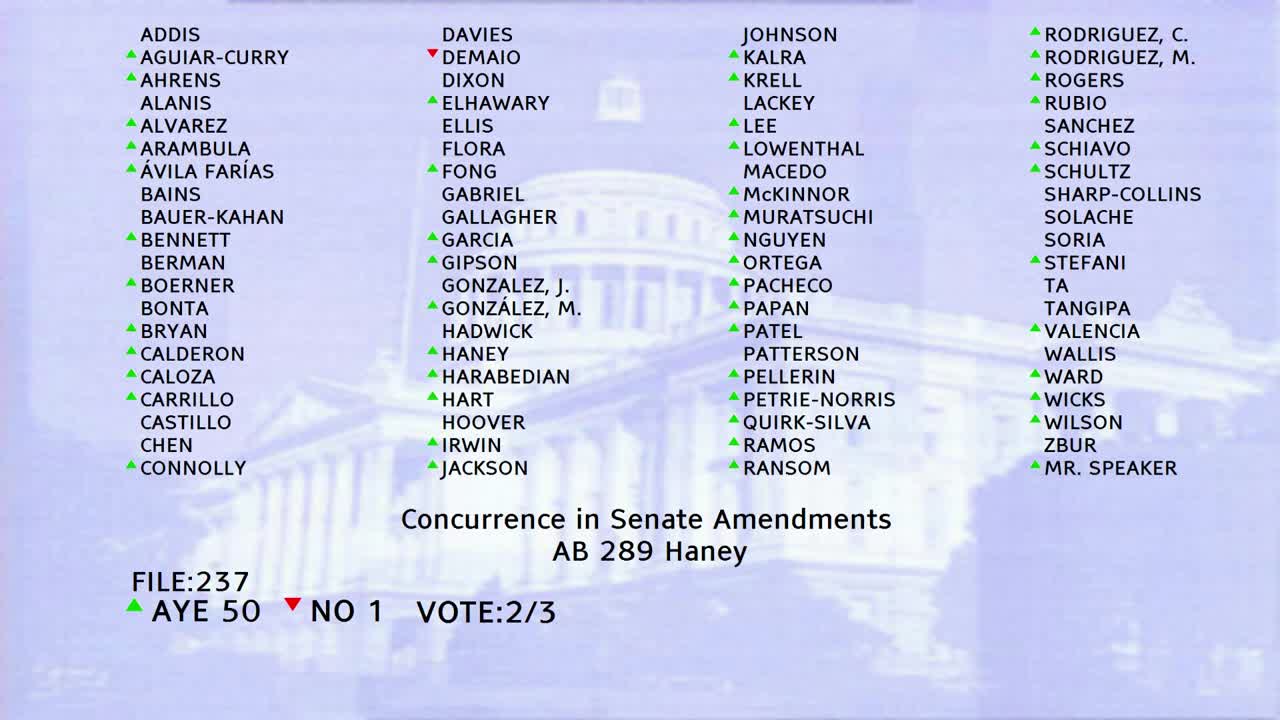
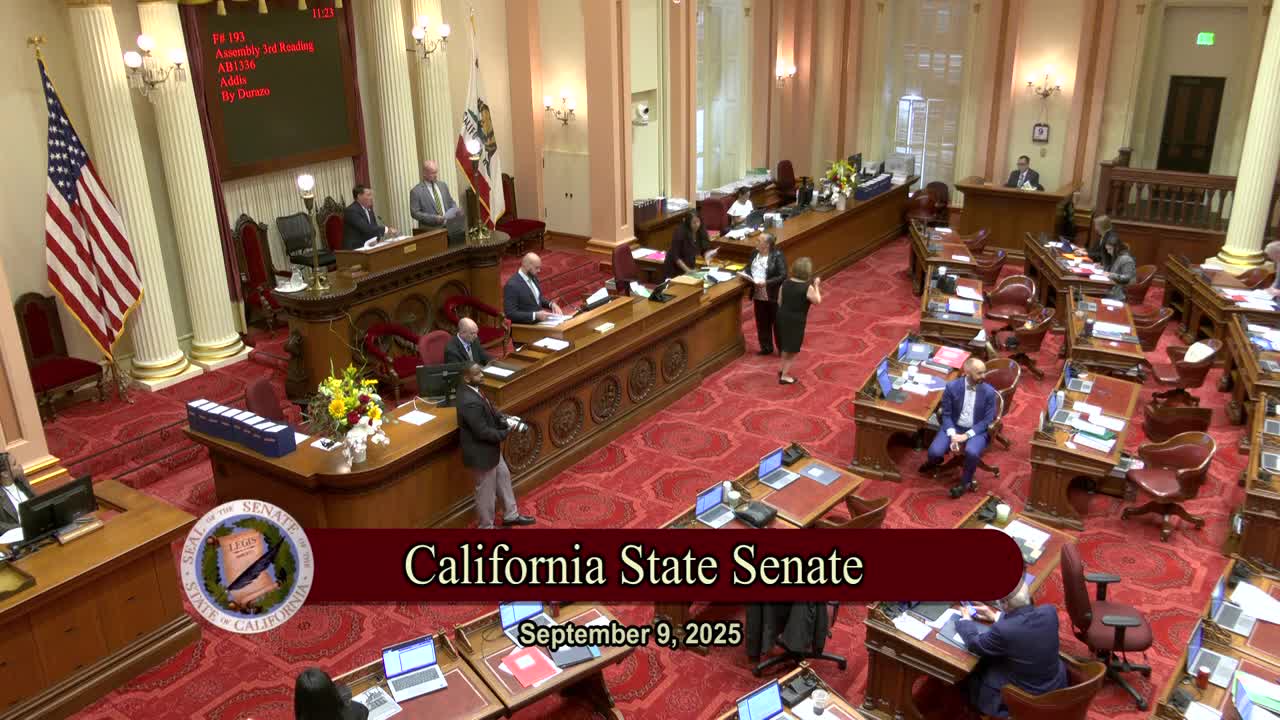
Bill Author
Bill Co-Author(s):