AB 1065: Credit card transaction fees: tax payments: Consumer Inflation Reduction and Tax Fairness Act.
- Session Year: 2025-2026
- House: Assembly
- Latest Version Date: 2025-04-21
Current Status:
Failed
(2026-02-02: From committee: Filed with the Chief Clerk pursuant to Joint Rule 56.)
Introduced
In Committee
Awaiting First Chamber Vote
Passed First Chamber
In Committee
Awaiting Second Chamber Vote
Passed Second Chamber
Enacted
Existing law, the Financial Code, provides for the licensure and regulation of various types of financial institutions and transactions. Existing law, the Song-Beverly Credit Card Act of 1971, regulates the issuance, use, and processing of credit cards and credit card transactions.
This bill would enact the Consumer Inflation Reduction and Tax Fairness Act, within the Financial Code, to require that the calculation of interchange fees charged by an issuer, a payment card network, an acquirer bank, or a processor not take into account certain state and local taxes and fees, as specified. The bill would define various terms for these purposes. The bill would prohibit a payment card network, an acquirer bank, or a processor from altering the computation of interchange fees, either by increasing the rate or the amount of fees applicable, to circumvent the effects of the act.
Existing law, the Unfair Competition Law, makes various practices unlawful and provides that a person who engages, has engaged, or proposes to engage in unfair competition is liable for a civil penalty, as specified.
This bill would provide a violation of its provisions is enforceable pursuant to the Unfair Competition Law, as provided.
Existing law, the Financial Code, provides for the licensure and regulation of various types of financial institutions and transactions. Existing law, the Song-Beverly Credit Card Act of 1971, regulates the issuance, use, and processing of credit cards and credit card transactions.
This bill would enact the Consumer Inflation Reduction and Tax Fairness Act, within the Financial Code, to require that the calculation of interchange fees charged by a an issuer, a payment card network, an acquirer bank, or a processor not take into account gratuity or certain state and local taxes and fees, as specified. The bill would define various terms for these purposes. The bill would prohibit a payment card network, an acquirer bank, or a processor from altering the computation of interchange fees, either by increasing the rate or the amount of fees applicable, to circumvent the effects of the act.
Existing law, the Unfair Competition Law, makes various practices unlawful and provides that a person who engages, has engaged, or proposes to engage in unfair competition is liable for a civil penalty, as specified.
This bill would provide a violation of its provisions is enforceable pursuant to the Unfair Competition Law, as provided.
Existing law, the Financial Code, provides for the licensure and regulation of various types of financial institutions and transactions. Existing law, the Song-Beverly Credit Card Act of 1971, regulates the issuance, use, and processing of credit cards and credit card transactions.
This bill would enact the Consumer Inflation Reduction and Tax Fairness Act, within the Financial Code, to require that the calculation of interchange fees charged by a issuer, a payment card network, an acquirer bank, or a processor not take into account gratuity or certain state and local taxes and fees, as specified. The bill would define various terms for these purposes. The bill would prohibit a payment card network, an acquirer bank, or a processor from altering the computation of interchange fees, either by increasing the rate or the amount of fees applicable, to circumvent the effects of the act. The bill would provide that a violation of these provisions would be subject to a civil penalty of $1,000, and would require that the charges be refunded to the merchant or seller, as provided.
Existing law, the Unfair Competition Law, makes various practices unlawful and provides that a person who engages, has engaged, or proposes to engage in unfair competition is liable for a civil penalty, as specified.
This bill would provide a violation of its provisions is enforceable pursuant to the Unfair Competition Law, as provided.
Existing law, the Financial Code, provides for the licensure and regulation of various types of financial institutions and transactions. Existing law, the Song-Beverly Credit Card Act of 1971, regulates the issuance, use, and processing of credit cards and credit card transactions.
This bill would enact the Consumer Inflation Reduction and Tax Fairness Act, within the Financial Code, to require that the calculation of interchange fees charged by a issuer, a payment card network, an acquirer bank, or a processor not take into account gratuity or certain state and local taxes and fees, as specified. The bill would define various terms for these purposes. The bill would prohibit a payment card network, an acquirer bank, or a processor from altering the computation of interchange fees, either by increasing the rate or the amount of fees applicable, to circumvent the effects of the act. The bill would provide that a violation of these provisions would be subject to a civil penalty of $1,000, and would require that the charges be refunded to the merchant or seller, as provided.
This division shall be known, and may be cited, as the Consumer Inflation Reduction and Tax Fairness Act.
100052.For purposes of this division:
(a)Acquirer bank means a member of a payment card network that contracts with a merchant for the settlement of electronic payment transactions. An acquirer bank may contract directly with merchants or indirectly through a processor to process electronic payment transactions.
(b)Authorization means the process through which a merchant requests approval for an electronic payment transaction from the issuer.
(c)Clearance means the process of transmitting final transaction data from a merchant to an issuer for posting to the cardholders account and the calculation of fees and charges, including interchange fees, that apply to the issuer and the merchant.
(d)Credit card has the same meaning as defined in Section 1747.02 of the Civil Code.
(e)(1)Debit card has the same meaning as defined in Section 1748.30 of the Civil Code.
(2)For purposes of this division, debit card includes a general use prepaid card, as that term is defined in Section 1693l-1 of Title 15 of the United States Code.
(3)Debit card shall not include paper checks.
(f)Electronic payment transaction means a transaction in which a person uses a debit card, credit card, or other payment code or device, issued or approved through a payment card network to debit a deposit account or use a line of credit, whether authorization is based on a signature, personal identification number, or other means.
(g)Interchange fee means a fee established, charged, or received by a payment card network for the purpose of compensating the issuer for its involvement in an electronic payment transaction.
(h)Issuer means a person issuing a debit card or credit card, or the issuers agent.
(i)Merchant means a person that collects and remits a tax.
(j)Payment card network means an entity that satisfies both of the following:
(1)Directly, or through licensed members, processors, or agents, provides the proprietary services, infrastructure, and software that routes information and data to conduct debit card or credit card transaction authorization, clearance, and settlement.
(2)Is used by a merchant or seller in order to accept as a form of payment a brand of debit card, credit card, or other device that may be used to carry out debit or credit transactions.
(k)Person means any individual, firm, public or private corporation, government, partnership, association, or any other organization or entity.
(l)Processor means an entity that facilitates, services, processes, or manages the debit or credit authorization, billing, transfer, payment procedures, or settlement with respect to any electronic payment transaction.
(m)Settlement means the process of transmitting sales information to the issuing bank for collection and reimbursement of funds to the merchant and calculating and reporting the net transaction amount to the issuer and merchant for an electronic payment transaction that is cleared.
(n)Tax means any state or local tax or fee that is calculated based on an electronic payment transaction amount and is listed separately on the payment invoice or other demand for payment. Tax includes the following:
(1)Sales and Use Tax Law (Part 1 (commencing with Section 6001) of Division 2 of the Revenue and Taxation Code).
(2)Bradley-Burns Uniform Local Sales and Use Tax Law (Part 1.5 (commencing with Section 7200) of Division 2 of the Revenue and Taxation Code).
(3)Transactions and Use Tax Law (Part 1.6 (commencing with Section 7251) of Division 2 of the Revenue and Taxation Code).
(4)Cigarette and Tobacco Products Tax Law (Part 13 (commencing with Section 30001) of Division 2 of the Revenue and Taxation Code).
(5)Alcoholic Beverage Tax Law (Part 14 (commencing with Section 32001) of Division 2 of the Revenue and Taxation Code).
(6)Cannabis Tax Law (Part 14.5 (commencing with Section 34010) of Division 2 of the Revenue and Taxation Code).
(o)Tax documentation means documentation sufficient for the payment card network to determine the total amount of the electronic payment transaction and the tax amount of the transaction. Tax documentation may be related to a single electronic payment transaction or multiple electronic payment transactions aggregated over a period of time. Examples of tax documentation include, but are not limited to, invoices, receipts, journals, ledgers, and tax returns filed with the Internal Revenue Service, the California Department of Tax and Fee Administration, or any other state or local taxing authority.
100054.(a)An issuer, a payment card network, an acquirer bank, or a processor shall not receive or charge a merchant any interchange fee on the tax amount of an electronic payment transaction if the merchant informs the acquirer bank or its designee of the tax amount as part of the authorization or settlement process for the electronic payment transaction. The merchant shall transmit the tax amount data as part of the authorization or settlement process to avoid being charged interchange fees on the tax amount of an electronic payment transaction.
(b)A merchant that does not transmit the tax amount data in accordance with this section may submit tax documentation for the electronic payment transaction to the acquirer bank or its designee no later than 180 days after the date of the electronic payment transaction, and the issuer shall credit to the merchant the amount of interchange fees charged on the tax amount of the electronic payment transaction within 30 days after the merchant submits any necessary tax documentation.
(c)This section does not create liability for a payment card network regarding the accuracy of the tax data reported by the merchant.
(d)A payment card network, an acquirer bank, or a processor shall not alter or manipulate the computation and imposition of interchange fees by increasing the rate or amount of the fees applicable to or imposed upon the portion of a credit card or debit card transaction not attributable to taxes or other fees charged to the retailer to circumvent the effects of this section.
100056.(a)A person or entity that knowingly engages in a pattern or practice of assessing interchange fees on the tax portion of an electronic payment transaction in violation of this division may be subject to enforcement under Chapter 5 (commencing with Section 17200) of Part 2 of Division 7 of the Business and Professions Code.
(b)In determining liability under this section, the court shall consider all of the following:
(1)Whether the person or entity had control over or access to the tax amount data.
(2)Whether the person or entity took reasonable steps to implement and enforce compliant processes for authorization, settlement, and fee computation.
(3)Whether any violation was the result of merchant or point-of-sale vendor error, or a failure to transmit sufficient or accurate tax data.
(c)Nothing in this section shall impose liability on a payment card network, acquirer bank, issuer, or processor for any errors, omissions, or misstatements in tax data provided by a merchant or its point-of-sale vendor, provided the entity did not knowingly disregard reliable information regarding such errors.
SEC. 2.The provisions of this act are severable. If any provision of this act or its application is held invalid, that invalidity shall not affect other provisions or applications that can be given effect without the invalid provision or application.
This division shall be known, and may be cited, as the Consumer Inflation Reduction and Tax Fairness Act.
100052.For purposes of this division:
(a)Acquirer bank means a member of a payment card network that contracts with a merchant for the settlement of electronic payment transactions. An acquirer bank may contract directly with merchants or indirectly through a processor to process electronic payment transactions.
(b)Authorization means the process through which a merchant requests approval for an electronic payment transaction from the issuer.
(c)Clearance means the process of transmitting final transaction data from a merchant to an issuer for posting to the cardholders account and the calculation of fees and charges, including interchange fees, that apply to the issuer and the merchant.
(d)Credit card has the same meaning as defined in Section 1747.02 of the Civil Code.
(e)(1)Debit card has the same meaning as defined in Section 1748.30 of the Civil Code.
(2)For purposes of this division, debit card includes a general use prepaid card, as that term is defined in Section 1693l-1 of Title 15 of the United States Code.
(3)Debit card shall not include paper checks.
(f)Electronic payment transaction means a transaction in which a person uses a debit card, credit card, or other payment code or device, issued or approved through a payment card network to debit a deposit account or use a line of credit, whether authorization is based on a signature, personal identification number, or other means.
(g)Gratuity means a voluntary monetary contribution to an employee from a guest, patron, or customer in connection with services rendered. (h)(g)Interchange fee means a fee established, charged, or received by a payment card network for the purpose of compensating the issuer for its involvement in an electronic payment transaction.
(i)(h)Issuer means a person issuing a debit card or credit card, or the issuers agent.
(j)(i)Merchant means a person that collects and remits a tax.
(k)(j)Payment card network means an entity that satisfies both of the following:
(1)Directly, or through licensed members, processors, or agents, provides the proprietary services, infrastructure, and software that routes information and data to conduct debit card or credit card transaction authorization, clearance, and settlement.
(2)Is used by a merchant or seller in order to accept as a form of payment a brand of debit card, credit card, or other device that may be used to carry out debit or credit transactions.
(l)(k)Person means any individual, firm, public or private corporation, government, partnership, association, or any other organization or entity.
(m)(l)Processor means an entity that facilitates, services, processes, or manages the debit or credit authorization, billing, transfer, payment procedures, or settlement with respect to any electronic payment transaction.
(n)(m)Settlement means the process of transmitting sales information to the issuing bank for collection and reimbursement of funds to the merchant and calculating and reporting the net transaction amount to the issuer and merchant for an electronic payment transaction that is cleared.
(o)(n)Tax means any state or local tax or fee that is calculated based on an electronic payment transaction amount and is listed separately on the payment invoice or other demand for payment. Tax includes the following:
(1)Sales and Use Tax Law (Part 1 (commencing with Section 6001) of Division 2 of the Revenue and Taxation Code).
(2)Bradley-Burns Uniform Local Sales and Use Tax Law (Part 1.5 (commencing with Section 7200) of Division 2 of the Revenue and Taxation Code).
(3)Transactions and Use Tax Law (Part 1.6 (commencing with Section 7251) of Division 2 of the Revenue and Taxation Code).
(4)Motor Vehicle Fuel Tax Law (Part 2 (commencing with Section 7301) of Division 2 of the Revenue and Taxation Code).(5)Use Fuel Tax Law (Part 3 (commencing with Section 8601) of Division 2 of the Revenue and Taxation Code). (6)(4)Cigarette and Tobacco Products Tax Law (Part 13 (commencing with Section 30001) of Division 2 of the Revenue and Taxation Code).
(7)(5)Alcoholic Beverage Tax Law (Part 14 (commencing with Section 32001) of Division 2 of the Revenue and Taxation Code).
(8)(6)Cannabis Tax Law (Part 14.5 (commencing with Section 34010) of Division 2 of the Revenue and Taxation Code).
(9)Diesel Fuel Tax Law (Part 31 (commencing with Section 60001) of Division 2 of the Revenue and Taxation Code).(p)(o)Tax documentation means documentation sufficient for the payment card network to determine the total amount of the electronic payment transaction and the tax or gratuity amount of the transaction. Tax documentation may be related to a single electronic payment transaction or multiple electronic payment transactions aggregated over a period of time. Examples of tax documentation include, but are not limited to, invoices, receipts, journals, ledgers, and tax returns filed with the Internal Revenue Service, the California Department of Tax and Fee Administration, or any other state or local taxing authority.
100054.(a)An issuer, a payment card network, an acquirer bank, or a processor shall not receive or charge a merchant any interchange fee on the tax amount or gratuity of an electronic payment transaction if the merchant informs the acquirer bank or its designee of the tax or gratuity amount as part of the authorization or settlement process for the electronic payment transaction. The merchant shall transmit the tax or gratuity amount data as part of the authorization or settlement process to avoid being charged interchange fees on the tax or gratuity amount of an electronic payment transaction.
(b)A merchant that does not transmit the tax or gratuity amount data in accordance with this section may submit tax documentation for the electronic payment transaction to the acquirer bank or its designee no later than 180 days after the date of the electronic payment transaction, and the issuer shall credit to the merchant the amount of interchange fees charged on the tax or gratuity amount of the electronic payment transaction within 30 days after the merchant submits any necessary tax documentation.
(c)This section does not create liability for a payment card network regarding the accuracy of the tax or gratuity data reported by the merchant.
(d)A payment card network, an acquirer bank, or a processor shall not alter or manipulate the computation and imposition of interchange fees by increasing the rate or amount of the fees applicable to or imposed upon the portion of a credit card or debit card transaction not attributable to taxes or other fees charged to the retailer to circumvent the effects of this section.
100056.(a)A person or entity that knowingly engages in a pattern or practice of assessing interchange fees on the tax or gratuity portion of an electronic payment transaction in violation of this division may be subject to enforcement under Chapter 5 (commencing with Section 17200) of Part 2 of Division 7 of the Business and Professions Code.
(b)In determining liability under this section, the court shall consider all of the following:
(1)Whether the person or entity had control over or access to the tax or gratuity amount data.
(2)Whether the person or entity took reasonable steps to implement and enforce compliant processes for authorization, settlement, and fee computation.
(3)Whether any violation was the result of merchant or point-of-sale vendor error, or a failure to transmit sufficient or accurate tax or gratuity data.
(c)Nothing in this section shall impose liability on a payment card network, acquirer bank, issuer, or processor for any errors, omissions, or misstatements in tax or gratuity data provided by a merchant or its point-of-sale vendor, provided the entity did not knowingly disregard reliable information regarding such errors.
SEC. 2.The provisions of this act are severable. If any provision of this act or its application is held invalid, that invalidity shall not affect other provisions or applications that can be given effect without the invalid provision or application.
This division shall be known, and may be cited, as the Consumer Inflation Reduction and Tax Fairness Act.
100052.For purposes of this division:
(a)Acquirer bank means a member of a payment card network that contracts with a merchant for the settlement of electronic payment transactions. An acquirer bank may contract directly with merchants or indirectly through a processor to process electronic payment transactions.
(b)Authorization means the process through which a merchant requests approval for an electronic payment transaction from the issuer.
(c)Clearance means the process of transmitting final transaction data from a merchant to an issuer for posting to the cardholders account and the calculation of fees and charges, including interchange fees, that apply to the issuer and the merchant.
(d)Credit card has the same meaning as defined in Section 1747.02 of the Civil Code.
(e)(1)Debit card has the same meaning as defined in Section 1748.30 of the Civil Code.
(2)For purposes of this division, debit card includes a general use prepaid card, as that term is defined in Section 1693l-1 of Title 15 of the United States Code.
(3)Debit card shall not include paper checks.
(f)Electronic payment transaction means a transaction in which a person uses a debit card, credit card, or other payment code or device, issued or approved through a payment card network to debit a deposit account or use a line of credit, whether authorization is based on a signature, personal identification number, or other means.
(g)Gratuity means a voluntary monetary contribution to an employee from a guest, patron, or customer in connection with services rendered.
(h)Interchange fee means a fee established, charged, or received by a payment card network for the purpose of compensating the issuer for its involvement in an electronic payment transaction.
(i)Issuer means a person issuing a debit card or credit card, or the issuers agent.
(j)Merchant means a person that collects and remits a tax.
(k)Payment card network means an entity that satisfies both of the following:
(1)Directly, or through licensed members, processors, or agents, provides the proprietary services, infrastructure, and software that routes information and data to conduct debit card or credit card transaction authorization, clearance, and settlement.
(2)Is used by a merchant or seller in order to accept as a form of payment a brand of debit card, credit card, or other device that may be used to carry out debit or credit transactions.
(l)Person means any individual, firm, public or private corporation, government, partnership, association, or any other organization or entity.
(m)Processor means an entity that facilitates, services, processes, or manages the debit or credit authorization, billing, transfer, payment procedures, or settlement with respect to any electronic payment transaction.
(n)Settlement means the process of transmitting sales information to the issuing bank for collection and reimbursement of funds to the merchant and calculating and reporting the net transaction amount to the issuer and merchant for an electronic payment transaction that is cleared.
(o)Tax means any state or local tax or fee that is calculated based on an electronic payment transaction amount and is listed separately on the payment invoice or other demand for payment. Tax includes, but is not limited to, includes the following:
(1)Sales and Use Tax Law (Part 1 (commencing with Section 6001) of Division 2 of the Revenue and Taxation Code).
(2)Bradley-Burns Uniform Local Sales and Use Tax Law (Part 1.5 (commencing with Section 7200) of Division 2 of the Revenue and Taxation Code).
(3)Transactions and Use Tax Law (Part 1.6 (commencing with Section 7251) of Division 2 of the Revenue and Taxation Code).
(4)Motor Vehicle Fuel Tax Law (Part 2 (commencing with Section 7301) of Division 2 of the Revenue and Taxation Code).
(5)Use Fuel Tax Law (Part 3 (commencing with Section 8601) of Division 2 of the Revenue and Taxation Code).
(6)Cigarette and Tobacco Products Tax Law (Part 13 (commencing with Section 30001) of Division 2 of the Revenue and Taxation Code).
(7)Alcoholic Beverage Tax Law (Part 14 (commencing with Section 32001) of Division 2 of the Revenue and Taxation Code).
(8)Cannabis Tax Law (Part 14.5 (commencing with Section 34010) of Division 2 of the Revenue and Taxation Code).
(9)Diesel Fuel Tax Law (Part 31 (commencing with Section 60001) of Division 2 of the Revenue and Taxation Code).
(p)Tax documentation means documentation sufficient for the payment card network to determine the total amount of the electronic payment transaction and the tax or gratuity amount of the transaction. Tax documentation may be related to a single electronic payment transaction or multiple electronic payment transactions aggregated over a period of time. Examples of tax documentation include, but are not limited to, invoices, receipts, journals, ledgers, and tax returns filed with the Internal Revenue Service, the California Department of Tax and Fee Administration, or any other state or local taxing authority.
100054.(a)An issuer, a payment card network, an acquirer bank, or a processor shall not receive or charge a merchant any interchange fee on the tax amount or gratuity of an electronic payment transaction if the merchant informs the acquirer bank or its designee of the tax or gratuity amount as part of the authorization or settlement process for the electronic payment transaction. The merchant shall transmit the tax or gratuity amount data as part of the authorization or settlement process to avoid being charged interchange fees on the tax or gratuity amount of an electronic payment transaction.
(b)A merchant that does not transmit the tax or gratuity amount data in accordance with this section may submit tax documentation for the electronic payment transaction to the acquirer bank or its designee no later than 180 days after the date of the electronic payment transaction, and the issuer shall credit to the merchant the amount of interchange fees charged on the tax or gratuity amount of the electronic payment transaction within 30 days after the merchant submits any necessary tax documentation.
(c)This section does not create liability for a payment card network regarding the accuracy of the tax or gratuity data reported by the merchant.
(d)A payment card network, an acquirer bank, or a processor shall not alter or manipulate the computation and imposition of interchange fees by increasing the rate or amount of the fees applicable to or imposed upon the portion of a credit card or debit card transaction not attributable to taxes or other fees charged to the retailer to circumvent the effects of this section.
100056.An issuer, a payment card network, an acquirer bank, a processor, or other designated entity that has received the tax or gratuity amount data and violates the provisions of this division is subject to a civil penalty of one thousand dollars ($1,000) per electronic payment transaction, and the issuer, payment card network, acquirer bank, processor, or designated entity shall refund the merchant that amount of any interchange fee calculated on the tax or gratuity amount of the electronic payment transaction.100056.(a)A person or entity that knowingly engages in a pattern or practice of assessing interchange fees on the tax or gratuity portion of an electronic payment transaction in violation of this division may be subject to enforcement under Chapter 5 (commencing with Section 17200) of Part 2 of Division 7 of the Business and Professions Code.
(b)In determining liability under this section, the court shall consider all of the following:
(1)Whether the person or entity had control over or access to the tax or gratuity amount data.
(2)Whether the person or entity took reasonable steps to implement and enforce compliant processes for authorization, settlement, and fee computation.
(3)Whether any violation was the result of merchant or point-of-sale vendor error, or a failure to transmit sufficient or accurate tax or gratuity data.
(c)Nothing in this section shall impose liability on a payment card network, acquirer bank, issuer, or processor for any errors, omissions, or misstatements in tax or gratuity data provided by a merchant or its point-of-sale vendor, provided the entity did not knowingly disregard reliable information regarding such errors.
SEC. 2.The provisions of this act are severable. If any provision of this act or its application is held invalid, that invalidity shall not affect other provisions or applications that can be given effect without the invalid provision or application.
This division shall be known, and may be cited, as the Consumer Inflation Reduction and Tax Fairness Act.
100052.For purposes of this division:
(a)Acquirer bank means a member of a payment card network that contracts with a merchant for the settlement of electronic payment transactions. An acquirer bank may contract directly with merchants or indirectly through a processor to process electronic payment transactions.
(b)Authorization means the process through which a merchant requests approval for an electronic payment transaction from the issuer.
(c)Clearance means the process of transmitting final transaction data from a merchant to an issuer for posting to the cardholders account and the calculation of fees and charges, including interchange fees, that apply to the issuer and the merchant.
(d)Credit card has the same meaning as defined in Section 1747.02 of the Civil Code.
(e)(1)Debit card has the same meaning as defined in Section 1748.30 of the Civil Code.
(2)For purposes of this division, debit card includes a general use prepaid card, as that term is defined in Section 1693l-1 of Title 15 of the United States Code.
(3)Debit card shall not include paper checks.
(f)Electronic payment transaction means a transaction in which a person uses a debit card, credit card, or other payment code or device, issued or approved through a payment card network to debit a deposit account or use a line of credit, whether authorization is based on a signature, personal identification number, or other means.
(g)Gratuity means a voluntary monetary contribution to an employee from a guest, patron, or customer in connection with services rendered.
(h)Interchange fee means a fee established, charged, or received by a payment card network for the purpose of compensating the issuer for its involvement in an electronic payment transaction.
(i)Issuer means a person issuing a debit card or credit card, or the issuers agent.
(j)Merchant means a person that collects and remits a tax.
(k)Payment card network means an entity that satisfies both of the following:
(1)Directly, or through licensed members, processors, or agents, provides the proprietary services, infrastructure, and software that routes information and data to conduct debit card or credit card transaction authorization, clearance, and settlement.
(2)Is used by a merchant or seller in order to accept as a form of payment a brand of debit card, credit card, or other device that may be used to carry out debit or credit transactions.
(l)Person means any individual, firm, public or private corporation, government, partnership, association, or any other organization or entity.
(m)Processor means an entity that facilitates, services, processes, or manages the debit or credit authorization, billing, transfer, payment procedures, or settlement with respect to any electronic payment transaction.
(n)Settlement means the process of transmitting sales information to the issuing bank for collection and reimbursement of funds to the merchant and calculating and reporting the net transaction amount to the issuer and merchant for an electronic payment transaction that is cleared.
(o)Tax means any state or local tax or fee that is calculated based on an electronic payment transaction amount and is listed separately on the payment invoice or other demand for payment. Tax includes, but is not limited to, the following:
(1)Sales and Use Tax Law (Part 1 (commencing with Section 6001) of Division 2 of the Revenue and Taxation Code).
(2)Bradley-Burns Uniform Local Sales and Use Tax Law (Part 1.5 (commencing with Section 7200) of Division 2 of the Revenue and Taxation Code).
(3)Transactions and Use Tax Law (Part 1.6 (commencing with Section 7251) of Division 2 of the Revenue and Taxation Code).
(4)Motor Vehicle Fuel Tax Law (Part 2 (commencing with Section 7301) of Division 2 of the Revenue and Taxation Code).
(5)Use Fuel Tax Law (Part 3 (commencing with Section 8601) of Division 2 of the Revenue and Taxation Code).
(6)Cigarette and Tobacco Products Tax Law (Part 13 (commencing with Section 30001) of Division 2 of the Revenue and Taxation Code).
(7)Alcoholic Beverage Tax Law (Part 14 (commencing with Section 32001) of Division 2 of the Revenue and Taxation Code).
(8)Cannabis Tax Law (Part 14.5 (commencing with Section 34010) of Division 2 of the Revenue and Taxation Code).
(9)Diesel Fuel Tax Law (Part 31 (commencing with Section 60001) of Division 2 of the Revenue and Taxation Code).
(p)Tax documentation means documentation sufficient for the payment card network to determine the total amount of the electronic payment transaction and the tax or gratuity amount of the transaction. Tax documentation may be related to a single electronic payment transaction or multiple electronic payment transactions aggregated over a period of time. Examples of tax documentation include, but are not limited to, invoices, receipts, journals, ledgers, and tax returns filed with the Internal Revenue Service, the California Department of Tax and Fee Administration, or any other state or local taxing authority.
100054.(a)An issuer, a payment card network, an acquirer bank, or a processor shall not receive or charge a merchant any interchange fee on the tax amount or gratuity of an electronic payment transaction if the merchant informs the acquirer bank or its designee of the tax or gratuity amount as part of the authorization or settlement process for the electronic payment transaction. The merchant shall transmit the tax or gratuity amount data as part of the authorization or settlement process to avoid being charged interchange fees on the tax or gratuity amount of an electronic payment transaction.
(b)A merchant that does not transmit the tax or gratuity amount data in accordance with this section may submit tax documentation for the electronic payment transaction to the acquirer bank or its designee no later than 180 days after the date of the electronic payment transaction, and the issuer shall credit to the merchant the amount of interchange fees charged on the tax or gratuity amount of the electronic payment transaction within 30 days after the merchant submits any necessary tax documentation.
(c)This section does not create liability for a payment card network regarding the accuracy of the tax or gratuity data reported by the merchant.
(d)A payment card network, an acquirer bank, or a processor shall not alter or manipulate the computation and imposition of interchange fees by increasing the rate or amount of the fees applicable to or imposed upon the portion of a credit card or debit card transaction not attributable to taxes or other fees charged to the retailer to circumvent the effects of this section.
100056.An issuer, a payment card network, an acquirer bank, a processor, or other designated entity that has received the tax or gratuity amount data and violates the provisions of this division is subject to a civil penalty of one thousand dollars ($1,000) per electronic payment transaction, and the issuer, payment card network, acquirer bank, processor, or designated entity shall refund the merchant that amount of any interchange fee calculated on the tax or gratuity amount of the electronic payment transaction.
SEC. 2.The provisions of this act are severable. If any provision of this act or its application is held invalid, that invalidity shall not affect other provisions or applications that can be given effect without the invalid provision or application.
|
Date
|
Status
|
|---|---|
| Feb 2, 2026 | From committee: Filed with the Chief Clerk pursuant to Joint Rule 56. |
| Jan 31, 2026 | Died pursuant to Art. IV, Sec. 10(c) of the Constitution. |
| Apr 22, 2025 | Re-referred to Com. on B. & F. |
| Apr 21, 2025 | From committee chair, with author's amendments: Amend, and re-refer to Com. on B. & F. Read second time and amended. |
| Apr 21, 2025 | In committee: Set, first hearing. Failed passage. Reconsideration granted. |
| Apr 10, 2025 | Re-referred to Com. on B. & F. |
| Apr 9, 2025 | Read second time and amended. |
| Apr 8, 2025 | From committee: Amend, and do pass as amended and re-refer to Com. on B. & F. (Ayes 7. Noes 3.) (April 8). |
| Apr 3, 2025 | Re-referred to Com. on JUD. |
| Apr 2, 2025 | From committee chair, with author's amendments: Amend, and re-refer to Com. on JUD. Read second time and amended. |
| Mar 13, 2025 | Re-referred to Coms. on JUD. and B.&F. pursuant to Assembly Rule 96. |
| Mar 10, 2025 | Referred to Coms. on B.&F. and JUD. |
| Feb 21, 2025 | From printer. May be heard in committee March 23. |
| Feb 20, 2025 | Read first time. To print. |
|
Date
|
Description
|
Location
|
Votes
|
|
|---|---|---|---|---|
| Apr 21, 2025 | Reconsideration. | Assembly Standing Committee on Banking and Finance |
Passed |
|
| Apr 21, 2025 | Do pass. | Assembly Standing Committee on Banking and Finance |
Failed |
|
| Apr 8, 2025 | Do pass as amended and be re-referred to the Committee on [Banking and Finance] | Assembly Standing Committee on Judiciary |
Passed |
This list shows positions taken on this bill by organizations on the date displayed, which is linked to the original source.
Positions by individuals are not included.
|
Organization
|
Position
|
Date
|
|---|---|---|
| Airlines for America | ** Against | |
| American Express | ** Against | |
| American Financial Services Association | ** Against | |
| American Petroleum and Convenience Store Association | ** Support | |
| American Transaction Processors Coalition | ** Against | |
| America’s Credit Unions | ** Against | |
| California Association Of County Treasurers & Tax Collectors | ** Against | |
| California Bankers Association | ** Against | |
| California Business Roundtable | ** Against | |
| California Community Banking Network | ** Against | |
| California Credit Union League | ** Against | |
| California Fuels And Convenience Alliance | ** Support | |
| California Grocers Association | ** Support | |
| California Restaurant Association | ** Support | |
| Capital One Financial Corporation | ** Against | |
| Card Coalition | ** Against | |
| Defense Credit Union Council | ** Against | |
| Discover Financial Services | ** Against | |
| Electronic Payments Coalition | ** Against | |
| Electronic Transactions Association | ** Against | |
| Mastercard International Inc. | ** Against | |
| Orange County Business Council | ** Against | |
| Silicon Valley Leadership Group | ** Against | |
| Technet | ** Against | |
| VISA, INC. | ** Against |
Date of Hearing: April 21, 2025
ASSEMBLY COMMITTEE ON BANKING AND FINANCE
Avelino Valencia, Chair
ABPCA Bill Id:AB 1065 (
Author:Ortega) – As Amended Ver:April 21, 2025
SUBJECT: Credit card transaction fees: tax payments: Consumer Inflation Reduction and Tax Fairness Act
SUMMARY: Establishes the Consumer Inflation Reduction and Tax Fairness Act, which prohibits the charging or receiving of interchange fees on the tax portion of an electronic payment transaction. Specifically, this bill:
- Prohibits an issuer, a payment card network, an acquirer bank, or a processor from receiving or charging a merchant any interchange fee on the tax amount of an electronic payment transaction if the merchant informs the acquirer bank or its designee of the tax amount as part of the authorization or settlement process for the electronic payment transaction.
- Requires the merchant to transmit the tax amount data as part of the authorization or settlement process to avoid being charged interchange fees on the tax amount of an electronic payment transaction.
- Provides that a merchant that does not transmit the tax amount data, as required in 2), may submit tax documentation for the electronic payment transaction to the acquirer bank or its designee within 180 days after the date of the electronic payment transaction.
- Establishes that if the merchant submits documentation within 180 days, as provided in 3), the issuer must credit the merchant the amount of interchange fees charged on the tax amount of the electronic payment transaction within 30 days after the merchant submits the necessary tax documentation.
- Establishes that the requirements in 1-4) do not create liability for a payment card network regarding the accuracy of the tax data reported by the merchant.
- Prohibits a payment card network, acquirer bank, or processor from altering or manipulating the computation and imposition of interchange fees by increasing the rate or amount of the fees imposed on other parts of the transaction (i.e., other than the interchange on tax) in order to circumvent the effects of this measure.
- Provides that a person or entity that knowingly engages in a pattern or practice of assessing interchange fees on the tax portion of an electronic payment transaction in violation of this measure, may be subject to enforcement under the Unfair Competition Law.
- In determining liability under this section, the court is required to consider all of the following:
- Whether the person or entity had control over or access to the tax amount data.
- Whether the person or entity took reasonable steps to implement and enforce compliant processes for authorization, settlement, and fee computation.
- Whether any violation was the result of merchant or point-of-sale vendor error, or a failure to transmit sufficient or accurate tax data.
- Provides that there is no liability on a payment card network, acquirer bank, issuer, or processor for any errors, omissions, or misstatements in tax data provided by a merchant or its point-of-sale vendor, provided the entity did not knowingly disregard reliable information regarding such errors.
- Defines key terms, including:
- “Electronic payment transaction” means a transaction in which a person uses a debit card, credit card, or other payment code or device, issued or approved through a payment card network to debit a deposit account or use a line of credit, whether authorization is based on a signature, personal identification number, or other means.
- “Interchange fee” means a fee established, charged, or received by a payment card network for the purpose of compensating the issuer for its involvement in an electronic payment transaction.
- “Tax” means the following:
- Sales and Use Tax Law.
- Bradley-Burns Uniform Local Sales and Use Tax Law.
- Transactions and Use Tax Law.
- Cigarette and Tobacco Products Tax Law.
- Alcoholic Beverage Tax Law.
- Cannabis Tax Law.
- Sales and Use Tax Law.
- EXISTING LAW:
Caps consumer liability for unauthorized credit card charges and obligates issuers to absorb fraud-related losses. (15 United States Code Section 1643(a); 12 Code of Federal Regulations Section 1026.12(b).) - Implements consumer protections under the Truth in Lending Act; governs issuer obligations in the event of credit card fraud or dispute. (Title 12 Code of Federal Regulations Section 1026.12(b).)
- Governs electronic debit card transactions and limits consumer liability for unauthorized use. (Title 15 United States Code Section 1693 et seq.)
- Requires the Federal Reserve to set standards for debit card interchange fees and mandates network routing options for merchants. (Title 15 United States Code Section 1693o–2.)
- Implements the Durbin Amendment and sets the interchange fee cap and fraud adjustment for debit card issuers. (Title 12 Code of Federal Regulations part 235.)
- Requires merchants to collect and remit sales tax. (Revenue and Taxation Code Section 6203.)
- Exempts sale of most food products for human consumption from sales tax. (Revenue and Taxation Code Section 6359.)
- Prohibits unlawful, unfair, or fraudulent business acts or practices. (Business and Professions Code section 17200 et seq.)
- Defines “credit card” for purposes of consumer credit laws in California. (Civil Code Section 1747.02.)
- Defines “debit card” and includes general-use prepaid cards. (Civil Code Section 1748.30.)
- Governs the imposition, collection, and administration of sales and use taxes in California. (Revenue and Taxation Code Section 6001 et seq.)
- Establishes the excise tax on cannabis and cannabis products. (Revenue and Taxation Code Section 34010 et seq.)
- Governs excise taxes on tobacco products. (Revenue and Taxation Code Section 30001 et seq.)
- Authorizes cities and counties to impose local sales and use taxes. (Revenue and Taxation Code Section 7200 et seq.)
FISCAL EFFECT: This bill is keyed non-fiscal.
COMMENTS:
- Purpose. According to the author:
It is absurd to require businesses to collect and track taxes at their own expense while allowing credit card companies to mark up those same taxes for a profit. It is also absurd for credit card companies to charge a fee on the tips left by generous customers that businesses collect for their employees.
To address these obvious inequities, AB 1065 would prohibit a card network, bank, or card processor from charging a business a swipe fee on the tax or tip portion of a debit or credit card transaction. The bill establishes a civil penalty for those entities that choose to violate this prohibition.
- Interchange Fees. Card networks like Visa and Mastercard set interchange fees. They are paid from a merchant bank to a consumer bank to cover the consumer bank's costs, including transaction processing and the risk of bad debt for credit cards.
 Interchange fees are typically billed to merchant banks as a one-time fee but represent several smaller fees rolled into one. Interchange fees vary based on the type of card used and whether the card is swiped, keyed in, or processed remotely. Fees are typically a percentage of the transaction plus a fixed amount.
Source: Electronic Payments Coalition[1]
In 2011, the Federal Reserve issued Regulation II, implementing what is known as the Durbin Amendment, which required the Federal Reserve to set debit interchange fees for large banks based on the cost of providing the services, capping debit card interchange fees at 0.05% plus $0.21 per transaction for large issuers. This was the first time transaction fees were required to be regulated. Regulation II does not cover credit card interchange.[2] By contrast, in Europe, the European Commission capped interchange fees for debit and credit cards.
Card Type | United States[3] | Europe[4] |
Debit Card | Capped at ~$0.21 + 0.05% (regulated banks) | Capped at 0.2% of transaction value |
Credit Card | Range: ~1.3% to 3.5%, depending on card and method | Capped at 0.3% of transaction value |
- State Legislation and Federal Preemption. This year, interchange fee bills are pending in Colorado, the District of Columbia, Massachusetts, Nevada, New York, Pennsylvania, Rhode Island, Tennessee, Texas and Vermont.
In 2024, Illinois became the first state to enact a law addressing interchange fees associated with revenues not retained by a business. (205 ILCS 730.). Similar to the introduced version of AB 1065,* the Illinois Interchange Fee Prohibition Act (IFPA) prohibits financial institutions from charging interchange fees on portions of transactions attributable to state and local taxes and gratuities. (*Recent amendments to AB 1065 remove gratuities and narrow the tax definition.)
In Illinois, the American Bankers Association, the Illinois Bankers Association, America’s Credit Unions, and the Illinois Credit Union League filed a lawsuit challenging the law, arguing it is federally preempted, and requested a preliminary injunction. In December 2024, U.S. District Court Judge Virginia Kendall issued a partial preliminary injunction, preventing enforcement of the IFPA against national banks and federal savings associations, citing likely preemption by the National Bank Act (NBA) and the Home Owners' Loan Act (HOLA). The Court later expanded the preliminary injunction to include out-of-state banks. However, IFPA still applies to Illinois-chartered banks, credit unions, and payment card networks remains in effect.[5]
From the Assembly Judiciary Analysis of AB 1065 on April 8, 2025. (Please refer to the Assembly Judiciary analysis for the complete overview of federal preemption and liability issues.):
Opposition’s concerns - Preemption. Opponents of AB 1065 have also raised the prospect that the bill may be preempted by federal law, particularly as applied to national banks and federally chartered financial institutions. Under the National Bank Act (12 United States Code Section 24) and case law interpreting it—including Watters v. Wachovia Bank, N.A. (2007) 550 U.S. 1 and Barnett Bank of Marion County, N.A. v. Nelson (1996) 517 U.S. 25—the Office of the Comptroller of the Currency has broad authority to regulate the powers and operations of national banks. State laws that “significantly interfere” with a national bank’s exercise of its federally granted powers—such as the ability to offer and price credit products or to charge fees associated with payment processing—are likely preempted.
Because AB 1065 seeks to regulate interchange fees, which are set by private payment networks and flow from acquirers to issuers, opponents argue that the bill could intrude upon the federally-protected authority of national banks to participate in and structure card-based payment systems, including setting terms and fees. As discussed above, similar arguments are being debated as a core aspect of the litigation surrounding the Illinois Interchange Fee Prohibition Act.
To the extent AB 1065 applies to national banks or their agents and banks chartered out-of-state, it may face similar preemption challenges. . . .
- Business and Consumer Impact. In 2023, California merchants paid an estimated $1.7 billion in swipe fees on sales tax, representing a significant and recurring cost of compliance.[6] Supporters state interchange fees cost American families over $1,000 annually. According to the National Federation of Independent Business, swipe fees are now the third-highest operating expense for many small businesses, after labor and rent, and accounted for over $130 billion in nationwide costs to merchants in 2022.
It is unclear how much revenue banks in California earn on interchange fees. Anecdotally, banks state that the revenue funds transaction processing, fraud prevention and security services, offset bad debt from consumers, account servicing, and credit card rewards programs.
While merchants will benefit from reduced interchange fees, it is unclear if AB 1065 will reduce consumer costs. Many studies show that the Durbin amendment, which capped debit card interchange fees, benefited merchants who did not pass savings on to consumers.
- Workability.
- Payment Systems. Pending the resolution of the preemption issue, if the bill were narrowed to apply to state-chartered institutions, it would also present challenges. Per the Assembly Judiciary analysis of AB 1065 dated April 8, 2025:
- Payment Systems. Pending the resolution of the preemption issue, if the bill were narrowed to apply to state-chartered institutions, it would also present challenges. Per the Assembly Judiciary analysis of AB 1065 dated April 8, 2025:
In an amicus brief, the Office of the Comptroller of the Currency, a bureau of the United States Department of the Treasury, and the primary federal regulator of national banks, raised implementation questions regarding the law and posited that the law might create a fragmented and inefficient payment system with adverse consequences for fraud risk, consumer access, and interstate commerce. (Office of the Comptroller of the Currency, Amicus Brief in Illinois Bankers Ass’n v. Raoul, (filed Jan. 2025) https://www.occ.treas.gov/topics/laws-and-regulations/litigation/occ-briefs.html (as of Mar. 31, 2025).)
- Financial Burden. Opponents note that federal preemption “leaves credit unions and community banks to bear the financial burden, an unfair outcome that could be replicated in California.” They cite information from the Electronic Transactions Association, which estimates that 90% of payment volume comes from credit cards overwhelmingly issued by nationally chartered banks. If pre-empted, 90% of transactions would be exempted.
- Financial Burden. Opponents note that federal preemption “leaves credit unions and community banks to bear the financial burden, an unfair outcome that could be replicated in California.” They cite information from the Electronic Transactions Association, which estimates that 90% of payment volume comes from credit cards overwhelmingly issued by nationally chartered banks. If pre-empted, 90% of transactions would be exempted.
Supporters note that if Visa and Mastercard are prohibited from receiving interchange fees on the tax, all parts of the payment system must comply. If correct, California merchants will receive relief, and the impacts on state-chartered banks and credit unions will be minor.
- Technological Feasibility. Supporters and opponents disagree on whether the bill is technologically feasible. Most point-of-sales systems already itemize taxes separately and could be programmed to flag or exclude tax amounts from the total used to calculate interchange fees. Opponents note the change requires “expensive system overhauls and increased data collection, resulting in prolonged delays and operational confusion.” The California Association of County Treasurers and Tax Collects expressed concern that businesses could require a second form of payment to pay for taxes. This could lead to non-payment.
- Technological Feasibility. Supporters and opponents disagree on whether the bill is technologically feasible. Most point-of-sales systems already itemize taxes separately and could be programmed to flag or exclude tax amounts from the total used to calculate interchange fees. Opponents note the change requires “expensive system overhauls and increased data collection, resulting in prolonged delays and operational confusion.” The California Association of County Treasurers and Tax Collects expressed concern that businesses could require a second form of payment to pay for taxes. This could lead to non-payment.
REGISTERED SUPPORT / OPPOSITION:
Support
American Petroleum and Convenience Store Association
California Fuels and Convenience Alliance
California Grocers Association
California Restaurant Association
Opposition
California Credit Union League
Oppose Unless Amended
California Association of County Treasurers & Tax Collectors
Analysis Prepared by: Darci Sears / B. & F. / (916) 319-3081
https://www.electronicpaymentscoalition.org/wp-content/uploads/2020/07/July-2020-Overview-of-Interchange.pdf ↑
https://www.congress.gov/crs-product/IF11893 ↑
https://www.federalreserve.gov/paymentsystems/regii-average-interchange-fee.htm ↑
https://www.clearlypayments.com/blog/an-overview-of-interchange-rates-and-payment-processing-in-the-eu/ ↑
https://bankingjournal.aba.com/2025/03/court-extends-preliminary-injunction-to-out-of-state-banks-in-illinois-interchange-litigation/ ↑
https://cmspi.com/how-much-interchange-was-paid-on-sales-tax-in-the-us/ ↑
Date of Hearing: April 8, 2025
ASSEMBLY COMMITTEE ON JUDICIARY
Ash Kalra, Chair
ABPCA Bill Id:AB 1065 (
Author:Ortega) – As Amended Ver:April 2, 2025
As Proposed to be Amended
SUBJECT: Credit card transaction fees: tax payments: Consumer Inflation Reduction and Tax Fairness Act
KEY ISSUE: Should the Legislature prohibit financial institutions from charging interchange fees on SALES tax in electronic payment transactions—funds that merchants do not retain and are obligated to pass through to the state—and shift enforcement to a knowledge-based, compliance-sensitive model to address concerns about liability and feasibility?
SYNOPSIS
AB 1065 targets a long-standing inequity for California merchants: being charged swipe fees on money they don’t keep. Under the current system, when a consumer uses a credit or debit card to pay for a transaction businesses pay interchange fees—typically between 1.5% and 3.5%—on the full transaction amount, including sales tax owed to the government. These fees are set unilaterally by card networks like Visa and Mastercard, which together control over 80% of the U.S. market. Merchants, especially small ones, have no ability to negotiate rates and are forced to accept them as a condition of taking card payments. Interchange fees are now the third-highest operating cost for many small businesses, after labor and rent. AB 1065 would prohibit charging or collecting interchange fees on the sales tax portion of a transaction, provided the merchant transmits that data during the payment authorization or through follow-up documentation. Supporters argue this would provide immediate relief to small businesses operating on thin margins by excluding non-revenue funds from fee calculations. The bill includes a flexible enforcement mechanism, added by recent amendments, that limits liability to knowing and repeated violations, provides safe harbors for good-faith actors, and ensures that payment networks aren’t held responsible for merchant data errors. Recent amendments, along with additional proposed amendments discussed throughout the analysis, clarify that the bill does not apply to government charges such as property taxes. The proposed amendments also clarify that interchange fees can be charged on gratuities. Opponents—including banks, payment networks, and tax collectors—raise significant concerns to the bill in print. They argue the global payments infrastructure lacks the technical ability to identify tax at the transaction level and warn of costly disruptions if dual transactions become the only means of compliance. Opponents also point to likely preemption issues under federal banking law and pending litigation over a similar Illinois statute. AB 1065 is co-sponsored by the California Grocers Association, the American Petroleum and Convenience Store Association, and the California Fuels and Convenience Alliance. It is also supported by the California Restaurant Association. It is opposed by a coalition of organizations, including the California Bankers Association, VISA, TechNet, Capital One, and the Silicon Valley Leadership Group. This bill will be heard by the Assembly Committee on Banking and Finance in the event of its successful passage out of this Committee. The author’s proposed amendments are reflected in the SUMMARY below, and discussed throughout the analysis.
SUMMARY: Establishes the Consumer Inflation Reduction and Tax Fairness Act, which prohibits the charging or receiving of interchange fees on the tax portion of an electronic payment transaction. Specifically, this bill:
- Prohibits an issuer, a payment card network, an acquirer bank, or a processor from receiving or charging a merchant any interchange fee on the tax amount of an electronic payment transaction if the merchant informs the acquirer bank or its designee of the tax amount as part of the authorization or settlement process for the electronic payment transaction.
- Requires the merchant to transmit the tax amount data as part of the authorization or settlement process to avoid being charged interchange fees on the tax amount of an electronic payment transaction.
- Provides that a merchant that does not transmit the tax amount data, as required in 2), may submit tax documentation for the electronic payment transaction to the acquirer bank or its designee within 180 days after the date of the electronic payment transaction.
- Establishes that if the merchant submits documentation within 180 days, as provided in 3), the issuer must credit the merchant the amount of interchange fees charged on the tax amount of the electronic payment transaction within 30 days after the merchant submits the necessary tax documentation.
- Establishes that the requirements in 1-4) do not create liability for a payment card network regarding the accuracy of the tax data reported by the merchant.
- Prohibits a payment card network, acquirer bank, or processor from altering or manipulating the computation and imposition of interchange fees by increasing the rate or amount of the fees imposed on other parts of the transaction (i.e., other than the interchange on tax) in order to circumvent the effects of this measure.
- Provides that a person or entity that knowingly engages in a pattern or practice of assessing interchange fees on the tax portion of an electronic payment transaction in violation of this measure, may be subject to enforcement under the Unfair Competition Law.
- In determining liability under this section, the court is required to consider all of the following:
- Whether the person or entity had control over or access to the tax amount data.
- Whether the person or entity took reasonable steps to implement and enforce compliant processes for authorization, settlement, and fee computation.
- Whether any violation was the result of merchant or point-of-sale vendor error, or a failure to transmit sufficient or accurate tax data.
- Provides that there is no liability on a payment card network, acquirer bank, issuer, or processor for any errors, omissions, or misstatements in tax data provided by a merchant or its point-of-sale vendor, provided the entity did not knowingly disregard reliable information regarding such errors.
- Defines key terms, including:
- “Electronic payment transaction” means a transaction in which a person uses a debit card, credit card, or other payment code or device, issued or approved through a payment card network to debit a deposit account or use a line of credit, whether authorization is based on a signature, personal identification number, or other means.
- “Interchange fee” means a fee established, charged, or received by a payment card network for the purpose of compensating the issuer for its involvement in an electronic payment transaction.
- “Tax” means any state or local tax or fee that is calculated based on an electronic payment transaction amount and is listed separately on the payment invoice or other demand for payment. “Tax” includes the following:
- Sales and Use Tax Law.
- Bradley-Burns Uniform Local Sales and Use Tax Law.
- Transactions and Use Tax Law.
- Cigarette and Tobacco Products Tax Law.
- Alcoholic Beverage Tax Law.
- Cannabis Tax Law.
EXISTING LAW:
- Caps consumer liability for unauthorized credit card charges and obligates issuers to absorb fraud-related losses. (15 United States Code Section 1643(a); 12 Code of Federal Regulations Section 1026.12(b).)
- Implements consumer protections under the Truth in Lending Act; governs issuer obligations in the event of credit card fraud or dispute. (Title 12 Code of Federal Regulations Section 1026.12(b).)
- Governs electronic debit card transactions and limits consumer liability for unauthorized use. (Title 15 United States Code Section 1693 et seq.)
- Requires the Federal Reserve to set standards for debit card interchange fees and mandates network routing options for merchants. (Title 15 United States Code Section 1693o–2.)
- Implements the Durbin Amendment and sets the interchange fee cap and fraud adjustment for debit card issuers. (Title 12 Code of Federal Regulations part 235.)
- Requires merchants to collect and remit sales tax. (Revenue and Taxation Code Section 6203.)
- Exempts sale of most food products for human consumption from sales tax. (Revenue and Taxation Code Section 6359.)
- Prohibits unlawful, unfair, or fraudulent business acts or practices. (Business and Professions Code section 17200 et seq.)
- Defines “credit card” for purposes of consumer credit laws in California. (Civil Code Section 1747.02.)
- Defines “debit card” and includes general-use prepaid cards. (Civil Code Section 1748.30.)
- Governs the imposition, collection, and administration of sales and use taxes in California. (Revenue and Taxation Code Section 6001 et seq.)
- Establishes the excise tax on cannabis and cannabis products. (Revenue and Taxation Code Section 34010 et seq.)
- Governs excise taxes on tobacco products. (Revenue and Taxation Code Section 30001 et seq.)
- Authorizes cities and counties to impose local sales and use taxes. (Revenue and Taxation Code Section 7200 et seq.)
FISCAL EFFECT: As currently in print this bill is keyed non-fiscal.
COMMENTS: This measure, known as the Consumer Inflation Reduction and Tax Fairness Act, aims to reduce the cost burden of electronic payment transactions on merchants by prohibiting the assessment of what’s known as “interchange fees” on separately stated tax amounts, thereby ensuring that merchants are not penalized for processing non-revenue government-imposed charges through payment card networks.
AB 1065 seeks to correct a longstanding inequity in the electronic payments system by prohibiting credit card companies and issuing banks from charging interchange fees (or “swipe fees”) on amounts that merchants do not retain—specifically, sales taxes collected on behalf of the state. Under current law, merchants are required to act as unpaid tax collectors for the state and local governments, yet they are charged swipe fees on the full transaction amount, including these pass-through funds. In 2023 alone, California merchants paid an estimated $1.7 billion in swipe fees on sales tax, representing a significant and recurring cost of compliance. (CMSPI, How Much Interchange Was Paid on Sales Tax in the U.S.? (2024) https://cmspi.com/how-much-interchange-was-paid-on-sales-tax-in-the-us/ (as of Apr. 4, 2025).)
Interchange fees typically range from approximately 1.5% to 3.3% per transaction, depending on various factors such as the card network, type of card, and transaction method. (Payment Depot, What Are Interchange Fees? A Complete Guide for Merchants (2023) https://paymentdepot.com/blog/interchange-fees/ (as of Apr. 4, 2025).) Unlike in the European Union, where swipe fees are capped at 0.2%–0.3%, U.S. rates remain largely unregulated. (CMSPI, How Do U.S. Card Fees Compare Internationally? (2024) https://cmspi.com/how-do-u-s-card-fees-compare-internationally/ (as of Apr. 4, 2025).) In 2023, credit and debit card processing fees totaled $224 billion, with Visa and Mastercard—who control over 80% of the market—reporting profit margins near 50%, compared to 3–9% for retailers. (National Association of Convenience Stores, New Swipe Fee Data Shows Costs Rising Faster Than Inflation (Sept. 11, 2024) https://www.convenience.org/Media/Daily/2024/September/11/4-New-Swipe-Fee-Data-Shows-Costs_GR (as of Apr. 4, 2025).)
These high fees exacerbate inflation and contribute to the rising cost of goods and services, with studies estimating that American families pay between $1,100 and $1,700 per year in embedded swipe fees—not as a line item, but through higher prices at grocery stores, gas stations, restaurants, and service providers. (Id.) As proposed to be amended, AB 1065 seeks to address this issue by ensuring that only the merchant’s retained revenue and gratuities are subject to interchange fees, not government-imposed taxes. In doing so, the bill seeks to alleviate cost pressures on small businesses, promote pricing fairness, and prevent financial institutions from profiting off of money never intended for the merchant in the first place. As explained by the author:
It is absurd to require businesses to collect and track taxes at their own expense while allowing credit card companies to mark up those same taxes for a profit. It is also absurd for credit card companies to charge a fee on the tips left by generous customers that businesses collect for their employees.
To address these obvious inequities, AB 1065 would prohibit a card network, bank, or card processor from charging a business a swipe fee on the tax portion of a debit or credit card transaction. The bill establishes a civil penalty for those entities that choose to violate this prohibition.
What is an interchange fee? An “interchange fee” is a fee set by a payment card network (such as Visa or Mastercard) and paid by the merchant’s bank (the “acquirer”) to the cardholder’s bank (the “issuer”) each time a credit or debit card transaction is processed. This fee serves to compensate the issuing bank for the cost of extending credit, assuming fraud and default risk, and providing real-time payment authorization. The interchange fee is one component of the broader “merchant discount fee”—the total fee that merchants pay to accept card payments. The merchant discount fee also includes a “network fee,” which is retained by the payment card network for providing the technological infrastructure that routes and settles transactions, and an “acquirer fee” imposed by the acquiring bank or its third-party processor for facilitating the transaction on the merchant’s behalf. Collectively, these fees enable the real-time authorization, clearing, and settlement of electronic payments; fund protections against fraud and chargebacks; and support widespread consumer access to credit and debit products. While the structure benefits consumers by enabling seamless and secure transactions and reducing their need to carry cash, it comes at a cost to merchants, who typically pay a percentage of each sale in fees.
These fees are set unilaterally by the credit card networks—primarily Visa and Mastercard—which publish and enforce complex fee schedules that vary by card type, merchant category, transaction method, and risk profile. Merchants, particularly small businesses, have virtually no ability to negotiate or influence these rates, which are imposed as a condition of accepting card payments. According to the National Federation of Independent Business, swipe fees are now the third-highest operating expense for many small businesses, after labor and rent, and accounted for over $130 billion in nationwide costs to merchants in 2022. (Stripe, Interchange Fees 101: What They Are, How They Work, and How to Cut Costs (2023) https://stripe.com/en-jp/resources/more/interchange-fees-101-what-they-are-how-they-work-and-how-to-cut-costs (as of Mar. 31, 2025).) A portion of these interchange fees also funds consumer rewards programs—such as travel points, cash back, and airline miles—which have become a popular and expected benefit of using high-tier credit cards. These incentives are largely underwritten by merchants, who indirectly pay for them through the fees assessed on each card transaction.
To illustrate how interchange fees function within the broader structure of card-based transaction costs, consider a hypothetical $100 credit card purchase at a retail store. The merchant pays a “merchant discount fee”—the total fee for accepting the card payment—typically calculated as a percentage of the transaction amount. In this example, assume the merchant discount fee is 2.00%, or $2.00. This fee is divided among several parties: the largest portion, $1.60 (1.60%), is the “interchange fee,” which is transferred from the merchant’s bank (the acquirer) to the cardholder’s bank (the issuer) and compensates the issuer for assuming credit risk, fraud protection, and providing liquidity. Another $0.15 (0.15%) is the “network fee” charged by the card network (e.g., Visa or Mastercard) for facilitating the transaction and maintaining the routing infrastructure. The remaining $0.25 (0.25%) is the “processor or acquirer markup,” retained by the merchant’s bank for services rendered to the merchant.
From the perspective of the issuing bank—the financial institution that provides the credit or debit card to the consumer—the nature of the underlying transaction is largely immaterial. Whether the cardholder uses the card to purchase taxable goods, make a voluntary gratuity payment, or pay for exempt services, the issuer is responsible for advancing the full amount of the authorized transaction to the acquiring bank. In the event the transaction is later disputed due to fraud or unauthorized use, the issuer bears the financial burden of refunding the full amount, including any portion attributable to taxes. Because the issuer’s risk is tied to the total amount authorized and settled—not to the character or allocation of the funds within that amount—interchange fees are typically calculated as a percentage of the entire transaction. From a risk and cost-recovery standpoint, the issuer is thus economically indifferent to whether the transaction includes mandatory tax, voluntary gratuity, or the base cost of goods and services. This is one reason the current fee structure does not distinguish between taxable and nontaxable components.
Consider an alternative example of a small merchant operating on tight margins, such as a restaurant. That restaurant, for example, may collect $100 for a meal, $10 in tax, and $20 in gratuity, yet pay interchange fees on the full $130—even though the restaurant ultimately retains only $100 in revenue. This practice forces merchants to absorb card processing costs on funds they never keep, diverting capital away from wages, operations, and local investment. According to the author, the current practice of paying percentage-based swipe fees on government-imposed taxes imposes a regressive and unjustifiable burden on small business. The author and sponsors argue that this measure also helps consumers because processing fees are routinely incorporated into consumer prices, particularly in small businesses that cannot absorb them. As a result, interchange costs function as a hidden tax on every transaction—paid indirectly by consumers.
How will this bill be implemented? This bill establishes a framework for implementation that conditions fee relief on the merchant’s compliance with specified data reporting procedures. To avoid assessment of interchange fees on the tax portion of an electronic payment transaction, the merchant must transmit the tax amount as part of the authorization or settlement process. If the merchant fails to do so at the time of transaction, the bill provides a secondary mechanism: the merchant may submit tax documentation—such as receipts, ledgers, or filed tax returns—within 180 days of the transaction to the acquiring bank or its designee. Upon receiving sufficient documentation, the issuer is required to refund the portion of the interchange fee attributable to the tax amount within 30 days. The bill also prohibits payment card networks and processors from circumventing the fee restriction by artificially increasing rates on the remaining (non-tax) portion of the transaction.
How will this bill be enforced? As introduced, AB 1065 imposed a strict liability civil penalty of $1,000 per transaction on any issuer, processor, acquirer bank, or payment network that received tax or gratuity data and nonetheless assessed an interchange fee on that portion of a transaction. This approach, while straightforward, did not account for the complexity of the electronic payment ecosystem, in which multiple actors—merchants, point-of-sale (POS) vendors, acquiring banks, processors, card networks, and issuers—interact, often without shared visibility into transaction-level data. The original language would have exposed upstream financial entities, particularly card issuers and networks, to liability for conduct outside their control, such as merchant input errors or POS software limitations.
To address these concerns, the April 2, 2025 amendments retain the per-transaction penalty and refund remedy but supplement it with a more flexible and equitable enforcement structure. Specifically, the bill now authorizes enforcement under California’s Unfair Competition Law (Business and Professions Code Section 17200 et seq.), but only in cases involving a knowing pattern or practice of noncompliance. Courts are directed to consider whether the entity had control over the tax data, implemented reasonable compliance procedures, and whether the violation stemmed from merchant- or vendor-side error. The amended language also adds a safe harbor shielding financial intermediaries from liability for relying on faulty merchant data, absent knowing disregard of a problem.
This revised enforcement framework seeks to balance meaningful deterrence with operational fairness, allowing for enforcement when warranted—particularly in the case of bad actors or systemic failures—while avoiding over-penalization of entities with limited ability to monitor real-time transaction details.
Similar legislative efforts in other states. In 2024, Illinois became the first state to enact a law seeking to address swipe fees associated with revenues not retained by a business. (205 ILCS 730.) That law, the Illinois Interchange Fee Prohibition Act (IFPA), which prohibits interchange fees on gratuities and sales tax, was challenged in federal court, resulting in a preliminary injunction with the court holding that the law may violate the National Bank Act and unconstitutionally interferes with federally protected banking powers. (Illinois Bankers Association v. Raoul, No. 24 C 7307, Dec. 20, 2024.) In an amicus brief, the Office of the Comptroller of the Currency, a bureau of the United States Department of the Treasury, and the primary federal regulator of national banks, raised implementation questions regarding the law and posited that the law might create a fragmented and inefficient payment system with adverse consequences for fraud risk, consumer access, and interstate commerce. (Office of the Comptroller of the Currency, Amicus Brief in Illinois Bankers Ass’n v. Raoul, (filed Jan. 2025) https://www.occ.treas.gov/topics/laws-and-regulations/litigation/occ-briefs.html (as of Mar. 31, 2025).) The injunction has since been extended to include out-of-state state-chartered banks, meaning that the law, if it survives, may only apply to a narrow category of in-state institutions—creating the risk of market distortions and compliance flight.
The introduced version of the bill was modeled after the IFPA. As proposed to be amended, this bill differs from the IFPA in that the interchange prohibition applies only to sales tax and has some modifications made to the enforcement section. Should this bill advance, the author is nevertheless encouraged to monitor the status of the litigation in Illinois to ensure that this bill does not inadvertently violate a future federal court ruling.
Similar legislative efforts – the federal Durbin Amendment. The Durbin Amendment, enacted as part of the federal Dodd-Frank Wall Street Reform and Consumer Protection Act of 2010 (15 U.S.C. § 1693o–2), regulates interchange fees charged on debit card transactions and mandates competitive network routing options for merchants. Specifically, that law requires the Federal Reserve Board to set standards for debit card interchange fees that are “reasonable and proportional” to the cost incurred by the issuer in processing the transaction. Pursuant to this mandate, the Federal Reserve promulgated Regulation II (12 C.F.R. Part 235), which caps interchange fees for covered institutions—those with over $10 billion in assets—at approximately 21 cents plus 0.05 percent of the transaction value, with an additional one-cent adjustment for fraud prevention measures. The Durbin Amendment also prohibits network exclusivity arrangements, requiring that merchants have the ability to route debit transactions over at least two unaffiliated networks. The amendment does not apply to credit cards, and exempts small banks and credit unions, certain government-issued cards, and specific reloadable prepaid cards. While intended to reduce merchant costs and promote competition, the Durbin Amendment has been criticized for shifting costs to consumers in the form of higher bank fees and reduced cardholder benefits, and remains a central point of reference in ongoing debates over interchange fee regulation. Recent survey data suggest that the regulation’s effects on merchants have been limited and uneven, with some sectors—particularly those reliant on small-ticket transactions—experiencing increased costs, and little evidence of broad consumer price reductions or changes in debit card usage policies. (Haltom & Wang, Did the Durbin Amendment Reduce Merchant Costs? Evidence from Survey Results (Dec. 2015) Fed. Reserve Bank of Richmond, Economic Brief No. EB15-12, available at https://www.richmondfed.org/publications/research/economic_brief/2015/eb_15-12 [as of Mar. 31, 2025].)
Opponents of the bill, particularly banks, payment networks and tax collectors, also raise a series of structural, operational, and legal objections to the bill in print. It seems that some of these concerns might be lessened, but would not be resolved, by the proposed amendments. Many of the concerns raised fall far outside the jurisdiction of this Committee and are best addressed by the Assembly Committee on Banking and Finance, which will hear this bill in the event of its successful passage out of this Committee.
Opposition’s concern –Implementation. Central among the banks’ concerns is the claim that the current global payment infrastructure lacks the capacity to distinguish taxes from the rest of a transaction in a standardized, reliable way. Interchange fees are calculated using an authorization message sent at the time of purchase. This message—based on the ISO 8583 global standard—includes the total transaction amount, but not a breakdown of tax, tip, or line-item detail. Advocates on behalf of the payment networks contend that no such fields exist in the current messaging standard, and creating them would require a global overhaul of payment.
According to opponents, such changes must proceed through the ISO standard-setting process, which typically takes three years or more to complete and requires global consensus. The opponents argue that the manner in which the system could be reworked requires consensus between financial institutions, a relatively difficult goal to achieve. Assuming that the world’s largest financial institutions fail to achieve consensus, opponents argue that in the absence of such standards, attempting to comply with this bill may cause transaction errors, card declines, and technical fragmentation. Opponents warn this would put small financial institutions, especially California-based credit unions and state-chartered banks, at a disadvantage, as larger institutions and card networks may restrict partnerships or limit card acceptance in California to avoid compliance risk.
Supporters of this measure argue that these concerns are overstated. The proponents of the bill argue that itemized transaction data is already routinely captured by point-of-sale (POS) systems and reflected on customer receipts—often including detailed line items for taxable and nontaxable goods, tips, and surcharges. The supporters argue that the ability to capture, store, and transmit this information already exists at the merchant level, and some merchant-facing platforms (such as Square, Clover, and Toast) already segregate taxes and tips within their internal reporting systems. They contend that POS system updates—rather than a full global overhaul—could enable this functionality, at least on a jurisdiction-specific basis. Several U.S. states already impose unique regulatory requirements on card transactions, such as surcharges, merchant category coding (e.g., for firearms), or tax rebates on fuel, which the card networks have accommodated without collapsing interoperability. Furthermore, supporters of this measure argue that the card networks (such as Visa and Mastercard) collect sales tax data and actually try to sell the data back to merchants (Visa has called this service “IntelliLink” and now refers to it as “Visa Spend Clarity”).
The author argues that when handling sales tax data drives revenue for Visa, the card industry says it is easy. But when it gives merchants a break, they suddenly claims that it’s difficult. From this perspective, the notion that California cannot tailor its policy without triggering global disruption is more a matter of commercial resistance than technical impossibility. Moreover, proponents of the bill argue that the banking industry has long resisted transparency in interchange fee structures, and the complexity of compliance should not be an excuse for preserving a system that allows profit-taking on government-imposed taxes.
Opposition’s concern - Liability exposure over handling detailed transactional data. Beyond the feasibility concerns, financial networks express business and legal concerns over handling detailed transactional data. They argue that they have deliberately avoided becoming custodians of item-level data, both to simplify dispute resolution and to avoid heightened privacy, cybersecurity, and liability obligations under federal and state breach notification laws. Should networks or issuers begin processing granular data (e.g., what items were purchased, and how they were taxed), they fear exposure to misuse, consumer privacy violations, and state-by-state regulatory inconsistencies.
Opponents also caution that creating a financial incentive for merchants to mischaracterize taxable amounts as exempt could invite abuse and undermine tax compliance. Since the card networks and issuers have no visibility into the underlying receipt, they cannot audit or verify whether the tax amounts submitted are accurate—raising questions about the enforceability and fairness of the bill’s refund and penalty provisions. In sum, while opponents acknowledge the bill’s objective of reducing financial burdens on merchants, they argue that the proposal requires a fundamental redesign of a global payment system that was intentionally built for security, simplicity, and speed—not transaction-level tax. In their view, this legislation creates implementation uncertainty, operational risk, and legal exposure, with unclear benefit and potentially negative consequences for small banks, consumers, and merchants alike.
The recent amendments to AB 1065 introduced a nuanced enforcement structure that directly addresses the concerns raised by payment networks, issuers, and processors regarding liability for handling transaction-level tax data. The revised enforcement section should resolve much of this concern by clarifying that liability attaches only under limited and controlled circumstances. Most critically, the bill includes a safe harbor: No liability shall attach where an entity relies on merchant-provided tax data and does not knowingly disregard evidence of error.
This framework acknowledges the limited role and visibility that networks and issuers have in the data stream, and protects them from liability based on information they cannot validate. It also avoids pressuring financial institutions to become de facto auditors or custodians of sensitive item-level data, thus mitigating privacy, cybersecurity, and compliance exposure under federal and state breach notification laws.
In doing so, the amended bill achieves a more balanced approach: it preserves meaningful enforcement and refund mechanisms for merchants while recognizing that data control and responsibility are not equally distributed across all transaction participants. This measured structure substantially limits the risk of “gotcha” liability and ensures that the bill’s goals are pursued without unintentionally destabilizing the technical or legal underpinnings of the card payment ecosystem.
Opposition’s concerns - Preemption. Opponents of AB 1065 have also raised the prospect that the bill may be preempted by federal law, particularly as applied to national banks and federally chartered financial institutions. Under the National Bank Act (12 United States Code Section 24) and case law interpreting it—including Watters v. Wachovia Bank, N.A. (2007) 550 U.S. 1 and Barnett Bank of Marion County, N.A. v. Nelson (1996) 517 U.S. 25—the Office of the Comptroller of the Currency has broad authority to regulate the powers and operations of national banks. State laws that “significantly interfere” with a national bank’s exercise of its federally granted powers—such as the ability to offer and price credit products or to charge fees associated with payment processing—are likely preempted.
Because AB 1065 seeks to regulate interchange fees, which are set by private payment networks and flow from acquirers to issuers, opponents argue that the bill could intrude upon the federally-protected authority of national banks to participate in and structure card-based payment systems, including setting terms and fees. As discussed above, similar arguments are being debated as a core aspect of the litigation surrounding the Illinois Interchange Fee Prohibition Act.
To the extent AB 1065 applies to national banks or their agents and banks chartered out-of-state, it may face similar preemption challenges. As noted, the author is encouraged to monitor the Illinois litigations, however, if the author wishes to preemptively avoid the issue, the author may wish to consider clarifying that its provisions apply only to state-chartered financial institutions or merchant-side practices, or may need to address preemption risk through statutory severability and enforcement carve-outs that preserve the bill’s core objectives without intruding into federally-regulated domains.
However, such a narrowing of scope would present its own policy risks and structural inequities. Most notably, applying the bill only to state-chartered institutions would fragment the payment ecosystem and risk distorting the market by incentivizing merchants, acquirers, or processors to migrate toward federally chartered or out-of-state banks not subject to the law. Given these concerns and the lack of an official ruling regarding the Illinois law, the Committee sees no need for amendments on this issue at this time.
Local government operations and tax collections systems. The California Association of County Treasurers and Tax Collectors (CACTTC) raised several concerns about the introduced bill’s reach and unintended consequences. The introduced version of the bill defines “tax” broadly, as “any state or local tax or fee that is calculated based on an electronic payment transaction amount and is listed separately on the payment invoice or other demand for payment.” That definition included an open-ended phrase “but is not limited to,” which raised uncertainty about whether the bill applies only to the enumerated state and local sales, use, fuel, and excise taxes—or whether it also encompasses other governmental fees, charges, and payments, such as property taxes, court fees, or revenue collected by local government agencies. As noted by CACTTC, counties are legally prohibited from reducing the amount of tax owed when a taxpayer pays via credit card, meaning that interchange fees must be collected separately from the taxpayer. While these fees are undesirable, they are preferable to the statutory 10% penalty imposed for late property tax payments. For many taxpayers, especially those with irregular income, credit cards are a critical tool for avoiding delinquency.
This concern should be removed by the recent amendments to the bill now reflected in the version of the bill in print, which deletes the phrase “including, but not limited to,” thus confirming that this measure should not apply to collection of other governmental fees, such as county property taxes. As proposed to be amended, the bill would further clarify that only certain sales taxes are included, and fuel taxes are excluded from the bill’s reach.
Although it appears that the CACTTC retains other concerns, such as possible unintended consequences for revenue collection more broadly, given the vague nature of these concerns and the fact that the pressing issue of tax payments was addressed by the recent amendments, no additional modifications to the bill on this topic will be made in this Committee.
Proposed amendments insure that gratuities and tips are excluded from the bill. The bill in print prohibits an issuer, a payment card network, an acquirer bank, or a processor from receiving or charging an interchange fee on gratuity. In response to concerns that this provision could have adverse consequences for California workers relying on tips and gratuities, the author proposes to amend the bill so that gratuity is not included within AB 1065’s reach.
Author’s proposed amendments. The author proposes the following amendments to clarify the bill’s scope:
100052. For purposes of this division:
(g) “Gratuity” means a voluntary monetary contribution to an employee from a guest, patron, or customer in connection with services rendered.
(h) (g)“Interchange fee” means a fee established, charged, or received by a payment card network for the purpose of compensating the issuer for its involvement in an electronic payment transaction.
(i) (h)“Issuer” means a person issuing a debit card or credit card, or the issuer’s agent.
(j) (i)“Merchant” means a person that collects and remits a tax.
(k) (j)“Payment card network” means an entity that satisfies both of the following:
(1) Directly, or through licensed members, processors, or agents, provides the proprietary services, infrastructure, and software that routes information and data to conduct debit card or credit card transaction authorization, clearance, and settlement.
(2) Is used by a merchant or seller in order to accept as a form of payment a brand of debit card, credit card, or other device that may be used to carry out debit or credit transactions.
(l) “(k) Person” means any individual, firm, public or private corporation, government, partnership, association, or any other organization or entity.
(m) (l)“Processor” means an entity that facilitates, services, processes, or manages the debit or credit authorization, billing, transfer, payment procedures, or settlement with respect to any electronic payment transaction.
(n) (m)“Settlement” means the process of transmitting sales information to the issuing bank for collection and reimbursement of funds to the merchant and calculating and reporting the net transaction amount to the issuer and merchant for an electronic payment transaction that is cleared.
(o) (n)“Tax” means any state or local tax or fee that is calculated based on an electronic payment transaction amount and is listed separately on the payment invoice or other demand for payment. “Tax” includes the following:
(1) Sales and Use Tax Law (Part 1 (commencing with Section 6001) of Division 2 of the Revenue and Taxation Code).
(2) Bradley-Burns Uniform Local Sales and Use Tax Law (Part 1.5 (commencing with Section 7200) of Division 2 of the Revenue and Taxation Code).
(3) Transactions and Use Tax Law (Part 1.6 (commencing with Section 7251) of Division 2 of the Revenue and Taxation Code).
(4) Motor Vehicle Fuel Tax Law (Part 2 (commencing with Section 7301) of Division 2 of the Revenue and Taxation Code).
(5) Use Fuel Tax Law (Part 3 (commencing with Section 8601) of Division 2 of the Revenue and Taxation Code).
(6) (4) Cigarette and Tobacco Products Tax Law (Part 13 (commencing with Section 30001) of Division 2 of the Revenue and Taxation Code).
(7) (5) Alcoholic Beverage Tax Law (Part 14 (commencing with Section 32001) of Division 2 of the Revenue and Taxation Code).
(8) (6)Cannabis Tax Law (Part 14.5 (commencing with Section 34010) of Division 2 of the Revenue and Taxation Code).
(9) Diesel Fuel Tax Law (Part 31 (commencing with Section 60001) of Division 2 of the Revenue and Taxation Code).
(p) (o)“Tax documentation” means documentation sufficient for the payment card network to determine the total amount of the electronic payment transaction and the tax or gratuity amount of the transaction. Tax documentation may be related to a single electronic payment transaction or multiple electronic payment transactions aggregated over a period of time. Examples of tax documentation include, but are not limited to, invoices, receipts, journals, ledgers, and tax returns filed with the Internal Revenue Service, the California Department of Tax and Fee Administration, or any other state or local taxing authority.
100054. (a) An issuer, a payment card network, an acquirer bank, or a processor shall not receive or charge a merchant any interchange fee on the tax amount or gratuity of an electronic payment transaction if the merchant informs the acquirer bank or its designee of the tax or gratuity amount as part of the authorization or settlement process for the electronic payment transaction. The merchant shall transmit the tax or gratuity amount data as part of the authorization or settlement process to avoid being charged interchange fees on the tax or gratuity amount of an electronic payment transaction.
(b) A merchant that does not transmit the tax or gratuity amount data in accordance with this section may submit tax documentation for the electronic payment transaction to the acquirer bank or its designee no later than 180 days after the date of the electronic payment transaction, and the issuer shall credit to the merchant the amount of interchange fees charged on the tax or gratuity amount of the electronic payment transaction within 30 days after the merchant submits any necessary tax documentation.
(c) This section does not create liability for a payment card network regarding the accuracy of the tax or gratuity data reported by the merchant.
(d) A payment card network, an acquirer bank, or a processor shall not alter or manipulate the computation and imposition of interchange fees by increasing the rate or amount of the fees applicable to or imposed upon the portion of a credit card or debit card transaction not attributable to taxes or other fees charged to the retailer to circumvent the effects of this section.
100056. (a) A person or entity that knowingly engages in a pattern or practice of assessing interchange fees on the tax or gratuity portion of an electronic payment transaction in violation of this division may be subject to enforcement under Chapter 5 (commencing with Section 17200) of Part 2 of Division 7 of the Business and Professions Code.
(b) In determining liability under this section, the court shall consider all of the following:
(1) Whether the person or entity had control over or access to the tax or gratuity amount data.
(2) Whether the person or entity took reasonable steps to implement and enforce compliant processes for authorization, settlement, and fee computation.
(3) Whether any violation was the result of merchant or point-of-sale vendor error, or a failure to transmit sufficient or accurate tax or gratuity data.
(c) Nothing in this section shall impose liability on a payment card network, acquirer bank, issuer, or processor for any errors, omissions, or misstatements in tax or gratuity data provided by a merchant or its point-of-sale vendor, provided the entity did not knowingly disregard reliable information regarding such errors.
ARGUMENTS IN SUPPORT: Supporters of AB 1065, a coalition of retailers and small businesses, including the California Grocers Association and the California Restaurant Association, explain their support for the bill in print:
Credit card swipe fees, which are charges on businesses whenever a customer makes a payment using a credit or debit card, represent the third-highest operating expense for California merchants, following labor and rental costs. These fees, which can reach as high as 4% of the total transaction amount—including taxes and tips—are among the highest in the world. In fact,
California’s average swipe fees, which are often higher for small businesses, are seven to eight times greater than those in the European Union. These regressive fees place small retailers, including fuel and convenience stores, grocers, and restaurants, at a significant competitive disadvantage, further straining their ability to stay profitable.
Furthermore, these swipe fees ultimately increase costs for California families, directly contributing to inflation. Studies show that interchange fees cost American families over $1,000 annually. In 2023, merchants paid more than $1.7 billion in swipe fees on sales tax, over $6 million on state gas and diesel excise taxes, and more than $4 million on state alcohol excise taxes. These excessive, unjustified fees make doing business in California even more challenging, driving up prices for consumers at a time when affordability is a growing concern.
AB 1065 offers a fair and effective solution. Modeled after federal debit card reform and similar legislation in other states, this bill would prohibit swipe fees on the tax and tip portions of transactions paid with credit cards. By doing so, it would provide significant financial relief to businesses and, in turn, help Californians manage rising costs.
ARGUMENTS IN OPPOSITION: A coalition of organizations, including the California Bankers Association, VISA, TechNet, CapitalOne, and the Silicon Valley Leadership Group oppose the measure for many of the reasons discussed throughout the analysis, also raise the following points in opposition to the bill in print:
Proponents of AB 1065 claim it would reduce prices and help fight inflation. But this is a myth. … Similarly, in the European Union, following the 2015 Interchange Fee Regulation that capped fees at 0.3% for credit cards and 0.2% for debit cards, research from the European Commission found no evidence that merchants passed savings on to consumers. Instead, consumers lost access to many card benefits, and banks across the EU reduced or eliminated rewards programs entirely. Additionally, several EU banks began introducing new charges on checking accounts to recoup lost revenue.
…We reject the false narrative that interchange fees exploit small businesses. Small businesses benefit from digital payments, which reduce theft, minimize fraud, and increase customer spending. Digital payments offer more than just convenience—they offer real cost savings for businesses. Cash handling can cost merchants between 4.7% and 15.5% depending on the industry. Credit card processing not only saves money, but it also reduces risk, automates reconciliation, and attracts more customers. Restricting interchange fees in the manner proposed by AB 1065 would take us backward, penalizing the very systems that have modernized commerce and helped small businesses grow. A well-regulated interchange system ensures that merchants of all sizes have access to secure and reliable payment processing. Merchants already have tools to manage these costs. Many offer cash discounts or set purchase minimums for card use. They can negotiate with payment processors—of which there are hundreds—to get better pricing or shift to tap-to-pay and debit card incentives to reduce fraud risks and costs. The payment processing market is highly competitive, giving businesses flexibility to choose pricing models that work for them. Interchange fees help maintain that system and provide essential infrastructure that merchants depend on.
Airlines for America, the principle trade and service organization of the U.S. airline industry also opposes the bill in print:
U.S. airlines employ thousands of people who live and work in California, and we are proud of the investments we are making across the state. We also know that California residents love to travel, and the miles that customers earn with their credit cards facilitate family vacations, visits to loved ones and weekend getaways. These rewards programs also bring thousands of visitors to California and are a critical part of the tourism sector. In fact, close to 2,200,000 domestic passengers used miles from airline co-branded credit cards to visit the state of California in 2023, driving $1.780 billion in visitor spending and $157.6 million in state and local tax revenue. AB 1065 introduces unnecessary risks to these important sources of value and economic contribution across the state’s economy…. [AB 1065] put consumer benefits such as airline miles, cash back and travel points at risk. Residents of California enjoy their credit card benefits. These cards rely on a system that operates on standardization with mere milliseconds to process transactions. Customers and merchants benefit from a fast, safe and secure payment system that promotes customer choice and reliably speeds payments to sellers.
REGISTERED SUPPORT / OPPOSITION:
Support
American Petroleum and Convenience Store Association (co-sponsor)
California Fuels and Convenience Alliance (co-sponsor)
California Grocers Association (co-sponsor)
California Restaurant Association
Opposition
Airlines for America (A4A)
America’s Credit Unions
American Express
American Financial Services Association
American Transaction Processors Coalition
California Bankers Association
California Business Roundtable
California Community Banking Network
California Credit Union League
Capital One Financial Corporation
Card Coalition
Defense Credit Union Council
Discover Financial Services
Electronic Payments Coalition
Electronic Transactions Association
Mastercard International INC.
Orange County Business Council
Silicon Valley Leadership Group
Technet
Visa, INC.
Opposition (unless amended)
California Association of County Treasurers & Tax Collectors
Analysis Prepared by: Shiran Zohar / JUD. / (916) 319-2334
Discussed in Hearing
 51MIN
Assembly Standing Committee on Banking and Finance
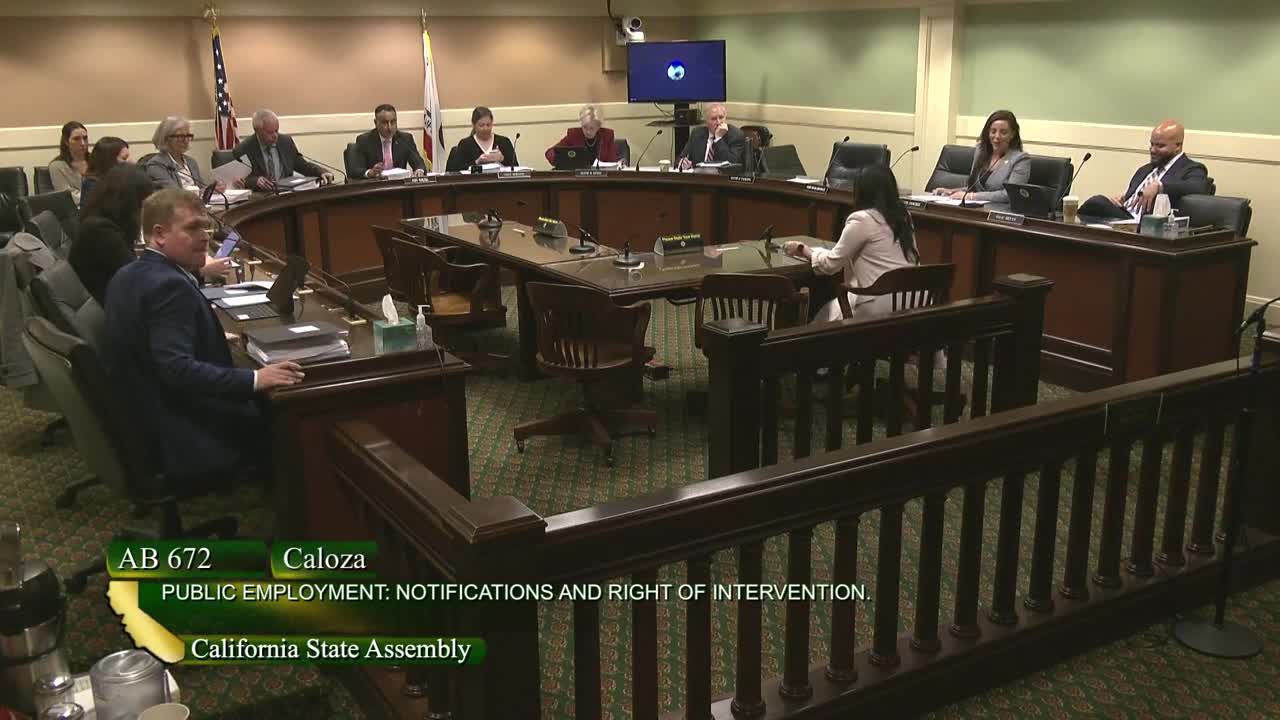 34MIN
Assembly Standing Committee on Judiciary
Bill Author