AB 1079: Civil appeals: stay of enforcement.
- Session Year: 2025-2026
- House: Assembly
- Latest Version Date: 2025-10-01
Current Status:
Passed
(2025-10-01: Chaptered by Secretary of State - Chapter 178, Statutes of 2025.)
Introduced
In Committee
Awaiting First Chamber Vote
Passed First Chamber
In Committee
Awaiting Second Chamber Vote
Passed Second Chamber
Enacted
Existing law, the California Voting Rights Act of 2001, prohibits an at-large method of election from being imposed or applied in a manner that impairs the ability of a protected class to elect candidates of its choice, or its ability to influence the outcome of an election, as a result of the dilution or the abridgment of the rights of voters who are members of a protected class. Upon finding such a violation, a court must implement appropriate remedies, as specified, that are tailored to remedy the violation. Existing law, the FAIR MAPS Act of 2023, requires a districting body, as defined, to adopt election district boundaries that comply with the United States Constitution, the California Constitution, and federal voting rights laws by specified deadlines. If the districting body fails to timely adopt such election district boundaries, the districting body must immediately petition the superior court in a county in which the local jurisdiction is located for an order adopting election district boundaries. If the districting body fails to bring such a petition within a specified time, any resident of the local jurisdiction is authorized to file that petition. Existing law stays proceedings in the trial court upon the judgment or order appealed from, including enforcement of the judgment or order, upon the perfecting of an appeal. Existing law enumerates specified judgments or orders that are not stayed upon the perfecting of an appeal, if certain conditions are present.
This bill would provide that the perfecting of an appeal does not stay enforcement of an order in the trial court, in the absence of an order of the trial court providing otherwise, if the trial court finds that either (1) a partys at-large method of election violates, or is likely to violate, the California Voting Rights Act of 2001, or (2) a partys election district boundaries violate, or are likely to violate, the FAIR MAPS Act of 2023. Notwithstanding that provision, the bill would authorize a trial court to order the stay of a judgment or order under the California Voting Rights Act of 2001 or the FAIR MAPS Act of 2023 upon the perfection of an appeal if the Secretary of State files a certification in the trial court stating that a stay is necessary for the orderly administration of the states elections. This bill would also require the party found to have violated or found to be likely to violate the acts to reimburse the county elections officials for costs incurred in administering the election that result from enforcement of the trial courts order or the order of a court issued while an appeal is pending. The bill would specify that these provisions do not apply to a judgment or order entered in a proceeding or action commenced on or before January 1, 2026 that asserts at least one cause of action under the California Voting Rights Act of 2001 or the FAIR MAPS Act of 2023.
Existing law, the California Voting Rights Act of 2001, prohibits an at-large method of election from being imposed or applied in a manner that impairs the ability of a protected class to elect candidates of its choice, or its ability to influence the outcome of an election, as a result of the dilution or the abridgment of the rights of voters who are members of a protected class. Upon finding such a violation, a court must implement appropriate remedies, as specified, that are tailored to remedy the violation. Existing law, the FAIR MAPS Act of 2023, requires a districting body, as defined, to adopt election district boundaries that comply with the United States Constitution, the California Constitution, and federal voting rights laws by specified deadlines. If the districting body fails to timely adopt such election district boundaries, the districting body must immediately petition the superior court in a county in which the local jurisdiction is located for an order adopting election district boundaries. If the districting body fails to bring such a petition within a specified time, any resident of the local jurisdiction is authorized to file that petition. Existing law stays proceedings in the trial court upon the judgment or order appealed from, including enforcement of the judgment or order, upon the perfecting of an appeal. Existing law enumerates specified judgments or orders that are not stayed upon the perfecting of an appeal, if certain conditions are present.
This bill would provide that the perfecting of an appeal does not stay enforcement of an order in the trial court, in the absence of an order of the trial court providing otherwise, if the trial court finds that either (1) a partys at-large method of election violates, or is likely to violate, the California Voting Rights Act of 2001, or (2) a partys election district boundaries violate, or are likely to violate, the FAIR MAPS Act of 2023. Notwithstanding that provision, the bill would require the enforcement of authorize a trial court to order the stay of a judgment or order under the California Voting Rights Act of 2001 or the FAIR MAPS Act of 2023 to be stayed upon the perfection of an appeal if the Attorney General and Secretary of State file a certification in the trial court stating that enforcement is (1) in furtherance of either voting rights act, or (2) otherwise files a certification in the trial court stating that a stay is necessary for the orderly administration of the states elections. This bill would also require the party found to have violated or found to be likely to violate the acts to reimburse the county elections officials for costs incurred in administering the election that result from enforcement of the trial courts order or the order of a court issued while an appeal is pending. The bill would specify that these provisions do not apply to a judgment or order entered in a proceeding or action commenced on or before January 1, 2026 that asserts at least one cause of action under the California Voting Rights Act of 2001 or the FAIR MAPS Act of 2023.
Existing law, the California Voting Rights Act of 2001, prohibits an at-large method of election from being imposed or applied in a manner that impairs the ability of a protected class to elect candidates of its choice, or its ability to influence the outcome of an election, as a result of the dilution or the abridgment of the rights of voters who are members of a protected class. Upon finding such a violation, a court must implement appropriate remedies, as specified, that are tailored to remedy the violation. Existing law, the FAIR MAPS Act of 2023, requires a districting body, as defined, to adopt election district boundaries that comply with the United States Constitution, the California Constitution, and federal voting rights laws by specified deadlines. If the districting body fails to timely adopt such election district boundaries, the districting body must immediately petition the superior court in a county in which the local jurisdiction is located for an order adopting election district boundaries. If the districting body fails to bring such a petition within a specified time, any resident of the local jurisdiction is authorized to file that petition. Existing law stays proceedings in the trial court upon the judgment or order appealed from, including enforcement of the judgment or order, upon the perfecting of an appeal. Existing law enumerates specified judgments or orders that are not stayed upon the perfecting of an appeal, if certain conditions are present.
This bill would provide that the perfecting of an appeal does not stay enforcement of an order in the trial court, in the absence of an order of the trial court providing otherwise, if the trial court finds that either (1) a partys at-large method of election violates, or is likely to violate, the California Voting Rights Act of 2001, or (2) a partys election district boundaries violate, or are likely to violate, the FAIR MAPS Act of 2023. Notwithstanding that provision, the bill would require the enforcement of a judgment or order under the California Voting Rights Act of 2001 or the FAIR MAPS Act of 2023 to be stayed upon the perfection of an appeal if the Attorney General and Secretary of State file a certification in the trial court stating that enforcement is (1) in furtherance of either voting rights act, or (2) otherwise necessary for the orderly administration of the states elections. This bill would also require the party found to have violated or found to be likely to violate the acts to reimburse the county elections officials for costs incurred in administering the election that result from enforcement of the trial courts order or the order of a court issued while an appeal is pending. The bill would specify that these provisions do not apply to a judgment or order entered in the trial court before July 1, 2025. a proceeding or action commenced on or before January 1, 2026 that asserts at least one cause of action under the California Voting Rights Act of 2001 or the FAIR MAPS Act of 2023.
Existing law, the California Voting Rights Act of 2001, prohibits an at-large method of election from being imposed or applied in a manner that impairs the ability of a protected class to elect candidates of its choice, or its ability to influence the outcome of an election, as a result of the dilution or the abridgment of the rights of voters who are members of a protected class. Upon finding such a violation, a court must implement appropriate remedies, as specified, that are tailored to remedy the violation. Existing law, the FAIR MAPS Act of 2023, requires a districting body, as defined, to adopt election district boundaries that comply with the United States Constitution, the California Constitution, and federal voting rights laws by specified deadlines. If the districting body fails to timely adopt such election district boundaries, the districting body must immediately petition the superior court in a county in which the local jurisdiction is located for an order adopting election district boundaries. If the districting body fails to bring such a petition within a specified time, any resident of the local jurisdiction is authorized to file that petition. Existing law stays proceedings in the trial court upon the judgment or order appealed from, including enforcement of the judgment or order, upon the perfecting of an appeal. Existing law enumerates specified judgments or orders that are not stayed upon the perfecting of an appeal, if certain conditions are present.
This bill would provide that the perfecting of an appeal does not stay enforcement of an order in the trial court, in the absence of an order of the trial court providing otherwise, if the trial court finds that either (1) a partys at-large method of election violates, or is likely to violate, the California Voting Rights Act of 2001, or (2) a partys election district boundaries violate, or are likely to violate, the FAIR MAPS Act of 2023. Notwithstanding that provision, the bill would require the enforcement of a judgment or order under the California Voting Rights Act of 2001 or the FAIR MAPS Act of 2023 to be stayed upon the perfection of an appeal if the Attorney General and Secretary of State file a certification in the trial court stating that enforcement is (1) in furtherance of either voting rights act, or (2) otherwise necessary for the orderly administration of the states elections. This bill would also require the party found to have violated or found to be likely to violate the acts to reimburse the county elections officials for costs incurred in administering the election that result from enforcement of the trial courts order or the order of a court issued while an appeal is pending. The bill would specify that these provisions do not apply to a judgment or order entered in the trial court before July 1, 2025.
Existing law, the California Voting Rights Act of 2001, prohibits an at-large method of election from being imposed or applied in a manner that impairs the ability of a protected class to elect candidates of its choice, or its ability to influence the outcome of an election, as a result of the dilution or the abridgment of the rights of voters who are members of a protected class. Upon finding such a violation, a court must implement appropriate remedies, as specified, that are tailored to remedy the violation. Existing law, the FAIR MAPS Act of 2023, requires a districting body, as defined, to adopt election district boundaries that comply with the United States Constitution, the California Constitution, and federal voting rights laws by specified deadlines. If the districting body fails to timely adopt such election district boundaries, the districting body must immediately petition the superior court in a county in which the local jurisdiction is located for an order adopting election district boundaries. If the districting body fails to bring such a petition within a specified time, any resident of the local jurisdiction is authorized to file that petition. Existing law stays proceedings in the trial court upon the judgment or order appealed from, including enforcement of the judgment or order, upon the perfecting of an appeal. Existing law enumerates specified judgments or orders that are not stayed upon the perfecting of an appeal, if certain conditions are present.
This bill would provide that the perfecting of an appeal does not stay enforcement of an order in the trial court, in the absence of an order of the trial court providing otherwise, if the trial court finds that either (1) a partys at-large method of election violates, or is likely to violate, the California Voting Rights Act of 2001, or (2) a partys election district boundaries violate, or are likely to violate, the FAIR MAPS Act of 2023. Notwithstanding that provision, the bill would require the enforcement of a judgment or order under the California Voting Rights Act of 2001 or the FAIR MAPS Act of 2023 to be stayed upon the perfection of an appeal if the Attorney General and Secretary of State file a certification in the trial court stating that enforcement is (1) in furtherance of either voting rights act, or (2) otherwise necessary for the orderly administration of the states elections. The bill would specify that these provisions do not apply to a judgment or order entered in the trial court before July 1, 2025.
Existing law, the California Voting Rights Act of 2001, prohibits an at-large method of election from being imposed or applied in a manner that impairs the ability of a protected class to elect candidates of its choice, or its ability to influence the outcome of an election, as a result of the dilution or the abridgment of the rights of voters who are members of a protected class. Upon finding such a violation, a court must implement appropriate remedies, as specified, that are tailored to remedy the violation. Existing law, the FAIR MAPS Act of 2023, requires a districting body, as defined, to adopt election district boundaries that comply with the United States Constitution, the California Constitution, and federal voting rights laws by specified deadlines. If the districting body fails to timely adopt such election district boundaries, the districting body must immediately petition the superior court in a county in which the local jurisdiction is located for an order adopting election district boundaries. If the districting body fails to bring such a petition within a specified time, any resident of the local jurisdiction is authorized to file that petition. Existing law stays proceedings in the trial court upon the judgment or order appealed from, including enforcement of the judgment or order, upon the perfecting of an appeal. Existing law enumerates specified judgments or orders that are not stayed upon the perfecting of an appeal, if certain conditions are present.
This bill would provide that the perfecting of an appeal does not stay enforcement of an order in the trial court, in the absence of an order of the trial court providing otherwise, if the trial court finds that either (1) a partys at-large method of election violates, or is likely to violate, the California Voting Rights Act of 2001, or (2) a partys election district boundaries violate, or are likely to violate, the FAIR MAPS Act of 2023. Notwithstanding that provision, the bill would require the enforcement of a judgment or order under the California Voting Rights Act of 2001 or the FAIR MAPS Act of 2023 to be stayed upon the perfection of an appeal if the Attorney General and Secretary of State file a certification in the trial court stating that enforcement is (1) in furtherance of either voting rights act, or (2) otherwise necessary for the orderly administration of the states elections.
(a)The Legislature finds and declares all of the following:
(1)Since the enactment of the California Voting Rights Act of 2001 (Chapter 1.5 (commencing with Section 14025) of Division 14 of the Elections Code), hundreds of cities, school districts, community college districts, and special districts have adopted district-based elections, and still many others had already employed district-based elections.
(2)The vote dilution of at-large elections combated by the federal Voting Rights Act of 1965 (52 U.S.C. Sec. 10101 et seq.) and the California Voting Rights Act of 2001, as well as the gerrymandering of electoral districts combated by the FAIR MAPS Act of 2023 (Chapter 2 (commencing with Section 21100) of Division 21 of the Elections Code), are unacceptable harms to the electorate and our democracy that are impossible to fully repair after an election is conducted using an election system in violation of one or more of these laws.
(3)At-large elections may operate to dilute minority votes and result in unresponsiveness of elected officials to the needs of minority communities.
(4)Under current law, enforcement of an order or judgment implementing appropriate remedies under the California Voting Rights Act of 2001 or modifying election districts under the FAIR MAPS Act of 2023 may be stayed by the filing of an appeal of that order or judgment, thus forestalling effective relief to minority communities.
(5)The prompt implementation of district-based elections to comply with the California Voting Rights Act of 2001 or adjustments in election district boundaries to comply with the FAIR MAPS Act 2023 may be ordered by a Superior Court of competent jurisdiction to protect the right to vote, the equal protection of the laws, and the integrity of the electoral process.
(6)The dilution of votes of a protected class in elections for the governing boards of political subdivisions is a matter of statewide concern.
(b)It is the intent of the Legislature to ensure that remedial measures ordered by a Superior Court to address violations of the California Voting Rights Act of 2001 or the FAIR MAPS Act of 2023 are implemented promptly regardless of any pending appeal, except where the Superior Court determines that such prompt implementation is antithetical to the California Voting Rights Act of 2001, the FAIR MAPS Act of 2023, or the orderly administration of the states elections.
SEC. 2.Section 916 of the Code of Civil Procedure is amended to read:916.(a)Except as provided in Sections 917.1 to 917.10, inclusive, and in Section 116.810, the perfecting of an appeal stays proceedings in the trial court upon the judgment or order appealed from or upon the matters embraced therein or affected thereby, including enforcement of the judgment or order, but the trial court may proceed upon any other matter embraced in the action and not affected by the judgment or order.
(b)When there is a stay of proceedings other than the enforcement of the judgment, the trial court shall have jurisdiction of proceedings related to the enforcement of the judgment as well as any other matter embraced in the action and not affected by the judgment or order appealed from.
SEC. 3.Section 917.10 is added to the Code of Civil Procedure, immediately following Section 917.9, to read:917.10.(a)The perfecting of an appeal shall not stay enforcement of the judgment or order in the trial court, in the absence of an order of the trial court providing otherwise, under any of the following circumstances:
(1)If the trial court has found that a partys at-large method of election, as that term is defined in Section 14026 of the Elections Code, violates, or is likely to violate, the California Voting Rights Act of 2001 (Chapter 1.5 (commencing with Section 14025) of Division 14 of the Elections Code).
(2)If the trial court has found that a partys election district boundaries violate, or are likely to violate, the Fair And Inclusive Redistricting for Municipalities And Political Subdivisions (FAIR MAPS) Act of 2023 (Chapter 2 (commencing with Section 21100) of Division 21 of the Elections Code).
(b)Notwithstanding subdivision (a), enforcement of a judgment or order in the trial court may be stayed upon the perfection of the appeal if the Secretary of State files a certification in the trial court declaring that staying enforcement of a judgment or order pending appeal is necessary for the orderly administration of the states elections.
(c)This section does not limit the power of a reviewing court to issue a stay or grant a writ of supersedeas in accordance with Section 923.
(d)If the enforcement of a judgment or order is not stayed pursuant to subdivision (a), the party whose at-large method of election that the trial court found violates, or is likely to violate, the California Voting Rights Act of 2001, or the party whose election district boundaries that the trial court found violate, or are likely to violate, the Fair And Inclusive Redistricting for Municipalities And Political Subdivisions (FAIR MAPS) Act of 2023, shall reimburse a county elections official for any actual costs incurred by that elections official in administering elections as a result of the enforcement of the trial courts judgment or order, and as the result of any orders issued by a court during an appeal of the action.
(e)This section does not apply to a judgment or order entered in a proceeding or action commenced on or before January 1, 2026, that asserts at least one cause of action under the California Voting Rights Act of 2001 or the FAIR MAPS Act of 2023.
(a)The Legislature finds and declares all of the following:
(1)Since the enactment of the California Voting Rights Act of 2001 (Chapter 1.5 (commencing with Section 14025) of Division 14 of the Elections Code), hundreds of cities, school districts, community college districts, and special districts have adopted district-based elections, and still many others had already employed district-based elections.
(2)The vote dilution of at-large elections combated by the federal Voting Rights Act of 1965 (52 U.S.C. Sec. 10101 et seq.) and the California Voting Rights Act of 2001, as well as the gerrymandering of electoral districts combated by the FAIR MAPS Act of 2023 (Chapter 2 (commencing with Section 21100) of Division 21 of the Elections Code), are unacceptable harms to the electorate and our democracy that are impossible to fully repair after an election is conducted using an election system in violation of one or more of these laws.
(3)At-large elections may operate to dilute minority votes and result in unresponsiveness of elected officials to the needs of minority communities.
(4)Under current law, enforcement of an order or judgment implementing appropriate remedies under the California Voting Rights Act of 2001 or modifying election districts under the FAIR MAPS Act of 2023 may be stayed by the filing of an appeal of that order or judgment, thus forestalling effective relief to minority communities.
(5)The prompt implementation of district-based elections to comply with the California Voting Rights Act of 2001 or adjustments in election district boundaries to comply with the FAIR MAPS Act 2023 may be ordered by a Superior Court of competent jurisdiction to protect the right to vote, the equal protection of the laws, and the integrity of the electoral process.
(6)The dilution of votes of a protected class in elections for the governing boards of political subdivisions is a matter of statewide concern.
(b)It is the intent of the Legislature to ensure that remedial measures ordered by a Superior Court to address violations of the California Voting Rights Act of 2001 or the FAIR MAPS Act of 2023 are implemented promptly regardless of any pending appeal, except where either the Superior Court or both the Attorney General and Secretary of State determine determines that such prompt implementation is antithetical to the California Voting Rights Act of 2001, the FAIR MAPS Act of 2023, or the orderly administration of the states elections.
SEC. 2.Section 916 of the Code of Civil Procedure is amended to read:916.(a)Except as provided in Sections 917.1 to 917.10, inclusive, and in Section 116.810, the perfecting of an appeal stays proceedings in the trial court upon the judgment or order appealed from or upon the matters embraced therein or affected thereby, including enforcement of the judgment or order, but the trial court may proceed upon any other matter embraced in the action and not affected by the judgment or order.
(b)When there is a stay of proceedings other than the enforcement of the judgment, the trial court shall have jurisdiction of proceedings related to the enforcement of the judgment as well as any other matter embraced in the action and not affected by the judgment or order appealed from.
SEC. 3.Section 917.10 is added to the Code of Civil Procedure, immediately following Section 917.9, to read:917.10.(a)The perfecting of an appeal shall not stay enforcement of the judgment or order in the trial court, in the absence of an order of the trial court providing otherwise, under any of the following circumstances:
(1)If the trial court has found that a partys at-large method of election, as that term is defined in Section 14026 of the Elections Code, violates, or is likely to violate, the California Voting Rights Act of 2001 (Chapter 1.5 (commencing with Section 14025) of Division 14 of the Elections Code).
(2)If the trial court has found that a partys election district boundaries violate, or are likely to violate, the Fair And Inclusive Redistricting for Municipalities And Political Subdivisions (FAIR MAPS) Act of 2023 (Chapter 2 (commencing with Section 21100) of Division 21 of the Elections Code).
(b)Notwithstanding subdivision (a), enforcement of a judgment or order in the trial court shall may be stayed upon the perfection of the appeal if the Attorney General and Secretary of State file files a certification in the trial court declaring that staying enforcement of a judgment or order pending appeal is either of the following: necessary for the orderly administration of the states elections.
(1)In furtherance of the purposes of the California Voting Rights Act of 2001 or the FAIR MAPS Act of 2023, as applicable.(2)Otherwise necessary for the orderly administration of the states elections.(c)This section does not limit the power of a reviewing court to issue a stay or grant a writ of supersedeas in accordance with Section 923.
(d)If the enforcement of a judgment or order is not stayed pursuant to subdivision (a), the party whose at-large method of election that the trial court found violates, or is likely to violate, the California Voting Rights Act of 2001, or the party whose election district boundaries that the trial court found violate, or are likely to violate, the Fair And Inclusive Redistricting for Municipalities And Political Subdivisions (FAIR MAPS) Act of 2023, shall reimburse a county elections official for any actual costs incurred by that elections official in administering elections as a result of the enforcement of the trial courts judgment or order, and as the result of any orders issued by a court during an appeal of the action.
(e)This section does not apply to a judgment or order entered in a proceeding or action commenced on or before January 1, 2026 that asserts at least one cause of action under the California Voting Rights Act of 2001 or the FAIR MAPS Act of 2023.
(a)The Legislature finds and declares all of the following:
(1)Since the enactment of the California Voting Rights Act of 2001 (Chapter 1.5 (commencing with Section 14025) of Division 14 of the Elections Code), hundreds of cities, school districts, community college districts, and special districts have adopted district-based elections, and still many others had already employed district-based elections.
(2)The vote dilution of at-large elections combated by the federal Voting Rights Act of 1965 (52 U.S.C. Sec. 10101 et seq.) and the California Voting Rights Act of 2001, as well as the gerrymandering of electoral districts combated by the FAIR MAPS Act of 2023 (Chapter 2 (commencing with Section 21100) of Division 21 of the Elections Code), are unacceptable harms to the electorate and our democracy that are impossible to fully repair after an election is conducted using an election system in violation of one or more of these laws.
(3)At-large elections may operate to dilute minority votes and result in unresponsiveness of elected officials to the needs of minority communities.
(4)Under current law, enforcement of an order or judgment implementing appropriate remedies under the California Voting Rights Act of 2001 or modifying election districts under the FAIR MAPS Act of 2023 may be stayed by the filing of an appeal of that order or judgment, thus forestalling effective relief to minority communities.
(5)The prompt implementation of district-based elections to comply with the California Voting Rights Act of 2001 or adjustments in election district boundaries to comply with the FAIR MAPS Act 2023 may be ordered by a Superior Court of competent jurisdiction to protect the right to vote, the equal protection of the laws, and the integrity of the electoral process.
(6)The dilution of votes of a protected class in elections for the governing boards of political subdivisions is a matter of statewide concern.
(b)It is the intent of the Legislature to ensure that remedial measures ordered by a Superior Court to address violations of the California Voting Rights Act of 2001 or the FAIR MAPS Act of 2023 are implemented promptly regardless of any pending appeal, except where either the Superior Court or both the Attorney General and Secretary of State determine that such prompt implementation is antithetical to the California Voting Rights Act of 2001, the FAIR MAPS Act of 2023, or the orderly administration of the states elections.
SEC. 2.Section 916 of the Code of Civil Procedure is amended to read:916.(a)Except as provided in Sections 917.1 to 917.10, inclusive, and in Section 116.810, the perfecting of an appeal stays proceedings in the trial court upon the judgment or order appealed from or upon the matters embraced therein or affected thereby, including enforcement of the judgment or order, but the trial court may proceed upon any other matter embraced in the action and not affected by the judgment or order.
(b)When there is a stay of proceedings other than the enforcement of the judgment, the trial court shall have jurisdiction of proceedings related to the enforcement of the judgment as well as any other matter embraced in the action and not affected by the judgment or order appealed from.
SEC. 3.Section 917.10 is added to the Code of Civil Procedure, immediately following Section 917.9, to read:917.10.(a)The perfecting of an appeal shall not stay enforcement of the judgment or order in the trial court, in the absence of an order of the trial court providing otherwise, under any of the following circumstances:
(1)If the trial court has found that a partys at-large method of election, as that term is defined in Section 14026 of the Elections Code, violates, or is likely to violate, the California Voting Rights Act of 2001 (Chapter 1.5 (commencing with Section 14025) of Division 14 of the Elections Code).
(2)If the trial court has found that a partys election district boundaries violate, or are likely to violate, the Fair And Inclusive Redistricting for Municipalities And Political Subdivisions (FAIR MAPS) Act of 2023 (Chapter 2 (commencing with Section 21100) of Division 21 of the Elections Code).
(b)Notwithstanding subdivision (a), enforcement of a judgment or order in the trial court shall be stayed upon the perfection of the appeal if the Attorney General and Secretary of State file a certification in the trial court declaring that staying enforcement of a judgment or order pending appeal is either of the following:
(1)In furtherance of the purposes of the California Voting Rights Act of 2001 or the FAIR MAPS Act of 2023, as applicable.
(2)Otherwise necessary for the orderly administration of the states elections.
(c)This section does not limit the power of a reviewing court to issue a stay or grant a writ of supersedeas in accordance with Section 923.
(d)If the enforcement of a judgment or order is not stayed pursuant to subdivision (a), the party whose at-large method of election that the trial court found violates, or is likely to violate, the California Voting Rights Act of 2001 (Chapter 1.5 (commencing with Section 14025) of Division 14 of the Elections Code), 2001, or the party whose election district boundaries that the trial court found violate, or are likely to violate, the Fair And Inclusive Redistricting for Municipalities And Political Subdivisions (FAIR MAPS) Act of 2023 (Chapter 2 (commencing with Section 21100) of Division 21 of the Elections Code), 2023, shall reimburse a county elections official for any actual costs incurred by that elections official in administering elections as a result of the enforcement of the trial courts judgment or order, and as the result of any orders issued by a court during an appeal of the action.
(e)This section does not apply to a judgment or order entered in the trial court before July 1, 2025. a proceeding or action commenced on or before January 1, 2026 that asserts at least one cause of action under the California Voting Rights Act of 2001 or the FAIR MAPS Act of 2023.
(a)The Legislature finds and declares all of the following:
(1)Since the enactment of the California Voting Rights Act of 2001 (Chapter 1.5 (commencing with Section 14025) of Division 14 of the Elections Code), hundreds of cities, school districts, community college districts, and special districts have adopted district-based elections, and still many others had already employed district-based elections.
(2)The vote dilution of at-large elections combated by the federal Voting Rights Act of 1965 (52 U.S.C. Sec. 10101 et seq.) and the California Voting Rights Act of 2001, as well as the gerrymandering of electoral districts combated by the FAIR MAPS Act of 2023 (Chapter 2 (commencing with Section 21100) of Division 21 of the Elections Code), are unacceptable harms to the electorate and our democracy that are impossible to fully repair after an election is conducted using an election system in violation of one or more of these laws.
(3)At-large elections may operate to dilute minority votes and result in unresponsiveness of elected officials to the needs of minority communities.
(4)Under current law, enforcement of an order or judgment implementing appropriate remedies under the California Voting Rights Act of 2001 or modifying election districts under the FAIR MAPS Act of 2023 may be stayed by the filing of an appeal of that order or judgment, thus forestalling effective relief to minority communities.
(5)The prompt implementation of district-based elections to comply with the California Voting Rights Act of 2001 or adjustments in election district boundaries to comply with the FAIR MAPS Act 2023 may be ordered by a Superior Court of competent jurisdiction to protect the right to vote, the equal protection of the laws, and the integrity of the electoral process.
(6)The dilution of votes of a protected class in elections for the governing boards of political subdivisions is a matter of statewide concern.
(b)It is the intent of the Legislature to ensure that remedial measures ordered by a Superior Court to address violations of the California Voting Rights Act of 2001 or the FAIR MAPS Act of 2023 are implemented promptly regardless of any pending appeal, except where either the Superior Court or both the Attorney General and Secretary of State determine that such prompt implementation is antithetical to the California Voting Rights Act of 2001, the FAIR MAPS Act of 2023, or the orderly administration of the states elections.
SEC. 2.Section 916 of the Code of Civil Procedure is amended to read:916.(a)Except as provided in Sections 917.1 to 917.10, inclusive, and in Section 116.810, the perfecting of an appeal stays proceedings in the trial court upon the judgment or order appealed from or upon the matters embraced therein or affected thereby, including enforcement of the judgment or order, but the trial court may proceed upon any other matter embraced in the action and not affected by the judgment or order.
(b)When there is a stay of proceedings other than the enforcement of the judgment, the trial court shall have jurisdiction of proceedings related to the enforcement of the judgment as well as any other matter embraced in the action and not affected by the judgment or order appealed from.
SEC. 3.Section 917.10 is added to the Code of Civil Procedure, immediately following Section 917.9, to read:917.10.(a)The perfecting of an appeal shall not stay enforcement of the judgment or order in the trial court, in the absence of an order of the trial court providing otherwise, under any of the following circumstances:
(1)If the trial court has found that a partys at-large method of election, as that term is defined in Section 14026 of the Elections Code, violates, or is likely to violate, the California Voting Rights Act of 2001 (Chapter 1.5 (commencing with Section 14025) of Division 14 of the Elections Code).
(2)If the trial court has found that a partys election district boundaries violate, or are likely to violate, the Fair And Inclusive Redistricting for Municipalities And Political Subdivisions (FAIR MAPS) Act of 2023 (Chapter 2 (commencing with Section 21100) of Division 21 of the Elections Code).
(b)Notwithstanding subdivision (a), enforcement of a judgment or order in the trial court shall be stayed upon the perfection of the appeal if the Attorney General and Secretary of State file a certification in the trial court declaring that staying enforcement of a judgment or order pending appeal is either of the following:
(1)In furtherance of the purposes of the California Voting Rights Act of 2001 or the FAIR MAPS Act of 2023, as applicable.
(2)Otherwise necessary for the orderly administration of the states elections.
(c)This section does not limit the power of a reviewing court to issue a stay or grant a writ of supersedeas in accordance with Section 923.
(d)If the enforcement of a judgment or order is not stayed pursuant to subdivision (a), the party whose at-large method of election that the trial court found violates, or is likely to violate, the California Voting Rights Act of 2001 (Chapter 1.5 (commencing with Section 14025) of Division 14 of the Elections Code), or the party whose election district boundaries that the trial court found violate, or are likely to violate, the Fair And Inclusive Redistricting for Municipalities And Political Subdivisions (FAIR MAPS) Act of 2023 (Chapter 2 (commencing with Section 21100) of Division 21 of the Elections Code), shall reimburse a county elections official for any actual costs incurred by that elections official in administering elections as a result of the enforcement of the trial courts judgment or order, and as the result of any orders issued by a court during an appeal of the action.
(c)(e)This section does not apply to a judgment or order entered in the trial court before July 1, 2025.
(a)The Legislature finds and declares all of the following:
(1)Since the enactment of the California Voting Rights Act of 2001 (Chapter 1.5 (commencing with Section 14025) of Division 14 of the Elections Code), hundreds of cities, school districts, community college districts, and special districts have adopted district-based elections, and still many others had already employed district-based elections.
(2)The vote dilution of at-large elections combated by the federal Voting Rights Act of 1965 (52 U.S.C. Sec. 10101 et seq.) and the California Voting Rights Act of 2001, as well as the gerrymandering of electoral districts combated by the FAIR MAPS Act of 2023 (Chapter 2 (commencing with Section 21100) of Division 21 of the Elections Code), are unacceptable harms to the electorate and our democracy that are impossible to fully repair after an election is conducted using an election system in violation of one or more of these laws.
(3)At-large elections may operate to dilute minority votes and result in unresponsiveness of elected officials to the needs of minority communities.
(4)Under current law, enforcement of an order or judgment implementing appropriate remedies under the California Voting Rights Act of 2001 or modifying election districts under the FAIR MAPS Act of 2023 may be stayed by the filing of an appeal of that order or judgment, thus forestalling effective relief to minority communities.
(5)The prompt implementation of district-based elections to comply with the California Voting Rights Act of 2001 or adjustments in election district boundaries to comply with the FAIR MAPS Act 2023 may be ordered by a Superior Court of competent jurisdiction to protect the right to vote, the equal protection of the laws, and the integrity of the electoral process.
(6)The dilution of votes of a protected class in elections for the governing boards of political subdivisions is a matter of statewide concern.
(b)It is the intent of the Legislature to ensure that remedial measures ordered by a Superior Court to address violations of the California Voting Rights Act of 2001 or the FAIR MAPS Act of 2023 are implemented promptly regardless of any pending appeal, except where either the Superior Court or both the Attorney General and Secretary of State determine that such prompt implementation is antithetical to the California Voting Rights Act of 2001, the FAIR MAPS Act of 2023, or the orderly administration of the states elections.
SEC. 2.Section 916 of the Code of Civil Procedure is amended to read:916.(a)Except as provided in Sections 917.1 to 917.10, inclusive, and in Section 116.810, the perfecting of an appeal stays proceedings in the trial court upon the judgment or order appealed from or upon the matters embraced therein or affected thereby, including enforcement of the judgment or order, but the trial court may proceed upon any other matter embraced in the action and not affected by the judgment or order.
(b)When there is a stay of proceedings other than the enforcement of the judgment, the trial court shall have jurisdiction of proceedings related to the enforcement of the judgment as well as any other matter embraced in the action and not affected by the judgment or order appealed from.
SEC. 3.Section 917.10 is added to the Code of Civil Procedure, immediately following Section 917.9, to read:917.10.(a)The perfecting of an appeal shall not stay enforcement of the judgment or order in the trial court, in the absence of an order of the trial court providing otherwise, under any of the following circumstances:
(1)If the trial court has found that a partys at-large method of election, as that term is defined in Section 14026 of the Elections Code, violates, or is likely to violate, the California Voting Rights Act of 2001 (Chapter 1.5 (commencing with Section 14025) of Division 14 of the Elections Code).
(2)If the trial court has found that a partys election district boundaries violate, or are likely to violate, the Fair And Inclusive Redistricting for Municipalities And Political Subdivisions (FAIR MAPS) Act of 2023 (Chapter 2 (commencing with Section 21100) of Division 21 of the Elections Code).
(b)Notwithstanding subdivision (a), enforcement of a judgment or order in the trial court shall be stayed upon the perfection of the appeal if the Attorney General and Secretary of State file a certification in the trial court declaring that staying enforcement of a judgment or order pending appeal is either of the following:
(1)In furtherance of the purposes of the California Voting Rights Act of 2001 or the FAIR MAPS Act of 2023, as applicable.
(2)Otherwise necessary for the orderly administration of the states elections.
(c)This section does not apply to a judgment or order entered in the trial court before July 1, 2025.
(a)The Legislature finds and declares all of the following:
(1)Since the enactment of the California Voting Rights Act of 2001 (Chapter 1.5 (commencing with Section 14025) of Division 14 of the Elections Code), hundreds of cities, school districts, community college districts, and special districts have adopted district-based elections, and still many others had already employed district-based elections.
(2)The vote dilution of at-large elections combated by the federal Voting Rights Act of 1965 (52 U.S.C. Sec. 10101 et seq.) and the California Voting Rights Act of 2001, as well as the gerrymandering of electoral districts combated by the FAIR MAPS Act of 2023 (Chapter 2 (commencing with Section 21100) of Division 21 of the Elections Code), are unacceptable harms to the electorate and our democracy that are impossible to fully repair after an election is conducted using an election system in violation of one or more of these laws.
(3)At-large elections may operate to dilute minority votes and result in unresponsiveness of elected officials to the needs of minority communities.
(4)Under current law, enforcement of an order or judgment implementing appropriate remedies under the California Voting Rights Act of 2001 or modifying election districts under the FAIR MAPS Act of 2023 may be stayed by the filing of an appeal of that order or judgment, thus forestalling effective relief to minority communities.
(5)The prompt implementation of district-based elections to comply with the California Voting Rights Act of 2001 or adjustments in election district boundaries to comply with the FAIR MAPS Act 2023 may be ordered by a Superior Court of competent jurisdiction to protect the right to vote, the equal protection of the laws, and the integrity of the electoral process.
(6)The dilution of votes of a protected class in elections for the governing boards of political subdivisions is a matter of statewide concern.
(b)It is the intent of the Legislature to ensure that remedial measures ordered by a Superior Court to address violations of the California Voting Rights Act of 2001 or the FAIR MAPS Act of 2023 are implemented promptly regardless of any pending appeal, except where either the Superior Court or both the Attorney General and Secretary of State determine that such prompt implementation is antithetical to the California Voting Rights Act of 2001, the FAIR MAPS Act of 2023, or the orderly administration of the states elections.
SEC. 2.Section 916 of the Code of Civil Procedure is amended to read:916.(a)Except as provided in Sections 917.1 to 917.9, 917.10, inclusive, and in Section 116.810, the perfecting of an appeal stays proceedings in the trial court upon the judgment or order appealed from or upon the matters embraced therein or affected thereby, including enforcement of the judgment or order, but the trial court may proceed upon any other matter embraced in the action and not affected by the judgment or order.
(b)When there is a stay of proceedings other than the enforcement of the judgment, the trial court shall have jurisdiction of proceedings related to the enforcement of the judgment as well as any other matter embraced in the action and not affected by the judgment or order appealed from.
SEC. 3.Section 917.10 is added to the Code of Civil Procedure, immediately following Section 917.9, to read:917.10.(a)The perfecting of an appeal shall not stay enforcement of the judgment or order in the trial court, in the absence of an order of the trial court providing otherwise, under any of the following circumstances:
(1)If the trial court has found that a partys at-large method of election, as that term is defined in Section 14026 of the Elections Code, violates, or is likely to violate, the California Voting Rights Act of 2001 (Chapter 1.5 (commencing with Section 14025) of Division 14 of the Elections Code).
(2)If the trial court has found that a partys election district boundaries violate, or are likely to violate, the Fair And Inclusive Redistricting for Municipalities And Political Subdivisions (FAIR MAPS) Act of 2023 (Chapter 2 (commencing with Section 21100) of Division 21 of the Elections Code).
(b)Notwithstanding subdivision (a), enforcement of a judgment or order in the trial court shall be stayed upon the perfection of the appeal if the Attorney General and Secretary of State file a certification in the trial court declaring that staying enforcement of a judgment or order pending appeal is either of the following:
(1)In furtherance of the purposes of the California Voting Rights Act of 2001 or the FAIR MAPS Act of 2023, as applicable.
(2)Otherwise necessary for the orderly administration of the states elections.
|
Date
|
Status
|
|---|---|
| Oct 1, 2025 | Chaptered by Secretary of State - Chapter 178, Statutes of 2025. |
| Oct 1, 2025 | Approved by the Governor. |
| Sep 24, 2025 | Enrolled and presented to the Governor at 3 p.m. |
| Sep 13, 2025 | Senate amendments concurred in. To Engrossing and Enrolling. (Ayes 56. Noes 17. Page 3474.). |
| Sep 13, 2025 | Joint Rules 61(a)(14) and 51(a)(4) suspended. (Ayes 59. Noes 20. Page 3413.) |
| Sep 12, 2025 | In Assembly. Concurrence in Senate amendments pending. |
| Sep 12, 2025 | Read third time. Passed. Ordered to the Assembly. (Ayes 25. Noes 13. Page 2984.). |
| Jul 16, 2025 | Read second time. Ordered to third reading. |
| Jul 15, 2025 | From committee: Do pass. (Ayes 4. Noes 1.) (July 15). |
| Jul 3, 2025 | Read second time and amended. Re-referred to Com. on E. & C.A. |
| Jul 2, 2025 | From committee: Amend, and do pass as amended and re-refer to Com. on E. & C.A. (Ayes 10. Noes 1.) (July 1). |
| Jun 18, 2025 | Referred to Coms. on JUD. and E. & C.A. |
| Jun 5, 2025 | In Senate. Read first time. To Com. on RLS. for assignment. |
| Jun 4, 2025 | Read third time. Passed. Ordered to the Senate. (Ayes 55. Noes 16. Page 2072.) |
| May 19, 2025 | Read third time and amended. Ordered to third reading. (Page 1616.) |
| May 19, 2025 | Read third time and amended. Ordered to third reading. |
| May 7, 2025 | Read second time. Ordered to third reading. |
| May 6, 2025 | Read second time and amended. Ordered returned to second reading. |
| May 5, 2025 | From committee: Amend, and do pass as amended. (Ayes 4. Noes 2.) (April 30). |
| Apr 24, 2025 | Re-referred to Com. on ELECTIONS. |
| Apr 23, 2025 | From committee chair, with author's amendments: Amend, and re-refer to Com. on ELECTIONS. Read second time and amended. |
| Apr 7, 2025 | In committee: Set, first hearing. Hearing canceled at the request of author. |
| Mar 26, 2025 | From committee: Do pass and re-refer to Com. on ELECTIONS. (Ayes 7. Noes 3.) (March 25). Re-referred to Com. on ELECTIONS. |
| Mar 10, 2025 | Referred to Coms. on JUD. and ELECTIONS. |
| Feb 21, 2025 | From printer. May be heard in committee March 23. |
| Feb 20, 2025 | Read first time. To print. |
|
Date
|
Description
|
Location
|
Votes
|
|
|---|---|---|---|---|
| Sep 13, 2025 | AB 1079 Ávila Farías Concurrence in Senate Amendments | Assembly Floor |
Passed |
|
| Sep 12, 2025 | Assembly 3rd Reading AB1079 Ávila Farías By Arreguín | Senate Floor |
Passed |
|
| Jul 15, 2025 | Do pass | Senate Standing Committee on Elections and Constitutional Amendments |
Passed |
|
| Jul 1, 2025 | Do pass as amended, but first amend, and re-refer to the Committee on [Elections and Constitutional Amendments] | Senate Standing Committee on Judiciary |
Passed |
|
| Jun 4, 2025 | AB 1079 Ávila Farías Assembly Third Reading | Assembly Floor |
Passed |
|
| Apr 30, 2025 | Do pass as amended. | Assembly Standing Committee on Elections |
Passed |
|
| Mar 25, 2025 | Do pass and be re-referred to the Committee on [Elections] | Assembly Standing Committee on Judiciary |
Passed |
This list shows positions taken on this bill by organizations on the date displayed, which is linked to the original source.
Positions by individuals are not included.
|
Organization
|
Position
|
Date
|
|---|---|---|
| Asian Law Alliance | ** Support | |
| California Human Development | ** Support | |
| Center for Employment Training | ** Support | |
| Central Valley Opportunity Center | ** Support | |
| City of Santa Monica | ** Against | |
| First Day Foundation | ** Support | |
| la Cooperativa Campesina de California | ** Support | |
| Los Amigos De LA Comunidad, INC. | ** Support | |
| MAPAA | ** Support | |
| Northeast Neighbors of Santa Monica | ** Against | |
| Pico Neighborhood Association | ** Against | |
| Proteus, Inc. | ** Support | |
| Santa Monica Northeast Neighbors | ** Against | |
| Santa Monicans United | ** Against | |
| Santa Monica United | ** Against | |
| The Coastal Alliance | ** Support | |
| Wilshire Montana Neighborhood Coalition | ** Against |
CONCURRENCE IN SENATE AMENDMENTS
CSA1 Bill Id:AB 1079
Author:(Ávila Farías)
As Amended Ver:July 3, 2025
Majority vote
SUMMARY
Maintains the enforcement of a superior court order in cases involving the California Voting Rights Act of 2001 and the Fair and Inclusive Redistricting for Municipalities and Political Subdivisions Act of 2023, despite a pending appeal, in cases filed after January 1, 2026.
Major Provisions
- Provides that the perfecting of an appeal does not stay enforcement of the judgment or order in the trial court, in the absence of an order of the trial court providing otherwise, under any of the following circumstances:
- The trial court has found that a party′s at-large method of election, as defined, violates, or is likely to violate, the California Voting Rights Act of 2001; or
- The trial court has found that a party′s at-large method of election, as defined, violates, or is likely to violate the Fair And Inclusive Redistricting for Municipalities And Political Subdivisions of 2023.
- Provides that, notwithstanding 1) a trial courts order may be stayed during the pendency of an appeal if the Secretary of State file a certification in the trial court declaring that staying enforcement of a judgment or order pending appeal is necessary for the orderly administration of the state's elections.
- Clarifies that the bill does not apply to an action commenced prior to January 1, 2026.
- Clarifies that the bill does not preclude a reviewing court from issuing various writs, as specified.
- Requires any local agency that has election maps invalidated by a court, if such a decision is not stayed on appeal, to reimburse a county elections official for any actual costs incurred by that elections official in administering elections for the party as a result of the enforcement of the trial court′s judgment or order, and as the result of any orders issued by a court during an appeal of the action.
- Makes various findings and declarations.
Senate Amendments
- Eliminate the involvement of the Attorney General.
- Provide that, upon receiving a certification from the Secretary of State, a court is permitted, but not required, to stay a decision involving the California Voting Rights Act of 2001 and the Fair and Inclusive Redistricting for Municipalities and Political Subdivisions Act of 2023.
COMMENTS
In 2019, the Los Angeles County Superior Court held that the City of Santa Monica′s at-large municipal election system violated the California Voting Rights Act of 2001 by unlawfully diluting minority votes. (Pico Neighborhood Association v. City of Santa Monica (2019) 2019 Cal. Super. LEXIS 2015.) When the City appealed that decision, the existing law required the superior court′s ruling to be stayed automatically. By the time the California Supreme Court ruled in the matter, several elections were held utilizing the at-large system that was ultimately deemed to be suspect under the law. The author contends that the lag time caused by appeals in voting rights cases prolongs unlawful disenfranchisement of minority voters; and that it is far easier to return to at-large elections than to remedy years of voting discrimination. Accordingly, this bill would, for cases filed after January 1, 2026, eliminate automatic stays of cases that involve certain voting rights claims, thus permitting elections to move to the more representative district-based electoral system while the entirety of the legal process plays out.
Seeking to ensure fair and adequate representation of all Californians, existing law favors district-based municipal elections. In 1986, the United States Supreme Court held that conducting elections in a manner that dilutes the voting power of minority groups violated the United States Constitution. (Thornburg v. Gingles (1986) 478 U.S. 30.) To ensure that California law was not inadvertently permitting this practice the Legislature adopted the California Voting Rights Act of 2001 (SB 976 (Polanco) Chapter 129, Statutes of 2002.) When the Judiciary Committee evaluated that measure it noted that the standard for invalidating at-large elections adopted by the California Voting Rights Act was stronger than that required by the Supreme Court in Thornburg but nonetheless recommended passage of that measure. (Assembly. Committee. on Judiciary, Analysis of Senate. Bill No. 976 (2001-2002 Regular. Session.) as amended Apr. 9, 2002, p. 4.) Essentially, in order to invalidate an at-large local election a plaintiff must prove that the minority community tends to vote in a cohesive manner and that the municipality′s racial majority votes in a racially sufficiently monolithic manner as to prevent minority candidates from having a realistic change to prevail. As a result of SB 976, most cities and counties in California have gradually moved toward district-base elections over the past 20 years.
Recognizing the success of the SB 976 framework in diversifying the state′s elected office holders, in 2023, the Legislature adopted AB 764 (Bryan) Chapter 343, Statutes of 2023, to expand district-based election requirements to include elections for special districts including school boards and community college trustees. Because the law does not mandate district based elections, in order for a locality to move to district based elections they must be made voluntarily or may be required by the courts.
California law generally stays lower court decisions pending appeal. A general principal in most civil litigation is to preserve the status quo until the courts can decipher the proper outcome. That is why existing law (Code of Civil Procedure Section 916) generally requires the staying of a lower court decision pending appeal in order to preserve the status quo should a higher court reverse the trial court. The only exceptions to this rule are provided in statute; they allow the trial court order to take effect in exigent circumstances in which delaying enforcement may result in immediate harm to the individuals or the general public. For example, certain child custody proceedings in which there is a risk of a child being removed from the jurisdiction (See Code of Civil Procedure Section 917.7), or the removal of hazardous substances (Code of Civil Procedure Section 917.15).
This bill recognizes that decisions related to fair elections are pressing matters of public concern. Accordingly, this bill adds decisions related to the California Voting Rights Act and the Fair and Inclusive Redistricting for Municipalities and Political Subdivisions Act of 2023 to the statutory list of case types not subject to an automatic stay pending appeal. Accordingly, should this bill become law, a superior court decision requiring a local government to adopt district-based elections would take effect, despite the pending appeal, in most circumstances.
This bill recognizes that it is far easier, and far more democratic, to undo district based elections than to perpetuate an unfair electoral system while parties haggle in court. As animated by the Pico-Santa Monica saga, election-based legal disputes appear to have sufficient exigencies to warrant a statutory exception to the automatic stay rule.
According to the Author
This bill eliminates the automatic stay of judgement in CVRA and FMA cases, ensuring that cities or districts cannot delay justice to their minority populations with the mere filing of a Notice of Appeal. The bill provides an exception to this no automatic stay of judgement when the Secretary of State files a certification, preventing overly chaotic elections if the city or district is not given enough time between the trial court′s decision and their next election to smoothly shift election systems.
Arguments in Support
None on file.
Arguments in Opposition
This bill is opposed by several of the organizations representing the plaintiffs in the Pico case. The opposition particularly focuses on provisions of the bill that make the measure prospective, and thus inapplicable to the Pico case. The Pico Neighborhood Association writes in opposition:
The exclusion of Santa Monica from the protections of AB 1079 legitimizes the City's long-standing delay tactics and knowingly permits the continuation of racial discrimination in our local elections. Minority voters in our city, especially those in the Pico Neighborhood, have endured nearly a decade of litigation and disenfranchisement despite a 2019 court ruling recognizing racially polarized voting and ordering a transition to district elections. Rather than correct this injustice, the amended bill enshrines it.
This betrayal comes amid escalating concerns across our city and state. Our communities are facing increased racial profiling by ICE, a documented loss of civil rights and due process, and a worrying erosion of constitutional values. We are seeing our neighbors detained without cause, our families torn apart, and our right to representation diluted—all while being told by elected officials and institutions that we must wait longer, accept less, and settle for silence.
Most recently, our own State Assembly representative—elected by the people—was physically thrown to the ground and handcuffed for standing with his constituents. He was mocked on national television and referred to by the wrong name, a dehumanizing dismissal of his identity and role. Senator Alex Padilla has spoken clearly about the dangers of voter suppression and systemic discrimination. We now urge him to stand firmly on the side of democracy.
AB 1079, as amended, does not deliver justice. It delivers compromise at the expense of communities of color, of due process, and of our fundamental constitutional rights. We cannot afford to write this exclusion into law.
FISCAL COMMENTS
None
VOTES:
ASM JUDICIARY: 7-3-2
YES: Kalra, Bauer-Kahan, Bryan, Connolly, Harabedian, Papan, Stefani
NO: Dixon, Essayli, Sanchez
ABS, ABST OR NV: Pacheco, Zbur
ASM ELECTIONS: 4-2-1
YES: Pellerin, Berman, Solache, Stefani
NO: Macedo, Lackey
ABS, ABST OR NV: Bennett
ASSEMBLY FLOOR: 55-16-8
YES: Addis, Aguiar-Curry, Ahrens, Alvarez, Arambula, Ávila Farías, Bains, Bauer-Kahan, Bennett, Berman, Boerner, Bonta, Bryan, Calderon, Caloza, Carrillo, Connolly, Elhawary, Fong, Gabriel, Garcia, Gipson, Mark González, Haney, Hart, Jackson, Kalra, Krell, Lee, Lowenthal, McKinnor, Muratsuchi, Nguyen, Ortega, Patel, Pellerin, Petrie-Norris, Quirk-Silva, Ramos, Ransom, Celeste Rodriguez, Michelle Rodriguez, Rogers, Blanca Rubio, Schiavo, Sharp-Collins, Solache, Soria, Stefani, Valencia, Ward, Wicks, Wilson, Zbur, Rivas
NO: Alanis, Castillo, Chen, Davies, DeMaio, Dixon, Ellis, Gallagher, Hadwick, Hoover, Lackey, Macedo, Patterson, Sanchez, Tangipa, Wallis
ABS, ABST OR NV: Flora, Jeff Gonzalez, Harabedian, Irwin, Pacheco, Papan, Schultz, Ta
UPDATED
VERSION: July 3, 2025
CONSULTANT: Nicholas Liedtke / JUD. / (916) 319-2334 FN: 0001720
SENATE RULES COMMITTEE Office of Senate Floor Analyses (916) 651-1520 Fax: (916) 327-4478 | AB 1079 |
THIRD READING
Bill No: AB 1079
Author: Ávila Farías (D)
Amended: 7/3/25 in Senate
Vote: 21
SENATE JUDICIARY COMMITTEE: 10-1, 7/1/25
AYES: Umberg, Allen, Arreguín, Ashby, Caballero, Durazo, Laird, Stern, Wahab, Weber Pierson
NOES: Niello
NO VOTE RECORDED: Valladares, Wiener
SENATE ELECTIONS & C.A. COMMITTEE: 4-1, 7/15/25
AYES: Cervantes, Allen, Limón, Umberg
NOES: Choi
ASSEMBLY FLOOR: 55-16, 6/4/25 - See last page for vote
SUBJECT: Civil appeals: stay of enforcement
SOURCE: Author
DIGEST:
This bill provides that the perfecting of an appeal does not stay enforcement of an order in the trial court, in the absence of an order of the trial court providing otherwise, if the trial court finds that either: (1) a party’s at-large method of election violates, or is likely to violate, the California Voting Rights Act of 2001; or (2) a party’s election district boundaries violate, or are likely to violate, the FAIR MAPS Act of 2023. This bill requires; however, that the enforcement of a judgment or order under the California Voting Rights Act of 2001 or the FAIR MAPS Act of 202 may be stayed by the court upon appeal if the Secretary of State files a certification in the trial court stating that enforcement of the order is otherwise necessary for the orderly administration of the state’s elections. This bill provides that it does not apply to a judgment or order entered in a proceeding or action described above that is commenced on or before January 1, 2026.
ANALYSIS:
Existing law:
- Establishes the California Voting Rights Act of 2001 to prevent electoral maps from being created in a manner that would reduce the ability of a protected class to influence the outcome of an election. (Elections Code (Elec. Code) §§14025 et seq.):
- Prohibits at-large municipal elections from being imposed or applied in a manner that impairs the ability of a protected class to elect candidates of its choice or its ability to influence the outcome of an election, as a result of the dilution or the abridgment of the rights of voters who are members of a protected class. (Elec. Code Section 14026.)
- A violation of a) is established if it can be shown that racially polarized voting occurs in elections for members of the governing body of the political subdivision or in elections incorporating other electoral choices by the voters of the political subdivision. (Elec. Code Section 14027 (a).)
- The occurrence of racially polarized voting under b) is to be determined by examining results of elections in which at least one candidate is a member of a protected class or elections involving ballot measures, or other electoral choices that affect the rights and privileges of members of a protected class. (Id. at subd. (b).)
- Establishes the Fair and Inclusive Redistricting for Municipalities and Political Subdivisions Act of 2023 (FAIR MAPS Act of 2023) to protect the integrity, fairness, transparency, and accessibility of the local redistricting process, prohibit discriminatory local redistricting practices, and protect the people from unrepresentative and dilutive local electoral systems. (Elec. Code §§ 21100 et seq.):
- Requires, following or concurrent with the decision to establish district-based elections for a legislative body, or following each federal decennial census for a legislative body that is already elected using district-based elections, the districting body to, by ordinance or resolution, adopt boundaries for all of the election districts of the legislative body so that the election districts are substantially equal in population as required by the U. S. Constitution. (Elec. Code § 21130 (a).)
- Provides the criteria for establishing municipal electoral districts pursuant to a), and includes a requirement that, to the extent practicable and where it does not conflict with the law, the geographic integrity of any local neighborhood or local community of interest must be respected in a manner that minimizes its division. (Id. at subd. (c).)
- Defines “community of interest” to mean a population that shares common social or economic interests that should be included within a single election district for purposes of its effective and fair representation, and that characteristics of communities of interest may include, but are not limited to, shared public policy concerns such as education, public safety, public health, environment, housing, transportation, and access to social services. (Ibid.)
- Provides the perfecting of an appeal stays proceedings in the trial court upon the judgment or order appealed from or upon the matters embraced therein or affected thereby, including enforcement of the judgment or order, unless otherwise provided by law. The trial court may proceed upon any other matter embraced in the action and not affected by the judgment or order. (Code of Civil Procedure § 916(a).)
- Provides that when there is a stay of proceedings other than the enforcement of the judgment, the trial court retains jurisdiction of proceedings related to the enforcement of the judgment as well as any other matter embraced in the action and not affected by the judgment or order appealed from. (Id at subd. (b).)
This bill:
- Provides that the perfecting of an appeal does not stay enforcement of the judgment or order in the trial court, in the absence of an order of the trial court providing otherwise, under any of the following circumstances:
- The trial court has found that a party’s at-large method of election, as defined, violates, or is likely to violate, the California Voting Rights Act of 2001; or
- The trial court has found that a party’s at-large method of election, as defined, violates, or is likely to violate the FAIR MAPS Act of 2023.
- Requires that, notwithstanding 1), a trial courts order is stayed during the pendency of an appeal if the Secretary of State file sa certification in the trial court declaring that staying enforcement of a judgment or order pending appeal is otherwise necessary for the orderly administration of the state’s elections
- Provides that, if the enforcement of a judgment or order is not stayed pursuant to 1), above, the party whom the action is brought against must reimburse a county elections official for any actual costs incurred by that elections official in administering elections as a result of the enforcement of the trial court’s judgment or order, and as the result of any orders issued by a court during an appeal of the action.
- Provides that the above provisions do not apply to a judgment or order entered on, or action commenced before, January 1, 2026 that asserts at least one cause of action under the California Voting Rights Act of 2001 or the FAIR MAPS Act of 2023.
- Makes various findings and declarations of the Legislature.
Comments
Almost forty years ago, the U. S. Supreme Court held that conducting elections in a way that dilutes the voting power of minority groups violated the U. S. Constitution. (Thornburg v. Gingles (1986) 478 U.S. 30.) In 2001, the Legislature enacted the California Voting Rights Act of 2001 (SB 976 (Polanco) Ch. 129, Stats. 2002.), which invalidates at-large local elections for a municipality if a plaintiff proves that the minority community tends to vote in a cohesive manner and that the municipality’s racial majority votes in a racially sufficiently monolithic manner as to prevent minority candidates from having a realistic chance to prevail. As a result, many municipalities in California have gradually moved toward district-based elections over the past 20 years.[1] In 2023, the Legislature adopted AB 764 (Bryan, Ch. 343, Stats. 2023) to expand district-based election requirements to include elections for special districts, including school boards and community college trustees. Existing law does not require district-based elections, so a municipality or special district must voluntarily change to a district-based election, or this change can be required by the courts.
The FAIR MAPS Act of 2023 revised and standardized the criteria and process to be used by local governments when adjusting the boundaries of the electoral districts that are used to elect members of the jurisdictions' governing bodies, and required local jurisdictions to comply with substantial public hearing and outreach requirements as part of the process for adjusting the boundaries of electoral districts. AB 764 (Bryan, Chapter 343, Statutes. 2023.) The FAIR MAPS Act of 2023 sought to implement recommendations made in a report that evaluated the effects of the FAIR MAPS Act of 2019 AB 849 (Bonta, Chapter 557, Statutes 2019) during the local redistricting process that followed the 2020 federal decennial census.[2]
In 2016, the Pico Neighborhood Association and others filed a lawsuit against the City of Santa Monica alleging that the at-large system used to elect candidates to the Santa Monica City Council was implemented to dilute the voting power of Latino voters in Santa Monica in violation of the California Voting Rights Act and the Equal Protection Clause of the California Constitution. In 2019, the Los Angeles Superior Court ruled in favor of plaintiffs on both claims. (Pico Neighborhood Association v. City of Santa Monica (2019) 2019 Cal. Super. LEXIS 2015.) The City of Santa Monica appealed the trial court decision, which was automatically stayed pursuant to existing law. The California Court of Appeals reversed the trial court’s decision finding that minority voters would have to be numerous enough to comprise a majority-minority district in order to win a case under the California Voting Rights Act. (Pico Neighborhood Association v. City of Santa Monica (2020) 265 Cal.Rptr.3d 530, at 547) The appeals court wrote that the “reason for the asserted lack of electoral success in Santa Monica would appear to be that there are too few Latinos to muster a majority, no matter how the City might slice itself into districts or wards. At-large voting is not to blame. Small numbers are.”
The plaintiffs appealed to the California Supreme Court, which found that the appellate court used an incorrect standard to evaluate the plaintiff’s case under the California Voting Rights Act. The Supreme Court agreed that must establish both the racially polarized voting and vote dilution requirements to succeed under the California Voting Right Act, but rejected the requirement that the minority group has to be able to create a minority-majority district. (Pico Neighborhood Association v. City of Santa Monica (2023) 15 Cal. 5th 292, at 321-22.) The Supreme Court held that “[u]nlike its federal analogue, the [California Voting Rights Act] prohibits the use of an at-large electoral system that dilutes not only the ability of a protected class ‘to elect candidates of its choice,’ but also ‘its ability to influence the outcome of an election.’ (Elec. Code, § 14027.)” (Id. at 323.) The Supreme Court stated that it was expressing no view on the ultimate question of whether the City of Santa Monica’s existing election system is consistent with the California Voting Rights Act, and remanded the case to the appellate court to “decide in the first instance whether, under the correct legal standard, plaintiffs have established that at-large elections dilute their ability to elect their preferred candidate; whether plaintiffs have demonstrated the existence of racially polarized voting; and any of the other unresolved issues in the City's appeal.” (Id. at 324-25.) The case is currently pending.
Section 916 of the Code of Civil Procedure provides a default rule that matters embraced upon an appeal of a trial court order are to be stayed during the pendency of the appeal, except as specified in Sections 917.1 through 917.9, and Section 116.810. Section 1110b of the Code of Civil Procedure provides that if an appeal is made from an order or judgment granting a writ of mandate, the court granting the writ, or the appellate court, may direct that the appeal not be stayed if it is satisfied upon the showing made by the petitioner that the petitioner will suffer irreparable damage in the petitioner’s business or profession if the order is stayed.
The California Supreme Court has held that if the “statutory conditions have been met and a stay on appeal is prescribed, the courts lack discretion to deny it except as other statutes may authorize.” The Court has stated that “the Legislature may always, if it chooses, reexamine California's statutory law governing stays pending appeal and decide whether the law would be better served by an approach that permits courts to take account of a wider array of equitable considerations than does present law.”
As evidenced by the Pico Neighborhood Association case, automatically staying voting rights act cases on appeal can result in further disenfranchising minority voters. Preventing these cases from being automatically stayed promotes the public policy of democratic and fair elections. Undoing district-based elections, should the decision be overturned on appeal, does not appear to place an undue burden on the municipality. The City of Santa Monica was opposed to this bill when it was in the Assembly; however, it has removed its opposition since amendments were adopted to provide that the bill’s provisions do not apply to a judgment or order entered in or action commenced on or before January 1, 2026. As such, the Pico Neighborhood Association case currently pending in the appeals court would continue to be stayed during the pendency of the appeal should this bill be enacted.
FISCAL EFFECT: Appropriation: No Fiscal Com.: No Local: No
SUPPORT: (Verified 7/16/25)
None received
OPPOSITION: (Verified 7/16/25)
Northeast Neighbors of Santa Monica
Pico Neighborhood Association
Santa Monica Northeast Neighbors
Santa Monicans United
Wilshire Montana Neighborhood Coalition
8 Individuals
ARGUMENTS IN SUPPORT: The author writes:
AB 1079 would have a positive impact on the ability of underserved and marginalized communities to access the justice system. If cities or districts are able to delay justice to marginalized and underserved communities by simply filing a Notice of Appeal, it is not practical to those marginalized and underserved communities to utilize the justice system, because, as Dr. Martin Luther King Jr. said in his Letter from a Birmingham jail: “justice delayed is justice denied.” Why would members of marginalized and underserved communities utilize the justice system when it is denying them justice?
ARGUMENTS IN OPPOSITION: The Pico Neighborhood Association writes
Originally crafted to curtail the misuse of civil appeals to delay court-ordered transitions to district elections under the California Voting Rights Act, the bill has been undermined by a late-stage amendment that unjustly excludes Santa Monica—one of the very jurisdictions where such a remedy is most urgently needed.
The exclusion of Santa Monica from the protections of AB1079 legitimizes the City’s long-standing delay tactics and knowingly permits the continuation of racial discrimination in our local elections. Minority voters in our city, especially those in the Pico Neighborhood, have endured nearly a decade of litigation and disenfranchisement despite a 2019 court ruling recognizing racially polarized voting and ordering a transition to district elections. Rather than correct this injustice, the amended bill enshrines it.
ASSEMBLY FLOOR: 55-16, 6/4/25
AYES: Addis, Aguiar-Curry, Ahrens, Alvarez, Arambula, Ávila Farías, Bains, Bauer-Kahan, Bennett, Berman, Boerner, Bonta, Bryan, Calderon, Caloza, Carrillo, Connolly, Elhawary, Fong, Gabriel, Garcia, Gipson, Mark González, Haney, Hart, Jackson, Kalra, Krell, Lee, Lowenthal, McKinnor, Muratsuchi, Nguyen, Ortega, Patel, Pellerin, Petrie-Norris, Quirk-Silva, Ramos, Ransom, Celeste Rodriguez, Michelle Rodriguez, Rogers, Blanca Rubio, Schiavo, Sharp-Collins, Solache, Soria, Stefani, Valencia, Ward, Wicks, Wilson, Zbur, Rivas
NOES: Alanis, Castillo, Chen, Davies, DeMaio, Dixon, Ellis, Gallagher, Hadwick, Hoover, Lackey, Macedo, Patterson, Sanchez, Tangipa, Wallis
NO VOTE RECORDED: Flora, Jeff Gonzalez, Harabedian, Irwin, Pacheco, Papan, Schultz, Ta
Prepared by: Amanda Mattson / JUD. / (916) 651-4113
7/16/25 16:22:47
**** END ****
Pieter K. van Wingerden and Aria Farat, Mapping the Revolution in California City Council Election Systems, Rose Institute of State and Local Government, Claremont McKenna College, (Apr. 20, 2025), available at https://roseinstitute.org/wp-content/uploads/2025/05/CA-City-Elections-Systems-Report_FINAL.pdf. ↑
Nicholas Heidorn, The Promise of Fair Maps, Common Cause California, available at https://www.commoncause.org/california/wp-content/uploads/sites/29/2023/01/CCC-FMA-Report.pdf. ↑
SENATE COMMITTEE ON
ELECTIONS AND CONSTITUTIONAL AMENDMENTS
Senator Sabrina Cervantes, Chair
2025 - 2026 Regular
Bill No: 1079 Hearing Date: 7/15/25
Author: | Ávila Farías | ||
Version: |
| ||
Urgency: | Fiscal: | ||
Consultant: | |||
Subject:
DIGEST
This bill specifies that a superior court order must be enforced during a pending appeal of a case brought under laws relating to local electoral district boundaries, except as specified.
ANALYSIS
Existing law:
- Stops the enforcement of a judgement or order from a superior court during a pending appeal of the court’s decision, except in very limited specified instances.
- Creates the California Voting Rights Act (CVRA) to ensure that at-large elections in local jurisdictions do not impair the ability of a protected class of voters to elect candidates of its choice or to influence the outcome of an election. The CVRA generally requires the creation of electoral districts for the governing board members of local jurisdictions.
- Specifies, pursuant to the Fair and Inclusive Redistricting for Municipalities And Political Subdivisions (FAIR MAPS) Act, the criteria and processes that local jurisdictions must use when they adjust the boundaries of the electoral districts for members of the jurisdictions' governing bodies. These include substantial public hearing and outreach requirements.
This bill:
- Expresses the intent of the Legislature to ensure that remedial measures ordered by a superior court to address violations of the CVRA or the FAIR MAPS Act are implemented promptly, regardless of any appeal, except where the superior court determines that such prompt implementation is antithetical to the CVRA, the FAIR MAPS Act, or the orderly administration of the state’s elections.
- Specifies that the perfecting of an appeal shall not stay the judgement of the superior court, unless it orders otherwise, if the superior court finds that:
- A jurisdiction’s at-large method of election violates or is likely to violate the CVRA.
- A jurisdiction’s election district boundaries violate or are likely to violate the FAIR MAPS Act.
- Permits, notwithstanding 2) above, the enforcement of a judgment or order from the trial court while an appeal is pending, if the Secretary of State files a certification in the trial court declaring that the order or judgment is necessary for the orderly administration of the state’s elections.
- Requires a jurisdiction that has been sued, but pursuant to 2) above the court stays the order or judgement, to reimburse the county elections official for administering elections that later result from a judgment or order of the trial court or from orders issued by a court of appeal.
- Exempts from its provisions a judgment or order entered in an action or a proceeding commenced on or before January 1, 2026 that includes at least one CVRA or FAIR MAPS Act cause of action.
BACKGROUND
California Voting Rights Act. SB 976 (Polanco), Chapter 129, Statutes of 2002, enacted the CVRA to address racially polarized voting in at-large elections for local offices in California and use district-based elections instead, allowing the political will of minority communities to be expressed. An at-large method of election can dilute the voting rights of minority communities, if the majority typically votes to support candidates who differ from the candidates who are preferred by minority communities.
When this occurs, breaking a local jurisdiction up into districts can result in districts in which a minority community can elect a candidate of its choice or otherwise have the ability to influence the outcome of an election. Accordingly, the CVRA prohibits using an at-large election in a city, county, or other political subdivision in a manner that impairs the ability of a protected class of voters, such as Latino voters, to elect candidates of its choice or to influence the outcome of an election.
The first case brought under the CVRA was filed in 2004, when the City of Modesto challenged the constitutionality of the law. Ultimately, the City of Modesto appealed the case all the way to the United States Supreme Court, which in October 2007 let stand a lower court ruling upholding the law. Since that time, hundreds of local jurisdictions in California have converted or are in the process of converting from an at-large method of election to district-based elections.
CVRA and Santa Monica Litigation. The City of Santa Monica has a seven-member city council with members elected at-large to staggered four-year terms. In April 2016, the Pico Neighborhood Association and others sued the City of Santa Monica, alleging that the at-large method of electing city council members violated the CVRA and the equal protection clause of the California Constitution.
In 2019, the Los Angeles County Superior Court ruled in favor of the plaintiffs on both counts and ordered the city to adopt district-based elections. Citing the long standing dilution of Latino voting rights in Santa Monica, the Superior Court ordered all future elections for seats on the city council be district-based elections pursuant to a district map outlined by the court, ordered that a district-based special election for all seven seats on the city council be held in July 2019, and prohibited each existing city council member from continuing to serve on the council after August 15, 2019, unless the member was elected to a seat at the district-based special election in July 2019.
The City of Santa Monica appealed the decision, which automatically stopped the orders of the Superior Court from being enforced. The Court of Appeals subsequently reversed the Superior Court’s decision, finding that Santa Monica’s at-large method of electing city council members did not violate the CVRA nor the California Constitution.
The plaintiffs appealed that ruling to the California Supreme Court, which granted review to determine what constitutes dilution of a protected class’s ability to elect the candidates of its choice or to influence the outcome of an election within the meaning of the CVRA. In August 2023, the California Supreme Court ruled the Court of Appeal “misconstrued” the CVRA. The Supreme Court did not reinstate the Superior Court’s orders. The Supreme Court expressly stated that it was not expressing a view on whether Santa Monica’s at-large voting system was consistent with the CVRA. Instead, the Supreme Court remanded the case for further proceedings under the correct standard of review. As a result, the case is pending on remand in the Court of Appeal.
Since the Los Angeles Superior Court’s 2019 ruling, Santa Monica has held three municipal elections to elect city council members, all three of which were conducted using the at-large election system that the Superior Court found to be in violation of the CVRA.
FAIR MAPS Act. AB 849 (Bonta), Chapter 557, Statutes of 2019, created the FAIR MAPS Act, which revised and standardized the criteria and process counties and cities use when they adjust the boundaries of the electoral districts for members of the jurisdictions' governing bodies. AB 849 required counties and cities to comply with substantial public hearing and outreach requirements as part of the process for adjusting the boundaries of electoral districts. Prior to the enactment of AB 849, the rules that govern the local redistricting process generally had not been changed in decades.
In 2023, AB 764 (Bryan), Chapter 343, Statutes of 2023 added special districts, school districts, community college districts, and county boards of education to criteria and process requirements of the FAIR MAPS Act. AB 764 also increased the public hearing and outreach requirements that apply to all local jurisdictions as they adjust the boundaries for districts for members of their governing boards.
COMMENTS
- Author’s Statement. This bill would have a positive impact on the ability of underserved and marginalized communities to access the justice system, as it increases the practicality of accessing the justice system. If cities or districts are able to delay justice to marginalized and underserved communities by simply filing a Notice of Appeal, it is not practical to those marginalized and underserved communities to utilize the justice system, because, as Dr. Martin Luther King Jr. said in his Letter from a Birmingham jail: “justice delayed is justice denied.” Why would members of marginalized and underserved communities use the justice system when it is denying them justice?
- Arguments in Opposition. Opponents of this bill come from various neighborhood associations in the City of Santa Monica. All opponents previously supported the bill, until amendments on May 19, 2025 made it clear that the bill would not apply to the situation in their city over which one of the opponents, the Pico Neighborhood Association, sued in 2016. The Wilshire Montana Neighborhood Coalition writes:
Our City leaders have chosen to spend millions of dollars ever since 2018, fighting district elections and will continue to do so though we are in financial straits. This bill as amended would create an exception for the City of Santa Monica if it continues to appeal against the (Los Angeles) Superior Court ruling supporting district elections for our small city. Ironically this bill is about doing exactly the opposite for all other cities, not allowing them to use the appellate process to maintain at large elections.
RELATED/PRIOR LEGISLATION
AB 764 (Bryan), Chapter 343, Statutes of 2023, added special districts, school districts, community college districts, and county boards of education to criteria and process requirements of the FAIR MAPS Act.
AB 849 (Bonta), Chapter 557, Statutes of 2019, also known as the FAIR MAPS Act, revised and standardized the criteria and process to be used by counties and cities when they adjust the boundaries of the electoral districts
SB 976 (Polanco), Chapter 129, Statutes of 2002, created the CVRA to ensure that at-large elections in local jurisdictions do not impair the ability of a protected class of voters to elect candidates of its choice or to influence the outcome of an election.
PRIOR ACTION
Senate Judiciary Committee: | 10 - 1 |
Assembly Floor: | 55 -16 |
Assembly Elections Commimttee: | 4 - 2 |
Assembly Committee: | 7 - 3 |
POSITIONS
Sponsor: Author
Support: None received
Oppose: Pico Neighborhood Association
Santa Monica Northeast Neighbors
Santa Monica United
Wilshire Montana Neighborhood Coalition
-- END --
Senator Thomas Umberg, Chair
2025-2026 Regular Session
Bill No: AB 1079 (Author:Ávila Farías)
Version: May 19, 2025
Hearing Date: July 1, 2025
Fiscal: No
Urgency: No
Consultant: AM
SUBJECT
Civil appeals: stay of enforcement
DIGEST
This bill provides that the perfecting of an appeal does not stay enforcement of an order in the trial court, in the absence of an order of the trial court providing otherwise, if the trial court finds that either: (1) a party’s at-large method of election violates, or is likely to violate, the California Voting Rights Act of 2001; or (2) a party’s election district boundaries violate, or are likely to violate, the FAIR MAPS Act of 2023. The bill requires; however, that the enforcement of a judgment or order under the California Voting Rights Act of 2001 or the FAIR MAPS Act of 202 is to be stayed by the court upon appeal if the Attorney General and Secretary of State file a certification in the trial court stating that enforcement of the order is either: (1) in furtherance of either act; or (2) otherwise necessary for the orderly administration of the state’s elections. The bill provides that it does not apply to a judgment or order entered in a proceeding or action described above that is commenced on or before January 1, 2026.
EXECUTIVE SUMMARY
In 2019, the Los Angeles County Superior Court found that the at-large municipal election system of the City of Santa Monica violated the California Voting Rights Act of 2001 because it unlawfully diluted minority votes.[1] The city appealed the decision and the decision was automatically stayed, as required under existing law. By the time, the appeal made its way to the California Supreme Court in 2023, three municipal elections had occurred using the at-large system that was deemed unlawful by the superior court.[2] The case is currently pending on remand in the appellate court.[3] The author and proponents of this bill argue that automatically staying such a decision on appeal leads to further unlawful disenfranchisement of minority voters and note that it is easier and more equitable to return to at-large elections than to remedy years of elections that unlawfully discriminated against minority voters. The bill is author sponsored. The bill is opposed by some neighborhood associations, including the Pico Neighborhood Association and Santa Monicans United, and several individuals. Should the bill pass this Committee, it will next be heard in the Senate Elections and Constitutional Amendments Committee.
PROPOSED CHANGES TO THE LAW
Existing law:
- Establishes the California Voting Rights Act of 2001 to prevent electoral maps from being created in a manner that would reduce the ability of a protected class to influence the outcome of an election. (Elec. Code §§14025 et seq.)
- Prohibits at-large municipal elections from being imposed or applied in a manner that impairs the ability of a protected class to elect candidates of its choice or its ability to influence the outcome of an election, as a result of the dilution or the abridgment of the rights of voters who are members of a protected class. (Elec. Code Section 14026.)
- A violation of a) is established if it can be shown that racially polarized voting occurs in elections for members of the governing body of the political subdivision or in elections incorporating other electoral choices by the voters of the political subdivision. (Elec. Code Section 14027 (a).)
- The occurrence of racially polarized voting under b) is to be determined by examining results of elections in which at least one candidate is a member of a protected class or elections involving ballot measures, or other electoral choices that affect the rights and privileges of members of a protected class. (Id. at subd. (b).)
- Establishes the Fair and Inclusive Redistricting for Municipalities and Political Subdivisions Act of 2023 (FAIR MAPS Act of 2023) to protect the integrity, fairness, transparency, and accessibility of the local redistricting process, prohibit discriminatory local redistricting practices, and protect the people from unrepresentative and dilutive local electoral systems. (Elec. Code §§ 21100 et seq.)
- Requires, following or concurrent with the decision to establish district-based elections for a legislative body, or following each federal decennial census for a legislative body that is already elected using district-based elections, the districting body to, by ordinance or resolution, adopt boundaries for all of the election districts of the legislative body so that the election districts are substantially equal in population as required by the U. S. Constitution. (Elec. Code § 21130 (a).)
- Provides the criteria for establishing municipal electoral districts pursuant to a), and includes a requirement that, to the extent practicable and where it does not conflict with the law, the geographic integrity of any local neighborhood or local community of interest must be respected in a manner that minimizes its division. (Id. at subd. (c).)
- Defines “community of interest” to mean a population that shares common social or economic interests that should be included within a single election district for purposes of its effective and fair representation, and that characteristics of communities of interest may include, but are not limited to, shared public policy concerns such as education, public safety, public health, environment, housing, transportation, and access to social services. (Ibid.)
- Provides the perfecting of an appeal stays proceedings in the trial court upon the judgment or order appealed from or upon the matters embraced therein or affected thereby, including enforcement of the judgment or order, unless otherwise provided by law. The trial court may proceed upon any other matter embraced in the action and not affected by the judgment or order. (Code Civ. Proc. § 916(a).)
- Provides that when there is a stay of proceedings other than the enforcement of the judgment, the trial court retains jurisdiction of proceedings related to the enforcement of the judgment as well as any other matter embraced in the action and not affected by the judgment or order appealed from. (Id at subd. (b).)
This bill:
- Provides that the perfecting of an appeal does not stay enforcement of the judgment or order in the trial court, in the absence of an order of the trial court providing otherwise, under any of the following circumstances:
- the trial court has found that a party’s at-large method of election, as defined, violates, or is likely to violate, the California Voting Rights Act of 2001; or
- the trial court has found that a party’s at-large method of election, as defined, violates, or is likely to violate the FAIR MAPS Act of 2023.
- Requires that, notwithstanding 1), a trial courts order is stayed during the pendency of an appeal if the Attorney General and Secretary of State file a certification in the trial court declaring that staying enforcement of a judgment or order pending appeal is either of the following:
- in furtherance of the purposes of the California Voting Rights Act of 2001 or FAIR MAPS Act of 2023, as applicable; or
- otherwise necessary for the orderly administration of the state’s elections
- Provides that, if the enforcement of a judgment or order is not stayed pursuant to 1), above, the party whom the action is brought against must reimburse a county elections official for any actual costs incurred by that elections official in administering elections as a result of the enforcement of the trial court’s judgment or order, and as the result of any orders issued by a court during an appeal of the action.
- Provides that the above provisions do not apply to a judgment or order entered on, or action commenced before, January 1, 2026 that asserts at least one cause of action under the California Voting Rights Act of 2001 or the FAIR MAPS Act of 2023.
- Makes the following findings and declarations:
- The vote dilution of at-large elections combated by the federal Voting Rights Act of 1965 (52 U.S.C. §§ 10101 et seq.) and the California Voting Rights Act of 2001, as well as the gerrymandering of electoral districts combated by the FAIR MAPS Act of 2023 are unacceptable harms to the electorate and our democracy that are impossible to fully repair after an election is conducted using an election system in violation of one or more of these laws.
- At-large elections may operate to dilute minority votes and result in unresponsiveness of elected officials to the needs of minority communities.
- Under current law, enforcement of an order or judgment implementing appropriate remedies under the California Voting Rights Act of 2001 or modifying election districts under the FAIR MAPS Act of 2023 may be stayed by the filing of an appeal of that order or judgment, thus forestalling effective relief to minority communities.
- The prompt implementation of district-based elections to comply with the California Voting Rights Act of 2001 or adjustments in election district boundaries to comply with the FAIR MAPS Act 2023 may be ordered by a Superior Court of competent jurisdiction to protect the right to vote, the equal protection of the laws, and the integrity of the electoral process.
- The dilution of votes of a protected class in elections for the governing boards of political subdivisions is a matter of statewide concern.
- States it is the intent of the Legislature to ensure that remedial measures ordered by a Superior Court to address violations of the California Voting Rights Act of 2001 or the FAIR MAPS Act of 2023 are implemented promptly regardless of any pending appeal, except where either the Superior Court or both the Attorney General and Secretary of State determine that such prompt implementation is antithetical to those acts or the orderly administration of the state’s elections.
COMMENTS
- Stated need for the bill
The author writes:
AB 1079 would have a positive impact on the ability of underserved and marginalized communities to access the justice system. If cities or districts are able to delay justice to marginalized and underserved communities by simply filing a Notice of Appeal, it is not practical to those marginalized and underserved communities to utilize the justice system, because, as Dr. Martin Luther King Jr. said in his Letter from a Birmingham jail: “justice delayed is justice denied.” Why would members of marginalized and underserved communities utilize the justice system when it is denying them justice?
- Background on state voting rights laws
Almost forty years ago, the U. S. Supreme Court held that conducting elections in a way that dilutes the voting power of minority groups violated the U. S. Constitution. (Thornburg v. Gingles (1986) 478 U.S. 30.) In 2001, the Legislature enacted the California Voting Rights Act of 2001 (SB 976 (Polanco) Ch. 129, Stats. 2002.), which invalidates at-large local elections for a municipality if a plaintiff proves that the minority community tends to vote in a cohesive manner and that the municipality’s racial majority votes in a racially sufficiently monolithic manner as to prevent minority candidates from having a realistic chance to prevail. As a result, many municipalities in California have gradually moved toward district-based elections over the past 20 years.[4] In 2023, the Legislature adopted AB 764 (Bryan, Ch. 343, Stats. 2023) to expand district-based election requirements to include elections for special districts, including school boards and community college trustees. Existing law does not require district-based elections, so a municipality or special district must voluntarily change to a district-based election, or this change can be required by the courts.
The FAIR MAPS Act of 2023 revised and standardized the criteria and process to be used by local governments when adjusting the boundaries of the electoral districts that are used to elect members of the jurisdictions' governing bodies, and required local jurisdictions to comply with substantial public hearing and outreach requirements as part of the process for adjusting the boundaries of electoral districts. (AB 764 (Bryan, Ch. 343, Stats. 2023.) The FAIR MAPS Act of 2023 sought to implement recommendations made in a report that evaluated the effects of the FAIR MAPS Act of 2019 (AB 849 (Bonta, Ch. 557, Stats. 2019) during the local redistricting process that followed the 2020 federal decennial census.[5]
- Pico Neighborhood Association v. City of Santa Monica
In 2016, the Pico Neighborhood Association and others filed a lawsuit against the City of Santa Monica alleging that the at-large system used to elect candidates to the Santa Monica City Council was implemented to dilute the voting power of Latino voters in Santa Monica in violation of the California Voting Rights Act and the Equal Protection Clause of the California Constitution. In 2019, the Los Angeles Superior Court ruled in favor of plaintiffs on both claims. (Pico Neighborhood Association v. City of Santa Monica (2019) 2019 Cal. Super. LEXIS 2015.) The City of Santa Monica appealed the trial court decision, which was automatically stayed pursuant to existing law. The California Court of Appeals reversed the trial court’s decision finding that minority voters would have to be numerous enough to comprise a majority-minority district in order to win a case under the California Voting Rights Act. (Pico Neighborhood Association v. City of Santa Monica (2020) 265 Cal.Rptr.3d 530, at 547) The appeals court wrote that the “reason for the asserted lack of electoral success in Santa Monica would appear to be that there are too few Latinos to muster a majority, no matter how the City might slice itself into districts or wards. At-large voting is not to blame. Small numbers are.”
The plaintiffs appealed to the California Supreme Court, which found that the appellate court used an incorrect standard to evaluate the plaintiff’s case under the California Voting Rights Act. The Supreme Court agreed that must establish both the racially polarized voting and vote dilution requirements to succeed under the California Voting Right Act, but rejected the requirement that the minority group has to be able to create a minority-majority district. (Pico Neighborhood Association v. City of Santa Monica (2023) 15 Cal. 5th 292, at 321-22.) The Supreme Court held that “[u]nlike its federal analogue, the [California Voting Rights Act] prohibits the use of an at-large electoral system that dilutes not only the ability of a protected class ‘to elect candidates of its choice,’ but also ‘its ability to influence the outcome of an election.’ (Elec. Code, § 14027.)” (Id. at 323.) The Supreme Court stated that it was expressing no view on the ultimate question of whether the City of Santa Monica’s existing election system is consistent with the California Voting Rights Act, and remanded the case to the appellate court to “decide in the first instance whether, under the correct legal standard, plaintiffs have established that at-large elections dilute their ability to elect their preferred candidate; whether plaintiffs have demonstrated the existence of racially polarized voting; and any of the other unresolved issues in the City's appeal.” (Id. at 324-25.) The case is currently pending in the California Court of Appeals.
- Stays pending appeals
Section 916 of the Code of Civil Procedure provides a default rule that matters embraced upon an appeal of a trial court order are to be stayed during the pendency of the appeal, except as specified in Sections 917.1 through 917.9, and Section 116.810. Section 1110b of the Code of Civil Procedure provides that if an appeal is made from an order or judgment granting a writ of mandate, the court granting the writ, or the appellate court, may direct that the appeal not be stayed if it is satisfied upon the showing made by the petitioner that the petitioner will suffer irreparable damage in the petitioner’s business or profession if the order is stayed.
The California Supreme Court has held that if the “statutory conditions have been met and a stay on appeal is prescribed, the courts lack discretion to deny it except as other statutes may authorize.”[6] The Court has stated that “the Legislature may always, if it chooses, reexamine California's statutory law governing stays pending appeal and decide whether the law would be better served by an approach that permits courts to take account of a wider array of equitable considerations than does present law.”
As evidenced by the Pico Neighborhood Association case, automatically staying voting rights act cases on appeal can result in further disenfranchising minority voters. Preventing these cases from being automatically stayed promotes the public policy of democratic and fair elections. Undoing district-based elections, should the decision be overturned on appeal, does not appear to place an undue burden on the municipality. The City of Santa Monica was opposed to this bill when it was in the Assembly; however, it has removed its opposition since amendments were adopted to provide that the bill’s provisions do not apply to a judgment or order entered in or action commenced on or before January 1, 2026. As such, the Pico Neighborhood Association case currently pending in the appeals court would continue to be stayed during the pendency of the appeal should this bill be enacted.
- Amendments
Under the bill, an order of the trial court is required to be stayed upon appeal if the Attorney General and Secretary of State file a certification in the trial court declaring that staying enforcement of a judgment or order pending appeal is either: (1) in furtherance of the purposes of the California Voting Rights Act of 2001 or the FAIR MAPS Act of 2023, as applicable; or (2) otherwise necessary for the orderly administration of the state’s elections. It is understandable that if an election is imminent, not staying a trial court order changing the way an elections is to be conducted could affect the administration of state elections and be overly burdensome, if not impossible for the Secretary of State to implement. It is less clear how and when the first provision would occur. It is also unclear if this provision would potentially conflict with the separation of powers doctrine by allowing constitutional officers in the executive branch to decide whether a trial court order furthers the purposes of existing voting rights statutes. In light of these concerns, the author has agreed to remove this provision from the bill.
The specific amendment to address the concerns raised with the provision that requires a trial court order to be stayed pending appeal if the Attorney General and Secretary of State file a certification stating that the stay would further the purpose of the California Voting Rights Act of 2001 or the FAIR MAPS Act of 2023 are as follows: [7]
Amendment 1
Subdivision (b) of Section 1 of the bill is amended to read:
(b) It is the intent of the Legislature to ensure that remedial measures ordered by a Superior Court to address violations of the California Voting Rights Act of 2001 or the FAIR MAPS Act of 2023 are implemented promptly regardless of any pending appeal, except where either the Superior Court or both the Attorney General and Secretary of State determine determines that such prompt implementation is antithetical to the California Voting Rights Act of 2001, the FAIR MAPS Act of 2023, or the orderly administration of the state’s elections.
Amendment 2
Subdivision (b) of Section 917.10 added to the Code of Civil Procedure is amended to read:
(b) Notwithstanding subdivision (a), enforcement of a judgment or order in the trial court shall may be stayed upon the perfection of the appeal if the Attorney General and Secretary of State file files a certification in the trial court declaring that staying enforcement of a judgment or order pending appeal is either of the following:
(1) In furtherance of the purposes of the California Voting Rights Act of 2001 or the FAIR MAPS Act of 2023, as applicable.
(2) Otherwise necessary for the orderly administration of the state’s elections.
- Statements in opposition
The opposition takes issue with the recent amendment to the bill that specifies the bill’s provisions do not apply to a judgment or order entered in or action commenced on or before January 1, 2026. This amendment effectively allows the case pending against the City of Santa Monica to remain stayed pending appeal.
The Pico Neighborhood Association writes
Originally crafted to curtail the misuse of civil appeals to delay court-ordered transitions to district elections under the California Voting Rights Act, the bill has been undermined by a late-stage amendment that unjustly excludes Santa Monica—one of the very jurisdictions where such a remedy is most urgently needed.
The exclusion of Santa Monica from the protections of AB1079 legitimizes the City’s long-standing delay tactics and knowingly permits the continuation of racial discrimination in our local elections. Minority voters in our city, especially those in the Pico Neighborhood, have endured nearly a decade of litigation and disenfranchisement despite a 2019 court ruling recognizing racially polarized voting and ordering a transition to district elections. Rather than correct this injustice, the amended bill enshrines it.
SUPPORT
None received
OPPOSITION
Pico Neighborhood Association
Santa Monica Northeast Neighbors
Santa Monicans United
Wilshire Montana Neighborhood Coalition
7 Individuals
RELATED LEGISLATION
Pending Legislation: None known.
Prior Legislation:
AB 764 (Bryan, Ch. 343, Stats. 2023) enacted the FAIR MAPS Act of 2023.
AB 849 (Bonta, Ch. 557, Stats. 2019) enacted the FAIR MAPS Act of 2019.
SB 976 (Polanco, Ch. 129, Stats. 2002) enacted the California Voting Rights Act of 2001.
PRIOR VOTES
Assembly Floor (Ayes 55, Noes 16)
Assembly Elections Committee (Ayes 4, Noes 2)
Assembly Judiciary Committee (Ayes 7, Noes 3)
**************
Pico Neighborhood Association v. City of Santa Monica (2019) 2019 Cal. Super. LEXIS 2015. ↑
Pico Neighborhood Association v. City of Santa Monica (2023) 15 Cal. 5th 292. ↑
See Comment 3 below. ↑
Pieter K. van Wingerden and Aria Farat, Mapping the Revolution in California City Council Election Systems, Rose Institute of State and Local Government, Claremont McKenna College, (Apr. 20, 2025), available at https://roseinstitute.org/wp-content/uploads/2025/05/CA-City-Elections-Systems-Report_FINAL.pdf. ↑
Nicholas Heidorn, The Promise of Fair Maps, Common Cause California, available at https://www.commoncause.org/california/wp-content/uploads/sites/29/2023/01/CCC-FMA-Report.pdf. ↑
Ibid. ↑
The amendments may also include technical, nonsubstantive changes recommended by the Office of Legislative Counsel as well as the addition of co-authors. ↑
ASSEMBLY THIRD READING
ATR Bill Id:AB 1079
Author:(Ávila Farías)
As Amended Ver:May 19, 2025
Majority vote
SUMMARY
Maintains the enforcement of a superior court order in cases involving the California Voting Rights Act of 2001 and the Fair and Inclusive Redistricting for Municipalities and Political Subdivisions Act of 2023, despite a pending appeal.
Major Provisions
- Provides that the perfecting of an appeal does not stay enforcement of the judgment or order in the trial court, in the absence of an order of the trial court providing otherwise, under any of the following circumstances:
- The trial court has found that a party′s at-large method of election, as defined, violates, or is likely to violate, the California Voting Rights Act of 2001; or
- The trial court has found that a party′s at-large method of election, as defined, violates, or is likely to violate the Fair And Inclusive Redistricting for Municipalities And Political Subdivisions of 2023.
- Requires that, notwithstanding 1) a trial courts order is stayed during the pendency of an appeal if the Attorney General and Secretary of State file a certification in the trial court declaring that staying enforcement of a judgment or order pending appeal is either of the following:
- In furtherance of the purposes of the California Voting Rights Act of 2001 or Fair and Inclusive Redistricting for Municipalities and Political Subdivisions Act of 2023, as applicable; or
- Otherwise necessary for the orderly administration of the state′s elections.
- Clarifies that the bill does not apply to an action commenced prior to January 1, 2026.
- Clarifies that the bill does not preclude a reviewing court from issuing various writs, as specified.
- Requires any local agency that has election maps invalidated by a court, if such a decision is not stayed on appeal, to reimburse a county elections official for any actual costs incurred by that elections official in administering elections for the party as a result of the enforcement of the trial court′s judgment or order, and as the result of any orders issued by a court during an appeal of the action.
- Makes various findings and declarations.
COMMENTS
In 2019, the Los Angeles County Superior Court held that the City of Santa Monica′s at-large municipal election system violated the California Voting Rights Act of 2001 by unlawfully diluting minority votes. When the City appealed that decision, the existing law required the superior court′s ruling to be stayed automatically. By the time the California Supreme Court ruled in favor of the original plaintiffs, several elections were held utilizing the at-large system that was ultimately deemed unlawful. The author and proponents of this measure contend that the lag time caused by appeals in voting rights cases prolongs unlawful disenfranchisement of minority voters; and that it is far easier to return to at-large elections than to remedy years of voting discrimination. Accordingly, this bill would eliminate automatic stays of cases that involve certain voting rights claims, thus permitting elections to move to the more representative district-based electoral system while the entirety of the legal process plays out.
Seeking to ensure fair and adequate representation of all Californians, existing law favors district-based municipal elections. In 1986, the United States Supreme Court held that conducting elections in a manner that dilutes the voting power of minority groups violated the United States Constitution. (Thornburg v. Gingles (1986) 478 U.S. 30.) To ensure that California law was not inadvertently permitting this practice the Legislature adopted the California Voting Rights Act of 2001 (SB 976 (Polanco) Chapter 129, Statutes of 2002.) When the Judiciary Committee evaluated that measure it noted that the standard for invalidating at-large elections adopted by the California Voting Rights Act was stronger than that required by the Supreme Court in Thornburg but nonetheless recommended passage of that measure. (Assembly. Committee. on Judiciary, Analysis of Senate. Bill No. 976 (2001-2002 Regular. Session.) as amended Apr. 9, 2002, p. 4.) Essentially, in order to invalidate an at-large local election a plaintiff must prove that the minority community tends to vote in a cohesive manner and that the municipality′s racial majority votes in a racially sufficiently monolithic manner as to prevent minority candidates from having a realistic change to prevail. As a result of SB 976, most cities and counties in California have gradually moved toward district-base elections over the past 20 years.
Recognizing the success of the SB 976 framework in diversifying the state′s elected office holders, in 2023, the Legislature adopted AB 764 (Bryan) Chapter 343, Statutes of 2023, to expand district-based election requirements to include elections for special districts including school boards and community college trustees. Because the law does not mandate district based elections, in order for a locality to move to district based elections they must be made voluntarily or may be required by the courts.
California law generally stays lower court decisions pending appeal. A general principal in most civil litigation is to preserve the status quo until the courts can decipher the proper outcome. That is why existing law (Code of Civil Procedure Section 916) generally requires the staying of a lower court decision pending appeal in order to preserve the status quo should a higher court reverse the trial court. The only exceptions to this rule are provided in statute; they allow the trial court order to take effect in exigent circumstances in which delaying enforcement may result in immediate harm to the individuals or the general public. For example, certain child custody proceedings in which there is a risk of a child being removed from the jurisdiction (See Code of Civil Procedure Section 917.7), or the removal of hazardous substances (Code of Civil Procedure Section 917.15).
This bill recognizes that decisions related to fair elections are pressing matters of public concern. Accordingly, this bill adds decisions related to the California Voting Rights Act and the Fair and Inclusive Redistricting for Municipalities and Political Subdivisions Act of 2023 to the statutory list of case types not subject to an automatic stay pending appeal. Accordingly, should this bill become law, a superior court decision requiring a local government to adopt district-based elections would take effect, despite the pending appeal.
The strict rules proposed by this bill appear warranted, given the underlying democratic rights involved in voting cases. This bill, in large part, is the result of the lengthy legal saga between the Pico Neighborhood Association and the City of Santa Monica. In 2016, the Pico Neighborhood Association sued the City of Santa Monica, alleging that the City′s at-large electoral system was diluting the votes of the city′s Latino population in violation of the California Voting Rights Act. In 2019, the Los Angeles County Superior Court ruled in favor of the plaintiffs and ordered the City to adopt district-based elections. (Pico Neighborhood Association v. City of Santa Monica (2019) 2019 Cal. Super. LEXIS 2015.) The City promptly appealed this decision, and in accordance with existing law, the superior court′s decision was immediately stayed. Finally, in 2023, the California Supreme Court ultimately ruled on the City's at-large electoral system. (Pico Neighborhood Association v. City of Santa Monica (2023) 15 Cal. 5th 292.) However, as a result of the automatic stay of the superior court′s decision, three municipal elections were held using an electoral system that was deemed unlawful.
This bill recognizes that it is far easier, and far more democratic, to undo district based elections than to perpetuate an unfair electoral system while parties haggle in court. As animated by the Pico-Santa Monica saga, election-based legal disputes appear to have sufficient exigencies to warrant a statutory exception to the automatic stay rule.
According to the Author
This bill eliminates the automatic stay of judgement in CVRA and FMA cases, ensuring that cities or districts cannot delay justice to their minority populations with the mere filing of a Notice of Appeal. The bill provides an exception to this no automatic stay of judgement when the Secretary of State or the Attorney General file a certification, preventing overly chaotic elections if the city or district is not given enough time between the trial court′s decision and their next election to smoothly shift election systems.
Arguments in Support
This bill is sponsored by the Asian Law Alliance. In support of the bill they write:
Current judicial procedures allow political subdivisions to delay compliance with court orders simply by filing an appeal, preventing necessary electoral reforms from taking effect.
AB 1079 directly addresses this issue by removing the automatic stay of enforcement in cases where a court determines that an at-large election system or district boundaries violate, or are likely to violate, the California voting Rights Act. This ensures that courts′ decisions to protect voting rights are implemented without unnecessary delay that enables continued voter disenfranchisement.
Arguments in Opposition
None on file.
FISCAL COMMENTS
None
VOTES
ASM JUDICIARY: 7-3-2
YES: Kalra, Bauer-Kahan, Bryan, Connolly, Harabedian, Papan, Stefani
NO: Dixon, Essayli, Sanchez
ABS, ABST OR NV: Pacheco, Zbur
ASM ELECTIONS: 4-2-1
YES: Pellerin, Berman, Solache, Stefani
NO: Macedo, Lackey
ABS, ABST OR NV: Bennett
UPDATED
VERSION: May 19, 2025
CONSULTANT: Nicholas Liedtke / JUD. / (916) 319-2334 FN: 0000409
ASSEMBLY THIRD READING
ATR Bill Id:AB 1079
Author:(Ávila Farías)
As Amended Ver:May 19, 2025
Majority vote
SUMMARY
Maintains the enforcement of a superior court order in cases involving the California Voting Rights Act of 2001 and the Fair and Inclusive Redistricting for Municipalities and Political Subdivisions Act of 2023, despite a pending appeal.
Major Provisions
- Provides that the perfecting of an appeal does not stay enforcement of the judgment or order in the trial court, in the absence of an order of the trial court providing otherwise, under any of the following circumstances:
- The trial court has found that a party′s at-large method of election, as defined, violates, or is likely to violate, the California Voting Rights Act of 2001; or
- The trial court has found that a party′s at-large method of election, as defined, violates, or is likely to violate the Fair And Inclusive Redistricting for Municipalities And Political Subdivisions of 2023.
- Requires that, notwithstanding 1) a trial courts order is stayed during the pendency of an appeal if the Attorney General and Secretary of State file a certification in the trial court declaring that staying enforcement of a judgment or order pending appeal is either of the following:
- In furtherance of the purposes of the California Voting Rights Act of 2001 or Fair and Inclusive Redistricting for Municipalities and Political Subdivisions Act of 2023, as applicable; or
- Otherwise necessary for the orderly administration of the state′s elections.
- Clarifies that the bill does not apply to an action commenced prior to January 1, 2026.
- Clarifies that the bill does not preclude a reviewing court from issuing various writs, as specified.
- Requires any local agency that has election maps invalidated by a court, if such a decision is not stayed on appeal, to reimburse a county elections official for any actual costs incurred by that elections official in administering elections for the party as a result of the enforcement of the trial court′s judgment or order, and as the result of any orders issued by a court during an appeal of the action.
- Makes various findings and declarations.
COMMENTS
In 2019, the Los Angeles County Superior Court held that the City of Santa Monica′s at-large municipal election system violated the California Voting Rights Act of 2001 by unlawfully diluting minority votes. When the City appealed that decision, the existing law required the superior court′s ruling to be stayed automatically. By the time the California Supreme Court ruled in favor of the original plaintiffs, several elections were held utilizing the at-large system that was ultimately deemed unlawful. The author and proponents of this measure contend that the lag time caused by appeals in voting rights cases prolongs unlawful disenfranchisement of minority voters; and that it is far easier to return to at-large elections than to remedy years of voting discrimination. Accordingly, this bill would eliminate automatic stays of cases that involve certain voting rights claims, thus permitting elections to move to the more representative district-based electoral system while the entirety of the legal process plays out.
Seeking to ensure fair and adequate representation of all Californians, existing law favors district-based municipal elections. In 1986, the United States Supreme Court held that conducting elections in a manner that dilutes the voting power of minority groups violated the United States Constitution. (Thornburg v. Gingles (1986) 478 U.S. 30.) To ensure that California law was not inadvertently permitting this practice the Legislature adopted the California Voting Rights Act of 2001 (SB 976 (Polanco) Chapter 129, Statutes of 2002.) When the Judiciary Committee evaluated that measure it noted that the standard for invalidating at-large elections adopted by the California Voting Rights Act was stronger than that required by the Supreme Court in Thornburg but nonetheless recommended passage of that measure. (Assembly. Committee. on Judiciary, Analysis of Senate. Bill No. 976 (2001-2002 Regular. Session.) as amended Apr. 9, 2002, p. 4.) Essentially, in order to invalidate an at-large local election a plaintiff must prove that the minority community tends to vote in a cohesive manner and that the municipality′s racial majority votes in a racially sufficiently monolithic manner as to prevent minority candidates from having a realistic change to prevail. As a result of SB 976, most cities and counties in California have gradually moved toward district-base elections over the past 20 years.
Recognizing the success of the SB 976 framework in diversifying the state′s elected office holders, in 2023, the Legislature adopted AB 764 (Bryan) Chapter 343, Statutes of 2023, to expand district-based election requirements to include elections for special districts including school boards and community college trustees. Because the law does not mandate district based elections, in order for a locality to move to district based elections they must be made voluntarily or may be required by the courts.
California law generally stays lower court decisions pending appeal. A general principal in most civil litigation is to preserve the status quo until the courts can decipher the proper outcome. That is why existing law (Code of Civil Procedure Section 916) generally requires the staying of a lower court decision pending appeal in order to preserve the status quo should a higher court reverse the trial court. The only exceptions to this rule are provided in statute; they allow the trial court order to take effect in exigent circumstances in which delaying enforcement may result in immediate harm to the individuals or the general public. For example, certain child custody proceedings in which there is a risk of a child being removed from the jurisdiction (See Code of Civil Procedure Section 917.7), or the removal of hazardous substances (Code of Civil Procedure Section 917.15).
This bill recognizes that decisions related to fair elections are pressing matters of public concern. Accordingly, this bill adds decisions related to the California Voting Rights Act and the Fair and Inclusive Redistricting for Municipalities and Political Subdivisions Act of 2023 to the statutory list of case types not subject to an automatic stay pending appeal. Accordingly, should this bill become law, a superior court decision requiring a local government to adopt district-based elections would take effect, despite the pending appeal.
The strict rules proposed by this bill appear warranted, given the underlying democratic rights involved in voting cases. This bill, in large part, is the result of the lengthy legal saga between the Pico Neighborhood Association and the City of Santa Monica. In 2016, the Pico Neighborhood Association sued the City of Santa Monica, alleging that the City′s at-large electoral system was diluting the votes of the city′s Latino population in violation of the California Voting Rights Act. In 2019, the Los Angeles County Superior Court ruled in favor of the plaintiffs and ordered the City to adopt district-based elections. (Pico Neighborhood Association v. City of Santa Monica (2019) 2019 Cal. Super. LEXIS 2015.) The City promptly appealed this decision, and in accordance with existing law, the superior court′s decision was immediately stayed. Finally, in 2023, the California Supreme Court ultimately ruled in the plaintiff′s favor and struck down the City′s at-large electoral system. (Pico Neighborhood Association v. City of Santa Monica (2023) 15 Cal. 5th 292.) However, as a result of the automatic stay of the superior court′s decision, three municipal elections were held using an electoral system that was deemed unlawful.
This bill recognizes that it is far easier, and far more democratic, to undo district based elections than to perpetuate an unfair electoral system while parties haggle in court. As animated by the Pico-Santa Monica saga, election-based legal disputes appear to have sufficient exigencies to warrant a statutory exception to the automatic stay rule.
According to the Author
This bill eliminates the automatic stay of judgement in CVRA and FMA cases, ensuring that cities or districts cannot delay justice to their minority populations with the mere filing of a Notice of Appeal. The bill provides an exception to this no automatic stay of judgement when the Secretary of State or the Attorney General file a certification, preventing overly chaotic elections if the city or district is not given enough time between the trial court′s decision and their next election to smoothly shift election systems.
Arguments in Support
This bill is sponsored by the Asian Law Alliance. In support of the bill they write:
Current judicial procedures allow political subdivisions to delay compliance with court orders simply by filing an appeal, preventing necessary electoral reforms from taking effect.
AB 1079 directly addresses this issue by removing the automatic stay of enforcement in cases where a court determines that an at-large election system or district boundaries violate, or are likely to violate, the California voting Rights Act. This ensures that courts′ decisions to protect voting rights are implemented without unnecessary delay that enables continued voter disenfranchisement.
Arguments in Opposition
This bill is opposed by the City of Santa Monica. In opposition to this measure, the city writes:
The question raised in Pico Neighborhood Association vs City of Santa Monica is about whether Santa Monica′s at-large voting system is illegally depriving Latino voters in the Pico Neighborhood of their voting rights. Plaintiffs sued in 2016 asserting two claims- one under the California Constitution′s Equal Protection Clause and the other under the CVRA. In 2019, the trial court found for plaintiffs on both claims, however, the Court of Appeal reversed. It held that no evidence supported the conclusion that the City had intentionally discriminated against minority voters. In Santa Monica, the Court of Appeal concluded that Latino voters are too few in number and too dispersed across the City to be able to elect greater numbers of preferred candidates under the election system the plaintiffs prefer, which is a district-based system. The City has demonstrated that its election system is working well for Latino voters and that implementing district elections would leave those voters and other minority voters in the City worse off. As an example, three of our councilmembers on the current seven member council live in the Pico Neighborhood, demonstrating that the City′s election system works. Conversely, Plaintiffs requested remedy for districts would limit the voting power of Pico Neighborhood residents to one councilmember. The Court of Appeal has resolved the plaintiff′s equal protection claim and the question is now back to the Superior Court to resolve the plaintiff′s CVRA claim.
AB 1079 purports to "ensure that remedial measures ordered by a Superior Court to address violations of California Voting Rights Act of 2001 or the Fair MAPS Act of 2023 are implemented promptly regardless of any pending appeal". However, AB 1079 would force the City to implement the trial court′s order-that is to implement district elections, before a court of appeal determines whether there has been a violation of the CVRA, thus undermining the City′s ability to preserve status quo, pending an appeal. This situation would deprive the Pico Neighborhood residents of their currently preferred and elected representatives, even if the City were to succeed on appeal.
FISCAL COMMENTS
None
VOTES
ASM JUDICIARY: 7-3-2
YES: Kalra, Bauer-Kahan, Bryan, Connolly, Harabedian, Papan, Stefani
NO: Dixon, Essayli, Sanchez
ABS, ABST OR NV: Pacheco, Zbur
ASM ELECTIONS: 4-2-1
YES: Pellerin, Berman, Solache, Stefani
NO: Macedo, Lackey
ABS, ABST OR NV: Bennett
UPDATED
VERSION: May 19, 2025
CONSULTANT: Nicholas Liedtke / JUD. / (916) 319-2334 FN: 0000409
ASSEMBLY THIRD READING
ATR Bill Id:AB 1079
Author:(Ávila Farías)
As Amended Ver:May 06, 2025
Majority vote
SUMMARY
Maintains the enforcement of a superior court order in cases involving the California Voting Rights Act of 2001 and the Fair and Inclusive Redistricting for Municipalities and Political Subdivisions Act of 2023, despite a pending appeal.
Major Provisions
- Provides that the perfecting of an appeal does not stay enforcement of the judgment or order in the trial court, in the absence of an order of the trial court providing otherwise, under any of the following circumstances:
- The trial court has found that a party's at-large method of election, as defined, violates, or is likely to violate, the California Voting Rights Act of 2001; or
- The trial court has found that a party's at-large method of election, as defined, violates, or is likely to violate the Fair And Inclusive Redistricting for Municipalities And Political Subdivisions of 2023.
- Requires that, notwithstanding 1), a trial courts order is stayed during the pendency of an appeal if the Attorney General and Secretary of State file a certification in the trial court declaring that staying enforcement of a judgment or order pending appeal is either of the following:
- In furtherance of the purposes of the California Voting Rights Act of 2001 or Fair and Inclusive Redistricting for Municipalities and Political Subdivisions Act of 2023, as applicable; or
- Otherwise necessary for the orderly administration of the state's elections.
- Clarifies that the bill does not apply to a judgment or order entered in the trial court before July 1, 2025.
- Clarifies that the bill does not preclude a reviewing court from issuing various writs, as specified.
- Requires any local agency that has election maps invalidated by a court, if such a decision is not stayed on appeal, to reimburse a county elections official for any actual costs incurred by that elections official in administering elections for the party as a result of the enforcement of the trial court's judgment or order, and as the result of any orders issued by a court during an appeal of the action.
- Makes various findings and declarations.
COMMENTS
In 2019, the Los Angeles County Superior Court held that the City of Santa Monica's at-large municipal election system violated the California Voting Rights Act of 2001 by unlawfully diluting minority votes. When the City appealed that decision, the existing law required the superior court's ruling to be stayed automatically. By the time the California Supreme Court ruled in favor of the original plaintiffs, several elections were held utilizing the at-large system that was ultimately deemed unlawful. The author and proponents of this measure contend that the lag time caused by appeals in voting rights cases prolongs unlawful disenfranchisement of minority voters; and that it is far easier to return to at-large elections than to remedy years of voting discrimination. Accordingly, this bill would eliminate automatic stays of cases that involve certain voting rights claims, thus permitting elections to move to the more representative district-based electoral system while the entirety of the legal process plays out.
Seeking to ensure fair and adequate representation of all Californians, existing law favors district-based municipal elections. In 1986, the United States Supreme Court held that conducting elections in a manner that dilutes the voting power of minority groups violated the United States Constitution. (Thornburg v. Gingles (1986) 478 U.S. 30.) To ensure that California law was not inadvertently permitting this practice the Legislature adopted the California Voting Rights Act of 2001 (SB 976 (Polanco) Chapter 129, Statutes of 2002.) When the Judiciary Committee evaluated that measure it noted that the standard for invalidating at-large elections adopted by the California Voting Rights Act was stronger than that required by the Supreme Court in Thornburg but nonetheless recommended passage of that measure. (Assem. Com. on Judiciary, Analysis of Sen. Bill No. 976 (2001-2002 Reg. Sess.) as amended Apr. 9, 2002, p. 4.) Essentially, in order to invalidate an at-large local election a plaintiff must prove that the minority community tends to vote in a cohesive manner and that the municipality's racial majority votes in a racially sufficiently monolithic manner as to prevent minority candidates from having a realistic change to prevail. As a result of SB 976, most cities and counties in California have gradually moved toward district-base elections over the past 20 years.
Recognizing the success of the SB 976 framework in diversifying the state's elected office holders, in 2023, the Legislature adopted AB 764 (Bryan) Chapter 343, Statutes of 2023, to expand district-based election requirements to include elections for special districts including school boards and community college trustees. Because the law does not mandate district based elections, in order for a locality to move to district based elections they must be made voluntarily or may be required by the courts.
California law generally stays lower court decisions pending appeal. A general principal in most civil litigation is to preserve the status quo until the courts can decipher the proper outcome. That is why existing law (Code of Civil Procedure Section 916) generally requires the staying of a lower court decision pending appeal in order to preserve the status quo should a higher court reverse the trial court. The only exceptions to this rule are provided in statute; they allow the trial court order to take effect in exigent circumstances in which delaying enforcement may result in immediate harm to the individuals or the general public. For example, certain child custody proceedings in which there is a risk of a child being removed from the jurisdiction (See Code of Civil Procedure Section 917.7), or the removal of hazardous substances (Code of Civil Procedure Section 917.15).
This bill recognizes that decisions related to fair elections are pressing matters of public concern. Accordingly, this bill adds decisions related to the California Voting Rights Act and the Fair and Inclusive Redistricting for Municipalities and Political Subdivisions Act of 2023 to the statutory list of case types not subject to an automatic stay pending appeal. Accordingly, should this bill become law, a superior court decision requiring a local government to adopt district-based elections would take effect, despite the pending appeal.
The strict rules proposed by this bill appear warranted, given the underlying democratic rights involved in voting cases. This bill, in large part, is the result of the lengthy legal saga between the Pico Neighborhood Association and the City of Santa Monica. In 2016, the Pico Neighborhood Association sued the City of Santa Monica, alleging that the City's at-large electoral system was diluting the votes of the city's Latino population in violation of the California Voting Rights Act. In 2019, the Los Angeles County Superior Court ruled in favor of the plaintiffs and ordered the City to adopt district-based elections. (Pico Neighborhood Association v. City of Santa Monica (2019) 2019 Cal. Super. LEXIS 2015.) The City promptly appealed this decision, and in accordance with existing law, the superior court's decision was immediately stayed. Finally, in 2023, the California Supreme Court ultimately ruled in the plaintiff's favor and struck down the City's at-large electoral system. (Pico Neighborhood Association v. City of Santa Monica (2023) 15 Cal. 5th 292.) However, as a result of the automatic stay of the superior court's decision, three municipal elections were held using an electoral system that was deemed unlawful.
This bill recognizes that it is far easier, and far more democratic, to undo district based elections than to perpetuate an unfair electoral system while parties haggle in court. As animated by the Pico-Santa Monica saga, election-based legal disputes appear to have sufficient exigencies to warrant a statutory exception to the automatic stay rule.
According to the Author
This bill eliminates the automatic stay of judgement in CVRA and FMA cases, ensuring that cities or districts cannot delay justice to their minority populations with the mere filing of a Notice of Appeal. The bill provides an exception to this no automatic stay of judgement when the Secretary of State or the Attorney General file a certification, preventing overly chaotic elections if the city or district is not given enough time between the trial court’s decision and their next election to smoothly shift election systems.
Arguments in Support
This bill is sponsored by the Asian Law Alliance. In support of the bill they write:
Current judicial procedures allow political subdivisions to delay compliance with court orders simply by filing an appeal, preventing necessary electoral reforms from taking effect.
AB 1079 directly addresses this issue by removing the automatic stay of enforcement in cases where a court determines that an at-large election system or district boundaries violate, or are likely to violate, the California voting Rights Act. This ensures that courts’ decisions to protect voting rights are implemented without unnecessary delay that enables continued voter disenfranchisement.
Arguments in Opposition
This bill is opposed by the City of Santa Monica. In opposition to this measure, the city writes:
The question raised in Pico Neighborhood Association vs City of Santa Monica is about whether Santa Monica's at-large voting system is illegally depriving Latino voters in the Pico Neighborhood of their voting rights. Plaintiffs sued in 2016 asserting two claims- one under the California Constitution's Equal Protection Clause and the other under the CVRA. In 2019, the trial court found for plaintiffs on both claims, however, the Court of Appeal reversed. It held that no evidence supported the conclusion that the City had intentionally discriminated against minority voters. In Santa Monica, the Court of Appeal concluded that Latino voters are too few in number and too dispersed across the City to be able to elect greater numbers of preferred candidates under the election system the plaintiffs prefer, which is a district-based system. The City has demonstrated that its election system is working well for Latino voters and that implementing district elections would leave those voters and other minority voters in the City worse off. As an example, three of our councilmembers on the current seven member council live in the Pico Neighborhood, demonstrating that the City's election system works. Conversely, Plaintiffs requested remedy for districts would limit the voting power of Pico Neighborhood residents to one councilmember. The Court of Appeal has resolved the plaintiff's equal protection claim and the question is now back to the Superior Court to resolve the plaintiff's CVRA claim.
AB 1079 purports to "ensure that remedial measures ordered by a Superior Court to address violations of California Voting Rights Act of 2001 or the Fair MAPS Act of 2023 are implemented promptly regardless of any pending appeal". However, AB 1079 would force the City to implement the trial court's order-that is to implement district elections, before a court of appeal determines whether there has been a violation of the CVRA, thus undermining the City's ability to preserve status quo, pending an appeal. This situation would deprive the Pico Neighborhood residents of their currently preferred and elected representatives, even if the City were to succeed on appeal.
FISCAL COMMENTS
None
VOTES
ASM JUDICIARY: 7-3-2
YES: Kalra, Bauer-Kahan, Bryan, Connolly, Harabedian, Papan, Stefani
NO: Dixon, Essayli, Sanchez
ABS, ABST OR NV: Pacheco, Zbur
ASM ELECTIONS: 4-2-1
YES: Pellerin, Berman, Solache, Stefani
NO: Macedo, Lackey
ABS, ABST OR NV: Bennett
UPDATED
VERSION: May 06, 2025
CONSULTANT: Nicholas Liedtke / JUD. / (916) 319-2334 FN: 0000334
Date of Hearing: April 30, 2025
ASSEMBLY COMMITTEE ON ELECTIONS
Gail Pellerin, Chair
ABPCA Bill Id:AB 1079 (
Author:Ávila Farías) – As Amended Ver:April 23, 2025
SUBJECT: Civil appeals: stay of enforcement.
SUMMARY: Provides for a superior court order to be enforced during a pending appeal in cases involving state laws that restrict at-large elections or that are related to the adoption of local electoral district boundaries, except as specified. Specifically, this bill:
- Provides that the perfecting of an appeal does not stay enforcement of the judgment or order in the trial court in the absence of a trial court order providing otherwise under either of the following circumstances:
- The trial court found that a party’s at-large method of election, as defined, violates, or is likely to violate, the California Voting Rights Act of 2001 (CVRA); or,
- The trial court found that a party’s election district boundaries violate, or are likely to violate, the Fair and Inclusive Redistricting for Municipalities and Political Subdivisions Act of 2023 (FMA).
- The trial court found that a party’s at-large method of election, as defined, violates, or is likely to violate, the California Voting Rights Act of 2001 (CVRA); or,
- Requires a trial court’s order to be stayed during the pendency of an appeal, notwithstanding 1) above, if the Attorney General (AG) and Secretary of State (SOS) file a certification in the trial court declaring that staying enforcement of a judgment or order pending appeal is either of the following:
- In furtherance of the purposes of the CVRA or FMA, as applicable; or,
- Otherwise necessary for the orderly administration of the state’s elections.
- In furtherance of the purposes of the CVRA or FMA, as applicable; or,
- Provides that this bill does not apply to a judgment or order entered in the trial court before July 1, 2025.
- Makes various findings and declarations, and makes a conforming change.
EXISTING LAW:
- Provides that unless otherwise provided by law, the perfecting of an appeal stays proceedings in the trial court upon the judgment or order appealed from or upon the matters embraced therein or affected thereby, including enforcement of the judgment or order, but the trial court may proceed upon any other matter embraced in the action and not affected by the judgment or order. (Code of Civil Procedure §916(a))
- Provides that when there is a stay of proceedings other than the enforcement of the judgment, the trial court retains jurisdiction of proceedings related to the enforcement of the judgment as well as any other matter embraced in the action and not affected by the judgment or order appealed from. (Code of Civil Procedure §916(b))
- Provides that the perfecting of an appeal does not stay enforcement of the judgment or order in the trial court under specified circumstances, including specified orders related to the control of hazardous substances and orders affecting the custody of a minor child. (Code of Civil Procedure §§917.1-917.9)
- Permits a trial court to stay the enforcement of any judgment or order, as specified. (Code of Civil Procedure §918)
- Provides that provisions of law relating to the stay of proceedings in a trial court upon the perfecting of an appeal do not limit the power of a reviewing court or of a judge thereof to stay proceedings during the pendency of an appeal or to issue a writ of supersedeas or to suspend or modify an injunction during the pendency of an appeal or to make any order appropriate to preserve the status quo, the effectiveness of the judgment subsequently to be entered, or otherwise in aid of its jurisdiction. (Code of Civil Procedure §923)
- Prohibits, pursuant to the CVRA, an at-large method of election from being imposed or applied in a political subdivision in a manner that impairs the ability of a protected class of voters to elect the candidate of its choice or its ability to influence the outcome of an election, as a result of the dilution or the abridgement of the rights of voters who are members of a protected class. Requires a court, upon finding a violation of the CVRA, to implement appropriate remedies, including the imposition of district-based elections, which are tailored to remedy the violation. (Elections Code §§14025-14032)
- Requires, pursuant to the FMA, that local jurisdictions use specified criteria and follow specified procedures when establishing districts for the local jurisdiction from which governing board members are elected. (Elections Code §§21100-21180)
FISCAL EFFECT: None. This bill is keyed non-fiscal by the Legislative Counsel.
COMMENTS:
- Purpose of the Bill: According to the author:
This bill would have a positive impact on the ability of underserved and marginalized communities to access the justice system. It increases the practicality of accessing the justice system. If cities or districts are able to delay justice to marginalized and underserved communities by simply filing a Notice of Appeal, it is not practical to those marginalized and underserved communities to utilize the justice system, because, as Dr. Martin Luther King Jr. said in his Letter from a Birmingham jail: “justice delayed is justice denied.” Why would members of marginalized and underserved communities utilize the justice system when it is denying them justice?
- California Voting Rights Act Background: SB 976 (Polanco), Chapter 129, Statutes of 2002, enacted the CVRA to address racial block voting in at-large elections for local office in California. In areas where racial block voting occurs, an at-large method of election can dilute the voting rights of minority communities if the majority typically votes to support candidates that differ from the candidates who are preferred by minority communities. In such situations, breaking a jurisdiction up into districts can result in districts in which a minority community can elect the candidate of its choice or otherwise have the ability to influence the outcome of an election. Accordingly, the CVRA prohibits an at-large method of election from being imposed or applied in a political subdivision in a manner that impairs the ability of a protected class of voters to elect the candidate of its choice or to influence the outcome of an election, as a result of the dilution or the abridgement of the rights of voters who are members of the protected class.
Although committee staff is not aware of any comprehensive source of the number of local government bodies that transitioned from at-large to district-based elections since the enactment of the CVRA, more than 275 jurisdictions have done so during that time. While some jurisdictions did so in response to litigation or threats of litigation, other jurisdictions proactively changed election methods because they believed they could be susceptible to a legal challenge under the CVRA, and they wished to avoid the potential expense of litigation. - Fair Maps Act Background: AB 764 (Bryan), Chapter 343, Statutes of 2023, enacted the FMA, which built upon AB 849 (Bonta), Chapter 557, Statutes of 2019, also known as the Fair Maps Act of 2019. These bills revised and standardized the criteria and process to be used by local governments when adjusting the boundaries of the electoral districts that are used to elect members of the jurisdictions' governing bodies, and required local jurisdictions to comply with substantial public hearing and outreach requirements as part of the process for adjusting the boundaries of electoral districts. AB 764 was developed in part based on recommendations made in a report that evaluated the effects of AB 849 during the local redistricting process that followed the 2020 federal decennial census. That report concluded that AB 849 “was broadly successful in promoting a more transparent and more participatory local redistricting process," and that "[t]o a lesser extent, it was successful in producing maps that better reflect the diverse communities residing in cities and counties across the state." On the other hand, the report also concluded that improvements to AB 849 were needed "to address ambiguities, loopholes, and deficiencies in the legislation that undermined the law's important goals, and were often exploited to protect incumbents." In particular, the report concluded that notwithstanding the ranked, mandatory redistricting criteria that was included in AB 849, "in many jurisdictions incumbency protection proved to be the overriding criterion for how maps were drawn."
- Ongoing CVRA Litigation in the City of Santa Monica: The City of Santa Monica currently has a seven member city council, with members elected at-large to staggered four-year terms. In April 2016, the Pico Neighborhood Association and a registered voter in Santa Monica sued the City of Santa Monica, alleging that its at-large method of electing the city council violated the CVRA and the equal protection clause of the California Constitution.
In 2019, after a six-week trial, the Los Angeles County Superior Court ruled in favor of the plaintiffs on both counts, and ordered the City to adopt district-based elections. In its decision, the court concluded than an analysis of election results from the preceding 24 years found “a consistent pattern of racially-polarized voting” such that while “Latino voters strongly prefer a Latino candidate running” for the city council, the preferred Latino candidates have been unsuccessful despite that support. The court went on to note that “though Latino candidates are generally preferred by the Latino electorate in Santa Monica, only one Latino has been elected to the Santa Monica City Council in the 72 years of the current election system—1 of 71 to serve on the city council.” The Superior Court ordered all future elections for seats on the Santa Monica City Council to be district-based elections pursuant to a district map outlined by the court, ordered that a district-based special election for all seven seats on the city council be held in July 2019, and ordered that each existing city council member in Santa Monica was prohibited from continuing to serve on the city council after August 15, 2019 unless the member was elected to a seat at the district-based special election in July 2019.
The City Council appealed the decision. Although a trial court decision typically is stayed during an appeal except in specified circumstances, the parties to the lawsuit disagreed over whether the Superior Court’s order that prohibited sitting city council members from serving after August 15, 2019 was automatically stayed during the appeal. Accordingly, the City of Santa Monica petitioned the Appellate Court to stay that order during the appeal, and the court granted that petition. The Court of Appeals subsequently reversed the Superior Court’s decision, finding that Santa Monica’s at-large method of electing city council members did not violate the CVRA or the California Constitution. In reaching that decision, the appellate court concluded that changing from an at-large system to a district system would not enhance Latino voters’ ability to elect their candidates of choice or influence the outcome of an election in a “legally significant” way, and therefore reasoned that the plaintiffs had failed to demonstrate that the at-large system diluted the voting power of Latino voters within the meaning of the CVRA.
The plaintiffs appealed that ruling to the California Supreme Court, which granted review to determine what constitutes dilution of a protected class’s ability to elect the candidates of its choice or to influence the outcome of an election within the meaning of the CVRA. In August 2023, the California Supreme Court issued its ruling (modified the following month in a manner that is not relevant to the subject of this bill), finding that the Court of Appeal “misconstrued” the CVRA, and ruling that in order to establish dilution under the CVRA, a plaintiff “must demonstrate ‘the potential to elect representatives’ under some lawful alternative electoral method.” Notably, the opinion did not reinstate the Superior Court’s judgment, and expressly stated that the court was not expressing a view on whether Santa Monica’s at-large voting system was consistent with the CVRA. Instead, the Supreme Court remanded the case for further proceedings. The case is pending on remand in the Los Angeles Superior Court.
Since the Los Angeles Superior Court’s 2019 ruling, Santa Monica has held three more municipal elections to elect city council members. Because the Superior Court’s decision was stayed during the lengthy appeals process that has ensued in this case, all three of those municipal elections were conducted using the at-large election system that the Superior Court found to be in violation of the CVRA. - Prompt Enforcement of Voting Rights Laws vs. Finality of Court Proceedings and Suggested Amendments: According to the Assembly Judiciary Committee analysis of this bill, a general principle in most civil litigation is to preserve the status quo until the courts can decipher the proper outcome. Accordingly, existing law generally requires the staying of a lower court decision pending appeal in order to preserve the status quo should a higher court reverse the trial court.
The author and sponsor of this bill argue that this general principle can frustrate the purpose of California’s voting rights and redistricting laws in cases that are subject to lengthy appeals, because the staying of a lower court decision that found a violation of the CVRA or the FMA means that the election methods and systems that the court found to be discriminatory or otherwise unlawful will continue to be used for elections while appeals proceed.
Overriding this general principle—and allowing Superior Court judgments in CVRA and FMA cases to take effect despite a pending appeal—allows for election systems that are found to be discriminatory by a Superior Court to be replaced more rapidly, thereby furthering the purposes of the CVRA and FMA. On the other hand, such a policy shift also could result in increased uncertainty and volatility in local jurisdictions where appeals proceed after a new electoral system has been implemented, particularly where the Superior Court’s decision subsequently is overturned on appeal. That uncertainty and volatility can have its own negative policy impacts, causing voter confusion and potential instability in local governance in situations where an electoral system changes multiple times over a short period of time.
In the Santa Monica case described above, for example, if this bill had been in effect at the time of the Superior Court’s 2019 order, it is possible that Santa Monica would have been required to hold elections in July 2019 under a new by-district election system, and that election could have resulted in significant or possibly complete turnover of the members of the city council. When the Appellate Court subsequently reversed the Superior Court’s decision in July 2020, it is unclear how or whether that decision would have allowed or required Santa Monica to revert back to an at-large election method and, if so, when the at-large election method would again be used to conduct local elections. While that Appellate Court decision was appealed to the Supreme Court, it is unclear which election method would be used for municipal elections while the appeals continued. That’s especially true once the Supreme Court issued its decision that overturned the Appellate Court’s ruling while also declining to reinstate the Superior Court’s decision. Such a sequence of events likely would have resulted in a great deal of instability in Santa Monica’s electoral system over the course of those appeals. (Of course, it is also possible that a new city council elected under a by-district election system in July 2019 could have chosen to abandon the appeal, thereby avoiding a situation where the Superior Court’s order was overturned on appeal.)
In addition to the potential for added volatility and uncertainty in the jurisdiction that has been sued under the CVRA or the FMA, overriding the general principle of staying lower court decisions while appeals proceed could also have impacts on other jurisdictions that are not party to the litigation at all. In particular, county elections officials, who generally conduct elections on behalf of other local jurisdictions, could be forced to make repeated adjustments to precinct lines and to other elections processes and procedures if a local jurisdiction’s electoral system changes multiple times during the course of CVRA or FMA litigation. To ensure that the provisions of this bill do not have the potential to impose unrecoverable costs on county elections officials for the work they do in administering elections for other jurisdictions involved in CVRA or FMA litigation, committee staff recommends that this bill be amended to expressly provide that a jurisdiction shall reimburse the county for any actual costs incurred by the county elections official in administering elections for the local jurisdiction as a result of the enforcement of the trial court’s judgment or order, and as the result of any orders issued by a court during an appeal of the action. - Appellate Court Authority and Suggested Amendment: Generally speaking, in circumstances where a lower court decision is not automatically stayed during a pending appeal, the court before which an appeal is pending nonetheless has the authority to stay the decision of the lower court during the pendency of an appeal, and to make any other order appropriate to preserve the status quo. Notwithstanding this general provision, this bill could create ambiguity about whether the Legislature intends to limit the ability of reviewing courts to stay a lower court’s decision during an appeal in situations where a decision in a CVRA or FMA case would not automatically be stayed during the appeal. To avoid creating any such ambiguity, committee staff recommends that this bill be amended to add language that expressly provides that the bill does not limit the power of a reviewing court to issue stays or grant writs of supersedeas in accordance with Section 923 of the Code of Civil Procedure.
- Potential Retroactive Application and Suggested Amendment: Recent amendments to this bill provide that its provisions do not apply to a judgment or order entered in the trial court before July 1, 2025. Because this bill does not contain an urgency clause, it would not go into effect until January 1, 2026 if signed into law this year. One implication of the recent amendments to this bill is that the bill would apply to trial court judgments that are issued between July 1, 2025 and December 31, 2025, even though this bill would not yet be in effect at that time. At the time those decisions are issued, state law would generally provide for the trial court’s order to be stayed during appeal. If this bill became law and took effect on January 1, 2026, however, this bill could be interpreted to require such stays to be dissolved immediately and for the trail court’s order to become effective immediately on January 1, 2026, even if appeals in that case are ongoing. At a minimum, this bill would be likely to create uncertainty in the courts about the enforceability of a trial court’s decision related to the CVRA or FMA that is issued between July 1, 2025 and December 31, 2025 during the pendency of any appeals of that decision.
To avoid such uncertainty, and to prevent the potential that the status of a stay in a pending appeal would change overnight not due to any action of a court but due to the operation of a new law, committee staff recommends that this bill be amended to provide that its provisions do not apply to any stage of any proceeding commenced on or before January 1, 2026 under the CVRA or the FMA. - Secretary of State and Attorney General’s Role: Although this bill generally would allow Superior Court judgments in CVRA and FMA cases to take effect while appeals proceed, it also contains important safeguards to protect against situations where the enforcement of the trial court order could itself undermine voting rights or interfere with election administration. Specifically, if the SOS and the AG file a certification with a Superior Court that staying enforcement of the court’s judgment pending appeal would further the purposes of the CVRA or the FMA, or that staying the judgment is necessary for the orderly administration of the state’s elections, that certification would serve to stay the court’s judgment during the appeal.
- Arguments in Support: The sponsor of this bill, the Asian Law Alliance, wrote in support of a prior version of this bill:
[T]he California Voting Rights Act of 2001 prohibits at-large election systems from impairing the ability of protected classes to elect candidates of their choice. Similarly, the Fair Maps Act of 2023 mandates that districting bodies adopt fair election district boundaries that comply with constitutional and federal voting rights laws. However, current judicial procedures allow political subdivisions to delay compliance with court orders simply by filing an appeal, preventing necessary electoral reforms from taking effect…
AB 1079 directly addresses this issue by removing the automatic stay of enforcement in cases where a court determines that an at-large election system or district boundaries violate, or are likely to violate, the CVRA or FMA…
The problem that AB 1079 aims to address is illustrated by the City of Santa Monica’s nine-year fight against the CVRA and the voting rights of its constituents. In February 2019, the Los Angeles Superior Court entered judgment, finding Santa Monica’s at-large elections violate the CVRA. The Superior Court ordered Santa Monica to hold district-based elections. Yet, because it appealed that judgment, Santa Monica has since held three more racially-discriminatory at-large elections (2020, 2022 and 2024) in violation of the CVRA, while the case is still pending. Since that 2019 judgment, the voting rights afforded to Latino voters in Santa Monica by the CVRA continue to be denied, exemplifying the maxim: “justice delayed is justice denied.”
- Arguments in Opposition: In opposition to a prior version of this bill, the City of Santa Monica wrote:
The question raised in Pico Neighborhood Association vs City of Santa Monica is about whether Santa Monica’s at-large voting system is illegally depriving Latino voters in the Pico Neighborhood of their voting rights. Plaintiffs sued in 2016 asserting two claims- one under the California Constitution’s Equal Protection Clause and the other under the CVRA. In 2019, the trial court found for plaintiffs on both claims, however, the Court of Appeal reversed. It held that no evidence supported the conclusion that the City had intentionally discriminated against minority voters. In Santa Monica, the Court of Appeal concluded that Latino voters are too few in number and too dispersed across the City to be able to elect greater numbers of preferred candidates under the election system the plaintiffs prefer, which is a district-based system. The City has demonstrated that its election system is working well for Latino voters and that implementing district elections would leave those voters and other minority voters in the City worse off…
AB 1079 purports to “ensure that remedial measures ordered by a Superior Court to address violations of California Voting Rights Act of 2001 or the Fair MAPS Act of 2023 are implemented promptly regardless of any pending appeal”. However, AB 1079 would force the City to implement the trial court’s order-that is to implement district elections, before a court of appeal determines whether there has been a violation of the CVRA, thus undermining the City’s ability to preserve status quo, pending an appeal. This situation would deprive the Pico Neighborhood residents of their currently preferred and elected representatives, even if the City were to succeed on appeal.
- Double-Referral: This bill was heard in the Assembly Judiciary Committee on March 25, 2025, where it was approved by a 7-3 vote.
REGISTERED SUPPORT / OPPOSITION:
Support
Asian Law Alliance (Sponsor) (prior version)
California Human Development (prior version)
Center for Employment Training (prior version)
Central Valley Opportunity Center (prior version)
First Day Foundation (prior version)
La Cooperativa Campesina de California (prior version)
Los Amigos de la Comunidad, Inc. (prior version)
MAPAA
Pico Neighborhood Association
Proteus, Inc. (prior version)
Santa Monica Northeast Neighbors
Santa Monicans United
The Coastal Alliance
37 individuals
Opposition
City of Santa Monica (prior version)
Analysis Prepared by: Ethan Jones / ELECTIONS / (916) 319-2094
Date of Hearing: March 25, 2025
ASSEMBLY COMMITTEE ON JUDICIARY
Ash Kalra, Chair
ABPCA Bill Id:AB 1079
Author:(Ávila Farías) – As Introduced Ver:February 20, 2025
SUBJECT: Civil appeals: stay of enforcement
KEY ISSUE: should the order of a trial court be enforced despite the perfecting of an appeal if the legal issues underlying the order involve alleged violations of the California Voting Rights Act of 2000, or the FAIR MAPS Act of 2023?
SYNOPSIS
Recognizing the need to preserve the status quo while courts consider most legal disputes, California law generally imposes an automatic stay of a lower court decision during the pendency of an appeal. However, the existing law recognizes that in certain exigent circumstances, an automatic stay is inappropriate. These circumstances typically involve instances with immediate threats to public health, safety, and the general welfare, or in cases where enforcing the lower courts order will not likely cause lasting harm if the order is eventually overturned.
This bill recognizes that litigation surrounding voting rights and fair elections frequently involve the type of exigent circumstances the Legislature has previously deemed sufficient to warrant an exception to the general rule favoring automatic stays of lower court decisions pending appeal. This bill is largely driven by the case of the Pico Neighborhood Association v. City of Santa Monica in which the trial court ruled that the City’s at-large city council electoral system violated the California Voting Rights Act, and yet the implementation of the ruling was delayed by years due to a lengthy appeals process. In fact, the City of Santa Monica was able to conduct three municipal elections using a system deemed unlawful due to the existing law’s requirement that the lower court ruling be stayed. This bill would simply add cases stemming from alleged violations of the California Voting Rights Act of 2001 and the Fair and Inclusive Redistricting for Municipalities and Political Subdivisions of 2023 to the list of legal matters exempted from the automatic stay provisions of the Code of Civil Procedure.
This bill is sponsored by the Asian Law Alliance who highlight the undemocratic nature of permitting elections to continue to be conducted using an unlawful electoral system simply because a matter is being appealed. They note that it is more democratic and simpler to undo a district-based electoral system that is ultimately deemed unnecessary by an appellate court than to permit a system that disenfranchises minority voters to linger while legal machinations continue in the appellate courts. This bill is opposed by the City of Santa Monica, which argues that its at-large election system is working and that this measure would deny the residents of the City their preferred elected officials. Should this measure pass, it will be considered by the Committee on Elections.
SUMMARY: Maintains the enforcement of a superior court order in cases involving the California Voting Rights Act of 2001 and the Fair and Inclusive Redistricting for Municipalities and Political Subdivisions Act of 2023, despite a pending appeal. Specifically, this bill:
- Provides that the perfecting of an appeal does not stay enforcement of the judgment or order in the trial court, in the absence of an order of the trial court providing otherwise, under any of the following circumstances:
- The trial court has found that a party’s at-large method of election, as defined, violates, or is likely to violate, the California Voting Rights Act of 2001; or
- The trial court has found that a party’s at-large method of election, as defined, violates, or is likely to violate the Fair And Inclusive Redistricting for Municipalities And Political Subdivisions of 2023.
- Requires that, notwithstanding 1), a trial courts order is stayed during the pendency of an appeal if the Attorney General and Secretary of State file a certification in the trial court declaring that staying enforcement of a judgment or order pending appeal is either of the following:
- In furtherance of the purposes of the California Voting Rights Act of 2001 or Fair and Inclusive Redistricting for Municipalities and Political Subdivisions Act of 2023, as applicable; or
- Otherwise necessary for the orderly administration of the state’s elections.
- Makes various findings and declarations.
EXISTING LAW:
- Establishes the California Voting Rights Act of 2001 to prevent electoral maps from being created in a manner that would reduce the ability of a protected class to influence the outcome of an election. (Elections Code Section 14025 et seq.)
- Prohibits at-large municipal elections from being imposed or applied in a manner that impairs the ability of a protected class to elect candidates of its choice or its ability to influence the outcome of an election, as a result of the dilution or the abridgment of the rights of voters who are members of a protected class. (Elections Code Section 14026.)
- Provides that a violation of 2) is established if it can be shown that racially polarized voting occurs in elections for members of the governing body of the political subdivision or in elections incorporating other electoral choices by the voters of the political subdivision. (Elections Code Section 14027 (a).)
- Provides that the occurrence of racially polarized voting for the purpose of 3) is to be determined from examining results of elections in which at least one candidate is a member of a protected class or elections involving ballot measures, or other electoral choices that affect the rights and privileges of members of a protected class. (Elections Code Section 14027 (b).)
- Establishes the Fair and Inclusive Redistricting for Municipalities and Political Subdivisions Act of 2023 (FAIR MAPS Act of 2023) to protect the integrity, fairness, transparency, and accessibility of the local redistricting process, prohibit discriminatory local redistricting practices, and protect the people from unrepresentative and dilutive local electoral systems. (Elections Code Section 21100 et seq.)
- Requires following or concurrent with the decision to establish district-based elections for a legislative body, or following each federal decennial census for a legislative body that is already elected using district-based elections, the districting body to, by ordinance or resolution, adopt boundaries for all of the election districts of the legislative body so that the election districts shall be substantially equal in population as required by the United States Constitution. (Elections Code Section 21130 (a).)
- Establishes the criteria for establishing municipal electoral districts pursuant to 6) and includes a requirement that to extent practicable, and where it does not conflict with the law, the geographic integrity of any local neighborhood or local community of interest must be respected in a manner that minimizes its division. (Elections Code Section 21130 (c)(2).)
- Defines, for the purpose of 7), “community of interest” to mean a population that shares common social or economic interests that should be included within a single election district for purposes of its effective and fair representation, and that characteristics of communities of interest may include, but are not limited to, shared public policy concerns such as education, public safety, public health, environment, housing, transportation, and access to social services. (Ibid.)
- Provides that unless otherwise provided by law, the perfecting of an appeal stays proceedings in the trial court upon the judgment or order appealed from or upon the matters embraced therein or affected thereby, including enforcement of the judgment or order, but the trial court may proceed upon any other matter embraced in the action and not affected by the judgment or order. (Code of Civil Procedure Section 916 (a).)
- Provides that when there is a stay of proceedings other than the enforcement of the judgment, the trial court retains jurisdiction of proceedings related to the enforcement of the judgment as well as any other matter embraced in the action and not affected by the judgment or order appealed from. (Code of Civil Procedure Section 916 (b).)
FISCAL EFFECT: As currently in print this bill is keyed non-fiscal.
COMMENTS: In 2019, the Los Angeles County Superior Court held that the City of Santa Monica’s at-large municipal election system violated the California Voting Rights Act of 2001 by unlawfully diluting minority votes. When the City appealed that decision, the existing law required the superior court’s ruling to be stayed automatically. By the time the California Supreme Court ruled in favor of the original plaintiffs, several elections were held utilizing the at-large system that was ultimately deemed unlawful. The author and proponents of this measure contend that the lag time caused by appeals in voting rights cases prolongs unlawful disenfranchisement of minority voters; and that it is far easier to return to at-large elections than to remedy years of voting discrimination. Accordingly, this bill would eliminate automatic stays of cases that involve certain voting rights claims, thus permitting elections to move to the more representative district-based electoral system while the entirety of the legal process plays out. In support of this bill, the author states:
This bill eliminates the automatic stay of judgement in CVRA and FMA cases, ensuring that cities or districts cannot delay justice to their minority populations with the mere filing of a Notice of Appeal. The bill provides an exception to this no automatic stay of judgement when the Secretary of State or the Attorney General file a certification, preventing overly chaotic elections if the city or district is not given enough time between the trial court’s decision and their next election to smoothly shift election systems.
Seeking to ensure fair and adequate representation of all Californians, existing law favors district-based municipal elections. In 1986, the United States Supreme Court held that conducting elections in a manner that dilutes the voting power of minority groups violated the United States Constitution. (Thornburg v. Gingles (1986) 478 U.S. 30.) To ensure that California law was not inadvertently permitting this practice the Legislature adopted the California Voting Rights Act of 2001 (SB 976 (Polanco) Chap. 129, Stats. 2002.) When this Committee evaluated that measure it noted that the standard for invalidating at-large elections adopted by the California Voting Rights Act was stronger than that required by the Supreme Court in Thornburg but nonetheless recommended passage of that measure. (Assem. Com. on Judiciary, Analysis of Sen. Bill No. 976 (2001-2002 Reg. Sess.) as amended Apr.9, 2002, p. 4.) Essentially, in order to invalidate an at-large local election a plaintiff must prove that the minority community tends to vote in a cohesive manner and that the municipality’s racial majority votes in a racially sufficiently monolithic manner as to prevent minority candidates from having a realistic change to prevail. As a result of SB 976, most cities and counties in California have gradually moved toward district-base elections over the past 20 years.
Recognizing the success of the SB 976 framework in diversifying the state’s elected office holders, in 2023, the Legislature adopted AB 764 (Bryan) Chap. 343, Stats. 2023, to expand district-based election requirements to include elections for special districts including school boards and community college trustees. Because the law does not mandate district based elections, in order for a locality to move to district based elections they must be made voluntarily or may be required by the courts.
California law generally stays lower court decisions pending appeal. A general principal in most civil litigation is to preserve the status quo until the courts can decipher the proper outcome. That is why existing law (Code of Civil Procedure Section 916) generally requires the staying of a lower court decision pending appeal in order to preserve the status quo should a higher court reverse the trial court. The only exceptions to this rule are provided in statute; they allow the trial court order to take effect in exigent circumstances in which delaying enforcement may result in immediate harm to the individuals or the general public. For example, certain child custody proceedings in which there is a risk of a child being removed from the jurisdiction (See Code of Civil Procedure Section 917.7), or the removal of hazardous substances (Code of Civil Procedure Section 917.15).
This bill recognizes that decisions related to fair elections are pressing matters of public concern. Accordingly, this bill adds decisions related to the California Voting Rights Act and the Fair and Inclusive Redistricting for Municipalities and Political Subdivisions Act of 2023 to the statutory list of case types not subject to an automatic stay pending appeal. Accordingly, should this bill become law, a superior court decision requiring a local government to adopt district-based elections would take effect, despite the pending appeal.
The strict rules proposed by this bill appear warranted, given the underlying democratic rights involved in voting cases. This bill, in large part, is the result of the lengthy legal saga between the Pico Neighborhood Association and the City of Santa Monica. In 2016, the Pico Neighborhood Association sued the City of Santa Monica, alleging that the City’s at-large electoral system was diluting the votes of the city’s Latino population in violation of the California Voting Rights Act. In 2019, the Los Angeles County Superior Court ruled in favor of the plaintiffs and ordered the City to adopt district-based elections. (Pico Neighborhood Association v. City of Santa Monica (2019) 2019 Cal. Super. LEXIS 2015.) The City promptly appealed this decision, and in accordance with existing law, the superior court’s decision was immediately stayed. Finally, in 2023, the California Supreme Court ultimately ruled in the plaintiff’s favor and struck down the City’s at-large electoral system. (Pico Neighborhood Association v. City of Santa Monica (2023) 15 Cal. 5th 292.) However, as a result of the automatic stay of the superior court’s decision, three municipal elections were held using an electoral system that was deemed unlawful.
This bill recognizes that it is far easier, and far more democratic, to undo district based elections than to perpetuate an unfair electoral system while parties haggle in court. As animated by the Pico-Santa Monica saga, election-based legal disputes appear to have sufficient exigencies to warrant a statutory exception to the automatic stay rule.
ARGUMENTS IN SUPPORT: This bill is sponsored by the Asian Law Alliance. In support of the bill they write:
Current judicial procedures allow political subdivisions to delay compliance with court orders simply by filing an appeal, preventing necessary electoral reforms from taking effect.
AB 1079 directly addresses this issue by removing the automatic stay of enforcement in cases where a court determines that an at-large election system or district boundaries violate, or are likely to violate, the California voting Rights Act. This ensures that courts’ decisions to protect voting rights are implemented without unnecessary delay that enables continued voter disenfranchisement.
ARGUMENTS IN OPPOSITION: This bill is opposed by the City of Santa Monica. In opposition to this measure, the city writes:
The question raised in Pico Neighborhood Association vs City of Santa Monica is about whether Santa Monica’s at-large voting system is illegally depriving Latino voters in the Pico Neighborhood of their voting rights. Plaintiffs sued in 2016 asserting two claims- one under the California Constitution’s Equal Protection Clause and the other under the CVRA. In 2019, the trial court found for plaintiffs on both claims, however, the Court of Appeal reversed. It held that no evidence supported the conclusion that the City had intentionally discriminated against minority voters. In Santa Monica, the Court of Appeal concluded that Latino voters are too few in number and too dispersed across the City to be able to elect greater numbers of preferred candidates under the election system the plaintiffs prefer, which is a district-based system. The City has demonstrated that its election system is working well for Latino voters and that implementing district elections would leave those voters and other minority voters in the City worse off. As an example, three of our councilmembers on the current seven member council live in the Pico Neighborhood, demonstrating that the City’s election system works. Conversely, Plaintiffs requested remedy for districts would limit the voting power of Pico Neighborhood residents to one councilmember. The Court of Appeal has resolved the plaintiff’s equal protection claim and the question is now back to the Superior Court to resolve the plaintiff’s CVRA claim.
AB 1079 purports to “ensure that remedial measures ordered by a Superior Court to address violations of California Voting Rights Act of 2001 or the Fair MAPS Act of 2023 are implemented promptly regardless of any pending appeal”. However, AB 1079 would force the City to implement the trial court’s order-that is to implement district elections, before a court of appeal determines whether there has been a violation of the CVRA, thus undermining the City’s ability to preserve status quo, pending an appeal. This situation would deprive the Pico Neighborhood residents of their currently preferred and elected representatives, even if the City were to succeed on appeal.
REGISTERED SUPPORT / OPPOSITION:
Support
Asian Law Alliance (sponsor)
Opposition
City of Santa Monica
Analysis Prepared by: Nicholas Liedtke / JUD. / (916) 319-2334
Discussed in Hearing
 45SEC
Assembly Floor
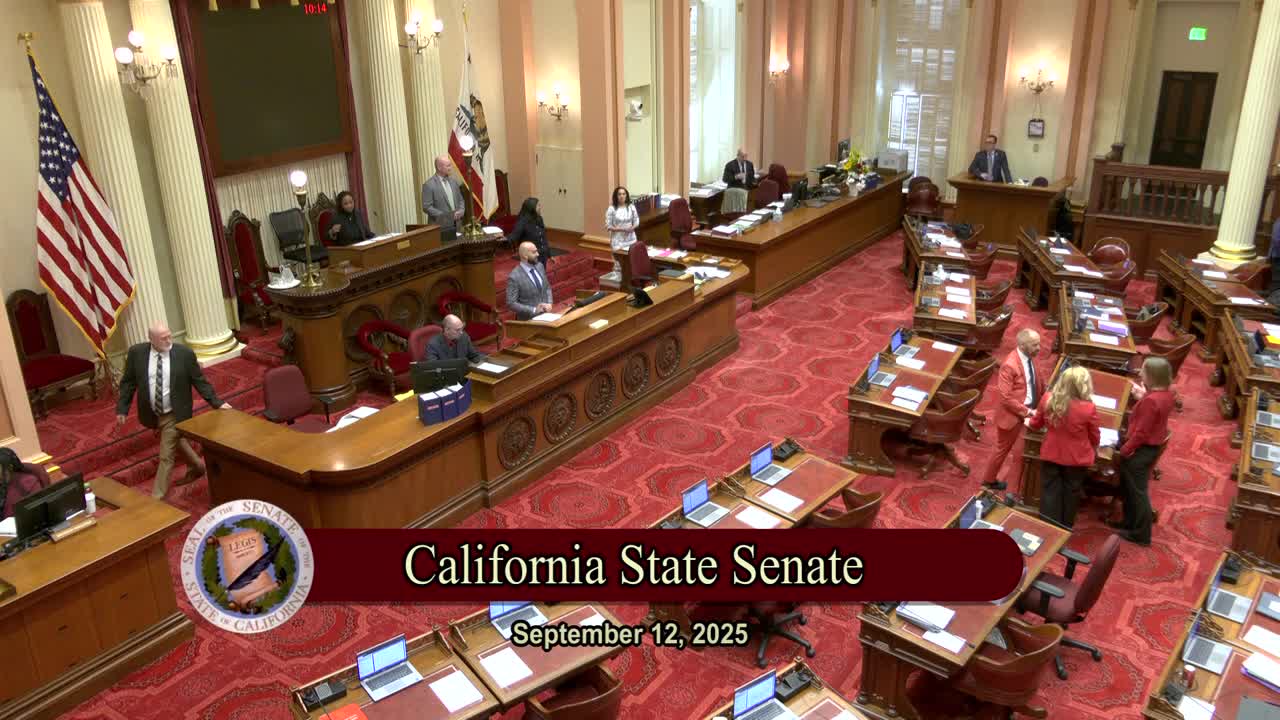 2MIN
Senate Floor
 4MIN
Senate Standing Committee on Elections and Constitutional Amendments
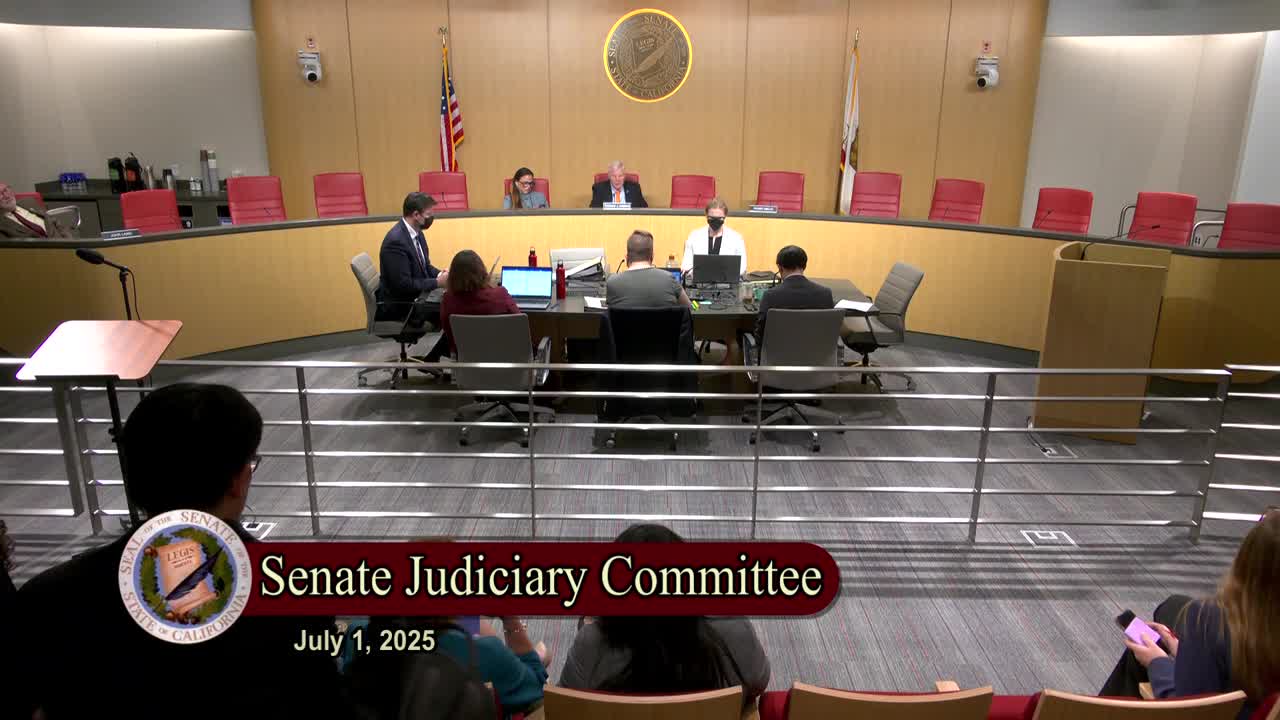 2MIN
Senate Standing Committee on Judiciary
 2MIN
Assembly Floor
 12MIN
Assembly Standing Committee on Elections
 38MIN
Assembly Standing Committee on Judiciary
Bill Author

Bill Co-Author(s):