AB 1085: License plates: obstruction or alteration.
- Session Year: 2025-2026
- House: Assembly
- Latest Version Date: 2025-10-01
Current Status:
Passed
(2025-10-01: Chaptered by Secretary of State - Chapter 179, Statutes of 2025.)
Introduced
In Committee
Awaiting First Chamber Vote
Passed First Chamber
In Committee
Awaiting Second Chamber Vote
Passed Second Chamber
Enacted
Existing law prohibits a person from erasing the reflective coating of, painting over the reflective coating of, or altering a license plate to avoid visual or electronic capture of the license plate or its characters by state or local law enforcement. Existing law prohibits a person from installing or affixing on a vehicle a casing, shield, frame, border, product, or other device that obstructs or impairs the reading or recognition of a license plate by an electronic device operated by state or local law enforcement, an electronic device operated in connection with a toll road, high-occupancy toll lane, toll bridge, or other toll facility, or a remote emission sensing device, as specified. Existing law also prohibits the sale of a product or device that obscures, or is intended to obscure, the reading or recognition of a license plate by visual means, or by an electronic device in violation of the above-described provisions. A conviction for a violation of this provision is punishable by a fine of two hundred fifty dollars $250 per item sold or per violation. A violation of the Vehicle Code is a crime.
This bill would further prohibit a person from installing or affixing a shade or tint that obstructs the reading or recognition of a license plate by an electronic device operated by state or local law enforcement, an electronic device operated in connection with a toll road, high-occupancy toll lane, toll bridge, or other toll facility, or a remote emission sensing device, as specified. The bill would further prohibit the manufacture of these products and devices in the state and impose a $1,000 fine per item sold or manufactured for a violation of these provisions. The bill would also make clarifying changes. By creating a new crime, this bill would impose a state-mandated local program.
The California Constitution requires the state to reimburse local agencies and school districts for certain costs mandated by the state. Statutory provisions establish procedures for making that reimbursement.
This bill would provide that no reimbursement is required by this act for a specified reason.
Existing law prohibits a person from erasing the reflective coating of, painting over the reflective coating of, or altering a license plate to avoid visual or electronic capture of the license plate or its characters by state or local law enforcement. Existing law prohibits a person from installing or affixing on a vehicle a casing, shield, frame, border, product, or other device that obstructs or impairs the reading or recognition of a license plate by an electronic device operated by state or local law enforcement, an electronic device operated in connection with a toll road, high-occupancy toll lane, toll bridge, or other toll facility, or a remote emission sensing device, as specified. Existing law also prohibits the sale of a product or device that obscures, or is intended to obscure, the reading or recognition of a license plate by visual means, or by an electronic device in violation of the above-described provisions. A conviction for a violation of this provision is punishable by a fine of two hundred fifty dollars $250 per item sold or per violation. A violation of the Vehicle Code is a crime.
This bill would further prohibit a person from installing or affixing a shade or tint that obstructs the reading or recognition of a license plate by an electronic device operated by state or local law enforcement, an electronic device operated in connection with a toll road, high-occupancy toll lane, toll bridge, or other toll facility, or a remote emission sensing device, as specified. The bill would further prohibit the manufacture of these products and devices in the state and impose a $2,500 $1,000 fine per item sold or manufactured for a violation of these provisions. The bill would also make clarifying changes. By creating a new crime, this bill would impose a state-mandated local program.
The California Constitution requires the state to reimburse local agencies and school districts for certain costs mandated by the state. Statutory provisions establish procedures for making that reimbursement.
This bill would provide that no reimbursement is required by this act for a specified reason.
Existing law prohibits a person from erasing the reflective coating of, painting over the reflective coating of, or altering a license plate to avoid visual or electronic capture of the license plate or its characters by state or local law enforcement. Existing law prohibits a person from installing or affixing on a vehicle a casing, shield, frame, border, product, or other device that obstructs or impairs the reading or recognition of a license plate by an electronic device operated by state or local law enforcement, an electronic device operated in connection with a toll road, high-occupancy toll lane, toll bridge, or other toll facility, or a remote emission sensing device, as specified. Existing law also prohibits the sale of a product or device that obscures, or is intended to obscure, the reading or recognition of a license plate by visual means, or by an electronic device in violation of the above-described provisions. A conviction for a violation of this provision is punishable by a fine of two hundred fifty dollars $250 per item sold or per violation. A violation of the Vehicle Code is a crime.
This bill would further prohibit a person from installing or affixing a shade or tint that obstructs the reading or recognition of a license plate by an electronic device operated by state or local law enforcement, an electronic device operated in connection with a toll road, high-occupancy toll lane, toll bridge, or other toll facility, or a remote emission sensing device, as specified. The bill would further prohibit the manufacture of these products and devices in the state and impose a ten thousand dollars $10,000 $2,500 fine per item sold or manufactured for a violation of these provisions. The bill would also make clarifying changes. By creating a new crime, this bill would impose a state-mandated local program.
The California Constitution requires the state to reimburse local agencies and school districts for certain costs mandated by the state. Statutory provisions establish procedures for making that reimbursement.
This bill would provide that no reimbursement is required by this act for a specified reason.
Existing law prohibits a person from erasing the reflective coating of, painting over the reflective coating of, or altering a license plate to avoid visual or electronic capture of the license plate or its characters by state or local law enforcement. Existing law prohibits a person from installing or affixing on a vehicle a casing, shield, frame, border, product, or other device that obstructs or impairs the reading or recognition of a license plate by an electronic device operated by state or local law enforcement, an electronic device operated in connection with a toll road, high-occupancy toll lane, toll bridge, or other toll facility, or a remote emission sensing device, as specified. Existing law also prohibits the sale of a product or device that obscures, or is intended to obscure, the reading or recognition of a license plate by visual means, or by an electronic device in violation of the above-described provisions. A conviction for a violation of this provision is punishable by a fine of two hundred fifty dollars $250 per item sold or per violation. A violation of the Vehicle Code is a crime.
This bill would further prohibit a person from installing or affixing a shade or tint that obstructs the reading or recognition of a license plate by an electronic device operated by state or local law enforcement, an electronic device operated in connection with a toll road, high-occupancy toll lane, toll bridge, or other toll facility, or a remote emission sensing device, as specified. The bill would further prohibit the manufacture of these products and devices in the state and impose a ten thousand dollars $10,000 fine per item sold or manufactured for a violation of these provisions. The bill would also make clarifying changes. By creating a new crime, this bill would impose a state-mandated local program.
The California Constitution requires the state to reimburse local agencies and school districts for certain costs mandated by the state. Statutory provisions establish procedures for making that reimbursement.
This bill would provide that no reimbursement is required by this act for a specified reason.
Existing law establishes the Department of Motor Vehicles under the control of the Director of Motor Vehicles. Under existing law, the director, with the approval of the Governor and the Secretary of Transportation, is required to organize the department in a manner that the director deems necessary.This bill would make a technical, nonsubstantive change to this provision.Existing law establishes the Department of Motor Vehicles under the control of the Director of Motor Vehicles. Under existing law, the director, with the approval of the Governor and the Secretary of Transportation, is required to organize the department in a manner that the director deems necessary.
This bill would make a technical, nonsubstantive change to this provision.
(a)License plates, including temporary license plates, shall at all times be securely fastened to the vehicle for which they are issued so as to prevent the plates from swinging, shall be mounted in a position so as to be clearly visible, and so that the characters are upright and display from left to right, and shall be maintained in a condition so as to be clearly legible. The rear license plate shall be mounted not less than 12 inches nor more than 60 inches from the ground, and the front license plate shall be mounted not more than 60 inches from the ground, except as follows:
(1)The rear license plate on a tow truck or repossessors tow vehicle may be mounted on the left-hand side of the mast assembly at the rear of the cab of the vehicle, not less than 12 inches nor more than 90 inches from the ground.
(2)The rear license plate on a tank vehicle hauling hazardous waste, as defined in Section 25117 of the Health and Safety Code, or asphalt material may be mounted not less than 12 inches nor more than 90 inches from the ground.
(3)The rear license plate on a truck tractor may be mounted at the rear of the cab of the vehicle, but not less than 12 inches nor more than 90 inches from the ground.
(4)The rear license plate of a vehicle designed by the manufacturer for the collection and transportation of garbage, rubbish, or refuse that is used regularly for the collection and transportation of that material by a person or governmental entity employed to collect, transport, and dispose of garbage, rubbish, or refuse may be mounted not less than 12 inches nor more than 90 inches from the ground.
(5)The rear license plate on a two-axle livestock trailer may be mounted 12 inches or more, but not more than 90 inches, from the ground.
(6)(A)The rear license plate on a dump bed motortruck equipped with a trailing, load bearing swing axle shall be mounted more than 12 inches, but not more than 107 inches, from the ground.
(B)As used in this section, a trailing, load bearing swing axle is an axle which can be moved from a raised position to a position behind the vehicle that allows for the transfer of a portion of the weight of the vehicle and load to the trailing axle.
(b)Temporary license plates shall be replaced with permanent license plates upon receipt of the permanent license plates, and the temporary license plates shall be destroyed at that time.
(c)A covering shall not be used on license plates except as follows:
(1)The installation of a cover over a lawfully parked vehicle to protect it from the weather and the elements does not constitute a violation of this subdivision. A peace officer or other regularly salaried employee of a public agency designated to enforce laws, including local ordinances, relating to the parking of vehicles may temporarily remove so much of the cover as is necessary to inspect any license plate, tab, or indicia of registration on a vehicle.
(2)The installation of a license plate security cover is not a violation of this subdivision if the device does not obstruct or impair the recognition of the license plate information, including, but not limited to, the issuing state, license plate number, and registration tabs, and the cover is limited to the area directly over the top of the registration tabs. No portion of a license plate security cover shall rest over the license plate number.
(d)A casing, shield, frame, border, shade, tint, product, or other device that obstructs or impairs the reading or recognition of a license plate by an electronic device operated by state or local law enforcement, an electronic device operated in connection with a toll road, high-occupancy toll lane, toll bridge, or other toll facility, or a remote emission sensing device, as specified in Sections 44081 and 44081.6 of the Health and Safety Code, shall not be installed on, or affixed to, a vehicle.
(e)(1)It is the intent of the Legislature that an accommodation be made to persons with disabilities and to those persons who regularly transport persons with disabilities, to allow the removal and relocation of wheelchair lifts and wheelchair carriers without the necessity of removing and reattaching the vehicles rear license plate. Therefore, it is not a violation of this section if the reading or recognition of a rear license plate is obstructed or impaired by a wheelchair lift or wheelchair carrier and all of the following requirements are met:
(A)The owner of the vehicle has been issued a special identification license plate pursuant to Section 5007, or the person using the wheelchair that is carried on the vehicle has been issued a distinguishing placard under Section 22511.55.
(B)(i)The operator of the vehicle displays a decal, designed and issued by the department, that contains the license plate number assigned to the vehicle transporting the wheelchair.
(ii)The decal is displayed on the rear window of the vehicle, in a location determined by the department, in consultation with the Department of the California Highway Patrol, so as to be clearly visible to law enforcement.
(2)Notwithstanding any other law, if a decal is displayed pursuant to this subdivision, the requirements of this code that require the illumination of the license plate and the license plate number do not apply.
(3)The department shall adopt regulations governing the procedures for accepting and approving applications for decals, and issuing decals, authorized by this subdivision.
(4)This subdivision does not apply to a front license plate.
(f)This section shall become operative January 1, 2019.
SEC. 2.Section 5201.1 of the Vehicle Code is amended to read:5201.1.(a)A person shall not sell or manufacture a product or device in this state that obscures, or is intended to obscure, the reading or recognition of a license plate by visual means, or by an electronic device as prohibited by subdivision (c) or (d) of Section 5201.
(b)A person shall not operate a vehicle with a product or device that violates subdivision (a).
(c)A person shall not erase the reflective coating of, paint over the reflective coating of, or alter a license plate to avoid visual or electronic capture of the license plate or its characters.
(d)(1)A conviction for a violation of subdivision (a) is punishable by a fine of one thousand dollars ($1,000) per item sold or manufactured.
(2)A conviction for a violation of subdivision (b) or (c) is punishable by a fine of two hundred fifty dollars ($250) per violation.
SEC. 3.No reimbursement is required by this act pursuant to Section 6 of Article XIIIB of the California Constitution because the only costs that may be incurred by a local agency or school district will be incurred because this act creates a new crime or infraction, eliminates a crime or infraction, or changes the penalty for a crime or infraction, within the meaning of Section 17556 of the Government Code, or changes the definition of a crime within the meaning of Section 6 of Article XIIIB of the California Constitution.
(a)License plates, including temporary license plates, shall at all times be securely fastened to the vehicle for which they are issued so as to prevent the plates from swinging, shall be mounted in a position so as to be clearly visible, and so that the characters are upright and display from left to right, and shall be maintained in a condition so as to be clearly legible. The rear license plate shall be mounted not less than 12 inches nor more than 60 inches from the ground, and the front license plate shall be mounted not more than 60 inches from the ground, except as follows:
(1)The rear license plate on a tow truck or repossessors tow vehicle may be mounted on the left-hand side of the mast assembly at the rear of the cab of the vehicle, not less than 12 inches nor more than 90 inches from the ground.
(2)The rear license plate on a tank vehicle hauling hazardous waste, as defined in Section 25117 of the Health and Safety Code, or asphalt material may be mounted not less than 12 inches nor more than 90 inches from the ground.
(3)The rear license plate on a truck tractor may be mounted at the rear of the cab of the vehicle, but not less than 12 inches nor more than 90 inches from the ground.
(4)The rear license plate of a vehicle designed by the manufacturer for the collection and transportation of garbage, rubbish, or refuse that is used regularly for the collection and transportation of that material by a person or governmental entity employed to collect, transport, and dispose of garbage, rubbish, or refuse may be mounted not less than 12 inches nor more than 90 inches from the ground.
(5)The rear license plate on a two-axle livestock trailer may be mounted 12 inches or more, but not more than 90 inches, from the ground.
(6)(A)The rear license plate on a dump bed motortruck equipped with a trailing, load bearing swing axle shall be mounted more than 12 inches, but not more than 107 inches, from the ground.
(B)As used in this section, a trailing, load bearing swing axle is an axle which can be moved from a raised position to a position behind the vehicle that allows for the transfer of a portion of the weight of the vehicle and load to the trailing axle.
(b)Temporary license plates shall be replaced with permanent license plates upon receipt of the permanent license plates, and the temporary license plates shall be destroyed at that time.
(c)A covering shall not be used on license plates except as follows:
(1)The installation of a cover over a lawfully parked vehicle to protect it from the weather and the elements does not constitute a violation of this subdivision. A peace officer or other regularly salaried employee of a public agency designated to enforce laws, including local ordinances, relating to the parking of vehicles may temporarily remove so much of the cover as is necessary to inspect any license plate, tab, or indicia of registration on a vehicle.
(2)The installation of a license plate security cover is not a violation of this subdivision if the device does not obstruct or impair the recognition of the license plate information, including, but not limited to, the issuing state, license plate number, and registration tabs, and the cover is limited to the area directly over the top of the registration tabs. No portion of a license plate security cover shall rest over the license plate number.
(d)A casing, shield, frame, border, shade, tint, product, or other device that obstructs or impairs the reading or recognition of a license plate by an electronic device operated by state or local law enforcement, an electronic device operated in connection with a toll road, high-occupancy toll lane, toll bridge, or other toll facility, or a remote emission sensing device, as specified in Sections 44081 and 44081.6 of the Health and Safety Code, shall not be installed on, or affixed to, a vehicle.
(e)(1)It is the intent of the Legislature that an accommodation be made to persons with disabilities and to those persons who regularly transport persons with disabilities, to allow the removal and relocation of wheelchair lifts and wheelchair carriers without the necessity of removing and reattaching the vehicles rear license plate. Therefore, it is not a violation of this section if the reading or recognition of a rear license plate is obstructed or impaired by a wheelchair lift or wheelchair carrier and all of the following requirements are met:
(A)The owner of the vehicle has been issued a special identification license plate pursuant to Section 5007, or the person using the wheelchair that is carried on the vehicle has been issued a distinguishing placard under Section 22511.55.
(B)(i)The operator of the vehicle displays a decal, designed and issued by the department, that contains the license plate number assigned to the vehicle transporting the wheelchair.
(ii)The decal is displayed on the rear window of the vehicle, in a location determined by the department, in consultation with the Department of the California Highway Patrol, so as to be clearly visible to law enforcement.
(2)Notwithstanding any other law, if a decal is displayed pursuant to this subdivision, the requirements of this code that require the illumination of the license plate and the license plate number do not apply.
(3)The department shall adopt regulations governing the procedures for accepting and approving applications for decals, and issuing decals, authorized by this subdivision.
(4)This subdivision does not apply to a front license plate.
(f)This section shall become operative January 1, 2019.
SEC. 2.Section 5201.1 of the Vehicle Code is amended to read:5201.1.(a)A person shall not sell or manufacture a product or device in this state that obscures, or is intended to obscure, the reading or recognition of a license plate by visual means, or by an electronic device as prohibited by subdivision (c) or (d) of Section 5201.
(b)A person shall not operate a vehicle with a product or device that violates subdivision (a).
(c)A person shall not erase the reflective coating of, paint over the reflective coating of, or alter a license plate to avoid visual or electronic capture of the license plate or its characters.
(d)(1)A conviction for a violation of subdivision (a) is punishable by a fine of two thousand five hundred dollars ($2,500) one thousand dollars ($1,000) per item sold or manufactured.
(2)A conviction for a violation of subdivision (b) or (c) is punishable by a fine of two hundred fifty dollars ($250) per violation.
SEC. 3.No reimbursement is required by this act pursuant to Section 6 of Article XIIIB of the California Constitution because the only costs that may be incurred by a local agency or school district will be incurred because this act creates a new crime or infraction, eliminates a crime or infraction, or changes the penalty for a crime or infraction, within the meaning of Section 17556 of the Government Code, or changes the definition of a crime within the meaning of Section 6 of Article XIIIB of the California Constitution.
(a)License plates, including temporary license plates, shall at all times be securely fastened to the vehicle for which they are issued so as to prevent the plates from swinging, shall be mounted in a position so as to be clearly visible, and so that the characters are upright and display from left to right, and shall be maintained in a condition so as to be clearly legible. The rear license plate shall be mounted not less than 12 inches nor more than 60 inches from the ground, and the front license plate shall be mounted not more than 60 inches from the ground, except as follows:
(1)The rear license plate on a tow truck or repossessors tow vehicle may be mounted on the left-hand side of the mast assembly at the rear of the cab of the vehicle, not less than 12 inches nor more than 90 inches from the ground.
(2)The rear license plate on a tank vehicle hauling hazardous waste, as defined in Section 25117 of the Health and Safety Code, or asphalt material may be mounted not less than 12 inches nor more than 90 inches from the ground.
(3)The rear license plate on a truck tractor may be mounted at the rear of the cab of the vehicle, but not less than 12 inches nor more than 90 inches from the ground.
(4)The rear license plate of a vehicle designed by the manufacturer for the collection and transportation of garbage, rubbish, or refuse that is used regularly for the collection and transportation of that material by a person or governmental entity employed to collect, transport, and dispose of garbage, rubbish, or refuse may be mounted not less than 12 inches nor more than 90 inches from the ground.
(5)The rear license plate on a two-axle livestock trailer may be mounted 12 inches or more, but not more than 90 inches, from the ground.
(6)(A)The rear license plate on a dump bed motortruck equipped with a trailing, load bearing swing axle shall be mounted more than 12 inches, but not more than 107 inches, from the ground.
(B)As used in this section, a trailing, load bearing swing axle is an axle which can be moved from a raised position to a position behind the vehicle that allows for the transfer of a portion of the weight of the vehicle and load to the trailing axle.
(b)Temporary license plates shall be replaced with permanent license plates upon receipt of the permanent license plates, and the temporary license plates shall be destroyed at that time.
(c)A covering shall not be used on license plates except as follows:
(1)The installation of a cover over a lawfully parked vehicle to protect it from the weather and the elements does not constitute a violation of this subdivision. A peace officer or other regularly salaried employee of a public agency designated to enforce laws, including local ordinances, relating to the parking of vehicles may temporarily remove so much of the cover as is necessary to inspect any license plate, tab, or indicia of registration on a vehicle.
(2)The installation of a license plate security cover is not a violation of this subdivision if the device does not obstruct or impair the recognition of the license plate information, including, but not limited to, the issuing state, license plate number, and registration tabs, and the cover is limited to the area directly over the top of the registration tabs. No portion of a license plate security cover shall rest over the license plate number.
(d)A casing, shield, frame, border, shade, tint, product, or other device that obstructs or impairs the reading or recognition of a license plate by an electronic device operated by state or local law enforcement, an electronic device operated in connection with a toll road, high-occupancy toll lane, toll bridge, or other toll facility, or a remote emission sensing device, as specified in Sections 44081 and 44081.6 of the Health and Safety Code, shall not be installed on, or affixed to, a vehicle.
(e)(1)It is the intent of the Legislature that an accommodation be made to persons with disabilities and to those persons who regularly transport persons with disabilities, to allow the removal and relocation of wheelchair lifts and wheelchair carriers without the necessity of removing and reattaching the vehicles rear license plate. Therefore, it is not a violation of this section if the reading or recognition of a rear license plate is obstructed or impaired by a wheelchair lift or wheelchair carrier and all of the following requirements are met:
(A)The owner of the vehicle has been issued a special identification license plate pursuant to Section 5007, or the person using the wheelchair that is carried on the vehicle has been issued a distinguishing placard under Section 22511.55.
(B)(i)The operator of the vehicle displays a decal, designed and issued by the department, that contains the license plate number assigned to the vehicle transporting the wheelchair.
(ii)The decal is displayed on the rear window of the vehicle, in a location determined by the department, in consultation with the Department of the California Highway Patrol, so as to be clearly visible to law enforcement.
(2)Notwithstanding any other law, if a decal is displayed pursuant to this subdivision, the requirements of this code that require the illumination of the license plate and the license plate number do not apply.
(3)The department shall adopt regulations governing the procedures for accepting and approving applications for decals, and issuing decals, authorized by this subdivision.
(4)This subdivision does not apply to a front license plate.
(f)This section shall become operative January 1, 2019.
SEC. 2.Section 5201.1 of the Vehicle Code is amended to read:5201.1.(a)A person shall not sell or manufacture a product or device in this state that obscures, or is intended to obscure, the reading or recognition of a license plate by visual means, or by an electronic device as prohibited by subdivision (c) or (d) of Section 5201.
(b)A person shall not operate a vehicle with a product or device that violates subdivision (a).
(c)A person shall not erase the reflective coating of, paint over the reflective coating of, or alter a license plate to avoid visual or electronic capture of the license plate or its characters.
(d)(1)A conviction for a violation of subdivision (a) is punishable by a fine of ten thousand dollars ($10,000) two thousand five hundred dollars ($2,500) per item sold or manufactured.
(2)A conviction for a violation of subdivision (b) or (c) is punishable by a fine of two hundred fifty dollars ($250) per violation.
SEC. 3.No reimbursement is required by this act pursuant to Section 6 of Article XIIIB of the California Constitution because the only costs that may be incurred by a local agency or school district will be incurred because this act creates a new crime or infraction, eliminates a crime or infraction, or changes the penalty for a crime or infraction, within the meaning of Section 17556 of the Government Code, or changes the definition of a crime within the meaning of Section 6 of Article XIIIB of the California Constitution.
(a)License plates, including temporary license plates, shall at all times be securely fastened to the vehicle for which they are issued so as to prevent the plates from swinging, shall be mounted in a position so as to be clearly visible, and so that the characters are upright and display from left to right, and shall be maintained in a condition so as to be clearly legible. The rear license plate shall be mounted not less than 12 inches nor more than 60 inches from the ground, and the front license plate shall be mounted not more than 60 inches from the ground, except as follows:
(1)The rear license plate on a tow truck or repossessors tow vehicle may be mounted on the left-hand side of the mast assembly at the rear of the cab of the vehicle, not less than 12 inches nor more than 90 inches from the ground.
(2)The rear license plate on a tank vehicle hauling hazardous waste, as defined in Section 25117 of the Health and Safety Code, or asphalt material may be mounted not less than 12 inches nor more than 90 inches from the ground.
(3)The rear license plate on a truck tractor may be mounted at the rear of the cab of the vehicle, but not less than 12 inches nor more than 90 inches from the ground.
(4)The rear license plate of a vehicle designed by the manufacturer for the collection and transportation of garbage, rubbish, or refuse that is used regularly for the collection and transportation of that material by a person or governmental entity employed to collect, transport, and dispose of garbage, rubbish, or refuse may be mounted not less than 12 inches nor more than 90 inches from the ground.
(5)The rear license plate on a two-axle livestock trailer may be mounted 12 inches or more, but not more than 90 inches, from the ground.
(6)(A)The rear license plate on a dump bed motortruck equipped with a trailing, load bearing swing axle shall be mounted more than 12 inches, but not more than 107 inches, from the ground.
(B)As used in this section, a trailing, load bearing swing axle is an axle which can be moved from a raised position to a position behind the vehicle that allows for the transfer of a portion of the weight of the vehicle and load to the trailing axle.
(b)Temporary license plates shall be replaced with permanent license plates upon receipt of the permanent license plates, and the temporary license plates shall be destroyed at that time.
(c)A covering shall not be used on license plates except as follows:
(1)The installation of a cover over a lawfully parked vehicle to protect it from the weather and the elements does not constitute a violation of this subdivision. A peace officer or other regularly salaried employee of a public agency designated to enforce laws, including local ordinances, relating to the parking of vehicles may temporarily remove so much of the cover as is necessary to inspect any license plate, tab, or indicia of registration on a vehicle.
(2)The installation of a license plate security cover is not a violation of this subdivision if the device does not obstruct or impair the recognition of the license plate information, including, but not limited to, the issuing state, license plate number, and registration tabs, and the cover is limited to the area directly over the top of the registration tabs. No portion of a license plate security cover shall rest over the license plate number.
(d)A casing, shield, frame, border, shade, tint, product, or other device that obstructs or impairs the reading or recognition of a license plate by an electronic device operated by state or local law enforcement, an electronic device operated in connection with a toll road, high-occupancy toll lane, toll bridge, or other toll facility, or a remote emission sensing device, as specified in Sections 44081 and 44081.6 of the Health and Safety Code, shall not be installed on, or affixed to, a vehicle.
(e)(1)It is the intent of the Legislature that an accommodation be made to persons with disabilities and to those persons who regularly transport persons with disabilities, to allow the removal and relocation of wheelchair lifts and wheelchair carriers without the necessity of removing and reattaching the vehicles rear license plate. Therefore, it is not a violation of this section if the reading or recognition of a rear license plate is obstructed or impaired by a wheelchair lift or wheelchair carrier and all of the following requirements are met:
(A)The owner of the vehicle has been issued a special identification license plate pursuant to Section 5007, or the person using the wheelchair that is carried on the vehicle has been issued a distinguishing placard under Section 22511.55.
(B)(i)The operator of the vehicle displays a decal, designed and issued by the department, that contains the license plate number assigned to the vehicle transporting the wheelchair.
(ii)The decal is displayed on the rear window of the vehicle, in a location determined by the department, in consultation with the Department of the California Highway Patrol, so as to be clearly visible to law enforcement.
(2)Notwithstanding any other law, if a decal is displayed pursuant to this subdivision, the requirements of this code that require the illumination of the license plate and the license plate number do not apply.
(3)The department shall adopt regulations governing the procedures for accepting and approving applications for decals, and issuing decals, authorized by this subdivision.
(4)This subdivision does not apply to a front license plate.
(f)This section shall become operative January 1, 2019.
SEC. 2.Section 5201.1 of the Vehicle Code is amended to read:5201.1.(a)A person shall not sell or manufacture a product or device in this state that obscures, or is intended to obscure, the reading or recognition of a license plate by visual means, or by an electronic device as prohibited by subdivision (c) or (d) of Section 5201.
(b)A person shall not operate a vehicle with a product or device that violates subdivision (a).
(c)A person shall not erase the reflective coating of, paint over the reflective coating of, or alter a license plate to avoid visual or electronic capture of the license plate or its characters.
(d)(1)A conviction for a violation of subdivision (a) is punishable by a fine of ten thousand dollars ($10,000) per item sold or manufactured.
(d)(2)A conviction for a violation of this section subdivision (b) or (c) is punishable by a fine of two hundred fifty dollars ($250) per item sold or per violation.
SEC. 3.No reimbursement is required by this act pursuant to Section 6 of Article XIIIB of the California Constitution because the only costs that may be incurred by a local agency or school district will be incurred because this act creates a new crime or infraction, eliminates a crime or infraction, or changes the penalty for a crime or infraction, within the meaning of Section 17556 of the Government Code, or changes the definition of a crime within the meaning of Section 6 of Article XIIIB of the California Constitution.
SECTION 1.Section 1505 of the Vehicle Code is amended to read:1505.The director, with the approval of the Governor and the Secretary of Transportation, shall organize the department in a manner that the director may deem necessary to conduct the work of the department.The director, with the approval of the Governor and the Secretary of Transportation, shall organize the department in a manner that he or she the director may deem necessary to conduct the work of the department.
|
Date
|
Status
|
|---|---|
| Oct 1, 2025 | Chaptered by Secretary of State - Chapter 179, Statutes of 2025. |
| Oct 1, 2025 | Approved by the Governor. |
| Sep 2, 2025 | Enrolled and presented to the Governor at 3 p.m. |
| Aug 25, 2025 | Senate amendments concurred in. To Engrossing and Enrolling. (Ayes 76. Noes 0. Page 2726.). |
| Jul 17, 2025 | In Assembly. Concurrence in Senate amendments pending. |
| Jul 17, 2025 | Read third time. Passed. Ordered to the Assembly. (Ayes 35. Noes 0. Page 2138.). |
| Jul 15, 2025 | Read second time. Ordered to Consent Calendar. |
| Jul 14, 2025 | From committee: Be ordered to second reading file pursuant to Senate Rule 28.8 and ordered to Consent Calendar. |
| Jul 2, 2025 | From committee: Do pass and re-refer to Com. on APPR. with recommendation: To Consent Calendar. (Ayes 6. Noes 0.) (July 1). Re-referred to Com. on APPR. |
| Jun 19, 2025 | In committee: Set, first hearing. Hearing canceled at the request of author. |
| Jun 11, 2025 | Read second time and amended. Re-referred to Com. on PUB. S. |
| Jun 10, 2025 | From committee: Amend, and do pass as amended and re-refer to Com. on PUB. S. with recommendation: To Consent Calendar. (Ayes 13. Noes 0.) (June 10). |
| May 28, 2025 | Referred to Coms. on TRANS. and PUB. S. |
| May 15, 2025 | In Senate. Read first time. To Com. on RLS. for assignment. |
| May 15, 2025 | Read third time. Passed. Ordered to the Senate. (Ayes 69. Noes 0. Page 1569.) |
| May 8, 2025 | Read second time. Ordered to Consent Calendar. |
| May 7, 2025 | From committee: Do pass. To Consent Calendar. (Ayes 15. Noes 0.) (May 7). |
| Apr 22, 2025 | From committee: Do pass and re-refer to Com. on APPR. with recommendation: To Consent Calendar. (Ayes 15. Noes 0.) (April 21). Re-referred to Com. on APPR. |
| Apr 9, 2025 | Re-referred to Com. on TRANS. |
| Apr 8, 2025 | From committee chair, with author's amendments: Amend, and re-refer to Com. on TRANS. Read second time and amended. |
| Mar 25, 2025 | Re-referred to Com. on TRANS. |
| Mar 24, 2025 | From committee chair, with author's amendments: Amend, and re-refer to Com. on TRANS. Read second time and amended. |
| Mar 24, 2025 | Referred to Com. on TRANS. |
| Feb 21, 2025 | From printer. May be heard in committee March 23. |
| Feb 20, 2025 | Read first time. To print. |
|
Date
|
Description
|
Location
|
Votes
|
|
|---|---|---|---|---|
| Aug 25, 2025 | AB 1085 Stefani Concurrence in Senate Amendments | Assembly Floor |
Passed |
|
| Jul 17, 2025 | Consent Calendar 2nd AB1085 Stefani | Senate Floor |
Passed |
|
| Jul 1, 2025 | Do pass, but first be re-referred to the Committee on [Appropriations] with the recommendation: To Consent Calendar | Senate Standing Committee on Public Safety |
Passed |
|
| Jun 10, 2025 | Do pass as amended, but first amend, and re-refer to the Committee on [Public Safety] with the recommendation: To Consent Calendar | Senate Standing Committee on Transportation |
Passed |
|
| May 15, 2025 | AB 1085 Stefani Consent Calendar Second Day Regular Session | Assembly Floor |
Passed |
|
| May 7, 2025 | Do pass. To Consent Calendar. | Assembly Standing Committee on Appropriations |
Passed |
|
| Apr 21, 2025 | Do pass and be re-referred to the Committee on [Appropriations] with recommendation: To Consent Calendar | Assembly Standing Committee on Transportation |
Passed |
This list shows positions taken on this bill by organizations on the date displayed, which is linked to the original source.
Positions by individuals are not included.
|
Organization
|
Position
|
Date
|
|---|---|---|
| Active San Gabriel Valley | ** Support | |
| Arcadia Police Officers' Association | ** Support | |
| Bike Culver City | ** Support | |
| Bike Long Beach | ** Support | |
| Brea Police Association | ** Support | |
| Burbank Police Officers' Association | ** Support | |
| CalBike | ** Support | |
| California Association of School Police Chiefs | ** Support | |
| California Coalition of School Safety Professionals | ** Support | |
| California Narcotic Officers' Association | ** Support | |
| California Reserve Peace Officers Association | ** Support | |
| Car-Lite Long Beach | ** Support | |
| Circulate San Diego | ** Support | |
| City/County Association of Governments of San Mateo County | ** Support | |
| CLAREMONT POLICE OFFICERS ASSOCIATION | ** Support | |
| Corona Police Officers Association | ** Support | |
| Costa Mesa Alliance for Better Streets | ** Support | |
| Culver City Police Officers' Association | ** Support | |
| East Bay for Everyone | ** Support | |
| Families for Safe Streets San Diego | ** Support | |
| Flock Safety | ** Support | |
| Fullerton Police Officers' Association | ** Support | |
| Glendale Yimby | ** Support | |
| Golden Gate Bridge, Highway & Transportation District | ** Support | |
| League Of California Cities | ** Support | |
| Los Angeles School Police Management Association | ** Support | |
| los angeles school police officers association | ** Support | |
| Los Angeles Walks | ** Support | |
| Metropolitan Transportation Commission | ** Support | |
| MOVE LA, A PROJECT OF COMMUNITY PARTNERS | ** Support | |
| Murrieta Police Officers' Association | ** Support | |
| Napa County Bicycle Coalition | ** Support | |
| Newport Beach Police Association | ** Support | |
| Norwalk Unides | ** Support | |
| Palos Verdes Police Officers Association | ** Support | |
| Placer County Deputy Sheriffs' Assocation | ** Support | |
| Pomona Police Officers' Association | ** Support | |
| Remake Irvine Streets for Everyone | ** Support | |
| RideSD | ** Support | |
| RIVERSIDE POLICE OFFICERS ASSOCIATION | ** Support | |
| Riverside Sheriffs' Association | ** Support | |
| San Diego County Bicycle Coalition | ** Support | |
| San Francisco Bay Area Families for Safe Streets | ** Support | |
| San Francisco Bicycle Coalition | ** Support | |
| Santa Ana Police Officers Association | ** Support | |
| Stop4Aidan | ** Support | |
| Street Racing Kills | ** Support | |
| Streets Are For Everyone | ** Support | |
| Streets for All | ** Support | |
| Strong Towns Artesia | ** Support | |
| Strong Towns Santa Barbara | ** Support | |
| Walk San Francisco | ** Support |
CONCURRENCE IN SENATE AMENDMENTS
CSA1 Bill Id:AB 1085
Author:(Stefani)
As Amended Ver:June 11, 2025
Majority vote
SUMMARY
Makes it an infraction with a fine of $1,000 to manufacture in California a product or device that obscures, or is intended to obscure, the reading or recognition of a license plate by visual or electronic means.
- Prohibits the use of a shade or tint that obstructs or impairs the reading or recognition of a license plate by an electronic device operated by state or local law enforcement, an electronic device operated in connection with a toll road, high-occupancy toll lane, toll bridge, or other toll facility.
Senate Amendments
- Reduce the penalty fine from $2,500 to $1,000.
COMMENTS
AB 801 (Walters), Chapter 273, Statutes of 2008 made it an infraction to sell a product or device that obscures, or is intended to obscure, the reading or recognition of a license plate. The Transportation Corridor Agencies sponsored AB 801 to address toll revenue being lost due to obscured license plates. AB 2489 (Hall), Chapter 702, Statutes of 2012 made it an infraction to alter or cover a license plate to avoid law enforcement reading the license plate with a camera. The Los Angeles County Sheriff's Department sponsored AB 2489 to address the use of automated license plate readers (ALPRs) as a surveillance tool. AB 2111 (Wallis) Chapter 59, Statutes of 2024 updated AB 2458 to make it an infraction to alter or cover a license plate for any reason, not just to avoid law enforcement.
The current penalty for the violation this bill creates is $250 ($1105 after penalty assessments are made by the courts.) This bill increases the penalty to over $10,000 with penalty assessments. Unlike most violations in the Vehicle Code, this violation provides for no judicial discretion to set a lower penalty.
The penalty in this bill will make this violation the second highest base fine in the Vehicle Code. The fine in this bill is more than twice as high as the minimum fine for a felony in the Vehicle Code.
According to the Author
"Illegal license plate covers, designed to purposefully obscure plates, are making it easier for bad actors to evade accountability. These tinted or shaded covers have been linked to vehicle thefts and robberies, preventing law enforcement from identifying and stopping offenders. They also allow drivers to dodge toll payments, costing the state's transportation system millions of lost revenue each year- undermining automated enforcement programs and diverting critical funding from road maintenance and improvements. AB 1085 strengthens existing laws by further clarifying which license plate covers are illegal and increasing penalties for manufacturers and sellers who enable their use. When drivers purposefully hide their plates, they aren't just breaking the law- they're shifting financial burdens onto our toll agencies and putting public safety at risk."
ALPRs or other photo enforcement devices have become ubiquitous tools in transportation agencies to enforce transportation laws. Toll agencies and automated traffic enforcement systems like speed cameras and red light cameras increasingly use ALPR to capture violators more efficiently.
On January 1, 2021, the Bay Area Toll Authority converted all of its toll collection facilities to cashless facilities that rely on the use of FastTrack or ALPRs to collect tolls. As of 2022, there were about 473 lane-miles of high occupancy toll (HOT) lanes that rely on ALPRs for enforcement purposes on California's state highway system. Orange County Toll Authority (OCTA) has relied on ALPRs for enforcing their 18-mile toll road since 1995. Since 2007 San Francisco could ticket drivers parked in bus-only lanes using photo enforcement. This authority was expanded statewide in 2022. Finally, starting this year six cities will be able to install speed cameras to issue speeding tickets.
The number of individuals ticketed for attempting to obscure their license plates has grown significantly as reliance on ALPRs has increased as an enforcement tool for tolls. CHP issued 331 violations for tampering with the reflective coating or altering a license in 2021. That number grew to 781 citations in 2022 and 1,077 in 2023. According to the Bay Area Toll Authority (BATA), state-owned bridges had 946,740 unpaid crossings due to obstructed or defaced plates, resulting in loss revenue of $6.8 million, or around 1% of total revenue. However, BATA notes that only a small percentage of that lost revenue is because of customers intentionally obscuring their plates. Most obstructed plates are due to bike racks, license plate frames, or unsecured temporary paper plates flapping in the wind.
Other states have seen a significant rise in plate obfuscation as they rely more and more on photo enforcement for tolls and other traffic violations. A January 2024 audit from the New York City Comptroller found that the use of illegally obscured, temporary, or ghost license plates to avoid fines cost the city more than $100 million annually in lost fine revenue. In 2023, the New York City Triborough Bridge and Tunnel Authority reported it lost $50 million annually to toll evaders obscuring license plates. A report done by Inside Your World investigated 17 states using electronic tolls and concluded they were losing as much as $305 million each year in uncollected tolls.
Arguments in Support
Streets for All, writing in support states "AB 1085 is a necessary step to curb the widespread use of license plate obstruction devices, which are already illegal in California but remain readily available for purchase. Strengthening enforcement against the sale of these devices will close a dangerous loophole that facilitates lawbreaking, contributes to hit-and-runs, undermines public safety, and results in significant financial losses for the state."
Arguments in Opposition
None on file.
FISCAL COMMENTS
According to the Assembly Appropriations Committee, negligible state costs.
VOTES:
ASM TRANSPORTATION: 15-0-1
YES: Wilson, Davies, Aguiar-Curry, Ahrens, Carrillo, Harabedian, Hart, Hoover, Jackson, Lackey, Lowenthal, Macedo, Ransom, Rogers, Ward
ABS, ABST OR NV: Papan
ASM APPROPRIATIONS: 15-0-0
YES: Wicks, Sanchez, Arambula, Calderon, Caloza, Dixon, Elhawary, Fong, Mark González, Hart, Pacheco, Pellerin, Solache, Ta, Tangipa
ASSEMBLY FLOOR: 69-0-10
YES: Addis, Aguiar-Curry, Ahrens, Alvarez, Ávila Farías, Bains, Bauer-Kahan, Berman, Boerner, Bonta, Bryan, Calderon, Carrillo, Chen, Connolly, Davies, DeMaio, Dixon, Elhawary, Ellis, Flora, Fong, Gabriel, Gallagher, Garcia, Gipson, Mark González, Hadwick, Haney, Harabedian, Hoover, Irwin, Jackson, Kalra, Krell, Lackey, Lee, Lowenthal, Macedo, McKinnor, Muratsuchi, Nguyen, Ortega, Pacheco, Papan, Patel, Patterson, Pellerin, Petrie-Norris, Ransom, Celeste Rodriguez, Michelle Rodriguez, Rogers, Blanca Rubio, Sanchez, Schiavo, Schultz, Sharp-Collins, Solache, Soria, Ta, Tangipa, Valencia, Wallis, Ward, Wicks, Wilson, Zbur, Rivas
ABS, ABST OR NV: Alanis, Arambula, Bennett, Caloza, Castillo, Jeff Gonzalez, Hart, Quirk‑Silva, Ramos, Stefani
SENATE FLOOR: 35-0-5
YES: Allen, Archuleta, Arreguín, Ashby, Blakespear, Cabaldon, Caballero, Cervantes, Choi, Cortese, Dahle, Durazo, Gonzalez, Grayson, Grove, Hurtado, Jones, Laird, Limón, McGuire, McNerney, Menjivar, Niello, Ochoa Bogh, Pérez, Richardson, Rubio, Seyarto, Smallwood‑Cuevas, Stern, Strickland, Valladares, Wahab, Weber Pierson, Wiener
ABS, ABST OR NV: Alvarado-Gil, Becker, Padilla, Reyes, Umberg
UPDATED
VERSION: June 11, 2025
CONSULTANT: David Sforza / TRANS. / (916) 319-2093 FN: 0001155
SENATE RULES COMMITTEE Office of Senate Floor Analyses (916) 651-1520 Fax: (916) 327-4478 | AB 1085 |
CONSENT
Bill No: AB 1085
Author: Stefani (D)
Amended: 6/11/25 in Senate
Vote: 21
SENATE TRANSPORTATION COMMITTEE: 13-0, 6/10/25
AYES: Cortese, Strickland, Arreguín, Blakespear, Cervantes, Dahle, Grayson, Limón, Menjivar, Richardson, Seyarto, Umberg, Valladares
NO VOTE RECORDED: Archuleta, Gonzalez
SENATE PUBLIC SAFETY COMMITTEE: 6-0, 7/1/25
AYES: Arreguín, Seyarto, Caballero, Gonzalez, Pérez, Wiener
SENATE APPROPRIATIONS COMMITTEE: Senate Rule 28.8
ASSEMBLY FLOOR: 69-0, 5/15/25 (Consent) - See last page for vote
SUBJECT: License plates: obstruction or alteration
SOURCE: Streets for All
DIGEST:
This bill makes it an infraction to manufacture in California a product or device that obscures, or is intended to obscure, a license plate by visual or electronic means and strengthens penalties against those who sell these products.
ANALYSIS:
Existing law:
- Requires license plates to be mounted so as to be clearly visible and legible, as specified. (Vehicle Code (VEH) § 5201)
- Prohibits a person from erasing the reflective coating of, painting over the reflective coating of, or altering a license plate only if it’s to avoid visual or electronic capture of the license plate or its characters. (VEH § 5202.1)
- Prohibits the sale of a product or device that obscures, or is intended to obscure, the reading or recognition of a license plate by visual means, or by an electronic device operated in connection with a toll road, high-occupancy toll lane, toll bridge or other toll facility and prohibits a person from operating a vehicle with such a product. (VEH § 5202.1)
- Makes the above described violations an infraction punishable with a base fine of $250 ($1,105 after additional penalty assessments are added by the courts). (VEH § 5202.1)
- Requires a license plate to be securely fastened to the front and back of a vehicle for which they are issued in a manner that is clearly visible. (VEH § 5201)
- Prohibits the covering of a license plate except for a cover over a lawfully parked vehicle to protect it from the weather and the elements or a security cover so long as the device does not obstruct or impair the recognition of the license plate. (VEH § 5201)
This bill:
- Makes it a fine of $1,000 to manufacture or sell a product or device in California that obscures, or is intended to obscure, the reading or recognition of a license plate by visual means.
- Prohibits the use of a shade or tint that obstructs or impairs the reading or recognition of a license plate by an electronic device operated by state or local law enforcement, an electronic device operated in connection with a toll road, high-occupancy toll lane, toll bridge, or other toll facility.
Comments
- Purpose of this bill. According to the author, “Illegal license plate covers, designed to purposefully obscure plates, are making it easier for bad actors to evade accountability. These tinted or shaded covers have been linked to vehicle thefts and robberies, preventing law enforcement from identifying and stopping offenders. They also allow drivers to dodge toll payments, costing the state’s transportation system millions of lost revenue each year- undermining automated enforcement programs and diverting critical funding from road maintenance and improvements. AB 1085 strengthens existing laws by further clarifying which license plate covers are illegal and increasing penalties for manufacturers and sellers who enable their use. When drivers purposefully hide their plates, they aren’t just breaking the law- they’re shifting financial burdens onto our toll agencies and putting public safety at risk.”
- License plate readers. State and local jurisdictions use automated license plate reader cameras to collect tolls, enforce express lane requirements, issue red light violations, issue parking violations in bus stops, and now to enforce speed limits, among other purposes. Additionally, law enforcement agencies use automated license plate reader (ALPR) systems to rapidly identify and locate vehicles of interest to law enforcement. In one common use of ALPR technology, license plate encounters are compared against law enforcement databases, also known as “hot lists”. The lists contain the license plate numbers and letters of vehicles associated with active investigations, such as those related to Amber Alerts or other missing persons, stolen vehicles, or stolen license plates.
- Obstructed license plates. There are a variety of products available for purchase that obstruct license plates from camera enforcement. License plate covers, for example, include mechanical devices to cover the plate or, in less obvious cases, they can be a clear layer of prismatic or glass material that makes the plate unreadable in a photograph. Consumers can buy a spray branded as “PhotoBlocker” which is applied to the license plate. It produces a glossy finish strong enough to reflect light back into the camera and obfuscate the plate. License plate “flippers” allow a driver to flip the plate when approaching a camera. Some “smart license plates” are equipped with sensors that detect a camera’s flash and obstruct the plate with a flash of its own. Many of these products and devices are easily available online—including some from major retailers.
Currently, it is illegal to use a device in California that obstructs or impairs the reading or recognition of a license plate by an electronic device operated by law enforcement or a toll authority. Sellers of these devices argue that the products serve a number of purposes, such as for the user’s privacy or to keep a plate clean. However, they are most frequently associated with evasion of automated license plate readers.
According to the Metropolitan Transportation Commission, the Bay Area Toll authority, “lost an estimated $5.8 million in fiscal year 2023-24 because approximately 780,000 license plates were blocked or distorted, meaning electronic toll readers were unable to capture the plates. Of that total, an estimated 24% – or $1.4 million – was due to plate covers, tints, or other obstructions targeted in this bill. The remaining cases were due to license plate alterations (e.g., duct tape over a digit) or physical obstructions like bike racks or tow balls.”
- Enforcement. The California Highway Patrol shared the department’s citation data related to license plate obstruction for the last three years, indicating that enforcement against these offenses has increased:
2022 | 2023 | 2024 | |
Plate covering | 1,742 | 535 | 227 |
Plate obstruction | 2,473 | 1,186 | 380 |
Selling a product to obstruct plate | 3,847 | 1,294 | 687 |
This bill expands the prohibition on selling or using a license plate-obstructing device to include manufacturing these products in California. While it is reasonable to extend the same penalty faced by sellers to manufactures, it is unclear to what extent these products are actually manufactured in California.
- Increased penalties. The current base fine for the sale of a prohibited product or device to obstruct or impair reading or recognition of a license plate is $250. With court penalties and fees added, this fine amounts to $1,101. This bill establishes a $1,000 base fine for manufacturing one of these products. With penalties and fees added, however, the total payment owed if the court imposed the maximum fine of $1,000 would be $4,140 per item sold or manufactured.
Related/Prior Legislation
AB 2111 (Wallis, Chapter 59, Statutes of 2024) – Made it an infraction to alter or cover a license plate for any reason.
SB 712 (Anderson, 2017) – Would have allowed cars to use a license plate cover when parked. This bill died on the Senate Floor.
AB 2489 (Hall, Chapter 702, Statutes of 2012) – Made it an infraction to alter or cover a license plate in order to avoid law enforcement reading the license plate with a camera.
AB 801 (Walters, Chapter 273, Statutes of 2008) – Made it an infraction to sell a product or device that obscures, or is intended to obscure, the reading or recognition of a license plate.
FISCAL EFFECT: Appropriation: No Fiscal Com.: Yes Local: Yes
SUPPORT: (Verified 7/15/25)
Streets for All (Source)
Active San Gabriel Valley
Arcadia Police Officers' Association
Bike Culver City
Bike Long Beach
Brea Police Association
Burbank Police Officers' Association
Calbike
California Association of School Police Chiefs
California Coalition of School Safety Professionals
California Narcotic Officers' Association
California Reserve Peace Officers Association
Car-lite Long Beach
Circulate San Diego
City/county Association of Governments of San Mateo County
Claremont Police Officers Association
Corona Police Officers Association
Costa Mesa Alliance for Better Streets
Culver City Police Officers' Association
East Bay for Everyone
Families for Safe Streets San Diego
Flock Safety
Fullerton Police Officers' Association
Glendale Yimby
Golden Gate Bridge, Highway & Transportation District
League of California Cities
Los Angeles School Police Management Association
Los Angeles School Police Officers Association
Los Angeles Walks
Metropolitan Transportation Commission
Move La, a Project of Community Partners
Murrieta Police Officers' Association
Napa County Bicycle Coalition (napa Bike)
Newport Beach Police Association
Norwalk Unides
Palos Verdes Police Officers Association
Placer County Deputy Sheriffs' Assocation
Pomona Police Officers' Association
Remake Irvine Streets for Everyone
Ridesd
Riverside Police Officers Association
Riverside Sheriffs' Association
San Diego County Bicycle Coalition
San Francisco Bay Area Families for Safe Streets
San Francisco Bicycle Coalition
Santa Ana Police Officers Association
Stop4aidan
Street Racing Kills
Streets are for Everyone
Strong Towns Artesia
Strong Towns Santa Barbara
Walk San Francisco
OPPOSITION: (Verified 7/15/25)
None received
ASSEMBLY FLOOR: 69-0, 5/15/25
AYES: Addis, Aguiar-Curry, Ahrens, Alvarez, Ávila Farías, Bains, Bauer-Kahan, Berman, Boerner, Bonta, Bryan, Calderon, Carrillo, Chen, Connolly, Davies, DeMaio, Dixon, Elhawary, Ellis, Flora, Fong, Gabriel, Gallagher, Garcia, Gipson, Mark González, Hadwick, Haney, Harabedian, Hoover, Irwin, Jackson, Kalra, Krell, Lackey, Lee, Lowenthal, Macedo, McKinnor, Muratsuchi, Nguyen, Ortega, Pacheco, Papan, Patel, Patterson, Pellerin, Petrie-Norris, Ransom, Celeste Rodriguez, Michelle Rodriguez, Rogers, Blanca Rubio, Sanchez, Schiavo, Schultz, Sharp-Collins, Solache, Soria, Ta, Tangipa, Valencia, Wallis, Ward, Wicks, Wilson, Zbur, Rivas
NO VOTE RECORDED: Alanis, Arambula, Bennett, Caloza, Castillo, Jeff Gonzalez, Hart, Quirk-Silva, Ramos, Stefani
Prepared by: Isabelle LaSalle / TRANS. / (916) 651-4121
7/16/25 16:22:47
**** END ****
SENATE COMMITTEE ON TRANSPORTATION
Senator Dave Cortese, Chair
2025 - 2026 Regular
Bill No: AB 1085 Hearing Date: 6/10/2025
Author: | Stefani | ||
Version: | 4/8/2025 Amended | ||
Urgency: | No | Fiscal: | Yes |
Consultant: | Isabelle LaSalle | ||
SUBJECT: License plates: obstruction or alteration
DIGEST: This bill makes it an infraction to manufacture in California a product or device that obscures, or is intended to obscure, a license plate by visual or electronic means and strengthens penalties against those who sell these products.
ANALYSIS:
Existing law:
- Requires license plates to be mounted so as to be clearly visible and legible, as specified. (VEH 5201)
- Prohibits a person from erasing the reflective coating of, painting over the reflective coating of, or altering a license plate only if it’s to avoid visual or electronic capture of the license plate or its characters. (VEH 5202.1)
- Prohibits the sale of a product or device that obscures, or is intended to obscure, the reading or recognition of a license plate by visual means, or by an electronic device operated in connection with a toll road, high-occupancy toll lane, toll bridge or other toll facility and prohibits a person from operating a vehicle with such a product. (VEH 5202.1)
- Makes the above described violations an infraction punishable with a base fine of $250 ($1,105 after additional penalty assessments are added by the courts). (VEH 5202.1)
- Requires a license plate to be securely fastened to the front and back of a vehicle for which they are issued in a manner that is clearly visible. (VEH 5201)
- Prohibits the covering of a license plate except for a cover over a lawfully parked vehicle to protect it from the weather and the elements or a security cover so long as the device does not obstruct or impair the recognition of the license plate. (VEH 5201)
This bill:
- Makes it a fine of $2,500 ($10,000 with penalty assessments added by the court) to manufacture or sell a product or device in California that obscures, or is intended to obscure, the reading or recognition of a license plate by visual means.
- Prohibits the use of a shade or tint that obstructs or impairs the reading or recognition of a license plate by an electronic device operated by state or local law enforcement, an electronic device operated in connection with a toll road, high-occupancy toll lane, toll bridge, or other toll facility.
COMMENTS:
- Purpose of the bill. According to the author, “Illegal license plate covers, designed to purposefully obscure plates, are making it easier for bad actors to evade accountability. These tinted or shaded covers have been linked to vehicle thefts and robberies, preventing law enforcement from identifying and stopping offenders. They also allow drivers to dodge toll payments, costing the state’s transportation system millions of lost revenue each year- undermining automated enforcement programs and diverting critical funding from road maintenance and improvements. AB 1085 strengthens existing laws by further clarifying which license plate covers are illegal and increasing penalties for manufacturers and sellers who enable their use. When drivers purposefully hide their plates, they aren’t just breaking the law- they’re shifting financial burdens onto our toll agencies and putting public safety at risk.”
- License plate readers. State and local jurisdictions use automated license plate reader cameras to collect tolls, enforce express lane requirements, issue red light violations, issue parking violations in bus stops, and now to enforce speed limits, among other purposes. Additionally, law enforcement agencies use automated license plate reader (ALPR) systems to rapidly identify and locate vehicles of interest to law enforcement. In one common use of ALPR technology, license plate encounters are compared against law enforcement databases, also known as “hot lists”. The lists contain the license plate numbers and letters of vehicles associated with active investigations, such as those related to Amber Alerts or other missing persons, stolen vehicles, or stolen license plates.
- Obstructed license plates. There are a variety of products available for purchase that obstruct license plates from camera enforcement. License plate covers, for example, include mechanical devices to cover the plate or, in less obvious cases, they can be a clear layer of prismatic or glass material that makes the plate unreadable in a photograph. Consumers can buy a spray branded as “PhotoBlocker” which is applied to the license plate. It produces a glossy finish strong enough to reflect light back into the camera and obfuscate the plate. License plate “flippers” allow a driver to flip the plate when approaching a camera. Some “smart license plates” are equipped with sensors that detect a camera’s flash and obstruct the plate with a flash of its own. Many of these products and devices are easily available online—including some from major retailers.
Currently, it is illegal to use a device in California that obstructs or impairs the reading or recognition of a license plate by an electronic device operated by law enforcement or a toll authority. Sellers of these devices argue that the products serve a number of purposes, including for privacy or to keep a plate clean. However, they are most frequently associated with evasion of automated license plate readers.
According to the Metropolitan Transportation Commission (MTC), the Bay Area Toll authority, “lost an estimated $5.8 million in fiscal year 2023-24 because approximately 780,000 license plates were blocked or distorted, meaning electronic toll readers were unable to capture the plates. Of that total, an estimated 24 percent – or $1.4 million – was due to plate covers, tints, or other obstructions targeted in this bill. The remaining cases were due to license plate alterations (e.g., duct tape over a digit) or physical obstructions like bike racks or tow balls.”
- San Francisco’s efforts to address online sales. In 2023, San Francisco City Attorney David Chiu sent a series of cease-and-desist letters that prompted Walmart, Amazon, Etsy, and eBay to remove all listings of license plate covers from their sites. He wrote in his letter to Amazon: “[i]t has come to my attention that Amazon.com, Inc. and Amazon.com Services LLC (collectively ‘Amazon’) is selling license plate covers that obscure or are intended to obscure license plate numbers to California residents. The sale of such license plate covers is prohibited by California law—and for good reason. License plate covers that obscure the plate numbers impede the ability of law enforcement to investigate and apprehend individuals engaged in criminal activities, such as sideshows, thefts, and robberies. As such, by this letter, I demand that Amazon cease and desist from offering these illegal license plate covers for sale to residents of California… descriptions and reviews on Amazon’s website openly state that the products are illegal. For example, a user of one electronic license plate cover available on Amazon’s website boasts that it ‘[w]orks well for running from cops,’ while another reviewer notes that they have ‘gotten out of a lot of tickets nd [sic] red light cameras.’
“The sale of these illegal license plate covers endangers the public welfare in San Francisco and throughout California by promoting illegal conduct and obstructing law enforcement investigations. The San Francisco Police Department routinely encounters license plate covers like the ones Amazon offers for sale on cars involved in illegal sideshows—demonstrations of illegal stunt driving that are frequently accompanied by gun violence and property damage, and which pose serious public safety hazards to the community. Illegal license plate covers have also been affixed to vehicles involved in thefts, robberies, and toll evasion in California. The use of such license plate covers prevents law enforcement from identifying and tracking drivers who participate in these illegal activities and contributes to criminal conduct in San Francisco and throughout California.”
- Enforcement. The California Highway Patrol (CHP) shared the department’s citation data related to license plate obstruction for the last three years, indicating that enforcement against these offenses has increased:
- Plate covering:
- 2022 - 1,742 citations
- 2023 - 2,473 citations
- 2024 - 3,847 citations
- Plate obstruction:
- 2022 - 535 citations
- 2023 - 1,186 citations
- 2024 - 1,294 citations
- Selling a product that obscures a plate:
- 2022 - 277 citations
- 2023 - 380 citations
- 2024 - 687 citations
- Plate covering:
This bill expands the prohibition on selling or using a license plate-obstructing device to include manufacturing these products in California. While it is reasonable to extend the same penalty faced by sellers to manufactures, it is unclear to what extent these products are actually manufactured in California.
- Steep penalties. The penalty proposed in this bill is unusually high for an infraction in the Vehicle Code. Although the base fine would be $2,500, with state and local penalties and surcharges, the total fine would be around $10,000. The current base fine is $250, amounting to $1,101 with penalties included. The fine proposed in this bill would increase the current penalty tenfold. Fines of this amount are highly unusual for traffic infractions in the Vehicle Code. The author may wish to consider whether a $1,000 base fine may be more appropriate for this violation.
- Double referral. This bill is double referred to the Senate Public Safety Committee.
Related/previous Legislation:
AB 2111 (Wallis, Chapter 59, Statutes of 2024) – Made it an infraction to alter or cover a license plate for any reason.
AB 2489 (Hall, Chapter 702, Statutes of 2012) – Made it an infraction to alter or cover a license plate in order to avoid law enforcement reading the license plate with a camera.
AB 801 (Walters, Chapter 273, Statutes of 2008) – Made it an infraction to sell a product or device that obscures, or is intended to obscure, the reading or recognition of a license plate.
SB 712 (Anderson, 2017) – Would have allowed cars to use a license plate cover when parked. This bill died on the Senate Floor.
FISCAL EFFECT: Appropriation: Fiscal Com.: Local:
POSITIONS: (Communicated to the committee before noon on Wednesday, June 4, 2025.)
SUPPORT:
Streets for All (sponsor)
Active San Gabriel Valley
Arcadia Police Officers' Association
Bike Culver City
Bike Long Beach
Brea Police Association
Burbank Police Officers' Association
Calbike
California Association of School Police Chiefs
California Coalition of School Safety Professionals
California Narcotic Officers' Association
California Reserve Peace Officers Association
Car-lite Long Beach
Circulate San Diego
City/county Association of Governments of San Mateo County
Claremont Police Officers Association
Corona Police Officers Association
Costa Mesa Alliance for Better Streets
Culver City Police Officers' Association
East Bay for Everyone
Families for Safe Streets San Diego
Flock Safety
Fullerton Police Officers' Association
Glendale Yimby
Golden Gate Bridge, Highway & Transportation District
League of California Cities
Los Angeles School Police Management Association
Los Angeles School Police Officers Association
Los Angeles Walks
Metropolitan Transportation Commission
Move La, a Project of Community Partners
Murrieta Police Officers' Association
Napa County Bicycle Coalition (napa Bike)
Newport Beach Police Association
Norwalk Unides
Palos Verdes Police Officers Association
Placer County Deputy Sheriffs' Assocation
Pomona Police Officers' Association
Remake Irvine Streets for Everyone (RISE)
Ridesd
Riverside Police Officers Association
Riverside Sheriffs' Association
San Diego County Bicycle Coalition
San Francisco Bay Area Families for Safe Streets
San Francisco Bicycle Coalition
Santa Ana Police Officers Association
Stop4aidan
Street Racing Kills
Streets are for Everyone (SAFE)
Strong Towns Artesia
Strong Towns Santa Barbara
Walk San Francisco
OPPOSITION:
None received.
ARGUMENTS IN SUPPORT: According to a broad coalition of law enforcement organizations writing in support, “[l]icense plate covers are already illegal and there is no reason to use them except to evade the law. Existing penalties for selling and using these devices are minimal and have failed to deter their proliferation and misuse. AB 1085 seeks to address this.”
-- END --
Date of Hearing: May 7, 2025
ASSEMBLY COMMITTEE ON APPROPRIATIONS
Buffy Wicks, Chair
ABPCA Bill Id:AB 1085
Author:(Stefani) – As Amended Ver:April 8, 2025
Policy Committee: | Transportation | Vote: | 15 - 0 |
|
| ||
|
|
Urgency: No State Mandated Local Program: Yes Reimbursable: No
SUMMARY:
This bill makes it a crime to manufacture in California a product or device that obscures, or is intended to obscure, the reading or recognition of a license plate by visual means, or by an electronic device, and substantially increases the fine for either selling or manufacturing such a product or device in California.
Specifically, the bill increases, from $250 to $2,500, to the fine for selling or manufacturing a product or device that obscures, or is intended to obscure, the reading or recognition of a license plate by visual means, or by an electronic device.
The bill also adds a shade or a tint to the list of products and devices that obstruct or impair the reading or recognition of a license plate by an electronic device operated by state or local law enforcement that an individual may not install or affix to a vehicle.
FISCAL EFFECT:
Negligible state costs.
COMMENTS:
State law general makes it illegal to alter, cover or otherwise obscure a license plate. Existing law prohibits a person from erasing the reflective coating of, painting over the reflective coating of or altering a license plate to avoid visual or electronic capture of the license plate or its characters. It also prohibits the sale of a product or device that obscures, or is intended to obscure, the reading or recognition of a license plate by visual means, or by an electronic device operated in connection with a toll road, high-occupancy toll lane, toll bridge or other toll facility and prohibits a person from operating a vehicle with such a product.
The author contends that, despite these laws, license plate covers are made and sold in California that allow drivers to avoid paying tolls and otherwise get away with nefarious behavior. According to the author:
Illegal license plate covers, designed to purposefully obscure plates, are making it easier for bad actors to evade accountability. These tinted or shaded covers have been linked to vehicle thefts and robberies, preventing law enforcement from identifying and stopping offenders. They also allow drivers to dodge toll payments, costing the state’s transportation system millions of lost revenue each year- undermining automated enforcement programs and diverting critical funding from road maintenance and improvements. AB 1085 strengthens existing laws by further clarifying which license plate covers are illegal and increasing penalties for manufacturers and sellers who enable their use. When drivers purposefully hide their plates, they aren’t just breaking the law- they’re shifting financial burdens onto our toll agencies and putting public safety at risk.
If this bill were to become law, the fine amount it would establish—$2,500—would be one of the highest fines for any violation of the Vehicle Code.
Analysis Prepared by: Jay Dickenson / APPR. / (916) 319-2081
Date of Hearing: April 21, 2025
ASSEMBLY COMMITTEE ON TRANSPORTATION
Lori D. Wilson, Chair
ABPCA Bill Id:AB 1085 (
Author:Stefani) – As Amended Ver:April 8, 2025
SUBJECT: License plates: obstruction or alteration
SUMMARY: Makes it an infraction to manufacture in California a product or device that obscures, or is intended to obscure, the reading or recognition of a license plate by visual or electronic means. Specifically, this bill:
- Makes it a fine of $2,500 ($10,000 with penalty assessments added by the court) to manufacture or sell a product or device in California that obscures, or is intended to obscure, the reading or recognition of a license plate by visual means.
- Prohibits the use of a shade or tint that obstructs or impairs the reading or recognition of a license plate by an electronic device operated by state or local law enforcement, an electronic device operated in connection with a toll road, high-occupancy toll lane, toll bridge, or other toll facility.
EXISTING LAW:
- Prohibits a person from erasing the reflective coating of, painting over the reflective coating of, or altering a license plate only if it’s to avoid visual or electronic capture of the license plate or its characters. (Vehicle Code Section (VEH) 5202.1)
- Prohibits the sale of a product or device that obscures, or is intended to obscure, the reading or recognition of a license plate by visual means, or by an electronic device operated in connection with a toll road, high-occupancy toll lane, toll bridge or other toll facility and prohibits a person from operating a vehicle with such a product. (VEH 5202.1)
- Makes the above described violations an infraction punishable with a base fine of $250 ($1105 after additional penalty assessments are added by the courts). (VEH 5202.1)
- Requires a license plate to be securely fastened to the front and back of a vehicle for which they are issued in a manner that is clearly visible. (VEH 5201)
- Prohibits the covering of a license plate except for a cover over a lawfully parked vehicle to protect it from the weather and the elements or a security cover so long as the device does not obstruct or impair the recognition of the license plate. (VEH 5201)
FISCAL EFFECT: Unknown
COMMENTS: AB 801 (Walters), Chapter 273, Statutes of 2008 made it an infraction to sell a product or device that obscures, or is intended to obscure, the reading or recognition of a license plate. The Transportation Corridor Agencies sponsored AB 801 to address toll revenue being lost due to obscured license plates. AB 2489 (Hall), Chapter 702, Statutes of 2012 made it an infraction to alter or cover a license plate to avoid law enforcement reading the license plate with a camera. The Los Angeles County Sheriff’s Department sponsored AB 2489 to address the use of automated license plate readers (ALPRs) as a surveillance tool. AB 2111 (Wallis) Chapter 59, Statutes of 2024 updated AB 2458 to make it an infraction to alter or cover a license plate for any reason, not just to avoid law enforcement.
The current penalty for the violation this bill creates is $250 ($1105 after penalty assessments are made by the courts.) This bill increases the penalty to over $10,000 with penalty assessments. Unlike most violations in the Vehicle Code, this violation provides for no judicial discretion to set a lower penalty.
The penalty in this bill will make this violation the second highest base fine in the Vehicle Code. The fine in this bill is more than twice as high as the minimum fine for a felony in the Vehicle Code.
According to the author, “Illegal license plate covers, designed to purposefully obscure plates, are making it easier for bad actors to evade accountability. These tinted or shaded covers have been linked to vehicle thefts and robberies, preventing law enforcement from identifying and stopping offenders. They also allow drivers to dodge toll payments, costing the state’s transportation system millions of lost revenue each year- undermining automated enforcement programs and diverting critical funding from road maintenance and improvements. AB 1085 strengthens existing laws by further clarifying which license plate covers are illegal and increasing penalties for manufacturers and sellers who enable their use. When drivers purposefully hide their plates, they aren’t just breaking the law- they’re shifting financial burdens onto our toll agencies and putting public safety at risk.”
ALPRs or other photo enforcement devices have become ubiquitous tools in transportation agencies to enforce transportation laws. Toll agencies and automated traffic enforcement systems like speed cameras and red light cameras increasingly use ALPR to capture violators more efficiently.
On January 1, 2021, the Bay Area Toll Authority converted all of its toll collection facilities to cashless facilities that rely on the use of FastTrack or ALPRs to collect tolls. As of 2022, there were about 473 lane-miles of high occupancy toll (HOT) lanes that rely on ALPRs for enforcement purposes on California’s state highway system. Orange County Toll Authority (OCTA) has relied on ALPRs for enforcing their 18-mile toll road since 1995. Since 2007 San Francisco could ticket drivers parked in bus-only lanes using photo enforcement. This authority was expanded statewide in 2022. Finally, starting this year six cities will be able to install speed cameras to issue speeding tickets.
The number of individuals ticketed for attempting to obscure their license plates has grown significantly as reliance on ALPRs has increased as an enforcement tool for tolls. CHP issued 331 violations for tampering with the reflective coating or altering a license in 2021. That number grew to 781 citations in 2022 and 1,077 in 2023. According to the Bay Area Toll Authority (BATA), state-owned bridges had 946,740 unpaid crossings due to obstructed or defaced plates, resulting in loss revenue of $6.8 million, or around 1% of total revenue. However, BATA notes that only a small percentage of that lost revenue is because of customers intentionally obscuring their plates. Most obstructed plates are due to bike racks, license plate frames, or unsecured temporary paper plates flapping in the wind.
Other states have seen a significant rise in plate obfuscation as they rely more and more on photo enforcement for tolls and other traffic violations. A January 2024 audit from the New York City Comptroller found that the use of illegally obscured, temporary, or ghost license plates to avoid fines cost the city more than $100 million annually in lost fine revenue. In 2023, the New York City Triborough Bridge and Tunnel Authority reported it lost $50 million annually to toll evaders obscuring license plates. A report done by Inside Your World investigated 17 states using electronic tolls and concluded they were losing as much as $305 million each year in uncollected tolls.
Previous legislation: AB 2111 (Wallis), Chapter 59, Statutes of 2024 made it an infraction to alter or cover a license plate for any reason.
AB 2489 (Hall), Chapter 702, Statutes of 2012 made it an infraction to alter or cover a license plate in order to avoid law enforcement reading the license plate with a camera.
AB 801 (Walters), Chapter 273, Statutes of 2008 made it an infraction to sell a product or device that obscures, or is intended to obscure, the reading or recognition of a license plate.
SB 712 (Anderson) of 2017 would have allowed cars to use a license plate cover when parked. That bill died on the Senate Floor.
REGISTERED SUPPORT / OPPOSITION:
Support
Active San Gabriel Valley
Arcadia Police Officers' Association
Bike Culver City
Bike Long Beach
Brea Police Association
Burbank Police Officers' Association
Calbike
California Association of School Police Chiefs
California Coalition of School Safety Professionals
California Narcotic Officers' Association
California Reserve Peace Officers Association
Car-Lite Long Beach
Circulate San Diego
Claremont Police Officers Association
Corona Police Officers Association
Costa Mesa Alliance for Better Streets
Culver City Police Officers' Association
East Bay for Everyone
Families for Safe Streets San Diego
Fullerton Police Officers' Association
Glendale YIMBY
Golden Gate Bridge, Highway & Transportation District
Los Angeles School Police Management Association
Los Angeles School Police Officers Association
Los Angeles Walks
Metropolitan Transportation Commission
Move LA
Murrieta Police Officers' Association
Napa County Bicycle Coalition
Newport Beach Police Association
Norwalk Unides
Palos Verdes Police Officers Association
Placer County Deputy Sheriffs' Association
Pomona Police Officers' Association
Remake Irvine Streets for Everyone
Riverside Police Officers Association
Riverside Sheriffs' Association
San Diego County Bicycle Coalition
San Francisco Bay Area Families for Safe Streets
San Francisco Bicycle Coalition
Santa Ana Police Officers Association
Streets are for Everyone
Streets for All
Strong Towns Artesia
Strong Towns Santa Barbara
Walk San Francisco
Opposition
None on file
Analysis Prepared by: David Sforza / TRANS. / (916) 319-2093
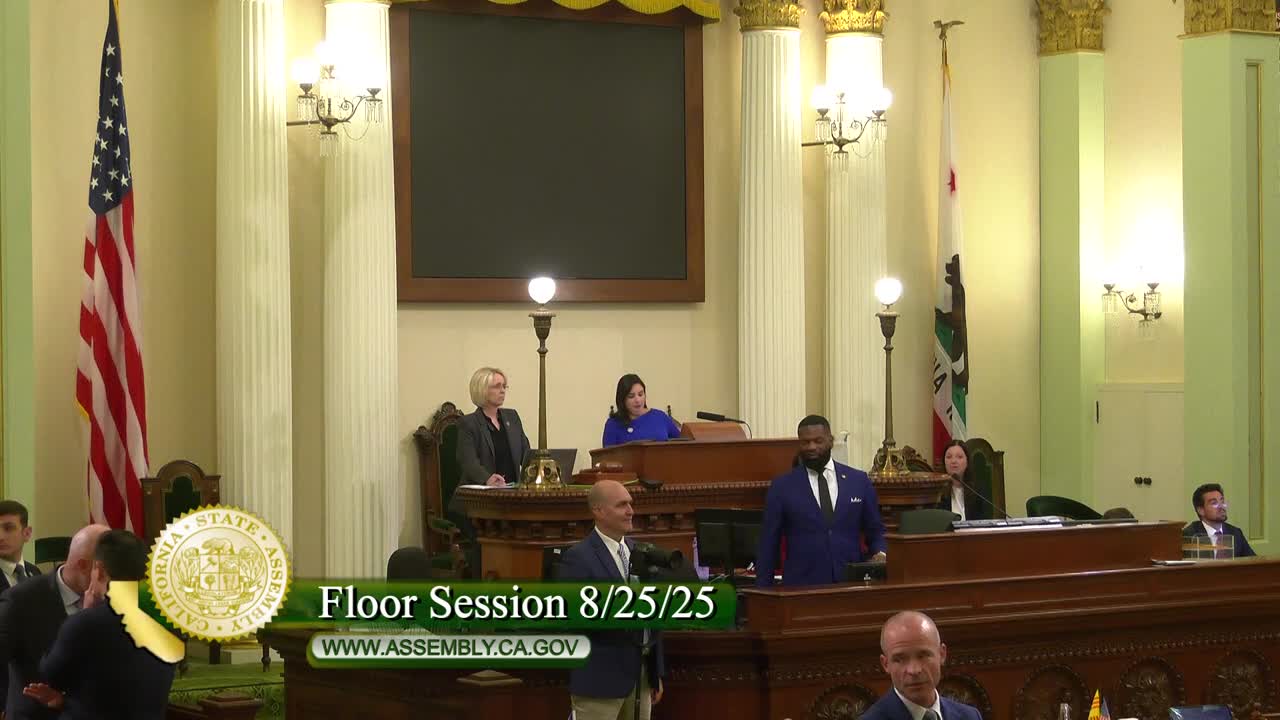
Bill Author

Bill Co-Author(s):